Charles Darwin and the Phylogeny of State Flowers and State Trees

This is a guest post by Rachel Rodman. Photos by Daniel Murphy.

———————

Every U.S. state has its own set of symbols: an official flower, an official tree, and an official bird. Collectively, these organisms form the stuff of trivia and are traditionally presented in the form of a list.

But, lists…well. As charming as lists can sometimes be, lists are rarely very satisfying.

So I decided to try something different.

I am not, of course, the first person to be unhappy with the eclectic, disordered nature of many biological assemblages. In the 18th century, Linnaeus developed a classification system in order to make sense of that untidiness. Kingdom, Phylum, Class, and so on.

In the 19th century, Darwin set biodiversity into an even more satisfying intellectual framework, outlining a model that linked organisms via descent from a series of common ancestors. And, as early as 1837, he experimented with a tree-like structure, in order to diagram these relationships.

Following Darwin’s lead, I’ve worked to reframe the state flowers and state trees in terms of their evolutionary history (*see the methods section below). And today, in honor of Darwin’s 209th birthday, I am delighted to present the results to you.

Let’s start with the state flowers.

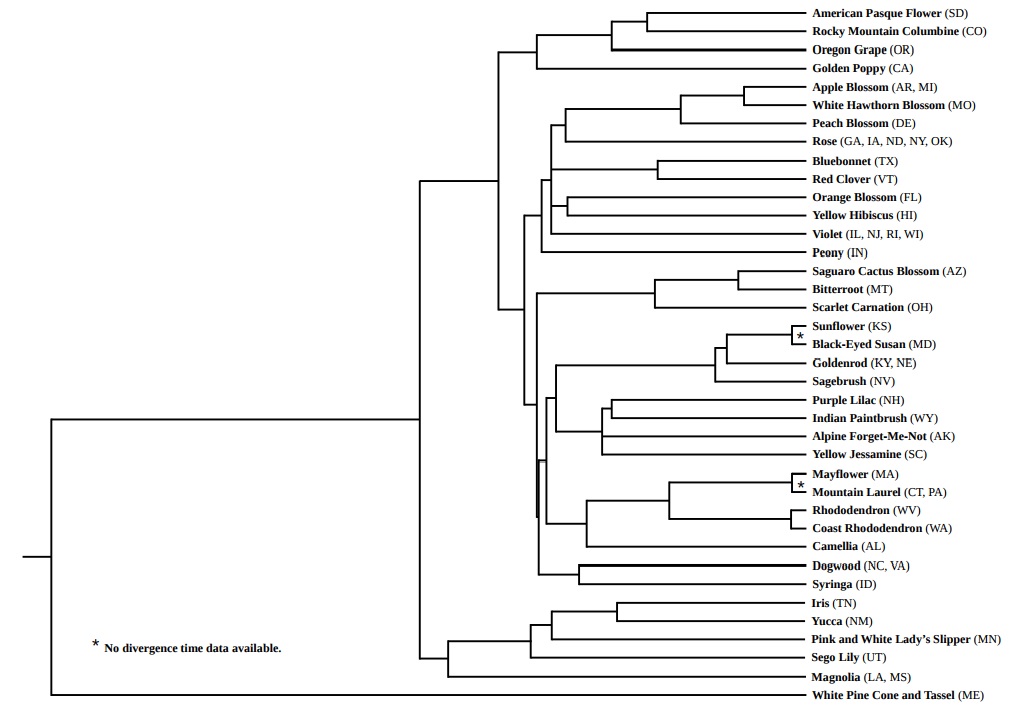
In this tree, Maine’s “white pine cone and tassel” forms the outgroup. Among all the state “flowers,” it is the only gymnosperm—and therefore, in fact, not actually a flower.

Notice, also, that the number of branches in this tree is 39—not 50. Most of this stems from the untidy fact that there is no requirement for each state to select a unique flower. Nebraska and Kentucky, for example, share the goldenrod; North Carolina and Virginia share the dogwood.

With the branch labeled “Rose,” I’ve compressed the tree further. The state flowers of Georgia, Iowa, North Dakota, New York, and Oklahoma are all roses of various sorts; with my data set (*see methods below), however, I was unable to disentangle them. So I kept all five grouped.

This is a rich tree with many intriguing juxtapositions. Several clades, in particular, link geographical regions that are not normally regarded as having a connection. Texas’ bluebonnet, for example, forms a clade with Vermont’s red clover. So, similarly, do New Hampshire’s purple lilac and Wyoming’s Indian paintbrush.

Texas bluebonnet (Lupinus texensis) – the state flower of Texas

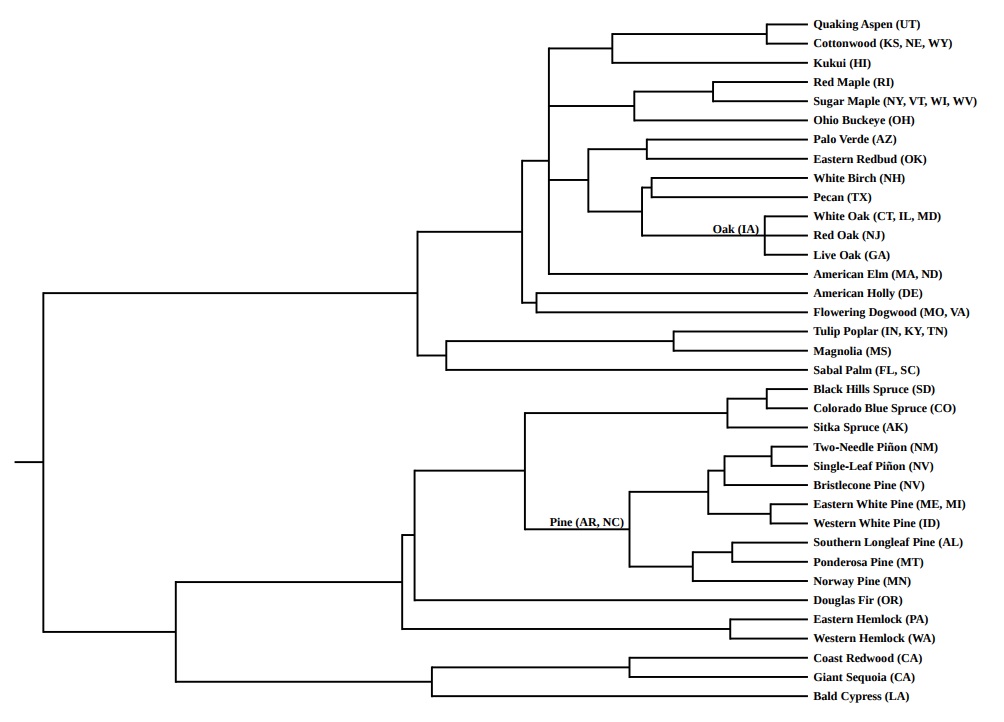
The second tree—the tree of state trees—is similarly rewarding. This tree is evenly divided between angiosperms (19 species) and gymnosperms (17 species).

Iowa’s state tree is simply the “oak”—no particular species was singled out. To indicate Iowa’s selection, I set “IA” next to the node representing the common ancestor of the three particular oak species: white oak, red oak, and live oak, which were selected as symbols by other states.

Arkansas’ and North Carolina’s state tree, similarly, is the “pine,”—no particular species specified. I’ve indicated their choice in just the same way, setting “AR” and “NC” next to the node representing the common ancestor of the eight particular pine species chosen to represent other states.

In this tree of trees, as with the tree of flowers, several clades link geographical regions that are not usually linked—at least not politically. Consider, for example, the pairing of New Hampshire’s white birch with Texas’ tree, the pecan.

Another phylogenetic pairing also intrigued me: Pennsylvania’s eastern hemlock and Washington’s western hemlock. It evokes, I think, a pleasing coast-to-coast symmetry: two states, linked via an east-west cross-country bridge, over a distance of 2,500 miles

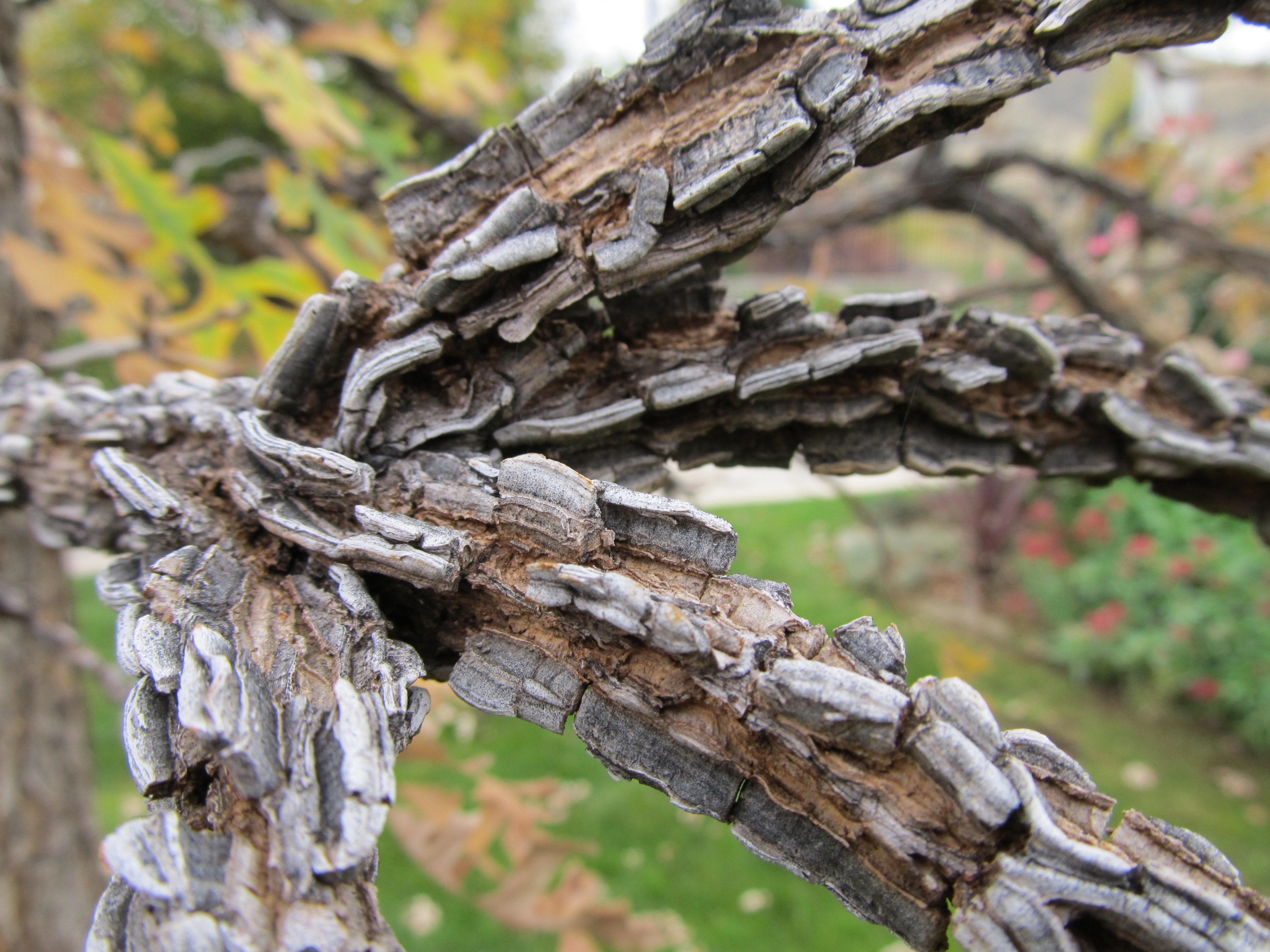
The corky bark of bur oak (Quercus macrocarpa). Oak is the state tree of Iowa.

In this post, I’ve presented the U.S. state flowers and U.S. state trees in evolutionary framework. The point in doing that was not to denigrate any of the small, human stories that lie behind these symbols—all of the various economic, historical, and legislative vagaries, which led each state to select these particular plants to represent them. (Even more importantly, I have no wish to downplay the interesting nature of any of the environmental factors that led particular plants to flourish and predominate in some states and not others.)

The point, instead, was to suggest that these stories can coexist and be simultaneously appreciated alongside a much larger one: the many million year story of plant evolution.

With Darwin’s big idea—descent with modification—the eclectic gains depth and meaning. And trivia become a story—a grand story, which can be traced back, divergence point by divergence point: rosids from asterids (~120 mya); eudicots from monocots (~160 mya); angiosperms from gymnosperms (~300 mya), and so on and so on.

So today, on Darwin’s 209th, here, I hope, is one of the takeaways:

An evolutionary framework really does make everything—absolutely everything: U.S. state symbols included—more fun, more colorful, more momentous, and more intellectually satisfying.

Thanks, Darwin.

*Methods:

To build these two trees, I relied on a data set from TimeTree.org, a website maintained by a team at Temple University. At the “Load a List of Species” option at the bottom of the page, I uploaded two lists of species in .txt format; each time, TimeTree generated a phylogenetic tree, which served as a preliminary outline.

Later, once I’d refined my outlines, I used the “Get Divergence Time For a Pair of Taxa” feature at the top of the page in order to search for divergence time estimates. As I reconstructed my trees in LibreOffice, I used these estimates to make my branch lengths proportional.

———————

Rachel Rodman has a Ph.D. in Arabidopsis genetics and presently aspires to recontextualize all of history, literature, and popular culture in the form of a phylogenetic tree. Won’t you help her?

Dischidia and Its Self-contained Watering System

This is a guest post by Jeremiah Sandler.

———————

I was doing some sunday reading in a plant biology textbook, a section about leaves. It was highlighting leaf-specific adaptations and other cool leaf specializations. I came across a paragraph about a “flower-pot” leaf, and my mind was so blown after reading it I had to literally stand up.

It reads:

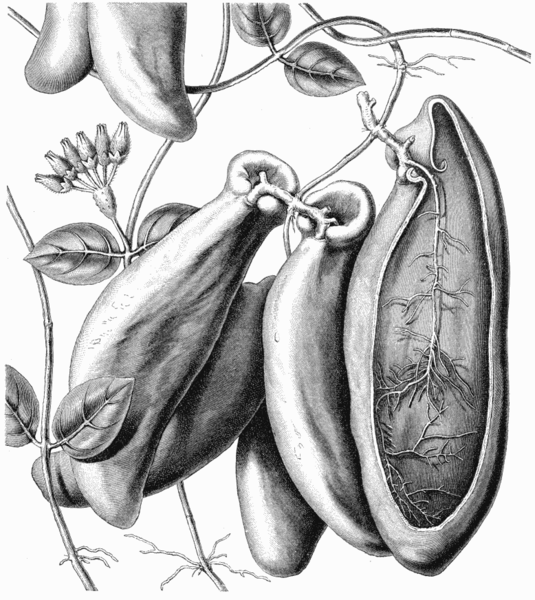
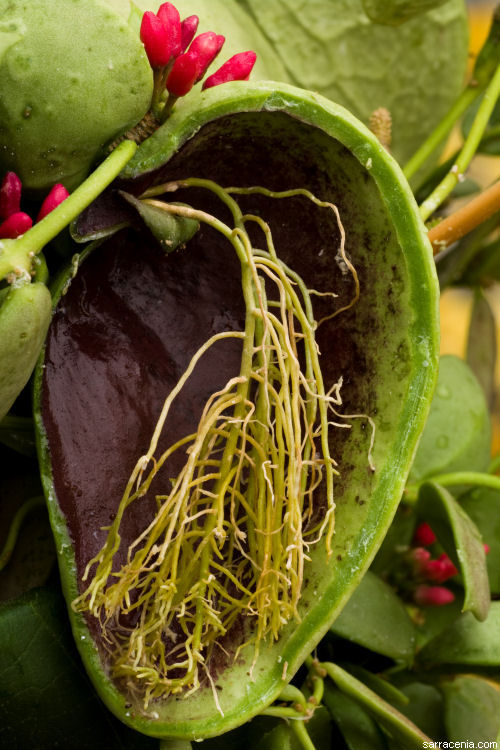
Some leaves of the Dischidia [genus], an epiphyte from Australasia, develop into urnlike pouches that become the home of ant colonies. The ants carry in soil and add nitrogeneous wastes, while moisture collects in the leaves through condensation of the water vapor coming from the mesophyll through stomata. This creates a good growing medium for roots, which develop adventitiously from the same node as the leaf and grow down into the soil contained in the urnlike pouch. In other words, this extraordinary plant not only reproduces itself by conventional means but also, with the aid of ants, provides its own fertilized growing medium and flower pots and then produces special roots, which “exploit” the situation.

Naturally I had to look up images of this plant because that’s amazing.

Illustration of Dischidia major (image credit: wikimedia commons)

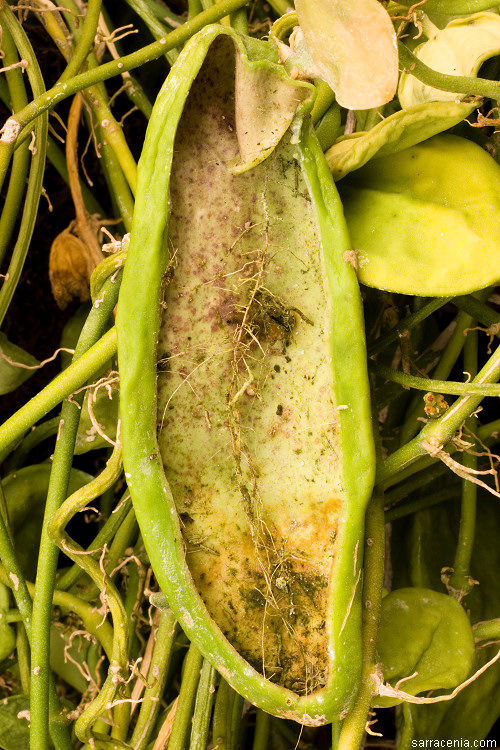
Dischidia major – cross section of “flower-pot” leaf (photo credit: eol.org)

Dischidia vidalii– cross section of “flower-pot” leaf (photo credit: eol.org)

In shorter words, the plant grows modified leaves that form a little cavity, within which ants live. The ants incidentally carry soil into the cavity, while fertilizing that soil with their waste. The stomata are located on the insides of these cavities, which expel water from the leaves, where it then waters the soil that is located inside the leaves. Not to mention, the outside of those cavities are photosynthesizing all the while.

So, with the help of ants, an epiphytic Dischidia has evolved leaves to bring the soil to itself up in the trees, where it fertilizes and waters itself? SAY WHAT?! That is so damn cool.


Resources:

Botany in Popular Culture: Laura Veirs

I love music for its ability to conjure up emotions, create a mood, and inspire action. The music of Laura Veirs has always inspired me to get out into nature and be more observant of the wild things around me. Her music is rich with emotions, and I feel those, too. However, when I think of her music, I can’t escape images of the natural world and the creatures that inhabit it.

Found within her nature-centric lyrics are, of course, numerous botanical references. After all, plants and their actions make excellent subject matter for all types of art. And with that in mind, Veirs asks rhetorically in the song Rapture, “Doesn’t the tree write great poetry?”

When it comes to botanical references, the song that jumps first to mind is Lonely Angel Dust, starting off right away with these lyrics: “The rose is not afraid to blossom / though it knows its petals must fall / and with its petals fall seeds into soil / Why toil to contain it all? / Why toil at all?” Plants produce seeds in abundance, as mentioned in Shadow Blues: “Thousand seeds from a flower blowing through the night.” And, as in Where Are You Driving?, they’re seeking a suitable spot to plant themselves: “Through clouds of dandelions / seeds sailing out on the wind / hoping you’ll be the one to plant yourself on in.”


Flowers come up often in the songs of Laura Veirs. In White Cherry, “cherry trees take to bloom.” In Nightingale, “her heart a field in bloom.” In Make Something Good, “an organ pipe in a cathedral / that stays in tune through a thousand blooms.” In Sun is King, “innocent as a summer flower.” In Cast a Hook, “with watery cheeks down flowered lanes.” In Life Is Good Blues, “Messages you sent to Mars came from a crown of flowers.” Grass and weeds get a few mentions, too. In Summer Is the Champion, “let’s get dizzy in the grass.” In Life Is Good Blues, “tender green like the shoots of spring / unfurling on the lawn.”

Trees are the real stars, though. Veirs makes frequent references to trees and their various parts. This makes sense, as trees are real forces of nature. So much happens in, on, and around them, and images of the natural world can feel barren without them. First there is their enormousness, as in Black Butterfly, “evergreen boughs above me tower / were singing quiet stories about forgiveness, ” and Don’t Lose Yourself, “we slept in the shadow of a cedar tree.” Then there is their old age, as in Where Are You Driving?, “tangled up in the gnarled tree,” and When You Give Your Heart, “falling through the old oak tree.” There is also their utility, mentioned in Make Something Good, “I wanted to make something sweet / the blood inside a maple tree / the sunlight trapped inside the wood / make something good.” And then, of course, there is the fruit they bear, as in July Flame, “sweet summer peach / high up in the branch / just out of my reach,” and then in Wandering Kind, “a strange July / a storm came down / from the North and pulled out the salt / and it tore out the leaves from the pear tree / my canopy.”

Many of Veirs songs create scenes and tell stories of being in the wilderness among rivers, lakes, mountains, and caves. Chimney Sweeping Man, for example, is a “forest resident” who “walks[s] quiet through the forest like a tiny, quiet forest mouse.” In Snow Camping, Veirs tells a story about sleeping in a snow cave in the forest, where “a thousand snowflakes hovered,” “a distant songbird [was] singing,” and “the weighted trees” were her “only home.” But sometimes those forests burn, which is captured in Drink Deep: “Now the raging of the forest fires end / and all the mammals fled / I smell in the charred darkness / a little green / a little red.” Later in the song: “the fire closed his eyes / tipped his flame hat and slipped through the dire rye / we wandered romantic / we scattered dark branches / with singing green stars as our guide.”

Nature can also be empowering, and Veirs often refers to things in the natural world as metaphors or similes for the human experience. In Cast a Hook, Veirs adamantly asserts, “I’m not dead, not numb, not withering / like a fallen leaf who keeps her green.” This line comes up again in Saltbreakers: “You cannot burn me up / I’m a fallen leaf who keeps her green.” In Lake Swimming, Veirs addresses change and how some of life’s changes may wound us but we can still shine – “shucking free our deadened selves / like snakes and corn do / … / Old butterfly / I’ll dance with you / though our wings may crumble / we can float like ash / broken but the edges still shine.”


The botanical references Veirs makes in her songs are not the only things that excite me. Birds, insects, mammals, fish, and worms all find a place in Veirs’ lyrics. This is why, after more than a decade of listening to her songs, I find myself coming back to them again and again. There is a sort of kinship we feel for each other when we share in common a love of the natural world. I find that in the music of Laura Veirs.

More Botany in Popular Culture Posts:

Book Review: Good Weed Bad Weed

Distinguishing weeds from desirable plants is a skill that takes years of experience. If you’re not an avid gardener or a practiced naturalist, the distinction between the two groups may be blurry. There are weed identification guides aplenty, but even those aren’t always the most user-friendly and can often leave a person with more questions than answers. One of those questions may be, “Why is this plant considered a weed and not that one?” Through her book, Good Weed Bad Weed, Nancy Gift attempts to answer that question, offering much needed nuance to a regularly vilified group of plants.

In the introduction, Gift acknowledges that the term “good weed” sounds like an oxymoron. A weed, by definition, is an unwanted plant, an interloper and a troublemaker, without value or merit. What could be good about that? Gift, on the other hand, asserts that “it is a weakness of the English language that weeds are universally unwanted.” We need a word that describes plants that may have weedy characteristics but some redeeming qualities as well. For now, Gift uses “volunteer” – “a plant that comes up without being planted or encouraged” – suspending judgement until its performance can be fairly assessed.

Good Weed Bad Weed is a weed identification guide designed for beginners, for those wondering if their yard is “infested or blessed.” It is specifically concerned with weeds commonly found in lawns and garden beds, and “not meant to apply to farm fields or any other landscape.” It sets itself apart from other identification guides by organizing weeds into three categories: Bad Weeds, Not-So-Bad Weeds, and Good Weeds. Each plant profile includes a description, notes about benefits as well as problems, and some recommendations for control. Assigning good/bad designations to these plants is bound to cause some heated debate and outright disagreement, and Gift acknowledges that; however, we all have our “unique judgement” about the plants we encounter in our landscapes, so as “weed-lovers-in-training,” Gift hopes that we can “make a few new friends in the plant kingdom” and, perhaps, a few less enemies.

For the ten plants that make the Bad Weeds list, the reasoning is pretty clear. They are highly competitive and difficult to control [foxtail (Setaria spp.), garlic mustard (Alliaria petiolata), and Canada thistle (Cirsium arvense)], they are poisonous to humans despite being beneficial to wildlife [poison ivy (Toxicodendron radicans ) and poison hemlock (Conium maculatum)], they are known allergens and otherwise unattractive [common ragweed (Ambrosia artemisiifolia)], or, like Japanese knotweed (Fallopia japonica), they are on the list of top 100 worst invasive species.

The other two categories are where more personal judgement comes into play. The twelve plants considered Not-So-Bad Weeds are said to have “admirable qualities despite some negatives.” Prostrate knotweed (Polygonum aviculare) provides excellent erosion control. Orange hawkweed (Hieracium aurantiacum), bull thistle (Cirsium vulgare), and musk thistle (Carduus nutans) are quite beautiful and highly beneficial to pollinators and other wildlife. Nutsedge (Cyperus spp.) is edible and easy to keep in check if you stay on top of it. Bindweeds (Convolvulus arvensis and Calystegia sepium) avoid the Bad Weeds list because their flowers are so appealing. Aesthetics really matter to Gift, which is made clear with the entry for common fleabane (Erigeron philadelphicus), which could have made the Good Weeds list were it not for its disappointing and forgettable floral display.

field bindweed (Convolvulus arvensis)

As for the Goods Weeds list, more plant species find themselves in this category than the other two categories combined. That being said, those who have strong, negative opinions about weeds should probably avoid this section of the book, lest they experience an unsafe rise in blood pressure upon reading it. But be advised that making the Good Weeds list doesn’t mean that there are no negatives associated with having these plants in your yard; it’s just that the positive qualities tend to overshadow the negatives.

Positive qualities include edible, medicinal, low growing, slow growing, easy to control, beneficial to wildlife, not a bully, hardly noticeable, uncommon, and soil building. Certain weeds are desirable in lawns because they are soft to walk on, like ground ivy (Glechoma hederacea), yarrow (Achillea millefolium), and moss. Other weeds, like self-heal (Prunella vulgaris), stay green year-round and don’t leave ugly, brown patches when they die or go dormant. Still others, like bird’s-foot trefoil (Lotus corniculatus), black medic (Medicago lupulina), and clovers (Trifolium spp.) fix nitrogen, providing free fertilizer. Gift notes that, for those who keep chickens, weeds like common sorrel (Rumex acetosa) and cuckooflower (Cardamine pratensis) are great chicken feed.

Speaking of eating weeds, Gift concludes her book with four pages of recipes. The “Weedy Foxtail Tabouli” is particularly intriguing to me. Reading this book definitely requires an open mind, and some people simply won’t agree that any weed should ever be called “good.” Gift seems okay with that. She calls herself a “heretical weed scientist,” insisting that “a weed is in the eye of the beholder.” As “beholders,” I hope we can all be a little more like Nancy Gift.

A weedy lawn (photo credit: wikimedia commons)

More Book Reviews on Awkward Botany:

What Bugs Can Tell Us About the Value of Vacant Urban Land

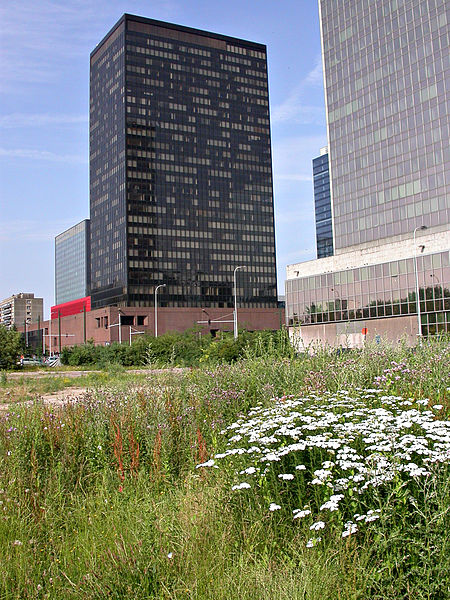
Back in October 2017, we discussed some potential benefits of spontaneous urban vegetation (commonly referred to as weeds) and the abandoned or undeveloped urban spaces they inhabit. There is much to learn about the role these plant communities play in the ecology of cities and their contribution to vital ecosystem services. In a review published in the December 2013 issue of Environmental Entomology, researchers from Ohio State University discuss how studying arthropod communities on vacant lands can help “advance our ecological understanding of the functional role” these habitats may have in our cities.

Arthropods were selected as the subject of study because their “populations respond quickly to changes in the urban environment, making them key indicators of how land use change influences biodiversity.” Urban-dwelling arthropods “are diverse and occupy multiple trophic levels” and are “easy to sample.” Additionally, many of the services that vacant, unmanaged land offers are “arthropod-mediated,” including “pollination, decomposition, nutrient cycling, and biological pest control.”

photo credit: wikimedia commons

Vacant land was selected as the study site because “understanding [its] ecological value is important to the advancement of urban ecology and ecosystem management,” and even though such areas are often overlooked in conservation planning, studies have shown that they “have the potential to be valuable reservoirs of biodiversity.” In order to determine just how valuable vacant land might be, more research is needed comparing these spaces to other parts of the city. In addition, vacant lots are generally ephemeral and in due time may be developed. Whether this means that a building or parking lot takes their place or that they are converted into a park, garden, or urban farm, it is important to understand what these land use changes mean for urban biodiversity and ecological functions.

Urbanization is often measured by comparing the amount of built area to the remaining green space. Where there is a high degree of urbanization, there is a low degree of green space comparatively. As urbanization increases, so does habitat fragmentation, pollution, and the urban heat island. In the meantime, biodiversity suffers. The authors cite a number of studies demonstrating that increased urbanization negatively impacted beneficial insect populations. For example, a study in the United Kingdom found that bumblebee diversity in gardens “decreased with increasing urbanization of the surrounding landscapes.” Similar results were found in a study we wrote about.

photo credit: wikimedia commons

Together with remnant natural areas, parks, private and public gardens, greenways, and commercial landscapes, vacant lots are part of a mosaic of urban green space. Each of these areas “experience different levels of disturbance and harbor varying plant species,” which, in turn, “influence arthropods and the services they can supply within and between patches.” Because vacant lots can remain undisturbed and virtually unmanaged for long periods of time, they help provide a contrast to the homogeneous, highly managed green spaces that are common in cities. By their very nature, they “have the potential to aid conservation and enhance green space quality and connectivity within city centers.”

It’s one thing to recognize the value of vacant lots; it’s another thing to change the negative perception of them. Aesthetics are important, and to many people vacant lots are an eyesore and a sign of neglect. Some management may be necessary in order to retain their important ecological value and assuage the feelings of the public. The authors present a number of ways that vacant lots can be and have been managed in order to achieve this goal. They also consider how certain management strategies (mowing, removing and/or introducing plant species) can impact arthropod populations for better or worse. Yet, where vacant lots are left alone and allowed to advance in the stages of ecological succession, changes in arthropod diversity and ecosystem function also occur. For this reason, “the regional species pool of a city requires a mosaic of all successional stages of vacant land patches.”

photo credit: wikimedia commons

Finally, the authors discuss the conversion of vacant land to urban agriculture. Even this land use change can have dramatic effects on the arthropod community. For example, undisturbed or unmanaged areas are a habitat requirement for cavity and soil nesting bees, and regular disturbance associated with farming may interfere with this. Also where pesticides are used or plant diversity is minimized, the arthropod community will be affected.

Thus, “the study of vacant land ecology necessitates a transdisciplinary approach” in order to determine how changes in vacant, urban land “will affect diverse ecosystem functions and services.” A variety of management strategies are required, and land managers must “determine the most appropriate strategies for improving the sustainability of cities from a connected landscape perspective.” It is clear that vacant lots have a role to play. The extent of their role and our approaches to managing them requires careful investigation.

One thing is certain – for biodiversity’s sake – don’t pave over vacant lots to put up parking lots.

2017: Year in Review

Awkward Botany turns 5 years old this month! 

In the five years since I first introduced myself I have had the pleasure of sharing my writing and photos with thousands of people. Together we have formed a tiny community of nature lovers, botany nerds, and phytocurious folks. It has been fun seeing the audience grow and our interactions increase. The World Wide Web is a crowded and chaotic place, and you can never be sure what will come of the pieces of you that you throw at it. Luckily, my little project has not gone completely unnoticed. The crowd that enjoys it may be small, but it is composed of a solid group of people. Thank you for being one of those people.

If you were following along in 2017, you are well aware that weeds and invasive species have been regular themes. Both of these topics are still obsessions of mine, so while I don’t have plans to continue to saturate the blog with such posts, I will still be writing about them. I’m actually working on a larger project involving weeds, which you can read more about here.

Speaking of which, I have threatened a couple of times now to interrupt my weekly posting schedule in order to make time for other projects. So far that hasn’t really happened, but this year I am fairly certain that it will. It’s the only way that I am going to be able get around to working on things I have been meaning to work on for years. There are also some new things in the works. I think these things will interest you, and I am excited to share them with you as they develop. Once you see them for yourself, I’m sure you’ll forgive the reduced posting schedule.

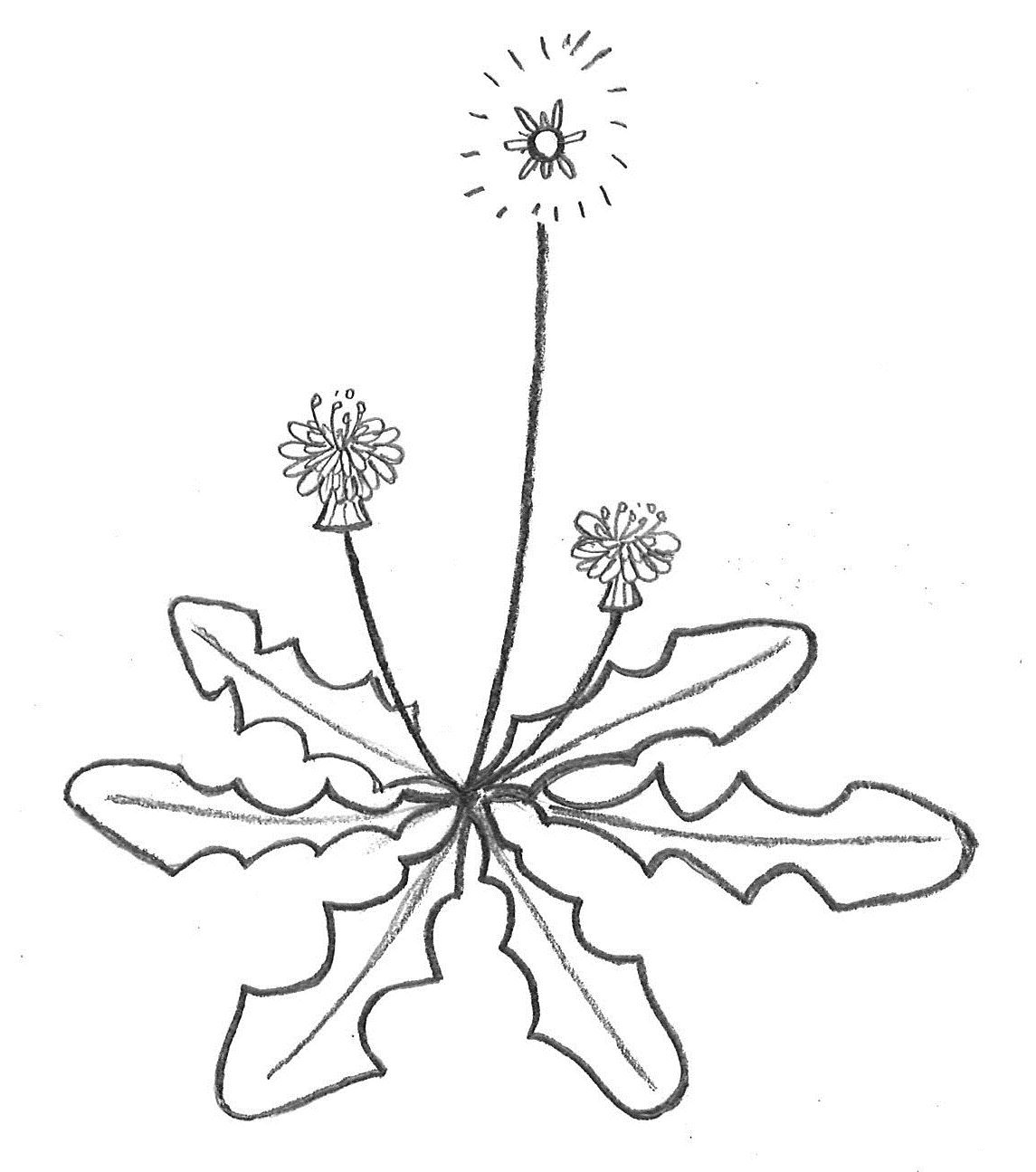
One thing I have resolved to do this year is learn to draw. I love botanical illustrations, and I have always been envious of the artistic abilities of others. My drawing skills are seriously lacking, but a little practice might help improve that. While it is bound to be a source of embarrassment for me, I have decided to post my progress along the way. So even if you have less to read here, you will at least get to check out some of my dumb drawings. Like this one:

Drawing of a dandelion with help from Illustration School: Let’s Draw Plants and Small Creatures by Sachiko Umoto

One of my favorite things this year has been Awkward Botany’s new Facebook page. With Sierra’s help, we have finally joined that world. Sierra has been managing the page and is the author of most of the posts, and she is doing an incredible job. So if you haven’t visited, liked, and followed, please do. And of course, the invitation still stands for the twitter and tumblr pages, as well.

Lastly, as I have done in the past I am including links to posts from 2017 that were part of ongoing series. These and all other posts can be found in the Archives widget on the right side of the screen. During the summer I did a long series about weeds called Summer of Weeds, the conclusion of which has a list of all the posts that were part of that series. Thank you again for reading and following along. Happy botanizing and nature walking in 2018. I hope you all have a plant filled year.

Book Reviews:

Podcast Review:

Poisonous Plants: 

Drought Tolerant Plants:

Field Trips:

Guest Posts:

Weeds and Winter Interest

In climates where winter sucks the garden inside itself and into quiet dormancy, it is often dead stalks and seed heads that provide the most visual interest. They also become, in some respects, a reminder of a garden that once was and what will be again.” — Gayla Trail, Grow Curious

If, like me, it is during the growing season that you really thrive, winters can be brutal. Color has practically been stripped from the landscape. Death and slumber abound. Nights are long and days are cold. It’s a lengthy wait until spring returns. Yet, my love of plants does not rest. And so, I look for beauty in a frozen landscape.

In evergreens, it is obvious. They maintain their color year-round. Large bunchgrasses, shrubs and trees with interesting bark or branching habits, dried fruits and unique seed heads – all of these things are easy to spot and visually interesting.

Beyond that, there are things that we are not accustomed to finding beauty in. Such things require a keen eye, close observation, and the cultivation of greater understanding and appreciation. For most people, weeds fall into this category. What is there to love or find beautiful?

I am of the opinion that there is plenty there to intrigue us. From their spent flowers to their seed heads and dried-up leaves, they can be just as interesting as the plants we deem more desirable. The winter-long green of winter annuals alone is evidence enough. So, here is my attempt to redeem some of these plants by nominating them as candidates for winter interest.

common mallow (Malva neglecta)

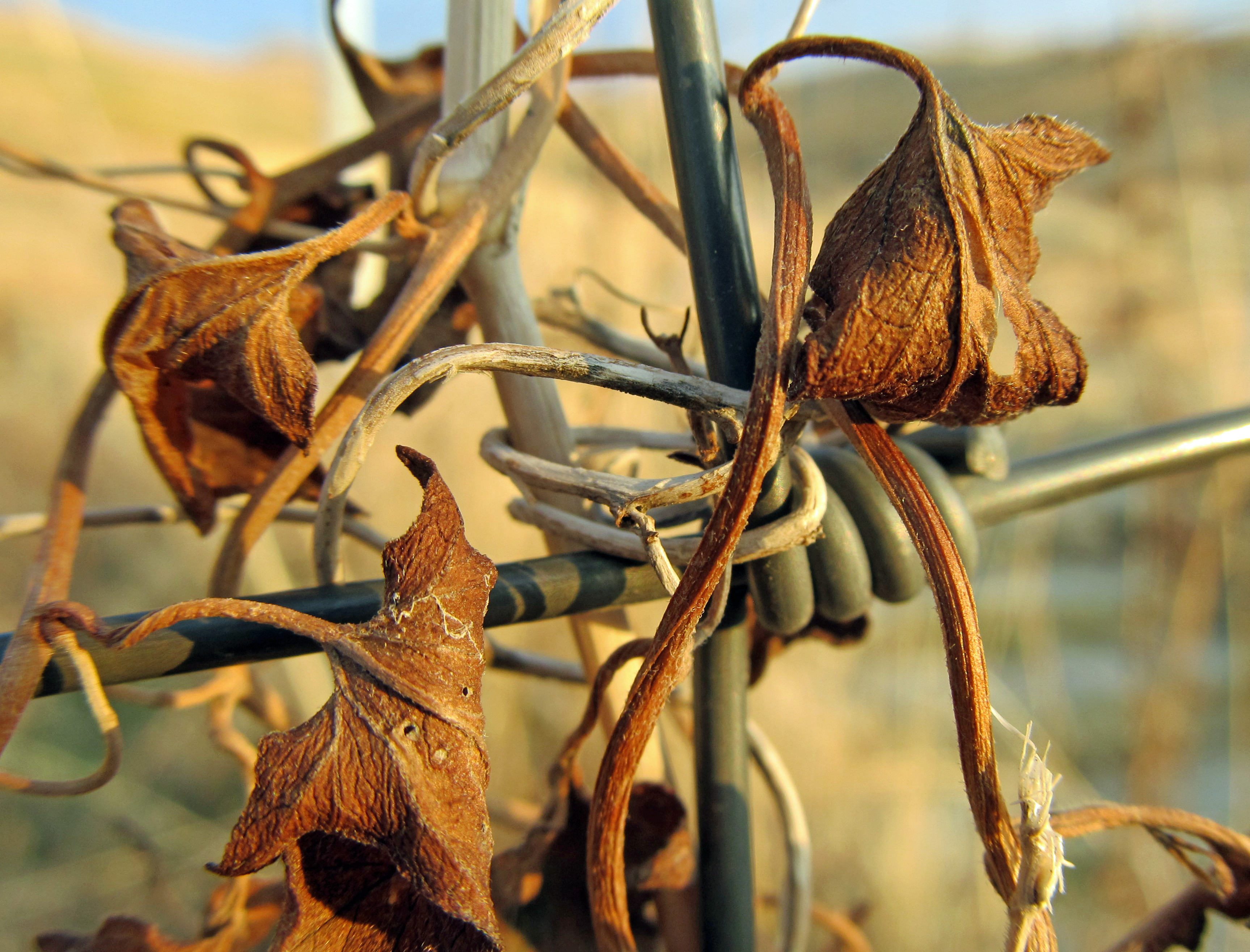
field bindweed (Convolvulus arvensis)

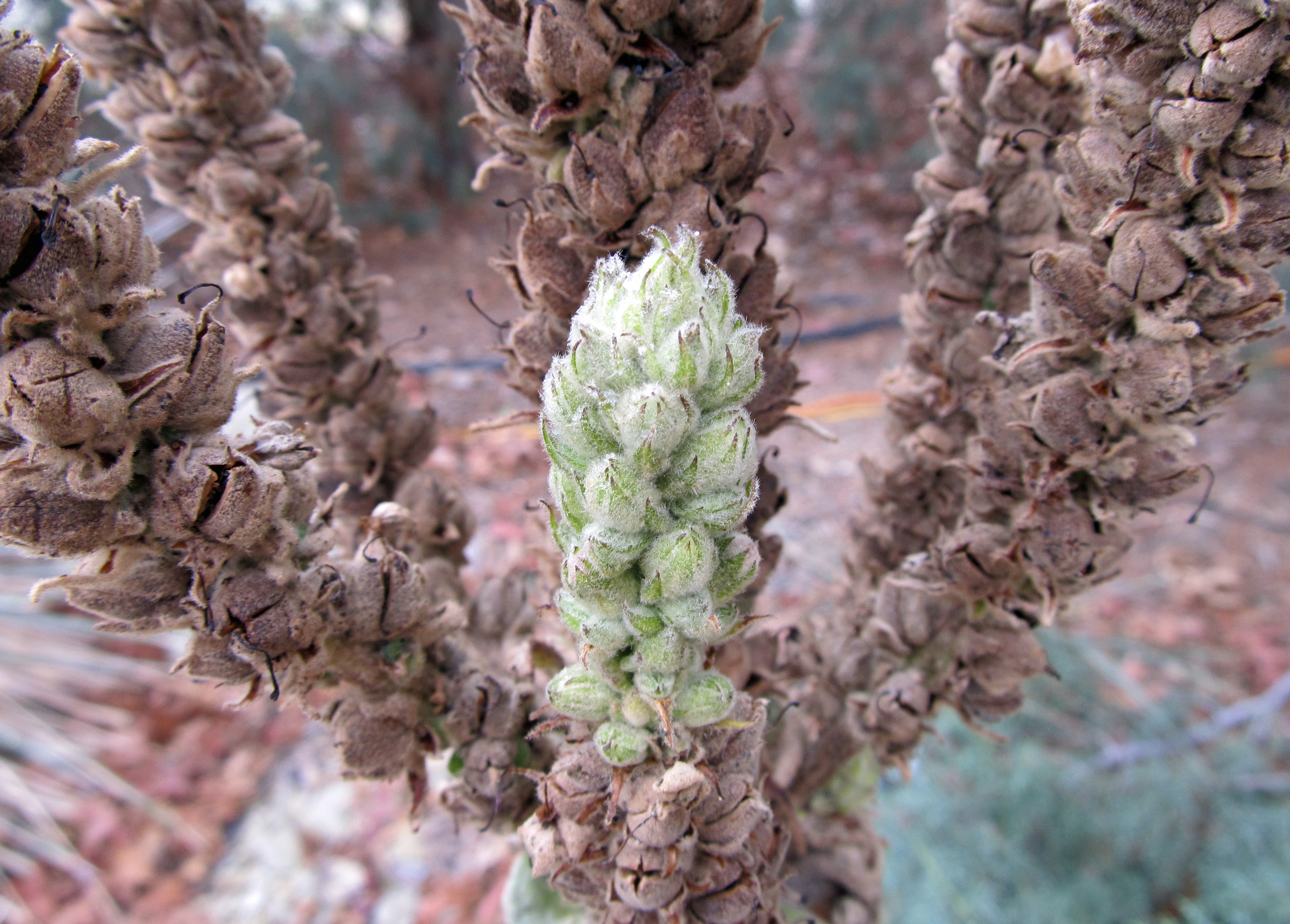
common mullein (Verbascum thapsus)

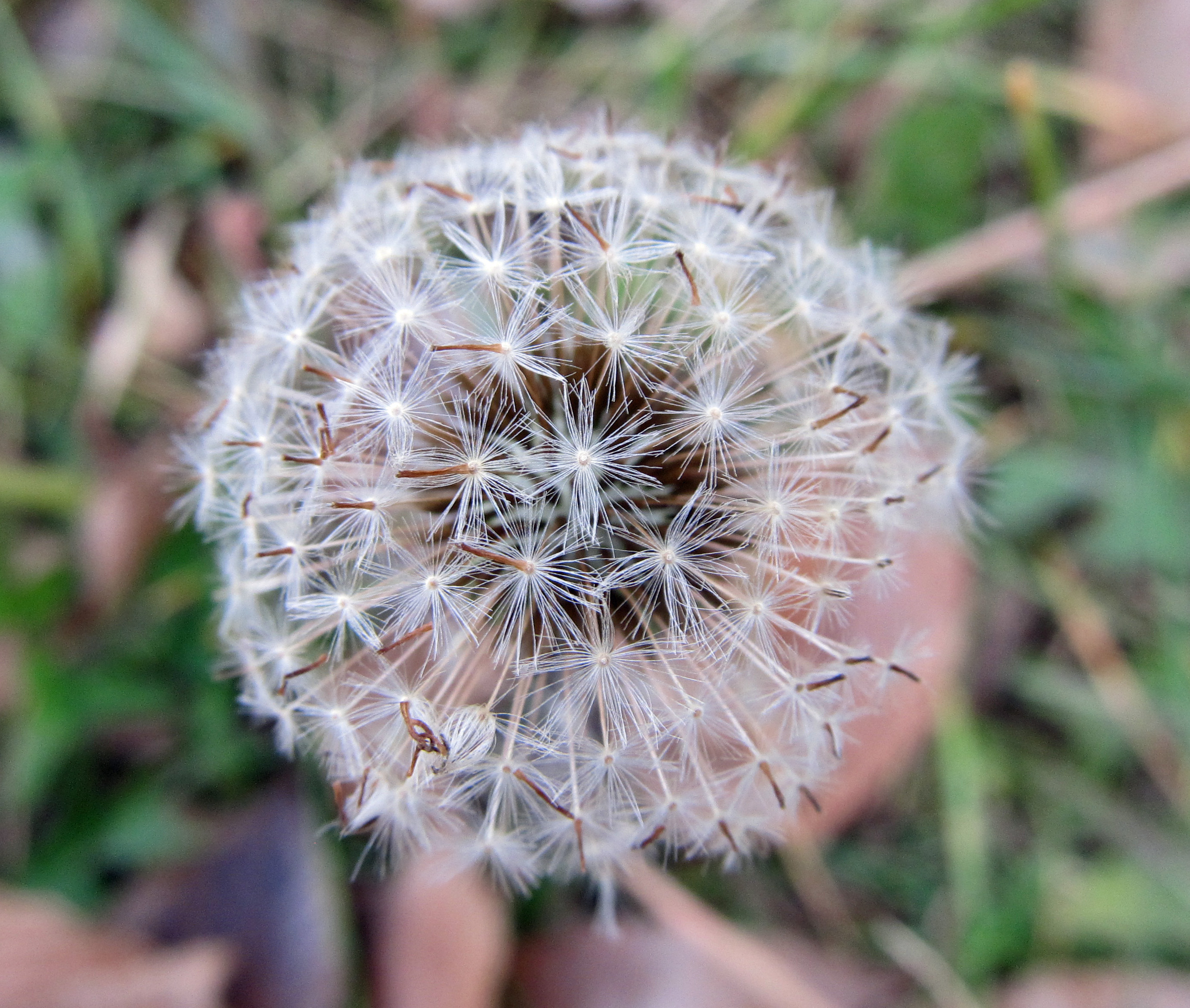
common dandelion (Taraxacum officinale)

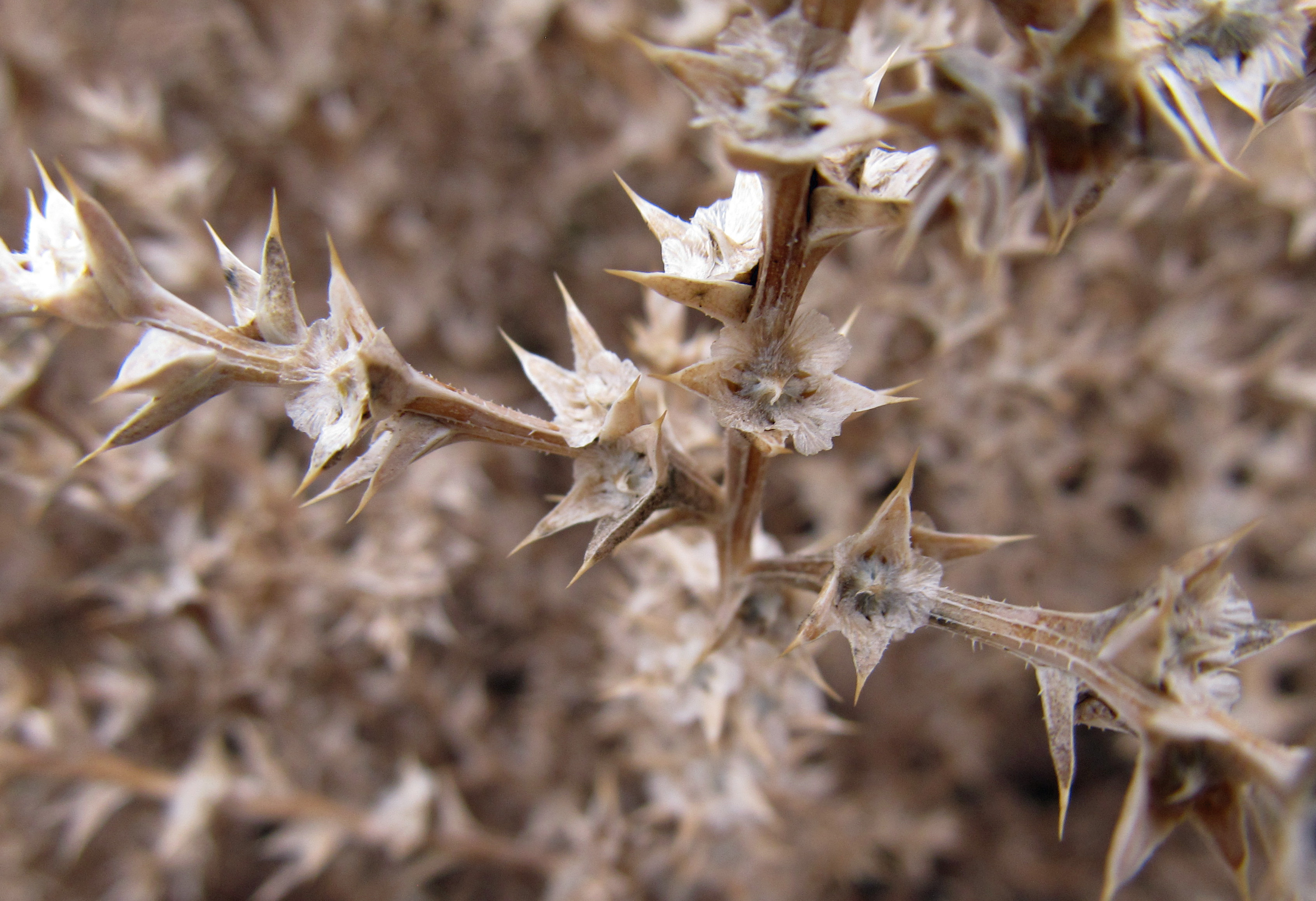
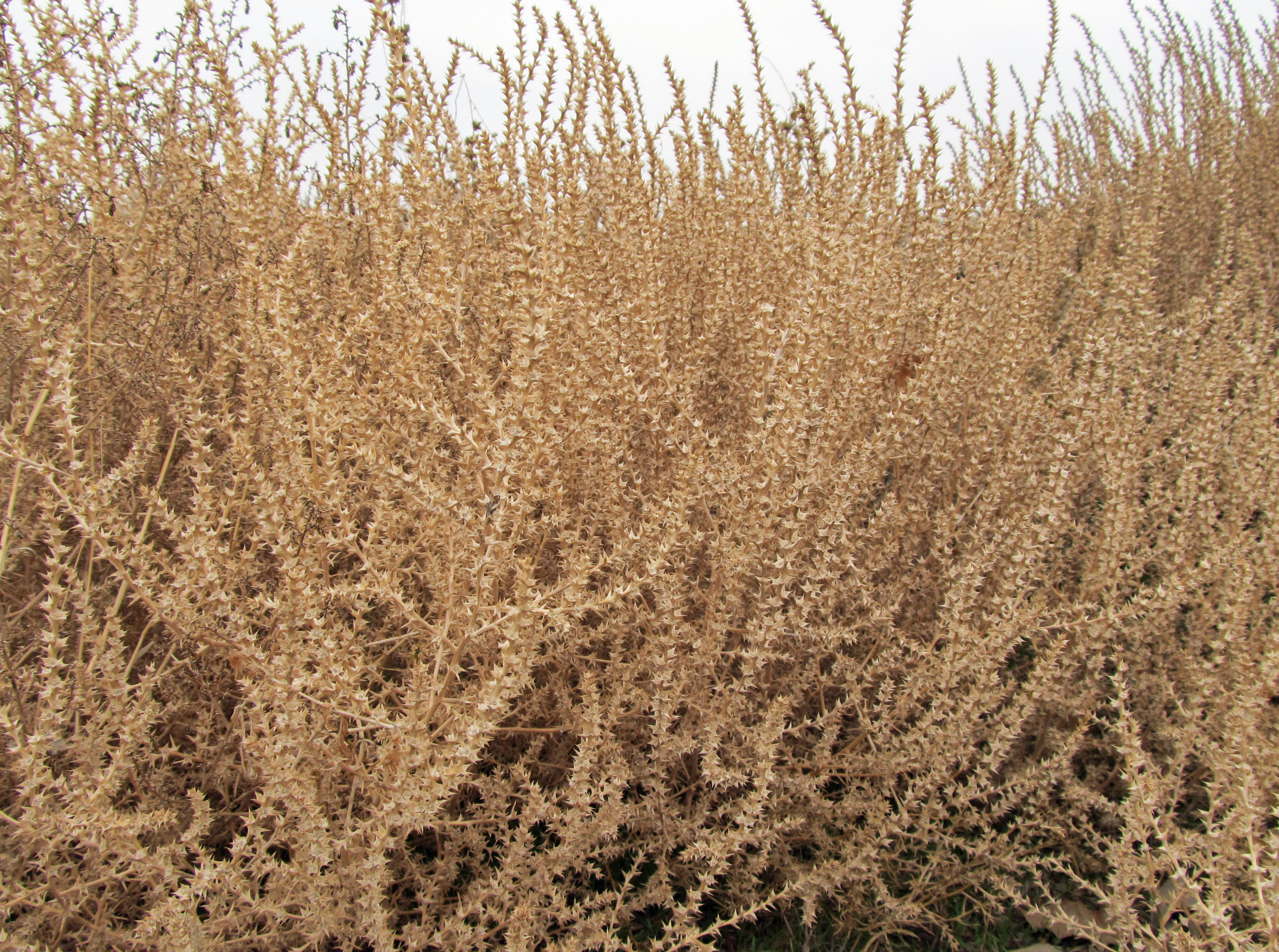
Russian thistle (Kali tragus, syn. Salsola tragus)

Russian thistle (Kali tragus, syn. Salsola tragus)

redstem filaree (Erodium cicutarium)

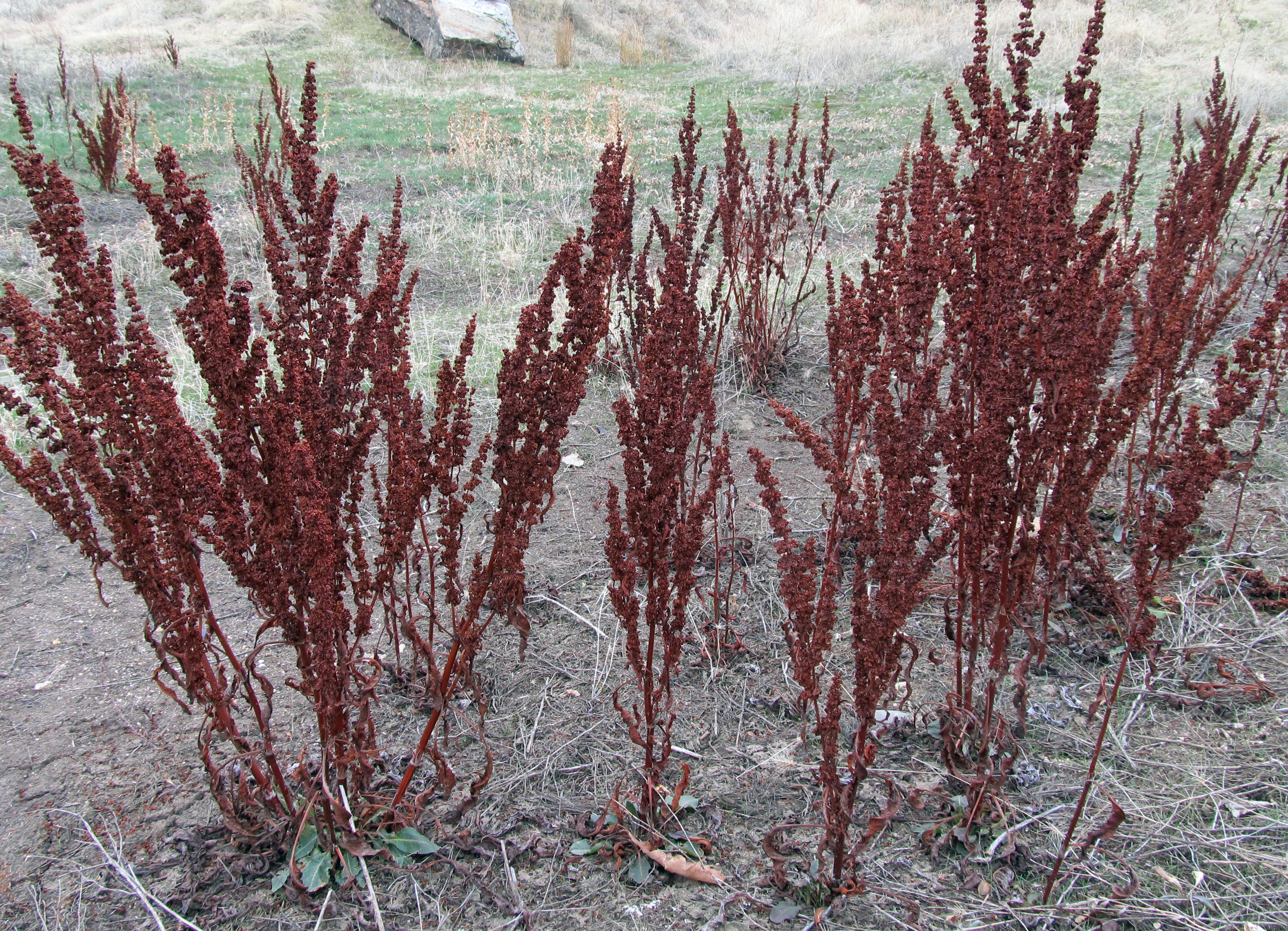
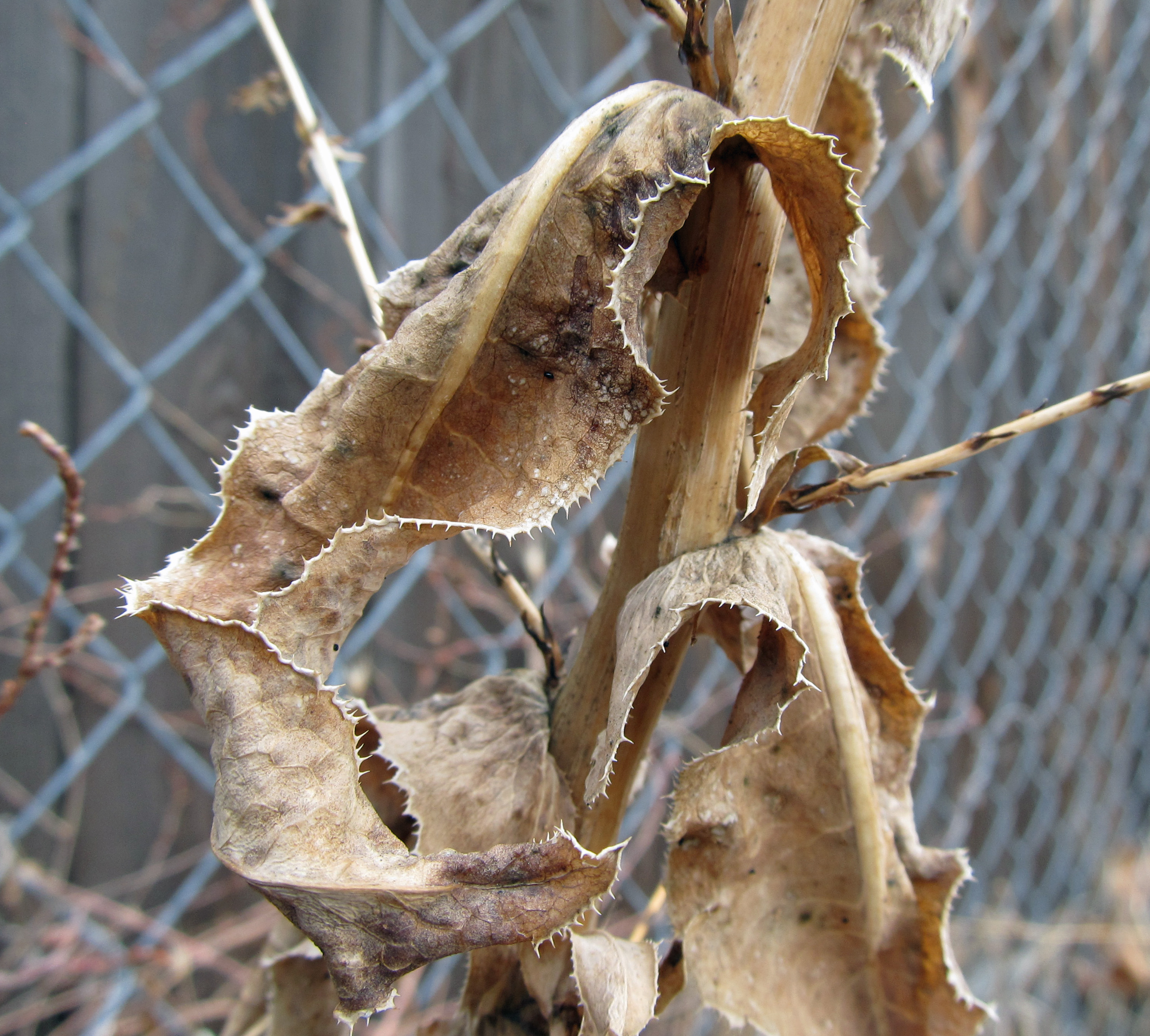
curly dock (Rumex crispus)

curly dock (Rumex crispus)

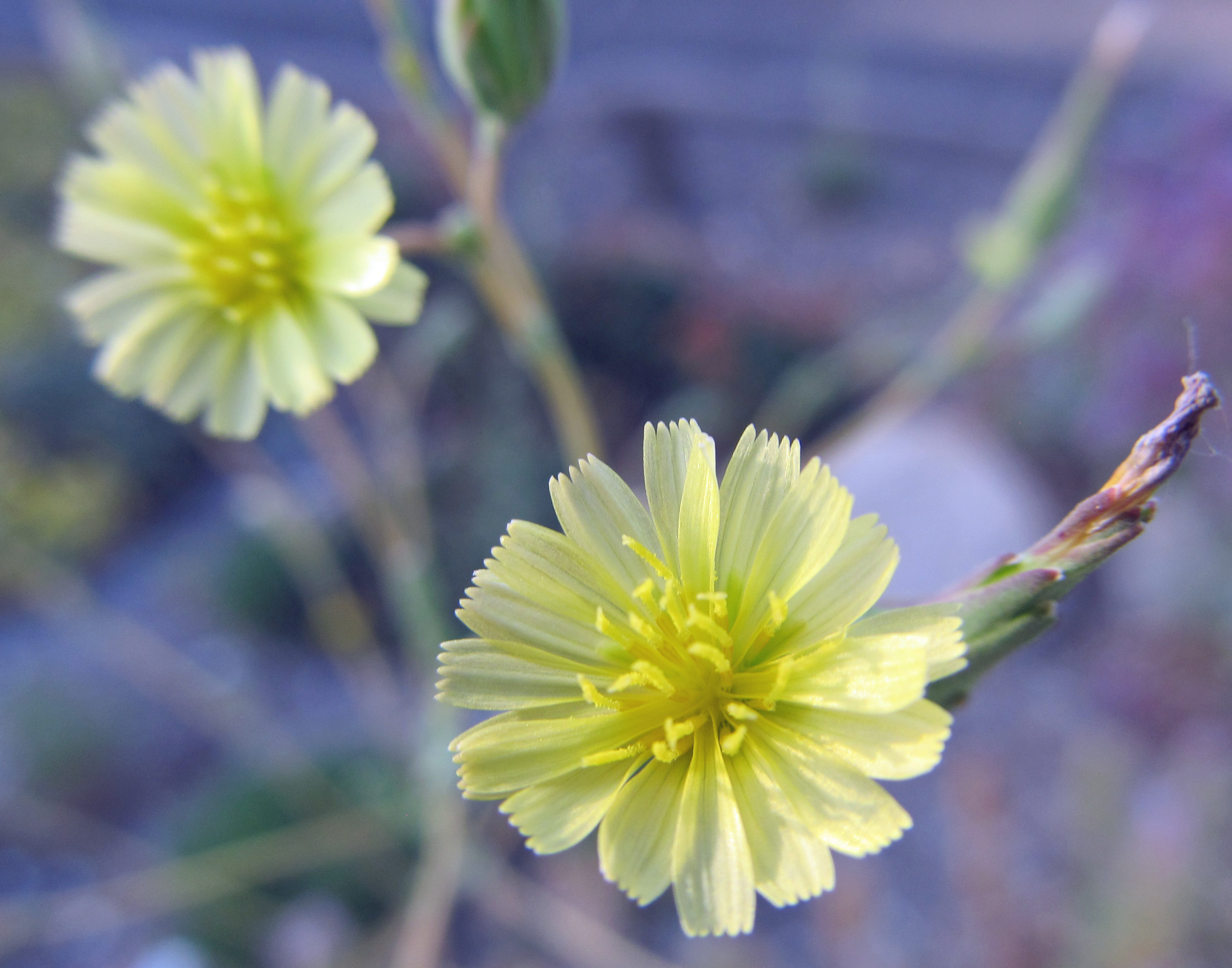
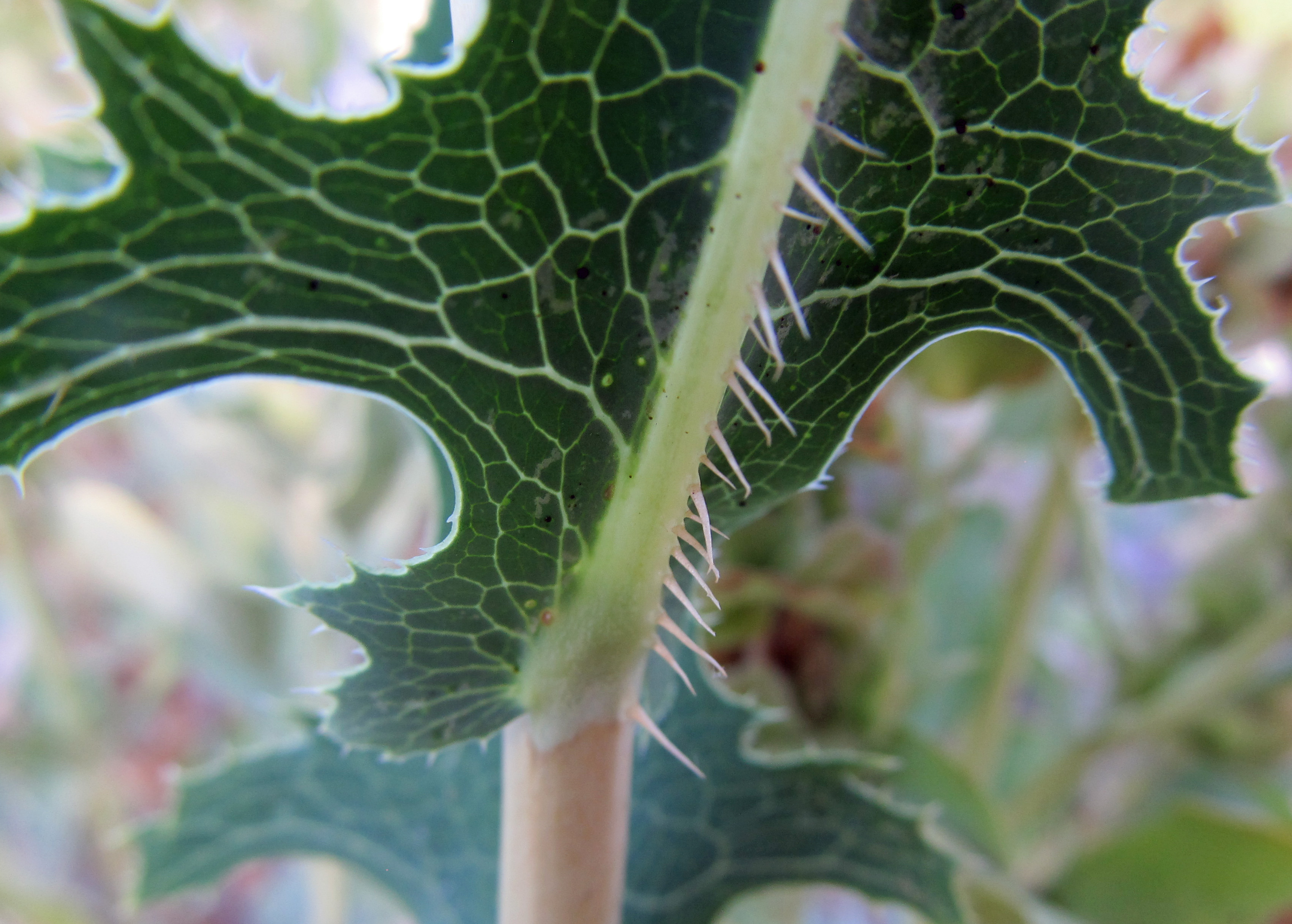
prickly lettuce (Lactuca serriola)

salsify (Tragopogon dubius)

wood avens (Geum urbanum)

yellow evening primrose (Oenothera biennis)

annual honesty, a.k.a. money plant (Lunaria annua)

white clover (Trifolium repens)

———————

A friendly reminder: Refrain from being overly ambitious with your fall cleanup and, instead, leave certain plants in place. This not only provides winter interest but can also be beneficial to the wild creatures we share space with.


When Urban Pollinator Gardens Meet Native Plant Communities

Public concern about the state of bees and other pollinating insects has led to increased interest in pollinator gardens. Planting a pollinator garden is often promoted as an excellent way for the average person to help protect pollinators. And it is! However, as with anything in life, there can be downsides.

In many urban areas, populations of native plants remain on undeveloped or abandoned land, in parks or reserves, or simply as part of the developed landscape. Urban areas may also share borders with natural areas, the edges of which are particularly prone to invasions by non-native plants. Due to human activity and habitat fragmentation, many native plant populations are now threatened. Urban areas are home to the last remaining populations of some of these plants.

Concern for native plant populations in and around urban areas prompted researchers at University of Pittsburgh to review some of the impacts that urban pollinator gardens may have and to develop a “roadmap for research” going forward. Their report was published earlier this year in New Phytologist.

Planting a wildflower seed mix is a simple way to establish a pollinator garden, and such mixes are sold commercially for this purpose. Governmental and non-governmental organizations also issue recommendations for wildflower, pollinator, or meadow seed mixes. With this in mind, the researchers selected 30 seed mixes “targeted for urban settings in the northeastern or mid-Atlantic USA” to determine what species are being recommended for or commonly planted in pollinator gardens in this region. They also developed a “species impact index” to assess “the likelihood a species would impact remnant wild urban plant populations.”

A total of 230 species were represented in the 30 seed mixes. The researchers selected the 45 most common species for evaluation. Most of these species (75%) have generalized pollination systems, suggesting that there is potential for sharing pollinators with remnant native plants. Two-thirds of the species had native ranges that overlapped with the targeted region; however, the remaining one-third originated from Europe or western North America. The native species all had “generalized pollination systems, strong dispersal and colonization ability, and broad environmental tolerances,” all traits that could have “high impacts” either directly or indirectly on remnant native plants. Other species were found to have either high dispersal ability but low chance of survival or low dispersal ability but high chance of survival.

This led the researchers to conclude that “the majority of planted wildflower species have a high potential to interact with native species via pollinators but also have the ability to disperse and survive outside of the garden.” Sharing pollinators is especially likely due to super-generalists like the honeybee, which “utilizes flowers from many habitat types.” Considering this, the researchers outlined “four pollinator-mediated interactions that can affect remnant native plants and their communities,” including how these interactions can be exacerbated when wildflower species escape gardens and invade remnant plant communities.

photo credit: wikimedia commons

The first interaction involves the quantity of pollinator visits. The concern is that native plants may be “outcompeted for pollinators” due to the “dense, high-resource displays” of pollinator gardens. Whether pollinator visits will increase or decrease depends on many things, including the location of the gardens and their proximity to native plant communities. Pollinator sharing between the two has been observed; however, “the consequences of this for effective pollination of natives are not yet understood.”

The second interaction involves the quality of pollinator visits. Because pollinators are shared between native plant communities and pollinator gardens, there is a risk that the pollen from one species will be transferred to another species. High quantities of this “heterospecific pollen” can result in reduced seed production. “Low-quality pollination in terms of heterospecific pollen from wildflower plantings may be especially detrimental for wild remnant species.”

The third interaction involves gene flow between pollinator gardens and native plant communities. Pollen that is transferred from closely related species (or even individuals of the same species but from a different location) can have undesired consequences. In some cases, it can increase genetic variation and help address problems associated with inbreeding depression. In other cases, it can introduce traits that are detrimental to native plant populations, particularly traits that disrupt adaptations that are beneficial to surviving in urban environments, like seed dispersal and flowering time. Whether gene flow between the two groups will be positive or negative is difficult to predict, and “the likelihood of genetic extinction versus genetic rescue will depend on remnant population size, genetic diversity, and degree of urban adaptation relative to the planted wildflowers.”

The fourth interaction involves pathogen transmission via shared pollinators. “Both bacterial and viral pathogens can be transmitted via pollen, and bacterial pathogens can be passed from one pollinator to another.” In this way, pollinators can act as “hubs for pathogen exchange,” which is especially concerning when the diseases being transmitted are ones for which the native plants have not adapted defenses.

photo credit: wikimedia commons

All of these interactions become more direct once wildflowers escape gardens and establish themselves among the native plants. And because the species in wildflower seed mixes are selected for their tolerance of urban conditions, “they may be particularly strong competitors with wild remnant populations,” outcompeting them for space and resources. On the other hand, the authors note that, depending on the species, they may also “provide biotic resistance to more noxious invaders.”

All of these interactions require further investigation. In their conclusion, the authors affirm, “While there is a clear potential for positive effects of urban wildflower plantings on remnant plant biodiversity, there is also a strong likelihood for unintended consequences.” They then suggest future research topics that will help us answer many of these questions. In the meantime, pollinator gardens should not be discouraged, but the plants (and their origins) should be carefully considered. One place to start is with wildflower seed mixes, which can be ‘fine-tuned’ so that they benefit our urban pollinators as well as our remnant native plants. Read more about plant selection for pollinators here.

Bumblebees and Urbanization

Urban areas bear little resemblance to the natural areas that once stood in their place. Concrete and asphalt stretch out for miles, buildings of all types tower above trees and shrubs, and turfgrass appears to dominate whatever open space there is. Understandably, it may be hard to imagine places like this being havens for biodiversity. In many ways they are not, but for certain forms of life they can be.

An essay published earlier this year in Conservation Biology highlights the ways in which cities “can become a refuge for insect pollinators.” In fact, urban areas may be more inviting than their rural surroundings, which are often dominated by industrial agriculture where pesticides are regularly used, the ground is routinely disturbed, and monocultures reign supreme. Even though suitable habitat can be patchy and unpredictable in the built environment, cities may have more to offer than we once thought.

Yet, studies about bee abundance and diversity in urban areas show mixed results, largely because all bee species are not created equal (they have varying habitat requirements and life histories) and because urban areas differ wildly in the quality and quantity of habitat they provide both spatially and temporally. For this reason, it is important for studies to focus on groups of bees with similar traits and to observe them across various states of urbanization. This is precisely what researchers at University of Michigan set out to do when they sampled bumblebee populations in various cities in southeastern Michigan. Their results were published earlier this year by Royal Society Open Science.

common eastern bumble bee (Bombus impatiens) – photo credit: wikimedia commons

The researchers selected 30 sites located in Dexter, Ann Arbor, Ypsilanti, Dearborn, and Detroit. Most of the sites were gardens or farms in urban centers. They collected bumblebees from May to September using pan traps and nets. The species and sex of each individual bumblebee was identified and recorded for each site. The percentage of impervious surface that surrounded each site was used as a measurement of urban development. Other measurements included the abundance of flowers and average daily temperatures for each location.

Bumblebees were selected as a study organism because the genus, Bombus, “represents a distinct, well-studied set of traits that make it feasible to incorporate natural history into analysis.” Bumblebees live in colonies – eusocial structures that include “a single reproductive queen, variable numbers of non-reproductive female workers, and male reproductive drones.” They are generalist foragers, visiting a wide variety of flowering species for pollen and nectar, and they nest in holes in the ground, inside tree stumps, or at the bases of large clumps of grass. The authors believe that their nesting behavior makes them “a good candidate for testing the effects of urban land development,” and the fact that members of the colony have “distinct roles, [behaviors], and movement patterns” allows researchers to make inferences regarding “the effects of urbanization on specific components of bumblebee dynamics.”

Across all locations, 520 individual bumblebees were collected. Nearly three quarters of them were common eastern bumblebees (Bombus impatiens). Among the remaining nine species collected, brown-belted bumblebees (Bombus griseocollis) and two-spotted bumblebees (Bombus bimaculatus) were the most abundant.

brown-belted bumblebee (Bombus griseocollis) – photo credit: wikimedia commons

Because bumblebees are strong fliers with an extensive foraging range, impervious surface calculations for each site had to cover an area large enough to reflect this. Results indicated that as the percentage of impervious surfaces increased, bumblebee abundance and diversity declined. When male and female bumblebee data was analyzed separately, the decline was only seen in females; males were unaffected.

Female workers do most of their foraging close to home, whereas males venture further out. The researchers found it “reasonable to hypothesize that worker abundance is proportional to bumblebee colony density.” Thus, the decline in female bumblebees observed in this study suggests that as urban development increases (i.e. percent coverage of impervious surface), available nesting sites decline and the number of viable bumblebee colonies shrinks. Because male bumblebees responded differently to this trend, future studies should consider the responses of both sexes in order to get a more complete picture of the effects that urbanization has on this genus.

Interestingly, results obtained from the study locations in Detroit did not conform to the results found elsewhere. Bumblebee abundance and diversity was not decreasing with urbanization. Unlike other cities in the study, “Detroit has experienced decades of economic hardship and declining human populations.” It has a high proportion of impervious surfaces, but it also has an abundance of vacant lots and abandoned yards. These areas are left unmaintained and are less likely to be mowed regularly or treated with pesticides. Reducing disturbance can create more suitable habitat for bumblebees, resulting in healthy populations regardless of the level of urbanization. Thus, future studies should examine the state of insect pollinators in all types of cities – shrinking and non-shrinking – and should consider not just the amount of available habitat but also its suitability.

two-spotted bumblebee (Bombus bimaculatus) – photo credit: wikimedia commons

The Agents That Shape the Floral Traits of Sunflowers

Flowers come in a wide array of shapes, sizes, colors, and scents. Their diversity is downright astounding. Each individual species of flowering plant has its own lengthy story to tell detailing how it came to look and act the way it does. This is its evolutionary history. Unraveling this history is a nearly insurmountable task, but one that scientists continue to chip away at piece by piece.

In the case of floral traits – particularly for flowers that rely on pollinators to produce seeds – it is safe to say that millennia of interactions with floral visitors have helped shape not only the way the flower looks, but also the nature of its nectar and pollen. However, flowers are “expensive” to make and maintain, so even though they are necessary for reproduction, plants must find a balance between that and allocating resources for defense – against both herbivory and disease – and growth. This balance can differ depending on a plant’s life history – whether it is annual or perennial. An annual plant has one shot at reproduction, so it can afford to funnel much of its energy there. If a perennial is unsuccessful at reproduction one year, there is always next year, as long as it has allocated sufficient resources towards staying alive.

Where a plant exists in the world also influences how it looks. Abiotic factors like temperature, soil type, nutrient availability, sun exposure, and precipitation patterns help shape, through natural selection, many aspects of a plant’s anatomy and physiology, including the structure and composition of its flowers. Additional biotic agents like nectar robbersflorivores, and pathogens can also influence certain floral traits.

This is the background that researchers from the University of Central Florida and University of Georgia drew from when they set out to investigate the reasons for the diverse floral morphologies in the genus Helianthus. Commonly known as sunflowers, Helianthus is a familiar genus consisting of more than 50 species, most of which are found across North America. The genus includes both annuals and perennials, and all but one species rely on cross-pollination to produce viable seeds. Pollination is mainly carried out by generalist bees.

Maximilian sunflower (Helianthus maximiliani)

Helianthus species are found in diverse habitats, including deserts, wetlands, prairies, rock outcrops, and sand dunes. Their inflorescences – characteristic of plants in the family Asteraceae – consist of a collection of small disc florets surrounded by a series of ray florets, which as a unit are casually referred to as a single flower. In Helianthus, ray florets are completely sterile and serve only to attract pollinators. Producing large and numerous ray florets takes resources away from the production of fertile disc florets, and sunflower species vary in the amount of resources they allocate for each floret form.

In a paper published in the July 2017 issue of Plant Ecology and Evolution, researchers selected 27 Helianthus species and one Phoebanthus species (a closely related genus) to investigate “the evolution of floral trait variation” by examining “the role of environmental variation, plant life history, and flowering phenology.” Seeds from multiple populations of each species were obtained, with populations being carefully selected so that there would be representations of each species from across their geographic ranges. The seeds were then grown out in a controlled environment, and a series of morphological and physiological data were recorded for the flowers of each plant. Climate data and soil characteristics were obtained for each of the population sites, and flowering period for each species was collected from various sources.

The researchers found “all floral traits” of the sunflower species to be “highly evolutionarily labile.” Flower size was found to be larger in regions with greater soil fertility, consistent with the resource-cost hypothesis which “predicts that larger and more conspicuous flowers should be selected against in resource-poor environments.” However, larger flower size had also repeatedly evolved in drier environments, which goes against this prediction. Apart from producing smaller flowers in dry habitats, flowering plants have other strategies to conserve water such as opening their flowers at night or flowering for a short period of time. Sunflowers do neither of these things. As the researchers state, “this inconsistency warrants consideration.”

The researchers speculate that “the evolution of larger flowers in drier environments” may be a result of fewer pollinators in these habitats “strongly favoring larger display sizes in self-incompatible species.” The flowers are big because they have to attract a limited number of pollinating insects. Conversely, flowers may be smaller in wetter environments because there is greater risk of pests and diseases. This is supported by the enemy-escape hypothesis – smaller flowers are predicted in places where there is increased potential for florivory and pathogens. Researchers found that lower disc water content had also evolved in wetter environments, which supports the idea that the plants may be defending themselves against flower-eating pests.

Seed heads of Maximilian sunflower (Helianthus maximiliani)

Another interesting finding is that, unlike other genera, annual and perennial sunflower species allocate a similar amount of resources towards reproduction. On average, flower size was not found to be different between annual and perennial species. Perhaps annuals instead produce more flowers compared to perennials, or maybe they flower for longer periods. This is something the researchers did not investigate.

Finally, abiotic factors were not found to have any influence on the relative investment of ray to disc florets or the color of disc florets. Variations in these traits may be influenced instead by pollinators, the “biotic factor” that is considered “the classic driver of floral evolution.” This is something that will require further investigation. As the researchers conclude, “determining the exact drivers of floral trait evolution is a complex endeavor;” however, their study found “reasonable support for the role of aridity and soil fertility in the evolution of floral size and water content.” Yet another important piece to the puzzle as we learn to tell the evolutionary history of sunflowers.