Weeds of Boise: Hellstrip on Jefferson Street

Growing plants in urban areas comes with a variety of challenges. Soil conditions aren’t always ideal; shade thrown by buildings and other structures can be difficult to work around; paved surfaces lead to compaction and, among other things, can increase temperatures in the immediate area; and in locations where water is limited, keeping plants hydrated is a constant concern. One location that tends to be especially difficult for gardeners is the hellstrip – the section of ground between a roadway and a sidewalk. Much can be said about gardening in hellstrips, so much that there is even a book about it called Hellstrip Gardening by Evelyn Hadden, which I spent several posts reviewing a few years back.

The difficulty of maintaining a hellstrip (and perhaps questions about who is responsible for maintaining it in the first place) can result in it being a piece of property frequently subject to neglect. In urban areas, neglected land is the perfect place for weeds to take up residence. The conditions in a hellstrip being what they are – hot, dry, frequently trampled, and often polluted – also gives weeds a chance to show what they can do. It’s a wonder that any plant can survive in such conditions, but the wild flora of our cities consists of some pretty tough plants, and a hellstrip is an excellent location to familiarize yourself with some of these plants.

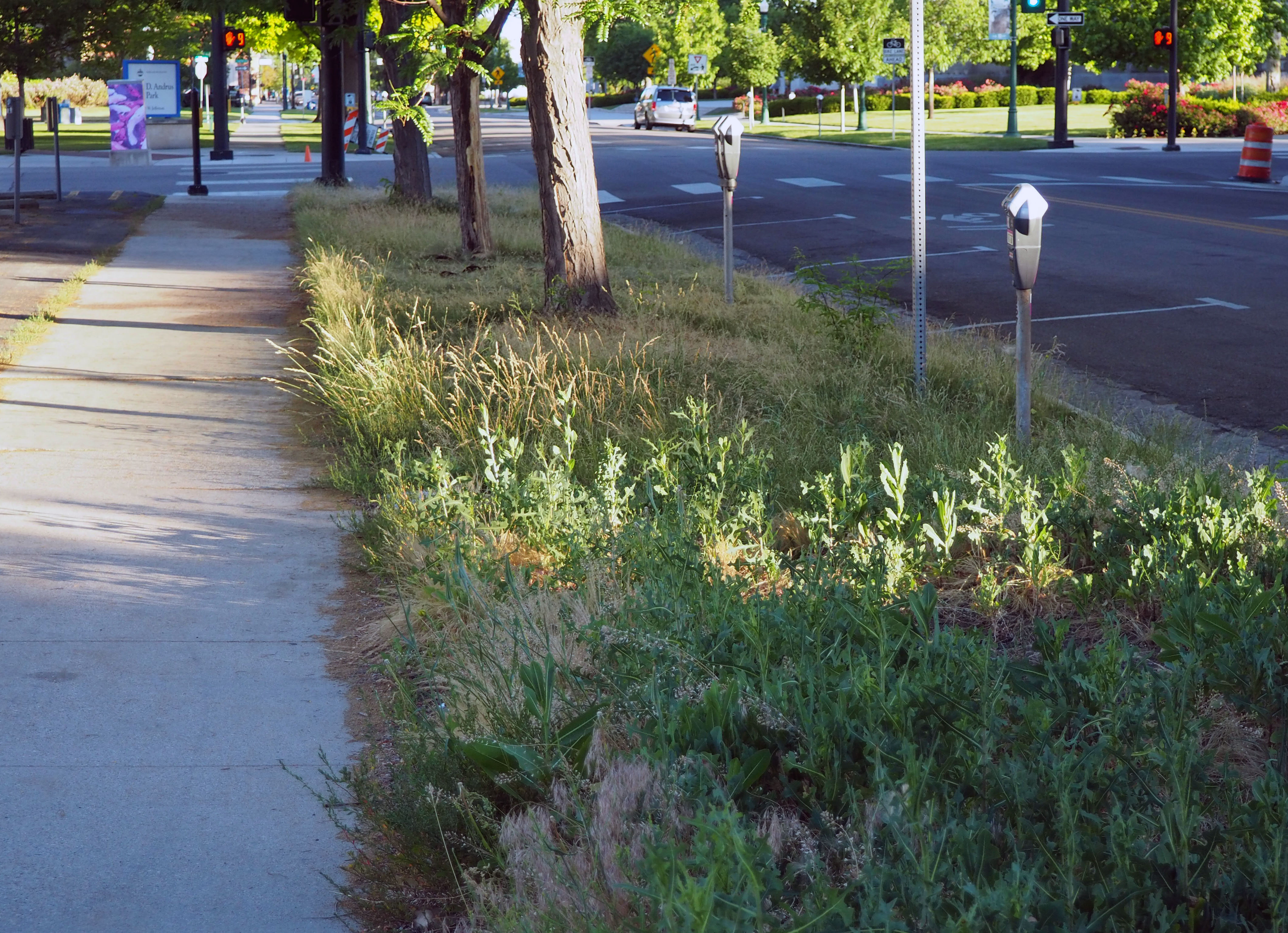
On a walk with Kōura, I came across a weedy hellstrip on Jefferson Street in downtown Boise. Many of the classic hellstrip challenges are present there – it’s surrounded by paved surfaces, there is lots of foot traffic in the area, parking is permitted on the roadside, urban infrastructure (street signs, parking meters, stoplights) is present within the strip. It’s clear that at one point the area was being maintained as irrigation is installed and there are remnants of turfgrass. Three honey locusts were also planted in the strip, one of which has clearly died. Now that maintenance seems to have ceased, weeds have become the dominant flora in this hellstrip. What follows are a few photos and a list of the weeds I’ve identified so far. Like all posts in the Weeds of Boise series, this list may be updated as I continue to check back in on this location.

shepherd’s purse (Capsella bursa-pastoris) and prickly lettuce (Lactuca serriola)
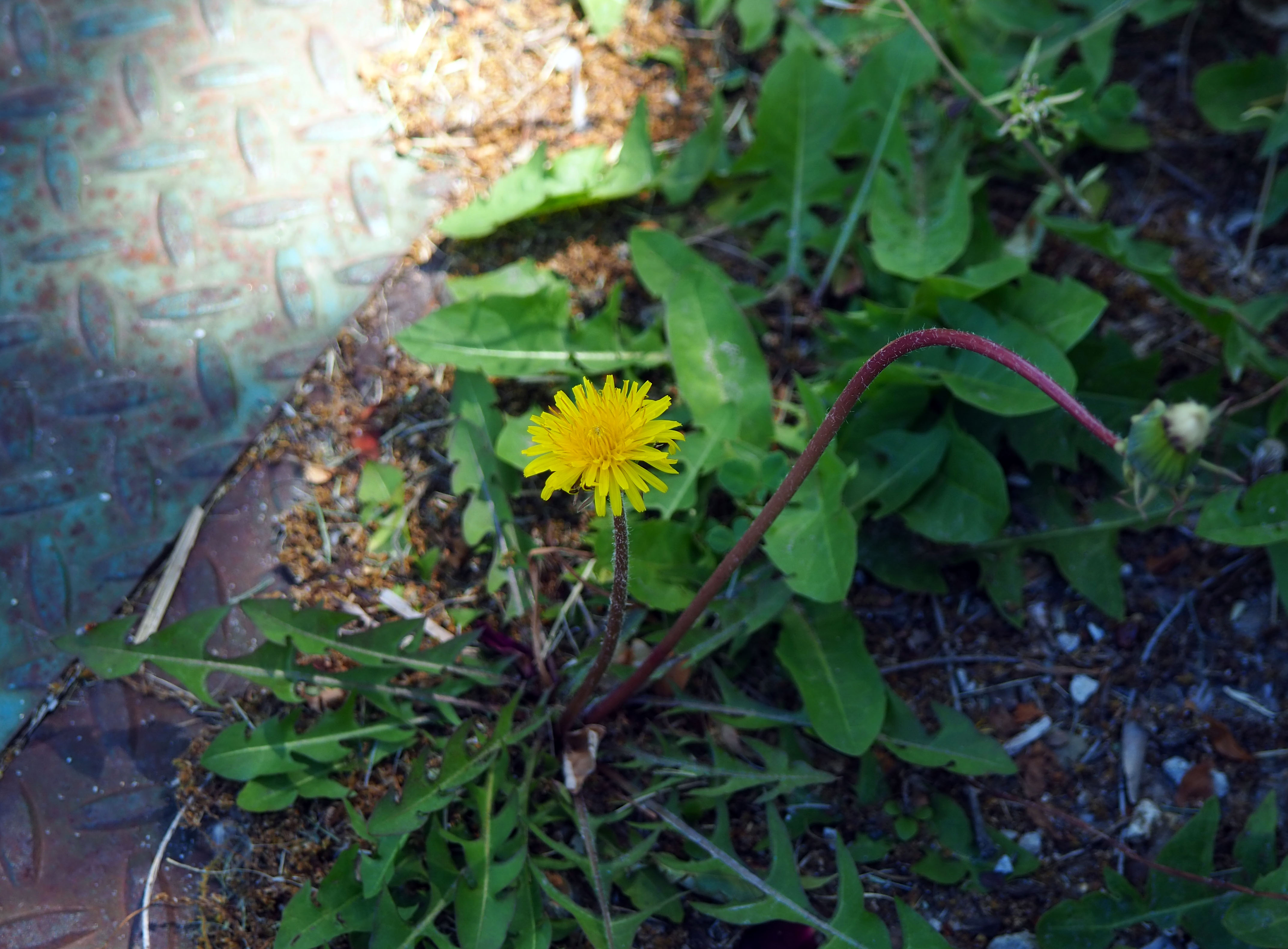
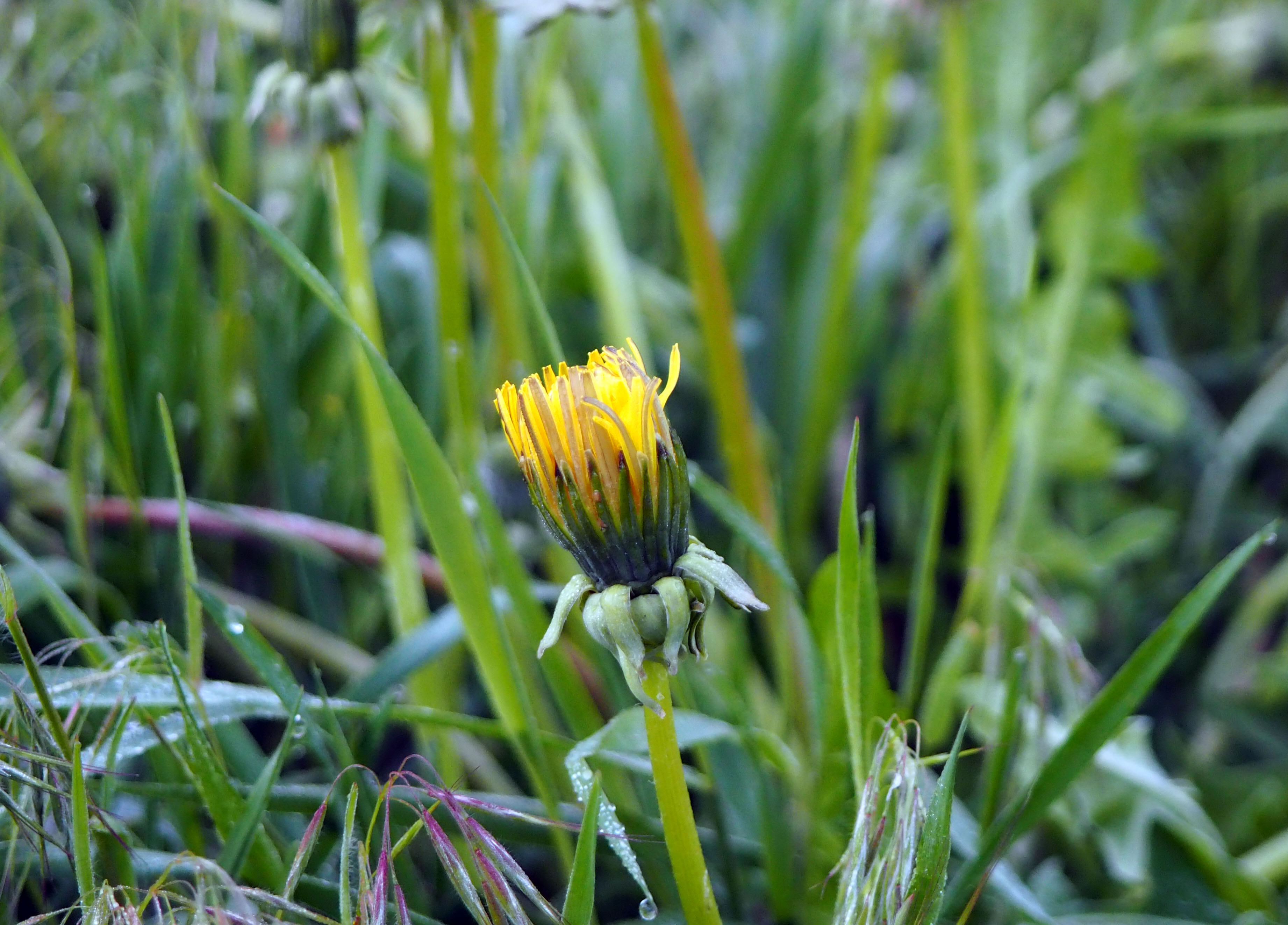
dandelion (Taraxacum officinale)
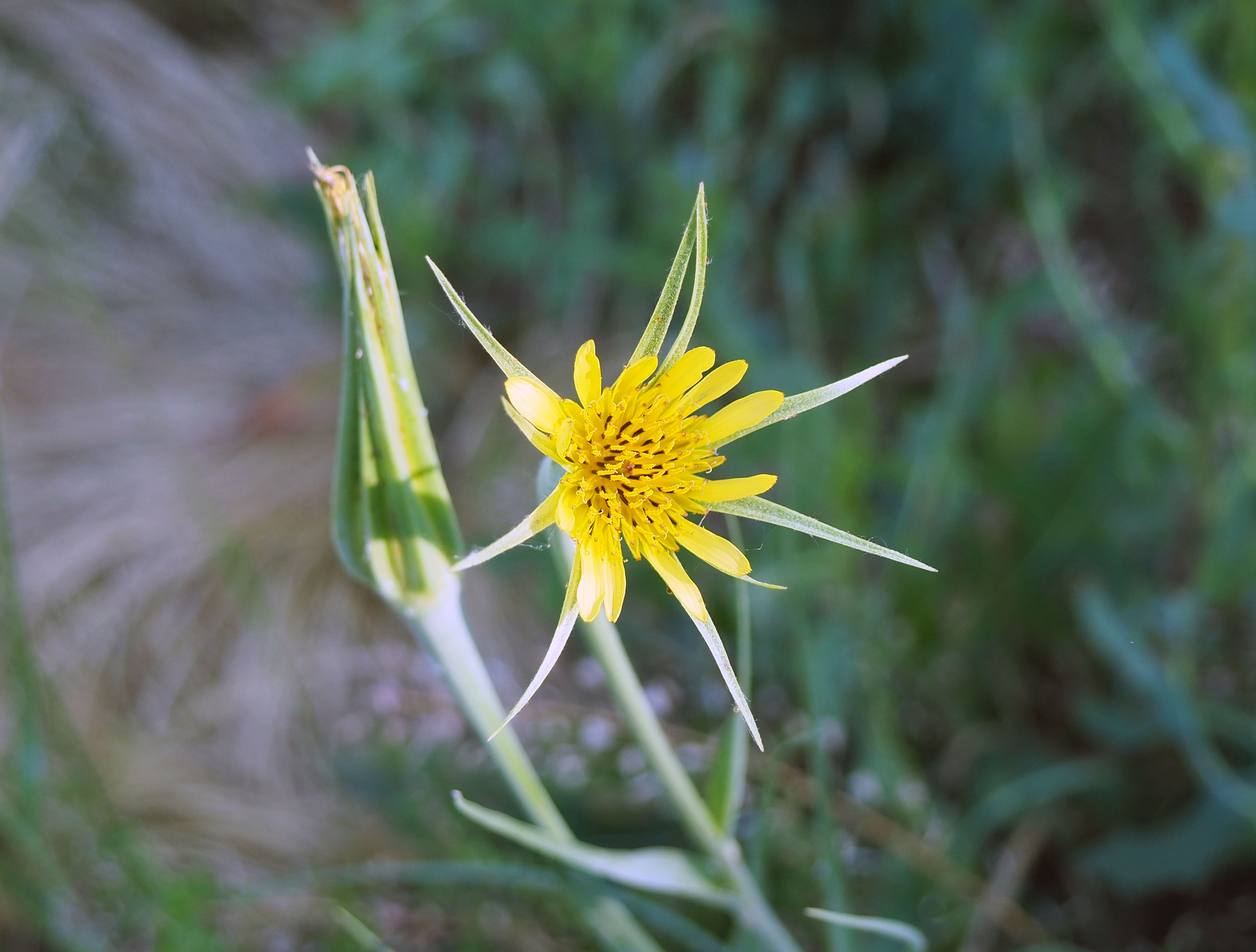
salsify (Tragopogon dubius)
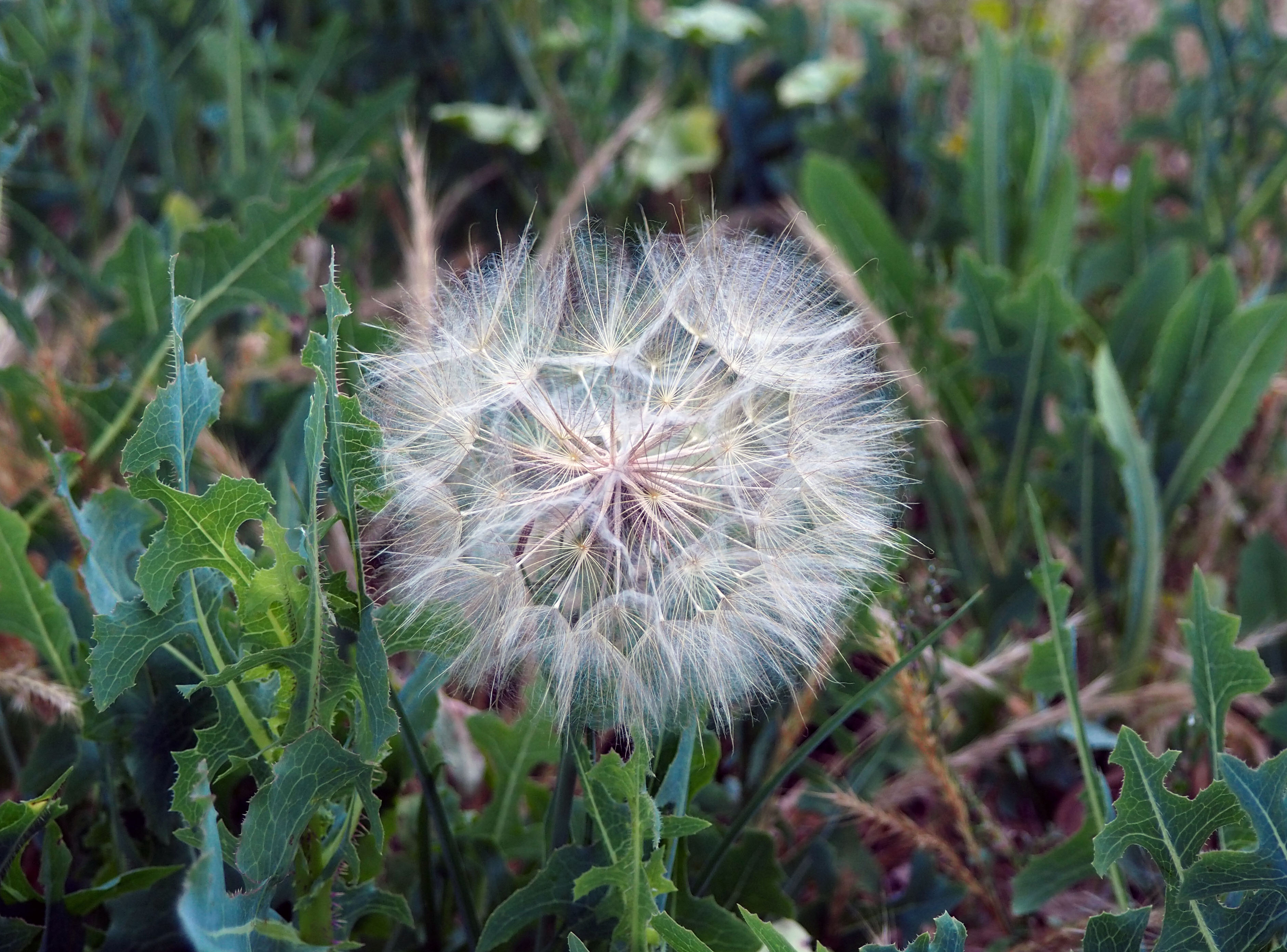
seed head of salsify
knotweed (Poylgonum sp.)
prickly lettuce (Lactuca serriola)
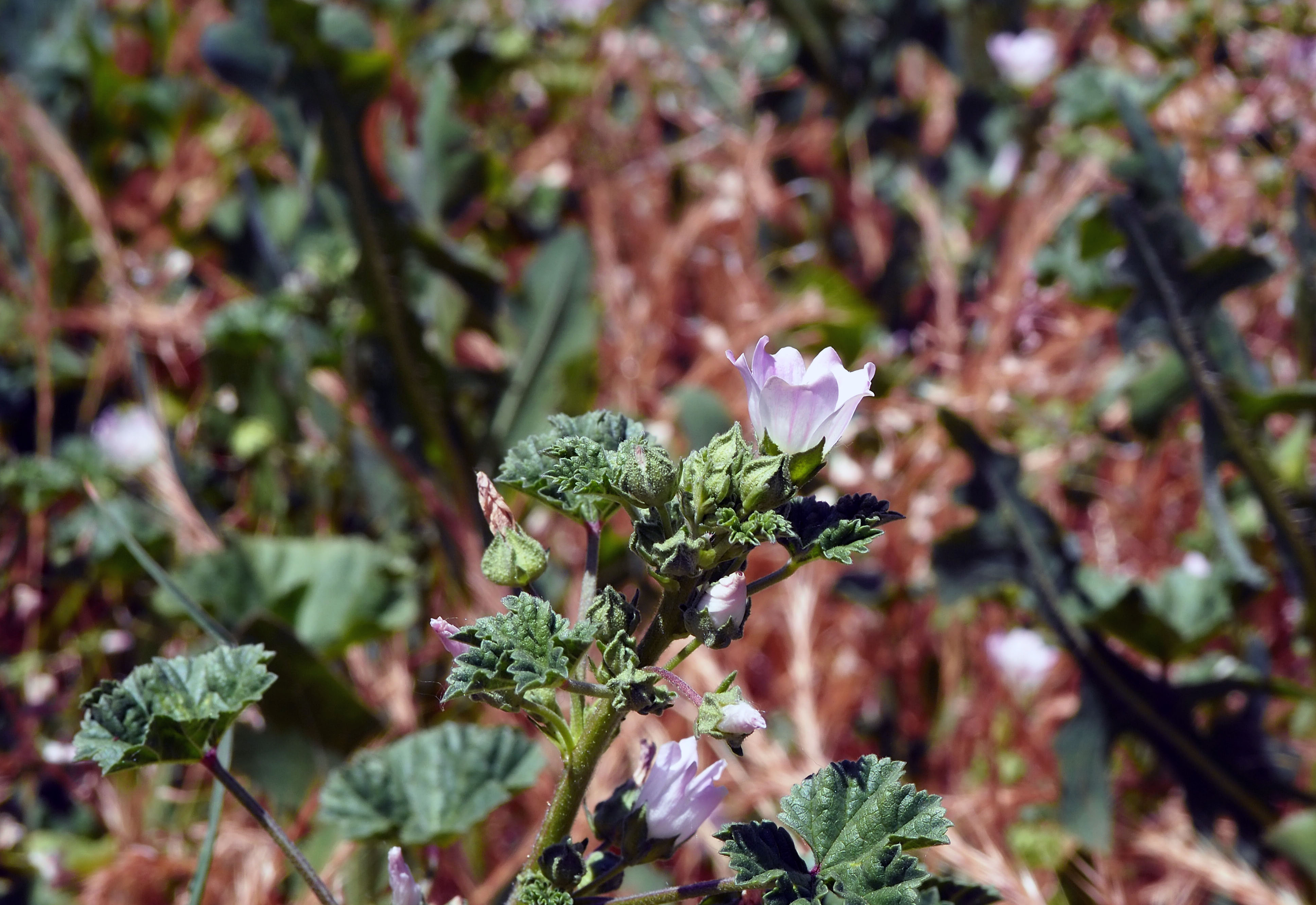
mallow (Malva neglecta)
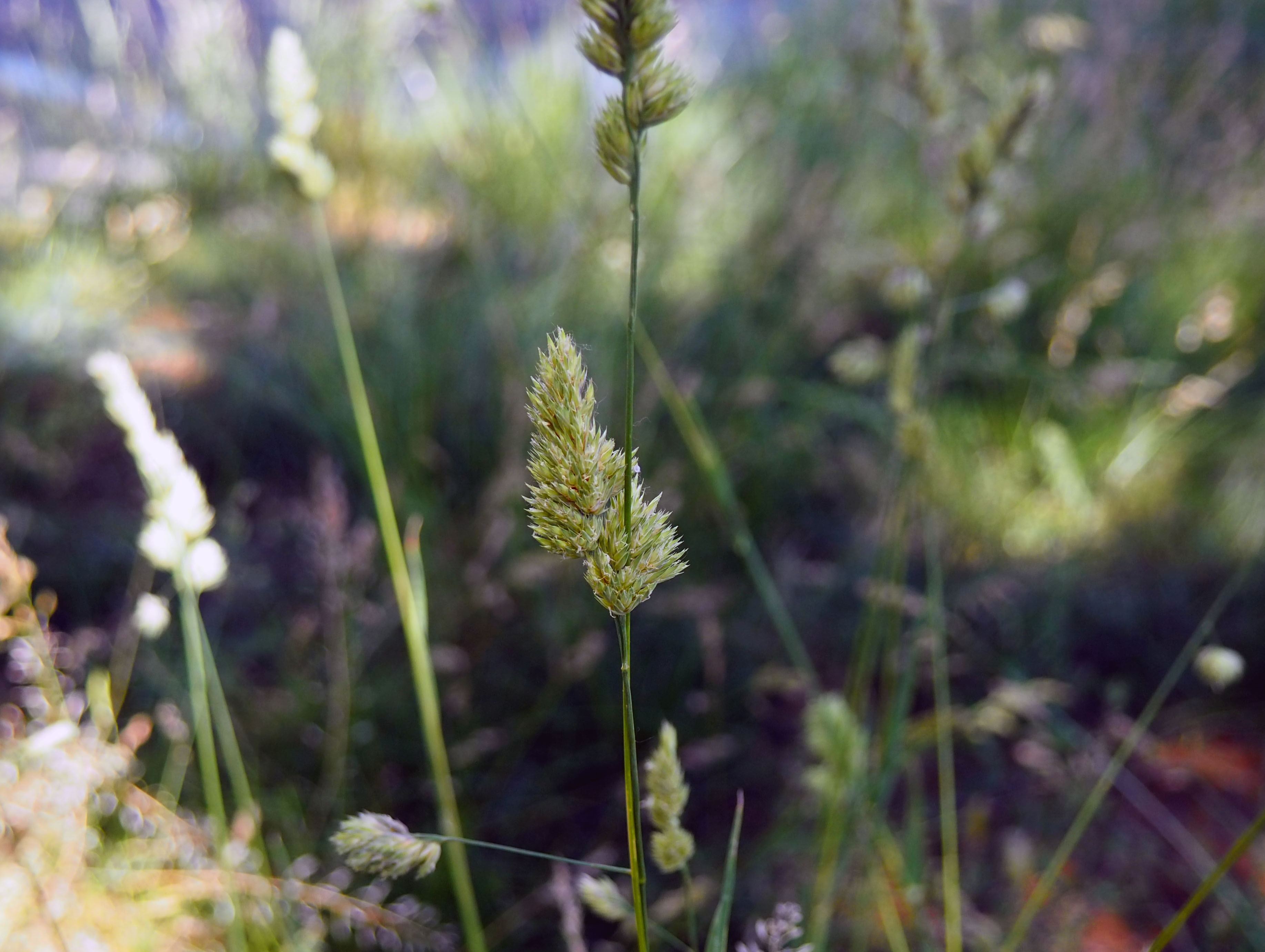
orchard grass (Dactylis glomerata)
  • Bromus tectorum (cheatgrass)
  • Capsella bursa-pastoris (shepherd’s purse)
  • Dactylis glomerata (orchard grass)
  • Epilobium brachycarpum (tall willowherb)
  • Lactuca serriola (prickly lettuce)
  • Malva neglecta (dwarf mallow)
  • Polygonum sp. (knotweed)
  • Salsola sp. (Russian thistle)
  • Taraxacum officinale (dandelion)
  • Tragopogon dubius (salsify)
  • Trifolium repens (white clover)
  • Vulpia myuros (rattail fescue)

Are there unkept hellstrips in your neighborhood? If so, what weeds have you seen taking up residence there?

Flowers Strips Bring All the Pollinators to the Yard

The longer I garden the more I gravitate towards creating habitats for creatures that rely on plants for survival. I’ve always been more interested in functional gardens rather than gardens that are simply “plants as furniture” (as Sierra likes to say) – a manicured, weed-free lawn, a few shrubs shaped into gumdrops, sterile flowers for color – and that interest has grown into a way of life. A garden should be more than just something nice to look at, and for those of us who’ve embraced the “messy ecosystems” approach, what’s considered “nice to look at” has shifted dramatically.

Thankfully, I’m not alone in this thinking. Gardens focused on pollinators, birds, habitats, native plants, etc. seem to be gaining in popularity. The question is, is it making a difference? At least one study, referred to below, seems to suggest that it is. And as more gardens like these are planted and more studies like this are done, perhaps we will get a clearer picture of their impact.

In 2017, eight 1000 square meter flower strips were planted in Munich, Germany. The sites had previously been lawn or “roadside greenery,” according to the report published in the Journal of Hymenoptera Research (2020). An additional flower strip, planted in 2015, was included in the study. Over the next year, an inventory of the number of bee species found in these nine flower strips was taken and compared both to the number of bee species that had been recorded in Munich since 1795 (324 species) and the number of bee species recorded in the 20 years prior to the planting of the flower strips (232 species).

In just a year’s time, these newly planted flower strips quickly attracted a surprising number of bees. The researchers identified 68 different species (which is 21% and 29% of the two categories of previously recorded species). As they had expected, most of the bees they identified were common, non-threatened, generalist species; however, they were surprised to also find several species that specialize on pollen from specific groups of plants. Future studies are needed to determine whether or not such flower strips help increase the populations of pollinators in the city, but it seems clear that they are a simple way to increase the amount of food for pollinators, if nothing else.

But perhaps these results shouldn’t be that surprising. Urban areas are not necessarily the biodiversity wastelands that the term “concrete jungle” seems to imply. Though fragmented and not always ideal, plenty of wildlife habitat can be found within a city. In his book, Pollinators and Pollination, Jeff Ollerton lists a number of studies that have been carried out in cities across the world documenting an impressive number of pollinating insects living within their borders [see this report in Conservation Biology (2017), for example]. As Ollerton writes, these studies “show that urbanization does not mean the total loss of pollinator diversity, and may in fact enhance it.” After all, “many of us city dwellers see every day, nature finds a home, a habitat, a place to thrive, wherever it will.”

In a chapter entitled, “The Significance of Gardens,” Ollerton continues to explore the ways in which cities can host a wide variety of flower visiting insects and birds. “Planted patches” don’t necessarily need to be managed as pollinator gardens in order to provide resources for these creatures, nor do all of the plants need to be native to the region to be effective. Rather, diversity in flower structure and timing seems to be key; “floral diversity always correlates with pollinator diversity regardless of the origin of the plants,” Ollerton writes in reference to pollination studies performed in British cities. The more “planted patches,” the better, as “a large and continuous floral display in gardens is the only way to maximize pollinator abundance and diversity.” Add to that, “if you allow some areas to become unmanaged, provide other suitable nesting sites or areas for food plants, and other resources that they need, a thriving oasis for pollinators can be created in any plot.”

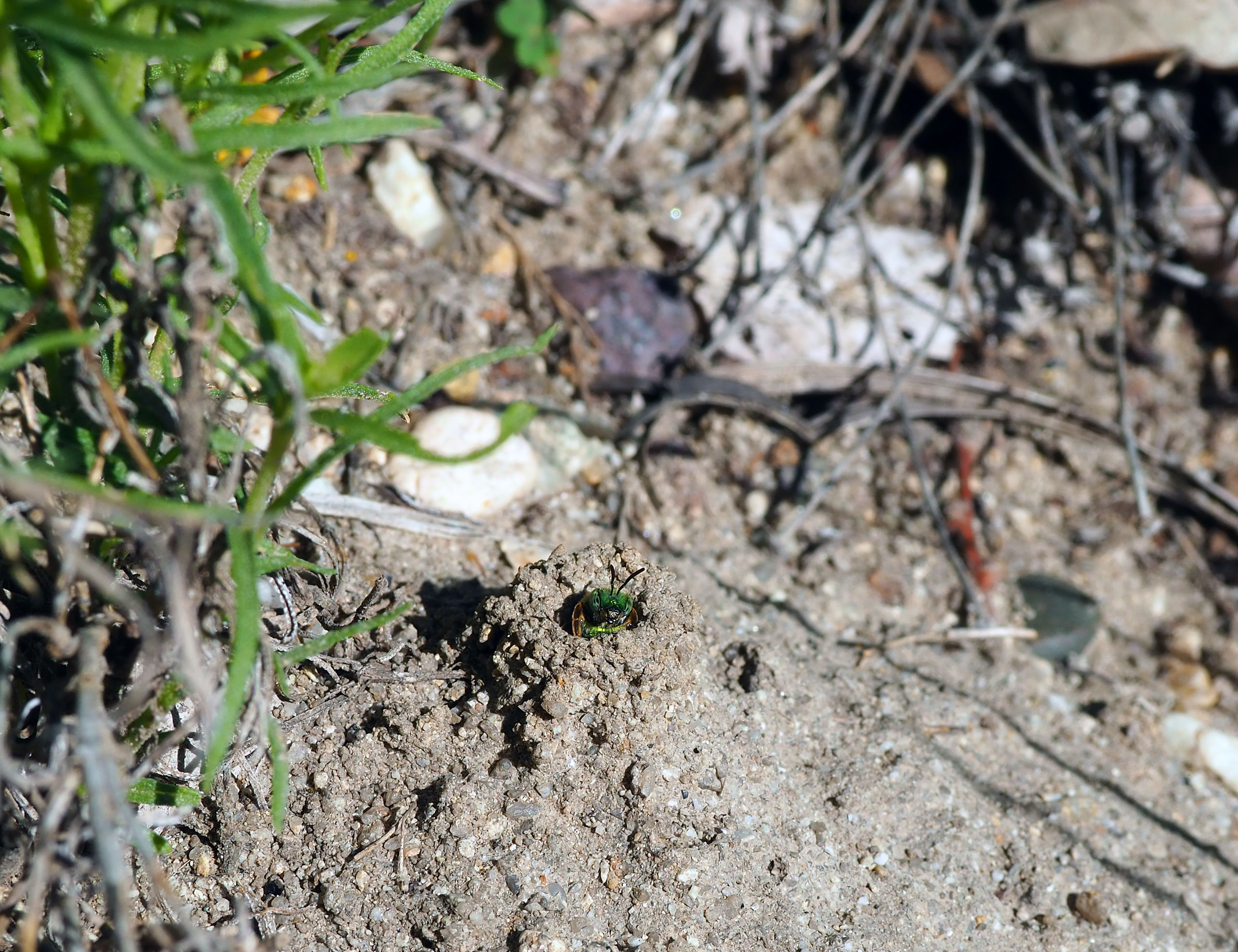
ground nesting bee emerging from burrow

Bees and other pollinating insects are finding ways to live within our cities. There is no need to go to the lengths that I like to go in order to help them out. Simply adding a few more flowering plants to your yard, balcony, or patio can do the trick. Eliminating or limiting the use of pesticides and creating spaces for nesting sites are among other things you can do. Learning about specific pollinators and their needs doesn’t hurt either. The continued existence of these creatures is critical to life on earth, and this is one important issue where even simple actions can make a real difference.


Check out the linktree for various ways to follow and support Awkward Botany.

Awkward Botany on Outdoor Idaho (plus Send Us Your Questions)

I spend a lot time on this blog putting weeds in the spotlight, celebrating them for their successes and the unique and interesting plants they are. It’s rare that I get to share these sentiments outside of this particular venue, but I was given such an opportunity recently when asked to talk about weeds for an episode of Outdoor Idaho, a long running show on Idaho Public Television that covers Idaho’s natural history. The theme of this particular episode is wildflowers, so I was intrigued by the idea of coming on to discuss urban weeds. For many, the term “wildflowers” may invoke native plants blooming in natural areas in places far removed from the hustle and bustle of the city. But a wildflower doesn’t have to be a native plant, nor does it have to be growing in the wild. Any plant occurring naturally on its own without the assistance of humans can be a wildflower, and that includes our wild urban flora. I appreciated the chance to share this particular thought with the viewers of Outdoor Idaho.

photo credit: Jay Krajic

Along with me waxing on about weeds, the Wildflowers episode features a host of other Idahoans sharing their thoughts, expertise, and experiences with wildflowers. The episode is brief – coming in at under 30 minutes – but the producers packed in a ton of great wildflower content, and overall I found it to be an excellent representation of the flora of Idaho and a convincing argument for why we should appreciate and elevate these plants. The flora of any region is special and important in its own right, and Idaho’s flora is no different, including its weeds.

Check out Outdoor Idaho’s Wildfowers episode here.

In other news…

If you want to see more of me on the screen (and I’m not sure why you would), Sierra (a.k.a. Idaho Plant Doctor) and I are doing monthly Q&A videos in which we answer your questions about plants, gardening, pests and diseases, insects, or any other topic you might be curious about. You can tune in to those discussions on Sierra’s instagram. If you have questions of your own that you would like us to address, please leave them in the comments section below, or send them to me via the contact page or my instagram.

Weeds of Boise: Vacant Lot on West Kootenai Street

Every urban area is bound to have its share of vacant lots. These are sites that for whatever reason have been left undeveloped or were at one point developed but whose structures have since been removed. The maintenance on these lots can vary depending on who has ownership of them. Some are regularly mowed and/or treated with herbicide, while others go untouched for long periods of time. Even when there is some weed management occurring, vacant lots are locations where the urban wild flora dominates. Typically no one is coming in and removing weeds in an effort to cultivate something else, and so weeds run the show.

As with any piece of land populated by a diverse suite of wild plants, vacant lots are dynamic ecosystems, which you can read all about in the book Natural History of Vacant Lots by Matthew Vessel and Herbert Wong. The impact of humans can be seen in pretty much any ecosystem, but there are few places where that impact is more apparent than in a vacant lot. In lots located in bustling urban centers, human activity is constant. As Vessel and Wong write, “numerous ecosystem interactions are affected when humans intervene by spraying herbicides or insecticides, by trampling, by physically altering the area, or by depositing garbage and waste products.” These activities “can abruptly alter the availability and types of small habitats; this will in turn affect animal as well as plant diversity and population dynamics.” The dynamic nature of these sites is a reason why vacant lots are excellent places to familiarize yourself with the wild urban flora.

Kōura relaxing in a vacant lot

On our morning walks, Kōura and I have been visiting a small vacant lot on West Kootenai Street. We have watched as early spring weeds have come and gone, summer weeds have sprouted and taken off, perennial weeds have woken up for the year, and grass (much of which appears to have been intentionally planted) has grown tall and then been mowed with some regularity. Someone besides us is looking after this vacant lot, and it’s interesting to see how the plant community is responding. As Vessel and Wong note, “attempts to control weedy plants by mowing, cultivating, or spraying often initiate the beginning of a new cycle of growth.” For plants that are adapted to regular disturbance, measly attempts by humans to keep them in check are only minor setbacks in their path to ultimate dominance.

What follows are a few photos of some of the plants we’ve seen at the vacant lot on Kootenai Street, as well as an inventory of what can be found there. This list is not exhaustive and, as with other Weeds of Boise posts, will continue to be updated as I identify more species at this location.

dandelion (Taraxacum officinale)
grape hyacinth (Muscari armeniacum)
henbit (Lamium amplexicaule)
wild barley (Hordeum murinum) backed by cheatgrass (Bromus tectorum)
narrowleaf plantain (Plantago lanceolata) and broadleaf plantain (Plantago major)
perrennial sweet pea (Lathyrus latifolius) surrounded by redstem filaree (Erodium cicutarium)
whitetop (Lepidium sp.)
white clover (Trifolium repens)
  • Bromus tectorum (cheatgrass)
  • Capsella bursa-pastoris (shepherd’s purse)
  • Ceratocephala testiculata (bur buttercup)
  • Convolvulus arvensis (field bindweed)
  • Descurainia sophia (flixweed)
  • Draba verna (spring draba)
  • Erodium cicutarium (redstem filaree)
  • Geum urbanum (wood avens)
  • Holosteum umbellatum (jagged chickweed)
  • Hordeum murinum (wild barley)
  • Lactuca serriola (prickly lettuce)
  • Lamium amplexicaule (henbit)
  • Lathyrus latifolius (perennial sweet pea)
  • Lepidium sp. (whitetop)
  • Malva neglecta (dwarf mallow)
  • Medicago lupulina (black medic)
  • Muscari armeniacum (grape hyacinth)
  • Plantago lanceolata (narrowleaf plantain)
  • Plantago major (broadleaf plantain)
  • Poa bulbosa (bulbous bluegrass)
  • Poa pratensis (Kentucky bluegrass)
  • Rumex crispus (curly dock)
  • Taraxacum officinale (dandelion)
  • Tragopogon dubius (salsify)
  • Trifolium repens (white clover)
  • Veronica sp. (speedwell)

If you live in an urban area, chances are good there is a vacant lot near you. What have you found growing in your neighborhood vacant lot? Feel free to share in the comment section below.

In Praise of Vagabond Plants – A Book Review

A weed is a highly successful plant that shares a close relationship with humans. In many instances, weeds are seen as nuisance plants, interfering with the goals and intentions we have for a piece of land. In natural areas, they are blamed for, among other things, threatening the existence of the native flora, despite the fact that human activity and disturbance brought them there in the first place and continued human disturbance helps keep them there. In some instances, such as a vacant lot in an urban area, they pose no threat and their existence causes little if any harm, yet they are disparaged for being unsightly, hazardous, and out of place. Nevermind the fact that they are offering a number of ecosystem services free of charge.

For all these reasons and more, weeds get called some pretty nasty things and are the recipient of an unduly amount of ire. The extent that some of us will go to vilify a plant is a bit disturbing to me, so it’s always refreshing to come across a more reasonable approach to weeds. That tempered take is what I found in Gareth Richards’ book, Weeds: The Beauty and Uses of 50 Vagabond Plants, a production of the Royal Horticultural Society and whose vast archives were used to beautifully illustrate the book.

There seems to be a growing trend in the U.K. and other parts of Europe to be more accepting of weeds, to see them as part of our urban, suburban, and exurban flora, and to focus on the value they may bring rather than constantly reviling them as interlopers and thus trying to blast them out of existence with chemical warfare. (See also Wild About Weeds by Jack Wallington). I hope this is true, and I hope the trend continues and catches on in other parts of the world. As Richards writes, “Often the only crime a plant has committed is growing too well.” Thankfully, books like this help bring awareness to these highly fecund and robust plants and their many redeeming qualities.

Richards’ book starts out with a brief introduction and then proceeds with short profiles of 50+ different plant species that are commonly considered weeds. The focus of the book is on weeds found in the U.K.; however, weeds being what they are, at least a few (if not most) of the plants covered are bound to be growing near you regardless of where you live in the world. While there is some discussion of the invasive nature of a few of the plants profiled and the illegality of growing or transporting them – see Japanese knotweed, Himalayan balsam, and pontic rhododendron for example – the focus is not on management nor control. Instead, the discussion revolves around interesting aspects of the plants that makes them worth getting to know rather than something to simply eliminate.

As is often the case when discussing specific plants, medicinal uses and edibility feature heavily in Richards’ plant profiles. It’s interesting to learn about the many ways that humans have thought about and used plants historically, and some of the ways they were historically used are certainly still relevant today; however, many medicinal claims don’t stand the test of time nor do they have empirical evidence to back them up. For this reason, I generally take medicinal uses of plants with a grain of a salt and a healthy dose of skepticism. Edibility, on the other hand, has always been interesting to me, and just when I thought I had heard all the ways that dandelions can be eaten, Richards introduces me to another: “You can even harvest the flower buds for pickling; they make a useful homegrown caper substitute.”

What follows are a few excerpts from the book with accompanying photos of the plants in question.

Ground elder (Aegopodium podagraria) was originally introduced to gardens for its medicinal and edible qualities, but its aggressive behavior can be frustrating. Richards notes, “A useful plant for brave gardeners!”
The rhizomatous nature of yarrow (Achillea millefolium) makes it an excellent addition or alternative to turf grass, and thanks to its drought-tolerance, Richards asserts, “certainly lawns containing yarrow stay greener for longer in dry spells.
Speaking of lawns, “Creeping buttercup (Ranunculus repens) in your lawn is generally a sign that it’s too wet for short grass to thrive.” Richards recommends letting it become a meadow instead. “Sometimes the most rewarding way of gardening is to let nature do it for you.”
Regarding teasel (Dipsacus spp.), Richards writes: “It’s not only bees that adore them; when the seeds ripen they’re loved by birds, especially goldfinches. Try planting some in your garden as a homegrown alternative food source to replace shop-bought nyjer seed.” (photo credit: Sierra Laverty)
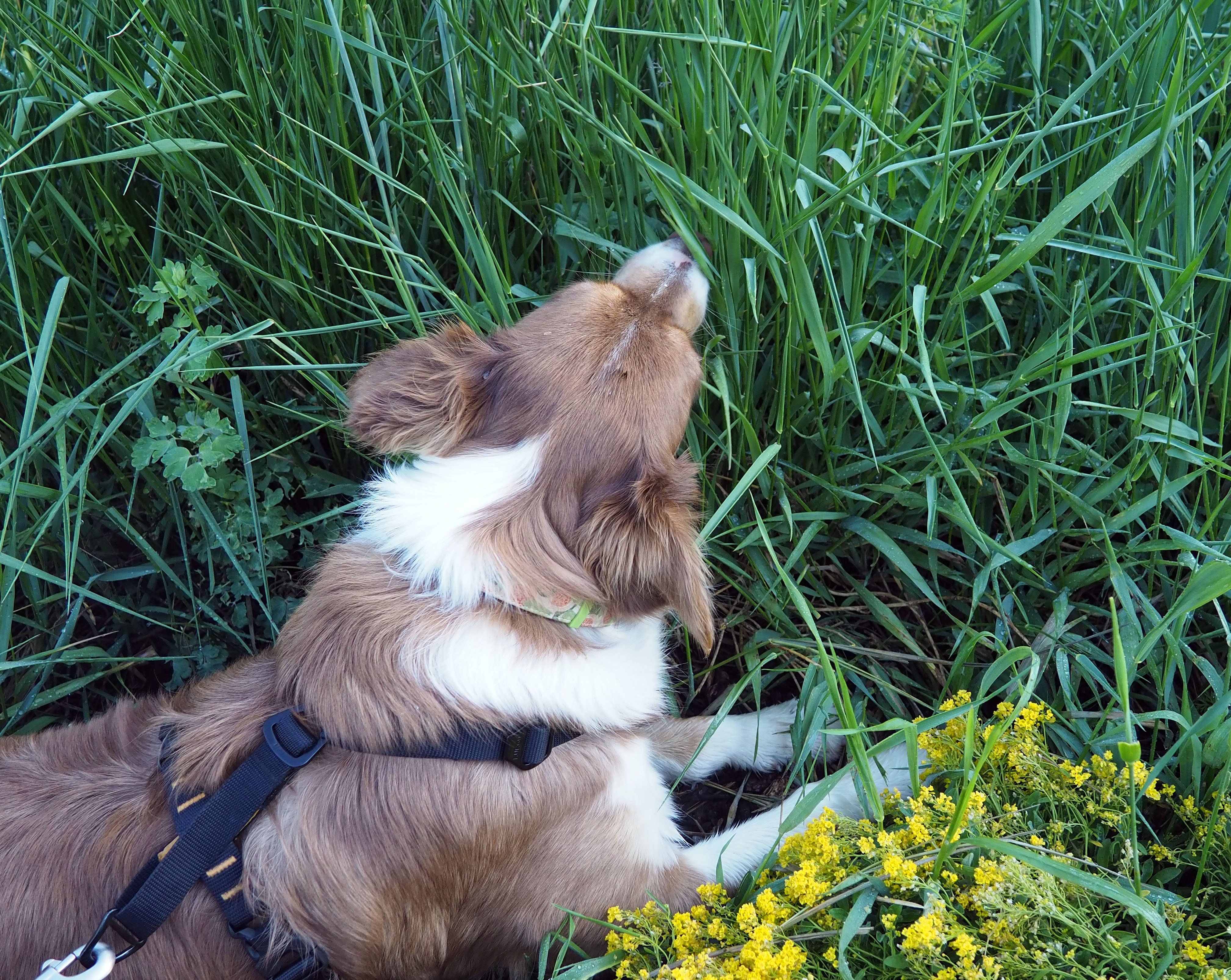
“Cats and dogs seek out couch grass (Elymus repens) when they want to chew on something – either for its minerals or to help them vomit to clear their stomachs, often of furballs.” Kōura can frequently be found chewing on it.
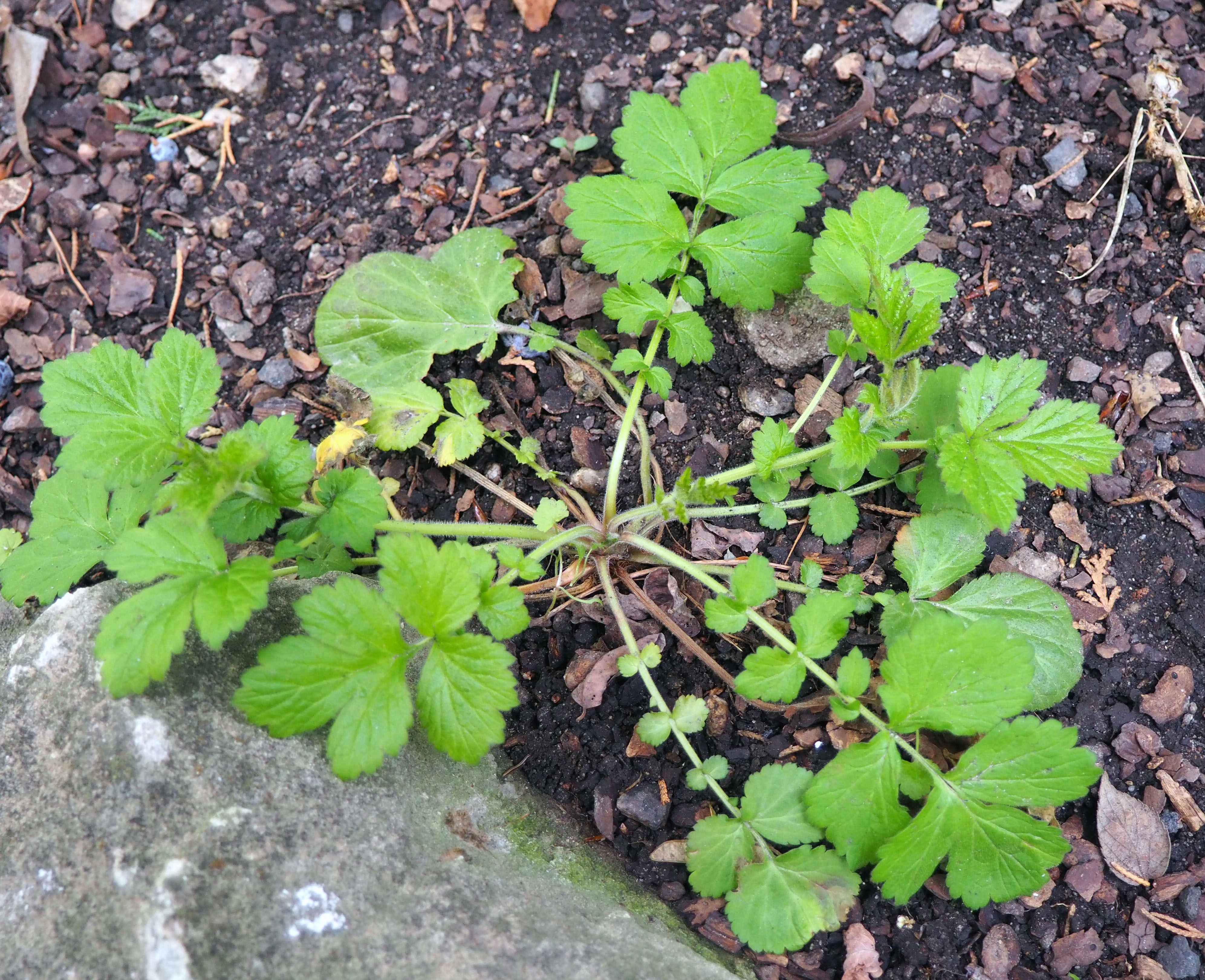
“Like many weeds, herb bennet (Geum urbanum) has some clever adaptations. Its nondescript leaves blend seamlessly with other plants, never drawing attention to themselves. And those [clove-scented] roots are really tough, making plants physically difficult to pull up by hand. … The seeds have small hooks and readily attach themselves to fur and clothing to hitch a free ride to pastures new.”

Regardless of how you feel about weeds, if you’re interested in plants at all, this book is worth getting your hands on and these plants are worth getting to know. They may not be the plants you prefer to see growing on your property, but they have interesting stories to tell and, in many cases, may not be as big of a problem as you originally thought. In discussing Spanish bluebells (Hyacinthoides hispanica) and its weedy relatives, Richards hits on a point that for me is one of the main takeaways of this book: “In an age where gardens are becoming wilder and the countryside ever more fragmented, and nature is on the march due to climate change, perhaps we should just learn to treasure the wild plants that thrive in the the new conditions we have made – wherever they originally came from.”

More Weeds Themed Book and Zine Reviews:

Randomly Selected Botanical Terms: Prickles

Let’s start by getting something out of the way: roses have prickles, not thorns. However, just like peanuts aren’t actually nuts and tomatoes are actually fruits, our colloquial terms for things don’t always match up with botanical terminology. This doesn’t mean that we should be pedants about things and go spoiling a friendly dinner party with our “well, actually…” corrections. If you hear someone saying (or singing) something about every rose having its thorn, it’s okay to just let it go.

So why don’t roses have thorns? And what even is a prickle anyway?

Plants have a way of modifying various body parts to form a variety of features that look like something totally new and different. When the development of these features are observed at a cellular level, we find that what once may have grown into something familiar, like a stem, is now something less familiar, like a thorn. A thorn, then, is a modified stem. Stem tissue was used by the plant to form a hardened spike. Thorns help protect a plant from being eaten, so going through the trouble of producing this feature is a benefit to the plant.

thorns of hawthorn (Crataegus sp.)

Spines and prickles are similar features to thorns and serve a similar purpose, but they have different origins. Spines are modified leaf or stipule tissue (the spines on a cactus are actually modified leaves). Prickles are outgrowths of the epidermis or bark. In plants, epidermis is a single, outer layer of cells that covers all of the organs (i.e. leaves, roots, flowers, stems). Outgrowths on this layer are common and often appear as little hairs. The technical term for these hairs or hair-like structures is trichomes.
the stems of staghorn sumac (Rhus typhina) are covered in dense trichomes

Prickles are much like trichomes, but there are usually less of them and they are hardened and pointy. They can be sharp like a thorn or spine and so are often confused for them. (Spines are also confused for thorns, as is the case with Euphorbia milii, whose common name is crown of thorns but whose “thorns” are actually spines.) As stated above, their cellular origin is different, and unlike thorns and spines, prickles don’t have vascular tissue, which is the internal tissue that transports water and nutrients throughout all parts of the plant. In general, prickles can be easily broken off, as they are often weakly attached to the epidermis.

Prickles are most commonly observed on roses and come in a variety of shapes, sizes, and colors.

Prickles on roses are commonly called thorns, and that’s okay. Thorn is perhaps a more poetic word and easier to relate to. But really, I’m torn and forlorn that they aren’t thorns. It puts me in a pickle trying to rhyme words with prickle.


Check out the linktree for various ways to follow and support Awkward Botany.

Permaculture Lessons, part two: Disabled Permaculture

This is a guest post by Laura-Marie River Victor Peace Nopales (see contact info below).


Hello! I made a guest post on Awkward Botany in March, introducing myself and my spouse, and talking a little about my life with permaculture. Permaculture is a way I learn about plants, love the earth, grow delicious foods, and connect with others. Permaculture has a community aspect, and respect for all beings is part of that. Permaculture is a great idea for disabled people.

Being disabled is a lot of work, and butting up against ableism all around is part of that. A default assumption many have, including many permaculture teachers, is that people are full of abundant energy and can live our values if we choose to. But being disabled means that what we want to do often isn’t the same as what we can accomplish. Disabled permaculture is a great take on permaculture that Ming and I have been doing together for 11 years of friendship and partnership.

Disabled permaculture is a valuable concept that many people can benefit from and customize to their own needs. Throughout this essay, I’ll mention many ways it helps me and Ming live a beautiful interdependent life.

how we’re disabled

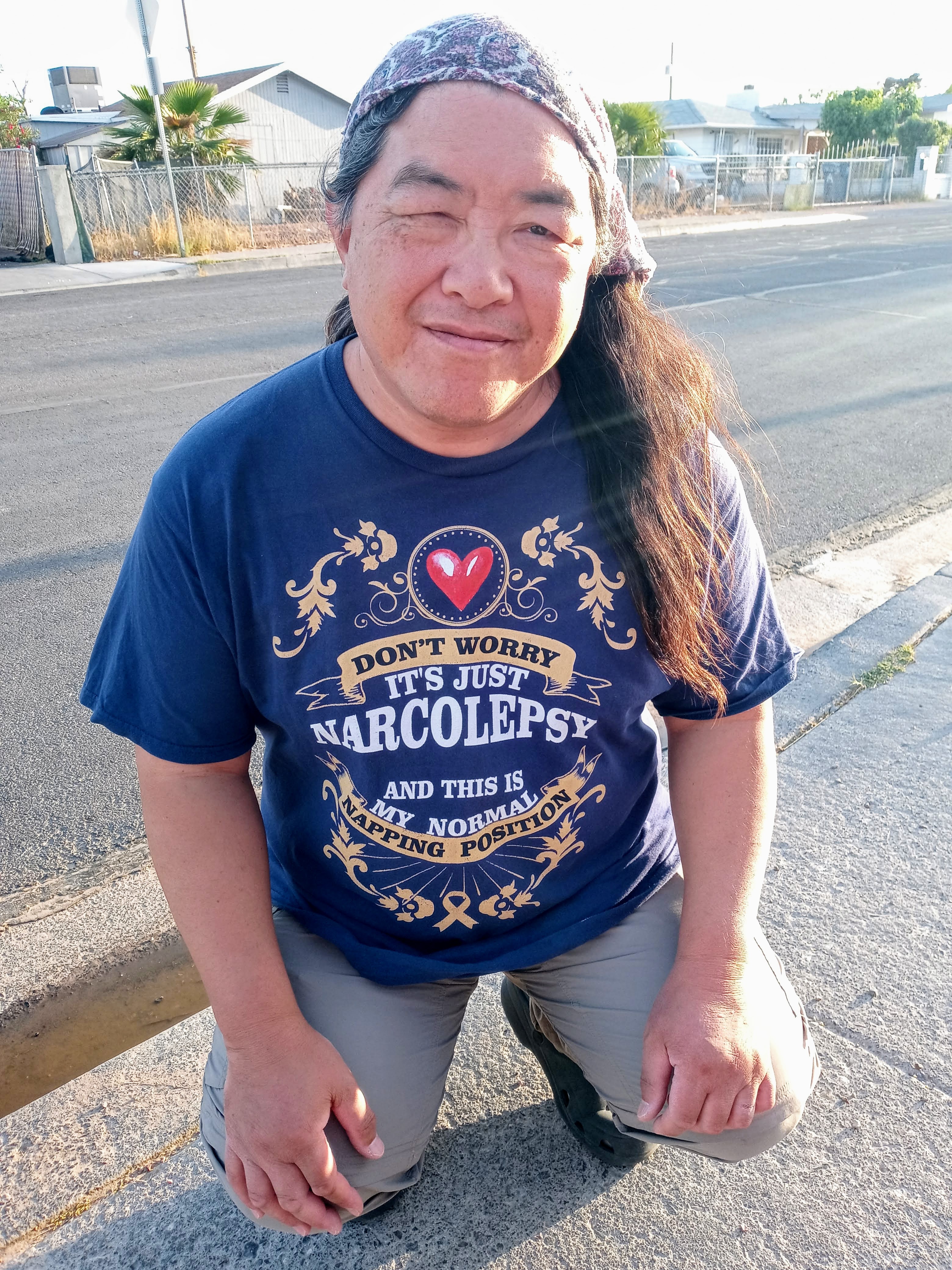
My spouse Ming and I are both disabled. He has narcolepsy, so he falls asleep at unwanted times, doesn’t get restful sleep, and many aspects of life are impacted by his low energy and lack of wakeful cognition. Narcolepsy can contribute to struggles with memory, language, and reality comprehension. Ming also has a diagnosis of OCD.

Ming endures heartache trying to get his medical needs met, since a medication he uses for wakefulness is a controlled substance. The drug war plus health insurance nonsense means he has to jump through more hoops than anyone should need to, let alone a disabled person.

As for me, I have psychiatric diagnoses and hear voices, along with social differences and sensory sensitivities. Some terms that might apply to me are anxious and autistic. I like “crazy” as a reclaimed term, like queer and fat, which also apply. I have a schizoaffective disorder, bipolar type diagnosis. I was sedated on a bipolar cocktail for around 11 years.

how permaculture suits us

Permaculture is a helpful design system for disabled people such as ourselves. We have limited energy and fluctuating capabilities. Sometimes we’re not up for much. Permaculture is helpful as a realistic, forgiving, less energy intensive way of growing plants and doing community.

Permaculture is about working with the land forms and nature’s rhythms, not fighting against them. It’s observantly respectful to Mother Earth and one another.

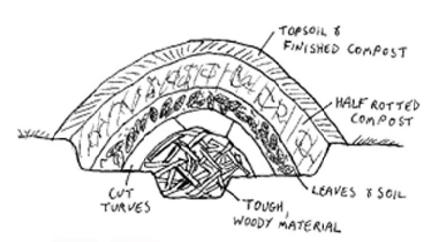
A goal is to create food forests that are self-sustaining. We permaculturists like to take a long view, start small, design for resilience, and rest in hammocks. We create closed loop systems. It’s fun to consider the weaknesses of our systems’ interdependence and arrange backups for our backups, with layers of redundancy. Problems are seen as opportunities. We have a thing for hugelkultur. We enjoy rich diversity, especially at the edges.

image credit: wikimedia commons

Permaculturists love nourishing the land, with compost, generous mulching, water catchment in swales, and other ways of making the land more rich than the scraggly vacant lots and neglected yard space we arrived to. We like doing land justice, so inviting people in, opposing food deserts by sharing our bounty, organizing community gardens, and working together with locals.

We prefer collaboration over gentrification. Smiling, we get a lot of joy out of seed bombs, guerilla gardening wild areas, and having a lemonade party, when life gives us lemons and we make lemonade.

I’ve enjoyed gleaning fruit to share with Food Not Bombs, harvesting olives with neighbors, and lots of sheet mulching with discarded cardboard to unmake lawns. Permaculture has helped me by giving me a framework for the regenerative, earth-nourishing impulses that stirred within me already.

community and energy

If all of this sounds fun, that’s because it is. Why is permaculture especially good for people who are disabled?

Inviting people in and nourishing community means more people care about our garden, and are willing to step in when Ming and I are less out and about. Thank you to the kind community members who see what needs doing and are empowered to contribute to the thriving of garden life.

Also, permaculture is less energy intensive than other ways of growing plants. Long term solution is a relief. Food forests are like Eden. Creating and tending food forests means there can be a bit by bit accumulation of plants that work well together.

It’s not a stressful, all-at-once venture. There’s not the once or twice annual “rip everything out and start over” that I’ve seen other gardeners do. It feels relaxed and cumulative, good for a disabled pace.

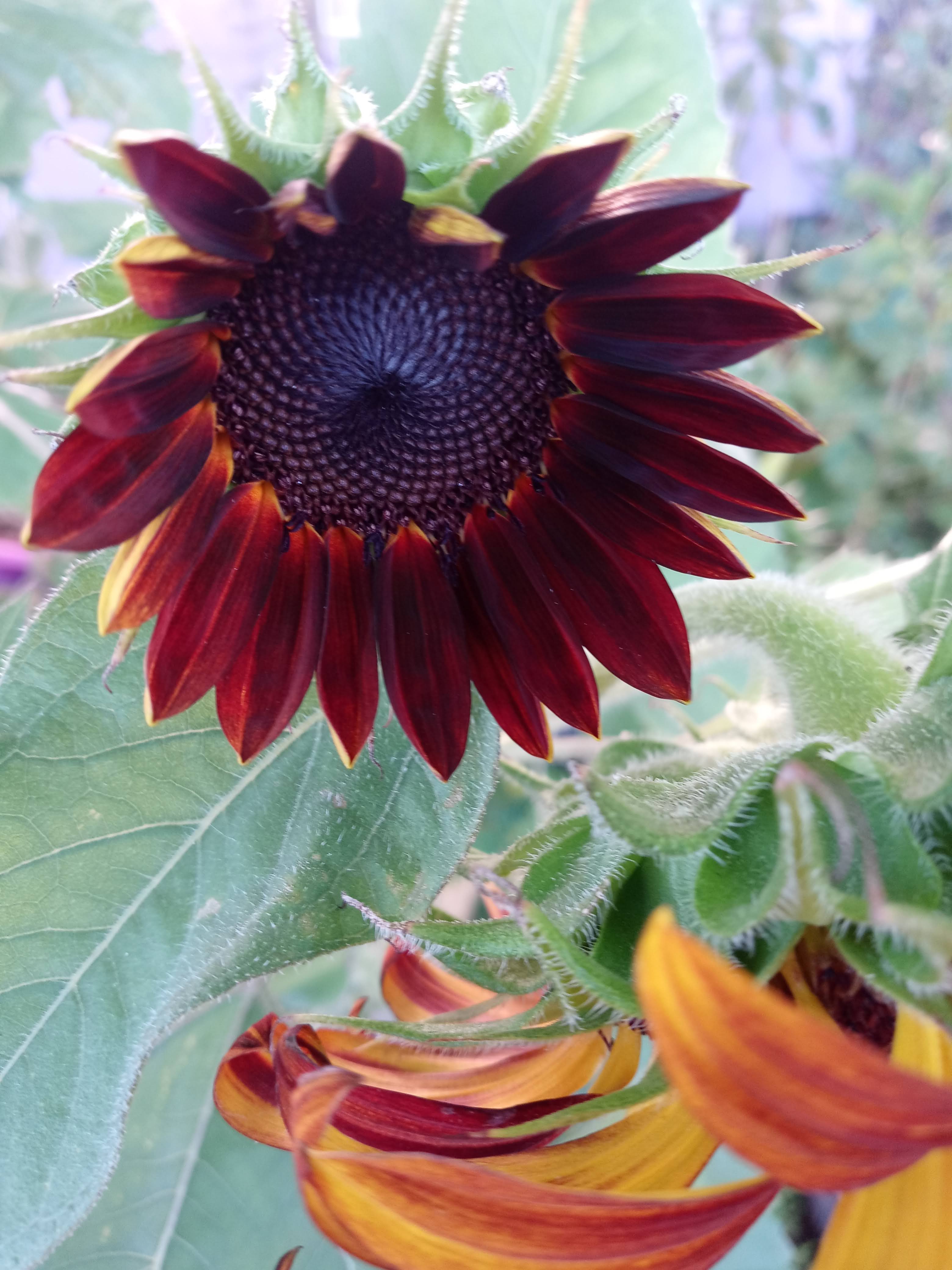
When we have the energy and the weather is cooperative, we evaluate how the garden overall is doing. Do we have room for more herbs? Are enough flowers blooming to attract pollinators and keep them happy? What foods do we want to eat more of, in the next few months? Should we put sunflowers somewhere different this time? It’s unrushed, experimental, fun, and slow.

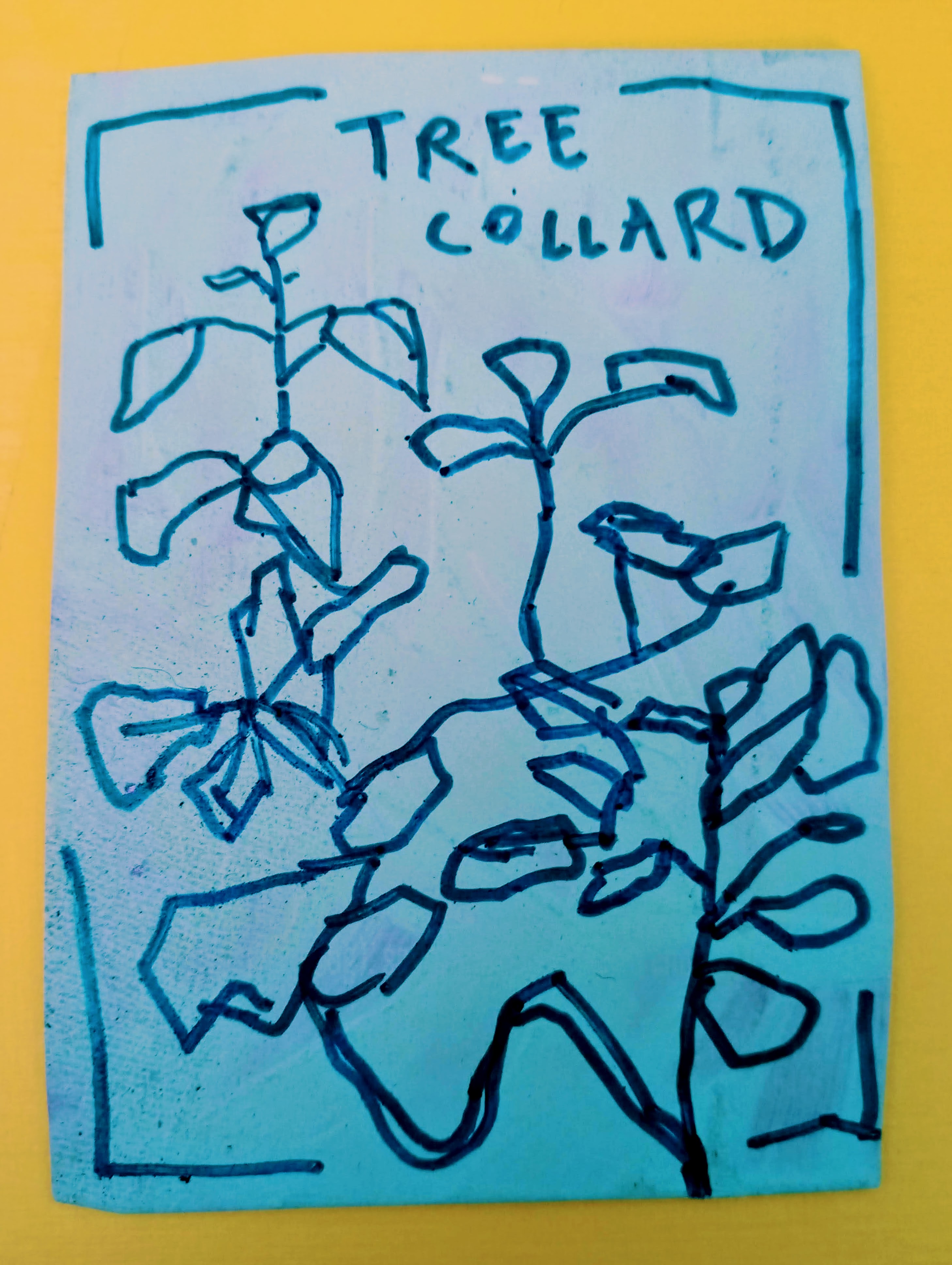
tree collards for disabled permaculture

The tree collards I mentioned last post are easier to grow than regular collards and kale. Let me tell you about these delicious leafy brassicas as a disabled permaculture example. Tree collards give tasty greens perennially, for years. We get a lot of delicious food from them!

Tree collards are easy to propagate. No need to buy or save seeds, then tend tender seedlings. Just break off a branch, stick it in the garden ground, make sure it stays moist for a few weeks, and hope for the best. It may root and start growing soon.

The tree collards we have are purple with the green. They’re gorgeous and can get lush in the winter. They’re tasty by themselves, sautéed with garlic, added to beans. We had some on our Passover Seder plate recently. When I cook rice, I might add a few tree collard leaves at the end to steam and greenly compliment my carbs.

When I make pesto, I throw in a few leaves of tree collard with the basil. When Ming is gardening, he often munches a few leaves. I smell them, pungent on his breath, when he returns indoors and kisses me.

It’s fun to give cuttings to friends and share the bounty. We talk about perennial vs annual and biennial. We talk about permaculture as an important guiding force in our disabled family. Even if the cuttings die, ideas and love were propagated. By sharing our values, we’ve inviting them into our life.

I like watching tree collards age, lean over, flower, die back, surge forth, reach for the sun. We keep them in our permaculture zone 1, right by our front door, as they are our darlings. They’re available to us all the time.

inevitable

Many people are disabled one way or another, and many people will become disabled, if lucky enough to live into old age. Disabled permaculture is a way most anyone can garden. The investment can be small and gradual.

Some people think of gardening as expensive, requiring tools and the building of raised beds, remaking the garden seasonally, and the accumulation of books and arcane knowledge. But permaculture is humble, less expensive, and becomes an intuitive part of life.

Our garden is not a separate thing that we can choose to do or not do, this spring. It’s always happening, like the other aspects of our creativity, our health, our family, and the cycles of nature.


Laura-Marie River Victor Peace Nopales is a queer trikewitch who enjoys zines, ecstatic dance, and radical mental health. Find her at listening to the noise until it makes sense.

Dispersal by Open Sesame!

In certain instances, “open sesame” might be something you exclaim to magically open the door to a cave full of treasure, but for the sesame plant, open sesame is a way of life. In sesame’s case, seeds are the treasure, which are kept inside a four-chambered capsule. In order for the next generation of plants to have a chance at life, the seeds must be set free. Sesame’s story is similar to the stories of numerous other plant species whose seeds are born in dehiscent fruits. But in this instance, the process of opening those fruits is fairly unique.

Sesamum indicum is a domesticated plant with a 5000 plus year history of cultivation. It shares a genus with about 20 other species – most of which occur in sub-Saharan Africa – and belongs to the family Pedaliaceae – the sesame family. Sesame was first domesticated in India and is now grown in many other parts of the world. It is an annual plant that is drought and heat-tolerant and can be grown in poor soils and locations where many other crops might struggle. However, the best yields are achieved on farms with fertile soils and adequate moisture.

image credit: wikimedia commons

Depending on the variety and growing conditions, sesame can reach up to 5 feet tall and can be unbranched or highly branched. Its broad lance-shaped leaves are generally arranged directly across from each other on the stem. The flowers are tubular, similar in appearance to foxglove, and are typically self-pollinated and short-lived. They come in shades of white, pink, blue, and purple and continue to open throughout the growing season as the plant grows taller, even as fruits formed earlier mature. The fruits are deeply-grooved capsules with at least four separate chambers called locules. Rows of tiny, flat, teardrop shaped seeds are produced in each chamber. The seeds are prized for their high oil content and are also used in numerous other ways, both processed and fresh. One of my favorite uses for sesame seeds is tahini, which is one of the main ingredients in hummus.

The fruits of sesame are dehiscent, which means they naturally split open upon reaching maturity. Compare this to indehiscent fruits like acorns, which must either rot or be chewed open by an animal in order to free the seeds. Dehiscence is also called shattering, and in many domesticated crop plants, shattering is something that humans have selected against. If fruits dehisce before they can be harvested, seeds fall to the ground and are lost. Selecting varieties that hold on to their seed long enough to be harvested was imperative for crops like beans, peas, and grains. In domesticated sesame, the shattering trait persists and yield losses are often high.

Most of the world’s sesame crop is harvested by hand. The plants are cut, tied into bundles, and left to dry. Once dry, they are held upside down and beaten in order to collect the seeds from their dehisced capsules. When harvested this way, naturally shattering capsules may be preferred. But in places like the United States and Australia, where mechanical harvesting is desired, it has been necessary to develop new, indehiscent varieties that can be harvested using a combine without losing all the seed in the process. Developing varieties with shatter-resistant seed pods, has been challenging. In early trials, seed pods were too tough and passed through threshers without opening. Additional threshing damaged the seeds and caused the harvest to go rancid. Mechanically harvested varieties of sesame exist today, and improvements in these non-shattering varieties continue to be made.

In order to develop these new varieties, breeders have had to gain an understanding of the mechanisms behind dehiscence and the genes involved in this process. This research has helped us appreciate the unique way that the capsules of the sesame plant dehisce. As in the seed bearing parts of many other plant species, the capsules of sesame exhibit hygroscopic movements. That is, their movements are driven by changes in humidity. The simplest form of hygroscopic movement is bending, which can be seen in the opening and closing of pine cone scales. A more complex movement can be seen in the seed pods of many species in the pea family, which both bend and twist as they split open. In both of these examples, water is evaporating from the plant part in question. As it dries it bends and/or twists, thereby releasing its contents.

dehisced capsules of sesame (Sesamum indicum); photo credit: wikimedia commons (Dinesh Valke)

The cylindrical nature and cellular composition of sesame fruits leads to an even more complex form of hygroscopic movement. Initially, the capsule splits at the top, creating an opening to each of the four locules. The walls of each locule bend outward, then split and twist as the seed falls from the capsule. In a study published in Frontiers in Plant Science (2016), researchers found that differences in the capsule’s inner endocarp layer and outer mesocarp layer are what help lead to this interesting movement. The endocarp layer is composed of both transvere (i.e. circumferential) and longitudinal fiber cells, while the mesocarp is made up of soft parenchyma cells. The thicknesses of these two layers gradually changes along the length of the capsule. As the mesocarp dries, the capsule initially splits open and starts bending outwards, but as it does, resistance from the fiber cells in the endocarp layer causes further bending and twisting (see Figure 1 in the report for an illustration). As the researchers write, “the non-uniform relative thickness of the layers promotes a graded bi-axial bending, leading to the complex capsule opening movement.”

All this considered, a rock rolling away from the entrance of a cave after giving the command, “Open sesame!” almost seems simpler than the “open sesame” experienced by the fruit of the sesame plant.

See Also: Seed Shattering Lost – The Story of Foxtail Millet

Permaculture Lessons, part one

This is a guest post by Laura-Marie River Victor Peace Nopales (see contact info below).


Hello, I’m Laura-Marie. I love plants, permaculture, and learning what grows wherever I find myself. This guest post is about the permaculture lessons I’ve learned gardening with my spouse Ming. Ming is a kind, brilliant person who enjoys interdependence, being a street medic, and helping our garden grow. He’s a long-time permaculturist with two permaculture design certificates.

I’ve studied permaculture for ten years. I enjoy it for many reasons: responsibility and interdependence of organisms, long view, appreciation of small. Thinking a lot about water storage, microclimates, and what makes sense for a particular place. That “you don’t have too many snails–you have too few ducks” mentality. Anything you have too much of to use can be pollution, even something usually considered good.

origins

Ming and I are both from California. We moved to this Las Vegas desert from Sacramento, which is at the north part of the Central Valley and inland from the Bay Area. I love Sacramento for its diversity of humans, plentiful parks, and proximity to many other wonderful places. Ming likes that it’s compact, but not too dense. Things are close together and easy to get to, but not overly scrunched up and piled on each other. 

Sacramento gets hot in the summers but cools off at night with a breeze from The Delta. There are rivers, a wet feel, many trees. We liked helping with Food Not Bombs and being part of the peace community there.

When Ming and I gardened in Sacramento, our relationship grew and changed as our plants grew. At Fremont Community Garden, I turned compost for the first time. I ate the most delicious Asian pears I’ve ever tasted and learned what espalier pruning is, for easy reach of fruits. 

I learned how to be a good garden neighbor. The man who grew long beans in the plot next to ours went on vacation and asked us to water his plot. Our reward was harvesting from his garden. I never knew green beans could grow like that, and so delicious.

In that climate and soil, the oregano we had in our herb spiral went wild, like mint does some places. It turned into a delicious weed, and we would harvest whole trays of oregano to deliver to a local restaurant in exchange for cookies and drinks. It was informative to watch the oregano choke out the tarragon, as the herb spiral spiraled out of control.

Our lavender bush got bigger and bigger–I liked my fragrant attempts to divide it, as I learned how to use a shovel. I enjoyed our basil forest, pinching its flowers, and seeing basil wood for the first time.

tree collards

Tree collards are a quintessential permaculture plant. People who want food forests do well to grow this charming perennial brassica. Ming and I grew lush, gorgeous tree collards in Sacramento. They are so productive and delicious to eat. I loved to make curried greens with beans, and I added ripped up tree collard leaves to a stir fry or any veg dish for more deliciousness. Yes, I adored those pretty leaves, whether they were green or purple.  

Our biggest, first tree collard we called Sideshow Bob. Its leaves floofed up like the hair of Sideshow Bob on the cartoon tv show The Simpsons. Sideshow Bob got infested with Harlequin bugs, and I learned how to save a tree collard from Harlequin bug infestation. Squishing around 300 Harlequin bugs between my gloved fingers and putting their bug bodies into a bucket of soapy water was a thought-provoking scene of carnage.  

What am I willing to do, to defend my favorite plant and meal ingredient? I considered what must die to keep my own body alive, what’s worth it. I miss those cute orange gardening gloves that I would never look at the same way again.

Sideshow Bob tipped over, and Ming found ways to support its “trunk” as it grew diagonally. It was fun to watch Sideshow Bob’s adjustment to sideways life, and we liked to give cuttings away.

Tree collards are easy to propagate, so we had several tree collard plants in our garden after some time. We brought one to my mom’s house and planted it at the edge of her garden. She lived in a different part of California, further south near the coast. Her tree collard flourished there. Every time we visited my mom, I felt excited to see how the tree collard had grown.

sharing

For a while we had two gardens. We had our plot at Fremont Community Garden, but we also lived in an apartment complex with shared beds.There were four beds when we got there, and then two more were added.  

We learned about sharing garden space with friends, including emotions, not wanting to encroach on someone else’s space, challenges of communication and expectations. I had a clump of rainbow chard that I loved to eat and watch grow. It got infested with aphids, but I was hoping to win that battle.  After some time, a well-meaning neighbor ripped it out, and I cried.

We learned how much space is the right amount, and which plants we like to eat grow well in Sacramento.  Tomatoes do well there.  I learned a permaculture lesson about the wave of energy: how having a high yield might not correspond to having enough energy to harvest it.  

One summer, so many cherry tomatoes grew that we couldn’t harvest them fast enough. Big changes were happening in the lives of everyone who lived in that apartment building, when the tomato plants were covered in hundreds of fruits. It was sad, not to have the capacity to share surplus with people in need.

There’s a mushroom farm in Sacramento that gave away spent substrate, which intrigued us.  We decided to try using substrate as mulch. “It could take nutrients from the soil, since it’s just sawdust.  Maybe this is a silly idea,” we wondered.  But we opened the bags and spread the sawdust on our garden beds, curious,

Then there was a rainy couple weeks in the winter, and we found ourselves with more oyster mushrooms than we could eat. They fruited out like mad. That felt magical and was a tasty experiment in trying something out just to see what happens.

promise

In future guest posts, I’d like to tell you what I’ve learned doing permaculture in the desert, and how doing permaculture as a disabled person is a great idea. Please let this post serve as an introduction to how my spouse Ming and I see plants and enjoy garden life.  

We enjoy new experiences, and we have a slow, grateful pace of loving the land. We love plants as food and sibling organisms on this beautiful earth.


Laura-Marie River Victor Peace Nopales is a queer permaculturist trikewitch who enjoys zines, ecstatic dance, and radical mental health. Find her at https://www.listeningtothenoiseuntilitmakessense.com.

The Wonderful World of Plantlets, Bulbils, Cormlets, Tubercles, and Gemmae

Probably the most well known strategy that plants have for dispersal is by way of seeds. Seeds are plants in embryo, and new generations of plants are born when seeds, released from their parent plants, find suitable locations to germinate. But one of the most amazing things about plants in general is that they have the ability to reproduce in a variety of different ways, and many plant species are not limited to seeds as their only means of dispersal. A paper by Scott Zona and Cody Coyotee Howard, published in Flora (February 2022), introduces us to the intriguing world of aerial vegetative diaspores – just one of the many ways that plants have to get around.

A diaspore is a plant structure that facilitates dispersal. Seeds are diaspores, as are spores, which are produced by non-seed bearing plants like mosses and ferns. If you’ve ever planted bulbs, you’ve handled another type of diaspore. Bulbs and corms, which many spring flowering plants are grown from, form little offshoots called bulblets and cormels that, when detached from their parent structure, can grow into new individuals. These vegetative diaspores are produced below ground. Aerial vegetative diaspores, on the other hand, are formed on above ground plant parts. This clunky term encompasses a number of different structures that are often simply called bulbils, which Zona and Howard explain is used as “a catch-all term that obscures their morphological identity.”

Compiling a list of plant species that feature aerial vegetative diaspores is a difficult task when plant descriptions from various sources use a broad selection of terminology for the same or similar plant parts. To help complete this task, Zona and Howard defined five distinct types of aerial vegetative diaspores – plantlets, bulbils, cormlets, tubercles, and gemmae – and came up with a list of 252 taxa that are known to feature at least one of these structures.

plantlets on the leaf margin of Kalanchoe daigremontiana (wikimedia commons; Aurélien Mora)

Plantlets are miniature plants attached to another plant. Once mature, they have clearly visible leaves, stems, and roots (or root initials) and are non-dormant, meaning they are ready to grow on their own as soon as they’re given the opportunity. The tiny plants borne along the margins of the leaves of mother of thousands (Kalanchoe daigremontiana) is a great example of a plantlet.

A bulbil consists of a shortened stem surrounded by scale leaves modified for food and water storage. Sometimes root initials are visible at the base of the bulbil. Bulbils remain dormant until they are dispersed and conditions are suitable for growth. When bulbils start growing but remain attached to the plant, they become a plantlet. A good example of a bulbil can be found on bulbous bluegrass (Poa bulbosa).

Cormlets are comprised of stem tissue and, like plantlets and bulbils, have a single axis of polarity. They have highly reduced scale leaves and are dormant at dispersal. Bulbil bugle lily (Watsonia meriana), despite its misleading common name, is a good example of a plant that produces cormlets.

Tubercles are made up of swollen stem tissue and, like tubers (their underground counterparts), have multiple shoot buds and multiple axes of polarity (meaning there is no right side up like there is in plantlets, bulbils, and cormlets). They lack scale leaves and are dormant at dispersal. Air potato (Dioscorea bulbifera) is an example of a tubercle-producing plant. As you might guess from the common name, potato-like structures are produced aerially on this vining plant that was introduced to North America from Africa and is now invasive in Florida.

A gemma is a tiny cluster of undifferentiated cells. Gemmae are non-dormant and lack polarity. They are the smallest and least common form of aerial vegetative diaspore and can be found on Drosera pygmaea, a species of sundew native to parts of Australia and New Zealand.

Drosera pygmaea (wikimedia commons; Björn S…)

Zona and Howard’s list of plants with aerial vegetative diaspores is the most comprehensive list to date – although it is undoubtedly and understandably missing some – and includes representatives from 42 plant families and 21 plant orders. Plantlets are the most common form of aerial vegetative diaspore at 116 taxa, with bulbils coming in second at 72. Cormlets and tubercles are less common, with 25 and 16 taxa respectively. Their paper includes the full list and offers further information about many of the species listed. It’s worth taking time to explore and is a valuable resource for anyone interested in the topic. In addition, their discussion section highlights a number of questions that warrant further investigation.

Questions surrounding reproductive strategies and the dispersal of aerial vegetative diaspores are particularly interesting. Because these structures are vegetative, they are essentially clones of the parent plant, meaning there is no genetic mixing as occurs when seeds are produced. This can be an advantage when sexual reproduction isn’t possible due to lack of pollinators, environmental restrictions, or chromosomal/polyploidy anomalies. It also assures that new individuals are pre-adapted to the site, and it can help a species colonize an area quickly. This ability to rapidly colonize explains why several of the species on Kona and Howard’s list are known to be invasive in parts of the world outside of their native range.

A species that produces both seeds and aerial vegetative diaspores may have an advantage when it comes to dispersal since both types of diaspores have their strengths. Seeds can remain dormant in the soil and are likely to persist in the environment longer than vegetative diaspores, but vegetative diaspores can be produced without relying on pollinators and can establish new individuals quickly. The modes of dispersal between the two can also vary. Seeds can be dispersed by wind or carried away by animals, while vegetative diaspores often rely solely on gravity to get around. One exception is hitchhiker elephant ear (Remusatia vivipara), whose bulbils are equipped with tiny hooks that cling to animal fur and are transported in a similar manner to burs.

hooked bulbils of hitchhiker elephant ear (Remusatia vivipara) (wikimedia commons; Dinesh Valke)

When the advantages of aerial vegetative diaspores are considered, it is a wonder that we don’t see them more often. Many plants can be easily propagated by taking stem, leaf, and/or root cuttings and placing them in conditions that favor adventitious root and shoot growth. This may suggest that dormant genetic pathways for producing vegetative diaspores exist in most plants. Or maybe not. Genetic studies of species that feature these structures are needed in order to understand why they are found in some species and not others. Kona and Howard leave us with a slew of research questions like this, and it’s a topic I’ll continue to check in on.


Follow and support Awkward Botany here: https://linktr.ee/awkwardbotany