Book Review: The Gyroscope of Life

Gyroscopes are entertaining toys and incredibly useful tools. They retain their balance and resist changes to their orientation as long as their flywheel is spinning. As the flywheel slows or stops, the gyroscope wobbles out of control and ultimately quits. Considering their design and function, it’s easy to find parallels between gyroscopes and living systems. Consistent energy inputs keep living things alive. Changes can bring imbalance; major disruptions can lead to death. There is a reason we often describe the natural world as a sort of balancing act. It is the work of an ecologist to make sense of this balancing act. The better we understand it, the more equipped we are to protect it and operate responsibly within it.

It is through this lens that David Parrish writes about the biological world in The Gyroscope of Life, a book that Parrish refers to as “a love song to the field of biology.” Parrish has spent much of his life observing and studying the natural world and, as professor emeritus of Crop and Soil Environmental Sciences at Virginia Tech, undoubtedly shared much of what he presents in his book with countless students over the years. The Gyroscope of Life reads like part memoir and part last lecture, and is the work of someone who has an obvious passion for science and nature.
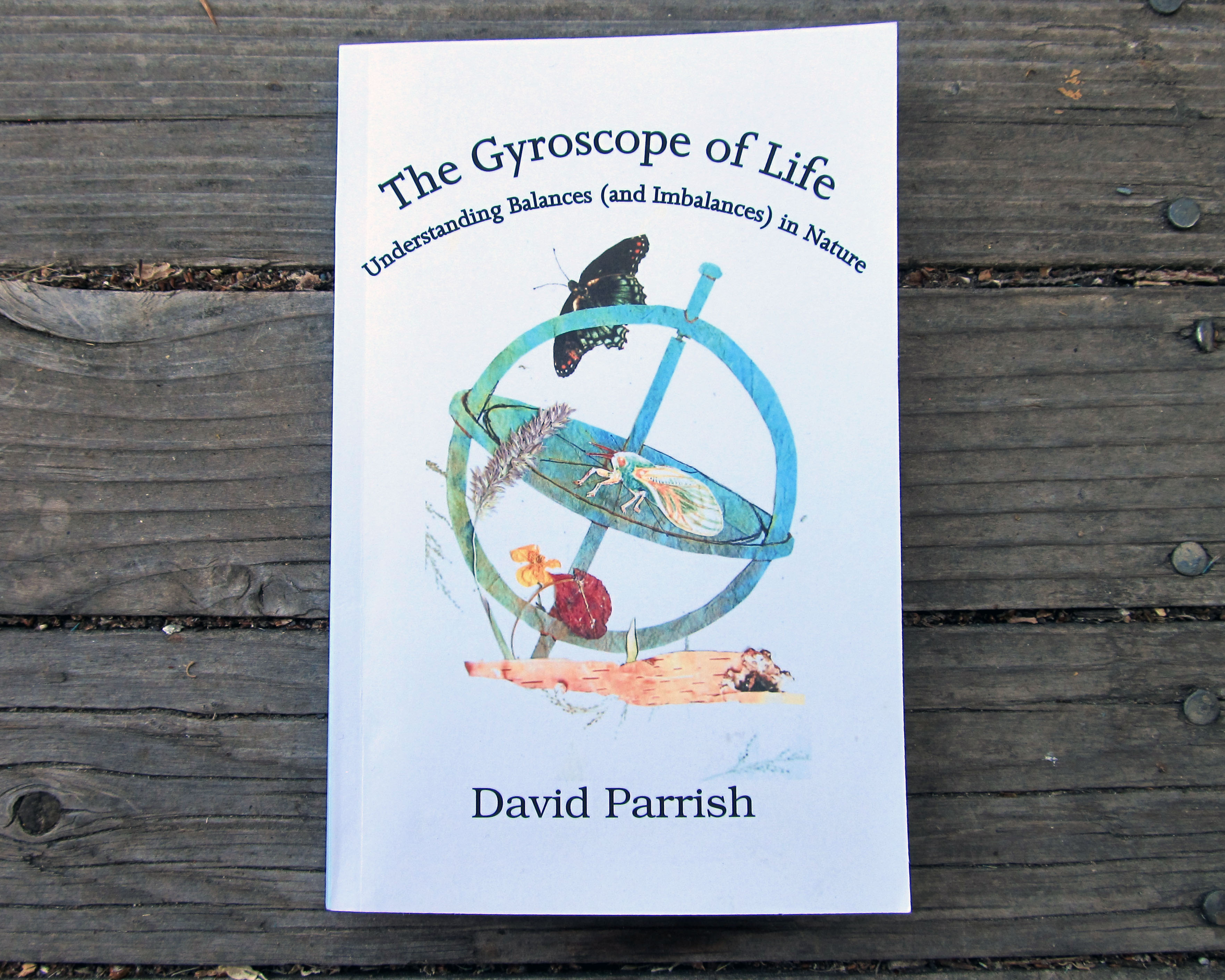
Parrish spends the first few chapters of his book writing mostly about his life and how he came to be a biologist. He acknowledges his privelege – “born male, white, and American in an era where each of those attributes provided me major advantages” –  having essentially been placed on third base from the start, “well down the third base line.” An aspiring zoologist turned botanist, he spent his early years in graduate school studying seeds and seed dormancy. It’s a topic that obviously interests him, as several pages of the book are spent considering what’s going on inside of a seed. “Seeds provide the widest-spread examples of suspended life,”  Parrish says. Are they alive or dead or neither?

Two additional, major life events play a prominent role in the arc of Parrish’s book. One being his break from organized religion and the other his battle with advanced prostate cancer. He grew up in an orthodox Christian home with a very literal understanding of the Bible. His education put him at odds with what he was taught growing up about (among other things) the age of the earth and its creation. Eventually he came to understand that science and religion “exist in separate non-overlapping spheres – the physical and the metaphysical.” He doesn’t necessarily see science and religion as being inherently at odds with each other, but his understanding of science makes it difficult to “find resonance in religion” due to the “cacophony of dissonance” it offers.

In addressing his prostate cancer, Parrish underwent an operation that gave him a newfound perspective on gender. Freed from “testosterone poisoning,” he was able to more fully consider sex and gender from a biological perspective, which he says he had been doing for decades prior to the operation. He spends a good portion of the book “demystifying sex and gender.” One compelling example he offers involves avocado flowers, which actually change gender over time, a phenomenon known as synchronous dichogamy.
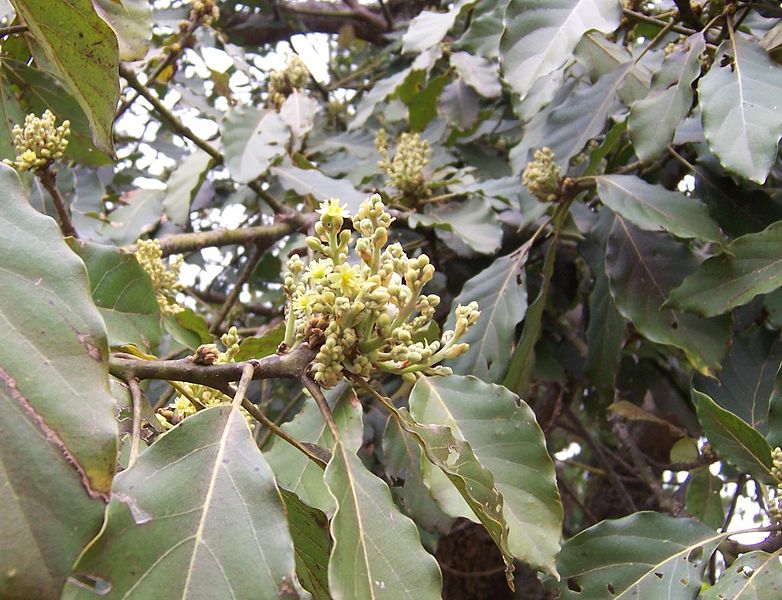
avocado flowers (Persea americana) via wikimedia commons

Over the course of its pages, The Gyroscope of Life covers a significant number of topics in the fields of biology and ecology. It’s a relatively short book, but as it careens through such wide-ranging material, it does so in an approachable and suprisingly succint manner. Parrish’s sense of humor, which doesn’t waver despite how bleak the discussion sometimes gets, helps carry the story along and keeps things interesting. Parrish covers evolution (“[Biologists] argue that, if evolution didn’t happen, it should.”), taxonomy (“the name for naming things”) and sytematics, ecological niches (“[humans] are essentially living niche-free and ecosystemless”), domestication, and so much more. The last chapter is spent discussing agroecosystems (“the organisms and abiotic environment that interact in a human-managed agricultural setting”), a topic he spent much of his career studying.

The underlying message of this book, as I see it, is a simultaneous celebration for life on earth and a concern for the direction things are going considering how humans have managed things. Parrish has some admonition for humans in light of how we’ve treated our home planet, but he isn’t too heavy-handed about it. Overall, reading the book felt like sitting in on a lecture given by a friendly and dynamic professor who has obviously given a lot of thought to what he has to say.

Check out the following video to see David Parrish describe the book in his own words.
More Book Reviews on Awkward Botany:

The Hidden Flowers of Viola

Violas keep a secret hidden below their foliage. Sometimes they even bury it shallowly in the soil near their roots. I suppose it’s not a secret really, just something out of sight. There isn’t a reason to show it off, after all. Showy flowers are showy for the sole purpose of attracting pollinators. If pollinators are unnecessary, there is no reason for showy flowers, or to even show your flowers at all. That’s the story behind the cleistogamous flowers of violas. They are a secret only because unless you know to look for them, you would have no idea they were there at all.

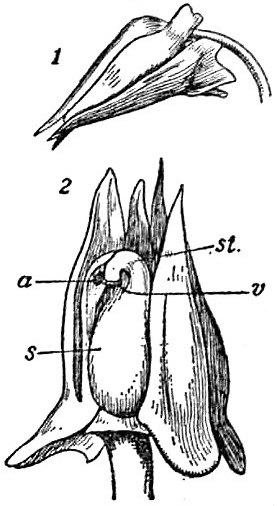
Cleistogamy means closed marriage, and it describes a self-pollinating flower whose petals remain sealed shut. The opposite of cleistogamy is chasmogamy (open marriage). Most of the flowers we are familiar with are chasmogamous. They open and expose their sex parts in order to allow for cross-pollination (self-pollination can also occur in such flowers). Violas have chasmogamous flowers too. They are the familiar five-petaled flowers raised up on slender stalks above the green foliage. Cross-pollination occurs in these flowers, and seed-bearing fruits are the result. Perhaps as a way to ensure reproduction, violas also produce cleistogamous flowers, buried below their leaves.

an illustration of the cleistogamous flower of Viola sylvatica opened to reveal its sex parts — via wikimedia commons

Flowers are expensive things to make, especially when the goal is to attract pollinators. Colorful petals, nectar, nutritious pollen, and other features that help advertise to potential pollinators all require significant resources. All this effort is worth it when it results in the ample production of viable seeds, but what if it doesn’t? Having a method for self-pollination ensures that reproduction will proceed in the absence of pollinators or in the event that floral visitors don’t get the job done. A downside, of course, is that a seed produced via self-pollination is essentially a clone of the parent plant. There will be no mixing of genes with other individuals. This isn’t necessarily bad, at least in the short term, but it has its downsides. A good strategy is a mixture of both cross- and self-pollination – a strategy that violas employ.

The cleistogamous flowers of violas generally appear in the summer or fall, after the chasmogamous flowers have done their thing. The fruits they form split open when mature and deposit their seeds directly below the parent plant. Some are also carried away by ants and dispersed to new locations. Seeds produced in these hidden flowers are generally superior and more abundant compared to those produced by their showy counterparts. People who find violas to be a troublesome lawn weed – expanding far and wide to the exclusion of turfgrass – have these hidden flowers to blame.

That being said, there is a defense for violas. In the book The Living Landscape by Rick Darke and Doug Tallamy, Tallamy writes: “Plants such as the common blue violet (Viola sororia), long dismissed by gardeners as a weed, can be reconstituted as desirable components of the herbaceous layer when their ecosystem functionality is re-evaluated. Violets are the sole larval food source for fritillary butterflies. Eliminating violets eliminates fritillaries, but finding ways to incorporate violets in garden design supports fritillaries.”

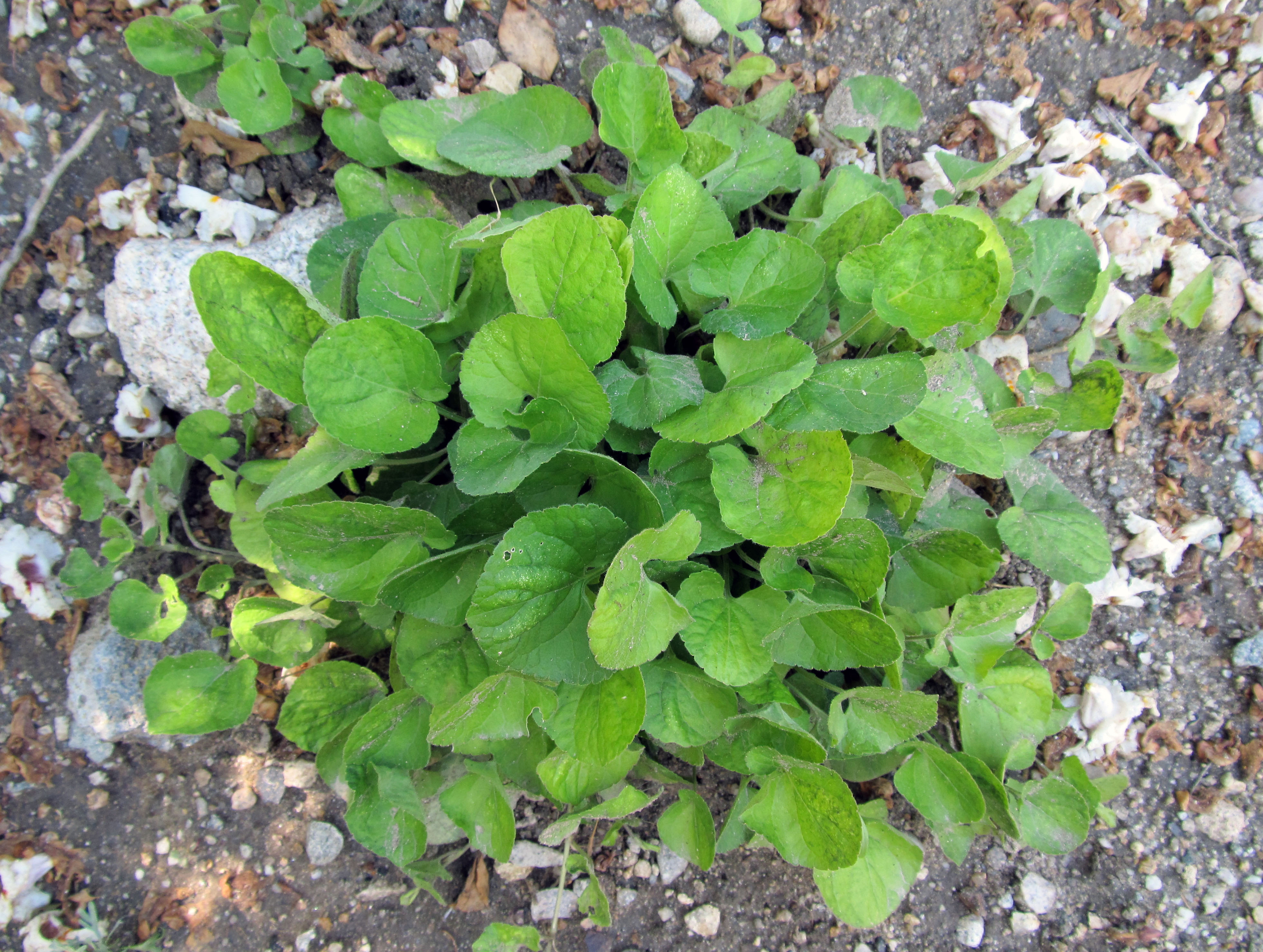
sweet violet (Viola odorata)

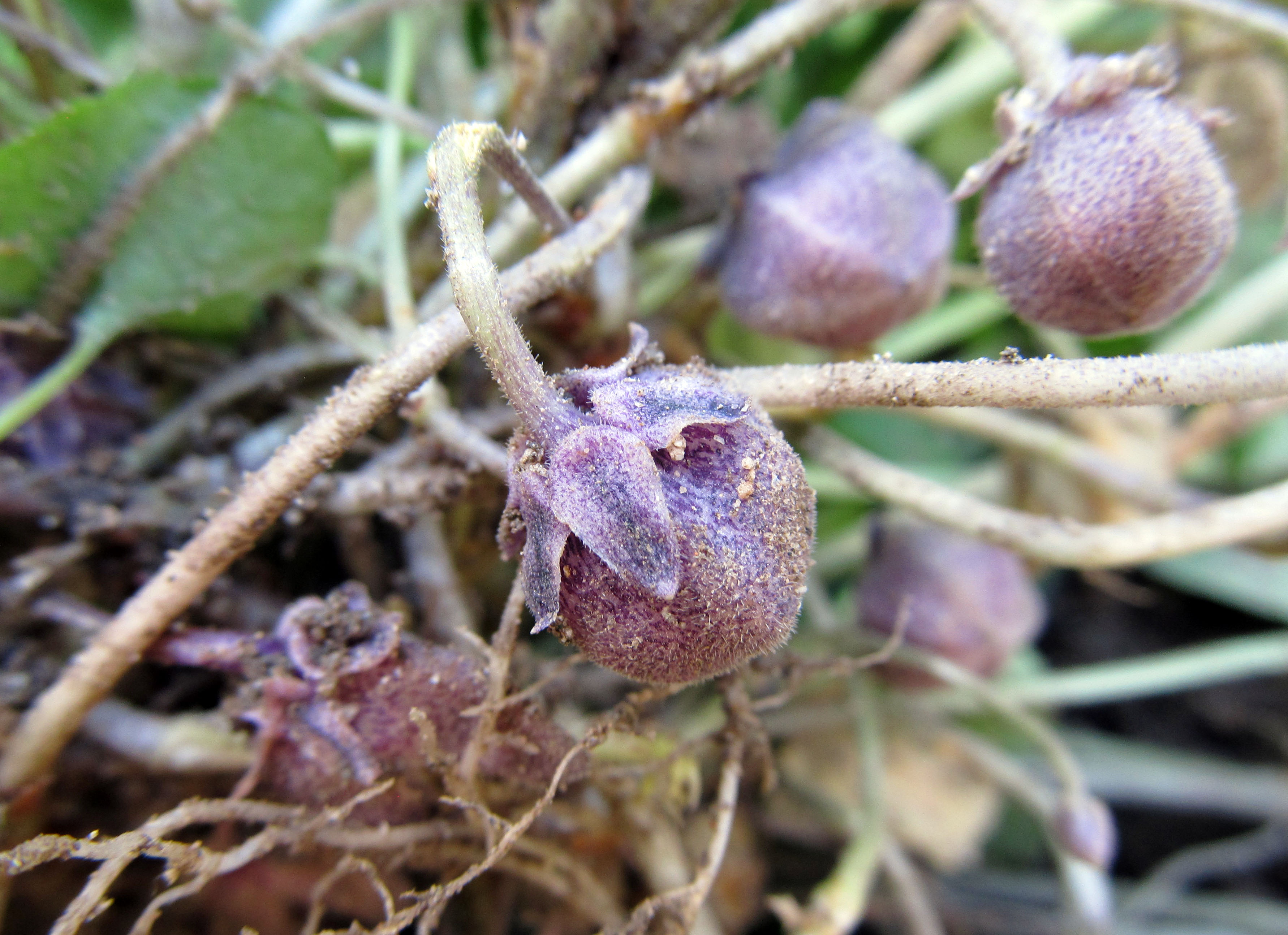
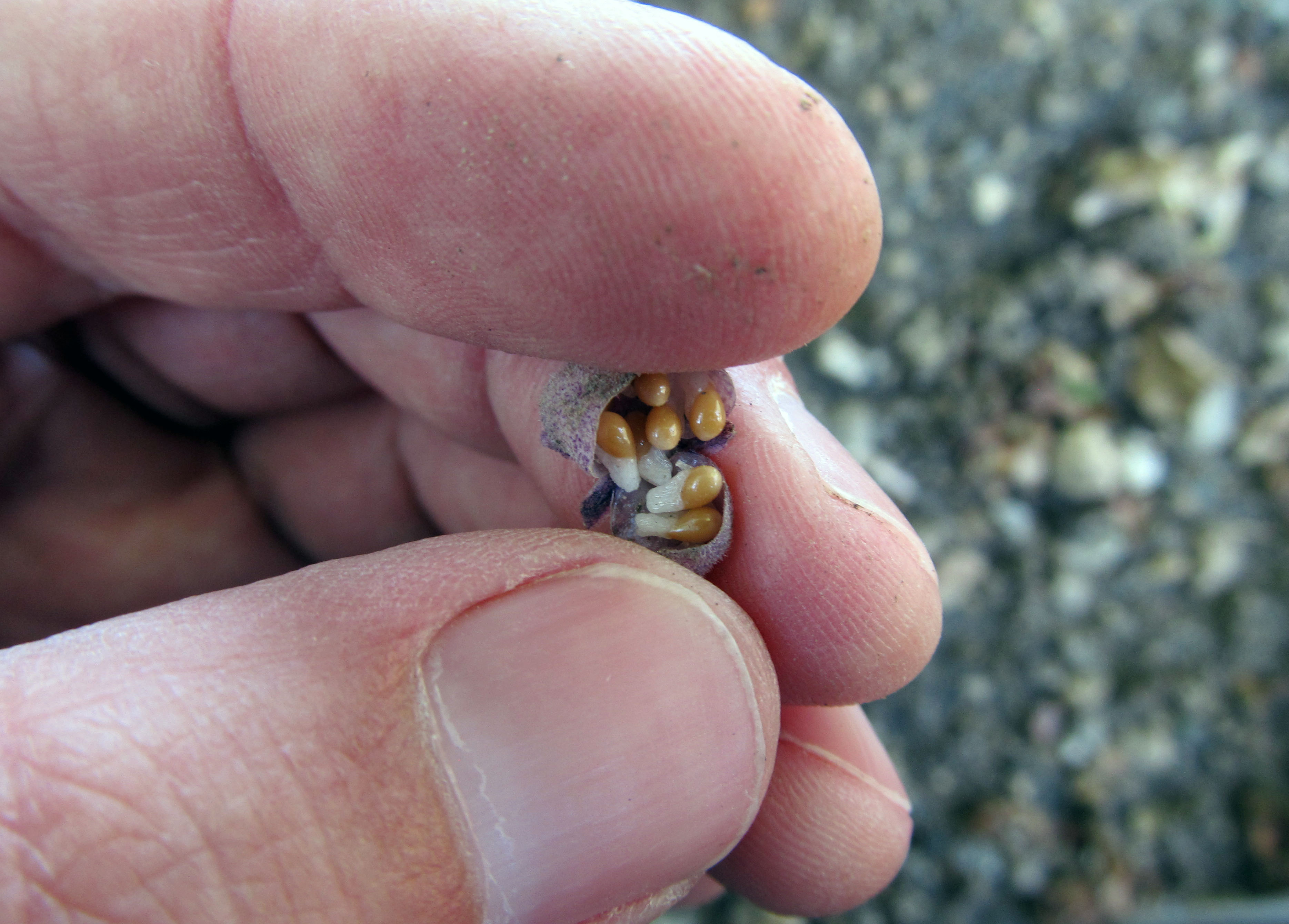
In my search for the cleistogamous flowers of viola, I dug up a sweet violet (Viola odorata). I was too late to catch it in bloom, but the product of its flowers – round, purple, fuzzy fruits – were revealed as I uprooted the plant. Some of the fruits were already opening, exposing shiny, light brown seeds with prominent, white elaiosomes, there to tempt ants into aiding in their dispersal. I may have missed getting to see what John Eastman calls “violet’s most important flowers,” but the product of these flowers was certainly worth the effort.

Fruits formed from the cleistogamous flowers of sweet violet (Viola odorata)

Up close and personal with the fruit of a cleistogamous flower

The seeds (elaiosomes included) produced by the cleistogamous flower of sweet violet (Viola odorata)

See Also:

Revisiting the Moon Tree

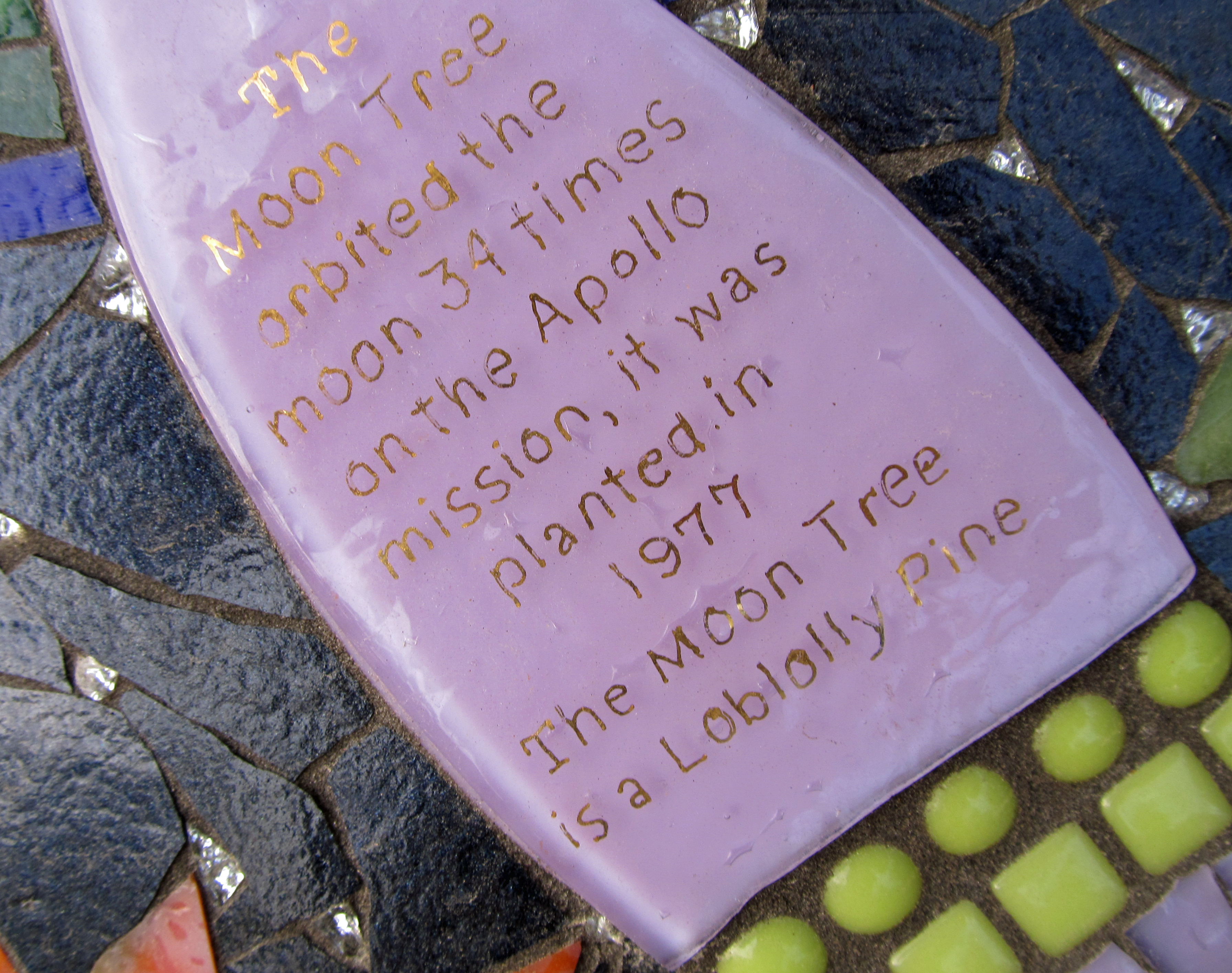
I first learned about Moon Trees in the fall of 2015. One of the trees – a loblolly pine – had been planted at an elementary school just down the street from where I was living at the time. It wasn’t a new thing – it was planted back in 1977, during the period when most other Moon Trees where being planted around the country and the world – but because it wasn’t doing too well, it was in the news. Members of the community, concerned about its long-term survival, were pitching in to help keep it alive. Once I was made aware of it, I also became concerned and decided to go check on it. I even wrote a post about it, which you can read here.

Now that nearly 5 years have passed, I figured I should go check on it again. I hadn’t heard any more news about it, so I assumed it was still hanging in there, but who knows? Maybe not. Since I was going to be on that side of town for Father’s Day, I made plans to stop by. My dad hadn’t seen the tree yet, so he decided to join me.

As we approached Lowell Elementary on our bikes, I was half-expecting the tree to be gone. It was in pretty sad shape when the community stepped in to help it. Braced for this possibility, I anxiously peered down the street as we biked closer. When the tree came into view, I felt relief and announced, “There it is!”

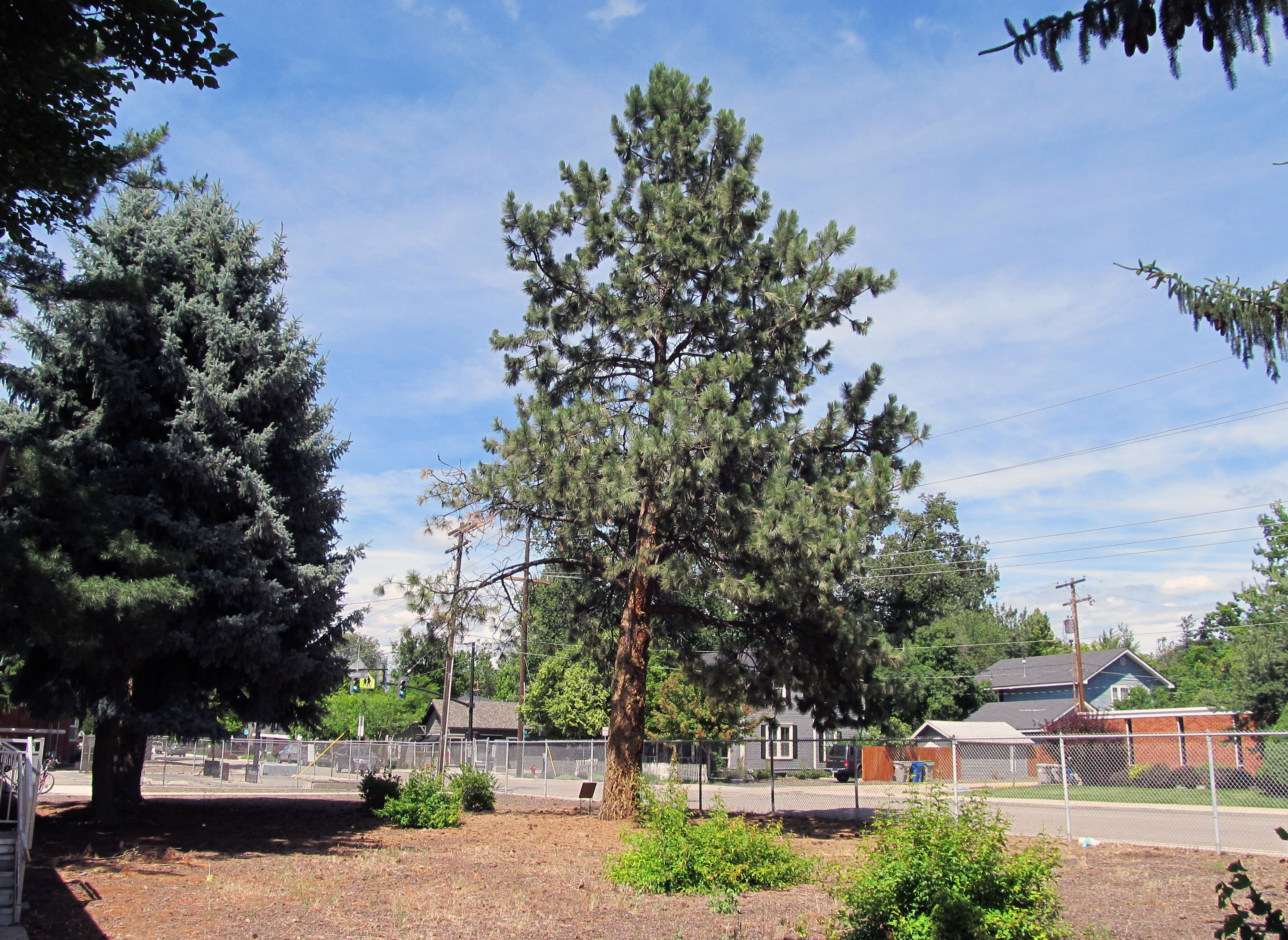
All this time later, it still looks a little rough. The majority of its bark remains largely obscured by crusty, dried up sap, and its canopy isn’t as full as it likely would be if it was a picture of health. But it’s alive and, surprisingly enough, still growing taller, reaching for the moon.

Any loblolly pine would feel out of place in Idaho – it’s a species whose distribution spans the southwest region of the United States, which is starkly different from the northwest – however, this individual in particular is an anomaly. The seed it sprouted from took a journey into space, circled the moon a number of times and then, as a sapling, was planted in Idaho (of all places). Now, over 40 years later, it stands as a symbol of resilience. Something we could all use right now, I’m sure.

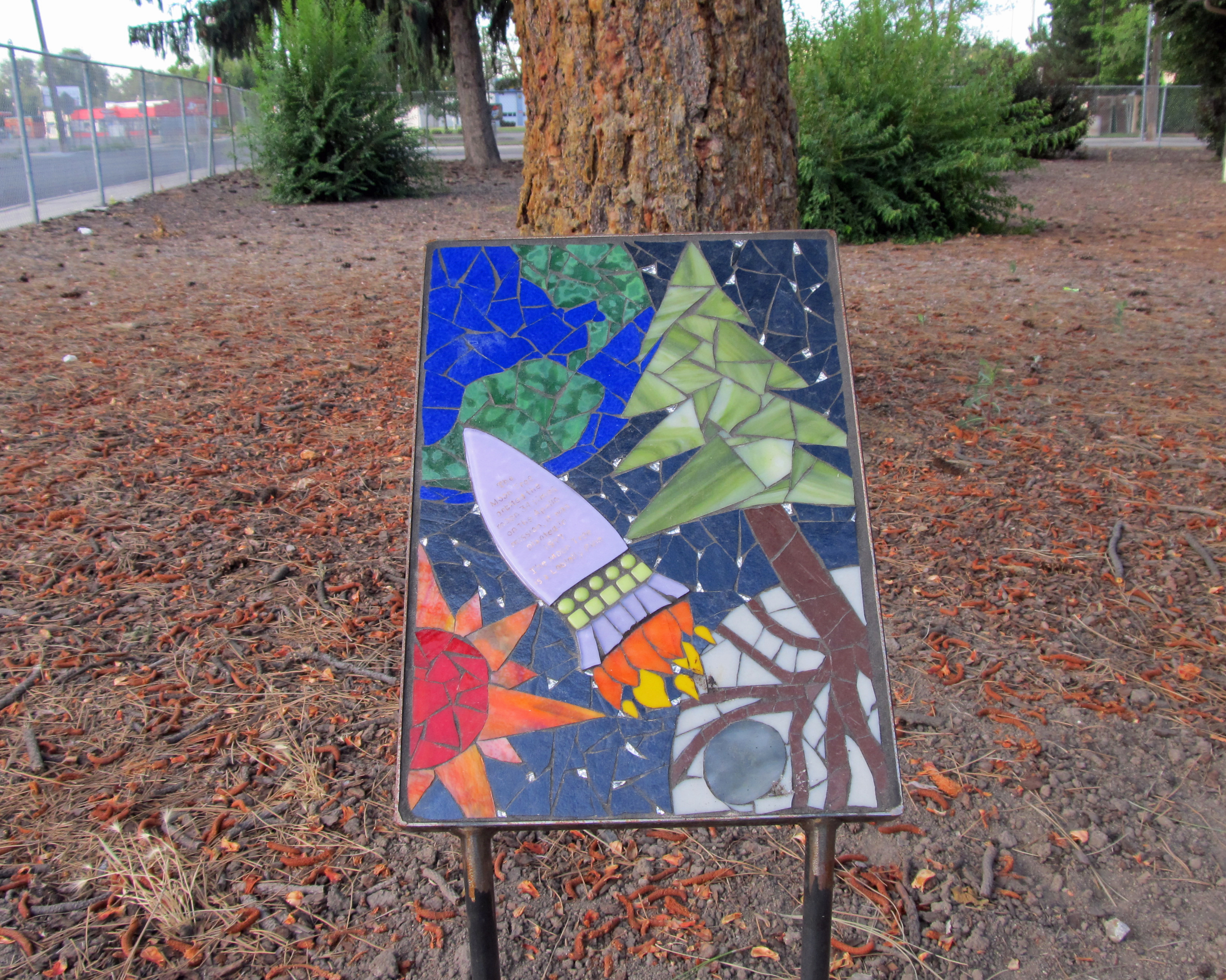
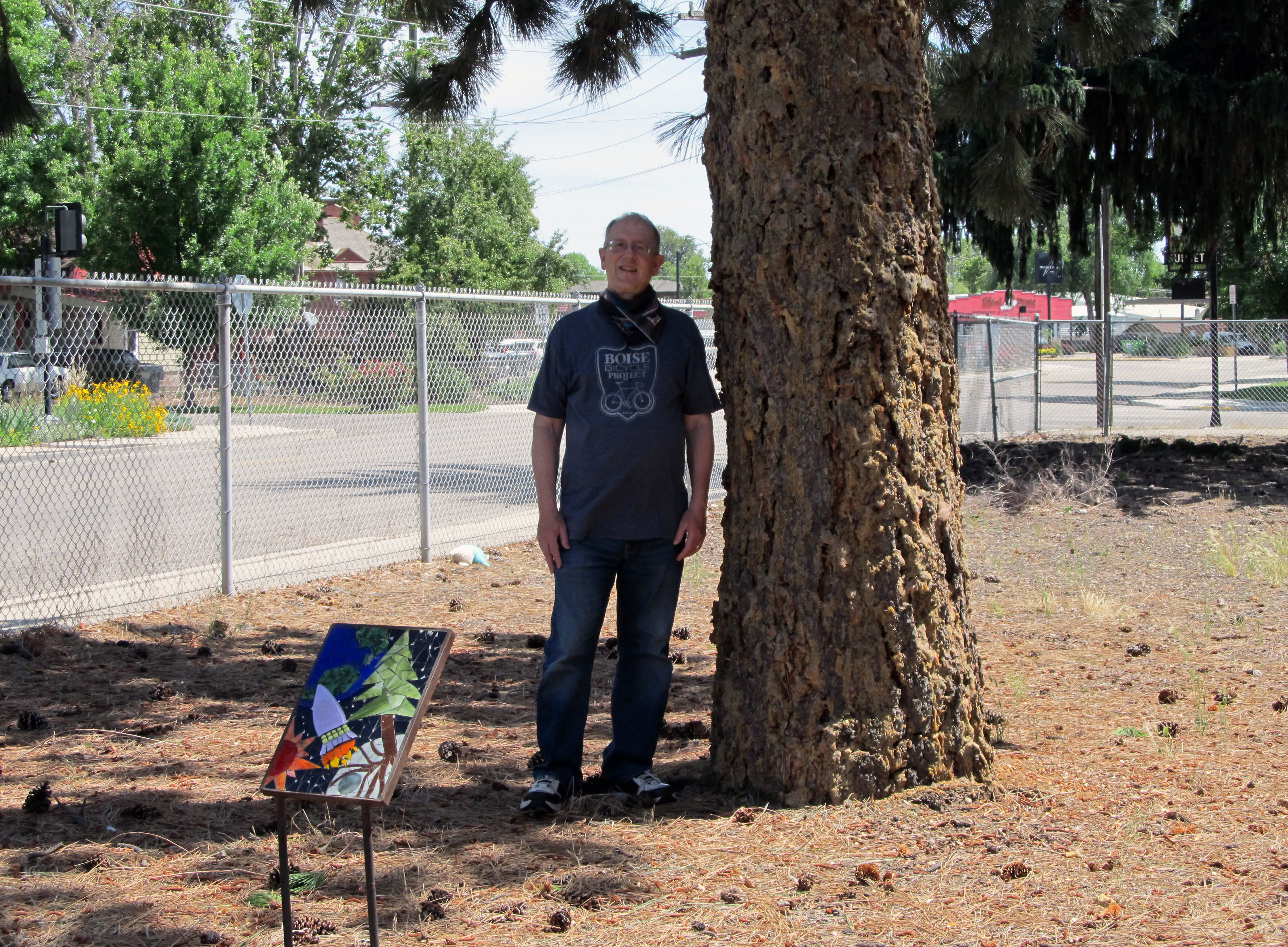
This sign was installed shortly after my original Moon Tree post.

Boise, Idaho’s Moon Tree in June 2020

My dad by the Moon Tree in Boise, Idaho

Me by the Moon Tree in Boise, Idaho

———————

Was a Moon Tree planted near you? Is it still around? Tell us about it in the comment section below.


Podcast Review: Plants and Pipettes

Gardening was my first introduction to plants. I enjoyed growing plants so much that I decided to study them. Or rather, I studied the growing of them, i.e. horticulture. During my studies, I became increasingly interested in botany, a vast scientific field that investigates all things plant related, from their evolutionary history to their cellular biology to their interactions with other organisms, etc. Now I am obsessed with pretty much anything to do with botany. However, the molecular side of plant science has never been much of a pursuit of mine. Until now.

What has piqued my interest in this isn’t a university course or a dense textbook on the subject, but instead a podcast hosted by two molecular biologists – Tegan and Joram – who make learning about molecular plant science considerably more interesting than I had previously found it to be. Their podcast (and blog of the same name) is called Plants and Pipettes, and they have been consistently publishing both written and audio content on their site for well over a year now.

The bulk of the Plants and Pipettes podcast consists of Tegan and Joram summing up and discussing a recent plant science research article. While I occasionally get lost in the discussion (particularly when the research delves deep into molecular biology), they both do an exceptional job explaining the science and offering insights that I would not get if I attempted to read the papers on my own. When listening to this portion of the podcast, it helps to have a basic understanding of molecular biology, but it isn’t entirely necessary as the hosts often review basic concepts while discussing the research.

Over the course of the podcast’s history, additional segments have been added. These rarely have anything to do with molecular biology, so if you don’t see yourself tuning in for the research discussion, definitely tune in for the rest. One segment is called My Favorite Plant in which one of the hosts talks about a plant they are interested in that week. Next is Diversity in Plant Science, in which they pick a person that is not a white male and talk about their life and contributions to science (George Washington Carver, for example). After that they define and discuss a cognitive bias, and then they share random things (sometimes science-y, sometimes not) that they find fun or interesting or important to share. Each episode typically ends with a cat fact, as they both have a profound love for cats (although everything is a cat to Joram, apparently).

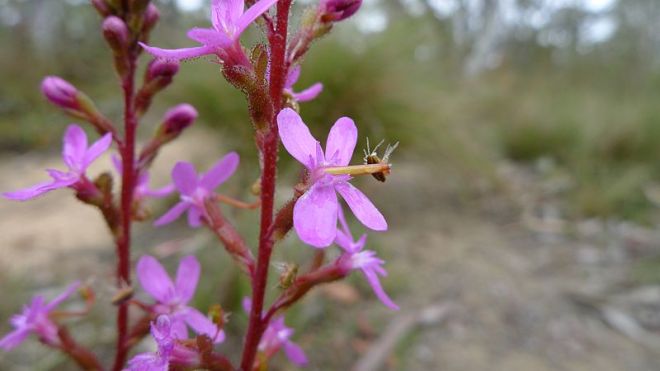
grass triggerplant (Stylidium graminifolium) was Joram’s favorite plant in episode 12 of Plants and Pipettes (image credit: wikimedia commons)

A highlight among the early episodes was an interview they did with a researcher at the University of Minnesota who is working with pennycress (Thlaspi arvense). This plant is a common weed, but it shows potential for being a productive and useful oilseed crop, similar to a few of its relatives in the mustard family. Speaking of weeds, a fun fact in episode 29 caught my interest, in which Tegan shares an example of Vavilovian mimicry involving rice and barnyard grass (Echinochloa crus-galli). A great introduction to their ongoing series about cognitive biases is episode 37 in which they discuss the Texas sharpshooter fallacy. And of course, I have to recommend listening to episode 48, in which Tegan gives a shout out to Awkward Botany and my new zine Dispersal Stories. How cool is that!?

pennycress (Thlaspi arvense) discussed in episode 8 of Plants and Pipettes (image credit: wikimedia commons)

While I am not always able to keep up with the discussions about molecular plant biology, I still really love listening to this podcast. Apart from the interesting content, the hosts are the real appeal.  Not only do I appreciate their social justice rants and their support for open science, but I also find their sense of humor and lack of pretension refreshing. They are excellent models of the way that science communication should be done. 

If you check out Plants and Pipettes and decide you need more Tegan and Joram in your life, check out a new podcast they just started with Ellen from Plant Crimes podcast called Plant Book Club, in which they choose a plant-themed book to read and discuss. You can also watch/listen to Tegan and Joram talking about their podcast on Career Conversations. 

More Podcast Reviews on Awkward Botany:

Weeds of Boise: Northwest Corner of Ann Morrison Park

The Boise River, which winds its way through the City of Boise, is flanked by a series of parks known collectively as the Ribbon of Jewels, named in honor of prominent women in the community. Most of these parks are vast expanses of turfgrass scattered with large trees and are meticulously maintained, except near the river where the vegetation is allowed to run a little wild. It is within these narrow strips of land, bordered on one side by the river and the other by regularly mowed turfgrass, that a veritable nature walk can be had right in the heart of the city.

While a few native plant species can be found in these strips, much of the vegetation is introduced. Some of the non-native trees and shrubs may have been intentionally planted, while others came in on their own. Most of the grasses and forbs in the understory are weedy plants commonly seen on all manner of disturbed lands. There are also, of course, a few weeds specific to riparian areas. Due to the wild nature of these strips and the abundance of introduced plants, the river’s edge makes for a great place to become acquainted with our wild urban flora.
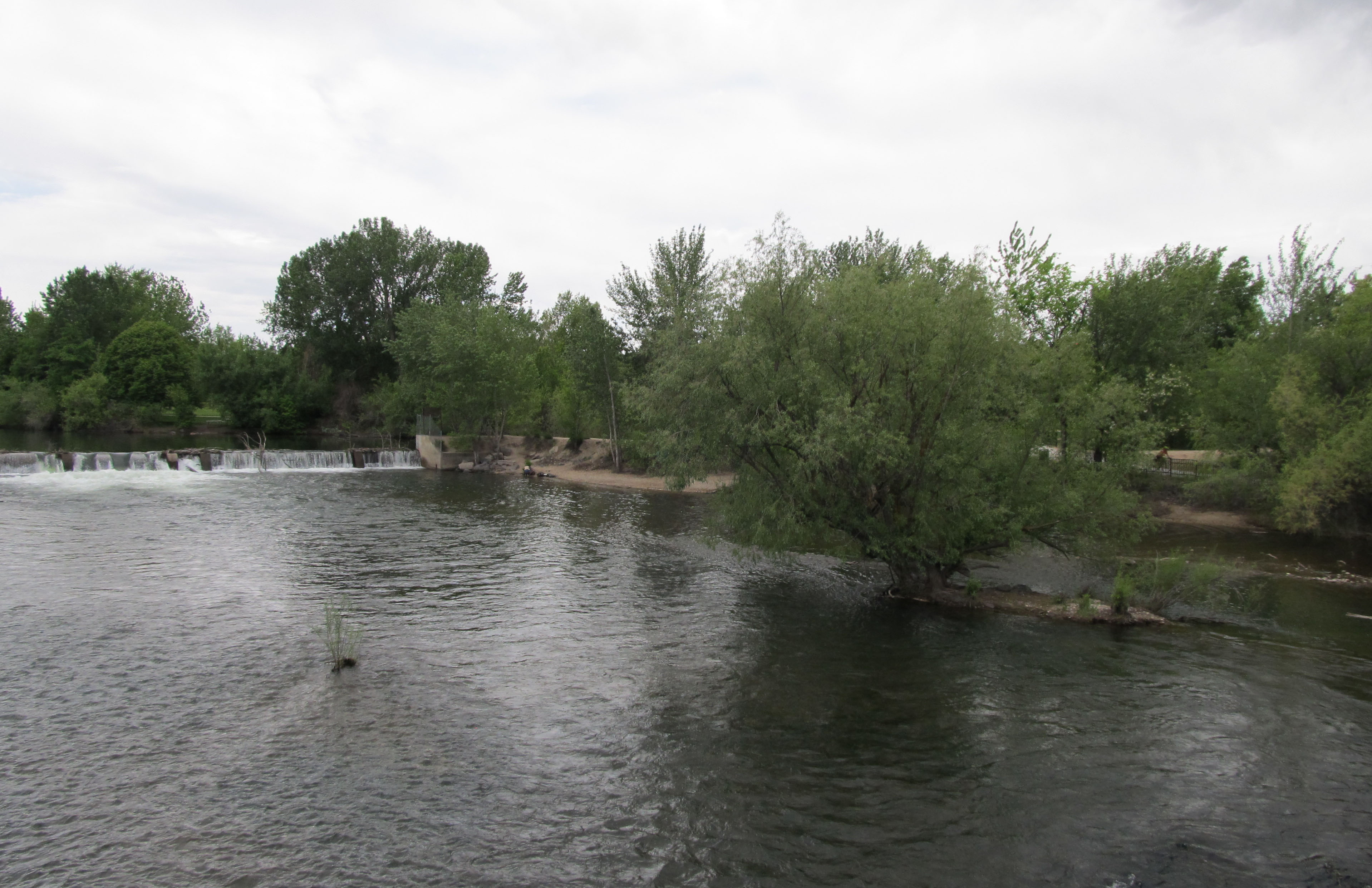
Looking at the northwest corner of Ann Morrison Park from the Americana Boulevard Bridge

Because these parks (which include the Boise River Greenbelt) stretch for miles through the city, practically any spot along the way could be a good place to look for weeds. I chose to narrow my search to the northwest corner of Ann Morrison Park. What follows are a few images of some of the plants I found there, along with a list of what I was able to identify during my brief visits this spring. The list will surely grow as I check back from time to time. If you’re interested in learning more about the Boise River and its importance – not just to the humans who call Boise home, but also to myriad other living organisms – check out Boise River Enhancement Network and the work that they are doing to help protect and preserve this invaluable ecosystem.

yellow flag iris (Iris pseudacorus)

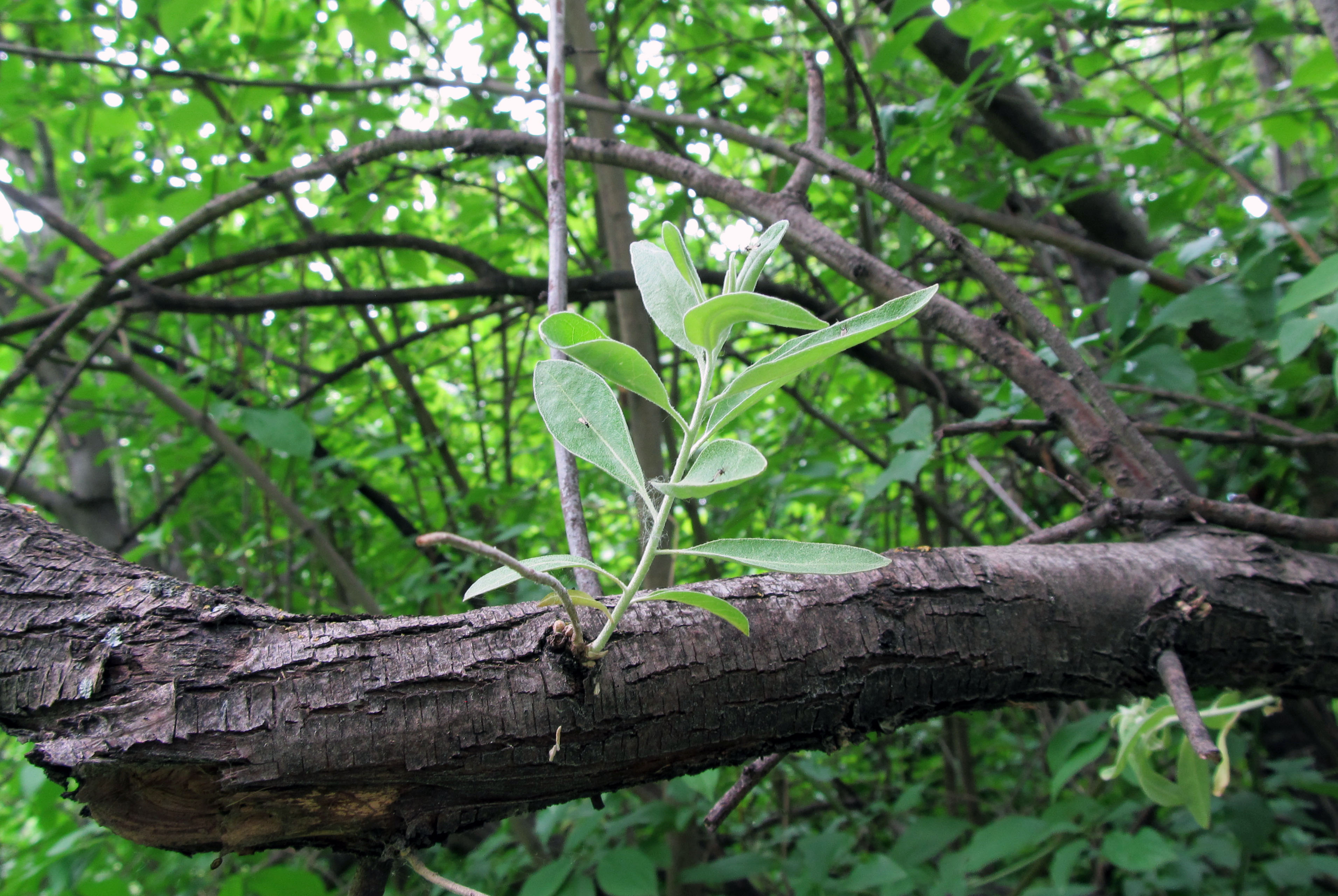
Russian olive (Elaeagnus angustifolia)

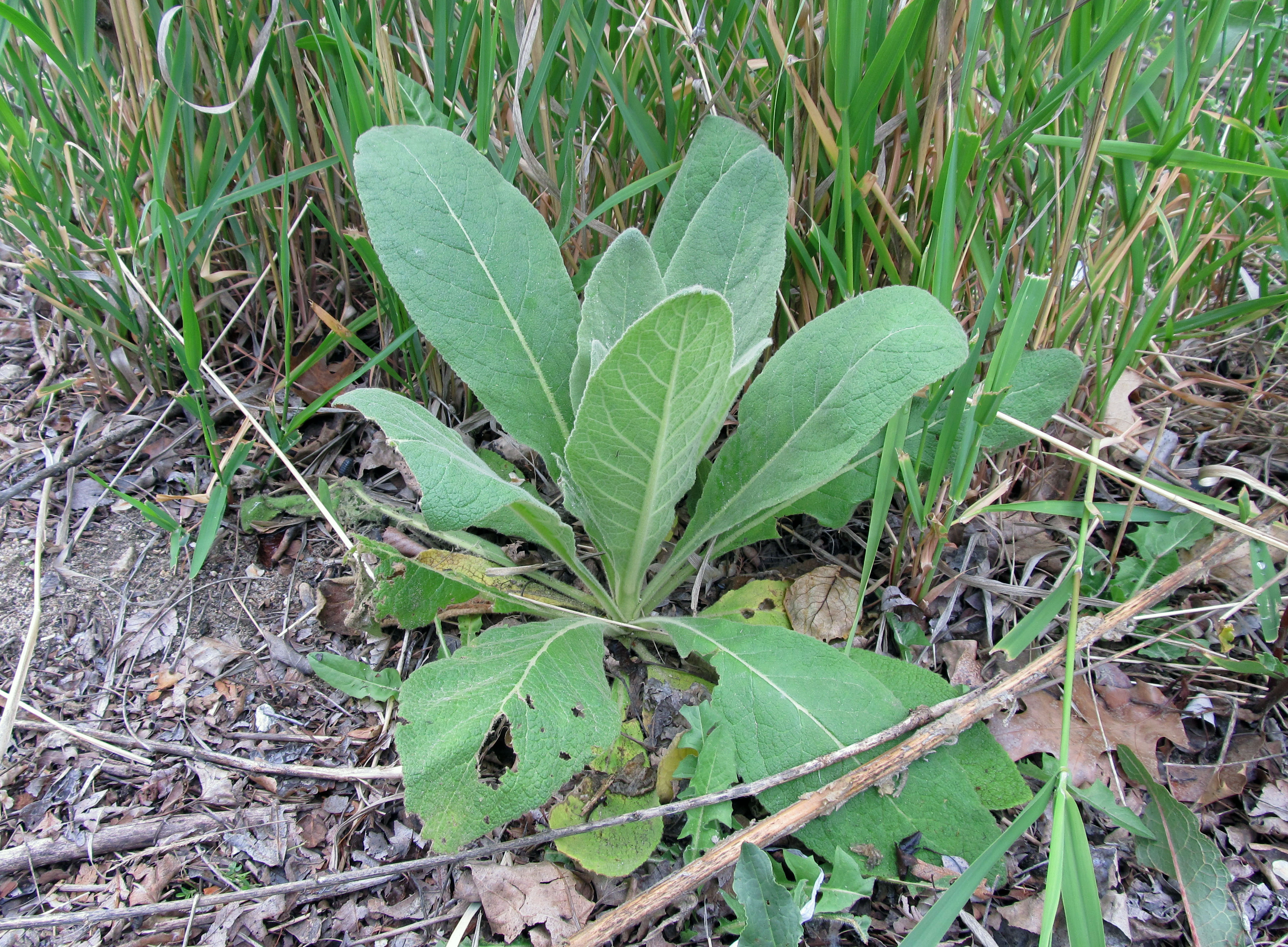
common mullein (Verbascum thapsus)

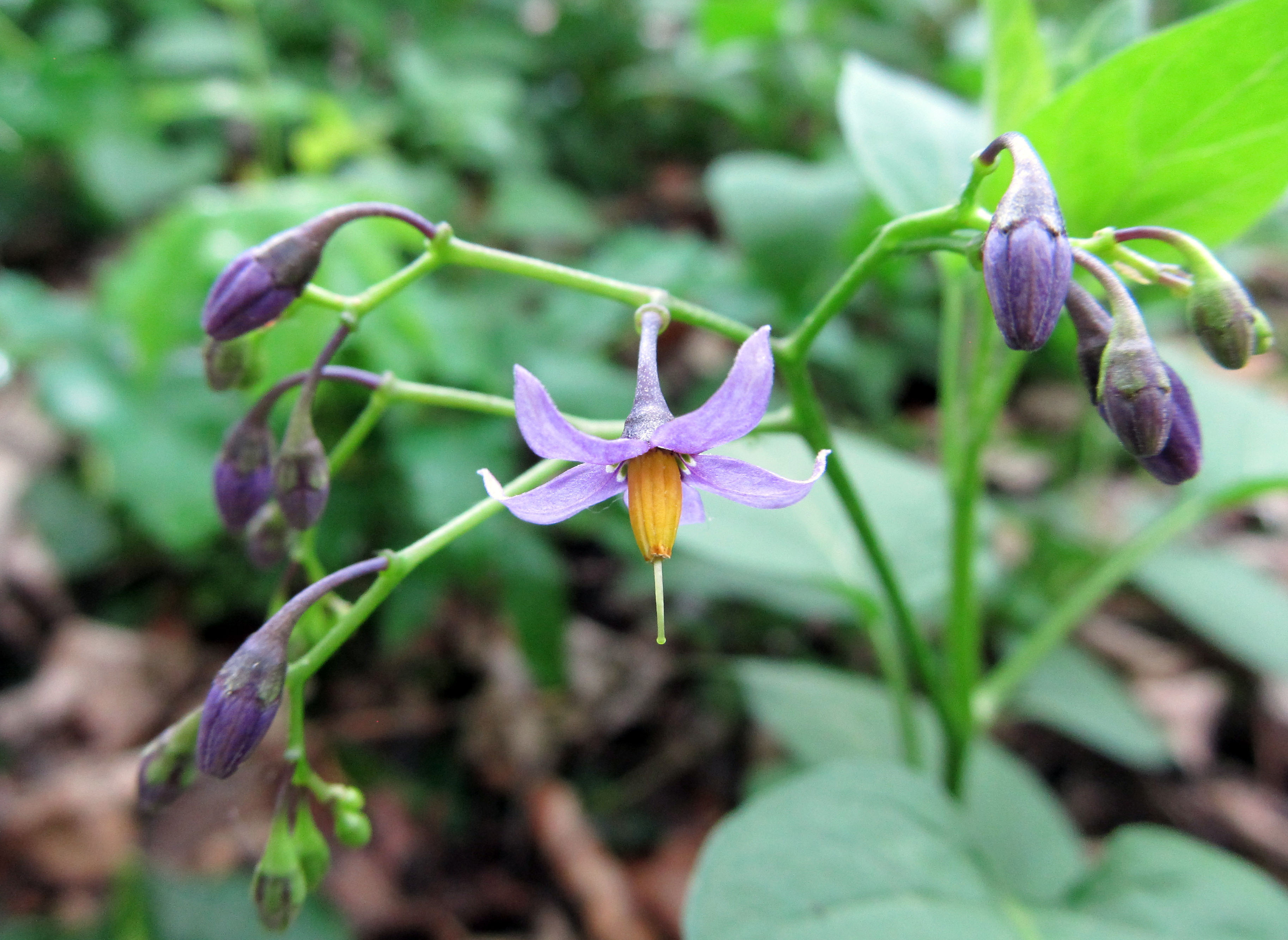
climbing nightshade (Solanum dulcamara)

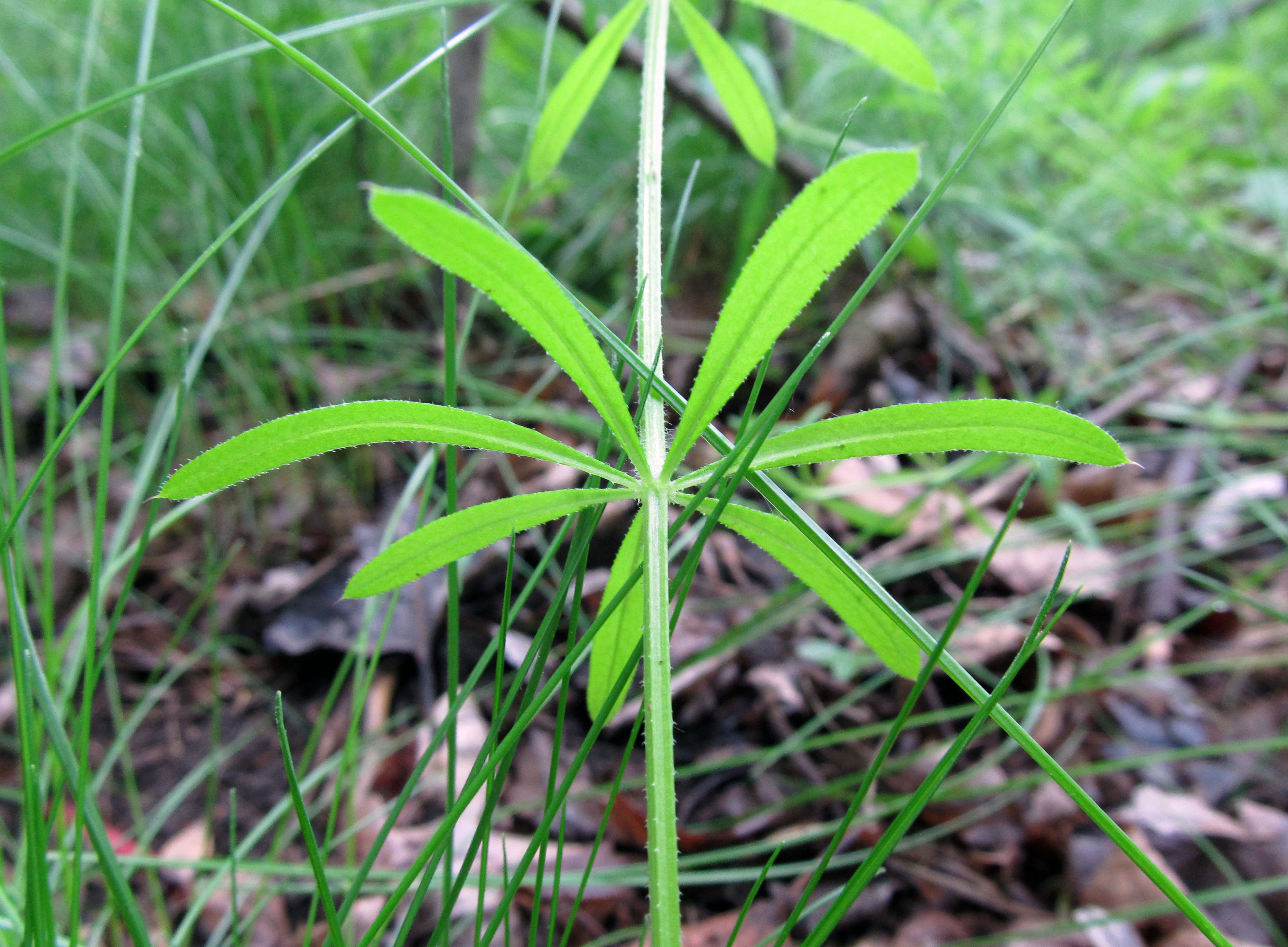
cleavers (Galium aparine)

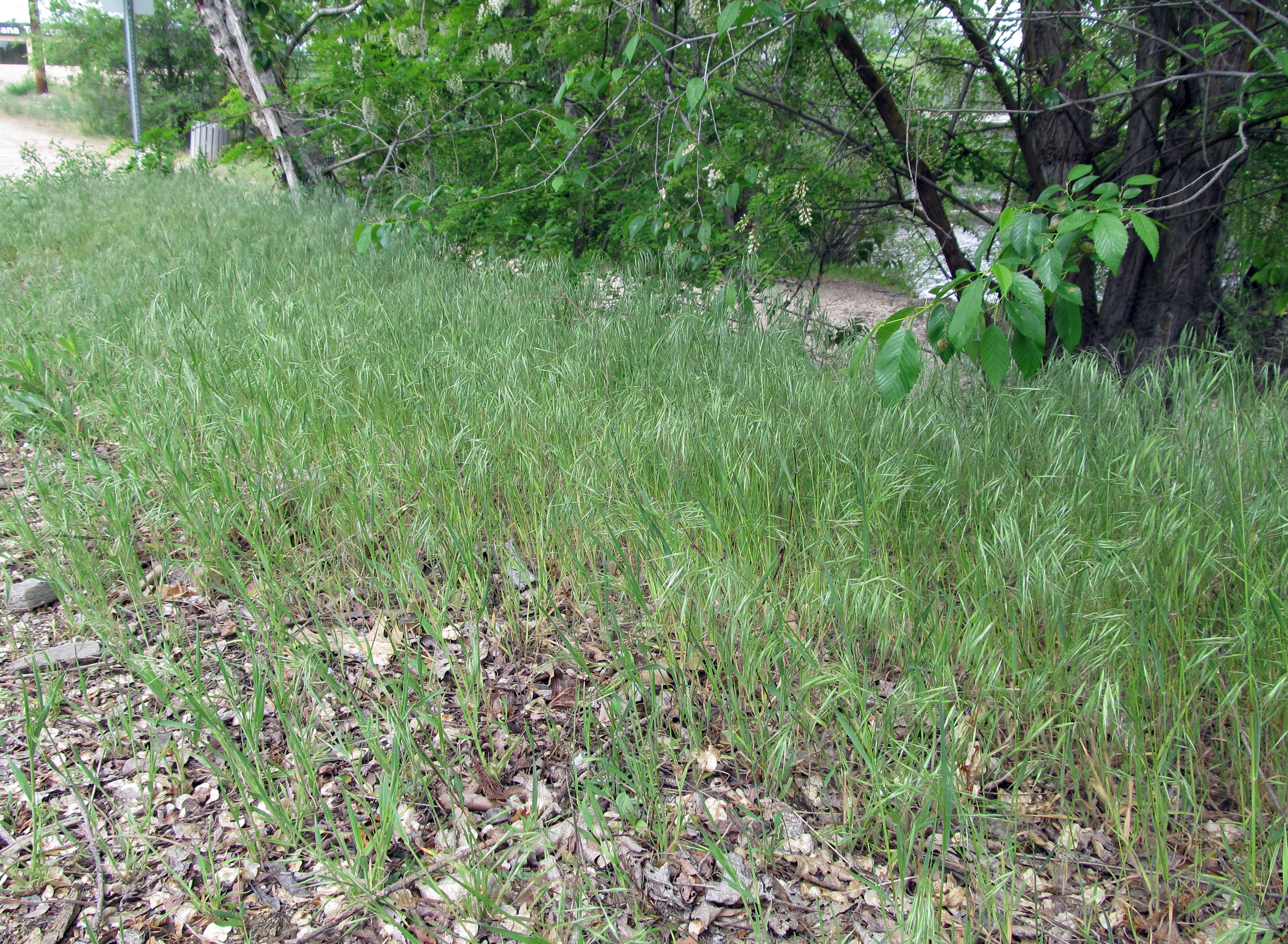
a strip of cheatgrass (Bromus tectorum)

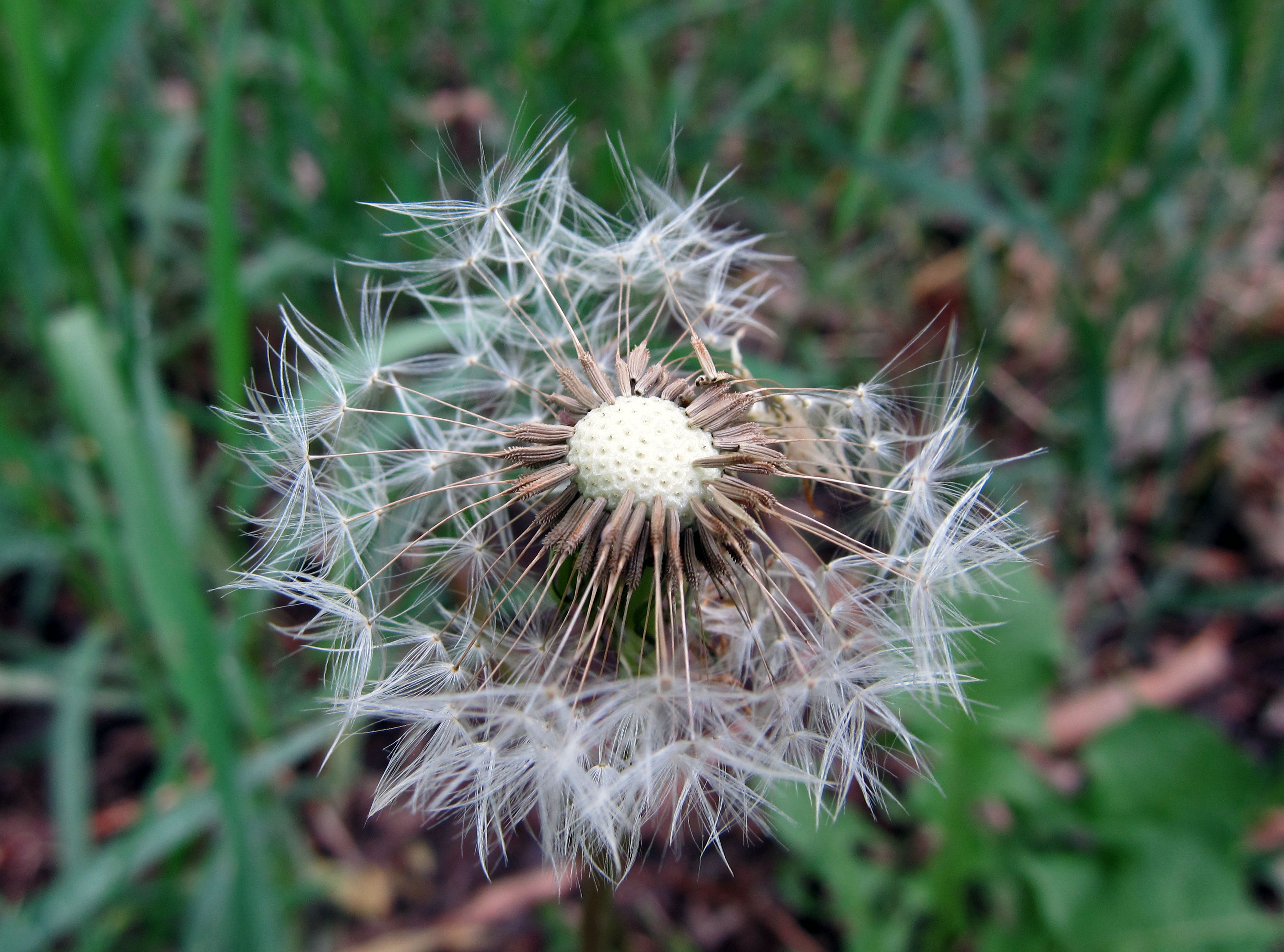
seed head of dandelion (Taraxacum officinale)

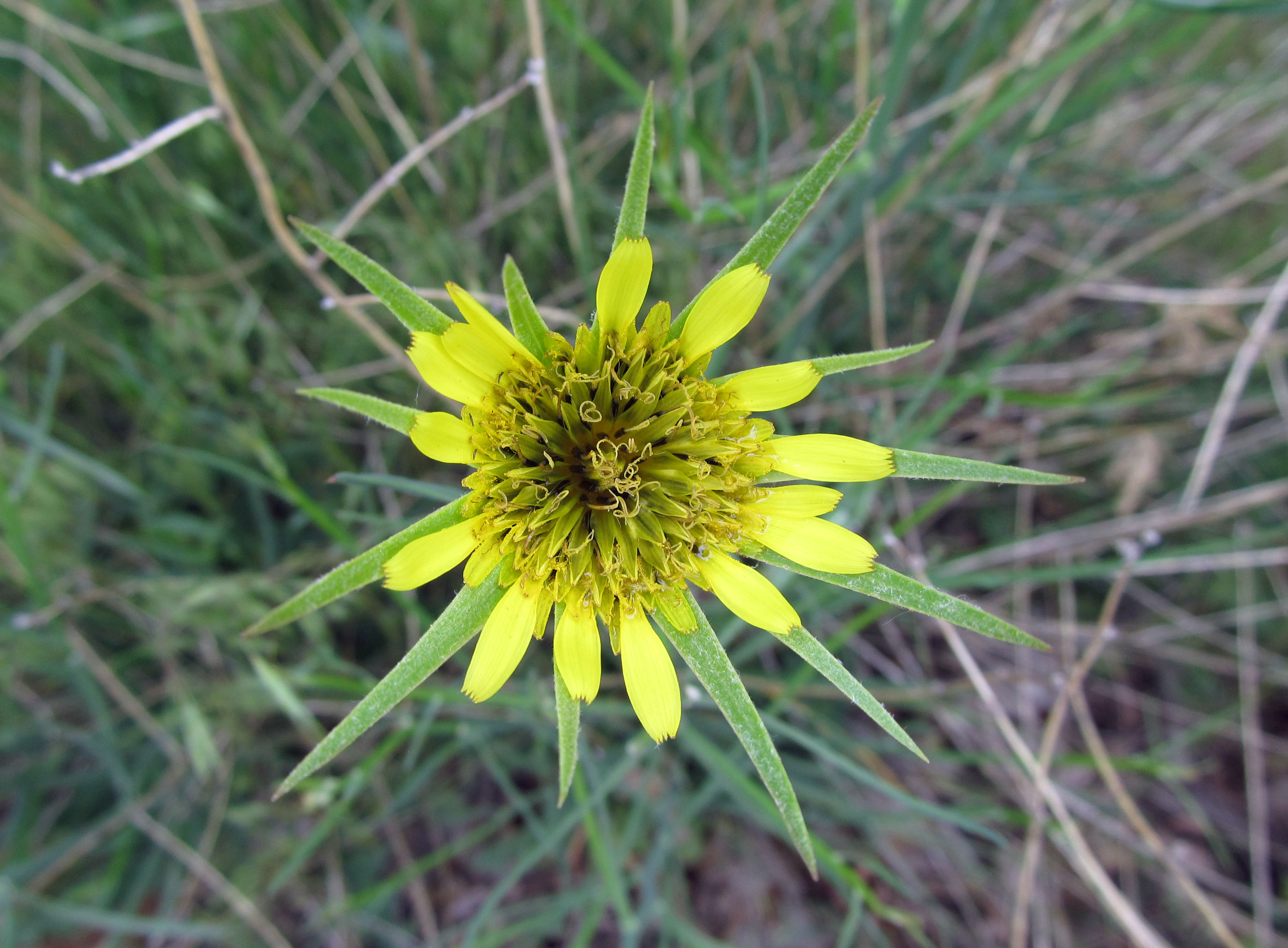
western salsify (Tragopogon dubius)

bull thistle (Cirsium vulgare)

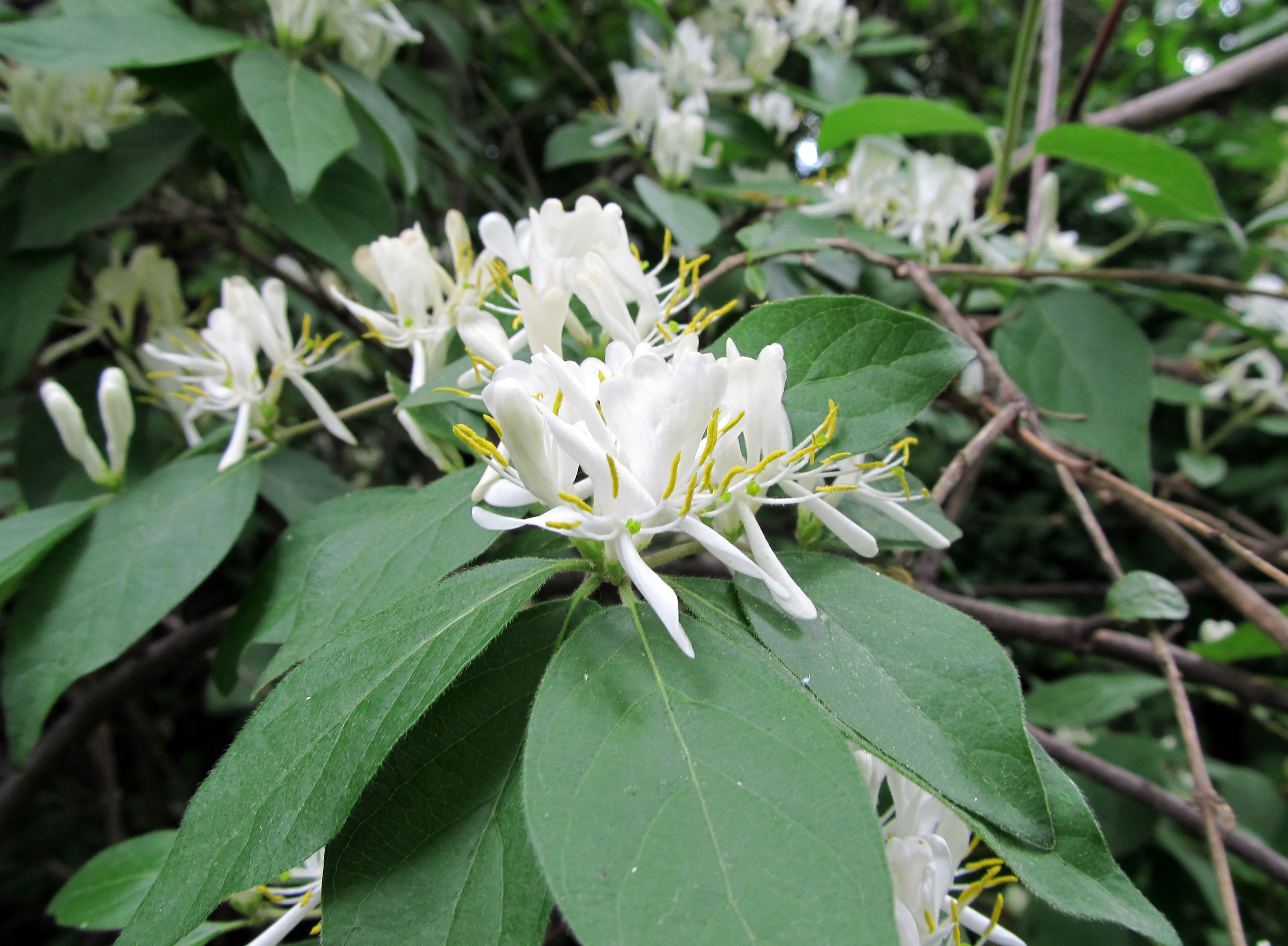
Amur honeysuckle (Lonicera maackii)

creeping buttercup (Ranunculus repens)

Weeds found at the northwest corner of Ann Morrison Park (while several of the trees and shrubs at this location are introduced, I only included those species that are generally considered to be weedy or invasive):

  • Amorpha fruticosa (false indigo bush)
  • Anthriscus caucalis (bur chervil)
  • Arctium minus (common burdock)
  • Bromus tectorum (cheatgrass)
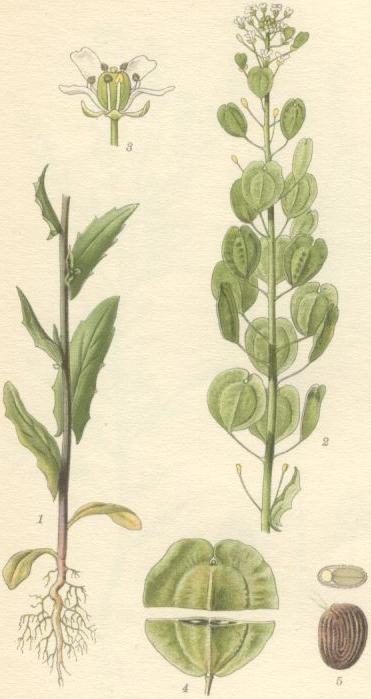
  • Capsella bursa-pastoris (shepherd’s purse)
  • Cerastium vulgatum (mouse-ear chickweed)
  • Cirsium arvense (creeping thistle)
  • Cirsium vulgare (bull thistle)
  • Chondrilla juncea (rush skeletonweed)
  • Convolvulus arvensis (field bindweed)
  • Conyza canadensis (horseweed)
  • Cynoglossum officinale (houndstongue)
  • Descurainia sophia (flixweed)
  • Elaeagnus angustifolia (Russian olive)
  • Erodium cicutarium (redstem filaree)
  • Euonymus fortunei (winter creeper)
  • Galium aparine (cleavers)
  • Hordeum murinum ssp. glaucum (smooth barley)
  • Iris pseudacorus (yellow flag iris)
  • Lactuca serriola (prickly lettuce)
  • Lamium amplexicaule (henbit)
  • Lonicera maackii (Amur honeysuckle)
  • Malva neglecta (common mallow)
  • Medicago lupulina (black medic)
  • Parthenocissus quinquefolia (Virginia creeper)
  • Plantago lanceolata (narrowleaf plantain)
  • Poa bulbosa (bulbous bluegrass)
  • Polygonum aviculare (prostrate knotweed)
  • Ranunculus repens (creeping buttercup)
  • Rumex crispus (curly dock)
  • Sisymbrium altissimum (tumble mustard)
  • Solanum dulcamara (climbing nightshade)
  • Sonchus sp. (annual sow thistle)
  • Taraxacum officinale (dandelion)
  • Tragopogon dubius (salsify)
  • Trifolium repens (white clover)
  • Ulmus pumila (Siberian elm)
  • Verbascum thapsus (common mullein)

Like all posts in the Weeds of Boise series, this will be updated as I identify and photograph more of the weeds found in this location.

Dispersal by Bulbils – A Bulbous Bluegrass Story

The main way that a plant gets from place to place is in the form of a seed. As seeds, plants have the ability to travel miles from home, especially with the assistance of outside forces like wind, water, and animals. They could also simply drop to the ground at the base of their parent plant and stay there. The possibilities are endless, really.

But what about plants that don’t even bother making seeds? How do they get around? In the case of bulbous bluegrass, miniature bulbs produced in place of flowers function exactly like seeds. They are formed in the same location as seeds, reach maturity and drop from the plant just like seed-bearing fruits, and are then dispersed in the same ways that seeds are. They even experience a period of dormancy similar to seeds, in that they lie in wait for months or years until the right environmental conditions “tell” them to sprout. And so, bulbils are basically seeds, but different.

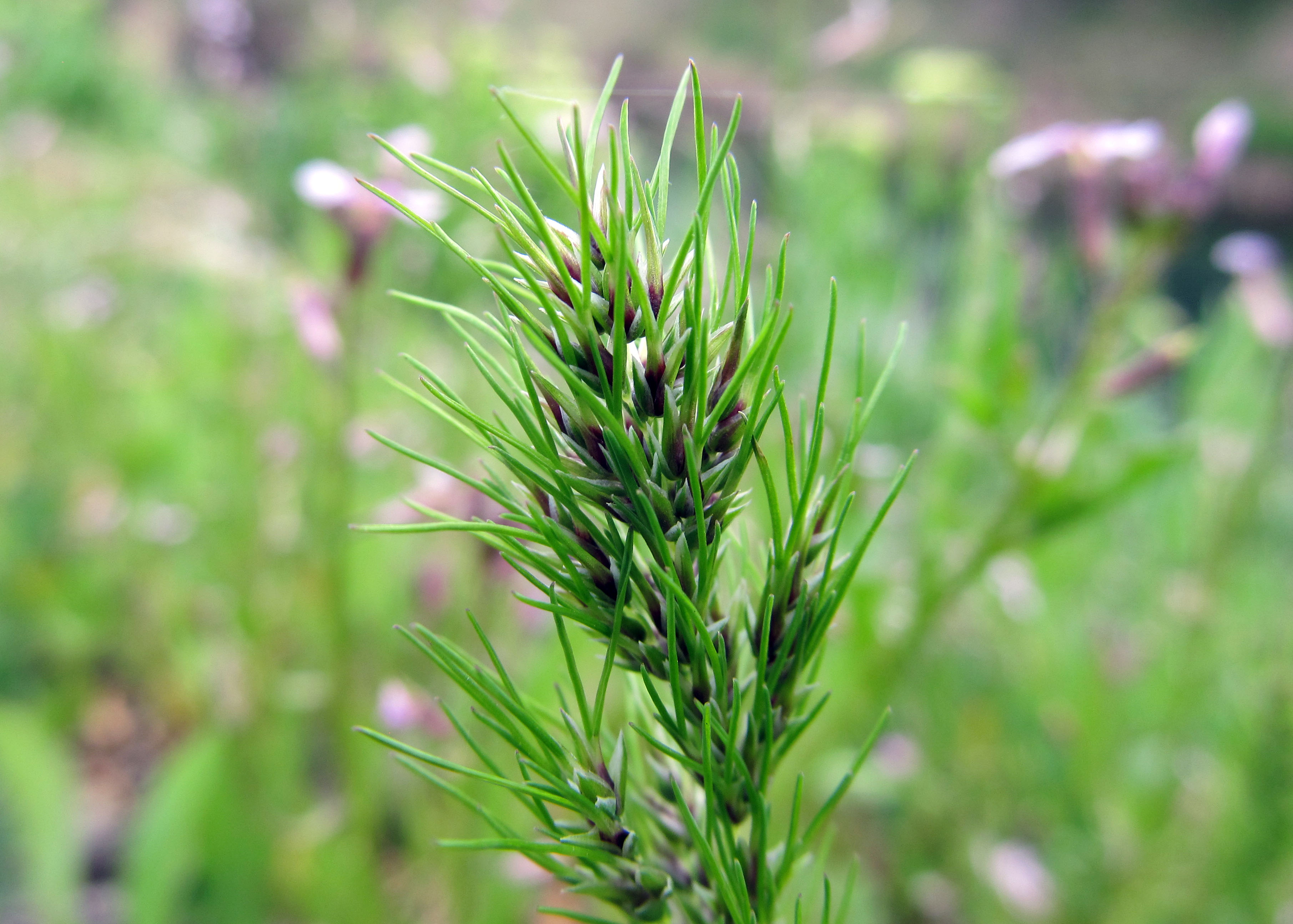
bulbous bluegrass (Poa bulbosa)

Bulbous bluegrass (Poa bulbosa) is a Eurasian native but is widely distributed outside of its native range having been repeatedly spread around by humans both intentionally and accidentally. It’s a short-lived, perennial grass that can reach up to 2 feet tall but is often considerably shorter. Its leaves are similar to other bluegrasses – narrow, flat or slightly rolled, with boat-shaped tips and membranous ligules – yet the plants are easy to distinguish thanks to their bulbous bases and the bulbils that form in their flower heads. Their bulbous bases are actually true bulbs, and bulbous bluegrass is said to be the only grass species that has this trait. Just like other bulb-producing plants, the production of these basal bulbs is one way that bulbous bluegrass propagates itself.

basal bulbs of bulbous bluegrass

Bulbous bluegrass is also propagated by seeds and bulbils. Seeds form, like any other plant species, in the ovary of a pollinated flower. But sometimes bulbous bluegrass doesn’t make flowers, and instead modifies its flower parts to form bulbils in their place. Bulbils are essentially tiny, immature plants that, once separated from their parent plant, can form roots and grow into a full size plant. The drawback is that, unlike with most seeds, no sexual recombination has occurred, and so bulbils are essentially clones of a single parent.

The bulbils of bulbous bluegrass sit atop the glumes (bracts) of a spikelet, which would otherwise consist of multiple florets. They have dark purple bases and long, slender, grass-like tips. Bulbils are a type of pseudovivipary, in that they are little plantlets attached to a parent plant. True vivipary occurs when a seed germinates inside of a fruit while still attached to its parent.

Like seeds, bulbils are small packets of starch and fat, and so they are sought ought by small mammals and birds as a source of food. Ants and small rodents are said to collect and cache the bulbils, which is one way they get dispersed. Otherwise, the bulbils rely mostly on wind to get around. They then lie dormant for as long as 2 or 3 years, awaiting the ideal time to take root.

bulbils of bulbous bluegrass

Bulbous bluegrass was accidentally brought to North America as a contaminant in alfalfa and clover seed. It was also intentionally planted as early as 1907 and has been evaluated repeatedly by the USDA and other organizations for use as a forage crop or turfgrass. It has been used in restoration to stabilize soils and reduce erosion. Despite numerous trials, it has consistently underperformed mainly due to its short growth cycle and long dormancy period. It is one of the first grasses to green up in the spring, but by the start of summer it has often gone completely dormant, limiting its value as forage and making for a pretty pathetic turfgrass. Otherwise, it’s pretty good at propagating itself and persisting in locations where it hasn’t been invited and is now mostly considered a weed – a noxious one at that according to some states. Due to its preference for dry climates, it is found most commonly in western North America.

In its native range, bulbous bluegrass frequently reproduces sexually. In North America, however, sexual reproduction is rare, and bulbils are the most common method of reproduction. Prolific asexual reproduction suggests that bulbous bluegress populations in North America should have low genetic diversity. Researchers set out to examine this by comparing populations found in Washington, Oregon, and Idaho. Their results, published in Northwest Science (1997), showed a surprising amount of genetic variation within and among populations. They concluded that multiple introductions, some sexual reproduction, and the autopolyploidy nature of the species help explain this high level of diversity.

———————

Interested in learning more about how plants get around? Check out the first issue of our new zine Dispersal Stories.

Weeds of Boise: Ridenbaugh Canal between Vista Avenue and Federal Way

Like so many urban areas that had their start as agricultural communities, Boise is home to a vast network of canals. Major canals, such as the New York Canal, stretch across the valley and divert water through an extensive series of laterals. This water once irrigated numerous farms and orchards found within Boise and beyond. While large farms still exist outside of Boise – as well as a few small farms within city limits – much of this water now goes to irrigating lawns and gardens of city residents who are lucky enough to have access to it.

Because of the way these canals weave their way throughout Boise and into the surrounding area, there is interest in transforming them into transportation corridors for bicyclists and pedestrians. This would be in addition to the Boise River Greenbelt, a 30 mile trail system that already exists along the Boise River, and would vastly increase access to alternative and sustainable transportation for people living in the area.

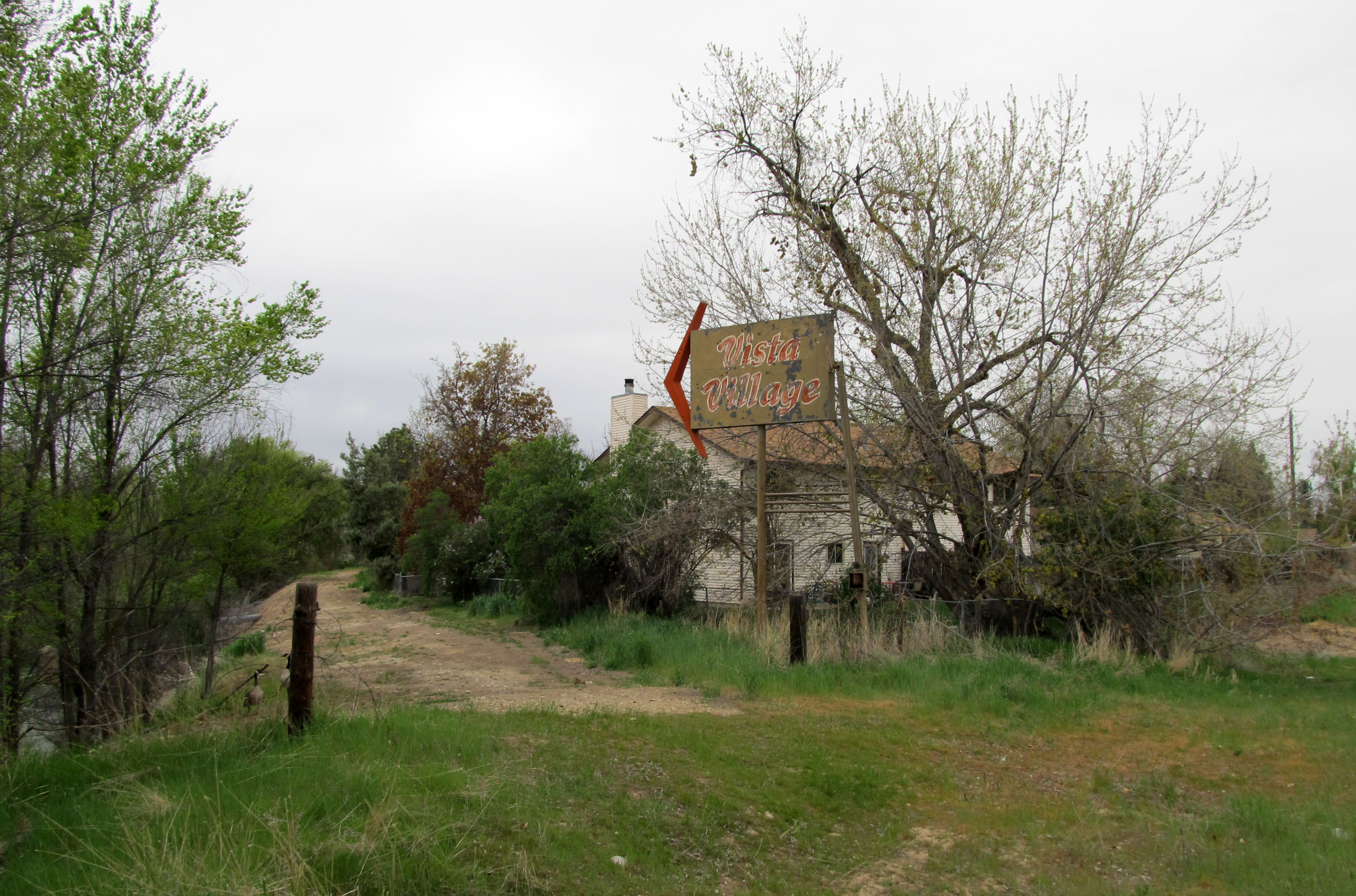
Accessibility to these canals is limited, but where trails are available, they are a great place to observe wild urban flora and urban wildlife. This month, I explored a section of the Ridenbaugh Canal that extends about a thousand feet between Vista Avenue and Federal Way. There is a wide, dirt trail on the north side of the canal, easily accessible from Vista Avenue, that ends at the railroad tracks which run alongside Federal Way. The bank of the canal is steep, but there is one spot at the end of the trail that leads down to the water’s edge. Weeds are abundant along both sides of the trail, so it’s a great place to become familiar with common members of our wild urban flora.

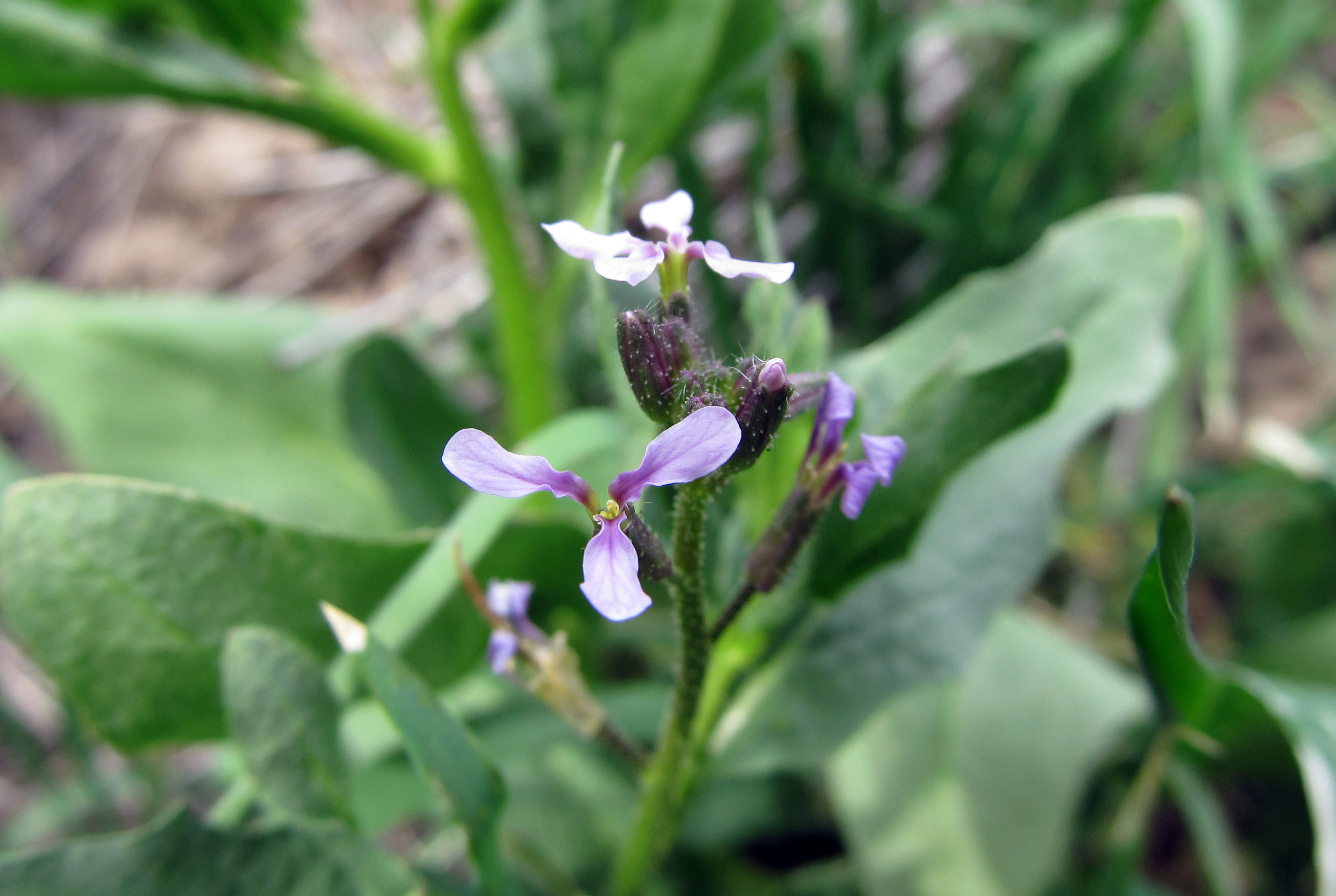
blue mustard (Chorispora tenella)

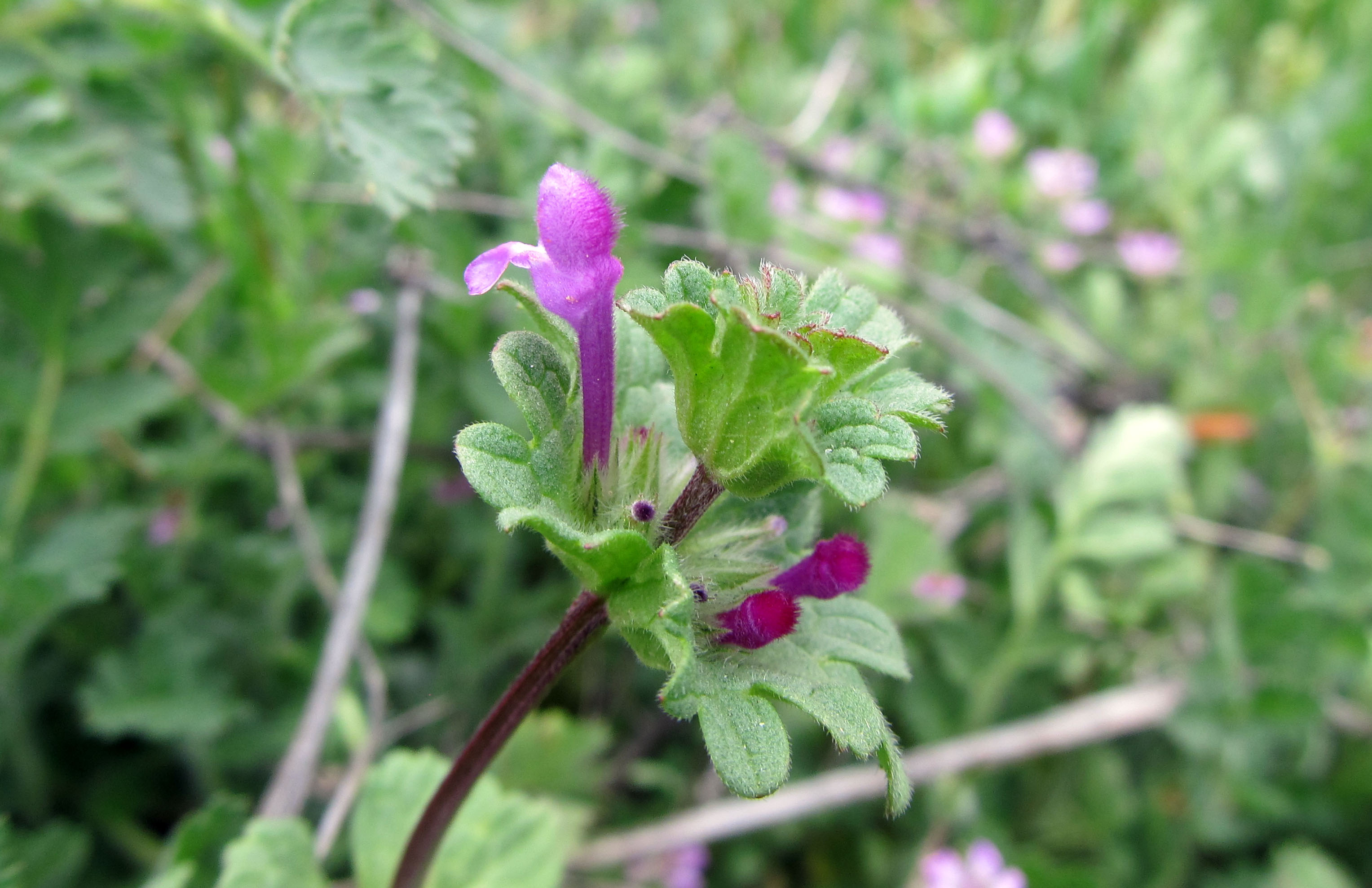
henbit (Lamium amplexicaule)

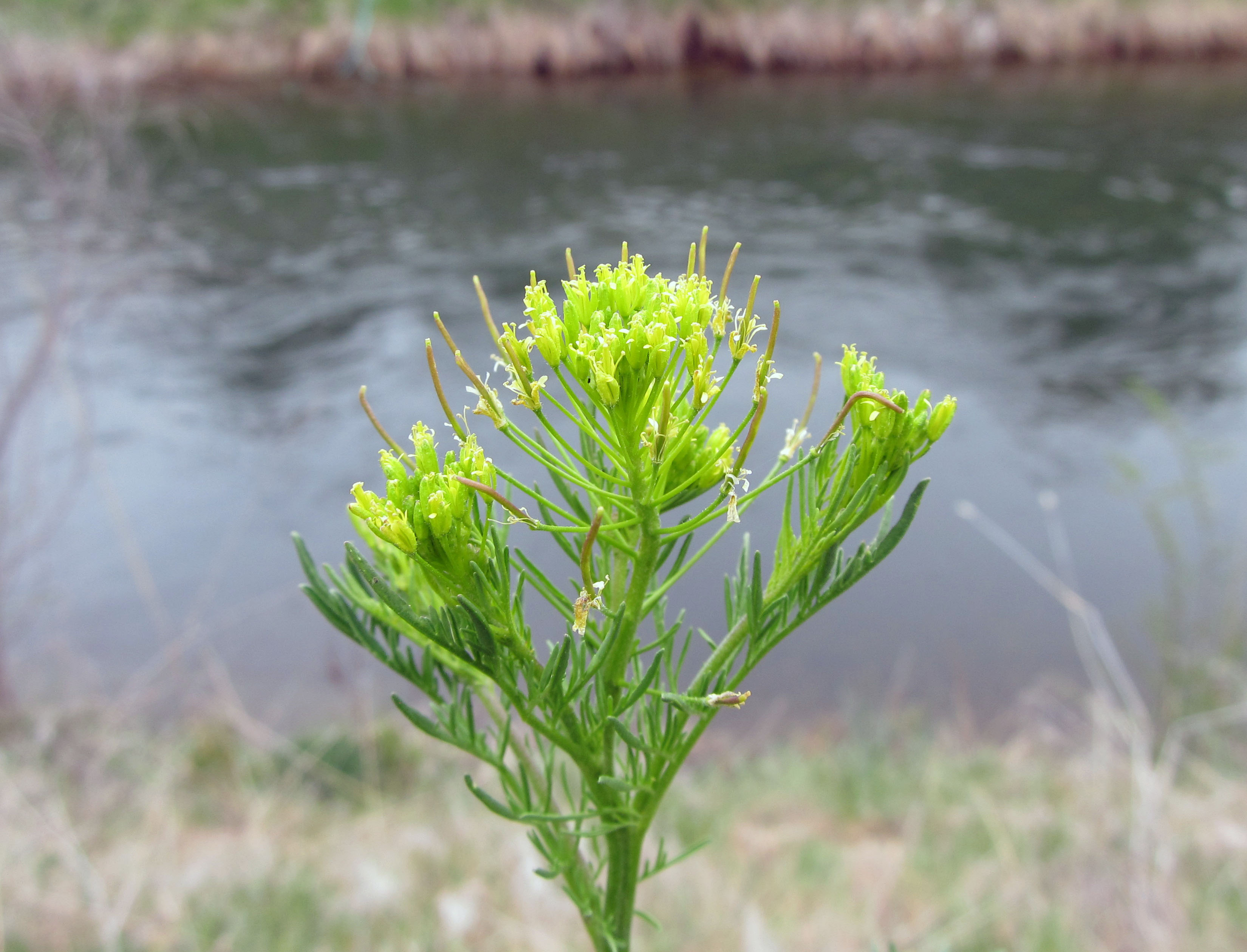
flixweed (Descurainia sophia)

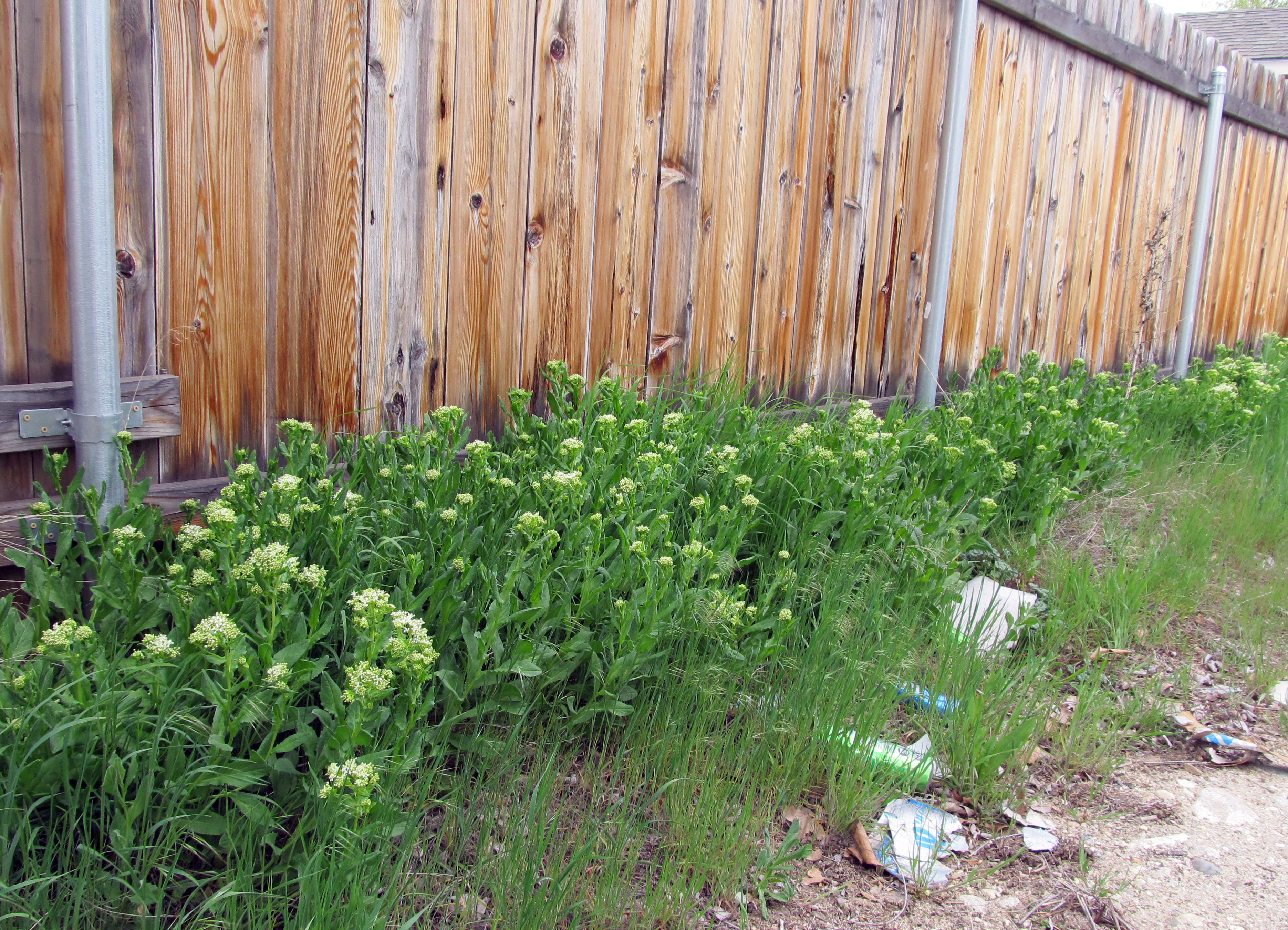
A long strip of white top (Lepidium sp.) flanks a fence alongside the trail.

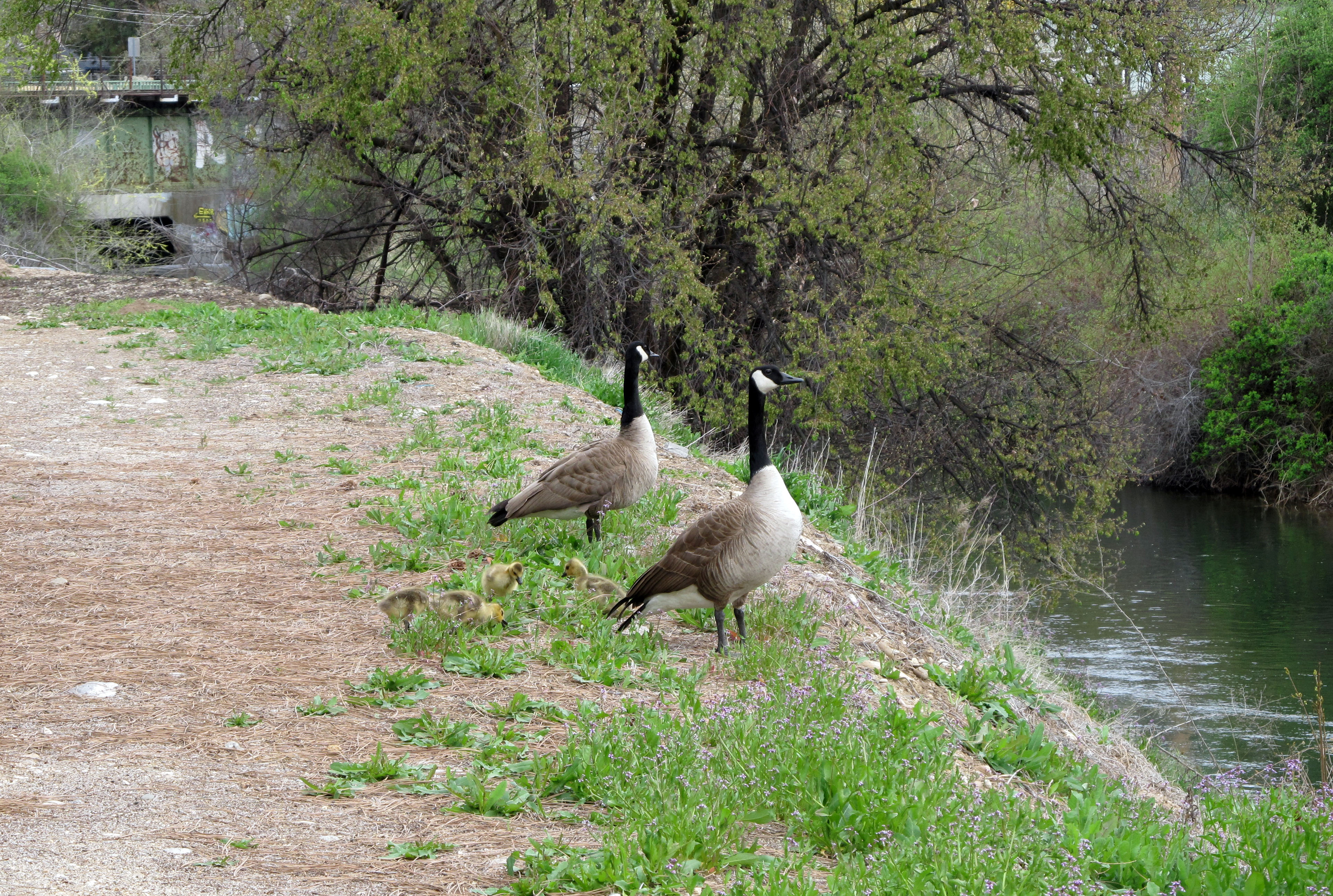
A pair of Canada geese and four goslings have made this stretch of the canal their home.

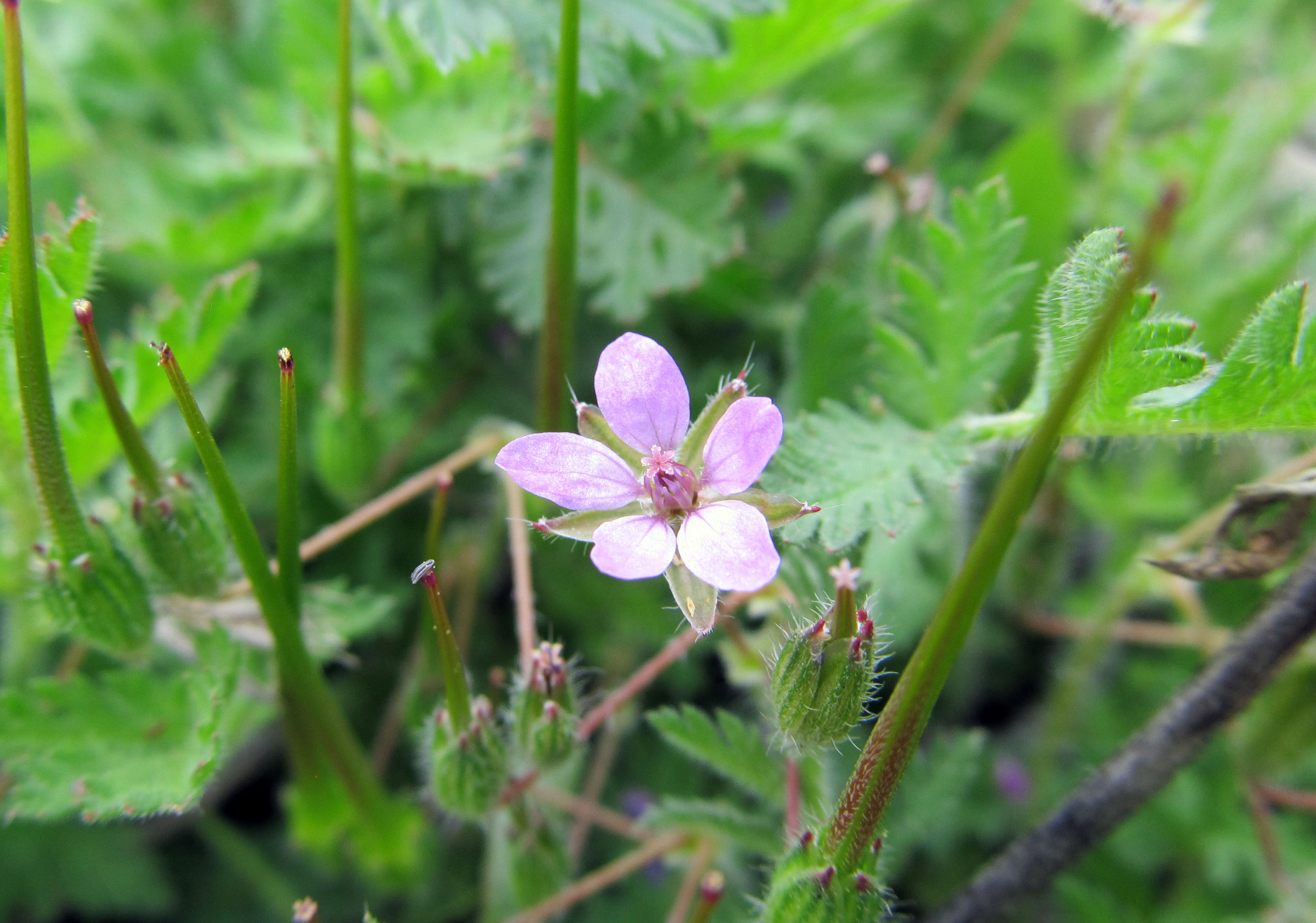
redstem filaree (Erodium cicutarium)

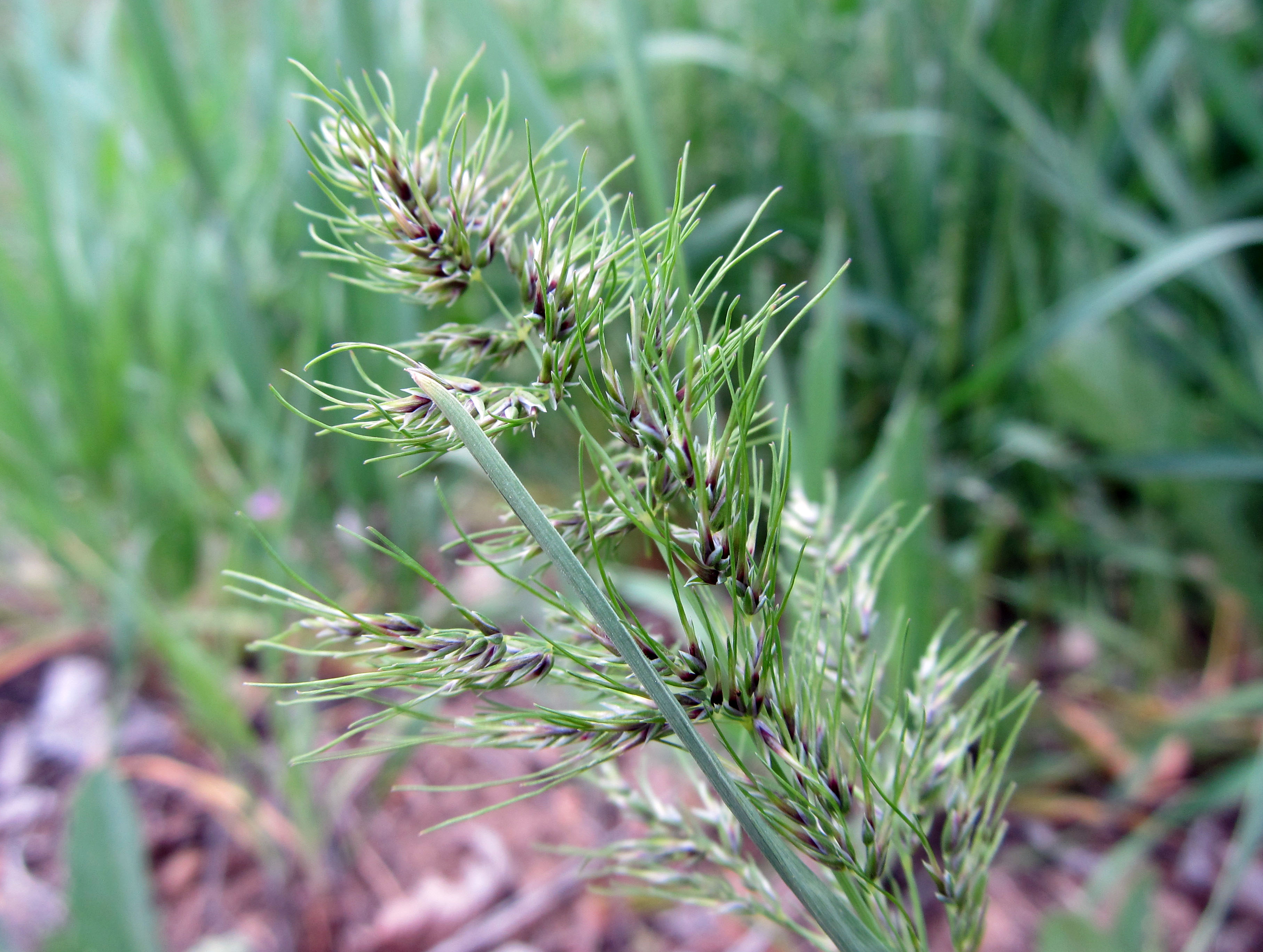
bulbous bluegrass (Poa bulbosa)

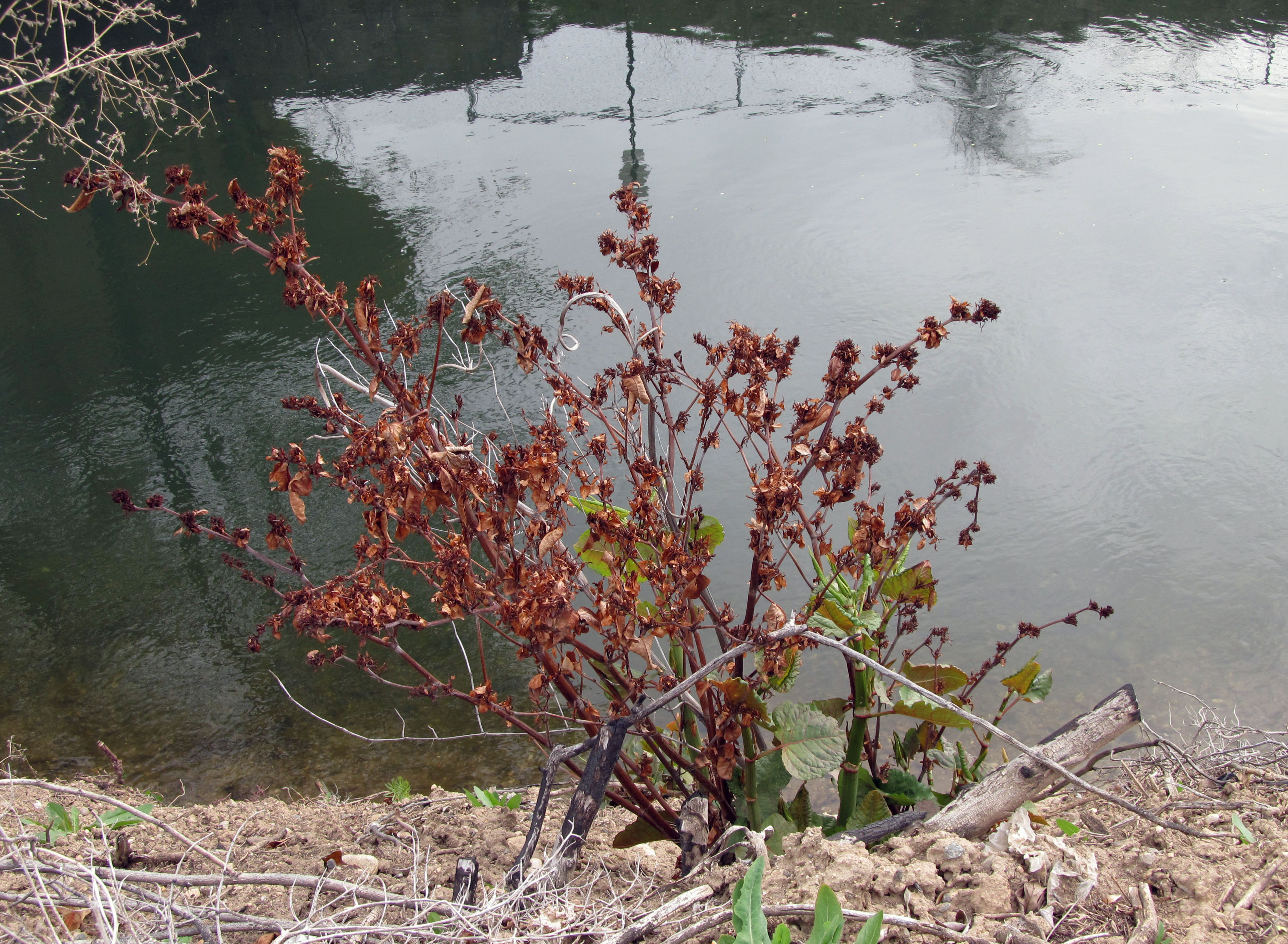
Japanese knotweed (Reynoutria japonica)

Weeds found at Ridenbaugh Canal between Vista Avenue and Federal Way:

  • Bromus tectorum (cheatgrass)
  • Ceratocephala testiculata (bur buttercup)
  • Chondrilla juncea (rush skeletonweed)
  • Chorispora tenella (blue mustard)
  • Descurainia sophia (flixweed)
  • Draba verna (spring draba)
  • Epilobium sp. (willowherb)
  • Erodium cicutarium (redstem filaree)
  • Galium aparine (cleavers)
  • Hordeum murinum ssp. glaucum (smooth barley)
  • Lactuca serriola (prickly lettuce)
  • Lamium amplexicaule (henbit)
  • Lepidium sp. (white top)
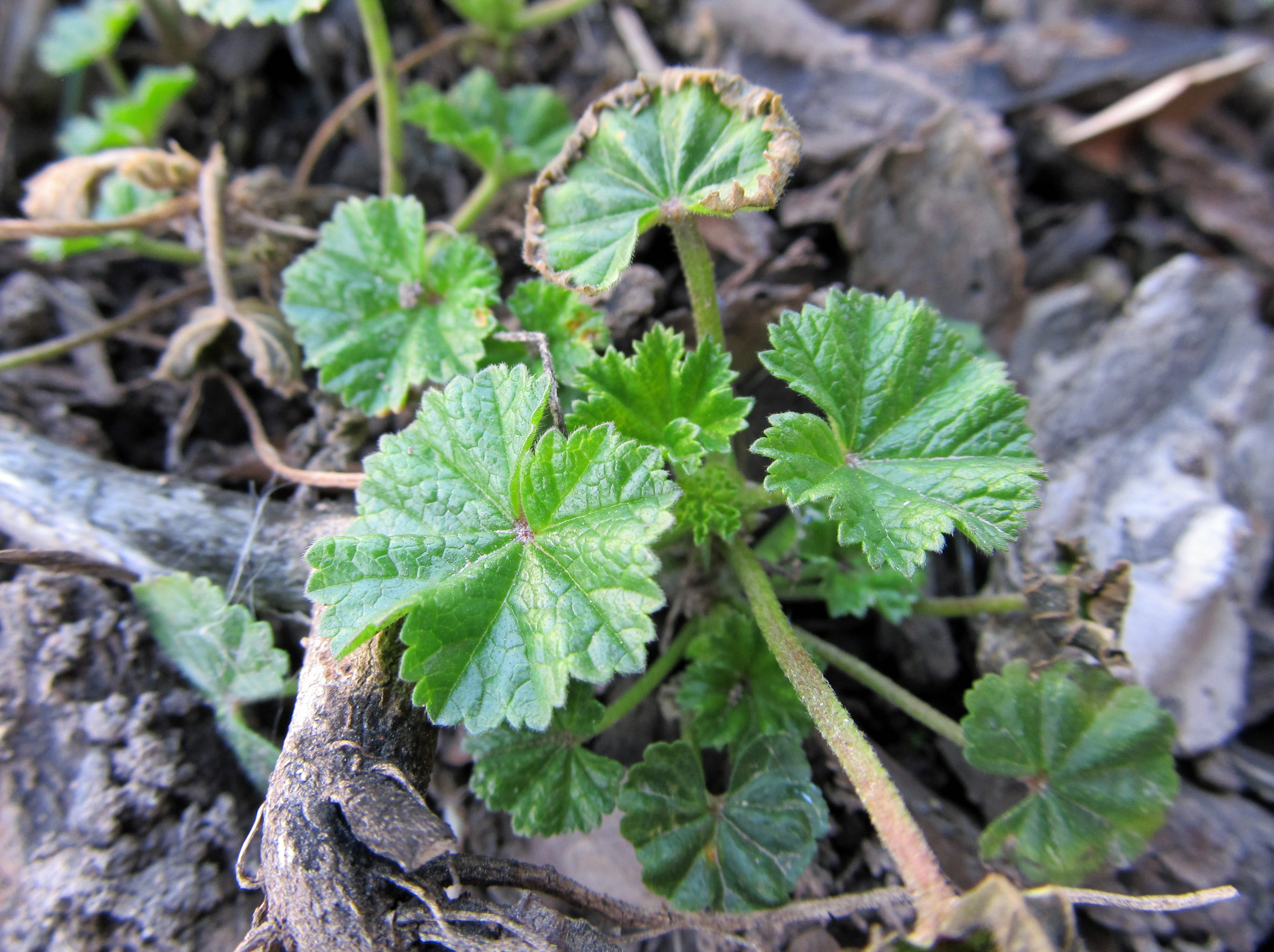
  • Malva neglecta (common mallow)
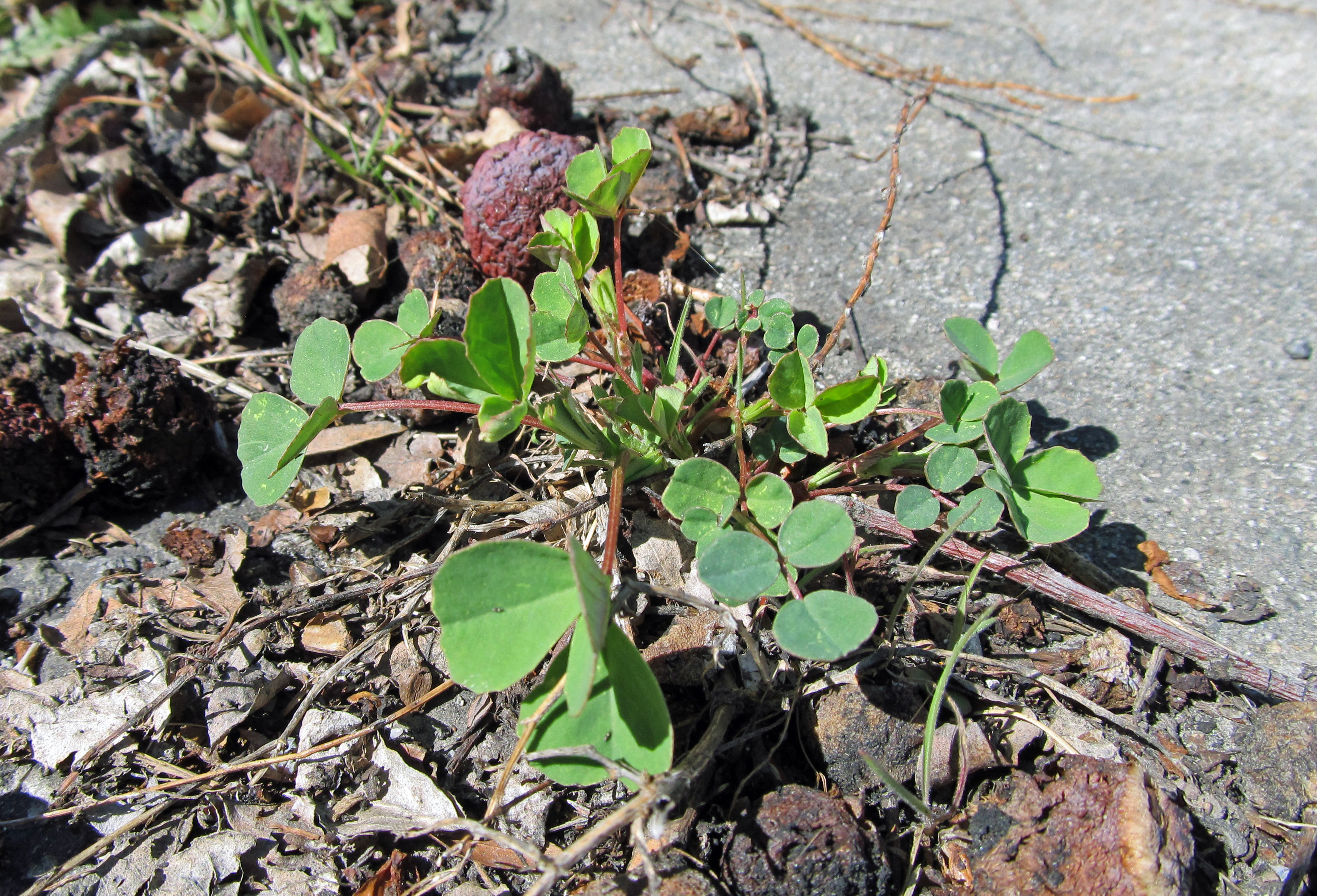
  • Medicago lupulina (black medic)
  • Medicago sativa (alfalfa)
  • Poa bulbosa (bulbous bluegrass)
  • Reynoutria japonica (Japanese knotweed)
  • Rumex crispus (curly dock)
  • Secale cereale (cereal rye)
  • Taeniatherum caput-medusae (medusahead)
  • Taraxacum officinale (dandelion)
  • Tragopogon dubius (salsify)

Like all posts in the Weeds of Boise series, this will be updated as I identify and photograph more of the weeds found in this location. If there is a canal near you, get outside and take a look at what’s growing along the banks. Let me know what you find in the comment section below.

Tea Time: Violet Leaf Tea

The genus Viola is large and widespread. Its flowers are easily recognizable and obviously popular. A significant number of Viola species, hybrids, and cultivars are commercially available and commonly planted in flower beds and container gardens. Certain species have even become weeds – vicious lawn invaders in some people’s opinion. Violets (or pansies in some cases) are also edible. Their leaves and/or flowers can be used in salads, drinks, and desserts. One way to use the leaves is to make tea, so that’s what I did.

I imagine you can make tea from any Viola species, but after some searching I found that two species frequently mentioned are Viola odorata and Viola sororia – two very similar looking plants, one from the Old World and the other from the New World.

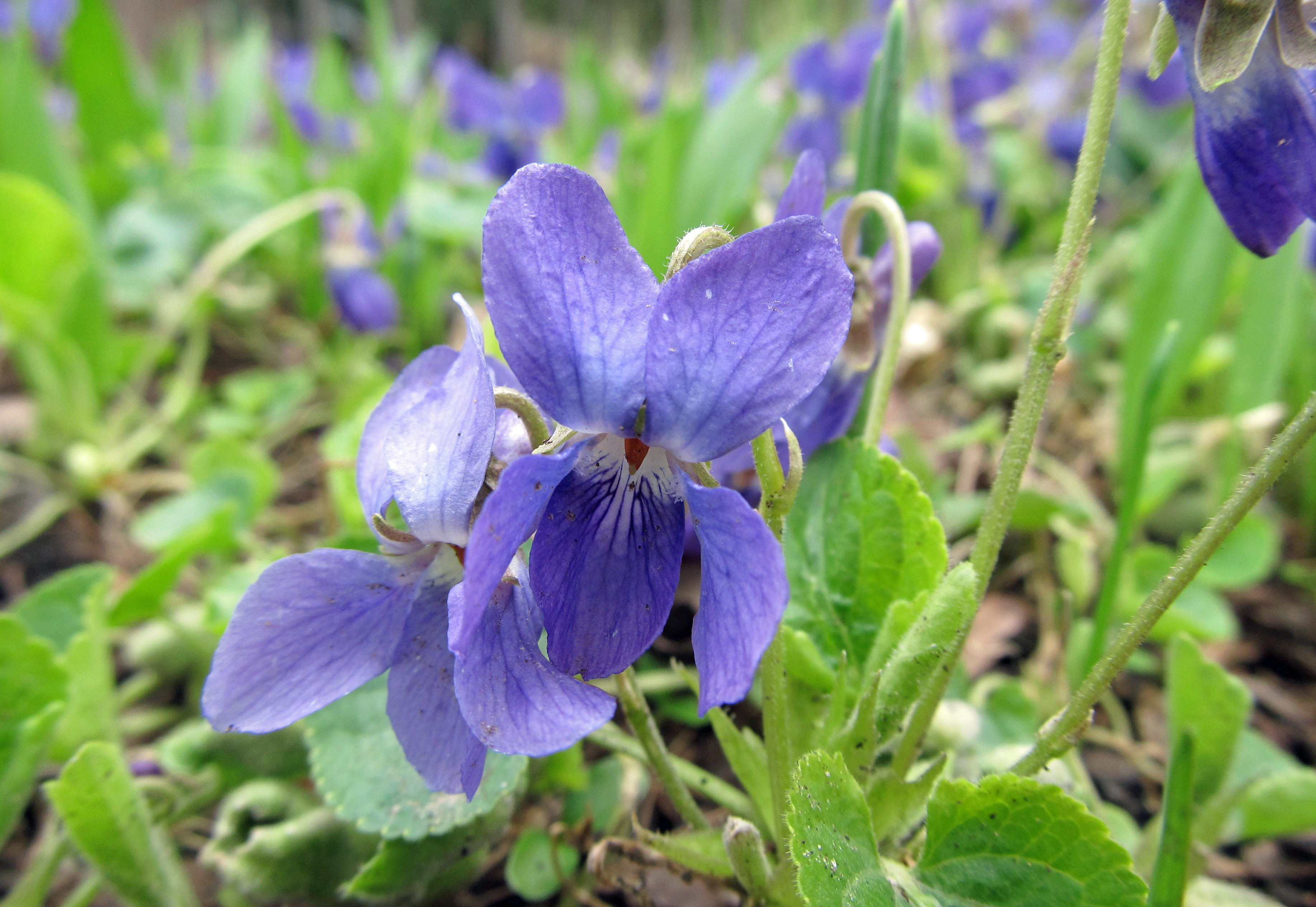
sweet violet (Viola odorata)

Viola odorata – commonly known as sweet violet, wood violet, or English violet – is distributed across Europe and into Asia and has been widely introduced outside of its natural range. It has round, oval, or heart-shaped leaves with toothed margins that grow from the base of the plant, giving it a groundcover-type habit. Its flowers range from dark purple to white and are borne atop a single stem that curves downward at the top like a shepherd’s crook. It has no leafy, upright stems, and it spreads horizontally via stolons and rhizomes. The flowers are distinctly fragrant and have a long history of being used in perfumes.

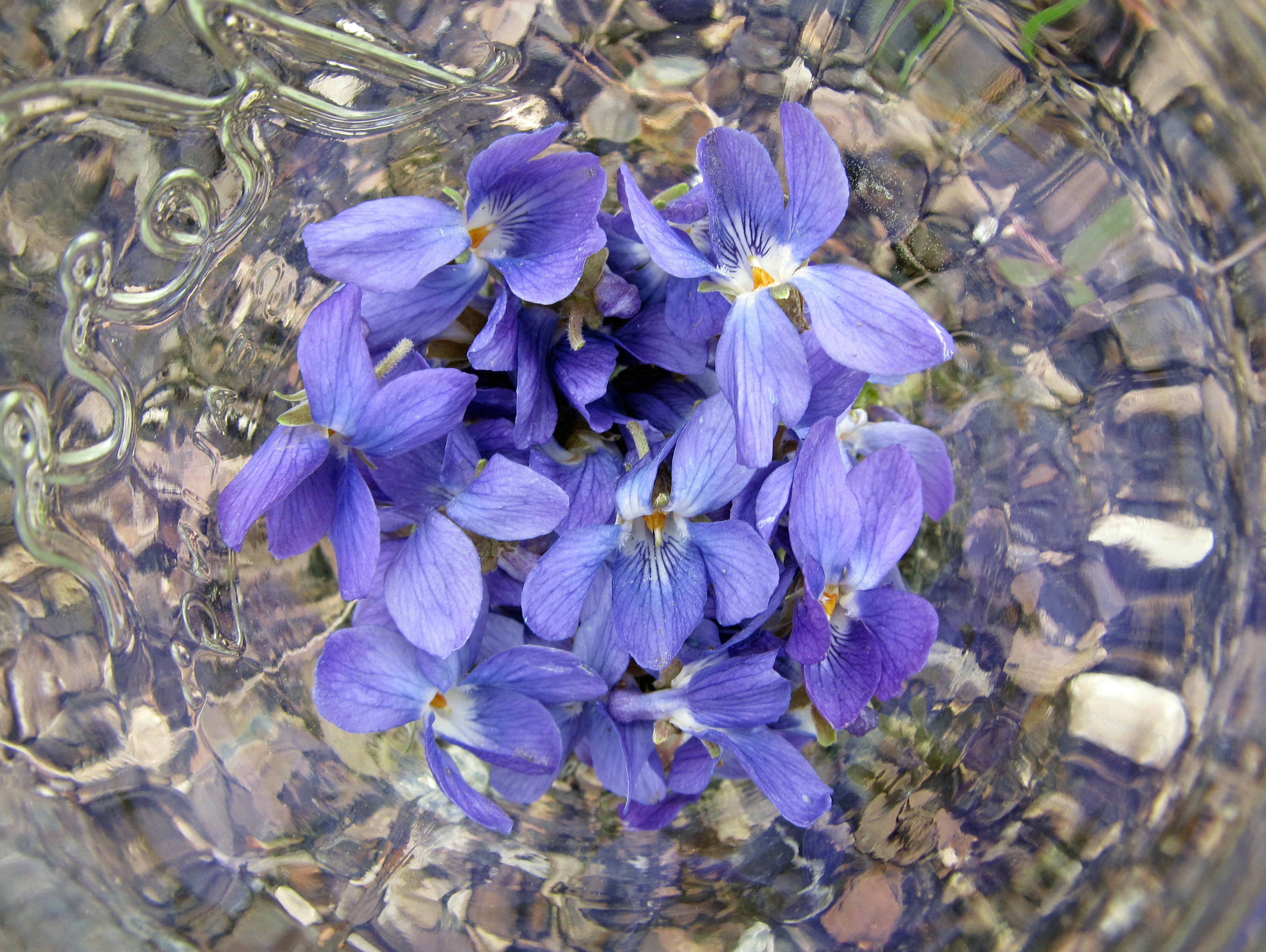
One way to get a good whiff of these flowers is to try a trick described in the book The Reason for Flowers by Stephen Buchmann:

Go into a garden or any natural area and select one or more flowers you want to investigate…. Select a small, thoroughly washed and dried glass jar with a tight-fitting lid. Place just one type of flower in the jar. Set your jar in a warm, sunny place such as a windowsill and come back in an hour or two. Carefully open the lid and sniff…. If you’ve selected a blossom with even the faintest scent, you should be able to smell it now, since the fragrance molecules have concentrated inside the jar.

sweet violet flowers inside glass jar

Viola sororia – native to eastern North America –  is also commonly planted outside of its native range. It’s clearly a favorite, having earned the distinction of state flower in four U.S. states. Known as the common blue violet (or myriad other commons names), it looks and acts a lot like sweet violet. I distinguish them by their flowers, which are wider and rounder (chunkier, perhaps) than sweet violet flowers, and their leaves, which are generally more heart-shaped. Feel free to correct me. If, like me, you’re having trouble identifying violets, keep in mind that Viola species are highly variable and notorious hybridizers, so don’t beat yourself up over it. It’s their fault, not yours.

common blue violet (Viola sororia)

Violets bloom when the air is cool and the days are short. They are among the earliest plants to flower after the new year and among the latest plants flowering as the year comes to a close. In his entry on violets in The Book of Forest and Thicket, John Eastman refers to these early bloomers as “this low, blue flame in the woods.” They are like “a pilot light that ignites the entire burst of resurrection we call spring.” I can’t really picture spring without them. I find their unique flowers so intriguing that I fixate on them whenever I see them. And once I learned that I could make a tea out of their leaves, I had to try it.

I used the leaves of Viola odorata (or what I, with my amateur skills, identified as V. odorata). I picked several of what looked to be young leaves and left them to dry in the sun for several days. Later, I chopped them up and brewed a tea according to the instructions found on this website, which suggests using one tablespoon of dried leaves in sixteen ounces of water. Apparently, a little goes a long way, and I probably could have used fewer leaves than I did.

dried, chopped up leaves of sweet violet (Viola odorata) for making tea

The tea has a nice green color and smells a bit like grass to me. It may even taste like grass. I found it fairly bitter. Sierra didn’t like it and called it musty. I enjoyed it, but would likely enjoy it more if I hadn’t made it quite so strong. The aforementioned website also recommends combining violet leaf with other things like mint, dandelion, clover, and/or chamomile. I imagine a combination of ingredients could be better than just violet leaf on its own. Another site warns that “some of the wild violets have an unpleasant soapy flavor,” so that’s something to keep in mind when selecting your leaves for tea and other things. Either way, violet leaf tea is an experience worth having.

See Also: Pine Needle Teas

Weeds of Boise: Abandoned Pizza Hut on Ann Morrison Park Drive

There is an old Pizza Hut on the corner of Ann Morrison Park Drive and Lusk Street. I’m not sure how long it’s been closed (if someone knows for sure, please let me know), but it has to be well over a year – probably several years. It’s clear that the landscaping has not been maintained for a while. The turf grass in the hellstrips is now mostly weeds, the Callery pears and crabapples are in need of some serious pruning, and the mugo pines and horizontal junipers are slowly dying off. On the other hand, the Oregon grapes and barberries look just fine. They never really needed our help anyway.

I like checking out lots with recently abandoned buildings because you can see in real time just how quickly weeds take over once humans stop their meddling. As the months and years pass, and as the plants that humans intentionally placed there decline, it becomes increasingly obvious that weeds truly are the wild flora of our cities.

My first few visits to this site were on March 21st, 25th and 28th of 2020. During those visits, I made a list of all the weeds that I could easily identify and noted a few individuals that I will need to come back to. What follows are photos of a few of the weeds I came across, along with a list of the weeds I was able to identify.

Every lot needs a dandelion (Taraxacum officinale).

Common mallow (Malva neglecta) in mulch.

The turf grass in the hellstrips has been replaced by several different weeds including tiny, early spring favorites like bur buttercup (Ceratocephala testiculata) pictured here and spring draba (Draba verna).

Common groundsel (Senecio vulgaris) is prolific in a bed on the north side of the building. On the east side, this plant had already flowered and gone to seed by mid-March.

The tough taproot of alfalfa (Medicago sativa) easily works its way into cracks in pavement and concrete.

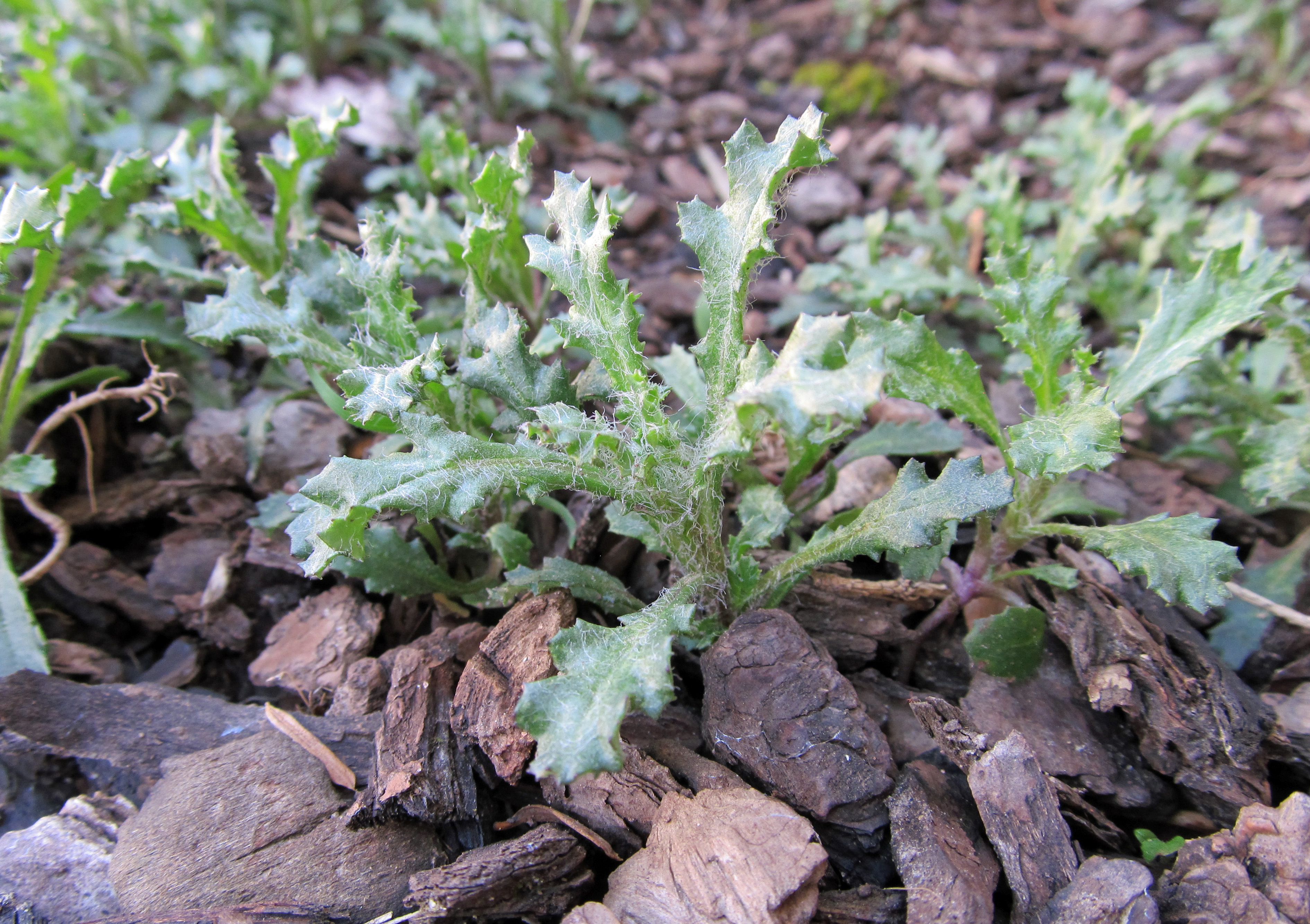
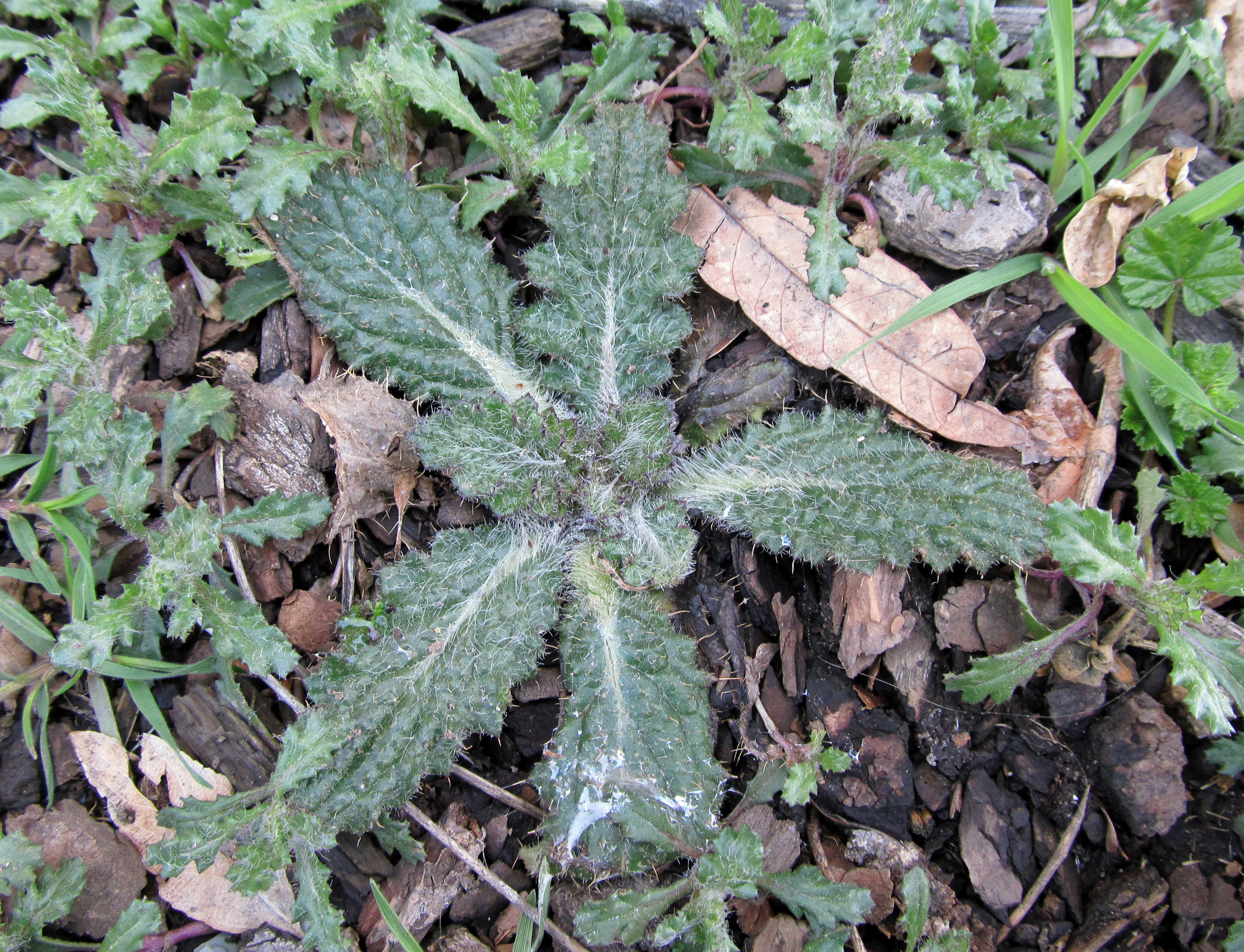
A bull thistle rosette (Cirsium vulgaris) perhaps?

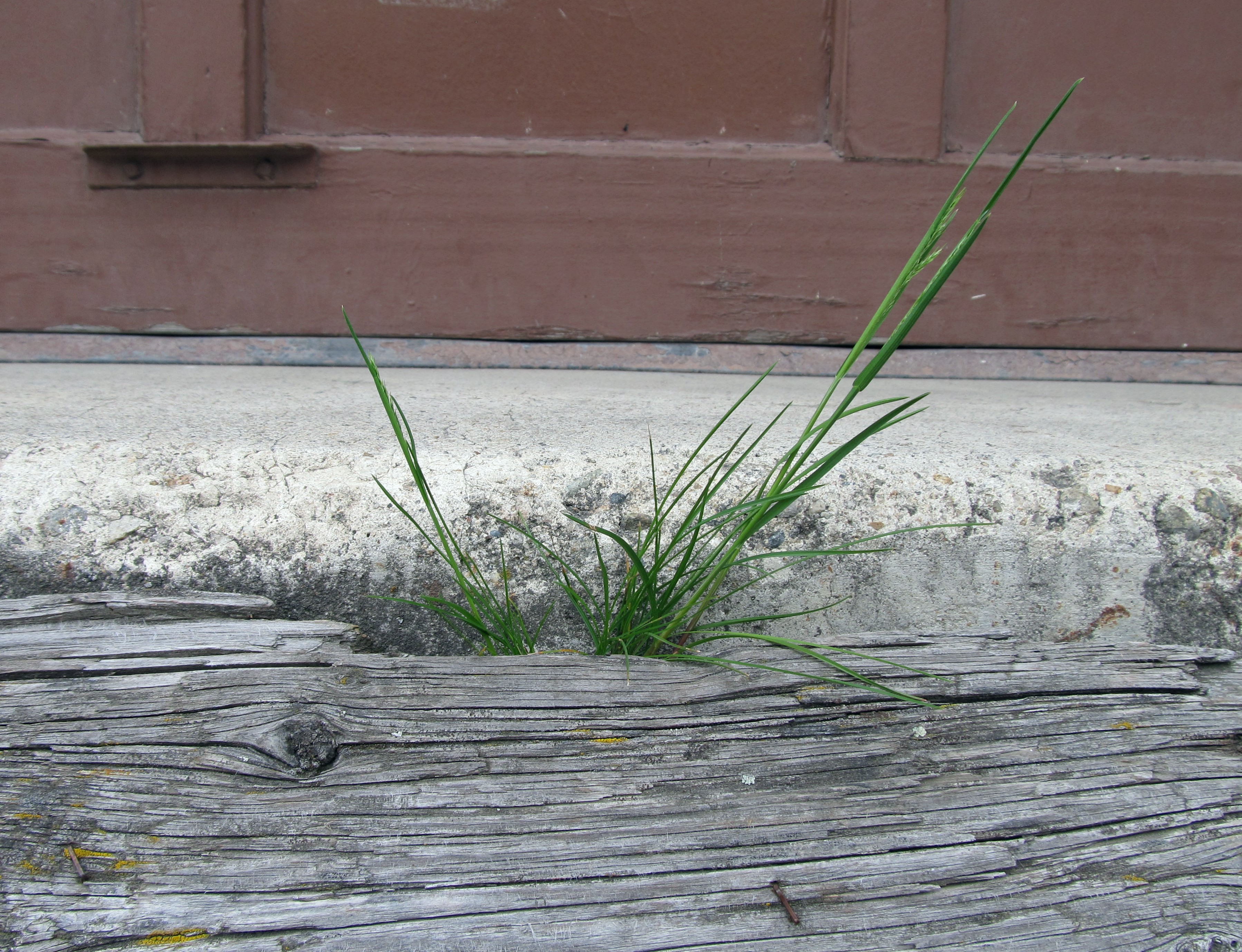
Cheatgrass (Bromus tectorum) was common on the site, including (perhaps not surprisingly) in this parking block.

horseweed seedling (Conyza canadensis)

Weeds found at the abandoned Pizza Hut on Ann Morrison Park Drive:

  • Bromus tectorum (cheatgrass)
  • Ceratocephala testiculata (bur buttercup)
  • Cirsium vulgare (bull thistle)
  • Conyza canadensis (horseweed)
  • Draba verna (spring draba)
  • Hordeum murinum ssp. glaucum (smooth barley)
  • Lactuca serriola (prickly lettuce)
  • Malva neglecta (common mallow)
  • Medicago sativa (alfalfa)
  • Poa bulbosa (bulbous bluegrass)
  • Rumex crispus (curly dock)
  • Senecio vulgaris (common groundsel)
  • Taraxacum officinale (dandelion)
  • Ulmus pumila (Siberian elm)

This post will be updated as I identify more of the weeds and capture more photos. I also anticipate that this lot will not be abandoned for that much longer. It’s located near Boise State University in an area that has seen a lot of development in the past few years. I can’t imagine prime real estate like this will stay feral indefinitely. Until something is done with it, I’ll keep checking in.

Introducing Weeds of Boise

Weeds are the wild flora of our cities. Their occurrence and continued existence is not directly reliant on humans in the same way that the plants in our yards, parks, gardens, and other green spaces are. They may take advantage of the disturbance that we cause when we stir up the soil or cease maintenance in a particular spot, and they certainly appreciate the runoff from our sprinklers and the free rides their seeds get on our pets and ourselves, but they don’t need us looking after them to survive. They get by on their own whether we approve of them or not. Most may not be native to the area, but their presence is natural – undirected and involuntary – and for this reason I consider them to be a valid component of our urban flora.

If you visit a natural area outside of our cities, you are likely to find a field guide associated with that region that will help you identify many of the plants found there. However, such a field guide is not likely to exist for the plants found in a vacant lot or an urban roadside near you. Sure, there are plenty of general weed identification guides, some of which may be specific to where you live, but they are often focused on agricultural/horticultural weeds or weeds found in natural areas outside of the built environment. Few show weeds in an unmaintained urban setting the way that Peter Del Tredici’s book or Maggie Herskovits’ zine do. Clearly we need more resources that identify and document our urban floras.

Weeds of Boise is an attempt to begin that process for my corner of the world. After coming across websites like The Weedalouge (cataloging the wild plants of Philadelphia), Weeds of Melbourne (“a visual glossary of the weedy heritage of Melbourne, Australia”), and Spontaneous Urban Plants (an attempt to map weeds in urban areas around globe), I decided to start the process here in Boise, Idaho. My goal is to select locations across the city and inventory the weeds found there at different times of the year. I will keep a running list of what I find and photograph as many plants as I can. I will make a separate blog post for each location and maintain a link for each post in the Weeds of Boise page. The blog posts will be updated as I collect more data for each site. Over time I hope to have a more clear picture of what weeds are found here and how they are distributed.

Because many of these plants are cosmopolitan, the weeds found in my area are likely similar to the ones found in yours, but there may be some unique differences. If more projects like this are undertaken, we will have a better idea of the similarities and differences among our urban floras. Upon closer observation, we are likely to make some interesting discoveries. Who knows what we might find once we really start looking at these obnoxiously ubiquitous but otherwise completely ignored plants?

Weeds of Boise is also a reminder that you can botanize anytime anywhere. You don’t have to jet off to some remote location to see plants. It’s likely that there are wild plants growing right outside your front door – each one with a unique name and story and just as worth getting to know as any other.