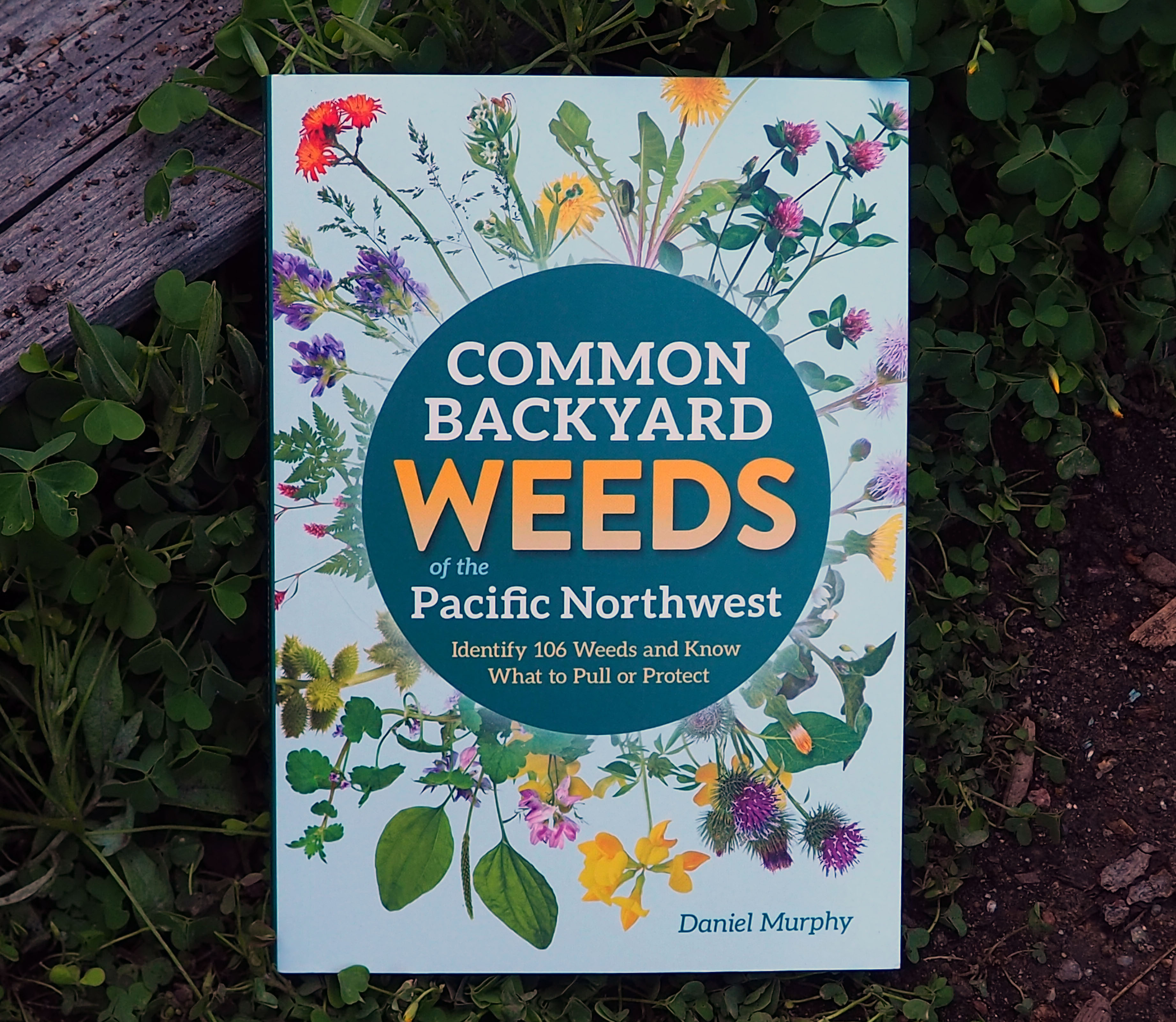
My book is out! It showed up a week earlier than expected, a pleasant surprise for anyone who pre-ordered a copy. Common Backyard Weeds of the Pacific Northwest is available now from your favorite bookseller. You can also order it directly from the publisher or through my Bookshop store. Thank you for your support! If and when you get your hands on a copy, please tell me what you think. Constructive feedback would be particularly helpful so that I can make improvements to the second edition. (Yes, I’m already planning on a second edition, and I already have a few edits of my own!)
While researching this book, I came across many new and interesting facts about weeds that I didn’t previously know. It’s part of the joy of writing. Some of these discoveries pertain to cocklebur, a prickly and troubling weed with a fascinating dispersal story. Xanthium strumarium is a widespread plant that comes up in farms, rangelands, wetlands, yards, vacant lots, roadsides, ditch banks, and a variety of other locations. In the book I introduce it this way: “A native and/or introduced annual (short-lived perennial) that grows up to 4 feet tall with either a single or a few rigid stems.” It produces a thick, woody taproot and has broad, simple leaves. Separate male and female flowers occur on the same plant, and the flowers are wind-pollinated and predominantly self-pollinated – a unique state of affairs for a plant in the aster family.
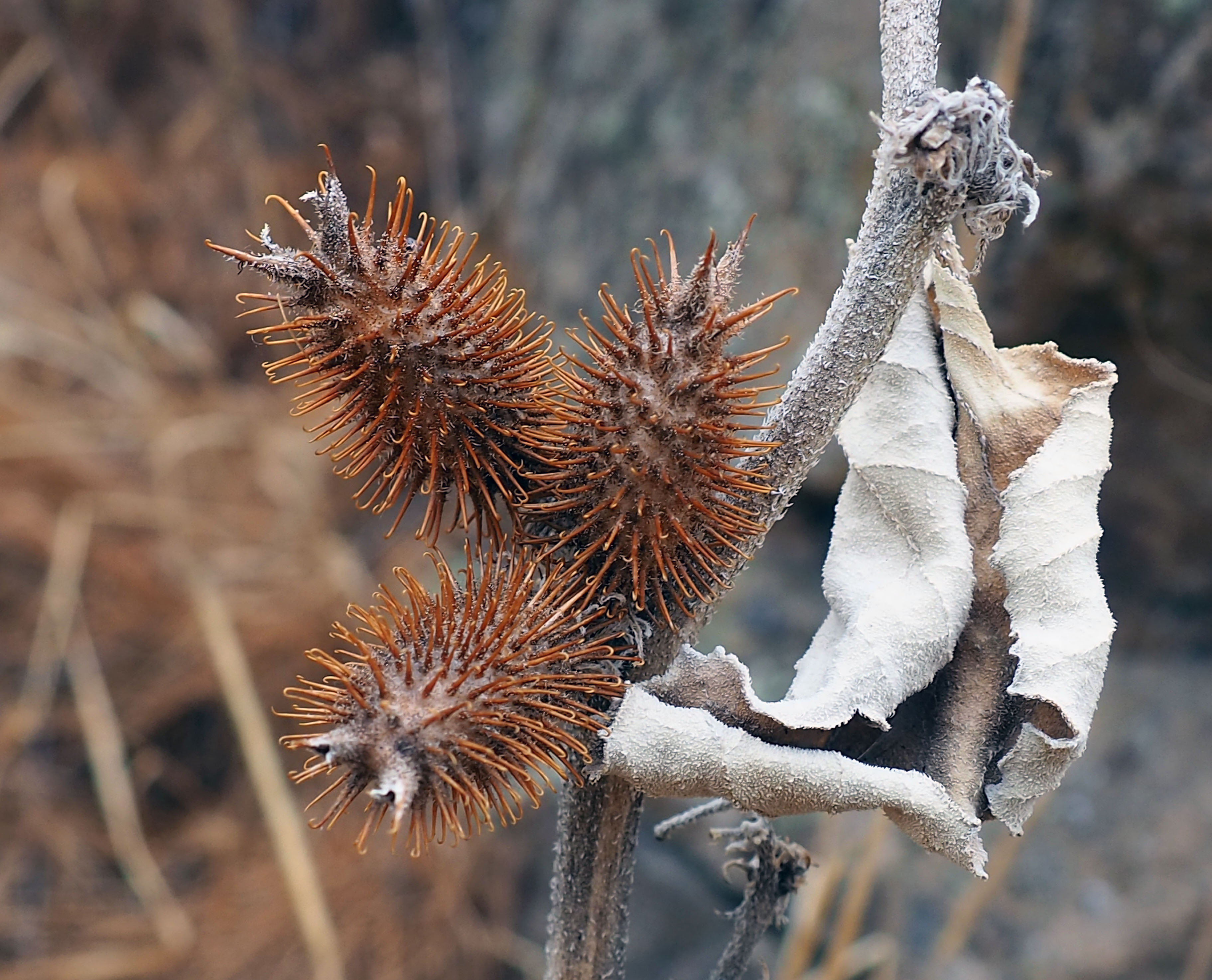
The most recognizable feature of cocklebur are the fruits, which are egg-shaped and covered in hooked prickles. One of their dispersal mechanisms is immediately obvious, grabbing onto passers-by and hitching a ride. Since they are often found near waterways or in areas where flooding occurs, another way they are dispersed is by floating in water. Both of these dispersal pathways allow seeds to travel long distances.
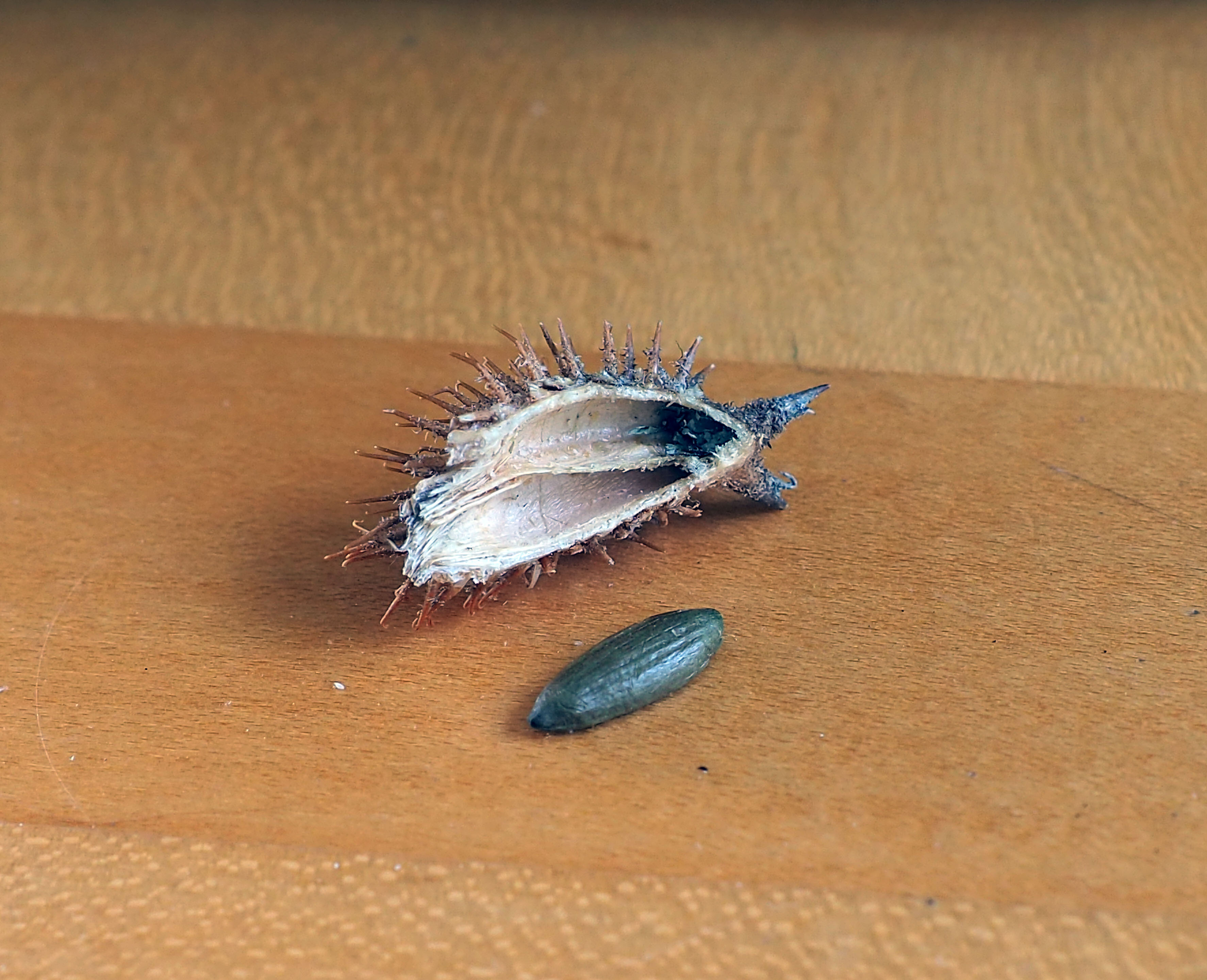
Still, cockleburs have another trick up their sleeves that helps ensure their longevity. Inside each fruit there are two seeds which look a bit like oversized sunflower seeds. These seeds exhibit something called somatic polymorphism. This term can mean different things depending on the plant, but in cocklebur’s case it means that the two seeds have different dormancies. One seed will germinate within the first year. The second seed remains dormant for at least a year and can germinate much later. A classic example of bet hedging. The two seeds are equipped with a water-soluble germination inhibitor. Oxygen degrades the inhibitors which leads to germination, but this happens at a different rate in each of the two seeds. (Read more about this here.)
From a weed management perspective, dispersal mechanisms and seed viability are two critical traits to become familiar with. When you know how your weeds get around and how long their seeds might last in the soil, you can make informed decisions on which weeds to remove and when. Just another reason to get my book!
_____________________
If you are in the Boise area, I will be at Rediscovered Books this Saturday (July 11,2026) for a short presentation and book signing. Go here for more details. Follow me on Instagram to stay informed on this and future book events. Hope to see you there!


Congratulations! I will be purchasing a couple of copies of your much needed book full of what’s what regarding weeds in the Pacific Northwest. Thank you so much my friend. Judy 😉
Thank you! I really appreciate the support 🙂