Garden Plants Gone Wild: The Periwinkles

In a garden setting, a successful groundcover is a plant that is durable and adaptable, spreads readily, and fills in space thouroughly. The point of planting a groundcover is to cover exposed soil and create a sort of living mulch. In fact, groundcovers provide similar benefits to mulch. They prevent erosion, help retain soil moisture, and prevent weeds. It should come as no surprise then, that a plant that fulfills all of these requirements has the potential to become a weed, especially if given the opportunity to escape and establish itself outside of its intended location.

This isn’t a hypothetical. This exact scenario has played out numerous times. A good example of this are the periwinkles: Vinca major and Vinca minor. Both have been popular garden plants for centuries. Their introduction to U.S. gardens came as early as the 1700’s. Today, both species (including cultivars of each) can be found for sale in nurseries throughout the country, even while escaped periwinkles proceed to spread across natural areas and uncultivated spaces. Even in gardens where periwinkles have been intentionally planted, they can be deemed no longer welcome due to their aggressive nature. Eliminating them, however, is a formidable task.

greater periwinkle (Vinca major)

Periwinkles are relatively easy to identify, yet telling the two apart can sometimes pose a challenge. Knowing what to look for can make this a fairly simple task. Vinca major (greater periwinkle) is the larger of the two. Its stems are tough and sprawl up to 5 feet long, rooting adventitiously when in contact with the ground. Vegetative spread also occurs via stolons and rhizomes, modified stems that spread horizontally both above and below ground and whose main purpose is to produce new roots along their length. This extensive rooting creates dense mats of stems and foliage, precisely what you’d want from an effective groundcover. Leaves are arranged oppositely and are semi-evergreen with fine hairs along their margins. They are thick, glossy, simple, dark green, and ovate to ovate-lanceolate in shape. They have a relatively long petiole, and some leaves can even appear heart-shaped.

The flowers of V. major are blue to purple and fused at the base to form a tube, separating into five distinct lobes and creating a shape similar to a pinwheel. They are borne on a long stalk in the axils of leaves and measure about two inches wide. Their sepals are long, slender, pointed, and lined with bristly hairs. Fruits rarely form, but when they do, they are narrow follicles.
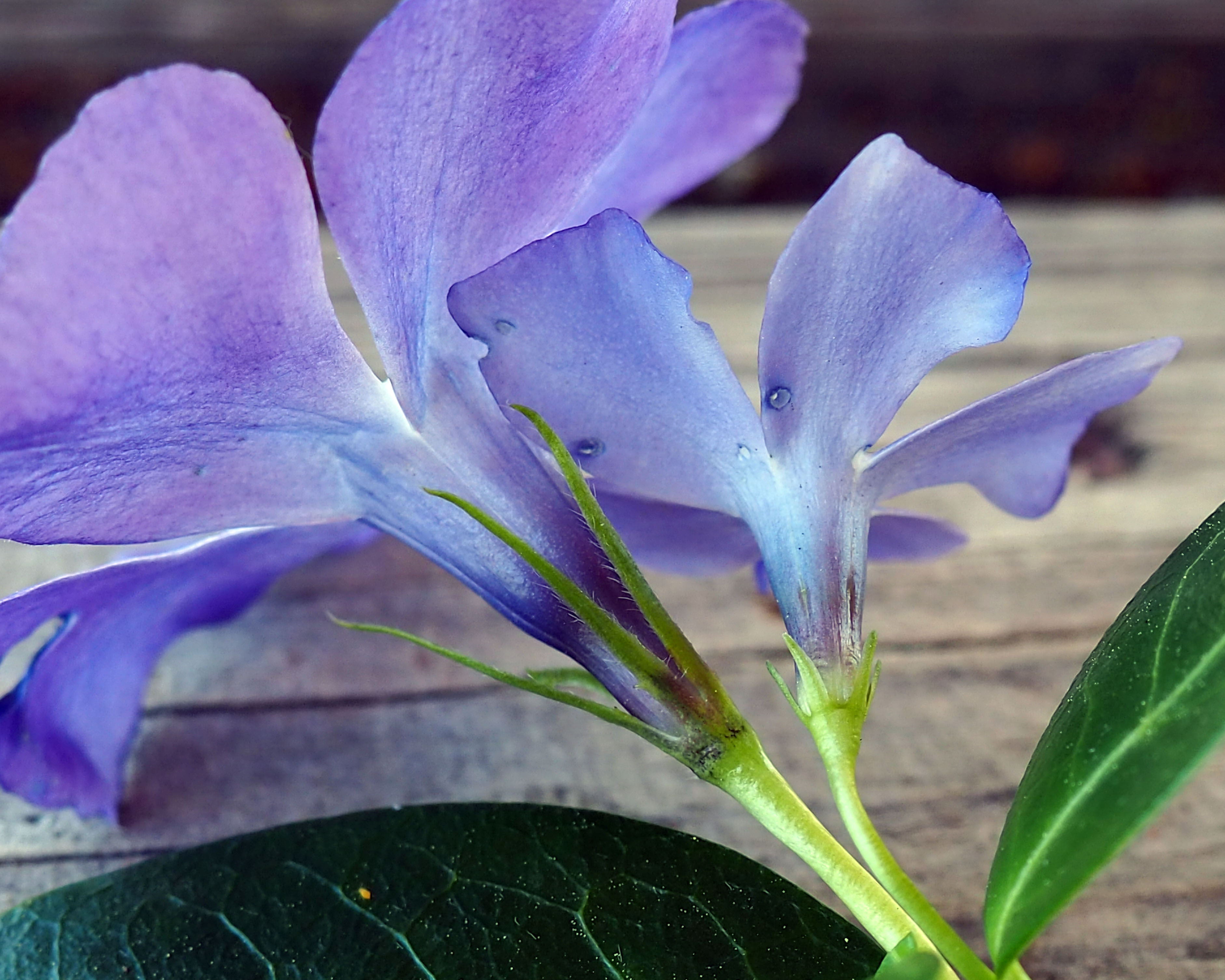
comparing the petals and sepals of Vinca major (left) and Vinca minor (right)

Vinca minor (lesser periwinkle) is a slightly smaller plant with a similar habit, spreading vegetatively in all the same ways as V. major. Stems are slender and smooth and leaves are evergreen. Compared to V. major, the leaves of V. minor are smaller, narrower, and have hairless margins and short petioles, otherwise they are very similar. Same goes for the flowers, which look identical on both species, except that those of V. minor are slightly smaller (about one inch wide) and borne on shorter stalks. Sepals are shorter, broader, more rounded at the tips, and lack the bristly hairs of V. major.

Because periwinkles only rarely produce seed, their main method of getting around is vegetatively. Fragments of roots or rhizomes hide in soil and are moved from one location to another inadvertently. Periwinkles are often used in hanging baskets and containers, and when these things are cast aside at the end of a season, the perennial roots of periwinkles may continue to grow, spreading out beyond the potting mix and into the soil.

Dump soil, yard waste, and improperly disposed of containers are the main ways that periwinkles find their way into natural areas. Both species can be found in the understories and edge habitats of woodlands, as well as along roadsides and pathways, and in vacant lots and old homesites. They can also be found in riparian areas, where waterways can carry fragments of plants to new locations. The Invasive Plant Atlas compiles reports of both V. major and V. minor growing outside of cultivation and tracks them on a map. They also track which states include them in noxious weeds lists or laws.

lesser periwinkle (Vinca minor)

The best way to keep periwinkles from continuing to spread outside of cultivation is to refrain from growing them. If you choose to have them in your yard, dispose of plant parts properly. If you keep them in containers, send those containers to the landfill when you are done with them. If your property is adjacent to natural areas, the risk may be too great and you may want to consider a different groundcover. Depending on where you live, alternatives vary. In the Intermountain West, potential substitutes include wild strawberry (Fragaria virginiana), woodland strawberry (F. vesca), kinnikinnik (Arctostaphylos uva-ursi), and wild ginger (Asarum caudatum). Each of these are low growing, evergreen to semi-evergreen, spreading plants that do well in shade and can handle some degree of drought.
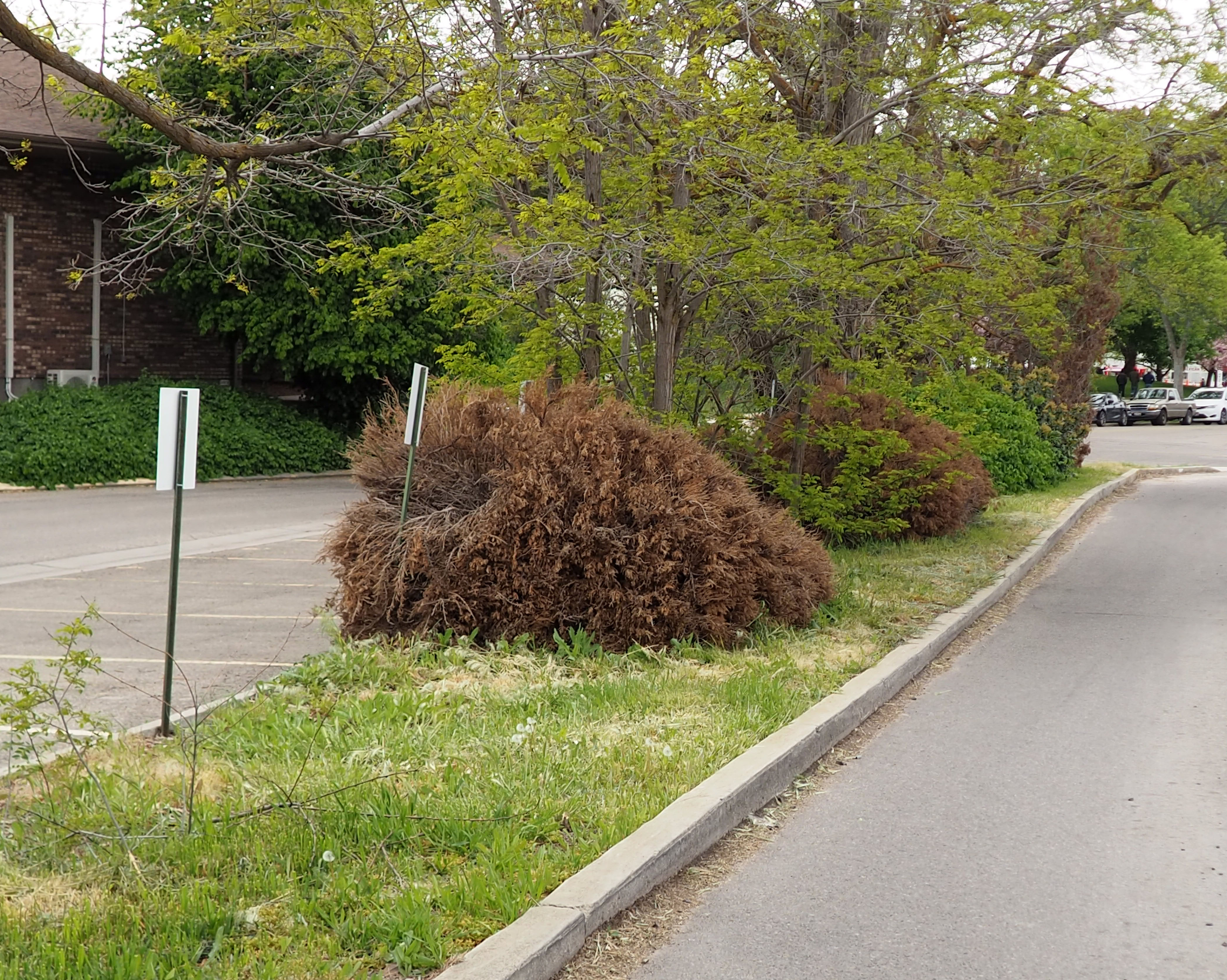
Weeds of Boise: Neglected Parking Lot Islands at Post Office on 13th Street

Boise’s summers are decidedly hot and dry. Months can pass without any measurable precipitation, meanwhile temperatures regularly peak in the 90’s. In the heat of the summer, multiple days in a row above 100 degrees Fahrenheit is not unheard of. Under these conditions, irrigation is a must if you intend to keep plants alive, particularly plants not adapted to our climate. Skipping out on watering or having something go awry with the irrigation system quickly becomes noticeable as the soil goes bone dry and plants begin to wither away. If this goes on for too long, many plants will not recover, including established trees and shrubs. However, the toughest plants among us, particularly the weeds, will move in to take their place.

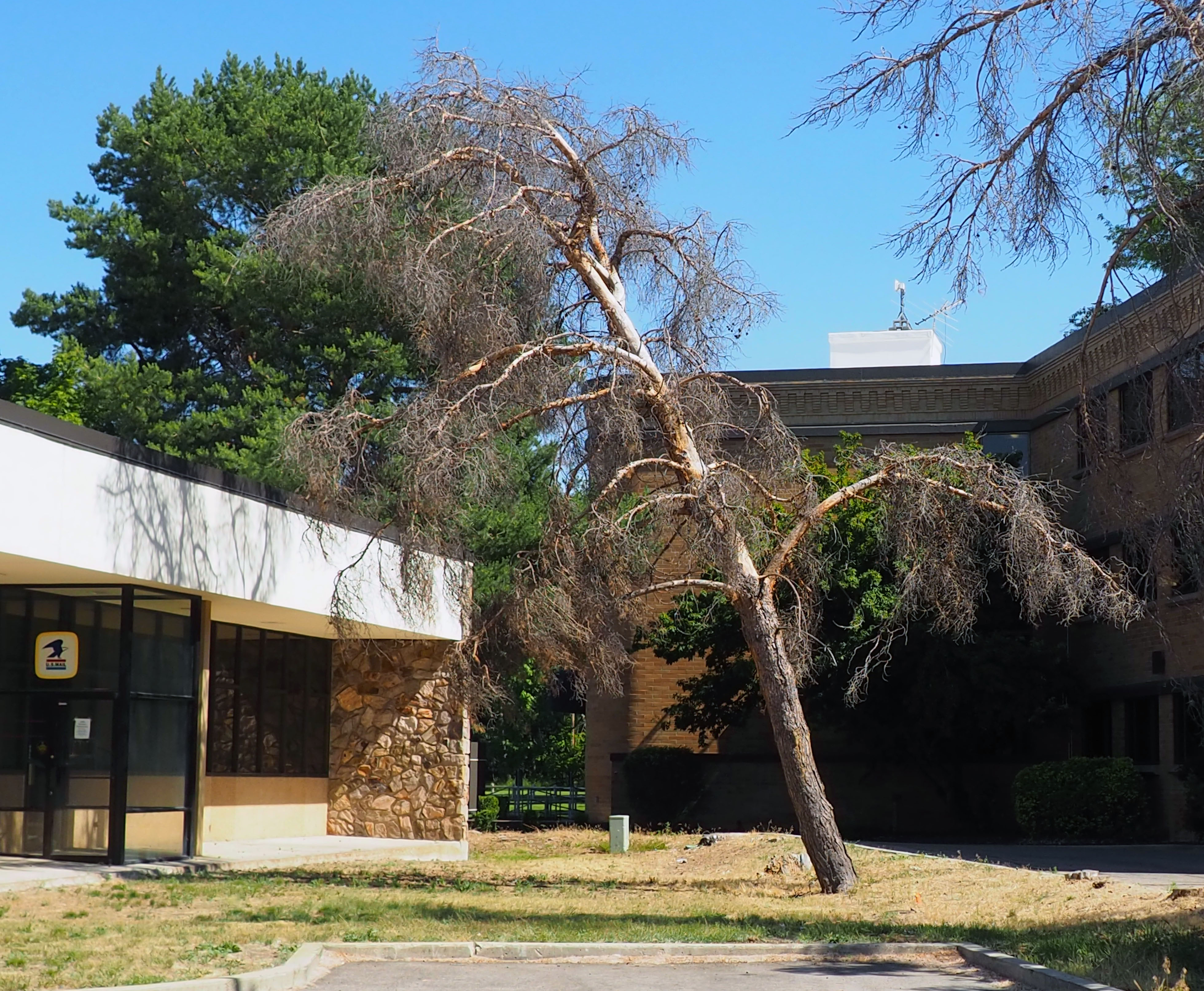
You can see an example of this at the United States Postal Service building at 13th Street and Shoreline Lane in Boise, Idaho. The islands in the parking lot are not being watered, which has clearly been the case for quite some time because even the trees and shrubs are dying off. Apart from occasional mowing, very little maintenance is occurring, and our wild urban flora is about all that remains.

parking lot island at the corner of 13 Street and Shoreline Lane

Parking lots are not ideal locations for growing plants. Asphalt and cement dominate – two major contributors to the urban heat island effect – and automobile pollution is concentrated on account of all the cars coming and going on a regular basis. Many parking lots include islands where plants (often poorly maintained), along with other features like signs and lights, are placed. In general, these islands are far too small for trees, but trees are planted nonetheless in a desperate attempt to shade these formidable environments. In locations where snow is common, the snow from parking lots is often piled up on these islands to clear room for cars, while road salts and other ice melts are heavily applied in order to keep people and cars from sliding around. Parking lot plants have to endure all this and more, so it’s no surprise that they usually look pretty rough.

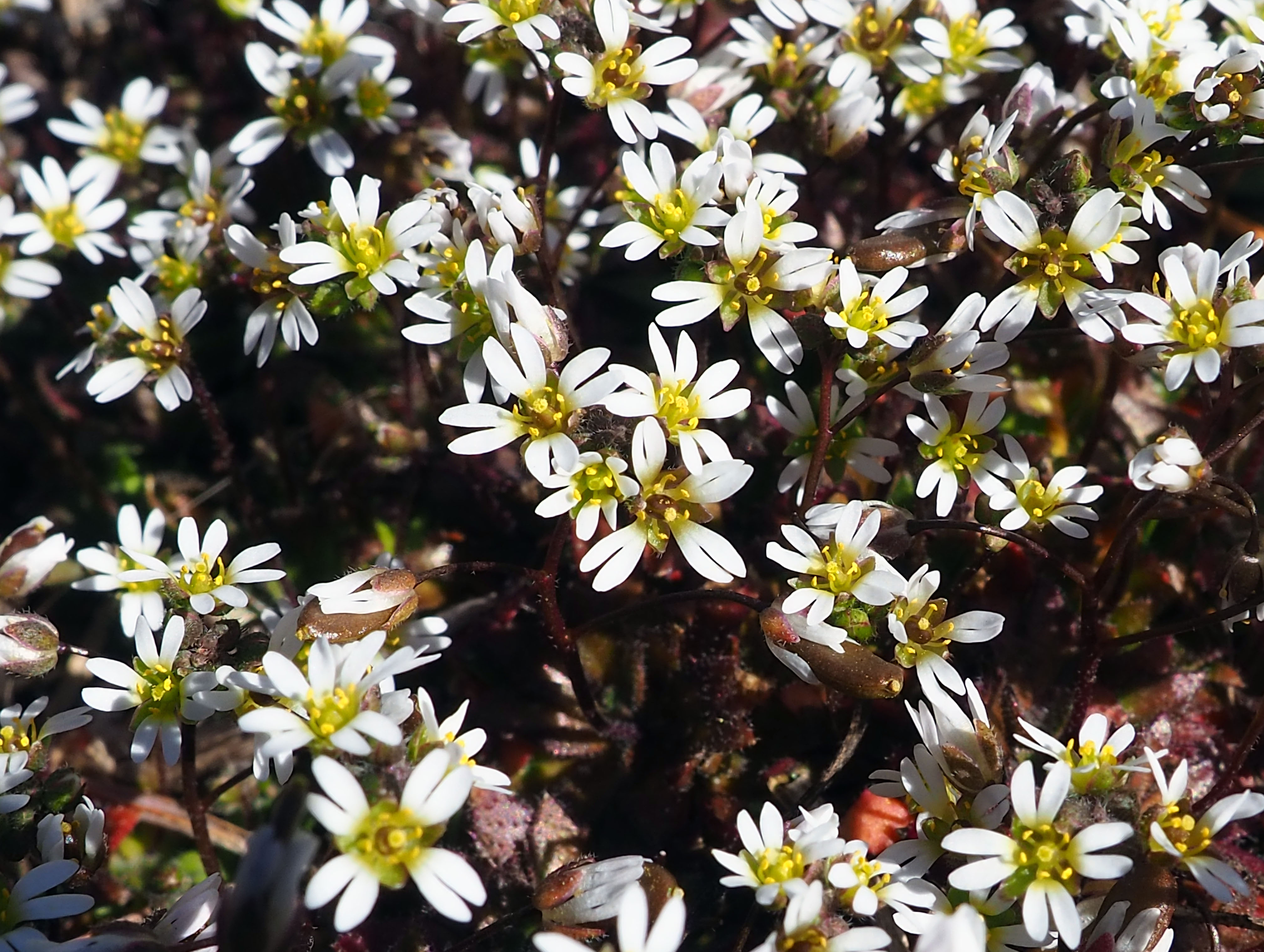
The stresses of added heat, pollution, trampling, and poor care are enough for plants to put up with. Cut off their irrigation supply, and parking lot plants are sure to give up the ghost. A situation like this is an excellent place to familiarize yourself with your wild urban flora. Many weeds seemingly have no problem tolerating these conditions. To demonstrate this, I inventoried the weeds found in neglected parking lot islands at the post office on 13th Street and Shoreline Lane. What follows are a few photos and a list of the weeds I’ve identified so far. Like all posts in the Weeds of Boise series, this list may be updated as I continue to check back in on this location.

spring draba (Draba verna)
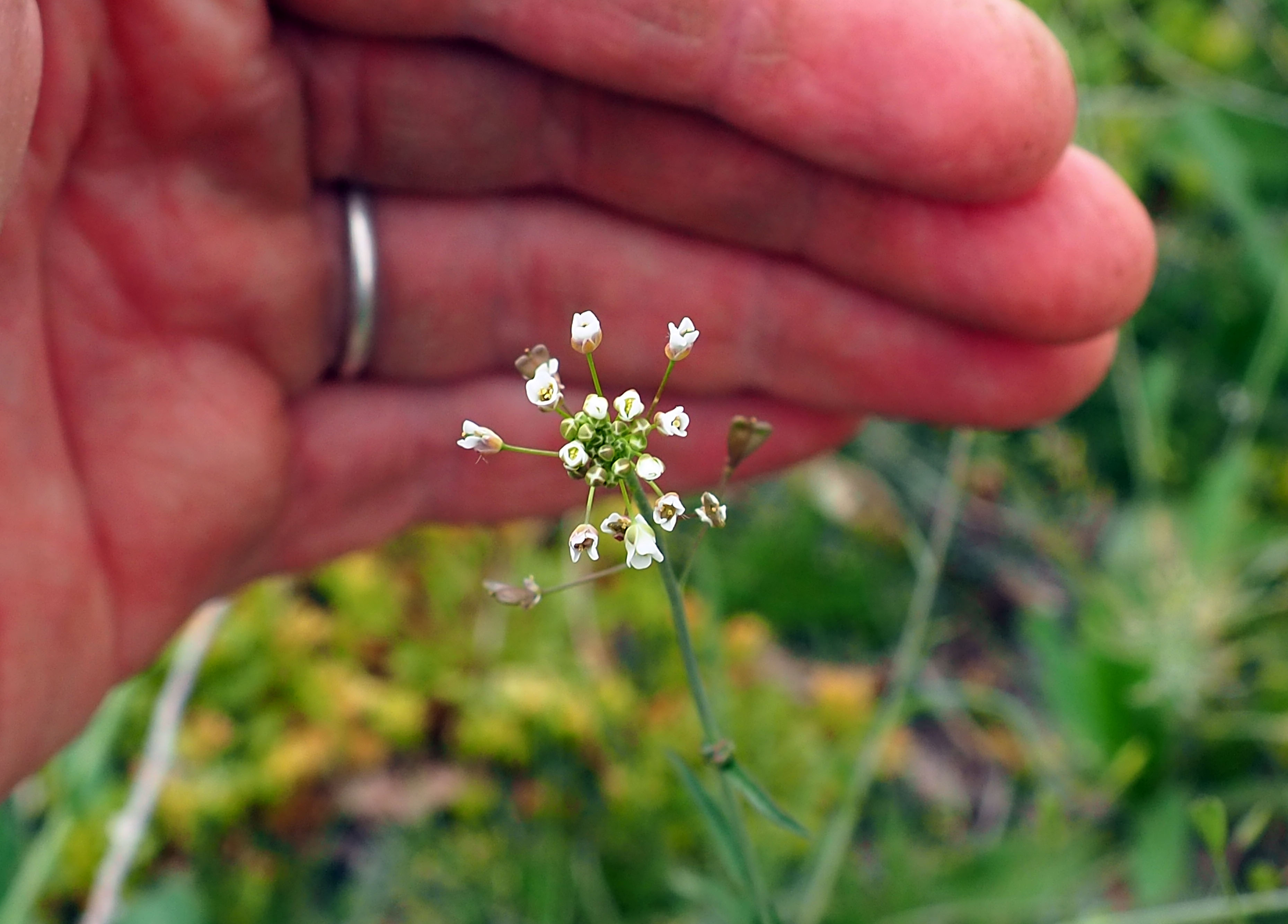
shepherd’s purse (Capsella bursa-pastoris)
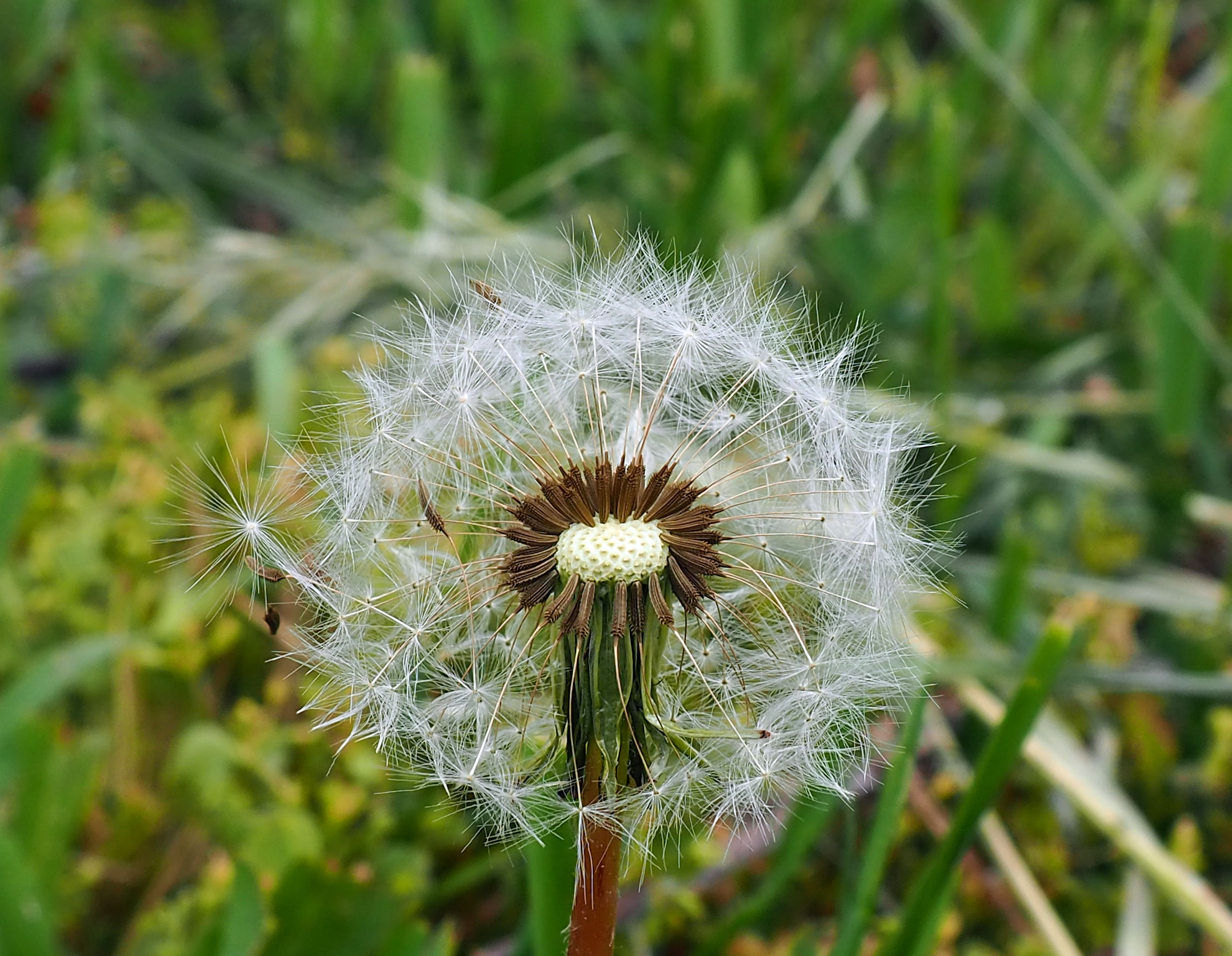
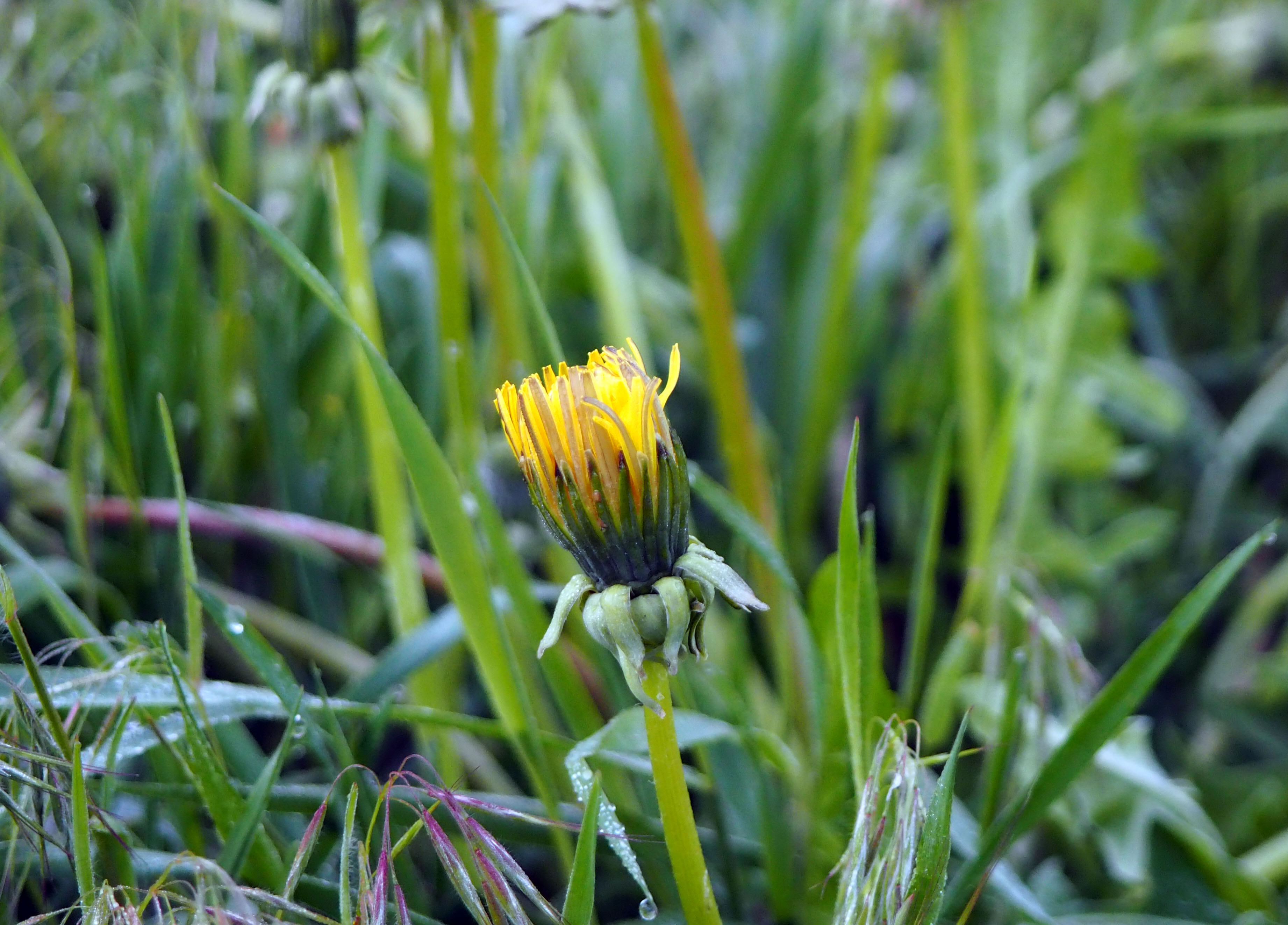
dandelion (Taraxacum officinale)
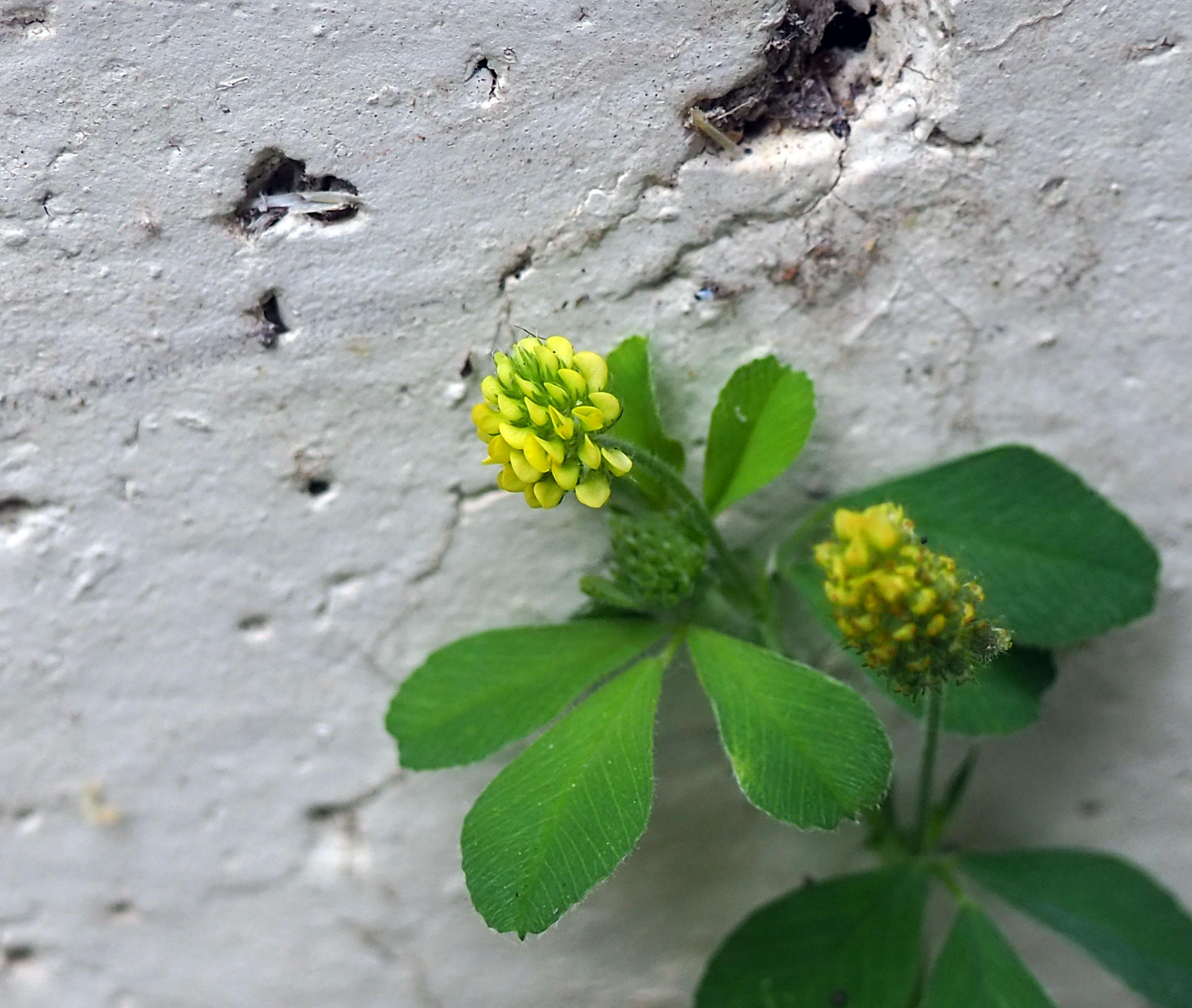
black medic (Medicago lupulina)
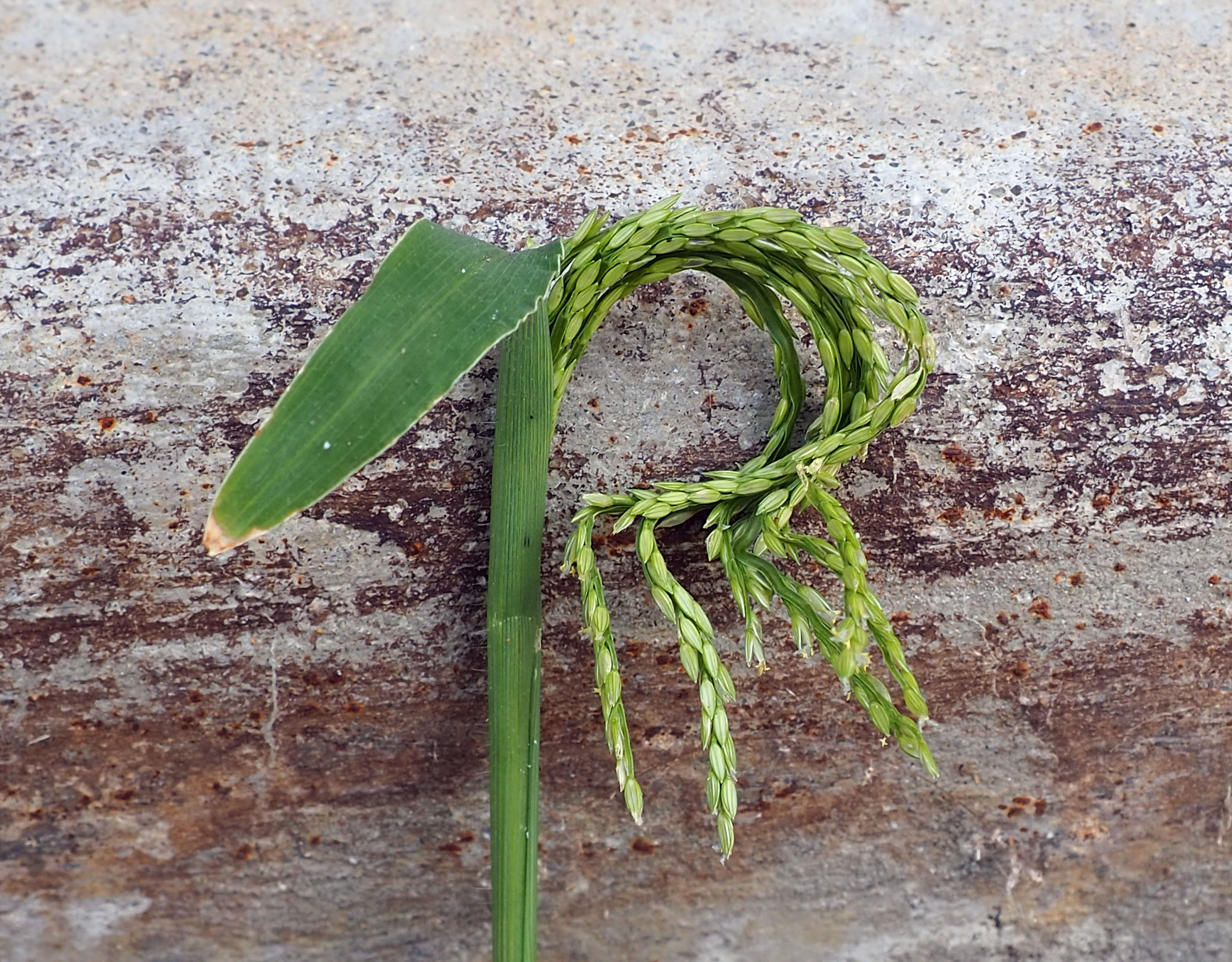
crabgrass (Digitaria sanguinalis)
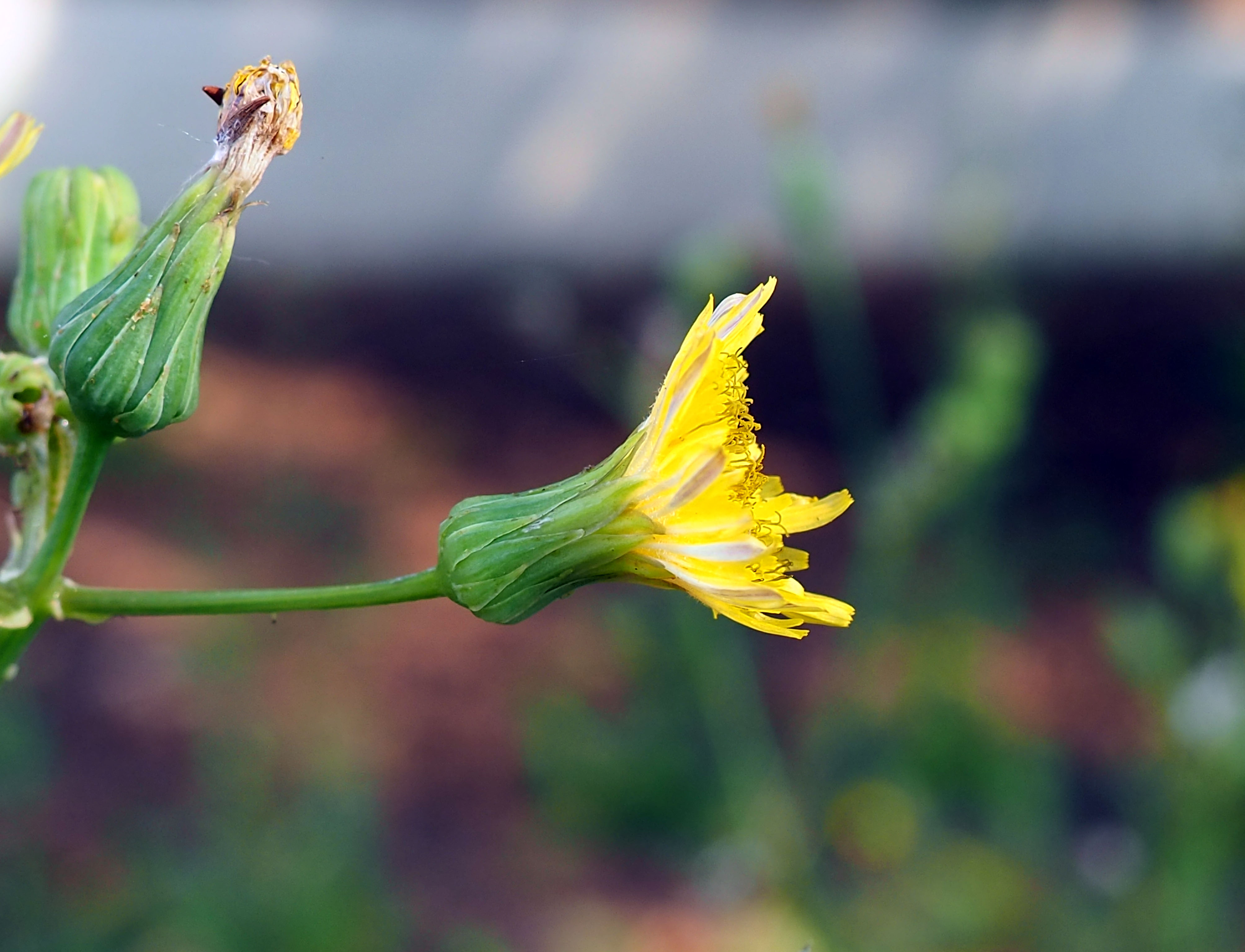
annual sow thistle (Sonchus oleraceus)
snag (aka standing dead tree) at post office on 13th Street
  • Anthriscus caucalis (bur chervil)
  • Bromus tectorum (cheatgrass)
  • Capsella bursa-pastoris (shepherd’s purse)
  • Ceratocephala testiculata (bur buttercup)
  • Chondrilla juncea (rush skeletonweed)
  • Claytonia perfoliata (miner’s lettuce)
  • Convolvulus arvensis (field bindweed)
  • Conyza canadensis (horseweed)
  • Digitaria sanguinalis (crabgrass)
  • Draba verna (spring draba)
  • Elymus repens (quackgrass)
  • Epilobium ciliatum (willowherb)
  • Erodium cicutarium (redstem filare)
  • Euphorbia maculata (spotted spurge)
  • Holosteum umbellatum (jagged chickweed)
  • Hordeum jubatum (foxtail barley)
  • Lactuca serriola (prickly lettuce)
  • Lamium amplexicaule (henbit)
  • Malva neglecta (common mallow)
  • Medicago lupulina (black medic)
  • Parthenocissus quinquefolia (Virginia creeper)
  • Poa annua (annual bluegrass)
  • Polygonum aviculare (prostrate knotweed)
  • Portulaca oleracea (purslane)
  • Senecio vulgaris (common groundsel)
  • Sonchus oleraceus (annual sow thistle)
  • Taraxacum officinale (dandelion)
  • Tragopogon dubius (salsify)
  • Tribulus terrestris (puncturevine)
  • Trifolium sp. (clover)

Where there are parking lot islands, there are bound to be weeds whether the islands are being maintained or not. What have you found growing in the parking lot islands in your city? Feel free to share in the comment section below.

Randomly Selected Botanical Terms: Phyllaries

Flowers in the aster family have one of the most recognizable shapes in botany – a circle with a series of petals surrounding it. If you were asked to draw a flower, there is a good chance your drawing would look something like a sunflower, a daisy, a cosmos, or an aster. It’s one of the most basic flower shapes, and yet it isn’t a single flower; it’s a pseudanthium – a false flower. This is because what might appear as a single flower is actually a collection of tens, hundreds, or even thousands of tiny flowers. This aggregation of flowers into a single compact unit is the reason the family was once given the name Compositae, and even now is often informally referred to as the composites.

Another reason why a flower in the aster family – or Asteraceae – might be the first thing you would draw is because it is the largest family of flowering plants, numbering up to 33,000 species worldwide. Chances are you’ve seen a few of them around. In the contiguous U.S. alone, there are more than 2400 species, and that doesn’t include the plethora of species brought in from regions across the world either intentionally (to be grown in our gardens) or unintentionally (as weeds). Of course, not all of the species in this family are going to have a typical sunflower-like flower head, but they do all have a specific type of inflorescence called a capitulum. Capitula are made up of densely packed, miniature flowers called florets, which are stalkless (or sessile) and arranged on a flattened central stem (or axis). There are at least four different types of florets in the aster family, but we’ll leave that discussion for another time.

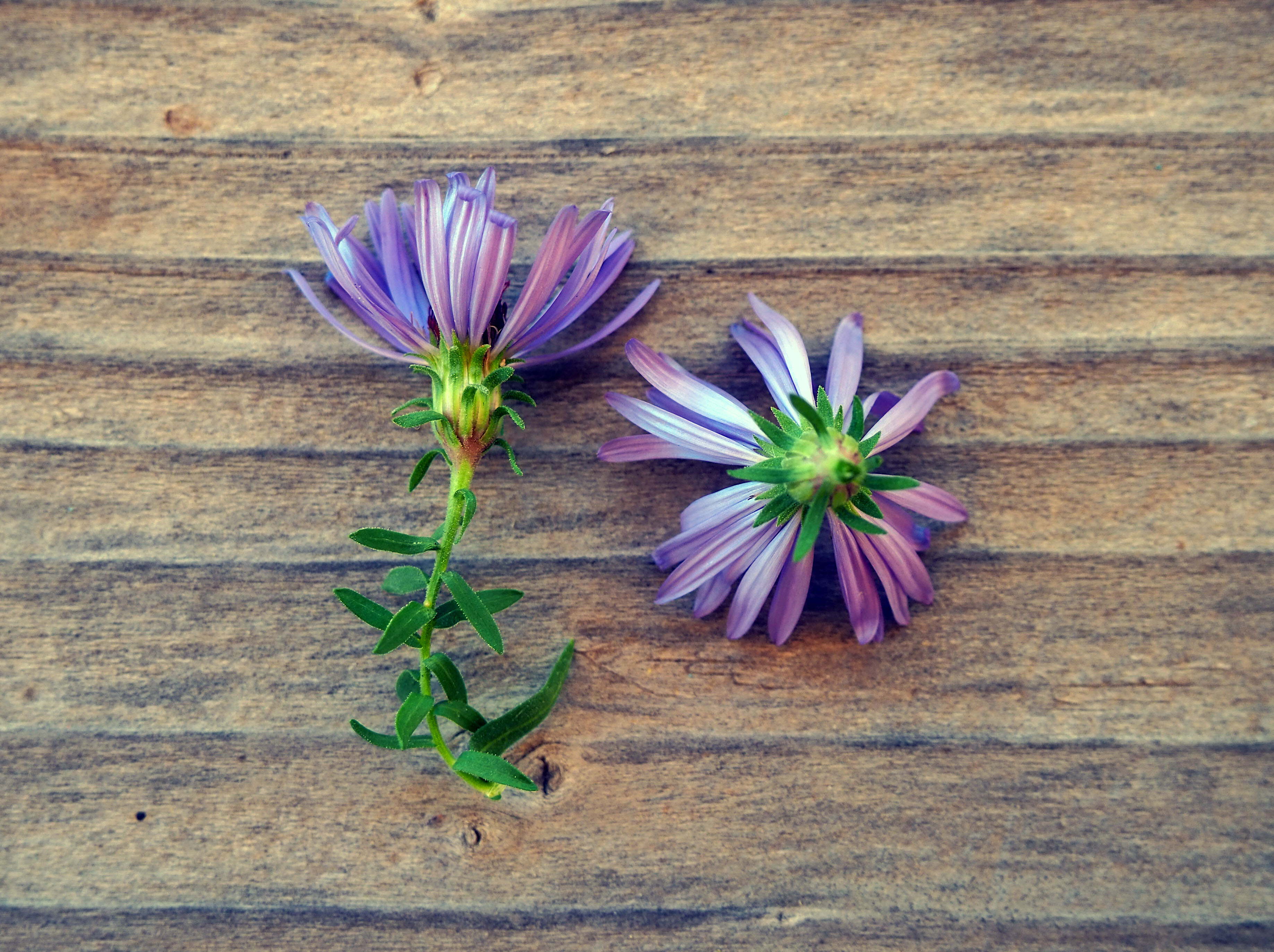
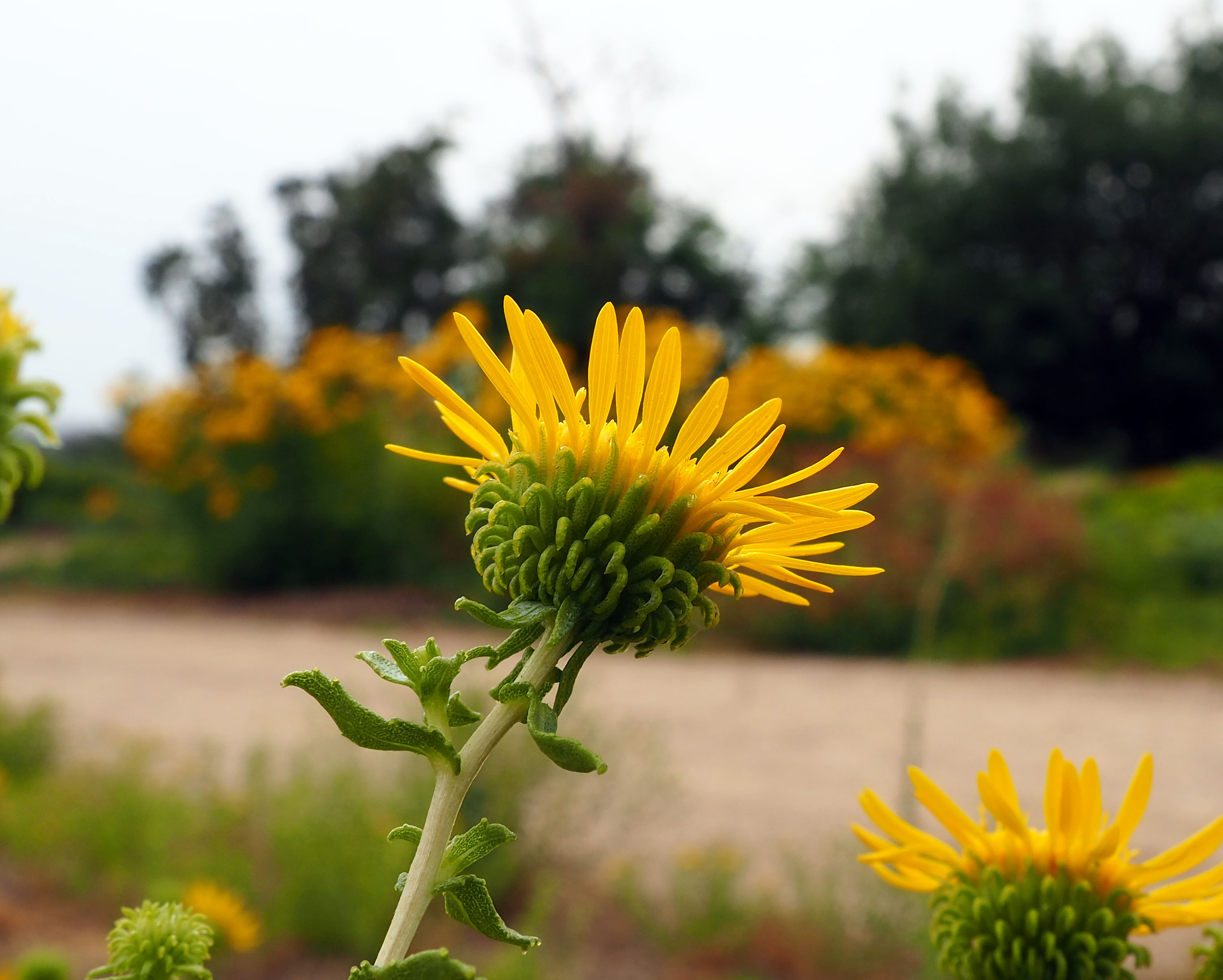
In this post, we’re specifically interested in what is happening at the base or underside of the capitulum. All of the florets in a capitulum are held within a cup or bowl-shaped series of bracts called an involucre. Bracts are modified leaves, and this whorl of tightly held or loosely arranged bracts are initially found surrounding a developing flower bud. As the inflorescence opens, the involucre opens as well and its bracts persist at the base of the flower head. The bracts that make up the involucre are called phyllaries, and they vary in shape, number, and size depending on plant species. In fact, the features of phyllaries are so unique they are often relied on to help identify a plant in the aster family to genus, species, and infraspecies (variety, subspecies, etc.).

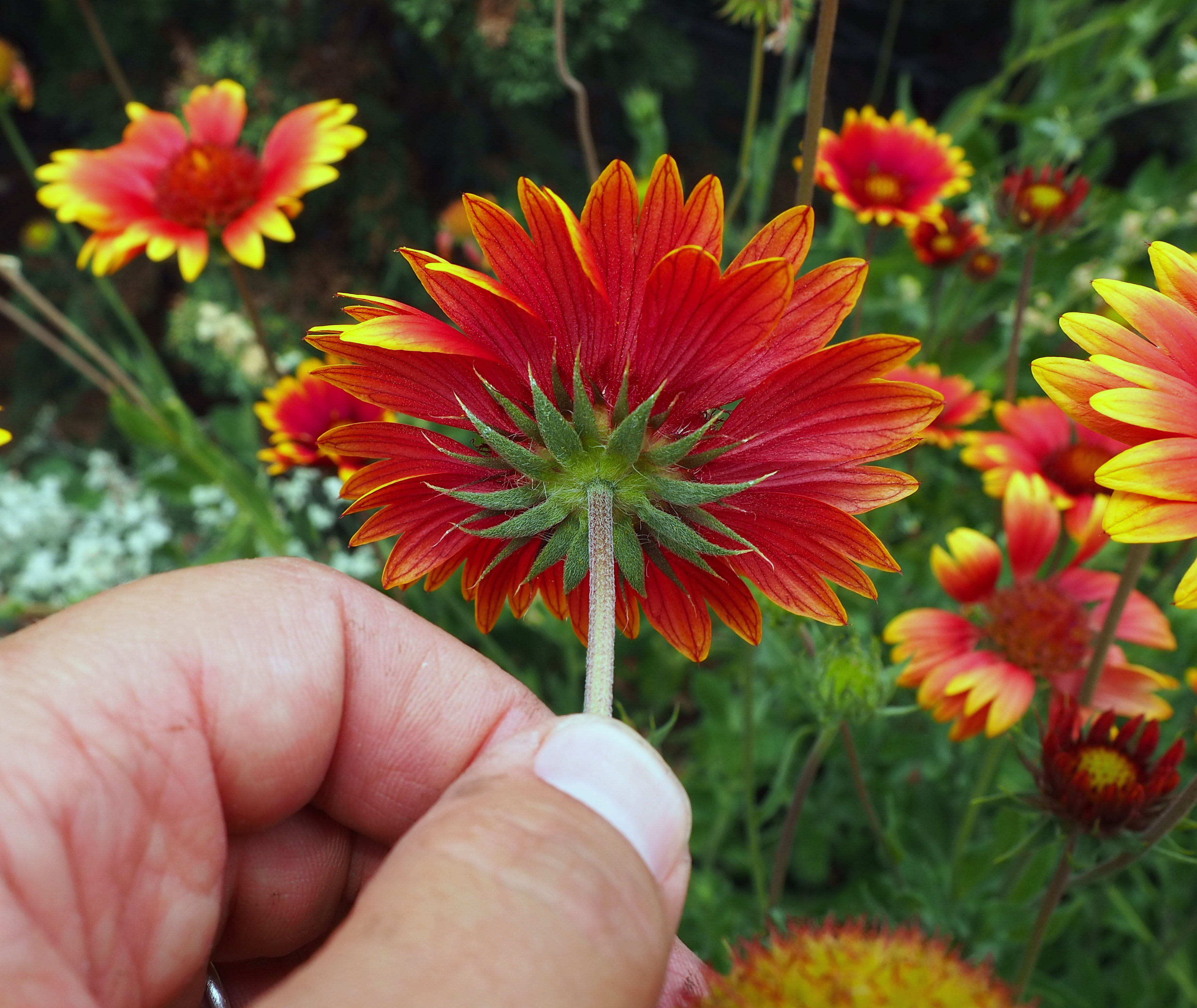
phyllaries of blanketflower (Gaillardia aristata)

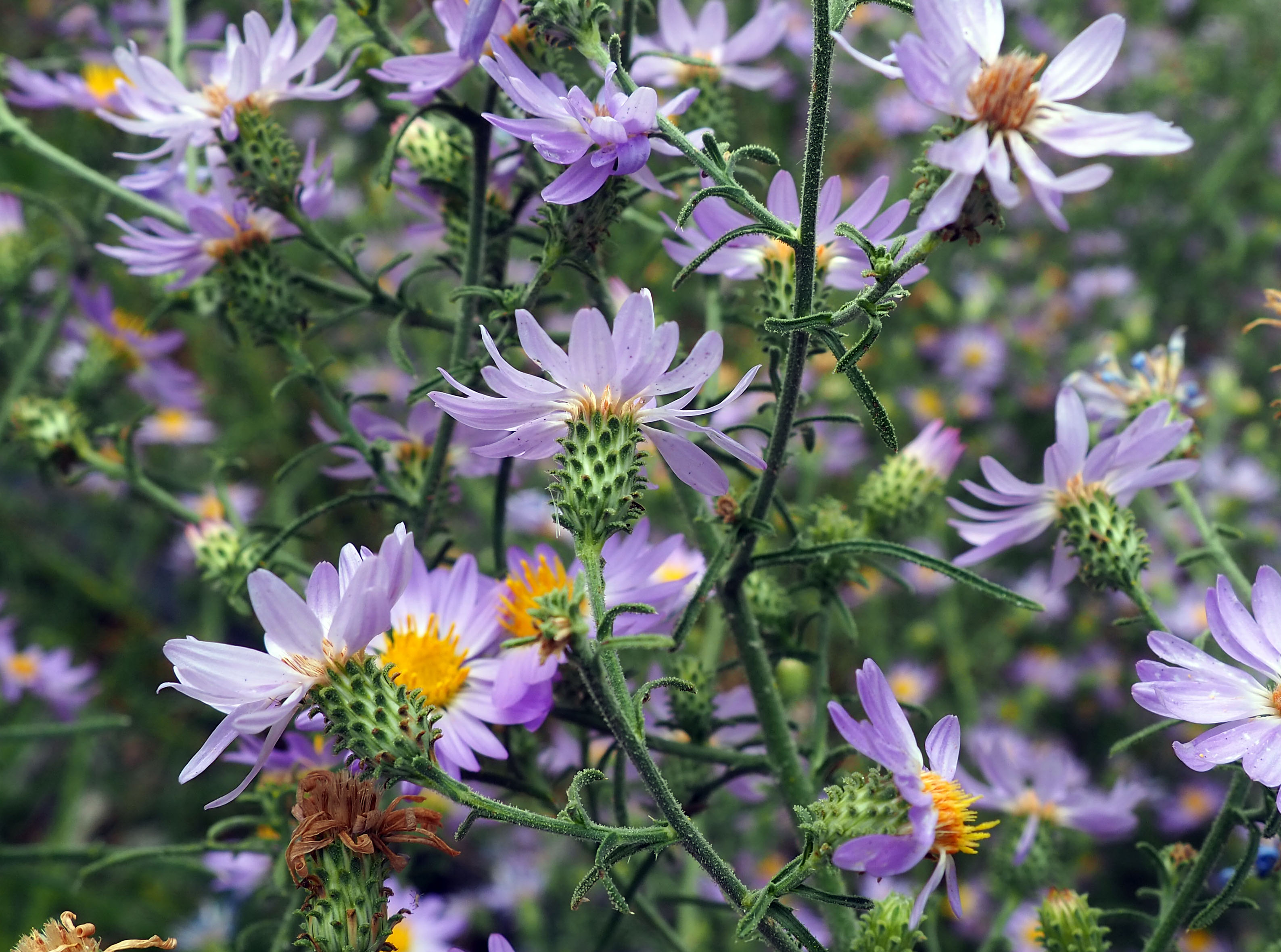
When it comes to flowers in the aster family, there is more than meets the eye. After you take some time to appreciate the intricate beauty of its collection of florets, turn the flower head over and take in its phyllaries. They come in various colors, they can be hairy or smooth, their margins can be entire or adorned with hairs, teeth, etc., they can be flat and straight or they can curve outwards in interesting ways, their tips can be pointed, spine-tipped, rounded, or keel shaped. Phyllaries can be laid out very evenly, tightly overlapping each other like shingles on a roof (i.e. imbricate) or their arrangement can be slightly uneven and irregular (i.e. subimbricate). Use a hand lens to get a closer look at all of these features. As you get in the habit of observing the details of the involucre and its phyllaries, chances are each time you come across a flower in the aster family, you’ll find yourself flipping it over to get a look at its undercarriage. What will you find?

phyllaries of dandelion (Taraxacum officinale)
phyllaries of Mexican sunflower (Tithonia rotundifolia)
phyllaries of stemless four-nerve daisy (Tetraneuris acaulis)
phyllaries of hoary tansyaster (Dieteria canescens)
phyllaries of aromatic aster (Symphyotrichum oblongifolium ‘October Skies’)
phyllaries of curlycup gumweed (Grindelia squarrosa)

If phyllaries have piqued your interest and you’d like to learn more about plants in the family Asteraceae, I highly recommend getting your hands on the book, The Sunflower Family by Richard Spellenberg and Naida Zucker. It has a North American focus, but it’s a great place to start learning more about this massive plant family.

More Randomly Selected Botanical Terms:

Eating Weeds: Cleavers Coffee

One of the world’s most beloved beverages comes from a species of plant found in the fourth largest family of flowering plants. Rubiaceae, also known as the coffee or bedstraw family, consists of around 13,500 species, placing it behind just Asteraceae, Orchidaceae, and Fabaceae for the most number of species. Coffea arabica, and other species in the genus Coffea, are grown for their fruits which are used to make coffee. This makes Rubiaceae one of the most economically important plant families. A family this size is bound to be home to a weed or two, and in fact, one of the most widespread and obnoxious weeds is also a member of Rubiaceae.

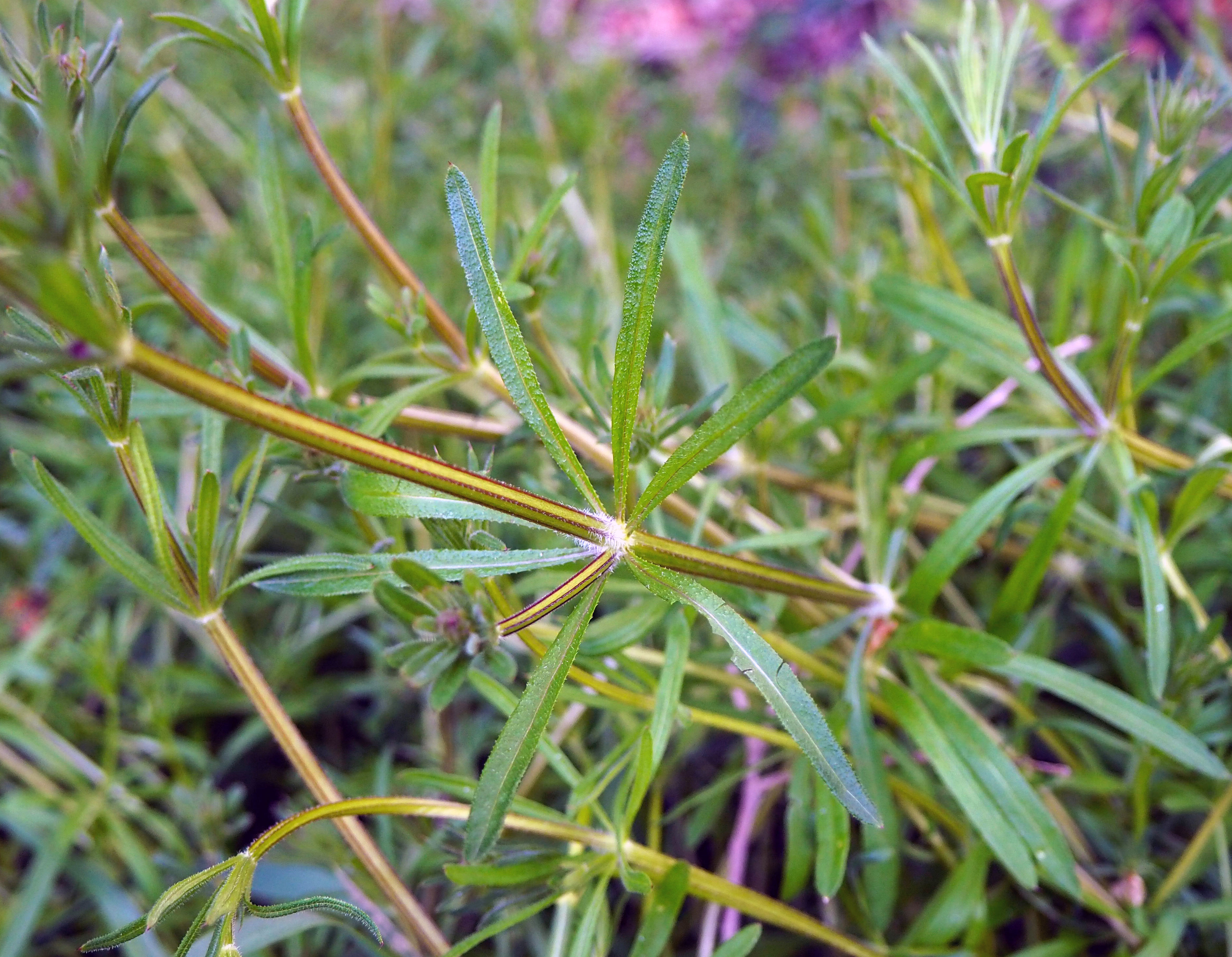
Galium aparine, known commonly by a slew of names including cleavers, occurs naturally across large portions of Europe, Asia, North Africa, and possibly even parts of North America. It has been introduced as a weed in many locations across North America, South America, Australia, New Zealand, Japan, and parts of Africa. It is of particular concern in agricultural settings where its lengthy, sprawling branches and sticky leaves get tangled up in harvesting equipment, while its tiny, prickly fruits get mixed in with seeds of similar size like canola.

Galium aparine

Sticky willy, as it is also known, is an annual plant that, in some cases, can have two generations per year – one in the spring (having germinated the previous fall) and one in the summer. Its stems are square, though not as sharply square as plants in the mint family, and can grow to around six feet long. They are weak, brittle, and don’t stand upright on their own; instead they are found scrambling across the ground or, when given the opportunity, climbing up the lengths of other plants in order to reach the sunlight. Leaves occur in whorls of six to eight and are simple and slender with entire margins. Flowers are produced at leaf axils along the lengths of the branches and are tiny, four-petaled, star-shaped, and greenish white. Fruits are borne in pairs and are round, single-seeded, indehiscent nutlets. The stems, leaves, and fruits are covered in stiff, hooked hairs or trichomes, earning it other names like catchweed bedstraw, grip grass, stickyweed, and velcro plant.

flowers and immature fruit on Galium aparine

Galium aparine is a climbing plant, but unlike other climbing plants, it doesn’t twine up things or produce structures like tendrils to hold itself up. Instead, its ability to climb is made possible by its abundant bristly hairs. A paper published in Proceedings of the Royal Society B (2011) investigates the way G. aparine climbs up other plants using the hairs on its leaves. A close inspection of the leaves reveals that the trichomes on the top of the leaf (the adaxial leaf surface) differ significantly from those found on the bottom of the leaf (the abaxial leaf surface). Adaxial trichomes curve towards the tip of the leaf, are hardened mainly at the tip, and are evenly distributed across the leaf surface. Abaxial trichomes curve towards the leaf base, are hardened throughout, and are found only on the midrib and leaf margins.

Having different types of hairs on their upper and lower leaf surfaces gives cleavers an advantage when it comes to climbing up neighboring plants. The authors of the paper describe the technique as a “ratchet mechanism.” When the upper surface of their leaf makes contact with the lower surface of another plant’s leaf, the flexible, outwardly hooked trichomes inhibit it from slipping further below the leaf and allow it to easily slide out from underneath it. When the lower surface of their leaf makes contact with the upper surface of another plant’s leaf, the stiff, inwardly hooked trichomes keep it attached to the leaf even if the other leaf starts to slip away and allows it to advance further across the leaf for better attachment and coverage. Using this ratchet mechanism, cleavers climb up the leaves of other plants, keeping their leaves above the other plant’s leaves, which gives them better access to sunlight. The basal stems of cleavers are highly flexible, which keeps them from breaking as the plant sways in the wind, tightly attached to their “host” plant.

fruits of Galium aparine

The hooked trichomes on the tiny fruits of cleavers readily attach to the fur and clothing of passing animals. The nutlets easily break free from the plants and can be transported long distances. They can also be harvested and made into a lightly caffeinated tea. Harvesting the fruit takes time and patience. I spent at least 20 minutes trying to harvest enough fruits for one small cup of cleavers coffee. The fruits don’t ripen evenly, and while I tried to pick mostly ripe fruits, I ended up with a selection of fruits in various stages of ripeness.

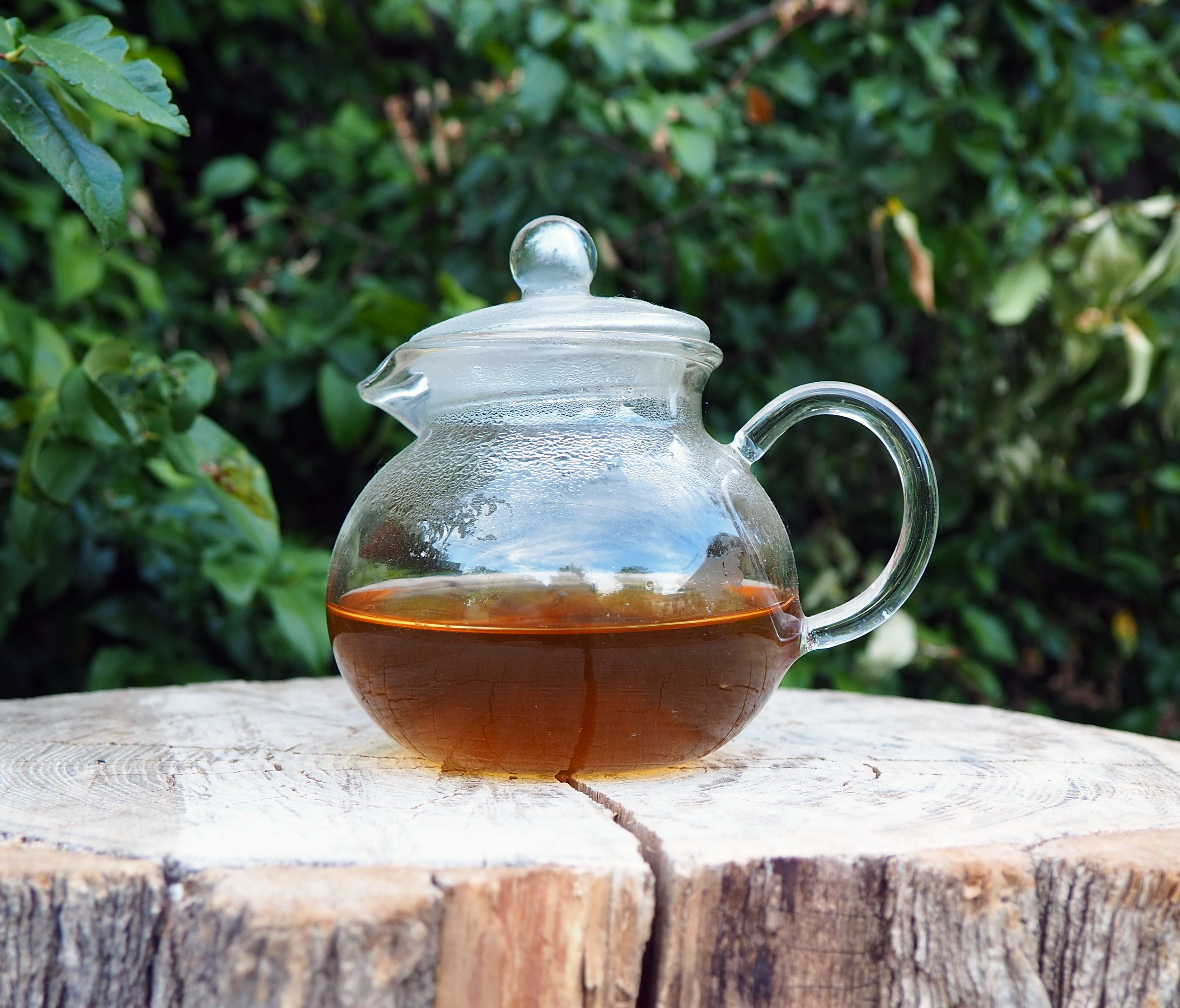
To make cleavers coffee, first toast the seeds for a few minutes in a pan heated to medium high, stirring them frequently. Next, grind them with a mortar and pestle and place the grinds in a strainer. Proceed as you would if you were making tea from loose leaf tea.

The toasted fruits and resulting tea should smell similar to coffee. The smell must not be strong, because my poor sense of smell didn’t really pick up on it. The taste is coffee-like, but I thought it was more similar to black tea. Sierra tried it and called it “a tea version of coffee.” If the fruits were easier to collect, I could see myself making this more often, but who has the time?

The leaves and stems of Galium aparine are also edible, and the plant is said to be a particular favorite of geese and chickens, bringing about yet another common name, goosegrass. In the book Weeds, Gareth Richards discusses the plant’s edibility: “It’s edible for humans but not that pleasant to eat; most culinary and medicinal uses center around infusing the plant in liquids.” Cooking with the leaves or turning them into some sort of spring tonic is something I’ll consider for a future post about eating cleavers.

More Eating Weeds Posts on Awkward Botany

Awkward Botany on Outdoor Idaho (plus Send Us Your Questions)

I spend a lot time on this blog putting weeds in the spotlight, celebrating them for their successes and the unique and interesting plants they are. It’s rare that I get to share these sentiments outside of this particular venue, but I was given such an opportunity recently when asked to talk about weeds for an episode of Outdoor Idaho, a long running show on Idaho Public Television that covers Idaho’s natural history. The theme of this particular episode is wildflowers, so I was intrigued by the idea of coming on to discuss urban weeds. For many, the term “wildflowers” may invoke native plants blooming in natural areas in places far removed from the hustle and bustle of the city. But a wildflower doesn’t have to be a native plant, nor does it have to be growing in the wild. Any plant occurring naturally on its own without the assistance of humans can be a wildflower, and that includes our wild urban flora. I appreciated the chance to share this particular thought with the viewers of Outdoor Idaho.

photo credit: Jay Krajic

Along with me waxing on about weeds, the Wildflowers episode features a host of other Idahoans sharing their thoughts, expertise, and experiences with wildflowers. The episode is brief – coming in at under 30 minutes – but the producers packed in a ton of great wildflower content, and overall I found it to be an excellent representation of the flora of Idaho and a convincing argument for why we should appreciate and elevate these plants. The flora of any region is special and important in its own right, and Idaho’s flora is no different, including its weeds.

Check out Outdoor Idaho’s Wildfowers episode here.

In other news…

If you want to see more of me on the screen (and I’m not sure why you would), Sierra (a.k.a. Idaho Plant Doctor) and I are doing monthly Q&A videos in which we answer your questions about plants, gardening, pests and diseases, insects, or any other topic you might be curious about. You can tune in to those discussions on Sierra’s instagram. If you have questions of your own that you would like us to address, please leave them in the comments section below, or send them to me via the contact page or my instagram.

Weeds of Boise: Vacant Lot on West Kootenai Street

Every urban area is bound to have its share of vacant lots. These are sites that for whatever reason have been left undeveloped or were at one point developed but whose structures have since been removed. The maintenance on these lots can vary depending on who has ownership of them. Some are regularly mowed and/or treated with herbicide, while others go untouched for long periods of time. Even when there is some weed management occurring, vacant lots are locations where the urban wild flora dominates. Typically no one is coming in and removing weeds in an effort to cultivate something else, and so weeds run the show.

As with any piece of land populated by a diverse suite of wild plants, vacant lots are dynamic ecosystems, which you can read all about in the book Natural History of Vacant Lots by Matthew Vessel and Herbert Wong. The impact of humans can be seen in pretty much any ecosystem, but there are few places where that impact is more apparent than in a vacant lot. In lots located in bustling urban centers, human activity is constant. As Vessel and Wong write, “numerous ecosystem interactions are affected when humans intervene by spraying herbicides or insecticides, by trampling, by physically altering the area, or by depositing garbage and waste products.” These activities “can abruptly alter the availability and types of small habitats; this will in turn affect animal as well as plant diversity and population dynamics.” The dynamic nature of these sites is a reason why vacant lots are excellent places to familiarize yourself with the wild urban flora.

Kōura relaxing in a vacant lot

On our morning walks, Kōura and I have been visiting a small vacant lot on West Kootenai Street. We have watched as early spring weeds have come and gone, summer weeds have sprouted and taken off, perennial weeds have woken up for the year, and grass (much of which appears to have been intentionally planted) has grown tall and then been mowed with some regularity. Someone besides us is looking after this vacant lot, and it’s interesting to see how the plant community is responding. As Vessel and Wong note, “attempts to control weedy plants by mowing, cultivating, or spraying often initiate the beginning of a new cycle of growth.” For plants that are adapted to regular disturbance, measly attempts by humans to keep them in check are only minor setbacks in their path to ultimate dominance.

What follows are a few photos of some of the plants we’ve seen at the vacant lot on Kootenai Street, as well as an inventory of what can be found there. This list is not exhaustive and, as with other Weeds of Boise posts, will continue to be updated as I identify more species at this location.

dandelion (Taraxacum officinale)
grape hyacinth (Muscari armeniacum)
henbit (Lamium amplexicaule)
wild barley (Hordeum murinum) backed by cheatgrass (Bromus tectorum)
narrowleaf plantain (Plantago lanceolata) and broadleaf plantain (Plantago major)
perrennial sweet pea (Lathyrus latifolius) surrounded by redstem filaree (Erodium cicutarium)
whitetop (Lepidium sp.)
white clover (Trifolium repens)
  • Bromus tectorum (cheatgrass)
  • Capsella bursa-pastoris (shepherd’s purse)
  • Ceratocephala testiculata (bur buttercup)
  • Convolvulus arvensis (field bindweed)
  • Descurainia sophia (flixweed)
  • Draba verna (spring draba)
  • Erodium cicutarium (redstem filaree)
  • Geum urbanum (wood avens)
  • Holosteum umbellatum (jagged chickweed)
  • Hordeum murinum (wild barley)
  • Lactuca serriola (prickly lettuce)
  • Lamium amplexicaule (henbit)
  • Lathyrus latifolius (perennial sweet pea)
  • Lepidium sp. (whitetop)
  • Malva neglecta (dwarf mallow)
  • Medicago lupulina (black medic)
  • Muscari armeniacum (grape hyacinth)
  • Plantago lanceolata (narrowleaf plantain)
  • Plantago major (broadleaf plantain)
  • Poa bulbosa (bulbous bluegrass)
  • Poa pratensis (Kentucky bluegrass)
  • Rumex crispus (curly dock)
  • Taraxacum officinale (dandelion)
  • Tragopogon dubius (salsify)
  • Trifolium repens (white clover)
  • Veronica sp. (speedwell)

If you live in an urban area, chances are good there is a vacant lot near you. What have you found growing in your neighborhood vacant lot? Feel free to share in the comment section below.

Randomly Selected Botanical Terms: Prickles

Let’s start by getting something out of the way: roses have prickles, not thorns. However, just like peanuts aren’t actually nuts and tomatoes are actually fruits, our colloquial terms for things don’t always match up with botanical terminology. This doesn’t mean that we should be pedants about things and go spoiling a friendly dinner party with our “well, actually…” corrections. If you hear someone saying (or singing) something about every rose having its thorn, it’s okay to just let it go.

So why don’t roses have thorns? And what even is a prickle anyway?

Plants have a way of modifying various body parts to form a variety of features that look like something totally new and different. When the development of these features are observed at a cellular level, we find that what once may have grown into something familiar, like a stem, is now something less familiar, like a thorn. A thorn, then, is a modified stem. Stem tissue was used by the plant to form a hardened spike. Thorns help protect a plant from being eaten, so going through the trouble of producing this feature is a benefit to the plant.

thorns of hawthorn (Crataegus sp.)

Spines and prickles are similar features to thorns and serve a similar purpose, but they have different origins. Spines are modified leaf or stipule tissue (the spines on a cactus are actually modified leaves). Prickles are outgrowths of the epidermis or bark. In plants, epidermis is a single, outer layer of cells that covers all of the organs (i.e. leaves, roots, flowers, stems). Outgrowths on this layer are common and often appear as little hairs. The technical term for these hairs or hair-like structures is trichomes.

the stems of staghorn sumac (Rhus typhina) are covered in dense trichomes

Prickles are much like trichomes, but there are usually less of them and they are hardened and pointy. They can be sharp like a thorn or spine and so are often confused for them. (Spines are also confused for thorns, as is the case with Euphorbia milii, whose common name is crown of thorns but whose “thorns” are actually spines.) As stated above, their cellular origin is different, and unlike thorns and spines, prickles don’t have vascular tissue, which is the internal tissue that transports water and nutrients throughout all parts of the plant. In general, prickles can be easily broken off, as they are often weakly attached to the epidermis.

Prickles are most commonly observed on roses and come in a variety of shapes, sizes, and colors.

Prickles on roses are commonly called thorns, and that’s okay. Thorn is perhaps a more poetic word and easier to relate to. But really, I’m torn and forlorn that they aren’t thorns. It puts me in a pickle trying to rhyme words with prickle.


Check out the linktree for various ways to follow and support Awkward Botany.

2021: Year in Review

Last year at this time I was newly married in a new home that Sierra and I had just bought together. The year flew by, as they often do, and we’re back around to another Year in Review. Home ownership (among other things) has kept us busy. If you follow this blog, you may have noticed that posts were a bit more sparse than usual. That probably won’t change much going forward, but even if takes me some time to get around to posting, I plan to keep this blog going for the foreseeable future. There are still so many plants to investigate and botanical topics to explore. I hope you will follow along, even when posts are few and far between.

The big news of the day is that Sierra and I recently added a new member to our family. Not a human, but a dog. Her name is Kōura, and I would expect her to make an appearance from time to time both here on the blog as well as on our various social media accounts. We are excited for the many adventures we’ll be having with her in the months and years to come, and can’t wait to introduce her to the world.

Kōura in the snow on Christmas Day 2021

As Awkward Botany enters its tenth year, I feel incredibly grateful for everyone who has supported it along the way. To everyone who has bothered to read a post, leave a comment, share the blog with a friend, and reach out to me by various means, I appreciate you all for participating in my silly, little, plant project. Plant people are the best. Luckily, supporting Awkward Botany is easy. Apart from reading and commenting on the blog, there are social media accounts to follow, monetary donations to make (no pressure), and books to buy from our Bookshop. All relevant links can be found on Awkward Botany’s linktree (link below). Let’s stay phytocurious in 2022!

Awkward Botany Linktree

And now…

A Selection of Posts from 2021

Winter Trees and Shrubs

Book Reviews

Weeds of Boise

Eating Weeds

Drought Tolerant Plants

Tea Time

Awkward Botanical Sketches

Podcast Reviews

All the Plant Shows, part three

In part one and part two of this series, I introduced you to at least 23 plant-themed and plant-related podcasts. But wait, there’s more. As podcasts continue to be such a popular medium for entertainment and education, plant podcasts proliferate. You won’t see me complaining. I’m always happy to check out more botanical content. What follows are mini-reviews of a few more of the plant shows I’ve been listening to lately.

Plants Grow Here – Based in Australia, this is a horticulture and gardening podcast hosted by Daniel Fuller (and the occasional guest host). What separates it from other horticulture-related podcasts is the heavy focus on ecology and conservation. As Daniel says in the introductory episode, “there’s no point in talking about plants at any length without acknowledging that they exist within a wider web.” Daniel interviews plant experts, professionals, and enthusiasts from various parts of the globe, and while much of the focus is on horticulture topics, specifically related to gardening in Australia, there are several episodes that focus solely on the plants themselves and their place in the natural world.

Completely Arbortrary – Relatively new to the scene but an instant classic. Completely Arbortrary is hosted by Casey Clapp, a tree expert, and Alex Crowson, a tree agnostic. In each episode, Casey introduces Alex to a new tree species. After learning all about the tree, they each give it a rating (from zero to ten Golden Cones of Honor!). Sometimes the ratings will surprise you (Alex gave Bradford pear 9.1 Golden Cones of Honor). As the show has gone on, additional segments have been introduced, like Trick or Tree and listener questions. This is easily one of the best plant podcasts around, not just because you’ll learn something about trees (and who doesn’t love trees?), but because you will have a delightful time doing so with a couple of the friendliest and goofiest podcast hosts around.

Naturistic – In the same vein as Completely Arbortrary, Naturistic features host, Nash Turley, telling his co-host friend, Hamilton Boyce, about a natural history topic. At the time of this posting, there are only a handful of episodes available, and not all are plant-focused (most are about animals), but I assume more plant ones are in the works. Either way, each episode is well worth a listen. The topics are well-researched and presented in an amiable and approachable manner. There are also some nicely done videos that accompany some of the episodes.

Flora and Friends – A plant podcast based in Sweden and hosted by Judith, who is also a member of The Plant Book Club. Generally, Judith spends a few episodes with several guests diving deep into a single plant, group of plants, or plant-related topic. So far, there are series of episodes about nasturtiums, Pelargonium, Fritillaria, and forests. Sometimes the episodes are in Swedish, and when that’s the case, Judith refers listeners to a summary in English on the podcast’s website. Each episode is a casual and pleasant chat – or in other words a “botanical tea break” – about the topic at hand, which explains why Judith refers to the podcast as “your botanical cup of tea.”

Field, Lab, Earth – “A podcast all about past and present advances in the fields of agronomy, crop, soil, and environmental sciences.” Produced by a group of three professional societies – American Society of Agronomy, Crop Science Society of America, and Soil Science Society of America – and hosted by Abby Morrison. In each episode, Abby talks with a guest or guests about a research topic, often having to do with agriculture, but sometimes having to do with other aspects of plant and soil science. Listeners get behind the scenes information about how the research was conducted, as well as in depth discussions on the findings. You don’t necessarily need a background in plant and soil science to listen, as many of the basic concepts are well-explained along the way. Also, if you’re a Certified Crop Adviser or Certified Professional Soil Scientist, you can earn Continuing Education Credits by listening to each episode and taking a quiz. Major Bonus!

Backyard Ecology – An urban ecology podcast hosted by Shannon Trimboli. Nature isn’t just some far off place, it’s right outside our doors as well. With a little effort, we can make our yards and other urban spaces more biodiverse and create quality habitat for all sorts of wildlife. Plants are the foundation of our urban habitats, as is the case practically anywhere else, so even when episodes of this podcast are focused on animals, you can be sure that plants are at the heart of the conversation. Join Shannon as she, through conversations with other experts and nature enthusiasts, “ignites our curiosity and natural wonder, explores our yards and communities, and improves our local pollinator and wildlife habitat”

Talking Biotech – This is a long-running podcast hosted by Dr. Kevin Folta that aims to help people better understand the science behind genetic engineering. Folta’s university research supports plant breeding efforts, and many of the episodes of his podcast focus on plant breeding using both traditional methods and genetic engineering. A variety of other aspects and uses of biotechnology are also explored on the podcast. Folta has a passion for science communication and is adamant about debunking misinformation and sharing with the world the promise that new technologies offer us in our efforts to feed the world, improve human health, and address environmental threats. Even if you’re not generally interested in plant breeding, the discussions about the plants and the research is always very interesting and thought-provoking.

War Against Weeds – There is so much more to plants than meets the eye, and what group of plants demonstrates this better than weeds? They are our constant companions, and they are continually outwitting us. Their “craftiness” is one of the reasons I find them so intriguing. Controlling weeds is a constant battle, and few know that battle better than those who work in agriculture. After all, their livelihoods depend on it. War Against Weeds is hosted by three weed scientists whose job it is to help farmers successfully manage weeds. Each episode is a peek into what it takes to do the job. The war may never be won, and the strategies must be diverse – hence the podcast’s tagline, “silver bullets are for werewolves” – and so the conversation will continue. Luckily, we get to listen in.

Arthro-Pod – Just as the name implies, this is an entomology podcast. Insects and plants share an intimate relationship, so I consider this enough of a plant-related podcast to be included here. Plus I really like it. It came to me highly recommended by Idaho Plant Doctor, who is also really into plants and bugs. Hosted by three professional entomologists that all work in extension, Arthro-Pod is a bit like War Against Weeds, but is geared more towards the layperson than the professional. The hosts are humorous and clearly love what they do, which is why, apart from the fascinating discussions about insects, this is such a delight to listen to.


Chances are there will be a part four to this series. If you’re aware of a plant podcast that I haven’t covered yet, please let me know in the comment section below or by sending me a message via the Contact page.

The Serotinous Cones of Lodgepole Pine

Behind the scales of a pine cone lie the seeds that promise future generations of pine trees. Even though the seeds are not housed within fruits as they are in angiosperms (i.e. flowering plants), the tough scales of pine cones help protect the developing seeds and keep them secure until the time comes for dispersal. In some species, scales open on their own as the cone matures, at which point winged seeds fall from the tree, taking flight towards their new homes. In other species, the scales must be pried open by an animal in order to free the seed. A third group of species have what are called serotinous cones, the scales of which are sealed shut with resin. High temperatures are required to soften the resin and expose the seeds.

Serotinous cones are a common trait of pine species located in regions where wildfire naturally and regularly occurs. One such species is lodgepole pine (Pinus contorta), which is found in abundance in forests across much of western North America. Lodgepole pine is a thin-barked tree species that burns easily and is often one of the first plants to recolonize after a stand-replacing wildfire. There are 3 or 4 subspecies of lodgepole pine. The one with the largest distribution and the one that most commonly exhibits serotinous cones is P. contorta subsp. latifolia, which occurs throughout the Rocky Mountains, north into the Yukon, and just west of the Cascade Range.

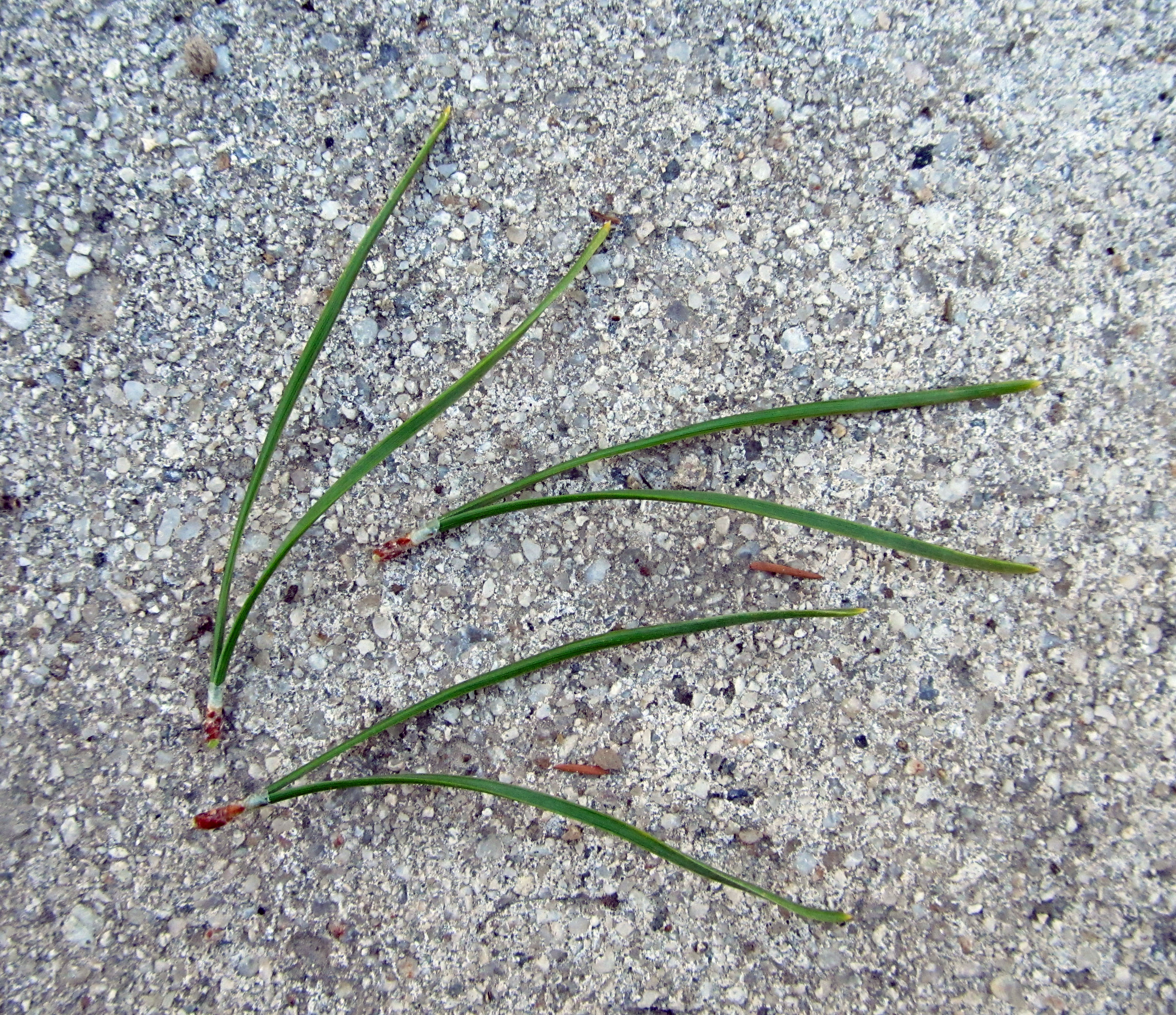
needles of lodgpole pine (Pinus contorta)

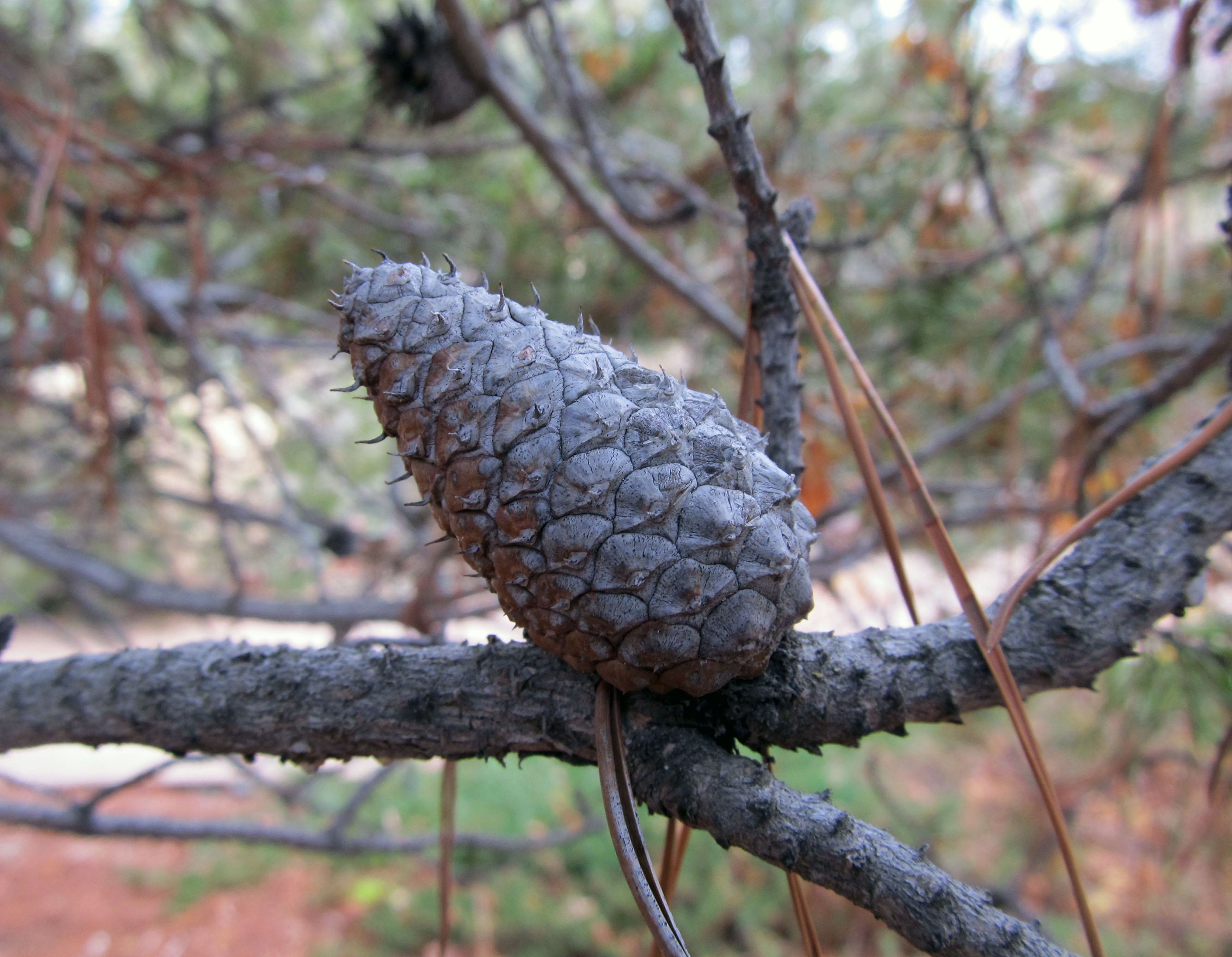
Lodgepole pine grows tall and straight, generally maxing out at around 80 feet tall. Its needles are about two and a half inches long, are borne in bundles of two, and tend to twist away from each other, which is one explanation for the specific epithet, contorta. Its cones are egg-shaped with asymmetrical bases, measuring less than two inches long with prickly tips at the ends of each scale. The seeds of lodgepole pine are tiny with little, papery wings that aid in dispersal. The cones can remain attached to the tree for 15-20 years (sometimes much longer), and the seeds remain viable for decades. In non-serotinous cones, the scales start opening on their own in early autumn. Serotinous cones require temperatures of 45-50°C (113-122°F), to release the resin bond between the scales. Some cones that happen to fall from the tree can open when exposed to particularly warm temperatures on the ground. Otherwise, it takes fire to free the seeds.

Serotinous cones aren’t a guarantee, and the percentage of trees with serotinous cones compared to those with non-serotinous cones varies widely across the range of lodgepole pine, both in space and in time. One reason for this is that trees with serotinous cones don’t develop them until they reach a certain age, generally around 20-30 years old, or perhaps as old as 50 or 60. The cones of young trees are all non-serotinous. But some trees never develop serotinous cones at all. Serotiny is a genetic trait, and there are various factors that either select for or against it. A number of factors are at play simultaneously over the life of a tree and across a population of trees, so it is difficult to determine exactly why the percentage of serotinous cones is so variable across the range of the species. What follows are a few potential explanations for this phenomenon.

closed cone of lodgepole pine (Pinus contorta)

As a fire-adapted, pioneer species, lodgepole pine has evolved to live in environments where fire is predictably common. Serotinous cones help ensure that a population won’t be wiped out when a massive wildfire comes through. After the fire has passed and the seeds are released, lodgepole pine can quickly repopulate the barren ground. As long as fire occurs within the lifespan of a population of similarly aged trees, it is advantageous for the majority of individuals to maintain their serotinous trait. If the population is located in an area that historically does not see much fire, serotinous cones may be a disadvantage and can have adverse effects on the longevity of that population.

A study published in Ecology in 2003 looked at the influence that the frequency of fire has on lodgepole pine stands found at low and high elevations in Yellowstone National Park. At lower elevations, where summer temperatures are warmer and precipitation is relatively minimal, fires occur more frequently compared to higher elevations, which tend to be cooler and wetter. The researchers found that at lower elevations when fires occurred at short intervals (less than 100 years between each fire), lodgepole pine was slower to repopulate compared to longer intervals. This suggests that the percentage of serotiny found in stands that experienced short fire intervals was low, and that stands with long fire intervals exhibit a higher percentage of serotiny. After all, as mentioned above, lodgepole pines don’t start developing serotinous cones until later in life.

At higher elevations, where fire occurs less frequently, lodgepole pines were found to have a low percentage of serotinous cones regardless of the age of the stand. Because the trees at high elevations are more likely to die of old age rather than fire, maintaining serotinous cones would be a disadvantage. Open cones are preferred. Thus, at least in this study, a greater percentage of serotinous cones was found in lodgepole pines at lower elevations compared to those at higher elevations. Latitude, elevation, mountain pine beetle attacks, and other environmental factors have all been used to explain differences in serotiny. However, the factor that seems to have the greatest influence is the frequency of fire. As James Lotan writes in a 1976 report: “A high degree of cone serotiny would be expected where repeated, high-intensity fires occur. Where forest canopies are disrupted by factors other than fire, open cones annually supply [seed] for restocking disturbances such as windfalls.”

That being said, one other factor does appear to play a critical role in whether or not lodgepole pines produce serotinous cones, and that is seed predation by squirrels. In a paper published in Ecology in 2004, researchers wondered why the percentage of serotinous cones wasn’t even higher in populations where fire reliably occurred during the lifetime of the stand. To help answer this question they looked at the activities of pine squirrels, which are the main seed predator of lodgepole pine seeds. Pine squirrels visit the canopy of lodgepole pines and consume the seeds found in serotinous cones. Because non-serotinous cones quickly shed their seeds, serotinous cones are a more reliable and accessible food source, and because pine squirrels are so effective at harvesting the seeds of serotinous cones, the researchers concluded that, “in the presence of pine squirrels, the frequency of serotiny is lower and more variable, presumably reflecting,” among a variety of other factors, “the strength of selection exerted by pine squirrels.”

A study published in PNAS in 2014 added evidence to this conclusion. While acknowledging that fire plays a major role in the frequency of serotinous cones, the researchers asserted that “squirrels select against serotiny and that the strength of selection increases with increasing squirrel density.” However, despite making it easier for squirrels to access their seeds, lodgepole pines maintain a degree of serotinous cones, since clearly their main advantage is retaining a canopy-level seed bank from which seeds are released after a fire and by which a new generation of lodgepole pines is born.

open cones of lodgepole pine (Pinus contorta)

Further Reading and Viewing: