Idaho’s Native Milkweeds (Updated)

As David Epstein said in an interview on Longform Podcast, “Any time you write about science, somethings is going to be wrong; the problem is you don’t know what it is yet, so you better be ready to update your beliefs as you learn more.” Thanks to the newly published Guide to the Native Milkweeds of Idaho by Cecilia Lynn Kinter, lead botanist for Idaho Department of Fish and Game, I’ve been made aware of some things I got wrong in the first version of this post. I appreciate being corrected though, because I want to get things right. What follows is an updated version of the original post. The most substantial change is that there are actually five milkweed species native to Idaho rather than six. Be sure to check out Kinter’s free guide to learn more about this remarkable group of plants.

———————

Concern for monarch butterflies has resulted in increased interest in milkweeds. Understandably so, as they are the host plants and food source for the larval stage of these migrating butterflies. But milkweeds are an impressive group of plants in their own right, and their ecological role extends far beyond a single charismatic insect. Work to save the monarch butterfly, which requires halting milkweed losses and restoring milkweed populations, will in turn provide habitat for countless other organisms. A patch of milkweed teems with life, and our pursuits to protect a single caterpillar invite us to explore that.

Asclepias – also known as the milkweeds – is a genus consisting of around 140 species, 72 of which are native to the United States and Canada. Alaska and Hawaii are the only states in the U.S. that don’t have a native species of milkweed. The ranges of some species native to the United States extend down into Mexico where there are numerous other milkweed species. Central America and South America are also home to many distinct milkweed species. Asclepias species found in southern Africa are considered by many to actually belong in the genus Gomphocarpus.

The habitats milkweeds occupy are about as diverse as the genus itself – from wetlands to prairies, from deserts to forests, and practically anywhere in between. Some species occupy disturbed and/or neglected sites like roadsides, agricultural fields, and vacant lots. For this reason they are frequently viewed as a weed; however, such populations are easily managed, and with such an important ecological role to play, they don’t deserve to be vilified in this way.

Milkweed species are not distributed across the United States evenly. Texas and Arizona are home to the highest diversity with 37 and 29 species respectively. Idaho, my home state, is on the low end with five native species. The most abundant species found in Idaho is Asclepias speciosa, commonly known as showy milkweed.

showy milkweed (Asclepias speciosa)

Showy milkweed is distributed from central U.S. westward and can be found in all western states. It occurs throughout Idaho and is easily the best place to look for monarch caterpillars. In fact, the monarch butterfly is Idaho’s state insect, thanks in part to the abundance of showy milkweed, which is frequently found growing in large colonies due to its ability to reproduce vegetatively via adventitious shoots produced on lateral roots or underground stems. Only a handful of milkweed species reproduce this way. Showy milkweed reaches up to five feet tall and has large ovate, gray-green leaves. Like all milkweed species except one (Asclepias tuberosa), its stems and leaves contain milky, latex sap. In early summer, the stems are topped with large umbrella-shaped inflorescences composed of pale pink to pink-purple flowers.

The flowers of milkweed deserve a close examination. Right away you will notice unique features not seen on most other flowers. The petals of milkweed flowers bend backwards, which would otherwise allow easy access to the flower’s sex parts if it wasn’t for a series of hoods and horns protecting them. Collectively, these hoods and horns are called the corona, which houses glands that produce abundant nectar and has a series of slits where the anthers are exposed. The pollen grains of milkweed are contained in waxy sacs called pollinia. Two pollinia are connected together by a corpusculum giving this structure a wishbone appearance. An insect visiting the flower for nectar slips its leg into the slit, and the pollen sacs become attached with the help of the corpusculum. When the insect leaves, the pollen sacs follow. Pollination is successful when the pollen sacs are inadvertently deposited on the stigmas of another flower.

Milkweed flowers are not self-fertile, so they require assistance by insects to sexually reproduce. They are not picky about who does it either, and their profuse nectar draws in all kinds of insects including bees, butterflies, moths, beetles, wasps, and ants. Certain insects – like bumble bees and other large bees – are more efficient pollinators than others. Once pollinated, seeds are formed inside a pod-like fruit called a follicle. The follicles of showy milkweed can be around 5 inches long and house dozens to hundreds of seeds. When the follicle matures, it splits open to release the seeds, which are small, brown, papery disks with a tuft of soft, white, silky hair attached. The seeds of showy milkweed go airborne in late summer.

follicles forming on showy milkweed (Asclepias speciosa)

Whorled or narrowleaf milkweed (Asclepias fascicularis) occurs across western and southern Idaho. Its distribution continues into neighboring states. It is adapted to dry locations, but can be found in a variety of habitats. Like showy milkweed, it spreads rhizomatously as well as by seed. It’s a wispy plant that reaches one to three feet tall and occasionally taller. It has long, narrow leaves and produces tight clusters of greenish-white to pink-purple flowers. Its seed pods are long and slender and its seeds are about 1/4 inch long.
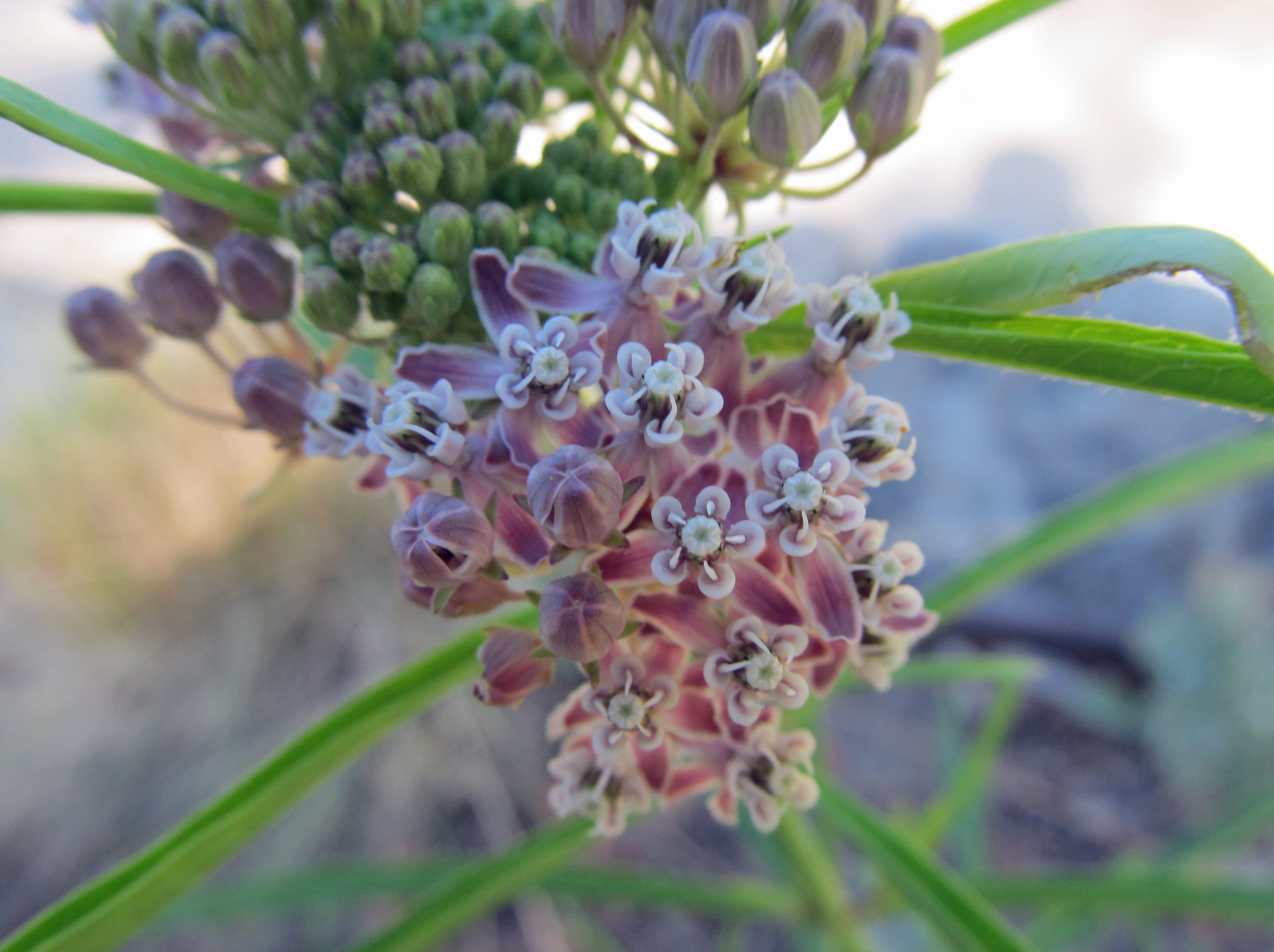
flowers of narrowleaf milkweed (Asclepias fascicularis)

seeds escaping from the follicle of narrowleaf milkweed (Asclepias fascicularis)

Swamp or rose milkweed (Asclepias incarnata) is more common east of Idaho, but occurs occasionally in southwestern Idaho. As its common name suggests, it prefers moist soils and is found in wetlands, wet meadows, and along streambanks. It can spread rhizomatously, but generally doesn’t spread very far. It reaches up to four feet tall, has deep green, lance-shaped leaves, and produces attractive, fragrant, pink to mauve, dome-shaped flower heads at the tops of its stems. Its seed pods are narrow and around 3 inches long.
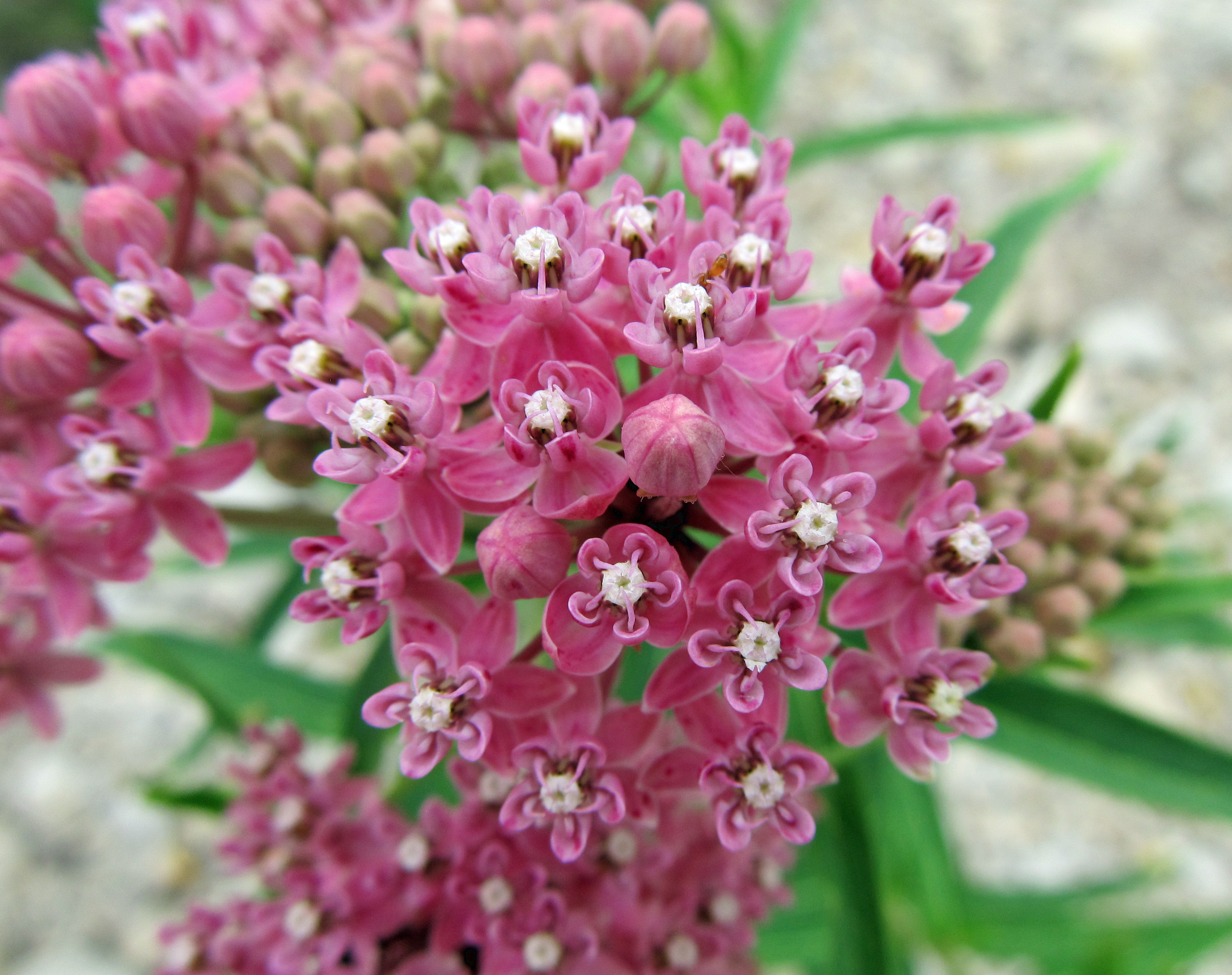
swamp milkweed (Asclepias incarnata)

Asclepias cryptoceras ssp. davisii, or Davis’s milkweed, is a low-growing, drought-adapted, diminutive species that occurs in southwestern Idaho. It has round or oval-shaped leaves and produces flowers on a short stalk. The flowers have white or cream-colored petals and pink-purple hoods. The range of Asclepias cryptoceras – commonly known as pallid milkweed or jewel milkweed – extends beyond Idaho’s borders into Oregon and Nevada, creeping north into Washington and south into California. Another subspecies – cryptoceras – can be found in Nevada, Utah, and their bordering states.

Davis’s milkweed (Asclepias cryptoceras ssp. davisii)

The final species is rare in Idaho, as Idaho sits at the top of its native range. Asclepias asperula ssp. asperula, or spider milkweed, has a single documented location in Franklin County (southeastern Idaho). Keep your eyes peeled though, because this plant may occur elsewhere, either in Franklin County or neighboring counties. It grows up to two feet tall with an upright or sprawling habit and produces clusters of white to green-yellow flowers with maroon highlights. Its common name comes from the crab spiders frequently found hunting in its flower heads.

A sixth species, horsetail milkweed (Asclepias subverticillata), has been falsely reported in Idaho. Collections previously labeled as A. subverticillata have been determined to actually be the similar looking A. fascicularis.
Party Time for Puncture Vine, Year Two

Party Time for Puncture Vine, Year Two

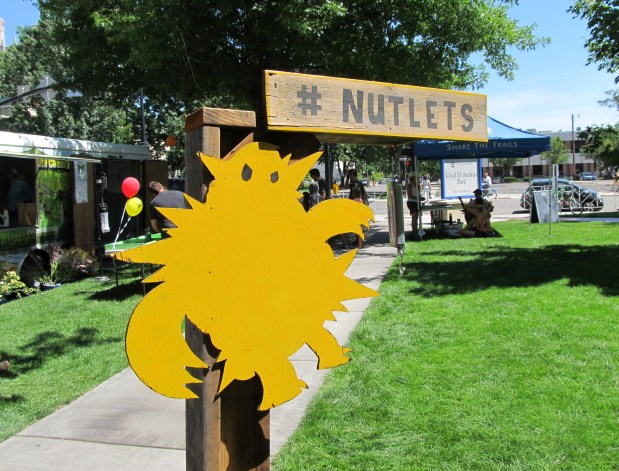
A noxious weed brought Boiseans together for the second year in a row. After a successful inaugural year, the Boise Goathead Fest returned to downtown Boise, Idaho on the 2nd and 3rd of August. The festival’s namesake comes from a particularly destructive weed whose spiky fruits are notorious for puncturing bike tires. Known commonly as goathead or puncture vine, Tribulus terrestris is abundant in the Treasure Valley and the bane of area bicyclists. Organized by the Boise Bicycle Project and other bike-centric non-profits, Boise Goathead Fest is a celebration of bike culture, as well as an opportunity to spread awareness about this problematic plant.

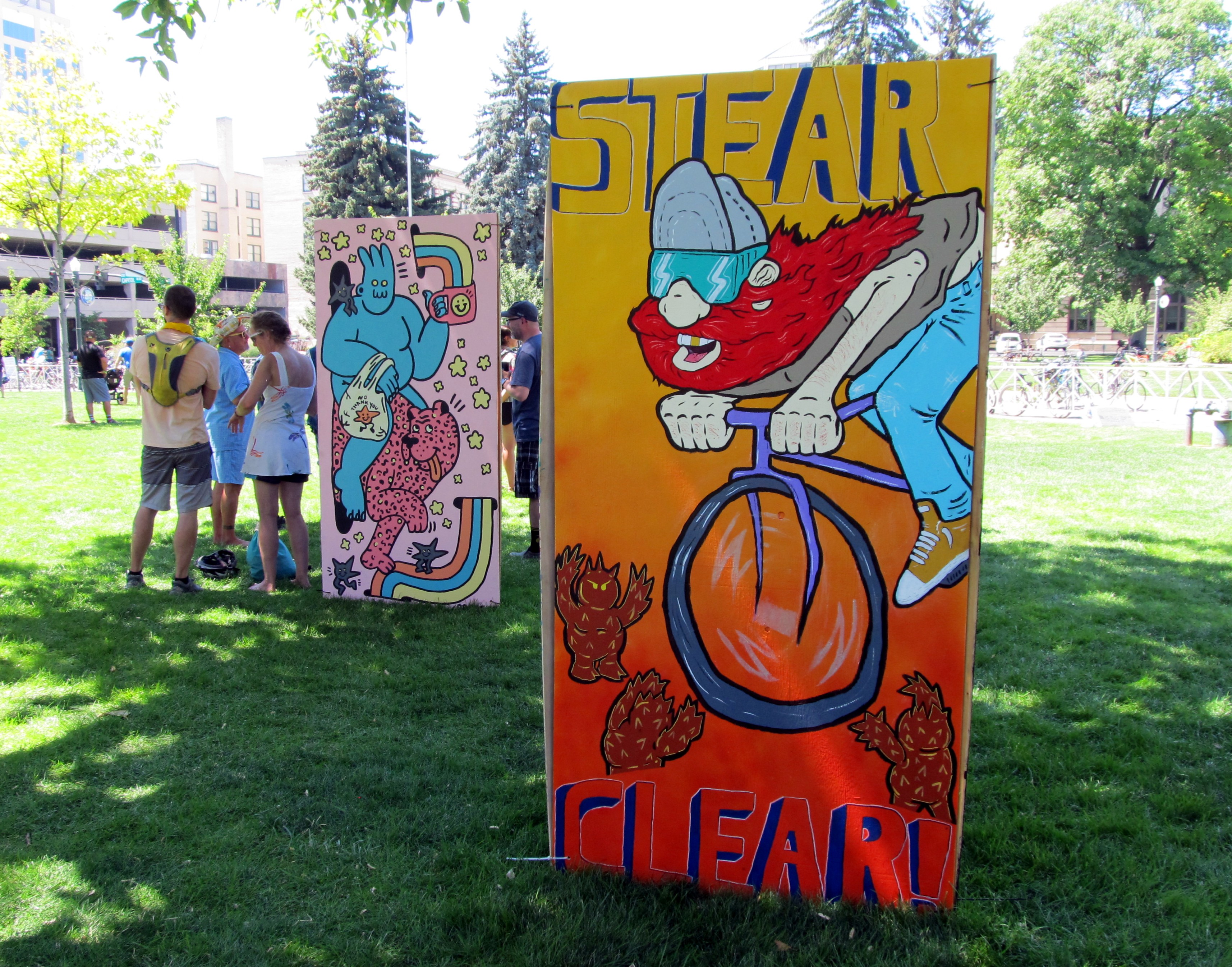
goathead-themed art

For the two months leading up to Goathead Fest, Treasure Valley residents were encouraged to pull as many goatheads as they could get their hands on. Those who took on the challenge were rewarded with tokens to be redeemed at the Fest for drinks or ice cream. Trophies and prizes were also presented to those who pulled the most goatheads over the two month period. This effort resulted in thousands of pounds of goatheads being removed from the area, saving bicyclists from countless flat tires and slimming down puncture vine’s extensive seed bank.

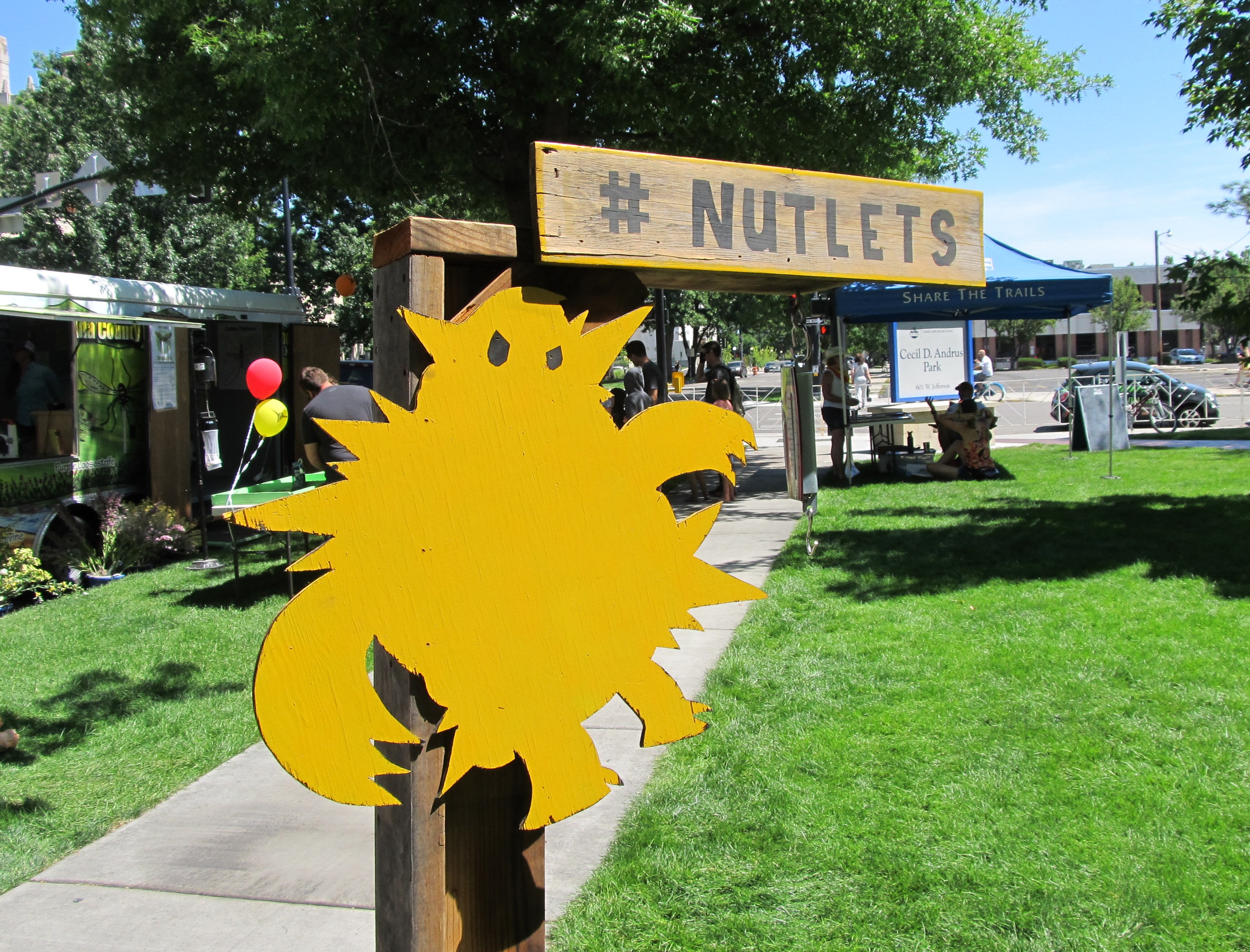
scale for weighing goathead collections

After two months of collecting goatheads, it was time to celebrate. The two day long party consisted of live music and DJs, a huge bike parade around downtown Boise (for which participants were encouraged to decorate their bikes and wear costumes), and a variety of other bike-themed and non bike-themed activities. Goathead education continued during the Fest with the help of folks from Ada County, City of Boise, Idaho Botanical Garden, and others.

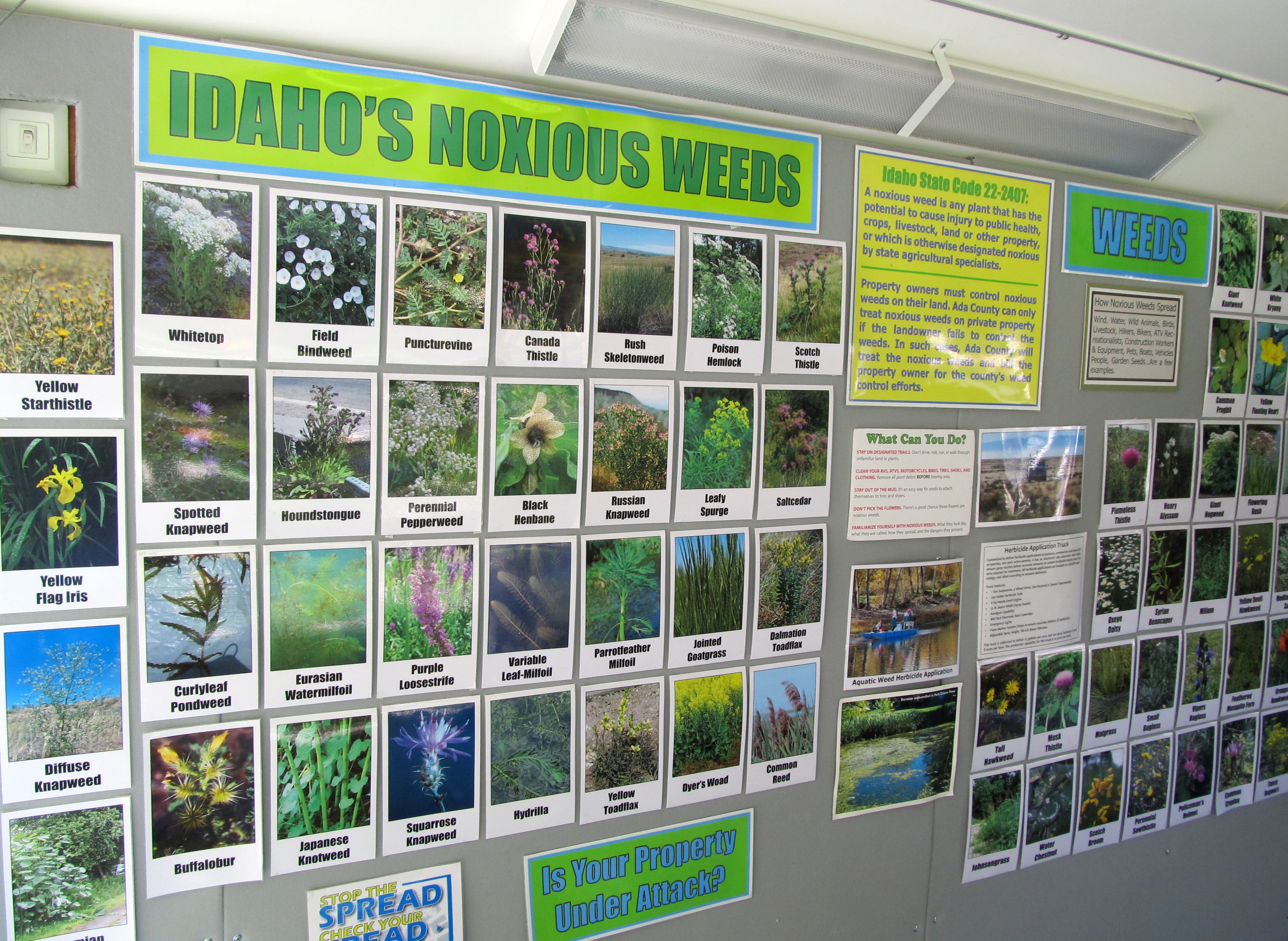
A peak inside the Ada County Weed, Pest, and Mosquito Abatement education and outreach trailer

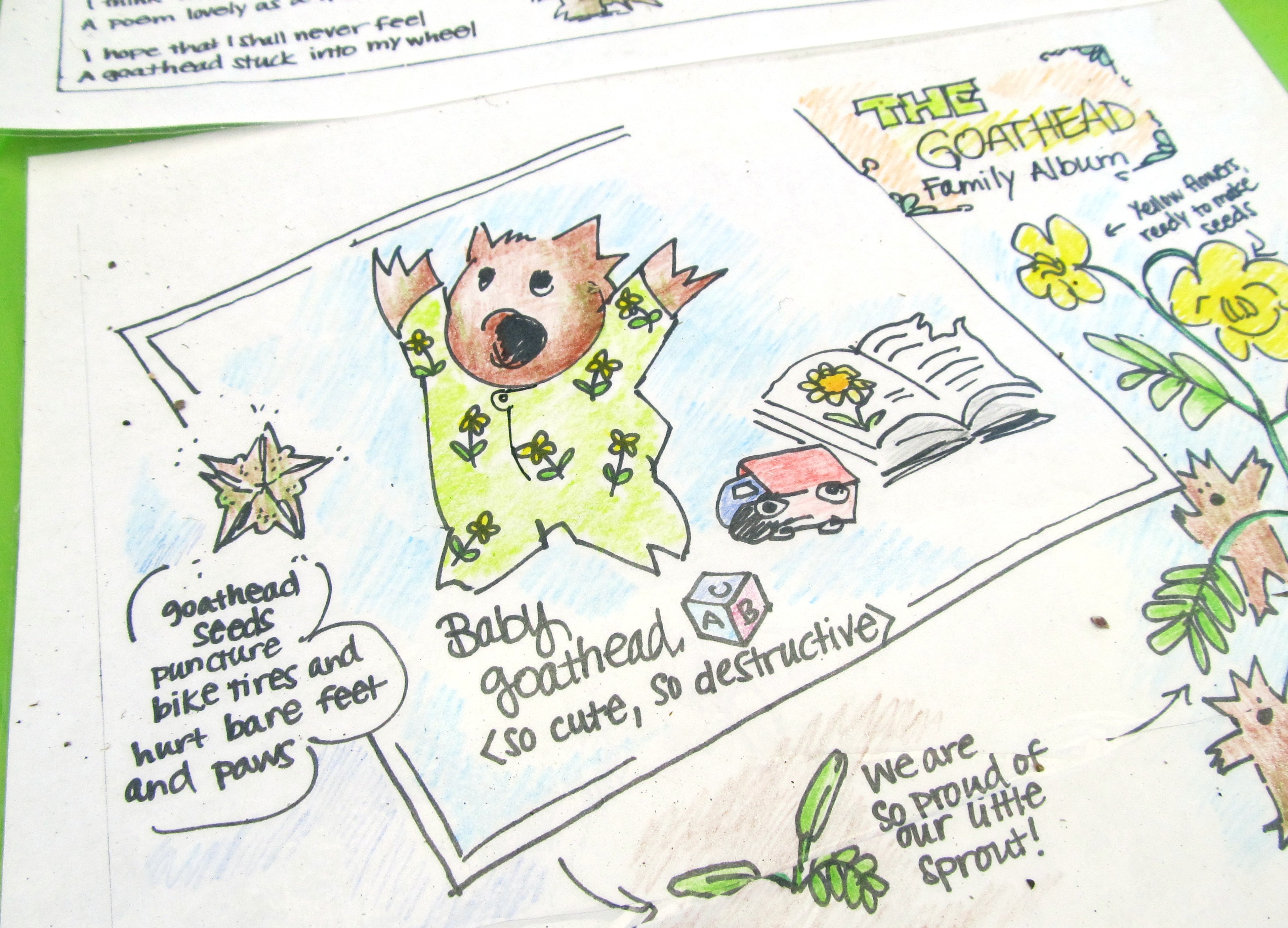
Goathead coloring page created by Wendy of Idaho Botanical Garden

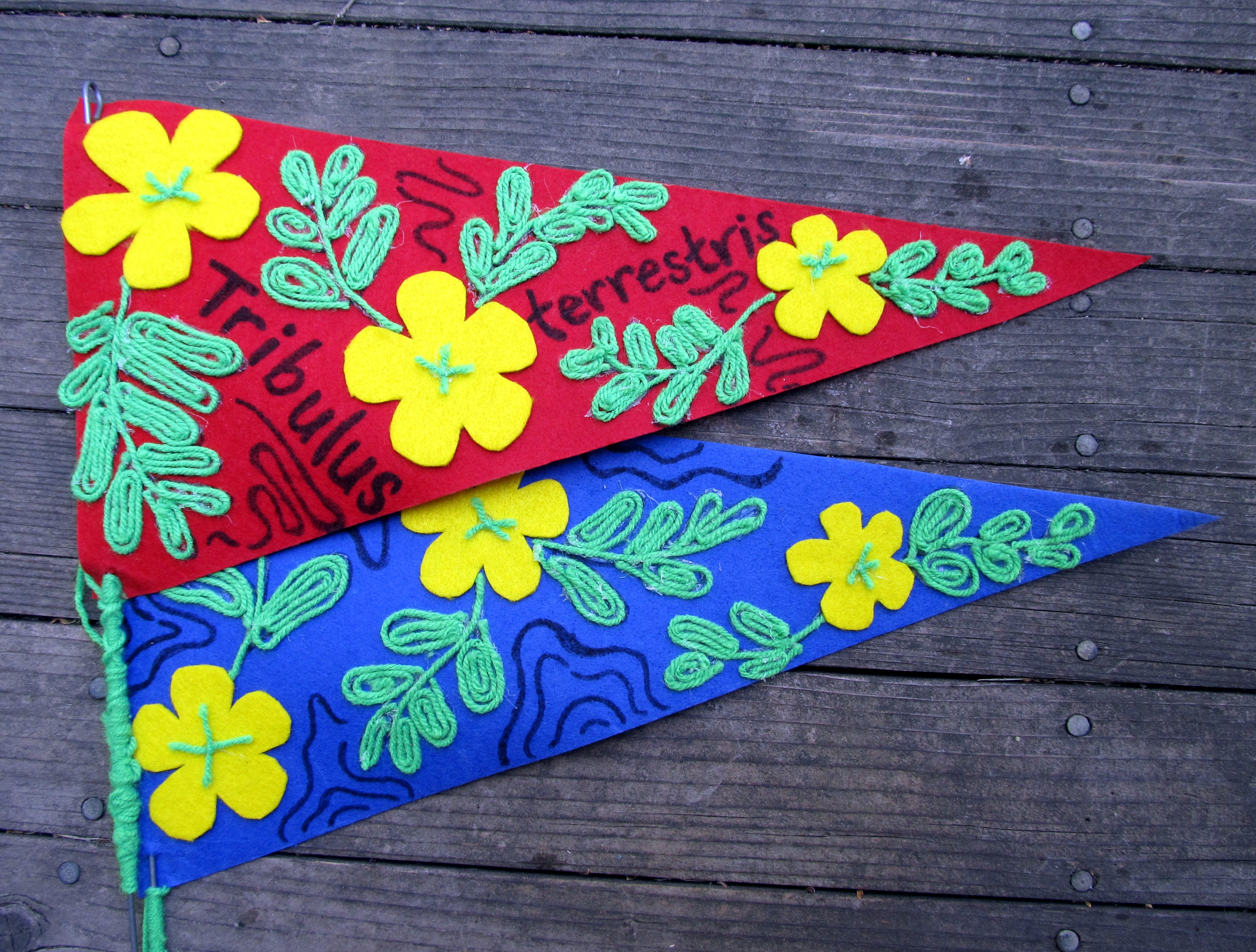
Puncture vine pennants created by Anna of Idaho Botanical Garden

With all of this attention and awareness focused on a single noxious weed, might it be possible to eliminate it from our community and free ourselves from ruined rides and trashed tires? The seeds of puncture vine are relatively short lived, and as an annual plant, seeds are its only method of reproduction. Even if we can’t altogether eliminate it, we could certainly see a dramatic reduction in its abundance and distribution. Perhaps in the future we will spend less time pulling it and more time celebrating its rarity, reflecting back on the time when punctures permeated our pedal-powered lives. Whatever the result, puncture vine has brought our community together once again. If such a loathsome weed can bring people together in celebration like this, perhaps it’s not entirely bad.

me with goathead balloon

See Also: Boise Weekly – Goathead’s the Burr, Community’s the Word

Using Weeds: Soapwort

Over the past year or so I have written about several edible weeds in an effort to highlight useful weeds. However, weeds don’t have to be edible to be useful. In fact, many weeds are most certainly not edible, but that doesn’t mean they are of no use to humans. Soapwort, for example, is poisonous, and while it does have a history of being used internally as medicine, ingesting it is not advised and should only be done under the direction of a doctor. A much less risky activity would be to make soap out of it.

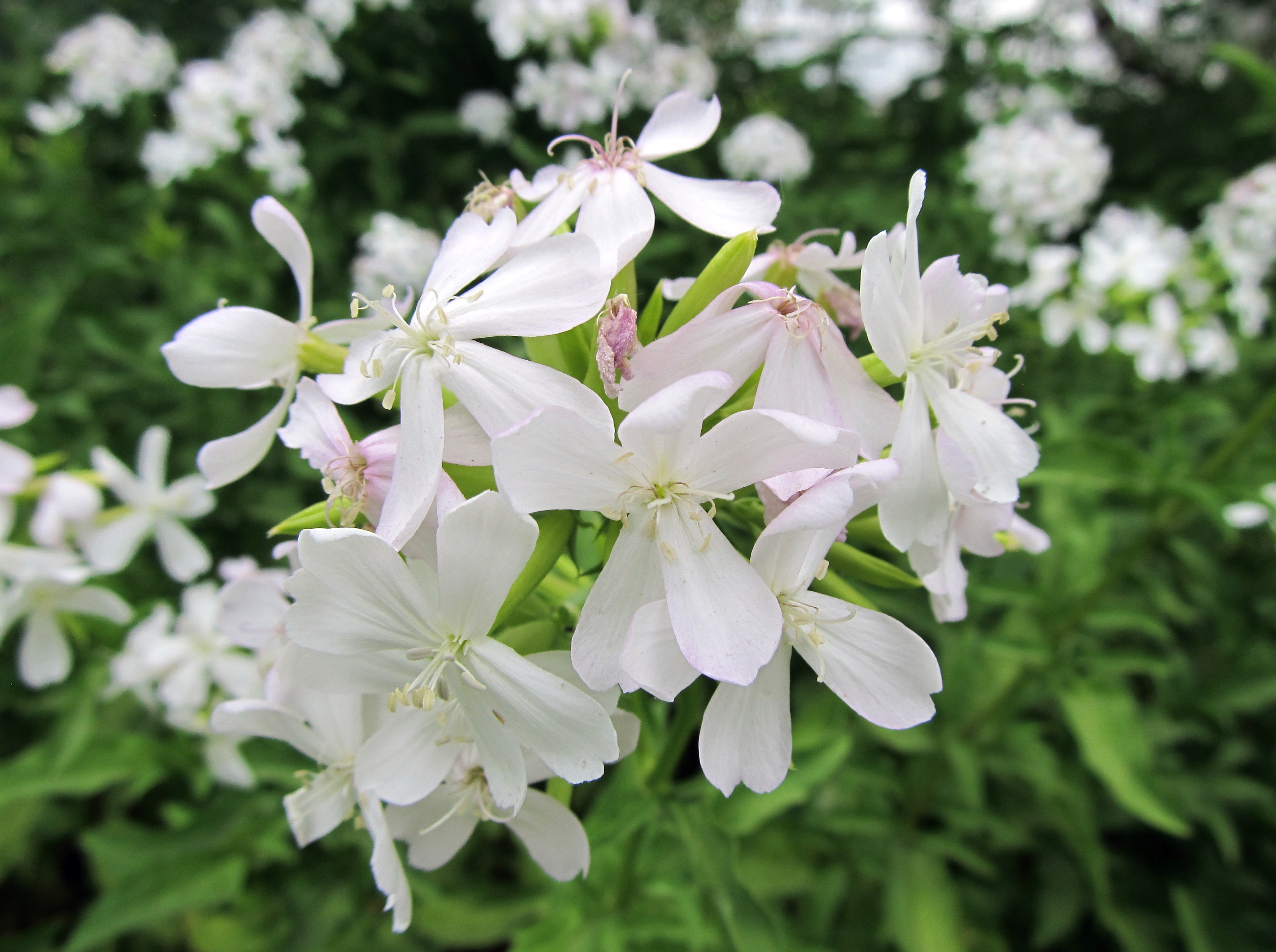
soapwort (Saponaria officinalis)

Saponaria officinalis, commonly known as bouncing bet, hedge pink, fuller’s herb, scourwort, and soapweed or soapwort, is an herbaceous perennial native to Europe. It has been planted widely in flower beds and herb gardens outside of its native range, desired both for its beauty and utility. Capitalizing on our appreciation for it, soapwort has expanded beyond our garden borders and into natural areas, as well as vacant lots, roadsides, and other neglected spaces. Even in a garden setting it can be a bit of a bully, especially if ignored for a season or two.

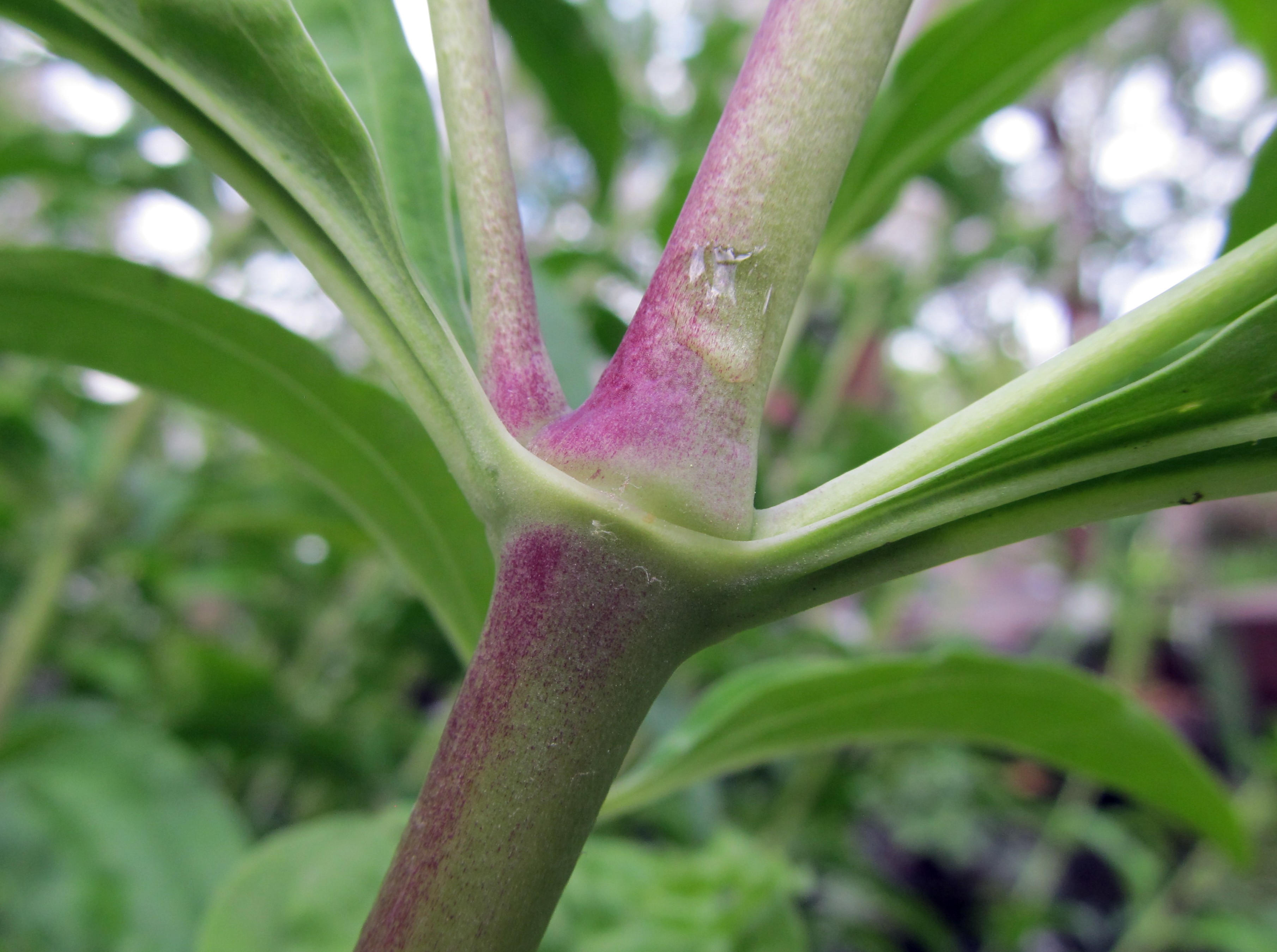
The stems of soapwort grow to about two feet tall, are unbranched, and sometimes tinged with pink, purple, or red. The leaves are oblong and oppositely-arranged, and their bases form prominent collars around the stems. Showy clusters of flowers are found atop the stems throughout the summer. Like other flowers in the pink family (Caryophyllaceae), they are cigar-shaped at the base and opened wide at the end, showing off 5 distinct petals with notches at their tips. The petals of soapwort flowers bend backwards, with their sex parts protruding outwards. In his description of the flowers, John Eastman remarks in The Book of Field and Roadside that “the reflexed petals surrounding the sexual organs give the impression of flagrant thrust; this is a gaudy, unshy flower.”

collared stem of soapwort (Saponaria officinalis)

The fragrant flowers are pink to white in color. They open in the evening and remain open for a few short days. In an individual flower, pollen matures and is mostly shed before the stigma is ready to accept it. This helps reduce the chance of self-pollination. Cross pollination occurs with the assistance of moths who visit the flowers at night, as well as bees and other flower-visiting insects that come along during the daytime. Soapwort fruits are oval capsules containing as many as 500 kidney-shaped seeds. Seeds aren’t essential to the plants spread though, as much of its colonization occurs via vigorous rhizomes.

In fact, vegetative reproduction is the means by which soapwort forms such expansive, thick patches. It also helps that it’s poisonous. The saponins – its soap making compounds – that it produces in its roots, shoots, and leaves deter most insects and other animals from eating it. It has a reputation for poisoning horses, cows, and other livestock, and so is unwelcome in pastures and rangelands. Saponins are also poisonous to fish, so growing soapwort near fish ponds is not advised.

soapwort (Saponaria officinalis)

Soapwort occurs in a variety of soils including sandy, dry, and rocky sites and is surprisingly drough-tolerant, fine qualities to have when colonizing neglected sites. While most other organisms ignore soapwort, it has a friend in humans. Eastman sums this up well: “Soapwort’s most important associate – as is true of most plants we label weeds – is undoubtedly humankind, without whose helpful interventions the plant would surely be much rarer than it is.”

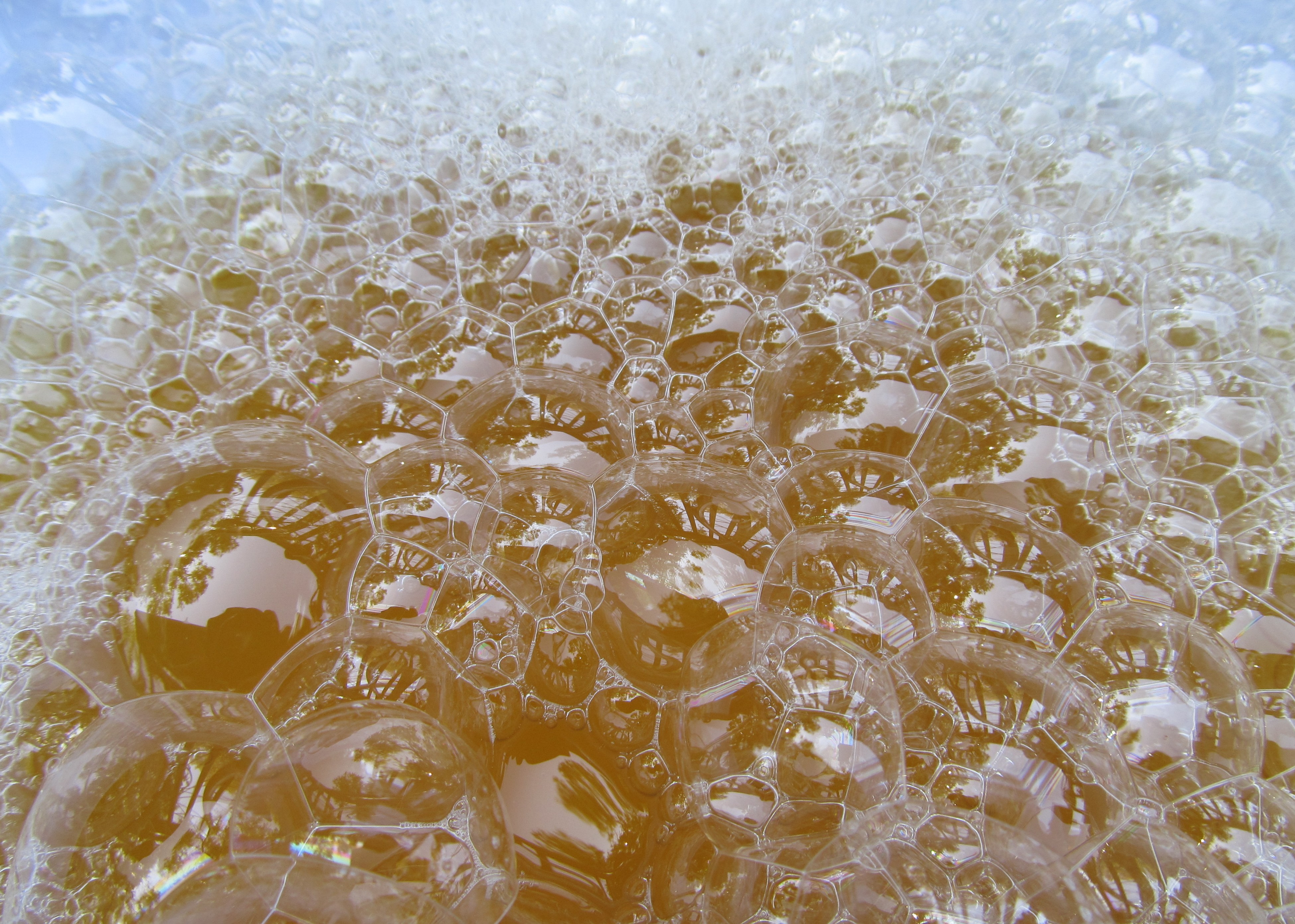
I made a soapy liquid out of soapwort by following a recipe that can be found on various blogs and websites by searching “saponaria soap recipe.” Basically it’s a cup of fresh leaves and stems along with a cup of dried leaves and stems added to a quart of distilled water brought to a boil. After simmering for 15 minutes and then allowing it to cool, strain the mixture through cheese cloth, and it’s ready to go.

This gentle but effective soap can be used for cleaning countertops and other surfaces, as well as dishes, fabrics, and skin. Several sources say it is particularly useful for cleaning delicate fabrics. Sierra and I both found it to have a cooked cabbage or spinach scent to it. This can be masked by adding a few drops of essential oil. Despite its odd aroma, both Sierra and I were impressed by its cleansing power and plan to use it more often.

dried leaves of soapwort

soapwort soap

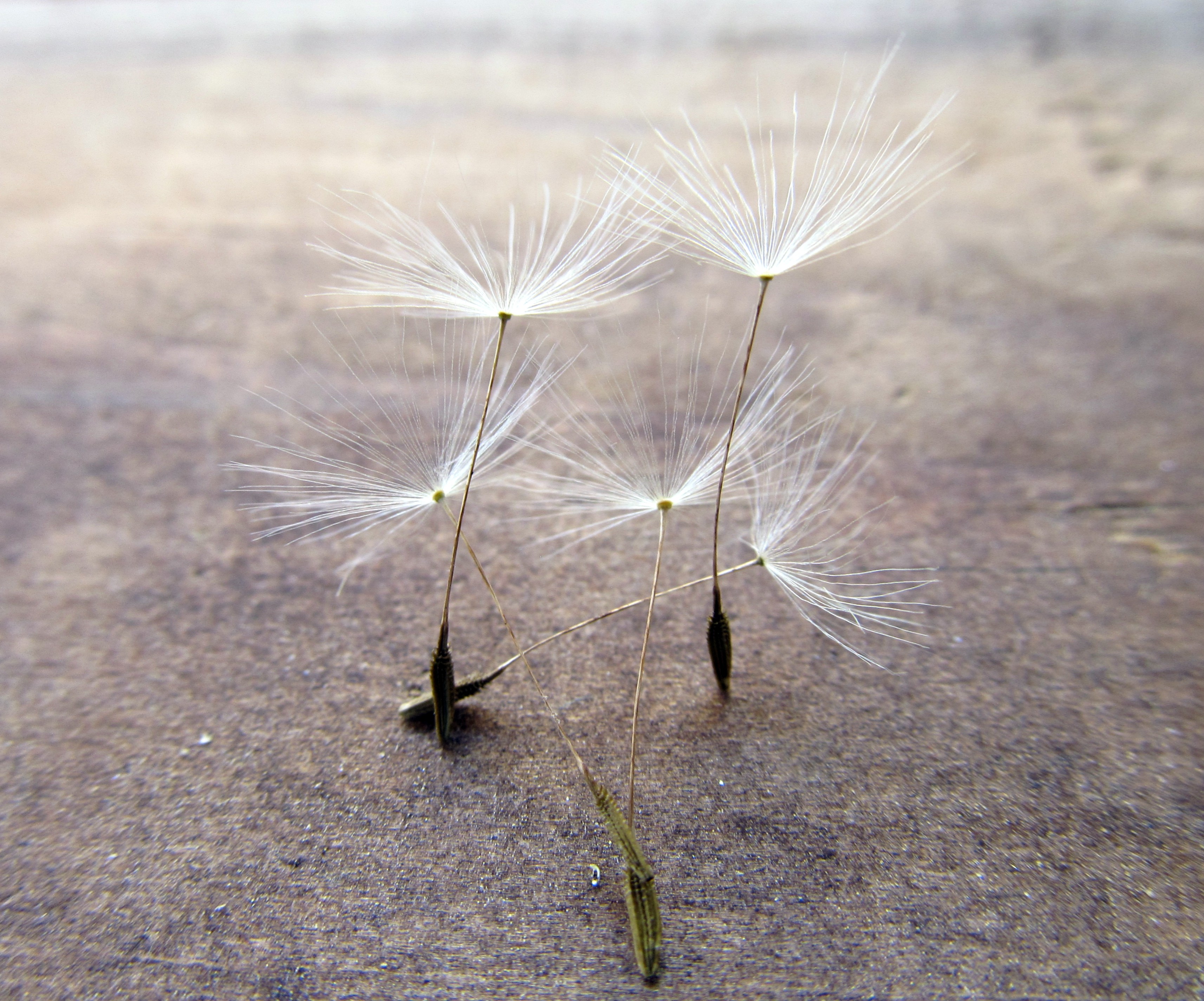
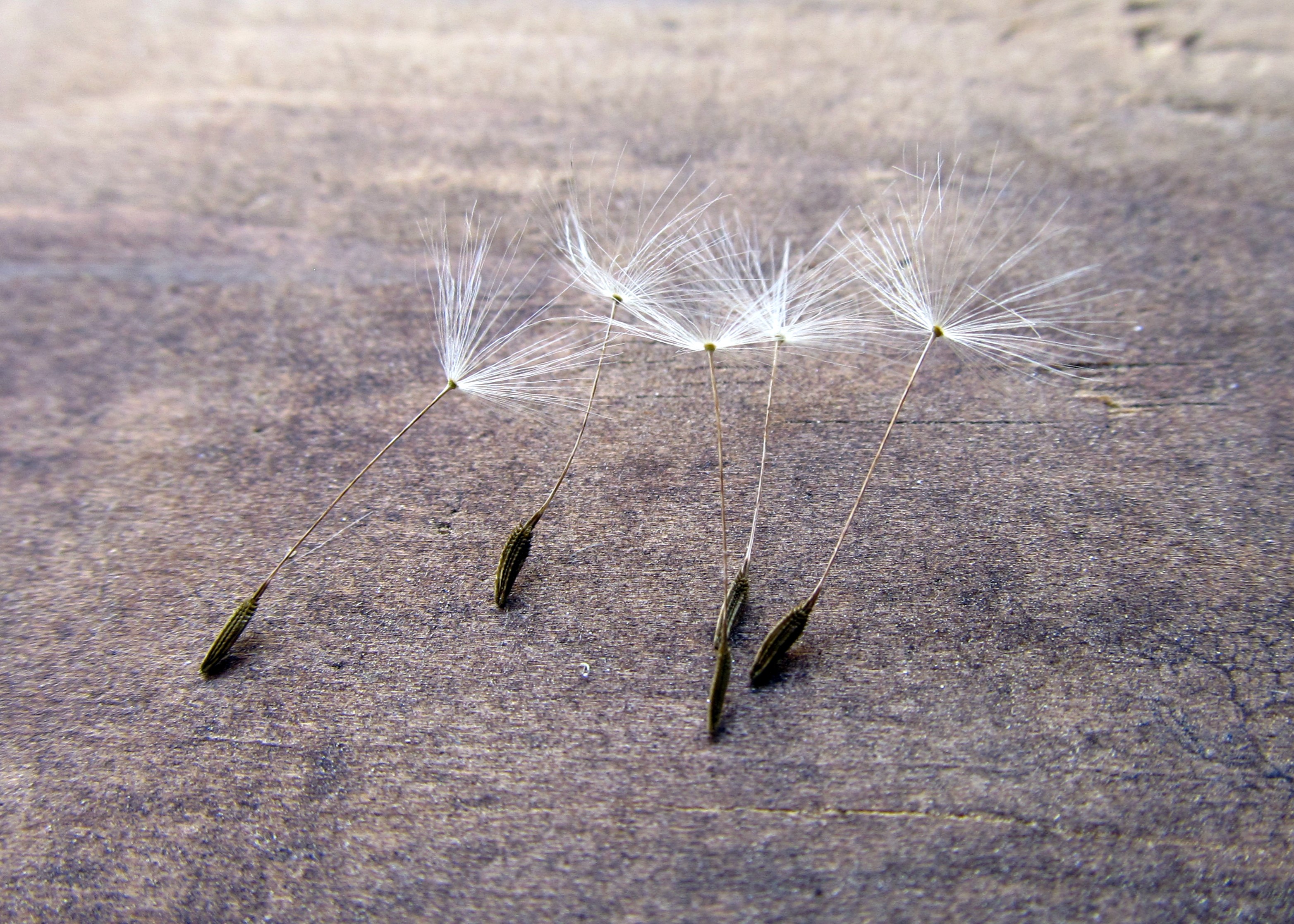
The Flight of the Dandelion

The common dandelion (Taraxacum officinale) comes with a collection of traits that make it a very successful weed. Nearly everything about it screams success, from its asexually produced seeds to its ability to resprout from a root fragment. Evolution has been kind to this plant, and up until the recent chemical warfare we’ve subjected it to, humans have treated it pretty well too (both intentionally and unintentionally).

One feature that has served the dandelion particularly well is its wind-dispersed seeds. Dandelions have a highly-evolved pappus – a parachute-like bristle of hairs attached to its fruit by a thin stalk. The slightest breath or puff of wind will send this apparatus flying. Once airborne, a dandelion’s seed can travel up to a kilometer or more away from its mother plant, thereby expanding its territory with ease.

Such a low-growing plant achieving this kind of distance is impressive. Even more impressive is that it manages to do this with a pappus that is 90% empty space. Would you leap from a plane with only 10% of a parachute?

Dandelion flight was investigated by researchers at the University of Edinburgh, who used a wind tunnel along with long-exposure photography and high-speed imaging to observe the floating pappus. Their research was presented in a letter published in an issue of Nature in October 2018. Upon close examination, they observed a stable air bubble floating above the pappus as it flew. This ring-shaped air bubble – or vortex – which is unattached to the pappus is known as a separated vortex ring. While this type of vortex ring had been considered theoretically, this marked the first time one had been observed in nature.

Seeing this type of air bubble associated with the dandelion’s pappus intrigued the researchers. About a 100 filaments make up the parachute portion of the pappus. They are arranged around the stalk, leaving heaps of blank space in between. The air bubble observed was not what was expected for such a porous object. However, the researchers found that the filaments were interacting with each other in flight, reducing the porosity of the pappus. In their words, “Neighboring filaments interact strongly with one another because of the thick boundary layer around each filament, which causes a considerable reduction in air flow through the pappus.”

The pappus acts as a circular disk even though it is not one, and its limited porosity allows just enough air movement through the filaments that it maintains this unique vortex. “This suggests,” the researchers write, “that evolution has tuned the pappus porosity to eliminate vortex shedding as the seed flies.” Fine-tuned porosity and the resultant unattached air bubble stabilizes the floating fruit “into an equilibrium orientation that minimizes [its] terminal velocity, allowing [it] to make maximal use of updrafts.” The result is stable, long distance flight.

Wind-dispersed seeds come in two main forms: winged and plumed. Winged seeds are common in trees and large shrubs. They benefit from the height of the tree which allows them to attain stable flight. While such seeds have the ability to travel long distances, their success is limited on shorter plants. In this case, plumed seeds, like those of the dandelion, are the way to go. As the researchers demonstrated, successful flight can be achieved by bristles in place of wings. The tiny seeds of dandelions seen floating by on a summer breeze are not tumbling through the air haphazardly; rather, they are flying steadily, on their way to spoil the dreams of a perfect lawn.

Further Reading (and Watching):

Selections from the Boise Biophilia Archives

For a little over a year now, I’ve been doing a tiny radio show with a friend of mine named Casey O’leary. The show is called Boise Biophilia and airs weekly on Radio Boise. On the show we each take about a minute to talk about something biology or ecology related that listeners in our local area can relate to. Our goal is to encourage listeners to get outside and explore the natural world. It’s fascinating after all! After the shows air, I post them on our website and Soundcloud page for all to hear.

We are not professional broadcasters by any means. Heck, I’m not a huge fan of talking in general, much less when a microphone is involved and a recording is being made. But Casey and I both love spreading the word about nerdy nature topics, and Casey’s enthusiasm for the project helps keep me involved. We’ve recorded nearly 70 episodes so far and are thrilled to know that they are out there in the world for people to experience. What follows is a sampling of some of the episodes we have recorded over the last 16 months. Some of our topics and comments are inside baseball for people living in the Treasure Valley, but there’s plenty there for outsiders to enjoy as well.

Something you will surely note upon your first listen is the scattering of interesting sound effects and off the wall edits in each of the episodes. Those come thanks to Speedy of Radio Boise who helps us edit our show. Without Speedy, the show wouldn’t be nearly as fun to listen to, so we are grateful for the work he does.

Boise Biophilia logo designed by Sierra Laverty

In this episode, Casey and I explore the world of leaf litter. Where do all the leaves go after they fall? Who are the players involved in decomposition, and what are they up to out there?


In this episode, Casey gets into our region’s complicated system of water rights, while I dive into something equally complex and intense – life inside of a sagebrush gall.


In this episode, I talk about dead bees and other insects trapped and dangling from milkweed flowers, and Casey discusses goatheads (a.k.a. puncture vine or Tribulus terrestris) in honor of Boise’s nascent summer celebration, Goathead Fest.


As much as I love plants, I have to admit that some of our best episodes are insect themed. Their lives are so dramatic, and this episode illustrates that.


The insect drama continues in this episode in which I describe how ant lions capture and consume their prey. Since we recorded this around Halloween, Casey offers a particularly spooky bit about garlic.


If you follow Awkward Botany, you know that one of my favorite topics is weeds. In this episode, I cover tumbleweeds, an iconic western weed that has been known to do some real damage. Casey introduces us to Canada geese, which are similar to weeds in their, at times, overabundance and ability to spawn strong opinions in the people they share space with.


In this episode, I explain the phenomenon of marcescence, and Casey gives some great advice about growing onions from seed.


And finally, in the spring you can’t get by without talking about bulbs at some point. This episode is an introduction to geophytes. Casey breaks down the basics, while I list some specific geophytes native to our Boise Foothills.


Investigating the Soil Seed Bank

Near the top of the world, deep inside a snow-covered mountain located on a Norwegian island, a vault houses nearly a million packets of seeds sent in from around the world. The purpose of the Svalbard Global Seed Vault is to maintain collections of crop seeds to ensure that these important species and varieties are not lost to neglect or catastrophe. In this way, our food supply is made more secure, buffered against the unpredictability of the future. Seed banks like this can be found around the world and are essential resources for plant conservation. While some, like Svalbard, are in the business of preserving crop species, others, like the Millennium Seed Bank, are focused on preserving seeds of plants found in the wild.

Svalbard Global Seed Vault via wikimedida commons

Outside of human-built seed banks, many plants maintain their own seed banks in the soil where they grow. This is the soil seed bank, a term that refers to either a collection of seeds from numerous plant species or, simply, the seeds of a single species. All seed bearing plants pass through a period as a seed waiting for the chance to germinate. Some do this quickly, as soon as the opportunity arises, while others wait, sometimes for many years, before germinating. Plants whose seeds germinate quickly, generally do not maintain a seed bank. However, seeds that don’t germinate right away and become incorporated in the soil make up what is known as a persistent soil seed bank.

A seed is a tiny plant encased in a protective layer. Germination is not the birth of a plant; rather, the plant was born when the seed was formed. The dispersal of seeds is both a spatial and temporal phenomenon. First the seed gets to where it’s going via wind, water, gravity, animal assistance, or some other means. Then it waits for a good opportunity to sprout. A seed lying in wait in the soil seed bank is an example of dispersal through time. Years can pass before the seed germinates, and when it does, the plant joins the above ground plant community.

Because seeds are living plants, seeds found in the soil seed bank are members of a plant community, even though they are virtually invisible and hard to account for. Often, the above ground plant community does not represent the population of seeds found in the soil below. Conversely, seeds in a seed bank may not be representative of the plants growing above them. This is because, as mentioned earlier, not all plant species maintain soil seed banks, and those that do have differences in how long their seeds remain viable. Depending on which stage of ecological succession the plant community is in, the collection of seeds below and the plants growing above can look quite different.

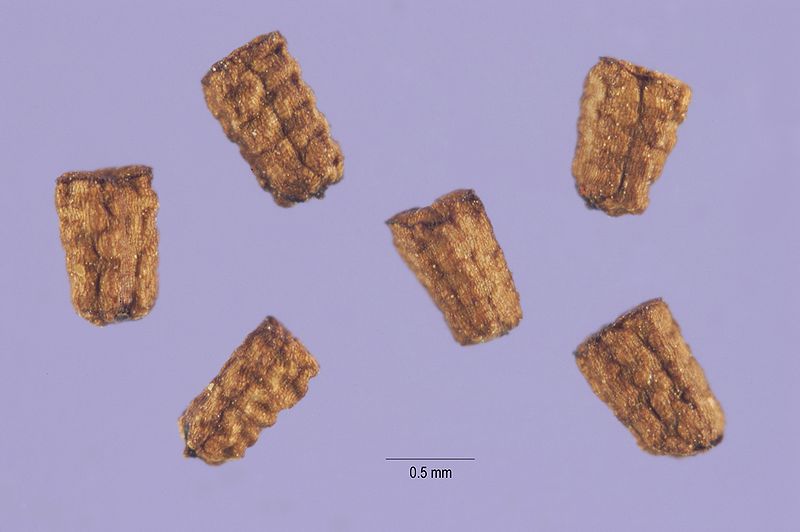
Soil seed banks are difficult to study. The only way to know what is truly there is to dig up the soil and either extract all the seeds or encourage them to germinate. Thanks to ecologists like Ken Thompson, who have studied seed banks extensively for many years, there is still a lot we can say about them. First, for the seeds of a plant to persist in the soil, they must become incorporated. Few seeds can bury themselves, so those with traits that make it easy for them to slip down through the soil will have a greater chance of being buried. Thompson’s studies have shown that “persistent seeds tend to be small and compact, while short-lived seeds are normally larger and either flattened or elongate.” Persistent seeds generally weigh less than 3 milligrams and tend to lack appendages like awns that can prevent them from working their way into the soil.

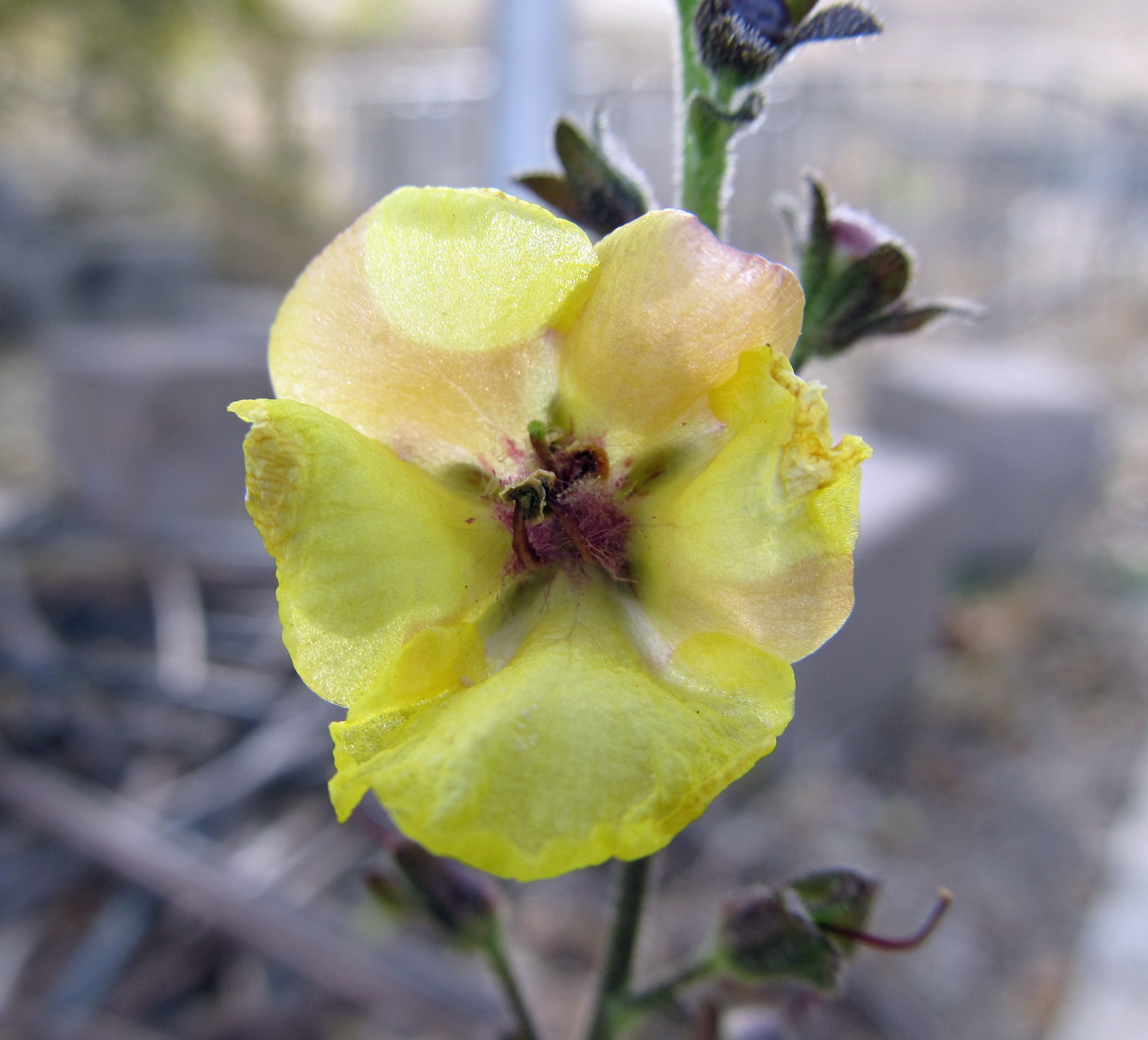
The seeds of moth mullein (Verbascum blattaria) are tiny and compact and known to persist in the soil for decades as revealed in Dr. Beal’s seed viability experiment. (photo credit: wikimedia commons)

Slipping into cracks in the soil is a major way seeds move through the soil profile, but it isn’t the only way. In a study published in New Phytologist, Thompson suggests that “the association between small seeds and possession of a seed bank owes much to the activities of earthworms,” who ingest seeds at the surface and deposit them underground. Later, they may even bring them back up the same way. Ants also play a role in seed burial, as well as humans and their various activities. Some seeds, like those of Avena fatua and Erodium spp., have specialized appendages that actually help work the seeds into the soil.

Not remaining on the soil surface keeps seeds from either germinating, being eaten, or being transported away to another site. Avoiding these things, they become part of the soil seed bank. But burial is only part of the story. In an article published in Functional Ecology, Thompson et al. state that burial is “an essential prelude to persistence,” but other factors like “germination requirements, dormancy mechanisms, and resistance to pathogens also contribute to persistence.” If a buried seed rots away or germinates too early, its days as a member of the soil seed bank are cut short.

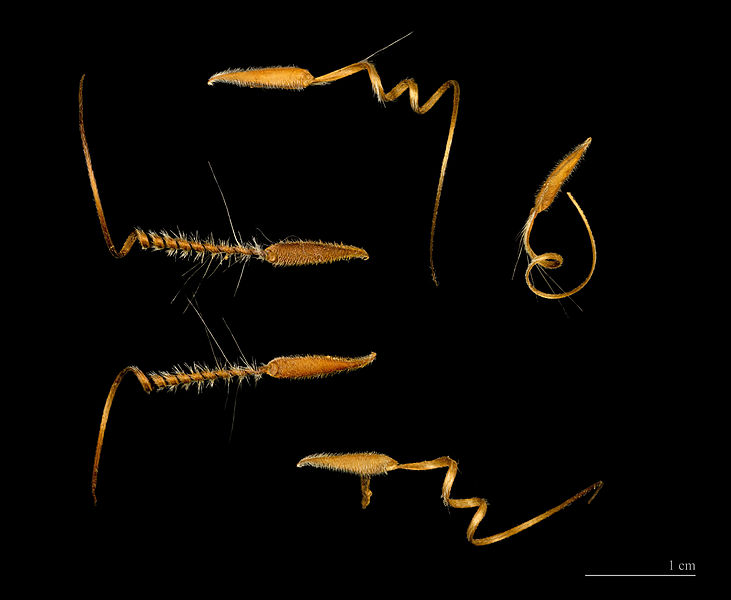
The seeds of redstem filare (Erodium circutarium) have long awns that start out straight, then coil up, straighten out, and coil up again with changes in humidity. This action helps drill the seeds into the soil. (photo credit: wikimedia commons)

Soil seed banks can be found wherever plants are found – from natural areas to agricultural fields, and even in our own backyards. Thompson and others carried out a study of the soil seed banks of backyard gardens in Sheffield, UK. They collected 6 soil cores each (down to 10 centimeters deep) from 56 different gardens, and grew out the seeds found in each core to identify them. Most of the seeds recovered were from species known to have persistent seed banks, and to no surprise, the seed banks were dominated by short-lived, weedy species. The seeds were also found to be fairly evenly distributed throughout the soil cores. On this note, Thompson et al. remarked that due to “the highly disturbed nature of most gardens, regular cultivation probably ensures that seeds rapidly become distributed throughout the top 10 centimeters of soil.”

Like the seed banks we build to preserve plant species for the future, soil seed banks are an essential long-term survival strategy for many plant species. They are also an important consideration when it comes to managing weeds, which is something we will get into in a future post.

Dr. Beal’s Seed Viability Experiment

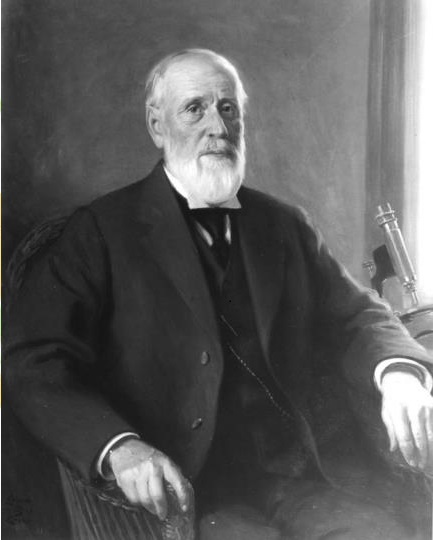
In 1879, Dr. William J. Beal buried 20 jars full of sand and seeds on the grounds of Michigan State University. He was hoping to answer questions about seed dormancy and long-term seed viability. Farmers and gardeners have often wondered: “How many years would one have to spend weeding until there are no more weeds left to pull?” Seeds only remain viable for so long, so if weeds were removed before having a chance to make more seeds, the seed bank could, theoretically, be depleted over time. This ignores, of course, the consistent and persistent introduction of weed seeds from elsewhere, but that’s beside the point. The question is still worth asking, and the study still worth doing.

When Dr. Beal set up the experiment, he expected it would last about 100 years, as one jar would be tested every 5 years. However, things changed, and Dr. Beal’s study is now in its 140th year, making it the longest-running scientific experiment to date. If things go as planned, the study will continue until at least 2100. That’s because 40 years into the study, a jar had to be extracted in the spring instead of the fall, as had been done previously, and at that point it was decided to test the remaining jars at 10 year intervals. In 1990, things changed again when the period was extended to 20 years between jars. The 15th jar was tested in 2000, which means the next test will occur in the spring of next year.

In preparing the study, Dr. Beal filled each of the 20 narrow-necked pint jars with a mixture of moist sand and 50 seeds each of 21 plant species. All but one of the species (Thuja occidentalis) were common weeds. He buried the jars upside down – “so that water would not accumulate about the seeds” – about 20 inches below ground. Near each bottle he also buried seeds of red oak and black walnut, but they all rotted away early in the study.

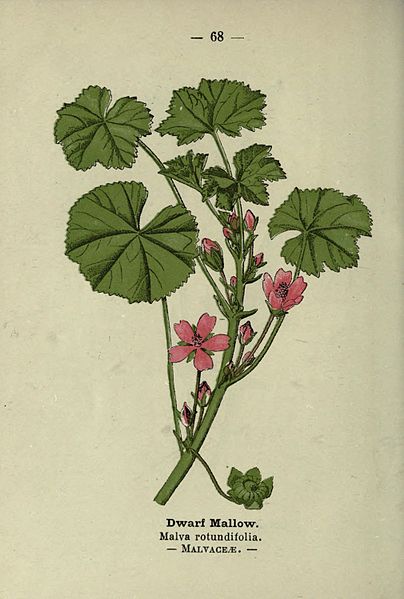
After the retrieval of each bottle, the sand and seed mixture is dumped into trays and exposed to conditions suitable for germination. The number of germinates are then counted and recorded. Over the years, the majority of the seeds have lost their viability. In 2000, only three species germinated  – Verbascum blattaria, a Verbascum hybrid, and Malva rotundifolia. There were only two individuals of the Verbascum hybrid, and only one Malva rotundifolia. The seeds of Verbascum blattaria, however, produced 23 individuals, suggesting that even after 120 years, the seeds of this species could potentially remain viable long into the future.

moth mullein (Verbascum blattaria)

In the 2000 test, the single seedling of Malva rotundifolia germinated after a cold treatment. Had the cold treatment not been tried, germination may not have occurred, which begs the question, how many seeds in previous studies would have germinated if subjected to additional treatments? Dr. Beal himself had wondered this, expressing that the results he had seen were “indefinite and far from satisfactory.” He admitted that he had “never felt certain that [he] had induced all sound seeds to germinate.”

There are also some questions about the seeds themselves. For example, the authors of the 2000 report speculate that poor germination seen in Malva rotundifolia over most of the study period could be “the result of poor seed set rather than loss of long-term viability.” The presence of a Verbascum hybrid also calls into question the original source of those particular seeds. A report published in 1922 questions whether or not the seeds of Thuja occidentalis were ever actually added to the jars, and also expresses uncertainty about the identify of a couple other species in the study.

Despite these minor issues, Dr. Beal’s study has shed a great deal of light on questions of seed dormancy and long-term seed viability and has inspired numerous related studies. While questions about weeds were the inspiration for the study, the things we have been able to learn about seed banks has implications beyond agriculture. Seed bank dynamics are particularly important in conservation and restoration. If plants that have disappeared due to human activity have maintained a seed bank in the soil, there is potential for the original population to be restored.

In future posts we will dive deeper into seed banks, seed dormancy, and germination. In the meantime, you can read more about Dr. Beal’s seed viability study by visiting the following links:

Introducing Herbology Hunt

This is a guest post by Jane Wilson.

———————

Many people are “plant blind”. They walk through areas of fantastic wildlife or just down their street without noticing what grows there. Even plants growing in the gutter have an interesting backstory.

The term “Plant Blindness” was first put forth by Wandersee and Schlusser in 1998. Without an appreciation of plants in the ecosystem, people will be less likely to support plant research and conservation.

Herbology Hunt was born out of a love of plants and wild places and a determination to get kids outdoors and really looking at their environment. One of the founders started Wildflower Hour on Twitter – a place for people to share photos of wildflowers found in Britain and Ireland – and from this was stemmed a children’s version, which became Herbology Hunt. The Herbology Hunt team put together spotter sheets for each month of the year. Each sheet includes five plants that can be found throughout the month. They were made available as a free download, so schools and individuals can print them for use on a plant hunt.

By the end of 2018, we had created a year’s worth of spotter sheets. We are now looking to promote their use throughout Great Britain. Eventually we want to reward children who find 50 of the plants with a free T-shirt, and we will be looking for sponsors to support this. We have been supported by the Botanical Society of Britain and Ireland and the Wild Flower Society who have made the monthly spotter sheets available. They can be downloaded here or here.

Herbology Hunt Spotter Sheet for January

The Wild Flower Society has a great offer for Juniors interested in plants – it costs £3 to join and you get a diary to record your finds.

Going outdoors and noticing wildlife has been shown in some scientific studies to improve cardio-vascular health and mental health. A herbology hunt must surely be a good thing to do with children to help them get into a better lifestyle that will benefit their future health. We hope that many families and schools will use our spotter sheets as a way to help children become more passionate about the environment and enjoy the benefits of being outdoors.

Check out the Wildflower Hour website for more information about Herbology Hunt, along with instructions on how to get involved in #wildflowerhour, plus links to social media accounts and the Wild Flower (Half) Hour podcast.

———————

Also: Check out Jane Wilson’s website – Practical Science Teaching – for more botany-themed educational activities.

Book Review: What Weeds Are Thinking

Plant intelligence is a burgeoning field of research. Despite being predominantly sessile organisms, plants are able to sense their surroundings and make decisions based on environmental cues. In a certain sense, they can see, hear, smell, and remember even though they don’t have eyes, ears, noses, or brains. Not surprisingly, these fascinating findings have spawned books, podcasts, documentaries, articles, etc. The idea that plants could be intelligent beings like us is something that captures our attention and imagination.

For example, if plants are so smart, does this mean that they actually have thoughts? And if they have thoughts, what could they possibly be thinking? In her new book, What Weeds Are Thinking, Erica Crockett takes a stab at what a particularly despised group of plants might think if, indeed, they could have thoughts. Weeds are, in Crockett’s words, “the deviants of the plant world.” This book was her chance to imagine what might be going on inside the minds of these deviants, despite the fact that they don’t have minds.Crockett conjures up the thoughts of 21 different weeds. Each thought is accompanied by an illustration by Sarah Ragan Olson. The drawings are charming, but the thoughts that juxtapose them aren’t always so sweet. Perhaps you imagine weeds to be potty mouthed? Well, so does Crockett. That being said, this book is not for kids, nor is it for anyone sensitive to adult words and themes. Each of the weeds in this book varies in its degree of irreverence – not all of them are so crass and some of them are actually pretty mild-mannered – but that’s just what you’d expect from such a diverse group of plants.

Comfrey is offended by cow manure being used as fertilizer and would rather be fertilized by “the decaying corpses of [its] relations.” Ground ivy is embarrassed and offended by inadvertently seeing the ankles of human passersby.  Plantain is apparently into being stepped on, and prostrate spurge is trying to “rebrand” to make itself more appealing and set itself apart from purslane. Cheatgrass, no surprise here, comes across as a big jerk. Originally from Eurasia, it is now a freedom-loving American, “choking out the rights of the natives.”

Most in line with what I would expect a weed to be thinking – especially one found growing in an urban area – is prickly lettuce. Upset after watching a fellow member of its species ruthlessly dug up, it laments: “Neither of us decided to seed down in the deep crack of this suburban driveway. We were blown here…It’s our home…Yet we are hunted.”

Milkweed is quite aware of its role as the sole food source of the monarch caterpillar. It sees how much humans appreciate monarchs, and admonishes us for killing off its kind: “Keep it up, and I’ll take every last one of those delicate darlings down with me.”

Botanical inaccuracies aside – and there are several – this was a fun book. The main appeal for me is that it is plant-themed and, more specifically, weeds-themed. If you follow this blog, you’ll know that pretty much anything involving weeds is going to get my attention. Beyond that, any project that puts plants in the spotlight and gives them a voice (even in a fictitious sense) is worth checking out. This book is no exception.

As a bonus, I asked Erica Crockett what other plants (apart from weeds) are thinking. This was her response: “Probably really precious or intellectual things. I imagine tomato plants are fairly self-important and zonal geraniums are divas. Bougainvilleas are likely social climbers and oak trees are dull, but honest.”

More Weeds-themed Book Reviews on Awkward Botany:

Attempts to Avenge the Acts of Cirsium arvense – A Biocontrol Story

Some weeds are so noxious, their crimes so heinous, and their control so challenging that desperation leads us to introduce other non-native organisms to contain them. Alien vs. alien duking it out in a novel environment. It seems counterintuitive – if an introduced species has reached the status of invasive, is it worth the risk of bringing in yet another foreign species in attempt to defeat it? We all know what happened to the old lady who swallowed the spider to catch the fly, yet for decades now we have been doing just this. It’s something we call classical biological control – introducing pathogens, insects, or other organisms to help control the spread of problematic ones.

Such attempts mostly fail, but we keep trying. The attempts made on Cirsium arvense exemplify this. The trouble is that even when such efforts fail, they aren’t always benign, as we shall see.

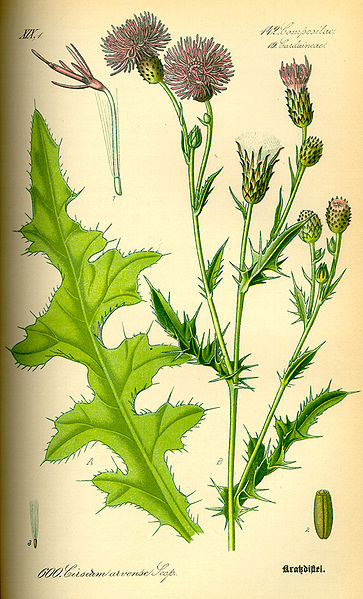
Canada thistle, a misnomer for Cirsium arvense, is a European native that has been acting in the role of noxious weed for centuries, even in its native land. First introduced accidentally to eastern North America sometime in the 1600’s, it has made its way across the continent and has since become one of our worst weeds in both natural and agricultural settings, as well as in our yards and gardens. Its seeds get around, carried by wind and water, attached to animals or deposited in their dung, stowing away as contaminants in crop seed or passengers in the ballast water of ships. But casual dispersal by seed isn’t quite as troubling as what it does once it takes root.

Several related species of thistle are also pesky weeds, but unlike Cirsium arvense, they are mostly annuals or biennials, spreading only by seed. Cirsium arvense is a perennial plant with roots that spread deep and wide. New shoots form readily along the spreading roots, forming a veritable thicket of stems that can be dozens of feet wide and giving the plant a more appropriate common name, creeping thistle.

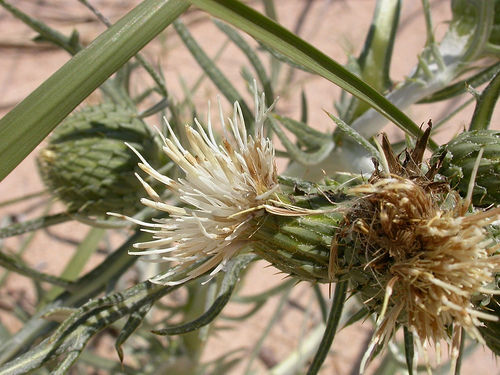
The stems of creeping thistle can grow more than four feet tall and are adorned with alternately arranged, prickly, lobed leaves. Groups of small, urn-shaped flowerheads are born at the tops of stems. Flowers are pink to purple, sweet smelling, and favored by pollinators. Individual plants either produce all male flowers or all female flowers, and since individual plants are actually large colonies, an adjacent colony of the opposite sex is necessary in order for the production of viable seeds. Like other plants in the aster family, the seeds come with a feathery pappus, suggesting wind dispersal. However, the pappus is often weakly attached, sloughing off without seeds in tow, leaving them to the fate of gravity.

flowers of creeping thistle (Cirsium arvense) via eol

It comes as no surprise that when plants readily spread by root, stolon, or rhizome, they are well suited to become some of our most bothersome weeds. Eliminating their seed heads does little to reduce their spread. Pulling them out of the ground is futile; you will never get all the roots. Tilling them under only aids in their dispersal since chopped up roots and stems now have the chance to produce new plants. Herbicide treatments can set them back, but they must be repeated on a long-term and exacting schedule in order to thoroughly kill the roots. Considering what we’re up against when it comes to plants like creeping thistle, it makes sense why we would introduce foreign fighters to do our bidding, especially if such fighters are enemies of the plant in their native land.

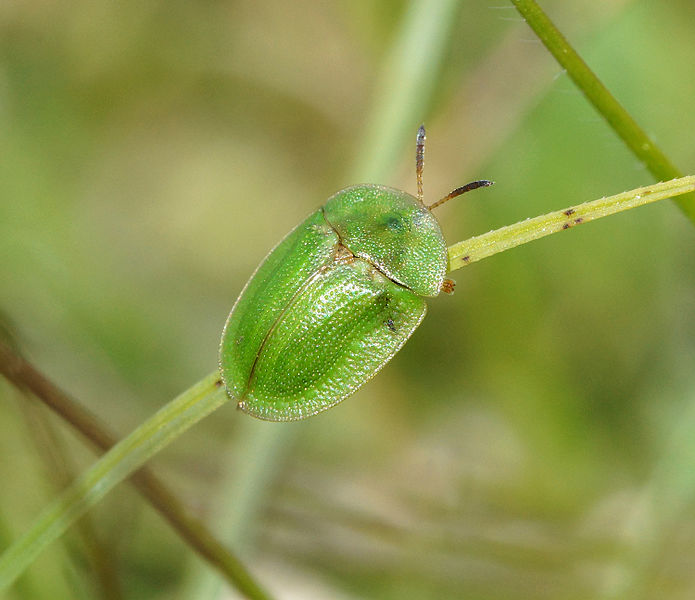
The list of insects that have been employed (or at least considered) in the fight against creeping thistle is extensive. It includes thistle tortoise beetle (Cassida rubiginosa), seedhead weevil (Rhinocyllus conicus), thistle crown weevil (Trichosirocalus horridus), thistle gall fly (Urophora cardui), thistle stem weevil (Ceutorhynchus litura), thistle bud weevil (Larinus planus), seedhead fly (Orellia ruficauda), thistle flea beetle (Altica carduorum), thistle leaf beetle (Lema cyanella), painted lady (Vanessa cardui), and sluggish weevil (Cleonus piger). Unfortunately, and perhaps not surprisingly, as Bugwood reports, “biocontrol currently provides little or no control of Canada thistle populations, although some agents weaken and kill individual plants.” Despite the fact that there are well over 100 known organisms that consume or attack Cirsium arvense, nothing manages to do long-term damage.

thistle tortoise beetle (Cassida rubiginosa) – a common biocontrol agent of invasive thistle species (via wikimedia commons)

The status of creeping thistle biocontrol efforts on two South Dakota wildlife refuges was reported on in a 2006 issue of Natural Areas Journal. Multiple introductions of at least half a dozen different insect species had occurred beginning in 1986. Nearly 20 years later, they were not found to have had a significant effect on creeping thistle populations. The authors concluded stating they “do not advocate further releases or distribution in the northern Great Plains of the agents” examined in their study. They also advised that “effectiveness be a primary consideration” of any new biocontrol agents and expressed concern that some introduced insects have the potential to attack native thistles.

North America is home to quite a few native thistles, several of which are rare or threatened. A USDA guide to managing creeping thistle in the Southwest highlights the importance of protecting native thistles – “especially rare or endangered species” – from biocontrol agents and gives two examples of endangered thistles in New Mexico that are at risk of such agents.

The federally threatened species, Pitcher’s thistle (Cirsium pitcheri), which is restricted to sand dune shorelines along the upper Great Lakes, has quite a bit working against it. An added blow came a few years ago when it was discovered that the flowerheads of Pitcher’s thistle were being damaged by the thistle bud weevil (Larinus planus), a biocontrol agent employed against creeping thistle in the area. A paper published in Biological Conservation in 2012 examining the extent of weevil damage on the rare thistle cautioned that, “although some biological control agents may benefit some rare plant taxa, the negative impacts of both native insects and introduced herbivores are well documented.”

Pitcher’s thistle (Cirsium pitcheri) via eol

Classical biological control, if and when it works, can be quite valuable, especially if it reduces the need for other management inputs like herbicides and cultivation. Unfortunately, it is rarely successful and can have unintended consequences. Goldson et al. report in a 2014 issue of Biological Conservation that the success rate is only around 10% and that even that 10% is at risk of failing at some point. In his book, Where Do Camels Belong?, ecologist Ken Thompson cites that “only about one in three species introduced as biological controls establish at all, and only half of those that do establish (i.e. about 16% of total attempts) control the intended enemy,” adding that “biological control is just another invasion, albeit one we are trying to encourage rather than prevent, and its frequent failure is another example of how poorly we understand the effects of adding new species to ecosystems.”

Still, while some warn against being too optimistic, others argue that it is an essential tool in the war against invasive species and, while acknowledging that a few introductions have gone awry, assert that “significant non-target impacts” are rare. Clearly, this is a rich topic ripe for healthy debate and one that I will continue to explore. If you have thoughts or resources you’d like to share, please do so in the comment section below.

———————

This post was inspired in part by episode six of The Shape of the World podcast. I highly recommend listening to the entire series.