Zine Review: An Urban Field Guide to the Plants in Your Path

Depending on where you live in the world, it’s probably not too difficult to find a field guide to the plants native to your region. In fact, there may be several of them. They may not cover all the plants you’ll encounter in natural areas near you, but they’ll be a good starting point. Yet, considering that most of us live in cities these days, field guides to the wild plants of urban areas are sorely lacking. Perhaps that’s no surprise, as plants growing wild in urban areas are generally considered weeds and are often the same species that frustrate us in our yards and gardens. Few (if any) of these maligned plants are considered native, so that doesn’t help their case any. Why would we need to know or pay attention to these nuisance plants anyway?

I argue that we should know them, and not just so that we know our enemy. Weeds are the wild flora of our cities – they grow on their own without direct human intervention. In doing so, they green up derelict and neglected sites, creating habitat for all kinds of other organisms and providing a number of ecosystem services along the way. Regardless of how we feel about them for invading our cultivated spaces and interfering with our picture-perfect vision of how we feel our cities should look, they deserve a bit more respect for the work they do. If we’re not willing to go that far, we at least ought to hand it to them for how crafty and tenacious they can be. These plants are amazing whether we want to admit it or not.

Luckily I’m not the only who feels this way. Enter An Urban Field Guide to the Plants in Your Path, a zine written and illustrated by Maggie Herskovits and published by Microcosm Publishing. This zine is just one example of the resources we need to better familiarize ourselves with our urban floras. While there are many weed identification books out there, a field guide like this differs because it doesn’t demonize the plants or suggest ways that they can be brought under control or eliminated. Instead, it treats them more like welcome guests and celebrates some of their finer qualities. That being said, this is probably not a zine for everyone, particularly those that despise these plants, but take a look anyway. If you keep an open mind, perhaps you can be swayed.

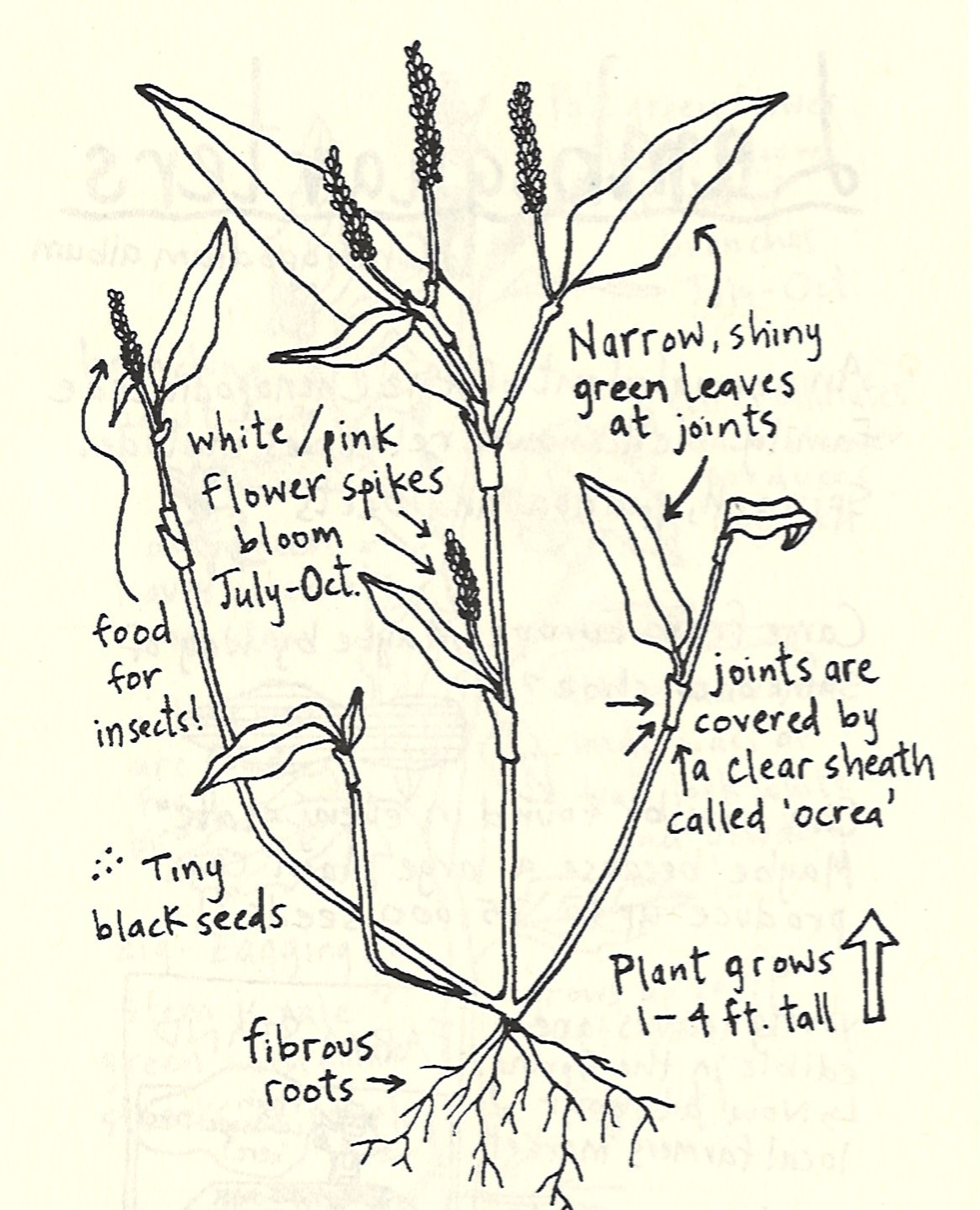
Illustration of Pennsylvania smartweed (Polygonum pensylvanicum) from An Urban Field Guide to the Plants in Your Path

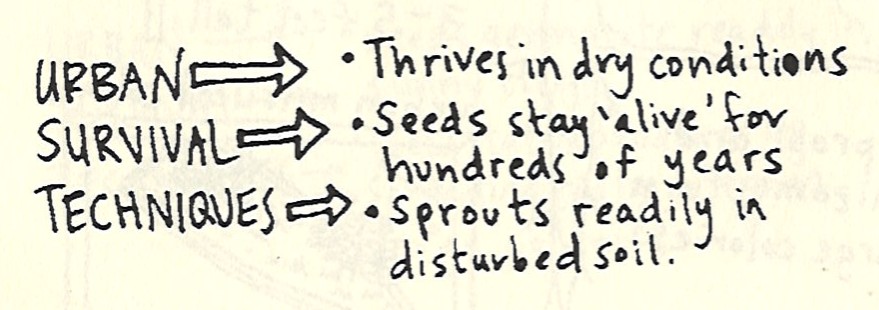
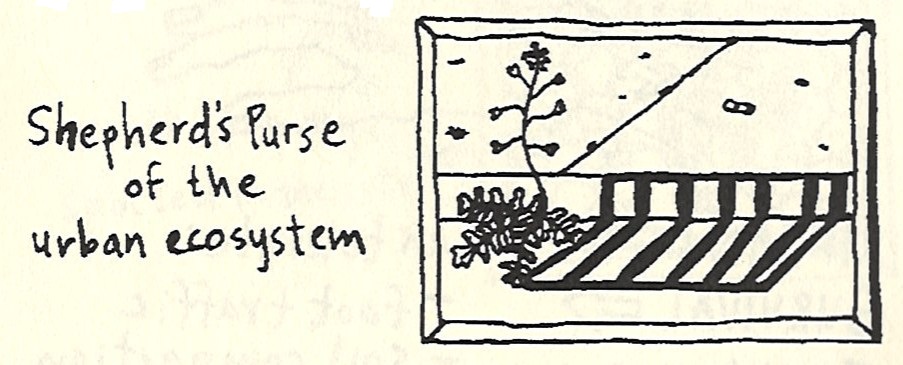
After a brief introduction, Herskovits profiles fifteen common urban weeds. Each entry includes an illustration of the plant, a short list of its “Urban Survival Techniques,” a small drawing of the plant in its urban habitat, and a few other details. The text is all handwritten, and the illustrations are simple but accurate enough to be helpful when identifying plants in the wild. The descriptions of each plant include interesting facts and background information, and even if you are already familiar with all the plants in the guide, you may learn something new. For example, I wasn’t aware that spotted spurge (Euphorbia maculata) was native to North America.

some urban survival techniques of common mullein (Verbascum thapsus)

Capsella bursa-pastoris in its urban habitat

Urban weeds often go ignored. They may not be as attractive as some of the plants found in gardens and parks around the city, and since they are often seen growing right alongside garbage, they end up getting treated that way. But if you’re convinced that they may actually have value and you want to learn a bit more about them, this guide is a great place to start. Perhaps you’ll come to feel, as Herskovits does, that “there is hope in these city plants.”

See Also: 

Eating Weeds: Chicory

Over the course of human history, plant species once esteemed or considered useful have been recategorized into something less desirable. For one reason or another, plants fall out of favor or wear out their welcome, and, in come cases, are found to be downright obnoxious, ultimately losing their place in our yards and gardens. The particularly troublesome ones are branded as weeds, and put on our “do not plant” lists. These plants are not only unfavored, they’re despised. But being distinguished as a weed doesn’t necessary negate a plant’s usefulness. It’s likely that the plant still has some redeeming characteristics. We’ve just chosen instead to pay more attention its less redeeming ones.

Chicory is a good example of a plant like this. At one point in time, Cichorium intybus had a more prominent place in our gardens, right alongside dandelions in fact. European colonizers first introduced chicory to North America in the late 1700’s. Its leaves were harvested for use as a salad green and its roots were used to make a coffee additive or substitute. Before that, cultivation of chicory for these and other purposes had been going on across Europe for thousands of years, and it still goes on today to a certain extent. Along with other chicory varieties, a red-leafed form known as radicchio and a close cousin known as endive (Chicorium endivia) are grown as specialty crops, occassionally finding their way into our fanciest of salads.

Radicchio di Chioggia (Cichorium intybus var. foliosum) is a cultivated variety of chicory. (via wikimedia commons)

Chicory’s tough, adaptable nature and proclivity to escape cultivation have helped it become widespread, making itself at home in natural areas as well as urban and rural settings. Its perennial life history helps make it a fixture in the landscape. It sends down a long, sturdy taproot and settles in for the long haul. It tolerates dry, compacted soils with poor fertility and doesn’t shy away from roadside soils frequently scoured with salts. It’s as though it was designed to be a city weed.

Unlike many other perennial weeds, chicory doesn’t spread vegetatively. It starts its life as a seed, blown in from a nearby plant. After sprouting, it forms a dandelion-esque rosette of leaves during its first year. Wiry, branched stems rise up from the rosette in following years, reaching heights of anywhere from about a foot to 5 or 6 feet. When broken, leaves, stems, and roots ooze a milky sap. Abundant flowers form along the gangly stems. Like other plants in the aster family, each flower head is composed of multiple flowers. Chicory flower heads are all ray flowers, lacking the disc flowers found in the center of other plants in this family. The petals are a brilliant blue – sometimes pink or white. Individual flowers last less than a day and are largely pollinated by bees. The fruits lack the large pappus found on dandelions and other close relatives, but the seeds are still dispersed readily with the help of wind, animals, and human activity.

chicory (Cichorium intybus) via wikimedia commons

The most commonly consumed portions of chicory are its leaves and roots. Its flowers and flower buds are also edible. Young leaves and blanched leaves are favored because they are the least bitter. Excluding the leaves from light by burying or covering them up keeps them pale and reduces their bitter flavor. This is standard practice in the commercial production of certain chicory varieties. The taproots of chicory are dried, roasted, and ground for use as a coffee substitute. They are also harvested commercially for use as a natural sweetener due to their high concentration of inulin.

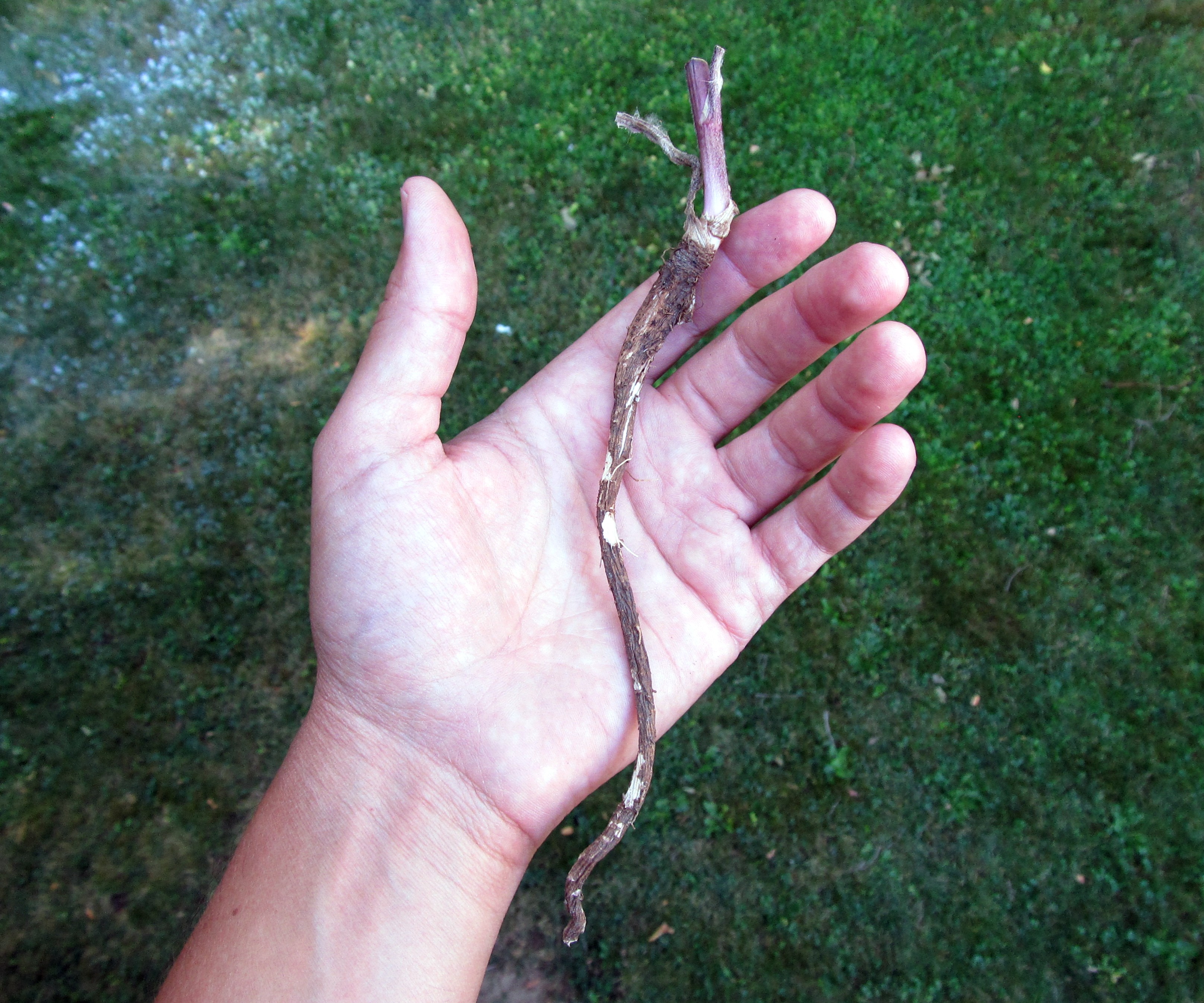
my puny chicory root

I harvested a single puny chicory root in order to make tea. On my bike ride to work there is a small, sad patch of chicory growing in the shade of large trees along the bike path. I was only able to pull one plant up by the roots. The others snapped off at the base. So, I took my tiny root, dried and roasted it in the oven, and ground it up in a coffee grinder. I followed instructions for roasting found on this website, but there are many other sources out there. I had just enough to make one small cup of tea, which reminded me of dandelion root teas I have had. Sierra found it to be very bitter, and I agreed but still enjoyed it. I figure that wild plants, especially those growing in stressful conditions like mine was, are likely to be more bitter and strong tasting compared to coddled, cultivated ones found in a garden.

roasted chicory root

roasted and ground chicory root

When I find a larger patch of feral chicory, I hope to try one of several recipes included in Luigi Ballerini’s book, A Feast of Weeds, as well as other recipes out there. I’ll be sure to let you know how it goes.

Are you curious to know how chicory became such a successful weed in North America? Check out this report in Ecology and Evolution to learn about the genetic explanation behind chicory’s success.

Investigating the Soil Seed Bank

Near the top of the world, deep inside a snow-covered mountain located on a Norwegian island, a vault houses nearly a million packets of seeds sent in from around the world. The purpose of the Svalbard Global Seed Vault is to maintain collections of crop seeds to ensure that these important species and varieties are not lost to neglect or catastrophe. In this way, our food supply is made more secure, buffered against the unpredictability of the future. Seed banks like this can be found around the world and are essential resources for plant conservation. While some, like Svalbard, are in the business of preserving crop species, others, like the Millennium Seed Bank, are focused on preserving seeds of plants found in the wild.

Svalbard Global Seed Vault via wikimedida commons

Outside of human-built seed banks, many plants maintain their own seed banks in the soil where they grow. This is the soil seed bank, a term that refers to either a collection of seeds from numerous plant species or, simply, the seeds of a single species. All seed bearing plants pass through a period as a seed waiting for the chance to germinate. Some do this quickly, as soon as the opportunity arises, while others wait, sometimes for many years, before germinating. Plants whose seeds germinate quickly, generally do not maintain a seed bank. However, seeds that don’t germinate right away and become incorporated in the soil make up what is known as a persistent soil seed bank.

A seed is a tiny plant encased in a protective layer. Germination is not the birth of a plant; rather, the plant was born when the seed was formed. The dispersal of seeds is both a spatial and temporal phenomenon. First the seed gets to where it’s going via wind, water, gravity, animal assistance, or some other means. Then it waits for a good opportunity to sprout. A seed lying in wait in the soil seed bank is an example of dispersal through time. Years can pass before the seed germinates, and when it does, the plant joins the above ground plant community.

Because seeds are living plants, seeds found in the soil seed bank are members of a plant community, even though they are virtually invisible and hard to account for. Often, the above ground plant community does not represent the population of seeds found in the soil below. Conversely, seeds in a seed bank may not be representative of the plants growing above them. This is because, as mentioned earlier, not all plant species maintain soil seed banks, and those that do have differences in how long their seeds remain viable. Depending on which stage of ecological succession the plant community is in, the collection of seeds below and the plants growing above can look quite different.

Soil seed banks are difficult to study. The only way to know what is truly there is to dig up the soil and either extract all the seeds or encourage them to germinate. Thanks to ecologists like Ken Thompson, who have studied seed banks extensively for many years, there is still a lot we can say about them. First, for the seeds of a plant to persist in the soil, they must become incorporated. Few seeds can bury themselves, so those with traits that make it easy for them to slip down through the soil will have a greater chance of being buried. Thompson’s studies have shown that “persistent seeds tend to be small and compact, while short-lived seeds are normally larger and either flattened or elongate.” Persistent seeds generally weigh less than 3 milligrams and tend to lack appendages like awns that can prevent them from working their way into the soil.

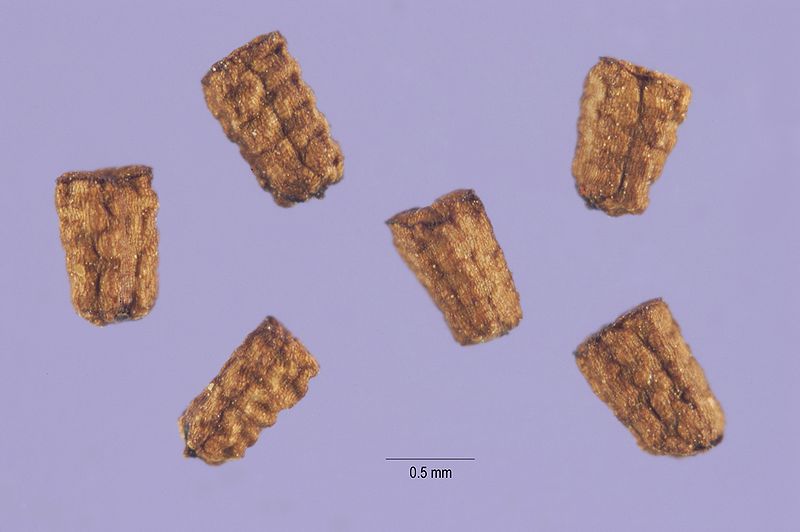
The seeds of moth mullein (Verbascum blattaria) are tiny and compact and known to persist in the soil for decades as revealed in Dr. Beal’s seed viability experiment. (photo credit: wikimedia commons)

Slipping into cracks in the soil is a major way seeds move through the soil profile, but it isn’t the only way. In a study published in New Phytologist, Thompson suggests that “the association between small seeds and possession of a seed bank owes much to the activities of earthworms,” who ingest seeds at the surface and deposit them underground. Later, they may even bring them back up the same way. Ants also play a role in seed burial, as well as humans and their various activities. Some seeds, like those of Avena fatua and Erodium spp., have specialized appendages that actually help work the seeds into the soil.

Not remaining on the soil surface keeps seeds from either germinating, being eaten, or being transported away to another site. Avoiding these things, they become part of the soil seed bank. But burial is only part of the story. In an article published in Functional Ecology, Thompson et al. state that burial is “an essential prelude to persistence,” but other factors like “germination requirements, dormancy mechanisms, and resistance to pathogens also contribute to persistence.” If a buried seed rots away or germinates too early, its days as a member of the soil seed bank are cut short.

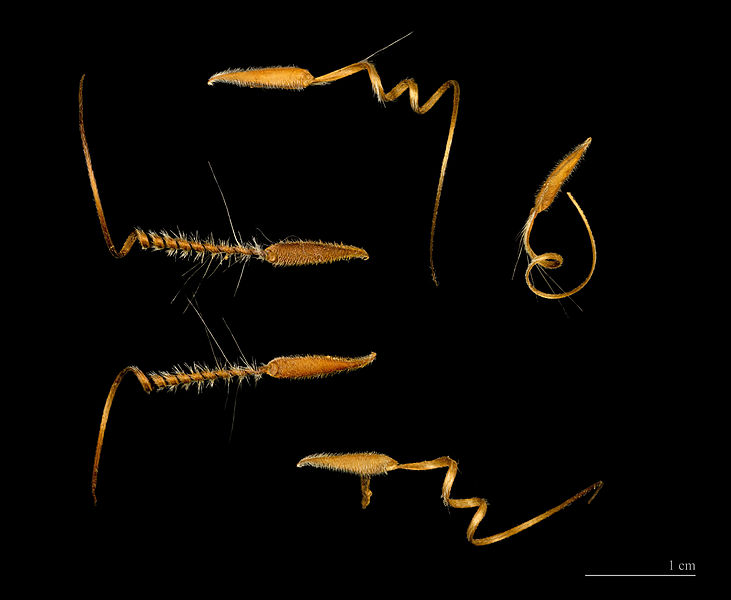
The seeds of redstem filare (Erodium circutarium) have long awns that start out straight, then coil up, straighten out, and coil up again with changes in humidity. This action helps drill the seeds into the soil. (photo credit: wikimedia commons)

Soil seed banks can be found wherever plants are found – from natural areas to agricultural fields, and even in our own backyards. Thompson and others carried out a study of the soil seed banks of backyard gardens in Sheffield, UK. They collected 6 soil cores each (down to 10 centimeters deep) from 56 different gardens, and grew out the seeds found in each core to identify them. Most of the seeds recovered were from species known to have persistent seed banks, and to no surprise, the seed banks were dominated by short-lived, weedy species. The seeds were also found to be fairly evenly distributed throughout the soil cores. On this note, Thompson et al. remarked that due to “the highly disturbed nature of most gardens, regular cultivation probably ensures that seeds rapidly become distributed throughout the top 10 centimeters of soil.”

Like the seed banks we build to preserve plant species for the future, soil seed banks are an essential long-term survival strategy for many plant species. They are also an important consideration when it comes to managing weeds, which is something we will get into in a future post.

Introducing Herbology Hunt

This is a guest post by Jane Wilson.

———————

Many people are “plant blind”. They walk through areas of fantastic wildlife or just down their street without noticing what grows there. Even plants growing in the gutter have an interesting backstory.

The term “Plant Blindness” was first put forth by Wandersee and Schlusser in 1998. Without an appreciation of plants in the ecosystem, people will be less likely to support plant research and conservation.

Herbology Hunt was born out of a love of plants and wild places and a determination to get kids outdoors and really looking at their environment. One of the founders started Wildflower Hour on Twitter – a place for people to share photos of wildflowers found in Britain and Ireland – and from this was stemmed a children’s version, which became Herbology Hunt. The Herbology Hunt team put together spotter sheets for each month of the year. Each sheet includes five plants that can be found throughout the month. They were made available as a free download, so schools and individuals can print them for use on a plant hunt.

By the end of 2018, we had created a year’s worth of spotter sheets. We are now looking to promote their use throughout Great Britain. Eventually we want to reward children who find 50 of the plants with a free T-shirt, and we will be looking for sponsors to support this. We have been supported by the Botanical Society of Britain and Ireland and the Wild Flower Society who have made the monthly spotter sheets available. They can be downloaded here or here.

Herbology Hunt Spotter Sheet for January

The Wild Flower Society has a great offer for Juniors interested in plants – it costs £3 to join and you get a diary to record your finds.

Going outdoors and noticing wildlife has been shown in some scientific studies to improve cardio-vascular health and mental health. A herbology hunt must surely be a good thing to do with children to help them get into a better lifestyle that will benefit their future health. We hope that many families and schools will use our spotter sheets as a way to help children become more passionate about the environment and enjoy the benefits of being outdoors.

Check out the Wildflower Hour website for more information about Herbology Hunt, along with instructions on how to get involved in #wildflowerhour, plus links to social media accounts and the Wild Flower (Half) Hour podcast.

———————

Also: Check out Jane Wilson’s website – Practical Science Teaching – for more botany-themed educational activities.

Moving Your Ecosystem Forward – An Arborist’s Application of Ecological Principles in the Urban Landscape

This is a guest post by Jeremiah Sandler.

———————

Ecosystems are everywhere – interconnected and interdependent systems of biology, climate, ecology, and geography. The inside of your house is an ecosystem with its own micro-climate, life (including but not limited to you), and topography. Everywhere you go, you’re in some kind of ecosystem.

The same is more obviously true about your landscape. In my area of the U.S. (southeast Michigan), forests and wetlands are often removed to build suburbs. Both the appropriate soil and ecologically relevant plants are removed from the site. After construction, these areas are re-planted with genetically inadequate plants in poor soil. The ecosystem is modified at a rate faster than most organisms can adapt. Landscape designs common in the suburbs are inadequate in maintaining biodiversity and healthy, natural ecosystems.

In some lucky areas, there are communities doing their best to maintain a strong and natural forest canopy. Leaving secondary forests relatively untouched during construction should be the standard when developing areas for humans.

Ecosystems evolve and change, and one can argue that human-caused mass deforestation is simply another driver of ecosystem evolution. While this may be true, it is a driver that influences the ecosystem at a much greater magnitude than other factors. It just so happens to be mitigable or avoidable altogether.

What can cause an ecosystem to change?

Let’s use the trees in a natural forest ecosystem as an example. Disturbances in any ecosystem drive biological adaptation and behavioral changes in the organisms within it. Disturbances such as fire, wind events, floods, drought, and pathogens alter the forest canopy. Fire may kill smaller trees and wind events can blow trees over. Such disturbances open the canopy and allow dormant seeds to germinate in the new sunlight, which gives additional genetic material a shot in the world.

Ecological disturbance is vital to plants, animals, and microbes because it keeps their genetic material up-to-date with evolving pathogens and changing environments. Up-to-date trees need less work. They are more prepared for their environment and its diseases, as evidenced by their parents successfully reproducing.

We can’t control all ecological disturbances, but in the urban environment we do our best to avoid major ones. Understandably, right? We aren’t fond of wildfire, nor do we want flooding anywhere near our homes.

Applied ecosystem principles on the job

Oftentimes in large, human constructed landscapes, only upper and middle canopies exist; sub-canopy layers are missing. This is surprisingly common in forest ecosystems, especially in suburban areas. Forests like this are considered to have a closed canopy.

Closed-canopy forests are naturally occurring and are not necessarily bad. The thick shade cast by the upper canopy is very dense and prevents most understory growth. Over time closed-canopy forests will evolve and change – large trees or limbs come down in the wind, flooding occurs, lightning strikes, or diseases are introduced. Whatever the disturbance, the newly opened canopy once again helps move the ecosystem forward.

Disturbance by pruning

A client of ours lives on a beautiful property in a dry-mesic southern forest (a closed-canopy forest). Due to all the trees on the property, this client sought advice from arborists. The client’s smart choice lead us to an important solution.

Various large species of both white and red oaks dominate the overstory and upper emergent layers of the canopy. The trunks of these towering trees are far apart. Below these titan trees are some slightly shorter oaks, an american beech, and a few hickory species residing in the midstory. About 40 feet below are various types of moss, some stunted sedges, violets, forest grasses – a sparse herbaceous understory. Beyond that there were several patient serviceberries here and there, and a single red maple, about 1.5 inches in diameter and 15 feet tall at most.

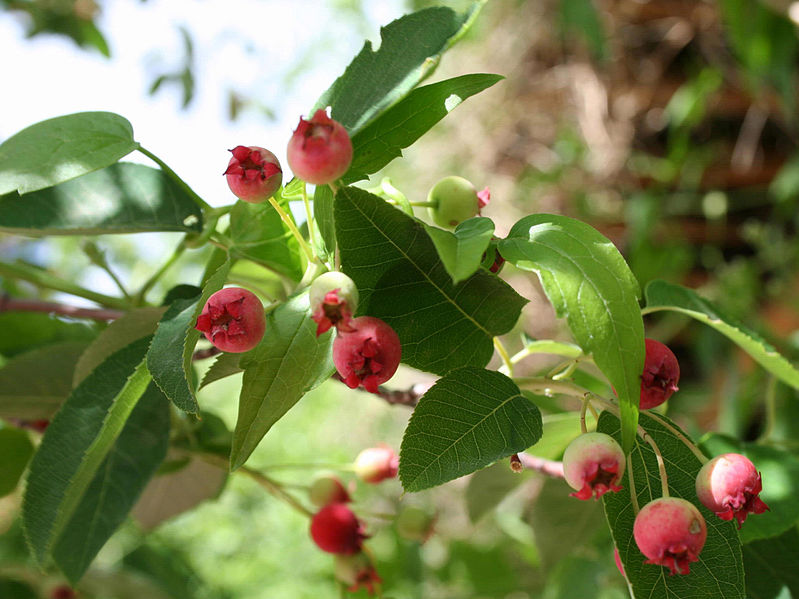
Allegheny serviceberry (Amelanchier laevis) – via wikimedia commons

The area has been undisturbed for a long time (it doesn’t even get mowed), and with the presence of oak wilt in southeast Michigan, we steered away from planting anywhere in the root zone, as it poses a risk for oak wilt infection. Sure, we could plant an over-designed landscape to be manicured, but we had other ideas in mind.

Direct application with two solutions

We asked the client how long ago the red maple and serviceberries volunteered themselves into their landscape. Together we traced the germination back to a wind event that knocked a large limb down years ago. The red maple and serviceberries popped up as a result of new sunlight, yet according to the client, these plants hadn’t grown much in height during the last decade or so. Why might this be? A mature plant can close holes in the canopy faster than lower story plants can, so they no longer receive as much light as they once had.

The next time a limb falls, the maple and serviceberries will have another explosive growth spurt. There are also other dormant seeds to germinate every time a disturbance like that occurs. This is an example of another natural phenomenon called forest succession. It is another way forest ecosystems change.

Planting foreign species in place of the native ones takes away important food sources and habitat for surrounding wildlife. So rather than planting cultivar clones and ecologically useless plants – plants that don’t support other lifeforms – into the existing ecosystem, we proposed we could either do strategic crown thinning or just wait for mother nature to do it for them.

Course of action

My associates and I operate on a “less is more” approach. Not touching this ecosystem is our alternative to modifying the canopy. Like a human patient undergoing surgery, cutting open any organism exposes it to infection. In time, either a natural disturbance will come through to modify the canopy, or the trees will naturally shed lower limbs on their own – a process called cladoptosis.

Strategic branch removal will open up the canopy, allowing more sunlight to the ground below, while keeping the trees looking true to their natural form. The climbing team would be using a type of pruning called refracturing. The openings will simulate a wind event disturbance. As a result, the plants that germinate will be the most competitive, hardy, resistant, and genetically up-to-date plants. This truly is “right plant, right place,” provided no invasive buckthorns pop up.

If the customer does want to go forward with disturbance-by-pruning, the proposal is to open the canopy during winter, as most of the canopy are oak trees. The risk of infecting these trees is reduced significantly by pruning in the winter when the vectors for oak wilt are dormant.

The canopy holes would be placed where the homeowner wants more trees. One benefit of pruning the trees is that disturbance is controlled, rather than a wind disturbance causing a chaotic breakage into the house, for example.

Observation would begin early the following spring. We will watch for germination; it’s expected that the plants that do germinate won’t survive the competition.

What’s important about any of this?

The arborist-homeowner relationship highlighted above is an exemplar of proper arboriculture. We offered expertise along with our services. The exchange saved the homeowner hundreds of upfront costs from the installation of a landscape, as well as future maintenance costs.

Assuming it isn’t under human-induced stress, no forest needs human intervention. In this project, we would want to see natural phenomena form the landscape in this client’s yard. It is our preference to leave the current closed-canopy forest alone.

The benefits of using naturally occurring trees are plentiful. In general, up-to-date trees are more prepared for your ecosystem and support the wildlife that co-evolved with them. An ever-increasingly displaced wildlife population will happily occupy new habitat; they’re here too, after all.

———————

Jeremiah Sandler lives in southeast Michigan, has a degree in horticultural sciences, and is an ISA certified arborist. Follow him on Instagram: @jeremiahsandler

Book Review: Good Weed Bad Weed

Distinguishing weeds from desirable plants is a skill that takes years of experience. If you’re not an avid gardener or a practiced naturalist, the distinction between the two groups may be blurry. There are weed identification guides aplenty, but even those aren’t always the most user-friendly and can often leave a person with more questions than answers. One of those questions may be, “Why is this plant considered a weed and not that one?” Through her book, Good Weed Bad Weed, Nancy Gift attempts to answer that question, offering much needed nuance to a regularly vilified group of plants.
In the introduction, Gift acknowledges that the term “good weed” sounds like an oxymoron. A weed, by definition, is an unwanted plant, an interloper and a troublemaker, without value or merit. What could be good about that? Gift, on the other hand, asserts that “it is a weakness of the English language that weeds are universally unwanted.” We need a word that describes plants that may have weedy characteristics but some redeeming qualities as well. For now, Gift uses “volunteer” – “a plant that comes up without being planted or encouraged” – suspending judgement until its performance can be fairly assessed.

Good Weed Bad Weed is a weed identification guide designed for beginners, for those wondering if their yard is “infested or blessed.” It is specifically concerned with weeds commonly found in lawns and garden beds, and “not meant to apply to farm fields or any other landscape.” It sets itself apart from other identification guides by organizing weeds into three categories: Bad Weeds, Not-So-Bad Weeds, and Good Weeds. Each plant profile includes a description, notes about benefits as well as problems, and some recommendations for control. Assigning good/bad designations to these plants is bound to cause some heated debate and outright disagreement, and Gift acknowledges that; however, we all have our “unique judgement” about the plants we encounter in our landscapes, so as “weed-lovers-in-training,” Gift hopes that we can “make a few new friends in the plant kingdom” and, perhaps, a few less enemies.

For the ten plants that make the Bad Weeds list, the reasoning is pretty clear. They are highly competitive and difficult to control [foxtail (Setaria spp.), garlic mustard (Alliaria petiolata), and Canada thistle (Cirsium arvense)], they are poisonous to humans despite being beneficial to wildlife [poison ivy (Toxicodendron radicans ) and poison hemlock (Conium maculatum)], they are known allergens and otherwise unattractive [common ragweed (Ambrosia artemisiifolia)], or, like Japanese knotweed (Fallopia japonica), they are on the list of top 100 worst invasive species.

The other two categories are where more personal judgement comes into play. The twelve plants considered Not-So-Bad Weeds are said to have “admirable qualities despite some negatives.” Prostrate knotweed (Polygonum aviculare) provides excellent erosion control. Orange hawkweed (Hieracium aurantiacum), bull thistle (Cirsium vulgare), and musk thistle (Carduus nutans) are quite beautiful and highly beneficial to pollinators and other wildlife. Nutsedge (Cyperus spp.) is edible and easy to keep in check if you stay on top of it. Bindweeds (Convolvulus arvensis and Calystegia sepium) avoid the Bad Weeds list because their flowers are so appealing. Aesthetics really matter to Gift, which is made clear with the entry for common fleabane (Erigeron philadelphicus), which could have made the Good Weeds list were it not for its disappointing and forgettable floral display.

field bindweed (Convolvulus arvensis)

As for the Goods Weeds list, more plant species find themselves in this category than the other two categories combined. That being said, those who have strong, negative opinions about weeds should probably avoid this section of the book, lest they experience an unsafe rise in blood pressure upon reading it. But be advised that making the Good Weeds list doesn’t mean that there are no negatives associated with having these plants in your yard; it’s just that the positive qualities tend to overshadow the negatives.

Positive qualities include edible, medicinal, low growing, slow growing, easy to control, beneficial to wildlife, not a bully, hardly noticeable, uncommon, and soil building. Certain weeds are desirable in lawns because they are soft to walk on, like ground ivy (Glechoma hederacea), yarrow (Achillea millefolium), and moss. Other weeds, like self-heal (Prunella vulgaris), stay green year-round and don’t leave ugly, brown patches when they die or go dormant. Still others, like bird’s-foot trefoil (Lotus corniculatus), black medic (Medicago lupulina), and clovers (Trifolium spp.) fix nitrogen, providing free fertilizer. Gift notes that, for those who keep chickens, weeds like common sorrel (Rumex acetosa) and cuckooflower (Cardamine pratensis) are great chicken feed.

Speaking of eating weeds, Gift concludes her book with four pages of recipes. The “Weedy Foxtail Tabouli” is particularly intriguing to me. Reading this book definitely requires an open mind, and some people simply won’t agree that any weed should ever be called “good.” Gift seems okay with that. She calls herself a “heretical weed scientist,” insisting that “a weed is in the eye of the beholder.” As “beholders,” I hope we can all be a little more like Nancy Gift.

A weedy lawn (photo credit: wikimedia commons)

More Book Reviews on Awkward Botany:

What Bugs Can Tell Us About the Value of Vacant Urban Land

Back in October 2017, we discussed some potential benefits of spontaneous urban vegetation (commonly referred to as weeds) and the abandoned or undeveloped urban spaces they inhabit. There is much to learn about the role these plant communities play in the ecology of cities and their contribution to vital ecosystem services. In a review published in the December 2013 issue of Environmental Entomology, researchers from Ohio State University discuss how studying arthropod communities on vacant lands can help “advance our ecological understanding of the functional role” these habitats may have in our cities.

Arthropods were selected as the subject of study because their “populations respond quickly to changes in the urban environment, making them key indicators of how land use change influences biodiversity.” Urban-dwelling arthropods “are diverse and occupy multiple trophic levels” and are “easy to sample.” Additionally, many of the services that vacant, unmanaged land offers are “arthropod-mediated,” including “pollination, decomposition, nutrient cycling, and biological pest control.”

photo credit: wikimedia commons

Vacant land was selected as the study site because “understanding [its] ecological value is important to the advancement of urban ecology and ecosystem management,” and even though such areas are often overlooked in conservation planning, studies have shown that they “have the potential to be valuable reservoirs of biodiversity.” In order to determine just how valuable vacant land might be, more research is needed comparing these spaces to other parts of the city. In addition, vacant lots are generally ephemeral and in due time may be developed. Whether this means that a building or parking lot takes their place or that they are converted into a park, garden, or urban farm, it is important to understand what these land use changes mean for urban biodiversity and ecological functions.

Urbanization is often measured by comparing the amount of built area to the remaining green space. Where there is a high degree of urbanization, there is a low degree of green space comparatively. As urbanization increases, so does habitat fragmentation, pollution, and the urban heat island. In the meantime, biodiversity suffers. The authors cite a number of studies demonstrating that increased urbanization negatively impacted beneficial insect populations. For example, a study in the United Kingdom found that bumblebee diversity in gardens “decreased with increasing urbanization of the surrounding landscapes.” Similar results were found in a study we wrote about.

photo credit: wikimedia commons

Together with remnant natural areas, parks, private and public gardens, greenways, and commercial landscapes, vacant lots are part of a mosaic of urban green space. Each of these areas “experience different levels of disturbance and harbor varying plant species,” which, in turn, “influence arthropods and the services they can supply within and between patches.” Because vacant lots can remain undisturbed and virtually unmanaged for long periods of time, they help provide a contrast to the homogeneous, highly managed green spaces that are common in cities. By their very nature, they “have the potential to aid conservation and enhance green space quality and connectivity within city centers.”

It’s one thing to recognize the value of vacant lots; it’s another thing to change the negative perception of them. Aesthetics are important, and to many people vacant lots are an eyesore and a sign of neglect. Some management may be necessary in order to retain their important ecological value and assuage the feelings of the public. The authors present a number of ways that vacant lots can be and have been managed in order to achieve this goal. They also consider how certain management strategies (mowing, removing and/or introducing plant species) can impact arthropod populations for better or worse. Yet, where vacant lots are left alone and allowed to advance in the stages of ecological succession, changes in arthropod diversity and ecosystem function also occur. For this reason, “the regional species pool of a city requires a mosaic of all successional stages of vacant land patches.”

photo credit: wikimedia commons

Finally, the authors discuss the conversion of vacant land to urban agriculture. Even this land use change can have dramatic effects on the arthropod community. For example, undisturbed or unmanaged areas are a habitat requirement for cavity and soil nesting bees, and regular disturbance associated with farming may interfere with this. Also where pesticides are used or plant diversity is minimized, the arthropod community will be affected.

Thus, “the study of vacant land ecology necessitates a transdisciplinary approach” in order to determine how changes in vacant, urban land “will affect diverse ecosystem functions and services.” A variety of management strategies are required, and land managers must “determine the most appropriate strategies for improving the sustainability of cities from a connected landscape perspective.” It is clear that vacant lots have a role to play. The extent of their role and our approaches to managing them requires careful investigation.

One thing is certain – for biodiversity’s sake – don’t pave over vacant lots to put up parking lots.

Weeds and Winter Interest

In climates where winter sucks the garden inside itself and into quiet dormancy, it is often dead stalks and seed heads that provide the most visual interest. They also become, in some respects, a reminder of a garden that once was and what will be again.” — Gayla Trail, Grow Curious

If, like me, it is during the growing season that you really thrive, winters can be brutal. Color has practically been stripped from the landscape. Death and slumber abound. Nights are long and days are cold. It’s a lengthy wait until spring returns. Yet, my love of plants does not rest. And so, I look for beauty in a frozen landscape.

In evergreens, it is obvious. They maintain their color year-round. Large bunchgrasses, shrubs and trees with interesting bark or branching habits, dried fruits and unique seed heads – all of these things are easy to spot and visually interesting.

Beyond that, there are things that we are not accustomed to finding beauty in. Such things require a keen eye, close observation, and the cultivation of greater understanding and appreciation. For most people, weeds fall into this category. What is there to love or find beautiful?

I am of the opinion that there is plenty there to intrigue us. From their spent flowers to their seed heads and dried-up leaves, they can be just as interesting as the plants we deem more desirable. The winter-long green of winter annuals alone is evidence enough. So, here is my attempt to redeem some of these plants by nominating them as candidates for winter interest.

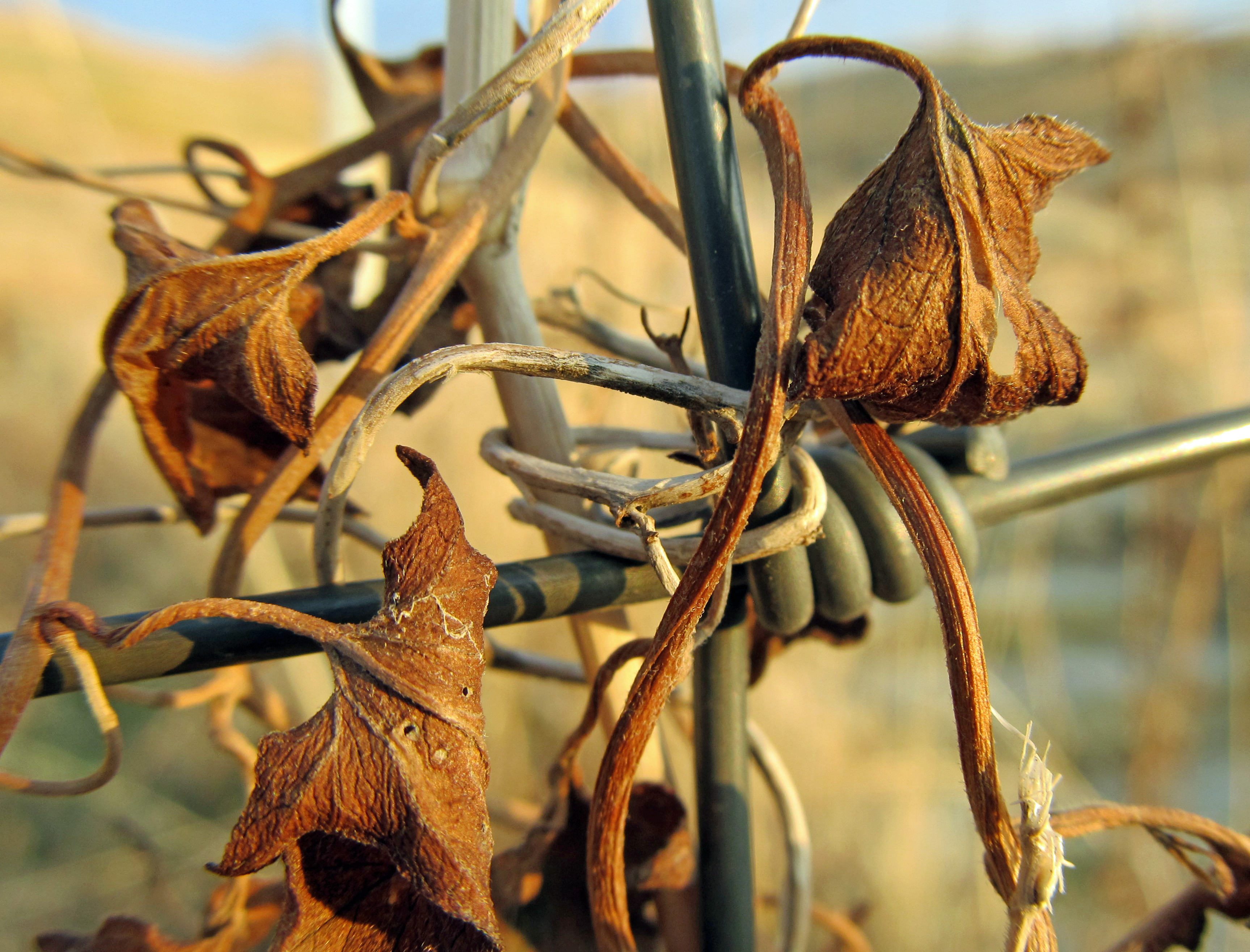
common mallow (Malva neglecta)

field bindweed (Convolvulus arvensis)

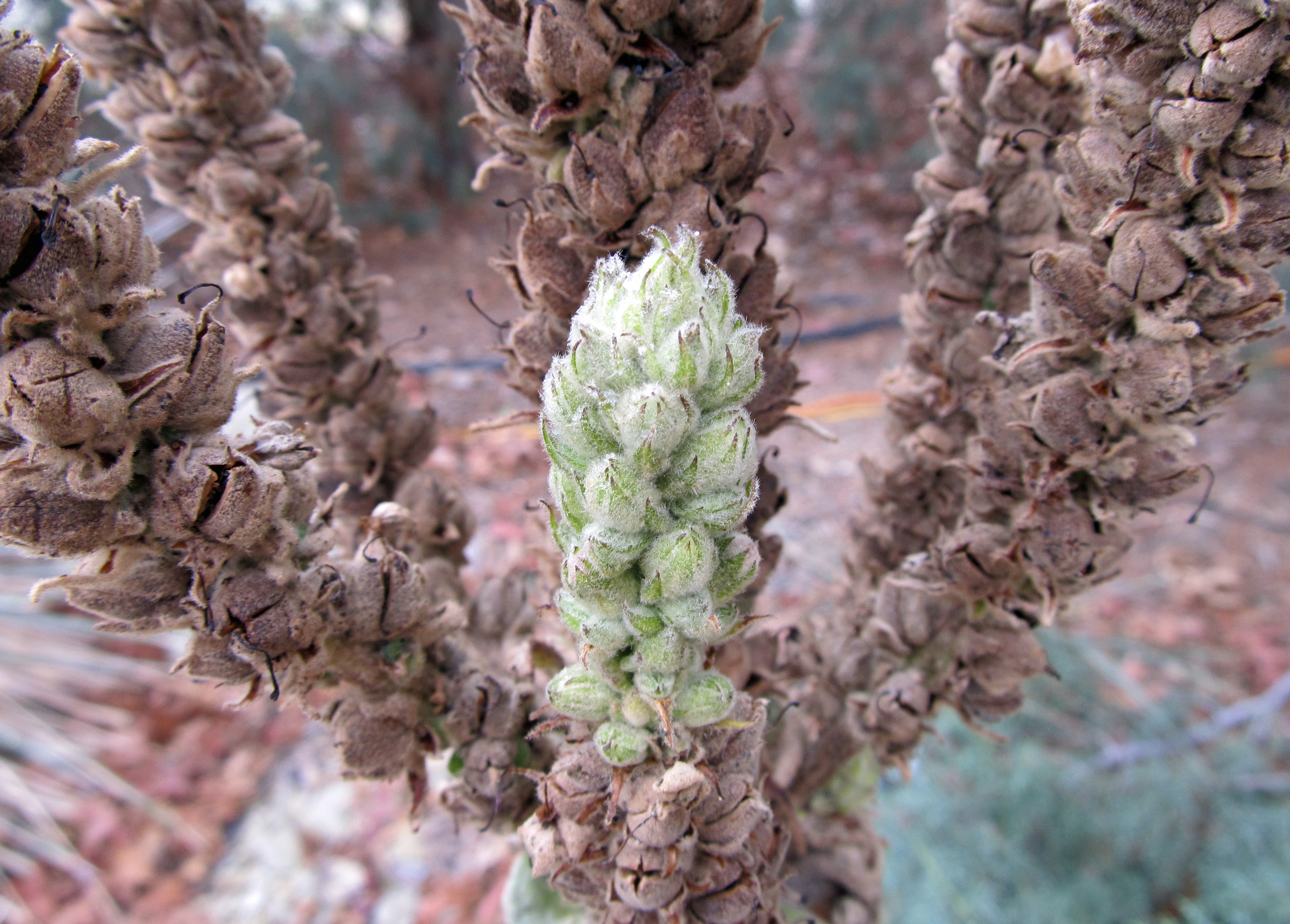
common mullein (Verbascum thapsus)

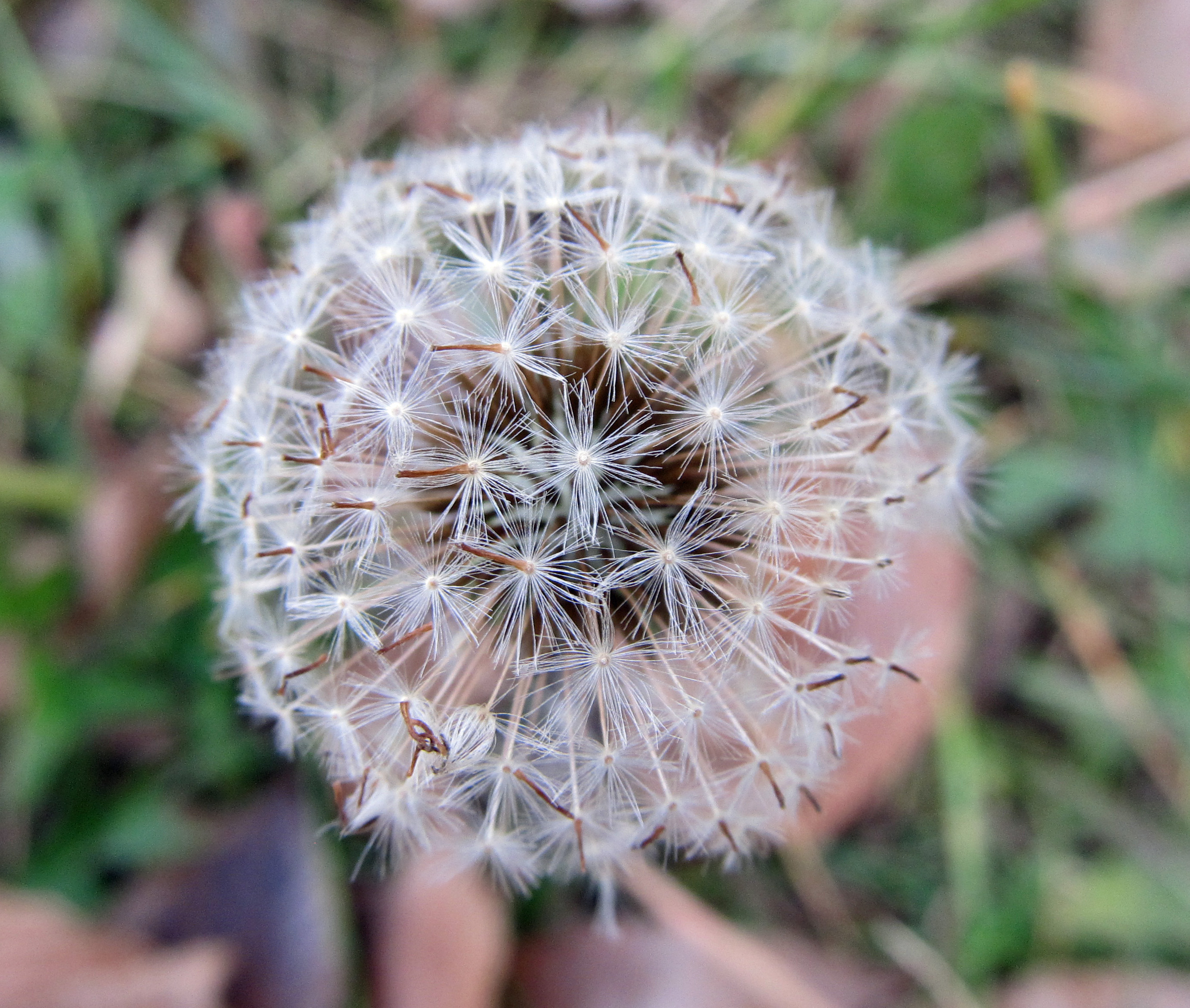
common dandelion (Taraxacum officinale)

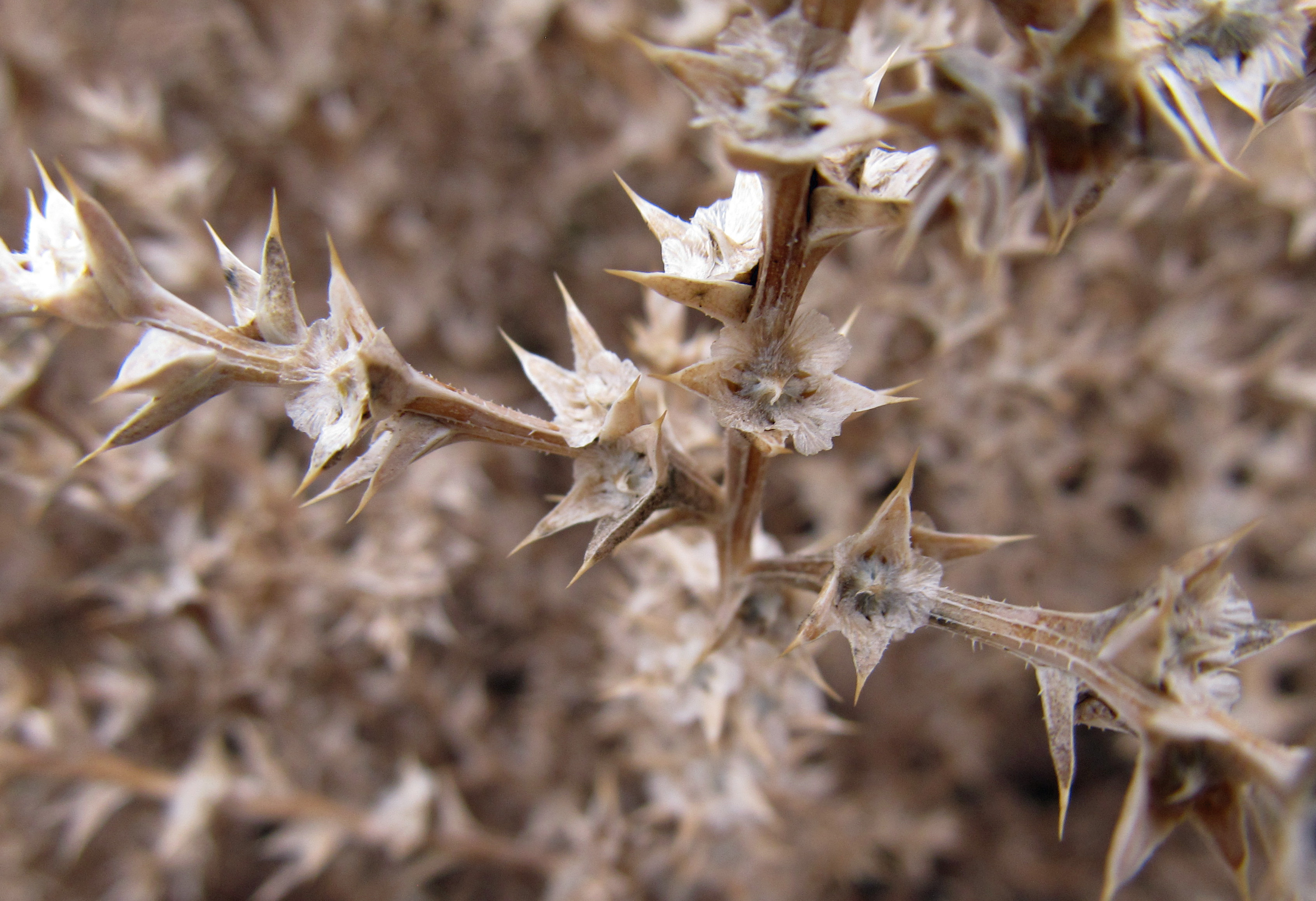
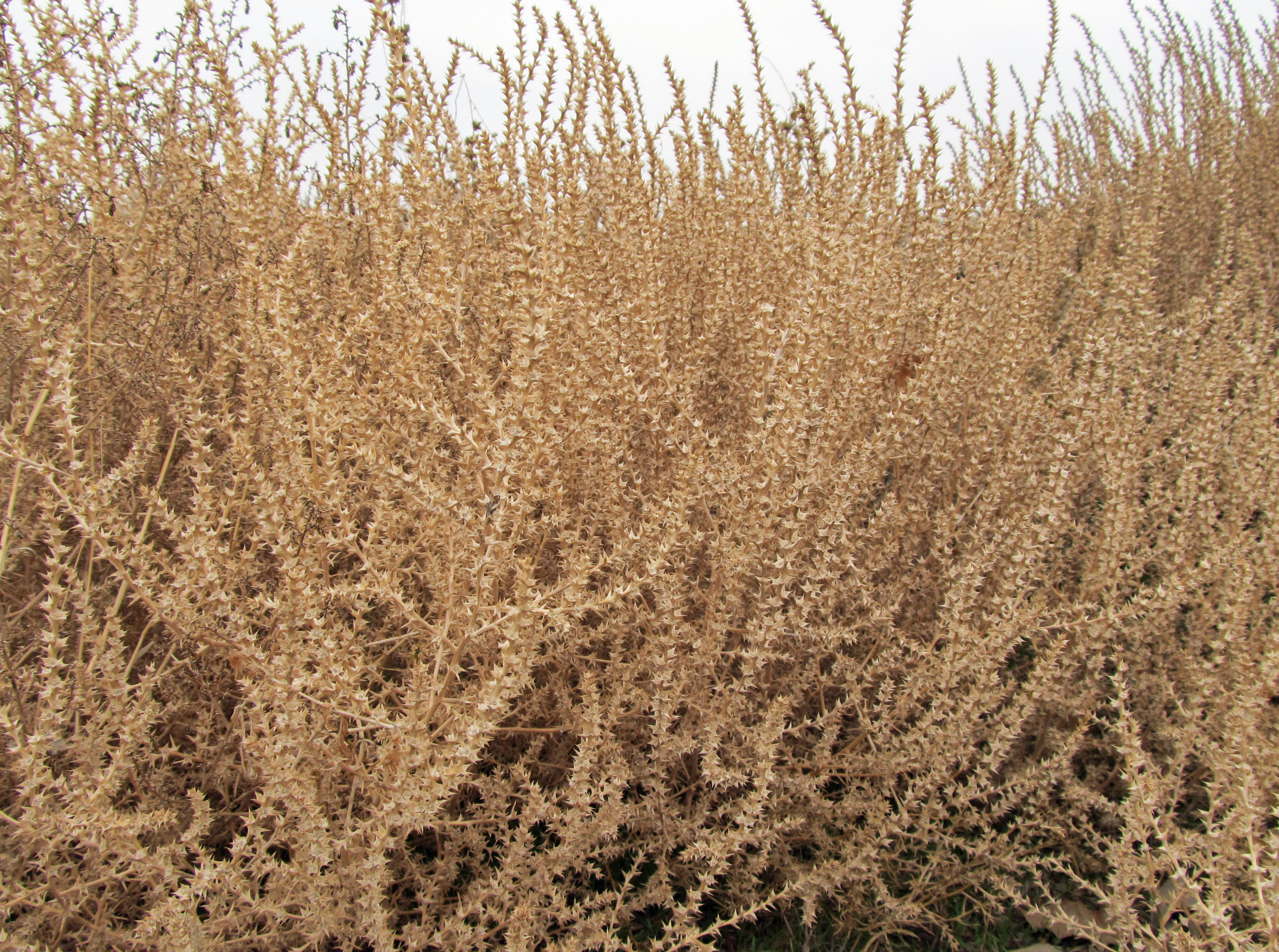
Russian thistle (Kali tragus, syn. Salsola tragus)

Russian thistle (Kali tragus, syn. Salsola tragus)

redstem filaree (Erodium cicutarium)

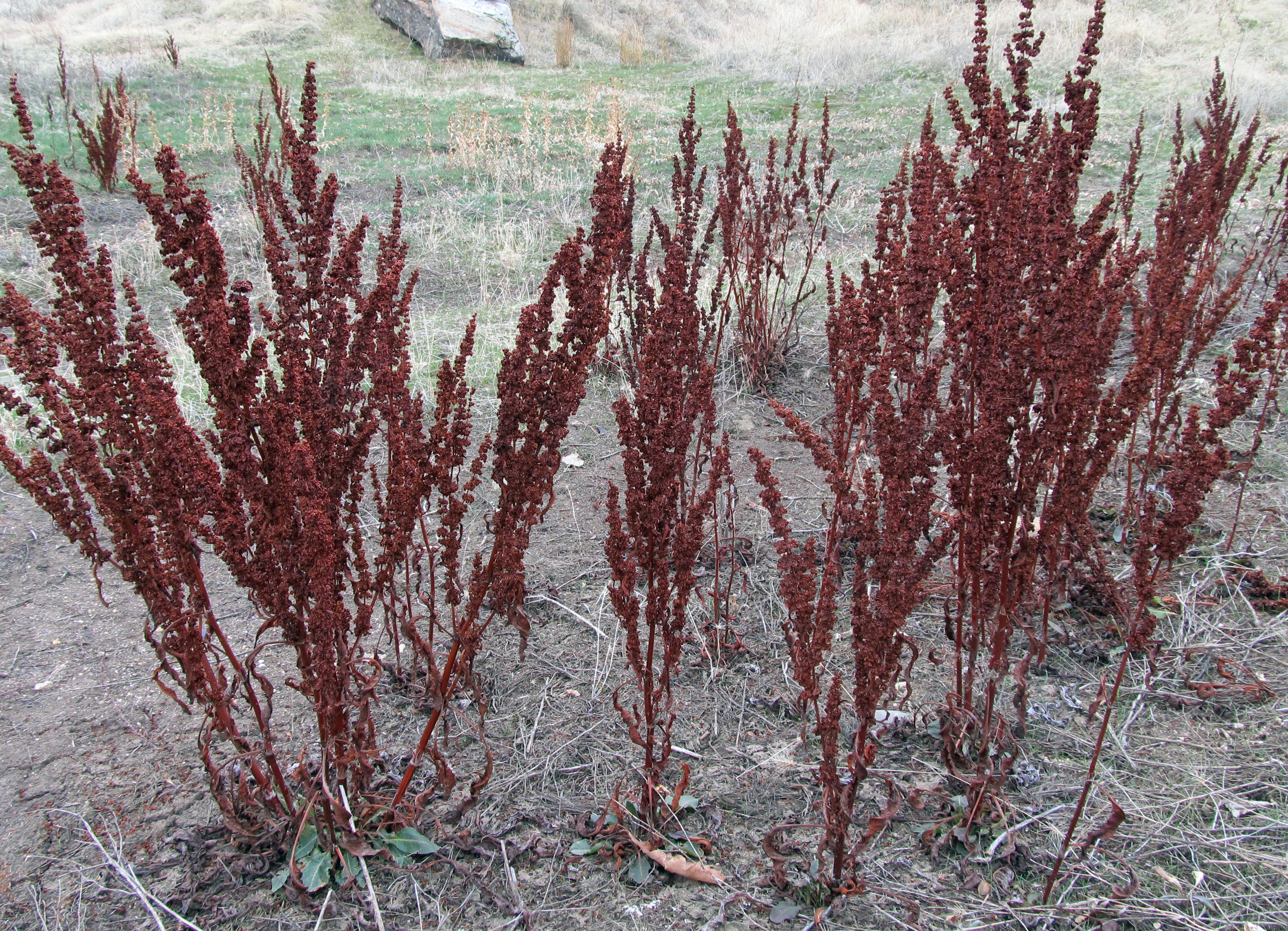
curly dock (Rumex crispus)

curly dock (Rumex crispus)

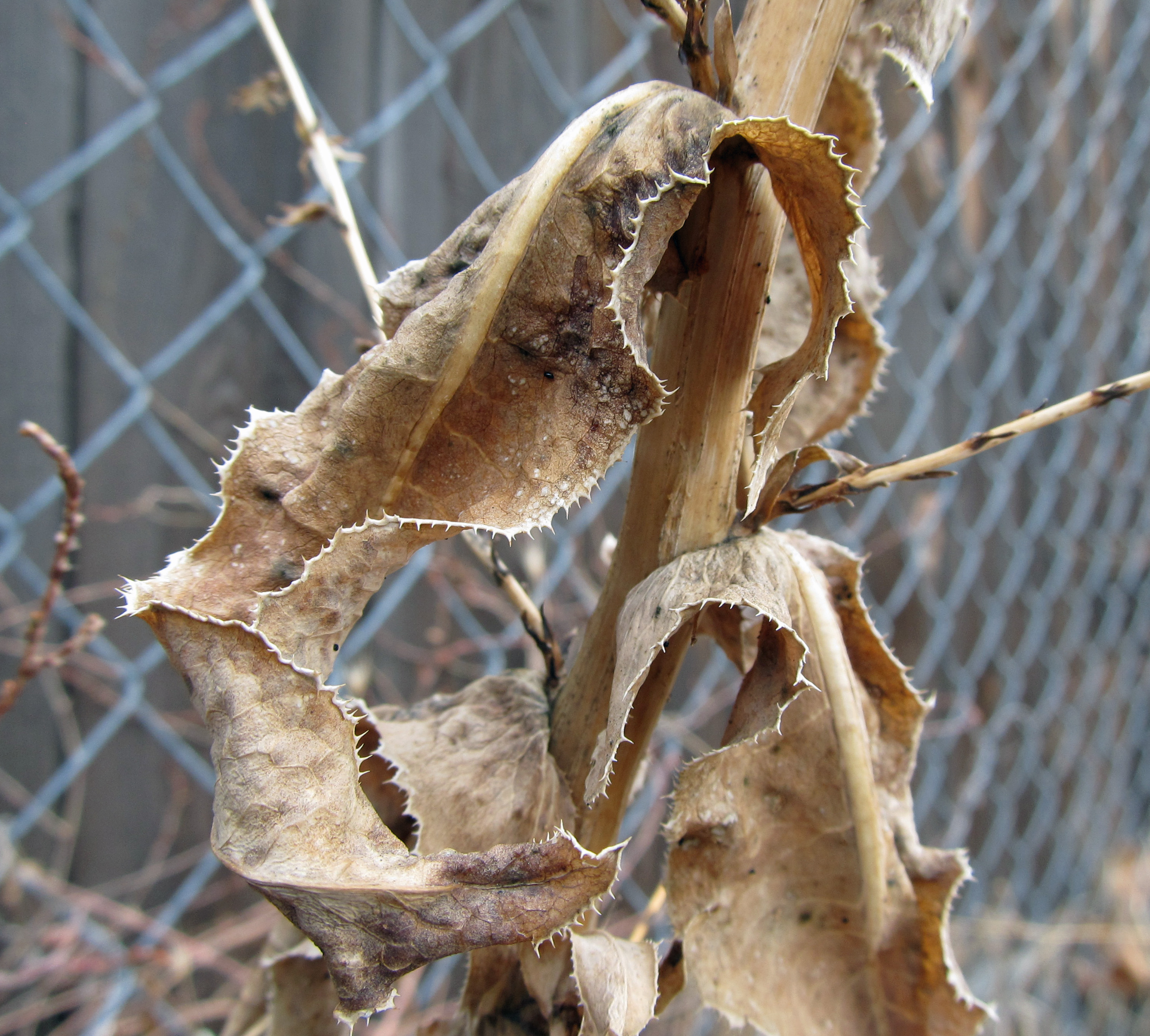
prickly lettuce (Lactuca serriola)

salsify (Tragopogon dubius)

wood avens (Geum urbanum)

yellow evening primrose (Oenothera biennis)

annual honesty, a.k.a. money plant (Lunaria annua)

white clover (Trifolium repens)

———————

A friendly reminder: Refrain from being overly ambitious with your fall cleanup and, instead, leave certain plants in place. This not only provides winter interest but can also be beneficial to the wild creatures we share space with.


When Urban Pollinator Gardens Meet Native Plant Communities

Public concern about the state of bees and other pollinating insects has led to increased interest in pollinator gardens. Planting a pollinator garden is often promoted as an excellent way for the average person to help protect pollinators. And it is! However, as with anything in life, there can be downsides.

In many urban areas, populations of native plants remain on undeveloped or abandoned land, in parks or reserves, or simply as part of the developed landscape. Urban areas may also share borders with natural areas, the edges of which are particularly prone to invasions by non-native plants. Due to human activity and habitat fragmentation, many native plant populations are now threatened. Urban areas are home to the last remaining populations of some of these plants.

Concern for native plant populations in and around urban areas prompted researchers at University of Pittsburgh to review some of the impacts that urban pollinator gardens may have and to develop a “roadmap for research” going forward. Their report was published earlier this year in New Phytologist.

Planting a wildflower seed mix is a simple way to establish a pollinator garden, and such mixes are sold commercially for this purpose. Governmental and non-governmental organizations also issue recommendations for wildflower, pollinator, or meadow seed mixes. With this in mind, the researchers selected 30 seed mixes “targeted for urban settings in the northeastern or mid-Atlantic USA” to determine what species are being recommended for or commonly planted in pollinator gardens in this region. They also developed a “species impact index” to assess “the likelihood a species would impact remnant wild urban plant populations.”

A total of 230 species were represented in the 30 seed mixes. The researchers selected the 45 most common species for evaluation. Most of these species (75%) have generalized pollination systems, suggesting that there is potential for sharing pollinators with remnant native plants. Two-thirds of the species had native ranges that overlapped with the targeted region; however, the remaining one-third originated from Europe or western North America. The native species all had “generalized pollination systems, strong dispersal and colonization ability, and broad environmental tolerances,” all traits that could have “high impacts” either directly or indirectly on remnant native plants. Other species were found to have either high dispersal ability but low chance of survival or low dispersal ability but high chance of survival.

This led the researchers to conclude that “the majority of planted wildflower species have a high potential to interact with native species via pollinators but also have the ability to disperse and survive outside of the garden.” Sharing pollinators is especially likely due to super-generalists like the honeybee, which “utilizes flowers from many habitat types.” Considering this, the researchers outlined “four pollinator-mediated interactions that can affect remnant native plants and their communities,” including how these interactions can be exacerbated when wildflower species escape gardens and invade remnant plant communities.

photo credit: wikimedia commons

The first interaction involves the quantity of pollinator visits. The concern is that native plants may be “outcompeted for pollinators” due to the “dense, high-resource displays” of pollinator gardens. Whether pollinator visits will increase or decrease depends on many things, including the location of the gardens and their proximity to native plant communities. Pollinator sharing between the two has been observed; however, “the consequences of this for effective pollination of natives are not yet understood.”

The second interaction involves the quality of pollinator visits. Because pollinators are shared between native plant communities and pollinator gardens, there is a risk that the pollen from one species will be transferred to another species. High quantities of this “heterospecific pollen” can result in reduced seed production. “Low-quality pollination in terms of heterospecific pollen from wildflower plantings may be especially detrimental for wild remnant species.”

The third interaction involves gene flow between pollinator gardens and native plant communities. Pollen that is transferred from closely related species (or even individuals of the same species but from a different location) can have undesired consequences. In some cases, it can increase genetic variation and help address problems associated with inbreeding depression. In other cases, it can introduce traits that are detrimental to native plant populations, particularly traits that disrupt adaptations that are beneficial to surviving in urban environments, like seed dispersal and flowering time. Whether gene flow between the two groups will be positive or negative is difficult to predict, and “the likelihood of genetic extinction versus genetic rescue will depend on remnant population size, genetic diversity, and degree of urban adaptation relative to the planted wildflowers.”

The fourth interaction involves pathogen transmission via shared pollinators. “Both bacterial and viral pathogens can be transmitted via pollen, and bacterial pathogens can be passed from one pollinator to another.” In this way, pollinators can act as “hubs for pathogen exchange,” which is especially concerning when the diseases being transmitted are ones for which the native plants have not adapted defenses.

photo credit: wikimedia commons

All of these interactions become more direct once wildflowers escape gardens and establish themselves among the native plants. And because the species in wildflower seed mixes are selected for their tolerance of urban conditions, “they may be particularly strong competitors with wild remnant populations,” outcompeting them for space and resources. On the other hand, the authors note that, depending on the species, they may also “provide biotic resistance to more noxious invaders.”

All of these interactions require further investigation. In their conclusion, the authors affirm, “While there is a clear potential for positive effects of urban wildflower plantings on remnant plant biodiversity, there is also a strong likelihood for unintended consequences.” They then suggest future research topics that will help us answer many of these questions. In the meantime, pollinator gardens should not be discouraged, but the plants (and their origins) should be carefully considered. One place to start is with wildflower seed mixes, which can be ‘fine-tuned’ so that they benefit our urban pollinators as well as our remnant native plants. Read more about plant selection for pollinators here.

Bumblebees and Urbanization

Urban areas bear little resemblance to the natural areas that once stood in their place. Concrete and asphalt stretch out for miles, buildings of all types tower above trees and shrubs, and turfgrass appears to dominate whatever open space there is. Understandably, it may be hard to imagine places like this being havens for biodiversity. In many ways they are not, but for certain forms of life they can be.

An essay published earlier this year in Conservation Biology highlights the ways in which cities “can become a refuge for insect pollinators.” In fact, urban areas may be more inviting than their rural surroundings, which are often dominated by industrial agriculture where pesticides are regularly used, the ground is routinely disturbed, and monocultures reign supreme. Even though suitable habitat can be patchy and unpredictable in the built environment, cities may have more to offer than we once thought.

Yet, studies about bee abundance and diversity in urban areas show mixed results, largely because all bee species are not created equal (they have varying habitat requirements and life histories) and because urban areas differ wildly in the quality and quantity of habitat they provide both spatially and temporally. For this reason, it is important for studies to focus on groups of bees with similar traits and to observe them across various states of urbanization. This is precisely what researchers at University of Michigan set out to do when they sampled bumblebee populations in various cities in southeastern Michigan. Their results were published earlier this year by Royal Society Open Science.

common eastern bumble bee (Bombus impatiens) – photo credit: wikimedia commons

The researchers selected 30 sites located in Dexter, Ann Arbor, Ypsilanti, Dearborn, and Detroit. Most of the sites were gardens or farms in urban centers. They collected bumblebees from May to September using pan traps and nets. The species and sex of each individual bumblebee was identified and recorded for each site. The percentage of impervious surface that surrounded each site was used as a measurement of urban development. Other measurements included the abundance of flowers and average daily temperatures for each location.

Bumblebees were selected as a study organism because the genus, Bombus, “represents a distinct, well-studied set of traits that make it feasible to incorporate natural history into analysis.” Bumblebees live in colonies – eusocial structures that include “a single reproductive queen, variable numbers of non-reproductive female workers, and male reproductive drones.” They are generalist foragers, visiting a wide variety of flowering species for pollen and nectar, and they nest in holes in the ground, inside tree stumps, or at the bases of large clumps of grass. The authors believe that their nesting behavior makes them “a good candidate for testing the effects of urban land development,” and the fact that members of the colony have “distinct roles, [behaviors], and movement patterns” allows researchers to make inferences regarding “the effects of urbanization on specific components of bumblebee dynamics.”

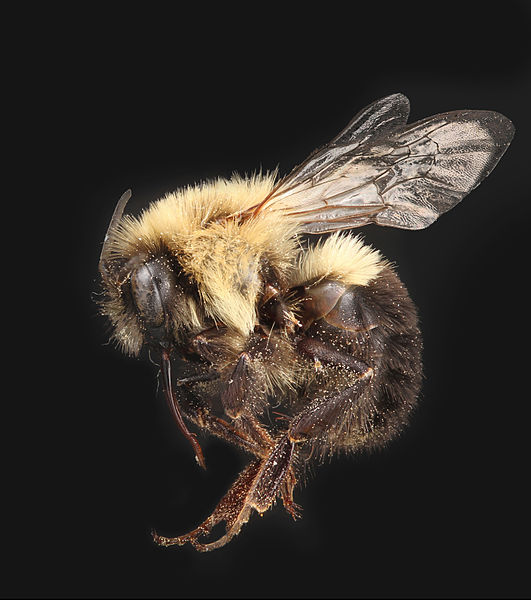
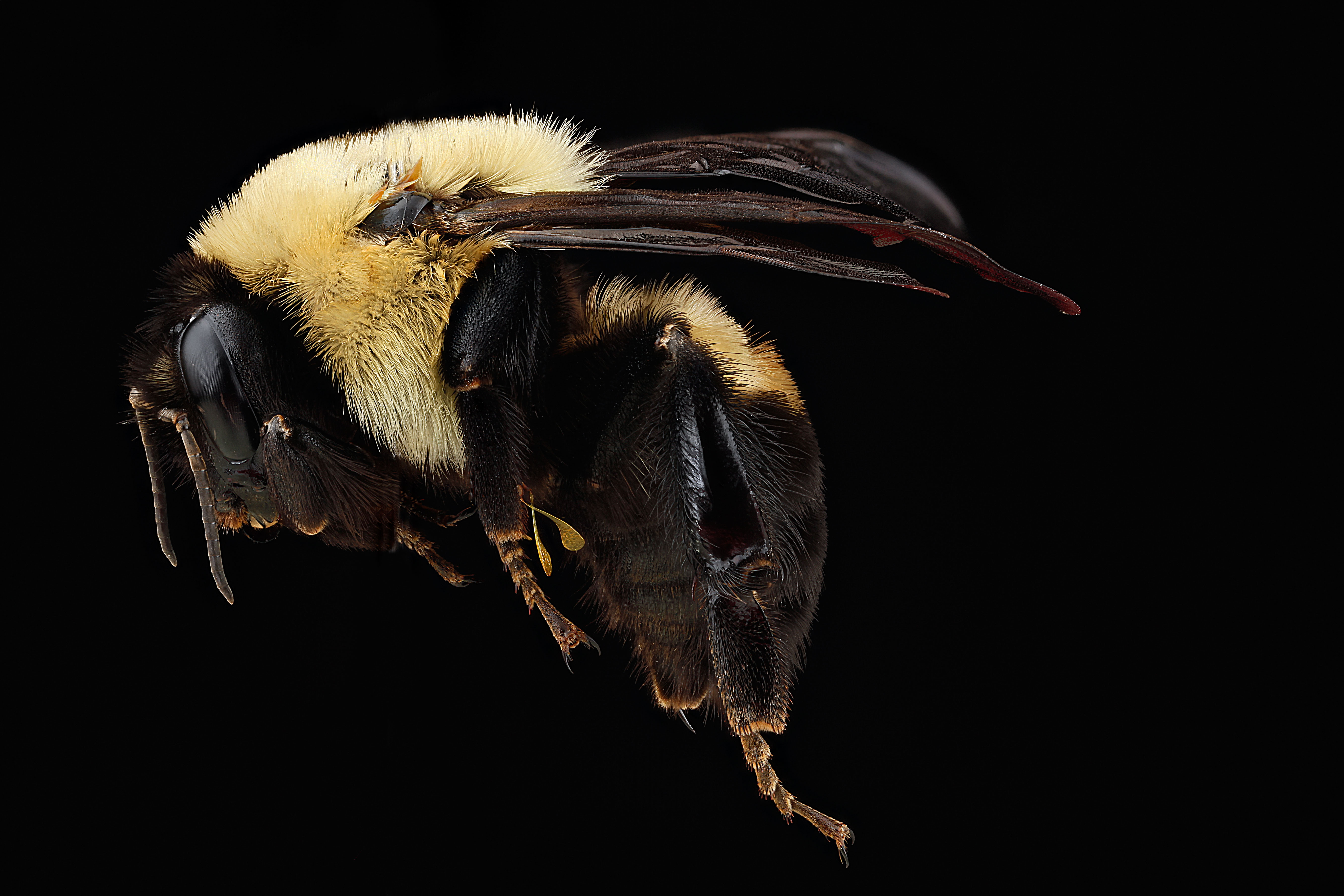
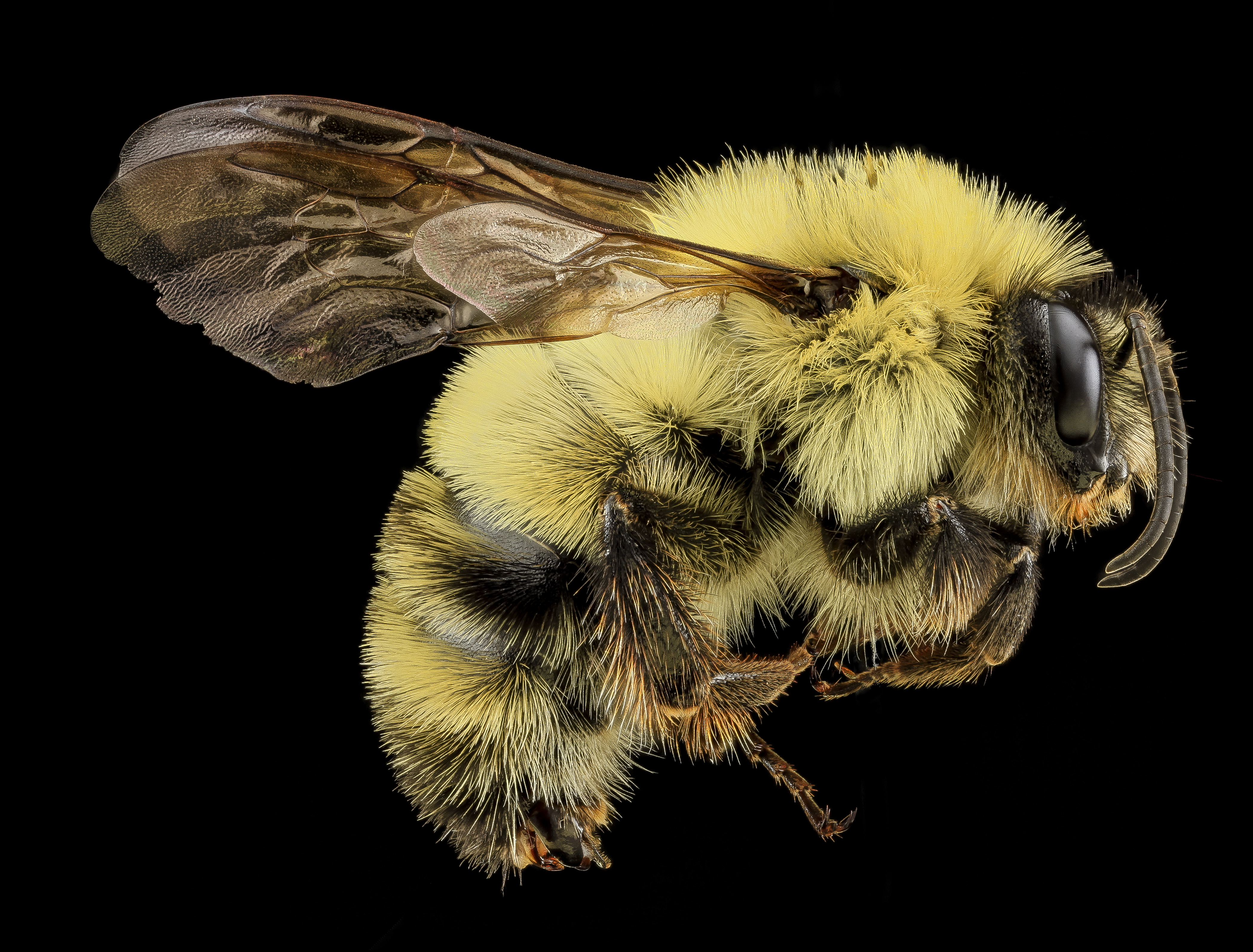
Across all locations, 520 individual bumblebees were collected. Nearly three quarters of them were common eastern bumblebees (Bombus impatiens). Among the remaining nine species collected, brown-belted bumblebees (Bombus griseocollis) and two-spotted bumblebees (Bombus bimaculatus) were the most abundant.

brown-belted bumblebee (Bombus griseocollis) – photo credit: wikimedia commons

Because bumblebees are strong fliers with an extensive foraging range, impervious surface calculations for each site had to cover an area large enough to reflect this. Results indicated that as the percentage of impervious surfaces increased, bumblebee abundance and diversity declined. When male and female bumblebee data was analyzed separately, the decline was only seen in females; males were unaffected.

Female workers do most of their foraging close to home, whereas males venture further out. The researchers found it “reasonable to hypothesize that worker abundance is proportional to bumblebee colony density.” Thus, the decline in female bumblebees observed in this study suggests that as urban development increases (i.e. percent coverage of impervious surface), available nesting sites decline and the number of viable bumblebee colonies shrinks. Because male bumblebees responded differently to this trend, future studies should consider the responses of both sexes in order to get a more complete picture of the effects that urbanization has on this genus.

Interestingly, results obtained from the study locations in Detroit did not conform to the results found elsewhere. Bumblebee abundance and diversity was not decreasing with urbanization. Unlike other cities in the study, “Detroit has experienced decades of economic hardship and declining human populations.” It has a high proportion of impervious surfaces, but it also has an abundance of vacant lots and abandoned yards. These areas are left unmaintained and are less likely to be mowed regularly or treated with pesticides. Reducing disturbance can create more suitable habitat for bumblebees, resulting in healthy populations regardless of the level of urbanization. Thus, future studies should examine the state of insect pollinators in all types of cities – shrinking and non-shrinking – and should consider not just the amount of available habitat but also its suitability.

two-spotted bumblebee (Bombus bimaculatus) – photo credit: wikimedia commons