Horticulture’s Weedy Introductions in a Changing Climate

In case I need a reminder that the horticulture industry has a history of introducing weedy plants to natural areas, I get one each time I bike to work. Riding along the Boise River Greenbelt, a trail that for much of its length is flanked by cultivated landscapes on one side and a highly modified but largely naturalized river bank on the other, I see a mixture of both native and introduced plants. Of the introduced plants, many are horticultural species that have escaped cultivation and established themselves on the bank of the river. There are catalpa and black locust trees brought in from the other side of the country, St. John’s wort and chicory from Eurasia, honeysuckles primarily from Asia, and a few different cherry species and hybrids with varied provenances. And this is just a small sample of what can be found along my three and a half mile bike ride.

St. John’s wort (Hypericum perforatum) on the banks of the Boise River

This is certainly not a new concern. We have been aware of the role that horticulture plays in introducing invasive species for quite some time now. Several years back, while doing a deep dive into the topic of invasive species, I wrote about this issue right here on this very blog. According to a study published in Frontiers in Ecology and the Environment (2021), out of 1285 plant species identified as invasive, 61% are currently sold in nurseries. If that’s not concern enough, an additional factor to consider is climate change. Plants that were less likely to escape cultivation and head for the wild, may take the opportunity to do so in a changing climate. Plus, horticultural plants that are already problems in certain areas could expand their range as climates become more favorable in new locations, especially if these plants continue to be sold in nearby nurseries.

These concerns and more are the topic of a paper published in BioScience (2023). Evelyn M. Beaury, et al. looked at nurseries across the United States and the plants they sell in order to determine where invasive plants are still being sold in regions where they are invasive. Additionally, they looked at plants known to be invasive but that are not currently invasive in the regions they are being sold. Using climate models, they predicted whether or not these plants could become invasive under changing climates.

Plants are being moved around with a lot more ease than they once were, and the sales of problematic plants are increasingly difficult to regulate. For one thing, plants prohibited for sale in one state can be purchased at nurseries in neighboring states and brought back to be planted in regions where those plants are invasive. And while mail order has existed for a long time, online ordering makes the process even simpler; and many online plant vendors are not liscensed nurseries, making them much more difficult to regulate. But even regulation is typically a response to something that has already become a problem, rather than a proactive measure to prevent plants from escaping into natural areas.

Beaury, et al. identified 672 nurseries across the United States, both online and traditional retailers. Each of these nurseries were selling one or more of the 89 plant species that became the focus of their research. These are plant species that are either on federal or state noxious weed lists or that have been identified as invasive by Invasive Plant Atlas. The reach of each nursery was determined by using customer reviews to compute distances that plants might travel after being purchased at nurseries or from online stores. Obviously, not every customer that purchases a plant leaves a review, but this is a good way to get a general idea how far away customers are from nurseries without having access to more detailed records. These geotagged reviews can also be cross-referenced with known distributions of invasive plants. Using climate models and environmental predictor variables, the researchers determined areas of current and potential invasion for each of the 89 plants.

tansy (Tanacetum vulgare) – one of the 89 plant species looked at in the study

The first question was about proximity to current records of plant invasions. Results showed that “49 of the 89 ornamental invasives were sold within 21 kilometers (13 miles) of an observed record of invasion.” When invasive plants are sold and planted near locations where they are already known to be invasive, it gives them the opportunity to add new plants to existing or developing invasions. In ecology, this is known as propagule pressure. When it comes to current and future climate, most species in the study are being sold by nurseries where the climate is either currently favorable for range expansion or may eventually become favorable. Specifically for future climate, 40 of the 89 plants are being sold in regions that are currently suitable for invasion and will continue to be suitable as the climate changes, and 25 of the 89 plants are being sold in regions where the climate is currently unsuitable but will become suitable as temperatures warm.

Particularly for plants being sold in areas that are not yet suitable for invasion, there is time to educate both the nursery industry and the general public and to look for alternatives to these plants. However, as the researchers point out, their analysis “only examined about 10% of the larger pool of U.S. ornamental plants known to be invasive,” and they “sampled only a subset of the nurseries that could be selling invasive species in the United States.” It is highly likely that the results of this study are an underestimation of the problem. Clearly the work of education and finding alternatives to problematic plants is monumental. The hope is that studies like this can help with education and can assist with working out ways to regulate sales of invasive plants.

coltsfoot (Tussilago farfara) – another one of the 89 plant species looked at in the study

Regulating the sale of plants is beyond most of our control, and how much regulation we should be enforcing on nurseries in the first place is a debate we should be having. Outside of those questions, there is a responsibility that we should take as gardeners and as residents of the planet. If we choose to grow plants, it is crucial that we get to know them. We should be taking the time to observe the degree to which they spread and how they are being dispersed. When they do move around our yards, where are they going, and are they able to grow outside of our care? Are they leaving our properties and coming up elsewhere? If we choose to plant non-native species, we should be mindful of how they might affect nearby, wild landscapes if they were to escape our yards and establish themselves in these locations. We should also be aware of where we live in the city. If our gardens are in the middle of a dense urban landscape, perhaps there is less concern that our plants will move beyond the borders of our gardens. But if we garden near natural areas, we should be significantly more selective about the things we plant, and we ought to be more observant as to what those plants are up to.

Nurseries generally sell the plants that gardeners want to buy, which means we can choose not to buy problematic plants and instead demand alternatives to these plants. Seeking out nurseries that sell the types of plants that are better suited for our regions and do not exhibit invasive behaviors can send a message to other growers that they should phase out certain plants and start growing the plants that gardeners are asking for. This may be a simplistic take, and as with most things, it’s complicated. While one of the goals of this research is to help influence regulators, another goal is simply to “[share] information about high-risk ornamental invaders across states and regions, and [work] with horticulture and community members to reduce the escape of ornamental species into natural areas.” This is precisely the area where gardeners can make a difference.

On that note, I will be starting a new series of posts to discuss some of the ornamental species that have gone weedy. By getting to know the plants that find themselves in this predicament, we can be better situated to make informed decisions about what to do about them.
Another Year of Pollination: Pollenkitt

Pollination in flowering plants is the process of moving pollen grains, which carry sperm cells, from the anthers to the stigmas of either the same flower or a separate flower. If things go well from there, sperm cells will be transported via pollen tubes into the ovaries where fertilization with egg cells can take place and seeds can form. Pollen grain development occurs within the anthers, and by the time the anthers dehisce – or split open – they are ready for transport.

In order to protect the enclosed sperm cells and aid in their movement, pollen grains consist of a series of layers that, among other things, help ensure safe travel. Two major layers are an internal layer called intine, composed largely of cellulose, and an external layer called exine, composed mainly of sporopollenin (a highly durable and complex biopolymer). In many flowering plants, especially those that rely on animals to help carry their pollen, an additional outer layer called pollenkitt is added to the pollen grains before anthers dehisce.

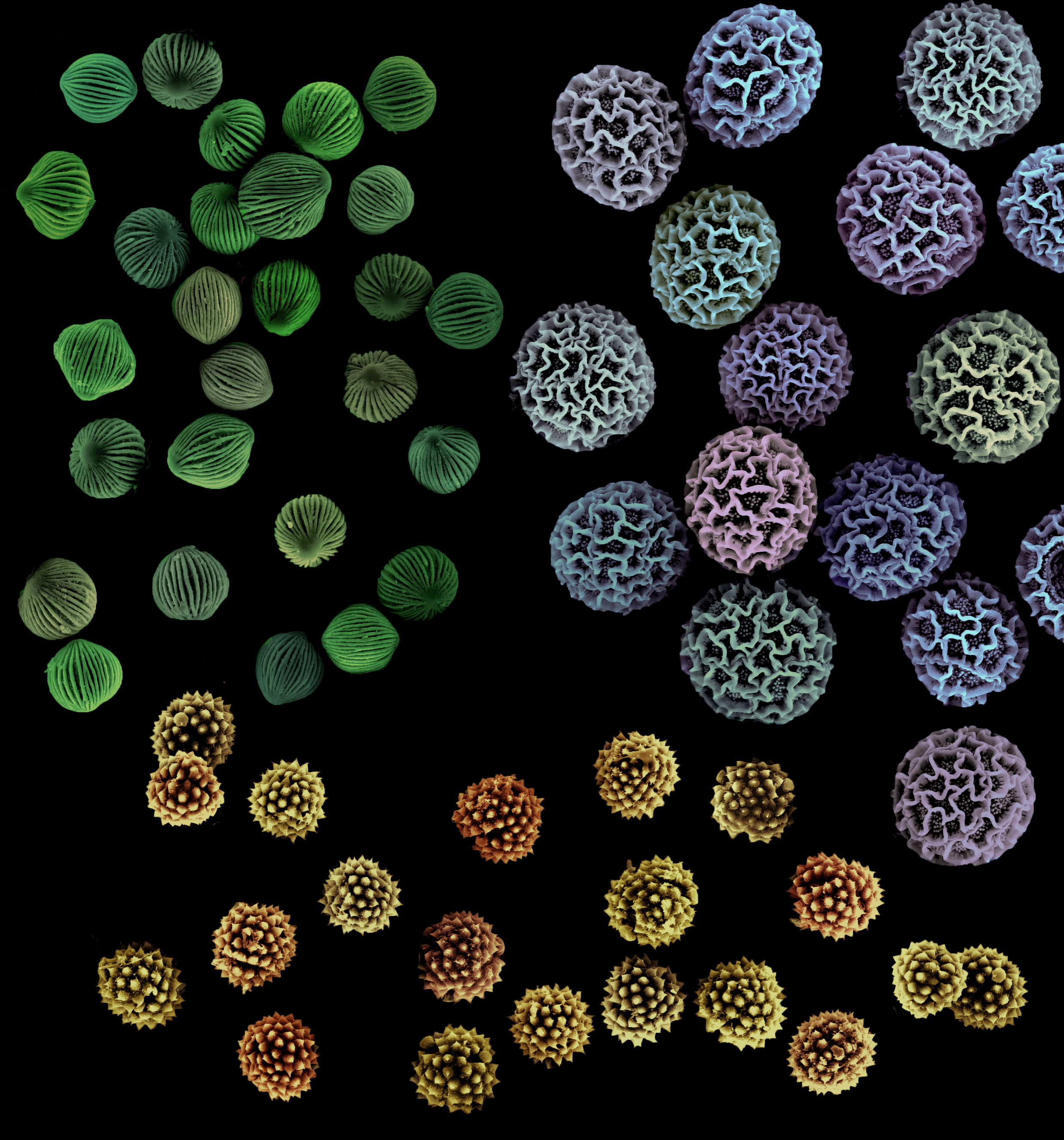
three different pollen grains (image credit: wikimedia commons/Asja Radja)

Pollenkitt is an oily, viscous, hydrophobic layer composed of lipids, carotenoids, flavonoids, proteins, and carbohydrates derived from the breakdown of an internal layer of the anther called the tapetum. Pollenkitt forms a sticky layer around the pollen grains and can add color to the pollen other than the typical yellow. The thickness of the pollenkitt and its composition is species specific. In fact, the look, size, and shape of pollen grains themselves are unique to each species and can even be used to help identify plants. Pollenkitt is found in almost all families of flowering plants and is particularly prevalent in species that are animal-pollinated. One exception is the mustard family (Brassicaceae), whose pollen grains are coated in a substance known as tryphine, which functions similar to pollenkitt but whose formation and composition differ enough to be considered separately.

dandelion pollen (image credit: wikimedia commons/Captainpixel)

The sticky nature of pollenkitt has numerous functions. For one, it helps pollen grains remain on anthers until an animal comes along to remove them. It also holds pollen grains together in clumps, helps pollen grains stick to insect (and other animal) pollinators during transport, and helps adhere them to stigmas when deposited. A paper published in Flora (2005) lists twenty possible functions for pollenkitt, many of which have been confirmed in certain species and some of which are hypothetical. In addition to functions having to do with pollen movement and placement, pollenkitt may also provide protection from water loss, UV radiation, and fungal and bacterial invasions. In species where pollen is offered as food to pollinating insects, pollenkitt is a more easily digestible food source than the pollen grain itself. Thanks to carotenoids, pollenkitt can make pollen more colorful, which may help attract pollinating insects, or, depending on the color, can also hide pollen from insect visitors.
Another important function of pollenkitt is to give pollen a scent. Odors can help encourage insect visitors or deter them, so depending on the situation, scented pollenkitt may be attracting pollinators or discouraging pollen consumers. In a study published in American Journal of Botany (1988), Heidi Dobson analyzed the chemical composition of 69 different species of flowering plants. She isolated numerous scent compounds in pollenkitt and suggested that “some of the chemicals in pollenkitt may … serve as identification cues to pollen-foraging bees.” Most of the species she analyzed were pollinated by bees (which consume pollen), but the few that were mainly pollinated by hummingbirds and butterflies tended to have fewer scent compounds. Since birds and butterflies are there for the nectar and not the pollen, it would make sense that the pollen of these plant species wouldn’t need to carry a scent.

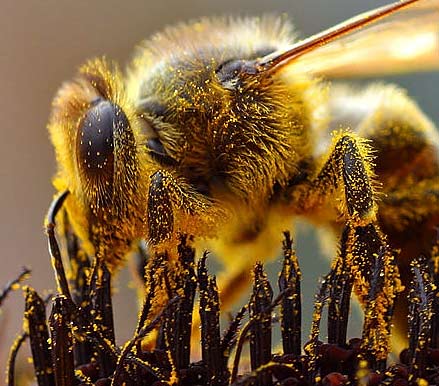
bee collecting pollen (image credit: wikimedia commons)

In flowers that are wind-pollinated, the pollenkitt layer is either very thin or absent altogether. In this case, pollen grains need to be easily released from the anther and are better off when they aren’t sticking to other pollen grains. That way, they are free to be carried off in the breeze to nearby flowers. Some plant species are amphiphilous, meaning they can be both animal-pollinated and wind-pollinated, and according to the authors of the paper published in Flora (2005), pollenkitt layers in these species exhibit intermediate characteristics of both types of pollen grains, generally with thinner, less-sticky pollenkitt and more pollenkitt found within the cavities of the exine.

It’s clear that this unique pollen-glueing substance plays a critical role in the pollination process for many plant species. Considering that each species of plant has its own story to tell, there is still more to learn about the forms and functions that pollenkitt takes.

———–

This is the first in a series of posts in 2024 in which, once again, I am exploring the world of pollinators and pollination. You can read more about this effort in last month’s Year in Review post.

Tea Time: Fireweed

lf you’ve seen one fireweed, you’ve probably seen several. As an early successional species, growing in large numbers across a vast amount of space is kind of its thing. Any disturbance that leaves bare ground in its wake, such as a wildfire or a windstorm, gives fireweed the opportunity to colonize. It grows quickly and spreads via rhizomes, producing thousands of airborne seeds in the process, sending them off to continue colonization or contribute to soil seed banks in preparation for future disturbances. The role of plants like fireweed is vital – promptly covering bare ground to stave off erosion and acting as a nurse plant to new saplings destined to become the future forest. In a garden setting or in locations where aggressively spreading plants are discouraged, fireweed and its weedy behavior may be unwelcome, but in other contexts, its services are essential.

fireweed (Chamerion angustifolium)

Fireweed (Chamerion angustifolium) is a species in Onagraceae, commonly known as the evening primrose family. It has an impressive distribution, widespread across much of North America and Eurasia. This is owed largely to its adaptability. Deep shade and overly dry soil are two conditions that it does not tolerate well, otherwise it seems to grow in a wide variety of soil types, moisture levels, and sun exposures, particularly in areas where there is regular disturbance. Swaths of towering plants topped with rose-pink flower spikes make fireweed impossible to ignore and a favorite of wildflower enthusiasts.

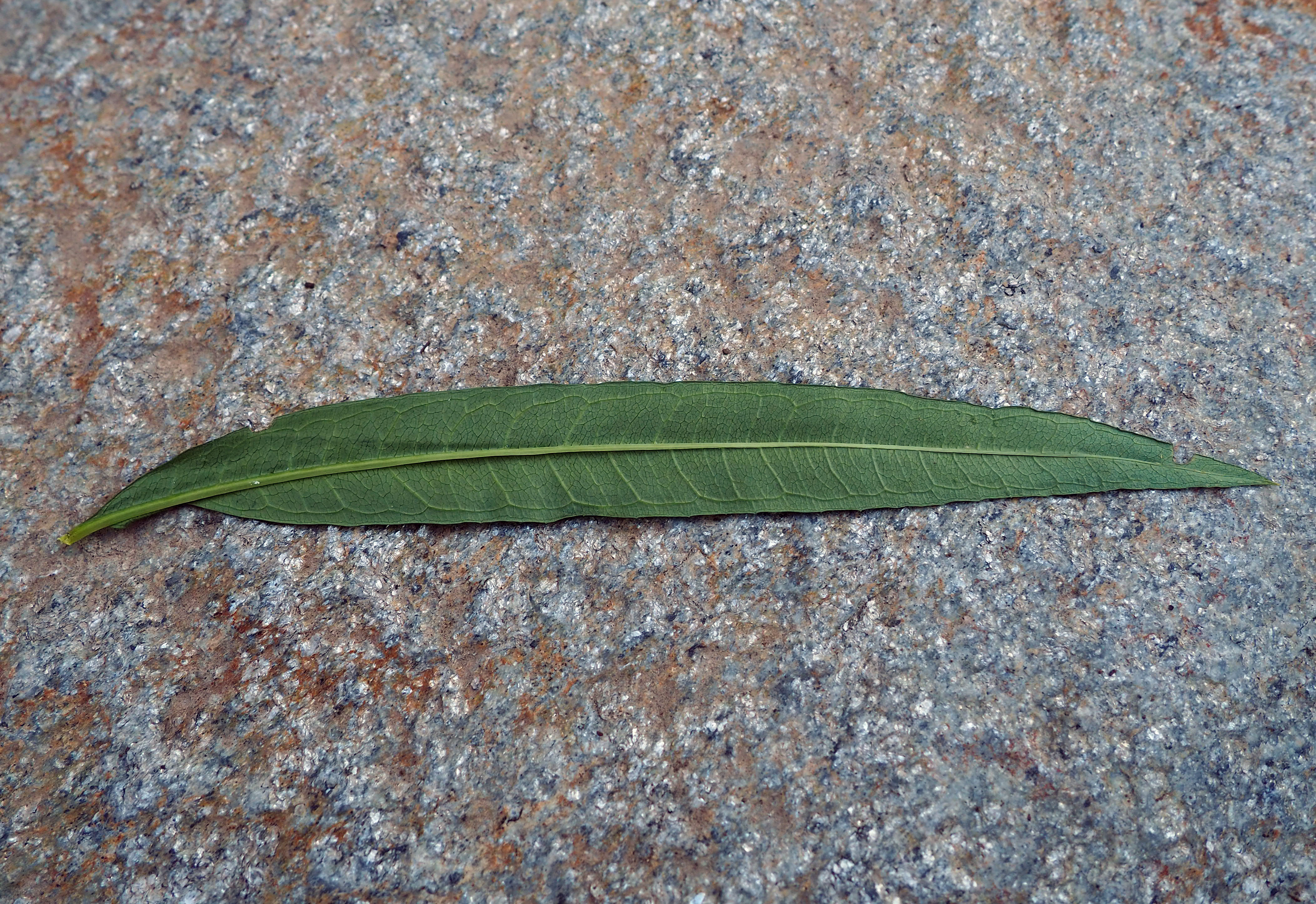
Fireweed stems reach from three to nine feet tall and are rarely branched. Long, narrow, lance-shaped leaves are arranged alternately along the lengths of stems and give the plant a willow-like appearance, which explains another common name, rosebay willowherb. The undersides of leaves have a distinct venation pattern, in which the veins don’t reach the leaf margins, a feature that can help with identification.

distinct leaf veins of fireweed (Chamerion angustifolium)

A series of rose-pink to purple flowers top the stems of fireweed. Each flower has four sepals and four petals with eight stamens and a four-lobed stigma extending prominently from the center. Its long, narrow ovary can be confused for a flower stalk. Rich with nectar, fireweed flowers are a favorite of honeybee keepers. They are also edible, like much of the rest of the plant. Narrow, four-chambered capsules form in place of fertilized flowers and later split open to release abundant, small seeds with a tuft of fluff attached to each one to aid in wind dispersal.

Fireweed has a long history of being used as food and medicine. Stem fibers are also useful for making cord, and seed fluff is useful for weaving and padding. Certainly, fireweed’s abundance and ubiquity contribute to its utility. Having never eaten fireweed before, I decided that a good way to introduce it to my diet would be to make a tea. Fireweed leaves are commonly collected for tea and are said to make an excellent non-caffeinated replacement for black tea.

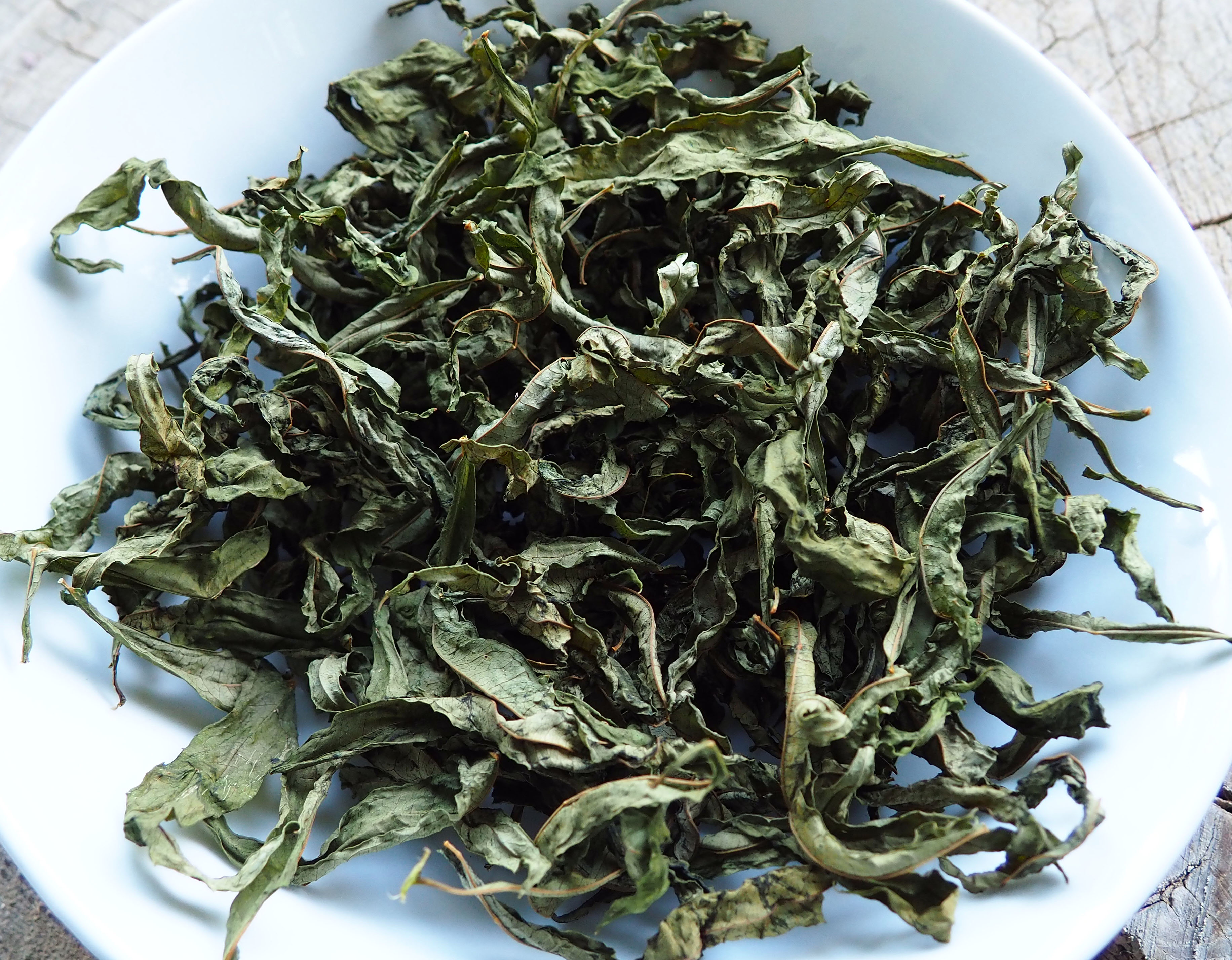
fireweed tea leaves

Making fireweed tea starts by stripping young leaves from fireweed stems. Recipes I encountered all called for fermenting the leaves before drying them. I did this by squeezing handfuls of leaves in my fists just enough to break and bruise them a bit and then packing them into a quart size Mason jar. I closed the lid tight and kept them in the jar for about five days, shaking it up a couple times a day supposedly to help prevent mold issues. After that, I dried the leaves on a baking sheet in the hot sun. From there, they are ready for making tea the same way you would make any other loose leaf tea, chopping the leaves up a bit before immersing them in hot water.

I found the taste of fireweed tea to be mild and pleasant. Despite several sources comparing it to black tea, I thought it was more similar to green tea. Sierra liked the smell more than the taste and wished it had honey in it. Compared to other teas I’ve tried in this short series of posts, this is definitely one of the better ones, and a tea I could see myself making again sometime.

More Tea Time Posts on Awkward Botany:

Book Review: A Gardener’s Guide to Botany

Avid gardeners spend a lot of time getting up close and personal with their plants. Whether they have a background in botany or not, they are bound to notice things about plants that others won’t. Questions are sure to arise about what their plants are up to, how they manage to do the things they do, or what might be done to help make their lives better. In the age of information, answers can be found at the touch of a button and from a wide variety of sources, some more trustworthy than others. The latest resource for gardeners with a question is A Gardener’s Guide to Botany. Written by plant expert and seasoned science communicator, Scott Zona, this is a source of information that’s not only trusted and highly credible, but also approachable for readers at any level and an absolute joy to read.

A Gardener’s Guide to Botany by Scott Zona, Ph.D.

You may know Zona as the go-to guy when it comes to questions about palms or tropical plants, but his knowledge of the plant kingdom extends far beyond these diverse groups. Zona has spent the majority of his life studying plants in all their forms across a wide variety of landscapes and has been sharing his knowledge through various institutions and societies that he’s been a part of along the way. His book is like a summary or overview of all the things he’s learned throughout this journey. It’s also just the beginning, a jumping off point and invitation to learn even more about the endlessly fascinating world of botany.

In the first chapter, Zona helps us understand just what makes a plant a plant – what separates plants from all other walks of life, and what plants have in common with other living things. Plants were one of the first forms of life that came about in the early years of life on our planet. Their evolution helped set the stage for so many other lifeforms to come. Due to the fact that they are generally fixed to one spot for the duration of their lives, they have had to adapt to deal with a wide variety of threats and stressors without the benefit of being able to run away or head for higher ground. As climates around them have changed and landscapes have shifted, so have they. All the while, plants have continued to be primary producers and ecosystem engineers, benefiting the lives of so many other living things, including humans, right up until this very day. Their existence is critical to the continuation of life on earth. Many of the ways that plants have been able to be so successful for so many millions of years are described in Zona’s book.

The second chapter of A Gardener’s Guide to Botany is a lesson in plant anatomy. Zona provides an overview of the inner and outer workings of roots, shoots, leaves, flowers, and fruits. Understanding basic plant anatomy can be important for maintaining a successful garden; it’s also just incredibly interesting in its own right. Plants are simple constructions, yet show up in such diverse forms. By modifying their limited parts, they are able to produce a wide variety of interesting features unique to each species. A branch becomes a thorn, a leaf becomes a spine, a root becomes a fleshy storage organ, an inflorescence becomes a tendril. This is just the beginning of the many surprises plants have up their sleeves.

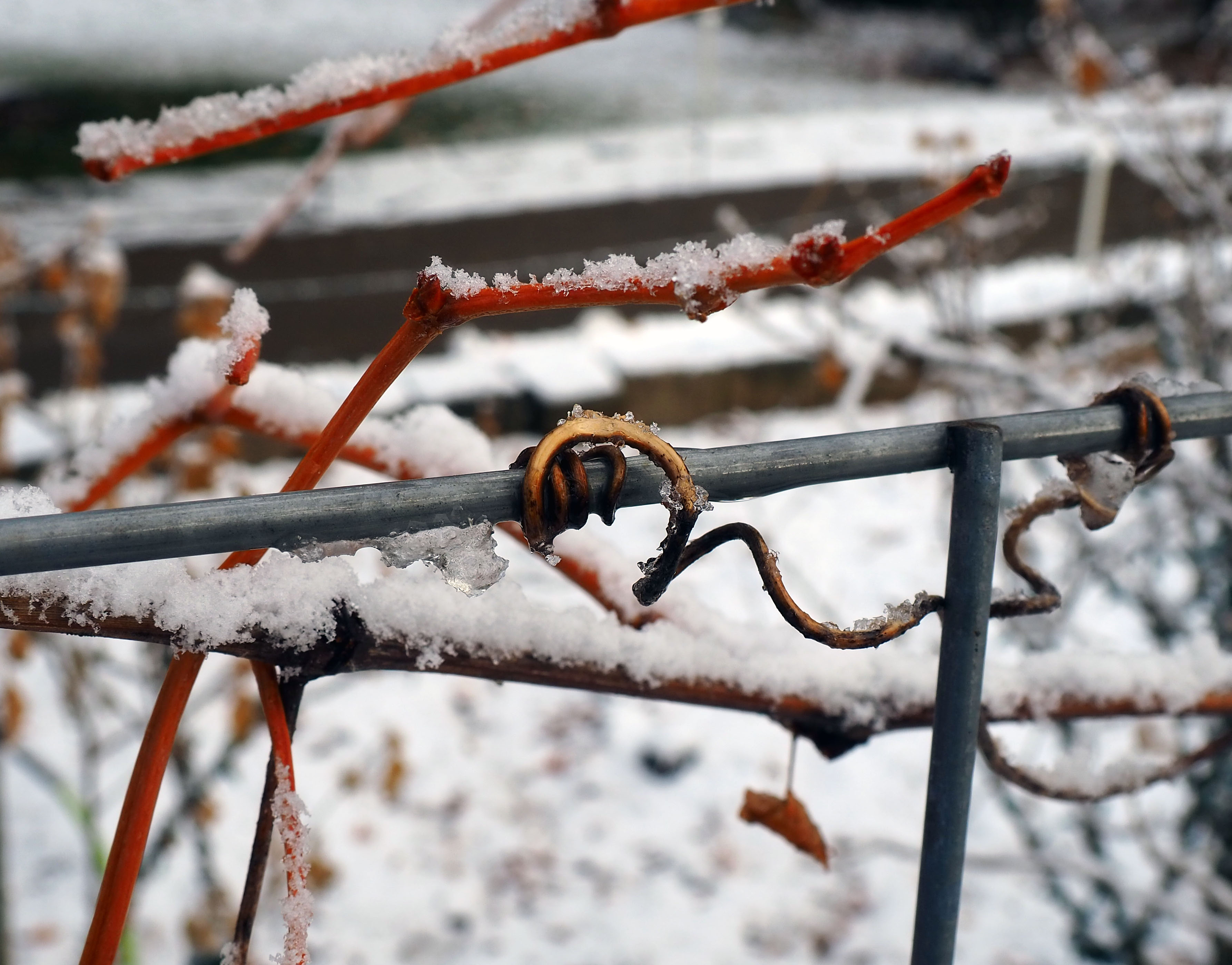
The tendrils of grape vines (Vitis spp.) are modified, sterile inflorescences.

The next three chapters are all about what plants need to survive, namely water, light, and nutrients. Gardeners know that if any of these three things are out of whack, their plants are sure to suffer. Luckily, plants have some experience adapting a number of ways to get the things they need. Roots can search the soil for water and pockets of nutrients. Shoots move in search of light and can produce leaves that match the intensity or amount of sunlight (smaller and thicker in full sun, broader and thinner in the shade). Relationships can be made with microbes that live in the soil in order to gain access to resources, and even to help plants defend themselves (which is the subject of chapter six). Sometimes light is too intense for plants, and plants have developed features to deal with this such as waxes on their leaves, hairy or fuzzy leaf surfaces, or additional plant pigments that can act as sunscreen. Some of these features also help the plant retain water when temperatures are high. Other plant species have adaptations to live in water-abundant environments, such as drip tips on their leaves to help them shed water or special tissues in their stems and roots that help facilitate gas exchange.

Plants need light to carry out photosynthesis, so the more light the better. But not always. The newly emerging leaves of some species are red, orange, and/or yellow in color which helps protect the developing tissues from the intensity of the sun until the tissues have time to mature, at which point they turn their standard green color. In the fall, the leaves of deciduous plants experience a similar color change but in reverse. This change serves a similar function, protecting leaves from sun damage as they reabsorb nutrients back into the plant.

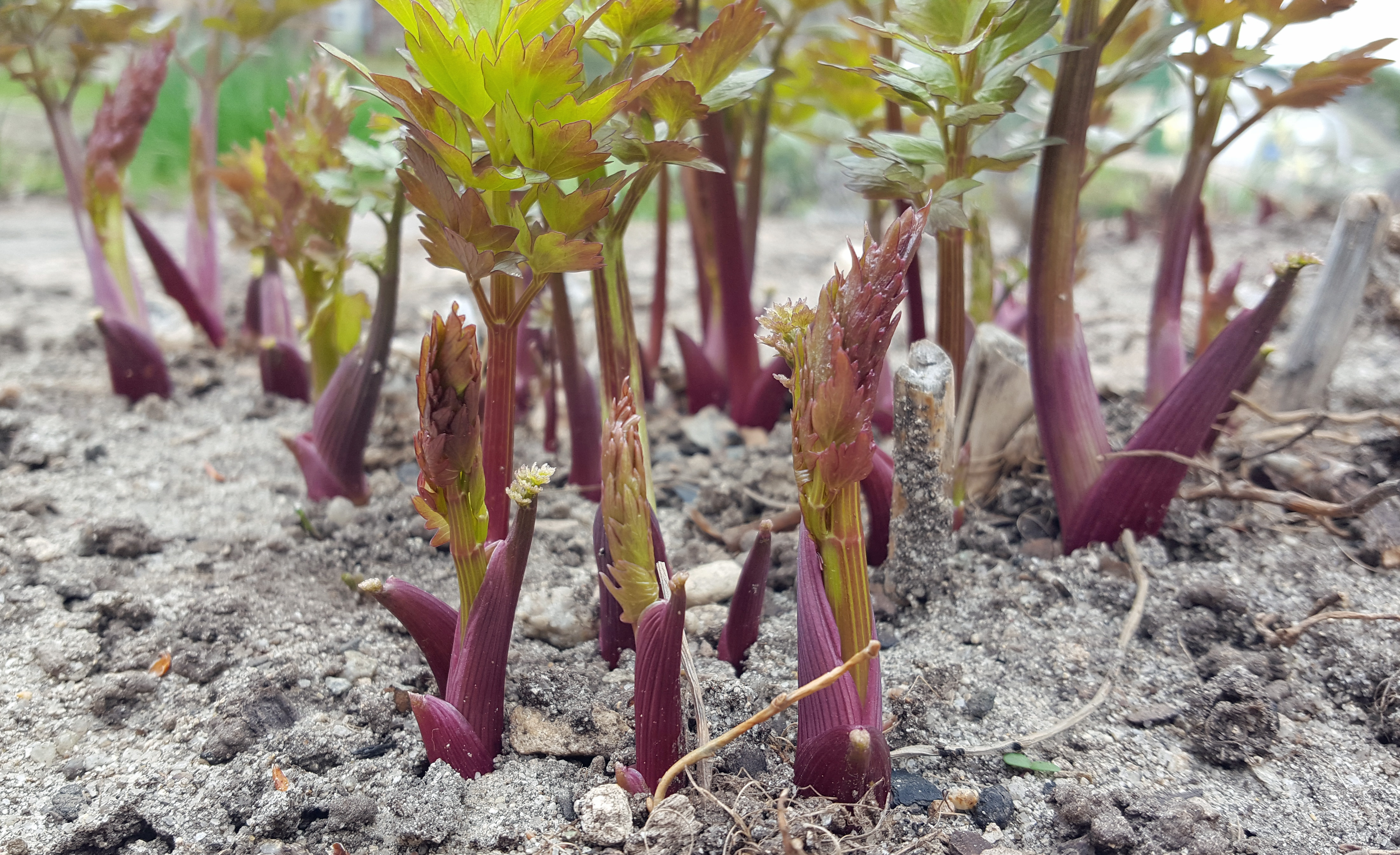
Lovage (Levisticum officinale) emerges in the spring, its leaves first taking on hues of purple and yellow which help protect the developing tissues from harsh, direct sunlight.

The chapter about defense is sure to be a popular one. Who doesn’t enjoy learning about the many ways these stationary organisms have developed to defend themselves against hordes of invaders out to destroy them? From fortifications like thorns, spines, and sticky hairs to any number of toxic substances produced within their tissues, many of which humans have learned to use for our own benefit. Some plants even recruit other species to help them out, like ants, mites, and various microbes. Of course, for all the defenses they put up, there are at least a few herbivorous creatures that manage to find a work around. And so the war continues.

In the following chapter, Zona covers another popular topic, plant sex. Pollinators and pollination have gained a lot of interest over the past decade or so, particularly among gardeners. Turning our gardens into habitats for bees and other insect pollinators is one way we can help conserve these important organisms. Understanding more about the specifics of pollination and plant reproduction will only help us improve these efforts. Learning about the many ways by which plants reproduce asexually also helps us out when we are trying to make more plants. Successful plant propagation and plant breeding rely on a good understanding of the concepts that Zona covers in chapter seven.

The bright yellow spots on the petals of snapdragons (Antirrhinum sp.) mimic pollen-loaded anthers and help draw in pollinators.

The final chapter is all about dispersal – how plants get around – and is one that I will be returning to repeatedly for some time. Plant dispersal is one of my favorite topics, and Zona does not disappoint. All the basic means of getting around are covered, and with them come dozens of stories that demand a curious mind look further into, like palm fruit dispersal by electric eels or the aardvarks that disperse the seeds of underground cucumbers. This a chapter that could have gone on for the whole book.

One of my favorite things about this book is that for the majority of the topics that Zona discusses, plant examples are given so that you can see for yourself, and many of those plants can be easily found either as a common garden plant or indoor houseplant. This means that you don’t have to travel the world to familiarize yourself with these concepts, instead you can see them in action right outside your door. Most of us, whether we have a garden or not, have easy access to plants, even if it’s just the weeds growing in the sidewalk cracks. This makes getting to know the Plant Kingdom a possibility for nearly anyone. As Zona writes, “a stroll in the garden or a hike through the woods is all it takes to begin a journey into a leafy, green world.” Let his book be “your passport, your interpreter, your currency converter, and your host on a learning adventure into the world of plants.”

More Book Reviews:

The Life Cycle of a Sunflower Stem Weevil

Last summer I came across a downy woodpecker hammering away at the stalk of a sunflower. I wondered what it was going after, and so I split open a stalk lengthwise to find the center of the stem hollowed out and several small larvae squirming through the debris left behind. A quick internet search later and I was learning about sunflower stem weevils, specifically Cylindrocopturus adspersus, which seems to be the species getting the most attention online and the stem-dwelling weevil that commercial sunflower growers seem most concerned about.

However, the range of sunflower stem weevil doesn’t appear to extend into Idaho, and so this is not likely to be the larvae I was seeing. There are other weevil species whose larvae can be found inside the stems of sunflowers (The sunflower I was observing was Helianthus annuus. I wasn’t specific about naming a particular species because it is my understanding that these weevils can be found on a variety of different Helianthus species., such as the cocklebur weevil (which is found in Idaho), but since larvae can be difficult to identify, I’ll wait to confirm the identity until I hear from an expert, find an adult weevil, and/or raise the larvae in captivity and see what it turns into. If and when that happens, I’ll be sure to update you. Until then, I present to you the life cycle of a sunflower stem weevil, which is still quite interesting, even if it’s not the species I found inside my sunflower stalks. And to be clear, the sunflower I observed was Helianthus annuus; however, the weevils I refer to in this post can be found on a number of different Helianthus species and related genera.

Sunflower stem weevils are in the family Curculionidae, which is the snout and bark beetle family. There are tens of thousands of species of weevils, a handful of which interact with sunflowers (plants in the genus Helianthus). Some weevil species eat the seeds, others eat the leaves, some are root feeders, while others are stem feeders. Depending on the life stage of a particular weevil species, it may consume multiple parts of a sunflower. Another interesting weevil is the sunflower headclipping weevil, which you can read about at The Prairie Ecologist.

Adult sunflower stem weevils are about 3/16 inch (4-5 mm) long and somewhat egg or oval shaped. They are grayish-brown with white spots. Their eyes, antennae, and snout are black, and their snout is short, curved, and held beneath the head. As adults, they can be found on sunflowers and sunflower relatives eating the leaves. However, they are not easily found. Their size, for one, makes them difficult to see, and they also move to the opposite sides of leaves and stems when disturbed, sometimes dropping to the ground as a threat approaches. You can see images of them on BugGuide.

unidentified larva in a sunflower stem

The larvae of sunflower stem weevils are about a quarter of a inch long and creamy white with a small, brown head capsule. They feed in the vascular tissue of sunflower stalks during the summer. In the fall, they migrate to the base of the stalks and create chambers in the woody tissue of the stalks and root crowns for overwintering.

Sunflower stem weevils have a single generation per year. After overwintering as larvae in the base of last year’s sunflowers, they pupate and emerge as adults in late spring or early summer. They find young sunflower plants and begin feeding on the leaves. After about 2-4 weeks, the weevils mate and lay eggs just beneath the epidermis of sunflower stems, usually in the stalk just below the cotyledon leaves. The eggs hatch a short time later and begin feeding in the stem until it’s time to overwinter.

the life cycle of a sunflower stem weevil

The damage caused by sunflower stem weevils is generally only a problem on sunflower farms, and only when weevils are found in high enough numbers to cause significant yield losses. Damage to leaves by the adults isn’t usually a concern. On the other hand, as the larvae tunnel through the stem, they can cause the plant to lodge (i.e. fall over prematurely), which is a problem particularly when the plants are machine harvested. Sunflower stem weevils can also introduce and help spread a fungus that causes black stem rot.

Read More About Sunflower Stem Weevil and Other Insect Pests of Sunflowers:

Randomly Selected Botanical Terms: Glochids

The spines of a cactus are an obvious threat. They are generally sharp, smooth, and stiff; as soon as you are stabbed by one, it is immediately clear that you’ve gotten too close. Sitting at the base of the spines – or in place of spines – on many species of cacti is a less obvious, but significantly more heinous threat. Unless you’re looking closely, this hazard is practically invisible, and the pain and irritation that can come as a result of close contact has the potential to last significantly longer than the sharp poke of a spine. This nefarious plant part is called a glochid, and if you’ve ever made contact with one (or more likely several dozen of them), it’s not something you will soon forget.

Opuntia polyacantha x utahensis

The spine of a cactus is actually a leaf. The area from which a spine emerges from the fleshy, photosynthetic stem of a cactus is called an areole, which is equivalent to a node or bud on a more typical stem or branch from which leaves emerge. In place of typical looking leaves, a cactus produces spines and glochids. Like spines, glochids are also modified leaves, although they appear more like soft, little tufts of hair. However, this unassuming little tuft is not to be trifled with.

Close inspection of a glochid (with the help of a microscope) reveals why you don’t want them anywhere near your skin. While the surface of a cactus spine is often smooth and free of barbs, glochids are covered in backwards-facing barbs. The miniscule size of glochids combined with their pliable nature and retrose barbs, make it easy for them to work their way into your skin and stay there. Unlike spines, glochids easily detach from a cactus stem. Barely brushing up against a glochid-bearing cactus can result in getting stuck with several of them.

Opuntia basilaris var. heilii

Because glochids can be so fine and difficult to see, you may not even be aware they are there. You probably won’t even feel them at first. Removing them is a challenge thanks to their barbs, and since you may not be able to remove them all, the glochids that remain in your skin can continue to cause irritation for days, weeks, or even months after contact. For this reason, cactuses are generally best seen and not touched, or at the very least, handled with extreme care.

Apart from being a good form of defense, the glochids of some cactus species can serve an additional function. Most cactus species occur in arid or semi-arid climates, where access to water can be quite limited. In order to increase their chances of getting the water they need, some desert plants are able to collect water from the air. A few species of cactus do this, and glochids are a critical component in making this happen.

Cylindropuntia whipplei

A study published in the Journal of King Saud University – Science (2020) examined the dew harvesting ability of Opuntia stricta, commonly known as erect prickly pear. As described above, the spines of O. stricta are smooth, while the glochids are covered in retrose barbs. Both structures are waterproof due to hardened cell walls and cuticles. However, due in part to the conical shapes of both the glochids and their barbs, water droplets from the air are able to collect on the tips of the glochids. From there, the researchers observed the droplets in their travel towards the base of the glochids. As they moved downward, small droplets combined to form larger droplets.

At the base of the glochids are a series of trichomes, which are small hair-like outgrowths of the epidermis. The trichomes do not repel water, but rather are able to absorb the droplets as they reach the base of the glochids. For a plant species that receives very little water from the soil, being able to harvest dew from the air is critical for its survival, and this is thanks in part to those otherwise obnoxious glochids.

See Also: Prickles

Awkward Botany on Outdoor Idaho (plus Send Us Your Questions)

I spend a lot time on this blog putting weeds in the spotlight, celebrating them for their successes and the unique and interesting plants they are. It’s rare that I get to share these sentiments outside of this particular venue, but I was given such an opportunity recently when asked to talk about weeds for an episode of Outdoor Idaho, a long running show on Idaho Public Television that covers Idaho’s natural history. The theme of this particular episode is wildflowers, so I was intrigued by the idea of coming on to discuss urban weeds. For many, the term “wildflowers” may invoke native plants blooming in natural areas in places far removed from the hustle and bustle of the city. But a wildflower doesn’t have to be a native plant, nor does it have to be growing in the wild. Any plant occurring naturally on its own without the assistance of humans can be a wildflower, and that includes our wild urban flora. I appreciated the chance to share this particular thought with the viewers of Outdoor Idaho.

photo credit: Jay Krajic

Along with me waxing on about weeds, the Wildflowers episode features a host of other Idahoans sharing their thoughts, expertise, and experiences with wildflowers. The episode is brief – coming in at under 30 minutes – but the producers packed in a ton of great wildflower content, and overall I found it to be an excellent representation of the flora of Idaho and a convincing argument for why we should appreciate and elevate these plants. The flora of any region is special and important in its own right, and Idaho’s flora is no different, including its weeds.

Check out Outdoor Idaho’s Wildfowers episode here.

In other news…

If you want to see more of me on the screen (and I’m not sure why you would), Sierra (a.k.a. Idaho Plant Doctor) and I are doing monthly Q&A videos in which we answer your questions about plants, gardening, pests and diseases, insects, or any other topic you might be curious about. You can tune in to those discussions on Sierra’s instagram. If you have questions of your own that you would like us to address, please leave them in the comments section below, or send them to me via the contact page or my instagram.

Weeds of Boise: Vacant Lot on West Kootenai Street

Every urban area is bound to have its share of vacant lots. These are sites that for whatever reason have been left undeveloped or were at one point developed but whose structures have since been removed. The maintenance on these lots can vary depending on who has ownership of them. Some are regularly mowed and/or treated with herbicide, while others go untouched for long periods of time. Even when there is some weed management occurring, vacant lots are locations where the urban wild flora dominates. Typically no one is coming in and removing weeds in an effort to cultivate something else, and so weeds run the show.

As with any piece of land populated by a diverse suite of wild plants, vacant lots are dynamic ecosystems, which you can read all about in the book Natural History of Vacant Lots by Matthew Vessel and Herbert Wong. The impact of humans can be seen in pretty much any ecosystem, but there are few places where that impact is more apparent than in a vacant lot. In lots located in bustling urban centers, human activity is constant. As Vessel and Wong write, “numerous ecosystem interactions are affected when humans intervene by spraying herbicides or insecticides, by trampling, by physically altering the area, or by depositing garbage and waste products.” These activities “can abruptly alter the availability and types of small habitats; this will in turn affect animal as well as plant diversity and population dynamics.” The dynamic nature of these sites is a reason why vacant lots are excellent places to familiarize yourself with the wild urban flora.

Kōura relaxing in a vacant lot

On our morning walks, Kōura and I have been visiting a small vacant lot on West Kootenai Street. We have watched as early spring weeds have come and gone, summer weeds have sprouted and taken off, perennial weeds have woken up for the year, and grass (much of which appears to have been intentionally planted) has grown tall and then been mowed with some regularity. Someone besides us is looking after this vacant lot, and it’s interesting to see how the plant community is responding. As Vessel and Wong note, “attempts to control weedy plants by mowing, cultivating, or spraying often initiate the beginning of a new cycle of growth.” For plants that are adapted to regular disturbance, measly attempts by humans to keep them in check are only minor setbacks in their path to ultimate dominance.

What follows are a few photos of some of the plants we’ve seen at the vacant lot on Kootenai Street, as well as an inventory of what can be found there. This list is not exhaustive and, as with other Weeds of Boise posts, will continue to be updated as I identify more species at this location.

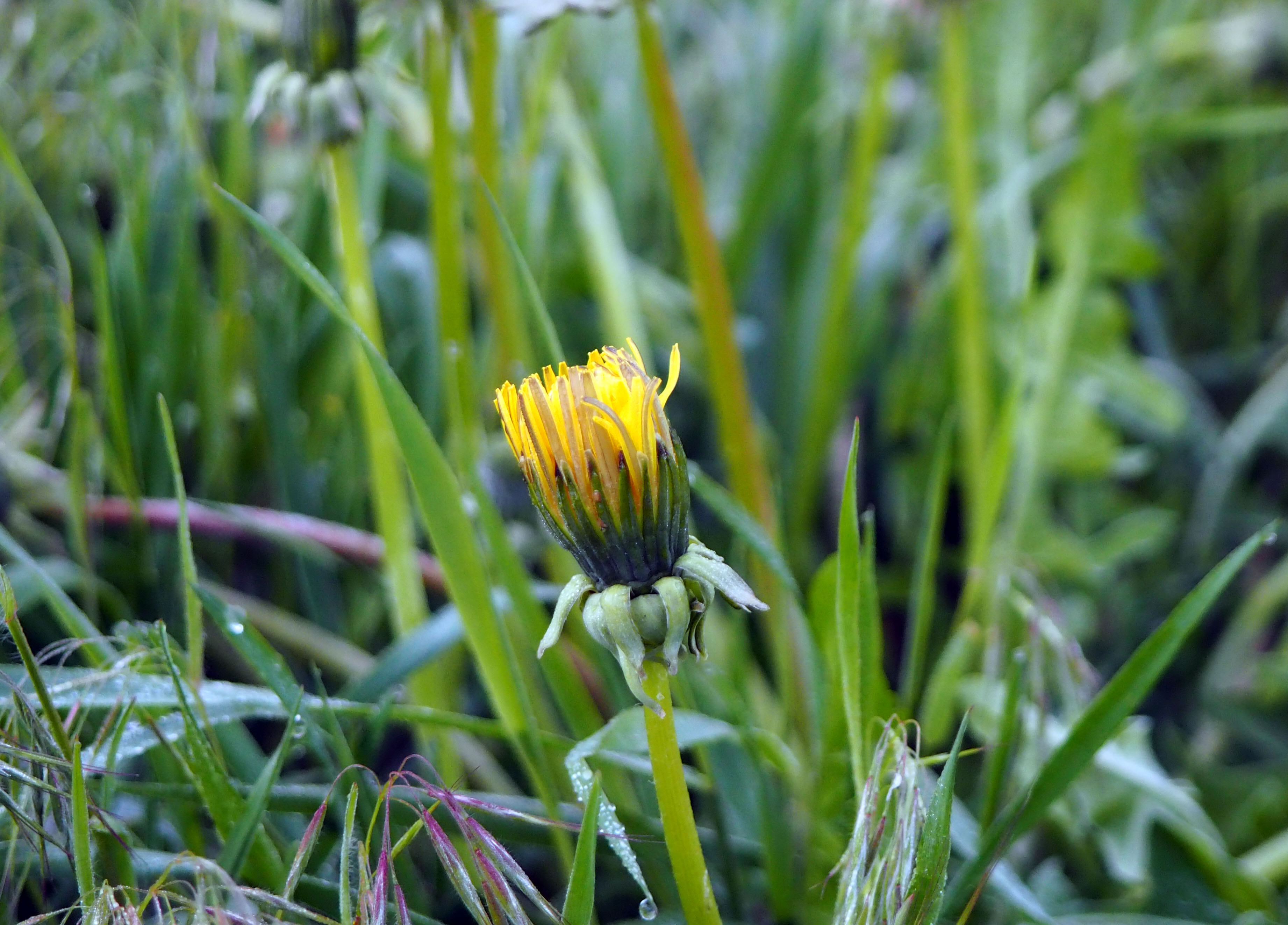
dandelion (Taraxacum officinale)
grape hyacinth (Muscari armeniacum)
henbit (Lamium amplexicaule)
wild barley (Hordeum murinum) backed by cheatgrass (Bromus tectorum)
narrowleaf plantain (Plantago lanceolata) and broadleaf plantain (Plantago major)
perrennial sweet pea (Lathyrus latifolius) surrounded by redstem filaree (Erodium cicutarium)
whitetop (Lepidium sp.)
white clover (Trifolium repens)
  • Bromus tectorum (cheatgrass)
  • Capsella bursa-pastoris (shepherd’s purse)
  • Ceratocephala testiculata (bur buttercup)
  • Convolvulus arvensis (field bindweed)
  • Descurainia sophia (flixweed)
  • Draba verna (spring draba)
  • Erodium cicutarium (redstem filaree)
  • Geum urbanum (wood avens)
  • Holosteum umbellatum (jagged chickweed)
  • Hordeum murinum (wild barley)
  • Lactuca serriola (prickly lettuce)
  • Lamium amplexicaule (henbit)
  • Lathyrus latifolius (perennial sweet pea)
  • Lepidium sp. (whitetop)
  • Malva neglecta (dwarf mallow)
  • Medicago lupulina (black medic)
  • Muscari armeniacum (grape hyacinth)
  • Plantago lanceolata (narrowleaf plantain)
  • Plantago major (broadleaf plantain)
  • Poa bulbosa (bulbous bluegrass)
  • Poa pratensis (Kentucky bluegrass)
  • Rumex crispus (curly dock)
  • Taraxacum officinale (dandelion)
  • Tragopogon dubius (salsify)
  • Trifolium repens (white clover)
  • Veronica sp. (speedwell)

If you live in an urban area, chances are good there is a vacant lot near you. What have you found growing in your neighborhood vacant lot? Feel free to share in the comment section below.

The Serotinous Cones of Lodgepole Pine

Behind the scales of a pine cone lie the seeds that promise future generations of pine trees. Even though the seeds are not housed within fruits as they are in angiosperms (i.e. flowering plants), the tough scales of pine cones help protect the developing seeds and keep them secure until the time comes for dispersal. In some species, scales open on their own as the cone matures, at which point winged seeds fall from the tree, taking flight towards their new homes. In other species, the scales must be pried open by an animal in order to free the seed. A third group of species have what are called serotinous cones, the scales of which are sealed shut with resin. High temperatures are required to soften the resin and expose the seeds.

Serotinous cones are a common trait of pine species located in regions where wildfire naturally and regularly occurs. One such species is lodgepole pine (Pinus contorta), which is found in abundance in forests across much of western North America. Lodgepole pine is a thin-barked tree species that burns easily and is often one of the first plants to recolonize after a stand-replacing wildfire. There are 3 or 4 subspecies of lodgepole pine. The one with the largest distribution and the one that most commonly exhibits serotinous cones is P. contorta subsp. latifolia, which occurs throughout the Rocky Mountains, north into the Yukon, and just west of the Cascade Range.

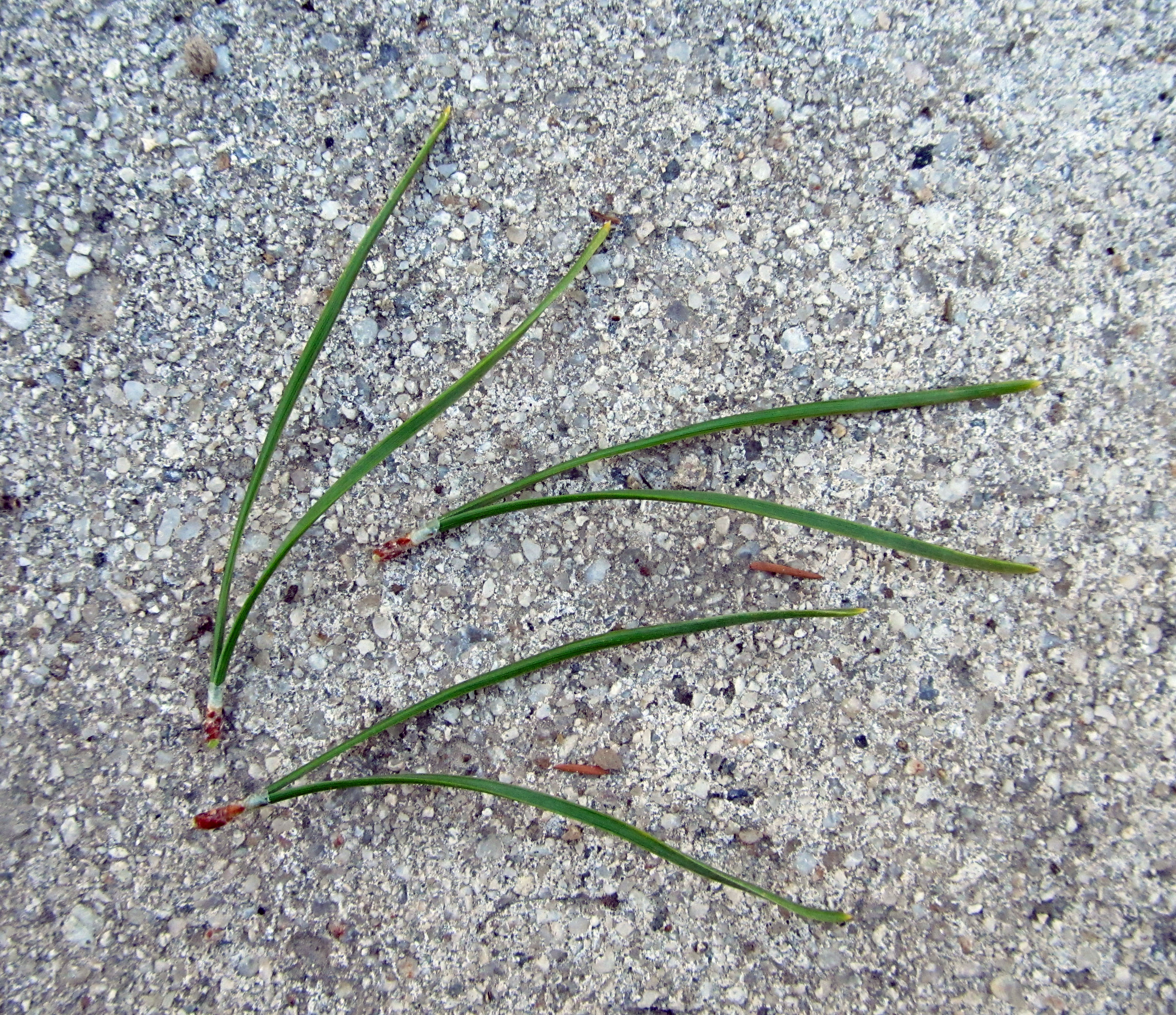
needles of lodgpole pine (Pinus contorta)

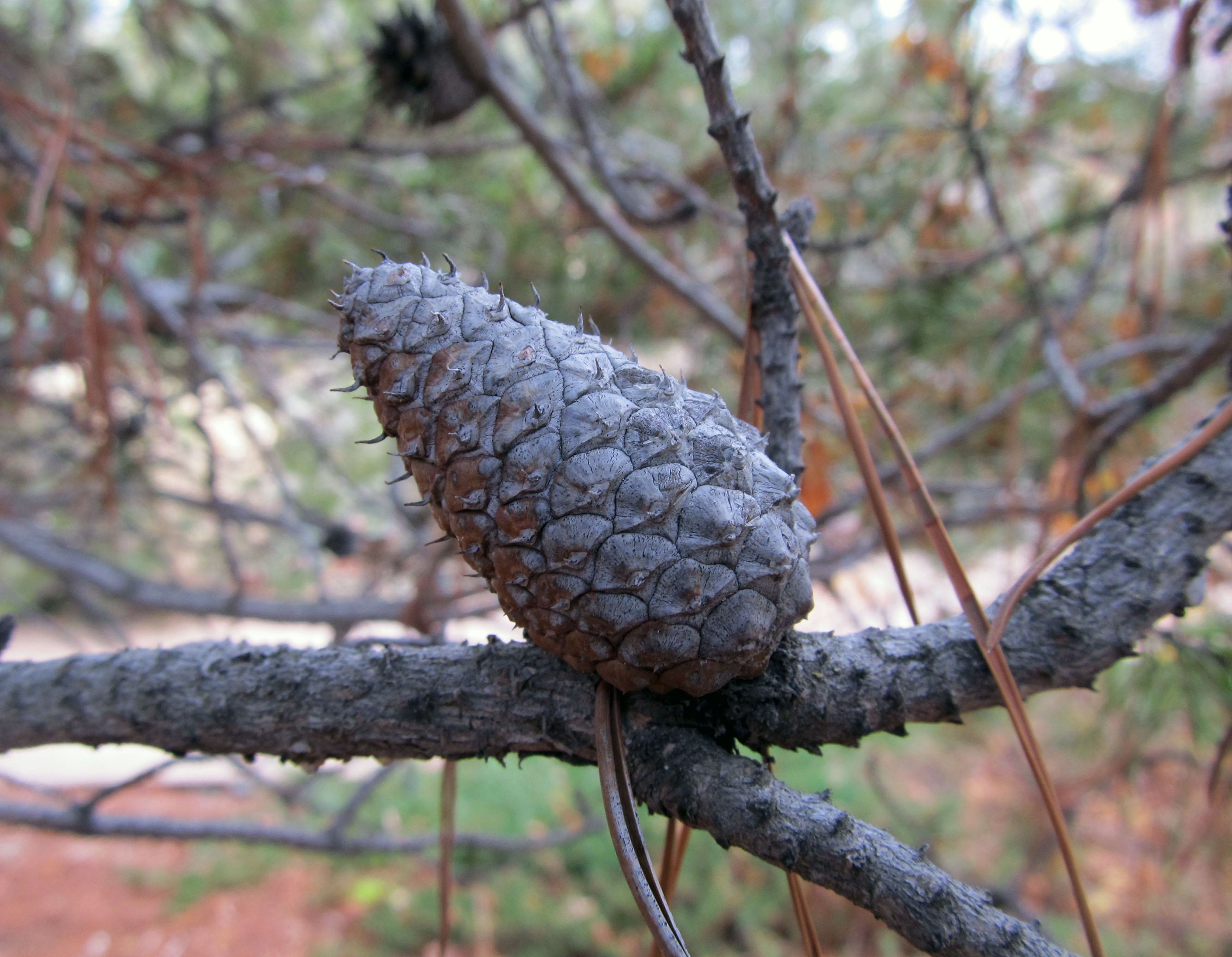
Lodgepole pine grows tall and straight, generally maxing out at around 80 feet tall. Its needles are about two and a half inches long, are borne in bundles of two, and tend to twist away from each other, which is one explanation for the specific epithet, contorta. Its cones are egg-shaped with asymmetrical bases, measuring less than two inches long with prickly tips at the ends of each scale. The seeds of lodgepole pine are tiny with little, papery wings that aid in dispersal. The cones can remain attached to the tree for 15-20 years (sometimes much longer), and the seeds remain viable for decades. In non-serotinous cones, the scales start opening on their own in early autumn. Serotinous cones require temperatures of 45-50°C (113-122°F), to release the resin bond between the scales. Some cones that happen to fall from the tree can open when exposed to particularly warm temperatures on the ground. Otherwise, it takes fire to free the seeds.

Serotinous cones aren’t a guarantee, and the percentage of trees with serotinous cones compared to those with non-serotinous cones varies widely across the range of lodgepole pine, both in space and in time. One reason for this is that trees with serotinous cones don’t develop them until they reach a certain age, generally around 20-30 years old, or perhaps as old as 50 or 60. The cones of young trees are all non-serotinous. But some trees never develop serotinous cones at all. Serotiny is a genetic trait, and there are various factors that either select for or against it. A number of factors are at play simultaneously over the life of a tree and across a population of trees, so it is difficult to determine exactly why the percentage of serotinous cones is so variable across the range of the species. What follows are a few potential explanations for this phenomenon.

closed cone of lodgepole pine (Pinus contorta)

As a fire-adapted, pioneer species, lodgepole pine has evolved to live in environments where fire is predictably common. Serotinous cones help ensure that a population won’t be wiped out when a massive wildfire comes through. After the fire has passed and the seeds are released, lodgepole pine can quickly repopulate the barren ground. As long as fire occurs within the lifespan of a population of similarly aged trees, it is advantageous for the majority of individuals to maintain their serotinous trait. If the population is located in an area that historically does not see much fire, serotinous cones may be a disadvantage and can have adverse effects on the longevity of that population.

A study published in Ecology in 2003 looked at the influence that the frequency of fire has on lodgepole pine stands found at low and high elevations in Yellowstone National Park. At lower elevations, where summer temperatures are warmer and precipitation is relatively minimal, fires occur more frequently compared to higher elevations, which tend to be cooler and wetter. The researchers found that at lower elevations when fires occurred at short intervals (less than 100 years between each fire), lodgepole pine was slower to repopulate compared to longer intervals. This suggests that the percentage of serotiny found in stands that experienced short fire intervals was low, and that stands with long fire intervals exhibit a higher percentage of serotiny. After all, as mentioned above, lodgepole pines don’t start developing serotinous cones until later in life.

At higher elevations, where fire occurs less frequently, lodgepole pines were found to have a low percentage of serotinous cones regardless of the age of the stand. Because the trees at high elevations are more likely to die of old age rather than fire, maintaining serotinous cones would be a disadvantage. Open cones are preferred. Thus, at least in this study, a greater percentage of serotinous cones was found in lodgepole pines at lower elevations compared to those at higher elevations. Latitude, elevation, mountain pine beetle attacks, and other environmental factors have all been used to explain differences in serotiny. However, the factor that seems to have the greatest influence is the frequency of fire. As James Lotan writes in a 1976 report: “A high degree of cone serotiny would be expected where repeated, high-intensity fires occur. Where forest canopies are disrupted by factors other than fire, open cones annually supply [seed] for restocking disturbances such as windfalls.”

That being said, one other factor does appear to play a critical role in whether or not lodgepole pines produce serotinous cones, and that is seed predation by squirrels. In a paper published in Ecology in 2004, researchers wondered why the percentage of serotinous cones wasn’t even higher in populations where fire reliably occurred during the lifetime of the stand. To help answer this question they looked at the activities of pine squirrels, which are the main seed predator of lodgepole pine seeds. Pine squirrels visit the canopy of lodgepole pines and consume the seeds found in serotinous cones. Because non-serotinous cones quickly shed their seeds, serotinous cones are a more reliable and accessible food source, and because pine squirrels are so effective at harvesting the seeds of serotinous cones, the researchers concluded that, “in the presence of pine squirrels, the frequency of serotiny is lower and more variable, presumably reflecting,” among a variety of other factors, “the strength of selection exerted by pine squirrels.”

A study published in PNAS in 2014 added evidence to this conclusion. While acknowledging that fire plays a major role in the frequency of serotinous cones, the researchers asserted that “squirrels select against serotiny and that the strength of selection increases with increasing squirrel density.” However, despite making it easier for squirrels to access their seeds, lodgepole pines maintain a degree of serotinous cones, since clearly their main advantage is retaining a canopy-level seed bank from which seeds are released after a fire and by which a new generation of lodgepole pines is born.

open cones of lodgepole pine (Pinus contorta)

Further Reading and Viewing:

Meet Erigeron linearis

Erigeron is a genus of herbaceous, flowering plants consisting of between 390 and 460 species and is a member of the aster/sunflower family (Asteraceae). Plants in this genus are annuals, biennials, or perennials and are mainly found in temperate regions around the world. At least 163 species occur in the contiguous United States. Erigeron diversity is particularly high in western states; however, each state is home to at least one Erigeron species.

A common name for plants in this genus is fleabane. This name comes from an outdated belief that the plants can be used to repel or poison fleas, flies, gnats, and other tiny insects, a belief for which there is no evidence. In Ancient Greek, the name Erigeron is said to mean something akin to “old man in the early morning,” likely referring to the appearance of the seed heads which look like little tufts of white hair. Some Erigeron species are also commonly referred to as daisies.

desert yellow fleabane (Erigeron linearis)

One species of Erigeron that I would like you to meet is Erigeron linearis. While most of the plants in this genus have flowers that are white, pink, or various shades of purple, E. linearis is a yellow-flowered species, hence the common name, desert yellow fleabane. Another common name for this plant is narrow leaved fleabane, a reference to its linear leaves. E. linearis is a small plant with a prominent taproot that reaches up to 20 centimeters tall and forms a leafy, rounded mat or cushion of whitish or gray-green, alternately arranged leaves. The white appearance is due to numerous, fine, appressed hairs on the leaves and stems. Flower stalks are produced in abundance in late spring through early summer and are mostly leafless. They reach above the mound of leaves and are each topped with at least one flower head, which nods at first, but then straightens out as the flowers open. Each flower head is about 2 centimeters wide and is typical of plants in the sunflower family, with a cluster of deep yellow disc florets in the center, surrounded by ray florets that are lighter in color. Both disc and ray florets are fertile; however, the disc florets have both “male” (stamens) and “female” (pistils) flower parts, while the ray florets have only “female” parts. The involucre, which sits at the base of the flowers, is egg-shaped or hemispheric and made up of a series of tiny, fuzzy bracts called phyllaries.

the flower head of desert yellow fleabane (Erigeron linearis)

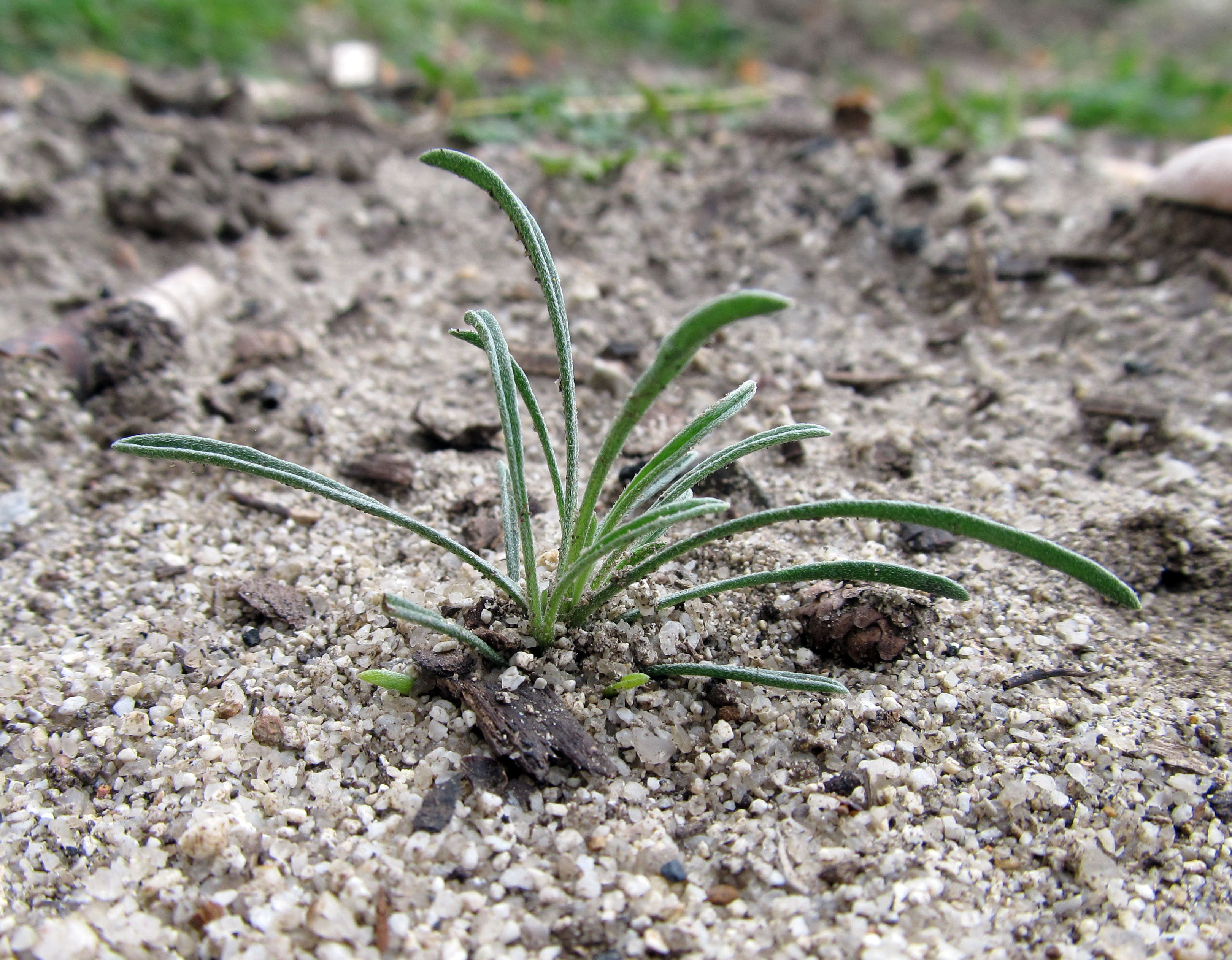
The fruit of Erigeron linearis is called a cypsela, an achene-like fruit that is characteristic of plants in the sunflower family. The fruits are miniscule and topped with a pappus composed of short outer bristles and longer, pale, inner bristles. The two types of pappus bristles (or double pappus) must be the reason for the scientific name this species was originally given in 1834, Diplopappus linearis. While the seeds of more than 80% of flowering plant species found in dryland regions exhibit some form of dormancy, a study published in Plant Biology (2019), found that E. linearis is one of the few species with non-dormant seeds. This means that for those of us interested in growing plants native to the Intermountain West, E. linearis is a pretty easy one to grow and is a great addition to water-wise gardens, pollinator gardens, and rock gardens.

Erigeron linearis seedling

Erigeron linearis is distributed across several western states and into Canada. It is found in northern California, eastern Oregon and Washington, southern British Columbia, across Idaho and east into southern Montana, western Wyoming and northwestern Utah. It is found at low to moderate elevations in open, rocky foothills, grasslands, sagebrush steppe, and juniper woodlands. It prefers well-drained soils and full sun. It is one of many interesting plants found on lithosols (also known as orthents), which are shallow, poorly develop soils consisting of partially weathered rock fragments. In the book Sagebrush Country, Ronald Taylor calls lithosols “the rock gardens of the sagebrush steppe,” and refers to E. linearis and other members of its genus as “some of the more colorful components of the lithosol gardens.” E. linearis is a food source for pronghorn, mule deer, and greater sage-grouse, and the flowers are visited by several species of bees and butterflies. The plant is also a larval host for sagebrush checkerspots.

desert yellow fleabane (Erigeron linearis)

Additional Resources: