Botany in Popular Culture: Close It Quietly by Frankie Cosmos

Frankie Cosmos – the stage name for Greta Kline and also the name of her band – is not a new thing but was new to me in 2019. Their music is classified broadly as indie rock or indie pop, and could easily be placed in a number of subgenres. I, however, consider it punk. The songs are short, emotionally raw, unconventionally structured, simply arranged, and independently produced. That’s punk enough for me. Their most recent album, Close It Quietly, is easily my top pick for best album of 2019. The reason I’m saying this here on a blog about plants is because plants are featured in some of the lyrics. But it’s more than that really.

Quite often plants find their way into the lyrics of songs. They are, after all, great subject matter for all kinds of art. The special thing to me about the lyrics of Close It Quietly isn’t so much that plants get mentioned, but the sentiments that surround the references and the lessons learned from them. It may just be personal bias, but to me the plant references are more than just cursory. They come from a place of connection and personal relationship. Plants have things to teach us, and when we are open to it – which is often during challenging times in our lives – we can hear their lessons.

Trees receive the bulk of the plant references on this album. Like the song “Trunk of a Tree,” for example, in which Greta sings, “You’re the trunk of a tree / silent, filled with clarity.” That’s no surprise though. As David George Haskell writes in his book, The Songs of Trees, “To listen to trees, nature’s great connectors, is therefore to learn how to inhabit the relationships that give life its source, substance, and beauty.” There is great wisdom in trees. Confiding in or consulting with them can help bring clarity to a moment or feeling. This doesn’t have to mean anything weird – just being among trees and observing them in a reflective way will do the trick.

What follows is a list of some of the songs on Close It Quietly along with their plant references and some thoughts about them.

“41st”

This song is pretty fitting for the start of a new year, with the first line asking, “Does anyone wanna hear the 40 songs I wrote this year?” Looking back, maybe it was a crummy year. Perhaps you weren’t treated well, or maybe someone in your life didn’t turn out to be who you thought they were. There may be some comfort in knowing that you’re not the only one going through such things. Glancing up at the trees, Greta sings, “I look at the branches and hold a mirror up / They’re looking at me and say, ‘You don’t have a comb, do ya?'” The tangled branches of trees speak of past difficulties. As it turns out, we all have challenges that we’re trying to move past.

“A Joke”

We often find ourselves under pressures to be or act a certain way – to conform to some standard that was decided by someone else. Timelines created by other people direct our lives and tell us how or where we should be at a certain age or point in life. But, as Greta notes, “Flowers don’t grow in an organized way. Why should I?” It’s okay to be yourself, and there is no rush to become someone or something else.

“Rings (on a Tree)”

Sometimes we have to walk away from relationships, particularly when those relationships are not good for us. It’s never easy, but perhaps you’ll come to the realization that “it was wrong, so wrong / to try to hold on to a fallen tree / one that wouldn’t even look at me” or one that wasn’t “holding arms out lovingly.” It doesn’t mean that person wasn’t or still isn’t meaningful to you in some way. It’s just that it’s time to move on.

“This Swirling”

In our worst moments we are “like a dandelion,” and “just a little bit of breath blows [us] apart.” Our lives feel as chaotic as the swirling of a dandelion fluff tumbling through the air. However, a closer look reveals that a dandelion seed in flight is actually more stable than we originally thought. Perhaps we can take some comfort in that.

More Botany in Popular Culture

2019: Year in Review

It’s the start of a new decade and the beginning of another year of Awkward Botany. As we’ve done in years prior, it’s time to look back at what we’ve been up to this past year and look forward to what’s coming in the year ahead. Thank you for sticking with us as we head into our eighth year exploring and celebrating the world of plants.

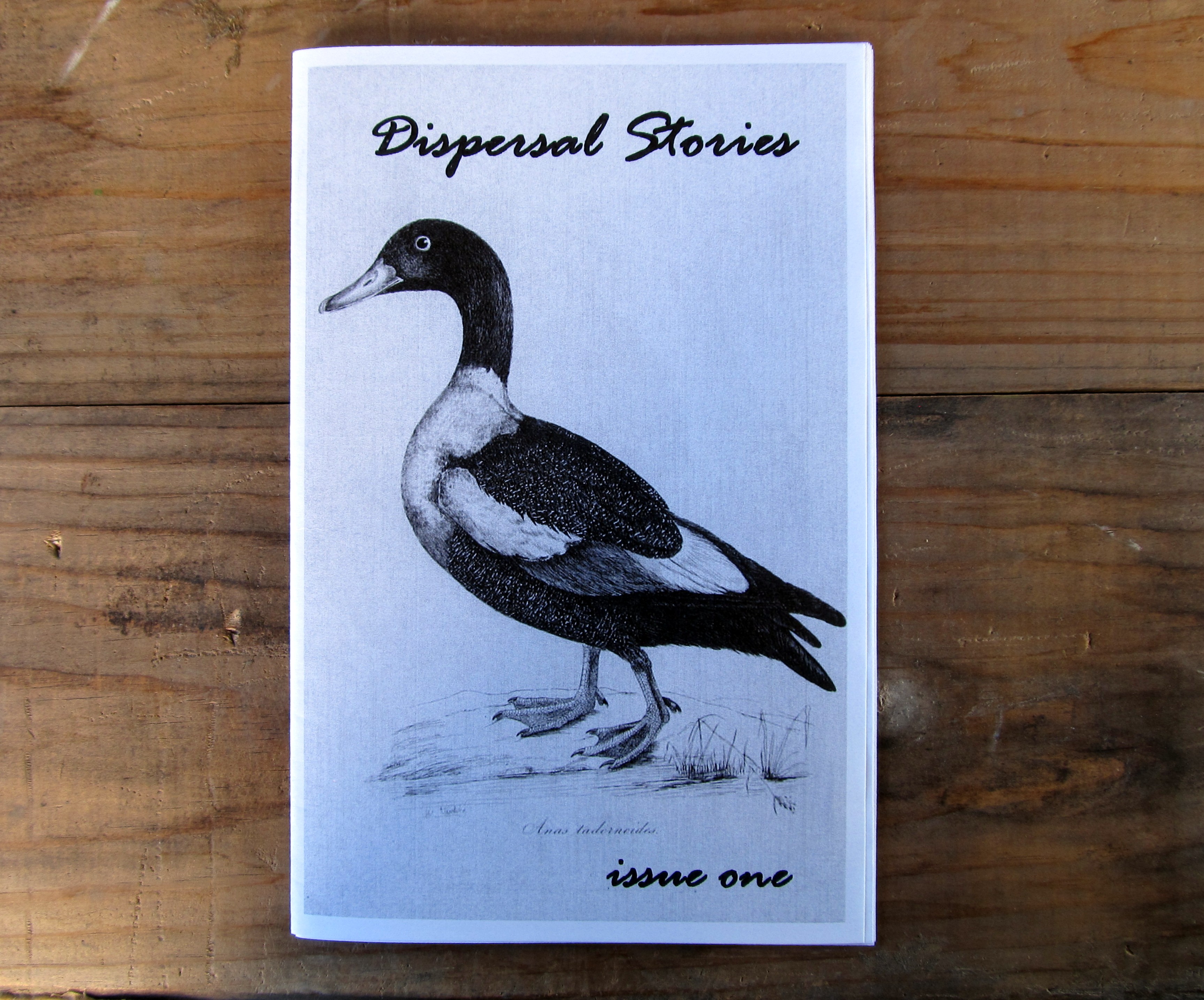
The most exciting news of 2019 (as far as Awkward Botany is concerned) is the release of the first issue of our new zine, Dispersal Stories. It’s a compilation of (updated) writing that originally appeared on Awkward Botany about seeds and seed dispersal and is the start of what I hope will be a larger project exploring the ways in which plants get around. Look forward to the second issue coming to a mailbox near you sometime in 2020.

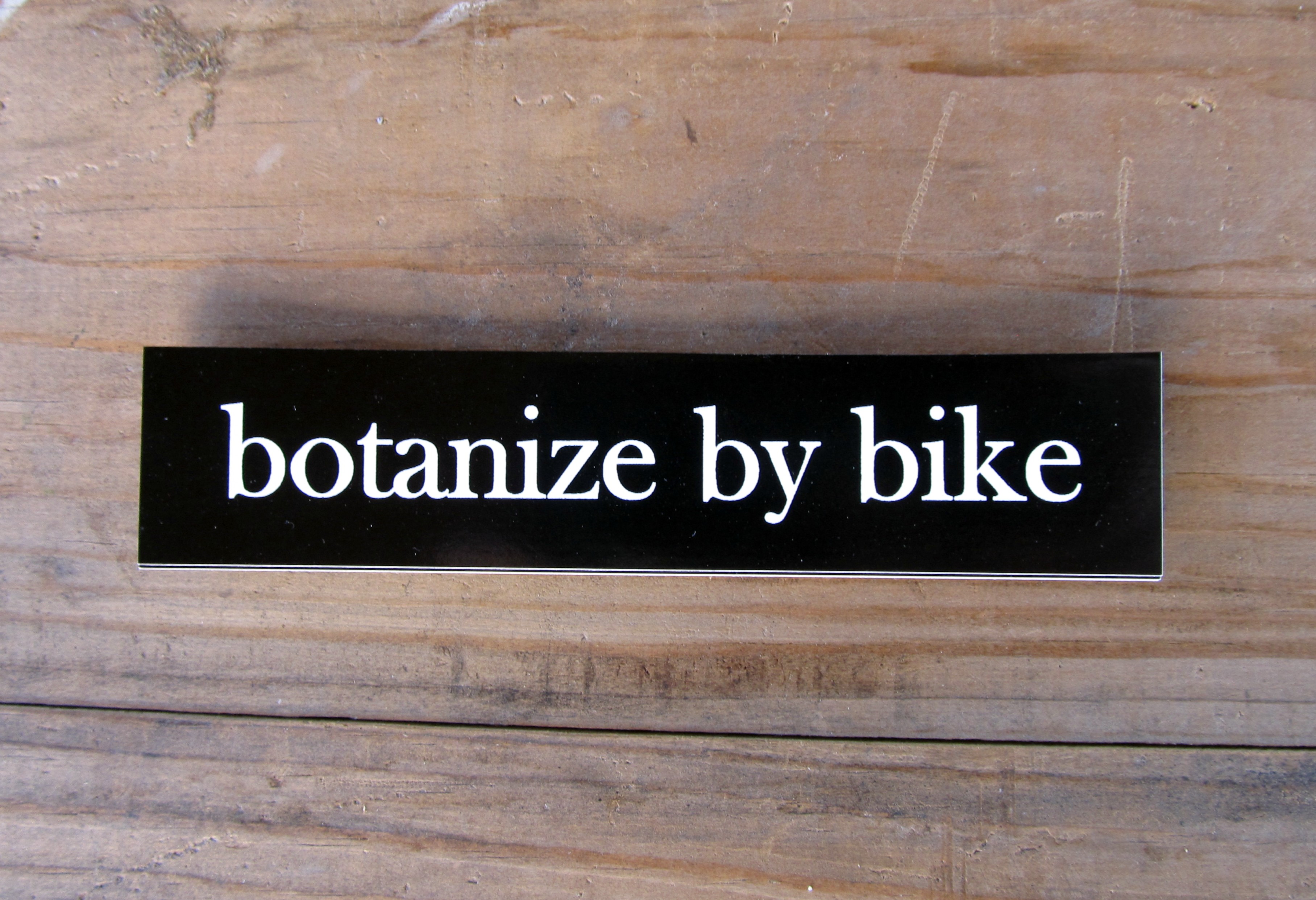
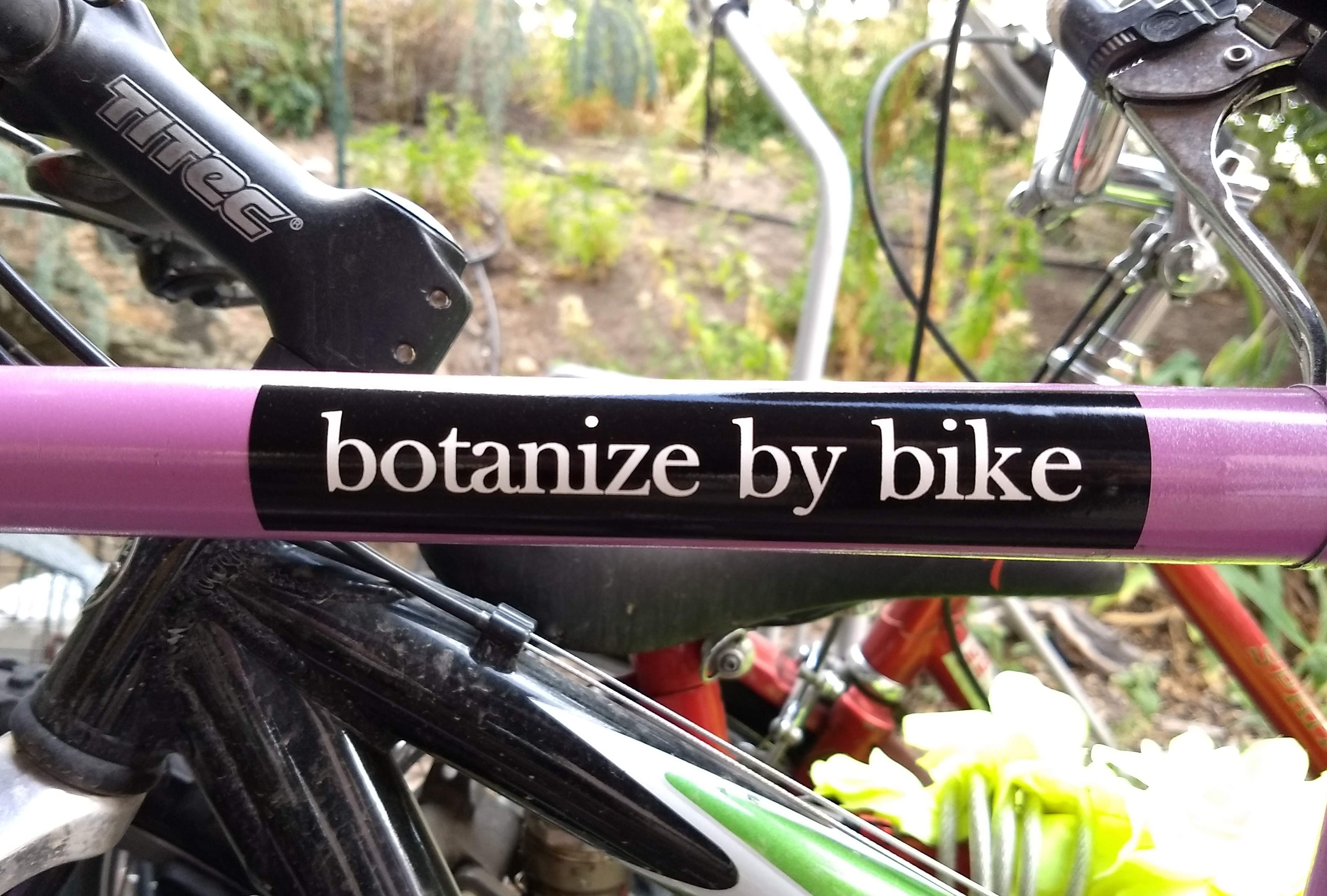
Also new to our Etsy Shop is a sticker reminding us to always be botanizing, including while riding a bike. Stay safe out there, but also take a look at all the plants while you’re cruising around on your bike or some other human-powered, wheeled vehicle. Whether you’re in a natural area or out on the streets in an urban or rural setting, there are nearly always plants around worth getting to know.

This year we also started a Ko-fi page, which gives readers another avenue to follow us and support what we do. Check us out there if Ko-fi is your thing.

Buy Me a Coffee at ko-fi.com

We also still have our donorbox page for those who would like to support us monetarily. As always you can stay in touch with us by liking and following our various social media accounts (Facebook, Twitter, Tumblr, and our currently inactive, but that could change at any moment Instagram). Sharing is caring, so please be sure to tell your friends about Awkward Botany in whatever way you choose. We are always thrilled when you do.

Below are 2019 posts that are part of new and ongoing series. You can access all other posts via the Archives widget. 2019 saw a significant drop in guest posts, so if you’d like to submit a post for consideration, please visit our Contact page and let me know what you’d like to write about. Guest writers don’t receive much in return but my praise and adulation, but if that sounds like reward enough to you, then writing something for Awkward Botany might just be your thing. And while we’re on the topic of guest posts, check out this post I wrote recently for Wisconsin Fast Plants.
Happy Reading and Plant Hunting in 2020!

Inside of a Seed & Seed Oddities:

Podcast Review:

Poisonous Plants:

Tiny Plants:

Eating Weeds:

Using Weeds:

Drought Tolerant Plants:

Tea Time:

Field Trip:

Awkward Botanical Sketches:

Guest Posts:

Pine Cones and the Fibonacci Sequence

While we’re on the topic of pine cones, have you ever considered their scales and the spirals they form? Nature is replete with spirals, so perhaps it’s no surprise that they are found in pine cones. The more interesting thing is that the number of spirals found on pine cones are almost always Fibonacci numbers. But maybe that’s not that surprising either, as Fibonacci numbers are also pretty common in nature.

Add 1 plus 1 and you get 2. Add 2 plus 1 and you get 3. 3 + 2 = 5, 5 + 3 = 8, and 8 + 5 = 13. One, two, three, five, eight, and thirteen are Fibonacci numbers. Continue adding the sum to the number that came before it, and that’s the Fibonacci Sequence. The ratio of two neighboring Fibonacci numbers is an approximation of the golden ratio (e.g. 8/5 = 1.6). This is commonly represented by drawing a series of squares on graph paper and then drawing a spiral across the squares. Each square drawn is larger than the last in accordance with the Fibonacci sequence, and the spiral drawn through the squares is a logarithmic spiral.

So, what does this have to do with pine cones? Well if you count the number of spirals that are going to the right, then count the number of spirals going to the left, you usually end up with two adjacent numbers in the Fibonacci sequence. Most often it’s either 5 and 8 or 8 and 13. You can find this same pattern in lots of other plant parts, including the aggregate fruits of pineapples, the disc flowers of sunflowers (and other plants in the aster family), the bracts of artichoke flowers, florets on a cauliflower, and leaf arrangements of all sorts of other plants.

The arrangement of leaves is called phyllotaxis, and when the leaves on a stem form a spiral pattern it’s called a phyllotactic spiral. The benefit the plant receives from having its leaves grow in a spiral formation down the length of its stem is actually quite simple – it keeps them from shading each other out and thereby maximizes their exposure to the sun. If you measure the angle between each leaf, the angle should be the same between each adjacent leaf on the stem. In order for the number of spirals to be a Fibonacci number, the leaves have to be oriented at a specific angle from each other. But this isn’t always the case. Depending on the angle, the number of spirals could be part of some other number sequence, like Lucas numbers perhaps.

While the specifics of plant growth can be quite complex, the reason for the patterns that result is actually quite simple. As plants grow new parts, they are put in a spot where there is room for them to grow, which is at some angle from the part that grew before it. Once that angle is “chosen,” it generally doesn’t change, and as more plant parts grow, a spiral forms (or no spiral forms at all, depending on the pattern of growth). If plant parts are oriented at a specific angle (~ 137.5o), the numbers of spirals end up being Fibonacci numbers. For a more thorough and entertaining explanation of all this, check out this three part video series from Khan Academy. It’s well worth the watch.

And now an example:

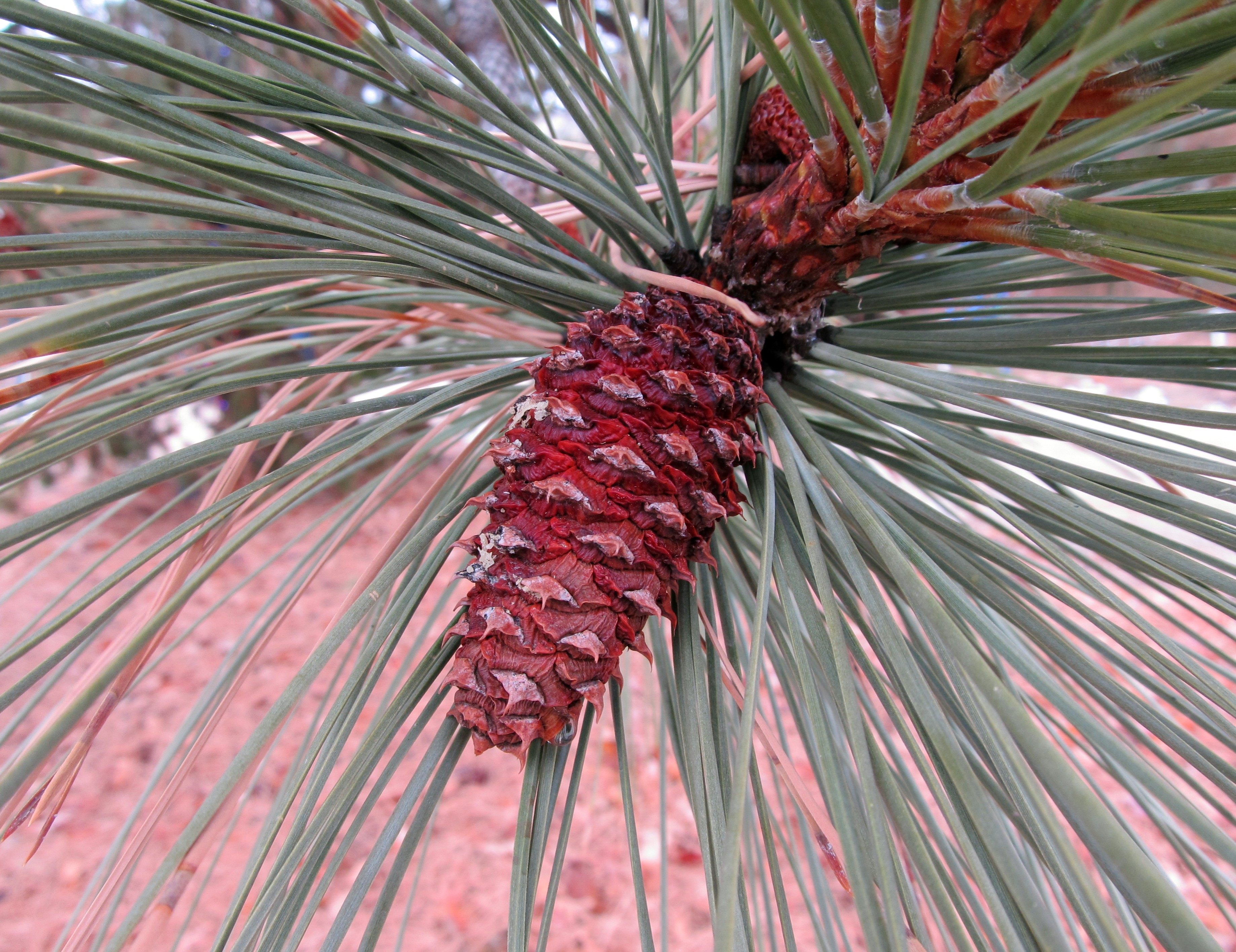
Count the number of right-hand spirals on this ponderosa pine cone. There are 8. That’s a Fibonacci number!

Count the number of left-hand spirals on this ponderosa pine cone. To make it easier to count, you can start or end with the top left spiral that has alternating red and green scales. There are 13. That’s another Fibonacci number!

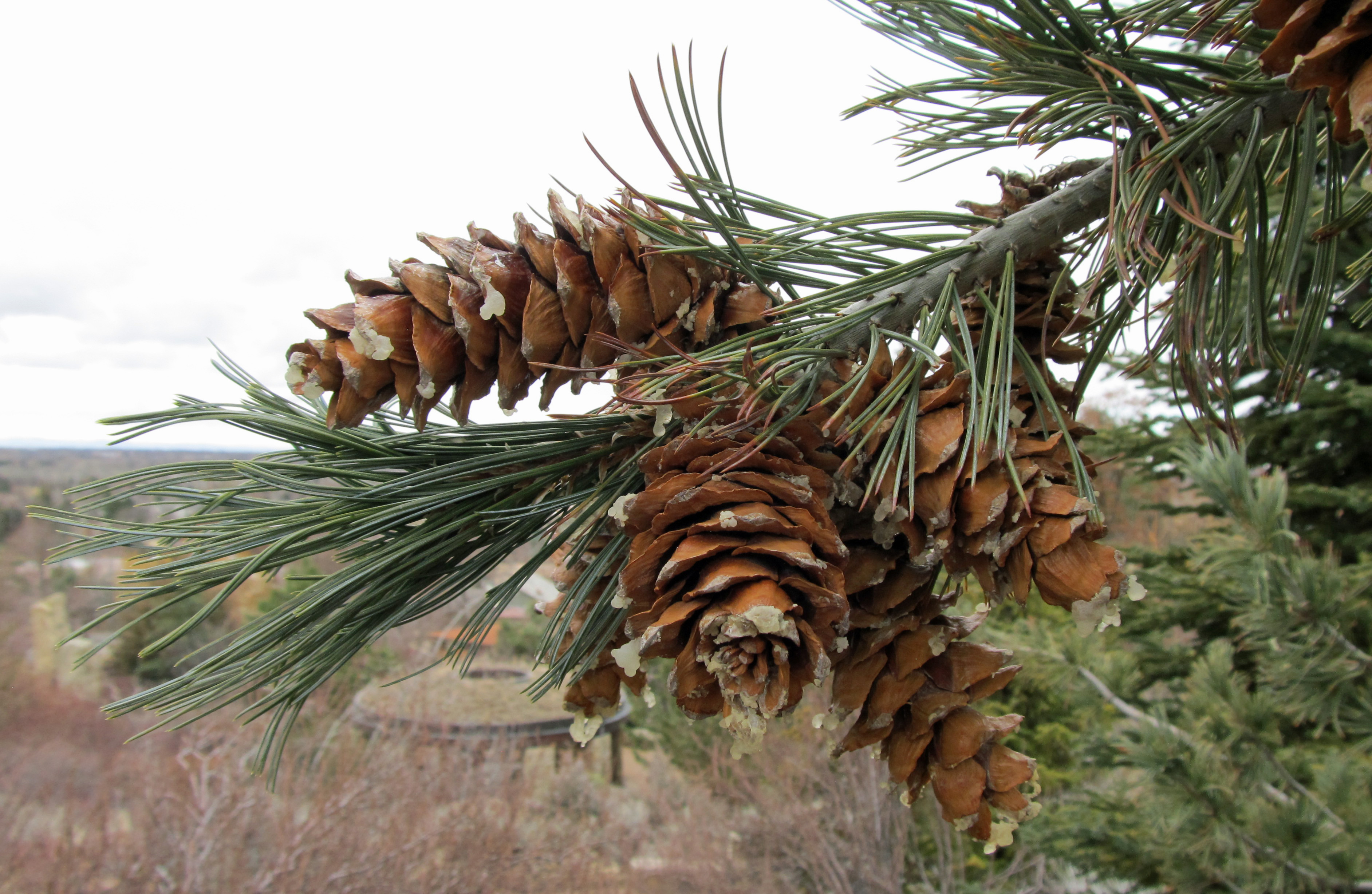
And now your mission, should you choose to accept, is to find a pine cone (or some other conifer cone) in which the number of right and left-hand spirals are not Fibonacci numbers. They’re definitely out there, so let me know what you find in the comment section below.

Further Reading:

Out Now! Dispersal Stories #1

Before I started this blog, I had spent 16 years publishing zines at a steady clip and sending them to all corners of the world through the mail. I had never really meant to abandon zines altogether, and in some ways, putting all my writing efforts into a blog felt a little like a betrayal. My intention had always been to one day put together another zine. Now, six and a half years later, I’m happy to report that day has come.

Rather than bring an old zine back from the grave, I decided to make a new zine. Thus, Dispersal Stories #1. It’s quite a bit different from zines I’ve made in the past, which were generally more personal and, I guess, ranty. In fact, Dispersal Stories is very much like this blog, largely because it is mostly made up of writing that originally appeared here, but also because its main focus (for now) is plants. What sets it apart is that, unlike this blog, it zeroes in on a specific aspect of plants. As the title suggests, it’s all about dispersal. For much of their life, plants are essentially sessile. Once they are rooted in place, they rarely go anywhere else. But as seeds, spores, or some other sort of propagule they are actually able to move around quite a bit. The world is their oyster. What’s happening during this period of their lives is the focus of Dispersal Stories.

But why do a zine about this? Apart from just wanting to do another zine after all these years, my hope is that Dispersal Stories will be the start of a much more ambitious project. A book perhaps. My interest in dispersal was born out of my interest in weeds, and there is so much that I would like to learn and share about both of these subjects – so much so that the blog just doesn’t really cut it. So, I’m expanding the Awkward Botany empire. First a zine, then a book, then … who knows? I’m an oyster! (Or something like that.)

Dispersal Stories #1 is available in our etsy shop, or you can contact me here and we can work something out. While you’re at it, check out our new sticker.

If you love looking at plants and learning their names, then you probably enjoy doing it any chance you get. Usually it’s an activity you do while walking, but who says you can’t botanize while riding a bike? This sticker is inspired by a friend who once said that while mountain biking you get to “see three times as many flowers in half the time!” Stick it on your bike or in some other prominent location to remind yourself and others that we can botanize anytime anywhere.

Your purchase of one or both of these items helps support what we do. You can also support us by buying us a ko-fi or putting money in our donorbox. Sharing these posts also helps us out. If you get a copy of the zine, let us know what you think by sending us an email, a message on twitter or facebook, or by leaving a comment below. As always, thanks for reading.

Related Posts:

Pine Cones Are Like Hangars for Pine Tree Seeds

Over the past year I’ve written about the making of pine tar and the drinking of pine needle tea. But why stop there? Pines are a fascinating group of plants, worthy of myriad more posts, and so my exploration into the genus continues with pine cones and the seeds they bear.

Pines are conifers and, more broadly, gymnosperms. They are distinct from angiosperms (i.e. flowering plants), with the most obvious distinction being that they don’t make flowers. Since they are flowerless, they are also fruitless, as fruits are seed-bearing structures formed from the ovary or ovaries of flowering plants. Pines do make seeds though, and, as in angiosperms, pollen is transported from a “male” organ to a “female” organ in order for seeds to form. Rather than being housed in a fruit, the seeds are essentially left out in the open, which is why the term “naked seeds” is frequently used in reference to gymnosperms.

seed cone of Scots pine (Pinus sylvestris ‘Glauca Nana’)

In the case of pines and other conifers, the seeds may be naked, but they’re not necessarily homeless. They have the protection of cones, which is where the female reproductive organs are located. Male, pollen cones are separate structures and are smaller and less persistent than the cones that house the seeds. A cone, also known as a strobilus, is a modified branch. A series of scales grow in a spiral formation along the length of the branch, giving the cone its shape. On the inside of these scales is where the seeds form, two per scale. First they are egg cells, and then, after pollination and a period of maturation, they become seeds. The scales protect them throughout the process and then release them when the time is right.

With more than 120 species in the genus Pinus, there is great diversity in the size, shape, and appearance of pine cones. While at first glance they don’t appear all that different from one another, the cones of each species have unique characteristics that can help one identify the pine they fell from without ever having to see the tree. Pine cones are also distinct from the cones of other conifers. For one, pine cones take at least two or, in some cases, three years to reach maturity, whereas the cones of other conifers develop viable seeds in a single year. Pine cones are also known to remain on the tree for several years even after the seeds are mature – in some species up to 10 years or more – and they don’t always part with their seeds easily. Lodgepole pines (Pinus contorta) require high temperatures to melt the resin that holds their scales closed, the cones of jack pine (P. banksiana) generally only open in the presence of fire, and the seeds of whitebark pine (P. albicaulis) are extracted with the aid of birds (like Clark’s nutcracker) and other animals.

immature seed cone of lodgepole pine (Pinus contorta)

Every pine cone is special in its own right, but some stand out in particular. The largest and heaviest pine cones are found on Coulter pine (P. coulteri), measuring up to 15 inches long and weighing as much as 11 pounds with scales that come to a sharp point. It’s understandable why the falling cones of this species are frequently referred to as widowmakers. Longer cones, but perhaps less dangerous, are found on sugar pine (P. lambertiana). The tallest trees in the genus, the cones of sugar pine consistently reach 10 to 20 inches long and sometimes longer.

Pine tree seeds are a food source for numerous animals, including humans. Most are so small they aren’t worth bothering with, however, several species have seeds that are quite large and worth harvesting. Most commercially grown pine nuts come from stone pine (P. pinea) and Korean pine (P. koraiensis). In North America, a wild source for pine nuts is found in the pinyon pines, which have a long history of being harvested and eaten by humans.

immature seed cone of ponderosa pine (Pinus ponderosa)

The seeds of many pines come equipped with little wings called samaras, which aid them in their dispersal. Upon maturity, pine cone scales open and release the seeds. Like little airplanes leaving the hangar, the seeds take flight. Wind dispersal is not an effective means of dispersal for all pines though. A study published in Oikos found that seeds weighing more than 90 milligrams are not dispersed as well by wind as lighter seeds are. When it comes to long distance dispersal, heavier seeds are more dependent on animals like birds and rodents, and some pines rely exclusively on their services. The author of the study, Craig Benkman, notes that “bird-dispersed pines have proportionately thinner seed coats than wind-dispersed pines,” which he points out in reference to Japanese stone pine (P. pumila) and limber pine (P. flexilis), whose seeds weigh around 90 milligrams yet rely mostly on birds for dispersal. Benkman suspects that the seeds of these two species “would probably weigh over 100 milligrams if they had seed coats of comparable thickness as wind-dispersed seeds.”

Whitebark pine, as mentioned above, holds tightly to its seeds. Hungry animals must pry them out, which they do. Pine seeds are highly nutritious and supplement the diets of a wide range of wildlife. Some of the animals that eat the seeds also cache them for later. Clark’s nutcrackers are particularly diligent hoarders, harvesting thousands more seeds than they can possibly consume and depositing them in small numbers in locations suitable for sprouting.

Even large seeds that naturally fall from their cones have a chance to be dispersed further. As the seeds become concentrated at the base of the tree, ground-foraging rodents gather them up and cache them in another location, which Benkman refers to as secondary seed dispersal.

Particularly in pine species with wind dispersed seeds, what the weather is like helps determine when the hangar door will open to release the flying seeds. When it is wet and rainy, the scales of pine cones close up. The seeds wouldn’t get very far in the rain anyway, so why bother? When warm, dry conditions return, the scales open back up and the seeds are free to fly again. You can even watch this in action in the comfort of your own home by following the instructions layed out in this “seasonal science project.”

immature seed cones of limber pine (Pinus flexilis)

mature seed cones of limber pine (Pinus flexilis)

Further Reading:

———————

Photos of pine cones were taken at Idaho Botanical Garden in Boise, Idaho

A Few Snags Near Ketchum and Stanley

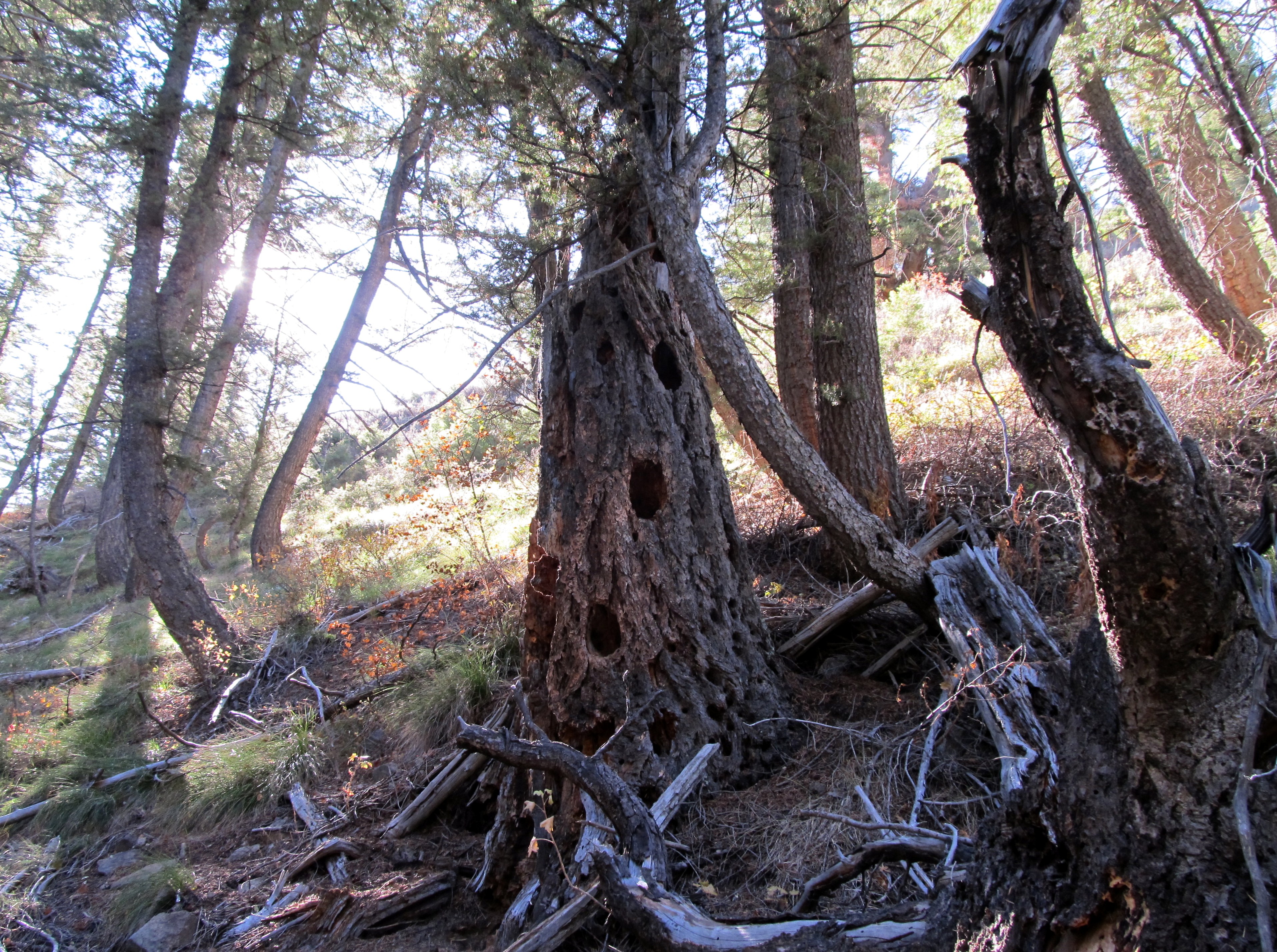
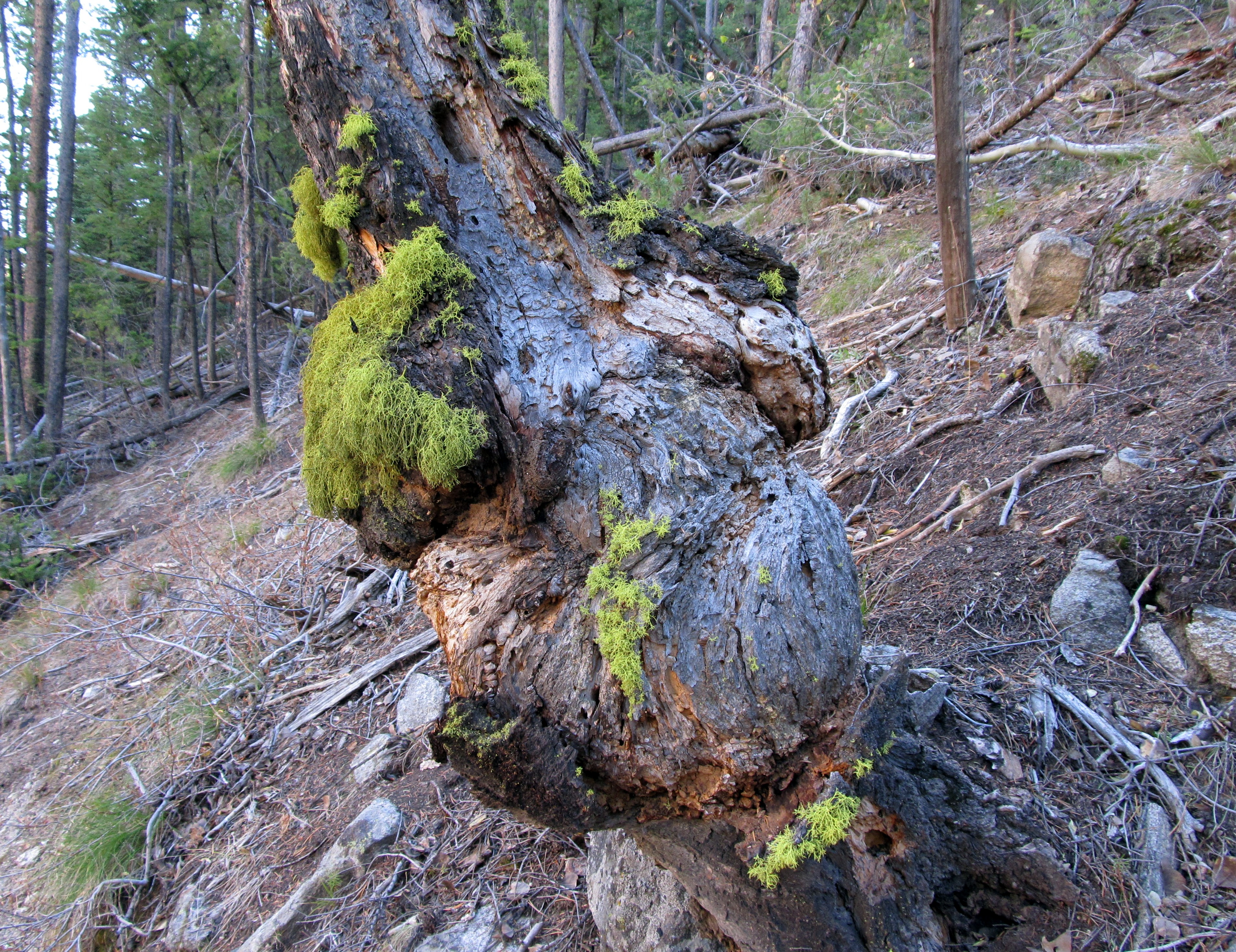
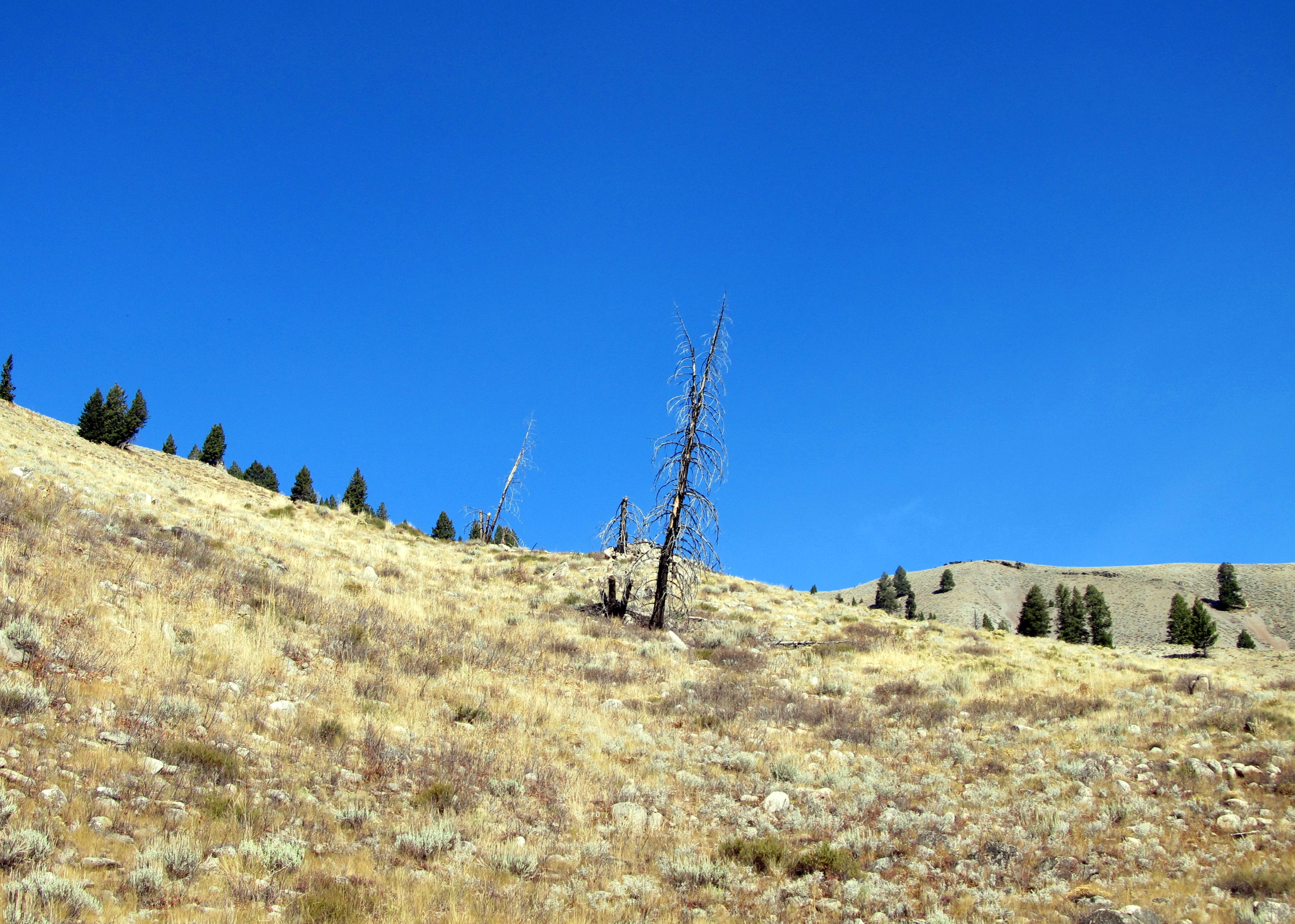
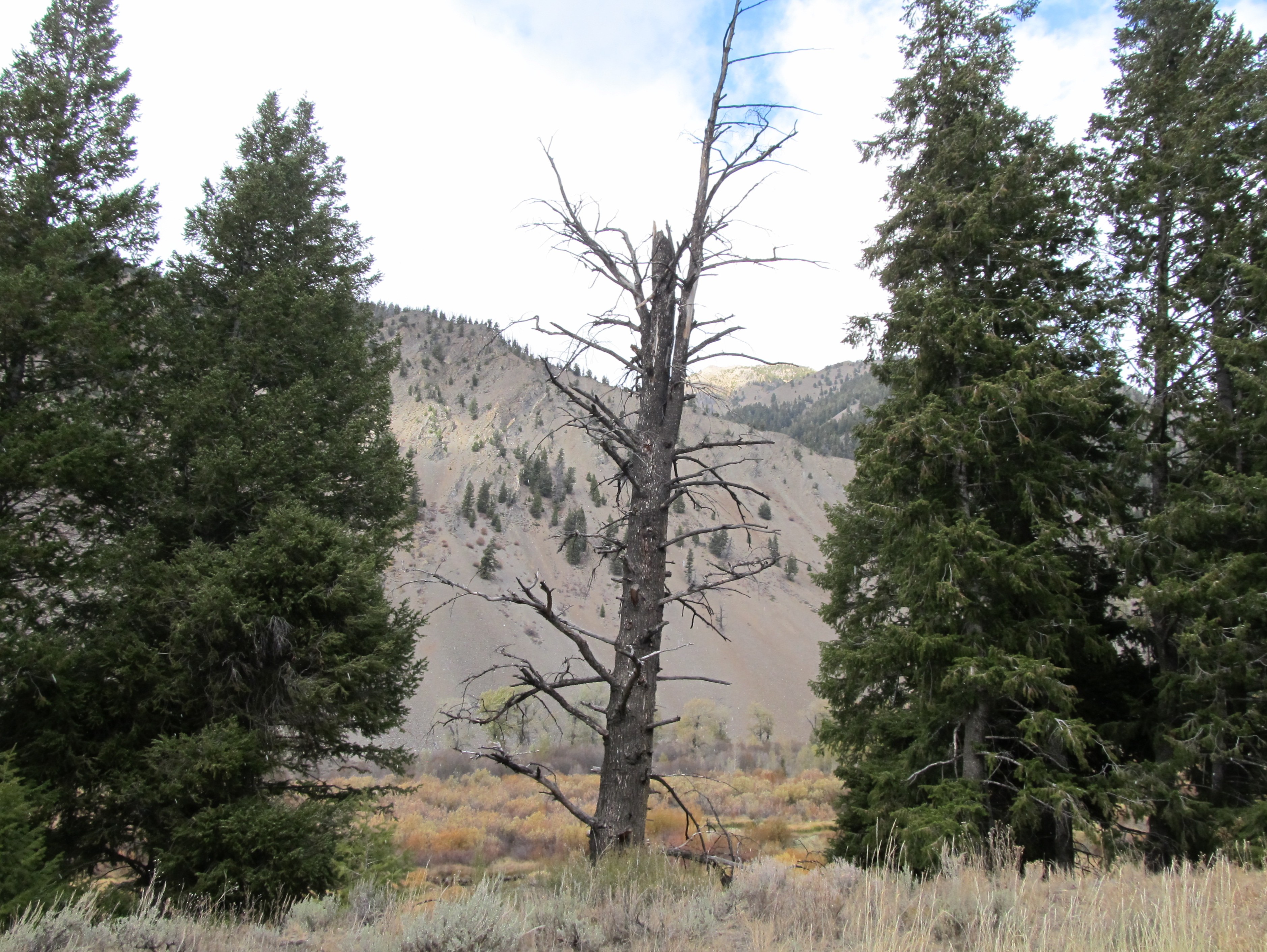
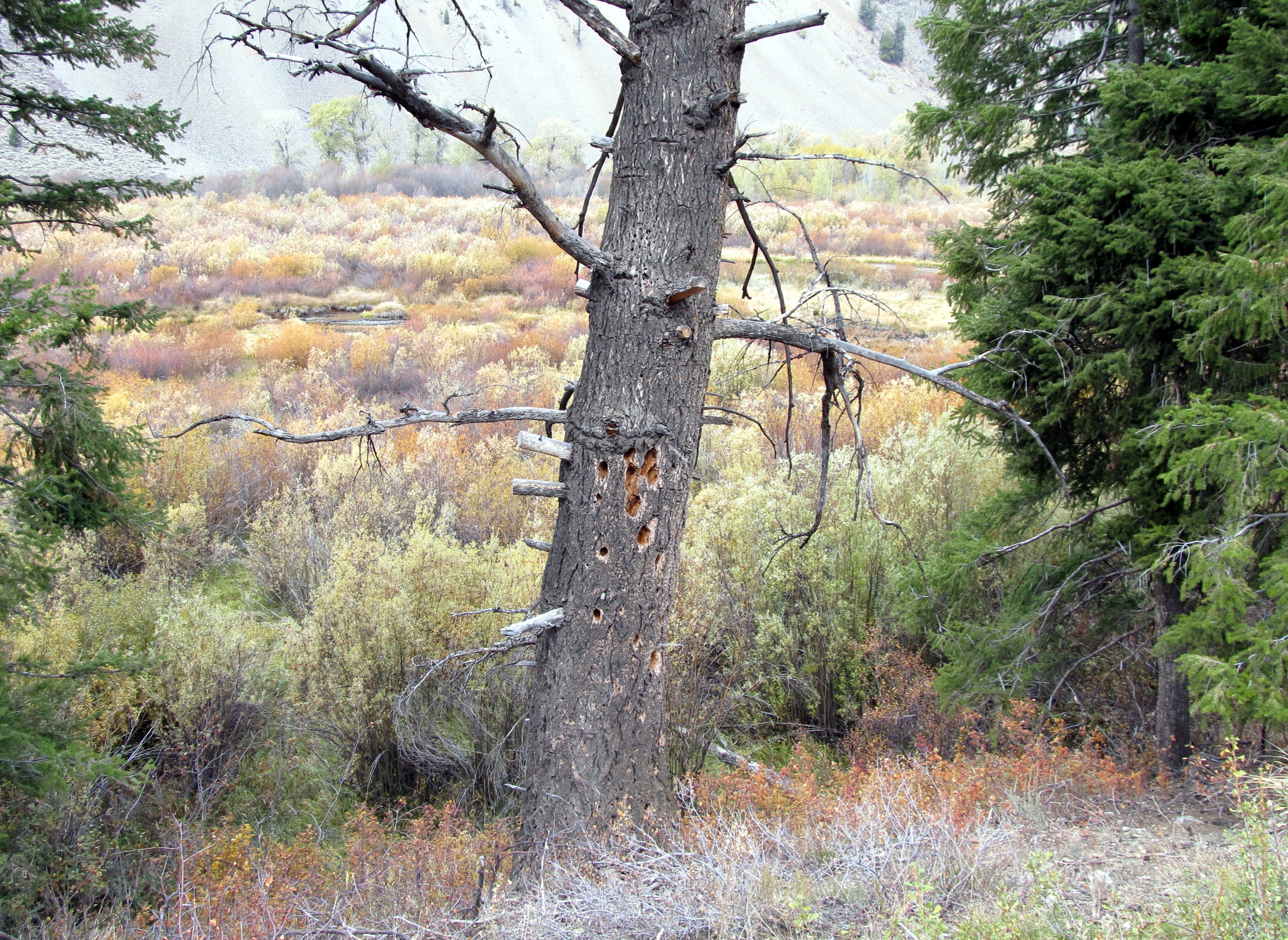
A couple of weeks ago, Sierra and I were in Ketchum, Idaho taking a much needed mid-October vacation. The weather was great, and the fall color was incredible, so heading out on multiple hikes was a no-brainer. On our hikes, I found myself increasingly drawn to all of the snags. Forested areas like those found in the Sawtooth National Forest are bound to have a significant amount of standing dead trees. After all, trees don’t live forever; just like any other living being, they die – some of old age, some of disease or lightning strike or any number of other reasons. But death for a tree does not spell the end of its life giving powers. In the case of snags, it’s really just the beginning.

Death might come quick for a tree, but its rate of decomposition is slow. Fungi move in to begin the process and are joined by myriad insects, mosses, lichens, and bacteria. The insects provide food for birds, like woodpeckers and sapsuckers who hammer out holes in the standing trunk. As primary cavity nesters, they also nest in some of these holes. Secondary cavity nesters make a home in these holes as well. This includes a whole suite of birds, mammals, amphibians, and reptiles. Without the habitat provided by snags, many of these animals would disappear from the forest.

Eventually snags fall, and as the rotting continues, so does the dead tree’s contribution to new life. It’s at this point that snags become nurse logs or nurse stumps, providing habitat and nutrients for all sorts of plants, fungi, and other organisms.

Unfortunately I can’t bring a you a complete representation of the many snags of Sawtooth National Forest. You’ll have to visit sometime to see them all for yourself. Instead, what follows is a small sampling of a few of the snags we saw near Ketchum and Stanley.

new cavities in new snag

old cavities in old snag

knobby snag with lichens

lone snag on hillside

double-trunked snag

fallen snag

snags are more alive than you might think

just look at those cavities

For more snag and nurse log fun, check out the following episodes of Boise Biophilia:

———————

This will be the last post for a few weeks as I will be taking a break to finish working on a related project. I hope to be back sometime in December with more posts, as well as the unveiling of what I have been working on. In the meantime, you can stay updated by following Awkward Botany on Twitter or Facebook.

From Cut Flower to Noxious Weed – The Story of Baby’s Breath

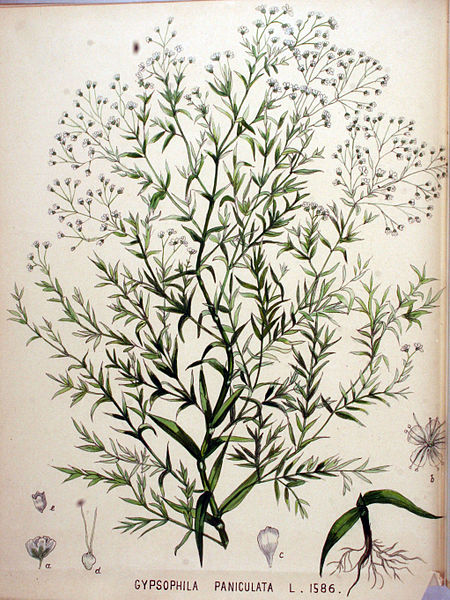
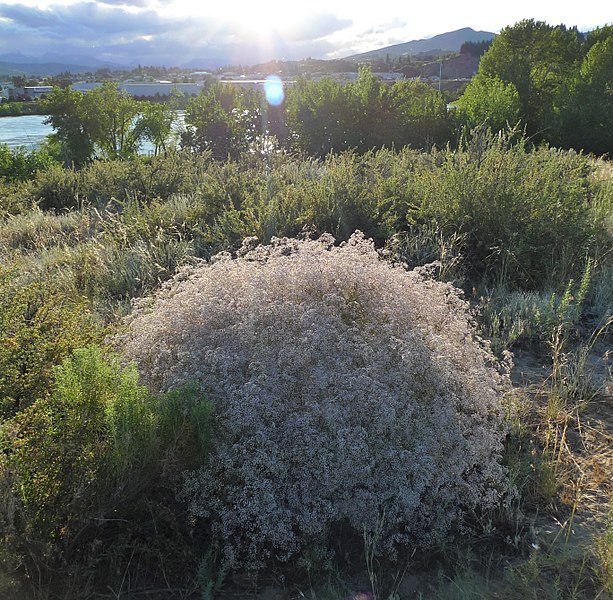
One of the most ubiquitous plants in cut flower arrangements hails from the steppes of Turkey and neighboring countries in Europe and Asia. It’s a perennial plant with a deep taproot and a globe-shaped, multi-branched inflorescence loaded with tiny white flowers. In full bloom it looks like a small cloud hovering above the ground. It’s airy appearance earns it the common name baby’s breath, and the attractive and durable nature of its flowers and flower stalks, both fresh and dried, have made it a staple in the floral industry. Sadly, additional traits have led to it becoming a troublesome weed outside of its native range.

baby’s breath (Gypsophila paniculata) via wikimedia commons

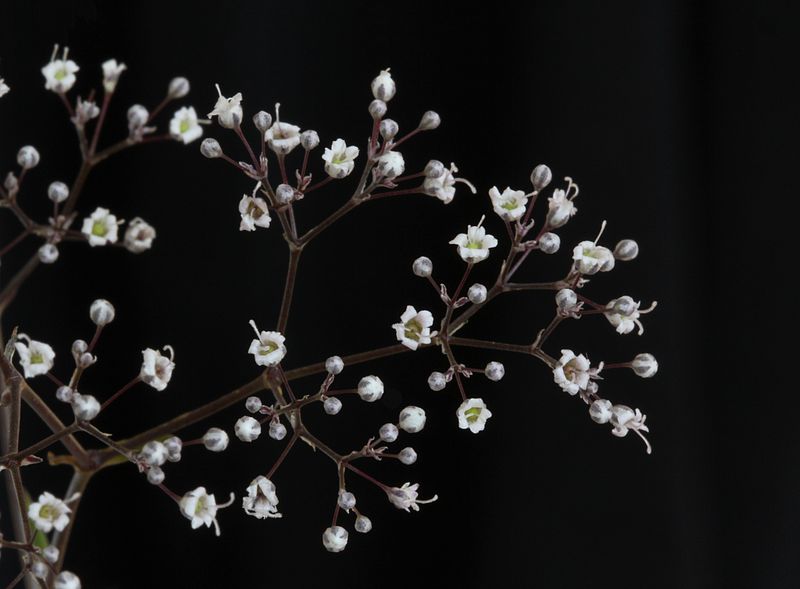
Gypsophila paniculata is in the family Caryophyllaceae – sharing this distinction with other cut flowers like carnations and pinks, as well as other weeds like chickweed and soapwort. At maturity and in full bloom, baby’s breath might reach three to four feet tall; however, its thick taproot extends deep into the ground as much as four times its height. Its leaves are unremarkable and sparse, found mostly towards the base of the plant and sometimes with a blue or purplish hue. The flowers are numerous and small, have a sweet scent to them (though not appreciated by everyone), and are pure white (sometimes light purple or pink).

Each flower produces just a few seeds that are black, kidney-shaped, and minuscule. Many of them drop from their fruits and land near their parent plant, but some are retained within their little capsules as the flower stalk dries and becomes brittle. Eventually a stiff breeze knocks the entire inflorescence loose and sends it tumbling across the ground. Its rounded shape makes it an effective tumbleweed, as the remaining seeds are shaken free and scattered far and wide.

baby’s breath flowers close up (via wikimedia commons)

Being a tumbleweed gives it an advantage when it comes to dispersing itself and establishing in new locations, but this is not the only trait that makes baby’s breath a successful weed. Its substantial taproot, tolerance to drought and a variety of soil conditions, and proclivity to grow along roadsides, in ditches, and abandoned fields also make it a formidable opponent. Mowing the plant down does little to stop it, as it grows right back from the crown. Best bets for control are repeated chemical treatments or digging out the top portion of the taproots. Luckily its seeds are fairly short-lived in the soil, so vigilant removal of seedlings and not allowing the plant to reproduce can help keep it in check. Baby’s breath doesn’t persist in regularly disturbed soil, so it’s generally not a problem in locations that are often cultivated like agricultural fields and gardens.

The first introductions of baby’s breath to North America occurred in the 1800’s. It was planted as an ornamental, but it wasn’t long before reports of its weedy nature were being made. One source lists Manitoba in 1887 as the location and year of the first report. It is now found growing wild across North America and is featured in the noxious weed lists in a few states, including Washington and California. It has been a particular problem on sand dunes in northwest Michigan, where it has been so successful in establishing itself that surveys have reported that 80% of all vegetation in certain areas is composed of baby’s breath.

baby’s breath in the wild (via wikimedia commons)

Invading sand dune habitats is particularly problematic because extensive stands of such a deep-rooted plant can over-stabilize the soil in an ecosystem adapted to regular wind disturbance. Plants native to the sand dunes can be negatively affected by the lack of soil movement. One species of particular concern is Pitcher’s thistle (Cirsium pitcheri), a federally threatened plant native to sand dunes along the upper Great Lakes. Much of the research on the invasive nature of baby’s breath and its removal comes from research being done in this region.

Among numerous concerns that invasive plants raise are the affects they can have on pollinator activity. Will introduced plants draw pollinators away from native plants or in some other way limit their reproductive success? Or might they help increase the number of pollinators in the area, which in turn could benefit native plants (something known as the magnet species effect)? The flowers of baby’s breath rarely self-pollinate; they require insect visitors to help move their pollen and are highly attractive to pollinating insects. A study published in the International Journal of Plant Sciences found that sand dune sites invaded by baby’s breath attracted significantly more pollinators compared to uninvaded sites, yet this did not result in more pollinator visits to Pitcher’s thistle. According to the researchers, “a reduction in pollinator visitation does not directly translate to a reduction in reproductive success,” but the findings are still a concern when it comes to the future of this threatened thistle.

Perhaps it’s no surprise that a plant commonly found in flower arrangements is also an invasive species, as so many of the plants we’ve grown for our own pleasure or use have gone on to cause problems in areas where they’ve been introduced. However, could the demand for this flower actually be a new business opportunity? Noxious weed flower bouquets anyone?

Related Posts:

Tea Time: Pine Needle Teas

Temperatures are cooling in the northern hemisphere, which has me looking forward to drinking more hot tea. Making tea is a simple way to try edible plants you’ve never tried before, which I have demonstrated in past posts about pineapple weed and chicory. Believe it or not, I’m interested in trying teas made from other plants besides weeds, which has led me to start a new series of posts. It’s tea time!

When you think of a pine tree, your first thought probably isn’t, “Hey, I could make some tea out of that.” Sure, pine trees are known for their pleasant scent; however, do you really want a tea that tastes like a Christmas tree or smells like the cleanser you mop your floors with? A mouthful of pine needles just doesn’t sound that appetizing. Luckily, tea made with pine needles has a considerably milder aroma and flavor than you might initially expect.

the needles of Japanese red pine (Pinus densiflora)

Pines actually have a number of edible parts. Young, male cones can be boiled and eaten, pine pollen can be used in a number of ways, and roasted pine seeds (also known as pine nuts) are commonly consumed and used to make things like pesto and hummus. In addition, the inner bark, sap, and resin all have a history of being used as food and medicine. So, why not the needles?

However, it should be noted that turpentine comes from pine trees, which is quite toxic if ingested or used improperly. Turpentine is made by distilling the sap and resins found in pine trees. The high concentration of the chemical compounds found in these products is what results in turpentine’s toxicity.

Another caveat is that the word “pine” is used as a common name for a few species that are not in the genus Pinus and thus are not true pines. Also, coniferous trees and shrubs are frequently referred to as or thought of as pines by people who aren’t in the know. Hence, always make sure that you positively identify any and all plant species before you consume them. Additionally, various sources advise avoiding the consumption of ponderosa pine (Pinus ponderosa) and a handful of other pines, which may in fact be perfectly safe in moderation, but the counsel is worth keeping in mind.

To drill these points home, consider this passage from The North American Guide to Common Poisonous Plants and Mushrooms:

Most [conifers] would be too strong-tasting and unpalatable to eat, but many can be used safely as flavorings or to make beverages and medicinal teas, as long as they are taken in moderation and in low concentrations. Exceptions are the yews (Taxus spp.), which are highly toxic, and ponderosa pine, a tree of dry western forests with long needles usually in clusters of three. Some indigenous people ate the inner bark and seeds of this pine, but they knew that pregnant women should not chew on the buds or needles because it would cause a miscarriage. Eating the foliage of this pine is known to cause abortion in late-term pregnant cattle and other livestock due to the presence of isocupressic acid, which has also been found in lodgepole pine (P. contorta) and Jeffrey pine (P. jeffreyi). Other pines, such as loblolly pine (P. taeda) of the southeastern United States should also be regarded with caution.

I chose to make tea from the needles of two species that have a long history of being used for this purpose: Korean or Japanese red pine (Pinus densiflora) and eastern white pine (Pinus strobus). Pinus densiflora occurs in Korea and Japan, as well as parts of China and Russia, and has been given the name red pine thanks to its attractive red-orange bark. It produces needles in bundles of two and is a member of the subgenus Pinus, also known as the hard pines. Pinus strobus occurs mainly in the northeastern corner of the United States and the southeastern corner of Canada. It’s a member of the soft pines (subgenus Strobus) and produces needles in bundles of five. Both of these trees (and various cultivars of them) are commonly grown ornamentally outside of their native ranges.

the bark of Japanese red pine (Pinus densiflora)

To make the tea, I collected a handful of needles, chopped them in half or thirds and steeped them in hot water. Various sources that I read said not to boil the needles. The teas had a mild pine scent and a light citrusy flavor. I first made a tea from eastern white pine needles and accidentally added too much water. On my second try, using Korean red pine needles, I got the ratio better, and the tea didn’t taste so watered down. Some people add honey to pine needle tea, which I didn’t try this time around because I wanted to experience the taste of the needles. However, I think honey would be a nice addition.

Younger needles are said to be better than older needles for making tea, and I imagine that the time of year that the needles are harvested could have an impact on the flavor. The age of the needles likely determines, in part, its amount of vitamin C as well. Pine needle tea is said to be high in Vitamin C, which is another reason to give it a try.

the needles of eastern white pine (Pinus strobus)

———————

Speaking of tea, you can now support Awkward Botany by buying us a Ko-Fi. Financial support helps us keep the blog afloat and allows us greater access to materials and experiences that lead to the heavily researched posts you’ve come to appreciate. Every dollar helps. If you’d rather not part with your money or simply don’t have any money to part with, you can always support us by following us on social media (Twitter, Facebook, Tumblr, Instagram) and by sharing posts with the folks you interact with. As always, thank you for reading and for helping us spread the plant love.

Buy Me a Coffee at ko-fi.com

Drought Tolerant Plants: Yellowhorn

A drought tolerant garden doesn’t have to be treeless. While the pickings are slim, there is a selection of trees that, once established, are well adapted to deal with extended bouts of little to no water. One such tree is yellowhorn, a species that demands to be considered for any waterwise landscape. Yellowhorn is rare in cultivation – and also restricted in its natural distribution – but perhaps that will change as word gets around about this beautiful and resilient tree.

Xanthoceras sorbifolium is native to several provinces in northern China and has been cultivated in a number of places outside of China since at least the 1800’s. Its ethnobotanical value is well understood in China. Its leaves, flowers, and seeds are edible and medicinal, and the high oil content of its seeds make them useful for the production of biofuels. Researchers are also investigating the use of yellowhorn for ecological restoration in arid habitats where desertification is a concern.

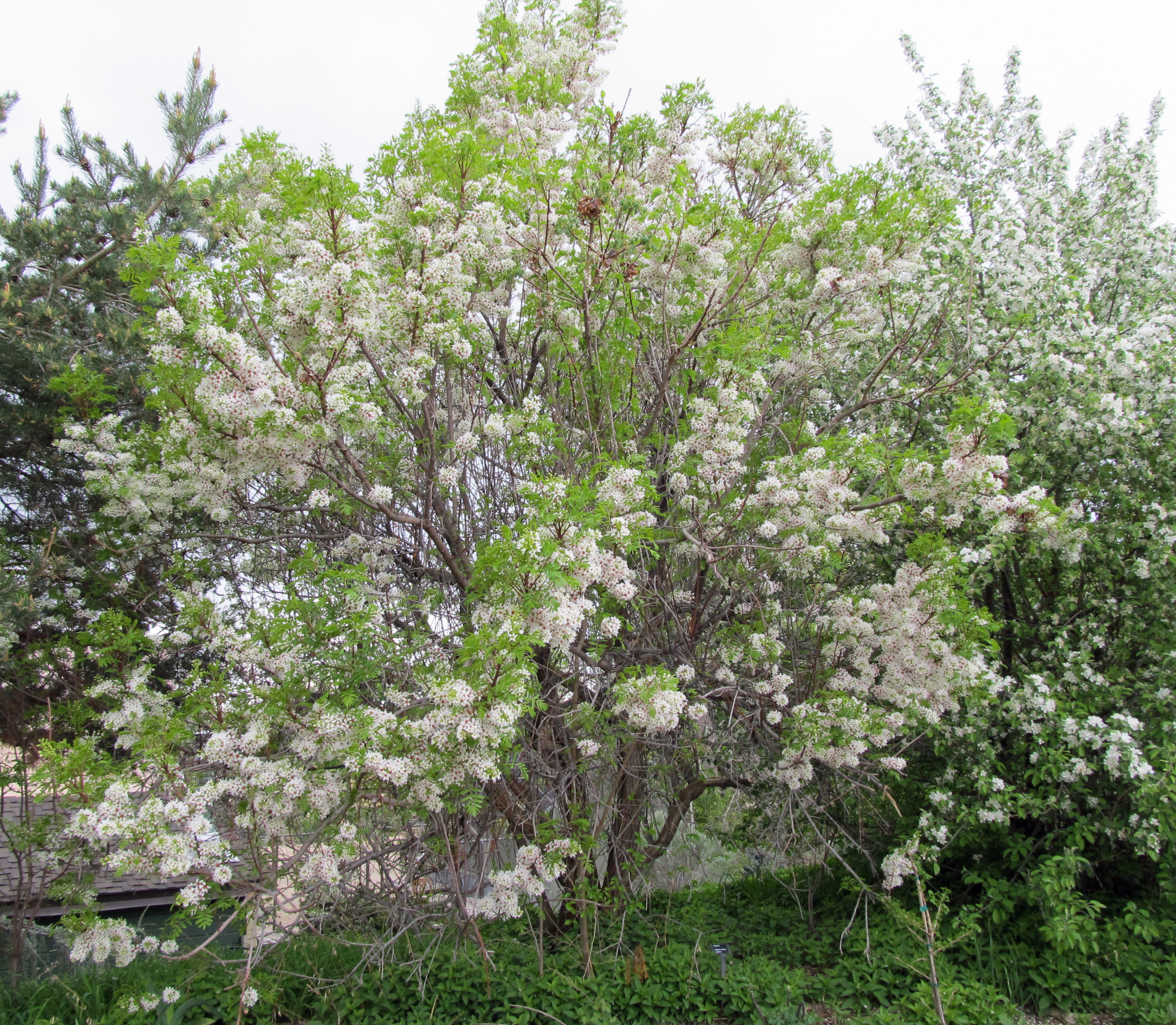
yellowhorn in bloom

Yellowhorn is the only species in the genus Xanthoceras, but is one in a long list of trees and shrubs in the Sapindaceae family – a family that now includes maples and horse chestnuts. It is considered both a large shrub and a small, multi-stemmed tree. It reaches a maximum height of about 25 feet, but arrives there at a relatively slow pace. It tolerates a variety of soil types, but like most other drought tolerant plants, it prefers soils that don’t become waterlogged easily. Its leaves are long, glossy green, and compound, consisting of 9 – 17 leaflets. The leaves persist late into the year and turn yellow in the fall. However, late spring, when the tree is covered in flowers, is when this tree puts on its real show.

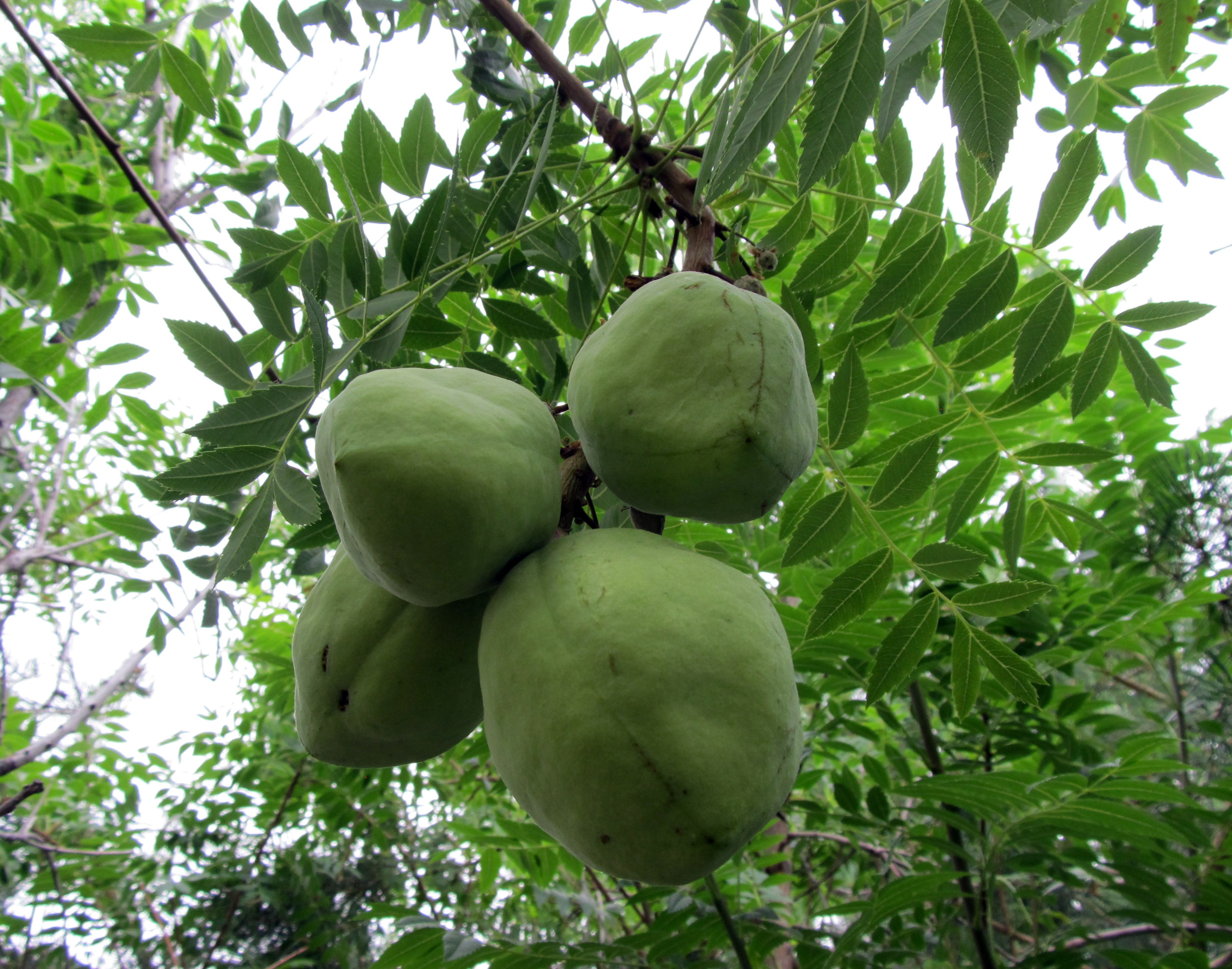
Large white flowers with yellow-green centers that turn maroon or red-orange as they age are produced on racemes at the ends of branches. Small, yellow, hornlike appendages between each of the five petals of the flowers are what gives the tree its common name. Flowering lasts for a couple weeks, after which fruits form, which are about 2.5 inches wide, tough, leathery, and somewhat pear shaped. In my experience, most of the fruits are eaten by squirrels long before they get a chance to reach maturity. The ones the squirrels don’t get will persist on the tree, harden, and eventually split open to reveal several large, dark, round seeds nestled in chambers within the fruit.

To truly appreciate this tree, it must be seen in person, especially in bloom. At that point you will demand to have one (or more) in your garden. The seeds are said to be delicious, so you should give them a try if you can beat the squirrels to them. For a more thorough overview of yellowhorn, check out this article from Temperate Climate Permaculture, and for more photos of yellowhorn in bloom, check out this post from Rotary Botanical Gardens.

Squirrel nesting in yellowhorn, getting ready to go after more fruits.

All photos in this post were taken at Idaho Botanical Garden in Boise, Idaho.

———————

More Drought Tolerant Plants Posts:

Awkward Botanical Sketches #3: The Ginkgo Edition

For most of my life, ginkgo has been a meaningful tree to me. I remember first learning about it as a fourth grader. Our teacher had assigned us each to make a leaf collection. My grandparents heard about my assignment and sent me a ginkgo leaf from a tree growing in their front yard. It was unlike any other leaf in my collection, and it had a fascinating back story. Not only is it the only living tree in its genus and family, it’s also the only extant species in its division (Ginkgophyta). It was around during the time of the dinosaurs, and is considered a living fossil. I felt honored to have it, especially when I learned that I was the only kid in the class that had one.

Since then I’ve considered Ginkgo biloba to be one of the best trees. It continues to fascinate me. It’s a beautiful tree with captivating foliage, and it’s resiliency is amazing. It’s no wonder that depictions of ginkgo are so common across many cultures.

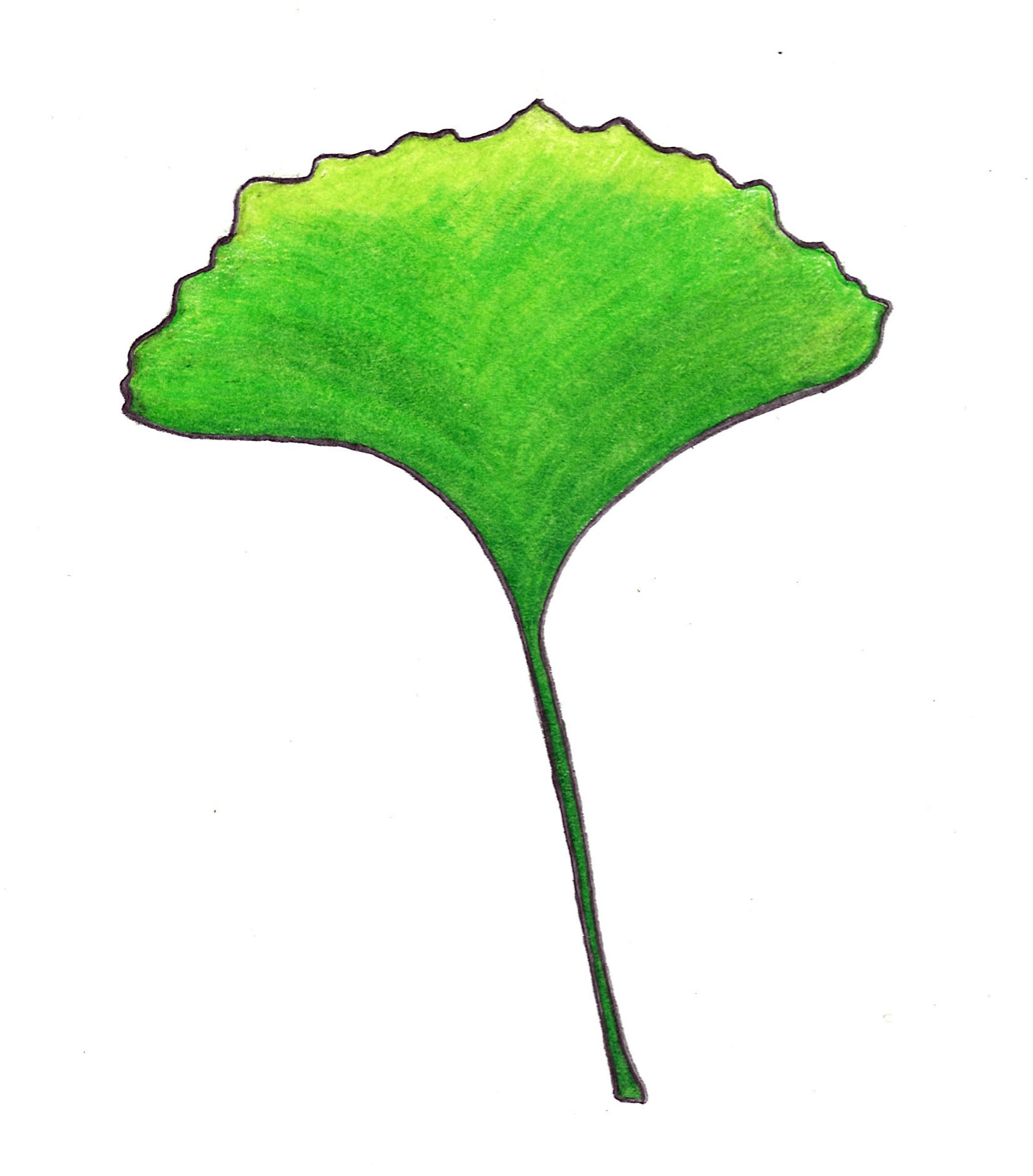
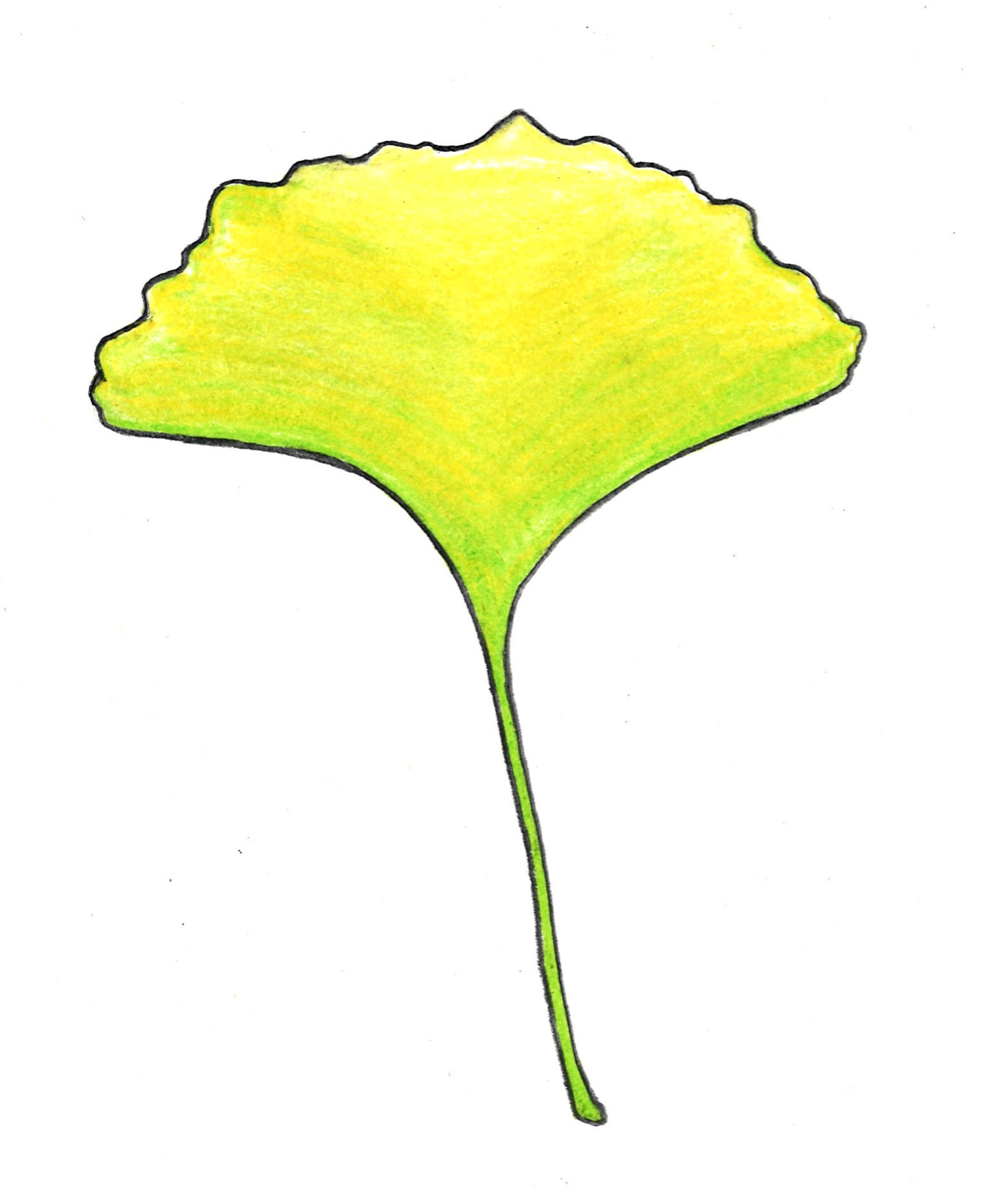
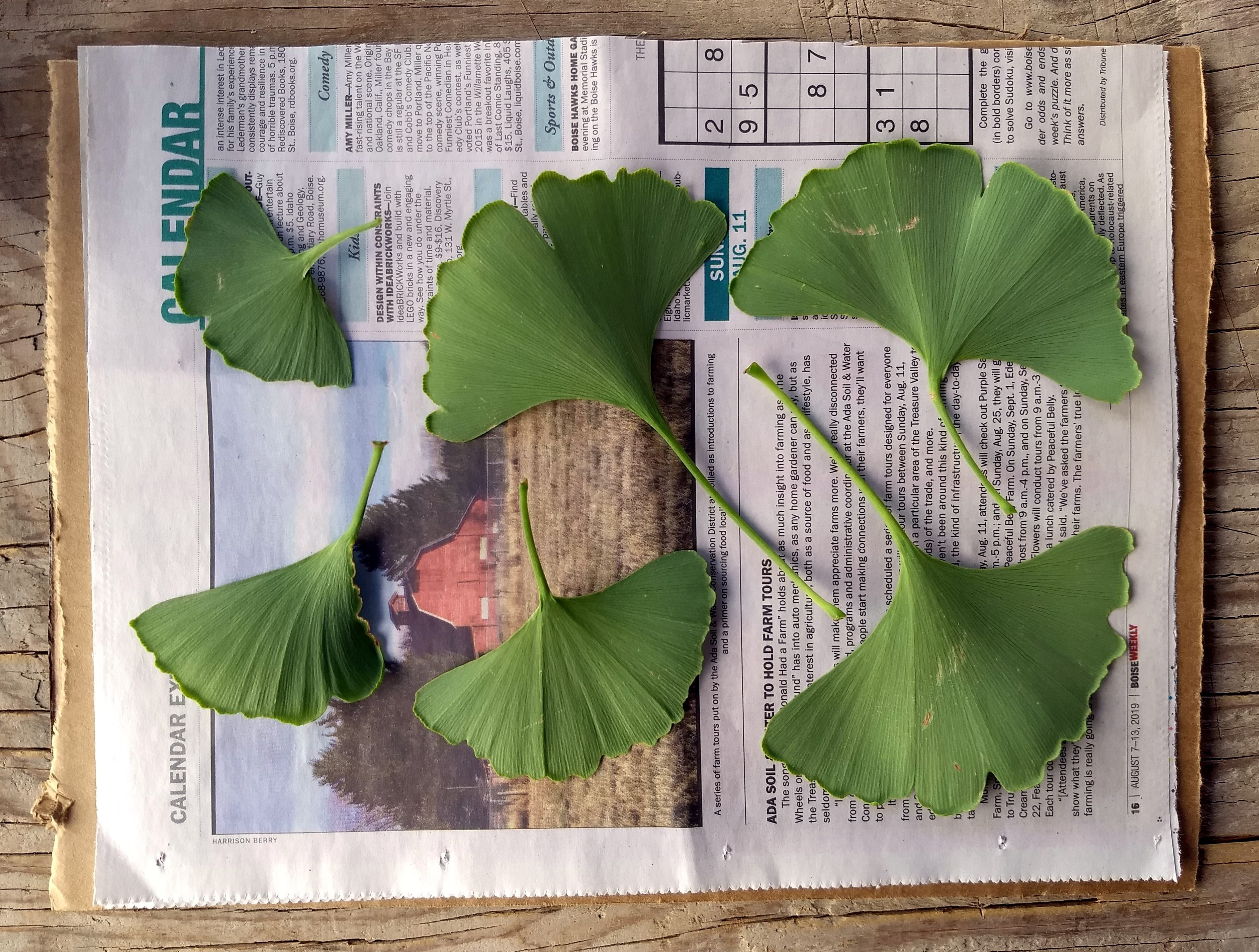
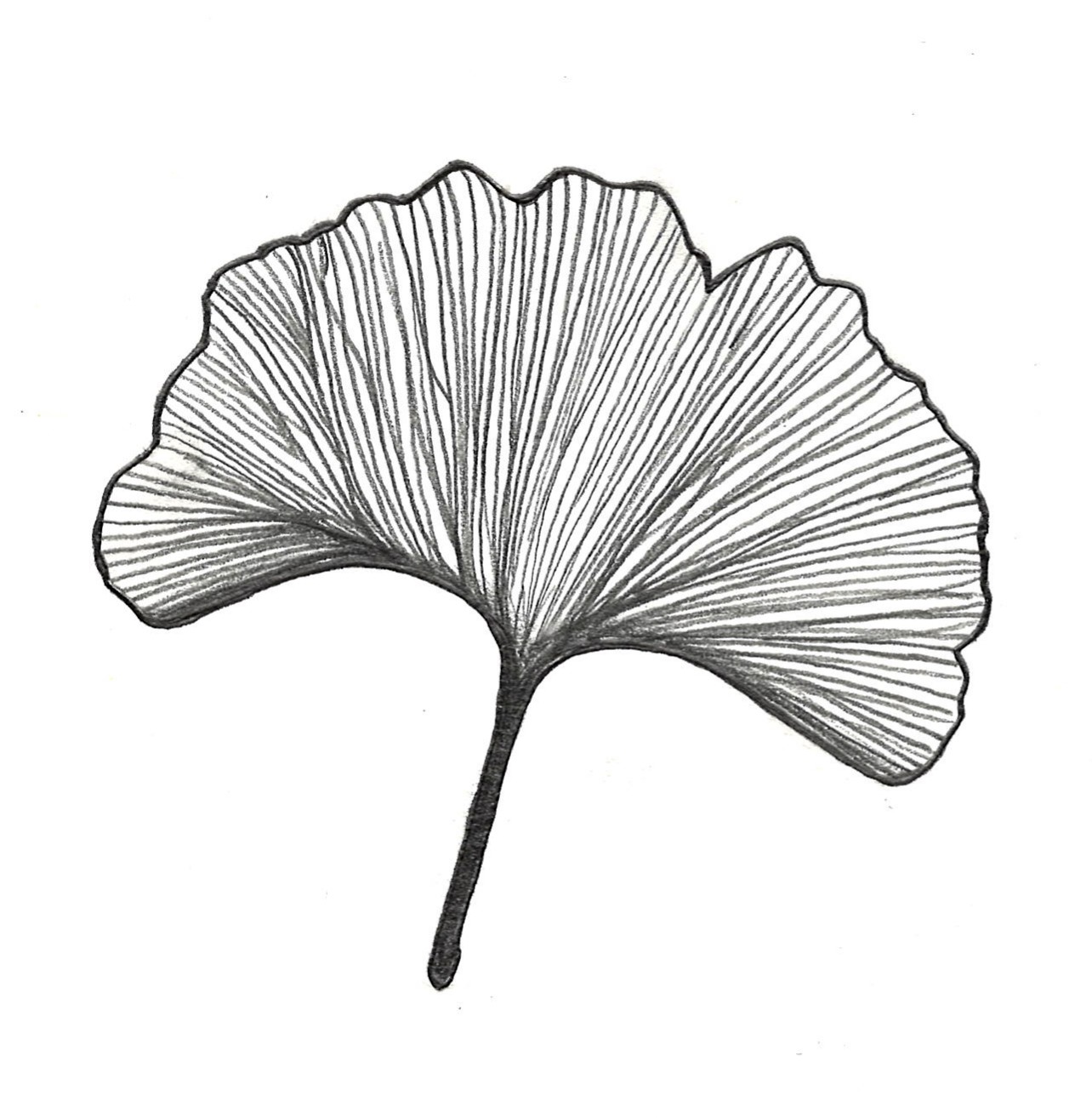
Since I love looking at ginkgo leaves, I decided to try to draw them. If you’ve been following this series of posts, you’ll remember that my drawing skills are severely lacking. A shape as simple as a ginkgo leaf should be easy to draw, but not for me. I resorted first to tracing leaves that I had pressed, and then going from there. Below are some of my results.

Ginkgo biloba leaf rubbing inspired by a page in Gayla Trail’s book, Grow Curious. After several attempts, this was the best I could do.

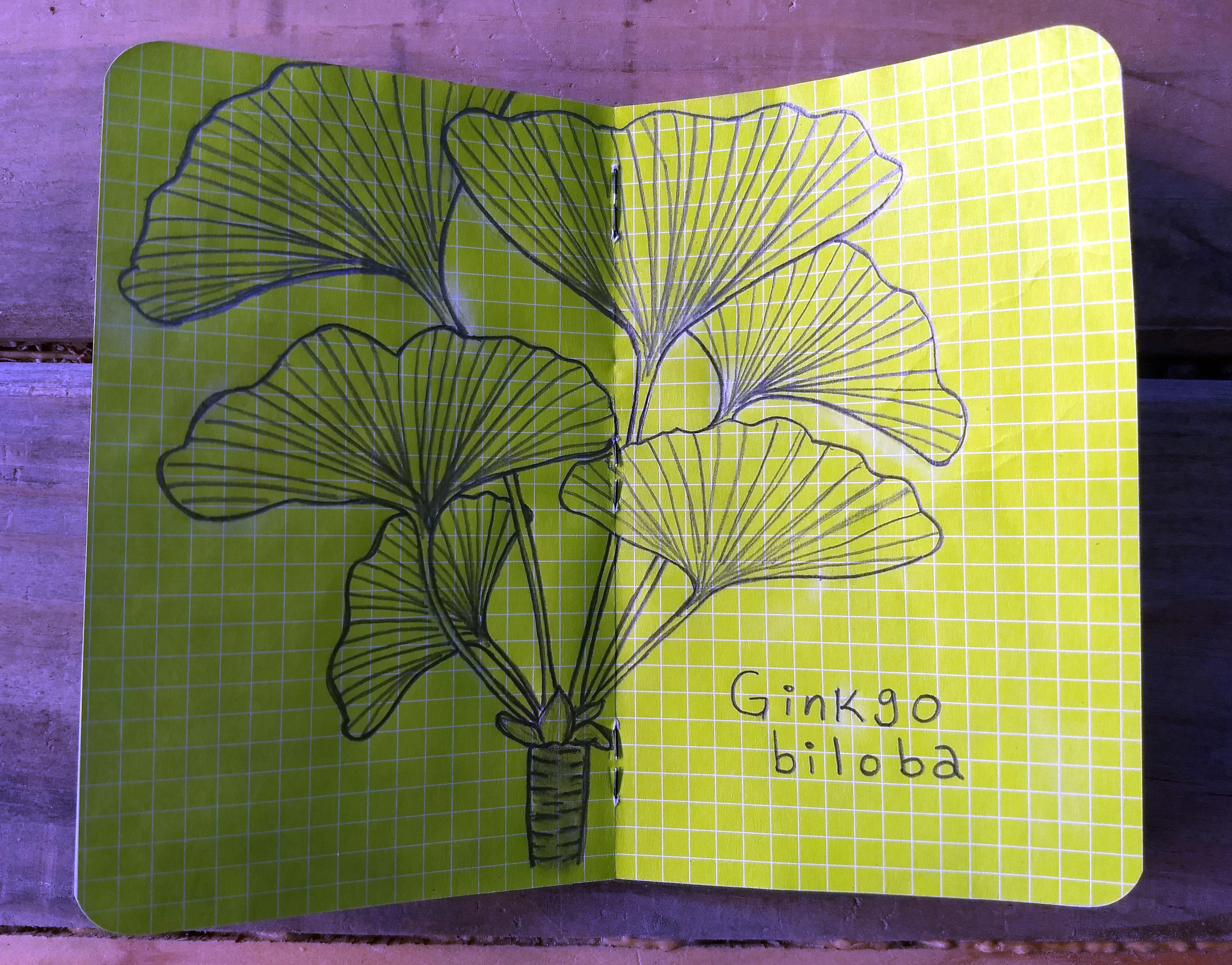
Finally, a freehand drawing of a cluster of ginkgo leaves in my pocket notebook in celebration of Staple Day.

Some ginkgo leaves I mailed to the Smithsonian for their Fossil Atmospheres research project.

See Also: