When Milkweed Kills

When you think of milkweed, you probably think of the life it supports. The monarch butterfly, for one. As the sole food source for its leaf-eating larvae, monarchs would be a thing of the past if milkweeds disappeared. Numerous other insects feed on its foliage as well, and there are a plethora of organisms that feed on its nectar, including bees, butterflies, beetles, wasps, and other insects, as well as hummingbirds. And speaking of birds, some birds use the silky hairs attached to the seeds to line their nests, while other birds strip stringy fibers from the stems for nest building. And while it is not a major food source for mammals, deer and other animals have been known to sample it. Indeed, milkweed is a veritable life force.
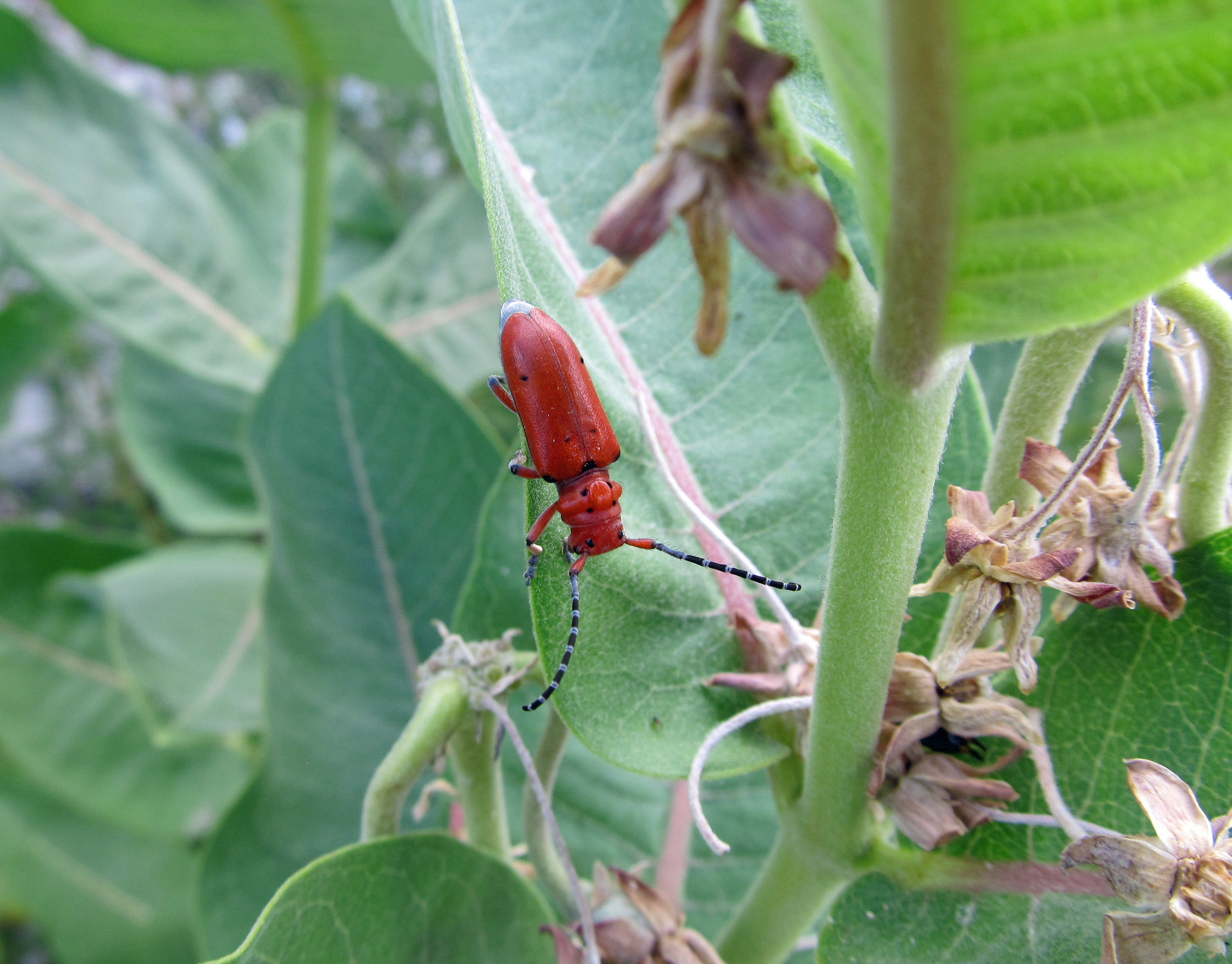
red milkweed beetle (Tetraopes sp.) feeds on milkweed

But it’s also a poisonous plant. The latex sap of milkweed contains cardiac glycosides, among a variety of other toxic chemicals. The plant produces these chemicals to defend itself from herbivory, and so the insects that feed on it have adapted a variety of strategies to avoid being poisoned. Some bite a hole in a leaf vein and wait for the milky sap to drain before proceeding to eat the leaf. Others are able to consume the toxic foliage without being poisoned by it. Some even store the toxic chemicals in their bodies, making themselves poisonous to other organisms that dare consume them.
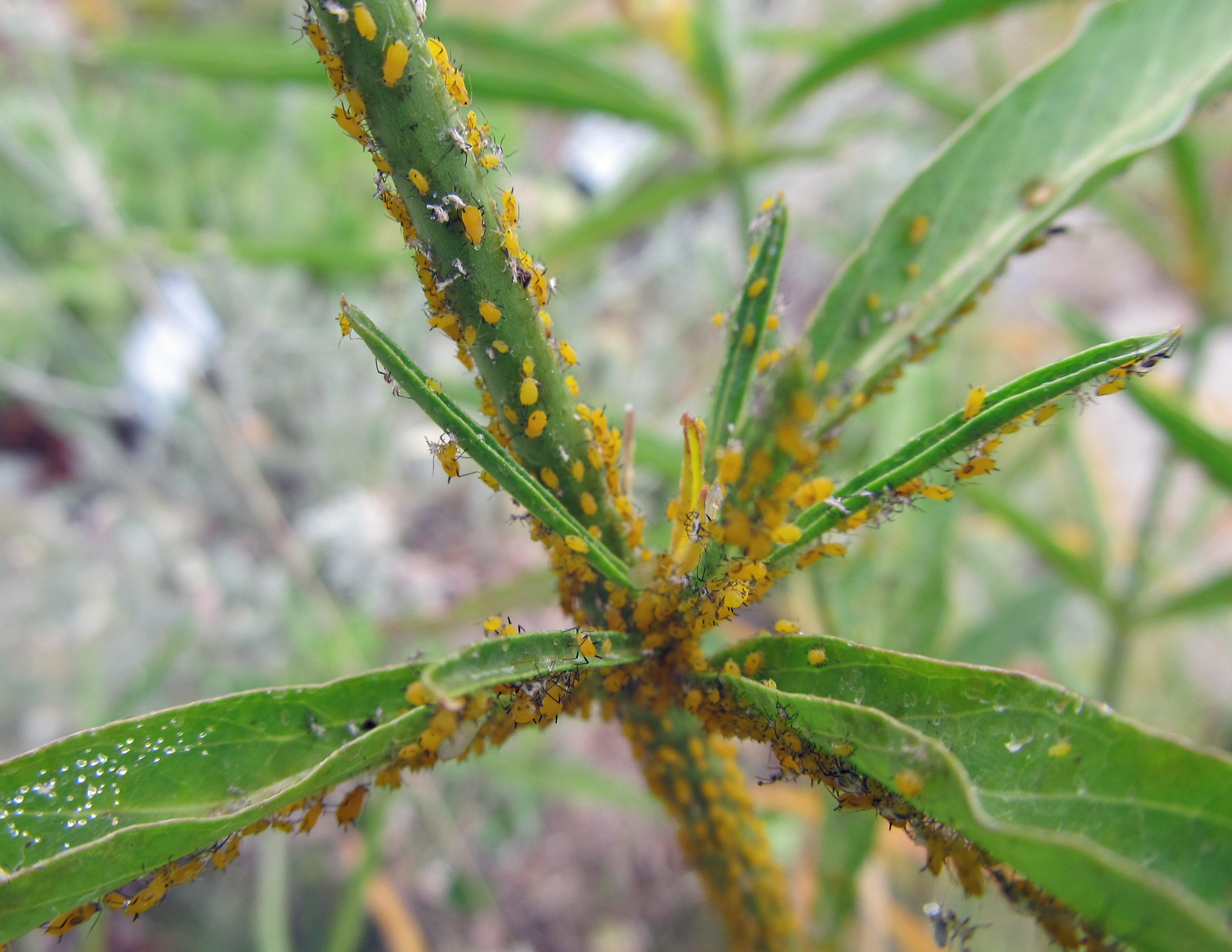
Aphids on Mexican whorled milkweed (Asclepias fascicularis). One species commonly found on milkweed is the oleander aphid (Aphis nerii), an introduced species that feeds on milkweeds and other plants in the dogbane family.

While milkweed is generally found to be unpalatable to most livestock, those that venture to eat it risk being poisoned and even killed. A guide to milkweed written by the Xerces Society states, “sheep and goats are the most likely to be poisoned because they are browsers and often prefer to feed on weeds over other forages.” Weeds of the West calls Utah milkweed (Asclepias labriformis) “the most poisonous of all western milkweeds,” claiming that “as little as one ounce of green leaf material … can kill an adult sheep.” It also lists swamp milkweed (Asclepias incarnata) as “suspected of causing livestock deaths.” To make matters worse, dead and dried milkweed plants retain their toxicity, which is a problem when they end up in animal feed.

Despite their toxicity, humans have been consuming milkweed for centuries. Young shoots and leaves can be eaten after boiling them several times, refreshing the water each time, and a medicinal tea can be made from the roots. While fatal poisonings of humans haven’t been reported, Nancy Turner and Patrick von Aderkas warn in their book The North American Guide to Common Poisonous Plants and Mushrooms that “uncooked shoots and the mature plants should never be consumed”

But milkweed’s toxic sap is not its only method for killing.

In fact, it may not even be its most deadly. And this is where things get interesting. Last month I arrived at work one morning to find a portion of a dried-up milkweed inflorescence on my desk that had been left there by a friend and co-worker. Stuck to the inflorescence were three, dead, dried-up honey bees, their legs trapped in the slotted hoods of the flowers. Apparently this is a common occurrence; one that is mentioned in nearly every resource about milkweeds that I have read now, and yet I had never heard of it nor seen it until this gift was left for me. I then went out to a patch of milkweed to see this for myself. Sure enough, I found a few dead bees trapped in the flowers of showy milkweed.
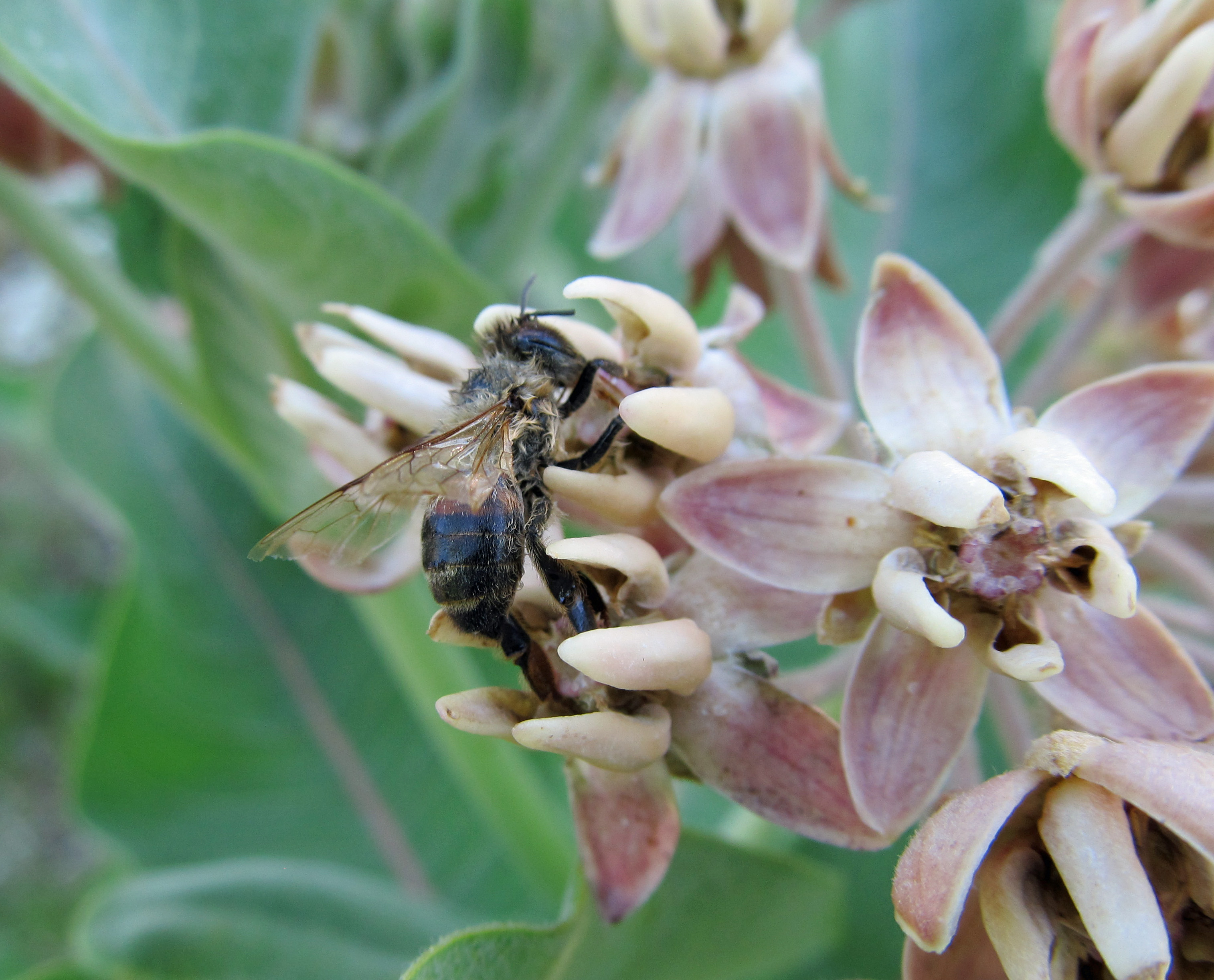
dead honey bee stuck in the flowers of showy milkweed (Asclepias speciosa)

Milkweed flowers do not always give up their pollen sacs easily. The slits where the pollinia are found can, on occasion, trap the legs of visiting insects. John Eastman describes this in The Book of Field and Roadside, “insects sometimes become permanently wedged as the fissures trap their feet or the pollinia entangle them, and they die hanging from the flowers.” While milkweed species are native to North America, honey bees are not; they have not evolved alongside the flowers of milkweed, yet they are drawn in, like so many other insects, to the nutritious and abundant nectar.

Native or not, honey bees are not the only insects getting trapped in the flowers. Eastman reports seeing various species of butterflies ensnared as well, and a paper by S.W. Frost lists cluster flies, soldier beetles, and a couple species of moths as unsuspecting victims of these unruly flowers. Frost goes on to observe that, “in spite of the hazards,” bees, wasps, and various other insects “visited the flowers of milkweeds freely.”

In a paper published in 1887, Charles Robertson describes the insect visitors of several different milkweed species. He found an occassional dead insect on the flowers of swamp milkweed, adding that “this occurs only when all or most of the feet are entangled simultaneously, so as to render the insect absolutely helpless.” Observing common milkweed (Asclepias syriaca), Robertson finds that “even when small and short-legged insects succeed in extracting pollinia and inserting them into the stigmatic chambers, they have great difficulty in breaking the retinacula, and often lose their lives in consequence.”

Honey bees were easily the most common victims observed in Robertson’s study, leading him to quip, “it seems that the flowers are better adapted to kill [honey bees] than to produce fruit through their aid.” And a honey bee’s trouble doesn’t always end when she escapes the grasp of the flowers. Pollinia and its connecting tissues can get so tangled around her legs and other body parts that she can no longer forage, subjecting herself to starvation and predation.

To add insult to injury, dead and dying insects stuck to flowers result in another interesting phenomenon. Robertson writes, “many fall prey to predacious insects. I have seen them while still alive, attacked by ants, spiders and [predatory stink bugs].” Eastman adds daddy longlegs to the list of “scavengers” or “cleanup specialists” that come to feed on “flower trapped insects.” As it turns out, visiting the flowers of milkweed can be a dangerous, even deadly, game.
See Also: Idaho’s Native Milkweeds

Eating Weeds: Burdock

If we agree that weeds can be famous while simultaneously being infamous, a list of famous weeds must include burdock. Its fame largely comes from being an inspiration for the hook-and-loop fastener, Velcro. The idea for this revolutionary product came when Swiss inventor, George de Mestral, was removing burs – the dried inflorescences of burdock – from his dog in the early 1940’s. Most of us have experienced this, pulling out burs from animal hair or our own clothing, but few have felt inspired to develop a new product. Infamy reigns supreme.

But burdock’s fame isn’t tied to Velcro. Its tenacious, sticky burs, which house the seeds, have been attaching themselves to humans and other animals for centuries, frustrating those who have to remove them but finding new places to grow in the process. And what better way to pay tribute to this phenomenon than to dress oneself in hundreds of burs and parade around town calling yourself the Burry Man? Lest you think I’m crazy, just such a thing has been part of an annual celebration for over 300 years in a town outside of Edinburgh, Scotland.

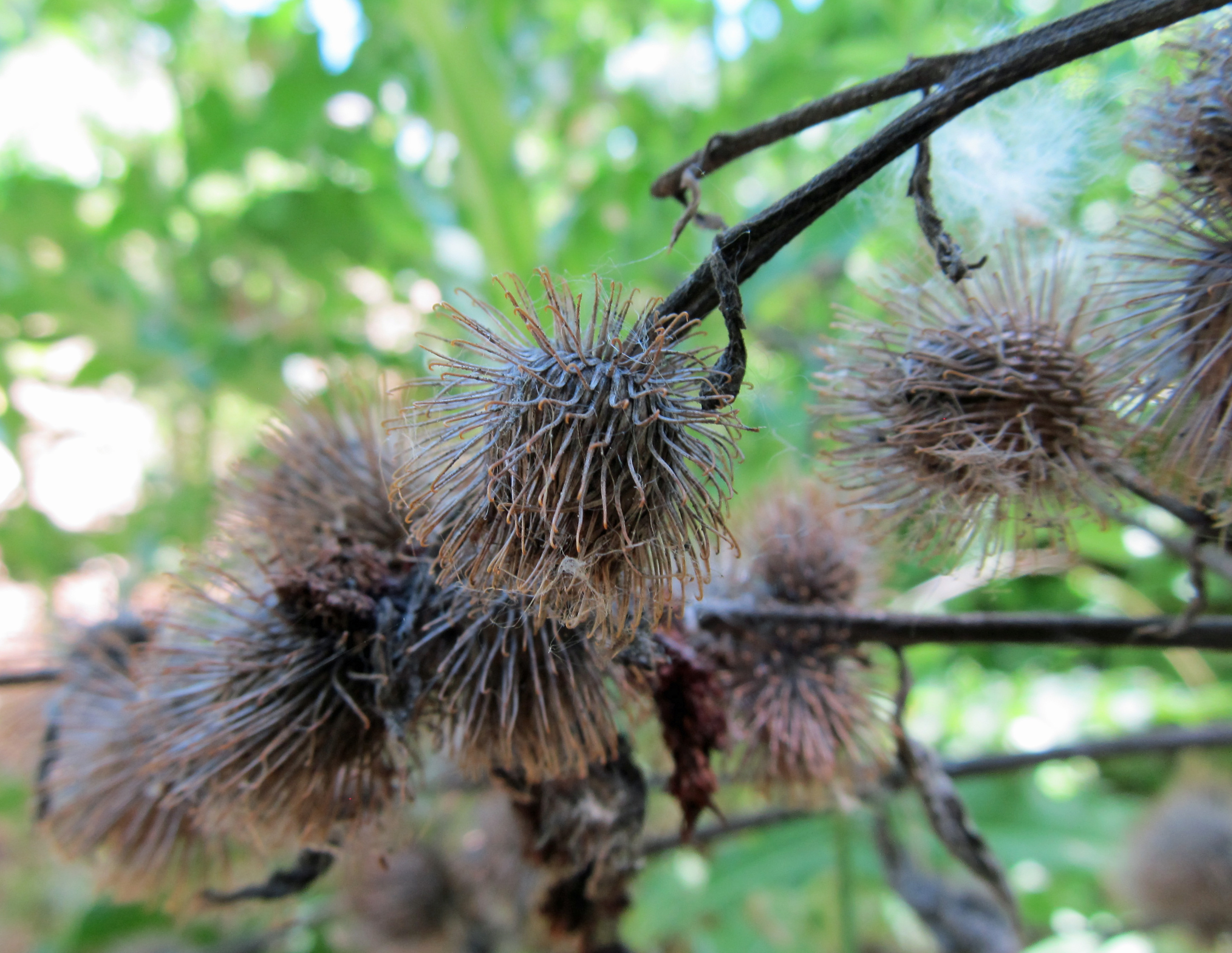
burs of common burdock (Arctium minus)

Of course, burdock is more than its burs. Other, perhaps less celebrated features, are its edible roots and shoots. Its leaves are also edible, but most people find them too bitter to bother. Green Deane suggests wrapping the leaves around food to cook on a campfire. Both the roots and shoots can be eaten raw or cooked, and the fermented roots along with dandelion roots are traditional ingredients in the British beverage, dandelion and burdock. The roots, shoots, and leaves of burdock have also had a wide variety of medicinal uses.

Two species of burdock have become naturalized in North America – Arctium minus and Arctium lappa. Both species are biennials or short-lived perennials. They start out as rosettes of large leaves with woolly undersides. The leaves grow to a foot or more long and wide. At this stage burdock is similar in appearance to rhubarb. Burdock has a large taproot, which can extend down to three feet in the ground. The taproot continues to grow as the rosette expands. When the plant has reached a certain size it begins to put up a branching flower stalk. It is in the rosette stage, before the plant bolts, that the taproot should be harvested.

As the flower stalk grows, the plant takes on a pyramidal shape, with the leaves along the stalk getting increasingly smaller with height. The plant can reach several feet tall, with one source describing them as towering up to ten feet. The stalks should be harvested before the plants start flowering. Multiple flower heads are produced at the ends of the branching stalk. The inflorescences are composed of purple, tubular, disc florets that are encased and encircled in a series of hooked bracts. The flower heads resemble thistle flowers, but the plant is easy to distinguish from thistles due to its large, soft leaves. Speaking of the leaves, one photographer found them alluring enough to compile a series of photos of them.

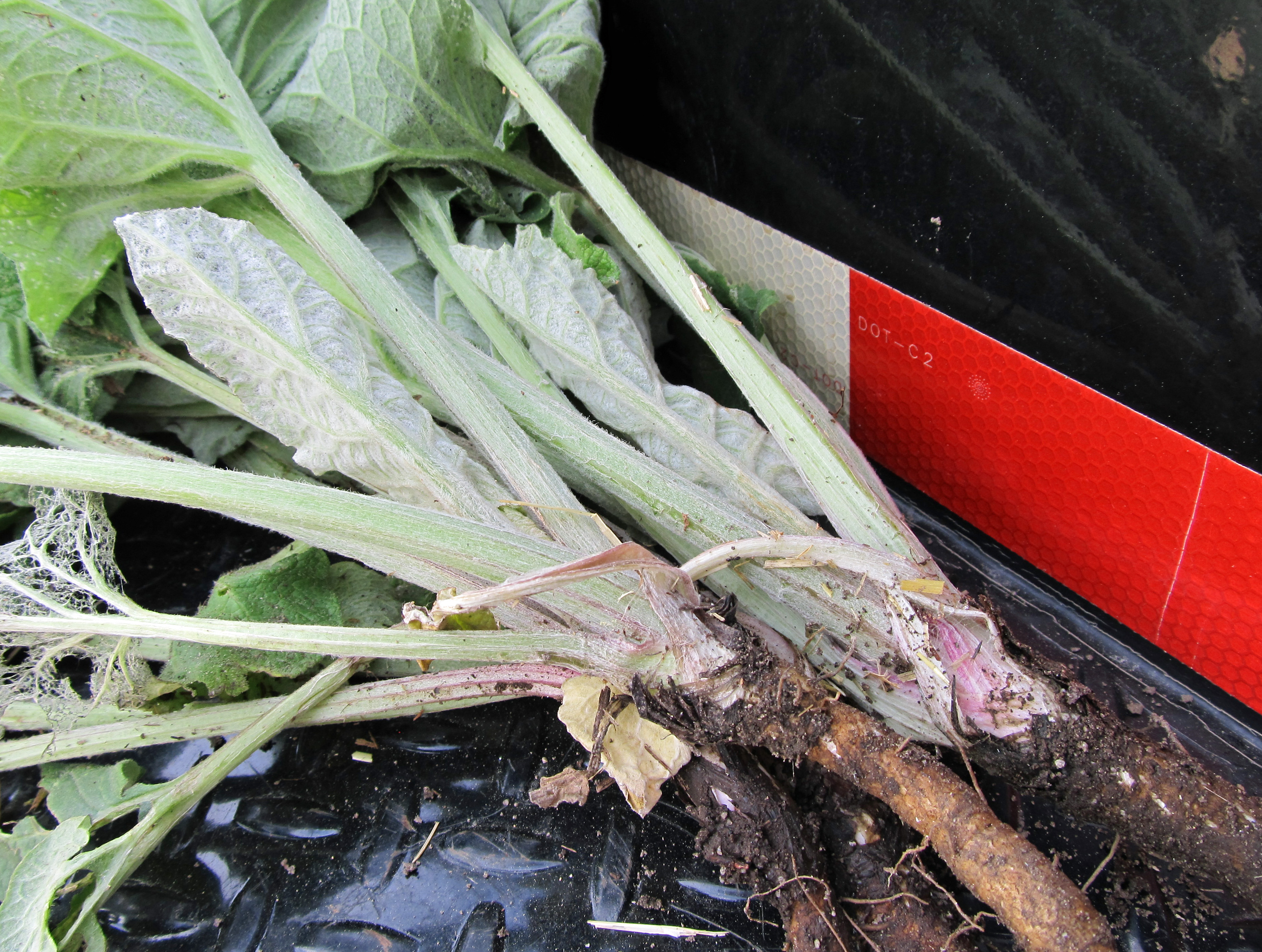
Common burdock (Arctium minus): the woolly undersides of the leaves and the tops of the taproots

While burdock can be nuisance plant, it is not particularly noxious. In The Book of Field and Roadside, John Eastman writes, “Burdock cannot be labeled a truly invasive weed, for it rarely intrudes into cultivated fields. Tilling usually controls and eradicates burdock populations. Its favored havens are the disturbed soils of roadsides, railroads, fence rows, vacant lots, and around sheds and old buildings.” In Wild Urban Plants of the Northeast, Peter Del Tredici also comments on burdock’s preference for minimally maintained locations including “vacant lots and rubble dump sites; the edges of emergent woodlands; the sunny borders of freshwater wetlands, ponds, and streams; and on unmowed highway banks and median strips with frequent salt applications.”

I harvested my burdock roots along an unmaintained fence line surrounding a series of raised flower beds. I chose a simple recipe for making burdock chips that involved peeling the roots, cutting them into thin slices, dressing them with olive oil and salt, and baking them in the oven. Since the author of this recipe mentioned buying burdock from a store, they were probably using Arctium lappa, or greater burdock, which is commonly cultivated, especially in Asian countries. Both species can be prepared in similar ways.

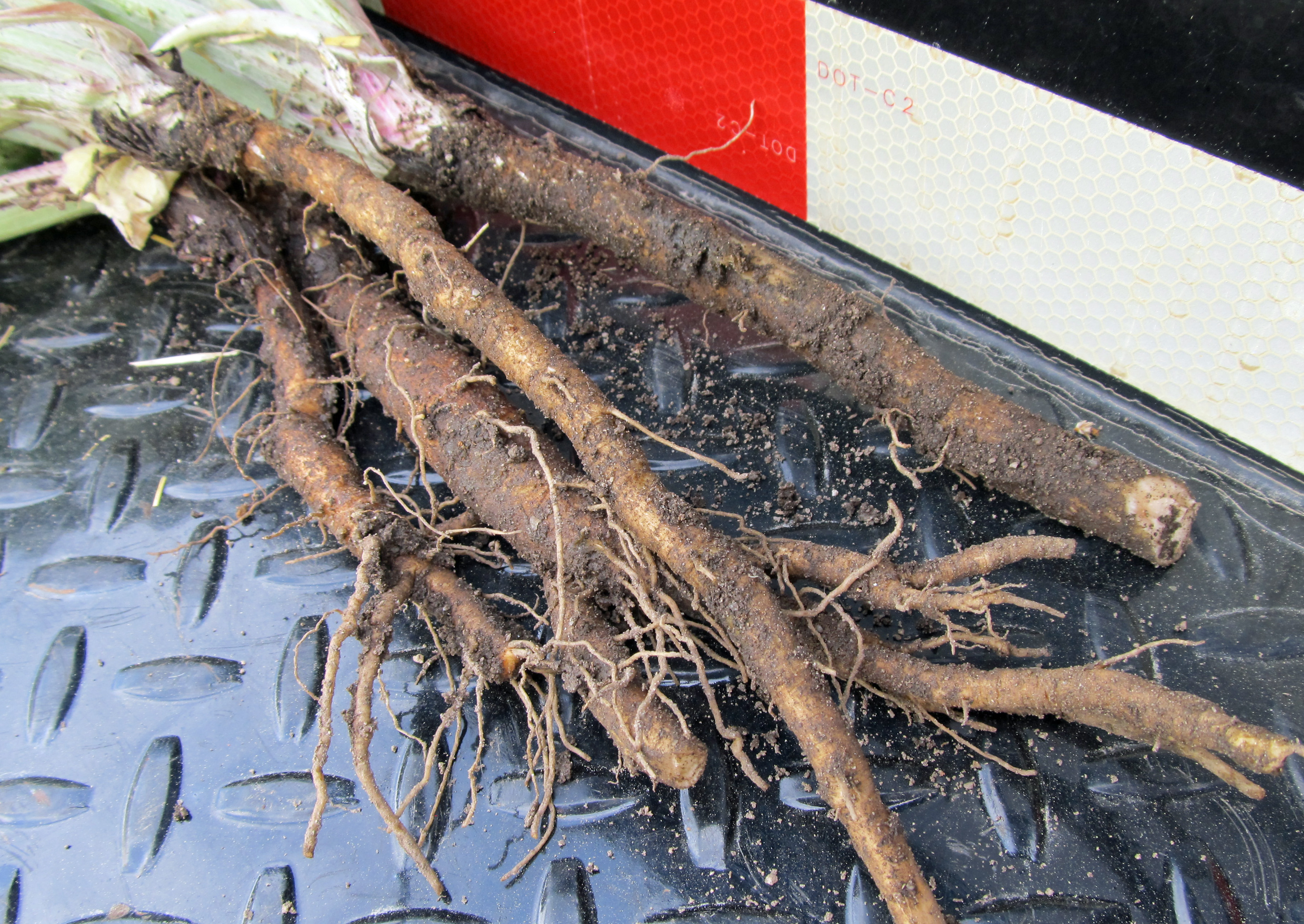
burdock roots

The burdock chips had a pleasant nutty flavor, but they were also a little stringy and tough to chew. If I were to do it again, I would probably use a recipe like this one that involves parboiling and then frying. Sierra suggested grating the roots and frying them in bacon grease, which would probably do the trick. There are also recipes for pickled burdock roots, which would be fun to try.

Because the plants I harvested were still in their rosette stage and there weren’t any other plants in the area that were bolting, I didn’t try the shoots. But I’ll keep my eye out, and when I find some I may have to write a part two.

Eating Weeds: Pineapple Weed

When I wrote about pineapple weed (Matricaria discoidea) last year during the Summer of Weeds, I knew that it was edible but I didn’t bother trying it. Pineapple weed is one of my favorite native weeds (yes, it happens to be a native of northwestern North America). I enjoy its sweet fragrance, its frilly leaves, its “petal”-less flowers, and its diminutive size. I also appreciate its tough nature. Now that I have tried pineapple weed tea, I have another thing to add to this list of pros.

pineapple weed (Matricaria discoidea)

One thing about pineapple weed that always impresses me is its ability to grow in the most compacted soils. It actually seems to prefer them. It is consistently found in abundance in highly trafficked areas, like driveways, parking lots, and pathways, seemingly unfazed by regular trampling. Referring to pineapple weed in one of his books about wildflowers, botanist John Hutchinson wrote, “the more it is trodden on the better it seems to thrive.” This is not something you can say about too many other plants.

Both the leaves and flowers of pineapple weed are edible. The flowers seem to be the more common of the two to consume, generally in tea form. In his book Wild Edible and Useful Plants of Idaho, Ray Vizgirdas writes, “A delicious tea can be made from the dried flowers of the plant. The leaves are edible, but bitter. The medicinal uses of pineapple weed are identical to that of chamomile (Anthemis). Used as a tea it is a carminative, antispasmodic, and mild sedative.” In Wild Urban Plants of the Northeast, Peter Del Tredici writes, “A tea made from the leaves has been used in traditional medicine for stomachaches and colds.”

I harvested my pineapple weed at the end of a dirt parking lot and in an adjacent driveway/pathway. I noted how the pineapple weed’s presence waned as I reached the edges of the parking lot and pathway where, presumably, the ground was less compact. Maybe it has more to compete with there – other weeds – and so it shows up less, or maybe its roots simply “prefer” compact soils. Perhaps a little of both. Once I got my harvest home, I rinsed it off and left it to dry. Later, I snipped off the flower heads and made a tea.

I probably used more water than I needed to, so it was a bit diluted, but it was still delicious. It smelled and tasted a lot like chamomile. Sierra agreed. With a little honey added, it was especially nice. Sierra agreed again. The flowers of pineapple weed can be used fresh or dried. They can also be mixed with other ingredients to make a more interesting tea, like the recipe found here.

If you are hesitant to take the leap into eating weeds, a tea may be the simplest thing you can try. Pineapple weed tea is a great way to ease yourself into it. Apart from maybe having to harvest it from strange places, it probably isn’t much different from other teas you have tried, and, from my experience, it’s delightful.

Lettuce Gone Wild, part two

The lettuce we eat is a close relative to the lettuce we weed out of our gardens. Last week we discussed the potential that wild relatives may have for improving cultivated lettuce. But if wild lettuce can be crossed with cultivated lettuce to create new cultivars, can cultivated lettuce cross with wild lettuce to make it more weedy?

Because so many of our crops are closely related to some of the weeds found along with them or the plants growing in nearby natural areas, the creation of crop-wild hybrids has long been a concern. This concern is heightened in the age of transgenic crops (also known as GMOs), for fear that hybrids between weeds and such crops could create super weeds – fast spreading or highly adapted weeds resistant to traditional control methods such as certain herbicides. To reduce this risk, extensive research is necessary before such crops are released for commercial use.

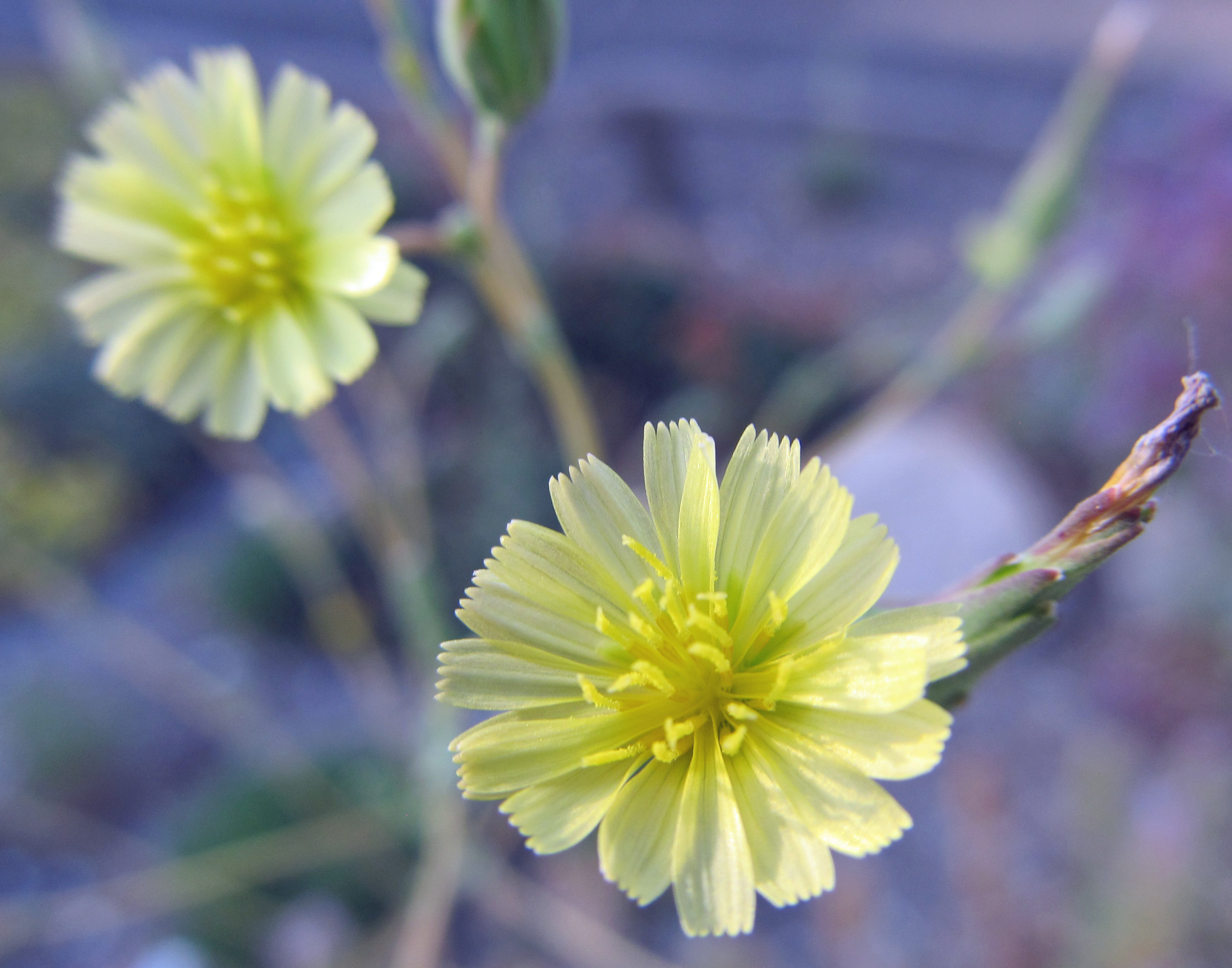
flowers of prickly lettuce (Lactuca serriola)

There are no commercially available, genetically modified varieties of cultivated lettuce, so this is not a concern when it comes to crop-wild hybrids; however, due to how prevalent weedy species like prickly lettuce (Lactuca serriola) are, hybridization with cultivated lettuce is still a concern. So, it is important to understand what the consequences might be when hybridization occurs.

In a paper published in Journal of Applied Ecology in 2005, Hooftman et al. examined a group of second-generation hybrids (L. sativa x L. serriola), and found that the hybrids behaved and appeared very similarly to non-hybrid prickly lettuce. They also found that the seeds produced by the hybrids had a significantly higher germination rate than non-hybrid plants. This is an example of hybrid vigor. Thus, “if hybridization does occur, this could lead to better performing and thus potentially more invasive (hybrid) genotypes.” However, the authors cautioned that “better performing genotypes do not automatically result in higher invasiveness,” and that much depends on the conditions they are found in, the level of human disturbance, etc.

Another thing to consider is that hybrids are not stable. In an article published in Nature Reviews Genetics in 2003, Stewart et al. adress the “misunderstanding that can arise through the confusion of hybridization and … introgression.” It is wrong to assume that hybrids between crops and wild relatives will automatically lead to super weeds. For this to occur, repeated crosses with parental lines (also known as backcrossing) must occur, and “backcross generations to the wild relative must progress to the point at which the transgene [or other gene(s) in question] is incorporated into the genome of the wild relative.” That is what is meant by “introgression.” This may happen quickly or over many generations or it may never happen at all. Each case is different.

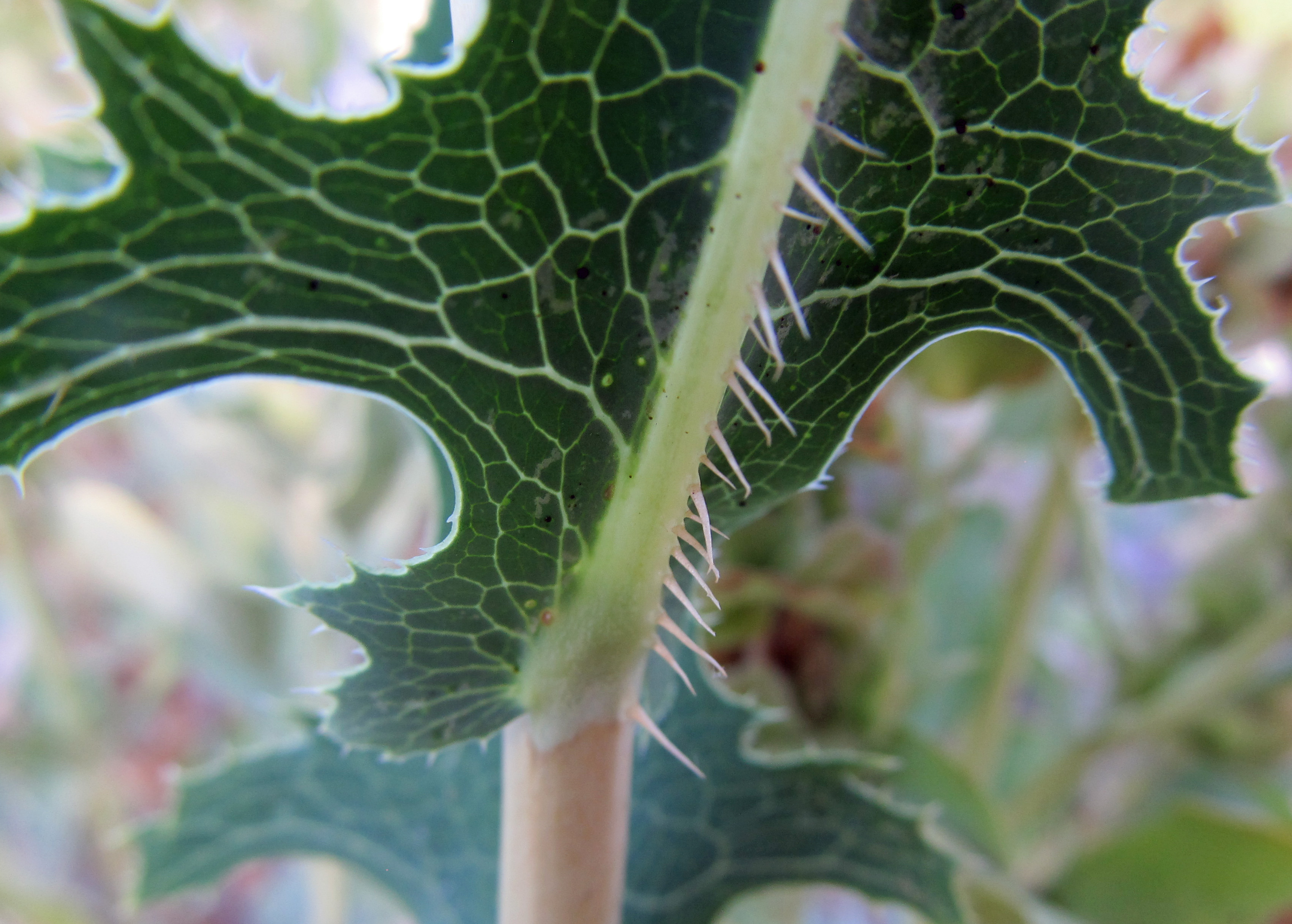
prickly leaf of prickly lettuce (Lactuca serriola)

In a paper published in Journal of Applied Ecology in 2007, Hooftman et al. observe the breakdown of crop-wild lettuce hybrids. They note that “fitness surplus through [hybrid vigor] will often be reduced over few generations,” which is what was seen in the hybrids they observed. One possible reason why this occurs is that lettuce is predominantly a self-crossing species; outcrossing is rare, occurring 1 – 5% of the time thanks to pollinating insects. But that doesn’t mean that a stable, aggressive genotype could never develop. Again, much depends on environmental conditions, as well as rates of outcrossing and other factors relating to population dynamics.

A significant expansion of prickly lettuce across parts of Europe led some to hypothesize that crop-wild hybrids were partly to blame. In a paper published in Molecular Ecology in 2012 Uwimana et al. ran population genetic analyses on extensive data sets to determine the role that hybridization had in the expansion. They concluded that, at a level of only 7% in wild habitats, crop-wild hybrids were not having a significant impact. They observed greater fitness in the hybrids, as has been observed in other studies (including the one above), but they acknowledged the instability of hybrids, especially in self-pollinating annuals like lettuce.

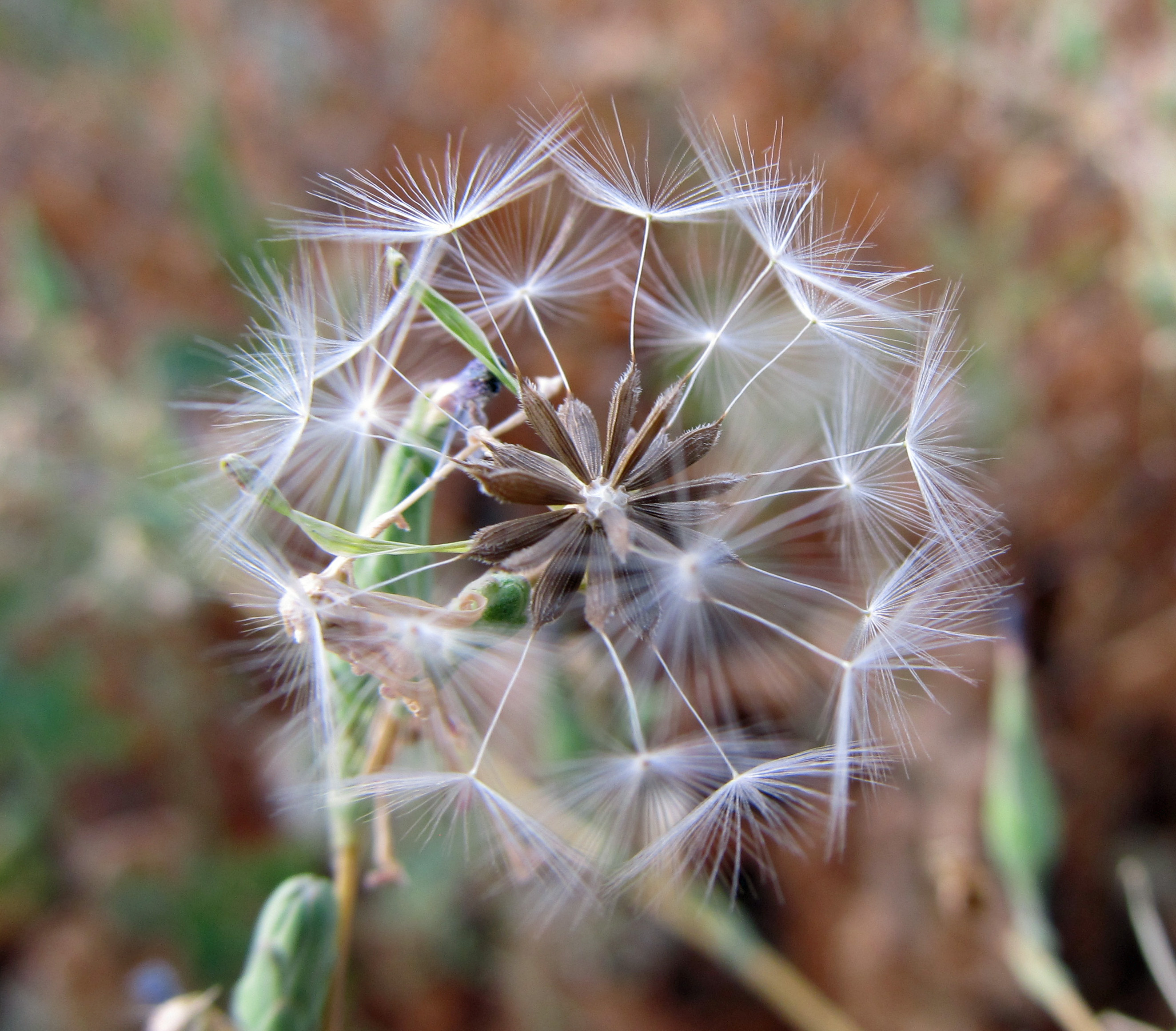
seed head of prickly lettuce (Lactuca serriola)

It is more likely that the expansion of prickly lettuce in Europe is due to “the expansion of favorable habitat as a result of climate warming and anthropogenic habitat disturbance and to seed dispersal because of transportation of goods.” Uwimana et al. did warn, however, that “the occurrence of 7% crop-wild hybrids among natural L. serriola populations is relatively high [for a predominantly self-pollinating species] and reveals a potential [for] transgene movement from crop to wild relatives [in] self-pollinating crops.”

Dischidia and Its Self-contained Watering System

This is a guest post by Jeremiah Sandler.

———————

I was doing some sunday reading in a plant biology textbook, a section about leaves. It was highlighting leaf-specific adaptations and other cool leaf specializations. I came across a paragraph about a “flower-pot” leaf, and my mind was so blown after reading it I had to literally stand up.

It reads:

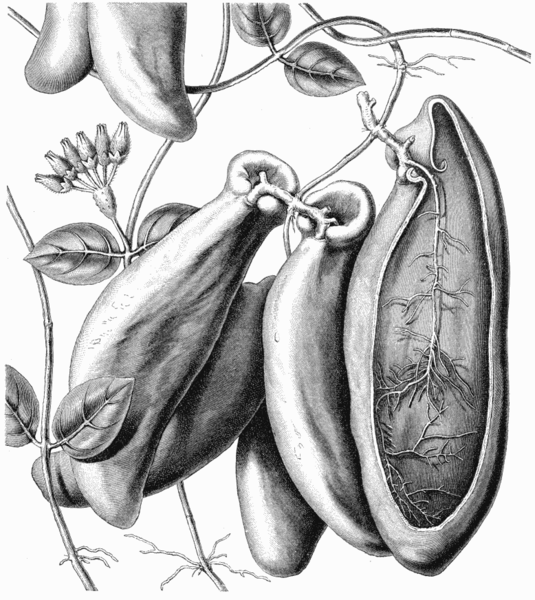
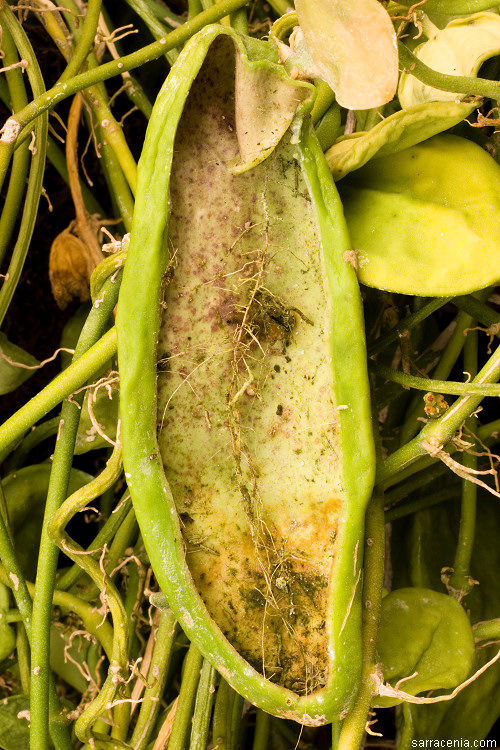
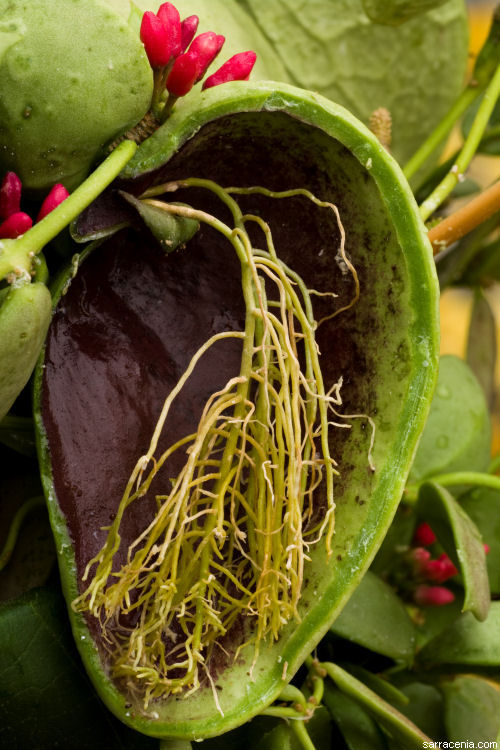
Some leaves of the Dischidia [genus], an epiphyte from Australasia, develop into urnlike pouches that become the home of ant colonies. The ants carry in soil and add nitrogeneous wastes, while moisture collects in the leaves through condensation of the water vapor coming from the mesophyll through stomata. This creates a good growing medium for roots, which develop adventitiously from the same node as the leaf and grow down into the soil contained in the urnlike pouch. In other words, this extraordinary plant not only reproduces itself by conventional means but also, with the aid of ants, provides its own fertilized growing medium and flower pots and then produces special roots, which “exploit” the situation.

Naturally I had to look up images of this plant because that’s amazing.

Illustration of Dischidia major (image credit: wikimedia commons)

Dischidia major – cross section of “flower-pot” leaf (photo credit: eol.org)

Dischidia vidalii– cross section of “flower-pot” leaf (photo credit: eol.org)

In shorter words, the plant grows modified leaves that form a little cavity, within which ants live. The ants incidentally carry soil into the cavity, while fertilizing that soil with their waste. The stomata are located on the insides of these cavities, which expel water from the leaves, where it then waters the soil that is located inside the leaves. Not to mention, the outside of those cavities are photosynthesizing all the while.

So, with the help of ants, an epiphytic Dischidia has evolved leaves to bring the soil to itself up in the trees, where it fertilizes and waters itself? SAY WHAT?! That is so damn cool.


Resources:

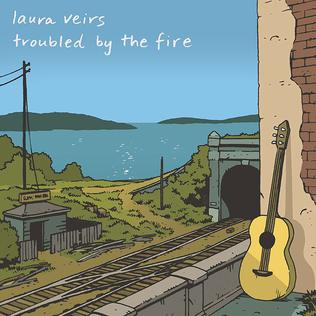
Botany in Popular Culture: Laura Veirs

I love music for its ability to conjure up emotions, create a mood, and inspire action. The music of Laura Veirs has always inspired me to get out into nature and be more observant of the wild things around me. Her music is rich with emotions, and I feel those, too. However, when I think of her music, I can’t escape images of the natural world and the creatures that inhabit it.

Found within her nature-centric lyrics are, of course, numerous botanical references. After all, plants and their actions make excellent subject matter for all types of art. And with that in mind, Veirs asks rhetorically in the song Rapture, “Doesn’t the tree write great poetry?”

When it comes to botanical references, the song that jumps first to mind is Lonely Angel Dust, starting off right away with these lyrics: “The rose is not afraid to blossom / though it knows its petals must fall / and with its petals fall seeds into soil / Why toil to contain it all? / Why toil at all?” Plants produce seeds in abundance, as mentioned in Shadow Blues: “Thousand seeds from a flower blowing through the night.” And, as in Where Are You Driving?, they’re seeking a suitable spot to plant themselves: “Through clouds of dandelions / seeds sailing out on the wind / hoping you’ll be the one to plant yourself on in.”


Flowers come up often in the songs of Laura Veirs. In White Cherry, “cherry trees take to bloom.” In Nightingale, “her heart a field in bloom.” In Make Something Good, “an organ pipe in a cathedral / that stays in tune through a thousand blooms.” In Sun is King, “innocent as a summer flower.” In Cast a Hook, “with watery cheeks down flowered lanes.” In Life Is Good Blues, “Messages you sent to Mars came from a crown of flowers.” Grass and weeds get a few mentions, too. In Summer Is the Champion, “let’s get dizzy in the grass.” In Life Is Good Blues, “tender green like the shoots of spring / unfurling on the lawn.”

Trees are the real stars, though. Veirs makes frequent references to trees and their various parts. This makes sense, as trees are real forces of nature. So much happens in, on, and around them, and images of the natural world can feel barren without them. First there is their enormousness, as in Black Butterfly, “evergreen boughs above me tower / were singing quiet stories about forgiveness, ” and Don’t Lose Yourself, “we slept in the shadow of a cedar tree.” Then there is their old age, as in Where Are You Driving?, “tangled up in the gnarled tree,” and When You Give Your Heart, “falling through the old oak tree.” There is also their utility, mentioned in Make Something Good, “I wanted to make something sweet / the blood inside a maple tree / the sunlight trapped inside the wood / make something good.” And then, of course, there is the fruit they bear, as in July Flame, “sweet summer peach / high up in the branch / just out of my reach,” and then in Wandering Kind, “a strange July / a storm came down / from the North and pulled out the salt / and it tore out the leaves from the pear tree / my canopy.”

Many of Veirs songs create scenes and tell stories of being in the wilderness among rivers, lakes, mountains, and caves. Chimney Sweeping Man, for example, is a “forest resident” who “walks[s] quiet through the forest like a tiny, quiet forest mouse.” In Snow Camping, Veirs tells a story about sleeping in a snow cave in the forest, where “a thousand snowflakes hovered,” “a distant songbird [was] singing,” and “the weighted trees” were her “only home.” But sometimes those forests burn, which is captured in Drink Deep: “Now the raging of the forest fires end / and all the mammals fled / I smell in the charred darkness / a little green / a little red.” Later in the song: “the fire closed his eyes / tipped his flame hat and slipped through the dire rye / we wandered romantic / we scattered dark branches / with singing green stars as our guide.”

Nature can also be empowering, and Veirs often refers to things in the natural world as metaphors or similes for the human experience. In Cast a Hook, Veirs adamantly asserts, “I’m not dead, not numb, not withering / like a fallen leaf who keeps her green.” This line comes up again in Saltbreakers: “You cannot burn me up / I’m a fallen leaf who keeps her green.” In Lake Swimming, Veirs addresses change and how some of life’s changes may wound us but we can still shine – “shucking free our deadened selves / like snakes and corn do / … / Old butterfly / I’ll dance with you / though our wings may crumble / we can float like ash / broken but the edges still shine.”


The botanical references Veirs makes in her songs are not the only things that excite me. Birds, insects, mammals, fish, and worms all find a place in Veirs’ lyrics. This is why, after more than a decade of listening to her songs, I find myself coming back to them again and again. There is a sort of kinship we feel for each other when we share in common a love of the natural world. I find that in the music of Laura Veirs.

More Botany in Popular Culture Posts:

When Urban Pollinator Gardens Meet Native Plant Communities

Public concern about the state of bees and other pollinating insects has led to increased interest in pollinator gardens. Planting a pollinator garden is often promoted as an excellent way for the average person to help protect pollinators. And it is! However, as with anything in life, there can be downsides.

In many urban areas, populations of native plants remain on undeveloped or abandoned land, in parks or reserves, or simply as part of the developed landscape. Urban areas may also share borders with natural areas, the edges of which are particularly prone to invasions by non-native plants. Due to human activity and habitat fragmentation, many native plant populations are now threatened. Urban areas are home to the last remaining populations of some of these plants.

Concern for native plant populations in and around urban areas prompted researchers at University of Pittsburgh to review some of the impacts that urban pollinator gardens may have and to develop a “roadmap for research” going forward. Their report was published earlier this year in New Phytologist.

Planting a wildflower seed mix is a simple way to establish a pollinator garden, and such mixes are sold commercially for this purpose. Governmental and non-governmental organizations also issue recommendations for wildflower, pollinator, or meadow seed mixes. With this in mind, the researchers selected 30 seed mixes “targeted for urban settings in the northeastern or mid-Atlantic USA” to determine what species are being recommended for or commonly planted in pollinator gardens in this region. They also developed a “species impact index” to assess “the likelihood a species would impact remnant wild urban plant populations.”

A total of 230 species were represented in the 30 seed mixes. The researchers selected the 45 most common species for evaluation. Most of these species (75%) have generalized pollination systems, suggesting that there is potential for sharing pollinators with remnant native plants. Two-thirds of the species had native ranges that overlapped with the targeted region; however, the remaining one-third originated from Europe or western North America. The native species all had “generalized pollination systems, strong dispersal and colonization ability, and broad environmental tolerances,” all traits that could have “high impacts” either directly or indirectly on remnant native plants. Other species were found to have either high dispersal ability but low chance of survival or low dispersal ability but high chance of survival.

This led the researchers to conclude that “the majority of planted wildflower species have a high potential to interact with native species via pollinators but also have the ability to disperse and survive outside of the garden.” Sharing pollinators is especially likely due to super-generalists like the honeybee, which “utilizes flowers from many habitat types.” Considering this, the researchers outlined “four pollinator-mediated interactions that can affect remnant native plants and their communities,” including how these interactions can be exacerbated when wildflower species escape gardens and invade remnant plant communities.

photo credit: wikimedia commons

The first interaction involves the quantity of pollinator visits. The concern is that native plants may be “outcompeted for pollinators” due to the “dense, high-resource displays” of pollinator gardens. Whether pollinator visits will increase or decrease depends on many things, including the location of the gardens and their proximity to native plant communities. Pollinator sharing between the two has been observed; however, “the consequences of this for effective pollination of natives are not yet understood.”

The second interaction involves the quality of pollinator visits. Because pollinators are shared between native plant communities and pollinator gardens, there is a risk that the pollen from one species will be transferred to another species. High quantities of this “heterospecific pollen” can result in reduced seed production. “Low-quality pollination in terms of heterospecific pollen from wildflower plantings may be especially detrimental for wild remnant species.”

The third interaction involves gene flow between pollinator gardens and native plant communities. Pollen that is transferred from closely related species (or even individuals of the same species but from a different location) can have undesired consequences. In some cases, it can increase genetic variation and help address problems associated with inbreeding depression. In other cases, it can introduce traits that are detrimental to native plant populations, particularly traits that disrupt adaptations that are beneficial to surviving in urban environments, like seed dispersal and flowering time. Whether gene flow between the two groups will be positive or negative is difficult to predict, and “the likelihood of genetic extinction versus genetic rescue will depend on remnant population size, genetic diversity, and degree of urban adaptation relative to the planted wildflowers.”

The fourth interaction involves pathogen transmission via shared pollinators. “Both bacterial and viral pathogens can be transmitted via pollen, and bacterial pathogens can be passed from one pollinator to another.” In this way, pollinators can act as “hubs for pathogen exchange,” which is especially concerning when the diseases being transmitted are ones for which the native plants have not adapted defenses.

photo credit: wikimedia commons

All of these interactions become more direct once wildflowers escape gardens and establish themselves among the native plants. And because the species in wildflower seed mixes are selected for their tolerance of urban conditions, “they may be particularly strong competitors with wild remnant populations,” outcompeting them for space and resources. On the other hand, the authors note that, depending on the species, they may also “provide biotic resistance to more noxious invaders.”

All of these interactions require further investigation. In their conclusion, the authors affirm, “While there is a clear potential for positive effects of urban wildflower plantings on remnant plant biodiversity, there is also a strong likelihood for unintended consequences.” They then suggest future research topics that will help us answer many of these questions. In the meantime, pollinator gardens should not be discouraged, but the plants (and their origins) should be carefully considered. One place to start is with wildflower seed mixes, which can be ‘fine-tuned’ so that they benefit our urban pollinators as well as our remnant native plants. Read more about plant selection for pollinators here.

The Agents That Shape the Floral Traits of Sunflowers

Flowers come in a wide array of shapes, sizes, colors, and scents. Their diversity is downright astounding. Each individual species of flowering plant has its own lengthy story to tell detailing how it came to look and act the way it does. This is its evolutionary history. Unraveling this history is a nearly insurmountable task, but one that scientists continue to chip away at piece by piece.

In the case of floral traits – particularly for flowers that rely on pollinators to produce seeds – it is safe to say that millennia of interactions with floral visitors have helped shape not only the way the flower looks, but also the nature of its nectar and pollen. However, flowers are “expensive” to make and maintain, so even though they are necessary for reproduction, plants must find a balance between that and allocating resources for defense – against both herbivory and disease – and growth. This balance can differ depending on a plant’s life history – whether it is annual or perennial. An annual plant has one shot at reproduction, so it can afford to funnel much of its energy there. If a perennial is unsuccessful at reproduction one year, there is always next year, as long as it has allocated sufficient resources towards staying alive.

Where a plant exists in the world also influences how it looks. Abiotic factors like temperature, soil type, nutrient availability, sun exposure, and precipitation patterns help shape, through natural selection, many aspects of a plant’s anatomy and physiology, including the structure and composition of its flowers. Additional biotic agents like nectar robbersflorivores, and pathogens can also influence certain floral traits.

This is the background that researchers from the University of Central Florida and University of Georgia drew from when they set out to investigate the reasons for the diverse floral morphologies in the genus Helianthus. Commonly known as sunflowers, Helianthus is a familiar genus consisting of more than 50 species, most of which are found across North America. The genus includes both annuals and perennials, and all but one species rely on cross-pollination to produce viable seeds. Pollination is mainly carried out by generalist bees.

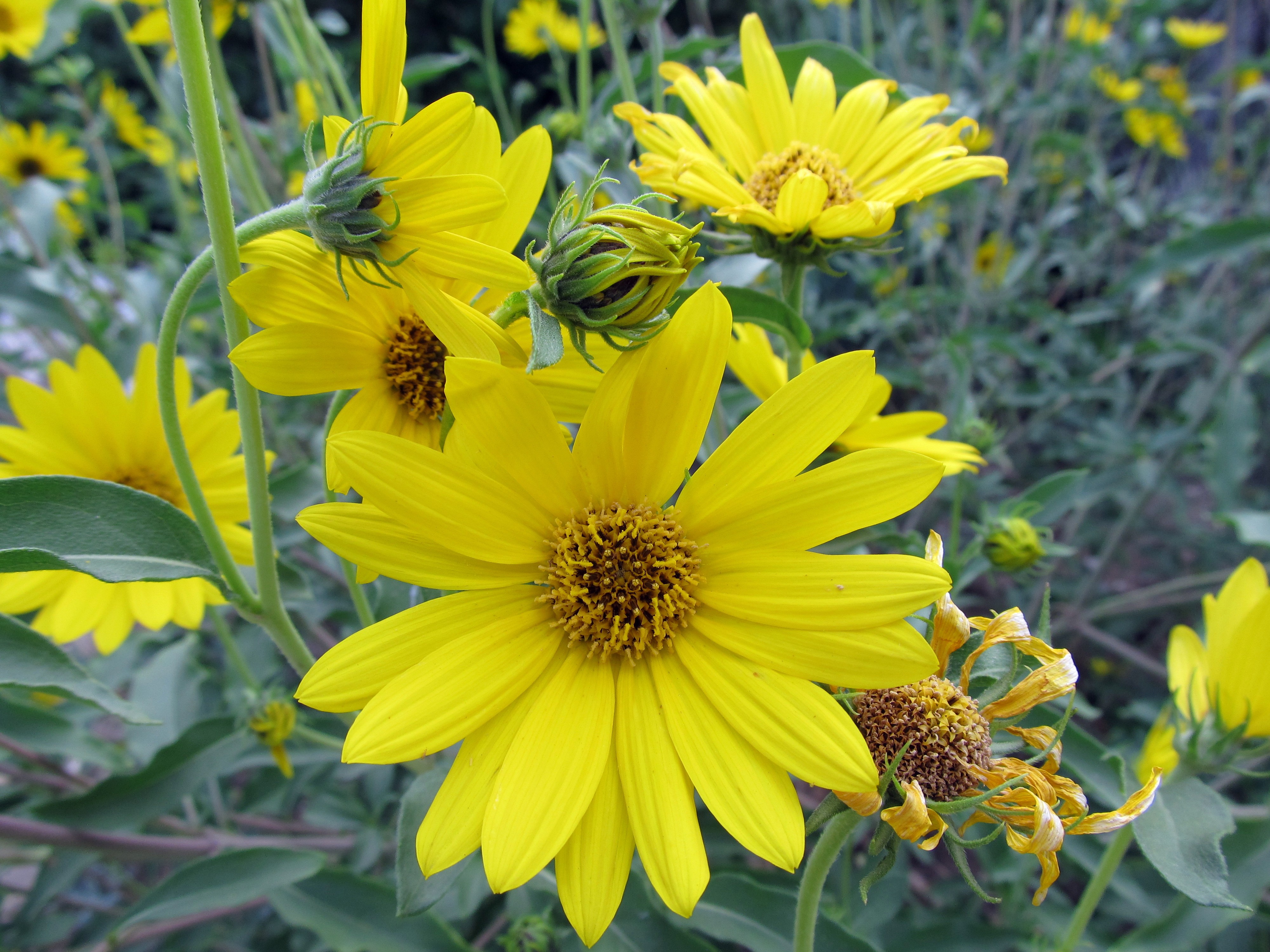
Maximilian sunflower (Helianthus maximiliani)

Helianthus species are found in diverse habitats, including deserts, wetlands, prairies, rock outcrops, and sand dunes. Their inflorescences – characteristic of plants in the family Asteraceae – consist of a collection of small disc florets surrounded by a series of ray florets, which as a unit are casually referred to as a single flower. In Helianthus, ray florets are completely sterile and serve only to attract pollinators. Producing large and numerous ray florets takes resources away from the production of fertile disc florets, and sunflower species vary in the amount of resources they allocate for each floret form.

In a paper published in the July 2017 issue of Plant Ecology and Evolution, researchers selected 27 Helianthus species and one Phoebanthus species (a closely related genus) to investigate “the evolution of floral trait variation” by examining “the role of environmental variation, plant life history, and flowering phenology.” Seeds from multiple populations of each species were obtained, with populations being carefully selected so that there would be representations of each species from across their geographic ranges. The seeds were then grown out in a controlled environment, and a series of morphological and physiological data were recorded for the flowers of each plant. Climate data and soil characteristics were obtained for each of the population sites, and flowering period for each species was collected from various sources.

The researchers found “all floral traits” of the sunflower species to be “highly evolutionarily labile.” Flower size was found to be larger in regions with greater soil fertility, consistent with the resource-cost hypothesis which “predicts that larger and more conspicuous flowers should be selected against in resource-poor environments.” However, larger flower size had also repeatedly evolved in drier environments, which goes against this prediction. Apart from producing smaller flowers in dry habitats, flowering plants have other strategies to conserve water such as opening their flowers at night or flowering for a short period of time. Sunflowers do neither of these things. As the researchers state, “this inconsistency warrants consideration.”

The researchers speculate that “the evolution of larger flowers in drier environments” may be a result of fewer pollinators in these habitats “strongly favoring larger display sizes in self-incompatible species.” The flowers are big because they have to attract a limited number of pollinating insects. Conversely, flowers may be smaller in wetter environments because there is greater risk of pests and diseases. This is supported by the enemy-escape hypothesis – smaller flowers are predicted in places where there is increased potential for florivory and pathogens. Researchers found that lower disc water content had also evolved in wetter environments, which supports the idea that the plants may be defending themselves against flower-eating pests.

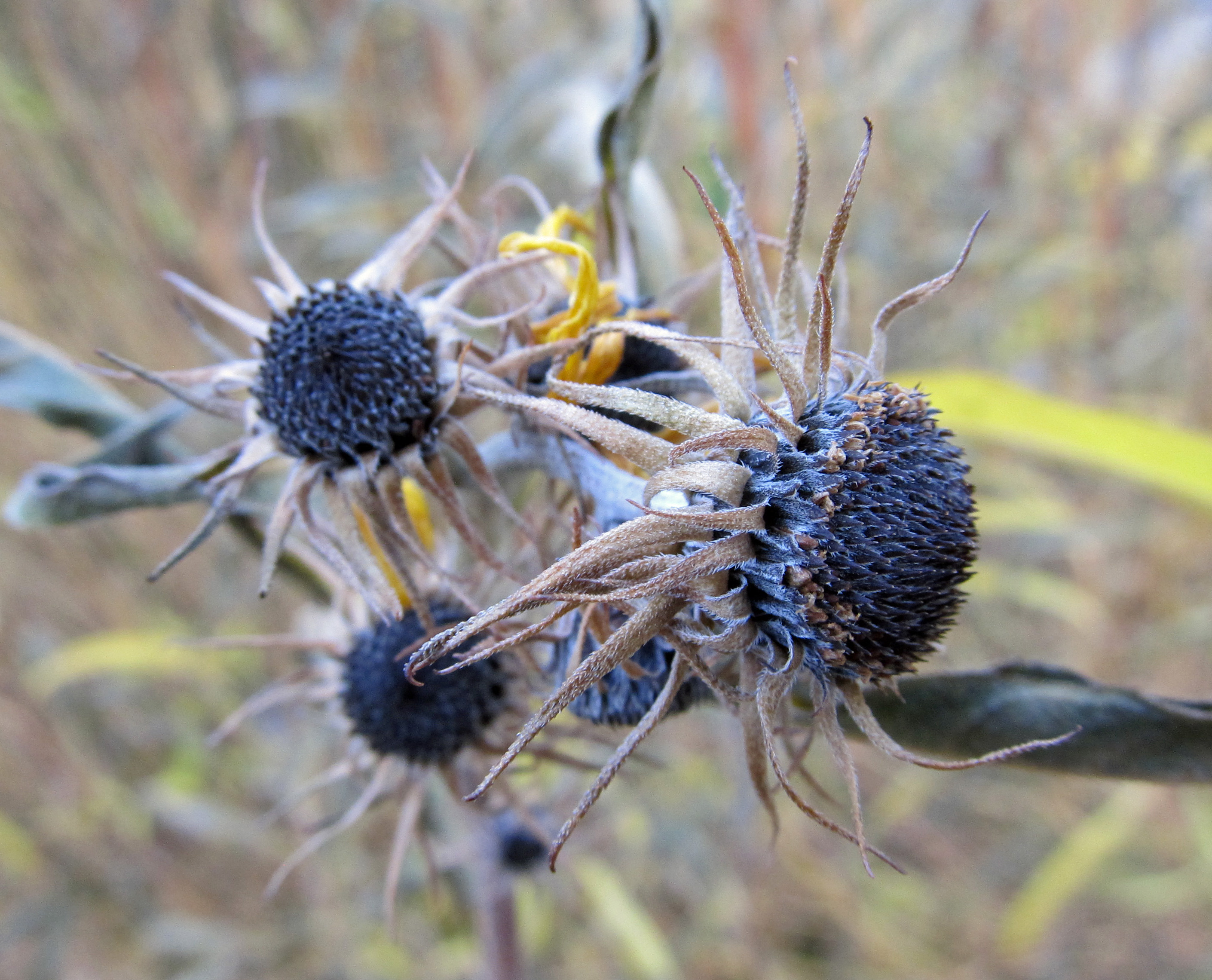
Seed heads of Maximilian sunflower (Helianthus maximiliani)

Another interesting finding is that, unlike other genera, annual and perennial sunflower species allocate a similar amount of resources towards reproduction. On average, flower size was not found to be different between annual and perennial species. Perhaps annuals instead produce more flowers compared to perennials, or maybe they flower for longer periods. This is something the researchers did not investigate.

Finally, abiotic factors were not found to have any influence on the relative investment of ray to disc florets or the color of disc florets. Variations in these traits may be influenced instead by pollinators, the “biotic factor” that is considered “the classic driver of floral evolution.” This is something that will require further investigation. As the researchers conclude, “determining the exact drivers of floral trait evolution is a complex endeavor;” however, their study found “reasonable support for the role of aridity and soil fertility in the evolution of floral size and water content.” Yet another important piece to the puzzle as we learn to tell the evolutionary history of sunflowers.

Highlights from the Alaska Invasive Species Workshop

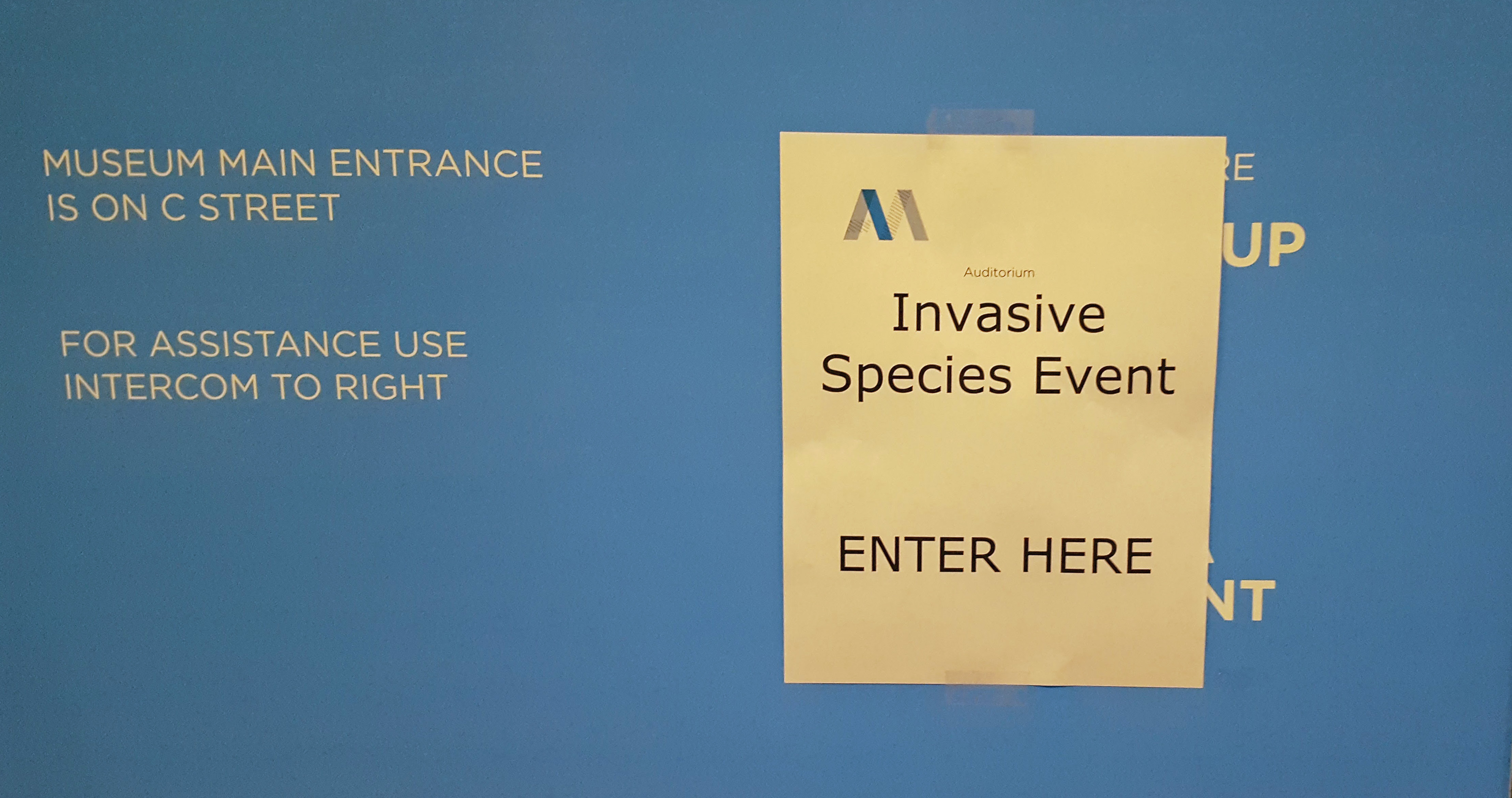
This October 24-26th I was in Anchorage, Alaska for the 18th annual Alaska Invasive Species Workshop. The workshop is organized by the Committee for Noxious and Invasive Pests Management and University of Alaska Fairbanks Cooperative Extension. It is a chance for people involved in invasive species management in Alaska – or just interested in the topic – to learn about the latest science, policies, and management efforts within the state and beyond. I am not an Alaska resident – nor had I ever been there until this trip – but my sister lives there, and I was planning a trip to visit her and her family, so why not stop in to see what’s happening with invasive species while I’m at it?

What follows are a few highlights from each of the three days.

Day One

The theme of the workshop was “The Legacy of Biological Invasions.” Ecosystems are shaped by biotic and abiotic events that occurred in the past, both recent and distant. This is their legacy. Events that take place in the present can alter ecosystem legacies. Invasive species, as one speaker said in the introduction, can “break the legacy locks of an ecosystem,” changing population dynamics of native species and altering ecosystem functions for the foreseeable future. Alaska is one of the few places on earth that is relatively pristine, with comparably little human disturbance and few introduced species. Since they are at an early stage in the invasion curve for most things, Alaska is in a unique position to eradicate or contain many invasive species and prevent future introductions. Coming together to address invasive species issues and protect ecosystem legacies will be part of the human legacy in Alaska.

The keynote address was delivered by Jamie Reaser, Executive Director of the National Invasive Species Council and author of several books. She spoke about the Arctic and its vulnerability to invasive species due to increased human activity, climate change, and scant research. To address this and other issues in the Arctic, the Arctic Council put together the Arctic Biodiversity Assessment, and out of that came the Arctic Invasive Alien Species Strategy and Action Plan. Reaser shared some thoughts about how government agencies and conservation groups can come together to share information and how they can work with commercial industries to address the threat of invasive species. She stressed that Alaska can and should play a leadership role in these efforts.

Later, Reaser gave a presentation about the National Invasive Species Council, including its formation and some of the work that it is currently doing. She emphasized that invasive species are a “people issue” – in that the actions and decisions we make both create the problem and address the problem – and by working together “we can do this.”

Day Two

Most of the morning was spent discussing Elodea, Alaska’s first invasive, submerged, freshwater, aquatic plant. While it has likely been in the state for a while, it was only recognized as a problem within the last decade. It is a popular aquarium plant that has been carelessly dumped into lakes and streams. It grows quickly and tolerates very cold temperatures, photosynthesizing under ice and snow. It propagates vegetatively and is spread to new sites by attaching itself to boats and float planes. Its dense growth can crowd out native vegetation and threaten fish habitat, as well as make navigating by boat difficult and landing float planes dangerous. Detailed reports were given about how organizations across the state have been monitoring and managing Elodea populations, including updates on how treatments have worked so far and what is being planned for the future. A bioeconomic risk analysis conducted by Tobias Schwörer was a featured topic of discussion.

After lunch I took a short break from the conference to walk around downtown Anchorage, so I missed a series of talks about environmental DNA. I returned in time to hear an interesting talk about bird vetch (Vicia cracca). Introduced to Alaska as a forage crop, bird vetch has become a problematic weed on farms, orchards, and gardens as well as in natural areas. It is a perennial vine that grows quickly, produces copious seeds, and spreads rhizomatously. Researchers at University of Alaska Fairbanks found that compared to five native legume species, bird vetch produced twice the amount of biomass in the presence of both native and non-native soil microbes, suggesting that bird vetch is superior when it comes to nitrogen fixation. Further investigation found that, using only native nitrogen-fixing bacteria, bird vetch produced significantly more root nodules than a native legume species, indicating that it is highly effective at forming relationships with native soil microbes. Additional studies found that the ability of bird vetch to climb up other plants, thereby gaining access to more sunlight and smothering host plants, contributed to its success as an invasive plant.

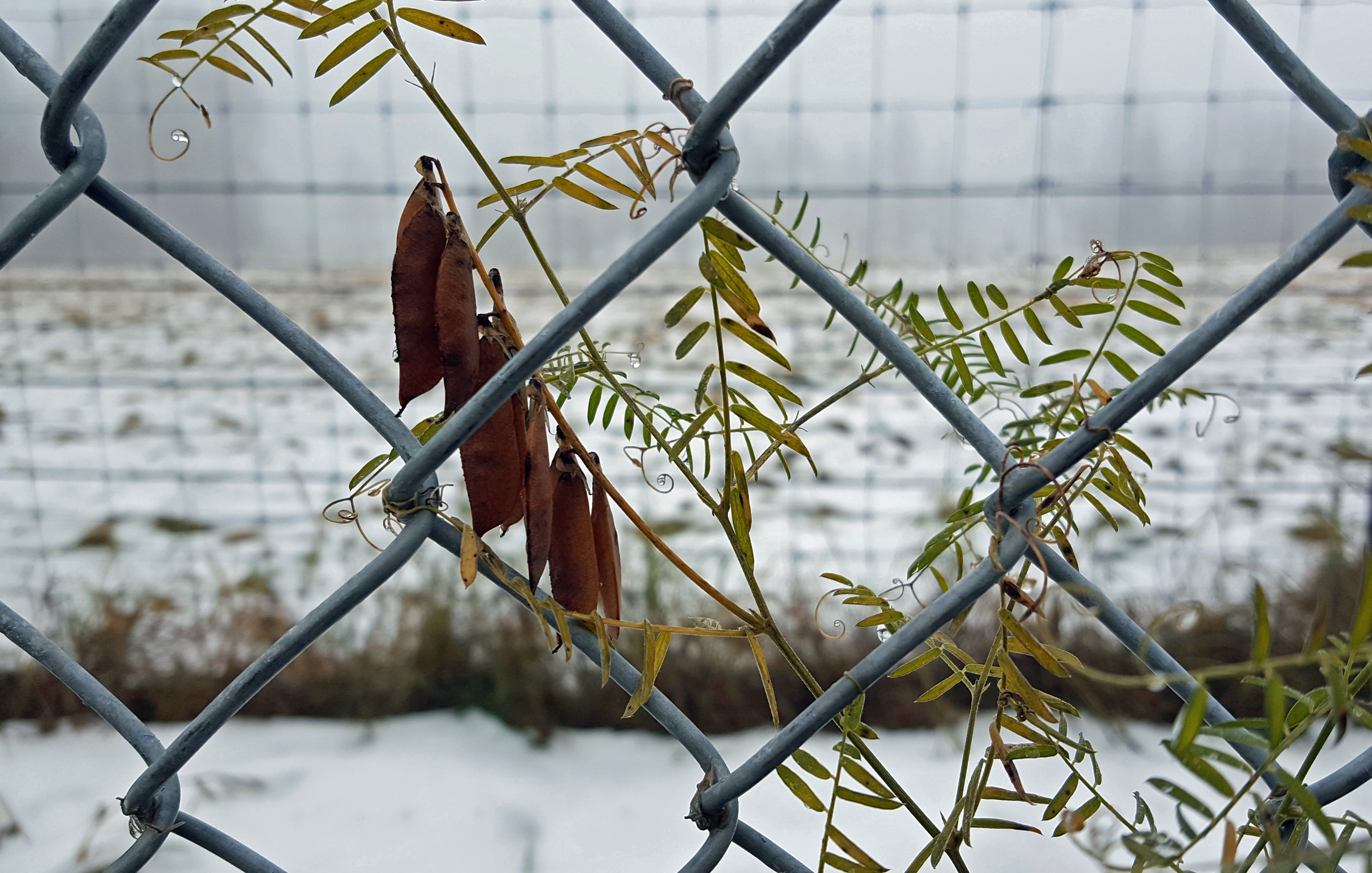
 Seed pods of bird vetch (Vicia cracca) in Fairbanks, Alaska

Day Three

The final day of the workshop was a veritable cornucopia of topics, including risk assessments for invasive species, profiles of new invasive species, updates on invasive species control projects, discussions about early detection and rapid response (EDRR), and talks about citizen science and community involvement. My head was swimming with impressions and questions. Clearly there are no easy answers when it comes to invasive species, and like other complex, global issues (made more challenging as more players are involved), the increasingly deep well of issues and concerns to resolve is not likely to ever run dry.

Future posts will dig further into some of the discussions that were had on day three. For now, here are a few resources that I gathered throughout the workshop:

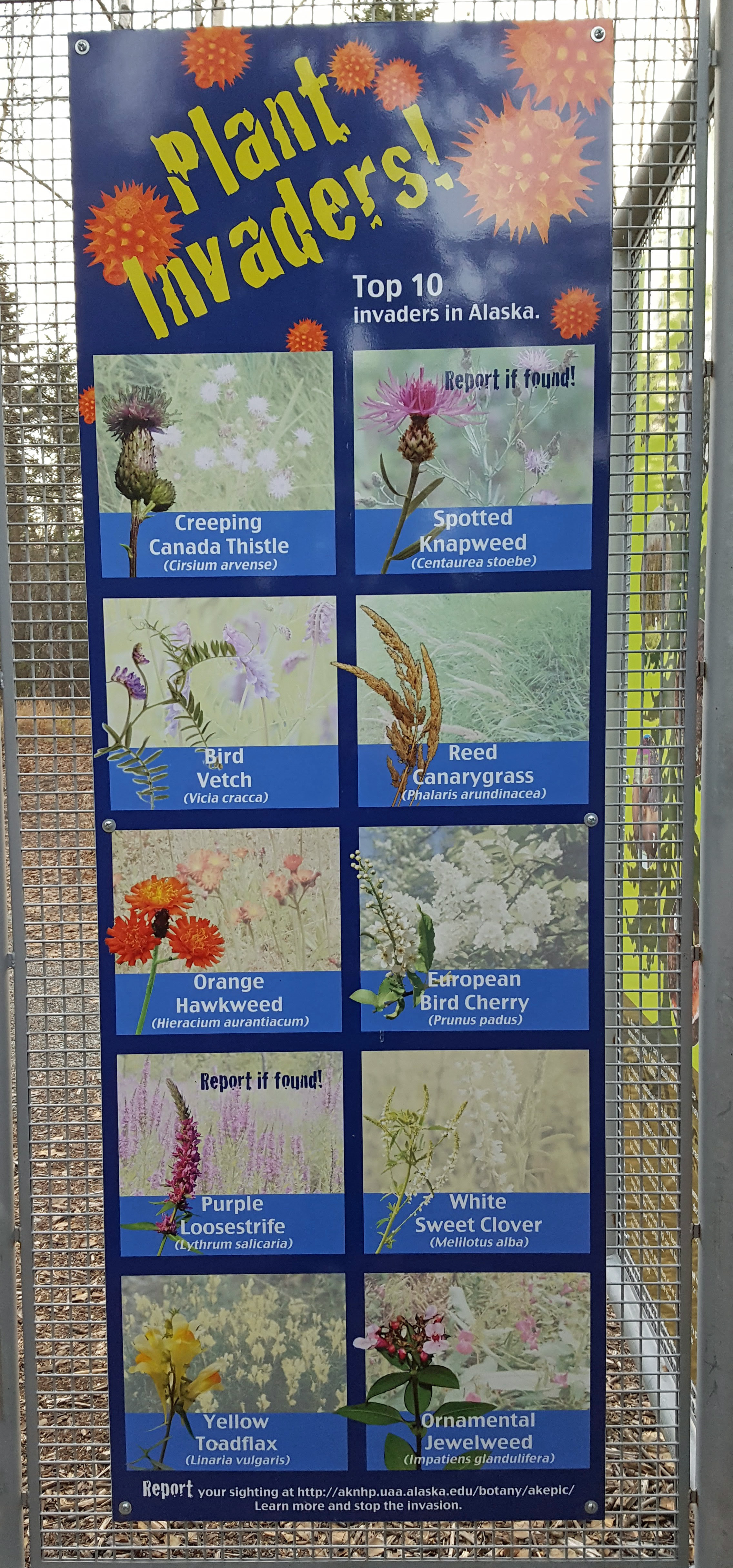
Interpretive sign at Alaska Botanical Garden in Anchorage, Alaska

Concluding the Summer of Weeds

“Most weeds suffer from a bad rap. Quite a few of the weeds in your garden are probably edible or even medicinal. Some invasive plants, including horsetail and nettle, are rich in minerals and can be harvested and used as fertilizer teas. Weeds with deep taproots, such as dandelions, cultivate the soil and pull minerals up to the surface. … Weeds are nature’s way to cover bare soil. After all, weeds prevent erosion by holding soil and minerals in place. Get to know the weeds in your area so you can put them to use for rather than against you.” — Gayla Trail, You Grow Girl

Great Piece of Turf by Albrecht Dürer (photo credit: wikimedia commons)

With summer drawing to a close, it is time to conclude the Summer of Weeds. That does not mean that my interest in weeds has waned, or that posts about weeds will cease. Quite the opposite, actually. I am just as fascinated, if not more so, with the topic of weeds as I was when this whole thing started. So, for better or worse, I will much have more to say on the subject.

In fact, I am writing a book. It is something I have been considering doing for a long time now. With so many of my thoughts focused on weeds lately, it is becoming easier to envision just what a book about weeds might look like. I want to tell the story of weeds from many different angles, highlighting both their positive and negative aspects. There is much we can learn from weeds, and not just how best to eliminate them. Regardless of how you feel about weeds, I hope that by learning their story we can all become better connected with the natural world, and perhaps more appreciative of things we casually dismiss as useless, less quick to jump to conclusions or render harsh judgments about things we don’t fully understand, and more inclined to investigate more deeply the stories about nature near and far.

Of course, I can’t do this all by myself. I will need your help. If you or someone you know works for or against weeds in any capacity, please put us in touch. I am interested in talking to weed scientists, invasive species biologists, agriculturists and horticulturists, edible weed enthusiasts, plant taxonomists, natural historians, urban ecologists, gardeners of all skill levels, and anyone else who has a strong opinion about or history of working with weeds. Please get in touch with me in one of several ways: contact page, Facebook, Twitter, Tumblr, or by commenting below.

Another way you can help is by answering the following poll. If there is more than one topic you feel particularly passionate about, feel free to answer the poll as many times as you would like; just wait 24 hours between each response. Thank you for your help! And I hope you have enjoyed the Summer of Weeds.

Quick Guide to the Summer of Weeds: