Weeds of Boise: Neglected Parking Lot Islands at Post Office on 13th Street

Boise’s summers are decidedly hot and dry. Months can pass without any measurable precipitation, meanwhile temperatures regularly peak in the 90’s. In the heat of the summer, multiple days in a row above 100 degrees Fahrenheit is not unheard of. Under these conditions, irrigation is a must if you intend to keep plants alive, particularly plants not adapted to our climate. Skipping out on watering or having something go awry with the irrigation system quickly becomes noticeable as the soil goes bone dry and plants begin to wither away. If this goes on for too long, many plants will not recover, including established trees and shrubs. However, the toughest plants among us, particularly the weeds, will move in to take their place.

You can see an example of this at the United States Postal Service building at 13th Street and Shoreline Lane in Boise, Idaho. The islands in the parking lot are not being watered, which has clearly been the case for quite some time because even the trees and shrubs are dying off. Apart from occasional mowing, very little maintenance is occurring, and our wild urban flora is about all that remains.
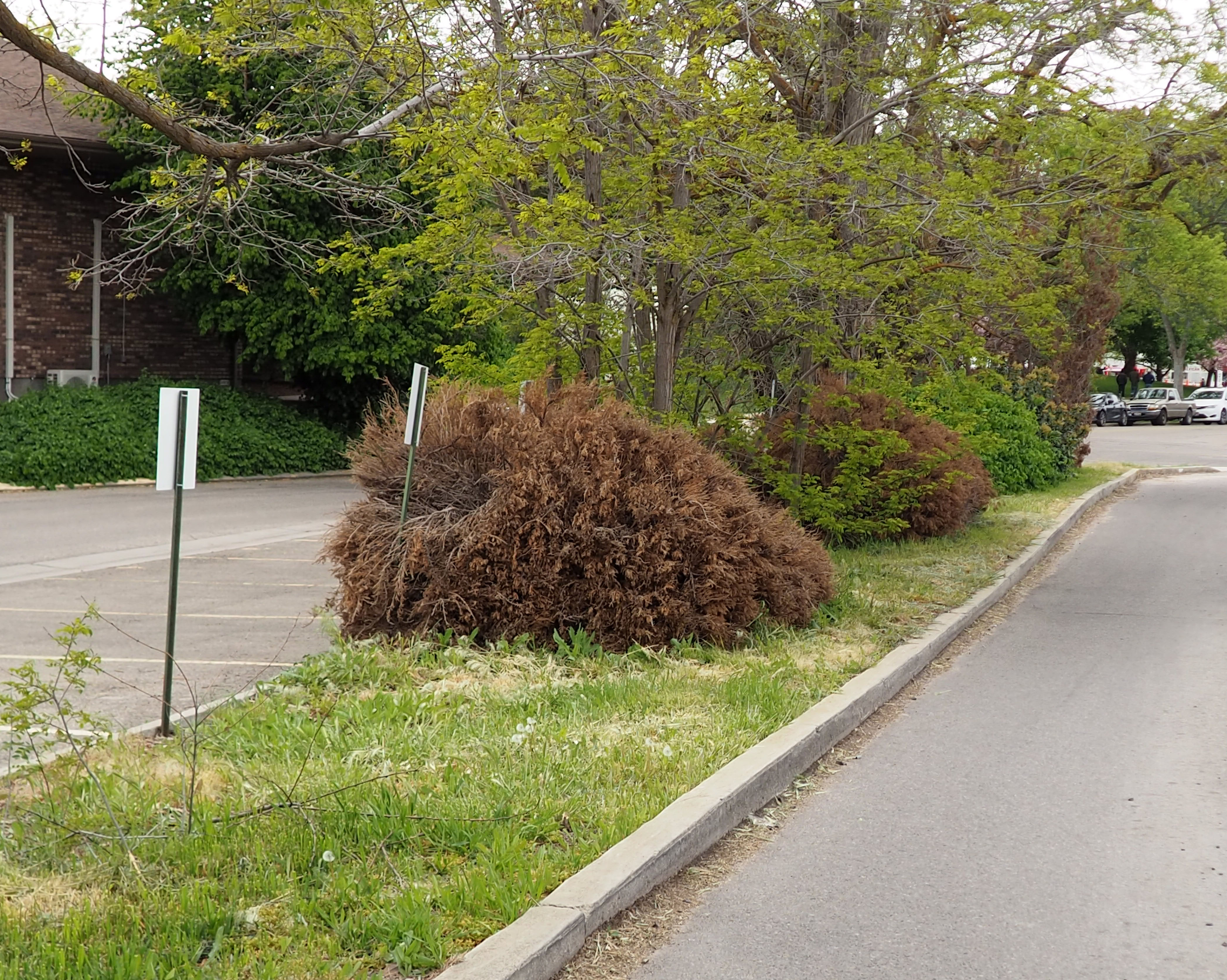
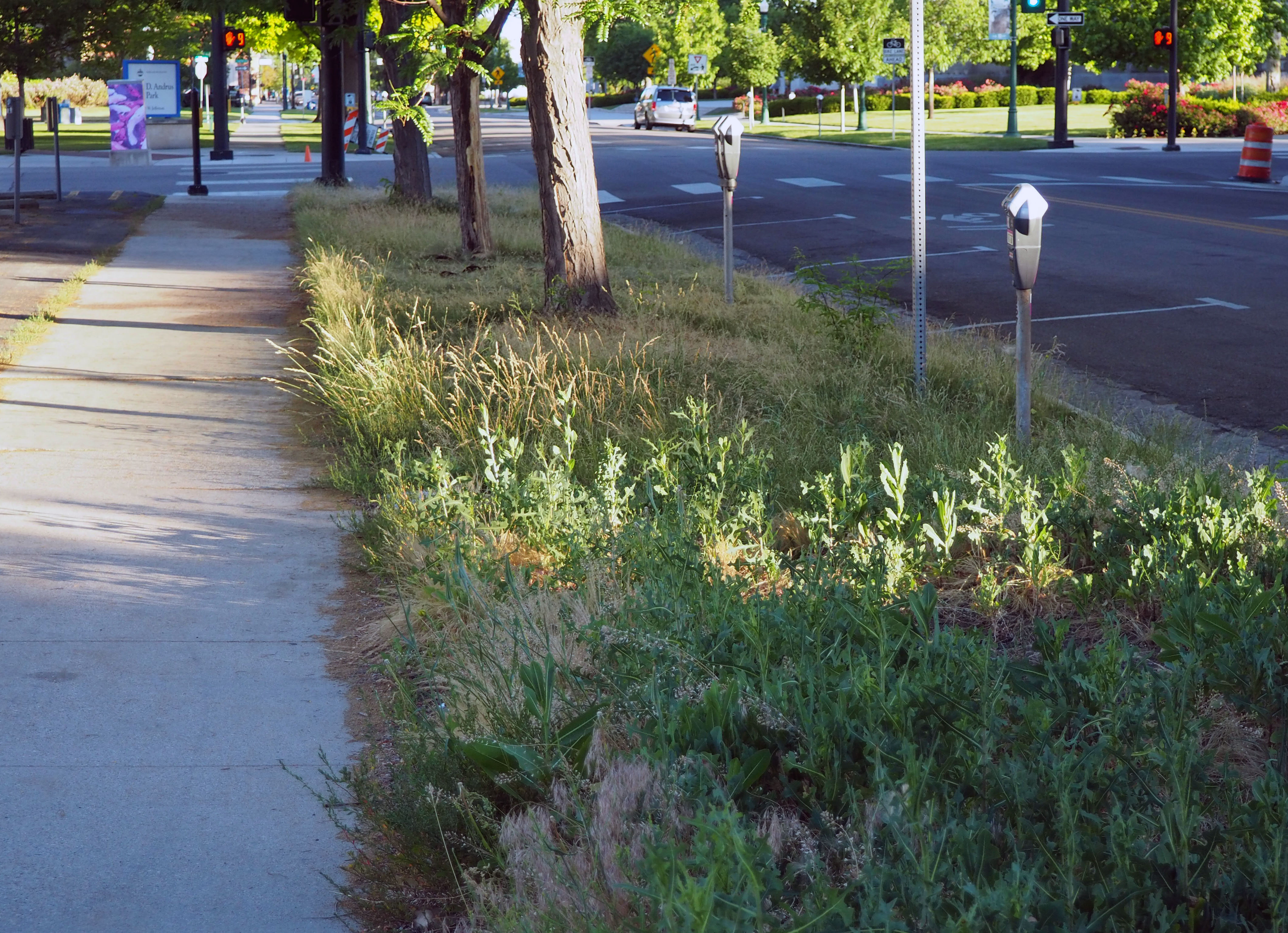
parking lot island at the corner of 13 Street and Shoreline Lane

Parking lots are not ideal locations for growing plants. Asphalt and cement dominate – two major contributors to the urban heat island effect – and automobile pollution is concentrated on account of all the cars coming and going on a regular basis. Many parking lots include islands where plants (often poorly maintained), along with other features like signs and lights, are placed. In general, these islands are far too small for trees, but trees are planted nonetheless in a desperate attempt to shade these formidable environments. In locations where snow is common, the snow from parking lots is often piled up on these islands to clear room for cars, while road salts and other ice melts are heavily applied in order to keep people and cars from sliding around. Parking lot plants have to endure all this and more, so it’s no surprise that they usually look pretty rough.

The stresses of added heat, pollution, trampling, and poor care are enough for plants to put up with. Cut off their irrigation supply, and parking lot plants are sure to give up the ghost. A situation like this is an excellent place to familiarize yourself with your wild urban flora. Many weeds seemingly have no problem tolerating these conditions. To demonstrate this, I inventoried the weeds found in neglected parking lot islands at the post office on 13th Street and Shoreline Lane. What follows are a few photos and a list of the weeds I’ve identified so far. Like all posts in the Weeds of Boise series, this list may be updated as I continue to check back in on this location.

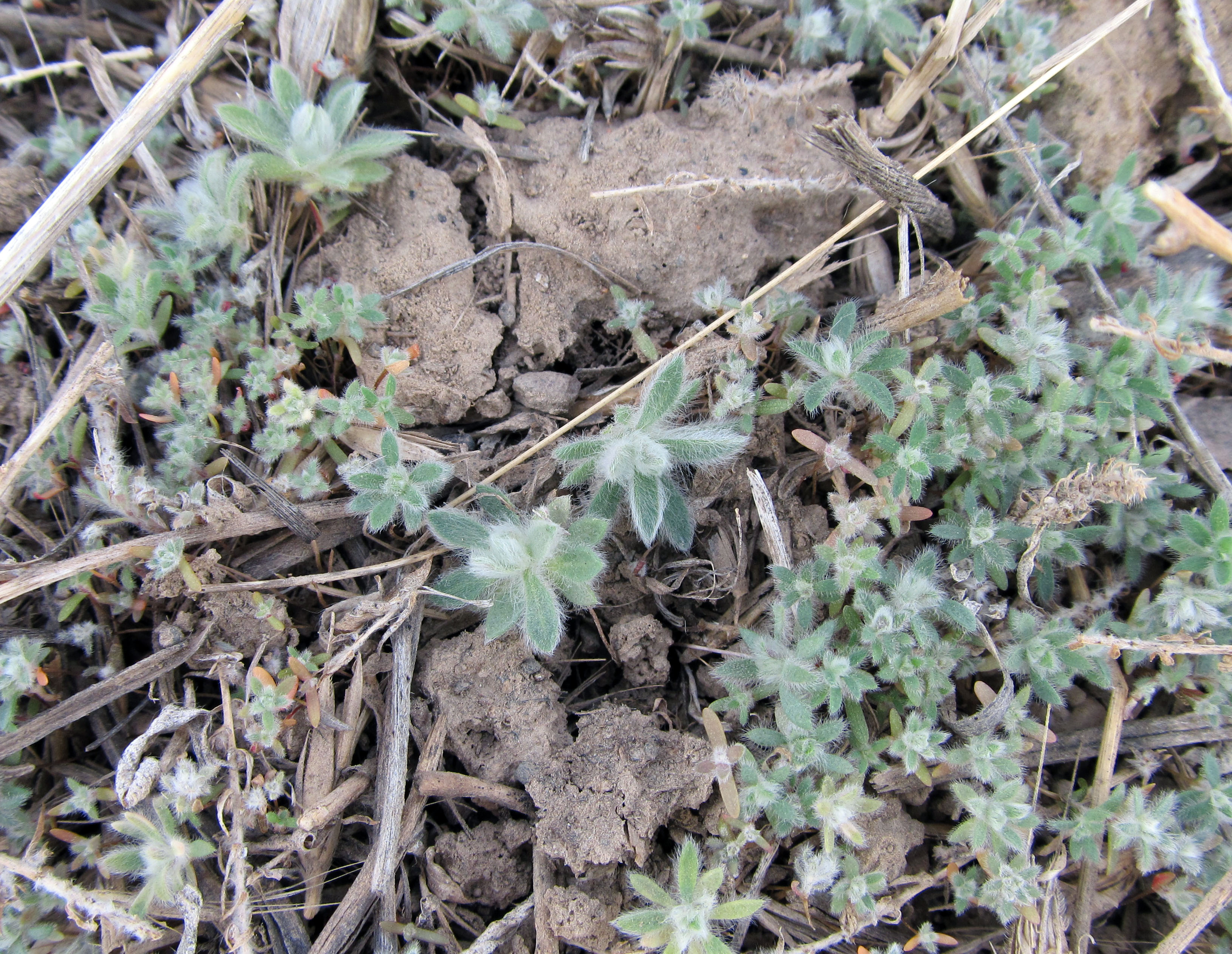
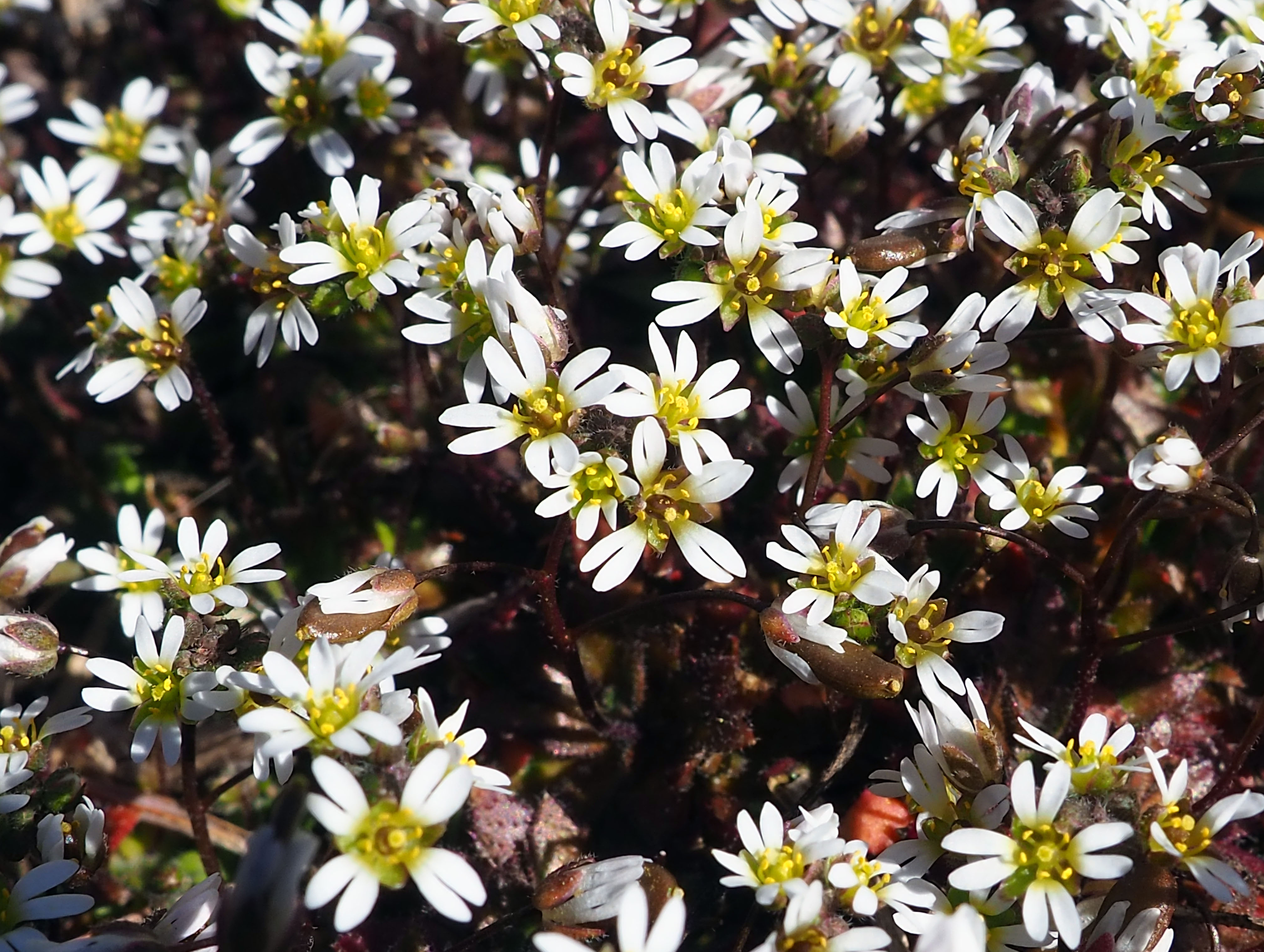
spring draba (Draba verna)
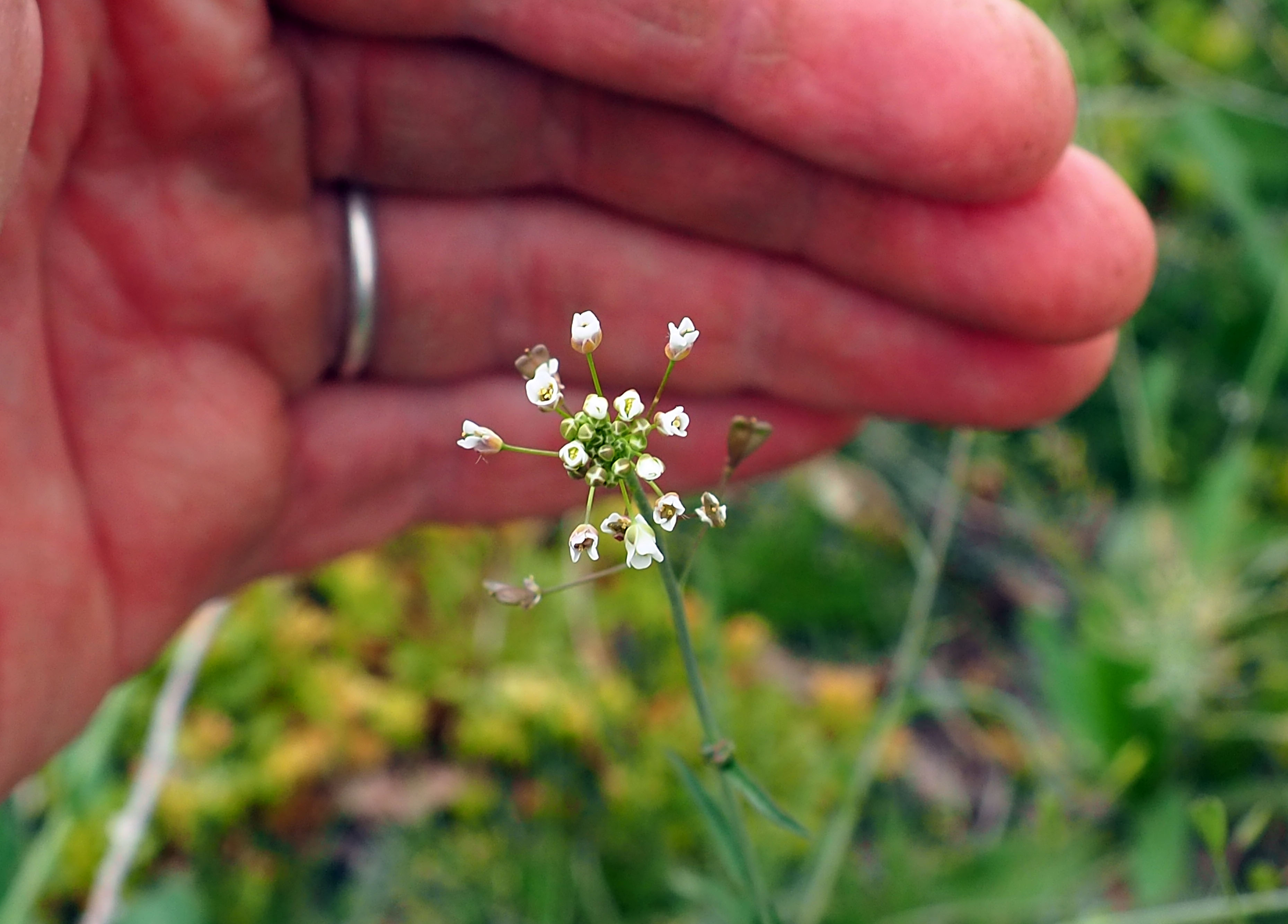
shepherd’s purse (Capsella bursa-pastoris)
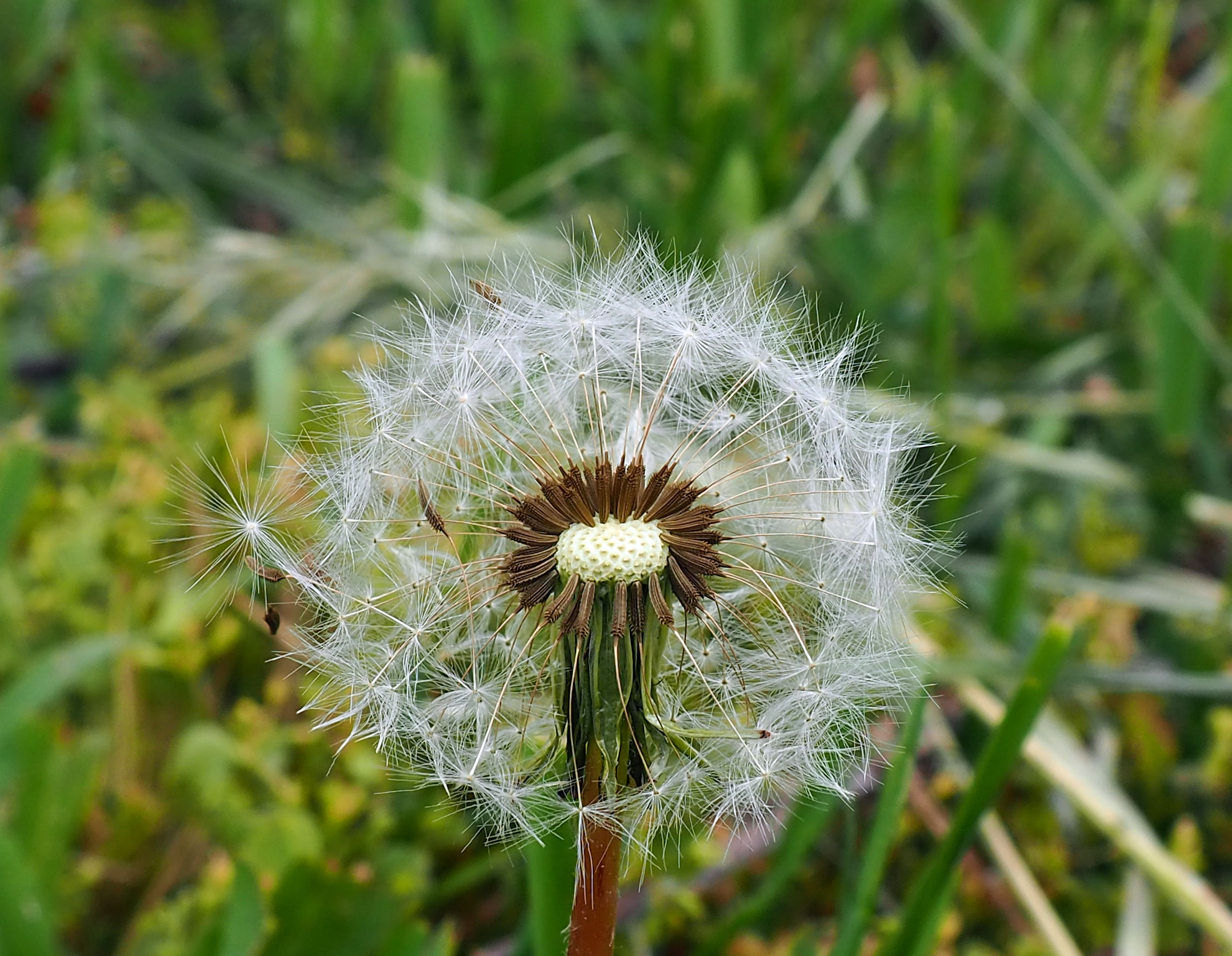
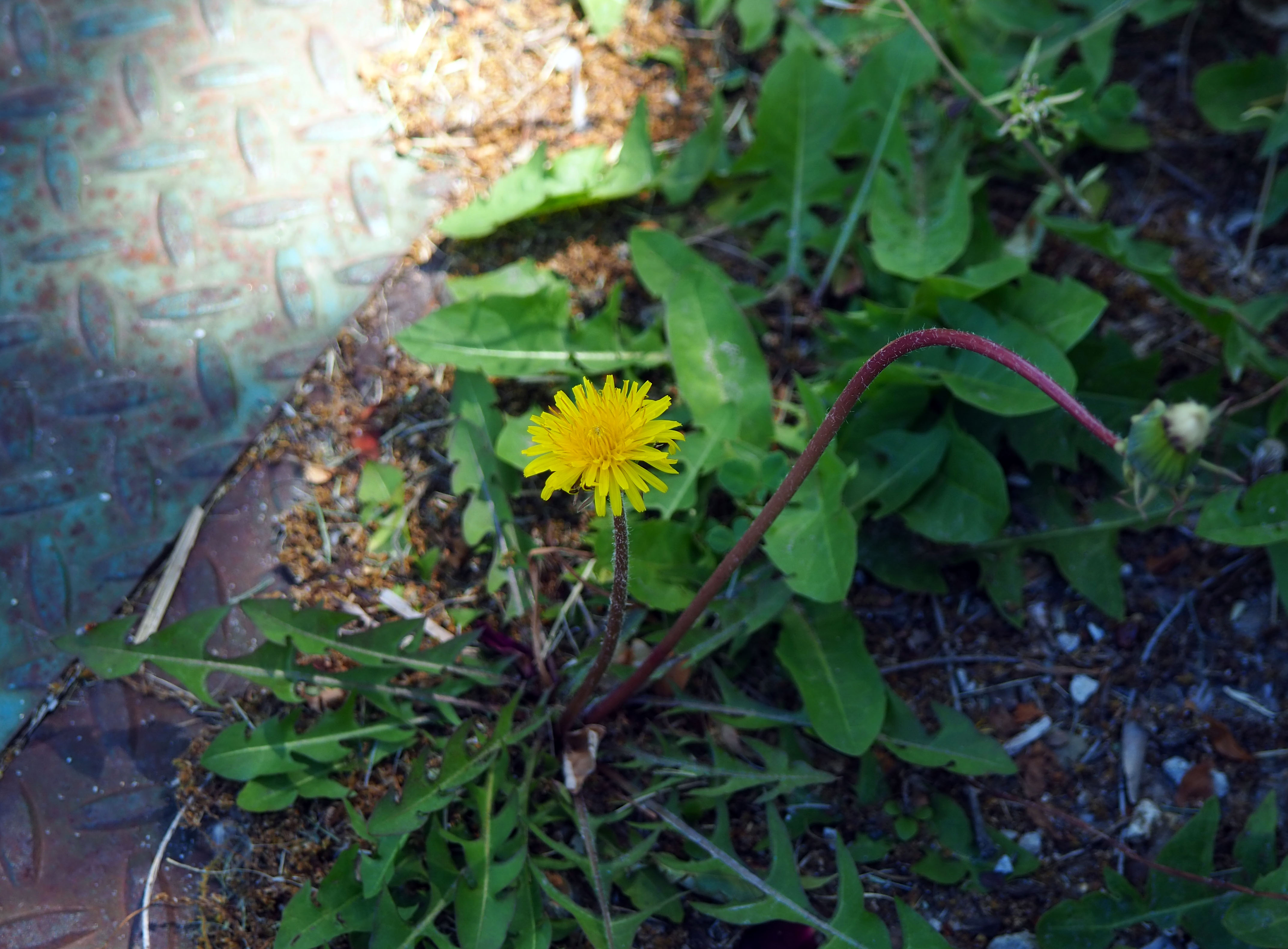
dandelion (Taraxacum officinale)
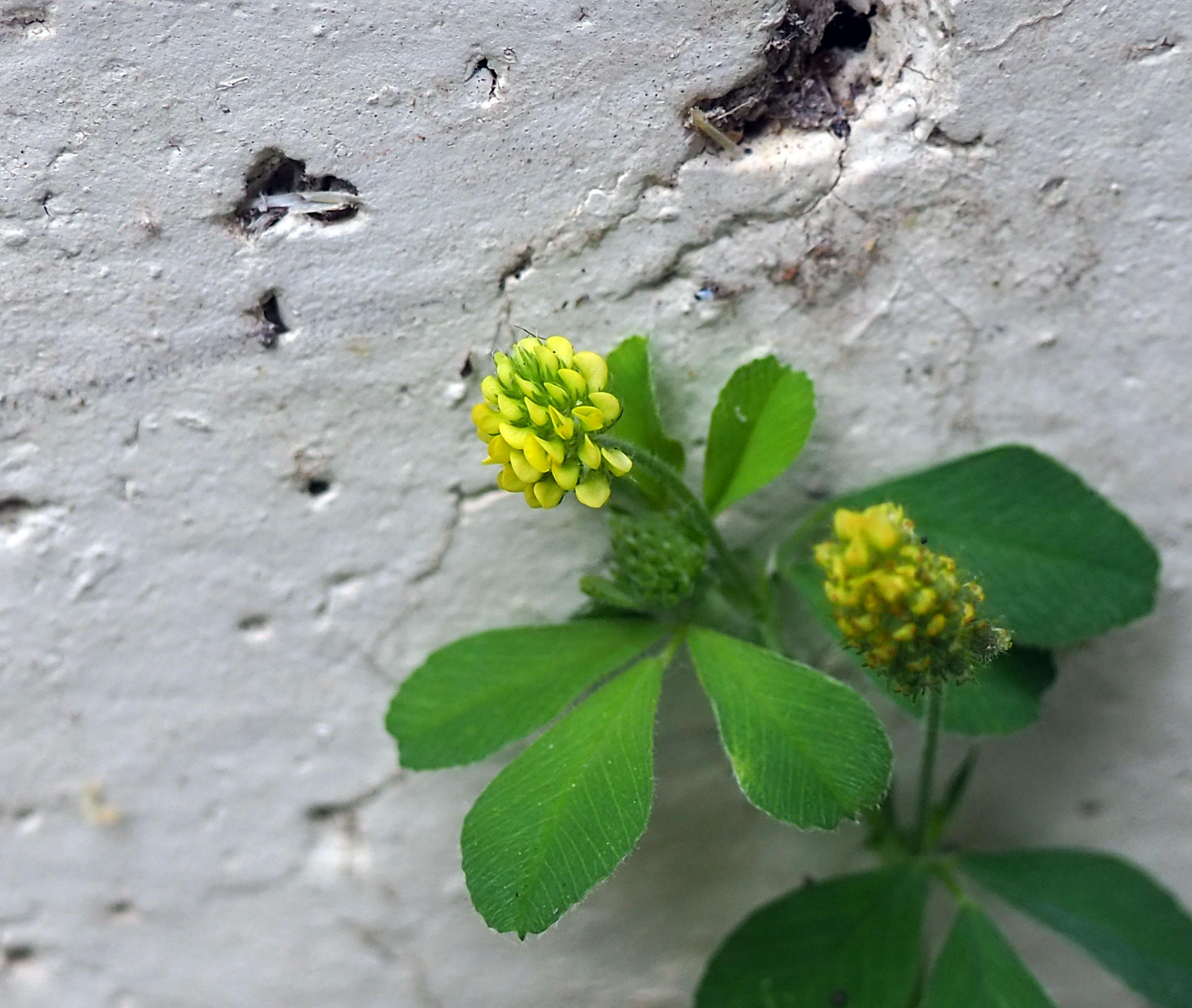
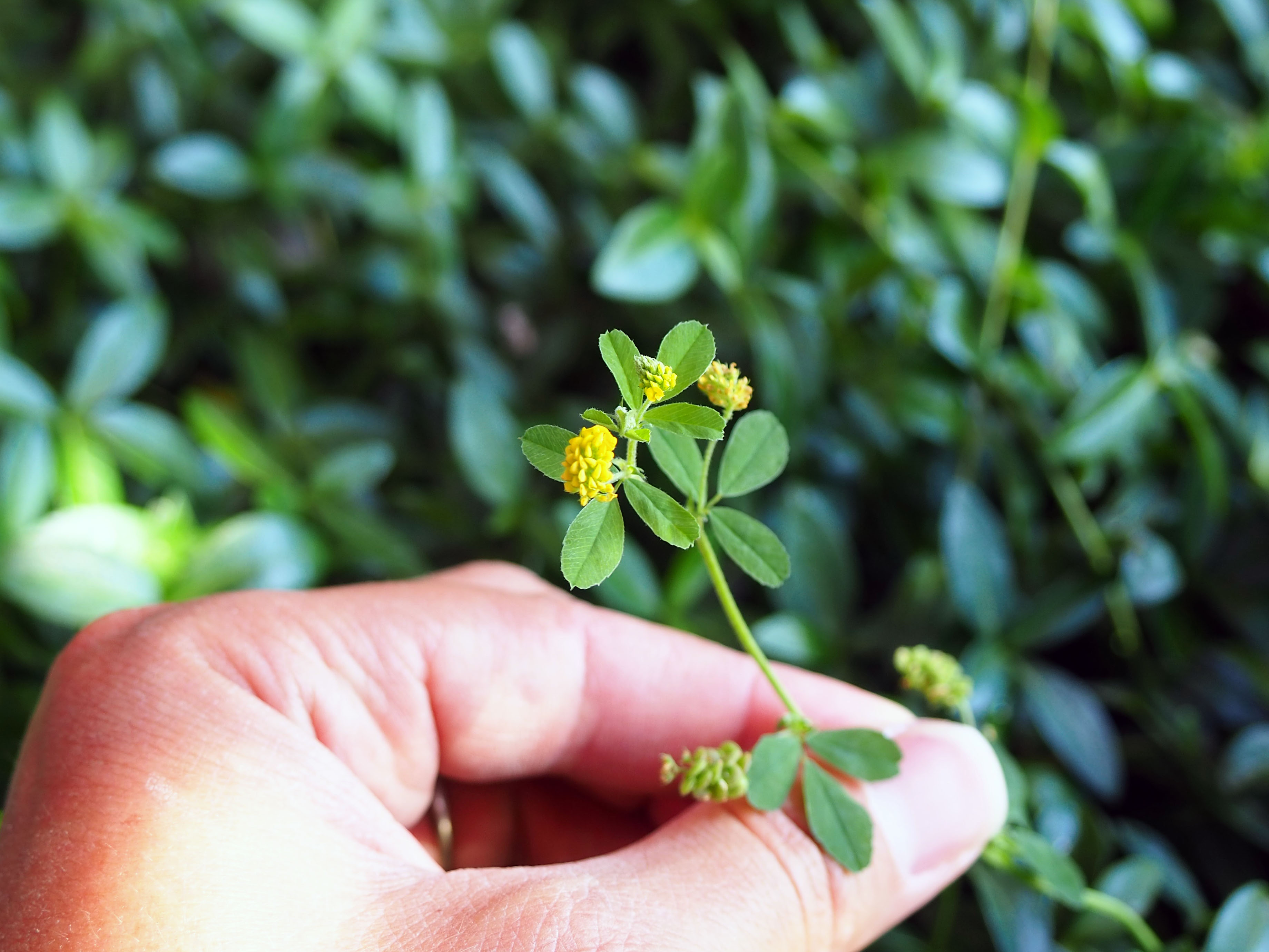
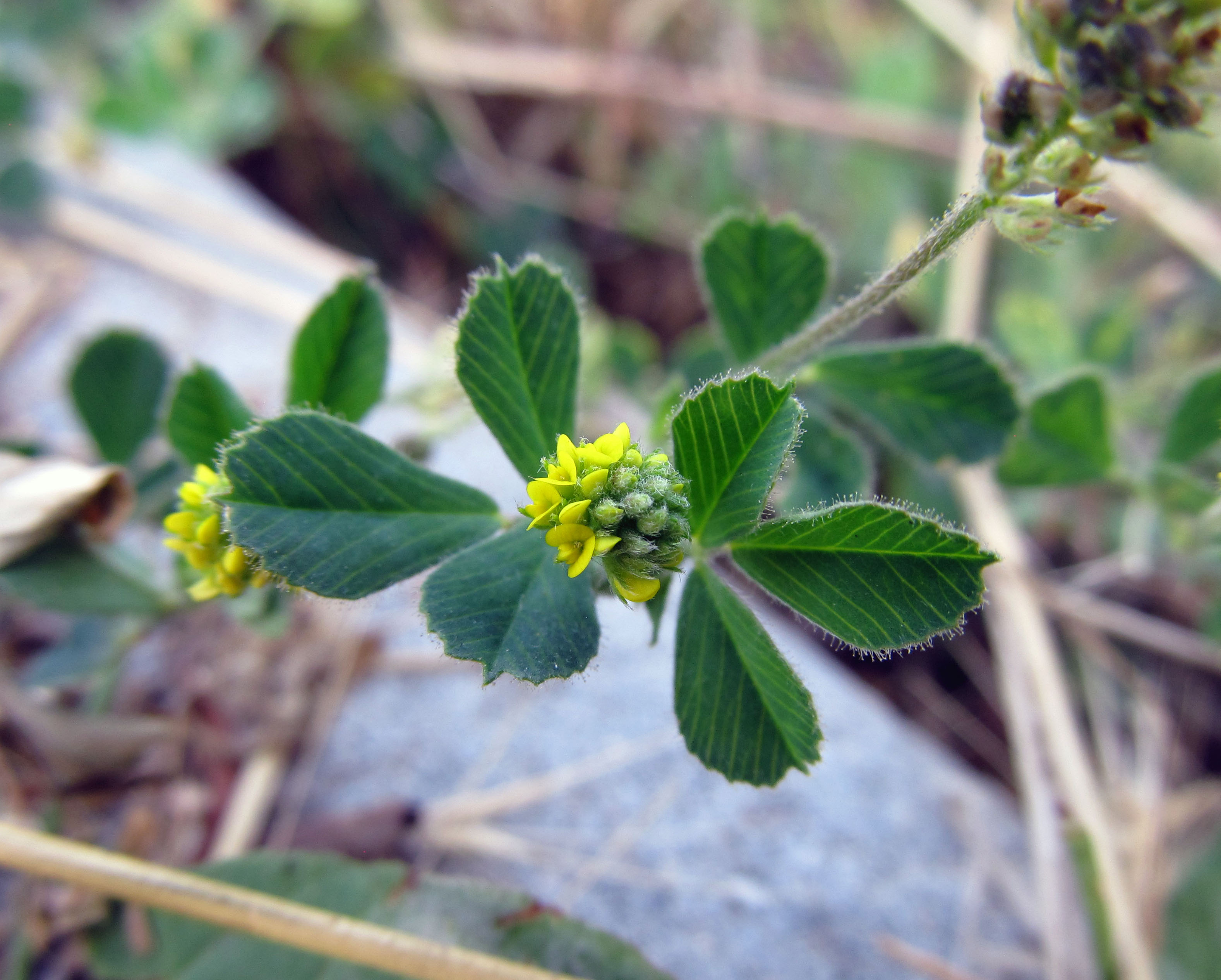
black medic (Medicago lupulina)
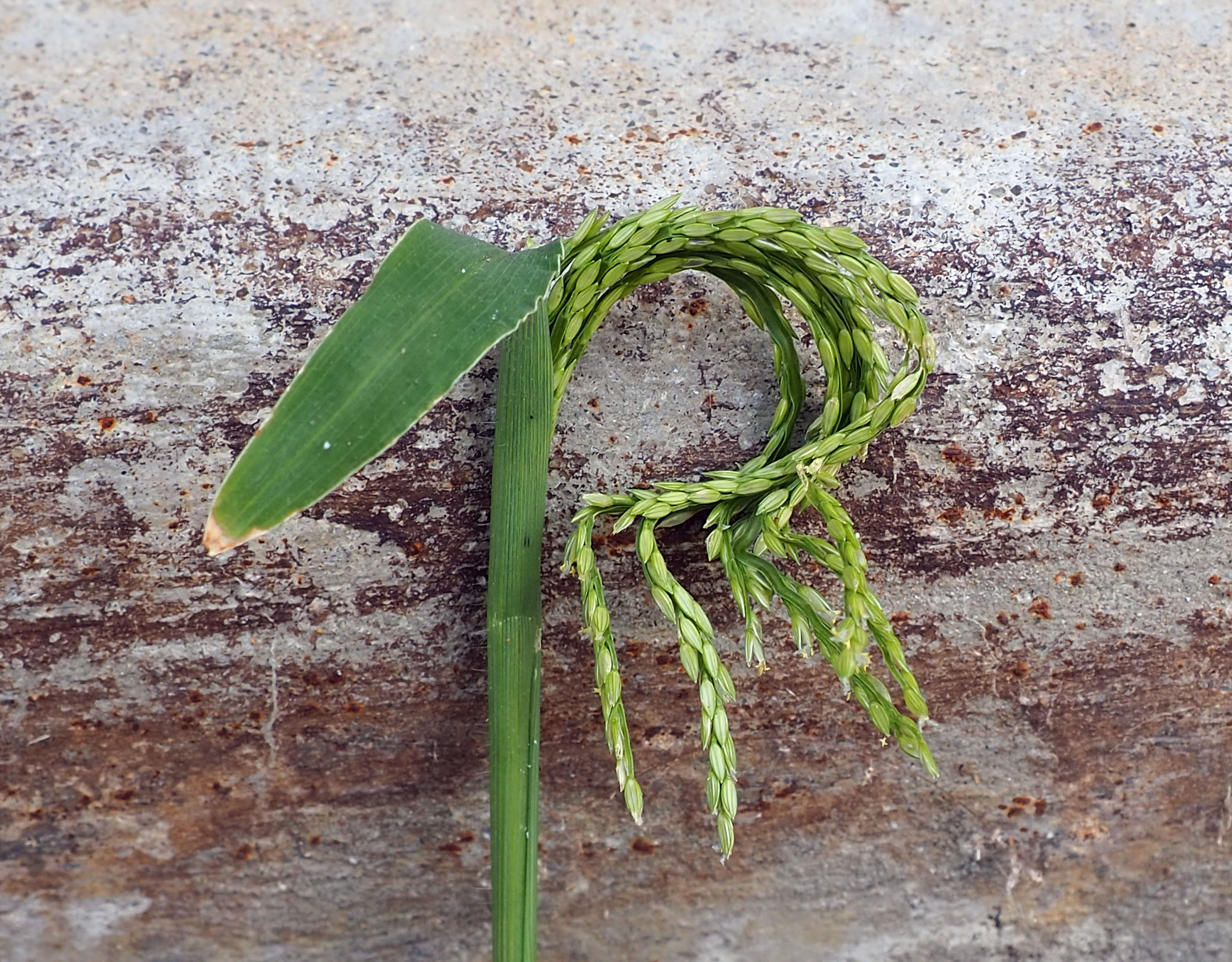
crabgrass (Digitaria sanguinalis)
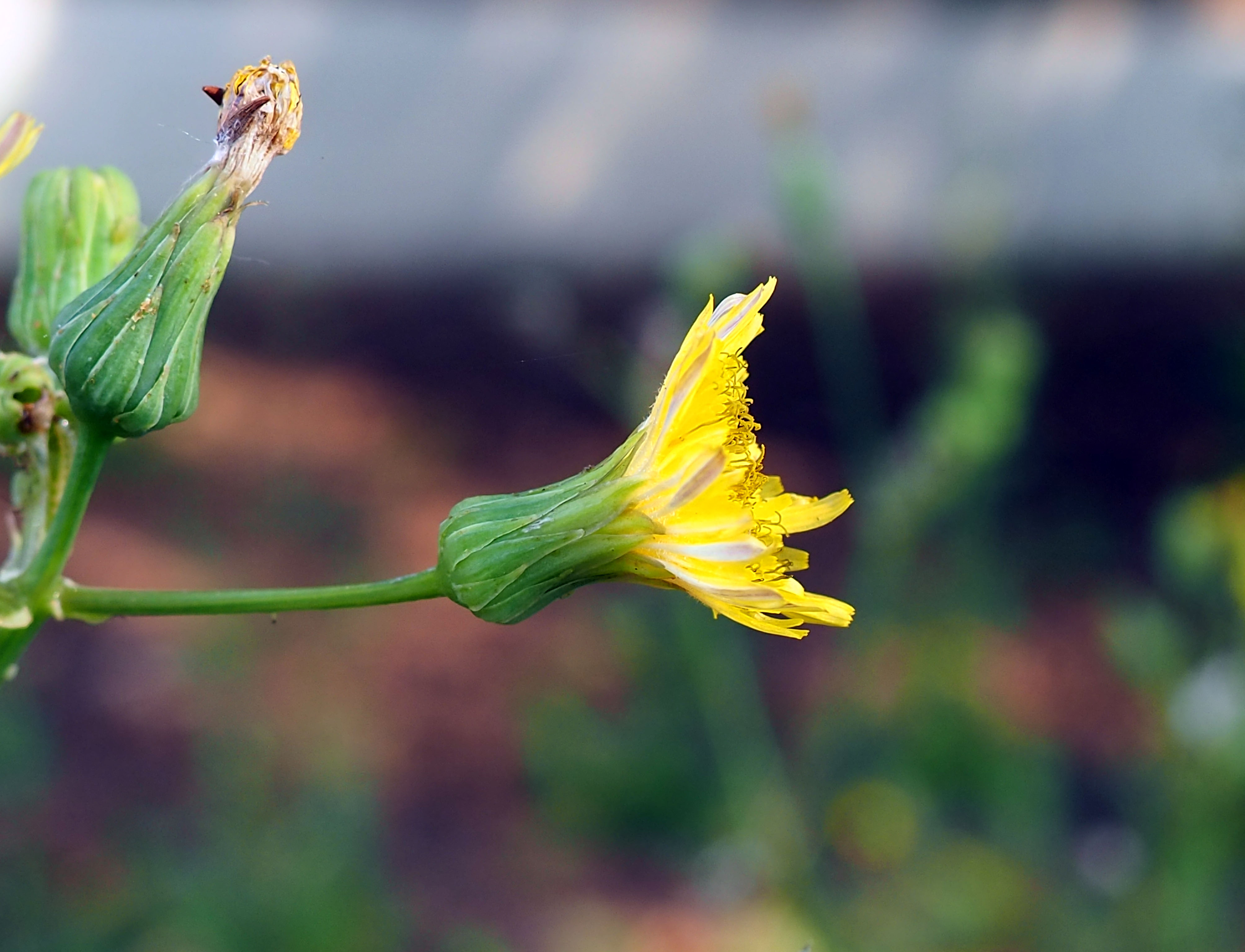
annual sow thistle (Sonchus oleraceus)
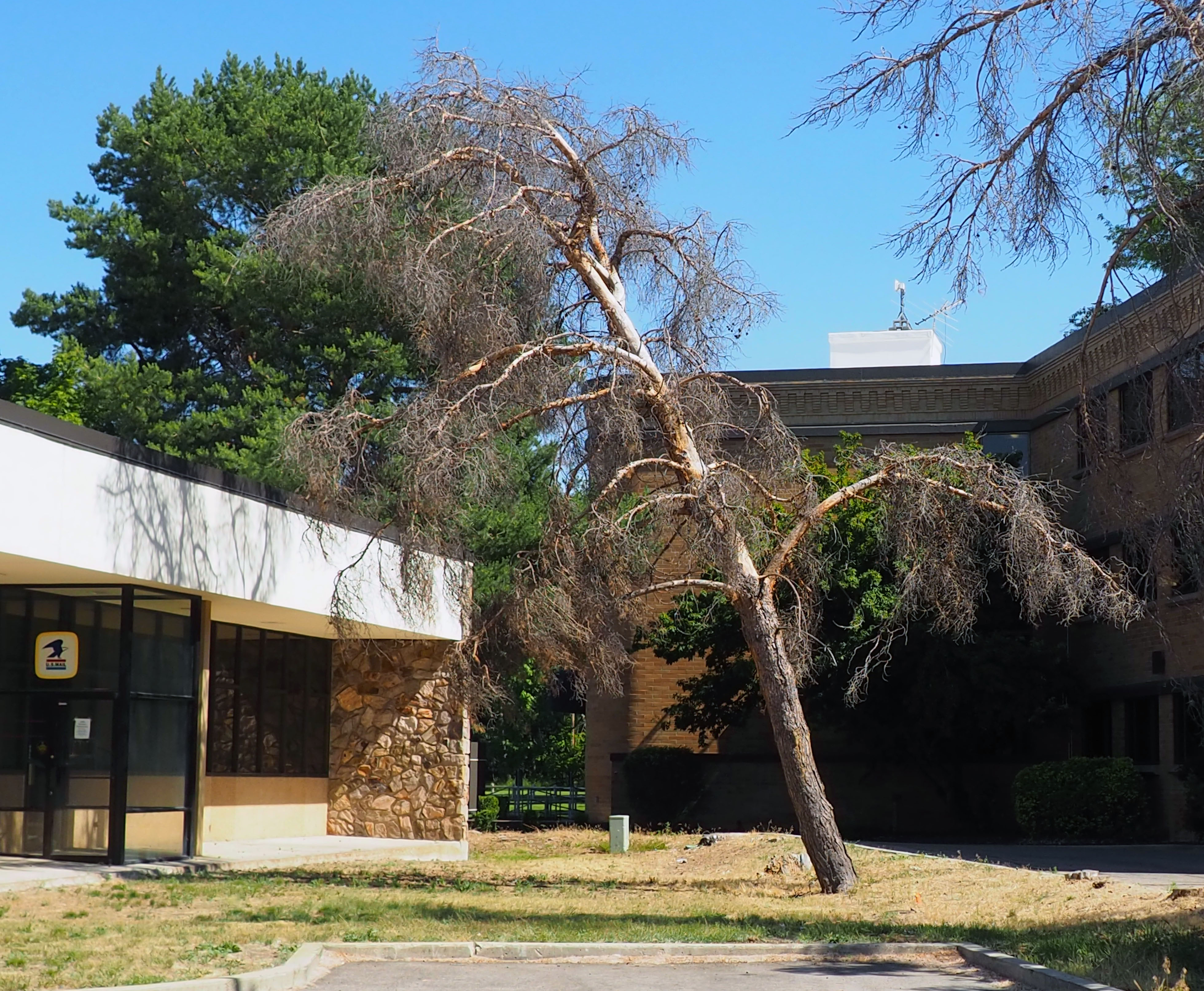
snag (aka standing dead tree) at post office on 13th Street
  • Anthriscus caucalis (bur chervil)
  • Bromus tectorum (cheatgrass)
  • Capsella bursa-pastoris (shepherd’s purse)
  • Ceratocephala testiculata (bur buttercup)
  • Chondrilla juncea (rush skeletonweed)
  • Claytonia perfoliata (miner’s lettuce)
  • Convolvulus arvensis (field bindweed)
  • Conyza canadensis (horseweed)
  • Digitaria sanguinalis (crabgrass)
  • Draba verna (spring draba)
  • Elymus repens (quackgrass)
  • Epilobium ciliatum (willowherb)
  • Erodium cicutarium (redstem filare)
  • Euphorbia maculata (spotted spurge)
  • Holosteum umbellatum (jagged chickweed)
  • Hordeum jubatum (foxtail barley)
  • Lactuca serriola (prickly lettuce)
  • Lamium amplexicaule (henbit)
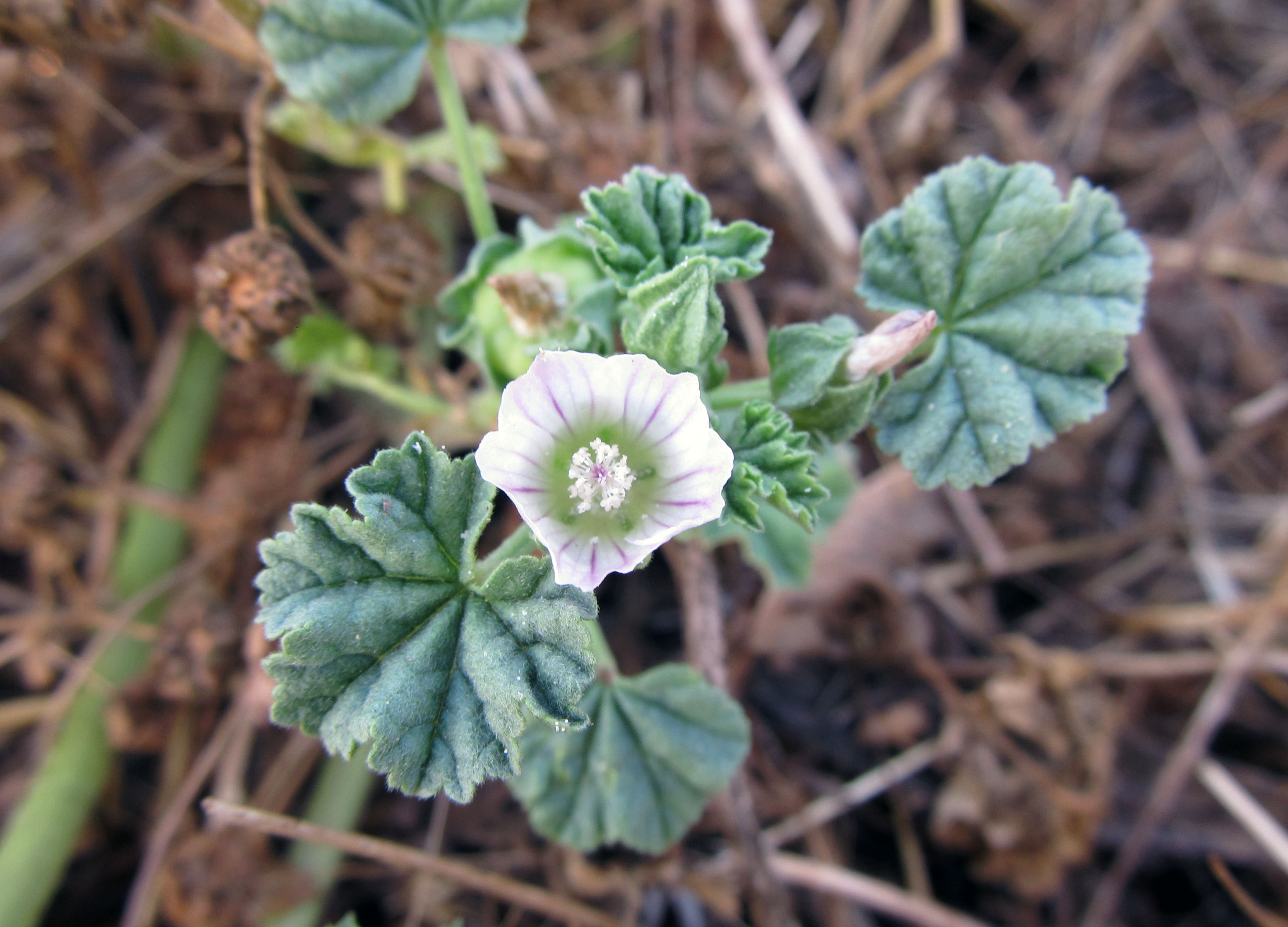
  • Malva neglecta (common mallow)
  • Medicago lupulina (black medic)
  • Parthenocissus quinquefolia (Virginia creeper)
  • Poa annua (annual bluegrass)
  • Polygonum aviculare (prostrate knotweed)
  • Portulaca oleracea (purslane)
  • Senecio vulgaris (common groundsel)
  • Sonchus oleraceus (annual sow thistle)
  • Taraxacum officinale (dandelion)
  • Tragopogon dubius (salsify)
  • Tribulus terrestris (puncturevine)
  • Trifolium sp. (clover)

Where there are parking lot islands, there are bound to be weeds whether the islands are being maintained or not. What have you found growing in the parking lot islands in your city? Feel free to share in the comment section below.

Weeds of Boise: Boise State University Campus, part one

If you live in a major city (or even a minor one), there is a good chance it is home to a college or university (perhaps several). Universities tend to take up a lot of space, which means there is often a plethora of landscaping accompanying their buildings, hardscaping, and other impervious surfaces. Among all the turf, flower beds, tree wells, and other greenspaces, there is bound to be a fair share of weeds. In spite of how hard the groundskeepers may work, the campus is not likely to ever be completely weed-free. Lucky for us, this means that institutions of higher learning are excellent places to familiarize ourselves with many of the weed species that occur in our cities, particularly weeds that are common in garden beds and turfgrass.

Near downtown Boise, on the southside of the Boise River, you will find the ever-expanding campus of Boise State University, home of the Broncos and their famous blue turf. According to the internet’s favorite encyclopedia, the campus is 285 acres in size, plenty of space for weeds to grow and abudant opportunities to hunt them out. Tallying the number of weed species in a place like this takes time. The benefit of botanizing for weeds is that you can find them at just about any time of year. While some species only show up in certain seasons, others can be seen practically year-round.

In order to document the weeds of Boise State University, I’m spending the entire year walking the campus listing and photographing the weeds I find. What follows is the first half of what’s been documented so far. I’m including a photograph for each month of the year, as well as a list of what I’ve encountered. In part two, I’ll share a list of any additional weeds found throughout the remainder of the year. While you’re waiting for that, check out the other posts in the Weeds of Boise series.

common groundsel (Senecio vulgaris) at BSU in January 2023
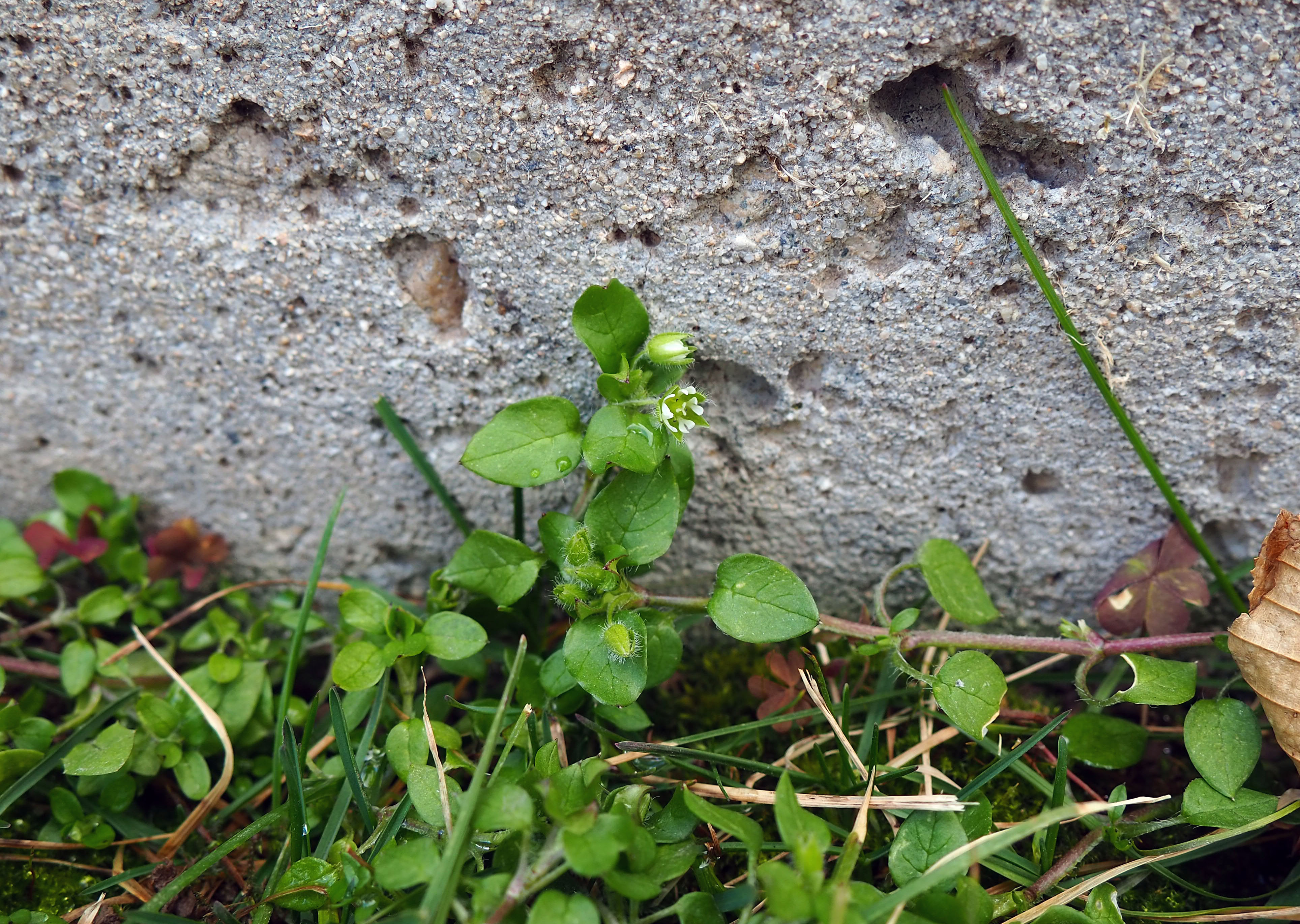
chickweed (Stellaria media) at BSU in February 2023
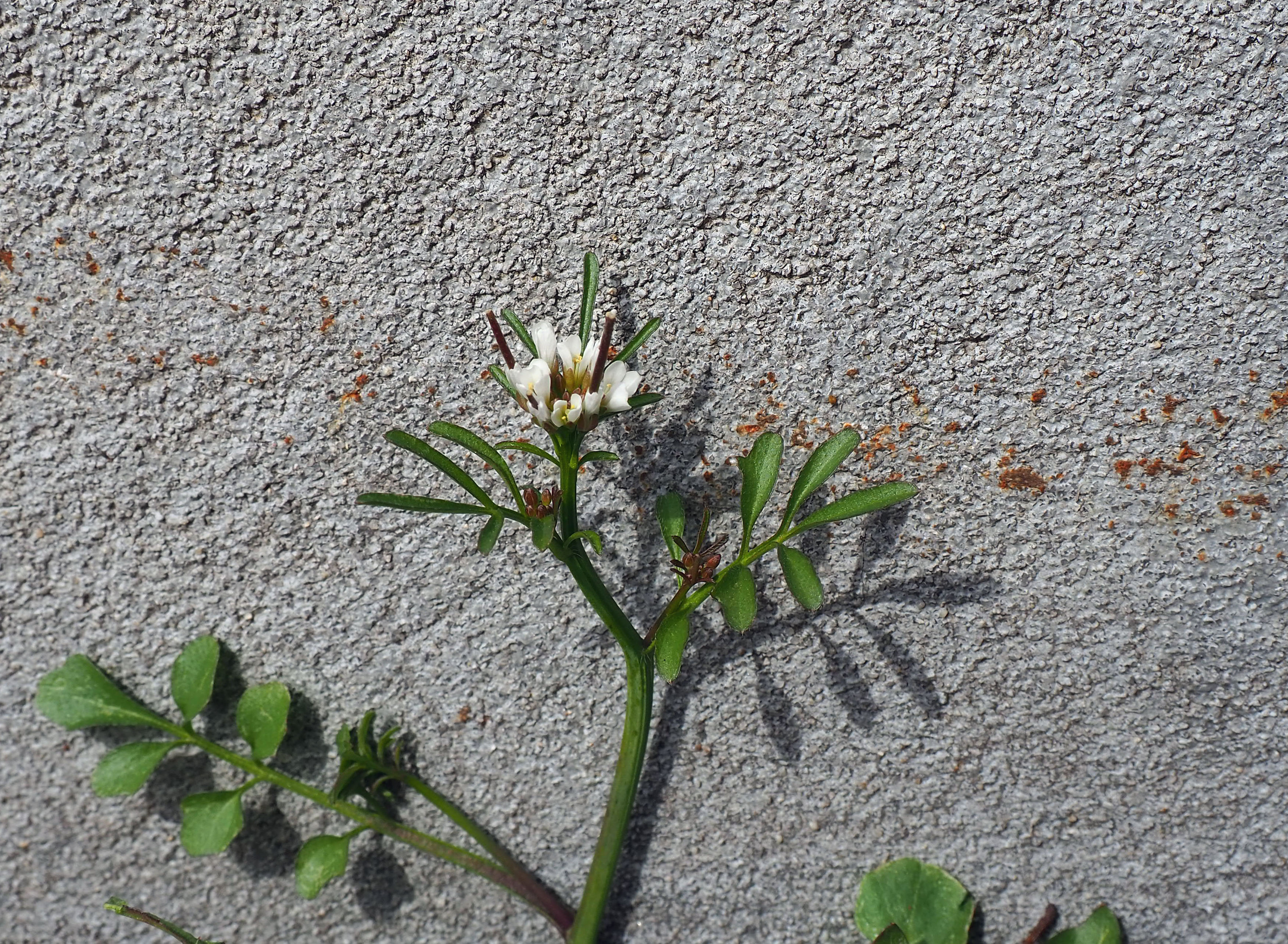
hairy bittercress (Cardamine hirsuta) at BSU in March 2023
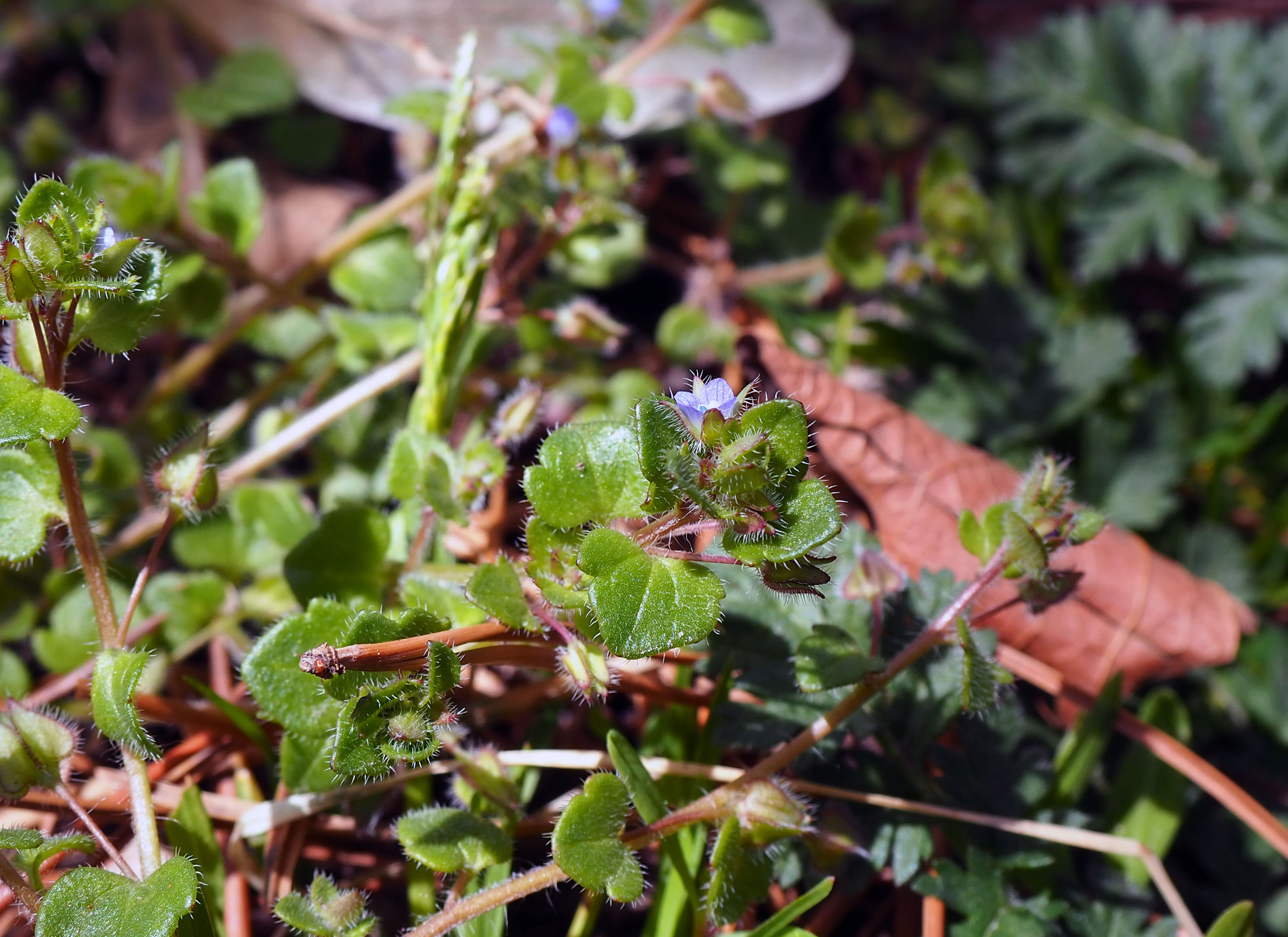
ivyleaf speedwell (Veronica hederifolia) at BSU in April 2023
black medic (Medicago lupulina) at BSU in May 2023
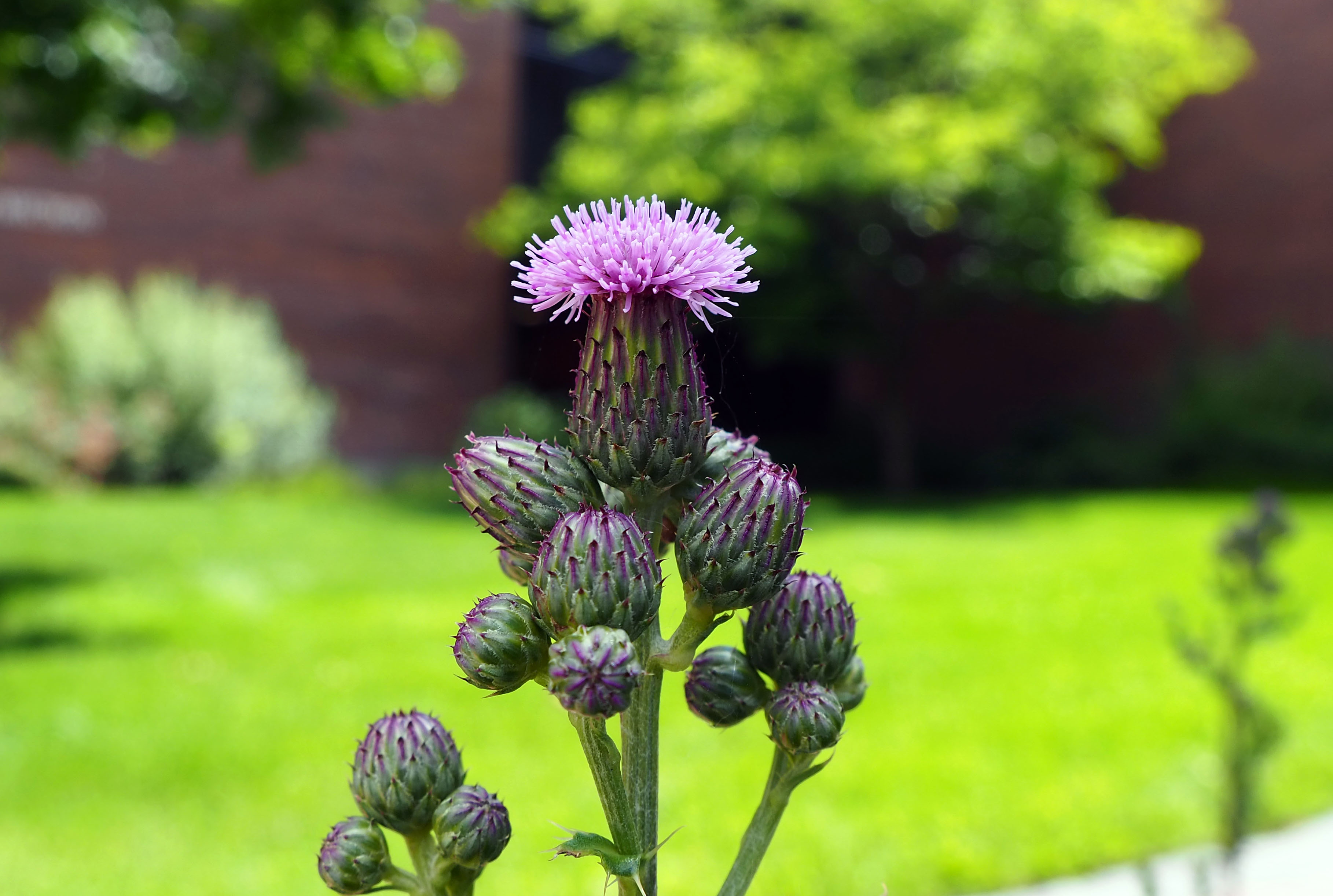
creeping thistle (Cirsium arvense) at BSU in June 2023

List of weeds found on the campus of Boise State University as of June 2023:

  • Ailanthus altissima (tree of heaven)
  • Anthriscus caucalis (bur chervil)
  • Amaranthus retroflexus (redroot pigweed)
  • Arctium minus (lesser burdock)
  • Bassia scoparia (kochia)
  • Bromus tectorum (cheatgrass)
  • Capsella bursa-pastoris (shepherd’s purse)
  • Cardamine hirsuta (hairy bittercress)
  • Ceratocephala testiculata (bur buttercup)
  • Chenopodium album (lamb’s quarters)
  • Chondrilla juncea (rush skeletonweed)
  • Cirsium arvense (creeping thistle)
  • Claytonia perfoliata (miner’s lettuce)
  • Convolvulus arvensis (field bindweed)
  • Conyza canadensis (horseweed)
  • Descurainia sophia (flixweed)
  • Digitaria sanguinalis (crabgrass)
  • Draba verna (spring draba)
  • Epilobium ciliatum (willowherb)
  • Erodium cicutarium (redstem filare)
  • Euphorbia maculata (spotted spurge)
  • Galium aparine (cleavers)
  • Geum urbanum (herb Bennet)
  • Holosteum umbellatum (jagged chickweed)
  • Hordeum jubatum (foxtail barley)
  • Lactuca serriola (prickly lettuce)
  • Lamium purpureum (purple deadnettle)
  • Lepidium sp. (whitetop)
  • Malva neglecta (common mallow)
  • Medicago lupulina (black medic)
  • Oxalis corniculata (creeping woodsorrel)
  • Parthenocissus quinquefolia (Virginia creeper)
  • Plantago lanceolata (narrowleaf plantain)
  • Plantago major (broadleaf plantain)
  • Poa annua (annua bluegrass)
  • Poa bulbosa (bulbous bluegrass)
  • Polygonum aviculare (prostrate knotweed)
  • Portulaca oleracea (purslane)
  • Prunella vulgaris (self-heal)
  • Ranunculus repens (creeping buttercup)
  • Senecio vulgaris (common groundsel)
  • Sonchus sp. (sow thistle)
  • Stellaria media (chickweed)
  • Taraxacum officinale (dandelion)
  • Tragopogon dubius (salsify)
  • Trifolium repens (white clover)
  • Ulmus pumila (Siberian elm)
  • Veronica hederifolia (ivyleaf speedwell)
  • Vulpia myuros (rat’s tail fescue)

Do you frequent the BSU campus? Have you seen anything not on my list? Comment below or send me a message and let me know what you’ve seen and where.

Weeds of Boise: Hellstrip on Jefferson Street

Growing plants in urban areas comes with a variety of challenges. Soil conditions aren’t always ideal; shade thrown by buildings and other structures can be difficult to work around; paved surfaces lead to compaction and, among other things, can increase temperatures in the immediate area; and in locations where water is limited, keeping plants hydrated is a constant concern. One location that tends to be especially difficult for gardeners is the hellstrip – the section of ground between a roadway and a sidewalk. Much can be said about gardening in hellstrips, so much that there is even a book about it called Hellstrip Gardening by Evelyn Hadden, which I spent several posts reviewing a few years back.

The difficulty of maintaining a hellstrip (and perhaps questions about who is responsible for maintaining it in the first place) can result in it being a piece of property frequently subject to neglect. In urban areas, neglected land is the perfect place for weeds to take up residence. The conditions in a hellstrip being what they are – hot, dry, frequently trampled, and often polluted – also gives weeds a chance to show what they can do. It’s a wonder that any plant can survive in such conditions, but the wild flora of our cities consists of some pretty tough plants, and a hellstrip is an excellent location to familiarize yourself with some of these plants.

On a walk with Kōura, I came across a weedy hellstrip on Jefferson Street in downtown Boise. Many of the classic hellstrip challenges are present there – it’s surrounded by paved surfaces, there is lots of foot traffic in the area, parking is permitted on the roadside, urban infrastructure (street signs, parking meters, stoplights) is present within the strip. It’s clear that at one point the area was being maintained as irrigation is installed and there are remnants of turfgrass. Three honey locusts were also planted in the strip, one of which has clearly died. Now that maintenance seems to have ceased, weeds have become the dominant flora in this hellstrip. What follows are a few photos and a list of the weeds I’ve identified so far. Like all posts in the Weeds of Boise series, this list may be updated as I continue to check back in on this location.
shepherd’s purse (Capsella bursa-pastoris) and prickly lettuce (Lactuca serriola)
dandelion (Taraxacum officinale)
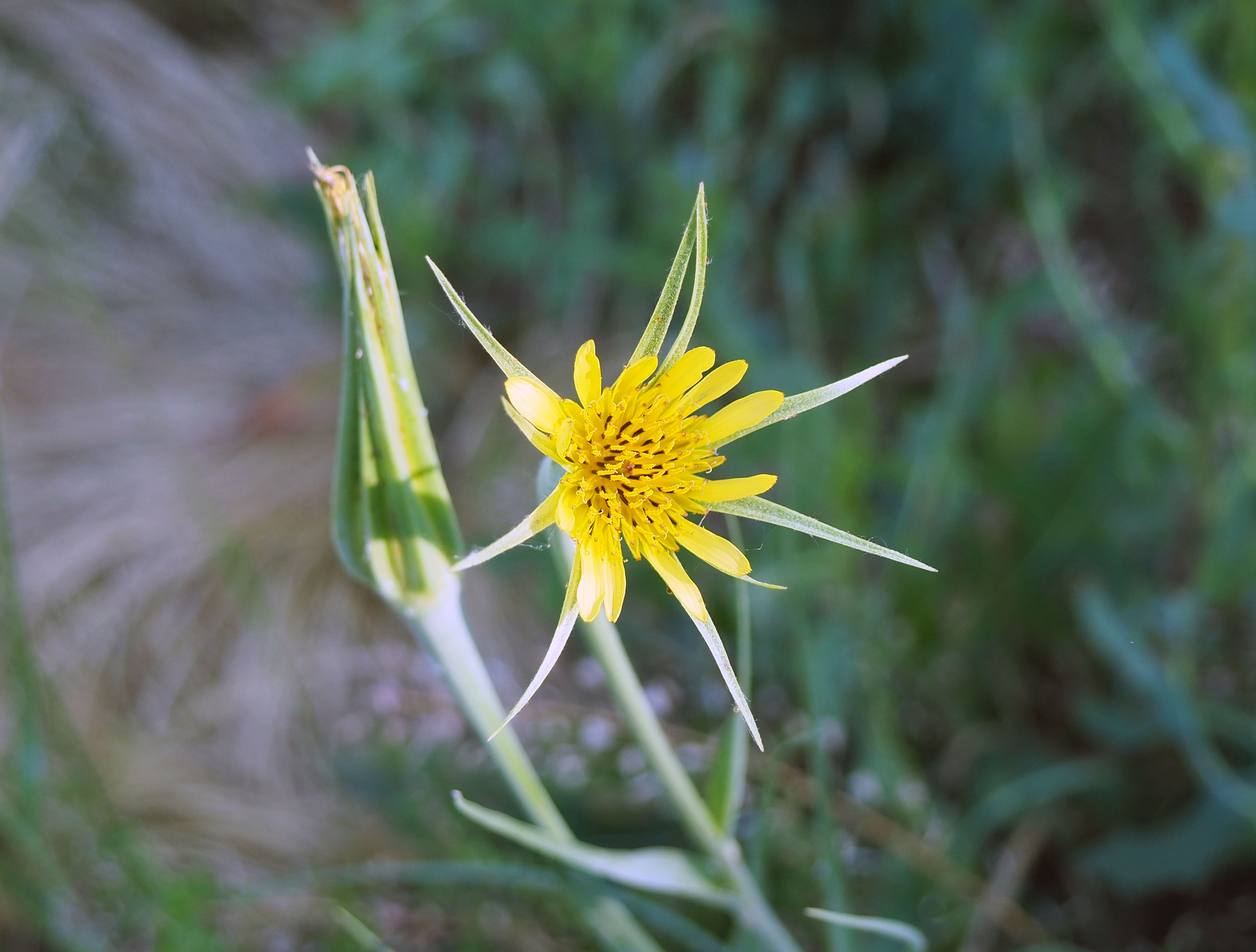
salsify (Tragopogon dubius)
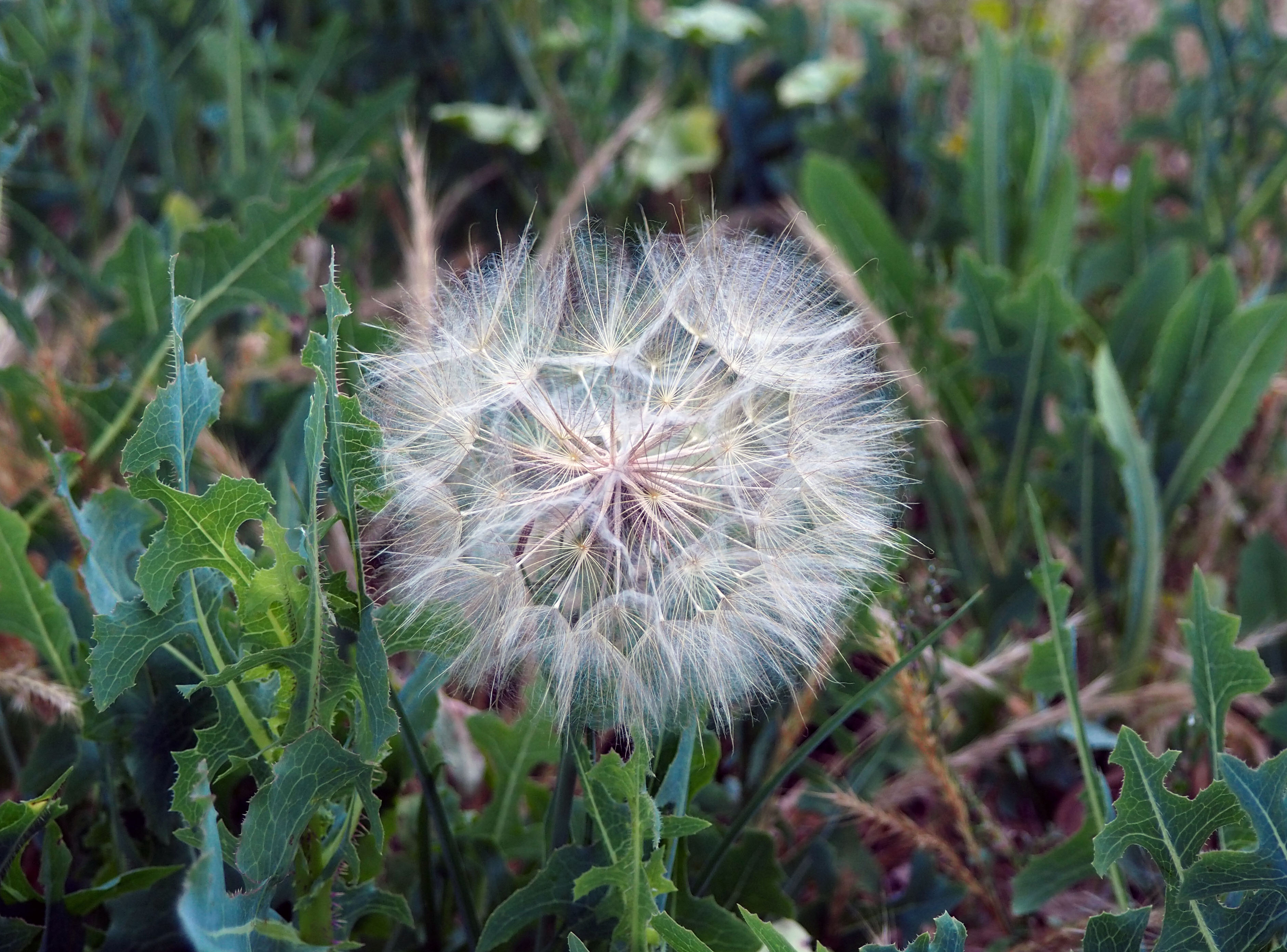
seed head of salsify
knotweed (Poylgonum sp.)
prickly lettuce (Lactuca serriola)
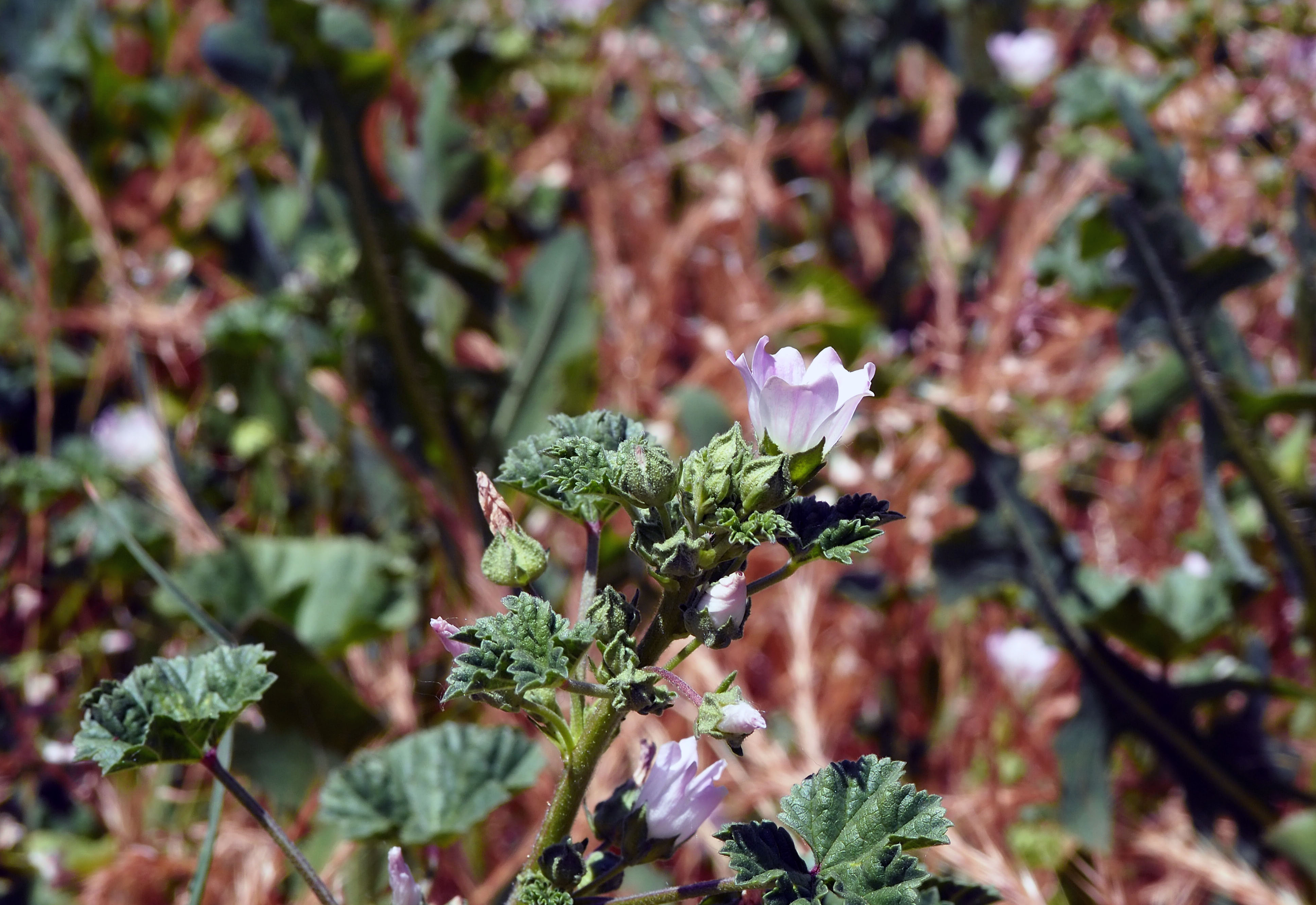
mallow (Malva neglecta)
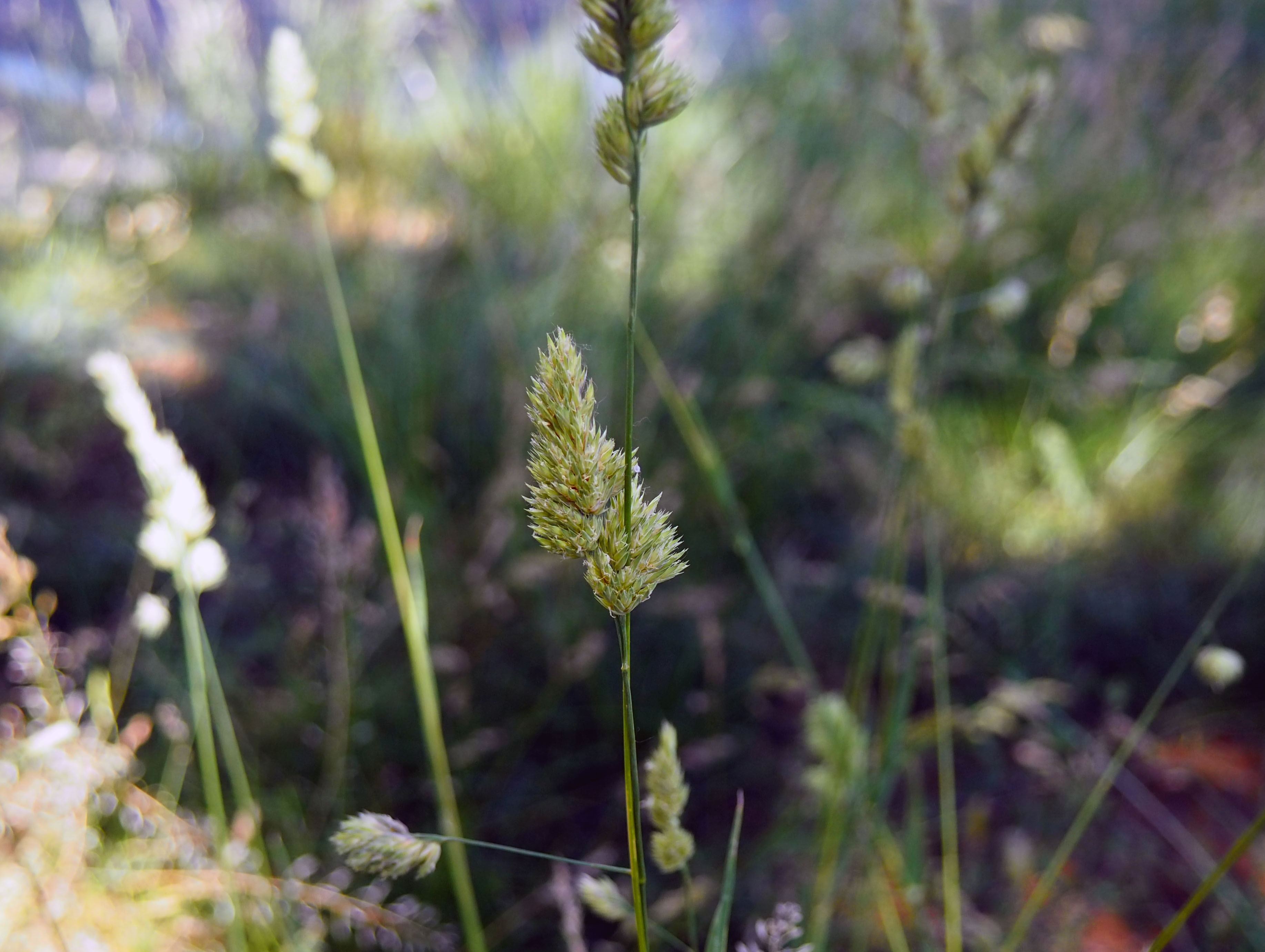
orchard grass (Dactylis glomerata)
  • Bromus tectorum (cheatgrass)
  • Capsella bursa-pastoris (shepherd’s purse)
  • Dactylis glomerata (orchard grass)
  • Epilobium brachycarpum (tall willowherb)
  • Lactuca serriola (prickly lettuce)
  • Malva neglecta (dwarf mallow)
  • Polygonum sp. (knotweed)
  • Salsola sp. (Russian thistle)
  • Taraxacum officinale (dandelion)
  • Tragopogon dubius (salsify)
  • Trifolium repens (white clover)
  • Vulpia myuros (rattail fescue)

Are there unkept hellstrips in your neighborhood? If so, what weeds have you seen taking up residence there?

Awkward Botany on Outdoor Idaho (plus Send Us Your Questions)

I spend a lot time on this blog putting weeds in the spotlight, celebrating them for their successes and the unique and interesting plants they are. It’s rare that I get to share these sentiments outside of this particular venue, but I was given such an opportunity recently when asked to talk about weeds for an episode of Outdoor Idaho, a long running show on Idaho Public Television that covers Idaho’s natural history. The theme of this particular episode is wildflowers, so I was intrigued by the idea of coming on to discuss urban weeds. For many, the term “wildflowers” may invoke native plants blooming in natural areas in places far removed from the hustle and bustle of the city. But a wildflower doesn’t have to be a native plant, nor does it have to be growing in the wild. Any plant occurring naturally on its own without the assistance of humans can be a wildflower, and that includes our wild urban flora. I appreciated the chance to share this particular thought with the viewers of Outdoor Idaho.

photo credit: Jay Krajic

Along with me waxing on about weeds, the Wildflowers episode features a host of other Idahoans sharing their thoughts, expertise, and experiences with wildflowers. The episode is brief – coming in at under 30 minutes – but the producers packed in a ton of great wildflower content, and overall I found it to be an excellent representation of the flora of Idaho and a convincing argument for why we should appreciate and elevate these plants. The flora of any region is special and important in its own right, and Idaho’s flora is no different, including its weeds.

Check out Outdoor Idaho’s Wildfowers episode here.

In other news…

If you want to see more of me on the screen (and I’m not sure why you would), Sierra (a.k.a. Idaho Plant Doctor) and I are doing monthly Q&A videos in which we answer your questions about plants, gardening, pests and diseases, insects, or any other topic you might be curious about. You can tune in to those discussions on Sierra’s instagram. If you have questions of your own that you would like us to address, please leave them in the comments section below, or send them to me via the contact page or my instagram.

Drought Tolerant Plants: Blue Flax

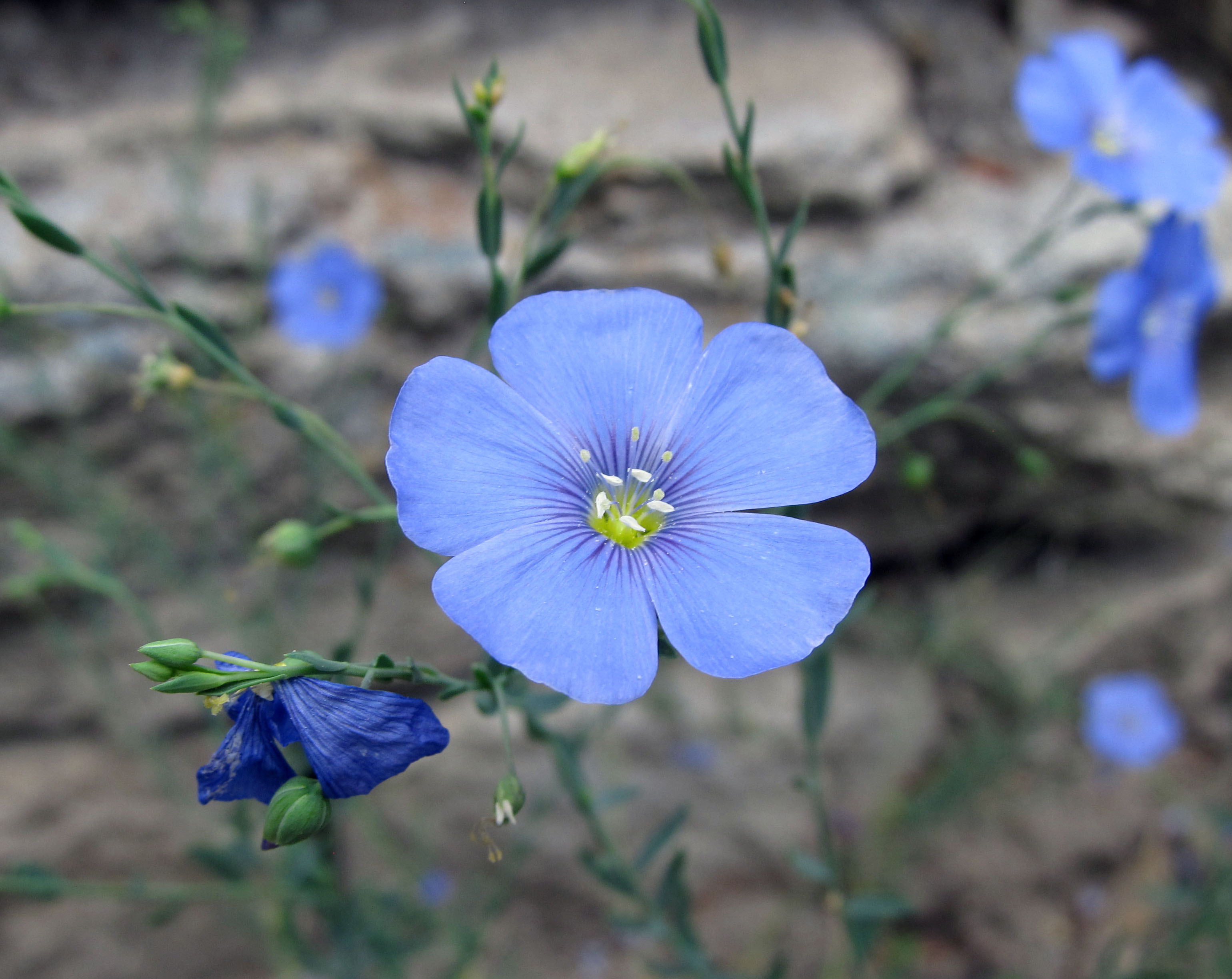
“Lewis’s prairie flax is a pretty garden ornamental suited to hot, dry sites. Each morning delicate sky blue flowers open on slender arching stems, only to fall off in the afternoon and be replaced by others the next morning. In spite of its fragile appearance, it is quite sturdy and may put out a second flush of blossoms on new growth in late summer.”Common to the This Country: Botanical Discoveries of Lewis and Clark by Susan H. Munger


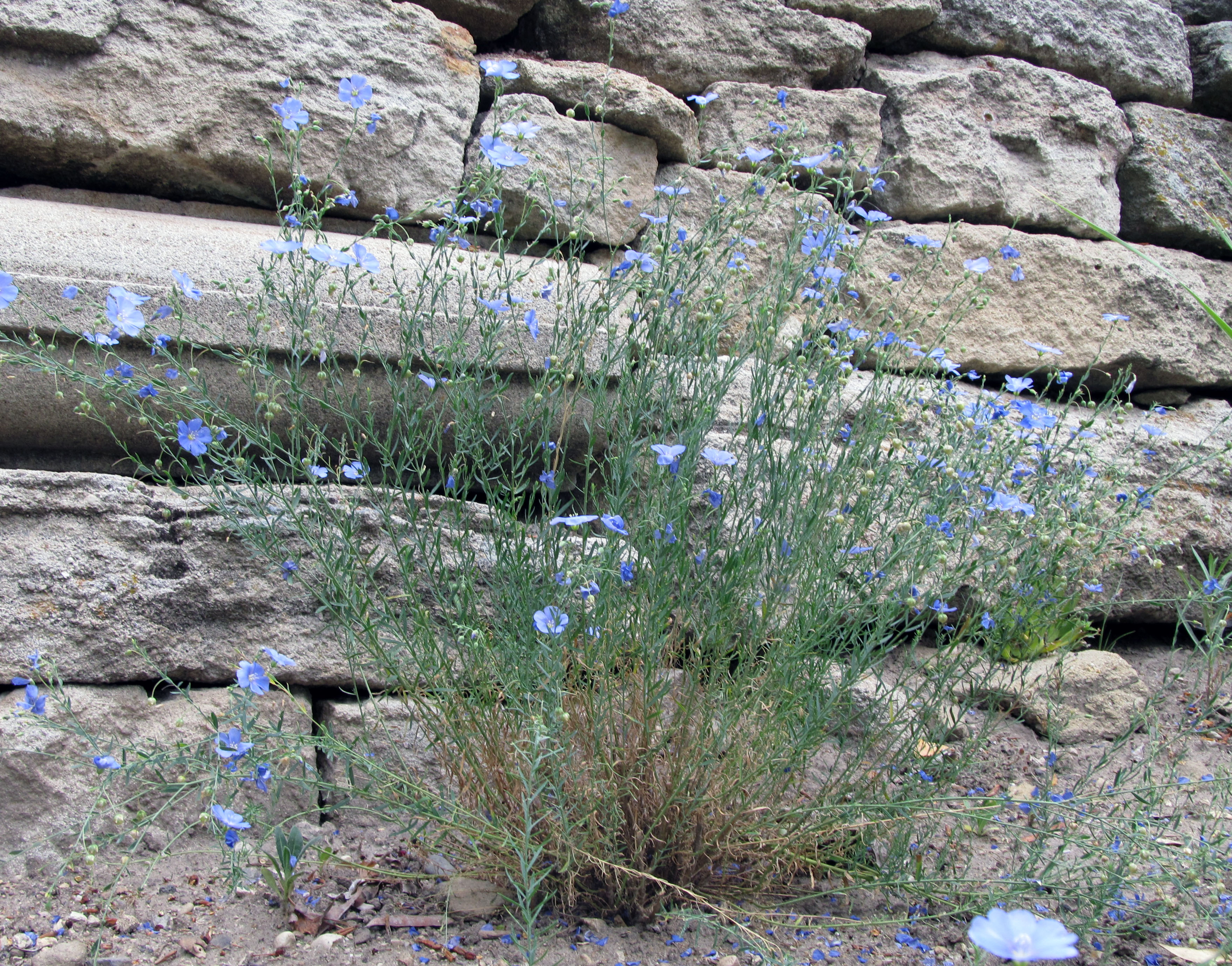
When selecting plants for a waterwise garden, it is imperative that at least a portion of the plants are easy to grow and maintain and are adapted to a wide variety of conditions. This will ensure a more successful garden, both functionally and aesthetically. Luckily, there are a number of drought-tolerant plants that pretty much anyone can grow without too much trouble. Blue flax, in my opinion, is one such plant.

You may be familiar with flax as a culinary plant, known for its edible seeds which are used to make flour (i.e. meal) and oil. Or perhaps you’ve used linseed oil, a product of flax seeds, to protect wooden, outdoor furniture or in other wood finishing projects. You may also think of linen when you think of flax; and you should, because linen is a textile made from the fibrous stems of the flax plant. All of these products generally come from a domesticated, annual flax known as Linum usitatissimum – a species that has been of benefit to humans for millenia. Various species of flax have also been planted for erosion control, fire breaks, forage for livestock, and in pollinator-friendly gardens. Flax seeds, a common ingredient in bird seed mixes, provide food for birds and other small animals. All this to say, humans and flax share a long history together, and it deserves a place in your garden.

The flax species profiled here is actually two species: Linum lewisii and Linum perenne. That’s because these two species look nearly identical and are both used as garden ornamentals and in wildflower seed mixes. They are also both known as blue flax, among myriad other common names. Due to their similiarity, L. lewisii is considered by some to be a subspecies of L. perenne.

Linum lewisii is found across western North America and received its name after being collected by a member of the Lewis and Clark Expedition. The plant collection was brought back from the expedition and determined to be new to western science. It was described and named by Frederick Pursh. Linum perenne is a European species which was introduced to North America as an ornamental and has since become widely naturalized. In 1980, a naturalized selection of L. perenne was released for use in restoration plantings under the cultivar name ‘Appar’ with the understanding that it was L. lewisii. A genetic study later revealed that the cultivar was instead L. perenne. The study also provided evidence that “North American Lewis flax and European perennial blue flax are reproductively isolated,” suggesting that they are indeed two separate species.

Despite being separate species, telling them apart can be a challenge. Blue flax plants grow from a taproot and woody base and are multistemmed, reaching two to three feet tall. The stems are thin yet stringy, wiry, and not easily torn, which helps explain why flax is such a good plant for making textiles. Short, slender leaves are alternately arranged along the length of the stems, while flower buds form at the ends of stems in loose clusters. Flowers bloom early in the day and are spent by the afternoon. They are 5-petaled, saucer-shaped, and a shade of blue – from whitish blue to deep blue – depending on the plant. Small, round, 10-chambered seed capsules form in the place of flowers, each chamber housing one or two flat, shiny, dark brown seeds. Flowers bloom daily in succession up towards the ends of stems even as the fruits of spent flowers lower on the stalk mature.

seed capsules of blue flax

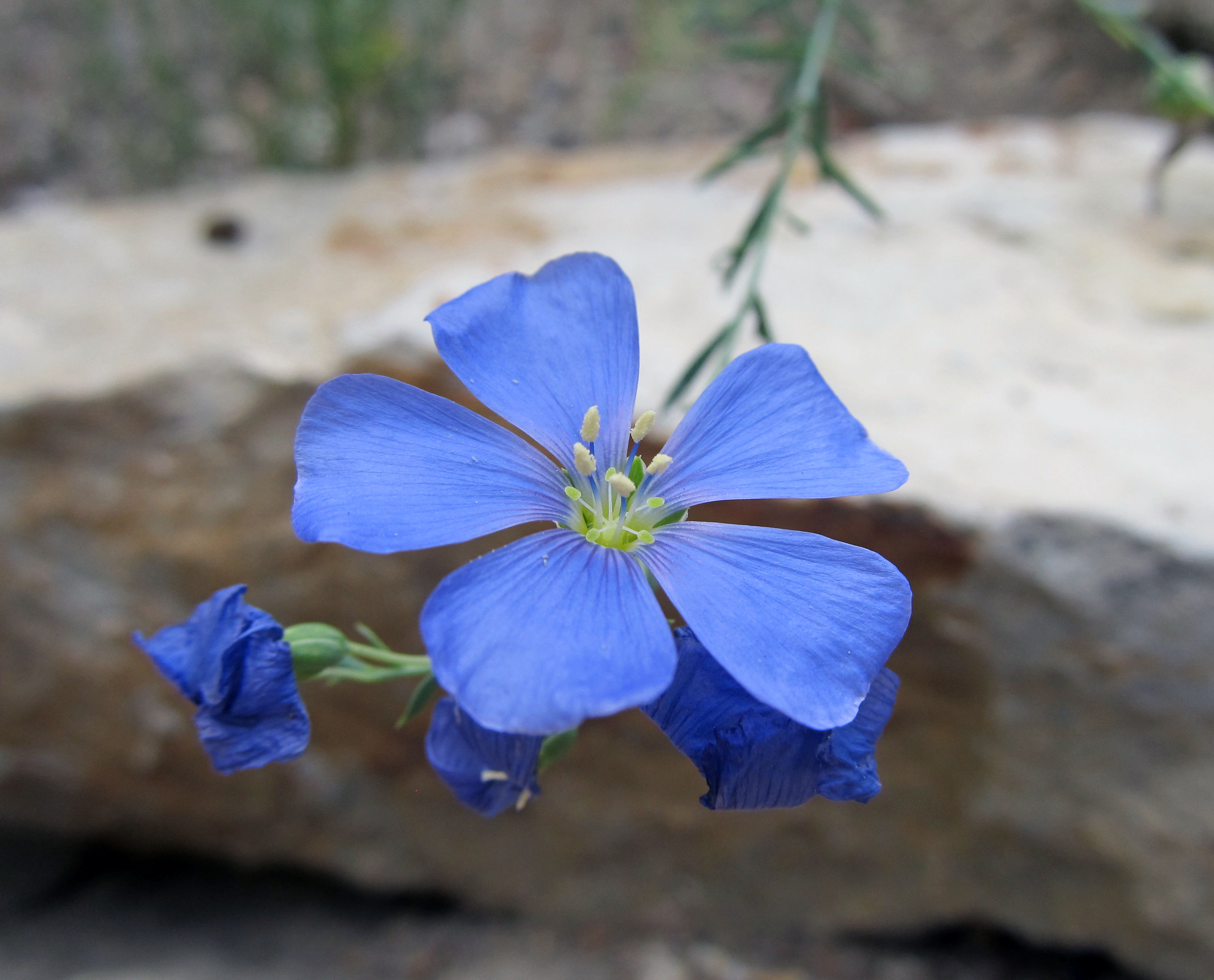
A close look at their flower parts is really the only way you might be able to tell these two species apart. Blue flax flowers have five stamens topped with white anthers and five styles topped with little, yellow stigmas. The flowers of L. lewisii are homostlyous, which means their styles are all the same length and are generally taller than or about the same height as the stamens. The flowers of L. perenne are heterostylous, which means their flowers can either have styles that are much longer than their stamens or stamens that are much longer than their styles. Each plant in a population of L. perenne has either all long-styled flowers or all short-styled flowers. In a mixed population of L. perenne and L. lewisii, separating the long-styled L. perenne plants from the L. lewisii plants presents a challenge (at least for me).

long-styled blue flax flower
short-styled blue flax flower

Due to the similarity of these two species, it’s easy to see how the plants or seeds of blue flax could easily be mislabeled and sold as one species even though they are the other species. This could be a problem in a restoration planting where seed source and identity is critical, but in your garden, it’s really no big deal. Both species are great for waterwise and pollinator gardens. They are equally beautiful and easy to grow and care for. If nothing else, perhaps the challenge in identifying them will encourage you to take a closer look at your flowers and familiarize yourself with their tinier parts – an act all of us amateur botanists could stand to do more often.

The photos in this post were taken at Idaho Botanical Garden in Boise, Idaho.

More Drought Tolerant Plants Posts:

Weeds of Boise: Railroad Tracks Between Kootenai Street and Overland Road

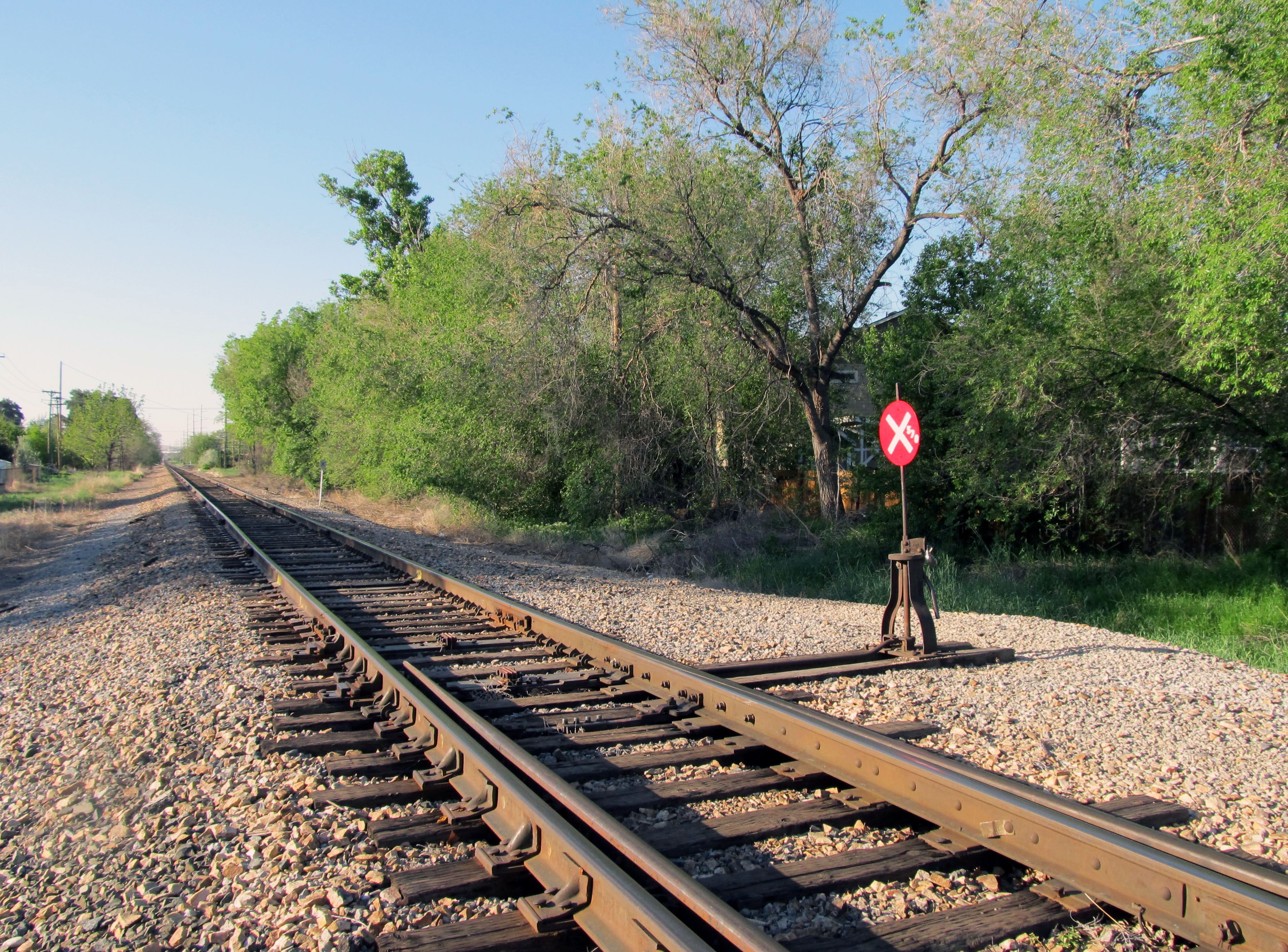
Walking along railroad tracks is a pretty cool feeling. It’s also a good place to look for weeds. Active railroad tracks are managed for optimum visibility and fire prevention, which means that trees and shrubs near the tracks are removed creating plenty of open space on either side. Open areas in full sun are ideal places for a wide variety of weed species to grow. Trains passing through can also be sources or dispersal agents of seeds, so there’s a chance that you may see things growing alongside railroad tracks that you don’t often see elsewhere. All this means that railroad tracks in urban areas are great locations to familiarize yourself with your city’s wild urban flora.

I visited a small section of railroad tracks between Kootenai Street and Overland Road in Boise. At one point, this was a pretty active railroad. Passenger trains once moved along these tracks, and the Boise Depot, which is less than a mile from this location, was one of several stops between Portland, OR and Salt Lake City, UT. Unfortunately, those services ended in 1997 and have yet to resume, despite continued support for bringing passenger rail back to the region. Still, freight trains pass by with some frequency.

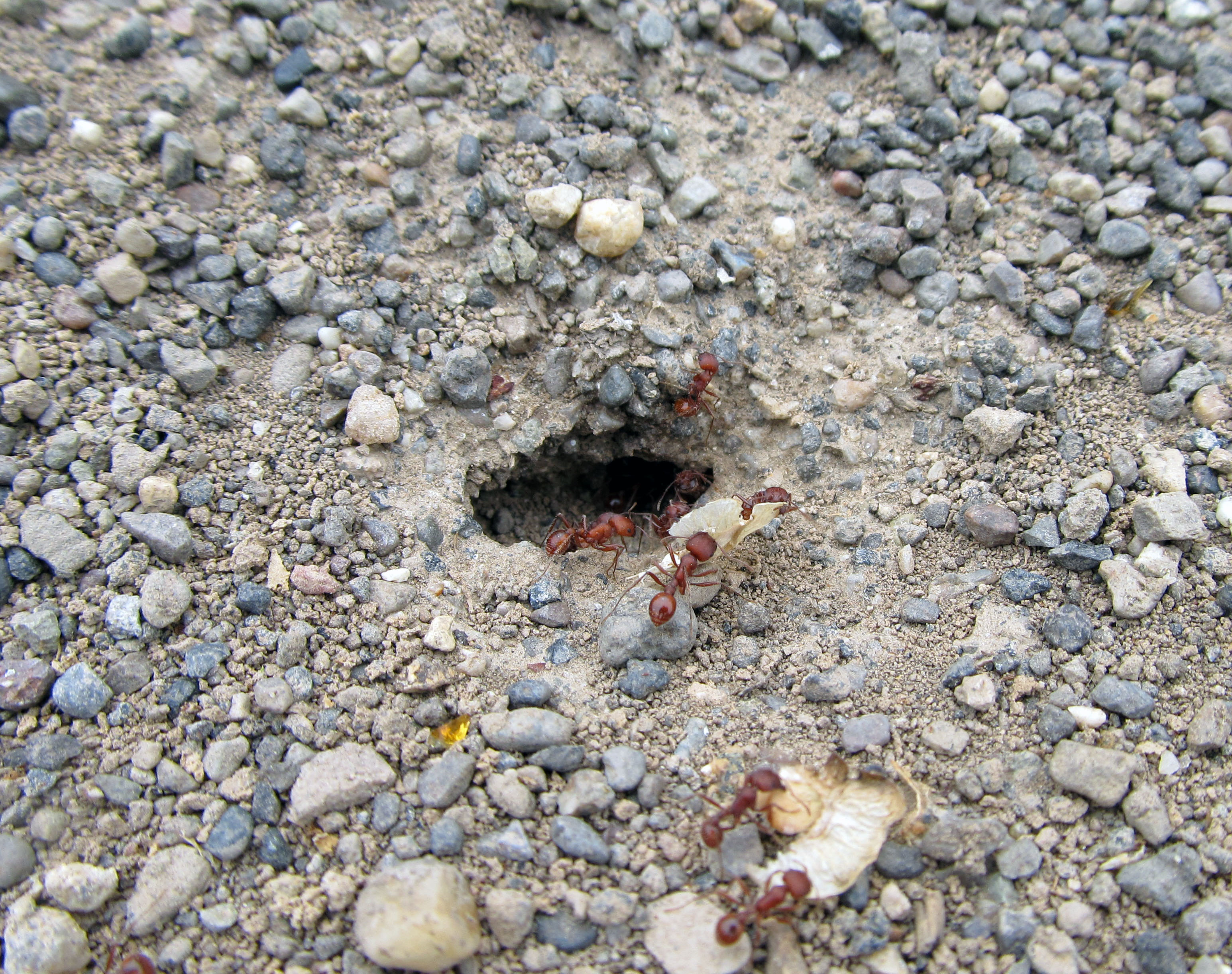
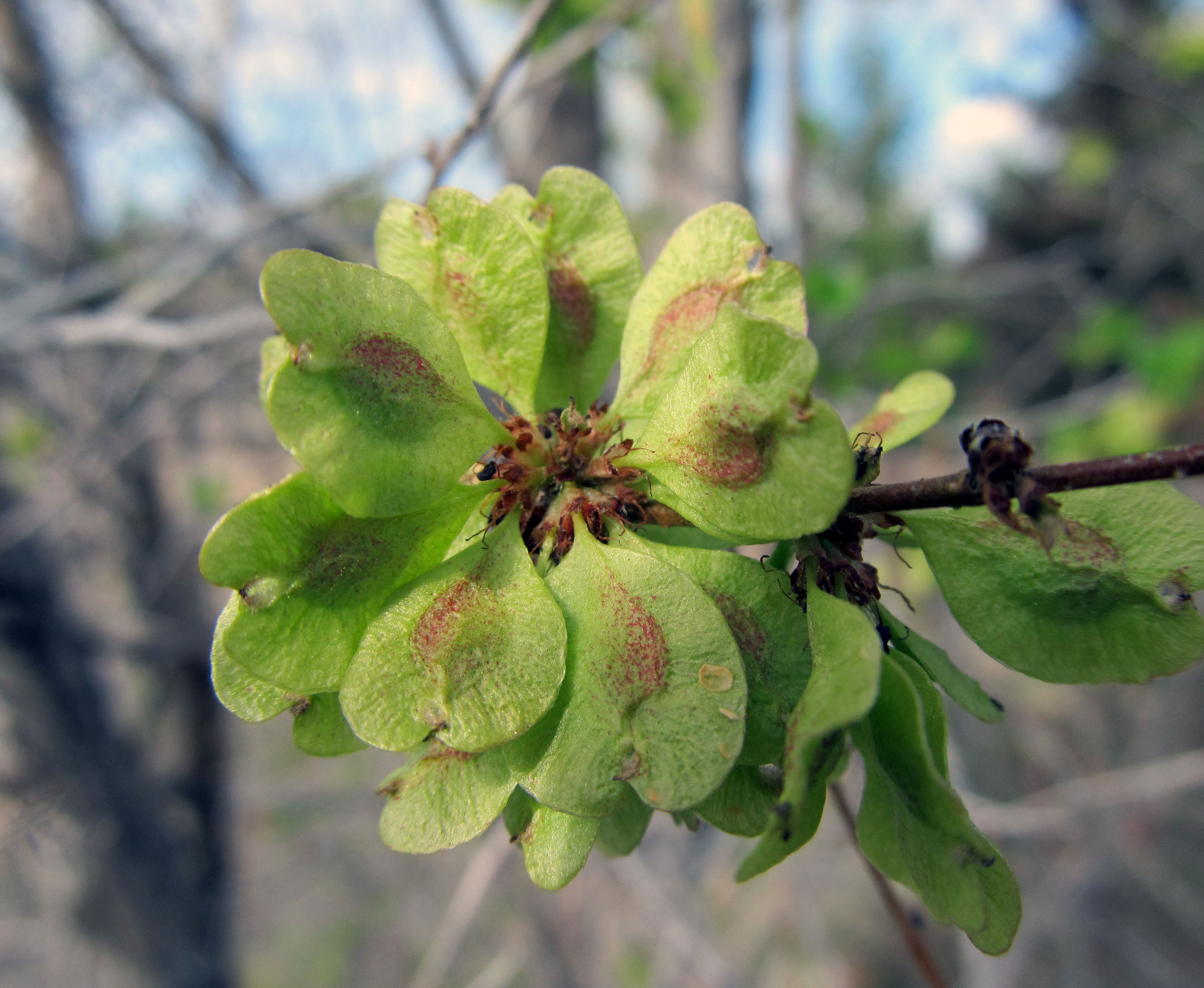
Managing weeds along railroad tracks in urban areas can be tricky. There is little else in the way of vegetation to compete with the weeds. The tracks are also adjacent to parks, homes, schools, gardens, and other locations that make herbicide applications complicated. The species of weeds can also vary widely from one mile to the next, so management decisions must also vary. It’s especially important that the ballast directly beneath and on either side of the tracks is kept weed free in order to prevent fires and improve visibility. All of this and more makes weed control along railroad tracks one of the most challenging jobs around. Luckily, for someone that likes to look at weeds, it means there will always be interesting things to see near the tracks, including for example this colony of harvester ants that I came across while identifying weeds. I was happy to see that they were collecting the samaras of Siberian elm (Ulmus pumila), one of several weedy trees in the Treasure Valley.

What follows are a few images of some of the weeds I encountered along the railroad tracks between Kootenai Street and Overland Road, as well as a list of the weeds I was able to identify. The list will grow as I identify the mystery weeds and encounter others that I missed, as is the case with all posts in the Weeds of Boise series.

Virginia creeper (Parthenocissus quinquefolia)
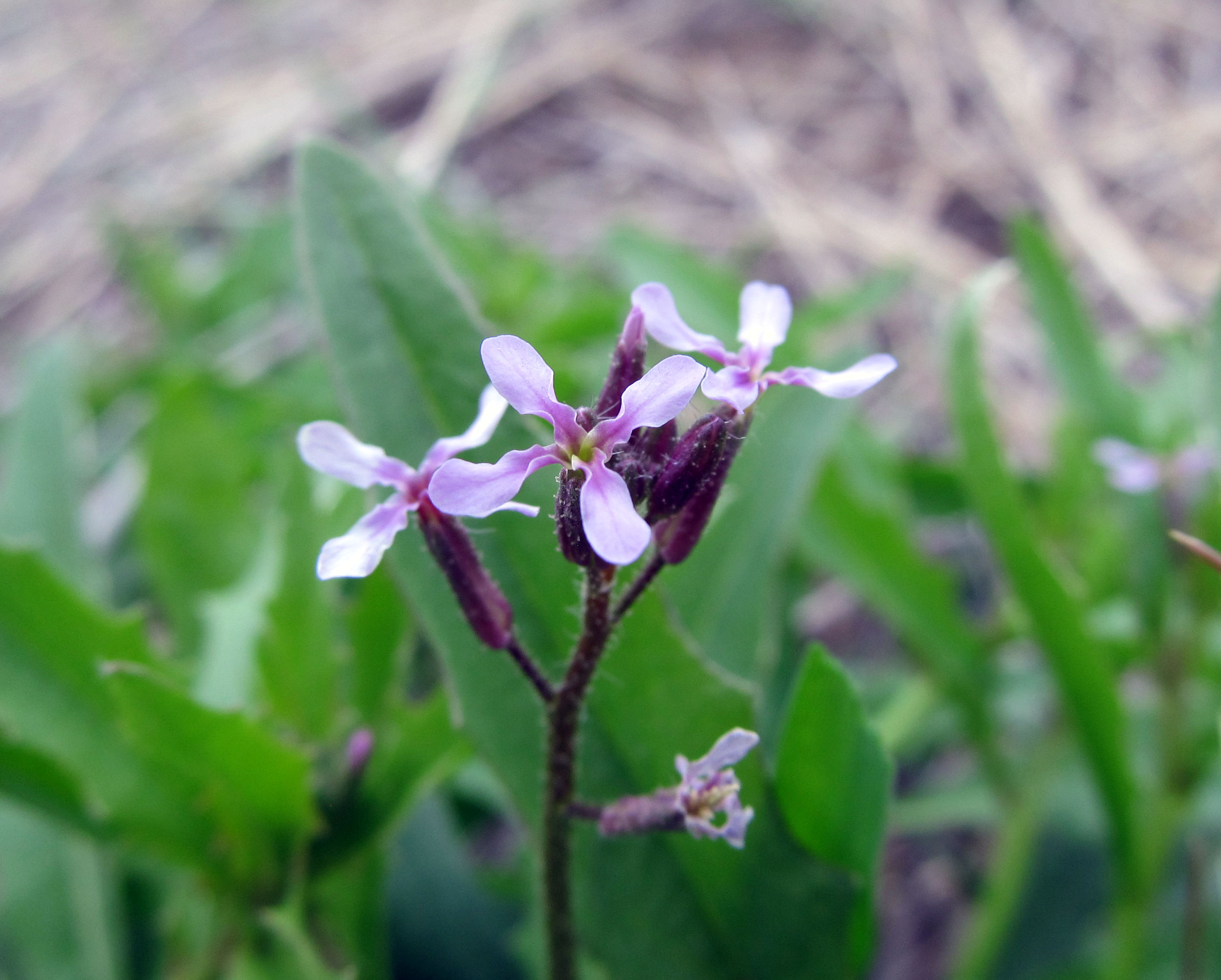
blue mustard (Chorispora tenella)
cleavers (Galium aparine)
whitetop (Lepidium sp.)
Himalayan blackberry (Rubus bifrons)
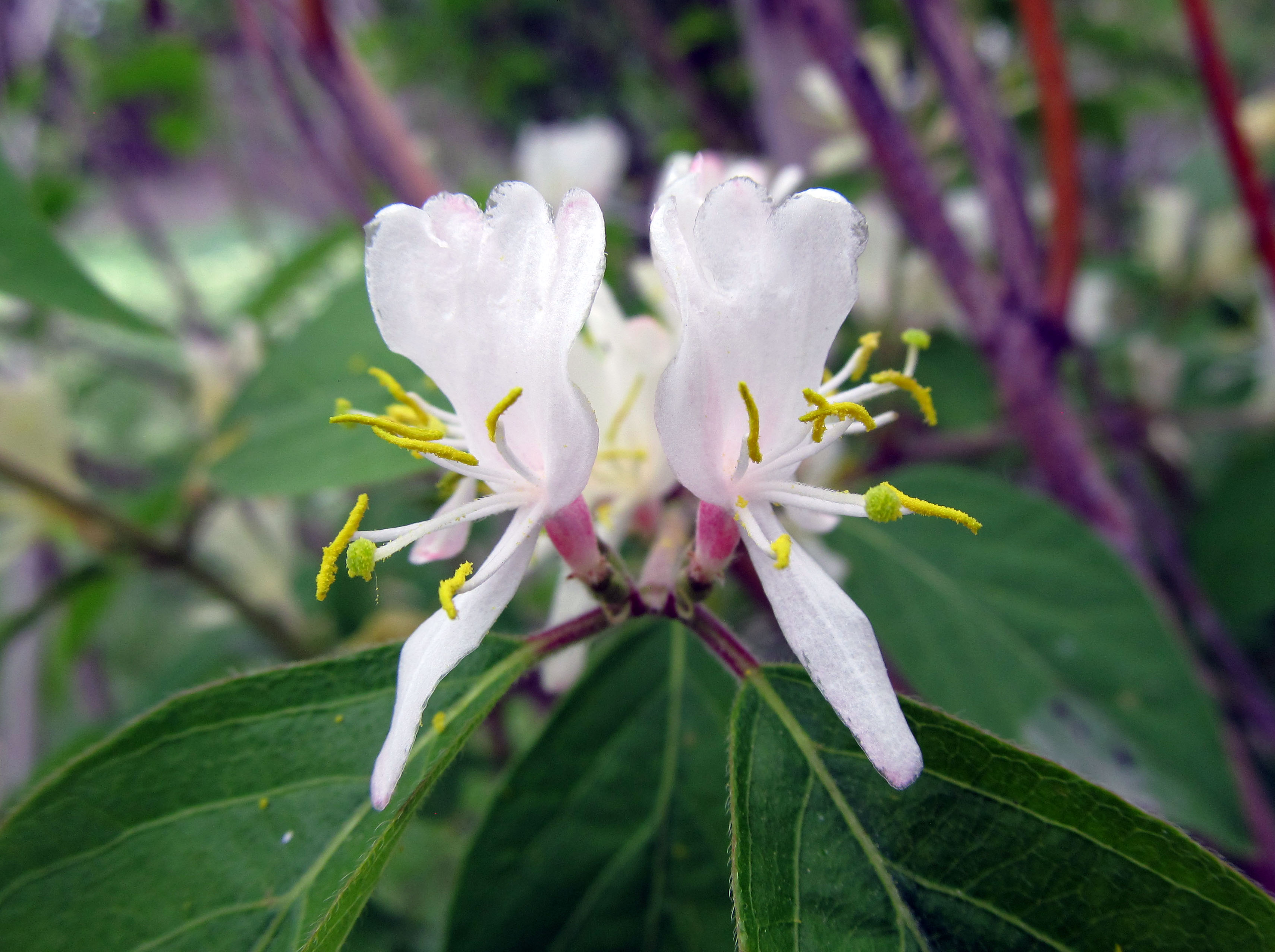
bush honeysuckle (Lonicera sp.)
Siberian elm (Ulmus pumila)
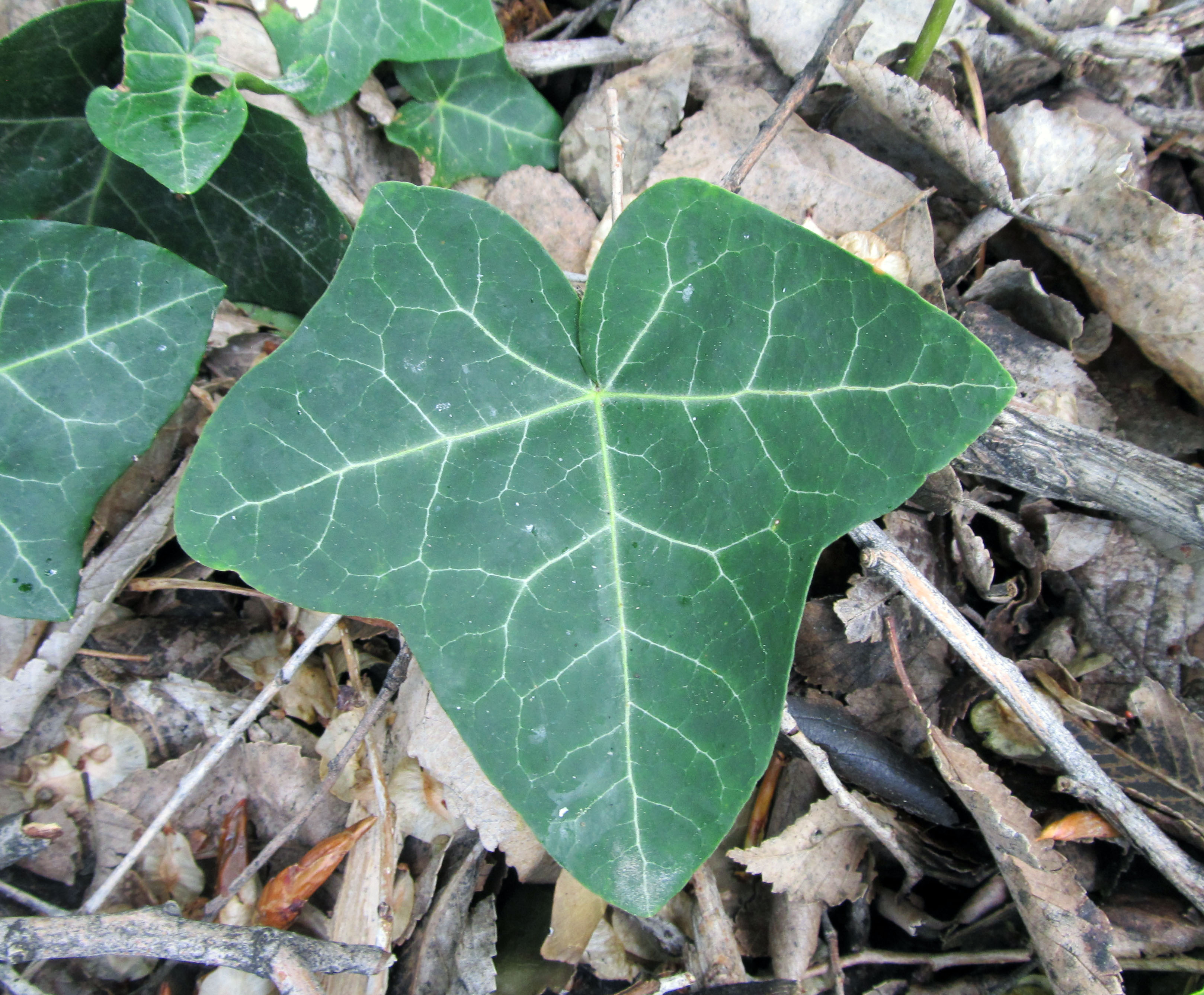
English ivy (Hedera helix)
kochia seedlings (Bassia scoparia)
  • Arctium minus (common burdock)
  • Bassia scoparia (kochia)
  • Bromus diandrus (ripgut brome)
  • Bromus tectorum (cheatgrass)
  • Chorispora tenella (blue mustard)
  • Conium maculatum (poison hemlock)
  • Convolvulus arvensis (field bindweed)
  • Cirsium arvense (creeping thistle)
  • Dactylis glomerata (orchardgrass)
  • Descurainia sophia (flixweed)
  • Elaeagnus angustifolia (Russian olive)
  • Epilobium ciliatum (northern willowherb)
  • Equisetum sp. (horsetail)
  • Erodium cicutarium (redstem filaree)
  • Galium aparine (cleavers)
  • Hedera helix (English ivy)
  • Hordeum murinum (wild barley)
  • Lactuca serriola (prickly lettuce)
  • Lepidium sp. (whitetop)
  • Lonicera sp. (bush honeysuckle)
  • Parthenocissus quinquefolia (Virginia creeper)
  • Poa bulbosa (bulbous bluegrass)
  • Poa pratensis (Kentucky bluegrass)
  • Rubus bifrons (Himalayan blackberry)
  • Rumex crispus (curly dock)
  • Secale cereale (feral rye)
  • Taraxacum officinale (dandelion)
  • Ulmus pumila (Siberian elm)

Do you live near railroad tracks? What weeds are growing there, and do you feel as cool as I do when you walk the tracks?

A Few More Snags Near Ketchum

Nearly a year has passed since Sierra and I took a trip to Ketchum, Idaho and I reported on some of the snags we encountered there. After months without a break, we finally had the chance to get away for a few days, and since we were desperate for some time off and a change of scenery, we couldn’t turn it down. Plus, we were heading back to Ketchum, so I knew I’d get to check out a few more snags. I was stoked.

I’m obsessed with trees, and my preference is for live ones (generally speaking), but dead trees are certainly gaining in popularity. After all, a dead tree isn’t truly dead. As its corpse slowly rots, it continues to harbor and support life inside and out in a substantial way. Forests need dead trees just as much as they need live trees. Plus, ecology aside, dead trees are no less photogenic than any other tree.

Death isn’t all bad. New life springs from decay. Given our current state of affairs, we need this reminder, and snags offer it in spades. As Sierra and I pulled up to the Apollo Creek trailhead, we looked out onto a section of forest that had clearly been ravaged by fire in the not too distant past. Acres of standing and fallen burned out trees bore witness to this fact. Yet among the dead, life flourished, as dozens of songbirds actively foraged on and around the charred trees. They were there for the insects that were feeding on the dead wood, fueling themselves for fall migration. In the spring, when the birds return, some of them may even nest in the cavities of the dead trees. They will feed again on the insects and raise up a new generation of songbirds that will do the same. In and among snags there are myriad examples just like this, showing us the countless ways in which death supports new life.

What follows is a small sampling of the snags we encountered this time around on our trip to Ketchum.

post-fire snag among many other snags

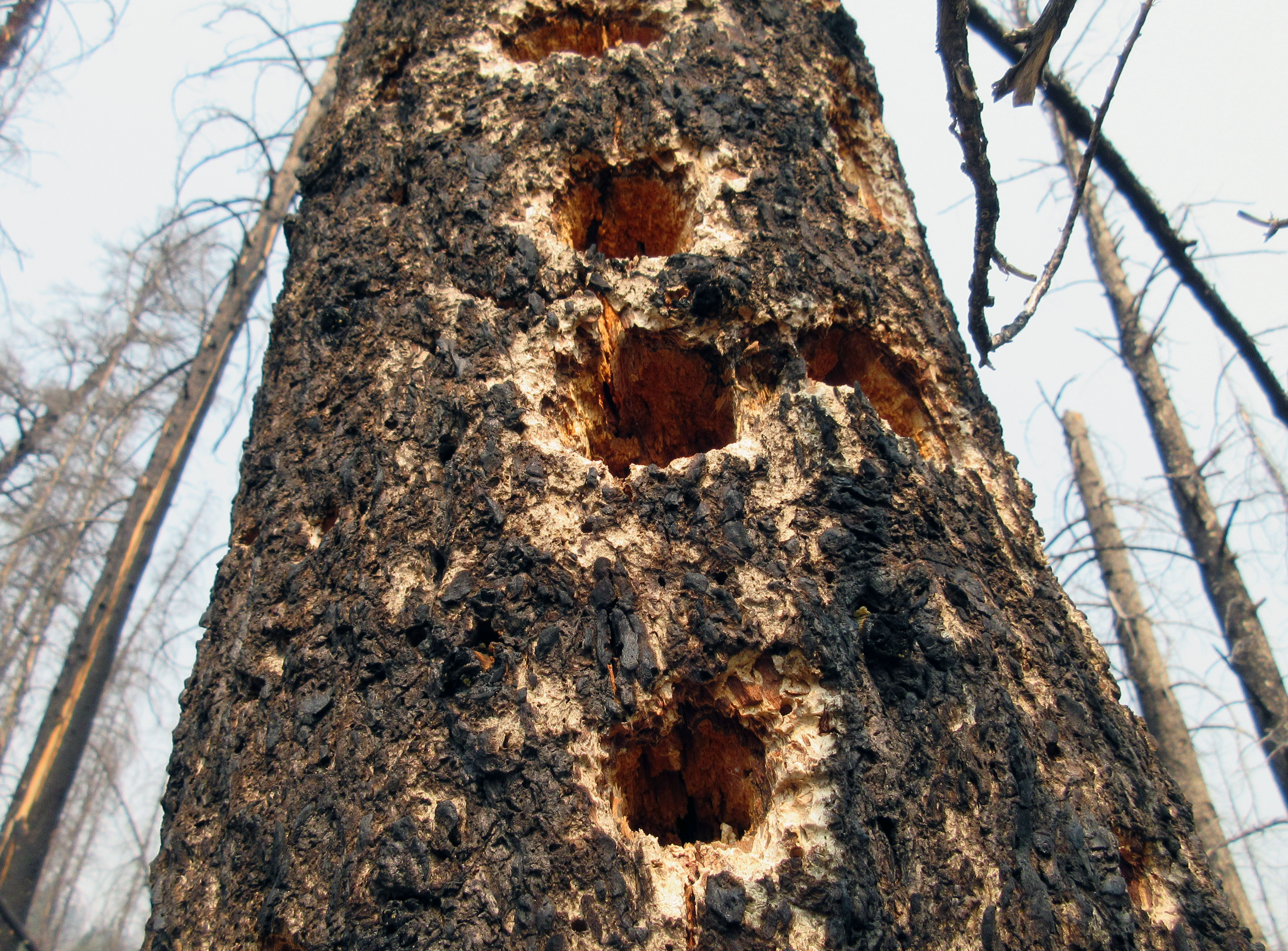
a series of cavities in a post-fire snag

snag surrounded by live trees

three new snags

fallen snag

broken snag

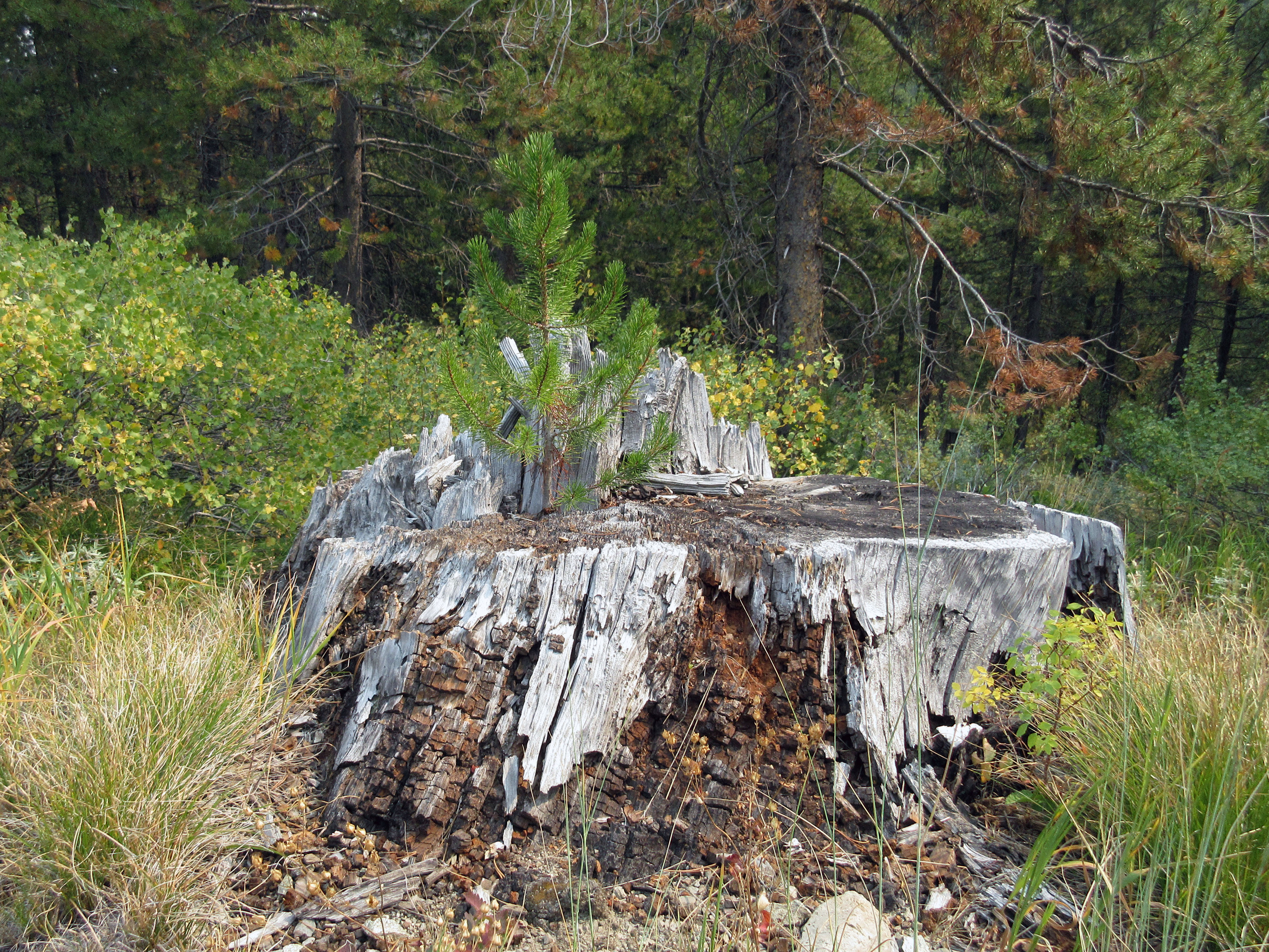
new tree emerging from a nurse stump

not a snag, but one of many lupines we saw flowering along Apollo Creek Trail

Weeds of Boise: Ahavath Beth Israel Synagogue Garden

Anyone who has maintained a garden or small farm knows that with all the work it takes to keep up on the garden itself, outlying areas can quickly become overtaken by weeds. Low on the list of priorities, areas outside of our garden borders are ideal locations for wild urban vegetation to thrive. Pulling all the weeds within the garden is a big enough task as it is; thus, weeds out of our reach are left to their own devices, occasionally getting mown down by a string trimmer or brush mower (if time allows), but otherwise living largely unscathed. And so, places such as these are excellent for familiarizing oneself with our wild urban flora.

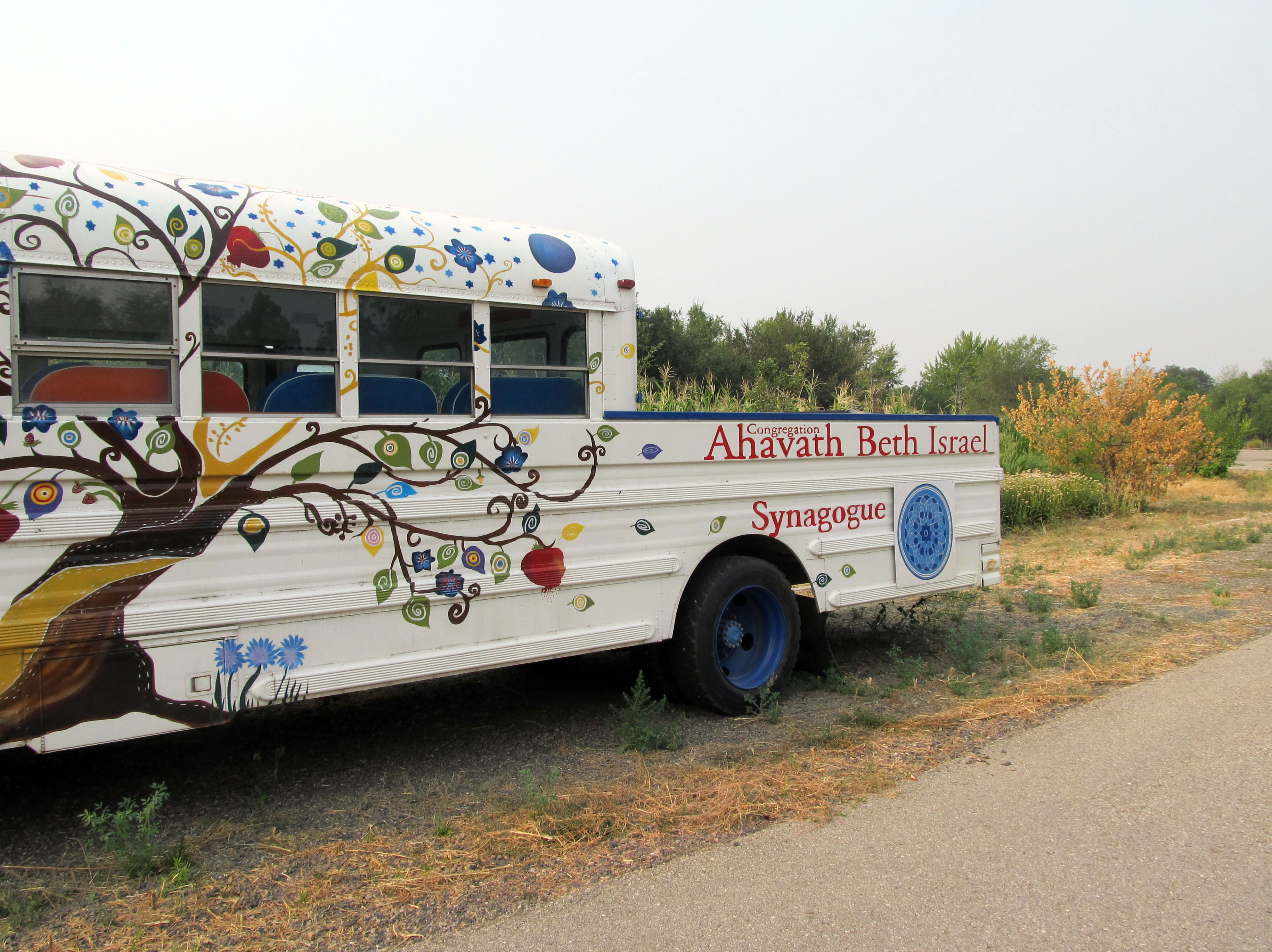
I found an example of this scenario at the Ahavath Beth Israel Synagogue Garden in Boise, Idaho. This community garden is a partnership between Congregation Ahavath Beth Israel (CABI) and Global Gardens, providing refugees in the area an opportunity to grow food for their families and participate in community activities.

When I visited this site, it was clear that the weeds on the edge of the garden had been mowed down at some point. New plants had popped up after the fact while others were in the process of recovering from the “haircut” and putting on new, shrubbier growth. The mowing and the fact that it was late in the summer made identifying remnants of earlier weeds too difficult to bother. Most of the weeds that I did find were either summer annuals or perennials. A visit in the spring would reveal an entirely different cast of characters.

I stayed on the border of the garden, not wanting to invade anyone’s plot or snoop around too much. The point of the visit was to highlight weeds found outside of the borders of a garden anyway. I would imagine that, since the garden is used to grow annual fruits and vegetables, most of the weeds in the beds would be annuals as well. Longer-lived weeds don’t generally tolerate regular disturbance and instead find refuge in unkept areas outside of cultivation.

Below are a few photos from the site along with a preliminary list of the weeds that I found.

salsify (Tragopogon dubius)

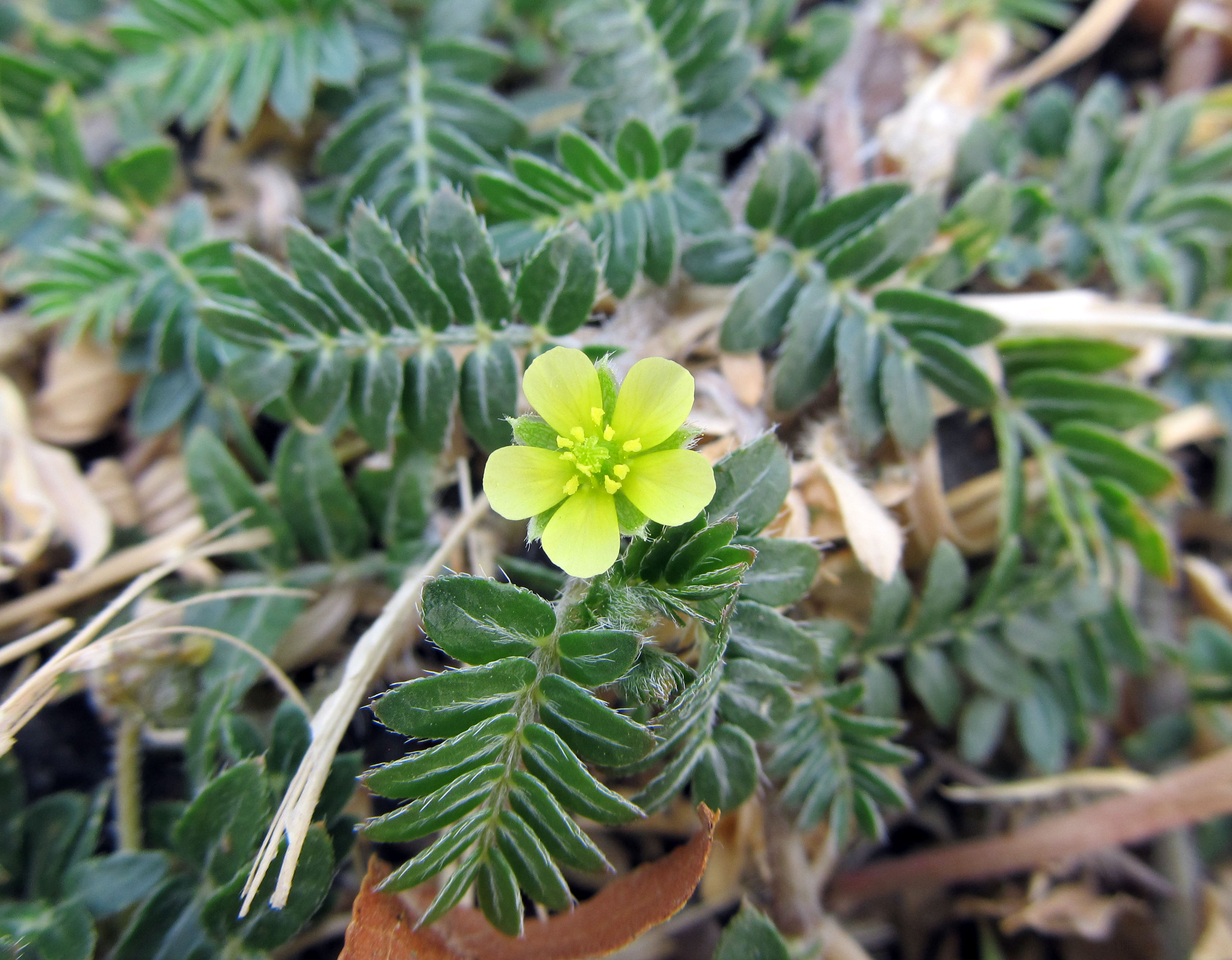
puncture vine (Tribulus terrestris)

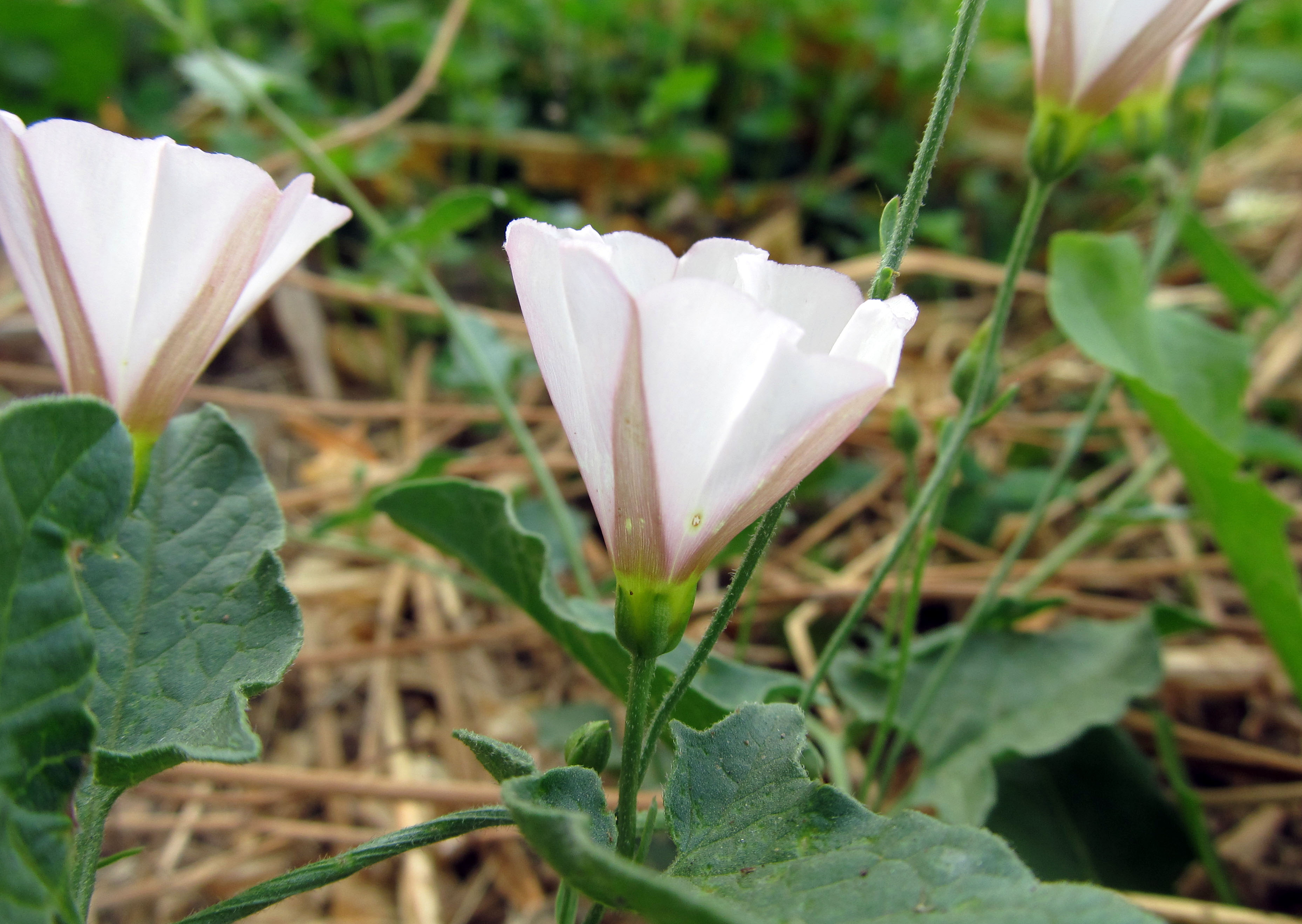
field bindweed (Convolvulus arvensis)

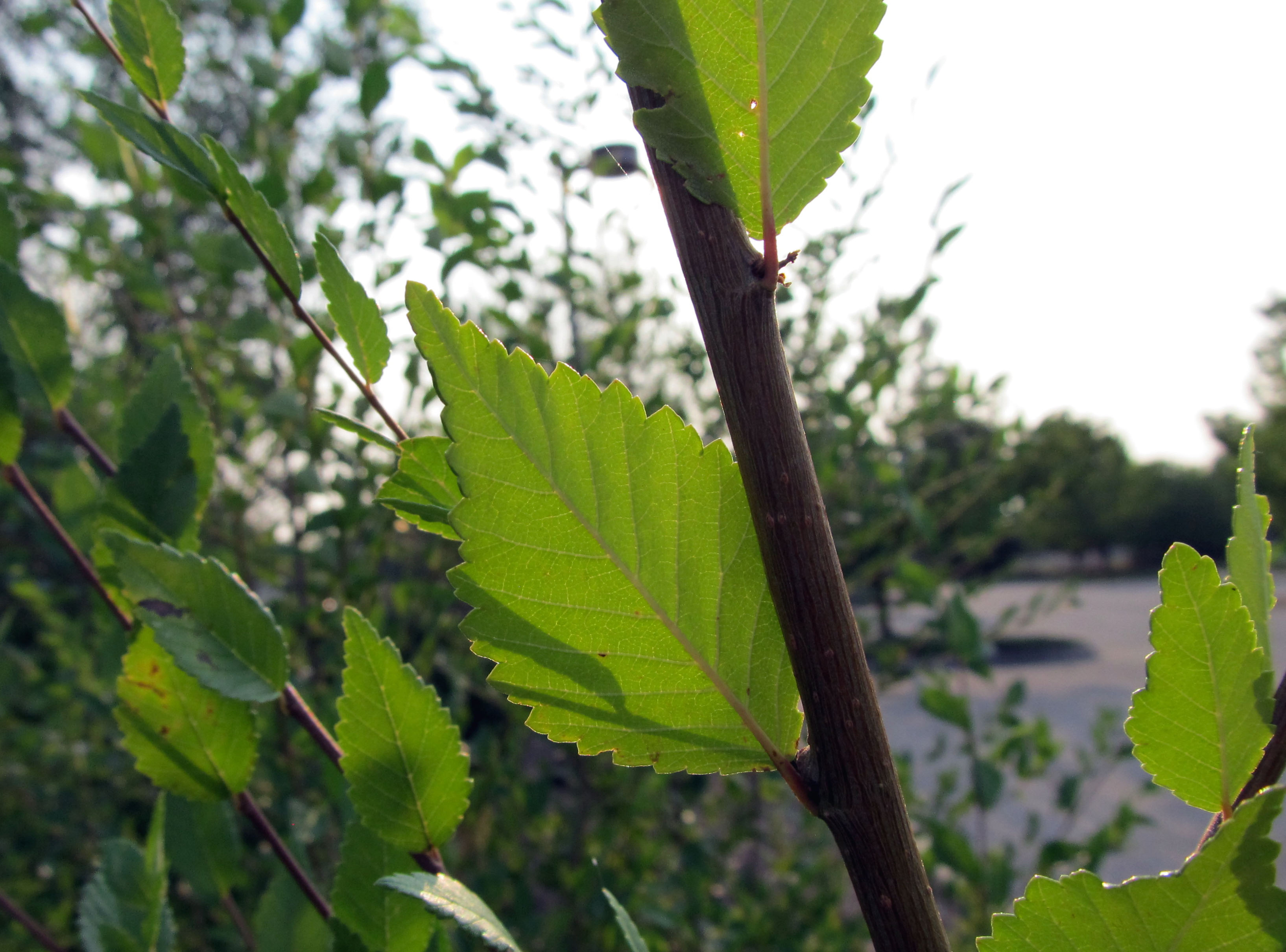
Siberian elm (Ulmus pumila)

common mallow (Malva neglecta)

black medic (Medicago lupulina)

Weeds found at the Ahavath Beth Israel Synagogue Garden:

  • Amaranthus spp. (pigweed)
  • Bassia scoparia (kochia)
  • Chenopodium album (lamb’s quarters)
  • Chondrilla juncea (rush skeletonweed)
  • Convolvulus arvensis (field bindweed)
  • Conyza canadensis (horseweed)
  • Digitaria sanguinalis (crabgrass)
  • Epilobium brachycarpum (tall annual willowherb)
  • Euphorbia maculata (spotted spurge)
  • Hordeum jubatum (foxtail barley)
  • Lactuca serriola (prickly lettuce)
  • Malva neglecta (common mallow)
  • Medicago lupulina (black medic)
  • Oenothera biennis (common evening-primrose)
  • Plantago lanceolata (narrowleaf plantain)
  • Polygonum aviculare (prostrate knotweed)
  • Rumex crispus (curly dock)
  • Setaria sp. (foxtail)
  • Sonchus sp. (sow thistle)
  • Taraxacum officinale (dandelion)
  • Tragopogon dubius (salsify)
  • Trifolium pratense (red clover)
  • Ulmus pumila (Siberian elm)
  • Verbena bracteata (prostrate vervain)

Like all posts in the Weeds of Boise series, this will be updated as I identify and photograph more of the weeds found in this location.

Party Time for Puncture Vine During COVID Times

In spite of a global pandemic, the third annual Boise Goathead Fest took place last Saturday in Boise, Idaho. In order to make it happen, organizers had to think creatively, completely reenvisioning the event in order to keep the community safe and healthy. This, of course, meant no giant bike parade and no large gathering in the park. Instead, members of individual households embarked on their own socially-distanced bike rides, meeting up in small groups for a wide variety of mini-events across town. An online radio show made possible by Radio Boise provided the day’s soundtrack and kept us all up to date with regular live announcements.

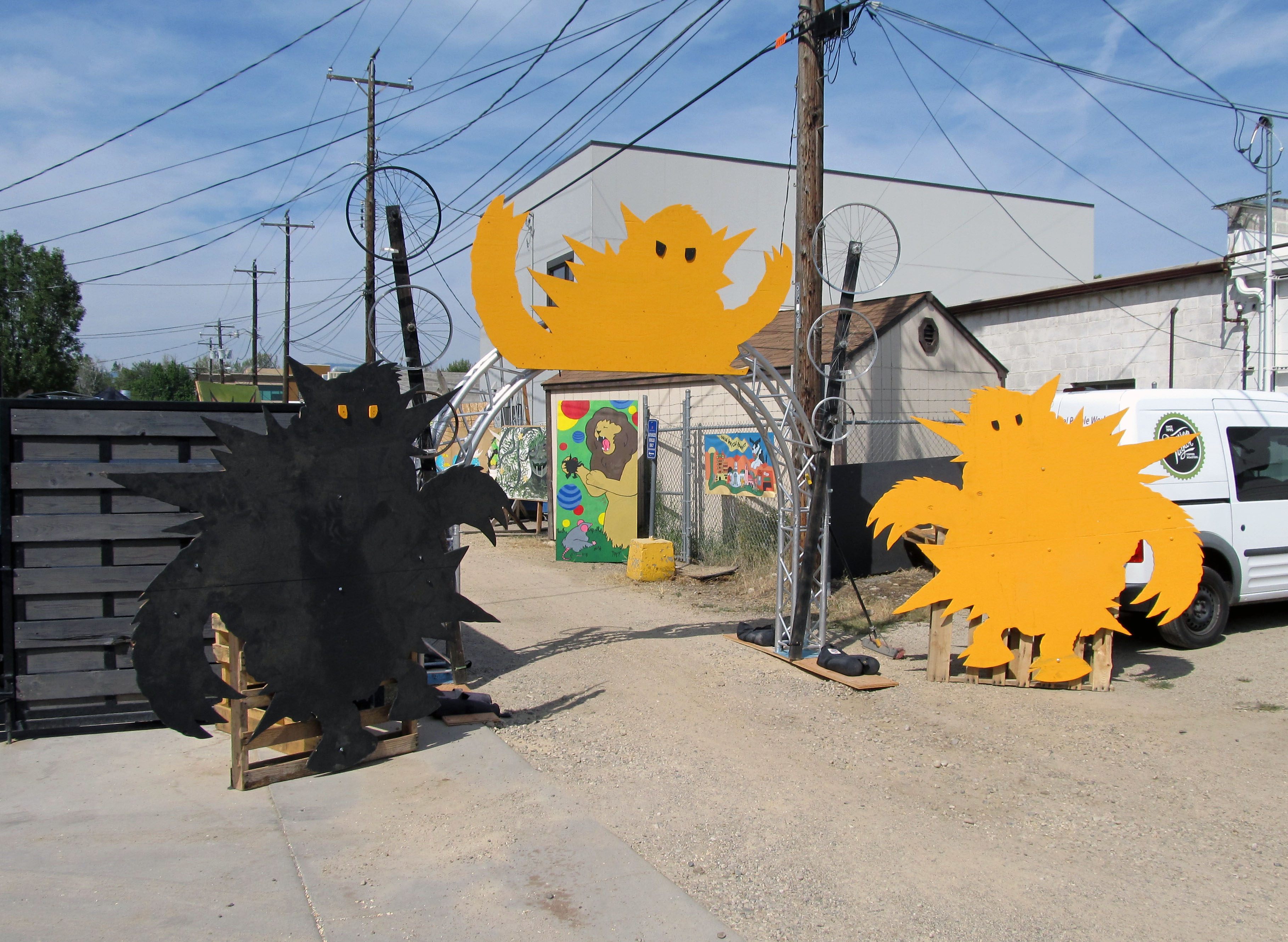
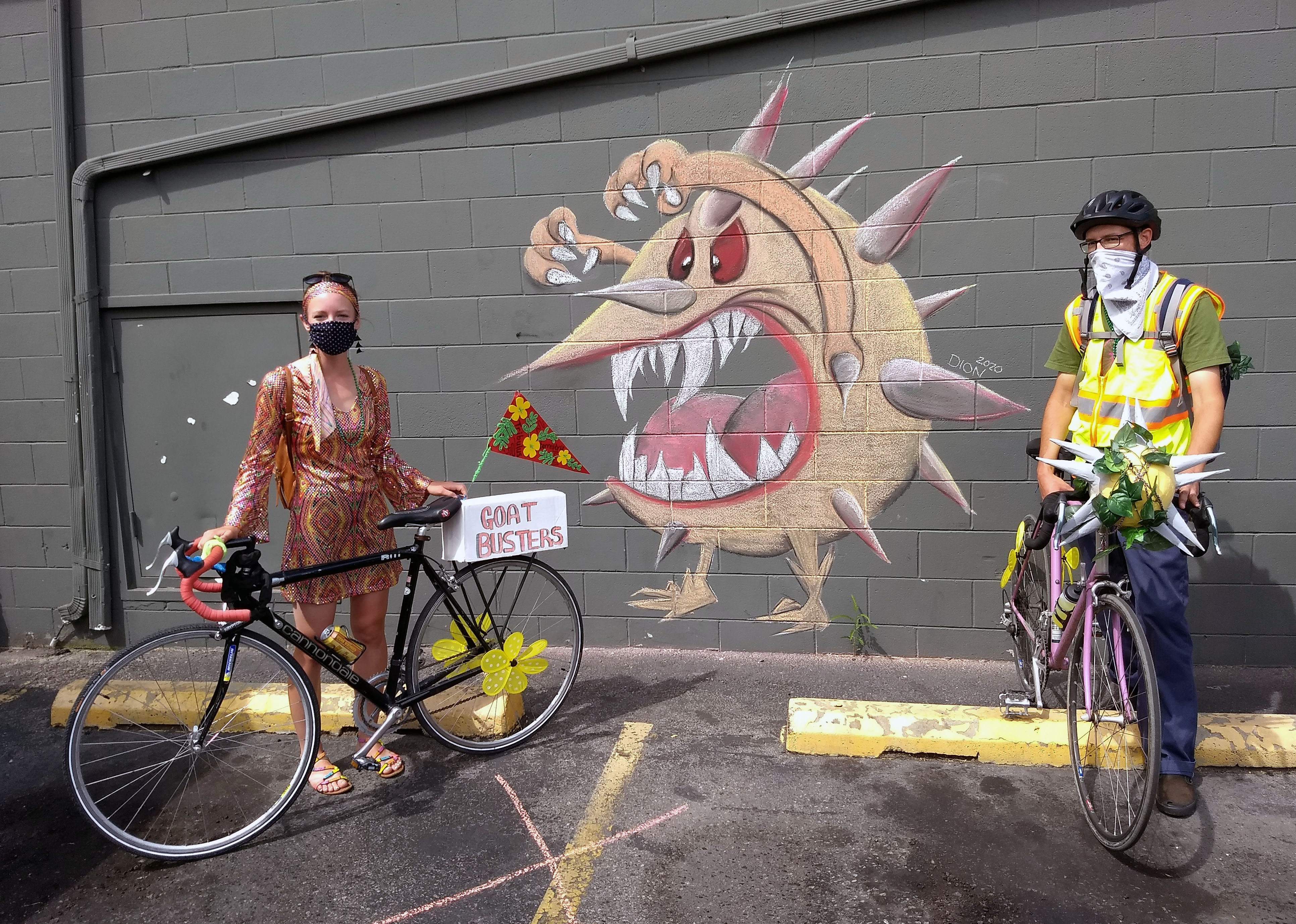
On Saturday morning, Sierra and I decorated our bikes and ourselves and headed out on our two-person bike parade. Our first stop was the Goathead Monster’s Lair located in the alley behind Boise Bicycle Project. There we picked up food, beverages, and a map. The list of places to go and things to see was extensive. At our relaxed pace, there was no way we were going to see it all, which wasn’t really our goal anyway. Times are strange, and we were just happy to be out in the world taking part in another Goathead Fest.

Entrance to the Goathead Monster’s Lair

2020 COVID Edition Boise Goathead Fest Map

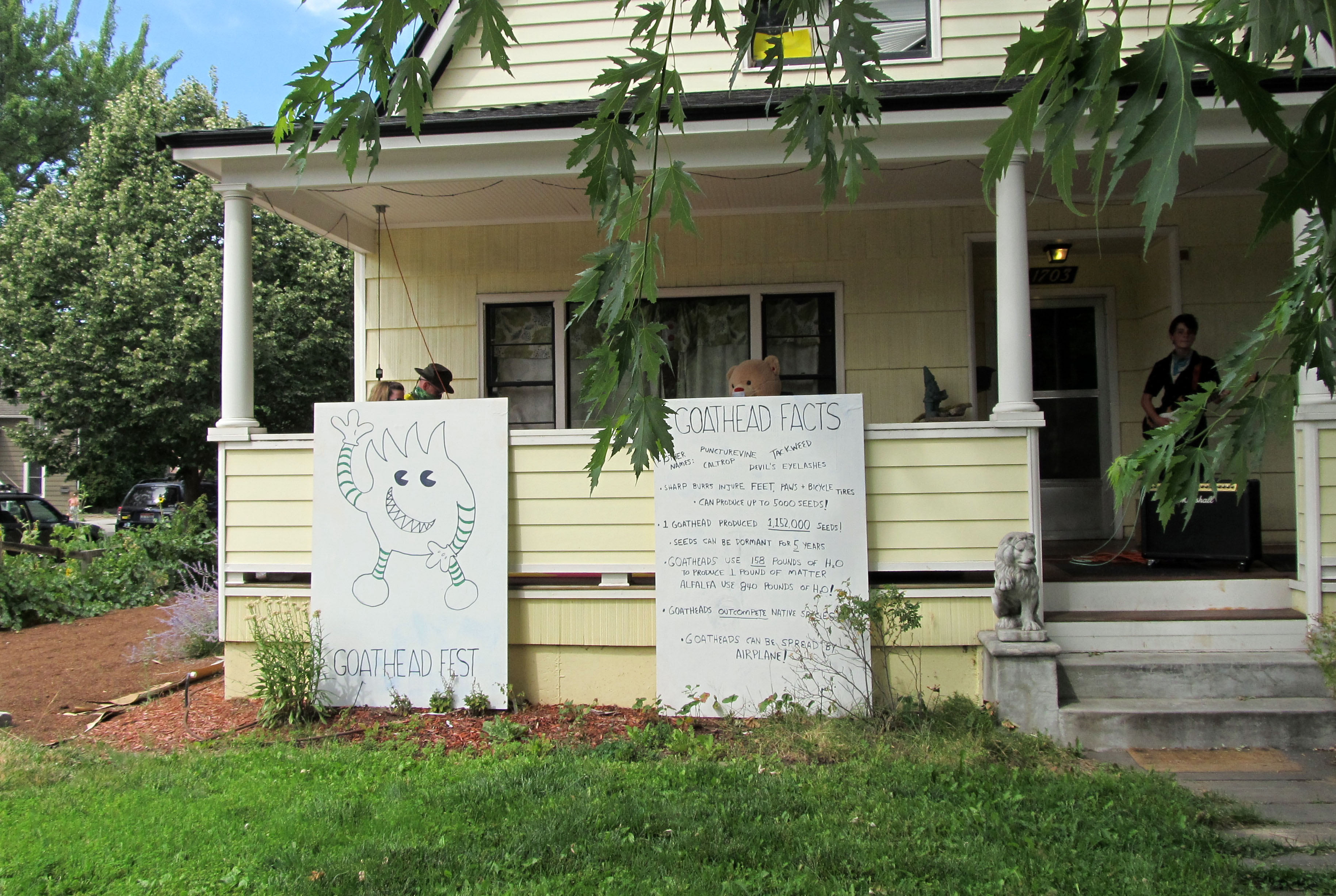
Learning some facts about goatheads with Mr. A on guitar and violin

Sierra and I next to one of many goathead-themed art installations featured around town

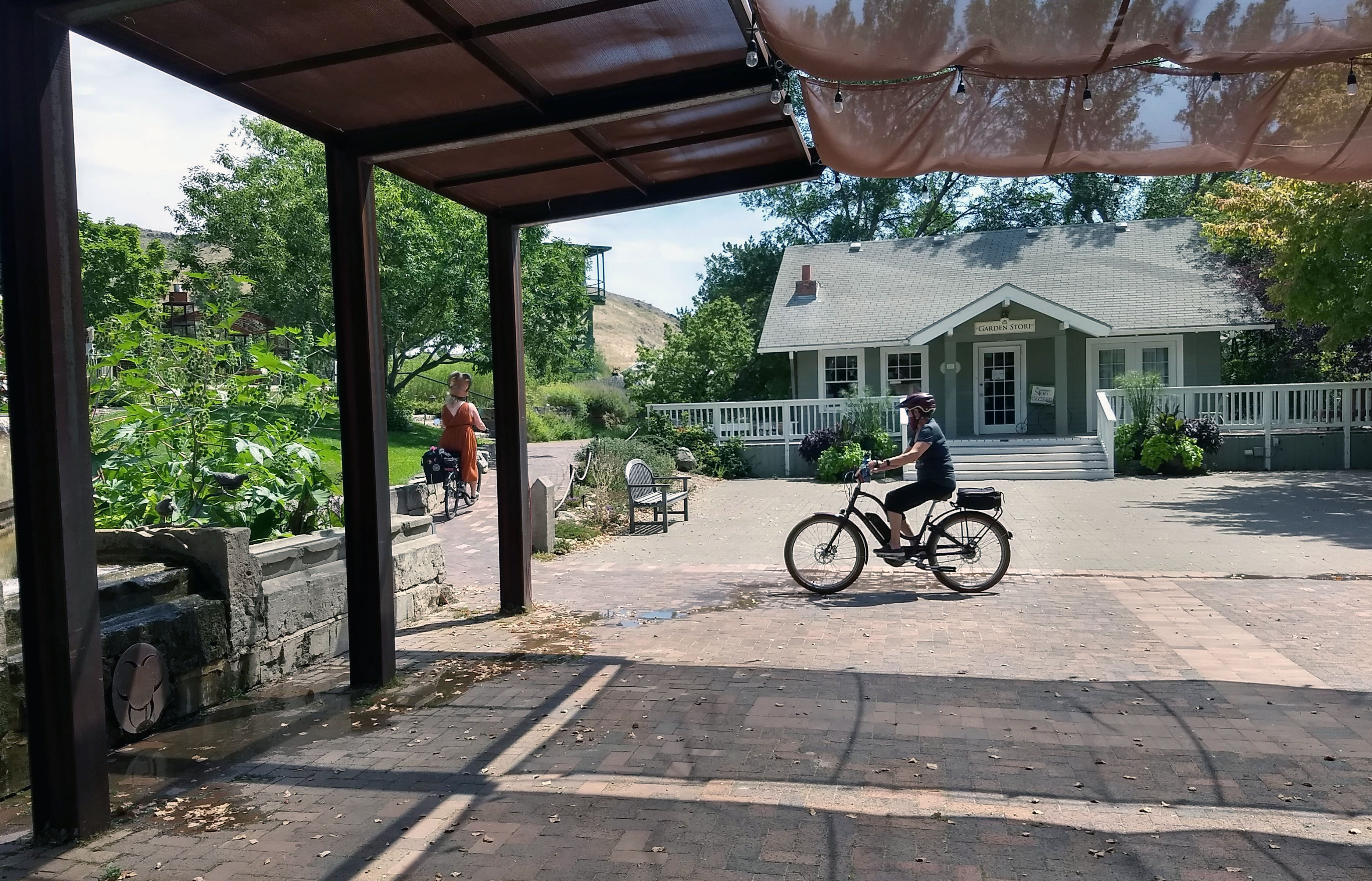
Bikes were allowed at Idaho Botanical Garden for one hour only – a Goathead Fest exclusive!

Not only is the Goathead Fest a celebration of bicycles and community and an opportunity to raise money for pedal-powered non-profits in the Treasure Valley, it’s also a way to bring awareness to a noxious weed responsible for countless flat tires year in and year out. Tribulus terrestris is the bane of bicyclists. Its round, spiky fruits lie in wait to royally ruin our rides. Thanks to collection efforts that take place in the months leading up to the Goathead Fest, thousands of pounds of puncture vine are removed from our streets each year.

This year, another round, spiky ball threatened to ruin our ride. This threat is much smaller and considerably more damaging. Invisible to the naked eye, it has infected hundreds of members of our community, killing many of them, much like it has done in communities across the world. With the threat of COVID-19 looming over our heads, the Boise Goathead Fest felt and looked much different. We masked up and tried to keep our distance from each other. We dispersed ourselves across the city and enjoyed the company of much smaller crowds. As someone who, apart from work and occassional trips to the store, has largely removed himself from social gatherings, I felt nervous to be out. Thanks to the thoughtfulness and awareness of Goathead Fest organizers, my fears were largely soothed. It was important for me to, once again, be together with Boise’s bicylce community and feel a renewed sense of hope for the future.

We are all looking forward to the day when the only round, spiky ball that threatens to keep us off our bikes are those blasted goatheads, and even those – if we keep at it – might someday be a thing of the past.

More Party Time for Puncture Vine on Awkward Botany

Revisiting the Moon Tree

I first learned about Moon Trees in the fall of 2015. One of the trees – a loblolly pine – had been planted at an elementary school just down the street from where I was living at the time. It wasn’t a new thing – it was planted back in 1977, during the period when most other Moon Trees where being planted around the country and the world – but because it wasn’t doing too well, it was in the news. Members of the community, concerned about its long-term survival, were pitching in to help keep it alive. Once I was made aware of it, I also became concerned and decided to go check on it. I even wrote a post about it, which you can read here.

Now that nearly 5 years have passed, I figured I should go check on it again. I hadn’t heard any more news about it, so I assumed it was still hanging in there, but who knows? Maybe not. Since I was going to be on that side of town for Father’s Day, I made plans to stop by. My dad hadn’t seen the tree yet, so he decided to join me.

As we approached Lowell Elementary on our bikes, I was half-expecting the tree to be gone. It was in pretty sad shape when the community stepped in to help it. Braced for this possibility, I anxiously peered down the street as we biked closer. When the tree came into view, I felt relief and announced, “There it is!”

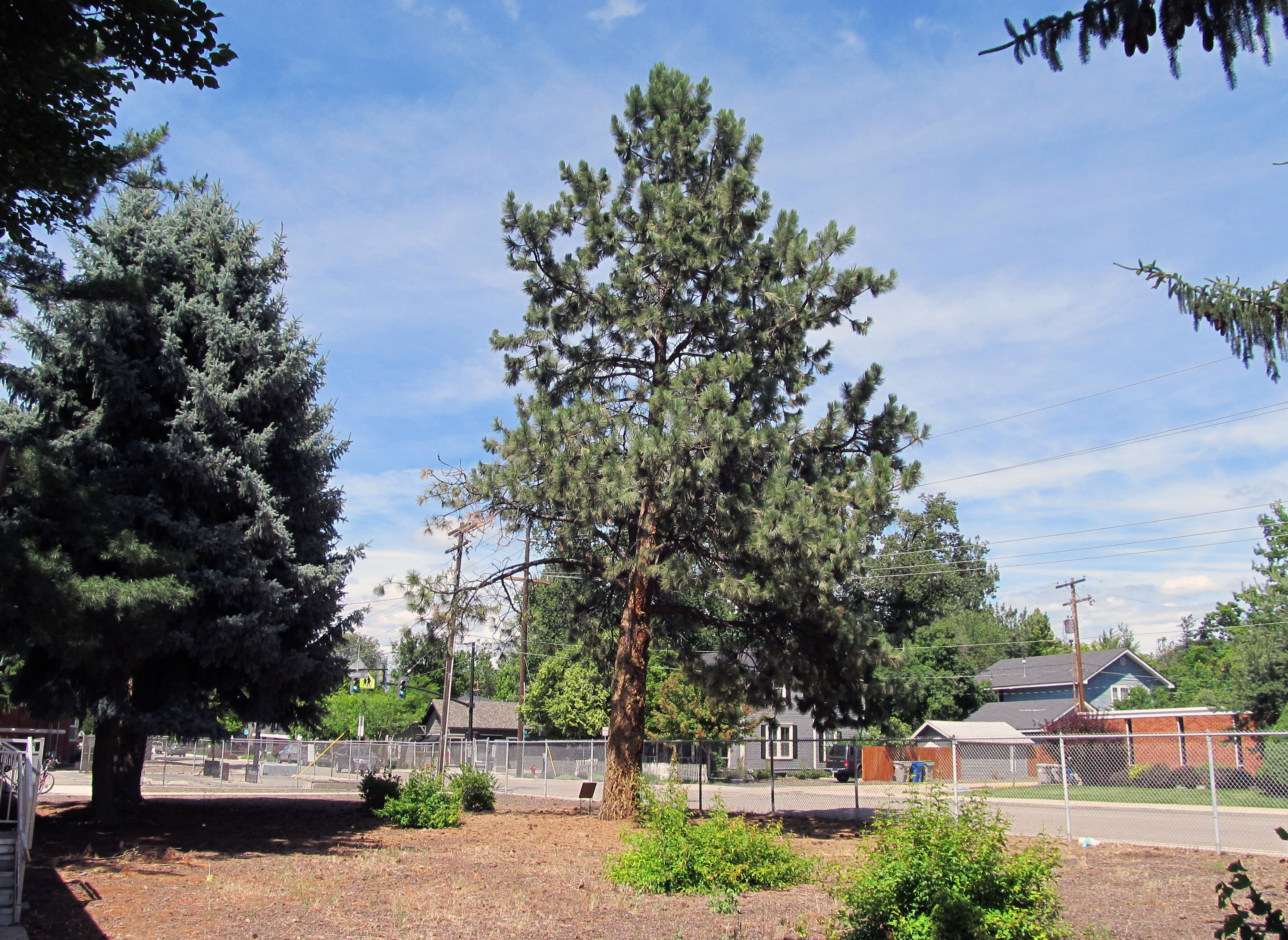
All this time later, it still looks a little rough. The majority of its bark remains largely obscured by crusty, dried up sap, and its canopy isn’t as full as it likely would be if it was a picture of health. But it’s alive and, surprisingly enough, still growing taller, reaching for the moon.

Any loblolly pine would feel out of place in Idaho – it’s a species whose distribution spans the southwest region of the United States, which is starkly different from the northwest – however, this individual in particular is an anomaly. The seed it sprouted from took a journey into space, circled the moon a number of times and then, as a sapling, was planted in Idaho (of all places). Now, over 40 years later, it stands as a symbol of resilience. Something we could all use right now, I’m sure.

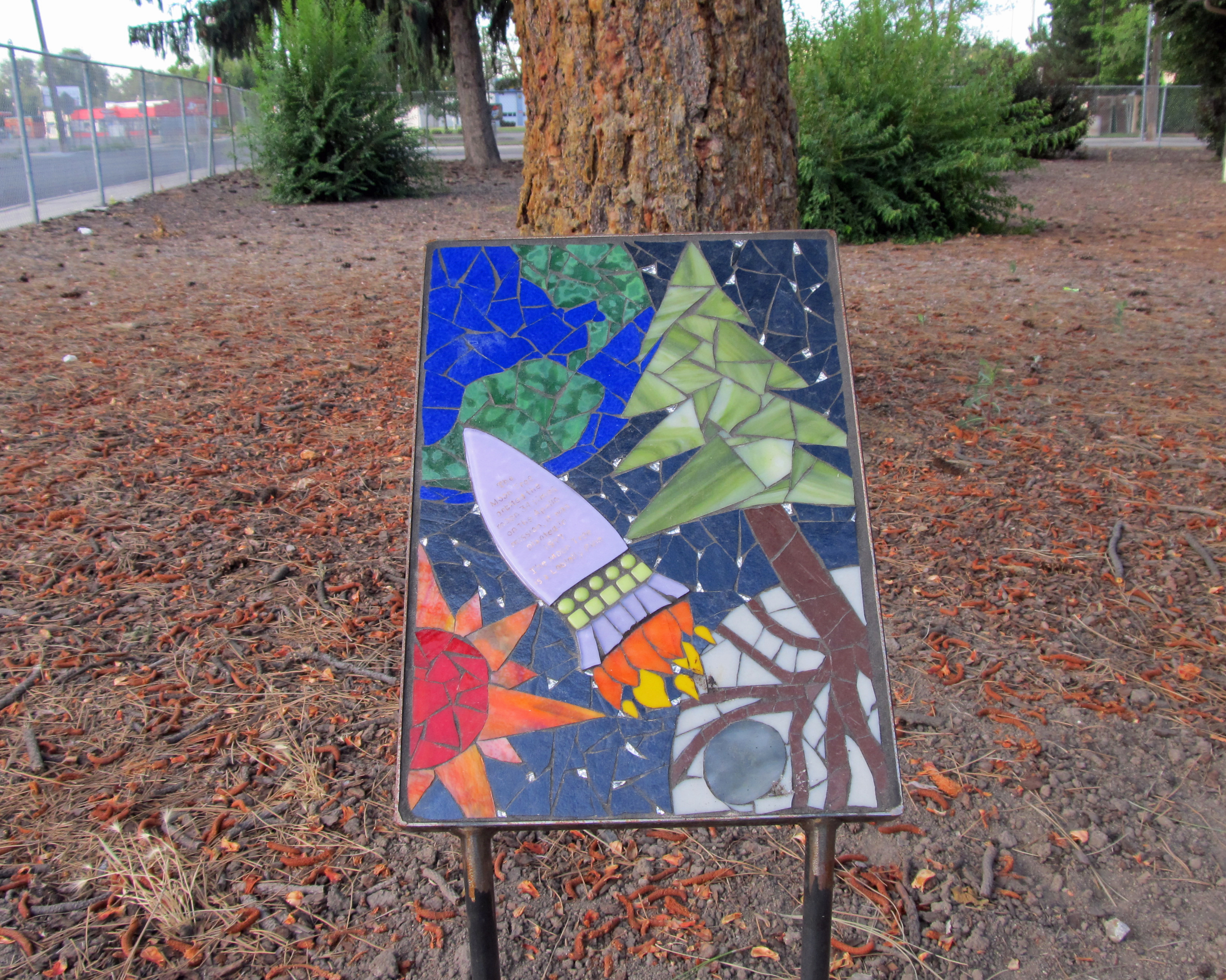
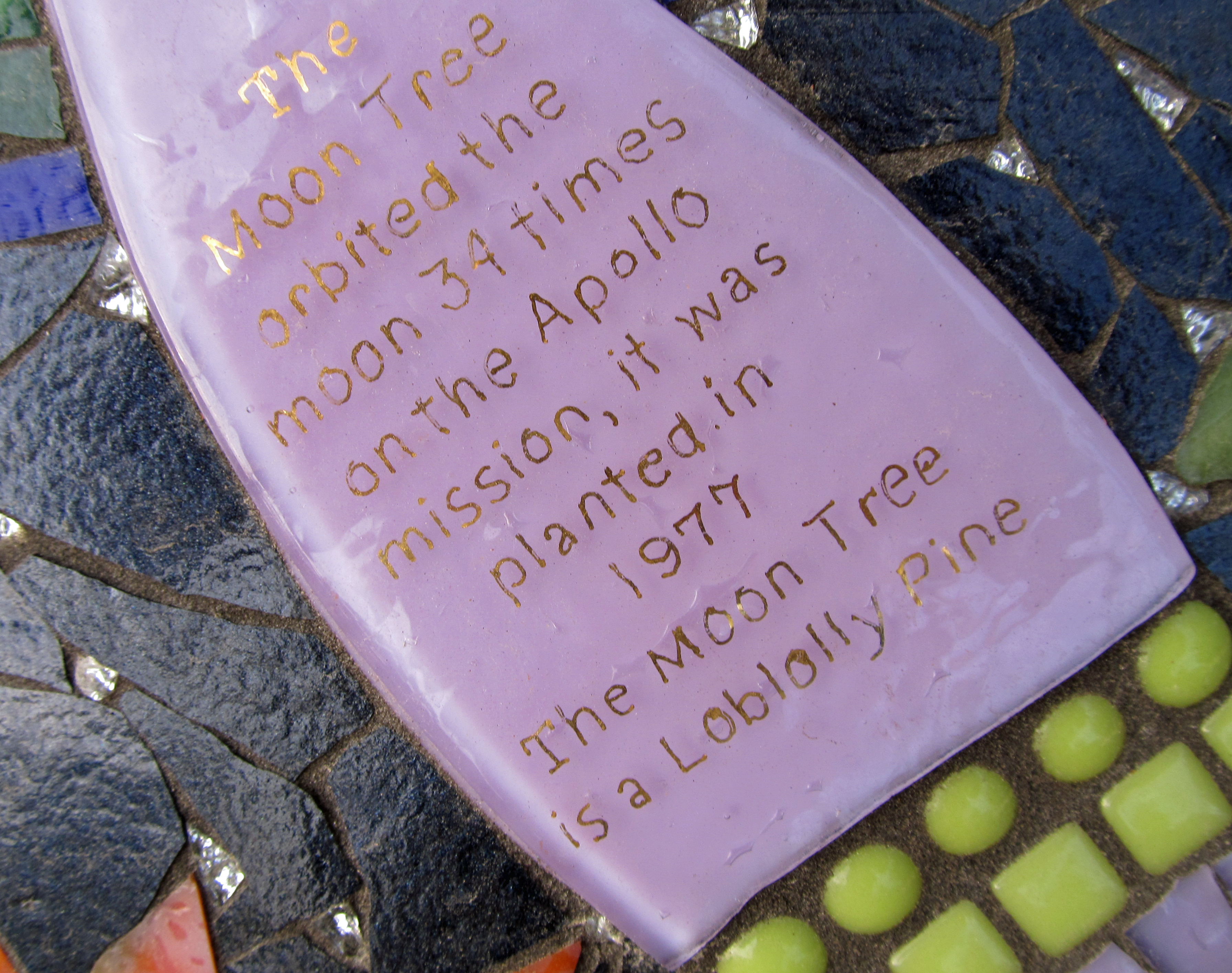
This sign was installed shortly after my original Moon Tree post.

Boise, Idaho’s Moon Tree in June 2020

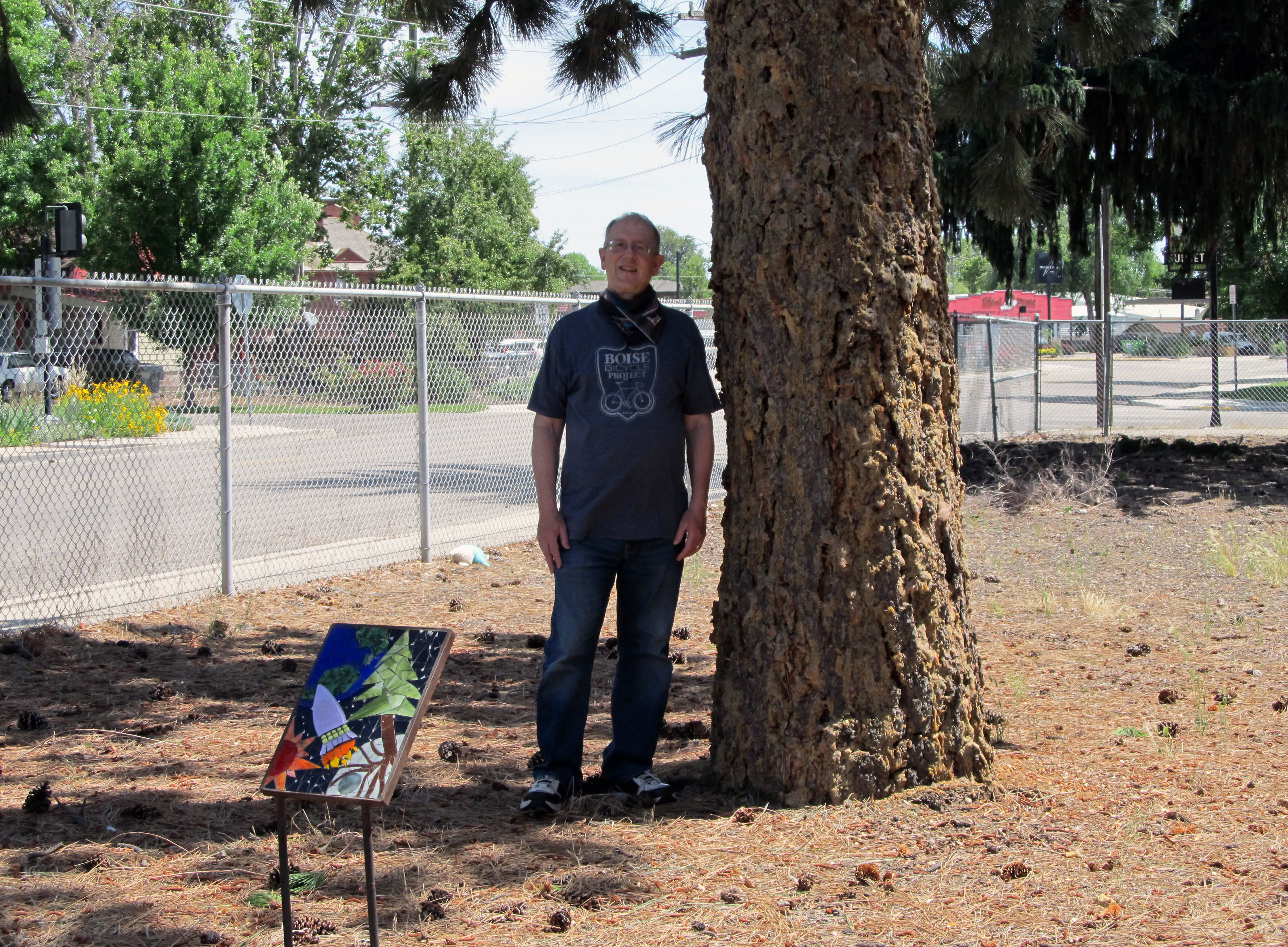
My dad by the Moon Tree in Boise, Idaho

Me by the Moon Tree in Boise, Idaho

———————

Was a Moon Tree planted near you? Is it still around? Tell us about it in the comment section below.