Tea Time: Self-heal

Prunella vulgaris can be found all over the place. It has also been used to treat just about everything. What else would you expect from a plant known commonly as self-heal, heal-all, all-heal, and woundwort? The medicinal value of this plant has been appreciated for centuries across its expansive range, and studies evaluating its medicinal use continue today. Being such a ubiquitous species – both as a garden plant and a native plant (and also a common weed) – and because it has so much clout in the world of herbal medicine, it’s an obvious candidate for Tea Time.

Self-heal is a member of the mint family (Lamiaceae), easily distinguished by its square stems, opposite leaves, and bilabiate and bilaterally symmetrical (or zygomorphic) flowers. One surprise is that, unlike the many aromatic members of this family, the foliage of self-heal lacks a strong scent. P. vulgaris occurs naturally across Asia, throughout Europe, and in parts of northern Africa. It is also widely distributed across North America. Apart from that, it has been introduced to many regions in the southern hemisphere and has also been frequently moved around throughout its native range. Eurasian varieties now intermingle with North American varieties, which can make it difficult to determine a native individual from an introduced one.

self-heal (Prunella vulgaris)

Self-heal is an adaptable plant that tends to prefer shady, moist locations, but can also be found in open, dry, sunny sites. Find it along forest edges, roadsides, ditches, and trails, as well as on the banks of streams, lakes, and reservoirs. It occurs in gardens, both intentionally planted and as a weed, and can escape into lawns, vacant lots, and open fields, as well as into nearby natural areas.

P. vulgaris is an evergreen that grows both prostrate and upright, sometimes reaching 1 foot tall or more (but is often much shorter). It has shallow, fibrous roots, and its stems root adventitiously as they sprawl across the ground, frequently forming an extensive mat or groundcover. Its leaves are oval to lance-shaped and measure about one inch long. Lower leaves have petioles, while upper leaves may become stalkless. Leaf margins are entire or can be slightly toothed. As plants age, they can develop a coppery or purple-bronze color.

the leaves of self-heal

The flowers of self-heal are generally a shade of purple, but can also be white, pink, or blue. They bloom irregularly in a spike measuring up to two inches long. Flower spikes are thick, dense, cylindrical, and made up of whorls of sharp-pointed bracts. Flowers bloom irregularly along the spike and occur from late spring/early summer into the fall. Each flower produces four nutlets, which sit within a cup-shaped, purple calyx.

As a medicinal herb, self-heal has been used both internally and externally to treat a long list of ailments. These include sore throats, diarrhea, fevers, intestinal infections, liver problems, migraines, heart issues, dermatitis, goiter, and thyroid disfunction, just to name a few. It has been used topically to treat skin irritations, bites, stings, and minor cuts and scrapes. This is thanks to its antimicrobial properties and its ability to stop bleeding. A report in the journal Pharmaceuticals (2023) calls P. vulgaris an “important medicinal plant” due to its “rich chemical composition” and its “pharmacological action.” Chemical analyses find the plant to be a valuable source of phenolic compounds, flavonoids, rosmarinic acid, and ursolic acid, among numerous other compounds. If you are curious to learn more detailed information regarding this plant’s medicinal value, you can refer to the above report, as well as one found in Frontiers in Pharmacology (2022).

self-heal tea

P. vulgaris is an edible plant, and its young leaves can be eaten raw or cooked. The leaves together with the flowers can also be dried and used to make a tea. This is how I had it. I used about two teaspoons of dried leaves to one cup of water. Feel free to use more if you would like. I thought the tea was pretty mild. It had a slight sweetness to it and a hint of mint flavor. It has been described as bitter, but I didn’t find it to be overly so (although I may have a higher tolerance for bitterness). Sierra tried it and said that it tasted like “water left over from something else.” That might be because it was more diluted than she would have preferred. Overall, I thought it was a pleasant experience and would be happy to drink it again.

More Tea Time Posts on Awkward Botany:

Tea Time: Fireweed

lf you’ve seen one fireweed, you’ve probably seen several. As an early successional species, growing in large numbers across a vast amount of space is kind of its thing. Any disturbance that leaves bare ground in its wake, such as a wildfire or a windstorm, gives fireweed the opportunity to colonize. It grows quickly and spreads via rhizomes, producing thousands of airborne seeds in the process, sending them off to continue colonization or contribute to soil seed banks in preparation for future disturbances. The role of plants like fireweed is vital – promptly covering bare ground to stave off erosion and acting as a nurse plant to new saplings destined to become the future forest. In a garden setting or in locations where aggressively spreading plants are discouraged, fireweed and its weedy behavior may be unwelcome, but in other contexts, its services are essential.

fireweed (Chamerion angustifolium)

Fireweed (Chamerion angustifolium) is a species in Onagraceae, commonly known as the evening primrose family. It has an impressive distribution, widespread across much of North America and Eurasia. This is owed largely to its adaptability. Deep shade and overly dry soil are two conditions that it does not tolerate well, otherwise it seems to grow in a wide variety of soil types, moisture levels, and sun exposures, particularly in areas where there is regular disturbance. Swaths of towering plants topped with rose-pink flower spikes make fireweed impossible to ignore and a favorite of wildflower enthusiasts.

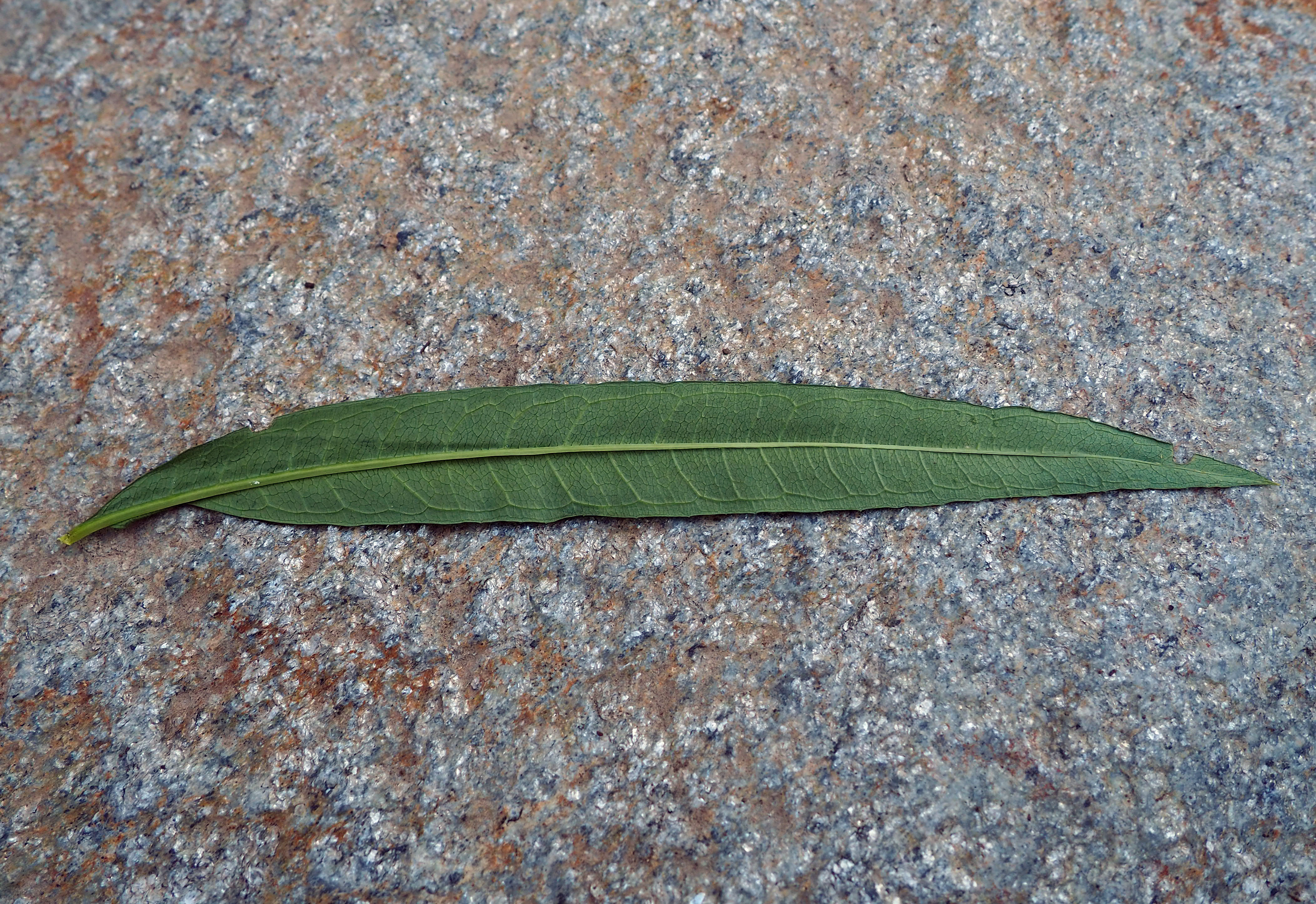
Fireweed stems reach from three to nine feet tall and are rarely branched. Long, narrow, lance-shaped leaves are arranged alternately along the lengths of stems and give the plant a willow-like appearance, which explains another common name, rosebay willowherb. The undersides of leaves have a distinct venation pattern, in which the veins don’t reach the leaf margins, a feature that can help with identification.

distinct leaf veins of fireweed (Chamerion angustifolium)

A series of rose-pink to purple flowers top the stems of fireweed. Each flower has four sepals and four petals with eight stamens and a four-lobed stigma extending prominently from the center. Its long, narrow ovary can be confused for a flower stalk. Rich with nectar, fireweed flowers are a favorite of honeybee keepers. They are also edible, like much of the rest of the plant. Narrow, four-chambered capsules form in place of fertilized flowers and later split open to release abundant, small seeds with a tuft of fluff attached to each one to aid in wind dispersal.

Fireweed has a long history of being used as food and medicine. Stem fibers are also useful for making cord, and seed fluff is useful for weaving and padding. Certainly, fireweed’s abundance and ubiquity contribute to its utility. Having never eaten fireweed before, I decided that a good way to introduce it to my diet would be to make a tea. Fireweed leaves are commonly collected for tea and are said to make an excellent non-caffeinated replacement for black tea.

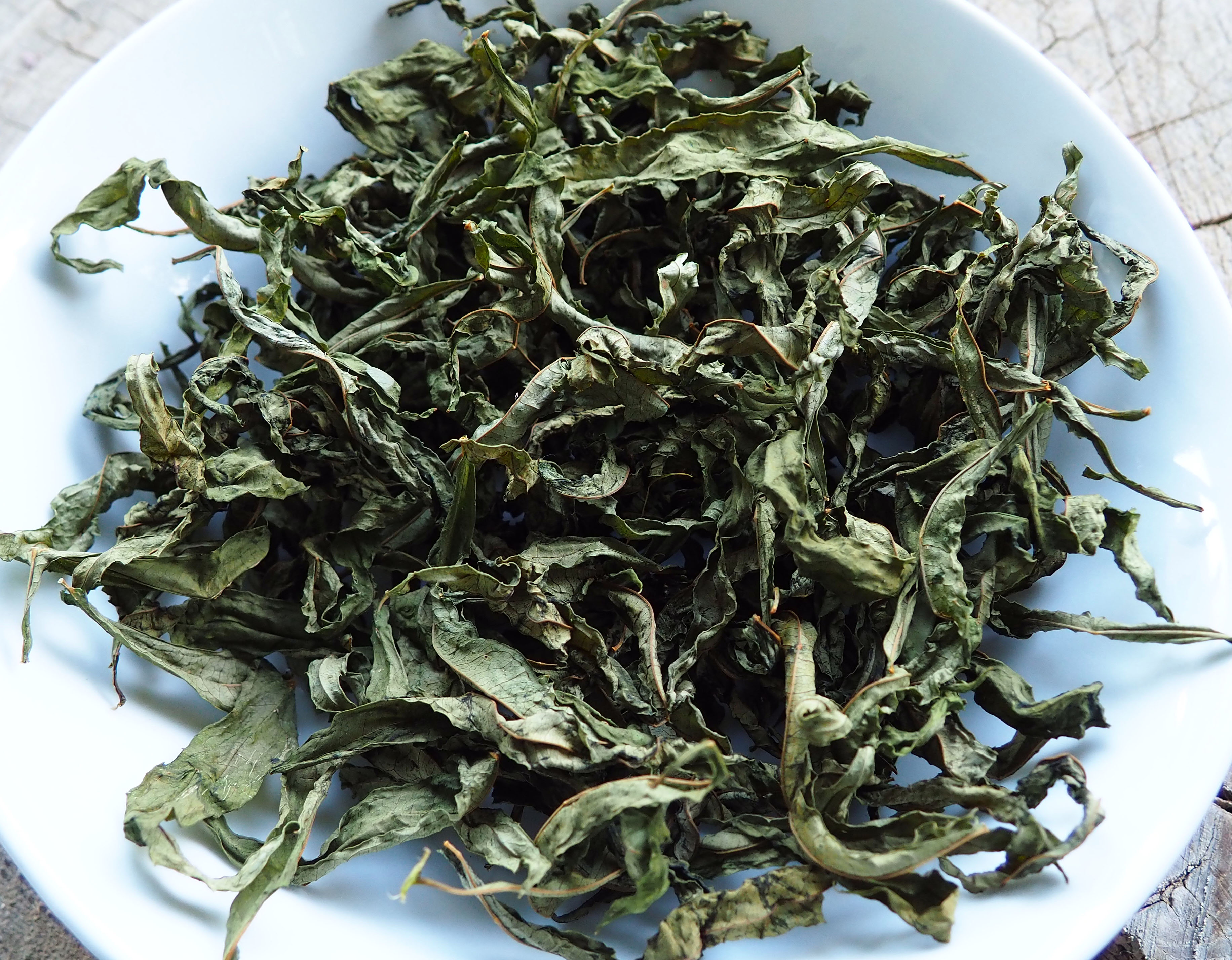
fireweed tea leaves

Making fireweed tea starts by stripping young leaves from fireweed stems. Recipes I encountered all called for fermenting the leaves before drying them. I did this by squeezing handfuls of leaves in my fists just enough to break and bruise them a bit and then packing them into a quart size Mason jar. I closed the lid tight and kept them in the jar for about five days, shaking it up a couple times a day supposedly to help prevent mold issues. After that, I dried the leaves on a baking sheet in the hot sun. From there, they are ready for making tea the same way you would make any other loose leaf tea, chopping the leaves up a bit before immersing them in hot water.

I found the taste of fireweed tea to be mild and pleasant. Despite several sources comparing it to black tea, I thought it was more similar to green tea. Sierra liked the smell more than the taste and wished it had honey in it. Compared to other teas I’ve tried in this short series of posts, this is definitely one of the better ones, and a tea I could see myself making again sometime.

More Tea Time Posts on Awkward Botany:

What Is Cheatgrass and Why Should I Care?

To understand the current state of rangeland wildfires in the Intermountain West, you must first familiarize yourself with a plant commonly referred to as cheatgrass. This annual grass moved into the region over a century ago, and its spread has had a massive impact on the environment, as well as the economy and our way of life. Just the very mention of cheatgrass in the West will get some people’s blood boiling. It’s a menace, a scourge, a pest, and yet it’s here to stay. It’s a result of us being here, yet somehow it’s the invader. Its success is largely due to the way we’ve chosen to operate in this region, yet it’s the one to blame for our troubles. When you really start to learn about this plant, it’s hard not to develop an appreciation for it, despite the tragic ways in which it has shaped our region for the worse. It’s not a plant that is showy or grandiose in any significant way. Everything about its appearance screams for it to be dismissed and overlooked, yet it’s story – at least here in the American West – is larger than life.

cheatgrass (Bromus tectorum) – illustration credit: Selected Weeds of the United States, Agriculture Handbook No. 366 (ARS/USDA)

Bromus tectorum goes by more than a dozen common names, but the ones you tend to hear most often are downy brome and cheatgrass. Downy because of how fuzzy its leaf blades can be and cheat because its presence on wheat farms cheats farmers of their yield. It is distributed widely across Europe, eastern Asia, and northern Africa where it originates, and was introduced to North America in the mid-19th century. How and why it got here isn’t totally clear. It likely had multiple introductions, both as a contaminant in seeds and attached to fur, clothing, packaging materials, etc., as well as intentionally as a forage crop for livestock. Regardless, it managed to establish readily in the east and then quickly spread across the country, spanning the continent by the early 20th century. It found the Great Basin particularly habitable due to its hot, dry summers and cold, wet winters and largely treeless landscape.

Apart from the climate, a significant factor behind cheatgrass’s establishment in the Intermountain West are all the cows. For a number of reasons, the Great Basin isn’t really suitable for largescale farming operations, but livestock grazing is another story. Many of the animals native to the region are grazing animals after all, so why not graze cattle and sheep? But there is a limit. Too many animals stuck in one spot for too long leads to overgrazing, and overgrazed sites take time for the native vegetation to recover. Cheatgrass exploits this opportunity by establishing itself quickly in disturbed and overgrazed locations and begins the process of outcompeting nearby plants for limited water and nutrients. Once it begins to dominate these sites, it has another trick up its sleeve.

Cheatgrass actually makes good forage for livestock early in the spring when it’s green and tender, but that quickly changes as the plants start to dry out and go to seed. By early summer, cheatgrass has completed its lifecycle and what’s left is a dried-up plant that, due to the silica in its cells, does not break down readily. Where cheatgrass is abundant, this means large swaths of standing brown grass as far as the eye can see. What’s more, this dead vegetation is highly flammable, and the slightest spark can set off a roaring blaze that moves quickly across the landscape, igniting everything in its path. In a region where fires once occurred decades apart, they now occur on a nearly annual basis. And because fire had been historically infrequent, the native vegetation is not adapted to regular fire and can take years to recover, whereas cheatgrass bounces right back, again exploiting the void left by the decimation of native plants and is flowering again the following spring. It’s a self-perpetuating cycle, and cheatgrass excels at it.

cheatgrass on fire

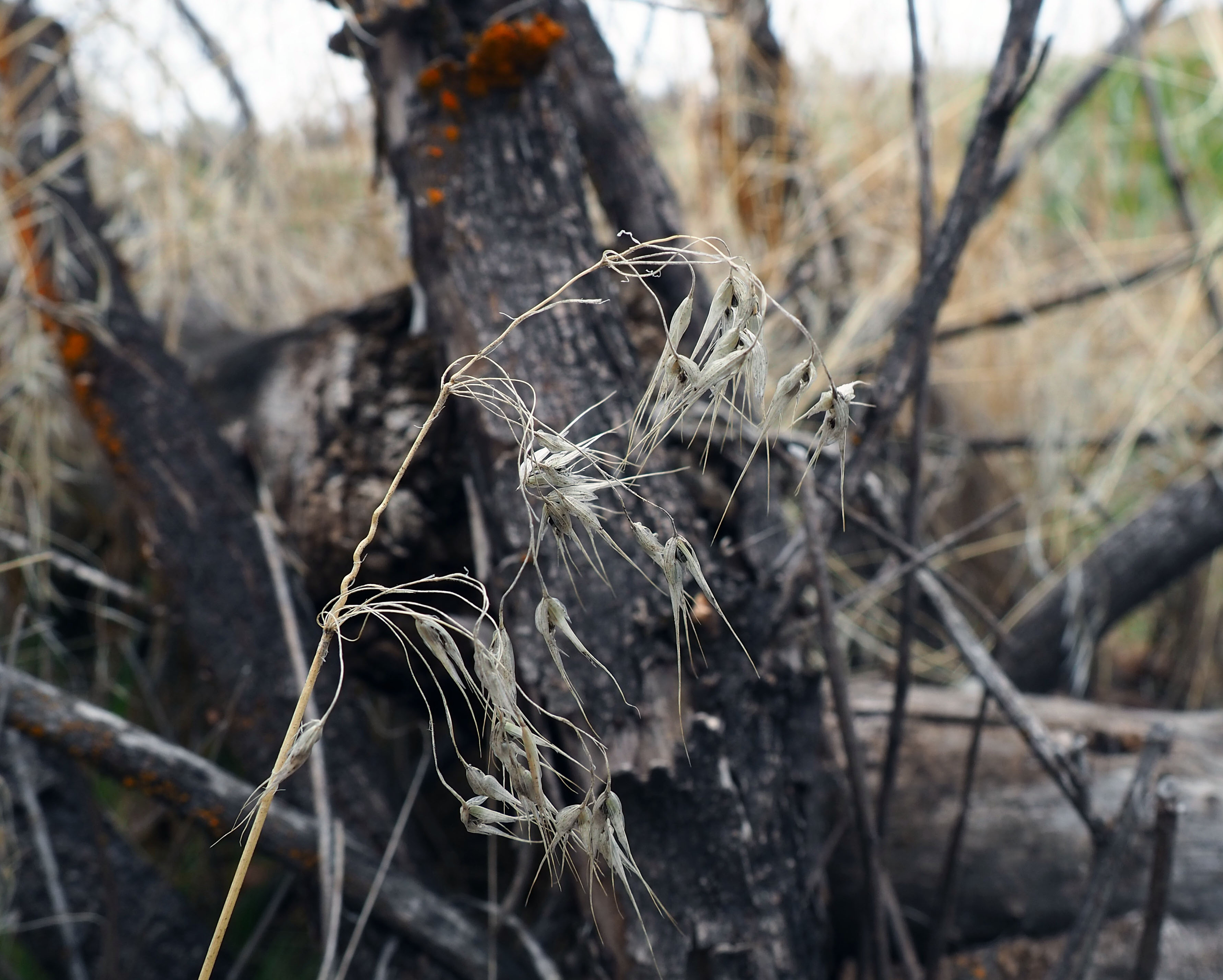
Cheatgrass is a winter annual, meaning that it germinates in the fall as soon as moisture becomes available. It then lies mostly dormant, its shallow, fibrous roots still growing as long as the ground isn’t frozen. Employing this strategy means cheatgrass is ready to resume growth at a quick pace as soon as the weather warms in the spring. Its roots spread horizontally in the soil and essentially rob water from nearby, more deeply rooted native vegetation. Its deep green, hairy leaves form a little tuft or rosette and provide early spring forage for livestock, gamebirds, and other grazing animals. As the spring progresses flower stalks form and the plants reach heights of around 2 feet (60 centimeters). Their inflorescence is a prominently drooping, open panicle and each spikelet has between 4-8 florets, each with a single, straight awn. The flowers of cheatgrass are cleistogamous, which means they don’t ever open. Self-pollination occurs inside the closed floret, and viable seeds soon develop. As the plant matures, it takes on a purple-reddish hue, after which it turns crispy and light brown as the seeds disperse.

The stiff awns remain on the seeds and aid in dispersal. They also cause injury to animals that dare consume them, poking into the soft tissues of their mouths. Passing animals are also injured when the awns work their way into their feet, ears, and other vulnerable body parts. The ability of the awns to attach so easily to fur and clothing is one of the reasons why cheatgrass spreads so readily. Wind also helps distribute the seed. A single plant can produce hundreds, if not thousands, of seeds, which are ready to germinate upon dispersal. They remain viable in the soil for only a few short years, but since they germinate so easily and are produced so abundantly, their short lifespan isn’t much of a downside.

dried inflorescence of cheatgrass (Bromus tectorum)

In many ways, cheatgrass is the perfect weed. It is able to grow under a broad range of conditions. Its seeds germinate readily, and the plant grows during a time when most other plants have gone dormant. It excels at capturing water and nutrients. It self-pollinates and produces abundant viable seed, which are reliably and readily dispersed thanks to persistent awns. Disturbed areas are ripe for a plant like cheatgrass, but even nearby undisturbed areas can be invaded as seeds are dispersed there. With the help of fire, cheatgrass also creates its own disturbance, which it capitalizes on by then growing even thicker, more abundant stands with now even less competition from native vegetation. And because it is available so early in the season and is readily consumed by livestock and gamebirds, what motivation is there for humans to totally replace it with something else? As James Young and Charlie Clements ask in their book, Cheatgrass, “How can we come to grips with the ecological and economic consequences of this invasive alien species that can adapt to such a vast range of environmental conditions?” In another section they lament, “cheatgrass represents a stage in transition toward an environment dominated by exotic weeds growing on eroded landscapes.”

The topic of cheatgrass and other introduced annual grasses, as well as the even broader topic of rangeland wildfires, is monstrous, but it is one that I hope to continue to cover in a series of posts over the coming months and years. It’s not an easy (or necessarily fun) thing to tackle, but it’s an important one, especially for those of us who call the cheatgrass sea our home.


Check out the linktree for various ways to follow and support Awkward Botany.

Awkward Botany on Outdoor Idaho (plus Send Us Your Questions)

I spend a lot time on this blog putting weeds in the spotlight, celebrating them for their successes and the unique and interesting plants they are. It’s rare that I get to share these sentiments outside of this particular venue, but I was given such an opportunity recently when asked to talk about weeds for an episode of Outdoor Idaho, a long running show on Idaho Public Television that covers Idaho’s natural history. The theme of this particular episode is wildflowers, so I was intrigued by the idea of coming on to discuss urban weeds. For many, the term “wildflowers” may invoke native plants blooming in natural areas in places far removed from the hustle and bustle of the city. But a wildflower doesn’t have to be a native plant, nor does it have to be growing in the wild. Any plant occurring naturally on its own without the assistance of humans can be a wildflower, and that includes our wild urban flora. I appreciated the chance to share this particular thought with the viewers of Outdoor Idaho.

photo credit: Jay Krajic

Along with me waxing on about weeds, the Wildflowers episode features a host of other Idahoans sharing their thoughts, expertise, and experiences with wildflowers. The episode is brief – coming in at under 30 minutes – but the producers packed in a ton of great wildflower content, and overall I found it to be an excellent representation of the flora of Idaho and a convincing argument for why we should appreciate and elevate these plants. The flora of any region is special and important in its own right, and Idaho’s flora is no different, including its weeds.

Check out Outdoor Idaho’s Wildfowers episode here.

In other news…

If you want to see more of me on the screen (and I’m not sure why you would), Sierra (a.k.a. Idaho Plant Doctor) and I are doing monthly Q&A videos in which we answer your questions about plants, gardening, pests and diseases, insects, or any other topic you might be curious about. You can tune in to those discussions on Sierra’s instagram. If you have questions of your own that you would like us to address, please leave them in the comments section below, or send them to me via the contact page or my instagram.

The Serotinous Cones of Lodgepole Pine

Behind the scales of a pine cone lie the seeds that promise future generations of pine trees. Even though the seeds are not housed within fruits as they are in angiosperms (i.e. flowering plants), the tough scales of pine cones help protect the developing seeds and keep them secure until the time comes for dispersal. In some species, scales open on their own as the cone matures, at which point winged seeds fall from the tree, taking flight towards their new homes. In other species, the scales must be pried open by an animal in order to free the seed. A third group of species have what are called serotinous cones, the scales of which are sealed shut with resin. High temperatures are required to soften the resin and expose the seeds.

Serotinous cones are a common trait of pine species located in regions where wildfire naturally and regularly occurs. One such species is lodgepole pine (Pinus contorta), which is found in abundance in forests across much of western North America. Lodgepole pine is a thin-barked tree species that burns easily and is often one of the first plants to recolonize after a stand-replacing wildfire. There are 3 or 4 subspecies of lodgepole pine. The one with the largest distribution and the one that most commonly exhibits serotinous cones is P. contorta subsp. latifolia, which occurs throughout the Rocky Mountains, north into the Yukon, and just west of the Cascade Range.

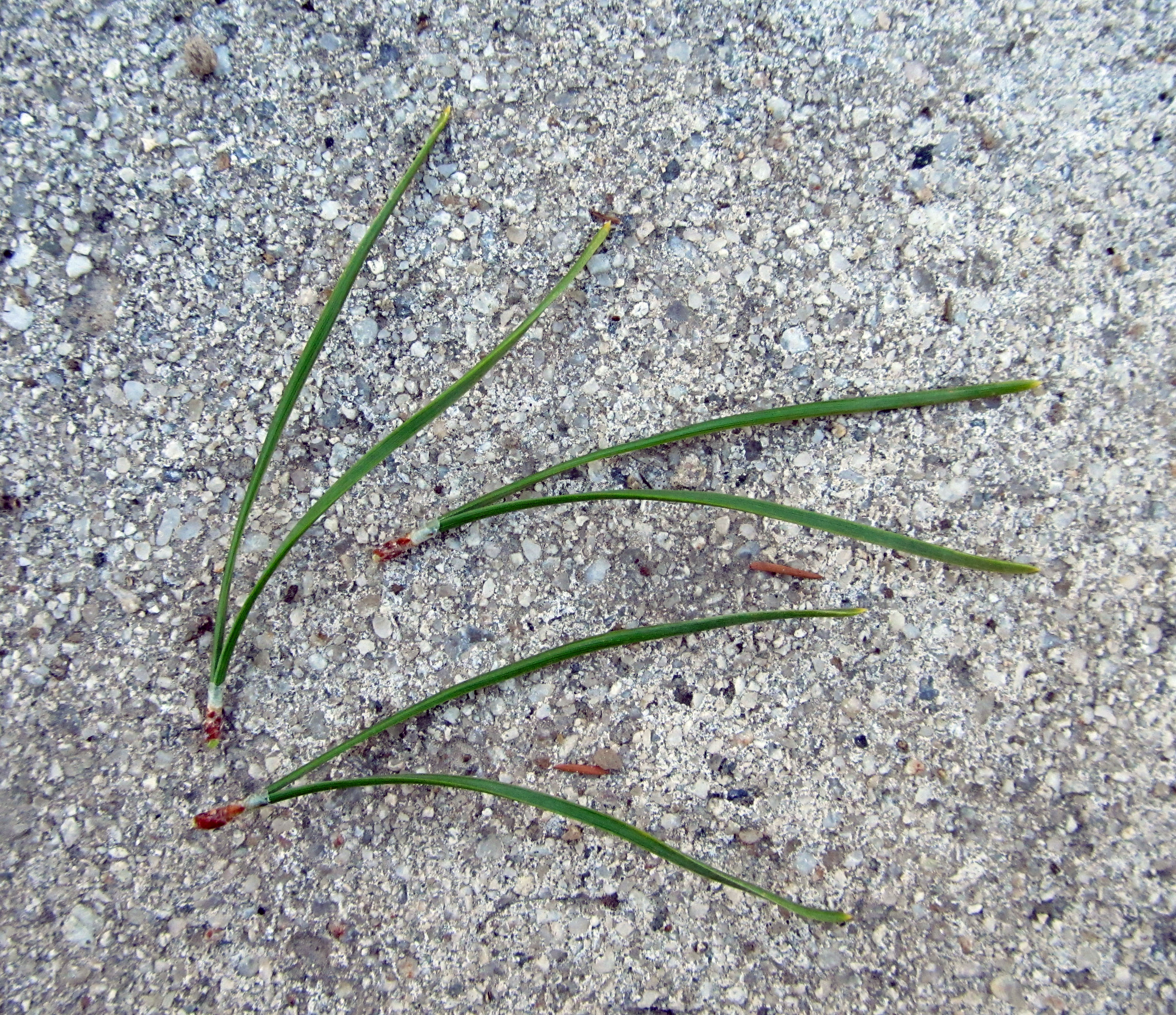
needles of lodgpole pine (Pinus contorta)

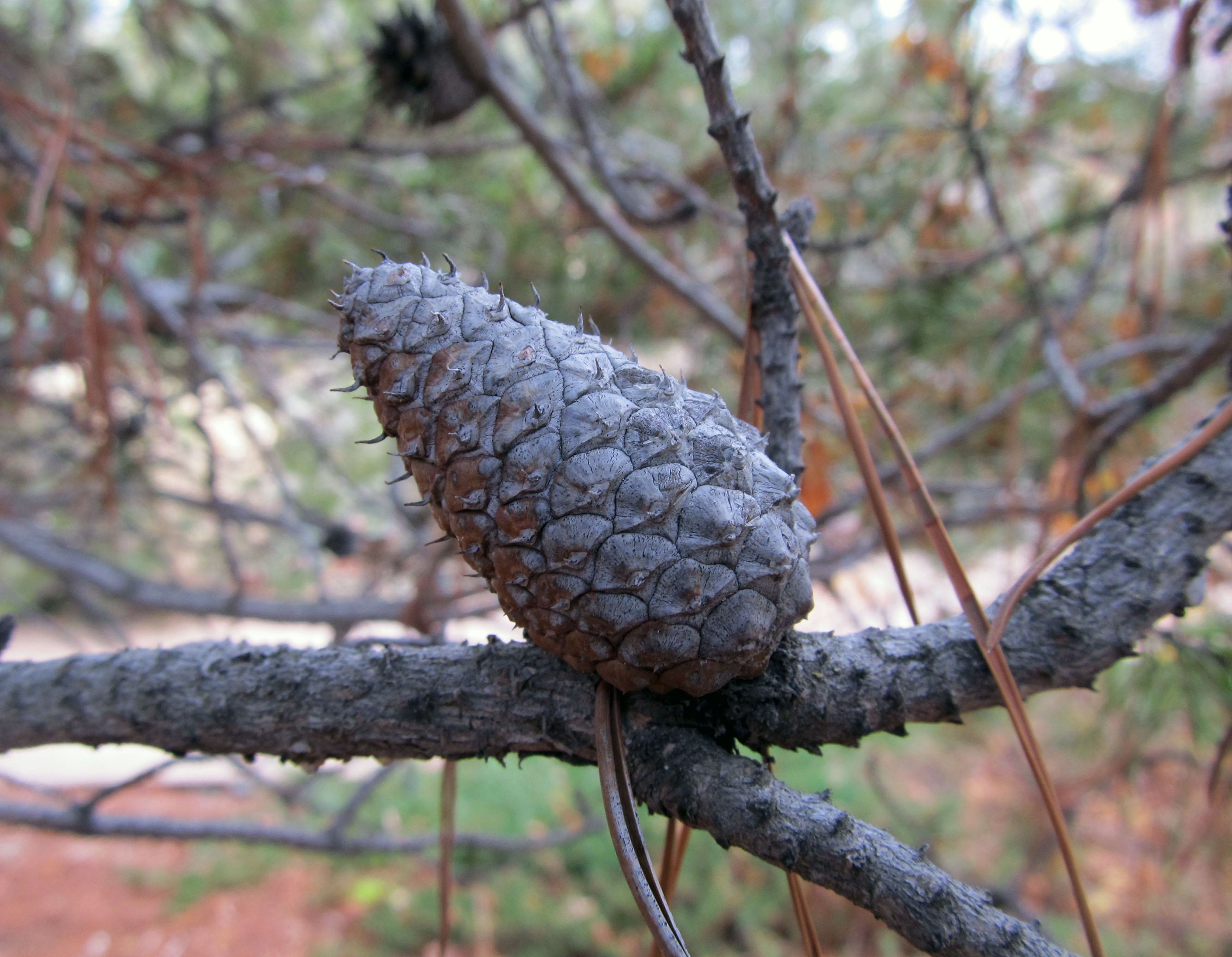
Lodgepole pine grows tall and straight, generally maxing out at around 80 feet tall. Its needles are about two and a half inches long, are borne in bundles of two, and tend to twist away from each other, which is one explanation for the specific epithet, contorta. Its cones are egg-shaped with asymmetrical bases, measuring less than two inches long with prickly tips at the ends of each scale. The seeds of lodgepole pine are tiny with little, papery wings that aid in dispersal. The cones can remain attached to the tree for 15-20 years (sometimes much longer), and the seeds remain viable for decades. In non-serotinous cones, the scales start opening on their own in early autumn. Serotinous cones require temperatures of 45-50°C (113-122°F), to release the resin bond between the scales. Some cones that happen to fall from the tree can open when exposed to particularly warm temperatures on the ground. Otherwise, it takes fire to free the seeds.

Serotinous cones aren’t a guarantee, and the percentage of trees with serotinous cones compared to those with non-serotinous cones varies widely across the range of lodgepole pine, both in space and in time. One reason for this is that trees with serotinous cones don’t develop them until they reach a certain age, generally around 20-30 years old, or perhaps as old as 50 or 60. The cones of young trees are all non-serotinous. But some trees never develop serotinous cones at all. Serotiny is a genetic trait, and there are various factors that either select for or against it. A number of factors are at play simultaneously over the life of a tree and across a population of trees, so it is difficult to determine exactly why the percentage of serotinous cones is so variable across the range of the species. What follows are a few potential explanations for this phenomenon.

closed cone of lodgepole pine (Pinus contorta)

As a fire-adapted, pioneer species, lodgepole pine has evolved to live in environments where fire is predictably common. Serotinous cones help ensure that a population won’t be wiped out when a massive wildfire comes through. After the fire has passed and the seeds are released, lodgepole pine can quickly repopulate the barren ground. As long as fire occurs within the lifespan of a population of similarly aged trees, it is advantageous for the majority of individuals to maintain their serotinous trait. If the population is located in an area that historically does not see much fire, serotinous cones may be a disadvantage and can have adverse effects on the longevity of that population.

A study published in Ecology in 2003 looked at the influence that the frequency of fire has on lodgepole pine stands found at low and high elevations in Yellowstone National Park. At lower elevations, where summer temperatures are warmer and precipitation is relatively minimal, fires occur more frequently compared to higher elevations, which tend to be cooler and wetter. The researchers found that at lower elevations when fires occurred at short intervals (less than 100 years between each fire), lodgepole pine was slower to repopulate compared to longer intervals. This suggests that the percentage of serotiny found in stands that experienced short fire intervals was low, and that stands with long fire intervals exhibit a higher percentage of serotiny. After all, as mentioned above, lodgepole pines don’t start developing serotinous cones until later in life.

At higher elevations, where fire occurs less frequently, lodgepole pines were found to have a low percentage of serotinous cones regardless of the age of the stand. Because the trees at high elevations are more likely to die of old age rather than fire, maintaining serotinous cones would be a disadvantage. Open cones are preferred. Thus, at least in this study, a greater percentage of serotinous cones was found in lodgepole pines at lower elevations compared to those at higher elevations. Latitude, elevation, mountain pine beetle attacks, and other environmental factors have all been used to explain differences in serotiny. However, the factor that seems to have the greatest influence is the frequency of fire. As James Lotan writes in a 1976 report: “A high degree of cone serotiny would be expected where repeated, high-intensity fires occur. Where forest canopies are disrupted by factors other than fire, open cones annually supply [seed] for restocking disturbances such as windfalls.”

That being said, one other factor does appear to play a critical role in whether or not lodgepole pines produce serotinous cones, and that is seed predation by squirrels. In a paper published in Ecology in 2004, researchers wondered why the percentage of serotinous cones wasn’t even higher in populations where fire reliably occurred during the lifetime of the stand. To help answer this question they looked at the activities of pine squirrels, which are the main seed predator of lodgepole pine seeds. Pine squirrels visit the canopy of lodgepole pines and consume the seeds found in serotinous cones. Because non-serotinous cones quickly shed their seeds, serotinous cones are a more reliable and accessible food source, and because pine squirrels are so effective at harvesting the seeds of serotinous cones, the researchers concluded that, “in the presence of pine squirrels, the frequency of serotiny is lower and more variable, presumably reflecting,” among a variety of other factors, “the strength of selection exerted by pine squirrels.”

A study published in PNAS in 2014 added evidence to this conclusion. While acknowledging that fire plays a major role in the frequency of serotinous cones, the researchers asserted that “squirrels select against serotiny and that the strength of selection increases with increasing squirrel density.” However, despite making it easier for squirrels to access their seeds, lodgepole pines maintain a degree of serotinous cones, since clearly their main advantage is retaining a canopy-level seed bank from which seeds are released after a fire and by which a new generation of lodgepole pines is born.

open cones of lodgepole pine (Pinus contorta)

Further Reading and Viewing:

Meet Erigeron linearis

Erigeron is a genus of herbaceous, flowering plants consisting of between 390 and 460 species and is a member of the aster/sunflower family (Asteraceae). Plants in this genus are annuals, biennials, or perennials and are mainly found in temperate regions around the world. At least 163 species occur in the contiguous United States. Erigeron diversity is particularly high in western states; however, each state is home to at least one Erigeron species.

A common name for plants in this genus is fleabane. This name comes from an outdated belief that the plants can be used to repel or poison fleas, flies, gnats, and other tiny insects, a belief for which there is no evidence. In Ancient Greek, the name Erigeron is said to mean something akin to “old man in the early morning,” likely referring to the appearance of the seed heads which look like little tufts of white hair. Some Erigeron species are also commonly referred to as daisies.

desert yellow fleabane (Erigeron linearis)

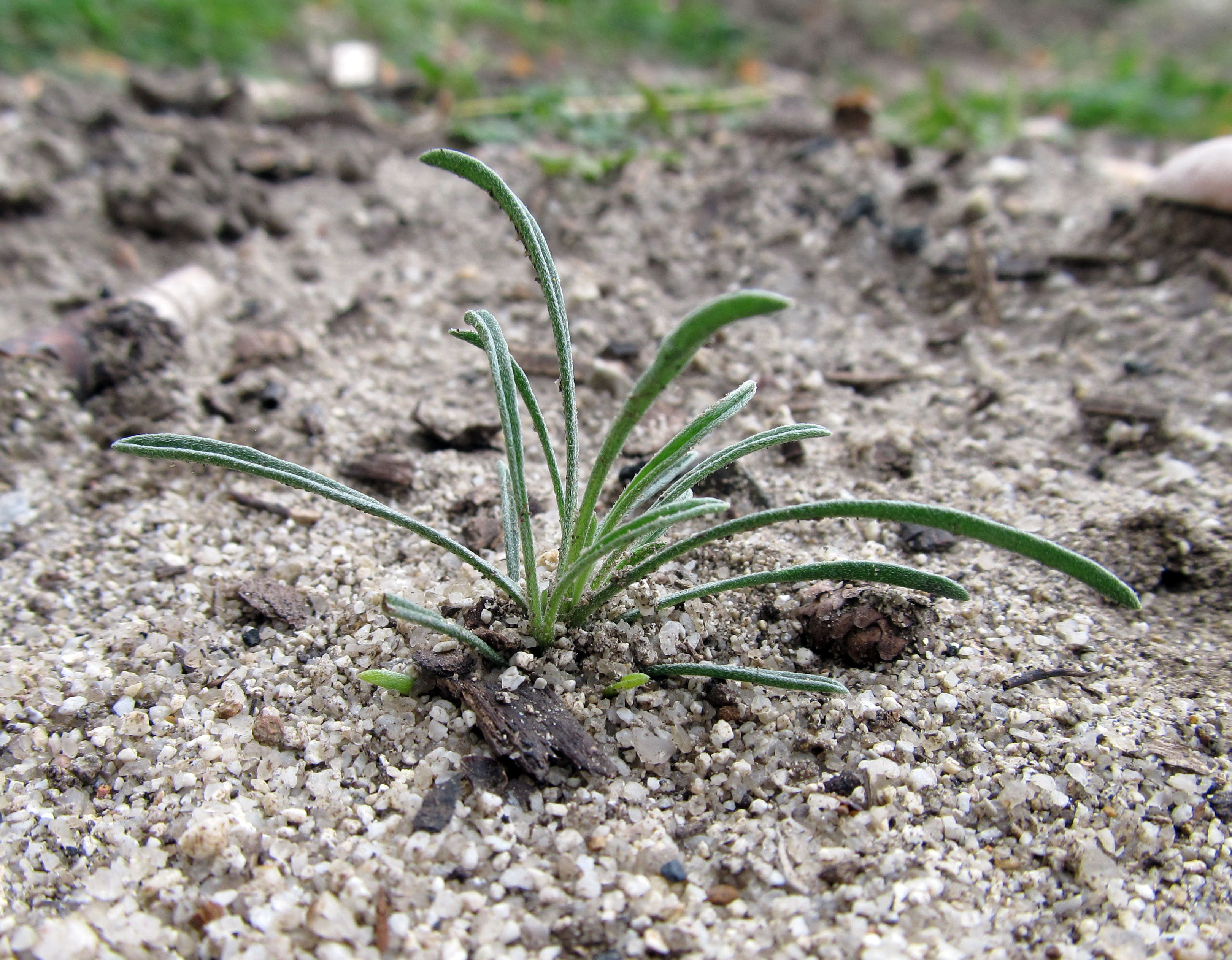
One species of Erigeron that I would like you to meet is Erigeron linearis. While most of the plants in this genus have flowers that are white, pink, or various shades of purple, E. linearis is a yellow-flowered species, hence the common name, desert yellow fleabane. Another common name for this plant is narrow leaved fleabane, a reference to its linear leaves. E. linearis is a small plant with a prominent taproot that reaches up to 20 centimeters tall and forms a leafy, rounded mat or cushion of whitish or gray-green, alternately arranged leaves. The white appearance is due to numerous, fine, appressed hairs on the leaves and stems. Flower stalks are produced in abundance in late spring through early summer and are mostly leafless. They reach above the mound of leaves and are each topped with at least one flower head, which nods at first, but then straightens out as the flowers open. Each flower head is about 2 centimeters wide and is typical of plants in the sunflower family, with a cluster of deep yellow disc florets in the center, surrounded by ray florets that are lighter in color. Both disc and ray florets are fertile; however, the disc florets have both “male” (stamens) and “female” (pistils) flower parts, while the ray florets have only “female” parts. The involucre, which sits at the base of the flowers, is egg-shaped or hemispheric and made up of a series of tiny, fuzzy bracts called phyllaries.

the flower head of desert yellow fleabane (Erigeron linearis)

The fruit of Erigeron linearis is called a cypsela, an achene-like fruit that is characteristic of plants in the sunflower family. The fruits are miniscule and topped with a pappus composed of short outer bristles and longer, pale, inner bristles. The two types of pappus bristles (or double pappus) must be the reason for the scientific name this species was originally given in 1834, Diplopappus linearis. While the seeds of more than 80% of flowering plant species found in dryland regions exhibit some form of dormancy, a study published in Plant Biology (2019), found that E. linearis is one of the few species with non-dormant seeds. This means that for those of us interested in growing plants native to the Intermountain West, E. linearis is a pretty easy one to grow and is a great addition to water-wise gardens, pollinator gardens, and rock gardens.

Erigeron linearis seedling

Erigeron linearis is distributed across several western states and into Canada. It is found in northern California, eastern Oregon and Washington, southern British Columbia, across Idaho and east into southern Montana, western Wyoming and northwestern Utah. It is found at low to moderate elevations in open, rocky foothills, grasslands, sagebrush steppe, and juniper woodlands. It prefers well-drained soils and full sun. It is one of many interesting plants found on lithosols (also known as orthents), which are shallow, poorly develop soils consisting of partially weathered rock fragments. In the book Sagebrush Country, Ronald Taylor calls lithosols “the rock gardens of the sagebrush steppe,” and refers to E. linearis and other members of its genus as “some of the more colorful components of the lithosol gardens.” E. linearis is a food source for pronghorn, mule deer, and greater sage-grouse, and the flowers are visited by several species of bees and butterflies. The plant is also a larval host for sagebrush checkerspots.

desert yellow fleabane (Erigeron linearis)

Additional Resources:

Zine Review: An Urban Field Guide to the Plants in Your Path

Depending on where you live in the world, it’s probably not too difficult to find a field guide to the plants native to your region. In fact, there may be several of them. They may not cover all the plants you’ll encounter in natural areas near you, but they’ll be a good starting point. Yet, considering that most of us live in cities these days, field guides to the wild plants of urban areas are sorely lacking. Perhaps that’s no surprise, as plants growing wild in urban areas are generally considered weeds and are often the same species that frustrate us in our yards and gardens. Few (if any) of these maligned plants are considered native, so that doesn’t help their case any. Why would we need to know or pay attention to these nuisance plants anyway?

I argue that we should know them, and not just so that we know our enemy. Weeds are the wild flora of our cities – they grow on their own without direct human intervention. In doing so, they green up derelict and neglected sites, creating habitat for all kinds of other organisms and providing a number of ecosystem services along the way. Regardless of how we feel about them for invading our cultivated spaces and interfering with our picture-perfect vision of how we feel our cities should look, they deserve a bit more respect for the work they do. If we’re not willing to go that far, we at least ought to hand it to them for how crafty and tenacious they can be. These plants are amazing whether we want to admit it or not.

Luckily I’m not the only who feels this way. Enter An Urban Field Guide to the Plants in Your Path, a zine written and illustrated by Maggie Herskovits and published by Microcosm Publishing. This zine is just one example of the resources we need to better familiarize ourselves with our urban floras. While there are many weed identification books out there, a field guide like this differs because it doesn’t demonize the plants or suggest ways that they can be brought under control or eliminated. Instead, it treats them more like welcome guests and celebrates some of their finer qualities. That being said, this is probably not a zine for everyone, particularly those that despise these plants, but take a look anyway. If you keep an open mind, perhaps you can be swayed.

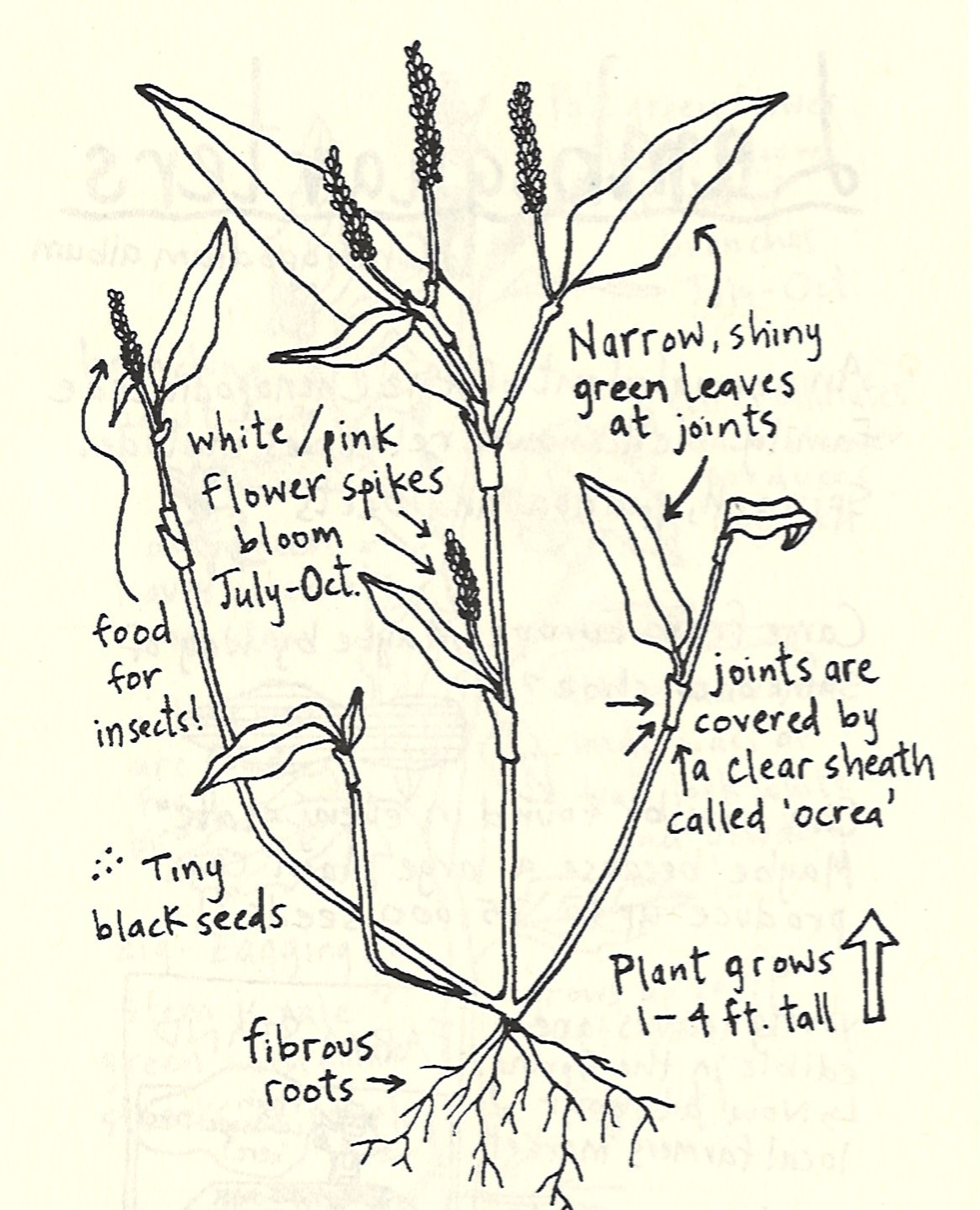
Illustration of Pennsylvania smartweed (Polygonum pensylvanicum) from An Urban Field Guide to the Plants in Your Path

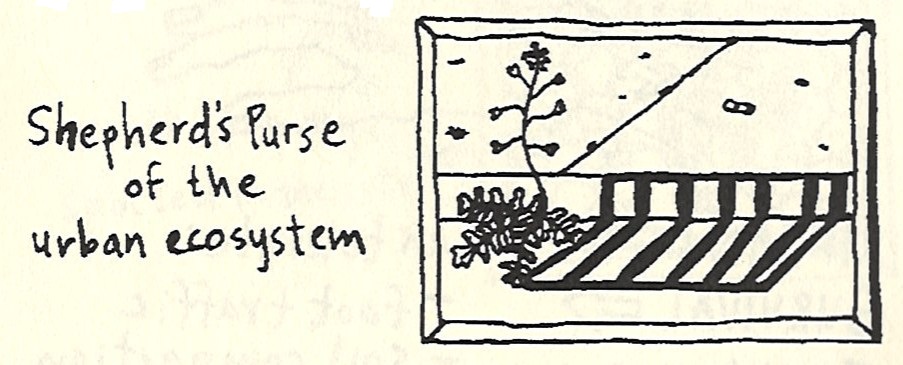
After a brief introduction, Herskovits profiles fifteen common urban weeds. Each entry includes an illustration of the plant, a short list of its “Urban Survival Techniques,” a small drawing of the plant in its urban habitat, and a few other details. The text is all handwritten, and the illustrations are simple but accurate enough to be helpful when identifying plants in the wild. The descriptions of each plant include interesting facts and background information, and even if you are already familiar with all the plants in the guide, you may learn something new. For example, I wasn’t aware that spotted spurge (Euphorbia maculata) was native to North America.

some urban survival techniques of common mullein (Verbascum thapsus)

Capsella bursa-pastoris in its urban habitat

Urban weeds often go ignored. They may not be as attractive as some of the plants found in gardens and parks around the city, and since they are often seen growing right alongside garbage, they end up getting treated that way. But if you’re convinced that they may actually have value and you want to learn a bit more about them, this guide is a great place to start. Perhaps you’ll come to feel, as Herskovits does, that “there is hope in these city plants.”

See Also: 

Idaho’s Native Milkweeds (Updated)

As David Epstein said in an interview on Longform Podcast, “Any time you write about science, somethings is going to be wrong; the problem is you don’t know what it is yet, so you better be ready to update your beliefs as you learn more.” Thanks to the newly published Guide to the Native Milkweeds of Idaho by Cecilia Lynn Kinter, lead botanist for Idaho Department of Fish and Game, I’ve been made aware of some things I got wrong in the first version of this post. I appreciate being corrected though, because I want to get things right. What follows is an updated version of the original post. The most substantial change is that there are actually five milkweed species native to Idaho rather than six. Be sure to check out Kinter’s free guide to learn more about this remarkable group of plants.

———————

Concern for monarch butterflies has resulted in increased interest in milkweeds. Understandably so, as they are the host plants and food source for the larval stage of these migrating butterflies. But milkweeds are an impressive group of plants in their own right, and their ecological role extends far beyond a single charismatic insect. Work to save the monarch butterfly, which requires halting milkweed losses and restoring milkweed populations, will in turn provide habitat for countless other organisms. A patch of milkweed teems with life, and our pursuits to protect a single caterpillar invite us to explore that.

Asclepias – also known as the milkweeds – is a genus consisting of around 140 species, 72 of which are native to the United States and Canada. Alaska and Hawaii are the only states in the U.S. that don’t have a native species of milkweed. The ranges of some species native to the United States extend down into Mexico where there are numerous other milkweed species. Central America and South America are also home to many distinct milkweed species. Asclepias species found in southern Africa are considered by many to actually belong in the genus Gomphocarpus.

The habitats milkweeds occupy are about as diverse as the genus itself – from wetlands to prairies, from deserts to forests, and practically anywhere in between. Some species occupy disturbed and/or neglected sites like roadsides, agricultural fields, and vacant lots. For this reason they are frequently viewed as a weed; however, such populations are easily managed, and with such an important ecological role to play, they don’t deserve to be vilified in this way.

Milkweed species are not distributed across the United States evenly. Texas and Arizona are home to the highest diversity with 37 and 29 species respectively. Idaho, my home state, is on the low end with five native species. The most abundant species found in Idaho is Asclepias speciosa, commonly known as showy milkweed.

showy milkweed (Asclepias speciosa)

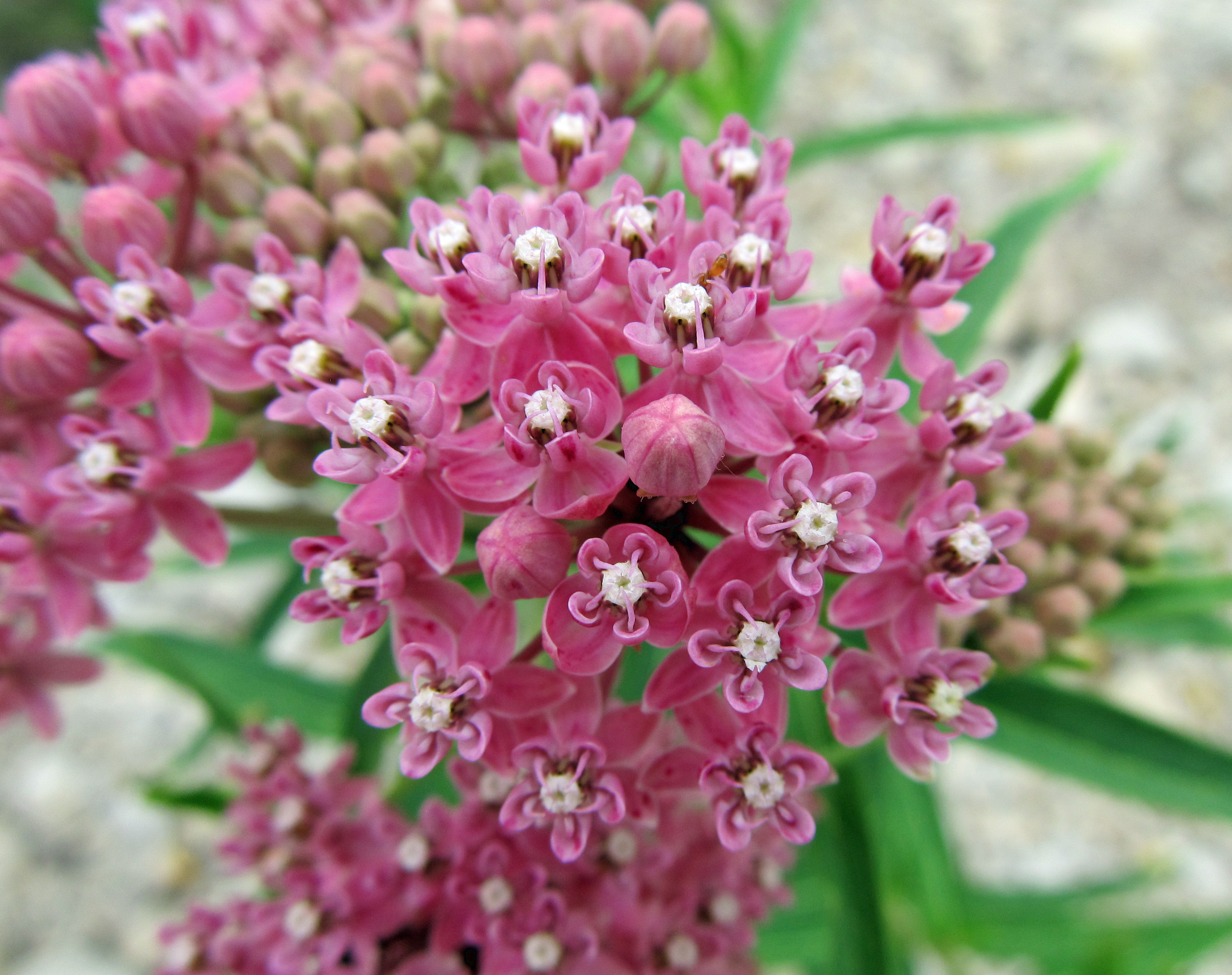
Showy milkweed is distributed from central U.S. westward and can be found in all western states. It occurs throughout Idaho and is easily the best place to look for monarch caterpillars. In fact, the monarch butterfly is Idaho’s state insect, thanks in part to the abundance of showy milkweed, which is frequently found growing in large colonies due to its ability to reproduce vegetatively via adventitious shoots produced on lateral roots or underground stems. Only a handful of milkweed species reproduce this way. Showy milkweed reaches up to five feet tall and has large ovate, gray-green leaves. Like all milkweed species except one (Asclepias tuberosa), its stems and leaves contain milky, latex sap. In early summer, the stems are topped with large umbrella-shaped inflorescences composed of pale pink to pink-purple flowers.

The flowers of milkweed deserve a close examination. Right away you will notice unique features not seen on most other flowers. The petals of milkweed flowers bend backwards, which would otherwise allow easy access to the flower’s sex parts if it wasn’t for a series of hoods and horns protecting them. Collectively, these hoods and horns are called the corona, which houses glands that produce abundant nectar and has a series of slits where the anthers are exposed. The pollen grains of milkweed are contained in waxy sacs called pollinia. Two pollinia are connected together by a corpusculum giving this structure a wishbone appearance. An insect visiting the flower for nectar slips its leg into the slit, and the pollen sacs become attached with the help of the corpusculum. When the insect leaves, the pollen sacs follow. Pollination is successful when the pollen sacs are inadvertently deposited on the stigmas of another flower.

Milkweed flowers are not self-fertile, so they require assistance by insects to sexually reproduce. They are not picky about who does it either, and their profuse nectar draws in all kinds of insects including bees, butterflies, moths, beetles, wasps, and ants. Certain insects – like bumble bees and other large bees – are more efficient pollinators than others. Once pollinated, seeds are formed inside a pod-like fruit called a follicle. The follicles of showy milkweed can be around 5 inches long and house dozens to hundreds of seeds. When the follicle matures, it splits open to release the seeds, which are small, brown, papery disks with a tuft of soft, white, silky hair attached. The seeds of showy milkweed go airborne in late summer.

follicles forming on showy milkweed (Asclepias speciosa)

Whorled or narrowleaf milkweed (Asclepias fascicularis) occurs across western and southern Idaho. Its distribution continues into neighboring states. It is adapted to dry locations, but can be found in a variety of habitats. Like showy milkweed, it spreads rhizomatously as well as by seed. It’s a wispy plant that reaches one to three feet tall and occasionally taller. It has long, narrow leaves and produces tight clusters of greenish-white to pink-purple flowers. Its seed pods are long and slender and its seeds are about 1/4 inch long.

flowers of narrowleaf milkweed (Asclepias fascicularis)

seeds escaping from the follicle of narrowleaf milkweed (Asclepias fascicularis)

Swamp or rose milkweed (Asclepias incarnata) is more common east of Idaho, but occurs occasionally in southwestern Idaho. As its common name suggests, it prefers moist soils and is found in wetlands, wet meadows, and along streambanks. It can spread rhizomatously, but generally doesn’t spread very far. It reaches up to four feet tall, has deep green, lance-shaped leaves, and produces attractive, fragrant, pink to mauve, dome-shaped flower heads at the tops of its stems. Its seed pods are narrow and around 3 inches long.

swamp milkweed (Asclepias incarnata)

Asclepias cryptoceras ssp. davisii, or Davis’s milkweed, is a low-growing, drought-adapted, diminutive species that occurs in southwestern Idaho. It has round or oval-shaped leaves and produces flowers on a short stalk. The flowers have white or cream-colored petals and pink-purple hoods. The range of Asclepias cryptoceras – commonly known as pallid milkweed or jewel milkweed – extends beyond Idaho’s borders into Oregon and Nevada, creeping north into Washington and south into California. Another subspecies – cryptoceras – can be found in Nevada, Utah, and their bordering states.

Davis’s milkweed (Asclepias cryptoceras ssp. davisii)

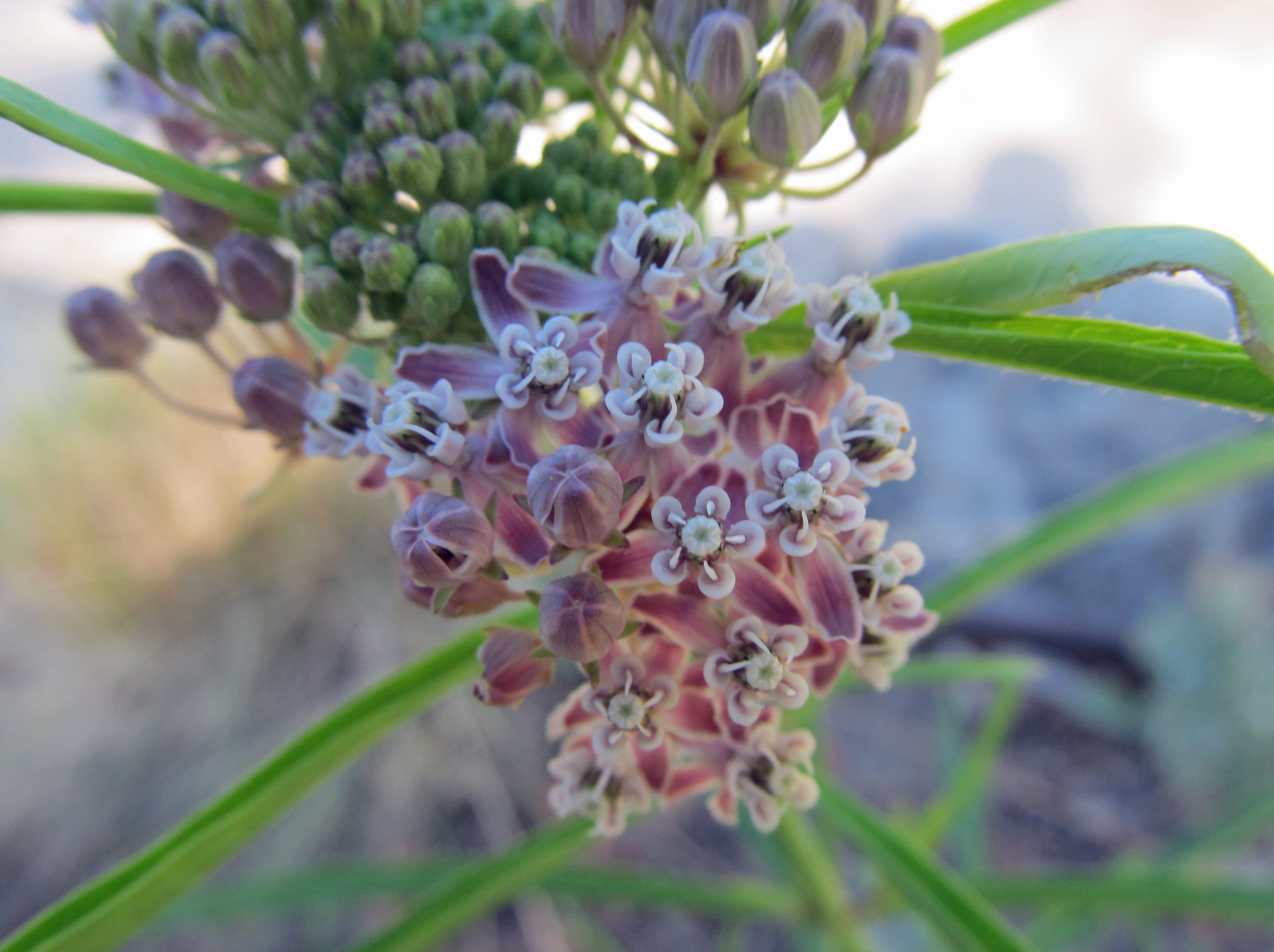
The final species is rare in Idaho, as Idaho sits at the top of its native range. Asclepias asperula ssp. asperula, or spider milkweed, has a single documented location in Franklin County (southeastern Idaho). Keep your eyes peeled though, because this plant may occur elsewhere, either in Franklin County or neighboring counties. It grows up to two feet tall with an upright or sprawling habit and produces clusters of white to green-yellow flowers with maroon highlights. Its common name comes from the crab spiders frequently found hunting in its flower heads.

A sixth species, horsetail milkweed (Asclepias subverticillata), has been falsely reported in Idaho. Collections previously labeled as A. subverticillata have been determined to actually be the similar looking A. fascicularis.

Tiny Plants: Idahoa

This is a post I wrote three years ago as a guest writer for a blog called Closet Botanist. That blog has since dissolved, hence the re-post.

This year, we returned to the location in the Boise Foothills where I encountered the plant that inspired this post. I found what might be seedlings of the tiny plant. If that’s the case, the phenology is a bit delayed compared to three years ago. I’ll check again in a week or so. Until then, meet Idahoa.

———————

I have taken a real liking to tiny plants. So many of the plants we regularly interact with are relatively big. Large trees loom above us. Tall shrubs greet us at eye level. Flowering perennials come up around our knees or higher. But how often do we get down low and observe the plants that hug the ground or that reach just a few centimeters above it? Turf grass is ubiquitous and groundcovers are common, but among such low growing plants (or plants kept low), even more diminutive species lurk.

It was a hunt for a tiny plant that sent me down a certain trail in the Boise Foothills earlier this spring. Listening to a talk by a local botanist at an Idaho Native Plant Society meeting, I learned about Idahoa scapigera. A genus named after Idaho!? I was immediately intrigued. Polecat Gulch was the place to see it, so off I went.

Commonly known as oldstem idahoa, flatpod, or Scapose scalepod, Idahoa scapigera is the only species in its genus. It is an annual plant in the mustard family, which means it is related to other small, annual mustard species like Draba verna. It is native to far western North America and is distributed from British Columbia down to California and east into Montana. It occurs in a variety of habitat types found in meadows, mountains, and foothills.

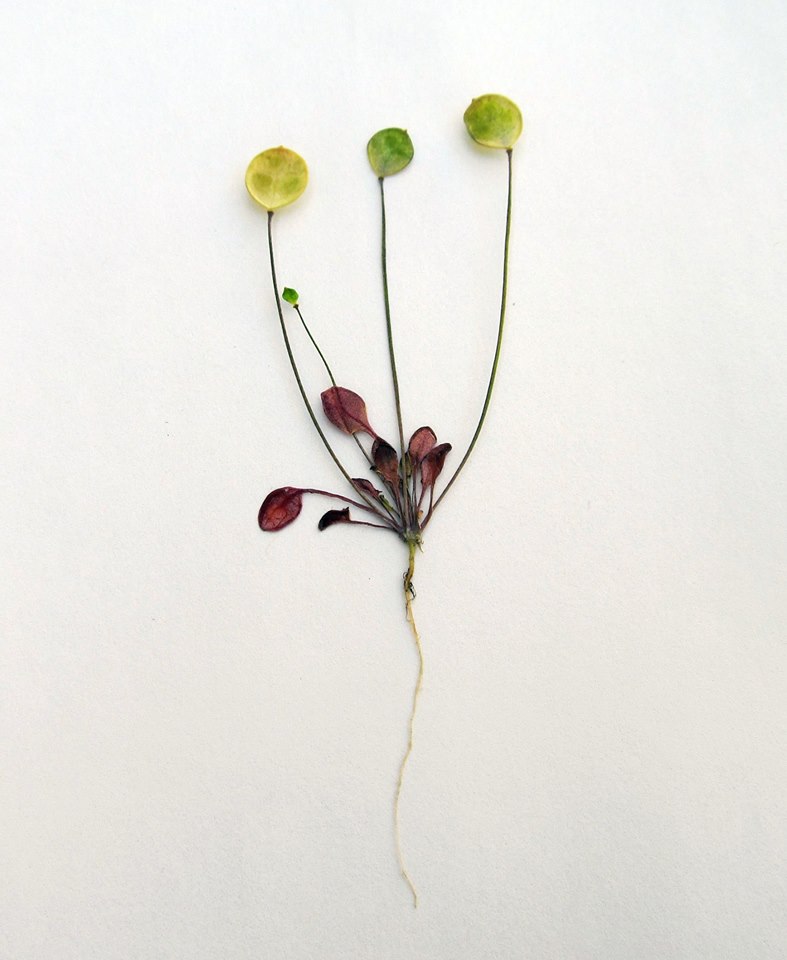
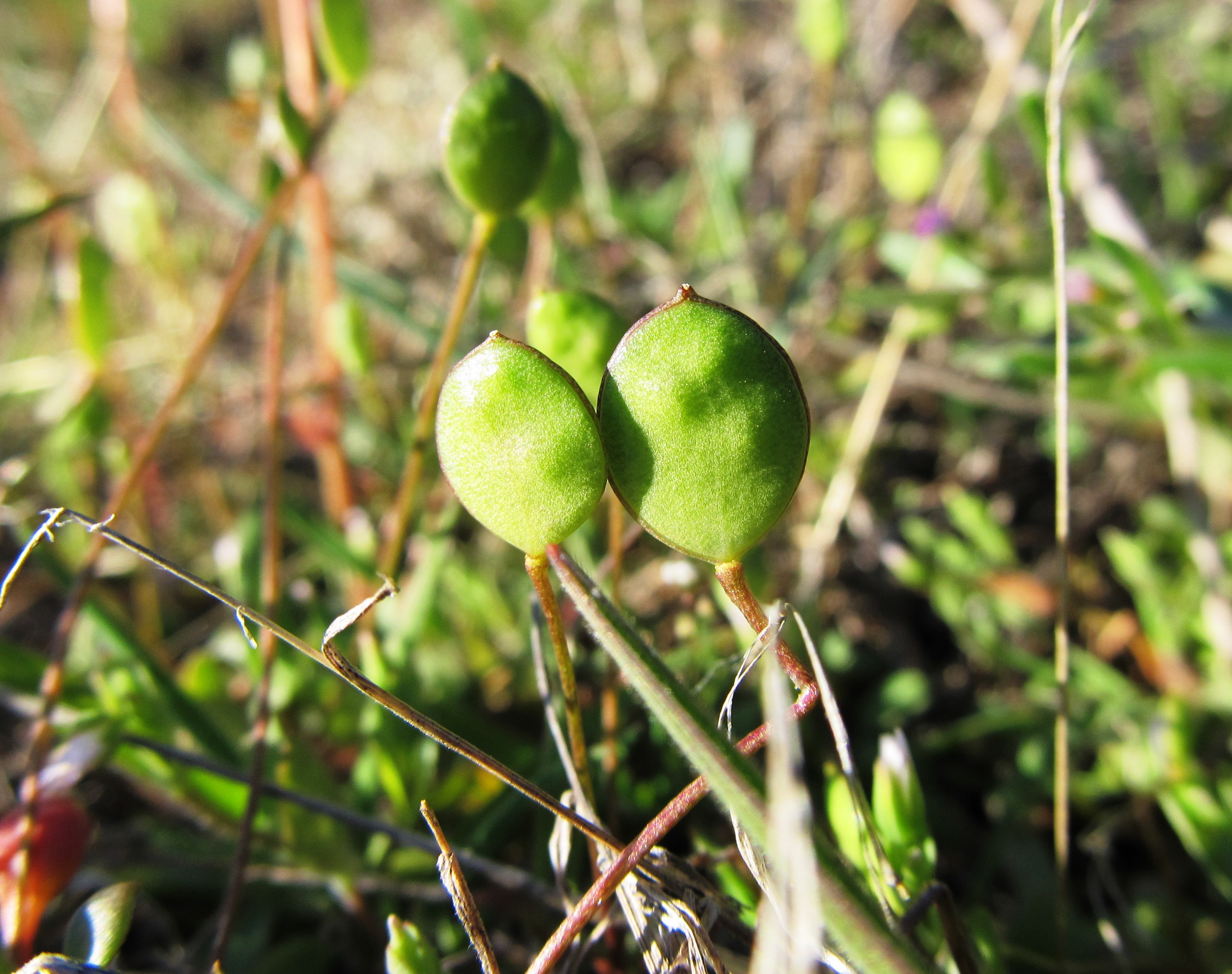
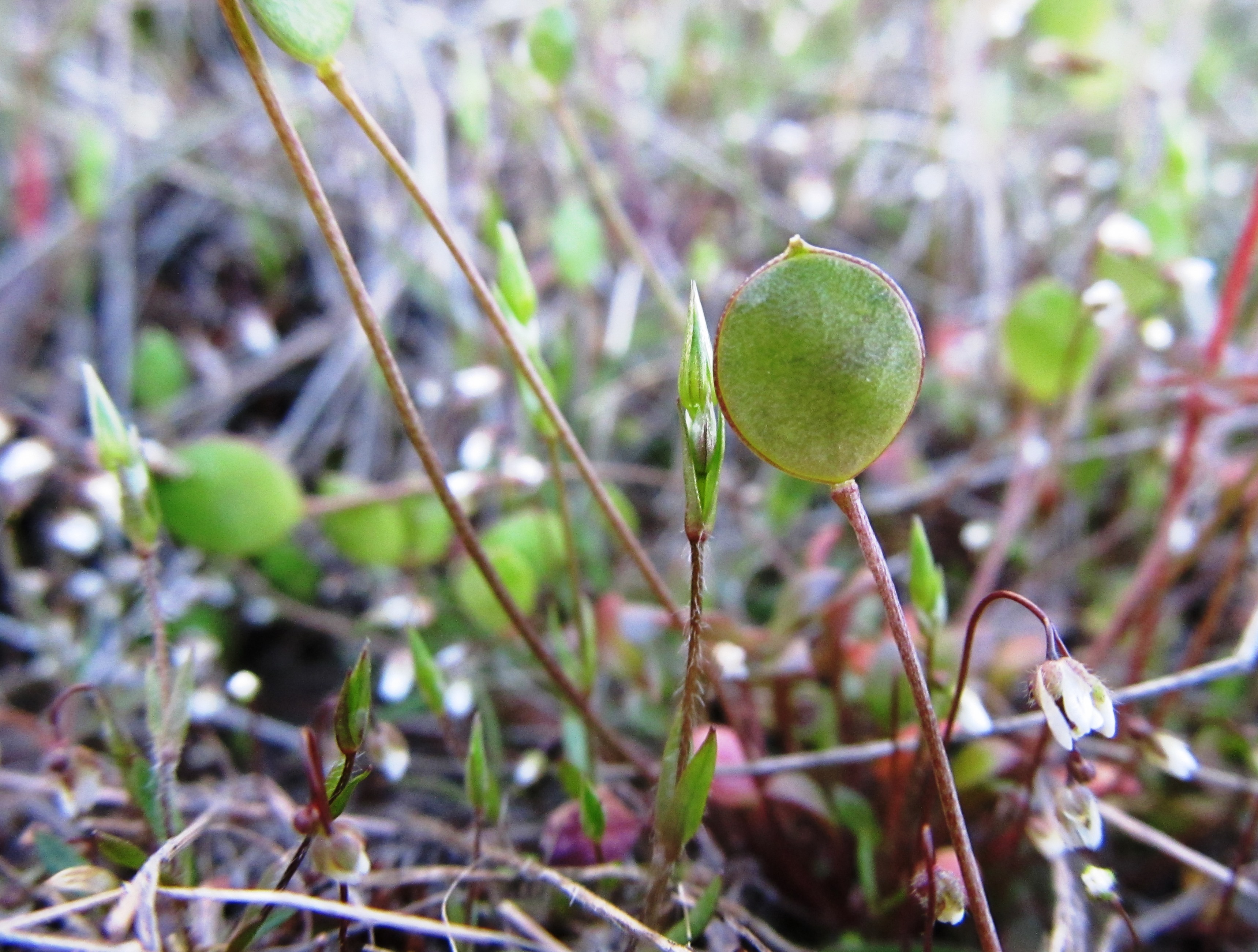
Idahoa scapigera is truly tiny. Before it flowers, it forms a basal rosette of leaves that max out at about 3 centimeters long. Next it sends up several skinny flower stalks that reach maybe 10 centimeters high (some are much shorter). One single flower is born atop each stalk. Its petite petals are white and are cupped by red to purple sepals. Its fruit is a flat round or oblong disk held vertically as though it is ready to give neighboring fruits a high five. Happening upon a patch of these plants in fruit is a real joy.

Which brings me to my hunt. It was the morning of March 20th (the first day of Spring) when I headed down the Polecat Gulch trail in search of Idahoa, among other things. The trail forms a loop around the gulch and is about 6 miles long with options for shortening the loop by taking trails that cut through the middle. I have yet to make it all the way around. Stopping every 10 yards to look at plants, insects, and other things makes for slow hiking.

I was about a half mile – 1 hour or more – into the hike when Idahoa entered my view. A group of them were growing on the upslope side of the trail, greeting me just below waist level. Many of them had already finished flowering and had fresh green fruits topping their thin stalks. At this location they are a late winter/early spring ephemeral. I made a mental note of the site and decided to return when the fruits had matured. Next year, I will head out earlier in hopes of catching more of them in flower.

On the way to Idahoa, I noted numerous other small, green things growing in the sandy soil. It turns out there are countless other tiny plants to see and explore. It got me thinking about all the small things that go unnoticed right underneath our feet or outside of our view. I resolved to move slower and get down lower to observe the wonders I’ve been overlooking all this time.

Further Reading:

Introducing Herbology Hunt

This is a guest post by Jane Wilson.

———————

Many people are “plant blind”. They walk through areas of fantastic wildlife or just down their street without noticing what grows there. Even plants growing in the gutter have an interesting backstory.

The term “Plant Blindness” was first put forth by Wandersee and Schlusser in 1998. Without an appreciation of plants in the ecosystem, people will be less likely to support plant research and conservation.

Herbology Hunt was born out of a love of plants and wild places and a determination to get kids outdoors and really looking at their environment. One of the founders started Wildflower Hour on Twitter – a place for people to share photos of wildflowers found in Britain and Ireland – and from this was stemmed a children’s version, which became Herbology Hunt. The Herbology Hunt team put together spotter sheets for each month of the year. Each sheet includes five plants that can be found throughout the month. They were made available as a free download, so schools and individuals can print them for use on a plant hunt.

By the end of 2018, we had created a year’s worth of spotter sheets. We are now looking to promote their use throughout Great Britain. Eventually we want to reward children who find 50 of the plants with a free T-shirt, and we will be looking for sponsors to support this. We have been supported by the Botanical Society of Britain and Ireland and the Wild Flower Society who have made the monthly spotter sheets available. They can be downloaded here or here.

Herbology Hunt Spotter Sheet for January

The Wild Flower Society has a great offer for Juniors interested in plants – it costs £3 to join and you get a diary to record your finds.

Going outdoors and noticing wildlife has been shown in some scientific studies to improve cardio-vascular health and mental health. A herbology hunt must surely be a good thing to do with children to help them get into a better lifestyle that will benefit their future health. We hope that many families and schools will use our spotter sheets as a way to help children become more passionate about the environment and enjoy the benefits of being outdoors.

Check out the Wildflower Hour website for more information about Herbology Hunt, along with instructions on how to get involved in #wildflowerhour, plus links to social media accounts and the Wild Flower (Half) Hour podcast.

———————

Also: Check out Jane Wilson’s website – Practical Science Teaching – for more botany-themed educational activities.