Eating the Invasives

Happy National Invasive Species Awareness Week! It’s a fine time to get educated about invasive species, and perhaps even play a role in mitigating them. Opportunities for getting involved are myriad and include volunteering with local conservation groups, replacing invasive plants in your yard with non-invasive alternatives, and being mindful when you visit natural areas not to bring along weed seeds and other pests and diseases. Another strategy in the battle against invasive species is to eat them, which is precisely what I plan on doing. If you are interested in doing the same, this revised post (originally published in November 2013) will help get you started.

Invasivore: One Who Consumes Invasive Species

Invasive species are a major ecological concern, and considerable effort is spent controlling them. The ultimate goal  – albeit a lofty one in many cases – is to eradicate them and to prevent future outbreaks. The term “invasive species” describes plants, animals, and microorganisms that have been intentionally or unintentionally introduced into an environment outside of their native range. They are “invasive” because they have established themselves and are causing adverse effects in their non-native habitats. Some introduced species cause no discernible adverse effects and so are not considered invasive. Species that are native to a specific habitat and exhibit adverse effects following a disturbance can also be considered invasive. (White-tailed deer are an example of this in areas where human activity and development have reduced or eliminated their natural predators resulting in considerably larger deer populations than would otherwise be expected.) Defining and describing invasive species is a challenging task, and so it will continue to be a topic of debate among ecologists and conservation biologists for the foreseeable future.

The adverse effects of invasive species are also not always straightforward. Typical examples include outcompeting native flora and fauna, disrupting nutrient cycles, shifting the functions of ecosystems, altering fire regimes, and causing genetic pollution. Countless hours of research and observation are required in order to determine the real effects of invaders. The cases are too numerous and the details are too extensive to explore in this post; however, I’m sure I will cover this topic more thoroughly in the future.

There are many approaches to eradicating invasive species, but one fairly unconventional method is to simply eat them. Why not, right? Historically, the voracious appetite of humans has helped drive several species to extinction, so why not employ our stomachs in the removal of introduced species from their non-native habitats? The folks at Invasivore are suggesting just that. By encouraging people to consume invasive species, they are also promoting awareness about them – an awareness they hope “will lead to decreasing the impacts of invasive species by preventing introductions, reducing spread, and encouraging informed management policies.”

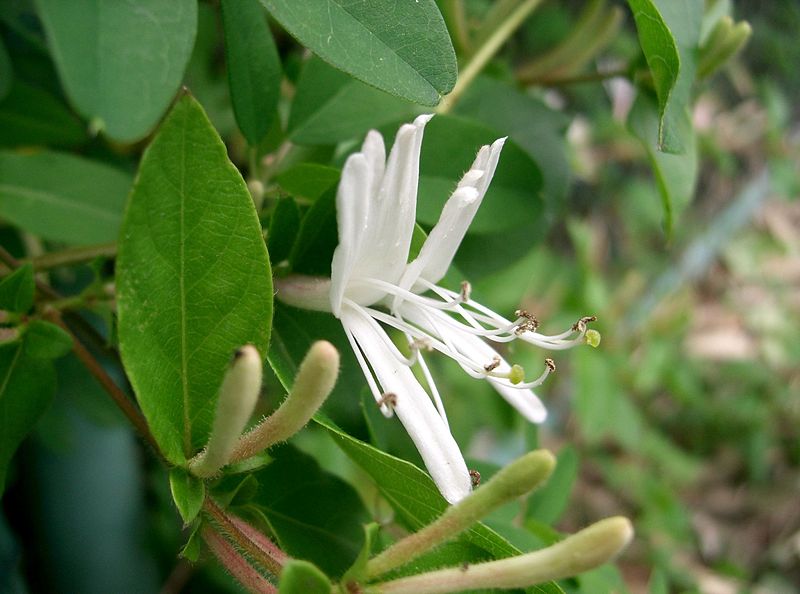
“If you can’t beat ’em, eat ’em!” And so they provide recipes in order to encourage people to harvest, prepare, and consume the invasive species in their areas. Some of the invasive plant species they recommend eating are Autumn Olive (Autumn Olive Jam), garlic mustard (Garlic Mustard Ice Cream), Japanese honeysuckle (Honeysuckle Simple Syrup), purslane (Purslane Relish), and Canada goldenrod (Strawberry-Goldenrod Pesto). And that’s just a sampling. One might ask if we are encouraged to eat invasive species and ultimately find them palatable, won’t our demand result in the increased production of these species? The Invasivores have considered this, and that is why their ultimate goal is raising awareness about the deleterious effects of invasive species. In the end, we should expect to see our native habitats restored. Our craving for Burdock Chips on the other hand will have to be satisfied by some other means.

lonicera japonica

Japanese honeysuckle (Lonicera japonica) – photo credit: wikimedia commons

More about eating invasive species:

———————

What are you doing to celebrate National Invasive Species Awareness Week? Let us know in the comment section below.

Ethnobotany: The Henna Tree

A hair dye used in pre-dynastic Egypt is still used today. This enduring plant-based dye has found its way into a great number of cultures going back as long as 6000 years. Its popularity is thanks in part to the broad distribution of the plant itself, but is largely a result of the diverse religious traditions that have incorporated the dye into their rituals. The plant’s use in such traditions continues, while its current popularity extends well beyond that.

Lawsonia inermis is the only species in its genus. It is a member of the plant family, Lythraceae, a family that includes crepe myrtles (Lagerstroemia), cigar plants (Cuphea), and pomegranates (Punica). L. inermis has many common names, including mignonette tree and Egyptian privet. It is most commonly known as, henna, a term that refers to the plant itself, the dye derived from the plant, and the body art made using the dye.

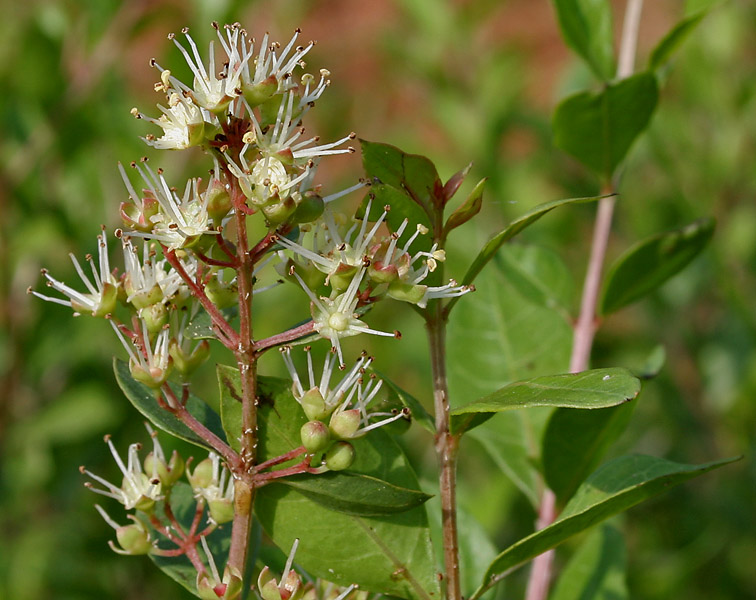
Henna is a shrub or small tree that reaches a height of about 6 meters. The leaves are smooth, elliptically-shaped, and oppositely-arranged on branches that are spine-tipped. Inflorescences are many-branched with numerous small, fragrant flowers. The most prominent features of the flowers are four sepals forming a bowl shape and several white to red stamens reaching towards the sky. The fruits are small, round, brown capsules full of tiny seeds. Henna thrives in dry environments with poor soil; however, it does not tolerate frost. It occurs in tropical and subtropical regions of Africa, western and southern Asia, and northern Australasia. Cultivation by humans has broadened its distribution well beyond its original boundaries.

Lawsonia inermis - photo credit: wikimedia commons

Lawsonia inermis – photo credit: wikimedia commons

Henna has been used to dye the skin, nails, and hair of women and men in many cultures and religions across its area of natural distribution and beyond. Its use has been especially common among women as part of fertility and marriage celebrations. The plant’s dye may have been first discovered around the mouths of browsing livestock – the persistent red-orange color having the appearance of blood. Henna plants are drought-deciduous, but they burst back to life when rain returns, producing abundant new branches, leaves, and flowers. This period of growth coincides with celebrations of marriage and fertility and may explain why it found common use in such traditions.

Dyes are made by crushing dried leaves into a fine powder and then mixing it into a paste using water, lemon juice, tea, or other liquids. A soap or shampoo is produced when henna is mixed with plant extracts containing saponin, and the addition of certain essential oils can enhance the performance of the dye. The compound in the leaves that produces the red-orange dye is called lawsone and is found in varying concentrations depending on the conditions in which the plant was grown. High heat and low soil moisture is said to produce the highest levels of lawsone. More than just a dye, lawsone also has antifungal properties and strongly absorbs UV light, thus its application is beyond cosmetic as it has proven useful against fungal diseases like athlete’s foot and as a sunscreen. And that’s just the beginning.

Henna applied to hair - photo credit: wikimedia commons

Henna applied to hair – photo credit: wikimedia commons

A study published in the Journal of Ethnopharmacology by Semwal, et al. reveals that nearly a hundred phytoconstituents (or “biologically active compounds”) have been isolated from all parts of the henna plant. Henna has long been used medicinally to treat a wide range of ailments, and while it may not be an effective treatment for all that it has been historically used for, it has been found effective for certain things and has great potential for further use.

In the paper, the authors review dozens of studies exploring the many “biological activities” that henna is claimed to have, which include “antifungal, antibacterial, virucidal, antiparasitic, anti-inflammatory, analgesic, and anticancer properties,” etc. Research into these properties is limited and has been “complicated and hampered” by the widespread practice of adding other ingredients (some of them harmful) to henna products. In order for henna’s “therapeutic potential” to be properly explored, the authors advise identifying and standardizing the plant’s active components.

Henna continues to be used in cultures across the world and is particularly prominent in Hinduism and Muslim practices. It is most commonly used to dye hair and create temporary body art (also known as mehndi). Henna art is often applied to the hands and feet, where the skin is thick and absorbs more of the lawsone. It is applied as a paste and either squeezed through a plastic cone or syringe or painted on with a stick or brush. The longer the paste is left on, the darker the stain will be. After a week or so the henna begins to fade as old skin cells slough off.

photo credit: wikimedia commons

photo credit: wikimedia commons

In ancient cultures, henna was thought to ward off the Evil Eye as well as bring good luck and blessings, a trait known as baraka. This belief is part of the reason why henna was incorporated into marriage ceremonies and other religious rituals. Because of henna’s antifungal, analgesic, and anti-inflammatory properties, etc., real benefits are seen when henna is applied to various parts of the body. Semwal, et al. argue that a scientific understanding was not necessary for “recognition of benefit.” Today however, “scientific investigation and quantification of henna’s ‘baraka’ should expand and optimize these traditional qualitative understandings.”

Because of henna’s widespread use and long history, it is not feasible to fit henna’s entire story into a single blog post. Henna is worth exploring on your own. Here are a few more interesting tidbits for now. In Semwal, et al.’s summary there is a mention of henna twigs being “rubbed over the teeth for effective dental self-care” – something to keep in mind in case you find yourself without a toothbrush, and a henna plant happens to be nearby. A paper published in a 1993 issue of Thaiszia – Journal of Botany discusses the historical use of henna in the Balkans. Slavs in the area reportedly treated typhoid fever using a mixture of henna and “the juice of twenty heads of garlic” heated in water. Finally, henna has been used to dye many things, including leather, cloth, and animal fur. Persians have long used henna to dye the manes, tales, and hooves of their horses and other animals. A practice that continues today.

More Ethnobotany Posts:

What Is a Plant, and Why Should I Care? part four

What Is a Plant?

Part one and two of this series have hopefully answered that.

Why should you care?

Part three offered a pretty convincing answer: “if it wasn’t for [plants], there wouldn’t be much life on this planet to speak of.”

Plants are at the bottom of the food chain and are a principle component of most habitats. They play major roles in nutrient cycling, soil formation, the water cycle, air and water quality, and climate and weather patterns. The examples used in part three of this series to explain the diverse ways that plants provide habitat and food for other organisms apply to humans as well. However, humans have found numerous other uses for plants that are mostly unique to our species – some of which will be discussed here.

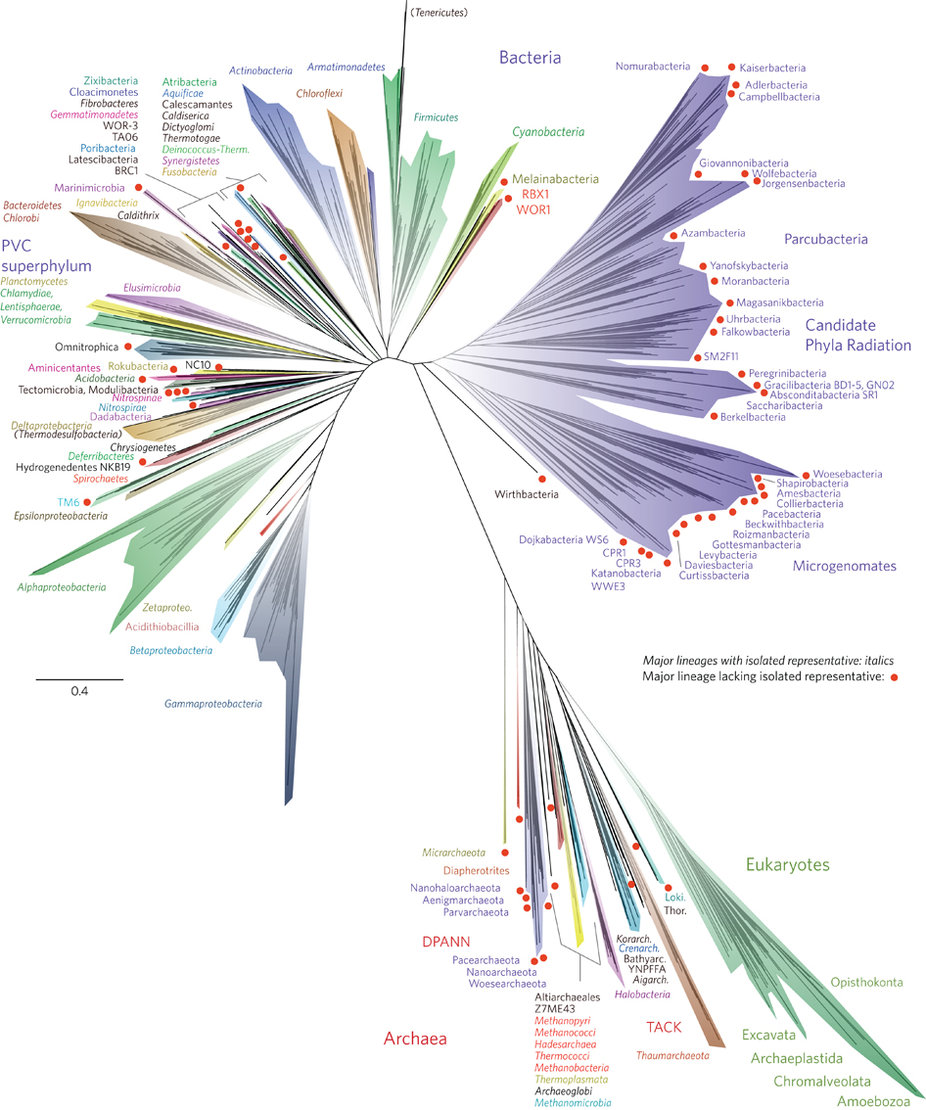
But first, some additional thoughts on photosynthesis. Plants photosynthesize thanks to the work accomplished by very early photoautotrophic bacteria that were confined to aquatic environments. These bacteria developed the metabolic processes and cellular components that were later co-opted (via symbiogensis) by early plants. Plants later colonized land, bringing with them the phenomena of photosynthesis and transforming life on earth as we know it. Single-celled organisms started this whole thing, and they continue to rule. That’s just something to keep in mind, since our focus tends to be on large, multi-cellular beings, overlooking all the tiny, less visible beings at work all around us making life possible.

Current representation of the tree of life. Microorganisms clearly dominate. (image credit: nature microbiology)

Current representation of the tree of life. Microorganisms clearly dominate. (image credit: nature microbiology)

Food is likely the first thing that comes to mind when considering what use plants are to humans. The domestication of plants and the development of agriculture are easily among the most important events in human history. Agricultural innovations continue today and are necessary in order to both feed a growing population and reduce our environmental impact. This is why efforts to discover and conserve crop wild relatives are so essential.

Plants don’t just feed us though. They house us, clothe us, medicate us, transport us, supply us, teach us, inspire us, and entertain us. Enumerating the untold ways that plants factor in to our daily lives is a monumental task. Rather than tackling that task here, I’ll suggest a few starting points: this Wikipedia page, this BGCI article, this Encylopedia of Life article, and this book by Anna Lewington. Learning about the countless uses humans have found for plants over millennia should inspire admiration for these green organisms. If that admiration leads to conservation, all the better. After all, if the plants go, so do we.

Humans have a long tradition of using plants as medicine. Despite all that we have discovered regarding the medicinal properties of plants, there remains much to be discovered. This one of the many reasons why plant conservation is so important. (photo credit: wikimedia commons)

Humans have a long tradition of using plants as medicine. Despite all that we have discovered regarding the medicinal properties of plants, there remains much to be discovered. This is one of the many reasons why plant conservation is imperative. (photo credit: wikimedia commons)

Gaining an appreciation for the things that plants do for us is increasingly important as our species becomes more urban. Our dense populations tend to push plants and other organisms out, yet we still rely on their “services” for survival. Many of the functions that plants serve out in the wild can be beneficial when incorporated into urban environments. Plants improve air quality, reduce noise pollution, mitigate urban heat islands, help manage storm water runoff, create habitat for urban wildlife, act as a windbreak, reduce soil erosion, and help save energy spent on cooling and heating. Taking advantage of these “ecosystem services” can help our cities become more liveable and sustainable. As the environmental, social, and economic benefits of “urban greening” are better understood, groups like San Francisco’s Friends of the Urban Forest are convening to help cities across the world go green.

The importance of plants as food, medicine, fuel, fiber, housing, habitat, and other resources is clear. Less obvious is the importance of plants in our psychological well being. Numerous studies have demonstrated that simply having plants nearby can offer benefits to one’s mental and physical health. Yet, urbanization and advancements in technology have resulted in humans spending more and more time indoors and living largely sedentary lives. Because of this shift, author Richard Louv and others warn about nature deficit disorder, a term not recognized as an actual condition by the medical community but meant to describe our disconnect with the natural world. A recent article in BBC News adds “nature knowledge deficit” to these warnings – collectively our knowledge about nature is slipping away because we don’t spend enough time in it.

The mounting evidence for the benefits of having nature nearby should be enough for us to want to protect it. However, recognizing that we are a part of that nature rather than apart from it should also be emphasized. The process that plants went through over hundreds of millions of years to move from water to land and then to become what they are today is parallel with the process that we went through. At no point in time did we become separate from this process. We are as natural as the plants. We may need them a bit more than they need us, but we are all part of a bigger picture. Perhaps coming to grips with this reality can help us develop greater compassion for ourselves as well as for the living world around us.

Tomato vs. Dodder, or When Parasitic Plants Attack

At all points in their lives, plants are faced with a variety of potential attackers. Pathogenic organisms like fungi, bacteria, and viruses threaten to infect them with diseases. Herbivores from all walks of life swoop in to devour them. For this reason, plants have developed numerous mechanisms to defend themselves against threats both organismal and environmental. But what if the attacker is a fellow plant? Plants parasitizing other plants? It sounds egregious, but it’s a real thing. And since it’s been going on for thousands of years, certain plants have developed defenses against even this particular threat.

Species of parasitic plants number in the thousands, spanning more than 20 different plant families. One well known group of parasitic plants is in the genus Cuscuta, commonly known as dodder. There are about 200 species of dodder located throughout the world, with the largest concentrations found in tropical and subtropical areas. Dodders generally have thread-like, yellow to orange, leafless stems. They are almost entirely non-photosynthetic and rely on their host plants for water and nutrients. Their tiny seeds can lie dormant in the soil for a decade or more. After germination, dodders have only a few days to find host plants to wrap themselves around, after which their rudimentary roots wither up. Once they find suitable plants, dodders form adventitious roots with haustoria that grow into the stems of their host plants and facilitate uptake of water and nutrients from their vascular tissues.

A mass of dodder (Cuscuta sp.) - photo credit: wikimedia commons

A mass of dodder (Cuscuta sp.) – photo credit: wikimedia commons

Some plants are able to fend off dodder. One such instance is the cultivated tomato (Solanum lycopersicum) and its resistance to the dodder species, Cuscuta reflexa. Researchers in Germany were able to determine one of the mechanisms tomato plants use to deter dodder; their findings were published in a July 2016 issue of Science. The researchers hypothesized that S. lycopersicum was employing a similar tactic to that of a microbial invasion. That is, an immune response is triggered when a specialized protein known as a pattern recognition receptor (PRP) reacts with a molecule produced by the invader known as a microbe-associated molecular pattern (MAMP). A series of experiments led the researchers to determine that this was, in fact, the case.

The MAMP was given the name Cuscuta factor and was found “present in all parts of C. reflexa, including shoot tips, stems, haustoria, and, at lower levels, in flowers.” The PRP in the tomato plant, which was given the name Cuscuta receptor 1 (or CuRe 1), reacts with the Cuscuta factor, triggering a response that prohibits C. reflexa access to its vascular tissues. Starved for nutrients, the dodder perishes. When the gene that codes for CuRe 1 was inserted into the DNA of Solanum pennellii (a wild relative of the cultivated tomato) and Nicotiana benthamiana (a relative of tobacco and a species in the same family as tomato), these plants “exhibited increased resistance to C. reflexa infestation.” Because these transgenic lines did not exhibit full resitance to the dodder attack, the researchers concluded that “immunity against C. reflexa in tomato may be a process with layers additional to CuRe 1.”

photo credit: wikimedia commons

photo credit: wikimedia commons

A slew of crop plants are vulnerable to dodder and other parasitic plants, so determining the mechanisms behind resistance to parasitic plant attacks is important, especially since such infestations are so difficult to control, have the potential to cause great economic damage, and are also a means by which pathogens are spread. It is possible that equivalents to CuRe 1 exist in other plants that exhibit resistance to parasitic plants, along with other yet to be discovered mechanisms involved in such resistance, so further studies are necessary. Discoveries like this not only help us make improvements to the plants we depend on for food, but also give us a greater understanding about plant physiology, evolutionary ecology, and the remarkable ways that plants associate with one another.

Additional Resources:

Maize Anatomy and the Anatomy of a Maze

Commonly known as corn throughout much of North America, maize is a distinctive emblem of the harvest season. It is one of the most economically important crops in the world (the third most important cereal after rice and wheat) and has scads of uses from food to feed to fuel. The story of its domestication serves as a symbol of human ingenuity, and its plasticity in both form and utility is a remarkable example of why plants are so incredible.

The genus Zea is in the grass family (Poaceae) and consists of five species: Z. diploperennis, Z. perennis, Z. luxurians, Z. nicaraguensis, and Z. mays. Maize is the common name of Zea mays subsp. mays, which is one of four Z. mays subspecies and the only domesticated taxon in the genus. All other taxa are commonly and collectively referred to as teosintes.

The domestication of maize, apart from being an impressive feat, has long been a topic of research and a challenging story to tease apart. The current understanding is that maize was first domesticated around 9000 years ago in the Balsas River valley in southern Mexico, the main progenitor being Zea mays subsp. parviglumis. It is astonishing how drastically different in appearance teosintes are from modern day maize, but it also explains why determining the crop wild relative of maize was so difficult.

Teosinte, teosinte-maize hybrid, and maize - photo credit: wikimedia commons

Teosinte, teosinte-maize hybrid, and maize – photo credit: wikimedia commons

Teosintes and maize both have tall central stalks; however, teosintes generally have multiple lateral branches which give them a more shrubby appearance. In teosinte, each of the lateral branches and the central stalk terminate in a cluster of male flowers; female flowers are produced at the nodes along the lateral branches. In maize, male flowers are borne at the top of the central stalk, and lateral branches are replaced by short stems that terminate in female flowers. This is where the ears develop.

Ears – or clusters of fruits – are blatantly different between teosintes and maize. To start with, teosinte produces a mere 5 to 12 fruits along a short, narrow cob (flower stalk). The fruits are angular and surrounded in a hard casing. Maize cobs are considerably larger both in length and girth and are covered in as many as 500 or more fruits (or kernels), which are generally more rounded and have a softer casing. They also remain on the cob when they are ripe, compared to teosinte ears, which shatter.

Evolutionary biologist, Sean B. Carroll, writes in a New York Times article about the amazing task of “transform[ing] a grass with many inconvenient, unwanted features into a high-yielding, easily harvested food crop.” These “early cultivators had to notice among their stands of plants variants in which the nutritious kernels were at least partially exposed, or whose ears held together better, or that had more rows of kernels, and they had to selectively breed them.” Carroll explains that this “initial domestication process which produced the basic maize form” would have taken several hundred to a few thousand years. The maize that we know and love today is a much different plant than its ancestors, and it is still undergoing regular selection for traits that we find desirable.

Female inflorescence (or "ear") of Zea mays subsp. mays - photo credit: wikimedia commons

Female inflorescence (or “ear”) of Zea mays subsp. mays – photo credit: wikimedia commons

To better understand and appreciate this process, it helps to have a basic grasp of maize anatomy. Maize is an impressive grass in that it regularly reaches from 6 to 10 feet tall and sometimes much taller. It is shallow rooted, but is held up by prop or brace roots – adventitious roots that emerge near the base of the main stalk. The stalk is divided into sections called internodes, and at each node a leaf forms. Leaf sheaths wrap around the entirety of the stalk, and leaf blades are long, broad, and alternately arranged. Each leaf has a prominent midrib. The stalk terminates in a many-branched inflorescence called a tassel.

Maize Anatomy 101 - image credit: Canadian Goverment

Maize Anatomy 101 – image credit: Canadian Government

Maize is monoecious, which means that it has separate male and female flowers that occur on the same plant. The tassel is where the male flowers are located. A series of spikelets occur along both the central branch and the lateral branches of the tassel. A spikelet consists of a pair of bracts called glumes, upper and lower lemmas and paleas (which are also bracts), and two simple florets composed of prominent stamens. The tassel produces and sheds tens of thousands of pollen grains which are dispersed by wind and gravity to the female inflorescences below and to neighboring plants.

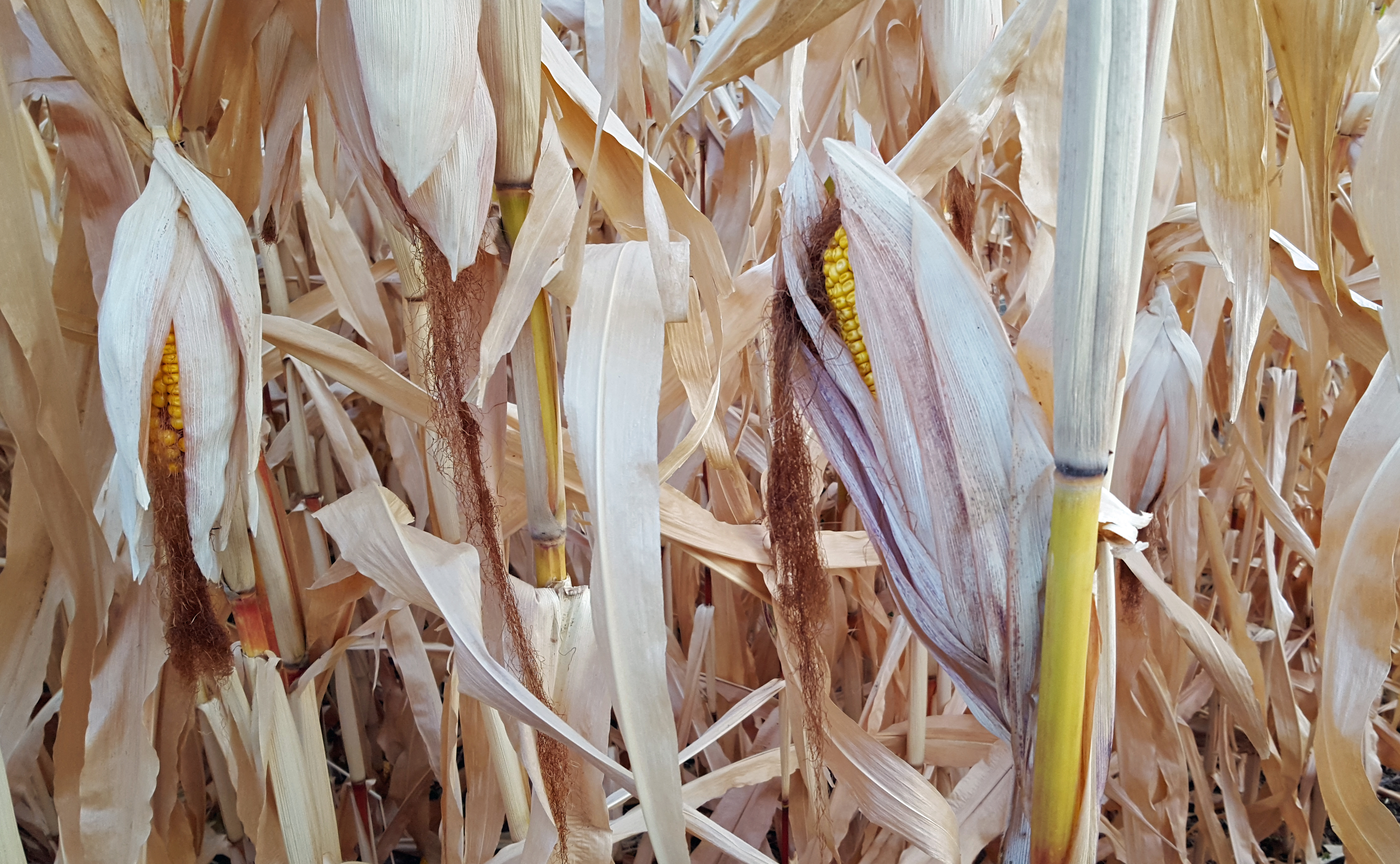
Female inflorescences (ears) occur at the top of short stems that originate from leaf axils in the midsection of the stalk. Leaves that develop along this reduced stem wrap around the ears forming the husk. Spikelets form in rows along the flower stalk (cob) within the husk. The florets of these spikelets produce long styles that extend beyond the top of the husk. This cluster of styles is known as the silk. When pollen grains land on silk stigmas, pollen tubes grow down the entire length of the silks to reach the embryo sac. Successful fertilization produces a kernel.

The kernel – or fruit – is known botanically as a caryopsis, which is the standard fruit type of the grass family. Because the fruit wall and seed are fused together so tightly, maize kernels are commonly referred to as seeds. The entire plant can be used to produce feed for animals, but it is the kernel that is generally consumed (in innumerable ways) by humans.

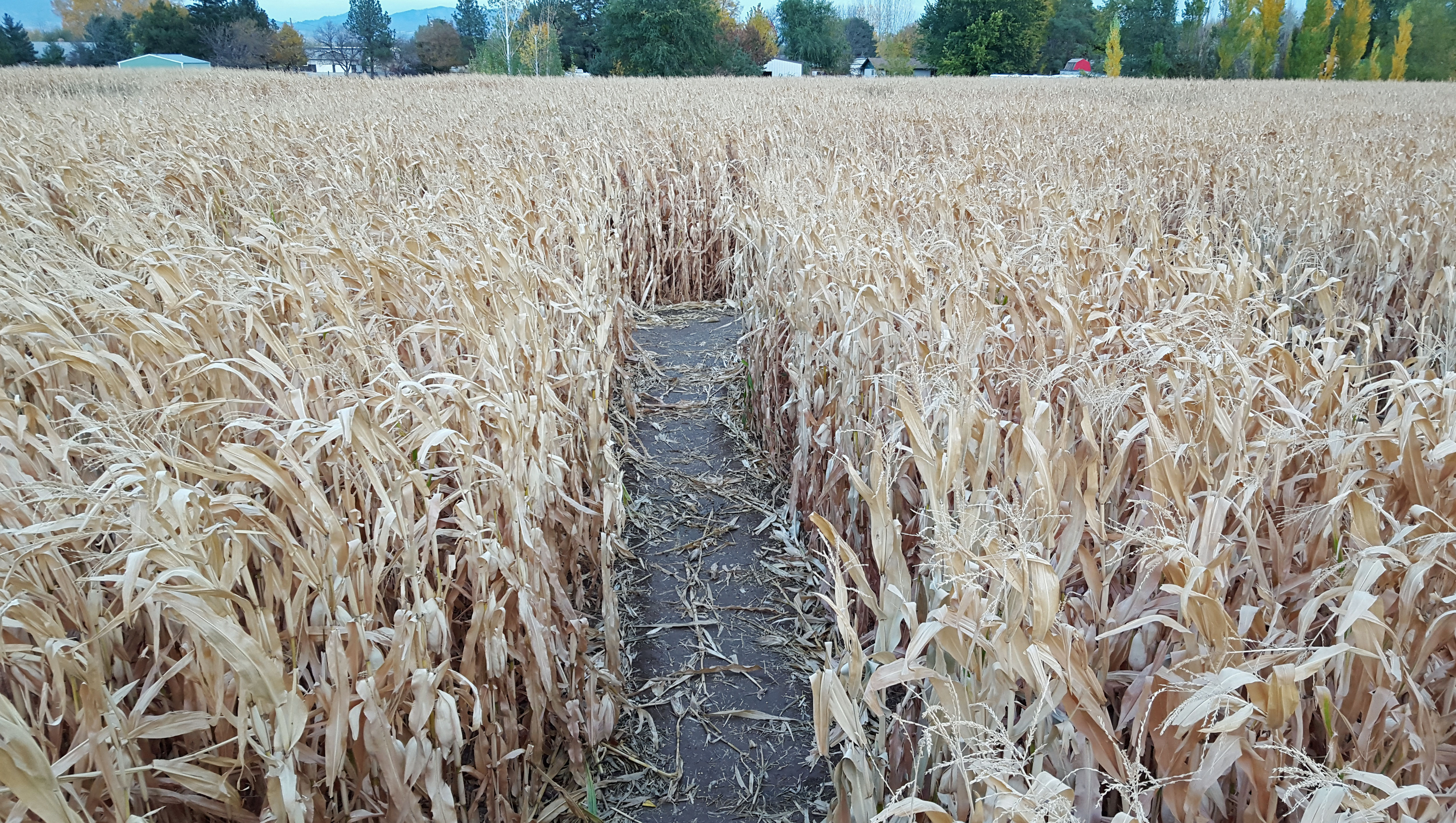
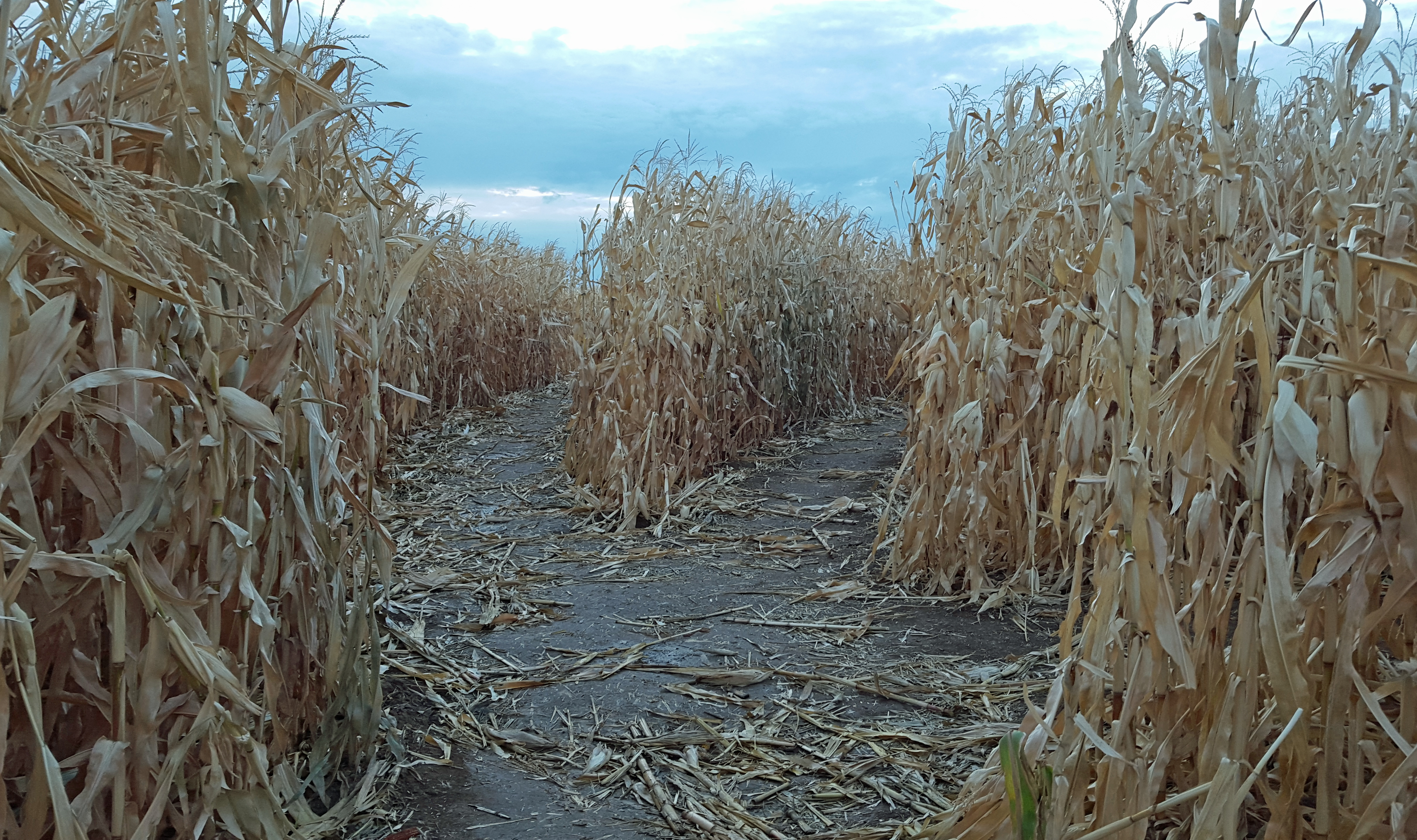
There is so much more to be said about maize. It’s a lot to take in. Rather than delve too much further at this point, let’s explore one of the other ways that maize is used by humans to create something that has become another feature of the fall season – the corn maze.

Entering the corn maze at The Farmstead in Meridian, Idaho

Exploring the corn maze at The Farmstead in Meridian, Idaho

corn-maze-2

corn-maze-3

corn-maze-4

corn-maze-5

Related Posts:

Hamburg Parsley Harvest

Earlier this year I reviewed Emma Cooper’s book, Jade Pearls and Alien Eyeballs, a book describing a slew of unusual, edible plants to try in the garden. Many of the plants profiled in the book sounded fun to grow, so I decided to try at least two this year: oca and Hamburg parsley. I didn’t get around to growing oca, but I did manage to produce a miniscule crop of Hamburg parsley.

root-parsley-1

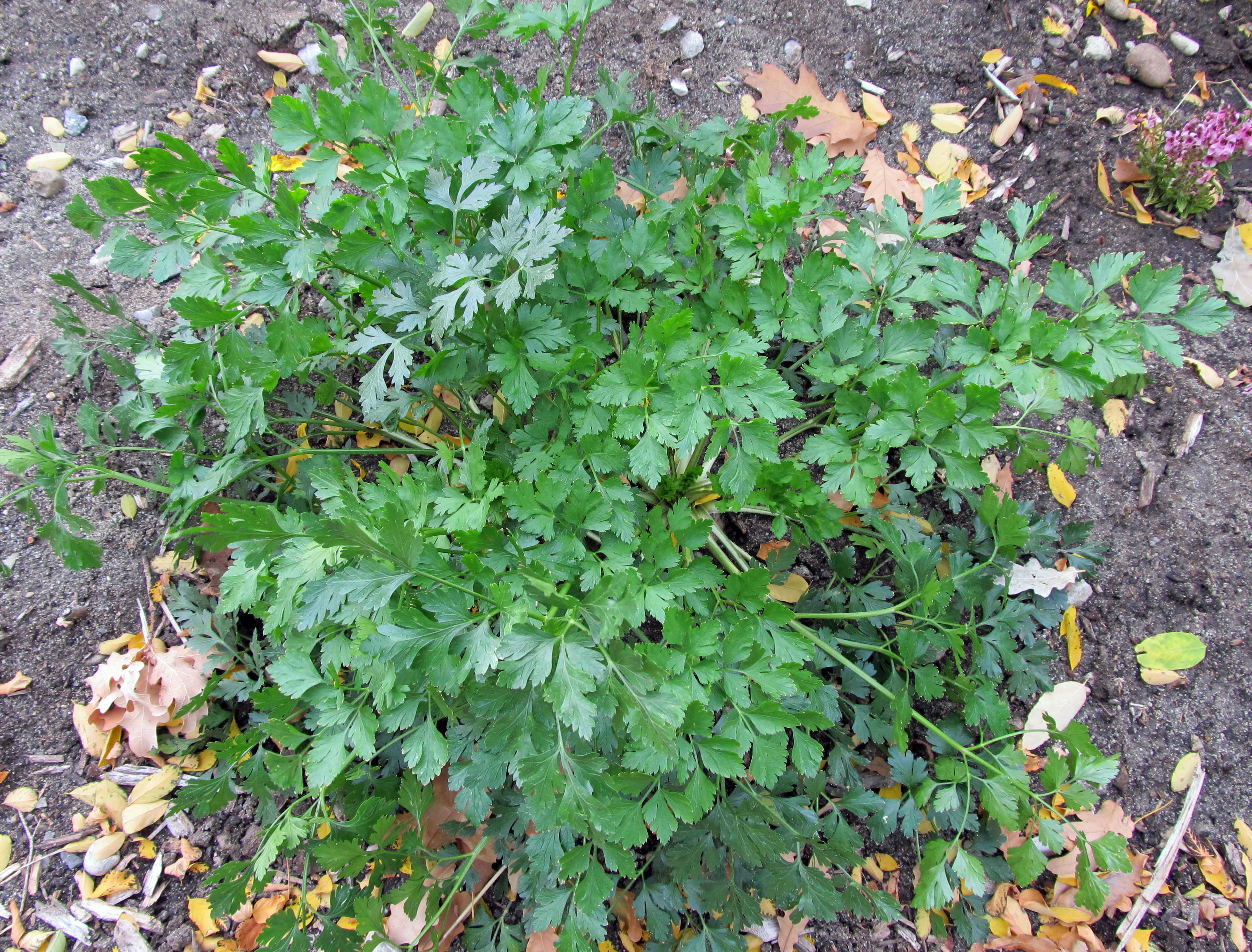
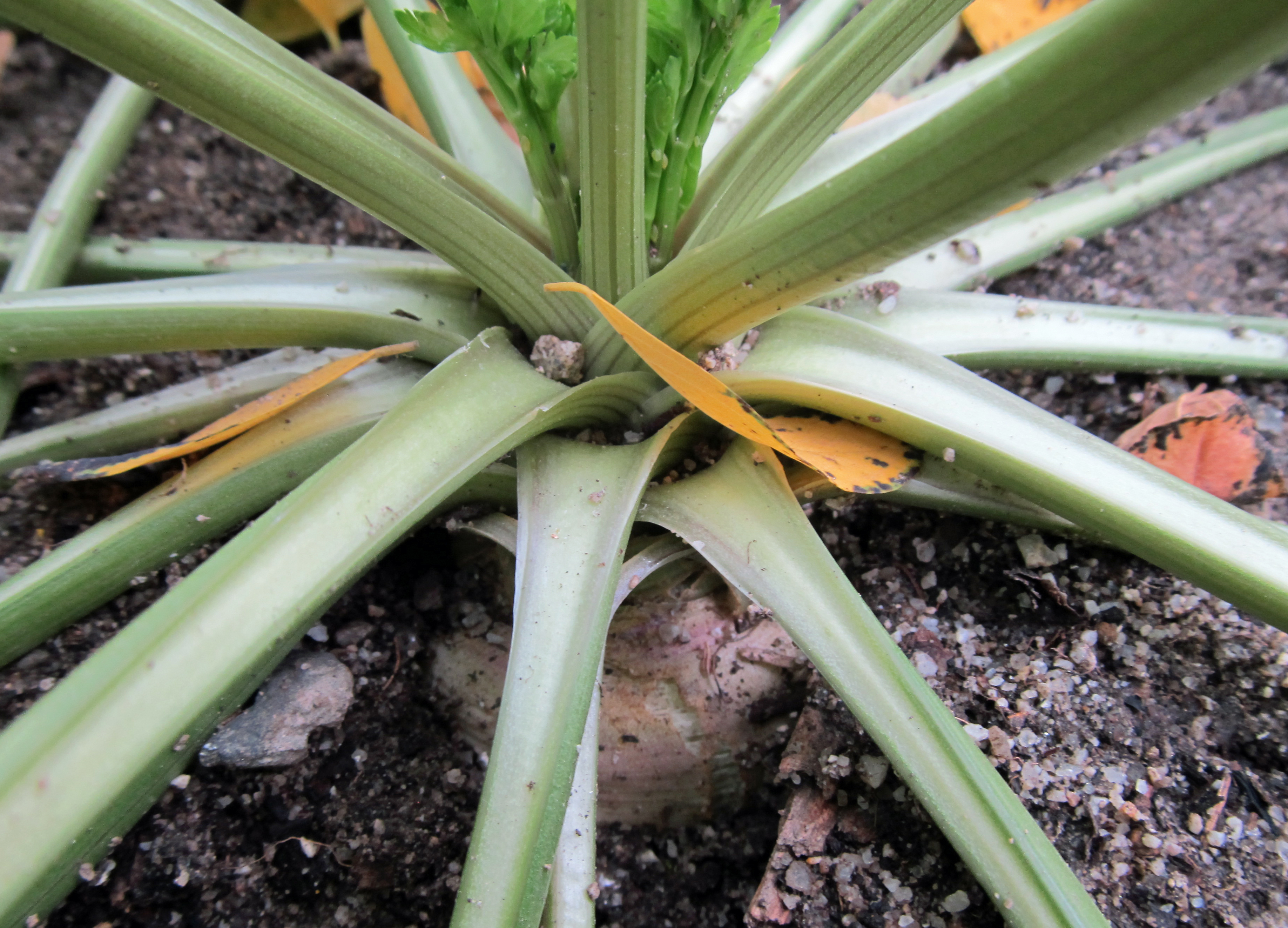
Hamburg parsley (also known as root parsley) is the tuberous root forming variety (var. tuberosum) of garden parsley, Petroselinum crispum. Native to the Mediterranean region, P. crispum has long been cultivated as a culinary herb. It is a biennial in the family Apiaceae and a relative of several other commonly grown herbs and vegetable crops including dill, fennel, parsnip, and carrot. In its first year, the plant forms a rosette of leaves with long petioles. The leaves are pinnately compound with three, toothed leaflets. Flowers are produced in the second year and are borne in a flat-topped umbel on a stalk that reaches up to 80 centimeters tall. The individual flowers are tiny, star-shaped, and yellow to yellow-green.

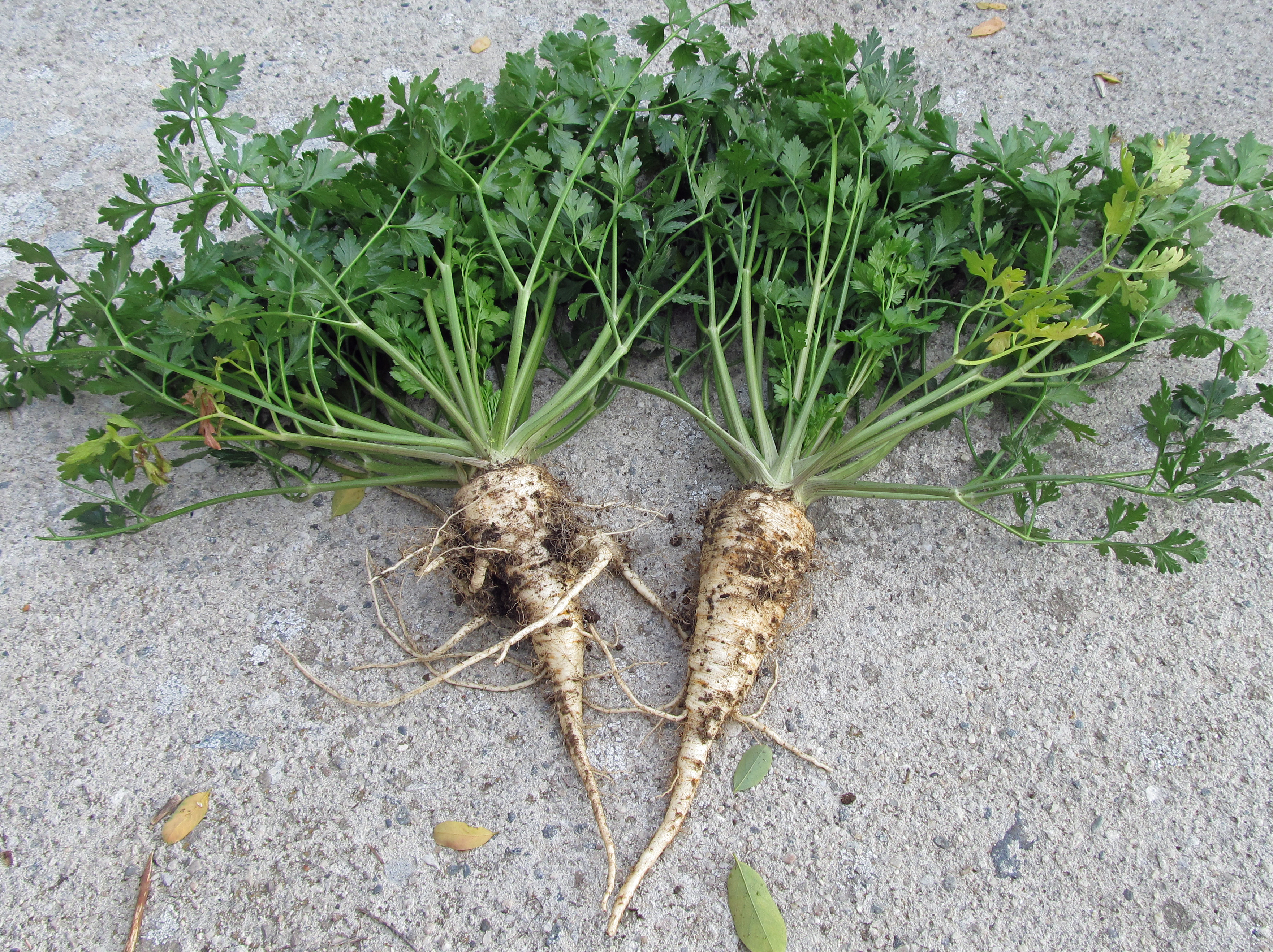
The leaves of Hamburg parsley can be harvested and used like common parsley, but the large, white taproots are the real treat. They can be eaten raw or cooked. Eaten raw, they are similar to carrots but have a mild to strong parsley flavor. The bitter, parsley flavor mellows and sweetens when the roots are roasted or used as an ingredient in soups or stews.

root-parsley-2

Despite sowing seeds in a 13 foot long row, only two of my plants survived and reached a harvestable size. Germination was fairly successful, and at one point there were several tiny plants dispersed along the row. Most perished pretty early on though; probably the result of browsing by rabbits. Generally, parsley seeds can be slow to germinate, so when they are direct seeded, Cooper and others recommend sowing seeds of quick growing crops like radish and lettuce along with them to help mark the rows – something I didn’t do.

My harvest may have been pathetic, but at least I ended up with some decent roots to sample. Raw, the roots were not as crisp as a carrot, and the parsley flavor was a little strong. I roasted the remainder in the oven with potatoes, carrots, and garlic, and that was a delicious way to have them. If I manage to grow more in the future, I will have to try them in a soup.

root-parsley-3

Did you try something new in your garden this year? Share your experience in the comment section below.

Drought Tolerant Plants: Pearly Everlasting

Despite being such a widely distributed and commonly occurring plant, Anaphalis margaritacea is, in many other ways, an uncommon species. Its native range spans North America from coast to coast, reaching up into Canada and down into parts of Mexico. It is found in nearly every state in the United States, and it even occurs throughout northeast Asia. Apart from that, it is cultivated in many other parts of the world and is “weedy” in Europe. Its cosmopolitan nature is due in part to its preference for sunny, dry, well-drained sites, making it a common inhabitant of open fields, roadsides, sandy dunes, rocky slopes, disturbed sites, and waste places.

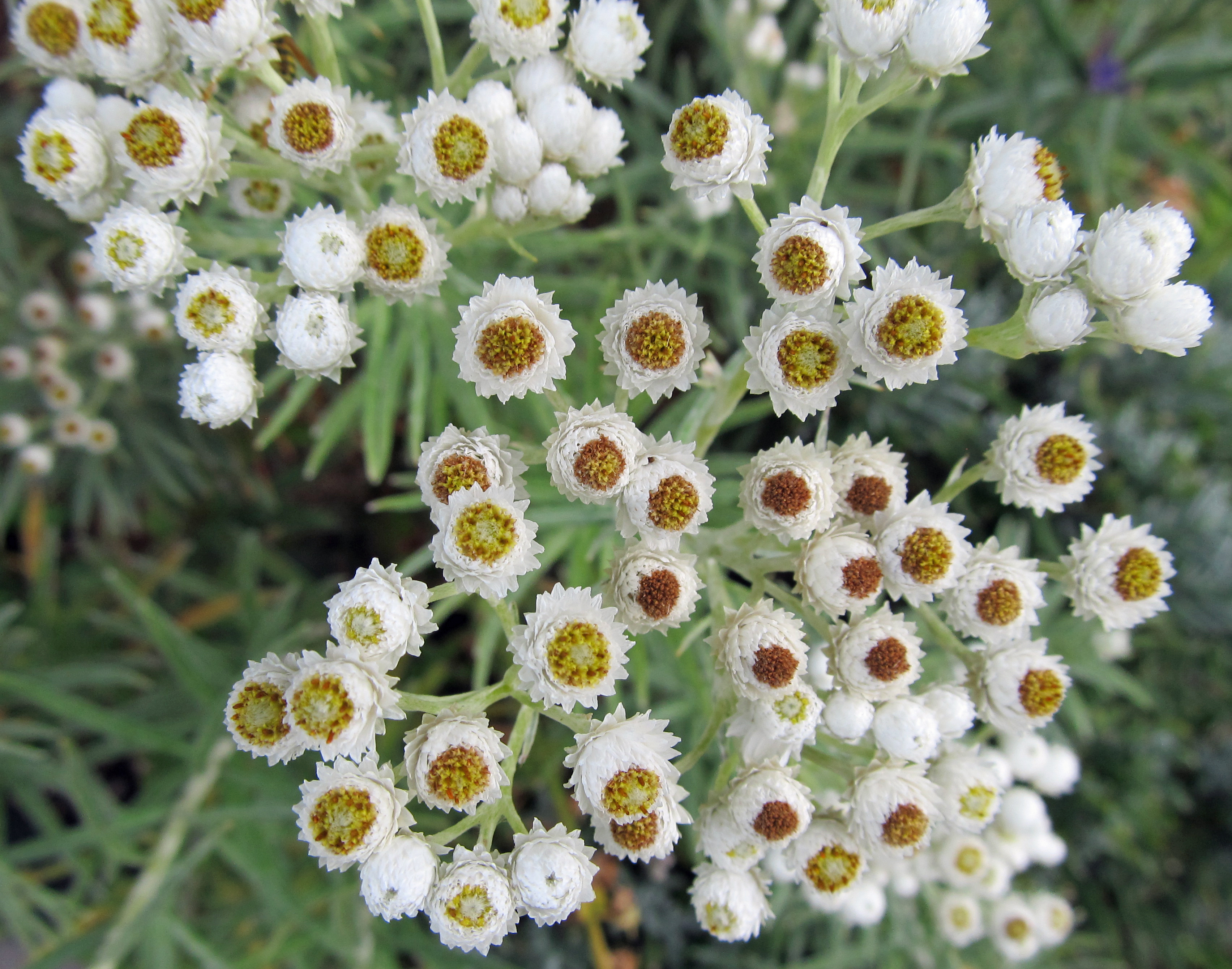
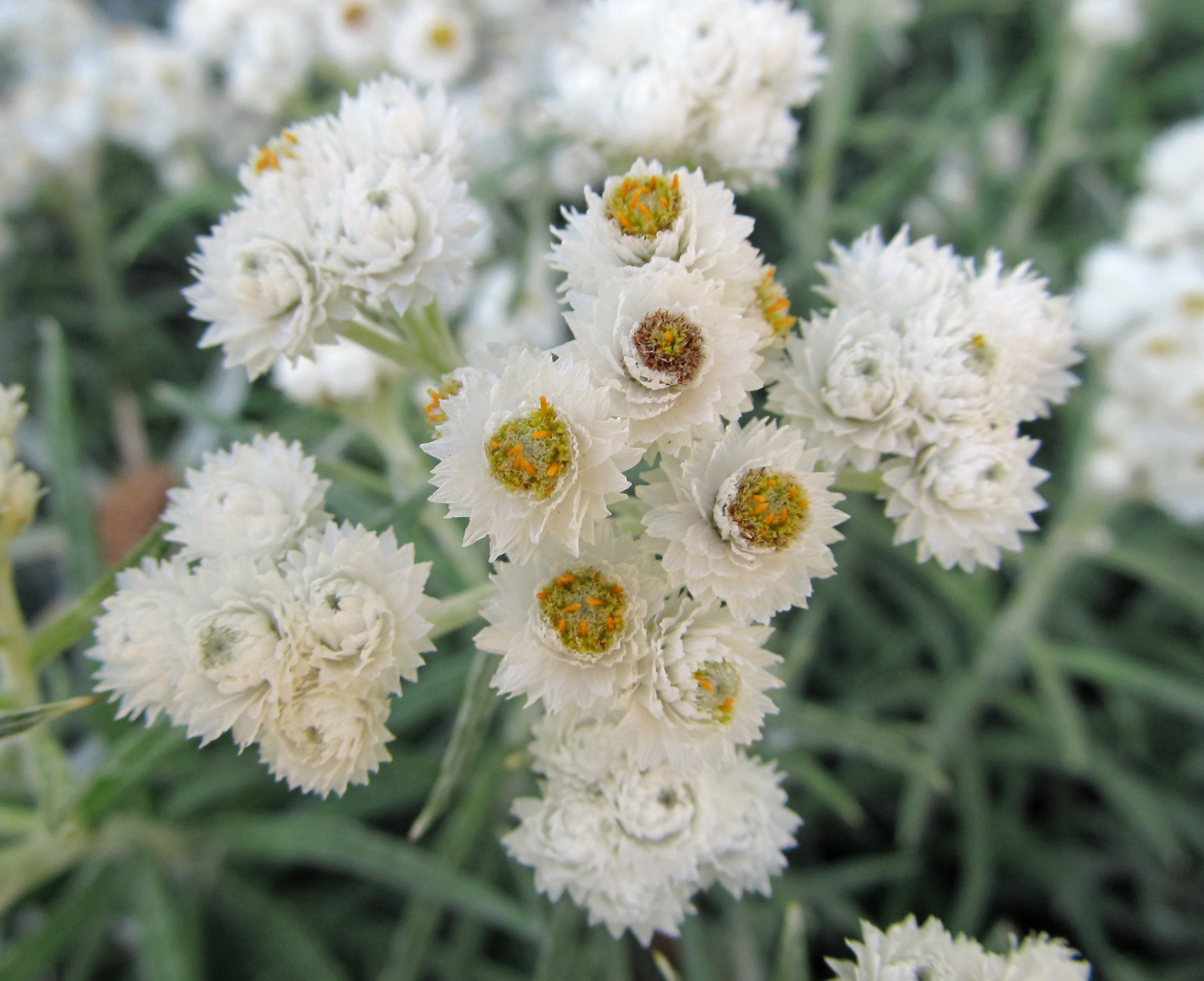
Its common name, pearly everlasting, refers to its unique inflorescence. Clusters of small, rounded flower heads occur in a corymb. “Pearly” refers to the collection of white bracts, or involucre, that surround each flower head. Inside the bracts are groupings of yellow to brown disc florets. The florets are unisexual, which is unusual for plants in the aster family. Plants either produce all male flowers or all female flowers (although some female plants occasionally produce florets with male parts). Due to the persistent bracts, the inflorescences remain intact even after the plant has produced seed. This quality has made them a popular feature in floral arrangements and explains the other half of the common name, “everlasting.” In fact, even in full bloom, the inflorescences can have a dried look to them.

pearly-everlasting-6

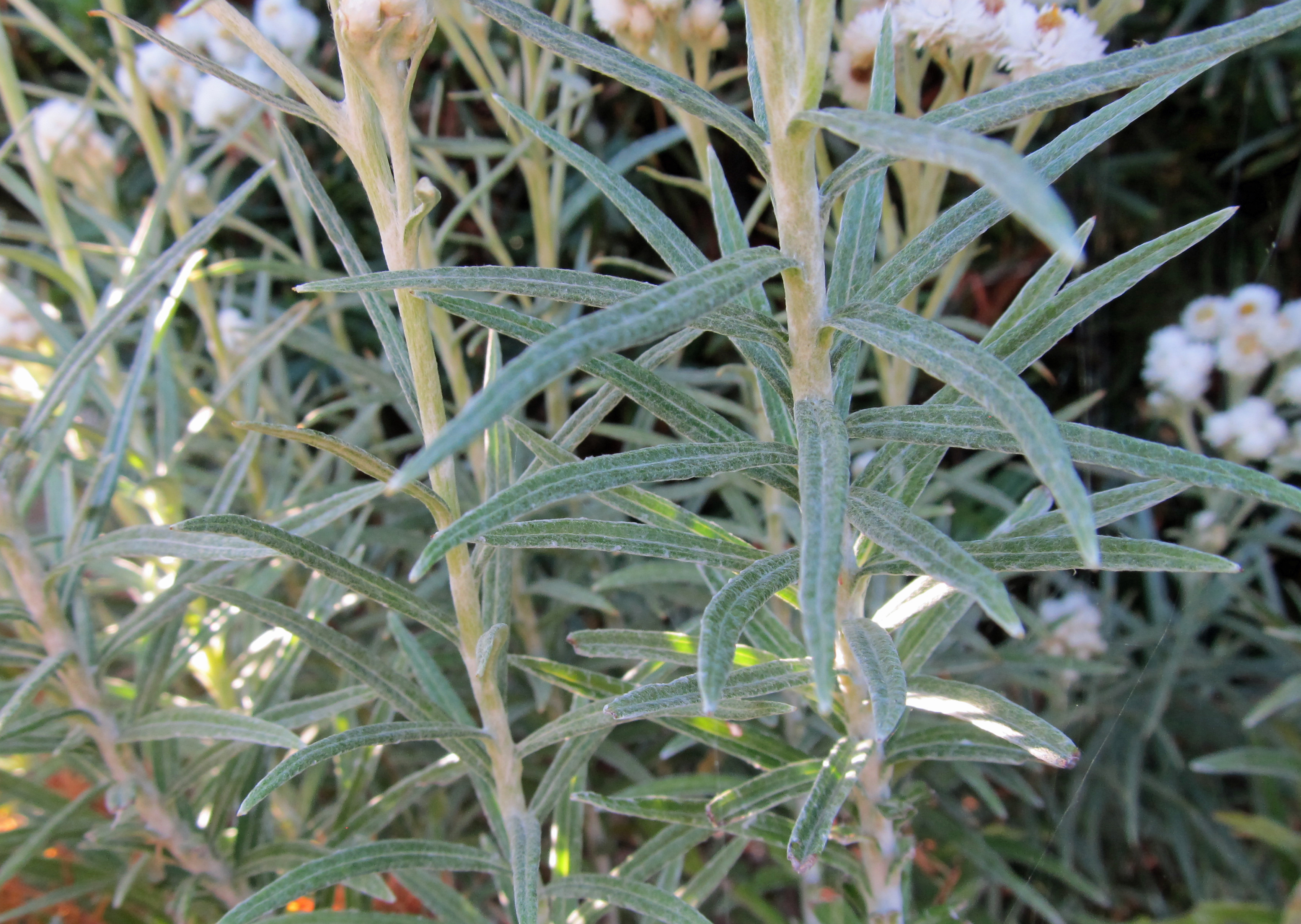
Pearly everlasting grows from 1 to 3 feet tall. Flowers are borne on top of straight stems that are adorned with narrow, alternately arranged, lance-shaped leaves. Stems and leaves are gray-green to white. Stems and undersides of leaves are thickly covered in very small hairs. Apart from contributing to its drought tolerance, this woolly covering deters insects and other animals from consuming its foliage. In The Book of Field and Roadside, John Eastman writes, “Insect foliage feeders are not numerous on this plant, owing to its protective downy ‘gloss.’ … The plant’s defensive coat seems to prevent spittlebug feeding on stem and underleaves. The tomentum also discourages ant climbers and nectar robbers.”

pearly-everlasting-5

Not all insects are thwarted however, as Anaphalis is a host to the caterpillars of at least two species of painted lady butterflies (Vanessa virginiensis and V. cardui). Its flowers, which occur throughout the summer and into the fall. are visited by a spectrum of butterflies, moths, bees, and flies.

Because the plants produce either male or female flowers, cross-pollination between plants is necessary for seed development. However, plants also reproduce asexually via rhizomes. Extensive patches of pearly everlasting can be formed this way. Over time, sections of the clonal patch can become isolated from the mother plant, allowing the plant to expand its range even in times when pollinators are lacking.

The attractive foliage and unique flowers are reason enough to include this plant in your dry garden. The flowers have been said to look like eye balls, fried eggs, or even, as Eastman writes, “white nests with a central yellow clutch of eggs spilling out.” However you decide to describe it, this is a tough and beautiful plant deserving of a place in the landscape.

pearly-everlasting-4

Read more:

Photos in this post are of Anaphalis margaritacea ‘Neuschnee’ and were taken at Idaho Botanical Garden in Boise, Idaho.

The Problem with ‘Yes’ Landscapes

This is a guest post by Jeremiah Sandler. Follow Jeremiah on Instagram @j.deepsea

———————

I don’t work for a landscape company, nor have I ever worked for one. The company I do work for contracts with these companies to do health care on their landscapes. For example, we scout for insects and diseases, spray pesticides when necessary, make recommendations of proper cultural practices, and fertilize.

Something has been bothering me for the past two years about the landscapes in metropolitan southeast Michigan. Both commercial and residential landscapes have at least two things in common: the same plants, and the same poor management of these plants. The clients have no idea they’re being ripped off.

The landscape companies I have experience with seem to think the homeowner is always right.

The ‘Yes’ Conversation

You want a Colorado blue spruce in humid Michigan? Sure, no problem. Let’s put six trees within 15 square feet. Don’t bother removing the cage and burlap. We also won’t tell you the massive expense you’ll pay in the future to spray fungicides on your spruce to keep it alive. If one dies, we’ll just replace it with the same plant.

You want a green hedge? Boxwoods or yews. They’ll be sheared multiple times a year by our crew of expert (and underpaid and exhausted) workers. At the first sign of new growth, we’ll be there mutilating your plants to ensure that they stay at right angles. You see all of those ripped apart, discolored leaves on your shrubs? Ignore that; plants are meant to be tamed into perfect geometry. Oh, that’ll be an extra charge to spray insecticides and fungicides.

Here’s a list of plants you can get to add to the monotony in your neighborhood: crabapple, hawthorn, cherry, honeylocust, blue spruce, oak, red maple, Japanese maple, pear, white pine, boxwood, yew, hydrangea, arborvitae, burning bush, and wax begonias.

Why is your hemlock tree neon yellow? We don’t know, let’s just replace it. Why is your Norway maple declining? Well, when we planted it, we kept the cage on its root ball, despite this tree having notorious girdling roots. Let’s get you a new one. Why are some of your shrubs rotting out? We left the soaker hoses on them for years and kept them running regularly. Yes we can spray all of your plants. We can kill everything before it’s a problem.

We’re the best landscapers in town! Our services are top of the line, and we guarantee your landscape will look exactly the same as your neighbor’s.

That’s a very sardonic, hypothetical conversation between a homeowner and a landscape company. A sensible company knows you don’t know best. As a homeowner, it is wise to heed the advice of a company’s horticulturist. Cost is always a consideration for the homeowner. However, the more expensive company is not always the highest quality. Here’s why.

So, you want a Colorado blue spruce?

A responsible company won’t let you plant a blue spruce in a place with wet springs and humid summers. They will tell you why it is not a good idea, and they will suggest alternatives. For example, a concolor fir (Abies concolor) looks similar to a blue spruce. They are resistant to needle cast diseases and cytospora canker, and they can tolerate southeast Michigan’s alkaline soils. In the long run, it is much cheaper to get the right plant in the right place.

You will pay more for your blue spruce because, not only are you paying for installation, you are paying to spray fungicides year after year to avoid having a skeleton in your yard. Companies know there is a likelihood of replacing your newly planted blue spruces, so you are charged for it.

We love boxwoods and so do you

Maybe you do like the classic, formal look of hedges. And maybe you do like the texture offered by a boxwood or yew. That’s fine. This is the problem I see literally every single day: over-shearing.

An appropriate cultivar selection is the answer. Cultivars and hybrids exist which only grow to x-amount tall and x-amount wide. Simply read the tag from the nursery. If your landscape company planted the proper plants the first time, they wouldn’t be able to charge you as much as they do to “maintain” them. The right plants in the right places need very little maintenance. I will concede, a few plants can tolerate being sheared. Once in a great while is acceptable; not three times a year.

Excessive shearing stresses out a plant. In fact, certain chemicals released by the open wounds of the leaves attract insects. Wet, exposed tissue serves as a breeding ground for fungi. Some of the problems your shrubs face are directly caused by the shearing itself.

PlantAmnesty, a website dedicated to stopping bad pruning practices states:

Any pruning book will explain that one prunes to open up the center of the plant, allowing air and light penetration to make the plant healthy. Shearing, on the other hand, creates a twiggy outer shell that gets ever denser and collects more deadwood and dead leaves every year, the opposite of a healthy condition. The results create the perfect protected place for pests and diseases, akin to locking up the house so the garbage can’t be removed. After many years, this treatment can lead to disease and general bad health without actually being a disease itself. If plants have mites and blights, bugs and mildews galore, how they were pruned may be the root of the problem.

Not to mention, the plant is spending all of its energy regrowing those leaves you continually cut off. There are correct ways to prune plants, and none of them include the excessive use of motorized shears. A plant grows to reach an equilibrium with its environment. If the environment is adequate, the plant will grow. If the environment is unfavorable, the plant will decline. In other words, if it is growing, let it grow!

What’s a monoculture?

There seems to be only 15 plants which are acceptable to the landscaper. The plant selection is predictable. Certainly there are more than 15 different species of plants you can have on your property. Sure, some redundant species are okay: white pines, oaks, maples (except that damned Norway maple). I don’t want to discourage people from exploring new options, though.

Native plants offer easy beauty. They have evolved in your region for millennia and are therefore adapted to your environmental conditions. These plants often tolerate both biological and environmental stressors better than non-native plants. Expenses are saved when you don’t have to pay for disease control. You wouldn’t buy a vehicle, for example, that you know would break down and require fixing all the time.

There are dozens of other shrub options for texture, winter interest, privacy walls, etc., that you don’t have to hire a crew to shear every month. Surprisingly, some large yucca species are hardy in colder zones, which offer a different texture. Red-twig dogwoods provide colorful winter interest; there are red, green, and yellow-stemmed cultivars. Coyote willow is native to southeast Michigan. It is a thin-leafed, rhizomatous Salix species which forms beautiful yellow walls in the fall. An entire, separate article can be written on the subject of alternatives. Just know there are plenty of species to choose from no matter where you live.

Ask, and you shall receive

This request comes from homeowners and is often fulfilled by companies: “Can’t you just spray it?” Granting this request is entirely wrong. One cannot, by law and by principle, go around as a pesticide desperado. You live in that environment. Why would you want pesticides in excess? Chemicals are used as a last resort and strictly on an as needed basis.

Appropriate timing, safety precautions, and proper insect identification are all legally required before insecticides can be applied. Some of the ‘yes’-type companies will comply with all uneducated (and sometimes unsafe) requests.

Some of the appointments I have with customers address very rudimentary horticultural problems. The homeowner’s concerns are legitimate. Most problems they are having, though, can be avoided with an ounce of foresight. Issues include planting hemlock trees in full sun, or replacing a Japanese maple killed by verticillium wilt with another Japanese maple. The list goes on…

Saying ‘No’

There’s a myriad of things that can go wrong in a landscape. It is an artificial environment containing plants which evolved continents apart. Plants often don’t have the capacity to combat pathogens that they are not exposed to in their native habitats, but certain issues are impossible to predict. There is a base knowledge one should have before making these kinds of decisions. The “customer is always right” philosophy doesn’t apply in this domain. You should have some creative influence on your landscape; it’s yours, after all. Spend the time in the nursery looking for interesting plants, make a list, and run it by your landscaper. If they say ‘yes’ to all of your choices, fire them. The people you hire cannot be too timid to tell you ‘no’ sometimes.

“Right plant, right place” is the mantra among plant health care technicians. We are the people who have to clean up the messes made by your landscapers. If your landscaper did their job with longevity in mind, I probably wouldn’t have much to do.

Grasshoppers – More Friend Than Foe?

Major outbreaks of grasshoppers can be devastating. A plague of locusts of biblical proportions can decimate crop fields and rangelands in short order. Clouds of grasshoppers moving in and devouring every plant in sight makes it easy to see why these insects are often seen as pests. Even small groups of them can do significant damage to a garden or farm. Yet, grasshoppers and their relatives have great ecological value and are important parts of healthy ecosystems. Love them or hate them, they are an essential piece of a bigger picture.

Grasshoppers are in the order Orthoptera, an order that includes katydids, crickets, wetas, and a few other familiar and not so familiar insects. Worldwide, there are more than 27,000 species of orthopterans. These insects mostly feed on plants; many are omnivorous while others are exclusively herbivorous. They are most commonly found in open, sunny, dry habitats like pastures, meadows, disturbed sites, open woods, prairies, and crop fields. Most insects in this order are fairly large, making them easy to identify; yet they don’t seem to receive the same level of human attention that charismatic insects like bees and butterflies do. In Field Guide to Grasshoppers, Katydids, and Crickets of the United States, the authors defend this diverse group of arthropods: “Grasshoppers often are thought of as modest-looking brown or green insects, but many species in this family are brightly colored, and some of the most dull-colored species rival butterflies in beauty when they spread their wings in flight.”

photo credit: wikimedia commons

photo credit: wikimedia commons

The voracious appetite of grasshoppers and their preference for plants can influence ecosystems in many ways. Certain plants may be favored over others, which affects the diversity and distribution of plant communities. Grasses are a particular favorite, despite being high in hard to digest compounds like lignin, cellulose, and silica. As grasshoppers consume vegetation – up to their body weight per day – digested materials return to the soil where soil dwelling organisms continue to break them down. In this way, grasshoppers and their relatives are major contributors to nutrient cycling. Returning nutrients to the soil results in increased nutrient availability for future plant growth. In fact, one grassland study found that despite short-term losses via grasshopper herbivory, plant growth was enhanced in the long-term due in part to accelerated nutrient cycling.

Because grasshoppers are such prolific consumers, their robust bodies are loaded with nutritious proteins and fats, making them a preferred food source for higher animals. Reptiles, raccoons, skunks, foxes, mice, and numerous species of birds regularly consume grasshoppers and related species. While many adult birds feed mostly on seeds and fruits, they seek out insects and worms to feed their young. Nutrient-packed grasshoppers are an excellent food source for developing birds. Humans in many parts of the world also find grasshoppers and crickets to be a tasty part of their diet.

Grasshoppers provide food for other invertebrates as well. The aforementioned field guide refers to the fate of grasshoppers and certain species of blister beetles as being “intimately linked,” because the larvae of these blister beetles feed exclusively on grasshopper eggs. Several species of flies and other insects, as well as spiders, also feed on grasshoppers and other orthopterans.

grasshopper on blade of grass

In short, grasshoppers play prominent roles in plant community composition, soil nutrient cycling, and the food chain. When grasshopper populations reach plague proportions, their impact is felt in other ways. From a human perspective, the damage is largely economic. However, their ability to thoroughly remove vegetation across large areas can be environmentally devastating as well, particularly when it comes to soil erosion and storm water runoff. The USDA’s Agricultural Research Service considers grasshoppers “among the most economically important pests” and cites research estimating that they are responsible for destroying as much as 23% of available range forage in the western United States annually. A paper published in the journal, Psyche, references a period between 2003-2005 in Africa where locusts were responsible for farmers losing as much as 80 to 100% of their crops.

This level of devastation is relatively rare. In Garden Insects of North America, Whitney Cranshaw states that of the more than 550 species of grasshoppers that occur in North America, “only a small number regularly damage gardens…almost all of these are in the genus Melanoplus.” Like most large, diverse groups of organisms, many grasshopper species are abundant and thriving while others are rare and threatened. Human activity has benefited certain species of grasshoppers while jeopardizing others. In general, grasshopper populations vary wildly from year to year depending on a slew of environmental factors.

Differential grasshopper (Melanoplus differentialis) - one of the four grasshoppers that Whitney Cranshaw lists as "particularly injurious" in his book Garden Insects of North America. (photo credit: www.eol.org)

Differential grasshopper (Melanoplus differentialis) – one of the four grasshoppers that Whitney Cranshaw lists as “particularly injurious” in his book Garden Insects of North America. (photo credit: www.eol.org)

A plague or outbreak of grasshoppers is a poorly understood phenomenon. It seems there are too many factors at play to pin such an occasion on any one thing. Warm, sunny, dry weather seems to favor grasshopper growth and reproduction, so drought conditions over a period of years can result in a dramatic increase in grasshopper populations. But drought can also limit plant growth, reducing the grasshoppers’ food supply. Natural enemies – which grasshoppers have many – also come into play. It seems that just the right conditions have to be met for an outbreak to occur – a seemingly unlikely scenario, but one that occurs frequently enough to cause concern.

Grasshoppers and fellow orthopterans are fascinating insects, and their place in the world is worth further consideration. For an example of just how compelling such insects can be, here is a story about crickets from Doug Tallamy’s book, Bringing Nature Home:

“Male tree crickets in the genus Oecanthus attempt to lure females to them by making chirping songs with their wings. The loudest male attracts the most females, so males often cheat a bit by positioning themselves within a cup-shaped leaf that amplifies the song beyond what the male can make without acoustical help. Each male chews a hole in the center of his cupped leaf that is just large enough to accommodate his raised wings during chirping. This ensures that the sound projects directly from the center of the parabolic leaf for maximum amplification.

Related Awkward Botany Posts:

Drought Tolerant Plants: The Yarrows

Few plants are as ubiquitous and widespread as the common yarrow, Achillea millefolium. A suite of strategies have made this plant highly successful in a wide variety of habitats, and it is a paragon in terms of reproduction. Its unique look, simple beauty, and tolerance of tough spots have made it a staple in many gardens; however, its hardiness, profuseness, and bullish behavior have also earned it the title, “weed.” Excess water encourages this plant to spread, but in a dry garden it tends to stay put (or at least remain manageable), which is why it and several of its cousins are often included in or recommended for water efficient landscapes.

Achillea millefolium - common yarrow

Achillea millefolium – common yarrow

Common yarrow is in the aster family (Asteraceae) and is one of around 85 species in the genus Achillea. It is distributed throughout North America, Europe, and Asia. European plants have long been introduced to North America, and hybridization has occurred many times among the two genotypes.

Yarrow begins as a small rosette of very finely dissected leaves that are feathery or fern-like in appearance. These characteristic leaves explain its specific epithet, millefolium, and common names like thousand-leaf. Slightly hairy stems with alternately arranged leaves arise from the rosettes and are capped with a wide, flat-topped cluster of tightly-packed flowers. The flower stalks can be less than one foot to more than three feet tall. The flowers are tiny, numerous, and consist of both ray and disc florets. Flowers are usually white but sometimes pink.

The plants produce several hundred to several thousand seeds each. The seeds are enclosed in tiny achene-like fruits which are spread by wind and gravity. Yarrow also spreads and reproduces rhizomatously. Its roots are shallow but fibrous and abundant, and they easily spread horizontally through the soil. If moisture, sun, and space are available, yarrow will quickly expand its territory. Its extensive root system and highly divided leaves, which help reduce transpiration rates, are partly what gives yarrow the ability to tolerate dry conditions.

john eastman

Illustration of Achillea millifolium by Amelia Hansen from The Book of Field and Roadside by John Eastman, which has an excellent entry about yarrow.

Common yarrow has significant wildlife value. While its pungent leaves are generally avoided by most herbivorous insects, its flowers are rich in nectar and attract bees, butterflies, beetles, flies, and even mosquitoes. Various insects feed on the flowers, and other insects visit yarrow to feed on the insects that are feeding on the plant. Despite its bitterness, the foliage is browsed by a variety of birds, small mammals, and deer. Some birds use the foliage in constructing their nests. Humans have also used yarrow as a medicinal herb for thousands of years to treat a seemingly endless list of ailments.

Yarrow’s popularity as an ornamental plant has resulted in the development of numerous cultivars that have a variety of flower colors including shades of pink, red, purple, yellow, and gold. While Achillea millefolium may be the most widely available species in its genus, there are several other drought-tolerant yarrows that are also commercially available and worth considering for a dry garden.

Achillea filipendulina, fern-leaf yarrow, is native to central and southwest Asia. It forms large, dense clusters of yellow-gold flowers on stalks that reach four feet high. Its leaves are similar in appearance to A. millefolium. Various cultivars are available, most of which have flowers that are varying shades of yellow or gold.

Achillea alpina, Siberian yarrow, only gets about half as tall as A. filipendulina. It occurs in Siberia, parts of Russia, China, Japan, and several other Asian countries. It also occurs in Canada. Unlike most other species in the genus, its leaves have a glossy appearance and are thick and somewhat leathery. Its flowers are white to pale violet. A. alpina is synonymous with A. sibirica, and ‘Love Parade’ is a popular cultivar derived from the subspecies camschatica.

Achillea x lewisii ‘King Edward,’ a hybrid between A. tomentosa (woolly yarrow) and A. clavennae (silvery yarrow), stays below six inches tall and forms a dense mat of soft leaves that have a dull silver-gray-green appearance. Its compact clusters of flowers are pale yellow to cream colored. Cultivars of A. tomentosa are also available.

Achillea ptarmica, a European native with bright white flowers, and A. ageritafolia, a native of Greece and Bulgaria that is low growing with silvery foliage and abundant white flowers can also be found in the horticulture trade along with a handful of others. Whatever your preferences are, there is a yarrow out there for you. Invasiveness and potential for escape into natural areas should always be a concern when selecting plants for your garden, especially when considering a plant as robust and successful as yarrow. That in mind, yarrow should make a great addition to nearly any drought-tolerant, wildlife friendly garden.

More Drought Tolerant Plants Posts: