Year of Pollination: Most Effective Pollinator Principle and Beyond, part one

Have you ever considered the diversity of flowers? Why do they come in so many different shapes, sizes, and colors? And why do they produce so many different odors – or none at all? Flowering plants evolved around 140 million years ago, a fairly recent emergence evolutionarily speaking. Along with them evolved numerous species of insects, birds, and mammals. In his book, The Triumph of Seeds, Thor Hanson describes the event this way: “In nature, the flowering plants put sex, seeds, and dispersal on full display, spurring not only their own evolution but also that of the animals and insects with which they became so entwined. In most cases, the diversity of dispersers, consumers, parasites – and, most especially, pollinators – rose right alongside that of the plants they depended upon.”

Speaking of dependence, most flowering plants depend upon pollinators for successful reproduction – it is, for the most part, a mutually beneficial relationship. Even the casual observer of flowers will note that a large portion of the creatures that visit them appear to be pollinators. Thus, it is no wonder that pollination biologists have given pollinators so much credit in shaping the flowers that we see today.

Consider G. Ledyard Stebbins and his Most Effective Pollinator Principle which he defined in a paper published in 1970: “the characteristics of the flower will be molded by those pollinators that visit it most frequently and effectively in the region where it is evolving.” He then goes on to reference pollination syndromes, a phenomenon that describes how the traits of flowers are best suited for their “predominant and most effective vector[s].” In my post about pollination syndromes a few months ago, I discussed how a strict adherence to this concept has waned. In the next two posts, I discuss how the Most Effective Pollinator Principle (MEPP) may not be the best way to explain why flowers look the way they do.


To make this argument I am drawing mainly from two chapters in the book Plant-Pollinator Interactions: From Specialization to Generalization. The first is “Ecological Factors That Promote the Evolution of Generalization in Pollination Systems” by Jose M. Gomez and Regino Zamora, and the second is “The Evolution of Specialized Floral Phenotypes in a Fine-grained Pollination Environment” by Paul A. Aigner.

According to Aigner the MEPP “states that a plant should evolve specializations to its most effective pollinators at the expense of less effective ones.” And according to Gomez and Zamora it “states that natural selection should modify plant phenotypes [observable characteristics derived from interactions between a plant’s genes and its surrounding environment] to increase the frequency of interaction [between] plants and the pollinators that confer the best services,” and so “we would expect the flowers of most plants to be visited predominantly by a reduced group of highly effective pollinators.” This is otherwise known as adaptive specialization.

Specialization is something that, in theory, plants are generally expected to evolve towards, particularly in regards to plant-pollinator relationships. Observations, on the other hand, demonstrate the opposite – that specialization is rare and most flowering plants are generalists. However, the authors of both chapters advise that specialization and generalization are extreme ends to a continuum, and that they are comparative terms. One species may be more specialized than another simply because it is visited by a smaller “assemblage” of pollinators. The diversity of pollinators in that assemblage and the pollinator availability in the environment should also be taken into consideration when deciding whether a relationship is specialized or generalized.

That pollinators can be agents in shaping floral forms and that flowering plant species can become specialized in their interactions with pollinators is not the question. There is evidence enough to say that it occurs. However, that the most abundant and/or effective pollinators are the main agents of selection and that specialization is a sort of climax state in the evolutionary process (as the MEPP seems to suggest) is up for debate. Generalization is more common than specialization, despite observations demonstrating that pollinators are drawn to certain floral phenotypes. So, could generalization be seen as an adaptive strategy?

In exploring this question, Gomez and Zamora first consider what it takes for pollinators to act as selective agents. They determine that “pollinators must first benefit plant fitness,” and that when calculating this benefit, the entire life cycle of the plant should be considered, including seed germination rate, seedling survival, fecundity, etc. The ability of a pollinator species to benefit plant fitness depends on its visitation rate and its per-visit effectiveness (how efficiently pollen is transferred) – put simply, a pollinator’s quantity and quality during pollination. There should also be “among-pollinator differences in the evolutionary effect on the plant,” meaning that one species or group of pollinators – through being more abundant, effective, or both – contributes more to plant fitness compared to others. “Natural selection will favor those plant traits that attract the most efficient or abundant pollinators and will also favor the evolution of the phenotypes that cause the most abundant pollinators to also be the most effective.” This process implies possible “trade-offs,” which will be discussed in part two.

When pollinators act as selective agents in this way, the MEPP is supported; however, Gomez and Zamora argue that this scenario “only takes place when some restrictive ecological conditions are met” and that while specialization can be seen as the “outcome of strong pollinator-mediated selection,” generalization can also be “mediated by selection exerted by pollinators…in some ecological scenarios.” This is termed adaptive generalization. In situations where ecological forces constrain the development of specialization and pollinators are not seen as active selection agents, nonadaptive generalization may be occurring.

Gomez and Zamora spend much of their chapter exploring “several causes that would fuel the evolution of generalization” both adaptive and nonadaptive, which are outlined briefly below.

  • Spatiotemporal Variability: Temporal variability describes differences in pollinator assemblages over time, both throughout a single year and over several years. Spatial variability describes differences in pollinator assemblages both among populations where gene flow occurs and within populations. Taken together, such variability can have a measurable effect on the ability of a particular pollinator or group of pollinators to act as a selective agent.
  • Similarity among Pollinators: Different pollinator species can have “equivalent abundance and above all comparable effectiveness” making them “functional equivalents from the plant perspective.” This may be the case with both closely and distantly related species. Additionally, a highly effective pollinator can select for floral traits that attract less effective pollinators.
  • The Real Effects on Plant Fitness: An abundant and efficient pollinator may select for one “fitness component” of a plant, but may “lead to a low overall effect on total fitness.” An example being that “a pollinator may benefit seed production by fertilizing many ovules but reduce seedling survival because it causes the ripening of many low-quality seeds.” This is why “as much of the life cycle as possible” should be considered “in assessing pollinator effectiveness.”
  • Other Flower Visitors: Pollinators are not the only visitors of flowers. Herbivores, nectar robbers, seed predators, etc. may be drawn in by the same floral traits as pollinators, and pollinators may be less attracted to flowers that have been visited by such creatures. “Several plant traits are currently thought to be the evolutionary result of conflicting selection exerted by these two kinds of organisms,” and “adaptations to avoid herbivory can constrain the evolution of plant-pollinator interactions.”

This, of course, only scratches the surface of the argument laid out by Gomez and Zamora. If this sort of thing interests you, I highly encourage you to read their chapter. Next week I will summarize Aigner’s chapter. If you have thoughts on this subject or arguments to make please don’t hesitate to comment or contact me directly. This is a dialogue, dudes.

Field Trip: Sawtooth Botanical Garden

columbine

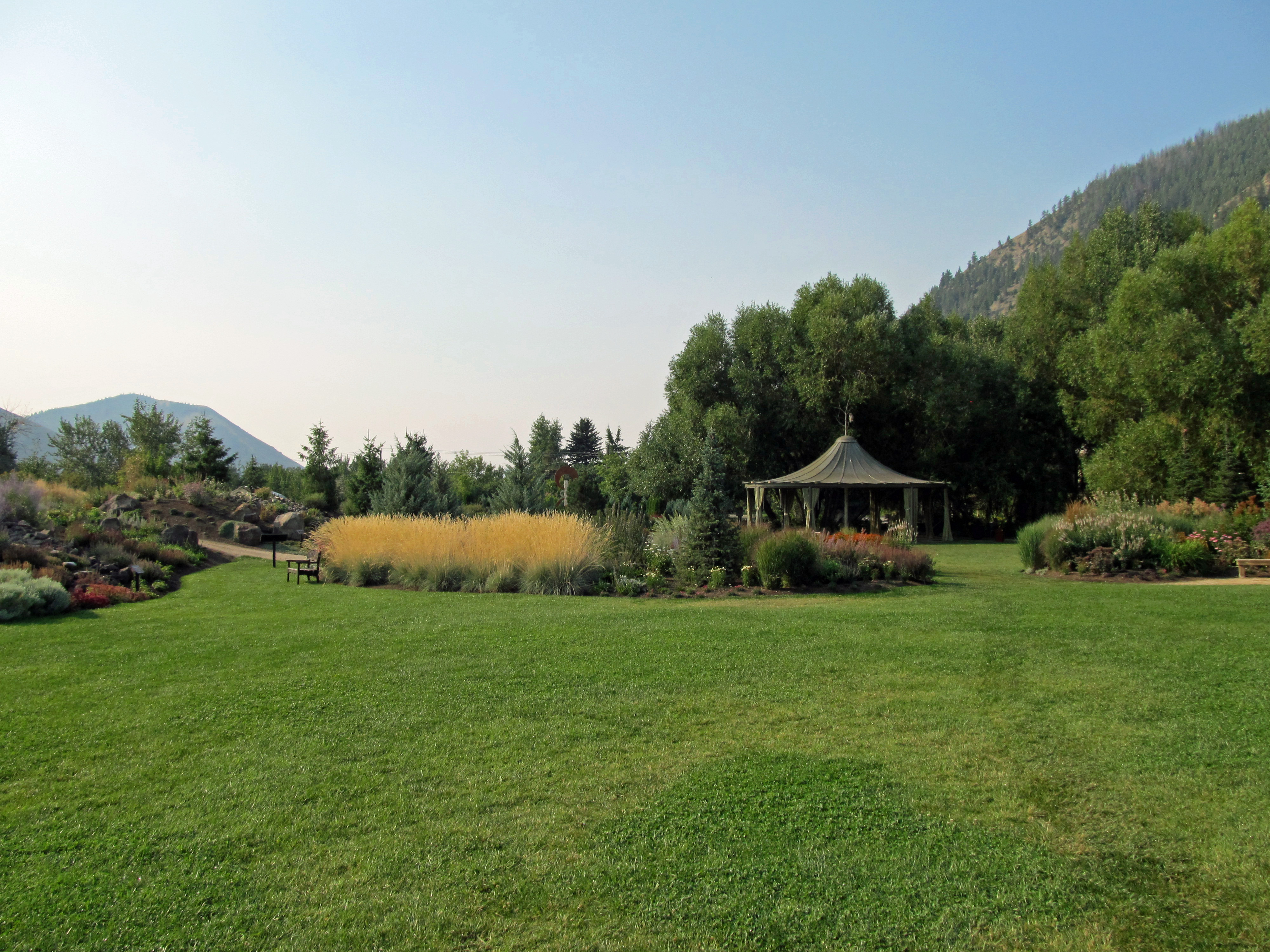
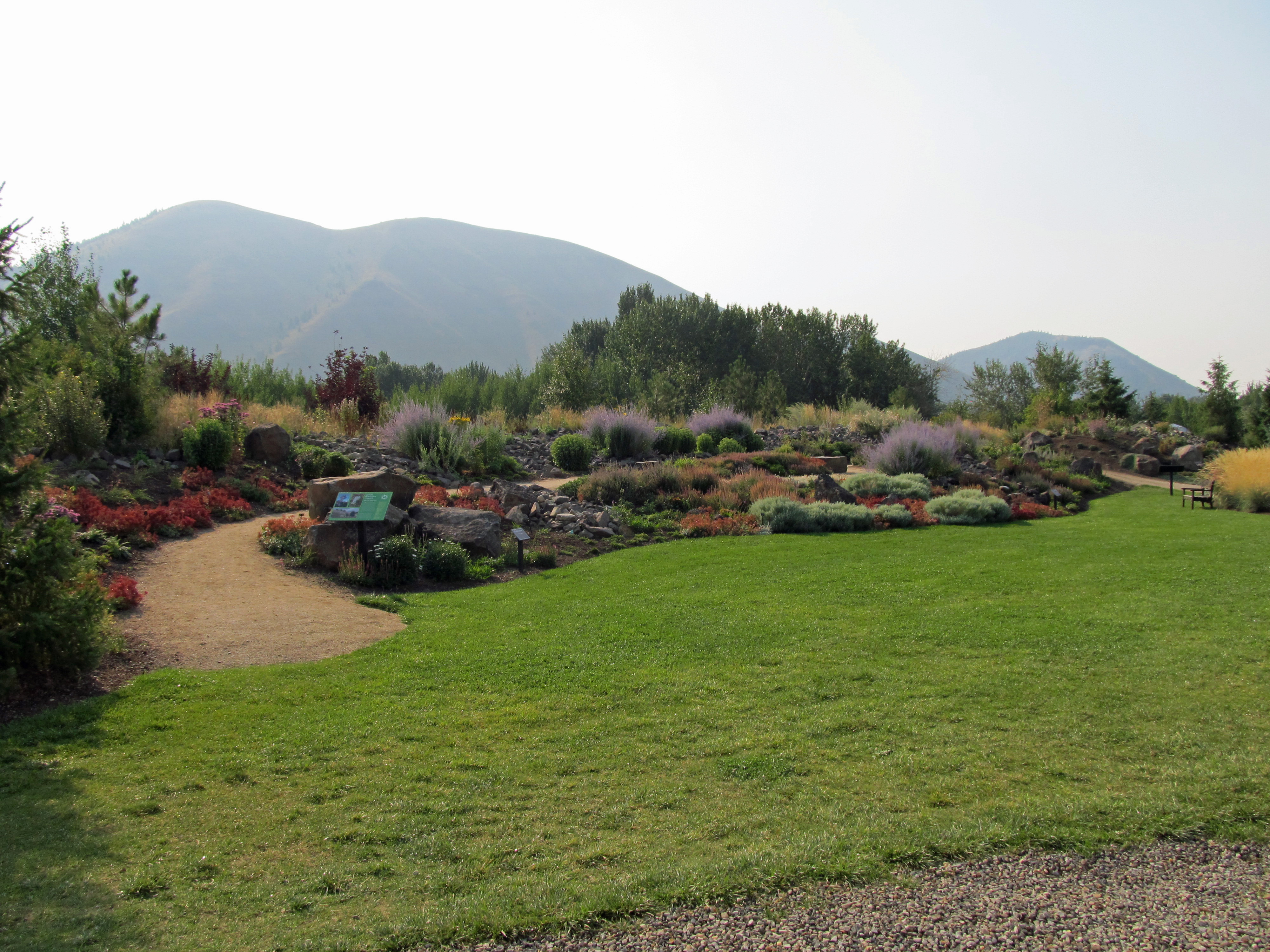
It may only be a two and a half hour drive from my house, but until last week I had never visited Sawtooth Botanical Garden in Ketchum, Idaho. The garden is probably not in its prime in the middle of August, but I happened to be in the area so I had to check it out. It’s a small garden – about 5 acres – but I found the space to be well used and full of interesting plants and features. Walking through meandering pathways and around a series of berms, it is easy to get the impression that the garden is larger than it actually is. There were a few areas in obvious need of attention, but as an employee of a non-profit public garden myself, I understand the challenges of maintaining a garden with limited resources. So putting minor issues aside, I thought the garden looked beautiful and I greatly enjoyed my wander through it.

Sawtooth Botanical Garden is in its 11th year. Its mission is to “showcase native and cultivated plants that flourish at high altitude” and to “foster environmental stewardship” of the “region’s unique beauty” by offering “education, events, displays, and plant collections.” Read more about its mission and history here. Brief descriptions of the areas within the garden can also be found on the garden’s website. The interpretive signage describing each area in the garden was well done and one of the highlights of my visit. I didn’t stay long, but I definitely plan on visiting again in the near future. If you ever find yourself in the Wood River Valley, I highly recommend stopping by.

Central area of the garden featuring perennial beds and the Ellen Long Garden Pavillion

Central area of the garden featuring the perennial beds and the Ellen Long Garden Pavillion

Berms in the Alpine Garden with pathway passing through

Berms in the Alpine Garden with pathway passing through

Water feature in the Garden of Infinite Compassion, built in honor of the Dali Lama's visit to the Wood River Valley

Water feature in the Garden of Infinite Compassion, built in honor of the Dalai Lama’s visit to the Wood River Valley several years ago

Alpine strawberry (Fragaria sp.)

Alpine strawberry (Fragaria sp.)

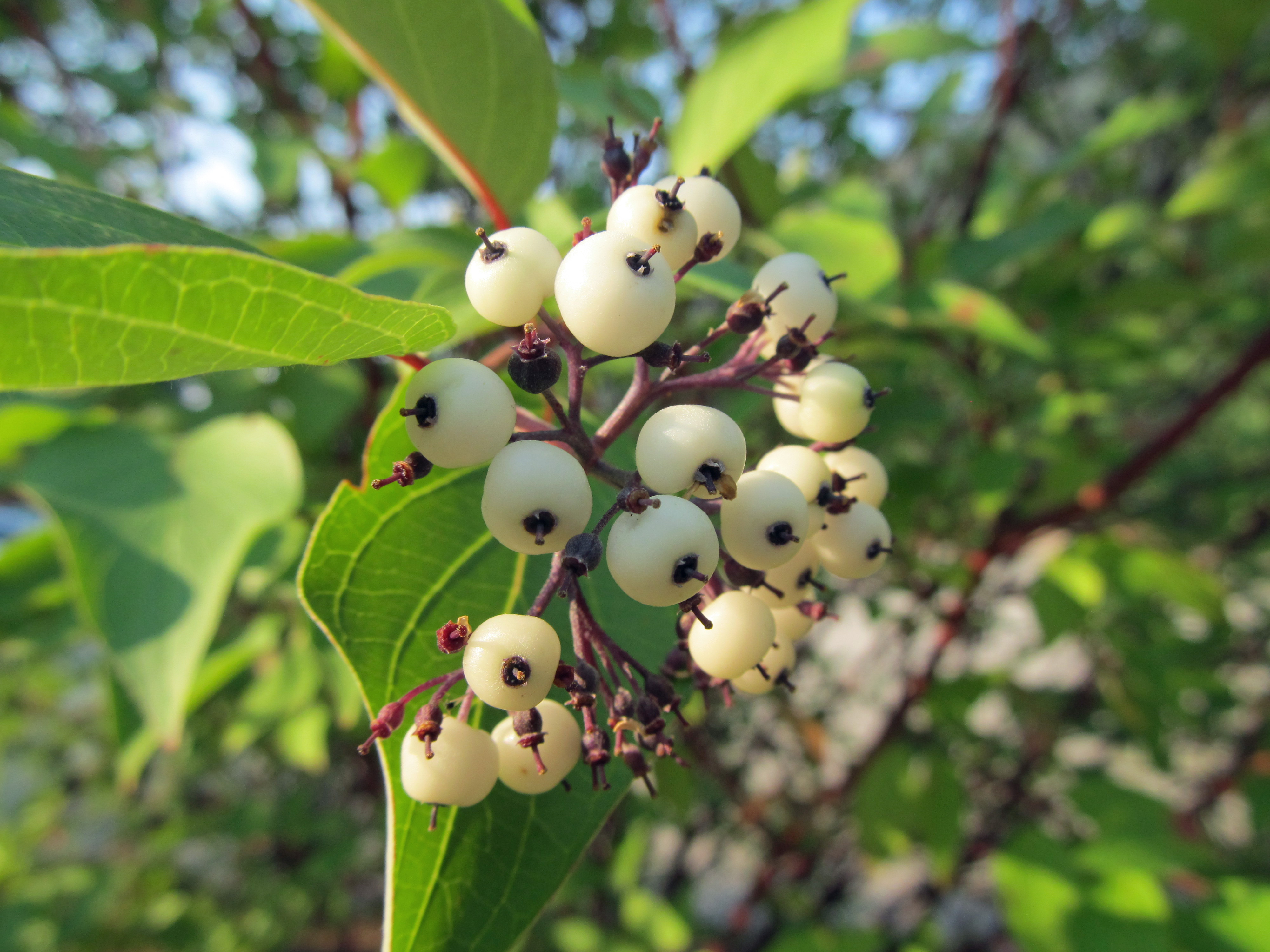
Redtwig dogwood (Cornus stolonifera 'Baileyi')

The fruits of red twig dogwood (Cornus sericea ‘Baileyi’)

cinquefoil

Spring cinquefoil (Potentilla neumanniana)

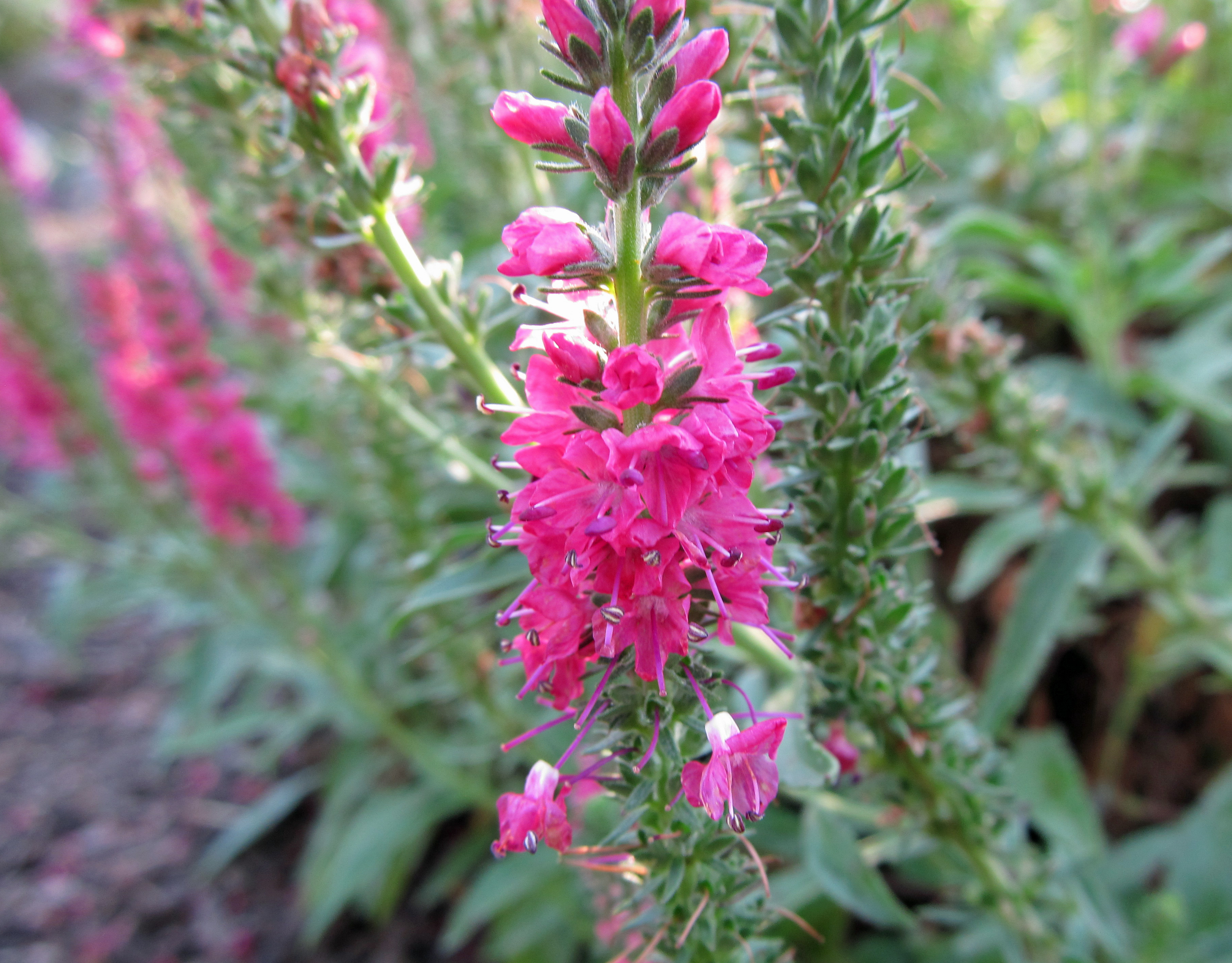
Spiked speedwell (Veronica spicata 'Red Fox')

Spiked speedwell (Veronica spicata ‘Red Fox’)

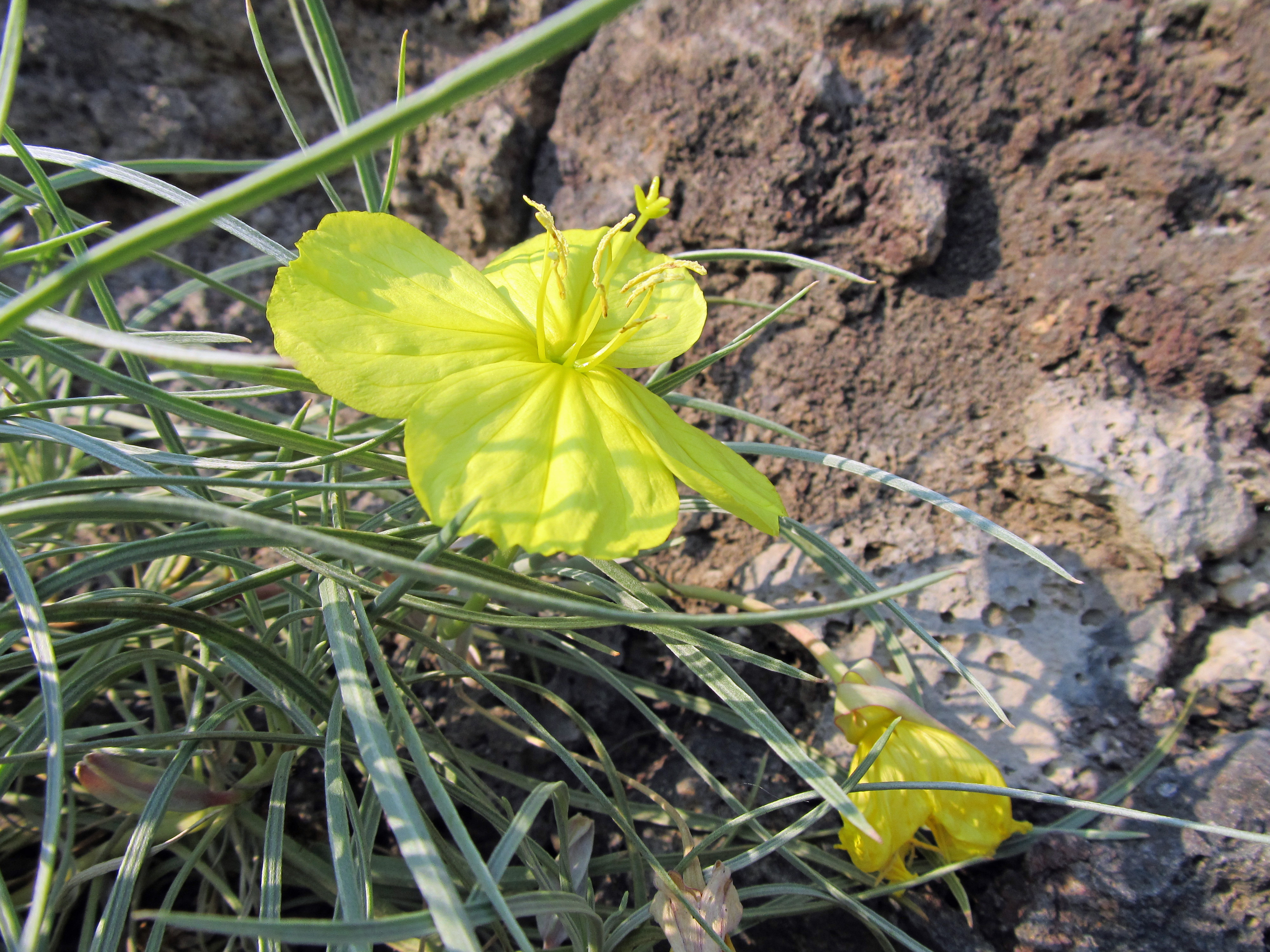
Evening primrose (Oenothera sp.)

Evening primrose (Oenothera sp.)


Ethnobotany: White Man’s Foot, part two

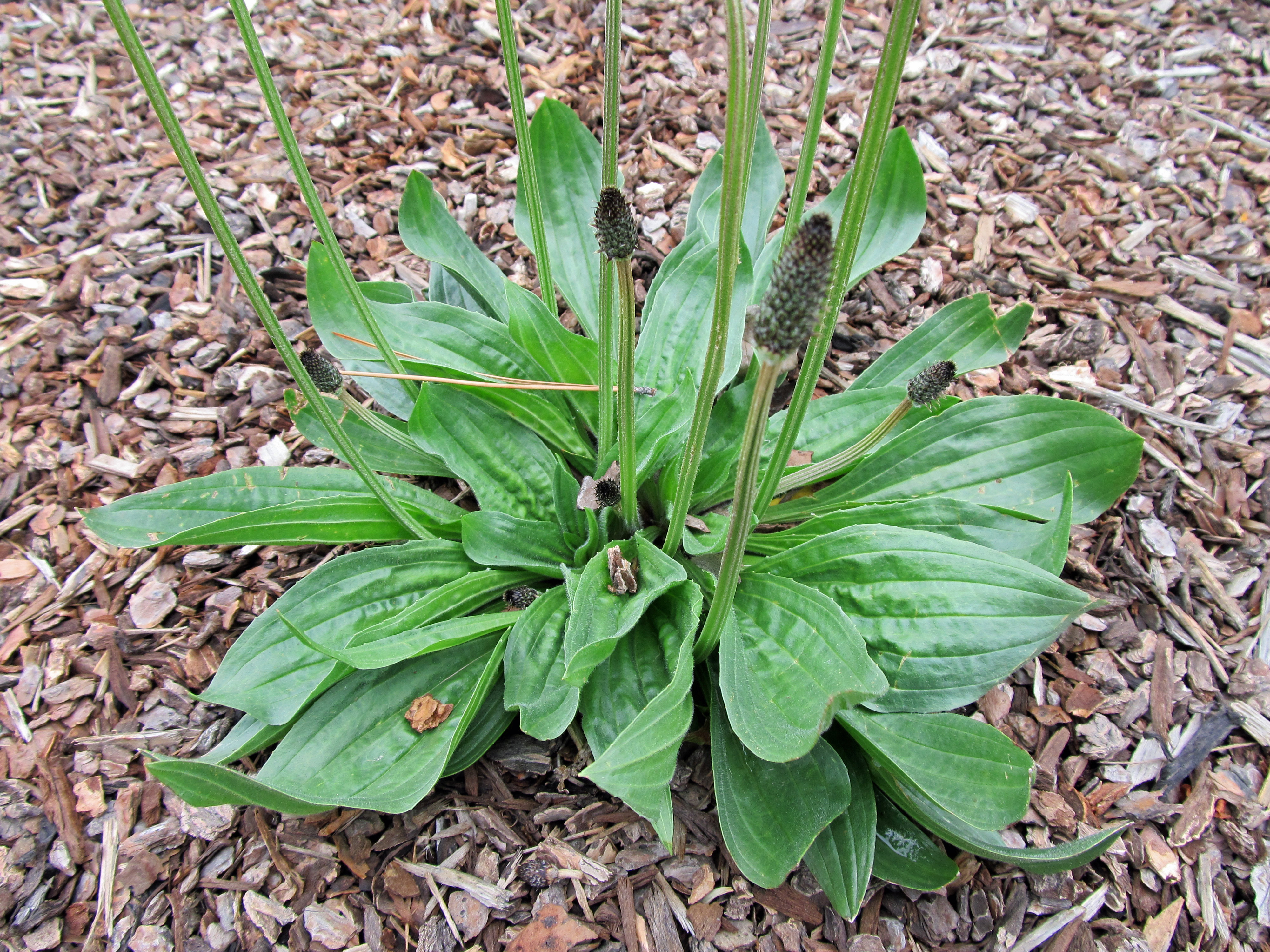
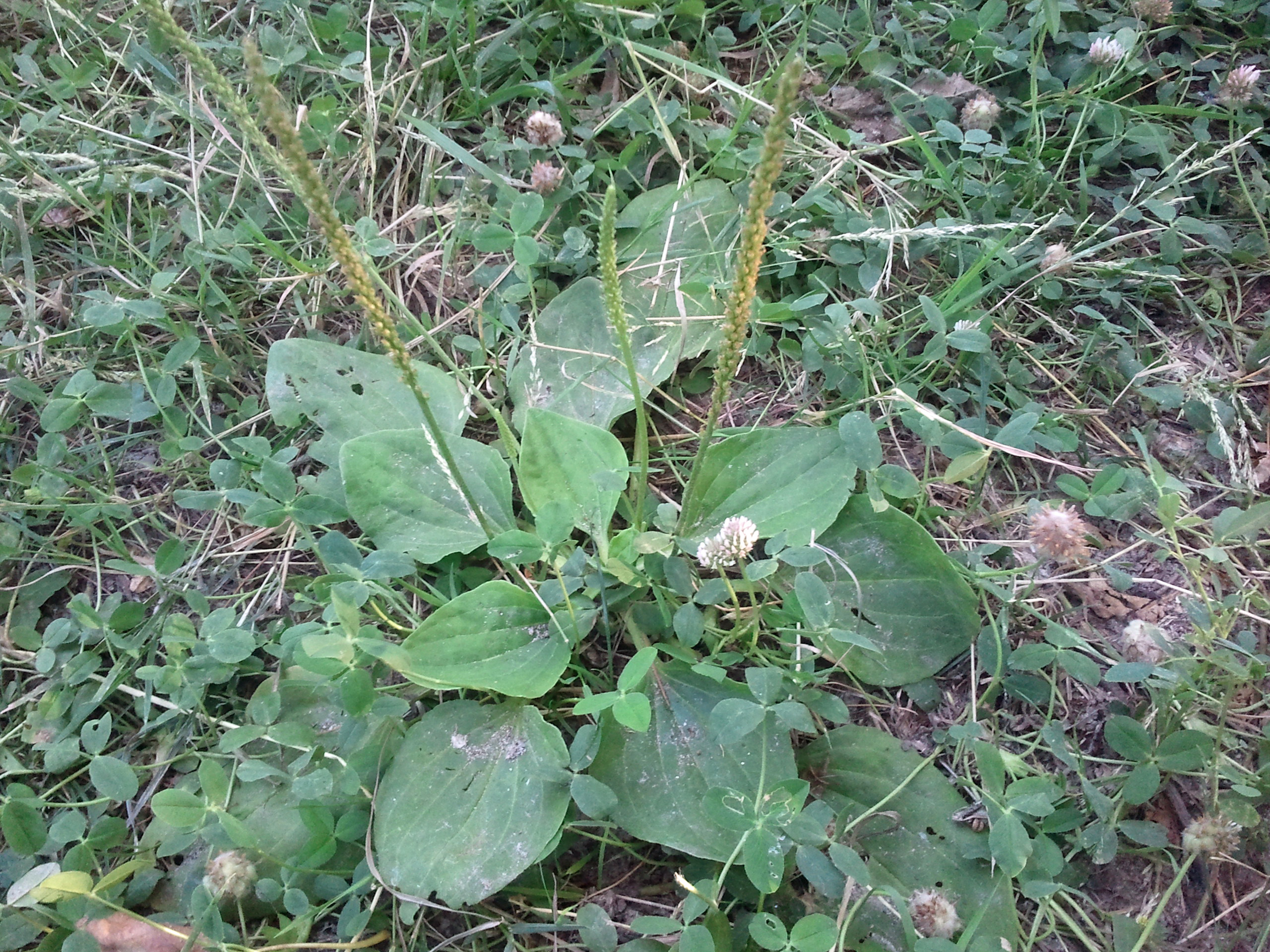
Earlier this year, as part of the ethnobotany series, I wrote about plantains (Plantago spp.), of which at least one species is commonly referred to as white man’s foot (or some version of that). Since writing that post, I happened upon a couple of other sources that had interesting and informative things to say about plantains. Rather than go back and update the original post, I decided to make a part two. Hopefully, you find this as interesting as I do. If nothing else, the sources themselves are worth checking out for the additional, fascinating information they contain about all sorts of plants.

plantago_boise capitol building

From The Book of Field and Roadside by John Eastman

Concerning their cosmopolitan nature: “Although both plantains [P. major and P. lanceolata] are Eurasian natives, they have long been thoroughly naturalized global residents; the designation ‘alien’ applies to them in the same sense that all white and black Americans are alien residents.”

In which I learned a new term: “Both species are anthropophilic (associate with humans); they frequent roadsides, parking areas, driveways, and vacant lots, occurring almost everywhere in disturbed ground. Where one species grows, the other can often be found nearby.”

Medicinal and culinary uses according to Eastman: “Plantains have versatile curative as well as culinary properties; nobody need go hungry or untreated for sores where plantains grow. These plants contain an abundance of beta carotene, calcium, potassium, and ascorbic acid. Cure-all claims for common plantain’s beneficial medical uses include a leaf tea for coughs, diarrhea, dysentery, lung and stomach disorders, and the root tea as a mouthwash for toothache. … Their most frequent and demonstrably effective use as a modern herb remedy, however, is as a leaf poultice for insect bites and stings plus other skin irritations. The leaf’s antimicrobial properties reduce inflammation, and its astringent chemistry relieves itching, swelling, and soreness.”

Even the seeds are “therapeutic”: “The gelatinous mucilage surrounding seeds can be readily separated, has been used as a substitute for linseed oil. Its widest usage is in laxative products for providing bulk and soluble fiber called psyllium, mainly derived from the plantain species P. ovata and leafy-stemmed plantain (P. psyllium), both Mediterranean natives.”

Plantain’s “cure-all reputation continues” today: Claims range from a homeopathic cancer remedy to a stop-smoking aid, “supposedly causing tobacco aversion.”

Claims of the healing properties of plantains abound in literature: “John the Baptist, in the lore of the saints, used it as a healing herb; Anglo Saxon gardeners called it the ‘mother of herbs.’ Plantain is ‘in the command of Venus and cures the head by antipathy to Mars,’ according to 17th century English herbalist-astrologist Nicholas Culpeper. Plantains also bear frequent mention in the works of Chaucer and Shakespeare.”

The worst thing plantains have to offer according to Eastman: “the airborne pollen they shed in large amounts, contributing to many hay fever allergies.”

Illustration by Amelia Hansen from The Book of Field and Roadside by John Eastman

Illustration by Amelia Hansen from The Book of Field and Roadside by John Eastman

From Weeds: In Defense of Nature’s Most Unloved Plants by Richard Mabey

Mabey’s too-good-to-paraphrase overview of plantain: “Plantain, ‘the mother or worts,’ is present in almost all the early prescriptions of magical herbs, back as far as the earliest Celtic fire ceremonies. It isn’t clear why such a drab plant – a plain rosette of grey-green leaves topped by a flower spike like a rat’s-tail – should have had pre-eminent status. But its weediness, in the sense of its willingness to tolerate human company, may have had a lot to do with it. The Anglo-Saxon names ‘Waybroad’ or ‘Waybread’ simply mean ‘a broad-leaved herb which grows by the wayside.’ This is plantain’s defining habit and habitat. It thrives on roadways, field-paths, church steps. In the most literal sense it dogs human footsteps. Its tough, elastic leaves, growing flush with the ground, are resilient to treading. You can walk on them, scuff them, even drive over them, and they go on living. They seem to actively prosper from stamping, as more delicate plants around them are crushed. The principles of sympathetic magic, therefore, indicated that plantain would be effective for crushing and tearing injuries. (And so it is, to a certain extent. The leaves contain a high proportion of tannins, which help to close wounds and halt bleeding.)”

On the inclusion of plantains in Midsummer’s Eve rituals: “On Midsummer’s Eve, great bonfires were lit in the countryside, and bundles of wild herbs thrown on them. Most of the plants were agricultural weeds, including St. John’s-wort, corn marigold, corn poppy, mayweed, mugwort, ragwort, plantain, and vervain.”

More about Midsummer’s Eve and the “future-foretelling powers” of this “divination herb, stretching sight into the future”: “On Midsummer’s Eve in Berwickshire, the flowering stems were employed by young women in a charm which would predict whether they would fall in love. It was a delicate, almost erotic process in which the sexual organs of the plantain were used as symbolic indicators. Two of the ‘rat’s-tail’ flowering spikes were picked, and any visible purple anthers removed. The two spikes were wrapped in a dock leaf and placed under a stone. If, by the next day, more anthers had risen erect from the flowering spikes, loves was imminent.”

"Greater - or 'ratstail' - plantain had by this time been nicknamed 'Englishman's foot' by the Native Americans, who had witnessed its prodigious advance in the white man's wake." - Richard Mabey, Weeds: In Defense of Nature's Most Unwanted Plants

“Greater – or ‘ratstail’ – plantain had by this time been nicknamed ‘Englishman’s foot’ by the Native Americans, who had witnessed its prodigious advance in the white man’s wake.” – Richard Mabey, Weeds: In Defense of Nature’s Most Unwanted Plants

A friendly reminder: If you like what you see here, please share it with your friends and family by whatever means you prefer. Questions, comments, and feedback are always welcome. Comment below or contact me directly via the Contact page. Follow Awkward Botany on tumblr and twitter. After you’ve done all that, step away from the screen, go outside, and explore.

What Shall We Do About Invasive Species?

I think about invasive species a lot. This blog doesn’t really reflect that though. I have been avoiding a deep dive into the subject mainly because there is so much to say about it and I don’t really want this to become “the invasive species blog.” Admittedly, I’m also trying to avoid controversy. Some people have very strong opinions about invasive species, and I don’t always agree. But then an article entitled Taking the long view on the ecological effects of plant invasions appeared in the June 2015 issue of American Journal of Botany. Intrigued by the idea of “taking the long view,” I read the article and decided that now is as good a time as any to start exploring this topic in greater depth.

However, before getting into the article, we should define our terms. “Invasive species” is often used inappropriately to refer to any species that is found outside of its historic native range (i.e. the area in which it evolved to its present form). More appropriate terms for such species are “introduced,” “alien,” “exotic,” “non-native,” and “nonindigenous.” The legal definition of an invasive species (according to the US government) is “an alien species that does or is likely to cause economic or environmental harm or harm to human health.” Even though this definition specifically refers to “alien species,” it is possible for native species to behave invasively.

These terms refer not just to plants but to all living organisms. The term “noxious weed,” on the other hand, is specific to plants. A noxious weed is a plant species that has been designated by a Federal, State, or county government as “injurious to public health, agriculture, recreation, wildlife, or property.” A “weed” is simply a plant that, from a human perspective, is growing in the wrong place, and any plant at any point could be determined to be a weed if a human says so. (I’ll have more to say about human arrogance later in the post.)

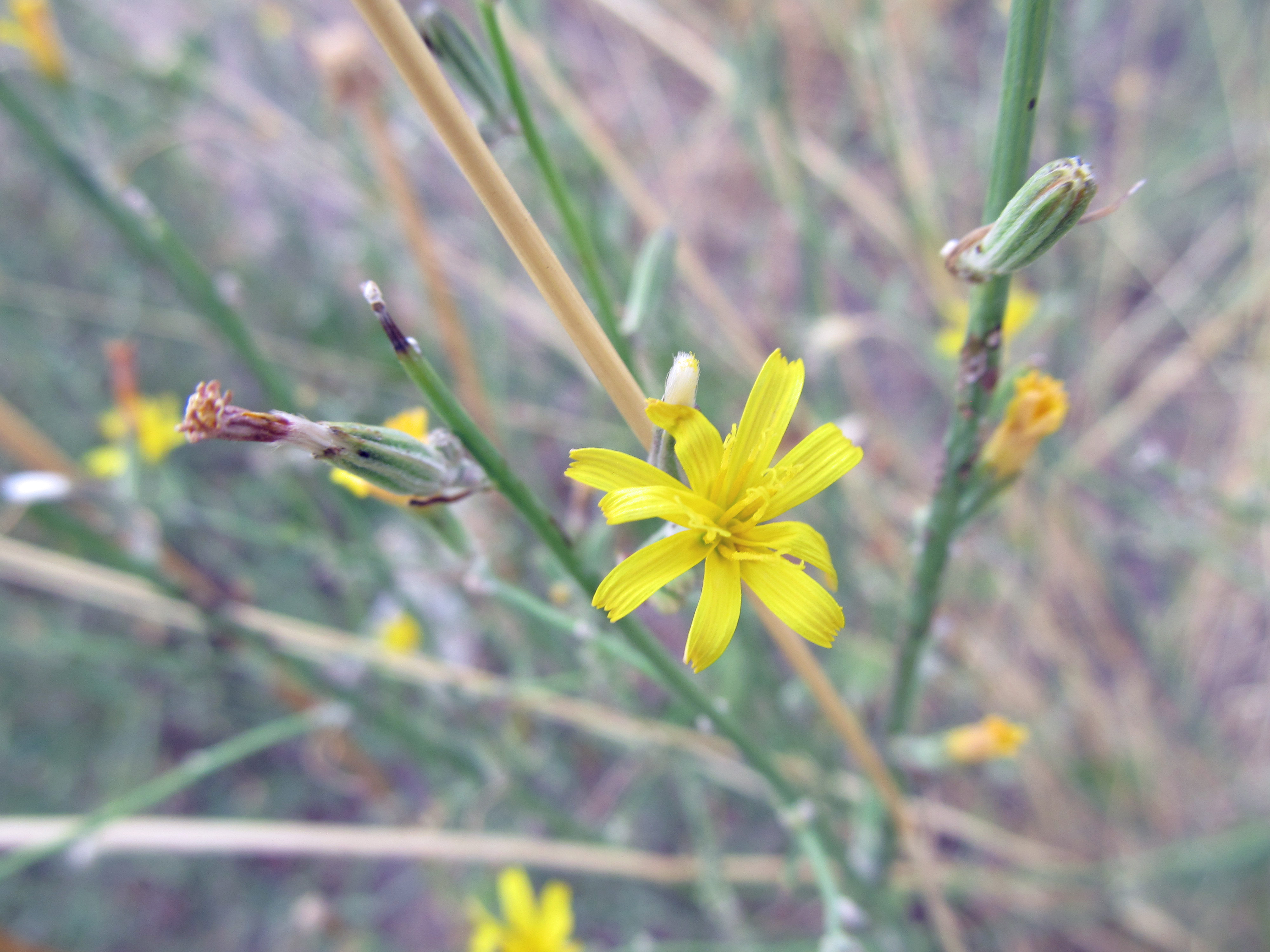
Rush skeletonweed (Chondrilla juncea) - labeled a noxious weed in Idaho

Rush skeletonweed (Chondrilla juncea) – labeled a noxious weed in Idaho

The authors of the AJB article (S. Luke Flory and Carla M. D’Antonio) begin by clarifying that “most introduced species are not problematic.” Those that are, however, can “cause significant ecological and economic damage.” This damage is well documented, and it is the reason why billions of dollars are spent every year in the battle against invasive species. But there is a dearth in our research: “less is known about how ecological effects of invasions change over time.” The effects of invasive species could “increase, decrease, or be maintained over decades,” and “multiple community and ecosystem factors” will determine this. For this reason, the authors are calling for “concentrated efforts to quantify the ecological effects of plant invasions over time and the mechanisms that underlie shifting dynamics and impacts.” Armed with this kind of information, managers can better direct their efforts towards invasive species determined to be “the most problematic.”

The authors go on to briefly explain with examples why an invasive species population may decline or be maintained over time, highlighting selected research that demonstrates these phenomena. Research must continue with the aim of improving our understanding of the long term effects of plant invasions. The authors acknowledge that this “will require carefully designed experiments,” “patient and persistent research efforts,” and significant amounts of money. However, they are convinced that through a widespread collaborative effort it can be done. They encourage researchers to deposit data obtained from their research in open source online repositories so that future meta-analyses can be conducted. The information available in these online repositories can be used to develop management plans and help predict “future problematic invasions.”

Considering the amount of time and resources currently spent on confronting invasive species, the approach proposed by the authors of this article is quite reasonable. It seems absurd to continue to battle a problematic species that will ultimately be brought down to more manageable levels by natural causes. It also seems absurd to battle against a species that is essentially here to stay.

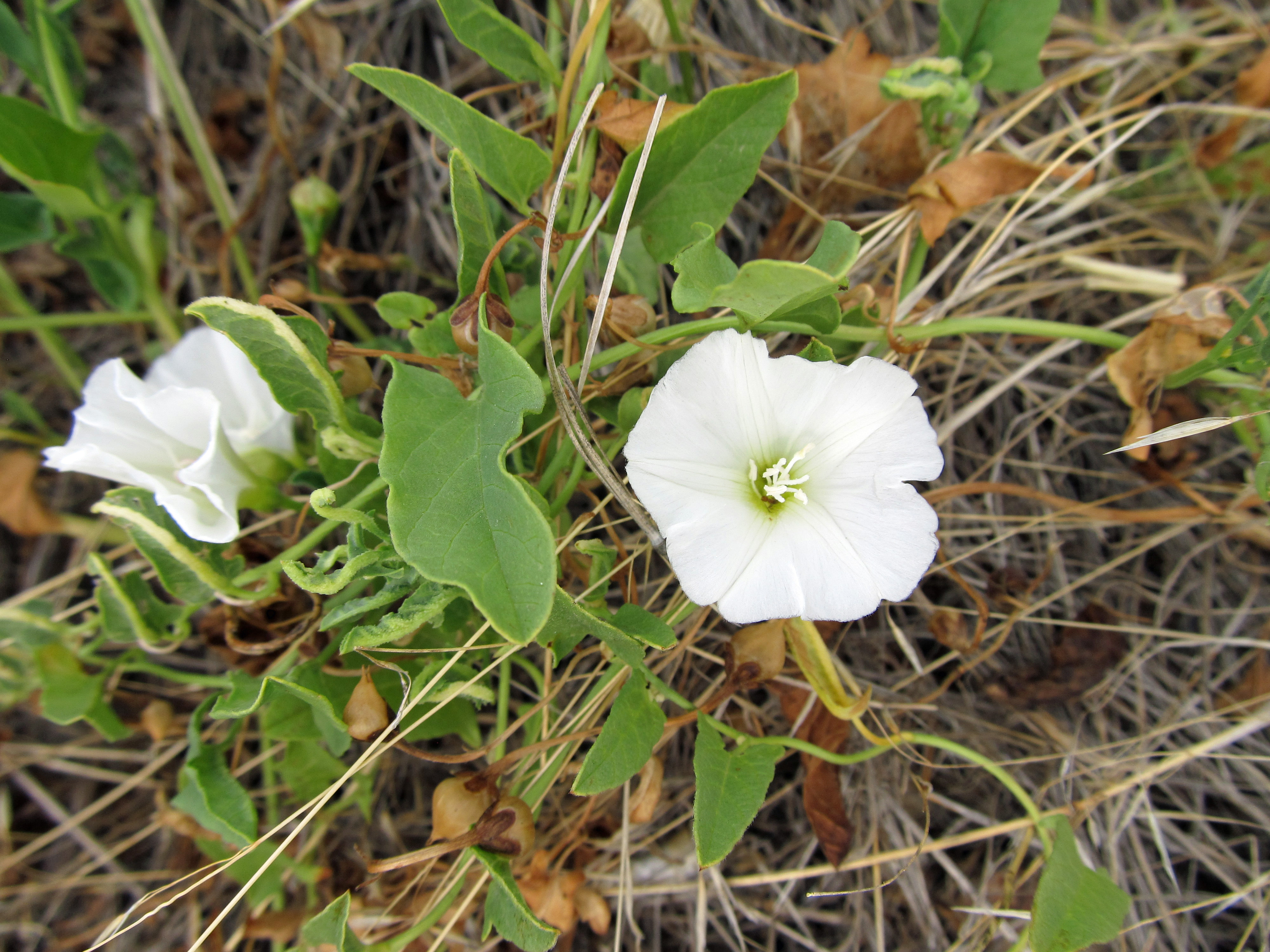
Field bindweed (Convulvulus arvensis) - labeled a noxious weed in Idaho

Field bindweed (Convulvulus arvensis) – labeled a noxious weed in Idaho

And that brings me to the point in which I make enemies. Take a look at the terms defined earlier. When we talk about introduced species, we are referring to introductions by humans, whether purposeful or accidental. An “alien” species introduced to a new location by wind, water, or animal (other than human) would be considered a natural introduction, right? If that species becomes established in its new location, it would simply be expanding its range. If a human brought it there, again whether purposefully or accidentally, it would be considered an exotic indefinitely.

Humans have been moving species around since long before we became the humans we are today in the same way that a migratory bird might move a species from one continent to another. At what point during our evolution did our act of moving species around become such a terrible thing?

I will concede that our species has become an incredibly widespread species, able to move about the planet in ways that no other species can. We also have technological advances that no other species comes close to matching. In the time that our species has become truly cosmopolitan, the amount of species introductions that we have participated in has increased exponentially. Leaving ecological destruction in our wake is kind of our modus operandi. I don’t want to make excuses for that, but I also don’t see it unfolding any other way. Give any other species the opportunities we had, and they probably would have proceeded in the same manner. Just consider any of the most notorious invasive species today – “opportunist” is their middle name.

More and more, as we are able to see what we have done, we are making efforts to “fix it.” But how de we rewind time? And if we could, when do we rewind back to? And how do we not “ruin it” again? The earth does not have a set baseline or a condition that it is supposed to be in at any given time. The earth just is. It is operating in a state of randomness, just like everything else in the universe. Any idea of how the earth must look at any given time is purely philosophical – conceived of by humans. I’m not saying that we shouldn’t try to repair the damage, but we should acknowledge that the repairs we’re trying to make are largely for the perpetuation of our own species. Yeah, we’ve developed a soft spot for other species along the way (thankfully), but ultimately we’re just trying to maintain. The earth, on the other hand, would be fine without us.

So, what shall we do about invasive species? I’m not entirely sure. The only thing I’m certain of is that I will continue to ruminate on them and potentially bore you with more blog posts in the future. Until next time…

Puncturevine (Tribulus terrestris) - labeled a noxious weed in Idaho

Puncturevine (Tribulus terrestris) – labeled a noxious weed in Idaho

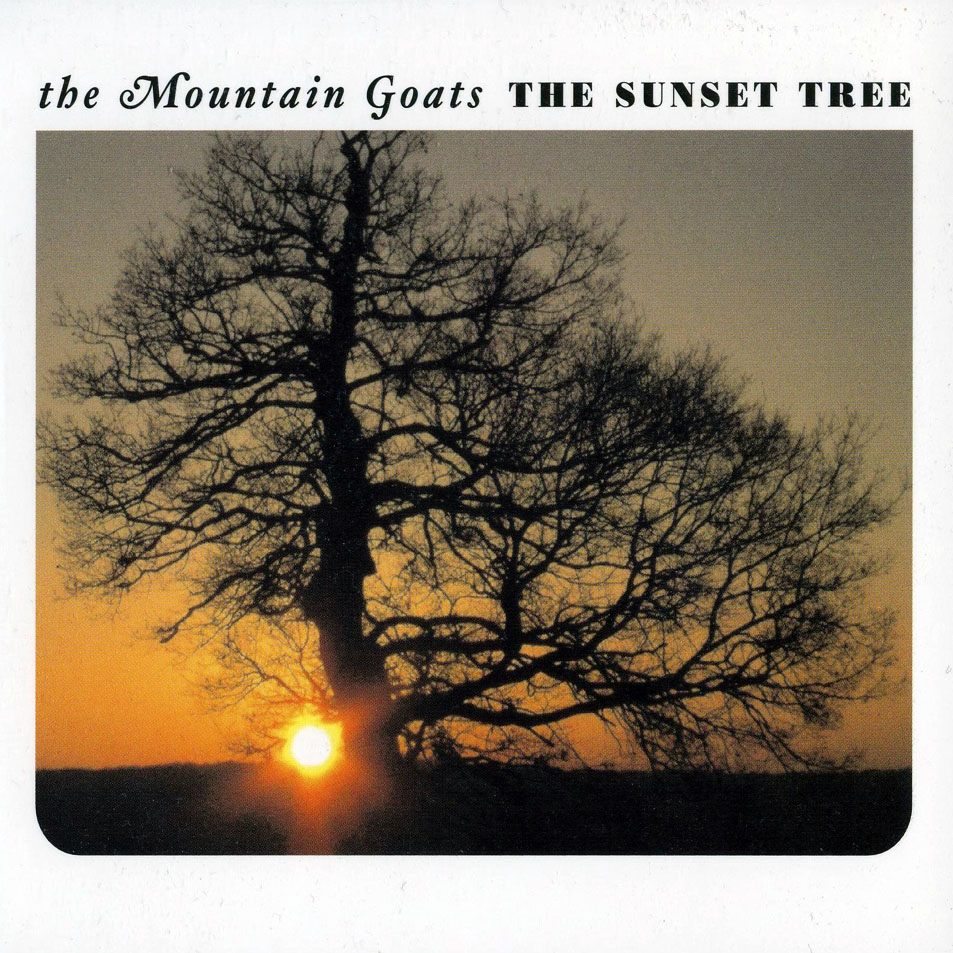
Botany in Popular Culture: The Sunset Tree by the Mountain Goats

My obsession with plants means that I see botany everywhere – in the music I listen to, the shows I watch, the books I read, whatever. Just a fleeting mention of something plant related in any type of media will catch my attention, no matter how ancillary it is to the major themes. And that is the impetus behind this series of posts about botany in popular culture. Well that and, believe it or not, I do enjoy many non-plant related things, and this gives me an excuse to write about those things on a plant-centric blog.

TheSunsetTreeFrontCover

The Mountain Goats are a folk rock band formed by John Darnielle in 1991. It could be said that John Darnielle is synonymous with the Mountain Goats, as Darnielle is the chief songwriter and at times has been the only member of the band. The Sunset Tree is the Mountain Goats ninth studio album and only the second album featuring songs that are primarily autobiographical. The album that preceded The Sunset Tree, entitled We Shall All Be Healed, was about Darnielle’s teenage years as a methamphetamine user. The Sunset Tree describes growing up with an abusive stepfather. Heavy topics are kind of the Mountain Goats’ thing.

Darnielle’s lyrics are highly poetic and often nebulous – the listener is left to fill in the gaps. Thus, the storytelling in The Sunset Tree isn’t always direct. However, the scene begins to unfold in the second track, “Broom People,” as Darnielle seems to be describing his childhood living conditions: “all sorts of junk in the unattached spare room,” “dishes in the kitchen sink,” “floor two foot high with newspapers,” “white carpet thick with pet hair.” He also sings of “friends who don’t have a clue; well meaning teachers,” and how he would “write down good reasons to freeze to death in [his] spiral ring notebook.”

“Dance Music” reveals more as Darnielle at 5 or 6 years old is getting “indications that there’s something wrong.” As he sits watching TV, his stepfather is yelling at his mom, then “launches a glass across the room, straight at her head, and [Darnielle] dashes upstairs to take cover.” He turns on his “little record player on the floor” and makes a discovery: “so this is what the volume knob is for.”

A similar scene unfolds in “Hast Thou Considered the Tetrapod,” only this time Darnielle is the victim. He arrives home to find his stepfather asleep, so he sneaks up to his room knowing that if he awakes his stepfather, “there will be hell to pay.” But he does wake up, and he bursts into Darnielle’s room to find him sitting with his headphones on oblivious. The beating begins, and Darnielle sings, “then I’m awake and I’m guarding my face / hoping you don’t break my stereo / because it’s the one thing that I couldn’t live without / and so I think about that and then I sorta black out.” Darnielle describes being “held under these smothering waves” by his stepfather’s “strong and thick-veined hand.” But he remains hopeful that eventually – “one of these days” – he will “wriggle up on dry land.”
That sense of hopefulness can be found throughout the album. In “This Year,” Darnielle is a 17 year old longing to break free. The chorus repeats resolutely: “I am gonna make it through this year if it kills me.” In “Up the Wolves,” he assures us, “there’s gonna come a day when you feel better / you’ll rise up free and easy on that day.”

But there is obviously some anger and frustration expressed as well. Later in “Up the Wolves,” Darnielle sings that he’s going to get himself in “fighting trim” and then makes a series of threats: “I’m gonna bribe the officials, I’m gonna kill all the judges, It’s gonna take you people years to recover from all of the damage.” The song “Lion’s teeth” is a revenge fantasy. Darnielle envisions “the king of the jungle asleep in his car,” and since “nobody in this house wants to own up to the truth,” he takes it upon himself to wrestle the beast. He reaches into the lion’s mouth, grabs onto “one long sharp tooth,” and holds on. The chaos that ensues makes him realize he is “gonna regret the day [he] was born,” but since there is no good way to end it, he is determined to “hold on for dear life.”
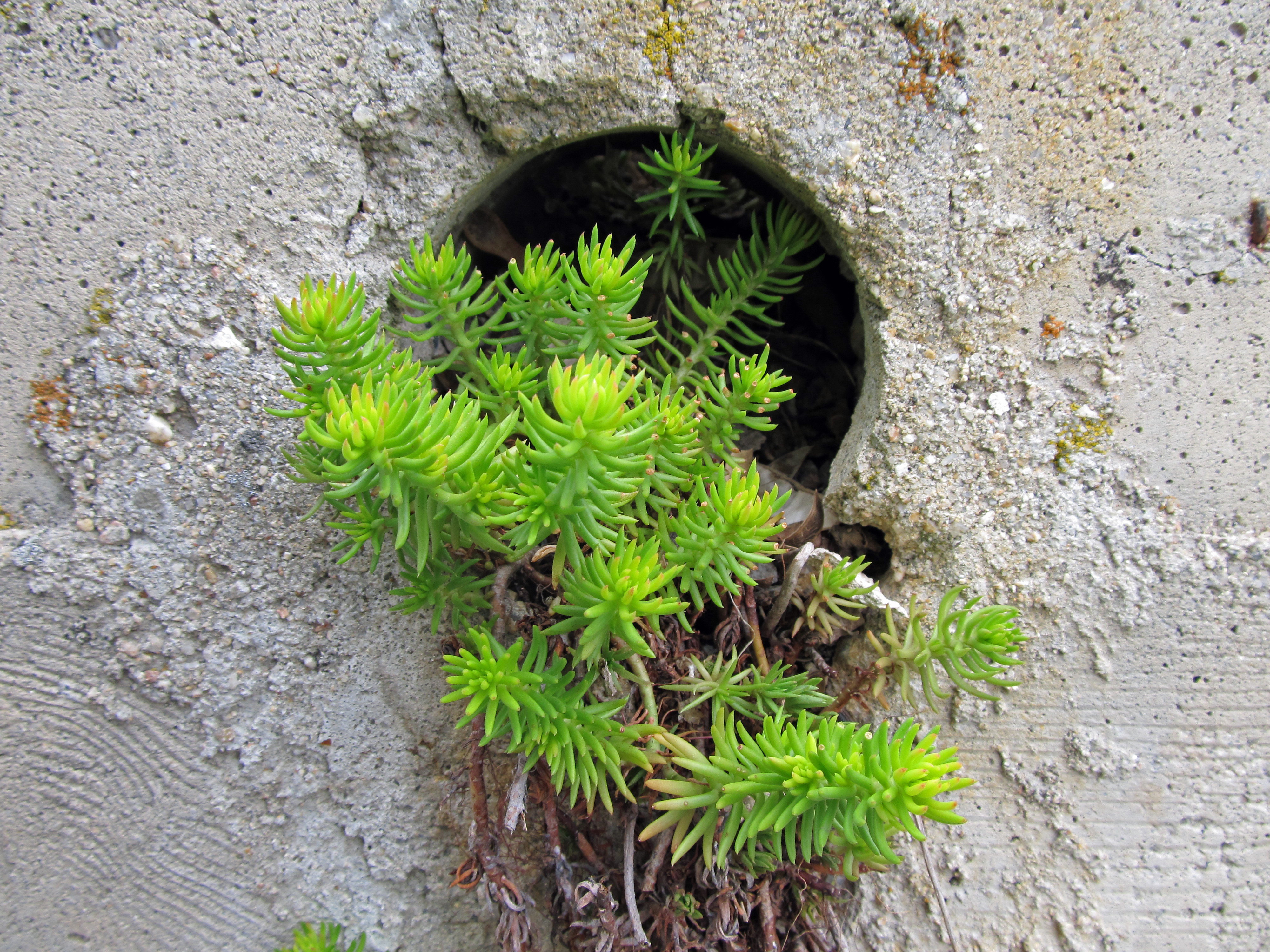
The mood lightens during the last two tracks of the album. They seem to be about forgiveness, understanding, and letting go. In “Pale Green Things,” Darnielle tells of hearing from his sister that their stepfather had died “at last, at last.” Upon hearing the news, one of the first memories Darnielle has is of he and his stepfather going to a racetrack to watch horses run. In one scene he recalls looking down at the cracked asphalt and “coming up through the cracks, pale green things.”

It’s a poignant ending to an album full of dark memories. It’s also fitting, as it adds to the bits of hope scattered throughout. Seeing plants push up through concrete or sprout up in detritus collected in gutters and corners of rooftops or even just up out of the dirt in the middle of summer when the ground is hot and bone dry, all of these moments are testaments to the tenacity of living things. Life can, rightfully so, be described as fleeting, short, and fragile – easily snuffed out and erased. But the struggle for life is also fierce, enduring, and relentless. Darnielle’s story is one example of that.

sedums in a hole 2

The “pale green things” that Darnielle saw also symbolize the struggles of the little guy, the underdog, the downtrodden – a tiny, fragile plant pushing its way past solid, suffocating asphalt. It’s a common theme in Darnielle’s music – his latest album is called Beat the Champ, for example. His song “Wild Sage” is also a sign of that ongoing theme.

I work with plants all day, and I am continually awed by them. Daily I am stopped in my tracks, practically forced by some plant to admire one or more of the fascinating features it displays. It doesn’t surprise me that Darnielle would use “pale green things” to express hope and resiliency. Every day I find some kind of hope in plants, that whatever tough thing we are going through, we can one day “wriggle up on dry land” – pale green things pushing up through asphalt, wild sage growing in the weeds.

Poisonous Plants: Castor Bean

A series of posts about poisonous plants should not get too far along without discussing what may be the most poisonous plant in the world – one involved in high and low profile murders and attempted murders, used in suicides and attempted suicides, a cause of numerous accidental deaths and near deaths, developed for use in biological warfare by a number of countries (including the United States), and used in bioterrorism attacks (both historically and presently). Certainly, a plant with a reputation like that is under tight control, right? Not so. Rather, it is widely cultivated and distributed far beyond its native range – grown intentionally and used in the production of a plethora of products. In fact, products derived from this plant may be sitting on a shelf in your house right now.

Ricinus communis, known commonly as castor bean or castor oil plant, is a perennial shrub or small tree in the spurge family (Euphorbiaceae) and the only species in its genus. It is native to eastern Africa and parts of western Asia but has since been spread throughout the world. It has naturalized in tropical and subtropical areas such as Hawaii, southern California, Texas, Florida, and the Atlantic Coast. It is not cold hardy, but is commonly grown as an ornamental annual in cold climates. It is also grown agriculturally in many countries, with India, China, and Mozambique among the top producers.

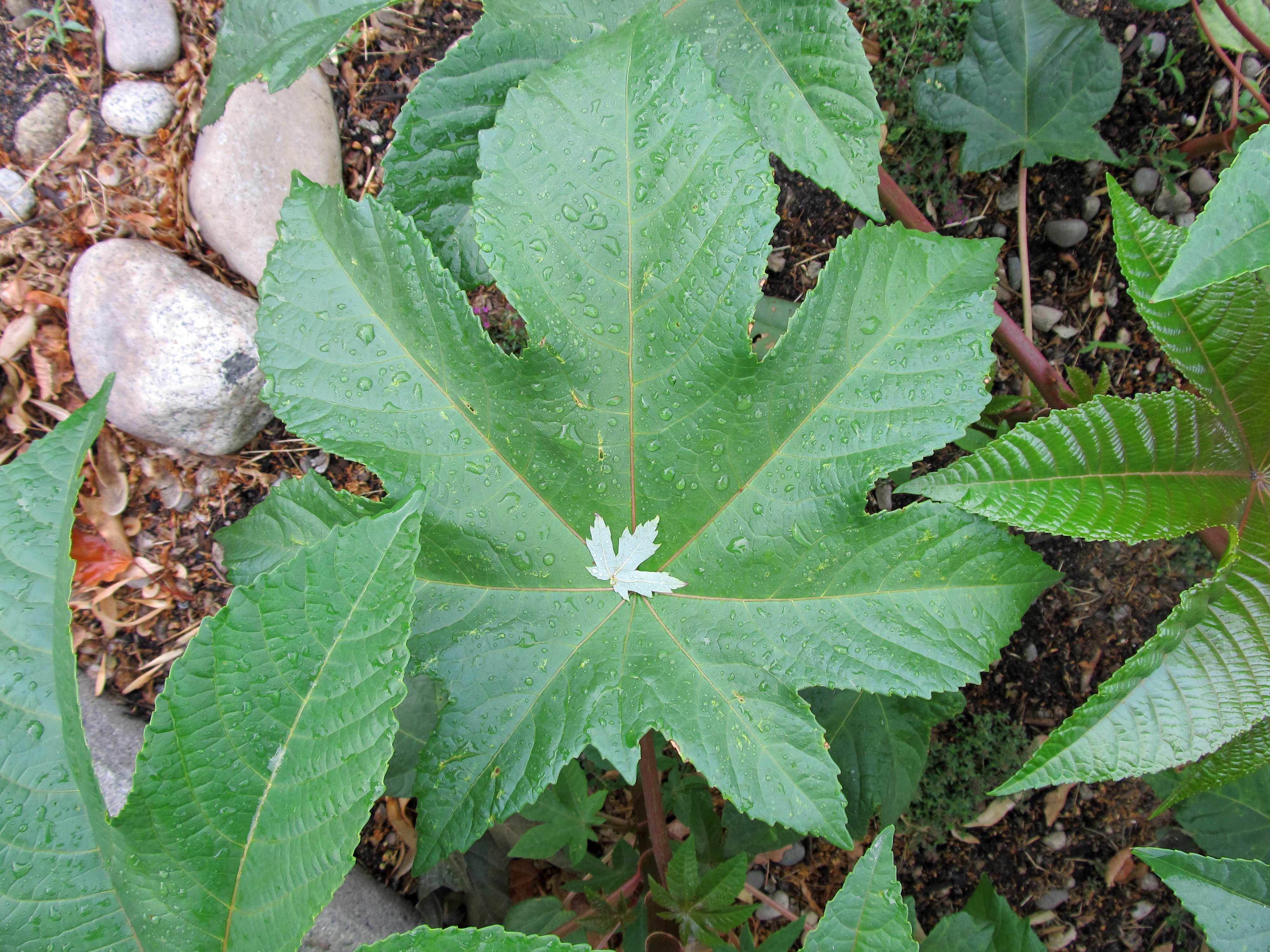
Silver maple leaf nestled in the center of a castor bean leaf.

Silver maple leaf nestled in the center of a castor bean leaf.

Castor bean has large palmately lobed leaves with margins that are sharply toothed. Leaves are deep green (sometimes tinged with reds or purples) with a red or purple petiole and can reach up to 80 centimeters (more than 30 inches) across. Castor bean can reach a height of 4 meters (more than 12 feet) in a year; in areas where it is a perennial, it can get much taller. Flowers appear in clusters on a large, terminal spike, with male flowers at the bottom and female flowers at the top. All flowers are without petals. Male flowers are yellow-green with cream-colored or yellow stamens. Female flowers have dark red styles and stigmas. The flowers are primarily wind pollinated and occasionally insect pollinated. The fruits are round, spiky capsules that start out green often with a red-purple tinge and mature to a brown color, at which point they dehisce and eject three seeds each. The seeds are large, glossy, bean-like, and black, brown, white, or often a mottled mixture. They have the appearance of an engorged tick. There is a small bump called a caruncle at one end of the seed that attracts ants, recruiting them to aid in seed dispersal.

Female flowers and fruits forming on castor bean.

Female flowers and fruits forming on castor bean.

All parts of the plant are toxic, but the highest concentration of toxic compounds is found in the seeds. The main toxin is ricin, a carbohydrate-binding protein that inhibits protein synthesis. The seeds need to be chewed or crushed in order to release the toxin, so swallowing a seed whole is not likely to result in poisoning. However, if seeds are chewed and consumed, 1-3 of them can kill a child and 2-6 of them can kill an adult. It takes several hours (perhaps several days) before symptoms begin to occur. Symptoms include nausea, vomiting, severe stomach pain, diarrhea, headaches, dizziness, thirst, impaired vision, lethargy, and convulsions, among other things. Symptoms can go on for several days, with death due to kidney failure (or multisystem organ failure) occurring as few as 3 and as many as 12 days later. Death isn’t imminent though, and many people recover after a few days. Taking activated charcoal can help if the ingestion is recent. In any case, consult a doctor or the Poison Control Center for information about treatments.

The seeds of castor bean are occasionally used to make jewelry. This is not recommended. In The North American Guide to Common Poisonous Plants and Mushrooms, the authors warn that “drilling holes in the seeds makes them much more deadly because it exposes the toxin.” Wearing such jewelry can result in skin irritation and worse. The authors go on to say that “more than one parent has allowed their baby to suck on a necklace of castor beans.” I doubt such parents were pleased with the outcome.

castor bean seeds

Castor beans are grown agriculturally for the oil that can be extracted from their seeds. Due to the way its processed, castor oil does not contain ricin. The leftover meal can be fed to animals after it has been detoxified. Castor oil has been used for thousands of years, dating as far back as 5000 BC when Egyptians were using it as a fuel for lamps and a body ointment, among other things. Over the centuries it has had many uses – medicinal, industrial, and otherwise. It makes an excellent lubricant, is used in cosmetics and in the production of biofuel, and has even been used to make ink for typewriters. One of its more popular and conventional uses is as a laxative, and in her book, Wicked Plants, Amy Stewart describes how this trait has been used as a form of torture: “In the 1920’s, Mussolini’s thugs used to round up dissidents and pour castor oil down their throats, inflicting a nasty case of diarrhea on them.”

A couple of years ago, I grew a small stand of castor beans outside my front door. I was impressed by their rapid growth and gigantic leaves. I also enjoyed watching the fruits form. By the end of the summer, they were easily taller than me (> 6 feet). I collected all of the seeds and still have them today. I knew they were poisonous at the time, but after doing the research for this post, I’m a little wary. With a great collection of castor bean seeds comes great responsibility.

The castor beans that once grew outside my front door.

The castor beans that once grew outside my front door.

There is quite a bit of information out there about castor beans and ricin. If you are interested in exploring this topic further, I recommend this free PubMed article, this Wikipedia page about incidents involving ricin, this article in Nature, and this entry in the Global Invasive Species Database. Also check out Chapter 11 (“Death by Umbrella”) in Thor Hanson’s book, The Triumph of Seeds.

Year of Pollination: Pollinator Walk at Earthly Delights Farm

Last week I had the privilege of attending a pollinator walk with a local entomologist at Earthly Delights Farm, a small, urban farm in Boise, Idaho. The entomologist was Dr. Karen Strickler, an adjunct instructor at College of Western Idaho and the owner of Pollinator Paradise. A small group of us spent a couple of hours wandering through the farm looking for pollinators and discussing whatever pollinator or non-pollinator related topic that arose. Earthly Delights Farm, along with growing and selling produce using a subscription-based model, is a seed producing farm (and part of a larger seed growing operation called Snake River Seed Cooperative), so there were several crops flowering on the farm that would typically be removed at other farms before reaching that stage, such as lettuce and carrots. The farm also shares property with Draggin’ Wing High Desert Nursery, a nursery specializing in water efficient plants for the Intermountain West, which has a large demonstration area full of flowering plants. Thus, pollinators were present in abundance.

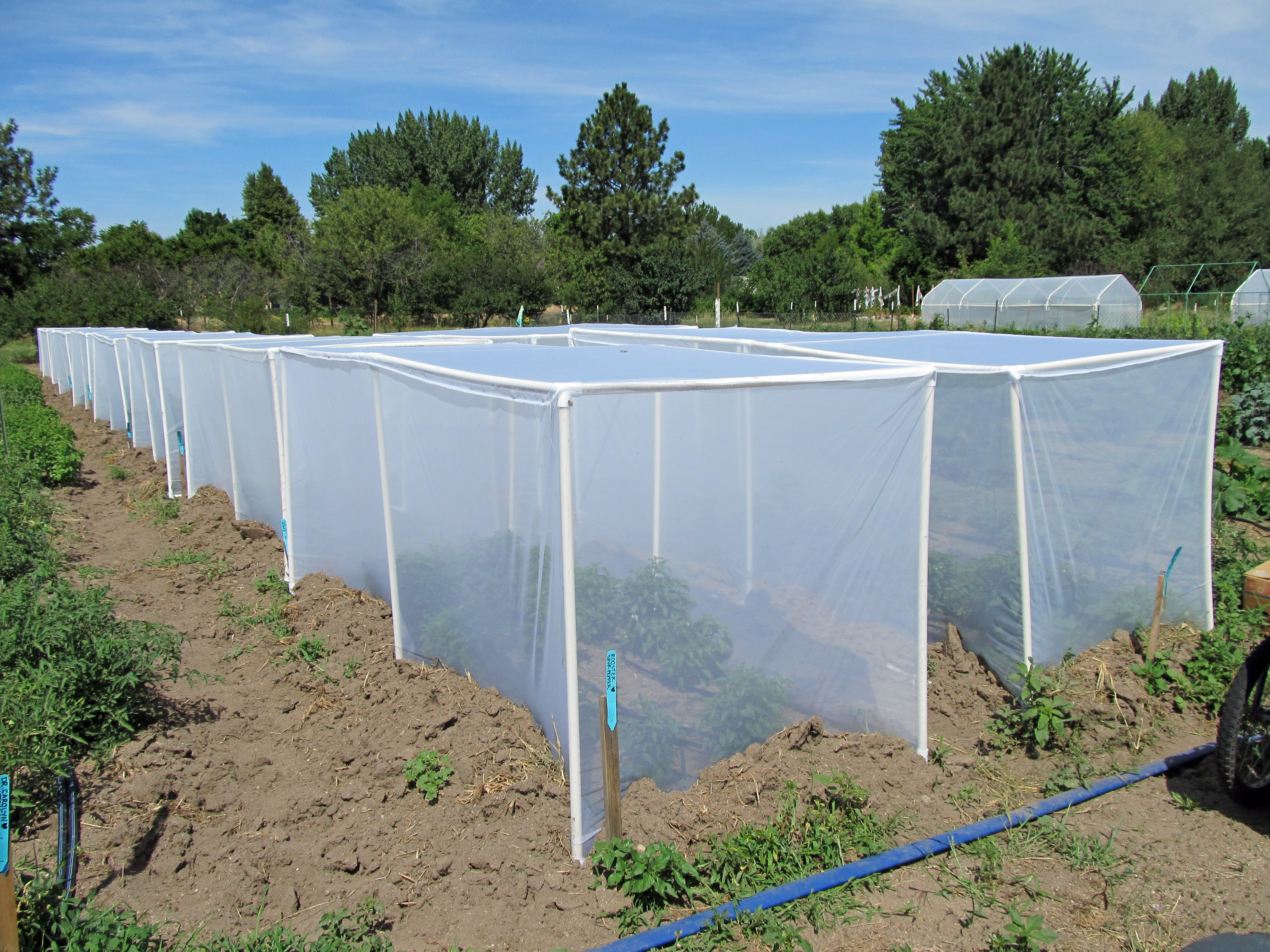
A series of isolation tents over various crops to help prevent cross pollination between varieties.

A series of isolation tents placed over various crops to help prevent cross pollination between varieties – an important component of seed saving.

While many groups of pollinators were discussed, including leafcutter bees, bumblebees, honeybees, sweat bees, hummingbirds, and beetles, much of our conversation and search was focused on syrphid flies. Flies are an often underappreciated and overlooked group of pollinators. While not all of the 120,000 species of flies in the world are pollinators, many of them are. The book Attracting Native Pollinators by the Xerces Society has this to say about flies: “With their reputation as generalist foragers, no nests to provision, and sometimes sparsely haired bodies, flies don’t get much credit as significant pollinators. Despite this reputation, they are often important pollinators in natural ecosystems for specific plants, and occasionally for human food plants.” They are especially important pollinators in the Arctic and in alpine regions, because unlike bees, they do not maintain nests, which means they use less energy and require less nectar, making them more fit for colder climates.

One food crop that flies are particularly efficient at pollinating is carrots. According the Xerces Society, carrot flowers are “not a favorite of managed honeybees.” Most flies do not have long tubular, sucking mouthparts, so they search for nectar in small, shallow flowers that appear in clusters, such as plants in the mint, carrot, and brassica families. Flower-visiting flies come in search of nectar and sometimes pollen for energy and reproduction. While acquiring these meals they can at times inadvertently collect pollen on their bodies and transfer it to adjacent flowers. They are generally not as efficient at moving pollen as other pollinators are, but they can get the job done.

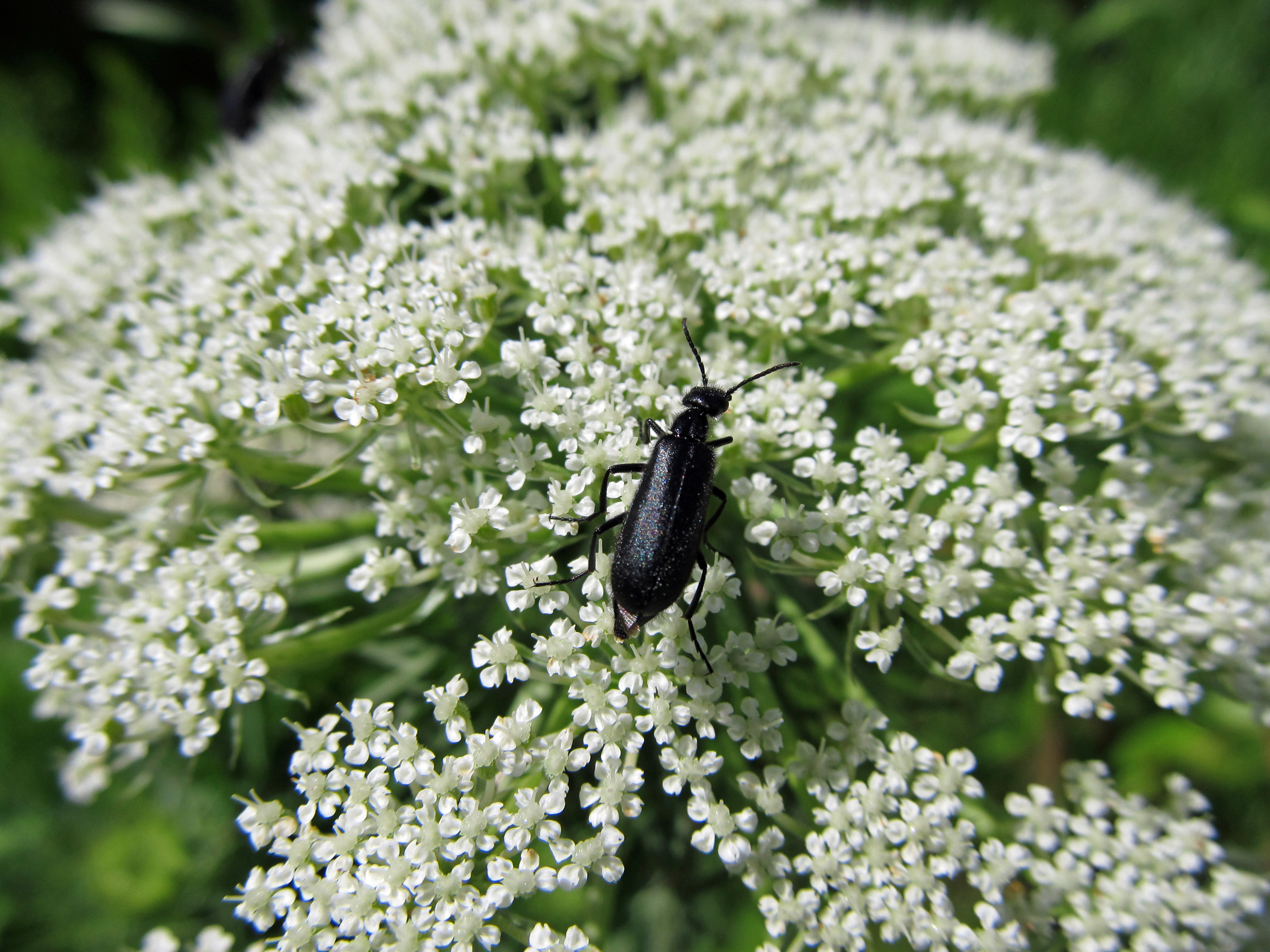
Blister beetle on carrot flowers (a preferred food source of flies). Beetles can be important pollinators, even despite chewing on the flowers as they proceed.

Blister beetle on carrot flowers (a preferred food source of flies). Beetles can be effective pollinators as well, even despite chewing on the flowers as they proceed.

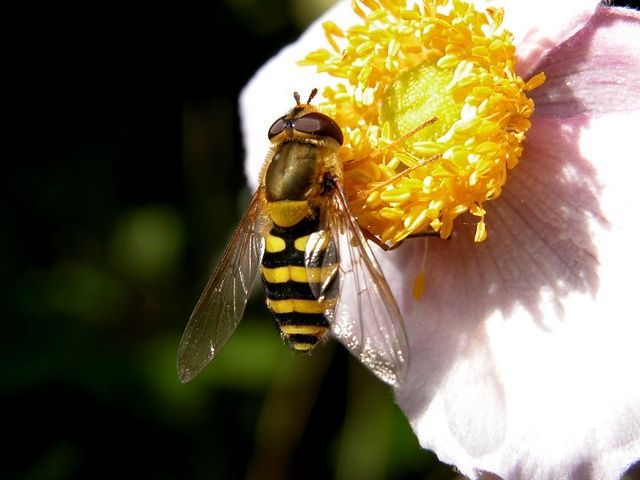
During the pollinator walk, we were specifically observing flies in the family Syrphidae, which are commonly known as flower flies, hoverflies, or syrphid flies. Many flies in this family mimic the coloring of bees and wasps, and thus are easily confused as such. Appearing as a bee or wasp is a form of protection from predators, who typically steer clear from these insects to avoid being stung. The larvae of syrphid flies often feed on insects, a trait that can be an added benefit for farmers and gardeners, particularly when their prey includes pest insects like aphids. Other families of flies that are important pollinators include Bombyliidae (bee flies), Acroceridae (small-headed flies), Muscidae (house flies), and Tachinidae (tachinid flies).

Common banded hoverfly (Syrphus ribesii) - one species of hundreds in the syrphid fly family, a common and diverse family of flower visiting flies (photo credit: www.eol.org)

Common banded hoverfly (Syrphus ribesii) – one species of thousands in the syrphid fly family, a common and diverse family of flower-visiting flies (photo credit: www.eol.org)

Because many species of flies visit flowers and because those flies commonly mimic the appearance of bees and wasps, it can be difficult to tell these insects apart. Observing the following features will help you determine what you are looking at.

  • Wings – flies have two; bees have four (look closely though because the forewings and hindwings of bees are attached with a series of hooks called hamuli making them appear as one)
  • Hairs – flies are generally less hairy than bees
  • Eyes – the eyes of flies are usually quite large and in the front of their heads; the eyes of bees are more towards the sides of their heads
  • Antennae – flies have shorter, stubbier antennae compared to bees; the antennae of flies also have bristles at the tips
  • Bees, unlike flies, have features on their legs and abdomens designed for collecting pollen; however, some flies have mimics of these features
Bumblebee on Echinacea sp.

Bumblebee visiting Echinacea sp.

Another interesting topic that Dr. Strickler addressed was the growing popularity of insect hotels – structures big and small that are fashioned out of a variety of natural materials and intended to house a variety of insects including pollinators. There is a concern that many insect hotels, while functioning nicely as a piece of garden artwork, often offer little in the way of habitat for beneficial insects and instead house pest insects such as earwigs. Also, insect hotels that are inhabited by bees and other pollinators may actually become breeding grounds for pests and diseases that harm these insects. It is advised that these houses be cleaned or replaced regularly to avoid the build up of such issues. Learn more about the proper construction and maintenance of insect hotels in this article from Pacific Horticulture.

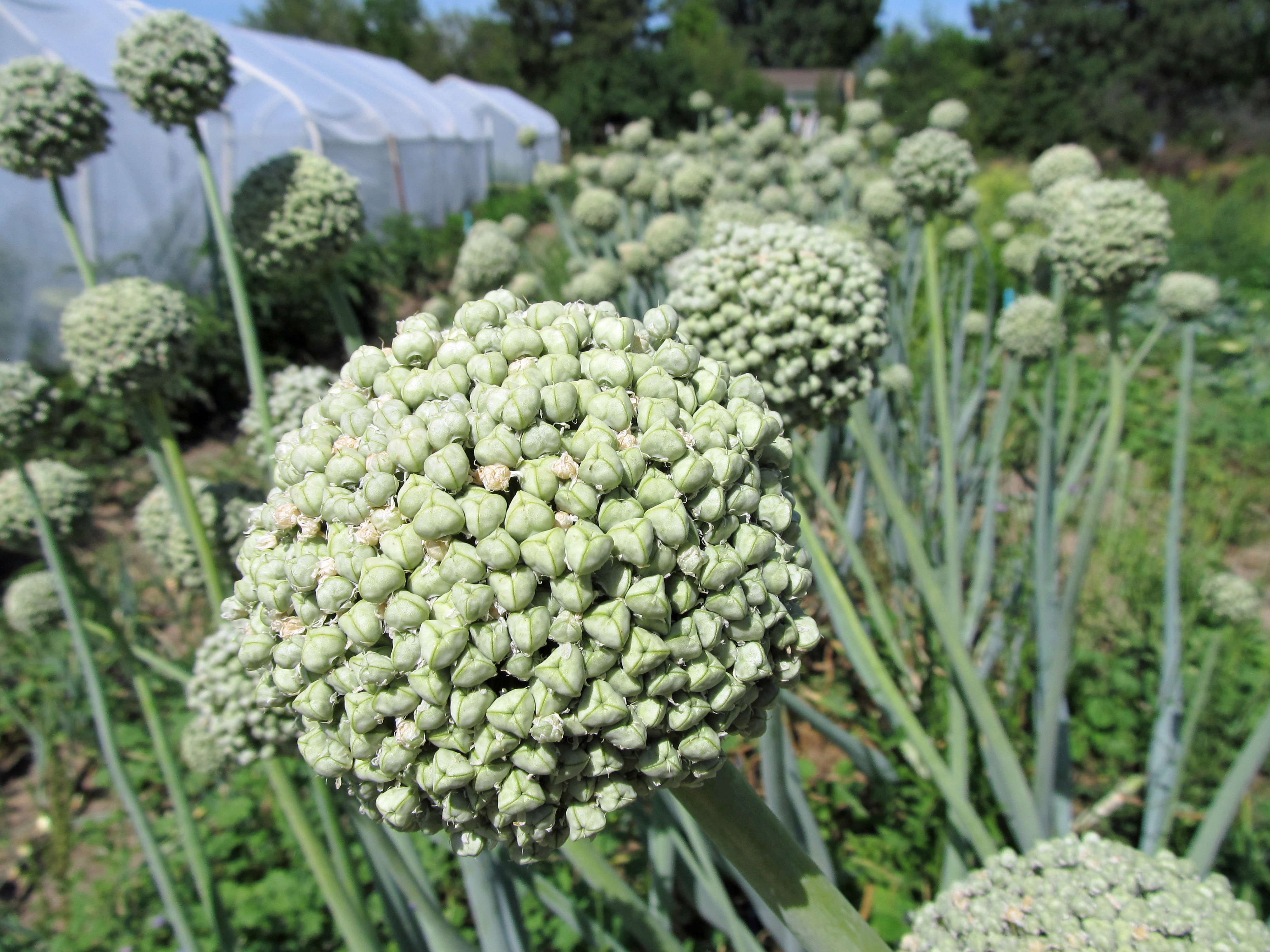
A row of onions setting seed at Earthly Delights Farm. Onions are another crop that is commonly pollinated by flies.

A row of onions setting seed at Earthly Delights Farm. Onions are another crop that is commonly pollinated by flies.

Documentary: The Sagebrush Sea

Last month I posted a few photos of some of the weeds and wildflowers of the Boise Foothills. In that post I touched briefly on the ecology of the foothills, and a few readers expressed interest in more posts about this topic. It is definitely a topic I would like to explore further, but it is not one that I know a ton about. In fact, despite spending the majority of my life residing in this high desert, sagebrush-dominated ecosystem, it has only been in the past few years that I have really gained an appreciation for it. Perhaps that’s understandable. This landscape, which initially appears drab, lifeless, and boring, is not easy to love at first…until you do a little exploring, at which point you find it teeming with life, loaded with diversity, and worthy of admiration.

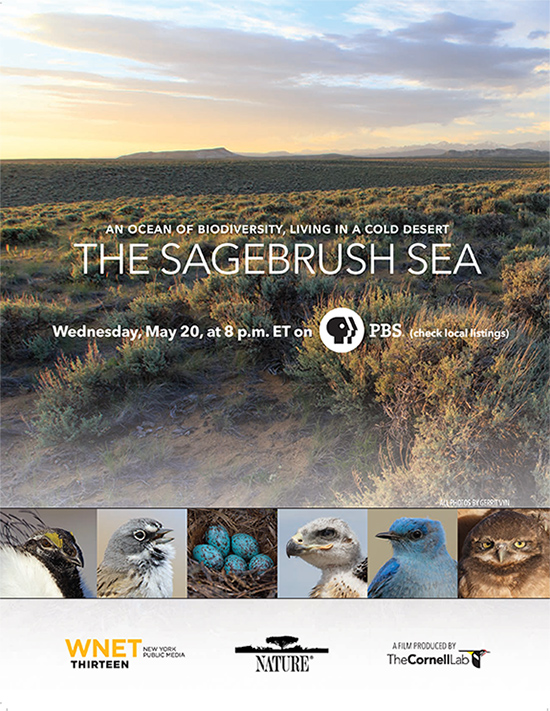
That is one of the themes of a new PBS Nature documentary, The Sagebrush Sea, which debuted on PBS in May 2015. The film is an intimate view of what’s really going on in this vast, seemingly empty landscape that many of us simply ignore, passing through on our way to somewhere else. It is an introduction to a fascinating ecosystem, shaped and formed by extreme events and inhabited by plants and animals that have unique adaptations that allow them to survive the harsh conditions of the high desert. Some of these plants and animals can be found nowhere else on earth. For anyone looking to learn more about the ecology of the Boise foothills and/or the larger ecosystem of which they are a part, this is an excellent place to start.

The-Sagebrush-Sea

The sagebrush steppe is a plant community dominated by sagebrush (Artemisia tridentata and its various subspecies) and bunchgrasses. At one point it covered as many as 500,000 square miles of western North America – hence “the sagebrush sea” – but human activities have reduced it to half that size. The plants and animals in this ecosystem have been coevolving together for at least 2 million years. Sagebrush is, as the narrator of the film says, “the anchor of the high desert,” living up to 140 years old and helping to ensure that the desert doesn’t become a dust bowl. Sagebrush also provides food and shelter for a great number of species.

The Sagebrush Sea was produced by the The Cornell Lab of Ornithology, so while lots of other plant and animal life get adequate screen time, the birds of the sagebrush steppe dominate the film. One species in particular, the greater sage-grouse, is the star character, driving the film’s narrative and speaking for the protection of this threatened and underappreciated ecosystem.

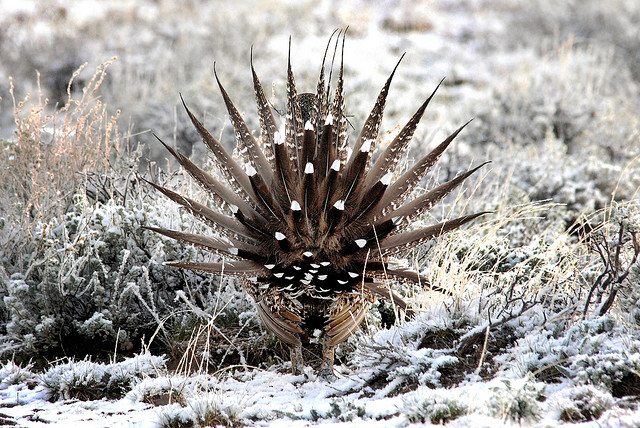
A view from behind a male greater sage-grouse (Centrocercus urophasianus ) - photo credit: wikimedia commons

A view from behind a male greater sage-grouse (Centrocercus urophasianus ) – photo credit: wikimedia commons

Sage-grouse are endemic to the sagebrush steppes of the intermountain west. They are sensitive to disturbances and are “tied to unbroken expanses of sage.” Their breeding grounds (leks) are large patches of open ground, but when they aren’t breeding (which is the majority of the year) they are taking refuge in the sagebrush and grasses. The females make nests below sagebrush, where they blend right in, camouflaged from predators. Sage-grouse consume various plants and insects throughout the year, but their diet consists mainly of the evergreen leaves of sagebrush. Just 200 years ago there were up to 16 million sage-grouse in the sagebrush sea, today that number has been reduced to around 200,000. Due to such a steep decline, they may soon be added to the endangered species list.

Because sage-grouse are so reliant on healthy, intact, widespread sections of sagebrush-steppe, they are considered an umbrella species. Taking measures to protect them will simultaneously spare and even improve the lives of numerous other species with similar requirements. To begin with, there are a handful of other bird species that nest nowhere else except in sagebrush, specificallly the sagebrush sparrow, the sage thrasher, and the brewer’s sparrow. Other animals feed on sagebrush and rely on it to make it through the winter, such as pronghorn and mule deer. Sagebrush is also considered a nurse plant, providing shade and moisture for grass and forb seedlings growing below it.

The sagebrush steppe is threatened by the usual cast of characters: habitat fragmentation, urban and agricultural development, invasive species, climate change, etc.  Some specific activities like cattle ranching and oil and gas drilling also come into play. While The Sagebrush Sea briefly introduces some of the major threats to this ecosystem, it does not dwell on any single issue or point fingers in any one particular direction. For one, it is hard to place blame when there are so many factors involved; but more importantly, the filmmakers wanted the film to be accessible to everyone in order to foster a greater appreciation for the sagebrush sea and a consequent desire to protect it. The debates regarding this part of the world are heated enough, and those directly involved are already well aware of the issues.

This is a beautiful film. The images it captures are captivating and at times breathtaking. Apart from the sage-grouse, various animal families are introduced throughout, each one stealing your heart. My only complaint is that, at only 53 minutes, the film is too short. Luckily, the world they depicted is right outside my door, and I am now even more inspired to explore it.

To learn more about sage-grouse conservation, visit Sage Grouse Initiative.

Year of Pollination: Mosquitoes as Pollinators

It is difficult to have positive feelings about mosquitoes, especially during summer months when they are out in droves and our exposed skin – soft, supple, and largely hair-free – is irresistible to them. We are viewed as walking blood meals by female mosquitoes who are simply trying to produce young – to perpetuate their species just like any other species endeavors to do. Unfortunately, we are left with small, annoying bumps in our skin – red, itchy, and painful – risking the possibility that the mosquitoes that just drew our blood may have passed along any number of mosquito-borne diseases, some (such as malaria) that potentially kill millions of people every year. For this, it is okay to hate mosquitoes and to long for the day of their complete eradication from the planet. However, their ecological roles (and yes, they do have some) are also worth considering.

There are more than 3,500 species of mosquito. Luckily, only 200 or so consume human blood. Mosquitoes go back at least 100 million years and have co-evolved with species of plants and animals found in diverse habitats around the world. Adult mosquitoes and their larvae (which live in standing water) provide food for a wide variety of creatures including birds, bats, insects, spiders, fish, frogs, lizards, and salamanders. Mosquito larvae also help break down organic matter in the bodies of water they inhabit. They even play an important role in the food webs found inside the pitchers of northern pitcher plants (Sarracenia spp.). Interestingly enough, Arctic mosquitoes influence the migration patterns of caribou. They emerge in swarms so big and so voracious that they have been said to kill caribou through either blood loss or asphyxiation.

However, blood is not the main food source of mosquitoes; flower nectar is. Males don’t consume blood at all, and females only consume it when they are producing eggs. Any insect that visits flowers for nectar has the potential to unwittingly collect pollen and transfer it to a nearby flower, thereby aiding in pollination. Mosquitoes are no exception. They have been observed acting as pollinators for a handful of species, and could be acting as pollinators for many more.

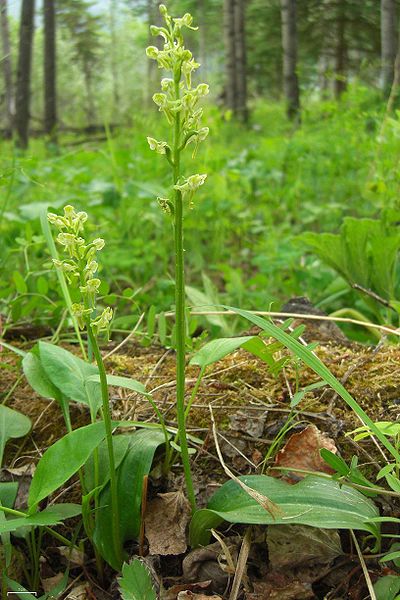
Bluntleaved orchid (Platanthera obtusata) is pollinated by mosquitoes. phot credit: wikimedia commons

Bluntleaved orchid (Platanthera obtusata) is pollinated by mosquitoes. photo credit: wikimedia commons

The scientific literature describes the pollination by mosquitoes of at least two plant species: Platanthera obtusata (syn. Habenaria obtusata) and Silene otites. P. obtusata – bluntleaved orchid – is found in cold, wet regions in North America and northern Eurasia. It is pollinated by mosquitoes from multiple genera including several species in the genus Aedes. Mosquitoes visit the flowers to feed on the nectar and, subsequently, pollinia (clusters of pollen) become attached to their eyes and are moved from flower to flower. This scenario likely plays out in other species of Arctic orchids as well*.

S. otites – Spanish catchfly – is a European species that is pollinated by mosquitoes and moths. Researches have been studying the floral odors of S. otites that attract mosquitoes, suggesting that determining the compounds involved in these odors “might lead to the development of new means of pest control and mosquito attractants and repellents.”

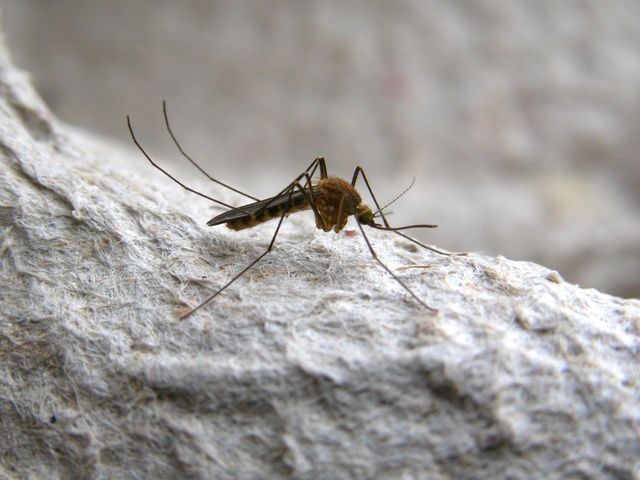
Northern House Mosquito (Culex pipiens) - one of the species of mosquitoes that has been observed pollinating Silene otitis. photo credit: www.eol.org

Northern House Mosquito (Culex pipiens) – one of the species of mosquitoes that has been observed pollinating Silene otites. photo credit: www.eol.org

Despite the list of functions that mosquitoes serve in their varied habitats, an article that appeared in Nature back in 2010 argues for wiping mosquitoes off the Earth, stating that “the ecological scar left by a missing mosquito would heal quickly as the niche was filled by other organisms.” And even though “thousands of plant species would lose a group of pollinators,” mosquitoes are not important pollinators of the “crops on which humans depend,” nor do they appear to be the sole pollinator of any single plant species [the species mentioned above are pollinated by other insects as well]. Eliminating mosquitoes, however, is more of a pipe dream than a realistic possibility as our “best efforts can’t seriously threaten an insect with few redeeming features.”

*Speaking of orchids and pollination, endless posts could be written about this incredibly fascinating and diverse group of plants and their equally fascinating and complex mechanisms surrounding pollination. There will be more to come on such topics. Meanwhile, it should be noted that orchids are also a notoriously threatened group of plants. To learn more about orchids and orchid conservation in North America, visit North American Orchid Conservation Center.

Read more about mosquito pollination here.

And now for your listening pleasure:

How to Make Petrified Wood

petrified log 2

So, you want to petrify some wood, eh? Here is a list of the basic ingredients that you will need:

  • A log (or some other chunk of wood)
  • Sediment, mud, volcanic ash, lava, or some type of inorganic material in which to bury the log and create an oxygen-free environment
  • Groundwater rich in silica (or other mineral commonly found in rocks)
  • Additional minerals including iron, copper, and manganese for coloring
  • Time and patience (because this is going to take a while – millions of years perhaps)

petrified log 8

Petrification refers to organic material being converted entirely into stone through two main processes: permineralization and replacement. First, the log you intend to petrify must be buried completely, cutting off the oxygen supply and thereby slowing the decay process considerably. Over time, groundwater rich in silica and other minerals will deposit the minerals in the pore spaces between the cells of the log. Later, the mineral rich water will slowly dissolve the cells and replace them with the minerals as well. The slower the better, assuring that the textures of the bark and wood and details such as the tree rings will remain visible. After enough million years have passed, the log may find itself exposed, pushed out of the ground by an earthquake or landslide or some other act of nature. What entered the ground as a living or recently dead tree, is now 100% inorganic material. And it is much heavier.

The colors in your petrified log will vary depending on the presence and concentrations of minerals in the groundwater. Cobalt, copper, and chromium will create greens and blues. Iron oxides will give the log hues of red, orange and yellow. Manganese adds pink and orange. During the petrification process, various circumstances can cause the silica to form a variety of crystal structures and other formations within the log. These formations can include amethyst, agate, jasper, opal, citrine, and many others. When all is said and done, your petrified log will be a true work of art.

petrified log 1

Petrification is a fossilization process. Thus, a section of petrified wood is a fossil, and it can be used to help paint a picture of what a particular region was like back when the tree was alive. It can also help us gain a better understanding of how life has evolved on this planet. Areas with large concentrations of petrified wood are located throughout the world, each with its own unique story to tell about the tree species once found in the area and the circumstances that led to their petrification. One such location is Petrified Forest National Park in Arizona. The petrified wood found there came from trees living in the area over 200 million years ago.

petrified log 5

Is a few million years too long to wait? Scientists have developed ways to petrify wood in the laboratory in as little as four or five days. One such process was developed at Pacific Northwest National Laboratory about a decade ago. It involves soaking a section of wood in hydrochloric acid for two days and then in either a silica or titanium solution for another two days. After air-drying, the wood is placed in an argon gas filled furnace and slowly heated to 1400° Celsius over a period of two hours. It is then left to cool to room temperature in the argon gas. What results is a block of ceramic silicon carbide or titanium carbide. Probably not as beautiful and interesting to look at as the one that took millions of years to form, but cool nonetheless.

petrified log 6

Read more about petrified wood here and here.

The photos in this post were taken at Idaho Botanical Garden in Boise, Idaho. If you find yourself in the area, stop by and check out their petrified log which was found in the Owyhee Mountains.