When Alien Plants Invade – The Four Stages of Invasion, part one

As humans move around the globe, they are regularly accompanied by plants. Some plant species are intentional guests, while others are interlopers. This steady movement of plants from one region to another results in plants being introduced to areas where they are not native. In this regard, they are aliens. Some of these alien species will take up permanent residence and, as a result, can disrupt ecosystems, compete with native plant species, and cause economic damage. This earns them the title “invasive”. But not all introduced plant species achieve this. In fact, many will find themselves in a new region but will be unable to colonize. Others will colonize but not become fully established. Still others become established but will not spread. In all cases there are factors at play that either aid or limit an introduced plant species in becoming invasive.

In a review published in New Phytologist (2007), Kathleen Theoharides and Jeffrey Dukes examine four stages of invasion (transport, colonization, establishment, and landscape spread) and some of the “filters” that occur in each stage that help determine whether or not an alien plant species will become invasive. In their introduction they clarify, “these stages are not discrete, and filters will likely affect more than one stage,” but by analyzing each of the stages we can better determine how and why some introduced species are successful at becoming invasive while others are not. Generalities derived from this investigation can “be used to predict the outcome of invasion events, or to explore mechanisms responsible for deviations from these generalizations.”

Theoharides, K. A. and Dukes, J. S. (2007), Plant invasion across space and time: factors affecting nonindigenous species success during four stages of invasion. New Phytologist, 176: 256–273. doi:10.1111/j.1469-8137.2007.02207.x

In part one, we will look at the first two stages of invasion: transport and colonization.

Species have always moved around from region to region by various means. However, as Theoharides and Dukes write, “current species movements are happening faster than before and from more distant regions, primarily as a result of global commerce and travel.” When it comes to human-mediated dispersal, many plants may never be transported by humans, while others simply won’t survive the journey. Species that are widespread may have a better chance of being transported because they are more likely to make contact with humans. Transporting high numbers of propagules (i.e. seeds, spores, cuttings) generally increases the likelihood that a species will survive the journey.
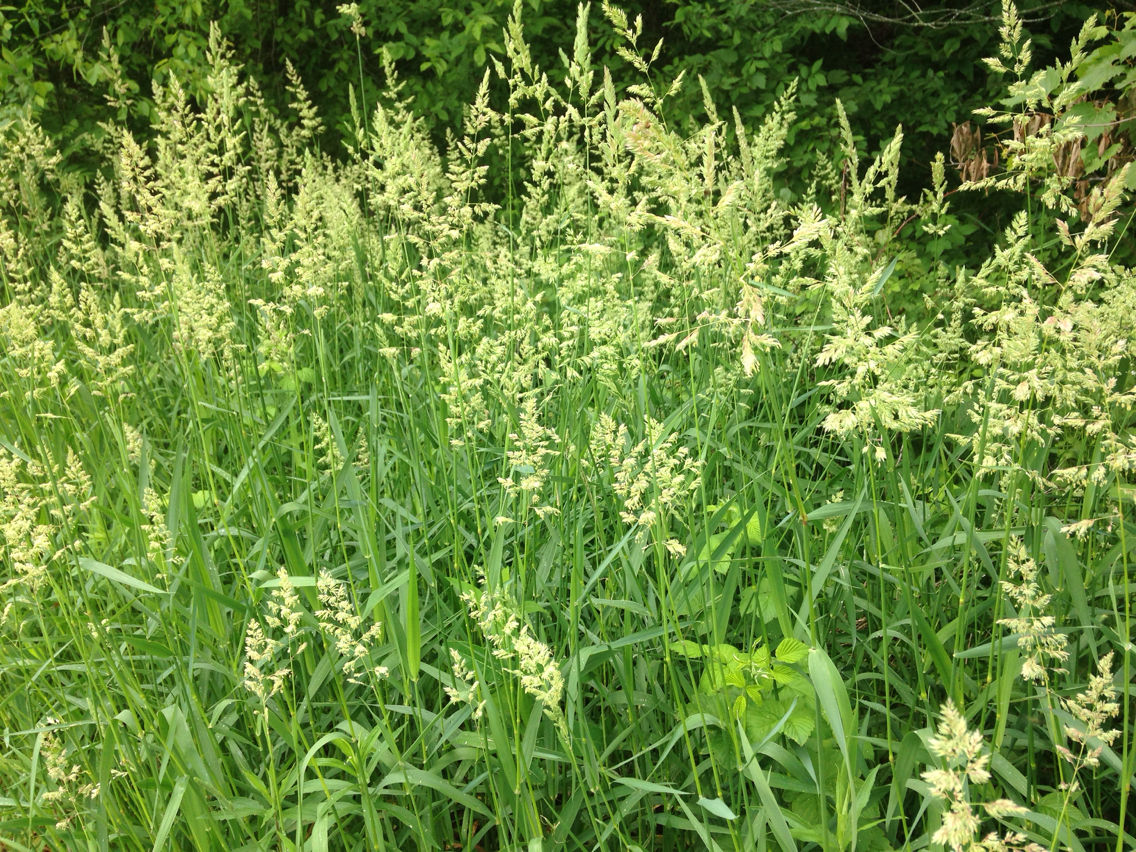
The invasion of Phalaris arundinacea (reed canary grass) was facilitated by multiple introduction events from a variety of sources within the native European range.” — Theoharides, K. A. and Dukes, J. S. (2007) [photo credit: eol.org]

Plants are transported by humans for many reasons. Sometimes its accidental, but often it is purposeful for either utilitarian or aesthetic purposes. Plants provide us with food, fuel, forage, building materials, clothing, and medicine. Over millennia, we have selected suites of species that are ideal for such purposes, and we have carried them with us into new regions or brought them home from other parts of the world. Not all of these species are well-behaved in their new homes, and many have become invasive. These species are given an advantage because they have been selected for traits like cold hardiness, disease resistance, and high yield. When they are transported, they are brought to locations with similar climates. “Climate matching, combined with intentional cultivation, greatly increases the likelihood that [these] species will escape cultivation.”

Surviving transportation is not a guarantee that alien plants will successfully colonize a new area. Myriad environmental conditions and biological processes stand in their way. Much depends on propagule pressure – “the combined measure of the number of individuals reaching a new area in any one release event and the number of discrete release events.” Where propagule pressure is high, colonization is more likely. Repeated introductions across a large area offer the species a greater chance of finding itself in a suitable location as well as a greater level of genetic variation. Disturbed environments with less competitors and increased resources (i.e. light, moisture, soil nutrients) are often easier to colonize than locations with a high level of biodiversity and fewer available resources.
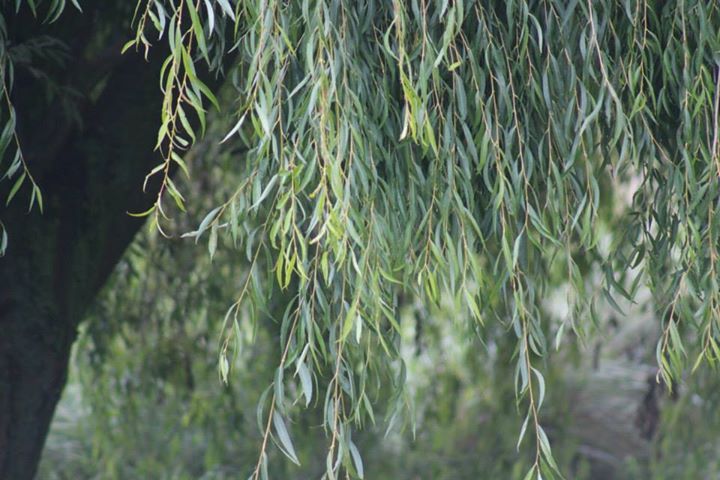
“Populations of Salix babylonica (weeping willow) in New Zealand may have invaded from a single cutting.” — Theoharides, K. A. and Dukes, J. S. (2007) [photo credit: eol.org]

Climate is one of the main filters of colonization, yet plant species have still managed to colonize regions with very different climates compared to what they’re used to, while other plant species have been unsuccessful in colonizing regions with similar climates. Plant species that originate from wide geographic ranges tend to have “broader climatic tolerances” – a trait that along with phenotypic plasticity and a high level of genetic variability can enable a species to adapt to new and challenging environments. Other advantageous traits include “fast growth, self-compatibility, a short juvenile period, and seeds that germinate without a pre-treatment.”

If and when colonization is achieved, establishment is no guarantee. “In order for a plant to establish itself it must continue to increase from low density over the long term.” Small numbers of plants may successfully reproduce, but environmental factors, genetic issues, and biological competition may still stand in their way. Species that invade disturbed sites where resource availability is temporarily high, may soon find themselves in a resource-limited situation. As a result, their populations may dwindle.

With transport and colonization accomplished, establishment is the next goal. Establishment and landscape spread will be covered in part two.
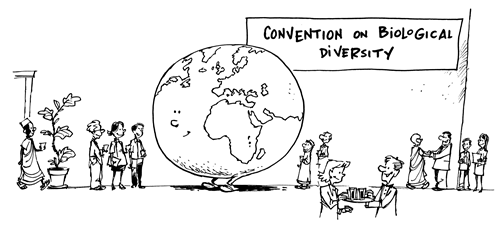
Invasive Species vs. The Global Economy

As humans have spread across the globe, other species have followed. The domestication of animals and the advent of agriculture helped speed up this process, but species have been traveling around with humans long before that. Presently, our ability to move species from one corner of the globe to another is unprecedented. As more countries join the global economy, the risk of outsider species establishing themselves in uncharted territory increases. Species introductions via globalization are not likely to decrease, and so the question must be asked: Are we, as a global community, equipped to address this?

A review published in Nature Communications in August 2016 warns that “most countries have limited capacity to act against invasions.” The authors come to this conclusion after analyzing available data about invasive species across the globe and developing a “global, spatial forecast for emerging invasions throughout the twenty-first century.” National responses to invasive species were assessed based on reports to the Convention on Biological Diversity (CBD).

As part of the 2011-2020 CBD Strategic Plan for Biodiversity, nations or states that are parties of the CBD agreed to work towards a series of goals called Aichi Biodiversity Targets. Target 9 addresses invasive species: “By 2020, invasive alien species and pathways are identified and prioritized, priority species are controlled or eradicated and measures are in place to manage pathways to prevent their introduction and establishment.” The authors of the review found that, while most countries have made progress on identifying and prioritizing some of the most prominent and threatening invasive species, “current management practices only target a handful” and “prevention of introduction and establishment lags far behind progress towards the reactive CBD goals.”

Biological invasions are expected to remain high across the globe; however, regions with a high Human Development Index (HDI) face different threats compared to regions with a low HDI. Due to increasing levels of international trade, high-HDI regions will continue to be threatened by introductions via pet and plant imports. Climate change and the coinciding biome shifts and changes in fire frequency are expected to aid in the establishment and perpetuation of invasive species in these regions.

Low-HDI regions have historically been less threatened by invasive species compared to high-HDI regions. As these regions join the global economy, they risk experiencing a much higher level of species introductions. Many of the planet’s biodiversity hotspots are found in low-HDI regions, making these hotspots more vulnerable to invasions as the potential for introductions increases. The authors found that the threat of introductions is at its highest in regions where “high levels of passenger air travel overlap with agriculture conversion.” Low-HDI regions are more limited in their capacity to respond to invasions compared to high-HDI regions and are more vulnerable to food shortages when invasive species disrupt agriculture.

“High risk in low-HDI countries could arise from coincidence between intensifying agriculture sectors and high levels of passenger air travel that is likely to transport arthropod pests. … Low-HDI countries could prioritize screening of passenger baggage for live plants, fruits or vegetables, which could host crop pests and pathogens.” – Early, et al. (2016) – photo credit: wikimedia commons

The authors state: “The intensities and global patterns of introduction and disturbance are changing more rapidly today than at any time during human history.” Introductions are not projected to slow in high-HDI regions, and low-HDI regions will be increasingly threatened as species already well established in high-HDI regions expand their reach. This is grim news, but it also presents an opportunity. Through cooperation and data sharing, our understanding of invasive species can greatly increase, and regions with greater access to resources can share such things with less fortunate regions. This is the hope of the authors as well: “We urge increased exchange of information and skills between regions with a wealth of invasive alien species experts and low-HDI countries that have less expertise.”

For more information about this review, go here. For more information about global trade in the modern era, check out the new podcast Containers.

Learning Lessons from Invaded Forests

In 1946, North American beavers were introduced to the archipelago of Tierra del Fuego at the tip of South America in an attempt to start an industry based on beaver fur. Although this industry has not thrived, beavers have multiplied enormously. By cutting trees and building dams, they have transformed forests into meadows and also fostered the spread of introduced ground cover plants. Now numbering in the tens of thousands in both Chilean and Argentinian parts of the archipelago, beavers are the target of a binational campaign to prevent them from spreading to the mainland of these two nations. — Invasive Species: What Everyone Should Know by Daniel Simberloff

Beavers in South America are just one example of the series of effects a species can have when it is placed in a new environment. Prior to the arrival of beavers, there were no species in the area that were functionally equivalent. Thus, through their felling of trees and damning of streams, the beavers introduced novel disturbances that have, among other things, aided the spread of non-native plant species. Ecologists call this an invasional meltdown, wherein invasion by one organism aids the invasion of another, making restoration that much more difficult.

Complicated interactions like this are explored by David Wardle and Duane Peltzer in a paper published last month in Biological Invasions. Organisms from all walks of life have been introduced to forests around the world, and while many introductions have had no discernable impact, others have had significant effects both above and below ground.

The authors selected forest ecosystems for their investigation because “the imprint of different invaders on long-lived tree species can often be observed directly,” even when the invading organisms are doing their work below ground. Moreover, a greater understanding of “the causes and consequences of invasions is essential for reliably predicting large-scale and long-term changes” in forest ecosystems. Forests do not regenerate quickly, so protecting them from major disturbances is important. Learning how forests respond to invasions can teach us how best to address the situation when it occurs.

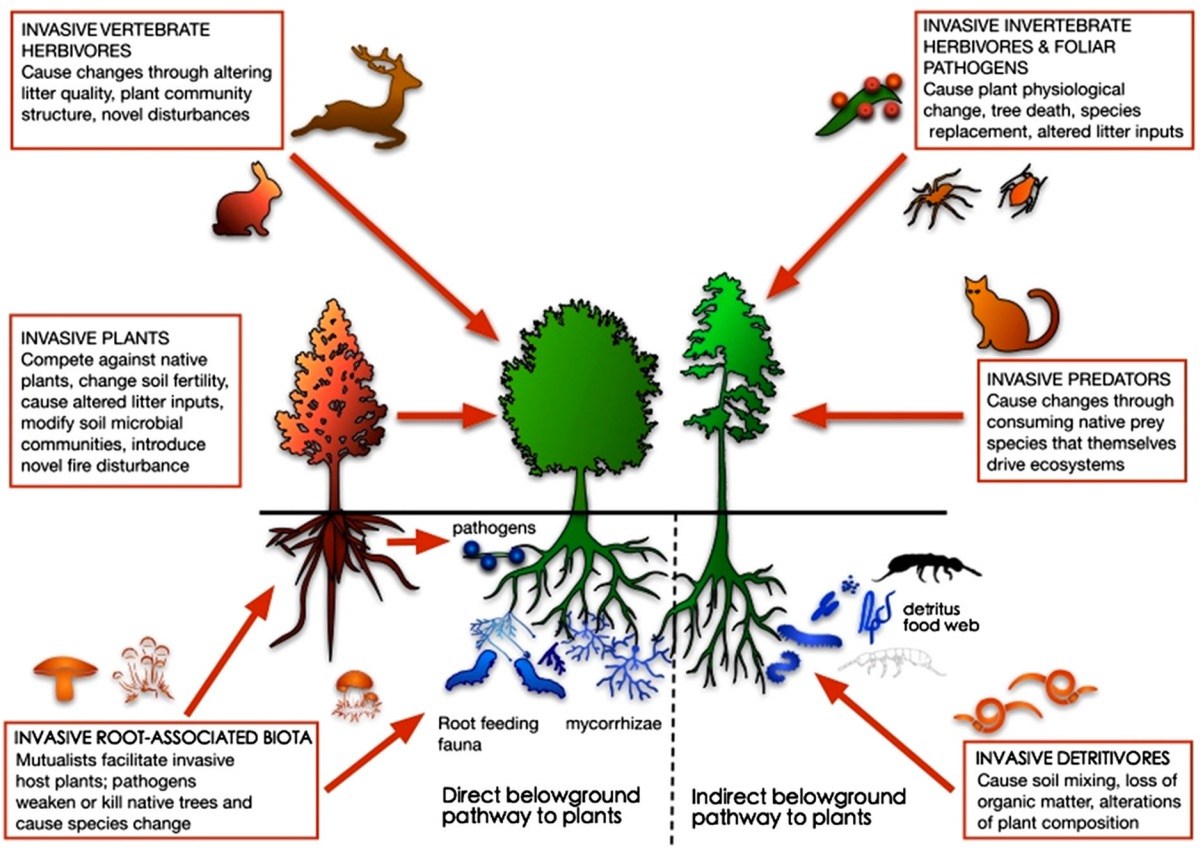
The authors begin by introducing the various groups of organisms that invade forests and the potential impacts they can have. This is summarized in the graphic below. One main takeaway is that the effects of introduced species vary dramatically depending on their specific attributes or traits and where they fall within the food chain. If, like the beaver, a novel trait is introduced, “interactions between the various aboveground and belowground components, and ultimately the functioning of the ecosystem” can be significantly altered.

Wardle, D.A., and D.A. Peltzer. Impacts of invasive biota in forest ecosystems in an aboveground-belowground context. Biological Invasions (2017).  doi:10.1007/s10530-017-1372-x

After highlighting some of the impacts that invasive species can have above and below ground, the authors discuss basic tenets of invasion biology as they relate to forest ecosystems. Certain ecosystems are more vulnerable to invasions than others, and it is important to understand why. One hypothesis is that ecosystems with a high level of species diversity are more resistant to invasion than those with low species diversity. This is called biotic resistance.  When it comes to introduced plants, soil properties and other environmental factors come in to play. One species of plant may be highly invasive in one forested ecosystem, but completely unsuccessful in another. The combination of factors that help determine this are worth further exploration.

When it comes to restoring invaded forests, simply eliminating invasive species is not always enough. Because of the ecological impacts they can have above and below ground, “invader legacy effects” may persist. As the authors write, this requires “additional interventions to reduce or remove [an invader’s] legacy.” Care also has to be taken to avoid secondary invasions, because as one invasive species is removed another can take its place.

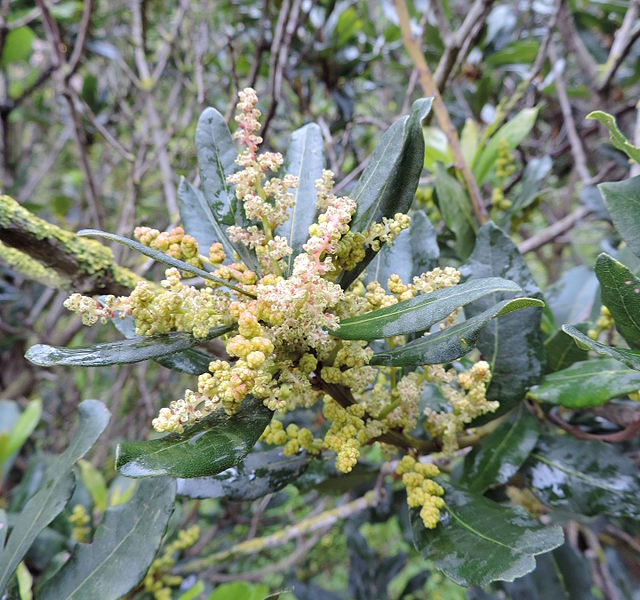
Nitrogen-fixing plants (which, as the authors explain, “feature disproportionately in invasive floras”) offer a prime example of invader legacy effects. Introducing them to forest ecosystems that lack plants with nitrogen fixing capabilities “leads to substantially greater inputs of nitrogen … and enhanced soil fertility.” Native organisms – decomposer and producer alike – are affected. Simply removing the nitrogen fixing plants does not at once remove the legacy they have left. Examples include Morella faya invasions of forest understories in Hawaii and invasions by Acacia species in South Africa and beyond.

“It has been shown that co-invasion by earthworms enhances the effects that the invasive nitrogen fixing shrub Morella faya has on nitrogen accretion and cycling in a Hawaiian forest, by enhancing burial of nitrogen-rich litter.” – D.A. Wardle and D.A. Peltzer (2017) – photo credit: wikimedia commons

The authors conclude with a list of “unresolved issues” for future research. A common theme among at least a couple of their issues is the need for observing invasive species and invaded environments over a long period. Impacts of invasive species tend to “vary across both time and space,” and it is important to be able to predict “whether impacts are likely to amplify or dampen over time.” In short, “focus should shift from resolving the effects of individual invasive species to a broader consideration of their longer term ecosystem effects.”

This paper does not introduce new findings, but it is a decent overview of invasion biology and is worth reading if you are interested in familiarizing yourself with some of the general concepts and hypotheses. It’s also open access, which is a plus. One thing that is clear after reading this is that despite our growing awareness of the impacts of invasive species, there is still much to be learned, particularly regarding how best to respond to them.

———————

Awkward Botany is now on Facebook and Instagram!

Thanks to a friend of the blog, Awkward Botany now has a Facebook page and an Instagram. Please check them out and like, follow, friend, et al. While you’re at it, check out the Twitter and Tumblr too for all sorts of botanical and botanical-adjacent extras.

Eating the Invasives

Happy National Invasive Species Awareness Week! It’s a fine time to get educated about invasive species, and perhaps even play a role in mitigating them. Opportunities for getting involved are myriad and include volunteering with local conservation groups, replacing invasive plants in your yard with non-invasive alternatives, and being mindful when you visit natural areas not to bring along weed seeds and other pests and diseases. Another strategy in the battle against invasive species is to eat them, which is precisely what I plan on doing. If you are interested in doing the same, this revised post (originally published in November 2013) will help get you started.

Invasivore: One Who Consumes Invasive Species

Invasive species are a major ecological concern, and considerable effort is spent controlling them. The ultimate goal  – albeit a lofty one in many cases – is to eradicate them and to prevent future outbreaks. The term “invasive species” describes plants, animals, and microorganisms that have been intentionally or unintentionally introduced into an environment outside of their native range. They are “invasive” because they have established themselves and are causing adverse effects in their non-native habitats. Some introduced species cause no discernible adverse effects and so are not considered invasive. Species that are native to a specific habitat and exhibit adverse effects following a disturbance can also be considered invasive. (White-tailed deer are an example of this in areas where human activity and development have reduced or eliminated their natural predators resulting in considerably larger deer populations than would otherwise be expected.) Defining and describing invasive species is a challenging task, and so it will continue to be a topic of debate among ecologists and conservation biologists for the foreseeable future.

The adverse effects of invasive species are also not always straightforward. Typical examples include outcompeting native flora and fauna, disrupting nutrient cycles, shifting the functions of ecosystems, altering fire regimes, and causing genetic pollution. Countless hours of research and observation are required in order to determine the real effects of invaders. The cases are too numerous and the details are too extensive to explore in this post; however, I’m sure I will cover this topic more thoroughly in the future.

There are many approaches to eradicating invasive species, but one fairly unconventional method is to simply eat them. Why not, right? Historically, the voracious appetite of humans has helped drive several species to extinction, so why not employ our stomachs in the removal of introduced species from their non-native habitats? The folks at Invasivore are suggesting just that. By encouraging people to consume invasive species, they are also promoting awareness about them – an awareness they hope “will lead to decreasing the impacts of invasive species by preventing introductions, reducing spread, and encouraging informed management policies.”

“If you can’t beat ’em, eat ’em!” And so they provide recipes in order to encourage people to harvest, prepare, and consume the invasive species in their areas. Some of the invasive plant species they recommend eating are Autumn Olive (Autumn Olive Jam), garlic mustard (Garlic Mustard Ice Cream), Japanese honeysuckle (Honeysuckle Simple Syrup), purslane (Purslane Relish), and Canada goldenrod (Strawberry-Goldenrod Pesto). And that’s just a sampling. One might ask if we are encouraged to eat invasive species and ultimately find them palatable, won’t our demand result in the increased production of these species? The Invasivores have considered this, and that is why their ultimate goal is raising awareness about the deleterious effects of invasive species. In the end, we should expect to see our native habitats restored. Our craving for Burdock Chips on the other hand will have to be satisfied by some other means.

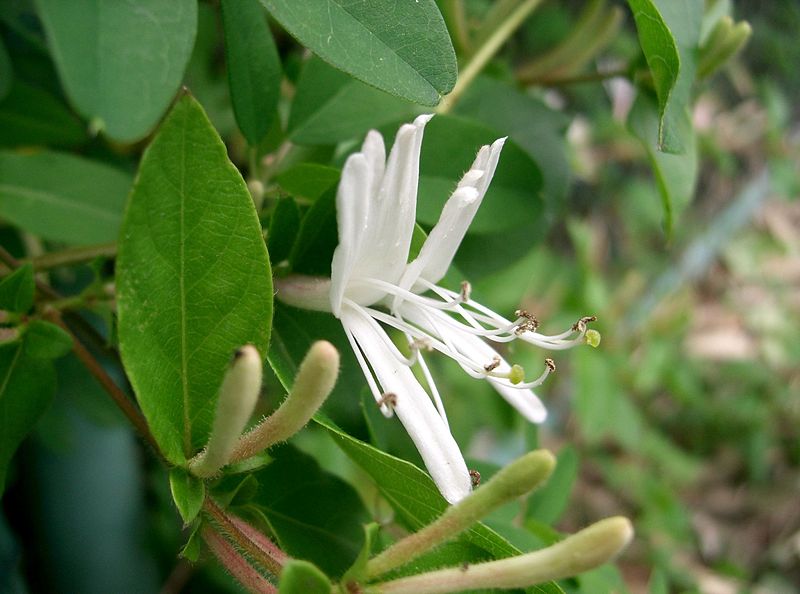
lonicera japonica

Japanese honeysuckle (Lonicera japonica) – photo credit: wikimedia commons

More about eating invasive species:

———————

What are you doing to celebrate National Invasive Species Awareness Week? Let us know in the comment section below.

Executive Orders on Invasive Species

As of January 20, 2017 we have a new administration in the White House, and with that has come a slew of executive orders. For better or worse, U.S. Presidents have the authority to issue orders that direct the policies and procedures of the agencies that make up the Federal government. Such orders have the same effect as federal laws. Thankfully, the U.S. Constitution sets up a system of checks and balances that keep one branch of government from exercising too much power over the others. In this way, executive orders can be challenged and, if necessary, overturned.

Of course, I don’t intend for this to be a political debate. There are plenty of other places out there that can take you down that rabbit hole. This is simply an introduction to invasive species and their run-ins with executive power. As evidence has mounted against invasive species, demonstrating the threat they can pose to human health and safety as well as to the economic well being of the nation, both state and federal governments have created laws and issued orders concerning them. Examples of such legislation include the Federal Noxious Weed Act of 1974 (which was superseded in 2000 by the Plant Protection Act) and the National Invasive Species Act (which deals specifically with ballast water management). Legislation such as this directs the actions of state and federal agencies in an effort to minimize the introduction and spread of invasive species and reduce the harm they may be having.

Executive Order 13112, issued by President Bill Clinton on February 3, 1999, gave further direction to Federal agencies in the nation’s ongoing battle against invasive species. One of its main directives was to create the National Invasive Species Council which, among other things, would be responsible for developing a National Invasive Species Management Plan.

vertical_nisc_logo_300dpi

The order begins by defining a few terms, including “alien species” (“any species…that is not native to that ecosystem”), “introduction” (“the intentional or unintentional escape, release, dissemination, or placement of a species into an ecosystem as a result of human activity”), “invasive species” (“an alien species whose introduction does or is likely to cause economic or environmental harm or harm to human health”), and “native species” (“a species that, other than as a result of an introduction, historically occurred or currently occurs in that ecosystem”).

Section 2 of the order describes the duties of Federal agencies “whose actions may affect the status of invasive species.” These include monitoring invasive species, preventing their introduction, controlling them in a “cost-effective and environmentally sound manner,” restoring native species, conducting research on invasive species, and promoting public awareness about the issue.

Section 3 establishes the National Invasive Species Council, and Section 4 describes its duties. The Secretaries of Interior, Agriculture, and Commerce are assigned as Co-Chairs of the council, and several other agencies are listed as council members. The council is directed to “oversee the implementation of this order” and, among other things, “prepare and issue a national Invasive Species Management Plan.”

Section 5 describes what the management plan should include and when it should be completed. The plan will include “performance-oriented goals and objectives and specific measures of success for Federal agency efforts concerning invasive species,” and should also provide a “science-based process to evaluate risks associated with introduction and spread of invasive species.” The Council was also directed to “assess the effectiveness of this order no less than once each 5 years” after its issuance.

14022181_337370233276031_3806807017744063588_n

Seventeen years and ten months after this order was issued, President Barack Obama issued an order that amended Executive Order 13112 and directed “actions to continue coordinated Federal prevention and control efforts related to invasive species.” It maintained the National Invasive Species Council while also expanding its membership and updating its duties. It also emphasized the impacts that invasive species can have on human health, specifically calling out “those species that are vectors, reservoirs, and causative agents of disease.” Additionally, it warned that “climate change influences the establishment, spread, and impacts of invasive species,” a subject that wasn’t addressed in the original order, and it encouraged making greater use of “technological innovation,” which had advanced considerably in seventeen years.

Collaboration appears to be a major theme of Obama’s amended order. In a couple different sections, “open data” is advised, as well as a call for Federal agencies to “develop, share, and utilize similar metrics and standards, methodologies, and databases,” and to “facilitate the interoperability of information systems.” The Feds are advised to use “tools such as challenge prizes, citizen science, and crowdsourcing” – a call that encourages more public involvement in the issue.

Both of these orders are worth reading for yourself. Clearly, government agencies take the threat of invasive species seriously. Perhaps in future posts we will explore some of the specific actions that these agencies are taking and the responsibilities they have regarding invasive species.

See Also: Introducing Invasive Species

Tufty’s Plight, or Saving the U.K.’s Red Squirrel

“There is the great blank area where no red squirrels have returned, and this is where the grey ones first spread and are now permanent inhabitants. Outside it there are plenty of red squirrel populations still, though they have fluctuated, often severely.” — Charles Elton, The Ecology of Invasions by Animals and Plants, 1958

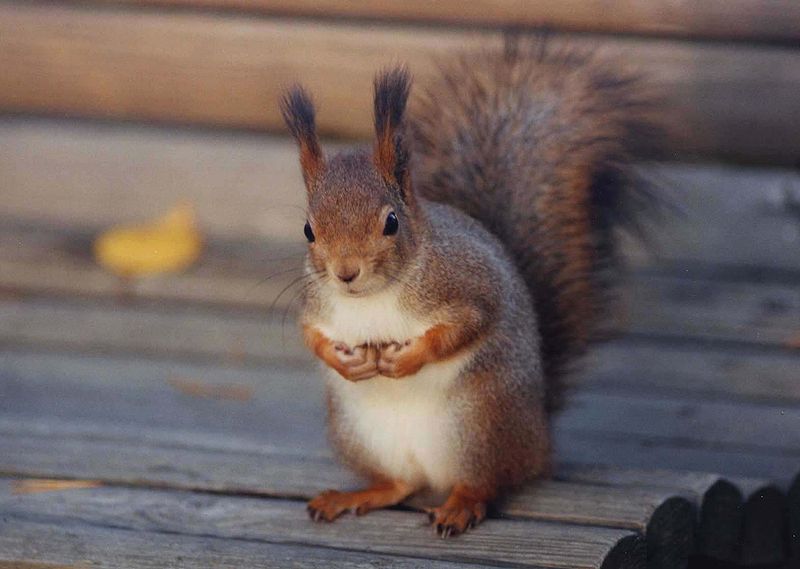
Sciurus vulgaris, or the Eurasian red squirrel, is widespread throughout northern Europe and east into Siberia. It is a small squirrel with a chestnut top and a creamy underside that spends much of its time in the tops of trees. Its tail is large and fluffy, and its ears are adorned with prominent tufts of hair. It enjoys a broad range of foods from seeds, fruits, and leaves to fungi, insects, and birds’ eggs. It is beloved in the United Kingdom, where its survival is being threatened by a North American cousin. This cousin, now established in the U.K. for well over a century, looks to increase its range across Europe, with a growing population in Italy and the potential to spread to neighboring countries.

Eurasian red squirrel (Sciurus vulgaris) - photo credit: wikimedia commons

Eurasian red squirrel (Sciurus vulgaris) – photo credit: wikimedia commons

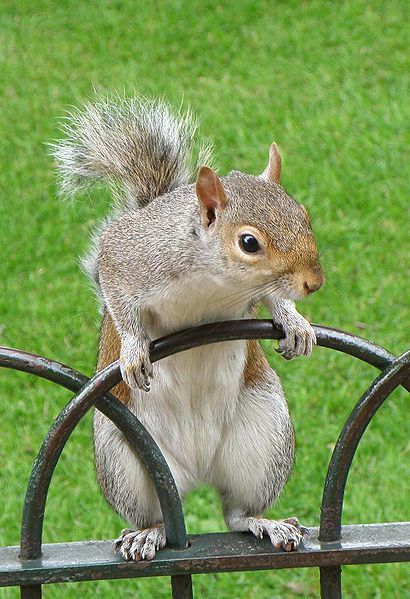
Sciurus carolinensis, or Eastern gray squirrel, is native to eastern North America but has been introduced to parts of western North America as well as other parts of the world, including the United Kingdom, Italy, South Africa, and Australia. Its fur is typically dark to pale gray with red tones. It prefers mature forests where food and shelter are abundant; however, it is a highly adaptable species and is common in urban areas and disturbed sites. It shares habitat requirements with the red squirrel, but has the advantages of being larger, stronger, and able to digest acorns.

Gray squirrels were first introduced to the U.K. in 1876. Wealthy collectors were enchanted by them and began releasing them on their estates. The first pair made it to Ireland in 1911. Around this time biologists were becoming concerned by how quickly they were spreading as well as the damage they were doing to young trees and the effect they seemed to be having on red squirrel populations. The U.K. Parliament responded in 1937 by banning the possession and introduction of gray squirrels. In an article published in Science in June 2016, Erik Stokstad writes about this “troubling phenomenon: where gray squirrels established colonies, red squirrels sooner or later vanished.” The current population of red squirrels in the U.K. is estimated at around 140,000, while gray squirrels are thought to number more than 2.5 million.

Why red squirrels vanish when grey squirrels are present is not entirely understood. Competition for food is one factor. Grey squirrels seem to have an advantage over red squirrels in mixed deciduous forests, and according to Schuchert, et al. (Biological Invasions, 2014), after colonization by gray squirrels, red squirrels can become restricted to coniferous forests, which are “less favored by grey squirrels.”

But direct competition alone doesn’t explain the plummeting numbers of reds in the presence of grays. Another explanation was identified in 1981 – grey squirrels were spreading a disease. Several years of experimentation confirmed that red squirrels were dying of squirrelpox – a parapoxvirus that gray squirrels carry but show little or no sign of infection. The virus can spread quickly through a population of red squirrels, leaving them lethargic, malnourished, and an easy target for predators. Stokstad writes, “red squirrels are defenseless…as [they] succumb, gray squirrels quickly take over the habitat.

But not all grey squirrels carry the virus, and there are some regions where the virus isn’t a major problem. Habitat loss and fragmentation due to human development also plays a role in the red squirrel’s decline. Add to that, grey squirrels may be more inclined to live among humans, giving them an advantage over the more reclusive reds.

Efforts have been underway for decades now to reduce, and even eliminate, gray squirrels in the U.K. Tens of thousands of grey squirrels have already been trapped and killed, yet they continue to dominate. Schuchert et al. write, “while culling may decrease grey squirrel population size in the short term, their high dispersal abilities makes re-colonization likely.” Funding for culling programs isn’t always available, and protests from animal rights groups like Animal Aide U.K. and Animal Ethics also have an impact. One area that culling has proved successful is Anglesey, an island off the coast of Wales, where the red squirrel population had once been reduced to just 40 individuals. Schuchert et al. analyzed culling data over a 13 year period and determined that trapping and killing efforts “resulted in the sustained and significant reduction of an established grey squirrel population at a regional landscape scale.”

Eastern gray squirrel (Sciurus carolinensis) - photo credit: wikimedia commons

Eastern gray squirrel (Sciurus carolinensis) – photo credit: wikimedia commons

Red squirrels may also be experiencing some relief thanks to another threatened mammal. Martes martes, or the European pine marten, is a member of the weasel family and, as Stokstad writes, “a cat-sized predator [that] was nearly exterminated in the 20th century.” Hunting, both for fur and pest control, and habitat loss reduced pine marten numbers dramatically until it received legal protection in 1988. Since then it has started to rebound, particularly in Scotland and Ireland. Anecdotes suggested that pine marten recovery in these areas was resulting in fewer gray squirrels. A study published in Biodiversity and Conservation in March 2014 confirmed that gray squirrel populations in Ireland were at “unusually low density,” and that the increasing numbers of pine martens played a role in that. Gray squirrels move slower and spend more time on the ground compared to red squirrels, making them easier prey for pine martens.

Efforts are now underway to introduce pine martens to other parts of the U.K. where gray squirrel populations are problematic. However, according to Stokstad, “red squirrel advocates worry that the pine marten could be a false hope, promising a free and uncontroversial solution that could threaten funds for culling.”

Let’s remember that the gray squirrel was deliberately introduced to the United Kingdom by humans, and that human activity is one of the main reasons for the grey squirrel’s explosion and the red squirrel’s retreat. Culling is not likely to ever eliminate gray squirrels completely, yet no one wants to see red squirrels go extinct. Altered landscapes can favor certain species over others, so ensuring that there is plenty of favorable habitat available for the red squirrel is one way to aid its survival. The grays may be there to stay, but let’s hope a compromise can be found so generations to come can benefit from sharing space with the red squirrel (and perhaps the gray squirrel,too).

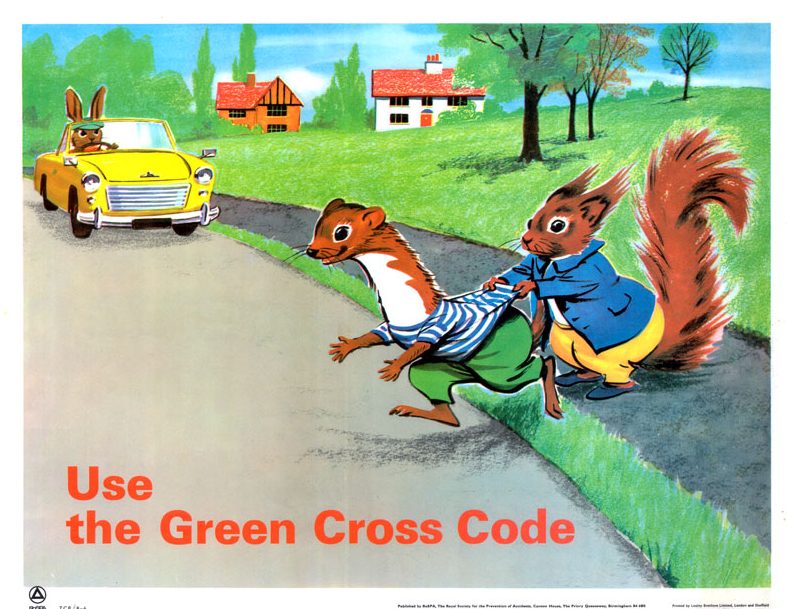
Tufty Fluffytail, a character developed to help teach kids road safety in the U.K., saves Willy Weasel from getting run over (again).

Red Squirrel Conservation Groups:

Book Review: The New Wild

What if we were to look at invasive species with fresh eyes? Traditionally we have viewed them as interlopers hellbent on environmental destruction, but have we considered the good they can do? Should our efforts to eradicate them be tempered – eliminating them when it seems absolutely necessary, but accepting them when they are doing some good; welcoming them when they have something to offer. What does their presence mean anyway? What does it say about the ecosystems they inhabit and about us? Invasive species are convenient scapegoats, taking the blame for much of the ecological devastation that we started in the first place. Is that justified?

This is, essentially, the theme of The New Wild, a book by Fred Pearce that urges us to reconsider the ways we think, talk, and act towards invasive species. More than that, it is about dumping the idea that pristine nature (a mythological concept anyway, and one that is not all that useful) is the only true wild, and that nature invaded by alien species is a lesser thing that needs to be fixed. The truth is, nature is and always has been in a constant state of flux, and it is unconcerned about the provenance of the species that compose it. As Pearce puts it, if it’s doing “a useful job,” “it matters not a jot where a species comes from.”

6174zgpakrl-_sx326_bo1204203200_

Invasion biology is a relatively new field of study, stemming from the publishing of Charles Elton’s book, The Ecology of Invasions by Animals and Plants, in 1958. For thousands of years, humans have had a hand in moving species of all kinds around the planet, but it was in the latter half of the 20th century that our awareness of the ecological damage that some of these species can do really developed. Since then we have made great efforts to remove such species and put things back the way we found them. The zeal with which we have done so hasn’t always been justified or effective, and throughout what at times has felt like an all out war against foreigners, a profound sense of animosity and suspicion towards anything non-native has taken root in our psyche.

Pearce hopes to mitigate these feelings and get us to reconsider some of our actions. To start with, he calls into question the distinction between aliens and natives: “A broad time horizon shows there is no such thing as a native species. All lodgings are temporary and all ecosystems in a constant flux, the victims of circumstance and geological accident.” Also, “many aliens are so well integrated that they are assumed to be native,” and “species come and go so much, as a result of both human and natural forces, that conventional hard distinctions about what belongs where have long been all but meaningless.”

Instead of judging a species by its provenance, “we should treat species on their merits and learn a little tolerance and respect for foreigners.” While “being alien can sometimes be problematic,” it can equally result in the renewal of “flagging ecosystems, creating new space for natives and providing ecosystem services.” Seeing that those services are in place is what should really matter, and “[ecological services] are best done by the species on hand that do it best.” After all, nature is not a system of “preordained perfection,” but instead “a workable mishmash of species, constantly reorganized by the throw of the dice.”

In his criticisms of the field of invasion biology, Pearce investigates some of the “constantly recycled ‘facts’ about alien species.” He finds many of the claims to be unfounded and oft-repeated statistics to be blatant misrepresentations of the original studies. He concludes that “some of the most widely used statistics in the canon of invasion biology do not stand up.” To support his point, he offers several examples of how alien species have added to the biodiversity in certain ecosystems and he shares stories that “show how we instinctively blame aliens for ecological problems that may have a lot more to do with our own treatment of nature.”

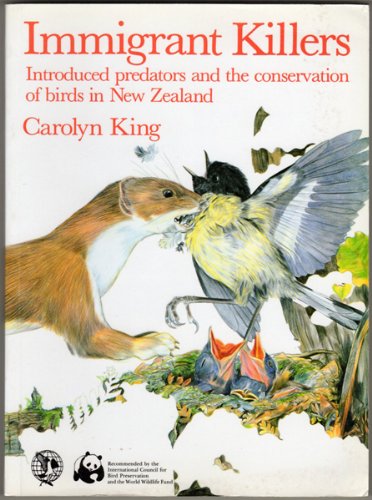
Immigrant Killers by Carolyn King, one of many books making a case for the war on alien species.

Immigrant Killers by Carolyn King, one of many books published in the past few decades that makes the case for waging war on alien species.

In so many words, Pearce’s stance is that the classic “aliens are bad, and natives are good” approach is outdated – “nature doesn’t care about conservationists’ artificial divide between urban and rural or between native and alien species,” which means that our perception of aliens should shift from being “part of the problem to part of the solution.” Abandoned farmlands, secondary forests, recolonized waste places, urban sprawl, and other novel ecosystems across the globe offer explicit examples of species from all backgrounds coming together to create functional habitats. This is the new wild.

Pearce is not advocating that we throw in the towel and let invasive species run rampant: “It would be foolish to claim that alien species never do any harm or that efforts to uproot them are always doomed to fail.” His support for the new wild is “not a call to let it rip.” Instead, “conservation in the twenty-first century requires an open-minded assessment of what might work – not a sullen retreat into blinkered orthodoxy.” So, rather than try to stop the flux of nature (an act that is decidedly “anti-nature”), let’s see where it goes, alien species and all; and when we do decide to beat back invasives and intervene “to preserve what we like,” we should be mindful that nature may be “traveling in a different direction.” As Pearce writes, “the new wild is flourishing, and it will do better if we allow it to have its head.”

———————

Obviously this is a controversial topic, but the ideas in this book are worth exploring further. Pearce’s notes are extensive, and I intend to read through many of his resources. Stay tuned for more posts. Meanwhile, you can listen to an interview with Pearce on this episode of Talking Plants. For a more critical veiw of Pearce’s book, check out these reviews by Los Angeles Review of Books and The EEB & Flow.


Alien Plant Invasions and the Extinction Trajectory

One of the concerns about introduced species becoming invasive is that they threaten to reduce the biodiversity of the ecosystems they have invaded. They do this by spreading rampantly, using up resources and space, altering ecosystem functions, and ultimately pushing other species out. In the case of certain invasive animals, species may be eliminated via predation; but plants don’t eat each other (generally), so if one plant species is to snuff out another plant species it must use other means. Presently, we have no evidence that a native plant species has been rendered extinct solely as a result of an invasive plant species. That does not mean, however, that invasive plants are not doing harm.

In a paper published in AoB Plants in August 2016, Paul O. Downey and David M. Richardson argue that, when it comes to plants, focusing our attention on extinctions masks the real impact that invasive species can have. In general, plants go extinct more slowly than animals, and it is difficult to determine that a plant species has truly gone extinct. Some plants are very long-lived, so the march towards extinction can extend across centuries. But the real challenge – after determining that there are no above-ground signs of life – is determining that no viable seeds remain in the soil (i.e. seed bank). Depending on the species, seeds can remain viable for dozens (even hundreds) of years, so when conditions are right, a species thought to be extinct can emerge once again. (Consider the story of the Kankakee mallow.)

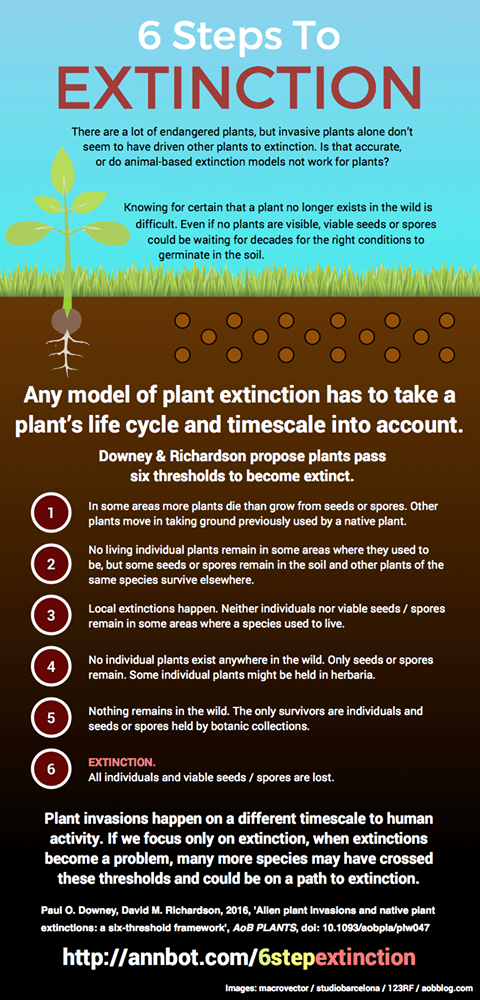
On the other hand, there is plenty of evidence that invasive plant species have had significant impacts on certain native plant populations and have placed such species on, what Downey and Richardson call, an extinction trajectory. It is this trajectory that deserves our attention if our goal is to save native plant species from extinction. As described in the paper, the extinction trajectory has six steps – or thresholds – which are defined in the infographic below:

6-threshold-extinction-trajectory

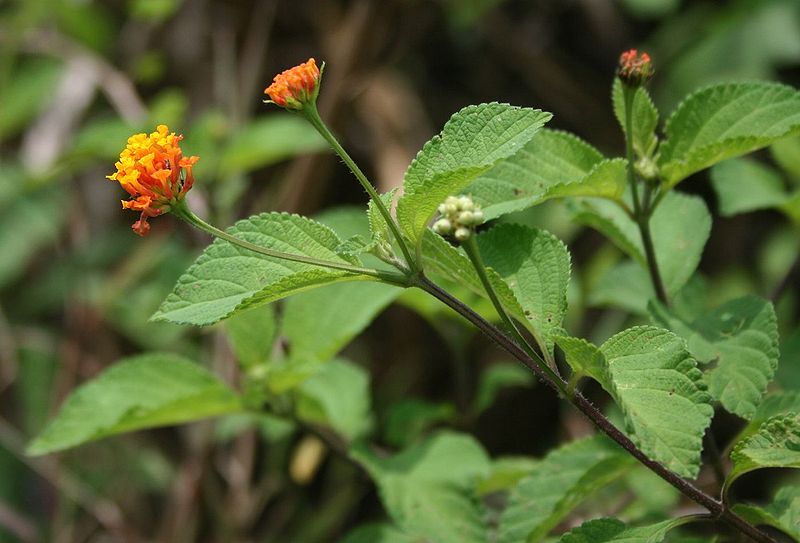
Downey and Richardson spend a portion of the paper summarizing research that demonstrates how invasive plants have driven native plants into thresholds 1-3, thereby placing them on an extinction trajectory. In New Zealand, Lantana camara (introduced from the American tropics) creates dense thickets, outcompeting native plants. Researchers found that species richness of native plants declined once L. camara achieved 75% cover in the test sites. In the U.S., researchers found reduced seed set in three native perennial herbs as a result of sharing space with Lonicera mackii (introduced from Asia), suggesting that the alien species is likely to have a negative impact on the long-term survivability of these native plants. Citing such research, Downy and Richardson conclude that “it is the direction of change that is fundamentally important – the extinction trajectory and the thresholds that have been breached – not whether a native plant species has actually been documented as going extinct due to an alien plant species based on a snapshot view.”

Introduced to New Zealand from the American tropics, largeleaf lantana (Lantana camara) forms dense thickets that can outcompete native plant species. (photo credit: wikimedia commons)

Introduced to New Zealand from the American tropics, largeleaf lantana (Lantana camara) forms dense thickets that can outcompete native plant species. (photo credit: wikimedia commons)

In support of their argument, they also address problems with the way some research is done (“in many instances appropriate data are not collected over sufficiently long periods,” etc.), and they highlight the dearth of data and research (“impacts associated with most invasive alien plants have not been studied or are poorly understood or documented”). With those things in mind, they make recommendations for improving research and they encourage long-term studies and collaboration in order to address the current “lack of meta analyses or global datasets.” A similar recommendation was made in American Journal of Botany in June 2015.

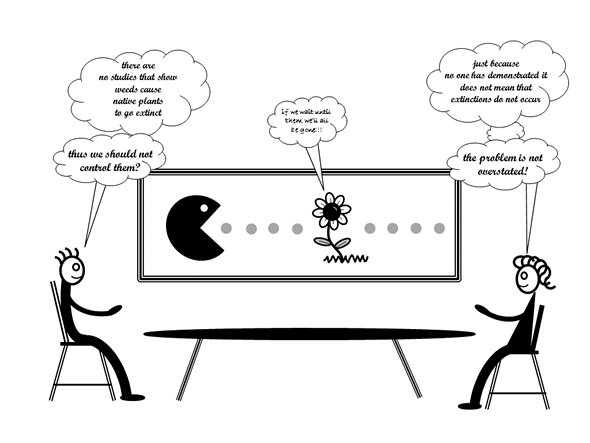
The language in this report makes it clear that the authors are responding to a certain group of people that have questioned whether or not the threat of invasive plants has been overstated and if the measures we are taking to control invasive plants are justified. The following cartoon that appeared along with a summary of the article way oversimplifies the debate:

04_figure2

Boy: There are no studies that show weeds cause native plants to go extinct, thus we should not control them. Plant: If we wait until then, we’ll all be gone!!! Girl: Just because no one has demonstrated it does not mean that extinctions do not occur. The problem is not overstated!

It seems to me that a big part of why we have not linked an invasive plant species to a native plant species extinction (apart from the difficulty of determining with certainty that a plant has gone extinct) is that extinctions are often the result of a number of factors. The authors do eventually say that: “it is rare that one threatening process in isolation leads to the extinction of a species.” So, as much as it is important to fully understand the impacts that invasive plant species are having, it is also important to look at the larger picture. What else is going on that may be contributing to population declines?

Observing invaded plant populations over a long period seems like our best bet in determining the real effects that invasive species are having. In some cases, as Downey and Richardson admit, “decreased effects over time” have been documented, and so “the effects [of invasive species] are dynamic, not static.” And speaking of things that are dynamic, extinction is a dynamic process and one that we generally consider to be wholly negative. But why? What if that isn’t always the case? Extinctions have been a part of life on earth as long as life has been around. Is there anything “good” that can come out of them?

Introducing Invasive Species

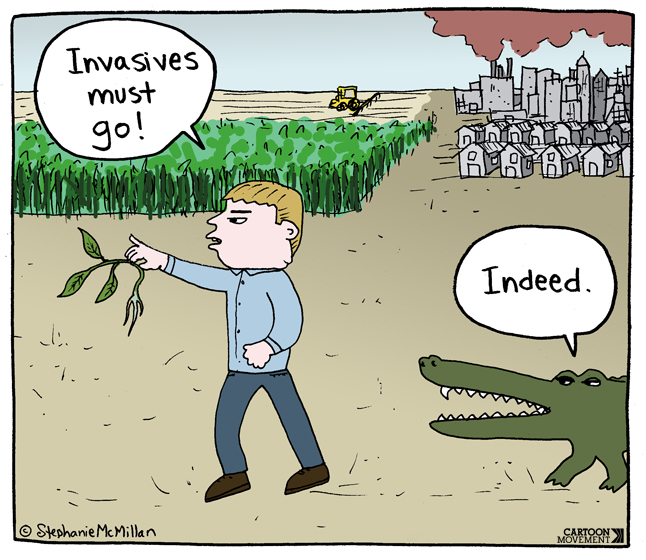
The terms “invasive” or “invasive species” get thrown around a lot. They are frequently used to describe anything that is “misbehaving,” or acting in a way that doesn’t fit our idealized vision for how a landscape should look and function. Oftentimes a species that is introduced (by humans) or is not native to an area automatically gets labeled invasive, even if it isn’t acting aggressively or having any sort of dramatic impact on the ecosystem. It is an alien species in an alien environment; it has invaded, therefore it is invasive.

image credit: cartoon movement

image credit: cartoon movement

Determining what is actually invasive in what location and at what time is much more complex than that. We do our best to understand the natural features and functions of ecosystems, and we single out any species, whether introduced or not, that is acting to upset things. That species is considered invasive and, if the goal is to restore the natural balance, it must be controlled. To what degree a species should be controlled depends on the degree that it is upsetting things. Ultimately, it comes down to human judgement. Hopefully that judgement is based on the best available evidence, but that isn’t always the case.

But we are getting ahead of ourselves. What I mostly want to accomplish with this post is to introduce the concept of invasive species and point you to a selection of resources to learn more about them. I defined invasive species in a post I wrote back in August 2015, so I will repeat myself here:

“Invasive species” is often used inappropriately to refer to any species that is found outside of its historic native range (i.e. the area in which it evolved to its present form). More appropriate terms for such species are “introduced,” “alien,” “exotic,” “non-native,” and “non-indigenous.” The legal definition of an invasive species (according to the US government) is “an alien species that does or is likely to cause economic or environmental harm or harm to human health.” Even though this definition specifically refers to “alien species,” it is possible for native species to behave invasively.

These terms refer not just to plants but to all living organisms. The term “noxious weed,” on the other hand, is specific to plants. A noxious weed is a plant species that has been designated by a Federal, State, or county government as “injurious to public health, agriculture, recreation, wildlife, or property.” A “weed” is simply a plant that, from a human perspective, is growing in the wrong place, and any plant at any point could be determined to be a weed if a human says so.

Invasive species are easily one of the most popular ecological and environmental topics, and resources about them abound – some more credible than others. Here is a list of places to start:

That should get you started. There are, of course, numerous books on the subject, as well as a number of peer-reviewed journals dedicated to biological invasions. You should also be aware that IUCN maintains a list of the Top 100 World’s Worst Invasive Species and that there is a National Invasive Species Awareness Week, which is quickly approaching. This episode of Native Plant Podcast with Jamie Reaser (executive director of National Invasive Species Council) offers an informative discussion about invasive species, and a search for “invasive species” on You Tube brings up dozens of results including this brief, animated video:


I want to believe that we are doing the right thing when we make concerted efforts to remove invasive species and restore natural areas, but I’m skeptical. The reason why I have chosen to spend an indefinite amount of time exploring the topic of invasive species is because I truly want us to get it right. Yet I don’t even know that there is a “right.” It seems to me that there are endless trajectories – each one of them addressing different objectives and producing different outcomes. In a way we are playing God, regardless of which approach we take. We are making decisions for nature as if we know what’s best for it or that there even is a “best.”

Humans have had major impacts on virtually every square inch of the planet and have been placing our fingerprints on every ecosystem we touch since long before we became the humans we are today, and so it is difficult for me to envision a planet sans humans. It is also difficult for me to buy into the idea that our planet should look as though humans haven’t touched it (i.e. pristine). Because we have been touching it – for hundreds of thousands of years. Efforts to rewind time to before introductions occurred or to hold an ecosystem in stasis, securing life for only those species that “belong” there, seem noble yet fanciful at best and misguided, arrogant, and fruitless at worst.

To be the best conservationists we can be, we probably need to find a middle ground regarding invasive species – not a deter and eliminate at all costs approach, but also not a complete surrender/all are welcome and all can stay stance. Somewhere in between seems reasonable, acknowledging that the strategy taken will be different every time based on the location, the species in question, and our objectives. Of course, none of my beliefs or opinions on this topic (or any topic for that matter) are fully formed. I am trying to do my best to maintain an open mind, seeking out the best information available and following the evidence where it takes me. A topic as complex as invasion biology, however, is never going to be easy to finalize one’s opinions on, and so this journey will be boundless. I hope you will join me.

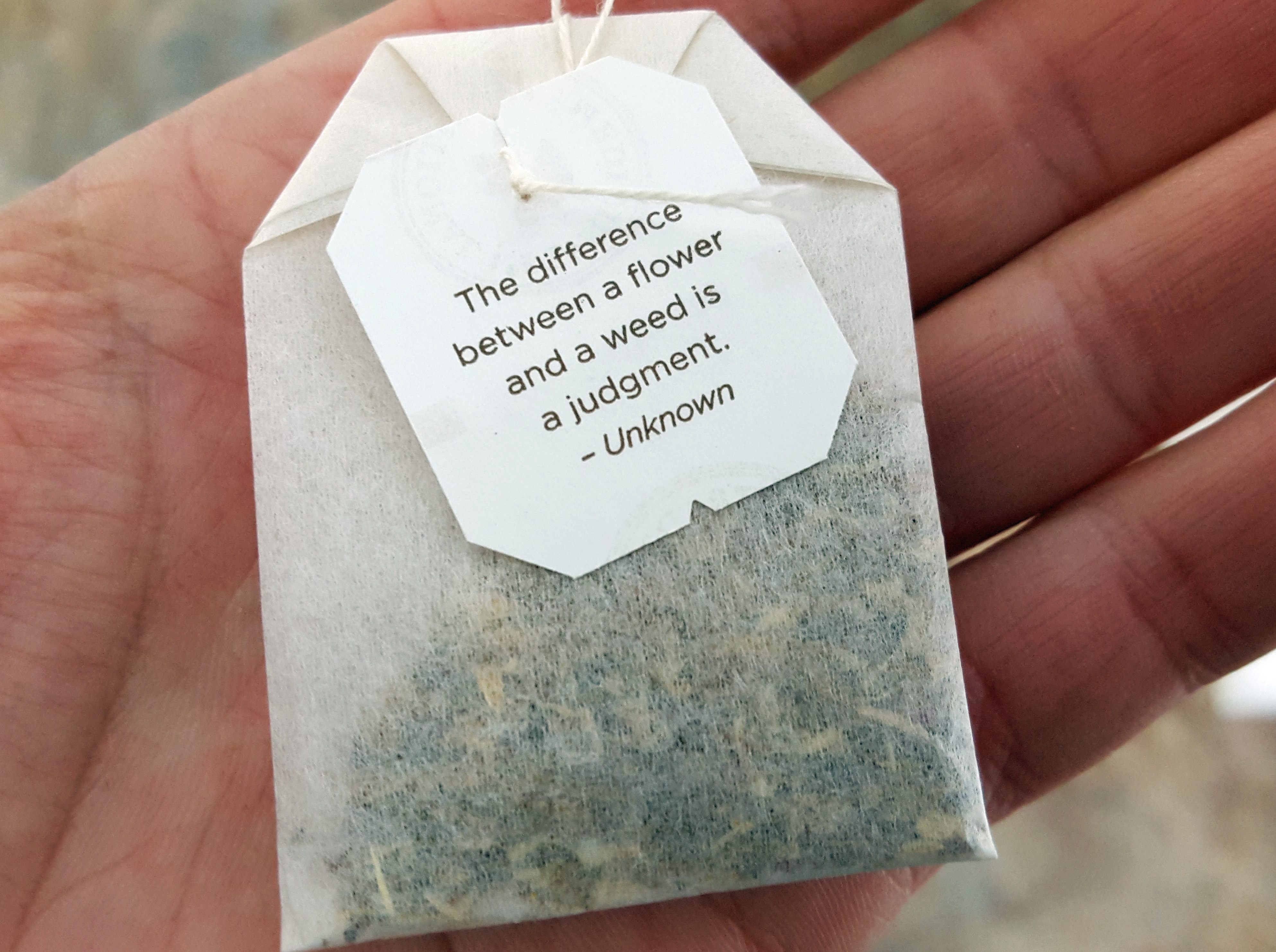
tea-bag

Last but not least, here are two articles that discuss updating our approach to dealing with invasive species:


2016: Year in Review

2016 was another busy year at Awkward Botany headquarters. A major highlight was the response I received from the Help Wanted announcement that I posted early last year. Several people expressed interest in writing guest posts, while several others volunteered to help out in other ways (contributing images, illustrations, logos, etc.). The offer still stands, so please be in touch if you would like to contribute in any way.

Speaking of being in touch, the comments I’ve received and the connections I’ve made through social media and beyond really add to the experience of doing this blog. Not only does it make this more of a conversation, but it is greatly motivating to know that people find this to be a valuable and entertaining resource. Thank you to all who have reached out. And thanks to silent observers as well. Let’s stay in touch.

As I have done in the past, I am including a list of some of the posts from this past year, mainly those that are part of ongoing series. Many posts don’t fall within these categories, so all others can be found in the ‘Archives’ widget on the right side of the screen.

Book Reviews:

Poisonous Plants:

Famous Botanists in History:

Drought Tolerant Plants:

Field Trips:

Ethnobotany:

Botany in Popular Culture:

Tiny Plants:

Rare and Endangered Plants

Podcast Review:

Guest Posts:

What Is a Plant, and Why Should I Care? part one, part two, part three, part four

Along with the great guest posts, I also received Awkward Botany logos from three incredible artists/graphic designers. I loved them all, and I am very thankful for the time and talent that was spent creating them. The logos are featured below. In order of appearance they were created by Franz Anthony, Mesquite Cervino, and Mara McCall. If you have an idea for an Awkward Botany logo, please let me know. I would love to see it.

ab_logo_brown2

ablogo_cropped-with-black-border-2

awkward-botany-logo_ny

And now a heads up…

In the coming months I plan to focus most of my posts on “weeds” and invasive species. These are topics that I have found increasingly intriguing, so I am hoping that writing a long series of posts about them will help satisfy my curiosity. This may or may not be your thing, but I hope you will stick around regardless. I plan to continue to include some guest posts, which will hopefully help break up the monotony. Also, I know I said this last year and it didn’t actually happen, but I will most likely be taking some breaks from my weekly publishing schedule in order to work on some other projects. Those projects and more will be revealed at some point in time, along with other ideas I have rolling around in my head. If the thought of me taking breaks from posting here bothers you, I invite you to join me on twitter and tumblr, where I will continue to post random things regularly.

Until then, I wish you all a splendid 2017. It should be an interesting one, so buckle up.

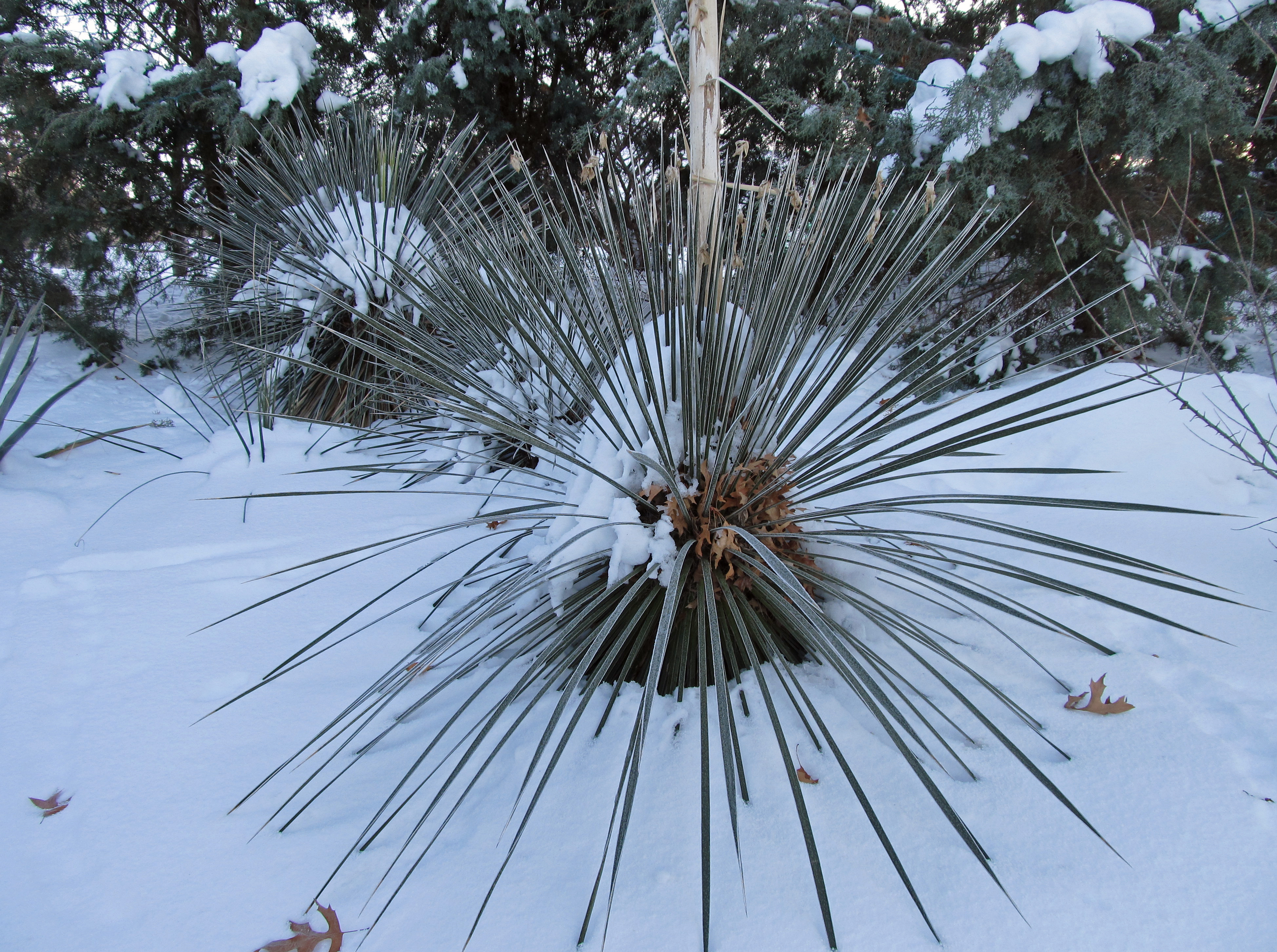
Yucca in the snow at Idaho Botanical Garden in Boise, Idaho

Yucca in the snow at Idaho Botanical Garden in Boise, Idaho