Tea Time: Self-heal

Prunella vulgaris can be found all over the place. It has also been used to treat just about everything. What else would you expect from a plant known commonly as self-heal, heal-all, all-heal, and woundwort? The medicinal value of this plant has been appreciated for centuries across its expansive range, and studies evaluating its medicinal use continue today. Being such a ubiquitous species – both as a garden plant and a native plant (and also a common weed) – and because it has so much clout in the world of herbal medicine, it’s an obvious candidate for Tea Time.

Self-heal is a member of the mint family (Lamiaceae), easily distinguished by its square stems, opposite leaves, and bilabiate and bilaterally symmetrical (or zygomorphic) flowers. One surprise is that, unlike the many aromatic members of this family, the foliage of self-heal lacks a strong scent. P. vulgaris occurs naturally across Asia, throughout Europe, and in parts of northern Africa. It is also widely distributed across North America. Apart from that, it has been introduced to many regions in the southern hemisphere and has also been frequently moved around throughout its native range. Eurasian varieties now intermingle with North American varieties, which can make it difficult to determine a native individual from an introduced one.

self-heal (Prunella vulgaris)

Self-heal is an adaptable plant that tends to prefer shady, moist locations, but can also be found in open, dry, sunny sites. Find it along forest edges, roadsides, ditches, and trails, as well as on the banks of streams, lakes, and reservoirs. It occurs in gardens, both intentionally planted and as a weed, and can escape into lawns, vacant lots, and open fields, as well as into nearby natural areas.

P. vulgaris is an evergreen that grows both prostrate and upright, sometimes reaching 1 foot tall or more (but is often much shorter). It has shallow, fibrous roots, and its stems root adventitiously as they sprawl across the ground, frequently forming an extensive mat or groundcover. Its leaves are oval to lance-shaped and measure about one inch long. Lower leaves have petioles, while upper leaves may become stalkless. Leaf margins are entire or can be slightly toothed. As plants age, they can develop a coppery or purple-bronze color.

the leaves of self-heal

The flowers of self-heal are generally a shade of purple, but can also be white, pink, or blue. They bloom irregularly in a spike measuring up to two inches long. Flower spikes are thick, dense, cylindrical, and made up of whorls of sharp-pointed bracts. Flowers bloom irregularly along the spike and occur from late spring/early summer into the fall. Each flower produces four nutlets, which sit within a cup-shaped, purple calyx.

As a medicinal herb, self-heal has been used both internally and externally to treat a long list of ailments. These include sore throats, diarrhea, fevers, intestinal infections, liver problems, migraines, heart issues, dermatitis, goiter, and thyroid disfunction, just to name a few. It has been used topically to treat skin irritations, bites, stings, and minor cuts and scrapes. This is thanks to its antimicrobial properties and its ability to stop bleeding. A report in the journal Pharmaceuticals (2023) calls P. vulgaris an “important medicinal plant” due to its “rich chemical composition” and its “pharmacological action.” Chemical analyses find the plant to be a valuable source of phenolic compounds, flavonoids, rosmarinic acid, and ursolic acid, among numerous other compounds. If you are curious to learn more detailed information regarding this plant’s medicinal value, you can refer to the above report, as well as one found in Frontiers in Pharmacology (2022).

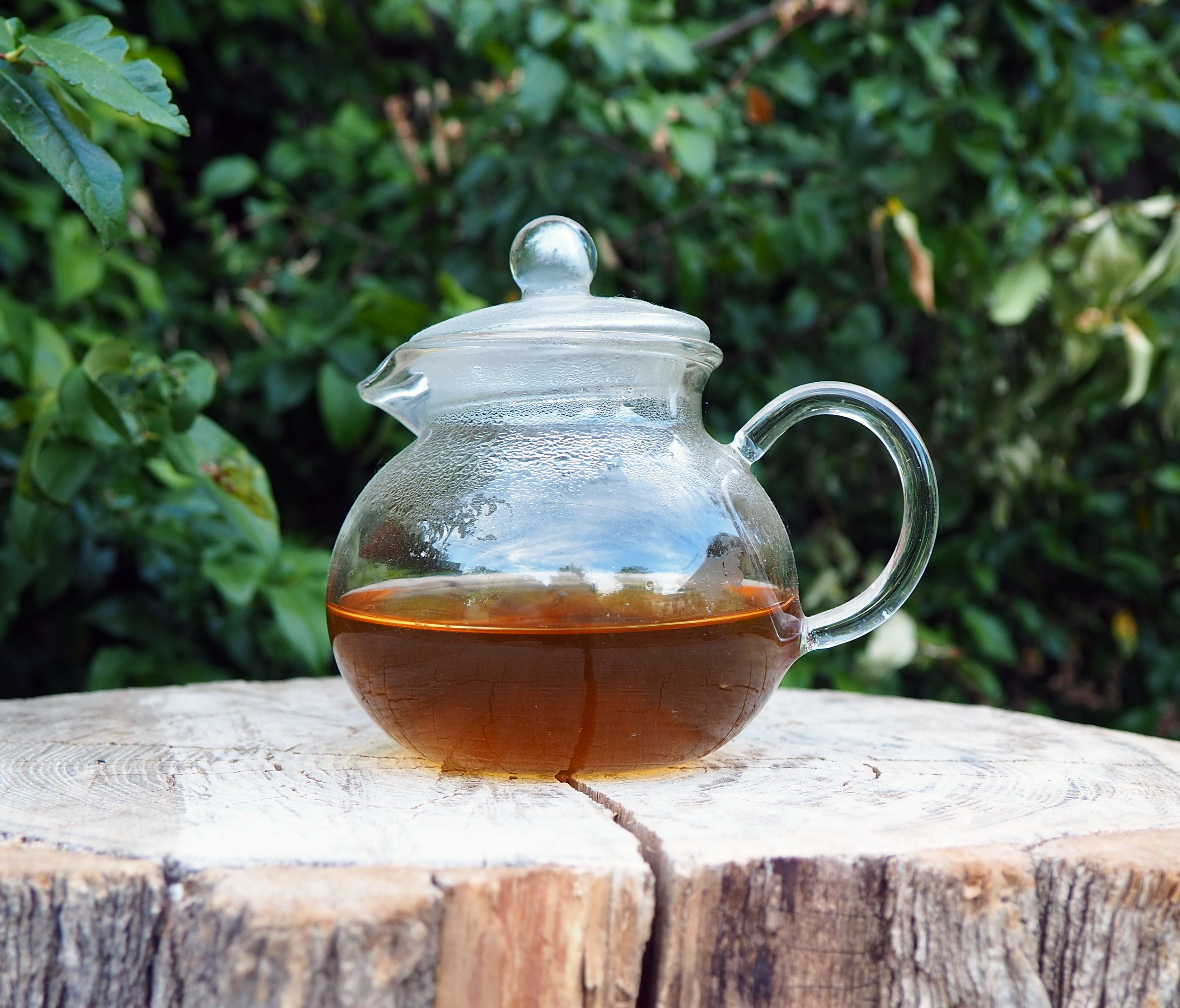
self-heal tea

P. vulgaris is an edible plant, and its young leaves can be eaten raw or cooked. The leaves together with the flowers can also be dried and used to make a tea. This is how I had it. I used about two teaspoons of dried leaves to one cup of water. Feel free to use more if you would like. I thought the tea was pretty mild. It had a slight sweetness to it and a hint of mint flavor. It has been described as bitter, but I didn’t find it to be overly so (although I may have a higher tolerance for bitterness). Sierra tried it and said that it tasted like “water left over from something else.” That might be because it was more diluted than she would have preferred. Overall, I thought it was a pleasant experience and would be happy to drink it again.

More Tea Time Posts on Awkward Botany:

Horticulture’s Weedy Introductions in a Changing Climate

In case I need a reminder that the horticulture industry has a history of introducing weedy plants to natural areas, I get one each time I bike to work. Riding along the Boise River Greenbelt, a trail that for much of its length is flanked by cultivated landscapes on one side and a highly modified but largely naturalized river bank on the other, I see a mixture of both native and introduced plants. Of the introduced plants, many are horticultural species that have escaped cultivation and established themselves on the bank of the river. There are catalpa and black locust trees brought in from the other side of the country, St. John’s wort and chicory from Eurasia, honeysuckles primarily from Asia, and a few different cherry species and hybrids with varied provenances. And this is just a small sample of what can be found along my three and a half mile bike ride.

St. John’s wort (Hypericum perforatum) on the banks of the Boise River

This is certainly not a new concern. We have been aware of the role that horticulture plays in introducing invasive species for quite some time now. Several years back, while doing a deep dive into the topic of invasive species, I wrote about this issue right here on this very blog. According to a study published in Frontiers in Ecology and the Environment (2021), out of 1285 plant species identified as invasive, 61% are currently sold in nurseries. If that’s not concern enough, an additional factor to consider is climate change. Plants that were less likely to escape cultivation and head for the wild, may take the opportunity to do so in a changing climate. Plus, horticultural plants that are already problems in certain areas could expand their range as climates become more favorable in new locations, especially if these plants continue to be sold in nearby nurseries.
These concerns and more are the topic of a paper published in BioScience (2023). Evelyn M. Beaury, et al. looked at nurseries across the United States and the plants they sell in order to determine where invasive plants are still being sold in regions where they are invasive. Additionally, they looked at plants known to be invasive but that are not currently invasive in the regions they are being sold. Using climate models, they predicted whether or not these plants could become invasive under changing climates.

Plants are being moved around with a lot more ease than they once were, and the sales of problematic plants are increasingly difficult to regulate. For one thing, plants prohibited for sale in one state can be purchased at nurseries in neighboring states and brought back to be planted in regions where those plants are invasive. And while mail order has existed for a long time, online ordering makes the process even simpler; and many online plant vendors are not liscensed nurseries, making them much more difficult to regulate. But even regulation is typically a response to something that has already become a problem, rather than a proactive measure to prevent plants from escaping into natural areas.

Beaury, et al. identified 672 nurseries across the United States, both online and traditional retailers. Each of these nurseries were selling one or more of the 89 plant species that became the focus of their research. These are plant species that are either on federal or state noxious weed lists or that have been identified as invasive by Invasive Plant Atlas. The reach of each nursery was determined by using customer reviews to compute distances that plants might travel after being purchased at nurseries or from online stores. Obviously, not every customer that purchases a plant leaves a review, but this is a good way to get a general idea how far away customers are from nurseries without having access to more detailed records. These geotagged reviews can also be cross-referenced with known distributions of invasive plants. Using climate models and environmental predictor variables, the researchers determined areas of current and potential invasion for each of the 89 plants.

tansy (Tanacetum vulgare) – one of the 89 plant species looked at in the study

The first question was about proximity to current records of plant invasions. Results showed that “49 of the 89 ornamental invasives were sold within 21 kilometers (13 miles) of an observed record of invasion.” When invasive plants are sold and planted near locations where they are already known to be invasive, it gives them the opportunity to add new plants to existing or developing invasions. In ecology, this is known as propagule pressure. When it comes to current and future climate, most species in the study are being sold by nurseries where the climate is either currently favorable for range expansion or may eventually become favorable. Specifically for future climate, 40 of the 89 plants are being sold in regions that are currently suitable for invasion and will continue to be suitable as the climate changes, and 25 of the 89 plants are being sold in regions where the climate is currently unsuitable but will become suitable as temperatures warm.

Particularly for plants being sold in areas that are not yet suitable for invasion, there is time to educate both the nursery industry and the general public and to look for alternatives to these plants. However, as the researchers point out, their analysis “only examined about 10% of the larger pool of U.S. ornamental plants known to be invasive,” and they “sampled only a subset of the nurseries that could be selling invasive species in the United States.” It is highly likely that the results of this study are an underestimation of the problem. Clearly the work of education and finding alternatives to problematic plants is monumental. The hope is that studies like this can help with education and can assist with working out ways to regulate sales of invasive plants.

coltsfoot (Tussilago farfara) – another one of the 89 plant species looked at in the study

Regulating the sale of plants is beyond most of our control, and how much regulation we should be enforcing on nurseries in the first place is a debate we should be having. Outside of those questions, there is a responsibility that we should take as gardeners and as residents of the planet. If we choose to grow plants, it is crucial that we get to know them. We should be taking the time to observe the degree to which they spread and how they are being dispersed. When they do move around our yards, where are they going, and are they able to grow outside of our care? Are they leaving our properties and coming up elsewhere? If we choose to plant non-native species, we should be mindful of how they might affect nearby, wild landscapes if they were to escape our yards and establish themselves in these locations. We should also be aware of where we live in the city. If our gardens are in the middle of a dense urban landscape, perhaps there is less concern that our plants will move beyond the borders of our gardens. But if we garden near natural areas, we should be significantly more selective about the things we plant, and we ought to be more observant as to what those plants are up to.

Nurseries generally sell the plants that gardeners want to buy, which means we can choose not to buy problematic plants and instead demand alternatives to these plants. Seeking out nurseries that sell the types of plants that are better suited for our regions and do not exhibit invasive behaviors can send a message to other growers that they should phase out certain plants and start growing the plants that gardeners are asking for. This may be a simplistic take, and as with most things, it’s complicated. While one of the goals of this research is to help influence regulators, another goal is simply to “[share] information about high-risk ornamental invaders across states and regions, and [work] with horticulture and community members to reduce the escape of ornamental species into natural areas.” This is precisely the area where gardeners can make a difference.

On that note, I will be starting a new series of posts to discuss some of the ornamental species that have gone weedy. By getting to know the plants that find themselves in this predicament, we can be better situated to make informed decisions about what to do about them.

Weeds of Boise Takes a GIS Course

Why has this blog been so quiet lately? There are plenty of excuses for that. It doesn’t really matter either way, but since we’re on the subject, one thing that has kept me occupied recently is being back in school. I’m working on a certificate in GIS, and I’m hoping to make some cool maps. More on that later perhaps.

For now, I thought I’d share one of my final projects. I figured it was a good excuse to use something I’ve already been working on – namely, Weeds of Boise – and apply it to one of my GIS classes. If you’ve been following Weeds of Boise, not much here will be new. Except the interactive maps!

Using observations from iNaturalist, I created three different maps of weeds found around Boise. I published them, using ArcGIS StoryMaps, alongside more of my usual pontificating about weeds and urban areas, etc. The maps aren’t perfect, but they opened up some interesting possibilities for what Weeds of Boise might become. Something to explore further in the future.

Until then, here is a link to the project if you’d like to take a look: Wild Urban Flora of Boise Idaho.

New Weeds Project, etc.

When you make yourself the weeds guy, and the word gets out that you’re the guy to go to when it comes to weeds, invitations and inquiries start coming your way. Usually it’s just someone asking you to identify a weed or telling you how much they despise a particular plant for its weedy behaviors. Sometimes it’s writing a weeds-themed article or teaching a class about weeds. It can even be an invitation to go on a weeds walk and be interviewed for a television series. This time it’s something, perhaps, a bit bigger.

I won’t say too much about what the project is at this point. It’s a little too early in the process for the big reveal. However, I will say that it involves at least two things: weeds and the Pacific Northwest. That’s partly why I’m bringing this up.

Do you live in the Pacific Northwest? Would you be interested in talking about weeds sometime? If you’re reading this, and you think you might have some input on the subject, please let me know. You can get in touch using the contact form or by sending me a direct message on Instagram. I can give you more information at that point, and we can determine if there is a way you can help.

There will be more to come about this exciting new project in the near future. Meanwhile, my lack of posting, which you may or may not have noticed, is likely to continue for a while. Summers get pretty busy around here, and as much as I’d like to share more posts with you, it just doesn’t happen. The fact that I’m basically back in school for a couple semesters, along with this new opportunity that I’m not saying much about, has made it so that focusing on the blog isn’t getting much easier. But I’ll do what I can, and I’ll try to stay active on Instagram and other social media sites to (sort of) make up for it.

Thanks, as always, for your support, and thank you for putting up with this announcement about an upcoming and soon to be announced announcement.

———————

Support Awkward Botany by visiting our Bookshop. Do you have suggestions for books to add to our store? Let us know in the comment section below.

Book Review: Wild Wasatch Front

If it isn’t clear by now from my Weeds of Boise series and countless other posts, I happen to be interested in the flora and fauna of urban areas. Urban ecology is a fascinating field of study, and I’m not sure that it gets the attention it deserves. Nature is not some far away place, and you shouldn’t have to leave city limits to go in search of it. Remarkably, nature exists right outside your front door, even if you live in the middle of a massive city. It may be a different sort of nature than the one you might find in a national forest or a state park, and it may be composed of species introduced from all corners of the world, but it is still a collection of living organisms interacting with each other and the surrounding environment in unique and important ways. The question is, can you grow to appreciate nearby nature and recognize that the ecological interactions that exist within the context of a city are just as valid as those you’ll find outside of our built environments?

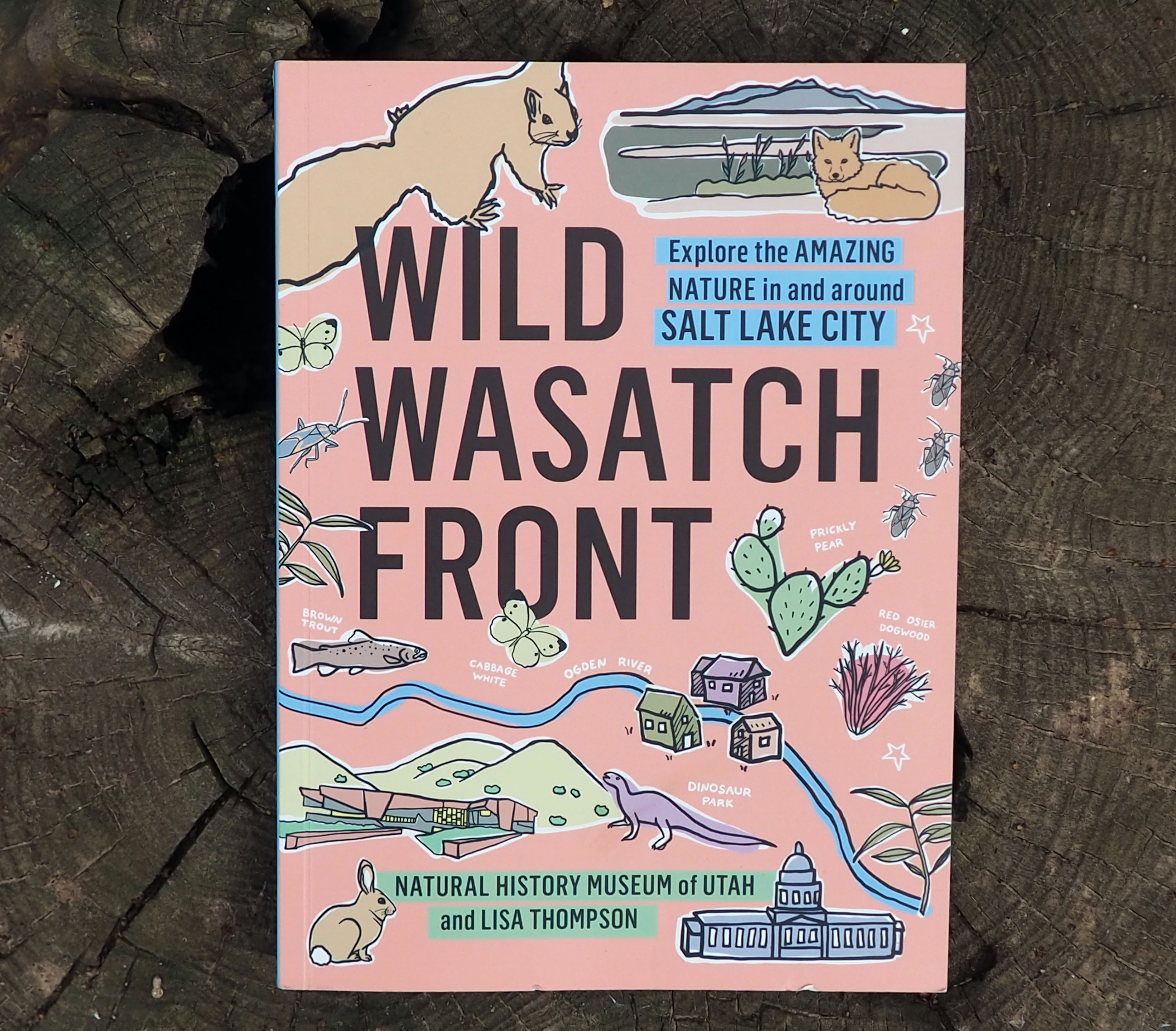
Luckily, there are resources that can help you with that, including a recent book compiled by Lisa Thompson and others at the Natural History Museum of Utah (NHMU). It’s called Wild Wasatch Front, and it’s of particular interest to me because it covers a region that’s relatively close by, and our two locations share a number of similarities. Plus, I played a small role in reviewing some of the plants (specifically the weeds) that ended up in the book (Sierra would insist that I mention this, so there you go). Similar books exist for other regions across North America and elsewhere, so I encourage you to seek out a book that applies to your hometown.

The Wasatch Front is a metropolitan region in north-central Utah that spans the western side of the Wasatch Mountains and includes a long string of cities and towns extending for many miles in all directions. Included in that list of cities is Salt Lake City, the state’s capitol and largest city in the state. The idea for a book about urban nature in the Wasatch Front was inspired by an exhibit at NHMU called “Nature All Around Us.” The exhibit and resulting book offer a new perspective for those insisting that “nature and cities cannot coexist” or that the nature found in cities is influenced by humans and therefore shouldn’t be considered “real.” Hundreds of organisms making a life for themselves within the boundaries of our cities might argue otherwise.

Wild Wasatch Front is divided into three main sections, with each section being worth the price of the book on its own. First there are a series of essays about urban nature and ecology. Names you might recognize, including Emma Marris and Riley Black, contributed to the book, as well as several other people that live and work in the western U.S. and have an interest in nature and environmental issues, especially as they relate to cities. Novel ecosystems is a reoccurring theme, not just in the essays but throughout the book. In her essay, Sarah Jack Hinners writes, “urban nature is a mixture of the intentional and the unintentional,” adding that “for every tree or rosebush or lawn that we plant and carefully nurture, there are multitudes of other plants and animals that grow and thrive uninvited and unnurtured by us.”

The largest section in the book is a field guide, profiling 127 plus species that call the Wasatch Front home, some native and some transplants. This section is divided into subsections that include birds, invertebrates, fungi and lichen, mammals, reptiles and amphibians, street trees, and wild plants. The entry for each species includes a brief description, a few interesting facts, and details on how and where to find them, accompanied by images. With the variety of creatures covered, you are sure to find something that interests you and a reason to go out looking for your favorites. You may even learn something new about a species you’ve been seeing for years, such as house finches. It turns out that the colorful patches on a male house finch are the result of the plants they eat. These patches can be red, orange, or yellow. The redder the better though, because female house finches seek out mates with this coloration.

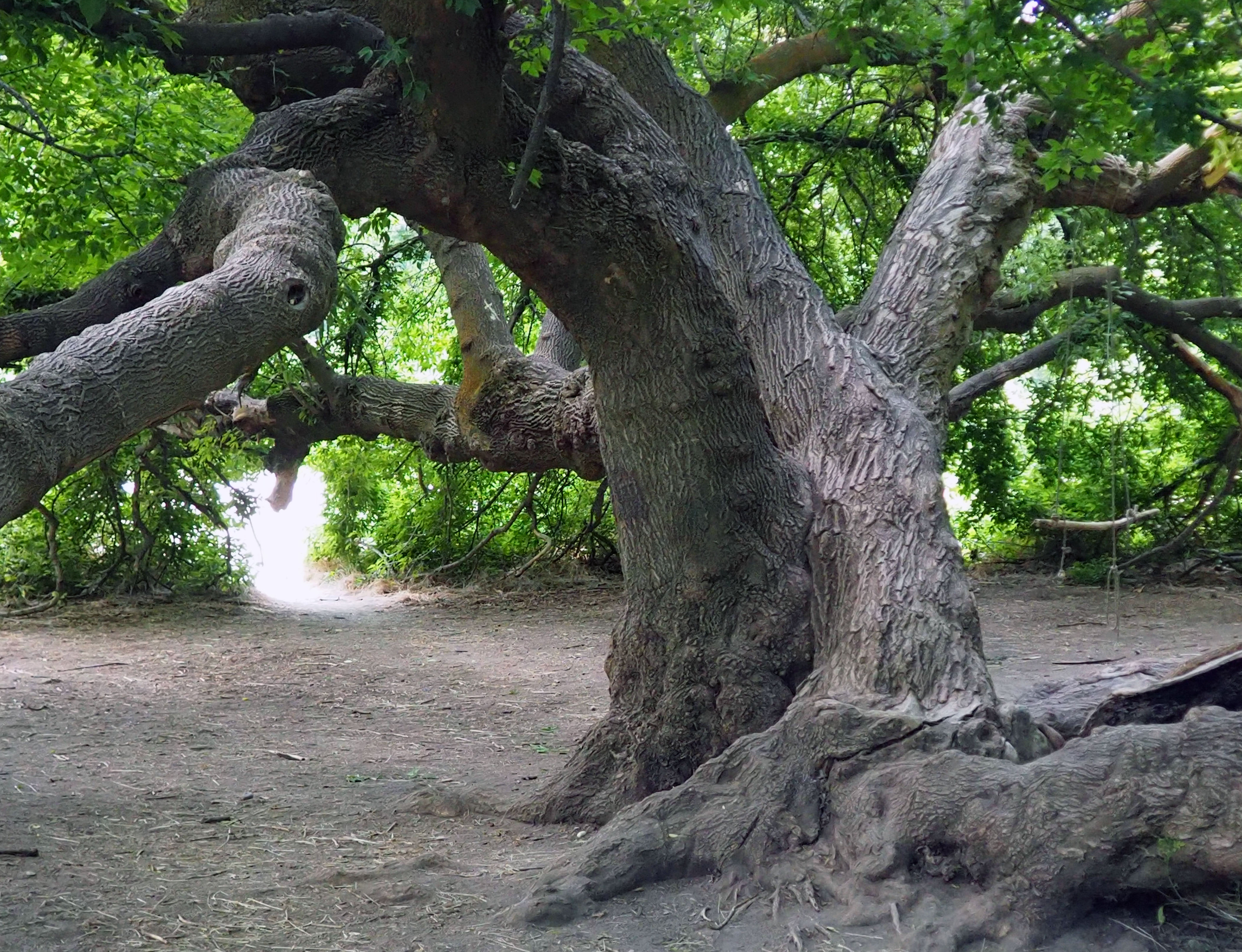
Naturally, my focus was mainly aimed at the plants covered in this section. I appreciated the mixture of native and introduced plants, even the inclusion of plants considered to be invasive. Instead of vilifying these species, there is an attempt to understand them and find value in them, even in spite of the concerns and negative opinions held about them. Box elder (Acer negundo) is an example of a plant that has both native and introduced populations. Once widely planted in yards and on farms, this tree has “fallen out of favor.” Its weak wood (a result of growing so quickly), can result in a messy, unattractive tree, making it a poor choice for a street tree. However, it propagates itself readily and shows up in vacant lots and other urban locations that receive minimal management and human attention. In the Wasatch Front, you can find box elders that are native, naturalized, and cultivated, an unlikely scenario unique to urban areas.

massive box elder (Acer negundo) in Boise, Idaho

The third and final section of the book is a guide to 21 different hikes and field trips in and around the Wasatch Front. Each field trip features a hand-drawn map and some basic notes about the hike. Details about what can be seen along the way are included in the descriptions, which are sure to entice you into visiting. Whether or not you think you’ll ever make it out to any of these spots, this section is still worth reading if only for the ongoing discussions about urban ecology. For example, in the entry for Gib’s Loop, abrupt changes in land ownership and land use (a common experience when hiking in urban areas) is addressed: “Human impacts in the foothills…don’t end at backyard fences, and many animals use resources in both habitats. It’s more interesting to think of cities and the surrounding foothills as part of an interconnected system rather than separate and distinct.”

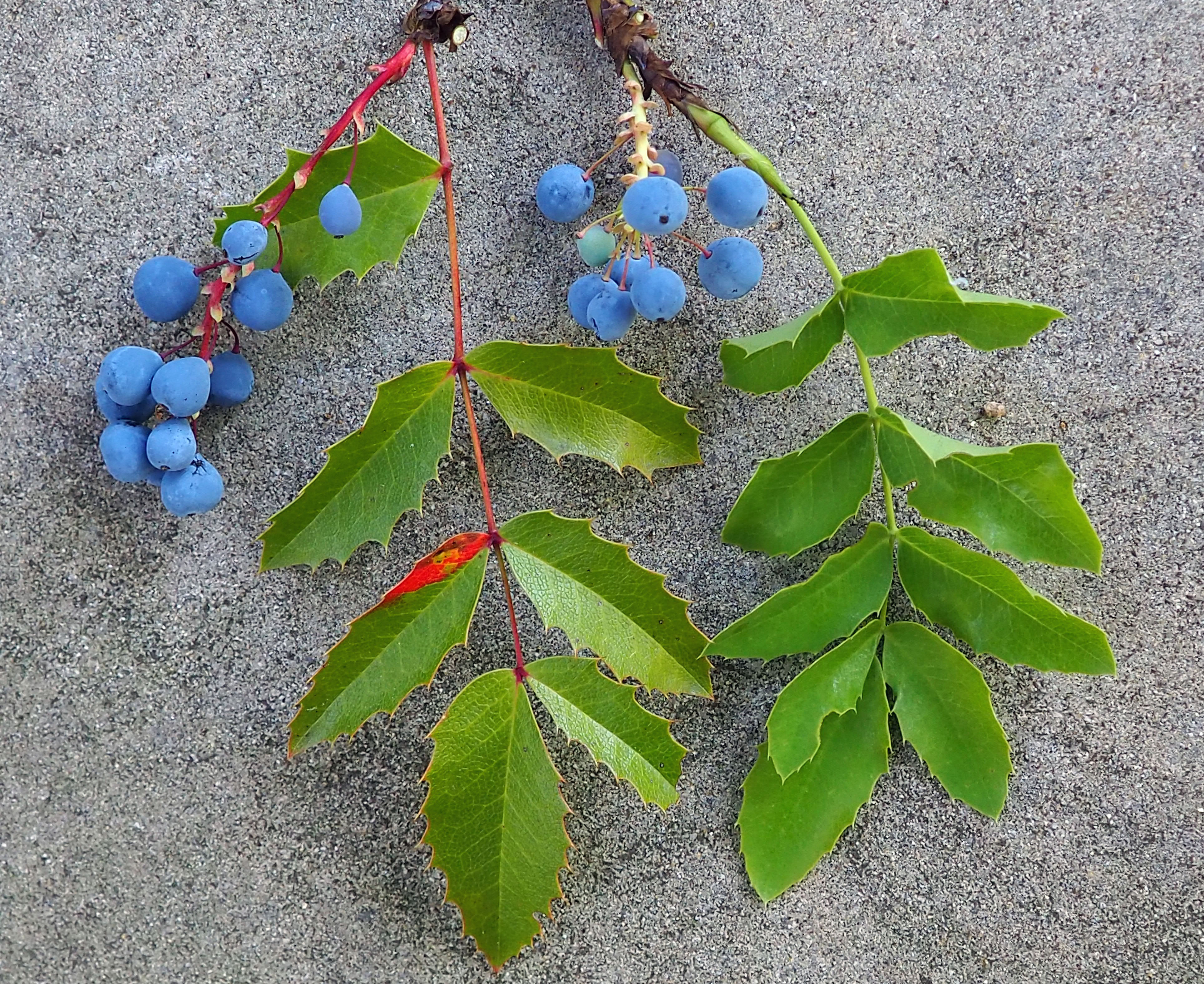
The field trip section is also used as a teaching opportunity to describe more of the species you’ll find in the Wasatch Front. In the entry for Creekside Park, learn how to identify creeping mahonia (Berberis repens), with its low growing habit and matte leaves, and compare it to Oregon grape (B. aquifolium), with its more upright habit and shinier leaves.

Berberis aquifolium (on the left) compared to Berberis repens (on the right)

Last year, in anticipation of Wild Wasatch Front, I came across another book with a similar focus. This book was put out by a group called The Urban Field Naturalist Project, headquartered in Australia. Their book, A Guide to the Creatures in Your Neighbourhood, encourages its readers to become urban naturalists and offers resources to help them get started. Just like Wild Wasatch Front, the bulk of the book is a field guide to species found in and around urban areas (in Australia, of course). In place of a guide to hikes and field trips, there are instructions on how to start nature journaling, which is a key component of becoming an urban field naturalist. Getting outside and learning to recognize nearby nature is step one, documenting what you see and sharing those observations with others is step two. Taken together, these two books will help you gain a better appreciation for urban nature and will hopefully inspire you to work to conserve what is there and make room for more.

More Book Reviews:

Weeds of Boise: Boise State University Campus, part two

In part one of this two part series, I introduced you to the Boise State University campus, located in the heart of Boise, Idaho. I’ve been spending the past year walking the campus and cataloging the weeds that I find there. Boise has a fairly mild climate compared to the rest of Idaho, so weeds are generally easy to find just about any time of year. What weeds are present depends on what time of year it is. To get a complete picture of the suite of weeds that can be found on a site, it’s important to make observations throughout the year. Weeds can also come and go, with certain species becoming more abundant in some years than others, so making observations over multiple years also helps. This is why I try to update posts that are part of the Weeds of Boise series as I make return visits and encounter additional weed species.

What follows is the second half of the list of weeds I’ve documented so far at Boise State University. I’m including a photograph for each month of the year (July – December), as well as a list of what I’ve encountered up to this point. I’m also including a list of weeds that I didn’t come across but that are documented on iNaturalist.

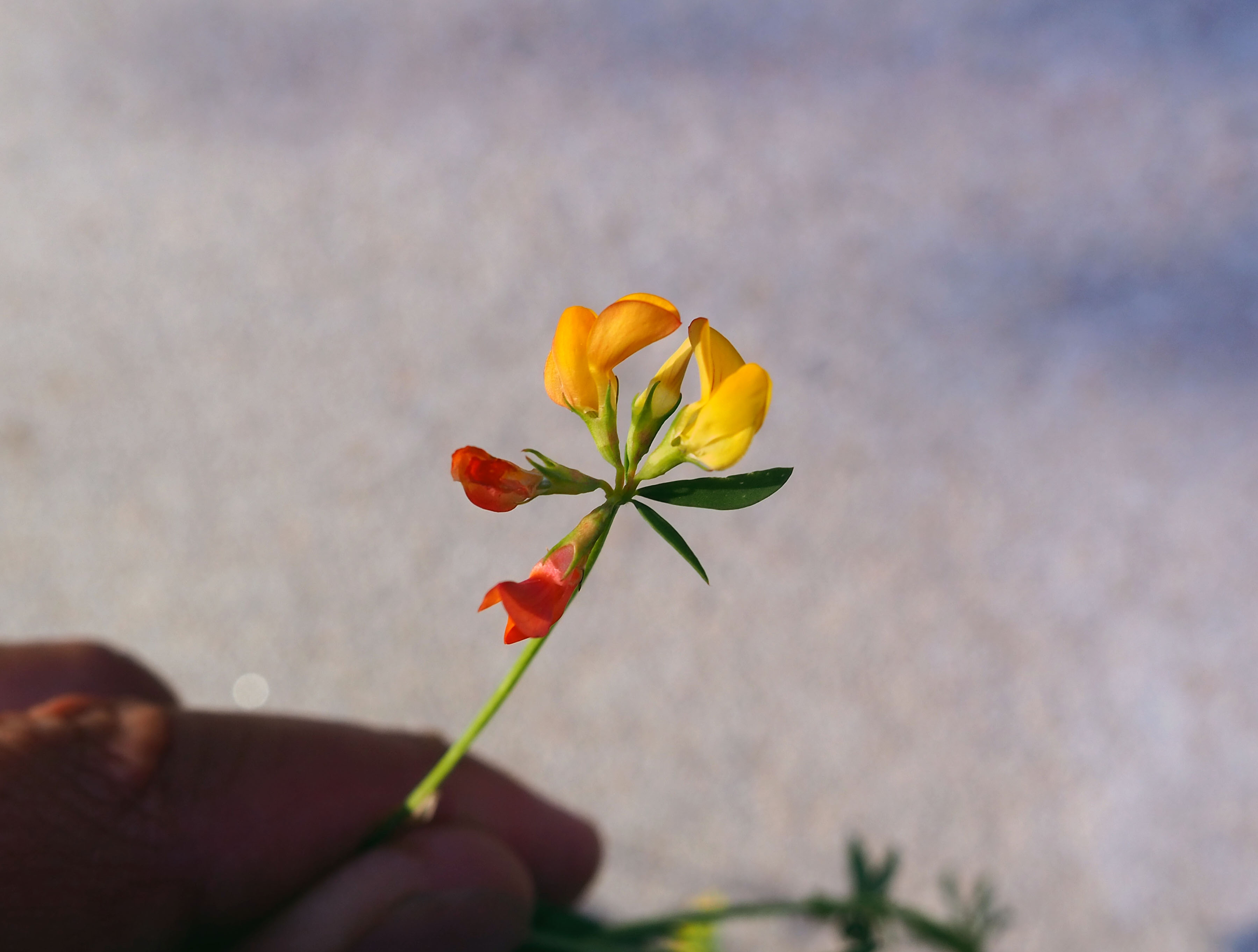
birdsfoot trefoil (Lotus corniculatus) at BSU in July 2023
yellow nutsedge (Cyperus esculentus) at BSU in August 2023
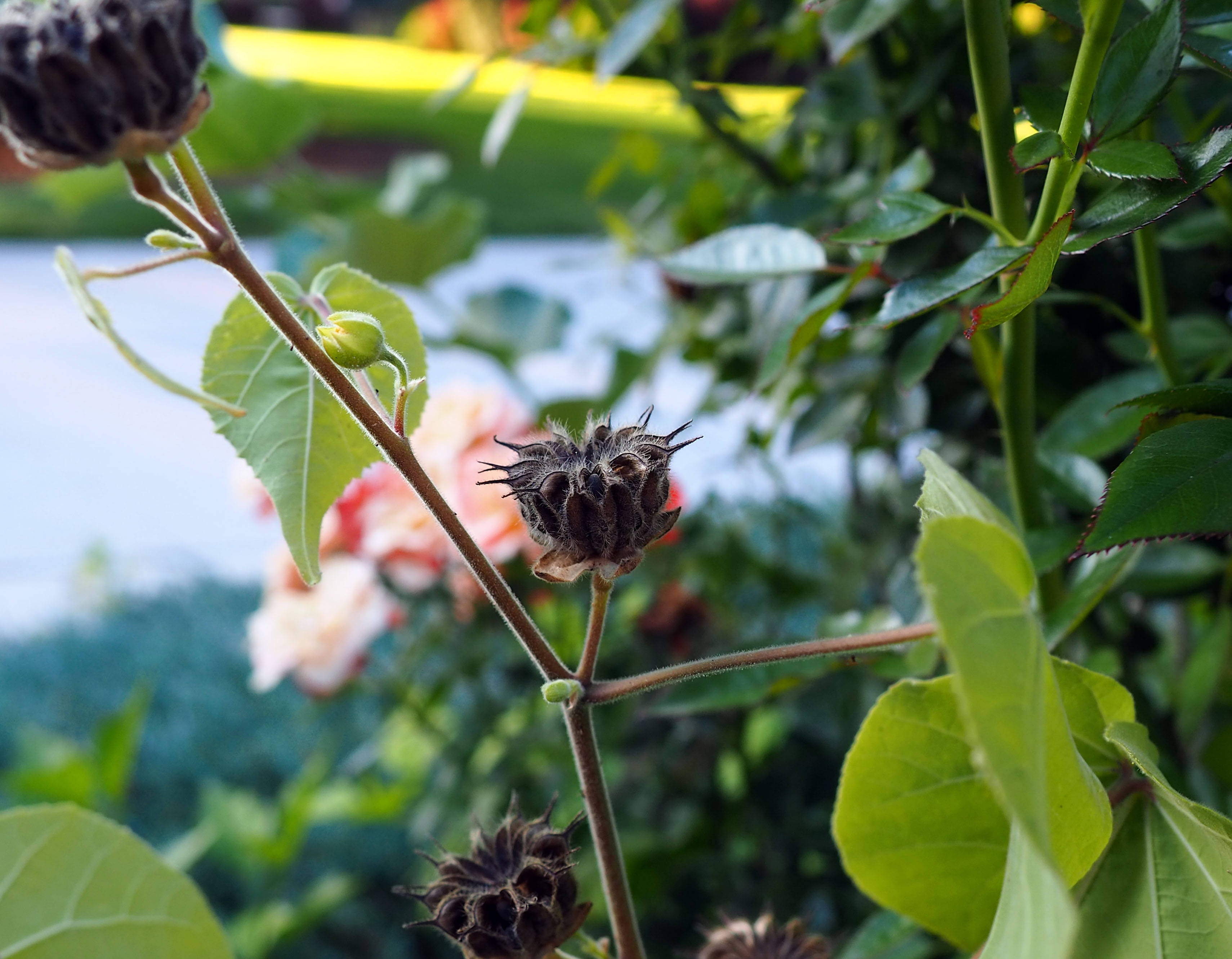
velvetleaf (Abutilon theophrasti) at BSU in September 2023
chicory (Cichorium intybus) at BSU on October 2023
puncturevine (Tribulus terrestris) at BSU in November 2023
bull thistle (Cirsium vulgare) at BSU in December 2023

Additional weeds found on the BSU campus from July – December 2023:

  • Abutilon theophrasti (velvetleaf)
  • Cichorium intybus (chicory)
  • Cirsium vulgare (bull thistle)
  • Cyperus esculentus (yellow nutsedge)
  • Eragrostis cilianensis (stinking lovegrass)
  • Lotus corniculatus (birdsfoot trefoil)
  • Medicago sativa (alfalfa)
  • Melilotus alba (white sweetclover)
  • Solanum nigrum (black nightshade)
  • Sonchus asper (prickly sowthistle)
  • Tribulus terrestris (puncturevine)

Additional weeds observed on the BSU campus by iNaturalist users as of December 2023:

  • Aegilops cylindrica (jointed goatgrass)
  • Bromus diandrus (ripgut brome)
  • Cerastium nutans (nodding chickweed)
  • Chorispora tenella (blue mustard)
  • Elymus repens (quackgrass)
  • Hypericum perforatum (St. John’s wort)
  • Lepidium perfoliatum (clasping pepperweed)
  • Matricaria discoidea (pineappleweed)
  • Ornithogalum umbellatum (star-of-Bethlehem)
  • Vicia tetrasperma (four-seeded vetch)

Weeds of Boise: Boise State University Campus, part one

If you live in a major city (or even a minor one), there is a good chance it is home to a college or university (perhaps several). Universities tend to take up a lot of space, which means there is often a plethora of landscaping accompanying their buildings, hardscaping, and other impervious surfaces. Among all the turf, flower beds, tree wells, and other greenspaces, there is bound to be a fair share of weeds. In spite of how hard the groundskeepers may work, the campus is not likely to ever be completely weed-free. Lucky for us, this means that institutions of higher learning are excellent places to familiarize ourselves with many of the weed species that occur in our cities, particularly weeds that are common in garden beds and turfgrass.

Near downtown Boise, on the southside of the Boise River, you will find the ever-expanding campus of Boise State University, home of the Broncos and their famous blue turf. According to the internet’s favorite encyclopedia, the campus is 285 acres in size, plenty of space for weeds to grow and abudant opportunities to hunt them out. Tallying the number of weed species in a place like this takes time. The benefit of botanizing for weeds is that you can find them at just about any time of year. While some species only show up in certain seasons, others can be seen practically year-round.

In order to document the weeds of Boise State University, I’m spending the entire year walking the campus listing and photographing the weeds I find. What follows is the first half of what’s been documented so far. I’m including a photograph for each month of the year, as well as a list of what I’ve encountered. In part two, I’ll share a list of any additional weeds found throughout the remainder of the year. While you’re waiting for that, check out the other posts in the Weeds of Boise series.

common groundsel (Senecio vulgaris) at BSU in January 2023
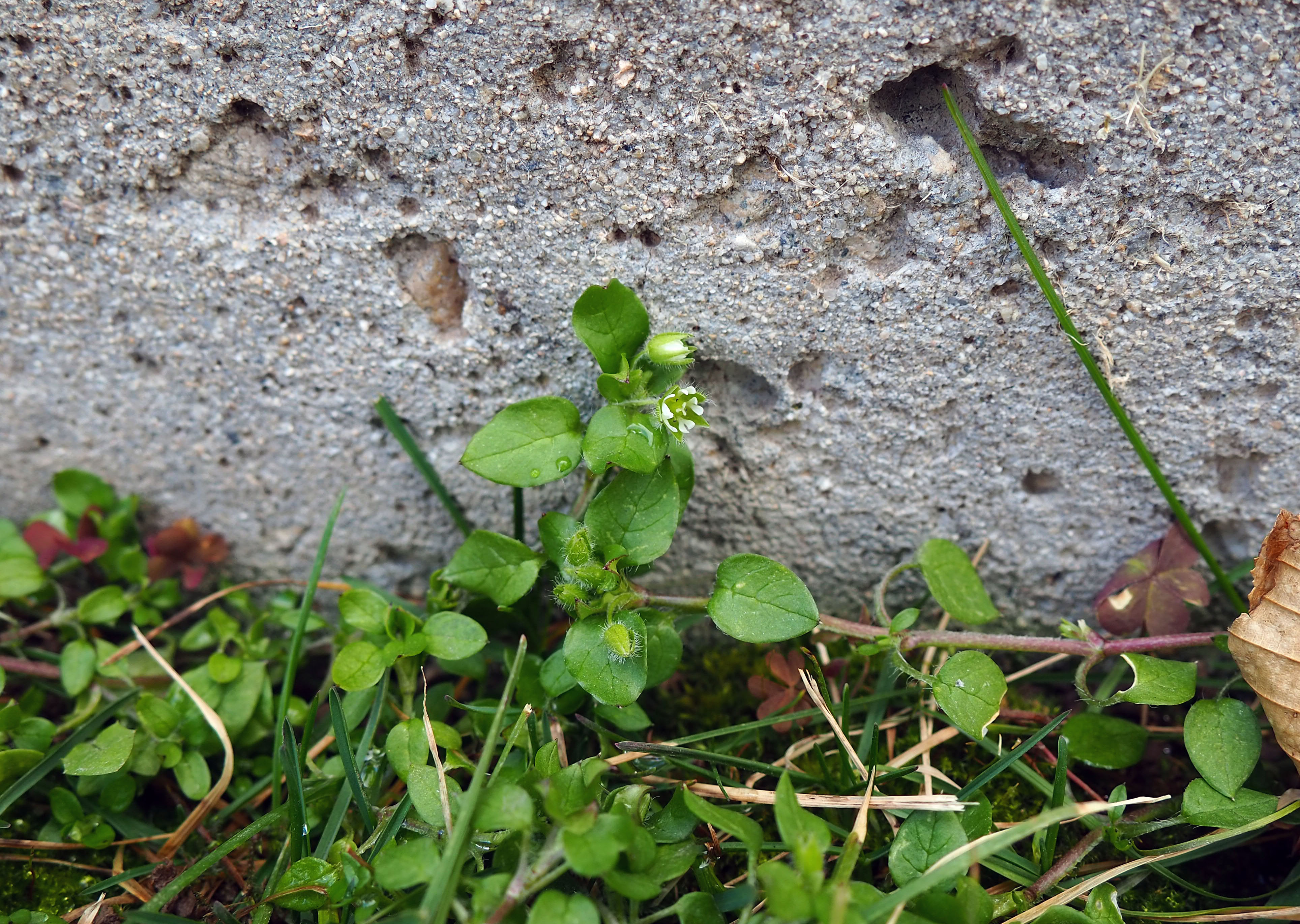
chickweed (Stellaria media) at BSU in February 2023
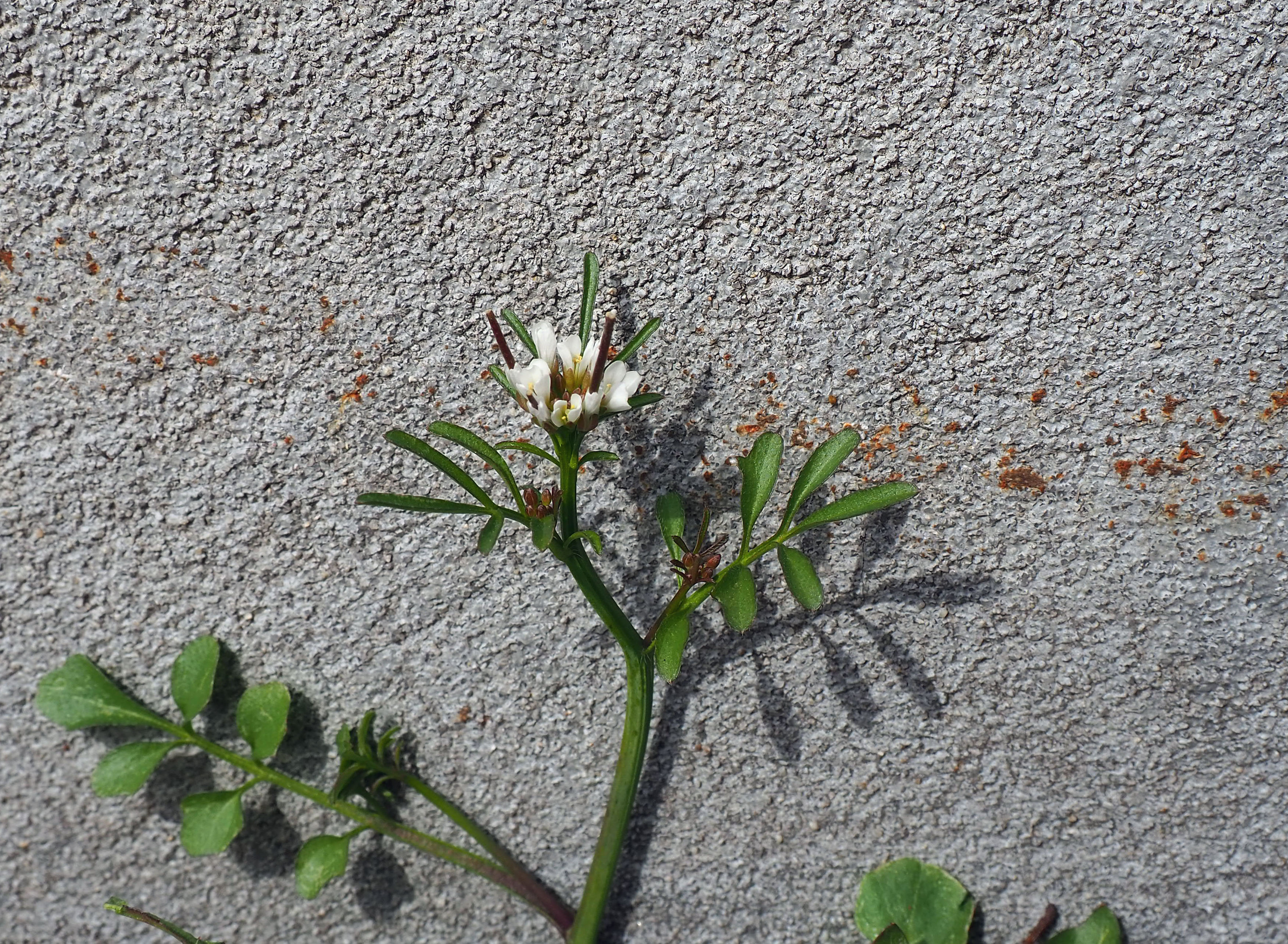
hairy bittercress (Cardamine hirsuta) at BSU in March 2023
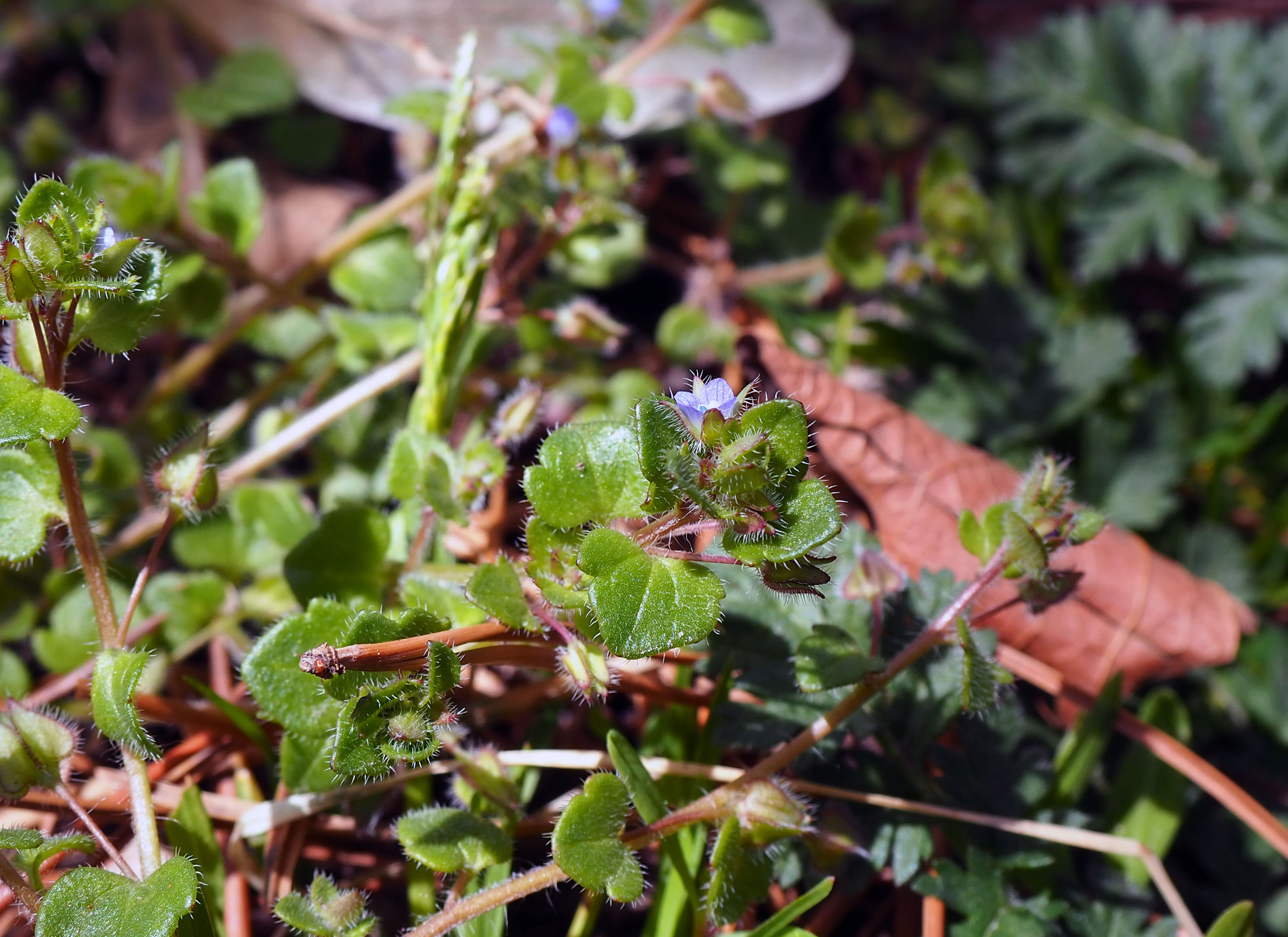
ivyleaf speedwell (Veronica hederifolia) at BSU in April 2023
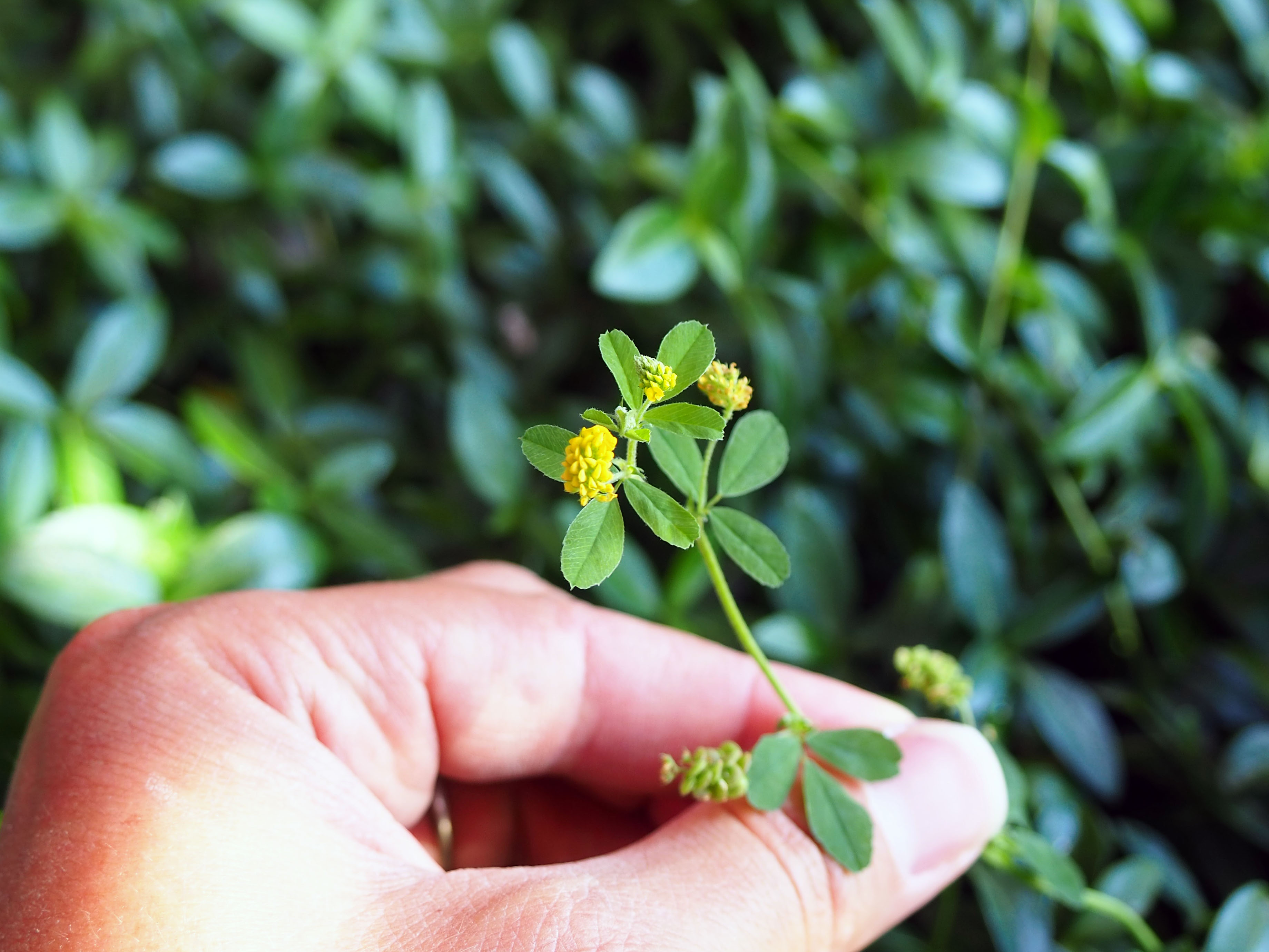
black medic (Medicago lupulina) at BSU in May 2023
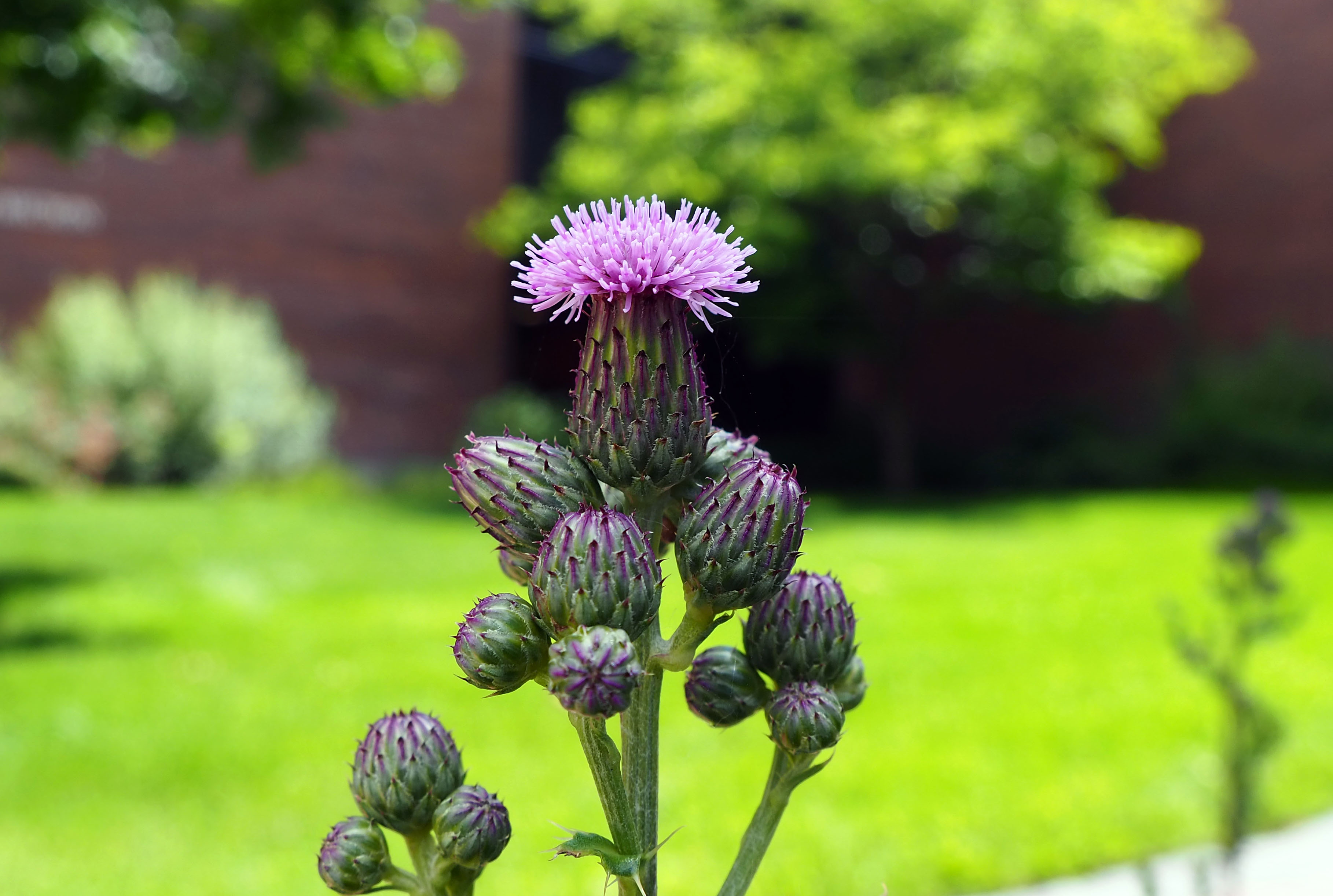
creeping thistle (Cirsium arvense) at BSU in June 2023

List of weeds found on the campus of Boise State University as of June 2023:

  • Ailanthus altissima (tree of heaven)
  • Anthriscus caucalis (bur chervil)
  • Amaranthus retroflexus (redroot pigweed)
  • Arctium minus (lesser burdock)
  • Bassia scoparia (kochia)
  • Bromus tectorum (cheatgrass)
  • Capsella bursa-pastoris (shepherd’s purse)
  • Cardamine hirsuta (hairy bittercress)
  • Ceratocephala testiculata (bur buttercup)
  • Chenopodium album (lamb’s quarters)
  • Chondrilla juncea (rush skeletonweed)
  • Cirsium arvense (creeping thistle)
  • Claytonia perfoliata (miner’s lettuce)
  • Convolvulus arvensis (field bindweed)
  • Conyza canadensis (horseweed)
  • Descurainia sophia (flixweed)
  • Digitaria sanguinalis (crabgrass)
  • Draba verna (spring draba)
  • Epilobium ciliatum (willowherb)
  • Erodium cicutarium (redstem filare)
  • Euphorbia maculata (spotted spurge)
  • Galium aparine (cleavers)
  • Geum urbanum (herb Bennet)
  • Holosteum umbellatum (jagged chickweed)
  • Hordeum jubatum (foxtail barley)
  • Lactuca serriola (prickly lettuce)
  • Lamium purpureum (purple deadnettle)
  • Lepidium sp. (whitetop)
  • Malva neglecta (common mallow)
  • Medicago lupulina (black medic)
  • Oxalis corniculata (creeping woodsorrel)
  • Parthenocissus quinquefolia (Virginia creeper)
  • Plantago lanceolata (narrowleaf plantain)
  • Plantago major (broadleaf plantain)
  • Poa annua (annua bluegrass)
  • Poa bulbosa (bulbous bluegrass)
  • Polygonum aviculare (prostrate knotweed)
  • Portulaca oleracea (purslane)
  • Prunella vulgaris (self-heal)
  • Ranunculus repens (creeping buttercup)
  • Senecio vulgaris (common groundsel)
  • Sonchus sp. (sow thistle)
  • Stellaria media (chickweed)
  • Taraxacum officinale (dandelion)
  • Tragopogon dubius (salsify)
  • Trifolium repens (white clover)
  • Ulmus pumila (Siberian elm)
  • Veronica hederifolia (ivyleaf speedwell)
  • Vulpia myuros (rat’s tail fescue)

Do you frequent the BSU campus? Have you seen anything not on my list? Comment below or send me a message and let me know what you’ve seen and where.

What Is Cheatgrass and Why Should I Care?

To understand the current state of rangeland wildfires in the Intermountain West, you must first familiarize yourself with a plant commonly referred to as cheatgrass. This annual grass moved into the region over a century ago, and its spread has had a massive impact on the environment, as well as the economy and our way of life. Just the very mention of cheatgrass in the West will get some people’s blood boiling. It’s a menace, a scourge, a pest, and yet it’s here to stay. It’s a result of us being here, yet somehow it’s the invader. Its success is largely due to the way we’ve chosen to operate in this region, yet it’s the one to blame for our troubles. When you really start to learn about this plant, it’s hard not to develop an appreciation for it, despite the tragic ways in which it has shaped our region for the worse. It’s not a plant that is showy or grandiose in any significant way. Everything about its appearance screams for it to be dismissed and overlooked, yet it’s story – at least here in the American West – is larger than life.

cheatgrass (Bromus tectorum) – illustration credit: Selected Weeds of the United States, Agriculture Handbook No. 366 (ARS/USDA)

Bromus tectorum goes by more than a dozen common names, but the ones you tend to hear most often are downy brome and cheatgrass. Downy because of how fuzzy its leaf blades can be and cheat because its presence on wheat farms cheats farmers of their yield. It is distributed widely across Europe, eastern Asia, and northern Africa where it originates, and was introduced to North America in the mid-19th century. How and why it got here isn’t totally clear. It likely had multiple introductions, both as a contaminant in seeds and attached to fur, clothing, packaging materials, etc., as well as intentionally as a forage crop for livestock. Regardless, it managed to establish readily in the east and then quickly spread across the country, spanning the continent by the early 20th century. It found the Great Basin particularly habitable due to its hot, dry summers and cold, wet winters and largely treeless landscape.

Apart from the climate, a significant factor behind cheatgrass’s establishment in the Intermountain West are all the cows. For a number of reasons, the Great Basin isn’t really suitable for largescale farming operations, but livestock grazing is another story. Many of the animals native to the region are grazing animals after all, so why not graze cattle and sheep? But there is a limit. Too many animals stuck in one spot for too long leads to overgrazing, and overgrazed sites take time for the native vegetation to recover. Cheatgrass exploits this opportunity by establishing itself quickly in disturbed and overgrazed locations and begins the process of outcompeting nearby plants for limited water and nutrients. Once it begins to dominate these sites, it has another trick up its sleeve.

Cheatgrass actually makes good forage for livestock early in the spring when it’s green and tender, but that quickly changes as the plants start to dry out and go to seed. By early summer, cheatgrass has completed its lifecycle and what’s left is a dried-up plant that, due to the silica in its cells, does not break down readily. Where cheatgrass is abundant, this means large swaths of standing brown grass as far as the eye can see. What’s more, this dead vegetation is highly flammable, and the slightest spark can set off a roaring blaze that moves quickly across the landscape, igniting everything in its path. In a region where fires once occurred decades apart, they now occur on a nearly annual basis. And because fire had been historically infrequent, the native vegetation is not adapted to regular fire and can take years to recover, whereas cheatgrass bounces right back, again exploiting the void left by the decimation of native plants and is flowering again the following spring. It’s a self-perpetuating cycle, and cheatgrass excels at it.

cheatgrass on fire

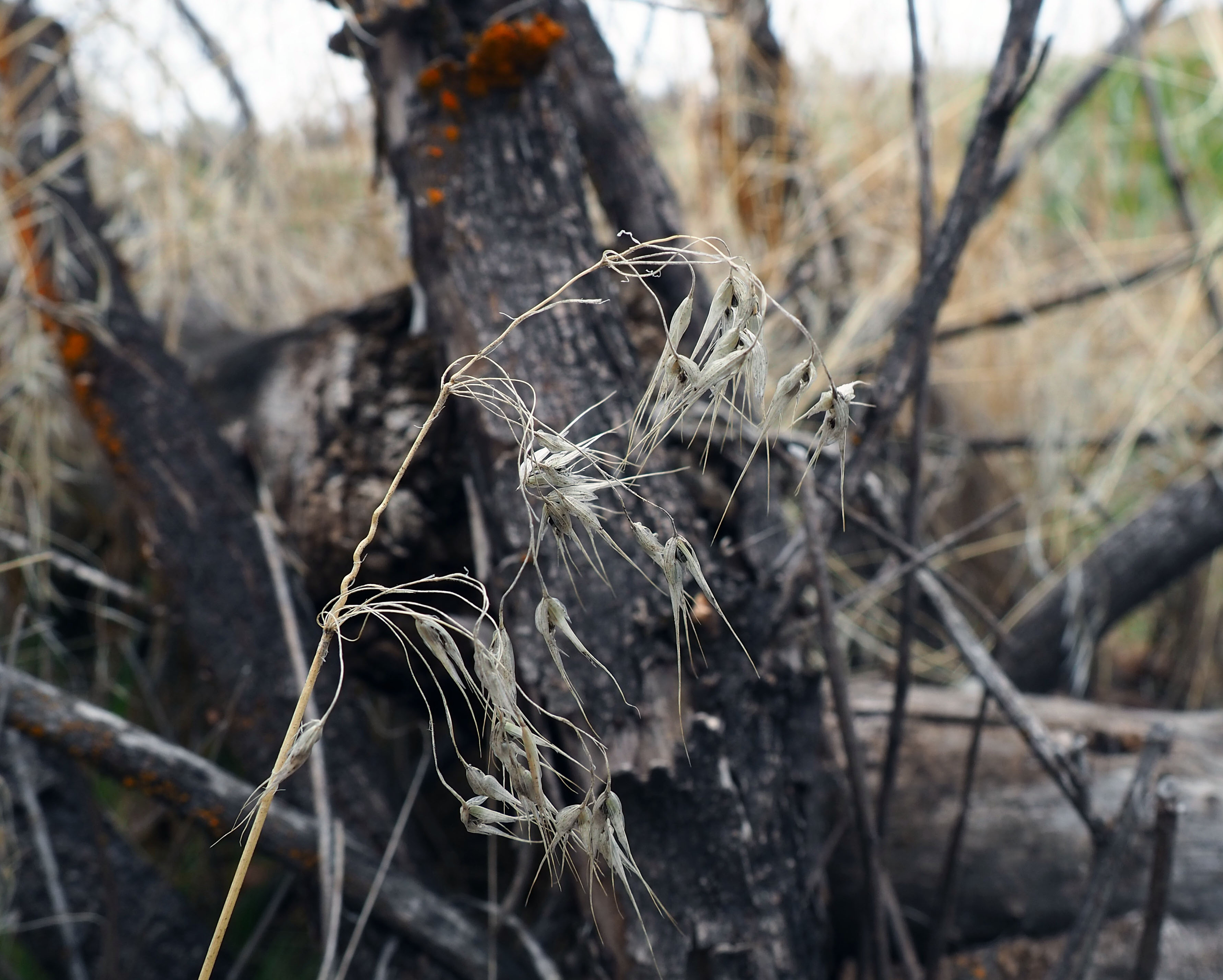
Cheatgrass is a winter annual, meaning that it germinates in the fall as soon as moisture becomes available. It then lies mostly dormant, its shallow, fibrous roots still growing as long as the ground isn’t frozen. Employing this strategy means cheatgrass is ready to resume growth at a quick pace as soon as the weather warms in the spring. Its roots spread horizontally in the soil and essentially rob water from nearby, more deeply rooted native vegetation. Its deep green, hairy leaves form a little tuft or rosette and provide early spring forage for livestock, gamebirds, and other grazing animals. As the spring progresses flower stalks form and the plants reach heights of around 2 feet (60 centimeters). Their inflorescence is a prominently drooping, open panicle and each spikelet has between 4-8 florets, each with a single, straight awn. The flowers of cheatgrass are cleistogamous, which means they don’t ever open. Self-pollination occurs inside the closed floret, and viable seeds soon develop. As the plant matures, it takes on a purple-reddish hue, after which it turns crispy and light brown as the seeds disperse.

The stiff awns remain on the seeds and aid in dispersal. They also cause injury to animals that dare consume them, poking into the soft tissues of their mouths. Passing animals are also injured when the awns work their way into their feet, ears, and other vulnerable body parts. The ability of the awns to attach so easily to fur and clothing is one of the reasons why cheatgrass spreads so readily. Wind also helps distribute the seed. A single plant can produce hundreds, if not thousands, of seeds, which are ready to germinate upon dispersal. They remain viable in the soil for only a few short years, but since they germinate so easily and are produced so abundantly, their short lifespan isn’t much of a downside.

dried inflorescence of cheatgrass (Bromus tectorum)

In many ways, cheatgrass is the perfect weed. It is able to grow under a broad range of conditions. Its seeds germinate readily, and the plant grows during a time when most other plants have gone dormant. It excels at capturing water and nutrients. It self-pollinates and produces abundant viable seed, which are reliably and readily dispersed thanks to persistent awns. Disturbed areas are ripe for a plant like cheatgrass, but even nearby undisturbed areas can be invaded as seeds are dispersed there. With the help of fire, cheatgrass also creates its own disturbance, which it capitalizes on by then growing even thicker, more abundant stands with now even less competition from native vegetation. And because it is available so early in the season and is readily consumed by livestock and gamebirds, what motivation is there for humans to totally replace it with something else? As James Young and Charlie Clements ask in their book, Cheatgrass, “How can we come to grips with the ecological and economic consequences of this invasive alien species that can adapt to such a vast range of environmental conditions?” In another section they lament, “cheatgrass represents a stage in transition toward an environment dominated by exotic weeds growing on eroded landscapes.”

The topic of cheatgrass and other introduced annual grasses, as well as the even broader topic of rangeland wildfires, is monstrous, but it is one that I hope to continue to cover in a series of posts over the coming months and years. It’s not an easy (or necessarily fun) thing to tackle, but it’s an important one, especially for those of us who call the cheatgrass sea our home.


Check out the linktree for various ways to follow and support Awkward Botany.

Eating Weeds: Cleavers Coffee

One of the world’s most beloved beverages comes from a species of plant found in the fourth largest family of flowering plants. Rubiaceae, also known as the coffee or bedstraw family, consists of around 13,500 species, placing it behind just Asteraceae, Orchidaceae, and Fabaceae for the most number of species. Coffea arabica, and other species in the genus Coffea, are grown for their fruits which are used to make coffee. This makes Rubiaceae one of the most economically important plant families. A family this size is bound to be home to a weed or two, and in fact, one of the most widespread and obnoxious weeds is also a member of Rubiaceae.

Galium aparine, known commonly by a slew of names including cleavers, occurs naturally across large portions of Europe, Asia, North Africa, and possibly even parts of North America. It has been introduced as a weed in many locations across North America, South America, Australia, New Zealand, Japan, and parts of Africa. It is of particular concern in agricultural settings where its lengthy, sprawling branches and sticky leaves get tangled up in harvesting equipment, while its tiny, prickly fruits get mixed in with seeds of similar size like canola.

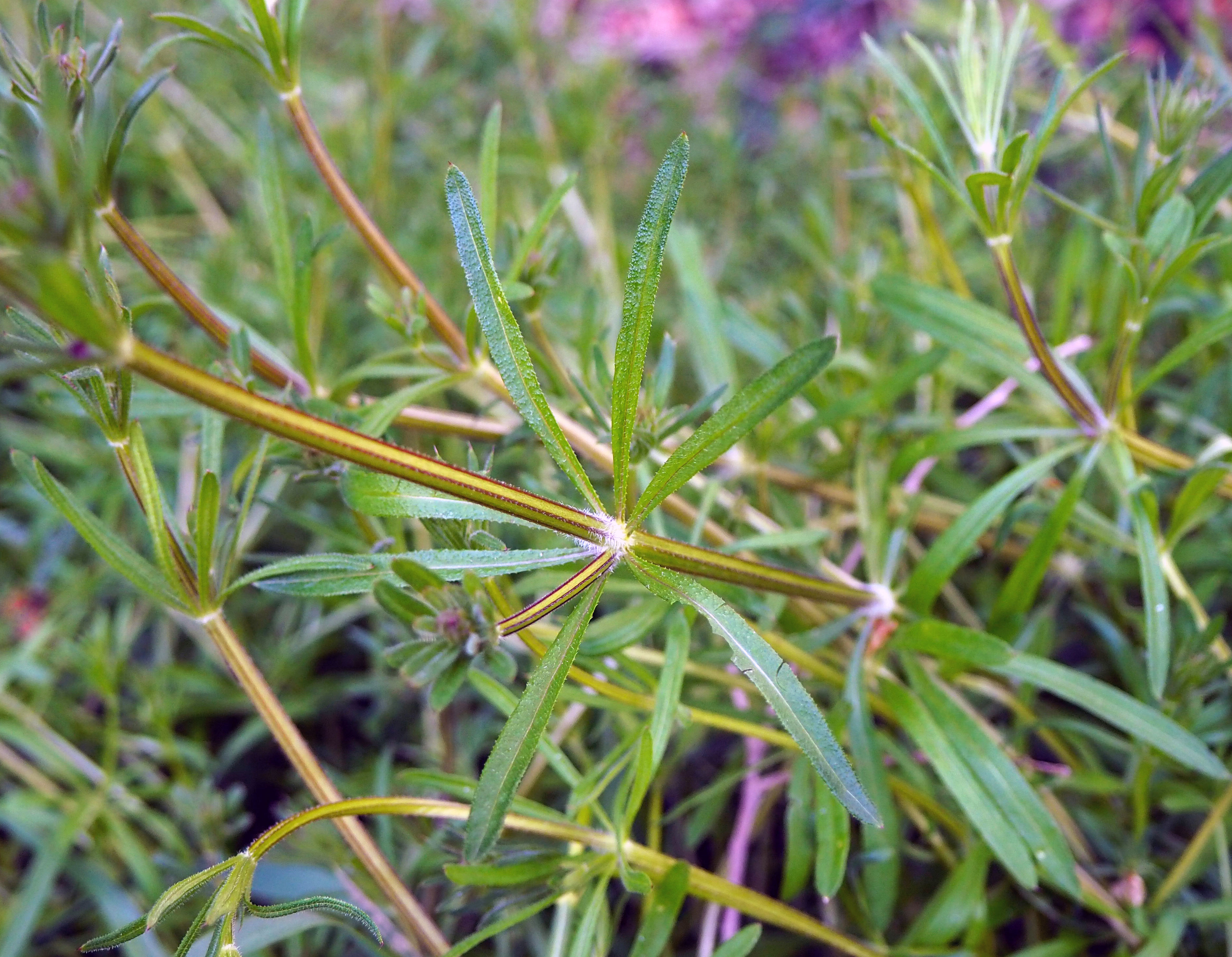
Galium aparine

Sticky willy, as it is also known, is an annual plant that, in some cases, can have two generations per year – one in the spring (having germinated the previous fall) and one in the summer. Its stems are square, though not as sharply square as plants in the mint family, and can grow to around six feet long. They are weak, brittle, and don’t stand upright on their own; instead they are found scrambling across the ground or, when given the opportunity, climbing up the lengths of other plants in order to reach the sunlight. Leaves occur in whorls of six to eight and are simple and slender with entire margins. Flowers are produced at leaf axils along the lengths of the branches and are tiny, four-petaled, star-shaped, and greenish white. Fruits are borne in pairs and are round, single-seeded, indehiscent nutlets. The stems, leaves, and fruits are covered in stiff, hooked hairs or trichomes, earning it other names like catchweed bedstraw, grip grass, stickyweed, and velcro plant.

flowers and immature fruit on Galium aparine

Galium aparine is a climbing plant, but unlike other climbing plants, it doesn’t twine up things or produce structures like tendrils to hold itself up. Instead, its ability to climb is made possible by its abundant bristly hairs. A paper published in Proceedings of the Royal Society B (2011) investigates the way G. aparine climbs up other plants using the hairs on its leaves. A close inspection of the leaves reveals that the trichomes on the top of the leaf (the adaxial leaf surface) differ significantly from those found on the bottom of the leaf (the abaxial leaf surface). Adaxial trichomes curve towards the tip of the leaf, are hardened mainly at the tip, and are evenly distributed across the leaf surface. Abaxial trichomes curve towards the leaf base, are hardened throughout, and are found only on the midrib and leaf margins.

Having different types of hairs on their upper and lower leaf surfaces gives cleavers an advantage when it comes to climbing up neighboring plants. The authors of the paper describe the technique as a “ratchet mechanism.” When the upper surface of their leaf makes contact with the lower surface of another plant’s leaf, the flexible, outwardly hooked trichomes inhibit it from slipping further below the leaf and allow it to easily slide out from underneath it. When the lower surface of their leaf makes contact with the upper surface of another plant’s leaf, the stiff, inwardly hooked trichomes keep it attached to the leaf even if the other leaf starts to slip away and allows it to advance further across the leaf for better attachment and coverage. Using this ratchet mechanism, cleavers climb up the leaves of other plants, keeping their leaves above the other plant’s leaves, which gives them better access to sunlight. The basal stems of cleavers are highly flexible, which keeps them from breaking as the plant sways in the wind, tightly attached to their “host” plant.

fruits of Galium aparine

The hooked trichomes on the tiny fruits of cleavers readily attach to the fur and clothing of passing animals. The nutlets easily break free from the plants and can be transported long distances. They can also be harvested and made into a lightly caffeinated tea. Harvesting the fruit takes time and patience. I spent at least 20 minutes trying to harvest enough fruits for one small cup of cleavers coffee. The fruits don’t ripen evenly, and while I tried to pick mostly ripe fruits, I ended up with a selection of fruits in various stages of ripeness.

To make cleavers coffee, first toast the seeds for a few minutes in a pan heated to medium high, stirring them frequently. Next, grind them with a mortar and pestle and place the grinds in a strainer. Proceed as you would if you were making tea from loose leaf tea.

The toasted fruits and resulting tea should smell similar to coffee. The smell must not be strong, because my poor sense of smell didn’t really pick up on it. The taste is coffee-like, but I thought it was more similar to black tea. Sierra tried it and called it “a tea version of coffee.” If the fruits were easier to collect, I could see myself making this more often, but who has the time?

The leaves and stems of Galium aparine are also edible, and the plant is said to be a particular favorite of geese and chickens, bringing about yet another common name, goosegrass. In the book Weeds, Gareth Richards discusses the plant’s edibility: “It’s edible for humans but not that pleasant to eat; most culinary and medicinal uses center around infusing the plant in liquids.” Cooking with the leaves or turning them into some sort of spring tonic is something I’ll consider for a future post about eating cleavers.

More Eating Weeds Posts on Awkward Botany

Weeds of Boise: Hellstrip on Jefferson Street

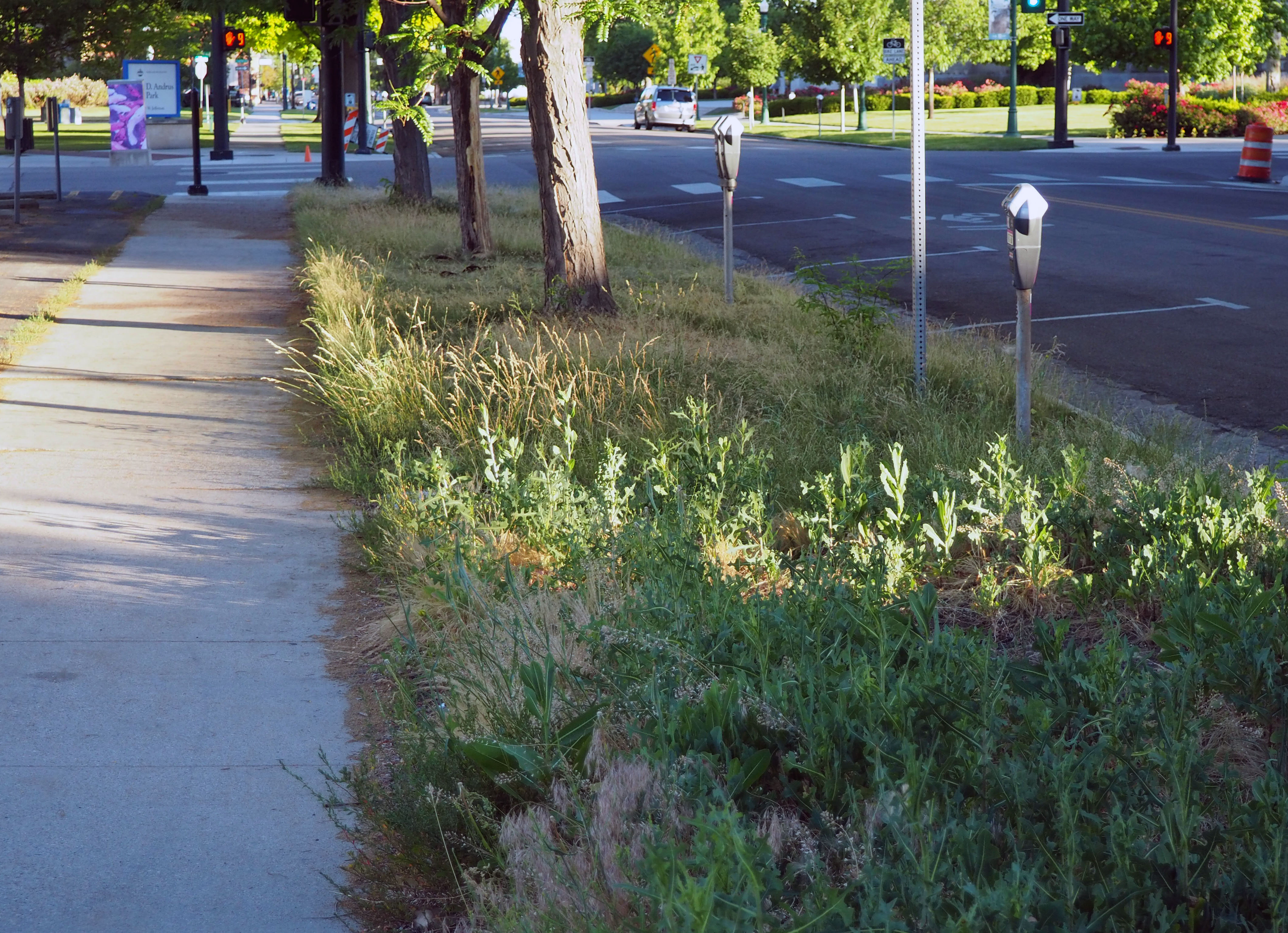
Growing plants in urban areas comes with a variety of challenges. Soil conditions aren’t always ideal; shade thrown by buildings and other structures can be difficult to work around; paved surfaces lead to compaction and, among other things, can increase temperatures in the immediate area; and in locations where water is limited, keeping plants hydrated is a constant concern. One location that tends to be especially difficult for gardeners is the hellstrip – the section of ground between a roadway and a sidewalk. Much can be said about gardening in hellstrips, so much that there is even a book about it called Hellstrip Gardening by Evelyn Hadden, which I spent several posts reviewing a few years back.

The difficulty of maintaining a hellstrip (and perhaps questions about who is responsible for maintaining it in the first place) can result in it being a piece of property frequently subject to neglect. In urban areas, neglected land is the perfect place for weeds to take up residence. The conditions in a hellstrip being what they are – hot, dry, frequently trampled, and often polluted – also gives weeds a chance to show what they can do. It’s a wonder that any plant can survive in such conditions, but the wild flora of our cities consists of some pretty tough plants, and a hellstrip is an excellent location to familiarize yourself with some of these plants.

On a walk with Kōura, I came across a weedy hellstrip on Jefferson Street in downtown Boise. Many of the classic hellstrip challenges are present there – it’s surrounded by paved surfaces, there is lots of foot traffic in the area, parking is permitted on the roadside, urban infrastructure (street signs, parking meters, stoplights) is present within the strip. It’s clear that at one point the area was being maintained as irrigation is installed and there are remnants of turfgrass. Three honey locusts were also planted in the strip, one of which has clearly died. Now that maintenance seems to have ceased, weeds have become the dominant flora in this hellstrip. What follows are a few photos and a list of the weeds I’ve identified so far. Like all posts in the Weeds of Boise series, this list may be updated as I continue to check back in on this location.

shepherd’s purse (Capsella bursa-pastoris) and prickly lettuce (Lactuca serriola)
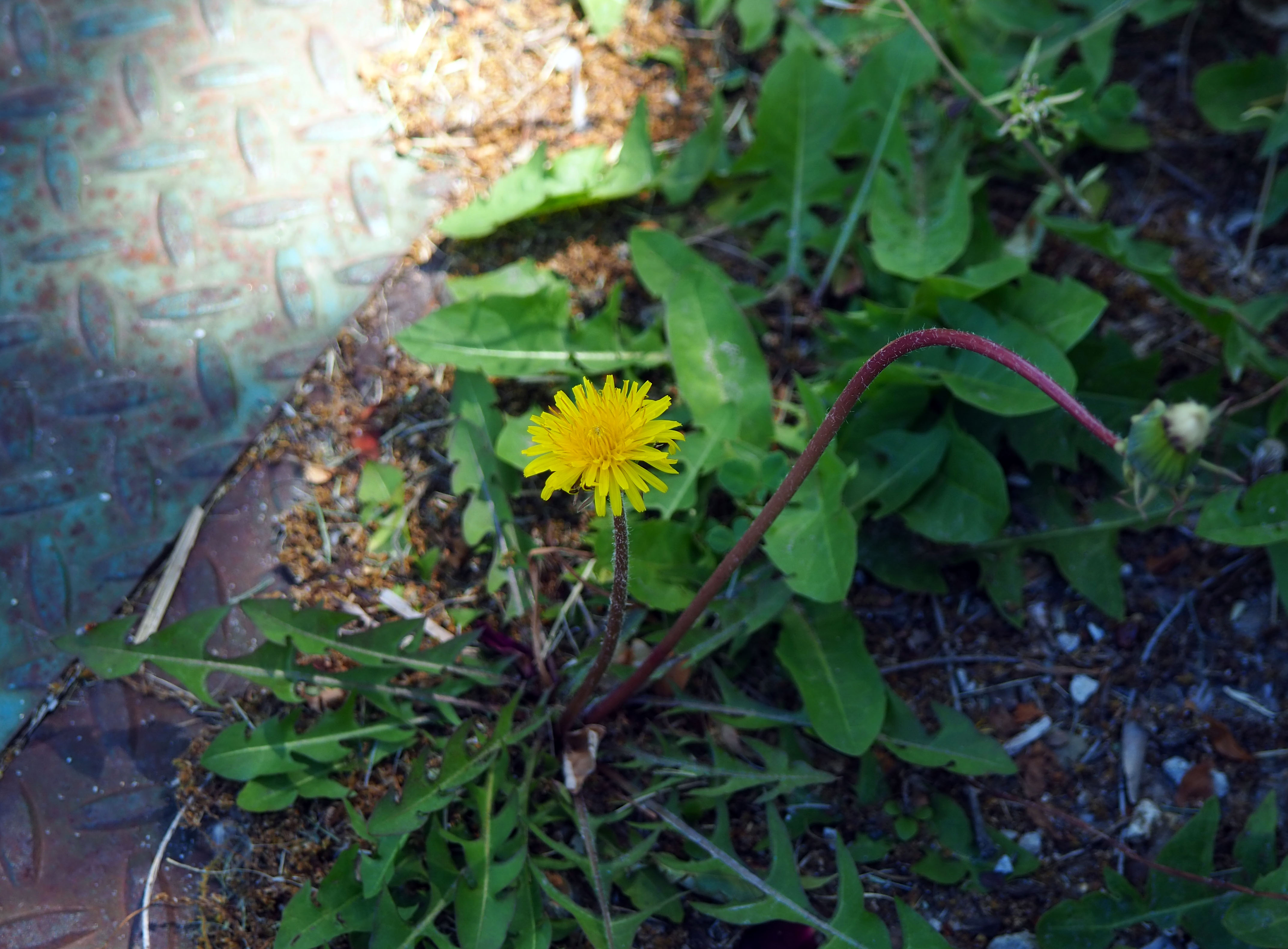
dandelion (Taraxacum officinale)
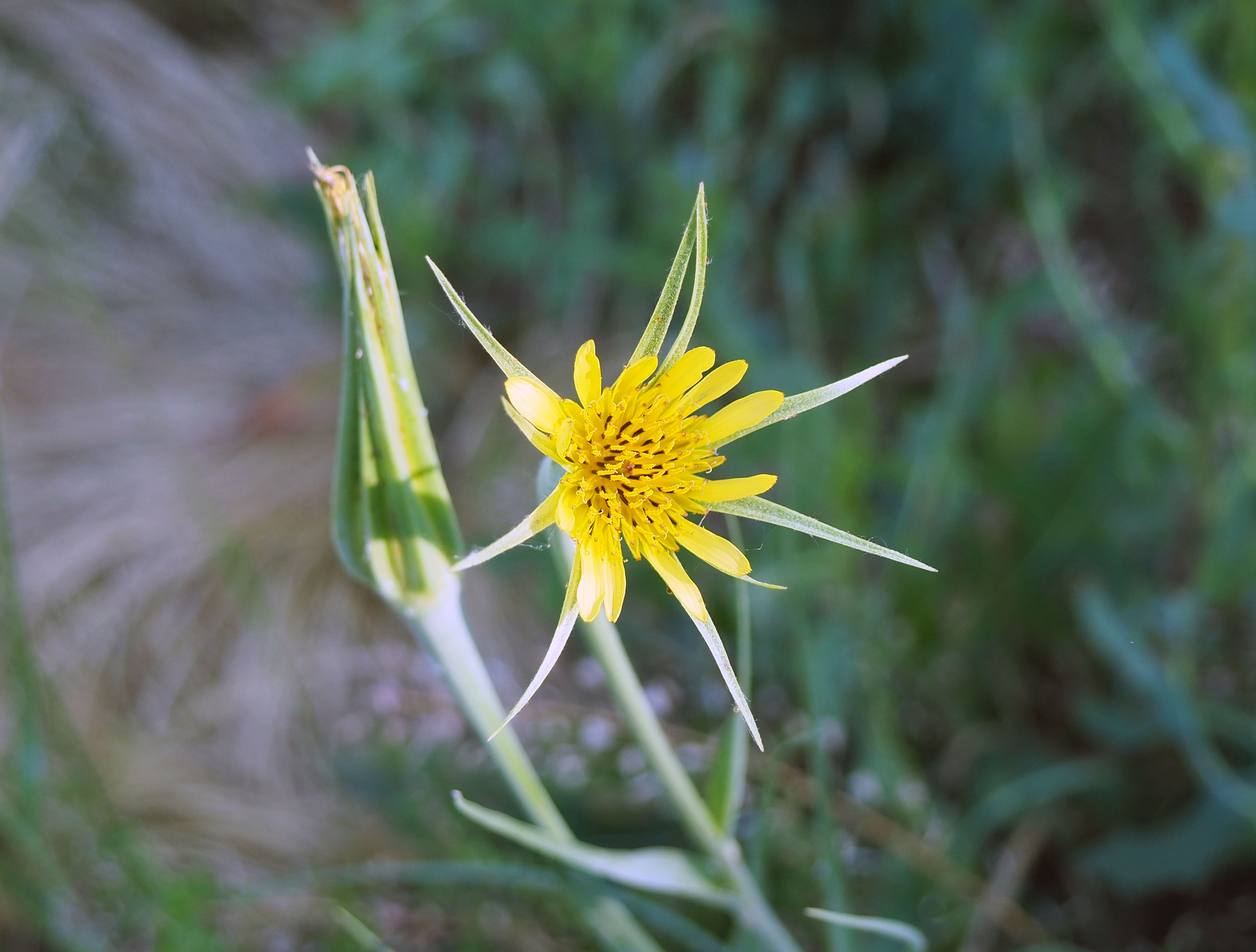
salsify (Tragopogon dubius)
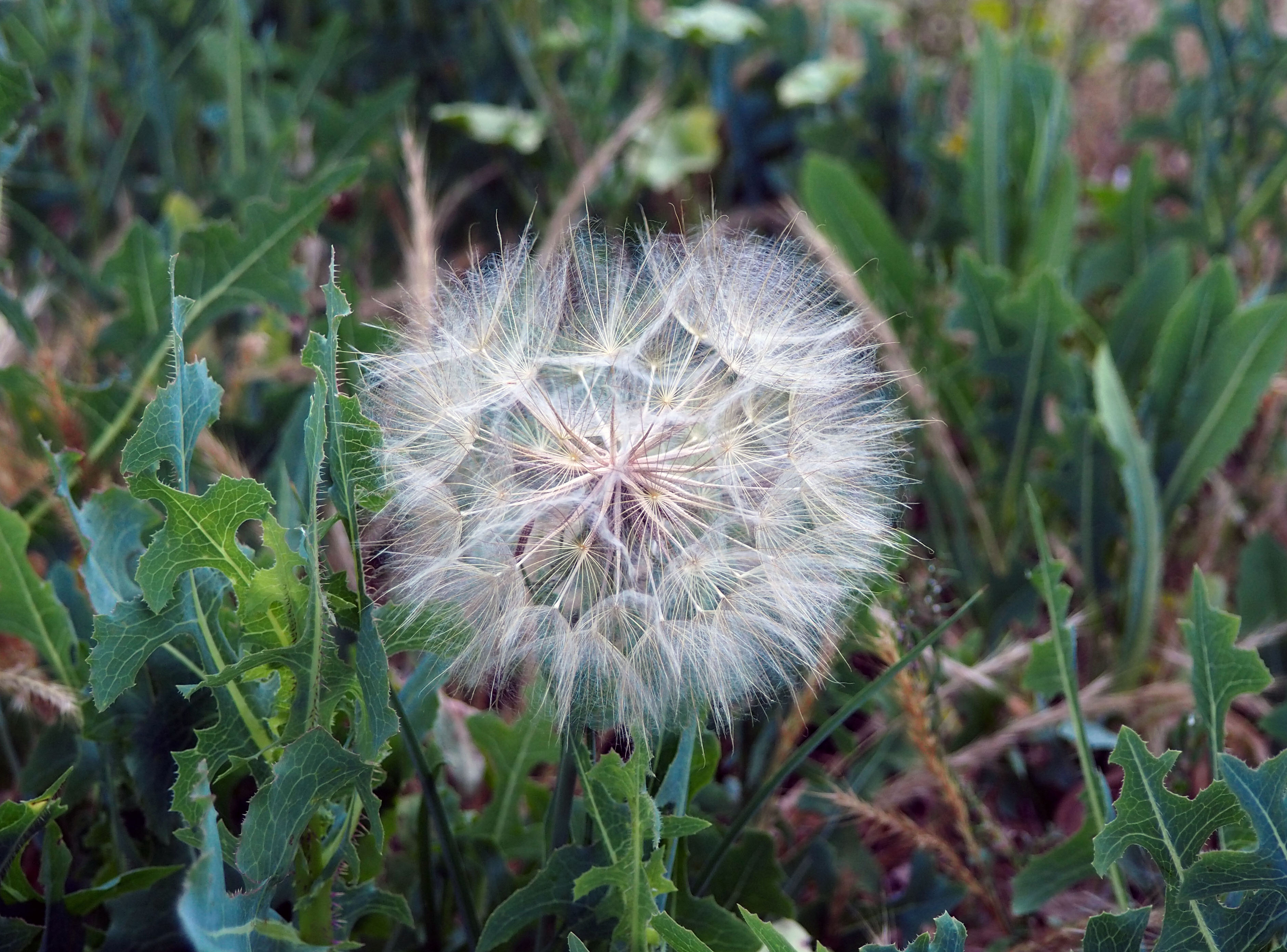
seed head of salsify
knotweed (Poylgonum sp.)
prickly lettuce (Lactuca serriola)
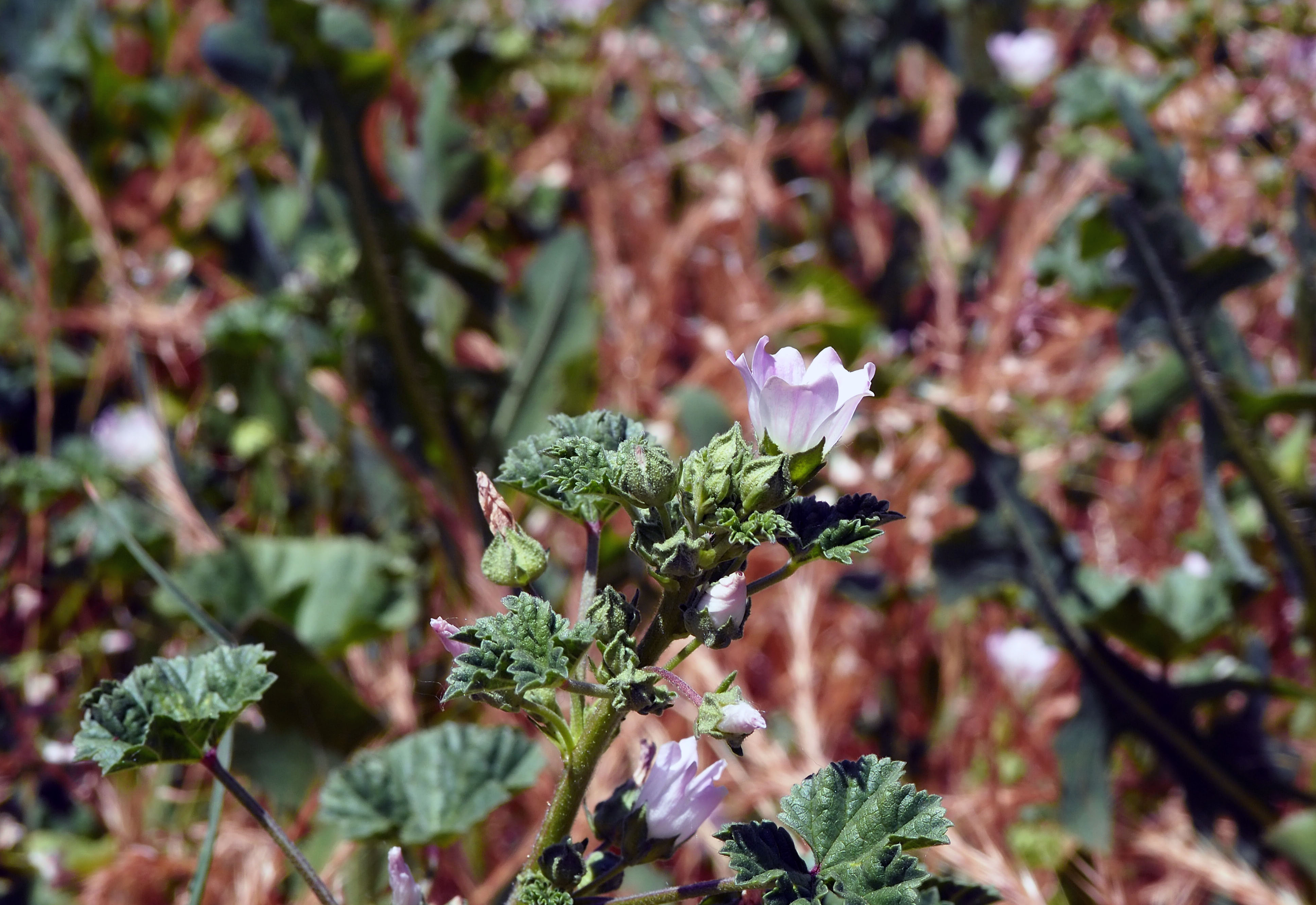
mallow (Malva neglecta)
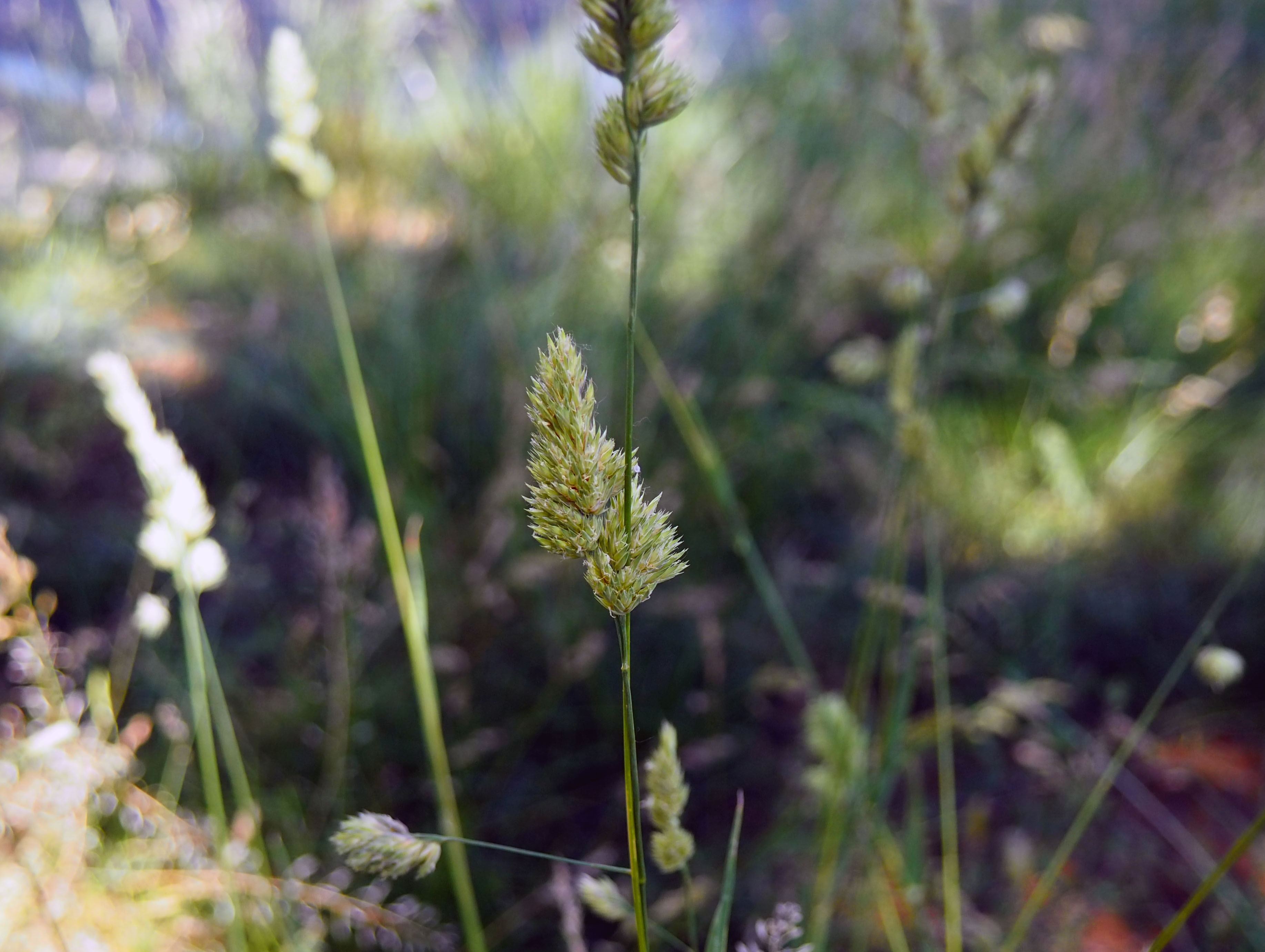
orchard grass (Dactylis glomerata)
  • Bromus tectorum (cheatgrass)
  • Capsella bursa-pastoris (shepherd’s purse)
  • Dactylis glomerata (orchard grass)
  • Epilobium brachycarpum (tall willowherb)
  • Lactuca serriola (prickly lettuce)
  • Malva neglecta (dwarf mallow)
  • Polygonum sp. (knotweed)
  • Salsola sp. (Russian thistle)
  • Taraxacum officinale (dandelion)
  • Tragopogon dubius (salsify)
  • Trifolium repens (white clover)
  • Vulpia myuros (rattail fescue)

Are there unkept hellstrips in your neighborhood? If so, what weeds have you seen taking up residence there?