Maize Anatomy and the Anatomy of a Maze

Commonly known as corn throughout much of North America, maize is a distinctive emblem of the harvest season. It is one of the most economically important crops in the world (the third most important cereal after rice and wheat) and has scads of uses from food to feed to fuel. The story of its domestication serves as a symbol of human ingenuity, and its plasticity in both form and utility is a remarkable example of why plants are so incredible.

The genus Zea is in the grass family (Poaceae) and consists of five species: Z. diploperennis, Z. perennis, Z. luxurians, Z. nicaraguensis, and Z. mays. Maize is the common name of Zea mays subsp. mays, which is one of four Z. mays subspecies and the only domesticated taxon in the genus. All other taxa are commonly and collectively referred to as teosintes.

The domestication of maize, apart from being an impressive feat, has long been a topic of research and a challenging story to tease apart. The current understanding is that maize was first domesticated around 9000 years ago in the Balsas River valley in southern Mexico, the main progenitor being Zea mays subsp. parviglumis. It is astonishing how drastically different in appearance teosintes are from modern day maize, but it also explains why determining the crop wild relative of maize was so difficult.

Teosinte, teosinte-maize hybrid, and maize - photo credit: wikimedia commons

Teosinte, teosinte-maize hybrid, and maize – photo credit: wikimedia commons

Teosintes and maize both have tall central stalks; however, teosintes generally have multiple lateral branches which give them a more shrubby appearance. In teosinte, each of the lateral branches and the central stalk terminate in a cluster of male flowers; female flowers are produced at the nodes along the lateral branches. In maize, male flowers are borne at the top of the central stalk, and lateral branches are replaced by short stems that terminate in female flowers. This is where the ears develop.

Ears – or clusters of fruits – are blatantly different between teosintes and maize. To start with, teosinte produces a mere 5 to 12 fruits along a short, narrow cob (flower stalk). The fruits are angular and surrounded in a hard casing. Maize cobs are considerably larger both in length and girth and are covered in as many as 500 or more fruits (or kernels), which are generally more rounded and have a softer casing. They also remain on the cob when they are ripe, compared to teosinte ears, which shatter.

Evolutionary biologist, Sean B. Carroll, writes in a New York Times article about the amazing task of “transform[ing] a grass with many inconvenient, unwanted features into a high-yielding, easily harvested food crop.” These “early cultivators had to notice among their stands of plants variants in which the nutritious kernels were at least partially exposed, or whose ears held together better, or that had more rows of kernels, and they had to selectively breed them.” Carroll explains that this “initial domestication process which produced the basic maize form” would have taken several hundred to a few thousand years. The maize that we know and love today is a much different plant than its ancestors, and it is still undergoing regular selection for traits that we find desirable.

Female inflorescence (or "ear") of Zea mays subsp. mays - photo credit: wikimedia commons

Female inflorescence (or “ear”) of Zea mays subsp. mays – photo credit: wikimedia commons

To better understand and appreciate this process, it helps to have a basic grasp of maize anatomy. Maize is an impressive grass in that it regularly reaches from 6 to 10 feet tall and sometimes much taller. It is shallow rooted, but is held up by prop or brace roots – adventitious roots that emerge near the base of the main stalk. The stalk is divided into sections called internodes, and at each node a leaf forms. Leaf sheaths wrap around the entirety of the stalk, and leaf blades are long, broad, and alternately arranged. Each leaf has a prominent midrib. The stalk terminates in a many-branched inflorescence called a tassel.

Maize Anatomy 101 - image credit: Canadian Goverment

Maize Anatomy 101 – image credit: Canadian Government

Maize is monoecious, which means that it has separate male and female flowers that occur on the same plant. The tassel is where the male flowers are located. A series of spikelets occur along both the central branch and the lateral branches of the tassel. A spikelet consists of a pair of bracts called glumes, upper and lower lemmas and paleas (which are also bracts), and two simple florets composed of prominent stamens. The tassel produces and sheds tens of thousands of pollen grains which are dispersed by wind and gravity to the female inflorescences below and to neighboring plants.

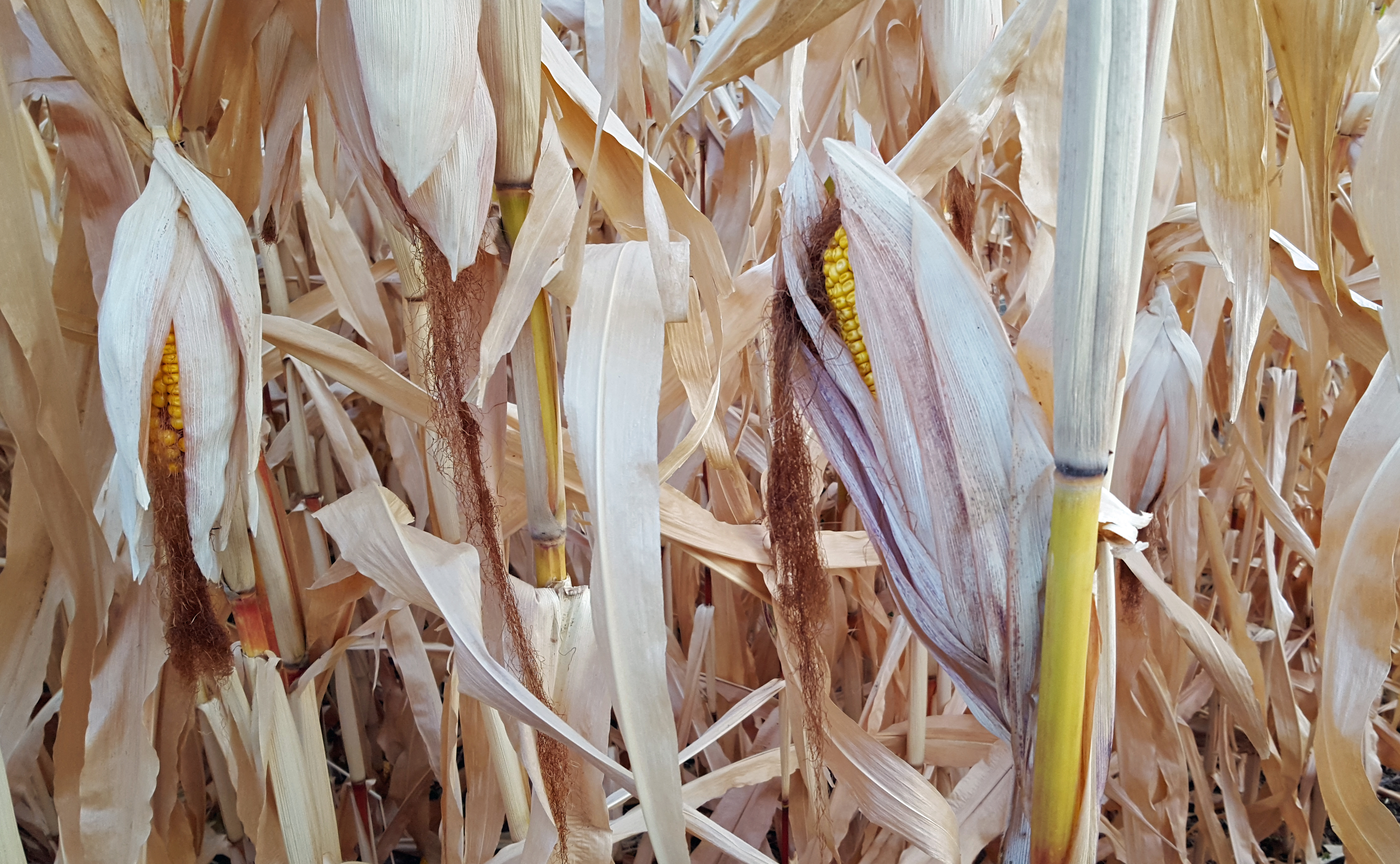
Female inflorescences (ears) occur at the top of short stems that originate from leaf axils in the midsection of the stalk. Leaves that develop along this reduced stem wrap around the ears forming the husk. Spikelets form in rows along the flower stalk (cob) within the husk. The florets of these spikelets produce long styles that extend beyond the top of the husk. This cluster of styles is known as the silk. When pollen grains land on silk stigmas, pollen tubes grow down the entire length of the silks to reach the embryo sac. Successful fertilization produces a kernel.

The kernel – or fruit – is known botanically as a caryopsis, which is the standard fruit type of the grass family. Because the fruit wall and seed are fused together so tightly, maize kernels are commonly referred to as seeds. The entire plant can be used to produce feed for animals, but it is the kernel that is generally consumed (in innumerable ways) by humans.

There is so much more to be said about maize. It’s a lot to take in. Rather than delve too much further at this point, let’s explore one of the other ways that maize is used by humans to create something that has become another feature of the fall season – the corn maze.
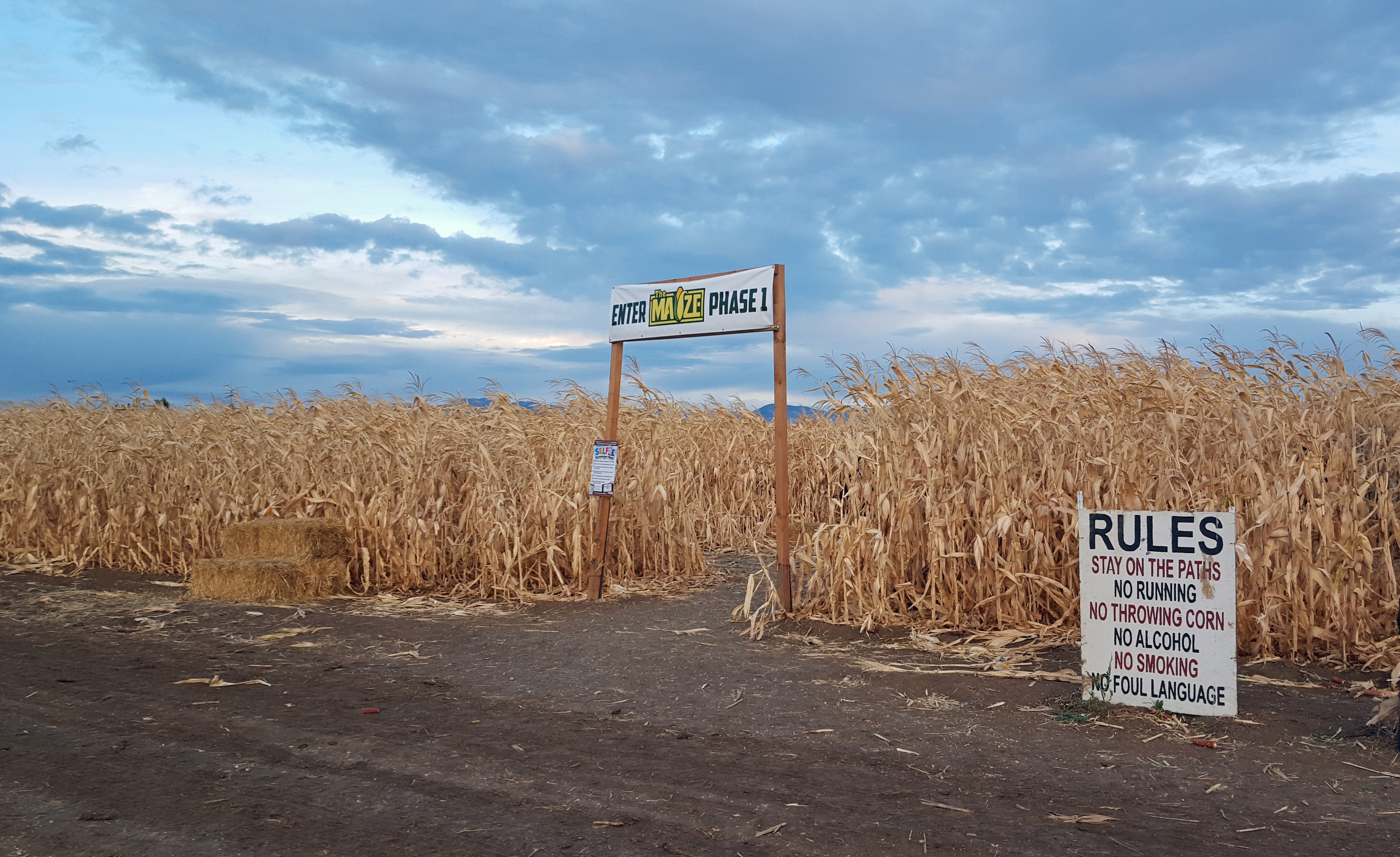
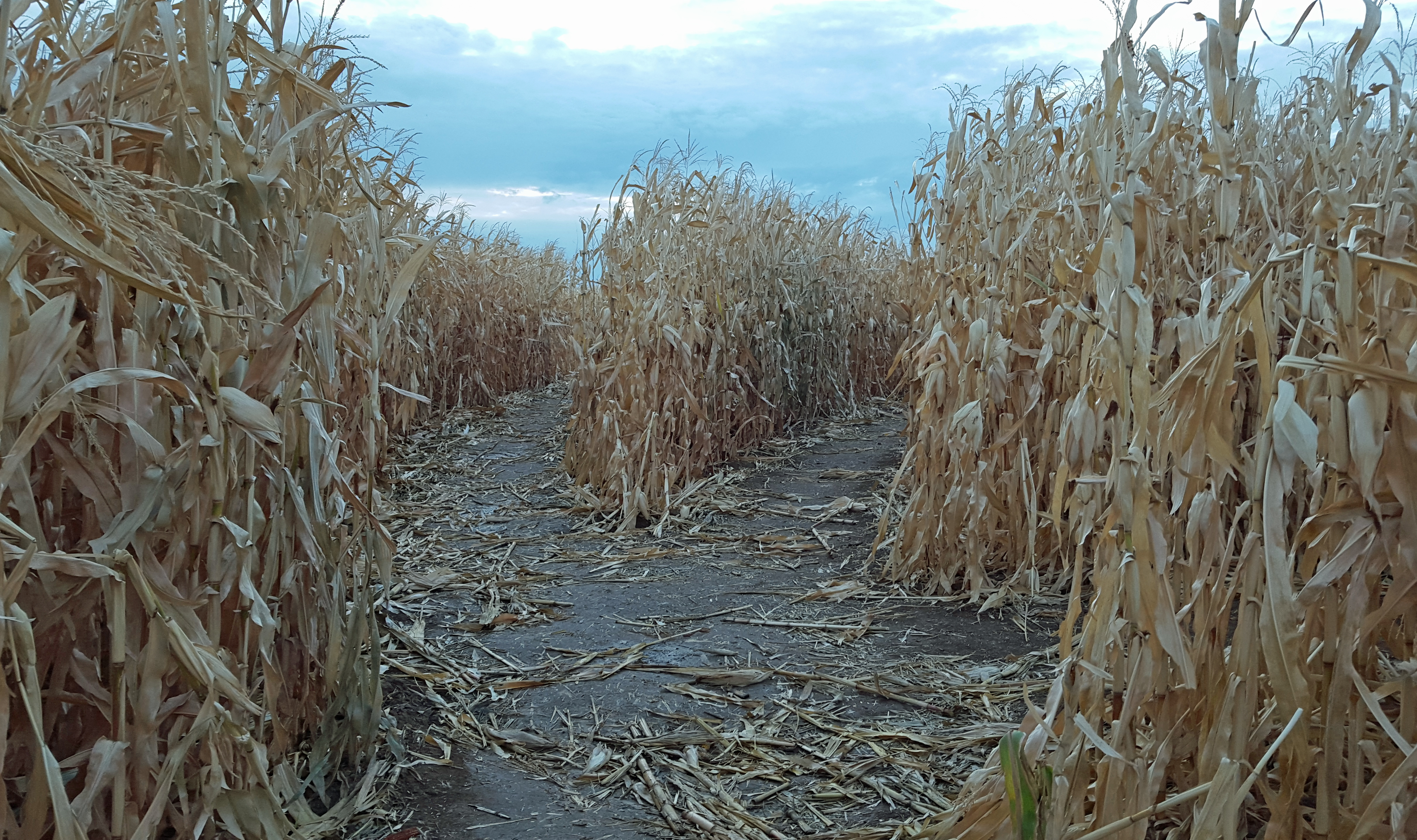
Entering the corn maze at The Farmstead in Meridian, Idaho

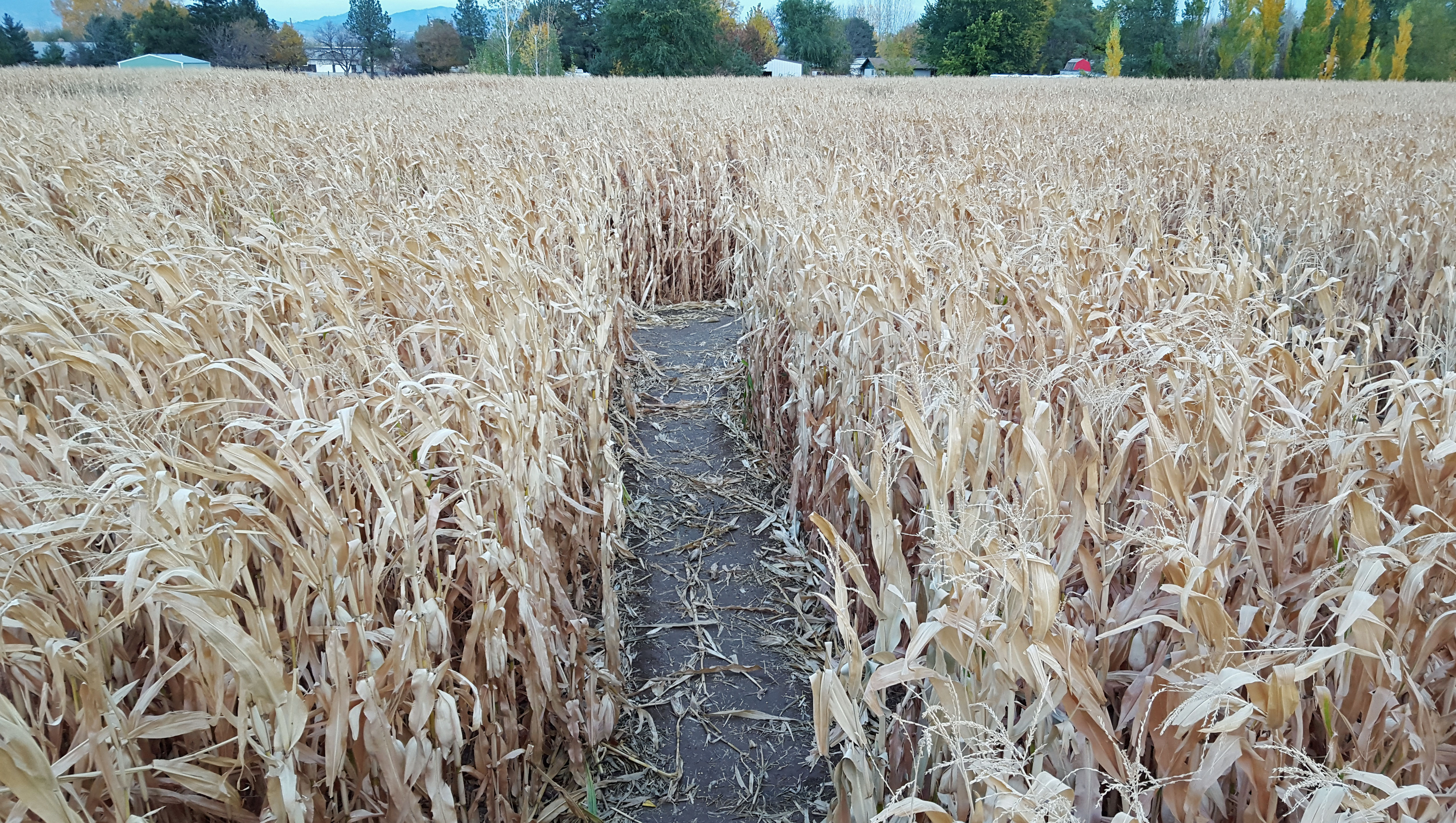
Exploring the corn maze at The Farmstead in Meridian, Idaho
corn-maze-2

corn-maze-3

corn-maze-4

corn-maze-5

Related Posts:

Field Trip: Mud Springs Ridge and Cow Creek Saddle

Last weekend I went on two all day field trips that were part of Idaho Native Plant Society‘s annual meeting. The second field trip was in a location with a climate considerably warmer and drier than the first field trip. The flora was much more familiar to me since it was similar to what I generally see in southern Idaho. We visited two sites: Mud Springs Ridge and Cow Creek Saddle. Both are high on a mountain ridge (around 5300 feet in elevation) flanked by the Salmon River canyon on the east and the Snake River canyon on the west. The tiny town of Lucile, Idaho was just below us to the east, and if we would have continued down the other side of the mountain, we would have arrived at Hells Canyon National Recreation Area. These sites are high elevation grasslands, and there was a huge diversity of grasses and forbs to explore.

Taking decent photos of the plants was a challenge as the sun was shining brightly and there was a constant breeze. Photographs don’t quite cut it anyway. The views were incredible. Standing on a ridge top peering across a meadow full of wildflowers with more mountains in the distance. Mass amounts of lupines and paintbrushes mixed with grasses and other plants being tossed about in the breeze. Little rock gardens randomly dispersed across the hillsides. You kind of had to be there.

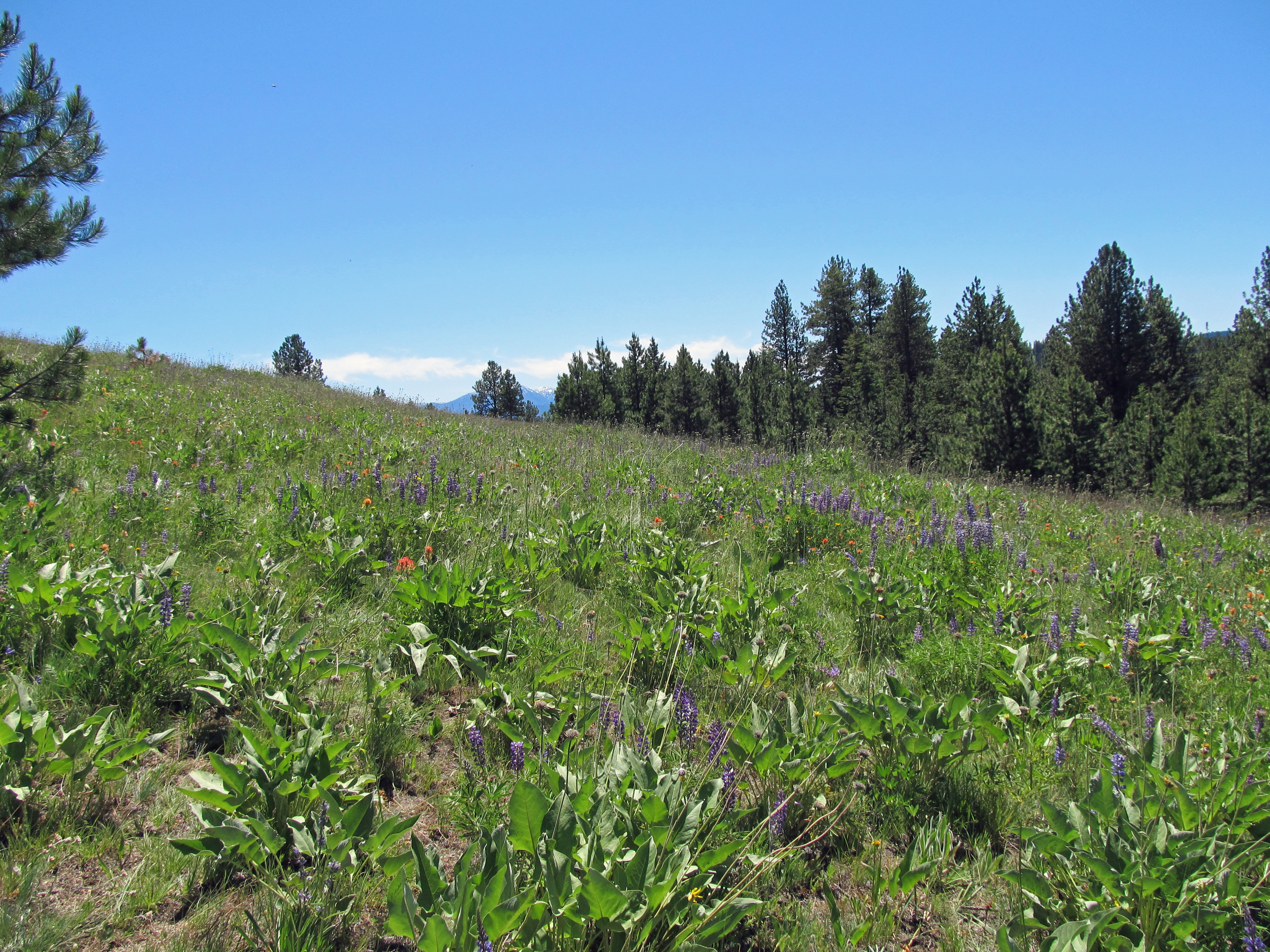
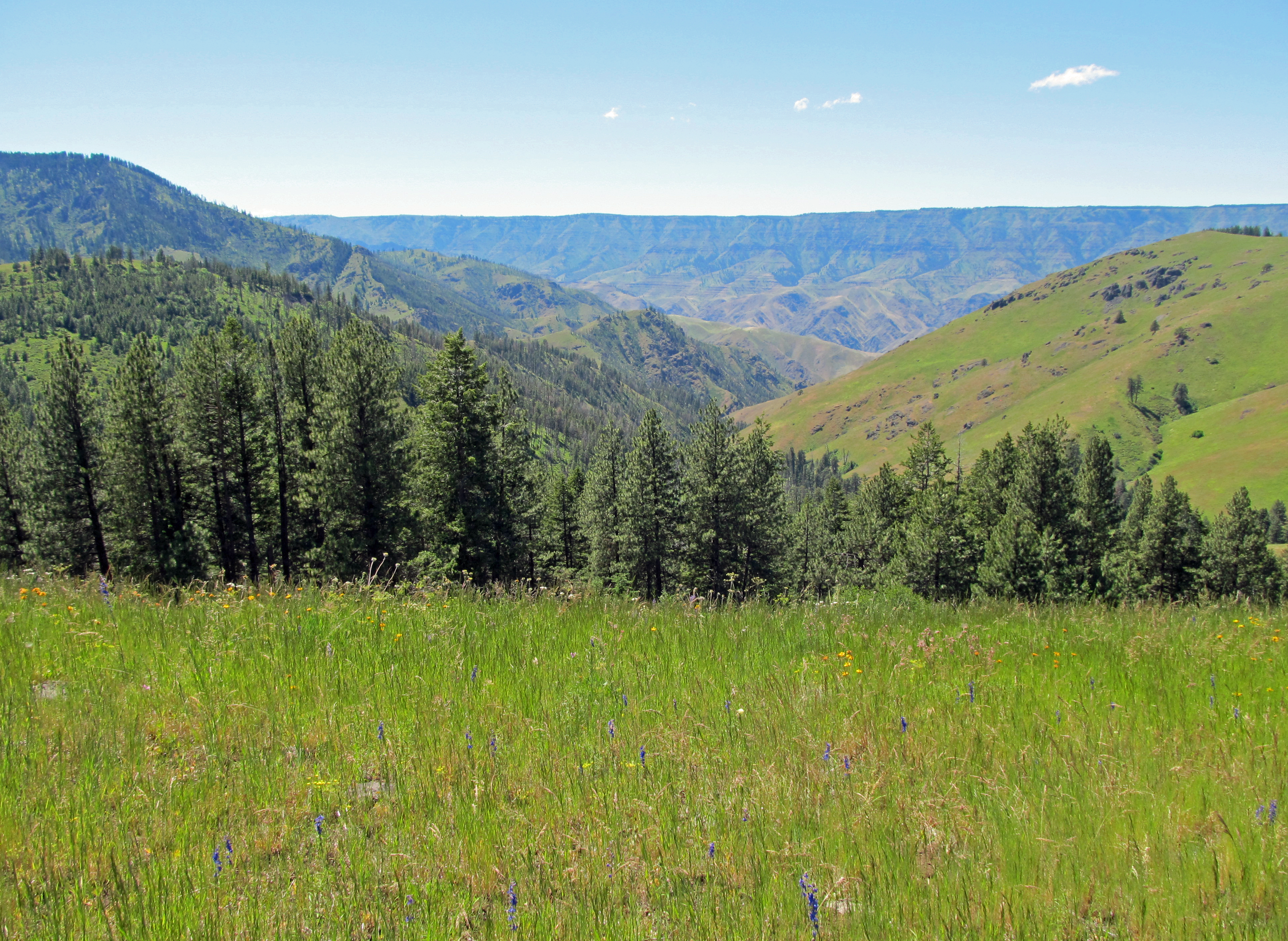
A view across the meadow at Mud Springs Ridge

A view across the meadow at Mud Springs Ridge

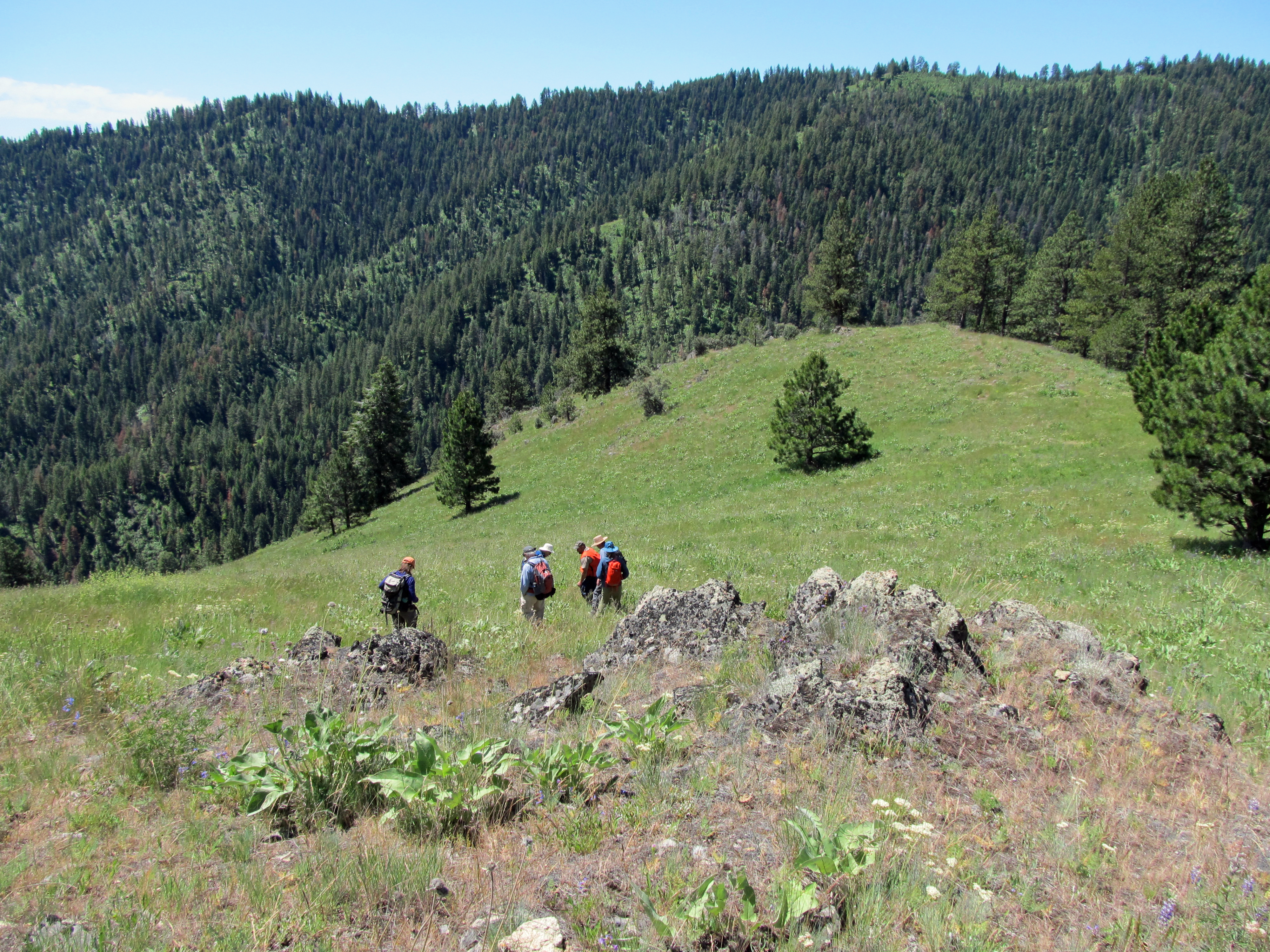
Searching for Silene spaldingii - an Idaho endemic - on the mountainside
Fellow botany geeks searching for Silene spaldingii (Spalding’s catchfly) – a rare, imperiled plant species

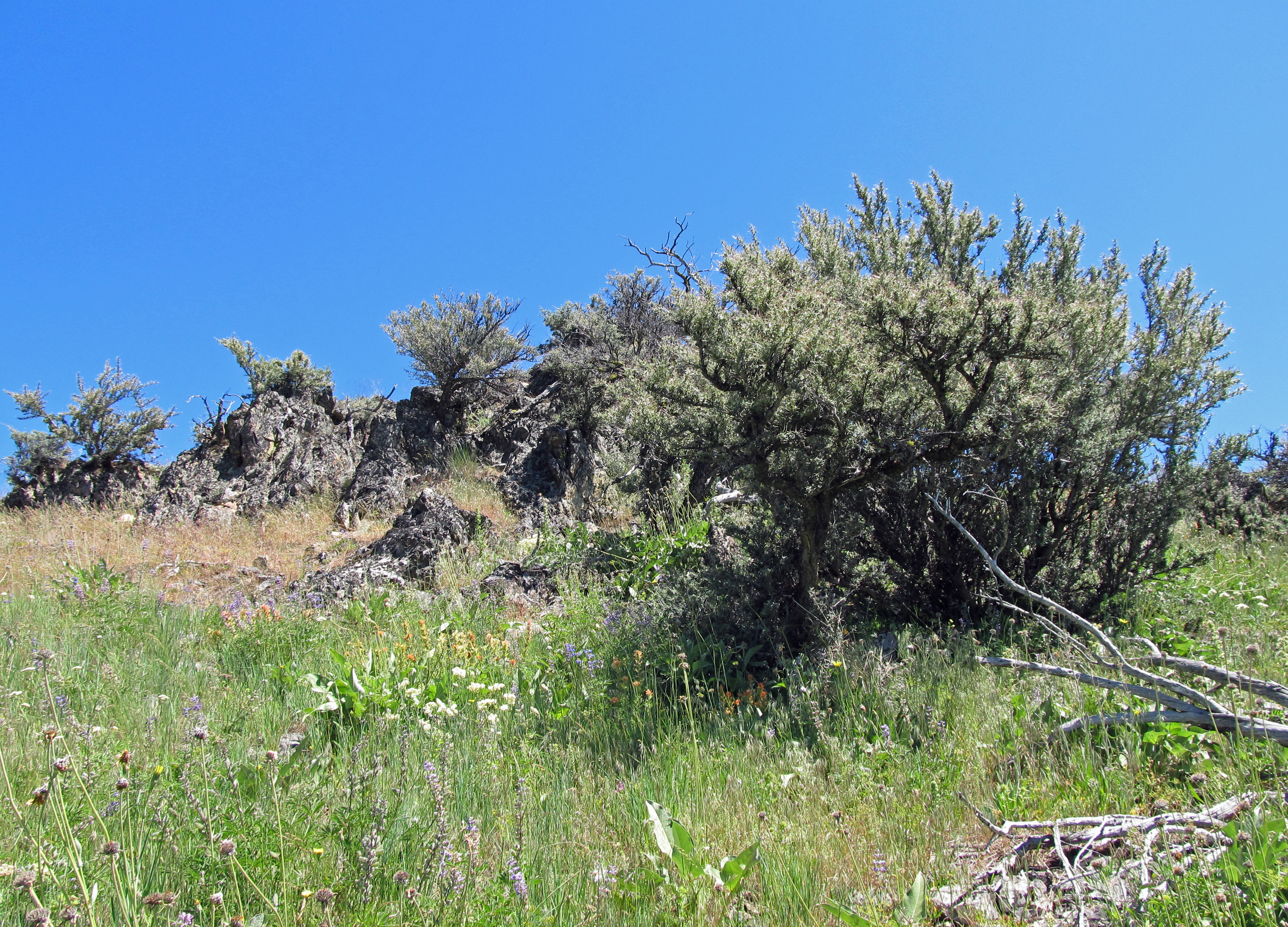
Gnarly, old curl-leaf mountain mahogany (Cercocarpus ledifolius) growing out of a rock outcrop

Gnarly, old Cercocapus ledifolius (curl-leaf mountain mahogany) growing out of a rock outcrop

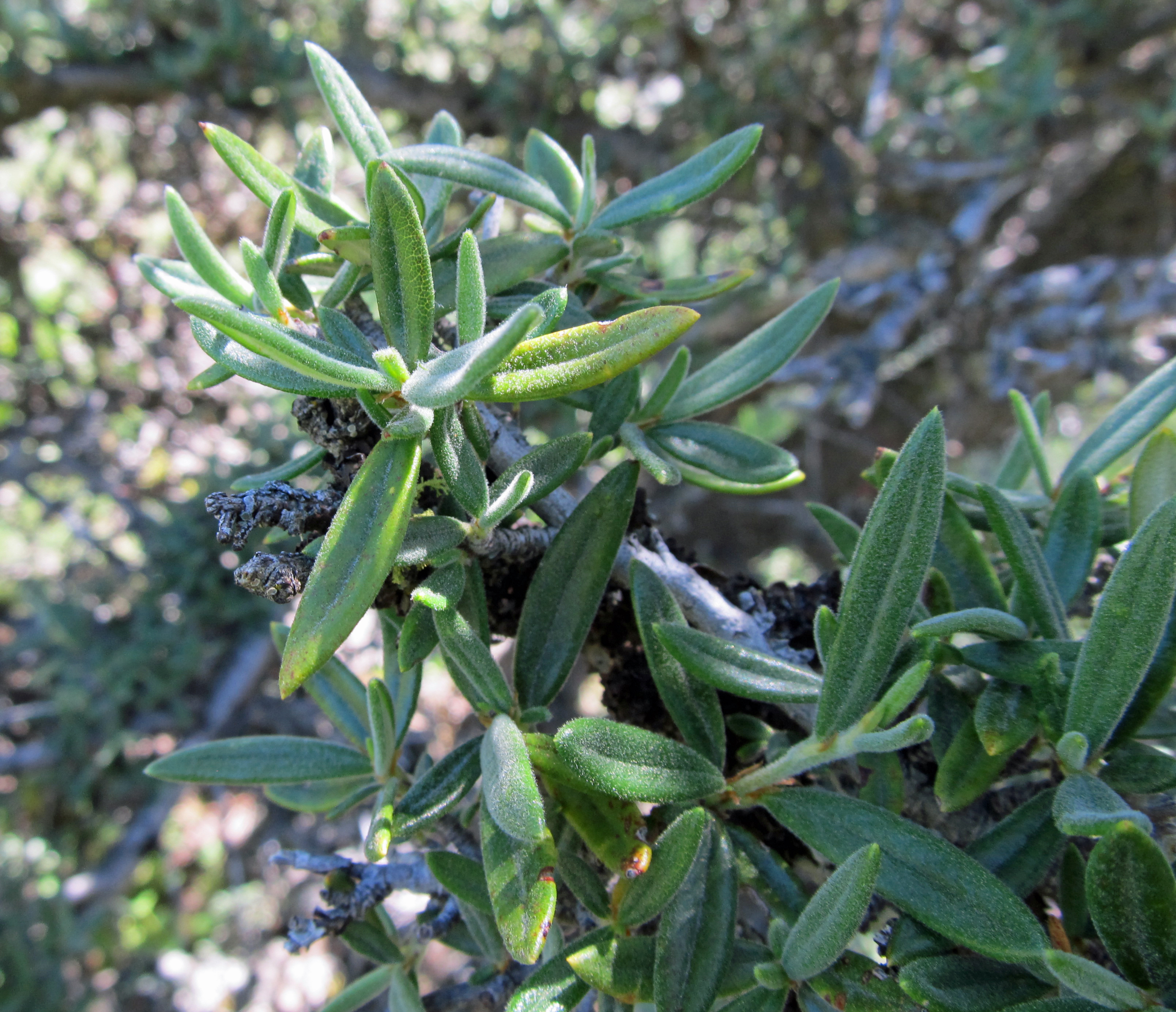
Close up of Cercocarpus ledifolius

Cercocarpus ledifolius (curl-leaf mountain mahogany)

Orthocarpus tenuifolius (owl's clover)

Orthocarpus tenuifolius (thin-leaved owl’s clover)

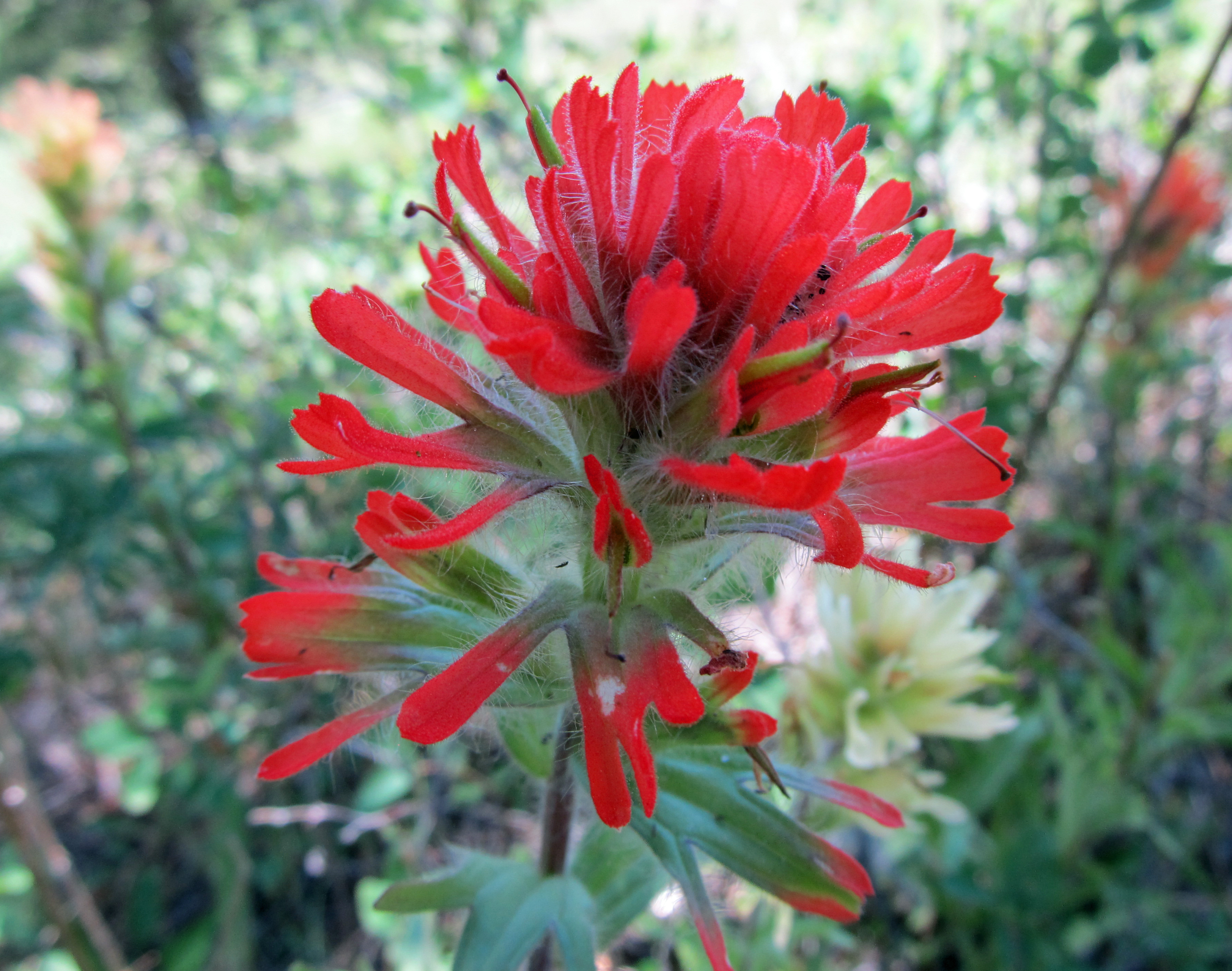
Castilleja (indian paintbrush)

Castilleja hispida (harsh paintbrush)

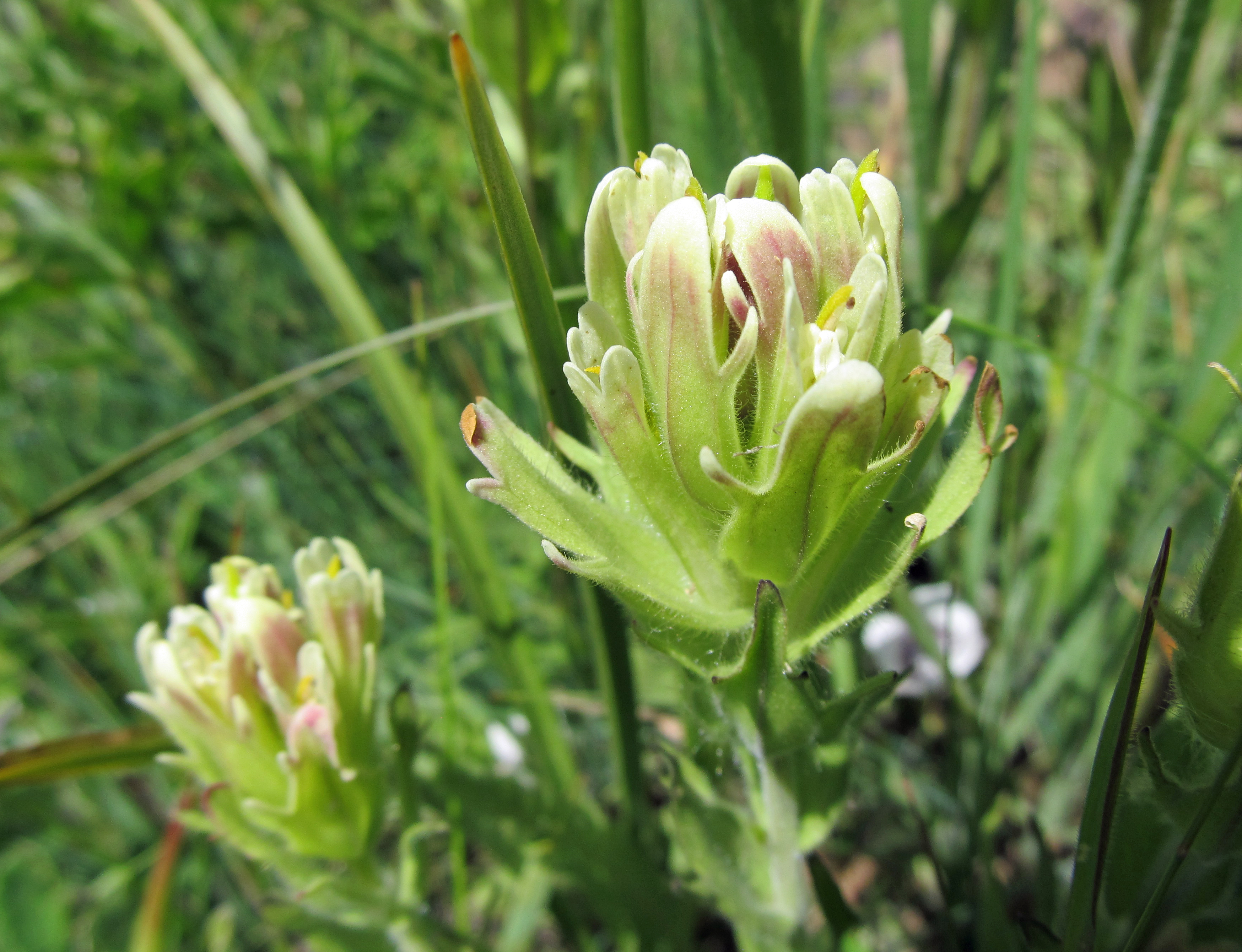
Castilleja cusickii (Cusick's paintbrush)

Castilleja cusickii (Cusick’s paintbrush)

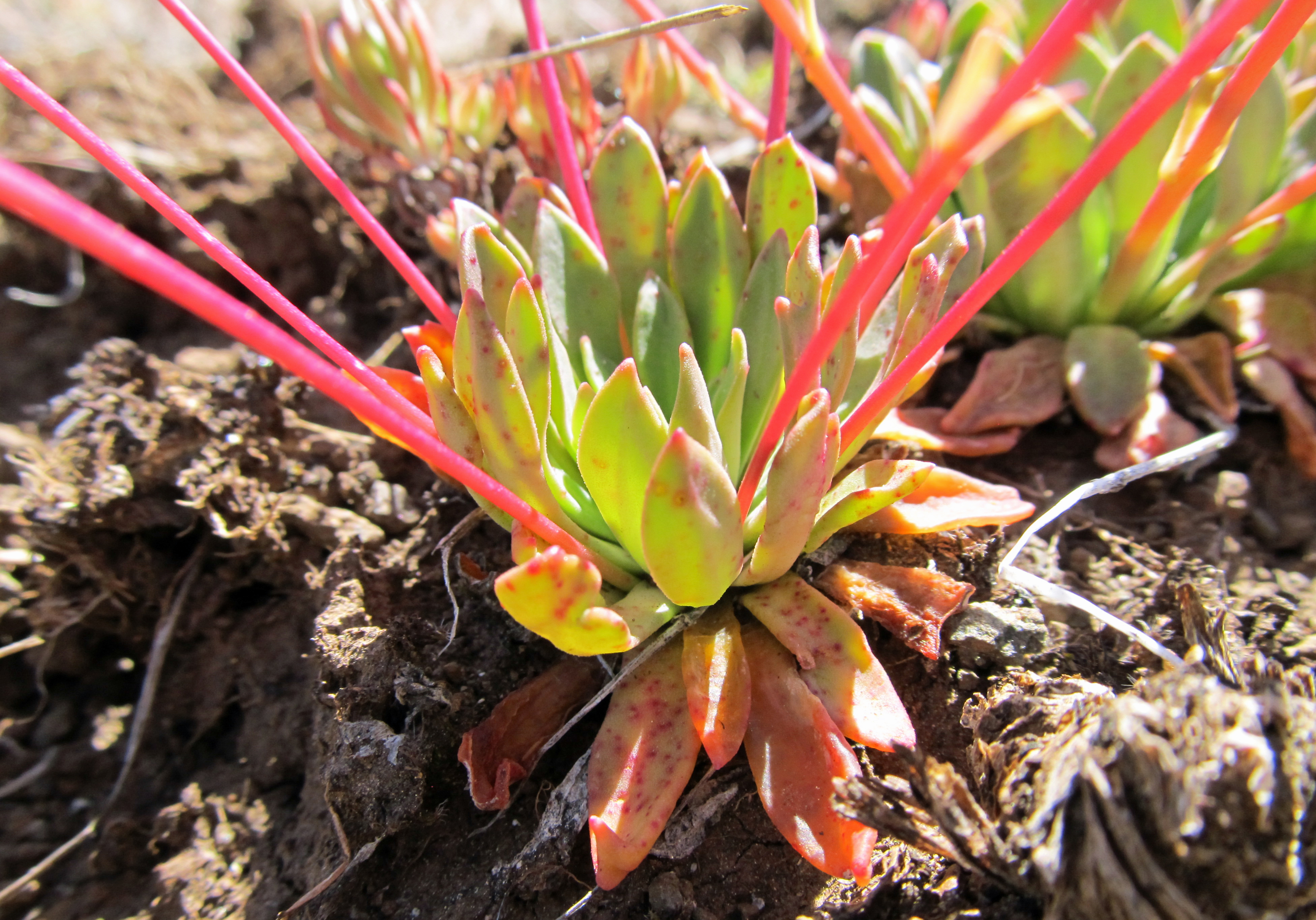
Lewissia columbiana v. wallowaensis

Lewisia columbiana var. wallowensis (Wallowa lewisia)

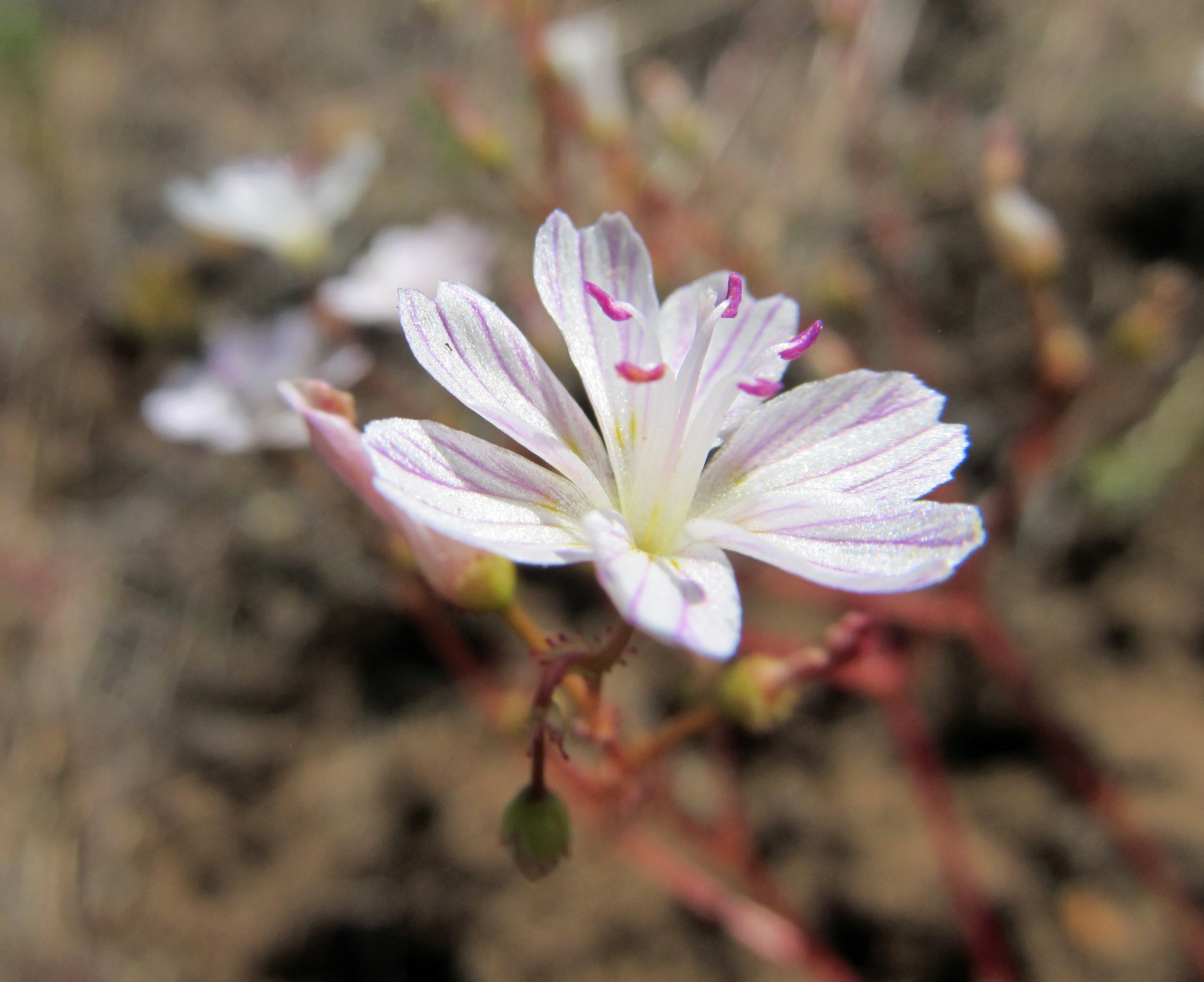
Lewissia columbiana v. wallowaensis

Lewisia columbiana var. wallowensis (Wallowa lewisia)

Erigeron

Erigeron davisii (Davis’ fleabane)

On cow creek saddle looking towards Salmon River canyon

On Cow Creek Saddle looking towards Salmon River canyon

On cow creek saddle looking towards Snake River canyon

On Cow Creek Saddle looking towards Snake River canyon

The field trips were incredible, and the annual meeting in general was a lot of fun. If you have a native plant society in your neck of the woods and you are not already a member, I highly recommend checking it out. Now, where to next?

Field Trip: Coolwater Ridge Lookout

I spent this past weekend camping with friends near Grangeville, Idaho. I was attending the annual meeting of the Idaho Native Plant Society. Meetings in the boring sense of the word occurred, but they were brief. The bulk of the weekend consisted of long hikes on guided field trips. This post is a pictorial tour of a small fraction of the plants I saw on the Coolwater Ridge Lookout trail which is located in the Bitterroot Mountains  – my first of two all-day field trips. From where we were hiking we could look down at the canyon where the Selway River was fixing to meet the Lochsa River to form the middle fork of the Clearwater River. This is a part of Idaho that is basically too beautiful for words. At some point I will have more to say about this particular location, but for now here are a handful of semi-decent photos I took while on the hike.
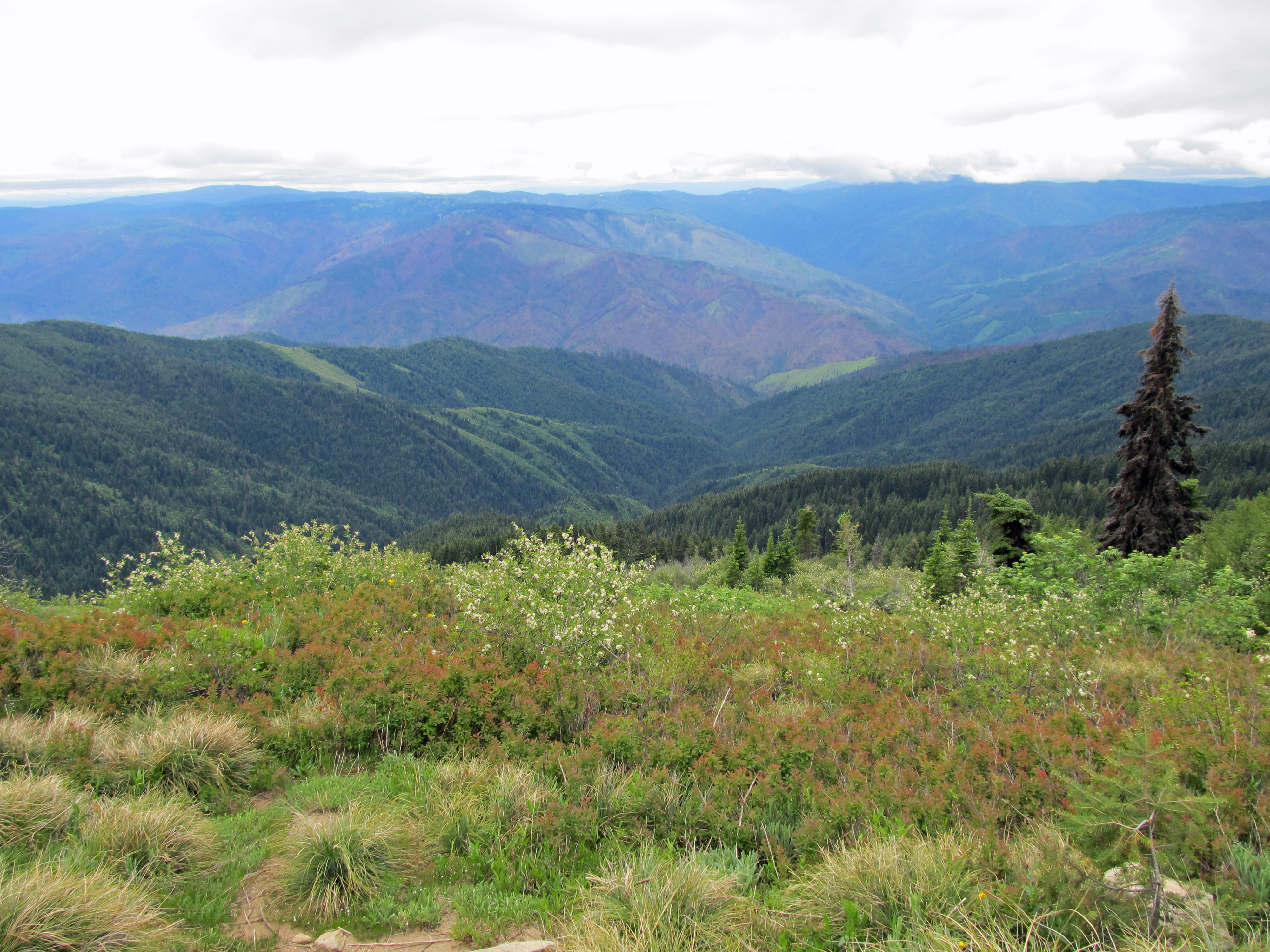
A view from Coolwater Ridge Lookout trail. Looking down at the Selway River Canyon.

A view from Coolwater Ridge. Looking down at the Selway River canyon.

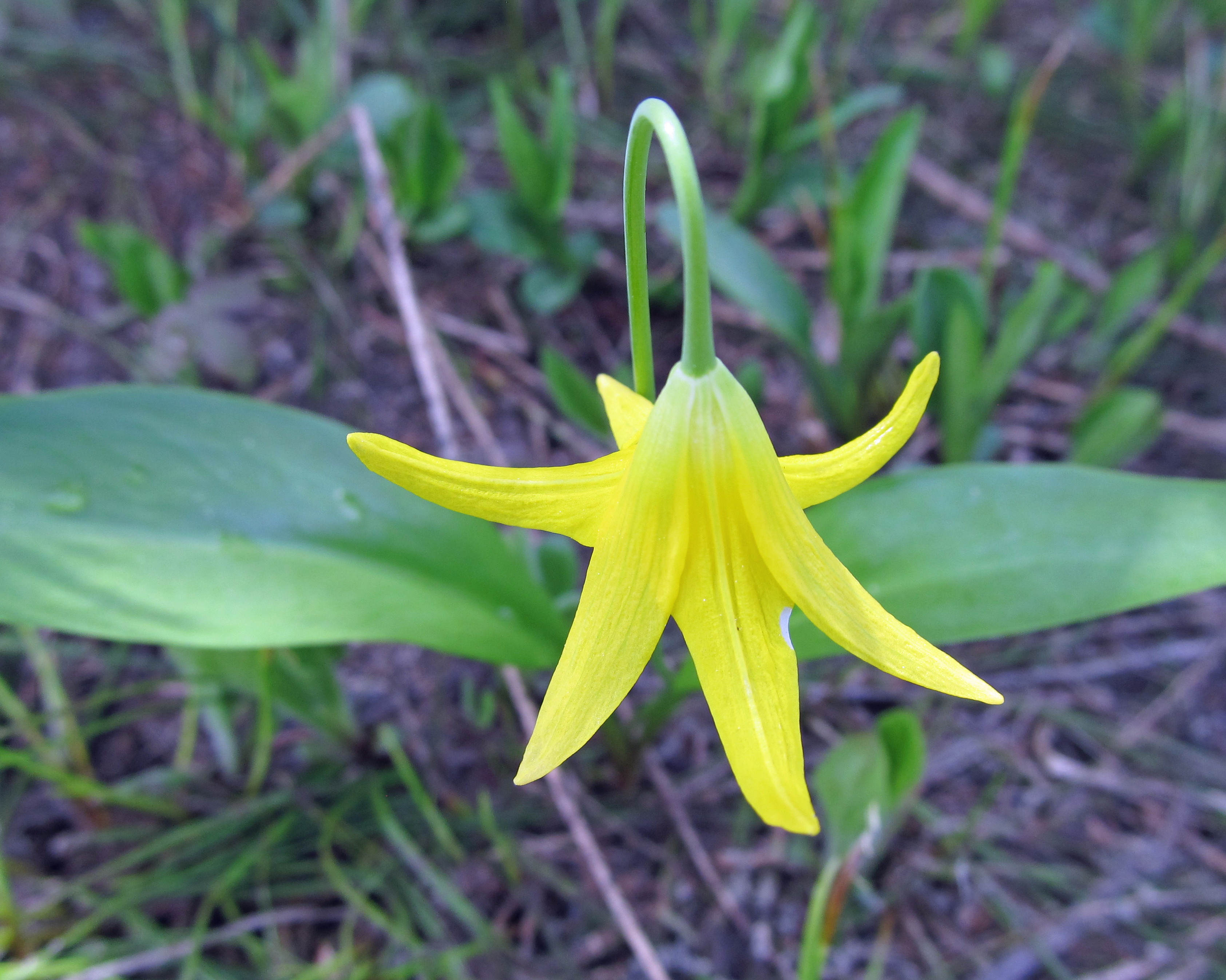
Erythronium grandiflorum - yellow glacier lily

Erythronium grandiflorum – yellow glacier lily

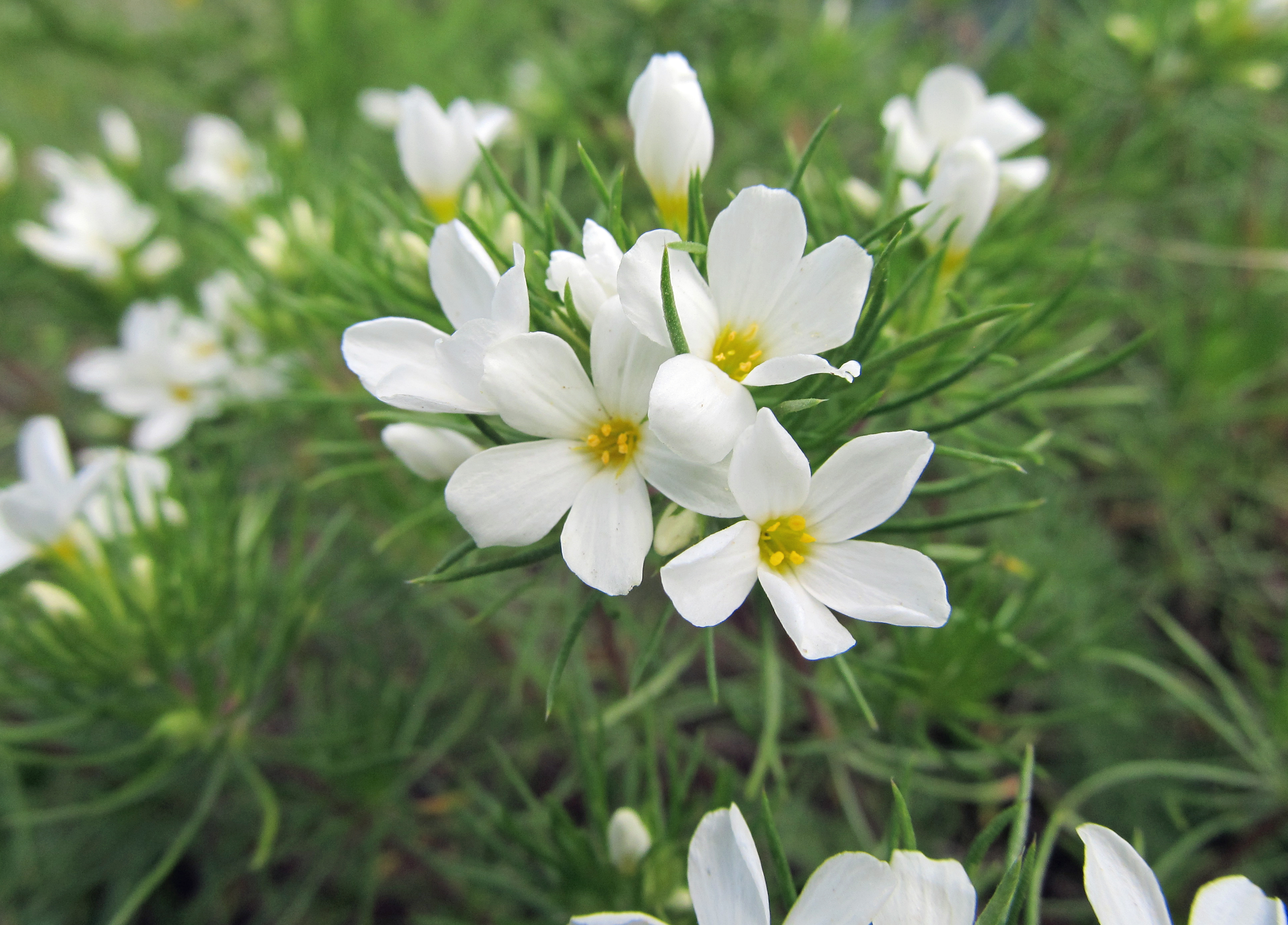
Leptosiphon nuttallii - Nuttall's linanthus

Leptosiphon nuttallii – Nuttall’s linanthus

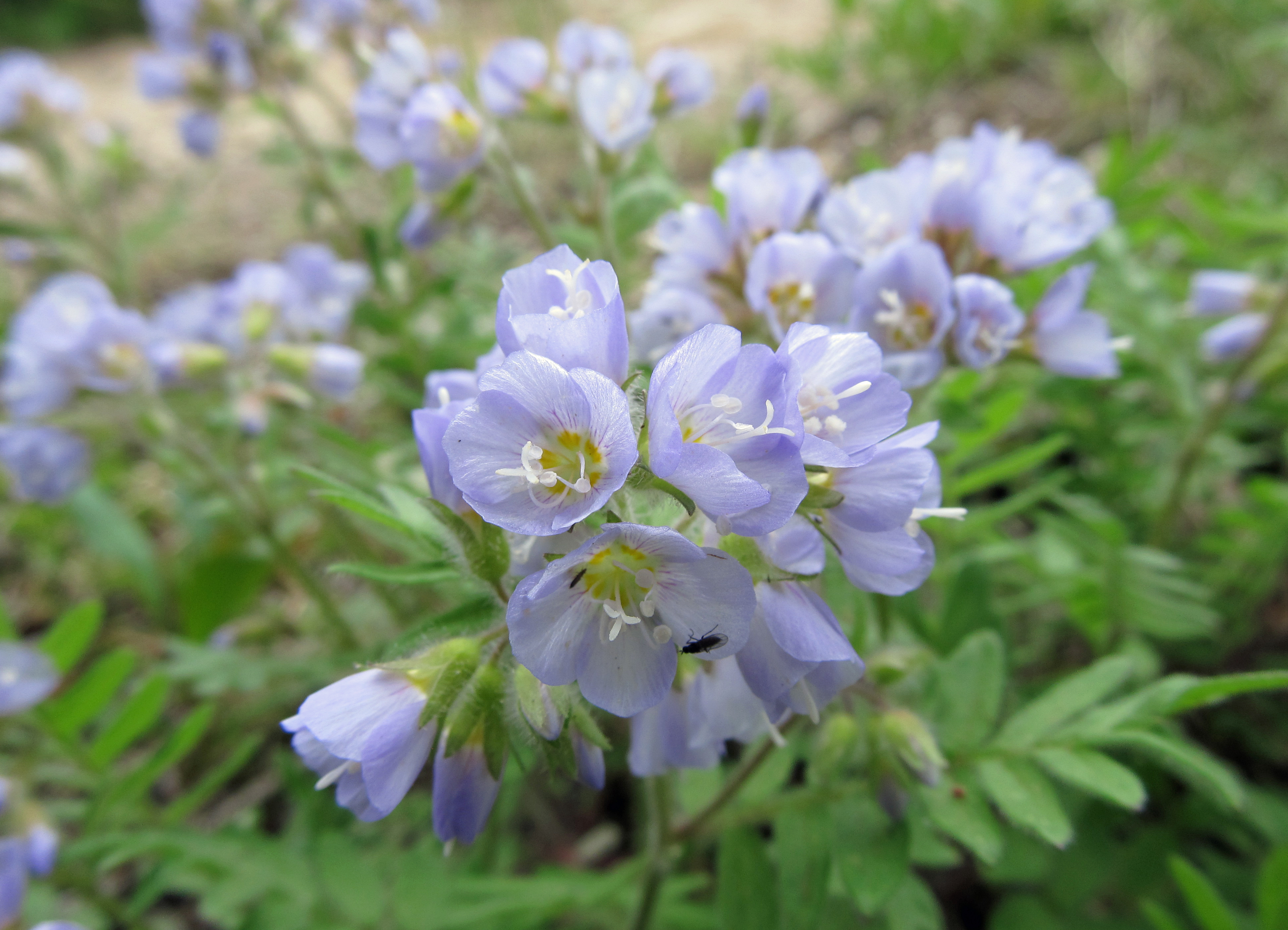
Polemonium pulcherrimum - Jacob's-ladder

Polemonium pulcherrimum – Jacob’s-ladder

A view from the ridge. Looking down at the Selway River Canyon.

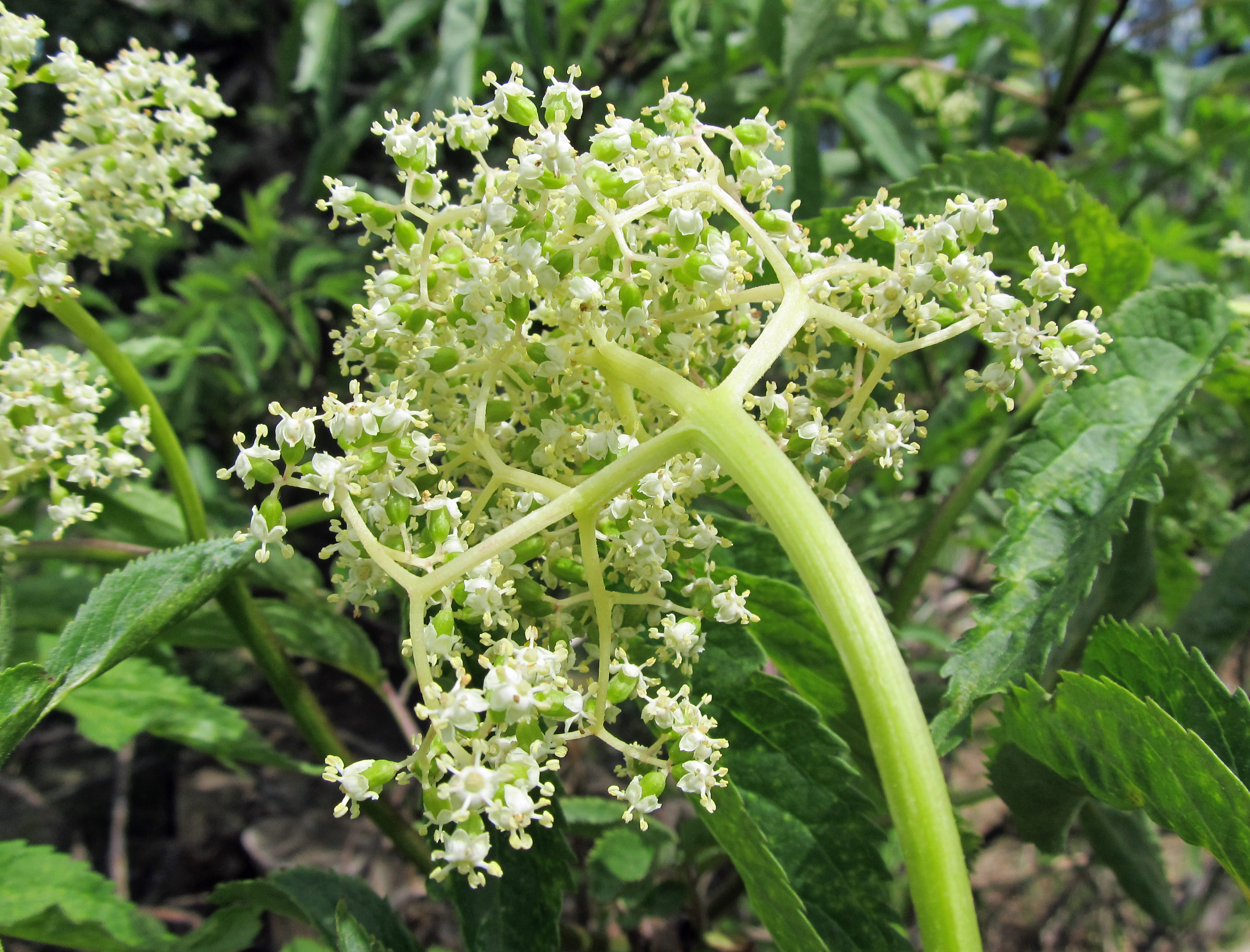
Sambucus racemosa – red elderberry

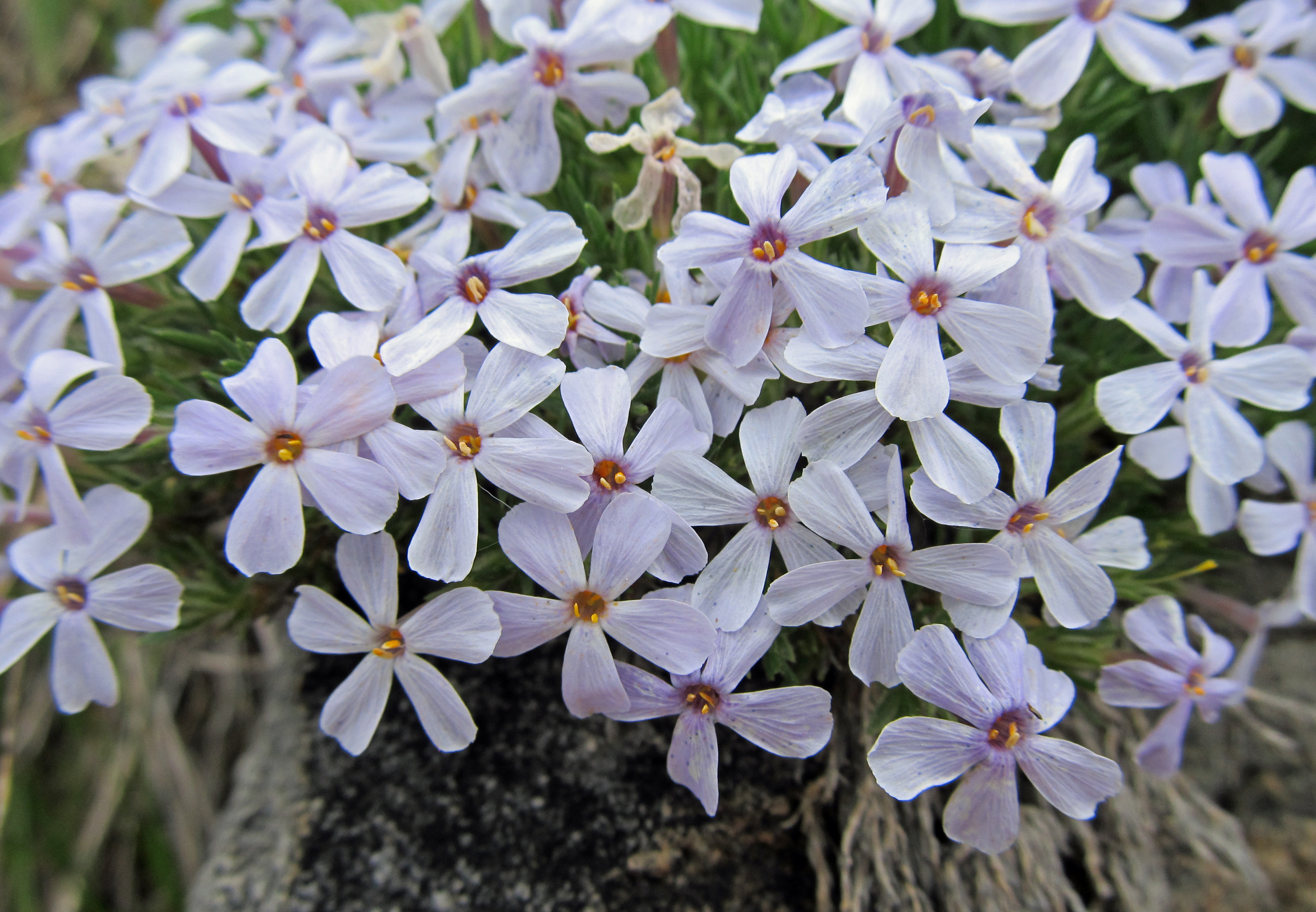
Phlox diffua - spreading phlox

Phlox diffusa – spreading phlox

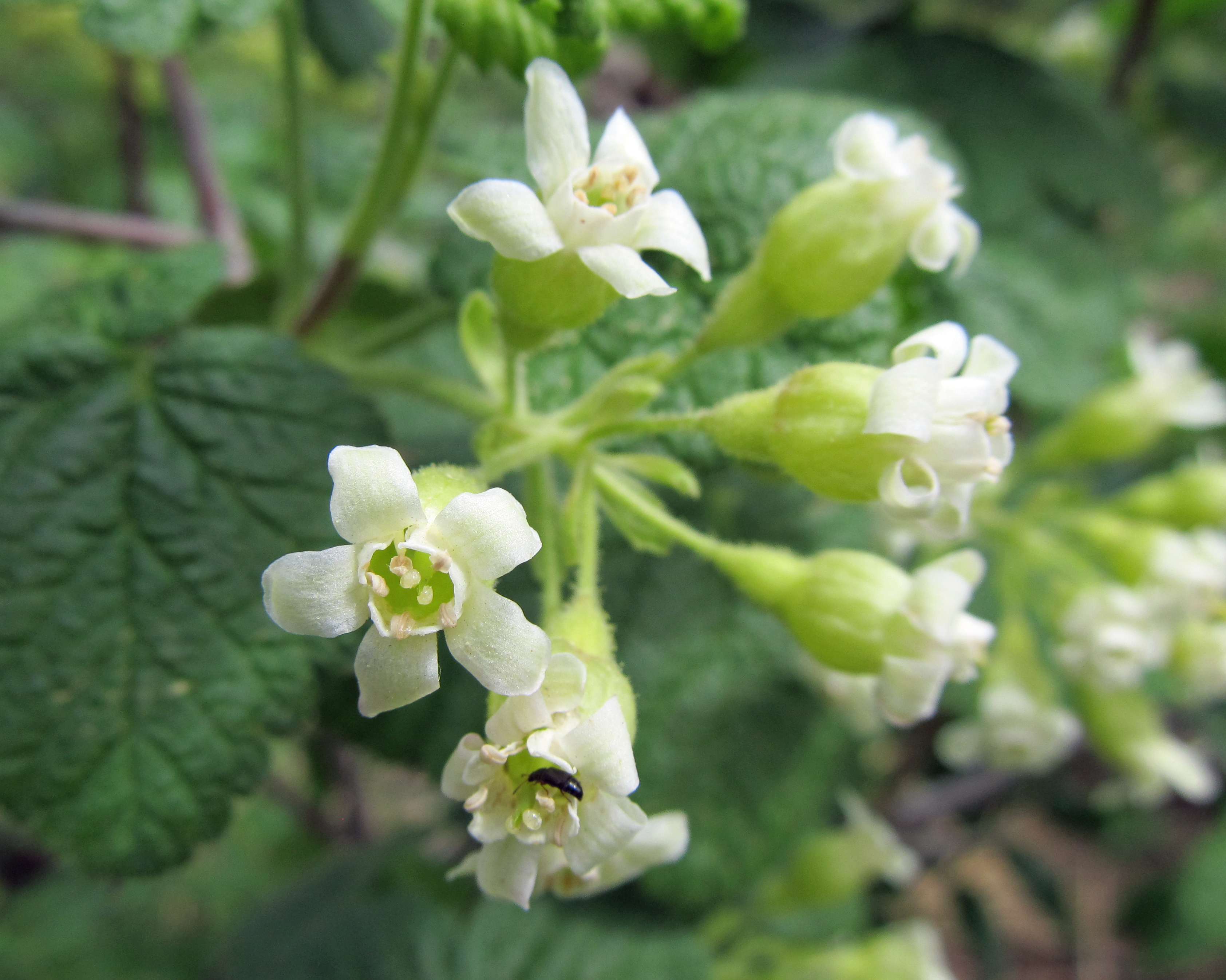
Ribes viscosissimum - sticky currant

Ribes viscosissimum – sticky currant

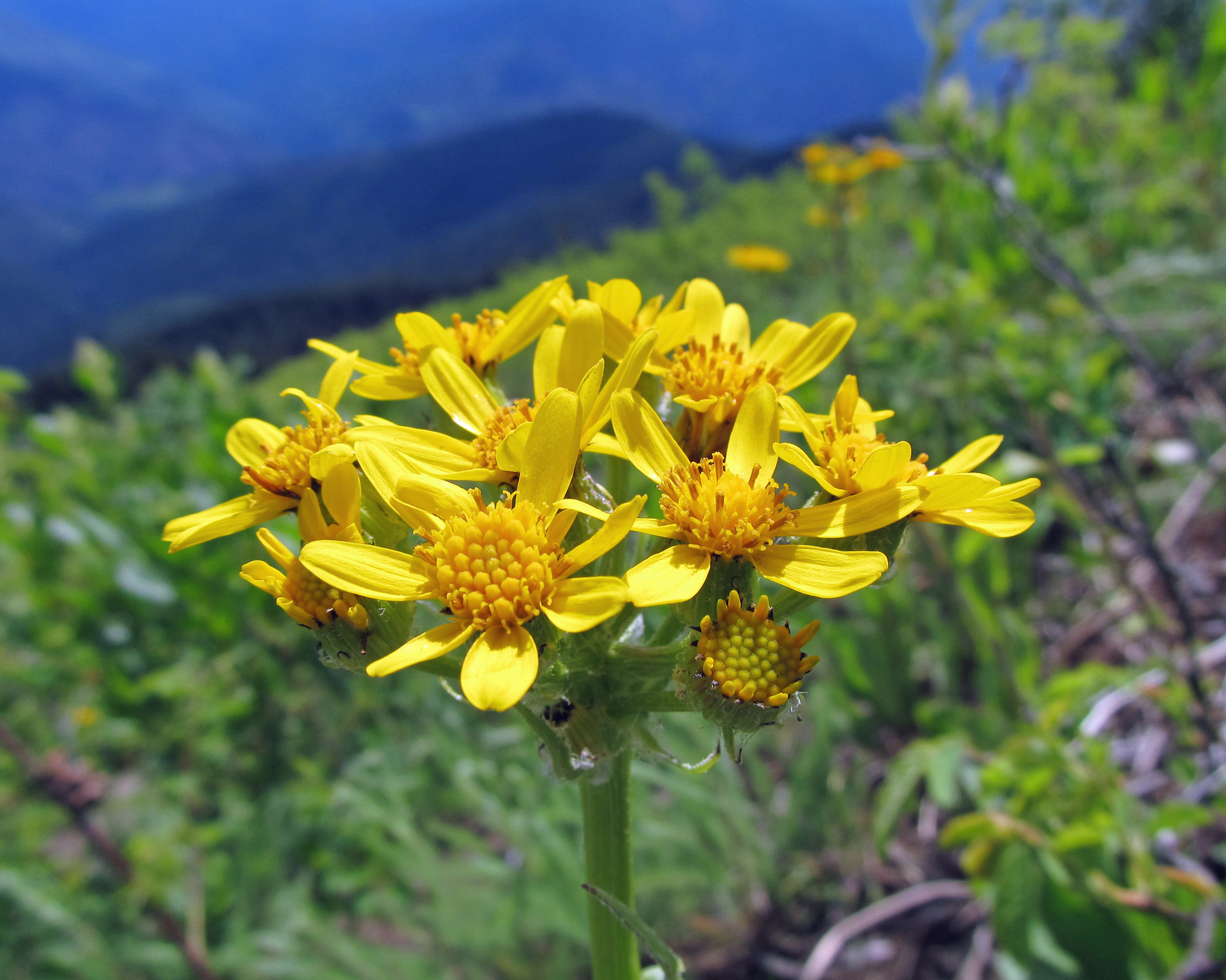
Senecio integerrimus var. exaltatutus - Columbia groundsel

Senecio integerrimus var. exaltatutus – Columbia groundsel

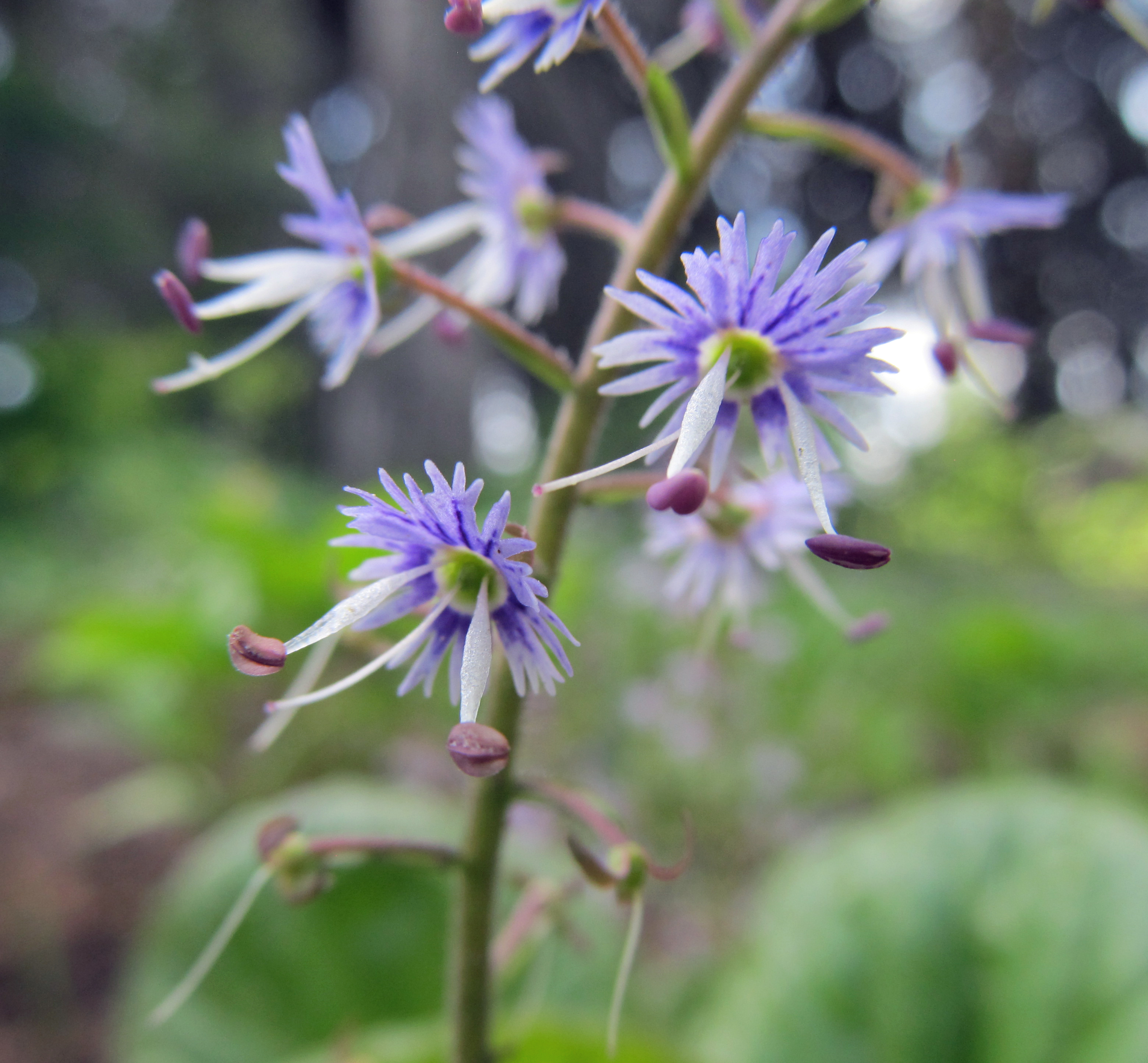
Synthyris platycarpa - kittentails

Synthyris platycarpa – Idaho kittentails

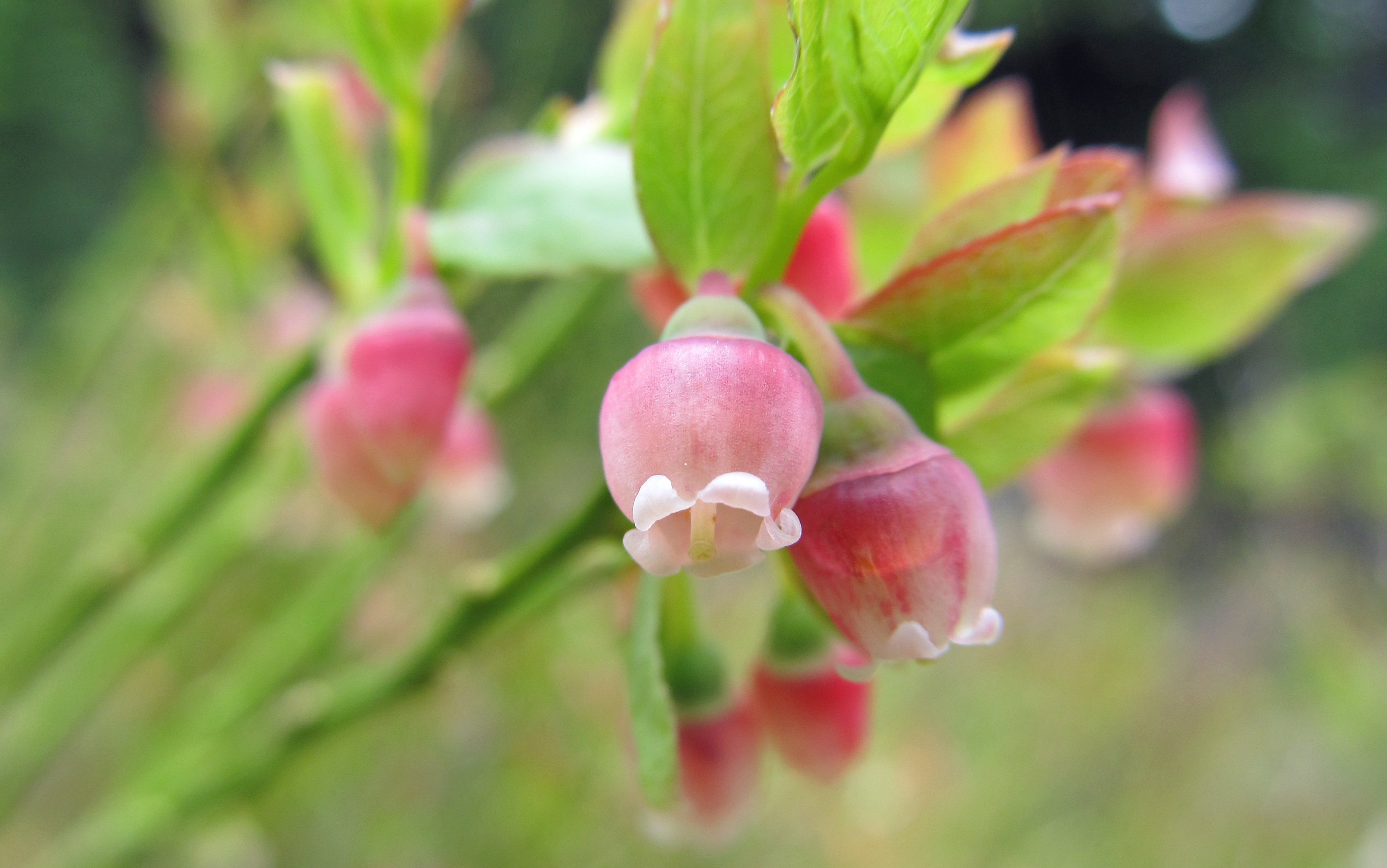
Vaccinium scoparium - whortleberry

Vaccinium scoparium – grouse whortleberry

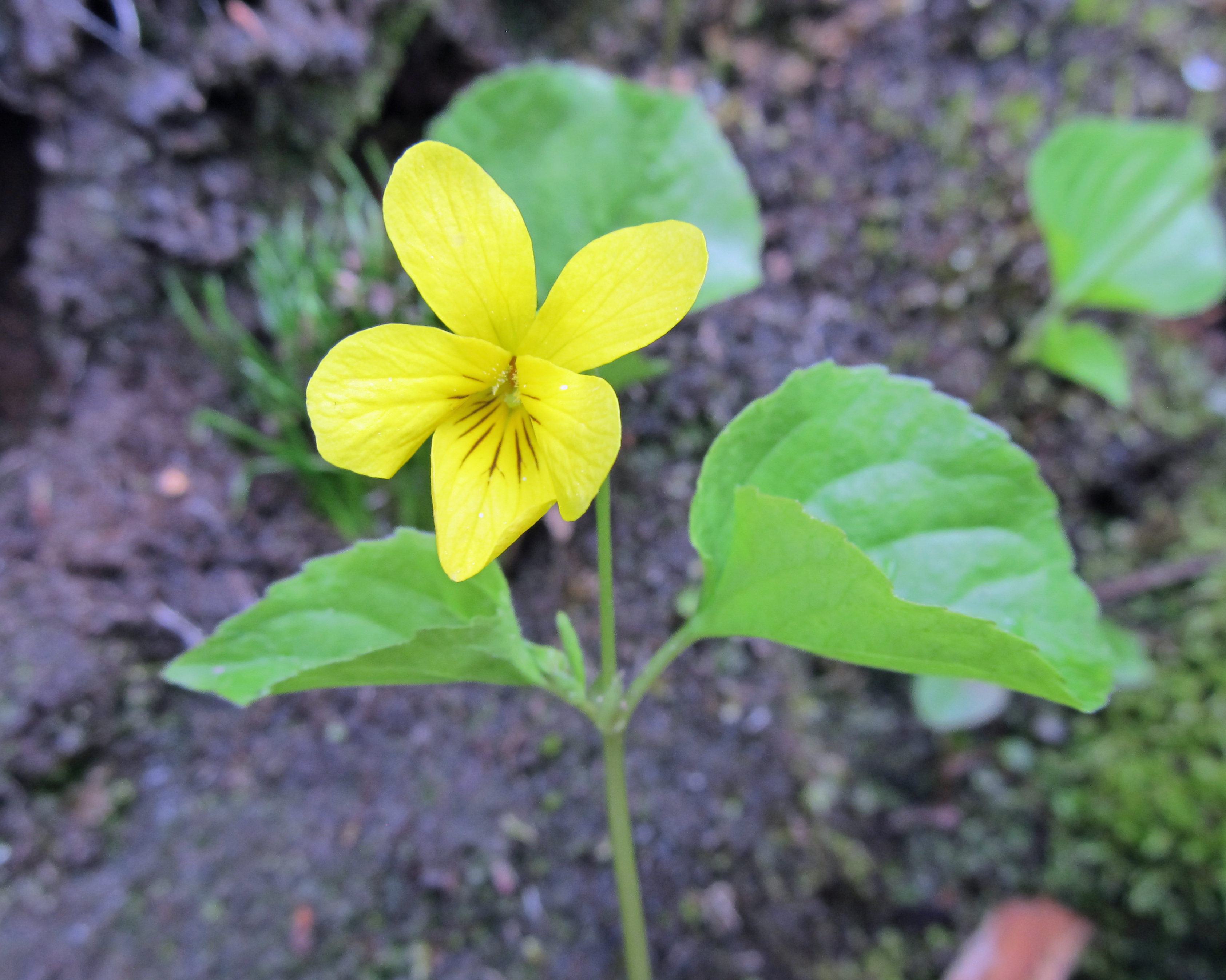
Viola glabella - pioneer violet

Viola glabella – pioneer violet

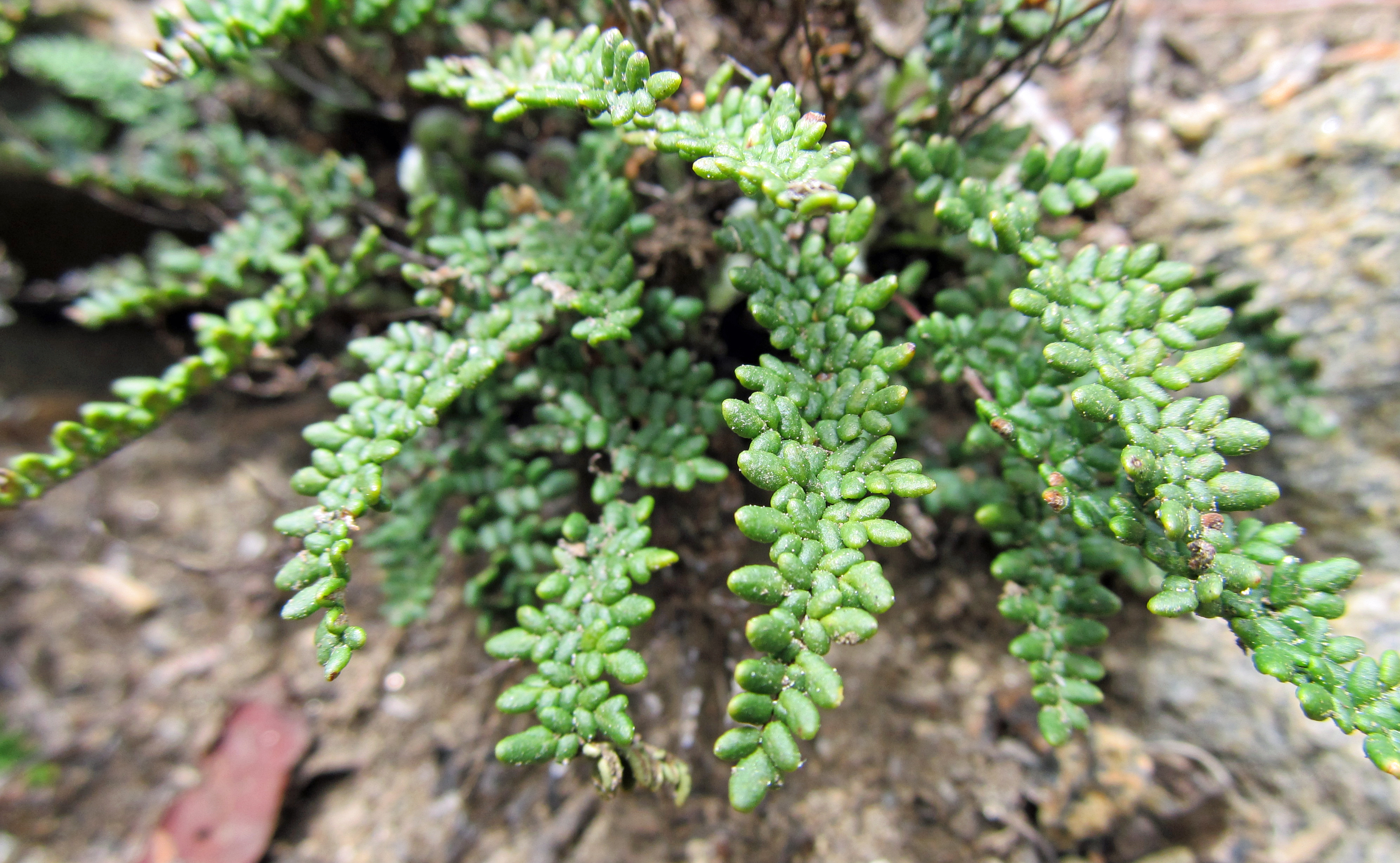
Cheilanthes feei - Fee's lipfern

Cheilanthes feei – Fee’s lipfern

Stay tuned for photos from the second of two field trips. In the meantime, go outside and see some nature.

Vines for Spring

I’m taking a break from writing a regular post this time around. It’s the first week of spring, and there is a lot going on. I hope you are getting outside and enjoying the warmer weather (at least those of you in the northern hemisphere anyway). It was a pretty mild winter in my neck of the woods, but that doesn’t diminish my excitement when I see plants start to flower and leaf out. The gray days of winter are largely behind us, and holing up in my cave of an apartment is suddenly less appealing.

What I have for you this week are some short video clips. I recently joined Vine, a short-form, video-sharing social media site where each post is a six second, looped video. I’m late to the scene as usual, but I’ve been having fun messing around with it. The following videos are some of my first attempts (and lousy ones at that); if I decide to stick with it you can expect better content. If you’re interested in this sort of thing, please join, follow, favorite, share, like, comment, etc. Regardless, I hope you will find time to pry yourself away from a screen and experience nature during this beautiful and singular time of year.


Awkward Botany is also on Twitter and Tumblr, so feel free to follow me there too if you would like. Happy Spring!

The Moon Trees

On January 31, 1971, Apollo 14 left Earth and headed for the Moon. It was the eighth manned Apollo mission and the third to land on the Moon. On board were three astronauts – Alan Shepard, Edgar Mitchell, and Stuart Roosa. Joining the astronauts were about 500 tree seeds that were given to Roosa by Ed Cliff, the Chief of the Forest Service at the time. While Shepard and Mitchell explored the surface of the Moon, Roosa and the seeds hovered above it in the spacecraft. After Shepard had hit a couple of golf balls and Roosa had circled the Moon 34 times, the crew rejoined and headed back to Earth.

Roosa’s collection of tree seeds consisted of 5 species – Douglas fir, redwood, loblolly pine, sycamore, and sweetgum. Upon returning to Earth, Roosa handed the seeds back over to the Forest Service. They were then planted at Forest Service stations in Mississippi and California. Some of the seedlings were planted adjacent to trees grown from seeds that had remained on Earth in order to conduct a comparison study. The other seedlings were available for dissemination.

Official Moon Tree Emblem

Official Moon Tree Emblem

Around this time (1976-77), America was celebrating its bicentennial, so many of the trees were planted in commemoration of this event. A loblolly pine was planted at the White House. A sycamore was planted in Washington Square in Philadelphia. Valley Forge got a Moon Tree, and so did Brazil, Japan, and Switzerland. Moon Trees were planted at various parks and institutions in many states throughout the country. In fact, there were so many requests for Moon Trees that several rooted cuttings of the original seedlings had to be produced.

Unfortunately, in the frenzy of shipping out Moon Trees, a complete record of where and when the trees were planted was not maintained, and so it remains unclear where all the trees are today and how many of them are surviving. When NASA employee, Dave Williams, became aware of Moon Trees, he embarked on a quest to compile a list of them. His webpage contains the short list of trees he has been able to confirm and document so far.

According to Williams’ list, Idaho received two Moon Trees. A sycamore was planted at University of Idaho in Moscow, and a loblolly pine was planted at Lowell Elementary in Boise. The sycamore perished sometime within the last decade. The loblolly pine remains…but perhaps not for long.
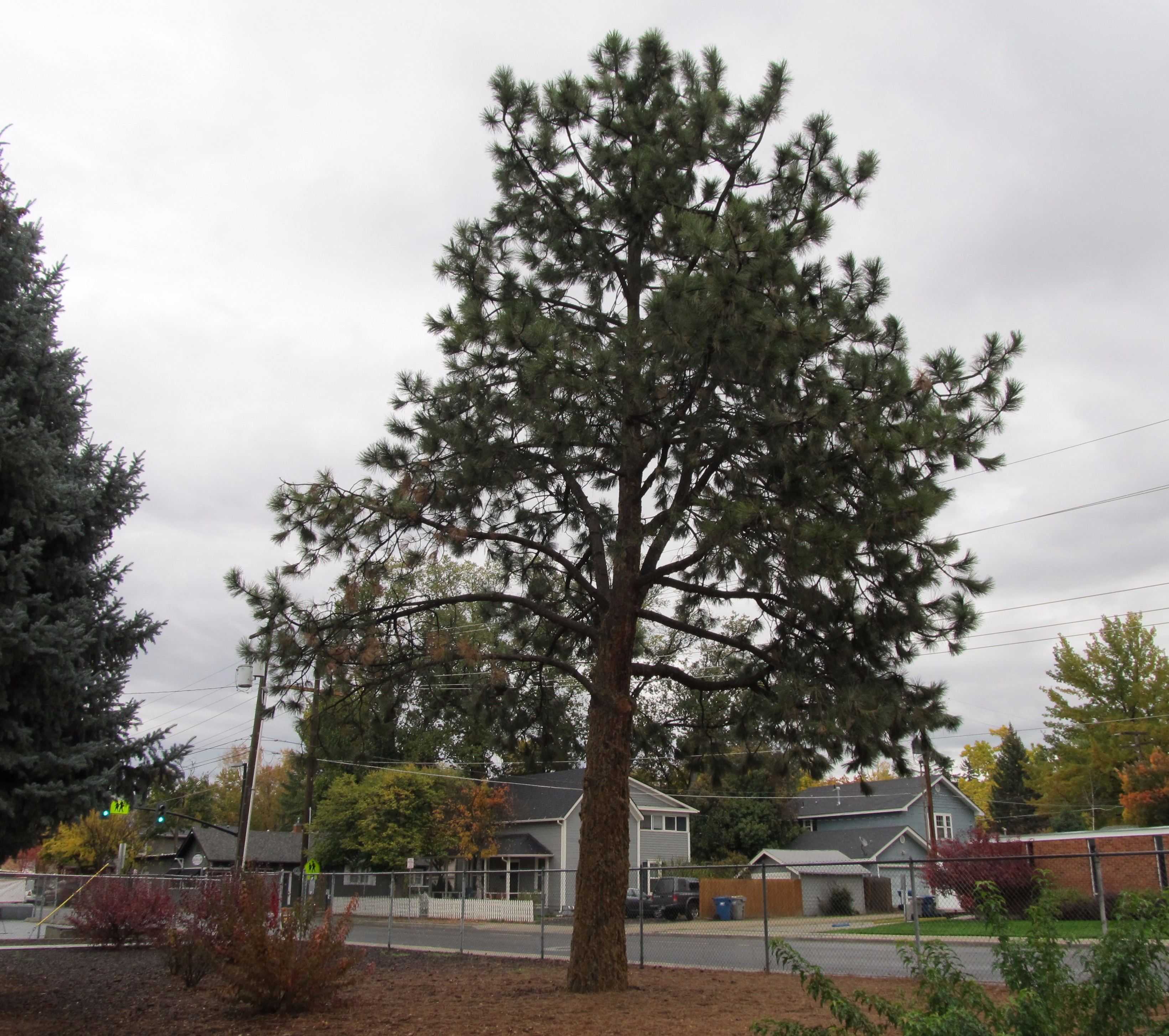
Loblolly pine (Pinus taeda) at Lowell Elementary in Boise, Idaho - one of many Moon Trees planted in the late 1970's.

Loblolly pine (Pinus taeda) at Lowell Elementary in Boise, Idaho – one of many Moon Trees planted in the 1970’s.

And this is how I came to learn about Moon Trees. This fall, local news reported on efforts being made to save Boise’s Moon Tree. The soil around it is compacted, it’s not getting enough water, and it has become infested with a pest insect. When community members learned of its potential demise, they resolved to save it. Money was raised to pay for the water it requires, and a local tree company volunteered to assist with necessary treatments. Its future remains uncertain; however, this renewed awareness and attention may be just what it needs to survive.

Upon learning about Boise’s Moon Tree, I decided to pay it a visit. After all, not only is it in my hometown, but it is also in my neighborhood, just a short walk from my house. It was pretty obvious right away which tree was the Moon Tree as its trunk is completely covered in oozing sap – a sure sign of infection. It is also located in a spot that doesn’t appear to be receiving any supplemental irrigation. The stresses caused by compacted soil and dehydration left it vulnerable to attack.

But maybe it wasn’t the best tree for the site to begin with. Loblolly pine (Pinus taeda) is native to the southeastern United States where it is commonly found growing in acidic, wet soils – a stark contrast to the dry, alkaline soils of the Treasure Valley. Still, it is Idaho’s only known remaining Moon Tree – a tree whose seed went to space, circled the moon, and was brought back to Earth where it was planted in celebration of the 200th anniversary of this nation. It is worth saving, with the hope being that it will inspire not only a connection to the natural world but also to the broader universe which all living beings call home.

Read more about Moon Trees:

Houston, We Have Moon Trees

A Race Against Time to Find Apollo 14’s Lost Voyagers

In Search of Moon Trees

Field Trip: Sawtooth Botanical Garden

columbine

It may only be a two and a half hour drive from my house, but until last week I had never visited Sawtooth Botanical Garden in Ketchum, Idaho. The garden is probably not in its prime in the middle of August, but I happened to be in the area so I had to check it out. It’s a small garden – about 5 acres – but I found the space to be well used and full of interesting plants and features. Walking through meandering pathways and around a series of berms, it is easy to get the impression that the garden is larger than it actually is. There were a few areas in obvious need of attention, but as an employee of a non-profit public garden myself, I understand the challenges of maintaining a garden with limited resources. So putting minor issues aside, I thought the garden looked beautiful and I greatly enjoyed my wander through it.

Sawtooth Botanical Garden is in its 11th year. Its mission is to “showcase native and cultivated plants that flourish at high altitude” and to “foster environmental stewardship” of the “region’s unique beauty” by offering “education, events, displays, and plant collections.” Read more about its mission and history here. Brief descriptions of the areas within the garden can also be found on the garden’s website. The interpretive signage describing each area in the garden was well done and one of the highlights of my visit. I didn’t stay long, but I definitely plan on visiting again in the near future. If you ever find yourself in the Wood River Valley, I highly recommend stopping by.

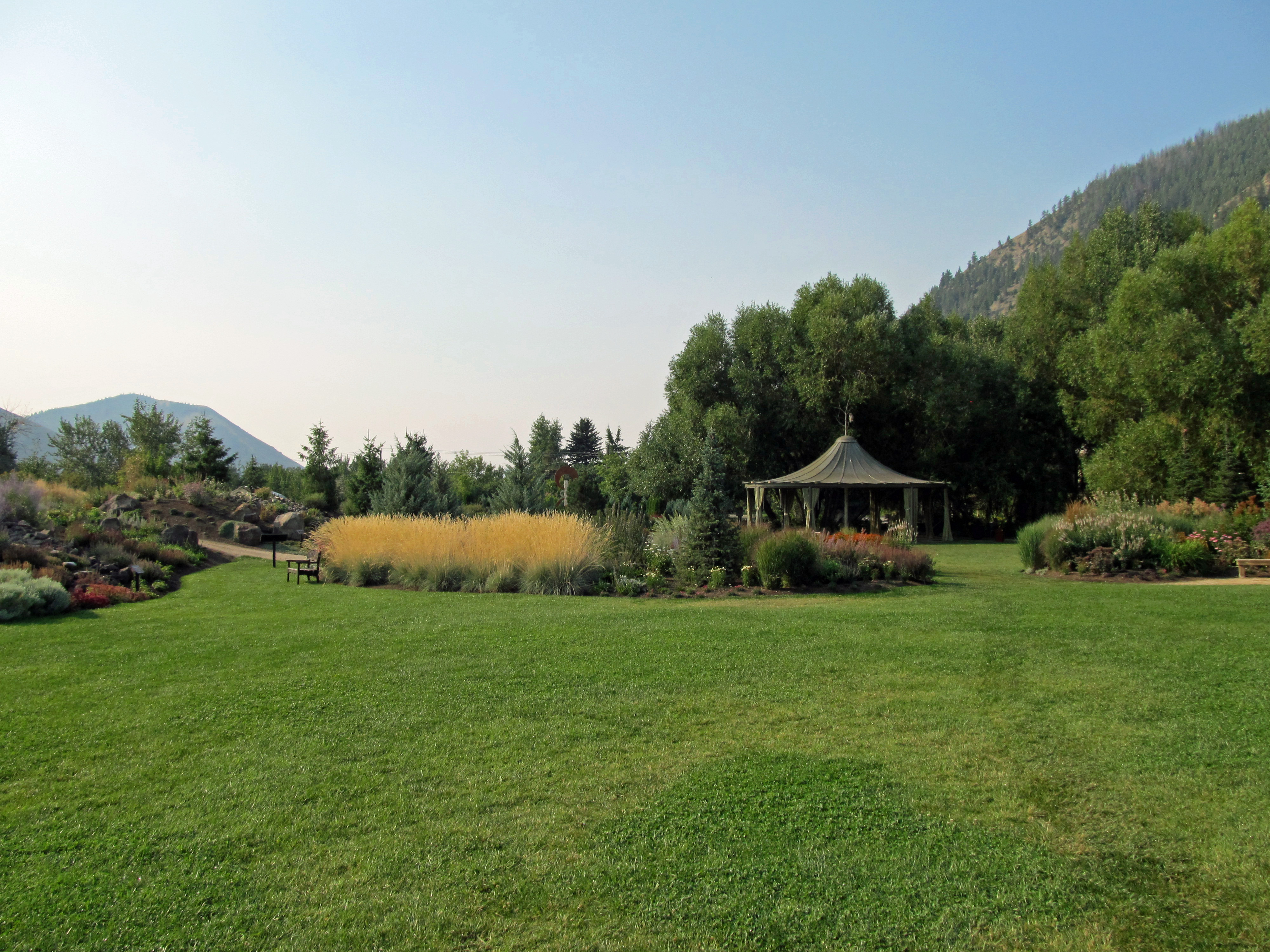
Central area of the garden featuring perennial beds and the Ellen Long Garden Pavillion

Central area of the garden featuring the perennial beds and the Ellen Long Garden Pavillion

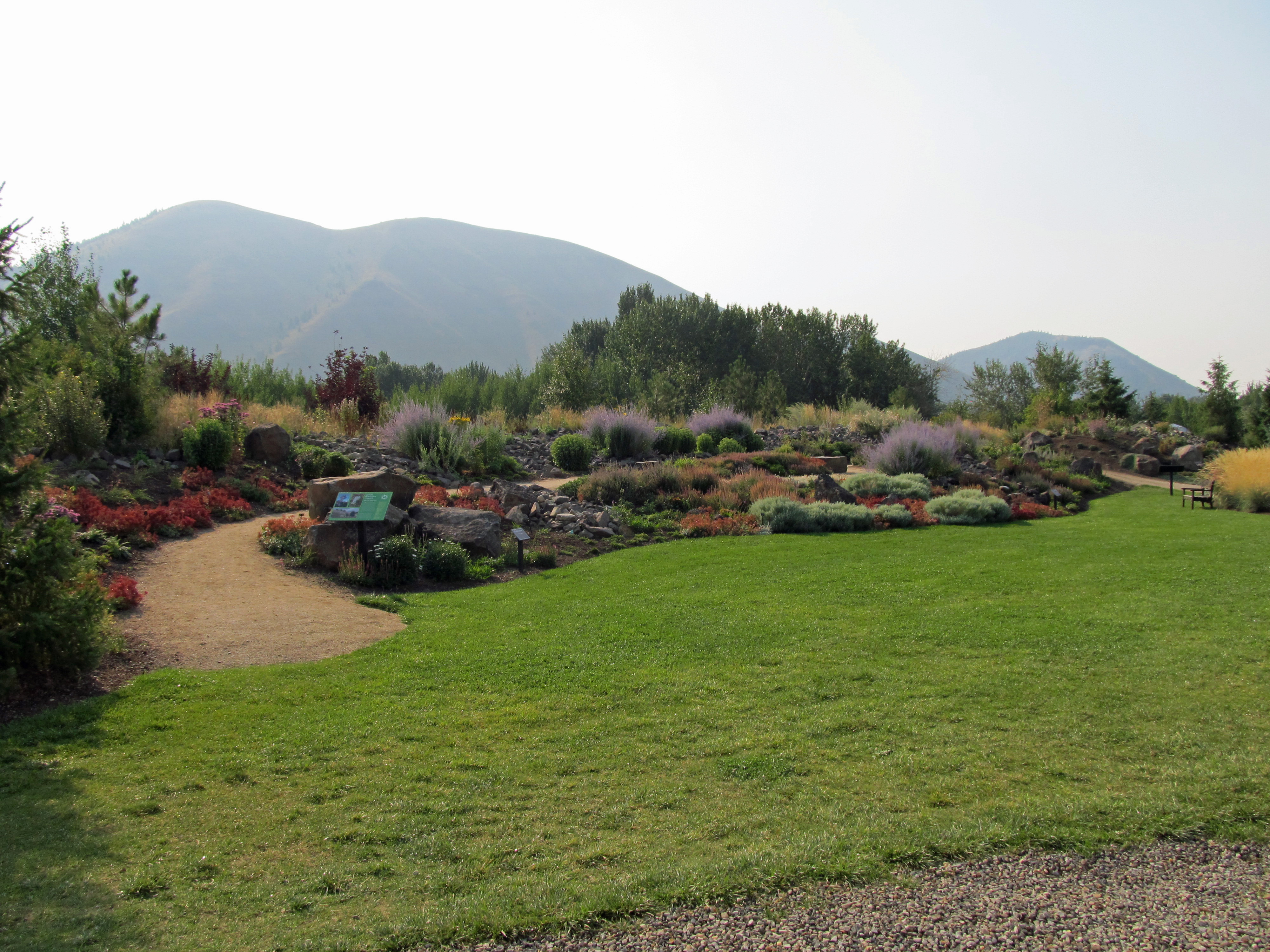
Berms in the Alpine Garden with pathway passing through

Berms in the Alpine Garden with pathway passing through

Water feature in the Garden of Infinite Compassion, built in honor of the Dali Lama's visit to the Wood River Valley

Water feature in the Garden of Infinite Compassion, built in honor of the Dalai Lama’s visit to the Wood River Valley several years ago

Alpine strawberry (Fragaria sp.)

Alpine strawberry (Fragaria sp.)

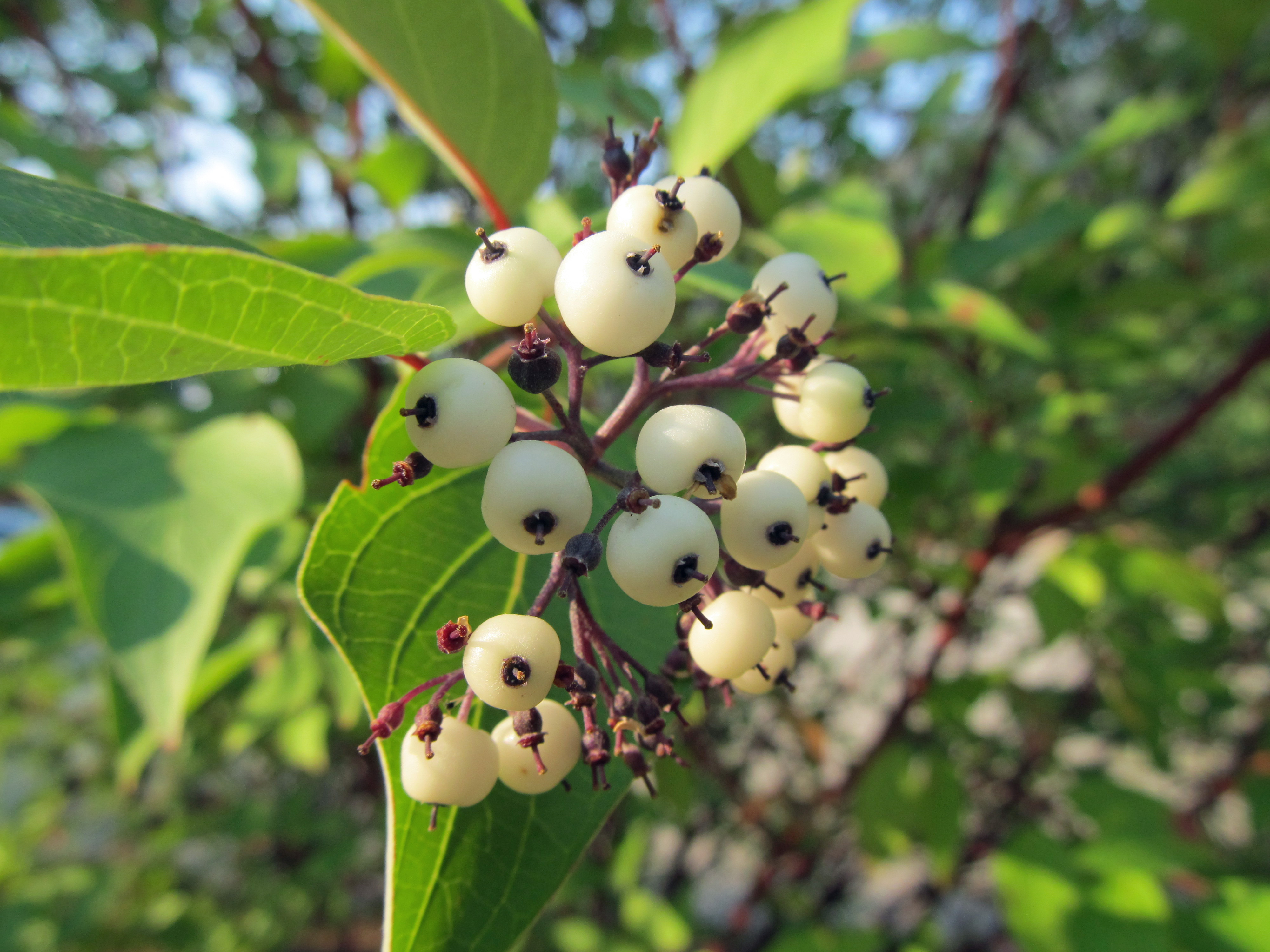
Redtwig dogwood (Cornus stolonifera 'Baileyi')

The fruits of red twig dogwood (Cornus sericea ‘Baileyi’)

cinquefoil

Spring cinquefoil (Potentilla neumanniana)

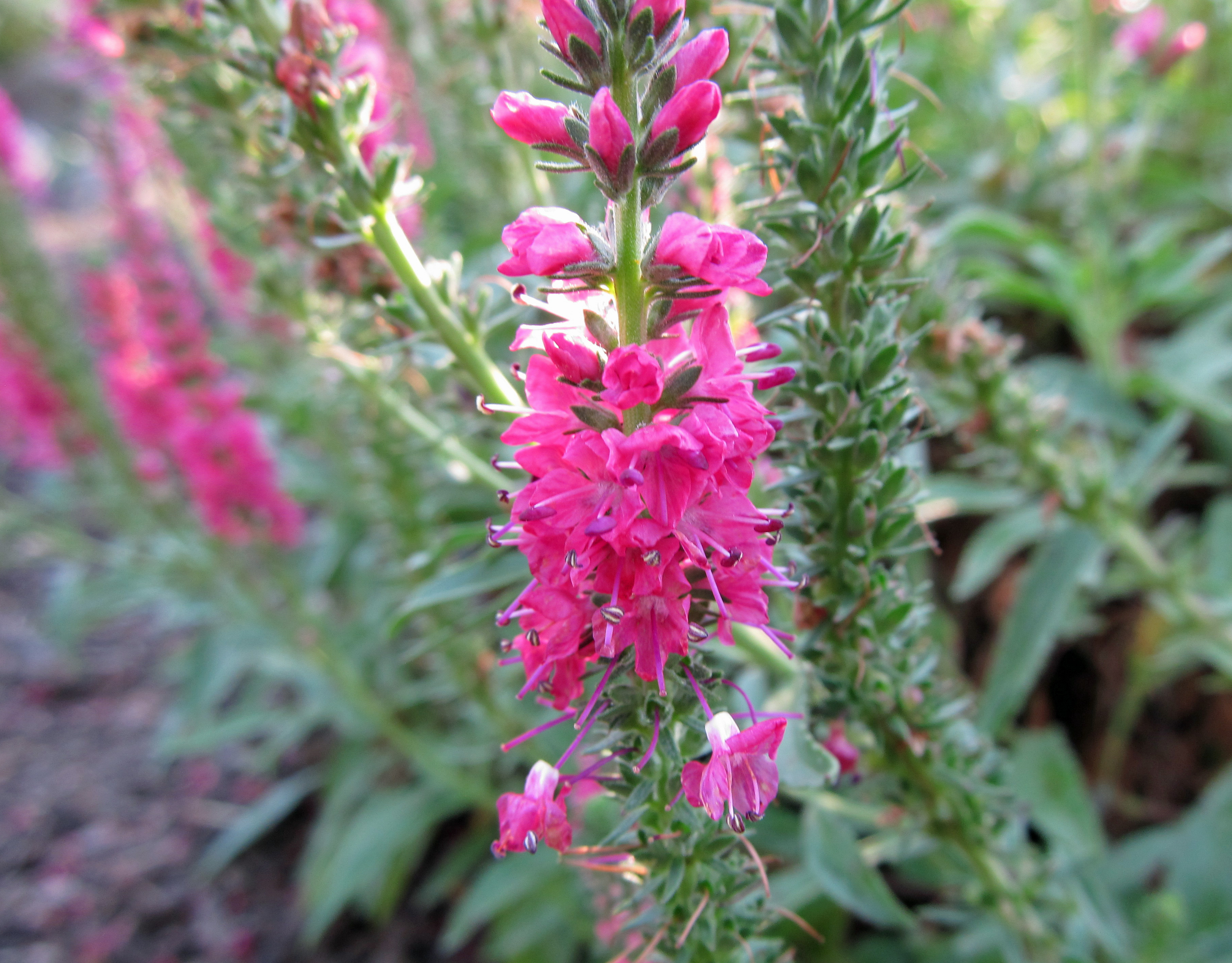
Spiked speedwell (Veronica spicata 'Red Fox')

Spiked speedwell (Veronica spicata ‘Red Fox’)

Evening primrose (Oenothera sp.)

Evening primrose (Oenothera sp.)


Weeds and Wildflowers of the Boise Foothills: June 2015

Boise, Idaho is a beautiful city for many reasons. One feature that makes it particularly attractive are the foothills that flank the city from the southeast to the northwest. The foothills are a transition zone to the mountains that lie to the northeast. Large sections of the foothills have been converted to housing, but much of the area remains as wide open space. There are around 150 miles of trails winding through the foothills that can be accessed from the Boise area. These trails are used frequently by hikers, mountain bikers, dog walkers, bird watchers, trail runners, and horseback riders. The foothills, along with so many other nearby attractions, explains why Boise is such an excellent city for those who love outdoor recreation.

boise foothills trail

I feel embarrassed to say that I had not yet made it into the foothills this year until about a couple weeks ago. I had intended to go for more frequent hikes this year, but life has been in the way. What I was especially curious to see was how the plant life in the foothills changes throughout the year. Because Boise is located in a high desert and receives very little precipitation (especially during the summer months), many of the local wildflowers show themselves in the spring when there is moisture in the soil, after which they wither up and go dormant for the rest of the year.

But there is still lots to see in June. However, it should be noted that when you are hiking in the foothills you must develop an appreciation for weeds, as many of the plants you will see are not native to this area and, in many cases, are in much greater abundance than the plants that are. Species brought in from Europe and Asia have become well established in the Boise Foothills, significantly altering the area’s ecology. One of the major changes has been wildfire frequency. Before weeds like cheatgrass – an annual, shallow-rooted grass imported from Europe – became so prolific in the area, fires were rare, slow moving, and isolated. The continuous, quick burning fuel source provided by dead cheatgrass heightens the risk of more frequent, faster moving, widespread fires, especially in the hot, dry summer months. This threatens plant species that are not adapted to frequent fires.

But this post isn’t about the ecology of the foothills. We can save that for another time. For now, I just wanted to share some of the plants I saw – both native and non-native – on my short walk through a very tiny corner of the Boise Foothills earlier this month.

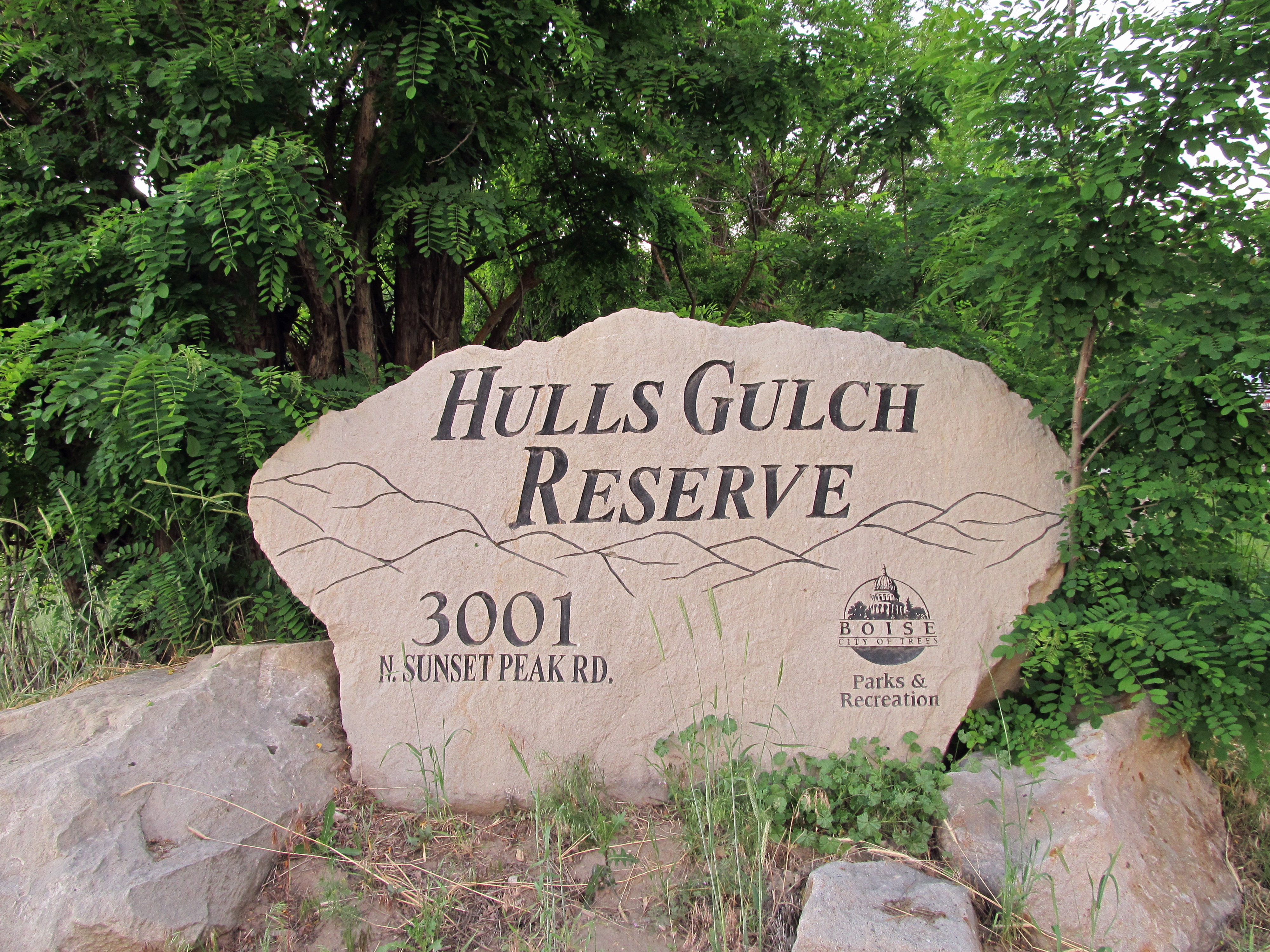
The trail that I hiked is one of several trails in an area of the Boise Foothills called Hulls Gulch Reserve.

The trail that I hiked is one of several trails in an area of the Boise Foothills called Hulls Gulch Reserve.


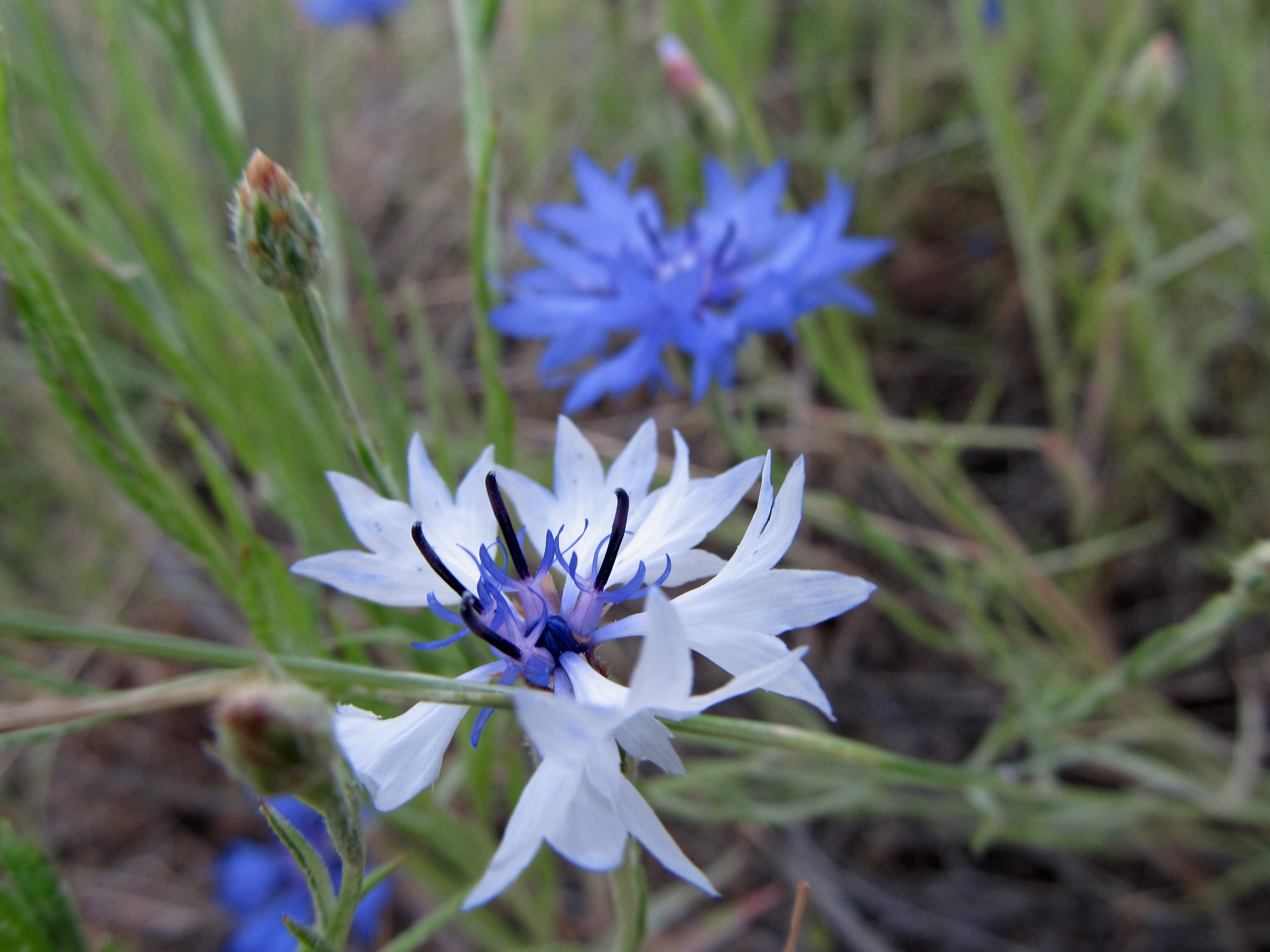
Bachelor's Buttons (Centaurea cyanus) are native to Europe. They are a common cultivated flower and have escaped from yards into the foothills. They are quite attractive and popular among pollinators. Their flowers and stems are edible so perhaps we should all take to eating them.

Bachelor’s buttons (Centaurea cyanus) are native to Europe. They are a common cultivated flower and have escaped from yards into the foothills. They are quite attractive and popular among pollinators. Their flowers and stems are edible, so perhaps we should all take to eating them.


Silverleaf phacelia (Phacelia hastate) - a foothills native that is also a pollinator favorite.

Silverleaf phacelia (Phacelia hastata) – a foothills native and a pollinator favorite.


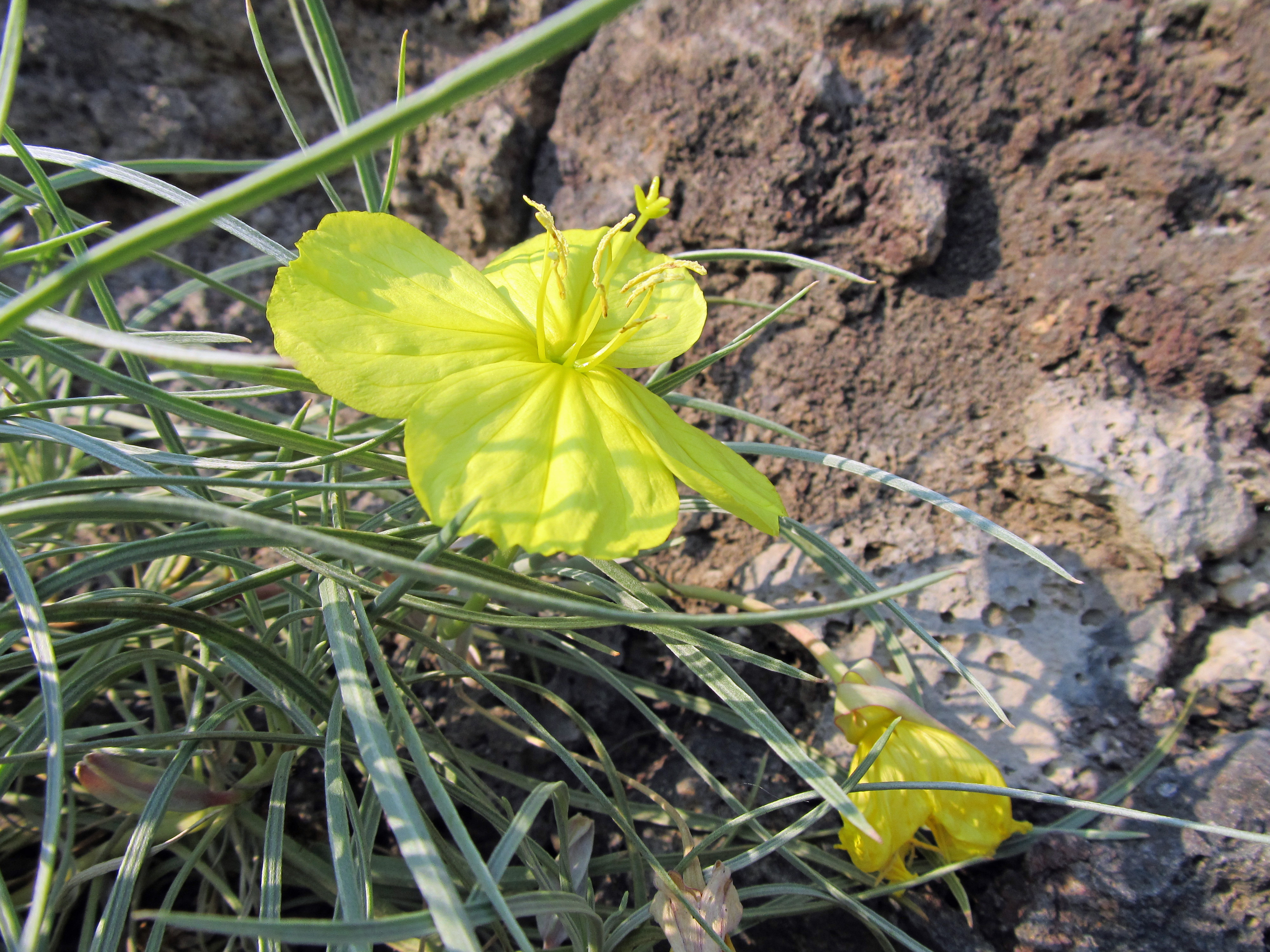
Pale evening primrose (Oenothera pallida) - a foothills native pollinated by nocturnal moths.

Pale evening primrose (Oenothera pallida) – a foothills native pollinated by nocturnal moths.


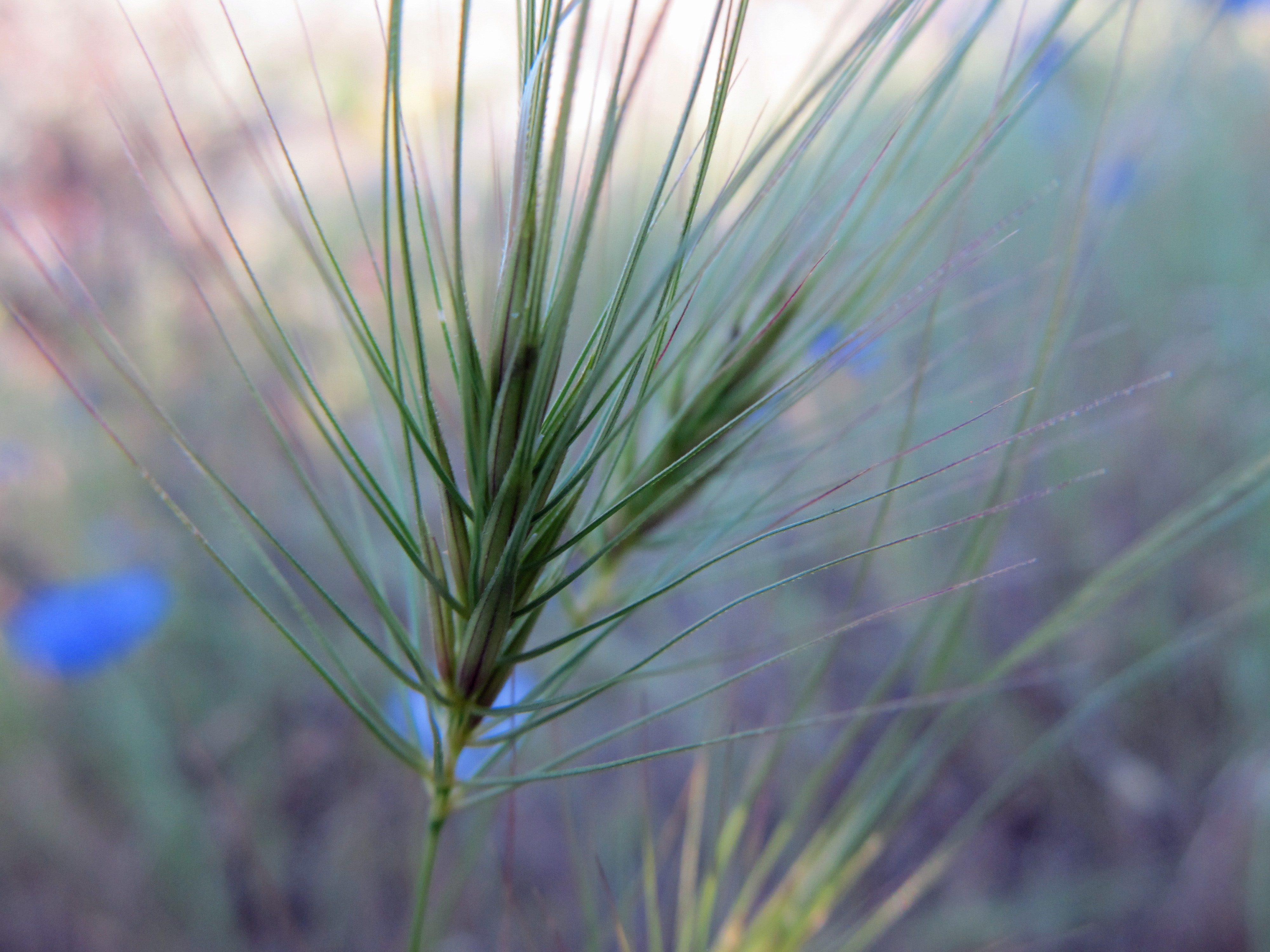
Medusahead (Taeniatherum caput-medusa) is an invasive annual grass from Eurasia. It has an ecological impact similar to cheatgrass (Bromus tectorum).

Medusahead (Taeniatherum caput-medusae) is an invasive annual grass from Eurasia. It has an ecological impact similar to cheatgrass (Bromus tectorum).


The fruits of nineleaf biscuitroot (Lomatium triternatum), a spring flowering plant in the carrot family (Apiaceae).

The fruits of nineleaf biscuitroot (Lomatium triternatum), a native spring wildflower in the carrot family (Apiaceae).


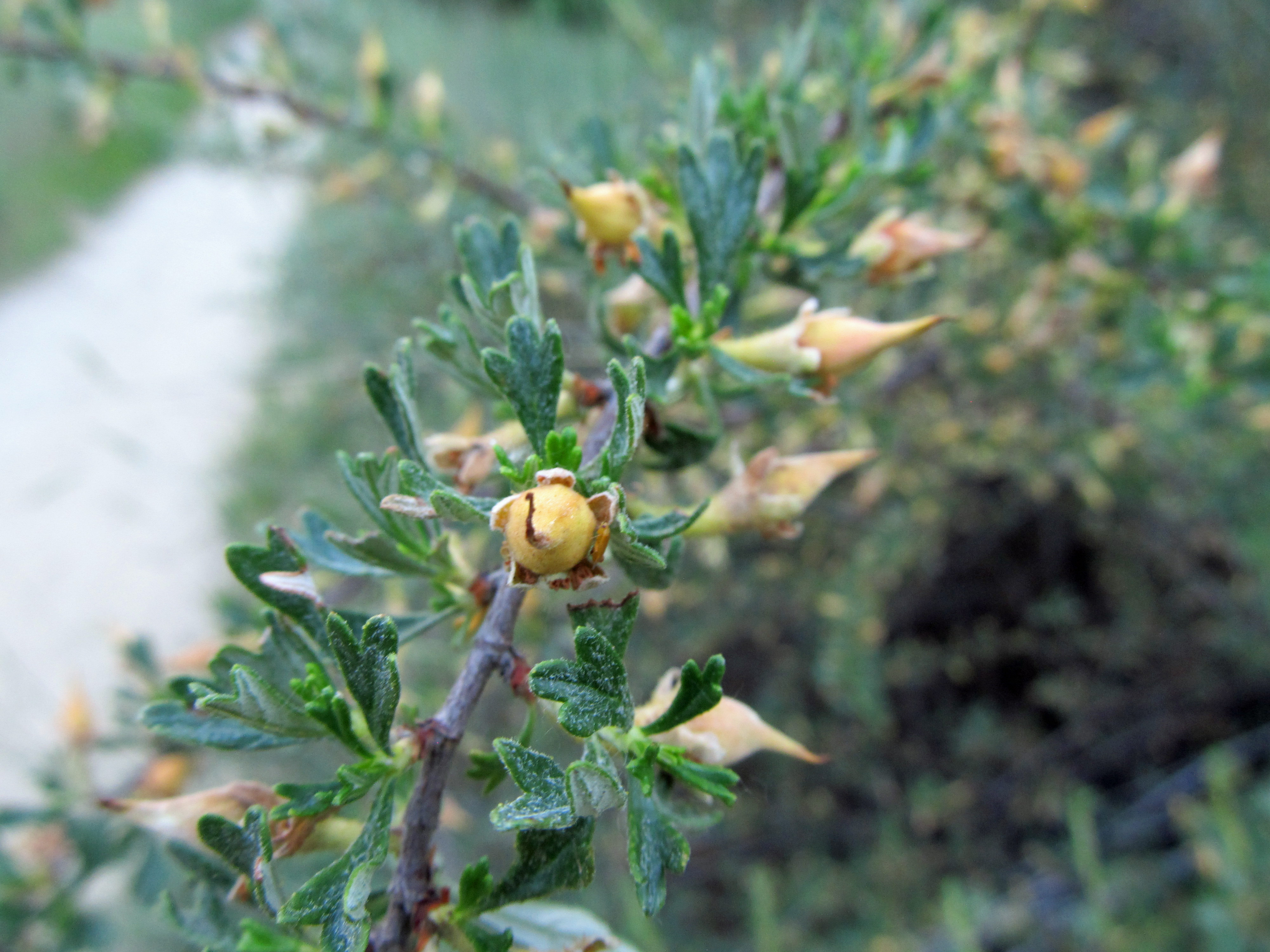
Fruits forming on antelope bitterbrush (Purshia tridentata), one of several shrubs native to the Boise Foothills.

Fruits forming on antelope bitterbrush (Purshia tridentata), one of several shrubs native to the Boise Foothills.


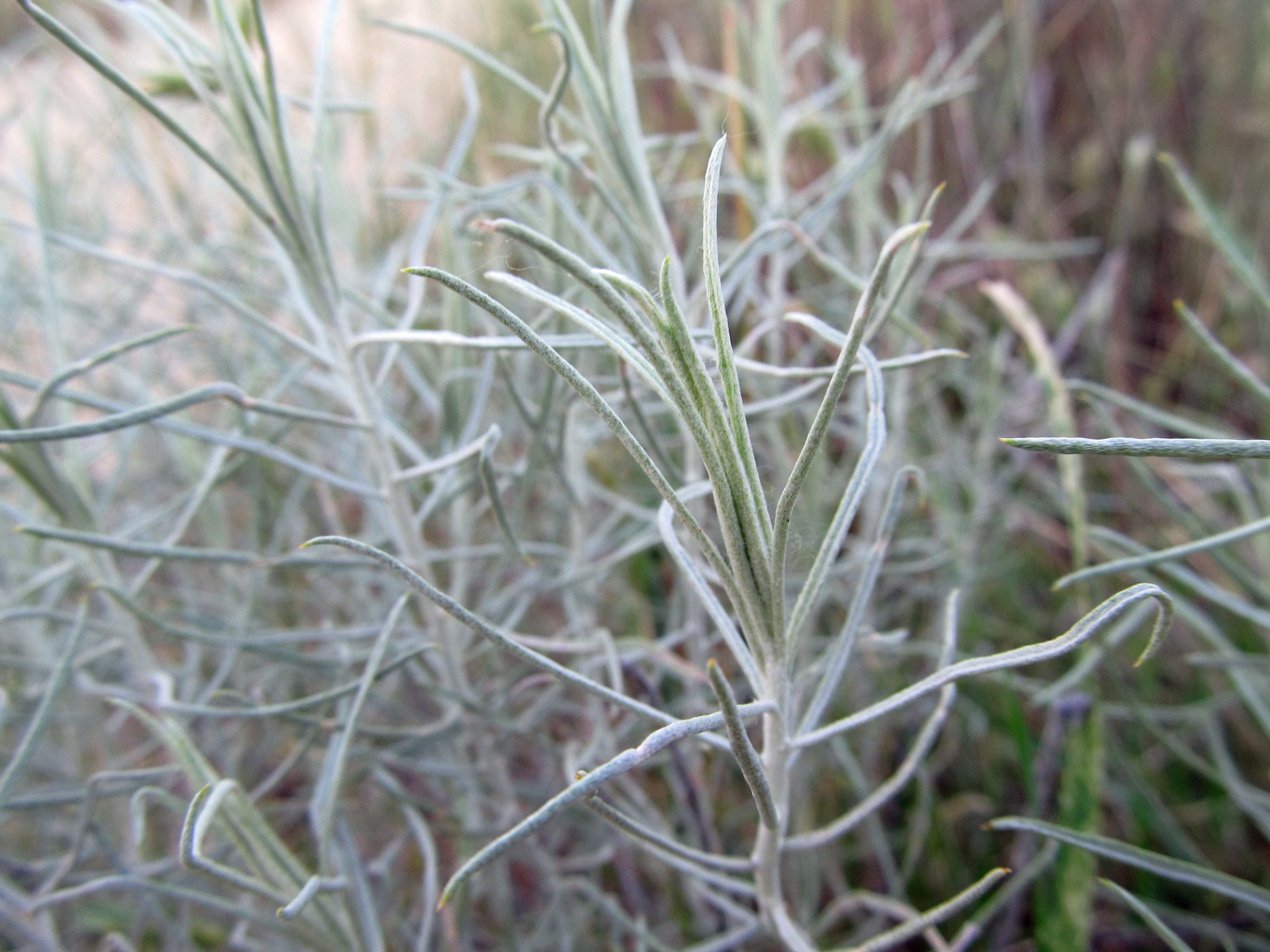
Rubber rabbitbrush (Ericameria nauseosa), a native shrub that flowers in late summer.

Rubber rabbitbrush (Ericameria nauseosa), a native shrub that flowers in late summer.


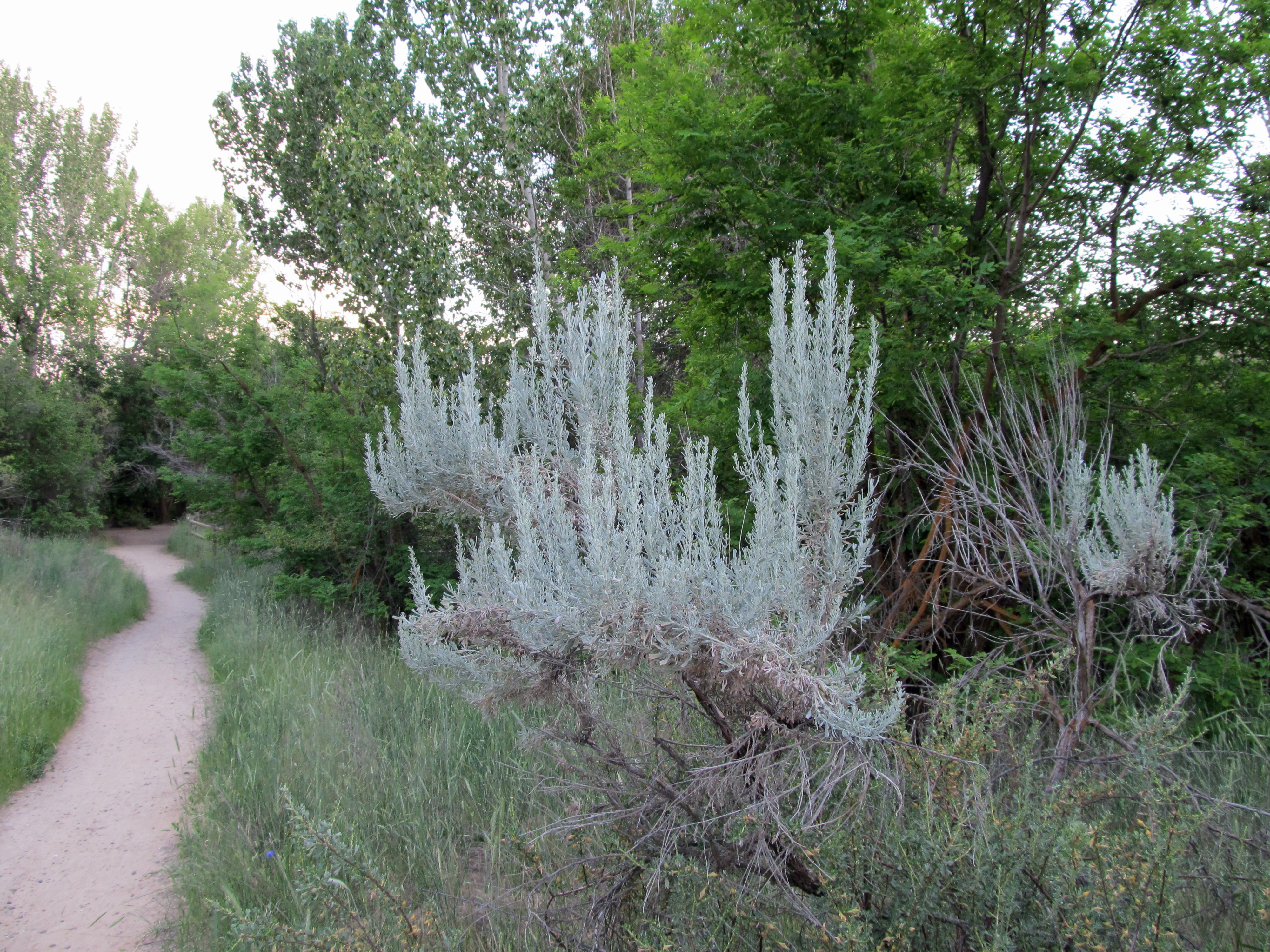
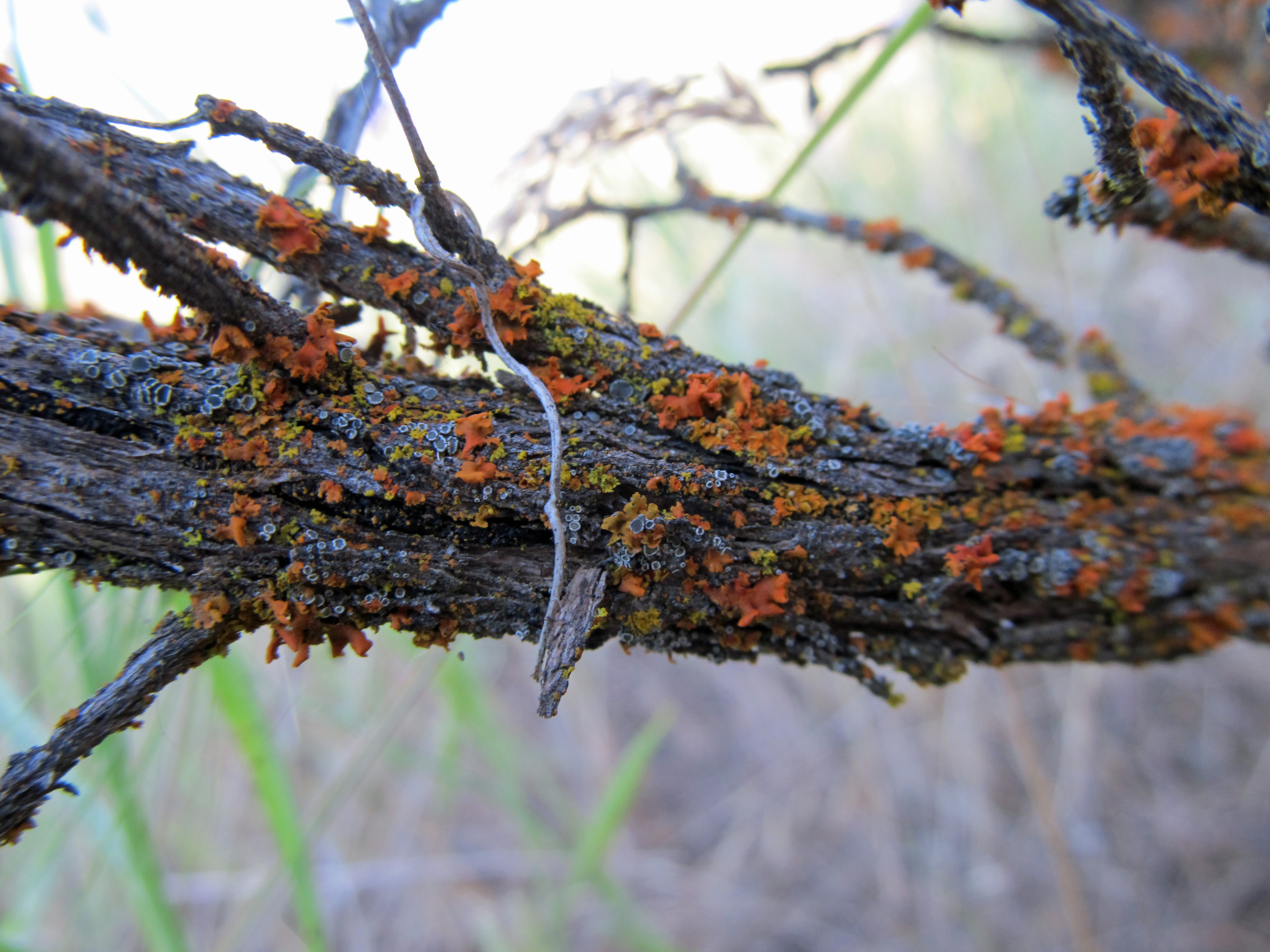
Lichens on the branch of basin big sagebrush (Artemisia tirdentata sbsp. tridentata) another common native shrub.

Lichens on the branches of basin big sagebrush (Artemisia tridentata subsp. tridentata), another common native shrub.


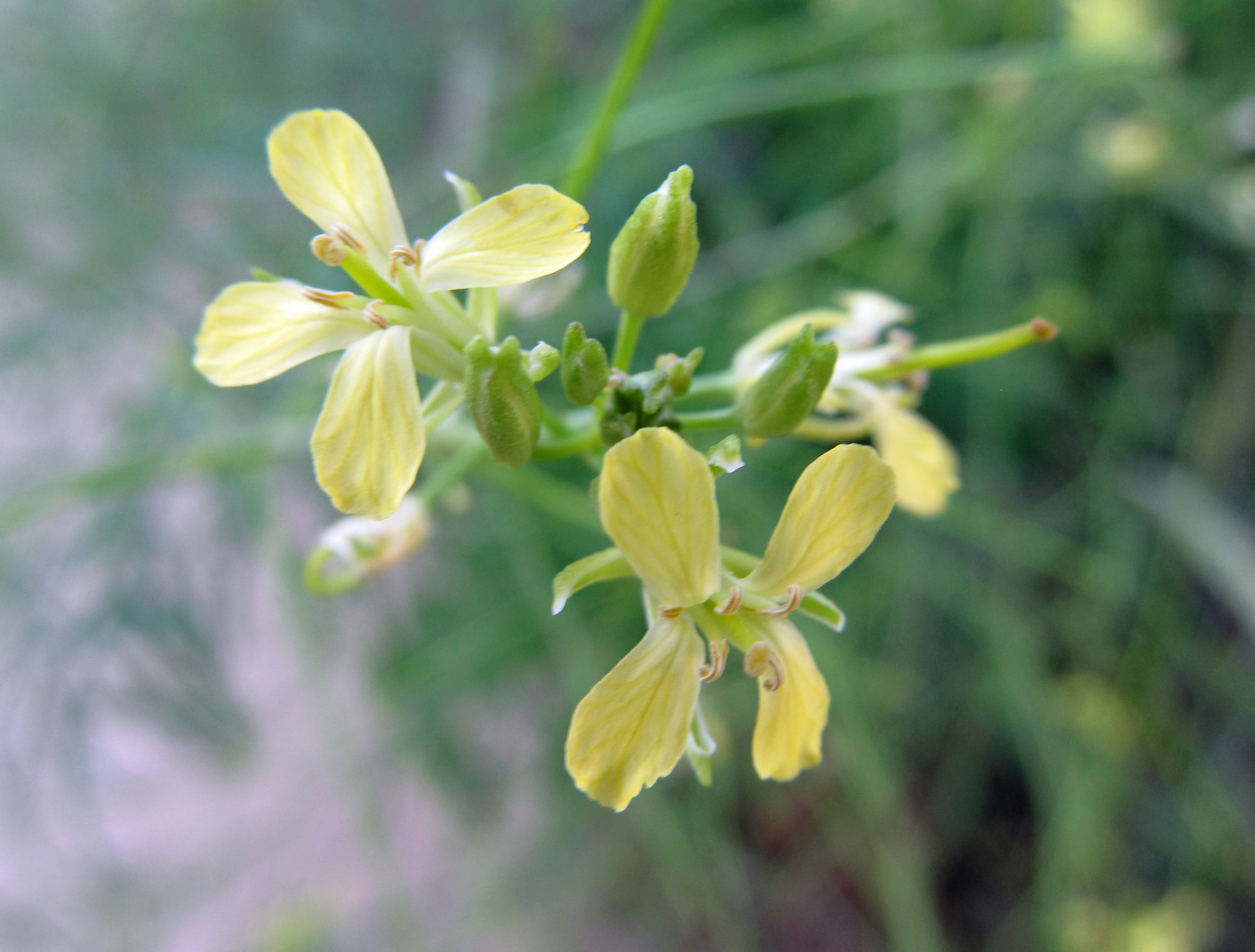
Tall tumblemustard (Sisymbrium altissimum) an introduced species and one of many tumbleweed species in the western states.

Tall tumblemustard (Sisymbrium altissimum) – an introduced species and one of many tumbleweed species in the western states.


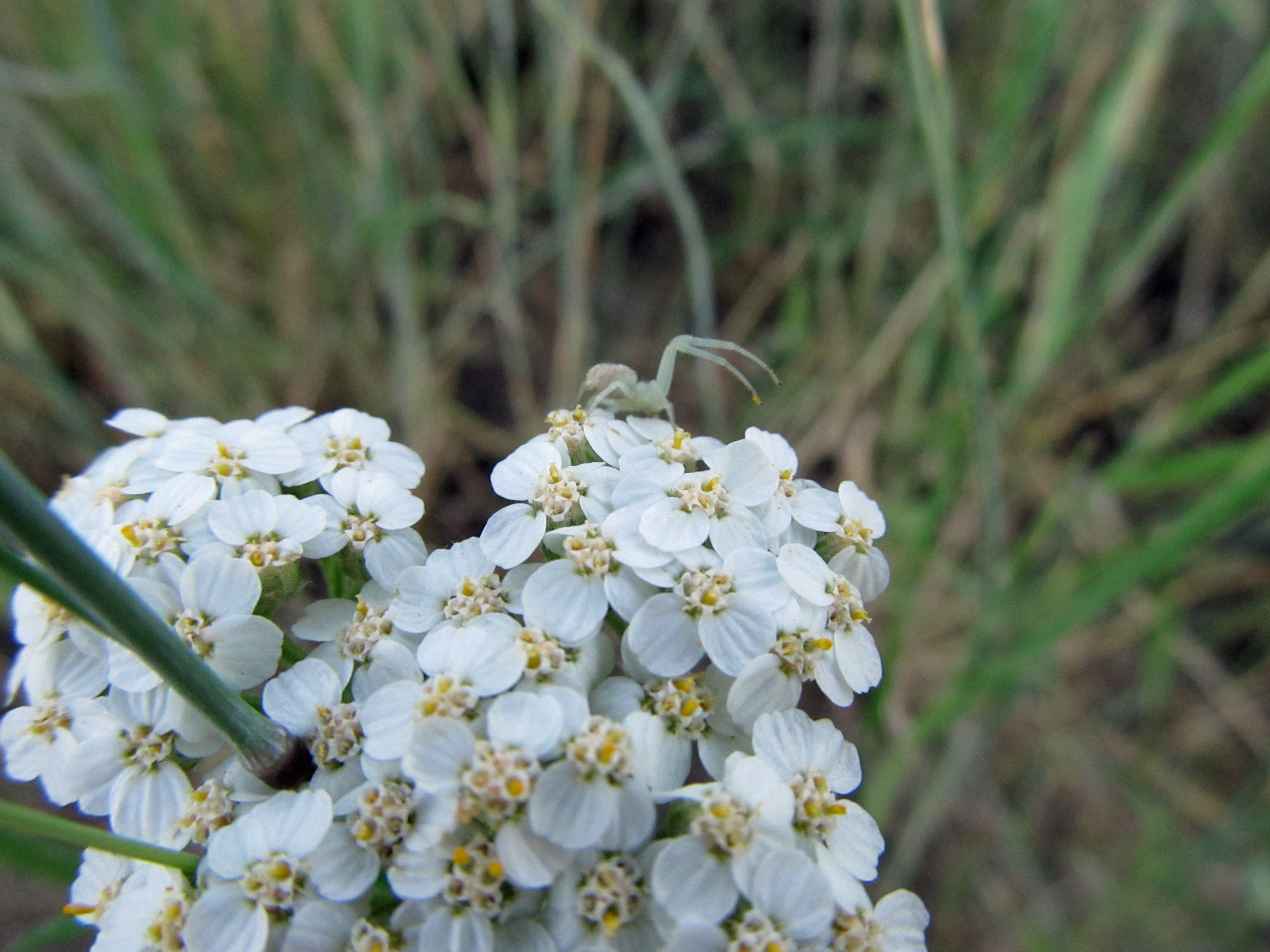
Little spider atop the flowers of western yarrow (Achilea millefolium), a foothills native.

A little spider atop flowers of western yarrow (Achilea millefolium var. occidentalis), a foothills native.

Learn more about the Boise Foothills here and here.

Where have you been hiking lately?

Wildflower Walk: June 2014

I spent last weekend in a cabin outside of Garden Valley, Idaho. I was there for a wedding and so most of my time was occupied with that. However, anxious to explore, I found a brief moment to step out and observe the surrounding plant life. The cabin and an adjacent campground were located in an area that, before the economic downturn in 2008, was to become a major housing development. Because of this (and possibly other things), the area showed lots of signs of human disturbance, particularly the large number of introduced plant species. Fortunately, despite feeling like I was walking through a weedy field, I did come across a few patches of native plants. I may have to return sometime to get a better look at things because I wasn’t able to identify everything that I saw and I’m still not exactly sure what species of lupine and buckwheat I was looking at. Either way, the plants in the following pictures are a few of the things I found.

Aristida purpurea (purple threeawn)

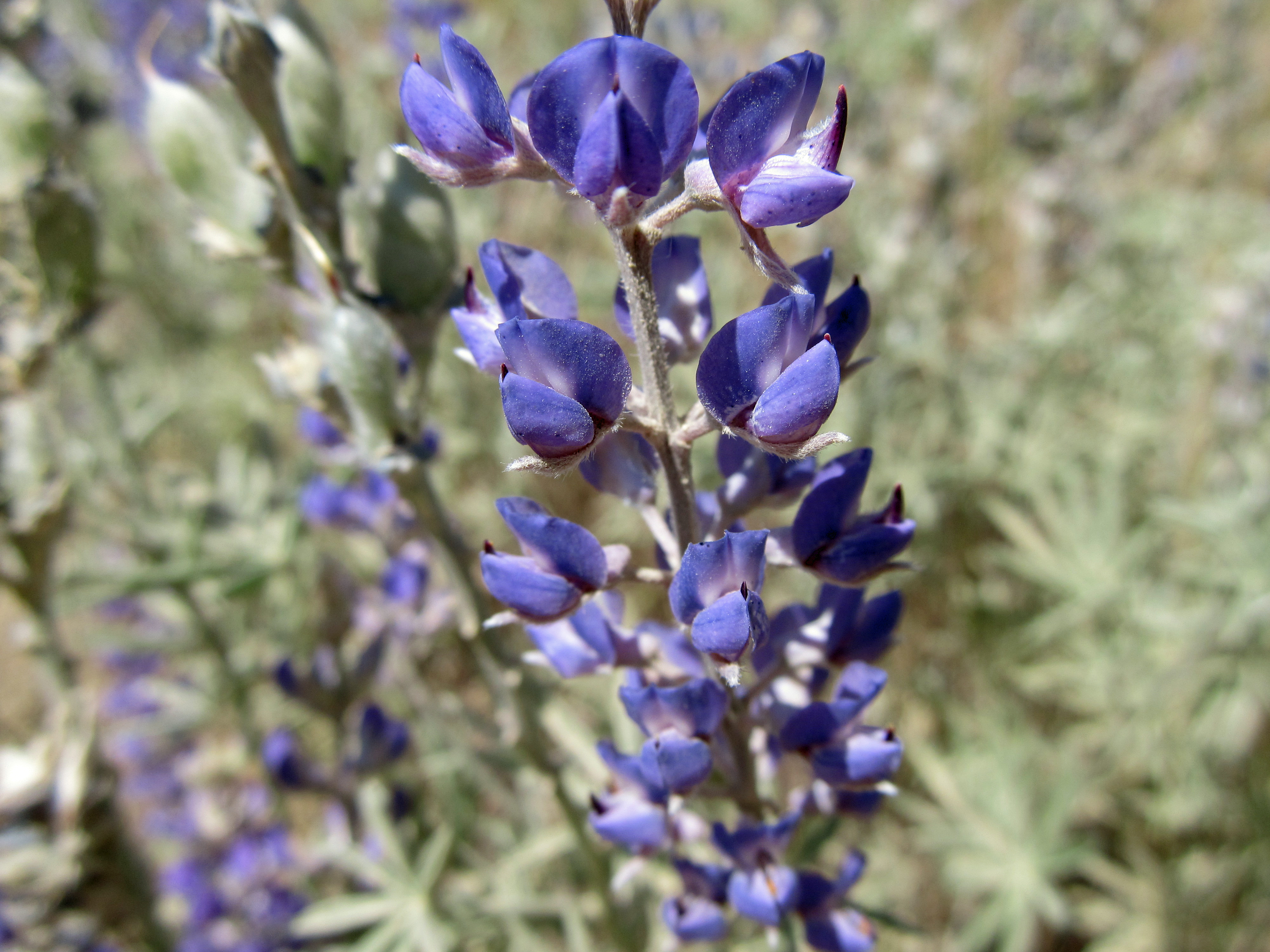
lupinus

Lupinus sp. (lupine)

eriogonum

Eriogonum sp. (wild buckwheat)

amelancier alnifolia

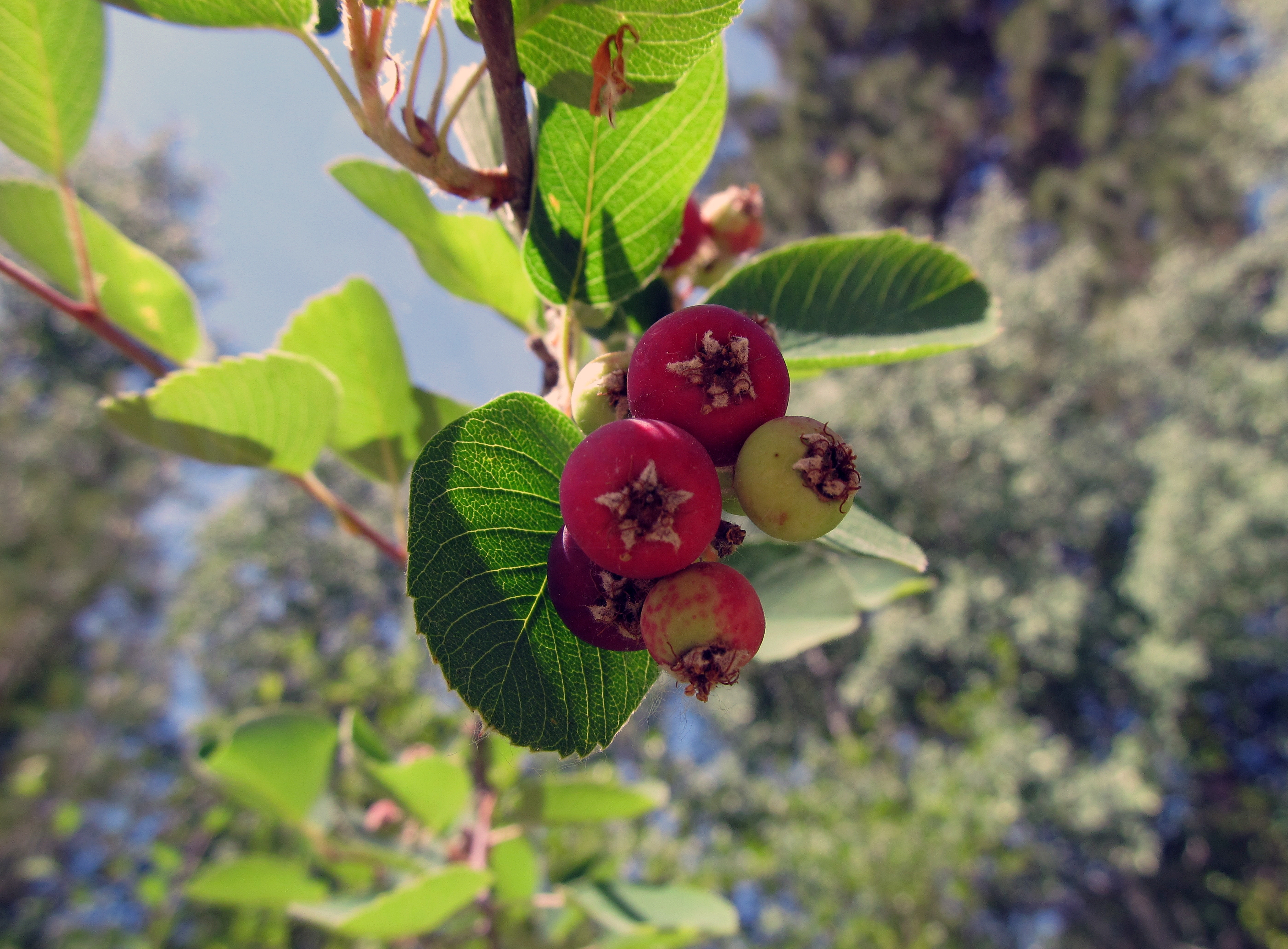
Amelanchier alnifolia (Saskatoon serviceberry)

Don’t let my walk through a weedy field dissuade you. Garden Valley is an incredibly beautiful location. It sits adjacent to the South Fork of the Payette River and near the western edge of the Boise National Forest. It is an area worthy of exploring, which is why I plan on visiting again soon. I recommend you do too.

Previous Wildflower Walks:

Spring 2013

June 2013

American Penstemon Society Field Trip

September 2013

Overwintering Lettuce

I overwintered some lettuce, and so can you. Below freezing temperatures usually mean the end of the growing season for most things, but certainly not for everything.  The truth is that salad greens (lettuce, spinach, kale, etc.) can be overwintered, especially if you grow them under a cold frame or hoop house or in an otherwise protected location. Some can even be harvested throughout the winter if the conditions are right.

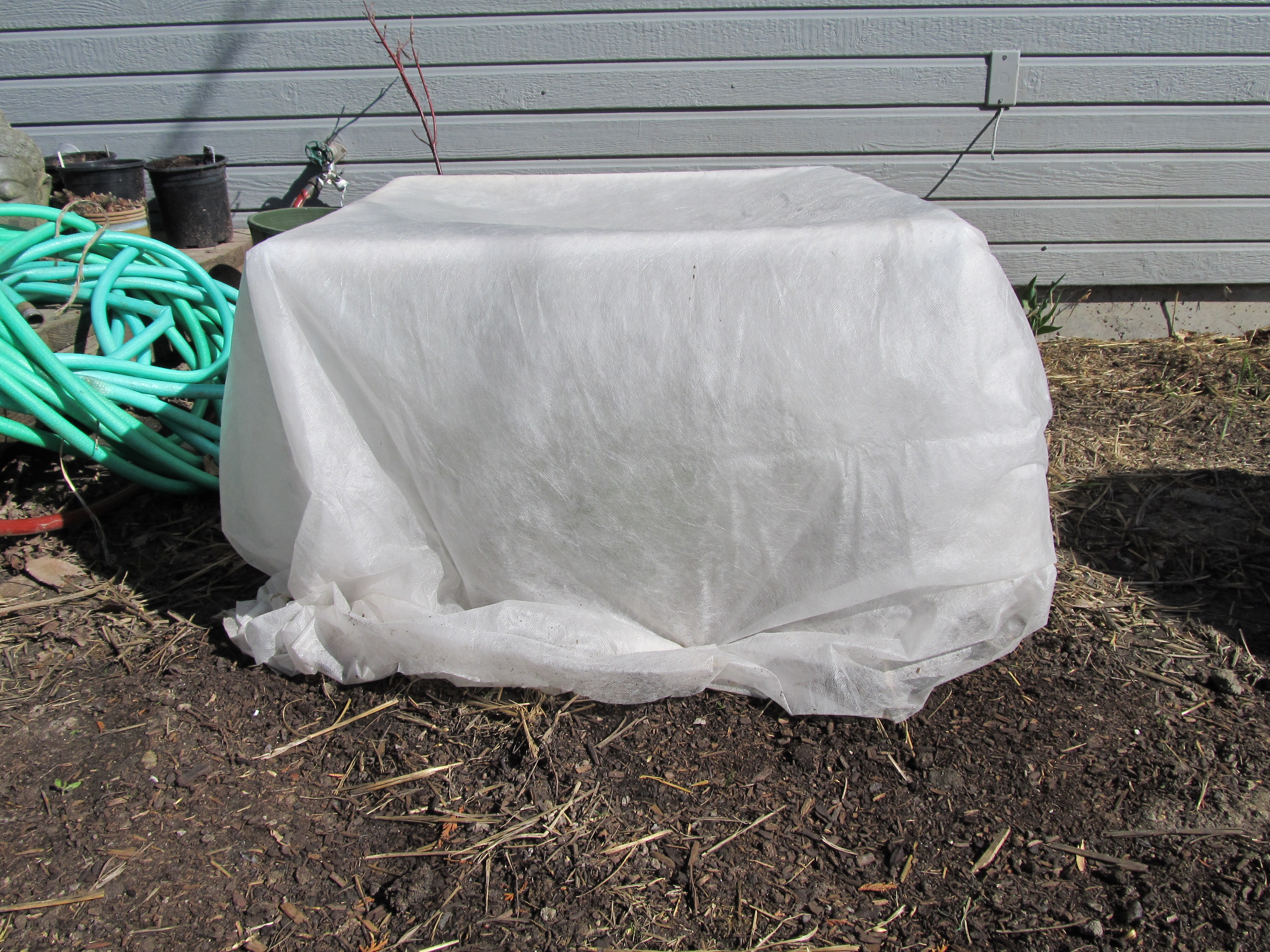
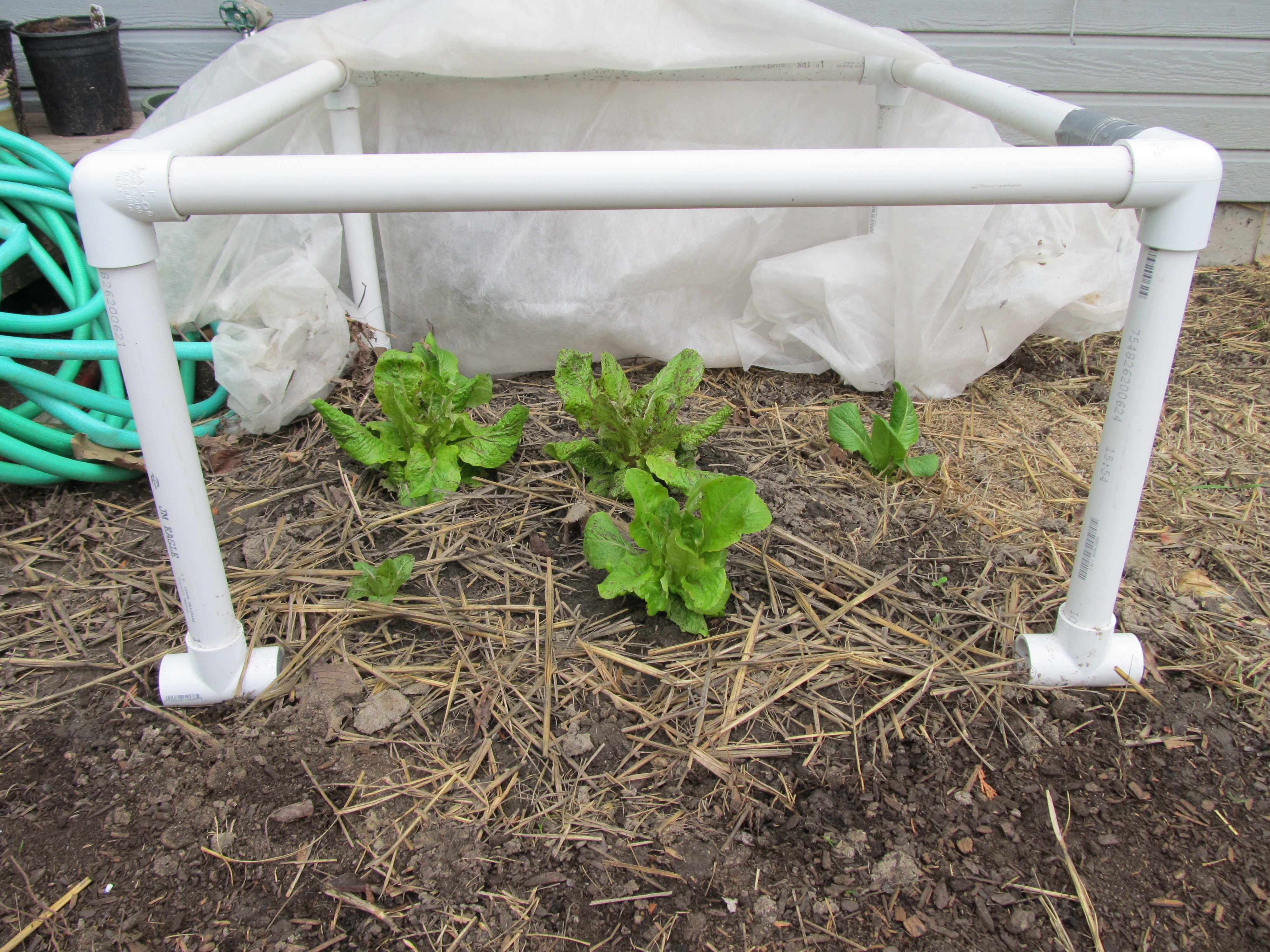
Last fall I had nine lettuce seedlings that I had started indoors. I transplanted them outside in either late October or early November (memory isn’t serving me right now). I placed some straw mulch around them, and then covered them with a makeshift cold frame made out of PVC pipe and floating row cover. There they remained all winter long.

IMG_0740

I live in Boise, Idaho. The winters here are relatively mild (compared to the rest of Idaho), but we still have plenty of days with below freezing temperatures. Our frost-free growing season is about 160 days long. The average low temperature from December through February is around 25° F. This past winter, our lowest temperature (according to Weather Underground) was -7° F, and we had at least 30 days in which the low temperature reached 20° F or lower. Needless to say, it was a chilly winter.

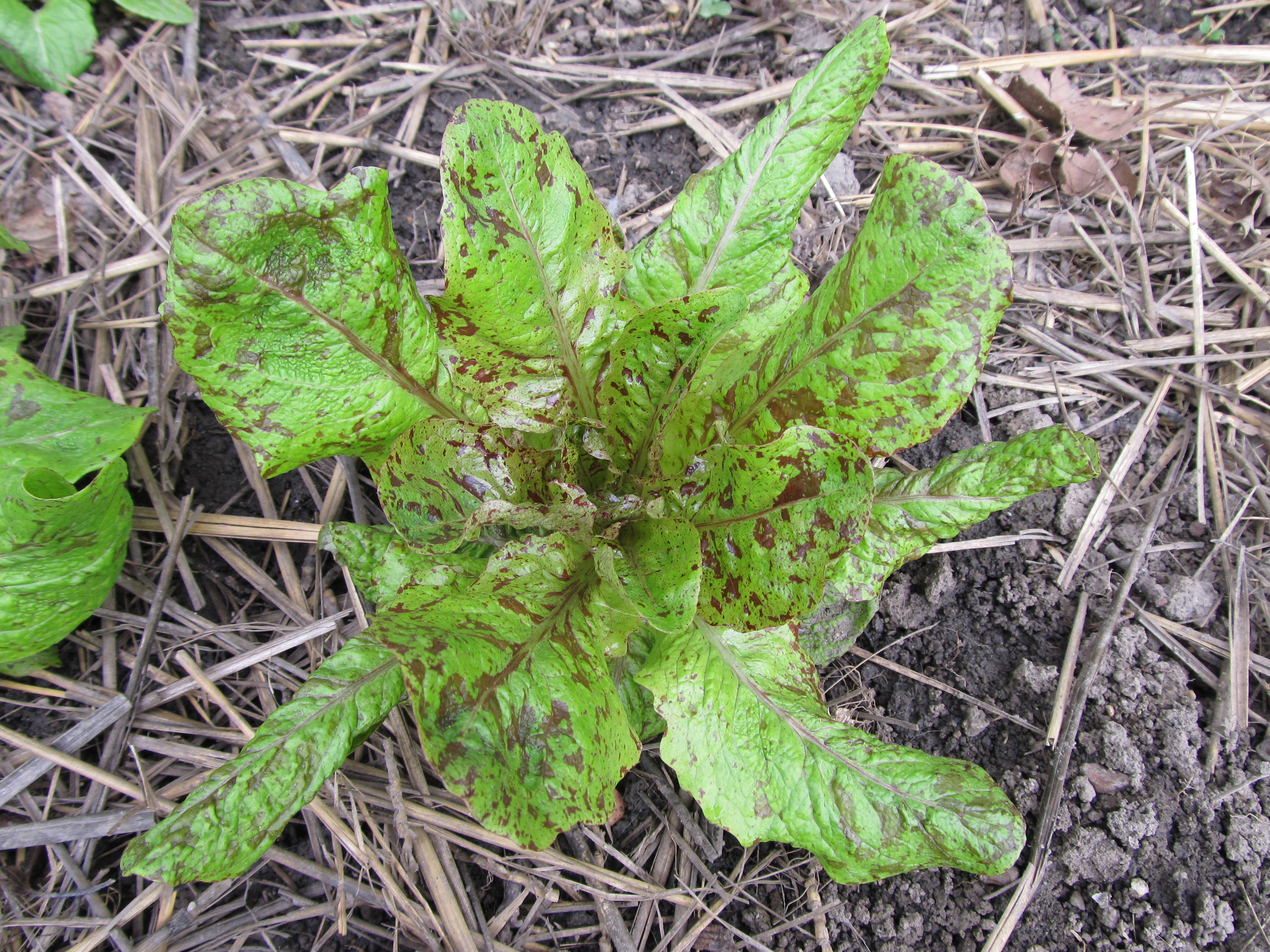
But my lettuces held on…at least most of them. When I uncovered my cold frame in early March, I found that six of my nine lettuce seedlings had survived. It didn’t surprise me that a few had perished – some of the seedlings that I had transplanted were quite small, and I had serious doubts that they would make it. I was satisfied to see that the majority of them were still alive. Two-thirds ain’t all that bad.

IMG_0743

The varieties that I planted were “Freckles” and “Winter Density.” I chose these because the descriptions I read gave me the impression that they were ideal for overwintering. But descriptions be damned. I suggest seeing for yourself. Take any variety of lettuce or other salad green and experiment in your own garden. See what you can get to overwinter with or without protection. Seeds are fairly inexpensive, and it is worth seeing what you can get to survive through the winter. Differing climates – both macro and micro – will produce varied results, and every year things will be a little different. This is one of the many joys of gardening. Weather and climate will always be factors, but they can also be markers to help us see what we can get away with. And if one of the things you get away with is getting lettuce to survive a harsh winter, it means you will be eating garden fresh lettuce long before your neighbor.

IMG_0745

Idaho State Flower

In 1931, the Idaho state legislature officially designated Philadelphus lewisii as the state flower of Idaho, several decades after it was originally selected by a committee of Boise women. Affectionately referred to as “syringa” by Idahoans, P. lewisii occurs from British Columbia down into northern California and across into Idaho and Montana. Its native habitats are the bases of rocky slopes, rocky crevices, and stream banks. It was among many plants collected during the Lewis and Clark Expedition (1804-1806) by Meriwether Lewis. Lewis collected two specimens while in north Idaho and eastern Montana – the first near the Clearwater River and the second near the Bitterroot River. The species was later described by Frederick Pursh and named after Meriwether Lewis. Another widely accepted common name for this species is Lewis’ mock orange.

P. lewisii is a deciduous shrub that reaches 6 to 10 feet tall. It has opposite leaves and white, four-petaled flowers that appear in clusters of 3 to 11 on lateral branches. Young branches have reddish-brown bark that eventually peels off to reveal gray bark as the branches age. Many flowers in the genus Philadelphus emit a scent similar to the blossoms of citrus plants and have a general appearance akin to orange blossoms, giving them their common name “mock orange.” The attractive flowers and their sweet aroma are reasons why many people look forward to these shrubs blooming each year. Additionally, Idahoans can be certain that when their beloved state flower is in bloom, summer is imminent.

Philadelphus lewisii

The leaves and bark of P. lewsii contain saponins and can be used to make soap when they are crushed and mixed with water. This quality also makes the plant fire-resistant. The branches and hollow stems of P. lewisii were used by Native Americans to make a variety of useful items including snowshoes, bows, arrows, and pipes. The common name “syringa” was derived from the greek word “syrinx” meaning “tube.” This helps explain why lilacs, an unrelated group of plants that also has hollow stems, was given the latin name Syringa.

Philadelphus is a genus in the Hydrangea family (Hydrangeaceae) that consists of at least 60 species found throughout North America into Central America and in various parts of Eurasia. All are shrubs – some growing to 20 feet tall while others only reach 3 feet at maturity. Most have deciduous leaves, but a few are evergreens. Many cultivars of Philadelphus have been developed by the horticulture industry and are commercially available. Cultivars are often selected for their compact growth habit, abundant and sometimes double flowers, and their strong, sweet aroma.

SAMSUNG

Check out this article in Pacific Horticulture to learn more about the genus Philadelphus.