Another Year of Pollination: Viscin Threads

While we’re on the subject of pollen-gluing mechanisms, there is another material apart from pollenkitt that a limited number of flowering plant families use to link their pollen grains together. It functions, much like pollenkitt, by aiding in the attachment of pollen to visiting animals. However, unlike pollenkitt, it isn’t sticky, oily, or viscous, and is instead more like a series of threads. Viscin threads to be exact.

One of the major differences between pollenkitt and viscin threads is their composition. The lipid-rich coating that surrounds pollen grains, which we call pollenkitt, is derived from breakdown materials of an inner layer of the anther. It is added to pollen grains after they are formed and before the anther dehisces. Viscin threads are made up of sporopollenin, the same biopolymer that exine (the outer wall of a pollen grain) is composed of. Viscin threads have points of attachment on an outer layer of the exine called the ektexine. Unlike pollenkitt, viscin threads don’t add new color to pollen grains, nor do they contain scent compounds. Their thickness, length, abundance, and texture are dependent on the species of plant they are found on, much like pollenkitt varies in form and composition depending on species.

pollen strands of tufted evening primrose (Oenothera caespitosa)

Viscin threads evolved independently in three distantly related plant families. These include Onagraceae (the evening primrose family), Ericaceae (the heath family), and a subfamily in the pea family known as Caesalpinioideae (the peacock flower subfamily). Viscin threads are found in many, but not all, of the species in these three families. Some species in other plant families have what appear to be viscin threads but are actually ropy strands of pollenkitt, as they are composed of pollenkitt and not sporopollenin. Because they are made up of the same durable material as exine, viscin threads can be preserved in the fossil record. A paper published in Grana (1996) looked at the morphology of pollen grains with viscin threads from the Tertiary Period and concluded that “this advanced pollination syndrome using viscin threads as a pollen connecting agent” dates back to at least the Eocene and perhaps much earlier.

While pollenkitt’s stickiness adheres pollen grains together, viscin threads are more of a tangling device. Single pollen grains or pollen grain groupings called tetrads become tangled up together and then become entangled with a visiting insect, bird, or bat and carried away to a nearby flower. Disentanglement from the pollinator ideally happens when the threads are brushed against the sticky surface of a stigma. The viscin threads themselves vary by species and family. Micheal Hesse, in a paper published in Grana (1981), describes the threads in Onagraceae as “long, numerous, thin, and sculptured” with “knobs, furrows, etc.,” while those in Ericaceae are thin and smooth and those in Caesalpinioideae are thick and smooth.

smooth azalea, pink form (Rhododendron arborescens)

The length and size of tangled pollen masses also differ by species and can offer clues as to which pollinators visit which flowers. Research published in New Phytologist (2019) looked at the size of pollen thread tangles (PTT) in 13 different species of Rhododendron. They also noted which pollinators visited each species and how often they visited. The researchers found that species presenting pollen in small but abundant PTT were visited by bees, and those with large but few PTT were visited by birds and Lepidoptera (butterflies and moths). Bees also visited the flowers more frequently than birds and Lepidoptera. Bees collect and consume pollen. Between visits to anthers, they spend time grooming themselves, removing pollen clusters from their bodies and packing them into corbiculae (i.e. pollen baskets) for later*. Birds and Lepidoptera don’t groom pollen from their bodies and don’t collect it. In the authors terms, this “suggests pollinator-mediated selection on pollen packaging strategies.” Since flowers pollinated by bees lose much of their pollen in the process, they present it in smaller packages, and since flowers pollinated by birds and Lepidoptera are visited less frequently, their pollen packages are larger.

This is an example of the pollen presentation theory, and is something we will revisit as the Year of Pollination continues.

*This applies specifically to bee species that have corbiculae, and many bee species do not.
Another Year of Pollination: Pollenkitt

Pollination in flowering plants is the process of moving pollen grains, which carry sperm cells, from the anthers to the stigmas of either the same flower or a separate flower. If things go well from there, sperm cells will be transported via pollen tubes into the ovaries where fertilization with egg cells can take place and seeds can form. Pollen grain development occurs within the anthers, and by the time the anthers dehisce – or split open – they are ready for transport.

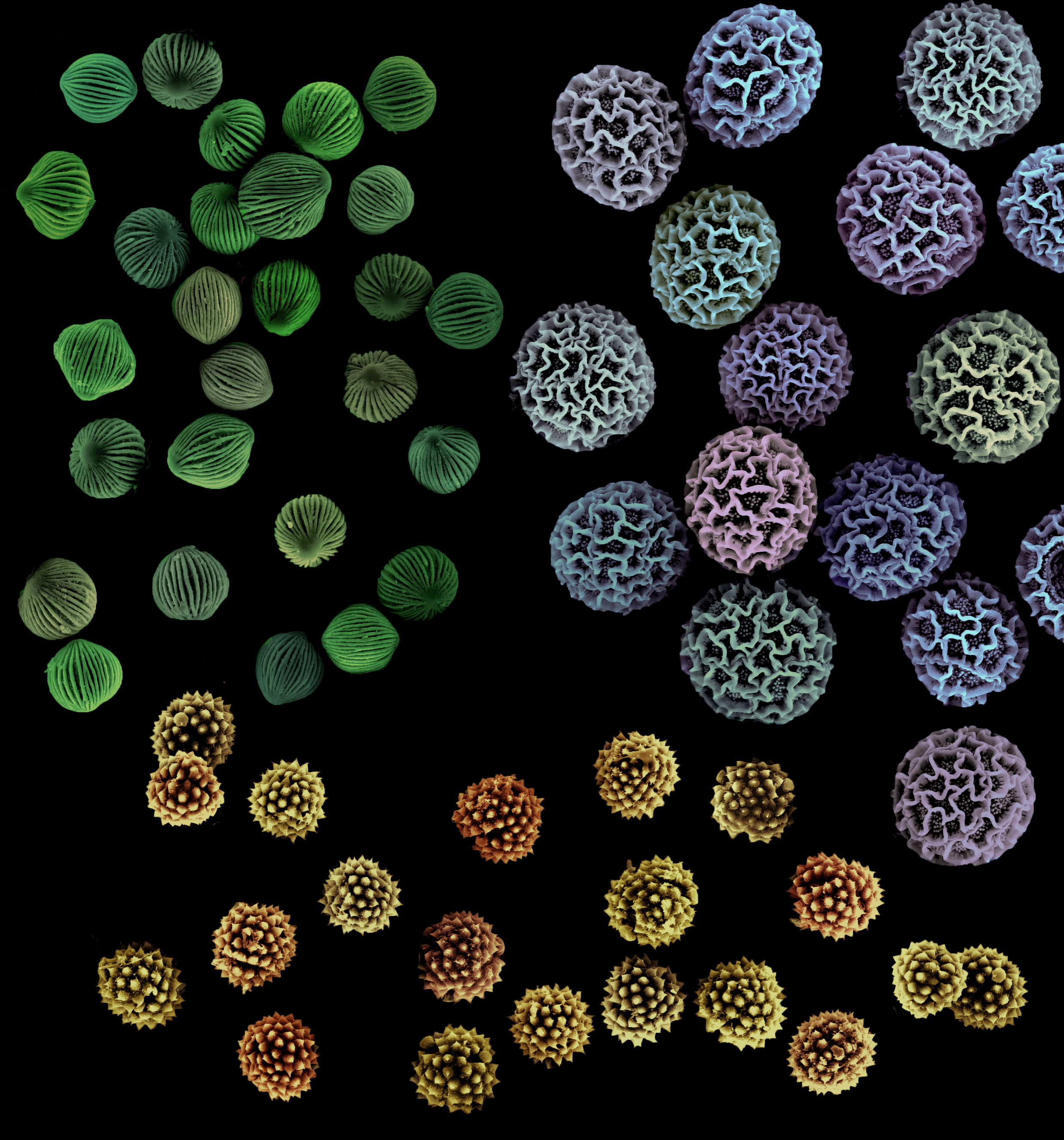
In order to protect the enclosed sperm cells and aid in their movement, pollen grains consist of a series of layers that, among other things, help ensure safe travel. Two major layers are an internal layer called intine, composed largely of cellulose, and an external layer called exine, composed mainly of sporopollenin (a highly durable and complex biopolymer). In many flowering plants, especially those that rely on animals to help carry their pollen, an additional outer layer called pollenkitt is added to the pollen grains before anthers dehisce.

three different pollen grains (image credit: wikimedia commons/Asja Radja)

Pollenkitt is an oily, viscous, hydrophobic layer composed of lipids, carotenoids, flavonoids, proteins, and carbohydrates derived from the breakdown of an internal layer of the anther called the tapetum. Pollenkitt forms a sticky layer around the pollen grains and can add color to the pollen other than the typical yellow. The thickness of the pollenkitt and its composition is species specific. In fact, the look, size, and shape of pollen grains themselves are unique to each species and can even be used to help identify plants. Pollenkitt is found in almost all families of flowering plants and is particularly prevalent in species that are animal-pollinated. One exception is the mustard family (Brassicaceae), whose pollen grains are coated in a substance known as tryphine, which functions similar to pollenkitt but whose formation and composition differ enough to be considered separately.

dandelion pollen (image credit: wikimedia commons/Captainpixel)

The sticky nature of pollenkitt has numerous functions. For one, it helps pollen grains remain on anthers until an animal comes along to remove them. It also holds pollen grains together in clumps, helps pollen grains stick to insect (and other animal) pollinators during transport, and helps adhere them to stigmas when deposited. A paper published in Flora (2005) lists twenty possible functions for pollenkitt, many of which have been confirmed in certain species and some of which are hypothetical. In addition to functions having to do with pollen movement and placement, pollenkitt may also provide protection from water loss, UV radiation, and fungal and bacterial invasions. In species where pollen is offered as food to pollinating insects, pollenkitt is a more easily digestible food source than the pollen grain itself. Thanks to carotenoids, pollenkitt can make pollen more colorful, which may help attract pollinating insects, or, depending on the color, can also hide pollen from insect visitors.

Another important function of pollenkitt is to give pollen a scent. Odors can help encourage insect visitors or deter them, so depending on the situation, scented pollenkitt may be attracting pollinators or discouraging pollen consumers. In a study published in American Journal of Botany (1988), Heidi Dobson analyzed the chemical composition of 69 different species of flowering plants. She isolated numerous scent compounds in pollenkitt and suggested that “some of the chemicals in pollenkitt may … serve as identification cues to pollen-foraging bees.” Most of the species she analyzed were pollinated by bees (which consume pollen), but the few that were mainly pollinated by hummingbirds and butterflies tended to have fewer scent compounds. Since birds and butterflies are there for the nectar and not the pollen, it would make sense that the pollen of these plant species wouldn’t need to carry a scent.

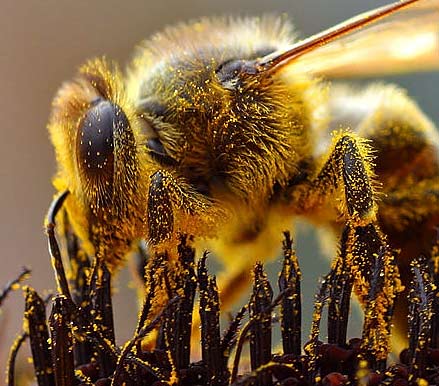
bee collecting pollen (image credit: wikimedia commons)

In flowers that are wind-pollinated, the pollenkitt layer is either very thin or absent altogether. In this case, pollen grains need to be easily released from the anther and are better off when they aren’t sticking to other pollen grains. That way, they are free to be carried off in the breeze to nearby flowers. Some plant species are amphiphilous, meaning they can be both animal-pollinated and wind-pollinated, and according to the authors of the paper published in Flora (2005), pollenkitt layers in these species exhibit intermediate characteristics of both types of pollen grains, generally with thinner, less-sticky pollenkitt and more pollenkitt found within the cavities of the exine.

It’s clear that this unique pollen-glueing substance plays a critical role in the pollination process for many plant species. Considering that each species of plant has its own story to tell, there is still more to learn about the forms and functions that pollenkitt takes.

———–

This is the first in a series of posts in 2024 in which, once again, I am exploring the world of pollinators and pollination. You can read more about this effort in last month’s Year in Review post.

Vacant Lots as Habitat for Insects

Urban areas are increasingly being studied for their potential to help conserve biodiversity and provide habitat for numerous plants and animals. Despite the harsh conditions of the built environment, organisms of all kinds are able to survive in our cities, and as we find ways to make these spaces more hospitable for them, cities actually have great potential for species conservation, even for species that are rare, threatened, or specialized. One obvious way to accomplish this is to manage our yards, parks, and gardens as habitat, such as planting flower strips for pollinators. Another way, perhaps overlooked at times, is to manage and maintain vacant lots as habitat. Every urban area has some degree of vacant land that for one reason or another has not been developed, or that once was developed but has since been bulldozed or abandoned. Spontaneous vegetation quickly moves in to occupy these sites, and while some may see them as eyesores, their potential for providing habitat for an untold number of plants and animals is substantial.

In cities that are growing – like Boise, Idaho – vacant and abandoned lots are disappearing quickly as development strives to keep up with population growth. My first Weeds of Boise post took place at an abandoned Pizza Hut, which has since been demolished and is now the future site of a large building (see photo below). This is happening all over the city – the City of Trees is looking more like the City of Cranes these days. On the other hand, cities that are shrinking due to economic downturn, loss of industry, and other factors, have an increasing number of vacant lots, which offers the opportunity not only to maintain these lots as habitat, but also to carry out research that will help us understand how these locations can be best managed for species conservation.

Abandoned Pizza Hut Lot Now Under Construction

Cleveland, Ohio is one example of a “shrinking city.” Due to significant population decline, Cleveland has a growing number of vacant lots, many of which are maintained by the City of Cleveland Land Bank. For researchers at The Ohio State University, all of this vacant land presents an opportunity to study, among other things, urban biodiversity. Hence, the Cleveland Pocket Prairie Project was born. By assigning different management treatments to groups of vacant lots and observing the differences between each treatment, researchers can help determine the best strategies for managing vacant lots, particularly when it comes to biological conservation. One of the major focuses of the Cleveland Pocket Prairie Project is to determine how vacant land can provide habitat for insects and other arthropods.

In a study published in Sustainability (2018), researchers in Cleveland compared the species richness and abundance of bees found on vacant lots to those found on urban farms. Bee collections were made three times a year over a three year period. Of the more 2733 bees collected, researchers identified 98 total species representing 5 different families. The vast majority of the species were native to the area. Significantly more bees were found in vacant lots compared to urban farms. In both vacant lots and urban farms, the total number of ground nesting bees decreased as the proportion of impervious surfaces near the study sites increased. Plants that received the most bee visits on the urban farms during the study period were common milkweed (Asclepias syriaca), chives (Allium schoenoprasum), and squash (Cucurbita pepo); while the top three plants with the most bee visits on vacant lots were red clover (Trifolium pratense), white clover (Trifolium repens), and Queen Anne’s lace (Daucus carota).

ground nesting bee (photo credit: Sierra Laverty)

Bee communities differed between vacant lots and urban farms: 29 of the 98 total species were seen only in vacant lots, while 14 species were seen only at urban farms. Most of the bees collected in this study were ground nesting species, and researchers suspect the reason more bees were found on vacant lots compared to urban farms is that farms experience frequent soil disturbance in the form of tillage, weeding, mulching, and irrigation, while vacant lots generally do not. The researchers conclude that their study “adds to the growing body of literature advocating for the maintenance of minimally-managed vacant lot habitats as a conservation resource.” Vacant land that is “surrounded locally by high concentrations of impervious surface,” however, may not be the most suitable location to carry out conservation efforts.

In a study published in Urban Ecosystems (2020), researchers in Cleveland looked at the species richness and abundance of lady beetles in vacant lots. They were particularly interested in the potential that vacant lots may have in providing habitat for lady beetles that are native to the region. The study consisted of 32 vacant lots, each assigned one of four habitat treatments: control (seeded with turfgrass and mowed monthly), meadow (seeded with turfgrass and mowed annually), low-diversity prairie (seeded with three species of prairie grasses and four species of native prairie forbs), and high-diversity prairie (seeded with three species of prairie grasses and sixteen species of native prairie forbs). The two prairie treatments were mown annually. The majority of the nearly 3000 lady beetles captured across all of the plots over a two-year study period were exotic (introduced) species. Sixteen species total were collected: four exotic and twelve native.

The researchers predicted that the lots seeded with prairie plants native to the region would support a higher abundance of native lady beetles than those composed of turfgrass, especially those that are frequently mown. Surprisingly, a similar abundance and species richness of both native and exotic lady beetles were found across all treatments. What appeared to be important for native lady beetle abundance were vegetation features like bloom abundance, height, and biomass. The surrounding environment also matters. As the researchers put it, “vacant lots embedded in landscapes dominated by impervious surface and with a high degree of habitat isolation were less suitable habitats” – a similar conclusion to that made in the bee study.

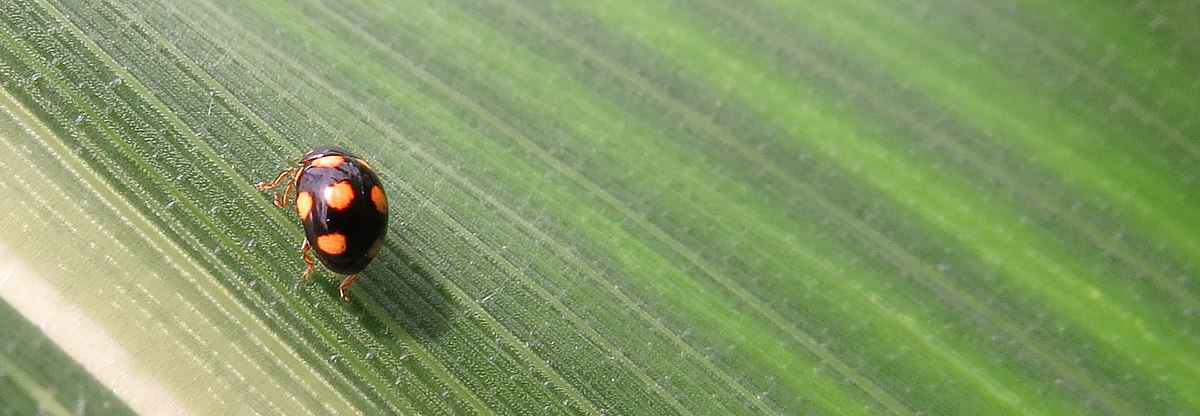
Brachiacantha ursina (photo credit: Wikimedia Commons / NY State IPM Program at Cornell University)

The most abundant native lady beetle collected in the study was the ursine spurleg lady beetle (Brachiacantha ursina). The larvae of this beetle “infiltrate the nests of Lasius ants,” which is “one of the most common genera of ants found in urban environments.” Researchers posit that the abundance of B. ursina reflects the habitat preferences of ants in the Lasius genus. Several species of lady beetles native to the region are experiencing significant population declines, and the researchers were disappointed to find that none of the most rare species were collected during their study period. However, it was promising to find that “pollen and nectar provided by both seeded native and naturally occurring weedy plants” appeared to be important food sources for native lady beetles.

Both studies indicate that vacant lots can be important locations for habitat conservation in urban areas, particularly when they are part of a larger collection of greenspaces. In combination with managing our yards, parks, and urban farms as quality habitat for plants and animals, conserving vacant lots that consist of diverse vegetation (both planted and spontaneous) can help support insect populations within our cities.

Flowers Strips Bring All the Pollinators to the Yard

The longer I garden the more I gravitate towards creating habitats for creatures that rely on plants for survival. I’ve always been more interested in functional gardens rather than gardens that are simply “plants as furniture” (as Sierra likes to say) – a manicured, weed-free lawn, a few shrubs shaped into gumdrops, sterile flowers for color – and that interest has grown into a way of life. A garden should be more than just something nice to look at, and for those of us who’ve embraced the “messy ecosystems” approach, what’s considered “nice to look at” has shifted dramatically.

Thankfully, I’m not alone in this thinking. Gardens focused on pollinators, birds, habitats, native plants, etc. seem to be gaining in popularity. The question is, is it making a difference? At least one study, referred to below, seems to suggest that it is. And as more gardens like these are planted and more studies like this are done, perhaps we will get a clearer picture of their impact.

In 2017, eight 1000 square meter flower strips were planted in Munich, Germany. The sites had previously been lawn or “roadside greenery,” according to the report published in the Journal of Hymenoptera Research (2020). An additional flower strip, planted in 2015, was included in the study. Over the next year, an inventory of the number of bee species found in these nine flower strips was taken and compared both to the number of bee species that had been recorded in Munich since 1795 (324 species) and the number of bee species recorded in the 20 years prior to the planting of the flower strips (232 species).

In just a year’s time, these newly planted flower strips quickly attracted a surprising number of bees. The researchers identified 68 different species (which is 21% and 29% of the two categories of previously recorded species). As they had expected, most of the bees they identified were common, non-threatened, generalist species; however, they were surprised to also find several species that specialize on pollen from specific groups of plants. Future studies are needed to determine whether or not such flower strips help increase the populations of pollinators in the city, but it seems clear that they are a simple way to increase the amount of food for pollinators, if nothing else.

But perhaps these results shouldn’t be that surprising. Urban areas are not necessarily the biodiversity wastelands that the term “concrete jungle” seems to imply. Though fragmented and not always ideal, plenty of wildlife habitat can be found within a city. In his book, Pollinators and Pollination, Jeff Ollerton lists a number of studies that have been carried out in cities across the world documenting an impressive number of pollinating insects living within their borders [see this report in Conservation Biology (2017), for example]. As Ollerton writes, these studies “show that urbanization does not mean the total loss of pollinator diversity, and may in fact enhance it.” After all, “many of us city dwellers see every day, nature finds a home, a habitat, a place to thrive, wherever it will.”

In a chapter entitled, “The Significance of Gardens,” Ollerton continues to explore the ways in which cities can host a wide variety of flower visiting insects and birds. “Planted patches” don’t necessarily need to be managed as pollinator gardens in order to provide resources for these creatures, nor do all of the plants need to be native to the region to be effective. Rather, diversity in flower structure and timing seems to be key; “floral diversity always correlates with pollinator diversity regardless of the origin of the plants,” Ollerton writes in reference to pollination studies performed in British cities. The more “planted patches,” the better, as “a large and continuous floral display in gardens is the only way to maximize pollinator abundance and diversity.” Add to that, “if you allow some areas to become unmanaged, provide other suitable nesting sites or areas for food plants, and other resources that they need, a thriving oasis for pollinators can be created in any plot.”

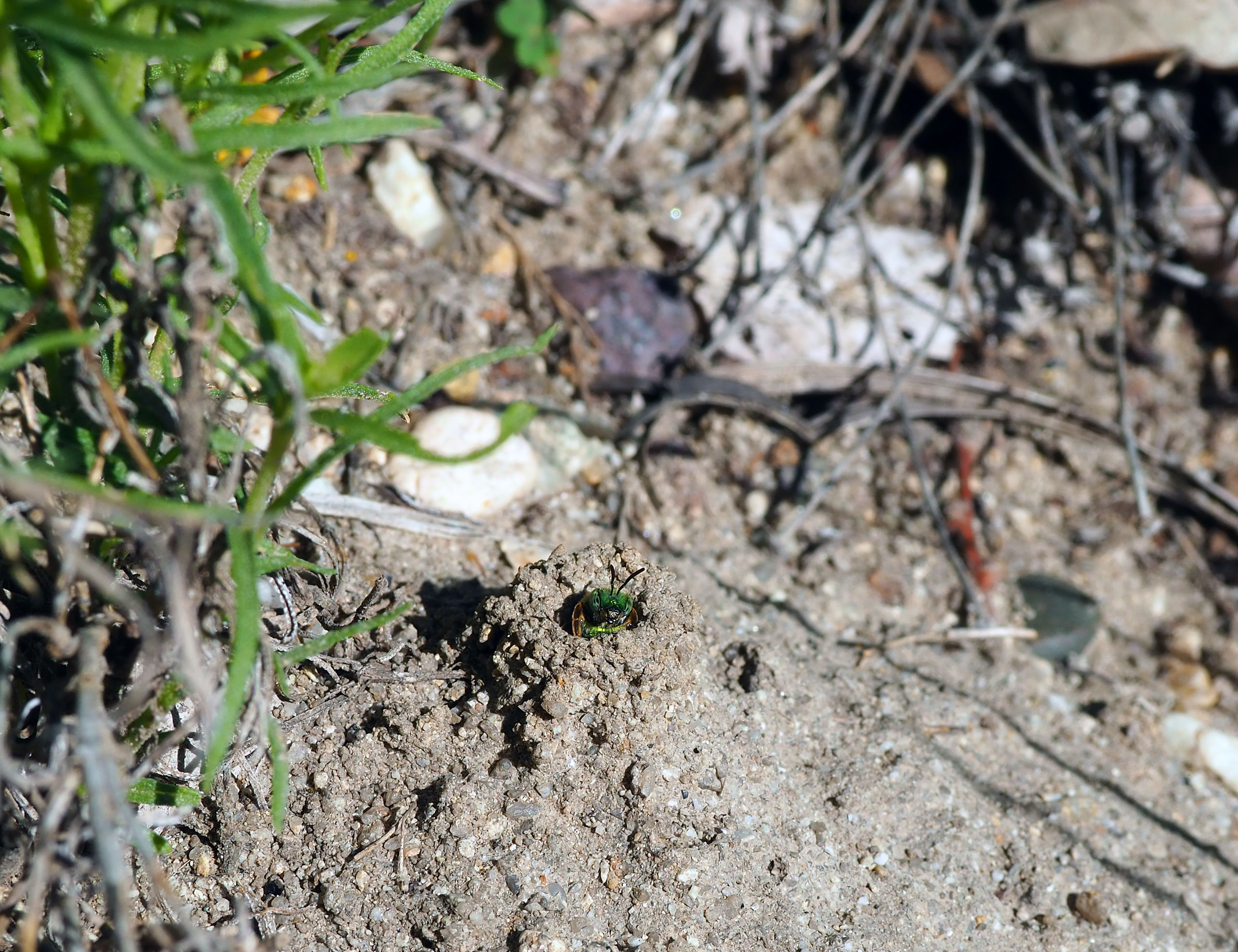
ground nesting bee emerging from burrow

Bees and other pollinating insects are finding ways to live within our cities. There is no need to go to the lengths that I like to go in order to help them out. Simply adding a few more flowering plants to your yard, balcony, or patio can do the trick. Eliminating or limiting the use of pesticides and creating spaces for nesting sites are among other things you can do. Learning about specific pollinators and their needs doesn’t hurt either. The continued existence of these creatures is critical to life on earth, and this is one important issue where even simple actions can make a real difference.


Check out the linktree for various ways to follow and support Awkward Botany.

Idaho’s Native Milkweeds (Updated)

As David Epstein said in an interview on Longform Podcast, “Any time you write about science, somethings is going to be wrong; the problem is you don’t know what it is yet, so you better be ready to update your beliefs as you learn more.” Thanks to the newly published Guide to the Native Milkweeds of Idaho by Cecilia Lynn Kinter, lead botanist for Idaho Department of Fish and Game, I’ve been made aware of some things I got wrong in the first version of this post. I appreciate being corrected though, because I want to get things right. What follows is an updated version of the original post. The most substantial change is that there are actually five milkweed species native to Idaho rather than six. Be sure to check out Kinter’s free guide to learn more about this remarkable group of plants.

———————

Concern for monarch butterflies has resulted in increased interest in milkweeds. Understandably so, as they are the host plants and food source for the larval stage of these migrating butterflies. But milkweeds are an impressive group of plants in their own right, and their ecological role extends far beyond a single charismatic insect. Work to save the monarch butterfly, which requires halting milkweed losses and restoring milkweed populations, will in turn provide habitat for countless other organisms. A patch of milkweed teems with life, and our pursuits to protect a single caterpillar invite us to explore that.

Asclepias – also known as the milkweeds – is a genus consisting of around 140 species, 72 of which are native to the United States and Canada. Alaska and Hawaii are the only states in the U.S. that don’t have a native species of milkweed. The ranges of some species native to the United States extend down into Mexico where there are numerous other milkweed species. Central America and South America are also home to many distinct milkweed species. Asclepias species found in southern Africa are considered by many to actually belong in the genus Gomphocarpus.

The habitats milkweeds occupy are about as diverse as the genus itself – from wetlands to prairies, from deserts to forests, and practically anywhere in between. Some species occupy disturbed and/or neglected sites like roadsides, agricultural fields, and vacant lots. For this reason they are frequently viewed as a weed; however, such populations are easily managed, and with such an important ecological role to play, they don’t deserve to be vilified in this way.

Milkweed species are not distributed across the United States evenly. Texas and Arizona are home to the highest diversity with 37 and 29 species respectively. Idaho, my home state, is on the low end with five native species. The most abundant species found in Idaho is Asclepias speciosa, commonly known as showy milkweed.

showy milkweed (Asclepias speciosa)

Showy milkweed is distributed from central U.S. westward and can be found in all western states. It occurs throughout Idaho and is easily the best place to look for monarch caterpillars. In fact, the monarch butterfly is Idaho’s state insect, thanks in part to the abundance of showy milkweed, which is frequently found growing in large colonies due to its ability to reproduce vegetatively via adventitious shoots produced on lateral roots or underground stems. Only a handful of milkweed species reproduce this way. Showy milkweed reaches up to five feet tall and has large ovate, gray-green leaves. Like all milkweed species except one (Asclepias tuberosa), its stems and leaves contain milky, latex sap. In early summer, the stems are topped with large umbrella-shaped inflorescences composed of pale pink to pink-purple flowers.

The flowers of milkweed deserve a close examination. Right away you will notice unique features not seen on most other flowers. The petals of milkweed flowers bend backwards, which would otherwise allow easy access to the flower’s sex parts if it wasn’t for a series of hoods and horns protecting them. Collectively, these hoods and horns are called the corona, which houses glands that produce abundant nectar and has a series of slits where the anthers are exposed. The pollen grains of milkweed are contained in waxy sacs called pollinia. Two pollinia are connected together by a corpusculum giving this structure a wishbone appearance. An insect visiting the flower for nectar slips its leg into the slit, and the pollen sacs become attached with the help of the corpusculum. When the insect leaves, the pollen sacs follow. Pollination is successful when the pollen sacs are inadvertently deposited on the stigmas of another flower.

Milkweed flowers are not self-fertile, so they require assistance by insects to sexually reproduce. They are not picky about who does it either, and their profuse nectar draws in all kinds of insects including bees, butterflies, moths, beetles, wasps, and ants. Certain insects – like bumble bees and other large bees – are more efficient pollinators than others. Once pollinated, seeds are formed inside a pod-like fruit called a follicle. The follicles of showy milkweed can be around 5 inches long and house dozens to hundreds of seeds. When the follicle matures, it splits open to release the seeds, which are small, brown, papery disks with a tuft of soft, white, silky hair attached. The seeds of showy milkweed go airborne in late summer.

follicles forming on showy milkweed (Asclepias speciosa)

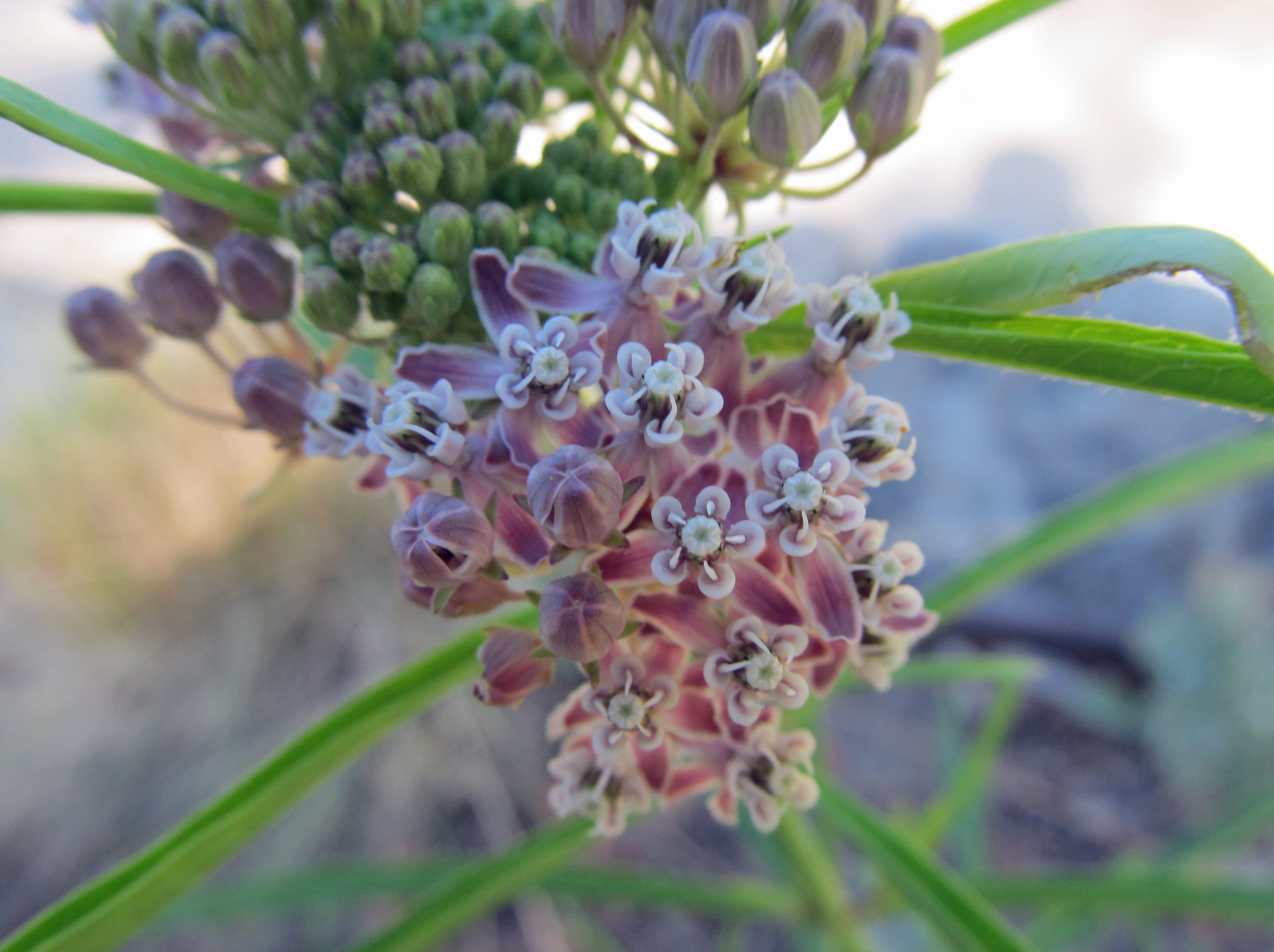
Whorled or narrowleaf milkweed (Asclepias fascicularis) occurs across western and southern Idaho. Its distribution continues into neighboring states. It is adapted to dry locations, but can be found in a variety of habitats. Like showy milkweed, it spreads rhizomatously as well as by seed. It’s a wispy plant that reaches one to three feet tall and occasionally taller. It has long, narrow leaves and produces tight clusters of greenish-white to pink-purple flowers. Its seed pods are long and slender and its seeds are about 1/4 inch long.

flowers of narrowleaf milkweed (Asclepias fascicularis)

seeds escaping from the follicle of narrowleaf milkweed (Asclepias fascicularis)

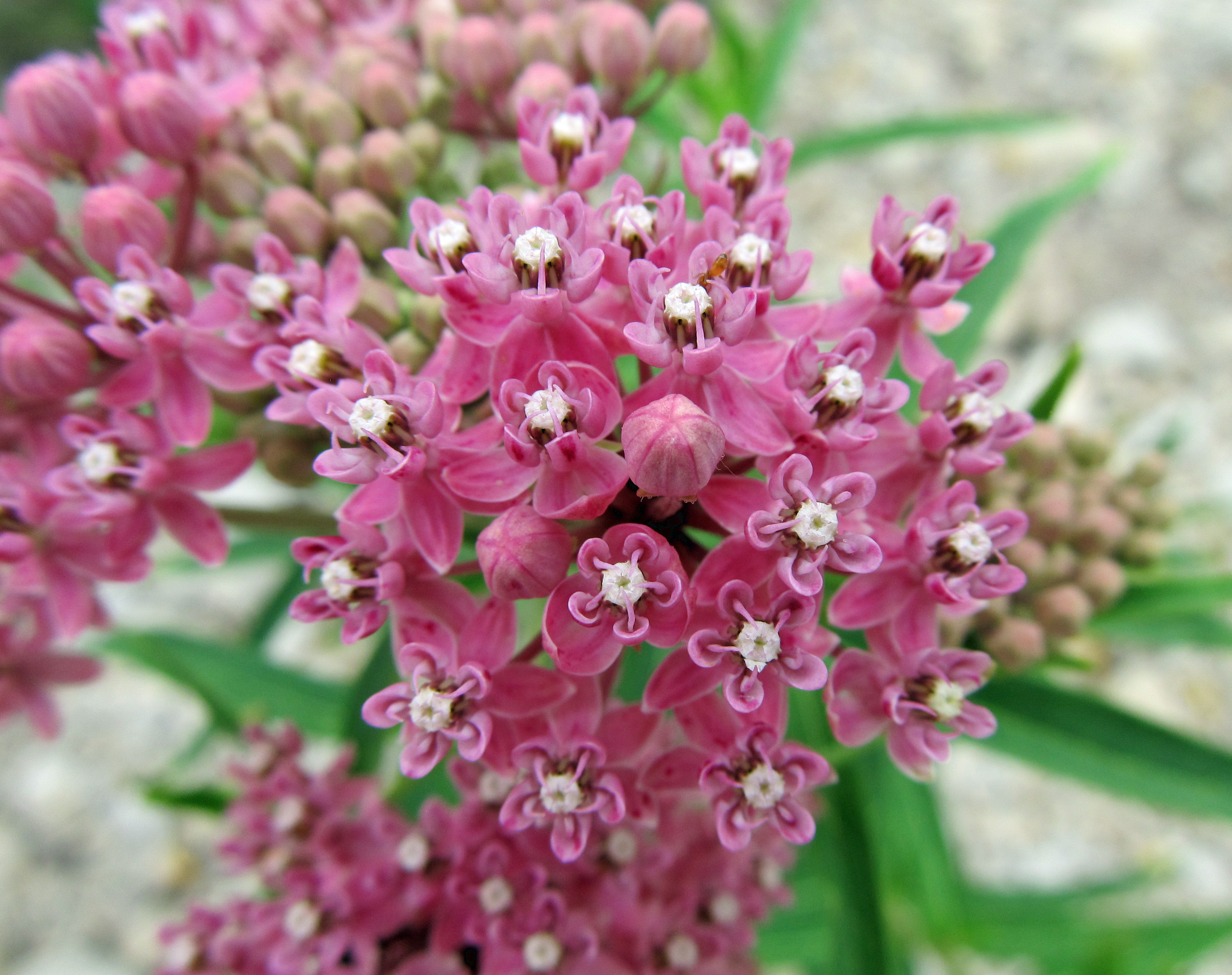
Swamp or rose milkweed (Asclepias incarnata) is more common east of Idaho, but occurs occasionally in southwestern Idaho. As its common name suggests, it prefers moist soils and is found in wetlands, wet meadows, and along streambanks. It can spread rhizomatously, but generally doesn’t spread very far. It reaches up to four feet tall, has deep green, lance-shaped leaves, and produces attractive, fragrant, pink to mauve, dome-shaped flower heads at the tops of its stems. Its seed pods are narrow and around 3 inches long.

swamp milkweed (Asclepias incarnata)

Asclepias cryptoceras ssp. davisii, or Davis’s milkweed, is a low-growing, drought-adapted, diminutive species that occurs in southwestern Idaho. It has round or oval-shaped leaves and produces flowers on a short stalk. The flowers have white or cream-colored petals and pink-purple hoods. The range of Asclepias cryptoceras – commonly known as pallid milkweed or jewel milkweed – extends beyond Idaho’s borders into Oregon and Nevada, creeping north into Washington and south into California. Another subspecies – cryptoceras – can be found in Nevada, Utah, and their bordering states.

Davis’s milkweed (Asclepias cryptoceras ssp. davisii)

The final species is rare in Idaho, as Idaho sits at the top of its native range. Asclepias asperula ssp. asperula, or spider milkweed, has a single documented location in Franklin County (southeastern Idaho). Keep your eyes peeled though, because this plant may occur elsewhere, either in Franklin County or neighboring counties. It grows up to two feet tall with an upright or sprawling habit and produces clusters of white to green-yellow flowers with maroon highlights. Its common name comes from the crab spiders frequently found hunting in its flower heads.

A sixth species, horsetail milkweed (Asclepias subverticillata), has been falsely reported in Idaho. Collections previously labeled as A. subverticillata have been determined to actually be the similar looking A. fascicularis.

Podcast Review: Botanical Mystery Tour

My interest is piqued any time plants are featured or plugged in popular culture. Hence my ongoing series of posts, Botany in Popular Culture, featuring Futurama, Saga of the Swamp Thing, etc. Plants just don’t get enough airtime, so it must be celebrated when they do. Which is why I was excited to learn about Chicago Botanic Garden‘s new podcast, Botanical Mystery Tour, in which the plants referenced in pop culture take center stage.

The hosts, as they state in each episode’s introduction, “dive into the botany hidden in our favorite stories.” To help with the discussion, they bring in experts that work at Chicago Botanic Garden to explore the science (and fiction) behind the plant references. In addition to discussing pop culture and the related science, the guests share details about the work they do at the Garden and some of the research they are working on.

In the first episode, Jasmine and Erica ask Paul CaraDonna about the drone bees featured in an episode of Black Mirror. Since many bee species are in decline, will we have to resort to employing robot bees to pollinate plants that rely on bee-assisted pollination? A great discussion about native bees and colony collapse disorder ensues.

(But maybe the idea of autonomous drone insects isn’t too far-fetched…)

In episode two, the hosts ask why humans are so obsessed with corpse flowers. Thousands of people flock to botanical gardens to see these humongous, stinky flowers on the rare occasions they are in bloom, so what is so appealing about Amorphophallus titanum? Patti Vitt joins the discussion to share details about this fascinating plant.

A corpse flower in bloom is a brief and uncommon occurrence, reminiscent of the Sumatran Century Flower in The Simpsons and the 40 Year Orchid in Dennis the Menace.


The third episode features the sarlaccs of Star Wars. It turns out, sarlaccs are carnivorous plants. This discovery spawns an interesting discussion with horticulturist Tom Weaver about what defines a carnivorous plant and the various ways that different carnivorous plant species capture and kill their prey.

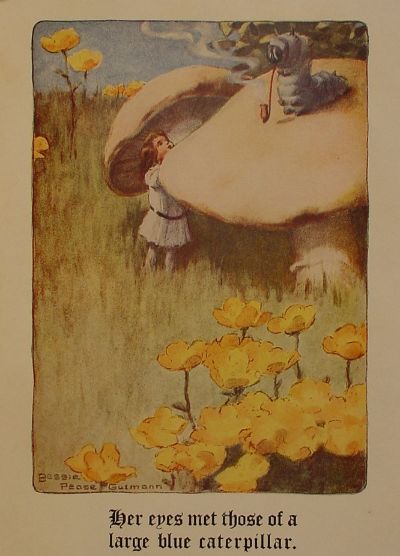
The fourth (and latest) episode is an exploration into the magical world of mushrooms. In Alice in Wonderland, Alice encounters a large, hookah-smoking caterpillar sitting atop a giant mushroom. Are there mushrooms big enough that a person could actually sit on them like Alice does? Greg Mueller joins the podcast to address this and many other mycology-based questions. The conversation includes a great discussion about why a botanical garden (whose main focus is plants) would be interested in fungus.

The discussions in this podcast are fun and enlightening. The hosts shine the spotlight on often overlooked characters in popular media, and with the help of their guests, lead captivating conversations about the science related to these characters. With only a handful of episodes available so far, it will be easy to get caught up. And then you, like me, will find yourself anxiously looking forward to embarking on another Botanical Mystery Tour.

———————

Is there a plant-themed podcast or podcast episode you would like to recommend? Please do so in the comment section below.

Death by Crab Spider, part two

Crab spiders that hunt in flowers prey on pollinating insects. Thus, pollinating insects tend to avoid flowers that harbor crab spiders. We established this in part one. Now we ask, what effect, if any, does this interaction have on a crab spider infested plant’s ability to reproduce? More importantly, what are the evolutionary implications of this relationship?

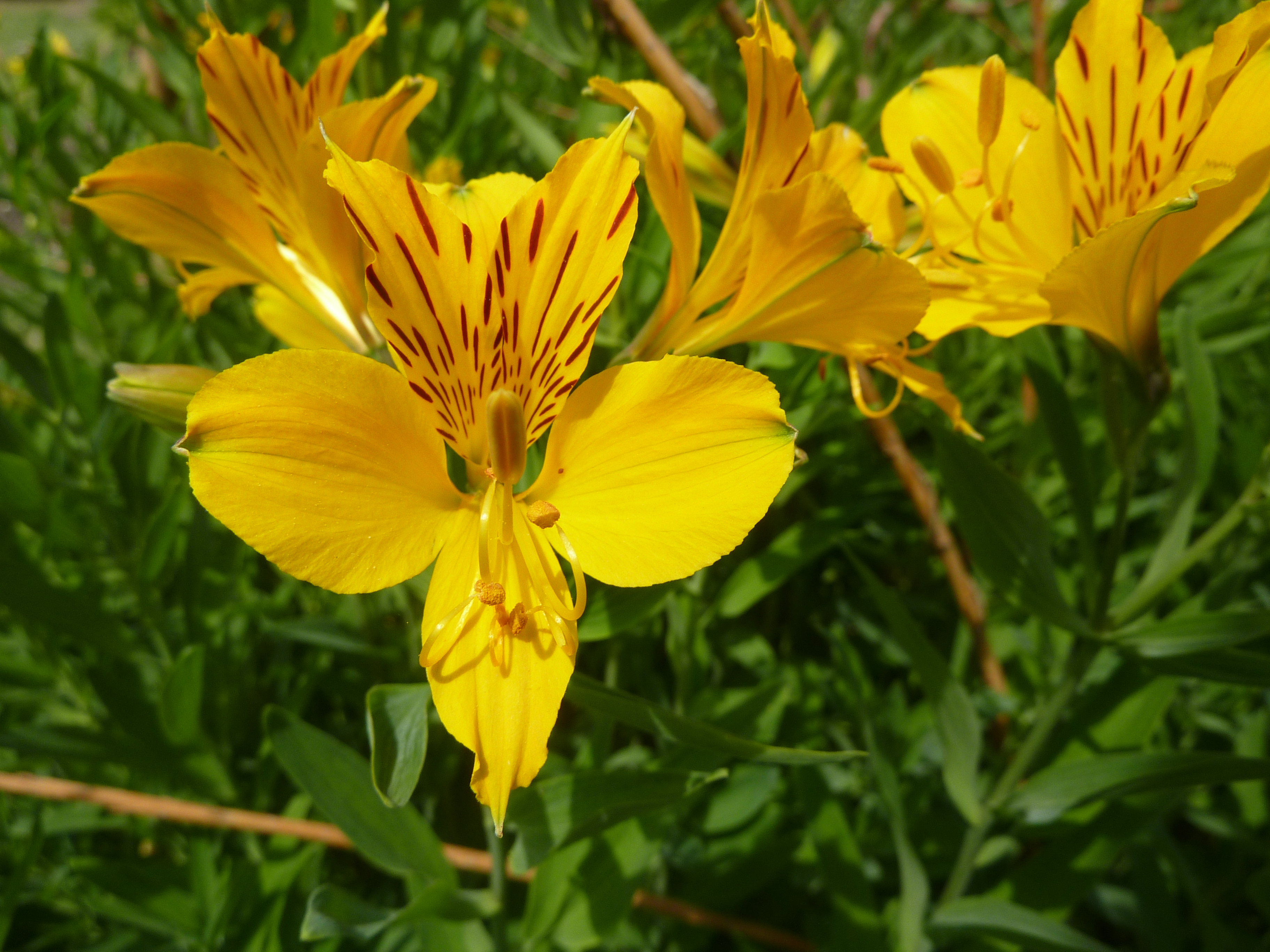
In a study published in Ecological Entomology earlier this year, Gavini, et al. found that pollinating insects avoided the flowers of Peruvian lily (Alstroemeria aurea) when artificial spiders of various colors and sizes were placed in them. Bumblebees and other bees were the most frequent visitors to the flowers and were also the group “most affected by the presence of artificial spiders, decreasing the number of flowers visited and time spent in the inflorescences.” This avoidance had a notable effect on plant reproduction, namely a 25% reduction in seed set and a 15% reduction in fruit weight. The most abundant and effective pollinator, the buff-tailed bumblebee, was deterred by the spiders, leading the researchers to conclude that, “changes in pollinator behavior may translate into changes in plant fitness when ambush predators alter the behavior of the most effective pollinators.”

Peruvian lily (Alstroemeria aurea) via wikimedia commons

But missing from this discussion is the fact that crab spiders don’t only eat pollinators. Any flower visiting insect may become a crab spider’s prey, and that includes florivores. In which case, crab spiders can benefit a plant, saving it from reproduction losses by eating insects that eat flowers.

In April of this year, Nature Communications published a study by Knauer, et al. that examined the trade-off that occurs when crab spiders are preying on both pollinators and florivores. Four populations of buckler-mustard (Biscutella laevigata ssp. laevigata) were selected for this study. Bees are buckler-mustard’s main pollinator, and in concurrence with other studies, they significantly avoided flowers when crab spiders were present.  Knauer, et al. also determined that bees and crab spiders are attracted to the same floral scent compound, β-ocimene. This compound not only attracts pollinators, but is also emitted when plants experience herbivory, possibly to attract predators to come and prey on whatever is eating them.

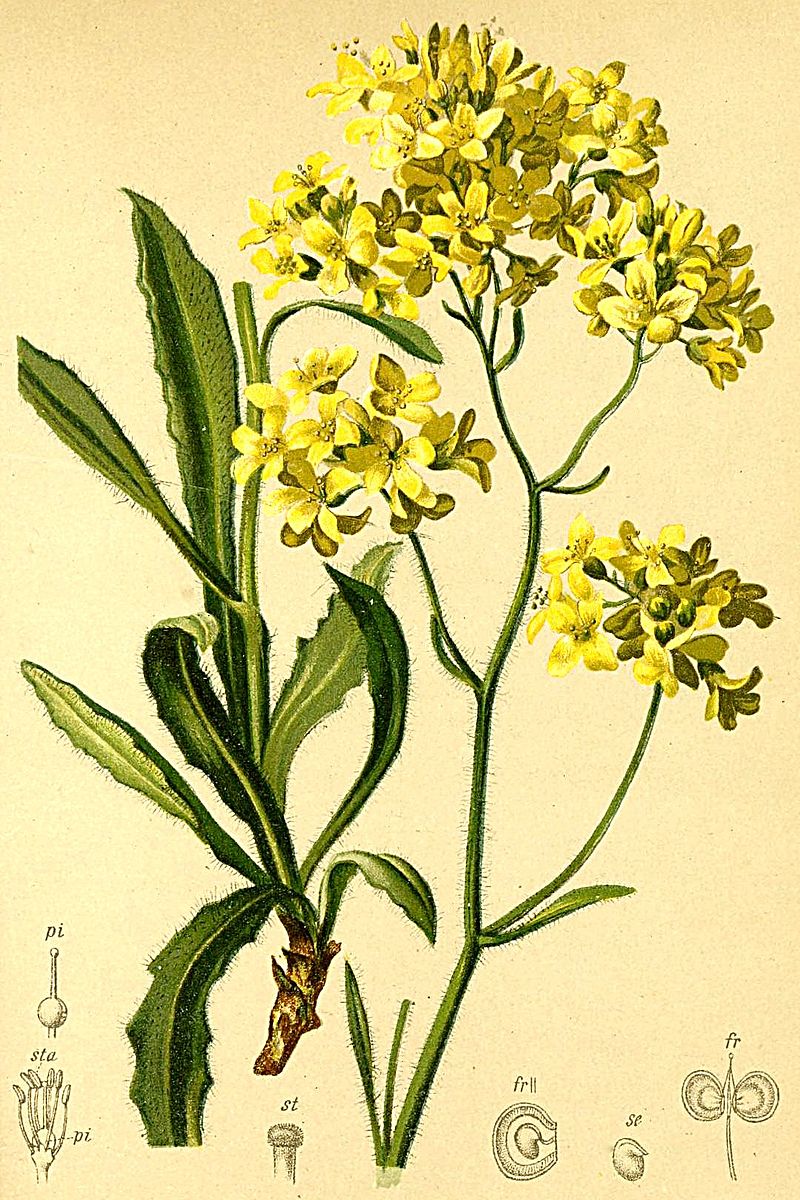
buckler-mustard (Biscutella laevigata) via wikimedia commons

In this study, the predators called upon were crab spiders. Florivores had a notable impact on plants in this study, and the researchers found that when crab spiders were present, florivores were significantly reduced, thereby reducing their negative impact. They also noted that “crab spiders showed a significant preference for [florivore-infested] plants over control plants.”

And so it is, a plant’s floral scent compound attracts pollinators while simultaneously attracting the pollinator’s enemy, who is also called in to protect the flower from being eaten. Luckily, in this case, buckler-mustard is easily pollinated, so the loss of a few pollinators isn’t likely to have a strong negative effect on reproduction. As the authors write, “pollinators are usually abundant and the low number of ovules per flower makes a few pollen grains sufficient for a full seed set.”

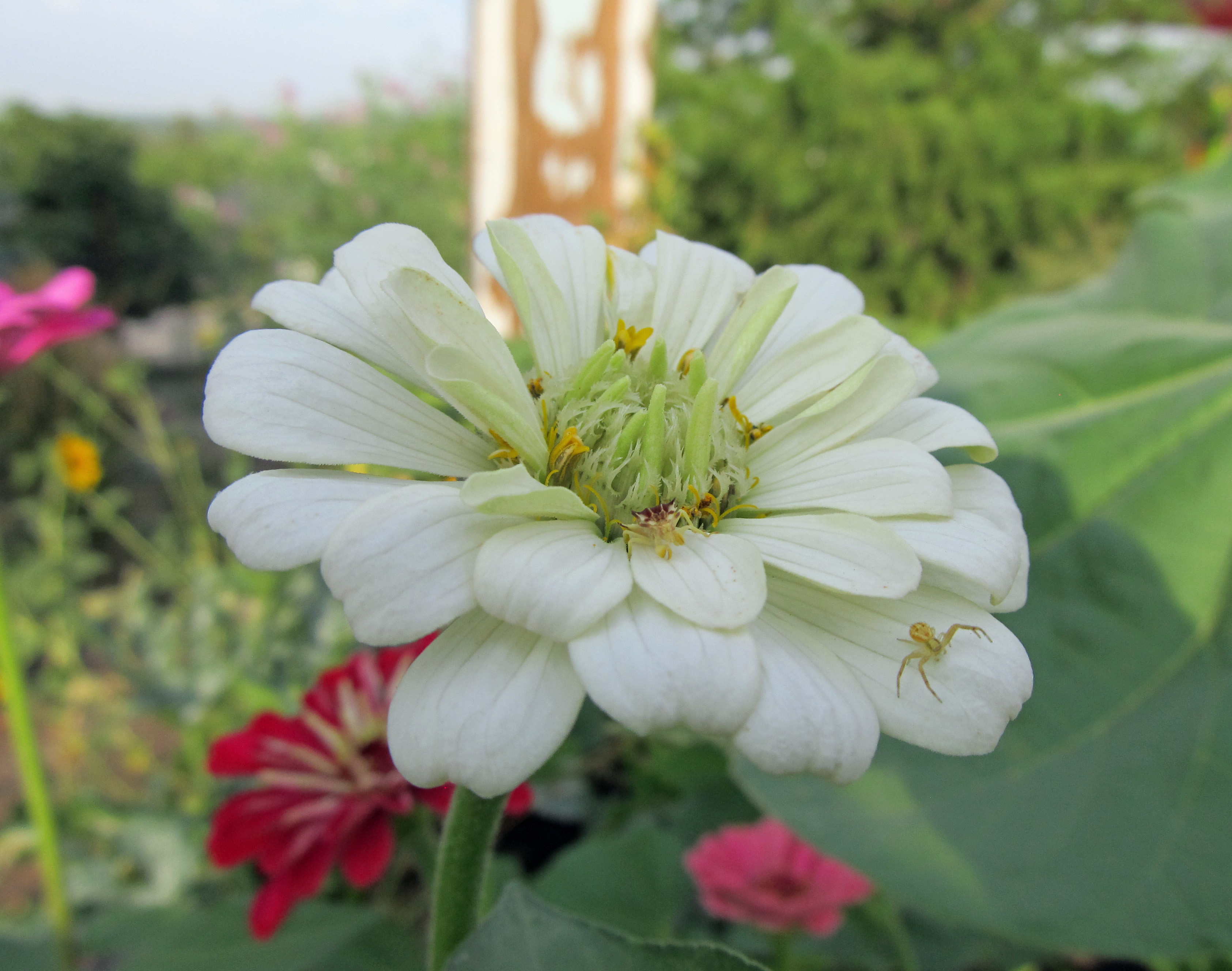
crab spider on zinnia

But none of these studies are one size fits all. Predator-pollinator-plant interactions are still not well understood, and there is much to learn through future research. A meta-analysis published in the Journal of Animal Ecology in 2011 looked at the research that had been done up to that point. Included were a range of studies involving sit-and-wait predators (like crab spiders and lizards) as well as active hunters (like birds and ants) and the effects of predation on both pollinators and plant-eating insects. They concluded that where carnivores “disrupted plant-pollinator interactions, plant fitness was reduced by 17%,” but thanks to predation of herbivores, carnivores helped increase plant fitness by 51%. This suggests that carnivores, overall, have a net positive effect on plant fitness.

Many pollinating insects have an advantage over plant-eating insects because they move quickly from flower to flower and plant to plant, unlike many herbivores which move more slowly. This protects pollinators from predation and helps explain why plant-pollinator interactions are not disrupted as easily by carnivores. Additionally, as the authors note, “plants may be buffered against loss of pollination by attracting different types of pollinators, some of which are inaccessible to carnivores.”

But again, there is still so much to discover about these complex interactions. One way to gain a better understanding is to investigate the effects of predators on both pollinators and herbivores in the same study, since many of the papers included in the meta-analysis focused on only one or the other. As far as crab spiders go, Knauer, et al. highlight their importance in such studies. There are so many different species of crab spiders, and they are commonly found on flowers around the globe, so “their impact on plant evolution may be widespread among angiosperms.”

In other words, while we still have a lot to learn, the impact these tiny but skillful hunters have should not be underestimated.

Death by Crab Spider, part one

When a bee approaches a flower, it is essentially approaching the watering hole. It comes in search of food in the form of pollen and nectar. As is this case with other animals who come to feed at the watering hole, a flower-visiting bee makes itself vulnerable to a variety of predators. Carnivores, like the crab spider, lie in wait to attack.

The flowers of many plants rely on visits from bees and other organisms to assist in transferring pollen from stamens to stigmas, which initiates reproduction; and bees and other flower visitors need floral resources to survive. Crab spiders exploit this otherwise friendly relationship and, in doing so, can leave lasting impacts on both the bees and the flowers they visit.

Species in the family Thomisidae are commonly referred to as crab spiders, a name that comes from their resemblance to crabs. Crab spiders don’t build webs to catch prey; instead they either actively hunt for prey or sit and wait for potential prey to happen by, earning them the name ambush predators. Of the hundreds of species in this family, not all of them hunt for prey in flowers; those that do – species in the genera Misumena and Thomisus, for example – are often called flower crab spiders.

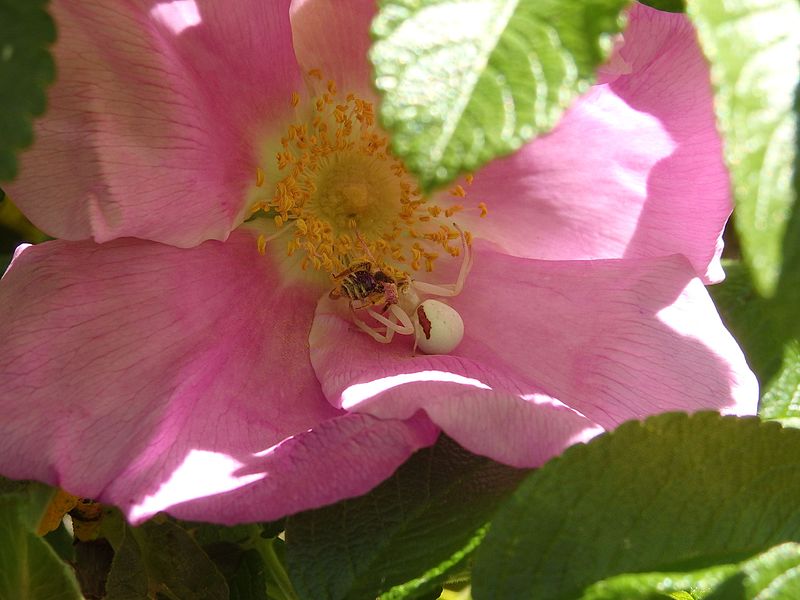
white crab spider (Thomisus spectabilis) on Iris sanguinea — via wikimedia commons

Most crab spiders are tiny – mere millimeters in size – and they have a number of strategies (depending on the species) to obscure their presence from potential prey. They can camouflage themselves by choosing to hunt in a flower that is the same color as they are or, in the case of some species, they can change their color to match the flower they are on. Some species of crab spiders reflect UV light, which bees can see. In doing so, they make themselves look like part of the flower.

Using an Australian species of crab spider, researchers found that honey bees preferred marguerite daisies (Chrysanthemum frutescens) on which UV-reflecting crab spiders were present, even when the scent of the flowers was masked. The spiders’ presence was seen as nectar guides, which “bees have a pre-existing bias towards.” Members of this same research team also determined that both crab spiders and honey bees choose fragrant flowers over non-fragrant flowers, and that, ultimately, “honey bees suffer apparently from responding to the same floral characteristics as crab spiders do.”

Needless to say, crab spiders are crafty. So the question is, when killing machines like crab spiders are picking off a plant’s pollinators, does this affect its ability to reproduce? First let’s consider how pollinators react to finding crab spiders hiding in the flowers they hope to visit.

goldenrod crab spider (Misumena vatia) preying on a pollinator — via wikimedia commons

A study published in Oikos in 2003 observed patches of common milkweed (Asclepias syriaca) – one set was free of crab spiders, the other set was not – and tracked the visitations of four species of bees – the common honey bee and three species of bumble bees. They compared visitation rates between both sets of milkweed patches and found that the smallest of the three bumble bee species decreased its frequency of visitation to the crab spider infested milkweeds. Honey bees also appeared to visit the infested milkweeds less, but the results were not statistically significant. The two larger species of bumble bees continued to forage at the same rate despite the presence of crab spiders.

During the study, crab spiders were seen attacking bees numerous times. Six attacks resulted in successful kills, and of the bees that escaped, 80% left the flower and either moved to a different flower on the same plant, moved to a different plant, or left the patch altogether. These results indicate a potential for the presence of crab spiders to effect plant-pollinator interactions, whether its directly (predation) or indirectly (bees avoiding flowers with crab spiders).

Another study published in Behavioral Ecology in 2006 looked at two species of bees – the honey bee and a species of long-horned bee – and their reactions to the presence of crab spiders on the flowers of three different plant species – lavender (Lavandula stoechas), crimson spot rockrose (Cistus ladanifer), and sage-leaf rockrose (Cistus salvifolius). Honey bees were about half as likely to select inflorescences of lavender when crab spiders were present, and they avoided the crab spider infested flowers of crimson spot rockrose with a similar frequency. On the other hand, the long-horned bee visited the flowers of crimson spot rockrose to the same degree whether or not a crab spider was present.

bee visiting sage-leaf rock rose (Cistus salvifolius) — via wikimedia commons

The researchers then exposed honey bees to the flowers of sage-leaf rockrose that were at the time spider-free but showed signs that crab spiders had recently visited. Some of the flowers featured the scent of crab spiders, others had spider silk attached to them, and others had the corpses of dead bees on them. They found that even when crab spiders were no longer present, the bees could still detect them. Honey bees were particularly deterred by the presence of corpses. The long-horned bees were also exposed to the flowers with corpses on them but didn’t show a significant avoidance of them.

An interesting side note about the presence of silk on flowers. As stated earlier, crab spiders do not spin webs; however, they do spin silk for other reasons, including to tether themselves to flowers while hunting. The authors recount, “on several occasions when an attempted attack was observed during this study, it was only the presence of a silk tether that prevented spiders being carried away from flowers by their much larger prey.”

So, again, if bees are avoiding flowers due to the presence of predators like crab spiders, what effect, if any, is this having on the plants? We will address this question in part two.

Eating Weeds: Clovers

If you ever spent time hunting for four-leaf clovers in the lawn as a kid, in all likelihood you were seeking out the leaves of Trifolium repens or one of its close relatives. Commonly known as white clover, the seeds of T. repens once came standard in turfgrass seed mixes and was a welcome component of a healthy lawn thanks to its ability to fix atmospheric nitrogen and provide free fertilizer. But around the middle of the 20th century, when synthetic fertilizers and herbicides became all the rage, clover’s reputation shifted from acceptable to disreputable. Elizabeth Kolbert, in an article in The New Yorker about American lawns, recounts the introduction of the broadleaf herbicide 2,4-D: “Regrettably, 2,4-D killed not only dandelions but also plants that were beneficial to lawns, like nitrogen-fixing clover. To cover up this loss, any plant that the chemical eradicated was redefined as an enemy.”

white clover (Trifolium repens) in turf grass

This particular enemy originated in Europe but can now be found around the globe. It has been introduced both intentionally and accidentally. Commonly cultivated as a forage crop for livestock, its seeds can be found hitchhiking to new locations in hay and manure. Clover honey is highly favored, and so clover fields are maintained for honey production as well. Its usefulness, however, doesn’t protect it from being designated as a weed. In Weeds of North America, white clover is accused of being “a serious weed in lawns, waste areas, and abandoned fields.”

White clover is a low-growing, perennial plant that spreads vegetatively as well as by seed. It sends out horizontal shoots called stolons that form roots at various points along their length, creating a dense groundcover. Its compound leaves are made up of three, oval leaflets, and its flower heads are globe-shaped and composed of up to 100 white to (sometimes) pink florets. Rich in nectar, the flowers of white clover draw in throngs of bees which assist in pollination. Closely related and similar looking strawberry clover, Trifolium fragiferum, is distinguished by its pink flowers and its fuzzy, rounded seed heads that resemble strawberries or raspberries. Red clover, T. pratense, grows more upright and taller than white and strawberry clovers and has red to purple flowers.

leaves and seed heads of strawberry clover (Trifolium fragiferum)

Clovers are tough plants, tolerating heat, cold, drought, and trampling. Lawns deprived of water go brown fairly quickly, revealing green islands of interlopers, like clover, able to hang in there throughout dry spells. These days, many of us are reconsidering our need for a lawn. Lawns are water hogs that require a fair amount of inputs to keep them green and free of weeds, pests, and diseases. The excessive amounts of fertilizers and pesticides dumped on them from year to year is particularly troubling.

Along with our reconsideration of the lawn has come clover’s return to popularity, and turfgrass seed mixes featuring clover are making a comeback. To keep clover around, herbicde use must be curbed, and so lawns may become havens for weeds once more. Luckily, many of those weeds, including clover, are edible, so urban foragers need only to step out their front door to find ingredients for their next meal.

The leaves and flowers of clover can be eaten cooked or raw. Fresh, new leaves are better raw than older leaves. That being said, clover is not likely to be anyone’s favorite green. Green Deane refers to it as a “survival or famine food” adding that “only the blossoms are truly pleasant to human tastes,” while “the leaves are an acquired or tolerated taste.” In The Book of Field and Roadside, John Eastman remarks: “As humanly edible herbs, clovers do not rank as choice. Yet they are high in protein and vitamins and can be eaten as a salad or cooked greens and in flower head teas. Flower heads and leaves are much more easily digested after boiling.”

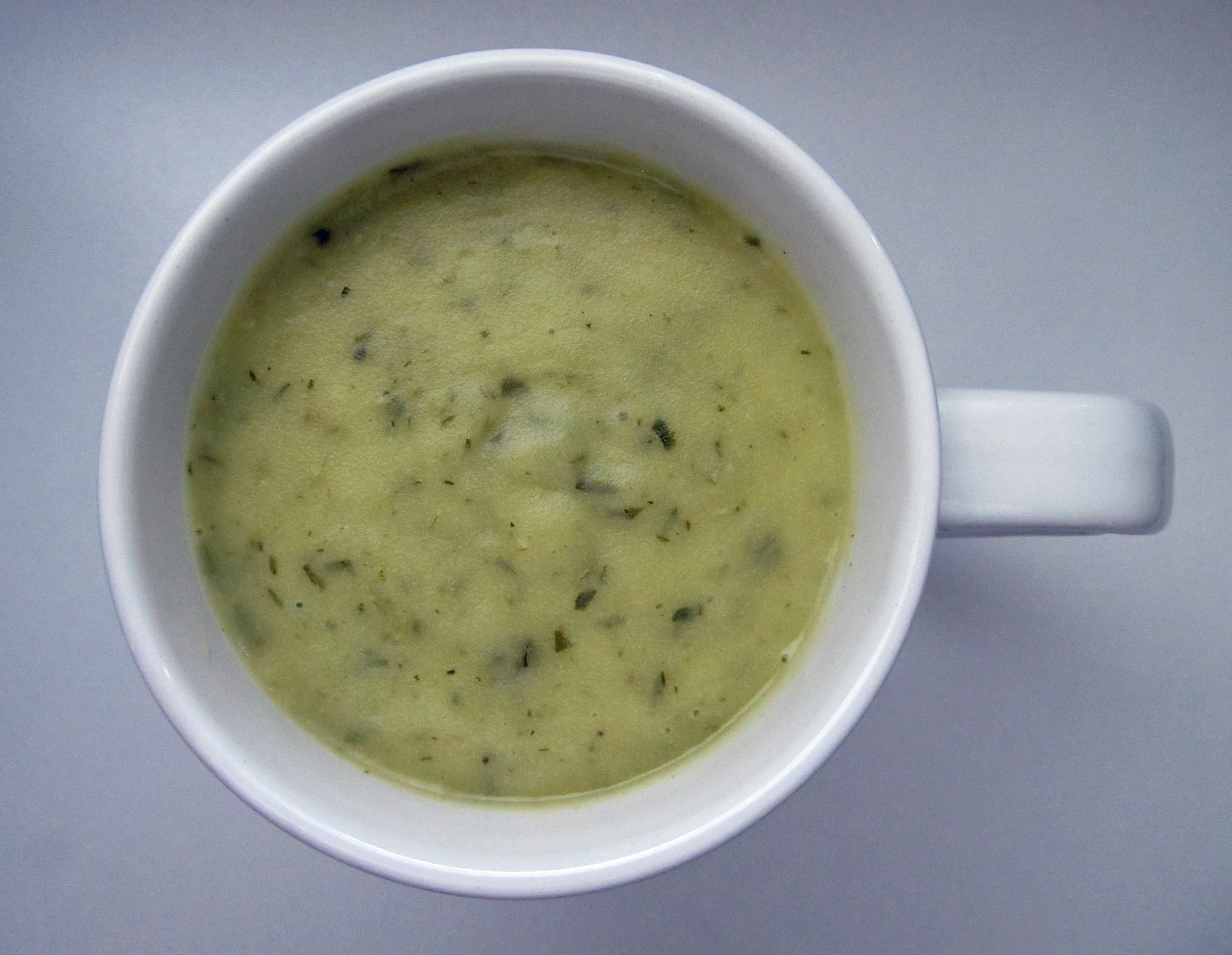
I tried strawberry clover leaves and flower heads in a soup made from a recipe found in the The Front Yard Forager by Melany Vorass Herrara. Around two cups of clover chopped, cooked, and blended with potatoes, scallions, and garlic in vegetable or chicken broth is a fine way to enjoy this plant. I don’t anticipate eating clover with great frequency, partly because it is included in a list of wild edible plants with toxic compounds in The North American Guide to Common Poisonous Plants and Mushrooms and also because I have to agree with the opinions of the authors quoted above – there are better tasting green things. Either way, it’s worth trying at least once.

clover soup

More Eating Weeds Posts on Awkward Botany:

Idaho’s Native Milkweeds

An updated version of this post was posted on August 14, 2019. See it here.

———————-

Concern for monarch butterflies has resulted in increasing interest in milkweeds. Understandably so, as they are the host plants and food source for the larval stage of these migrating butterflies. But milkweeds are an impressive group of plants in their own right, and their ecological role extends far beyond a single charismatic insect. Work to save the monarch butterfly, which requires the expansion of milkweed populations, will in turn provide habitat for countless other organisms. A patch of milkweed teems with life, and the pursuit of a single caterpillar helps us discover and explore that.

Asclepias – also known as the milkweeds – is a genus consisting of around 140 species, 72 of which are native to the United States and Canada. Alaska and Hawaii are the only states in the United States that don’t have a native species of milkweed. The ranges of some species native to the United States extend down into Mexico where there are numerous other milkweed species. Central America and South America are also home to many distinct milkweed species.

The habitats milkweeds occupy are about as diverse as the genus itself – from wetlands to prairies, from deserts to forests, and practically anywhere in between. Some species occupy disturbed and/or neglected sites like roadsides, agricultural fields, and vacant lots. For this reason they are frequently viewed as a weed; however, such populations are easily managed, and with such an important ecological role to play, they don’t deserve to be vilified in this way.

Milkweed species are not distributed across the United States evenly. Texas and Arizona are home to the highest diversity with 37 and 29 species respectively. Idaho, my home state, is on the low end with six native species, most of which are relatively rare. The most common species found in Idaho is Asclepias speciosa commonly known as showy milkweed.

showy milkweed (Asclepias speciosa)

Showy milkweed is distributed from central U.S. westward and can be found in all western states. It occurs throughout Idaho and is easily the best place to look for monarch caterpillars. Side note: the monarch butterfly is Idaho’s state insect, thanks in part to the abundance of showy milkweed. This species is frequently found growing in large colonies due to its ability to reproduce vegetatively via adventitious shoots produced on lateral roots or underground stems. Only a handful of milkweed species reproduce this way. Showy milkweed reaches up to five feet tall and has large ovate, gray-green leaves. Like all milkweed species except one (Asclepias tuberosa), its stems and leaves contain milky, latex sap. In early summer, the stems are topped with large umbrella-shaped inflorescences composed of pale pink to pink-purple flowers.

The flowers of milkweed deserve a close examination. Right away you will notice unique features not seen on most other flowers. The petals of milkweed flowers bend backwards, allowing easy access to the flower’s sex parts if it wasn’t for a series of hoods and horns protecting them. Collectively, these hoods and horns are called the corona, which houses glands that produce abundant nectar and has a series of slits where the anthers are exposed. The pollen grains of milkweed are contained in waxy sacs called pollinia. Two pollinia are connected together by a corpusculum giving this structure a wishbone appearance. An insect visiting the flower for nectar slips its leg into the slit, and the pollen sacs become attached with the help of the corpusculum. When the insect leaves, the pollen sacs follow where they can be inadvertently deposited on the stigmas of another flower.

Milkweed flowers are not self-fertile, so they require assistance by insects to sexually reproduce. They are not picky about who does it either, and their profuse nectar draws in all kinds of insects including bees, butterflies, moths, beetles, wasps, and ants. Certain insects – like bumble bees and other large bees – are more efficient pollinators than others. Once pollinated, seeds are formed inside a pod-like fruit called a follicle. The follicles of showy milkweed can be around 5 inches long and house dozens to hundreds of seeds. When the follicle matures, it splits open to release the seeds, which are small, brown, papery disks with a tuft of soft, white, silky hair attached. The seeds of showy milkweed go airborne in late summer.

follicles forming on showy milkweed (Asclepias speciosa)

Whorled or narrowleaf milkweed (Asclepias fascicularis) is widespread in western Idaho and neighboring states. It is adapted to dry locations, but can be found in a variety of habitats. Like showy milkweed, it spreads rhizomatously as well as by seed. Its a whispy plant that can get as tall as four feet. It has long, narrow leaves and produces tight clusters of greenish-white to pink-purple flowers. Its seed pods are long and slender and its seeds are about 1/4 inch long.

flowers of Mexican whorled milkweed (Asclepias fascicularis)

seeds escaping from the follicle of Mexican whorled milkweed (Asclepias fascicularis)

Swamp or rose milkweed (Asclepias incarnata) is more common east of Idaho, but occurs occasionally in southwestern Idaho. As its common names suggests, it prefers moist soils and is found in wetlands, wet meadows, and along streambanks. It can spread rhizomatously, but generally doesn’t spread very far. It reaches up to four feet tall, has deep green, lance-shaped leaves, and produces attractive, fragrant, pink to mauve, dome-shaped inflorescenses at the tops of its stems. Its seed pods are narrow and around 3 inches long.

swamp milkweed (Asclepias incarnata)

Asclepias cryptoceras, or pallid milkweed, is a low-growing, drought-adapted, diminutive species that occurs in southwestern Idaho. It can be found in the Owyhee mountain range as well as in the Boise Foothills. It has round or oval-shaped leaves and produces flowers on a short stalk. The flowers have white or cream-colored petals and pink-purple hoods.

pallid milkweed (Asclepias cryptoceras)

The two remaining species are fairly rare in Idaho. Antelope horns (Asclepias asperula) is found in Franklin County located in southeastern Idaho. It grows up to two feet tall with an upright or sprawling habit and produces clusters of white to green-yellow flowers with maroon highlights. Horsetail milkweed (Asclepias subverticillata) occurs in at least two counties in central to southeastern Idaho and is similar in appearance to A. fascicularis. Its white flowers help to distinguish between the two. Additional common names for this plant include western whorled milkweed and poison milkweed.