In Defense of Plants – A Podcast Review

I’m an avid podcast listener; however, the majority of the podcasts I listen to, while satisfying many of my varied interests, don’t speak to my interests in plants and plant science. Recently, when I went searching for such a podcast, I happened upon In Defense of Plants. Alas, my podcast queue felt complete.

indefenseofplants

In Defense of Plants began as a blog authored by a guy named Matt. The podcast emerged about 3 years later, and in the first episode (which was posted in January 2015), Matt explains why he started the blog. While searching the internet in an effort to learn more about plants, he discovered that people weren’t writing the stories that he really wanted to read – stories that went beyond mainly talking about the anthropogenic uses of plants. Rather, Matt was interested in the stories of the plants themselves, their biological and evolutionary histories and how they fit in with the ecological world around them. Unable to find such a blog, he decided to start one himself.

His passion for plants for plant’s sake continues in his podcast. It’s evidenced both in the topics he covers as well as in the way he speaks enthusiastically and affectionately about the plants involved in the stories he tells and their habitats. He finds people to interview that are as excited about plants as he is – some are friends, some are research scientists, and some are people otherwise involved in botany or horticulture. All have interesting things to say about the world of plants and plant ecology.

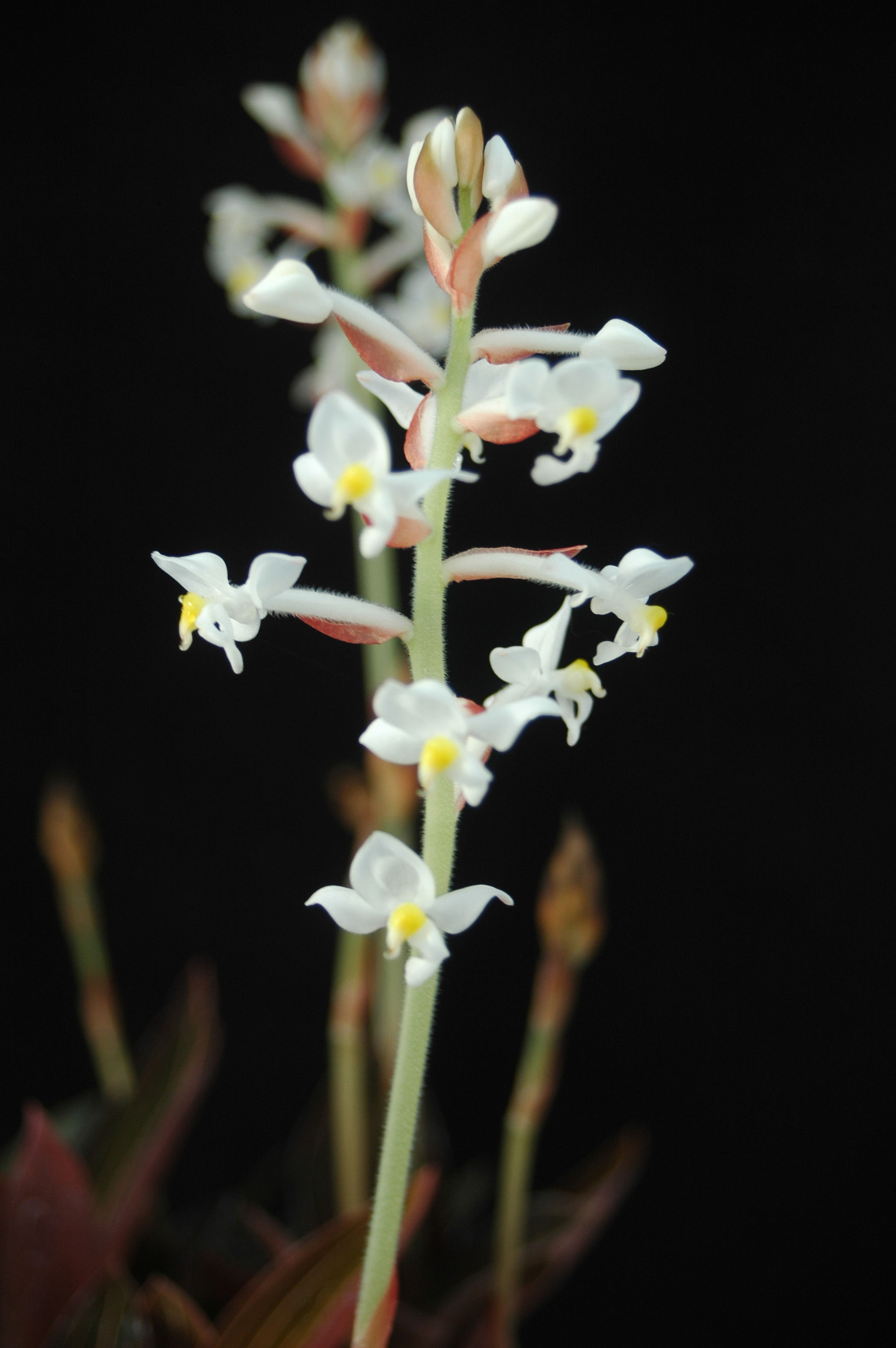
Ludisia discolor - the plant that inspired Matt to start the blog

Ludisia discolor – the plant that inspired Matt to start the blog (photo credit: www.eol.org)

Over the mere nine months that the podcast has been in existence, Matt has shared some of his personal botanical explorations. When he started the podcast he was living in Buffalo, NY. He completed a Master’s degree program there and has since moved to Illinois to pursue a PhD. His most recent episodes find him exploring the tallgrass prairie of the Midwest. He’s got my attention, since this is one of my favorite ecosystems in North America.

Standout episodes to me so far have been the two part episode with Russel Funderburk as they walk through the grounds of the Highlands Biological Station, the discussion with Dave Spiering about urban ecology, and the interview with Dr. Robert Warren about invasive species (“a refreshing take”). The episode about pack rat middens and the candid discussion with Matt’s friend Steve about why they botanize are also great. Matt and Steve also do an episode about plant poaching, a topic that deserves much more attention than it gets.

The love Matt has for plants is infectious, and it is hard not to feel his excitement as he helps tell their stories. So, if you find that your podcast queue is lacking something purely plant related, In Defense of Plants is a podcast you should definitely be following.

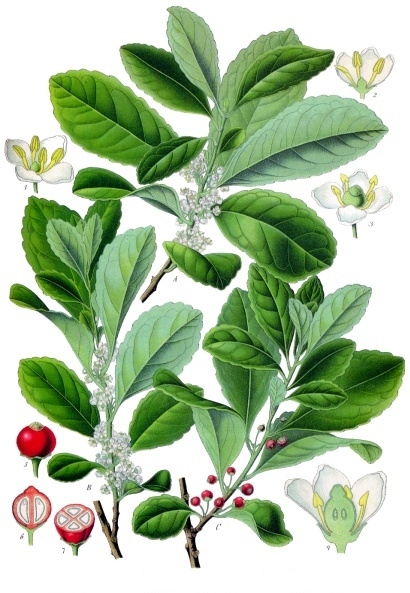
Yerba Mate (Ilex paraguariensis)

Yerba Mate (Ilex paraguariensis) is featured in two episodes of In Defense of Plants. Listen to part one and part two. (photo credit: wikimedia commons)


In Defense of Weeds – A Book Review

Weeds have been with us since the beginning of human civilization. We created them, really. We settled down, started growing food, urbanized, and in doing so we invited opportunistic plant species to join us – we created spaces for them to flourish and provided room for them to spread out and settle in. During our history together, our attitudes about weeds have swung dramatically from simply living with and accepting them, recognizing their usefulness, incorporating them into our religious myths and cultural traditions, to developing feelings of disgust and disdain and ultimately declaring outright war against them. In a sense, weeds are simultaneously as wild and as domestic as a thing can be. They remind us of ourselves perhaps, and so our feelings are mixed.

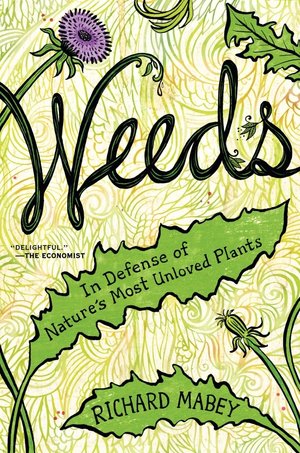
Considering our combined history and the fact that weeds have stuck with us all along, perhaps it’s time we give them a little respect. This seems to be the objective of Richard Mabey’s book, Weeds: In Defense of Nature’s Most Unloved Plants. In Mabey’s own words, “this book is a case for the defense, an argued suggestion that we look more dispassionately at these outlaw plants, at what they are, how they grow, and the reasons we regard them as trouble.” Additionally, we should recognize that we wrote the definition for weeds: “plants become weeds because people label them as such.” We introduce them, create conditions in which they can thrive, and then turn around and despise them for doing what they do best. “In a radical shift of perspective we now blame the weeds, rather than ourselves;” however, as Mabey ultimately concludes, “we get the weeds we deserve.”

weeds book

But before he arrives at that conclusion – and certainly Mabey has more to say than that pithy remark – Mabey takes readers on a remarkable journey. Starting with the origins of agriculture – and the origins of weeds – he recounts the story of how weeds followed civilization as it spread across the globe. He describes our diverse reactions to weeds, how we have dealt with them, and how they have infiltrated our myths, art, cultures, food, medicine, rituals, philosophies, and stories. Along the way, certain weeds are profiled using Mabey’s unique prose. Each weed has a story to tell – some more sordid than others.

Mabey is a British author, and so the book has a strong Anglocentric slant. But this seems fitting considering that the explorations and migrations of early Europeans are probably responsible for moving more plant species around than any other group in history – at least up until the modern era. Mabey describes the myriad ways these plants were introduced: “Some simply rode piggy-back on crop and garden plants…others were welcomed as food plants or glamorous ornaments, but escaped or were thrown out and became weeds as a consequence of unforeseen bad behavior.” The seeds of many species hitched rides with numerous agricultural and industrial products, while others attached themselves to clothing, shoes, and animal fur. Everywhere humans traveled, weeds followed.

Weeds are one of the great legacies Europeans brought with them as they settled the American continent. A veritable wave of new plant species entered the Americas as the Europeans trickled in, some were purposeful introductions and some accidental. Ever the opportunists, Europe’s weeds traversed across the continent as settlers tilled and altered the land. Mabey details the introduction of “invasive European weeds” to the western United States, claiming that “by the twentieth century two-thirds of the vegetation of the western grasslands was composed of introduced species, mostly European.

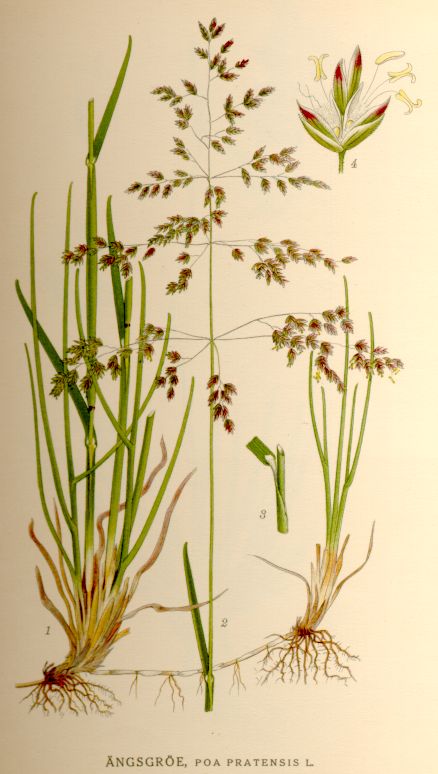
One of these European species in particular has been wholeheartedly embraced by American culture; it was even given an American name. Kentucky bluegrass, Poa pratensis, “is a common, widespread but unexceptional species of grassy places in Europe…but in uncontested new grazing lands of North America it could color whole sweeps of grassland.” It has since become a preferred turfgrass species, and it’s innate ability to thrive here makes it partly responsible for Americans’ obsession with the perfect lawn. Oddly, other European invaders infiltrating a pristine, green lawn are unwelcome and derided as “weeds.” In actuality, considering its relentless, expansive, and spreading nature and its reliance on humans to perpetuate its behavior, turfgrass is much more fit for the label “weed” than any other species that invades it. As Mabey asserts, “a lawn dictates its own standards…the demands made by its singular, unblemished identity, its mute insistence that if you do not help it to continue along the velvet path you have established for it, you are guilty of a kind of betrayal.”

Kentucky bluegrass (Poa pratensis) also known as smooth meadow-grass - photo credit: wikimedia commons

Kentucky bluegrass (Poa pratensis), also known as smooth meadow-grass – photo credit: wikimedia commons

Reading along it becomes clear that Mabey is infatuated with weeds. You can see it in sentences like, “the outlandish enterprise of weeds – such sharp and fast indices of change – can truly lift your heart.” This doesn’t mean that in his own garden he doesn’t “hoick them up when they get in [his] way.” It just means that his “capricious assault” is “tinged with respect and often deflected by a romantic mood.” Does Mabey wish his readers to swoon the way he does over these enterprising and opportunistic aliens? Perhaps. More than that he seems to want to instill an awe and admiration for what they can do. In many cases they serve important ecological functions, including being a sort of “first responder” after a disturbance due to their fast acting and ephemeral nature. In this way, weeds “give something back” by “holding the bruised parts of the planet from falling apart.” They also “insinuate the idea of wild nature into places otherwise quite shorn of it,” and so despite their dependence on human activities, they could be considered “the very essence of wildness.”

For all the love Mabey has for weeds, he remains convinced that some absolutely need to be kept in check. He calls out Japanese knotweed specifically – an “invader with which a truly serious reckoning has to be made.” In speaking of naturalized plant species – introduced species that propagate themselves and “spread without deliberate human assistance” – he makes the comparison to humans becoming naturalized citizens in countries where they were not born. In this sense he argues for more acceptance of such species, while simultaneously warning that “there are invasive species that ought never to get their naturalization papers.”

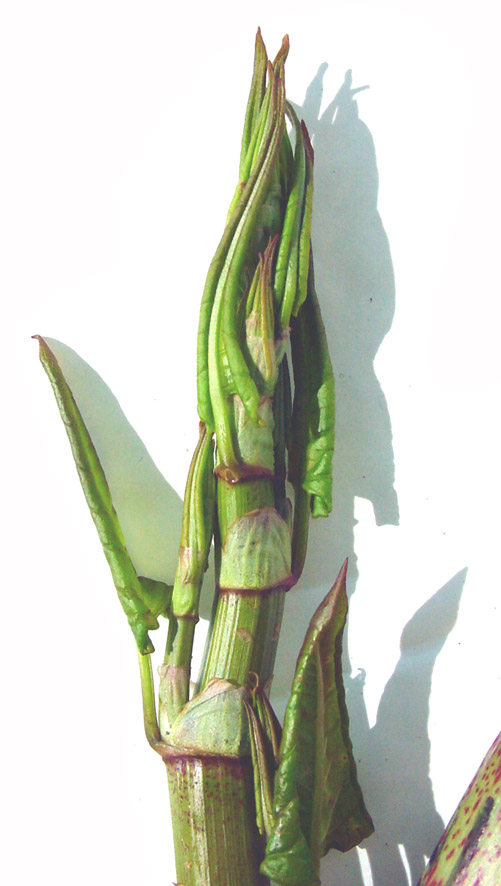
Japanese knotweed (Fallopia japonica) is listed as one the 100 Worst Invasive Species - photo credit: wikimedia commons

Japanese knotweed (Fallopia japonica) is listed as one the 100 Worst Invasive Species – photo credit: wikimedia commons

This is an engrossing read, and regardless of how you feel about weeds going in, Mabey will – if nothing else – instill in you a sort of reverence for them. You may still want to reach for the hoe or the herbicide at the sight of them – and you may be justified in doing that – but perhaps you’ll do so with a little more understanding. After all, humans and weeds are kindred species.

As a type they are mobile, prolific, genetically diverse. They are unfussy about where they live, adapt quickly to environmental stress, use multiple strategies for getting their own way. It’s curious that it took so long to realize that the species they most resemble is us.

Listen to Mabey talk about his book and his interest in weeds on these past episodes of Science Friday and All Things Considered.

Botany in Popular Culture: The Sunset Tree by the Mountain Goats

My obsession with plants means that I see botany everywhere – in the music I listen to, the shows I watch, the books I read, whatever. Just a fleeting mention of something plant related in any type of media will catch my attention, no matter how ancillary it is to the major themes. And that is the impetus behind this series of posts about botany in popular culture. Well that and, believe it or not, I do enjoy many non-plant related things, and this gives me an excuse to write about those things on a plant-centric blog.

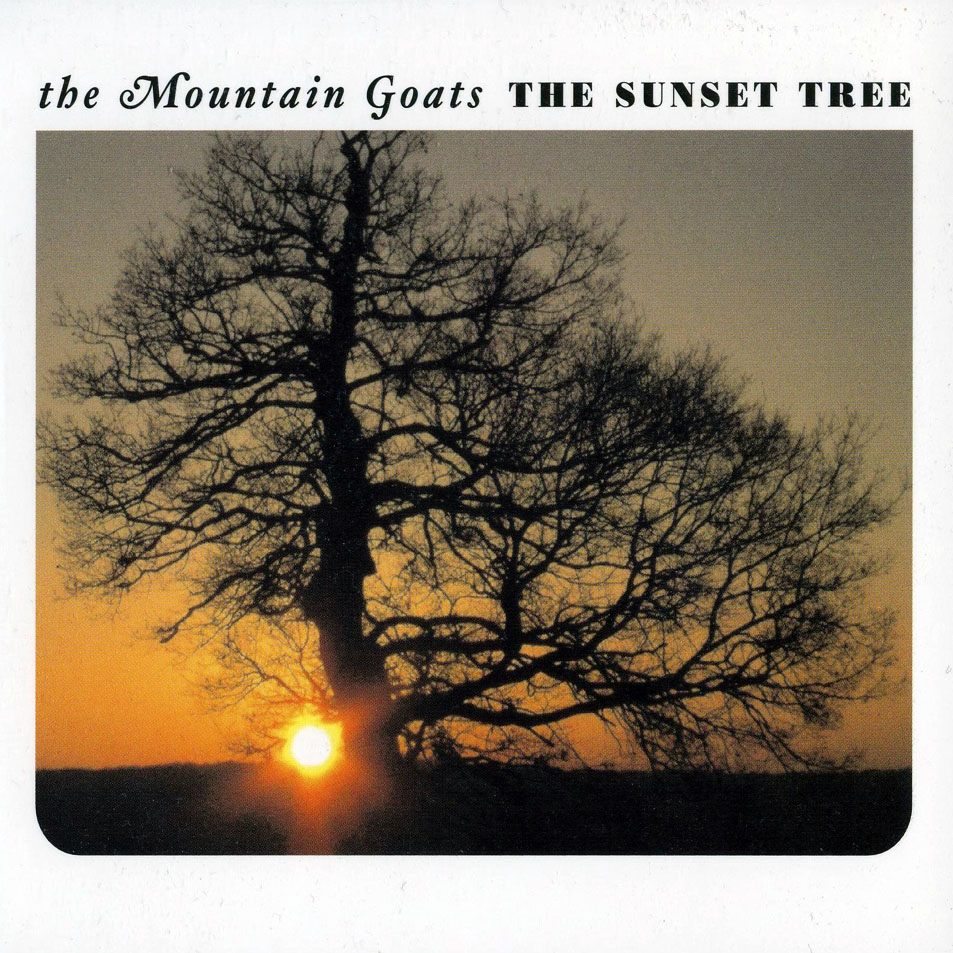
TheSunsetTreeFrontCover

The Mountain Goats are a folk rock band formed by John Darnielle in 1991. It could be said that John Darnielle is synonymous with the Mountain Goats, as Darnielle is the chief songwriter and at times has been the only member of the band. The Sunset Tree is the Mountain Goats ninth studio album and only the second album featuring songs that are primarily autobiographical. The album that preceded The Sunset Tree, entitled We Shall All Be Healed, was about Darnielle’s teenage years as a methamphetamine user. The Sunset Tree describes growing up with an abusive stepfather. Heavy topics are kind of the Mountain Goats’ thing.

Darnielle’s lyrics are highly poetic and often nebulous – the listener is left to fill in the gaps. Thus, the storytelling in The Sunset Tree isn’t always direct. However, the scene begins to unfold in the second track, “Broom People,” as Darnielle seems to be describing his childhood living conditions: “all sorts of junk in the unattached spare room,” “dishes in the kitchen sink,” “floor two foot high with newspapers,” “white carpet thick with pet hair.” He also sings of “friends who don’t have a clue; well meaning teachers,” and how he would “write down good reasons to freeze to death in [his] spiral ring notebook.”

“Dance Music” reveals more as Darnielle at 5 or 6 years old is getting “indications that there’s something wrong.” As he sits watching TV, his stepfather is yelling at his mom, then “launches a glass across the room, straight at her head, and [Darnielle] dashes upstairs to take cover.” He turns on his “little record player on the floor” and makes a discovery: “so this is what the volume knob is for.”

A similar scene unfolds in “Hast Thou Considered the Tetrapod,” only this time Darnielle is the victim. He arrives home to find his stepfather asleep, so he sneaks up to his room knowing that if he awakes his stepfather, “there will be hell to pay.” But he does wake up, and he bursts into Darnielle’s room to find him sitting with his headphones on oblivious. The beating begins, and Darnielle sings, “then I’m awake and I’m guarding my face / hoping you don’t break my stereo / because it’s the one thing that I couldn’t live without / and so I think about that and then I sorta black out.” Darnielle describes being “held under these smothering waves” by his stepfather’s “strong and thick-veined hand.” But he remains hopeful that eventually – “one of these days” – he will “wriggle up on dry land.”

That sense of hopefulness can be found throughout the album. In “This Year,” Darnielle is a 17 year old longing to break free. The chorus repeats resolutely: “I am gonna make it through this year if it kills me.” In “Up the Wolves,” he assures us, “there’s gonna come a day when you feel better / you’ll rise up free and easy on that day.”

But there is obviously some anger and frustration expressed as well. Later in “Up the Wolves,” Darnielle sings that he’s going to get himself in “fighting trim” and then makes a series of threats: “I’m gonna bribe the officials, I’m gonna kill all the judges, It’s gonna take you people years to recover from all of the damage.” The song “Lion’s teeth” is a revenge fantasy. Darnielle envisions “the king of the jungle asleep in his car,” and since “nobody in this house wants to own up to the truth,” he takes it upon himself to wrestle the beast. He reaches into the lion’s mouth, grabs onto “one long sharp tooth,” and holds on. The chaos that ensues makes him realize he is “gonna regret the day [he] was born,” but since there is no good way to end it, he is determined to “hold on for dear life.”

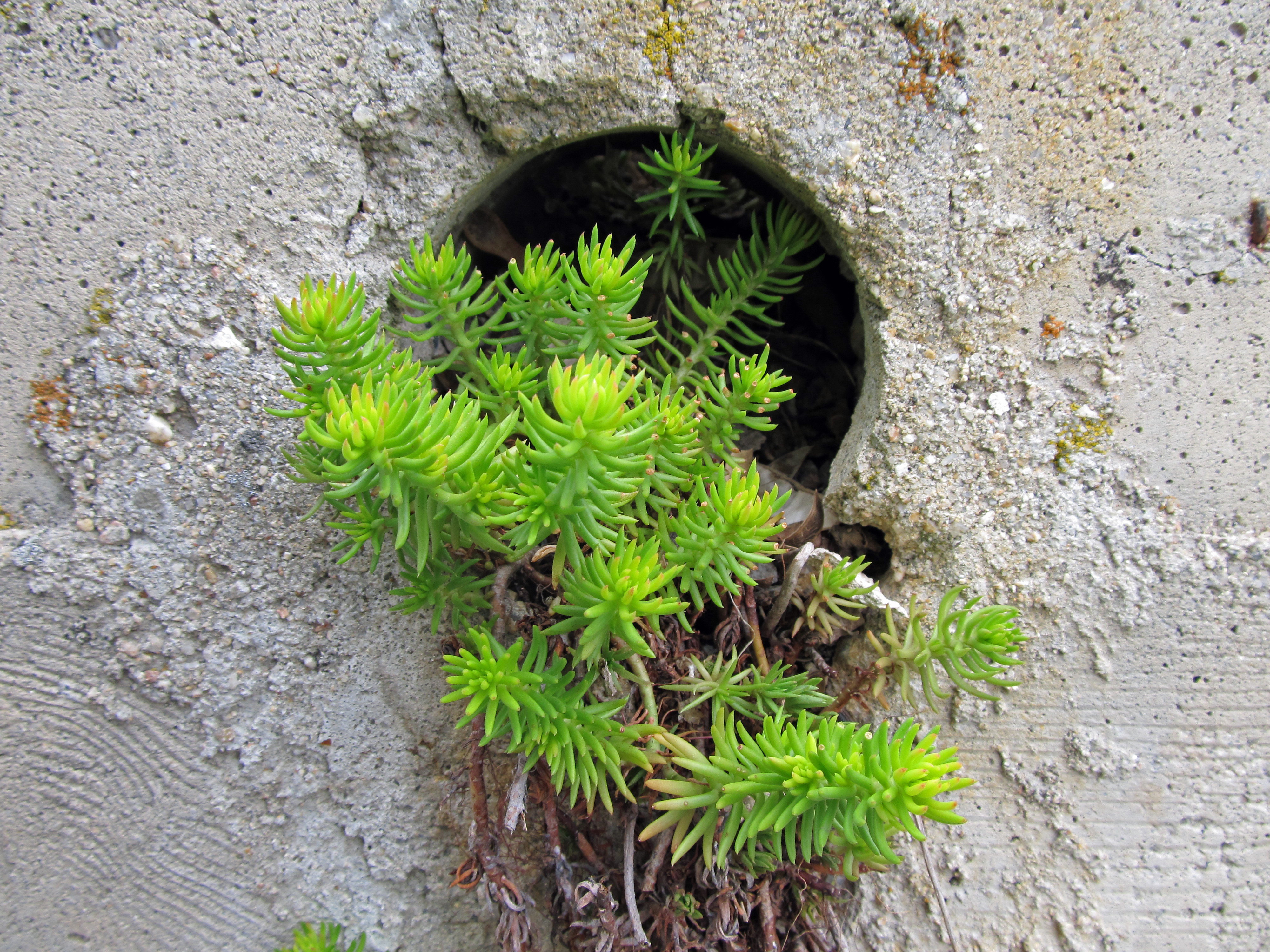
The mood lightens during the last two tracks of the album. They seem to be about forgiveness, understanding, and letting go. In “Pale Green Things,” Darnielle tells of hearing from his sister that their stepfather had died “at last, at last.” Upon hearing the news, one of the first memories Darnielle has is of he and his stepfather going to a racetrack to watch horses run. In one scene he recalls looking down at the cracked asphalt and “coming up through the cracks, pale green things.”

It’s a poignant ending to an album full of dark memories. It’s also fitting, as it adds to the bits of hope scattered throughout. Seeing plants push up through concrete or sprout up in detritus collected in gutters and corners of rooftops or even just up out of the dirt in the middle of summer when the ground is hot and bone dry, all of these moments are testaments to the tenacity of living things. Life can, rightfully so, be described as fleeting, short, and fragile – easily snuffed out and erased. But the struggle for life is also fierce, enduring, and relentless. Darnielle’s story is one example of that.

sedums in a hole 2

The “pale green things” that Darnielle saw also symbolize the struggles of the little guy, the underdog, the downtrodden – a tiny, fragile plant pushing its way past solid, suffocating asphalt. It’s a common theme in Darnielle’s music – his latest album is called Beat the Champ, for example. His song “Wild Sage” is also a sign of that ongoing theme.

I work with plants all day, and I am continually awed by them. Daily I am stopped in my tracks, practically forced by some plant to admire one or more of the fascinating features it displays. It doesn’t surprise me that Darnielle would use “pale green things” to express hope and resiliency. Every day I find some kind of hope in plants, that whatever tough thing we are going through, we can one day “wriggle up on dry land” – pale green things pushing up through asphalt, wild sage growing in the weeds.

Documentary: The Sagebrush Sea

Last month I posted a few photos of some of the weeds and wildflowers of the Boise Foothills. In that post I touched briefly on the ecology of the foothills, and a few readers expressed interest in more posts about this topic. It is definitely a topic I would like to explore further, but it is not one that I know a ton about. In fact, despite spending the majority of my life residing in this high desert, sagebrush-dominated ecosystem, it has only been in the past few years that I have really gained an appreciation for it. Perhaps that’s understandable. This landscape, which initially appears drab, lifeless, and boring, is not easy to love at first…until you do a little exploring, at which point you find it teeming with life, loaded with diversity, and worthy of admiration.

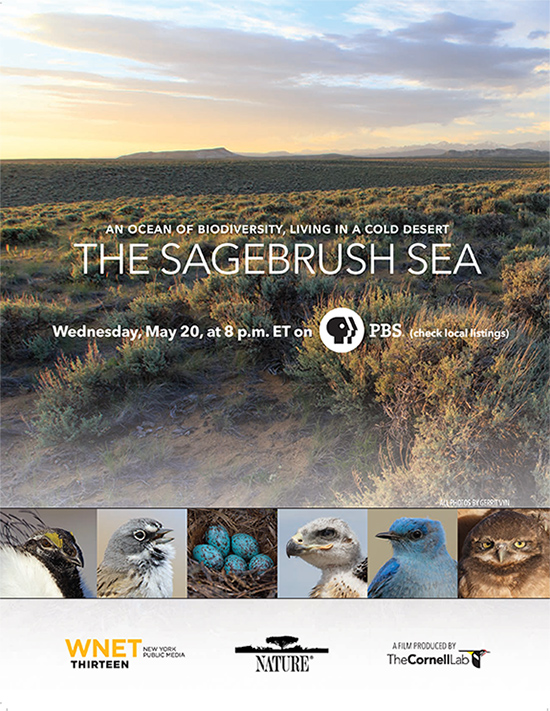
That is one of the themes of a new PBS Nature documentary, The Sagebrush Sea, which debuted on PBS in May 2015. The film is an intimate view of what’s really going on in this vast, seemingly empty landscape that many of us simply ignore, passing through on our way to somewhere else. It is an introduction to a fascinating ecosystem, shaped and formed by extreme events and inhabited by plants and animals that have unique adaptations that allow them to survive the harsh conditions of the high desert. Some of these plants and animals can be found nowhere else on earth. For anyone looking to learn more about the ecology of the Boise foothills and/or the larger ecosystem of which they are a part, this is an excellent place to start.

The-Sagebrush-Sea

The sagebrush steppe is a plant community dominated by sagebrush (Artemisia tridentata and its various subspecies) and bunchgrasses. At one point it covered as many as 500,000 square miles of western North America – hence “the sagebrush sea” – but human activities have reduced it to half that size. The plants and animals in this ecosystem have been coevolving together for at least 2 million years. Sagebrush is, as the narrator of the film says, “the anchor of the high desert,” living up to 140 years old and helping to ensure that the desert doesn’t become a dust bowl. Sagebrush also provides food and shelter for a great number of species.

The Sagebrush Sea was produced by the The Cornell Lab of Ornithology, so while lots of other plant and animal life get adequate screen time, the birds of the sagebrush steppe dominate the film. One species in particular, the greater sage-grouse, is the star character, driving the film’s narrative and speaking for the protection of this threatened and underappreciated ecosystem.

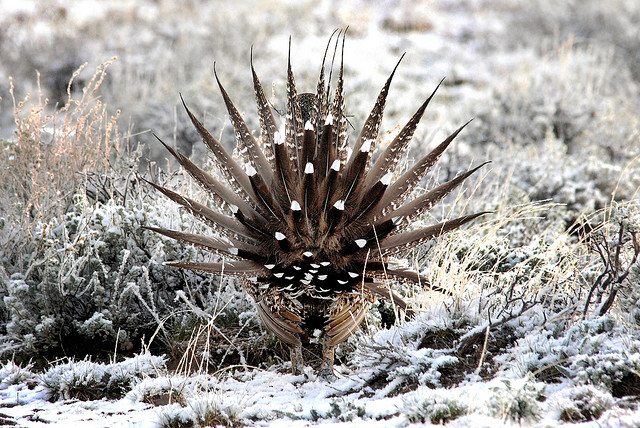
A view from behind a male greater sage-grouse (Centrocercus urophasianus ) - photo credit: wikimedia commons

A view from behind a male greater sage-grouse (Centrocercus urophasianus ) – photo credit: wikimedia commons

Sage-grouse are endemic to the sagebrush steppes of the intermountain west. They are sensitive to disturbances and are “tied to unbroken expanses of sage.” Their breeding grounds (leks) are large patches of open ground, but when they aren’t breeding (which is the majority of the year) they are taking refuge in the sagebrush and grasses. The females make nests below sagebrush, where they blend right in, camouflaged from predators. Sage-grouse consume various plants and insects throughout the year, but their diet consists mainly of the evergreen leaves of sagebrush. Just 200 years ago there were up to 16 million sage-grouse in the sagebrush sea, today that number has been reduced to around 200,000. Due to such a steep decline, they may soon be added to the endangered species list.

Because sage-grouse are so reliant on healthy, intact, widespread sections of sagebrush-steppe, they are considered an umbrella species. Taking measures to protect them will simultaneously spare and even improve the lives of numerous other species with similar requirements. To begin with, there are a handful of other bird species that nest nowhere else except in sagebrush, specificallly the sagebrush sparrow, the sage thrasher, and the brewer’s sparrow. Other animals feed on sagebrush and rely on it to make it through the winter, such as pronghorn and mule deer. Sagebrush is also considered a nurse plant, providing shade and moisture for grass and forb seedlings growing below it.

The sagebrush steppe is threatened by the usual cast of characters: habitat fragmentation, urban and agricultural development, invasive species, climate change, etc.  Some specific activities like cattle ranching and oil and gas drilling also come into play. While The Sagebrush Sea briefly introduces some of the major threats to this ecosystem, it does not dwell on any single issue or point fingers in any one particular direction. For one, it is hard to place blame when there are so many factors involved; but more importantly, the filmmakers wanted the film to be accessible to everyone in order to foster a greater appreciation for the sagebrush sea and a consequent desire to protect it. The debates regarding this part of the world are heated enough, and those directly involved are already well aware of the issues.

This is a beautiful film. The images it captures are captivating and at times breathtaking. Apart from the sage-grouse, various animal families are introduced throughout, each one stealing your heart. My only complaint is that, at only 53 minutes, the film is too short. Luckily, the world they depicted is right outside my door, and I am now even more inspired to explore it.

To learn more about sage-grouse conservation, visit Sage Grouse Initiative.

Book Review: Rambunctious Garden

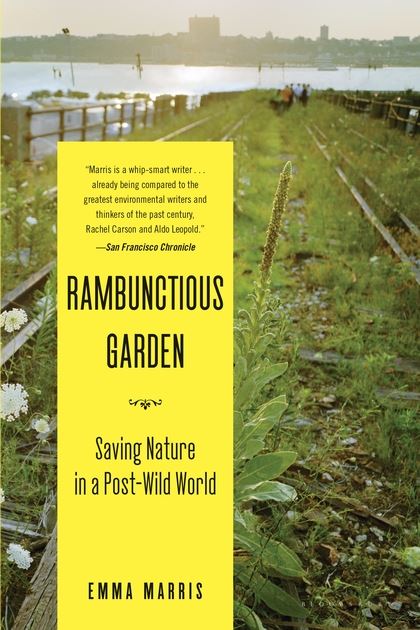
Last month in a post entitled Making the Case for Saving Species, I reviewed an article written by Emma Marris about doing all we can to prevent species from going extinct, even when the approach is not a popular one – like introducing rust resistant genes into native whitebark pine populations. Intrigued by Marris’ words, I decided to finally read her book, Rambunctious Garden: Saving Nature in a Post-Wild Word, which had been sitting on my bookshelf for several months and had been on my list of books to read for at least a couple of years before that. At only 171 pages, Marris’ book is a quick read and comes across as an introduction to some sort of revolution. Its brevity demands future volumes, which are hopefully on their way.

rambunctious garden

The general topic that Marris addresses is how to do conservation work in a world that is riddled with human fingerprints, especially coming from a perspective that human influence is and has been largely negative. What should our goals be? The traditional approach has been to restore natural areas to a historical baseline. In North America, that baseline is usually pre-European colonization. So, we remove introduced species and we use whatever records we have and data we can gather to make natural areas look and function as they did several hundred years ago.

But there are some concerns with this approach. Rewinding time requires massive amounts of money, labor, and time, and if that historical baseline is ever achieved, it will require great effort to keep it there. Also, a number of species have gone extinct and there is no way of replacing them (unless we introduce similar species as proxies), and some species require large areas to roam that even our most spacious parks cannot accommodate. And then there is the challenge of continual change. Anthropogenic climate change aside (which complicates conservation and restoration efforts in serious ways), the earth’s ecosystems are in a constant state of flux, so holding a site to a pre-determined baseline makes little sense when viewed from a geological timescale.

There is another issue – which is in part a semantic one – and that is, we seem to have a distorted view of nature. We like to think of it as being apart from us, away from us, somewhere wild and pristine. Marris writes: “We imagine a place, somewhere distant, wild and free, a place with no people and no roads and no fences and no power lines, untouched by humanity’s great grubby hands, unchanging except for the season’s turn. This dream of pristine wilderness haunts us. It blinds us.”

We are blinded because “pristine” is a myth. Every inch of the globe has been altered in some way by humans – some areas more than others – and disconnecting ourselves from nature in a way that makes it unattainable deters us from the perception that nature can be all around us. Nature is not found only in national parks, nature preserves, and other protected areas, but in our backyards, on our rooftops, along roadsides, in the cracks of concrete, and in farm fields. Nature is everywhere. And if nature is everywhere, then conservation can happen everywhere.

After a brief overview of how we (Americans specifically) arrived at our current approach to conservation and restoration, Marris dives into some new approaches, visiting sites around the world and talking with biologists and ecologists about their work.  She explores rewilding (Pleistocene rewilding even), assisted migration, embracing exotic species, novel ecosystems, and designer ecosystems. The subject matter of each chapter in Marris’ book is worthy of a post or two of its own, but I’ll spare you that and suggest that you read the book. The controversy that surrounds these novel approaches is also worth noting. A few searches and clicks on the internet will lead you to some fairly heated debates about the ideas that Marris puts forth in her book, as well as some criticisms of Marris herself.

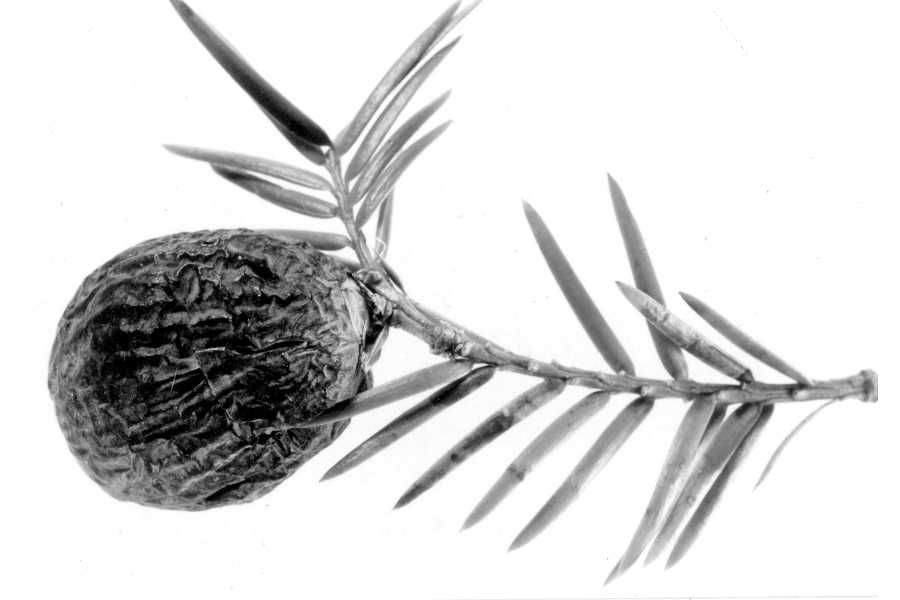
Florida torreya (Torreya taxifolia) - a critically endangered tree species native to a tiny corner in the southeastern United States that is not likely to survive the coming decades in the wild without assisted migration.

Florida torreya (Torreya taxifolia) – a critically endangered tree species native to a tiny corner in the southeastern United States that is not likely to survive the coming decades in the wild without assisted migration. (photo credit: www.eol.org)

My view as an outsider – that is, one without a high level degree in ecology and lacking years of experience working in the field – is that the tools and methods outlined in Marris’ book are worth exploring further. Certainly, each natural area must be approached differently depending on the conditions of the site and the goals of the managers. [Marris offers a great overview of some goals to consider in her last chapter.] Ultimately it is up to people much smarter and more experienced than I to sort it all out. But I heartily encourage thinking outside of the box…for whatever it’s worth.

And that brings me to what I loved most about the book. Controversy aside, Marris’ clarion call for a paradigm shift is a welcome one. Nature is all around us, and regardless of what land managers and the powers that be decide to do with large tracts of land “out there,” every individual can find purpose and beauty in the nature that surrounds them, whether it be the street trees that line our neighborhoods or the vacant lot growing wild with weeds down the street. We can decide to let our yards go a little feral, to plant some native plants, to encourage wildlife in urban areas, and to even do a little assisted migration of our own by planting things from nearby regions just to see how they will do in our changing climate. In short, we can garden a bit more rambunctiously. And we should.

This is how Marris puts it:

If we fight to preserve only things that look like pristine wilderness, such as those places currently enclosed in national parks and similar refuges, our best efforts can only retard their destruction and delay the day we lose. If we fight to preserve and enhance nature as we have newly defined it, as the living background to human lives, we may be able to win. We may be able to grow nature larger than it currently is. This will not only require a change in our values but a change in our very aesthetics, as we learn to accept both nature that looks a little more lived-in than we are used to and working spaces that look a little more wild than we are used to.

Read a short interview with Marris about her book here, and listen to a discussion with her on a recent episode of Out There podcast.

Year of Pollination: An Argentinian Cactus and Its Unlikely Pollinator

A few weeks ago I wrote about pollination syndromes – sets of floral triats that are said to attract specific groups of pollinators. In that post I discussed how pollination syndromes have largely fallen out of favor as a reliable method of predicting the pollinators that will visit particular flowers. In this post I review a recent study involving a species of cactus in Argentina that, as the authors state in their abstract, “adds another example to the growing body of mismatches between floral syndrome and observed pollinator.”

Denmoza rhodacantha is one of many species of cacti found in Argentina. It is the only species in its genus, and it is widely distributed across the east slopes and foothills of the Andes. It is a slow growing cactus, maintaining a globulous (globe-shaped) form through its juvenile phase and developing a columnar form as it reaches maturity. D. rhodacantha can reach up to 4 meters tall and can live beyond 100 years of age. Individual plants can begin flowering in their juvenile stage. Flowers are red, nectar rich, scentless, and tubular. The stigma is lobed and is surrounded by a dense grouping of stamens. Both male and female reproductive organs are extended above the corolla. The flowers have been described by multiple sources as being hummingbird pollinated, not based on direct observation of hummingbirds visiting the flowers, but rather due to the floral traits of the species.

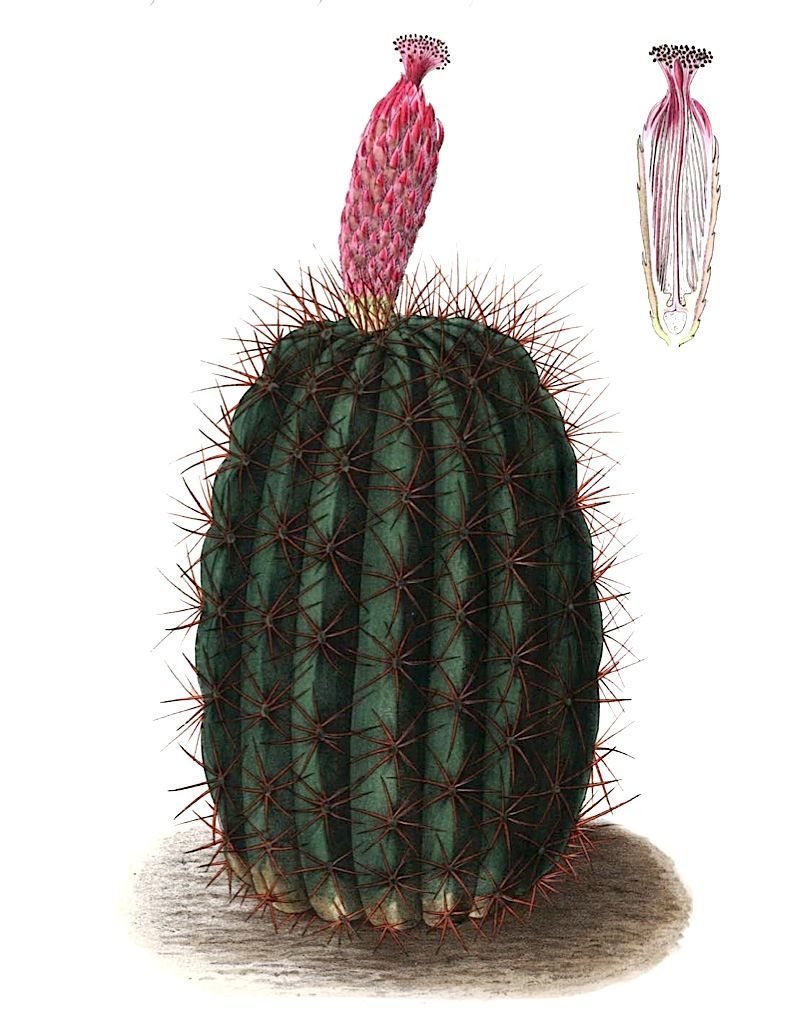
Denmoza rhodacantha illustration - image credit: www.eol.org

Denmoza rhodacantha illustration  (image credit: www.eol.org)

In a paper entitled, Flowering phenology and observations on the pollination biology of South American cacti – Denmoza rhodacantha, which was published in volume 20 of Haseltonia (the yearbook of the Cactus and Succulent Society of America), Urs Eggli and Mario Giorgetta discuss their findings after making detailed observations of a population of D. rhodacantha in early 2013 and late 2013 – early 2014. The population consisted of about 30 individuals (both juveniles and adults) located in the Calchaqui Valley near the village of Angastaco, Argentina. At least three other species with “hummingbird-syndrome flowers” were noted in the area, and three species of hummingbirds were observed during the study periods. Over 100 observation hours were logged, and during that time “the studied plants, their flowering phenology, and flower and fruit visitors were documented by means of photographs and video.”

The flowers of D. rhodacantha only persist for a few short days, and in that time their sexual organs are only receptive for about 24 hours. The flowers are self-sterile and so require a pollinator to cross pollinate them. Despite their red, tubular shape and abundant nectar, no hummingbirds were observed visiting the flowers. One individual hummingbird approached but quickly turned away. Hummingbirds were, however, observed visiting the flowers of an associated species, Tecoma fulva ssp. garrocha. Instead, a species of halictid bee (possibly in the genus Dialictus) was regularly observed visiting the flowers of D. rhodacantha. The bees collected pollen on their hind legs and abdomen and were seen crawling across the lobes of the stigma. None of them were found feeding on the nectar. In one observation, a flower was visited by a bee that was “already heavily loaded with the typical violet-coloured pollen of Denmoza,” suggesting that this particular bee species was seeking out these flowers for their pollen. Small, unidentified beetles and ants were seen entering the flowers to consume nectar, however they didn’t appear to be capable of offering a pollination service.

D. rhodacantha populations have been observed in many cases to produce few fruits, suggesting that pollination success is minimal. The authors witnessed “very low fruit set” in the population that they were studying, which was “in marked contrast to the almost 100% fruit set rates of the sympatric cactus species at the study site.” This observation wasn’t of great concern to the authors though, because juvenile plants are present in observed populations, so recruitment appears to be occurring. In this study, dehisced fruits were “rapidly visited by several unidentified species of ants of different sizes.” The “scant pulp” was harvested by smaller ants, and larger ants carried away the seeds after “cleaning them from adhering pulp.”

The authors propose at least two reasons why hummingbirds avoid the flowers of D. rhodacantha. The first being that the native hummingbirds have bills that are too short to reach the nectar inside the long tubular flowers, and often the flowers barely extend beyond the spines of the cactus which may deter the hummingbirds from approaching. The second reason is that other plants in the area flower during the same period and have nectar that is easier to gather. The authors acknowledge that this is just speculation, but it could help explain why the flowers are pollinated instead by an insect (the opportunist, generalist halictid bee species) for whom the flowers “could be considered to be ill adapted.” The authors go on to say, “it should be kept in mind, however, that adaptions do not have to be perfect, as long as they work sufficiently well.”

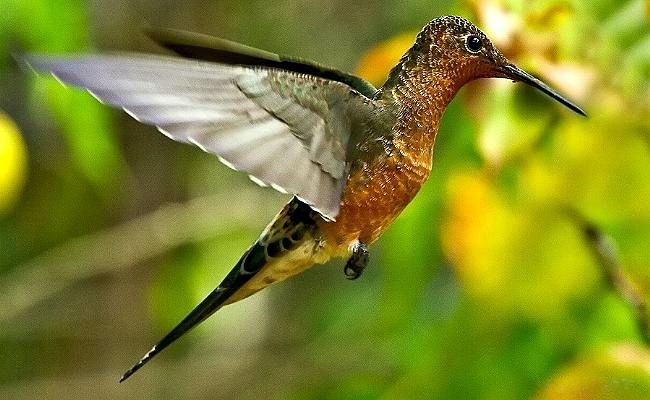
Patagona gigas (giant hummingbird) was observed approaching the flower of a Denmoza rhodacantha but quickly turned away (photo credit: www.eol.org)

Patagona gigas (giant hummingbird) was observed approaching the flower of a Denmoza rhodacantha but quickly turned away (photo credit: www.eol.org)

More Year of Pollination posts on Awkward Botany:

Year of Pollination: Hellstrip Pollinator Garden

This month I have been reading and reviewing Evelyn Hadden’s book, Hellstrip Gardening, and I have arrived at the fourth and final section, “Curbside-Worthy Plants.” As the title suggests, this section is a list of plants that Hadden has deemed worthy of appearing in a curbside garden. It’s not exhaustive, of course, but with over 100 plants, it’s a great start. Photos and short descriptions accompany each plant name, and the plants are organized into four groups: showy flowers, showy foliage, culinary and medicinal use, and four-season structure.

This list is useful and fun to read through, but there isn’t much more to say about it beyond that. So I have decided to write this month’s Year of Pollination post about creating a hellstrip pollinator garden using some of the plants on Hadden’s list. Last year around this time I wrote about planting for pollinators where I listed some basic tips for creating a pollinator garden in your yard. It’s a fairly simple endeavor – choose a sunny location, plant a variety of flowering plants that bloom throughout the season, and provide nesting sites and a water source. If this sounds like something you would like to do with your hellstrip, consider planting some of the following plants.

Spring Flowers

Spring flowering plants are an important food source for pollinators as they emerge from hibernation and prepare to reproduce. There are several spring flowering trees and shrubs on Hadden’s list. Here are three of them:

  • Amelanchier laevis (Allegheny serviceberry) – A multi-trunked tree or large shrub that flowers early in the spring. Other small trees or shrubs in the genus Amelanchier may also be suitable.
  • Cercis canadensis (eastern redbud) – A small tree that is covered in tiny, vibrant, purple-pink flowers in early spring.
  • Ribes odoratum (clove currant) – A medium sized shrub that flowers in late spring. Try other species of Ribes as well, including one of my favorites, Ribes cereum (wax currant).

There aren’t many spring flowering herbaceous plants on Hadden’s list, but two that stood out to me are Amsonia hubrichtii (bluestar) and Polemonium reptans (creeping Jacob’s ladder).

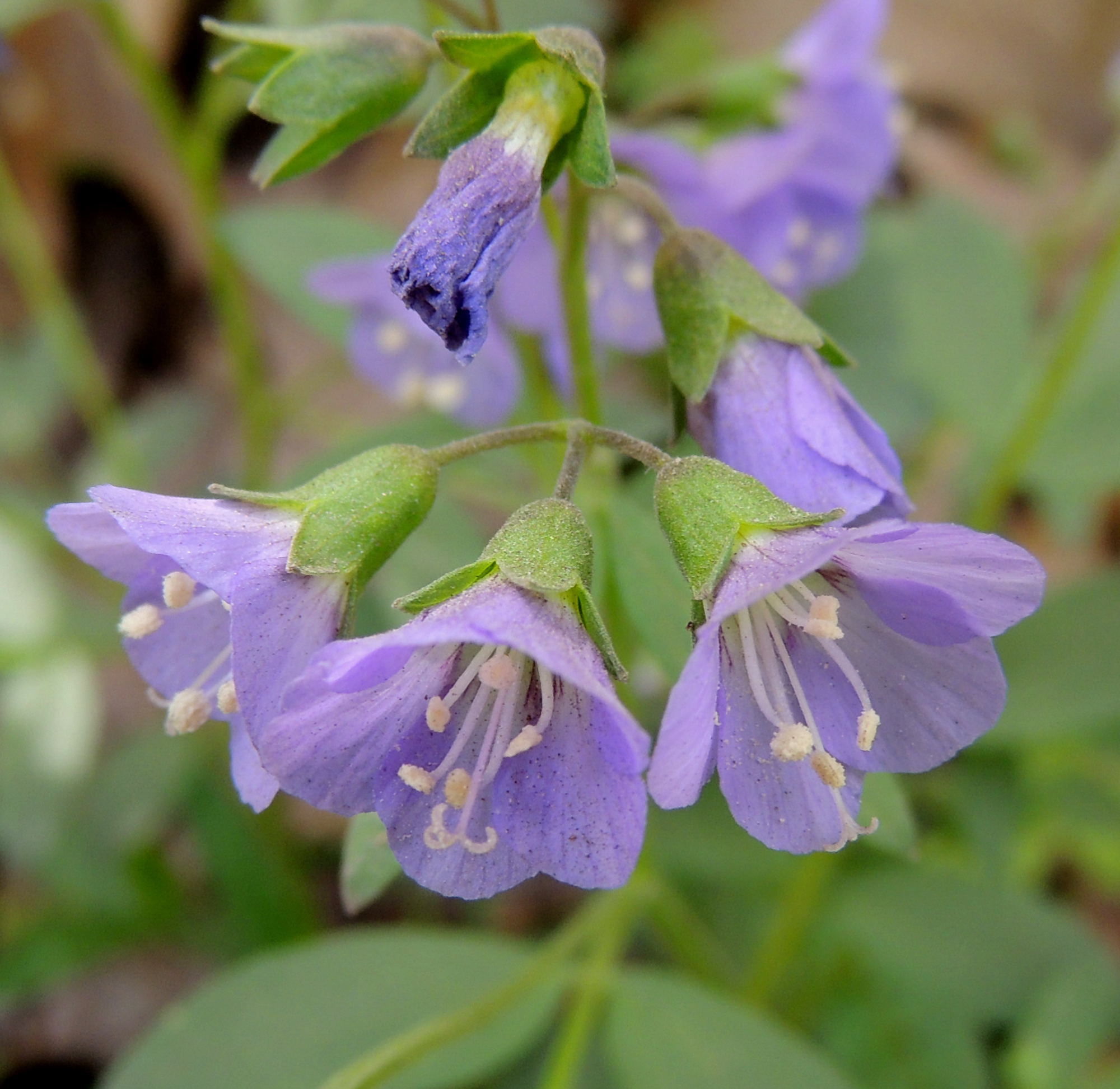
Creeping Jacob's ladder (Polemonium reptens) is native to eastern North America and attracts native bees with its mid-spring flowers. (photo credit: www.eol.org)

Creeping Jacob’s ladder (Polemonium reptens) is native to eastern North America and attracts native bees with its mid-spring flowers. (photo credit: www.eol.org)

Summer Flowers

There is no shortage of summer flowering plants, and Hadden’s list reflects that. When planting a pollinator garden, be sure to include flowers of different shapes, sizes, and colors in order to attract the greatest diversity of pollinators. Here are a few of my favorite summer flowering plants from Hadden’s list:

  • Amorpha canescens (leadplant) – A “good bee plant” and also a nitrogen fixer.
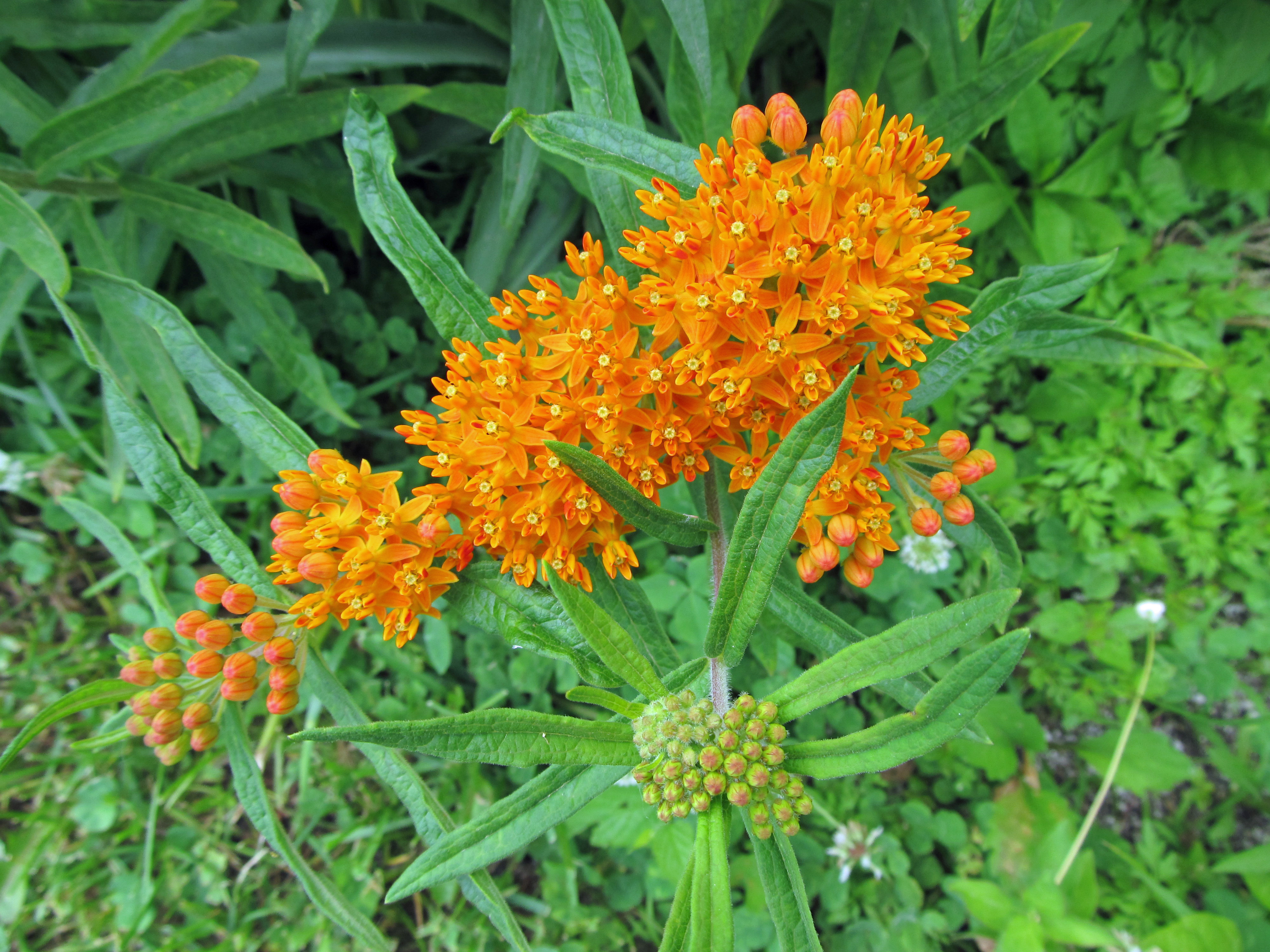
  • Asclepias tuberosa (butterfly weed) – “Valuable pollinator plant and larval host for monarch, gray hairstreak, and queen butterflies.” I love the tight clusters of deep orange flowers on this plant.
  • Coreopsis verticillata (threadleaf coreopsis) – I really like coreopsis (also known as tickseed). Try other species in the genus as well.
  • Penstemon pinifolius (pineleaf penstemon) – North America is bursting with penstemon species, especially the western states. All are great pollinator plants. Pineleaf penstemon is widely available and great for attracting hummingbirds.
  • Salvia pachyphylla (Mojave sage) – A very drought-tolerant plant with beautiful pink to purple to blue inflorescences. Salvia is another genus with lots of species to choose from.
  • Scutellaria suffratescens  (cherry skullcap) – A good ground cover plant with red-pink flowers that occur from late spring into the fall.
The flowers of butterfly weed (Asclepias tuberosa). Milkweed species (Asclepias spp.) are essential to monarch butterflies as they are the sole host plant of their larvae.

The flowers of butterfly weed (Asclepias tuberosa). Milkweed species (Asclepias spp.) are essential to the survival of monarch butterflies as they are the sole host plant of their larvae.

Fall Flowers

Fall flowering plants are essential to pollinators as they prepare to migrate and/or hibernate. Many of the plants on Hadden’s list start flowering in the summer and continue into the fall. A few are late summer/fall bloomers. Here are some of my favorites:

  • Epilobium canum (California fuchsia) – “Profuse orange-red tubular flowers late summer into fall furnish late-season nectar, fueling hummingbird migration.”
  • Liatris punctata (dotted blazing star) – Drought-tolerant plant with tall spikes of purple-pink flowers. “Nectar fuels migrating monarchs.”
  • Symphyotrichum oblongifolium (aromatic aster) – Loaded with lavender-blue flowers in the fall. It’s a spreading plant, so prune it back to keep it in check. Hadden recommends it for sloped beds.
  • Agastache rupestris (sunset hyssop) – Spikes of “small tubular flowers in sunset hues attract hummingbirds, butterflies, and bees midsummer to fall.” Try other species in the Agastache genus as well.
  • Monarda fistulosa (wild bergamot) – The unique flower heads are like magnets to a wide variety of pollinators. Also consider other Monarda species.
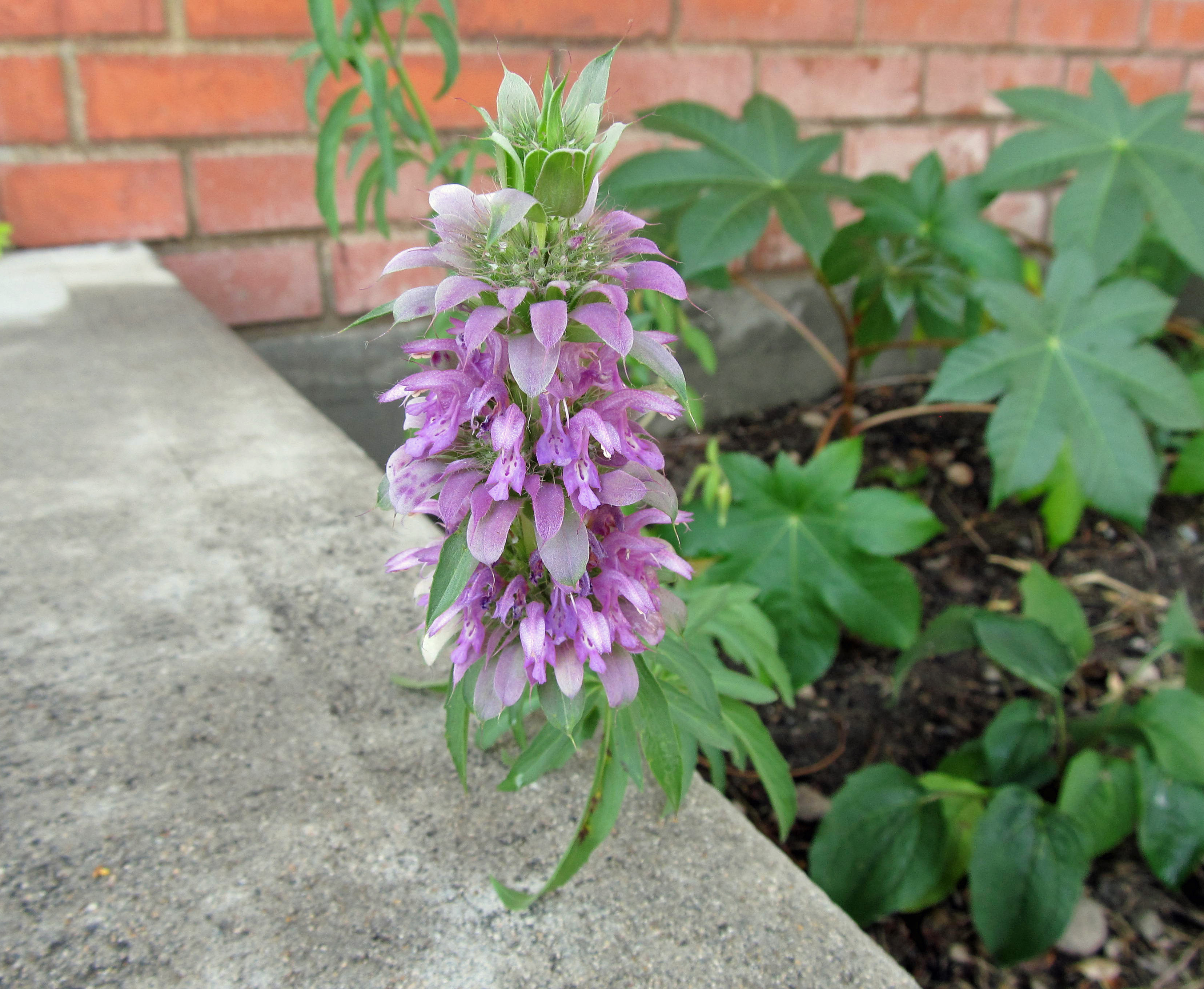
Lemon beebalm (Monarda citriodora), an annual plant that attracts an array of pollinators.

Lemon beebalm (Monarda citriodora), an annual plant that attracts an array of pollinators.

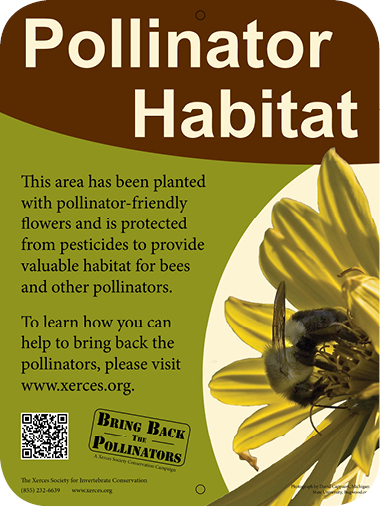
As with any other garden, your hardiness zone, soil conditions, water availability, and other environmental factors must be considered when selecting plants for your hellstrip pollinator garden. Groups like Pollinator Partnership and The Xerces Society have guides that will help you select pollinator friendly plants that are suitable for your region. Additionally, two plans for “boulevard pollinator gardens” complete with plant lists are included in the book Pollinators of Native Plants by Heather Holm – one plan is for sunny and dry spots and the other is for shady and wet spots (pgs. 268-269). Once your pollinator garden is complete, consider getting it certified as a pollinator friendly habitat. There are various organizations that do this, such as the Environmental Education Alliance of Georgia. If you are interested in such a thing, the public nature of your hellstrip garden makes it an ideal place to install a sign (like the one sold in The Xerces Society store) announcing your pollinator garden and educating passersby about the importance of pollinator conservation.

habsign

Other “Year of Pollination” Posts

Book Review: Hellstrip Gardening, part three

The second section of Evelyn J. Hadden’s book, Hellstrip Gardening, is all about the unique challenges and obstacles one faces when gardening in that stretch of land between the sidewalk and the road. I highlighted some of those challenges last week. This week we are into the third section of Hadden’s book, the part that is all about designing, building, and managing a curbside garden. As I have read through this book, I have begun to look at hellstrips in a much different light. They are no longer boring sections of yard with little potential, but instead are full of possibility and have unique characteristics involving publicity and functionality that are absent from most of the rest of the urban landscape. Now that we are in the creation phase of the book, this fact becomes abundantly clear.

Choosing a Style

When deciding how to design and plant your curbside bed, it is important to consider – along with aesthetics – the functions you wish to achieve (storm water runoff collection, food production, wildlife habitat, etc.) as well as how you are going to maintain it. You may decide to embrace minimal maintenance with a mass planting of a single species or mass plantings of a handful of species in sections called drifts. This can be very attractively done, but it also has the risk of a disease or pest wiping out a section of plants. A mass planting of ground covers acts as a living mulch and will eliminate the need to replenish non-living mulch. Hadden provides descriptions of a few styles of garden design, such as formal, naturalistic, cottage garden, and stroll garden, each with their virtues and limitations. Growing food is also an option in a hellstrip. If this is the option you choose, keep the bed looking full by intermixing flowers and crop plants, growing perennial crops, and staggering planting times. Ultimately the style of the garden is the preference of the gardener; however, the environmental conditions of the hellstrip must also be a consideration.

Choosing Plants

Because hellstrips are by nature public gardens, they are the ideal place for plants that appeal to the human senses – plants that invite interaction. Hadden calls these plants “friendly plants.” They are plants that are aromatic, have interesting textures and bold colors, “feel great underfoot,” have “aesthetically pleasing symmetry,” and have unusual flowers or unique foliage. Hadden asserts that, “plants that invite touching engender good will,” so consider the ways that your hellstrip might make you a better neighbor.

Their public nature also means that hellstrip gardens are not the place for rare and valuable plants, and instead are ideal for easily replaceable and self-repairing plants. This includes perennials that are easily divided, shrubs that reproduce by layering, creeping plants that send out runners, and plants with seeds that are easily collected and can be sown in bare spots. One option is to plant only annuals. This eliminates the loss of plants during the winter when snow, sand, and/or salt are deposited in the beds by road clearing equipment. Just be sure to protect the soil with mulch or a cover crop during the cold months of the year.

A hellstrip is also an ideal location for an alternative lawn. Traditional lawns require loads of water and fertilizer and regular mowing in order to stay looking good. There are lots of other grasses and ground covers available now that are drought tolerant, require little or no fertilizer, don’t need to be mowed often or at all, and are still very attractive. Hadden has a website all about lawn alternatives called Less Lawn.
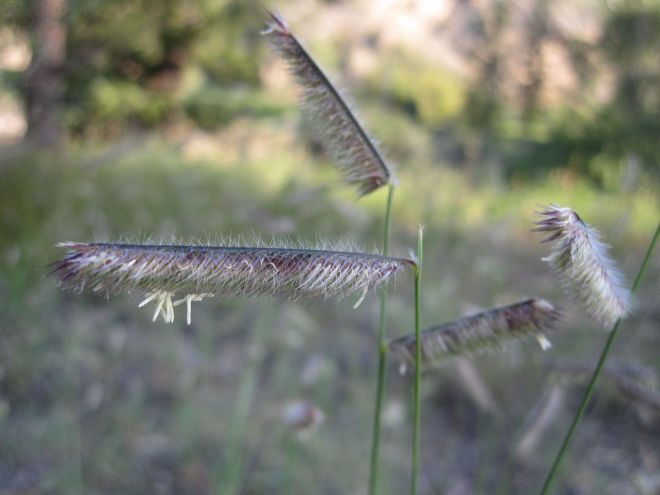
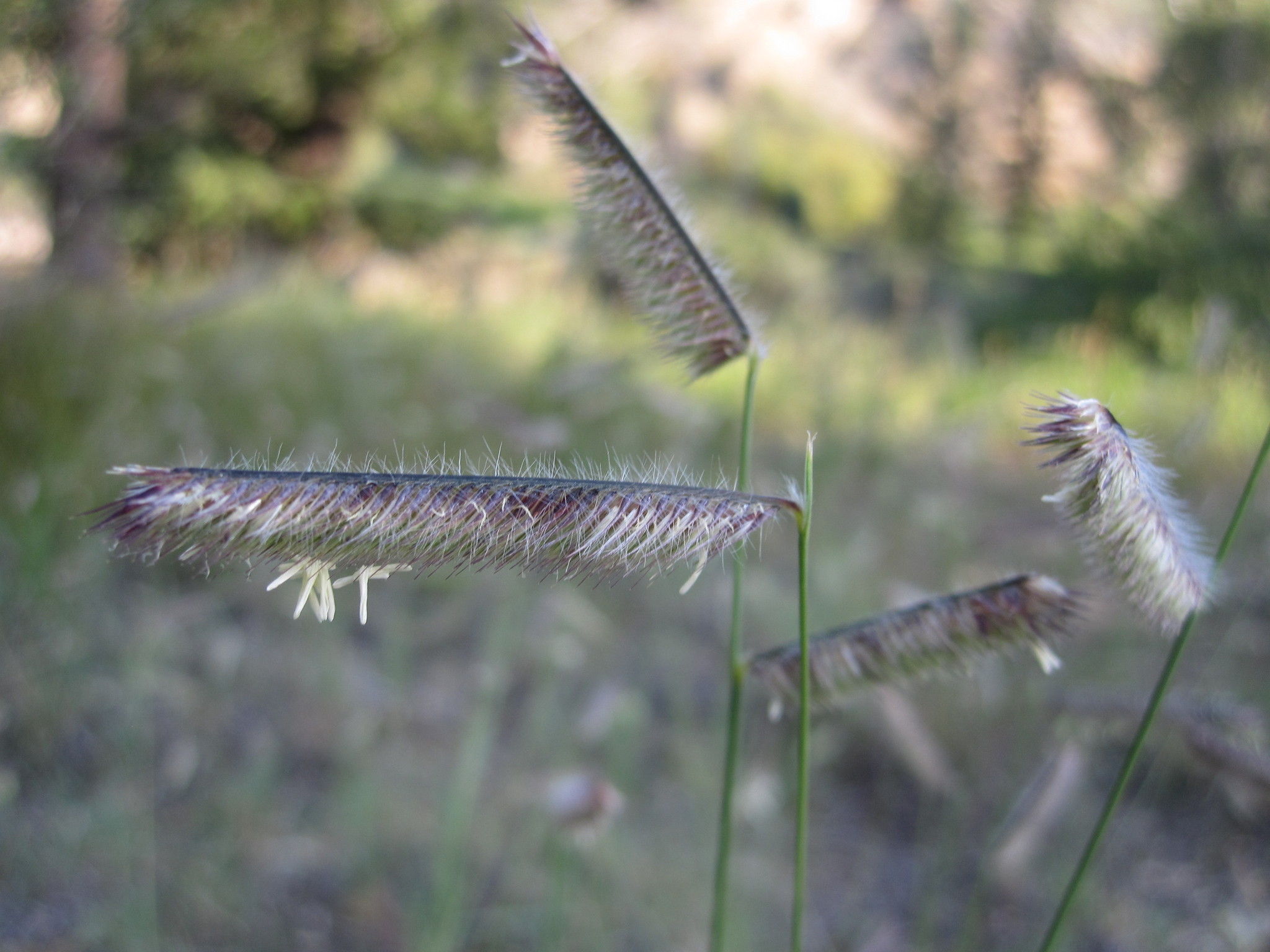
The seed heads of blue grama (Bouteloua gracilis), one of many attractive alternatives to traditional turfgrass. (photo credit: www.eol.org)

The seed heads of blue grama grass (Bouteloua gracilis), one of many attractive alternatives to traditional turfgrass. (photo credit: www.eol.org)

When selecting plants for your hellstrip garden, consider the conditions it will have to endure. Unless you want to make serious amendments in order to accommodate certain plants, it is probably best to choose plants that are already adapted to your site. One way to determine this is to observe sites similar to yours and see what is thriving there; particularly make note of plants that look like they have been there for a while. Also, feel free to ask local experts at garden centers and public gardens what they might recommend for your site.

Earthshaping

“Diverse topography makes a more visually interesting garden, and it adds microclimates, letting you grow more diverse plants.” Shaping a curbside bed can also serve other functions such as softening traffic noise, defining pathways, collecting runoff, and providing wildlife habitat. When building a large berm, first create a rocky base and then fill in the spaces between the rocks with sand and small gravel. After that, add topsoil and firmly pack it down with machinery or a rolling drum. Small berms can be formed by simply piling up excess soil or turning over sections of sod and piling them up. Maintain good plant coverage on berms in order to reduce erosion, and consider planting shrubs with extensive root systems like sumac (Rhus sp.) and snowberry (Symphoricarpos sp.).

Hellstrips are ideal locations for rain gardens and bioswales since they are typically surrounded by impervious surfaces. Storm water can be directed from these surfaces into your rain garden, thereby reducing the amount of storm water runoff that must be handled elsewhere. Hadden provides a brief overview on how to construct a rain garden; the process is too detailed to go into here. If you are serious about building one, it is important to do your research beforehand to be sure that it is built properly. There are several great resources available; one that I would recommend is Washington State University Extension.

Partnering with Nature

Time spent managing and maintaining your hellstrip garden can be greatly reduced when it is well planned out, contains plants that are suited to the site, and has good soil health. Helping you achieve these things is essentially what Hadden’s book is all about. Watering properly and wisely is key to the success of your hellstrip garden. Hadden suggests organizing plants into “irrigation zones,” separating those that need little or no water from those that need frequent or regular watering. When you do water, water “thoroughly and infrequently to maximize deep root growth and drought resistance.” Consider installing a drip irrigation system, particularly one that will direct the water to the roots of the plants and deliver it slowly. Avoid watering areas where there are no plants, as this encourages weed growth.

Mostly likely you will be doing some amount of trimming and pruning in your hellstrip. Consider how you will handle this plant material. You may choose to cut it up into fine pieces and leave it as mulch; or maybe you have a compost pile to add to. Large woody materials can be placed in a section of your property set aside for wildlife habitat. Choosing plants that will not outgrow the space will reduce the amount of pruning you will need to do.

As much as Hadden is an advocate for alternatives to conventional lawns, she is also an advocate for reducing the use of gas-powered leaf blowers. Nobody enjoys hearing the clamor of a smelly, polluting leaf blower echoing through the neighborhood, so be a good neighbor and use a broom or rake instead. You will probably enjoy the task more as you listen to nature, get some exercise, and revel in your garden.

Continued focus on building healthy soil is paramount to the ongoing success of your curbside garden. Continue to add organic matter by letting some of the plant litter lie and decompose. Plant nitrogen fixing species like lupines (Lupinus sp.) and false indigos (Baptisia sp.). As much as possible avoid compacting the soil, especially when it is wet, and keep tilling and digging to a minimum once the garden is planted.
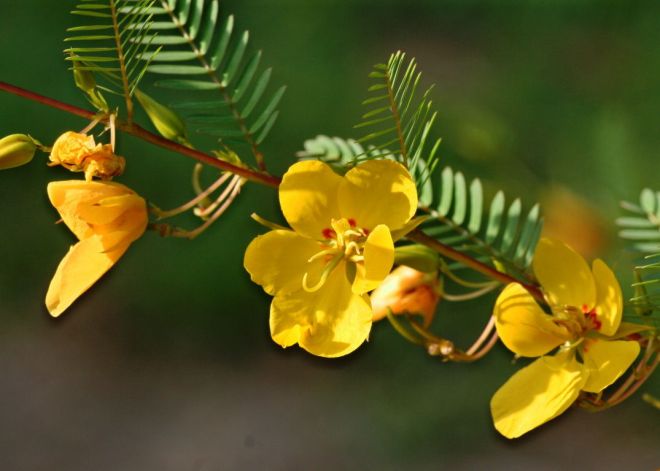
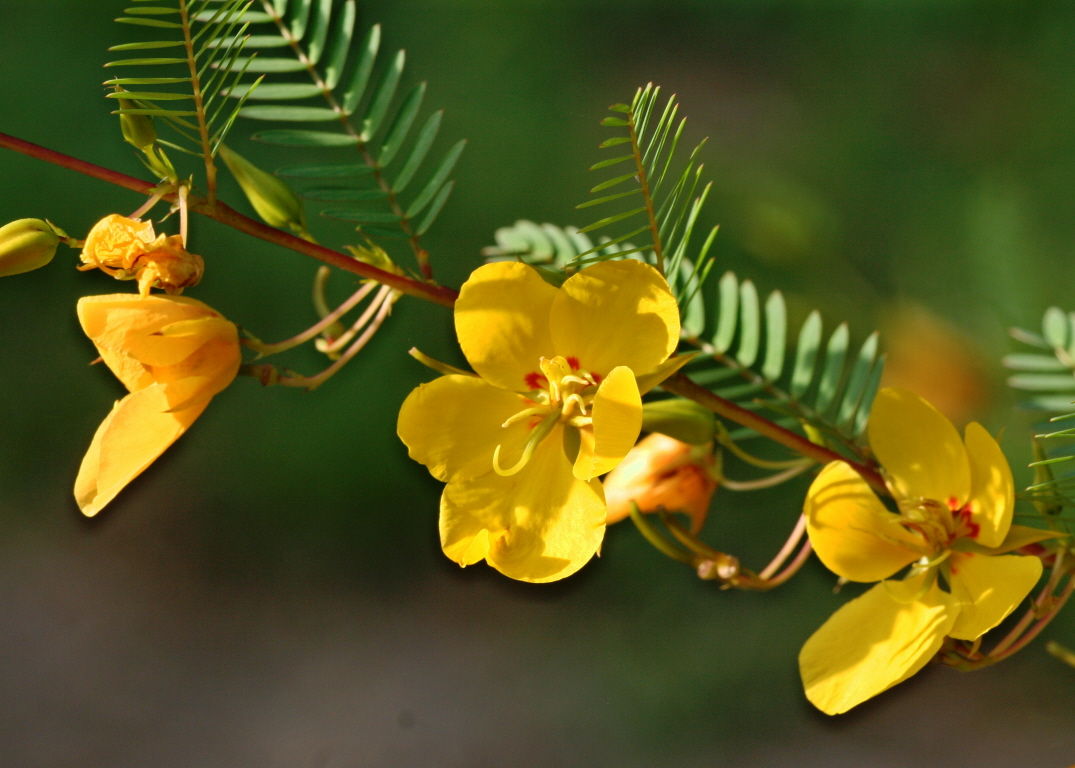
Partidge pea (Chamaecrista fasciculate), an annual plant in the pea family (Fabaceae). One of many nitrogen fixing plants that can help improve soil health. (photo credit: www.eol.org)

Partridge pea (Chamaecrista fasciculata), an annual plant in the pea family (Fabaceae). One of many nitrogen fixing plants that can help improve soil fertility. (photo credit: www.eol.org)

Again, this is only a fraction of what Hadden discusses in this section of her book. Consult the book for more of her wisdom. The final section of Hellstrip Gardening is a long list of plants that are “curbside-worthy” complete with photos and descriptions. Next week’s post will be all about a particular type of hellstrip garden that employs a subsection of those plants.

Book Review: Hellstrip Gardening, part two

Hellstrip Gardening by Evelyn J. Hadden is a book intended to help transform roadside beds (or any neglected or hard to garden spot) into a verdant and productive green space. A “paradise,” if you will. Last week, I introduced the concept of hellstrips and briefly discussed the first section of Hadden’s book. This week we are looking at the second section, which is all about the unique challenges and obstacles that hellstrip gardening entails. Hadden has divided this section into 8 main areas of focus. She provides a ton of great information that is sure to be incredibly useful for anyone seriously engaged in improving a hellstrip. If you are one of those people, I highly recommend referring to the book. For simplicity’s sake, this post will include a quick overview of each of the main themes, detailing a few of the things that stood out to me.

Working with Trees

Trees offer many benefits to urban and suburban areas; however, it is not uncommon to see hellstrips with trees that are much too large for the space. Hellstrips are often surrounded by paved surfaces and are heavily trafficked. This leads to soil compaction which results in roots being starved of oxygen and water. Where there are power lines overhead, oversized trees must be heavily pruned to make room for them. Consider planting small or medium sized trees in these spaces. Make sure the soil is well aerated and that there is enough space for the roots to expand out beyond the canopy. Hadden advises avoiding growing turfgrass below trees because it is shallow rooted and uses up much of the available water and oxygen; instead plant deep rooted perennials that naturally grow in wooded environments.

Working with Water

Depending on where you are located, your hellstrip is either going to be water limited or water abundant. Water availability also varies depending on the time of year. If you are mostly water limited, include plants that can tolerate drought conditions. Avoid planting them too close to each other so that they aren’t competing for water. Increase your soil’s water holding capacity by adding organic matter and mulching bare ground. Strategically placed boulders can create cool, moist microclimates where plants can endure hot, dry stretches. If you are dealing with too much water, you can “increase the absorption power” of your property by ensuring that your soil is well aerated and high in organic matter. Plant high water use perennials, grasses, shrubs, and trees with extensive root systems. Replace impermeable surfaces with ground covers and permeable pathways to reduce runoff, and reshape beds so that they collect, hold, and absorb excess runoff.

Working with Poor Soil

Curbside beds in urban areas are notorious for having soil that is compacted, contaminated, and depleted of nutrients. This issue can be addressed by removing and replacing the soil altogether or by heavily amending it. Another solution is to only include plants that can tolerate these harsh conditions. Most likely you will do something in between these two extremes. Adding organic matter seems like the best way to improve soil structure and fertility. Because contaminants from paved surfaces are regularly introduced to curbside gardens, there is a good chance that the soil may contain high levels of lead and other heavy metals. It is a good idea to test the soil before planting edibles. Contaminated soils can be remediated by growing certain plants like annual sunflowers, which take up heavy metals into their tissues. These plants must then be disposed of as hazardous waste.

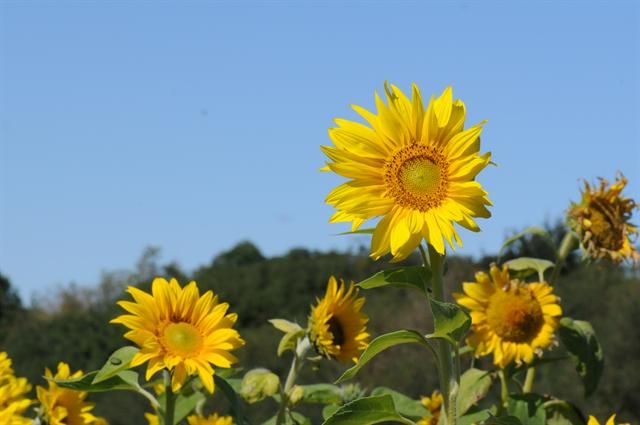
Common sunflower (Helianthus annuus) is one of several plants that can be used to remediate polluted soils. (photo credit: www.eol.org)

Common sunflower (Helianthus annuus) is one of several plants that can be used to remediate polluted soil (photo credit: www.eol.org)

Working with Laws and Covenants

Regulations and restrictions may prohibit you from creating the hellstrip garden you dream of having. Start by informing yourself of your areas laws and covenants. Some restrictions may be based on public safety (such as restrictions on street trees) while others may be based on outdated ways of thinking. Hadden advises not to assume that a regulation can’t be reversed; however, first you must prepare a well reasoned argument based on facts and evidence. Will your landscape design conserve resources, provide ecological services, improve property values, enhance the neighborhood in some way? Perhaps “your property can model a new landscaping strategy.” Prepare to state your case respectfully, intelligently, and convincingly, and you might just find yourself at the forefront of a new movement.

Living with Vehicles

A garden growing along a roadway is sure to be confronted by vehicles. Hadden suggests using “easily replaceable plants for vulnerable areas.” You can also protect your garden by installing a low fence or wall or by planting sturdy shrubs, prickly plants, or plants that are tall and/or brightly colored. If parking is a regular occurrence, leave room for people to exit their vehicles without trampling the garden. A garden surrounded by paved surfaces will be hotter than other areas on your property, so plant heat tolerant plants or shade the garden with trees and shrubs. A hedge, trellis, fence, or berm can act as a wind and dust break and can help reduce noise. Aromatic plants can help combat undesirable urban smells, and noise can be further masked by water features and plantings that attract songbirds.

Living with Wildlife

Wildlife can either be encouraged or discouraged depending on your preferences. Discouraging certain wildlife can be as simple as “learn[ing] what they need in terms of food and shelter, and then eliminat[ing] it.” A garden full of diverse plant life can help limit damage caused by leaf-eating insects. Encouraging birds and bats can also help control insects. Herbivory by mammals can be reduced by growing a wide array of plants and not over fertilizing or overwatering them. Conversely, encouraging wildlife entails discovering what they like and providing it. For example, to encourage large populations of pollinators, plant a diversity of plants that flower throughout the year and provide nesting sites such as patches of bare ground for ground nesting bees. Keep in mind that your property can be part of a wildlife corridor – a haven for migrating wildlife in an otherwise sea of uninhabitable urban space.

Living with Road Maintenance and Utilities

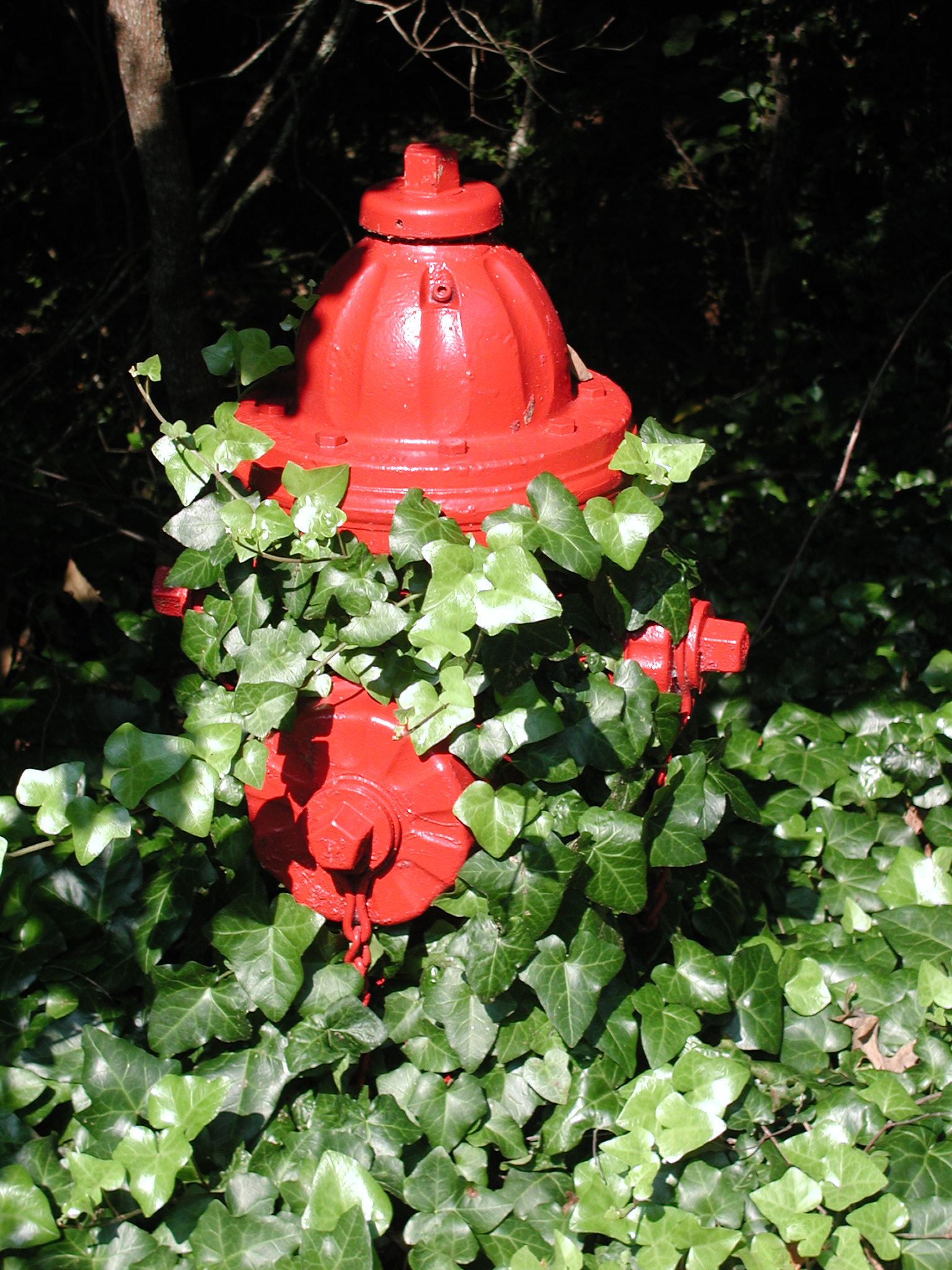
Curbsides gardens are unique in that they are directly affected by road maintenance and they often must accommodate public utility features like electrical boxes, fire hydrants, street signs, and telephone poles. In areas where salts are applied to roads to reduce ice, hellstrips can be planted with salt tolerant plants and can be deeply watered in order to flush salts down into the soil profile. In areas that receive heavy snowfall, avoid piling snow directly on top of plants. Always call utility companies before doing any major digging to find out where underground pipes and electrical cables are located. Utility features can be masked using shrubs, trellises, and vining plants (especially annual vines that are easily removed and replaced); just be sure to maintain access to them. If your hellstrip consists of “unsightly objects,” Hadden recommends “composing a riveting garden scene to divert attention from an uninspiring view.”

Fire hydrant decorated with ivy (photo credit: wikimedia commons)

Fire hydrant decorated with ivy (photo credit: wikimedia commons)

Living with the Public

Your hellstrip is the most public part of your yard, so you are going to have to learn to share. In order to keep trampling to a minimum and contained to certain areas, make it obvious where pathways are and use berms to raise up the beds. Keep the paths clear of debris and avoid messy fruit and nut trees that can make pathways unfriendly to walk on. Avoid planting rare and valuable plants in your curbside garden. Remember that your hellstrip is typically the first part of your property that people see, so make a good first impression. Also, consider the potential that your public hellstrip garden has for building community and inspiring others.

There is so much more in this section; it is impossible to discuss it all here. Again, if you are serious about improving a hellstrip, get your hands on this book. All hellstrips are different and will have unique challenges. Hadden does a great job of touching on nearly any issue that may arise. Now that we’ve covered challenges and obstacles, next week we will look at designing, building, and managing hellstrip gardens.

Book Review: Hellstrip Gardening, part one

Keeping a garden alive and thriving is replete with its inherent challenges. Plants have needs, and those needs vary by plant. Lots of sun might be great for one plant but harmful to another. Some plants are very drought tolerant and don’t require much water beyond what falls naturally from the sky, while others insist on regular supplemental irrigation. Plants also have preferred soil types, and that soil must provide a proper balance of nutrients. Then there is the litany of potential pests, diseases, and predators that can present themselves at any given moment. Frankly, it’s surprising that any garden stays alive, all things considered.

Some gardens have added challenges. They may be regularly visited (and trampled) by the public, who may or may not have pets in tow. They may be surrounded by paved surfaces which increase ambient air temperatures significantly and can introduce contaminants to the garden in the form of road salts, petrochemicals, fertilizers, sediments, and animal waste. They may encompass utility boxes, water meters, and road signs that require regular visits and occasional maintenance. All of these things describe the plight of a curbside garden, also known as a hellstrip – that section of green space between the road and the sidewalk. Comparatively, backyard gardens are veritable havens for plants.

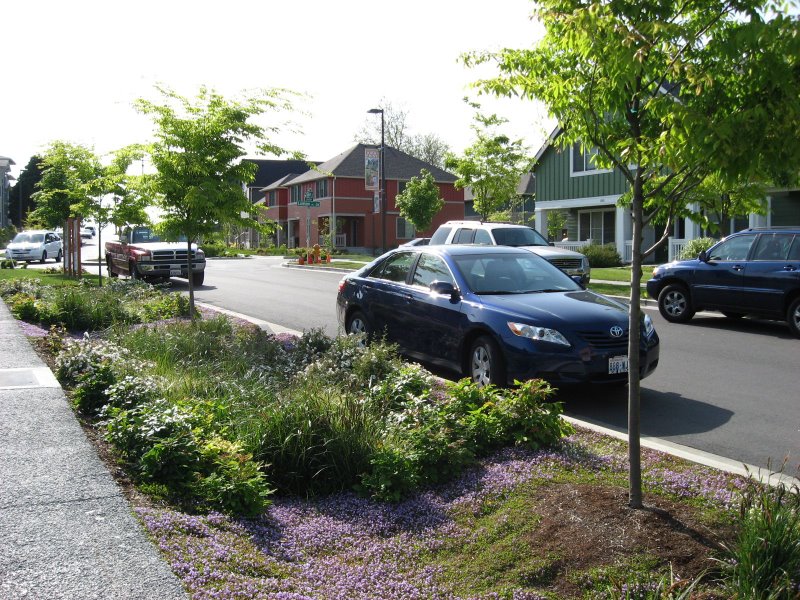
Hellstrips have been on my mind for several years now. It all started back in graduate school while studying green roof technology. One of the macro benefits of green roofs is storm water mitigation. During a storm event, green roofs capture a greater proportion of precipitation compared to conventional roofs and slowly release it back into the environment. Storm water is a major issue in urban areas where the percentage of impervious surfaces is high. These surfaces prohibit precipitation from infiltrating the soil and recharging groundwater and nearby waterways. Instead, this water is rushed away and directed into either waste water treatment facilities or local waterways, carrying with it the contaminants that have collected on paved surfaces and rooftops. Gardens along roadways can be engineered to manage storm water in a similar way that green roofs do – capturing it, filtering it, and releasing it back into the environment at a slow pace – thereby minimizing the negative effects of storm water runoff.

A rain garden or bioswale planted in a hellstrip to help mitigate storm water runoff. (photo credit: epa.gov)

A rain garden or bioswale planted in a hellstrip to help mitigate storm water runoff (photo credit: epa.gov)

The hellstrip in front of my parent’s house has been the source of many headaches. It is another reason why hellstrips have been on my mind. It is a weed patch, but not intentionally so. I remember many years ago when my mom told me she was going to replace the weed patch with buffalograss. She was elated by the idea – little or no mowing, very little supplemental water, a cool alternative to conventional lawn. Now, years later after planting dozens of buffalograss plugs and making a concentrated effort to keep them alive and prospering, the hellstrip remains a weed patch. But my mom hasn’t given up hope. The hellstrip will be conquered in due time.

Riding my bike to work last summer, I regularly rode past a house that proudly displayed the potential that curbside gardens could reach. The house sits on the corner lot of an intersection that, due to the angle of the connecting roads, gives the lot a long triangular shape. This makes the hellstrip longer than most of the others in this neighborhood. On this lengthy strip, the owners have planted an expansive and diverse vegetable garden. While once upon a time vegetable gardens were largely confined to backyards, they have lately been making more regular appearances in front yards. Few, however, are as bold and as public as this one – a true hellstrip success.

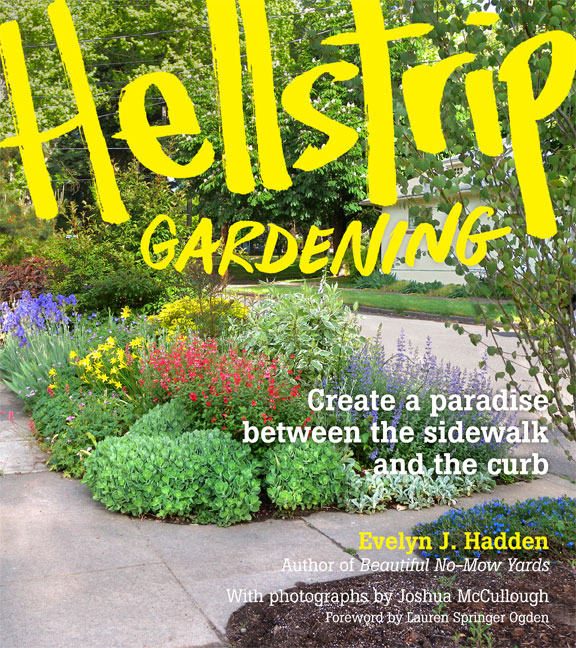
Last year, garden writer and lawn alternative enthusiast, Evelyn Hadden, put out a book called, Hellstrip Gardening. When I discovered this, I was intrigued, especially considering all of the mulling over hellstrips I had been doing for so long. I was curious to learn what she had to say. It has taken me until now to read it, but it seems like an opportune time to do so. After all, we are in pre-spring, a time when garden planning is being done in earnest. Perhaps this book will give me some ideas and encouragement to tackle some hard to garden spots this year. And maybe this review (and Hadden’s book) will inspire you to do the same. After all, this approach (as Hadden suggests) doesn’t have to be limited to curbside garden beds and can, in fact, be applied to any garden with challenges beyond the norm (like gardens along driveways and in alleyways, for example). The ultimate goal, for me at least, will be to pass along whatever knowledge I gain from this to my parents so that we can address their hellstrip issues once and for all.

hellstrip gardening book

Hellstrip Gardening is organized into four sections: Inspirations, Situations, Creation, and Curbside-Worthy Plants. This review will also have multiple parts that will be posted as I read through the book. The first section of the book is intended to inspire and encourage – to show through words and pictures what others have done and to give you that “if they can do it, so can I” sort of feeling. It also introduces some of the challenges of gardening in hellstrips as Hadden visits 12 gardens across the United States and talks with the people who designed, installed, and maintain them. She tells the story of how the gardens came to be and showcases some of the plants and plant combinations that were used in each situation. The challenges will be fleshed out in the following section; these narratives are meant more to demonstrate what can be done. There are dozens of great photos throughout, and the short plant lists at the end of each profile are sure to be useful.

Now that we’re inspired, next week’s post will take a look at what Hadden has to say about addressing challenges and overcoming obstacles that are unique to hellstrip gardens.