Winter Trees and Shrubs: Box Elder

Box elder is a maple that doesn’t often get credit for being a maple. Moreso, it is a tree that is not thought highly of, and it may not even be welcome in certain discussions around maples. You could even say that box elder is a “rogue maple,” as Arthur Plotnick deems it in The Urban Tree Book. It should come as no surprise, but if people are going to talk about a plant this way, it’s only going to make me like it more.

First off, the leaves of Acer negundo are palmately compound, compared to the simple, palmately lobed leaves of other maples. A box elder leaf is generally composed of three leaflets, sometimes five or seven. The center leaflet is on a longer stalk than the side leaflets, which are oppositely arranged. Sometimes the leaves are confused with ash tree leaves (Fraxinus spp.), which is the reason for another common name, ash-leaved maple. It’s also not uncommon for box elder leaves to be mistaken for poison ivy, which is maybe not a plant you’d want to be confused with. In the fall, unlike the beautiful reds, oranges, purples, and yellows of so many other maples, the leaves of box elder turn a drab yellow before dropping, a trait that Plotnick calls “an embarrassment.”

leaf of box elder (Acer negundo)

It’s not really its leaf, however, that bothers people. Box elder is a fast-growing and prolific tree. Basically, it’s weedy, and because it grows so quickly, its wood is generally weak and its structure unpredictable. It falls apart easily, and it doesn’t always grow in typical tree fashion. Sometimes its more of a shrub, and sometimes it leans so far over that it practically lies on the ground. It sprouts and suckers in abundance, and as John Eastman puts it in The Book of Forest and Thicket, it “generally ignore(s) human standards for an attractive tree.”

Maybe before people knew better, or during a time when people just needed a fast growing tree to plant in their developing cities, box elders were widely planted across North America and beyond. That and their ability to spread readily helps to obscure their native distribution. Box elder is naturalized across North America, but its original distribution (whatever that means) appears to be more midwestern and eastern. Box elder grows in a variety of conditions, and is actually quite drought tolerant, which has allowed it to feel right at home in the American west, whether it is truly native here or not.

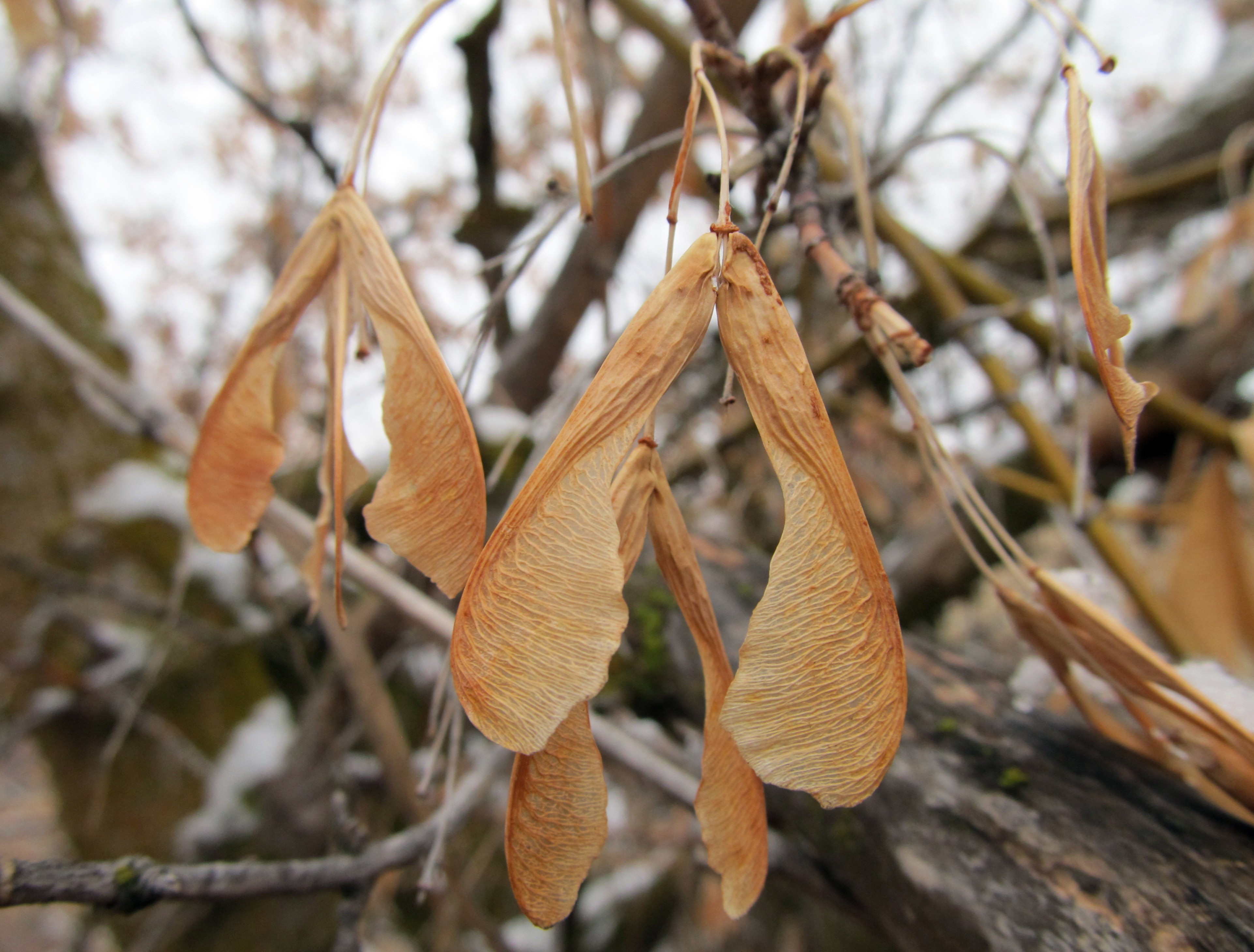
Identifying box elder in the winter can be pretty easy, especially if you come across a seed-bearing individual. Box elders are dioecious, meaning male and female flowers occur on separate individuals (another thing that sets them apart from other maples). A samara-bearing tree is a female tree, and the samaras often hang from the branches in great numbers. Like other maples, the fruits are paired together, each seed with a prominent wing. The samaras of boxelder point downward and hang from long stalks, persisting on the tree throughout the winter.

persistent samaras of box elder

The twigs of box elder are glaucous (covered with a thin, powdery bloom) and can be either green, bluish-white, or reddish-purple. They have tiny, white lenticles, and their buds are oppositely arranged. Leaf scars are a broad U-shape, and scars opposite of each other meet at the tops of the U’s, coming to a raised point. At least three bundle traces (sometimes more) are visible in the scar. Leaf buds are protected by two scales that are covered in dense, white hairs. The scales are similar in color to the twigs, but appear more white due to the fuzz. Lateral buds are 1/8 inch long or longer. Slicing open the twigs lengthwise reveals solid, white pith in the center that blends in easily with the wood.

winter twigs of box elder
winter twigs of box elder, pith exposed

The bark of young box elders has slight vertical ridges and is light brown or grey-brown, with dull orange, raised, wart-like lenticels. It is finely scaly. The scales and ridges become more rough and blocky as the tree ages. Mature bark is light brown to grey and heavily furrowed, with blocky segments breaking apart horizontally.

maturing bark of box elder

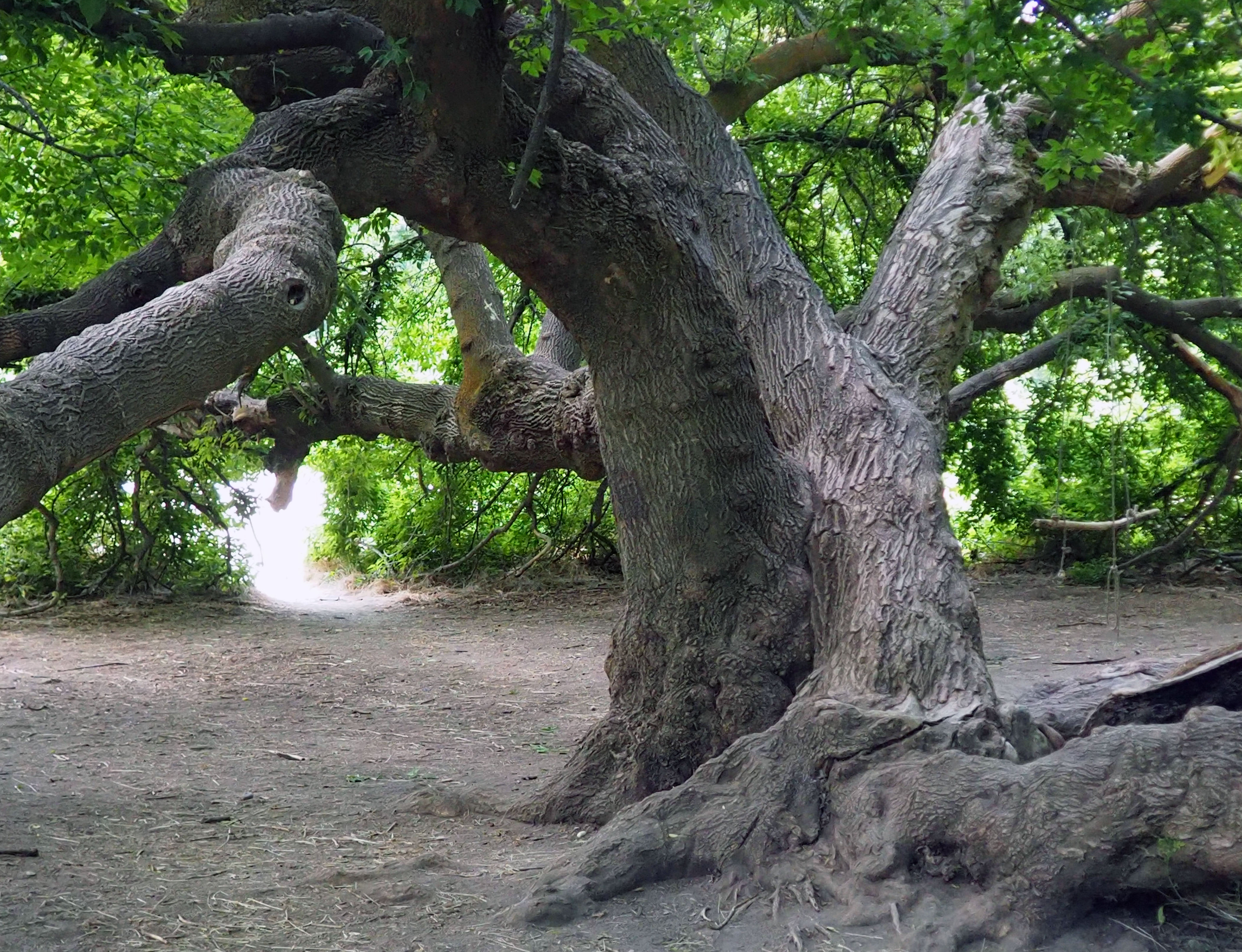
A few years ago I was introduced to a massive box elder in Boise, Idaho. It quickly became my favorite tree in the area, and I visit it frequently. For all the hate that box elder can receive, seeing its potential to create an experience that few other trees in the area offer can send all of that negative talk out the window. Visit something like it yourself sometime, and see what it can do for you.

massive box elder

More Winter Trees and Shrubs:

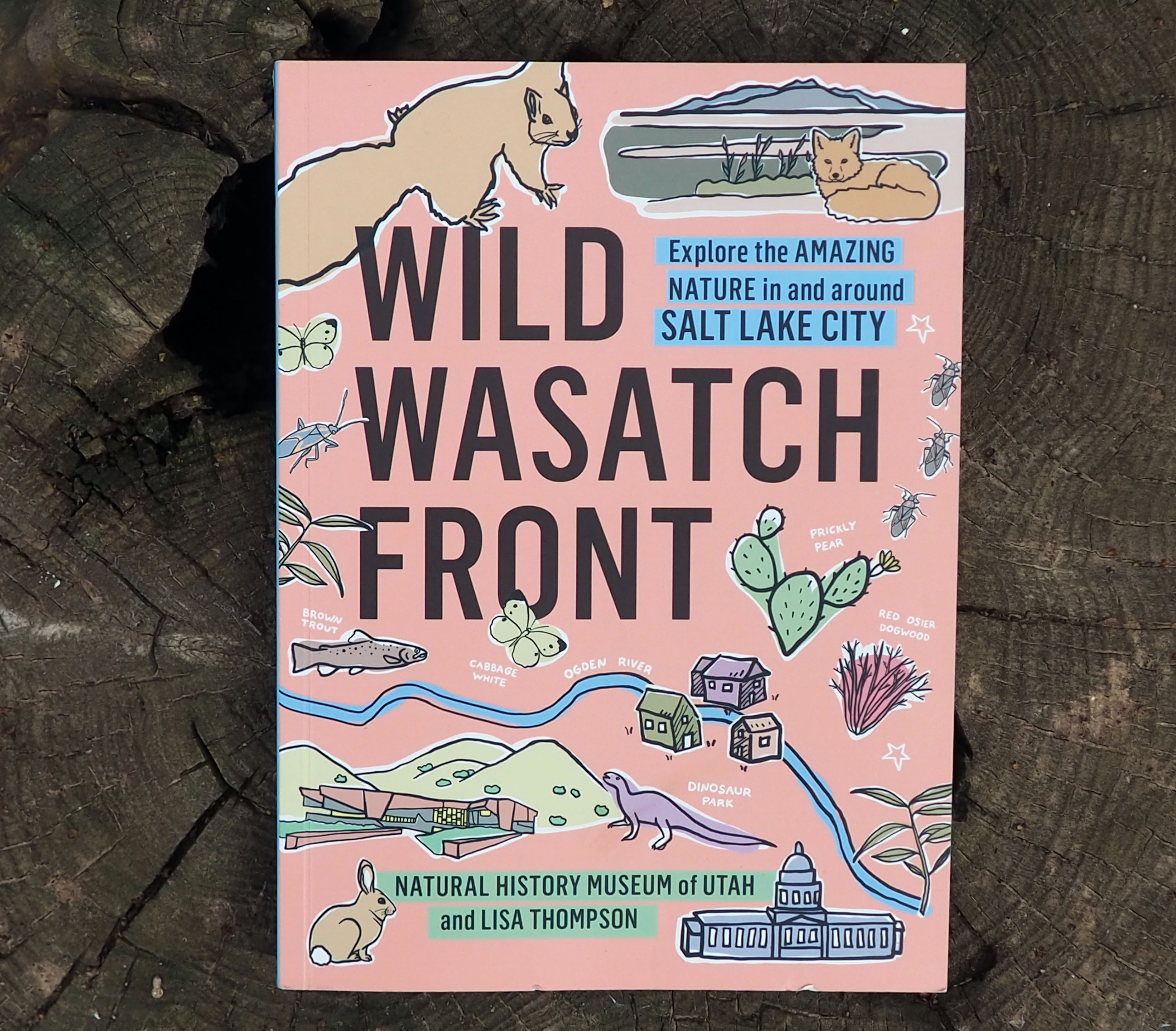
Book Review: Wild Wasatch Front

If it isn’t clear by now from my Weeds of Boise series and countless other posts, I happen to be interested in the flora and fauna of urban areas. Urban ecology is a fascinating field of study, and I’m not sure that it gets the attention it deserves. Nature is not some far away place, and you shouldn’t have to leave city limits to go in search of it. Remarkably, nature exists right outside your front door, even if you live in the middle of a massive city. It may be a different sort of nature than the one you might find in a national forest or a state park, and it may be composed of species introduced from all corners of the world, but it is still a collection of living organisms interacting with each other and the surrounding environment in unique and important ways. The question is, can you grow to appreciate nearby nature and recognize that the ecological interactions that exist within the context of a city are just as valid as those you’ll find outside of our built environments?

Luckily, there are resources that can help you with that, including a recent book compiled by Lisa Thompson and others at the Natural History Museum of Utah (NHMU). It’s called Wild Wasatch Front, and it’s of particular interest to me because it covers a region that’s relatively close by, and our two locations share a number of similarities. Plus, I played a small role in reviewing some of the plants (specifically the weeds) that ended up in the book (Sierra would insist that I mention this, so there you go). Similar books exist for other regions across North America and elsewhere, so I encourage you to seek out a book that applies to your hometown.

The Wasatch Front is a metropolitan region in north-central Utah that spans the western side of the Wasatch Mountains and includes a long string of cities and towns extending for many miles in all directions. Included in that list of cities is Salt Lake City, the state’s capitol and largest city in the state. The idea for a book about urban nature in the Wasatch Front was inspired by an exhibit at NHMU called “Nature All Around Us.” The exhibit and resulting book offer a new perspective for those insisting that “nature and cities cannot coexist” or that the nature found in cities is influenced by humans and therefore shouldn’t be considered “real.” Hundreds of organisms making a life for themselves within the boundaries of our cities might argue otherwise.

Wild Wasatch Front is divided into three main sections, with each section being worth the price of the book on its own. First there are a series of essays about urban nature and ecology. Names you might recognize, including Emma Marris and Riley Black, contributed to the book, as well as several other people that live and work in the western U.S. and have an interest in nature and environmental issues, especially as they relate to cities. Novel ecosystems is a reoccurring theme, not just in the essays but throughout the book. In her essay, Sarah Jack Hinners writes, “urban nature is a mixture of the intentional and the unintentional,” adding that “for every tree or rosebush or lawn that we plant and carefully nurture, there are multitudes of other plants and animals that grow and thrive uninvited and unnurtured by us.”

The largest section in the book is a field guide, profiling 127 plus species that call the Wasatch Front home, some native and some transplants. This section is divided into subsections that include birds, invertebrates, fungi and lichen, mammals, reptiles and amphibians, street trees, and wild plants. The entry for each species includes a brief description, a few interesting facts, and details on how and where to find them, accompanied by images. With the variety of creatures covered, you are sure to find something that interests you and a reason to go out looking for your favorites. You may even learn something new about a species you’ve been seeing for years, such as house finches. It turns out that the colorful patches on a male house finch are the result of the plants they eat. These patches can be red, orange, or yellow. The redder the better though, because female house finches seek out mates with this coloration.

Naturally, my focus was mainly aimed at the plants covered in this section. I appreciated the mixture of native and introduced plants, even the inclusion of plants considered to be invasive. Instead of vilifying these species, there is an attempt to understand them and find value in them, even in spite of the concerns and negative opinions held about them. Box elder (Acer negundo) is an example of a plant that has both native and introduced populations. Once widely planted in yards and on farms, this tree has “fallen out of favor.” Its weak wood (a result of growing so quickly), can result in a messy, unattractive tree, making it a poor choice for a street tree. However, it propagates itself readily and shows up in vacant lots and other urban locations that receive minimal management and human attention. In the Wasatch Front, you can find box elders that are native, naturalized, and cultivated, an unlikely scenario unique to urban areas.

massive box elder (Acer negundo) in Boise, Idaho

The third and final section of the book is a guide to 21 different hikes and field trips in and around the Wasatch Front. Each field trip features a hand-drawn map and some basic notes about the hike. Details about what can be seen along the way are included in the descriptions, which are sure to entice you into visiting. Whether or not you think you’ll ever make it out to any of these spots, this section is still worth reading if only for the ongoing discussions about urban ecology. For example, in the entry for Gib’s Loop, abrupt changes in land ownership and land use (a common experience when hiking in urban areas) is addressed: “Human impacts in the foothills…don’t end at backyard fences, and many animals use resources in both habitats. It’s more interesting to think of cities and the surrounding foothills as part of an interconnected system rather than separate and distinct.”

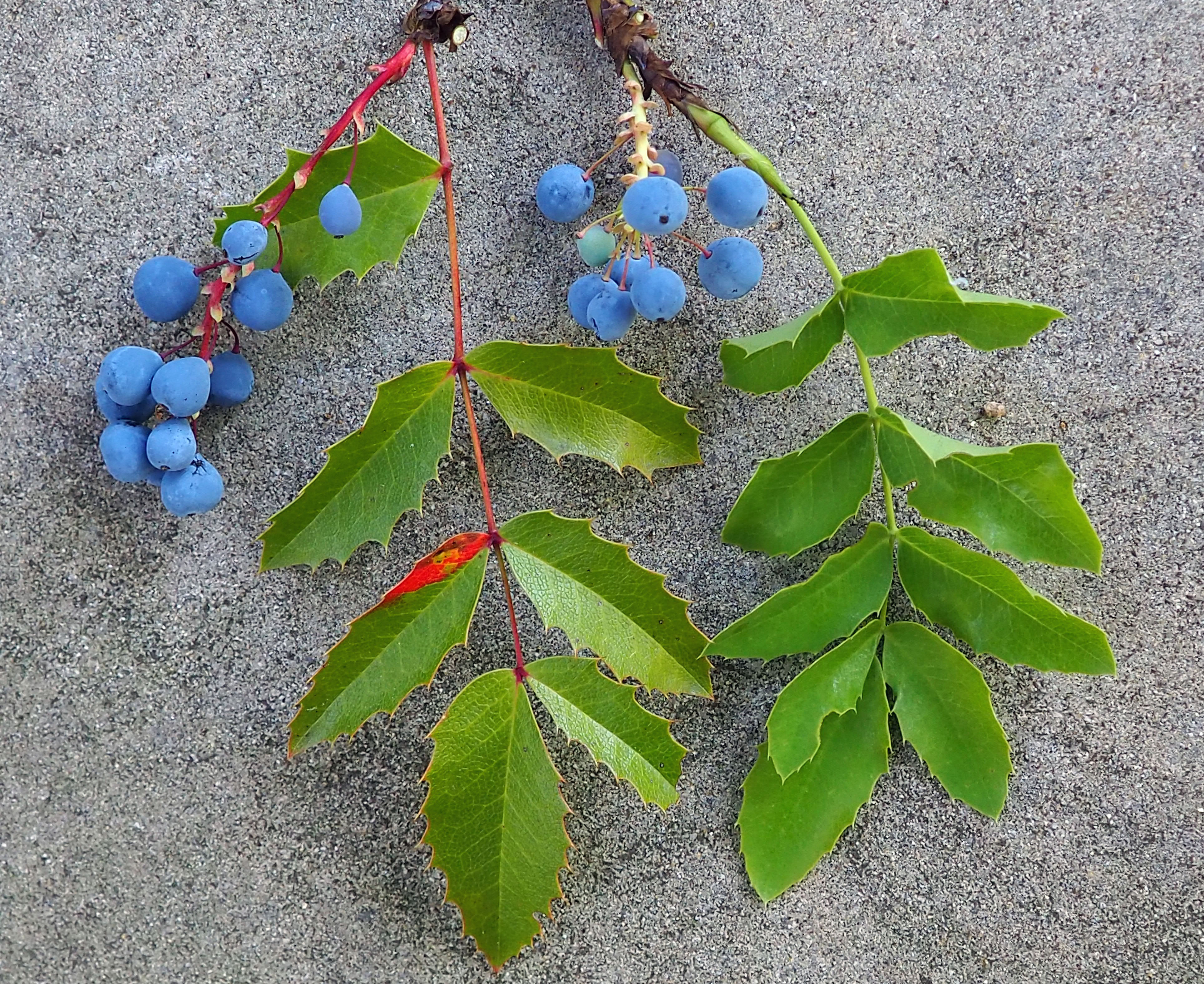
The field trip section is also used as a teaching opportunity to describe more of the species you’ll find in the Wasatch Front. In the entry for Creekside Park, learn how to identify creeping mahonia (Berberis repens), with its low growing habit and matte leaves, and compare it to Oregon grape (B. aquifolium), with its more upright habit and shinier leaves.

Berberis aquifolium (on the left) compared to Berberis repens (on the right)

Last year, in anticipation of Wild Wasatch Front, I came across another book with a similar focus. This book was put out by a group called The Urban Field Naturalist Project, headquartered in Australia. Their book, A Guide to the Creatures in Your Neighbourhood, encourages its readers to become urban naturalists and offers resources to help them get started. Just like Wild Wasatch Front, the bulk of the book is a field guide to species found in and around urban areas (in Australia, of course). In place of a guide to hikes and field trips, there are instructions on how to start nature journaling, which is a key component of becoming an urban field naturalist. Getting outside and learning to recognize nearby nature is step one, documenting what you see and sharing those observations with others is step two. Taken together, these two books will help you gain a better appreciation for urban nature and will hopefully inspire you to work to conserve what is there and make room for more.

More Book Reviews:

Vacant Lots as Habitat for Insects

Urban areas are increasingly being studied for their potential to help conserve biodiversity and provide habitat for numerous plants and animals. Despite the harsh conditions of the built environment, organisms of all kinds are able to survive in our cities, and as we find ways to make these spaces more hospitable for them, cities actually have great potential for species conservation, even for species that are rare, threatened, or specialized. One obvious way to accomplish this is to manage our yards, parks, and gardens as habitat, such as planting flower strips for pollinators. Another way, perhaps overlooked at times, is to manage and maintain vacant lots as habitat. Every urban area has some degree of vacant land that for one reason or another has not been developed, or that once was developed but has since been bulldozed or abandoned. Spontaneous vegetation quickly moves in to occupy these sites, and while some may see them as eyesores, their potential for providing habitat for an untold number of plants and animals is substantial.

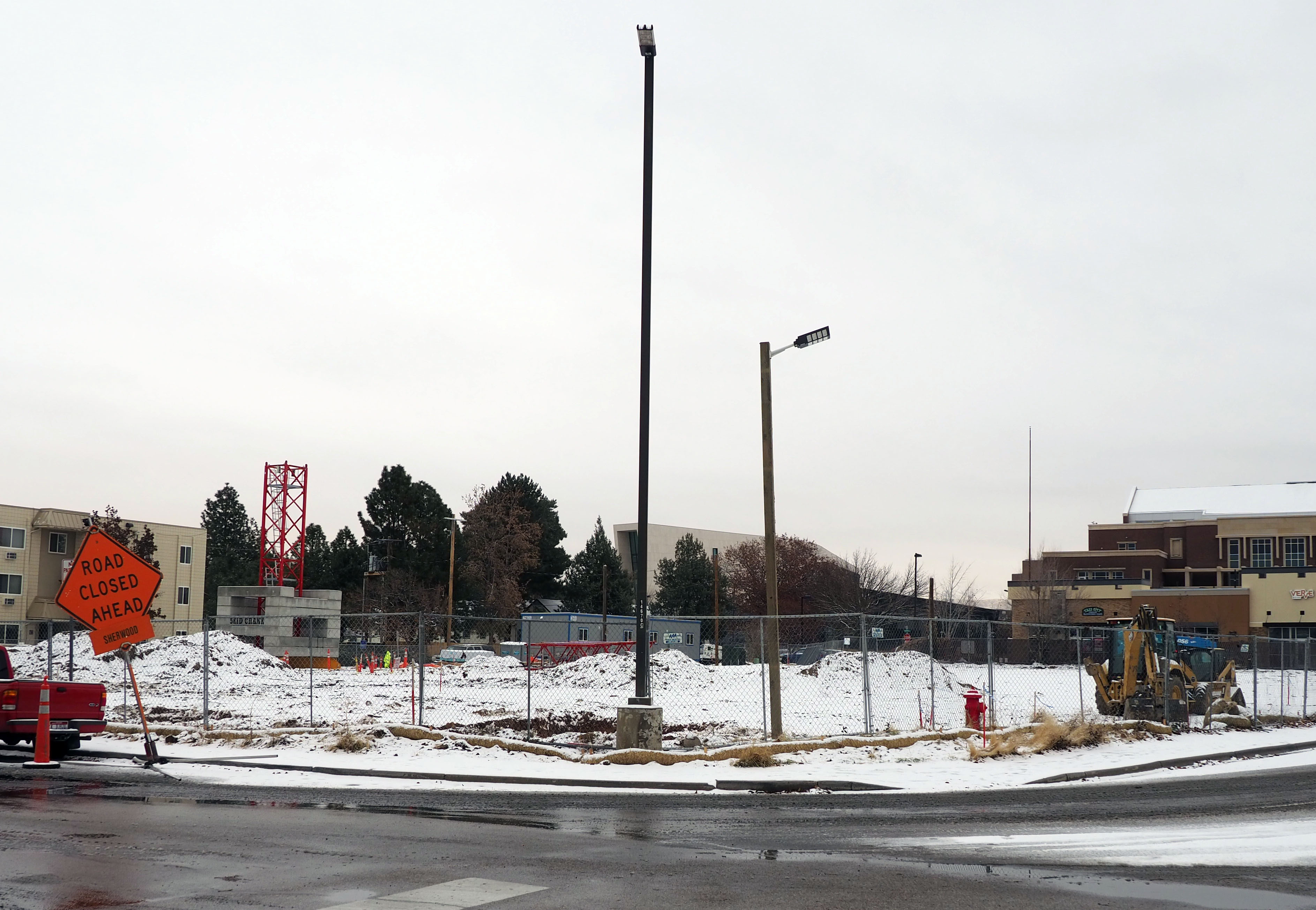
In cities that are growing – like Boise, Idaho – vacant and abandoned lots are disappearing quickly as development strives to keep up with population growth. My first Weeds of Boise post took place at an abandoned Pizza Hut, which has since been demolished and is now the future site of a large building (see photo below). This is happening all over the city – the City of Trees is looking more like the City of Cranes these days. On the other hand, cities that are shrinking due to economic downturn, loss of industry, and other factors, have an increasing number of vacant lots, which offers the opportunity not only to maintain these lots as habitat, but also to carry out research that will help us understand how these locations can be best managed for species conservation.

Abandoned Pizza Hut Lot Now Under Construction

Cleveland, Ohio is one example of a “shrinking city.” Due to significant population decline, Cleveland has a growing number of vacant lots, many of which are maintained by the City of Cleveland Land Bank. For researchers at The Ohio State University, all of this vacant land presents an opportunity to study, among other things, urban biodiversity. Hence, the Cleveland Pocket Prairie Project was born. By assigning different management treatments to groups of vacant lots and observing the differences between each treatment, researchers can help determine the best strategies for managing vacant lots, particularly when it comes to biological conservation. One of the major focuses of the Cleveland Pocket Prairie Project is to determine how vacant land can provide habitat for insects and other arthropods.

In a study published in Sustainability (2018), researchers in Cleveland compared the species richness and abundance of bees found on vacant lots to those found on urban farms. Bee collections were made three times a year over a three year period. Of the more 2733 bees collected, researchers identified 98 total species representing 5 different families. The vast majority of the species were native to the area. Significantly more bees were found in vacant lots compared to urban farms. In both vacant lots and urban farms, the total number of ground nesting bees decreased as the proportion of impervious surfaces near the study sites increased. Plants that received the most bee visits on the urban farms during the study period were common milkweed (Asclepias syriaca), chives (Allium schoenoprasum), and squash (Cucurbita pepo); while the top three plants with the most bee visits on vacant lots were red clover (Trifolium pratense), white clover (Trifolium repens), and Queen Anne’s lace (Daucus carota).

ground nesting bee (photo credit: Sierra Laverty)

Bee communities differed between vacant lots and urban farms: 29 of the 98 total species were seen only in vacant lots, while 14 species were seen only at urban farms. Most of the bees collected in this study were ground nesting species, and researchers suspect the reason more bees were found on vacant lots compared to urban farms is that farms experience frequent soil disturbance in the form of tillage, weeding, mulching, and irrigation, while vacant lots generally do not. The researchers conclude that their study “adds to the growing body of literature advocating for the maintenance of minimally-managed vacant lot habitats as a conservation resource.” Vacant land that is “surrounded locally by high concentrations of impervious surface,” however, may not be the most suitable location to carry out conservation efforts.

In a study published in Urban Ecosystems (2020), researchers in Cleveland looked at the species richness and abundance of lady beetles in vacant lots. They were particularly interested in the potential that vacant lots may have in providing habitat for lady beetles that are native to the region. The study consisted of 32 vacant lots, each assigned one of four habitat treatments: control (seeded with turfgrass and mowed monthly), meadow (seeded with turfgrass and mowed annually), low-diversity prairie (seeded with three species of prairie grasses and four species of native prairie forbs), and high-diversity prairie (seeded with three species of prairie grasses and sixteen species of native prairie forbs). The two prairie treatments were mown annually. The majority of the nearly 3000 lady beetles captured across all of the plots over a two-year study period were exotic (introduced) species. Sixteen species total were collected: four exotic and twelve native.

The researchers predicted that the lots seeded with prairie plants native to the region would support a higher abundance of native lady beetles than those composed of turfgrass, especially those that are frequently mown. Surprisingly, a similar abundance and species richness of both native and exotic lady beetles were found across all treatments. What appeared to be important for native lady beetle abundance were vegetation features like bloom abundance, height, and biomass. The surrounding environment also matters. As the researchers put it, “vacant lots embedded in landscapes dominated by impervious surface and with a high degree of habitat isolation were less suitable habitats” – a similar conclusion to that made in the bee study.

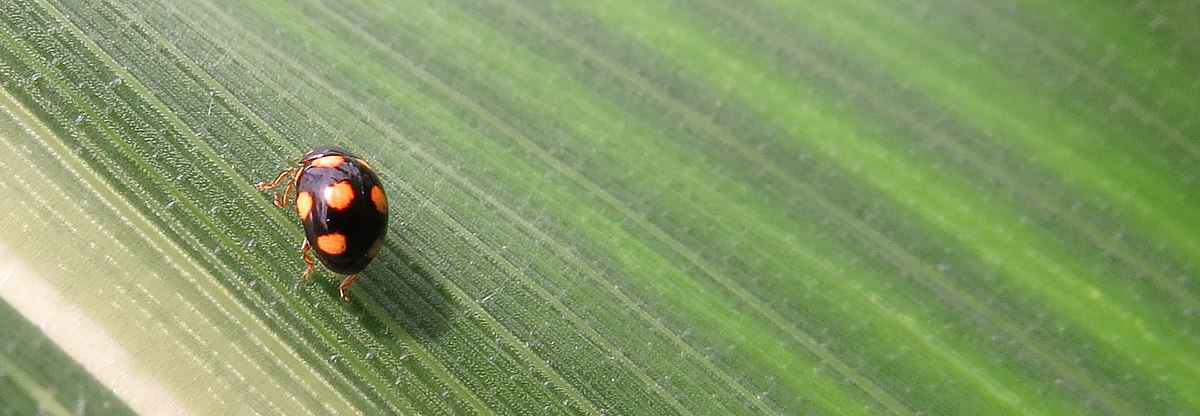
Brachiacantha ursina (photo credit: Wikimedia Commons / NY State IPM Program at Cornell University)

The most abundant native lady beetle collected in the study was the ursine spurleg lady beetle (Brachiacantha ursina). The larvae of this beetle “infiltrate the nests of Lasius ants,” which is “one of the most common genera of ants found in urban environments.” Researchers posit that the abundance of B. ursina reflects the habitat preferences of ants in the Lasius genus. Several species of lady beetles native to the region are experiencing significant population declines, and the researchers were disappointed to find that none of the most rare species were collected during their study period. However, it was promising to find that “pollen and nectar provided by both seeded native and naturally occurring weedy plants” appeared to be important food sources for native lady beetles.

Both studies indicate that vacant lots can be important locations for habitat conservation in urban areas, particularly when they are part of a larger collection of greenspaces. In combination with managing our yards, parks, and urban farms as quality habitat for plants and animals, conserving vacant lots that consist of diverse vegetation (both planted and spontaneous) can help support insect populations within our cities.

Awkward Botany on Outdoor Idaho (plus Send Us Your Questions)

I spend a lot time on this blog putting weeds in the spotlight, celebrating them for their successes and the unique and interesting plants they are. It’s rare that I get to share these sentiments outside of this particular venue, but I was given such an opportunity recently when asked to talk about weeds for an episode of Outdoor Idaho, a long running show on Idaho Public Television that covers Idaho’s natural history. The theme of this particular episode is wildflowers, so I was intrigued by the idea of coming on to discuss urban weeds. For many, the term “wildflowers” may invoke native plants blooming in natural areas in places far removed from the hustle and bustle of the city. But a wildflower doesn’t have to be a native plant, nor does it have to be growing in the wild. Any plant occurring naturally on its own without the assistance of humans can be a wildflower, and that includes our wild urban flora. I appreciated the chance to share this particular thought with the viewers of Outdoor Idaho.

photo credit: Jay Krajic

Along with me waxing on about weeds, the Wildflowers episode features a host of other Idahoans sharing their thoughts, expertise, and experiences with wildflowers. The episode is brief – coming in at under 30 minutes – but the producers packed in a ton of great wildflower content, and overall I found it to be an excellent representation of the flora of Idaho and a convincing argument for why we should appreciate and elevate these plants. The flora of any region is special and important in its own right, and Idaho’s flora is no different, including its weeds.

Check out Outdoor Idaho’s Wildfowers episode here.

In other news…

If you want to see more of me on the screen (and I’m not sure why you would), Sierra (a.k.a. Idaho Plant Doctor) and I are doing monthly Q&A videos in which we answer your questions about plants, gardening, pests and diseases, insects, or any other topic you might be curious about. You can tune in to those discussions on Sierra’s instagram. If you have questions of your own that you would like us to address, please leave them in the comments section below, or send them to me via the contact page or my instagram.

Weeds of Boise: Vacant Lot on West Kootenai Street

Every urban area is bound to have its share of vacant lots. These are sites that for whatever reason have been left undeveloped or were at one point developed but whose structures have since been removed. The maintenance on these lots can vary depending on who has ownership of them. Some are regularly mowed and/or treated with herbicide, while others go untouched for long periods of time. Even when there is some weed management occurring, vacant lots are locations where the urban wild flora dominates. Typically no one is coming in and removing weeds in an effort to cultivate something else, and so weeds run the show.

As with any piece of land populated by a diverse suite of wild plants, vacant lots are dynamic ecosystems, which you can read all about in the book Natural History of Vacant Lots by Matthew Vessel and Herbert Wong. The impact of humans can be seen in pretty much any ecosystem, but there are few places where that impact is more apparent than in a vacant lot. In lots located in bustling urban centers, human activity is constant. As Vessel and Wong write, “numerous ecosystem interactions are affected when humans intervene by spraying herbicides or insecticides, by trampling, by physically altering the area, or by depositing garbage and waste products.” These activities “can abruptly alter the availability and types of small habitats; this will in turn affect animal as well as plant diversity and population dynamics.” The dynamic nature of these sites is a reason why vacant lots are excellent places to familiarize yourself with the wild urban flora.

Kōura relaxing in a vacant lot

On our morning walks, Kōura and I have been visiting a small vacant lot on West Kootenai Street. We have watched as early spring weeds have come and gone, summer weeds have sprouted and taken off, perennial weeds have woken up for the year, and grass (much of which appears to have been intentionally planted) has grown tall and then been mowed with some regularity. Someone besides us is looking after this vacant lot, and it’s interesting to see how the plant community is responding. As Vessel and Wong note, “attempts to control weedy plants by mowing, cultivating, or spraying often initiate the beginning of a new cycle of growth.” For plants that are adapted to regular disturbance, measly attempts by humans to keep them in check are only minor setbacks in their path to ultimate dominance.

What follows are a few photos of some of the plants we’ve seen at the vacant lot on Kootenai Street, as well as an inventory of what can be found there. This list is not exhaustive and, as with other Weeds of Boise posts, will continue to be updated as I identify more species at this location.

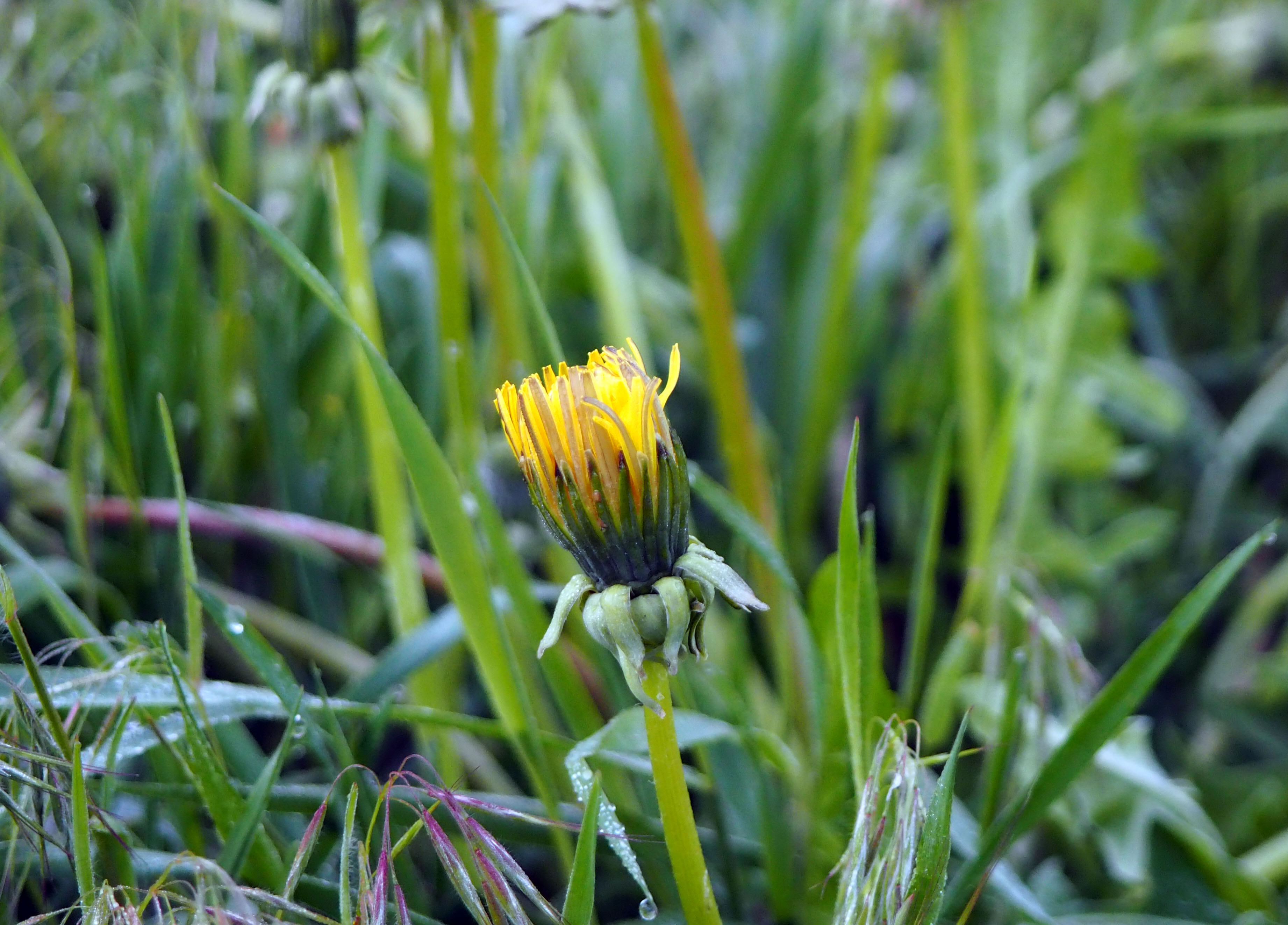
dandelion (Taraxacum officinale)
grape hyacinth (Muscari armeniacum)
henbit (Lamium amplexicaule)
wild barley (Hordeum murinum) backed by cheatgrass (Bromus tectorum)
narrowleaf plantain (Plantago lanceolata) and broadleaf plantain (Plantago major)
perrennial sweet pea (Lathyrus latifolius) surrounded by redstem filaree (Erodium cicutarium)
whitetop (Lepidium sp.)
white clover (Trifolium repens)
  • Bromus tectorum (cheatgrass)
  • Capsella bursa-pastoris (shepherd’s purse)
  • Ceratocephala testiculata (bur buttercup)
  • Convolvulus arvensis (field bindweed)
  • Descurainia sophia (flixweed)
  • Draba verna (spring draba)
  • Erodium cicutarium (redstem filaree)
  • Geum urbanum (wood avens)
  • Holosteum umbellatum (jagged chickweed)
  • Hordeum murinum (wild barley)
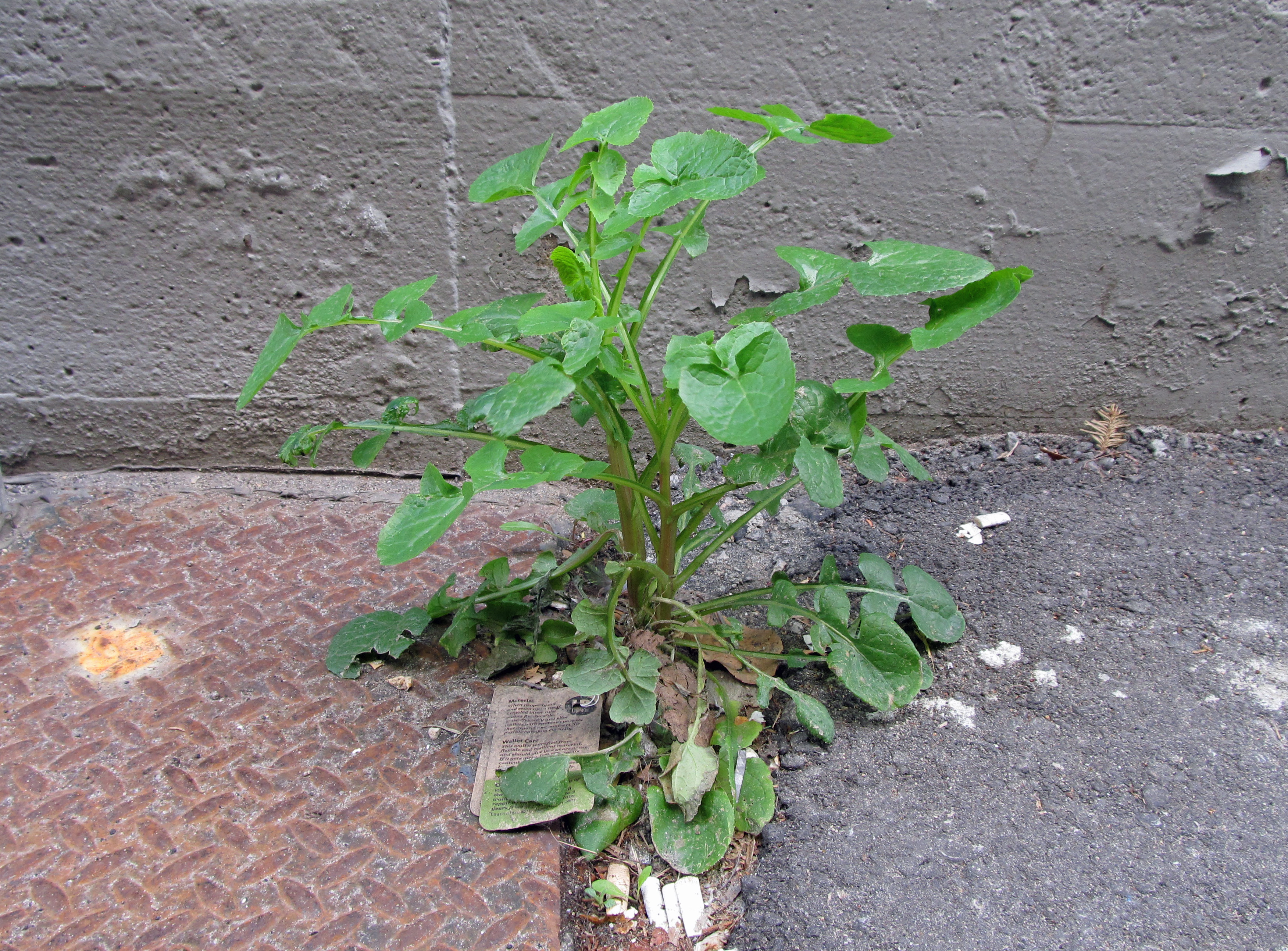
  • Lactuca serriola (prickly lettuce)
  • Lamium amplexicaule (henbit)
  • Lathyrus latifolius (perennial sweet pea)
  • Lepidium sp. (whitetop)
  • Malva neglecta (dwarf mallow)
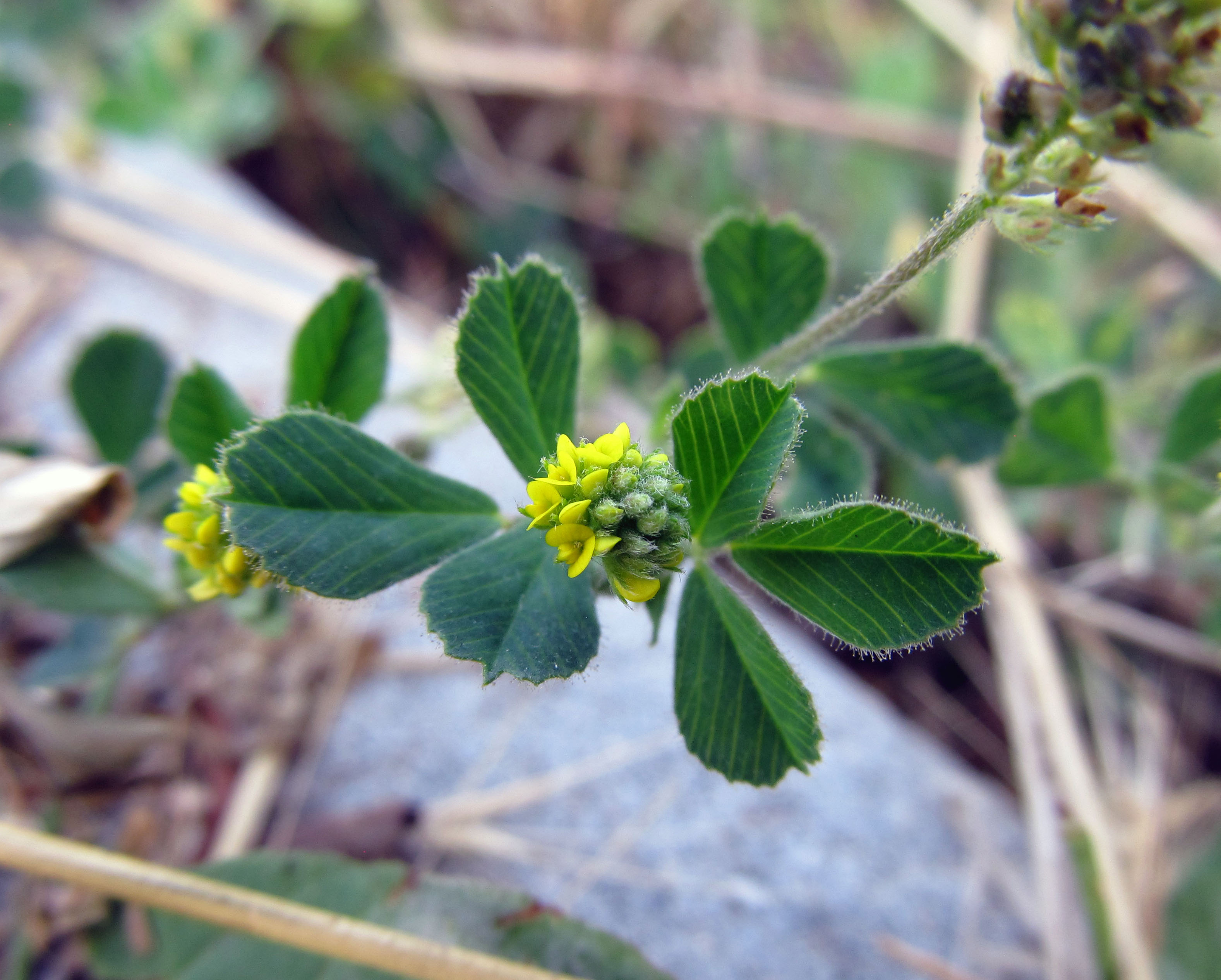
  • Medicago lupulina (black medic)
  • Muscari armeniacum (grape hyacinth)
  • Plantago lanceolata (narrowleaf plantain)
  • Plantago major (broadleaf plantain)
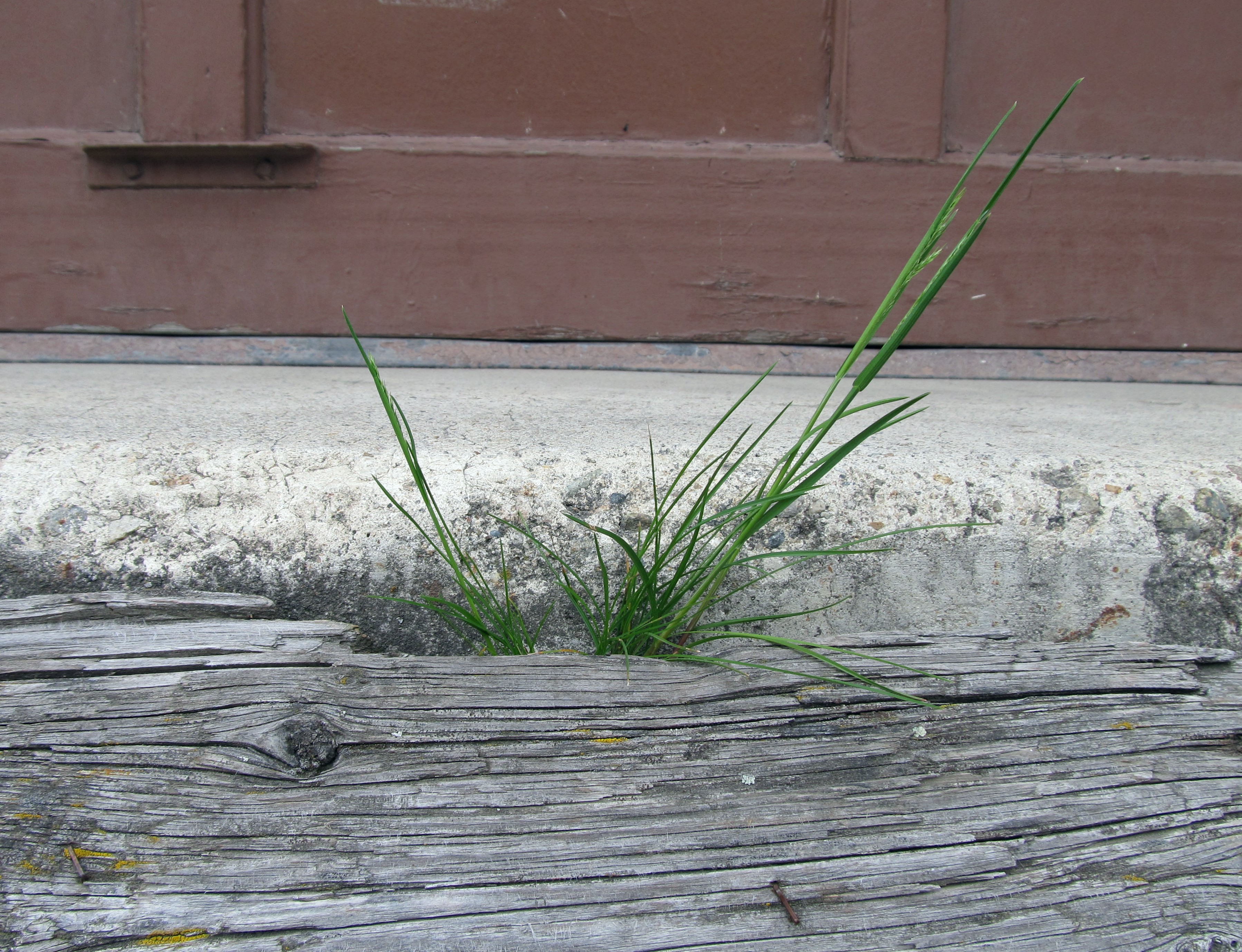
  • Poa bulbosa (bulbous bluegrass)
  • Poa pratensis (Kentucky bluegrass)
  • Rumex crispus (curly dock)
  • Taraxacum officinale (dandelion)
  • Tragopogon dubius (salsify)
  • Trifolium repens (white clover)
  • Veronica sp. (speedwell)

If you live in an urban area, chances are good there is a vacant lot near you. What have you found growing in your neighborhood vacant lot? Feel free to share in the comment section below.
Weeds of Boise: Railroad Tracks Between Kootenai Street and Overland Road

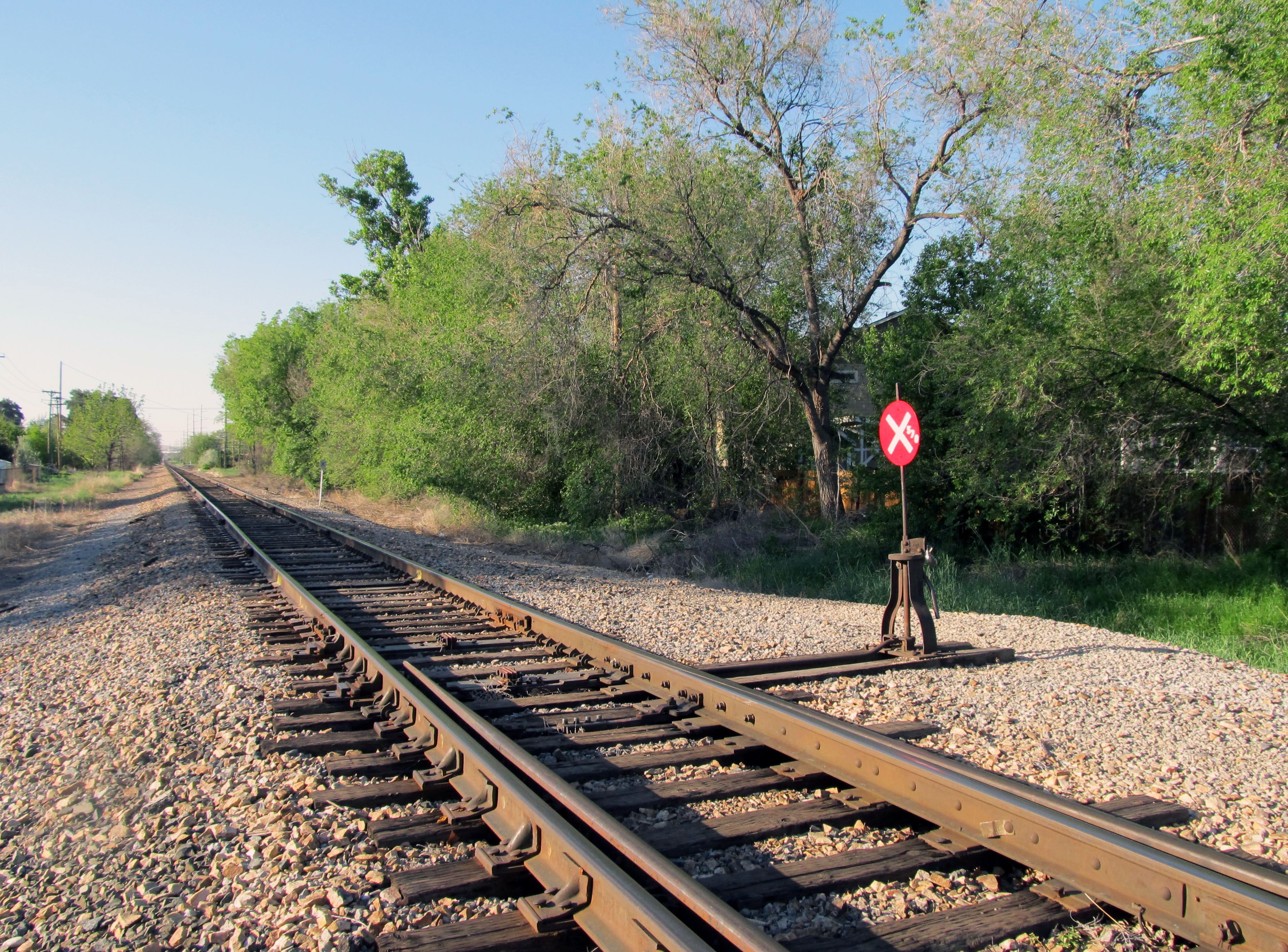
Walking along railroad tracks is a pretty cool feeling. It’s also a good place to look for weeds. Active railroad tracks are managed for optimum visibility and fire prevention, which means that trees and shrubs near the tracks are removed creating plenty of open space on either side. Open areas in full sun are ideal places for a wide variety of weed species to grow. Trains passing through can also be sources or dispersal agents of seeds, so there’s a chance that you may see things growing alongside railroad tracks that you don’t often see elsewhere. All this means that railroad tracks in urban areas are great locations to familiarize yourself with your city’s wild urban flora.

I visited a small section of railroad tracks between Kootenai Street and Overland Road in Boise. At one point, this was a pretty active railroad. Passenger trains once moved along these tracks, and the Boise Depot, which is less than a mile from this location, was one of several stops between Portland, OR and Salt Lake City, UT. Unfortunately, those services ended in 1997 and have yet to resume, despite continued support for bringing passenger rail back to the region. Still, freight trains pass by with some frequency.

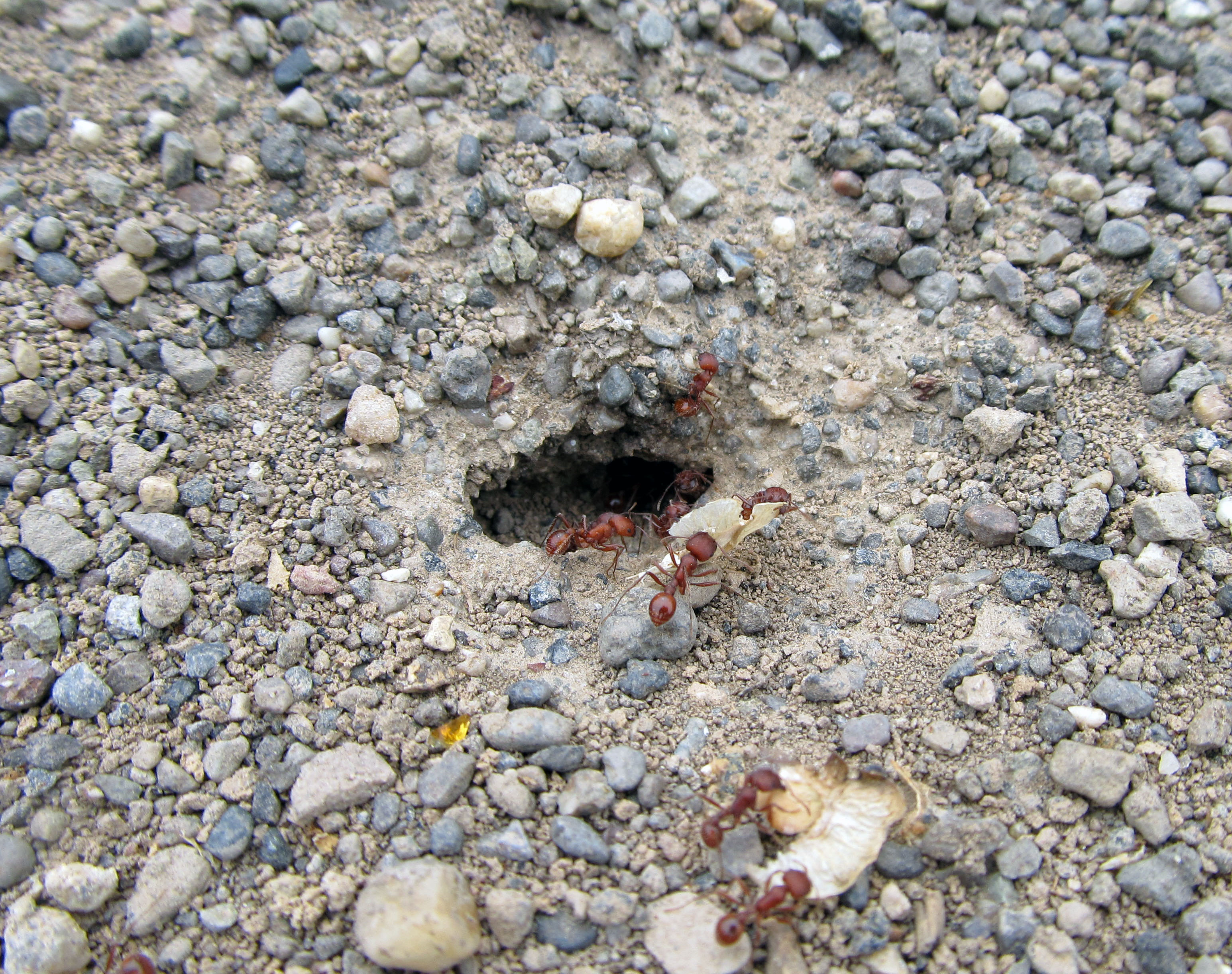
Managing weeds along railroad tracks in urban areas can be tricky. There is little else in the way of vegetation to compete with the weeds. The tracks are also adjacent to parks, homes, schools, gardens, and other locations that make herbicide applications complicated. The species of weeds can also vary widely from one mile to the next, so management decisions must also vary. It’s especially important that the ballast directly beneath and on either side of the tracks is kept weed free in order to prevent fires and improve visibility. All of this and more makes weed control along railroad tracks one of the most challenging jobs around. Luckily, for someone that likes to look at weeds, it means there will always be interesting things to see near the tracks, including for example this colony of harvester ants that I came across while identifying weeds. I was happy to see that they were collecting the samaras of Siberian elm (Ulmus pumila), one of several weedy trees in the Treasure Valley.

What follows are a few images of some of the weeds I encountered along the railroad tracks between Kootenai Street and Overland Road, as well as a list of the weeds I was able to identify. The list will grow as I identify the mystery weeds and encounter others that I missed, as is the case with all posts in the Weeds of Boise series.

Virginia creeper (Parthenocissus quinquefolia)
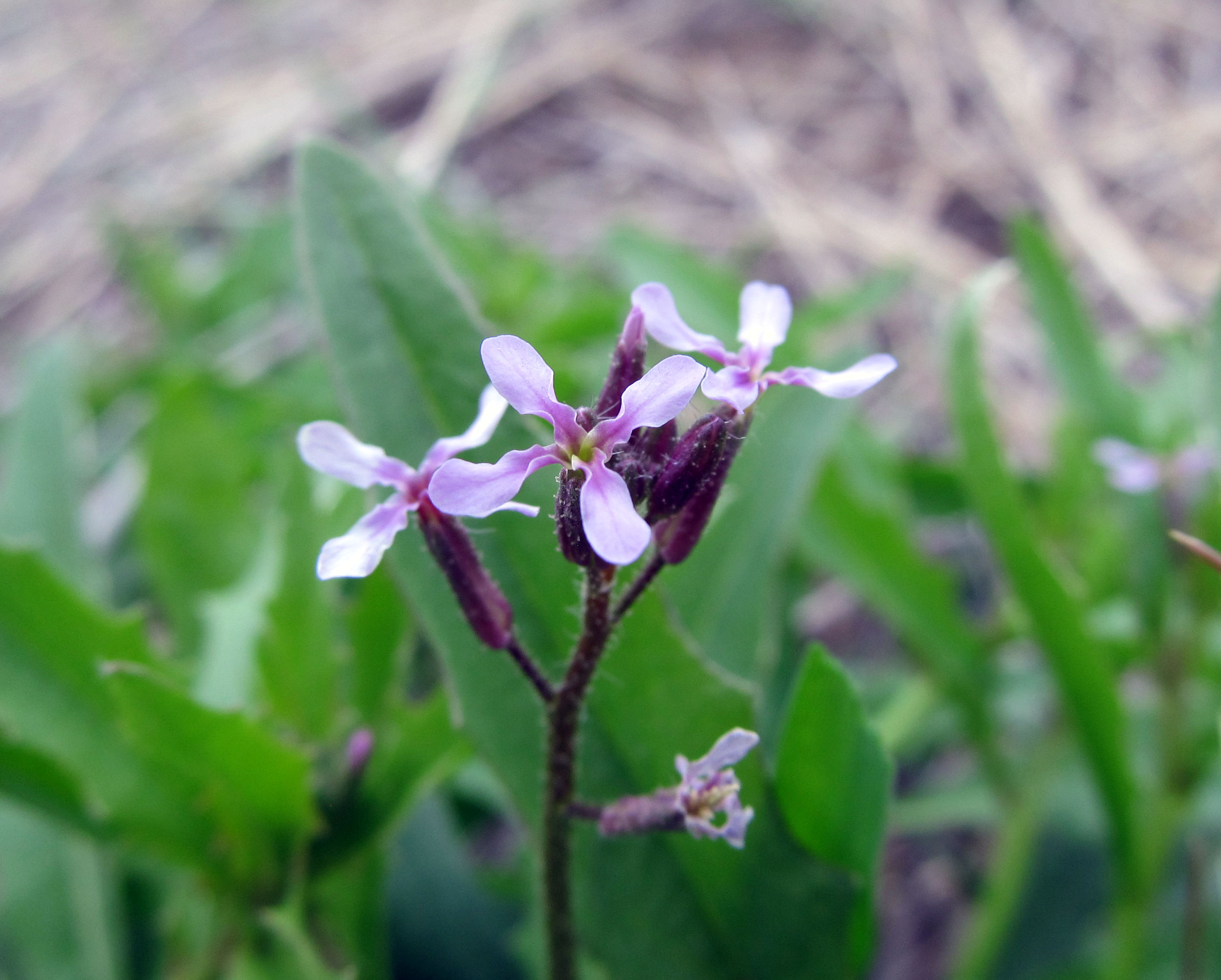
blue mustard (Chorispora tenella)
cleavers (Galium aparine)
whitetop (Lepidium sp.)
Himalayan blackberry (Rubus bifrons)
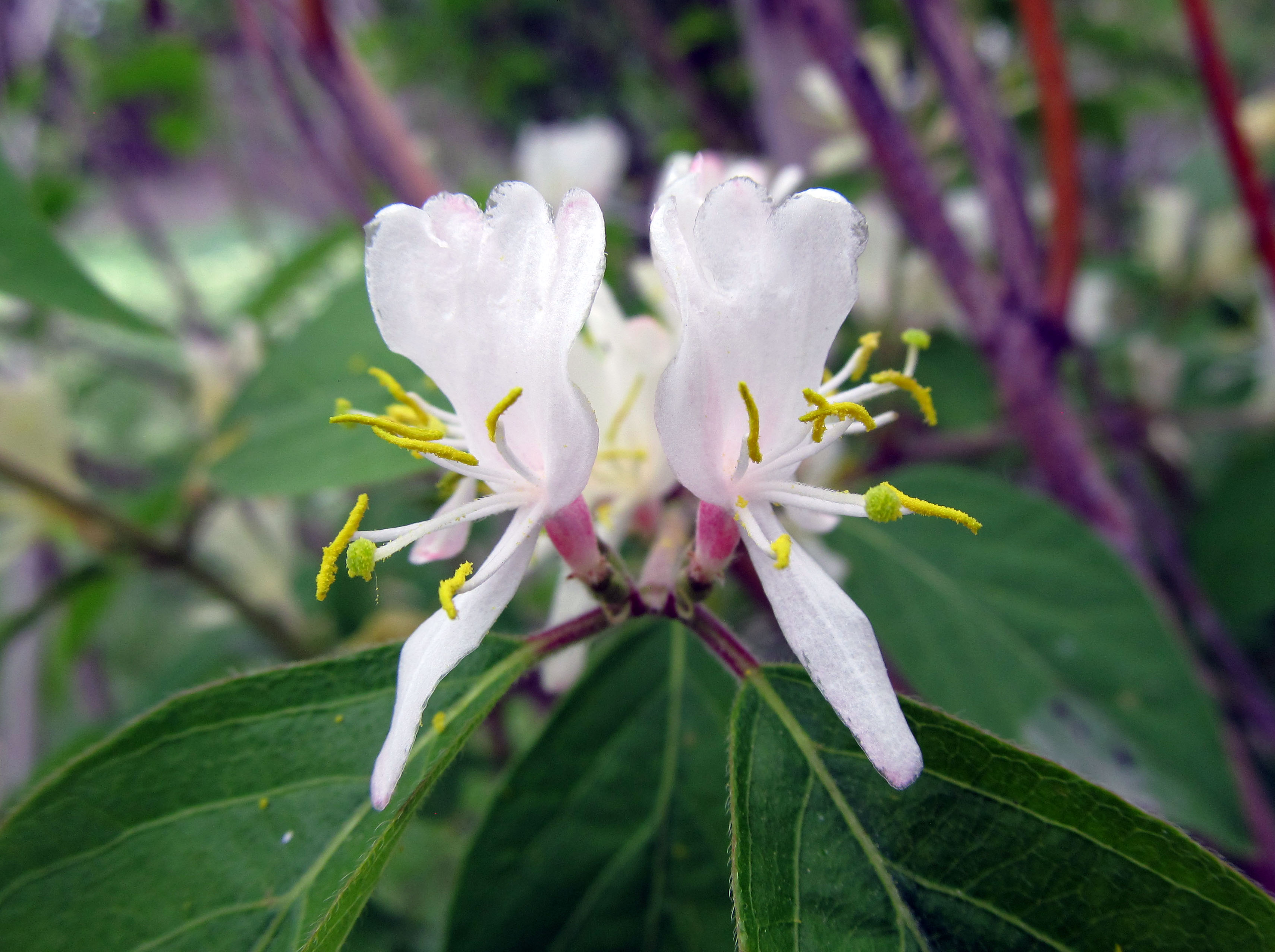
bush honeysuckle (Lonicera sp.)
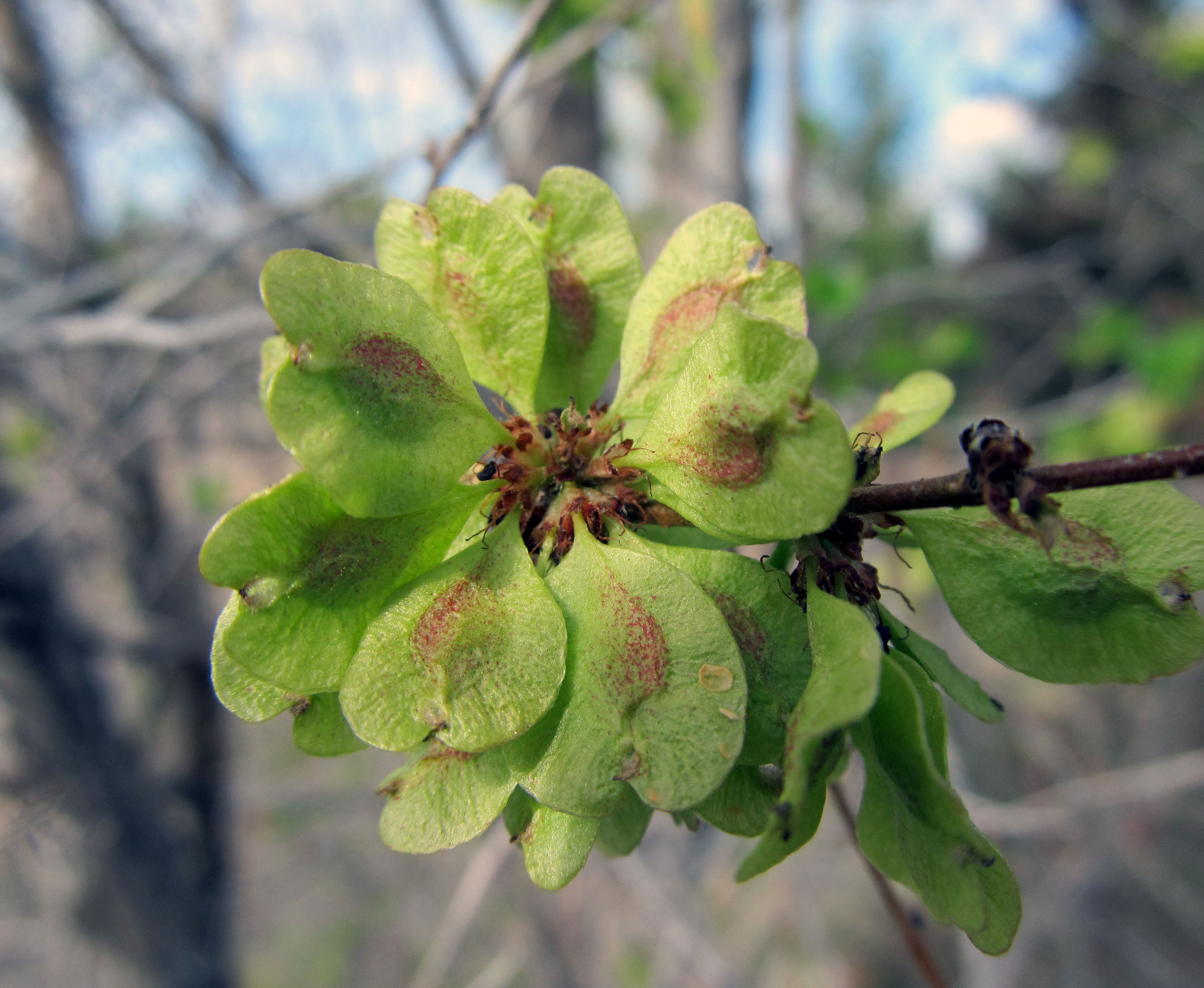
Siberian elm (Ulmus pumila)
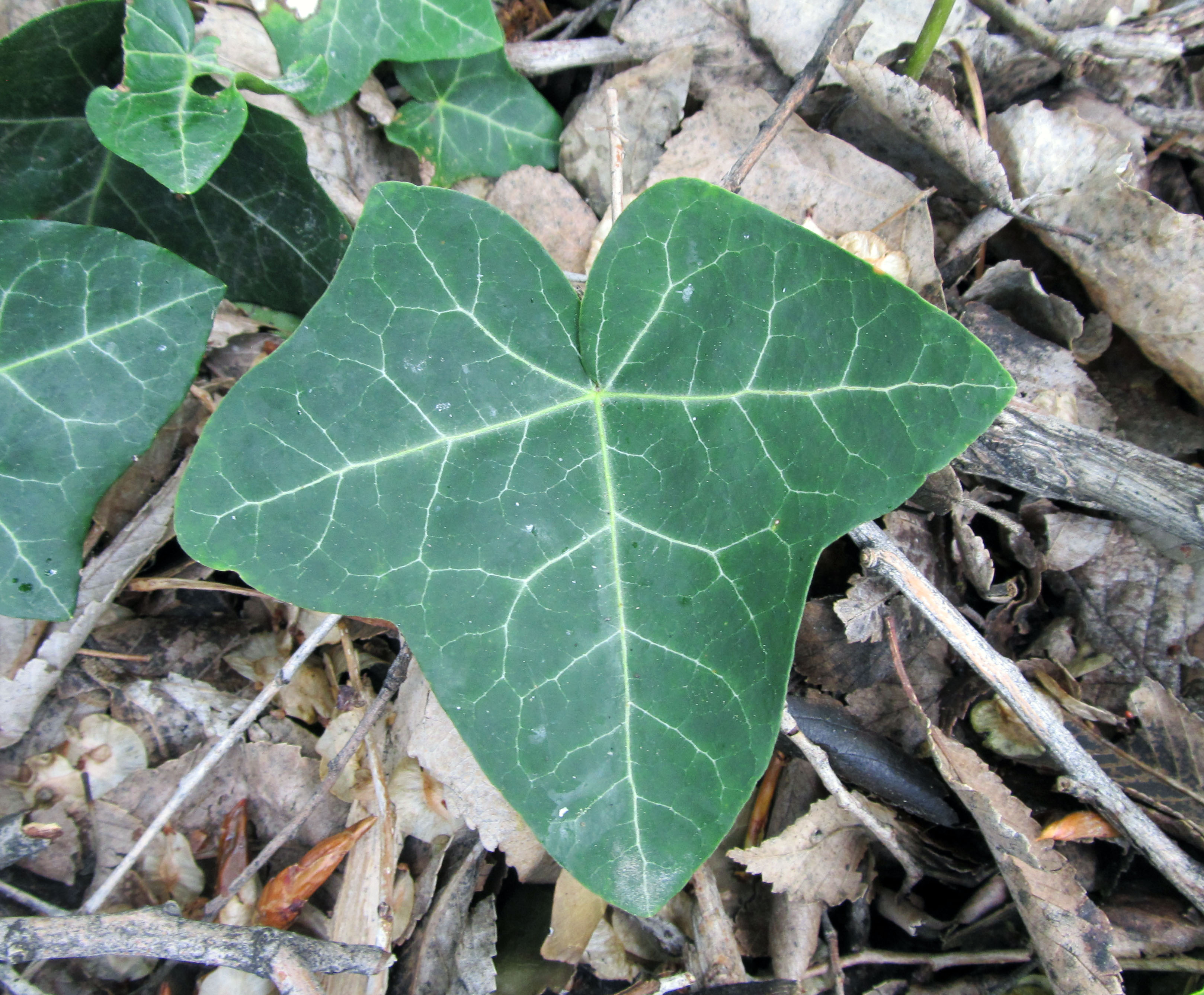
English ivy (Hedera helix)
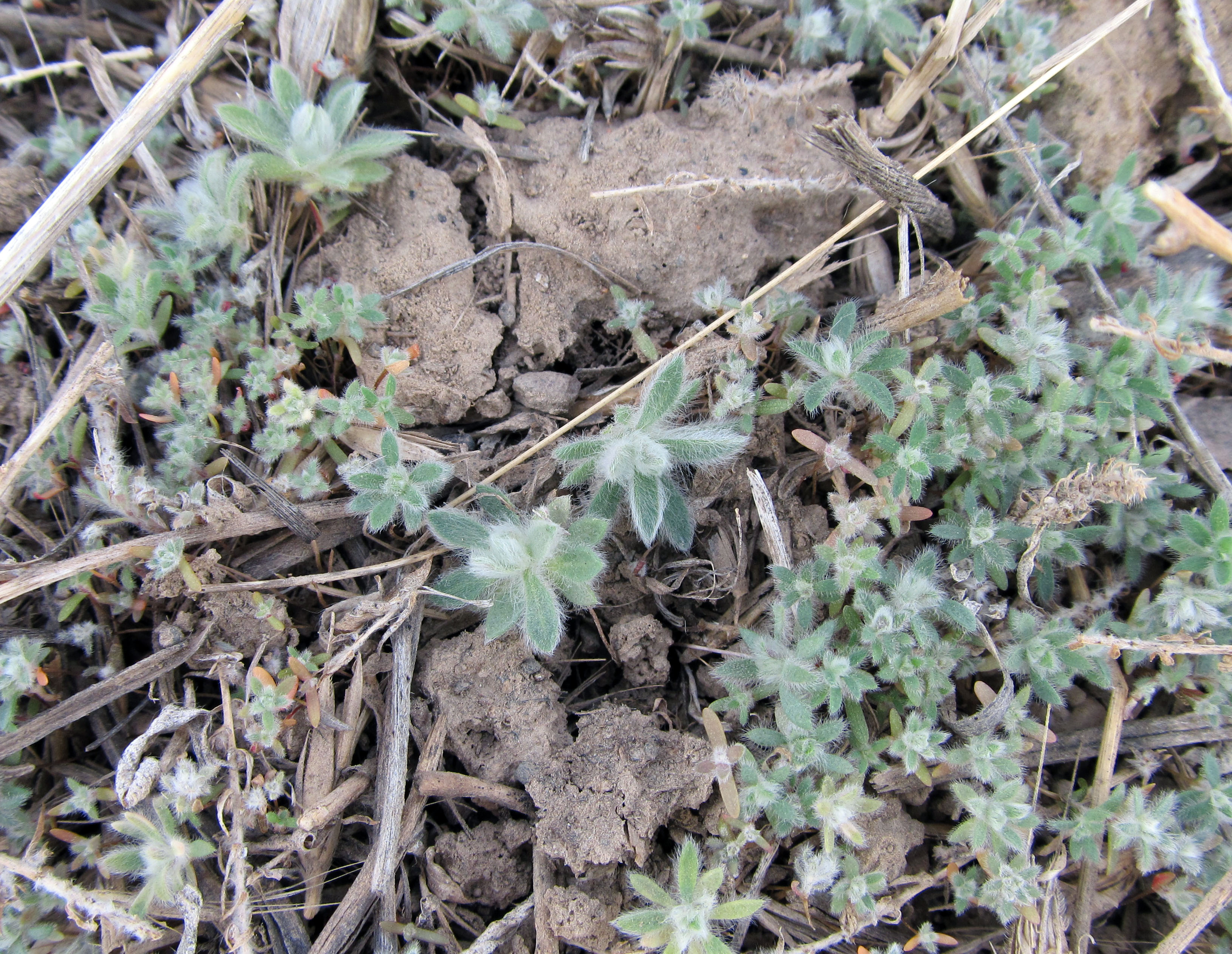
kochia seedlings (Bassia scoparia)
  • Arctium minus (common burdock)
  • Bassia scoparia (kochia)
  • Bromus diandrus (ripgut brome)
  • Bromus tectorum (cheatgrass)
  • Chorispora tenella (blue mustard)
  • Conium maculatum (poison hemlock)
  • Convolvulus arvensis (field bindweed)
  • Cirsium arvense (creeping thistle)
  • Dactylis glomerata (orchardgrass)
  • Descurainia sophia (flixweed)
  • Elaeagnus angustifolia (Russian olive)
  • Epilobium ciliatum (northern willowherb)
  • Equisetum sp. (horsetail)
  • Erodium cicutarium (redstem filaree)
  • Galium aparine (cleavers)
  • Hedera helix (English ivy)
  • Hordeum murinum (wild barley)
  • Lactuca serriola (prickly lettuce)
  • Lepidium sp. (whitetop)
  • Lonicera sp. (bush honeysuckle)
  • Parthenocissus quinquefolia (Virginia creeper)
  • Poa bulbosa (bulbous bluegrass)
  • Poa pratensis (Kentucky bluegrass)
  • Rubus bifrons (Himalayan blackberry)
  • Rumex crispus (curly dock)
  • Secale cereale (feral rye)
  • Taraxacum officinale (dandelion)
  • Ulmus pumila (Siberian elm)

Do you live near railroad tracks? What weeds are growing there, and do you feel as cool as I do when you walk the tracks?

Eating Weeds: Japanese Knotweed

When I first learned that Japanese knotweed was edible, I had my doubts. Sure, lots of plants may be edible, but are they really something you’d want to eat? I know Japanese knotweed as one of the most notorious weeds on the planet. Its destructive, relentless, and prolific nature has landed it on the world’s 100 worst invasive species list, right up there with black rats, Dutch elm disease, and killer algae. Having encountered a fair number of Japanese knotweed stands, the first thing to come to mind has never been, “that looks delicious.” Mature stalks stand as tall as 3 meters with broad, leathery leaves and hollow, bamboo-like stems. Their late summer flowers – a mess of tiny white florets on sprawling flower stalks – are a pollinator’s delight and favored by beekeepers for their abundant nectar. I don’t doubt that the honey produced from such an encounter is tasty, but the plant itself? I needed convincing.

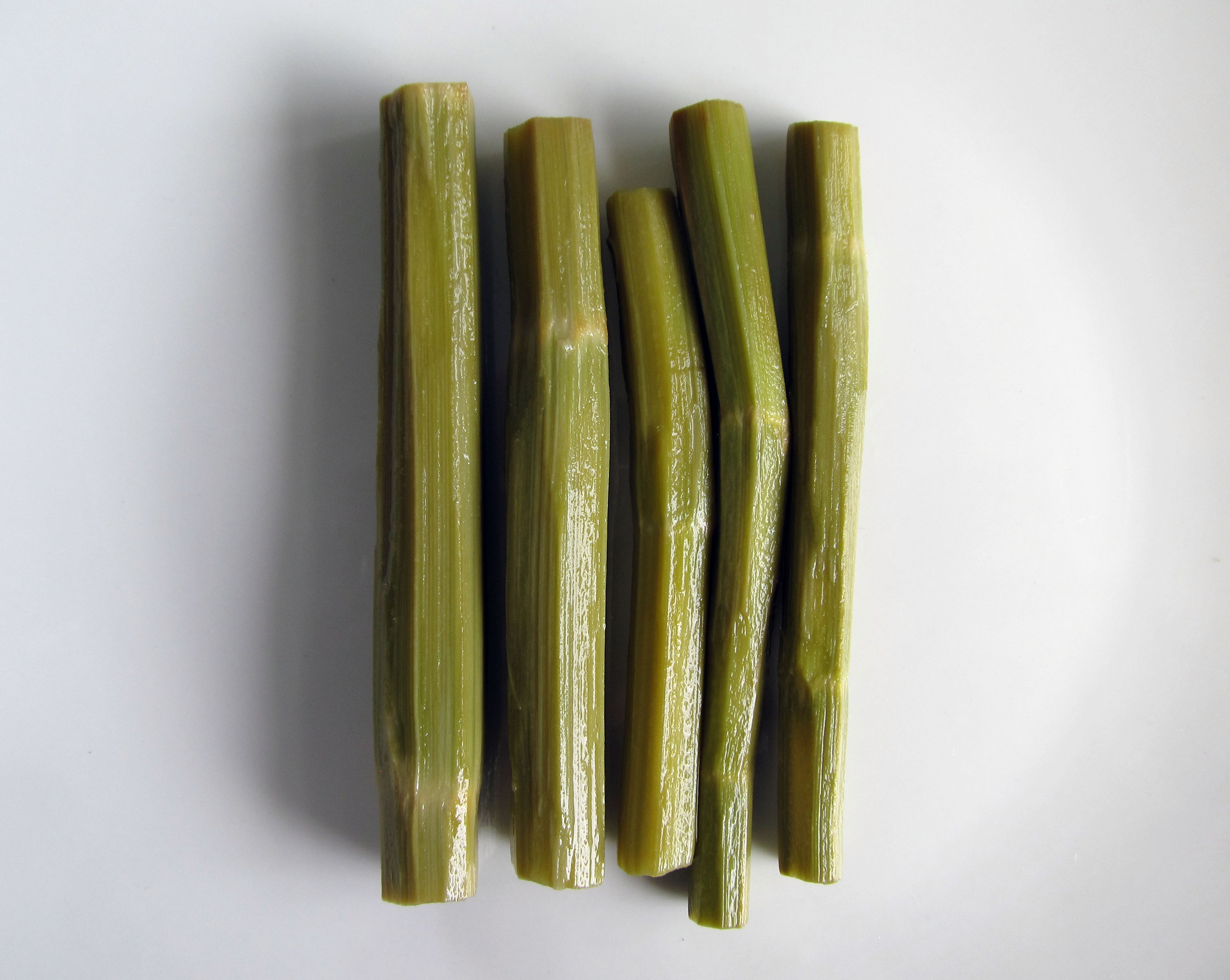
Finally, I looked into it. I came across recipes of Japanese knotweed pickles and learned that it was the young, early emerging shoots that were sought after. That changed my perspective. Certainly you wouldn’t want to gnaw on a woody, 4 foot tall Japanese knotweed stalk, but the tender stems as they’re just beginning to re-emerge from the ground in the spring? Now those might be worth trying.

emerging stems of Japanese knotweed (Reynoutria japonica)

Japanese knotweed (Reynoutria japonica) was introduced to Europe from Japan in the 1800’s, arriving at Royal Botanic Gardens Kew by 1850. At that point, it was a prized ornamental. Its thick stems spotted with reds and purples, its broad, shiny leaves, and its showy flower heads all gave it garden appeal. It was also found to be useful for stabilizing hillsides and reducing erosion, honey production, and as a rhubarb substitute (it’s in the same plant family as rhubarb after all). Not long after that, it made its way to North America. Certainly people must have been aware of its propagative prowess as they moved the plant around. It readily roots from root and stem fragments, plus it produces extensive rhizomes, working their way as deep as 3 meters into the soil and as far as 7 meters away from the parent plant. Perhaps that should have been cause for alarm, but how could anyone have predicted just how aggressive and widespread it would soon become?

Thanks to the plant’s rhizomes, Japanese knotweed grows in thick, many-stemmed stands, pushing out, shading out, and leaving very little room for other plants. The rhizomes are also tough and can push up through gravel, cement, and asphalt. They are notorious for damaging foundations, pipes, and even pushing their way through floorboards. If that’s not enough, Japanese knotweed is pretty much impossible to kill. Herbicides may set it back, but they generally don’t take it out. Cutting it down repeatedly can slow it down, but it may also encourage it to grow more thickly and spread out more widely. Smothering it can work, but you have to be prepared to keep it smothered for quite a while. The deep rhizomes are slow to die, and they may eventually find their way outside of the smothered area, popping up to destroy your efforts to contain it. You can try to dig it out, but the amount of dirt you’d have to dig to get every last root and rhizome really isn’t feasible in most circumstances.

But hey, you can eat it, and perhaps you should. A quick internet search reveals a number of ways the plant can be consumed – purees, chutneys, compotes, sorbets. I chose to go with pickled Japanese knotweed. It seemed simple and approachable enough and a good way to determine if I was going to like it or not. Room temperature brine fermentation is pretty easy. You basically put whatever you’re wanting to pickle in a jar, add whatever spices and things you’d like, fill the jar with salty water, then seal it shut and let it sit there for a few days. Before you know it, you’ve got pickles.

There are several recipes for pickled Japanese knotweed to choose from. I went with this one. The seasonings I used were a bit different, and the stalks I had weren’t as “chubby” as recommended, but otherwise my approach was the same. After a few days, I gave them a try. I was pleasantly surprised. I thought they tasted a little like nopales. Sierra reluctantly tried them and was also surprised by how good they were. They reminded her of pickled asparagus. Other sources describe them as lemony, crunchy, tart and suggest serving them with fish, ramen, or even adding them to a cocktail made with purslane. Many of the weeds I’ve tried have been a fun experience, but not necessarily something I need to repeat. Japanese knotweed pickles, on the other hand, could become a spring tradition for me, and since we’re pretty much stuck with this plant, I’m sure to have a steady supply.

More Eating Weeds Posts on Awkward Botany:

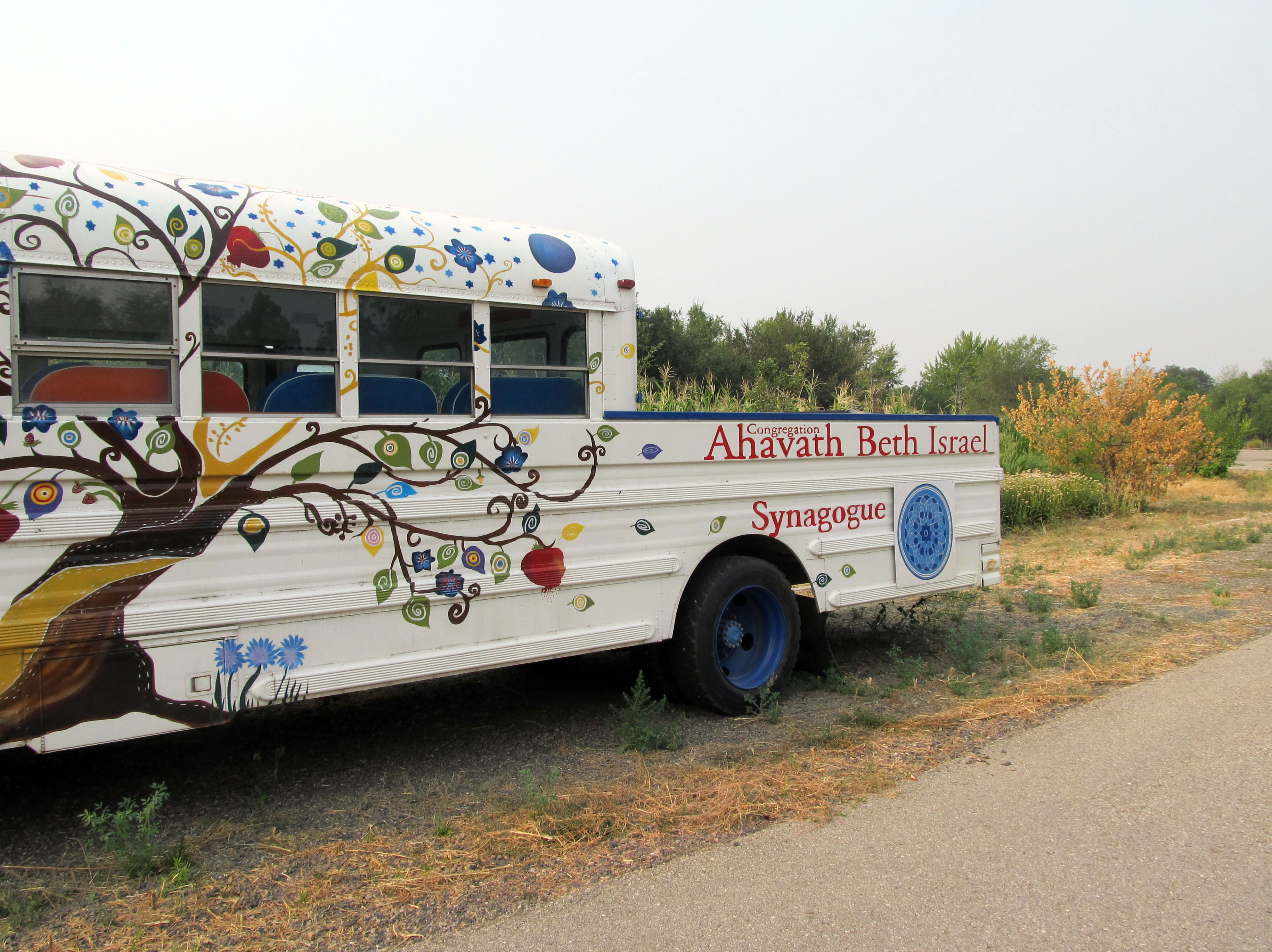
Weeds of Boise: Ahavath Beth Israel Synagogue Garden

Anyone who has maintained a garden or small farm knows that with all the work it takes to keep up on the garden itself, outlying areas can quickly become overtaken by weeds. Low on the list of priorities, areas outside of our garden borders are ideal locations for wild urban vegetation to thrive. Pulling all the weeds within the garden is a big enough task as it is; thus, weeds out of our reach are left to their own devices, occasionally getting mown down by a string trimmer or brush mower (if time allows), but otherwise living largely unscathed. And so, places such as these are excellent for familiarizing oneself with our wild urban flora.

I found an example of this scenario at the Ahavath Beth Israel Synagogue Garden in Boise, Idaho. This community garden is a partnership between Congregation Ahavath Beth Israel (CABI) and Global Gardens, providing refugees in the area an opportunity to grow food for their families and participate in community activities.

When I visited this site, it was clear that the weeds on the edge of the garden had been mowed down at some point. New plants had popped up after the fact while others were in the process of recovering from the “haircut” and putting on new, shrubbier growth. The mowing and the fact that it was late in the summer made identifying remnants of earlier weeds too difficult to bother. Most of the weeds that I did find were either summer annuals or perennials. A visit in the spring would reveal an entirely different cast of characters.

I stayed on the border of the garden, not wanting to invade anyone’s plot or snoop around too much. The point of the visit was to highlight weeds found outside of the borders of a garden anyway. I would imagine that, since the garden is used to grow annual fruits and vegetables, most of the weeds in the beds would be annuals as well. Longer-lived weeds don’t generally tolerate regular disturbance and instead find refuge in unkept areas outside of cultivation.

Below are a few photos from the site along with a preliminary list of the weeds that I found.

salsify (Tragopogon dubius)

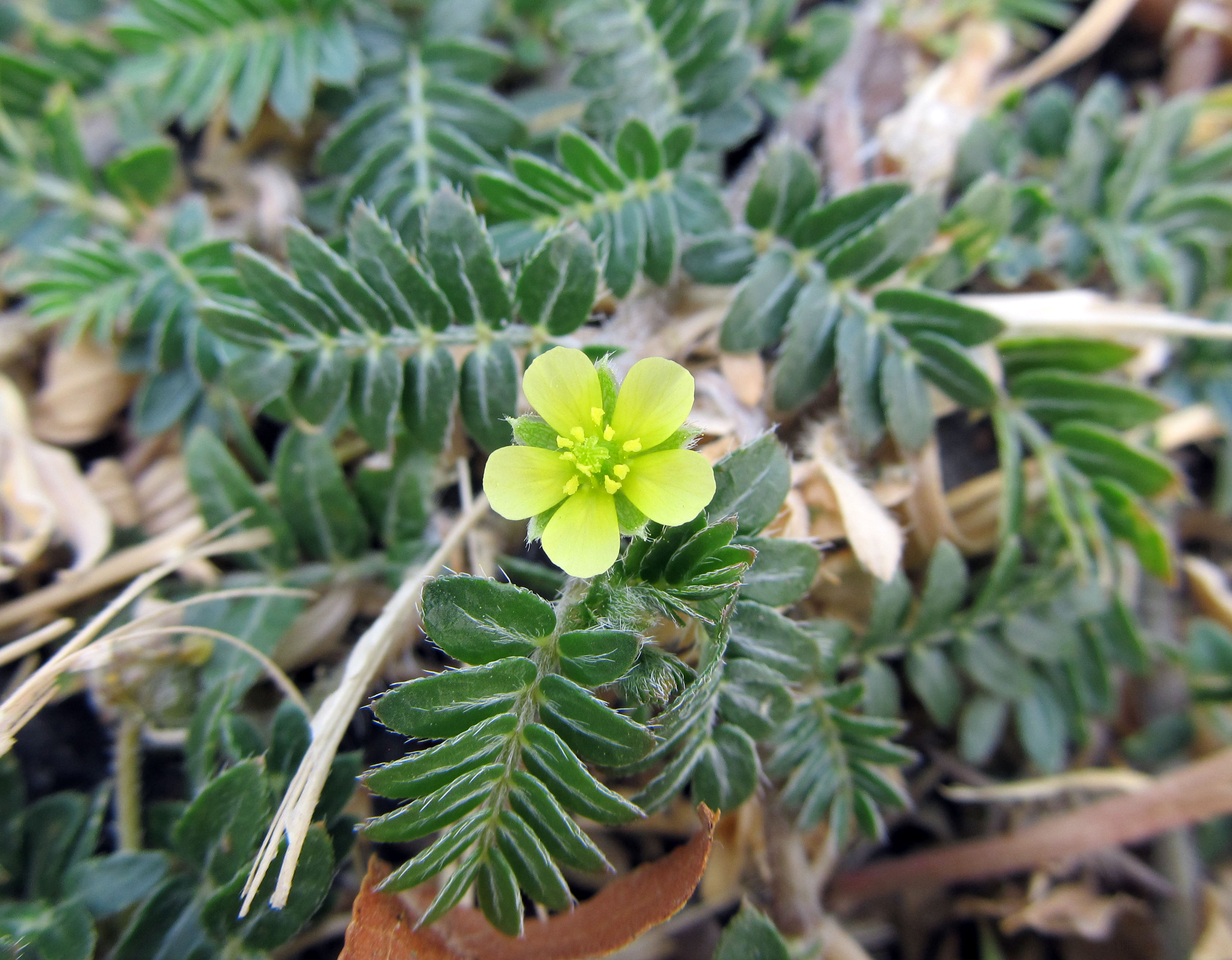
puncture vine (Tribulus terrestris)

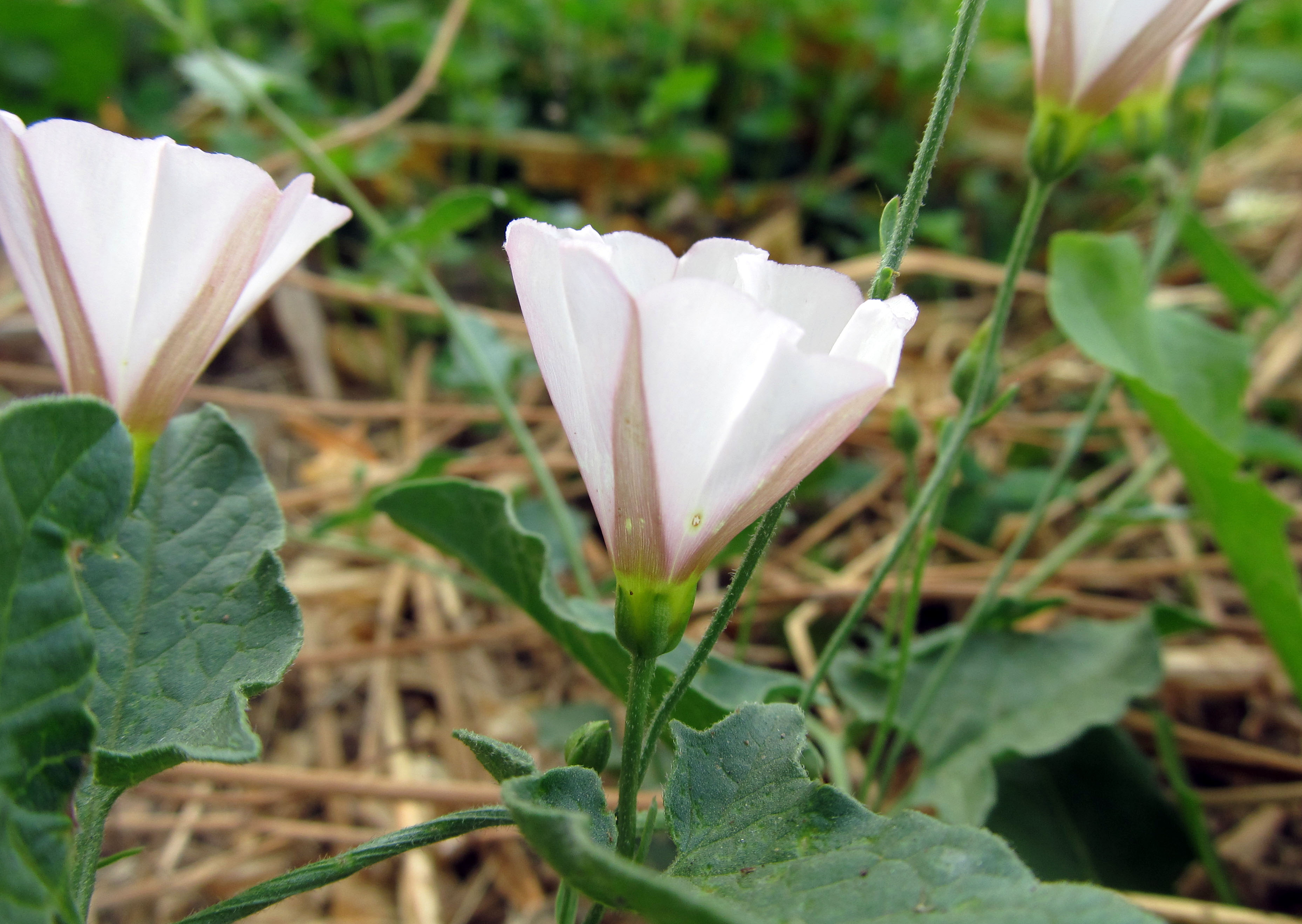
field bindweed (Convolvulus arvensis)

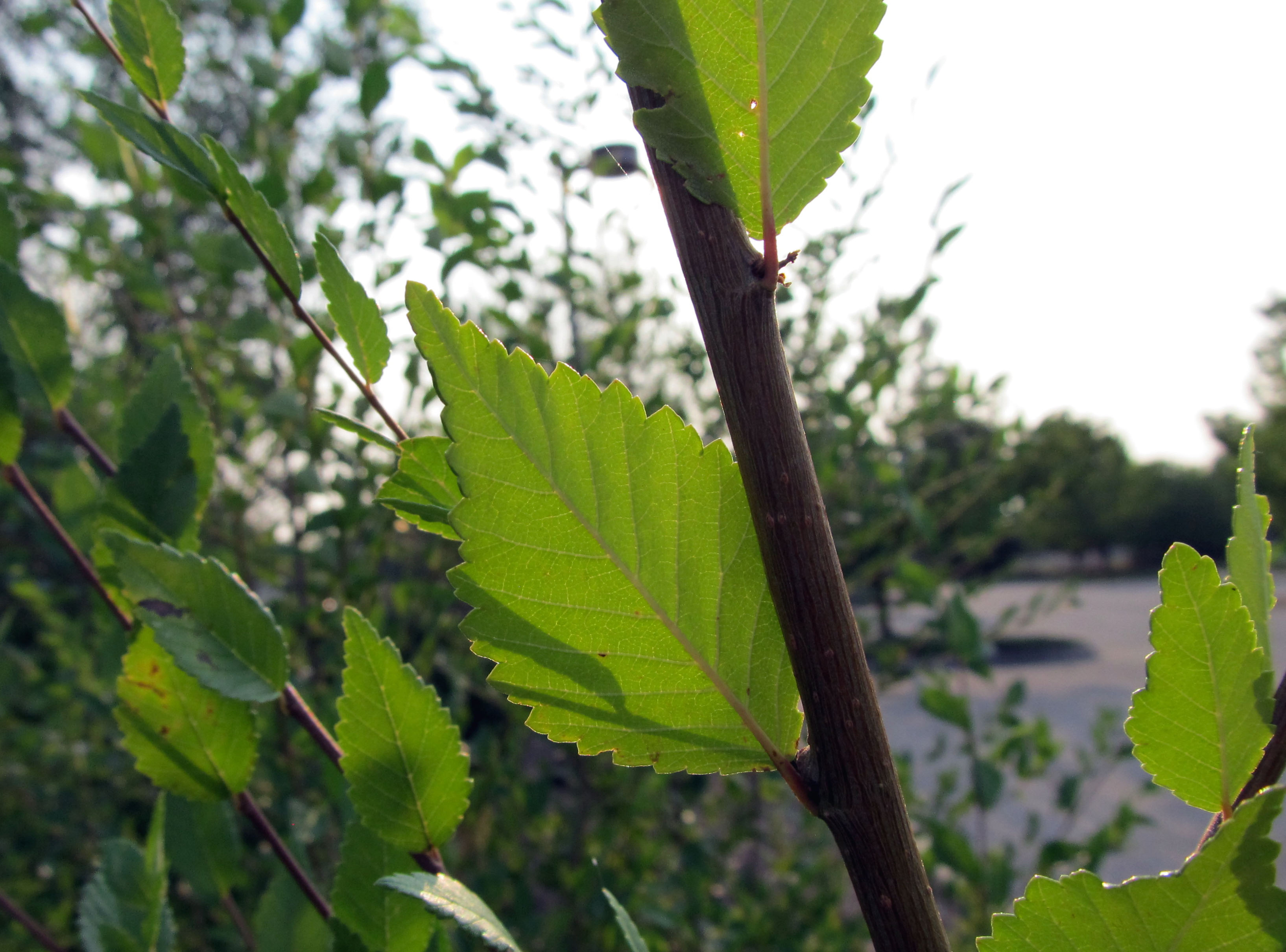
Siberian elm (Ulmus pumila)

common mallow (Malva neglecta)

black medic (Medicago lupulina)

Weeds found at the Ahavath Beth Israel Synagogue Garden:

  • Amaranthus spp. (pigweed)
  • Bassia scoparia (kochia)
  • Chenopodium album (lamb’s quarters)
  • Chondrilla juncea (rush skeletonweed)
  • Convolvulus arvensis (field bindweed)
  • Conyza canadensis (horseweed)
  • Digitaria sanguinalis (crabgrass)
  • Epilobium brachycarpum (tall annual willowherb)
  • Euphorbia maculata (spotted spurge)
  • Hordeum jubatum (foxtail barley)
  • Lactuca serriola (prickly lettuce)
  • Malva neglecta (common mallow)
  • Medicago lupulina (black medic)
  • Oenothera biennis (common evening-primrose)
  • Plantago lanceolata (narrowleaf plantain)
  • Polygonum aviculare (prostrate knotweed)
  • Rumex crispus (curly dock)
  • Setaria sp. (foxtail)
  • Sonchus sp. (sow thistle)
  • Taraxacum officinale (dandelion)
  • Tragopogon dubius (salsify)
  • Trifolium pratense (red clover)
  • Ulmus pumila (Siberian elm)
  • Verbena bracteata (prostrate vervain)

Like all posts in the Weeds of Boise series, this will be updated as I identify and photograph more of the weeds found in this location.

Introducing Weeds of Boise

Weeds are the wild flora of our cities. Their occurrence and continued existence is not directly reliant on humans in the same way that the plants in our yards, parks, gardens, and other green spaces are. They may take advantage of the disturbance that we cause when we stir up the soil or cease maintenance in a particular spot, and they certainly appreciate the runoff from our sprinklers and the free rides their seeds get on our pets and ourselves, but they don’t need us looking after them to survive. They get by on their own whether we approve of them or not. Most may not be native to the area, but their presence is natural – undirected and involuntary – and for this reason I consider them to be a valid component of our urban flora.

If you visit a natural area outside of our cities, you are likely to find a field guide associated with that region that will help you identify many of the plants found there. However, such a field guide is not likely to exist for the plants found in a vacant lot or an urban roadside near you. Sure, there are plenty of general weed identification guides, some of which may be specific to where you live, but they are often focused on agricultural/horticultural weeds or weeds found in natural areas outside of the built environment. Few show weeds in an unmaintained urban setting the way that Peter Del Tredici’s book or Maggie Herskovits’ zine do. Clearly we need more resources that identify and document our urban floras.
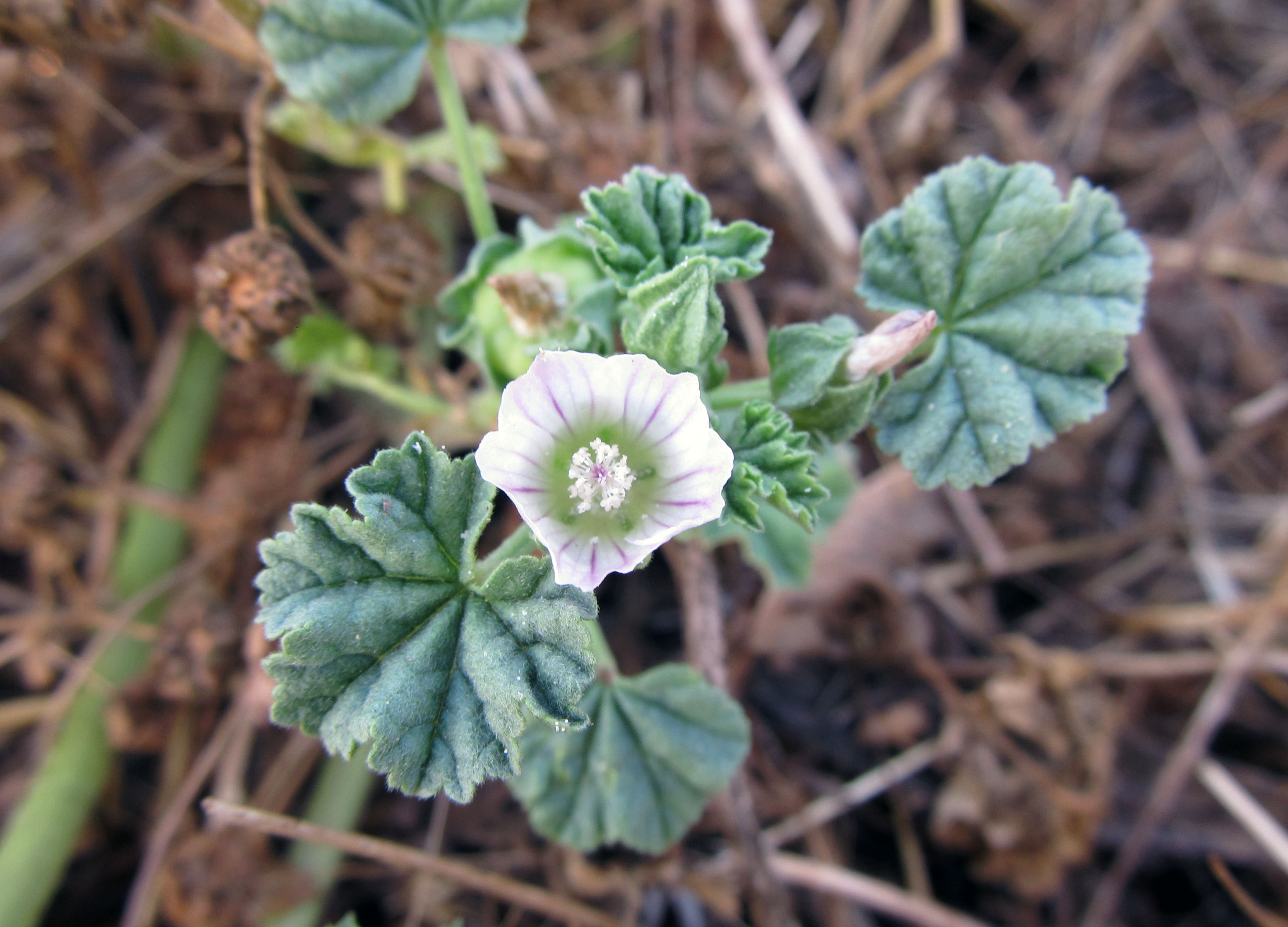
Weeds of Boise is an attempt to begin that process for my corner of the world. After coming across websites like The Weedalouge (cataloging the wild plants of Philadelphia), Weeds of Melbourne (“a visual glossary of the weedy heritage of Melbourne, Australia”), and Spontaneous Urban Plants (an attempt to map weeds in urban areas around globe), I decided to start the process here in Boise, Idaho. My goal is to select locations across the city and inventory the weeds found there at different times of the year. I will keep a running list of what I find and photograph as many plants as I can. I will make a separate blog post for each location and maintain a link for each post in the Weeds of Boise page. The blog posts will be updated as I collect more data for each site. Over time I hope to have a more clear picture of what weeds are found here and how they are distributed.

Because many of these plants are cosmopolitan, the weeds found in my area are likely similar to the ones found in yours, but there may be some unique differences. If more projects like this are undertaken, we will have a better idea of the similarities and differences among our urban floras. Upon closer observation, we are likely to make some interesting discoveries. Who knows what we might find once we really start looking at these obnoxiously ubiquitous but otherwise completely ignored plants?

Weeds of Boise is also a reminder that you can botanize anytime anywhere. You don’t have to jet off to some remote location to see plants. It’s likely that there are wild plants growing right outside your front door – each one with a unique name and story and just as worth getting to know as any other.

Winter Interest in the Lower Boise Foothills

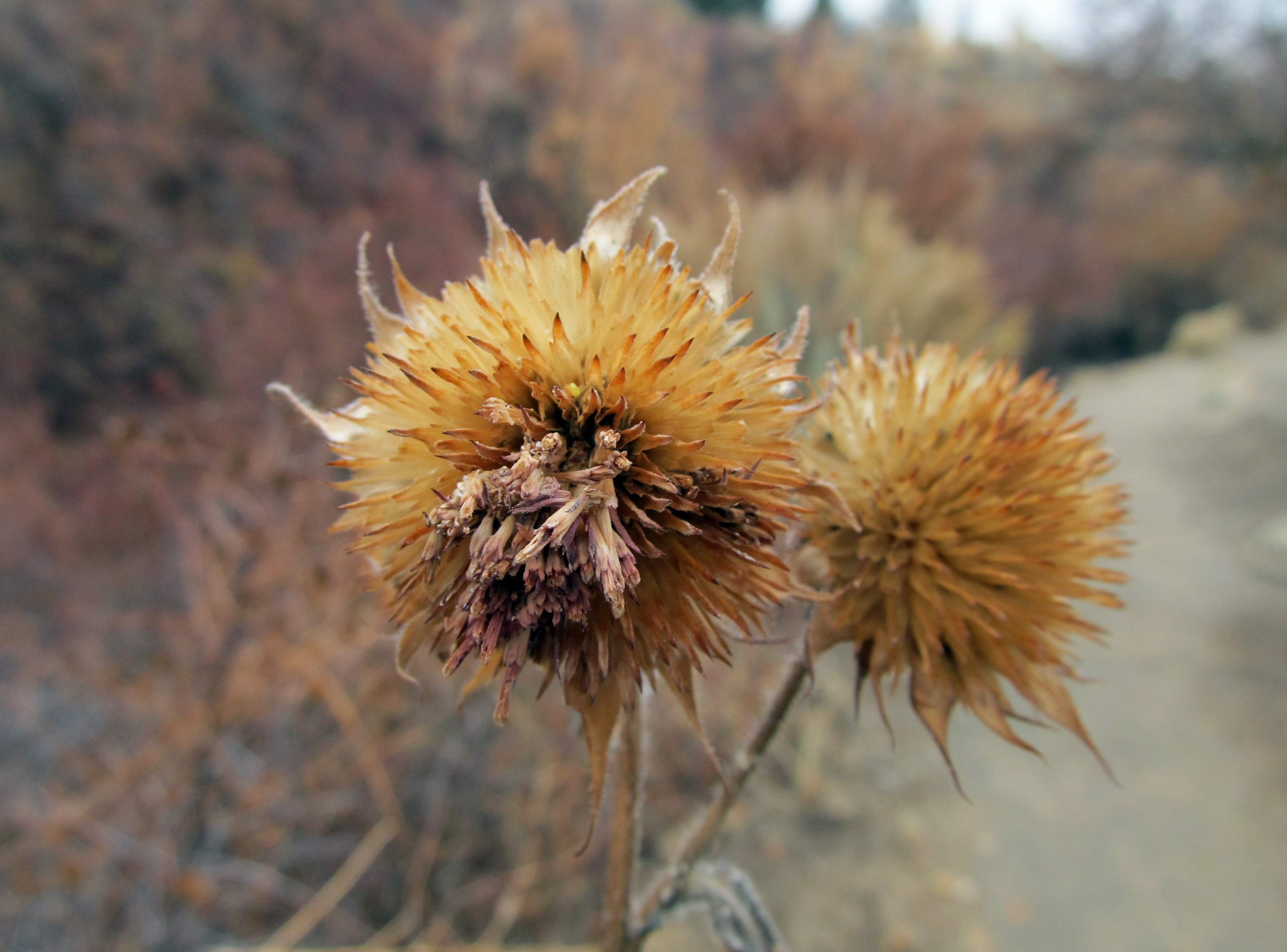
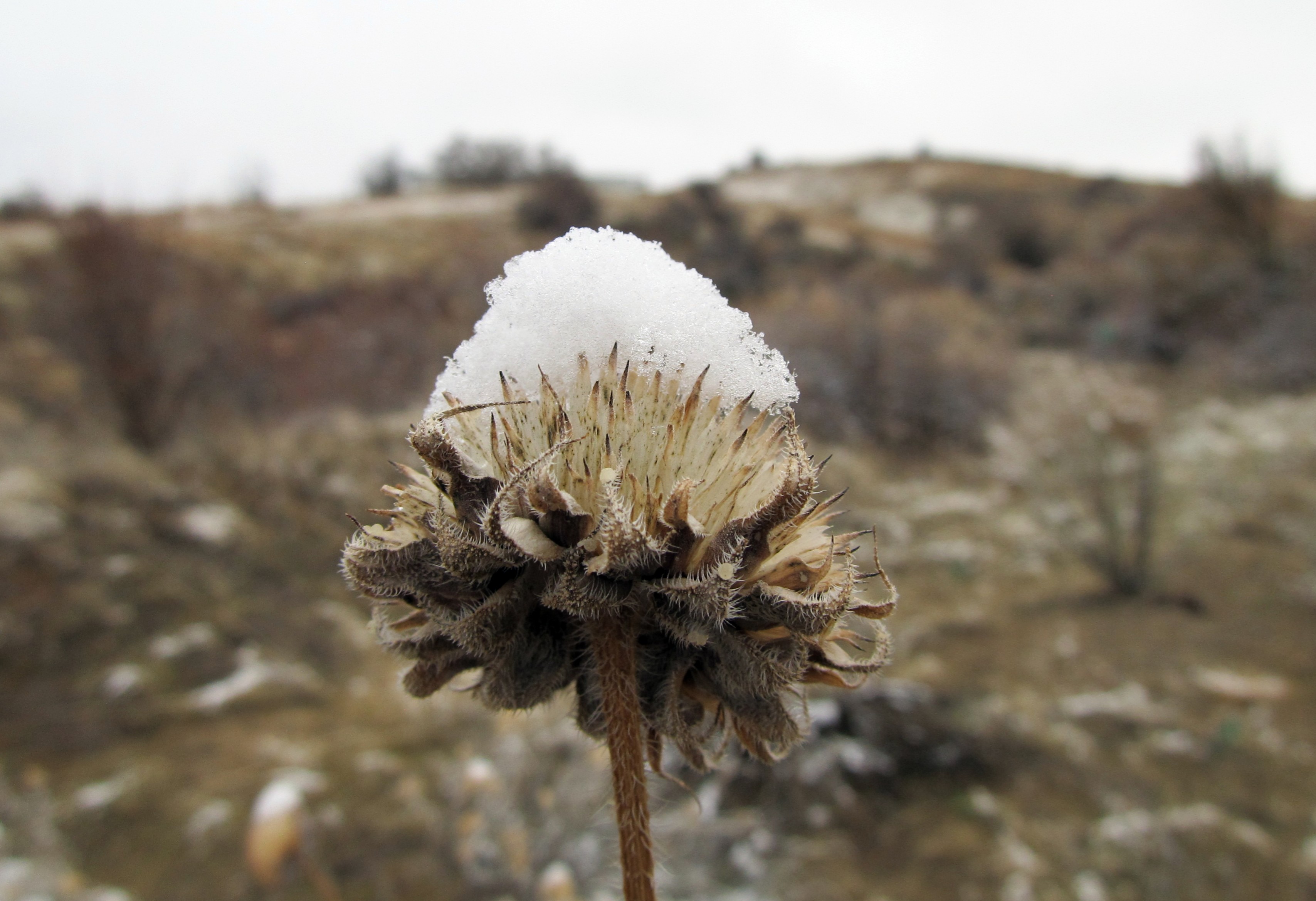
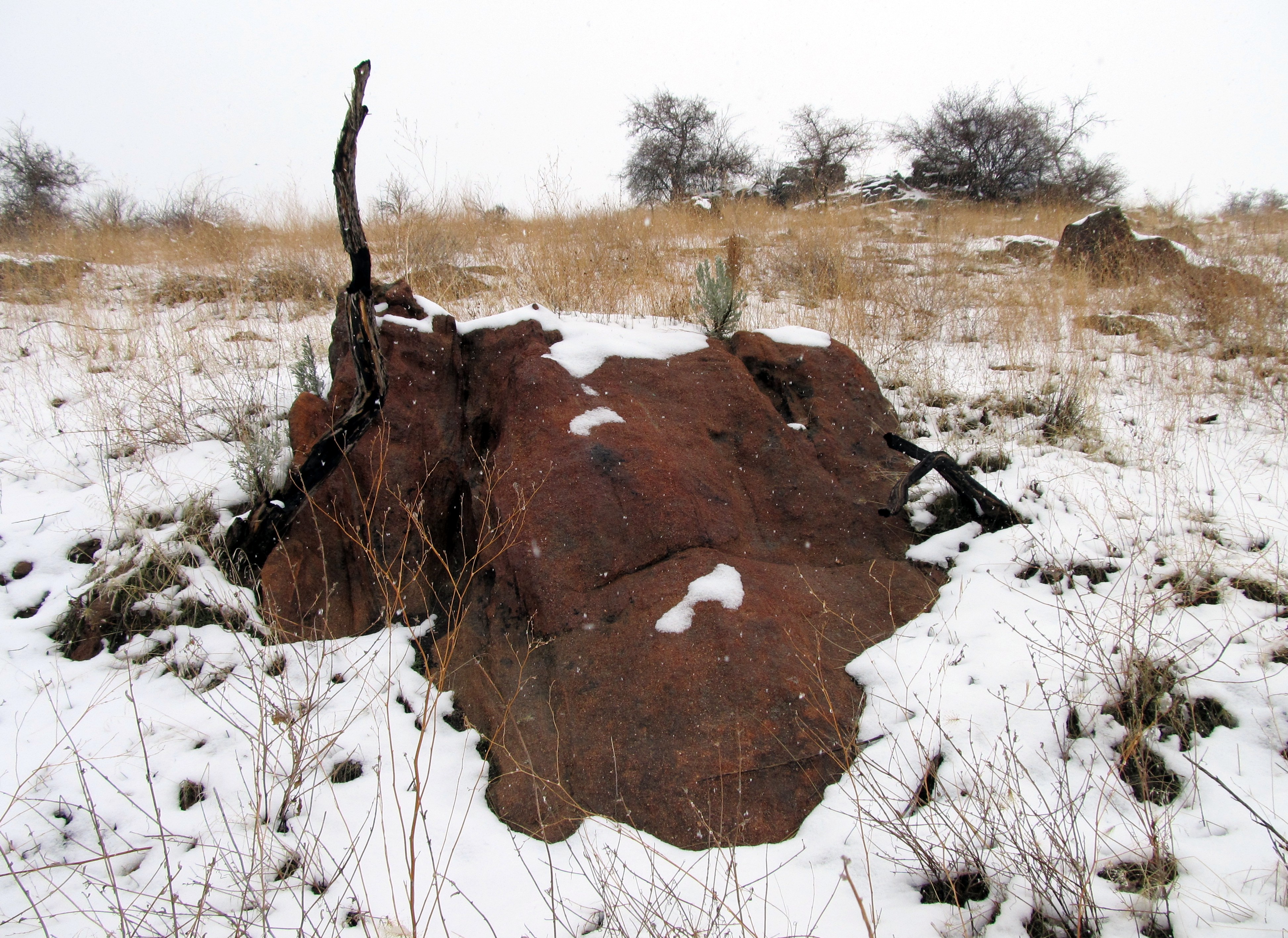
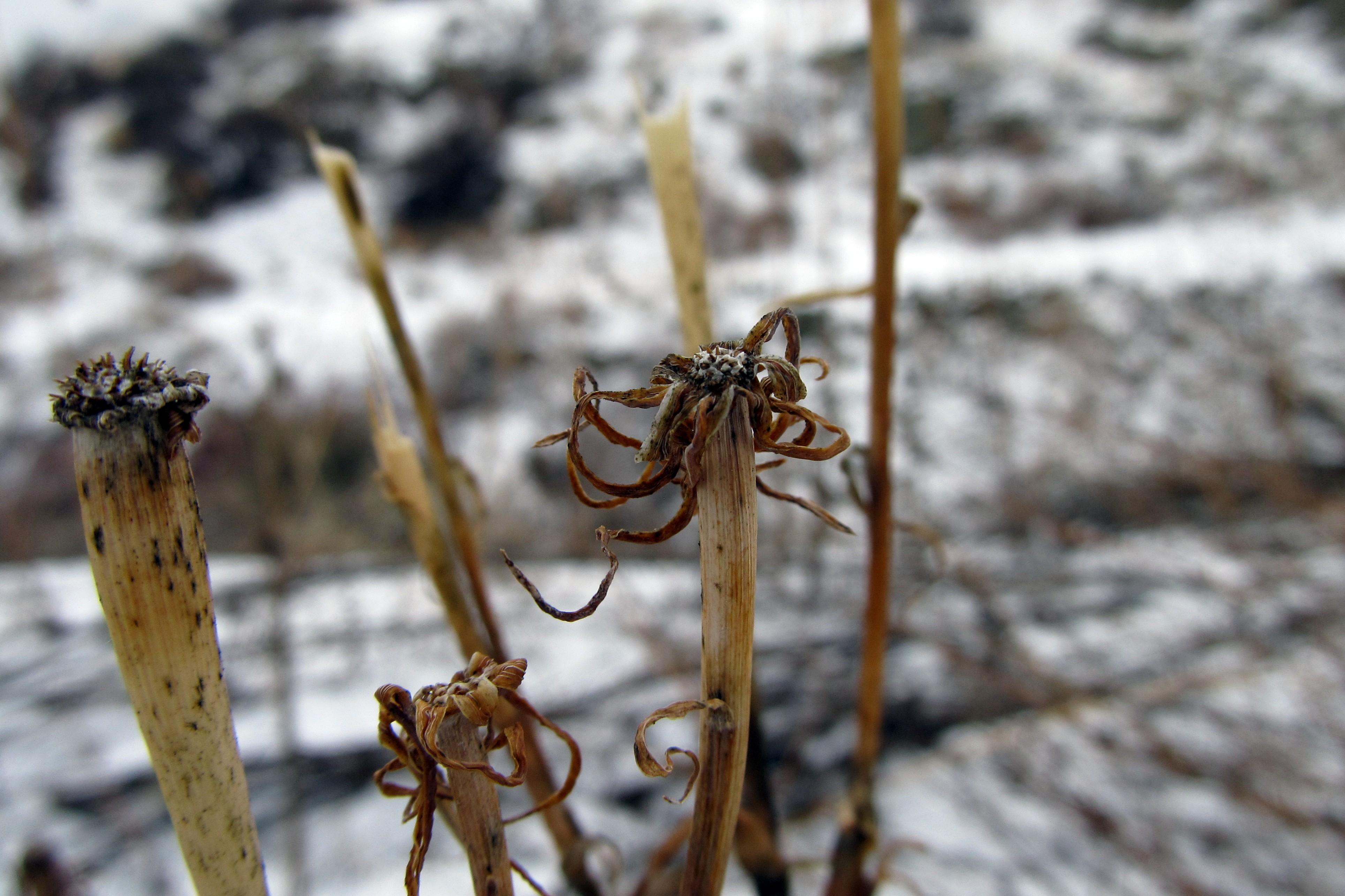
The Boise Foothills, a hilly landscape largely dominated by shrubs and grasses, are a picturesque setting any time of the year. They are particularly beautiful in the spring when a wide array of spring flowering plants are in bloom, and then again in late summer and early fall when a smaller selection of plants flower. But even when there aren’t flowers to see, plants and other features in the Foothills continue to offer interest. Their beauty may be more subtle and not as immediately striking as certain flowers can be, but they catch the eye nonetheless. Appeal can be found in things like gnarled, dead sagebrush branches, lichen covered rocks, and fading seed heads. Because the lower Boise Foothills in particular have endured a long history of plant introductions, an abundance of weeds and invasive plants residing among the natives also provide interest.

This winter has been another mild one. I was hoping for more snow, less rain, and deeper freezes. Mild, wet conditions make exploring the Foothills difficult and ill-advised. Rather than frozen and/or snow covered, the trails are thick with mud. Walking on them in this state is too destructive. Avoiding trails and walking instead on trail side vegetation is even more destructive, and so Foothills hiking is put on hold until the ground freezes or the trails dry out. This means I haven’t gotten into the Foothills as much as I would like. Still, I managed to get a few photos of some of the interesting things the lower Boise Foothills have to offer during the winter. What follows is a selection of those photos.

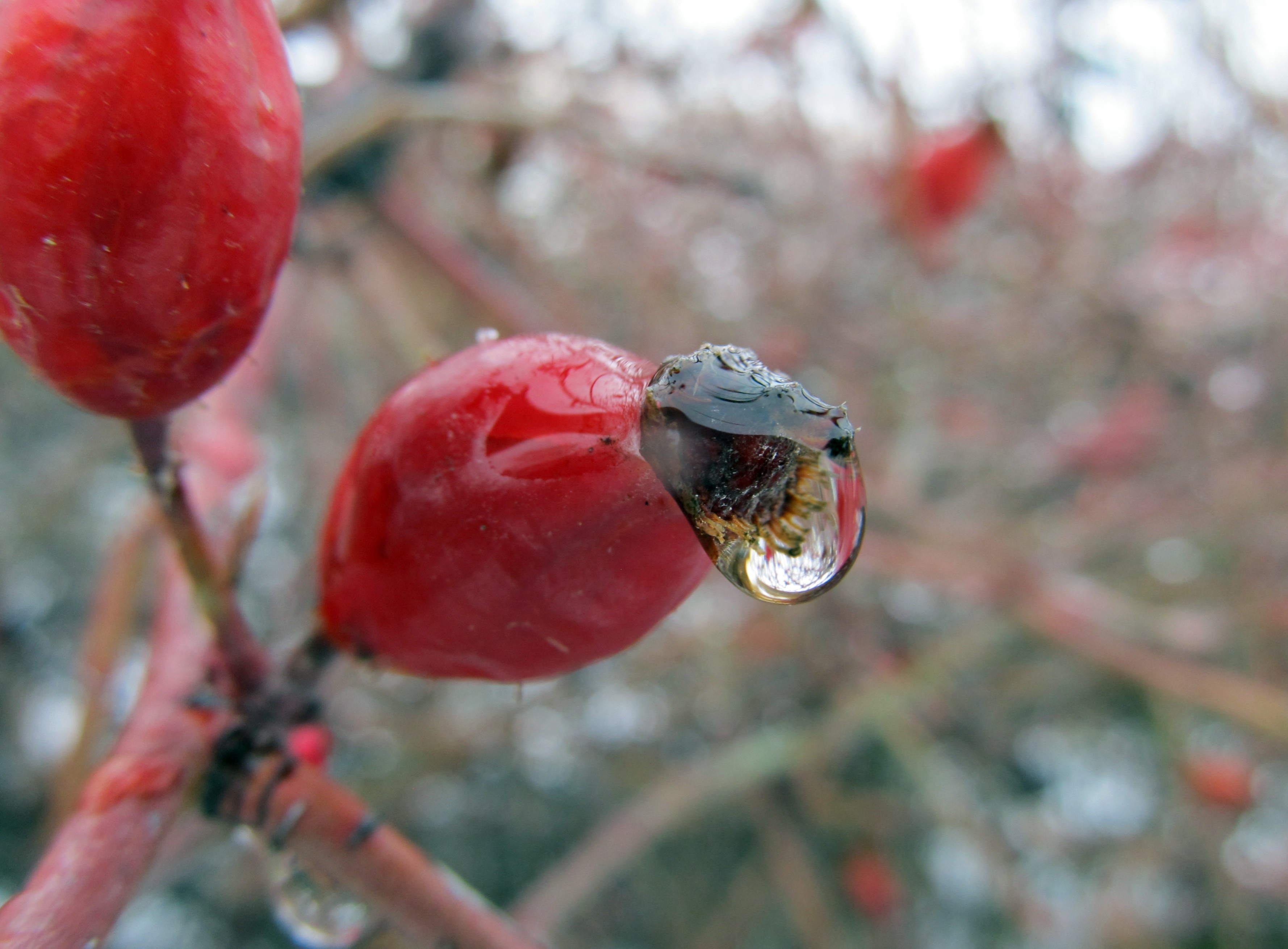
snow melting on the fruit of an introduced rose (Rosa sp.)

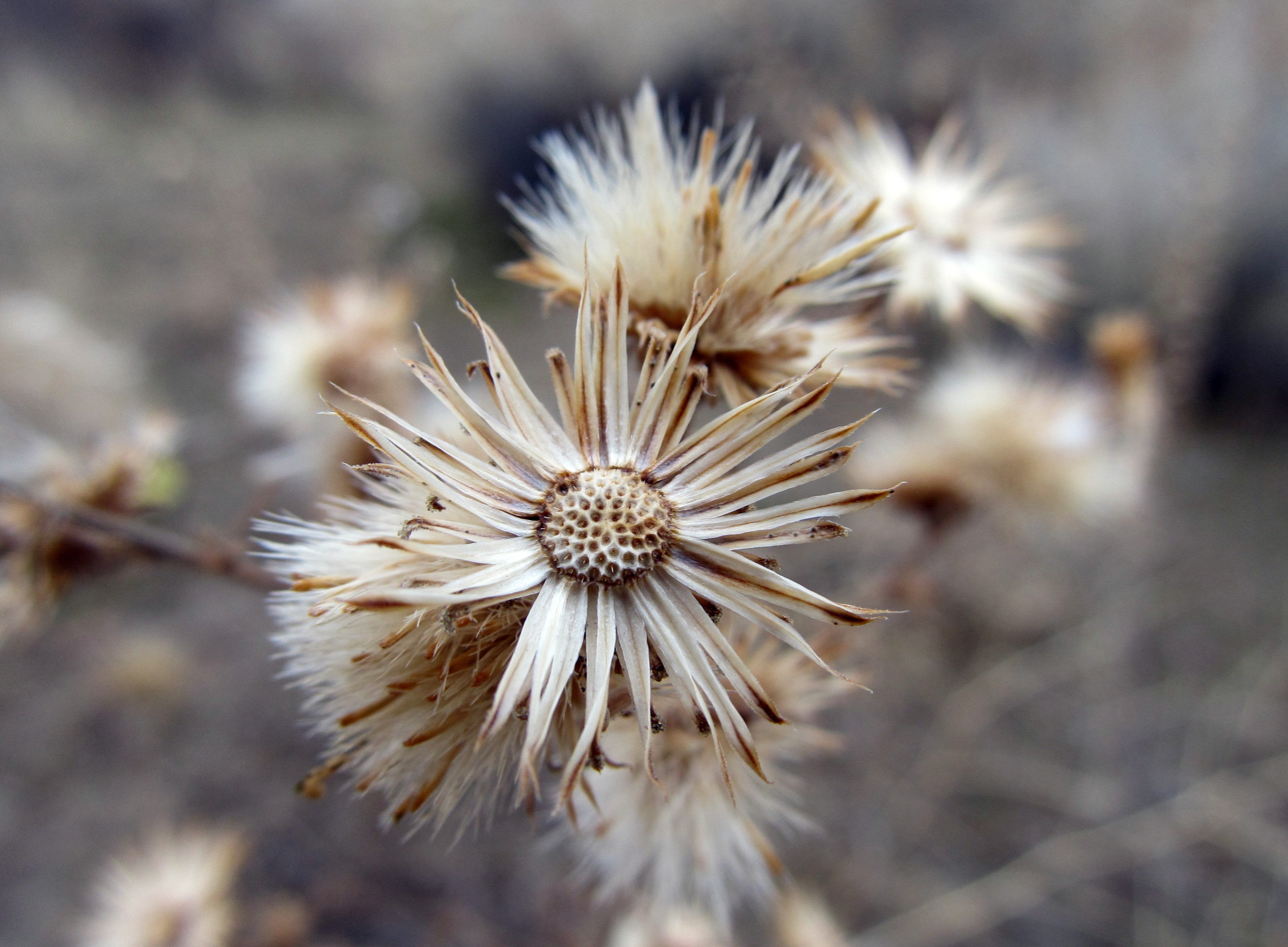
fading seed heads of hoary tansyaster (Machaeranthera canescens)

samaras of box elder (Acer negundo)

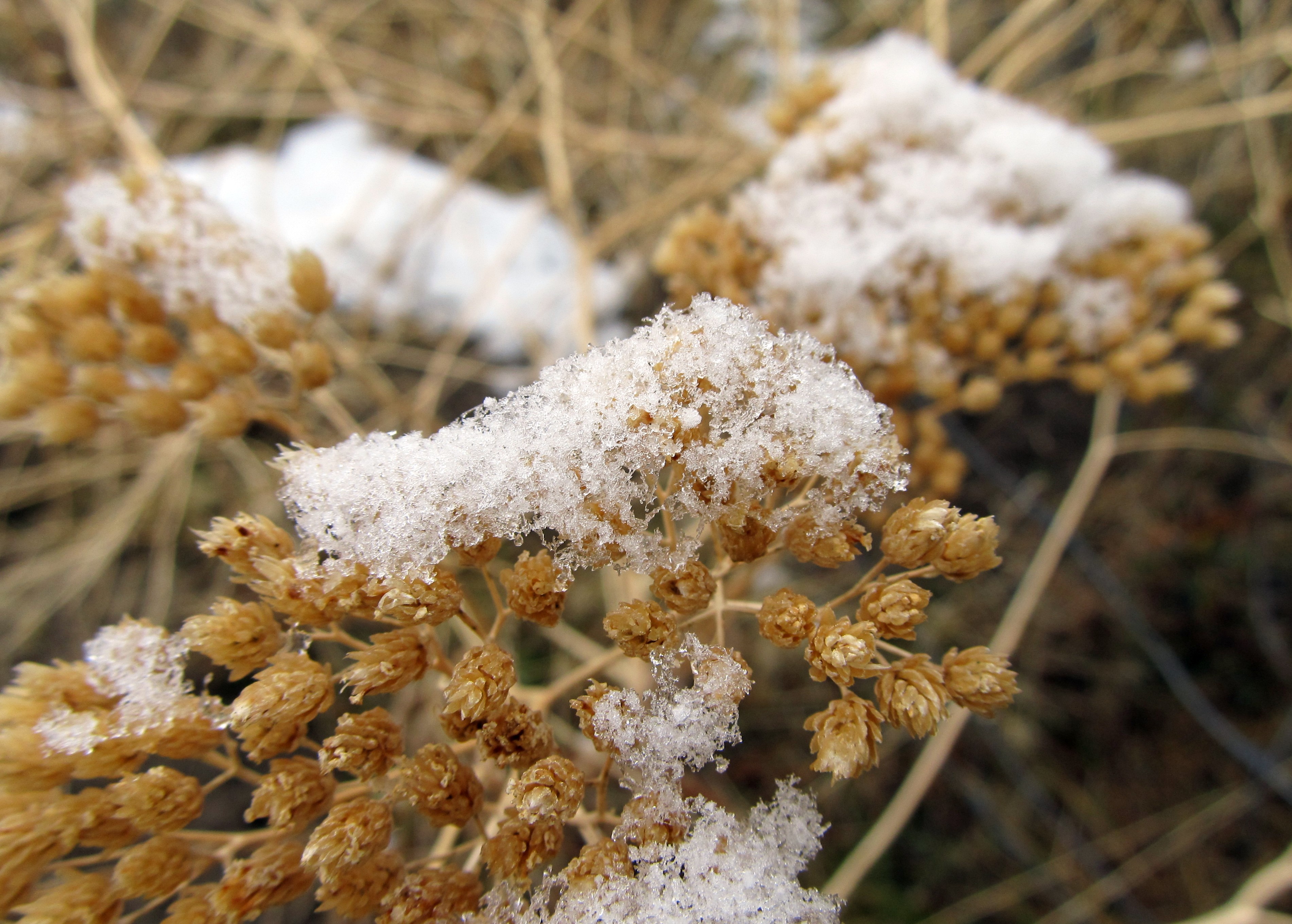
snow on seed heads of yarrow (Achillea millefolium)

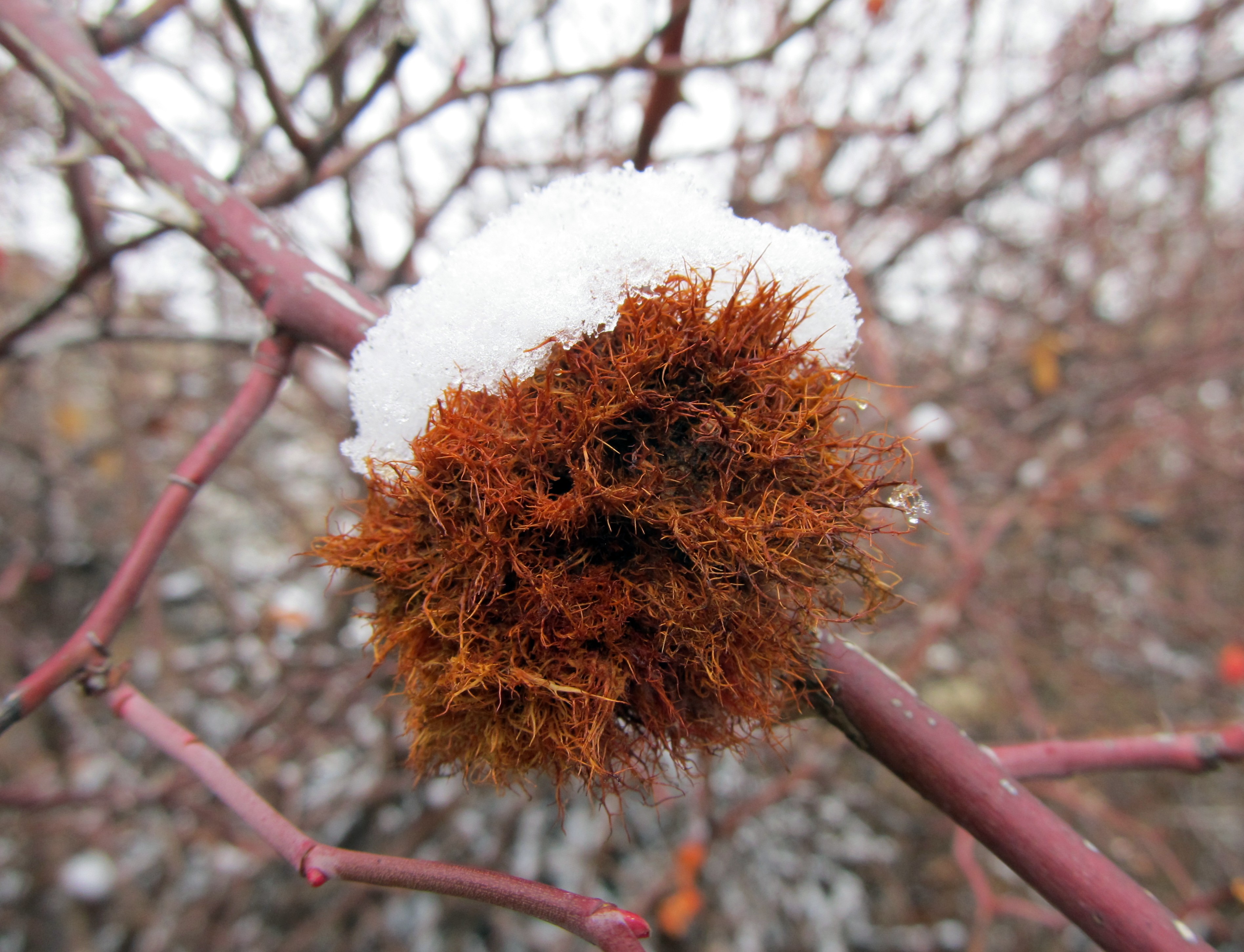
gall on introduced rose (Rosa sp.)

sunflower seed heads (Helianthus annuus)

sunflower seed head in the snow (Helianthus annuus)

snow falling in the lower Boise Foothills

fading seed heads of salsify (Tragopogon dubius)

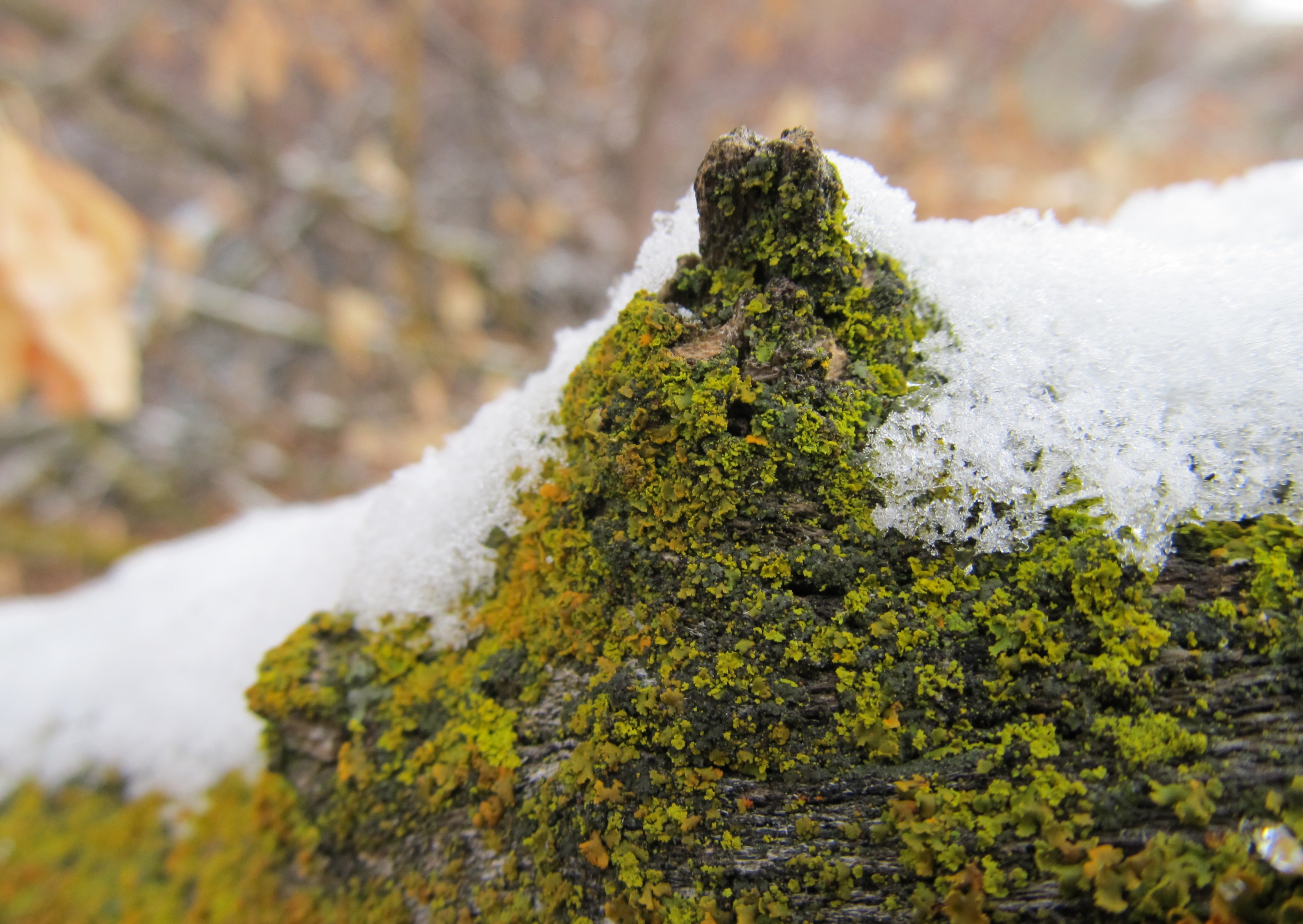
lichen on dead box elder log

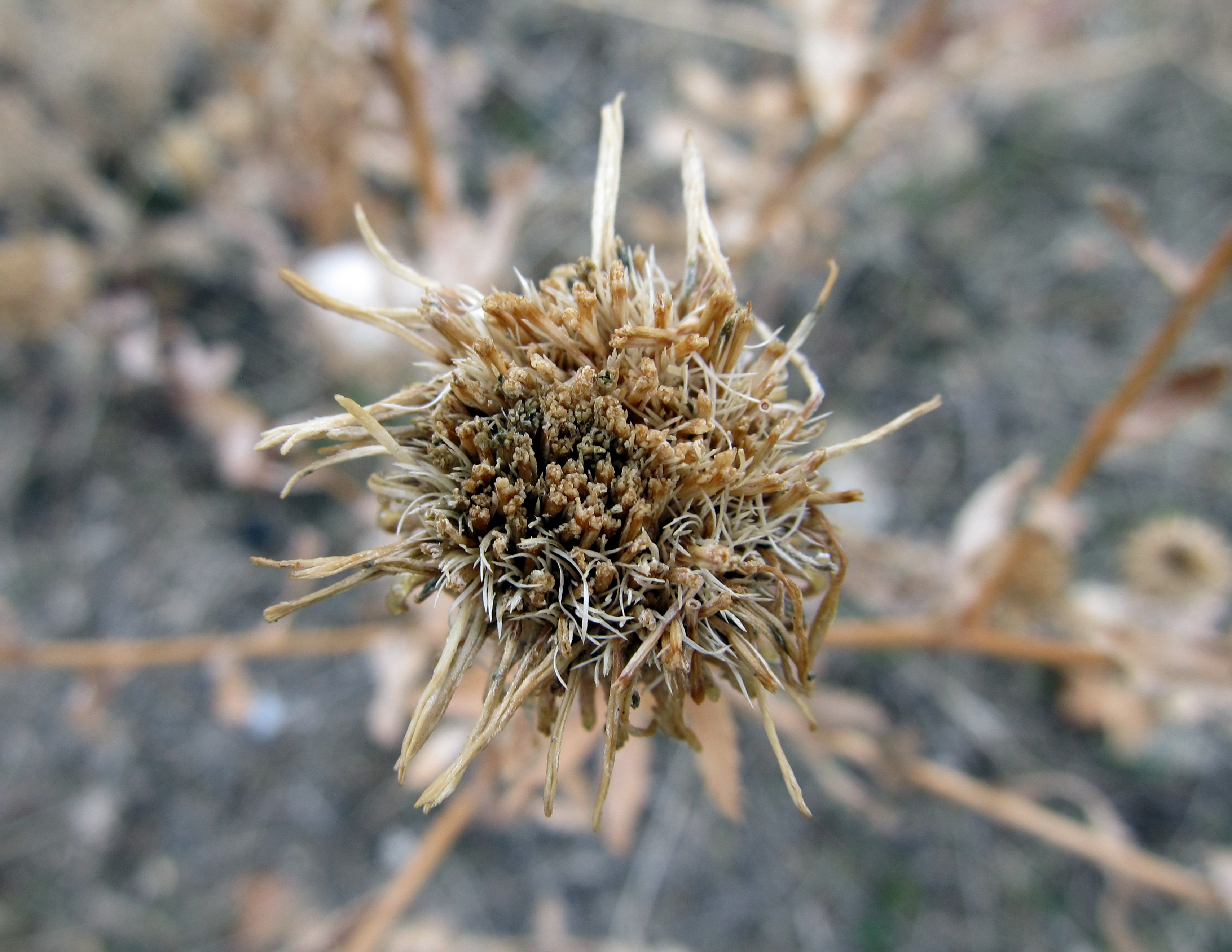
seed head of curlycup gumweed (Grindelia squarrosa)

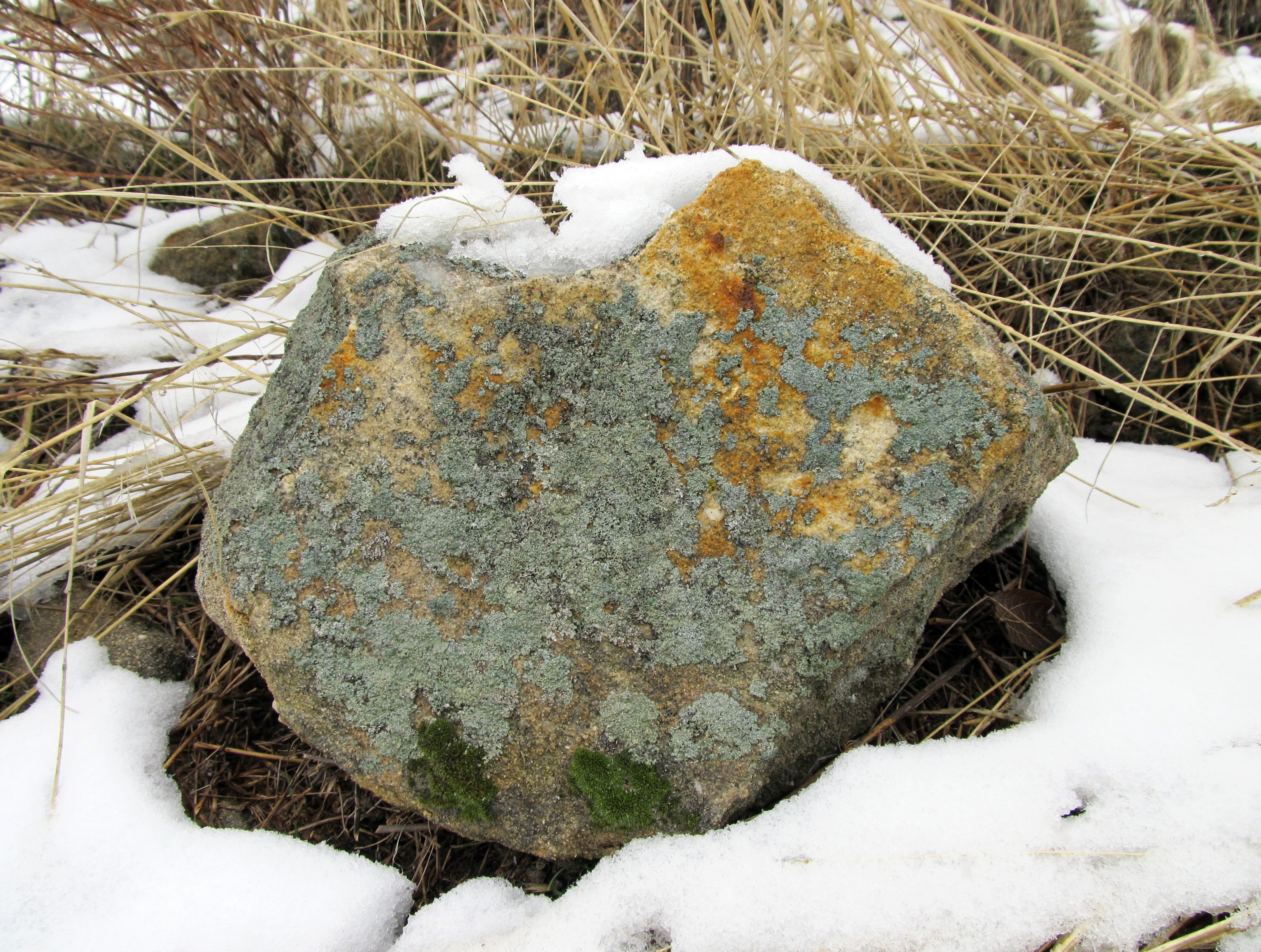
lichen and moss on rock in the snow

fruits of poison ivy (Toxicodendron radicans)

See Also: Weeds and Wildflowers of the Boise Foothills (June 2015)

———————-

The first issue of our new zine, Dispersal Stories, is available now. It’s an ode to traveling plants. You can find it in our Etsy Shop