Tea Time: Self-heal

Prunella vulgaris can be found all over the place. It has also been used to treat just about everything. What else would you expect from a plant known commonly as self-heal, heal-all, all-heal, and woundwort? The medicinal value of this plant has been appreciated for centuries across its expansive range, and studies evaluating its medicinal use continue today. Being such a ubiquitous species – both as a garden plant and a native plant (and also a common weed) – and because it has so much clout in the world of herbal medicine, it’s an obvious candidate for Tea Time.

Self-heal is a member of the mint family (Lamiaceae), easily distinguished by its square stems, opposite leaves, and bilabiate and bilaterally symmetrical (or zygomorphic) flowers. One surprise is that, unlike the many aromatic members of this family, the foliage of self-heal lacks a strong scent. P. vulgaris occurs naturally across Asia, throughout Europe, and in parts of northern Africa. It is also widely distributed across North America. Apart from that, it has been introduced to many regions in the southern hemisphere and has also been frequently moved around throughout its native range. Eurasian varieties now intermingle with North American varieties, which can make it difficult to determine a native individual from an introduced one.

self-heal (Prunella vulgaris)

Self-heal is an adaptable plant that tends to prefer shady, moist locations, but can also be found in open, dry, sunny sites. Find it along forest edges, roadsides, ditches, and trails, as well as on the banks of streams, lakes, and reservoirs. It occurs in gardens, both intentionally planted and as a weed, and can escape into lawns, vacant lots, and open fields, as well as into nearby natural areas.

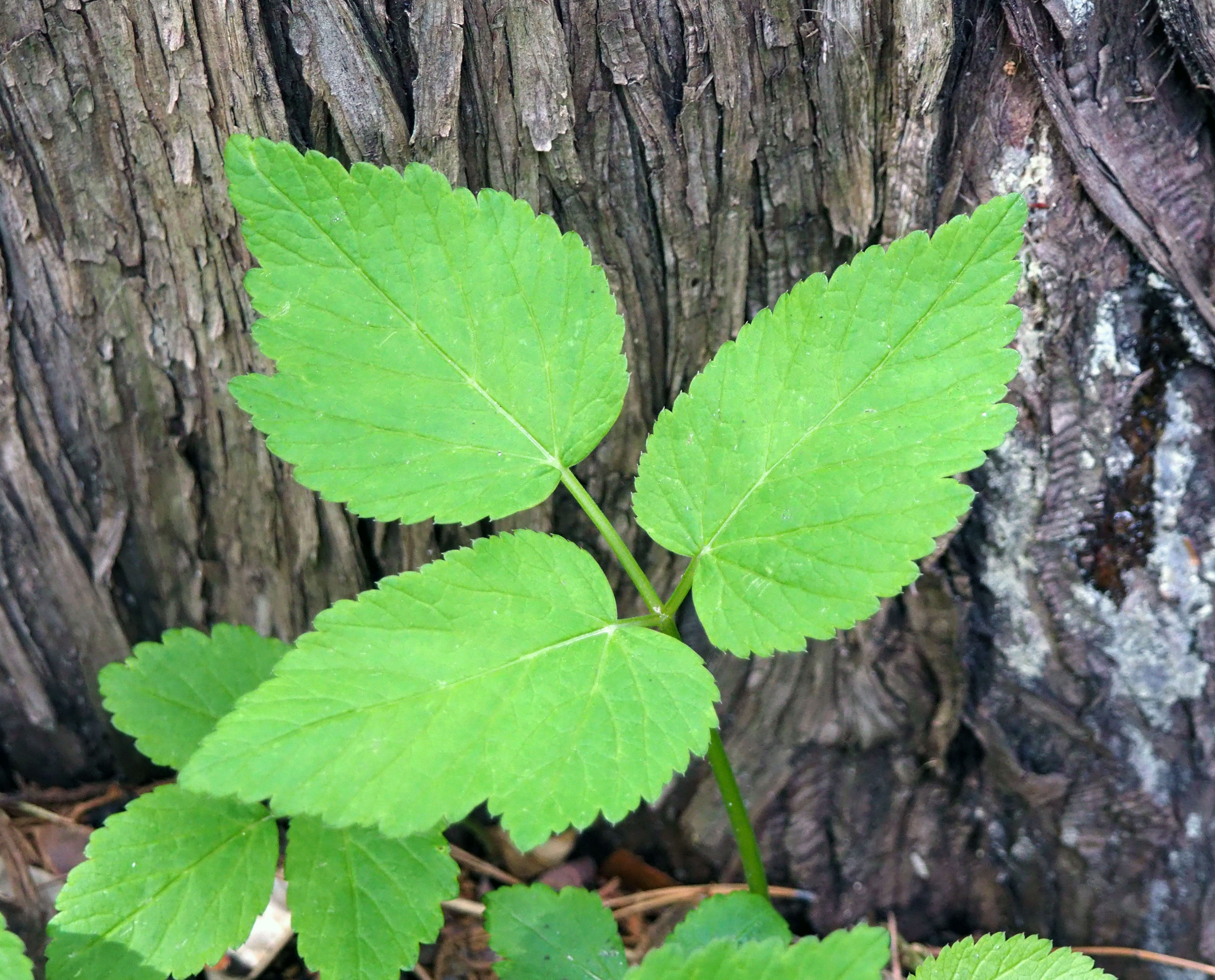
P. vulgaris is an evergreen that grows both prostrate and upright, sometimes reaching 1 foot tall or more (but is often much shorter). It has shallow, fibrous roots, and its stems root adventitiously as they sprawl across the ground, frequently forming an extensive mat or groundcover. Its leaves are oval to lance-shaped and measure about one inch long. Lower leaves have petioles, while upper leaves may become stalkless. Leaf margins are entire or can be slightly toothed. As plants age, they can develop a coppery or purple-bronze color.

the leaves of self-heal

The flowers of self-heal are generally a shade of purple, but can also be white, pink, or blue. They bloom irregularly in a spike measuring up to two inches long. Flower spikes are thick, dense, cylindrical, and made up of whorls of sharp-pointed bracts. Flowers bloom irregularly along the spike and occur from late spring/early summer into the fall. Each flower produces four nutlets, which sit within a cup-shaped, purple calyx.

As a medicinal herb, self-heal has been used both internally and externally to treat a long list of ailments. These include sore throats, diarrhea, fevers, intestinal infections, liver problems, migraines, heart issues, dermatitis, goiter, and thyroid disfunction, just to name a few. It has been used topically to treat skin irritations, bites, stings, and minor cuts and scrapes. This is thanks to its antimicrobial properties and its ability to stop bleeding. A report in the journal Pharmaceuticals (2023) calls P. vulgaris an “important medicinal plant” due to its “rich chemical composition” and its “pharmacological action.” Chemical analyses find the plant to be a valuable source of phenolic compounds, flavonoids, rosmarinic acid, and ursolic acid, among numerous other compounds. If you are curious to learn more detailed information regarding this plant’s medicinal value, you can refer to the above report, as well as one found in Frontiers in Pharmacology (2022).

self-heal tea

P. vulgaris is an edible plant, and its young leaves can be eaten raw or cooked. The leaves together with the flowers can also be dried and used to make a tea. This is how I had it. I used about two teaspoons of dried leaves to one cup of water. Feel free to use more if you would like. I thought the tea was pretty mild. It had a slight sweetness to it and a hint of mint flavor. It has been described as bitter, but I didn’t find it to be overly so (although I may have a higher tolerance for bitterness). Sierra tried it and said that it tasted like “water left over from something else.” That might be because it was more diluted than she would have preferred. Overall, I thought it was a pleasant experience and would be happy to drink it again.

More Tea Time Posts on Awkward Botany:

Book Review: Wild Wasatch Front

If it isn’t clear by now from my Weeds of Boise series and countless other posts, I happen to be interested in the flora and fauna of urban areas. Urban ecology is a fascinating field of study, and I’m not sure that it gets the attention it deserves. Nature is not some far away place, and you shouldn’t have to leave city limits to go in search of it. Remarkably, nature exists right outside your front door, even if you live in the middle of a massive city. It may be a different sort of nature than the one you might find in a national forest or a state park, and it may be composed of species introduced from all corners of the world, but it is still a collection of living organisms interacting with each other and the surrounding environment in unique and important ways. The question is, can you grow to appreciate nearby nature and recognize that the ecological interactions that exist within the context of a city are just as valid as those you’ll find outside of our built environments?

Luckily, there are resources that can help you with that, including a recent book compiled by Lisa Thompson and others at the Natural History Museum of Utah (NHMU). It’s called Wild Wasatch Front, and it’s of particular interest to me because it covers a region that’s relatively close by, and our two locations share a number of similarities. Plus, I played a small role in reviewing some of the plants (specifically the weeds) that ended up in the book (Sierra would insist that I mention this, so there you go). Similar books exist for other regions across North America and elsewhere, so I encourage you to seek out a book that applies to your hometown.

The Wasatch Front is a metropolitan region in north-central Utah that spans the western side of the Wasatch Mountains and includes a long string of cities and towns extending for many miles in all directions. Included in that list of cities is Salt Lake City, the state’s capitol and largest city in the state. The idea for a book about urban nature in the Wasatch Front was inspired by an exhibit at NHMU called “Nature All Around Us.” The exhibit and resulting book offer a new perspective for those insisting that “nature and cities cannot coexist” or that the nature found in cities is influenced by humans and therefore shouldn’t be considered “real.” Hundreds of organisms making a life for themselves within the boundaries of our cities might argue otherwise.

Wild Wasatch Front is divided into three main sections, with each section being worth the price of the book on its own. First there are a series of essays about urban nature and ecology. Names you might recognize, including Emma Marris and Riley Black, contributed to the book, as well as several other people that live and work in the western U.S. and have an interest in nature and environmental issues, especially as they relate to cities. Novel ecosystems is a reoccurring theme, not just in the essays but throughout the book. In her essay, Sarah Jack Hinners writes, “urban nature is a mixture of the intentional and the unintentional,” adding that “for every tree or rosebush or lawn that we plant and carefully nurture, there are multitudes of other plants and animals that grow and thrive uninvited and unnurtured by us.”

The largest section in the book is a field guide, profiling 127 plus species that call the Wasatch Front home, some native and some transplants. This section is divided into subsections that include birds, invertebrates, fungi and lichen, mammals, reptiles and amphibians, street trees, and wild plants. The entry for each species includes a brief description, a few interesting facts, and details on how and where to find them, accompanied by images. With the variety of creatures covered, you are sure to find something that interests you and a reason to go out looking for your favorites. You may even learn something new about a species you’ve been seeing for years, such as house finches. It turns out that the colorful patches on a male house finch are the result of the plants they eat. These patches can be red, orange, or yellow. The redder the better though, because female house finches seek out mates with this coloration.

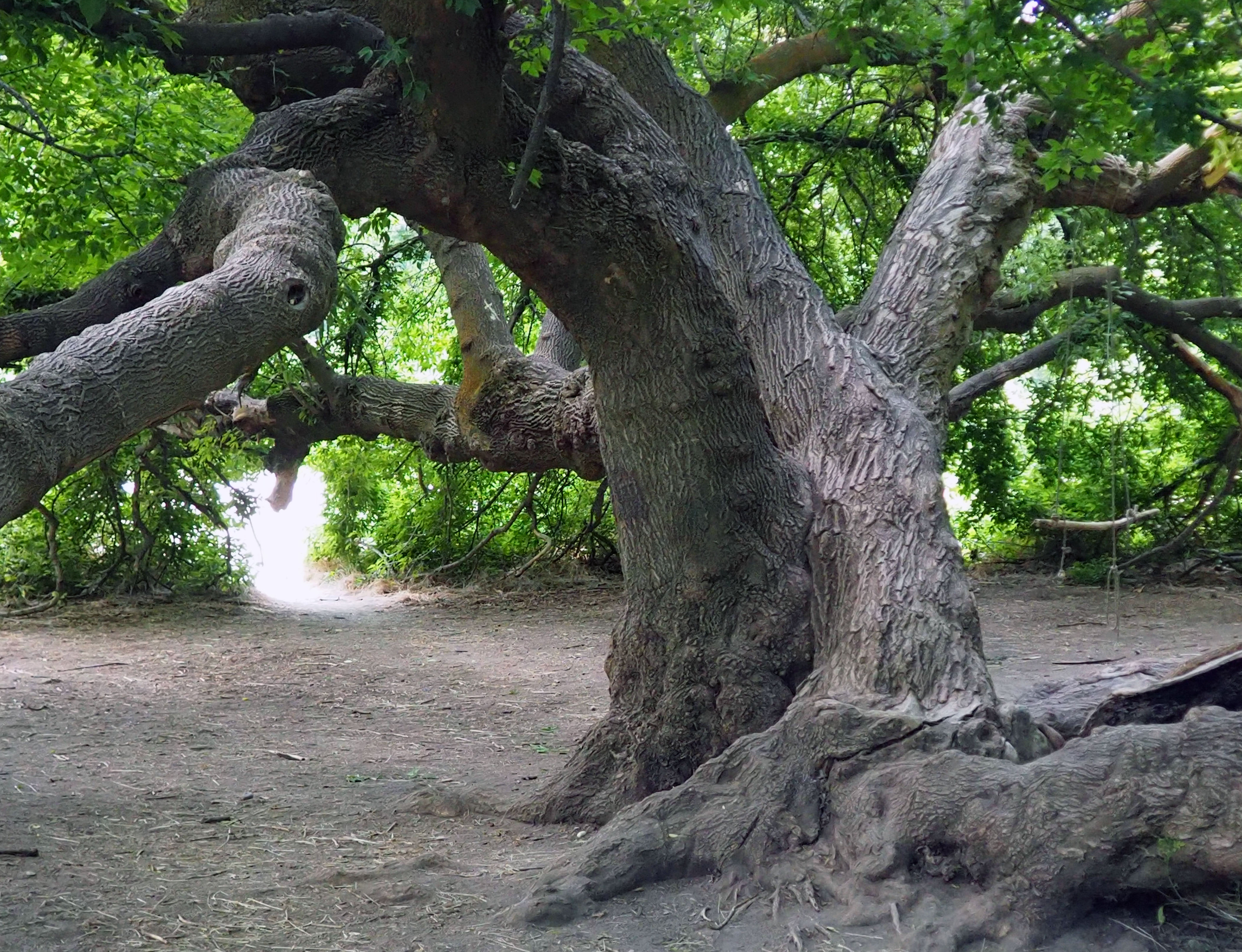
Naturally, my focus was mainly aimed at the plants covered in this section. I appreciated the mixture of native and introduced plants, even the inclusion of plants considered to be invasive. Instead of vilifying these species, there is an attempt to understand them and find value in them, even in spite of the concerns and negative opinions held about them. Box elder (Acer negundo) is an example of a plant that has both native and introduced populations. Once widely planted in yards and on farms, this tree has “fallen out of favor.” Its weak wood (a result of growing so quickly), can result in a messy, unattractive tree, making it a poor choice for a street tree. However, it propagates itself readily and shows up in vacant lots and other urban locations that receive minimal management and human attention. In the Wasatch Front, you can find box elders that are native, naturalized, and cultivated, an unlikely scenario unique to urban areas.

massive box elder (Acer negundo) in Boise, Idaho

The third and final section of the book is a guide to 21 different hikes and field trips in and around the Wasatch Front. Each field trip features a hand-drawn map and some basic notes about the hike. Details about what can be seen along the way are included in the descriptions, which are sure to entice you into visiting. Whether or not you think you’ll ever make it out to any of these spots, this section is still worth reading if only for the ongoing discussions about urban ecology. For example, in the entry for Gib’s Loop, abrupt changes in land ownership and land use (a common experience when hiking in urban areas) is addressed: “Human impacts in the foothills…don’t end at backyard fences, and many animals use resources in both habitats. It’s more interesting to think of cities and the surrounding foothills as part of an interconnected system rather than separate and distinct.”

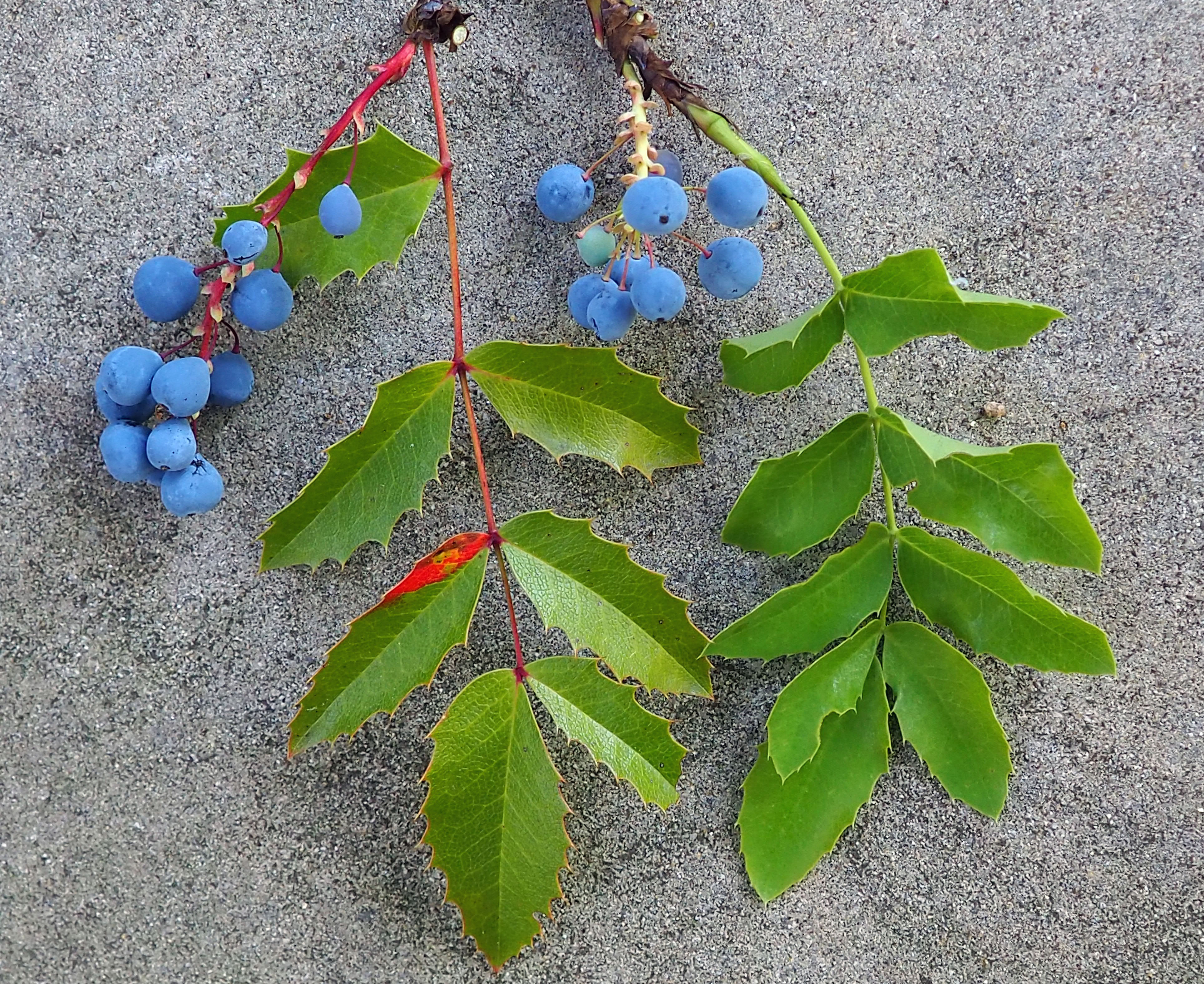
The field trip section is also used as a teaching opportunity to describe more of the species you’ll find in the Wasatch Front. In the entry for Creekside Park, learn how to identify creeping mahonia (Berberis repens), with its low growing habit and matte leaves, and compare it to Oregon grape (B. aquifolium), with its more upright habit and shinier leaves.

Berberis aquifolium (on the left) compared to Berberis repens (on the right)

Last year, in anticipation of Wild Wasatch Front, I came across another book with a similar focus. This book was put out by a group called The Urban Field Naturalist Project, headquartered in Australia. Their book, A Guide to the Creatures in Your Neighbourhood, encourages its readers to become urban naturalists and offers resources to help them get started. Just like Wild Wasatch Front, the bulk of the book is a field guide to species found in and around urban areas (in Australia, of course). In place of a guide to hikes and field trips, there are instructions on how to start nature journaling, which is a key component of becoming an urban field naturalist. Getting outside and learning to recognize nearby nature is step one, documenting what you see and sharing those observations with others is step two. Taken together, these two books will help you gain a better appreciation for urban nature and will hopefully inspire you to work to conserve what is there and make room for more.

More Book Reviews:

2023: Year in Review

Things were pretty quiet on the blog in 2023, and I apologize for that. I have no excuses really. It’s just life. Fewer posts doesn’t mean I’m any less committed to writing and sharing about plants since the day I started this project, it’s more about quality over quantity. I would never want this to become a half-hearted affair, so even if months go by without hearing from me, just know that there are great things in the works, which I hope will be worth the wait.

Recently, while writing an article for Wildflower magazine, I came across this giant tome, Pollination and Floral Ecology by Pat Willmer. The previous year I had read Jeff Ollerton’s book, Pollinators and Pollination, and really got a lot out of it. These incredible resources on the science of pollination reminded me of a time early in Awkward Botany’s history in which I spent a year posting about pollination. I called it Year of Pollination, and by the time the year came to a close, I was struck by how much I still wanted to share about this topic. So now, armed with these new resources, I think it’s time for Another Year of Pollination.

In 2024, I plan on posting another series of pollinator and pollination themed posts. I may not be able to match what I accomplished in 2015, but I will aim for at least one a month. Just something to look forward to in the coming year.

If this entices you enough to continue to follow Awkward Botany (or to start), please do. Relevant links are here on my linktree. Awkward Botany can be found on a number of different social media platforms, but there are a few that I am more active on than others. With the fall of Twitter, I have moved on to other things. This is where you can find me most often at this point in time:

And now here are links to posts from 2023’s paltry selection that are part of ongoing series. Happy 2024! Fill it with plants!

Winter Trees and Shrubs

Tea Time

Weeds of Boise

Tea Time: Fireweed

lf you’ve seen one fireweed, you’ve probably seen several. As an early successional species, growing in large numbers across a vast amount of space is kind of its thing. Any disturbance that leaves bare ground in its wake, such as a wildfire or a windstorm, gives fireweed the opportunity to colonize. It grows quickly and spreads via rhizomes, producing thousands of airborne seeds in the process, sending them off to continue colonization or contribute to soil seed banks in preparation for future disturbances. The role of plants like fireweed is vital – promptly covering bare ground to stave off erosion and acting as a nurse plant to new saplings destined to become the future forest. In a garden setting or in locations where aggressively spreading plants are discouraged, fireweed and its weedy behavior may be unwelcome, but in other contexts, its services are essential.

fireweed (Chamerion angustifolium)

Fireweed (Chamerion angustifolium) is a species in Onagraceae, commonly known as the evening primrose family. It has an impressive distribution, widespread across much of North America and Eurasia. This is owed largely to its adaptability. Deep shade and overly dry soil are two conditions that it does not tolerate well, otherwise it seems to grow in a wide variety of soil types, moisture levels, and sun exposures, particularly in areas where there is regular disturbance. Swaths of towering plants topped with rose-pink flower spikes make fireweed impossible to ignore and a favorite of wildflower enthusiasts.

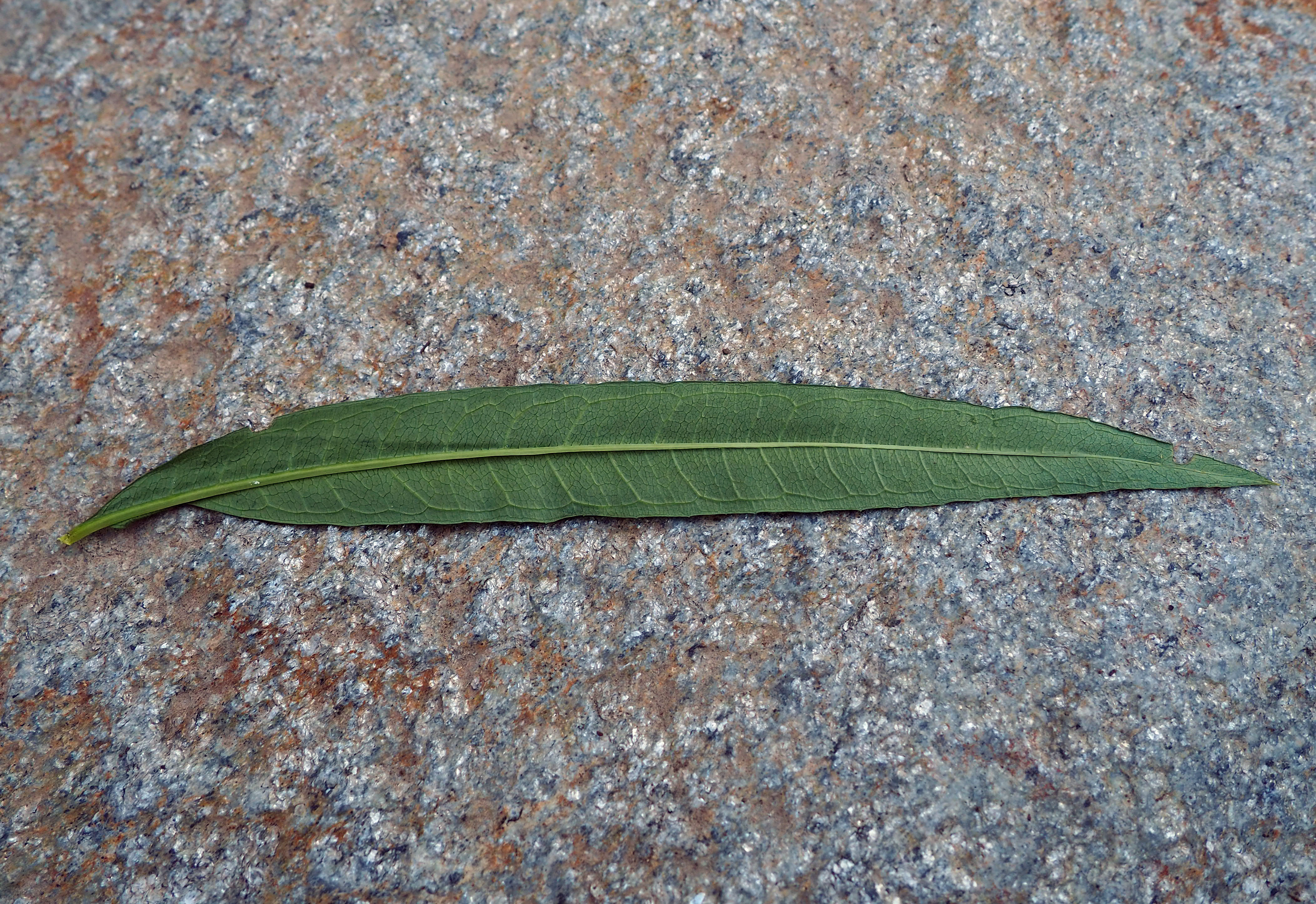
Fireweed stems reach from three to nine feet tall and are rarely branched. Long, narrow, lance-shaped leaves are arranged alternately along the lengths of stems and give the plant a willow-like appearance, which explains another common name, rosebay willowherb. The undersides of leaves have a distinct venation pattern, in which the veins don’t reach the leaf margins, a feature that can help with identification.

distinct leaf veins of fireweed (Chamerion angustifolium)

A series of rose-pink to purple flowers top the stems of fireweed. Each flower has four sepals and four petals with eight stamens and a four-lobed stigma extending prominently from the center. Its long, narrow ovary can be confused for a flower stalk. Rich with nectar, fireweed flowers are a favorite of honeybee keepers. They are also edible, like much of the rest of the plant. Narrow, four-chambered capsules form in place of fertilized flowers and later split open to release abundant, small seeds with a tuft of fluff attached to each one to aid in wind dispersal.

Fireweed has a long history of being used as food and medicine. Stem fibers are also useful for making cord, and seed fluff is useful for weaving and padding. Certainly, fireweed’s abundance and ubiquity contribute to its utility. Having never eaten fireweed before, I decided that a good way to introduce it to my diet would be to make a tea. Fireweed leaves are commonly collected for tea and are said to make an excellent non-caffeinated replacement for black tea.

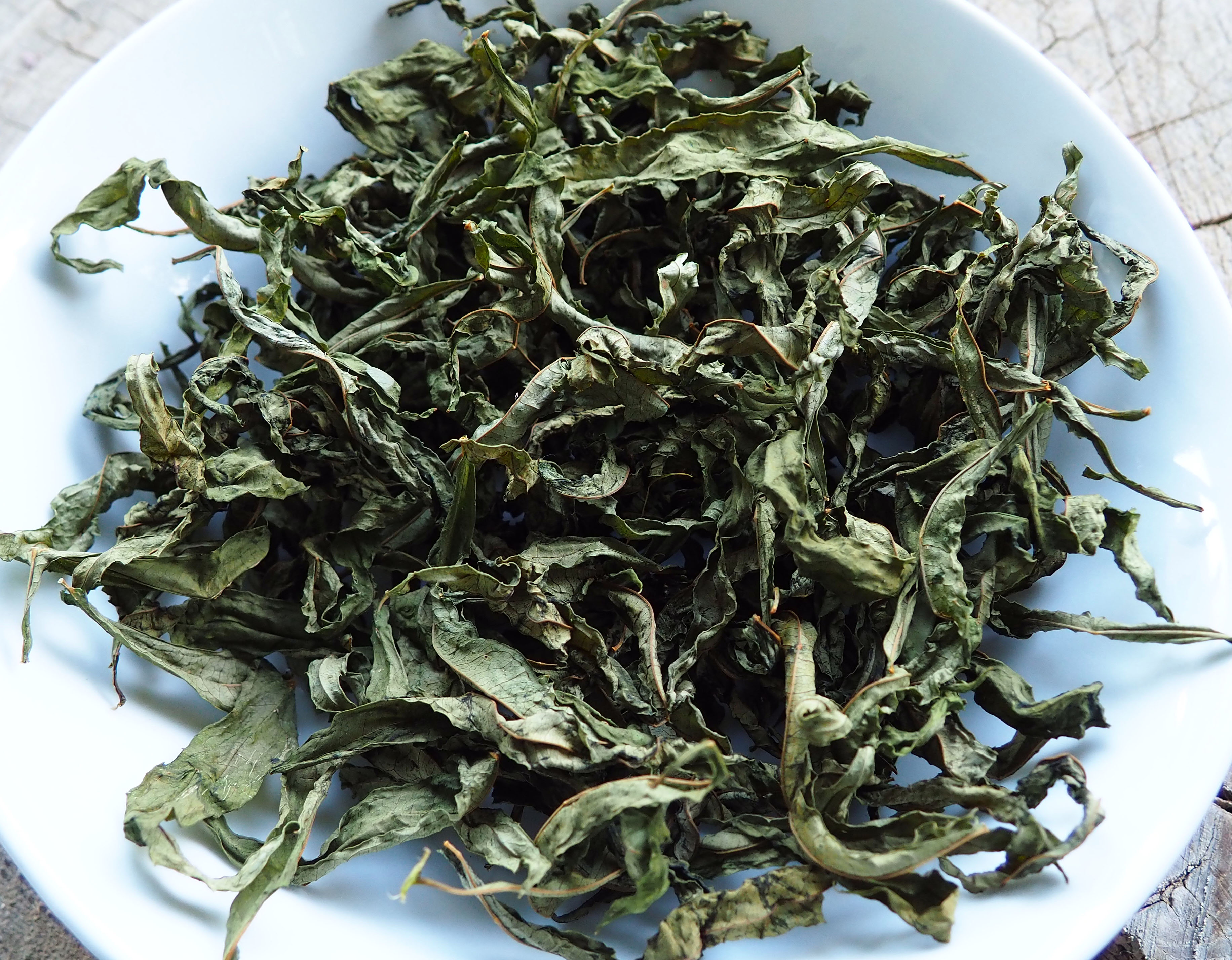
fireweed tea leaves

Making fireweed tea starts by stripping young leaves from fireweed stems. Recipes I encountered all called for fermenting the leaves before drying them. I did this by squeezing handfuls of leaves in my fists just enough to break and bruise them a bit and then packing them into a quart size Mason jar. I closed the lid tight and kept them in the jar for about five days, shaking it up a couple times a day supposedly to help prevent mold issues. After that, I dried the leaves on a baking sheet in the hot sun. From there, they are ready for making tea the same way you would make any other loose leaf tea, chopping the leaves up a bit before immersing them in hot water.

I found the taste of fireweed tea to be mild and pleasant. Despite several sources comparing it to black tea, I thought it was more similar to green tea. Sierra liked the smell more than the taste and wished it had honey in it. Compared to other teas I’ve tried in this short series of posts, this is definitely one of the better ones, and a tea I could see myself making again sometime.

More Tea Time Posts on Awkward Botany:

Highlights from the Western Society of Weed Science Annual Meeting 2023

As soon as I learned that the Western Society of Weed Science‘s annual meeting was going to be held in Boise in 2023, I began making plans to attend. I had attended the annual meeting in 2018 when it was held in Garden Grove, California and had been thinking about it ever since. It’s not every year that a meeting like this comes to your hometown, so it was an opportunity I knew I couldn’t miss. The meeting was combined with the Western Aquatic Plant Managment Society‘s annual meeting, so consider that a bonus.

The first meeting of the week was the general session where introductions are made and various updates are given. There were two keynote addresses as well. One highlight for me was learning about Women of Aquatics, which is a support group for women that work in aquatic sciences. Because this and so many other scientific fields tend to be male dominated, it’s good to see organizations offering support and creating community to help address some of the challenges women face when working in fields where they are underrepresented. Another highlight was Matt Germino‘s talk about fire ecology in the sagebrush steppe. Due to decades of overgrazing and the introduction of a suite of invasive annual grasses (among other factors), fire has become far more common in our region than it once was. The sagebrush steppe is not adapted to frequent fire, which is part of what makes restoration work so difficult. In 2015, a megafire (referred to as the Soda Megafire) occurred in the Owyhee Mountains, burning around 279,000 acres of sagebrush steppe. Restoration efforts after the fire have been well researched, and such efforts continue to this day. Research opportunities like this are helping us improve the way we address this issue in the West, and I hope to spend future posts elaborating further on this topic.

After the general ssession, I attended a few of the talks that were happening in the various breakout sessions. One was about climate change trends in the western U.S. No surprise, temperatures are on the rise, and along with that will come changes in the way we receive our preciptation (which has already been documented). Our region is expected to see more rain and less snow, and rain events are expected to be of shorter duration but with heavier rainfall. Snowpack is expected to continue to decrease, and drought is expected to become more extreme, which ultimately leads to more fire weather days. None of this is great news, but it’s important to understand what we are in for. I also attended a talk about non-target impacts that can arise from certain herbicde treatments used to control bird cherry (Prunus padus) in Alaska, which brought me back to my time attending the Alaska Invasive Species Workshop in Anchorage.

Posters!

The following day, the breakout sessions continued, and dozens of talks were given throughout the day. It’s impossible to attend them all, and unfortunately a few of the talks that I really wanted to hear were cancelled. One interesting talk that I’m glad I got to see was about liquid-applied cellulosic mulches used to replace polyethylene sheet mulches (black plastic) in strawberries and other crops. The results seen so far seem promising, and I’m eager to follow this topic to see where it goes and hopefully even try it out myself one day.

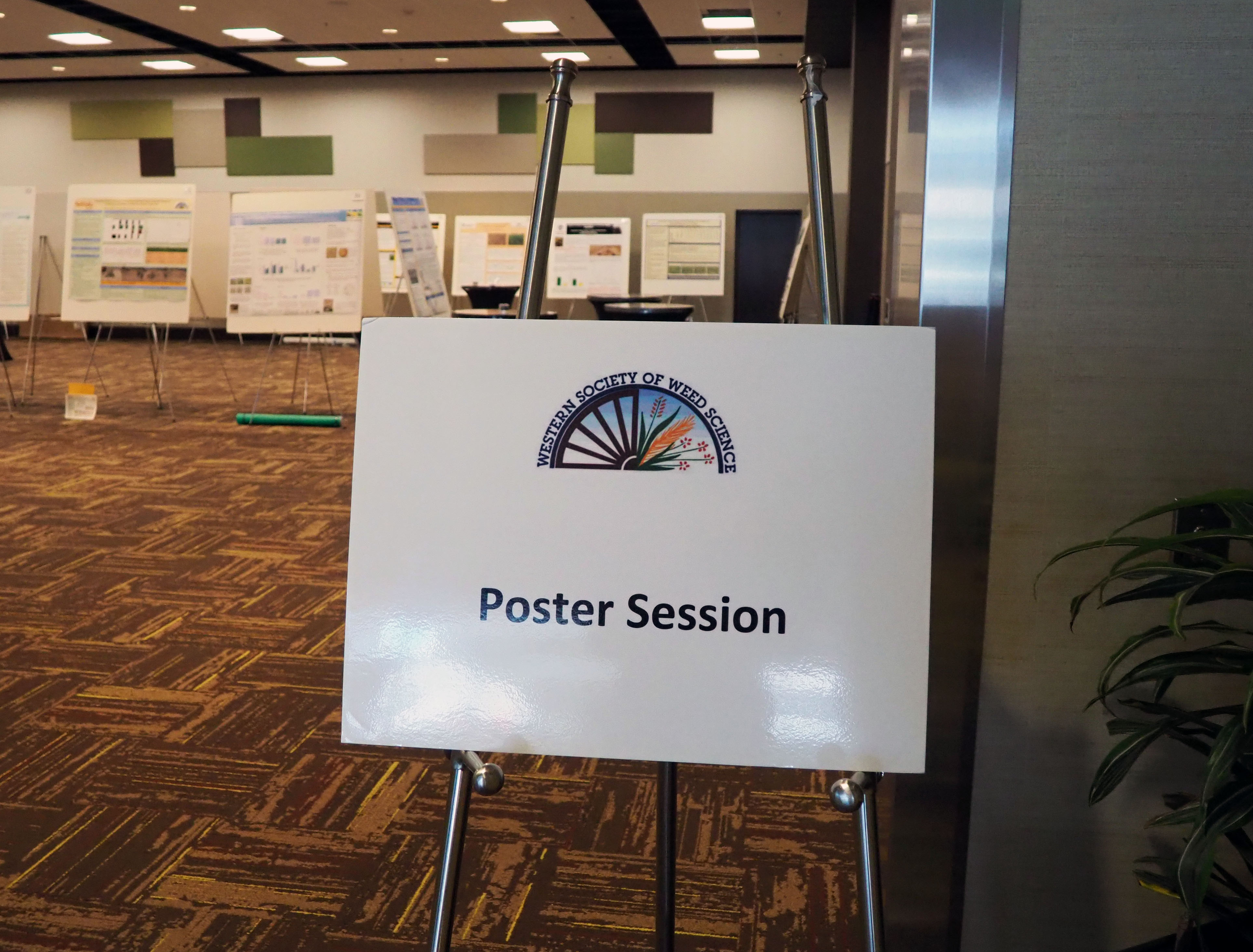
During the meeting, there were also a series of posters on display that summarized research being doing by some of the attendees. I didn’t get a chance to read them all, but a few standouts included posters about using prescriptive grazing to help control tall oatgrass (Arrhenatherum elatius) populations in Colorado, using an electrical current to help manage weeds in blueberry farms, and weed seed predation by ground beetles in diversified wheat production cropping systems. If a poster is about some form of novel or underused method of weed management, I’m definitely going to read it.

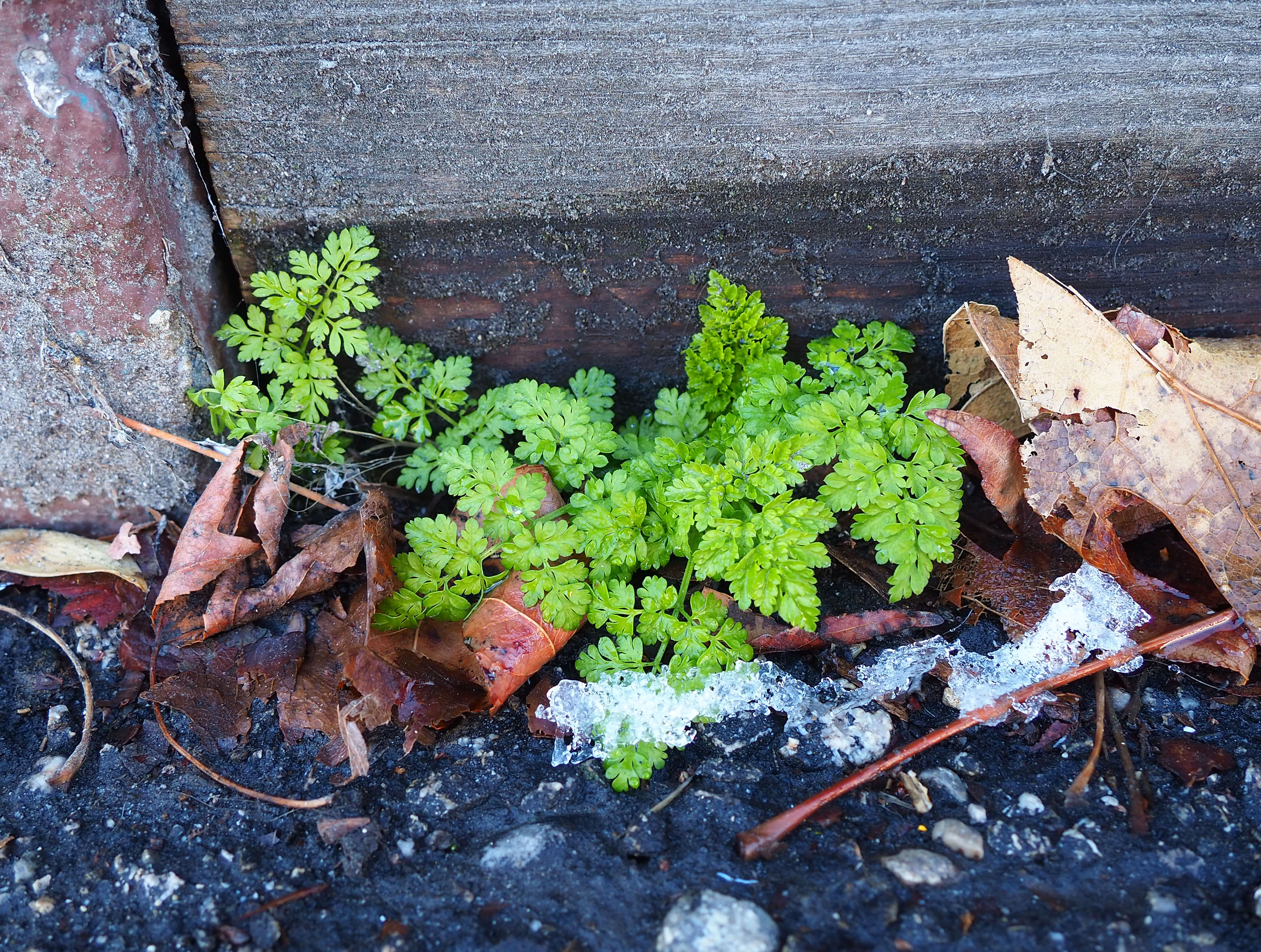
bur chervil (Anthriscus caucalis) in downtown Boise

It might seem a little odd for me to be attending meetings like this, especially since I don’t work as a weed scientist or in weed management, and much of what is discussed, namely presentations about all the various herbicide treatments used in rangelands, turfgrass, and large-scale agriculture, don’t concern me (nor do they really interest me). Talks like this are what you would expect to hear at a weed science conference, so despite not being my thing, I appreciate that such talks often include discussions about herbicide resistance and the responsible use of herbicides, climate change, drought and responsible water use, and adaptive management approaches to weed control. I’m not sure when I’ll get a chance to attend this meeting again – it may be another 5 years or more – but whenever the opportunity presents itself, I’ll be there.

Next Up: Botany 2023 is coming to Boise in July. I’ll see you there!

My Review of Decurrent Trees

Just because it’s winter doesn’t mean there aren’t plenty of plants to look at. Deciduous trees and shrubs become particularly interesting during the winter months with their exposed branches and their growth habits made more obvious. The beauty of a tree’s “skeletal” structure is revealed when it’s stripped of its leaves and set against a winter sky. Winter is also a great time to prune certain trees and shrubs (when appropriate), partly because their branches are so easily viewed and “problem” areas readily reveal themselves. Whether you’re observing a tree’s branching structure simply for enjoyment-sake or because you plan to prune, you may find yourself noticing distinct differences in the growth habits of trees. Distinct growth habits can help you identify trees. They can also tell you something about a tree’s environment or growing conditions.

In the book, The Tree, Colin Tudge defines a tree as “a big plant with a stick up the middle.” Sometimes this “stick” runs straight up from the ground to the top of the tree without interruption and is the tallest portion of the plant. Other times, the “stick” reaches a certain height and branches out into multiple “sticks,” each one reaching out in a different direction – some heading more outward, while others continue to reach for the sky. This is the difference between excurrent and decurrent growth.

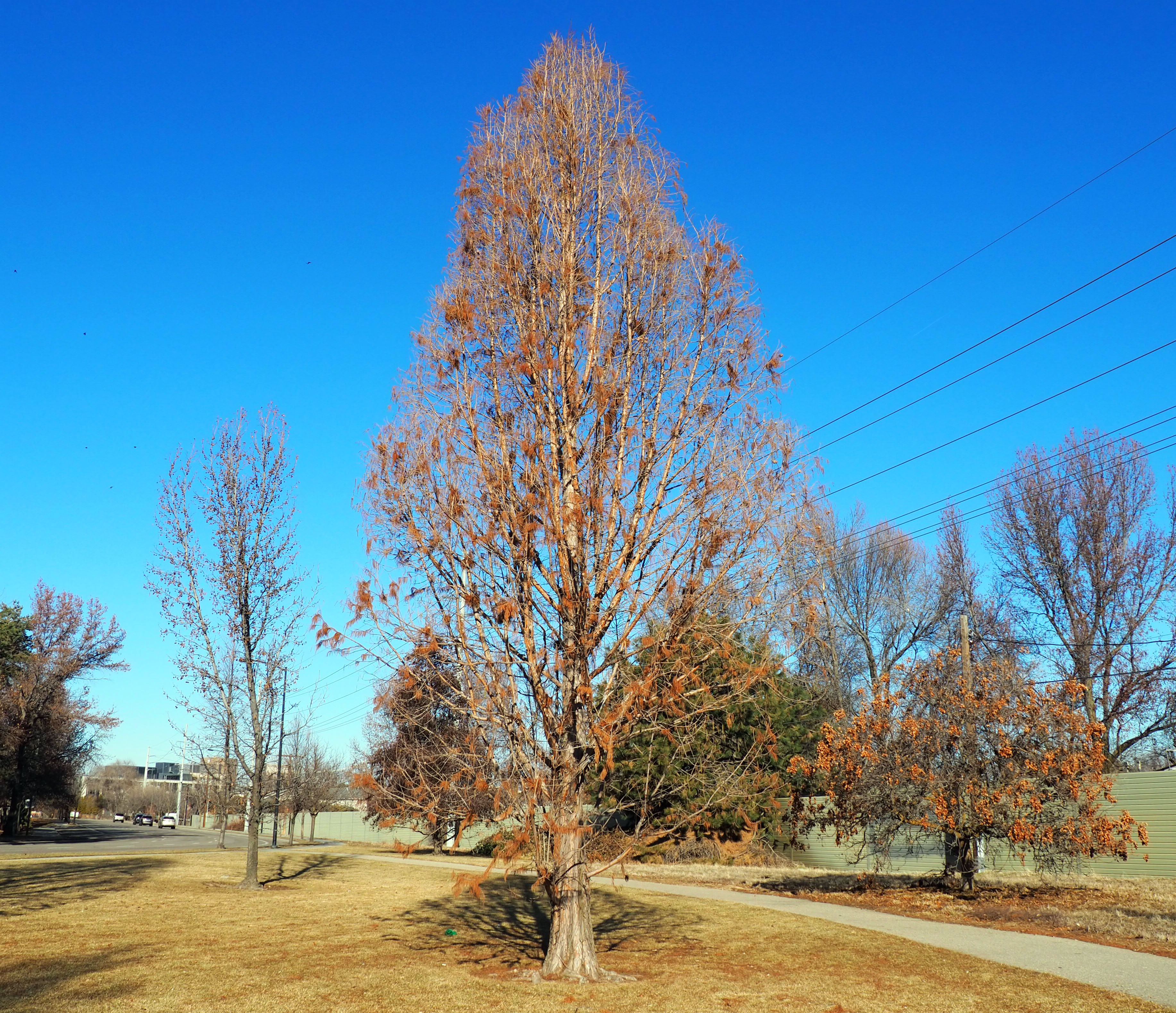
excurrent growth habit: dawn redwood (Taxodium distichum)

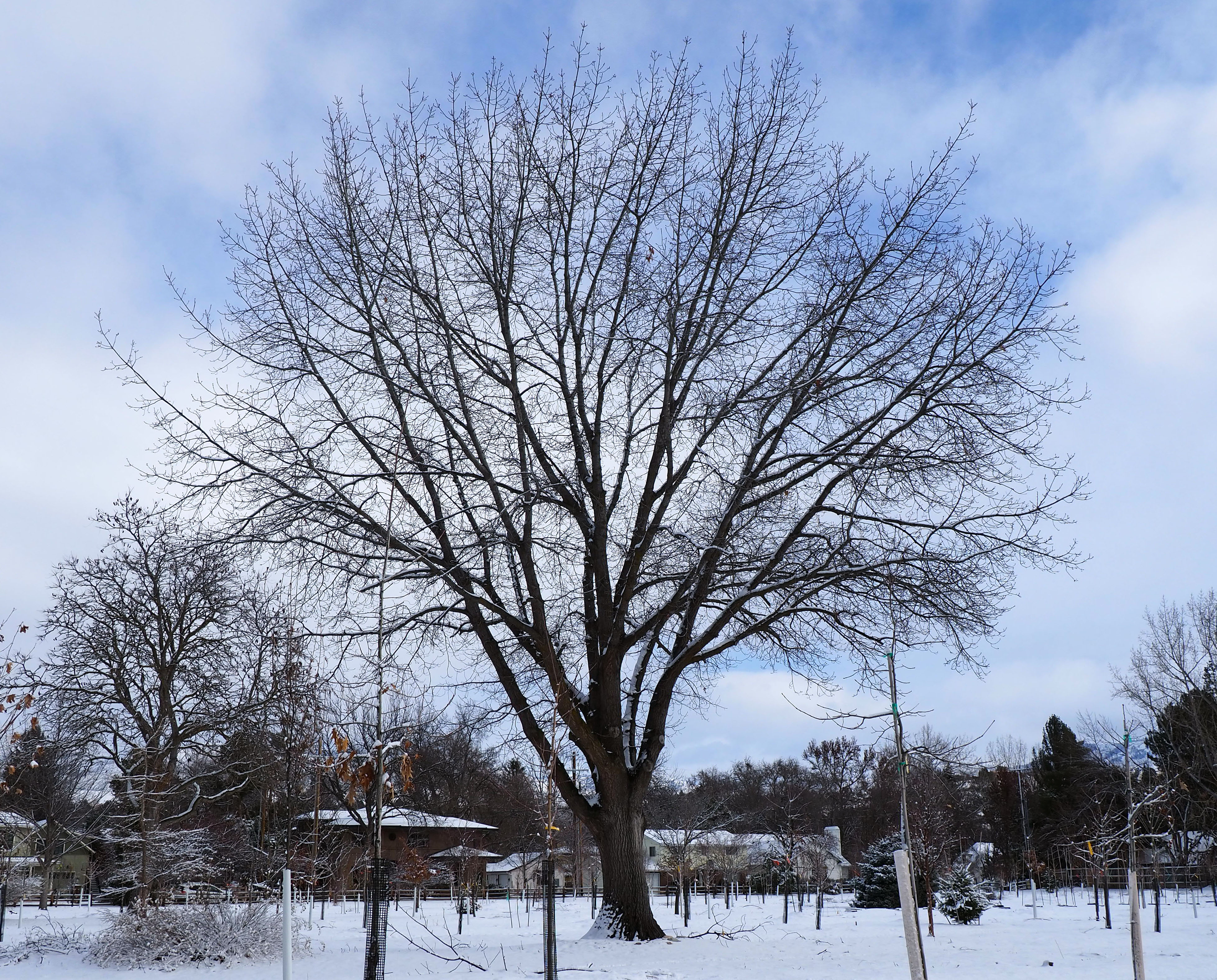
A tree with an excurrent growth habit has one central leader – or single trunk – that reaches all the way to the top of the tree. Side branches occur along the length of the trunk and generally get shorter as they move up the tree, producing a pyramidal or conical shape. Think of a typical Christmas tree. Many conifers exhibit excurrent growth, as do several deciduous trees such as sweetgum and pin oak, as well as aspens and other poplars. When a tree divides part way up the trunk, splitting into several large branches – none of which could be considered the dominant branch – it is exhibiting a decurrent growth habit. Trees that generally fall into this category include elms, maples, oaks, and ashes. The growth habit of a tree is largely a result of its genetics, but plants are known for their plasticity, taking on a wide variety of forms depending on their parentage and their circumstances. Trying to identify a tree based only its growth habit, isn’t likely to yield great results.

decurrent growth habit: oak (Quercus sp.)

The environment that a plant is growing in can have noticeable effects on the form the plant takes. A tree growing up in a forest thick with other trees will typically grow straight up in search of sunlight and will branch out very little until it can get up high enough to do so. That same species of tree growing in an open field might instead branch out extensively at a much lower height, taking advantage of the generous amount of space to stretch its branches out wide. As Tudge puts it in The Tree, “one form for the forest, another for the open ground.” Additionally, things can happen in a tree’s life that will drastically alter its form. If, for example, a storm comes through and breaks off a tree’s central leader, several side branches might grow out and upward to take its place, giving an otherwise excurrent tree a decurrent form. The pruning that humans often do (sometimes unwisely) to trees and shrubs, particularly in urban settings, can also alter a plant’s natural growth habit considerably. These are important considerations to make when assessing the forms of trees.

decurrent growth habit: golden rain tree (Koelreuteria paniculata)

I give decurrent growth habits five stars. No shade on excurrent trees. They’re also beautiful. But while trees with excurrent growth habits have otherwise predictable forms, decurrent trees are full of surprises. Their broad and rounded forms provided by their deliquescent branching structures are endlessly interesting, and their capacious canopies ensure that no two trees are alike.

decurrent growth habit: Malus sp. (I presume)

Tea Time: Kentucky Coffeetree

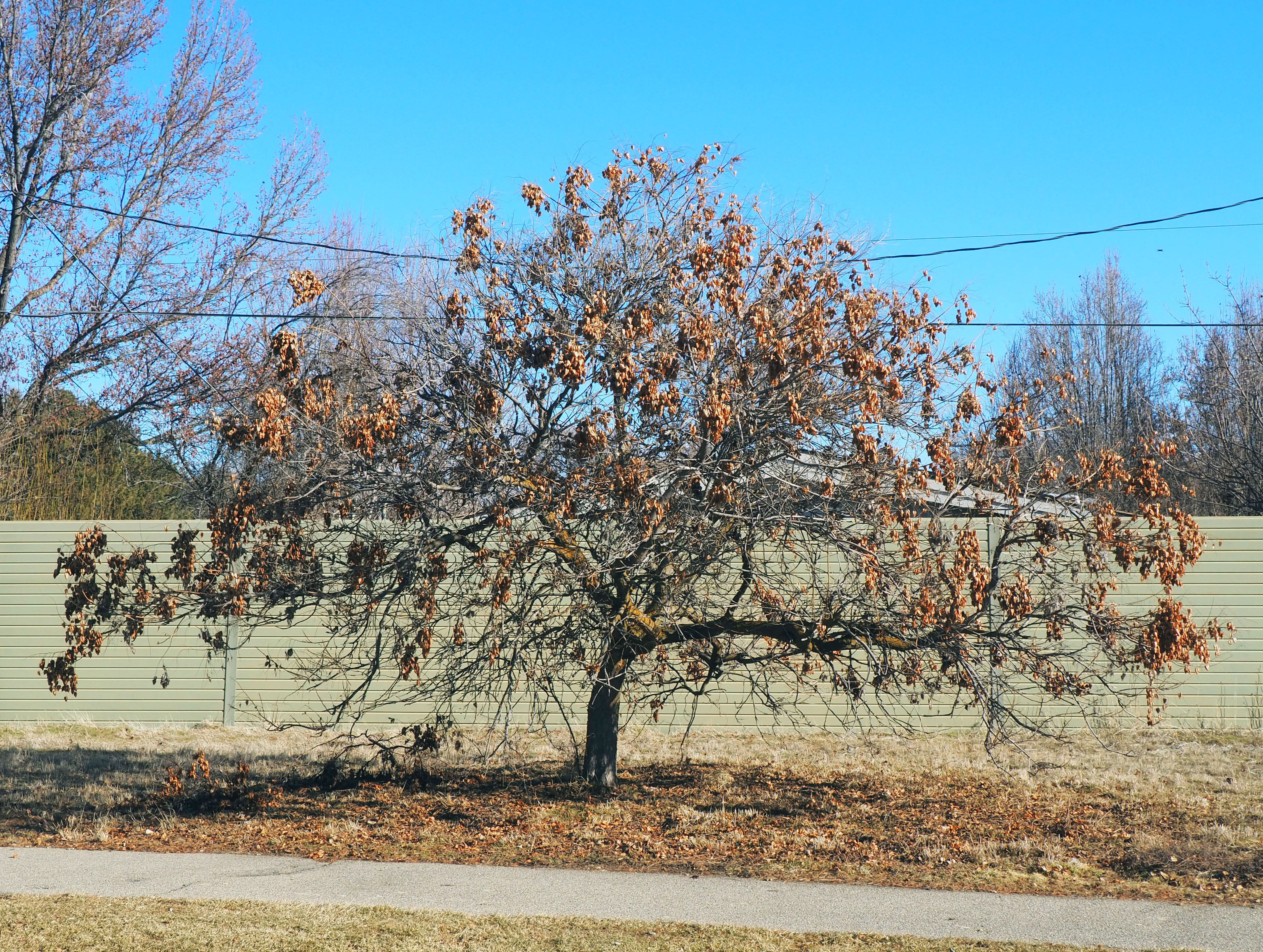
Learning to identify Kentucky coffeetree in the winter brings you one step closer to making a coffee-like (albeit caffeine-free) beverage from its seeds. Humans have a long history of occasionally using the “beans” of Gymnocladus dioicus to make this tisane, which explains common names like coffeetree, American coffee berry, and coffeenut. The process is a bit time consuming, and the end result is mixed, but foraging adventures like this are all about the experience. This drink is not likely to replace whatever you are currently drinking in the morning, but it does offer an interesting diversion.

fruit of Kentucky coffeetree (Gymnocladus dioicus)

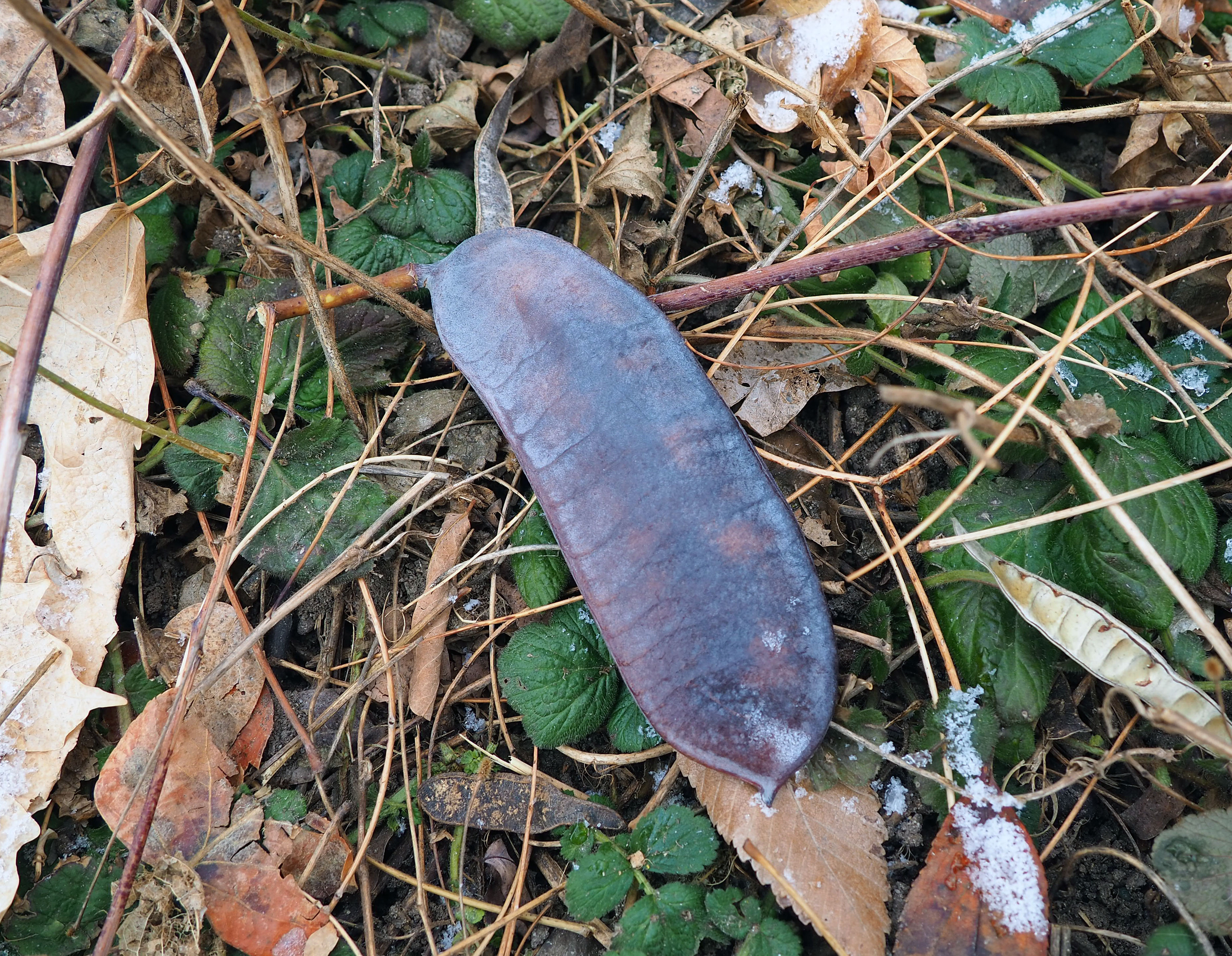
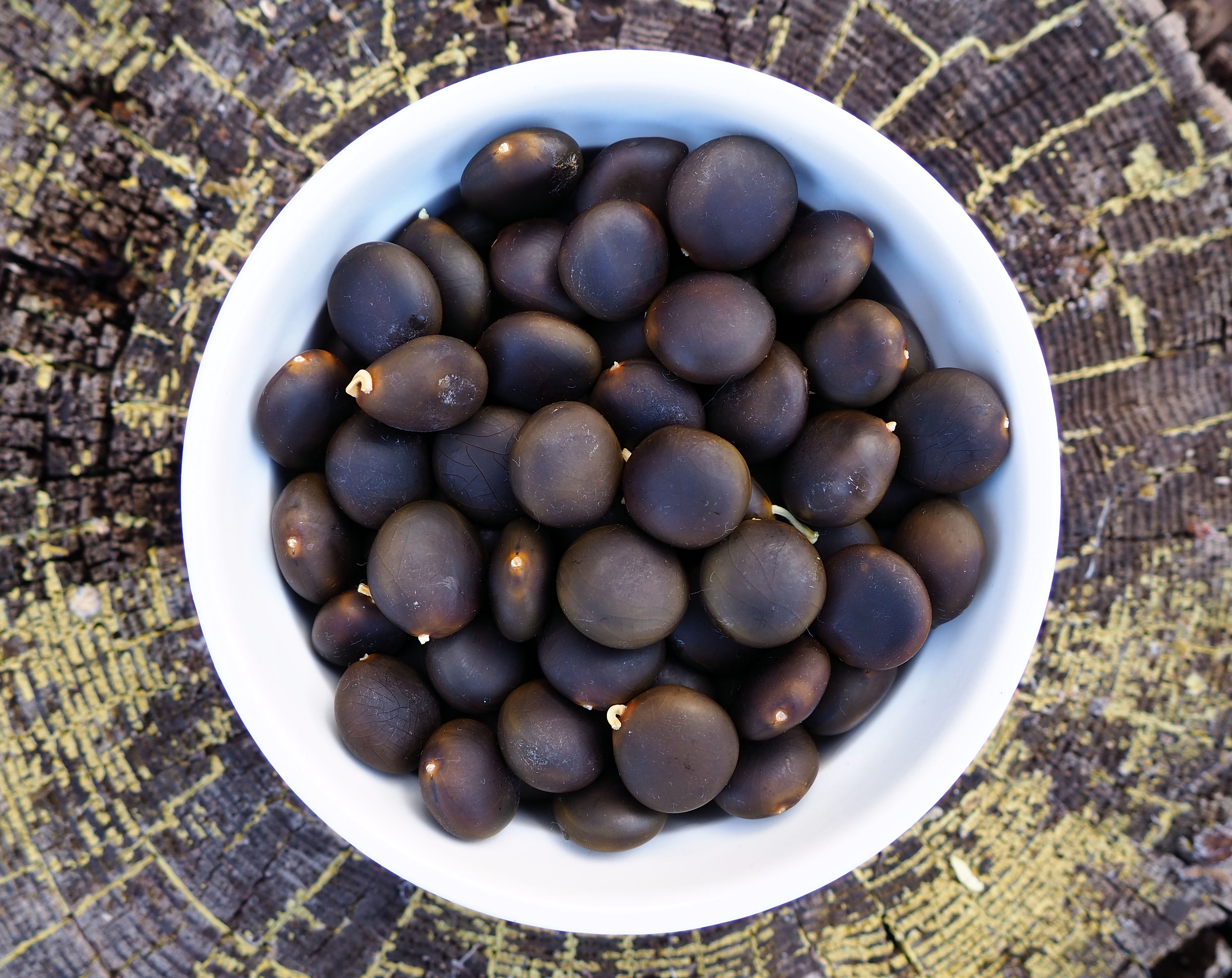
Winter is the best time to collect the pods, which are flat, leathery, brown to black in color, and about 2 inches wide and 6 inches long. The stocky fruits are often found hanging from the tips of the tree’s bare branches. Many also fall to the ground over the course of the season, making them easier to collect. If you split the pods open early in the season, you’ll find the seeds embedded in a sticky, neon green goo that will stick to your hands and clothes. As the year progresses, the glue-like substance dries out and is easier to deal with. The seeds are dark, extremely hard, rounded and flattened, and about the size of a penny or nickel. The funiculus, which is a short stalk that connects the ovule/seed to the ovary, tends to be fairly prominent and something you don’t often get to see on seeds.

inside the fruit of a Kentucky coffeetree

Once you’ve collected several pods and removed the seeds from the gooey innards, soak the seeds for an hour or two and then rinse them, making sure to remove dried up goo and any remaining funiculi. Pat the seeds dry and place them in a baking dish with a lid for roasting. The roasting process is said to eliminate the toxicity of the seeds. The lid is important because several of the seeds will pop open during roasting and will fly around in your oven if they aren’t contained.

The fruits of Kentucky coffeetree contain a toxic compound called cytisine, an alkaloid that is similar in action to nicotine. The Handbook of Poisonous and Injurious Plants by Nelson, et al. states that “the cytisine content of the seeds is quite low; and chewing one or two would not be expected to produce toxic effects.” Actually, the bigger risk of chewing one of these rock hard seeds is breaking your teeth. Cytisine poisoning includes typical symptoms like diarrhea and vomiting; in extreme cases it can lead to coma and death. If the seeds are properly roasted, you won’t have to worry about any of this, but as with anything you are trying for the first time, start with small amounts.

seeds of Kentucky coffeetree

Times and temperatures for roasting vary depending on who you’re getting your information from. I went with 300° F for 3 hours (which ended up being 3 and a half hours because I forgot to take them out in time). One source suggested roasting the seeds for only 2 hours for better flavor, but I decided to err on the side of caution and roast them for longer. Many of the seeds will have popped open during the roasting process. For those that haven’t you will need to use a nutcracker or some other comparable tool to crack the seed coat and remove the insides. Dispose of the seed coats and grind the remaining bits into a fine powder using either a coffee grinder or mortar and pestle. You’ll end up with a fine, chocolate-colored powder which you will use to make your “coffee.”

You can prepare this beverage in the same way you would typically choose to make coffee, but keep in mind that upon adding water, the fine grounds quickly turn to a mud-like substance and will block up the filter you are using. For this reason, I recommend small batches. I found Kentucky coffeetree “coffee” to be very earthy and rich and somewhat similar to strong black coffee. Sierra tried it and immediately exclaimed, “That’s nice!” and then proceeded to give it two thumbs up. Some people like black coffee. I added cream to it and found it much more pleasant to drink. Other people don’t think this beverage tastes like coffee at all and instead call it tea-like, chocolaty, fruity, or “akin to mud,” among other more negative reviews. I think it’s a drink that could grow on me, but considering the effort it takes to make one cup, I don’t see that happening any time soon.

Kentucky coffeetree “coffee grounds”

Have you tried making “coffee” from the seeds of Kentucky coffeetree? Let us know what you think about it in the comment section below.

More Tea Time Posts on Awkward Botany:

2022: Year in Review

It’s time to look back on 2022. But before we do that, I have to acknowledge that January 2023 marks Awkward Botany’s 10 year anniversary. This time ten years ago, I was drafting the introductory post to this blog. Obviously, a lot has happened since then, yet it still seems like yesterday somehow. And while I may not be posting with the frequency that I once was, I’m still at it, and I don’t plan on stopping any time soon. There is so much we have yet to cover. I feel like we’ve barely scratched the surface of what the world of plants has to offer. If you’d like to look back on what I’ve written about over the years, these Year in Review posts are a good place to start, which I’ve been posting each year since Awkward Botany turned one. Looking forward, expect more of the same, which if you’re into plants as much as me, should be enough to keep your attention. If you’re not into plants, I’m not sure why you’re here, but since you are, I hope that what I share might change your mind. Either way, here’s to another 10 years!

Awkward Botany Turns 10!

Perhaps the most eventful thing that happened in 2022, as far as the blog goes, was my appearance on Outdoor Idaho where I got to sing the praises of weeds and the role they play as members of our wild flora. You can expect the weeds talk to continue, especially since Western Society of Weed Science’s Annual Meeting is coming to Boise later this winter. Perhaps I’ll see you there! Oh, and speaking of annual meetings, Botany is coming to Boise this summer, so please feel free to say hello if you’re coming to town.

As per usual, I have a head full of ideas and plans for the upcoming year, and I am hopeful that it will be one of the best yet. But I will spare you from having to trudge through that whirlwind, and instead I’ll just say thank you for being here. Thanks for your comments, shares, follows, and the other ways you show your support. If you’d like to continue doing so, by all means, please do. If you’re new here and you’d like to start, all relevant links are in the link tree below. Happy 2023 everyone!

Awkward Botany Linktree

And now…

A Selection of Posts from 2022

Winter Trees and Shrubs

Book Reviews

Weeds of Boise

Eating Weeds

Randomly Selected Botanical Terms

Guest Posts

Awkward Botany on Outdoor Idaho (plus Send Us Your Questions)

I spend a lot time on this blog putting weeds in the spotlight, celebrating them for their successes and the unique and interesting plants they are. It’s rare that I get to share these sentiments outside of this particular venue, but I was given such an opportunity recently when asked to talk about weeds for an episode of Outdoor Idaho, a long running show on Idaho Public Television that covers Idaho’s natural history. The theme of this particular episode is wildflowers, so I was intrigued by the idea of coming on to discuss urban weeds. For many, the term “wildflowers” may invoke native plants blooming in natural areas in places far removed from the hustle and bustle of the city. But a wildflower doesn’t have to be a native plant, nor does it have to be growing in the wild. Any plant occurring naturally on its own without the assistance of humans can be a wildflower, and that includes our wild urban flora. I appreciated the chance to share this particular thought with the viewers of Outdoor Idaho.

photo credit: Jay Krajic

Along with me waxing on about weeds, the Wildflowers episode features a host of other Idahoans sharing their thoughts, expertise, and experiences with wildflowers. The episode is brief – coming in at under 30 minutes – but the producers packed in a ton of great wildflower content, and overall I found it to be an excellent representation of the flora of Idaho and a convincing argument for why we should appreciate and elevate these plants. The flora of any region is special and important in its own right, and Idaho’s flora is no different, including its weeds.

Check out Outdoor Idaho’s Wildfowers episode here.

In other news…

If you want to see more of me on the screen (and I’m not sure why you would), Sierra (a.k.a. Idaho Plant Doctor) and I are doing monthly Q&A videos in which we answer your questions about plants, gardening, pests and diseases, insects, or any other topic you might be curious about. You can tune in to those discussions on Sierra’s instagram. If you have questions of your own that you would like us to address, please leave them in the comments section below, or send them to me via the contact page or my instagram.

In Praise of Vagabond Plants – A Book Review

A weed is a highly successful plant that shares a close relationship with humans. In many instances, weeds are seen as nuisance plants, interfering with the goals and intentions we have for a piece of land. In natural areas, they are blamed for, among other things, threatening the existence of the native flora, despite the fact that human activity and disturbance brought them there in the first place and continued human disturbance helps keep them there. In some instances, such as a vacant lot in an urban area, they pose no threat and their existence causes little if any harm, yet they are disparaged for being unsightly, hazardous, and out of place. Nevermind the fact that they are offering a number of ecosystem services free of charge.

For all these reasons and more, weeds get called some pretty nasty things and are the recipient of an unduly amount of ire. The extent that some of us will go to vilify a plant is a bit disturbing to me, so it’s always refreshing to come across a more reasonable approach to weeds. That tempered take is what I found in Gareth Richards’ book, Weeds: The Beauty and Uses of 50 Vagabond Plants, a production of the Royal Horticultural Society and whose vast archives were used to beautifully illustrate the book.

There seems to be a growing trend in the U.K. and other parts of Europe to be more accepting of weeds, to see them as part of our urban, suburban, and exurban flora, and to focus on the value they may bring rather than constantly reviling them as interlopers and thus trying to blast them out of existence with chemical warfare. (See also Wild About Weeds by Jack Wallington). I hope this is true, and I hope the trend continues and catches on in other parts of the world. As Richards writes, “Often the only crime a plant has committed is growing too well.” Thankfully, books like this help bring awareness to these highly fecund and robust plants and their many redeeming qualities.

Richards’ book starts out with a brief introduction and then proceeds with short profiles of 50+ different plant species that are commonly considered weeds. The focus of the book is on weeds found in the U.K.; however, weeds being what they are, at least a few (if not most) of the plants covered are bound to be growing near you regardless of where you live in the world. While there is some discussion of the invasive nature of a few of the plants profiled and the illegality of growing or transporting them – see Japanese knotweed, Himalayan balsam, and pontic rhododendron for example – the focus is not on management nor control. Instead, the discussion revolves around interesting aspects of the plants that makes them worth getting to know rather than something to simply eliminate.

As is often the case when discussing specific plants, medicinal uses and edibility feature heavily in Richards’ plant profiles. It’s interesting to learn about the many ways that humans have thought about and used plants historically, and some of the ways they were historically used are certainly still relevant today; however, many medicinal claims don’t stand the test of time nor do they have empirical evidence to back them up. For this reason, I generally take medicinal uses of plants with a grain of a salt and a healthy dose of skepticism. Edibility, on the other hand, has always been interesting to me, and just when I thought I had heard all the ways that dandelions can be eaten, Richards introduces me to another: “You can even harvest the flower buds for pickling; they make a useful homegrown caper substitute.”

What follows are a few excerpts from the book with accompanying photos of the plants in question.

Ground elder (Aegopodium podagraria) was originally introduced to gardens for its medicinal and edible qualities, but its aggressive behavior can be frustrating. Richards notes, “A useful plant for brave gardeners!”
The rhizomatous nature of yarrow (Achillea millefolium) makes it an excellent addition or alternative to turf grass, and thanks to its drought-tolerance, Richards asserts, “certainly lawns containing yarrow stay greener for longer in dry spells.
Speaking of lawns, “Creeping buttercup (Ranunculus repens) in your lawn is generally a sign that it’s too wet for short grass to thrive.” Richards recommends letting it become a meadow instead. “Sometimes the most rewarding way of gardening is to let nature do it for you.”
Regarding teasel (Dipsacus spp.), Richards writes: “It’s not only bees that adore them; when the seeds ripen they’re loved by birds, especially goldfinches. Try planting some in your garden as a homegrown alternative food source to replace shop-bought nyjer seed.” (photo credit: Sierra Laverty)
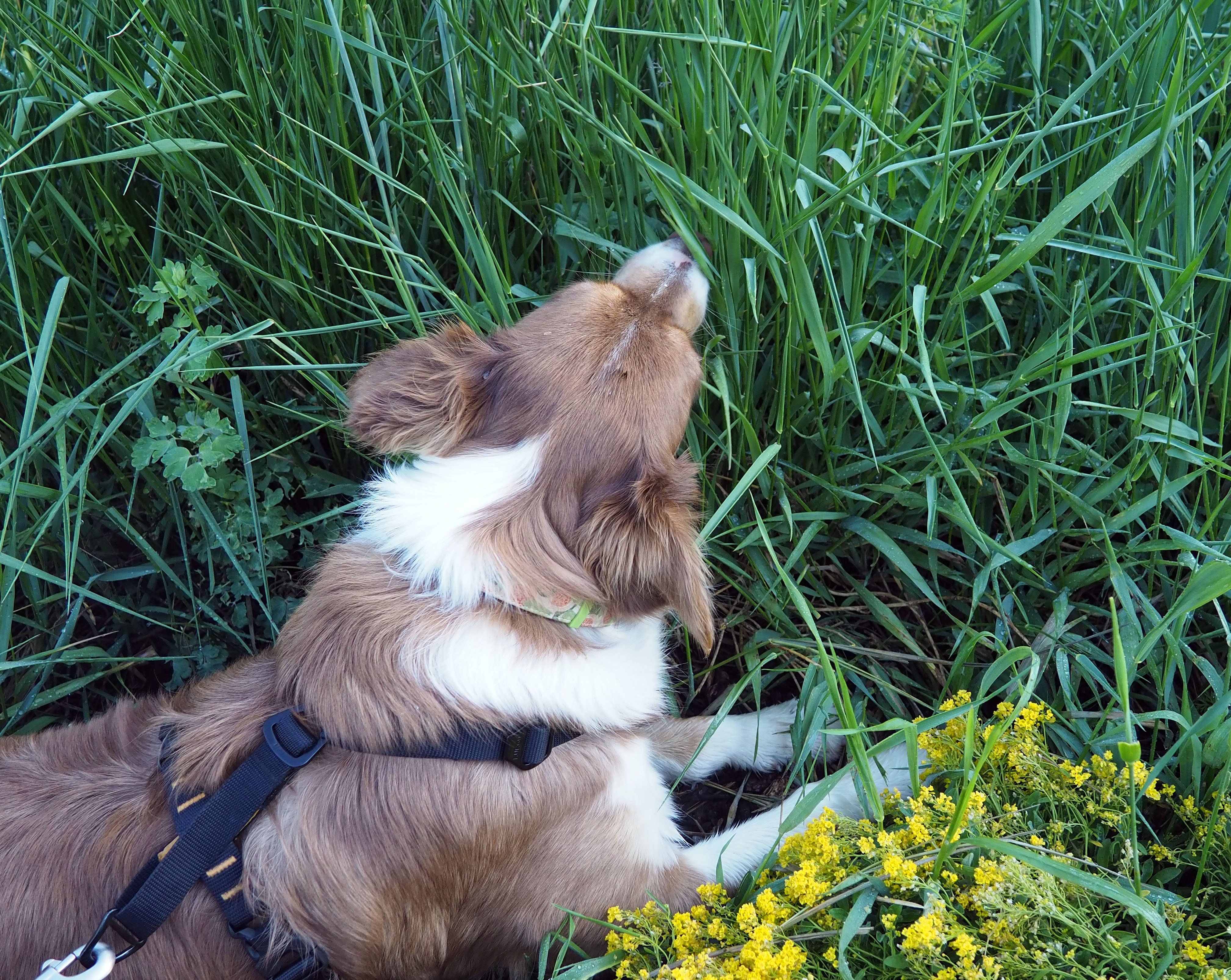
“Cats and dogs seek out couch grass (Elymus repens) when they want to chew on something – either for its minerals or to help them vomit to clear their stomachs, often of furballs.” Kōura can frequently be found chewing on it.
“Like many weeds, herb bennet (Geum urbanum) has some clever adaptations. Its nondescript leaves blend seamlessly with other plants, never drawing attention to themselves. And those [clove-scented] roots are really tough, making plants physically difficult to pull up by hand. … The seeds have small hooks and readily attach themselves to fur and clothing to hitch a free ride to pastures new.”

Regardless of how you feel about weeds, if you’re interested in plants at all, this book is worth getting your hands on and these plants are worth getting to know. They may not be the plants you prefer to see growing on your property, but they have interesting stories to tell and, in many cases, may not be as big of a problem as you originally thought. In discussing Spanish bluebells (Hyacinthoides hispanica) and its weedy relatives, Richards hits on a point that for me is one of the main takeaways of this book: “In an age where gardens are becoming wilder and the countryside ever more fragmented, and nature is on the march due to climate change, perhaps we should just learn to treasure the wild plants that thrive in the the new conditions we have made – wherever they originally came from.”

More Weeds Themed Book and Zine Reviews: