Book Review: Hellstrip Gardening, part one

Keeping a garden alive and thriving is replete with its inherent challenges. Plants have needs, and those needs vary by plant. Lots of sun might be great for one plant but harmful to another. Some plants are very drought tolerant and don’t require much water beyond what falls naturally from the sky, while others insist on regular supplemental irrigation. Plants also have preferred soil types, and that soil must provide a proper balance of nutrients. Then there is the litany of potential pests, diseases, and predators that can present themselves at any given moment. Frankly, it’s surprising that any garden stays alive, all things considered.

Some gardens have added challenges. They may be regularly visited (and trampled) by the public, who may or may not have pets in tow. They may be surrounded by paved surfaces which increase ambient air temperatures significantly and can introduce contaminants to the garden in the form of road salts, petrochemicals, fertilizers, sediments, and animal waste. They may encompass utility boxes, water meters, and road signs that require regular visits and occasional maintenance. All of these things describe the plight of a curbside garden, also known as a hellstrip – that section of green space between the road and the sidewalk. Comparatively, backyard gardens are veritable havens for plants.

Hellstrips have been on my mind for several years now. It all started back in graduate school while studying green roof technology. One of the macro benefits of green roofs is storm water mitigation. During a storm event, green roofs capture a greater proportion of precipitation compared to conventional roofs and slowly release it back into the environment. Storm water is a major issue in urban areas where the percentage of impervious surfaces is high. These surfaces prohibit precipitation from infiltrating the soil and recharging groundwater and nearby waterways. Instead, this water is rushed away and directed into either waste water treatment facilities or local waterways, carrying with it the contaminants that have collected on paved surfaces and rooftops. Gardens along roadways can be engineered to manage storm water in a similar way that green roofs do – capturing it, filtering it, and releasing it back into the environment at a slow pace – thereby minimizing the negative effects of storm water runoff.
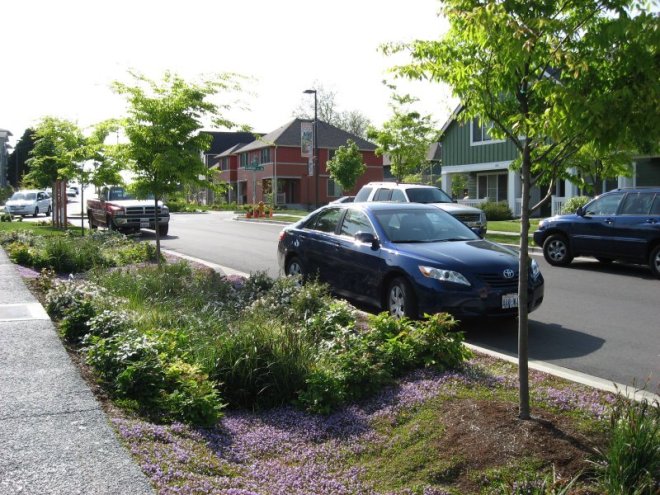
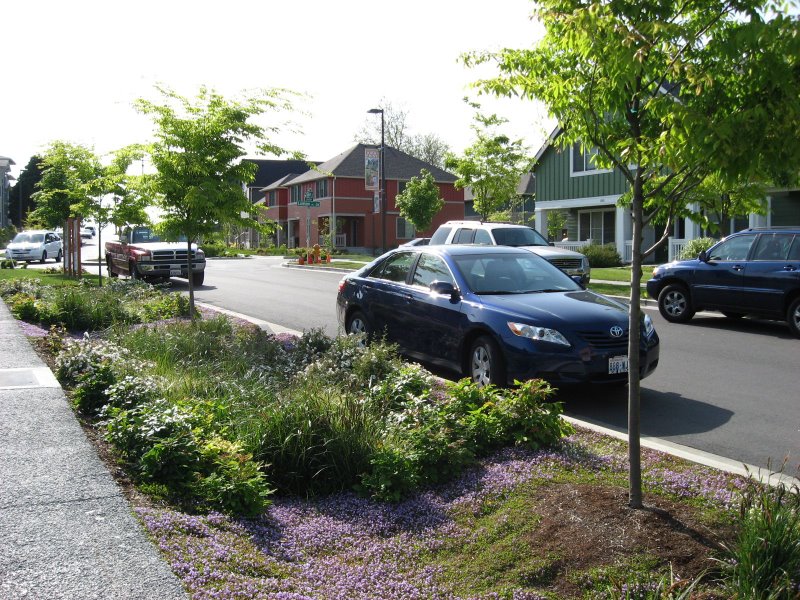
A rain garden or bioswale planted in a hellstrip to help mitigate storm water runoff. (photo credit: epa.gov)

A rain garden or bioswale planted in a hellstrip to help mitigate storm water runoff (photo credit: epa.gov)

The hellstrip in front of my parent’s house has been the source of many headaches. It is another reason why hellstrips have been on my mind. It is a weed patch, but not intentionally so. I remember many years ago when my mom told me she was going to replace the weed patch with buffalograss. She was elated by the idea – little or no mowing, very little supplemental water, a cool alternative to conventional lawn. Now, years later after planting dozens of buffalograss plugs and making a concentrated effort to keep them alive and prospering, the hellstrip remains a weed patch. But my mom hasn’t given up hope. The hellstrip will be conquered in due time.

Riding my bike to work last summer, I regularly rode past a house that proudly displayed the potential that curbside gardens could reach. The house sits on the corner lot of an intersection that, due to the angle of the connecting roads, gives the lot a long triangular shape. This makes the hellstrip longer than most of the others in this neighborhood. On this lengthy strip, the owners have planted an expansive and diverse vegetable garden. While once upon a time vegetable gardens were largely confined to backyards, they have lately been making more regular appearances in front yards. Few, however, are as bold and as public as this one – a true hellstrip success.

Last year, garden writer and lawn alternative enthusiast, Evelyn Hadden, put out a book called, Hellstrip Gardening. When I discovered this, I was intrigued, especially considering all of the mulling over hellstrips I had been doing for so long. I was curious to learn what she had to say. It has taken me until now to read it, but it seems like an opportune time to do so. After all, we are in pre-spring, a time when garden planning is being done in earnest. Perhaps this book will give me some ideas and encouragement to tackle some hard to garden spots this year. And maybe this review (and Hadden’s book) will inspire you to do the same. After all, this approach (as Hadden suggests) doesn’t have to be limited to curbside garden beds and can, in fact, be applied to any garden with challenges beyond the norm (like gardens along driveways and in alleyways, for example). The ultimate goal, for me at least, will be to pass along whatever knowledge I gain from this to my parents so that we can address their hellstrip issues once and for all.
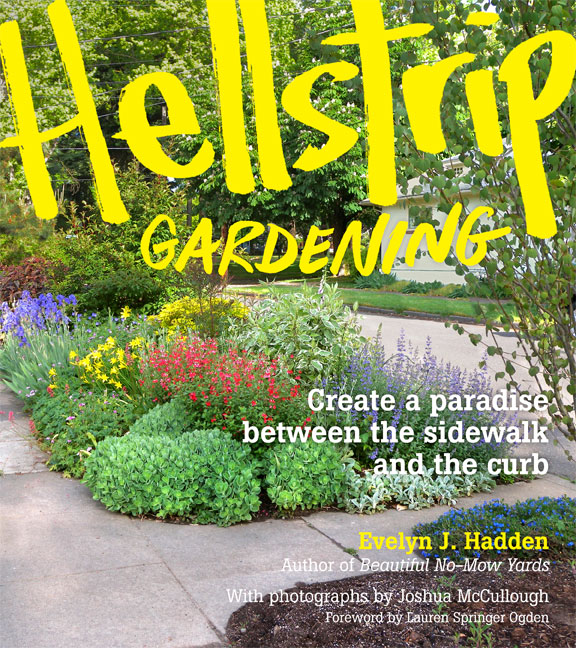
hellstrip gardening book

Hellstrip Gardening is organized into four sections: Inspirations, Situations, Creation, and Curbside-Worthy Plants. This review will also have multiple parts that will be posted as I read through the book. The first section of the book is intended to inspire and encourage – to show through words and pictures what others have done and to give you that “if they can do it, so can I” sort of feeling. It also introduces some of the challenges of gardening in hellstrips as Hadden visits 12 gardens across the United States and talks with the people who designed, installed, and maintain them. She tells the story of how the gardens came to be and showcases some of the plants and plant combinations that were used in each situation. The challenges will be fleshed out in the following section; these narratives are meant more to demonstrate what can be done. There are dozens of great photos throughout, and the short plant lists at the end of each profile are sure to be useful.

Now that we’re inspired, next week’s post will take a look at what Hadden has to say about addressing challenges and overcoming obstacles that are unique to hellstrip gardens.

Speaking of Food: A Special Issue of American Journal of Botany

“At the center of discussions about agriculture and the future of food in a changing climate are the plants that we grow for food, fiber, and fuels and the science that is required to understand, improve, and conserve them.”

That is a line from the opening paragraph of the introduction to the October 2014 issue of American Journal of Botany, Speaking of Food: Connecting Basic and Applied Plant Science. In this Special Issue, the American Journal of Botany – inspired by Elizabeth Kellogg’s 2012 presidential address to the Botanical Society of America – endeavors to demonstrate ways in which basic plant biology research can benefit the applied science of agriculture, and how this “use-inspired” research can help address the challenges of feeding a growing population in a changing climate.

speaking of food_ajb

In its 100 year history, the American Journal of Botany, has published hundreds of papers that serve to advance agricultural and horticultural sciences. However, this connection has not always been made explicit. With this special issue, they are hoping to change that by “illustrat[ing] that ‘basic’ and ‘applied’ are not two discrete categories, nor are they even extremes of a linear continuum.” “Basic” research can be used to answer questions and solve “human-centered problems,” and “applied” research can “illuminate general biological principles.” When both approaches to scientific inquiry come together, everyone benefits.

I originally chose to study horticulture because I was interested in growing food in a sustainable and responsible manner. During my studies, I gained a greater interest in the broader field of horticulture as well as an interest in botany. After receiving a degree in horticultural and crop sciences, I decided to pursue a Master’s Degree. I wanted to study green roof technology, an applied science that incorporated my interests in both horticulture and sustainability. The school that I ended up going to did not have a horticulture program, so I enrolled in a biological sciences program. It was there, while doing applied science research on green roofs and taking mostly botany related science courses, that I deepened my love for science and began to see how basic science had applications, not just in horticulture and agriculture, but in all aspects of life.

That explains my great interest in this recent issue of American Journal of Botany, and why I was so excited when I heard about it. Using science to understand and address the challenges that we face today (challenges that, many of which, are a result of human activity) is intriguing to me. Based on my interest in horticulture, food production, and sustainability, establishing and advancing science-based sustainable agriculture is incredibly important to me. And so I have decided that, over the next several posts, I will provide reviews of each of the 17 articles in AJB’s Special Issue. Each post will offer a brief overview of one or more articles, outlining the basic premises and findings of each study. If your interest is peaked, and I hope it will be, you can go on to read more about each of the studies. The Introduction to this issue gives an excellent overview of the articles, so I won’t include that here. I’ll just dive right in. If you feel inclined, read ahead, otherwise stay tuned and I will preview you it all for you over the next several weeks.

Palm Oil Production and Its Threat to Biodiversity

Improvements in cultivated varieties of oil palms could have devastating ecological effects. This is according to an article published in a recent issue of Science. Doom doesn’t have to be the story though, if – as the authors suggest – governments and conservation organizations take proper action to safeguard vulnerable land.

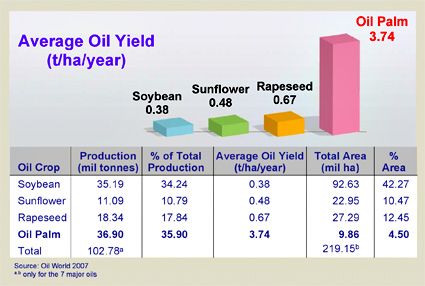
Palm oil is a versatile vegetable oil derived from the fruits of oil palms. It has myriad culinary uses and is also used in the manufacturing of cosmetics and the production of biofuel. Oil palms have high yields, easily outyielding other major oil crops like soybean, rapeseed, and sunflower. Oil palms are grown in the tropics in developing countries where land and labor are inexpensive. As human population grows, demand for palm oil increases. To meet the demand, tropical forests are converted into agricultural land. The majority of palm oil production occurs in Southeast Asian countries like Indonesia and Malaysia. However, palm oil production is expected to increase in African and Latin American countries as new varieties better suited for these particular environments become available.

oil world graph

Genome sequencing of oil palm may allow plant breeders to develop varieties that are disease resistant, drought tolerant, and able to grow in salinized soils. Already making its debut, though, is a new variety of oil palm that is boasting yields from 4 tons to as much as 10 tons per hectare. Higher yielding varieties could be the solution to preventing more tropical forests from being converted into oil palm plantations. Or could they lead to more growth? Intrigued by the development of improved varieties of oil palms and other tropical crops, the authors of this study developed computer models in order to determine what this might mean for the future.

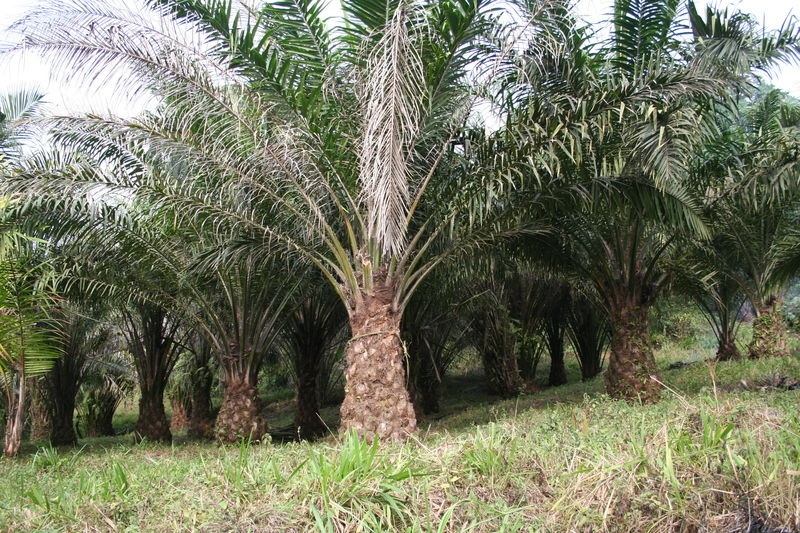
African Oil Palm (Elaeis guineensis) is the species of oil palm most commonly grown for palm oil production.

African Oil Palm (Elaeis guineensis) is the species of oil palm most commonly grown in palm oil production (photo credit: www.eol.org)

The results of simulations suggested two possible outcomes: one potentially positive and the other largely negative. On the positive side, “an assumed 56% increase in oil palm yield per tree in Malaysia and Indonesia” could result in ” around 400,000 hectares of agricultural land…taken out of production in Brazil, India, and Canada.” This is because less land will be needed to meet the demand, and the increased availability and resulting lower price of palm oil will outcompete other oil crops (like rapeseed, which is one of Canada’s main agricultural crops). However, the author’s seem to assume that agricultural land taken out of production will be restored back into natural lands. I find this argument hard to accept. Anecdotal evidence suggests that if farmers are no longer making a profit from a particular crop, they will choose to either grow something more profitable or sell their land to developers. A concerted effort would have to be made to capture this land and ensure that it remain uncultivated and undeveloped. Also, as the author’s point out, restoring land in Canada is very different from restoring or protecting tropical land. Loss of biodiversity is a much greater risk in areas where the level of biodiversity per hectare is high.

On the negative side, higher yields can encourage increased production. Tropical forest conversion may accelerate if farmers see an opportunity for growth. Additionally, improved varieties may increase palm oil production in African and Latin American countries, resulting again in more land conversion and deforestation. This effect may also become the story, not just for oil palms, but for cacao, eucalyptus, coffee, and other tropical crops as varietal improvements are achieved.

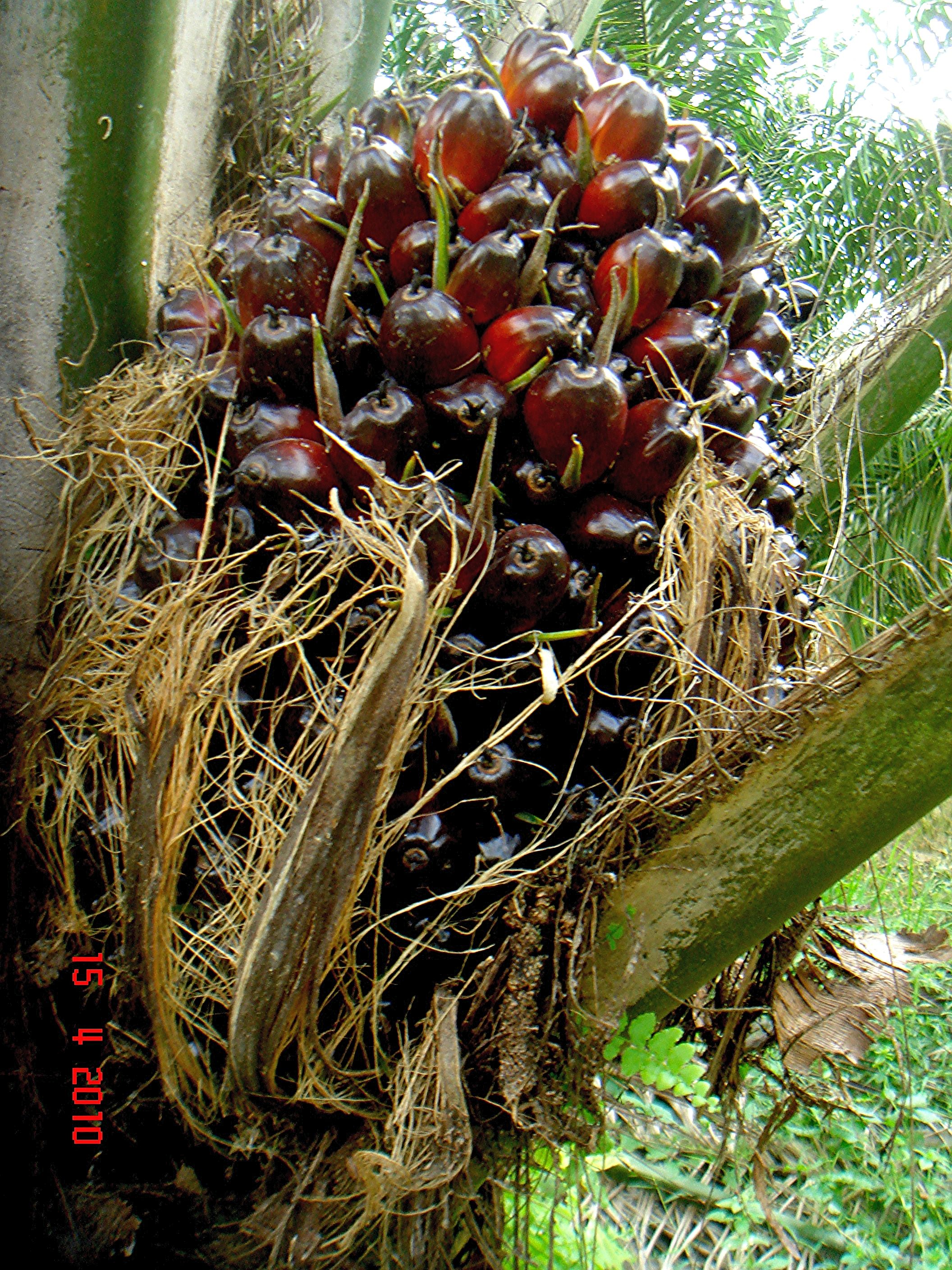
Oil Palm Friuits (photo credit: www.eol.org)

Oil Palm Friuits (photo credit: www.eol.org)

In light of this predicted consequence, the authors of this study recommend that governments, working together with conservation organizations and industry associations, regulate the conversion of agricultural lands and ensure that certain areas are specifically set aside for conservation. This means that “models of the drivers of environmental change” must be developed that “incorporate feedbacks at a range of scales” so that measures can be put into place to address “the unintended negative consequences of technical advances.”

More information on sustainable palm oil production can be found here.

Our Backyard Farm and Garden Show: Fall 2014

I had every intention of documenting this year’s garden more thoroughly, but as things tend to go, the days got busy and the year got away from me. Now here we are in mid-October, still waiting for the first frost but accepting its imminence, watching reluctantly as another growing season comes to a close. We took several pictures but few notes, so what follows is a series of photos and a few reflections on what transpired this past year in, what Flora likes to call, Our Backyard Farm and Garden Show.

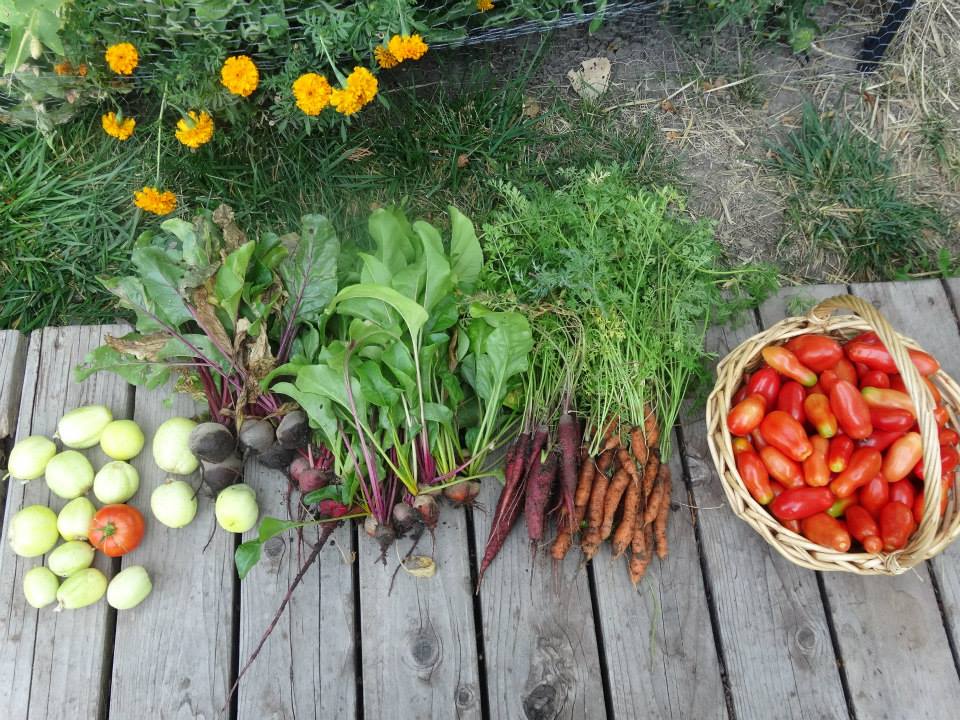
Abundance

Abundance

I guess I should start at the beginning. Last year I was living in an apartment. I was growing things in two small flower beds and a few containers on my patio. That had been my story for about a decade – growing what I could on porches and patios and in flower beds of various apartments in a few different parts of the country. At one point I was living in an apartment with no space at all to grow anything, and so I attempted to start a garden in the backyard of an abandoned, neighboring house – geurilla gardening style – but that didn’t go so well. At another location I had a plot at a community garden. The three years I spent there were fun, but definitely not as nice as stepping outside my door and into my garden.

Earlier this year, I moved in with Flora. She was renting a house with a yard, so when I joined her, I also joined her yard. Flora is a gardener, too; she had spent her first year here growing things in the existing garden spaces but wanted to expand. So we did. We enlarged three beds considerably and built four raised beds and two compost bins. We also got permission to grow things in the neighbor’s raised beds. And that’s how our growing season started – coalescence and expansion.

Then summer happened. It came and went, actually. Most days were spent just trying to keep everything alive – moving sprinklers around, warding off slugs and other bugs, and staking things up. Abundance was apparent pretty much immediately. We started harvesting greens (lettuce, kale, collards, mustards) en masse. Shortly after that, cucumbers appeared in concert with beets, turnips, basil, ground cherries, eggplants, tomatoes, carrots, peppers, etc. Even now – anticipating that first frost – the harvest continues. We are uncertain whether or not we will remain here for another growing season; regardless, we are considering the ways in which we might expand in case we do. Despite the amount of work that has gone into our garden so far, we still want to do more. Apparently, our love of gardening knows no bounds.

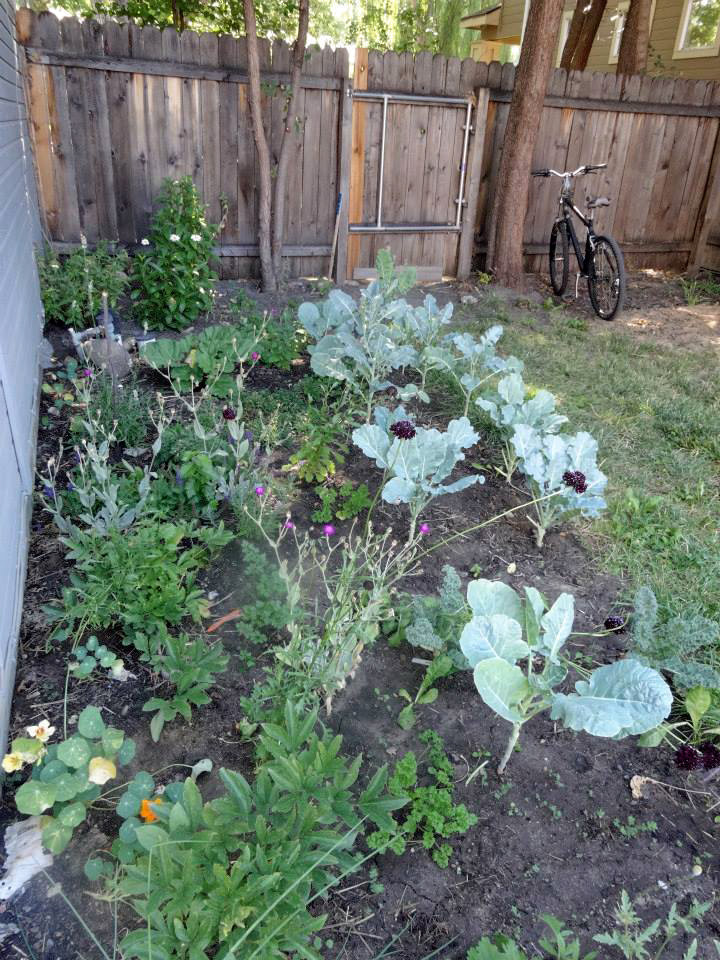
A view of our side yard. It is pretty shady in this section of the yard but we were still able to grow kale and collards along with several different flowers and herbs.

A view of our side yard. It is pretty shady in this bed but we were still able to grow kale and collards along with several different flowers and herbs.


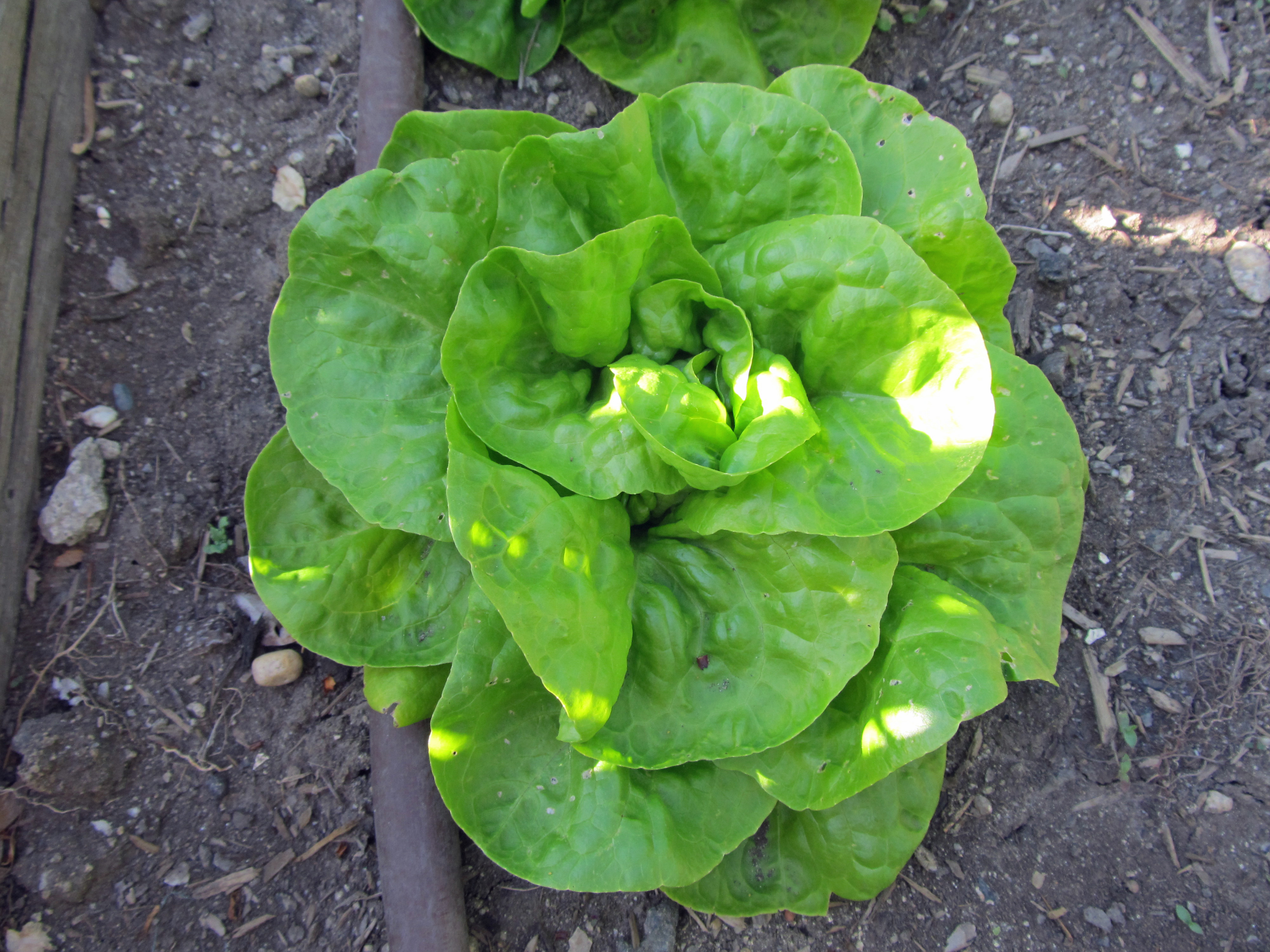
We grew several varieties of lettuce. This is one that I was most excited about. It's called 'Tennis Ball.' It is a miniature butterhead type that Thomas Jefferson loved and used to grow in his garden at Monticello.

We grew many varieties of lettuce. This is one that I was most excited about. It’s called ‘Tennis Ball.’ It is a miniature butterhead type that Thomas Jefferson loved and grew in his garden at Monticello.


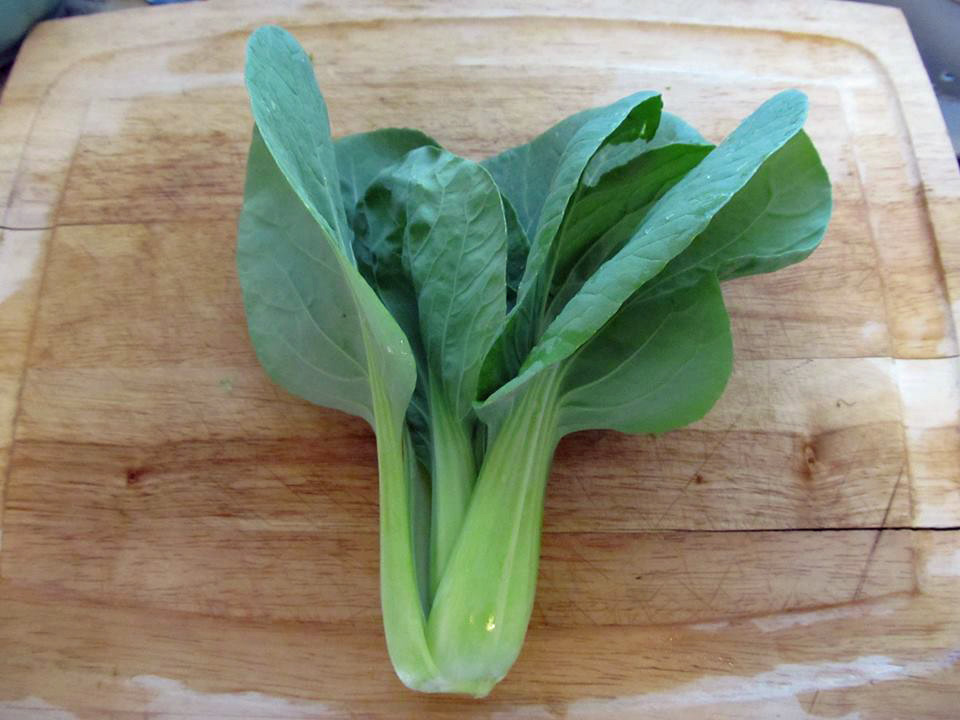
'Shanghai Green' Pak Choy

‘Shanghai Green’ Pak Choy


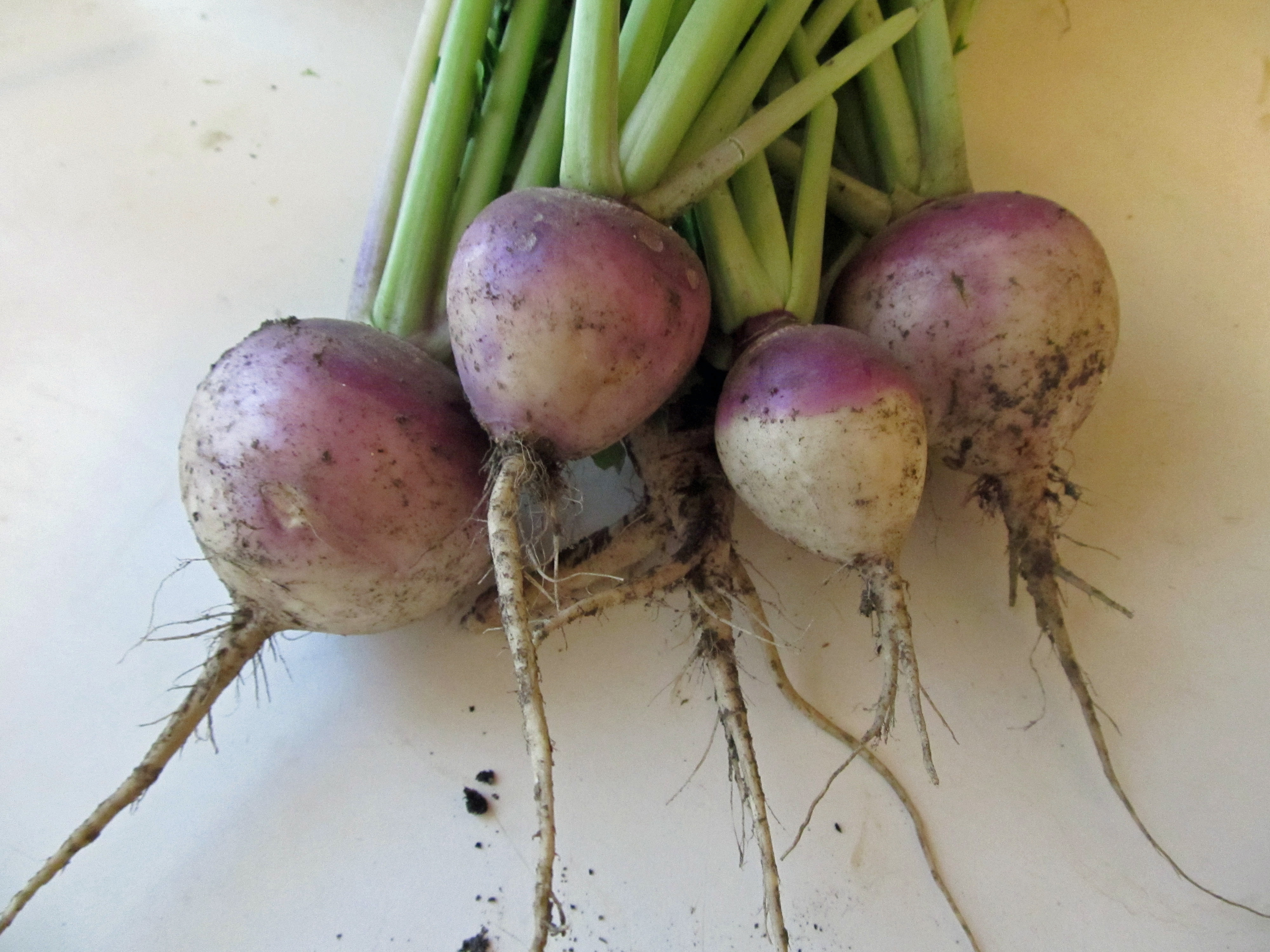
'Purple Top White Globe' Turnips

‘Purple Top White Globe’ Turnips


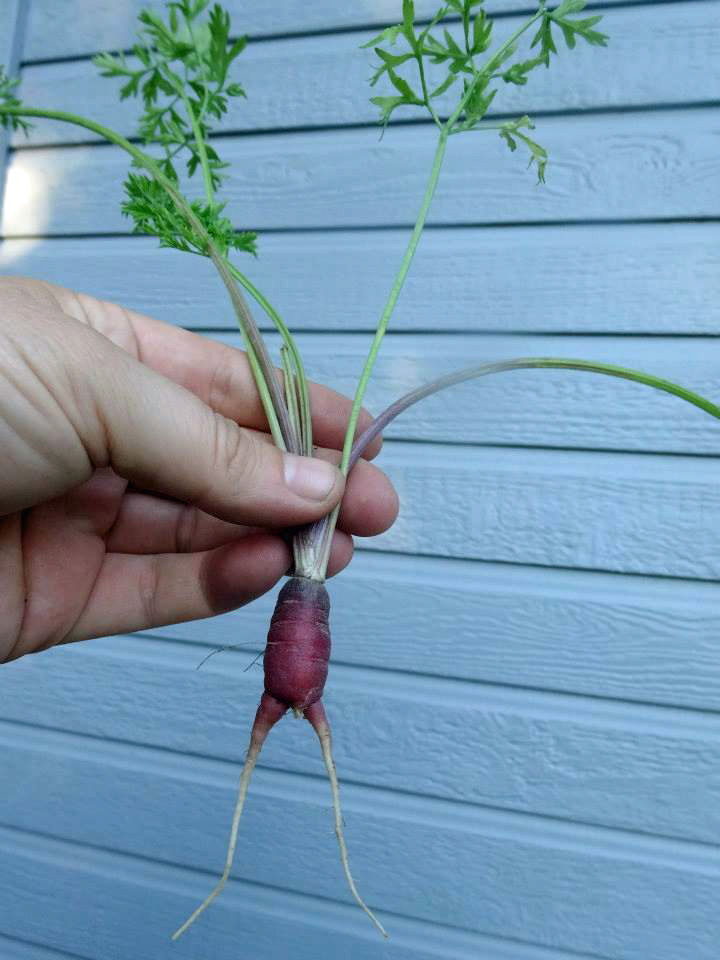
A miniature purple carrot with legs.

A miniature purple carrot with legs.


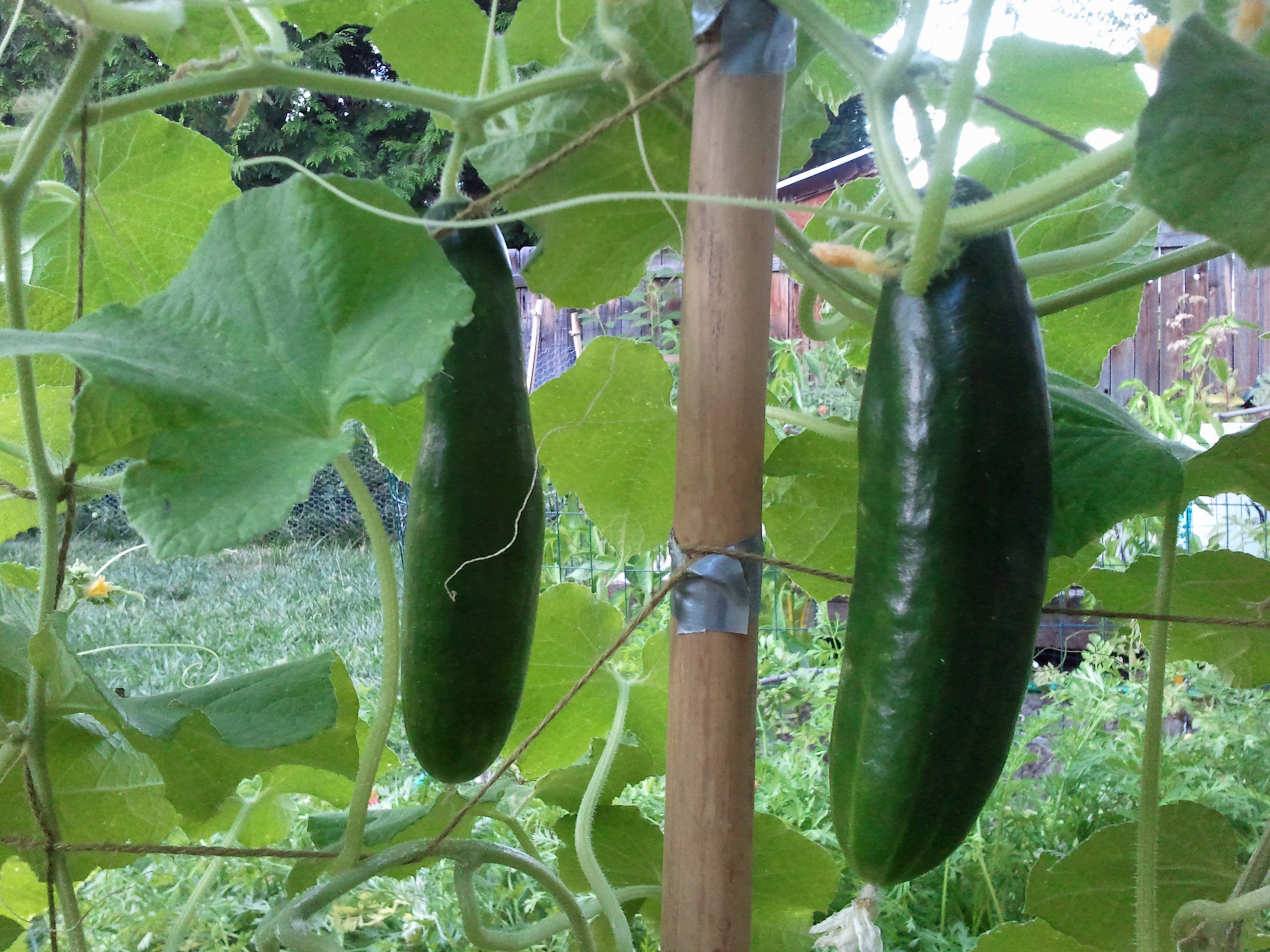
Two cucumbers hanging on a makeshift  trellis. I can't remember what variety they are. This why I need to remember to take better notes.

Two cucumbers hanging on a makeshift trellis. I can’t remember what variety they are. This why I need to remember to take better notes.


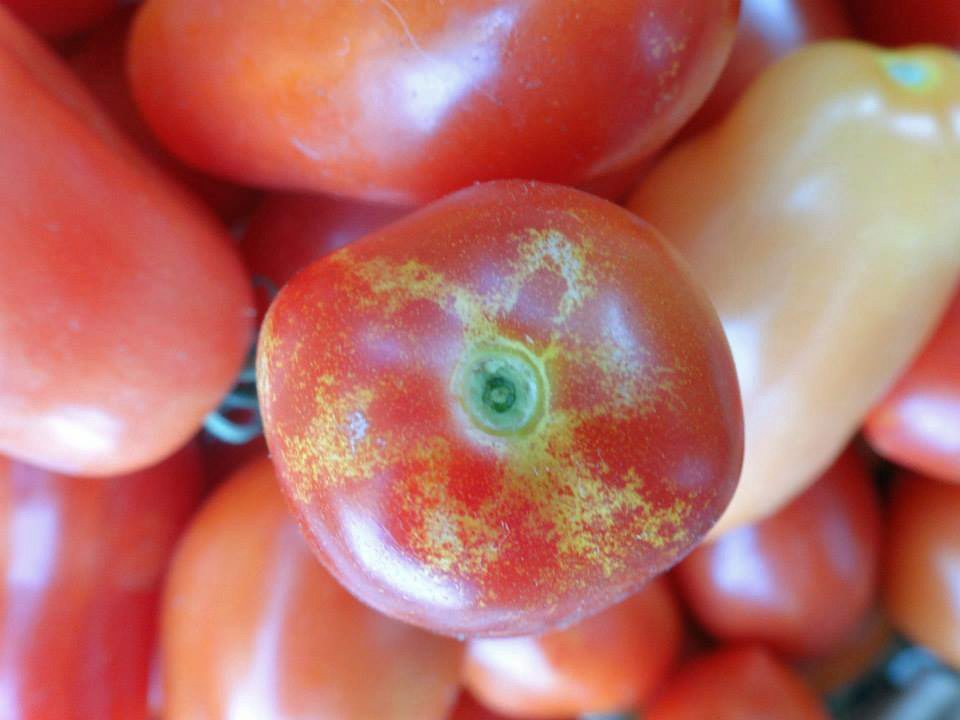
'San Marzano' Roma Tomato. We grew three other varieties of tomatoes along with this one.

‘San Marzano’ Roma Tomatoes. We grew three other varieties of tomatoes along with this one.


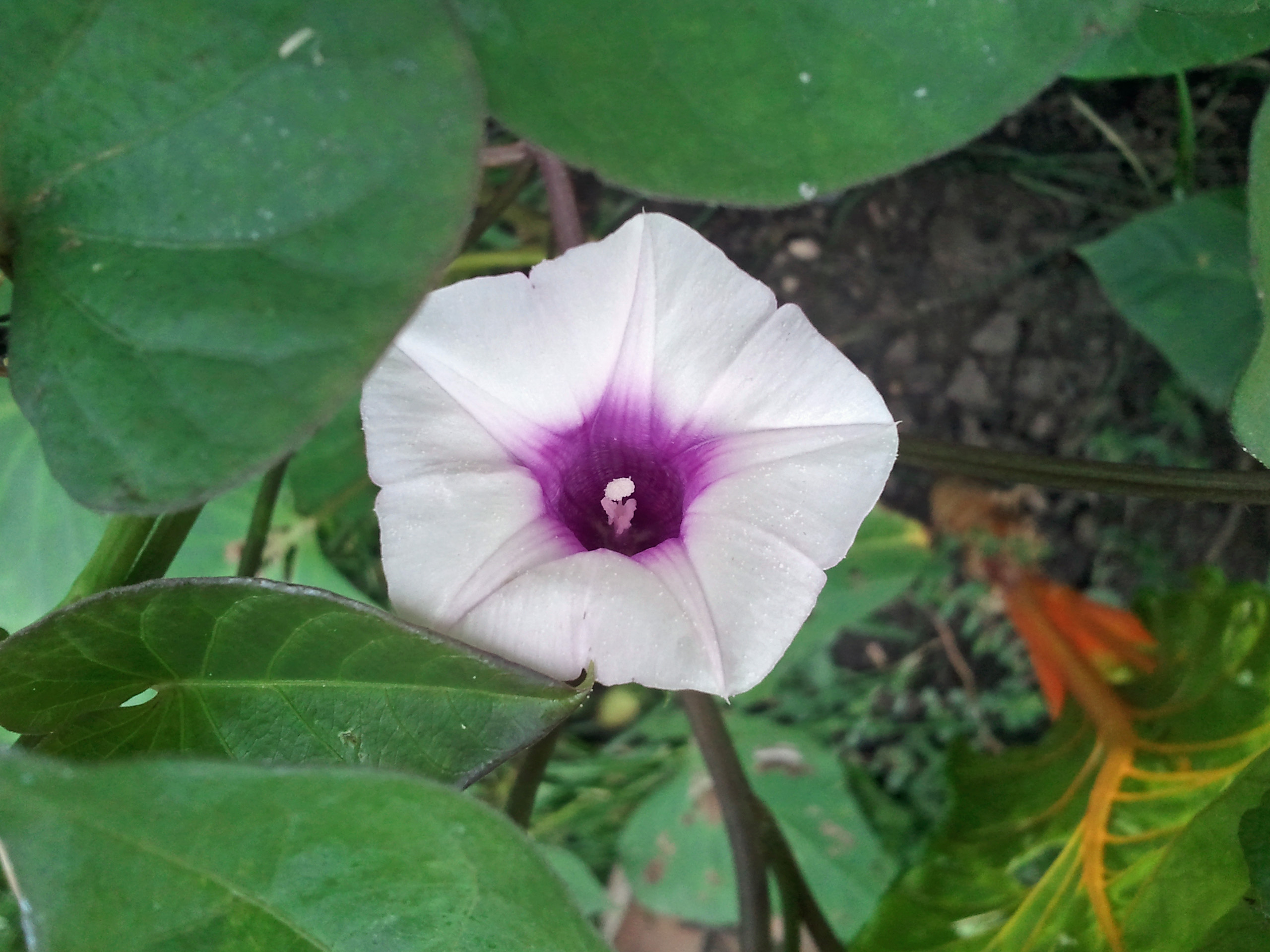
The flower of a 'Hong Hong' sweet potato. We haven't harvested these yet, so we're not sure what we're going to get. Sweet potatoes are not commonly grown in southern Idaho, so we're anxious to see how they do.

The flower of a ‘Hong Hong’ sweet potato. We have not harvested these yet, so we are not sure what we are going to get. Sweet potatoes are not commonly grown in southern Idaho, so we are anxious to see how they do.


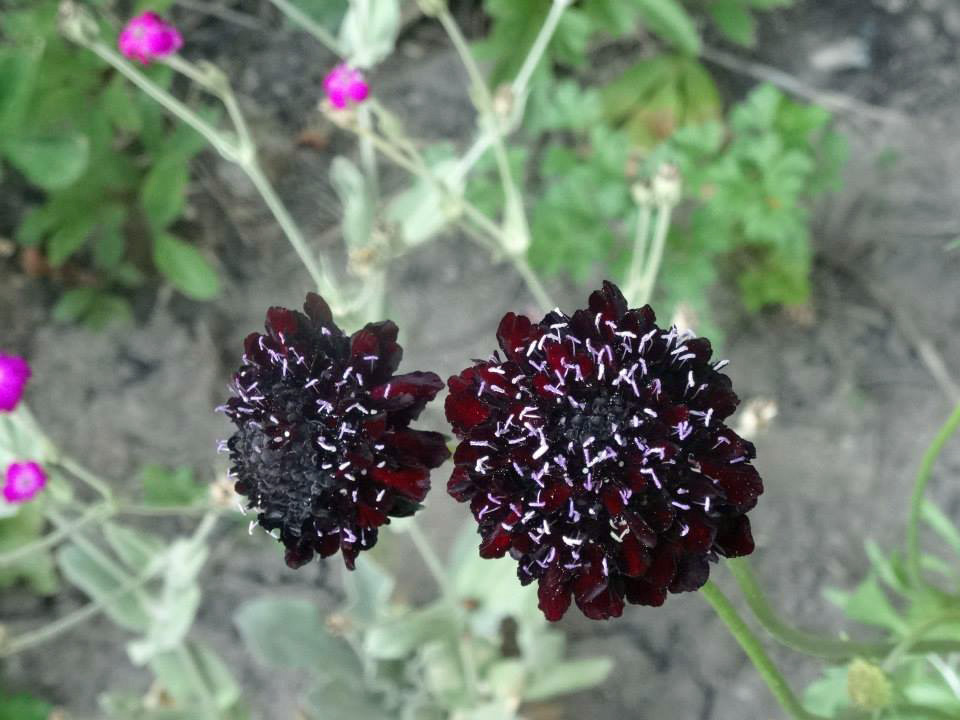
We grew lots of flowers, too. 'Black Knight' scabiosa (aka pincushion flower)was one of our favorites.

We grew lots of flowers, too. ‘Black Knight’ scabiosa (aka pincushion flower) was one of our favorites.


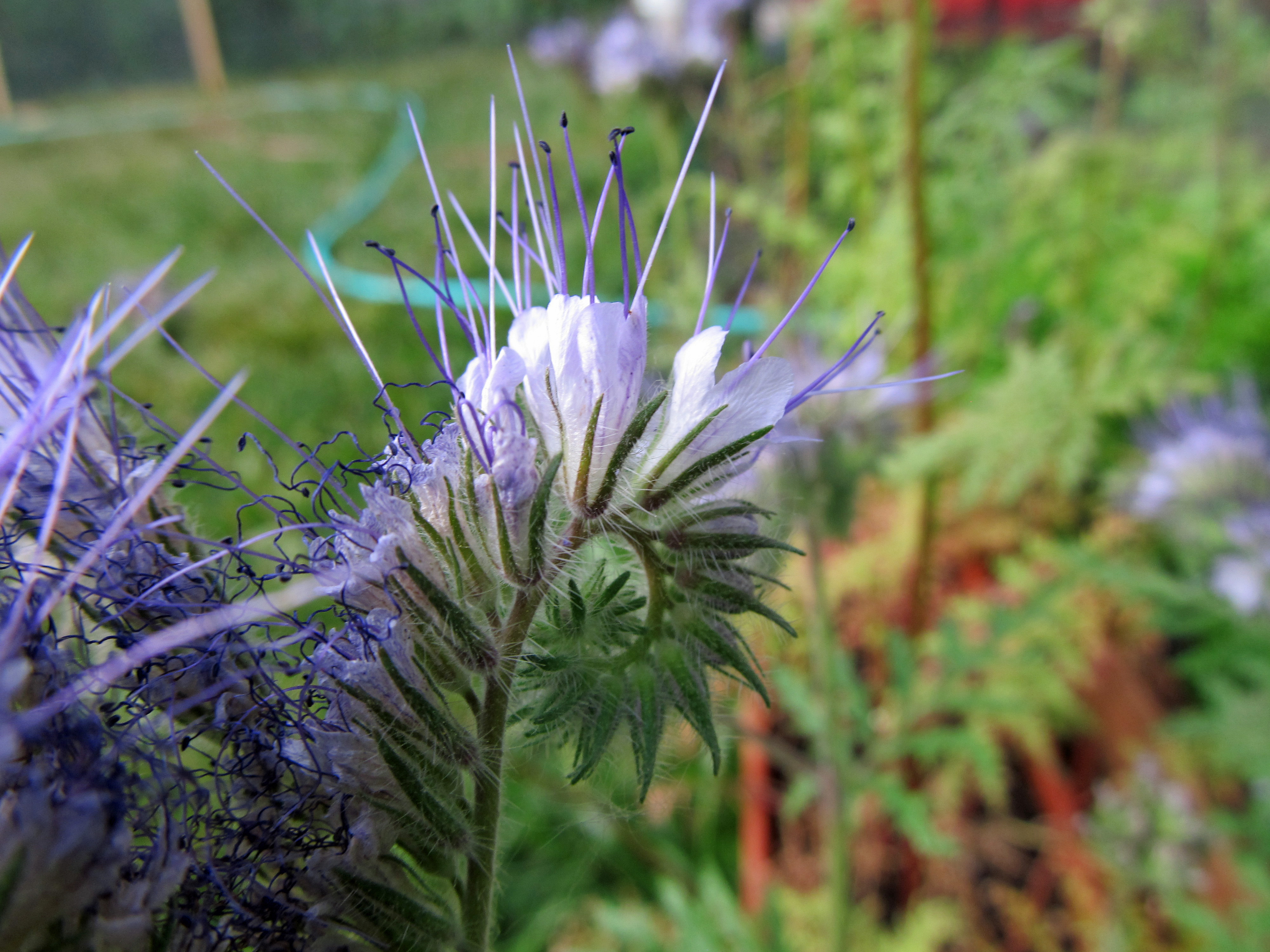
Some flower's we grew specifically for the bees, like this bee's friend (Phacelia hastate).

We grew some flowers specifically for the bees, like this bee’s friend (Phacelia tanacetifolia).


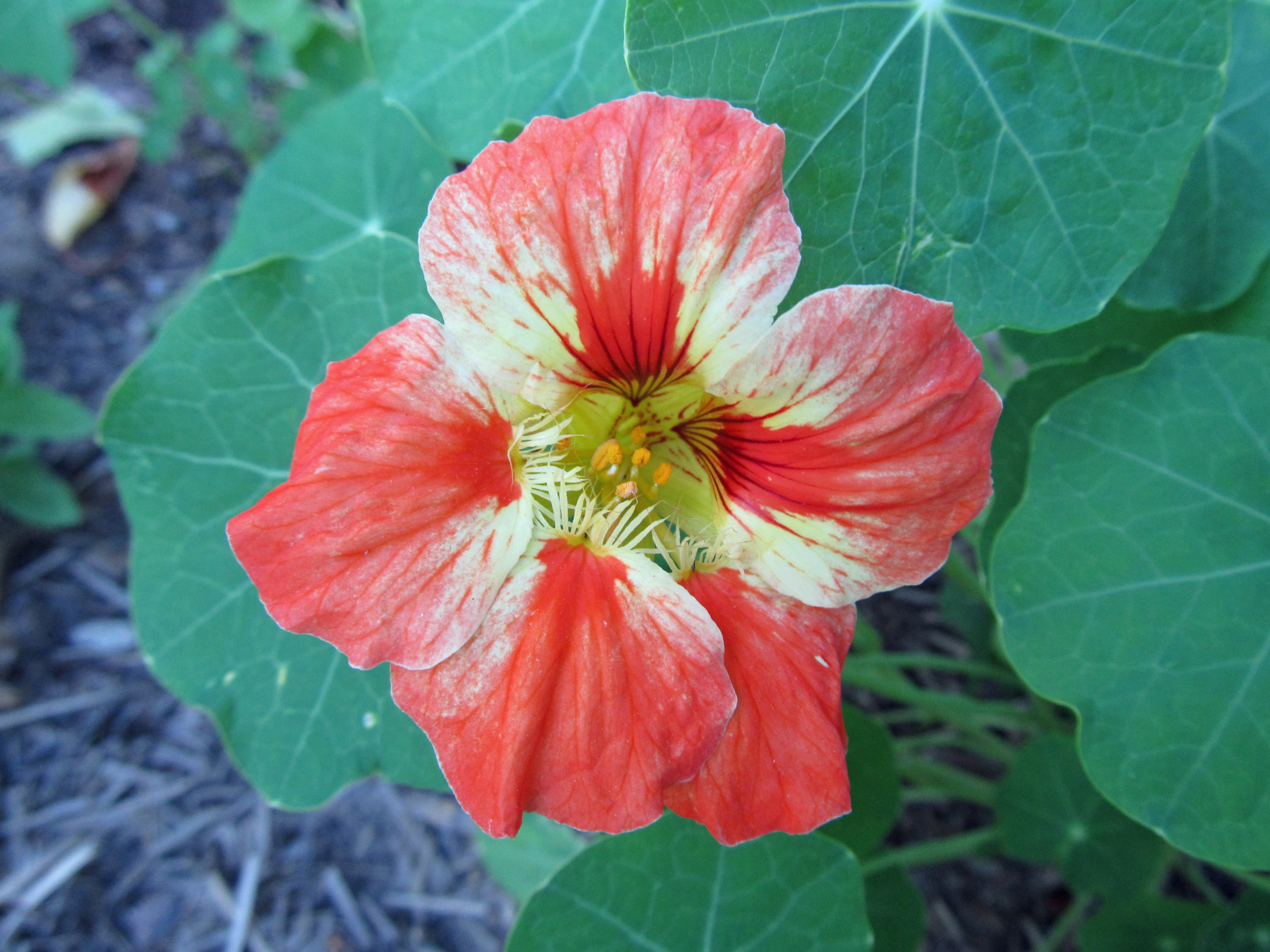
We grew other flowers for eating, like this nasturtium.

We grew other flowers for eating, like this nasturtium.


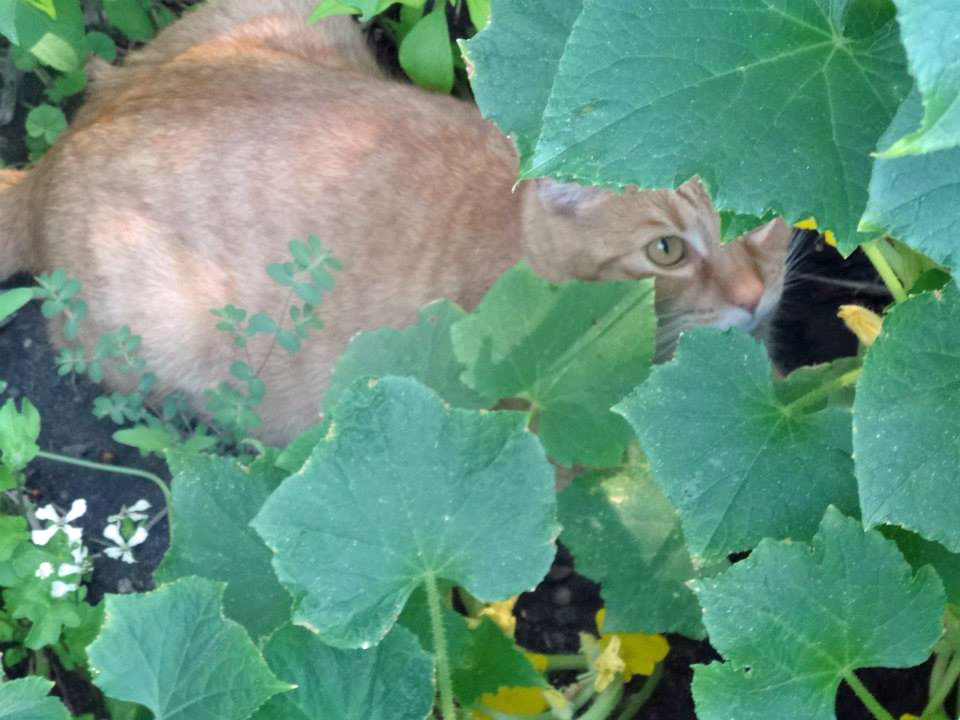
Even the cat loves being in the garden...

Even the cat loves being in the garden…

It has been an incredible year. “Abundant” is the best word that I can think of to describe it. We have learned a lot through successes and failures alike, and we are anxious to do it all again (and more) next year. Until then we are getting ready to settle in for the winter – to give ourselves and our garden a much needed rest. For more pictures and semi-regular updates on how our garden is growing, follow Awkward Botany on tumblr and twitter, and feel free to share your gardening adventures in the comments section below.

My Carrion Flowers

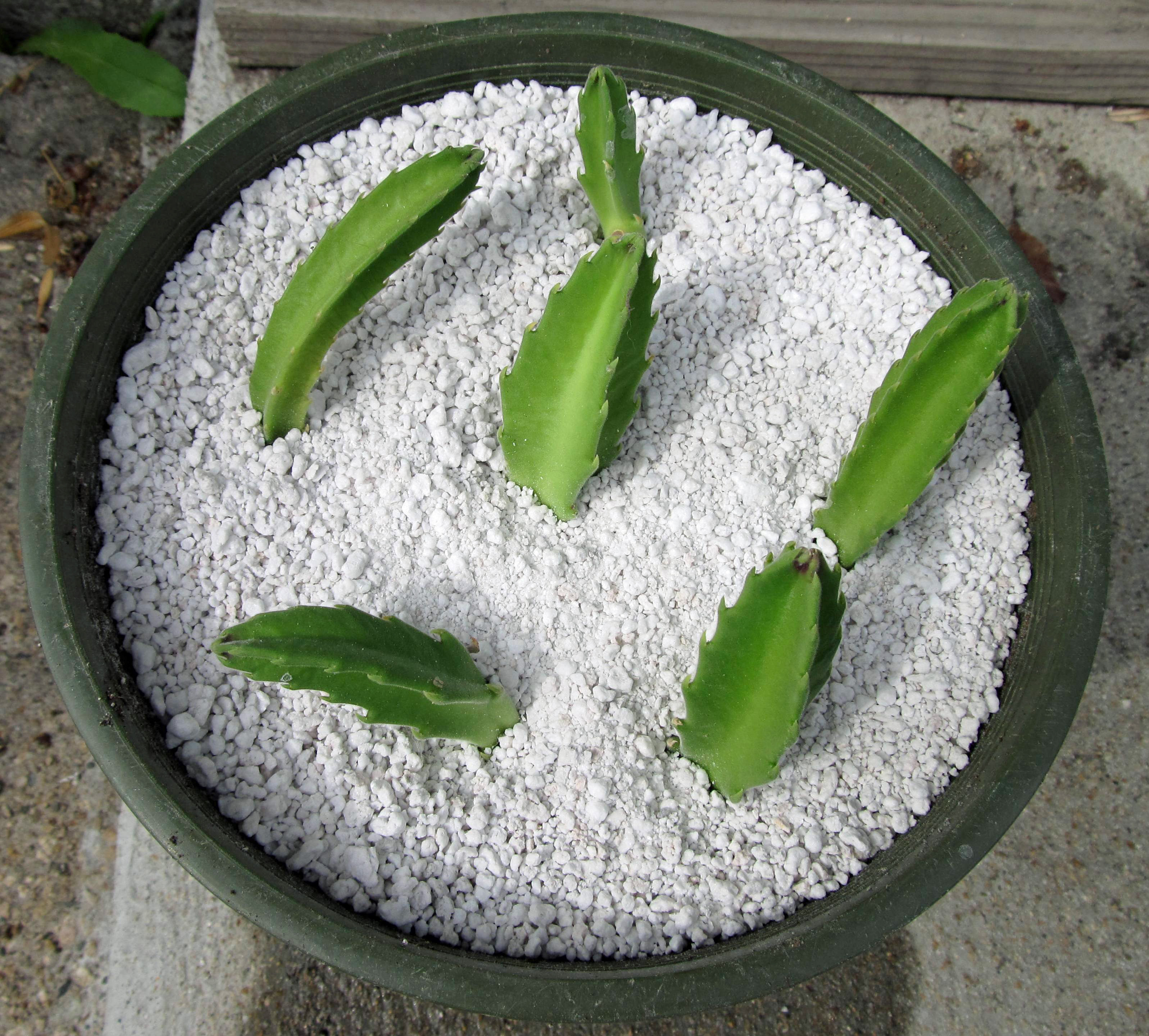
In April of last year, a box of stem cuttings arrived in my mailbox. They were sent to me by a friend in Colorado called Sandra (you may know her from one of her many ventures: Greenwoman Magazine, Greenwoman Publishing, Flora’s Forum, etc.). Sandra’s carrion flower had bloomed that spring, a stinky but delightful occasion. In her excitement, she asked if I would be interested in growing some carrion flowers of my own. Not one to turn down the chance to try my hand at cultivating something unusual, I gladly accepted her offer of a few cuttings sent via Priority Mail. Six cuttings arrived shortly thereafter, and upon reading through some instructions on the internet, I nestled them into their new home and hoped they would put down roots and stay a while.

carrion flower cuttings

There are several species of plants that are referred to commonly as carrion flower. The plant parts I received from Sandra are in the genus Stapelia (family: Apocynaceae or dogbane family), also known commonly as African starfish flower. There are around 100 species in the genus Stapelia, and they all originate from tropical and southern Africa, mostly in arid regions.

Stapelias are short-lived, low-growing, perennial succulents. Their stems typically stand erect and are produced along stolons (above ground runners), creating a tight clump of stems that appear cactus-like. Each stem has 4-6 flattened vertical flanks, giving it a cross or star shape when looking down from the top. On the outside edges of the flanks are a series of rudimentary leaves protruding from tubercles (wart-like growths), giving the stems a spiny appearance. The stems are usually green but can also be red or mottled with red or purple.

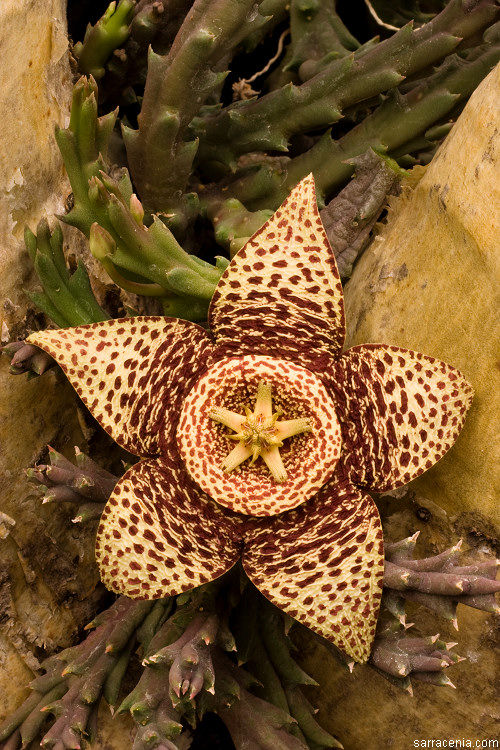
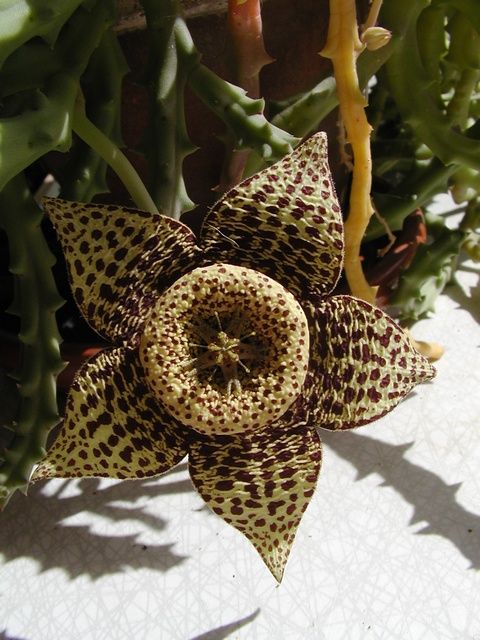
The flowers of Stapelia are the real show. They are produced at or near the base of the stem and have a star-shaped corolla with five fused petals that come to sharp points. The corolla has a wrinkly look and is often hairy, especially along the margins. Flowers can be variations of red, brown, yellow, and purple. In some species they can reach up to 18 inches wide. It is a unique looking flower, but even more unique is its scent. Because Stapelia flowers are pollinated by flies, they emit the scent of rotting animal flesh, an odor that flies can truly appreciate. In fact, flies can be so deceived by the appearance and scent of the flowers that they occasionally lay their eggs on or near them, expecting them to be a food source for their emerging larva.

Stapelia variegate (photo credit: eol.org)

Stapelia variegata (photo credit: eol.org)

Stapelia is easily propagated, especially by stem cuttings. Allow cuttings to dry in a cool, shady location for 48 hours and then stick them in a well-drained potting soil mix. Water moderately (preferably from below by placing the container in a tray and then filling the tray with water). Cuttings should root easily. All six of mine did.

Keep Stapelia in a sunny or mostly sunny location. If you live in USDA hardiness zone 9 or above, you can grow Stapelia outdoors. Otherwise, keep it indoors near a window that gets lots of sun. The main thing you will have to worry about is stem rot due to over watering. Grow Stapelia in a well-drained soil mix, water from below, and allow soil to dry out between waterings in order to avoid this.

Stapelia variegata (photo credit: eol.org)

Stapelia variegata (photo credit: eol.org)

As for me and my carrion flowers, like I said earlier, all six cuttings rooted. I transplanted one of them. Of the five left in the original pot, one rotted a couple weeks ago and another rotted during the writing of this post. The remaining ones still look healthy, but none of them have grown much since they rooted. The main problem I am having is that my house does not let in much sunlight. What appears relatively bright to me is probably cave-like to my carrion flowers. Until I remedy that situation, they may not grow much, they could continue to rot, and they probably won’t flower any time soon. However, if anything changes and I do get a flower out of them, I will make it a point to let you know. And Sandra will be proud.

stapelia today_edit


Drought Tolerant Plants: Blue Sage

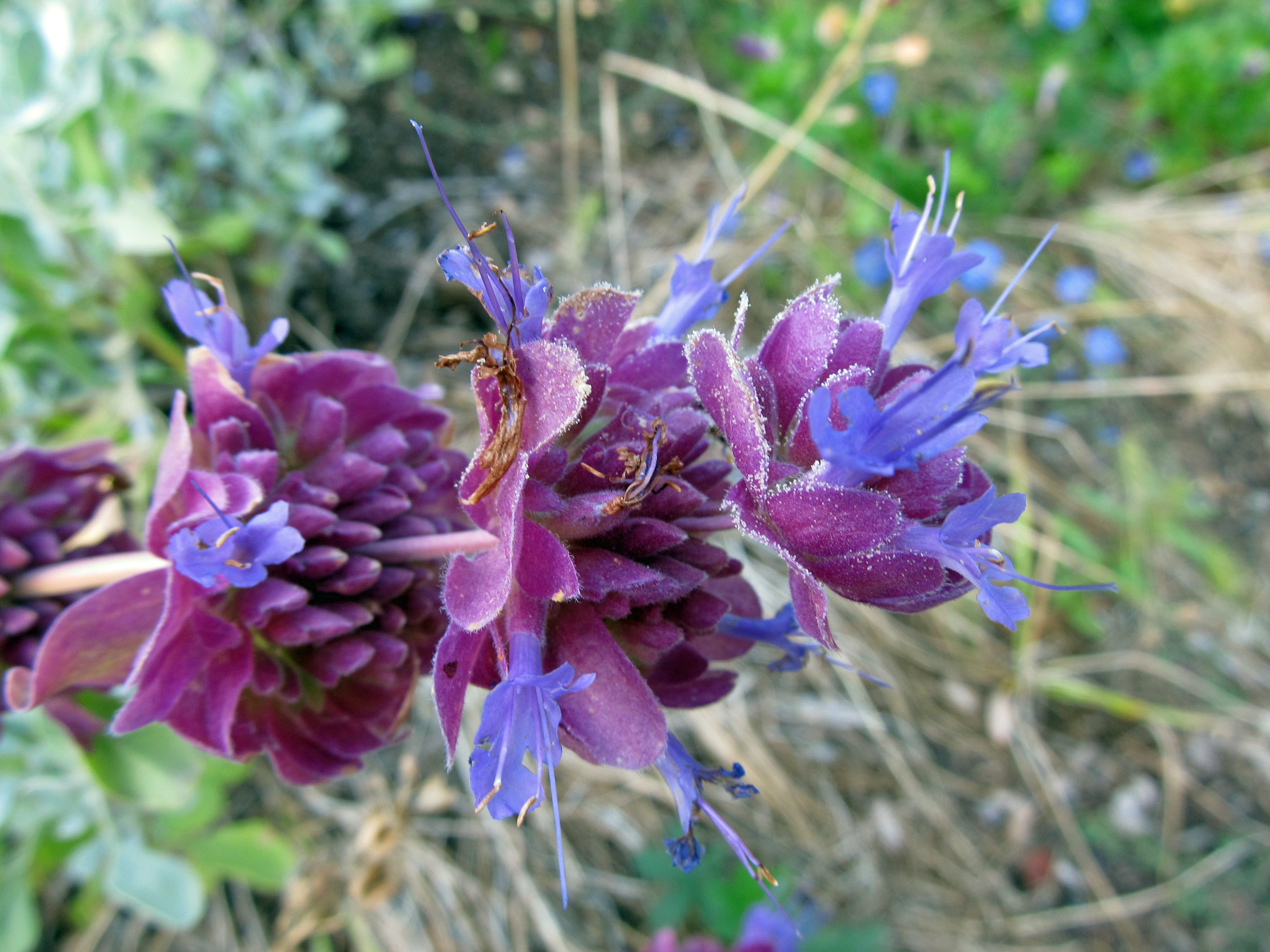
If you are considering installing a drought tolerant garden on your property or including more drought tolerant plants in your landscape, one plant that should come standard is blue sage. Its silvery-green foliage, large, abundant, purple-blue flower stalks, and attractive mounded shape, make it an excellent feature in any water-efficient garden bed.

salvia pachyphylla_edit 1

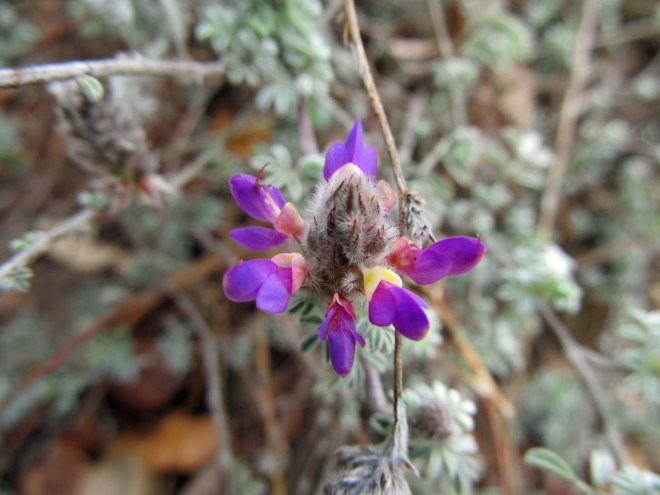
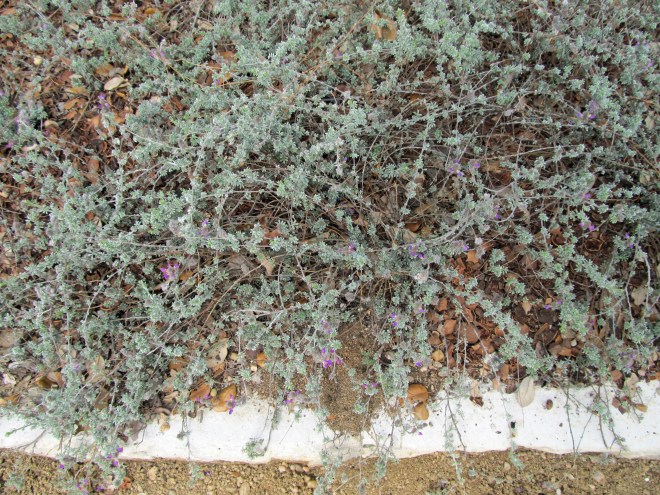
Salvia pachyphylla is in the mint family (Lamiaceae). It has several common names which it shares with several other plants: blue sage, Mojave sage, rose sage, mountain desert sage, giant-flower sage. For this post we will refer to it as blue sage; however, if you’re looking to purchase it, make sure to verify the botanical name. Blue sage is a subshrub that can grow up to 3 feet tall and 3 feet wide. It tends to remain smaller – around 1-2 feet tall – in its native habitat. It is found in the southwestern states of the United Sates on dry, rocky slopes and flats at elevations between 5,000 – 10,000 feet. The leaves are oppositely arranged and covered with fine hairs that lay tightly against the leaf surface giving the foliage its silvery appearance. Like all other sages, the leaves of blue sage are highly aromatic.

salvia pachyphylla foliage_edit

The flowers appear in compact clusters on spikes that extend upward from the branches. The inflorescences can be several inches long. They have numerous large, purple bracts that appear in a whorled pattern along the spike. The violet-blue flowers are small but prolific and appear between the bracts surrounding the stalk. Flowering occurs throughout the summer (July-September in its native range). The flowers attract droves of pollinators including bees, butterflies, and hummingbirds. Blue sage is especially beneficial to native pollinators. In fact, while taking photos for this post, I noted that the flowers were being visited by several bumblebees. Its benefit to pollinators is another great reason to include this plant in your landscape.

salvia pachyphylla_edit 2

Blue sage is a very drought tolerant plant. Once it is established it requires only occasional watering throughout the summer in order to keep it looking good. It performs well in a variety of soil types, but like most drought tolerant plants it is best placed in well drained soil. Heavy soils can be amended by mixing in things like sand, lava rock fines, and compost at planting time. It prefers full sun and is winter hardy to USDA hardiness zone 5, especially if planted in an area where the soil is relatively dry throughout the winter. Blue sage is a long lived plant and can be kept in shape by cutting back the spent flowers in the fall. The folks at Plant Select recommend planting blue sage with, among other things, penstemon, coreopsis, and creeping veronica.

Photos were taken at Idaho Botanical Garden in Boise, Idaho.

Corpse Flower Blooms Again

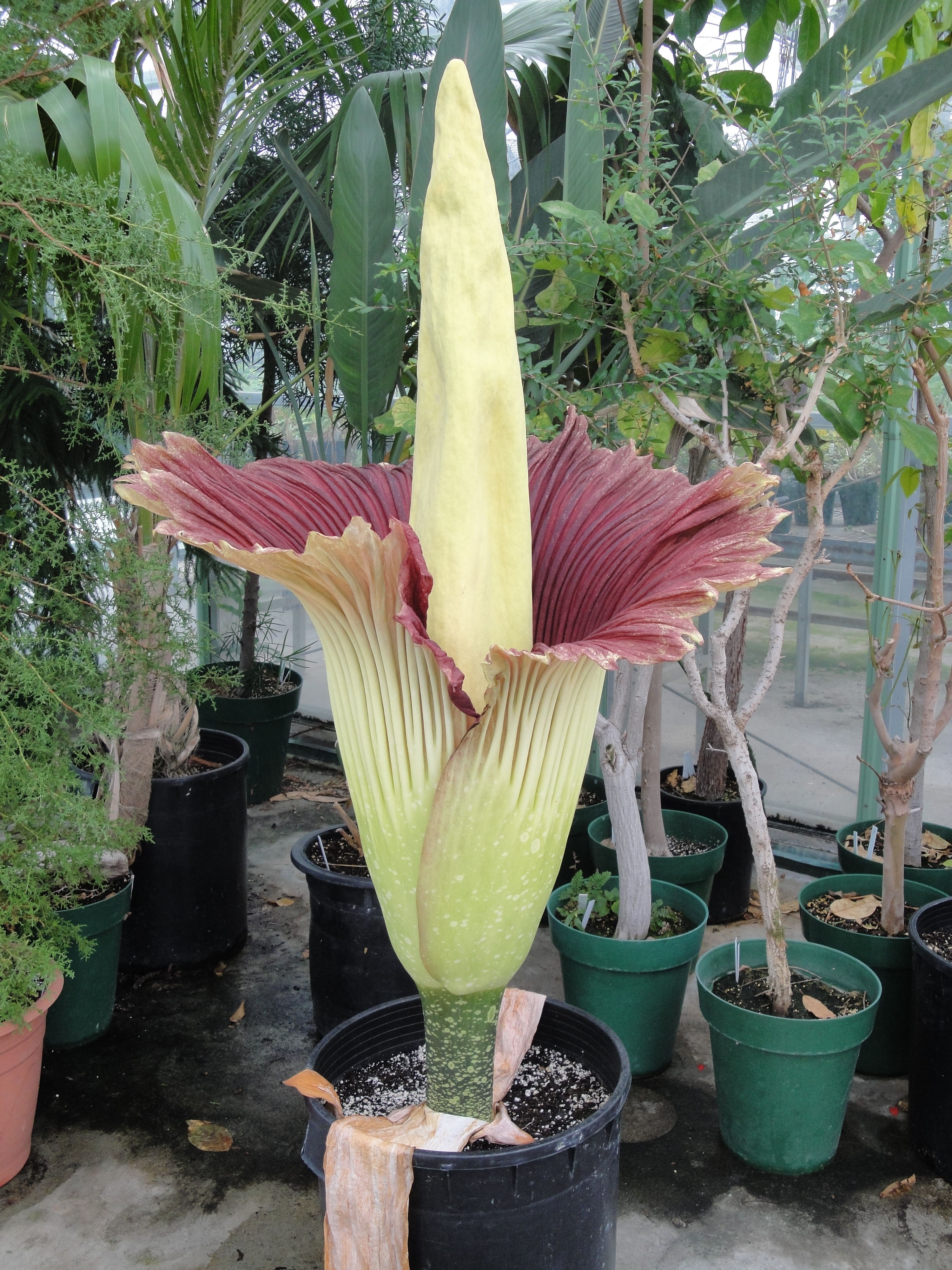
It is not often that a plant in bloom makes headlines, but that is precisely what happened last week when another corpse flower bloomed at Missouri Botanical Garden. Amorphophallus titanum, commonly known as titan arum or corpse flower, is a rare species, both in cultivation and in the wild. It also rarely flowers, and when it does, the bloom only lasts for a few short days. It has the largest known unbranched inflorescence, and its flowers give off the scent of rotting flesh. For all these reasons, it is understandable why a blooming corpse flower might make the news.

Titan arums naturally occur in the western portion of an Indonesian island called Sumatra. Their future is threatened because they occur in rainforests that are currently being deforested for timber and palm oil production. Deforestation is also threatening the survival of the rhinoceros hornbill, a bird that is an important seed distributor of titan arums. Today there are a few hundred titan arums in cultivation in botanical gardens throughout the world. They are a difficult species to cultivate, but their presence in botanical gardens is important in order to learn more about them and to help educate the public about conservation efforts.

Amorphophaulls titanium, titan arum (photo credit: eol.org)

(photo credit: eol.org)

Titan arums are in the arum family (Araceae), a family that consists of around 107 genera including Caladium (elephant ears), Arisaema (jack-in-the-pulpits), and Wolffia (duckweeds), a genus that wins the records for smallest flowering plant and smallest fruit. Titan arums are famous for their giant inflorescence, which can reach more than 10 feet tall. The flowering stalk is known botanically as a spadix, a fleshy stem in the shape of a spike that is covered with small flowers. The spadix of titan arums are wrapped with a leaf-like sheath called a spathe. Upon blooming, the temperature inside the spathe rises and the flowers begin to release a very foul odor, similar to the smell of rotting flesh. This attracts pollinating insects such as carrion beetles, sweat bees, and flesh flies, which get trapped inside the sheath and covered with pollen. After a few hours the top of the spadix begins to wither, allowing the insects to escape, off to pollinate a neighboring corpse flower [the spadix includes male and female flowers, which mature at different times in order to prevent self-pollination]. Once pollinated, the flowers begin to form small red fruits which are eaten by birds. The seeds are then dispersed in their droppings.

The large, stinky inflorescence is not the only structure that gives titan arums their fame. They are also known for their massive single leaf, which can reach up to 20 feet tall and 15 feet wide, the size of a large shrub or small tree. All of this growth is produced from an enormous underground storage organ called a corm. The corms of mature titan arums typically weigh more than 100 pounds, with some known to weigh more than 200 pounds. Titan arums bloom only after the corms have reached a mature size, which takes from seven to ten years. After that they bloom about once a year or once every other year, depending on when the corm has accumulated enough nutrients to support the giant flowering structure.

Below are two time lapse videos of titan arums in bloom. The first is from Missouri Botanical Garden, and the second is from United States Botanic Garden.


Do you like what you see here? If so, please share Awkward Botany with your friends. Use any form of social media you favor. Or just tell someone in person…the old fashioned way. However you do it, please help me spread the word. Awkward Botany: for the phyto-curiosity in all of us.

Horticulture Students Wanted

“Horticulture is under siege.” At least that’s the claim made in a letter and action plan penned by the top administrators of six prominent horticulture institutions based in North America. In their letter addressed to “Colleague[s] in Horticulture,” they claim that among the general public there is a “lack of horticulture awareness and poor perception of horticulture careers”. This has lead to low enrollment in high school and college horticulture programs and a dearth of qualified, young horticulturists entering the work force. Because the youth of today “appear to have little or no awareness of the importance and value of horticulture,” they are not choosing to pursue “interesting, challenging, and impactful careers” in the field.

In order to address this issue, this team of horticulture professionals has developed a plan “to increase public awareness of the positive attributes of horticulture.” Plants are essential for life on earth; humans could not exist here without them. It is the field of horticulture that supplies humanity with much of the food that it consumes, including fruits, vegetables, nuts, and herbs. Horticulture also fills our landscapes with plants that provide the backdrop to our daily lives, transforming otherwise drab and harsh urban areas into lush green spaces. And speaking of “green,” horticulture is helping us save our planet. Through teaming up with engineers and other professionals, horticulturists are helping to develop solutions to issues like climate change, water quality, storm water runoff, energy production, and biodiversity loss. Innovative and emerging strategies such as green roofs, wildlife gardens, carbon sequestration, biofuels, and sustainable agriculture require horticulture expertise in order to succeed.

These are just some of the benefits of horticulture that the authors of this plan hope to share with the general public in an effort to change public perception and attract young recruits. If they don’t succeed, the consequences may be dire – or at least that’s how they make it sound. An article on philly.com regarding the recent letter put it this way: “if something isn’t done soon…horticulture could become a lost art and a forgotten science.”

Yeah, it’s a bit dramatic sounding. It’s hard for me to believe that the situation is really that desperate. However, what I will say is that a career in horticulture is not for everyone. It certainly isn’t for anyone who dreams of being rich and/or famous one day. That’s probably not going to happen. People who choose a career in this field do so because they have a passion for plants, a love of beautiful, inviting landscapes, and perhaps a proclivity for fresh, homegrown fruits and vegetables. A career in horticulture is not glamorous by any means, but it is highly rewarding – at least from my perspective. So sure, youngsters should consider it…but they should also consider themselves warned.

And now it’s time for show and tell. I graduated with a degree in horticulture at a four year university in the intermountain northwest. After that, I ventured off to the Midwest to pursue a graduate degree researching green roof technology. Perhaps the following pictorial of some of my adventures will inspire a few of you young folks to consider a similar path. Either that or there is always that liberal arts degree you’ve been dreaming of…

100_0410

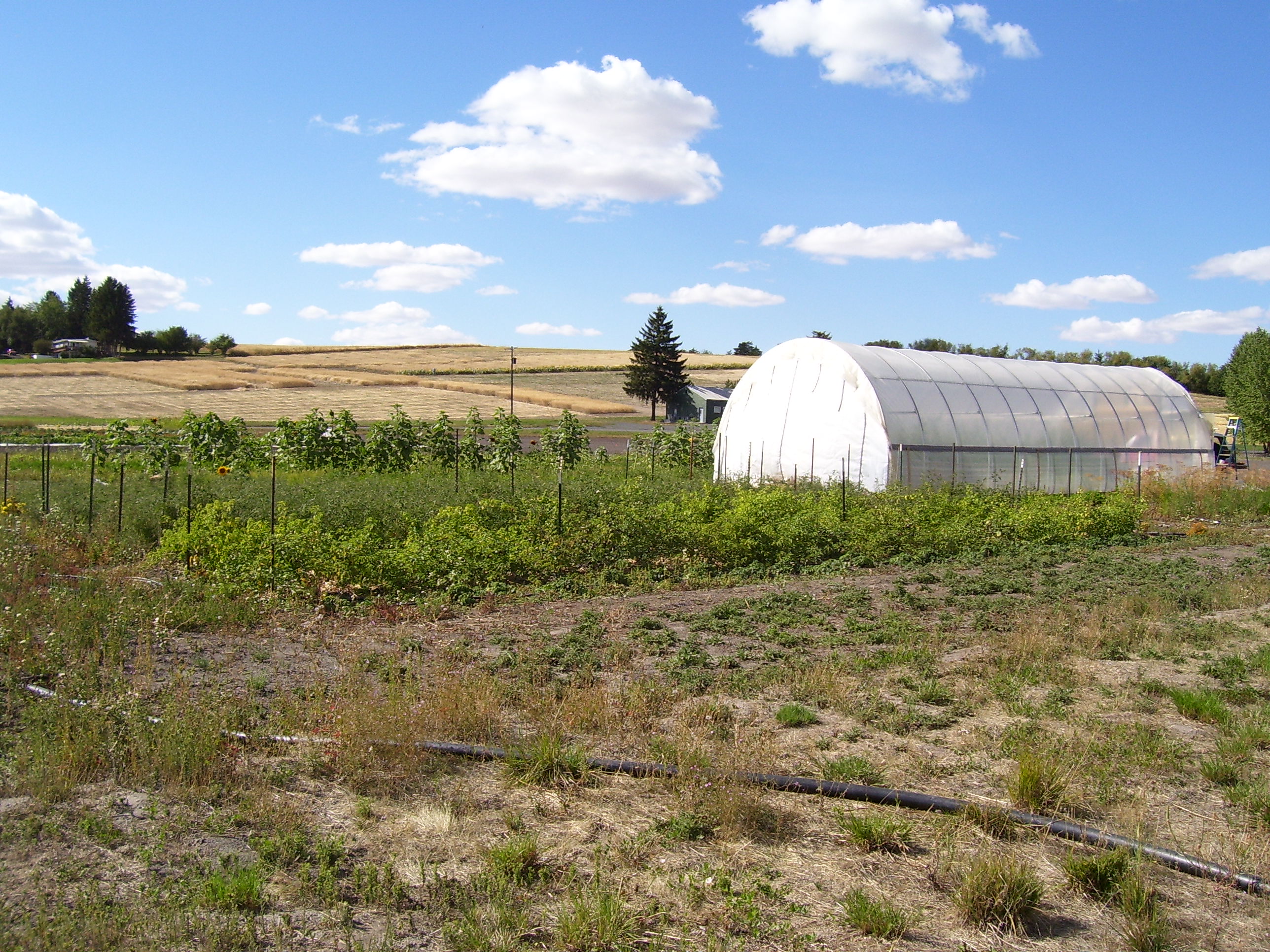
As an undergraduate, I helped manage a student-run organic farm

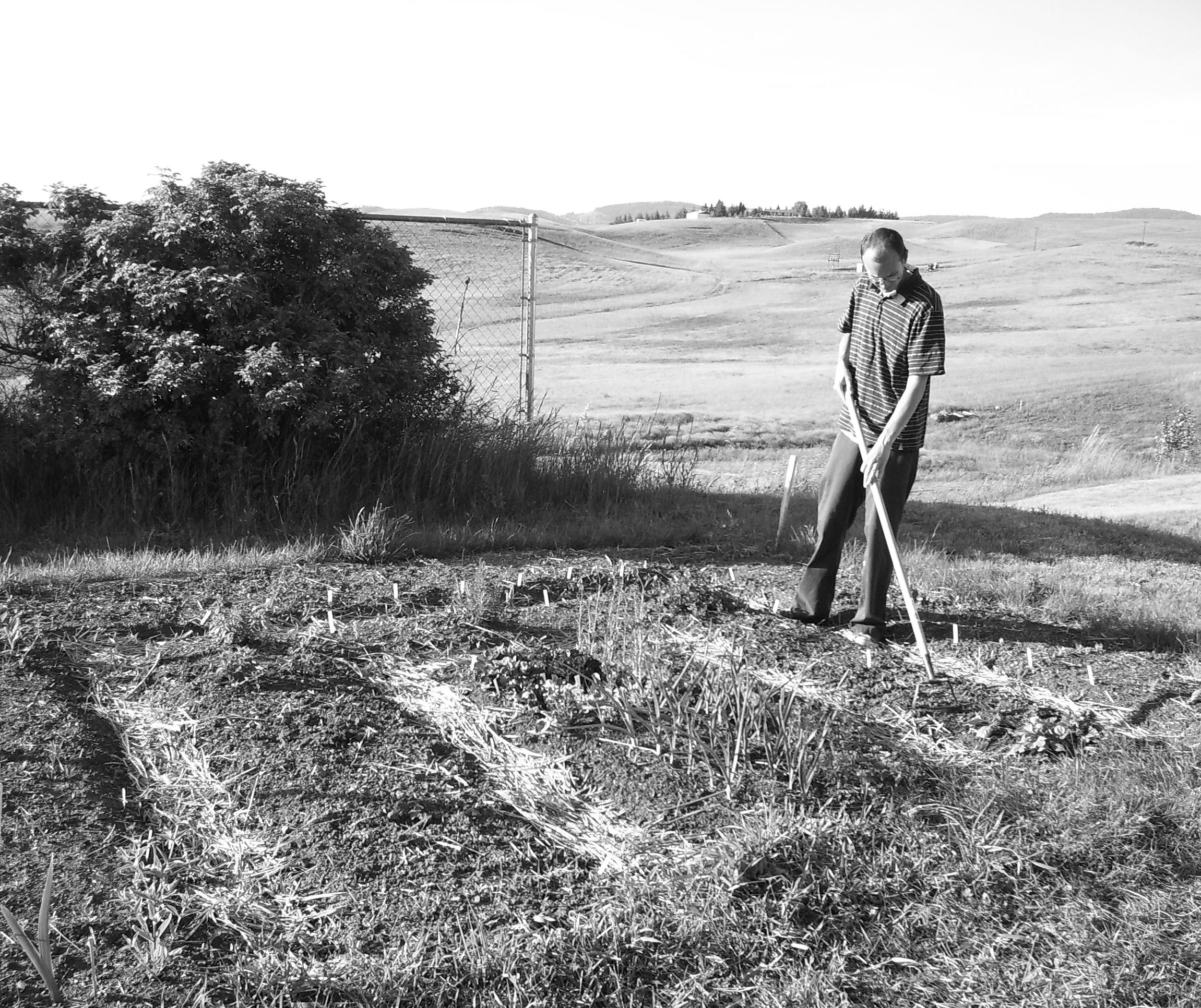
community garden plot

I had a community garden plot overlooking the rolling hills of the Palouse

100_0265

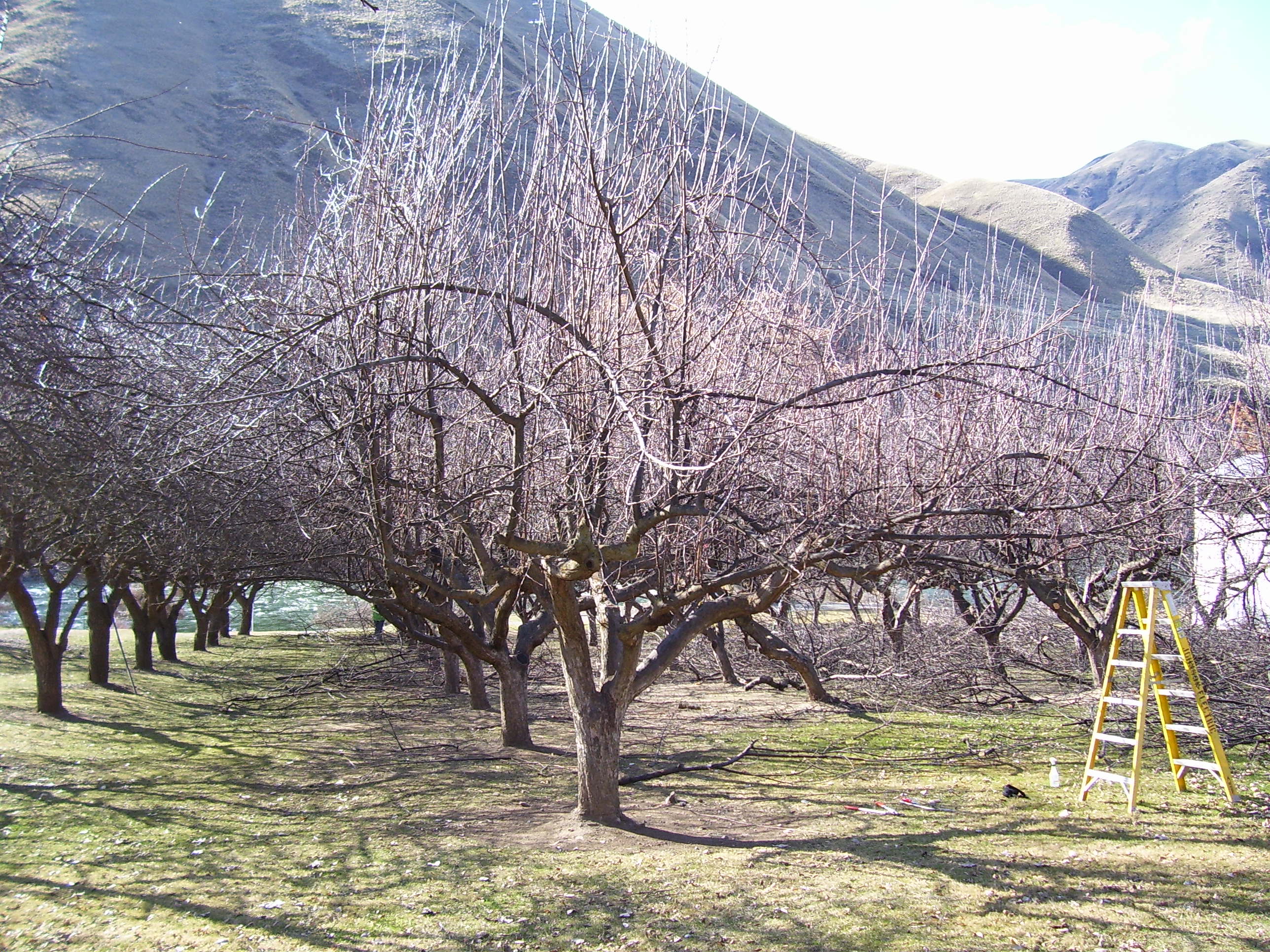
I took a jet boat trip up the Snake River to help prune an abandoned apple orchard

100_0650

Then I went to Illinois to study green roof technology as a graduate student

???????????????????????????????

I presented my research findings at a big conference in Philadelphia

And so can you…or something like it. Comment below if you would like to put in your plug (or caveat) for pursuing a career in horticulture. The world needs you.

2013: Year in Review

The start of a new year is traditionally a time to be reflective and resolute. Awkward Botany is now a year old, so it is in the spirit of a new year that I look back at a year of blogging and look forward to the years to come. I did not initially set any concrete goals for this blog nor do I plan to. I am passionate about plants, and I enjoy writing – hence the blog. Any attention this blog receives is not only welcome, but celebrated. It is one of life’s great joys to be able to share your passions with others.

In 2013 – surprisingly enough – I managed to publish 42 posts. These posts covered a wide range of topics, including plant profiles (mountain kittentails, Lewis’ mock orange, sundews), wildflower walks (Spring, June, September), the latest in plant science research (cushion plants, northern pitcher plants, plant communities of the Catalinas), a book and movie review (What a Plant Knows & What Plants Talk About), gardening tips (starting seeds indoors, assessing your soil, pruning rosemary), and so much more. The years to come will bring more of the same, plus whatever else comes to mind or is requested (leave a comment below).  More importantly, my plan is for past and future posts to be organized into pages according to major categories – such as botany, horticulture, and ecology – which will make it easier to find posts on the topics you are most interested in. Also, a new year brings a new tagline – “for the phyto-curious” – because it is a deep, abiding curiosity about plant life that really drives this blog.

021

If you feel so inclined, please leave comments below and let me know what you like/dislike about the blog and/or tell me if you have any ideas for future posts. You can also leave comments and ask questions by visiting my Contact Page. Also, check out my twitter feed. Please be in touch, and let’s make 2014 our year!

For the plants, etc…

Rosemary Christmas Tree

In the spirit of the holiday season, consider this fun alternative to a conventional Christmas tree. Rosemary (Rosmarinus officinalis) is an herbaceous, evergreen shrub or subshrub and is commonly found in herb gardens. Its leaves are valued for their myriad culinary and medicinal uses. Futhermore, this plant takes very kindly to pruning and shaping, which makes transforming it into a miniature Christmas tree a very simple task.
It may be too late to cultivate a “tree” for this year’s holiday season, but perhaps you’d like to try for next year. To do so, find a small rosemary plant at a local garden center or plant sale in the spring. Make a few initial pruning cuts to select a leader or leaders. After about a month or two, start giving it the shape of a Christmas tree. Floral scissors work great for making these cuts, and you don’t have to worry about where on the branches you are cutting – rosemary is very forgiving – just make sure your scissors are sharp. Wait a couple more months and then do more shaping with the pruning scissors. Do some final shaping a month or so later. At this point, you should be entering the holiday season and your rosemary Christmas tree will be ready to display. It’s that simple!

1

Initial pruning: selecting the leaders

2

Second pruning: giving it shape

3

Third pruning: keeping in shape

4

Final pruning: clean it up and present it  

One major downside to growing rosemary if you live in a cold climate is that it is only hardy to about USDA zone 7. However, if you select the right cultivar, place it in a protected location (near the south facing wall of a building perhaps), give it some mulch and maybe a blanket for the winter, you might be able to get it to survive in colder zones. Rosemary can also be difficult to overwinter indoors because the air in homes is typically dry and warm and there is little direct sunlight. If you are determined to keep one alive despite your odds, awaytogarden.com provides an excellent tutorial about overwintering rosemary both indoors and out.