Book Review: Jade Pearls and Alien Eyeballs

The spring season for plant-obsessed gardeners is a time to prepare to grow something new and different – something you’ve never tried growing before. Sure, standards and favorites will make an appearance, but when you love plants for plant’s sake you’ve got to try them all, especially the rare and unusual ones – the ones no one else is growing. Even if it ultimately turns out to be a disaster or a dud, at least you tried and can say you did.
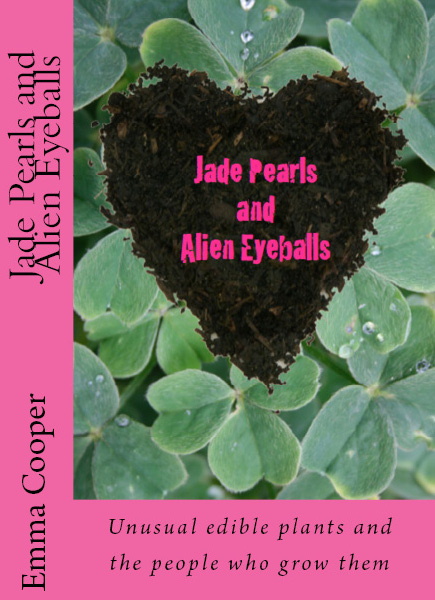
That seems to be the spirit behind Jade Pearls and Alien Eyeballs by Emma Cooper. Subtitled, “Unusual Edible Plants and the People Who Grow Them,” Cooper’s book is all about trying new plants, both in the garden and on your plate. While its focus is on the rare and unusual, it is not a comprehensive guide to such plants – a book like that would require several volumes – rather it is a treatise about trying something different along with a few recommendations to get you started.
jadepearls_cover

Cooper starts out by explaining what she means by “unusual edible” – “exotic, old-fashioned, wild, or just plain weird.” Her definition includes plants that may be commonly grown agriculturally but may not make regular appearances in home gardens. She goes on to give a brief overview of plant exploration throughout history, highlighting the interest that humans have had for centuries – millennia even – in seeking out new plants to grow. She acknowledges that, in modern times, plant explorations have shifted from simply finding exotic species to bring home and exploit to cataloging species and advocating for their conservation in the wild. Of course, many of these explorations are still interested in finding species that are useful to humans or finding crop wild relatives that have something to offer genetically.

Cooper then includes more than 2o short interviews of people who are growers and promoters of lesser known edible plants. The people interviewed have much to offer in the way of plant suggestions and resource recommendations; however, this part of the book was a bit dull. Cooper includes several pages of resources at the end of the book, and many of the interviewees suggest the same plants and resources, so this section seemed redundant. That being said, there are some great responses to Cooper’s questions, including Owen Smith’s argument for “citizen-led research and breeding projects” and James Wong’s advise to seek out edible houseplants.

The remainder of the book is essentially a list of the plants that Cooper suggests trying. Again, it is not a comprehensive list of the unusual plants one could try, nor it is a full list of the plants that Cooper would recommend, but it is a good starting point. Cooper offers a description of each plant and an explanation for why it is included. The list is separated into seven categories: Heritage and Heirloom Plant Varieties, Forgotten Vegetables, The Lost Crops of the Incas, Oriental Vegetables, Perennial Pleasures, Unusual Herbs, and Weeds and Wildings.

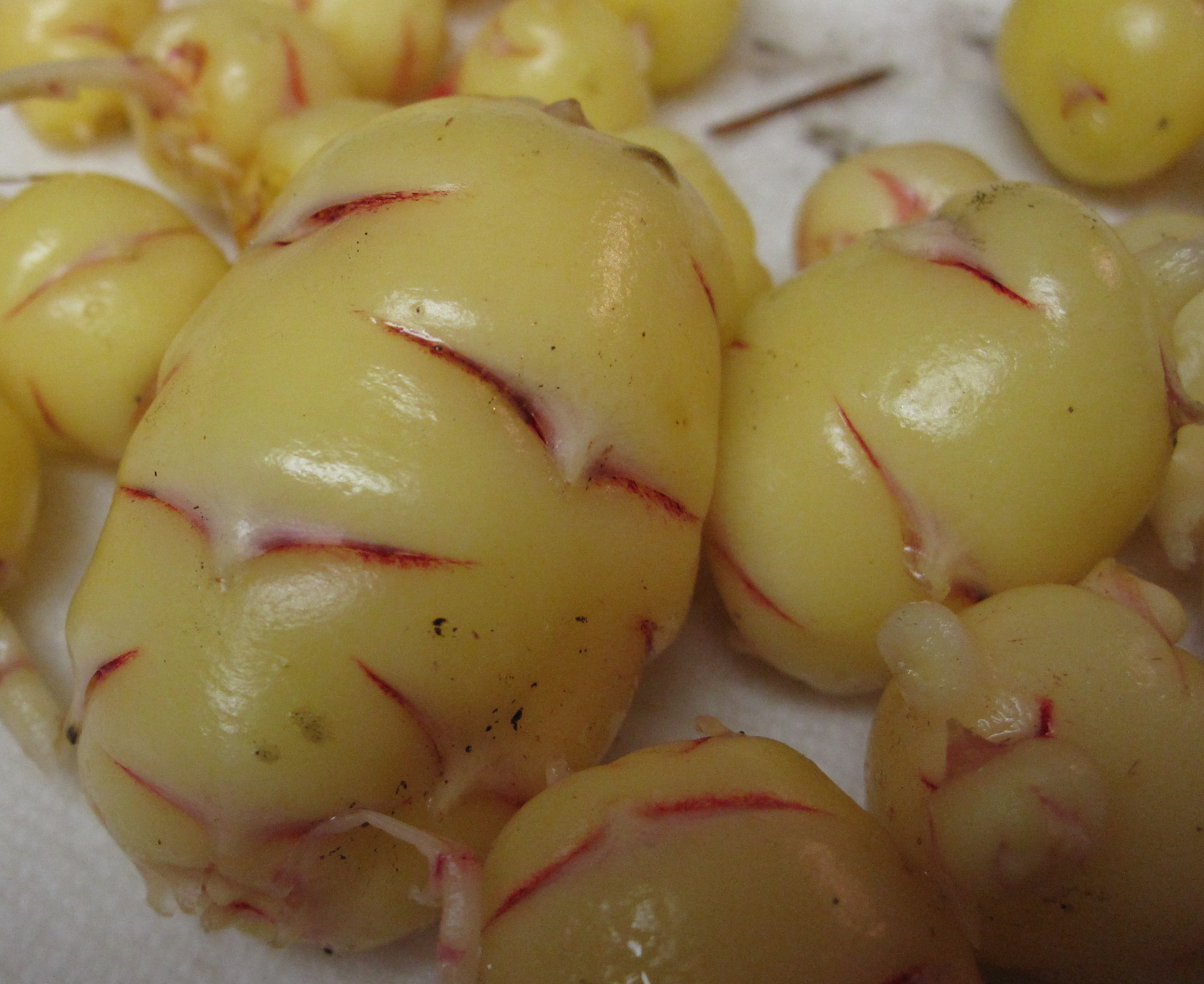
This is the portion of the book that plant geeks are likely to find the most compelling. It is also where the reader learns where the title of the book comes from – “jade pearls” is another common name for Chinese artichoke (Stachys affinis), and “alien eyeballs” is Cooper’s name for toothache plant (Acmella oleracea). I have tried a few of the plants that Cooper includes, and I was intrigued by many others, but for whatever reason the two that stood out to me as the ones I should try this year were Hamburg parsley (Petroselinum crispum var. tuberosum) and oca (Oxalis tuberosa).

Tubers of oca (Oxalis tuberosa) - photo credit: wikimedia commons

Tubers of oca (Oxalis tuberosa) – photo credit: wikimedia commons

In the final chapter, Cooper offers – among other things – warnings about invasive species (“our responsibility is to ensure that the plants we encourage in our gardens stay in our gardens and are not allowed to escape into our local environment”), import restrictions (“be a good citizen and know what is allowed in your country [and I would add state/province], what isn’t, and why”), and wild harvesting (“act sustainably when foraging”). She then includes several pages of books and websites regarding unusual edibles and a long list of suppliers where seeds and plants can be acquired. Cooper is based in the U.K., so her list of suppliers is centered in that region, but a little bit of searching on the internet and asking around in various social media, etc. should help you develop a decent list for your region. International trades or purchases are an option, but as Cooper advises, follow the rules that are in place for moving plant material around.

Bottom line: find some interesting things to grow this year, experiment with things you’ve never tried – even things that aren’t said to grow well in your area – and if you’re having trouble deciding what to try or you just want to learn more about some interesting plants, check out Emma Cooper’s book.

Also, check out Emma Cooper’s blog and now defunct podcast (the last few episodes of which explore the content of this book).

Are you interested in writing a book review for Awkward Botany or helping out in some other way? If so, go here.

Drought Tolerant Plants: The Junipers

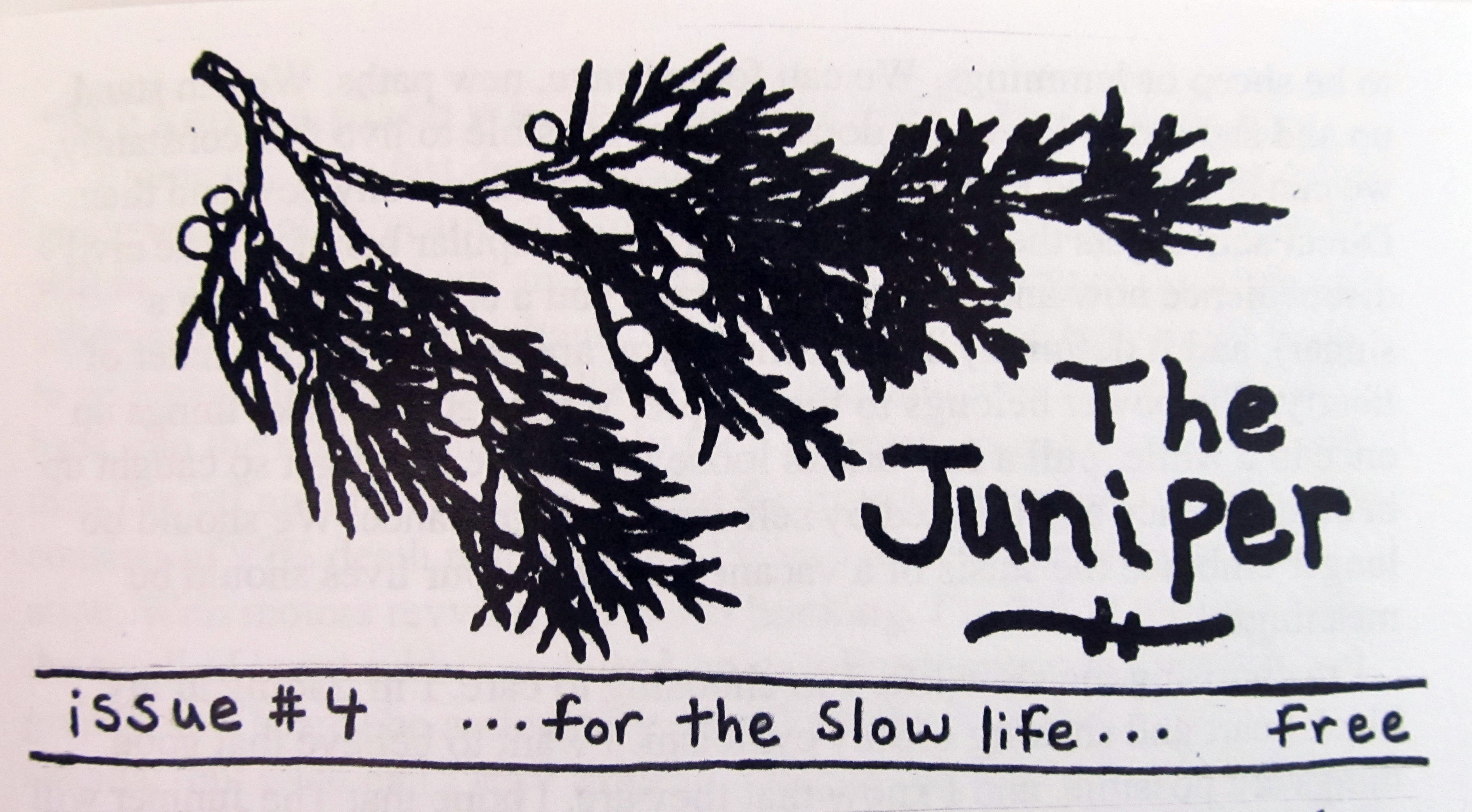
When I first developed a real interest in plants, I was in the heyday of my zine writing career. As my interest in gardening grew, writing a zine about it became inevitable. Initially I envisioned the zine as a journal of sorts – the journal of a budding horticulturist (pun intentional). Since I was new to gardening – and plants in general – the zine was meant to follow my journey as I explored this new world.

A zine needs a name though, so what would I call it? It didn’t take long for me to land on, The Juniper. I was familiar with a common disdain for the unsightly, overgrown, neglected, evergreen shrub full of spiders and cobwebs that for whatever reason was at one point planted right outside just about every house in America (a fire hazard, by the way). I was aware that many people were resorting to tearing them out, cursing as they battled the pokey, dirty, half dead things.

That was basically all I knew about junipers – they were common landscape plants that were just as commonly despised. My affection for freaks, geeks, outsiders, and rejects led me to name my zine after a shrub that everyone hated. I guess I just felt like we had something in common, and that despite being the bane of people’s existence, it deserved some recognition.

the juniper zine

And it does. Junipers are an important species in their natural habitats. In some areas they are dominant features to the point where entire plant communities are named after them. Consider the piñon-juniper woodlands of western North America – prominent steppe habitats that occur throughout high desert regions and support diverse forms of wildlife unique to this part of the world. Dan Johnson writes in the book, Steppes, “the piñon-juniper zone dominates huge expanses of the West in varying stages of  health, providing a wealth of habitats and resources to the wildlife and the people who call it home.”

Johnson goes on to describe some of these habitats:

In the Colorado Plateau this zone is dominated by Pinus edulis and Juniperus osteosperma, with J. scopulorum occupying drainages with more moisture. In the Great Basin, P. edulis is replaced by P. monophylla as the dominant piñon pine, still mixing with J. osteosperma, yet as one moves west, this juniper is increasingly replaced by J. occidentalis. Move farther north, and J. occidentalis dominates completely, with neither piñon pine making an appearance.

The genus Juniperus is in the cypress family (Cupressaceae) and includes up to 67 species, at least 13 of which are native to North America. They are long-lived plants that range from prostrate, sprawling groundcovers to expansive, bushy shrubs to tall, narrow trees. Their foliage is evergreen and can be either needle-like or scale-like. Most juniper species have needle-like foliage in their seedling and juvenile stages and then scale-like foliage at maturity. Some species, like J. communis, never develop scale-like foliage. Junipers are gymnosperms, so their reproductive structures are housed in cones. However, their cones are fleshy and so are commonly (and mistakenly) referred to as berries or fruits. Juniper cones are most often blue or gray-blue, but in some species they have a red, brown, or orange hue.

In general, junipers are quite drought tolerant, particularly those species that are adapted to hot, dry climates. Again referring to piñon-juniper steppes, Johnson writes, “in prolonged periods of drought, the piñon pines seem to suffer long before the junipers; whole hillsides of pine may go brown, leaving islands of olive-green juniper relatively unscathed.” In the book, Shrubs of the Great Basin, Hugh Mozingo attributes this drought toughness to the scale-like leaves: “Because they are smaller and so closely appressed to the twigs, these scale-like leaves are a superior adaptation to the frequently very dry conditions in piñon-juniper communities.” This herculean ability to survive on little water makes them a great addition to a dry garden.

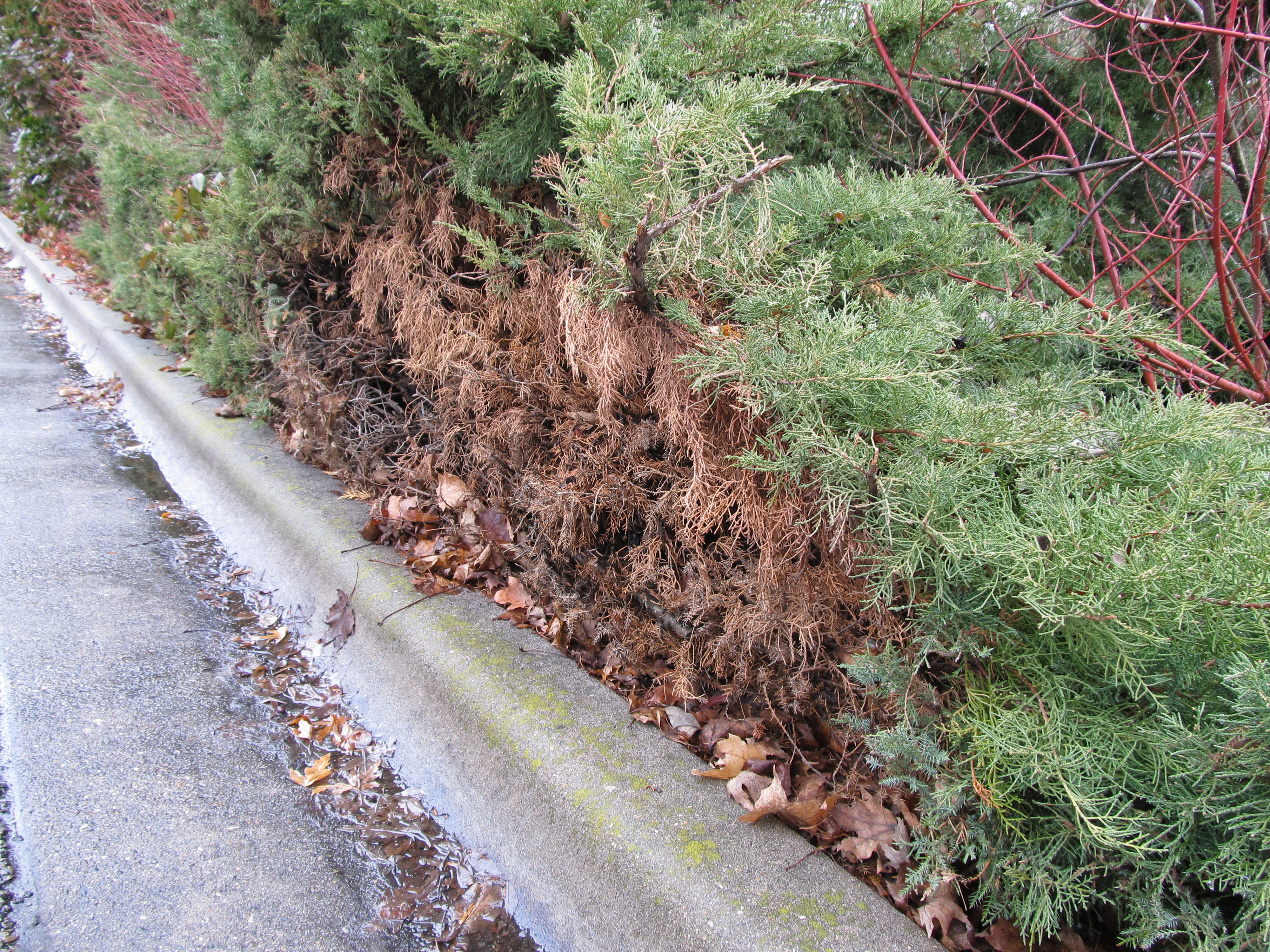
But we may first have to get over our disdain for them. As this post on Chicago Botanic Garden’s website puts it: “Junipers have suffered from overuse and underimagination.” (This article also examines our hatred of juniper bushes). Probably a bigger problem is that, like so many other plants used in a landscape, mature height and width often isn’t taken into consideration, and rather than removing a plant when it gets too big for the site, sheers or a hedge trimmer are regularly deployed. I’m not a huge fan of the sheered look. I much prefer a more natural form to the boxes and globes that are so common in commercial and residential plantings. I’m even less of a fan of the misguided inclination to force a plant to fit in a space that it isn’t meant to be (unless you’re a bonsai artist, I guess). This treatment is what leads to exposing the ugly, brown insides of a juniper shrub – an unsightly look that only makes people hate them more.

Brown insides of juniper shrub exposed after years of forcing the plant to fit in a site that is too small for its britches.

Brown insides of juniper shrub exposed after years of forcing the plant to fit in an improper site.

There are numerous commercially available cultivars of juniper species, offering a plethora of sizes, shapes, and forms as well as various colors of foliage. For small or narrow areas, select dwarf varieties or columnar forms that won’t need to be kept in check, and in all cases let the plant express its authentic self, controlling the urge to sheer and shape it against its will.

As if their natural beauty and low water requirement wasn’t enough, junipers are also great for supporting wildlife. Birds and other animals use them for cover and for nesting sites. The fleshy cones are edible, the shredding bark is used for nesting material, and the evergreen foliage provides much needed protection during winter months. Oh and, among many other benefits that junipers offer humans, their aromatic, fleshy cones have culinary value and are used to flavor gin.

I don’t want to leave the impression that I am opposed to pruning and shaping shrubs. For aesthetic reasons, I think it should be done. However, my opinion is that unnatural shapes should be avoided. Sure, boxed hedge rows have their place in certain types of gardens, but my preference is towards more natural shapes. The following video by University of Illinois Extension provides a brief tutorial on how to achieve that.   

Book Review: Bringing Nature Home

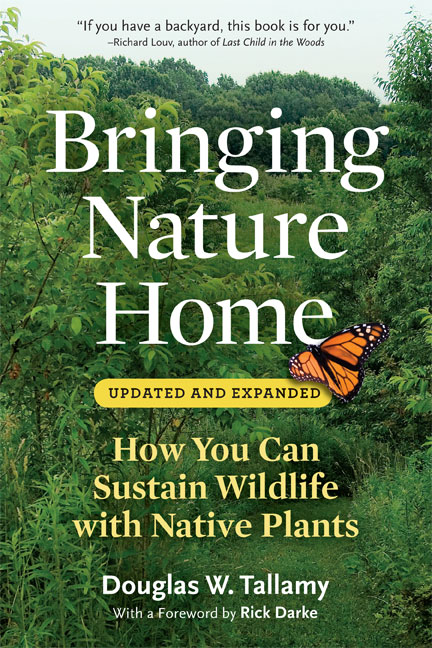
Since Bringing Nature Home by Douglas Tallamy was first published in 2007, it has quickly become somewhat of a “classic” to proponents of native plant gardening. As such a proponent, I figured I ought to put in my two cents. Full disclosure: this is less of a review and more of an outright endorsement. I’m fawning, really, and I’m not ashamed to admit it.

9780881929928l

The subtitle pretty much sums it up: “How You Can Sustain Wildlife with Native Plants.” Ninety three pages into the book, Tallamy elaborates further: “By favoring native plants over aliens in the suburban landscape, gardeners can do much to sustain the biodiversity that has been one of this country’s richest assets.” And one of every country’s richest assets, as far as I’m concerned. “But isn’t that why we have nature preserves?” one might ask. “We can no longer rely on natural areas alone to provide food and shelter for biodiversity,” Tallamy asserts in the Q & A portion of his book. Humans have altered every landscape – urban, suburban, rural, and beyond – leaving species of all kinds threatened everywhere. This means that efforts to protect biodiversity must occur everywhere. This is where the You comes in. Each one of us can play a part, no matter how small. In closing, Tallamy claims, “We can each make a difference almost immediately by planting a native nearby.”

A plant is considered native to an area if it shares a historical evolutionary relationship with the other organisms in that area. This evolutionary relationship is important because the interactions among organisms that developed over thousands, even millions, of years are what define a natural community. Thus, as Tallamy argues, “a plant can only function as a true ‘native’ while it is interacting with the community that historically helped shape it.” A garden designed to benefit wildlife and preserve biodiversity is most effective when it includes a high percentage of native plants because other species native to the area are already adapted to using them.

Plants (and algae) are at the base of every food chain – the first trophic level – because they produce their own food using the sun’s energy. Organisms that are primarily herbivores are at the second trophic level, organisms that primarily consume herbivores are at the third trophic level, and so on. As plants have evolved they have developed numerous defenses to keep from being eaten. Herbivores that evolved along with those plants have evolved the ability to overcome those defenses. This is important because if herbivores can’t eat the plants then they can’t survive, and if they don’t survive then there will be little food for organisms at higher trophic levels.

The most important herbivores are insects simply because they are so abundant and diverse and, thus, are a major food source for species at higher trophic levels. The problem is that, as Tallamy learned, “most insect herbivores can only eat plants with which they share an evolutionary history.” Insects are specialized as to which plants they can eat because they have adapted ways to overcome the defenses that said plants have developed to keep things from eating them. Healthy, abundant, and diverse insect populations support biodiversity at higher trophic levels, but such insect populations won’t exist without a diverse community of native plants with which the insects share an evolutionary history.

That is essentially the thesis of Tallamy’s book. In a chapter entitled “Why Can’t Insects Eat Alien Plants?” Tallamy expounds on the specialized relationships between plants and insects that have developed over millennia. Plants introduced from other areas have not formed such relationships and are thus used to a much lesser degree than their native counterparts. Research concerning this topic was scarce at the time this book was published, but among other studies, Tallamy cites preliminary data from a study he carried out on his property. The study compared the insect herbivore biomass and diversity found on four common native plants vs. five common invasive plants. The native plants produced 4 times more herbivore biomass and supported 3.2 times as many herbivore species compared to the invasive plants. He also determined that the insects using the alien plants were generalists, and when he eliminated specialists from the study he still found that natives supported twice as much generalist biomass.

Apart from native plants and insects, Tallamy frames much of his argument around birds. Birds have been greatly impacted by humans. Their populations are shrinking at an alarming rate, and many species are threatened with extinction. Tallamy asserts, “We know most about the effects of habitat loss from studies of birds.” We have destroyed their homes and taken away their food and “filled their world with dangerous obstacles.” Efforts to improve habitat for birds will simultaneously improve habitat for other organisms. Most bird species rely on insects during reproduction in order to feed themselves and their young. Reducing insect populations by filling our landscapes largely with alien plant species threatens the survival of many bird species.

In the chapters “What Should I Plant?” and “What Does Bird Food Look Like?,” Tallamy first profiles 20 groups of native trees and shrubs that excel at supporting populations of native arthropods and then describes a whole host of arthropods and arthropod predators that birds love to eat. Tallamy’s fascinating descriptions of the insects, their life cycles, and their behaviors alone make this book worth reading. Other chapters that are well worth a look are “Who Cares about Biodiversity?” in which Tallamy explains why biodiversity is so essential for life on Earth, and “The Cost of Using Alien Ornamentals” in which Tallamy outlines a number of ways that our obsession with exotic plants has caused problems for us and for natural areas.

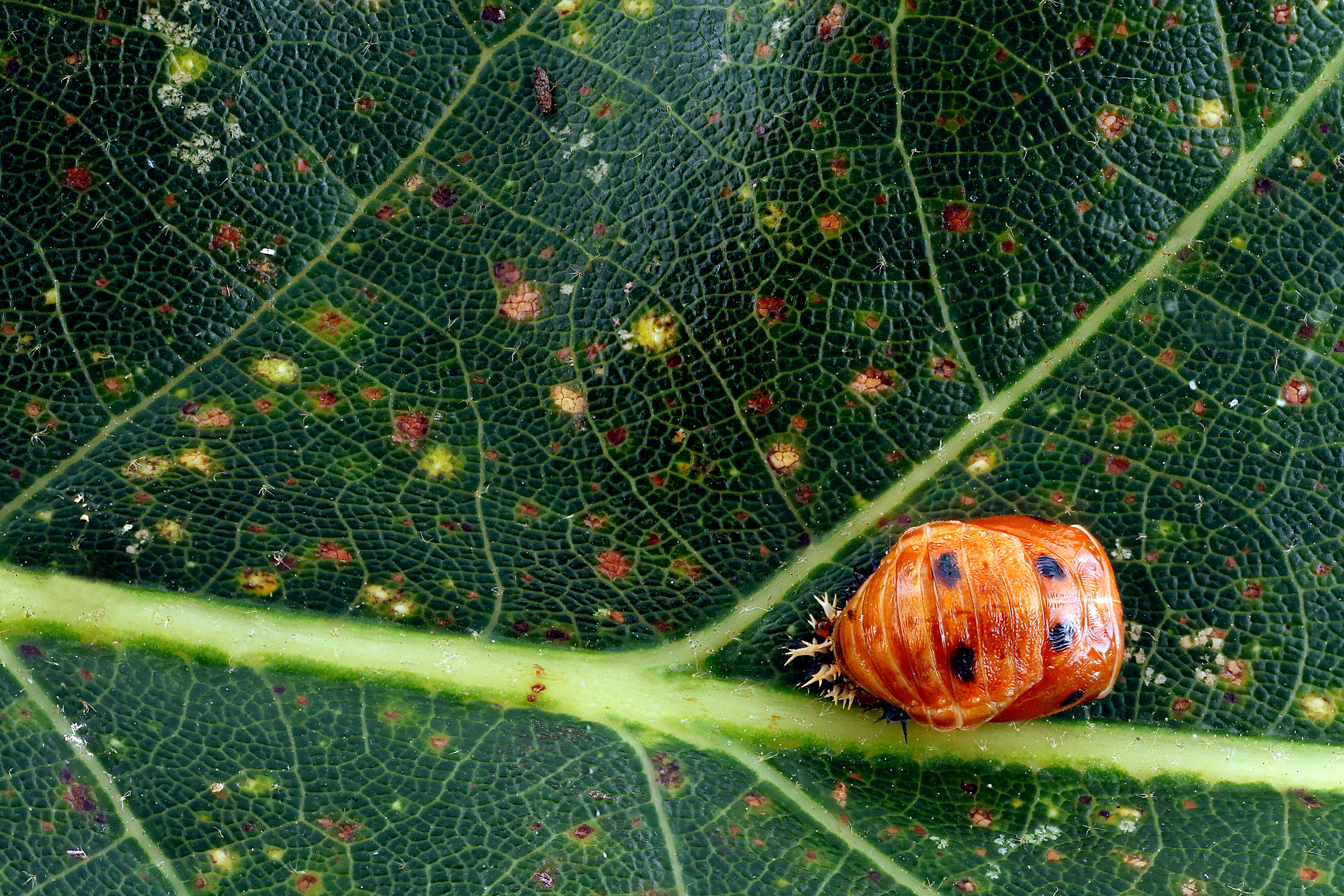
Pupa of ladybird beetle on white oak leaf (photo credit: wikimedia commons)

Pupa of a ladybird beetle on a white oak leaf. “The value of oaks for supporting both vertebrate and invertebrate wildlife cannot be overstated.” – Doug Tallamy (photo credit: wikimedia commons)

Convincing people to switch to using native plants isn’t always easy, especially if your argument involves providing habitat for larger and more diverse populations of insects. For those who are not fans of insects, Tallamy explains that “a mere 1%” of the 4 million insect species on Earth “interact with humans in negative ways.” The majority are not pests. It is also important to understand that even humans “need healthy insect populations to ensure our own survival.” Tallamy also offers some suggestions on how to design and manage an appealing garden using native plants. A more recent book Tallamy co-authored with fellow native plant gardening advocate Rick Darke called The Living Landscape expands on this theme, although neither book claims to be a how to guide.

———————

Interested in writing a book review for Awkward Botany? Or helping out in another way? Find out how.

Drought Tolerant Plants: Rabbitbrush

Gardener seeking shrub. Must be drought tolerant. Must have year-round interest. Must be easy to grow and maintain. Preferably flowers in late summer or early fall. Must be attractive – not just to humans, but to wildlife as well. Serious inquiries only.

My answer to a solicitation such as this would be rabbitbrush. While there may be other perfectly acceptable plants that fit this description, I think rabbitbrush deserves major consideration. It’s easy to grow and can be kept looking attractive throughout the year. When it is flush with vibrant, golden-yellow flowers at the close of summer, it not only becomes the star of the garden visually, but also a savior to pollinators readying themselves for winter. Plus, it requires little to no supplemental water, making it a true dry garden plant.

There are many species that go by the common name rabbitbrush. The two that I am most familiar with are Ericameria nauseosa (rubber or gray rabbitbrush) and Chrysothamnus viscidiflorus (green or yellow rabbitbrush). Both of these species are native to western North America, and both have a number of naturally occurring varieties and subspecies.

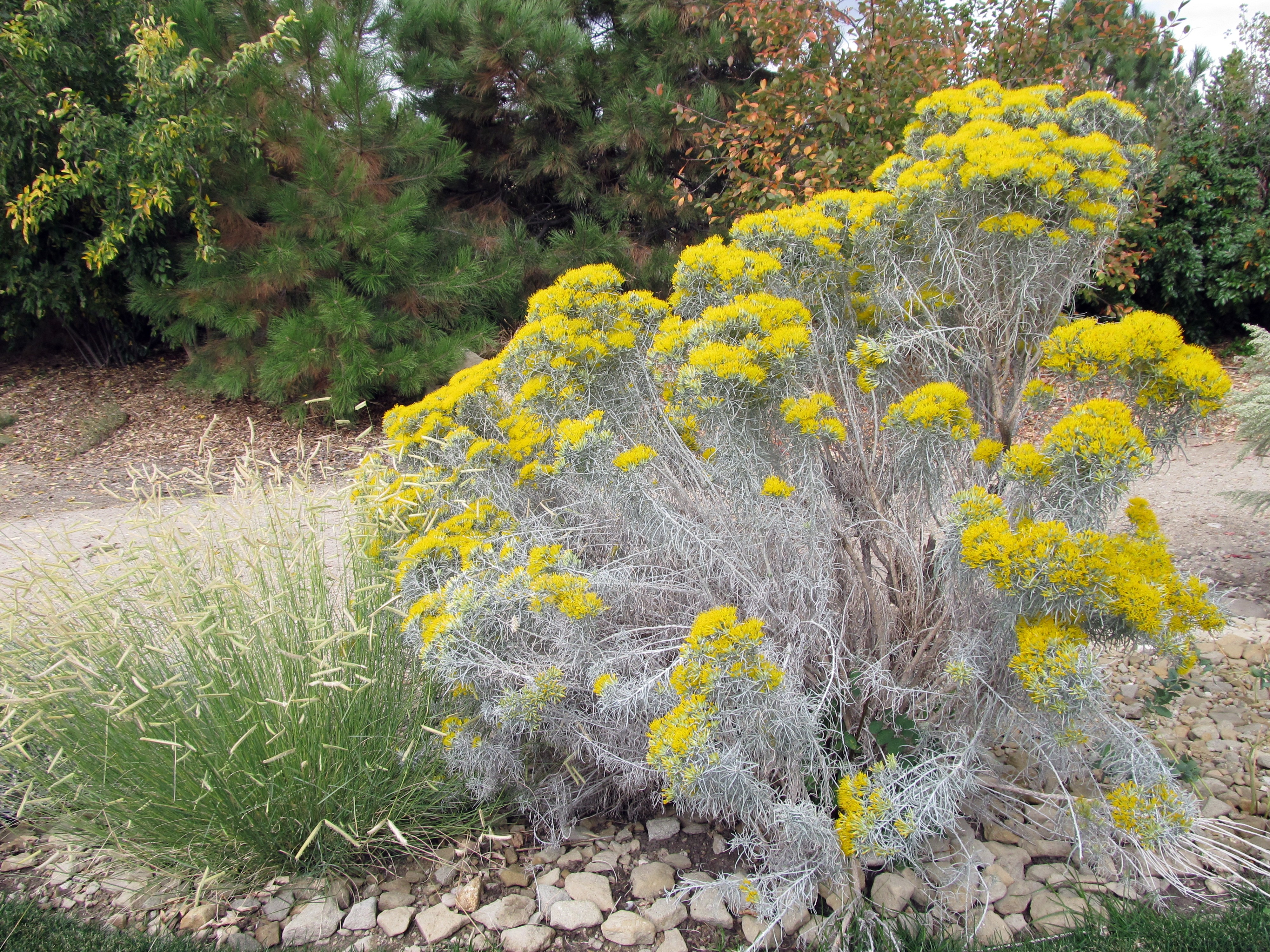
Rubber rabbitbrush - Ericameria nauseosa

Rubber rabbitbrush – Ericameria nauseosa

Rubber rabbitbrush is a densely branched shrub that reaches an average height of 3 feet. Its leaves are slender and numerous, and its stems and leaves are covered in short, white, felt-like hairs giving the plant a light gray appearance. Native Americans used the flexible branches of this plant to weave baskets. They also made a tea from the stems to treat coughs, colds, chest pains, and toothaches. Bundles of branches were burned to smoke animal hides. The stems and roots contain a latex sap, and certain Native American tribes are said to have used this sap as chewing gum, possibly to relieve hunger or thirst. A rubber shortage during World War II led to investigations into extracting the latex from rabbitbrush. This idea was soon abandoned once it was determined that even if every rabbitbrush in the West were to be harvested, the resulting increase in rubber would be modest compared to other sources.

Green rabbitbrush is typically smaller than rubber rabbitbrush, reaching a maximum height of about 3 feet. Its stems and leaves appear similar to rubber rabbitbrush except they lack the dense, white hairs and are brown and green respectively. Also, the stems and leaves of green rabbitbrush have a stickiness to them, and the leaves are often twisted or curled.

Rabbitbrush is a member of the sunflower family (Asteraceae). Plants in this family generally have inflorescences that are a combination of ray and disk flowers (or florets) clustered tightly together and arranged in such a way that the inflorescence appears as a single flower. Consider sunflowers, for example. What appear to be petals around the outside of a large flower are actually a series of individual ray flowers, and in the center are dozens of disk flowers. Both rubber and green rabbitbrush lack ray flowers, and instead their inflorescences are clusters of 5 or so disk flowers that are borne at the tips of each branch creating a sheet of yellow-gold flowers that covers the shrub. Native Americans used these flowers to make dyes.

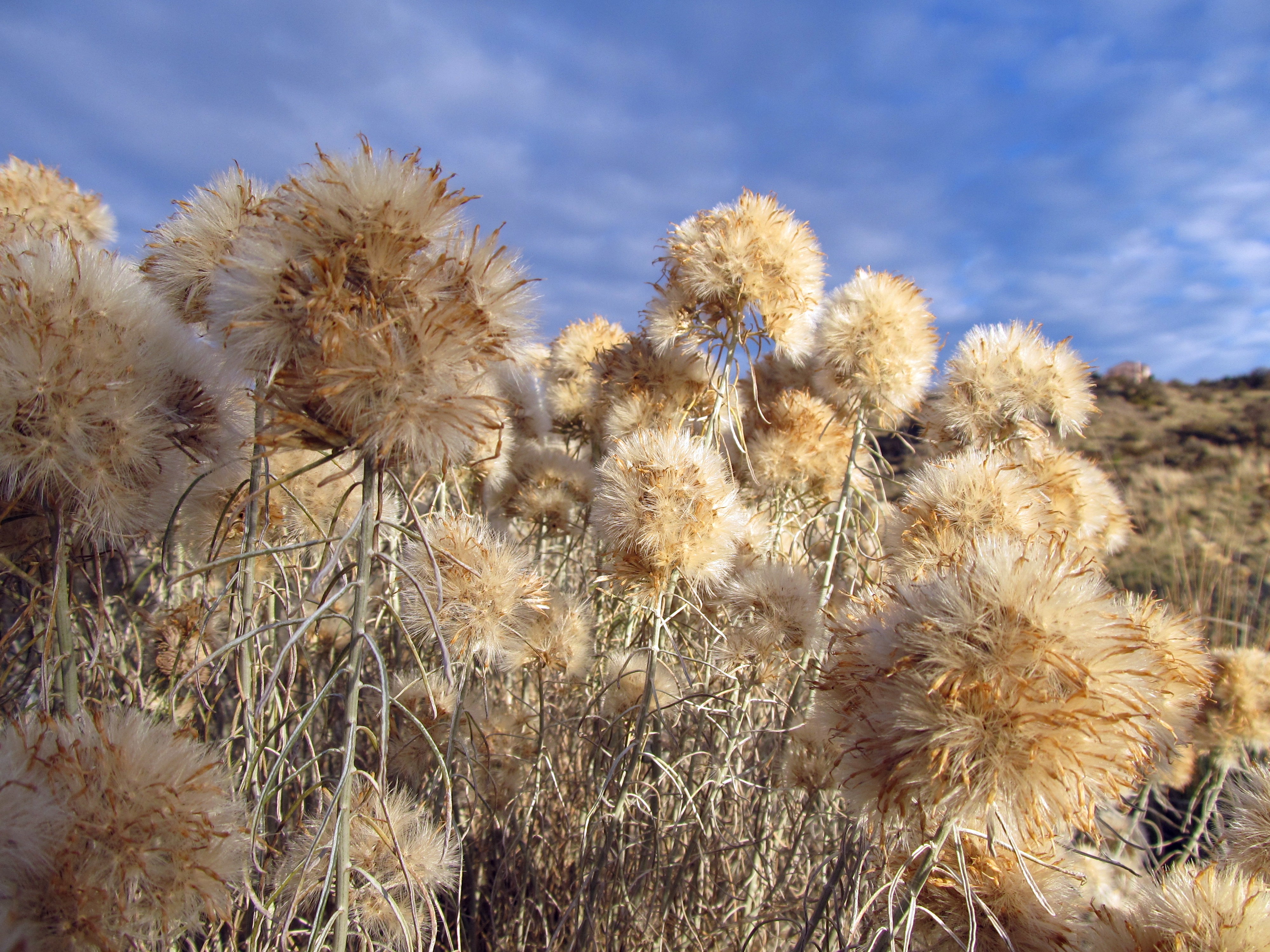
The fruits of rabbitbrush are achenes with small tufts of hairs attached. Each achene contains one seed. The tuft of hair (or pappus) helps disseminate the seed by way of the wind. Many of the fruits remain attached to the plant throughout the winter, providing winter interest and food for birds.

As rabbitbrush ages it can become gangly, floppy, or simply too large for the site. This can be avoided easily by cutting the plant back by a third or more each fall or spring, which will result in a more manageable form. It can also be cut back nearly to the ground if it is getting too big.

Seed heads of rubber rabbit brush (Ericameria nauseosa)

Seed heads of rubber rabbit brush (Ericameria nauseosa)

The leaves, flowers, stems, and seeds provide food for a variety of animals including birds, deer, and small mammals. The plant itself can also provide cover for small mammals and birds. Oh, and did I mention that it’s a pollinator magnet. It has wildlife value, it’s drought tolerant, it’s easy to maintain, and overall, it’s a beautiful plant. What more could you ask for in a shrub?

More Drought Tolerant Plant posts at Awkward Botany:

Fernbush

Blue Sage

Prickly Pears

Water Efficient Landscape at Idaho State Capitol Building

Desert Willow

The photos in this post were taken at Idaho Botanical Garden in Boise, Idaho.

Drought Tolerant Plants: Desert Willow

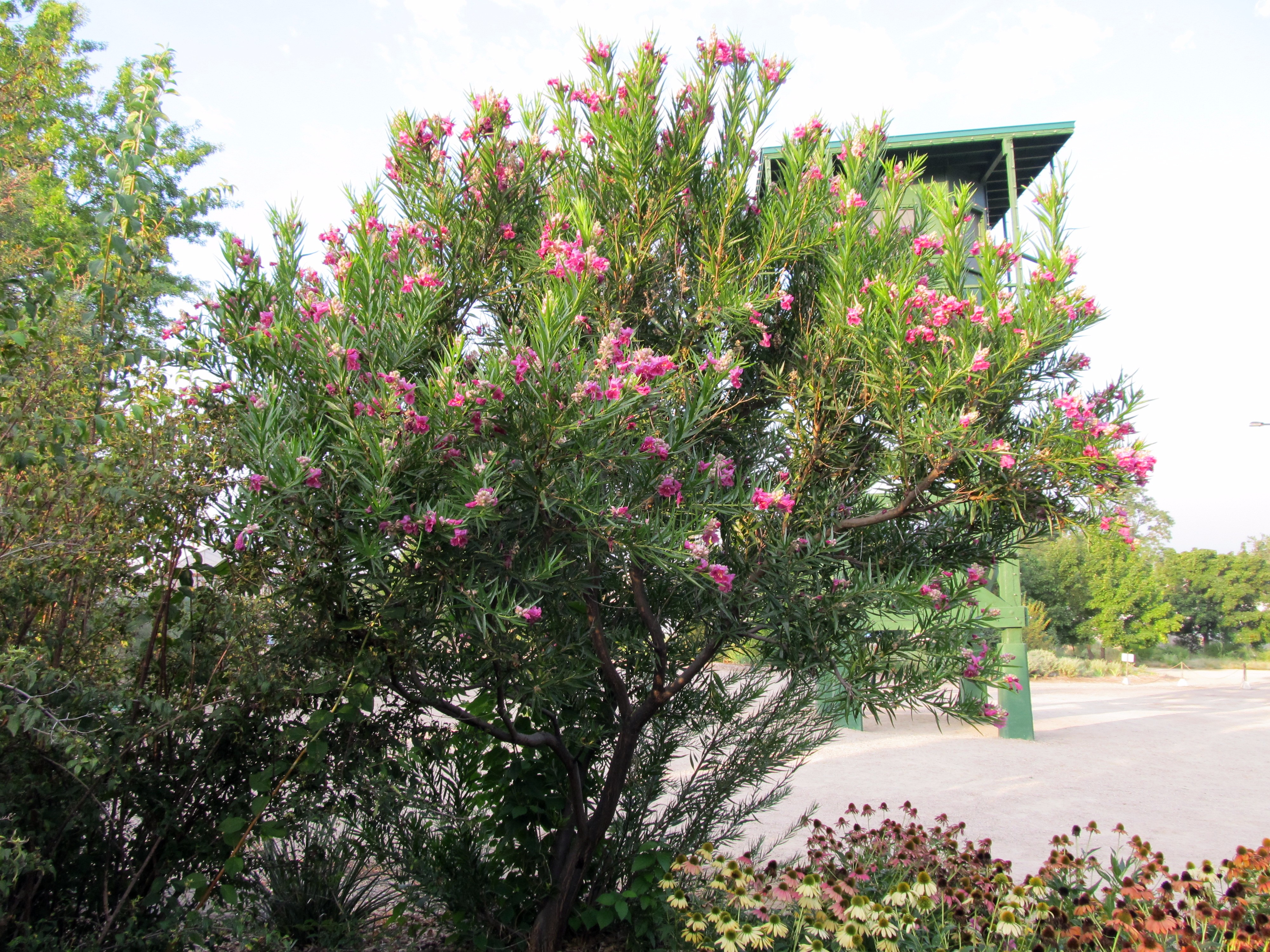
Hailing from dry washes and riverbanks of the desert southwestern United States and northern Mexico, desert willow is a tough tree or large shrub with delicate, showy flowers and wispy foliage. Its beauty and its ruggedness has made it a popular plant for dry gardens. It requires little attention maintenance-wise, yet attracts all kinds of attention otherwise. If you live in a desert climate that generally stays above 0 degrees Fahrenheit during the winter, this plant belongs in your garden.

Desert Willow - Chilopsis linearis

Desert Willow – Chilopsis linearis

A member of the family Bignoniaceae – a family that consists of at least 8o genera including catalpa (Catalpa spp.) and trumpet vine (Campsis spp.) – Chilopsis linearis is the sole member of its genus. The common name, desert willow, refers to its habitat and its long, slender, oppositely and alternately arranged leaves that resemble those of many willows (Salix spp.). Other common names include flowering willow, willowleaf catalpa, desert catalpa, and false-willow. There are two recognized subspecies – linearis and arcuata.

Desert willow is found most commonly in areas where seasonal flooding occurs. Known as desert dry washes – or simply dry washes or desert washes –  these are areas in the desert where runoff from heavy rains accumulates resulting in saturated soils followed by a prolonged dry period. Groundwater often remains accessible year-round to the deep roots of plants in this type of habitat. Desert willow shares this habitat with several other large shrubs and small trees including mesquite (Prosopis spp.), palo verde (Parkinsoinia spp.), and smoketree (Psorothamnus spinosus). Desert willow occurs along stream banks and river banks as well, where seasonal flooding also occurs.

Desert willow generally reaches a width of 10 to 15 feet and a height of at least 15 feet, although it has the potential to grow taller than 30 feet. It often has an open and sprawling or leaning habit, but it can be pruned to look more tree-like. Pruning can also result in more flowering, since flowers appear on new growth and pruning encourages growth. Watering this plant during the dry season can also lead to a flush of growth and more flowering. This is something to keep in mind, as it is the flowers that are the star of the show.

Persisting from late spring through midsummer (and sometimes longer), the 1 to 2 inch, trumpet-shaped, pink to rose to purple blossoms are hard to miss. They occur singularly or in clusters at the tips of branches. The ruffled-edges of the petals and the prominent streaks of color within the corolla tube add to the attraction. Hummingbirds, butterflies, and bumblebees are common visitors to these fragrant flowers. Summer rains or occasional watering can encourage flowering throughout the summer. Overwatering, on the other hand, can be detrimental.

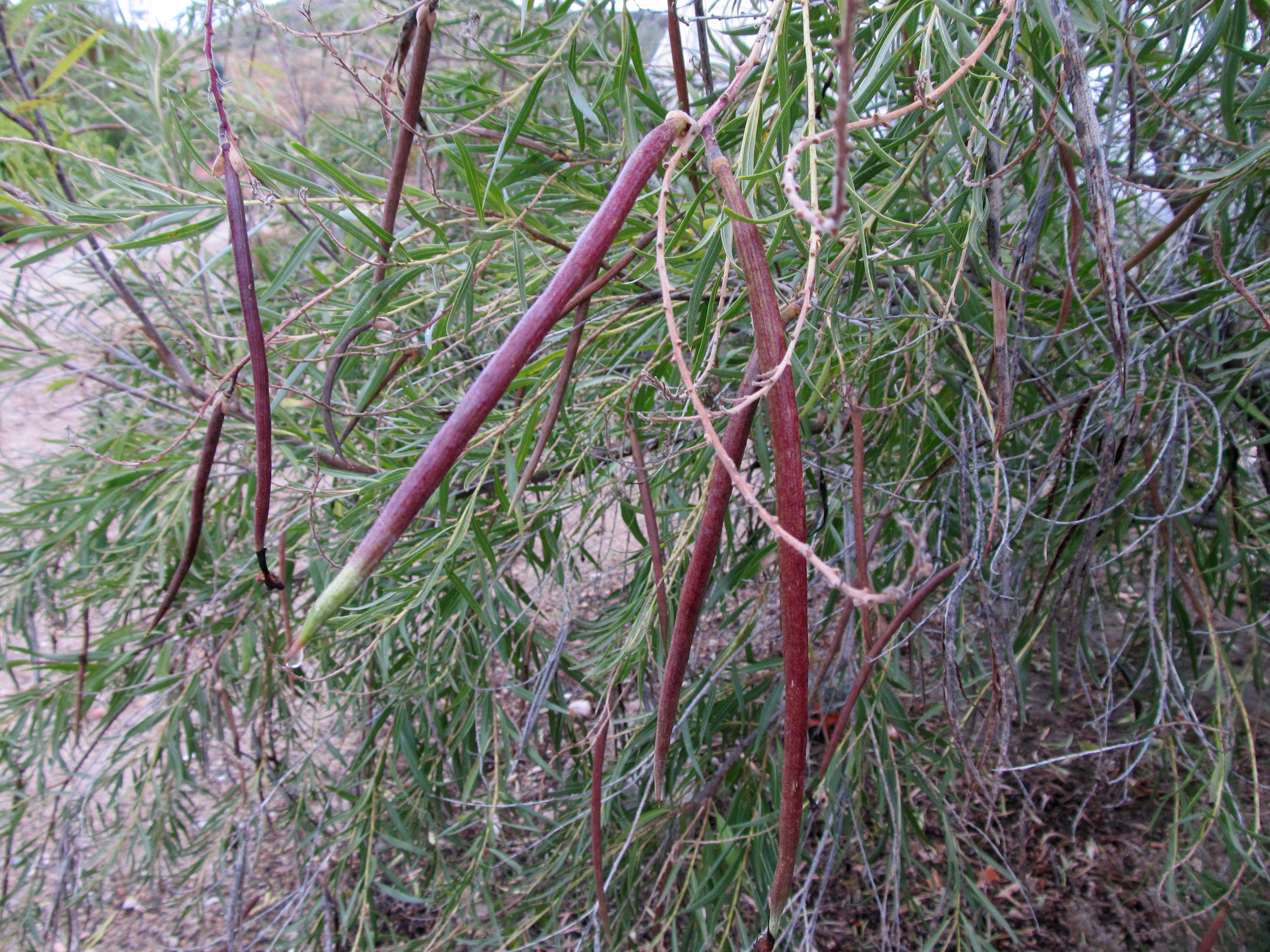
The flowers eventually form long slender seed pods called capsules that reach up to 10 inches long. Inside the capsules are a series of hairy seeds. The hairs form small wings on the sides of the seeds. The seeds are eaten by a variety of bird species. Various species of birds can also be seen nesting in desert willow, and a variety of other animals use desert willow for browsing and/or for cover.

The fruits of Chilopsis linearis.

The fruits of Chilopsis linearis

The hairy, winged seeds of Chilopsis linearis

The hairy, winged seeds of Chilopsis linearis

Desert willow prefers sunny, southwest facing sites and tolerates most soil types. It performs best in soils that are well drained, low in organic content, and have a pH that is neutral to alkaline. The soil can be saturated at times, but should be given a chance to dry out – just like in its natural habitat. Avoid the impulse to add fertilizer.

Desert willow is said to be easy to propagate from cuttings or from seeds. It is commercially available, and several cultivars have been developed offering diverse flower colors and other special traits. It’s easy to grow, requires little attention, and provides an eye-catching floral show – all excellent reason to add this plant to your water-efficient landscape.

One tip from my experience seeing it survive the winters of southwestern Idaho: the deciduous leaves of Chilopsis linearis don’t reappear until very late in the spring – so late, in fact, that one might start to worry that the plant has perished. Don’t fret though; some winter kill is possible if sub-zero temperatures were experienced, but most likely it is still alive.

More information about desert willow:

Encyclopedia of Life

USDA Plant Guide

Native Plant Information Network 

The photos in this post were taken at Idaho Botanical Garden in Boise, Idaho.

The Gourd Family

Pumpkins are practically synonymous with fall. Outside of every supermarket, bins overflow with pumpkins and other winter squash; inside, shelves are stocked with pumpkin flavored, pumpkin spiced, and pumpkin shaped everything. It’s the season of the almighty gourd – a family of plants that not only shares a long history with humans but also features some of the most diverse and unique-looking fruits on the planet. They are a symbol of the harvest season, a staple of the Halloween holiday, and a family of plants that is certainly worth celebrating.

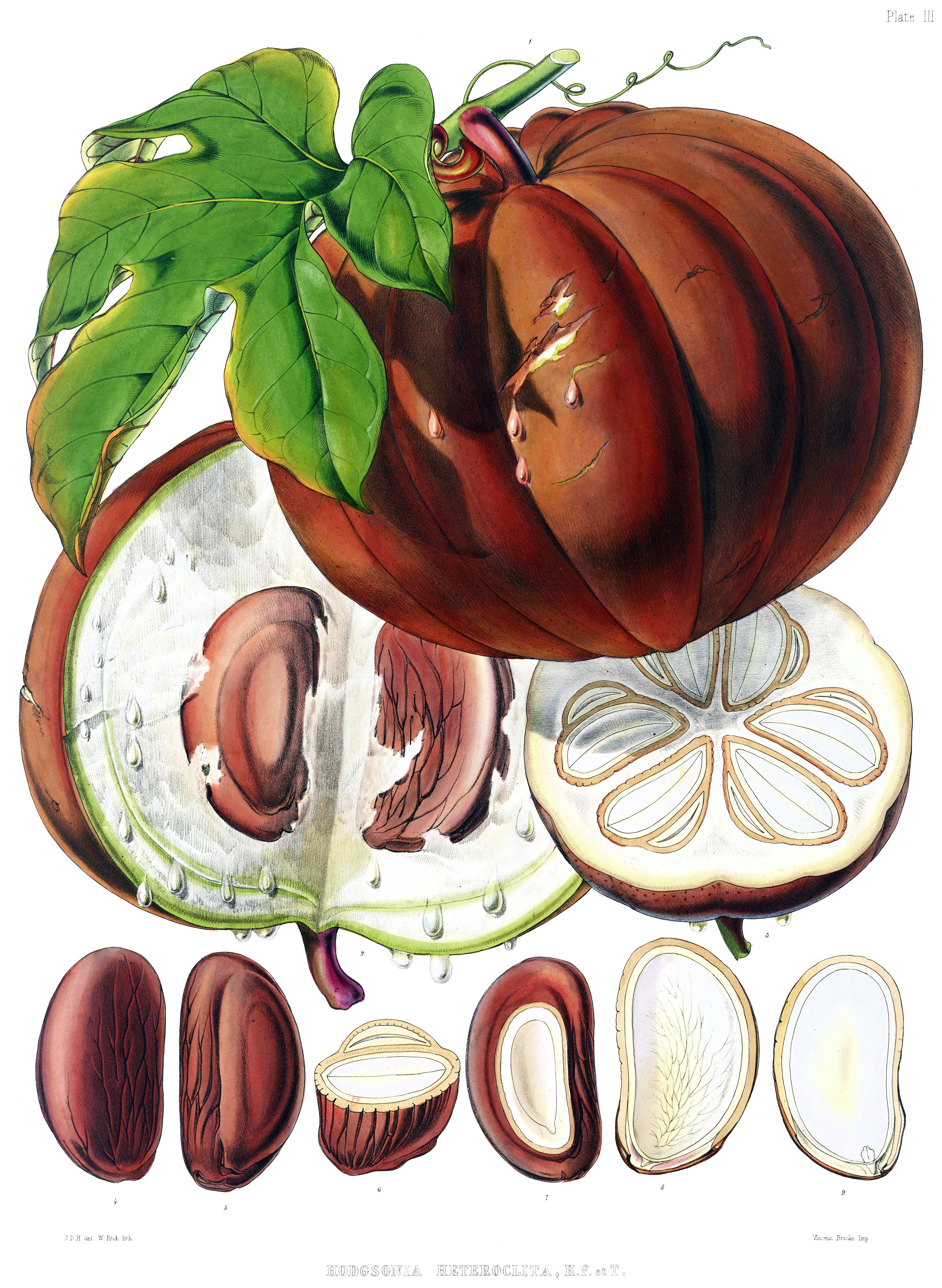
Chinese lardplant (Hodgsonia heteroclita) - photo credit: wikimedia commons

Chinese lardplant (Hodgsonia heteroclita) – photo credit: wikimedia commons

The gourd family – Cucurbitaceae – includes at least 125 genera and around 975 species. It is a plant family confined mainly to tropical/subtropical regions, with a few species occurring in mild temperate areas. Most species are vining annuals. A few are shrubs or woody lianas. One species, Dendrosicyos socotranus, is a small tree commonly known as cucumber tree. Plants in this family have leaves that are alternately arranged and often palmately lobed. Climbing species are equipped with tendrils. Flowers are unisexual and are typically yellow, orange, or white and funnel shaped. They are generally composed of 5 petals that are fused together. Male flowers have 5 (sometimes 3) stamens; female flowers have 3 (sometimes 4) fused carpels. Depending on the species, male and female flowers can be found on the same plant (monoecious) or on different plants (dioecious). Pollination is most often carried out by bees or beetles.

The flowers of balsam apple (Momordica balsamina) - photo credit: eol.org

Balsam apple (Momordica balsamina) – photo credit: eol.org

Vining habits and diverse shapes and sizes of leaves and flowers make plants in this family interesting; however, it is the fruits born by this group of plants that truly make it stand out. Known botanically as pepos – berries with hard or thick rinds –  their variability is impressive. Imagine just about any color, shape, size, or texture, and there is probably a cucurbit fruit that fits that description. Even the flesh of these fruits can be incredibly diverse. Some fruits are small and perfectly round; others are long, twisting, and snake-like or have curving neck-like structures. Some are striped, variegated, or mottled; others are warty, ribbed, or spiky. What’s more, the cultivated pumpkin holds the record for the biggest fruit in the world.

The spiky fruits of wild cucumber (Echinocystus lobata) - photo credit: wikimedia commons

The spiky fruits of wild cucumber (Echinocystus lobata) – photo credit: wikimedia commons

Having such unique fruits is probably what drew early humans to these plants. Bottle gourds (Lagenaria siceraria) were one of the first species of any plant family to be domesticated (more than 10,000 years ago). This occurred in several regions across the Old World and the New World even before agriculture was developed (more about that here). Today, numerous species in this family are cultivated either for their edible fruits and seeds or for seed oil and fiber production. Others are grown as ornamentals.

The genus Cucurbita is probably the most cultivated of any of the genera in the family Cucurbitaceae. Summer squash, winter squash, pumpkins  – all are members of various species in this genus. Cucumbers and melons are members of the genus Cucumis. Watermelon is Citrullus lanatus. Gourds are members of Cucurbita and Lagenaria. Luffa aegyptiaca and Luffa acutangula are grown as vegetable crops (the young fruit) and for making scrubbing sponges (the mature fruit). Chayote (Sechium edule) and bitter melon (Momordica charantia) are commonly cultivated in latin and asian countries respectively. And the list goes on…

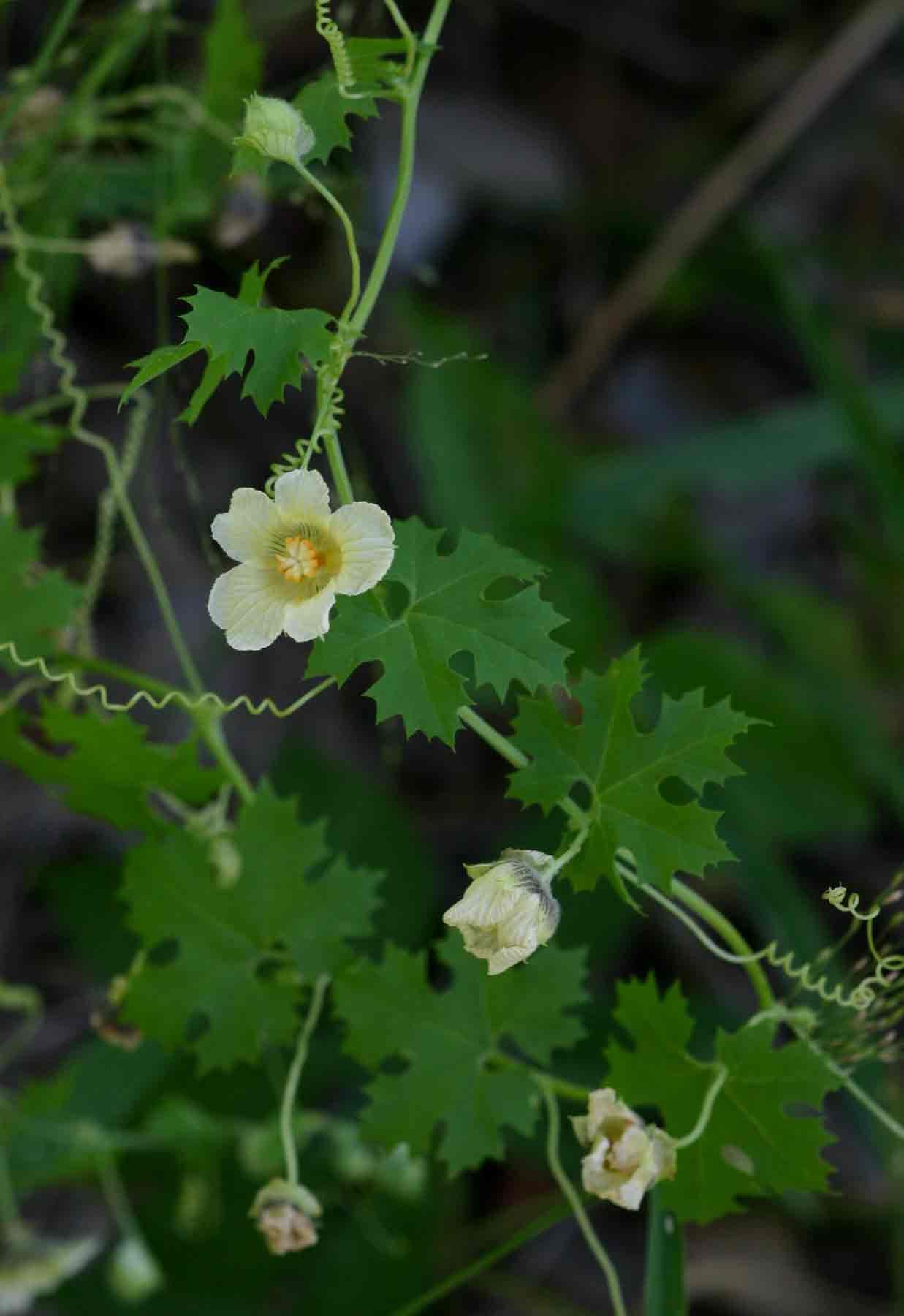
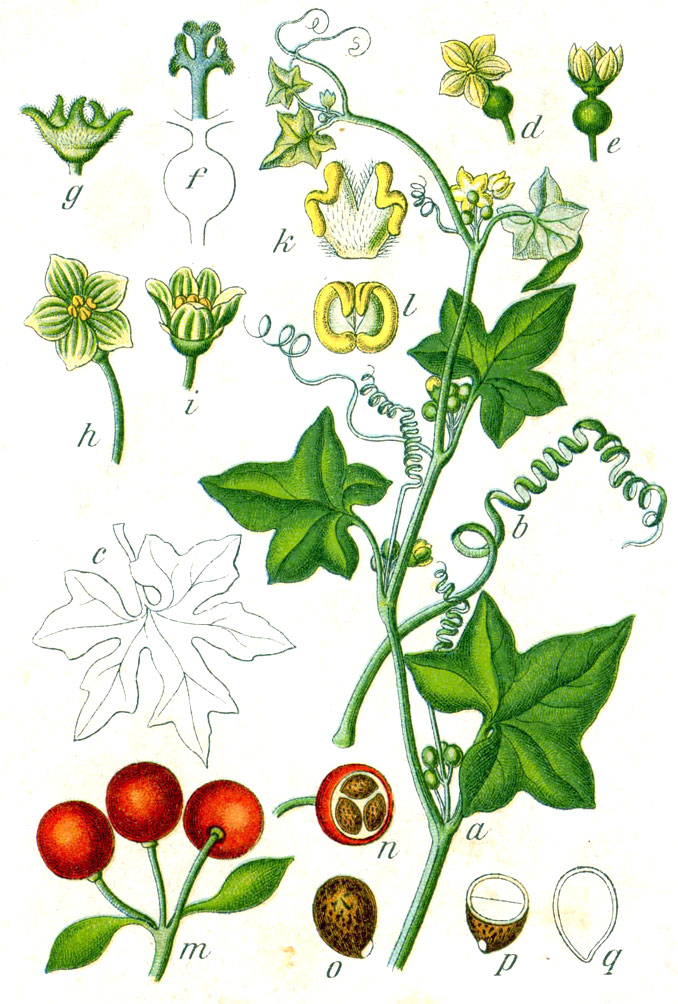
Considering that there are so many edible species in this family, it is important to note that some are quite poisonous. The genus Bryonia is particularly toxic. Consumption can result in dizziness, vomiting, diarrhea, and ultimately, death. As Thomas Elpel states in his book Botany in a Day, “this plant is not for amateurs.”

White bryony (Bryonia dioica) - photo credit: wikimedia commons

white bryony (Bryonia dioica) – photo credit: wikimedia commons

Researching this family has been fun, and this post barely scratches the surface of this remarkable group of plants. One species in particular that stands out to me is Alsomitra macrocarpa, a liana from the tropical forests of Asia. Commonly known as Javan cucumber, this plant produces football-sized fruits packed with numerous seeds that are equipped with expansive, paper-thin “wings” that assist the seed in traveling many yards away from its parent plant in hopes of finding room to grow free from competition. Here is a video demonstrating this resourceful seed:

Drought Tolerant Plants: Water Efficient Garden at Idaho State Capitol Building

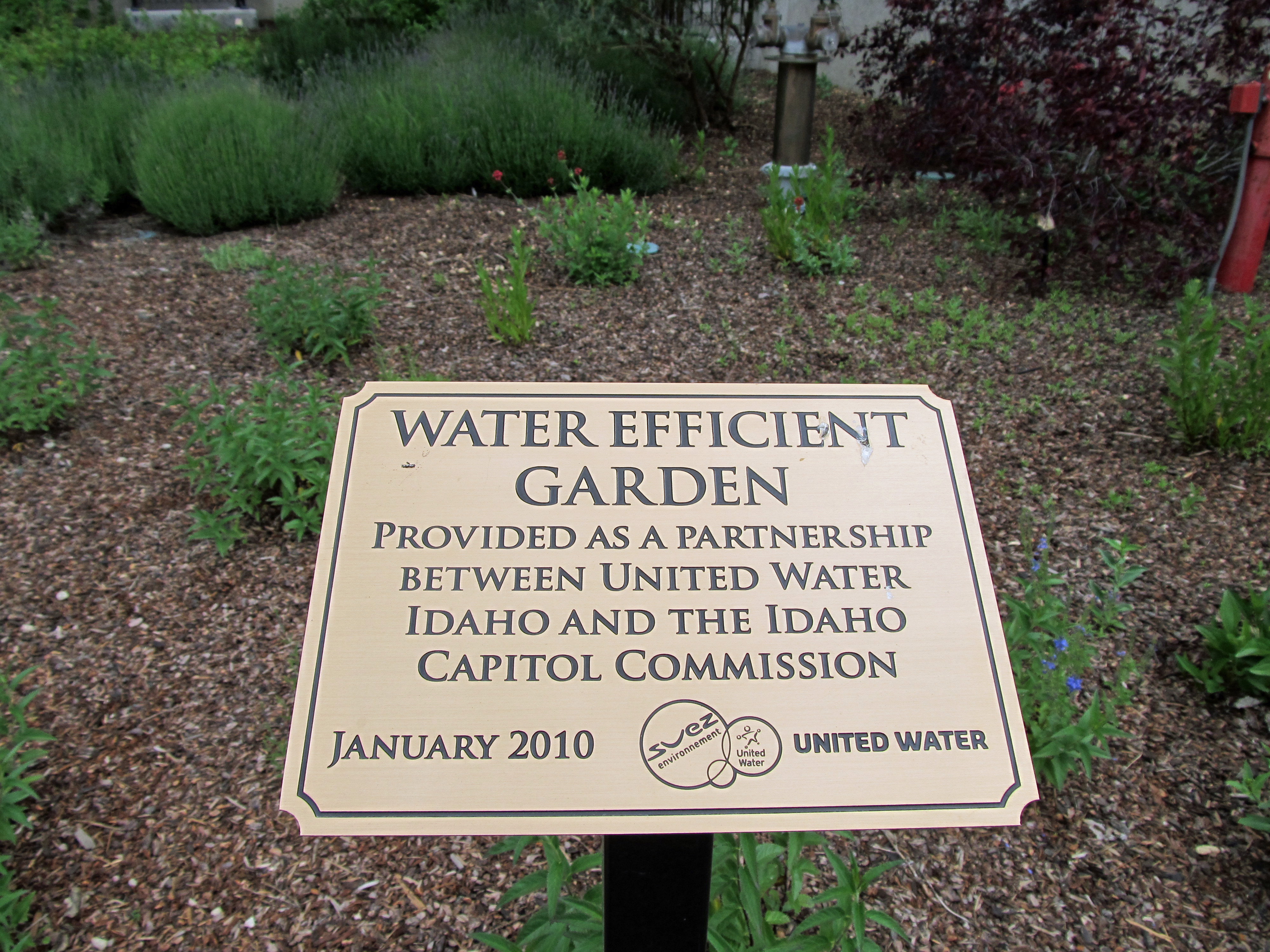
water efficient garden sign

As drought and threats of drought continue in the western half of the United States, as well as in many other parts of the world, people are increasingly looking for ways to use less water in their landscapes. For many it is a change they are reluctant to make, worried that they will have to sacrifice lush and colorful yards and gardens for drab, dry, gray, and seemingly lifeless ones. Not so, though. The palette of plants that can survive in low water environments is actually quite diverse and contains numerous plants that are just as lush and colorful as some water hogging ones. If planned, planted, and maintained well, a water efficient garden can be incredibly attractive and can even consist of some plants that are comparatively more heavy water users. So, for those who are apprehensive about getting down with brown, don’t fret – there is a better way.

How does one go about creating such a garden? The answer to that is a book on its own – much too long for a single blog post. It also depends who is asking the question, or more specifically, where they are asking it from. Luckily, demonstrations of water-wise gardens are becoming more common. These gardens, planted with regionally appropriate plants and showcasing various water-saving techniques, are great places to start when looking for ideas and motivation. Such gardens can be found at public parks, city and state government buildings, botanical gardens, nurseries and nursery centers, and water company offices. If you are looking to transform your landscape into a more water efficient one, seek out a demonstration garden in your area. It’s a great place to start.

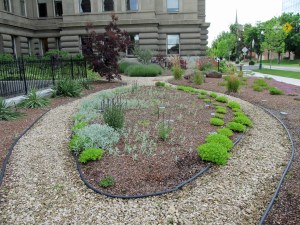
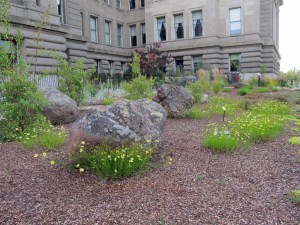
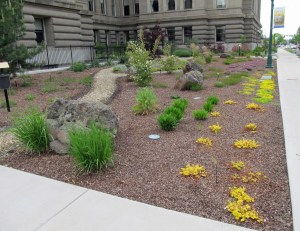
There are several such gardens where I live, one of which is the Water Efficient Garden at the Idaho State Capitol Building in Boise, Idaho. This garden began in 2010 as a partnership between United Water Idaho and the Idaho Capitol Commission. Its mission is to introduce visitors to “low-water native and adaptive plants that thrive in Idaho’s climate.” The plants that were selected for the garden are commonly found at local garden centers and nurseries – an important objective when introducing people to water-wise gardening. The ultimate goal of this garden is to “show homeowners that they can maintain attractive landscaping while conserving water.”

I have my criticisms of this garden regarding plant selection, design, etc., but I’ll spare you those details. I also don’t know the specifics about how this garden is maintained or how often it is watered. All that aside, I am just happy that it exists, and I encourage you to seek out similar gardens in your area. There are numerous approaches to designing and constructing water efficient gardens – again, a book on its own – but demonstration gardens like this are an excellent place to get ideas and learn what other people in your area are doing to conserve water and create landscapes that better reflect the ecology of your region.

United Water Idaho offers a brief introduction to low water gardening here, as well as a list of plants that are in the capitol building garden here.

Blanket Flower (Gaillardia x grandiflora 'Goblin') Plants in the garden are accompanied by a sign with a number on it. The sign corresponds to the plant list that is provided at the entrances to the garden.

Blanket flower (Gaillardia x grandiflora ‘Goblin’). Plants in the garden are accompanied by a sign with a number on it. The sign corresponds to a plant list that is provided at the entrances to the garden.

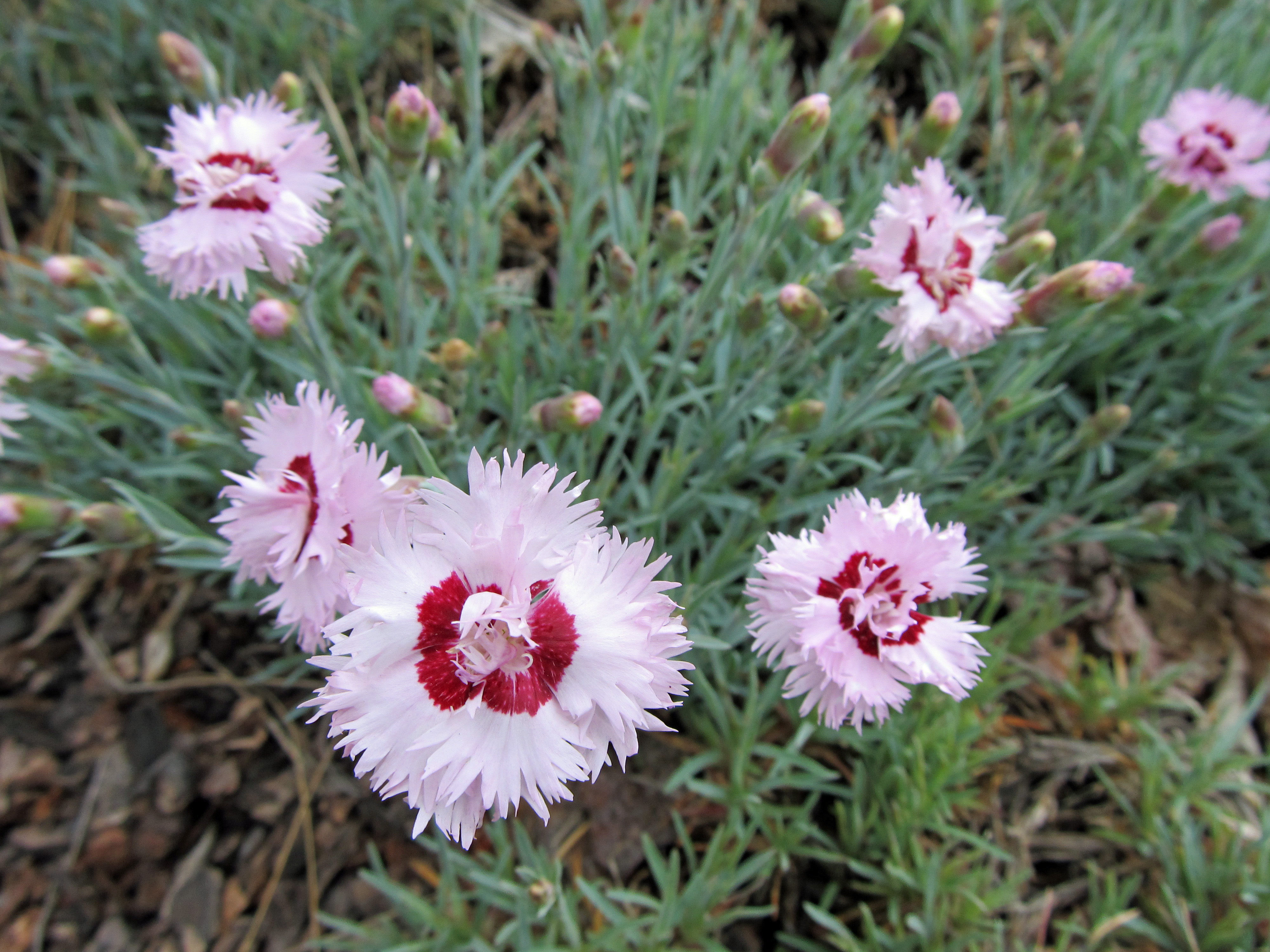
Dianthus sp.

Dianthus sp.

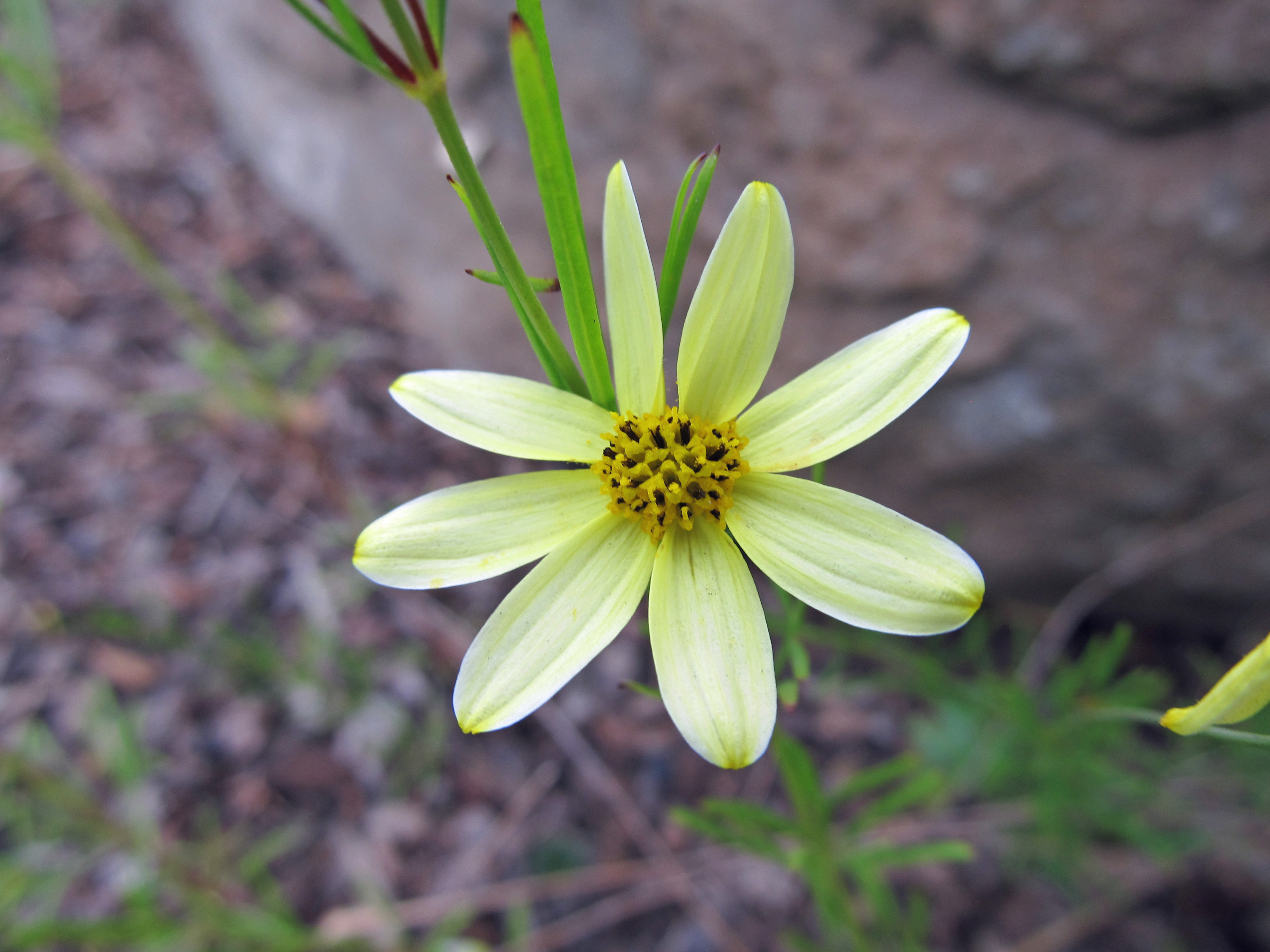
Coreopsis sp.

Coreopsis sp.

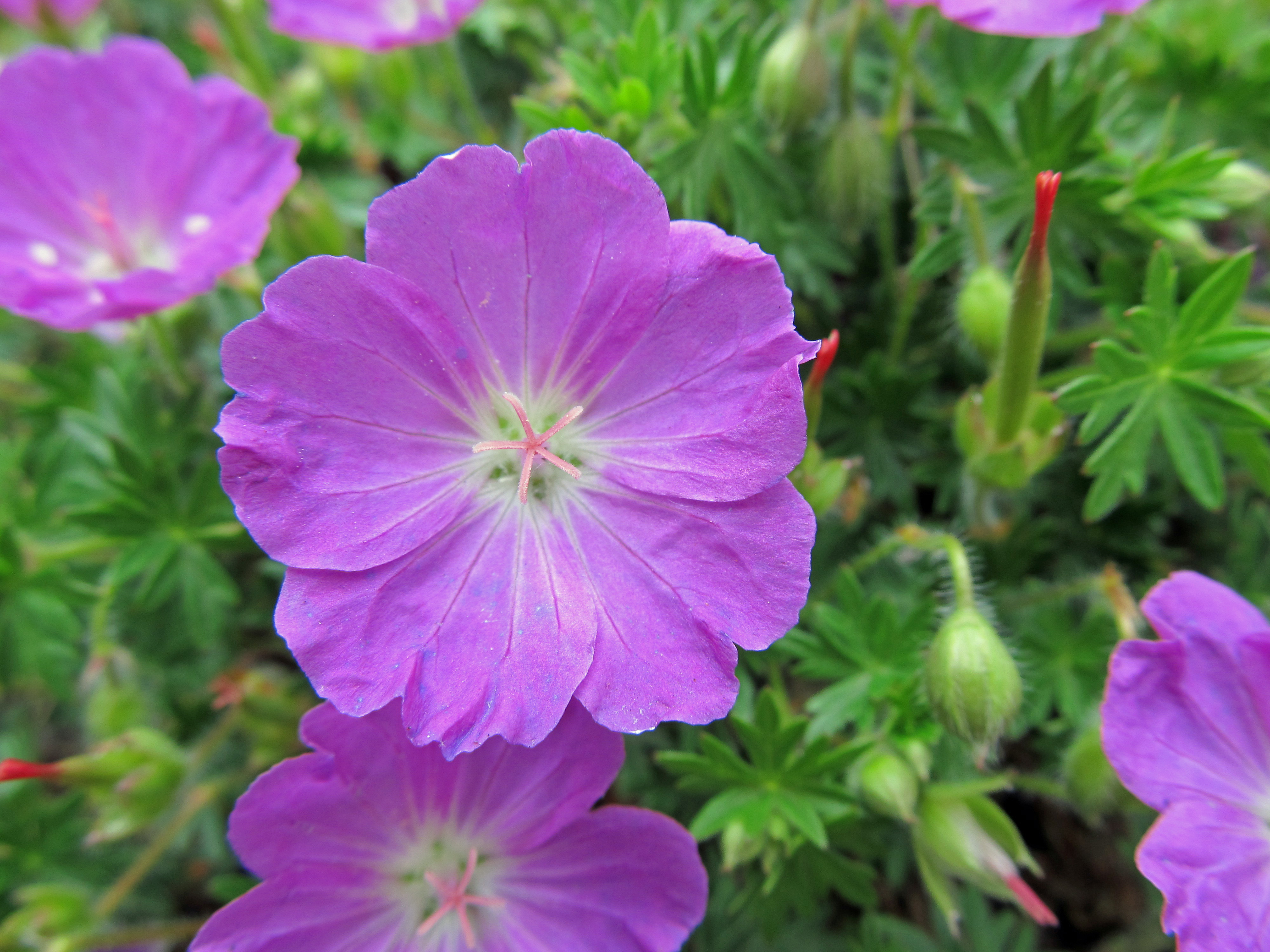
Geranium sp.

Geranium sp.

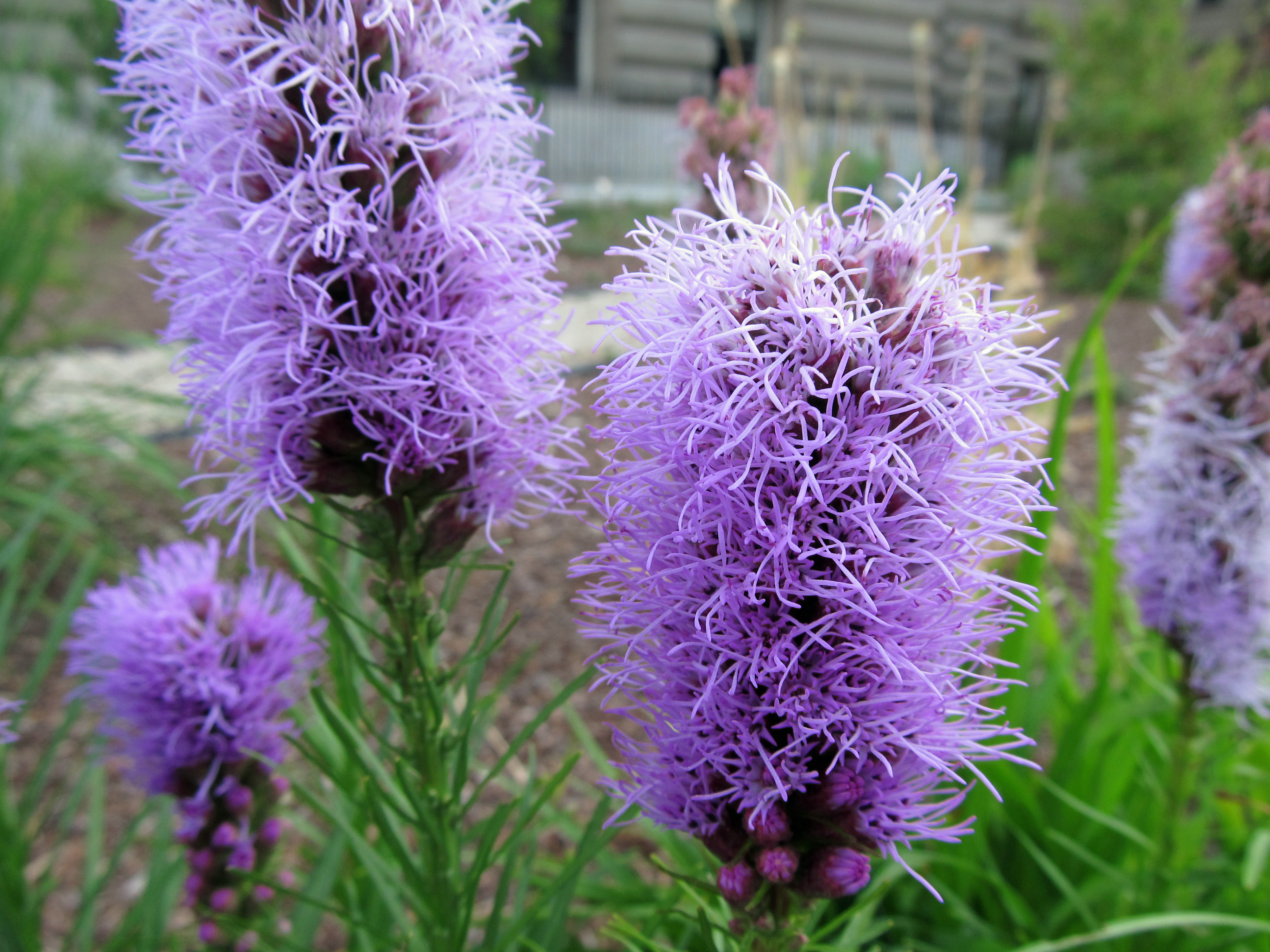
Liatris sp.

Liatris sp.

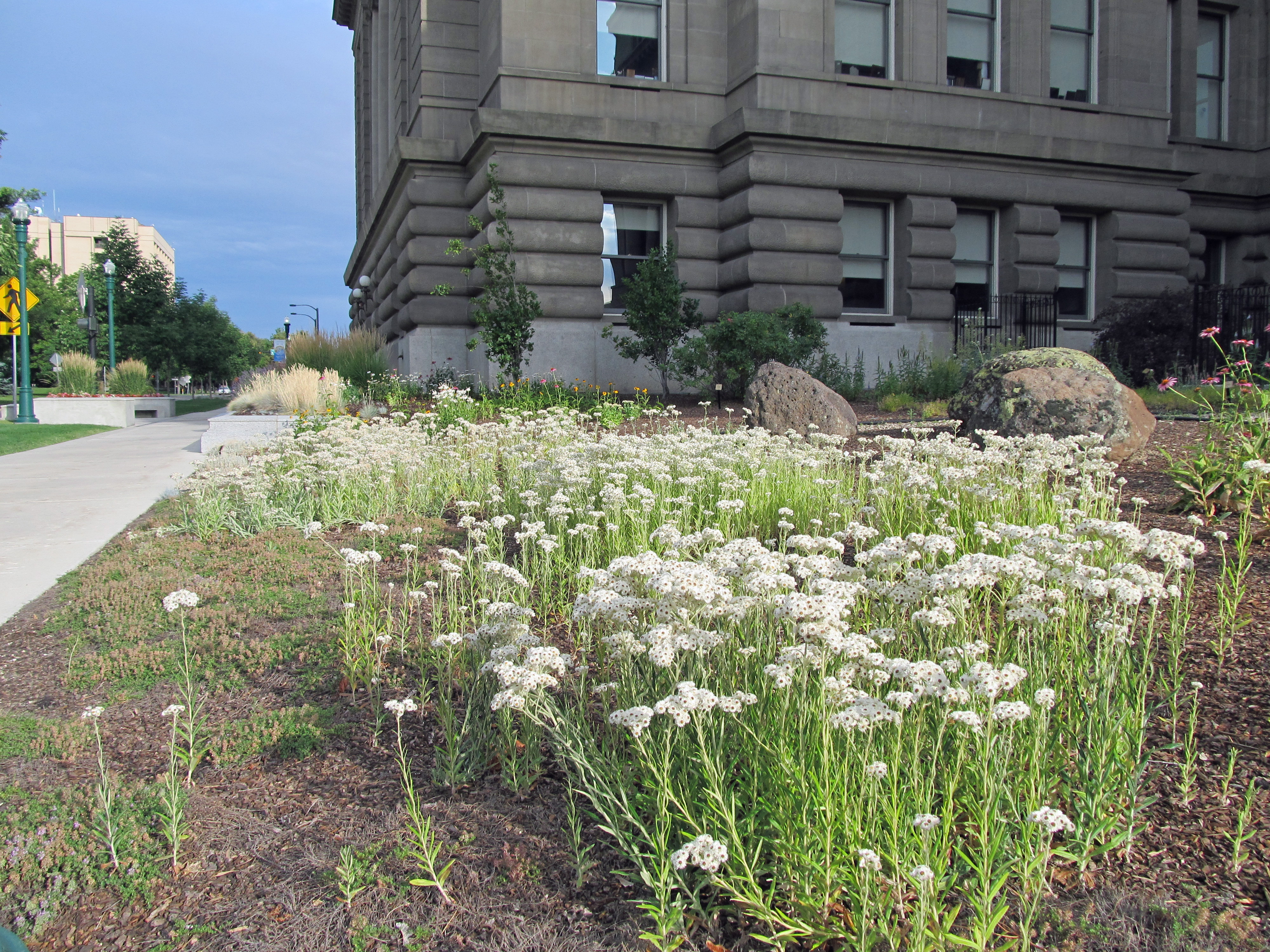
A drift of pearly everlasting (Anaphalis margaritacea)

A drift of pearly everlasting (Anaphalis margaritacea)

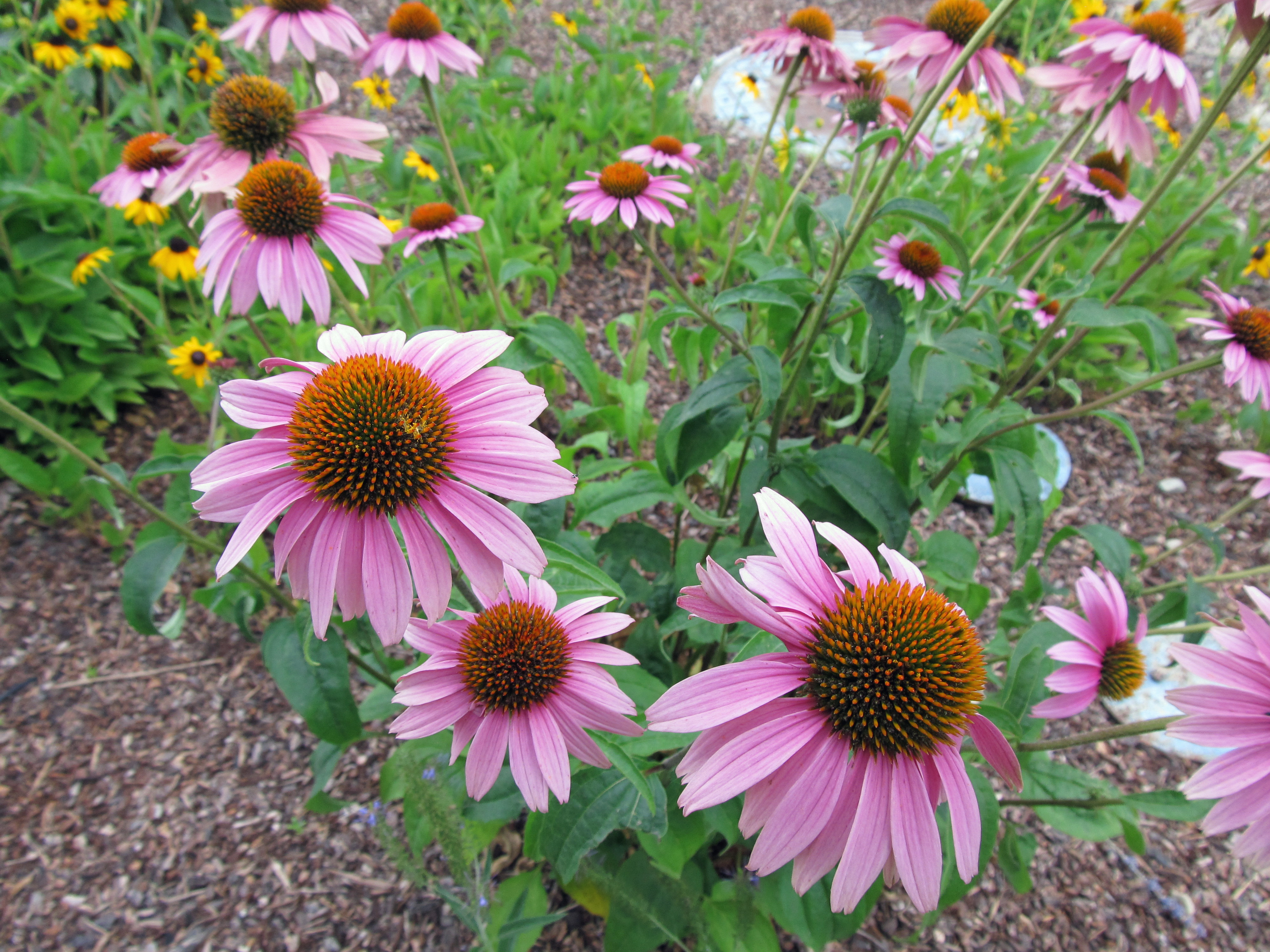
Purple coneflower (Echinacea purpurea)

Purple coneflower (Echinacea purpurea)

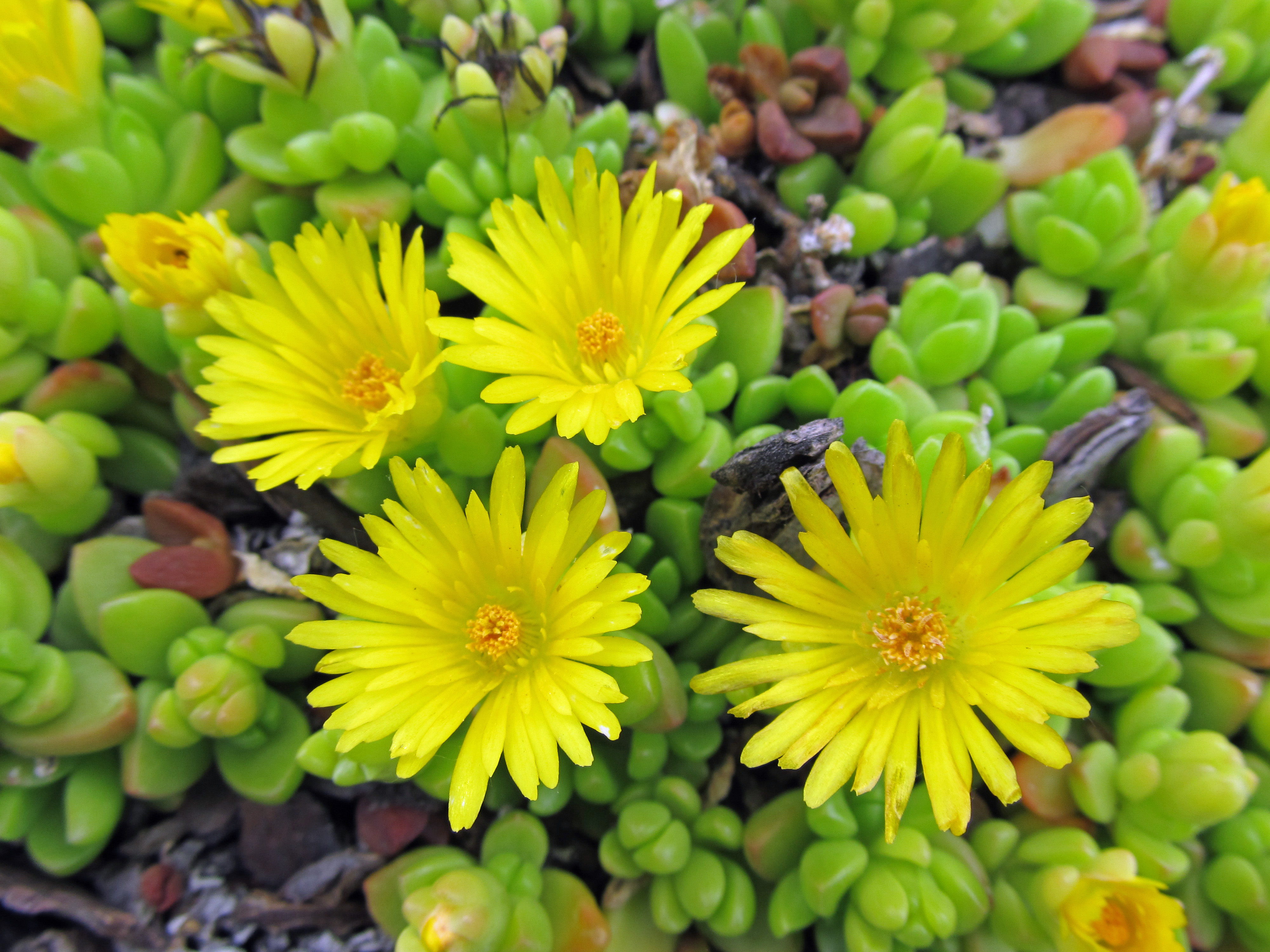
Yellow ice plant (Delosperma nubiginum)

Yellow ice plant (Delosperma nubiginum)

Other “Drought Tolerant Plants” Posts on Awkward Botany:

Drought Tolerant Plants: Prickly Pears

In the introduction to this series about drought tolerant plants, I defended water efficient gardens by claiming they don’t have to be the “cacti-centric” gardens that many visualize upon hearing terms like “xeriscape,” “water-wise,” and “drought tolerant.” And this is absolutely true. However, that won’t stop me from suggesting that such landscapes include a cactus or two. Despite their menacing and potentially dangerous spines, they are actually quite beautiful, and a cactus in bloom is really a sight to behold. Together with a variety of grasses, herbaceous flowering plants, and shrubs, cactus can add unique forms, textures, and focal points that will enhance the look and function of a water-wise garden. This is why I recommend considering cactus, particularly (as far as this post is concerned) one of the many varieties of prickly pears.

The cactus family (Cactaceae) has a native range that is limited to the Americas. Within that range it is expansive, and cactus species can be found in diverse regions from Canada down to Patagonia. The genus Opuntia (the prickly pears) is the most widespread of any genus in the cactus family consisting of at least 300 species found throughout the Americas. Even a brief investigation into Opuntia will reveal that there is considerable controversy as to how many species there actually are and what to call them. This is partly due to the large ranges that species in this genus can have and the diverse habitats they can be found in within those ranges, resulting in a single species having many forms, varieties, and/or subspecies. Hybridization is also common in this genus where ranges overlap, augmenting the challenge of identification.

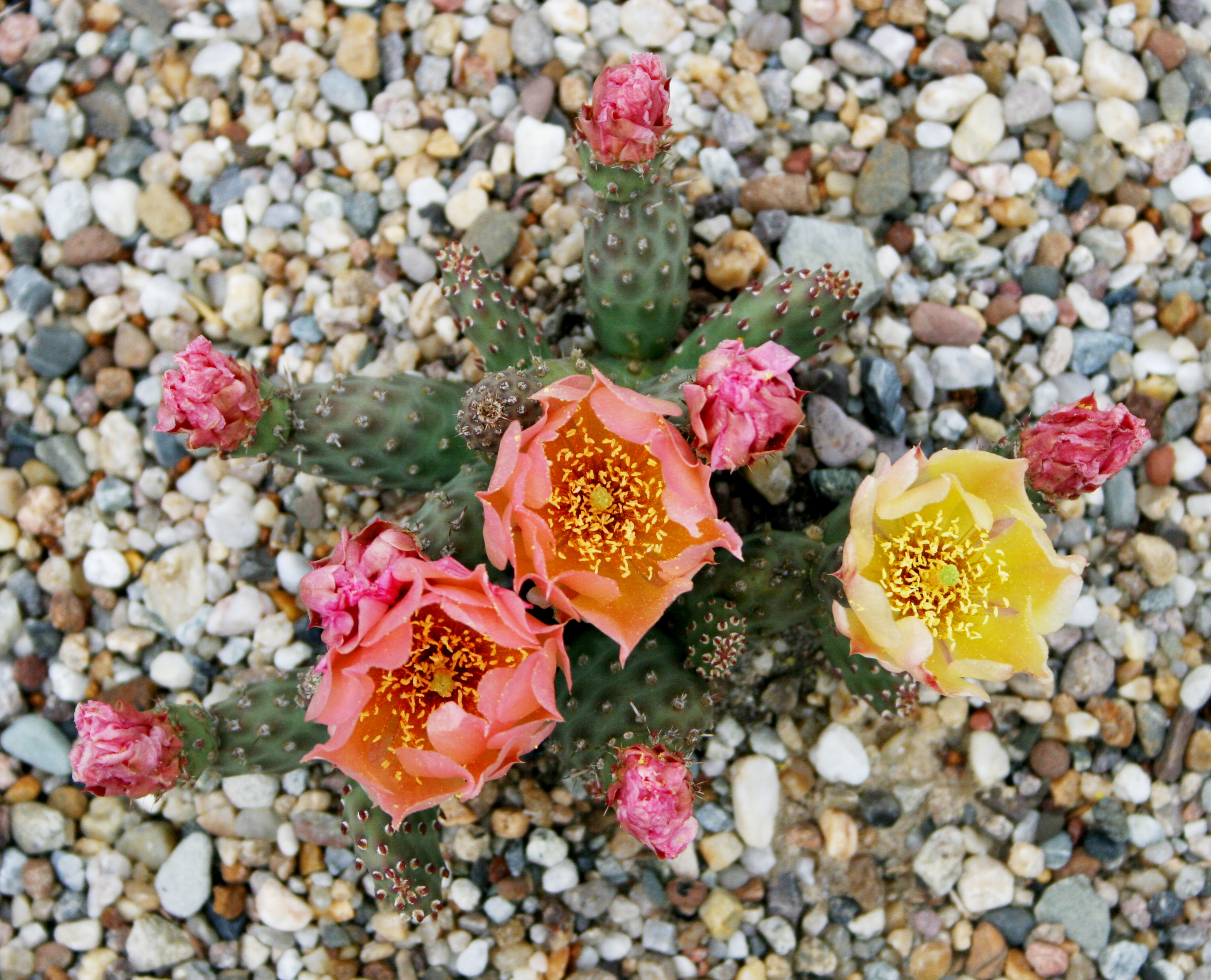
Generally, prickly pears have flattened stems with spines and glochids emerging from small bumps called areoles. Their flowers are large, showy and a shade of either yellow, orange, or pink and sometimes white. They form fruits that are either fleshy and juicy with a red or purple hue or hard, dry and a shade of brown or tan. The flattened stems are called pads or cladodes and can be quite large in some species, while diminutive and sometimes rounded in others. Some species are without spines, but all have glochids – tiny, barbed, hair-like structures found in clusters on the stems and fruits. While the spines can be painful when they penetrate skin, the glochids are far more irritating as they easily detach themselves from the plant and work their way into the skin of their victims. The fleshy fruits, called tunas, can be eaten after first taking care to remove the glochid-infested outer layer. The young stems of many species can also be eaten – they are referred to as nopales and are common in Mexican cuisine.

Flowers of Opuntia sp. with bee inside flower on the left

Flowers of Opuntia sp. with bee inside flower on the left

Again speaking generally, prickly pears are very easy to propagate and cultivate. Their two main preferences are full sun and well-drained soil. If you are worried that the soil you are planting them in is going to stay too wet for too long, amend it with some gravel. This is especially important if you live in a climate that receives lots of precipitation or that has cold, wet winters. Once established, prickly pears will move around the garden. If that becomes a problem, expanding plants are easily pruned and traveling plants are easily removed.

I live in a climate that requires the selection of cold hardy prickly pears, so I am taking my specific recommendations from two books: Cacti and Succulents for Cold Climates by Leo J. Chance and Hardy Succulents by Gwen Moore Kelaidis. If you live in a warmer climate, your options will be greater. Still, the options for cold regions are pretty numerous, so for the sake of space I am narrowing my list down to a handful that stand out to me at this particular moment.

Three eastern United States species of prickly pears (O. compressa, O. macrorhiza, and O. humifusa) are, according to Chance, “more capable of dealing with wet and cold conditions than almost any other members of the cactus family.” They still require well-drained soil though. An appealing trait is their large, juicy, red fruits that can add garden interest in late summer and fall. Opuntia engelmannii is another species with the potential to tolerate cold, wet conditions. Its size is appealing to me, with pads that reach a foot wide and plants that grow several feet tall. Chance advises finding “a clone that is known to be cold tolerant” and making some space for it, “as it becomes huge in time.” The most cold tolerant prickly pear may be Opuntia fragilis. It is a diminutive plant with a large native range and a variety of forms, some with rounded pads “shaped like marbles.”

Fruits ("tunas") of Opuntia engelmannii - photo credit: www.eol.org

Fruits (“tunas”) of Opuntia engelmannii – photo credit: www.eol.org

Opuntia fragilis 'Frankfurt' - photo credit: wikimedia commons

Opuntia fragilis ‘Frankfurt’ – photo credit: wikimedia commons

Opuntia polyacantha is a prickly pear native to my home state, Idaho. It is found at high elevations throughout the Intermountain West and is also found on the Great Plains. It has many forms and varieties, and its flowers are various shades of pink or yellow. It is a fast growing species and spreads around easily. Other cold hardy species include Opuntia macrocentra (which has a very attractive yellow flower with a red-orange center), Opuntia erinacea (commonly known as hedgehog prickly pear for its abundant, long spines that can obscure the pads), and Opuntia microdisca (a tiny Argentinian prickly pear with pads that barely reach an inch across but, as Chance says, “works very well in a dry rock garden with other miniatures”).

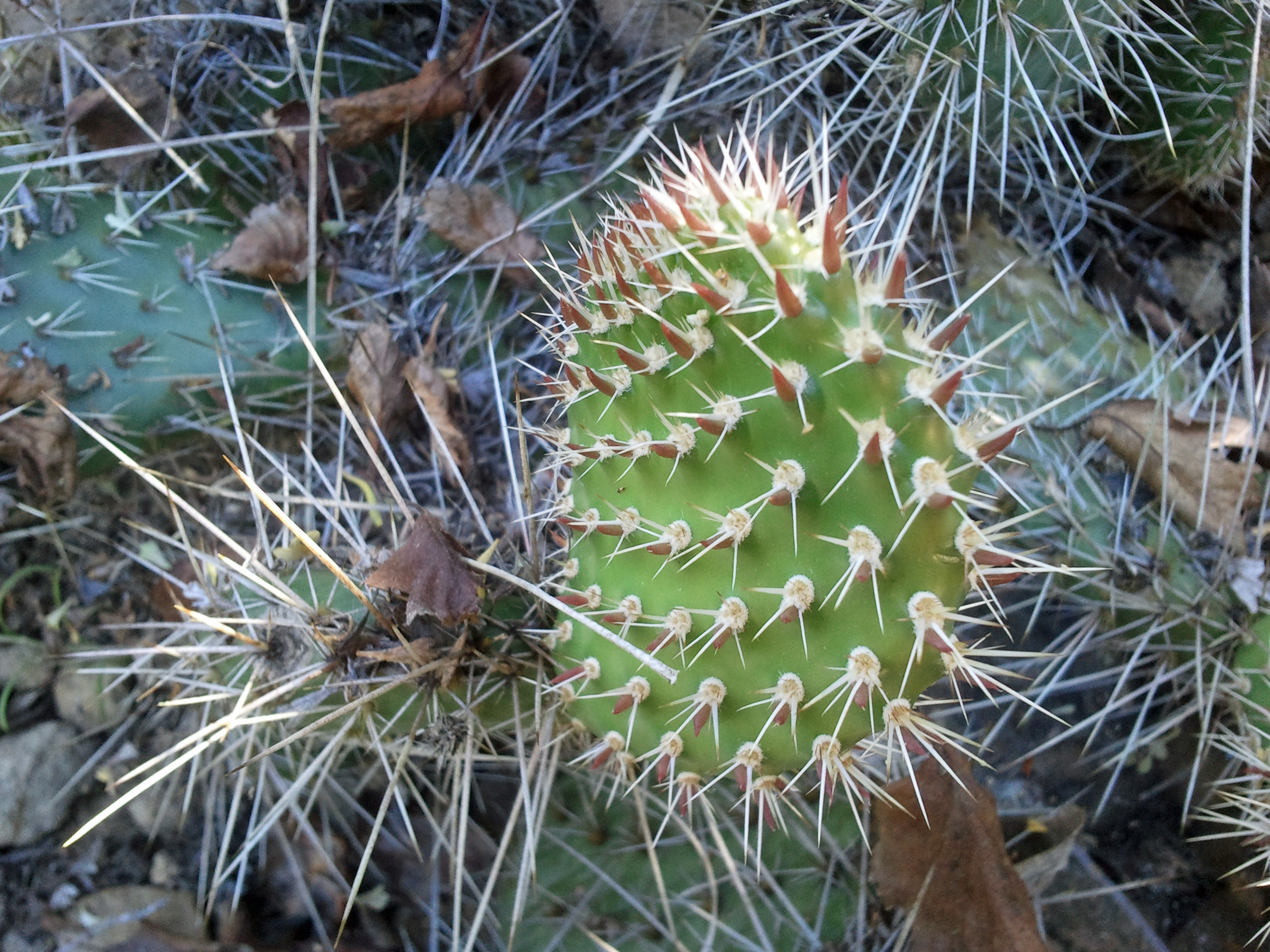
Pads of Opuntia polyacantha

Pads and spines of Opuntia polyacantha

A post about Opuntia could go on indefinitely due to the sheer number of species and their diverse forms and attributes. This is meant merely to pique your interest. The flowers, if nothing else, should certainly interest you. In her book, Kelaidis calls them “improbably beautiful,” and goes on to say that they are “often papery, always glistening and showy.” Chance likens them to “any fancy rose” because they are “extraordinarily large, brightly colored, [and] eye catching.” Next week, as part of Awkward Botany’s Year of Pollination, I will present another reason to be fascinated with the flowers of Opuntia. For now, I will leave you to ponder this word, “thigmonasty.”

Want to learn more about prickly pears? Check out Opuntia Web.

Field Trip: Lady Bird Johnson Wildflower Center, part two

This is the second in a series of two posts about my recent trip to Lady Bird Johnson Wildflower Center in Austin, Texas. You can read the first post here. Both posts are comprised of mostly pictures, as they tell a much better story about the place then my words can. However, even pictures don’t do the place justice; it’s definitely a site that you are going to have to see for yourself. I highly recommend it.

One name that kept coming up during the native plant conference was Doug Tallamy – and for good reason. Tallamy has long promoted and encouraged the use of native plants in landscapes, largely for the creation of wildlife habitat in urban and suburban areas. In 2007 he put out a book entitled, Bringing Nature Home: How You Can Sustain Wildlife with Native Plants, in which he made a strong argument for native plant gardens. His book and lectures have inspired many to seek out native plants to include in their yards. What was lacking in his book, however, was detailed information on the horticulture and design aspects of using native plants. So in 2014, together with Rick Darke, Tallamy put out The Living Landscape, an impressive tome outlining how to create beautiful and functional gardens using native plants. Both books are well worth your time.

The plant name following each photo or series of photos links to a corresponding entry in the Native Plant Database which is managed by the Wildflower Center’s Native Plant Information Network. The quotes that accompany the plant names are taken from the Native Plant Database entries.

Ilex vomitoria (yaupon). “The leaves and twigs contain caffeine, and American Indians used them to prepare a tea which they drank in large quantities ceremonially and then vomited back up, lending the plant its species name, vomitoria. The vomiting was self-induced or because of other ingredients added; it doesn’t actually cause vomiting.”

aesculus pava var pava 3

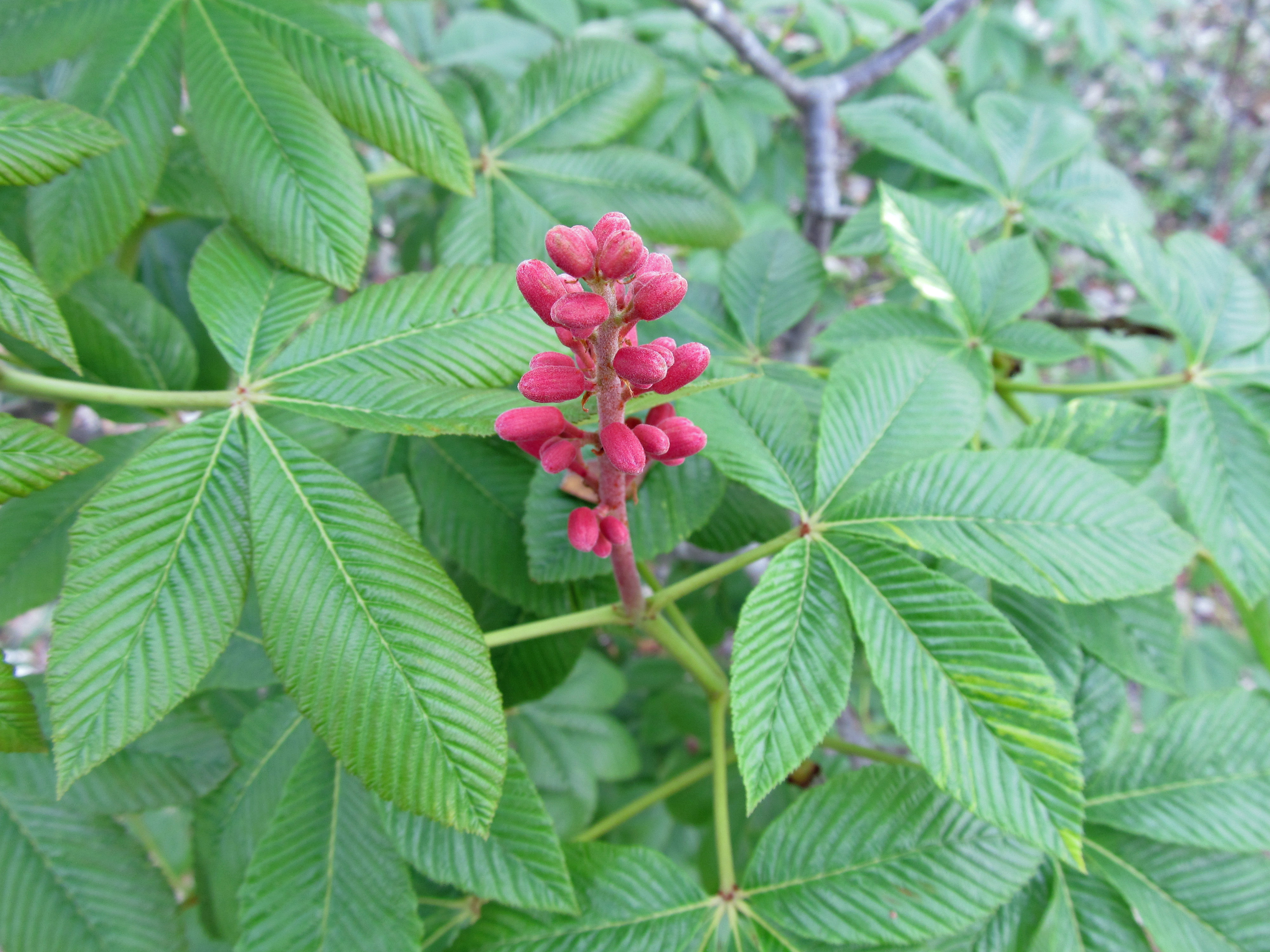
Aesculus pavia var. pavia (red buckeye). “Long popular for its brilliant, hummingbird-attracting spring flowers and rich green foliage, it is found in nature most often as a plant of woodland edges, where it can get morning sun and afternoon shade.”

tillandsia recurvata 5

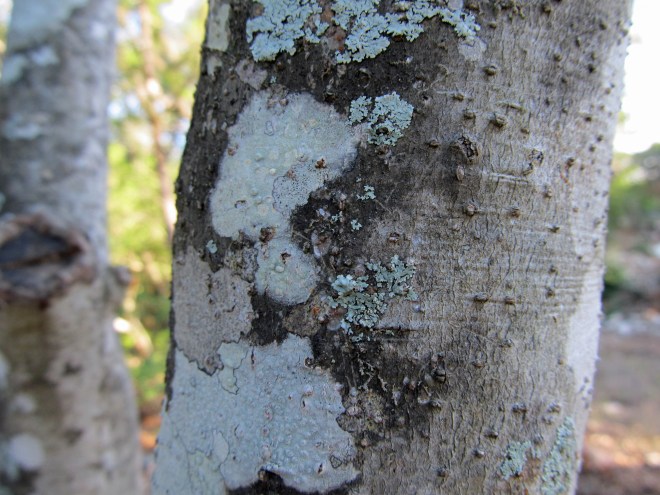
Tillandsia recurvata (ball moss). An epiphyte commonly found on trees within its range, including Quercus fusiformis (escarpment live oak) a dominant tree at the Wildflower Center. “Some have been introduced into other warm regions and cultivated for use as ornamentals or for their edible fruit.”

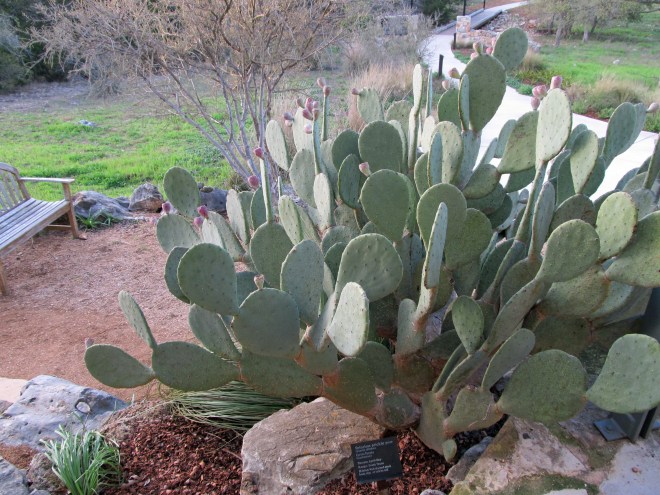
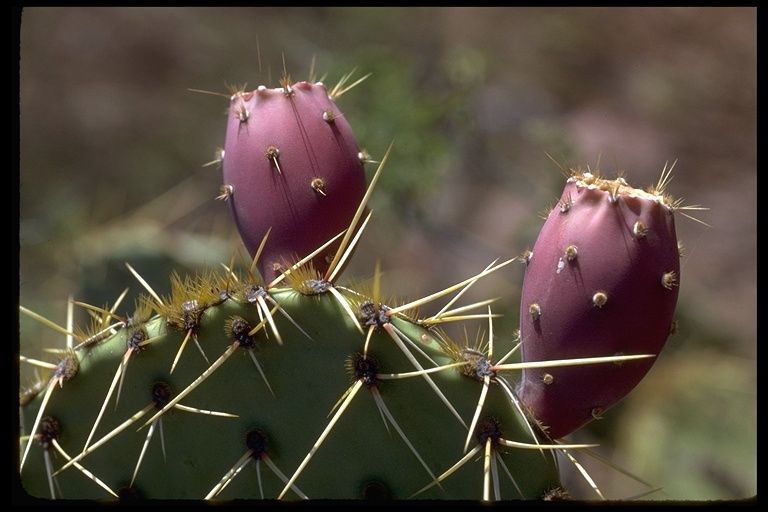
Opuntia ellisiana (spineless prickly pear). A spineless form of Opuntia cacanapa derived from cultivation. “The spineless prickly pear is a great addition to the landscape for those seeking a cactus form, showy blooms, and bright red cactus fruits (tunas). Beware, although it doesn’t have long sharp spines, the tiny glochids (slivers) are very irritating to the skin if the plant is not handled correctly.”

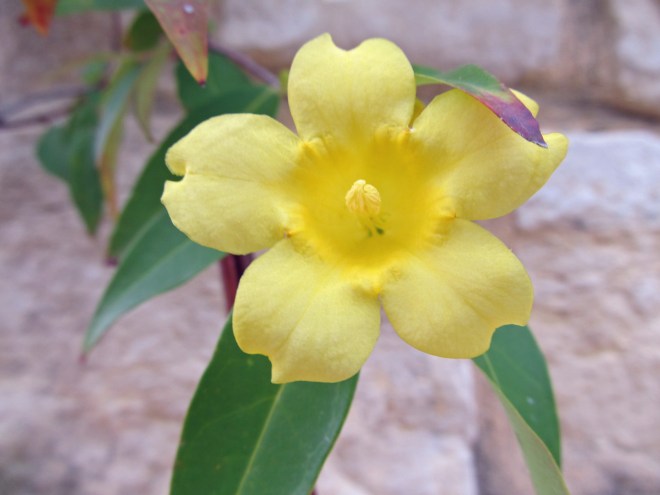
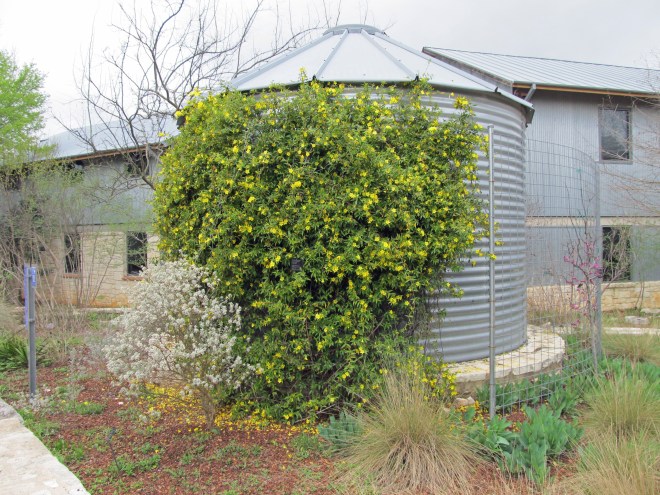
Gelsemium sempervirens (Carolina jessamine). “The flowers, leaves, and roots are poisonous and may be lethal to humans and livestock. The species nectar may also be toxic to honeybees if too much is consumed, and honey made from Carolina jessamine nectar may be toxic to humans.”

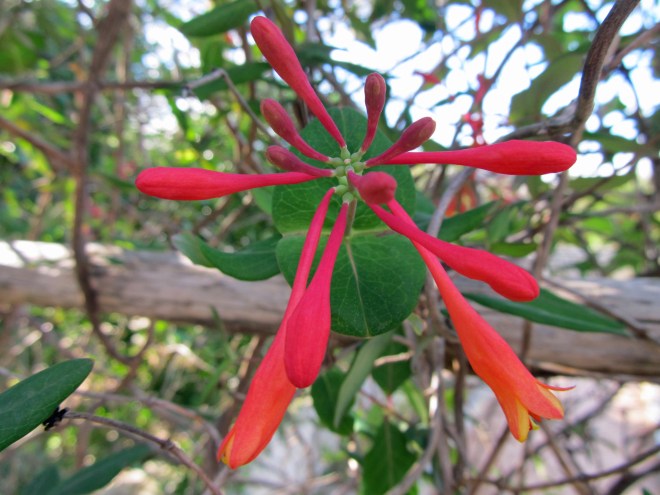
Lonicera sempervirens (coral honeysuckle). “Flowers attract hummingbirds, bees, and butterflies. Fruits attract quail, purple finch, goldfinch, hermit thrush, and American robin.”

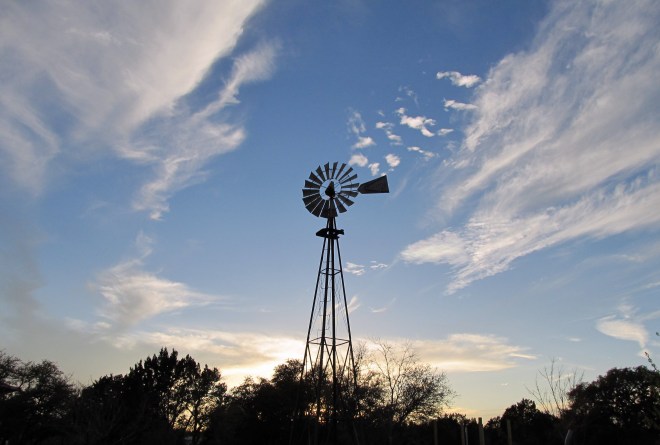
windmill

Field Trip: Lady Bird Johnson Wildflower Center, part one

Last week my place of employment sent me to Austin, Texas to spend some time at the Lady Bird Johnson Wildflower Center. I was there for a native plant conference put on by the American Public Garden Association. I had been wanting to visit the Wildflower Center for a long time, so it was great to finally get the chance. Their gardens are truly amazing. I spent three days there, but could have easily stayed much longer. The native plant conference was great, too. I learned a lot about native plant horticulture, and I left feeling inspired to put those things into practice. If you are wondering “why native plants?,” the Wildflower Center has a good answer to that on their website.

While I was there I took dozens of photos, so I am sharing some of those with you in a two part post. The plant name following each photo or series of photos links to a corresponding entry in the Native Plant Database which is managed by the Wildflower Center’s Native Plant Information Network. The quotes that accompany the plant names are taken from the Native Plant Database entries.

Sophora secundiflora (Texas mountain laurel). “The fragrance of Texas mountain laurel flowers is reminiscent of artificial grape products.”

Ranunculus macranthus (large buttercup). “This is one of the largest flowered native buttercups. The large butter-yellow flowers and attractive foliage of this plant immediately attract the eye.”

echinocereus reichenbachii 3

Echinocereus reichenbachii (lace cactus). “Lace cactus is unpredictable in its development, one plant forming a single stem, while its neighbor may branch out and form a dozen or more.”

Dalea greggii (Gregg’s prairie clover). “Grown mostly for its silvery, blue-green, delicately compound leaves, the shrub is awash with clusters of tiny, pea-shaped, purple flowers in spring and early summer.” 

viburnum rufidulum 5

Viburnum rufidulum (southern blackhaw). “In Manual of the Vascular Plants of Texas, Correll and Johnston noted that the fruit tastes similar to raisins.”

mahonia trifoliata 5

Mahonia trifoliolata (agarita). “Songbirds eat the fruits, and quail and small mammals use the plant for cover. It is considered a good honey source.”

lady bird johnson quote