Tea Time: Self-heal

Prunella vulgaris can be found all over the place. It has also been used to treat just about everything. What else would you expect from a plant known commonly as self-heal, heal-all, all-heal, and woundwort? The medicinal value of this plant has been appreciated for centuries across its expansive range, and studies evaluating its medicinal use continue today. Being such a ubiquitous species – both as a garden plant and a native plant (and also a common weed) – and because it has so much clout in the world of herbal medicine, it’s an obvious candidate for Tea Time.

Self-heal is a member of the mint family (Lamiaceae), easily distinguished by its square stems, opposite leaves, and bilabiate and bilaterally symmetrical (or zygomorphic) flowers. One surprise is that, unlike the many aromatic members of this family, the foliage of self-heal lacks a strong scent. P. vulgaris occurs naturally across Asia, throughout Europe, and in parts of northern Africa. It is also widely distributed across North America. Apart from that, it has been introduced to many regions in the southern hemisphere and has also been frequently moved around throughout its native range. Eurasian varieties now intermingle with North American varieties, which can make it difficult to determine a native individual from an introduced one.

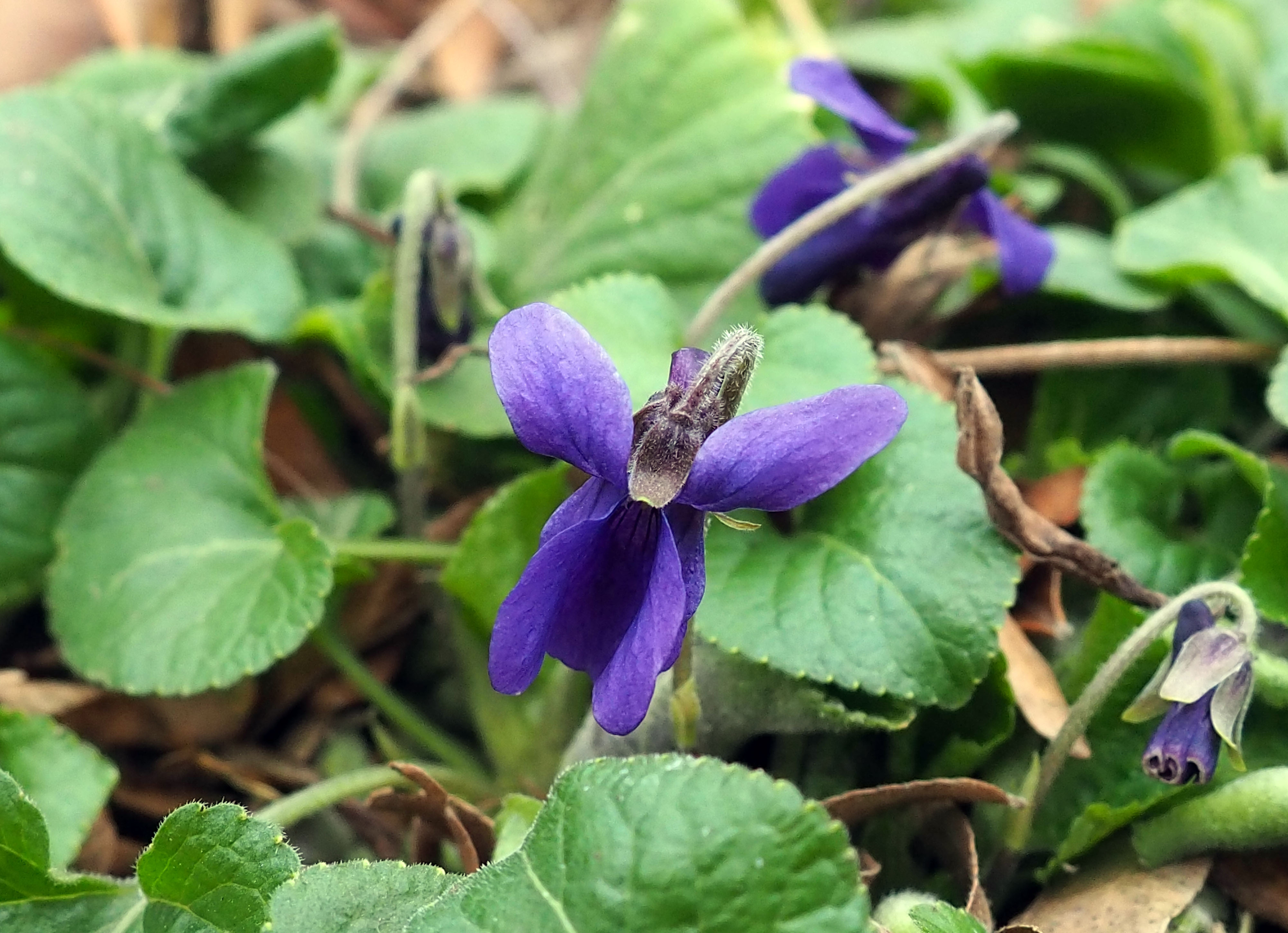
self-heal (Prunella vulgaris)

Self-heal is an adaptable plant that tends to prefer shady, moist locations, but can also be found in open, dry, sunny sites. Find it along forest edges, roadsides, ditches, and trails, as well as on the banks of streams, lakes, and reservoirs. It occurs in gardens, both intentionally planted and as a weed, and can escape into lawns, vacant lots, and open fields, as well as into nearby natural areas.

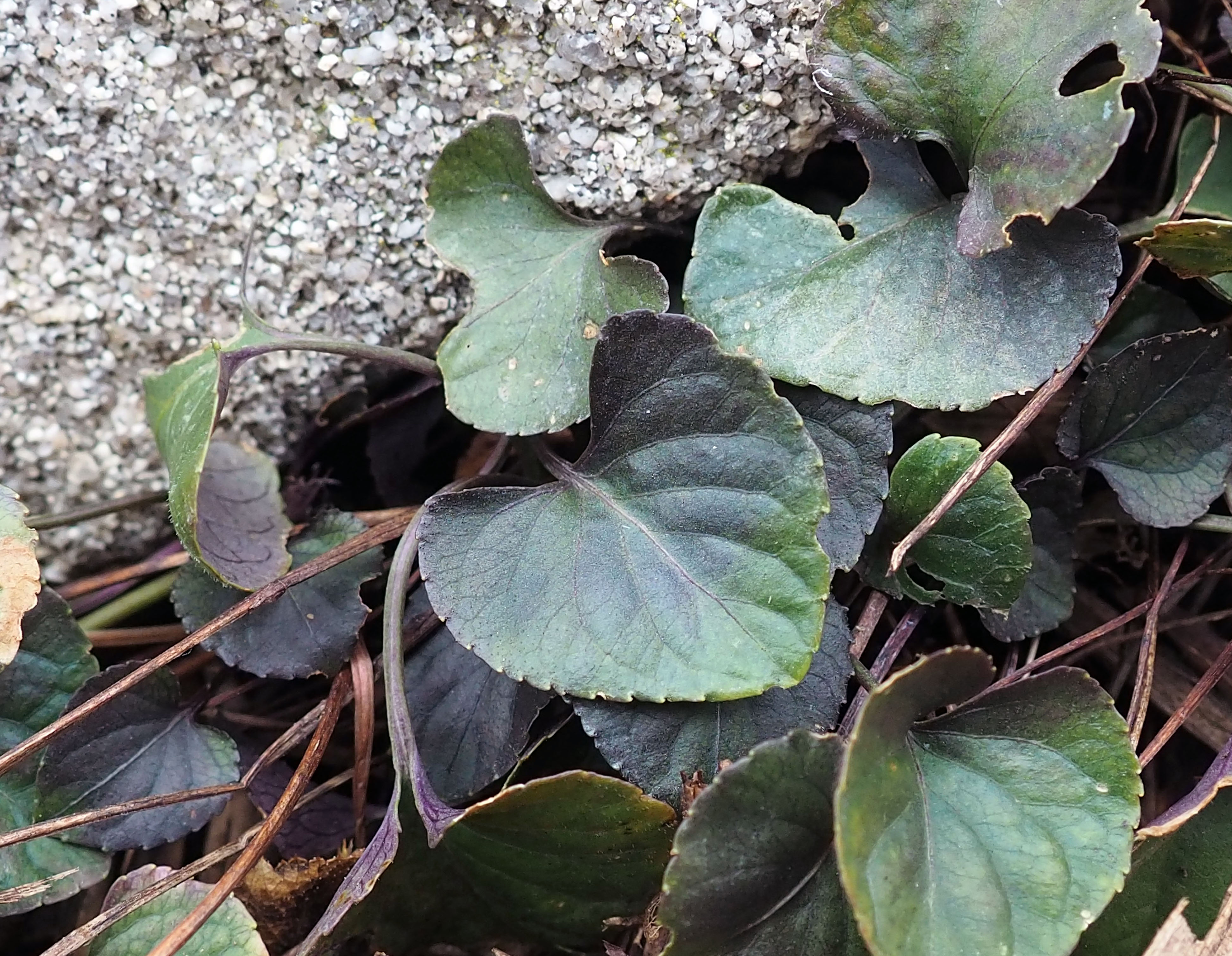
P. vulgaris is an evergreen that grows both prostrate and upright, sometimes reaching 1 foot tall or more (but is often much shorter). It has shallow, fibrous roots, and its stems root adventitiously as they sprawl across the ground, frequently forming an extensive mat or groundcover. Its leaves are oval to lance-shaped and measure about one inch long. Lower leaves have petioles, while upper leaves may become stalkless. Leaf margins are entire or can be slightly toothed. As plants age, they can develop a coppery or purple-bronze color.

the leaves of self-heal

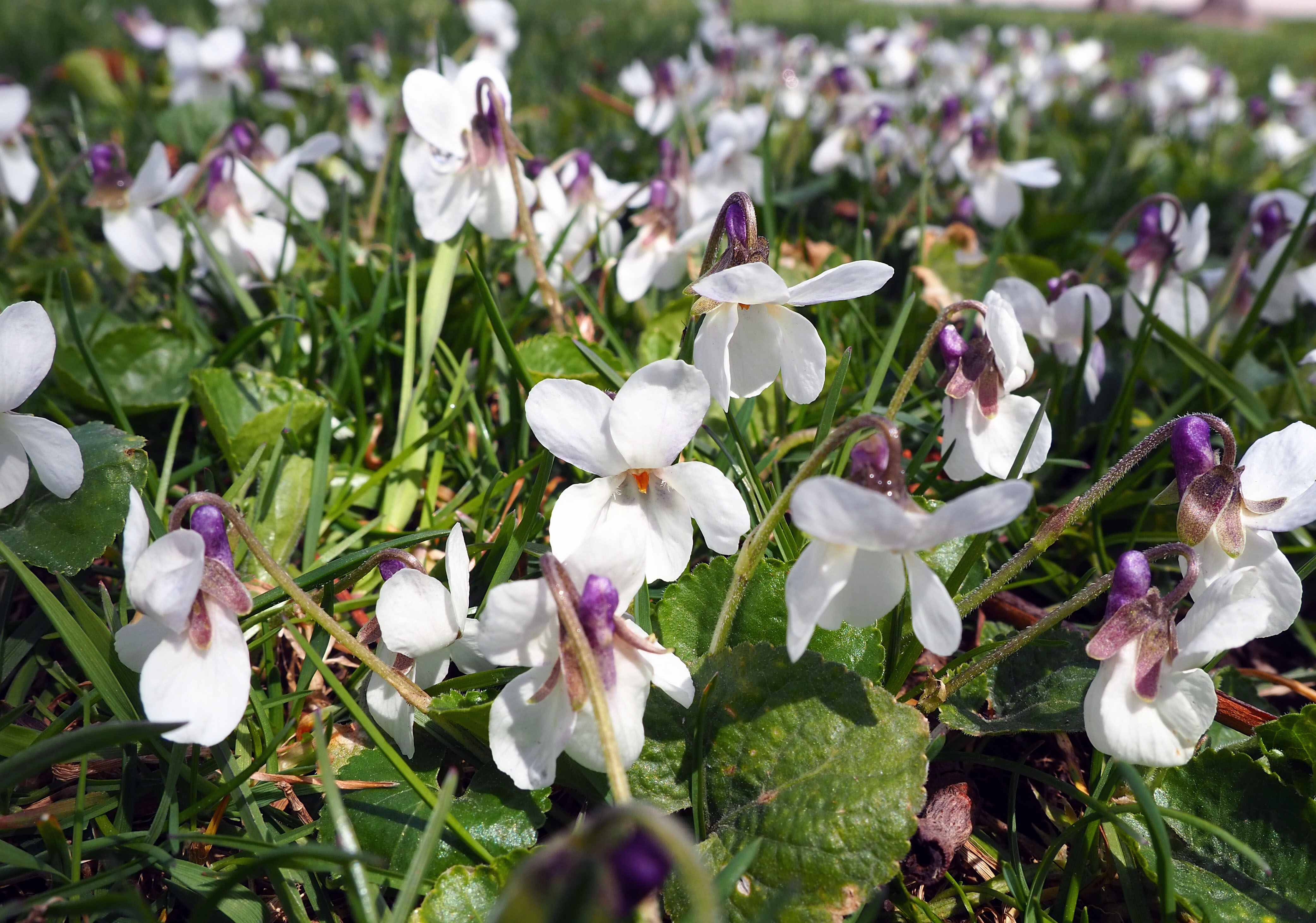
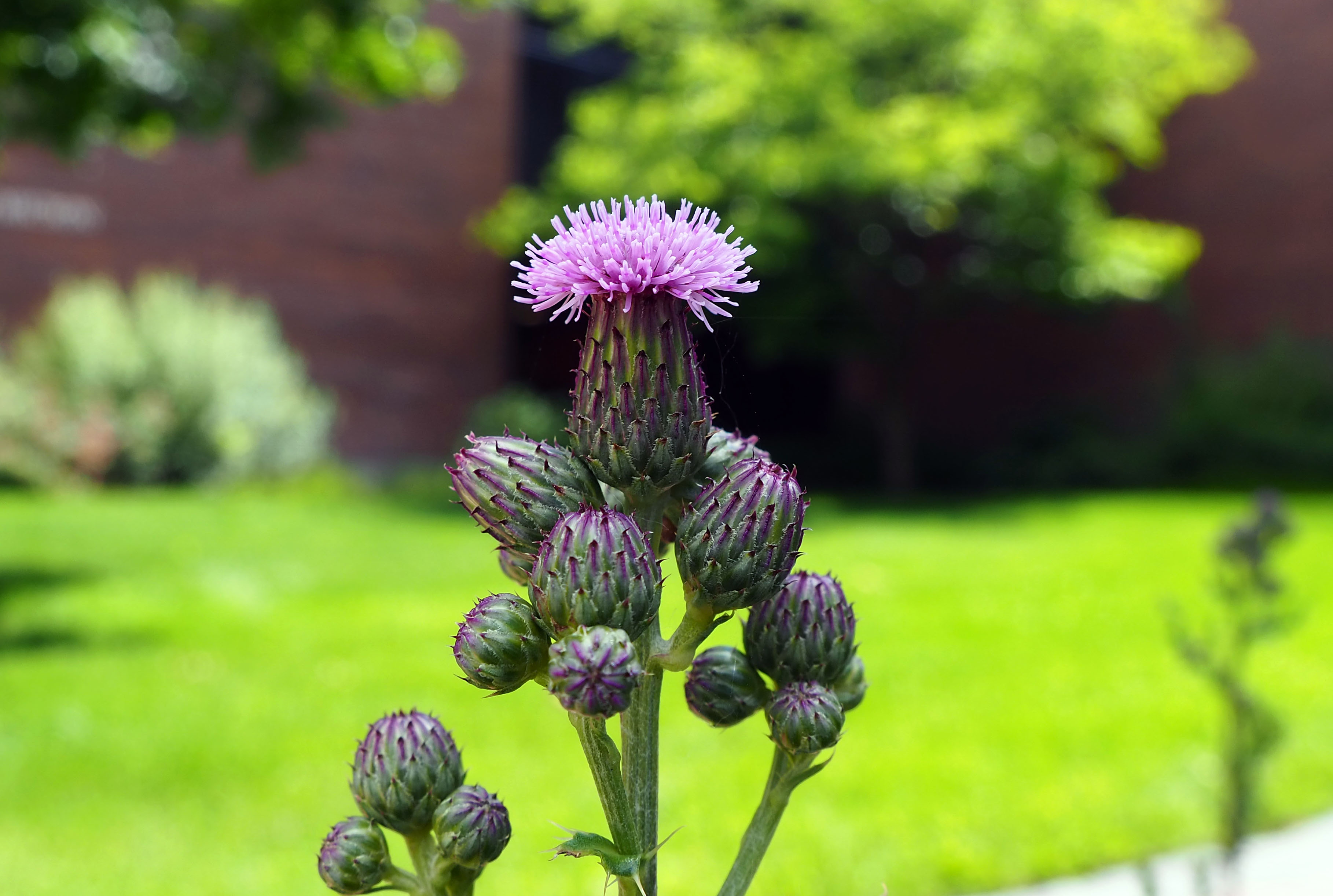
The flowers of self-heal are generally a shade of purple, but can also be white, pink, or blue. They bloom irregularly in a spike measuring up to two inches long. Flower spikes are thick, dense, cylindrical, and made up of whorls of sharp-pointed bracts. Flowers bloom irregularly along the spike and occur from late spring/early summer into the fall. Each flower produces four nutlets, which sit within a cup-shaped, purple calyx.

As a medicinal herb, self-heal has been used both internally and externally to treat a long list of ailments. These include sore throats, diarrhea, fevers, intestinal infections, liver problems, migraines, heart issues, dermatitis, goiter, and thyroid disfunction, just to name a few. It has been used topically to treat skin irritations, bites, stings, and minor cuts and scrapes. This is thanks to its antimicrobial properties and its ability to stop bleeding. A report in the journal Pharmaceuticals (2023) calls P. vulgaris an “important medicinal plant” due to its “rich chemical composition” and its “pharmacological action.” Chemical analyses find the plant to be a valuable source of phenolic compounds, flavonoids, rosmarinic acid, and ursolic acid, among numerous other compounds. If you are curious to learn more detailed information regarding this plant’s medicinal value, you can refer to the above report, as well as one found in Frontiers in Pharmacology (2022).

self-heal tea

P. vulgaris is an edible plant, and its young leaves can be eaten raw or cooked. The leaves together with the flowers can also be dried and used to make a tea. This is how I had it. I used about two teaspoons of dried leaves to one cup of water. Feel free to use more if you would like. I thought the tea was pretty mild. It had a slight sweetness to it and a hint of mint flavor. It has been described as bitter, but I didn’t find it to be overly so (although I may have a higher tolerance for bitterness). Sierra tried it and said that it tasted like “water left over from something else.” That might be because it was more diluted than she would have preferred. Overall, I thought it was a pleasant experience and would be happy to drink it again.

More Tea Time Posts on Awkward Botany:

Horticulture’s Weedy Introductions in a Changing Climate

In case I need a reminder that the horticulture industry has a history of introducing weedy plants to natural areas, I get one each time I bike to work. Riding along the Boise River Greenbelt, a trail that for much of its length is flanked by cultivated landscapes on one side and a highly modified but largely naturalized river bank on the other, I see a mixture of both native and introduced plants. Of the introduced plants, many are horticultural species that have escaped cultivation and established themselves on the bank of the river. There are catalpa and black locust trees brought in from the other side of the country, St. John’s wort and chicory from Eurasia, honeysuckles primarily from Asia, and a few different cherry species and hybrids with varied provenances. And this is just a small sample of what can be found along my three and a half mile bike ride.

St. John’s wort (Hypericum perforatum) on the banks of the Boise River

This is certainly not a new concern. We have been aware of the role that horticulture plays in introducing invasive species for quite some time now. Several years back, while doing a deep dive into the topic of invasive species, I wrote about this issue right here on this very blog. According to a study published in Frontiers in Ecology and the Environment (2021), out of 1285 plant species identified as invasive, 61% are currently sold in nurseries. If that’s not concern enough, an additional factor to consider is climate change. Plants that were less likely to escape cultivation and head for the wild, may take the opportunity to do so in a changing climate. Plus, horticultural plants that are already problems in certain areas could expand their range as climates become more favorable in new locations, especially if these plants continue to be sold in nearby nurseries.

These concerns and more are the topic of a paper published in BioScience (2023). Evelyn M. Beaury, et al. looked at nurseries across the United States and the plants they sell in order to determine where invasive plants are still being sold in regions where they are invasive. Additionally, they looked at plants known to be invasive but that are not currently invasive in the regions they are being sold. Using climate models, they predicted whether or not these plants could become invasive under changing climates.

Plants are being moved around with a lot more ease than they once were, and the sales of problematic plants are increasingly difficult to regulate. For one thing, plants prohibited for sale in one state can be purchased at nurseries in neighboring states and brought back to be planted in regions where those plants are invasive. And while mail order has existed for a long time, online ordering makes the process even simpler; and many online plant vendors are not liscensed nurseries, making them much more difficult to regulate. But even regulation is typically a response to something that has already become a problem, rather than a proactive measure to prevent plants from escaping into natural areas.

Beaury, et al. identified 672 nurseries across the United States, both online and traditional retailers. Each of these nurseries were selling one or more of the 89 plant species that became the focus of their research. These are plant species that are either on federal or state noxious weed lists or that have been identified as invasive by Invasive Plant Atlas. The reach of each nursery was determined by using customer reviews to compute distances that plants might travel after being purchased at nurseries or from online stores. Obviously, not every customer that purchases a plant leaves a review, but this is a good way to get a general idea how far away customers are from nurseries without having access to more detailed records. These geotagged reviews can also be cross-referenced with known distributions of invasive plants. Using climate models and environmental predictor variables, the researchers determined areas of current and potential invasion for each of the 89 plants.

tansy (Tanacetum vulgare) – one of the 89 plant species looked at in the study

The first question was about proximity to current records of plant invasions. Results showed that “49 of the 89 ornamental invasives were sold within 21 kilometers (13 miles) of an observed record of invasion.” When invasive plants are sold and planted near locations where they are already known to be invasive, it gives them the opportunity to add new plants to existing or developing invasions. In ecology, this is known as propagule pressure. When it comes to current and future climate, most species in the study are being sold by nurseries where the climate is either currently favorable for range expansion or may eventually become favorable. Specifically for future climate, 40 of the 89 plants are being sold in regions that are currently suitable for invasion and will continue to be suitable as the climate changes, and 25 of the 89 plants are being sold in regions where the climate is currently unsuitable but will become suitable as temperatures warm.

Particularly for plants being sold in areas that are not yet suitable for invasion, there is time to educate both the nursery industry and the general public and to look for alternatives to these plants. However, as the researchers point out, their analysis “only examined about 10% of the larger pool of U.S. ornamental plants known to be invasive,” and they “sampled only a subset of the nurseries that could be selling invasive species in the United States.” It is highly likely that the results of this study are an underestimation of the problem. Clearly the work of education and finding alternatives to problematic plants is monumental. The hope is that studies like this can help with education and can assist with working out ways to regulate sales of invasive plants.

coltsfoot (Tussilago farfara) – another one of the 89 plant species looked at in the study

Regulating the sale of plants is beyond most of our control, and how much regulation we should be enforcing on nurseries in the first place is a debate we should be having. Outside of those questions, there is a responsibility that we should take as gardeners and as residents of the planet. If we choose to grow plants, it is crucial that we get to know them. We should be taking the time to observe the degree to which they spread and how they are being dispersed. When they do move around our yards, where are they going, and are they able to grow outside of our care? Are they leaving our properties and coming up elsewhere? If we choose to plant non-native species, we should be mindful of how they might affect nearby, wild landscapes if they were to escape our yards and establish themselves in these locations. We should also be aware of where we live in the city. If our gardens are in the middle of a dense urban landscape, perhaps there is less concern that our plants will move beyond the borders of our gardens. But if we garden near natural areas, we should be significantly more selective about the things we plant, and we ought to be more observant as to what those plants are up to.

Nurseries generally sell the plants that gardeners want to buy, which means we can choose not to buy problematic plants and instead demand alternatives to these plants. Seeking out nurseries that sell the types of plants that are better suited for our regions and do not exhibit invasive behaviors can send a message to other growers that they should phase out certain plants and start growing the plants that gardeners are asking for. This may be a simplistic take, and as with most things, it’s complicated. While one of the goals of this research is to help influence regulators, another goal is simply to “[share] information about high-risk ornamental invaders across states and regions, and [work] with horticulture and community members to reduce the escape of ornamental species into natural areas.” This is precisely the area where gardeners can make a difference.

On that note, I will be starting a new series of posts to discuss some of the ornamental species that have gone weedy. By getting to know the plants that find themselves in this predicament, we can be better situated to make informed decisions about what to do about them.

Winter Trees and Shrubs: Box Elder

Box elder is a maple that doesn’t often get credit for being a maple. Moreso, it is a tree that is not thought highly of, and it may not even be welcome in certain discussions around maples. You could even say that box elder is a “rogue maple,” as Arthur Plotnick deems it in The Urban Tree Book. It should come as no surprise, but if people are going to talk about a plant this way, it’s only going to make me like it more.

First off, the leaves of Acer negundo are palmately compound, compared to the simple, palmately lobed leaves of other maples. A box elder leaf is generally composed of three leaflets, sometimes five or seven. The center leaflet is on a longer stalk than the side leaflets, which are oppositely arranged. Sometimes the leaves are confused with ash tree leaves (Fraxinus spp.), which is the reason for another common name, ash-leaved maple. It’s also not uncommon for box elder leaves to be mistaken for poison ivy, which is maybe not a plant you’d want to be confused with. In the fall, unlike the beautiful reds, oranges, purples, and yellows of so many other maples, the leaves of box elder turn a drab yellow before dropping, a trait that Plotnick calls “an embarrassment.”

leaf of box elder (Acer negundo)

It’s not really its leaf, however, that bothers people. Box elder is a fast-growing and prolific tree. Basically, it’s weedy, and because it grows so quickly, its wood is generally weak and its structure unpredictable. It falls apart easily, and it doesn’t always grow in typical tree fashion. Sometimes its more of a shrub, and sometimes it leans so far over that it practically lies on the ground. It sprouts and suckers in abundance, and as John Eastman puts it in The Book of Forest and Thicket, it “generally ignore(s) human standards for an attractive tree.”

Maybe before people knew better, or during a time when people just needed a fast growing tree to plant in their developing cities, box elders were widely planted across North America and beyond. That and their ability to spread readily helps to obscure their native distribution. Box elder is naturalized across North America, but its original distribution (whatever that means) appears to be more midwestern and eastern. Box elder grows in a variety of conditions, and is actually quite drought tolerant, which has allowed it to feel right at home in the American west, whether it is truly native here or not.

Identifying box elder in the winter can be pretty easy, especially if you come across a seed-bearing individual. Box elders are dioecious, meaning male and female flowers occur on separate individuals (another thing that sets them apart from other maples). A samara-bearing tree is a female tree, and the samaras often hang from the branches in great numbers. Like other maples, the fruits are paired together, each seed with a prominent wing. The samaras of boxelder point downward and hang from long stalks, persisting on the tree throughout the winter.

persistent samaras of box elder

The twigs of box elder are glaucous (covered with a thin, powdery bloom) and can be either green, bluish-white, or reddish-purple. They have tiny, white lenticles, and their buds are oppositely arranged. Leaf scars are a broad U-shape, and scars opposite of each other meet at the tops of the U’s, coming to a raised point. At least three bundle traces (sometimes more) are visible in the scar. Leaf buds are protected by two scales that are covered in dense, white hairs. The scales are similar in color to the twigs, but appear more white due to the fuzz. Lateral buds are 1/8 inch long or longer. Slicing open the twigs lengthwise reveals solid, white pith in the center that blends in easily with the wood.

winter twigs of box elder
winter twigs of box elder, pith exposed

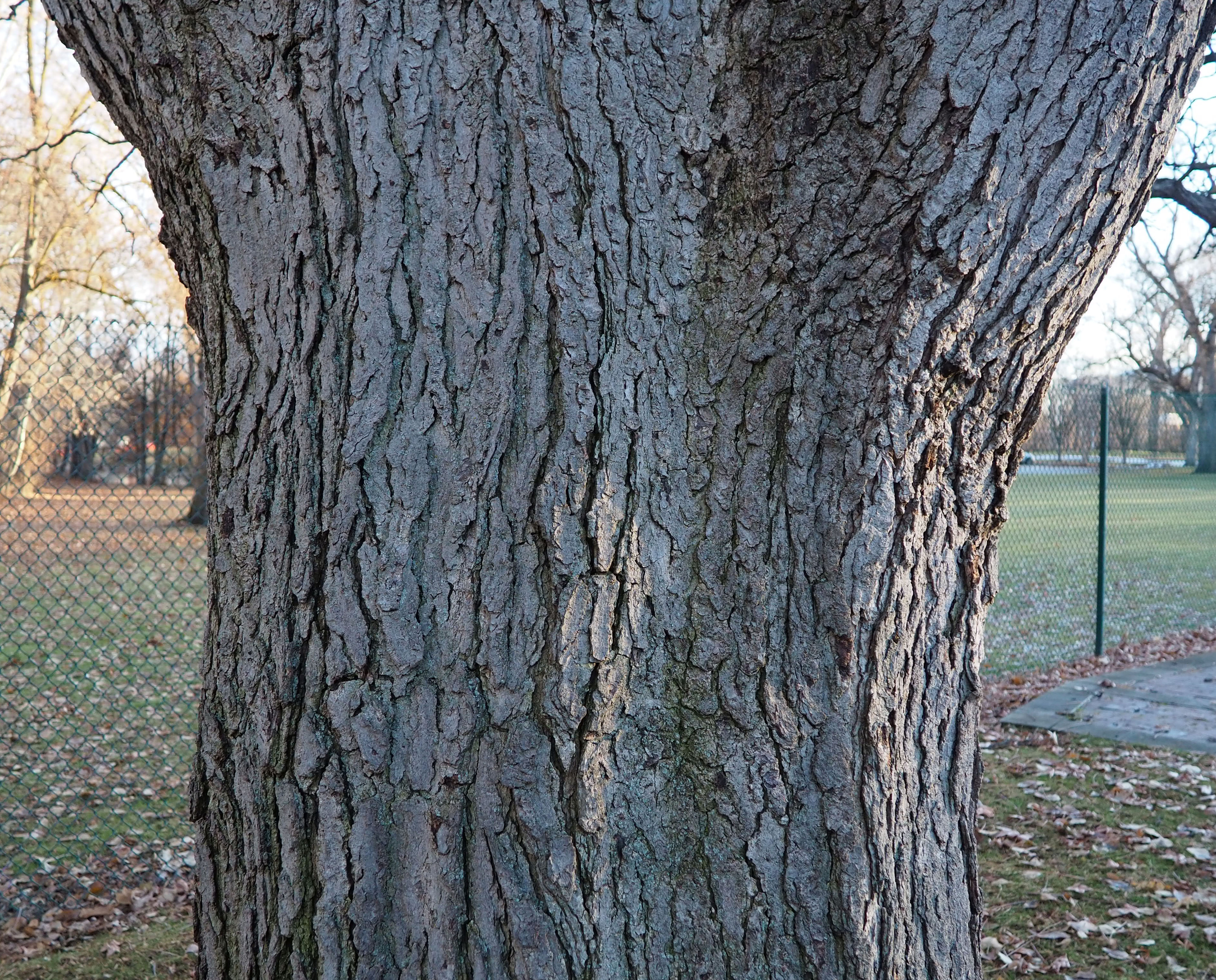
The bark of young box elders has slight vertical ridges and is light brown or grey-brown, with dull orange, raised, wart-like lenticels. It is finely scaly. The scales and ridges become more rough and blocky as the tree ages. Mature bark is light brown to grey and heavily furrowed, with blocky segments breaking apart horizontally.

maturing bark of box elder

A few years ago I was introduced to a massive box elder in Boise, Idaho. It quickly became my favorite tree in the area, and I visit it frequently. For all the hate that box elder can receive, seeing its potential to create an experience that few other trees in the area offer can send all of that negative talk out the window. Visit something like it yourself sometime, and see what it can do for you.

massive box elder

More Winter Trees and Shrubs:

Weeds of Boise: Boise State University Campus, part two

In part one of this two part series, I introduced you to the Boise State University campus, located in the heart of Boise, Idaho. I’ve been spending the past year walking the campus and cataloging the weeds that I find there. Boise has a fairly mild climate compared to the rest of Idaho, so weeds are generally easy to find just about any time of year. What weeds are present depends on what time of year it is. To get a complete picture of the suite of weeds that can be found on a site, it’s important to make observations throughout the year. Weeds can also come and go, with certain species becoming more abundant in some years than others, so making observations over multiple years also helps. This is why I try to update posts that are part of the Weeds of Boise series as I make return visits and encounter additional weed species.

What follows is the second half of the list of weeds I’ve documented so far at Boise State University. I’m including a photograph for each month of the year (July – December), as well as a list of what I’ve encountered up to this point. I’m also including a list of weeds that I didn’t come across but that are documented on iNaturalist.

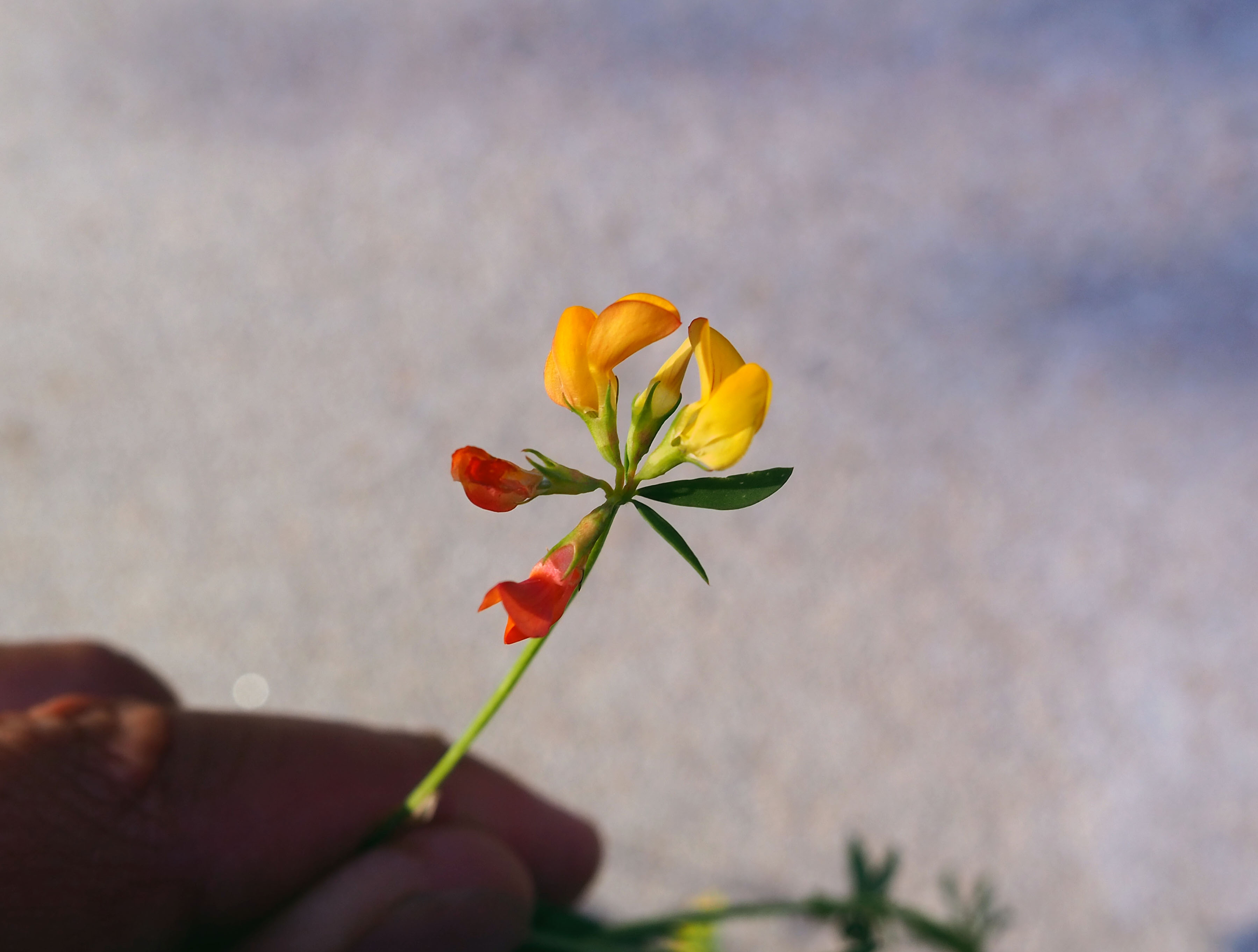
birdsfoot trefoil (Lotus corniculatus) at BSU in July 2023
yellow nutsedge (Cyperus esculentus) at BSU in August 2023
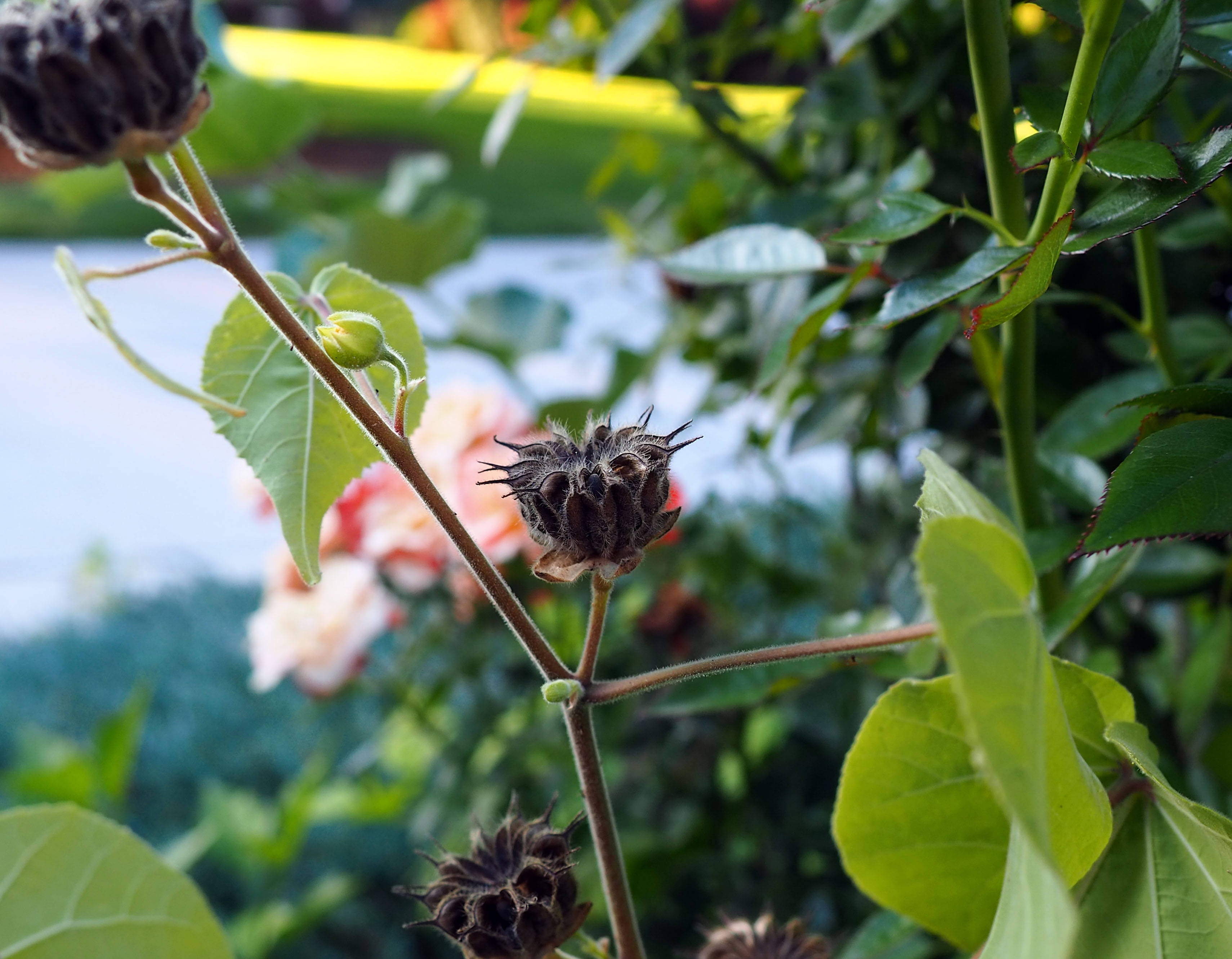
velvetleaf (Abutilon theophrasti) at BSU in September 2023
chicory (Cichorium intybus) at BSU on October 2023
puncturevine (Tribulus terrestris) at BSU in November 2023
bull thistle (Cirsium vulgare) at BSU in December 2023

Additional weeds found on the BSU campus from July – December 2023:

  • Abutilon theophrasti (velvetleaf)
  • Cichorium intybus (chicory)
  • Cirsium vulgare (bull thistle)
  • Cyperus esculentus (yellow nutsedge)
  • Eragrostis cilianensis (stinking lovegrass)
  • Lotus corniculatus (birdsfoot trefoil)
  • Medicago sativa (alfalfa)
  • Melilotus alba (white sweetclover)
  • Solanum nigrum (black nightshade)
  • Sonchus asper (prickly sowthistle)
  • Tribulus terrestris (puncturevine)

Additional weeds observed on the BSU campus by iNaturalist users as of December 2023:

  • Aegilops cylindrica (jointed goatgrass)
  • Bromus diandrus (ripgut brome)
  • Cerastium nutans (nodding chickweed)
  • Chorispora tenella (blue mustard)
  • Elymus repens (quackgrass)
  • Hypericum perforatum (St. John’s wort)
  • Lepidium perfoliatum (clasping pepperweed)
  • Matricaria discoidea (pineappleweed)
  • Ornithogalum umbellatum (star-of-Bethlehem)
  • Vicia tetrasperma (four-seeded vetch)

Weeds of Boise: Boise State University Campus, part one

If you live in a major city (or even a minor one), there is a good chance it is home to a college or university (perhaps several). Universities tend to take up a lot of space, which means there is often a plethora of landscaping accompanying their buildings, hardscaping, and other impervious surfaces. Among all the turf, flower beds, tree wells, and other greenspaces, there is bound to be a fair share of weeds. In spite of how hard the groundskeepers may work, the campus is not likely to ever be completely weed-free. Lucky for us, this means that institutions of higher learning are excellent places to familiarize ourselves with many of the weed species that occur in our cities, particularly weeds that are common in garden beds and turfgrass.

Near downtown Boise, on the southside of the Boise River, you will find the ever-expanding campus of Boise State University, home of the Broncos and their famous blue turf. According to the internet’s favorite encyclopedia, the campus is 285 acres in size, plenty of space for weeds to grow and abudant opportunities to hunt them out. Tallying the number of weed species in a place like this takes time. The benefit of botanizing for weeds is that you can find them at just about any time of year. While some species only show up in certain seasons, others can be seen practically year-round.

In order to document the weeds of Boise State University, I’m spending the entire year walking the campus listing and photographing the weeds I find. What follows is the first half of what’s been documented so far. I’m including a photograph for each month of the year, as well as a list of what I’ve encountered. In part two, I’ll share a list of any additional weeds found throughout the remainder of the year. While you’re waiting for that, check out the other posts in the Weeds of Boise series.

common groundsel (Senecio vulgaris) at BSU in January 2023
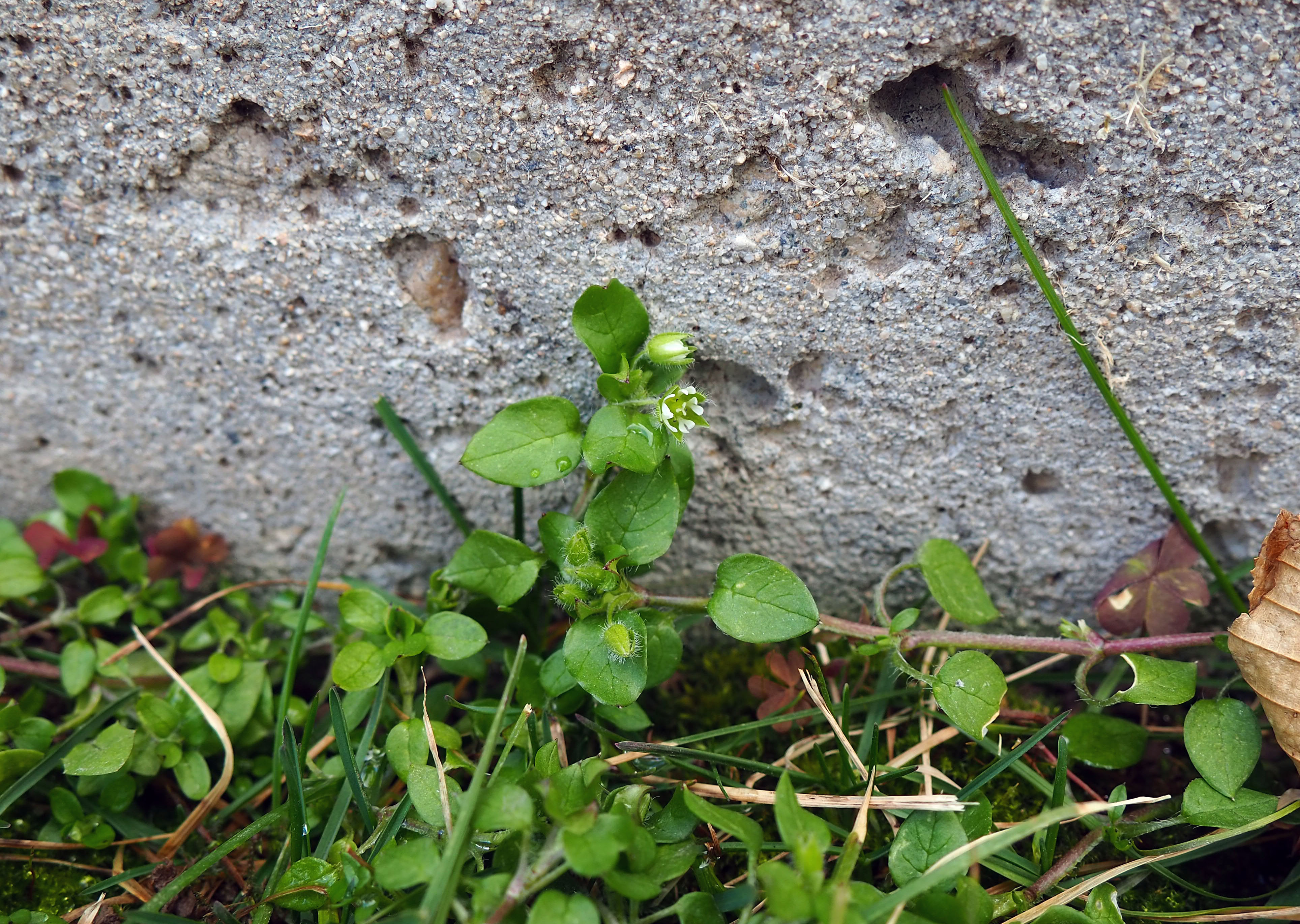
chickweed (Stellaria media) at BSU in February 2023
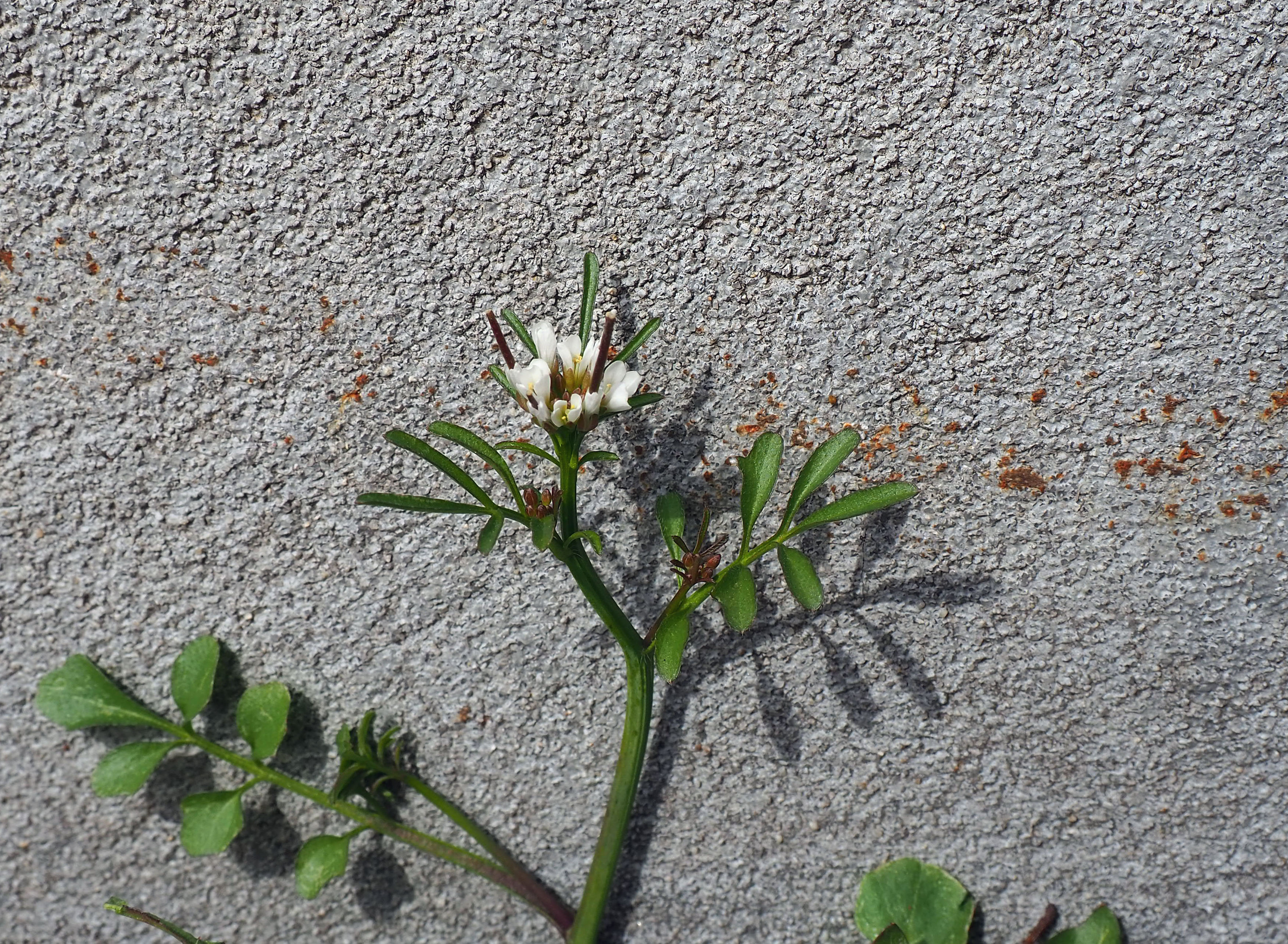
hairy bittercress (Cardamine hirsuta) at BSU in March 2023
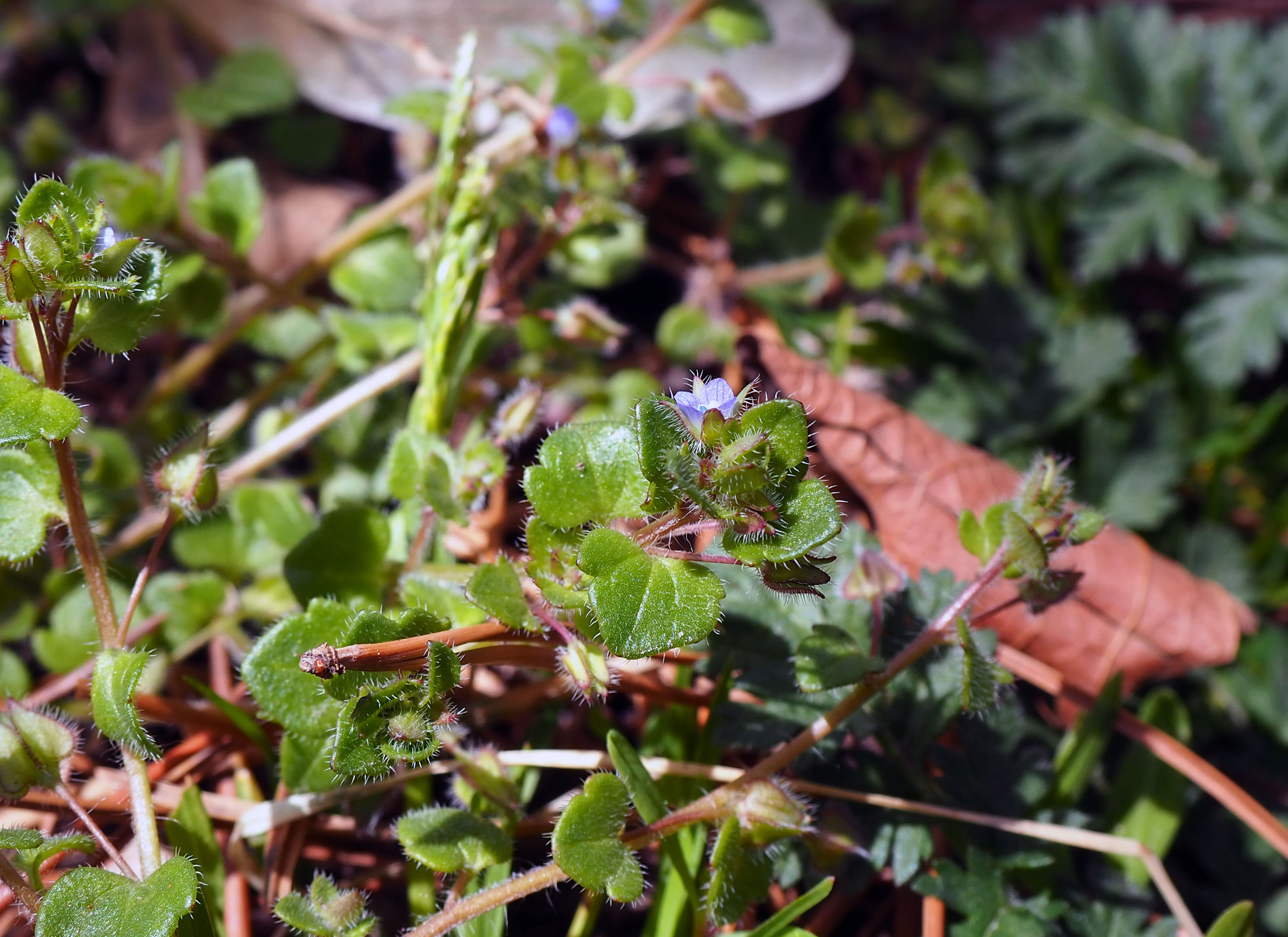
ivyleaf speedwell (Veronica hederifolia) at BSU in April 2023
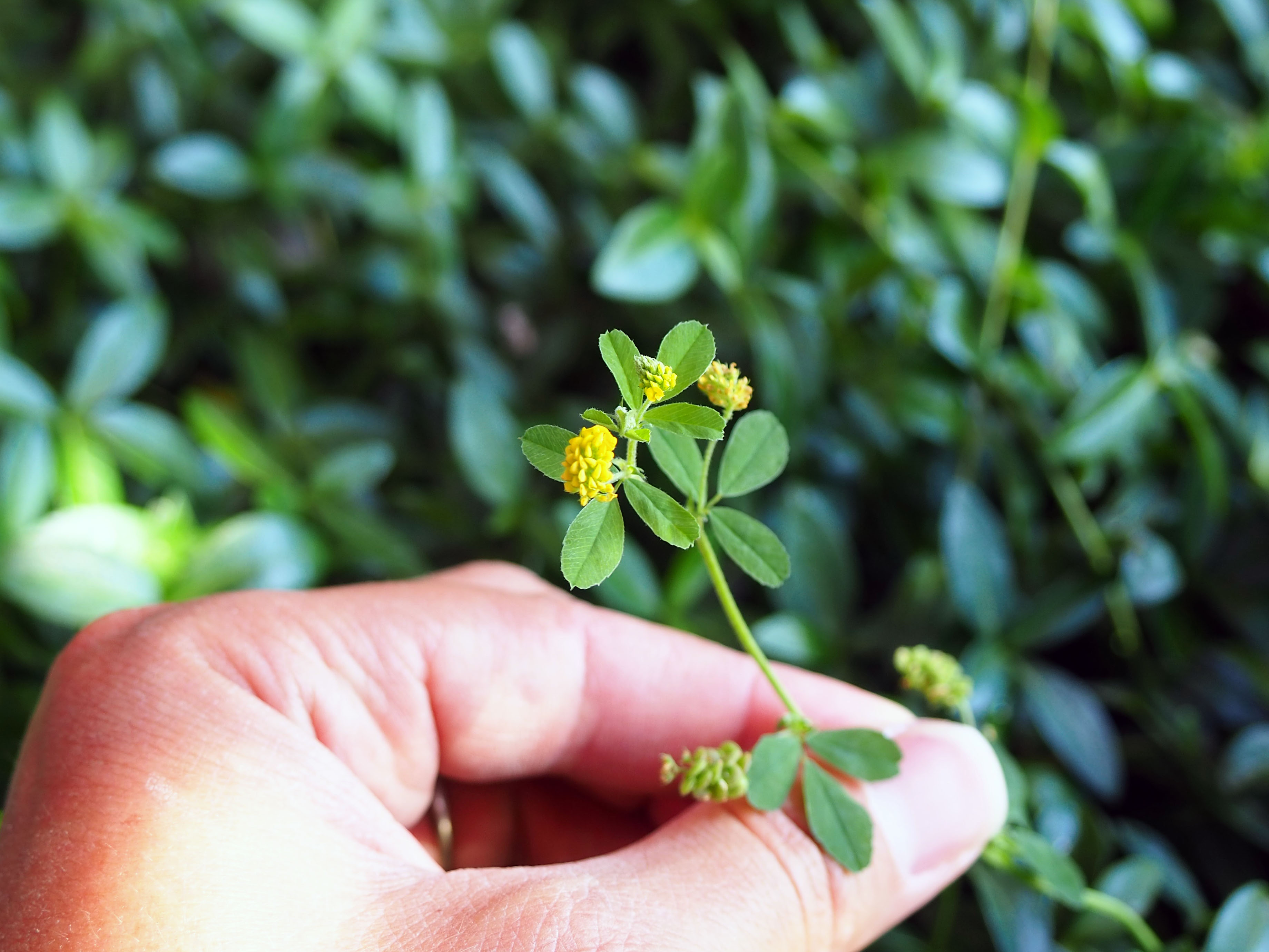
black medic (Medicago lupulina) at BSU in May 2023
creeping thistle (Cirsium arvense) at BSU in June 2023

List of weeds found on the campus of Boise State University as of June 2023:

  • Ailanthus altissima (tree of heaven)
  • Anthriscus caucalis (bur chervil)
  • Amaranthus retroflexus (redroot pigweed)
  • Arctium minus (lesser burdock)
  • Bassia scoparia (kochia)
  • Bromus tectorum (cheatgrass)
  • Capsella bursa-pastoris (shepherd’s purse)
  • Cardamine hirsuta (hairy bittercress)
  • Ceratocephala testiculata (bur buttercup)
  • Chenopodium album (lamb’s quarters)
  • Chondrilla juncea (rush skeletonweed)
  • Cirsium arvense (creeping thistle)
  • Claytonia perfoliata (miner’s lettuce)
  • Convolvulus arvensis (field bindweed)
  • Conyza canadensis (horseweed)
  • Descurainia sophia (flixweed)
  • Digitaria sanguinalis (crabgrass)
  • Draba verna (spring draba)
  • Epilobium ciliatum (willowherb)
  • Erodium cicutarium (redstem filare)
  • Euphorbia maculata (spotted spurge)
  • Galium aparine (cleavers)
  • Geum urbanum (herb Bennet)
  • Holosteum umbellatum (jagged chickweed)
  • Hordeum jubatum (foxtail barley)
  • Lactuca serriola (prickly lettuce)
  • Lamium purpureum (purple deadnettle)
  • Lepidium sp. (whitetop)
  • Malva neglecta (common mallow)
  • Medicago lupulina (black medic)
  • Oxalis corniculata (creeping woodsorrel)
  • Parthenocissus quinquefolia (Virginia creeper)
  • Plantago lanceolata (narrowleaf plantain)
  • Plantago major (broadleaf plantain)
  • Poa annua (annua bluegrass)
  • Poa bulbosa (bulbous bluegrass)
  • Polygonum aviculare (prostrate knotweed)
  • Portulaca oleracea (purslane)
  • Prunella vulgaris (self-heal)
  • Ranunculus repens (creeping buttercup)
  • Senecio vulgaris (common groundsel)
  • Sonchus sp. (sow thistle)
  • Stellaria media (chickweed)
  • Taraxacum officinale (dandelion)
  • Tragopogon dubius (salsify)
  • Trifolium repens (white clover)
  • Ulmus pumila (Siberian elm)
  • Veronica hederifolia (ivyleaf speedwell)
  • Vulpia myuros (rat’s tail fescue)

Do you frequent the BSU campus? Have you seen anything not on my list? Comment below or send me a message and let me know what you’ve seen and where.

Winter Trees and Shrubs: Kentucky Coffeetree

A few years ago, I was on the hunt for a Kentucky coffeetree. I was aware that a few could be found in some of the parks around Boise, but not being familiar with them, I wasn’t sure where exactly to find one or what I was even looking for. One winter while riding my bike to work, I noticed a tree at the edge of a golf course. No doubt I had passed this tree hundreds (if not thousands) of times. What caught my eye were thick, bean-like pods hanging from the ends of branches. They were unlike any other tree fruits I was familiar with. I stopped and, with a little effort, knocked one of the pods free from the tree. When I split it open, I found three or four large, smooth, black seeds inside. Later, I confirmed that the tree was indeed Kentucky coffeetree. Passing by it during any other time of year, it may have never caught my eye – just another deciduous tree with green leaves that, from a distance at least, looks like so many other deciduous trees. But in winter, with several chunky pods hanging from the tips of its stout branches, it really stood out. This is the joy of looking at trees and shrubs in the winter, where features that may otherwise be obscured, become glaringly obvious against the plainness of a winter backdrop.

fruits of Kentucky coffeetree (Gymnocladus dioicus)

Kentucky coffeetree (Gymnocladus dioicus) is in the bean family (Fabaceae). It occurs in forests across the eastern and central United States and north into southern Ontario, Canada. It is also planted in urban areas both within and outside of its native range. It is a medium to large tree, averaging 60-70 feet (18-21 meters) high and 40-50 feet (12-15 meters) wide. It generally branches out at around 10-15 feet high and forms a narrow, rounded to pyramidal crown. It is a fairly sparsely branched tree compared to other trees its size, which is much easier to observe in the winter after all of its leaves have dropped.

winter twigs of Kentucky coffeetree

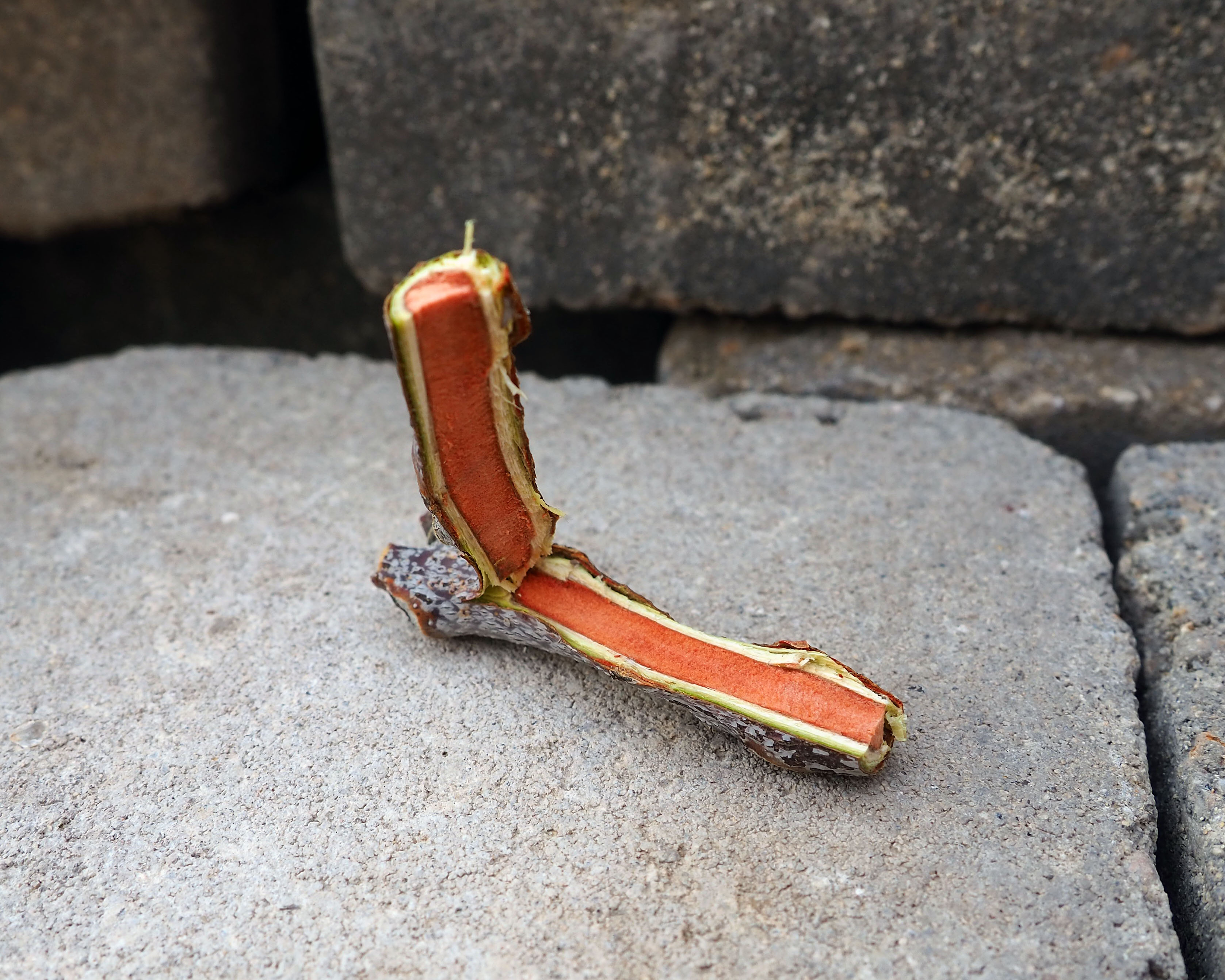
The winter twigs of Kentucky coffeetree are thick and stubby with few hairs and can be greenish, orange, brown, or deep wine-red in color. They have small, scattered lenticels that are either white, orange, or orange-brown. Their leaf scars are alternately arranged and are heart- or sheild-shaped and very large with 3 to 5 distinct bundle traces. It’s pretty obvious from the leaf scars that Kentucky coffeetree bears a sizeable leaf. These massive, bipinnately compound leaves are demonstrated in this Plant Sleuth YouTube video. Leaf buds are tiny and found directly above the leaf scar. There are usually two of them, one of which is sterile and can be difficult to see. They are round, hairy, olive-colored, and sunken like fuzzy, little craters, although you’ll need a hand lens to really see the hairs (which I highly recommend). The twigs lack a terminal leaf bud. Their pith is rounded, thick, and either orange, brown, or salmon colored. The young bark of Kentucky coffeetree is pale gray and fairly smooth. As the tree ages, it breaks into shallow ridges that run the length of the tree. At maturity, the bark is shades of grey and scaly with long, defined, narrow ridges.

pith of Kentucky coffeetree twigs

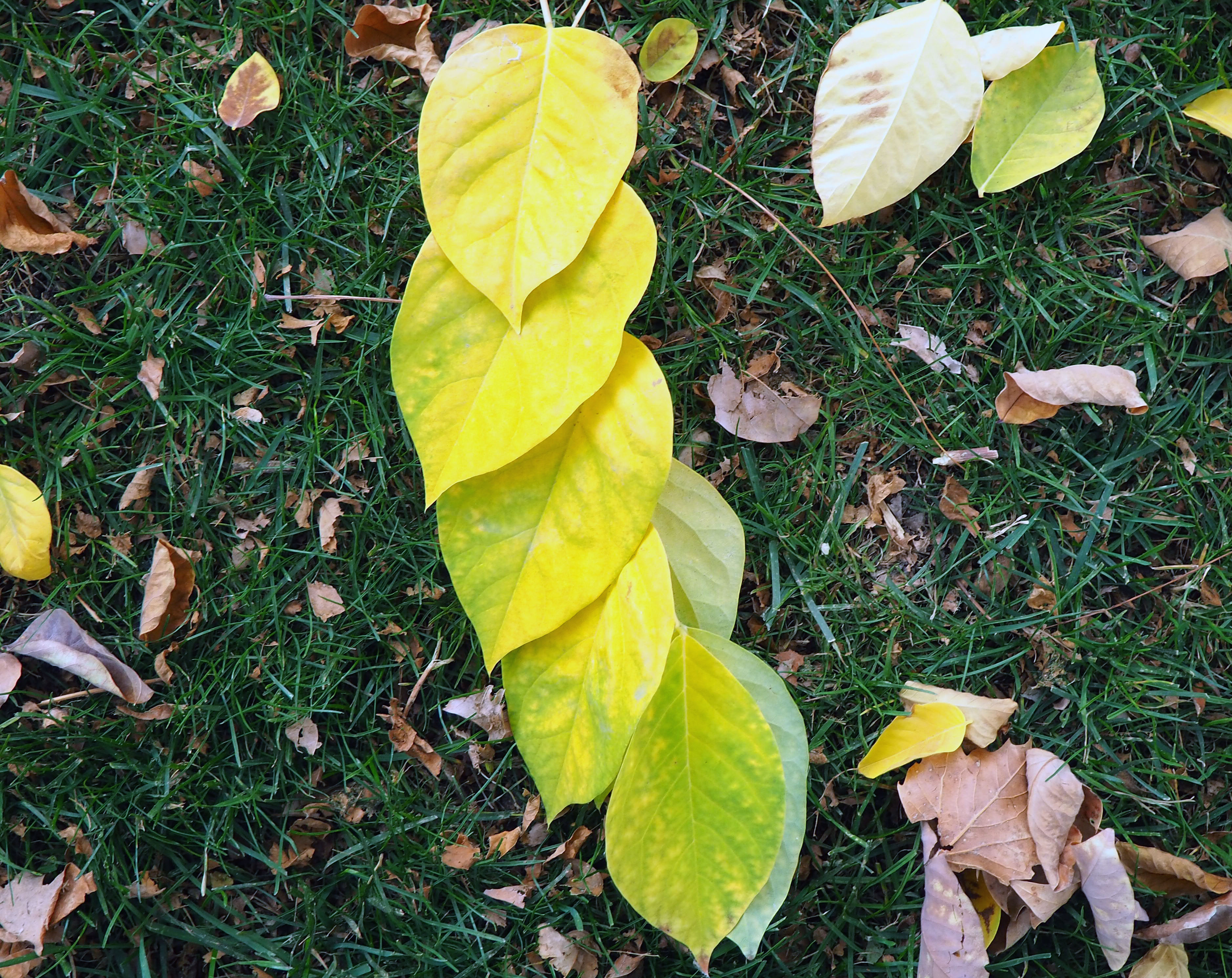
Kentucky coffeetree is dioecious, meaning that there are “male” trees and “female” trees. The tree that I found on the golf course was a “female” tree because it was bearing fruit, which the “males” and certain cultivars won’t have. If there are no seed pods present, you will have to rely on other features to identify the tree; however, when the pods are present, the tree is unmistakable. Its fruits are thick-walled, flat, oval-shaped, smooth, leathery, and orange-brown to black in color. They measure around 5 to 10 inches long and up to 4 inches wide. They are indehiscent and can persist on the tree for more than a year, and even those that fall to the ground can take months or years to break down enough to release the seeds, which have a hard, dark seed coat. Inside the pod, the seeds are embedded in a thick, gooey, yellow-green pulp, which some descriptions call sweet. However, it doesn’t look appetizing enough to try, and considering that the seeds are toxic, I’d be hesitant to consume any part of the fruit without first verifying its safety with a reputable source. That being said, the seeds can be roasted and used to make a coffee substitute and, as long as it’s done correctly, is safe to drink.

mature bark of Kentucky coffeetree

Kentucky coffeetree is one of the last trees to leaf out in the spring and one of the first to drop its leaves in the fall. Flowers appear in mid to late spring. The leaves have a pink to bronze color as they first emerge, and in the fall they turn bright yellow before they drop.

fall foliage of Kentucky coffeetree

More Winter Trees and Shrubs:

Apriums and Plumcots and Pluots, Oh My!

I was once a teenage paper carrier in small town Idaho. One of my stops was an apartment complex, and for much of the year, this was an uneventful stop. But for a few weeks in the summer, the purple-leaved plum trees out front had ripe fruit on them, and each time I was there, I would stop and take a few. In general, I don’t get that excited about fruit, but I enjoyed eating these plums. This variety of plum is typically planted for its looks rather than its fruit, and it may even be the tree that recently received a pitifully low score on an episode of Completely Arbortrary. Ornamental plum or not – and low cone score or not – I thought the fruit was good.

Many of the things we eat are a result of crosses between two related species, and plums are a great example of this. Species are species because they are reproductively isolated. A species does not typically mate with a member of another species and create viable offspring, except this happens all the time both naturally and artificially. In many cases, the offspring isn’t actually viable, but there is offspring nonetheless, and in the case of plants, that offspring can then reproduce asexually – by leaf, stem, or root cuttings or by some other means – and the resulting hybrid can exist indefinitely. One species mating with another species (specifically two species that are members of the same genus) is called interspecific hybridization, and there is a good chance that you’ve eaten something recently that is a result of this.

One of the most widely grown species of plum, Prunus domestica (commonly known as European plum), is a result of interspecific hybridization that occurred many centuries ago. A paper published in Horticulture Research (2019) confirmed that P. domestica originated as a cross between Prunus cerasifera and Prunus spinosa, the latter of which may have also been a result of interspecific hybridization. There are over 400 species in the genus Prunus that are distributed across temperate regions in the northern hemisphere. Within this genus is the subgenus Prunus (or Prunophora), a group that includes dozens of familiar species such as the plums, apricots, peaches, and almonds. Due to their close relationship, both natural and artificial hybridization among members of this subgenus is common, which explains the origin of Prunus domestica, as well as the majority of the plums we grow today.

Current commercial production of plums in North America is largely thanks to work done by Luther Burbank in the late 19th to early 20th centuries. Burbank was obsessed with plant breeding and released hundreds of new varieties of all kinds of different plants during his decades long career. He seemed particularly interested in plums, developing 113 different cultivars, which account for more than half of all his fruit releases. Probably his most well known plum variety is ‘Santa Rosa,’ which thanks to modern day genetics has been determined to be a cross between at least four different species of plum.

apriums

Early colonizers to the American continent were mainly growing varieties of the European plum they had brought over from Europe. North America is also home to several species of plums, which are used by indigenous populations. Shortly before Burbank began working with plums on his farm in California in 1881, Asian plum species were imported to the U.S., and breeders began using them in crosses with both European and North American plum species. Burbank became particularly engulfed in these efforts. In an article published in HortScience (2015), David Karp writes, “In the history of horticulture it is rare to find an individual who almost single-handedly created a new commercial industry based on a novel fruit type as Luther Burbank did for Asian-type plums in the United States.” Most Asian-type plums sold in stores today are hybrids of several different plum species due to the numerous complex crosses that Burbank made.

Burbank is also said to be the first to cross plums and apricots, creating the first of many cultivars of the plumcot. Plum and apricot crosses didn’t really catch on for a few more decades, and when they did, it was thanks to the work of Floyd Zaiger of Zaiger Genetics who developed and released numerous varieties. Apriums and Pluots are Zaiger Genetics trademarks, along with a few other unlikely crosses with plums and their related counterparts.

plumcots

A plumcot is the simplest cross. It is said to be 50% Asian plum (Prunus salicina) and 50% apricot (Prunus armeniaca). However, due to all the breeding of Asian plums carried out by Burbank and others, the Asian plum involved in the cross is typically a hybrid with other plum species, as discussed in a recent paper published in Plants (2022). An aprium is the result of a cross between a plumcot and an apricot, making it 75% apricot and 25% plum, while a pluot is a cross between a plumcot and a plum, making it 75% plum and 25% apricot. There is typically much more that goes into making these crosses, but that’s the general idea. If you’re lucky, you can find all three of these intraspecific crosses in a produce section near you, but it may not be clear what cultivar you’re purchasing. Myriad cultivars have been released of each of these hybrids – each one varying in color, size, flavor, disease resistance, etc. – and unfortunately most grocery stores don’t include cultivar names on their products, so it’s difficult to know what you’re getting.
At Awkward Botany Headquarters, there is a plum tree growing in our front yard. We didn’t plant it, so at this point I have no idea what species or cultivar it is. The plums are delicious though, and the leaves aren’t purple like the plums I used to eat on my paper route. Considering all of the intraspecific crossing that has gone on with plums, it’s quite likely that it is a combination of different species, which isn’t going to make it easy to figure out. But I’ll do my best.


Check out the linktree for various ways to follow and support Awkward Botany.

All the Plant Shows, part three

In part one and part two of this series, I introduced you to at least 23 plant-themed and plant-related podcasts. But wait, there’s more. As podcasts continue to be such a popular medium for entertainment and education, plant podcasts proliferate. You won’t see me complaining. I’m always happy to check out more botanical content. What follows are mini-reviews of a few more of the plant shows I’ve been listening to lately.

Plants Grow Here – Based in Australia, this is a horticulture and gardening podcast hosted by Daniel Fuller (and the occasional guest host). What separates it from other horticulture-related podcasts is the heavy focus on ecology and conservation. As Daniel says in the introductory episode, “there’s no point in talking about plants at any length without acknowledging that they exist within a wider web.” Daniel interviews plant experts, professionals, and enthusiasts from various parts of the globe, and while much of the focus is on horticulture topics, specifically related to gardening in Australia, there are several episodes that focus solely on the plants themselves and their place in the natural world.

Completely Arbortrary – Relatively new to the scene but an instant classic. Completely Arbortrary is hosted by Casey Clapp, a tree expert, and Alex Crowson, a tree agnostic. In each episode, Casey introduces Alex to a new tree species. After learning all about the tree, they each give it a rating (from zero to ten Golden Cones of Honor!). Sometimes the ratings will surprise you (Alex gave Bradford pear 9.1 Golden Cones of Honor). As the show has gone on, additional segments have been introduced, like Trick or Tree and listener questions. This is easily one of the best plant podcasts around, not just because you’ll learn something about trees (and who doesn’t love trees?), but because you will have a delightful time doing so with a couple of the friendliest and goofiest podcast hosts around.

Naturistic – In the same vein as Completely Arbortrary, Naturistic features host, Nash Turley, telling his co-host friend, Hamilton Boyce, about a natural history topic. At the time of this posting, there are only a handful of episodes available, and not all are plant-focused (most are about animals), but I assume more plant ones are in the works. Either way, each episode is well worth a listen. The topics are well-researched and presented in an amiable and approachable manner. There are also some nicely done videos that accompany some of the episodes.

Flora and Friends – A plant podcast based in Sweden and hosted by Judith, who is also a member of The Plant Book Club. Generally, Judith spends a few episodes with several guests diving deep into a single plant, group of plants, or plant-related topic. So far, there are series of episodes about nasturtiums, Pelargonium, Fritillaria, and forests. Sometimes the episodes are in Swedish, and when that’s the case, Judith refers listeners to a summary in English on the podcast’s website. Each episode is a casual and pleasant chat – or in other words a “botanical tea break” – about the topic at hand, which explains why Judith refers to the podcast as “your botanical cup of tea.”

Field, Lab, Earth – “A podcast all about past and present advances in the fields of agronomy, crop, soil, and environmental sciences.” Produced by a group of three professional societies – American Society of Agronomy, Crop Science Society of America, and Soil Science Society of America – and hosted by Abby Morrison. In each episode, Abby talks with a guest or guests about a research topic, often having to do with agriculture, but sometimes having to do with other aspects of plant and soil science. Listeners get behind the scenes information about how the research was conducted, as well as in depth discussions on the findings. You don’t necessarily need a background in plant and soil science to listen, as many of the basic concepts are well-explained along the way. Also, if you’re a Certified Crop Adviser or Certified Professional Soil Scientist, you can earn Continuing Education Credits by listening to each episode and taking a quiz. Major Bonus!

Backyard Ecology – An urban ecology podcast hosted by Shannon Trimboli. Nature isn’t just some far off place, it’s right outside our doors as well. With a little effort, we can make our yards and other urban spaces more biodiverse and create quality habitat for all sorts of wildlife. Plants are the foundation of our urban habitats, as is the case practically anywhere else, so even when episodes of this podcast are focused on animals, you can be sure that plants are at the heart of the conversation. Join Shannon as she, through conversations with other experts and nature enthusiasts, “ignites our curiosity and natural wonder, explores our yards and communities, and improves our local pollinator and wildlife habitat”

Talking Biotech – This is a long-running podcast hosted by Dr. Kevin Folta that aims to help people better understand the science behind genetic engineering. Folta’s university research supports plant breeding efforts, and many of the episodes of his podcast focus on plant breeding using both traditional methods and genetic engineering. A variety of other aspects and uses of biotechnology are also explored on the podcast. Folta has a passion for science communication and is adamant about debunking misinformation and sharing with the world the promise that new technologies offer us in our efforts to feed the world, improve human health, and address environmental threats. Even if you’re not generally interested in plant breeding, the discussions about the plants and the research is always very interesting and thought-provoking.

War Against Weeds – There is so much more to plants than meets the eye, and what group of plants demonstrates this better than weeds? They are our constant companions, and they are continually outwitting us. Their “craftiness” is one of the reasons I find them so intriguing. Controlling weeds is a constant battle, and few know that battle better than those who work in agriculture. After all, their livelihoods depend on it. War Against Weeds is hosted by three weed scientists whose job it is to help farmers successfully manage weeds. Each episode is a peek into what it takes to do the job. The war may never be won, and the strategies must be diverse – hence the podcast’s tagline, “silver bullets are for werewolves” – and so the conversation will continue. Luckily, we get to listen in.

Arthro-Pod – Just as the name implies, this is an entomology podcast. Insects and plants share an intimate relationship, so I consider this enough of a plant-related podcast to be included here. Plus I really like it. It came to me highly recommended by Idaho Plant Doctor, who is also really into plants and bugs. Hosted by three professional entomologists that all work in extension, Arthro-Pod is a bit like War Against Weeds, but is geared more towards the layperson than the professional. The hosts are humorous and clearly love what they do, which is why, apart from the fascinating discussions about insects, this is such a delight to listen to.


Chances are there will be a part four to this series. If you’re aware of a plant podcast that I haven’t covered yet, please let me know in the comment section below or by sending me a message via the Contact page.

Drought Tolerant Plants: Blue Flax

“Lewis’s prairie flax is a pretty garden ornamental suited to hot, dry sites. Each morning delicate sky blue flowers open on slender arching stems, only to fall off in the afternoon and be replaced by others the next morning. In spite of its fragile appearance, it is quite sturdy and may put out a second flush of blossoms on new growth in late summer.”Common to the This Country: Botanical Discoveries of Lewis and Clark by Susan H. Munger


When selecting plants for a waterwise garden, it is imperative that at least a portion of the plants are easy to grow and maintain and are adapted to a wide variety of conditions. This will ensure a more successful garden, both functionally and aesthetically. Luckily, there are a number of drought-tolerant plants that pretty much anyone can grow without too much trouble. Blue flax, in my opinion, is one such plant.

You may be familiar with flax as a culinary plant, known for its edible seeds which are used to make flour (i.e. meal) and oil. Or perhaps you’ve used linseed oil, a product of flax seeds, to protect wooden, outdoor furniture or in other wood finishing projects. You may also think of linen when you think of flax; and you should, because linen is a textile made from the fibrous stems of the flax plant. All of these products generally come from a domesticated, annual flax known as Linum usitatissimum – a species that has been of benefit to humans for millenia. Various species of flax have also been planted for erosion control, fire breaks, forage for livestock, and in pollinator-friendly gardens. Flax seeds, a common ingredient in bird seed mixes, provide food for birds and other small animals. All this to say, humans and flax share a long history together, and it deserves a place in your garden.

The flax species profiled here is actually two species: Linum lewisii and Linum perenne. That’s because these two species look nearly identical and are both used as garden ornamentals and in wildflower seed mixes. They are also both known as blue flax, among myriad other common names. Due to their similiarity, L. lewisii is considered by some to be a subspecies of L. perenne.

Linum lewisii is found across western North America and received its name after being collected by a member of the Lewis and Clark Expedition. The plant collection was brought back from the expedition and determined to be new to western science. It was described and named by Frederick Pursh. Linum perenne is a European species which was introduced to North America as an ornamental and has since become widely naturalized. In 1980, a naturalized selection of L. perenne was released for use in restoration plantings under the cultivar name ‘Appar’ with the understanding that it was L. lewisii. A genetic study later revealed that the cultivar was instead L. perenne. The study also provided evidence that “North American Lewis flax and European perennial blue flax are reproductively isolated,” suggesting that they are indeed two separate species.

Despite being separate species, telling them apart can be a challenge. Blue flax plants grow from a taproot and woody base and are multistemmed, reaching two to three feet tall. The stems are thin yet stringy, wiry, and not easily torn, which helps explain why flax is such a good plant for making textiles. Short, slender leaves are alternately arranged along the length of the stems, while flower buds form at the ends of stems in loose clusters. Flowers bloom early in the day and are spent by the afternoon. They are 5-petaled, saucer-shaped, and a shade of blue – from whitish blue to deep blue – depending on the plant. Small, round, 10-chambered seed capsules form in the place of flowers, each chamber housing one or two flat, shiny, dark brown seeds. Flowers bloom daily in succession up towards the ends of stems even as the fruits of spent flowers lower on the stalk mature.

seed capsules of blue flax

A close look at their flower parts is really the only way you might be able to tell these two species apart. Blue flax flowers have five stamens topped with white anthers and five styles topped with little, yellow stigmas. The flowers of L. lewisii are homostlyous, which means their styles are all the same length and are generally taller than or about the same height as the stamens. The flowers of L. perenne are heterostylous, which means their flowers can either have styles that are much longer than their stamens or stamens that are much longer than their styles. Each plant in a population of L. perenne has either all long-styled flowers or all short-styled flowers. In a mixed population of L. perenne and L. lewisii, separating the long-styled L. perenne plants from the L. lewisii plants presents a challenge (at least for me).

long-styled blue flax flower
short-styled blue flax flower

Due to the similarity of these two species, it’s easy to see how the plants or seeds of blue flax could easily be mislabeled and sold as one species even though they are the other species. This could be a problem in a restoration planting where seed source and identity is critical, but in your garden, it’s really no big deal. Both species are great for waterwise and pollinator gardens. They are equally beautiful and easy to grow and care for. If nothing else, perhaps the challenge in identifying them will encourage you to take a closer look at your flowers and familiarize yourself with their tinier parts – an act all of us amateur botanists could stand to do more often.

The photos in this post were taken at Idaho Botanical Garden in Boise, Idaho.

More Drought Tolerant Plants Posts:

All the Plant Shows, part two

Plant podcasts are big these days, or at least that’s what it seems, which is why this has turned into a multi-part post (see part one). While in the process of compiling a list of plant podcasts that I’ve become aware of, I keep stumbling onto more. Which is great! It’s a trend that I hope continues. As it continues, I will go on compiling them here until we have ourselves a list of All the Plant Shows!

Planthropology – Plants plus anthropology equals Planthropology. This podcast covers all the many ways that plant lives and human lives intersect and features conversations with plant people about their love of plants and the work they do that involves plants. Vikram (the host) is a chatty and genial guy and a great twitter follow.

The Plant Prof – Another Vikram joint. This spin-off of Planthropology features Vikram sans guests talking about an assortment of plant-related topics. Each episode is only a few minutes long. Quick, casual, and easy to digest.

Plant Daddy Podcast – Houseplants are quite popular these days, likely due to the growing number of people living in dense urban areas. Apartment living generally means that if you want to garden, you have to do it indoors and/or on a balcony. With increased interest in indoor growing comes a slew of podcasts about it. Plant Daddy Podcast is one of the best. Matthew and Stephen really know their plants and have years of combined experience caring for a vast number of species. Other plant experts occasionally join the show to talk about the specifics of cultivating and caring for plants in small spaces.

Plantrama – Mainly a gardening podcast, but very plant-focused. C.L. and Ellen are experienced gardeners and quite knowledgeable about plants. Episodes come out regularly, and each one is under 30 minutes. In that time, the hosts cover at least three topics. Juniper berries, begonias, and orchid pots, for example. Or cherry tomatoes, silverberry, and saving seed. It’s two good friends having a chat about plants, and you get to listen in.

The Plant Kiki – A kiki is a casual conversation among friends. When plants are a major theme of the discussion, it’s a plant kiki! For each episode, Colah, of Black in the Garden podcast (another must listen), brings together a group of friends to talk about plants and whatever else comes up. The conversations are lively, humorous, insightful, and fun. If you enjoy exploring questions like “If Beyoncé were a plant, what plant would she be?” this podcast is for you.  

Crime Pays But Botany Doesn’t – Joe is a self-described misanthrope. He doesn’t care much for people, but he loves plants (and geology). This podcast is similar to Joe’s You Tube channel of the same name, in that it’s mostly him describing his time botanizing in various locations across North America and beyond. Expletive-filled rants help fill the time. Occasionally Joe brings on a guest to talk about plants (or trains). With hours and hours of content available, this is easily one of the best and most entertaining plant shows around.

The Taproot – A podcast produced by Plantae, a plant science hub created and managed by the American Society of Plant Biologists. Each episode is an interview with an individual who is working in or studying plant science. There are discussions about the work that went into a particular plant science journal article, as well as conversations about navigating academia and professional life. It’s a great source of information for students and professionals, with excellent tips on how to succeed in educational pursuits and beyond.   

PlantNetwork Podcast PlantNetwork is an organization that supports public gardens and professional gardeners in Britain and Ireland. Their podcast is a series of short interviews with people who work at public gardens or in some other capacity in the horticulture industry.

Speaking of public gardens, educating the public about plants is a mission of botanic gardens and arboreta. Some botanic gardens do this through podcasts. Below are a few that I have come across. If you happen to be aware of others, please let me know.

Branch Out – A plant science podcast produced by The Royal Botanic Garden Sydney with a catalog consisting of six seasons covering a wide array of plant-based topics. Vanessa geeks out about plants and nature with a bevy of incredible guests. No surprise, much of the content concerns Australian plants, gardens, agriculture, and ecology. But who isn’t fascinated by Australia’s flora and fauna? The production on each episode is excellent, and the stories are captivating. 
Plant Power – A short series of podcasts produced by North Carolina Botanical Garden highlighting just how essential plants are to life on earth. Brief conversations about climate change, protecting pollinators, growing and conserving native plants, etc. 

Botanical Mystery Tour – A delightful podcast from Chicago Botanic Garden that takes the stories of plants in popular culture and explores the science behind them. In each episode, a staff member at CBG joins the hosts, Jasmine and Erica, to discuss the topic and talk about their work at the Garden. Whenever botany shows up in popular culture, it’s an event worth celebrating. It’s good to know there’s a podcast devoted to this cause.

Unearthed: Mysteries from an Unseen World – A podcast series from Royal Botanic Gardens Kew hosted by James Wong. Each episode is a mini audio documentary investigating a particular mystery, story, or current event involving plants (or, in the case of one episode, fungi). This podcast has great production and excellent, fact-based storytelling – exactly the sort of thing you’d expect from a place like Kew.

———————

These certainly aren’t all the plant shows. Part three is in the making. In the meantime, is there a particular plant-themed podcast (or podcast episode) that you enjoy and would like to recommend? If so, share it with us in the comment section below.