Tea Time: Self-heal

Prunella vulgaris can be found all over the place. It has also been used to treat just about everything. What else would you expect from a plant known commonly as self-heal, heal-all, all-heal, and woundwort? The medicinal value of this plant has been appreciated for centuries across its expansive range, and studies evaluating its medicinal use continue today. Being such a ubiquitous species – both as a garden plant and a native plant (and also a common weed) – and because it has so much clout in the world of herbal medicine, it’s an obvious candidate for Tea Time.

Self-heal is a member of the mint family (Lamiaceae), easily distinguished by its square stems, opposite leaves, and bilabiate and bilaterally symmetrical (or zygomorphic) flowers. One surprise is that, unlike the many aromatic members of this family, the foliage of self-heal lacks a strong scent. P. vulgaris occurs naturally across Asia, throughout Europe, and in parts of northern Africa. It is also widely distributed across North America. Apart from that, it has been introduced to many regions in the southern hemisphere and has also been frequently moved around throughout its native range. Eurasian varieties now intermingle with North American varieties, which can make it difficult to determine a native individual from an introduced one.

self-heal (Prunella vulgaris)

Self-heal is an adaptable plant that tends to prefer shady, moist locations, but can also be found in open, dry, sunny sites. Find it along forest edges, roadsides, ditches, and trails, as well as on the banks of streams, lakes, and reservoirs. It occurs in gardens, both intentionally planted and as a weed, and can escape into lawns, vacant lots, and open fields, as well as into nearby natural areas.

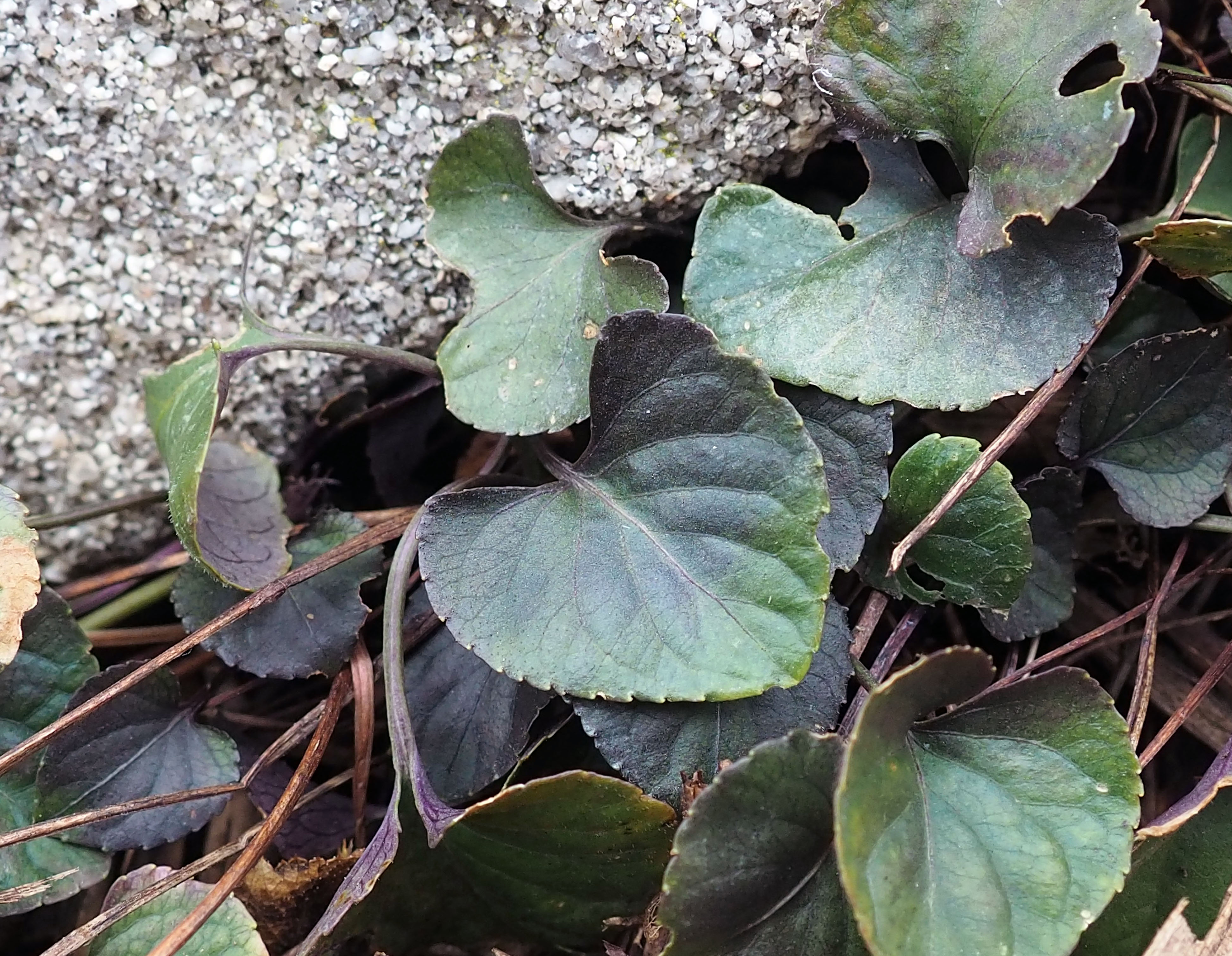
P. vulgaris is an evergreen that grows both prostrate and upright, sometimes reaching 1 foot tall or more (but is often much shorter). It has shallow, fibrous roots, and its stems root adventitiously as they sprawl across the ground, frequently forming an extensive mat or groundcover. Its leaves are oval to lance-shaped and measure about one inch long. Lower leaves have petioles, while upper leaves may become stalkless. Leaf margins are entire or can be slightly toothed. As plants age, they can develop a coppery or purple-bronze color.

the leaves of self-heal

The flowers of self-heal are generally a shade of purple, but can also be white, pink, or blue. They bloom irregularly in a spike measuring up to two inches long. Flower spikes are thick, dense, cylindrical, and made up of whorls of sharp-pointed bracts. Flowers bloom irregularly along the spike and occur from late spring/early summer into the fall. Each flower produces four nutlets, which sit within a cup-shaped, purple calyx.

As a medicinal herb, self-heal has been used both internally and externally to treat a long list of ailments. These include sore throats, diarrhea, fevers, intestinal infections, liver problems, migraines, heart issues, dermatitis, goiter, and thyroid disfunction, just to name a few. It has been used topically to treat skin irritations, bites, stings, and minor cuts and scrapes. This is thanks to its antimicrobial properties and its ability to stop bleeding. A report in the journal Pharmaceuticals (2023) calls P. vulgaris an “important medicinal plant” due to its “rich chemical composition” and its “pharmacological action.” Chemical analyses find the plant to be a valuable source of phenolic compounds, flavonoids, rosmarinic acid, and ursolic acid, among numerous other compounds. If you are curious to learn more detailed information regarding this plant’s medicinal value, you can refer to the above report, as well as one found in Frontiers in Pharmacology (2022).

self-heal tea

P. vulgaris is an edible plant, and its young leaves can be eaten raw or cooked. The leaves together with the flowers can also be dried and used to make a tea. This is how I had it. I used about two teaspoons of dried leaves to one cup of water. Feel free to use more if you would like. I thought the tea was pretty mild. It had a slight sweetness to it and a hint of mint flavor. It has been described as bitter, but I didn’t find it to be overly so (although I may have a higher tolerance for bitterness). Sierra tried it and said that it tasted like “water left over from something else.” That might be because it was more diluted than she would have preferred. Overall, I thought it was a pleasant experience and would be happy to drink it again.

More Tea Time Posts on Awkward Botany:

Garden Plants Gone Wild: The Periwinkles

In a garden setting, a successful groundcover is a plant that is durable and adaptable, spreads readily, and fills in space thouroughly. The point of planting a groundcover is to cover exposed soil and create a sort of living mulch. In fact, groundcovers provide similar benefits to mulch. They prevent erosion, help retain soil moisture, and prevent weeds. It should come as no surprise then, that a plant that fulfills all of these requirements has the potential to become a weed, especially if given the opportunity to escape and establish itself outside of its intended location.

This isn’t a hypothetical. This exact scenario has played out numerous times. A good example of this are the periwinkles: Vinca major and Vinca minor. Both have been popular garden plants for centuries. Their introduction to U.S. gardens came as early as the 1700’s. Today, both species (including cultivars of each) can be found for sale in nurseries throughout the country, even while escaped periwinkles proceed to spread across natural areas and uncultivated spaces. Even in gardens where periwinkles have been intentionally planted, they can be deemed no longer welcome due to their aggressive nature. Eliminating them, however, is a formidable task.

greater periwinkle (Vinca major)

Periwinkles are relatively easy to identify, yet telling the two apart can sometimes pose a challenge. Knowing what to look for can make this a fairly simple task. Vinca major (greater periwinkle) is the larger of the two. Its stems are tough and sprawl up to 5 feet long, rooting adventitiously when in contact with the ground. Vegetative spread also occurs via stolons and rhizomes, modified stems that spread horizontally both above and below ground and whose main purpose is to produce new roots along their length. This extensive rooting creates dense mats of stems and foliage, precisely what you’d want from an effective groundcover. Leaves are arranged oppositely and are semi-evergreen with fine hairs along their margins. They are thick, glossy, simple, dark green, and ovate to ovate-lanceolate in shape. They have a relatively long petiole, and some leaves can even appear heart-shaped.

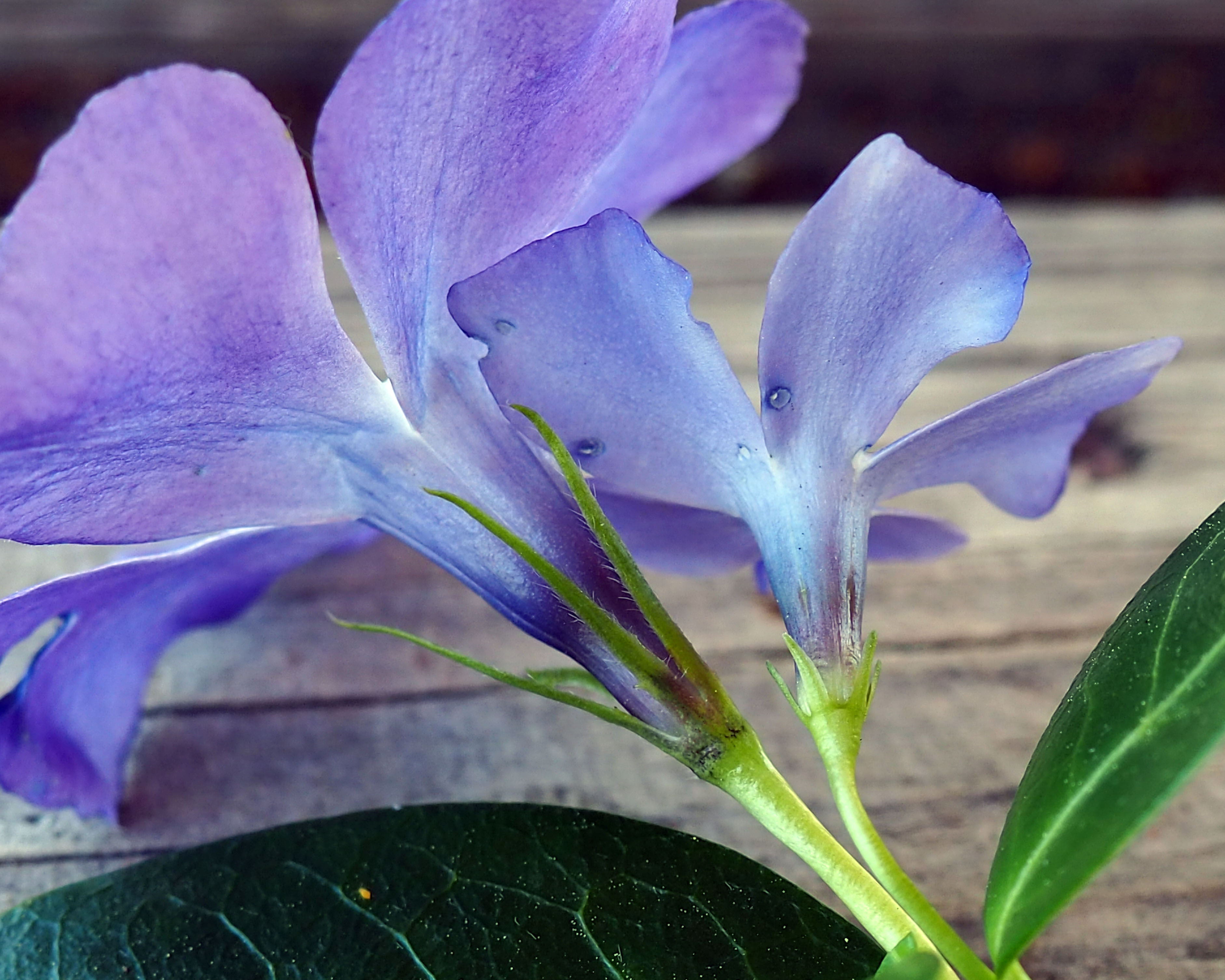
The flowers of V. major are blue to purple and fused at the base to form a tube, separating into five distinct lobes and creating a shape similar to a pinwheel. They are borne on a long stalk in the axils of leaves and measure about two inches wide. Their sepals are long, slender, pointed, and lined with bristly hairs. Fruits rarely form, but when they do, they are narrow follicles.

comparing the petals and sepals of Vinca major (left) and Vinca minor (right)

Vinca minor (lesser periwinkle) is a slightly smaller plant with a similar habit, spreading vegetatively in all the same ways as V. major. Stems are slender and smooth and leaves are evergreen. Compared to V. major, the leaves of V. minor are smaller, narrower, and have hairless margins and short petioles, otherwise they are very similar. Same goes for the flowers, which look identical on both species, except that those of V. minor are slightly smaller (about one inch wide) and borne on shorter stalks. Sepals are shorter, broader, more rounded at the tips, and lack the bristly hairs of V. major.

Because periwinkles only rarely produce seed, their main method of getting around is vegetatively. Fragments of roots or rhizomes hide in soil and are moved from one location to another inadvertently. Periwinkles are often used in hanging baskets and containers, and when these things are cast aside at the end of a season, the perennial roots of periwinkles may continue to grow, spreading out beyond the potting mix and into the soil.

Dump soil, yard waste, and improperly disposed of containers are the main ways that periwinkles find their way into natural areas. Both species can be found in the understories and edge habitats of woodlands, as well as along roadsides and pathways, and in vacant lots and old homesites. They can also be found in riparian areas, where waterways can carry fragments of plants to new locations. The Invasive Plant Atlas compiles reports of both V. major and V. minor growing outside of cultivation and tracks them on a map. They also track which states include them in noxious weeds lists or laws.

lesser periwinkle (Vinca minor)

The best way to keep periwinkles from continuing to spread outside of cultivation is to refrain from growing them. If you choose to have them in your yard, dispose of plant parts properly. If you keep them in containers, send those containers to the landfill when you are done with them. If your property is adjacent to natural areas, the risk may be too great and you may want to consider a different groundcover. Depending on where you live, alternatives vary. In the Intermountain West, potential substitutes include wild strawberry (Fragaria virginiana), woodland strawberry (F. vesca), kinnikinnik (Arctostaphylos uva-ursi), and wild ginger (Asarum caudatum). Each of these are low growing, evergreen to semi-evergreen, spreading plants that do well in shade and can handle some degree of drought.

Randomly Selected Botanical Terms: Phyllaries

Flowers in the aster family have one of the most recognizable shapes in botany – a circle with a series of petals surrounding it. If you were asked to draw a flower, there is a good chance your drawing would look something like a sunflower, a daisy, a cosmos, or an aster. It’s one of the most basic flower shapes, and yet it isn’t a single flower; it’s a pseudanthium – a false flower. This is because what might appear as a single flower is actually a collection of tens, hundreds, or even thousands of tiny flowers. This aggregation of flowers into a single compact unit is the reason the family was once given the name Compositae, and even now is often informally referred to as the composites.

Another reason why a flower in the aster family – or Asteraceae – might be the first thing you would draw is because it is the largest family of flowering plants, numbering up to 33,000 species worldwide. Chances are you’ve seen a few of them around. In the contiguous U.S. alone, there are more than 2400 species, and that doesn’t include the plethora of species brought in from regions across the world either intentionally (to be grown in our gardens) or unintentionally (as weeds). Of course, not all of the species in this family are going to have a typical sunflower-like flower head, but they do all have a specific type of inflorescence called a capitulum. Capitula are made up of densely packed, miniature flowers called florets, which are stalkless (or sessile) and arranged on a flattened central stem (or axis). There are at least four different types of florets in the aster family, but we’ll leave that discussion for another time.

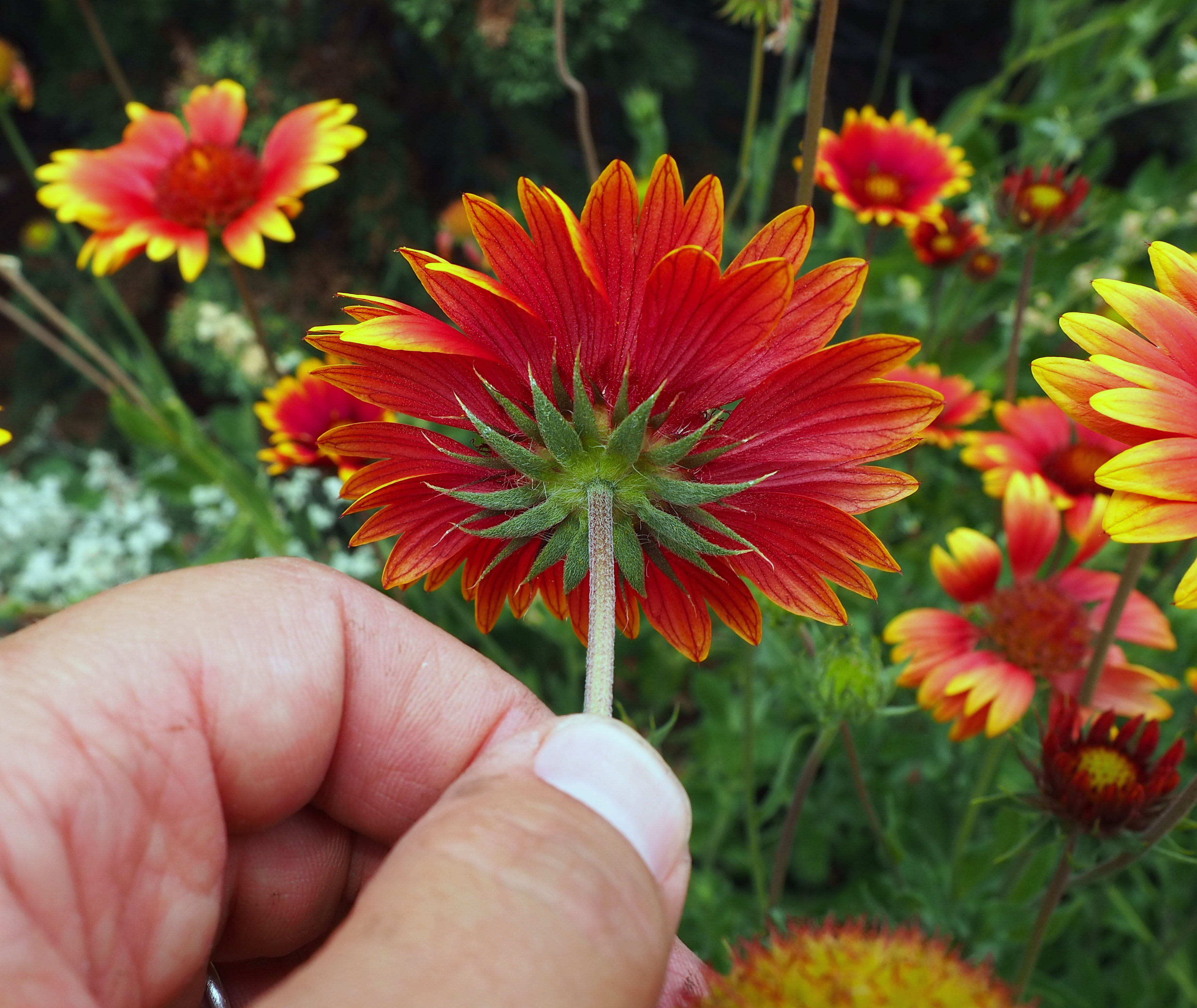
In this post, we’re specifically interested in what is happening at the base or underside of the capitulum. All of the florets in a capitulum are held within a cup or bowl-shaped series of bracts called an involucre. Bracts are modified leaves, and this whorl of tightly held or loosely arranged bracts are initially found surrounding a developing flower bud. As the inflorescence opens, the involucre opens as well and its bracts persist at the base of the flower head. The bracts that make up the involucre are called phyllaries, and they vary in shape, number, and size depending on plant species. In fact, the features of phyllaries are so unique they are often relied on to help identify a plant in the aster family to genus, species, and infraspecies (variety, subspecies, etc.).

phyllaries of blanketflower (Gaillardia aristata)

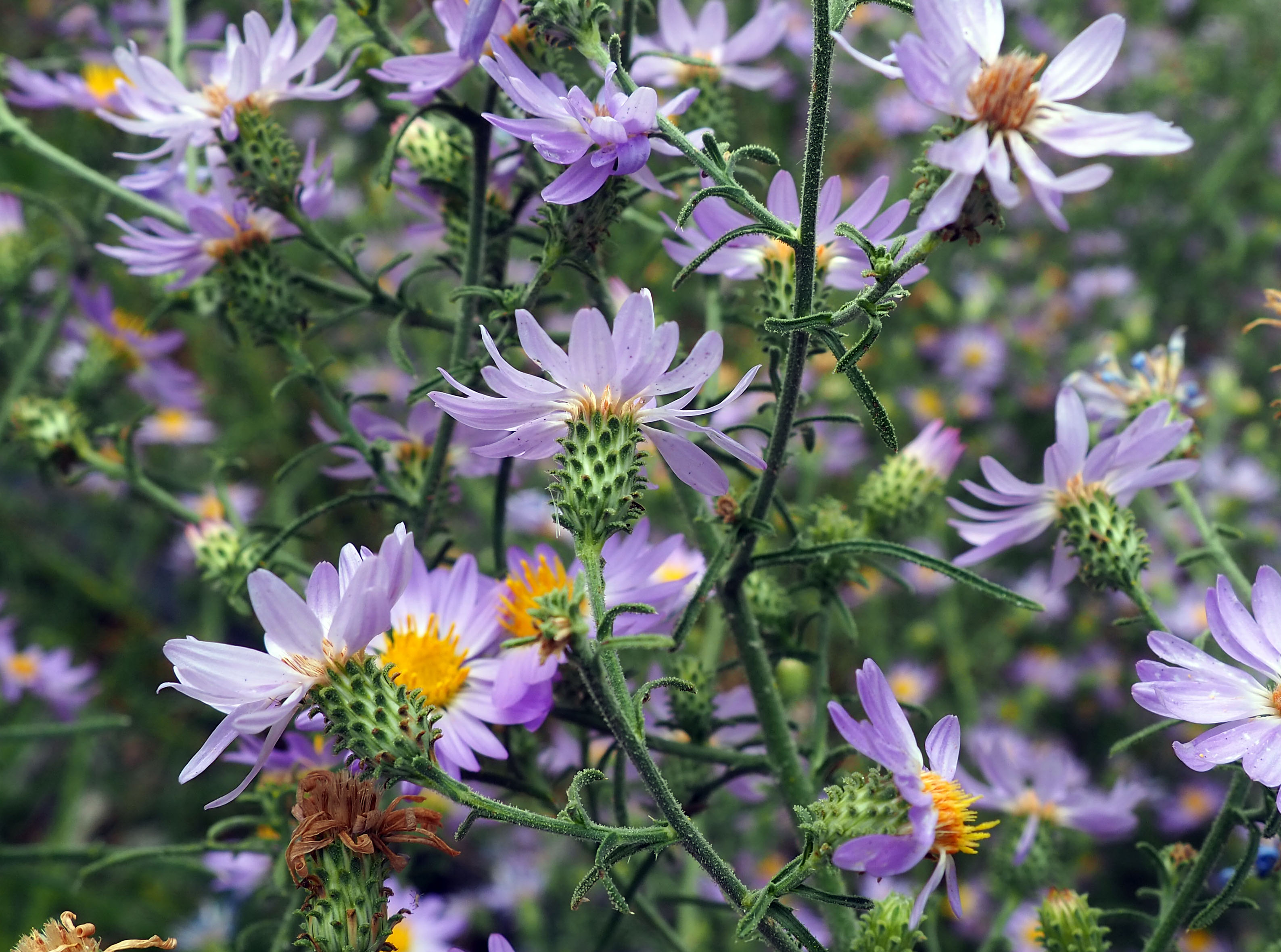
When it comes to flowers in the aster family, there is more than meets the eye. After you take some time to appreciate the intricate beauty of its collection of florets, turn the flower head over and take in its phyllaries. They come in various colors, they can be hairy or smooth, their margins can be entire or adorned with hairs, teeth, etc., they can be flat and straight or they can curve outwards in interesting ways, their tips can be pointed, spine-tipped, rounded, or keel shaped. Phyllaries can be laid out very evenly, tightly overlapping each other like shingles on a roof (i.e. imbricate) or their arrangement can be slightly uneven and irregular (i.e. subimbricate). Use a hand lens to get a closer look at all of these features. As you get in the habit of observing the details of the involucre and its phyllaries, chances are each time you come across a flower in the aster family, you’ll find yourself flipping it over to get a look at its undercarriage. What will you find?

phyllaries of dandelion (Taraxacum officinale)
phyllaries of Mexican sunflower (Tithonia rotundifolia)
phyllaries of stemless four-nerve daisy (Tetraneuris acaulis)
phyllaries of hoary tansyaster (Dieteria canescens)
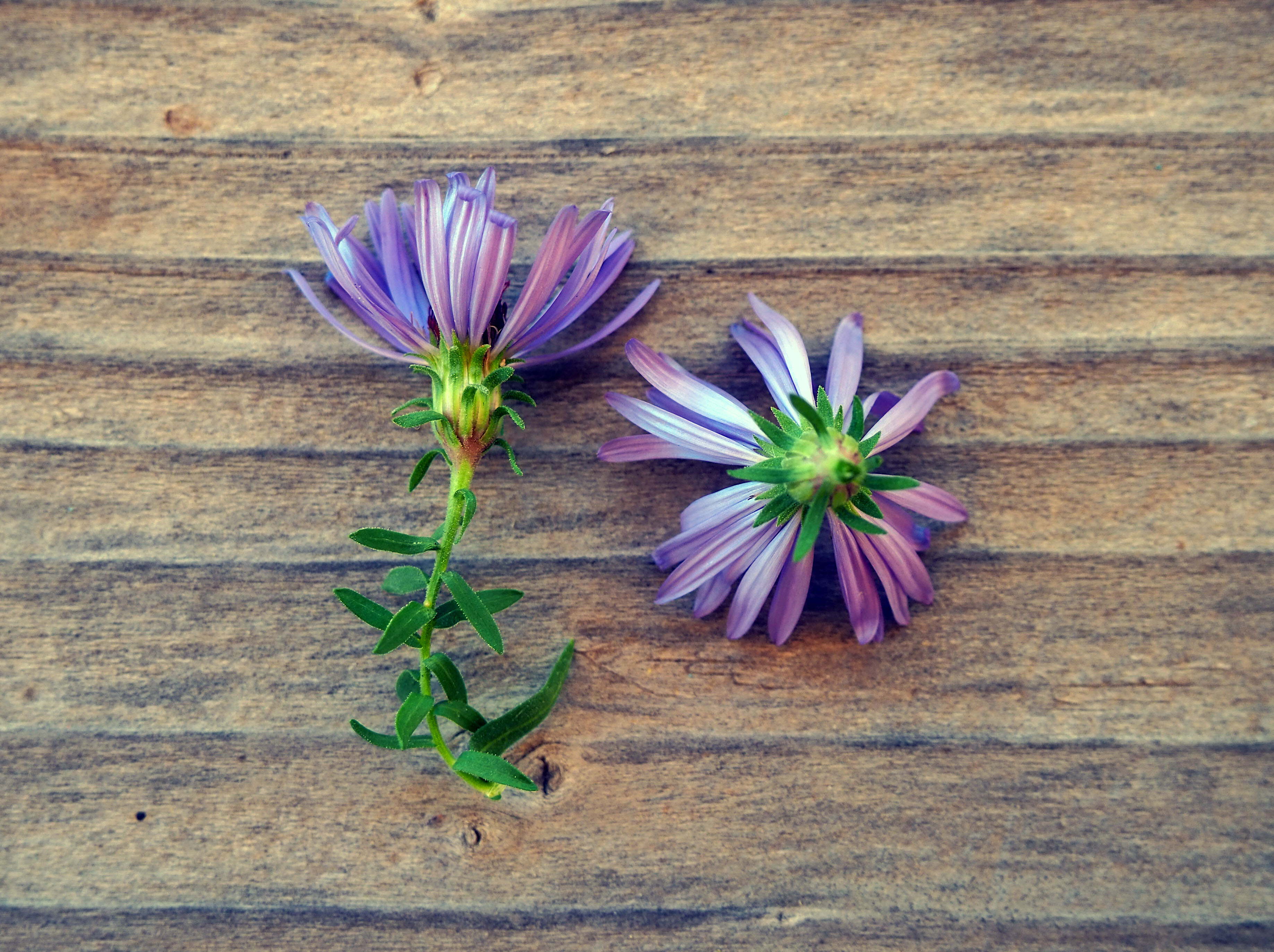
phyllaries of aromatic aster (Symphyotrichum oblongifolium ‘October Skies’)
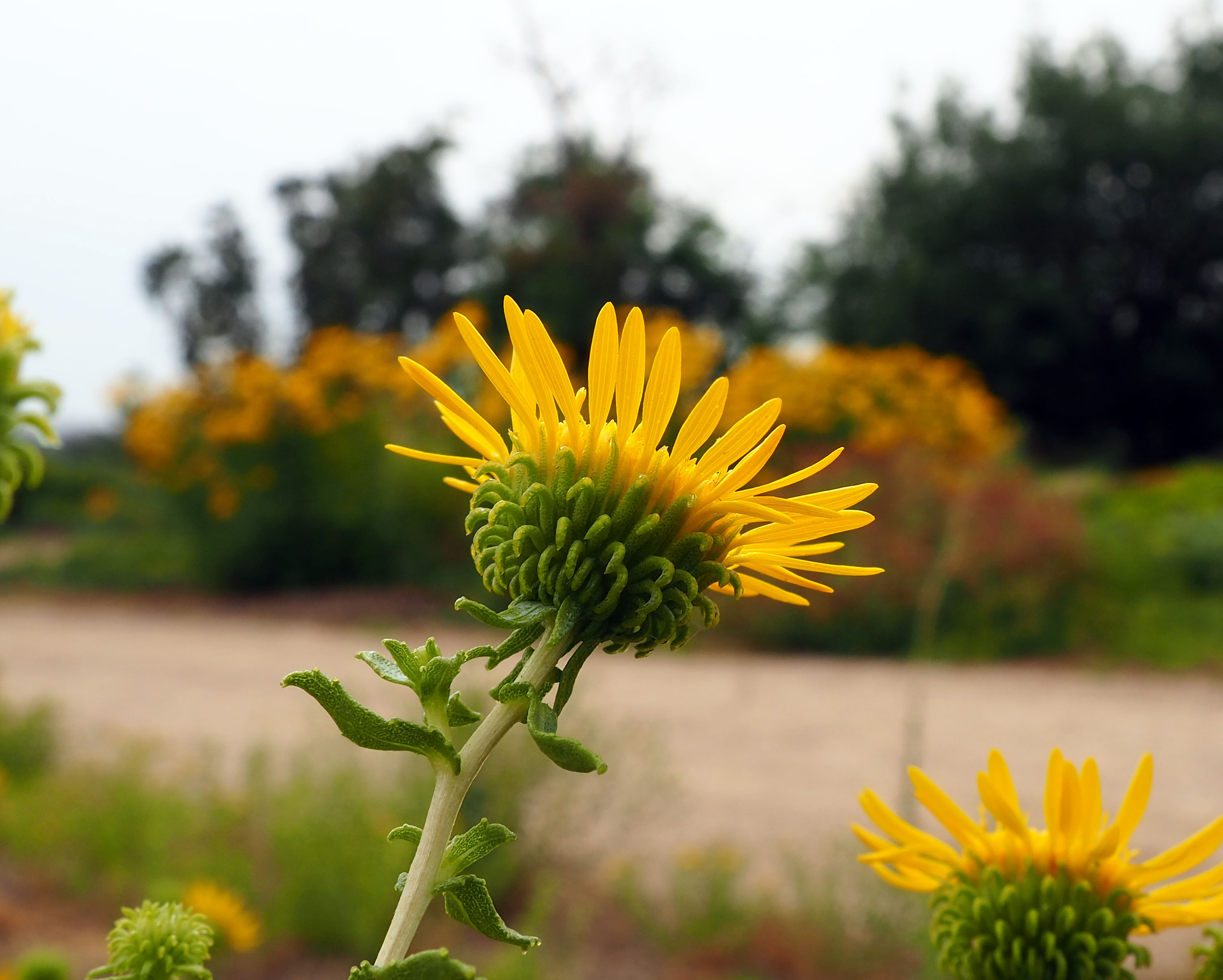
phyllaries of curlycup gumweed (Grindelia squarrosa)

If phyllaries have piqued your interest and you’d like to learn more about plants in the family Asteraceae, I highly recommend getting your hands on the book, The Sunflower Family by Richard Spellenberg and Naida Zucker. It has a North American focus, but it’s a great place to start learning more about this massive plant family.

More Randomly Selected Botanical Terms:

Another Year of Pollination: Viscin Threads

While we’re on the subject of pollen-gluing mechanisms, there is another material apart from pollenkitt that a limited number of flowering plant families use to link their pollen grains together. It functions, much like pollenkitt, by aiding in the attachment of pollen to visiting animals. However, unlike pollenkitt, it isn’t sticky, oily, or viscous, and is instead more like a series of threads. Viscin threads to be exact.

One of the major differences between pollenkitt and viscin threads is their composition. The lipid-rich coating that surrounds pollen grains, which we call pollenkitt, is derived from breakdown materials of an inner layer of the anther. It is added to pollen grains after they are formed and before the anther dehisces. Viscin threads are made up of sporopollenin, the same biopolymer that exine (the outer wall of a pollen grain) is composed of. Viscin threads have points of attachment on an outer layer of the exine called the ektexine. Unlike pollenkitt, viscin threads don’t add new color to pollen grains, nor do they contain scent compounds. Their thickness, length, abundance, and texture are dependent on the species of plant they are found on, much like pollenkitt varies in form and composition depending on species.

pollen strands of tufted evening primrose (Oenothera caespitosa)

Viscin threads evolved independently in three distantly related plant families. These include Onagraceae (the evening primrose family), Ericaceae (the heath family), and a subfamily in the pea family known as Caesalpinioideae (the peacock flower subfamily). Viscin threads are found in many, but not all, of the species in these three families. Some species in other plant families have what appear to be viscin threads but are actually ropy strands of pollenkitt, as they are composed of pollenkitt and not sporopollenin. Because they are made up of the same durable material as exine, viscin threads can be preserved in the fossil record. A paper published in Grana (1996) looked at the morphology of pollen grains with viscin threads from the Tertiary Period and concluded that “this advanced pollination syndrome using viscin threads as a pollen connecting agent” dates back to at least the Eocene and perhaps much earlier.

While pollenkitt’s stickiness adheres pollen grains together, viscin threads are more of a tangling device. Single pollen grains or pollen grain groupings called tetrads become tangled up together and then become entangled with a visiting insect, bird, or bat and carried away to a nearby flower. Disentanglement from the pollinator ideally happens when the threads are brushed against the sticky surface of a stigma. The viscin threads themselves vary by species and family. Micheal Hesse, in a paper published in Grana (1981), describes the threads in Onagraceae as “long, numerous, thin, and sculptured” with “knobs, furrows, etc.,” while those in Ericaceae are thin and smooth and those in Caesalpinioideae are thick and smooth.

smooth azalea, pink form (Rhododendron arborescens)

The length and size of tangled pollen masses also differ by species and can offer clues as to which pollinators visit which flowers. Research published in New Phytologist (2019) looked at the size of pollen thread tangles (PTT) in 13 different species of Rhododendron. They also noted which pollinators visited each species and how often they visited. The researchers found that species presenting pollen in small but abundant PTT were visited by bees, and those with large but few PTT were visited by birds and Lepidoptera (butterflies and moths). Bees also visited the flowers more frequently than birds and Lepidoptera. Bees collect and consume pollen. Between visits to anthers, they spend time grooming themselves, removing pollen clusters from their bodies and packing them into corbiculae (i.e. pollen baskets) for later*. Birds and Lepidoptera don’t groom pollen from their bodies and don’t collect it. In the authors terms, this “suggests pollinator-mediated selection on pollen packaging strategies.” Since flowers pollinated by bees lose much of their pollen in the process, they present it in smaller packages, and since flowers pollinated by birds and Lepidoptera are visited less frequently, their pollen packages are larger.

This is an example of the pollen presentation theory, and is something we will revisit as the Year of Pollination continues.

*This applies specifically to bee species that have corbiculae, and many bee species do not.

Another Year of Pollination: Pollenkitt

Pollination in flowering plants is the process of moving pollen grains, which carry sperm cells, from the anthers to the stigmas of either the same flower or a separate flower. If things go well from there, sperm cells will be transported via pollen tubes into the ovaries where fertilization with egg cells can take place and seeds can form. Pollen grain development occurs within the anthers, and by the time the anthers dehisce – or split open – they are ready for transport.

In order to protect the enclosed sperm cells and aid in their movement, pollen grains consist of a series of layers that, among other things, help ensure safe travel. Two major layers are an internal layer called intine, composed largely of cellulose, and an external layer called exine, composed mainly of sporopollenin (a highly durable and complex biopolymer). In many flowering plants, especially those that rely on animals to help carry their pollen, an additional outer layer called pollenkitt is added to the pollen grains before anthers dehisce.

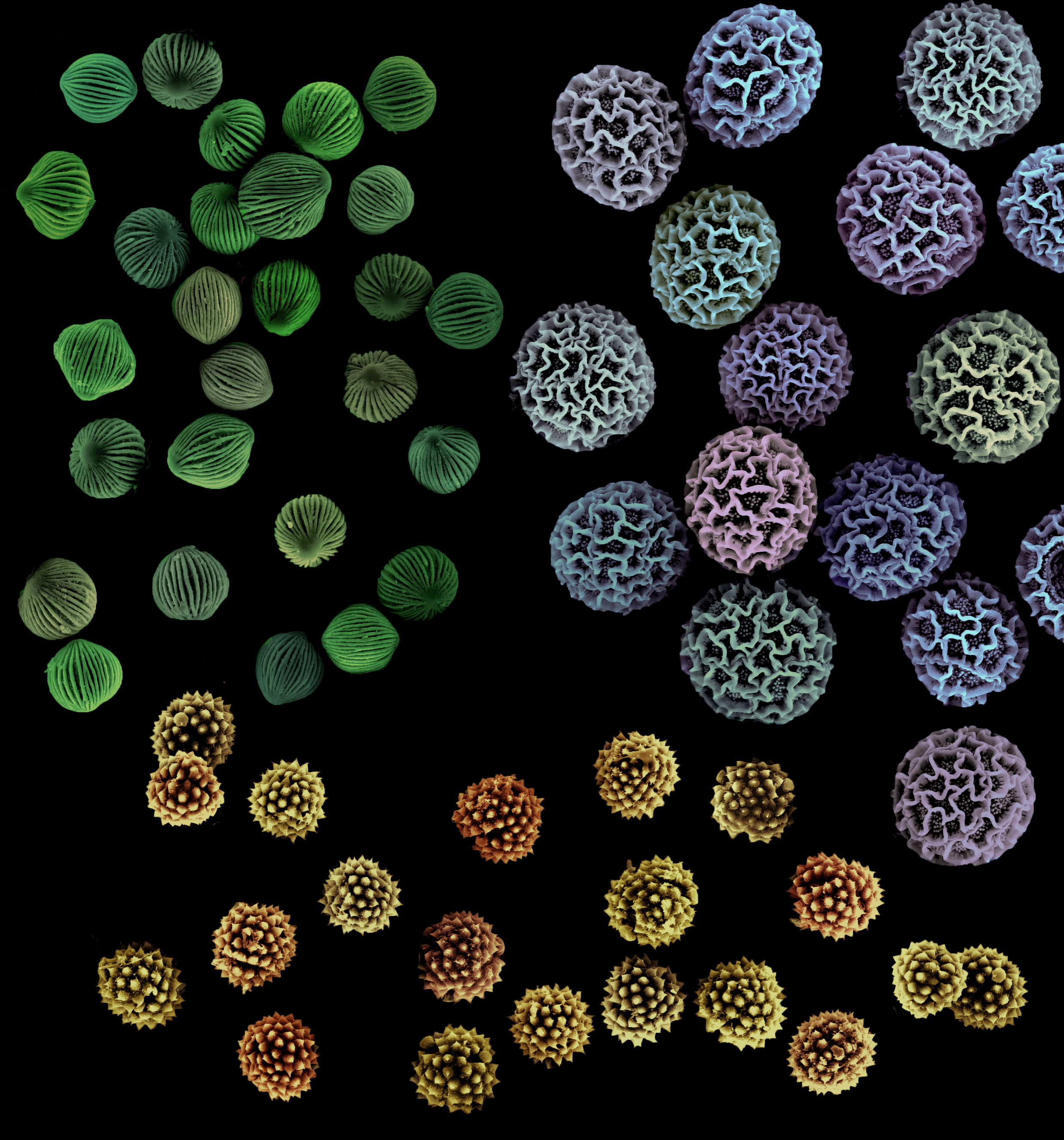
three different pollen grains (image credit: wikimedia commons/Asja Radja)

Pollenkitt is an oily, viscous, hydrophobic layer composed of lipids, carotenoids, flavonoids, proteins, and carbohydrates derived from the breakdown of an internal layer of the anther called the tapetum. Pollenkitt forms a sticky layer around the pollen grains and can add color to the pollen other than the typical yellow. The thickness of the pollenkitt and its composition is species specific. In fact, the look, size, and shape of pollen grains themselves are unique to each species and can even be used to help identify plants. Pollenkitt is found in almost all families of flowering plants and is particularly prevalent in species that are animal-pollinated. One exception is the mustard family (Brassicaceae), whose pollen grains are coated in a substance known as tryphine, which functions similar to pollenkitt but whose formation and composition differ enough to be considered separately.

dandelion pollen (image credit: wikimedia commons/Captainpixel)

The sticky nature of pollenkitt has numerous functions. For one, it helps pollen grains remain on anthers until an animal comes along to remove them. It also holds pollen grains together in clumps, helps pollen grains stick to insect (and other animal) pollinators during transport, and helps adhere them to stigmas when deposited. A paper published in Flora (2005) lists twenty possible functions for pollenkitt, many of which have been confirmed in certain species and some of which are hypothetical. In addition to functions having to do with pollen movement and placement, pollenkitt may also provide protection from water loss, UV radiation, and fungal and bacterial invasions. In species where pollen is offered as food to pollinating insects, pollenkitt is a more easily digestible food source than the pollen grain itself. Thanks to carotenoids, pollenkitt can make pollen more colorful, which may help attract pollinating insects, or, depending on the color, can also hide pollen from insect visitors.

Another important function of pollenkitt is to give pollen a scent. Odors can help encourage insect visitors or deter them, so depending on the situation, scented pollenkitt may be attracting pollinators or discouraging pollen consumers. In a study published in American Journal of Botany (1988), Heidi Dobson analyzed the chemical composition of 69 different species of flowering plants. She isolated numerous scent compounds in pollenkitt and suggested that “some of the chemicals in pollenkitt may … serve as identification cues to pollen-foraging bees.” Most of the species she analyzed were pollinated by bees (which consume pollen), but the few that were mainly pollinated by hummingbirds and butterflies tended to have fewer scent compounds. Since birds and butterflies are there for the nectar and not the pollen, it would make sense that the pollen of these plant species wouldn’t need to carry a scent.

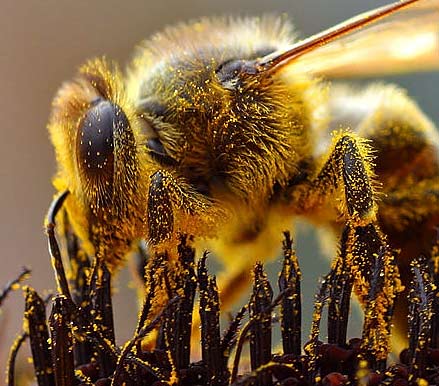
bee collecting pollen (image credit: wikimedia commons)

In flowers that are wind-pollinated, the pollenkitt layer is either very thin or absent altogether. In this case, pollen grains need to be easily released from the anther and are better off when they aren’t sticking to other pollen grains. That way, they are free to be carried off in the breeze to nearby flowers. Some plant species are amphiphilous, meaning they can be both animal-pollinated and wind-pollinated, and according to the authors of the paper published in Flora (2005), pollenkitt layers in these species exhibit intermediate characteristics of both types of pollen grains, generally with thinner, less-sticky pollenkitt and more pollenkitt found within the cavities of the exine.

It’s clear that this unique pollen-glueing substance plays a critical role in the pollination process for many plant species. Considering that each species of plant has its own story to tell, there is still more to learn about the forms and functions that pollenkitt takes.

———–

This is the first in a series of posts in 2024 in which, once again, I am exploring the world of pollinators and pollination. You can read more about this effort in last month’s Year in Review post.

Weeds of Boise: Boise State University Campus, part two

In part one of this two part series, I introduced you to the Boise State University campus, located in the heart of Boise, Idaho. I’ve been spending the past year walking the campus and cataloging the weeds that I find there. Boise has a fairly mild climate compared to the rest of Idaho, so weeds are generally easy to find just about any time of year. What weeds are present depends on what time of year it is. To get a complete picture of the suite of weeds that can be found on a site, it’s important to make observations throughout the year. Weeds can also come and go, with certain species becoming more abundant in some years than others, so making observations over multiple years also helps. This is why I try to update posts that are part of the Weeds of Boise series as I make return visits and encounter additional weed species.

What follows is the second half of the list of weeds I’ve documented so far at Boise State University. I’m including a photograph for each month of the year (July – December), as well as a list of what I’ve encountered up to this point. I’m also including a list of weeds that I didn’t come across but that are documented on iNaturalist.

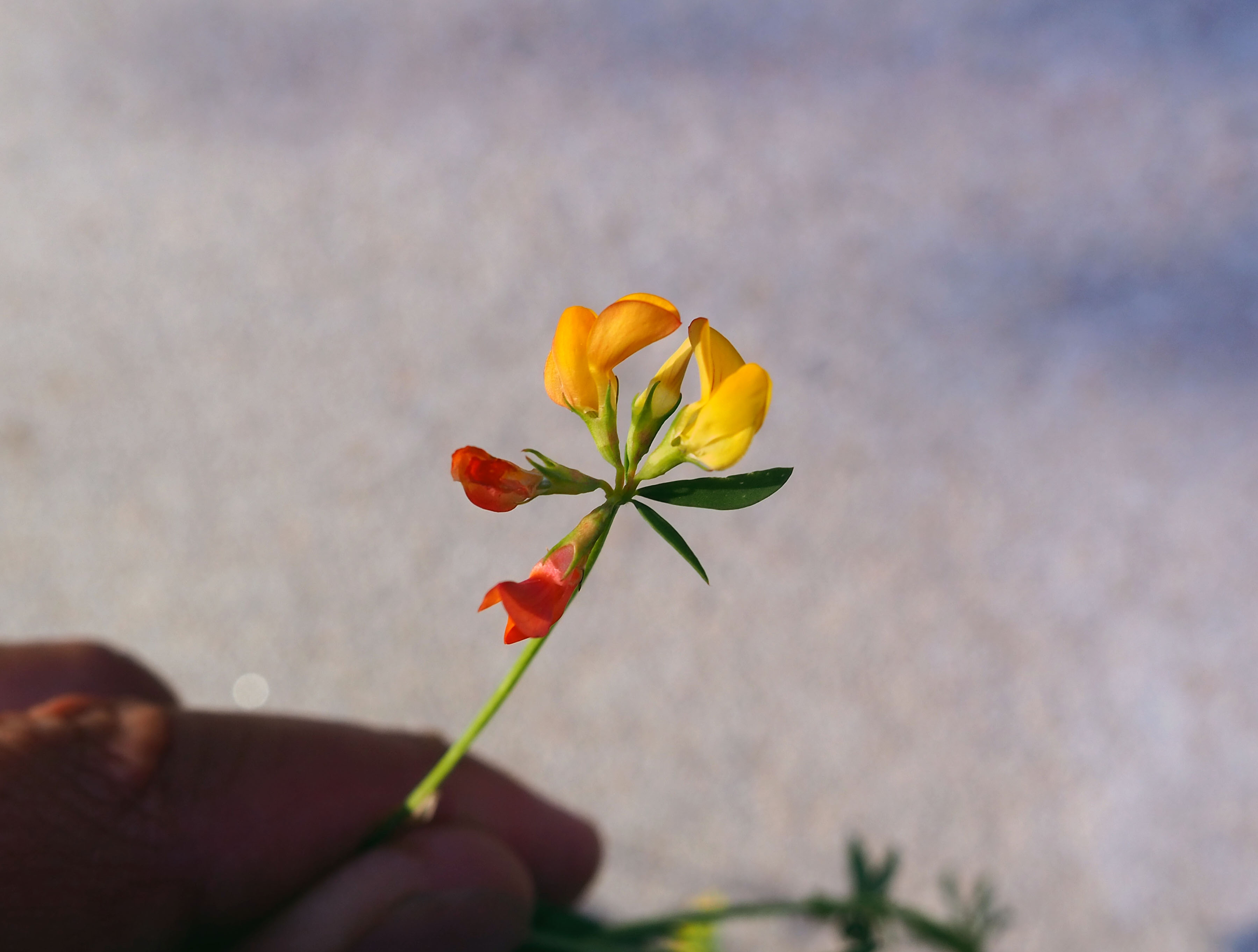
birdsfoot trefoil (Lotus corniculatus) at BSU in July 2023
yellow nutsedge (Cyperus esculentus) at BSU in August 2023
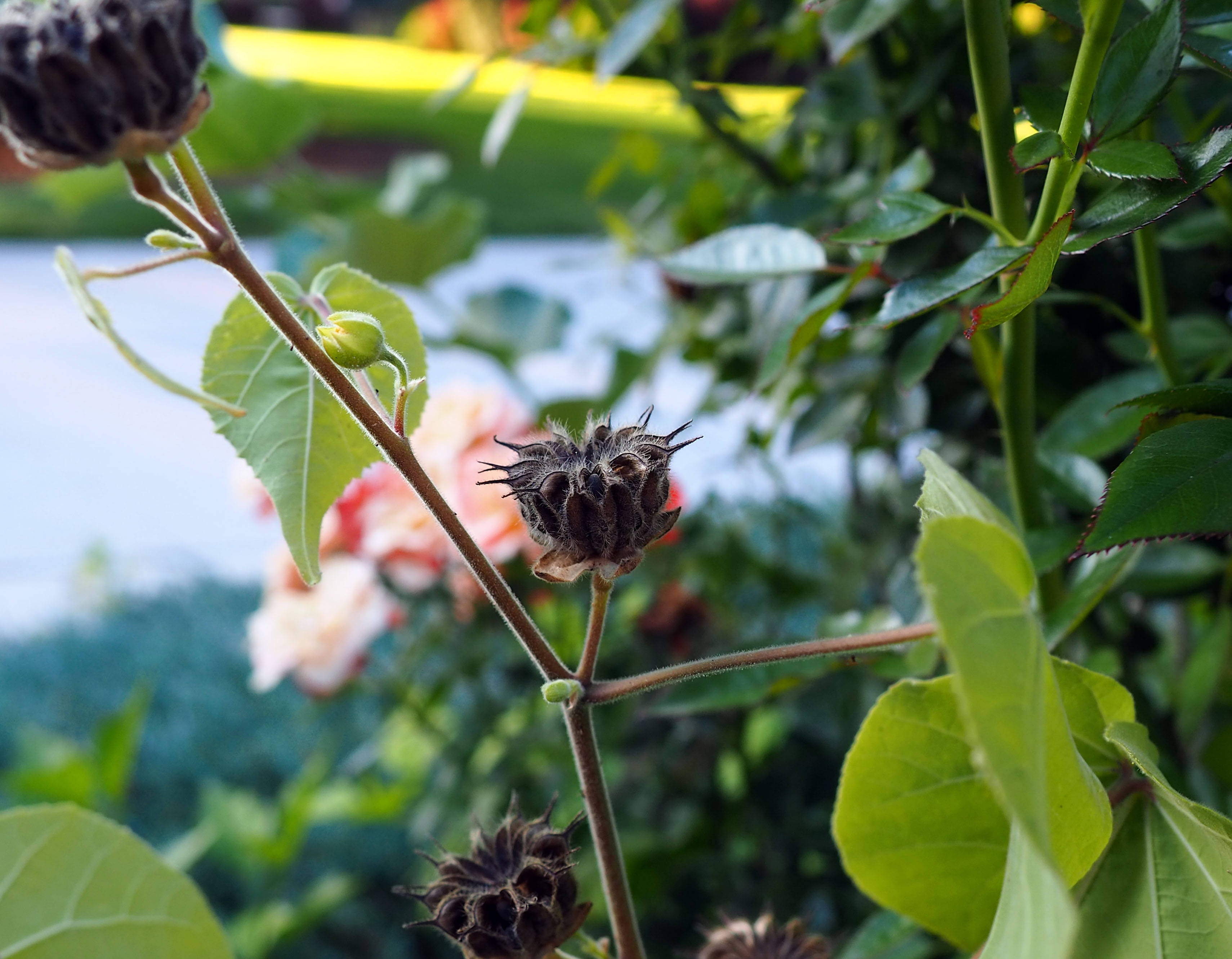
velvetleaf (Abutilon theophrasti) at BSU in September 2023
chicory (Cichorium intybus) at BSU on October 2023
puncturevine (Tribulus terrestris) at BSU in November 2023
bull thistle (Cirsium vulgare) at BSU in December 2023

Additional weeds found on the BSU campus from July – December 2023:

  • Abutilon theophrasti (velvetleaf)
  • Cichorium intybus (chicory)
  • Cirsium vulgare (bull thistle)
  • Cyperus esculentus (yellow nutsedge)
  • Eragrostis cilianensis (stinking lovegrass)
  • Lotus corniculatus (birdsfoot trefoil)
  • Medicago sativa (alfalfa)
  • Melilotus alba (white sweetclover)
  • Solanum nigrum (black nightshade)
  • Sonchus asper (prickly sowthistle)
  • Tribulus terrestris (puncturevine)

Additional weeds observed on the BSU campus by iNaturalist users as of December 2023:

  • Aegilops cylindrica (jointed goatgrass)
  • Bromus diandrus (ripgut brome)
  • Cerastium nutans (nodding chickweed)
  • Chorispora tenella (blue mustard)
  • Elymus repens (quackgrass)
  • Hypericum perforatum (St. John’s wort)
  • Lepidium perfoliatum (clasping pepperweed)
  • Matricaria discoidea (pineappleweed)
  • Ornithogalum umbellatum (star-of-Bethlehem)
  • Vicia tetrasperma (four-seeded vetch)

Tea Time: Fireweed

lf you’ve seen one fireweed, you’ve probably seen several. As an early successional species, growing in large numbers across a vast amount of space is kind of its thing. Any disturbance that leaves bare ground in its wake, such as a wildfire or a windstorm, gives fireweed the opportunity to colonize. It grows quickly and spreads via rhizomes, producing thousands of airborne seeds in the process, sending them off to continue colonization or contribute to soil seed banks in preparation for future disturbances. The role of plants like fireweed is vital – promptly covering bare ground to stave off erosion and acting as a nurse plant to new saplings destined to become the future forest. In a garden setting or in locations where aggressively spreading plants are discouraged, fireweed and its weedy behavior may be unwelcome, but in other contexts, its services are essential.

fireweed (Chamerion angustifolium)

Fireweed (Chamerion angustifolium) is a species in Onagraceae, commonly known as the evening primrose family. It has an impressive distribution, widespread across much of North America and Eurasia. This is owed largely to its adaptability. Deep shade and overly dry soil are two conditions that it does not tolerate well, otherwise it seems to grow in a wide variety of soil types, moisture levels, and sun exposures, particularly in areas where there is regular disturbance. Swaths of towering plants topped with rose-pink flower spikes make fireweed impossible to ignore and a favorite of wildflower enthusiasts.

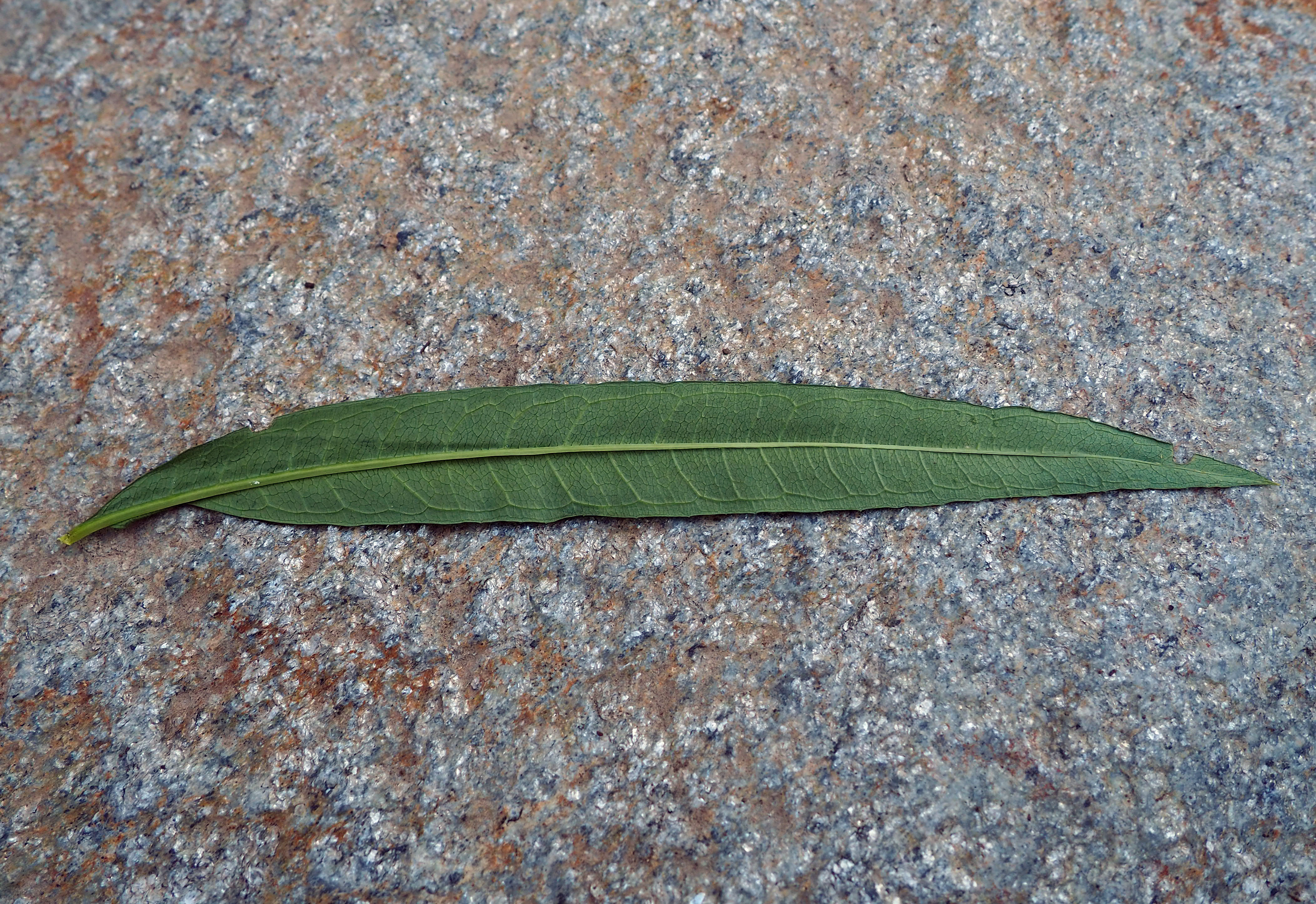
Fireweed stems reach from three to nine feet tall and are rarely branched. Long, narrow, lance-shaped leaves are arranged alternately along the lengths of stems and give the plant a willow-like appearance, which explains another common name, rosebay willowherb. The undersides of leaves have a distinct venation pattern, in which the veins don’t reach the leaf margins, a feature that can help with identification.

distinct leaf veins of fireweed (Chamerion angustifolium)

A series of rose-pink to purple flowers top the stems of fireweed. Each flower has four sepals and four petals with eight stamens and a four-lobed stigma extending prominently from the center. Its long, narrow ovary can be confused for a flower stalk. Rich with nectar, fireweed flowers are a favorite of honeybee keepers. They are also edible, like much of the rest of the plant. Narrow, four-chambered capsules form in place of fertilized flowers and later split open to release abundant, small seeds with a tuft of fluff attached to each one to aid in wind dispersal.

Fireweed has a long history of being used as food and medicine. Stem fibers are also useful for making cord, and seed fluff is useful for weaving and padding. Certainly, fireweed’s abundance and ubiquity contribute to its utility. Having never eaten fireweed before, I decided that a good way to introduce it to my diet would be to make a tea. Fireweed leaves are commonly collected for tea and are said to make an excellent non-caffeinated replacement for black tea.

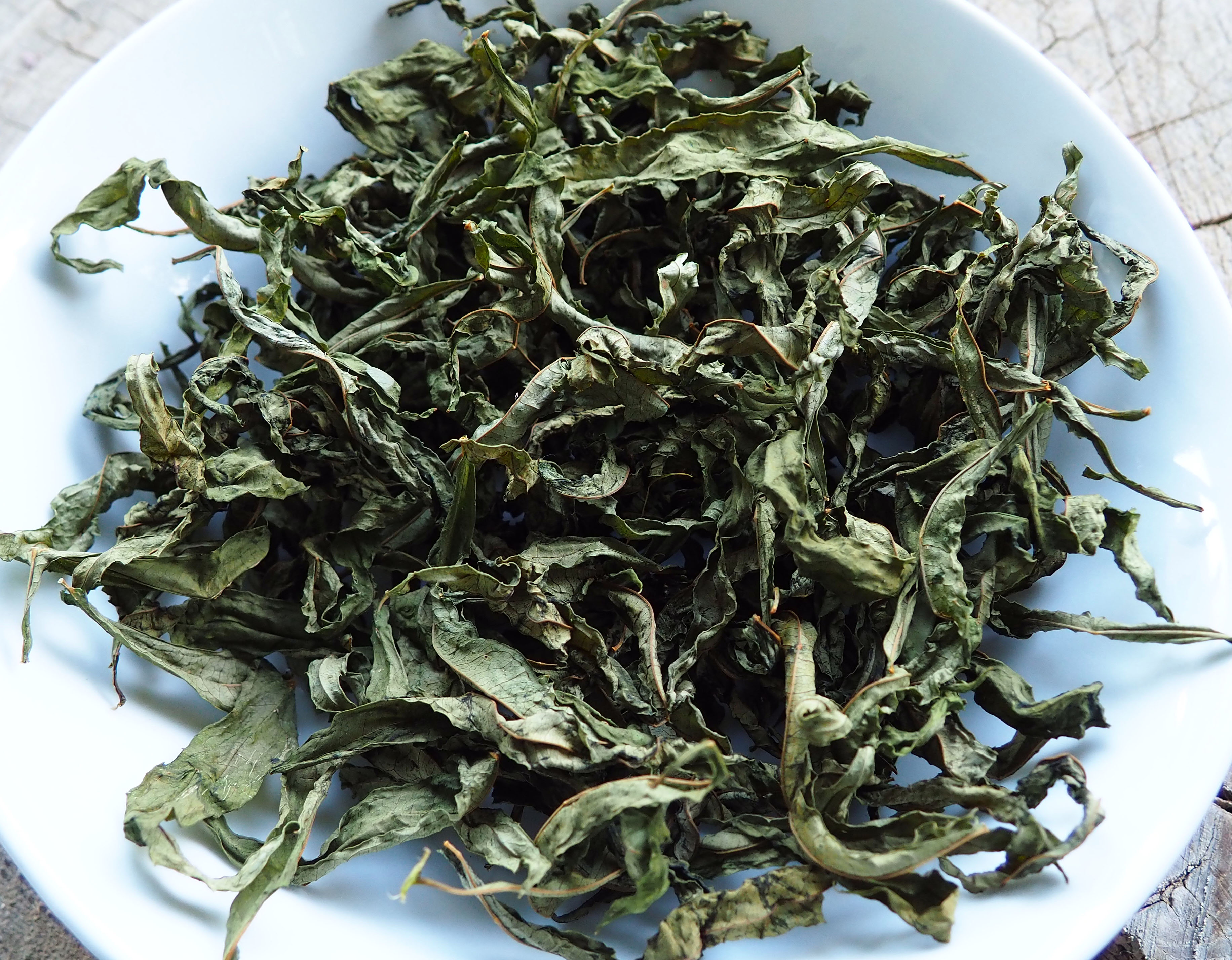
fireweed tea leaves

Making fireweed tea starts by stripping young leaves from fireweed stems. Recipes I encountered all called for fermenting the leaves before drying them. I did this by squeezing handfuls of leaves in my fists just enough to break and bruise them a bit and then packing them into a quart size Mason jar. I closed the lid tight and kept them in the jar for about five days, shaking it up a couple times a day supposedly to help prevent mold issues. After that, I dried the leaves on a baking sheet in the hot sun. From there, they are ready for making tea the same way you would make any other loose leaf tea, chopping the leaves up a bit before immersing them in hot water.

I found the taste of fireweed tea to be mild and pleasant. Despite several sources comparing it to black tea, I thought it was more similar to green tea. Sierra liked the smell more than the taste and wished it had honey in it. Compared to other teas I’ve tried in this short series of posts, this is definitely one of the better ones, and a tea I could see myself making again sometime.

More Tea Time Posts on Awkward Botany:

Weeds of Boise: Boise State University Campus, part one

If you live in a major city (or even a minor one), there is a good chance it is home to a college or university (perhaps several). Universities tend to take up a lot of space, which means there is often a plethora of landscaping accompanying their buildings, hardscaping, and other impervious surfaces. Among all the turf, flower beds, tree wells, and other greenspaces, there is bound to be a fair share of weeds. In spite of how hard the groundskeepers may work, the campus is not likely to ever be completely weed-free. Lucky for us, this means that institutions of higher learning are excellent places to familiarize ourselves with many of the weed species that occur in our cities, particularly weeds that are common in garden beds and turfgrass.

Near downtown Boise, on the southside of the Boise River, you will find the ever-expanding campus of Boise State University, home of the Broncos and their famous blue turf. According to the internet’s favorite encyclopedia, the campus is 285 acres in size, plenty of space for weeds to grow and abudant opportunities to hunt them out. Tallying the number of weed species in a place like this takes time. The benefit of botanizing for weeds is that you can find them at just about any time of year. While some species only show up in certain seasons, others can be seen practically year-round.

In order to document the weeds of Boise State University, I’m spending the entire year walking the campus listing and photographing the weeds I find. What follows is the first half of what’s been documented so far. I’m including a photograph for each month of the year, as well as a list of what I’ve encountered. In part two, I’ll share a list of any additional weeds found throughout the remainder of the year. While you’re waiting for that, check out the other posts in the Weeds of Boise series.

common groundsel (Senecio vulgaris) at BSU in January 2023
chickweed (Stellaria media) at BSU in February 2023
hairy bittercress (Cardamine hirsuta) at BSU in March 2023
ivyleaf speedwell (Veronica hederifolia) at BSU in April 2023
black medic (Medicago lupulina) at BSU in May 2023
creeping thistle (Cirsium arvense) at BSU in June 2023

List of weeds found on the campus of Boise State University as of June 2023:

  • Ailanthus altissima (tree of heaven)
  • Anthriscus caucalis (bur chervil)
  • Amaranthus retroflexus (redroot pigweed)
  • Arctium minus (lesser burdock)
  • Bassia scoparia (kochia)
  • Bromus tectorum (cheatgrass)
  • Capsella bursa-pastoris (shepherd’s purse)
  • Cardamine hirsuta (hairy bittercress)
  • Ceratocephala testiculata (bur buttercup)
  • Chenopodium album (lamb’s quarters)
  • Chondrilla juncea (rush skeletonweed)
  • Cirsium arvense (creeping thistle)
  • Claytonia perfoliata (miner’s lettuce)
  • Convolvulus arvensis (field bindweed)
  • Conyza canadensis (horseweed)
  • Descurainia sophia (flixweed)
  • Digitaria sanguinalis (crabgrass)
  • Draba verna (spring draba)
  • Epilobium ciliatum (willowherb)
  • Erodium cicutarium (redstem filare)
  • Euphorbia maculata (spotted spurge)
  • Galium aparine (cleavers)
  • Geum urbanum (herb Bennet)
  • Holosteum umbellatum (jagged chickweed)
  • Hordeum jubatum (foxtail barley)
  • Lactuca serriola (prickly lettuce)
  • Lamium purpureum (purple deadnettle)
  • Lepidium sp. (whitetop)
  • Malva neglecta (common mallow)
  • Medicago lupulina (black medic)
  • Oxalis corniculata (creeping woodsorrel)
  • Parthenocissus quinquefolia (Virginia creeper)
  • Plantago lanceolata (narrowleaf plantain)
  • Plantago major (broadleaf plantain)
  • Poa annua (annua bluegrass)
  • Poa bulbosa (bulbous bluegrass)
  • Polygonum aviculare (prostrate knotweed)
  • Portulaca oleracea (purslane)
  • Prunella vulgaris (self-heal)
  • Ranunculus repens (creeping buttercup)
  • Senecio vulgaris (common groundsel)
  • Sonchus sp. (sow thistle)
  • Stellaria media (chickweed)
  • Taraxacum officinale (dandelion)
  • Tragopogon dubius (salsify)
  • Trifolium repens (white clover)
  • Ulmus pumila (Siberian elm)
  • Veronica hederifolia (ivyleaf speedwell)
  • Vulpia myuros (rat’s tail fescue)

Do you frequent the BSU campus? Have you seen anything not on my list? Comment below or send me a message and let me know what you’ve seen and where.

Getting to Know a Grass – Basic Anatomy and Identification

Have you ever tried to identify a grass? Most of us who like to look at plants and learn their names will probably admit that we often give up on grasses pretty quickly, or just ignore them entirely. They aren’t the easiest plants to identify to species, and there are so many of them. Without close inspection, they can all look pretty similar. Their flowers aren’t particularly showy, and their fruits are fairly forgettable. They are strands or clumps of green that create a backdrop for more intriguing forms of vegetation. Yet, they are among the most ecologically and economically important groups of plants on the planet. And actually, if you can ascend the hurdles that come with getting to know them, they are beautiful organisms and really quite amazing.

Kōura in the Grass

The grass family – Poaceae – consists of nearly 8oo genera and about 12,000 species. Grasses occur in a wide range of habitats across the globe. Wherever you are on land, a grass is likely nearby. Grasses play vital roles in their ecosystems and, from a human perspective, are critical to life as we know it. We grow them for food, use them for building materials and fuel, plant them as ornamentals, and rely on them for erosion control, storm water management, and other ecosystem services. We may not acknowledge their presence most of the time, but we very likely wouldn’t be here without them.

The sheer number of grass species is one thing that makes them so difficult to identify. Key identifying features of grasses and grass-like plants (also known as graminoids) tend to be very small and highly modified compared to similar features on other flowering plants. This requires using a hand lens and learning a whole new vocabulary in order to begin to understand a grass’s anatomy. It’s a time commitment that goes beyond a lot of other basic plant identification, and it’s a learning curve that few dare to follow. However, once you learn the basic features, it becomes clear that grasses are relatively simple organisms, and once you start identifying them, it can actually be an exciting and rewarding experience.

Quackgrass (Elymus repens) and Its Rhizome

Depending on the species, grasses can be annuals – completing their life cycle within a single year – or perennials – coming back year after year for two or more years. Most grasses have a fibrous root system; some are quite shallow and simple while others are extremely deep and extensive. Some species of perennial grasses spread by either rhizomes (underground stems), stolons (horizontal, above ground stems), or both. Some grasses also produce tillers, which are essentially daughter plants that form at the base of the plant. The area where roots, rhizomes, stolons, and tillers meet the shoots and leaves of a grass plant is called the crown. This is an important region of the plant, because it allows for regrowth even after the plant has been browsed by a grazing animal or mown down by a lawn mower.

The stem or shoot of a grass is called a culm. Leaves are formed along the lengths of culms, and culms terminate in inflorescences. Leaves originate at swollen sections of the culm called nodes. They start by wrapping around the culm and forming what is called a leaf sheath. Leaves of grasses are generally long and narrow with parallel venation – a trait typical of monocotyledons. The part of the leaf that extends away from the culm is called the leaf blade or lamina. Leaves are alternatively arranged along the length of the stem and are two-ranked, meaning they form two distinct rows opposite of each other along the stem.

The area where the leaf blade meets the leaf sheath on the culm is called the collar. This collar region is important for identifying grasses. With the help of a hand lens, a closer look reveals the way in which the leaf wraps around the culm (is it open or closed?), whether or not there are hairs present and what they are like, if there are auricles (small flaps of leaf tissue at the top of the collar), and what the ligule is like. The ligule is a thin membrane (sometimes a row of hairs) that forms around the culm where the leaf blade and leaf sheath intersect. The size of the ligule and what its margin is like can be very helpful in identifying grasses.

The last leaf on the culm before the inflorescence is called the flag leaf, and the section of the culm between the flag leaf and the inflorescence is called a peduncle. Like the collar, the flower head of a grass is where you’ll find some of the most important features for identification. Grass flowers are tiny and arranged in small groupings called spikelets. In general, several dozen or hundreds of spikelets make up an inflorescence. They can be non-branching and grouped tightly together at the top of the culm, an inflorescence referred to as a spike, or they can extend from the tip of the culm (or rachis) on small branches called pedicels, an inflorescence referred to as a raceme. They can also be multi-branched, which is the most common form of grass inflorescence and is called a panicle.

Either way, you will want to take an even closer look at the individual spikelets. Two small bracts, called glumes, form the base of the spikelet. Above the glumes are a series of florets, which are enclosed in even smaller bracts – the outer bract being the lemma and the inner bract being the palea. Certain features of the glumes, lemmas, and paleas are specific to a species of grass. This includes the way they are shaped, the presence of hairs, their venation, whether or not awns are present and what the awns are like, etc. If the grass species is cleistogamous – like cheatgrass – and the florets never open, you will not get a look at the grass’s sex parts. However, a close inspection of an open floret is always a delight. A group of stamens protrude from their surrounding bracts bearing pollen, while feathery stigmas reach out to collect the pollen that is carried on the wind. Depending on the species, an individual grass floret can have either only stamens, only pistils (the stigma bearing organs), or both. Fertilized florets form fruits. The fruit of a grass is called a caryopsis (with a few exceptions) and is indistinguishable from the seed. This is because the seed coat is fused to the wall of the ovary, unlike other fruit types in which the two are separate and distinct.

If all this doesn’t make you want to run outside and take a close look at some grasses, I don’t know what will. What grasses can you identify in your part of the world? Let me know in the comment section below or check out the linktree and get in touch by the means that suits you best.

Eating Weeds: Cleavers Coffee

One of the world’s most beloved beverages comes from a species of plant found in the fourth largest family of flowering plants. Rubiaceae, also known as the coffee or bedstraw family, consists of around 13,500 species, placing it behind just Asteraceae, Orchidaceae, and Fabaceae for the most number of species. Coffea arabica, and other species in the genus Coffea, are grown for their fruits which are used to make coffee. This makes Rubiaceae one of the most economically important plant families. A family this size is bound to be home to a weed or two, and in fact, one of the most widespread and obnoxious weeds is also a member of Rubiaceae.

Galium aparine, known commonly by a slew of names including cleavers, occurs naturally across large portions of Europe, Asia, North Africa, and possibly even parts of North America. It has been introduced as a weed in many locations across North America, South America, Australia, New Zealand, Japan, and parts of Africa. It is of particular concern in agricultural settings where its lengthy, sprawling branches and sticky leaves get tangled up in harvesting equipment, while its tiny, prickly fruits get mixed in with seeds of similar size like canola.

Galium aparine

Sticky willy, as it is also known, is an annual plant that, in some cases, can have two generations per year – one in the spring (having germinated the previous fall) and one in the summer. Its stems are square, though not as sharply square as plants in the mint family, and can grow to around six feet long. They are weak, brittle, and don’t stand upright on their own; instead they are found scrambling across the ground or, when given the opportunity, climbing up the lengths of other plants in order to reach the sunlight. Leaves occur in whorls of six to eight and are simple and slender with entire margins. Flowers are produced at leaf axils along the lengths of the branches and are tiny, four-petaled, star-shaped, and greenish white. Fruits are borne in pairs and are round, single-seeded, indehiscent nutlets. The stems, leaves, and fruits are covered in stiff, hooked hairs or trichomes, earning it other names like catchweed bedstraw, grip grass, stickyweed, and velcro plant.

flowers and immature fruit on Galium aparine

Galium aparine is a climbing plant, but unlike other climbing plants, it doesn’t twine up things or produce structures like tendrils to hold itself up. Instead, its ability to climb is made possible by its abundant bristly hairs. A paper published in Proceedings of the Royal Society B (2011) investigates the way G. aparine climbs up other plants using the hairs on its leaves. A close inspection of the leaves reveals that the trichomes on the top of the leaf (the adaxial leaf surface) differ significantly from those found on the bottom of the leaf (the abaxial leaf surface). Adaxial trichomes curve towards the tip of the leaf, are hardened mainly at the tip, and are evenly distributed across the leaf surface. Abaxial trichomes curve towards the leaf base, are hardened throughout, and are found only on the midrib and leaf margins.

Having different types of hairs on their upper and lower leaf surfaces gives cleavers an advantage when it comes to climbing up neighboring plants. The authors of the paper describe the technique as a “ratchet mechanism.” When the upper surface of their leaf makes contact with the lower surface of another plant’s leaf, the flexible, outwardly hooked trichomes inhibit it from slipping further below the leaf and allow it to easily slide out from underneath it. When the lower surface of their leaf makes contact with the upper surface of another plant’s leaf, the stiff, inwardly hooked trichomes keep it attached to the leaf even if the other leaf starts to slip away and allows it to advance further across the leaf for better attachment and coverage. Using this ratchet mechanism, cleavers climb up the leaves of other plants, keeping their leaves above the other plant’s leaves, which gives them better access to sunlight. The basal stems of cleavers are highly flexible, which keeps them from breaking as the plant sways in the wind, tightly attached to their “host” plant.

fruits of Galium aparine

The hooked trichomes on the tiny fruits of cleavers readily attach to the fur and clothing of passing animals. The nutlets easily break free from the plants and can be transported long distances. They can also be harvested and made into a lightly caffeinated tea. Harvesting the fruit takes time and patience. I spent at least 20 minutes trying to harvest enough fruits for one small cup of cleavers coffee. The fruits don’t ripen evenly, and while I tried to pick mostly ripe fruits, I ended up with a selection of fruits in various stages of ripeness.

To make cleavers coffee, first toast the seeds for a few minutes in a pan heated to medium high, stirring them frequently. Next, grind them with a mortar and pestle and place the grinds in a strainer. Proceed as you would if you were making tea from loose leaf tea.

The toasted fruits and resulting tea should smell similar to coffee. The smell must not be strong, because my poor sense of smell didn’t really pick up on it. The taste is coffee-like, but I thought it was more similar to black tea. Sierra tried it and called it “a tea version of coffee.” If the fruits were easier to collect, I could see myself making this more often, but who has the time?

The leaves and stems of Galium aparine are also edible, and the plant is said to be a particular favorite of geese and chickens, bringing about yet another common name, goosegrass. In the book Weeds, Gareth Richards discusses the plant’s edibility: “It’s edible for humans but not that pleasant to eat; most culinary and medicinal uses center around infusing the plant in liquids.” Cooking with the leaves or turning them into some sort of spring tonic is something I’ll consider for a future post about eating cleavers.

More Eating Weeds Posts on Awkward Botany