Rare and Endangered Plants: Texas Wild Rice

Some plants have native ranges that are so condensed that a single major disturbance has the potential to wipe them out of existence completely. They are significantly more vulnerable to change than neighboring plant species, and for this reason they often find themselves on endangered species lists. Zizania texana is one of those plants. Its range was never large to begin with, and due to increased human activity it now finds itself on the brink of extinction.

Zizania texana is one of three species of wild rice found in North America. The other two, Z. palustris and Z. aquatica, enjoy much broader ranges. Both of these species were once commonly harvested and eaten by humans. Today, Z. palustris is the most commercially available of the two. Commonly known as Texas wild rice, Z. texana, was not recognized as distinct from the other two Zizania species until 1932.

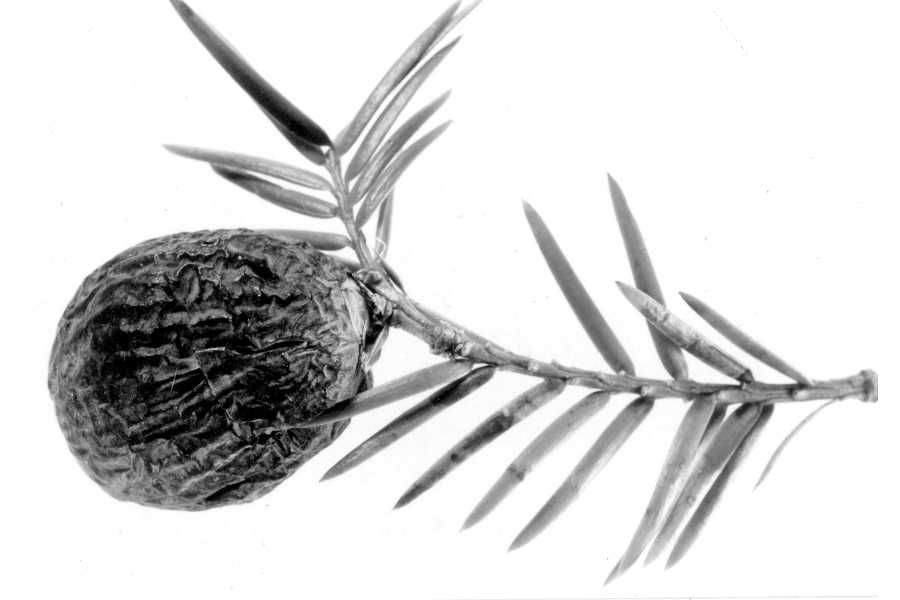
Herbarium voucher of Texas wild rice (Zizania texana) - photo credit: University of Texas Herbarium

Herbarium voucher of Texas wild rice (Zizania texana) – photo credit: University of Texas Herbarium

Texas wild rice is restricted to the headwaters of the San Marcos River in Central Texas. The river originates from a spring that rises from the Edwards Aquifer. It is a mere 75 miles long, but is home to copious amounts of wildlife, including several rare and endangered species. Before the 1960’s, Texas wild rice was an abundant species found along several miles of the San Marcos River. Its population and range has since been greatly reduced, and the native population is now limited to about 1200 square meters within the first two miles of the river.

Texas wild rice is an aquatic grass with long, broad leaves that remains submerged in the clear, flowing, spring-fed water of the river until it is ready to flower. Flower heads rise above the water, and each flower spike consists of either male or female flowers. The flowers are wind pollinated, but research has revealed that the pollen does not travel far and does not remain viable for very long. If a male flower is further than about 30 inches away from a female flower, the pollen generally fails to reach the stigma. The plants also reproduce asexually by tillering, but plants produced this way are genetically identical to the parent plant.

As people settled in the area around San Marcos Springs and began altering the river for their own use, Texas wild rice had to put up with a series of assaults and dramatic changes, including increased sediment and nutrient loads, variations in water depth and speed, trampling, and mechanical and chemical removal of the plant itself. Sexual reproduction became more difficult. In his book, Enduring Seeds, Gary Paul Nabhan describes one scenario: “streamflow had been increased to the extent that the seedheads, which were formerly raised a yard above the water, [were] now constantly being pummeled by the current so that they [remained] submerged, incapable of sexual reproduction.”

San Marcos, Texas – where the headwaters of the San Marcos River is located and where Texas wild rice has long called its home – is the location of Texas State University and is part of the Greater Austin metropolitan area. Thus, Zizania texana now finds itself confined to a highly urbanized location. The San Marcos Springs and River are regularly used for recreation, which leads to increased sediments, pollution, and trampling. Introduced plant species compete with Texas wild rice, and introduced waterfowl and aquatic rodents consume it. In this new reality, sexual reproduction will remain a major challenge, and a return to its original population size seems veritably impossible.

Texas wild rice (Zizania texana) and its urbanized habitat - photo credit: The Edwards Aquifer

Texas wild rice (Zizania texana) and its urbanized habitat – photo credit: The Edwards Aquifer

Attempts have and are being made to maintain the species in cultivation and to reintroduce it to its original locations, but its habitat has been so drastically altered that it will need constant management and attention for such efforts to be successful. As Nabham puts it, it is a species that has “little left of [its] former self in the wild – it is a surviving species in name more than in behavior…The wildness has been squeezed out of Texas rice.”

What if humans had stayed out of it? Would a plant with such a limited range and such difficulty reproducing sexually persist for any great length of time? It’s hard to say. If it disappears completely, what consequences will there be? It is known to provide habitat for the fountain darter, an endangered species of fish, as well as several other organisms; however, the full extent of its ecological role remains unclear. It will be nursed along by humans for the foreseeable future, but it may never regain its full glory. It is a species teetering on the edge of extinction, simultaneously threatened and cared for by humans – a story shared by so many other species around the world.

Additional Resources:

Happy American Wetlands Month!

To kick off this year’s American Wetlands Month, I am reposting something I posted three years ago. I have updated the links and added a few more resources. In celebration, all Awkward Botany posts in May will have something to do with wetlands. An underlying goal of American Wetlands Month is to encourage people to get out and visit wetlands in their area and find out what they can do to help conserve them. Hopefully this series of posts helps to further that aim.

———————

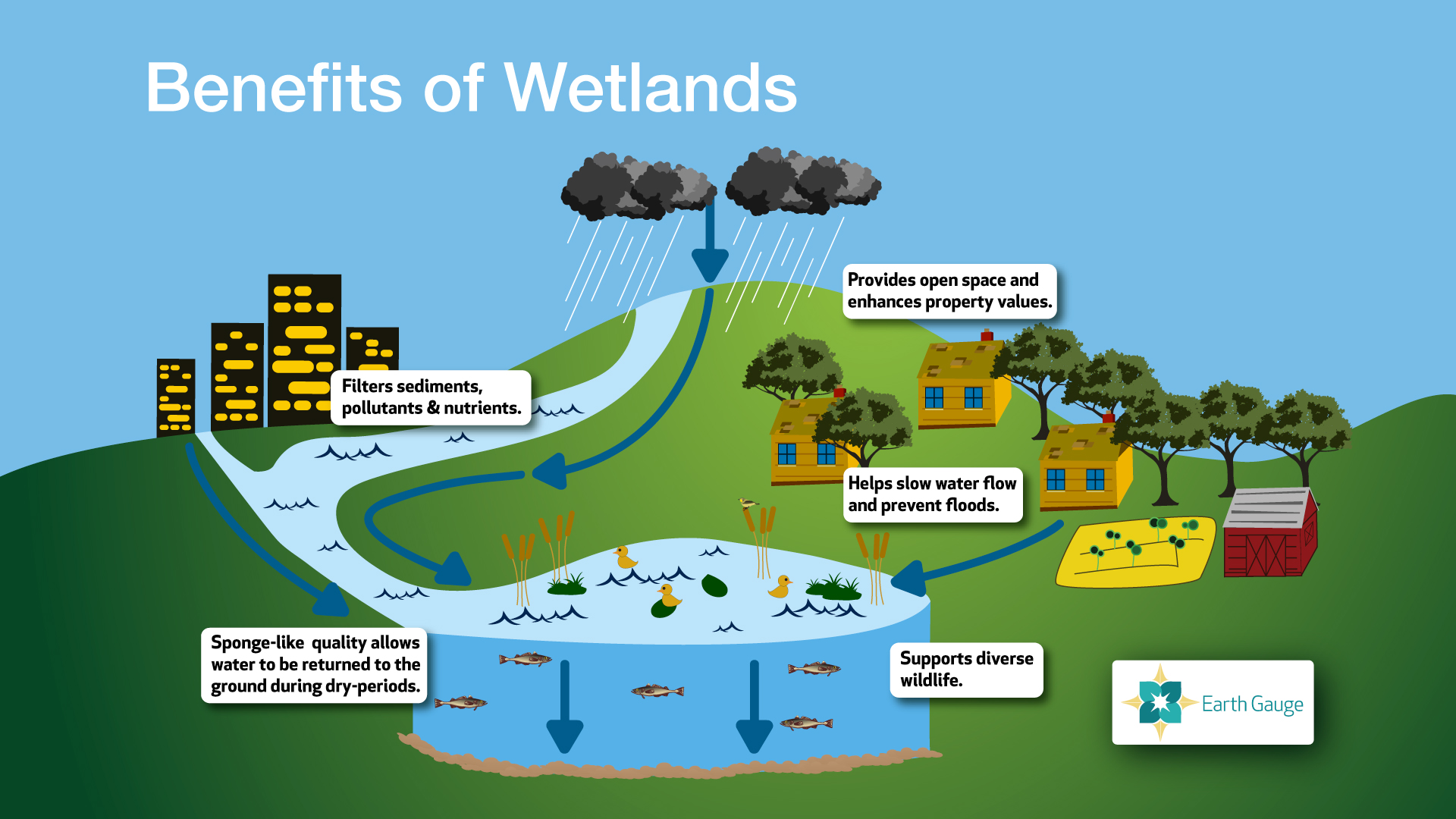
“May is American Wetlands Month! No matter where you live, chances are there’s a wetland nearby that provides important environmental benefits to your community. Wetlands support diverse fish and wildlife species, filter pollutants from rain water runoff, help recharge groundwater supplies, prevent flooding and enhance property values.” – Earth Gauge (A program of the National Environmental Education Foundation)

Wetlands are ecosystems that are characterized by their vegetation (aquatic plants), their soils (formed during anaerobic conditions caused by being flooded or saturated with standing water), and, of course, their state of being largely saturated with water either seasonally or permanently. Examples of natural wetlands include bogs, fens, marshes, and swamps. Wetlands can also be constructed by humans for the purpose of collecting storm water runoff from urban areas in efforts to reduce the risk of flooding and avoid overwhelming municipal sewer systems during large rainstorms.

Wetlands are the most threatened type of ecosystem on earth, and we are losing them at a steady clip. Major threats to wetlands include land development, pollution (agricultural, commercial, residential, etc.), and the introduction of invasive species. Considering the benefits we receive from having wetlands around, it is imperative that we protect them. Earth Gauge offers some suggestions on how to do so.

wetland benefits

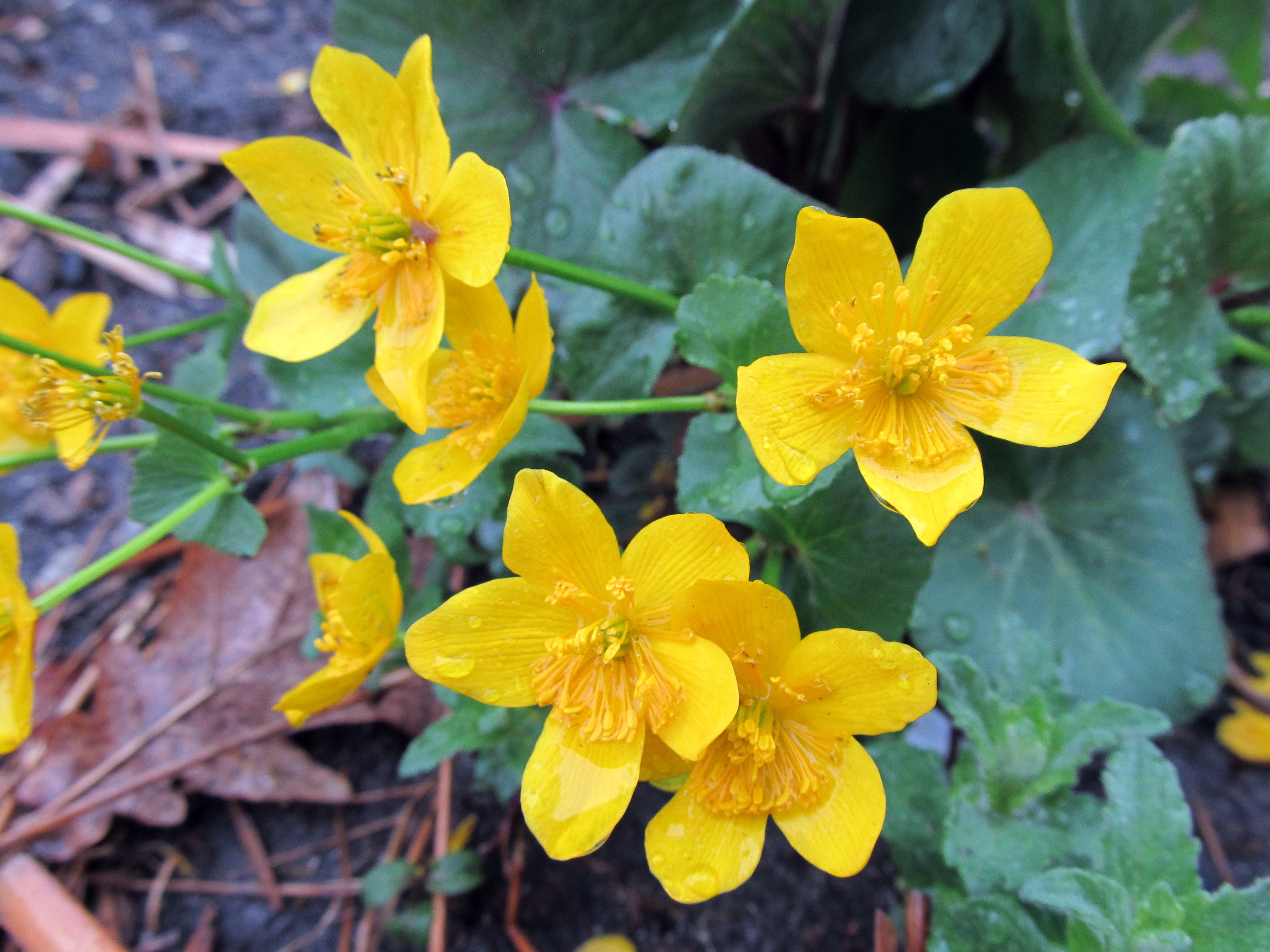
Speaking of wetlands, one of my favorite wetland plant species is marsh marigold (Caltha palustris). It is in the buttercup family (Ranunculaceae) and is common throughout the Northern Hemisphere. I became familiar with this plant when I was volunteering at a wetland in Edwardsville, IL. Perhaps you’ve seen it growing near you.

Marsh Marigold (Caltha palustris) - Photo taken at Idaho Botanical Garden.

Marsh Marigold (Caltha palustris) – Photo taken at Idaho Botanical Garden.

Additional Resources

Biodiversity Dips When Japanese Rice Paddies Go Fallow

Large-scale farms that generally grow a single crop at a time and are managed conventionally are, by design, lacking in biodiversity. Abandoning such farms and allowing nature to take its course should, not surprisingly, result in a dramatic uptick in biodiversity. Plant colonization of abandoned farmland (also referred to as old field succession) is well studied and is regularly used as an example of secondary succession in ecology textbooks. The scenario seems obvious: cease agriculture operations, relinquish the land back to nature, and given enough time it will be transformed into a thriving natural community replete with diverse forms of plants and animals. This is an oversimplification, of course, and results will vary with each abandoned piece of land depending on the circumstances, but it generally seems to be the story. So what about when it isn’t?

Rice farming in Japan began at least 2400 years ago. Rice had been domesticated in China long before that, and when it eventually arrived in Japan it shaped the culture dramatically. For hundreds of years rice was farmed in small, terraced paddies in the mountains of Japan. Dennis Normile writes about these traditional, rice paddies in a recent issue of Science. He describes how they were found in villages “nestled in a forested valley” accompanied by vegetable plots, orchards, and pasture. Today, farms like these are “endangered,” and as they have become increasingly abandoned, plants, insects, and other wildlife that have historically thrived there are suffering.

Since the 1960’s, a combination of factors has resulted in the decline of traditional rice farming in Japan. For one, large scale farming has led to the consolidation of paddies, which are farmed more intensively. Diets in Japan have also shifted, resulting in a preference for bread and pasta over rice. Additionally, Japan’s population is shrinking, and residents of rural areas are migrating to cities. Traditional rice farmers are aging, and younger generations are showing little interest in pursuing this career.

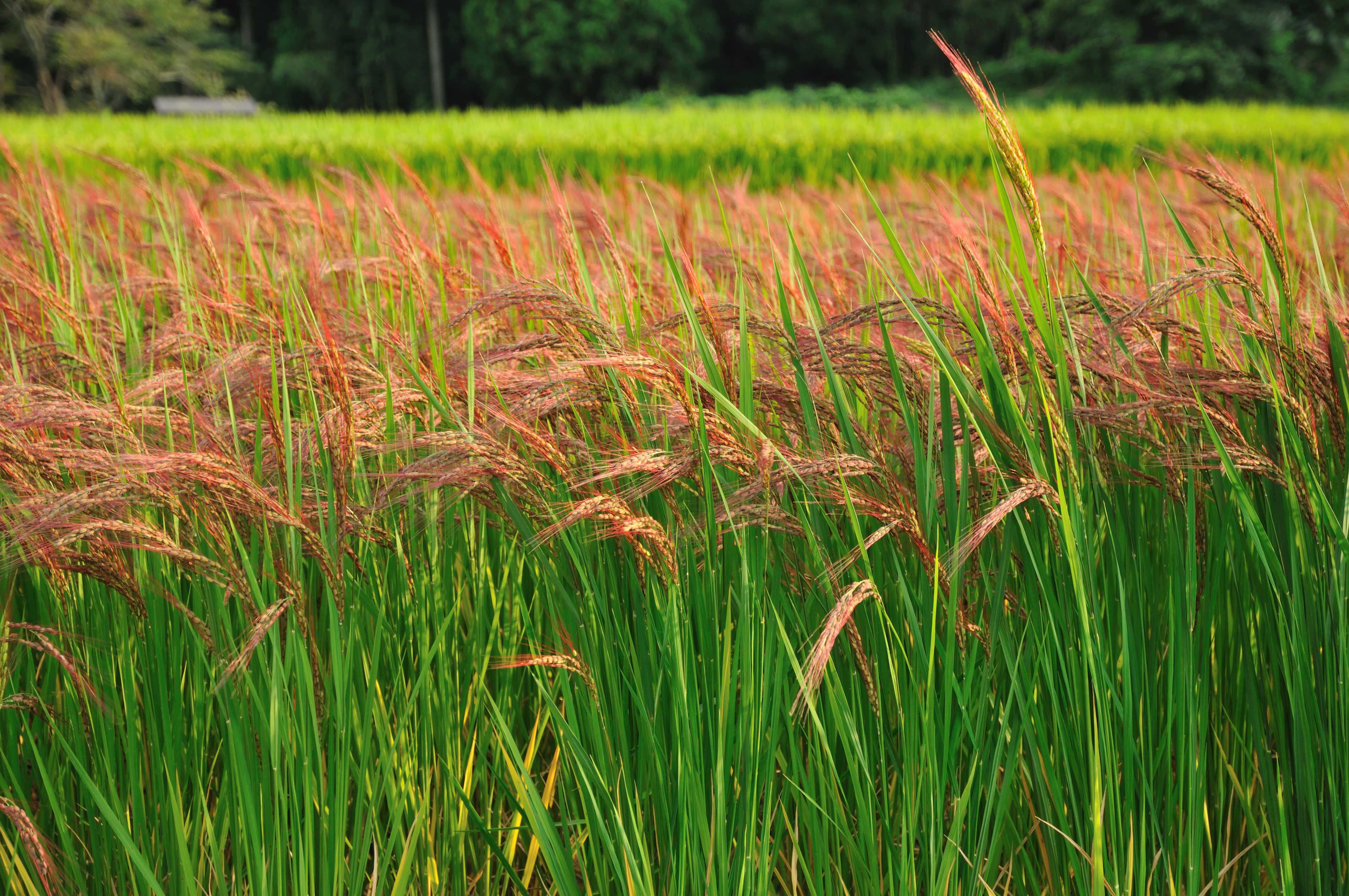
Red rice paddy in Japan - photo credit: wikimedia commons

Red rice paddy in Japan – photo credit: wikimedia commons

Demographic and dietary concerns aside, why in this case is the abandonment of agriculture imperiling species? The answer appears to be in both the way that the rice paddies have been historically managed and the length of time that they have been managed that way. Agriculture, by its very nature, creates novel ecosystems, and if the practice continues long enough, surrounding flora and fauna could theoretically coevolve along with the practice. When the practice is discontinued, species that have come to rely on it become threatened.

Traditional rice paddies are, as Normile describes, “rimmed by banks so that they can be flooded and drained.” Farmers “encouraged wild grassland plants to grow on the banks because the roots stabilize the soil.” The banks are mowed at least twice a year, which helps keep woody shrubs and trees from establishing on the banks. In some areas, rice farming began where primitive people of Japan were burning frequently to encourage grassland habitat. Maintaining grassland species around rice paddies perpetuated the grassland habitat engineered by primitive cultures.

As rice paddies are abandoned and the surrounding grasslands are no longer maintained, invasive species like kudzu and a North American species of goldenrod have been moving in and dominating the landscape resulting in the decline of native plants and insects. Normile reports that the abandoned grasslands are not expected to return to native forests either since “surrounding forests…are a shadow of their old selves.”

Additionally, like most other parts of the world, Japan has lost much of its natural wetland habitat to development. Rice paddies provide habitat for wetland bird species. On paddies that have been abandoned or consolidated, researchers are finding fewer wetland bird species compared to paddies that are managed traditionally.

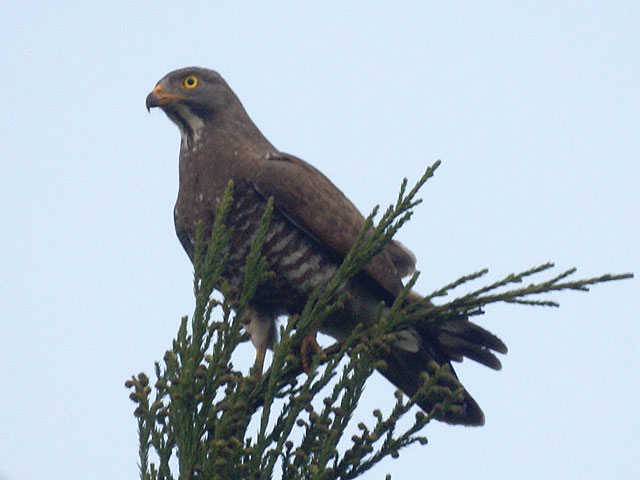
The gray-faced buzzard (Butastur indicus) is listed as vulnerable in Japan. It nests in forests and preys on insects, frogs, and other animals found in grasslands and rice paddies. It's decline has been linked to the abandonment and development of traditionally farmed rice paddies. (photo credit: wikimedia commons)

The gray-faced buzzard (Butastur indicus) is listed as vulnerable in Japan. It nests in forests and preys on insects, frogs, and other animals found in grasslands and rice paddies. Its decline has been linked to the abandonment and development of traditionally farmed rice paddies. (photo credit: wikimedia commons)

All of this adds fodder to an ongoing debate: “whether allowing farmland to revert to nature is a boon to biodiversity or actually harms it.” Where agriculture is a relatively new practice or where conventional practices dominate, abandoning agriculture would be expected to preserve and promote biodiversity. However, where certain agricultural practices have persisted for millenia, abandoning agriculture or converting  to modern day practices could result in endangerment and even extinction of some species. In the latter case, “rewilding” would require thoughtful consideration.

The thing that fascinates me the most about this report is just how intertwined humans are in the ecology of this planet. In many ways humans have done great harm to our environment and to the myriad other species that share it. We are a force to be reckoned with. Yet, the popular view that we are separate, above, apart, or even dominant over nature is an absurd one. For someone who cares deeply about the environment, this view has too often been accompanied by a sort of self-flagellation, cursing myself and my species for what we have done and continue to do to our home planet. Stories like this, however, offer an alternative perspective.

Humans are components of the natural world. We evolved just like every other living thing here, and so our actions as well as the actions of other species have helped shape the way the world looks. If our species had met its demise early in its evolutionary trajectory, the world would look very different. But we persisted, and as it turns out, despite the destruction we have caused and the species we have eliminated, we have simultaneously played a role in the evolution and persistence of many other species as well. We must learn to tread lightly – for the sake of our own species as well as others – but we should also quit considering ourselves “other than” nature, and we should stop beating ourselves up for our collective “mistakes.” It seems that when we come to recognize how connected we are to nature we will have greater motivation to protect it.

Additional Resources:

Attract Pollinators, Grow More Food

It seems obvious to say that on farms that rely on insect pollinators for crops to set fruit, having more pollinators around can lead to higher yields. Beyond that, there are questions to consider. How many pollinators and which ones? To what extent can yields be increased? How does the size and location of the farm come into play? Etc. Thanks to a recent study, one that Science News appropriately referred to as “massive,” some of these questions are being addressed, offering compelling evidence that yields grow dramatically simply by increasing and diversifying pollinator populations.

It is also stating the obvious to say that some farms are more productive than others. The difference between a high yield farm and a low yield farm in a given crop system is referred to as a yield gap. Yield gaps are the result of a combination of factors, including soil health, climate, water availability, and management. For crops that depend on insects for pollination, reduced numbers of pollinators can contribute to yield gaps. This five year study by Lucas A. Garibaldi, et al., pubished in a January 2016 issue of Science, involving 344 fields and 33 different crops on farms located in Africa, Asia, and Latin America demonstrates the importance of managing for pollinator abundance and diversity.

The study locations, which ranged from 0.1 hectare to 327.2 hecatares, were separated into large and small farms. Small farms were considered 2 ha and under. In the developing world, more than 2 billion people rely on farms of this size, and many of these farms have low yields. In this study, low yielding farms on average had yields that were a mere 47% of high yielding farms. Researchers wanted to know to what degree enhancing pollinator density and diversity could help increase yields and close this yield gap.

By performing coordinated experiments for five years on farms all over the world and by using a standardized sampling protocol, the researchers were able to determine that higher pollinator densities could close the yield gap on small farms by 24%. For larger farms, such yield increases were seen only when there was both higher pollinator density and diversity. Honeybees were found to be the dominant pollinator in larger fields, and having additional pollinator species present helped to enhance yields.

These results suggest that, as the authors state, “there are large opportunities to increase flower-visitor densities and yields” on low yielding farms to better match the levels of “the best farms.” Poor performing farms can be improved simply by managing for increased pollinator populations. The authors advise that such farms employ “a combination of practices,” such as “sowing flower strips and planting hedgerows, providing nesting resources, [practicing] more targeted use of pesticides, and/or [restoring] semi-natural and natural areas adjacent to crops.” The authors conclude that this case study offers evidence that “ecological intensification [improving agriculture by enhancing ecological functions and biodiversity] can create mutually beneficial scenarios between biodiversity and crop yields worldwide.”

photo credit: wikimedia commons

photo credit: wikimedia commons

A study like this, while aimed at improving crop yields in developing nations, should be viewed as evidence for the importance of protecting and strengthening pollinator populations throughout the world. Modern, industrial farms that plant monocultures from one edge of the field to the other and that include little or no natural area – or weedy, overgrown area for that matter – are helping to place pollinator populations in peril. In this study, after considering numerous covariables, the authors concluded that, “among all the variables we tested, flower-visitor density was the most important predictor of crop yield.”

Back to stating the obvious, if pollinators aren’t present yields decline, and as far as I’m aware, we don’t have a suitable replacement for what nature does best.

This study is available to read free of charge at ResearchGate. If you are interested in improving pollinator habitat in your neighborhood, check out these past Awkward Botany posts: Planting for Pollinators, Ground Nesting Bees in the Garden, and Hellstrip Pollinator Garden.

Book Review: Bringing Nature Home

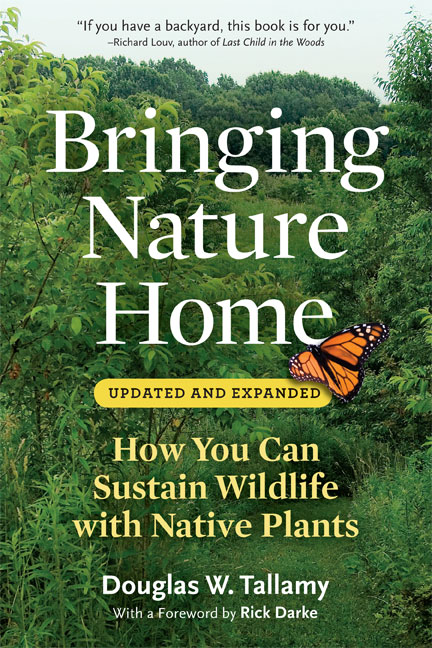
Since Bringing Nature Home by Douglas Tallamy was first published in 2007, it has quickly become somewhat of a “classic” to proponents of native plant gardening. As such a proponent, I figured I ought to put in my two cents. Full disclosure: this is less of a review and more of an outright endorsement. I’m fawning, really, and I’m not ashamed to admit it.

9780881929928l

The subtitle pretty much sums it up: “How You Can Sustain Wildlife with Native Plants.” Ninety three pages into the book, Tallamy elaborates further: “By favoring native plants over aliens in the suburban landscape, gardeners can do much to sustain the biodiversity that has been one of this country’s richest assets.” And one of every country’s richest assets, as far as I’m concerned. “But isn’t that why we have nature preserves?” one might ask. “We can no longer rely on natural areas alone to provide food and shelter for biodiversity,” Tallamy asserts in the Q & A portion of his book. Humans have altered every landscape – urban, suburban, rural, and beyond – leaving species of all kinds threatened everywhere. This means that efforts to protect biodiversity must occur everywhere. This is where the You comes in. Each one of us can play a part, no matter how small. In closing, Tallamy claims, “We can each make a difference almost immediately by planting a native nearby.”

A plant is considered native to an area if it shares a historical evolutionary relationship with the other organisms in that area. This evolutionary relationship is important because the interactions among organisms that developed over thousands, even millions, of years are what define a natural community. Thus, as Tallamy argues, “a plant can only function as a true ‘native’ while it is interacting with the community that historically helped shape it.” A garden designed to benefit wildlife and preserve biodiversity is most effective when it includes a high percentage of native plants because other species native to the area are already adapted to using them.

Plants (and algae) are at the base of every food chain – the first trophic level – because they produce their own food using the sun’s energy. Organisms that are primarily herbivores are at the second trophic level, organisms that primarily consume herbivores are at the third trophic level, and so on. As plants have evolved they have developed numerous defenses to keep from being eaten. Herbivores that evolved along with those plants have evolved the ability to overcome those defenses. This is important because if herbivores can’t eat the plants then they can’t survive, and if they don’t survive then there will be little food for organisms at higher trophic levels.

The most important herbivores are insects simply because they are so abundant and diverse and, thus, are a major food source for species at higher trophic levels. The problem is that, as Tallamy learned, “most insect herbivores can only eat plants with which they share an evolutionary history.” Insects are specialized as to which plants they can eat because they have adapted ways to overcome the defenses that said plants have developed to keep things from eating them. Healthy, abundant, and diverse insect populations support biodiversity at higher trophic levels, but such insect populations won’t exist without a diverse community of native plants with which the insects share an evolutionary history.

That is essentially the thesis of Tallamy’s book. In a chapter entitled “Why Can’t Insects Eat Alien Plants?” Tallamy expounds on the specialized relationships between plants and insects that have developed over millennia. Plants introduced from other areas have not formed such relationships and are thus used to a much lesser degree than their native counterparts. Research concerning this topic was scarce at the time this book was published, but among other studies, Tallamy cites preliminary data from a study he carried out on his property. The study compared the insect herbivore biomass and diversity found on four common native plants vs. five common invasive plants. The native plants produced 4 times more herbivore biomass and supported 3.2 times as many herbivore species compared to the invasive plants. He also determined that the insects using the alien plants were generalists, and when he eliminated specialists from the study he still found that natives supported twice as much generalist biomass.

Apart from native plants and insects, Tallamy frames much of his argument around birds. Birds have been greatly impacted by humans. Their populations are shrinking at an alarming rate, and many species are threatened with extinction. Tallamy asserts, “We know most about the effects of habitat loss from studies of birds.” We have destroyed their homes and taken away their food and “filled their world with dangerous obstacles.” Efforts to improve habitat for birds will simultaneously improve habitat for other organisms. Most bird species rely on insects during reproduction in order to feed themselves and their young. Reducing insect populations by filling our landscapes largely with alien plant species threatens the survival of many bird species.

In the chapters “What Should I Plant?” and “What Does Bird Food Look Like?,” Tallamy first profiles 20 groups of native trees and shrubs that excel at supporting populations of native arthropods and then describes a whole host of arthropods and arthropod predators that birds love to eat. Tallamy’s fascinating descriptions of the insects, their life cycles, and their behaviors alone make this book worth reading. Other chapters that are well worth a look are “Who Cares about Biodiversity?” in which Tallamy explains why biodiversity is so essential for life on Earth, and “The Cost of Using Alien Ornamentals” in which Tallamy outlines a number of ways that our obsession with exotic plants has caused problems for us and for natural areas.

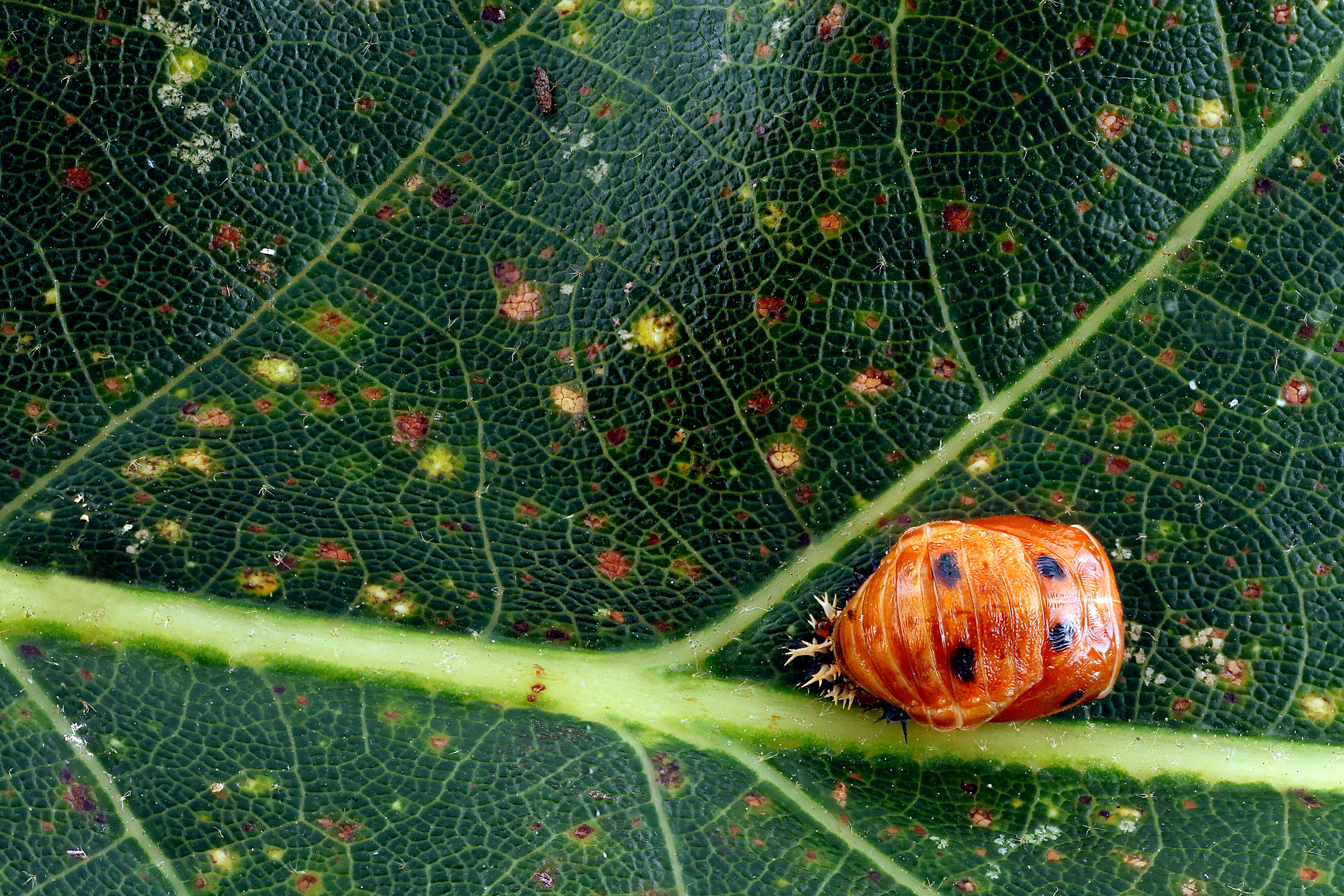
Pupa of ladybird beetle on white oak leaf (photo credit: wikimedia commons)

Pupa of a ladybird beetle on a white oak leaf. “The value of oaks for supporting both vertebrate and invertebrate wildlife cannot be overstated.” – Doug Tallamy (photo credit: wikimedia commons)

Convincing people to switch to using native plants isn’t always easy, especially if your argument involves providing habitat for larger and more diverse populations of insects. For those who are not fans of insects, Tallamy explains that “a mere 1%” of the 4 million insect species on Earth “interact with humans in negative ways.” The majority are not pests. It is also important to understand that even humans “need healthy insect populations to ensure our own survival.” Tallamy also offers some suggestions on how to design and manage an appealing garden using native plants. A more recent book Tallamy co-authored with fellow native plant gardening advocate Rick Darke called The Living Landscape expands on this theme, although neither book claims to be a how to guide.

———————

Interested in writing a book review for Awkward Botany? Or helping out in another way? Find out how.

Year of Pollination: Bumblebees and Climate Change

Bumblebees, generally speaking, are having a rough time. In a world increasingly dominated by humans, some bumblebee species continue to thrive while many others are seriously struggling. Several are nearing extinction. A recent study involving 67 species of European and North American bumblebees concluded that climate change is having a major impact. Bumblebees do not appear to be migrating north in response to warming climates – a hesitation that could spell disaster.

There are over 250 species of bumblebees worldwide (46 are found in North America north of Mexico). Unlike other bees, whose diversity is greatest in Mediterranean climates, bumblebee diversity is highest in cool, temperate climates and montane regions. The majority of bumblebee species are native to the Northern Hemisphere; a few species are native to South America, and a handful of species from Europe have been introduced to New Zealand and Tasmania. Some species of bumblebees, such as the polar bumble bee (Bombus polaris) and the forest bumble bee (Bombus sylvicola), can be found in extreme cold climates and are among a select group of pollinators found in such areas.

The field guide, Bumble Bees of North America, by Paul Williams, et al. provides this description:

“Bumble bees are very hairy bees with combinations of contrasting bright colors, mostly black and yellow, sometimes with various combinations of red or white. They have two pairs of wings that are usually folded back over the abdomen while they are foraging on flowers, or hooked together as a single unit when in flight. Bumble bees also have slender elbowed antennae, and females of the pollen-collecting species have the hind tibia expanded, slightly concave, and fringed with long hairs to form a pollen basket or corbicula.”

Most bee species are solitary insects; bumblebees, like honeybees, are social insects. Unlike honeybees, bumblebee colonies begin with a new queen each year. New queens, after mating in late summer, overwinter in a protected area and emerge in the spring. They then search for food and a nesting site. Suitable nests include abandoned rodent dens,  the bases of bunchgrasses, hollow logs, and human-made structures. They build up a colony of workers which maintain the nest and forage for food and other resources. As the season comes to a close, the queen produces males and new queens. The new queens mate, go into hibernation, and the rest of the bumblebee colony dies off.

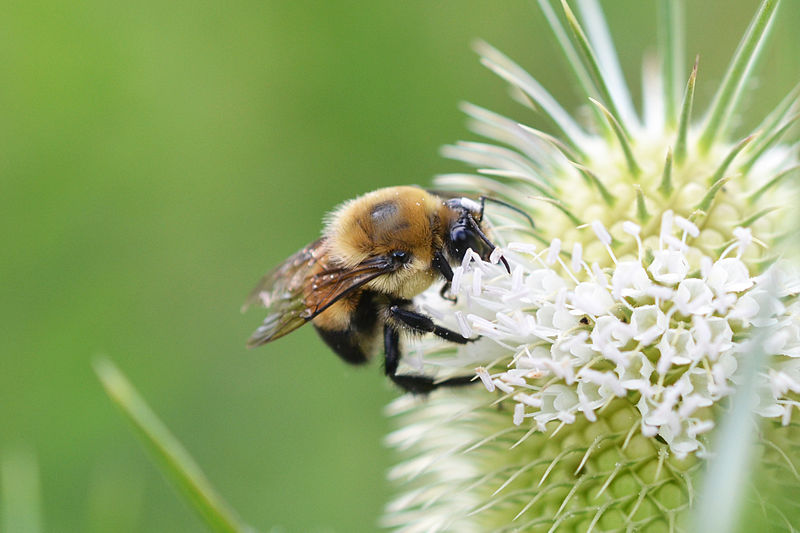
Brown-belted Bumblebee (Bombus griseocollis) - photo credit: wikimedia commons

Brown-belted Bumblebee (Bombus griseocollis) – photo credit: wikimedia commons

Bumblebees face numerous threats, both natural and human-caused. Despite their defensive sting, they are regularly eaten or attacked by various mammals, birds, and invertebrates. They are also host to a variety of pests, parasites, and pathogens, some of which have been introduced or exacerbated by human activities. The commercial bee industry is particularly at fault for the spread of certain maladies. Other major threats include loss of habitat and excessive and/or poorly timed use of insecticides. One looming threat that new research suggests is especially concerning is climate change.

A group of researchers from various institutions looked at the historical ranges of 67 species of bumblebees in Europe and North America over a 110 year period. They “measured differences in species’ northern and southern range limits, the warmest or coolest temperatures occupied, and their mean elevations in three periods relative to a baseline period.” They found that on both continents bumblebees are not tracking climate change by expanding their northern range limits and that their southern range limits are shrinking. They also observed that within the southern range limits, some bumblebee species have retreated to higher elevations. They investigated land use changes and pesticide applications (in the US only) to determine the effect they had on the results. While these things certainly affect populations on an individual level, climate change was determined to be the most important factor that lead to nearly universal range contractions of the bumblebees in this study.

The question then is why are they not tracking changing climates the same way that many other species of plants and animals have already been observed doing? Bumblebees evolved in cooler climates, so shrinking southern range limits is not as surprising as the bumblebees’ delay in moving north. Many factors may be contributing to this phenomenon including lack of specialized habitats beyond their historical ranges, daylength differences, and population dynamics. The researchers call for further investigation in order to better evaluate this observed “range compression.” They also suggest experimenting with assisted migration of certain bumblebee colonies, which in general is a controversial topic among conservation biologists. (Read more about this study here.)

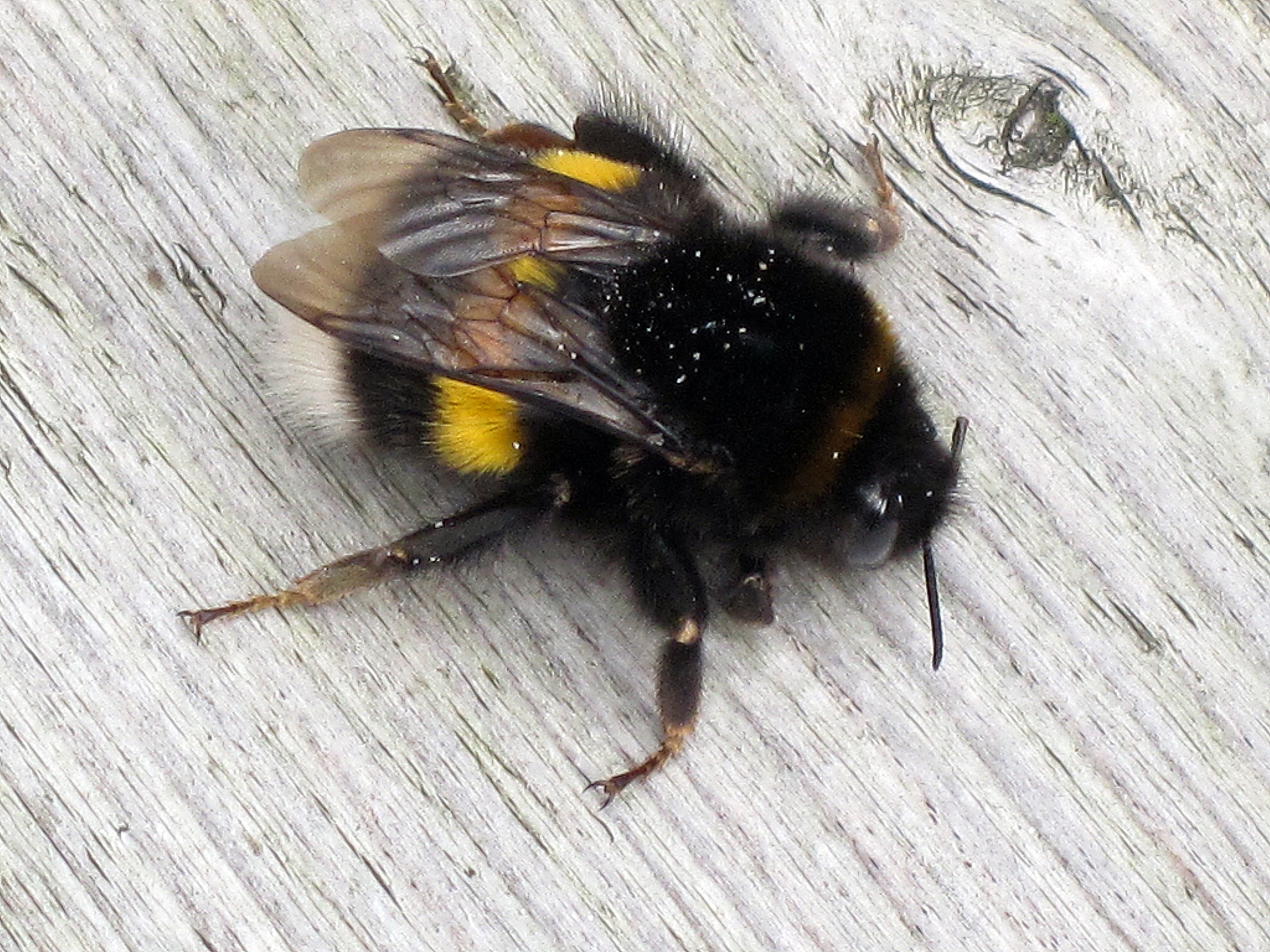
Buff-tailed Bumblebee (Bombus terrestris) - photo credit: wikimedia commons

Buff-tailed Bumblebee (Bombus terrestris) – photo credit: wikimedia commons

The loss of bumblebees is concerning because they play a prominent role in the various ecosystems in which they live. They are prolific and highly effective pollinators of both agricultural crops and native plants, and they are also a major component in the food web. Some species of plants “prefer” the pollination services of bumblebees, such as those in the family Solanaceae. Many plants in this family benefit greatly from buzz pollination – a process in which a bumblebee (or occasionally bees of other species) grabs hold of the flower and vibrates its body, dislodging the pollen.

Participating in bumblebee conservation is simple. It’s similar to any other kind of pollinator conservation. Just learning about the pollinators in your region and being mindful of them can make a big difference. If you own or rent property and have space for a garden (even if its just a few containters on a patio), choose plants that provide food for bumblebees, including spring and summer bloomers. If you live in North America, this Xerces Society publication and the field guide mentioned above are great resources that can help you determine which plants are best for your region. Additionally, if you are working in your yard and happen upon a hibernating queen or a bumblebee nest, do your best not to disturb it. It may disrupt your gardening plans for a season, but the bumblebee sightings and the pollination service they provide will be worth it.

One family of plants in particular that you should consider representing in your yard is the legume family (Fabaceae). Bumblebees are commonly seen pollinating plants in this family, and because these plants have the ability to convert nitrogen in the air into fertilizer, their pollen is especially rich in protein. In his book, A Sting in the Tale, Dave Goulson describes the relationship between bumblebees and legumes:

“From a bumblebee’s perspective, legumes are among the most vital components of a wildflower meadow. Plants of this family include clovers, trefoils and vetches, as well as garden vegetables such as peas and beans, and they have an unusual trick that allows them to thrive in low-fertility soils. Their roots have nodules, small lumps inside which live Rhizobium, bacteria that can trap nitrogen from the air and turn it into a form usable by plants. … This relationship gave legumes a huge advantage in the days before artificial fertilizers were widely deployed. Ancient hay meadows are full of clovers, trefoils, vetches, meddicks and melilots, able to outcompete grasses because they alone have access to plentiful nutrients. Most of these plants are pollinated by bumblebees.”

More information about bumblebees and bumblebee conservation:

Bumblebee Conservation Trust

Bumble Bee Watch

BugGuide (Bombus)

The Xerces Society – Project Bumble Bee

What Shall We Do About Invasive Species?

I think about invasive species a lot. This blog doesn’t really reflect that though. I have been avoiding a deep dive into the subject mainly because there is so much to say about it and I don’t really want this to become “the invasive species blog.” Admittedly, I’m also trying to avoid controversy. Some people have very strong opinions about invasive species, and I don’t always agree. But then an article entitled Taking the long view on the ecological effects of plant invasions appeared in the June 2015 issue of American Journal of Botany. Intrigued by the idea of “taking the long view,” I read the article and decided that now is as good a time as any to start exploring this topic in greater depth.

However, before getting into the article, we should define our terms. “Invasive species” is often used inappropriately to refer to any species that is found outside of its historic native range (i.e. the area in which it evolved to its present form). More appropriate terms for such species are “introduced,” “alien,” “exotic,” “non-native,” and “nonindigenous.” The legal definition of an invasive species (according to the US government) is “an alien species that does or is likely to cause economic or environmental harm or harm to human health.” Even though this definition specifically refers to “alien species,” it is possible for native species to behave invasively.

These terms refer not just to plants but to all living organisms. The term “noxious weed,” on the other hand, is specific to plants. A noxious weed is a plant species that has been designated by a Federal, State, or county government as “injurious to public health, agriculture, recreation, wildlife, or property.” A “weed” is simply a plant that, from a human perspective, is growing in the wrong place, and any plant at any point could be determined to be a weed if a human says so. (I’ll have more to say about human arrogance later in the post.)

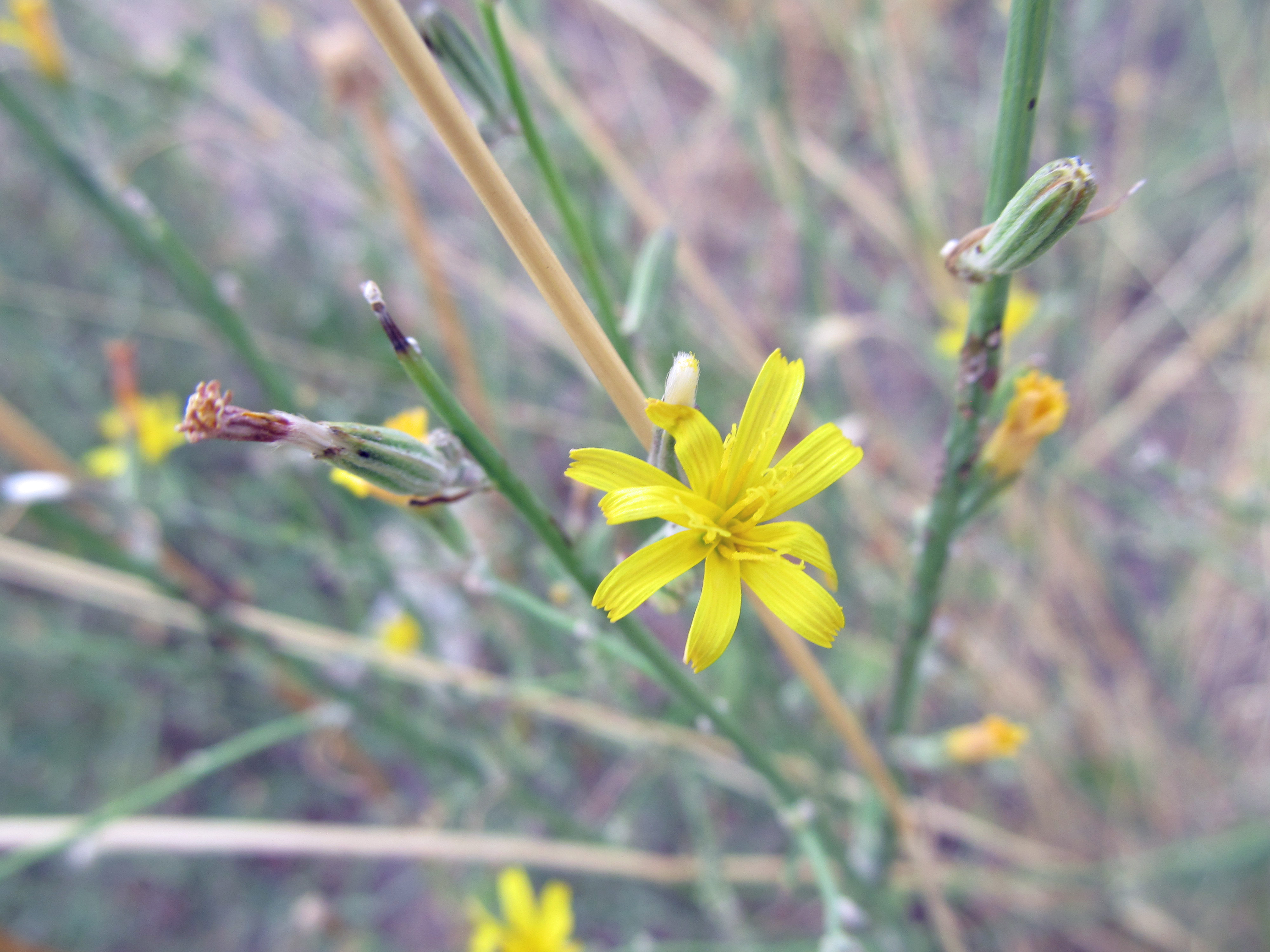
Rush skeletonweed (Chondrilla juncea) - labeled a noxious weed in Idaho

Rush skeletonweed (Chondrilla juncea) – labeled a noxious weed in Idaho

The authors of the AJB article (S. Luke Flory and Carla M. D’Antonio) begin by clarifying that “most introduced species are not problematic.” Those that are, however, can “cause significant ecological and economic damage.” This damage is well documented, and it is the reason why billions of dollars are spent every year in the battle against invasive species. But there is a dearth in our research: “less is known about how ecological effects of invasions change over time.” The effects of invasive species could “increase, decrease, or be maintained over decades,” and “multiple community and ecosystem factors” will determine this. For this reason, the authors are calling for “concentrated efforts to quantify the ecological effects of plant invasions over time and the mechanisms that underlie shifting dynamics and impacts.” Armed with this kind of information, managers can better direct their efforts towards invasive species determined to be “the most problematic.”

The authors go on to briefly explain with examples why an invasive species population may decline or be maintained over time, highlighting selected research that demonstrates these phenomena. Research must continue with the aim of improving our understanding of the long term effects of plant invasions. The authors acknowledge that this “will require carefully designed experiments,” “patient and persistent research efforts,” and significant amounts of money. However, they are convinced that through a widespread collaborative effort it can be done. They encourage researchers to deposit data obtained from their research in open source online repositories so that future meta-analyses can be conducted. The information available in these online repositories can be used to develop management plans and help predict “future problematic invasions.”

Considering the amount of time and resources currently spent on confronting invasive species, the approach proposed by the authors of this article is quite reasonable. It seems absurd to continue to battle a problematic species that will ultimately be brought down to more manageable levels by natural causes. It also seems absurd to battle against a species that is essentially here to stay.

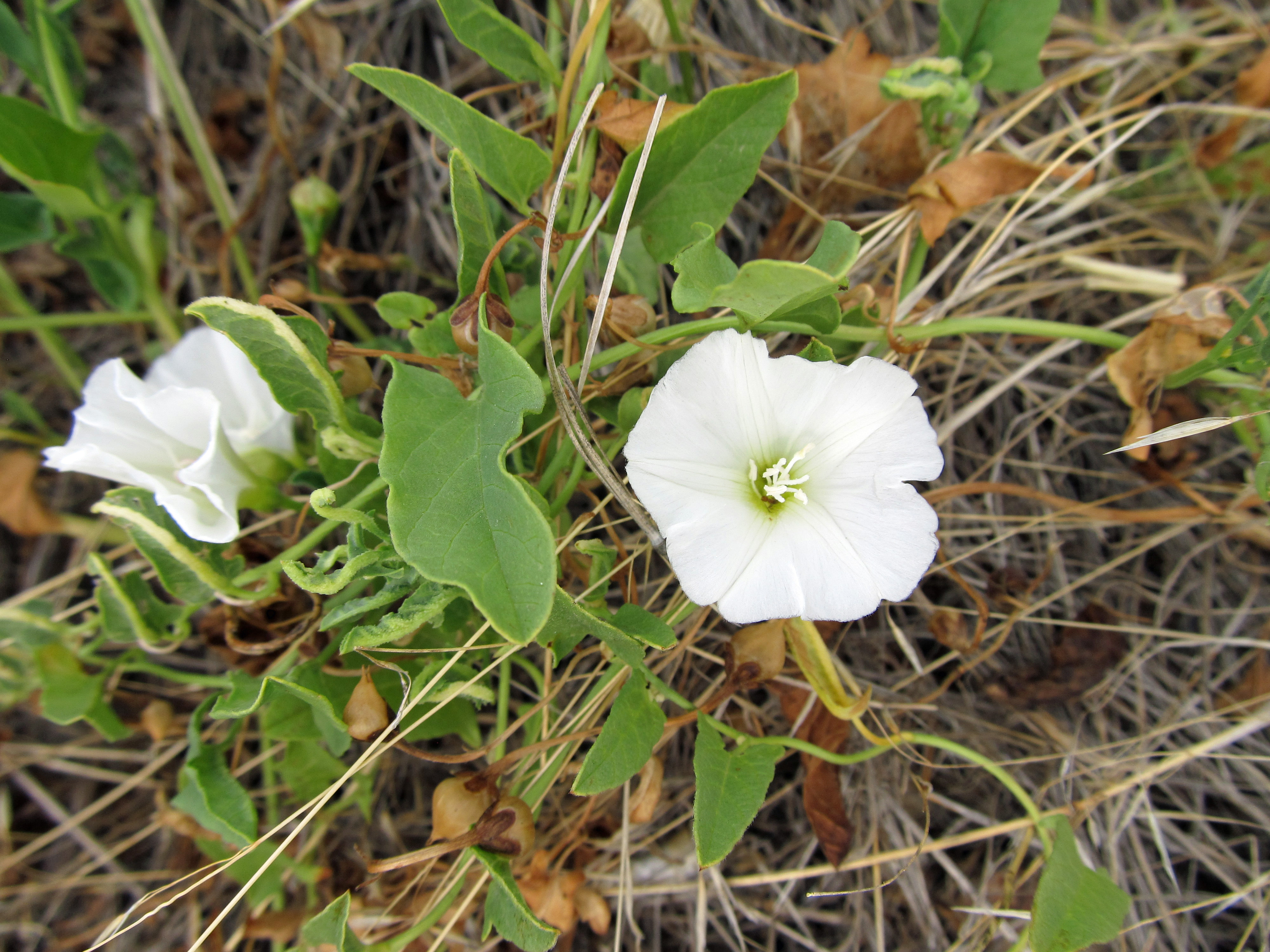
Field bindweed (Convulvulus arvensis) - labeled a noxious weed in Idaho

Field bindweed (Convulvulus arvensis) – labeled a noxious weed in Idaho

And that brings me to the point in which I make enemies. Take a look at the terms defined earlier. When we talk about introduced species, we are referring to introductions by humans, whether purposeful or accidental. An “alien” species introduced to a new location by wind, water, or animal (other than human) would be considered a natural introduction, right? If that species becomes established in its new location, it would simply be expanding its range. If a human brought it there, again whether purposefully or accidentally, it would be considered an exotic indefinitely.

Humans have been moving species around since long before we became the humans we are today in the same way that a migratory bird might move a species from one continent to another. At what point during our evolution did our act of moving species around become such a terrible thing?

I will concede that our species has become an incredibly widespread species, able to move about the planet in ways that no other species can. We also have technological advances that no other species comes close to matching. In the time that our species has become truly cosmopolitan, the amount of species introductions that we have participated in has increased exponentially. Leaving ecological destruction in our wake is kind of our modus operandi. I don’t want to make excuses for that, but I also don’t see it unfolding any other way. Give any other species the opportunities we had, and they probably would have proceeded in the same manner. Just consider any of the most notorious invasive species today – “opportunist” is their middle name.

More and more, as we are able to see what we have done, we are making efforts to “fix it.” But how de we rewind time? And if we could, when do we rewind back to? And how do we not “ruin it” again? The earth does not have a set baseline or a condition that it is supposed to be in at any given time. The earth just is. It is operating in a state of randomness, just like everything else in the universe. Any idea of how the earth must look at any given time is purely philosophical – conceived of by humans. I’m not saying that we shouldn’t try to repair the damage, but we should acknowledge that the repairs we’re trying to make are largely for the perpetuation of our own species. Yeah, we’ve developed a soft spot for other species along the way (thankfully), but ultimately we’re just trying to maintain. The earth, on the other hand, would be fine without us.

So, what shall we do about invasive species? I’m not entirely sure. The only thing I’m certain of is that I will continue to ruminate on them and potentially bore you with more blog posts in the future. Until next time…

Puncturevine (Tribulus terrestris) - labeled a noxious weed in Idaho

Puncturevine (Tribulus terrestris) – labeled a noxious weed in Idaho

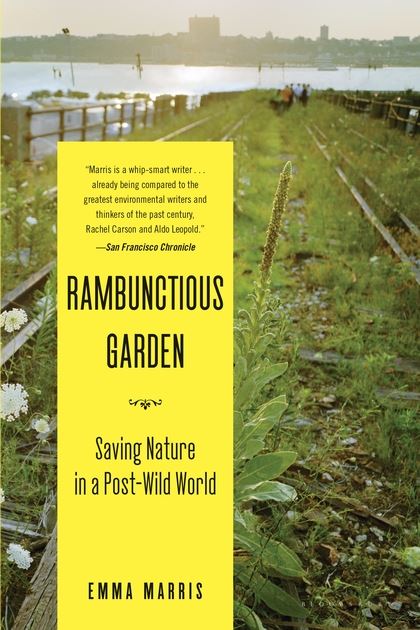
Book Review: Rambunctious Garden

Last month in a post entitled Making the Case for Saving Species, I reviewed an article written by Emma Marris about doing all we can to prevent species from going extinct, even when the approach is not a popular one – like introducing rust resistant genes into native whitebark pine populations. Intrigued by Marris’ words, I decided to finally read her book, Rambunctious Garden: Saving Nature in a Post-Wild Word, which had been sitting on my bookshelf for several months and had been on my list of books to read for at least a couple of years before that. At only 171 pages, Marris’ book is a quick read and comes across as an introduction to some sort of revolution. Its brevity demands future volumes, which are hopefully on their way.

rambunctious garden

The general topic that Marris addresses is how to do conservation work in a world that is riddled with human fingerprints, especially coming from a perspective that human influence is and has been largely negative. What should our goals be? The traditional approach has been to restore natural areas to a historical baseline. In North America, that baseline is usually pre-European colonization. So, we remove introduced species and we use whatever records we have and data we can gather to make natural areas look and function as they did several hundred years ago.

But there are some concerns with this approach. Rewinding time requires massive amounts of money, labor, and time, and if that historical baseline is ever achieved, it will require great effort to keep it there. Also, a number of species have gone extinct and there is no way of replacing them (unless we introduce similar species as proxies), and some species require large areas to roam that even our most spacious parks cannot accommodate. And then there is the challenge of continual change. Anthropogenic climate change aside (which complicates conservation and restoration efforts in serious ways), the earth’s ecosystems are in a constant state of flux, so holding a site to a pre-determined baseline makes little sense when viewed from a geological timescale.

There is another issue – which is in part a semantic one – and that is, we seem to have a distorted view of nature. We like to think of it as being apart from us, away from us, somewhere wild and pristine. Marris writes: “We imagine a place, somewhere distant, wild and free, a place with no people and no roads and no fences and no power lines, untouched by humanity’s great grubby hands, unchanging except for the season’s turn. This dream of pristine wilderness haunts us. It blinds us.”

We are blinded because “pristine” is a myth. Every inch of the globe has been altered in some way by humans – some areas more than others – and disconnecting ourselves from nature in a way that makes it unattainable deters us from the perception that nature can be all around us. Nature is not found only in national parks, nature preserves, and other protected areas, but in our backyards, on our rooftops, along roadsides, in the cracks of concrete, and in farm fields. Nature is everywhere. And if nature is everywhere, then conservation can happen everywhere.

After a brief overview of how we (Americans specifically) arrived at our current approach to conservation and restoration, Marris dives into some new approaches, visiting sites around the world and talking with biologists and ecologists about their work.  She explores rewilding (Pleistocene rewilding even), assisted migration, embracing exotic species, novel ecosystems, and designer ecosystems. The subject matter of each chapter in Marris’ book is worthy of a post or two of its own, but I’ll spare you that and suggest that you read the book. The controversy that surrounds these novel approaches is also worth noting. A few searches and clicks on the internet will lead you to some fairly heated debates about the ideas that Marris puts forth in her book, as well as some criticisms of Marris herself.

Florida torreya (Torreya taxifolia) - a critically endangered tree species native to a tiny corner in the southeastern United States that is not likely to survive the coming decades in the wild without assisted migration.

Florida torreya (Torreya taxifolia) – a critically endangered tree species native to a tiny corner in the southeastern United States that is not likely to survive the coming decades in the wild without assisted migration. (photo credit: www.eol.org)

My view as an outsider – that is, one without a high level degree in ecology and lacking years of experience working in the field – is that the tools and methods outlined in Marris’ book are worth exploring further. Certainly, each natural area must be approached differently depending on the conditions of the site and the goals of the managers. [Marris offers a great overview of some goals to consider in her last chapter.] Ultimately it is up to people much smarter and more experienced than I to sort it all out. But I heartily encourage thinking outside of the box…for whatever it’s worth.

And that brings me to what I loved most about the book. Controversy aside, Marris’ clarion call for a paradigm shift is a welcome one. Nature is all around us, and regardless of what land managers and the powers that be decide to do with large tracts of land “out there,” every individual can find purpose and beauty in the nature that surrounds them, whether it be the street trees that line our neighborhoods or the vacant lot growing wild with weeds down the street. We can decide to let our yards go a little feral, to plant some native plants, to encourage wildlife in urban areas, and to even do a little assisted migration of our own by planting things from nearby regions just to see how they will do in our changing climate. In short, we can garden a bit more rambunctiously. And we should.

This is how Marris puts it:

If we fight to preserve only things that look like pristine wilderness, such as those places currently enclosed in national parks and similar refuges, our best efforts can only retard their destruction and delay the day we lose. If we fight to preserve and enhance nature as we have newly defined it, as the living background to human lives, we may be able to win. We may be able to grow nature larger than it currently is. This will not only require a change in our values but a change in our very aesthetics, as we learn to accept both nature that looks a little more lived-in than we are used to and working spaces that look a little more wild than we are used to.

Read a short interview with Marris about her book here, and listen to a discussion with her on a recent episode of Out There podcast.

Making the Case for Saving Species

It is no question that the human species has had a dramatic impact on the planet. As our population has grown and we have spread ourselves across the globe, our presence has altered every ecosystem we have come into contact with. Our footprints can be detected even in areas of the planet uninhabited by humans. As awareness of our impact has increased, we have made efforts to reduce it. However, much of the damage we have caused is irreversible – we can’t bring species back from extinction and we can’t replace mountaintops. Furthermore, for better or for worse our continued existence – despite efforts to minimize our negative influence – will continue to be impactful. This is the nature of being human. It is the nature of all living things, really. As John Muir said, “when we try to pick out anything by itself, we find it hitched to everything else in the Universe.” That we are cognizant of that fact puts us at a crossroads – do we make a concerted effort to protect and save other species from the negative aspects of our presence or do we simply go on with our lives and let come what may?

The quandary isn’t that black and white, obviously. For one thing, cleaning up polluted air, water, and soil is beneficial to humans and has the side benefit of improving the lives of other species. Protecting biodiversity is also in our best interest, because who knows what medicine, food, fiber, or other resource is out there in some living thing yet to be discovered that might be useful to us. On the other hand, putting our own interests aside, what about protecting other species and habitats just to protect them? Purely altruistically. That seems to be the question at the crux of an article by Emma Marris in the May/June 2015 issue of Orion entitled, “Handle with Care: The Case for Doing All We Can to Save Threatened Species.” [Listen to a brief discussion with Marris about the article here.]

The main character in Marris’ article is the whitebark pine (Pinus albicaulis), a species whose native habitat is high in mountain ranges of western United States and Canada. Whitebark pines thrive in areas few other trees can, living to ages greater than 1,000 years. Here is how Marris describes them:

Whitebark pine’s ecological niche is the edge of existence. The trees are found on the highest, driest, coldest, rockiest, and windiest slopes. While lodgepole and ponderosa pine grow in vast stands of tall, healthy-looking trees, slow-growing whitebarks are tortured by extremes into individualized, flayed forms, swollen with massive boles from frost damage. Their suffering makes them beautiful.

photo credit: www.eol.org

photo credit: www.eol.org

But in recent years they have been suffering more than usual. White pine blister rust, an introduced pathogen, is killing the trees. The native mountain pine beetle is also taking them out. Additional threats include climate change and an increased number, extent, and intensity of wildfires. Combined, these threats have been impactful enough that the species is listed as endangered on the IUCN Red List where it is described as “experiencing serious decline.”

So people are taking action. In Oregon’s Crater Lake National Park, botanist Jen Beck is part of an effort to select blister rust resistant trees and plant them in their native habitats within the park. Hundreds have been planted, and more are on their way. Great effort is taken to minimize human impact and to plant the trees as nature would, with the vision being that blister rust resistant trees will replace those that are dying and that trees with rust resistant genes will dominate the population.

But Beck faces opposition, and not just from challenges like seedlings being trampled by visitors or a warming climate inviting mountain hemlocks and other trees into whitebark pine’s native range, but by people who argue that the trees shouldn’t be planted there in the first place – that what is “wild” should be left alone. Marris specifically calls out a group called Wilderness Watch. They and other groups like them profess a “leave-it alone ethic.” Rather than be arrogant enough to assume that we can “control or fix disrupted nature,” we should respect the “self-willed spirit of the wild world.” Proponents of nonintervention criticize what they call “new environmentalism” and its efforts to engineer or manage landscapes, fearing that these actions are “morally empty” and that “rearranging bits of the natural world” lacks soul and will ultimately serve to benefit humans.

In her article, Marris argues against this approach. First off, the human footprint is too large, and for natural areas to “continue to look and function the way they did hundreds of years ago” will require “lots of human help.” Additionally, nonintervention environmentalism “perpetuates a false premise that humans don’t belong in nature,” and if we decide not to work to protect, save, or restore species and habitats that have been negatively affected by our actions simply because we are “in thrall to wildness”, we will be withdrawing with “blood on our hands.” Marris sums up her position succinctly in the following statement:

We have to do whatever it takes to keep ecosystems robust and species from extinction in the face of things like climate change. And if that means that some ecosystems aren’t going to be as pretty to our eyes, or as wild, or won’t hew to some historical baseline that seems important to us, then so be it. We should put the continued existence of other species before our ideas of where or how they should live.

Marris acknowledges that there are risks to this approach. “Our meddling” may save species, but it could also backfire. But that doesn’t mean the effort wasn’t worth it. We can learn from our mistakes and we can make improvements to our methods. Some sites can even be cordoned off as areas of nonintervention simply so that we can learn from them. The ultimate goal, however, should be to save as many species and to keep as much of their habitat intact as possible. Putting “other species first, and our relationship with them second” is what Marris considers to be a “truly humble” stance in our role as part of nature.

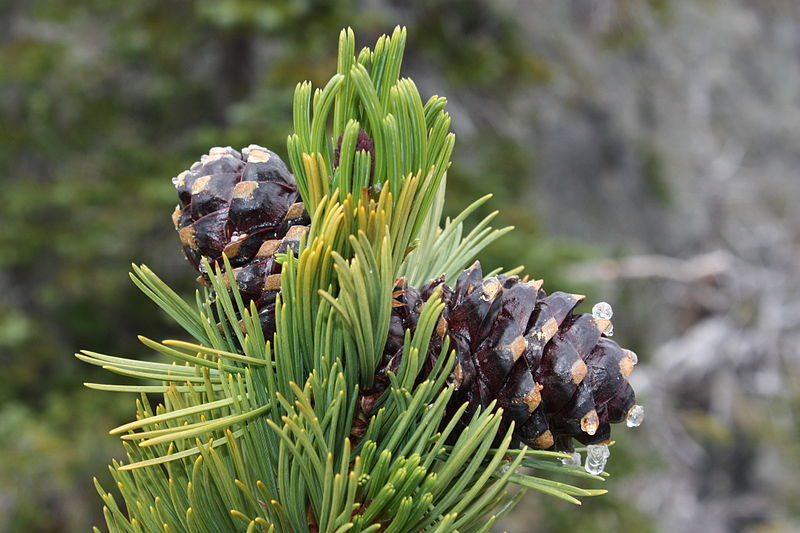
Cones of whitebark pine, Pinus albicaulis (photo credit: wikimedia commons)

Cones of whitebark pine, Pinus albicaulis (photo credit: wikimedia commons)

The dichotomy presented in this article is a tough one, and one that will be debated (in my mind particularly) long into the future. If you would like to share your thoughts with me about this issue, do so in the comment section below or by sending me a private message through the contact page.

Other article reviews on Awkward Botany

A Rare Hawaiian Plant – Newly Discovered and Critically Endangered

Hawaii is home to scores of plant species that are found nowhere else in the world. But how did those plants get there? In geological time, Hawaii is a relatively young cluster of islands. Formed by volcanic activity occurring deep within the ocean, they only just began to emerge above water around 10 million years ago. At that point the islands would have been nearly devoid of life, and considering that they had never been connected to any other body of land and are about 2,500 miles away from the nearest continent, becoming populated with flora and fauna took patience and luck.

As far as plant life is concerned, seeds and spores had to either be brought in by the wind, carried across the ocean by its currents, or flown in attached to the feathers of birds. When humans colonized the islands, they brought seeds with them too; however, its estimated that humans didn’t begin arriving on the islands until about 1,700 years ago. The islands they encountered were no longer barren landscapes, but instead were filled with a great diversity of plant and animal life. A chance seed arriving on the islands once in a blue moon does not fully explain such diversity.

This is where an evolutionary process called adaptive radiation comes in. A single species has the potential to diverge rapidly into many new species. This typically happens in new habitats where little or no competition exists and there are few environmental stresses. Over time, as genetic diversity builds up in the population, individuals begin to adapt to specific physical factors in the environment, such as soil type, soil moisture, sun exposure, and climate. As individuals separate out into these ecological niches, they can become reproductively isolated from other individuals in their species and eventually become entirely new species.

This is the primary process that led to the great floral diversity we now see on the Hawaiian Islands. Adaptive radiations resulted in more than 1000 plant species diverging from around 300 seed introductions. Before western colonization, there were more than 1,700 documented native plant species. Much of this diversity is explained by the rich diversity of habitats present on the volcanic islands, which lead to many species becoming adapted to very specific sites and having very limited distributions.

A small population size and a narrow endemic range is precisely the reason why Cyanea konahuanuiensis escaped detection until recently. In September 2012, researchers on the island Oahu arrived at a drainage below the summit of Konahua-nui (the tallest of the Ko’olau Mountains). They were surveying for Cyanea humboldtiana, a federally listed endangered species that is endemic to the Ko’olau Mountains. In the drainage they encountered several plants with traits that differed from C. humboldtiana, including hairy leaves, smooth stems, and long, hairy calyx lobes. They took pictures and collected a fallen leaf  for further investigation.

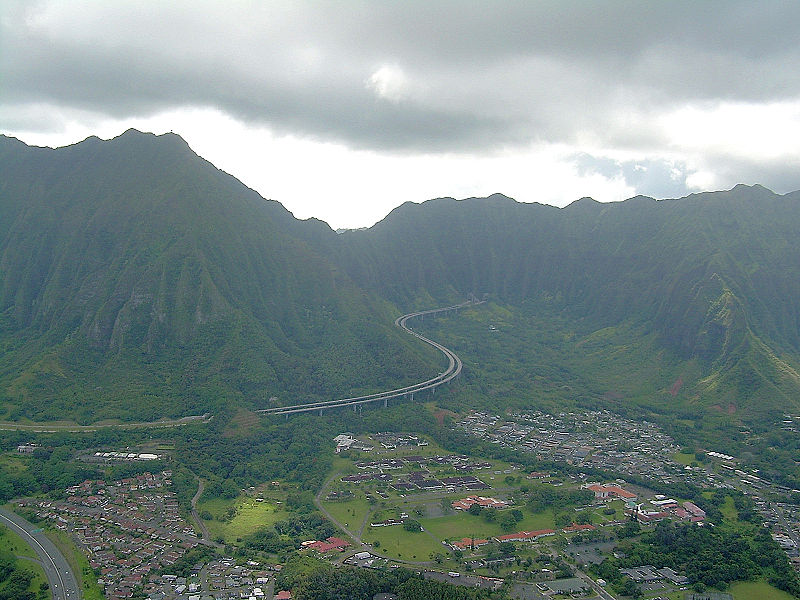
Ko'olau Mountains of O'ahu (photo credit: wikimedia commons)

Ko’olau Mountains of O’ahu (photo credit: wikimedia commons)

Initial research suggested that this was a species unknown to science. More information was required, so additional trips were made, a few more individuals were found, and in June 2013, a game camera was installed in the area. The camera sent back three photos a day via cellular phone service and allowed the team of researchers to plan their next trip when they were sure that the flowers would be fully mature. Collections were kept to a minimum due to the small population size; however, using the material they could collect, further analyses and comparisons with other species in the Cyanea genus and related genera demonstrated that it was in fact a unique species, and so they gave it the specific epithet konahuanuiensis after the mountain on which it was found. It was also given a common Hawaiian name, Haha mili’ohu, which means “the Cyanea that is caressed by the mist.”

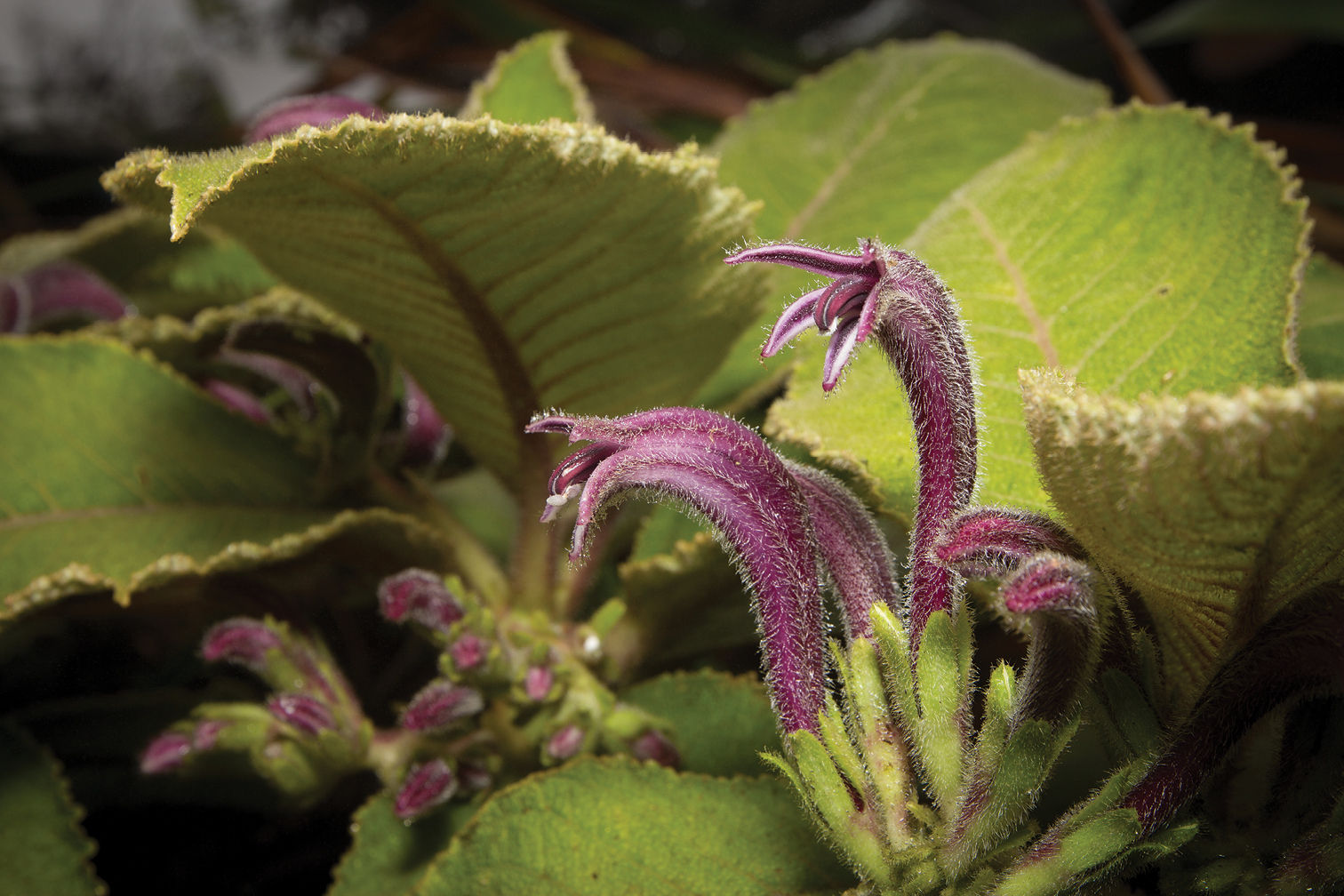
The hairy flowers and leaves of Cyanea konahuanuiensis. Purple flowers appear June-August. (photo credit: www.eol.org)

The hairy flowers and leaves of Cyanea konahuanuiensis. Purple flowers appear June-August. (photo credit: www.eol.org)

The total population of Cyanea konahuanuiensis consists of around 20 mature plants and a couple dozen younger plants. It is considered “critically imperiled” and must overcome some steep conservation challenges in order to persist. To start with, the native birds that pollinate its flowers and disperse its seeds may no longer be present. Also, it is likely being eaten by rats, slugs, and feral pigs. Add to that, several invasive plant species are found in the area and are becoming increasingly more common. While the researchers did find some seedlings in the area, all of the fruits that they observed aborted before they had reached maturity. Lastly, the population size is so small that the researchers say a landslide, hurricane, or flash flood “could obliterate the majority or all of the currently known plants with a single event.”

Seeds collected from immature fruits from two plants were sown on an agar medium at the University of Hawaii Harold L. Lyon Arboretum. The seeds germinated, and so the researchers plan to continue to collect seeds “in order to secure genetic representations from all reproductively mature individuals in ex situ collections.”

Single stem of Cyanea konahuanuiensis (photo credit: www.eol.org)

Single stem of Cyanea konahuanuiensis (photo credit: www.eol.org)

C. konahuanuiensis is not only part of the largest botanical radiation event in Hawaii, but also the largest on any group of islands. At some point in the distant past, a single plant species arrived on a Hawaiian island and has since diverged into at least 128 taxa represented in six genera, Brighamia, Clermontia, Cyanea, Delissea, Lobelia, and Trematolobelia, all of which are in the family Campanulaceae – the bellflower family. Collectively these plants are referred to as the Hawaiian Lobelioids. Cyanea is by far the most abundant genus in this group consisting of at least 79 species. Many of the lobelioids have narrow distributions and most are restricted to a single island.

Sources