Ground Beetles as Weed Seed Predators

As diurnal animals, we are generally unaware of the slew of animal activity that occurs during the night. Even if we were to venture out in the dark, we still wouldn’t be able to detect much. Our eyes don’t see well in the dark, and shining a bright light to see what’s going on results in chasing away those creatures that prefer darkness. We just have to trust that their out there, and in the case of ground beetles, if they’re present in our gardens we should consider ourselves lucky.

Ground beetles are in the family Carabidae and are one of the largest groups of beetles in the world with species numbering in the tens of thousands. They are largely nocturnal, so even though they are diverse and relatively abundant, we rarely get to see them. Look under a rock or log during the day, and you might see a few scurry away. Or, if you have outdoor container plants, there may be a few of them hiding out under your pots with the pillbugs. At night, they leave the comfort of their hiding places and go out on the hunt, chasing down grasshoppers, caterpillars, beetle grubs, and other arthropods, as well as slugs and snails. Much of their prey consists of common garden pests, making them an excellent form of biological control. And, as if that weren’t enough, some ground beetles also eat the seeds of common weeds.
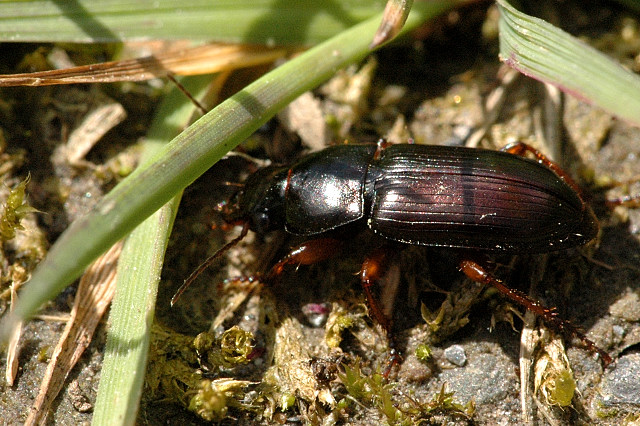
Harpalus affinis via wikimedia commons

Depending on the species, a single ground beetle can consume around a dozen seeds per night. In general, they prefer the seeds of grasses, lambsquarters (Chenopodium album), pigweeds (Amaranthus spp.), and various plants in the mustard family (Brassicaceae). The seeds of these species are small with seed coats that are easily crushed by a beetle’s mandibles. Providing suitable habitat, avoiding insecticides, and minimizing soil disturbance (i.e. reducing or eliminating tillage) are ways that healthy ground beetle populations can be encouraged and maintained. Ground beetles prefer dense vegetation where they can hide during the daytime. Strips of bunchgrasses and herbaceous perennials planted on slightly raised bed (referred to as beetle banks) are ideal because they provide good cover and keep water from puddling up in the beetles’ hiding spots.

The freshness of weed seeds and the time of year they are available may be determining factors in whether or not ground beetles will help control weed populations. A study published in Weed Science (2014), looked at the seed preferences of Harpalus pensylvanicus, a common species of ground beetle that occurs across North America. When given the choice between year old seeds and freshly fallen seeds of giant foxtail (Setaria faberi), the beetles preferred the fresh ones. The study also found that when giant foxtail was shedding the majority of its seeds, the density of beetles was on the decline, meaning that, at least in this particular study, most of the seeds would go uneaten since fewer beetles were around when the majority of the seeds were made available. Creating habitat that extends the ground beetles’ stay is important if the goal is to maximize the number of weed seeds consumed.
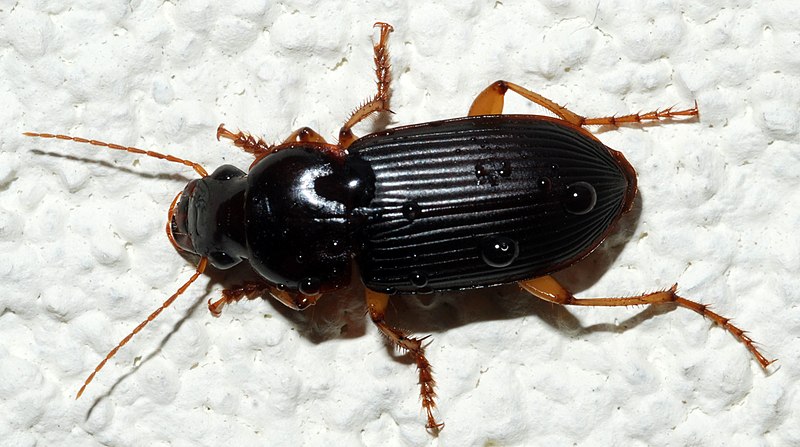
Harpalus pensylvanica via wikimedia commons

Of course, the seeds of all weed species are not considered equal when it comes to ground beetle predation. Several studies have sought to determine which species ground beetles prefer, offering seeds of a variety of weeds in both laboratory and field settings and seeing what the beetles go for. Pinning this down is difficult though because there are numerous species of ground beetles, all varying in size and activity. Their abundances vary from year to year and throughout the year, as do their food sources. Since most of them are generalists, they will feed on what is available at the time. A study published in European Journal of Entomology (2003) found a correlation between seed size and body mass – small beetles were consuming small seeds and large beetles were consuming large seeds, relatively speaking.

Another study published in European Journal of Entomology (2014) compared the preferences of ground beetles in the laboratory to those in the field and found that, in both instances, the seeds of field pansy (Viola arvensis) and shepherd’s purse (Capsella bursa-pastoris) were the preferred choice. The authors note that both species have lipid-rich seeds (or high “energy content”). Might that be a reason for their preference? Or maybe it’s simply a matter of availability and “the history of individual predators and [their] previous encounters with weed seed.” After all, V. arvensis was “the most abundant seed available on the soil surface” in this particular study.
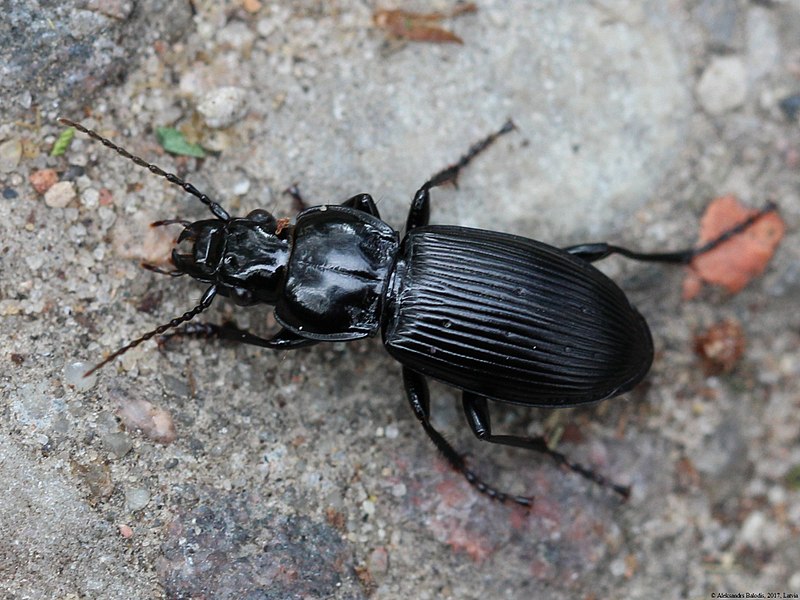
Pterostichus melanarius via wikimedia commons

A study published in PLOS One (2017), looked at the role that scent might play in seed selection by ground beetles. Three species of beetles were offered the seeds of three different weed species in the mustard family. The seeds of Brassica napus were preferred over the other two by all three beetle species. The beetles were also offered both imbibed and non-imbibed seeds of all three plants. Imbibed simply means that the seeds have taken in water, which “can result in the release of volatile compounds such as ethanol and acetaldehyde.” The researchers wondered if the odors emitted from the imbibed seeds would “affect seed discovery and ultimately, seed consumption.” This seemed to be the case as all three beetle species exhibited a preference for the imbibed seeds.

Clearly, ground beetles are fascinating study subjects, and there is still so much to learn about them and their eating habits. If indeed their presence is limiting the spread of weeds and reducing weed populations, they should be happily invited into our farms and gardens and efforts should be made to provide them with quality habitat. For a bit more about ground beetles, check out this episode of Boise Biophilia.

Further Reading:

Zine Review: An Urban Field Guide to the Plants in Your Path

Depending on where you live in the world, it’s probably not too difficult to find a field guide to the plants native to your region. In fact, there may be several of them. They may not cover all the plants you’ll encounter in natural areas near you, but they’ll be a good starting point. Yet, considering that most of us live in cities these days, field guides to the wild plants of urban areas are sorely lacking. Perhaps that’s no surprise, as plants growing wild in urban areas are generally considered weeds and are often the same species that frustrate us in our yards and gardens. Few (if any) of these maligned plants are considered native, so that doesn’t help their case any. Why would we need to know or pay attention to these nuisance plants anyway?

I argue that we should know them, and not just so that we know our enemy. Weeds are the wild flora of our cities – they grow on their own without direct human intervention. In doing so, they green up derelict and neglected sites, creating habitat for all kinds of other organisms and providing a number of ecosystem services along the way. Regardless of how we feel about them for invading our cultivated spaces and interfering with our picture-perfect vision of how we feel our cities should look, they deserve a bit more respect for the work they do. If we’re not willing to go that far, we at least ought to hand it to them for how crafty and tenacious they can be. These plants are amazing whether we want to admit it or not.

Luckily I’m not the only who feels this way. Enter An Urban Field Guide to the Plants in Your Path, a zine written and illustrated by Maggie Herskovits and published by Microcosm Publishing. This zine is just one example of the resources we need to better familiarize ourselves with our urban floras. While there are many weed identification books out there, a field guide like this differs because it doesn’t demonize the plants or suggest ways that they can be brought under control or eliminated. Instead, it treats them more like welcome guests and celebrates some of their finer qualities. That being said, this is probably not a zine for everyone, particularly those that despise these plants, but take a look anyway. If you keep an open mind, perhaps you can be swayed.

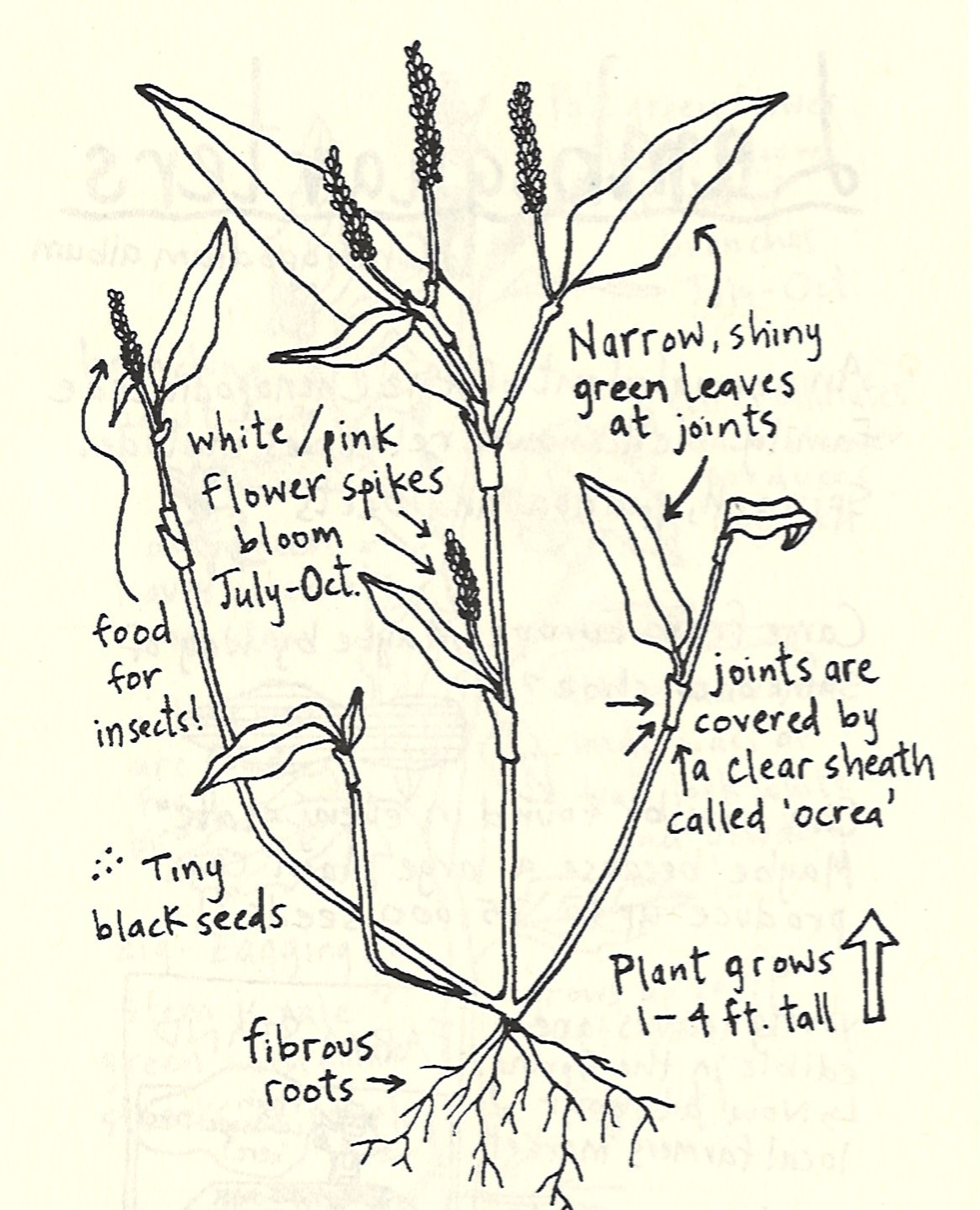
Illustration of Pennsylvania smartweed (Polygonum pensylvanicum) from An Urban Field Guide to the Plants in Your Path

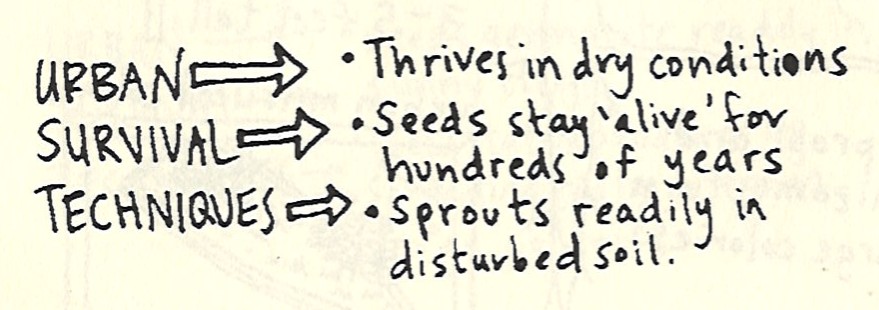
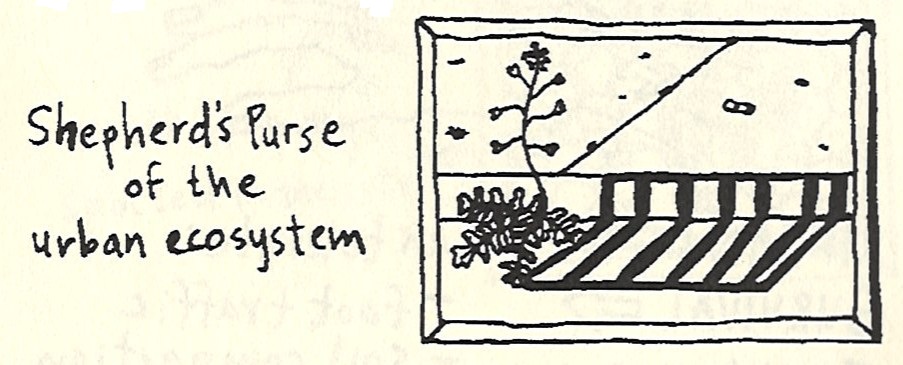
After a brief introduction, Herskovits profiles fifteen common urban weeds. Each entry includes an illustration of the plant, a short list of its “Urban Survival Techniques,” a small drawing of the plant in its urban habitat, and a few other details. The text is all handwritten, and the illustrations are simple but accurate enough to be helpful when identifying plants in the wild. The descriptions of each plant include interesting facts and background information, and even if you are already familiar with all the plants in the guide, you may learn something new. For example, I wasn’t aware that spotted spurge (Euphorbia maculata) was native to North America.

some urban survival techniques of common mullein (Verbascum thapsus)

Capsella bursa-pastoris in its urban habitat

Urban weeds often go ignored. They may not be as attractive as some of the plants found in gardens and parks around the city, and since they are often seen growing right alongside garbage, they end up getting treated that way. But if you’re convinced that they may actually have value and you want to learn a bit more about them, this guide is a great place to start. Perhaps you’ll come to feel, as Herskovits does, that “there is hope in these city plants.”

See Also: 

Out Now! Dispersal Stories #1

Before I started this blog, I had spent 16 years publishing zines at a steady clip and sending them to all corners of the world through the mail. I had never really meant to abandon zines altogether, and in some ways, putting all my writing efforts into a blog felt a little like a betrayal. My intention had always been to one day put together another zine. Now, six and a half years later, I’m happy to report that day has come.

Rather than bring an old zine back from the grave, I decided to make a new zine. Thus, Dispersal Stories #1. It’s quite a bit different from zines I’ve made in the past, which were generally more personal and, I guess, ranty. In fact, Dispersal Stories is very much like this blog, largely because it is mostly made up of writing that originally appeared here, but also because its main focus (for now) is plants. What sets it apart is that, unlike this blog, it zeroes in on a specific aspect of plants. As the title suggests, it’s all about dispersal. For much of their life, plants are essentially sessile. Once they are rooted in place, they rarely go anywhere else. But as seeds, spores, or some other sort of propagule they are actually able to move around quite a bit. The world is their oyster. What’s happening during this period of their lives is the focus of Dispersal Stories.

But why do a zine about this? Apart from just wanting to do another zine after all these years, my hope is that Dispersal Stories will be the start of a much more ambitious project. A book perhaps. My interest in dispersal was born out of my interest in weeds, and there is so much that I would like to learn and share about both of these subjects – so much so that the blog just doesn’t really cut it. So, I’m expanding the Awkward Botany empire. First a zine, then a book, then … who knows? I’m an oyster! (Or something like that.)

Dispersal Stories #1 is available in our etsy shop, or you can contact me here and we can work something out. While you’re at it, check out our new sticker.

If you love looking at plants and learning their names, then you probably enjoy doing it any chance you get. Usually it’s an activity you do while walking, but who says you can’t botanize while riding a bike? This sticker is inspired by a friend who once said that while mountain biking you get to “see three times as many flowers in half the time!” Stick it on your bike or in some other prominent location to remind yourself and others that we can botanize anytime anywhere.

Your purchase of one or both of these items helps support what we do. You can also support us by buying us a ko-fi or putting money in our donorbox. Sharing these posts also helps us out. If you get a copy of the zine, let us know what you think by sending us an email, a message on twitter or facebook, or by leaving a comment below. As always, thanks for reading.

Related Posts:

Drought Tolerant Plants: Yellowhorn

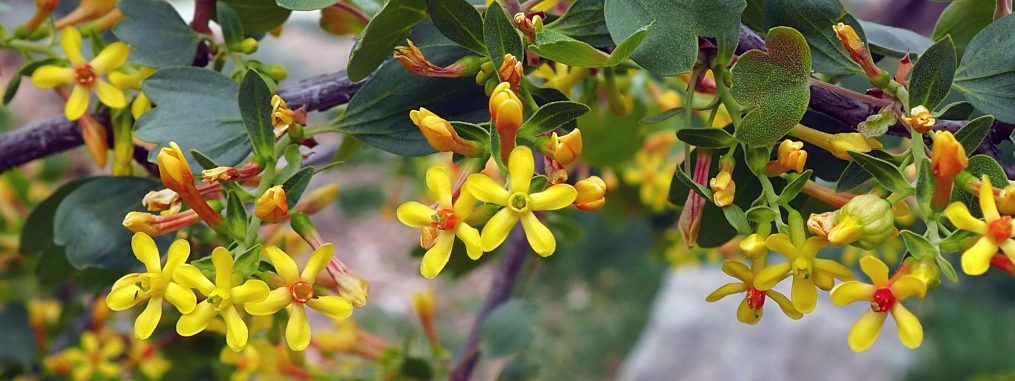
A drought tolerant garden doesn’t have to be treeless. While the pickings are slim, there is a selection of trees that, once established, are well adapted to deal with extended bouts of little to no water. One such tree is yellowhorn, a species that demands to be considered for any waterwise landscape. Yellowhorn is rare in cultivation – and also restricted in its natural distribution – but perhaps that will change as word gets around about this beautiful and resilient tree.

Xanthoceras sorbifolium is native to several provinces in northern China and has been cultivated in a number of places outside of China since at least the 1800’s. Its ethnobotanical value is well understood in China. Its leaves, flowers, and seeds are edible and medicinal, and the high oil content of its seeds make them useful for the production of biofuels. Researchers are also investigating the use of yellowhorn for ecological restoration in arid habitats where desertification is a concern.

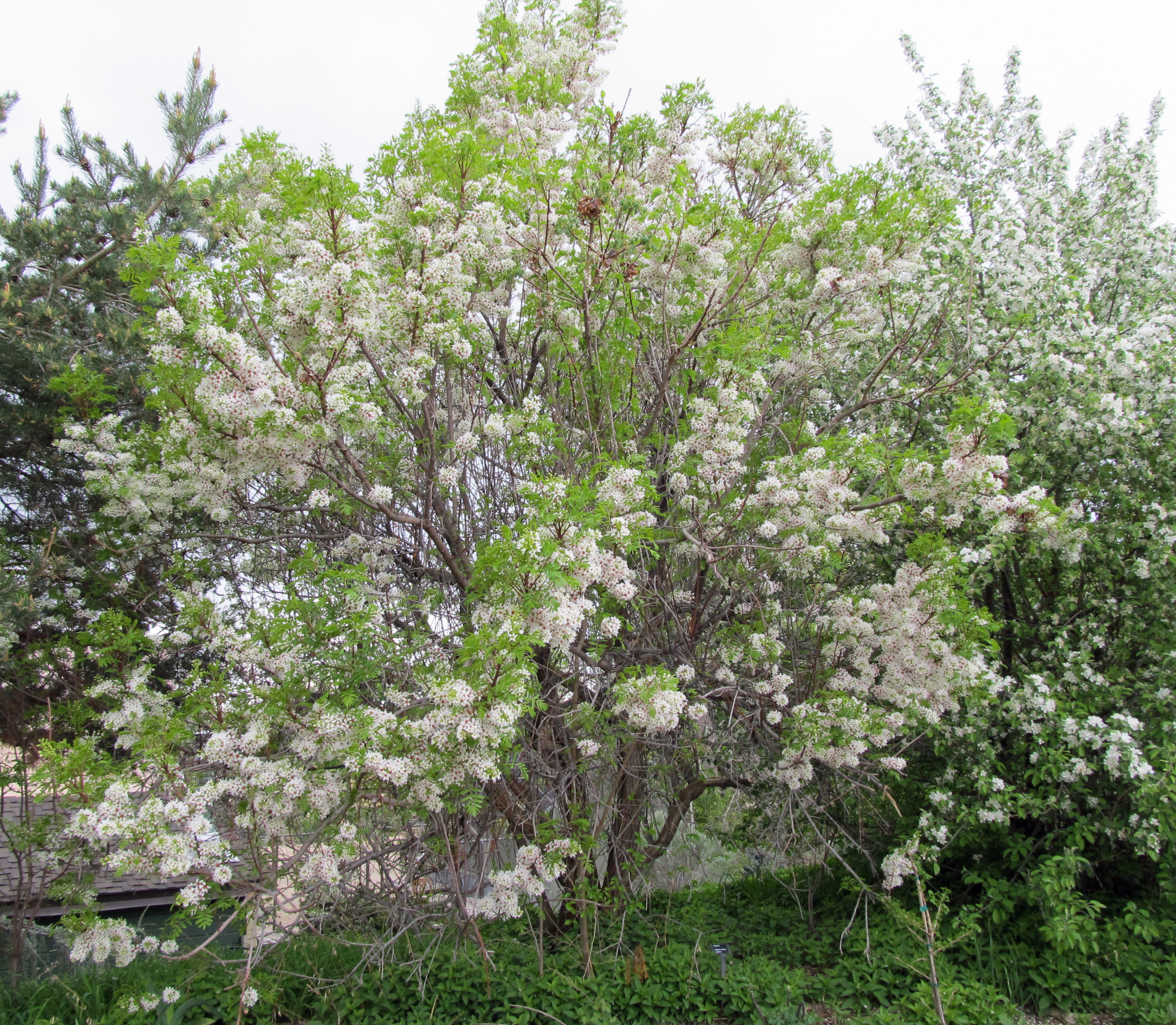
yellowhorn in bloom

Yellowhorn is the only species in the genus Xanthoceras, but is one in a long list of trees and shrubs in the Sapindaceae family – a family that now includes maples and horse chestnuts. It is considered both a large shrub and a small, multi-stemmed tree. It reaches a maximum height of about 25 feet, but arrives there at a relatively slow pace. It tolerates a variety of soil types, but like most other drought tolerant plants, it prefers soils that don’t become waterlogged easily. Its leaves are long, glossy green, and compound, consisting of 9 – 17 leaflets. The leaves persist late into the year and turn yellow in the fall. However, late spring, when the tree is covered in flowers, is when this tree puts on its real show.

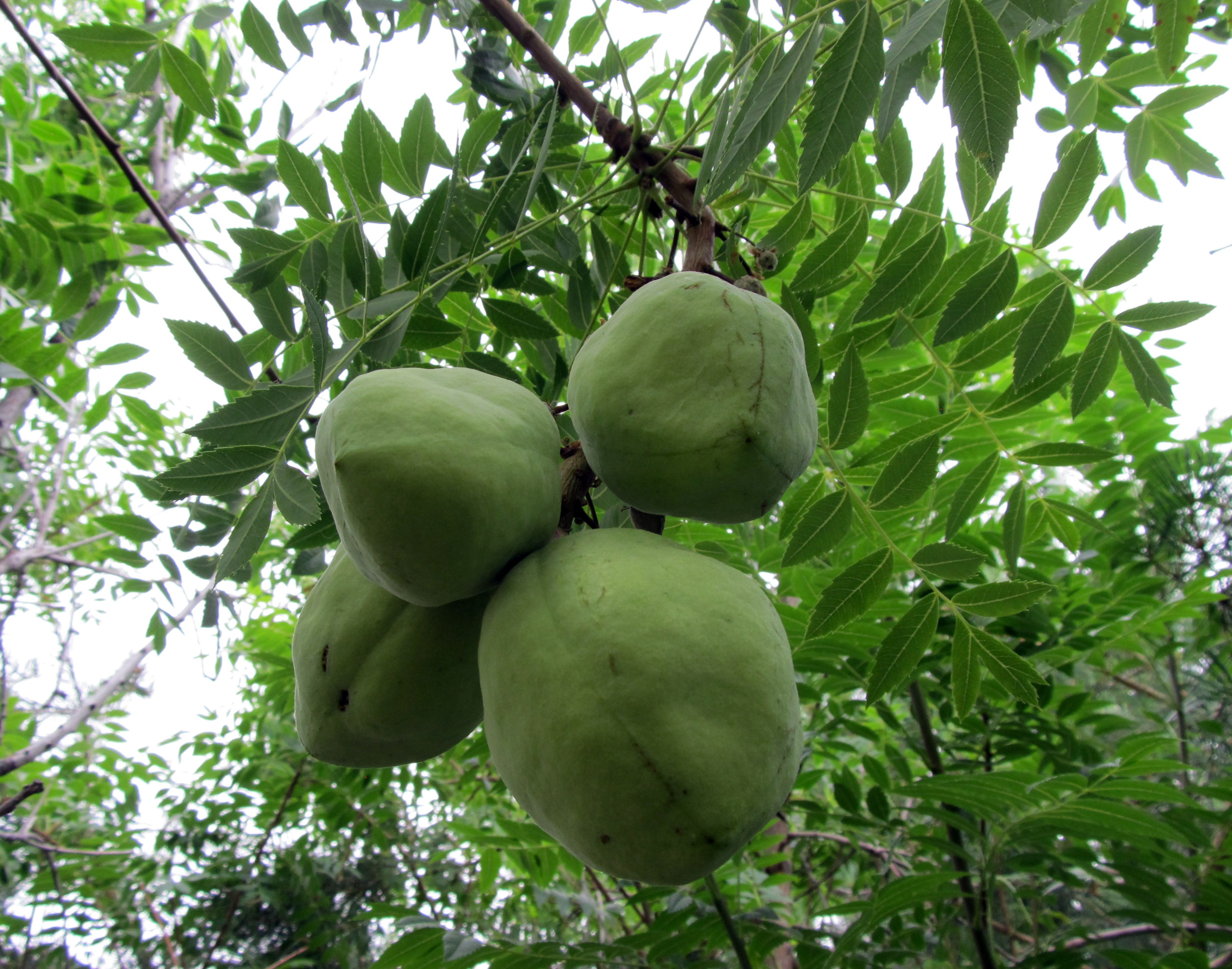
Large white flowers with yellow-green centers that turn maroon or red-orange as they age are produced on racemes at the ends of branches. Small, yellow, hornlike appendages between each of the five petals of the flowers are what gives the tree its common name. Flowering lasts for a couple weeks, after which fruits form, which are about 2.5 inches wide, tough, leathery, and somewhat pear shaped. In my experience, most of the fruits are eaten by squirrels long before they get a chance to reach maturity. The ones the squirrels don’t get will persist on the tree, harden, and eventually split open to reveal several large, dark, round seeds nestled in chambers within the fruit.

To truly appreciate this tree, it must be seen in person, especially in bloom. At that point you will demand to have one (or more) in your garden. The seeds are said to be delicious, so you should give them a try if you can beat the squirrels to them. For a more thorough overview of yellowhorn, check out this article from Temperate Climate Permaculture, and for more photos of yellowhorn in bloom, check out this post from Rotary Botanical Gardens.

Squirrel nesting in yellowhorn, getting ready to go after more fruits.

All photos in this post were taken at Idaho Botanical Garden in Boise, Idaho.

———————

More Drought Tolerant Plants Posts:

Eating Weeds: Chicory
Over the course of human history, plant species once esteemed or considered useful have been recategorized into something less desirable. For one reason or another, plants fall out of favor or wear out their welcome, and, in come cases, are found to be downright obnoxious, ultimately losing their place in our yards and gardens. The particularly troublesome ones are branded as weeds, and put on our “do not plant” lists. These plants are not only unfavored, they’re despised. But being distinguished as a weed doesn’t necessary negate a plant’s usefulness. It’s likely that the plant still has some redeeming characteristics. We’ve just chosen instead to pay more attention its less redeeming ones.
Chicory is a good example of a plant like this. At one point in time, Cichorium intybus had a more prominent place in our gardens, right alongside dandelions in fact. European colonizers first introduced chicory to North America in the late 1700’s. Its leaves were harvested for use as a salad green and its roots were used to make a coffee additive or substitute. Before that, cultivation of chicory for these and other purposes had been going on across Europe for thousands of years, and it still goes on today to a certain extent. Along with other chicory varieties, a red-leafed form known as radicchio and a close cousin known as endive (Chicorium endivia) are grown as specialty crops, occassionally finding their way into our fanciest of salads.

Radicchio di Chioggia (Cichorium intybus var. foliosum) is a cultivated variety of chicory. (via wikimedia commons)

Chicory’s tough, adaptable nature and proclivity to escape cultivation have helped it become widespread, making itself at home in natural areas as well as urban and rural settings. Its perennial life history helps make it a fixture in the landscape. It sends down a long, sturdy taproot and settles in for the long haul. It tolerates dry, compacted soils with poor fertility and doesn’t shy away from roadside soils frequently scoured with salts. It’s as though it was designed to be a city weed.

Unlike many other perennial weeds, chicory doesn’t spread vegetatively. It starts its life as a seed, blown in from a nearby plant. After sprouting, it forms a dandelion-esque rosette of leaves during its first year. Wiry, branched stems rise up from the rosette in following years, reaching heights of anywhere from about a foot to 5 or 6 feet. When broken, leaves, stems, and roots ooze a milky sap. Abundant flowers form along the gangly stems. Like other plants in the aster family, each flower head is composed of multiple flowers. Chicory flower heads are all ray flowers, lacking the disc flowers found in the center of other plants in this family. The petals are a brilliant blue – sometimes pink or white. Individual flowers last less than a day and are largely pollinated by bees. The fruits lack the large pappus found on dandelions and other close relatives, but the seeds are still dispersed readily with the help of wind, animals, and human activity.

chicory (Cichorium intybus) via wikimedia commons

The most commonly consumed portions of chicory are its leaves and roots. Its flowers and flower buds are also edible. Young leaves and blanched leaves are favored because they are the least bitter. Excluding the leaves from light by burying or covering them up keeps them pale and reduces their bitter flavor. This is standard practice in the commercial production of certain chicory varieties. The taproots of chicory are dried, roasted, and ground for use as a coffee substitute. They are also harvested commercially for use as a natural sweetener due to their high concentration of inulin.

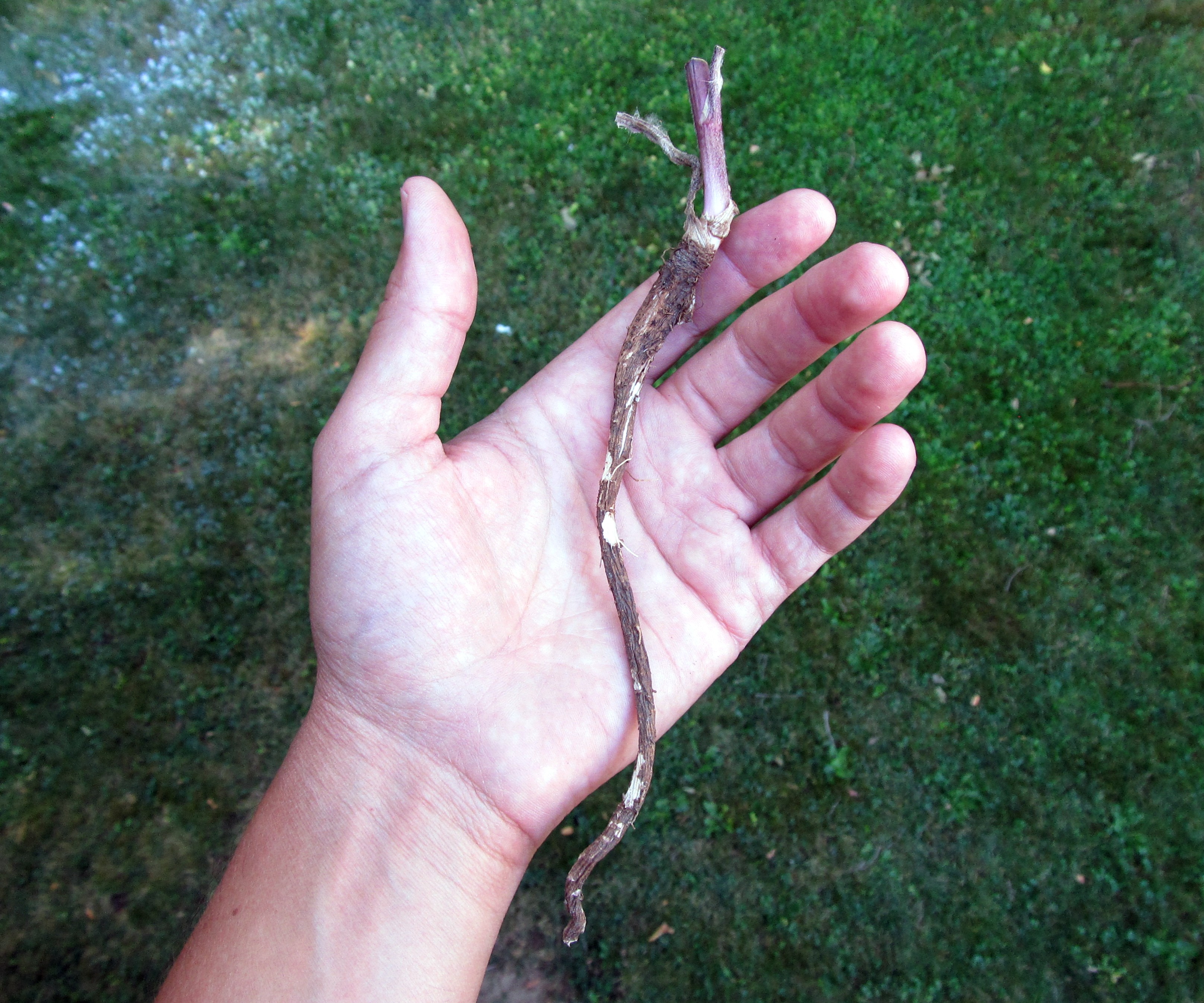
my puny chicory root

I harvested a single puny chicory root in order to make tea. On my bike ride to work there is a small, sad patch of chicory growing in the shade of large trees along the bike path. I was only able to pull one plant up by the roots. The others snapped off at the base. So, I took my tiny root, dried and roasted it in the oven, and ground it up in a coffee grinder. I followed instructions for roasting found on this website, but there are many other sources out there. I had just enough to make one small cup of tea, which reminded me of dandelion root teas I have had. Sierra found it to be very bitter, and I agreed but still enjoyed it. I figure that wild plants, especially those growing in stressful conditions like mine was, are likely to be more bitter and strong tasting compared to coddled, cultivated ones found in a garden.

roasted chicory root

roasted and ground chicory root

When I find a larger patch of feral chicory, I hope to try one of several recipes included in Luigi Ballerini’s book, A Feast of Weeds, as well as other recipes out there. I’ll be sure to let you know how it goes.

Are you curious to know how chicory became such a successful weed in North America? Check out this report in Ecology and Evolution to learn about the genetic explanation behind chicory’s success.

Party Time for Puncture Vine, Year Two

Party Time for Puncture Vine, Year Two

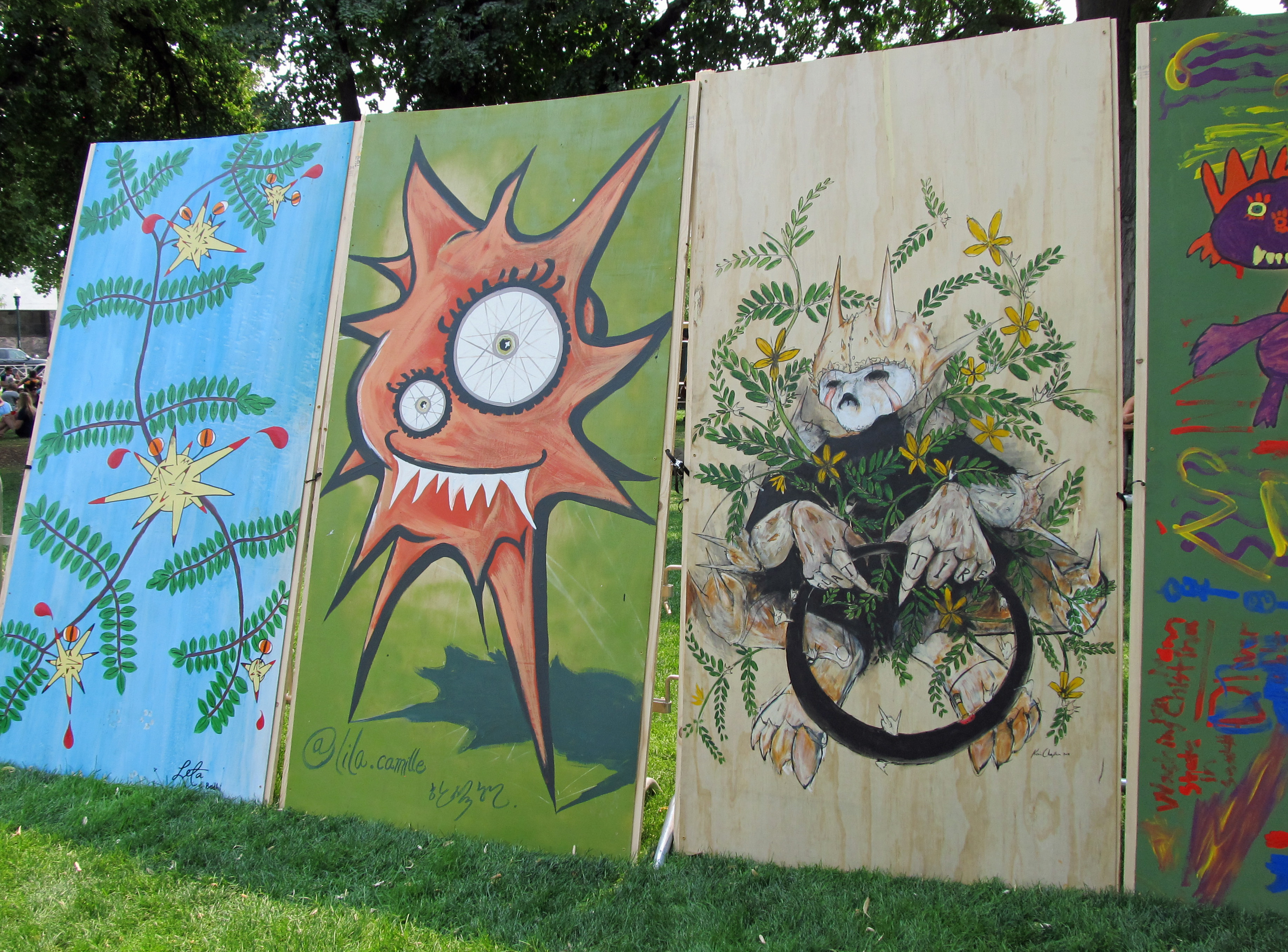
A noxious weed brought Boiseans together for the second year in a row. After a successful inaugural year, the Boise Goathead Fest returned to downtown Boise, Idaho on the 2nd and 3rd of August. The festival’s namesake comes from a particularly destructive weed whose spiky fruits are notorious for puncturing bike tires. Known commonly as goathead or puncture vine, Tribulus terrestris is abundant in the Treasure Valley and the bane of area bicyclists. Organized by the Boise Bicycle Project and other bike-centric non-profits, Boise Goathead Fest is a celebration of bike culture, as well as an opportunity to spread awareness about this problematic plant.

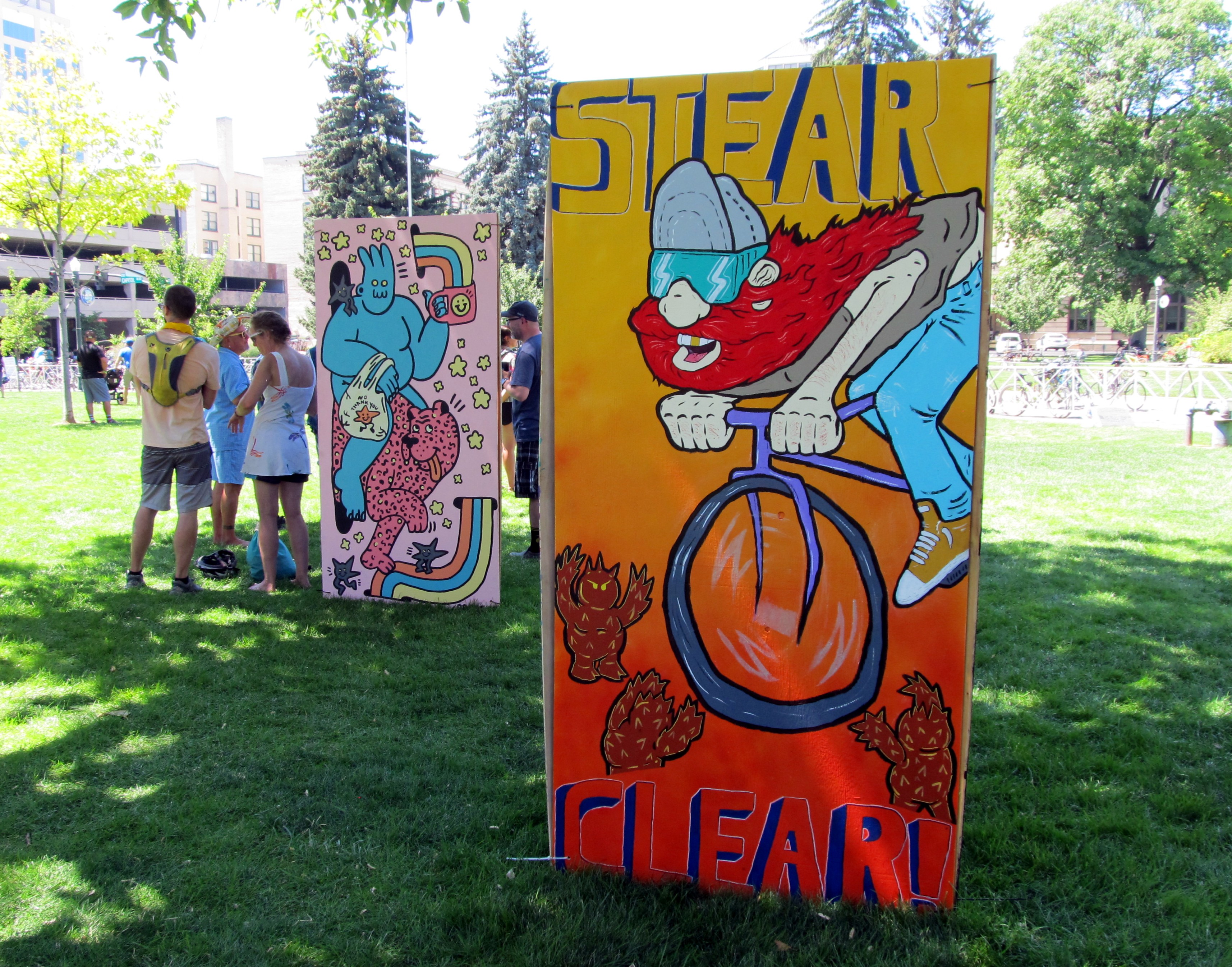
goathead-themed art

For the two months leading up to Goathead Fest, Treasure Valley residents were encouraged to pull as many goatheads as they could get their hands on. Those who took on the challenge were rewarded with tokens to be redeemed at the Fest for drinks or ice cream. Trophies and prizes were also presented to those who pulled the most goatheads over the two month period. This effort resulted in thousands of pounds of goatheads being removed from the area, saving bicyclists from countless flat tires and slimming down puncture vine’s extensive seed bank.

scale for weighing goathead collections

After two months of collecting goatheads, it was time to celebrate. The two day long party consisted of live music and DJs, a huge bike parade around downtown Boise (for which participants were encouraged to decorate their bikes and wear costumes), and a variety of other bike-themed and non bike-themed activities. Goathead education continued during the Fest with the help of folks from Ada County, City of Boise, Idaho Botanical Garden, and others.

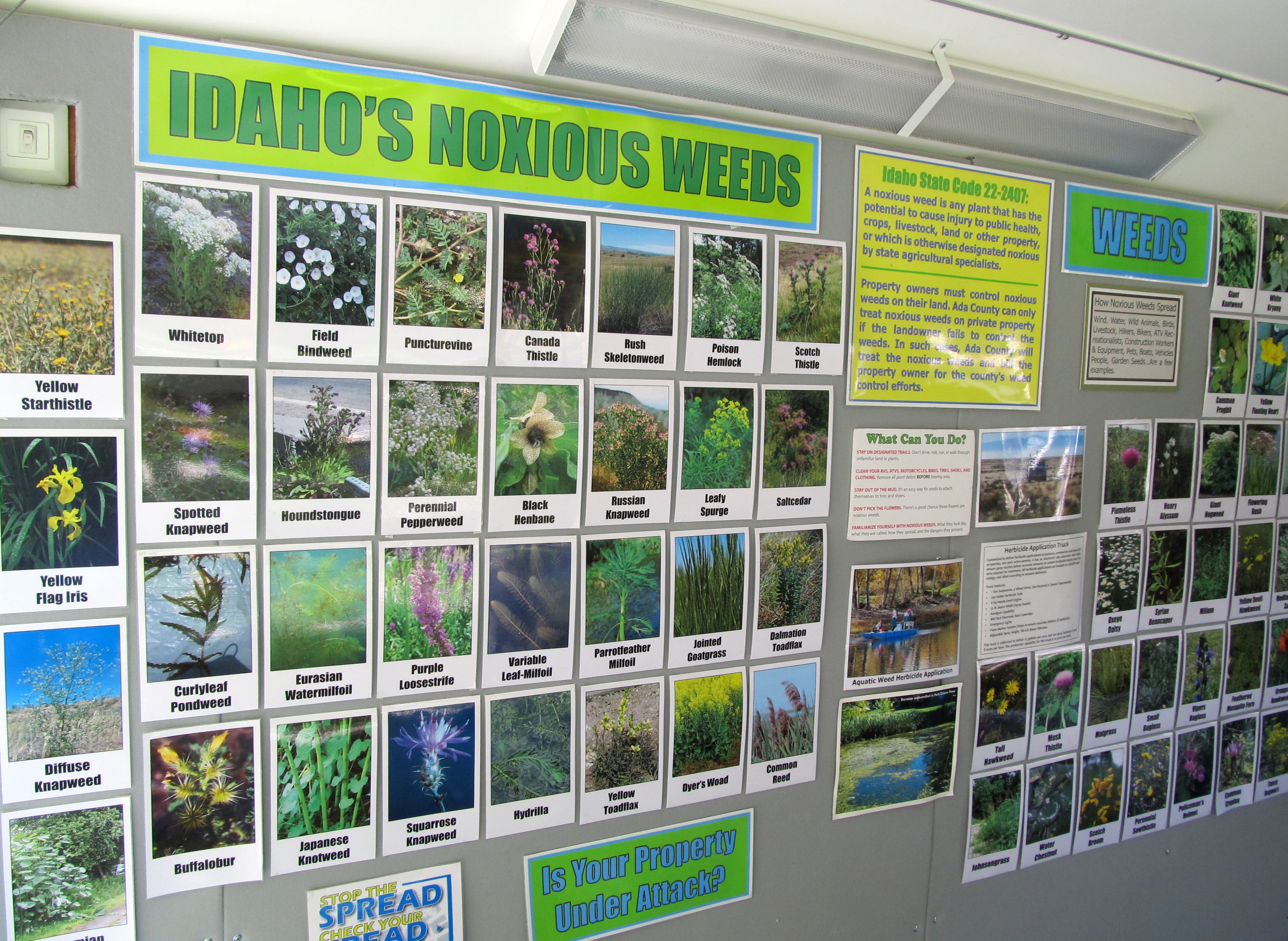
A peak inside the Ada County Weed, Pest, and Mosquito Abatement education and outreach trailer

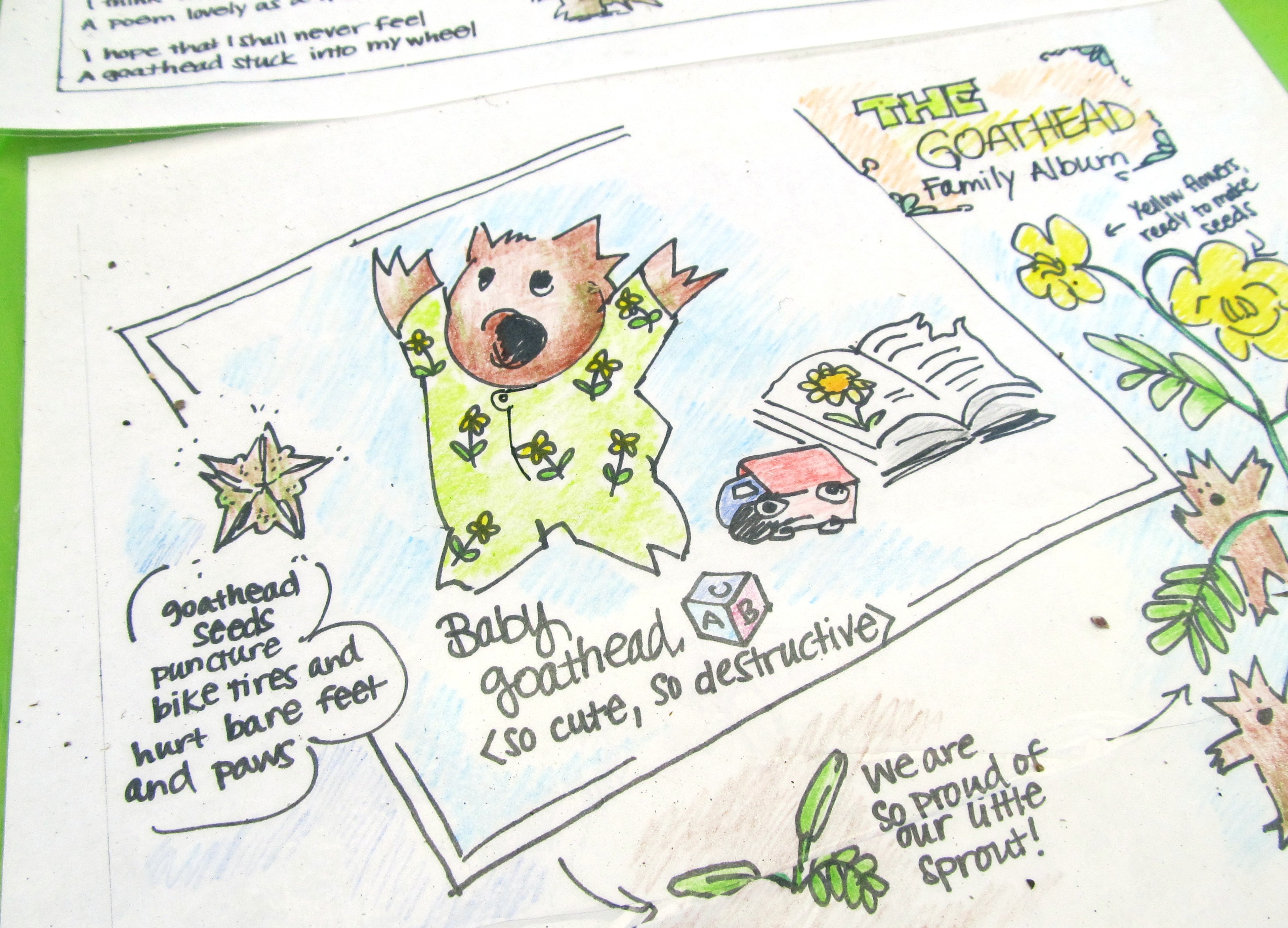
Goathead coloring page created by Wendy of Idaho Botanical Garden

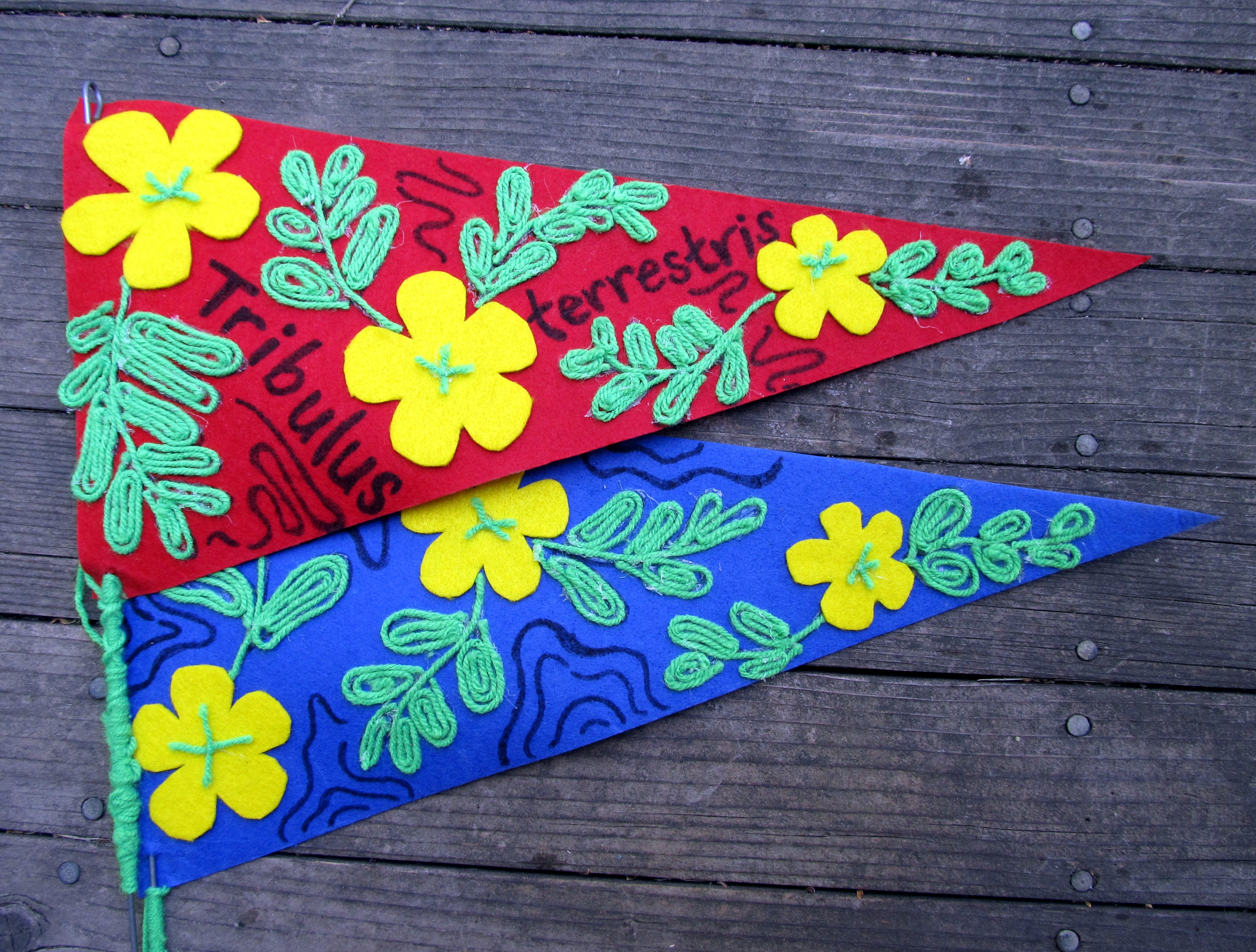
Puncture vine pennants created by Anna of Idaho Botanical Garden

With all of this attention and awareness focused on a single noxious weed, might it be possible to eliminate it from our community and free ourselves from ruined rides and trashed tires? The seeds of puncture vine are relatively short lived, and as an annual plant, seeds are its only method of reproduction. Even if we can’t altogether eliminate it, we could certainly see a dramatic reduction in its abundance and distribution. Perhaps in the future we will spend less time pulling it and more time celebrating its rarity, reflecting back on the time when punctures permeated our pedal-powered lives. Whatever the result, puncture vine has brought our community together once again. If such a loathsome weed can bring people together in celebration like this, perhaps it’s not entirely bad.

me with goathead balloon

See Also: Boise Weekly – Goathead’s the Burr, Community’s the Word

Investigating the Soil Seed Bank

Near the top of the world, deep inside a snow-covered mountain located on a Norwegian island, a vault houses nearly a million packets of seeds sent in from around the world. The purpose of the Svalbard Global Seed Vault is to maintain collections of crop seeds to ensure that these important species and varieties are not lost to neglect or catastrophe. In this way, our food supply is made more secure, buffered against the unpredictability of the future. Seed banks like this can be found around the world and are essential resources for plant conservation. While some, like Svalbard, are in the business of preserving crop species, others, like the Millennium Seed Bank, are focused on preserving seeds of plants found in the wild.

Svalbard Global Seed Vault via wikimedida commons

Outside of human-built seed banks, many plants maintain their own seed banks in the soil where they grow. This is the soil seed bank, a term that refers to either a collection of seeds from numerous plant species or, simply, the seeds of a single species. All seed bearing plants pass through a period as a seed waiting for the chance to germinate. Some do this quickly, as soon as the opportunity arises, while others wait, sometimes for many years, before germinating. Plants whose seeds germinate quickly, generally do not maintain a seed bank. However, seeds that don’t germinate right away and become incorporated in the soil make up what is known as a persistent soil seed bank.

A seed is a tiny plant encased in a protective layer. Germination is not the birth of a plant; rather, the plant was born when the seed was formed. The dispersal of seeds is both a spatial and temporal phenomenon. First the seed gets to where it’s going via wind, water, gravity, animal assistance, or some other means. Then it waits for a good opportunity to sprout. A seed lying in wait in the soil seed bank is an example of dispersal through time. Years can pass before the seed germinates, and when it does, the plant joins the above ground plant community.

Because seeds are living plants, seeds found in the soil seed bank are members of a plant community, even though they are virtually invisible and hard to account for. Often, the above ground plant community does not represent the population of seeds found in the soil below. Conversely, seeds in a seed bank may not be representative of the plants growing above them. This is because, as mentioned earlier, not all plant species maintain soil seed banks, and those that do have differences in how long their seeds remain viable. Depending on which stage of ecological succession the plant community is in, the collection of seeds below and the plants growing above can look quite different.

Soil seed banks are difficult to study. The only way to know what is truly there is to dig up the soil and either extract all the seeds or encourage them to germinate. Thanks to ecologists like Ken Thompson, who have studied seed banks extensively for many years, there is still a lot we can say about them. First, for the seeds of a plant to persist in the soil, they must become incorporated. Few seeds can bury themselves, so those with traits that make it easy for them to slip down through the soil will have a greater chance of being buried. Thompson’s studies have shown that “persistent seeds tend to be small and compact, while short-lived seeds are normally larger and either flattened or elongate.” Persistent seeds generally weigh less than 3 milligrams and tend to lack appendages like awns that can prevent them from working their way into the soil.

The seeds of moth mullein (Verbascum blattaria) are tiny and compact and known to persist in the soil for decades as revealed in Dr. Beal’s seed viability experiment. (photo credit: wikimedia commons)

Slipping into cracks in the soil is a major way seeds move through the soil profile, but it isn’t the only way. In a study published in New Phytologist, Thompson suggests that “the association between small seeds and possession of a seed bank owes much to the activities of earthworms,” who ingest seeds at the surface and deposit them underground. Later, they may even bring them back up the same way. Ants also play a role in seed burial, as well as humans and their various activities. Some seeds, like those of Avena fatua and Erodium spp., have specialized appendages that actually help work the seeds into the soil.

Not remaining on the soil surface keeps seeds from either germinating, being eaten, or being transported away to another site. Avoiding these things, they become part of the soil seed bank. But burial is only part of the story. In an article published in Functional Ecology, Thompson et al. state that burial is “an essential prelude to persistence,” but other factors like “germination requirements, dormancy mechanisms, and resistance to pathogens also contribute to persistence.” If a buried seed rots away or germinates too early, its days as a member of the soil seed bank are cut short.

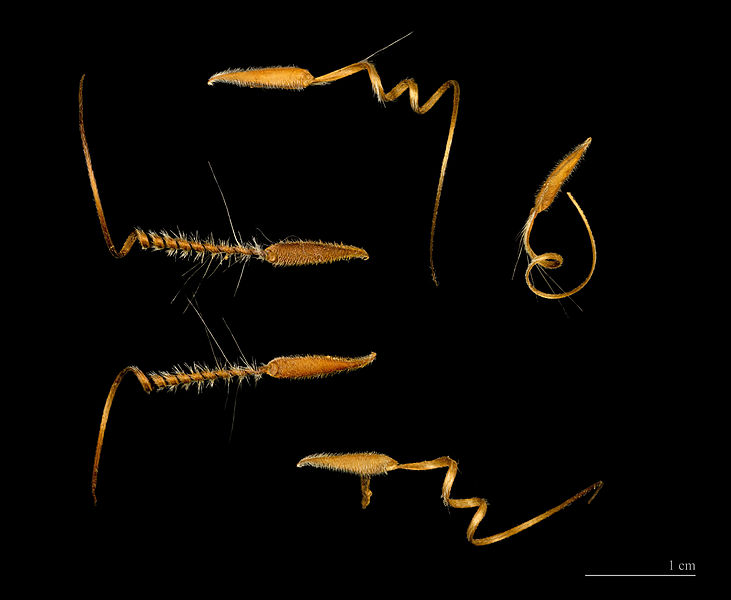
The seeds of redstem filare (Erodium circutarium) have long awns that start out straight, then coil up, straighten out, and coil up again with changes in humidity. This action helps drill the seeds into the soil. (photo credit: wikimedia commons)

Soil seed banks can be found wherever plants are found – from natural areas to agricultural fields, and even in our own backyards. Thompson and others carried out a study of the soil seed banks of backyard gardens in Sheffield, UK. They collected 6 soil cores each (down to 10 centimeters deep) from 56 different gardens, and grew out the seeds found in each core to identify them. Most of the seeds recovered were from species known to have persistent seed banks, and to no surprise, the seed banks were dominated by short-lived, weedy species. The seeds were also found to be fairly evenly distributed throughout the soil cores. On this note, Thompson et al. remarked that due to “the highly disturbed nature of most gardens, regular cultivation probably ensures that seeds rapidly become distributed throughout the top 10 centimeters of soil.”

Like the seed banks we build to preserve plant species for the future, soil seed banks are an essential long-term survival strategy for many plant species. They are also an important consideration when it comes to managing weeds, which is something we will get into in a future post.

Introducing Herbology Hunt

This is a guest post by Jane Wilson.

———————

Many people are “plant blind”. They walk through areas of fantastic wildlife or just down their street without noticing what grows there. Even plants growing in the gutter have an interesting backstory.

The term “Plant Blindness” was first put forth by Wandersee and Schlusser in 1998. Without an appreciation of plants in the ecosystem, people will be less likely to support plant research and conservation.

Herbology Hunt was born out of a love of plants and wild places and a determination to get kids outdoors and really looking at their environment. One of the founders started Wildflower Hour on Twitter – a place for people to share photos of wildflowers found in Britain and Ireland – and from this was stemmed a children’s version, which became Herbology Hunt. The Herbology Hunt team put together spotter sheets for each month of the year. Each sheet includes five plants that can be found throughout the month. They were made available as a free download, so schools and individuals can print them for use on a plant hunt.

By the end of 2018, we had created a year’s worth of spotter sheets. We are now looking to promote their use throughout Great Britain. Eventually we want to reward children who find 50 of the plants with a free T-shirt, and we will be looking for sponsors to support this. We have been supported by the Botanical Society of Britain and Ireland and the Wild Flower Society who have made the monthly spotter sheets available. They can be downloaded here or here.

Herbology Hunt Spotter Sheet for January

The Wild Flower Society has a great offer for Juniors interested in plants – it costs £3 to join and you get a diary to record your finds.

Going outdoors and noticing wildlife has been shown in some scientific studies to improve cardio-vascular health and mental health. A herbology hunt must surely be a good thing to do with children to help them get into a better lifestyle that will benefit their future health. We hope that many families and schools will use our spotter sheets as a way to help children become more passionate about the environment and enjoy the benefits of being outdoors.

Check out the Wildflower Hour website for more information about Herbology Hunt, along with instructions on how to get involved in #wildflowerhour, plus links to social media accounts and the Wild Flower (Half) Hour podcast.

———————

Also: Check out Jane Wilson’s website – Practical Science Teaching – for more botany-themed educational activities.

Party Time for Puncture Vine at Boise Goathead Fest

When the Goathead Monster revealed itself before the big bike parade at the first annual Boise Goathead Fest, it was worried that the thousands of people it saw gathered before it were there out of hatred. After all, “rides have been ruined, tires have been trashed, and punctures have permeated” the “pedal-powered lives” of pretty much everyone in attendance, and the Goathead Monster was to blame. For that reason, hundreds (perhaps thousands) of pounds of puncture vine had been pulled around Boise throughout the month of July, all in preparation for this inaugural event.

Certainly, those of us who ride bikes regularly have a sore spot for this problematic plant. Yet, we weren’t there in anger. We were there to celebrate bicycles, community, friendship, and summer, and even if it took a villain like the Goathead Monster to bring us all together, how could we be mad?

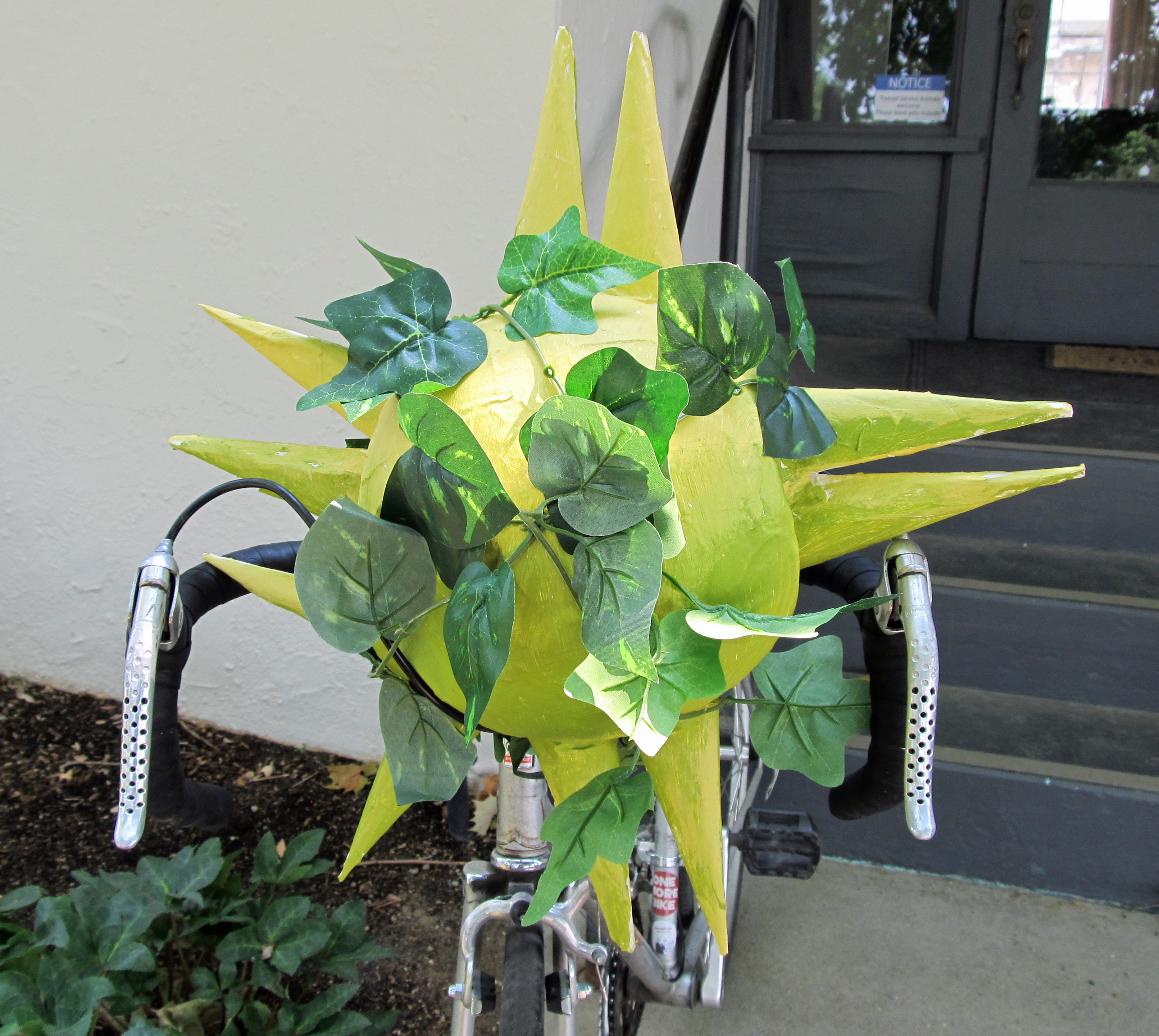
My bike decorated with a papiermâchée goathead.

Bicycle events like this one have been a feature of summers in Boise, Idaho for years now. For over a decade, Tour de Fat was the main event, but after dropping Boise from its tour schedule starting this year, Boise (with New Belgium Brewing‘s continued support) was left to create its own thing. Boise Bicycle Project, along with the help of several other bike-centric and bike-friendly organizations, put together Boise Goathead Fest. The trappings are similar to Tour de Fat – a bike parade, along with music, food, drinks, costumes, games, and weirdness. The main difference is that this event is “bona fide Boise” … and goathead themed.

As a bicycle enthusiast, this is already my kind of event. As a plant nerd – and even more so, as a weeds-obsessed plant nerd – a noxious weed-themed festival is about as on the nose as you can get. Where else are you going to see people dressing up their bikes and themselves like a noxious weed? And where else are you going to find people who, despite their disdain for this plant (or perhaps because of it), decide to come together and celebrate? In a way, it makes me wish we could throw a party for all vilified plants, each one getting a chance to tell its story, and each one getting some time under the spotlight, in spite of the negative feelings we may have towards them.

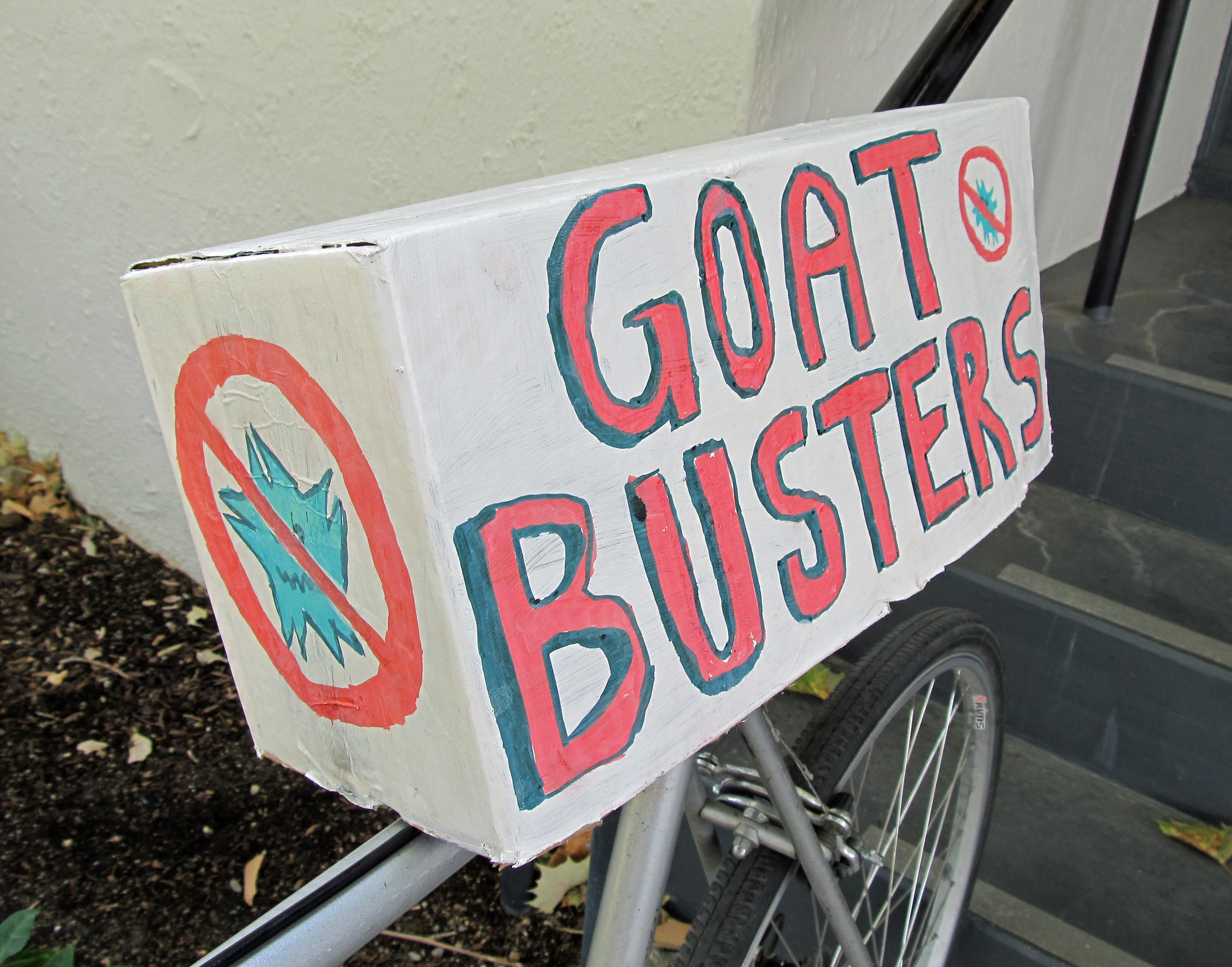
Sierra rode in the parade dressed up as a Goat Buster.

Goathead is an easy plant to rally around. As executive director of Boise Bicycle Project said on Idaho Matters, goatheads are a “bane of bicycling, and they don’t discriminate. It doesn’t matter who you are, where you’re from, what sort of bicycle you’re riding … you’re going to get a flat tire from these things.” Perhaps other noxious weeds don’t quite have the charisma that puncture vine does – the ability to “unify everyone together” – but that’s okay. I’ll just have to find a way to celebrate each of them some other way. As it is, we now have Boise Goathead Fest, and if that means that every summer for years to come people will be donning goathead costumes and coming together to party in a positive way, what more can we ask for?

goathead art

more goathead art

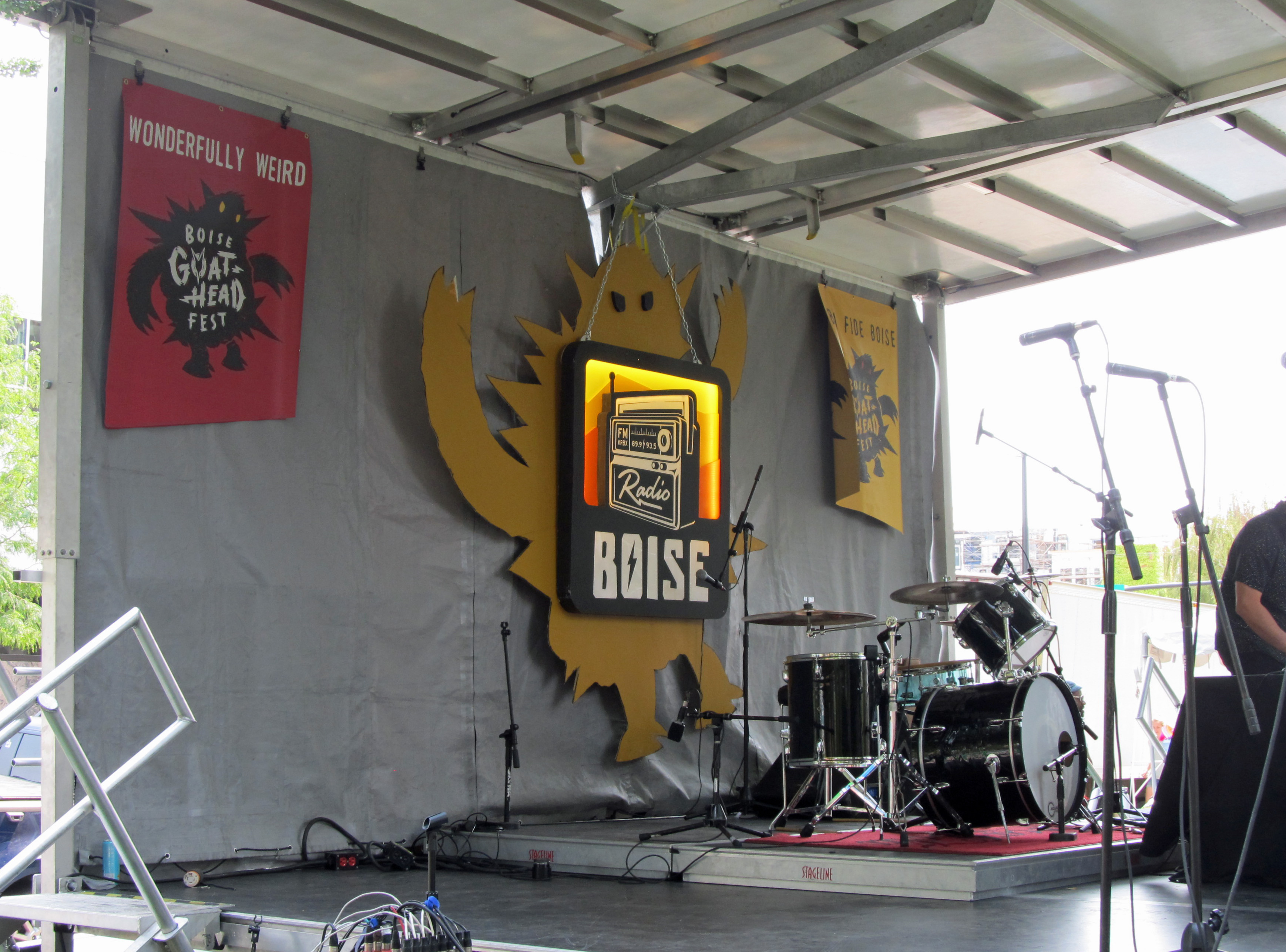
The goathead monster is center stage.

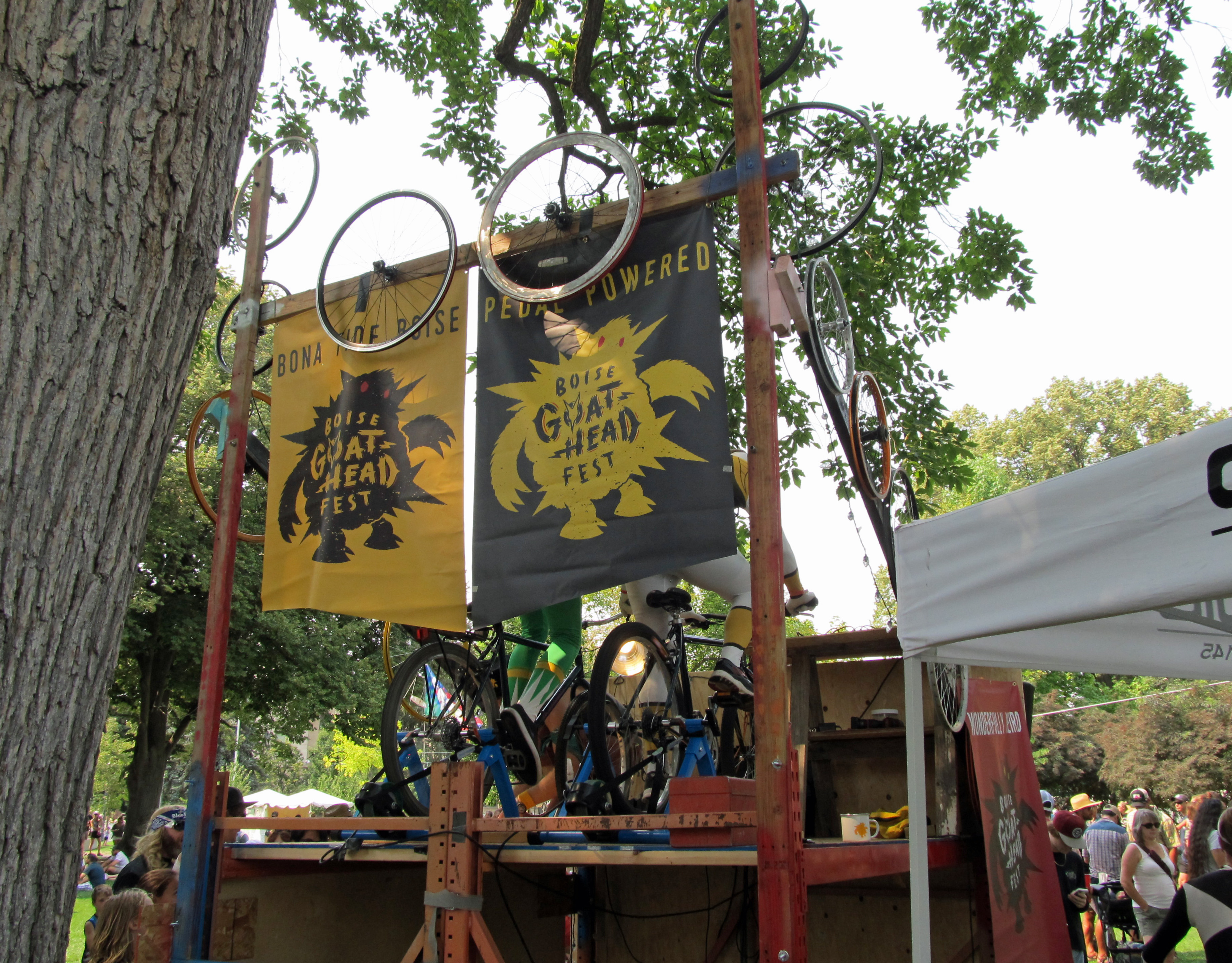
bicycle-powered stage

See Also: How to Identify Puncture Vine (a.k.a. the Goathead Monster)

How to Identify Puncture Vine (a.k.a. the Goathead Monster)

This post originally appeared on Idaho Botanical Garden’s blog. With the first annual Boise Goathead Fest fast approaching, the purpose of this post is to help people in the Treasure Valley identify goatheads so that they can collect them for drink tokens to use at the event. I’m reposting it here in hopes that people around the globe who are tormented by goatheads might benefit from it. All photos in this post were taken by Anna Lindquist.

———————

If you have spent much time on a bicycle in Boise, chances are you have been the victim of a goathead-induced flat tire. You probably even got a good look at the spiky nutlet as you went to remove it from your tire. But where did the culprit come from? No doubt, it came from a plant. But which one?

This is particularly useful to know right now because the first annual Boise Goathead Fest is coming up, and if you manage to fill a garbage bag full of these noxious weeds before the end of July, you will earn yourself a drink token. Fortunately, this plant is fairly easy to identify; however, there are a few look-a-likes, so it is important to familiarize yourself with the plant in question so you can be sure you are pulling the right one.

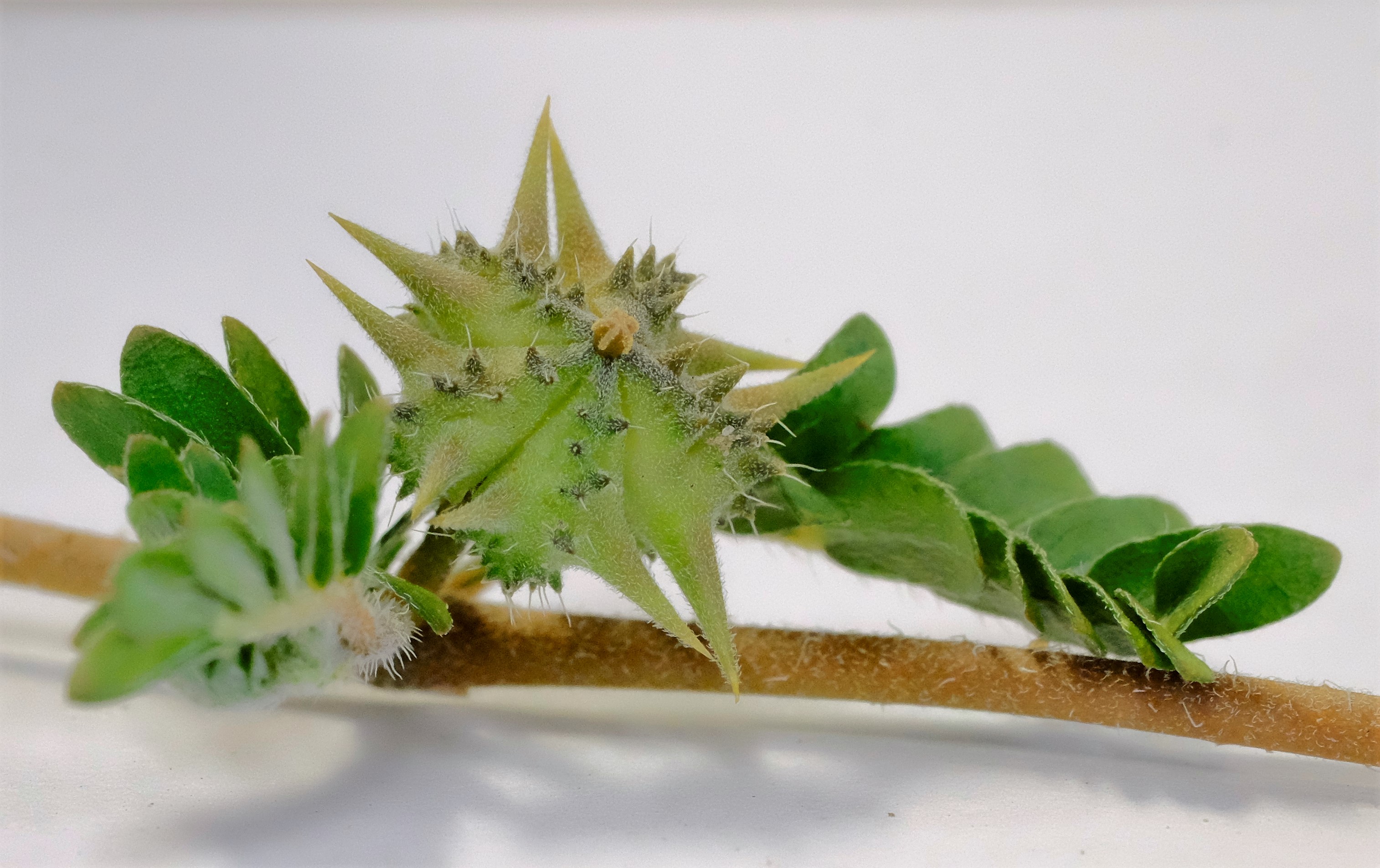
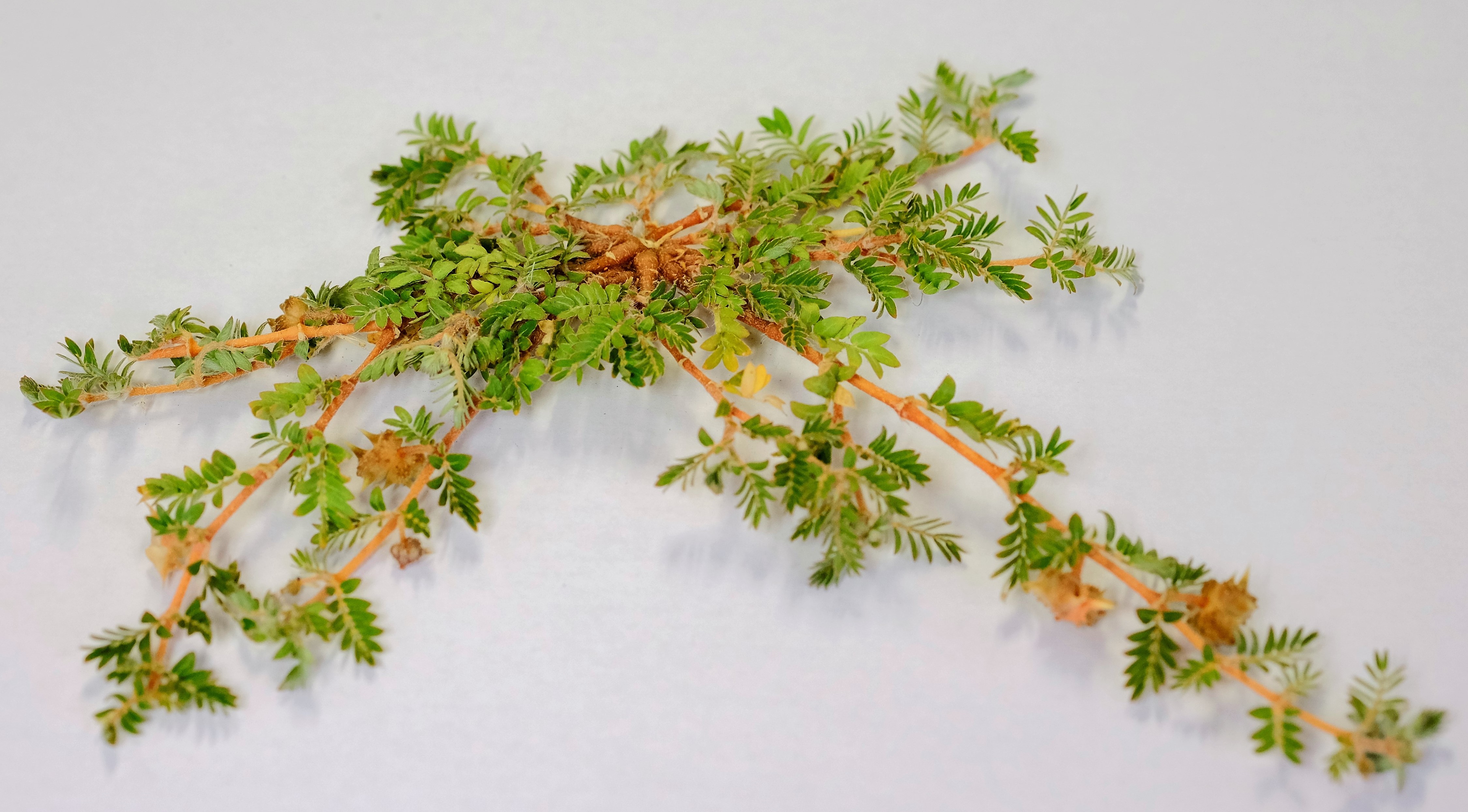
puncture vine (Tribulus terrestris)

Puncture vine, also known as goathead or Tribulus terrestris, is a warm season annual that is native to the Mediterranean region of southern Europe. It was introduced to North America unintentionally by early European settlers when the plant’s blasted burs snuck their way across the ocean in sheep wool. Since then, puncture vine has spread across the continent prolifically thanks to the hitchhiking prowess of its seeds.

Behold, the infamous Goathead Monster.

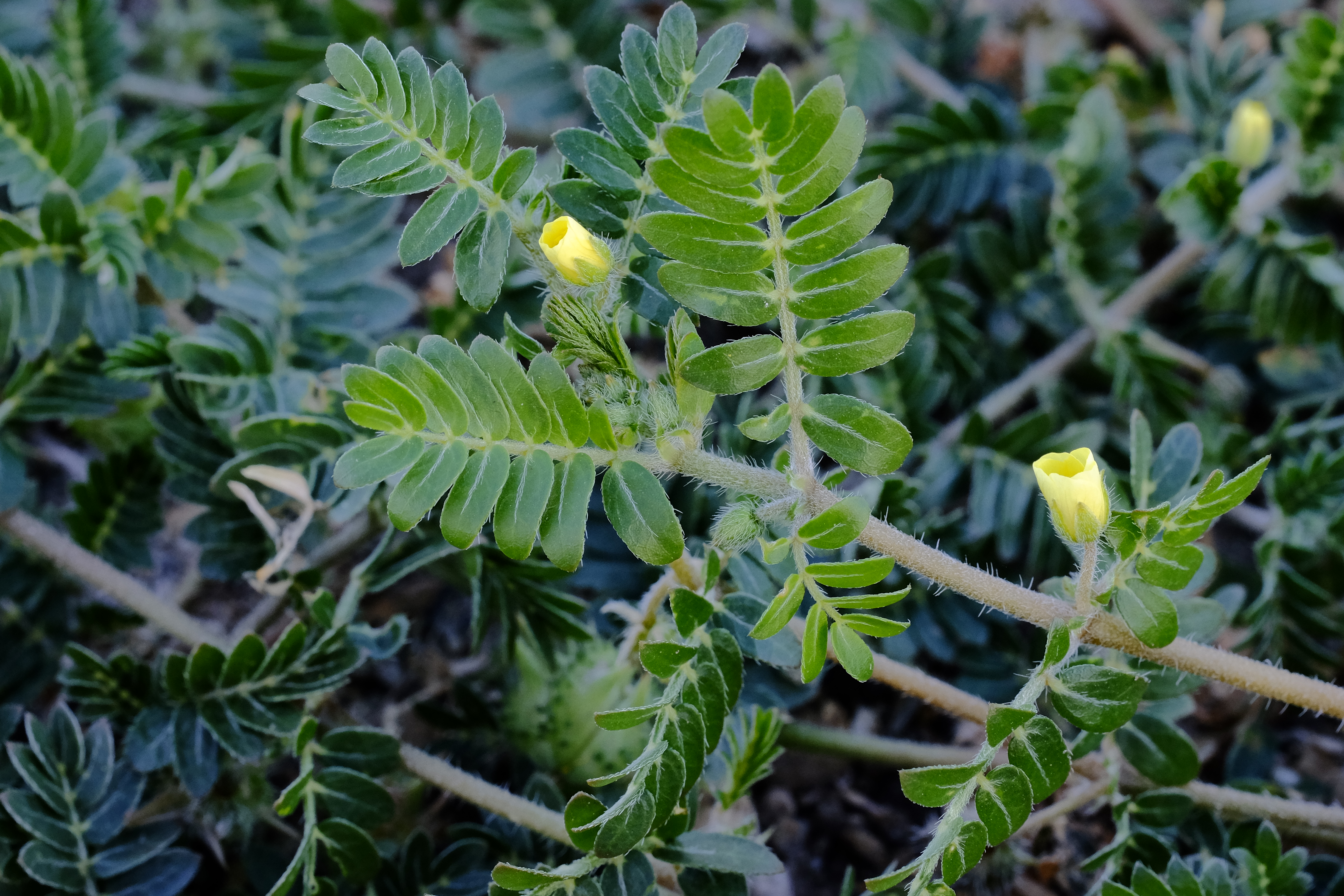
Puncture vine has a prostrate habit, meaning that its branches lie flat on the ground, spreading outward from a central location. It grows upward only when it is being shaded or crowded out. Its leaves are divided into several tiny leaflets, and its flowers are small and bright yellow with five petals. It is an otherwise pretty plant were it not for the threatening, jagged fruits that follow the flowers. As these fruits dry, they dislodge from the plant, split into five pieces, and lay in wait to puncture your tire, work their way into the bottom of your shoe or the foot of an animal, or latch onto some errant fur.

puncture vine (Tribulus terrestris)

Depending on the conditions, puncture vine either remains fairly small or spreads as much as six feet wide. Fruits start forming shortly after flowering, and seeds ripen soon after that, so if the plant isn’t removed quickly – nutlets and all – future populations are guaranteed. Luckily the plants are fairly easy to remove. Unless the ground is particularly compact, they pull up easily, and if they break off at the root, they generally don’t sprout back.

Virtually any plant that has a prostrate growth habit and is actively growing in the summer could, at first glance, be mistaken for puncture vine. Closer inspection will help confirm the plant’s true identity. Two plants that might confuse you are purslane and spotted spurge. Both of these species can be found growing in full sun in disturbed or neglected sites in close company with puncture vine.

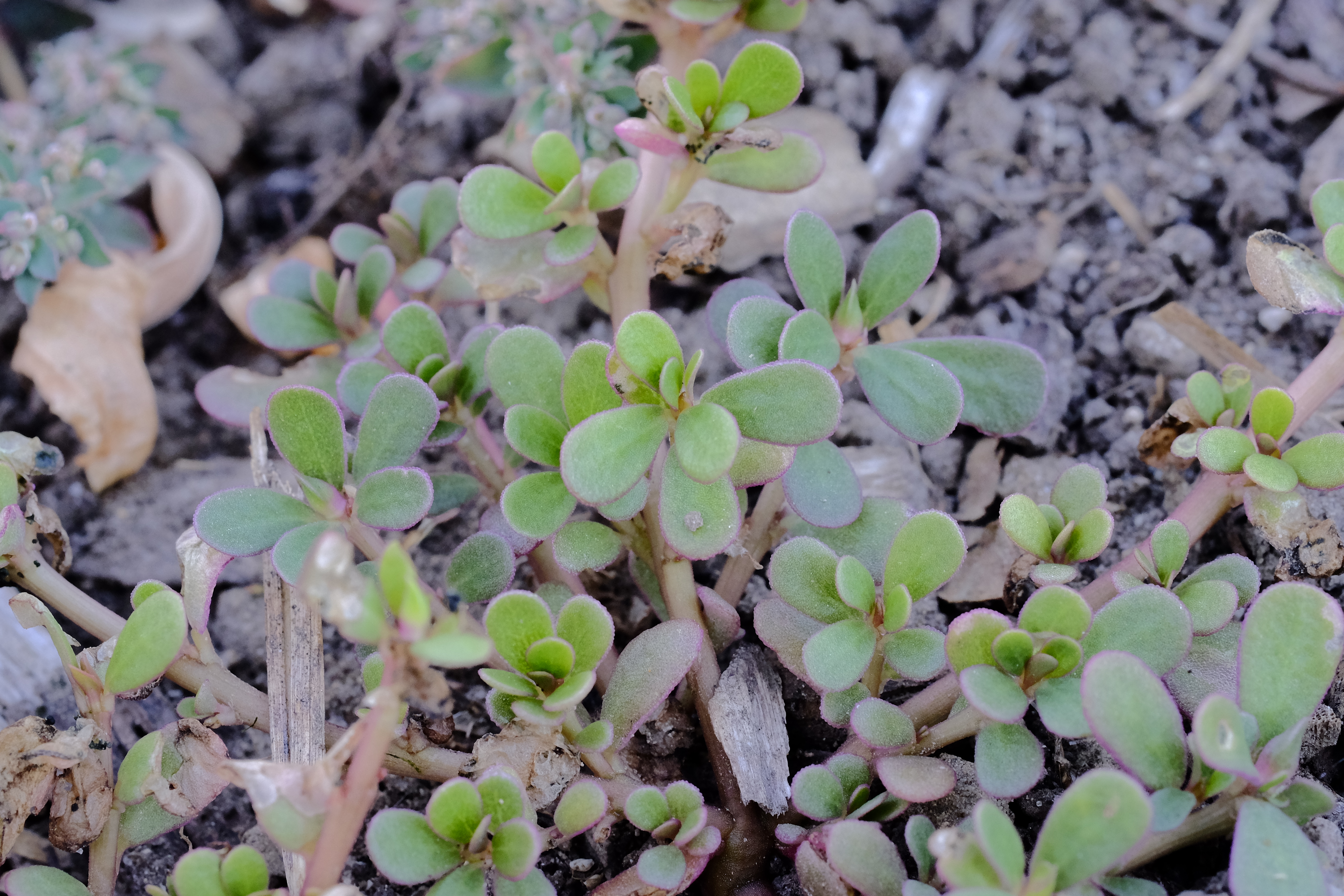
Purslane has tiny, yellow, five-petaled flowers similar to puncture vine; however, its leaves are glossy and succulent-like and its stems and leaves often have a red to purple hue to them. Purslane seeds are miniscule, and while the plant can be a nuisance in a garden bed, it poses no threat to bicycles or wildlife.

purslane (Portulaca oleracea)

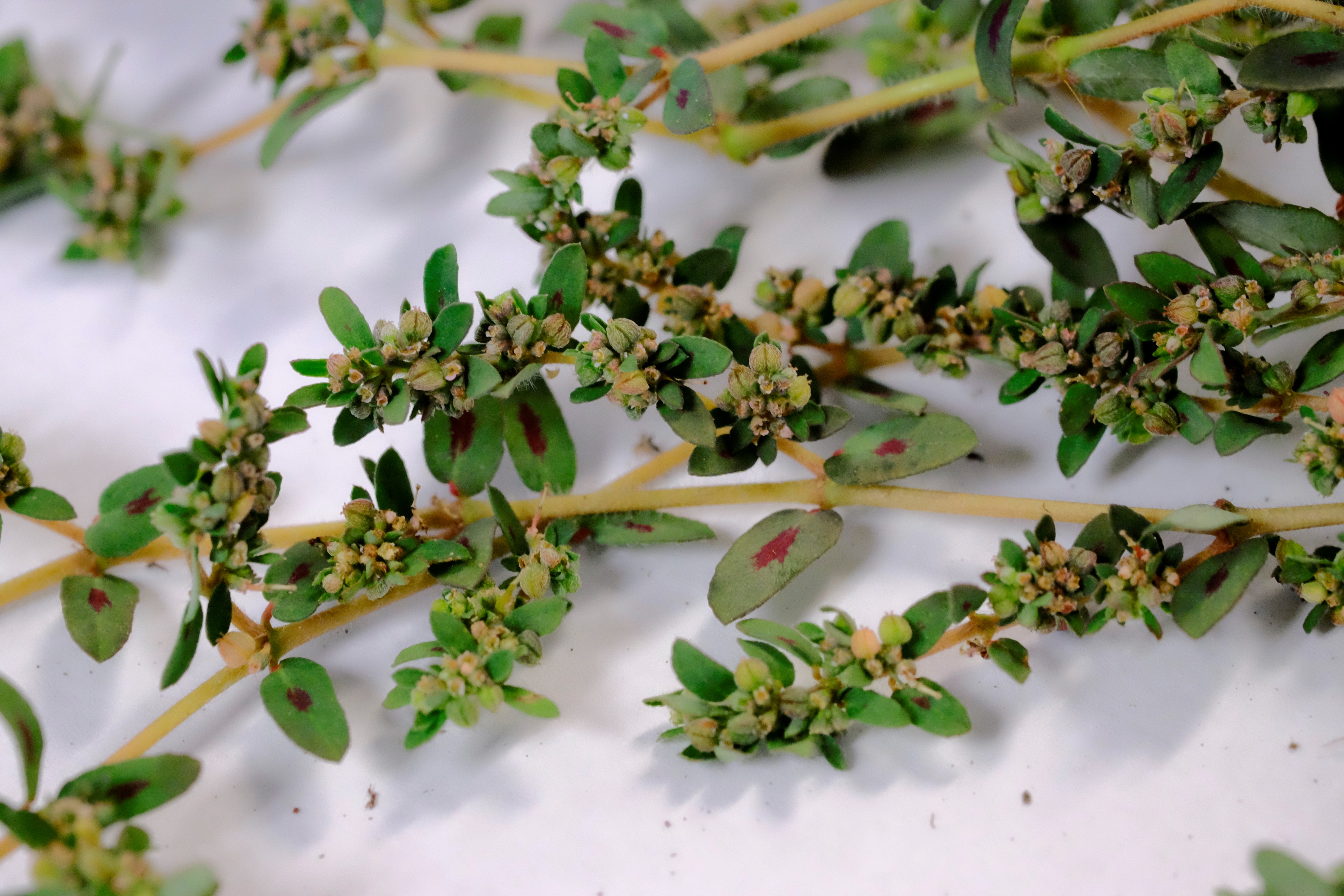
Spotted spurge, also known as prostrate spurge, can be quickly distinguished by the milky sap that oozes from its broken stems. Its leaves are generally reddish purple on the undersides with a purple spot on top. Its flowers are minute and its seeds even smaller. Because its sap contains latex and other chemicals, it can irritate the skin and poison creatures that dare eat it.

spotted spurge (Euphorbia maculata)

Both of these plants are introduced, weedy species, so even if they won’t count towards your drink token, it still doesn’t hurt to pull them. Puncture vine, however, is included on Idaho’s noxious weed list, which means it is particularly problematic. So take this opportunity to pull as many as you can, and hopefully we can put a sizeable dent in the population of a plant that has tormented Boise bicyclists for far too long.

See Also: Plant vs. Bike