An Underutilized Crop and the Cousins of a Popular One

This is the fourth in a series of posts reviewing the 17 articles found in the October 2014 Special Issue of American Journal of Botany, Speaking of Food: Connecting Basic and Applied Science.

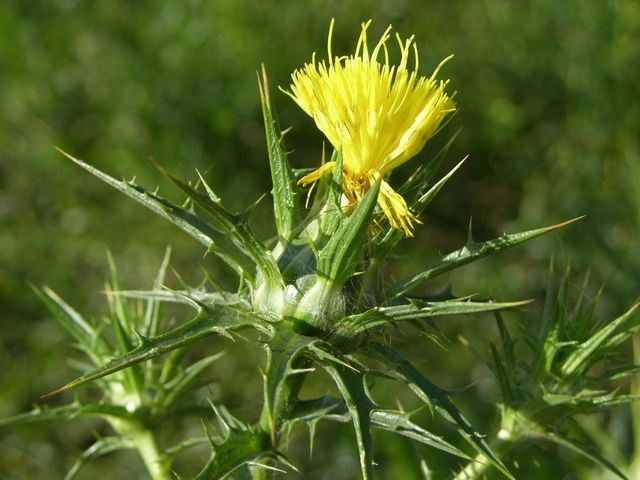
Genetic Diversity in Carthamus tinctorius (Asteraceae; Safflower), An Underutilized Oilseed Crop by Stephanie A. Pearl and John M. Burke

Safflower (Carthamus tinctorius) was first domesticated in the Fertile Crescent about 4,500 years ago. It was originally desired for its flowers which were used in dye making. Commercial production of safflower began in North America in the 1950’s, where it is now mainly grown for its seeds which are used to produce oil for human consumption and are a main ingredient in bird seed mixes. Despite this, it is categorized as an “underutilized crop,” one “whose genetic potential has not been fully realized.” With increased interest in food security and feeding a growing population, researchers are turning to new and underutilized crops in order to increase the “availability of a diverse assemblage of crop species.”

A major step in improving a crop plant is understanding the genetic diversity that is available within its gene pool. With this aim in mind, researchers observed a “broad cross section of the safflower gene pool” by examining the DNA of a “worldwide sampling of diversity from the USDA germplasm collection [134 accessions consisting of 96 from the Old World and 38 from the New World]”, 48 lines from two major commercial safflower breeding programs in North America, and 8 wild collected safflower individuals.

Safflower, Carthamus tinctorius (photo credit: www.eol.org)

Safflower, Carthamus tinctorius (photo credit: www.eol.org)

Researchers found that the cultivated safflower varieties had a significant reduction in genetic diversity compared to the wild safflower plants. They also noted that the 96 Old World accessions could be grouped into “four clusters that corresponded to four different geographic regions that presumably represent somewhat distinct breeding pools.” They found that the wild safflowers “shared the greatest similarity with the Iran-Afghanistan-Turkey cluster” from the Old World group of accessions, a finding that “is consistent with safflower’s presumed Near Eastern center of origin.”

The researchers determined that there may be “agronomically favorable alleles present in wild safflowers,” and that “expanded efforts to access wild genetic diversity would facilitate the continued improvement of safflower.” Safflower is an important but underused oilseed crop that is adapted to dry climates; studies like this one that can lead to further crop improvements may help bring it out of niche production and into more widespread use.

The Wild Side of a Major Crop: Soybean’s Perennial Cousins from Down Under by Sue Sherman-Broyles, Aureliano Bombarely, Adrian F. Powell, Jane L. Doyle, Ashley N. Egan, Jeremy E. Coate, and Jeff J. Doyle

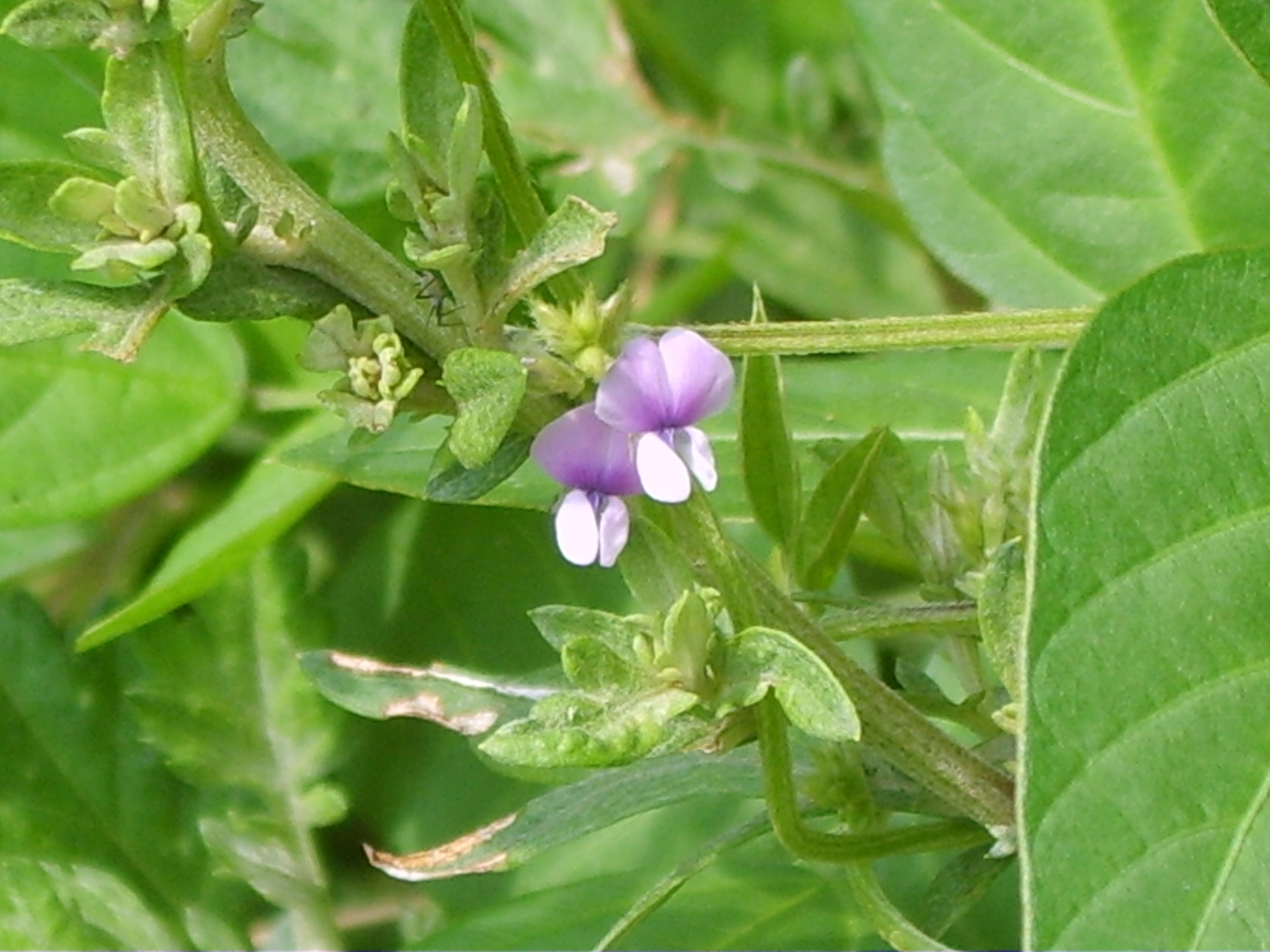
Soybean production is a major money maker in the United States ($43 billion total revenue in 2012); corn is the only crop that tops it. Soybean oil has myriad uses from food to feedstock and from pharmaceuticals to biofuel. As much as 57% of the world’s seed oil comes from soybeans produced in the United States. Hence, soybean (Glycine max and its wild progenitor, G. soja) is a well researched crop. Most research has been focused on the two annual species in the subgenus Soja; “less well known are the perennial wild relatives of soybean native to Australia, a diverse and interesting group that has been the focus of research in several laboratories.”

Given the agricultural importance of soybean and the increasing demands that will be placed on this crop as population rises, it is imperative that improvements continue to be made. Exploring soybean’s “extended gene pool,” including both its annual “brother” and its perennial “cousins,” will aid in making these improvements.

Soybean's wild annual relative, Glycine soja (photo credit: www.eol.org)

Soybean’s wild annual relative, Glycine soja (photo credit: www.eol.org)

Perennial soybeans in the subgenus Glycine include around 30 species. They are adapted to a wide variety of habitats “including desert, sandy beaches, rocky outcrops, and monsoonal, temperate, and subtropical forests.” They are of particular interest to researchers because several of them are allopolyploids, meaning that they have more than the usual two sets of chromosomes and that the additional sets of chromosomes were derived from different species. The authors state that “the distributional differences between diploids and independently formed polyploids [in the subgenus Glycine] suggests underlying ecological, physiological, and molecular differences related to genome doubling and has led to the development of the group as a model for studying allopolyploidy.” The group is also worth studying because they demonstrate resistance to various soybean pathogens and are adapted to a variety of environmental conditions.

By continuing to work with soybean’s perennial cousins to gain a better understanding of “polyploidy and legume evolution,” the authors hope to apply their research to achieve increases in soybean yields. Past research suggests that the study of polyploidy in the perennial soybeans could lead to crop improvements in areas such as photosynthesis, nitrogen fixation, flowering time, and disease resistance.

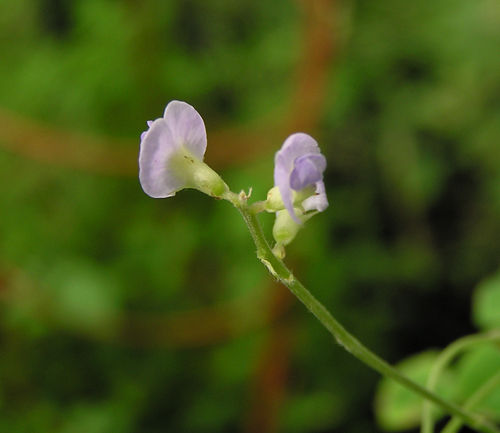
Glycine tomentella - one of soybean's perennial cousins (photo credit: www.eol.org)

Glycine tomentella – one of soybean’s perennial cousins (photo credit: www.eol.org)


Dethroning Industrial Argiculture: The Rise of Agroecology

This is the third in a series of posts reviewing the 17 articles found in the October 2014 Special Issue of American Journal of Botany, Speaking of Food: Connecting Basic and Applied Science.

Think Globally, Research Locally: Paradigms and Place in Agroecological Research by Heather L. Reynolds, Alex A. Smith, and James R. Farmer

Before I get into the review, I have to say that it is too bad this article was not selected as one of the open access articles. For me, it really sums up the reasons why this special issue exists at all, and it reads like a clarion call for more research, promotion, and implementation of science-based sustainable agriculture. If I could reprint the whole thing here I would, because my poor excuse for a review will not suffice. Unfortunately, in order to read this article (and most of the other articles I am reviewing here), you will have to pay, unless you otherwise have access through a personal or institutional subscription.  The open access debate is a can of worms that I won’t open here…just saying I wish more people could read this.

In their introduction, the authors discuss the “basic to applied science continuum.” Scientists who choose to do research that is more on the applied side of the spectrum may find it easier to secure funding (due to “convincing social benefits”), but will also find themselves directly confronted with social issues and values. There can be some discomfort involved in this, and so scientists must carefully determine their level of engagement. However, “neither social nor ecological systems can be understood in isolation,” and instead “must be studied as an integrated social ecological system.” Applied science must be carried out in order to address pressing socio-ecological issues, and so scientists interested in this type of research should know what they’re getting into and must “consider what societal values and paradigms they are supporting with their research.”

Applied science research involving agriculture finds itself intertwined with an economic paradigm that is focused on growth – “increased production and consumption of goods and services as indicated by increasing gross domestic product.” The authors argue that this is not sustainable and that agricultural research should be guided in directions that are more place-based and that keep the finite nature of the planet in mind.

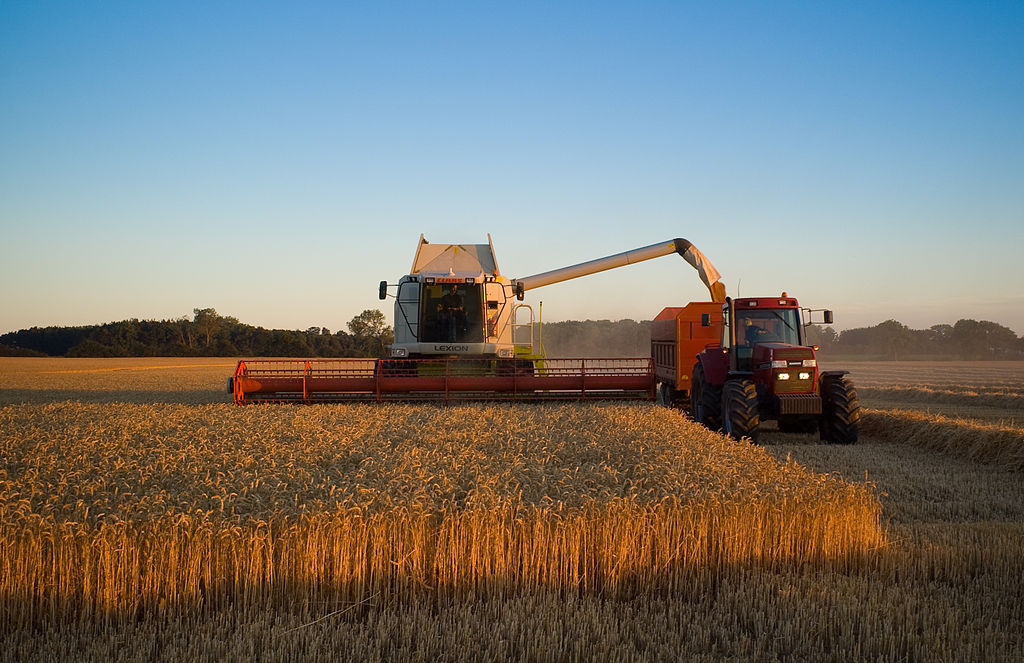
“Since the 1940’s, agriculture has evolved toward an increasingly industrial, corporate, and globalized model, involving large-scale, centralized monoculture production requiring inputs of highly concentrated (fossil) fuel, machinery, water, and synthetic pesticides and fertilizers.” The Green Revolution brought new crop varieties and inputs that helped increase yields significantly, but also had the result of increasing irrigated land by 97%, “the use of nitrogen by 638%, phosphorous fertilizer by 203%, and pesticides by 845% during the latter half of the 20th century.” Industrial agriculture, while highly productive, is a juggernaut that requires incredible amounts of energy, petrochemicals, and water, and despite it’s best efforts, still doesn’t feed the world. Social and political issues are to blame for the food distribution problem; however, in the meantime, industrial agriculture is having profound effects on the environment, “including soil erosion and degradation, biodiversity loss, and water and air pollution on local and global scales.” Coupled with all of the environmnental costs of industrial agriculture are the social costs: “local agroecological knowledge has…been displaced by the  knowledge embodied in industrial inputs and sophisticated farming equipment and techniques,” and widespread industrial agriculture has been linked to increases in cancer, obesity and other human health issues.

photo credit: wikimedia commons

photo credit: wikimedia commons

The expansion of industrial agriculture has largely been driven by the economic paradigm of the United States and other industrialized nations that is focused on growth above all else. This paradigm neglects to acknowledge the “biophysical limits” of planet Earth – “an inescapably finite place, with a constant rate of net solar income and zero inputs of matter beyond the occasional asteroid.” Growth has its limits, and unless those limits are respected, we will find ourselves in dire straits. A warming climate and an increasing level of extinctions are major signs that we have approached the limit. It is time to rethink things.

The question of how to address this dilemma is incredibly complex. The authors of this study offer two broad solutions: reform our economic system and rethink our scientific research efforts. First, the economic problem. A finite planet cannot abide a growth above all else economic approach. The authors propose evolving towards a steady-state economy, in which “the product of population and per capita consumption mildly fluctuates at a scale for which energy and material throughput at current technological capabilities does not strain or exceed the regenerative and assimilative capacity of Earth’s natural capital.” In this economic system, “overdeveloped” countries like the United States will need to find ways to “strategically degrow.”

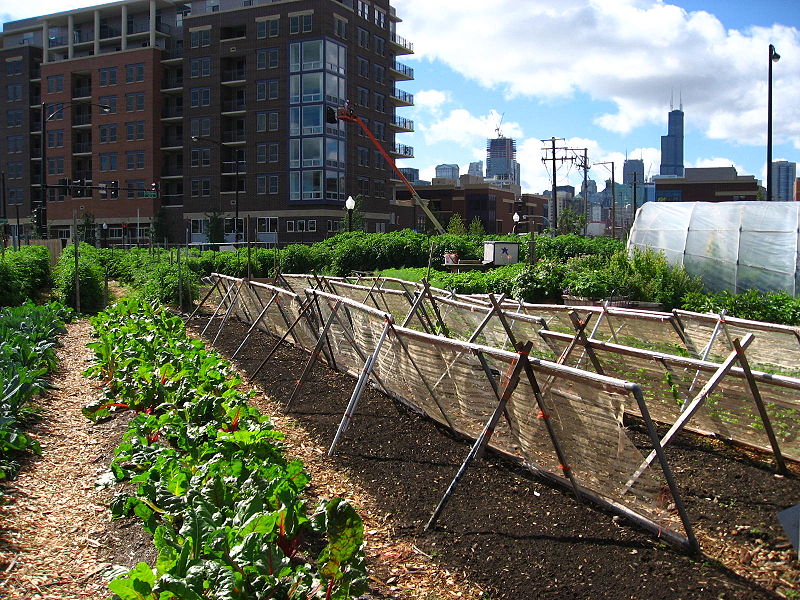
Strategic degrowth will require dismantling the behemoth that is industrial agriculture. Rethinking applied scientific research will assist in this. Rather than a “one-size-fits-all” approach (an approach that has fueled industrial agriculture for decades), research must evolve towards a “custom-fit” approach in order to address the environmental and social conditions of each individual area. Scientists will have to “go local,” collaborating with farmers, land-owners, and other local experts in order to do “place-based” research that will result in “location-specific expertise.”

Urban Farm in Chicago, Illinois (photo credit: wikimedia commons)

 An urban farm in Chicago, Illinois (photo credit: wikimedia commons)

The authors argue for “community-based participatory research,” which relies on scientists and other professionals collaborating to develop research projects, collect data, and arrive at solutions that will address problems particular to local areas. They offer an example of working with farmers in Indiana to research the use of wild bees for agricultural pollination. The data they collected, while helpful for farmers in other areas, was specific to their area of study and “lent credibility to [their] conclusions” when presented to local audiences.

This is a short but dense article that should be read in its entirety if you have access to it. I will end by offering the authors’ description of sustainable agriculture: “the application of ecological and cultural knowledge to local, decentralized, biodiversity-promoting, closed loop food production for a steady-state economy…the farm system is viewed as an agroecological system….wherein traditional and scientific knowledge of ecological interactions are employed to build system fertility, productivity, and resilience from within, thus promoting food sovereignty and autonomy.”

The Legacy of a Leaky Dioecy

This is the second in a series of posts reviewing the 17 articles found in the October 2014 Special Issue of American Journal of Botany, Speaking of Food: Connecting Basic and Applied Science.

The Ecological Side of an Ethnobotanical Coin: Legacies in Historically Managed Trees by Nanci J. Ross, M. Henry H. Stevens, Andrew W. Rupiper, Ian Harkreader, and Laura A. Leben

As much as we like to think otherwise, pre-Colombian Native Americans altered the natural landscape in drastic and measurable ways. What we often consider an unaltered, pristine natural area before European colonization, actually has human fingerprints all throughout it. Determining just how deep these fingerprints go, however, is a challenge that requires careful and thorough anthropological and ecological studies.

Many such studies have been done, mostly at the community and ecosystem level. For example, Native Americans used fire extensively as a land management tool. This is how prairies were maintained as prairies. Today, forests in eastern North America that were once dominated by oaks have shifted over to maple dominated forests. This is largely (although not solely) because anthropogenic fires have ceased and wildfires are now suppressed. If fires had never been used as a management tool, would oaks (an important Native American food source) have ever maintained such dominance?

Native Americans participated in the domestication of numerous plant species. Much of this was done by way of – as Charles Darwin termed it – unconscious selection. Rather than selecting specific individuals and breeding them to achieve a desired type, they would simply discard undesirable plants and maintain desirable ones. Much of this selection, especially for woody, perennial species was done through land management techniques – such as fire – as opposed to typical cultivation. The authors of this article, interested in whether or not the “legacy” of this method of selection through land management could be observed today in an individual species, developed a preliminary study to begin to answer this question.

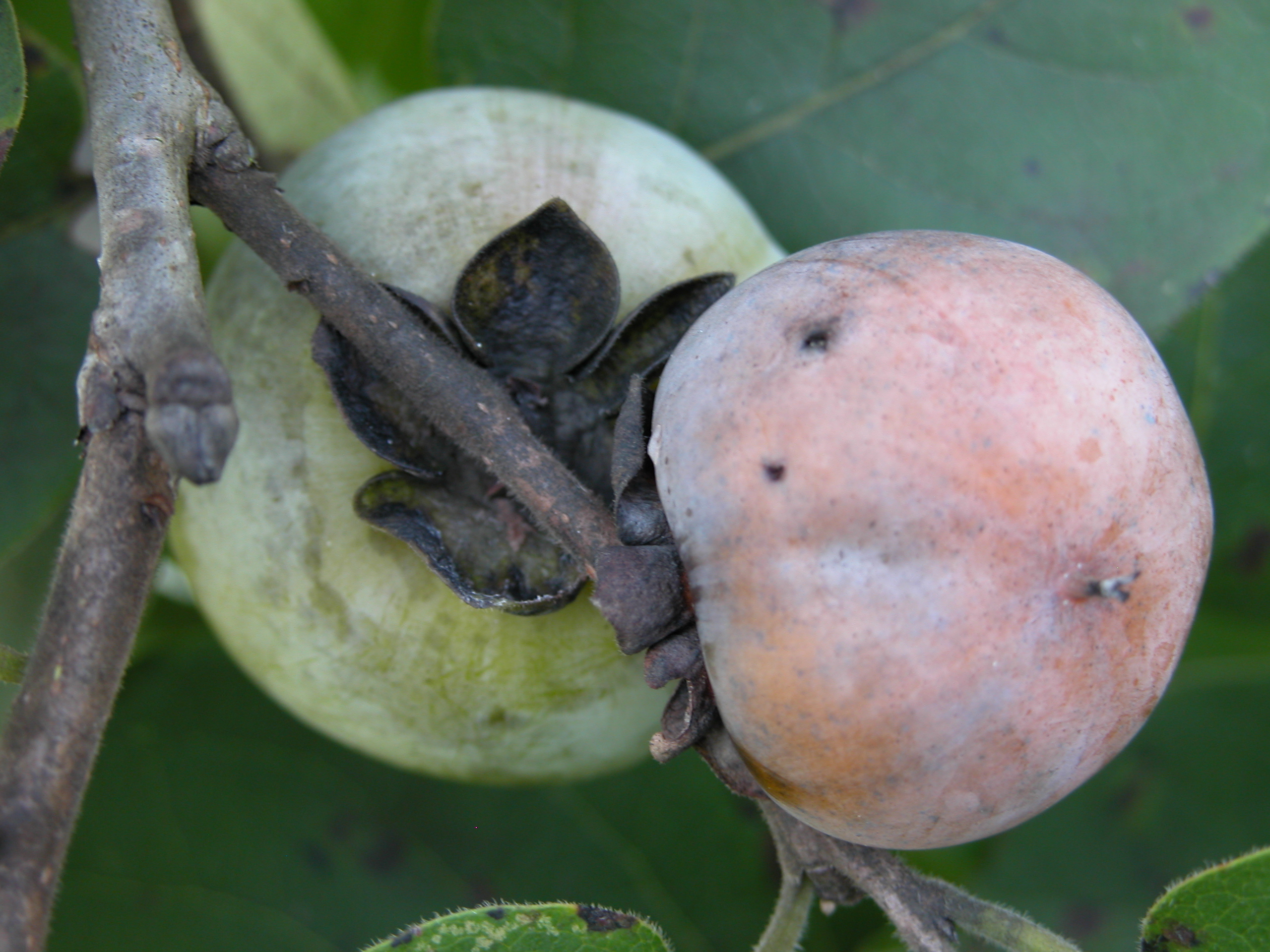
Diospyros – a genus in the ebony family (Ebenaceae) consisting of around 500 species – is mainly pantropical with a few species occurring in temperate regions. One temperate species is Diospyros virginiana – common persimmon – which “has a broad distribution throughout the United States from Connecticut south to Florida and west to the eastern edge of Nebraska.” Persimmons were used and managed extensively by Native Americans; however, they are “now viewed as a rare, weedy, wild fruit tree that is known primarily by hobbyists and wild harvesters.”

Fruits of common persimmon, Diospyros virginiana )photo credit: Wikimedia commons)

Fruits of common persimmon, Diospyros virginiana (photo credit: wikimedia commons)
D. virginiana is a dioecious species, meaning that it produces male flowers and female flower on separate individuals. Despite this, some individuals have been reported bearing both male and female flowers while others have been seen having perfect flowers along with either male or female flowers. Some trees have even been reported to be dioecious one year and then having perfect flowers and/or some combination of male, female, and perfect flowers the next year. This variation from the norm – what the authors call “leaky dioecy” – can either be a result of artificial selection or environmental pressures. The authors hypothesized that “leaky dioecy in D. virginiana is a result of historical selection by Native Americans for trees with copious fruit production.” This preliminary study was designed to see if climate and soil conditions might be the reason for the observed “sex expression.”

Skipping ahead, the authors found “no compelling evidence…to suggest segregation due to environmental factors,” signaling them to “move forward in [their] investigation of potential long-term impacts of historical management on the evolution of reproductive traits in American persimmon without the noise of a strong environmental driver.” The authors go on to discuss challenges in their study, including the length of time since “extensive management” making it hard to “uncover a signal of precontact management” and the limitations of having to rely on herbarium specimens. Either way, it is a worthy study to pursue. Even if it does not reveal the full story of how Native Americans managed persimmons in pre-colonial times, further insight into “adaptive flexibility in reproductive systems of long-lived perennial species” and other interesting things that persimmons might teach us will be well worth the effort.

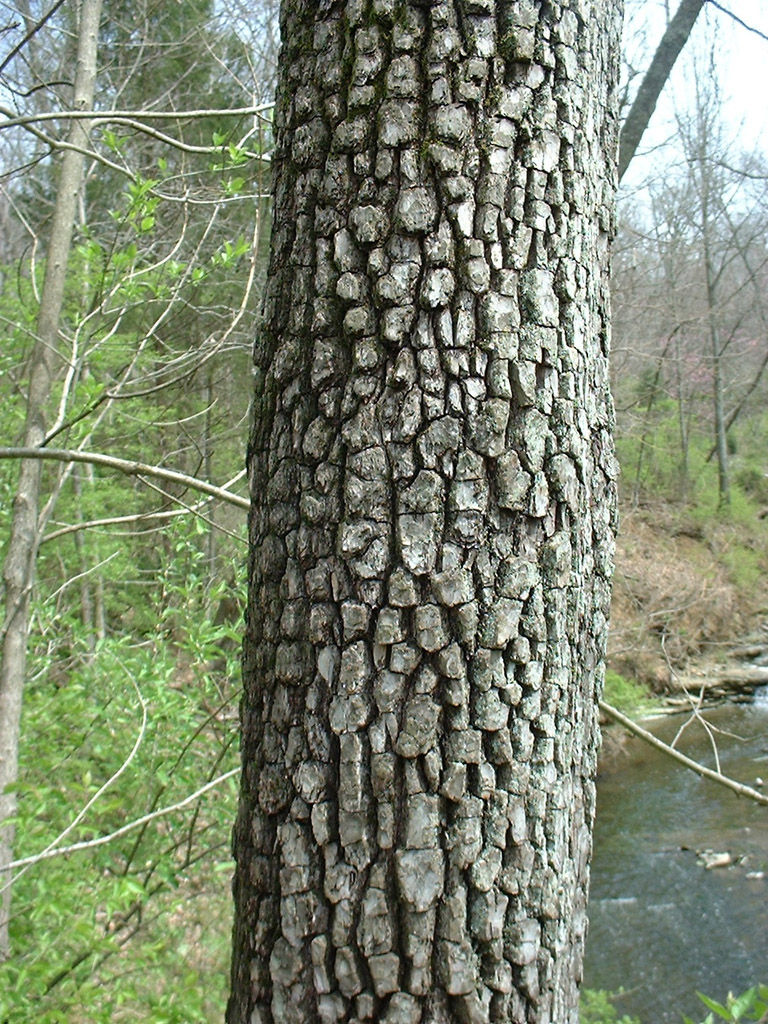
Characteristic bark of common persimmon, Diospyros virginiana (photo credit: www.eol.org)

Characteristic bark of common persimmon, Diospyros virginiana (photo credit: www.eol.org)


On the Origins of Agriculture

This is the first in a series of posts reviewing the 17 articles found in the October 2014 Special Issue of American Journal of Botany, Speaking of Food: Connecting Basic and Applied Science.

Agricultural Origins from the Ground Up: Archaeological Approaches to Plant Domestication by BrieAnna S. Langlie, Natalie G. Mueller, Robert N. Spengler, and Gayle J. Fritz

Concern about food and the environment has been on the rise for a while now. Interest in healthy food grown and produced in a responsible manner has prompted people to investigate where their food is coming from. Archaeologists studying plant domestication and the rise of agriculture are also concerned with where our food came from; however, their research efforts are more focused on prehistoric events rather than on what is being stocked on today’s grocery store shelves.

The authors of this paper, all archaeologists specializing in paleoethnobotany or archaeobotany, offer a broad overview of the study of plant domestication and the emergence of agricultural economies. In their studies the authors “treat domestication as a process that originally preceded the formation of agricultural economies” and they define domestication as “genetic and morphological changes [in] a plant population in response to selective pressures imposed by cultivation.”

The first section of the paper explains why certain theoretical approaches to thinking about early plant domestication should be revised. These approaches include a centric view of plant domestication, single domestication trajectories, rapid pace plant domestication, and domestication being coupled with the development of agricultural economies.

The concept of centers of origin refers to specific regions in the world where the majority of crop domestication is thought to have occurred. Often these are regions where a high number of wild relatives of crops are found and where large civilizations emerged. But research has revealed numerous locations in various parts of the world where crop domestication occurred independently from traditional centers of origin leading archaeologists to further explore a noncentric view of domestication.

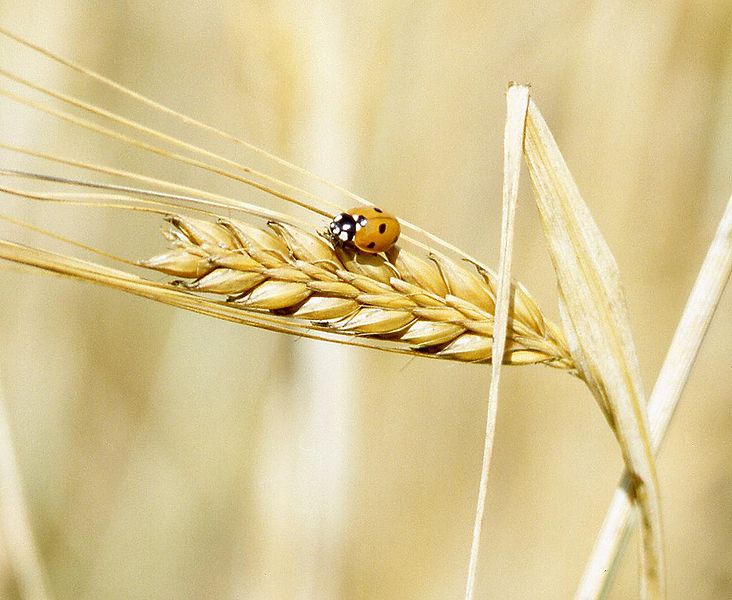
Related to the centers of origin debate is the single vs. multiple domestications debate. Single site domestication refers to a plant being domesticated in one location and then spread to other locations. Multiple site domestication refers to the same plant being domesticated in multiple sites independently. With the aid of genetic research, crops that were once thought to have been domesticated in a single region and then disseminated to other regions are now being shown to have multiple domestication sites. For example, it has been suggested that barley was domesticated independently in various locations, including the western Mediterranean region, Ethiopia, Morocco, and Tibet, as well as various parts of Southwest Asia.

Barley - Hordeum vulgare (photo credit: Wikimedia commons)

Barley – Hordeum vulgare (photo credit: wikimedia commons)
Concerning the pace of crop domestication, “many scholars have presented evidence that domestication was slower and more gradual than previously envisioned” probably because the first domesticated crop plants were not “developed by plant breeders with clear end products in mind.” On this point, the authors conclude that debates over timelines are “likely to continue for some time,” and that “close communication between geneticists and archaeologists, including those with archaeobotanical expertise” will be necessary to tell the full story.

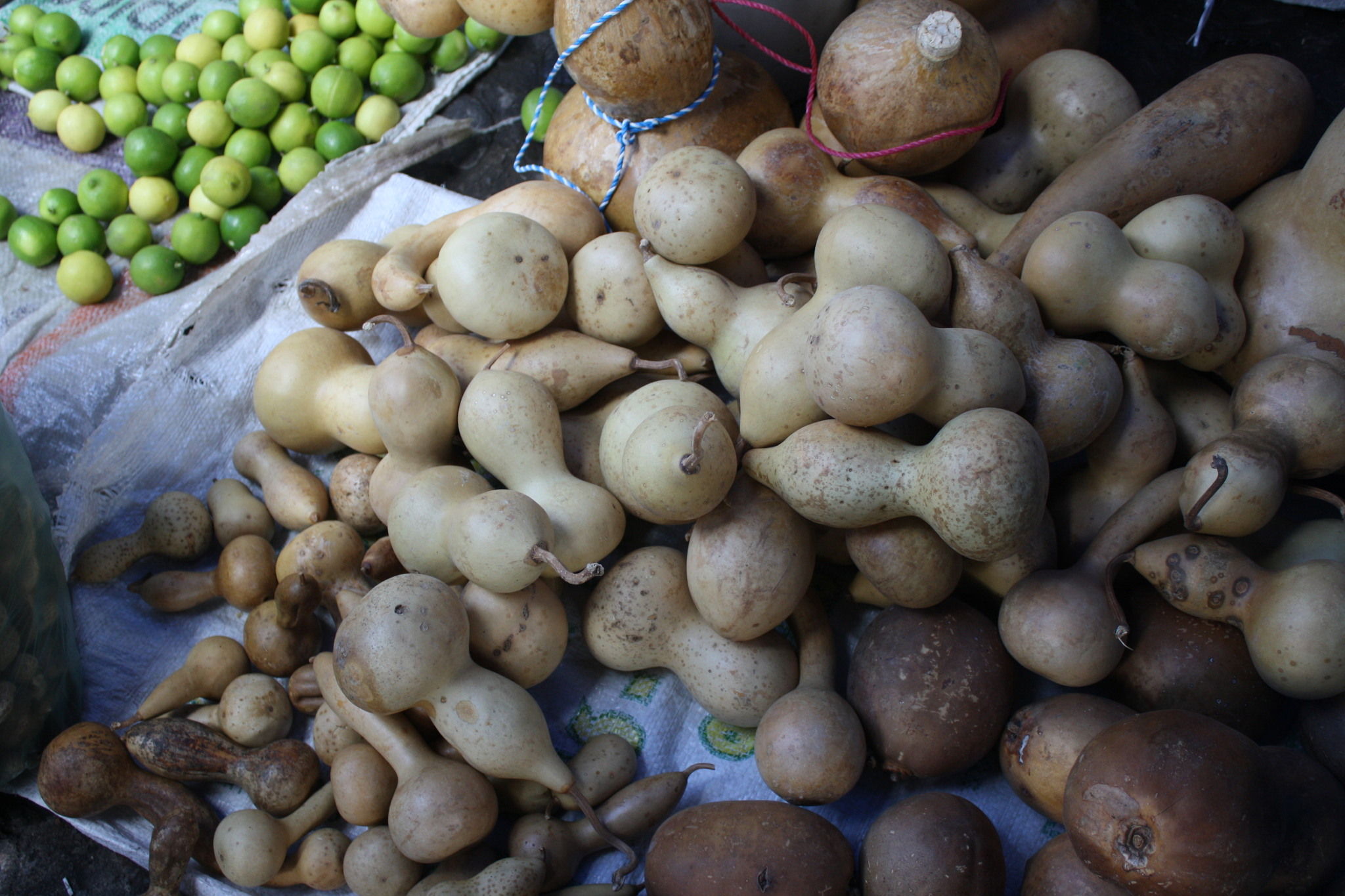
Domestication is typically viewed as a precursor to agriculture. But the authors point out that domestication occurred first and that agriculture did not immediately follow. To illustrate this point, they tell the story of the bottle gourd (Lagenaria siceraria), possibly the oldest domesticated plant. Native to Africa, the gourds likely floated across the Atlantic Ocean to the Americas (they also made their way to East Asia and other places) where they were domesticated multiple times by various groups of people at least 10,000 years ago. The gourds had numerous potential uses including containers, rattles, net floats, and even food (the young, immature fruits are edible). Large gourds with thick rinds were preferred by early humans, and the seeds of these were planted. The plants needed little attention, so caring for them did not mean having to adopt a sedentary lifestyle. The authors conclude that “although this example might seem peripheral to the development of serious food-producing economies or social complexity, it highlights early, intimate plant-people relationships and the abilities of people to modify their environments to enhance availability of desirable resources.”

Bottle gourds (Lagenaria sicericia) were possibly the earliest domesticated plant species (photo credit: eol.org)

Bottle gourds (Lagenaria siceraria) were possibly the earliest domesticated plant species (photo credit: www.eol.org)

In the next section of the paper, the authors discuss new and improved methods being used today to “address questions about the timing, scale, and causes of domestication.” Narrowing down the dates that plants were first domesticated is a major interest of archaeologists, and advances in radiocarbon dating have assisted in this quest. When DNA is being extracted, it is important to know the age of the material being analyzed in order to better reveal its history. Combining several methods for analyzing the data – especially as these methods are improved and new methods are developed – is  crucial.

Advances in microscopy have helped to better analyze morphological changes in plants over time as well as to examine microfossils, like starch granules, pollen, and phytoliths (silica particles left behind after a plant decays). Observing phenotypic changes in fruits, seeds, and other plant parts and determining the presence of things like starch granules and pollen helps us to understand the pace and scope of domestication as well as to determine when certain domesticated plants were introduced to areas outside of their perceived center of origin. Advances in the science of taphonomy – “the study of decay processes following the death of an organism until it is fossilized or exhumed” – also aid researchers in better understanding the stories behind plant domestication.

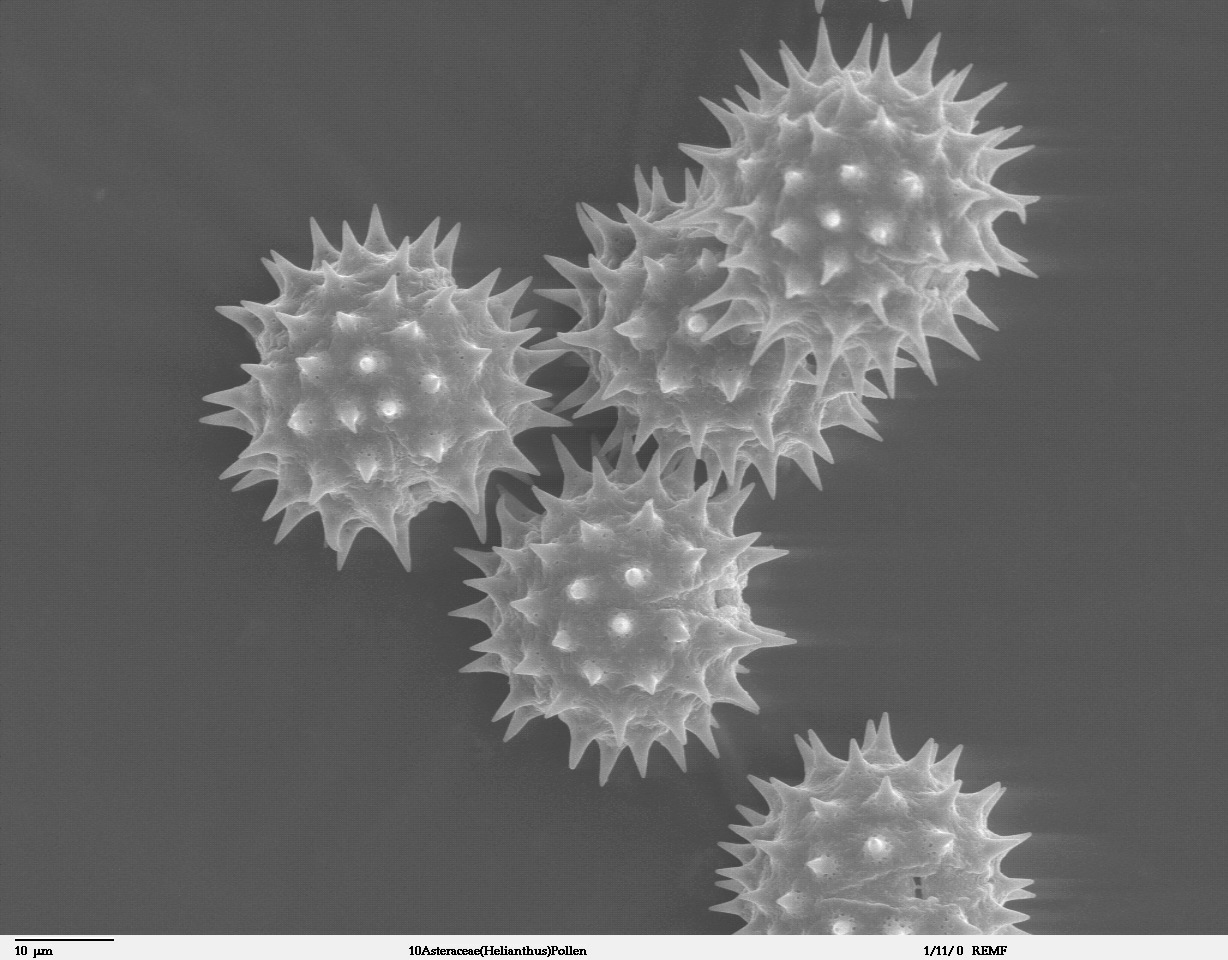
Scanning electron microscope (SEM) image of pollen grains from common sunflower - Helianthus annuus (photo credit: Wikimedia commons)

Scanning electron microscope (SEM) image of pollen grains from common sunflower – Helianthus annuus (photo credit: wikimedia commons)
Working with experts in other areas of archaeology will also lead to greater understanding of plant domestication and the emergence of agricultural economies. The authors give examples of how studying human and animal bones can provide information about plant domestication and state that “other classes of archaeological data, such as household structure and storage features, agricultural and culinary tools, and soil morphology” will aid in better understanding “how and why domestication occurred as an historical and evolutionary process.”

Next the authors discuss anthropological views on the causes of plant domestication. One of the main debates among anthropologists when discussing agriculture is whether or not early humans were “pushed” or “pulled” into agricultural economies. Did increasing populations and/or decreasing availability of resources compel people to produce more of their own food or did human populations cultivate and domesticate plants in areas where resources were readily available, allowing them to live sedentary and stable existences? The authors conclude that “it is not necessary for one of these scenarios to explain all transitions to agriculture” as agriculture emerged independently in multiple locations around the globe, each time under its own specific set of circumstances.

The final section of the paper is a short discussion on the relatively under-researched topic of the diet and cuisine of ancient humans. Surely, a desire for particular foods and beverages lead to cultivation and domestication. The authors assert that “cuisines provide people with social identities, nationalism, spirituality, and a package of cognitive tools for coping with their environment. Without a doubt, culturally constructed food preferences played a role in the origins and spread of agriculture.”

This is a brief summary of a well-researched and detailed article concerning the fascinating topic of early plant domestication. Honestly, my synopsis hardly does it justice, so I urge you to read it for yourself if this topic interests you. I particularly appreciated the emphasis that the authors placed on using multiple methods and tools to collect and interpret data and how our perspectives should be revised as new and updated data emerge. The call for multiple disciplines to come together in collaboration to better understand the history of domestication and agriculture is also encouraging. In summation the authors state that “archaeological evidence indicates that every case of transition form hunter-gatherers to agricultural economies was unique … Identifying the specific nature of when, where, and how domestication occurred will undoubtedly elucidate how agriculture transformed the trajectory of human societies.”

Speaking of Food: A Special Issue of American Journal of Botany

“At the center of discussions about agriculture and the future of food in a changing climate are the plants that we grow for food, fiber, and fuels and the science that is required to understand, improve, and conserve them.”

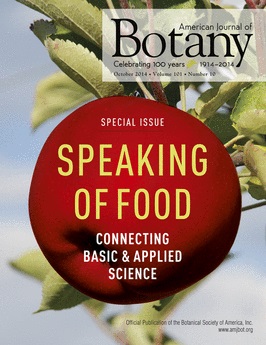
That is a line from the opening paragraph of the introduction to the October 2014 issue of American Journal of Botany, Speaking of Food: Connecting Basic and Applied Plant Science. In this Special Issue, the American Journal of Botany – inspired by Elizabeth Kellogg’s 2012 presidential address to the Botanical Society of America – endeavors to demonstrate ways in which basic plant biology research can benefit the applied science of agriculture, and how this “use-inspired” research can help address the challenges of feeding a growing population in a changing climate.

speaking of food_ajb

In its 100 year history, the American Journal of Botany, has published hundreds of papers that serve to advance agricultural and horticultural sciences. However, this connection has not always been made explicit. With this special issue, they are hoping to change that by “illustrat[ing] that ‘basic’ and ‘applied’ are not two discrete categories, nor are they even extremes of a linear continuum.” “Basic” research can be used to answer questions and solve “human-centered problems,” and “applied” research can “illuminate general biological principles.” When both approaches to scientific inquiry come together, everyone benefits.

I originally chose to study horticulture because I was interested in growing food in a sustainable and responsible manner. During my studies, I gained a greater interest in the broader field of horticulture as well as an interest in botany. After receiving a degree in horticultural and crop sciences, I decided to pursue a Master’s Degree. I wanted to study green roof technology, an applied science that incorporated my interests in both horticulture and sustainability. The school that I ended up going to did not have a horticulture program, so I enrolled in a biological sciences program. It was there, while doing applied science research on green roofs and taking mostly botany related science courses, that I deepened my love for science and began to see how basic science had applications, not just in horticulture and agriculture, but in all aspects of life.

That explains my great interest in this recent issue of American Journal of Botany, and why I was so excited when I heard about it. Using science to understand and address the challenges that we face today (challenges that, many of which, are a result of human activity) is intriguing to me. Based on my interest in horticulture, food production, and sustainability, establishing and advancing science-based sustainable agriculture is incredibly important to me. And so I have decided that, over the next several posts, I will provide reviews of each of the 17 articles in AJB’s Special Issue. Each post will offer a brief overview of one or more articles, outlining the basic premises and findings of each study. If your interest is peaked, and I hope it will be, you can go on to read more about each of the studies. The Introduction to this issue gives an excellent overview of the articles, so I won’t include that here. I’ll just dive right in. If you feel inclined, read ahead, otherwise stay tuned and I will preview you it all for you over the next several weeks.

Palm Oil Production and Its Threat to Biodiversity

Improvements in cultivated varieties of oil palms could have devastating ecological effects. This is according to an article published in a recent issue of Science. Doom doesn’t have to be the story though, if – as the authors suggest – governments and conservation organizations take proper action to safeguard vulnerable land.

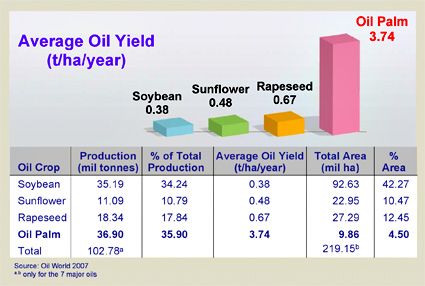
Palm oil is a versatile vegetable oil derived from the fruits of oil palms. It has myriad culinary uses and is also used in the manufacturing of cosmetics and the production of biofuel. Oil palms have high yields, easily outyielding other major oil crops like soybean, rapeseed, and sunflower. Oil palms are grown in the tropics in developing countries where land and labor are inexpensive. As human population grows, demand for palm oil increases. To meet the demand, tropical forests are converted into agricultural land. The majority of palm oil production occurs in Southeast Asian countries like Indonesia and Malaysia. However, palm oil production is expected to increase in African and Latin American countries as new varieties better suited for these particular environments become available.

oil world graph

Genome sequencing of oil palm may allow plant breeders to develop varieties that are disease resistant, drought tolerant, and able to grow in salinized soils. Already making its debut, though, is a new variety of oil palm that is boasting yields from 4 tons to as much as 10 tons per hectare. Higher yielding varieties could be the solution to preventing more tropical forests from being converted into oil palm plantations. Or could they lead to more growth? Intrigued by the development of improved varieties of oil palms and other tropical crops, the authors of this study developed computer models in order to determine what this might mean for the future.

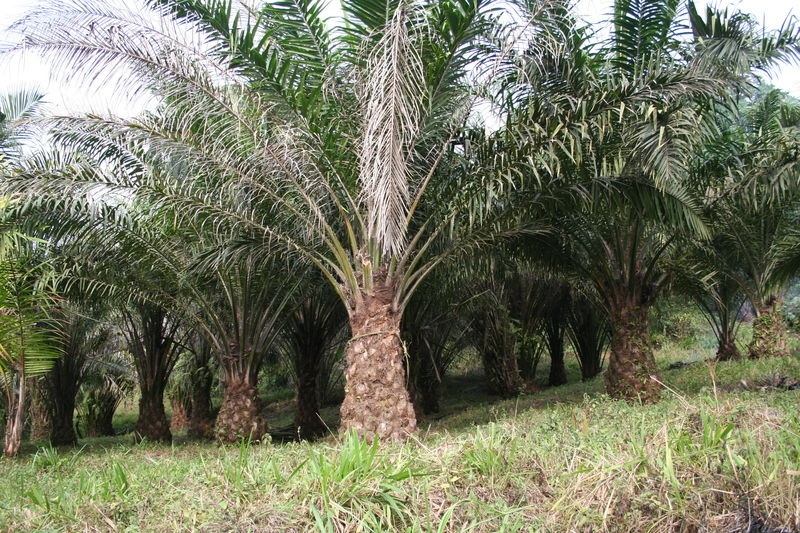
African Oil Palm (Elaeis guineensis) is the species of oil palm most commonly grown for palm oil production.

African Oil Palm (Elaeis guineensis) is the species of oil palm most commonly grown in palm oil production (photo credit: www.eol.org)

The results of simulations suggested two possible outcomes: one potentially positive and the other largely negative. On the positive side, “an assumed 56% increase in oil palm yield per tree in Malaysia and Indonesia” could result in ” around 400,000 hectares of agricultural land…taken out of production in Brazil, India, and Canada.” This is because less land will be needed to meet the demand, and the increased availability and resulting lower price of palm oil will outcompete other oil crops (like rapeseed, which is one of Canada’s main agricultural crops). However, the author’s seem to assume that agricultural land taken out of production will be restored back into natural lands. I find this argument hard to accept. Anecdotal evidence suggests that if farmers are no longer making a profit from a particular crop, they will choose to either grow something more profitable or sell their land to developers. A concerted effort would have to be made to capture this land and ensure that it remain uncultivated and undeveloped. Also, as the author’s point out, restoring land in Canada is very different from restoring or protecting tropical land. Loss of biodiversity is a much greater risk in areas where the level of biodiversity per hectare is high.

On the negative side, higher yields can encourage increased production. Tropical forest conversion may accelerate if farmers see an opportunity for growth. Additionally, improved varieties may increase palm oil production in African and Latin American countries, resulting again in more land conversion and deforestation. This effect may also become the story, not just for oil palms, but for cacao, eucalyptus, coffee, and other tropical crops as varietal improvements are achieved.

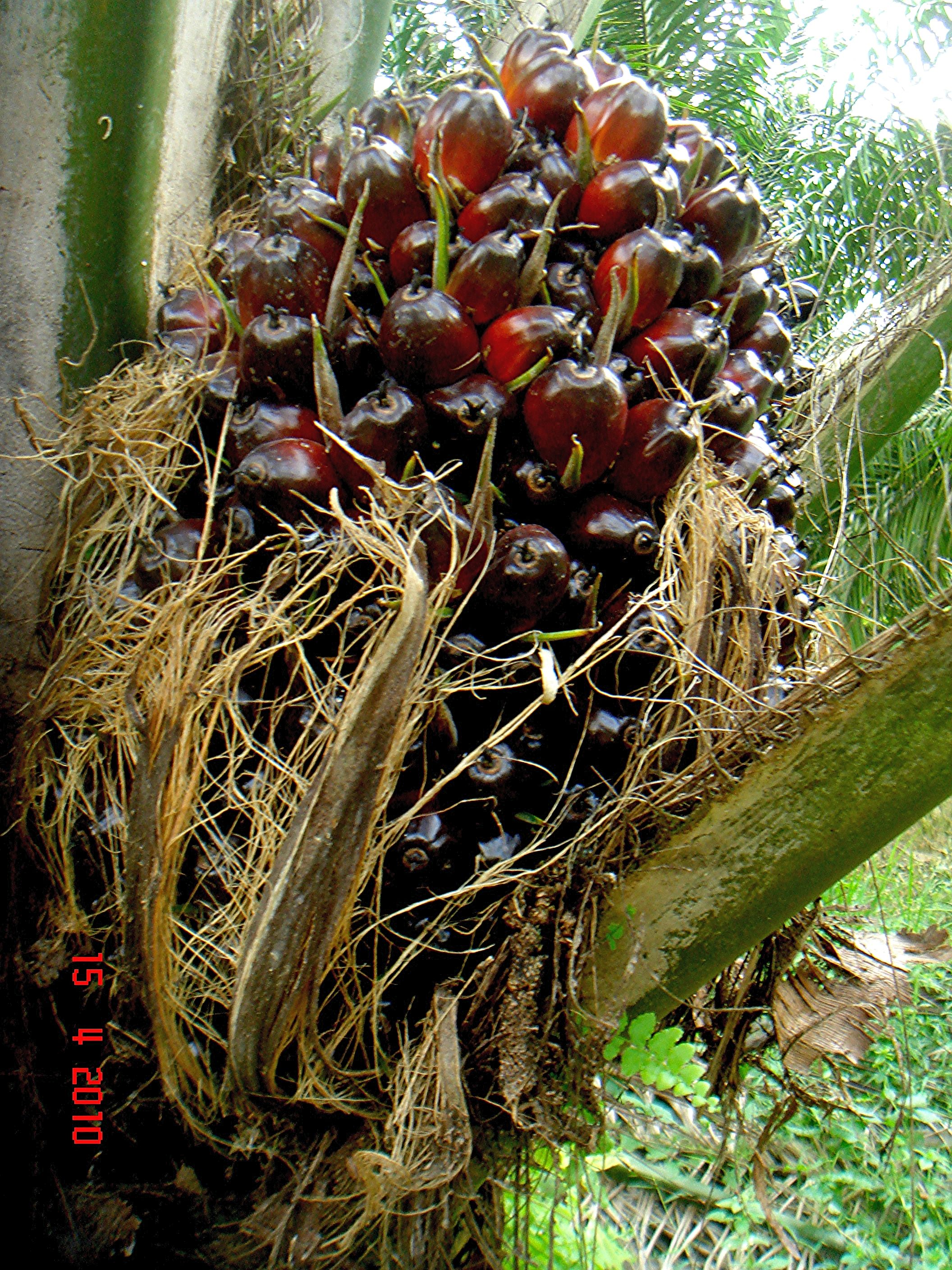
Oil Palm Friuits (photo credit: www.eol.org)

Oil Palm Friuits (photo credit: www.eol.org)

In light of this predicted consequence, the authors of this study recommend that governments, working together with conservation organizations and industry associations, regulate the conversion of agricultural lands and ensure that certain areas are specifically set aside for conservation. This means that “models of the drivers of environmental change” must be developed that “incorporate feedbacks at a range of scales” so that measures can be put into place to address “the unintended negative consequences of technical advances.”

More information on sustainable palm oil production can be found here.

Our Backyard Farm and Garden Show: Fall 2014

I had every intention of documenting this year’s garden more thoroughly, but as things tend to go, the days got busy and the year got away from me. Now here we are in mid-October, still waiting for the first frost but accepting its imminence, watching reluctantly as another growing season comes to a close. We took several pictures but few notes, so what follows is a series of photos and a few reflections on what transpired this past year in, what Flora likes to call, Our Backyard Farm and Garden Show.

Abundance

Abundance

I guess I should start at the beginning. Last year I was living in an apartment. I was growing things in two small flower beds and a few containers on my patio. That had been my story for about a decade – growing what I could on porches and patios and in flower beds of various apartments in a few different parts of the country. At one point I was living in an apartment with no space at all to grow anything, and so I attempted to start a garden in the backyard of an abandoned, neighboring house – geurilla gardening style – but that didn’t go so well. At another location I had a plot at a community garden. The three years I spent there were fun, but definitely not as nice as stepping outside my door and into my garden.

Earlier this year, I moved in with Flora. She was renting a house with a yard, so when I joined her, I also joined her yard. Flora is a gardener, too; she had spent her first year here growing things in the existing garden spaces but wanted to expand. So we did. We enlarged three beds considerably and built four raised beds and two compost bins. We also got permission to grow things in the neighbor’s raised beds. And that’s how our growing season started – coalescence and expansion.

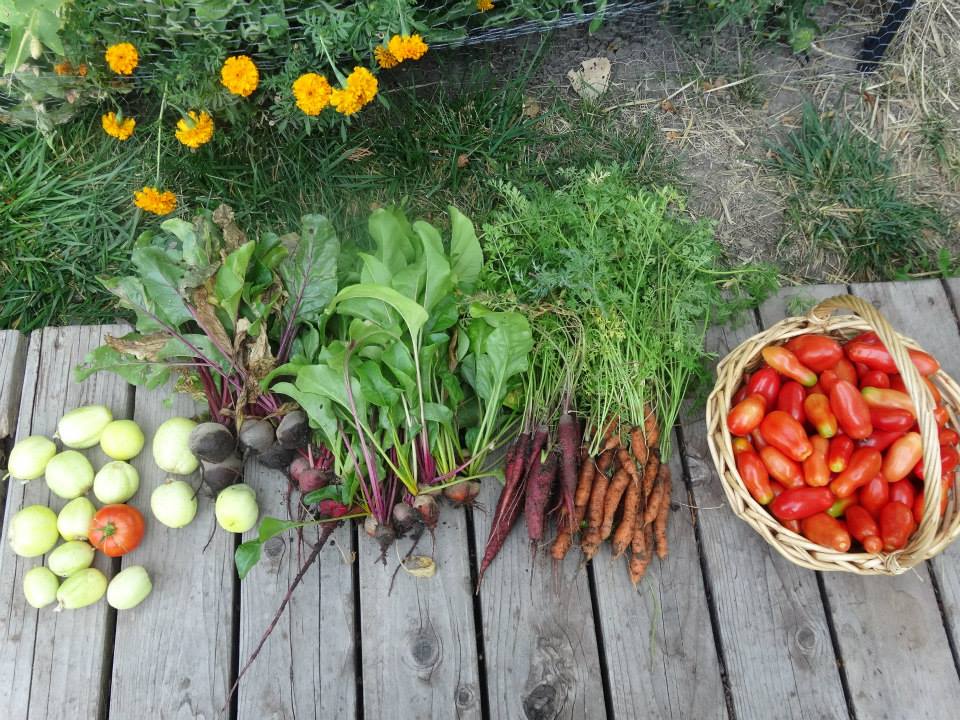
Then summer happened. It came and went, actually. Most days were spent just trying to keep everything alive – moving sprinklers around, warding off slugs and other bugs, and staking things up. Abundance was apparent pretty much immediately. We started harvesting greens (lettuce, kale, collards, mustards) en masse. Shortly after that, cucumbers appeared in concert with beets, turnips, basil, ground cherries, eggplants, tomatoes, carrots, peppers, etc. Even now – anticipating that first frost – the harvest continues. We are uncertain whether or not we will remain here for another growing season; regardless, we are considering the ways in which we might expand in case we do. Despite the amount of work that has gone into our garden so far, we still want to do more. Apparently, our love of gardening knows no bounds.

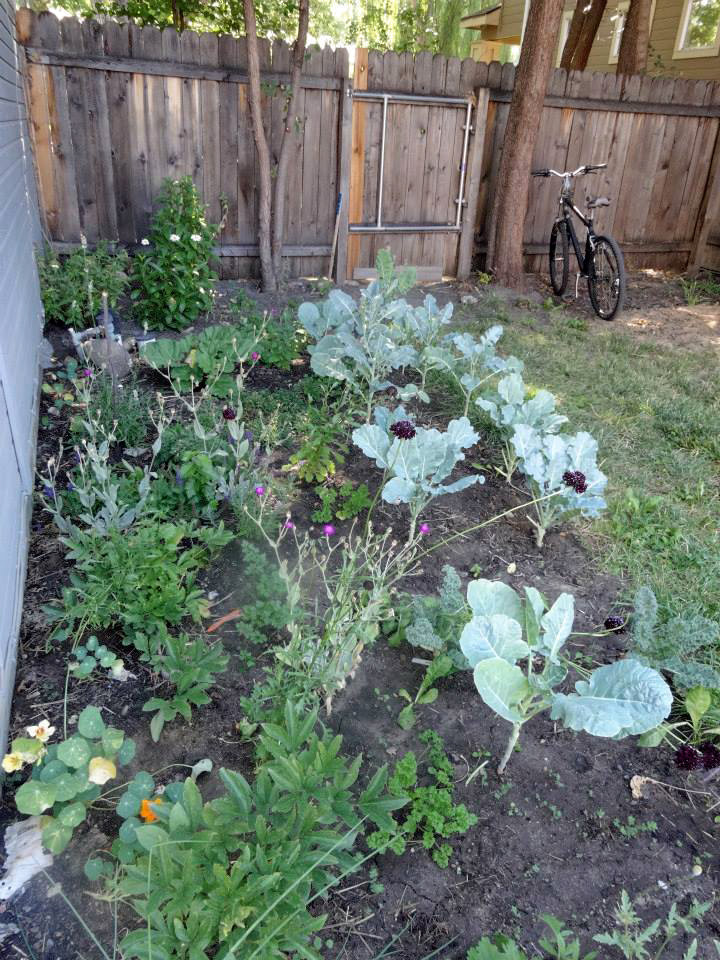
A view of our side yard. It is pretty shady in this section of the yard but we were still able to grow kale and collards along with several different flowers and herbs.

A view of our side yard. It is pretty shady in this bed but we were still able to grow kale and collards along with several different flowers and herbs.


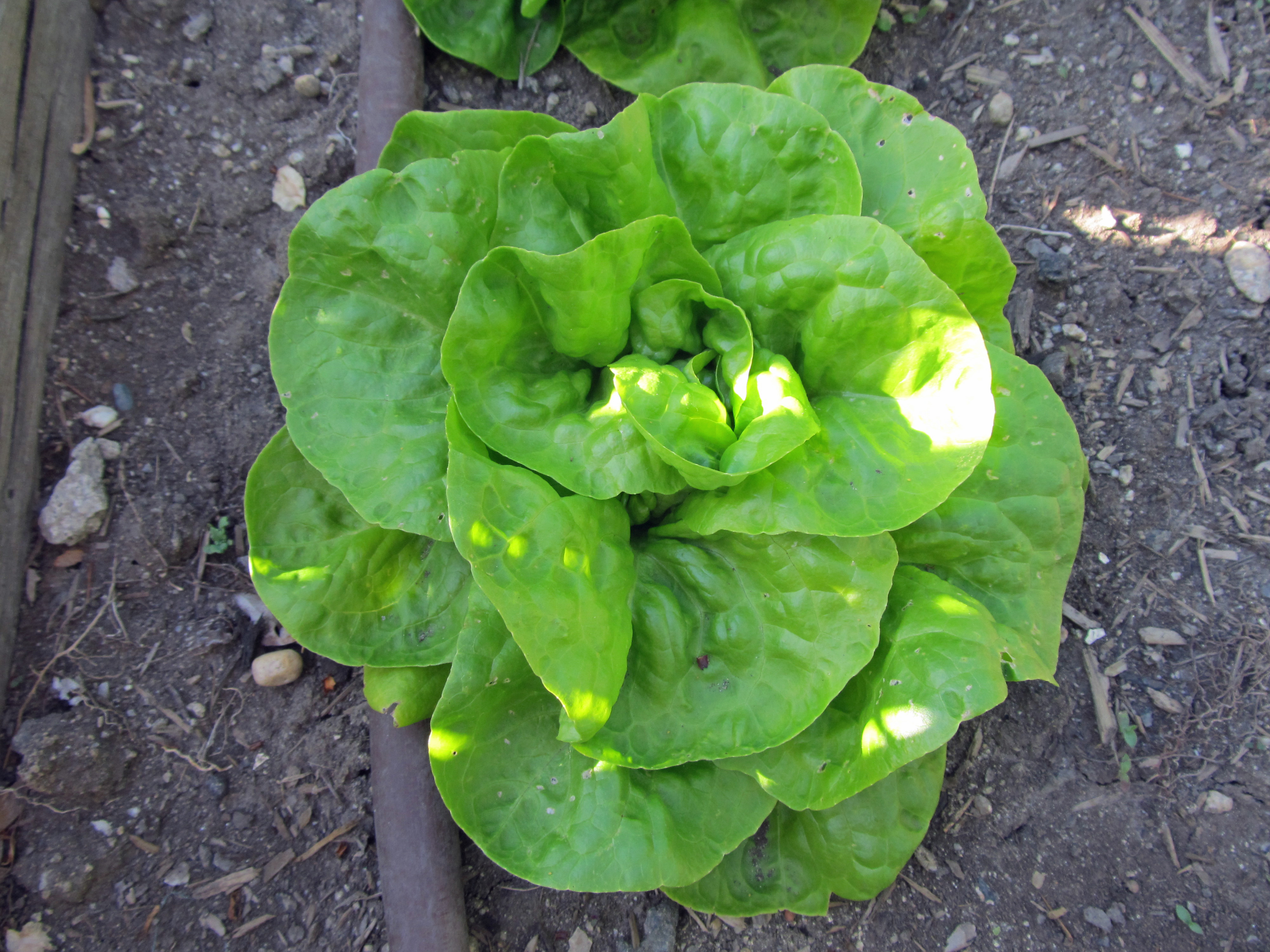
We grew several varieties of lettuce. This is one that I was most excited about. It's called 'Tennis Ball.' It is a miniature butterhead type that Thomas Jefferson loved and used to grow in his garden at Monticello.

We grew many varieties of lettuce. This is one that I was most excited about. It’s called ‘Tennis Ball.’ It is a miniature butterhead type that Thomas Jefferson loved and grew in his garden at Monticello.


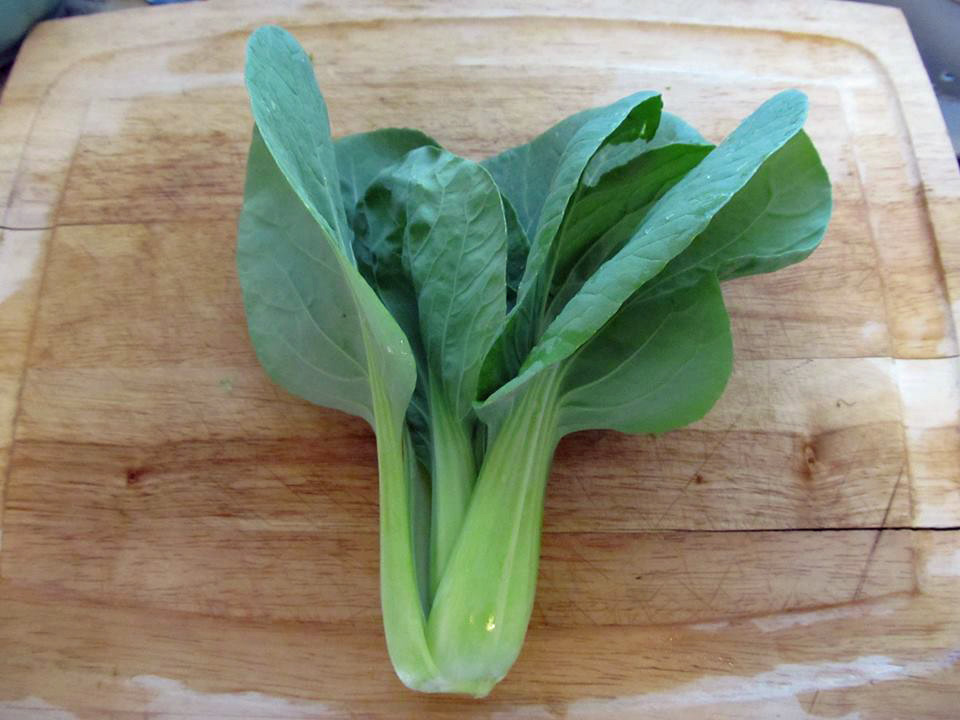
'Shanghai Green' Pak Choy

‘Shanghai Green’ Pak Choy


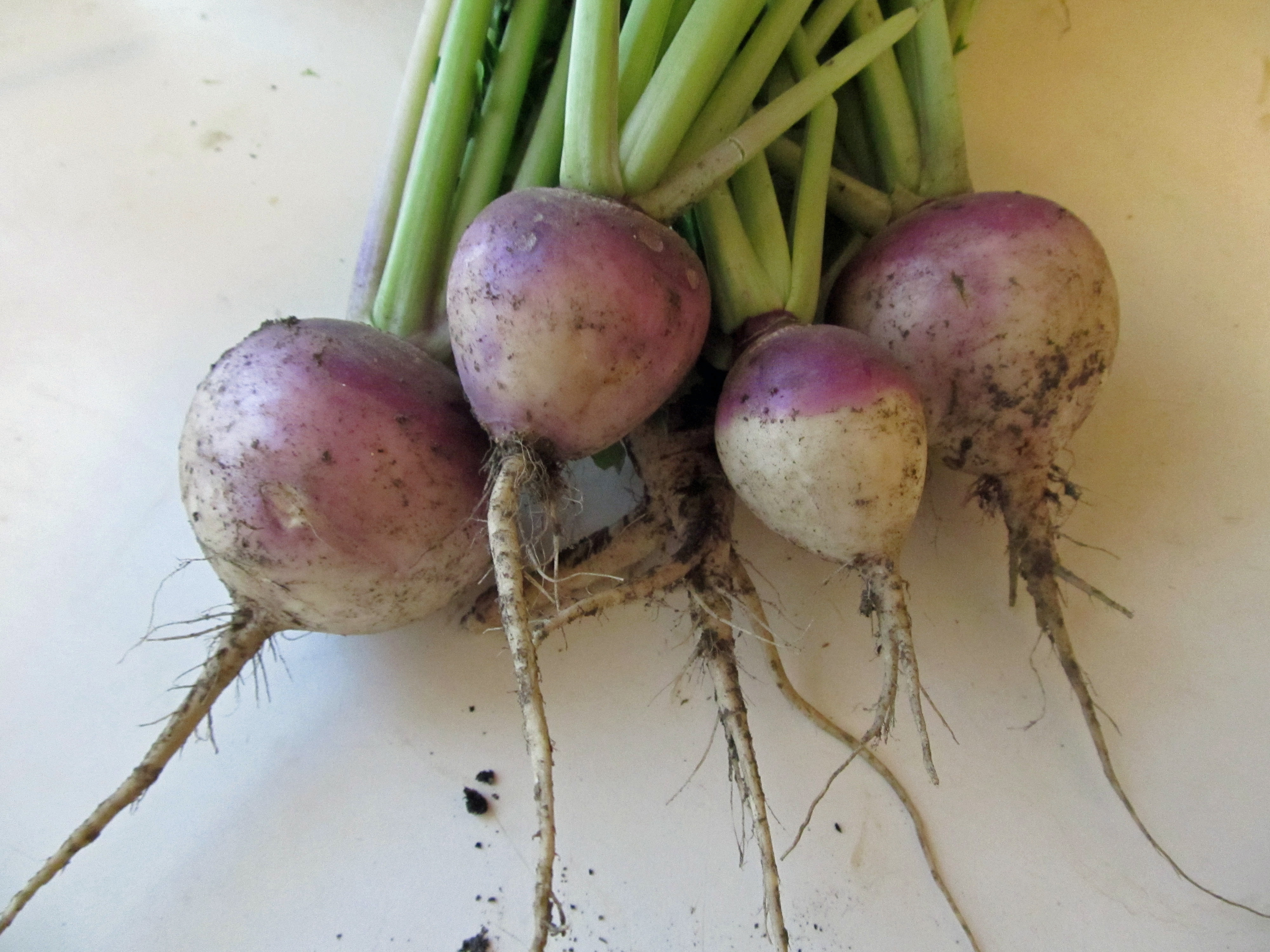
'Purple Top White Globe' Turnips

‘Purple Top White Globe’ Turnips


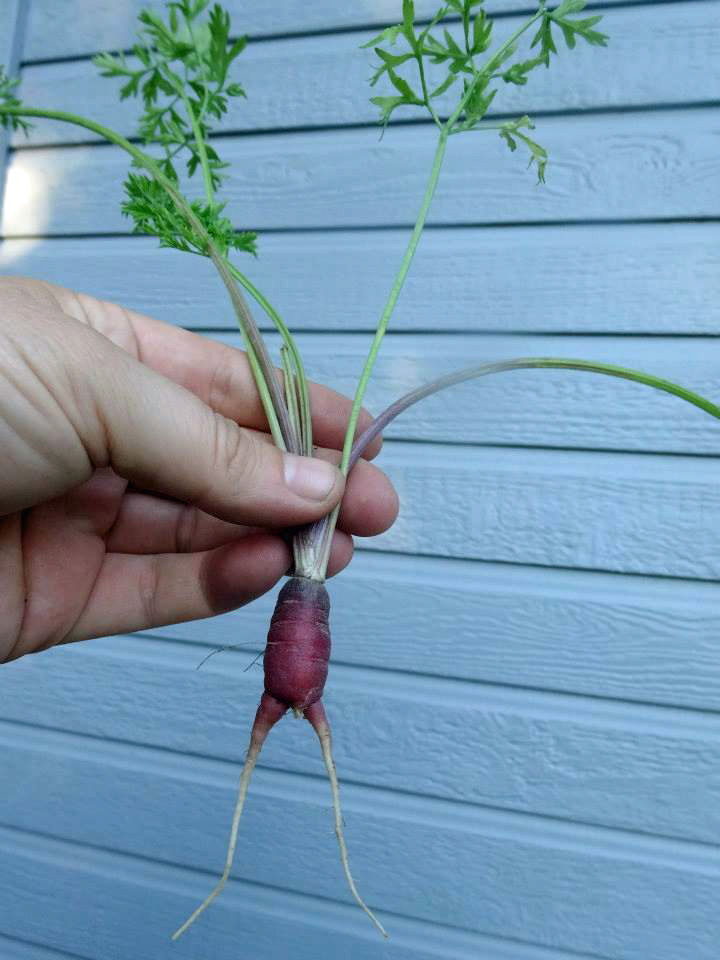
A miniature purple carrot with legs.

A miniature purple carrot with legs.


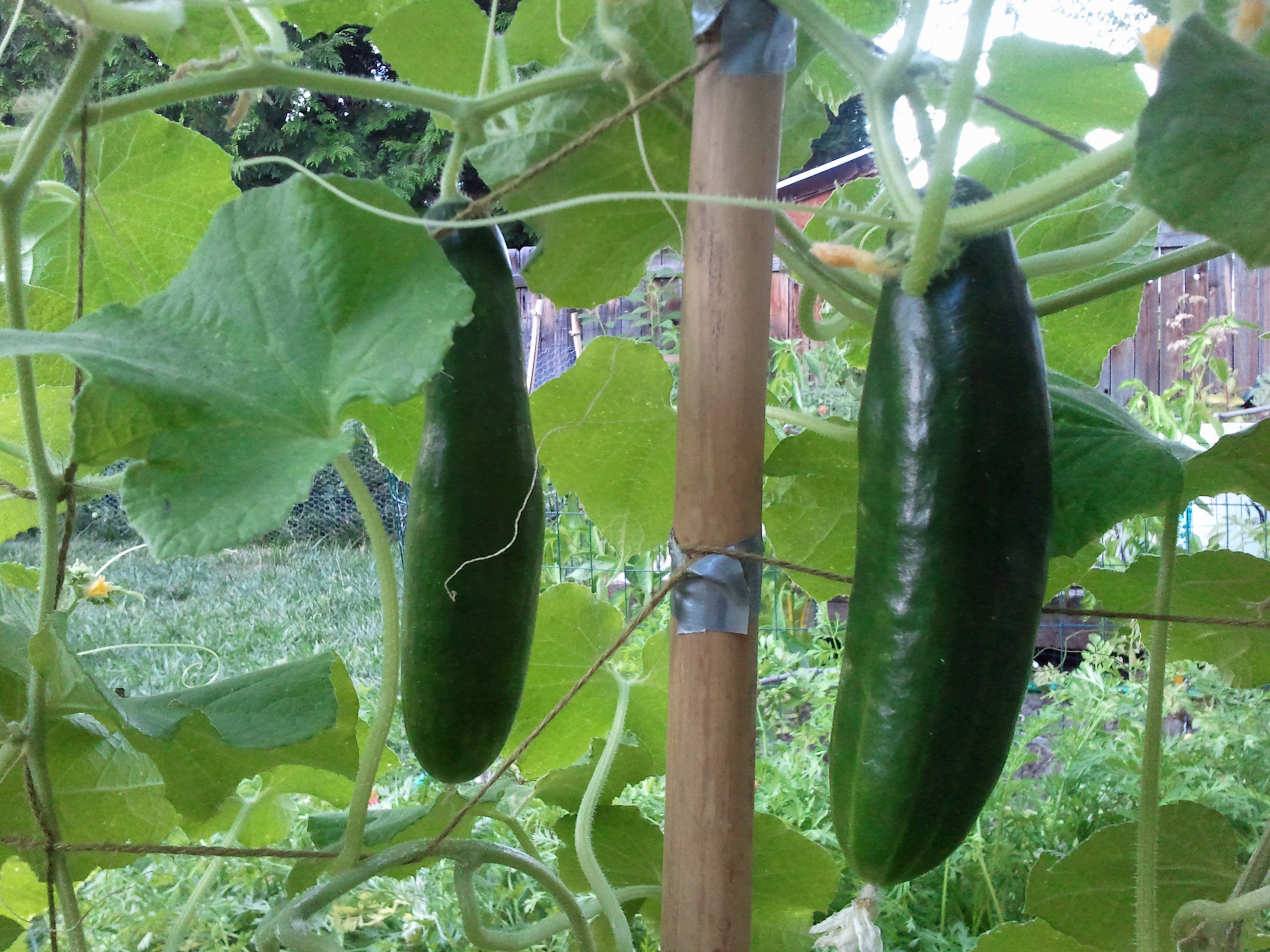
Two cucumbers hanging on a makeshift  trellis. I can't remember what variety they are. This why I need to remember to take better notes.

Two cucumbers hanging on a makeshift trellis. I can’t remember what variety they are. This why I need to remember to take better notes.


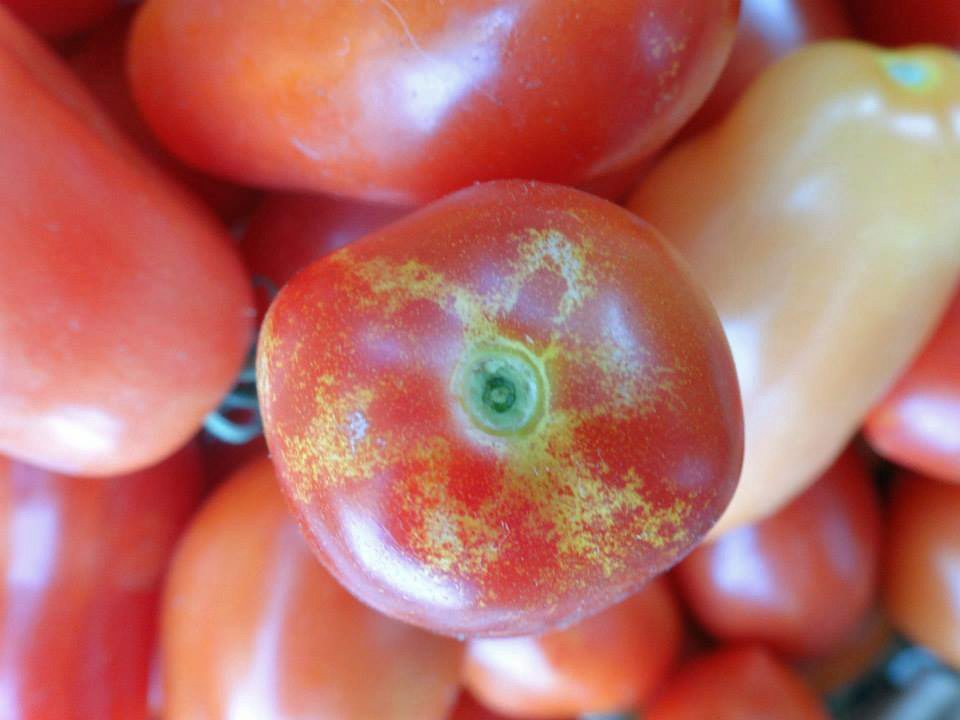
'San Marzano' Roma Tomato. We grew three other varieties of tomatoes along with this one.

‘San Marzano’ Roma Tomatoes. We grew three other varieties of tomatoes along with this one.


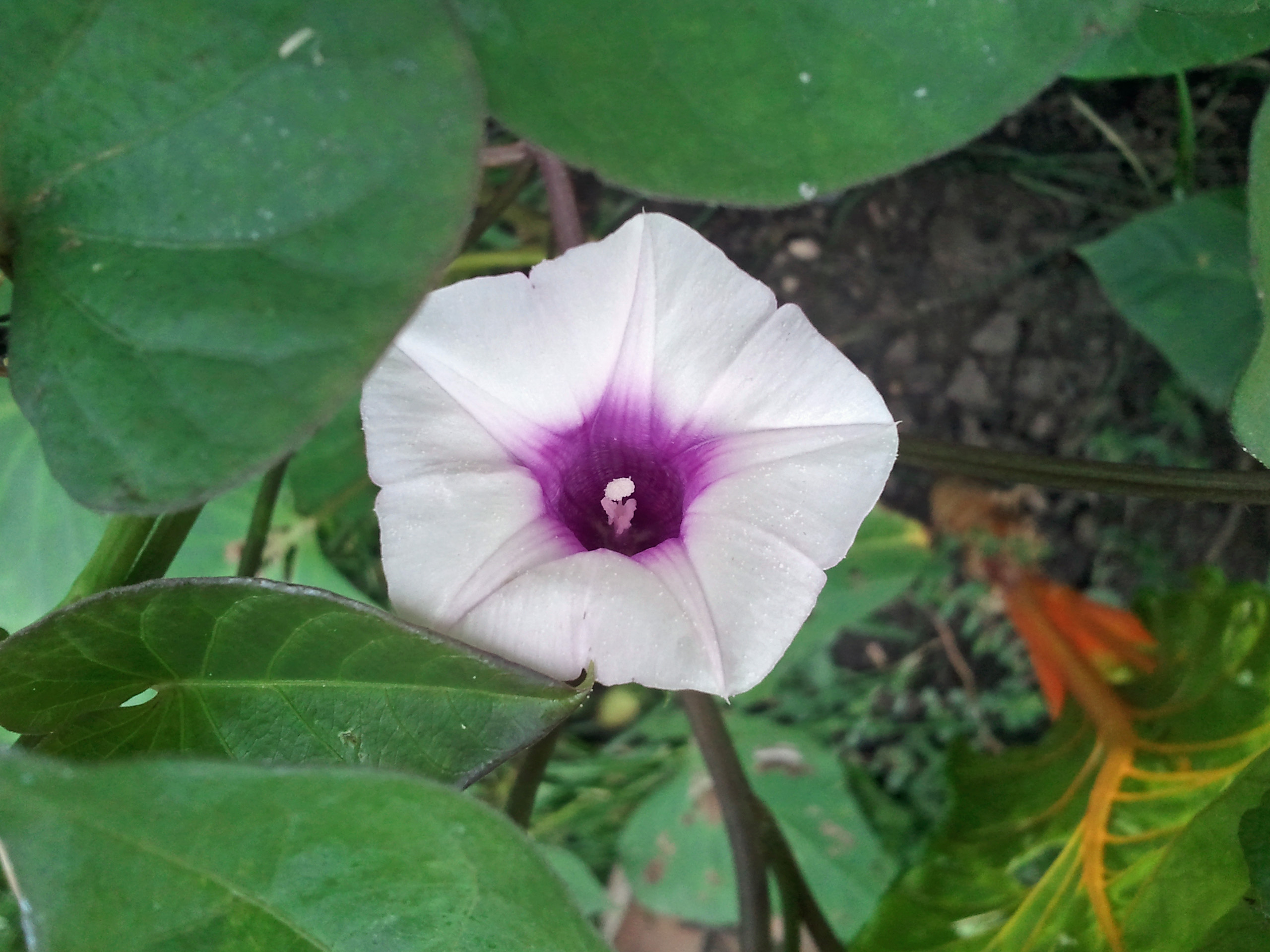
The flower of a 'Hong Hong' sweet potato. We haven't harvested these yet, so we're not sure what we're going to get. Sweet potatoes are not commonly grown in southern Idaho, so we're anxious to see how they do.

The flower of a ‘Hong Hong’ sweet potato. We have not harvested these yet, so we are not sure what we are going to get. Sweet potatoes are not commonly grown in southern Idaho, so we are anxious to see how they do.


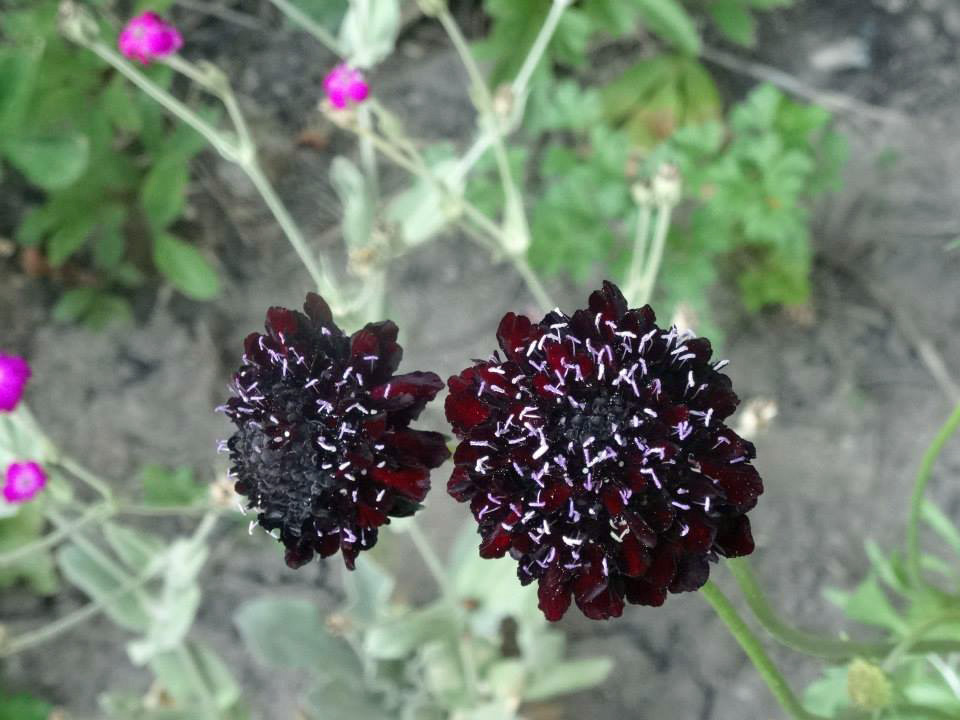
We grew lots of flowers, too. 'Black Knight' scabiosa (aka pincushion flower)was one of our favorites.

We grew lots of flowers, too. ‘Black Knight’ scabiosa (aka pincushion flower) was one of our favorites.


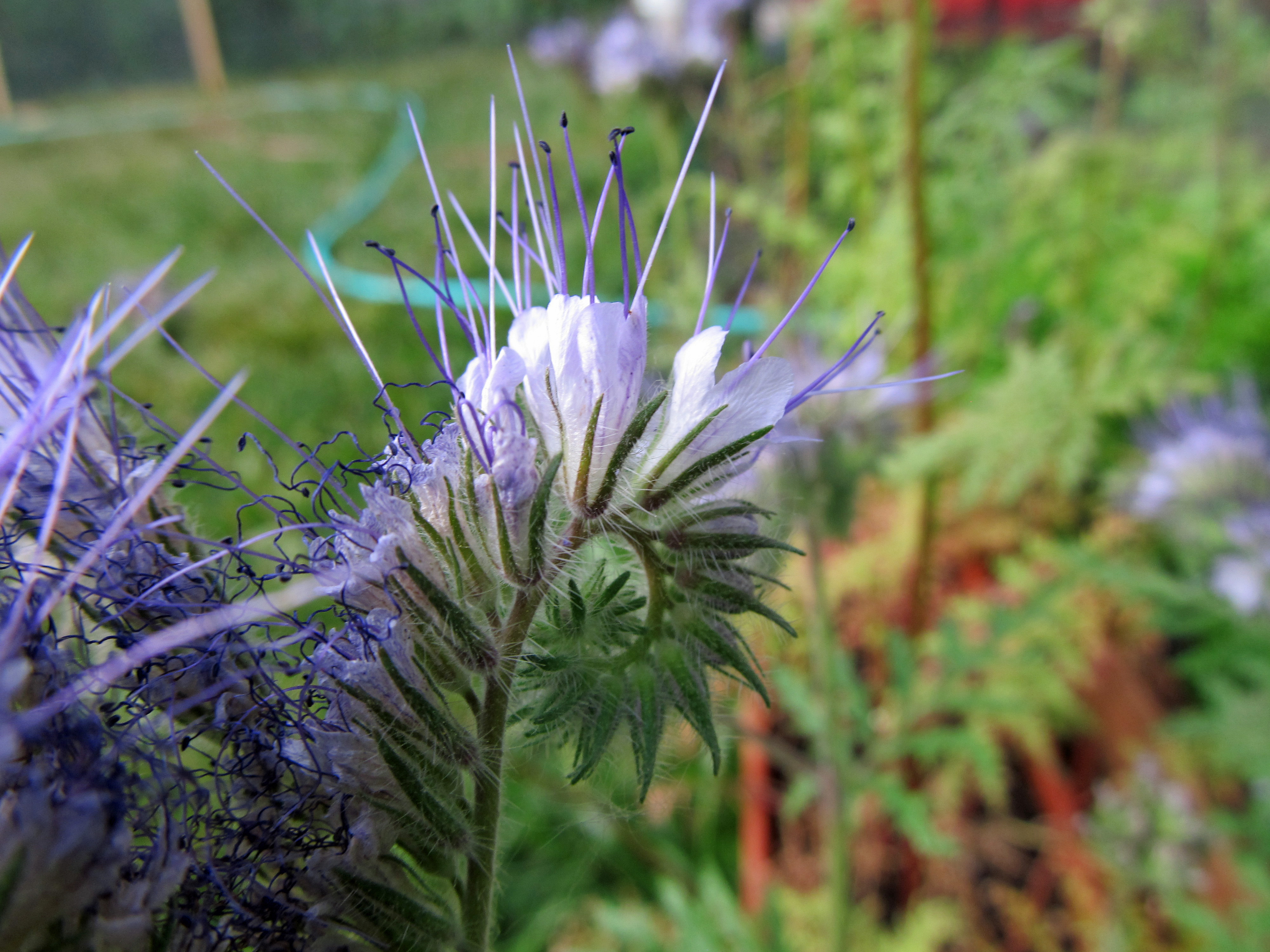
Some flower's we grew specifically for the bees, like this bee's friend (Phacelia hastate).

We grew some flowers specifically for the bees, like this bee’s friend (Phacelia tanacetifolia).


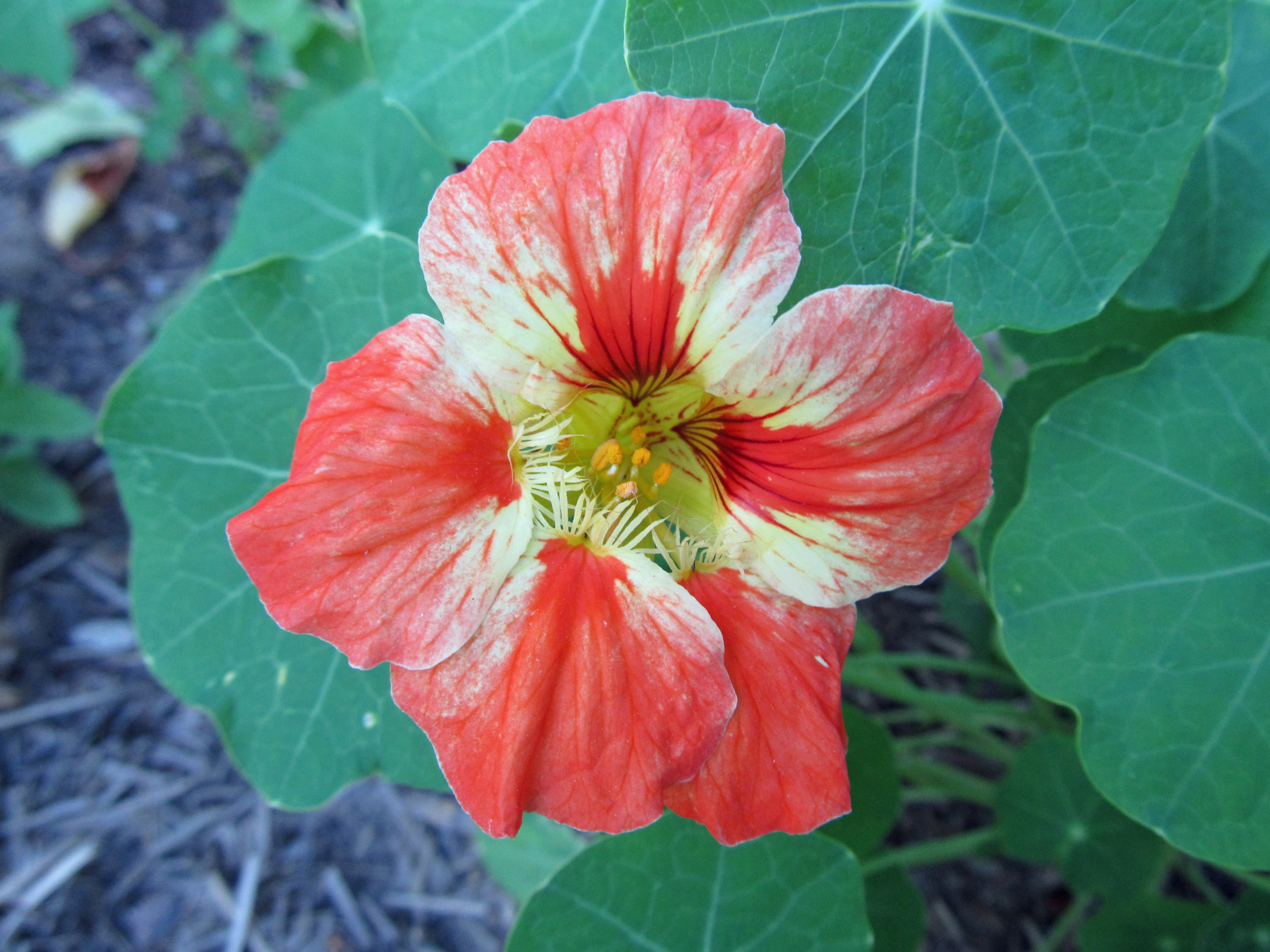
We grew other flowers for eating, like this nasturtium.

We grew other flowers for eating, like this nasturtium.


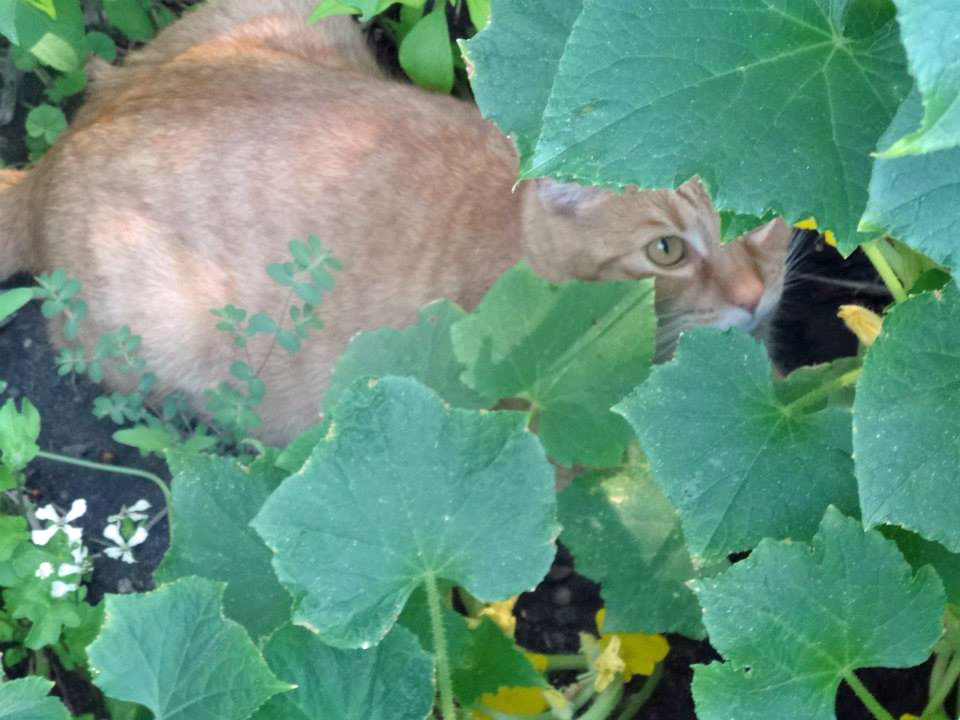
Even the cat loves being in the garden...

Even the cat loves being in the garden…

It has been an incredible year. “Abundant” is the best word that I can think of to describe it. We have learned a lot through successes and failures alike, and we are anxious to do it all again (and more) next year. Until then we are getting ready to settle in for the winter – to give ourselves and our garden a much needed rest. For more pictures and semi-regular updates on how our garden is growing, follow Awkward Botany on tumblr and twitter, and feel free to share your gardening adventures in the comments section below.

My Carrion Flowers

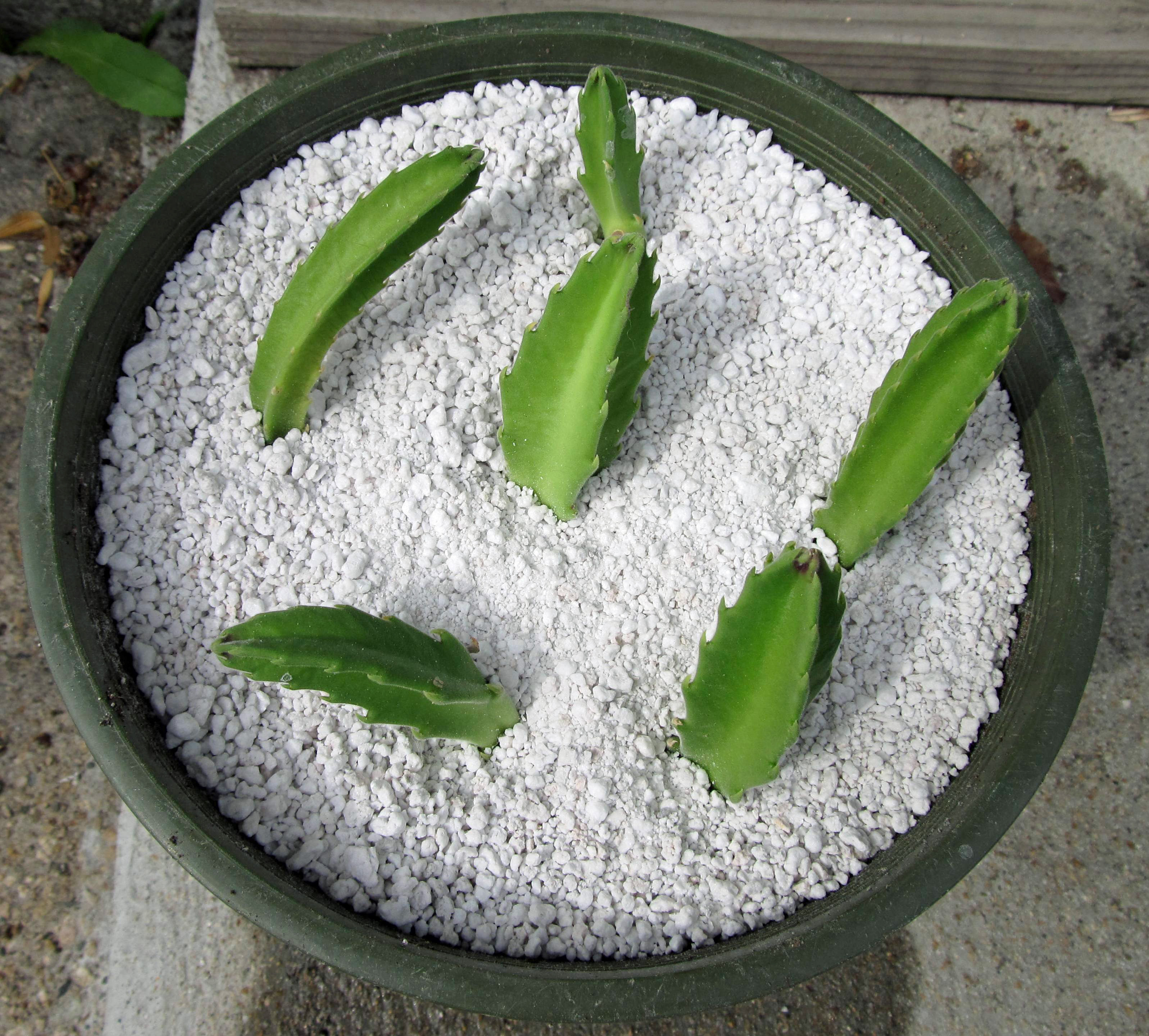
In April of last year, a box of stem cuttings arrived in my mailbox. They were sent to me by a friend in Colorado called Sandra (you may know her from one of her many ventures: Greenwoman Magazine, Greenwoman Publishing, Flora’s Forum, etc.). Sandra’s carrion flower had bloomed that spring, a stinky but delightful occasion. In her excitement, she asked if I would be interested in growing some carrion flowers of my own. Not one to turn down the chance to try my hand at cultivating something unusual, I gladly accepted her offer of a few cuttings sent via Priority Mail. Six cuttings arrived shortly thereafter, and upon reading through some instructions on the internet, I nestled them into their new home and hoped they would put down roots and stay a while.

carrion flower cuttings

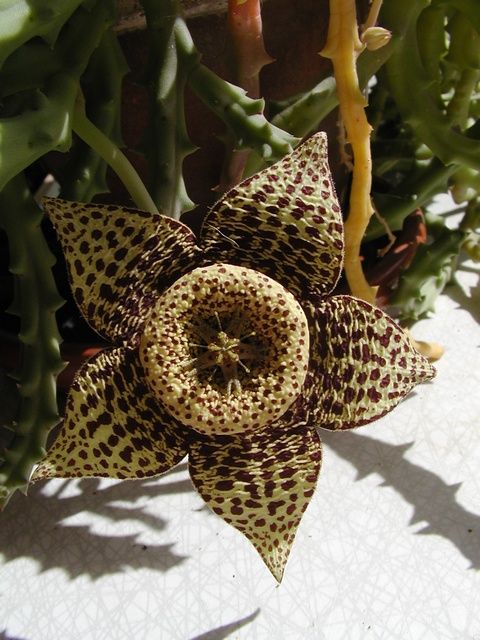
There are several species of plants that are referred to commonly as carrion flower. The plant parts I received from Sandra are in the genus Stapelia (family: Apocynaceae or dogbane family), also known commonly as African starfish flower. There are around 100 species in the genus Stapelia, and they all originate from tropical and southern Africa, mostly in arid regions.

Stapelias are short-lived, low-growing, perennial succulents. Their stems typically stand erect and are produced along stolons (above ground runners), creating a tight clump of stems that appear cactus-like. Each stem has 4-6 flattened vertical flanks, giving it a cross or star shape when looking down from the top. On the outside edges of the flanks are a series of rudimentary leaves protruding from tubercles (wart-like growths), giving the stems a spiny appearance. The stems are usually green but can also be red or mottled with red or purple.

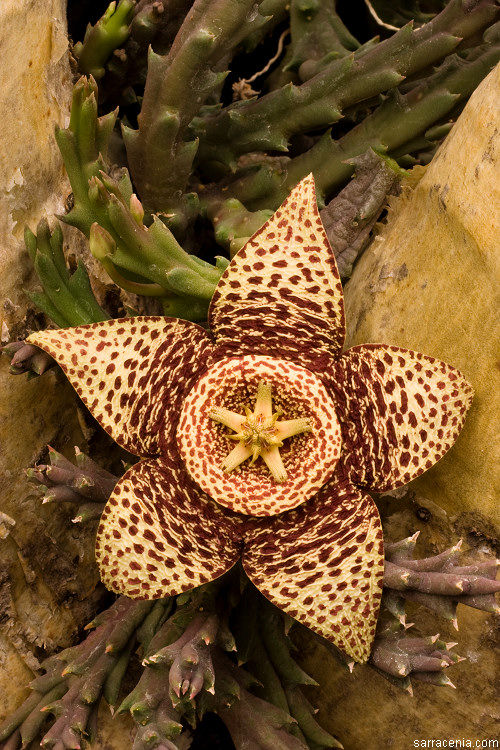
The flowers of Stapelia are the real show. They are produced at or near the base of the stem and have a star-shaped corolla with five fused petals that come to sharp points. The corolla has a wrinkly look and is often hairy, especially along the margins. Flowers can be variations of red, brown, yellow, and purple. In some species they can reach up to 18 inches wide. It is a unique looking flower, but even more unique is its scent. Because Stapelia flowers are pollinated by flies, they emit the scent of rotting animal flesh, an odor that flies can truly appreciate. In fact, flies can be so deceived by the appearance and scent of the flowers that they occasionally lay their eggs on or near them, expecting them to be a food source for their emerging larva.

Stapelia variegate (photo credit: eol.org)

Stapelia variegata (photo credit: eol.org)

Stapelia is easily propagated, especially by stem cuttings. Allow cuttings to dry in a cool, shady location for 48 hours and then stick them in a well-drained potting soil mix. Water moderately (preferably from below by placing the container in a tray and then filling the tray with water). Cuttings should root easily. All six of mine did.

Keep Stapelia in a sunny or mostly sunny location. If you live in USDA hardiness zone 9 or above, you can grow Stapelia outdoors. Otherwise, keep it indoors near a window that gets lots of sun. The main thing you will have to worry about is stem rot due to over watering. Grow Stapelia in a well-drained soil mix, water from below, and allow soil to dry out between waterings in order to avoid this.

Stapelia variegata (photo credit: eol.org)

Stapelia variegata (photo credit: eol.org)

As for me and my carrion flowers, like I said earlier, all six cuttings rooted. I transplanted one of them. Of the five left in the original pot, one rotted a couple weeks ago and another rotted during the writing of this post. The remaining ones still look healthy, but none of them have grown much since they rooted. The main problem I am having is that my house does not let in much sunlight. What appears relatively bright to me is probably cave-like to my carrion flowers. Until I remedy that situation, they may not grow much, they could continue to rot, and they probably won’t flower any time soon. However, if anything changes and I do get a flower out of them, I will make it a point to let you know. And Sandra will be proud.

stapelia today_edit


Drought Tolerant Plants: Blue Sage

If you are considering installing a drought tolerant garden on your property or including more drought tolerant plants in your landscape, one plant that should come standard is blue sage. Its silvery-green foliage, large, abundant, purple-blue flower stalks, and attractive mounded shape, make it an excellent feature in any water-efficient garden bed.

salvia pachyphylla_edit 1

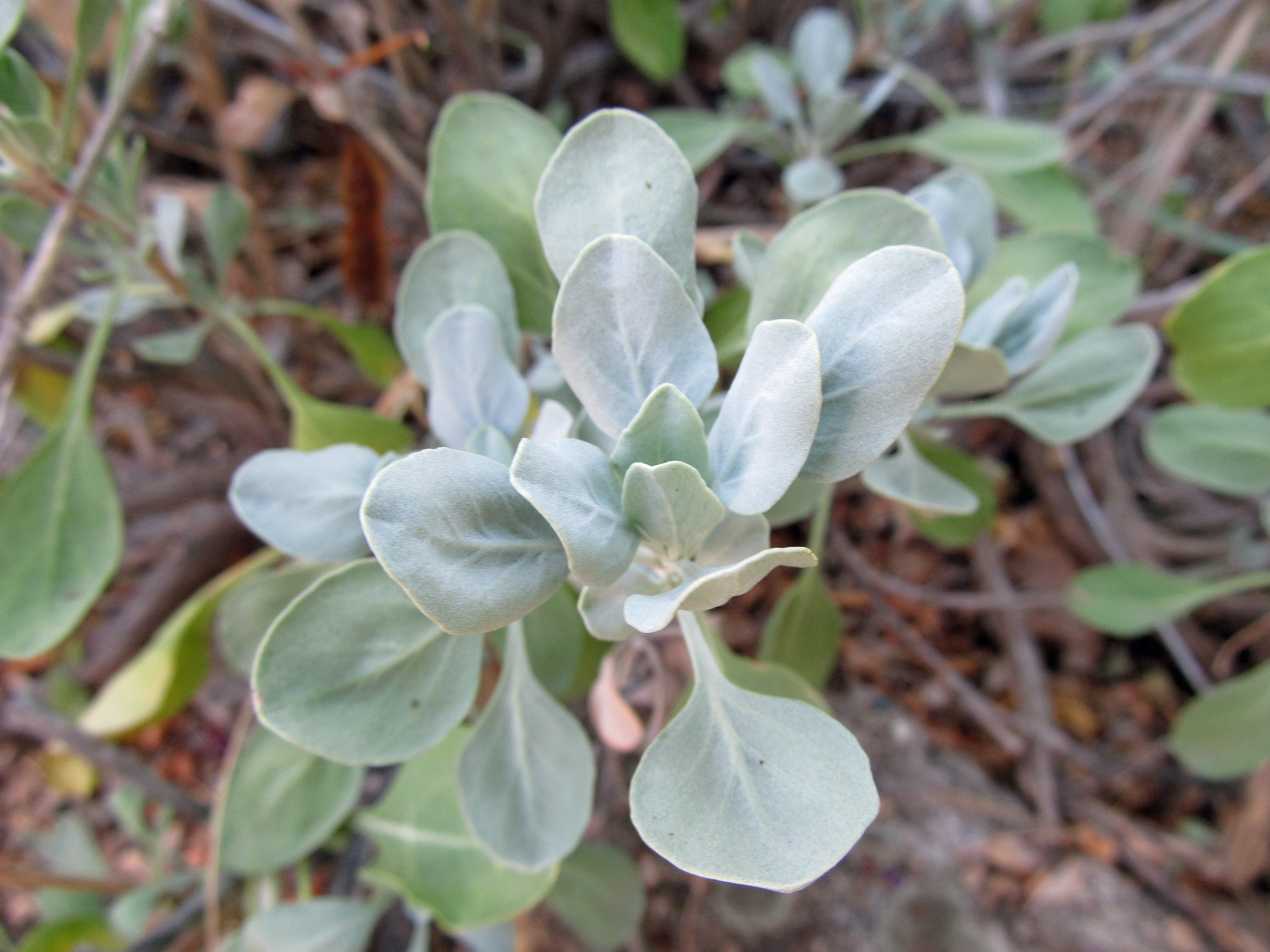
Salvia pachyphylla is in the mint family (Lamiaceae). It has several common names which it shares with several other plants: blue sage, Mojave sage, rose sage, mountain desert sage, giant-flower sage. For this post we will refer to it as blue sage; however, if you’re looking to purchase it, make sure to verify the botanical name. Blue sage is a subshrub that can grow up to 3 feet tall and 3 feet wide. It tends to remain smaller – around 1-2 feet tall – in its native habitat. It is found in the southwestern states of the United Sates on dry, rocky slopes and flats at elevations between 5,000 – 10,000 feet. The leaves are oppositely arranged and covered with fine hairs that lay tightly against the leaf surface giving the foliage its silvery appearance. Like all other sages, the leaves of blue sage are highly aromatic.

salvia pachyphylla foliage_edit

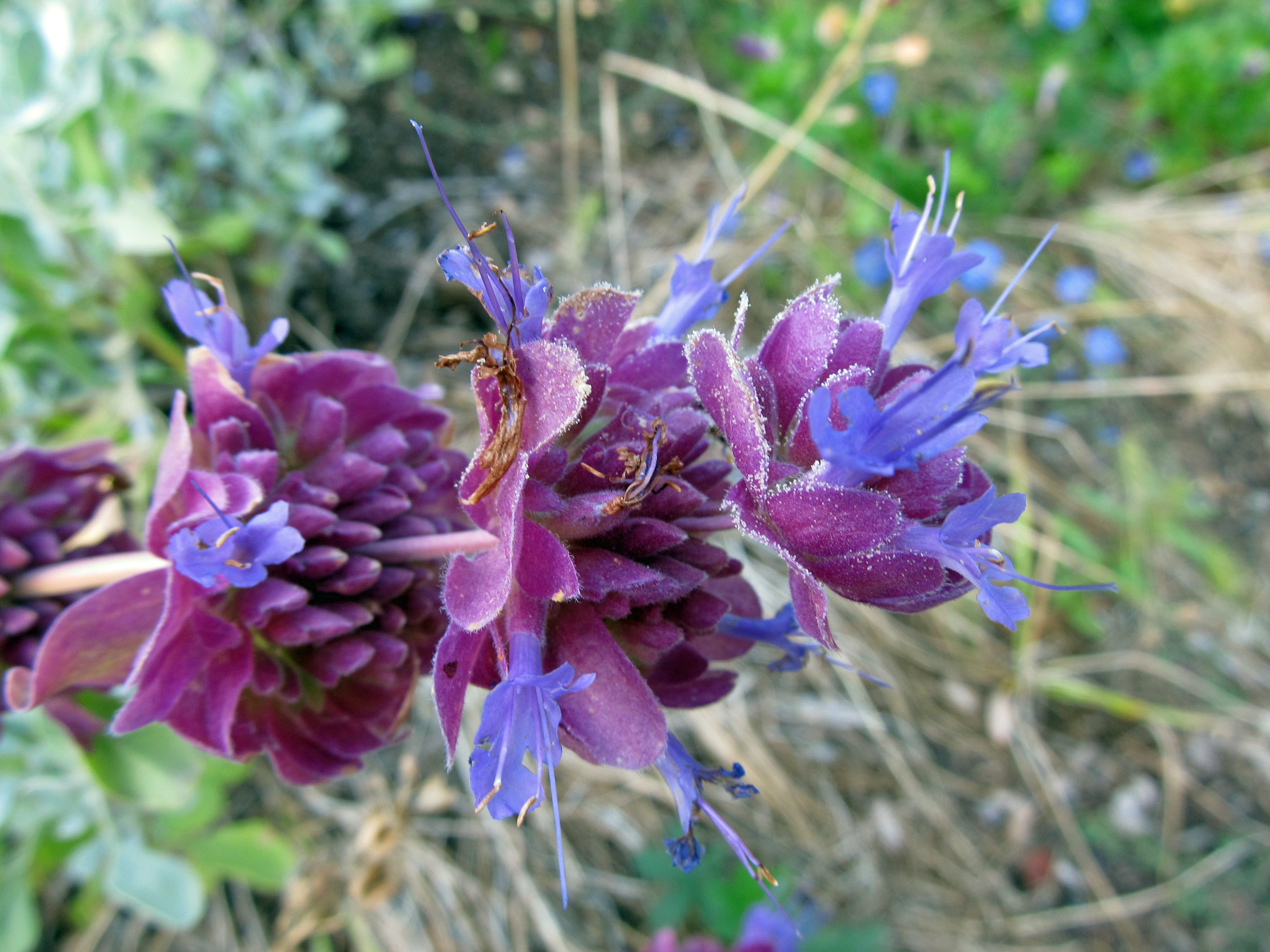
The flowers appear in compact clusters on spikes that extend upward from the branches. The inflorescences can be several inches long. They have numerous large, purple bracts that appear in a whorled pattern along the spike. The violet-blue flowers are small but prolific and appear between the bracts surrounding the stalk. Flowering occurs throughout the summer (July-September in its native range). The flowers attract droves of pollinators including bees, butterflies, and hummingbirds. Blue sage is especially beneficial to native pollinators. In fact, while taking photos for this post, I noted that the flowers were being visited by several bumblebees. Its benefit to pollinators is another great reason to include this plant in your landscape.

salvia pachyphylla_edit 2

Blue sage is a very drought tolerant plant. Once it is established it requires only occasional watering throughout the summer in order to keep it looking good. It performs well in a variety of soil types, but like most drought tolerant plants it is best placed in well drained soil. Heavy soils can be amended by mixing in things like sand, lava rock fines, and compost at planting time. It prefers full sun and is winter hardy to USDA hardiness zone 5, especially if planted in an area where the soil is relatively dry throughout the winter. Blue sage is a long lived plant and can be kept in shape by cutting back the spent flowers in the fall. The folks at Plant Select recommend planting blue sage with, among other things, penstemon, coreopsis, and creeping veronica.

Photos were taken at Idaho Botanical Garden in Boise, Idaho.

Feeding the World with Microbes

Back in the mid 1900’s, after the tragic days of the Dust Bowl in North America, new agricultural techniques and technologies were developed and distributed in the name of food security. These developments included higher yielding plant varieties, synthetic fertilizers and pesticides, and advancements in irrigation and other management practices. This period in time was termed the Green Revolution, and it truly was a remarkable time. Agricultural advancements that came out of this period have helped us feed the world and stave of starvation for millions of people. Today, issues of hunger and starvation are political problems, not necessarily agricultural ones. However, the human population continues to grow, and today’s 7 billion people is projected to reach up to 10 billion (or more) in the coming decades. The world’s best farmland is either already in use, degraded, or being used for other things. This means that we must find a way to feed a growing population with the diminishing farmland that is available. We may be producing enough food now (despite the distribution problem), but will we be able to produce enough in the future? The hunt for the Green Revolution 2.0 is on.

“According to the [UN’s Food and Agriculture Organization], most of the growth in production…has to come from increasing yields from crops. Selective breeding doesn’t seem to be offering the types of dramatic yield increases seen in the past. Meanwhile, genetic engineering has yet to lead to any significant increase in yields. Now, many scientists are saying that we’ve been looking at the wrong set of genes.”

These are the words of Cynthia Graber, author of an article that appeared last month on PBS Online’s NOVANext entitled, “The Next Green Revolution May Rely on Microbes.” In it she explores the argument that increasing future yields will depend on better understanding the soil’s microbial community and its complex interaction with the plant community. The big question: if microbes can be artificially bred – the same way virtually all agricultural plants have been – might they help us increase food production?

Microbial life in the soil is incredibly diverse. In one teaspoon of soil, there can be millions of individual microbes including bacteria, fungi, protozoa, algae, and nematodes. Our current understanding of soil life is extremely limited, akin to our understanding of outer space and the depths of the oceans. That is because, as stated in Graber’s article, “perhaps 1% of all soil microbes can be grown in a petri dish, the conventional model for such research.” This limits our ability to study soil microbes and their interactions with other living things. We do, however, acknowledge that the interactions between the roots of plants and soil microbes is incredibly important.

Fruiting Body of an Ectomycorrhizal Fungus (photo credit: eol.org)

Fruiting Body of an Ectomycorrhizal Fungus (photo credit: eol.org)

One major player in these interactions is a group of fungi called mycorrhizae. “Mycorrhizal fungi cannot survive without plants, and most plants cannot thrive without mycorrhizal fungi.” It is a symbiotic relationship, in which the fungi offer plants greater access to water and nutrients, and plants feed sugars derived from photosynthesis to fungi. Recent advancements in genetics have allowed researchers to better analyze the genes in microbes like mychorrizal fungi and determine the functions of them. Through selective breeding, microbes can be produced that will offer even greater benefits to plants, thereby increasing yields. For example, some microbes help plants tolerate heat and drought. Isolating the genes that give microbes these abilities, and then breeding these genes into other microbes might allow for a wider palette of plants to receive this kind of assistance.

In researching this article, Graber followed a Swiss researcher to Colombia where he was testing lines of mychorrhizal fungi on cassava. The fungi were specifically selected to increase a plant’s access to phosphorous. This is one of many experiments that are now under way or in the works looking at specially bred microbes in agricultural production. It’s an exciting new movement, and rather than spoil too much more of Graber’s article, I implore you to read it for yourself. Share any comments you may have in the comment section below, and expect more posts about plant and microbe interactions in the future.

Cynthia Graber appeared at the beginning of a recent episode of Inquiring Minds podcast to talk about her article. I recommend listening to that as well.