Tea Time: Fireweed

lf you’ve seen one fireweed, you’ve probably seen several. As an early successional species, growing in large numbers across a vast amount of space is kind of its thing. Any disturbance that leaves bare ground in its wake, such as a wildfire or a windstorm, gives fireweed the opportunity to colonize. It grows quickly and spreads via rhizomes, producing thousands of airborne seeds in the process, sending them off to continue colonization or contribute to soil seed banks in preparation for future disturbances. The role of plants like fireweed is vital – promptly covering bare ground to stave off erosion and acting as a nurse plant to new saplings destined to become the future forest. In a garden setting or in locations where aggressively spreading plants are discouraged, fireweed and its weedy behavior may be unwelcome, but in other contexts, its services are essential.

fireweed (Chamerion angustifolium)

Fireweed (Chamerion angustifolium) is a species in Onagraceae, commonly known as the evening primrose family. It has an impressive distribution, widespread across much of North America and Eurasia. This is owed largely to its adaptability. Deep shade and overly dry soil are two conditions that it does not tolerate well, otherwise it seems to grow in a wide variety of soil types, moisture levels, and sun exposures, particularly in areas where there is regular disturbance. Swaths of towering plants topped with rose-pink flower spikes make fireweed impossible to ignore and a favorite of wildflower enthusiasts.

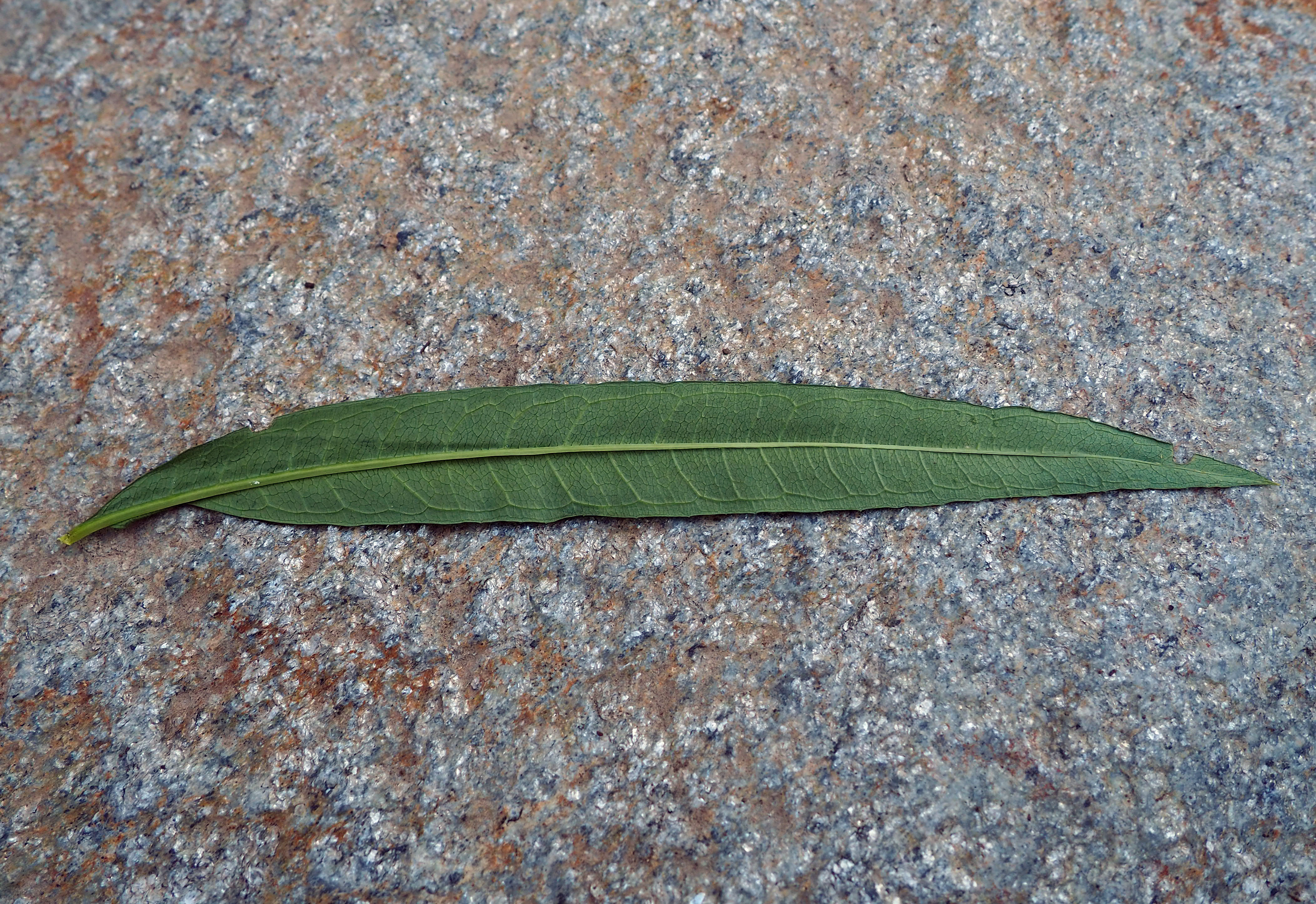
Fireweed stems reach from three to nine feet tall and are rarely branched. Long, narrow, lance-shaped leaves are arranged alternately along the lengths of stems and give the plant a willow-like appearance, which explains another common name, rosebay willowherb. The undersides of leaves have a distinct venation pattern, in which the veins don’t reach the leaf margins, a feature that can help with identification.

distinct leaf veins of fireweed (Chamerion angustifolium)

A series of rose-pink to purple flowers top the stems of fireweed. Each flower has four sepals and four petals with eight stamens and a four-lobed stigma extending prominently from the center. Its long, narrow ovary can be confused for a flower stalk. Rich with nectar, fireweed flowers are a favorite of honeybee keepers. They are also edible, like much of the rest of the plant. Narrow, four-chambered capsules form in place of fertilized flowers and later split open to release abundant, small seeds with a tuft of fluff attached to each one to aid in wind dispersal.

Fireweed has a long history of being used as food and medicine. Stem fibers are also useful for making cord, and seed fluff is useful for weaving and padding. Certainly, fireweed’s abundance and ubiquity contribute to its utility. Having never eaten fireweed before, I decided that a good way to introduce it to my diet would be to make a tea. Fireweed leaves are commonly collected for tea and are said to make an excellent non-caffeinated replacement for black tea.

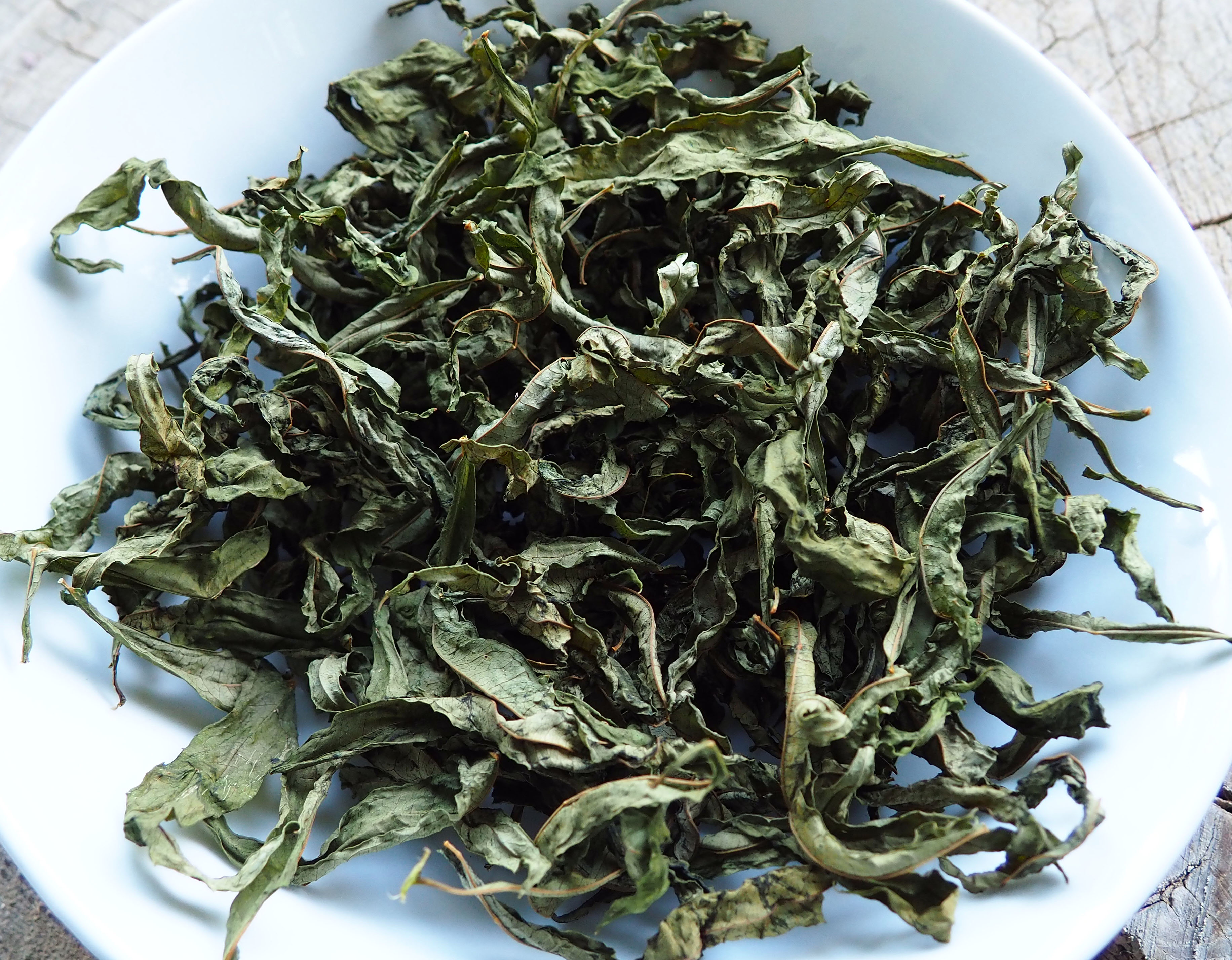
fireweed tea leaves

Making fireweed tea starts by stripping young leaves from fireweed stems. Recipes I encountered all called for fermenting the leaves before drying them. I did this by squeezing handfuls of leaves in my fists just enough to break and bruise them a bit and then packing them into a quart size Mason jar. I closed the lid tight and kept them in the jar for about five days, shaking it up a couple times a day supposedly to help prevent mold issues. After that, I dried the leaves on a baking sheet in the hot sun. From there, they are ready for making tea the same way you would make any other loose leaf tea, chopping the leaves up a bit before immersing them in hot water.

I found the taste of fireweed tea to be mild and pleasant. Despite several sources comparing it to black tea, I thought it was more similar to green tea. Sierra liked the smell more than the taste and wished it had honey in it. Compared to other teas I’ve tried in this short series of posts, this is definitely one of the better ones, and a tea I could see myself making again sometime.

More Tea Time Posts on Awkward Botany:

Using Weeds: Soapwort

Over the past year or so I have written about several edible weeds in an effort to highlight useful weeds. However, weeds don’t have to be edible to be useful. In fact, many weeds are most certainly not edible, but that doesn’t mean they are of no use to humans. Soapwort, for example, is poisonous, and while it does have a history of being used internally as medicine, ingesting it is not advised and should only be done under the direction of a doctor. A much less risky activity would be to make soap out of it.

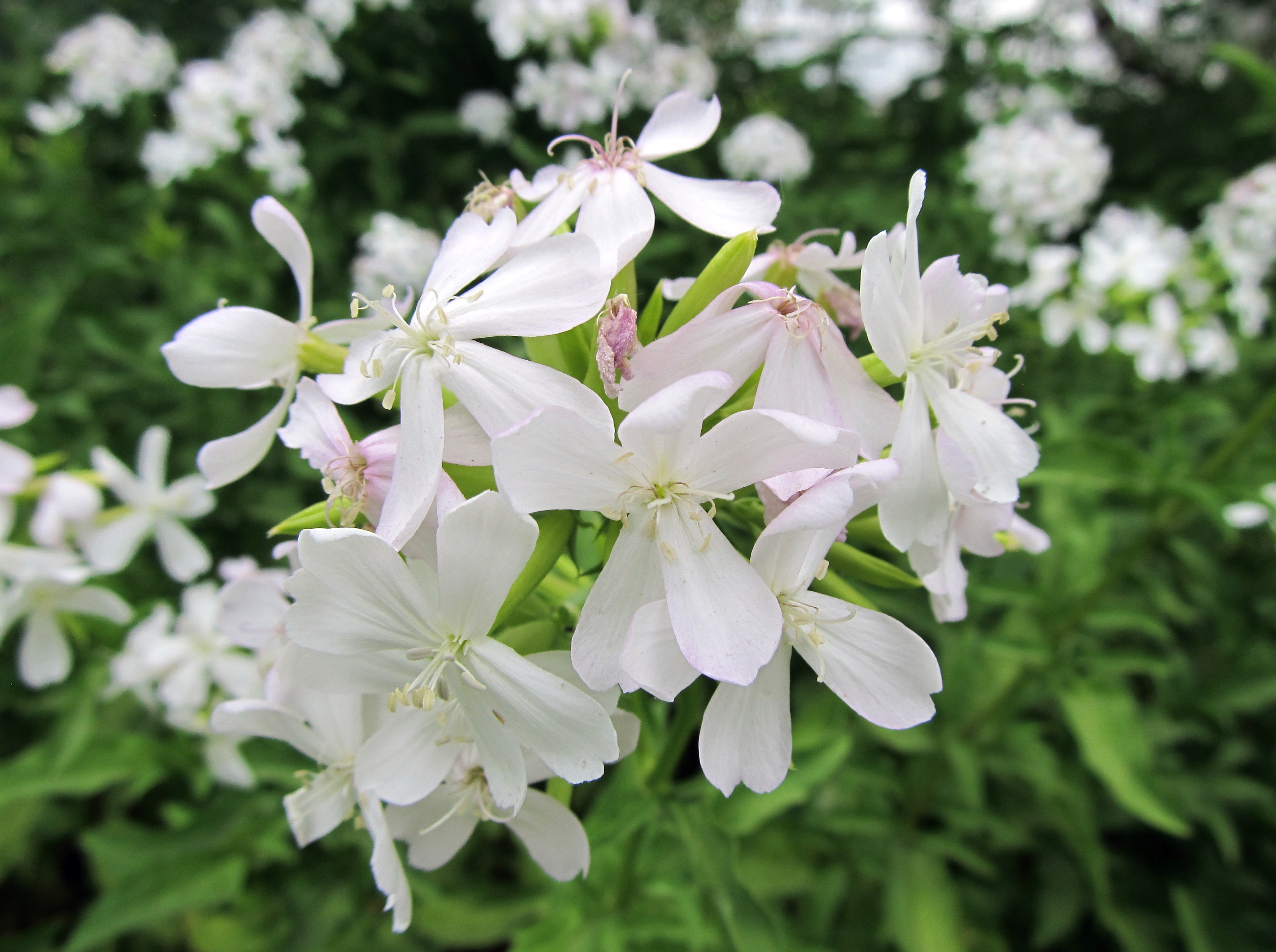
soapwort (Saponaria officinalis)

Saponaria officinalis, commonly known as bouncing bet, hedge pink, fuller’s herb, scourwort, and soapweed or soapwort, is an herbaceous perennial native to Europe. It has been planted widely in flower beds and herb gardens outside of its native range, desired both for its beauty and utility. Capitalizing on our appreciation for it, soapwort has expanded beyond our garden borders and into natural areas, as well as vacant lots, roadsides, and other neglected spaces. Even in a garden setting it can be a bit of a bully, especially if ignored for a season or two.

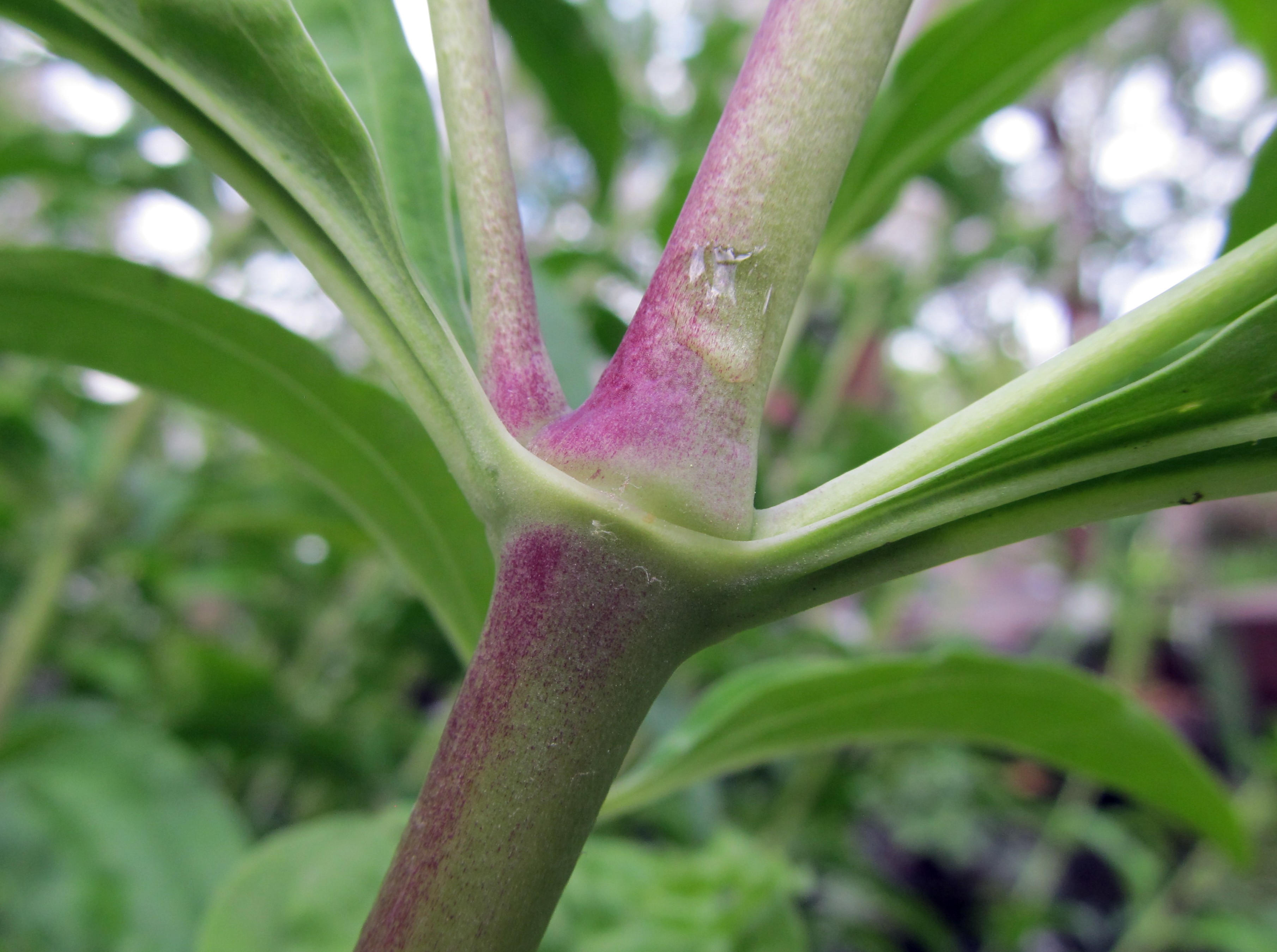
The stems of soapwort grow to about two feet tall, are unbranched, and sometimes tinged with pink, purple, or red. The leaves are oblong and oppositely-arranged, and their bases form prominent collars around the stems. Showy clusters of flowers are found atop the stems throughout the summer. Like other flowers in the pink family (Caryophyllaceae), they are cigar-shaped at the base and opened wide at the end, showing off 5 distinct petals with notches at their tips. The petals of soapwort flowers bend backwards, with their sex parts protruding outwards. In his description of the flowers, John Eastman remarks in The Book of Field and Roadside that “the reflexed petals surrounding the sexual organs give the impression of flagrant thrust; this is a gaudy, unshy flower.”

collared stem of soapwort (Saponaria officinalis)

The fragrant flowers are pink to white in color. They open in the evening and remain open for a few short days. In an individual flower, pollen matures and is mostly shed before the stigma is ready to accept it. This helps reduce the chance of self-pollination. Cross pollination occurs with the assistance of moths who visit the flowers at night, as well as bees and other flower-visiting insects that come along during the daytime. Soapwort fruits are oval capsules containing as many as 500 kidney-shaped seeds. Seeds aren’t essential to the plants spread though, as much of its colonization occurs via vigorous rhizomes.

In fact, vegetative reproduction is the means by which soapwort forms such expansive, thick patches. It also helps that it’s poisonous. The saponins – its soap making compounds – that it produces in its roots, shoots, and leaves deter most insects and other animals from eating it. It has a reputation for poisoning horses, cows, and other livestock, and so is unwelcome in pastures and rangelands. Saponins are also poisonous to fish, so growing soapwort near fish ponds is not advised.

soapwort (Saponaria officinalis)

Soapwort occurs in a variety of soils including sandy, dry, and rocky sites and is surprisingly drough-tolerant, fine qualities to have when colonizing neglected sites. While most other organisms ignore soapwort, it has a friend in humans. Eastman sums this up well: “Soapwort’s most important associate – as is true of most plants we label weeds – is undoubtedly humankind, without whose helpful interventions the plant would surely be much rarer than it is.”

I made a soapy liquid out of soapwort by following a recipe that can be found on various blogs and websites by searching “saponaria soap recipe.” Basically it’s a cup of fresh leaves and stems along with a cup of dried leaves and stems added to a quart of distilled water brought to a boil. After simmering for 15 minutes and then allowing it to cool, strain the mixture through cheese cloth, and it’s ready to go.

This gentle but effective soap can be used for cleaning countertops and other surfaces, as well as dishes, fabrics, and skin. Several sources say it is particularly useful for cleaning delicate fabrics. Sierra and I both found it to have a cooked cabbage or spinach scent to it. This can be masked by adding a few drops of essential oil. Despite its odd aroma, both Sierra and I were impressed by its cleansing power and plan to use it more often.

dried leaves of soapwort

soapwort soap

What Is a Water Chestnut?

This question came up on a recent episode of Every Little Thing, and while I have eaten water chestnuts on numerous occasions, I realized that I have never really considered what they were or where they came from. Thanks to the folks at ELT, I am better informed. So, why not spread the wealth?

Chinese water chestnut (not to be confused with Trapa natans, which is also commonly known as water chestnut) is in the family Cyperaceae – the sedge family. Known botanically as Eleocharis dulcis, it is a member of a sizable genus collectively referred to as the spikerushes or spikesedges. Its distribution is quite expansive, spanning sections of Australia, tropical Africa, several countries in Asia, as well as islands in the Pacific and Indian oceans. It is commonly cultivated in regions outside of its native range, including in North America as a novelty crop.

Eleocharis dulcis is a perennial, aquatic plant that grows in marshes, bogs, and the margins of other wetland and riparian areas in tropical and subtropical climates. Individual plants are clumps of tall, stiff, upright, leafless stems that can grow to over one meter tall. An infloresence is borne at the tops of stems and is a short, cylindrical cluster of small, yellow-brown florets. Clumps of stems are connected via rhizomes, and in this manner dense colonies can be formed. Rhizomes also terminate in corms, which are the edible portion of E. dulcis and the part of the plant that we refer to as water chestnuts.

Chinese water chestnut (Eleocharis dulcis) growing in a bog garden – photo credit: flickr/techieoldfox

Corms are underground storage organs. They are the bases of stems that have become thick and swollen with starch. They are often covered in papery scales – which are the remnants of leaves – that help protect the corm from being damaged or drying out. Buds on the top of the corm form shoots; adventitious roots form on the bottom of the corm. Tubers, which are also modified stems and underground storage organs, differ from corms in that they have growing points at various locations along their surface rather than a single growing point at the top.

Common misconceptions are that water chestnuts are nuts or roots. They are neither. They are corms, or in other words, they are modified stem bases. Apart from that, they are vegetables. Curiously, they are vegetables from a plant family that does not produce much in the way of food for humans. Consider that the next time you eat them. You are eating a sedge.

Corm of Chinese water chestnut (Eleocharis dulcis), the edible portion of the plant – photo credit: flickr/sclereid0309

Chinese water chestnuts can be prepared in many ways, both raw and cooked. I have only had them in stir fries, but they can also be used in salads and soups or ground into flour to make water chestnut cakes. Interestingly, even when they are cooked they remain crisp. This has something to due with the special properties of their cell walls.

As an agricultural crop they are often grown in paddies in rotation with rice. With a few preparations they can also be grown at home alongside your other vegetables. Further information and instruction can be found at various locations online including Permaculture Research Institute, Missouri Botanical Garden, and Plants for a Future.

Having only eaten water chestnuts from a can, I am anxious to try fresh, raw water chestnuts. Apparently they are available at certain Asian markets. When I get my hands on some, I will let you know what I think. Follow me on Twitter or Facebook for further updates.

———————

What are your favorite ways to eat Chinese water chestnuts? Let us know in the comment section below.