Drought Tolerant Plants: Water Efficient Garden at Idaho State Capitol Building

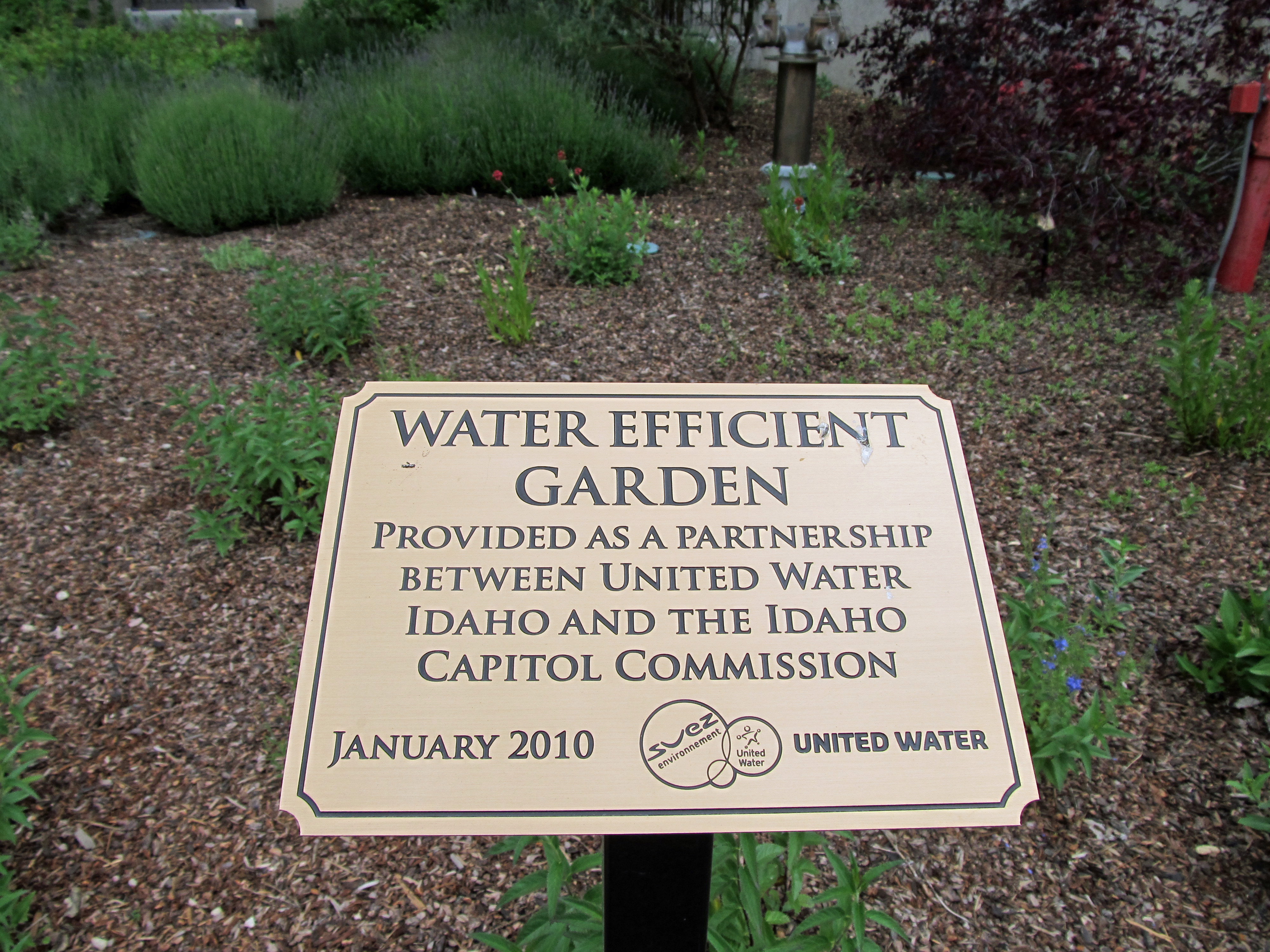
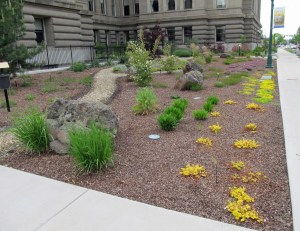
water efficient garden sign

As drought and threats of drought continue in the western half of the United States, as well as in many other parts of the world, people are increasingly looking for ways to use less water in their landscapes. For many it is a change they are reluctant to make, worried that they will have to sacrifice lush and colorful yards and gardens for drab, dry, gray, and seemingly lifeless ones. Not so, though. The palette of plants that can survive in low water environments is actually quite diverse and contains numerous plants that are just as lush and colorful as some water hogging ones. If planned, planted, and maintained well, a water efficient garden can be incredibly attractive and can even consist of some plants that are comparatively more heavy water users. So, for those who are apprehensive about getting down with brown, don’t fret – there is a better way.

How does one go about creating such a garden? The answer to that is a book on its own – much too long for a single blog post. It also depends who is asking the question, or more specifically, where they are asking it from. Luckily, demonstrations of water-wise gardens are becoming more common. These gardens, planted with regionally appropriate plants and showcasing various water-saving techniques, are great places to start when looking for ideas and motivation. Such gardens can be found at public parks, city and state government buildings, botanical gardens, nurseries and nursery centers, and water company offices. If you are looking to transform your landscape into a more water efficient one, seek out a demonstration garden in your area. It’s a great place to start.

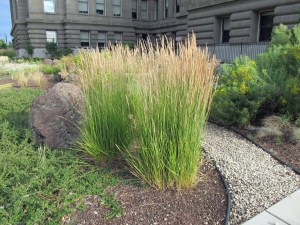
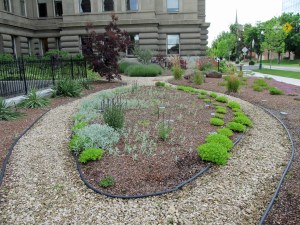
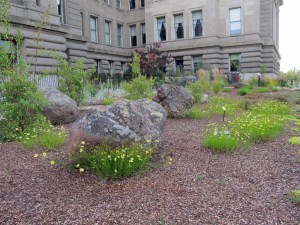
There are several such gardens where I live, one of which is the Water Efficient Garden at the Idaho State Capitol Building in Boise, Idaho. This garden began in 2010 as a partnership between United Water Idaho and the Idaho Capitol Commission. Its mission is to introduce visitors to “low-water native and adaptive plants that thrive in Idaho’s climate.” The plants that were selected for the garden are commonly found at local garden centers and nurseries – an important objective when introducing people to water-wise gardening. The ultimate goal of this garden is to “show homeowners that they can maintain attractive landscaping while conserving water.”

I have my criticisms of this garden regarding plant selection, design, etc., but I’ll spare you those details. I also don’t know the specifics about how this garden is maintained or how often it is watered. All that aside, I am just happy that it exists, and I encourage you to seek out similar gardens in your area. There are numerous approaches to designing and constructing water efficient gardens – again, a book on its own – but demonstration gardens like this are an excellent place to get ideas and learn what other people in your area are doing to conserve water and create landscapes that better reflect the ecology of your region.

United Water Idaho offers a brief introduction to low water gardening here, as well as a list of plants that are in the capitol building garden here.

Blanket Flower (Gaillardia x grandiflora 'Goblin') Plants in the garden are accompanied by a sign with a number on it. The sign corresponds to the plant list that is provided at the entrances to the garden.

Blanket flower (Gaillardia x grandiflora ‘Goblin’). Plants in the garden are accompanied by a sign with a number on it. The sign corresponds to a plant list that is provided at the entrances to the garden.

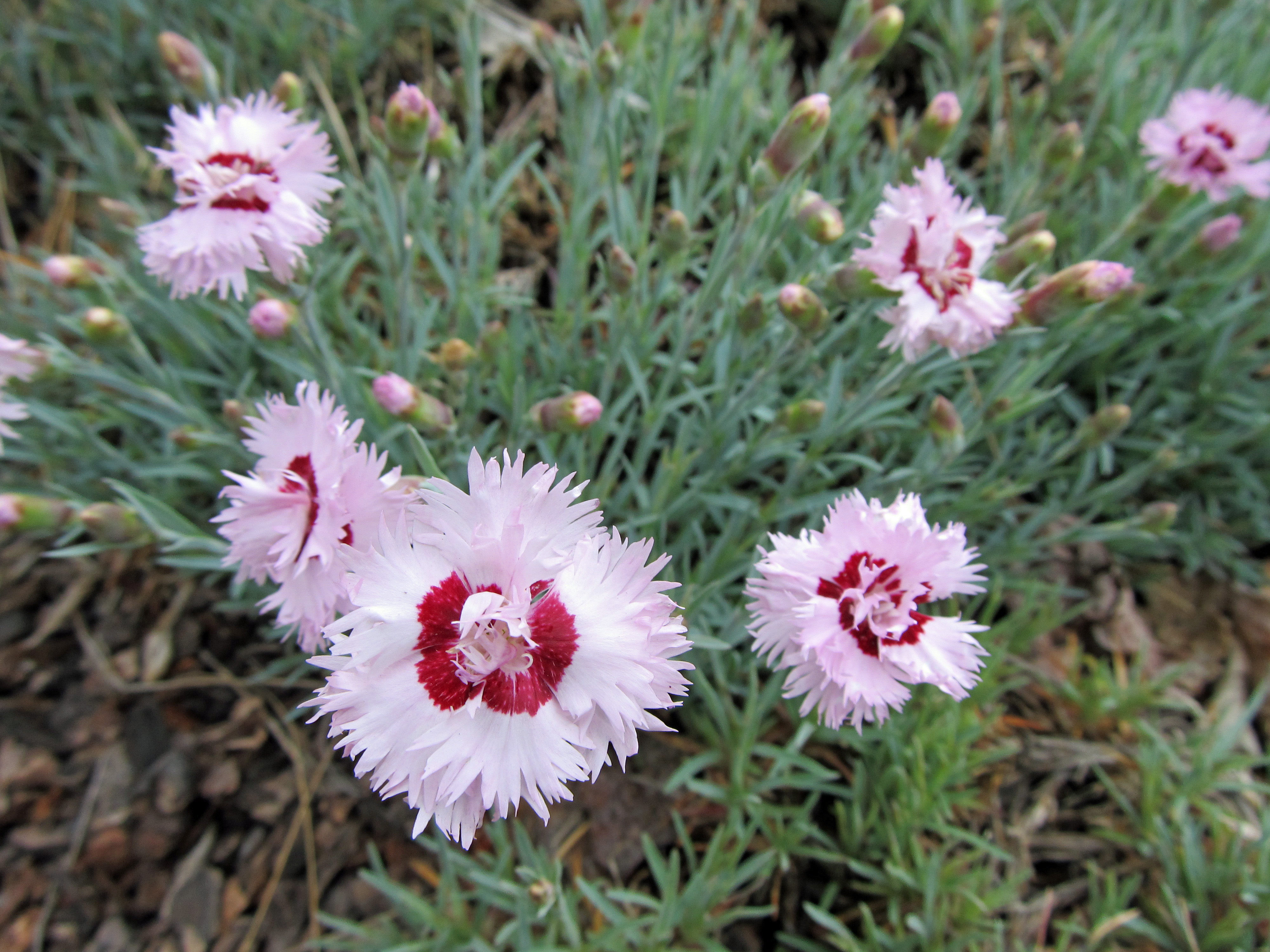
Dianthus sp.

Dianthus sp.

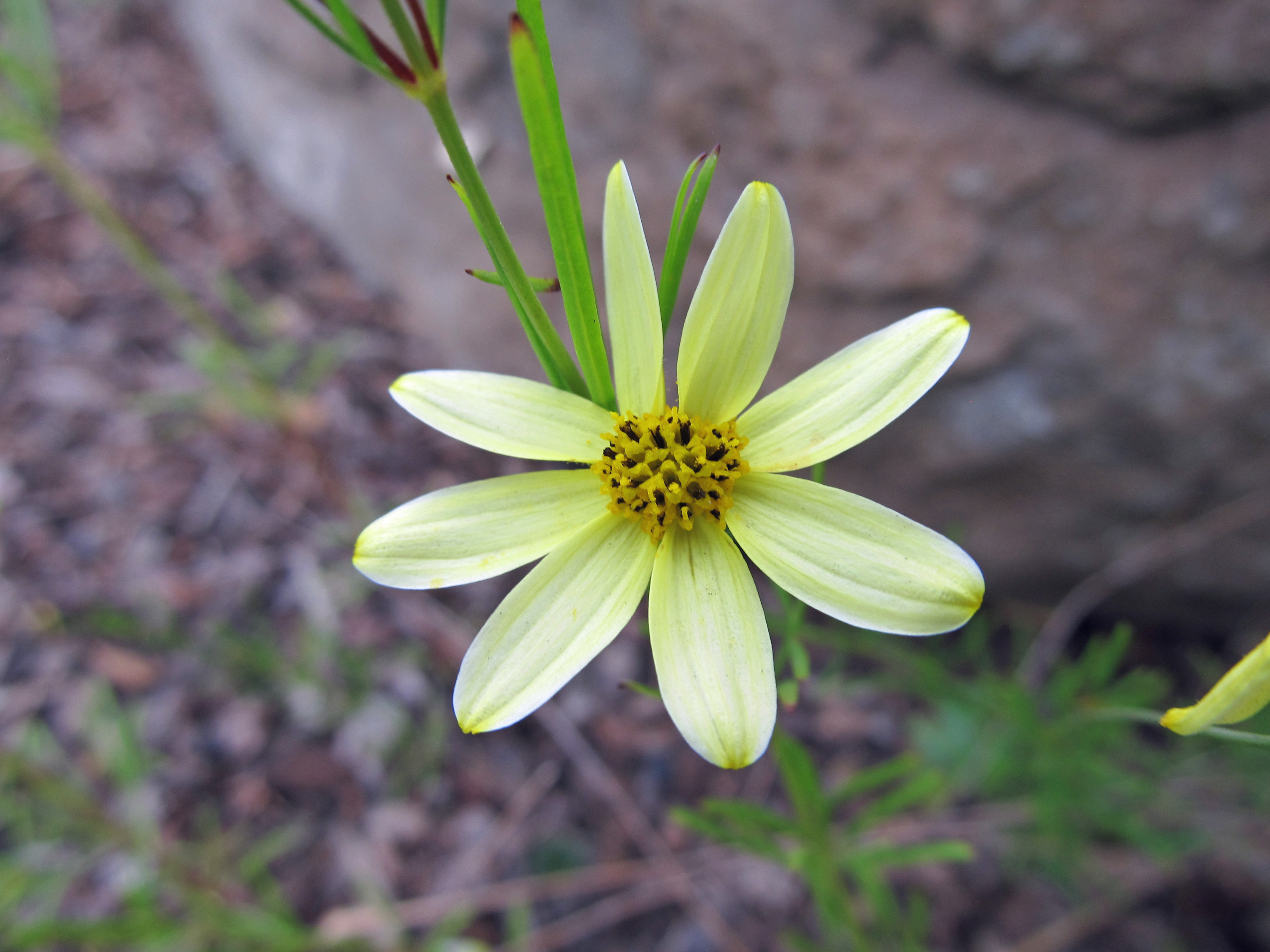
Coreopsis sp.

Coreopsis sp.

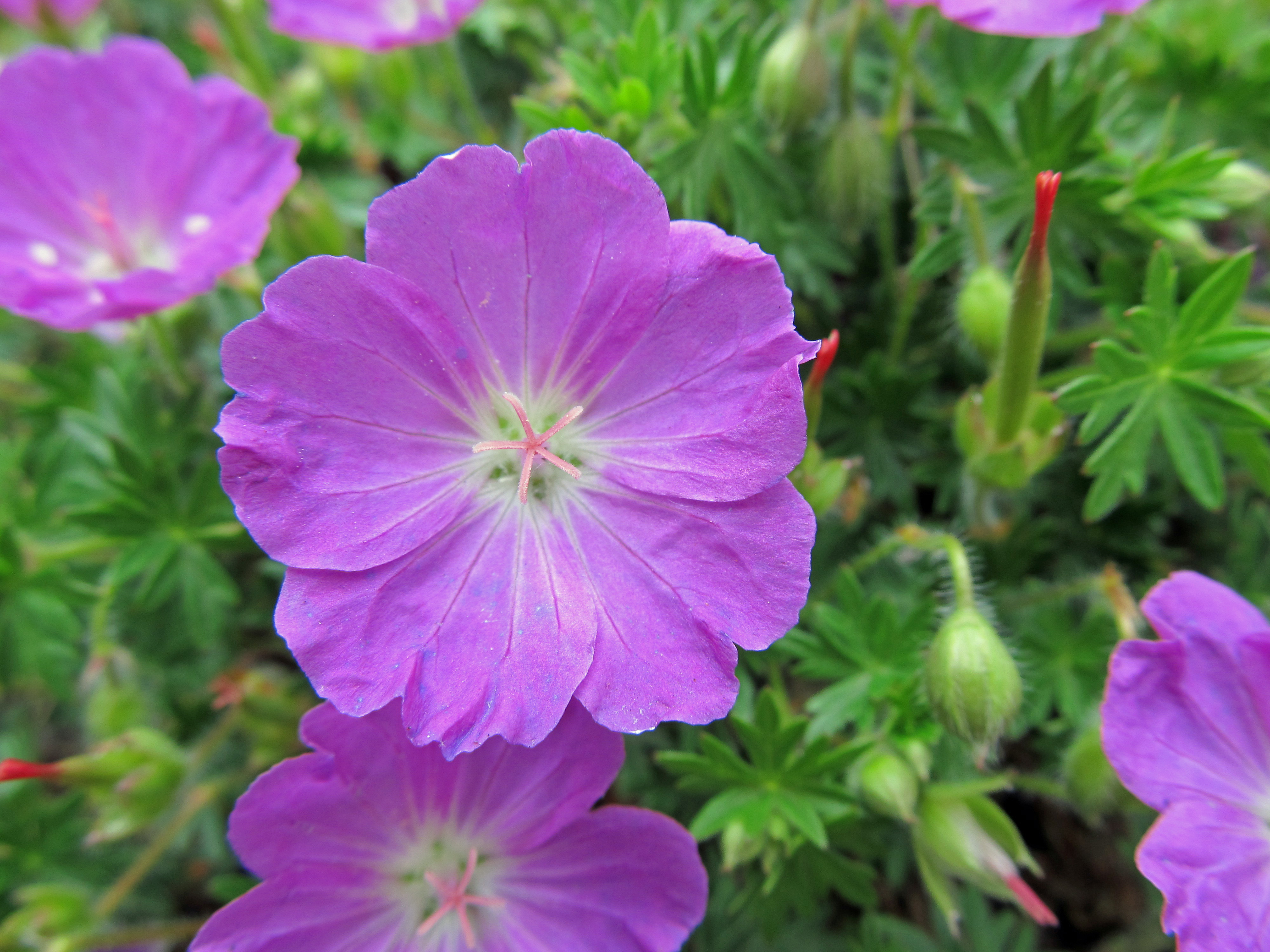
Geranium sp.

Geranium sp.

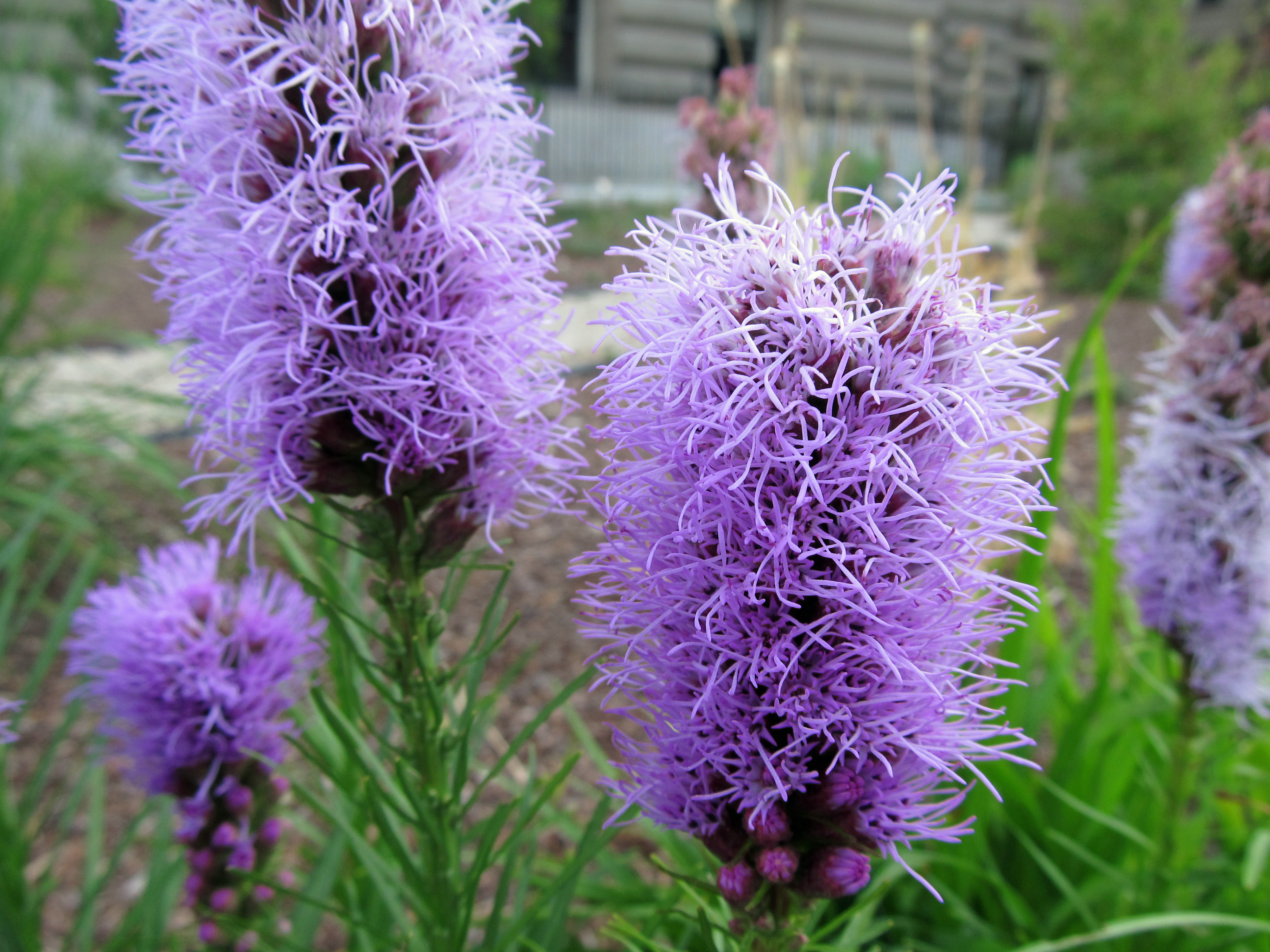
Liatris sp.

Liatris sp.

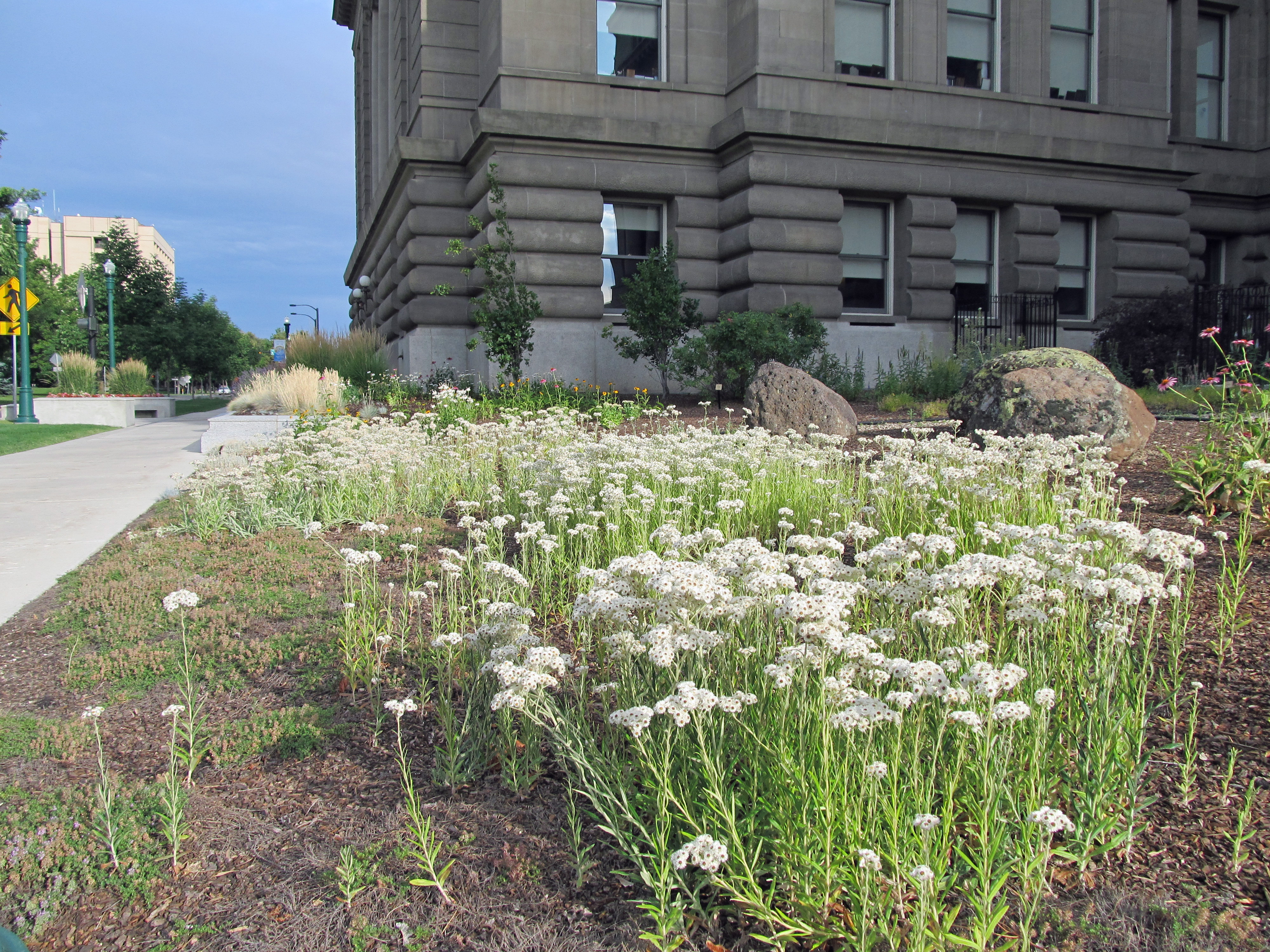
A drift of pearly everlasting (Anaphalis margaritacea)

A drift of pearly everlasting (Anaphalis margaritacea)

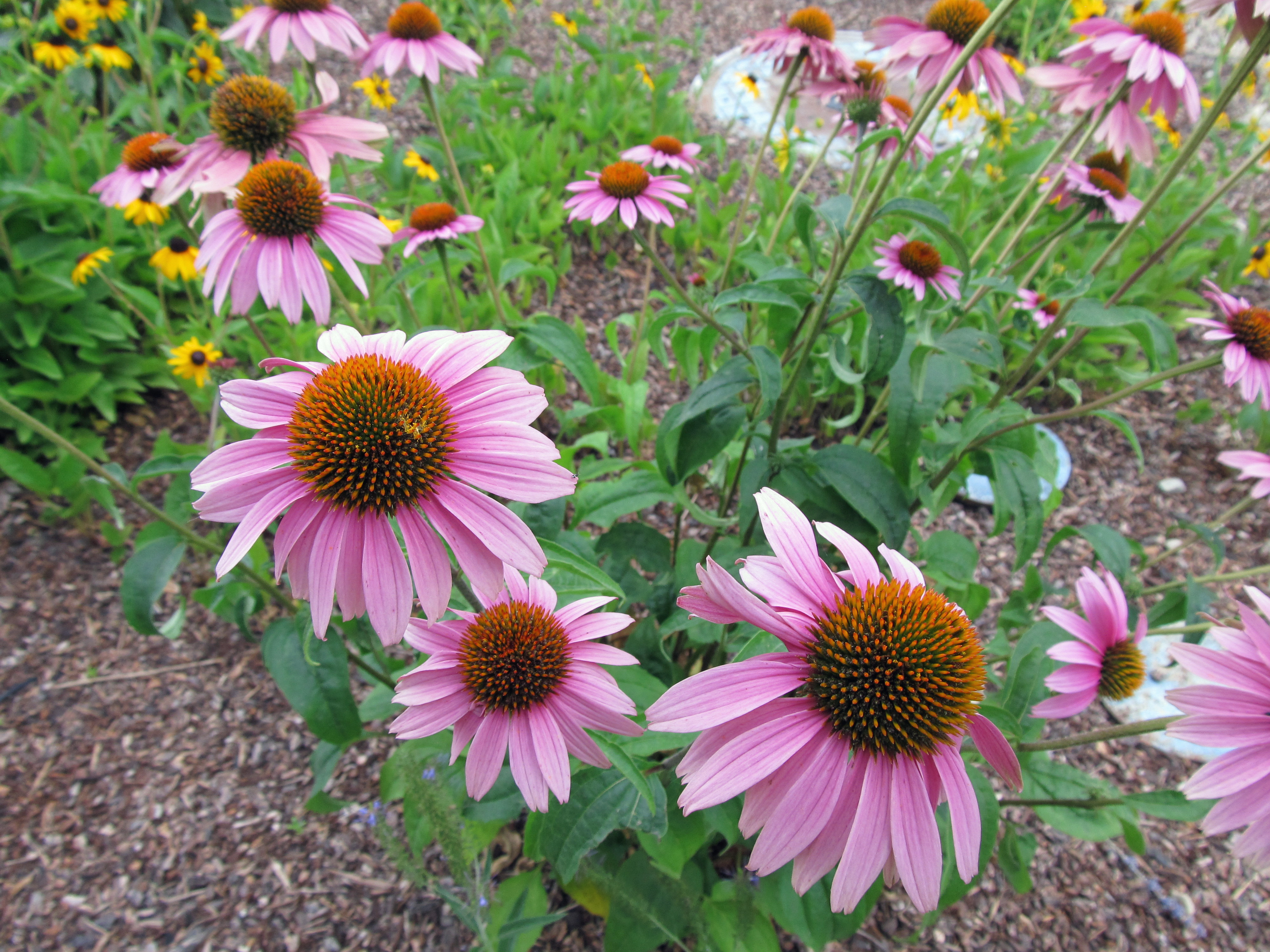
Purple coneflower (Echinacea purpurea)

Purple coneflower (Echinacea purpurea)

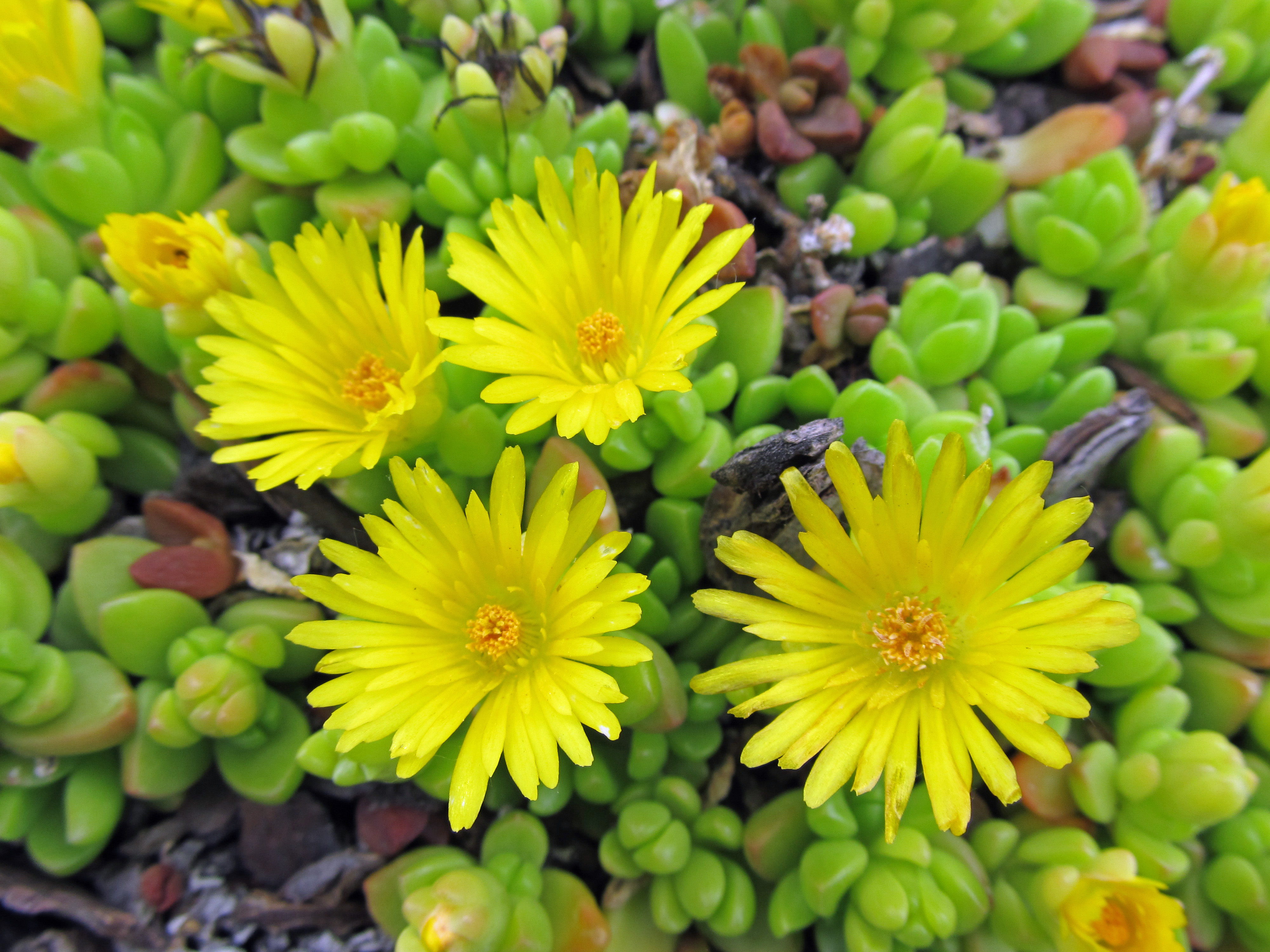
Yellow ice plant (Delosperma nubiginum)

Yellow ice plant (Delosperma nubiginum)

Other “Drought Tolerant Plants” Posts on Awkward Botany:

Year of Pollination: Most Effective Pollinator Principle and Beyond, part one

Have you ever considered the diversity of flowers? Why do they come in so many different shapes, sizes, and colors? And why do they produce so many different odors – or none at all? Flowering plants evolved around 140 million years ago, a fairly recent emergence evolutionarily speaking. Along with them evolved numerous species of insects, birds, and mammals. In his book, The Triumph of Seeds, Thor Hanson describes the event this way: “In nature, the flowering plants put sex, seeds, and dispersal on full display, spurring not only their own evolution but also that of the animals and insects with which they became so entwined. In most cases, the diversity of dispersers, consumers, parasites – and, most especially, pollinators – rose right alongside that of the plants they depended upon.”

Speaking of dependence, most flowering plants depend upon pollinators for successful reproduction – it is, for the most part, a mutually beneficial relationship. Even the casual observer of flowers will note that a large portion of the creatures that visit them appear to be pollinators. Thus, it is no wonder that pollination biologists have given pollinators so much credit in shaping the flowers that we see today.

Consider G. Ledyard Stebbins and his Most Effective Pollinator Principle which he defined in a paper published in 1970: “the characteristics of the flower will be molded by those pollinators that visit it most frequently and effectively in the region where it is evolving.” He then goes on to reference pollination syndromes, a phenomenon that describes how the traits of flowers are best suited for their “predominant and most effective vector[s].” In my post about pollination syndromes a few months ago, I discussed how a strict adherence to this concept has waned. In the next two posts, I discuss how the Most Effective Pollinator Principle (MEPP) may not be the best way to explain why flowers look the way they do.


To make this argument I am drawing mainly from two chapters in the book Plant-Pollinator Interactions: From Specialization to Generalization. The first is “Ecological Factors That Promote the Evolution of Generalization in Pollination Systems” by Jose M. Gomez and Regino Zamora, and the second is “The Evolution of Specialized Floral Phenotypes in a Fine-grained Pollination Environment” by Paul A. Aigner.

According to Aigner the MEPP “states that a plant should evolve specializations to its most effective pollinators at the expense of less effective ones.” And according to Gomez and Zamora it “states that natural selection should modify plant phenotypes [observable characteristics derived from interactions between a plant’s genes and its surrounding environment] to increase the frequency of interaction [between] plants and the pollinators that confer the best services,” and so “we would expect the flowers of most plants to be visited predominantly by a reduced group of highly effective pollinators.” This is otherwise known as adaptive specialization.

Specialization is something that, in theory, plants are generally expected to evolve towards, particularly in regards to plant-pollinator relationships. Observations, on the other hand, demonstrate the opposite – that specialization is rare and most flowering plants are generalists. However, the authors of both chapters advise that specialization and generalization are extreme ends to a continuum, and that they are comparative terms. One species may be more specialized than another simply because it is visited by a smaller “assemblage” of pollinators. The diversity of pollinators in that assemblage and the pollinator availability in the environment should also be taken into consideration when deciding whether a relationship is specialized or generalized.

That pollinators can be agents in shaping floral forms and that flowering plant species can become specialized in their interactions with pollinators is not the question. There is evidence enough to say that it occurs. However, that the most abundant and/or effective pollinators are the main agents of selection and that specialization is a sort of climax state in the evolutionary process (as the MEPP seems to suggest) is up for debate. Generalization is more common than specialization, despite observations demonstrating that pollinators are drawn to certain floral phenotypes. So, could generalization be seen as an adaptive strategy?

In exploring this question, Gomez and Zamora first consider what it takes for pollinators to act as selective agents. They determine that “pollinators must first benefit plant fitness,” and that when calculating this benefit, the entire life cycle of the plant should be considered, including seed germination rate, seedling survival, fecundity, etc. The ability of a pollinator species to benefit plant fitness depends on its visitation rate and its per-visit effectiveness (how efficiently pollen is transferred) – put simply, a pollinator’s quantity and quality during pollination. There should also be “among-pollinator differences in the evolutionary effect on the plant,” meaning that one species or group of pollinators – through being more abundant, effective, or both – contributes more to plant fitness compared to others. “Natural selection will favor those plant traits that attract the most efficient or abundant pollinators and will also favor the evolution of the phenotypes that cause the most abundant pollinators to also be the most effective.” This process implies possible “trade-offs,” which will be discussed in part two.

When pollinators act as selective agents in this way, the MEPP is supported; however, Gomez and Zamora argue that this scenario “only takes place when some restrictive ecological conditions are met” and that while specialization can be seen as the “outcome of strong pollinator-mediated selection,” generalization can also be “mediated by selection exerted by pollinators…in some ecological scenarios.” This is termed adaptive generalization. In situations where ecological forces constrain the development of specialization and pollinators are not seen as active selection agents, nonadaptive generalization may be occurring.

Gomez and Zamora spend much of their chapter exploring “several causes that would fuel the evolution of generalization” both adaptive and nonadaptive, which are outlined briefly below.

  • Spatiotemporal Variability: Temporal variability describes differences in pollinator assemblages over time, both throughout a single year and over several years. Spatial variability describes differences in pollinator assemblages both among populations where gene flow occurs and within populations. Taken together, such variability can have a measurable effect on the ability of a particular pollinator or group of pollinators to act as a selective agent.
  • Similarity among Pollinators: Different pollinator species can have “equivalent abundance and above all comparable effectiveness” making them “functional equivalents from the plant perspective.” This may be the case with both closely and distantly related species. Additionally, a highly effective pollinator can select for floral traits that attract less effective pollinators.
  • The Real Effects on Plant Fitness: An abundant and efficient pollinator may select for one “fitness component” of a plant, but may “lead to a low overall effect on total fitness.” An example being that “a pollinator may benefit seed production by fertilizing many ovules but reduce seedling survival because it causes the ripening of many low-quality seeds.” This is why “as much of the life cycle as possible” should be considered “in assessing pollinator effectiveness.”
  • Other Flower Visitors: Pollinators are not the only visitors of flowers. Herbivores, nectar robbers, seed predators, etc. may be drawn in by the same floral traits as pollinators, and pollinators may be less attracted to flowers that have been visited by such creatures. “Several plant traits are currently thought to be the evolutionary result of conflicting selection exerted by these two kinds of organisms,” and “adaptations to avoid herbivory can constrain the evolution of plant-pollinator interactions.”

This, of course, only scratches the surface of the argument laid out by Gomez and Zamora. If this sort of thing interests you, I highly encourage you to read their chapter. Next week I will summarize Aigner’s chapter. If you have thoughts on this subject or arguments to make please don’t hesitate to comment or contact me directly. This is a dialogue, dudes.

Field Trip: Sawtooth Botanical Garden

columbine

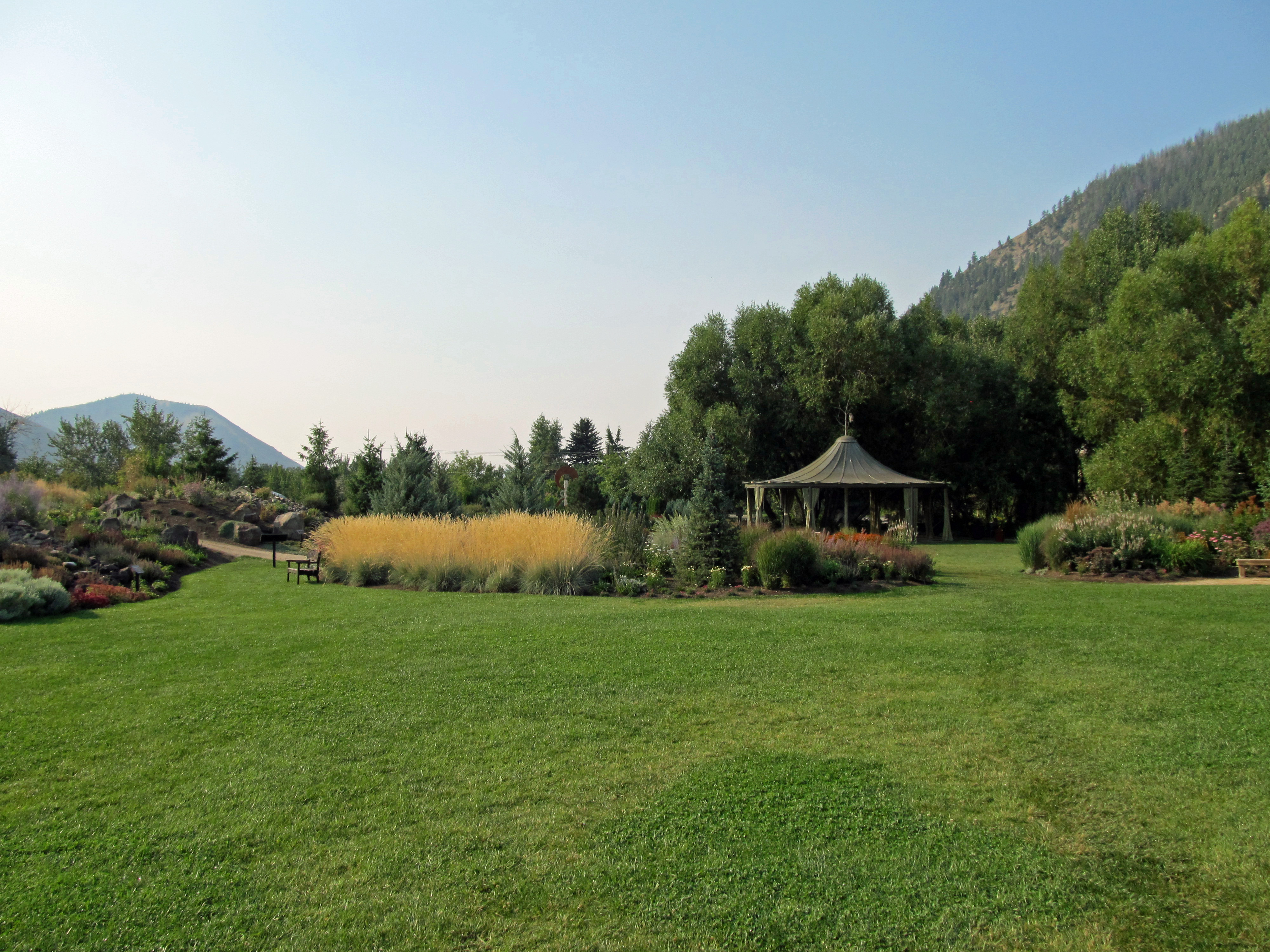
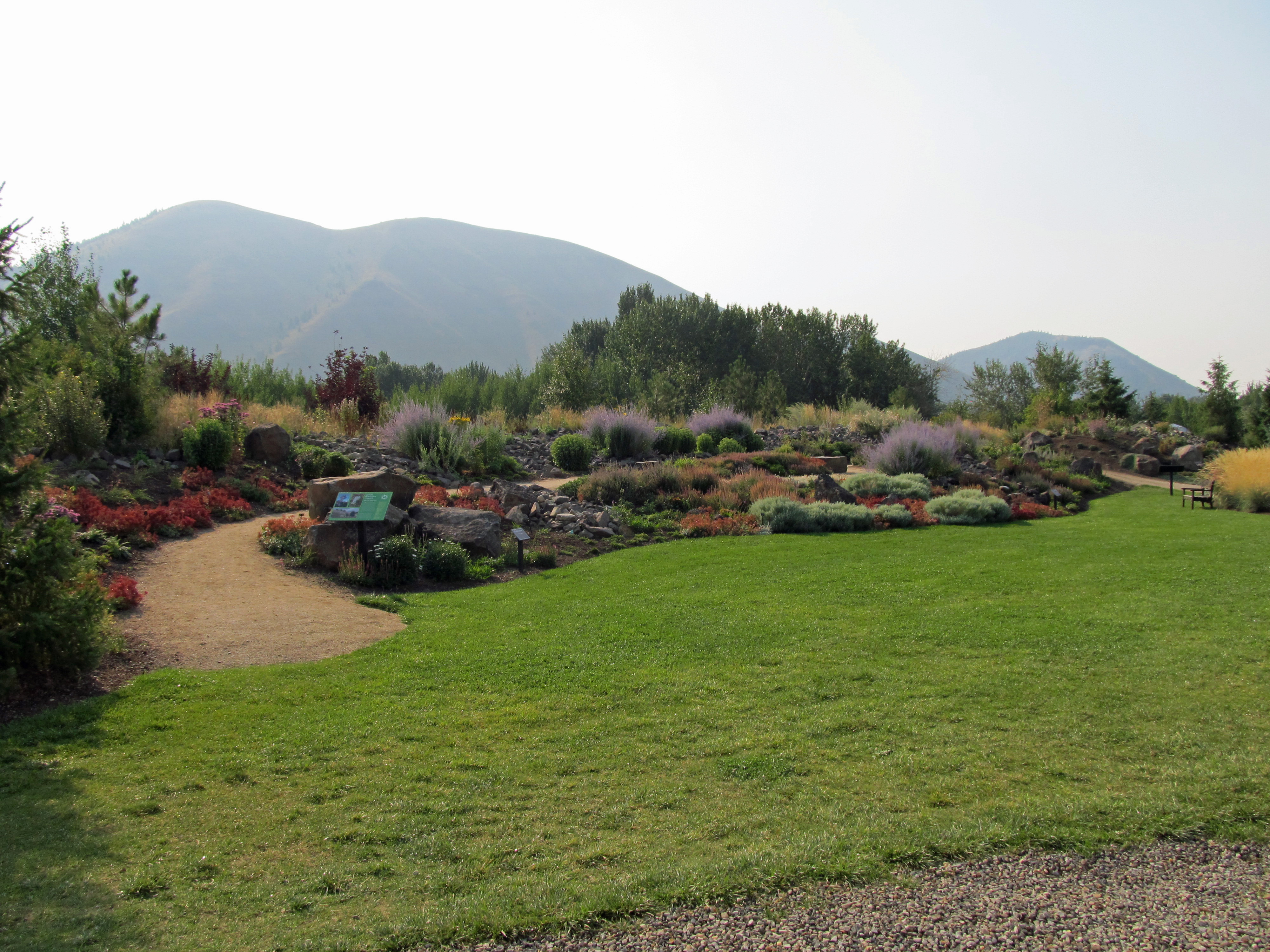
It may only be a two and a half hour drive from my house, but until last week I had never visited Sawtooth Botanical Garden in Ketchum, Idaho. The garden is probably not in its prime in the middle of August, but I happened to be in the area so I had to check it out. It’s a small garden – about 5 acres – but I found the space to be well used and full of interesting plants and features. Walking through meandering pathways and around a series of berms, it is easy to get the impression that the garden is larger than it actually is. There were a few areas in obvious need of attention, but as an employee of a non-profit public garden myself, I understand the challenges of maintaining a garden with limited resources. So putting minor issues aside, I thought the garden looked beautiful and I greatly enjoyed my wander through it.

Sawtooth Botanical Garden is in its 11th year. Its mission is to “showcase native and cultivated plants that flourish at high altitude” and to “foster environmental stewardship” of the “region’s unique beauty” by offering “education, events, displays, and plant collections.” Read more about its mission and history here. Brief descriptions of the areas within the garden can also be found on the garden’s website. The interpretive signage describing each area in the garden was well done and one of the highlights of my visit. I didn’t stay long, but I definitely plan on visiting again in the near future. If you ever find yourself in the Wood River Valley, I highly recommend stopping by.

Central area of the garden featuring perennial beds and the Ellen Long Garden Pavillion

Central area of the garden featuring the perennial beds and the Ellen Long Garden Pavillion

Berms in the Alpine Garden with pathway passing through

Berms in the Alpine Garden with pathway passing through

Water feature in the Garden of Infinite Compassion, built in honor of the Dali Lama's visit to the Wood River Valley

Water feature in the Garden of Infinite Compassion, built in honor of the Dalai Lama’s visit to the Wood River Valley several years ago

Alpine strawberry (Fragaria sp.)

Alpine strawberry (Fragaria sp.)

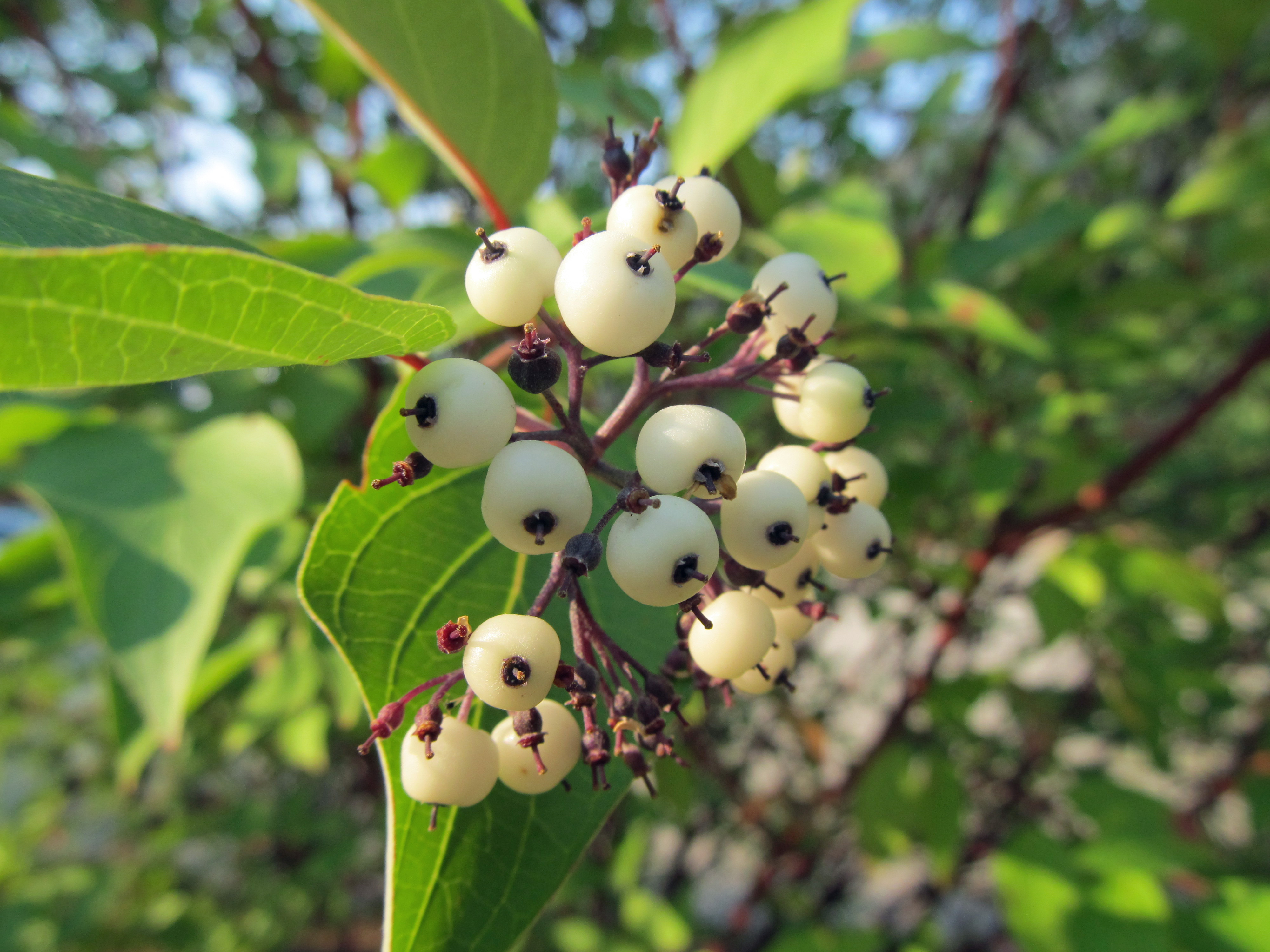
Redtwig dogwood (Cornus stolonifera 'Baileyi')

The fruits of red twig dogwood (Cornus sericea ‘Baileyi’)

cinquefoil

Spring cinquefoil (Potentilla neumanniana)

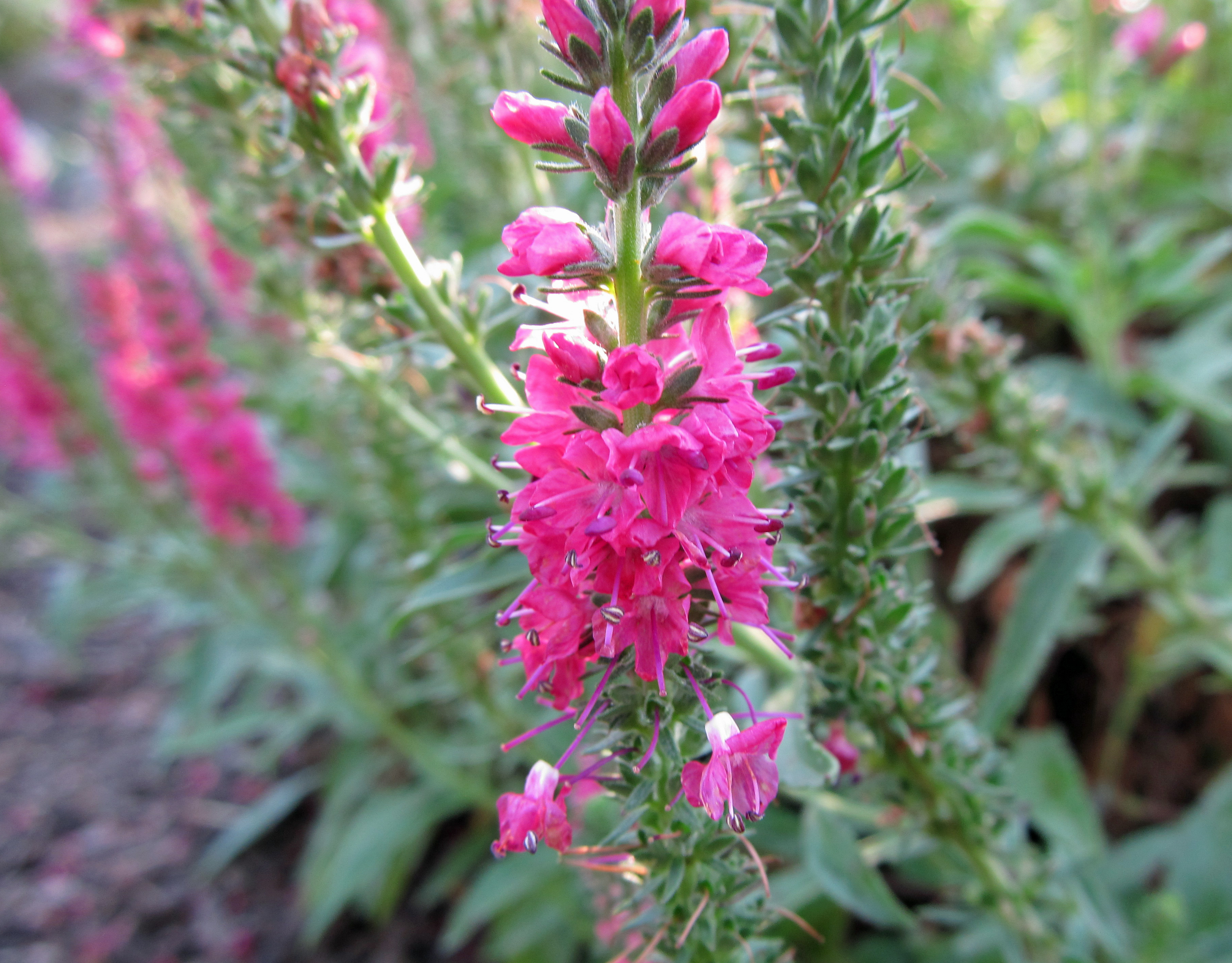
Spiked speedwell (Veronica spicata 'Red Fox')

Spiked speedwell (Veronica spicata ‘Red Fox’)

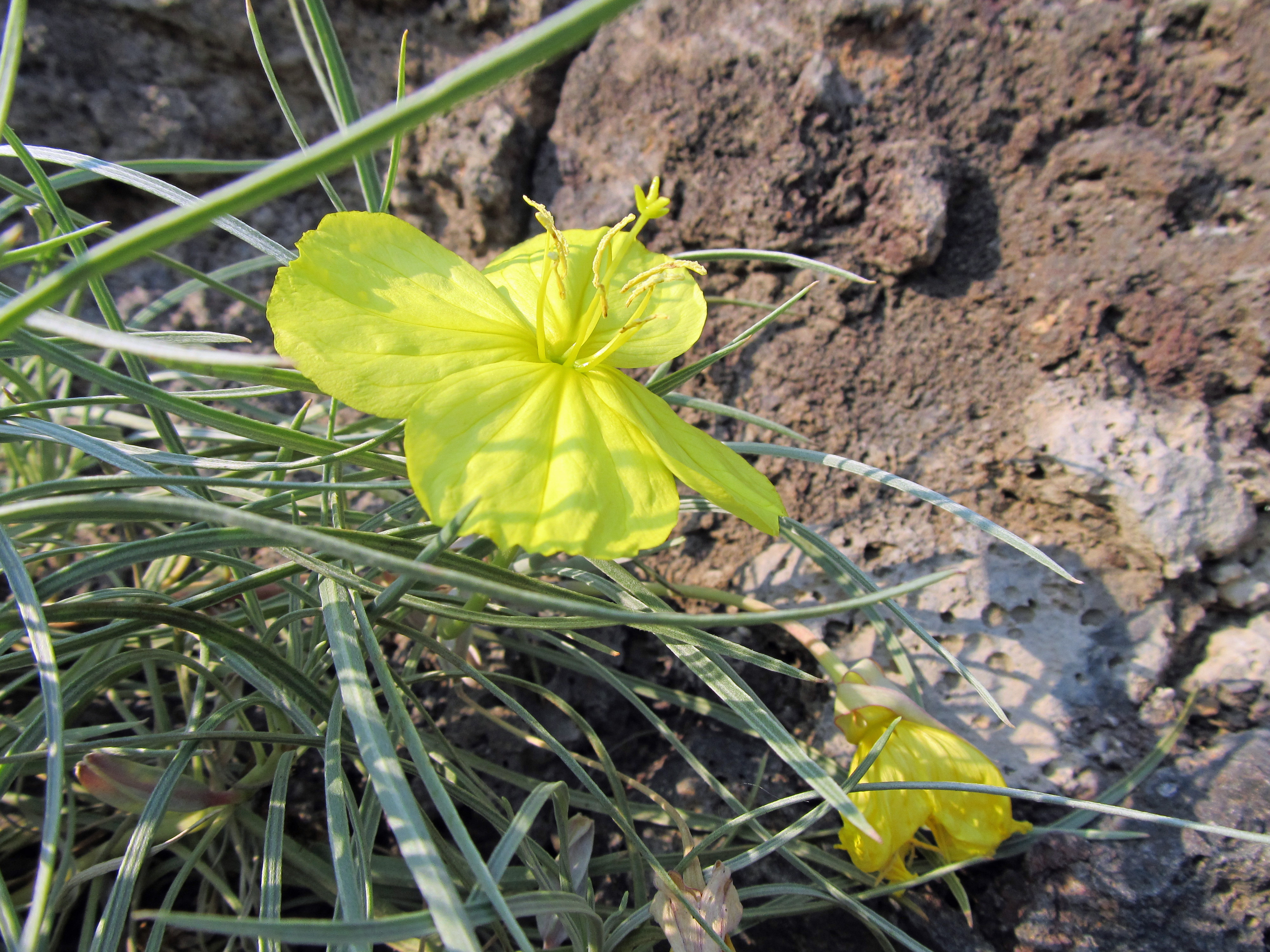
Evening primrose (Oenothera sp.)

Evening primrose (Oenothera sp.)


What Shall We Do About Invasive Species?

I think about invasive species a lot. This blog doesn’t really reflect that though. I have been avoiding a deep dive into the subject mainly because there is so much to say about it and I don’t really want this to become “the invasive species blog.” Admittedly, I’m also trying to avoid controversy. Some people have very strong opinions about invasive species, and I don’t always agree. But then an article entitled Taking the long view on the ecological effects of plant invasions appeared in the June 2015 issue of American Journal of Botany. Intrigued by the idea of “taking the long view,” I read the article and decided that now is as good a time as any to start exploring this topic in greater depth.

However, before getting into the article, we should define our terms. “Invasive species” is often used inappropriately to refer to any species that is found outside of its historic native range (i.e. the area in which it evolved to its present form). More appropriate terms for such species are “introduced,” “alien,” “exotic,” “non-native,” and “nonindigenous.” The legal definition of an invasive species (according to the US government) is “an alien species that does or is likely to cause economic or environmental harm or harm to human health.” Even though this definition specifically refers to “alien species,” it is possible for native species to behave invasively.

These terms refer not just to plants but to all living organisms. The term “noxious weed,” on the other hand, is specific to plants. A noxious weed is a plant species that has been designated by a Federal, State, or county government as “injurious to public health, agriculture, recreation, wildlife, or property.” A “weed” is simply a plant that, from a human perspective, is growing in the wrong place, and any plant at any point could be determined to be a weed if a human says so. (I’ll have more to say about human arrogance later in the post.)

Rush skeletonweed (Chondrilla juncea) - labeled a noxious weed in Idaho

Rush skeletonweed (Chondrilla juncea) – labeled a noxious weed in Idaho

The authors of the AJB article (S. Luke Flory and Carla M. D’Antonio) begin by clarifying that “most introduced species are not problematic.” Those that are, however, can “cause significant ecological and economic damage.” This damage is well documented, and it is the reason why billions of dollars are spent every year in the battle against invasive species. But there is a dearth in our research: “less is known about how ecological effects of invasions change over time.” The effects of invasive species could “increase, decrease, or be maintained over decades,” and “multiple community and ecosystem factors” will determine this. For this reason, the authors are calling for “concentrated efforts to quantify the ecological effects of plant invasions over time and the mechanisms that underlie shifting dynamics and impacts.” Armed with this kind of information, managers can better direct their efforts towards invasive species determined to be “the most problematic.”

The authors go on to briefly explain with examples why an invasive species population may decline or be maintained over time, highlighting selected research that demonstrates these phenomena. Research must continue with the aim of improving our understanding of the long term effects of plant invasions. The authors acknowledge that this “will require carefully designed experiments,” “patient and persistent research efforts,” and significant amounts of money. However, they are convinced that through a widespread collaborative effort it can be done. They encourage researchers to deposit data obtained from their research in open source online repositories so that future meta-analyses can be conducted. The information available in these online repositories can be used to develop management plans and help predict “future problematic invasions.”

Considering the amount of time and resources currently spent on confronting invasive species, the approach proposed by the authors of this article is quite reasonable. It seems absurd to continue to battle a problematic species that will ultimately be brought down to more manageable levels by natural causes. It also seems absurd to battle against a species that is essentially here to stay.

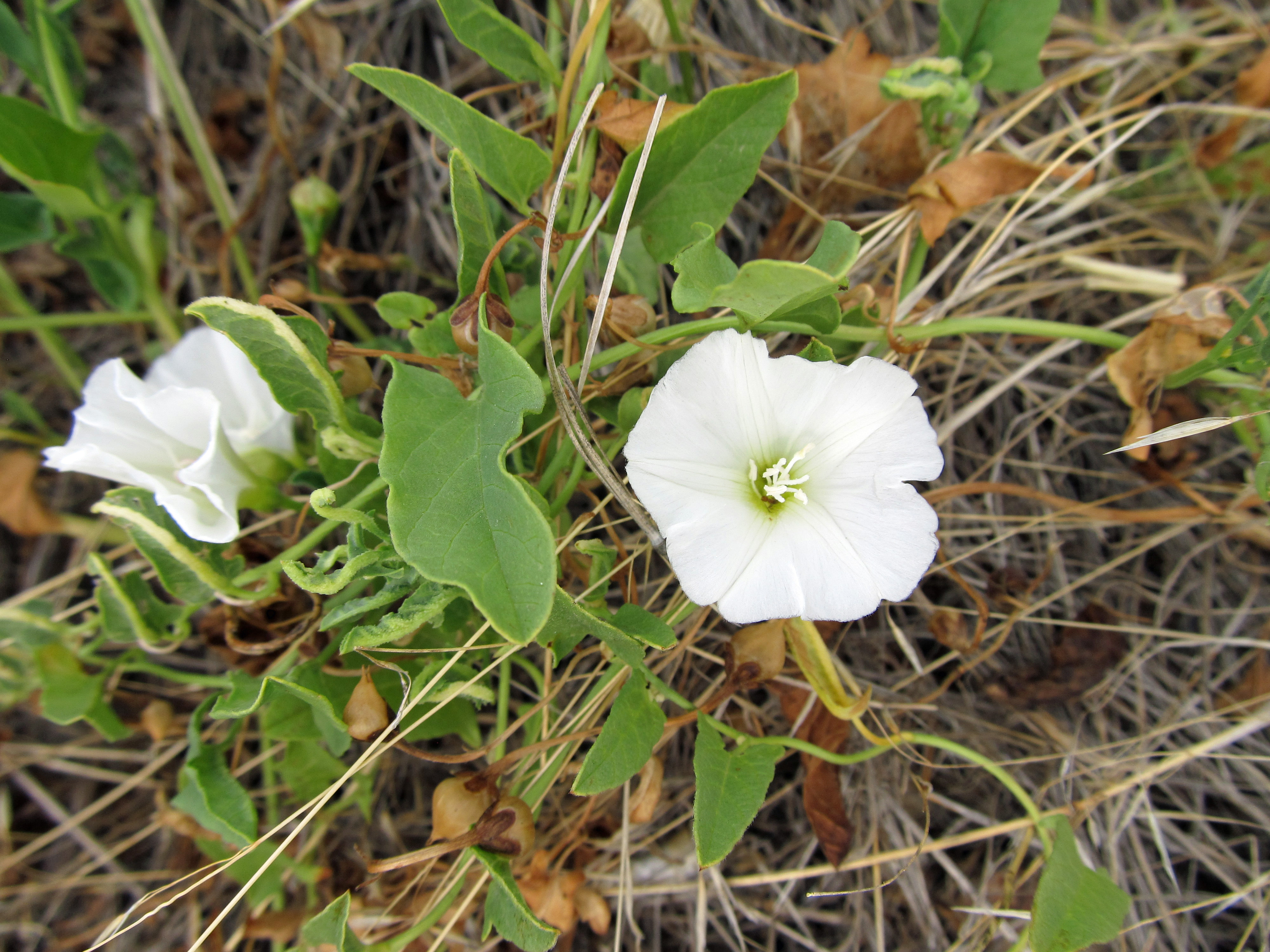
Field bindweed (Convulvulus arvensis) - labeled a noxious weed in Idaho

Field bindweed (Convulvulus arvensis) – labeled a noxious weed in Idaho

And that brings me to the point in which I make enemies. Take a look at the terms defined earlier. When we talk about introduced species, we are referring to introductions by humans, whether purposeful or accidental. An “alien” species introduced to a new location by wind, water, or animal (other than human) would be considered a natural introduction, right? If that species becomes established in its new location, it would simply be expanding its range. If a human brought it there, again whether purposefully or accidentally, it would be considered an exotic indefinitely.

Humans have been moving species around since long before we became the humans we are today in the same way that a migratory bird might move a species from one continent to another. At what point during our evolution did our act of moving species around become such a terrible thing?

I will concede that our species has become an incredibly widespread species, able to move about the planet in ways that no other species can. We also have technological advances that no other species comes close to matching. In the time that our species has become truly cosmopolitan, the amount of species introductions that we have participated in has increased exponentially. Leaving ecological destruction in our wake is kind of our modus operandi. I don’t want to make excuses for that, but I also don’t see it unfolding any other way. Give any other species the opportunities we had, and they probably would have proceeded in the same manner. Just consider any of the most notorious invasive species today – “opportunist” is their middle name.

More and more, as we are able to see what we have done, we are making efforts to “fix it.” But how de we rewind time? And if we could, when do we rewind back to? And how do we not “ruin it” again? The earth does not have a set baseline or a condition that it is supposed to be in at any given time. The earth just is. It is operating in a state of randomness, just like everything else in the universe. Any idea of how the earth must look at any given time is purely philosophical – conceived of by humans. I’m not saying that we shouldn’t try to repair the damage, but we should acknowledge that the repairs we’re trying to make are largely for the perpetuation of our own species. Yeah, we’ve developed a soft spot for other species along the way (thankfully), but ultimately we’re just trying to maintain. The earth, on the other hand, would be fine without us.

So, what shall we do about invasive species? I’m not entirely sure. The only thing I’m certain of is that I will continue to ruminate on them and potentially bore you with more blog posts in the future. Until next time…

Puncturevine (Tribulus terrestris) - labeled a noxious weed in Idaho

Puncturevine (Tribulus terrestris) – labeled a noxious weed in Idaho

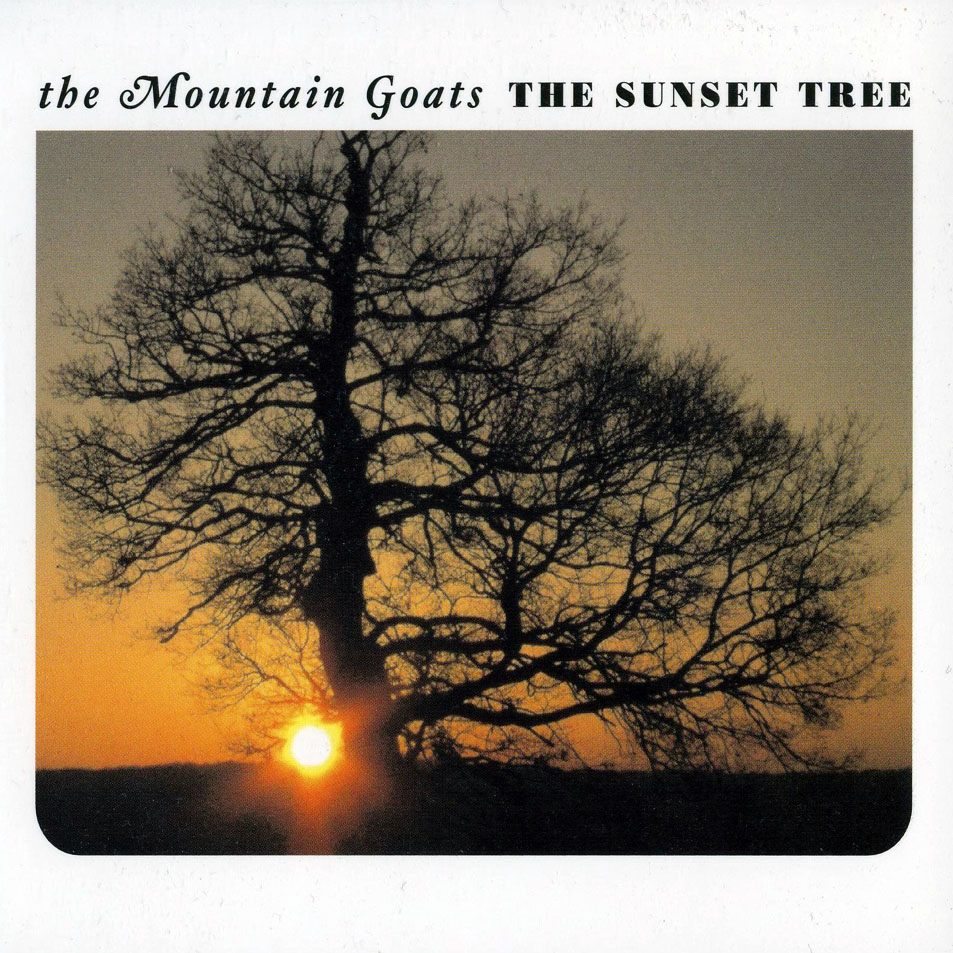
Botany in Popular Culture: The Sunset Tree by the Mountain Goats

My obsession with plants means that I see botany everywhere – in the music I listen to, the shows I watch, the books I read, whatever. Just a fleeting mention of something plant related in any type of media will catch my attention, no matter how ancillary it is to the major themes. And that is the impetus behind this series of posts about botany in popular culture. Well that and, believe it or not, I do enjoy many non-plant related things, and this gives me an excuse to write about those things on a plant-centric blog.

TheSunsetTreeFrontCover

The Mountain Goats are a folk rock band formed by John Darnielle in 1991. It could be said that John Darnielle is synonymous with the Mountain Goats, as Darnielle is the chief songwriter and at times has been the only member of the band. The Sunset Tree is the Mountain Goats ninth studio album and only the second album featuring songs that are primarily autobiographical. The album that preceded The Sunset Tree, entitled We Shall All Be Healed, was about Darnielle’s teenage years as a methamphetamine user. The Sunset Tree describes growing up with an abusive stepfather. Heavy topics are kind of the Mountain Goats’ thing.

Darnielle’s lyrics are highly poetic and often nebulous – the listener is left to fill in the gaps. Thus, the storytelling in The Sunset Tree isn’t always direct. However, the scene begins to unfold in the second track, “Broom People,” as Darnielle seems to be describing his childhood living conditions: “all sorts of junk in the unattached spare room,” “dishes in the kitchen sink,” “floor two foot high with newspapers,” “white carpet thick with pet hair.” He also sings of “friends who don’t have a clue; well meaning teachers,” and how he would “write down good reasons to freeze to death in [his] spiral ring notebook.”

“Dance Music” reveals more as Darnielle at 5 or 6 years old is getting “indications that there’s something wrong.” As he sits watching TV, his stepfather is yelling at his mom, then “launches a glass across the room, straight at her head, and [Darnielle] dashes upstairs to take cover.” He turns on his “little record player on the floor” and makes a discovery: “so this is what the volume knob is for.”

A similar scene unfolds in “Hast Thou Considered the Tetrapod,” only this time Darnielle is the victim. He arrives home to find his stepfather asleep, so he sneaks up to his room knowing that if he awakes his stepfather, “there will be hell to pay.” But he does wake up, and he bursts into Darnielle’s room to find him sitting with his headphones on oblivious. The beating begins, and Darnielle sings, “then I’m awake and I’m guarding my face / hoping you don’t break my stereo / because it’s the one thing that I couldn’t live without / and so I think about that and then I sorta black out.” Darnielle describes being “held under these smothering waves” by his stepfather’s “strong and thick-veined hand.” But he remains hopeful that eventually – “one of these days” – he will “wriggle up on dry land.”

That sense of hopefulness can be found throughout the album. In “This Year,” Darnielle is a 17 year old longing to break free. The chorus repeats resolutely: “I am gonna make it through this year if it kills me.” In “Up the Wolves,” he assures us, “there’s gonna come a day when you feel better / you’ll rise up free and easy on that day.”

But there is obviously some anger and frustration expressed as well. Later in “Up the Wolves,” Darnielle sings that he’s going to get himself in “fighting trim” and then makes a series of threats: “I’m gonna bribe the officials, I’m gonna kill all the judges, It’s gonna take you people years to recover from all of the damage.” The song “Lion’s teeth” is a revenge fantasy. Darnielle envisions “the king of the jungle asleep in his car,” and since “nobody in this house wants to own up to the truth,” he takes it upon himself to wrestle the beast. He reaches into the lion’s mouth, grabs onto “one long sharp tooth,” and holds on. The chaos that ensues makes him realize he is “gonna regret the day [he] was born,” but since there is no good way to end it, he is determined to “hold on for dear life.”

The mood lightens during the last two tracks of the album. They seem to be about forgiveness, understanding, and letting go. In “Pale Green Things,” Darnielle tells of hearing from his sister that their stepfather had died “at last, at last.” Upon hearing the news, one of the first memories Darnielle has is of he and his stepfather going to a racetrack to watch horses run. In one scene he recalls looking down at the cracked asphalt and “coming up through the cracks, pale green things.”

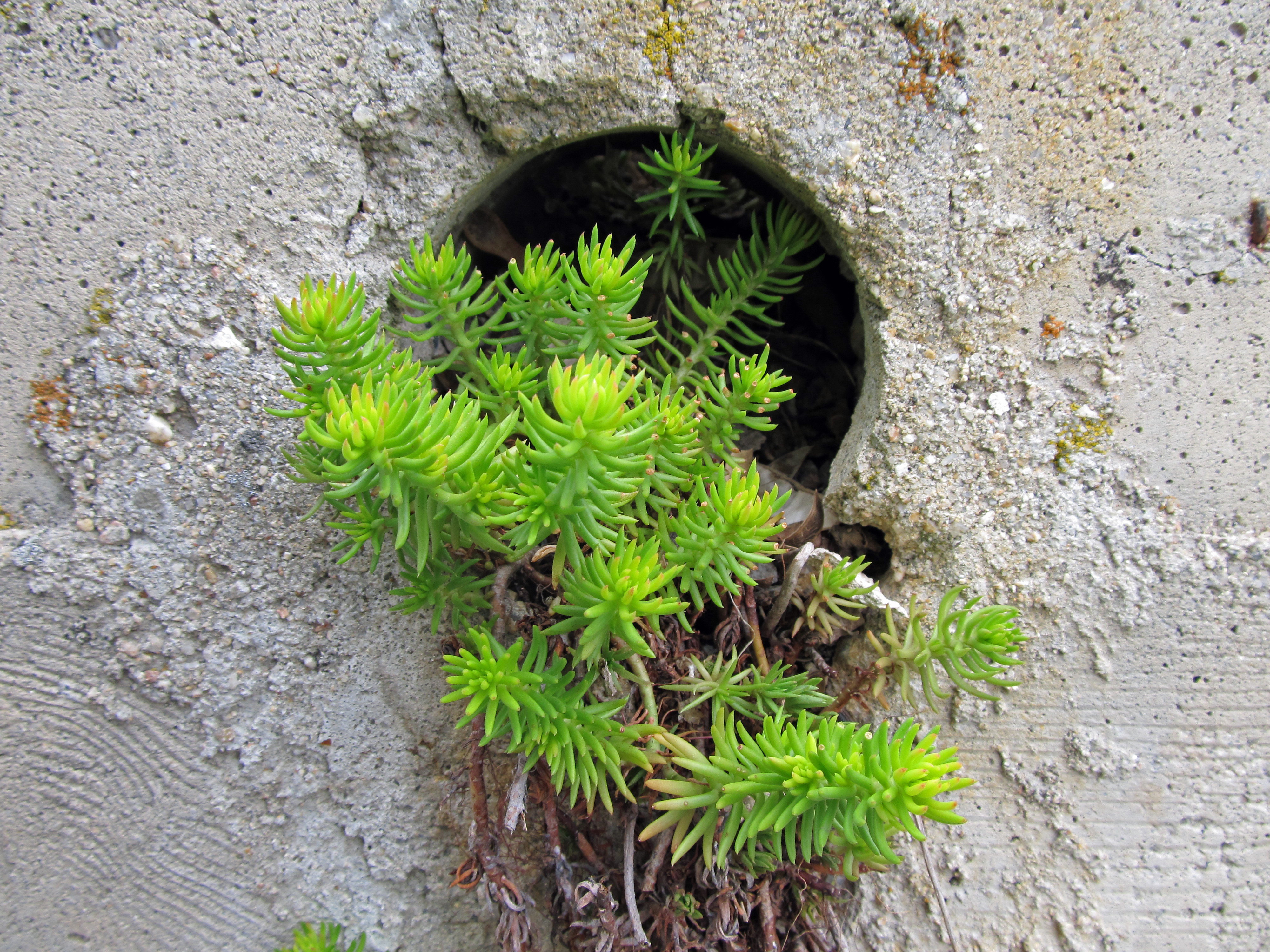
It’s a poignant ending to an album full of dark memories. It’s also fitting, as it adds to the bits of hope scattered throughout. Seeing plants push up through concrete or sprout up in detritus collected in gutters and corners of rooftops or even just up out of the dirt in the middle of summer when the ground is hot and bone dry, all of these moments are testaments to the tenacity of living things. Life can, rightfully so, be described as fleeting, short, and fragile – easily snuffed out and erased. But the struggle for life is also fierce, enduring, and relentless. Darnielle’s story is one example of that.

sedums in a hole 2

The “pale green things” that Darnielle saw also symbolize the struggles of the little guy, the underdog, the downtrodden – a tiny, fragile plant pushing its way past solid, suffocating asphalt. It’s a common theme in Darnielle’s music – his latest album is called Beat the Champ, for example. His song “Wild Sage” is also a sign of that ongoing theme.

I work with plants all day, and I am continually awed by them. Daily I am stopped in my tracks, practically forced by some plant to admire one or more of the fascinating features it displays. It doesn’t surprise me that Darnielle would use “pale green things” to express hope and resiliency. Every day I find some kind of hope in plants, that whatever tough thing we are going through, we can one day “wriggle up on dry land” – pale green things pushing up through asphalt, wild sage growing in the weeds.

A Rare Hawaiian Plant – Newly Discovered and Critically Endangered

Hawaii is home to scores of plant species that are found nowhere else in the world. But how did those plants get there? In geological time, Hawaii is a relatively young cluster of islands. Formed by volcanic activity occurring deep within the ocean, they only just began to emerge above water around 10 million years ago. At that point the islands would have been nearly devoid of life, and considering that they had never been connected to any other body of land and are about 2,500 miles away from the nearest continent, becoming populated with flora and fauna took patience and luck.

As far as plant life is concerned, seeds and spores had to either be brought in by the wind, carried across the ocean by its currents, or flown in attached to the feathers of birds. When humans colonized the islands, they brought seeds with them too; however, its estimated that humans didn’t begin arriving on the islands until about 1,700 years ago. The islands they encountered were no longer barren landscapes, but instead were filled with a great diversity of plant and animal life. A chance seed arriving on the islands once in a blue moon does not fully explain such diversity.

This is where an evolutionary process called adaptive radiation comes in. A single species has the potential to diverge rapidly into many new species. This typically happens in new habitats where little or no competition exists and there are few environmental stresses. Over time, as genetic diversity builds up in the population, individuals begin to adapt to specific physical factors in the environment, such as soil type, soil moisture, sun exposure, and climate. As individuals separate out into these ecological niches, they can become reproductively isolated from other individuals in their species and eventually become entirely new species.

This is the primary process that led to the great floral diversity we now see on the Hawaiian Islands. Adaptive radiations resulted in more than 1000 plant species diverging from around 300 seed introductions. Before western colonization, there were more than 1,700 documented native plant species. Much of this diversity is explained by the rich diversity of habitats present on the volcanic islands, which lead to many species becoming adapted to very specific sites and having very limited distributions.

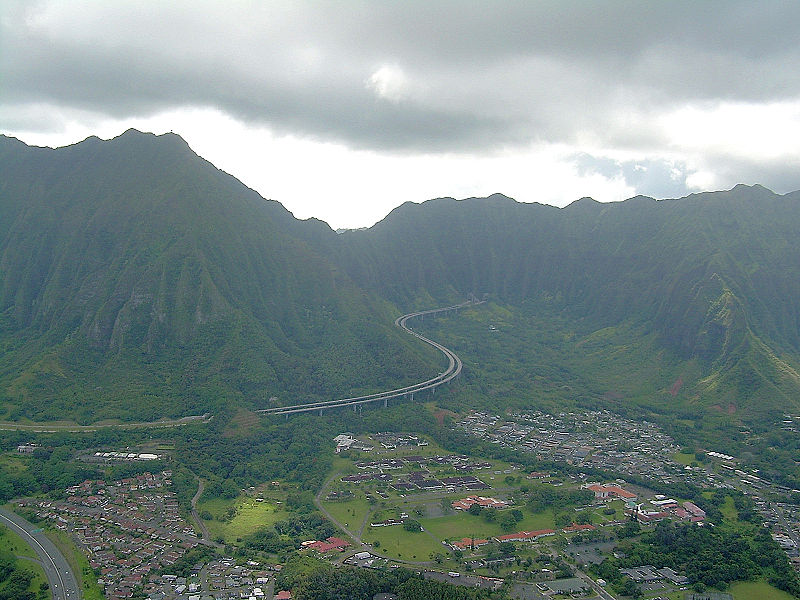
A small population size and a narrow endemic range is precisely the reason why Cyanea konahuanuiensis escaped detection until recently. In September 2012, researchers on the island Oahu arrived at a drainage below the summit of Konahua-nui (the tallest of the Ko’olau Mountains). They were surveying for Cyanea humboldtiana, a federally listed endangered species that is endemic to the Ko’olau Mountains. In the drainage they encountered several plants with traits that differed from C. humboldtiana, including hairy leaves, smooth stems, and long, hairy calyx lobes. They took pictures and collected a fallen leaf  for further investigation.

Ko'olau Mountains of O'ahu (photo credit: wikimedia commons)

Ko’olau Mountains of O’ahu (photo credit: wikimedia commons)

Initial research suggested that this was a species unknown to science. More information was required, so additional trips were made, a few more individuals were found, and in June 2013, a game camera was installed in the area. The camera sent back three photos a day via cellular phone service and allowed the team of researchers to plan their next trip when they were sure that the flowers would be fully mature. Collections were kept to a minimum due to the small population size; however, using the material they could collect, further analyses and comparisons with other species in the Cyanea genus and related genera demonstrated that it was in fact a unique species, and so they gave it the specific epithet konahuanuiensis after the mountain on which it was found. It was also given a common Hawaiian name, Haha mili’ohu, which means “the Cyanea that is caressed by the mist.”

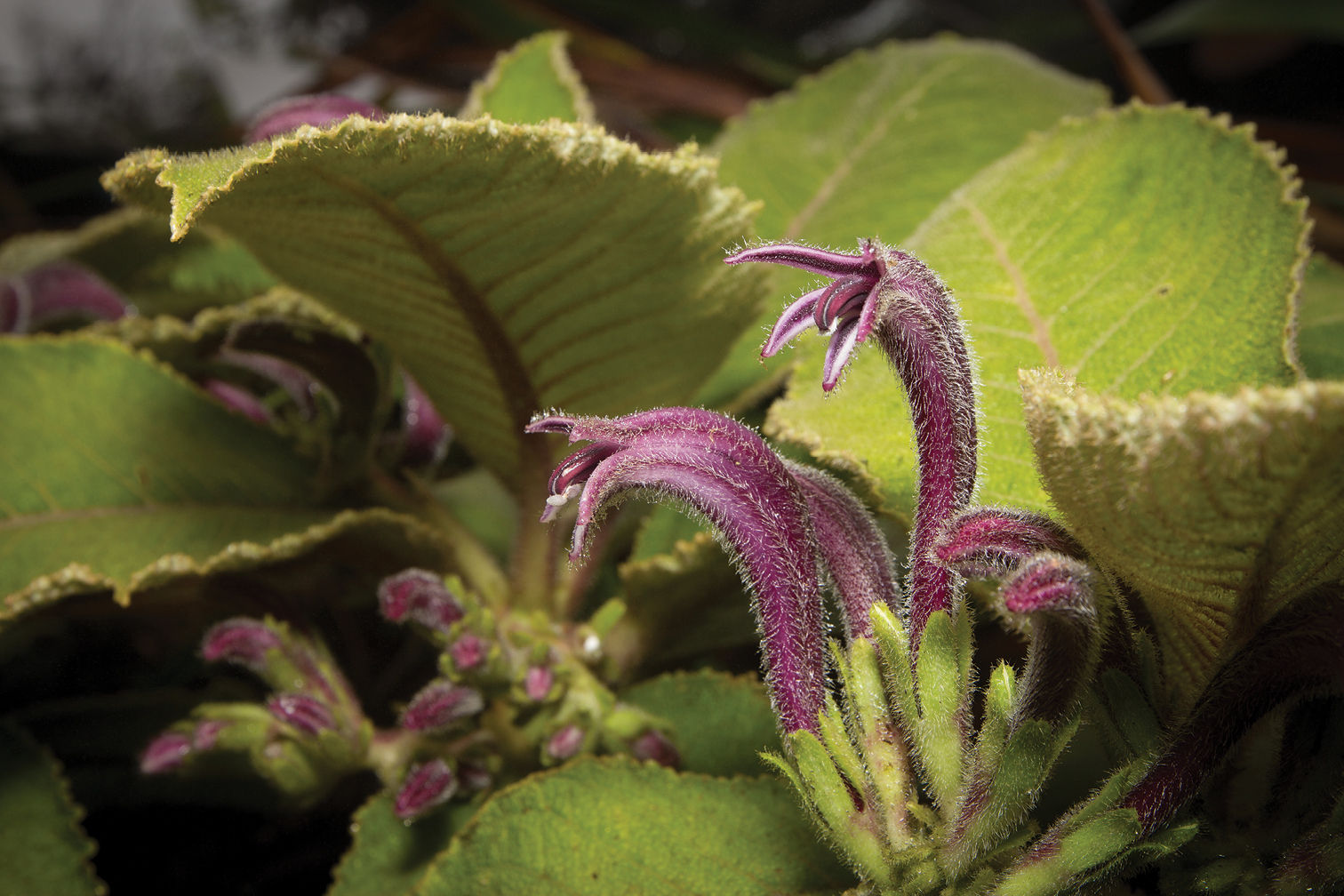
The hairy flowers and leaves of Cyanea konahuanuiensis. Purple flowers appear June-August. (photo credit: www.eol.org)

The hairy flowers and leaves of Cyanea konahuanuiensis. Purple flowers appear June-August. (photo credit: www.eol.org)

The total population of Cyanea konahuanuiensis consists of around 20 mature plants and a couple dozen younger plants. It is considered “critically imperiled” and must overcome some steep conservation challenges in order to persist. To start with, the native birds that pollinate its flowers and disperse its seeds may no longer be present. Also, it is likely being eaten by rats, slugs, and feral pigs. Add to that, several invasive plant species are found in the area and are becoming increasingly more common. While the researchers did find some seedlings in the area, all of the fruits that they observed aborted before they had reached maturity. Lastly, the population size is so small that the researchers say a landslide, hurricane, or flash flood “could obliterate the majority or all of the currently known plants with a single event.”

Seeds collected from immature fruits from two plants were sown on an agar medium at the University of Hawaii Harold L. Lyon Arboretum. The seeds germinated, and so the researchers plan to continue to collect seeds “in order to secure genetic representations from all reproductively mature individuals in ex situ collections.”

Single stem of Cyanea konahuanuiensis (photo credit: www.eol.org)

Single stem of Cyanea konahuanuiensis (photo credit: www.eol.org)

C. konahuanuiensis is not only part of the largest botanical radiation event in Hawaii, but also the largest on any group of islands. At some point in the distant past, a single plant species arrived on a Hawaiian island and has since diverged into at least 128 taxa represented in six genera, Brighamia, Clermontia, Cyanea, Delissea, Lobelia, and Trematolobelia, all of which are in the family Campanulaceae – the bellflower family. Collectively these plants are referred to as the Hawaiian Lobelioids. Cyanea is by far the most abundant genus in this group consisting of at least 79 species. Many of the lobelioids have narrow distributions and most are restricted to a single island.

Sources

Year of Pollination: Pollination Syndromes and Beyond

A discussion of pollination syndromes should begin with the caveat that they are a largely outdated way to categorize plant-pollinator interactions. Still, they are important to be aware of because they have informed so much of our understanding about pollination biology, and they continue to be an impetus for ongoing research. The concept of pollination syndromes exists in part because we are a pattern seeking species, endeavoring to place things in neat little boxes in order to make sense of them. This is relatively easy to do in a hypothetical or controlled environment where the parameters are selected and closely monitored and efforts are made to eliminate noise. However, the real world is considerably more dynamic than a controlled experiment and does not conform to black and white ways of thinking. Patterns are harder to unveil, and it takes great effort to ensure that observed patterns are genuine and not simply imposed by our pattern seeking brains.

That being said, what are pollination syndromes?  Pollination syndromes are sets of floral traits that are thought to attract specific types of pollinators. The floral traits are considered to have evolved in order to appeal to a particular group of pollinators – or in other words, selective pressures led to adaptations resulting in mutualistic relationships between plants and pollinators. Pollination syndromes are examples of convergent evolution because distantly related plant species have developed similar floral traits, presumably due to similar selection pressures. Pollination syndromes were first described by Italian botanist, Federico Delpino, in the last half of the 19th century. Over several decades his rudimentary ideas were fleshed out by other botanists, resulting in the method of categorization described (albeit briefly) below.

Honey bee on bee's friend (Phacelia tanacetifolia)

A honey bee getting friendly with bee’s friend (Phacelia tanacetifolia)

Pollination by bees (melittophily) – Flowers are blue, purple, yellow, or white and usually have nectar guides. Flowers are open and shallow with a landing platform. Some are non-symmetrical and tubular like pea flowers. Nectar is present, and flowers give off a mild (sometimes strong) sweet scent.

Pollination by butterflies (psychophily) – Flowers are pink, purple, red, blue, yellow, or white and often have nectar guides. They are typically large with a wide landing pad. Nectar is inside a long, narrow tube (or spur), and flowers have a sweet scent.

Pollination by hawkmoths and moths (sphingophily and phalaenophily) – Moth pollinated flowers open at night, have no nectar guides, and emit a strong, sweet scent. Flowers pollinated by hawkmoths are often white, cream, or dull violet and are large and tubular with lots of nectar. Those pollinated by other moths are smaller, not as nectar rich, and are white or pale shades of green, yellow, red, purple, or pink.

Pollination by flies (myophily or sapromyophily) – Flowers are shaped like a basin, saucer, or kettle and are brown, brown-red, purple, green, yellow, white, or blue.  Some have patterns of dots and stripes. If nectar is available, it is easily accessible. Their scent is usually putrid. A sapromyophile is an organism that is attracted to carcasses and dung. Flies that fall into this category visit flowers that are very foul smelling, offer no nectar reward, and essentially trick the fly into performing a pollination service.

Pollination by birds (ornithophily) –  Flowers are usually large, tubular, and red, orange, white, blue, or yellow. They are typically without nectar guides and are odorless since birds don’t respond to scent. Nectar is abundant and found at various depths within the flower.

Pollination by bats (chiropterophily) – Flowers are large, tubular or bell shaped, and white or cream colored with no nectar guides. They open at night, have abundant nectar and pollen, and have scents that vary from musty to fruity to foul.

Pollination by beetles (cantharophily) – Flowers are large and bowl shaped and green or white. There are no nectar guides and usually no nectar. The scent is strong and can be fruity, spicy, or putrid. Like flies, some beetles are sapromyophiles.
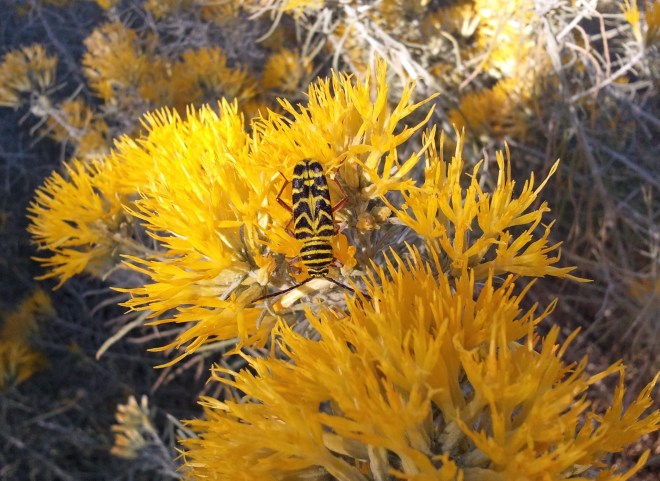
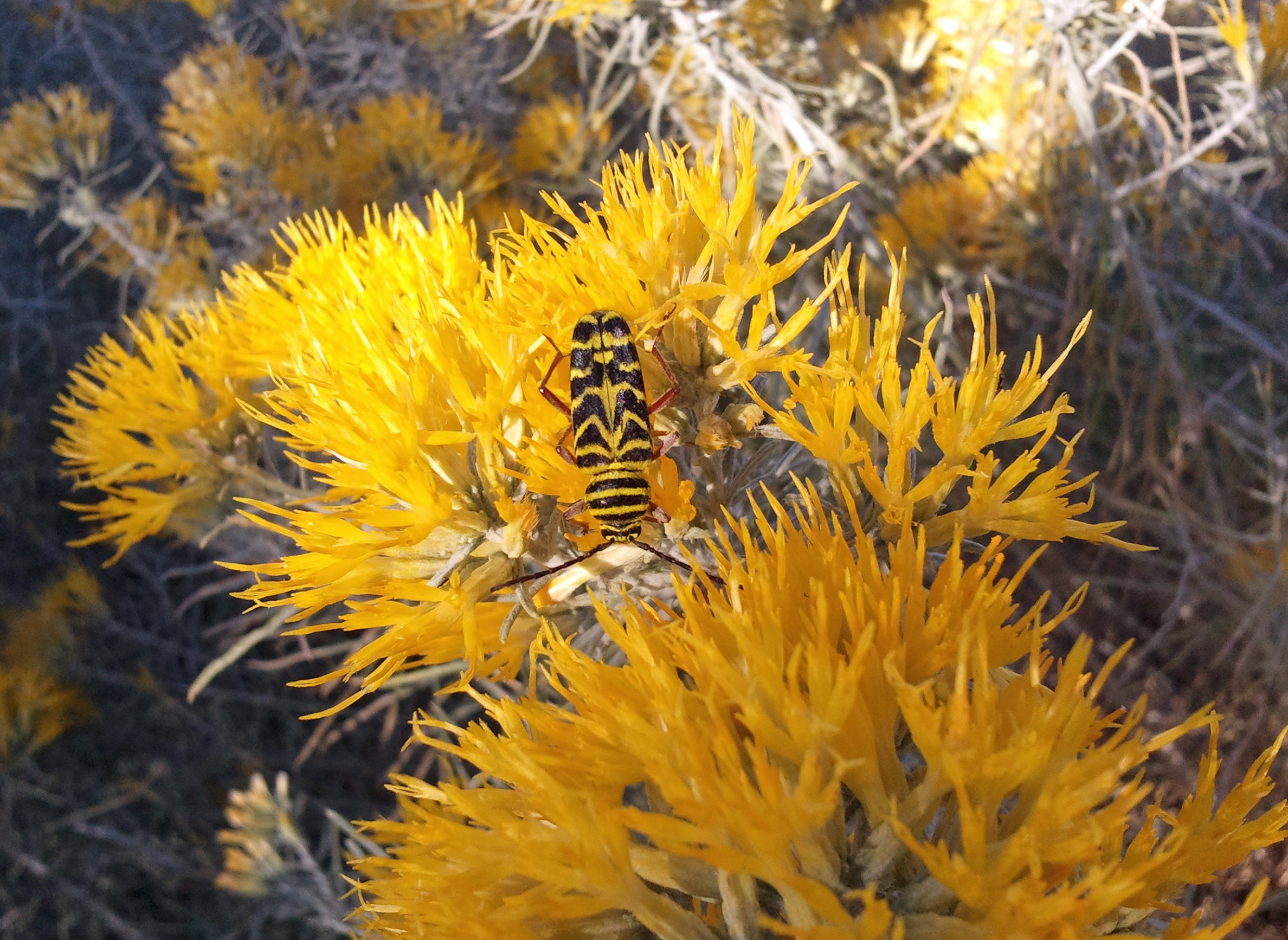
Locust borer meets rubber rabbitbrush (Ericameria nauseosa)

A locust borer meets rubber rabbitbrush (Ericameria nauseosa)

In addition to biotic pollination syndromes, there are two abiotic pollination syndromes:

Pollination by wind (anemophily) – Flowers are miniscule and brown or green. They produce abundant pollen but no nectar or odor. The pollen grains are very small, and the stigmas protrude from the flower in order to capture the windborne pollen.

Pollination by water (hydrophily) –  Most aquatic plants are insect-pollinated, but some have tiny flowers that release their pollen into the water, which is picked up by the stigmas of flowers in a similar manner to plants with windborne pollen.

This is, of course, a quick look at the major pollination syndromes. More complete descriptions can be found elsewhere, and they will differ slightly depending on the source. It’s probably obvious just by reading a brief overview that there is some overlap in the floral traits and that, for example, a flower being visited by a bee could also be visited by a butterfly or a bird. Such an observation explains, in part, why this method of categorizing plant-pollinator interactions has fallen out of favor. Studies have been demonstrating that this is not a reliable method of predicting which species of pollinators will pollinate certain flowers. A close observation of floral visitors also reveals insects that visit flowers to obtain nectar, pollen, and other items, but do not assist in pollination. These are called robbers. On the other hand, a plant species may receive some floral visitors that are considerably more effective and reliable pollinators than others. What is a plant to do?

Pollination syndromes imply specialization, however field observations reveal that specialization is quite rare, and that most flowering plants are generalists, employing all available pollinators in assisting them in their reproduction efforts. This is smart, considering that populations of pollinators fluctuate from year to year, so if a plant species is relying on a particular pollinator (or taxonomic group of pollinators) to aid in its reproduction, it may find itself out of luck. Considering that a flower may receive many types of visitors on even a semi-regular basis suggests that the selective pressures on floral traits may not solely include the most efficient pollinators, but could also include all other pollinating visitors and, yes, even robbers. This is an area where much more research is needed, and questions like this are a reason why pollination biology is a vibrant and robust field of research.
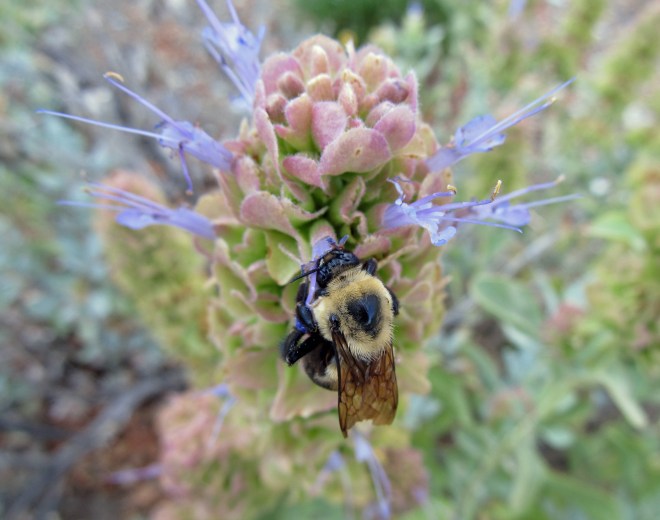
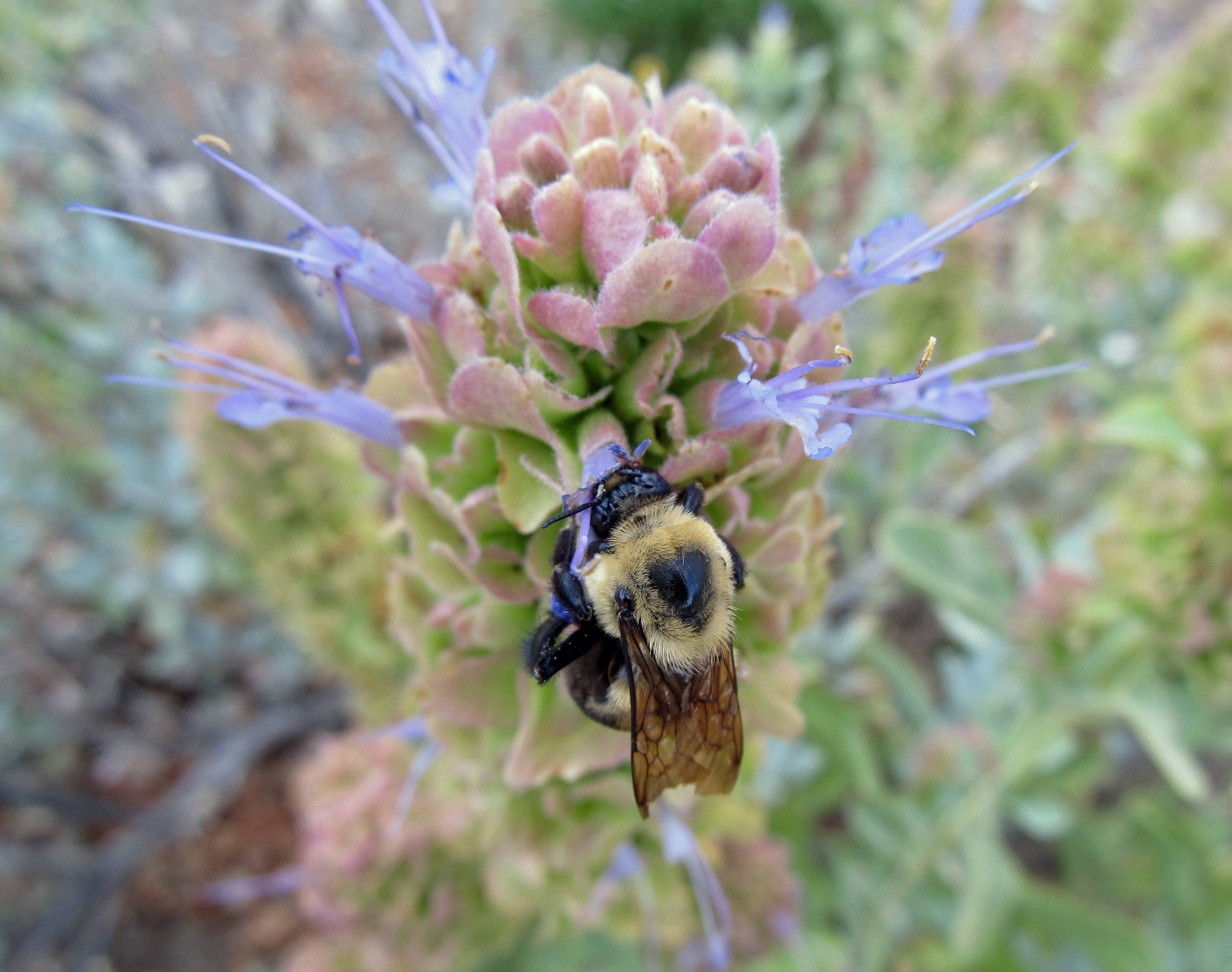
A bumble bee hugs Mojave sage (Salvia pachyphylla)

A bumble bee hugs the flower of a blue sage (Salvia pachyphylla)

Interactions between plants and pollinators is something that interests me greatly. Questions regarding specialization and generalization are an important part of these interactions. To help satiate my curiosity, I will be reading through a book put out a few years ago by the University of Chicago Press entitled, Plant-Pollinator Interactions: From Specialization to Generalization, edited by Nickolas M. Waser and Jeff Ollerton. You can expect future posts on this subject as I read through the book. To pique your interest, here is a short excerpt from Waser’s introductory chapter:

Much of pollination biology over the past few centuries logically focused on a single plant or pollinator species and its mutualistic partners, whereas a focus at the level of entire communities was uncommon. Recently we see a revival of community studies, encouraged largely by new tools borrowed from the theory of food webs that allow us to characterize and analyze the resulting patterns. For example, pollination networks show asymmetry – most specialist insects visit generalist plants, and most specialist plants are visited by generalist insects. This is a striking departure from the traditional implication of coevolved specialists!

References:

Texas State Flower

The state flower of Texas blooms in early spring. At least most of them do anyway. Some don’t bloom until late spring and others bloom in the summer. The reason for the staggered bloom times is that the state flower of Texas is not one species but six. All are affectionately referred to as bluebonnets and all are revered by Texans.

As the story goes, at the beginning of the 20th century the Texas legislature set out to determine which flower should represent their state. One suggestion was the cotton boll, since cotton was a major agricultural crop at the time. Another suggestion was a cactus flower, because cacti are common in Texas, are long-lived, and have very attractive flowers. A group of Texas women who were part of the National Society of Colonial Dames of America made their pitch for Lupinus subcarnosus, commonly known as buffalo clover or bluebonnet. Ultimately, the nomination from the women’s group won out, and bluebonnets became an official state symbol.

The debate didn’t end there though. Many people thought that the legislature had selected the wrong bluebonnet, and that the state flower should be Lupinus texensis instead. Commonly known as Texas bluebonnet, L. texensis is bigger, bolder, and more abundant than the comparatively diminutive L. subcarnosus. This debate continued for 70 years until finally the legislature decided to solve the issue by including L. texensis “and any other variety of bluebonnet not heretofore recorded” as the state flower of Texas.

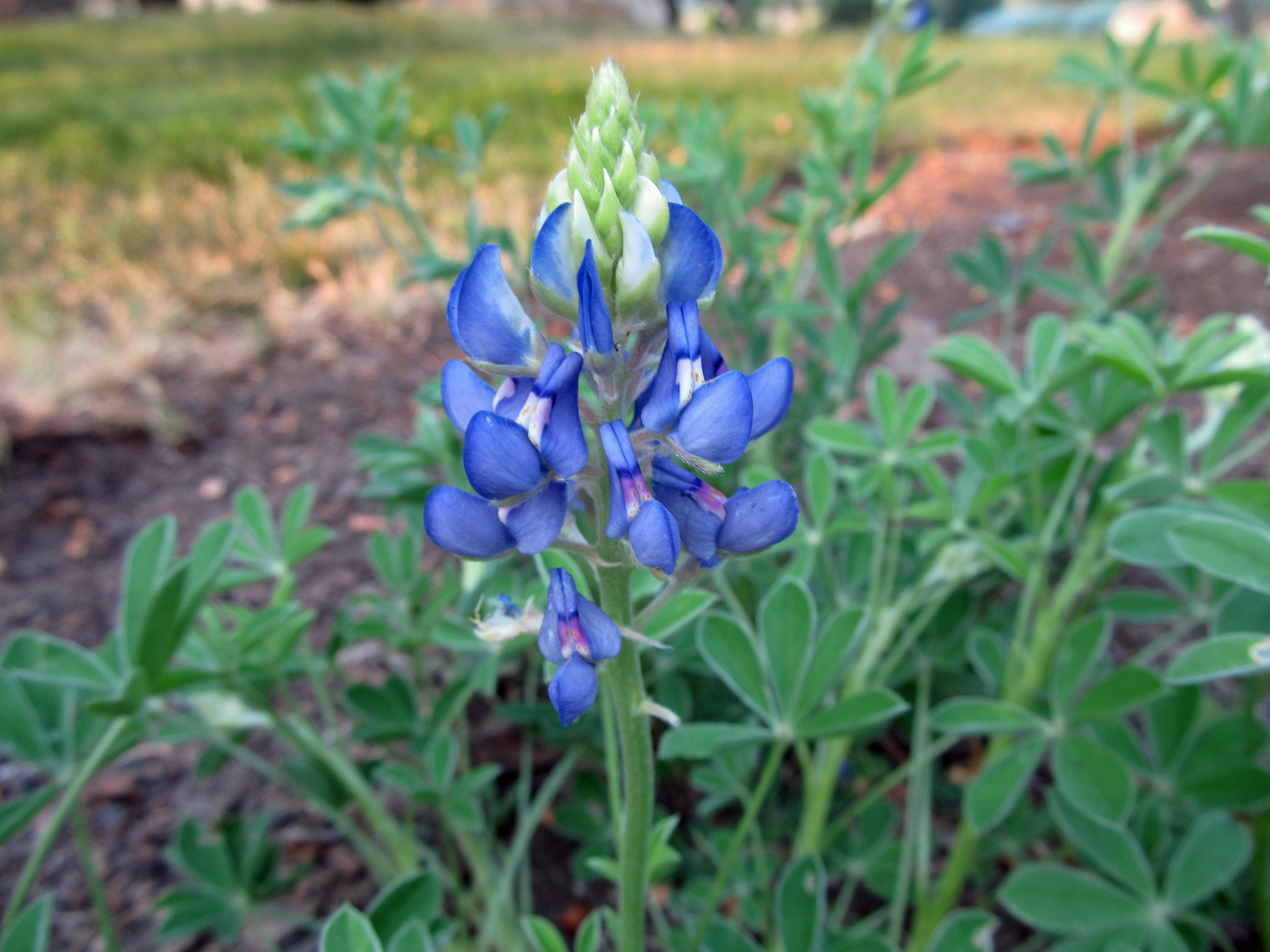
Lupinus texensis - Texas bluebonnet

Lupinus texensis (Texas bluebonnet) bravely growing in Idaho

According to Mr. Smarty Plants, the list of Texas state flowers includes (in addition to the two already mentioned)  L. perennis, L. havardii, L. plattensis, and L. concinnus. Most on this list are annuals, and all are in the family Fabaceae – the pea family. Plants in this family are known for their ability to convert atmospheric nitrogen into plant available nitrogen with the help of a soil dwelling bacteria called rhizobia. The genus Lupinus includes over 200 species, most of which are found in North and South America. Others occur in North Africa and the Mediterranean. Plants in this genus are popular in flower gardens, and there are dozens of commercially available hybrids and cultivars.

L. subcarnosus is sometimes referred to as sandy land bluebonnet and occurs mainly in sandy fields and along roadsides. L. texensis is a Texas endemic; its native range includes the prairies and open fields of north and south central Texas. It is now found throughout Texas and bordering states due to heavy roadside plantings. L. perennis is the most widespread Texas bluebonnet, occurring throughout the eastern portion of the U.S. growing in sand hills, woodland clearings, and along roadsides. L. havardii is the largest of the Texas bluebonnets. It has a narrow range, and is found in a variety of soil types.  L. plattensis is a perennial species and occurs in the sandy dunes of the Texas panhandle. L. concinnus is the smallest of the Texas bluebonnets and is found mainly in sandy, desert areas as well as some grasslands.

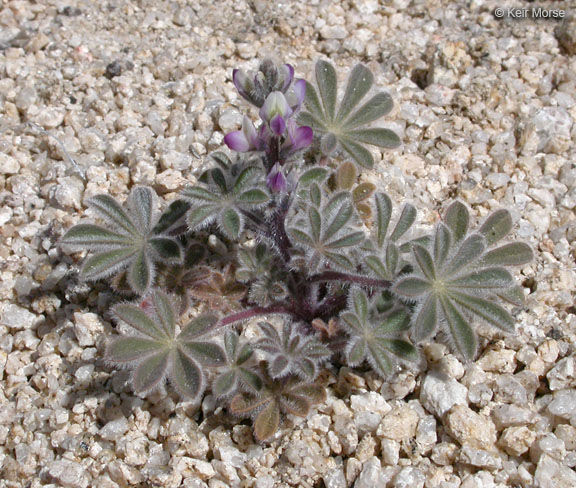
Lupinus concinnus (...) - photo credit: www.eol.org
Lupinus concinnus (Nipomo Mesa lupine) – photo credit: www.eol.org

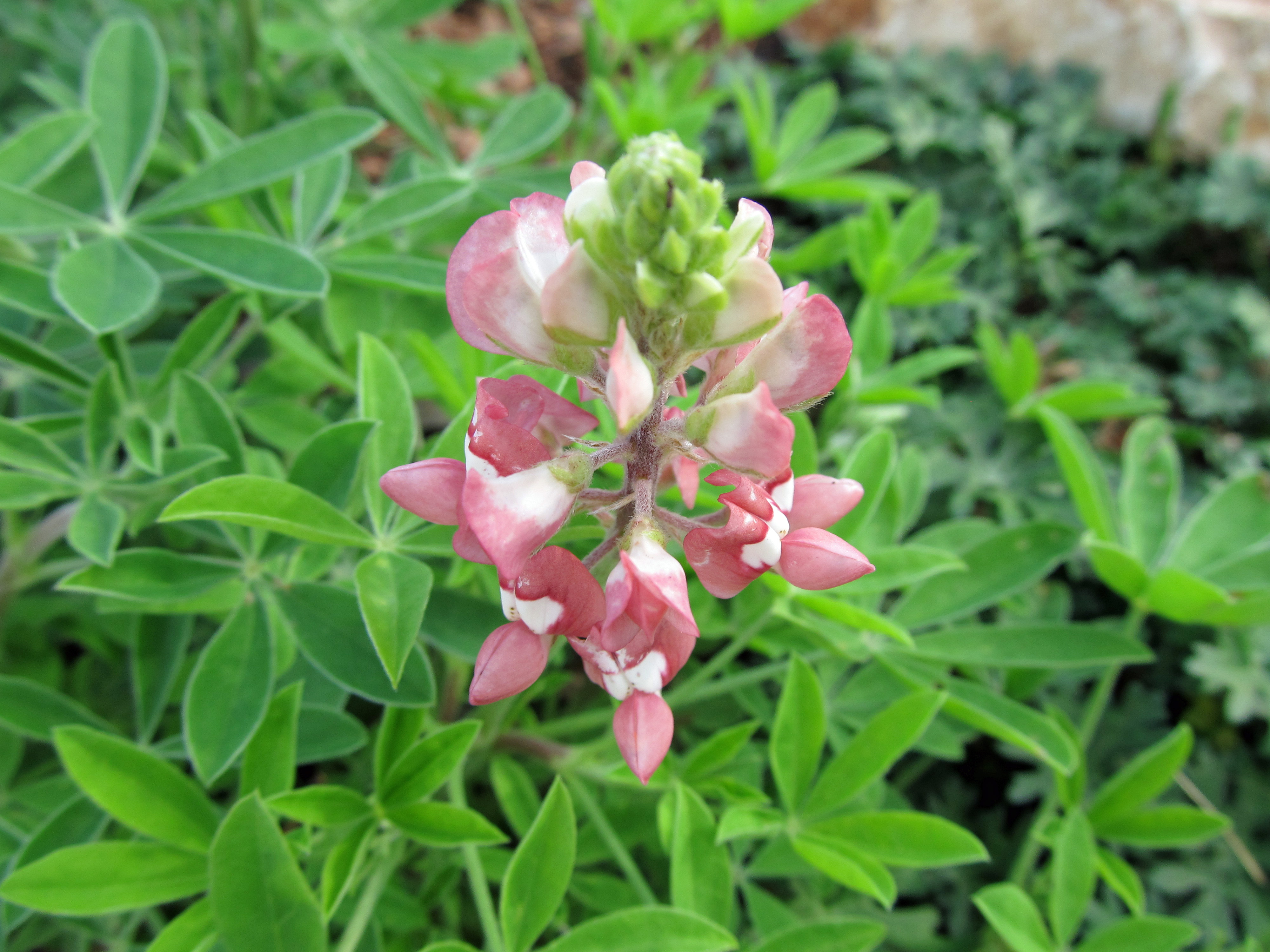
A legend surrounds the rare pink bluebonnet.

A legend surrounds the rare pink bluebonnet

Read more about Texas bluebonnets here and here.

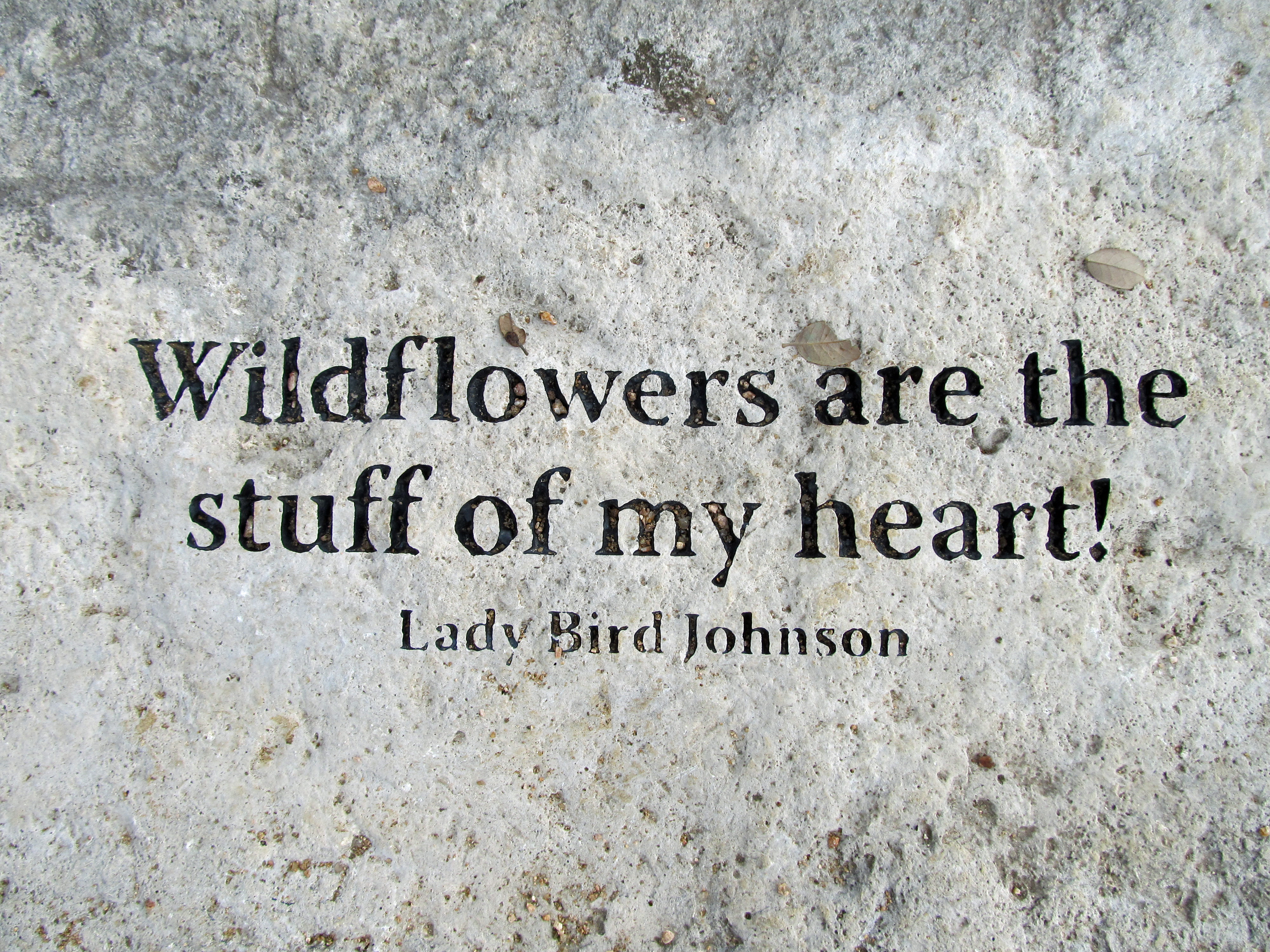
“I want us to know our world. If I lived in north Georgia on up through the Appalachians, I would be just as crazy about the mountain laurel as I am about bluebonnets.” – Lady Bird Johnson

Field Trip: Lady Bird Johnson Wildflower Center, part two

This is the second in a series of two posts about my recent trip to Lady Bird Johnson Wildflower Center in Austin, Texas. You can read the first post here. Both posts are comprised of mostly pictures, as they tell a much better story about the place then my words can. However, even pictures don’t do the place justice; it’s definitely a site that you are going to have to see for yourself. I highly recommend it.

One name that kept coming up during the native plant conference was Doug Tallamy – and for good reason. Tallamy has long promoted and encouraged the use of native plants in landscapes, largely for the creation of wildlife habitat in urban and suburban areas. In 2007 he put out a book entitled, Bringing Nature Home: How You Can Sustain Wildlife with Native Plants, in which he made a strong argument for native plant gardens. His book and lectures have inspired many to seek out native plants to include in their yards. What was lacking in his book, however, was detailed information on the horticulture and design aspects of using native plants. So in 2014, together with Rick Darke, Tallamy put out The Living Landscape, an impressive tome outlining how to create beautiful and functional gardens using native plants. Both books are well worth your time.

The plant name following each photo or series of photos links to a corresponding entry in the Native Plant Database which is managed by the Wildflower Center’s Native Plant Information Network. The quotes that accompany the plant names are taken from the Native Plant Database entries.

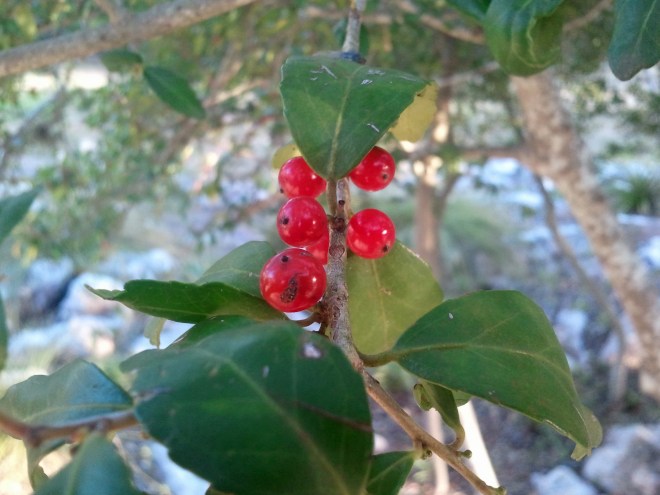
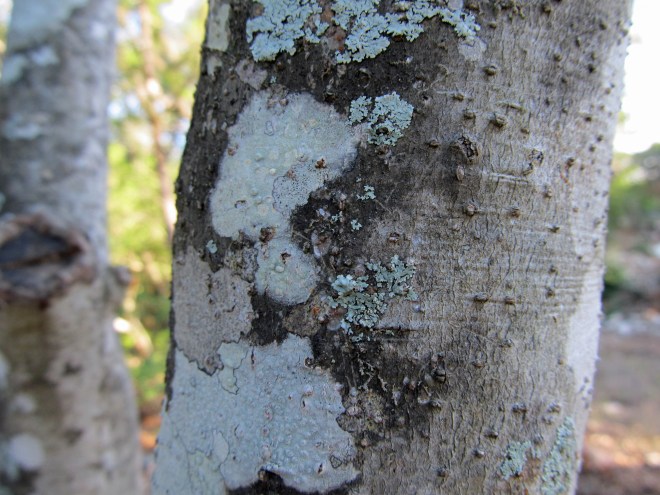
Ilex vomitoria (yaupon). “The leaves and twigs contain caffeine, and American Indians used them to prepare a tea which they drank in large quantities ceremonially and then vomited back up, lending the plant its species name, vomitoria. The vomiting was self-induced or because of other ingredients added; it doesn’t actually cause vomiting.”

aesculus pava var pava 3

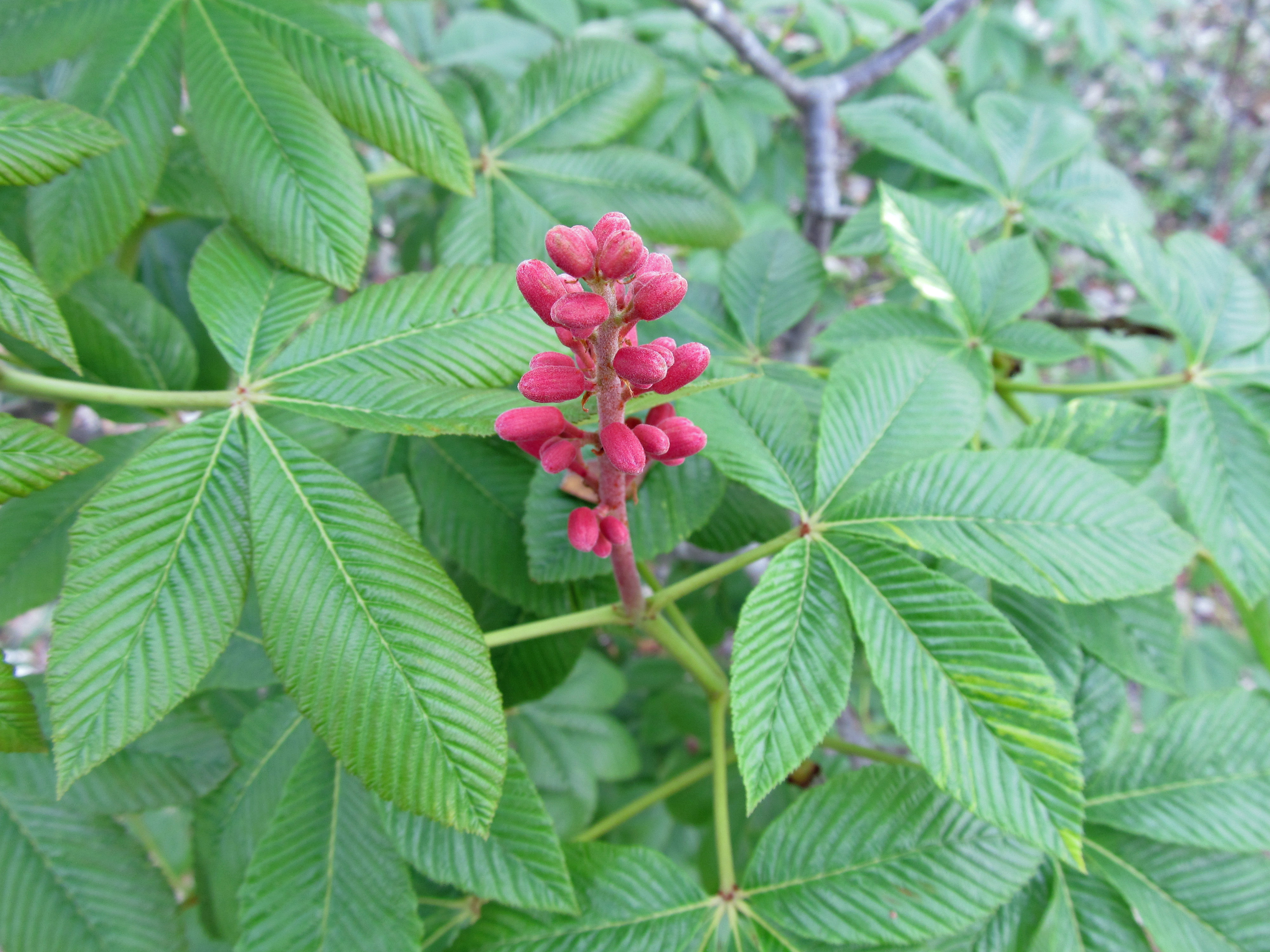
Aesculus pavia var. pavia (red buckeye). “Long popular for its brilliant, hummingbird-attracting spring flowers and rich green foliage, it is found in nature most often as a plant of woodland edges, where it can get morning sun and afternoon shade.”

tillandsia recurvata 5

Tillandsia recurvata (ball moss). An epiphyte commonly found on trees within its range, including Quercus fusiformis (escarpment live oak) a dominant tree at the Wildflower Center. “Some have been introduced into other warm regions and cultivated for use as ornamentals or for their edible fruit.”

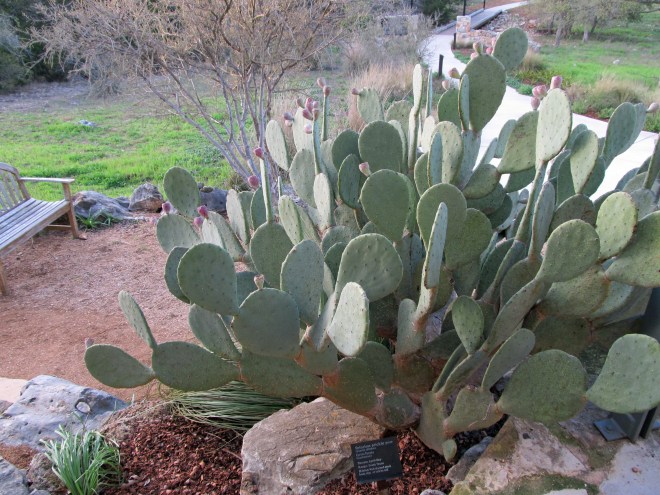
Opuntia ellisiana (spineless prickly pear). A spineless form of Opuntia cacanapa derived from cultivation. “The spineless prickly pear is a great addition to the landscape for those seeking a cactus form, showy blooms, and bright red cactus fruits (tunas). Beware, although it doesn’t have long sharp spines, the tiny glochids (slivers) are very irritating to the skin if the plant is not handled correctly.”

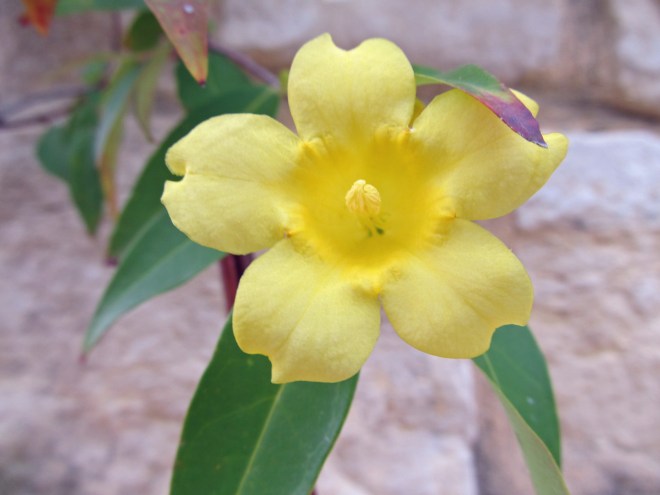
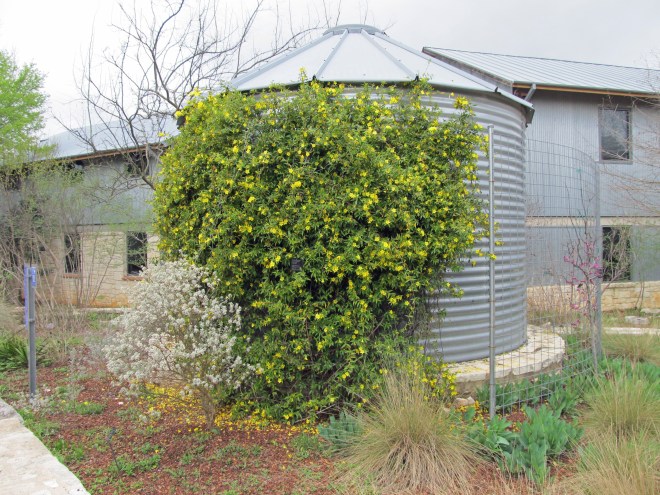
Gelsemium sempervirens (Carolina jessamine). “The flowers, leaves, and roots are poisonous and may be lethal to humans and livestock. The species nectar may also be toxic to honeybees if too much is consumed, and honey made from Carolina jessamine nectar may be toxic to humans.”

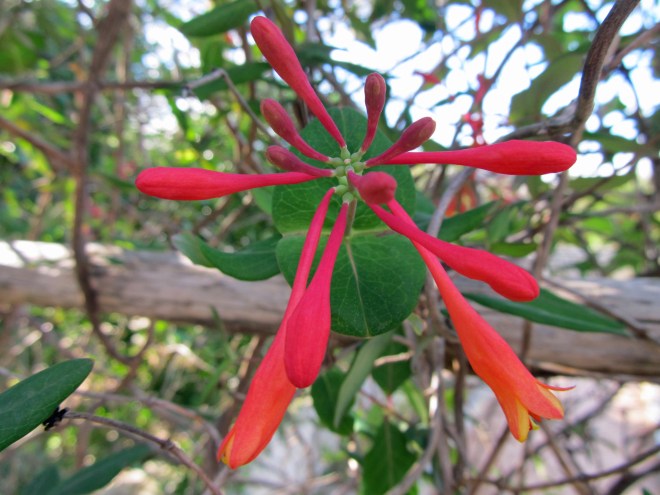
Lonicera sempervirens (coral honeysuckle). “Flowers attract hummingbirds, bees, and butterflies. Fruits attract quail, purple finch, goldfinch, hermit thrush, and American robin.”

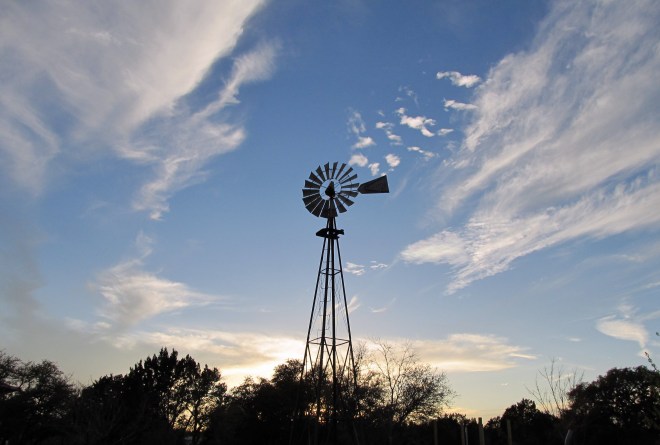
windmill

Field Trip: Lady Bird Johnson Wildflower Center, part one

Last week my place of employment sent me to Austin, Texas to spend some time at the Lady Bird Johnson Wildflower Center. I was there for a native plant conference put on by the American Public Garden Association. I had been wanting to visit the Wildflower Center for a long time, so it was great to finally get the chance. Their gardens are truly amazing. I spent three days there, but could have easily stayed much longer. The native plant conference was great, too. I learned a lot about native plant horticulture, and I left feeling inspired to put those things into practice. If you are wondering “why native plants?,” the Wildflower Center has a good answer to that on their website.

While I was there I took dozens of photos, so I am sharing some of those with you in a two part post. The plant name following each photo or series of photos links to a corresponding entry in the Native Plant Database which is managed by the Wildflower Center’s Native Plant Information Network. The quotes that accompany the plant names are taken from the Native Plant Database entries.

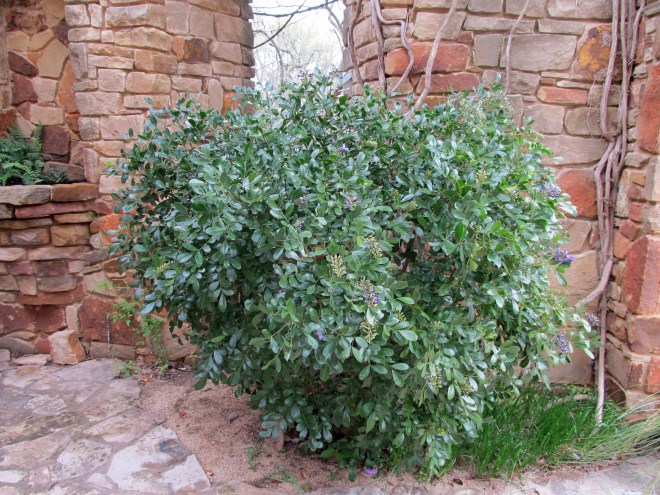
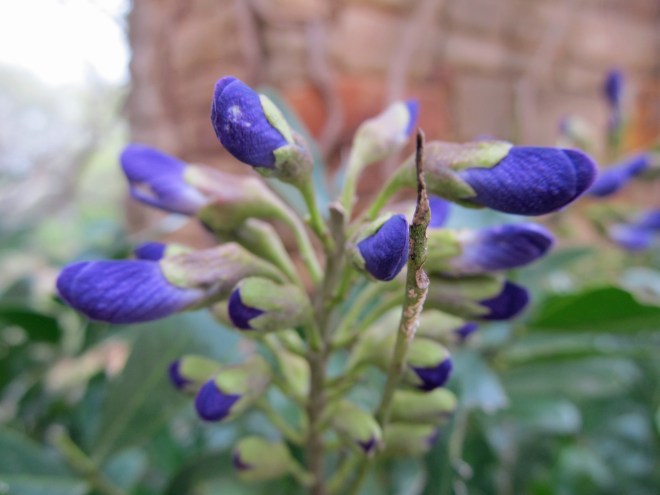
Sophora secundiflora (Texas mountain laurel). “The fragrance of Texas mountain laurel flowers is reminiscent of artificial grape products.”

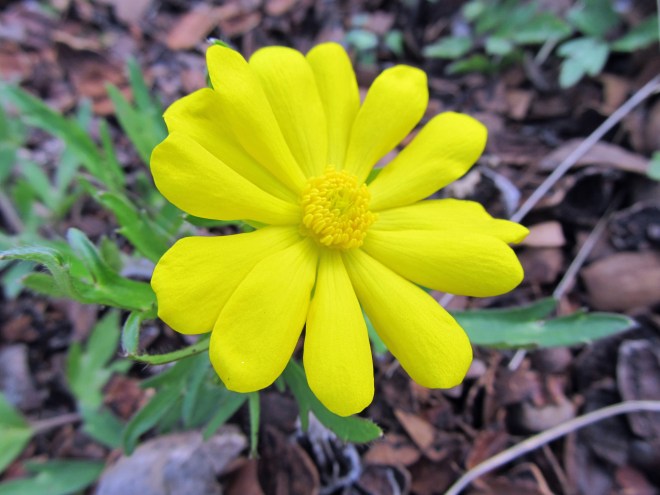
Ranunculus macranthus (large buttercup). “This is one of the largest flowered native buttercups. The large butter-yellow flowers and attractive foliage of this plant immediately attract the eye.”

echinocereus reichenbachii 3

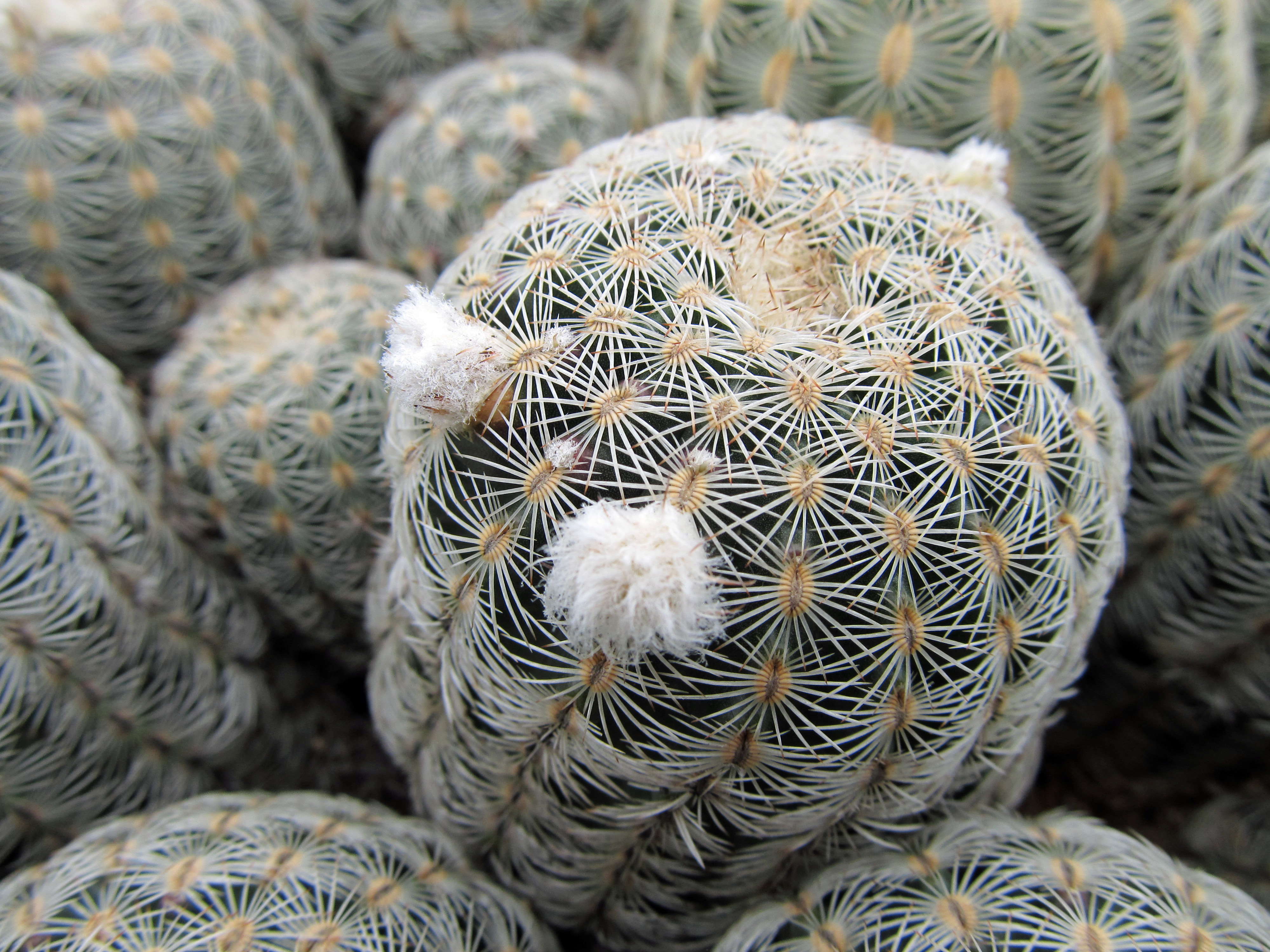
Echinocereus reichenbachii (lace cactus). “Lace cactus is unpredictable in its development, one plant forming a single stem, while its neighbor may branch out and form a dozen or more.”

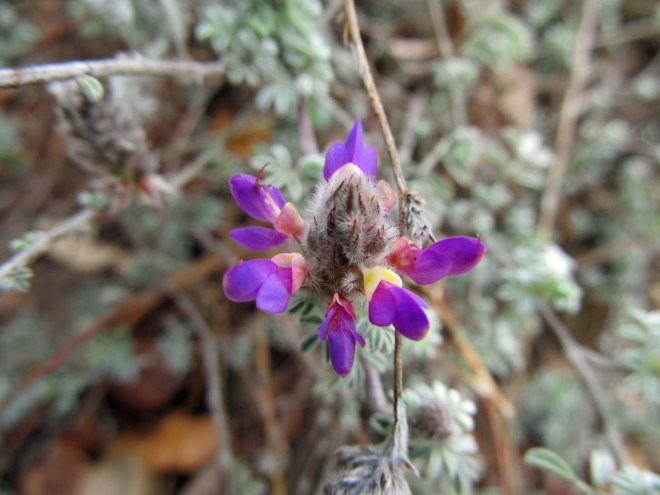
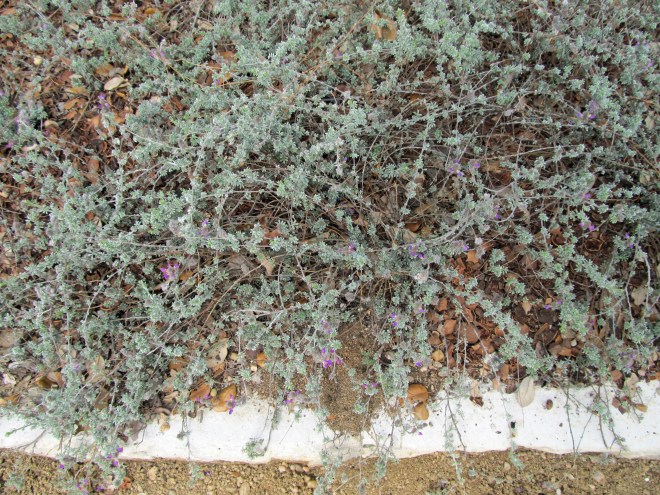
Dalea greggii (Gregg’s prairie clover). “Grown mostly for its silvery, blue-green, delicately compound leaves, the shrub is awash with clusters of tiny, pea-shaped, purple flowers in spring and early summer.” 

viburnum rufidulum 5

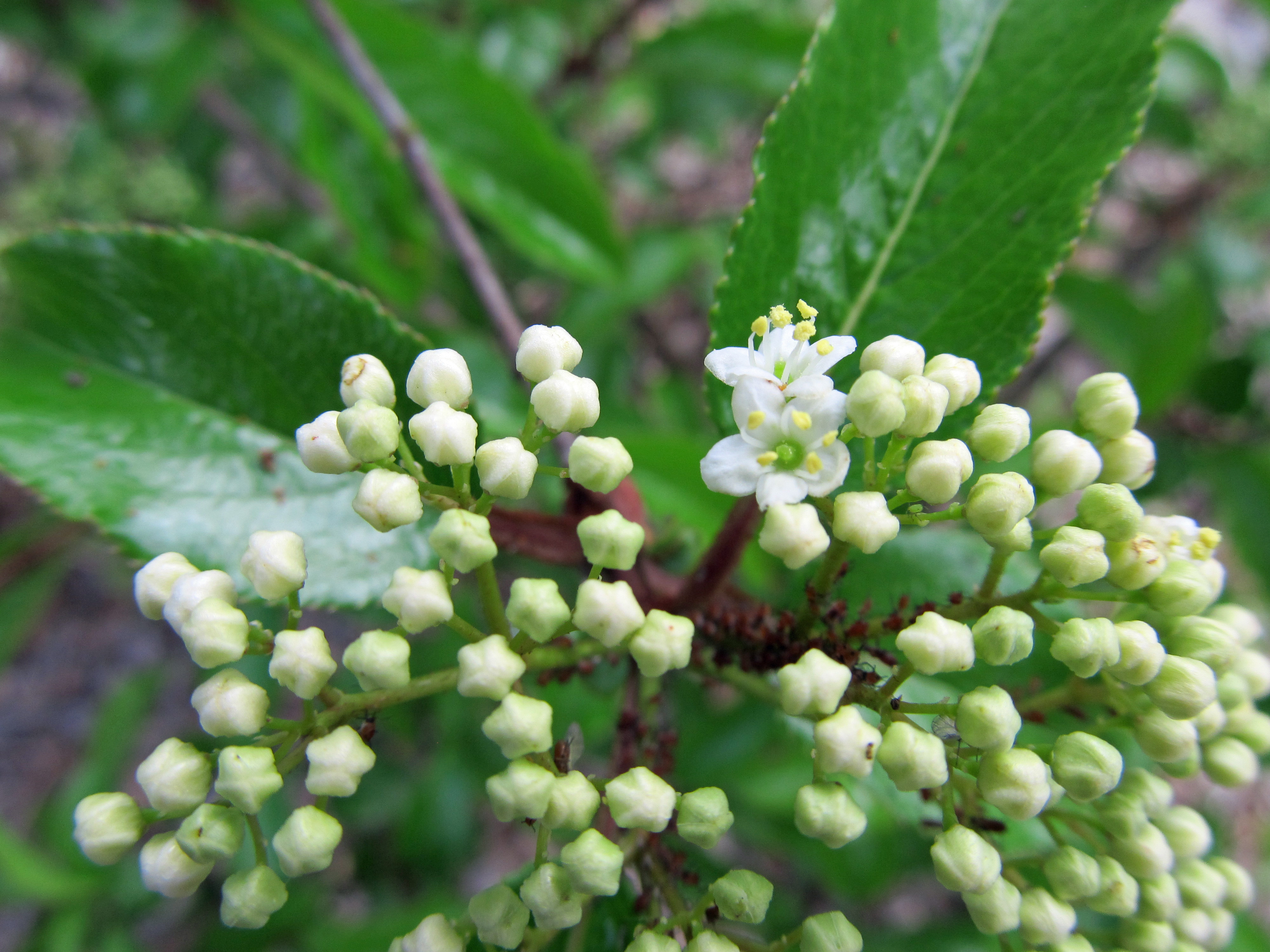
Viburnum rufidulum (southern blackhaw). “In Manual of the Vascular Plants of Texas, Correll and Johnston noted that the fruit tastes similar to raisins.”

mahonia trifoliata 5

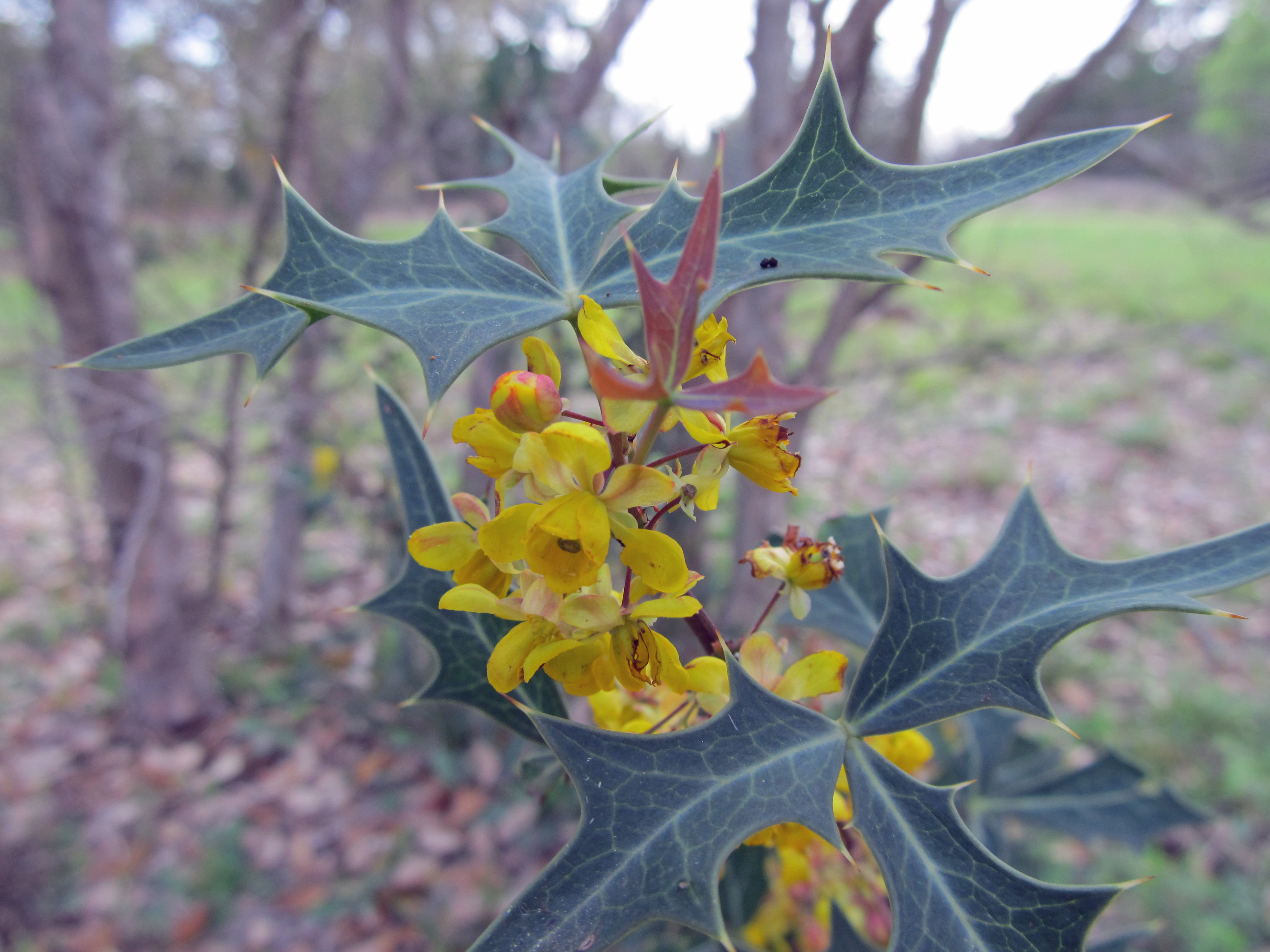
Mahonia trifoliolata (agarita). “Songbirds eat the fruits, and quail and small mammals use the plant for cover. It is considered a good honey source.”

lady bird johnson quote