Garden Plants Gone Wild: The Periwinkles

In a garden setting, a successful groundcover is a plant that is durable and adaptable, spreads readily, and fills in space thouroughly. The point of planting a groundcover is to cover exposed soil and create a sort of living mulch. In fact, groundcovers provide similar benefits to mulch. They prevent erosion, help retain soil moisture, and prevent weeds. It should come as no surprise then, that a plant that fulfills all of these requirements has the potential to become a weed, especially if given the opportunity to escape and establish itself outside of its intended location.

This isn’t a hypothetical. This exact scenario has played out numerous times. A good example of this are the periwinkles: Vinca major and Vinca minor. Both have been popular garden plants for centuries. Their introduction to U.S. gardens came as early as the 1700’s. Today, both species (including cultivars of each) can be found for sale in nurseries throughout the country, even while escaped periwinkles proceed to spread across natural areas and uncultivated spaces. Even in gardens where periwinkles have been intentionally planted, they can be deemed no longer welcome due to their aggressive nature. Eliminating them, however, is a formidable task.

greater periwinkle (Vinca major)

Periwinkles are relatively easy to identify, yet telling the two apart can sometimes pose a challenge. Knowing what to look for can make this a fairly simple task. Vinca major (greater periwinkle) is the larger of the two. Its stems are tough and sprawl up to 5 feet long, rooting adventitiously when in contact with the ground. Vegetative spread also occurs via stolons and rhizomes, modified stems that spread horizontally both above and below ground and whose main purpose is to produce new roots along their length. This extensive rooting creates dense mats of stems and foliage, precisely what you’d want from an effective groundcover. Leaves are arranged oppositely and are semi-evergreen with fine hairs along their margins. They are thick, glossy, simple, dark green, and ovate to ovate-lanceolate in shape. They have a relatively long petiole, and some leaves can even appear heart-shaped.

The flowers of V. major are blue to purple and fused at the base to form a tube, separating into five distinct lobes and creating a shape similar to a pinwheel. They are borne on a long stalk in the axils of leaves and measure about two inches wide. Their sepals are long, slender, pointed, and lined with bristly hairs. Fruits rarely form, but when they do, they are narrow follicles.
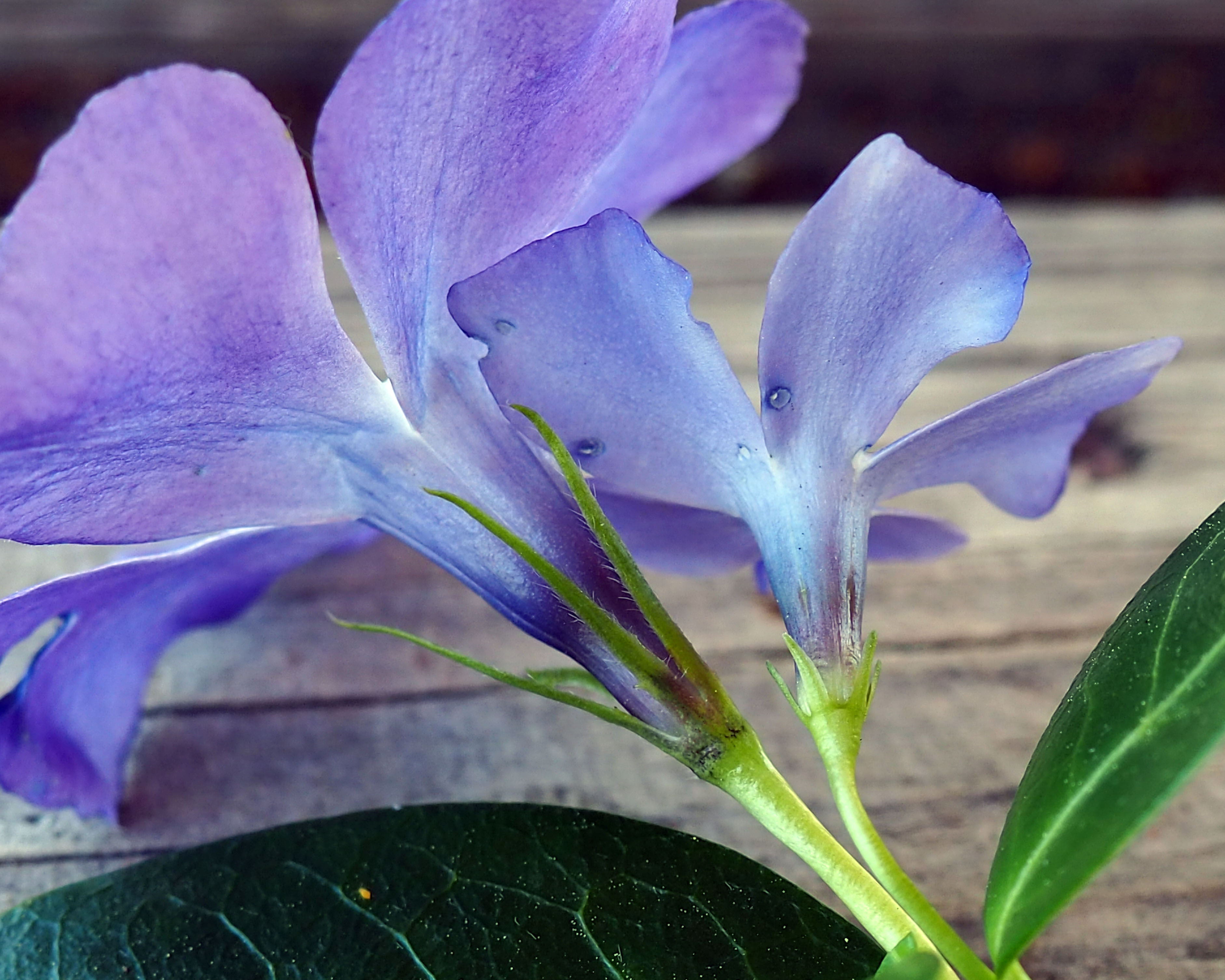
comparing the petals and sepals of Vinca major (left) and Vinca minor (right)

Vinca minor (lesser periwinkle) is a slightly smaller plant with a similar habit, spreading vegetatively in all the same ways as V. major. Stems are slender and smooth and leaves are evergreen. Compared to V. major, the leaves of V. minor are smaller, narrower, and have hairless margins and short petioles, otherwise they are very similar. Same goes for the flowers, which look identical on both species, except that those of V. minor are slightly smaller (about one inch wide) and borne on shorter stalks. Sepals are shorter, broader, more rounded at the tips, and lack the bristly hairs of V. major.

Because periwinkles only rarely produce seed, their main method of getting around is vegetatively. Fragments of roots or rhizomes hide in soil and are moved from one location to another inadvertently. Periwinkles are often used in hanging baskets and containers, and when these things are cast aside at the end of a season, the perennial roots of periwinkles may continue to grow, spreading out beyond the potting mix and into the soil.

Dump soil, yard waste, and improperly disposed of containers are the main ways that periwinkles find their way into natural areas. Both species can be found in the understories and edge habitats of woodlands, as well as along roadsides and pathways, and in vacant lots and old homesites. They can also be found in riparian areas, where waterways can carry fragments of plants to new locations. The Invasive Plant Atlas compiles reports of both V. major and V. minor growing outside of cultivation and tracks them on a map. They also track which states include them in noxious weeds lists or laws.

lesser periwinkle (Vinca minor)

The best way to keep periwinkles from continuing to spread outside of cultivation is to refrain from growing them. If you choose to have them in your yard, dispose of plant parts properly. If you keep them in containers, send those containers to the landfill when you are done with them. If your property is adjacent to natural areas, the risk may be too great and you may want to consider a different groundcover. Depending on where you live, alternatives vary. In the Intermountain West, potential substitutes include wild strawberry (Fragaria virginiana), woodland strawberry (F. vesca), kinnikinnik (Arctostaphylos uva-ursi), and wild ginger (Asarum caudatum). Each of these are low growing, evergreen to semi-evergreen, spreading plants that do well in shade and can handle some degree of drought.

Weeds of Boise: Boise State University Campus, part two

In part one of this two part series, I introduced you to the Boise State University campus, located in the heart of Boise, Idaho. I’ve been spending the past year walking the campus and cataloging the weeds that I find there. Boise has a fairly mild climate compared to the rest of Idaho, so weeds are generally easy to find just about any time of year. What weeds are present depends on what time of year it is. To get a complete picture of the suite of weeds that can be found on a site, it’s important to make observations throughout the year. Weeds can also come and go, with certain species becoming more abundant in some years than others, so making observations over multiple years also helps. This is why I try to update posts that are part of the Weeds of Boise series as I make return visits and encounter additional weed species.

What follows is the second half of the list of weeds I’ve documented so far at Boise State University. I’m including a photograph for each month of the year (July – December), as well as a list of what I’ve encountered up to this point. I’m also including a list of weeds that I didn’t come across but that are documented on iNaturalist.

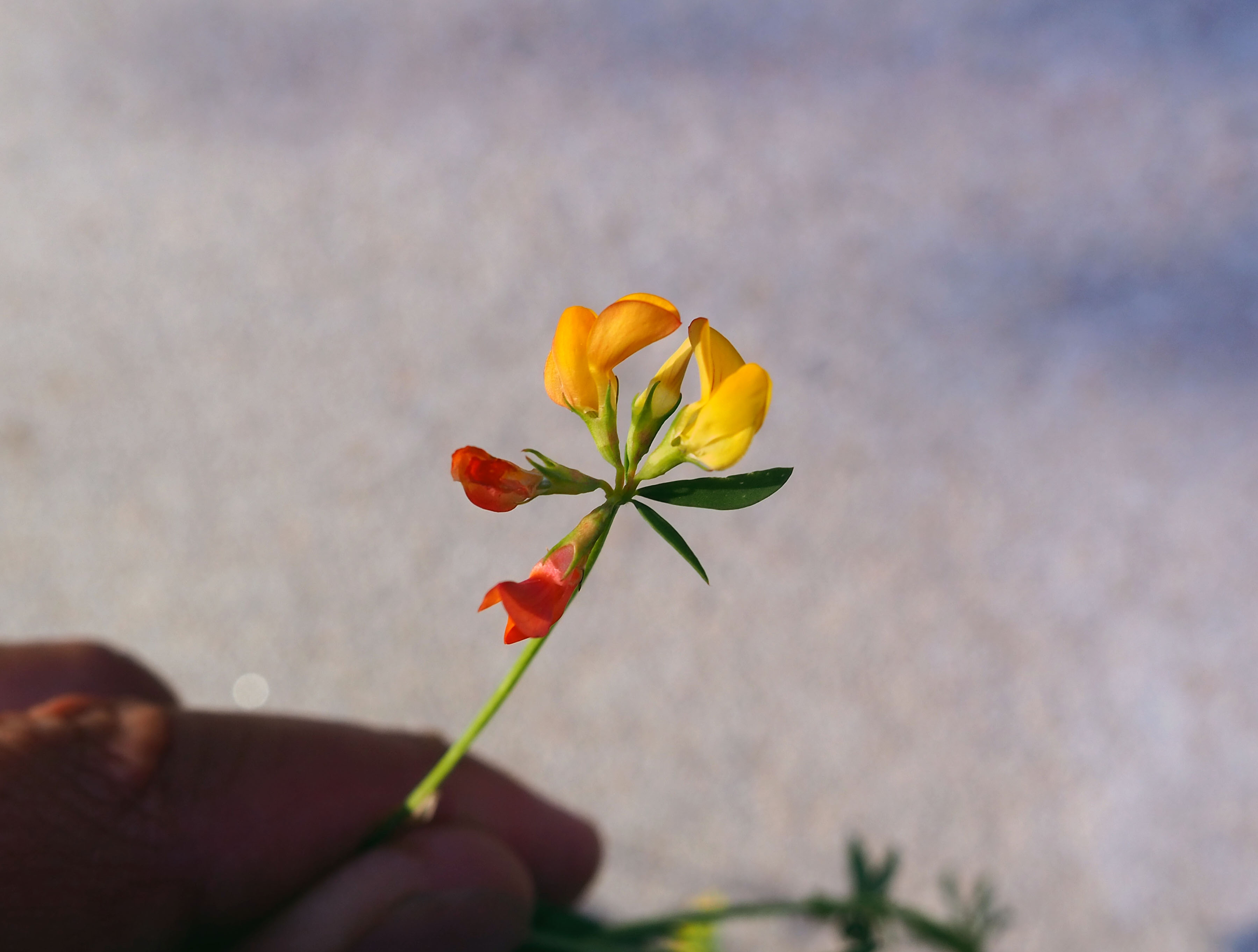
birdsfoot trefoil (Lotus corniculatus) at BSU in July 2023
yellow nutsedge (Cyperus esculentus) at BSU in August 2023
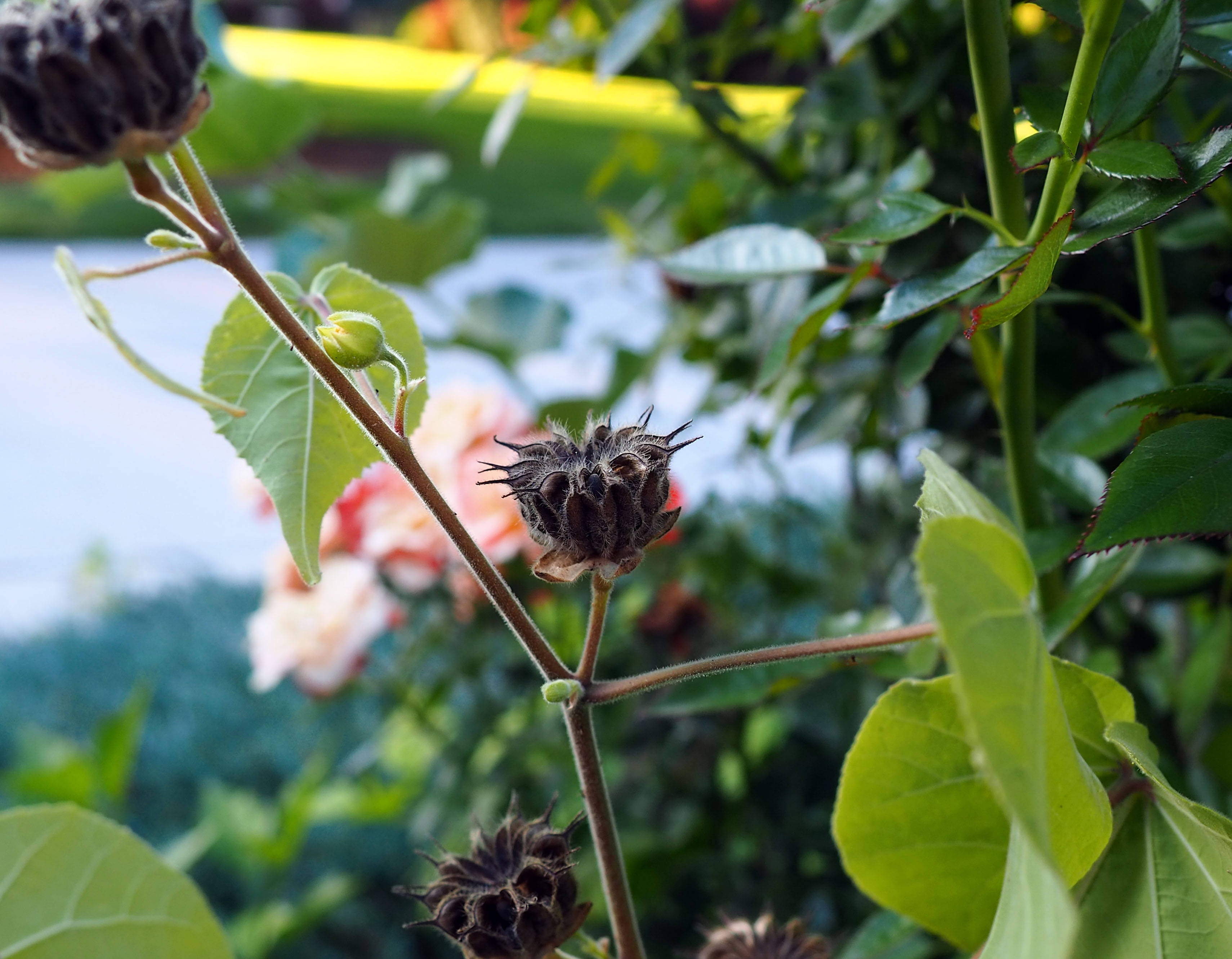
velvetleaf (Abutilon theophrasti) at BSU in September 2023
chicory (Cichorium intybus) at BSU on October 2023
puncturevine (Tribulus terrestris) at BSU in November 2023
bull thistle (Cirsium vulgare) at BSU in December 2023

Additional weeds found on the BSU campus from July – December 2023:

  • Abutilon theophrasti (velvetleaf)
  • Cichorium intybus (chicory)
  • Cirsium vulgare (bull thistle)
  • Cyperus esculentus (yellow nutsedge)
  • Eragrostis cilianensis (stinking lovegrass)
  • Lotus corniculatus (birdsfoot trefoil)
  • Medicago sativa (alfalfa)
  • Melilotus alba (white sweetclover)
  • Solanum nigrum (black nightshade)
  • Sonchus asper (prickly sowthistle)
  • Tribulus terrestris (puncturevine)

Additional weeds observed on the BSU campus by iNaturalist users as of December 2023:

  • Aegilops cylindrica (jointed goatgrass)
  • Bromus diandrus (ripgut brome)
  • Cerastium nutans (nodding chickweed)
  • Chorispora tenella (blue mustard)
  • Elymus repens (quackgrass)
  • Hypericum perforatum (St. John’s wort)
  • Lepidium perfoliatum (clasping pepperweed)
  • Matricaria discoidea (pineappleweed)
  • Ornithogalum umbellatum (star-of-Bethlehem)
  • Vicia tetrasperma (four-seeded vetch)

Weeds of Boise: Boise State University Campus, part one

If you live in a major city (or even a minor one), there is a good chance it is home to a college or university (perhaps several). Universities tend to take up a lot of space, which means there is often a plethora of landscaping accompanying their buildings, hardscaping, and other impervious surfaces. Among all the turf, flower beds, tree wells, and other greenspaces, there is bound to be a fair share of weeds. In spite of how hard the groundskeepers may work, the campus is not likely to ever be completely weed-free. Lucky for us, this means that institutions of higher learning are excellent places to familiarize ourselves with many of the weed species that occur in our cities, particularly weeds that are common in garden beds and turfgrass.

Near downtown Boise, on the southside of the Boise River, you will find the ever-expanding campus of Boise State University, home of the Broncos and their famous blue turf. According to the internet’s favorite encyclopedia, the campus is 285 acres in size, plenty of space for weeds to grow and abudant opportunities to hunt them out. Tallying the number of weed species in a place like this takes time. The benefit of botanizing for weeds is that you can find them at just about any time of year. While some species only show up in certain seasons, others can be seen practically year-round.

In order to document the weeds of Boise State University, I’m spending the entire year walking the campus listing and photographing the weeds I find. What follows is the first half of what’s been documented so far. I’m including a photograph for each month of the year, as well as a list of what I’ve encountered. In part two, I’ll share a list of any additional weeds found throughout the remainder of the year. While you’re waiting for that, check out the other posts in the Weeds of Boise series.

common groundsel (Senecio vulgaris) at BSU in January 2023
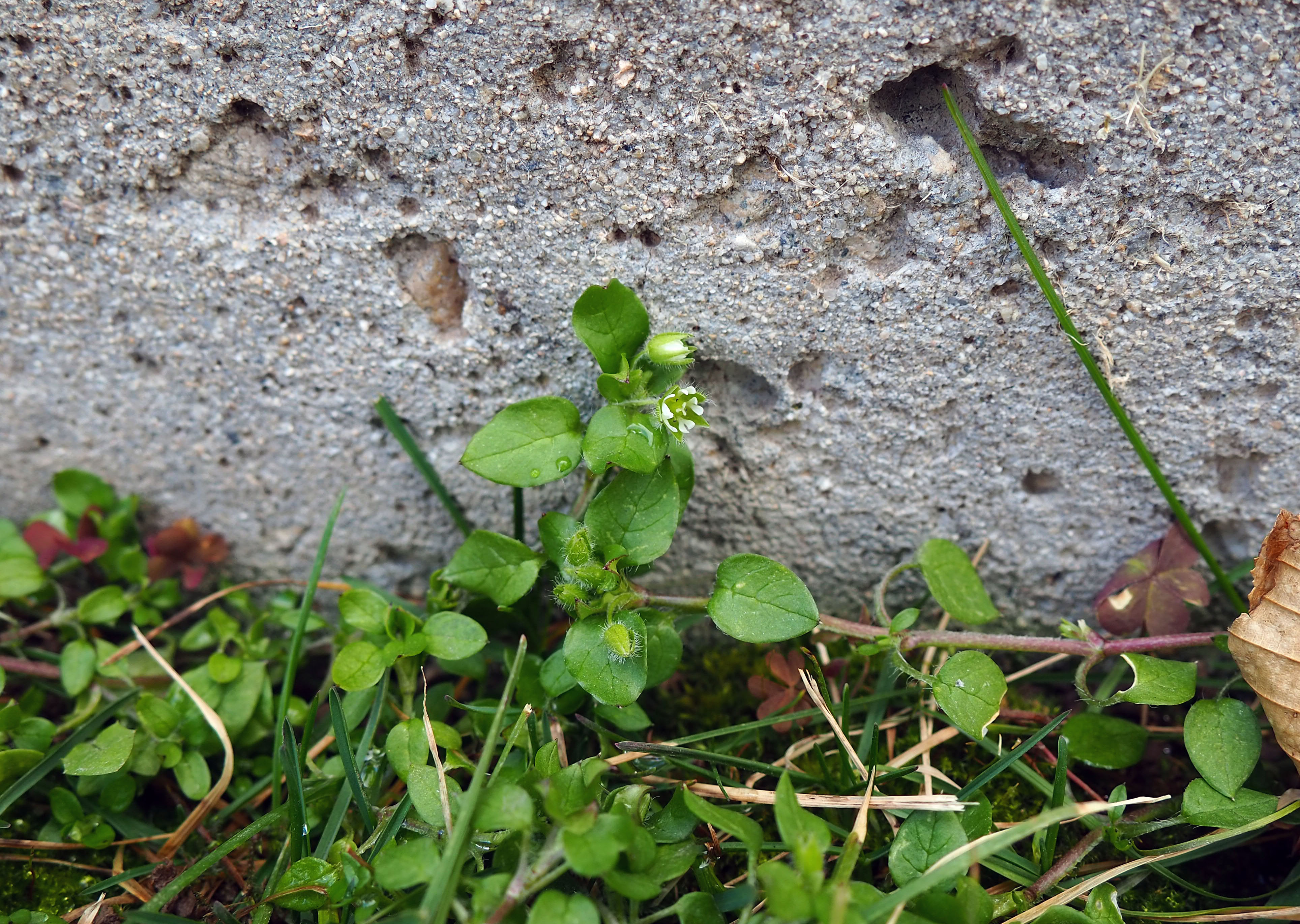
chickweed (Stellaria media) at BSU in February 2023
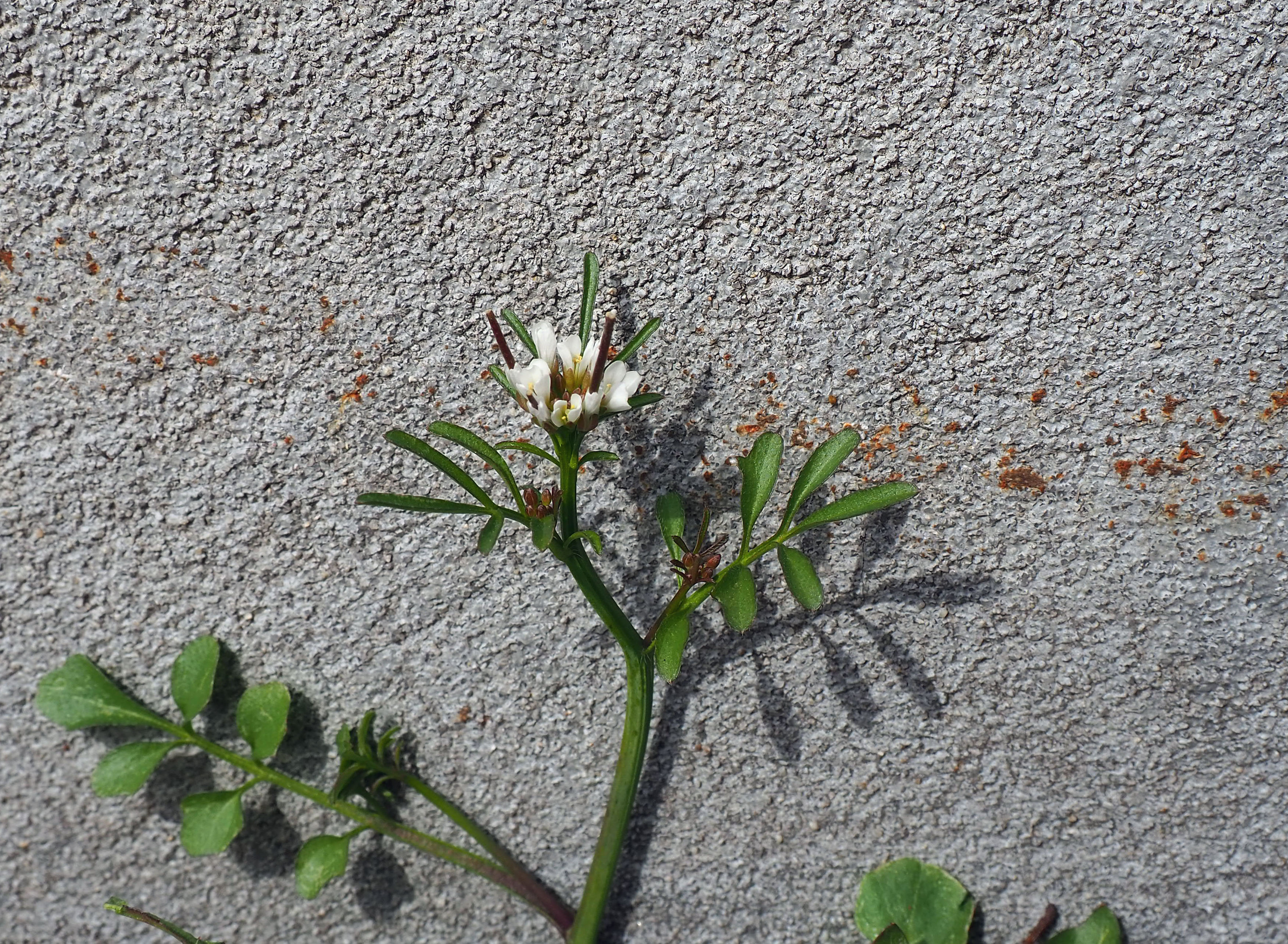
hairy bittercress (Cardamine hirsuta) at BSU in March 2023
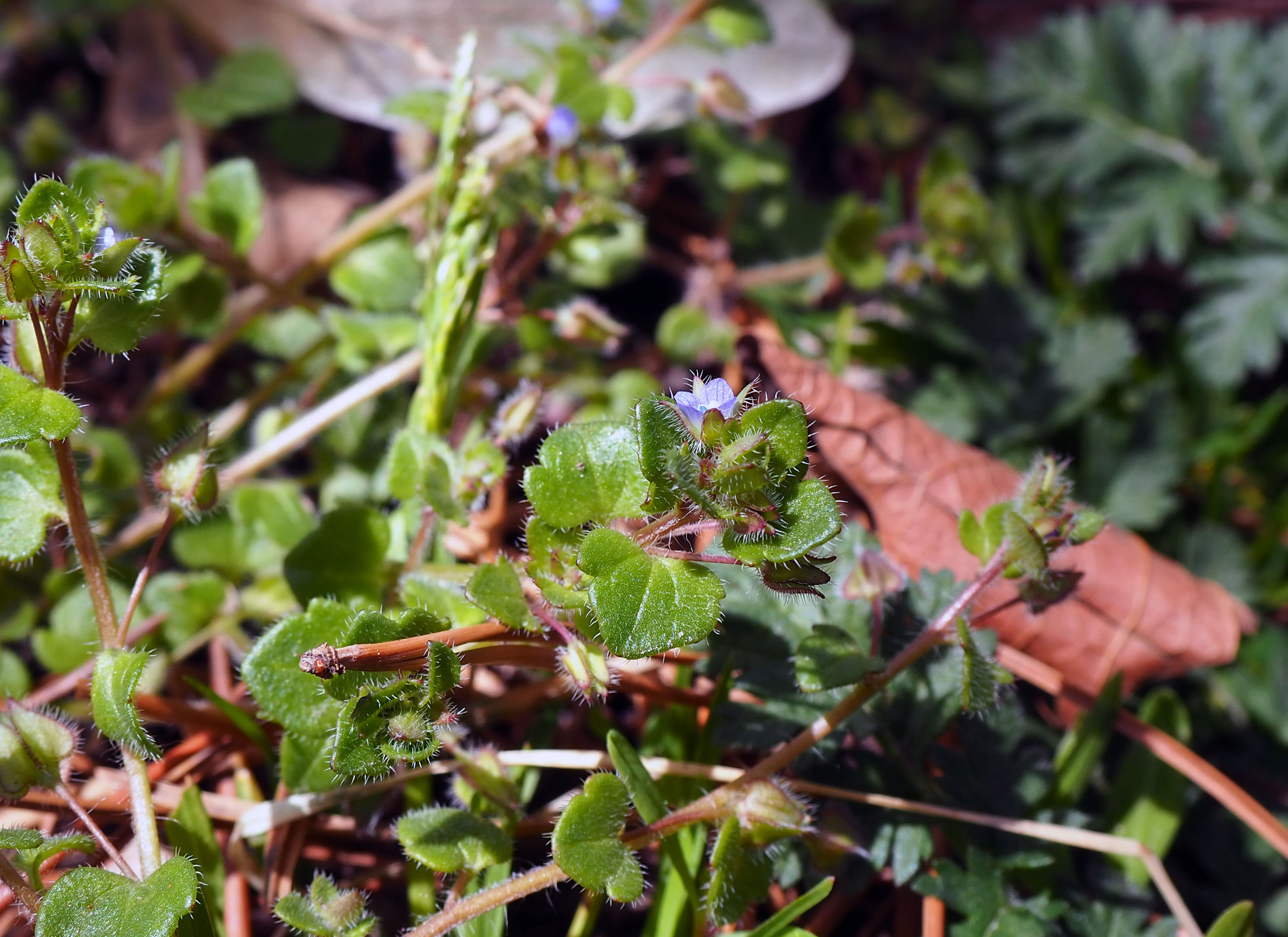
ivyleaf speedwell (Veronica hederifolia) at BSU in April 2023
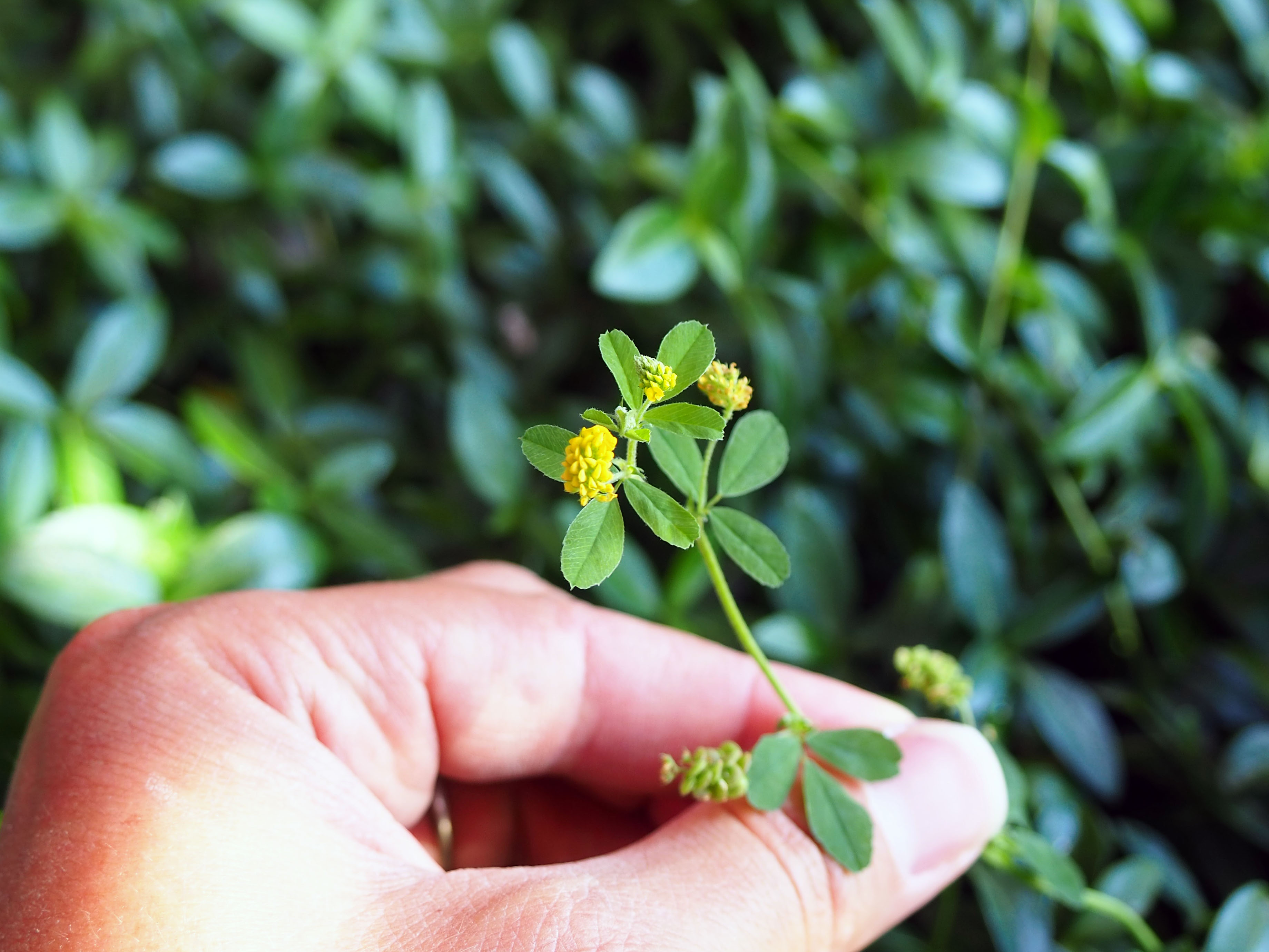
black medic (Medicago lupulina) at BSU in May 2023
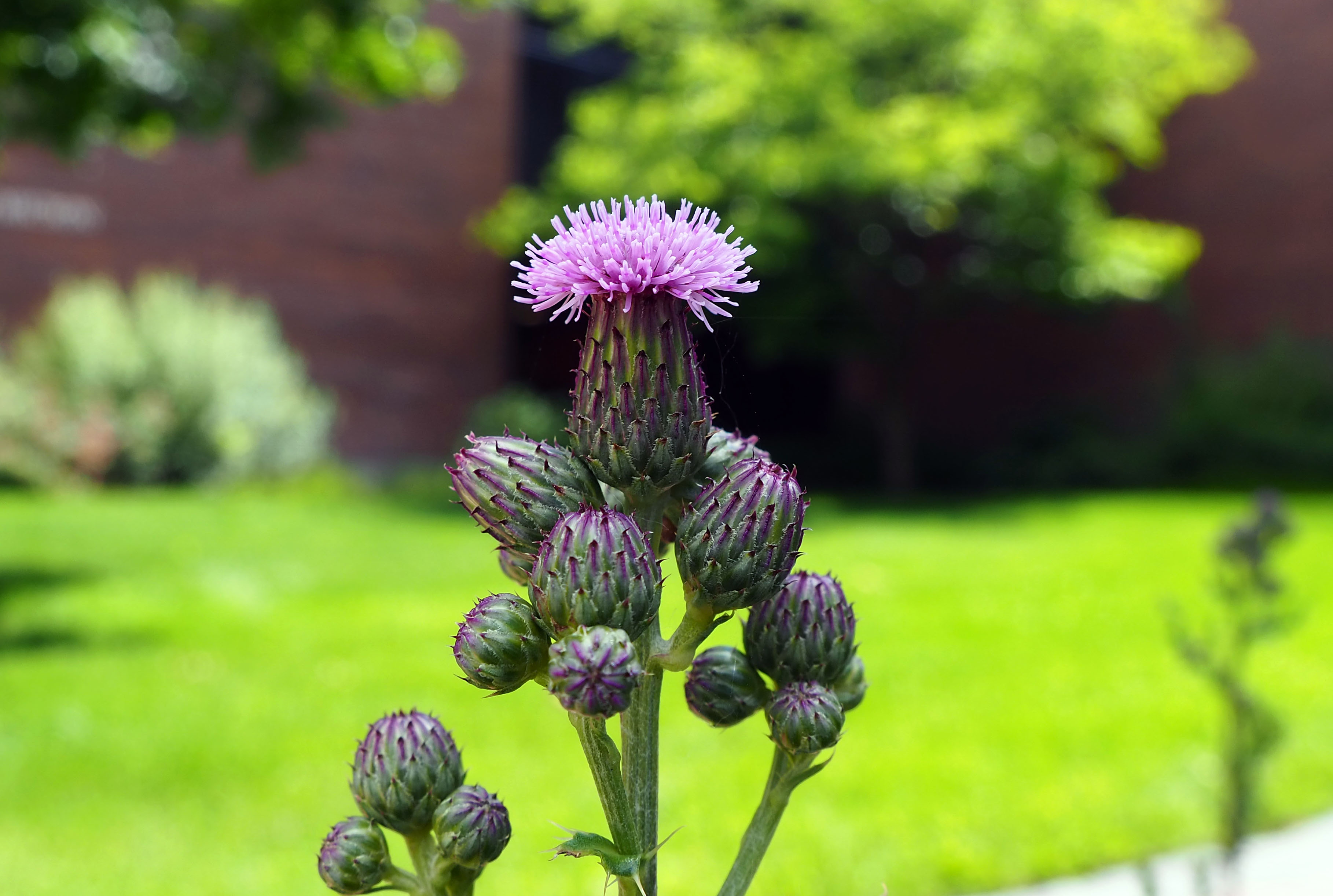
creeping thistle (Cirsium arvense) at BSU in June 2023

List of weeds found on the campus of Boise State University as of June 2023:

  • Ailanthus altissima (tree of heaven)
  • Anthriscus caucalis (bur chervil)
  • Amaranthus retroflexus (redroot pigweed)
  • Arctium minus (lesser burdock)
  • Bassia scoparia (kochia)
  • Bromus tectorum (cheatgrass)
  • Capsella bursa-pastoris (shepherd’s purse)
  • Cardamine hirsuta (hairy bittercress)
  • Ceratocephala testiculata (bur buttercup)
  • Chenopodium album (lamb’s quarters)
  • Chondrilla juncea (rush skeletonweed)
  • Cirsium arvense (creeping thistle)
  • Claytonia perfoliata (miner’s lettuce)
  • Convolvulus arvensis (field bindweed)
  • Conyza canadensis (horseweed)
  • Descurainia sophia (flixweed)
  • Digitaria sanguinalis (crabgrass)
  • Draba verna (spring draba)
  • Epilobium ciliatum (willowherb)
  • Erodium cicutarium (redstem filare)
  • Euphorbia maculata (spotted spurge)
  • Galium aparine (cleavers)
  • Geum urbanum (herb Bennet)
  • Holosteum umbellatum (jagged chickweed)
  • Hordeum jubatum (foxtail barley)
  • Lactuca serriola (prickly lettuce)
  • Lamium purpureum (purple deadnettle)
  • Lepidium sp. (whitetop)
  • Malva neglecta (common mallow)
  • Medicago lupulina (black medic)
  • Oxalis corniculata (creeping woodsorrel)
  • Parthenocissus quinquefolia (Virginia creeper)
  • Plantago lanceolata (narrowleaf plantain)
  • Plantago major (broadleaf plantain)
  • Poa annua (annua bluegrass)
  • Poa bulbosa (bulbous bluegrass)
  • Polygonum aviculare (prostrate knotweed)
  • Portulaca oleracea (purslane)
  • Prunella vulgaris (self-heal)
  • Ranunculus repens (creeping buttercup)
  • Senecio vulgaris (common groundsel)
  • Sonchus sp. (sow thistle)
  • Stellaria media (chickweed)
  • Taraxacum officinale (dandelion)
  • Tragopogon dubius (salsify)
  • Trifolium repens (white clover)
  • Ulmus pumila (Siberian elm)
  • Veronica hederifolia (ivyleaf speedwell)
  • Vulpia myuros (rat’s tail fescue)

Do you frequent the BSU campus? Have you seen anything not on my list? Comment below or send me a message and let me know what you’ve seen and where.

What Is Cheatgrass and Why Should I Care?

To understand the current state of rangeland wildfires in the Intermountain West, you must first familiarize yourself with a plant commonly referred to as cheatgrass. This annual grass moved into the region over a century ago, and its spread has had a massive impact on the environment, as well as the economy and our way of life. Just the very mention of cheatgrass in the West will get some people’s blood boiling. It’s a menace, a scourge, a pest, and yet it’s here to stay. It’s a result of us being here, yet somehow it’s the invader. Its success is largely due to the way we’ve chosen to operate in this region, yet it’s the one to blame for our troubles. When you really start to learn about this plant, it’s hard not to develop an appreciation for it, despite the tragic ways in which it has shaped our region for the worse. It’s not a plant that is showy or grandiose in any significant way. Everything about its appearance screams for it to be dismissed and overlooked, yet it’s story – at least here in the American West – is larger than life.

cheatgrass (Bromus tectorum) – illustration credit: Selected Weeds of the United States, Agriculture Handbook No. 366 (ARS/USDA)

Bromus tectorum goes by more than a dozen common names, but the ones you tend to hear most often are downy brome and cheatgrass. Downy because of how fuzzy its leaf blades can be and cheat because its presence on wheat farms cheats farmers of their yield. It is distributed widely across Europe, eastern Asia, and northern Africa where it originates, and was introduced to North America in the mid-19th century. How and why it got here isn’t totally clear. It likely had multiple introductions, both as a contaminant in seeds and attached to fur, clothing, packaging materials, etc., as well as intentionally as a forage crop for livestock. Regardless, it managed to establish readily in the east and then quickly spread across the country, spanning the continent by the early 20th century. It found the Great Basin particularly habitable due to its hot, dry summers and cold, wet winters and largely treeless landscape.

Apart from the climate, a significant factor behind cheatgrass’s establishment in the Intermountain West are all the cows. For a number of reasons, the Great Basin isn’t really suitable for largescale farming operations, but livestock grazing is another story. Many of the animals native to the region are grazing animals after all, so why not graze cattle and sheep? But there is a limit. Too many animals stuck in one spot for too long leads to overgrazing, and overgrazed sites take time for the native vegetation to recover. Cheatgrass exploits this opportunity by establishing itself quickly in disturbed and overgrazed locations and begins the process of outcompeting nearby plants for limited water and nutrients. Once it begins to dominate these sites, it has another trick up its sleeve.

Cheatgrass actually makes good forage for livestock early in the spring when it’s green and tender, but that quickly changes as the plants start to dry out and go to seed. By early summer, cheatgrass has completed its lifecycle and what’s left is a dried-up plant that, due to the silica in its cells, does not break down readily. Where cheatgrass is abundant, this means large swaths of standing brown grass as far as the eye can see. What’s more, this dead vegetation is highly flammable, and the slightest spark can set off a roaring blaze that moves quickly across the landscape, igniting everything in its path. In a region where fires once occurred decades apart, they now occur on a nearly annual basis. And because fire had been historically infrequent, the native vegetation is not adapted to regular fire and can take years to recover, whereas cheatgrass bounces right back, again exploiting the void left by the decimation of native plants and is flowering again the following spring. It’s a self-perpetuating cycle, and cheatgrass excels at it.

cheatgrass on fire

Cheatgrass is a winter annual, meaning that it germinates in the fall as soon as moisture becomes available. It then lies mostly dormant, its shallow, fibrous roots still growing as long as the ground isn’t frozen. Employing this strategy means cheatgrass is ready to resume growth at a quick pace as soon as the weather warms in the spring. Its roots spread horizontally in the soil and essentially rob water from nearby, more deeply rooted native vegetation. Its deep green, hairy leaves form a little tuft or rosette and provide early spring forage for livestock, gamebirds, and other grazing animals. As the spring progresses flower stalks form and the plants reach heights of around 2 feet (60 centimeters). Their inflorescence is a prominently drooping, open panicle and each spikelet has between 4-8 florets, each with a single, straight awn. The flowers of cheatgrass are cleistogamous, which means they don’t ever open. Self-pollination occurs inside the closed floret, and viable seeds soon develop. As the plant matures, it takes on a purple-reddish hue, after which it turns crispy and light brown as the seeds disperse.

The stiff awns remain on the seeds and aid in dispersal. They also cause injury to animals that dare consume them, poking into the soft tissues of their mouths. Passing animals are also injured when the awns work their way into their feet, ears, and other vulnerable body parts. The ability of the awns to attach so easily to fur and clothing is one of the reasons why cheatgrass spreads so readily. Wind also helps distribute the seed. A single plant can produce hundreds, if not thousands, of seeds, which are ready to germinate upon dispersal. They remain viable in the soil for only a few short years, but since they germinate so easily and are produced so abundantly, their short lifespan isn’t much of a downside.

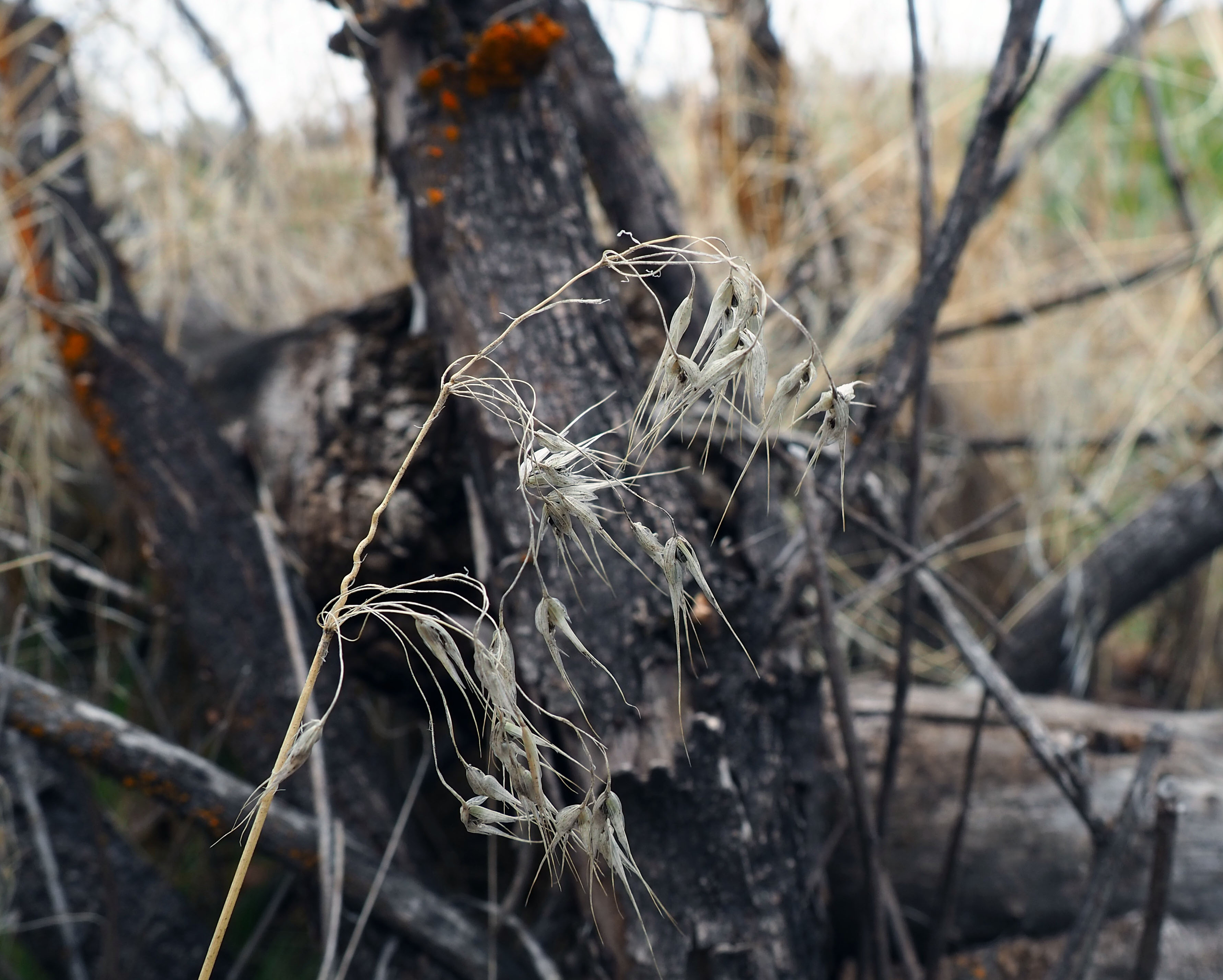
dried inflorescence of cheatgrass (Bromus tectorum)

In many ways, cheatgrass is the perfect weed. It is able to grow under a broad range of conditions. Its seeds germinate readily, and the plant grows during a time when most other plants have gone dormant. It excels at capturing water and nutrients. It self-pollinates and produces abundant viable seed, which are reliably and readily dispersed thanks to persistent awns. Disturbed areas are ripe for a plant like cheatgrass, but even nearby undisturbed areas can be invaded as seeds are dispersed there. With the help of fire, cheatgrass also creates its own disturbance, which it capitalizes on by then growing even thicker, more abundant stands with now even less competition from native vegetation. And because it is available so early in the season and is readily consumed by livestock and gamebirds, what motivation is there for humans to totally replace it with something else? As James Young and Charlie Clements ask in their book, Cheatgrass, “How can we come to grips with the ecological and economic consequences of this invasive alien species that can adapt to such a vast range of environmental conditions?” In another section they lament, “cheatgrass represents a stage in transition toward an environment dominated by exotic weeds growing on eroded landscapes.”

The topic of cheatgrass and other introduced annual grasses, as well as the even broader topic of rangeland wildfires, is monstrous, but it is one that I hope to continue to cover in a series of posts over the coming months and years. It’s not an easy (or necessarily fun) thing to tackle, but it’s an important one, especially for those of us who call the cheatgrass sea our home.


Check out the linktree for various ways to follow and support Awkward Botany.

Weeds of Boise: Railroad Tracks Between Kootenai Street and Overland Road

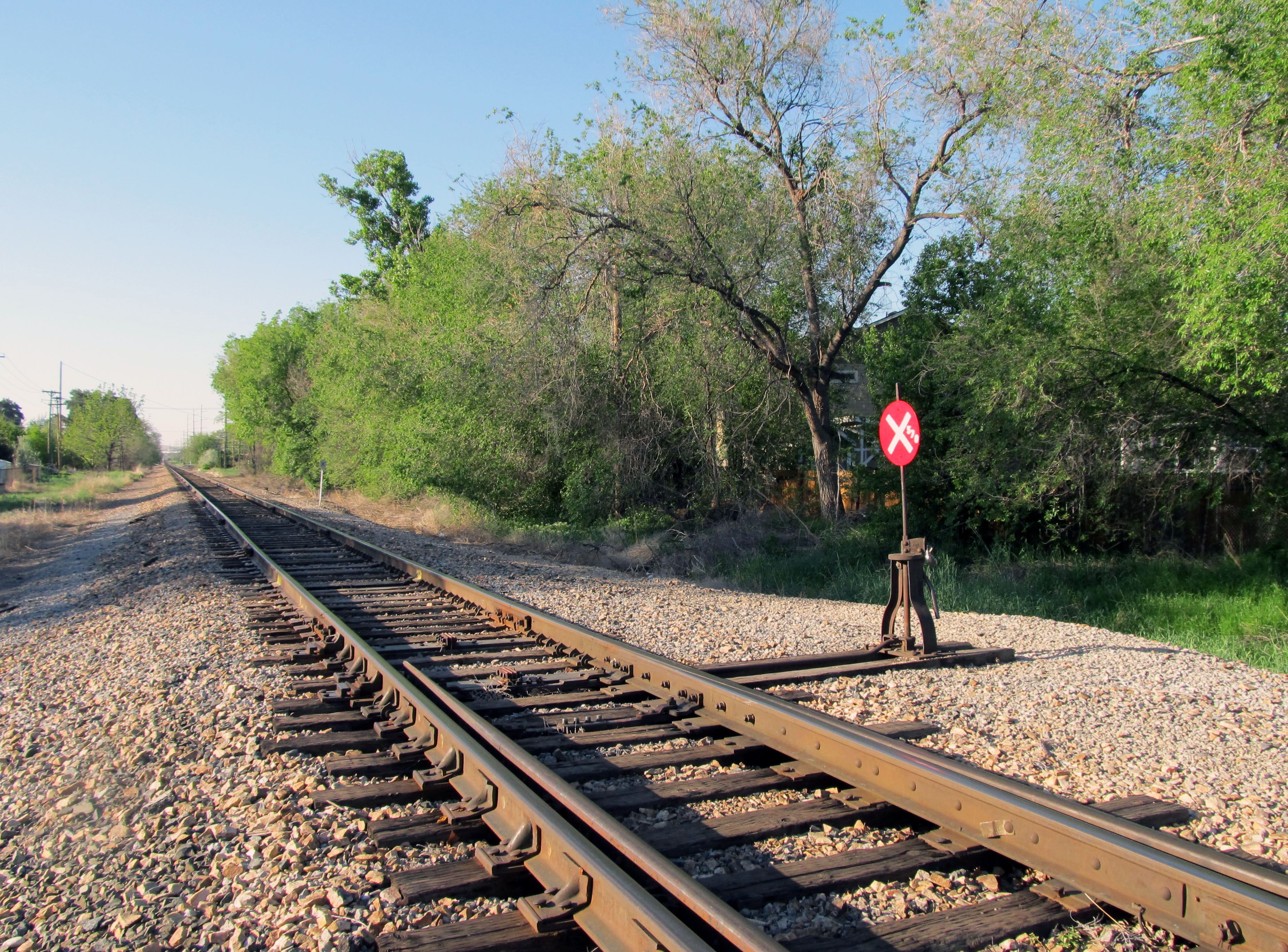
Walking along railroad tracks is a pretty cool feeling. It’s also a good place to look for weeds. Active railroad tracks are managed for optimum visibility and fire prevention, which means that trees and shrubs near the tracks are removed creating plenty of open space on either side. Open areas in full sun are ideal places for a wide variety of weed species to grow. Trains passing through can also be sources or dispersal agents of seeds, so there’s a chance that you may see things growing alongside railroad tracks that you don’t often see elsewhere. All this means that railroad tracks in urban areas are great locations to familiarize yourself with your city’s wild urban flora.

I visited a small section of railroad tracks between Kootenai Street and Overland Road in Boise. At one point, this was a pretty active railroad. Passenger trains once moved along these tracks, and the Boise Depot, which is less than a mile from this location, was one of several stops between Portland, OR and Salt Lake City, UT. Unfortunately, those services ended in 1997 and have yet to resume, despite continued support for bringing passenger rail back to the region. Still, freight trains pass by with some frequency.

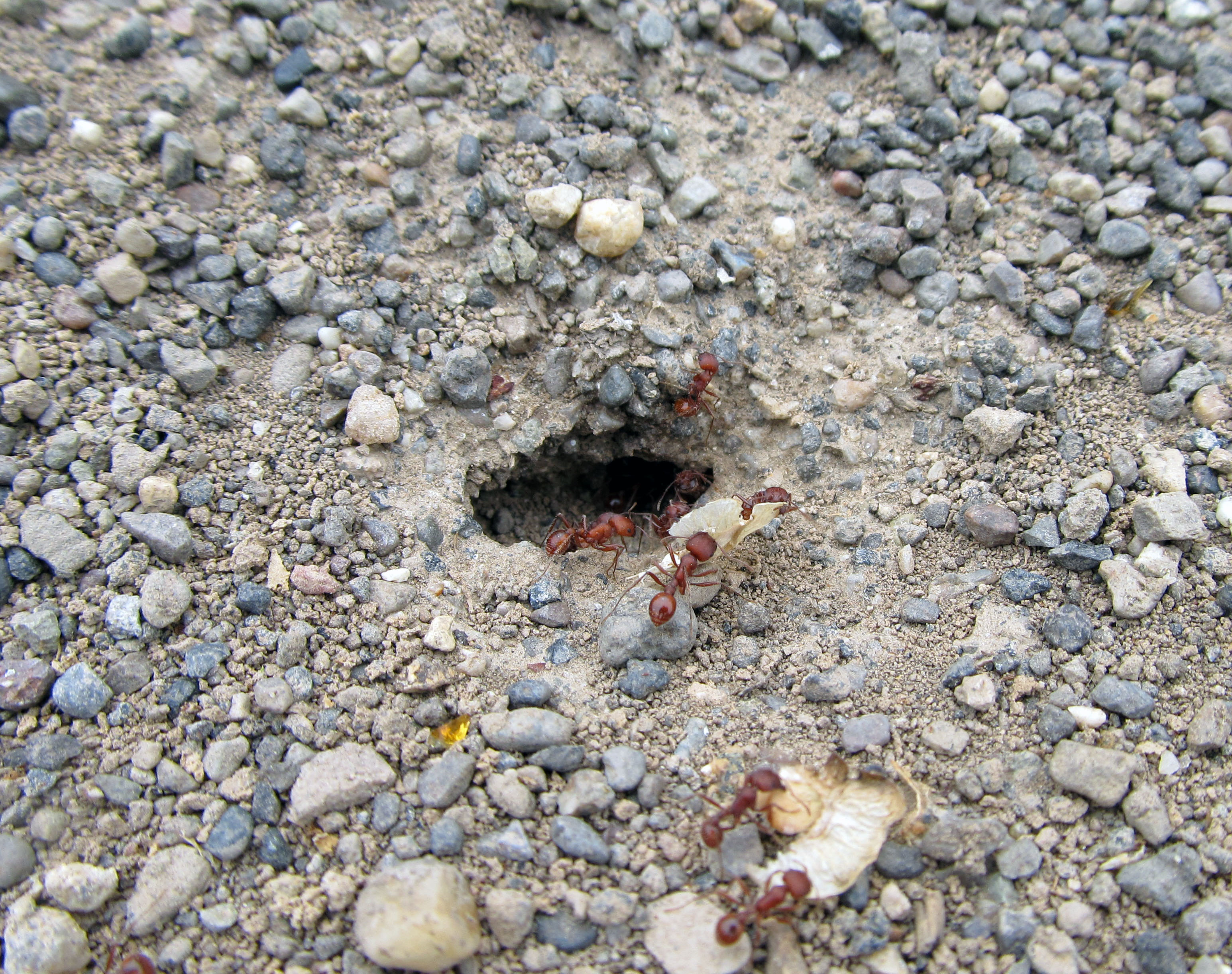
Managing weeds along railroad tracks in urban areas can be tricky. There is little else in the way of vegetation to compete with the weeds. The tracks are also adjacent to parks, homes, schools, gardens, and other locations that make herbicide applications complicated. The species of weeds can also vary widely from one mile to the next, so management decisions must also vary. It’s especially important that the ballast directly beneath and on either side of the tracks is kept weed free in order to prevent fires and improve visibility. All of this and more makes weed control along railroad tracks one of the most challenging jobs around. Luckily, for someone that likes to look at weeds, it means there will always be interesting things to see near the tracks, including for example this colony of harvester ants that I came across while identifying weeds. I was happy to see that they were collecting the samaras of Siberian elm (Ulmus pumila), one of several weedy trees in the Treasure Valley.

What follows are a few images of some of the weeds I encountered along the railroad tracks between Kootenai Street and Overland Road, as well as a list of the weeds I was able to identify. The list will grow as I identify the mystery weeds and encounter others that I missed, as is the case with all posts in the Weeds of Boise series.

Virginia creeper (Parthenocissus quinquefolia)
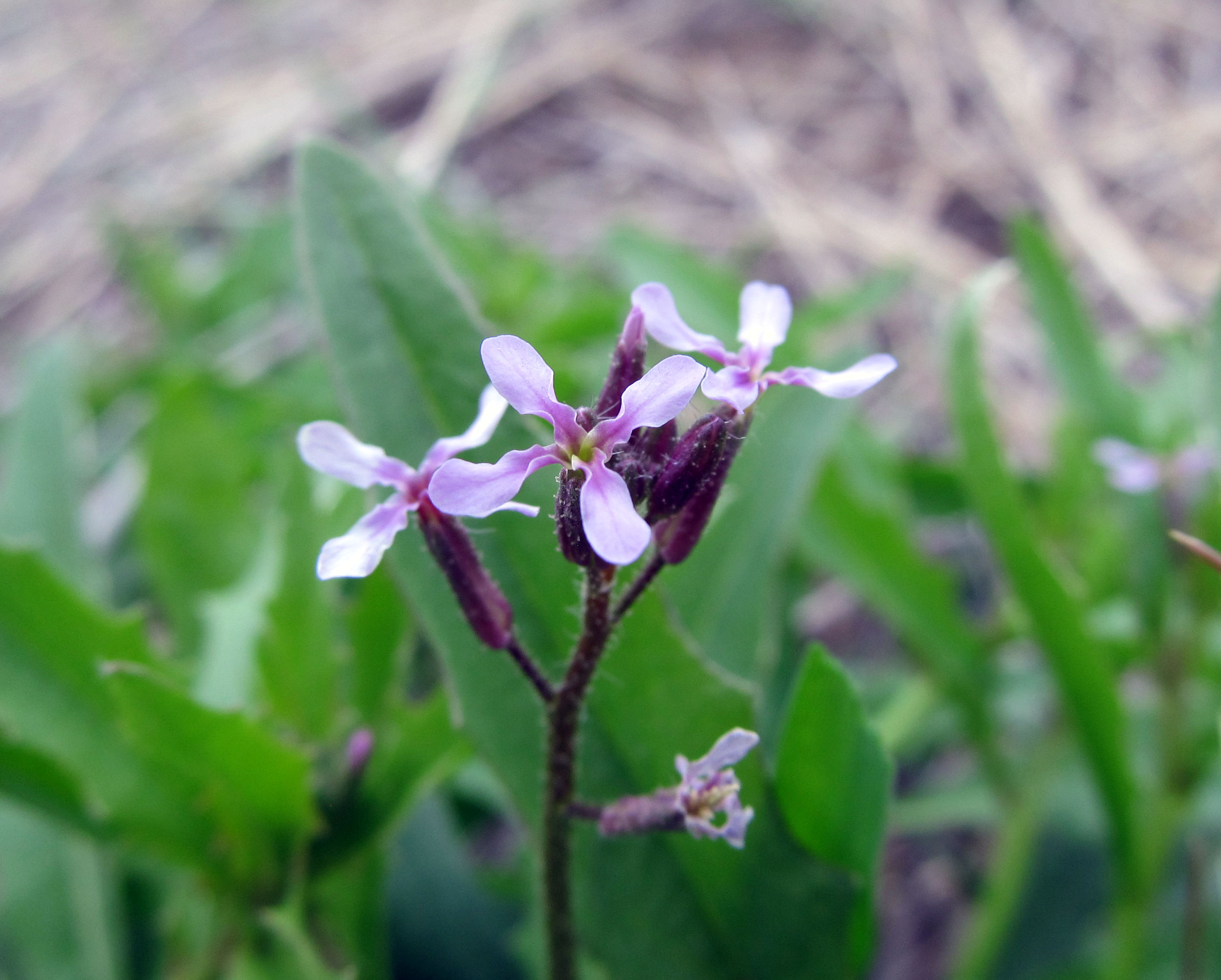
blue mustard (Chorispora tenella)
cleavers (Galium aparine)
whitetop (Lepidium sp.)
Himalayan blackberry (Rubus bifrons)
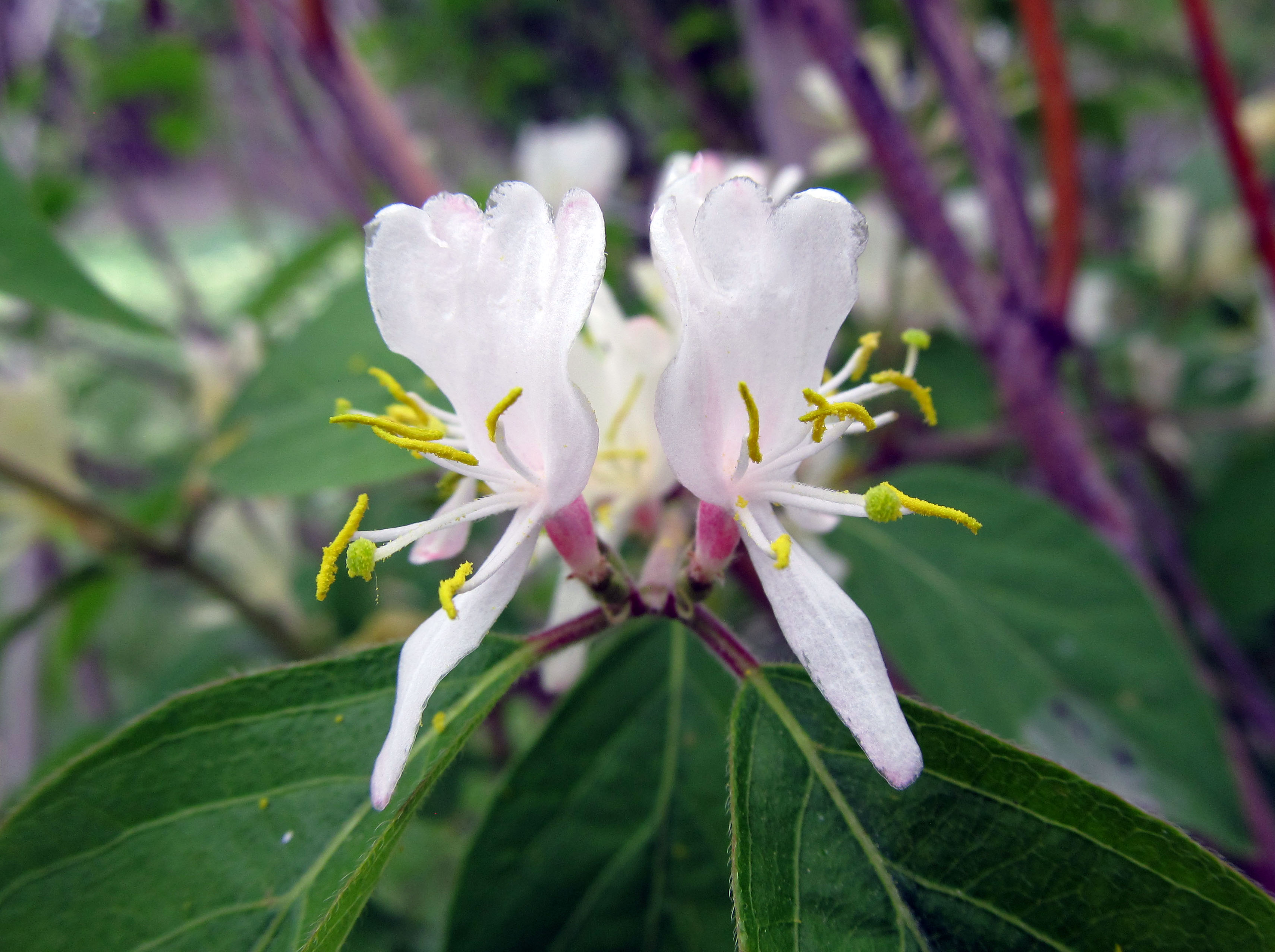
bush honeysuckle (Lonicera sp.)
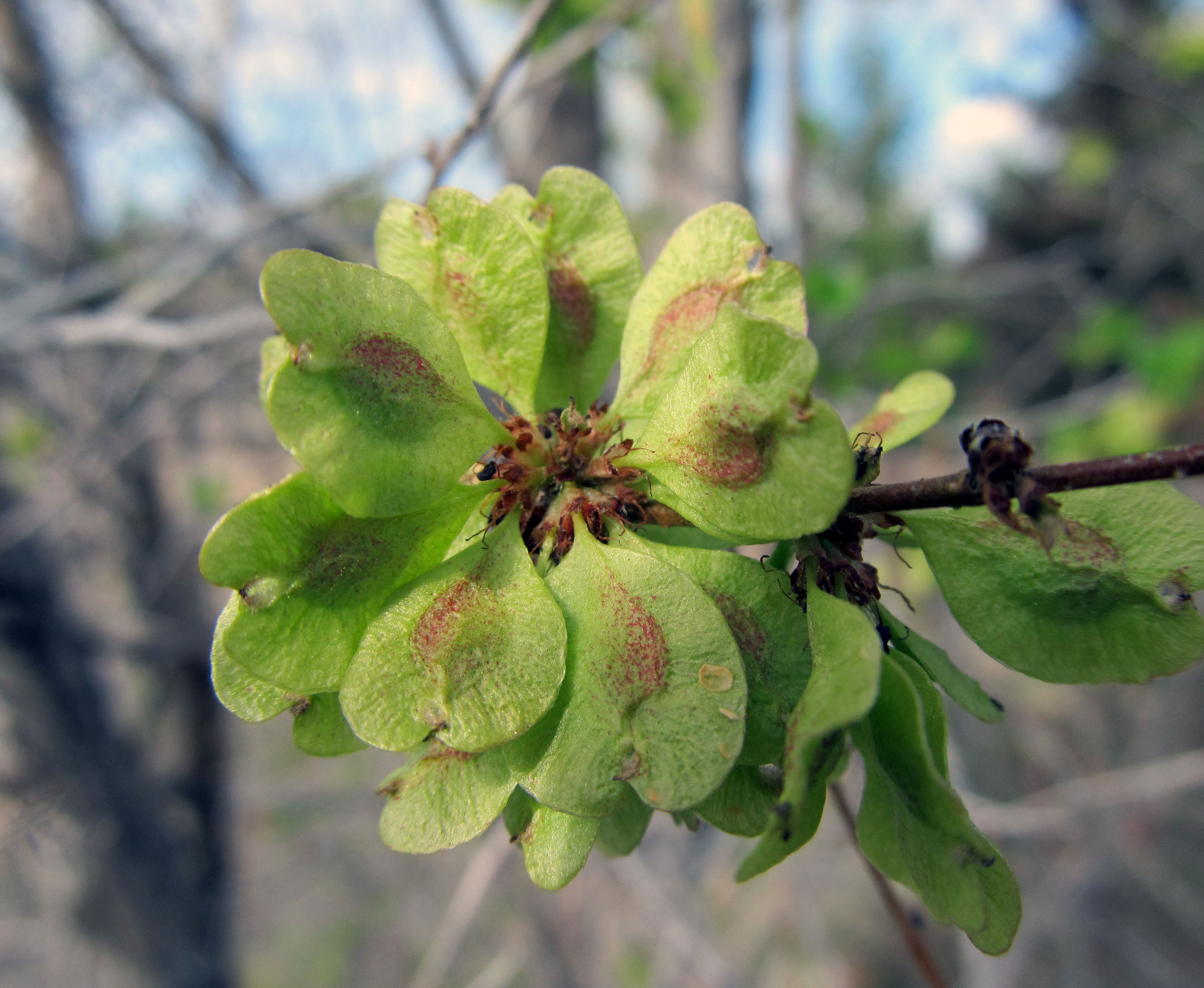
Siberian elm (Ulmus pumila)
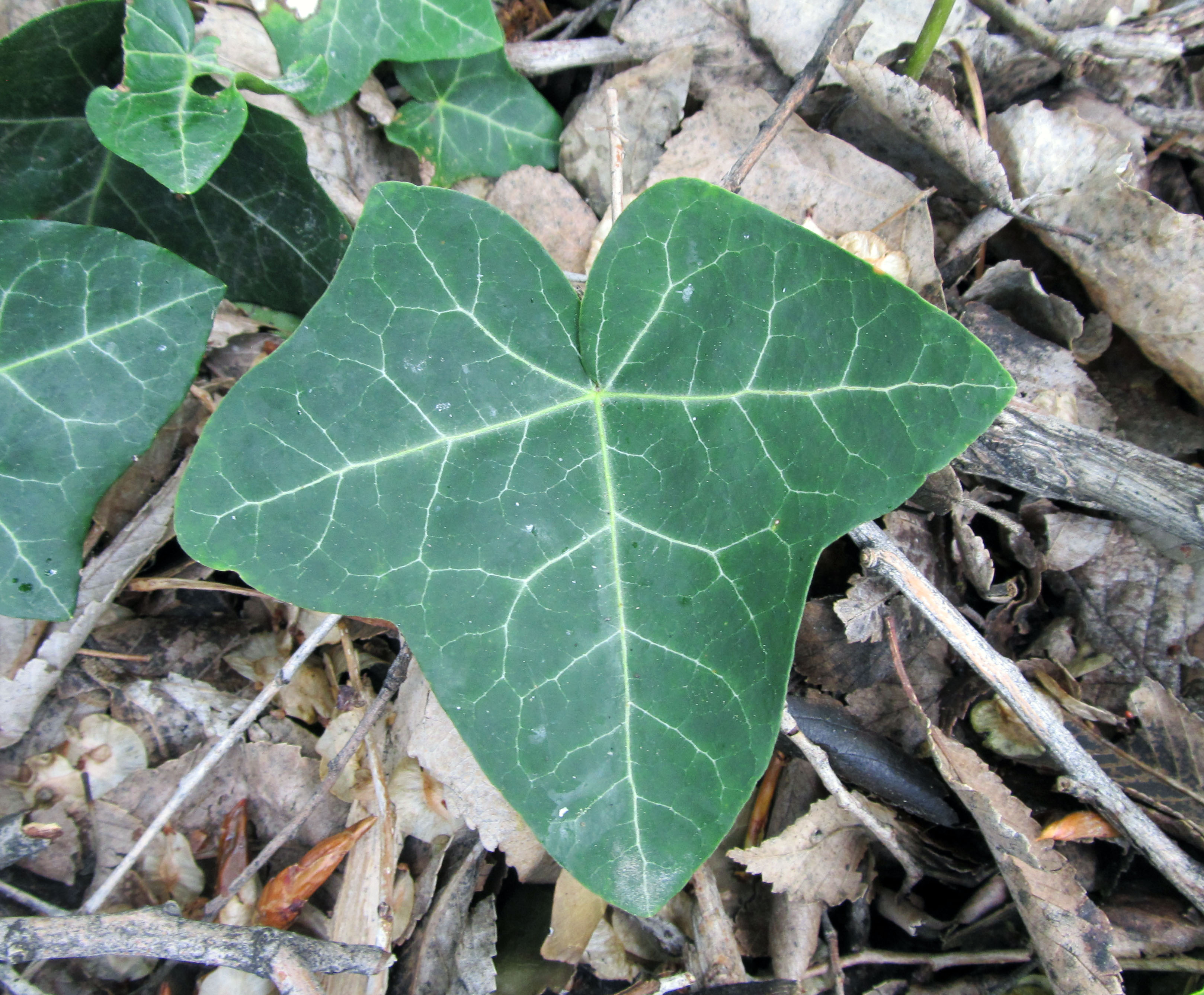
English ivy (Hedera helix)
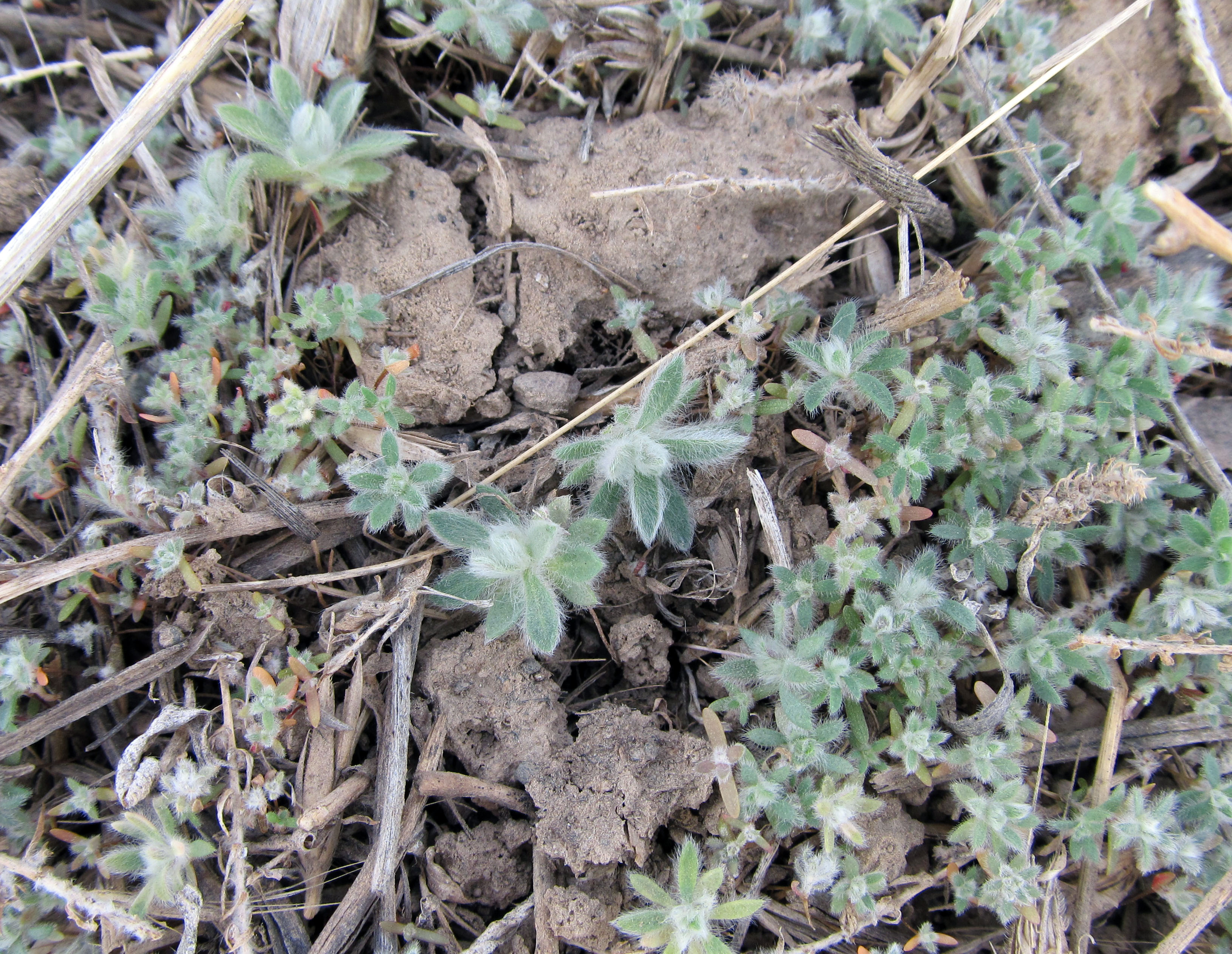
kochia seedlings (Bassia scoparia)
  • Arctium minus (common burdock)
  • Bassia scoparia (kochia)
  • Bromus diandrus (ripgut brome)
  • Bromus tectorum (cheatgrass)
  • Chorispora tenella (blue mustard)
  • Conium maculatum (poison hemlock)
  • Convolvulus arvensis (field bindweed)
  • Cirsium arvense (creeping thistle)
  • Dactylis glomerata (orchardgrass)
  • Descurainia sophia (flixweed)
  • Elaeagnus angustifolia (Russian olive)
  • Epilobium ciliatum (northern willowherb)
  • Equisetum sp. (horsetail)
  • Erodium cicutarium (redstem filaree)
  • Galium aparine (cleavers)
  • Hedera helix (English ivy)
  • Hordeum murinum (wild barley)
  • Lactuca serriola (prickly lettuce)
  • Lepidium sp. (whitetop)
  • Lonicera sp. (bush honeysuckle)
  • Parthenocissus quinquefolia (Virginia creeper)
  • Poa bulbosa (bulbous bluegrass)
  • Poa pratensis (Kentucky bluegrass)
  • Rubus bifrons (Himalayan blackberry)
  • Rumex crispus (curly dock)
  • Secale cereale (feral rye)
  • Taraxacum officinale (dandelion)
  • Ulmus pumila (Siberian elm)

Do you live near railroad tracks? What weeds are growing there, and do you feel as cool as I do when you walk the tracks?

The Weeds in Your Bird Seed

With February comes the return of the Great Backyard Bird Count, a weekend-long, worldwide, bird counting event that Sierra and I have enjoyed participating in for the past few years. While you can choose to count birds anywhere birds are found, part of the appeal of the event is that it can be done from the comfort of one’s own home simply by watching for birds to appear right outside the window. If there are bird feeders in your yard, your chances of seeing birds are obviously improved. Watch for at least fifteen minutes, record the number and species of birds you see, then report your sightings online. It’s for science!

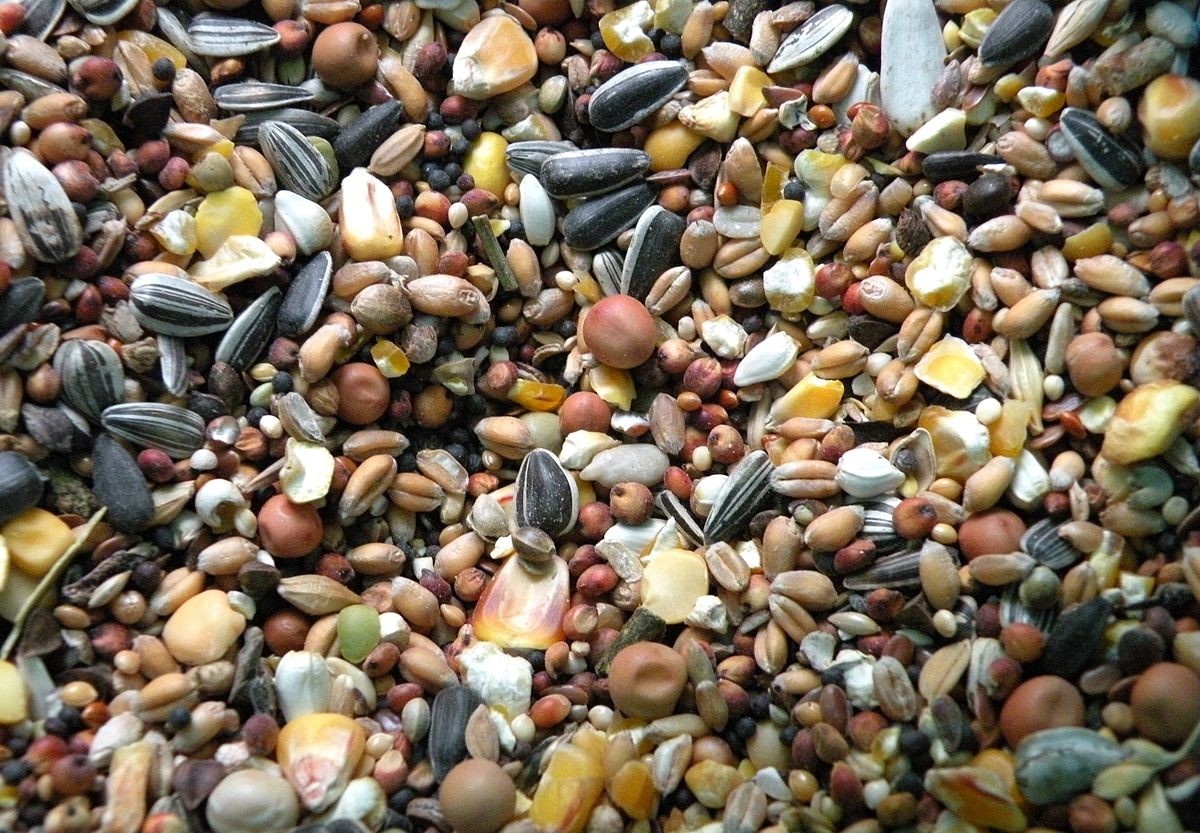
Feeding and watching birds are popular activities. In the United States alone, as many as 57 million households put out food for birds, spending more than $4 billion annually to do so. While there are a variety of things one can purchase to feed birds – suet, berries, mealworms, etc. – the bulk of that money is likely spent on bags of bird seed (also referred to as bird feed). Bird seed is a relatively cheap and easy way to feed a wide variety of birds. Unfortunately, it’s also a great way to introduce new weeds to your yard.

Bird seed contaminated with noxious weed seeds is not a new problem. It has been a concern for decades, and some countries have taken regulatory steps to address the issue. In the United States, however, there are no governmental regulations that address weed seed contamination in bird seed.  With this thought in mind, researchers at the University of Missouri screened a large sampling of bird seed mixes to determine the number and species of weed seeds they harbored, as well as their viability and herbicide resistance. Their results were published last year in Invasive Plant Science and Management.

The researchers examined 98 different bird seed mixes purchased from retail locations in states across the eastern half of the U.S. The seeds of 29 weed species were recovered from the bags, including at least eight species of grasses and several annual and perennial broadleaf weeds. 96% of the mixes contained one or more species of Amaranthus, including Palmer’s amaranth (Amaranthus palmeri), which was found in 27 mixes and which the researchers refer to as “the most troublesome weed species in agroecosystems today.” About 19% of amaranth seeds recovered germinated readily, and five of the seed mixes contained A. tuberculatus and A. palmeri seeds that, once grown out, were found to be resistant to glyphosate, the active ingredient in a commonly used herbicide.

Redroot pigweed (Amaranthus retroflexus) is one of several weedy amaranth species commonly found in bird seed mixes (illustration credit: wikimedia commons)

The seeds of grass weeds were found in 76% of the bird seed mixes and included three species of foxtail (Setaria spp.), as well as other common grasses like large crabgrass (Digitaria sanguinalis) and barnyardgrass (Echinochloa crus-galli). Bird seed ingredients that seemed to favor grass seed contamination included wheat, grain sorghum, and proso millet, three crops that are also in the grass family. No surprise, as grass weeds are difficult to control in crop fields when the crop being grown is also a grass.

After amaranths and grasses, ragweed (Ambrosia artemisiifolia) was the third most common weed found in the mixes. This was a troubling discovery since populations of this species have shown resistance to a number of different herbicides. Moving ragweed to new locations via bird seed could mean that the genes that give ragweed its herbicide resistance can also be moved to new locations. Kochia (Bassia scoparia), another weed on the Weed Science Society of America’s list of top ten most troublesome weeds, was also found in certain bird seed mixes, particularly when safflower was an ingredient in the feed.

A similar study carried out several years earlier at Oregon State University found the seeds of more than fifty different weed species in ten brands of bird feed commonly sold at retail stores. Ten of the weeds recovered from the mixes are on Oregon’s noxious weed list. Both studies demonstrate how bird seed can be a vector for spreading weed seeds – and even new weed species and herbicide-resistant genes – to new locations. Weeds found sprouting below bird feeders can then potentially be moved beyond the feeders by wind and other dispersal agents. Weed seeds might also be moved to new locations inside the stomachs of birds.

Addressing this issue can be tackled from several different angles. Growers and processors can improve their management of weed species in the fields where bird seed is grown and do a better job at removing weed seeds from the mixes after they are harvested. Government regulations can be put in place that restrict the type and quantity of weed seeds allowed in bird feed. Further processing of ingredients such as chopping or shelling seeds or baking seed mixes can help reduce the presence and viability of weed seeds.

Processed bird feed like suet is less likely to harbor viable weed seeds (photo credit: wikimedia commons)

Consumers can help by choosing bird feed that is processed or seedless like sunflower hearts, dried fruit, peanuts, suet cakes, and mealworms, and can avoid seed mixes with a large percentage of filler ingredients like milo, red millet, and flax. Attaching trays below feeders can help collect fallen seeds before they reach the ground. Bird seed can also be avoided all together, and feeding birds can instead be done by intentionally growing plants in your yard that produce food for birds. By including bird-friendly plants in your yard, you will also have a better chance of seeing a wide variety of birds during the Great Backyard Bird Count.

———————

Support Awkward Botany by visiting our Bookshop. Do you have suggestions for books to add to our store? Let us know in the comment section below.

Awkward Botanical Sketches #4: Boise Goathead Fest Edition

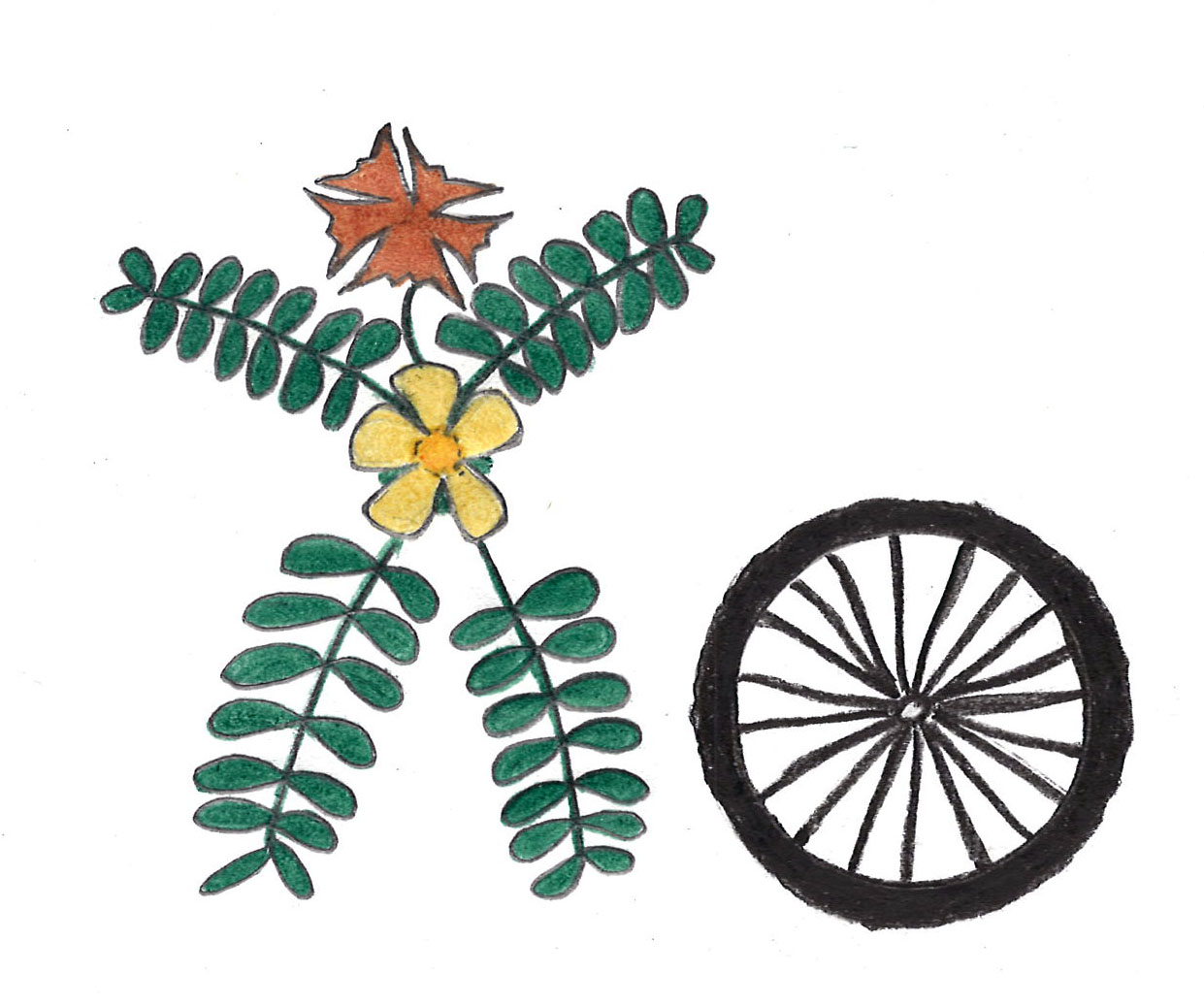
Covid-19 be damned, Boise Goathead Fest is happening in 2020. However, since we’re in the middle of a pandemic and the number of infections in Idaho have been far greater than we’d like them to be, this beloved, summertime event (now in its third year) is going to look quite a bit different this time around. No giant bicycle parade snaking through downtown Boise, no big gathering in the park to celebrate bicycles and recogonize all who helped pull goatheads across the Treasure Valley, and (I have to assume) no bike sumo. But we’re still going to decorate our bikes and ourselves like a noxious weed and go for a bike ride, and even though we won’t all be able to gather together in one spot, the sentiment will undoubtedly be the same.

I’m a big fan of the Goathead Fest, and not simply because I love bicycles and bike-culture. In fact, it’s mostly because a plant – while despised by all who ride bikes in this area – takes centerstage in the celebration. Not too many plants get this kind of attention. And sure, it may only find itself in the spotlight because of its bad behavior, but at least it has people paying more mind to green things.

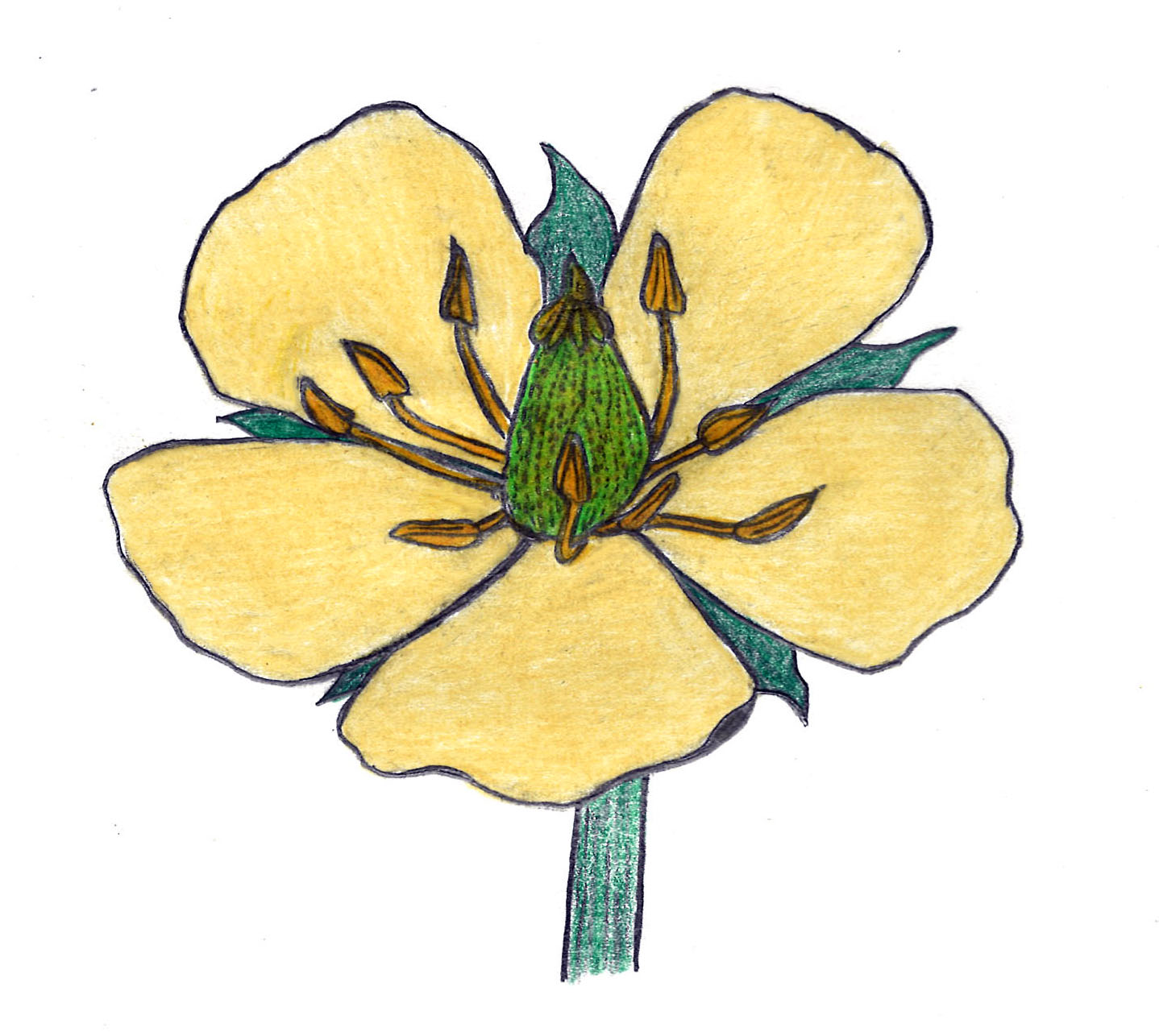
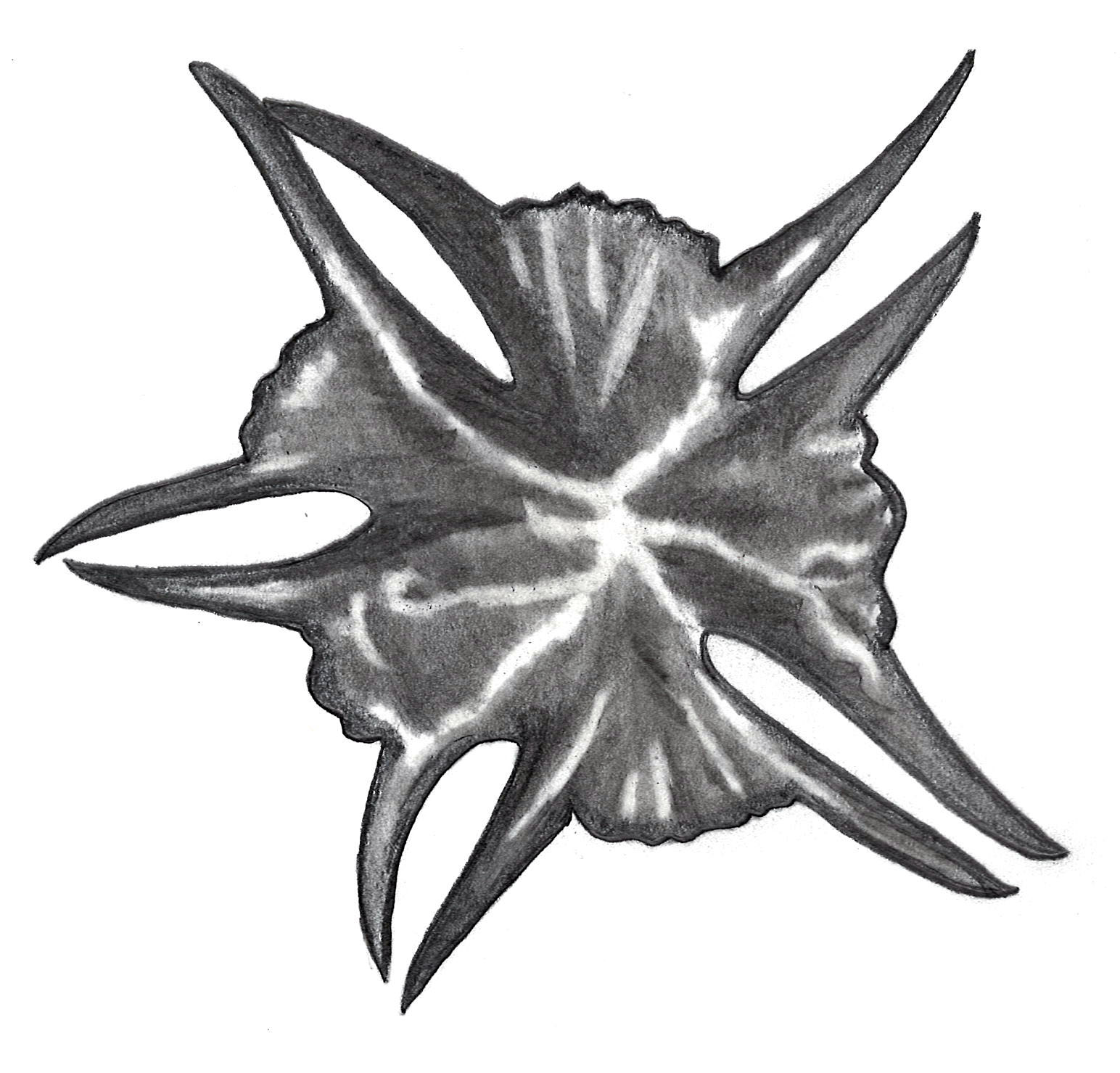
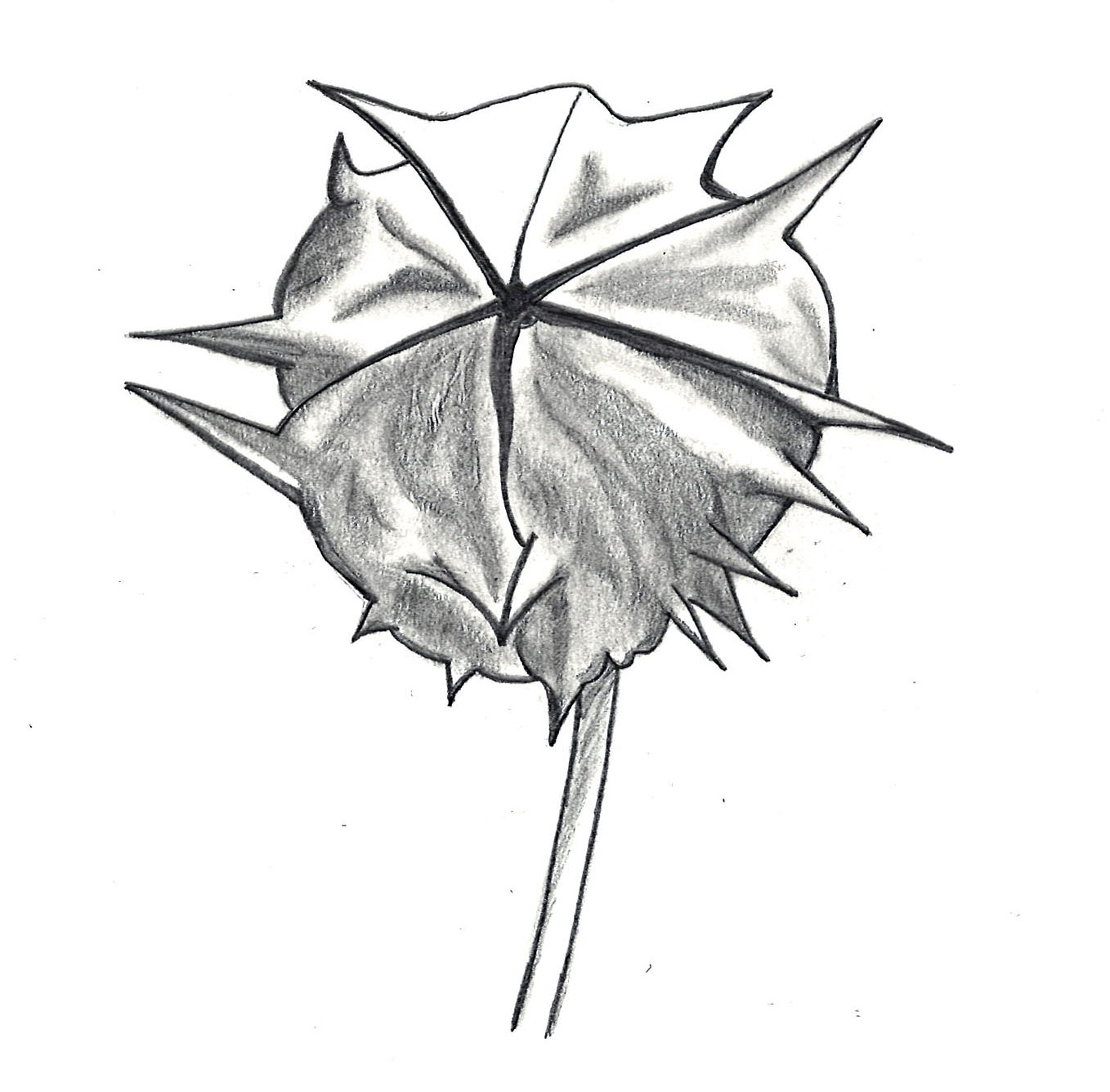
In anticipation of this year’s Goathead Fest, I decided to make a few attempts at drawing Tribulus terrestris. Goathead art has played a big part in the festivities since year one, and this year is no exception. In a normal year, all of the artwork would be displayed together in Cecil D. Andrus Park. This year, pieces of art will be displayed around town for us all to happen upon as we embark on our socially distanced bike rides. However, you won’t see any of my artwork out there (for good reason). Maybe someday (one can dream, I guess). Until then, I’ll include a few of my awkward attempts below.

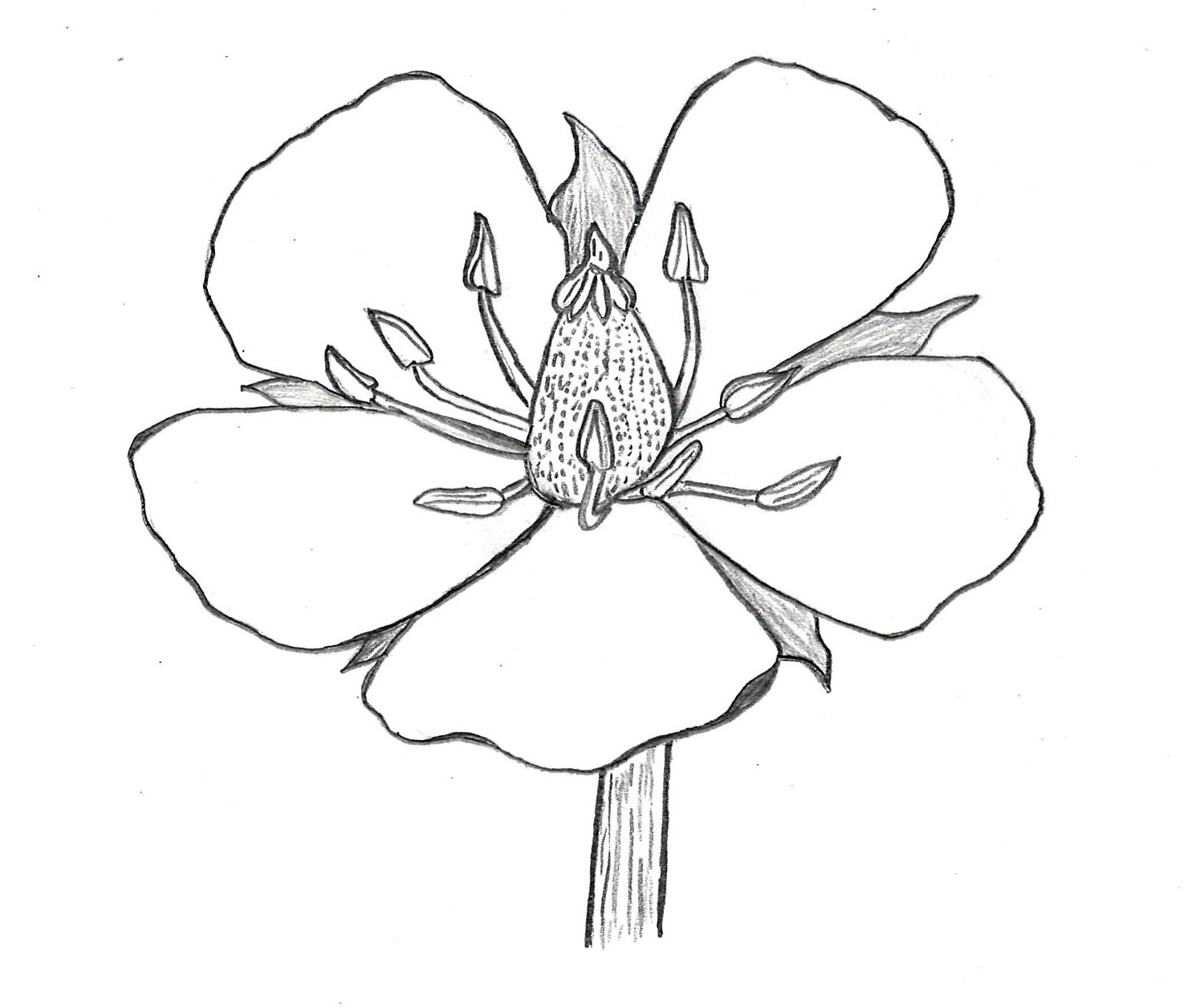
the flower of Tribulus terrestris

an attempt to color the flower of Tribulus terrestris

goathead nutlets #1

goathead nutlets #2

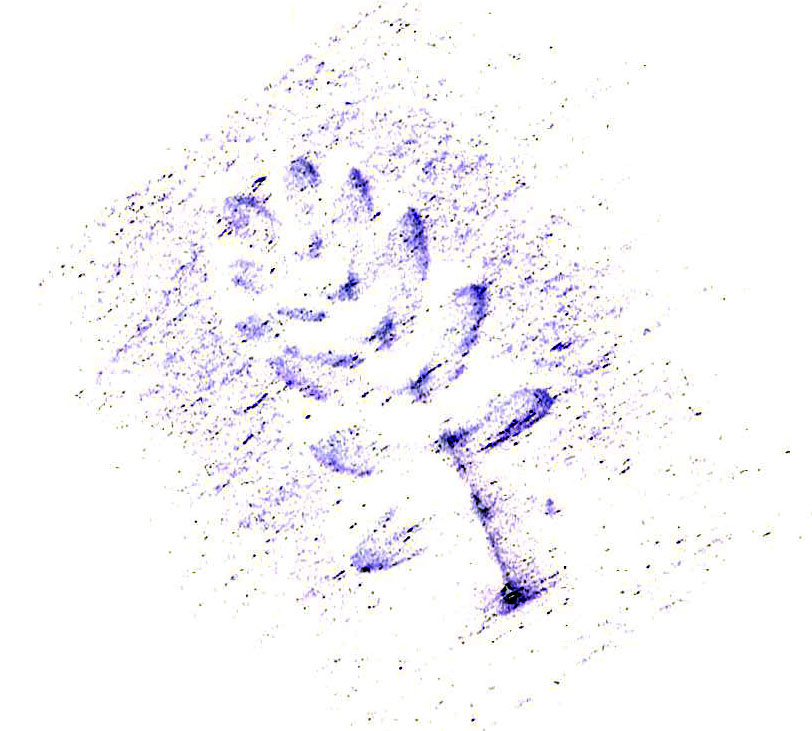
Tribulus terrestris leaf rubbing

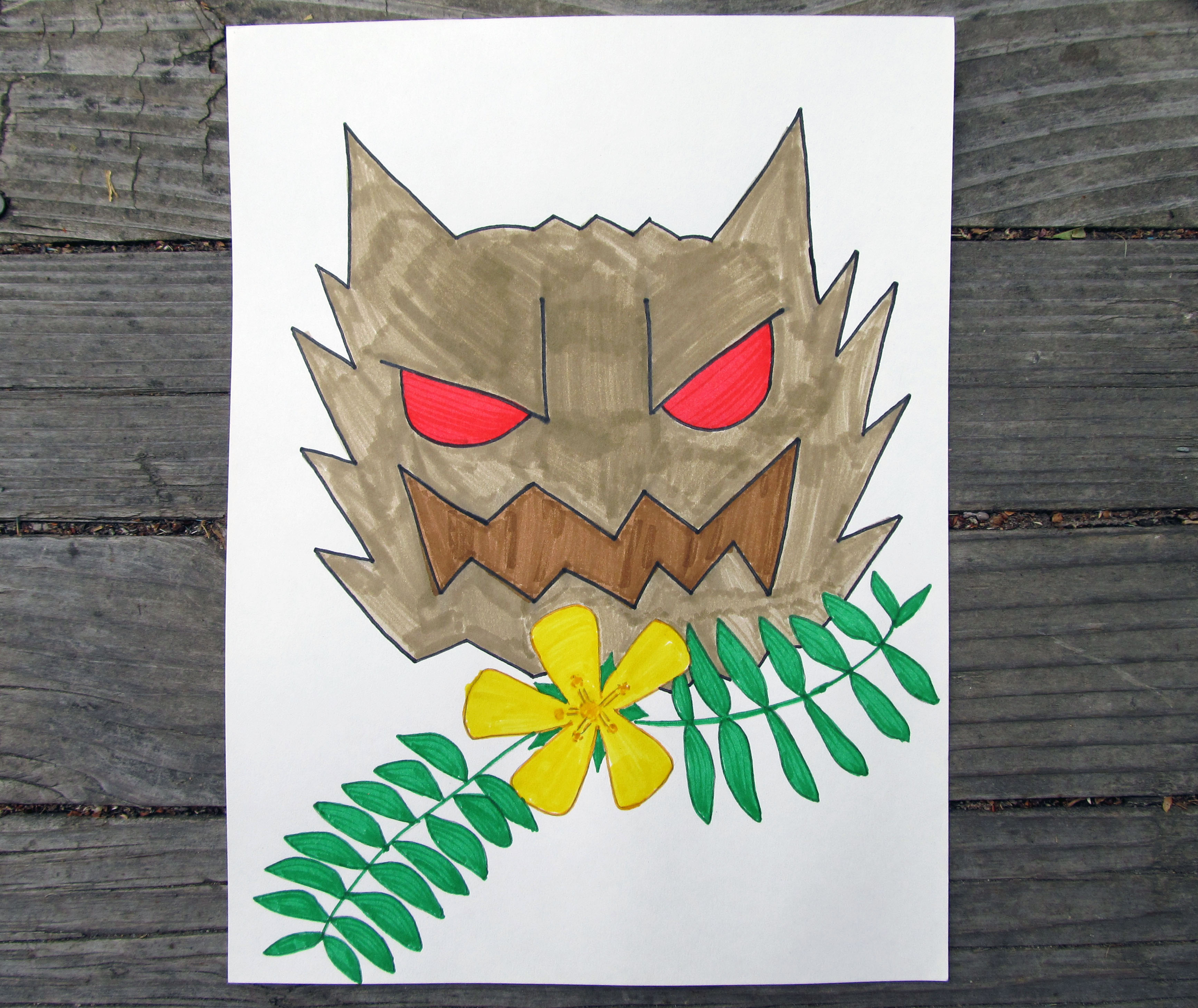
Goathead Monster #1

Goathead Monster #2

More Awkward Botanical Sketches: 

Dispersal by Bulbils – A Bulbous Bluegrass Story

The main way that a plant gets from place to place is in the form of a seed. As seeds, plants have the ability to travel miles from home, especially with the assistance of outside forces like wind, water, and animals. They could also simply drop to the ground at the base of their parent plant and stay there. The possibilities are endless, really.

But what about plants that don’t even bother making seeds? How do they get around? In the case of bulbous bluegrass, miniature bulbs produced in place of flowers function exactly like seeds. They are formed in the same location as seeds, reach maturity and drop from the plant just like seed-bearing fruits, and are then dispersed in the same ways that seeds are. They even experience a period of dormancy similar to seeds, in that they lie in wait for months or years until the right environmental conditions “tell” them to sprout. And so, bulbils are basically seeds, but different.

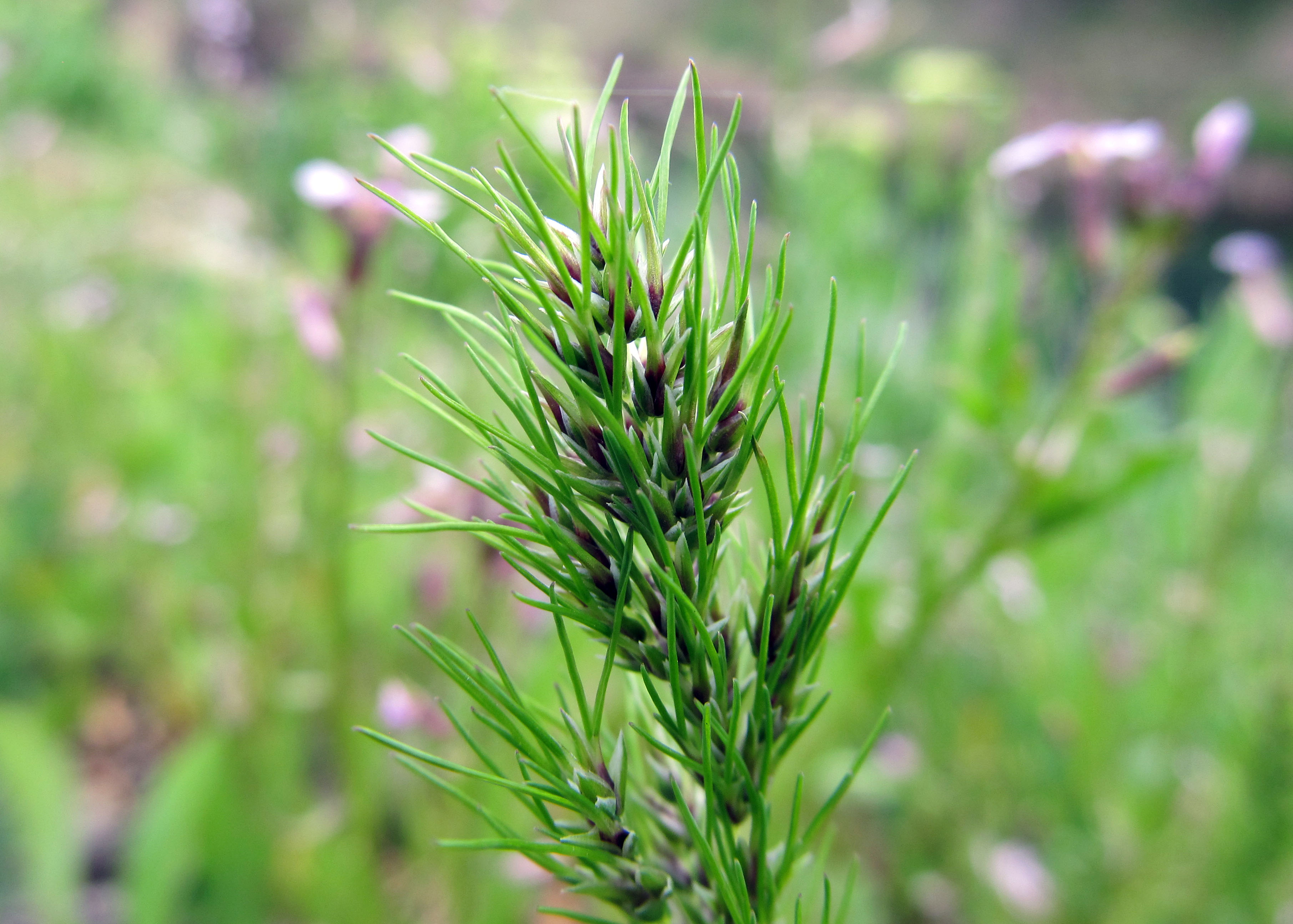
bulbous bluegrass (Poa bulbosa)

Bulbous bluegrass (Poa bulbosa) is a Eurasian native but is widely distributed outside of its native range having been repeatedly spread around by humans both intentionally and accidentally. It’s a short-lived, perennial grass that can reach up to 2 feet tall but is often considerably shorter. Its leaves are similar to other bluegrasses – narrow, flat or slightly rolled, with boat-shaped tips and membranous ligules – yet the plants are easy to distinguish thanks to their bulbous bases and the bulbils that form in their flower heads. Their bulbous bases are actually true bulbs, and bulbous bluegrass is said to be the only grass species that has this trait. Just like other bulb-producing plants, the production of these basal bulbs is one way that bulbous bluegrass propagates itself.

basal bulbs of bulbous bluegrass

Bulbous bluegrass is also propagated by seeds and bulbils. Seeds form, like any other plant species, in the ovary of a pollinated flower. But sometimes bulbous bluegrass doesn’t make flowers, and instead modifies its flower parts to form bulbils in their place. Bulbils are essentially tiny, immature plants that, once separated from their parent plant, can form roots and grow into a full size plant. The drawback is that, unlike with most seeds, no sexual recombination has occurred, and so bulbils are essentially clones of a single parent.

The bulbils of bulbous bluegrass sit atop the glumes (bracts) of a spikelet, which would otherwise consist of multiple florets. They have dark purple bases and long, slender, grass-like tips. Bulbils are a type of pseudovivipary, in that they are little plantlets attached to a parent plant. True vivipary occurs when a seed germinates inside of a fruit while still attached to its parent.

Like seeds, bulbils are small packets of starch and fat, and so they are sought ought by small mammals and birds as a source of food. Ants and small rodents are said to collect and cache the bulbils, which is one way they get dispersed. Otherwise, the bulbils rely mostly on wind to get around. They then lie dormant for as long as 2 or 3 years, awaiting the ideal time to take root.

bulbils of bulbous bluegrass

Bulbous bluegrass was accidentally brought to North America as a contaminant in alfalfa and clover seed. It was also intentionally planted as early as 1907 and has been evaluated repeatedly by the USDA and other organizations for use as a forage crop or turfgrass. It has been used in restoration to stabilize soils and reduce erosion. Despite numerous trials, it has consistently underperformed mainly due to its short growth cycle and long dormancy period. It is one of the first grasses to green up in the spring, but by the start of summer it has often gone completely dormant, limiting its value as forage and making for a pretty pathetic turfgrass. Otherwise, it’s pretty good at propagating itself and persisting in locations where it hasn’t been invited and is now mostly considered a weed – a noxious one at that according to some states. Due to its preference for dry climates, it is found most commonly in western North America.

In its native range, bulbous bluegrass frequently reproduces sexually. In North America, however, sexual reproduction is rare, and bulbils are the most common method of reproduction. Prolific asexual reproduction suggests that bulbous bluegress populations in North America should have low genetic diversity. Researchers set out to examine this by comparing populations found in Washington, Oregon, and Idaho. Their results, published in Northwest Science (1997), showed a surprising amount of genetic variation within and among populations. They concluded that multiple introductions, some sexual reproduction, and the autopolyploidy nature of the species help explain this high level of diversity.

———————

Interested in learning more about how plants get around? Check out the first issue of our new zine Dispersal Stories.

From Cut Flower to Noxious Weed – The Story of Baby’s Breath

One of the most ubiquitous plants in cut flower arrangements hails from the steppes of Turkey and neighboring countries in Europe and Asia. It’s a perennial plant with a deep taproot and a globe-shaped, multi-branched inflorescence loaded with tiny white flowers. In full bloom it looks like a small cloud hovering above the ground. It’s airy appearance earns it the common name baby’s breath, and the attractive and durable nature of its flowers and flower stalks, both fresh and dried, have made it a staple in the floral industry. Sadly, additional traits have led to it becoming a troublesome weed outside of its native range.

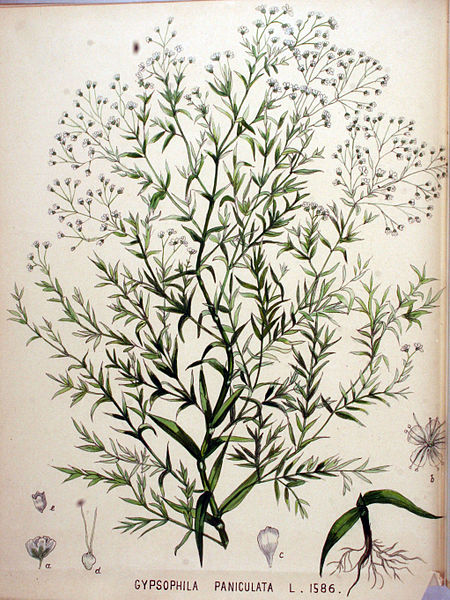
baby’s breath (Gypsophila paniculata) via wikimedia commons

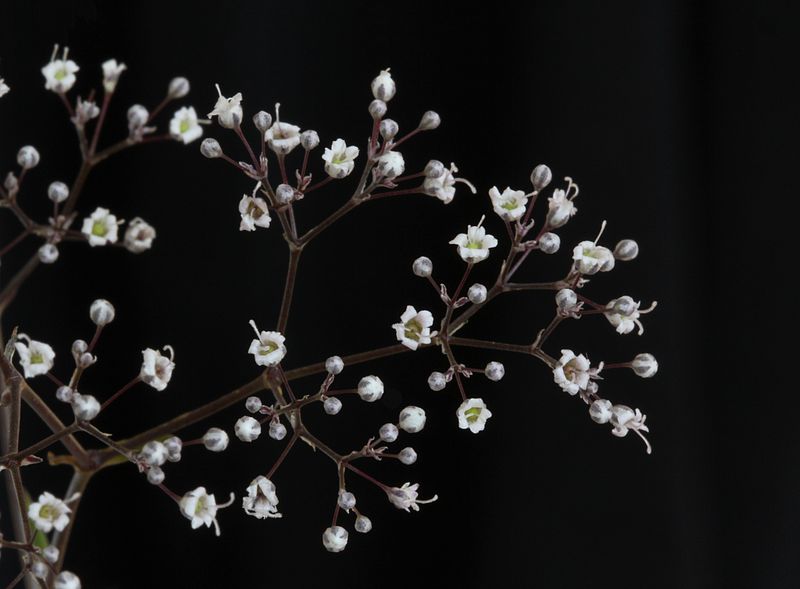
Gypsophila paniculata is in the family Caryophyllaceae – sharing this distinction with other cut flowers like carnations and pinks, as well as other weeds like chickweed and soapwort. At maturity and in full bloom, baby’s breath might reach three to four feet tall; however, its thick taproot extends deep into the ground as much as four times its height. Its leaves are unremarkable and sparse, found mostly towards the base of the plant and sometimes with a blue or purplish hue. The flowers are numerous and small, have a sweet scent to them (though not appreciated by everyone), and are pure white (sometimes light purple or pink).
Each flower produces just a few seeds that are black, kidney-shaped, and minuscule. Many of them drop from their fruits and land near their parent plant, but some are retained within their little capsules as the flower stalk dries and becomes brittle. Eventually a stiff breeze knocks the entire inflorescence loose and sends it tumbling across the ground. Its rounded shape makes it an effective tumbleweed, as the remaining seeds are shaken free and scattered far and wide.

baby’s breath flowers close up (via wikimedia commons)

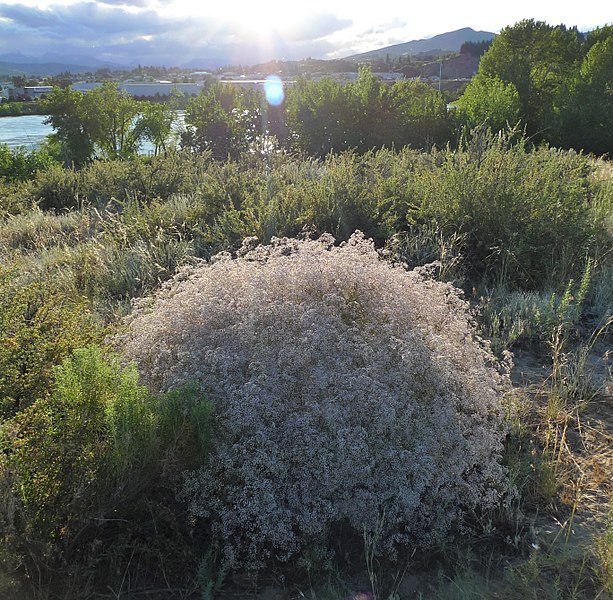
Being a tumbleweed gives it an advantage when it comes to dispersing itself and establishing in new locations, but this is not the only trait that makes baby’s breath a successful weed. Its substantial taproot, tolerance to drought and a variety of soil conditions, and proclivity to grow along roadsides, in ditches, and abandoned fields also make it a formidable opponent. Mowing the plant down does little to stop it, as it grows right back from the crown. Best bets for control are repeated chemical treatments or digging out the top portion of the taproots. Luckily its seeds are fairly short-lived in the soil, so vigilant removal of seedlings and not allowing the plant to reproduce can help keep it in check. Baby’s breath doesn’t persist in regularly disturbed soil, so it’s generally not a problem in locations that are often cultivated like agricultural fields and gardens.
The first introductions of baby’s breath to North America occurred in the 1800’s. It was planted as an ornamental, but it wasn’t long before reports of its weedy nature were being made. One source lists Manitoba in 1887 as the location and year of the first report. It is now found growing wild across North America and is featured in the noxious weed lists in a few states, including Washington and California. It has been a particular problem on sand dunes in northwest Michigan, where it has been so successful in establishing itself that surveys have reported that 80% of all vegetation in certain areas is composed of baby’s breath.

baby’s breath in the wild (via wikimedia commons)

Invading sand dune habitats is particularly problematic because extensive stands of such a deep-rooted plant can over-stabilize the soil in an ecosystem adapted to regular wind disturbance. Plants native to the sand dunes can be negatively affected by the lack of soil movement. One species of particular concern is Pitcher’s thistle (Cirsium pitcheri), a federally threatened plant native to sand dunes along the upper Great Lakes. Much of the research on the invasive nature of baby’s breath and its removal comes from research being done in this region.

Among numerous concerns that invasive plants raise are the affects they can have on pollinator activity. Will introduced plants draw pollinators away from native plants or in some other way limit their reproductive success? Or might they help increase the number of pollinators in the area, which in turn could benefit native plants (something known as the magnet species effect)? The flowers of baby’s breath rarely self-pollinate; they require insect visitors to help move their pollen and are highly attractive to pollinating insects. A study published in the International Journal of Plant Sciences found that sand dune sites invaded by baby’s breath attracted significantly more pollinators compared to uninvaded sites, yet this did not result in more pollinator visits to Pitcher’s thistle. According to the researchers, “a reduction in pollinator visitation does not directly translate to a reduction in reproductive success,” but the findings are still a concern when it comes to the future of this threatened thistle.

Perhaps it’s no surprise that a plant commonly found in flower arrangements is also an invasive species, as so many of the plants we’ve grown for our own pleasure or use have gone on to cause problems in areas where they’ve been introduced. However, could the demand for this flower actually be a new business opportunity? Noxious weed flower bouquets anyone?

Related Posts:

Party Time for Puncture Vine, Year Two

Party Time for Puncture Vine, Year Two

A noxious weed brought Boiseans together for the second year in a row. After a successful inaugural year, the Boise Goathead Fest returned to downtown Boise, Idaho on the 2nd and 3rd of August. The festival’s namesake comes from a particularly destructive weed whose spiky fruits are notorious for puncturing bike tires. Known commonly as goathead or puncture vine, Tribulus terrestris is abundant in the Treasure Valley and the bane of area bicyclists. Organized by the Boise Bicycle Project and other bike-centric non-profits, Boise Goathead Fest is a celebration of bike culture, as well as an opportunity to spread awareness about this problematic plant.

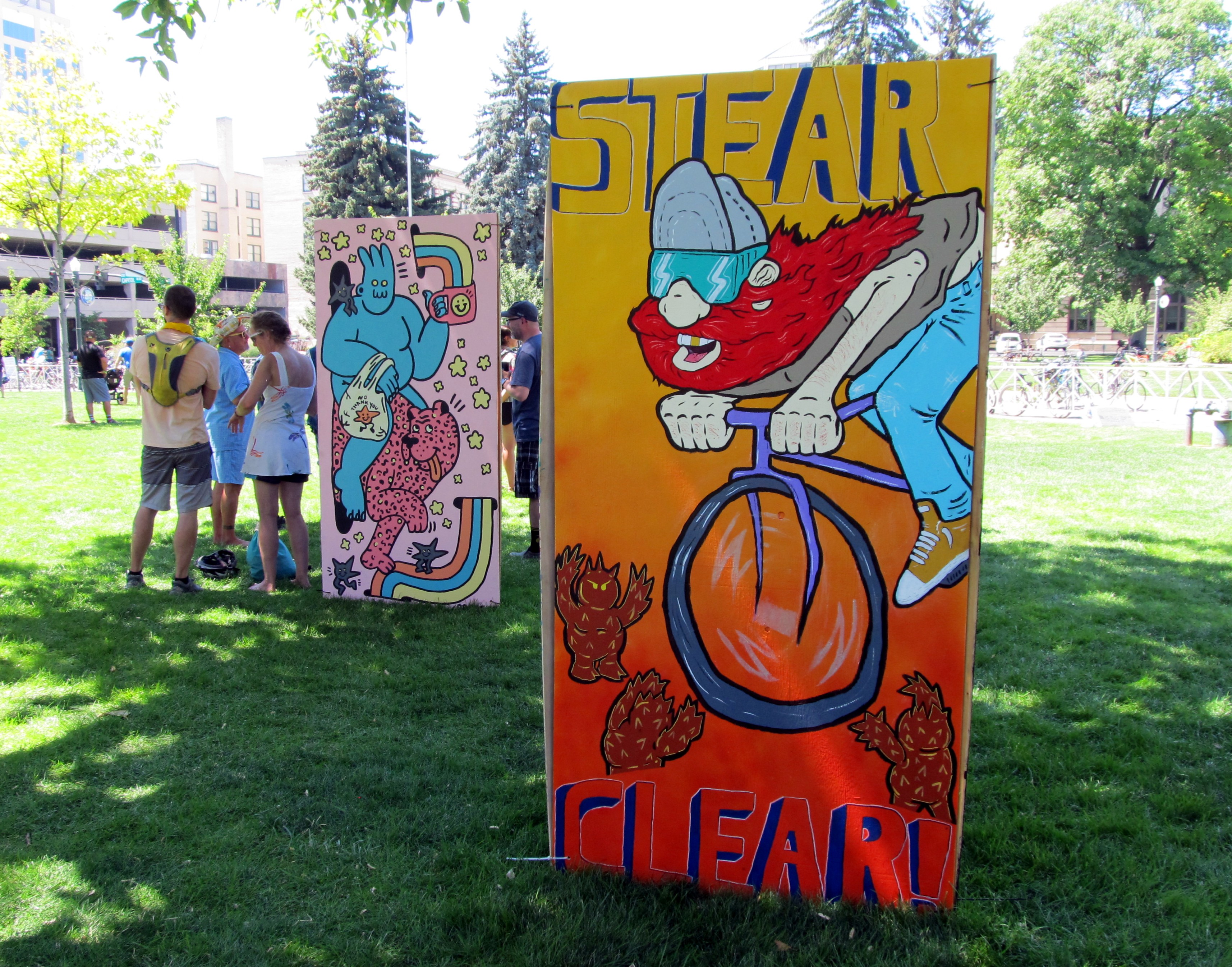
goathead-themed art

For the two months leading up to Goathead Fest, Treasure Valley residents were encouraged to pull as many goatheads as they could get their hands on. Those who took on the challenge were rewarded with tokens to be redeemed at the Fest for drinks or ice cream. Trophies and prizes were also presented to those who pulled the most goatheads over the two month period. This effort resulted in thousands of pounds of goatheads being removed from the area, saving bicyclists from countless flat tires and slimming down puncture vine’s extensive seed bank.

scale for weighing goathead collections

After two months of collecting goatheads, it was time to celebrate. The two day long party consisted of live music and DJs, a huge bike parade around downtown Boise (for which participants were encouraged to decorate their bikes and wear costumes), and a variety of other bike-themed and non bike-themed activities. Goathead education continued during the Fest with the help of folks from Ada County, City of Boise, Idaho Botanical Garden, and others.

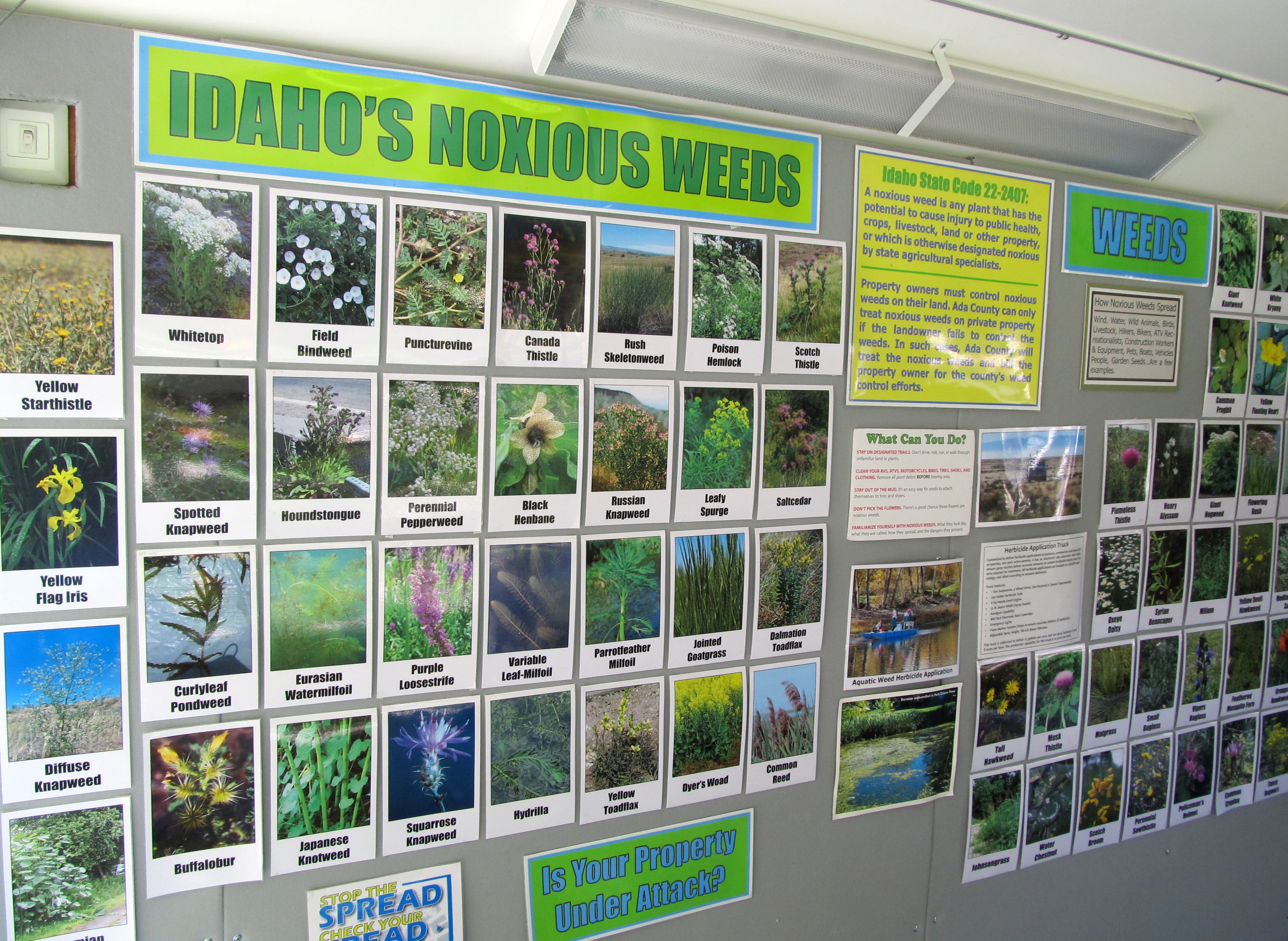
A peak inside the Ada County Weed, Pest, and Mosquito Abatement education and outreach trailer

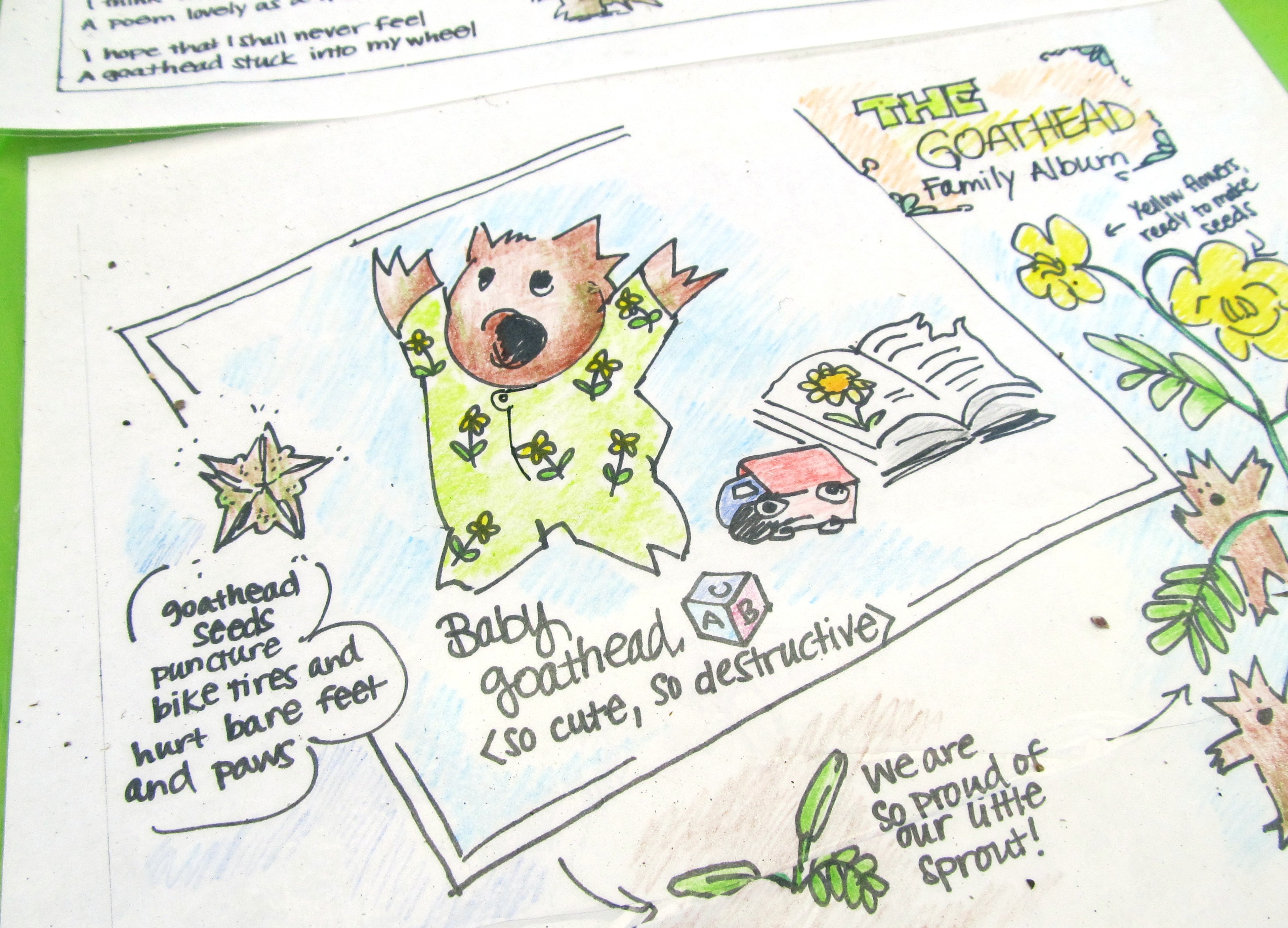
Goathead coloring page created by Wendy of Idaho Botanical Garden

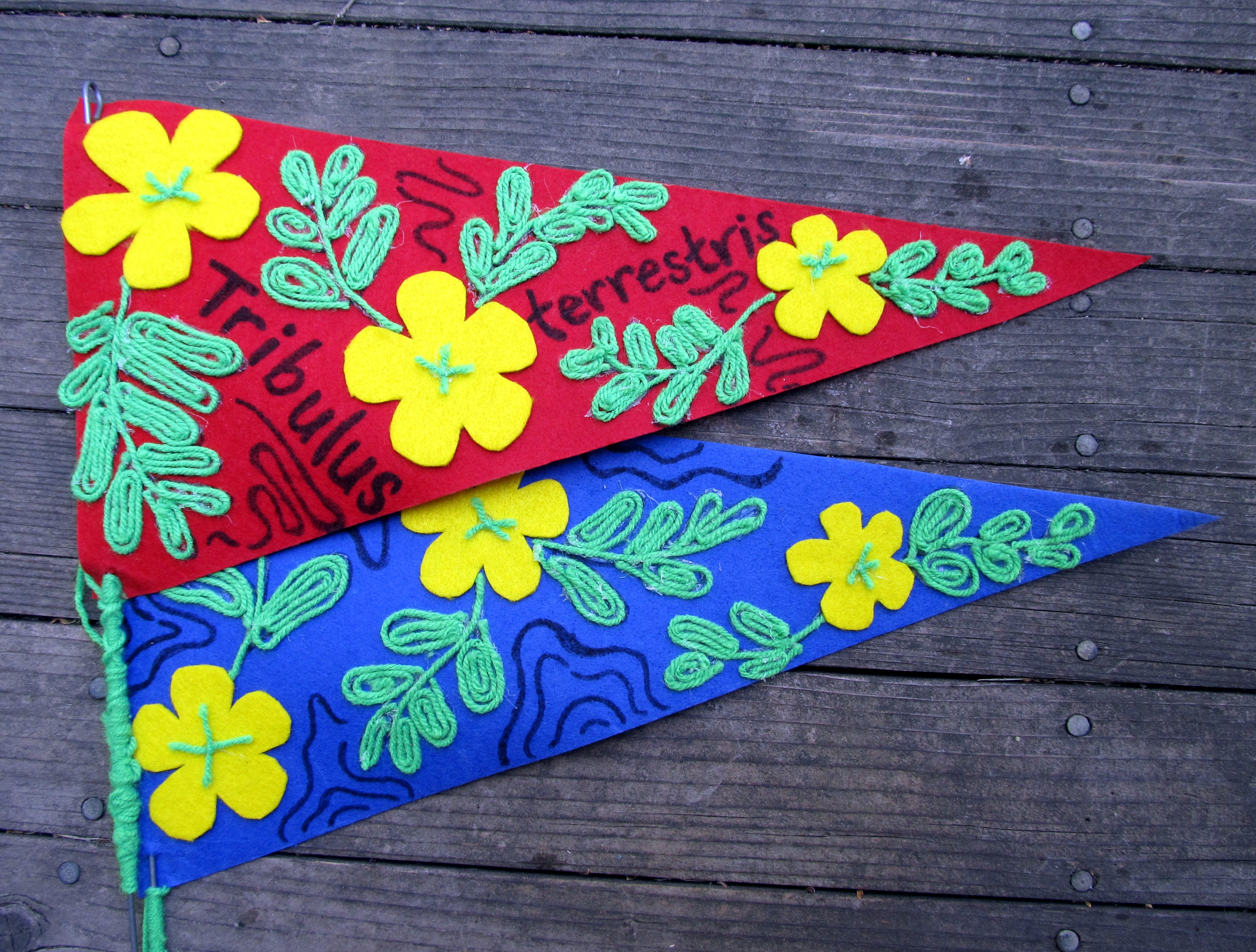
Puncture vine pennants created by Anna of Idaho Botanical Garden

With all of this attention and awareness focused on a single noxious weed, might it be possible to eliminate it from our community and free ourselves from ruined rides and trashed tires? The seeds of puncture vine are relatively short lived, and as an annual plant, seeds are its only method of reproduction. Even if we can’t altogether eliminate it, we could certainly see a dramatic reduction in its abundance and distribution. Perhaps in the future we will spend less time pulling it and more time celebrating its rarity, reflecting back on the time when punctures permeated our pedal-powered lives. Whatever the result, puncture vine has brought our community together once again. If such a loathsome weed can bring people together in celebration like this, perhaps it’s not entirely bad.

me with goathead balloon

See Also: Boise Weekly – Goathead’s the Burr, Community’s the Word