Square Foot Rooftop Gardening

Square foot gardening is a method of gardening that was described and popularized by Mel Bartholomew. The basic concept is simple: measure out your garden beds into equal squares (4 feet by 4 feet) and then plant individual crops into each square following specific spacing recommendations for each crop. The square foot method is intended to eliminate the inefficiencies of standard row planting, making vegetable crops easier to plant, maintain, and harvest. Bartholomew’s book about square foot gardening was first published in 1981. From that book came a television series on PBS, various other books and updated versions of the original book, a square foot gardening product line, and the Square Foot Gardening Foundation.

As a long time gardener, I had been familiar with Bartholomew’s book and its basic premise for a while but had never read it until recently. I found the book to be basically what I expected: a description of how to garden in squares instead of rows. I can see how this system could be very simple, attractive, and efficient while simultaneously producing decent sized yields; however I felt like Bartholomew’s description of the process made gardening into a very methodical, calculated, and meticulous task bordering on joyless. I’m sure that’s not how he sees it (nor how it really is), but then again, he’s a retired engineer [insert smiley face here].

For a long time I’ve had an interest in green roofs. I even went to graduate school to study them. So when I got to the part in Bartholomew’s book where he talks about square foot gardening on rooftops, I was intrigued. Green roofs (along with rooftop vegetable gardening) have become fairly common in urban areas in the past decade or two. And for good reason. Green roofs offer myriad benefits including mitigating storm water runoff (and the numerous sub-benefits involved with that), reducing the urban heat island effect, increasing a building’s energy efficiency, and re-introducing green space and wildlife habitat that was lost when a building was built.

Vegetable gardening on rooftops is a practical solution for residents of urban areas where space for gardens on the ground is limited. Restaurants – like Noble Rot in Portland, Oregon and Café Osage in St. Louis, Missouri – have found that they can grow some of the produce and herbs they need on their rooftops while simultaneously setting themselves apart from other restaurants. There are also a few urban farming operations on rooftops (Brooklyn Grange and Eagle Street Rooftop Farm for example). Michigan State University (an institution with one of the most prominent green roof research labs in the U.S.) has a research program dedicated to improving rooftop vegetable crop production. So with this recent trend of growing food on rooftops, I was curious to read what Bartholomew was saying about the subject more than thirty years ago, back when green roof vegetable gardening was less than mainstream.

The reality is that square foot rooftop gardening gets only a brief mention in Bartholomew’s book (at least in the first edition – perhaps he has more to say about it in more recent editions), but what he does have to say is relevant.

Rooftops are windy:

“Stay away from plants that grow tall, have delicate stems, or that might be blown over when they are mature and filled with ripening fruit…The wind can be unmerciful to a plant; it whips the leaves about and can dry out the plant in short order.”

Rooftops are hot:

“The other big consideration for rooftop growing is heat buildup…These conditions will naturally affect both the frequency and amount of watering the garden will need.”

Rooftops have weight limits:

“The soil in your rooftop garden should be as light and porous (yet still be water retentive) as possible. Mix in lots of vermiculite and peat moss.”

Each of these three considerations (wind, heat, and weight) continue to be considerations for any vegetated roof whether it includes vegetable crops or not. Yet people are figuring out how to overcome these obstacles, constructing and maintaining incredible rooftop gardens that are both productive and beneficial.

Rooftop Garden - Manhattan, New York ( photo credit: wikimedia commons)

Rooftop Garden – Manhattan, New York ( photo credit: wikimedia commons)

In future posts, I intend to elaborate more on this topic, profiling individuals, groups, and organizations that are making this sort of thing happen. Comment below and share something about your favorite rooftop garden and/or recommend a rooftop garden that should be profiled in an upcoming post.

Ground Nesting Bees in the Garden

Earlier this year I wrote about planting for pollinators. In that post I briefly introduced various things that people can do to encourage pollinator activity in their yards and gardens. One thing that I mentioned was the importance of providing nesting sites. Most pollinators are insects and insects are small, so the distance that they are able to travel in search of food is relatively limited. According to the Xerces Society, the smallest bees can only fly a few hundred feet from their nests. Providing nesting sites in close proximity to foraging sites is incredibly important.

Roughly 70% of native bee species in North America are ground nesting bees, so chances are pretty good that if you are providing forage for bees in your yard, a good number of the bees that visit will be ground nesting bees. In order to ensure the survival of these bees, consider providing nesting habitat for them on your property.

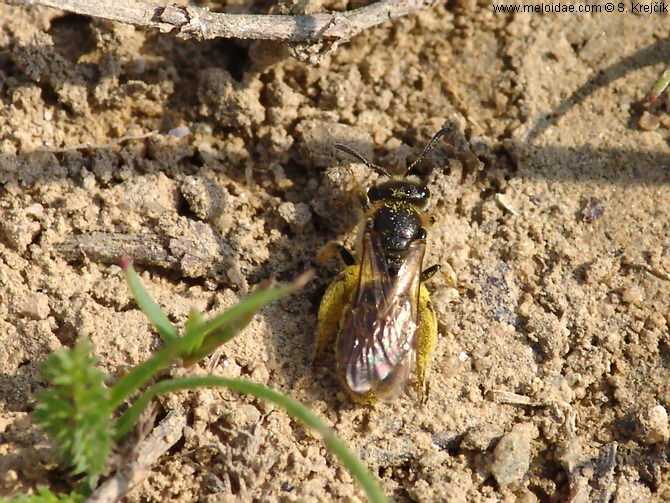
ground nesting bee_lasioglossum

Lasioglossum leucozonium – a North American ground nesting bee (also known as a sweat bee) – photo credit: www.eol.org

Here are a few things to keep in mind when developing nesting habitat for ground nesting bees:

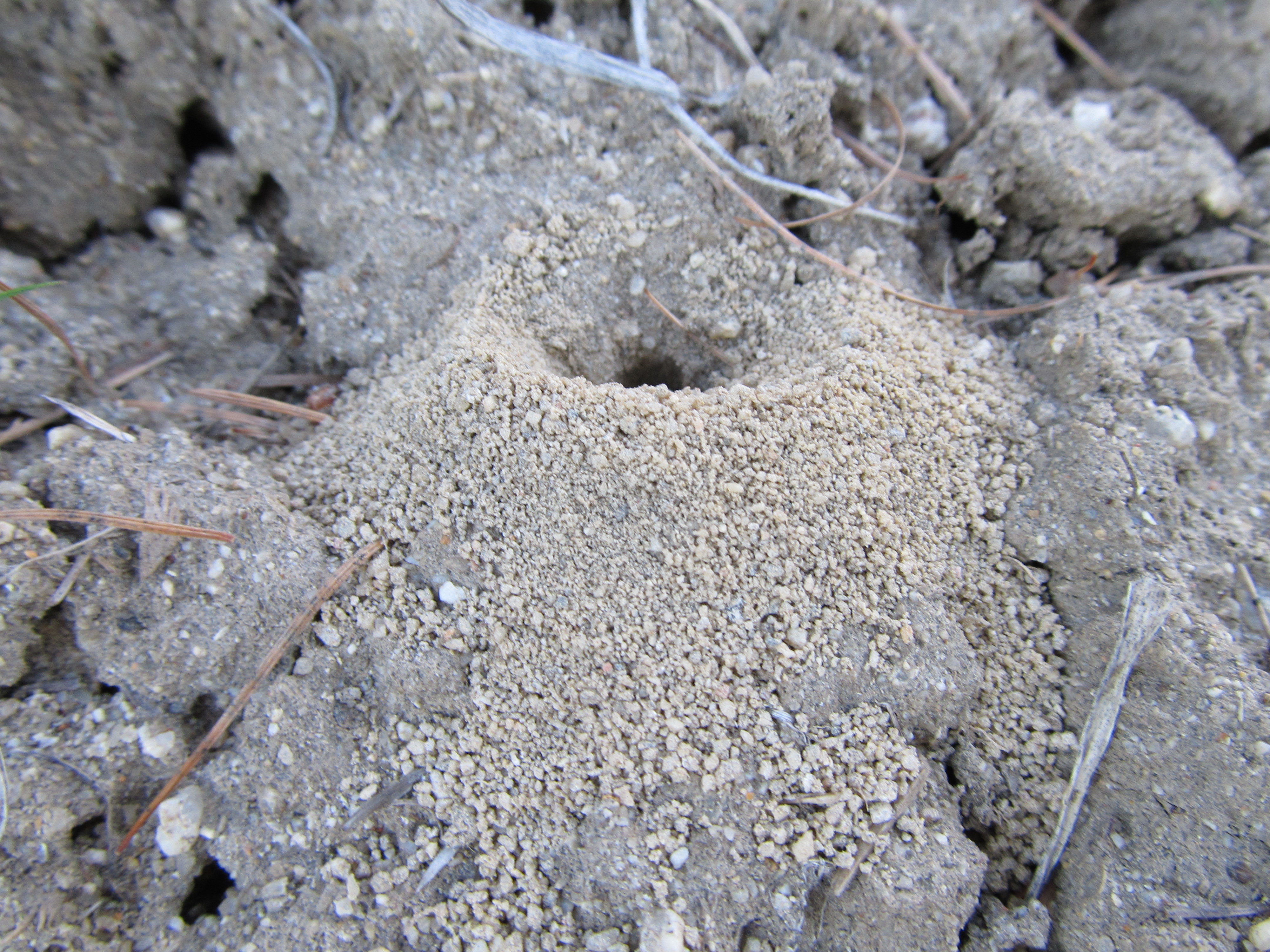
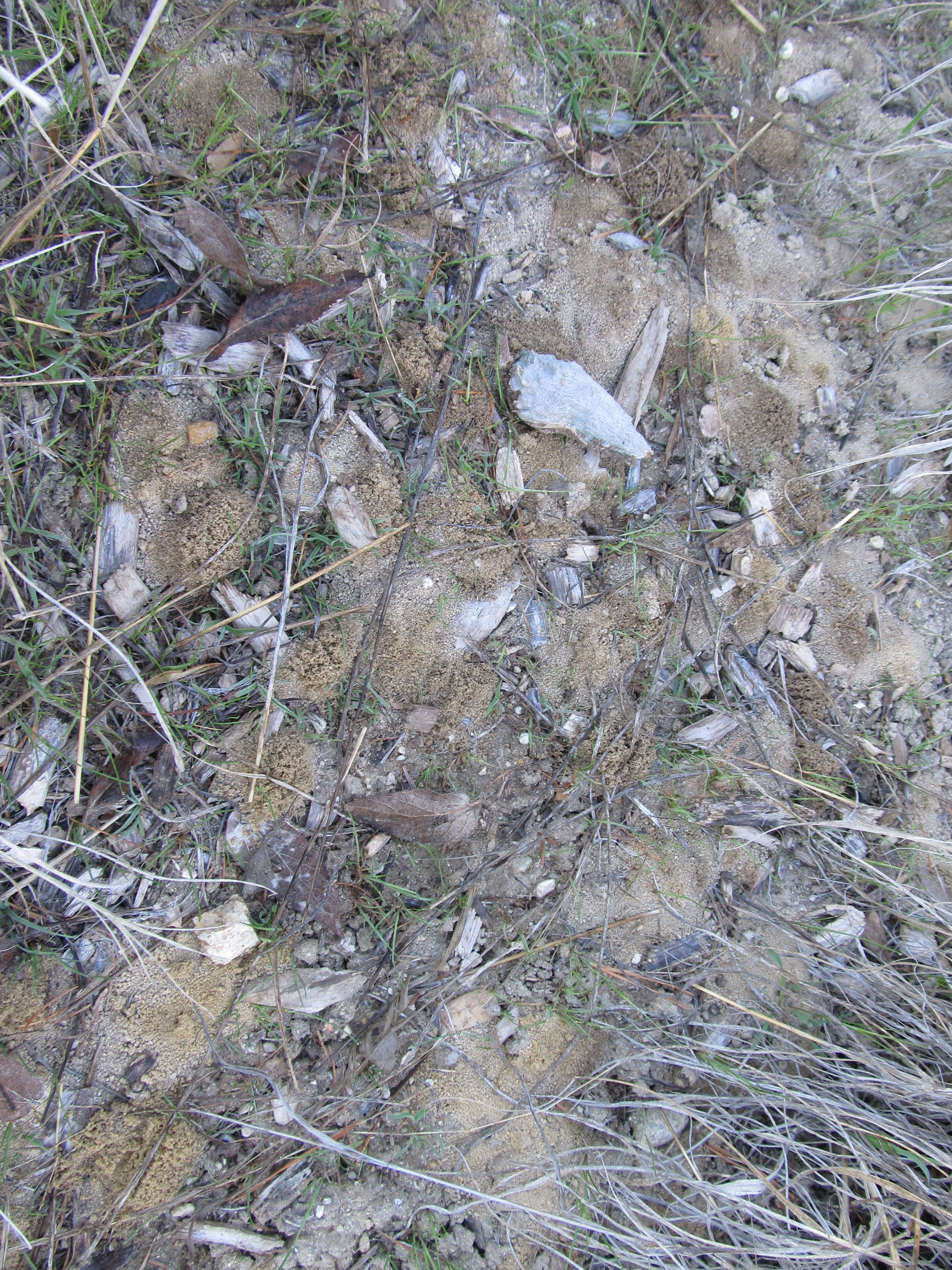
Create and Maintain Undisturbed Bare Ground: You may already have ground nesting bees living in your yard and you don’t even know it. Obvious evidence of nests is difficult to spot. If you can find tunnel entrances, they will look like small ant mounds. If you find a series of small “ant mounds”, watch for bee activity during sunny times of the day. Activity can be quite ephemeral though, so it is difficult to know if bees have just moved in or if they have moved on. Avoid tilling up soil and walking through areas where you suspect or intend for bee activity. Leave patches of bare ground unplanted and unmulched in order to encourage bees to nest there.

Sunny and South Facing: Bees are most active when the sun is shining and temperatures are warm. For this reason they tend to build their nests in warm, sunny spots. However, warm, sunny spots are also the best locations for many plants. Consider sharing these sites with ground nesting bees. Avoid putting down mulch in these areas and keep vegetation sparse and minimal.

Avoid Pesticides: When encouraging pollinator activity in your yard and garden, it is best to avoid using pesticides as much as possible. Herbicides kill potential food sources. Insecticides can kill pollinating insects along with pest insects. And soil fumigants can harm ground nesting bees.

Provide Some Accommodations: Due to the diversity of ground nesting bees, it is difficult to provide nesting habitat for all potential species. Some prefer loose, sandy soil while others prefer smooth, packed ground. Some bees will nest on level ground, while others prefer sloped ground. The habitat you are able to provide will depend on the conditions present on your property. Some modifications can be made, but this all depends on the resources available to you and how particular you want to get. Apart from maintaining a patch of undisturbed, unmulched, south facing ground, there are three additional things that you can offer ground nesting bees to make them feel more at home on your property: food (in the form of diverse flowers blooming throughout the growing season), a water source (in the form of a birdbath or something similar), and a few rocks for the bees to perch on and warm their tiny bodies.

IMG_0777

The tunnel entrance of a ground nesting bee.

IMG_0779

Tunnel entrances are often found in groups in areas of bare ground mixed with patchy vegetation.

Ethnobotany: Holy Basil

Every year I try to grow a few things in my garden that I have never grown before. This year one of those things is holy basil. Not to be confused with the common culinary basil (Ocimum basilicum) – of which there are numerous horticultural varieties – holy basil (Ocimum tenuiflorum) while closely related is a completely different species. Both species are native to South Asia. One of the main differences between the two is that O. basilicum is an annual and O. tenuiflorum is a short-lived perennial.

ocimum tenuiflorum

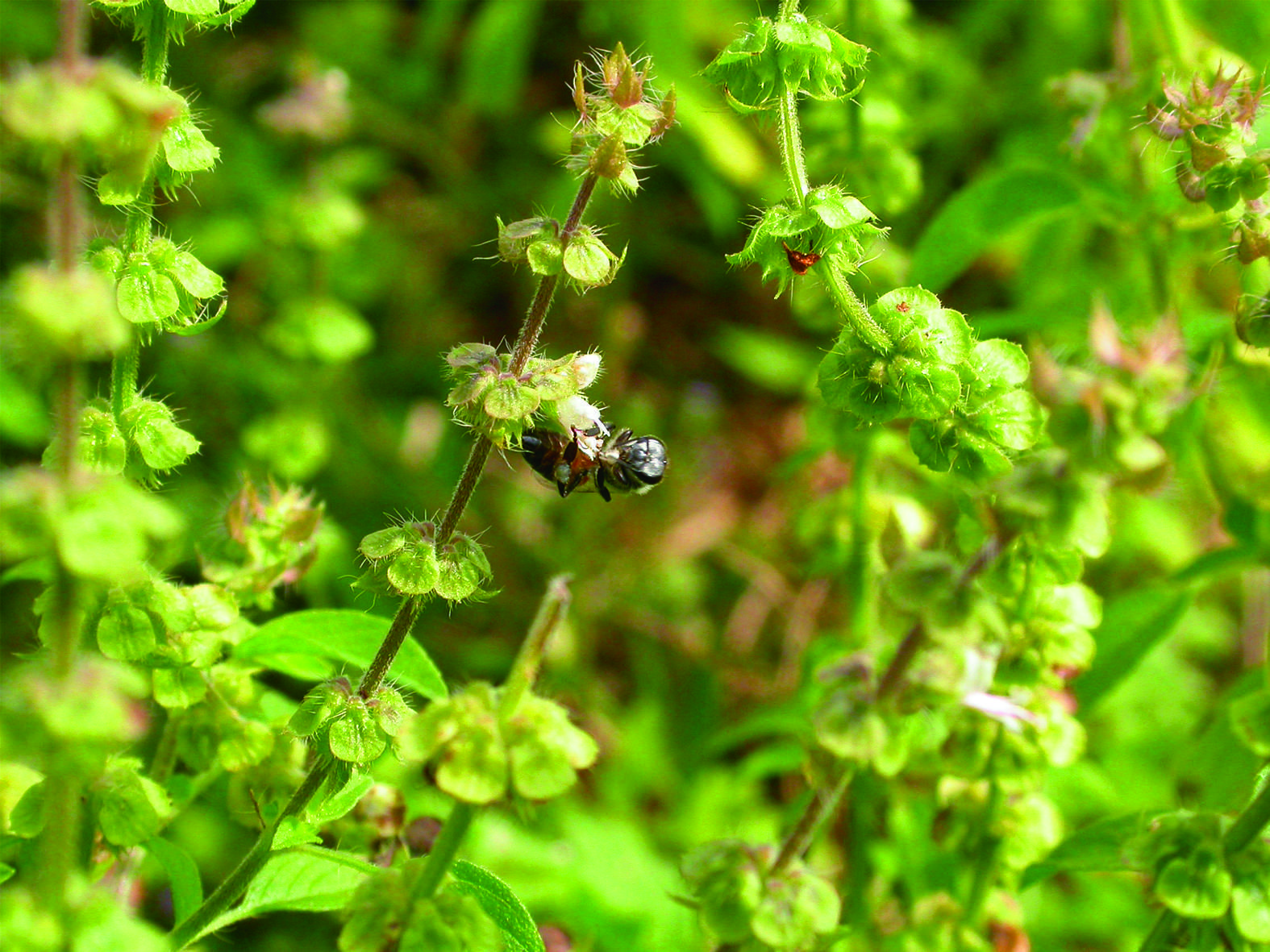
 Holy Basil, Ocimum tenuiflorum (photo credit: www.eol.org)

Holy basil is a member of the mint family (Lamiaceae), which means that it has square stems and oppositely arranged leaves and branches. It is a highly aromatic subshrub that reaches about 3 feet tall and has hairy stems and green and purple leaves. The flowers of holy basil are white/purple and tightly arranged in a long raceme. While it is a perennial in its native range, it is not hardy in more temperate climates. Holy basil is a common ingredient in Thai food and has many medicinal uses. In India, it is often prescribed by Ayurvedic practitioners as a treatment for many things, including stress, fever, influenza, headaches, insomnia, and upset stomach. The leaves of this plant are used as a mosquito repellent, and oil derived from the seeds is being researched for it’s potential use in treating cancer. However, probably the most interesting thing about holy basil is its place in Hindu culture.

Holy basil is considered by Hindus to be the earthly incarnation of the goddess Tulsi who is a companion of the god Vishnu. Thus, tulsi is a common name for this plant in Asia. Tulsi is the most sacred of all plants in Hinduism, which is why it is commonly seen growing in special pots in the courtyards of Hindu homes. During ritualistic worship, tulsi leaves are offered to Vishnu and his avatars. Vaishnavas (followers of Vaishnavism, a major branch of Hinduism) make prayer beads from the stems and roots of tulsi plants. Wearing these prayer beads (called Tulsi malas) is said to connect one with the gods and bring their protection. Because tulsi is considered to be a manifestation of deity on earth, it is seen as a connection point to heaven, and so tulsi leaves are placed in the mouths of people who are dying in order to ensure a safe journey into celestial realms.

Hindus not only regularly use holy basil in ritualistic worship, they also regularly worship the plant itself. Daily worship of the tulsi plant is traditionally done by women. Worship can involve praying to the plant, chanting mantras, watering the plant, cleaning around the plant with water and cow dung, and offering it things like food, flowers, and water from the Ganges river. Even when not worshiping tulsi, simply caring for it daily is said to bring blessings from Vishnu.

holy basil

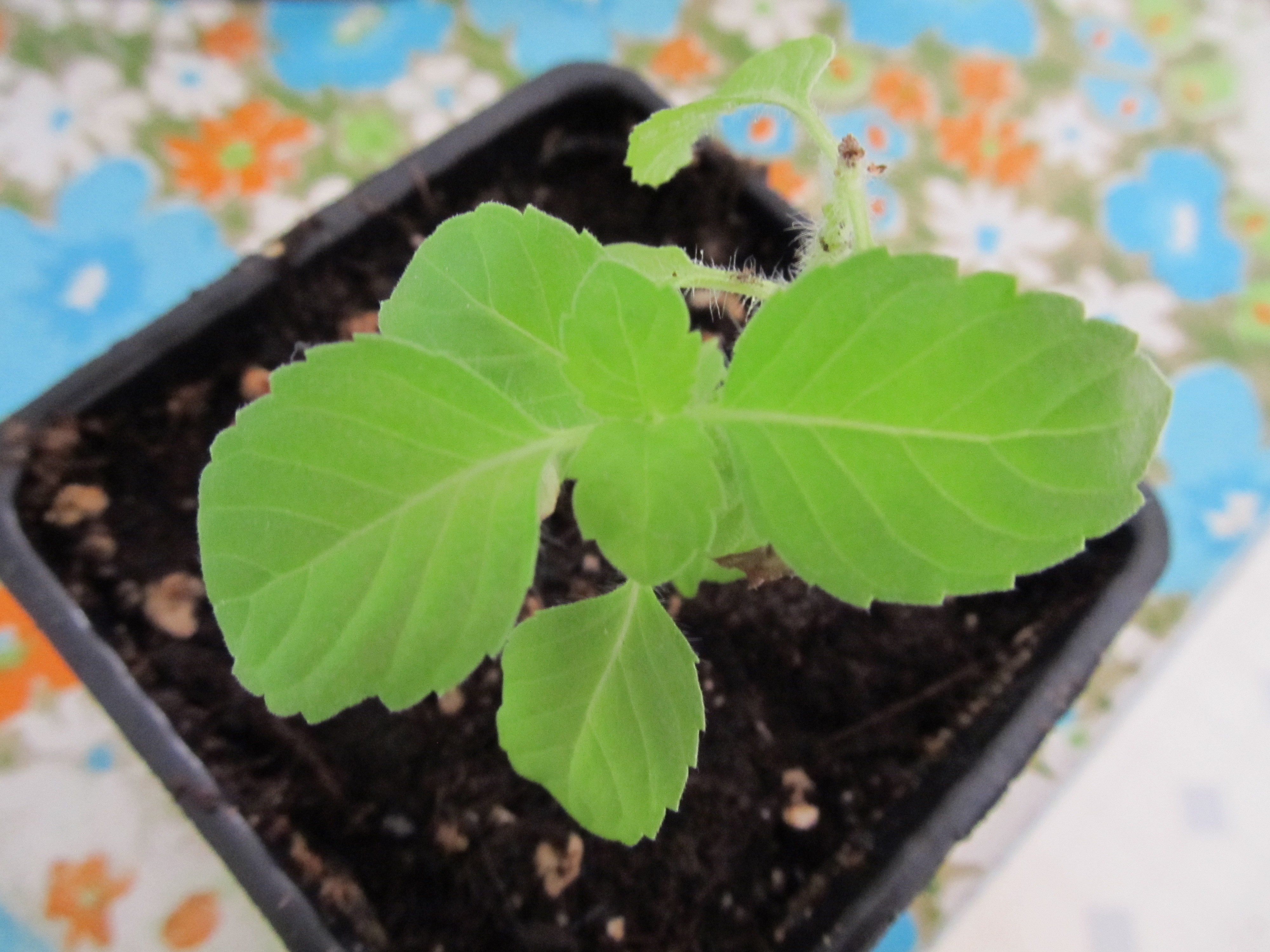
My holy basil. It doesn’t look like much now, but it has potential.

Learn more about holy basil and its ethnobotanical uses by visiting Kew and HinduNet.

The Real Dirt on the Hudson Valley Seed Library

Last month on Ken Druse Real Dirt podcast, Druse talked to Ken Greene, the founder of  Hudson Valley Seed Library. Greene came up with the idea for a seed library while working as a public librarian. The concept: people check out seeds from the library, they plant those seeds in their gardens, they save some of the seeds from the plants they’ve grown, and then they return the saved seeds to the library, at which point the seeds are available for someone else to check out and do the same. Greene started his seed library at the public library where he worked. He soon discovered the great need for educating the public about seed saving, and so he quit his day job and founded his own seed company. Along with carrying on Greene’s original vision of a seed library, Hudson Valley Seed Library is a producer and distributor of seeds, as well as a great resource for information concerning seed saving and other farm and garden related topics (just check out their blog to see proof of this).

IMG_0763

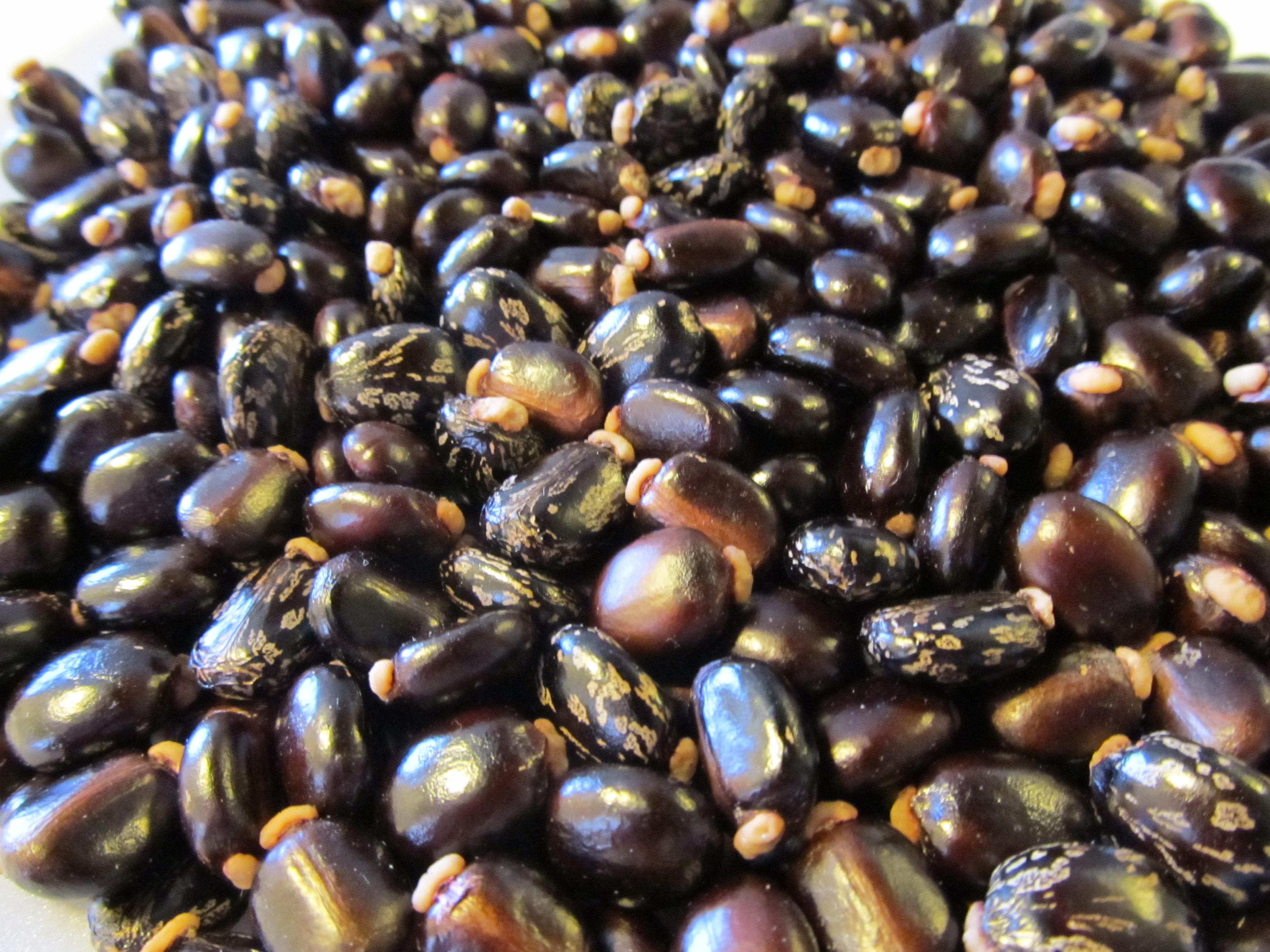
Castor Bean Seeds (Ricinus communis)

When Greene first started his seed library, there were very few others. But the idea is catching on. Perhaps you have one in your region. My local seed library is called Common Wealth Seed Library. And speaking of local, in the interview with Druse, Greene talks about local seed growers. They used to be common, but many were bought up by larger companies. However, they are making a comeback. My local seed grower is called Earthly Delights Farm. Local seed growers are worth supporting because the seeds they offer have been produced in that particular region. Ideally, they are varieties that have been trialed against similar varieties and selected for their superiority. This means that the selected varieties are likely to do well in that region.

Expect more posts about seeds, seed saving, and seed banking in the future. In the meantime, share your thoughts about anything seed-wise in the comment section below. 

Overwintering Lettuce

I overwintered some lettuce, and so can you. Below freezing temperatures usually mean the end of the growing season for most things, but certainly not for everything.  The truth is that salad greens (lettuce, spinach, kale, etc.) can be overwintered, especially if you grow them under a cold frame or hoop house or in an otherwise protected location. Some can even be harvested throughout the winter if the conditions are right.

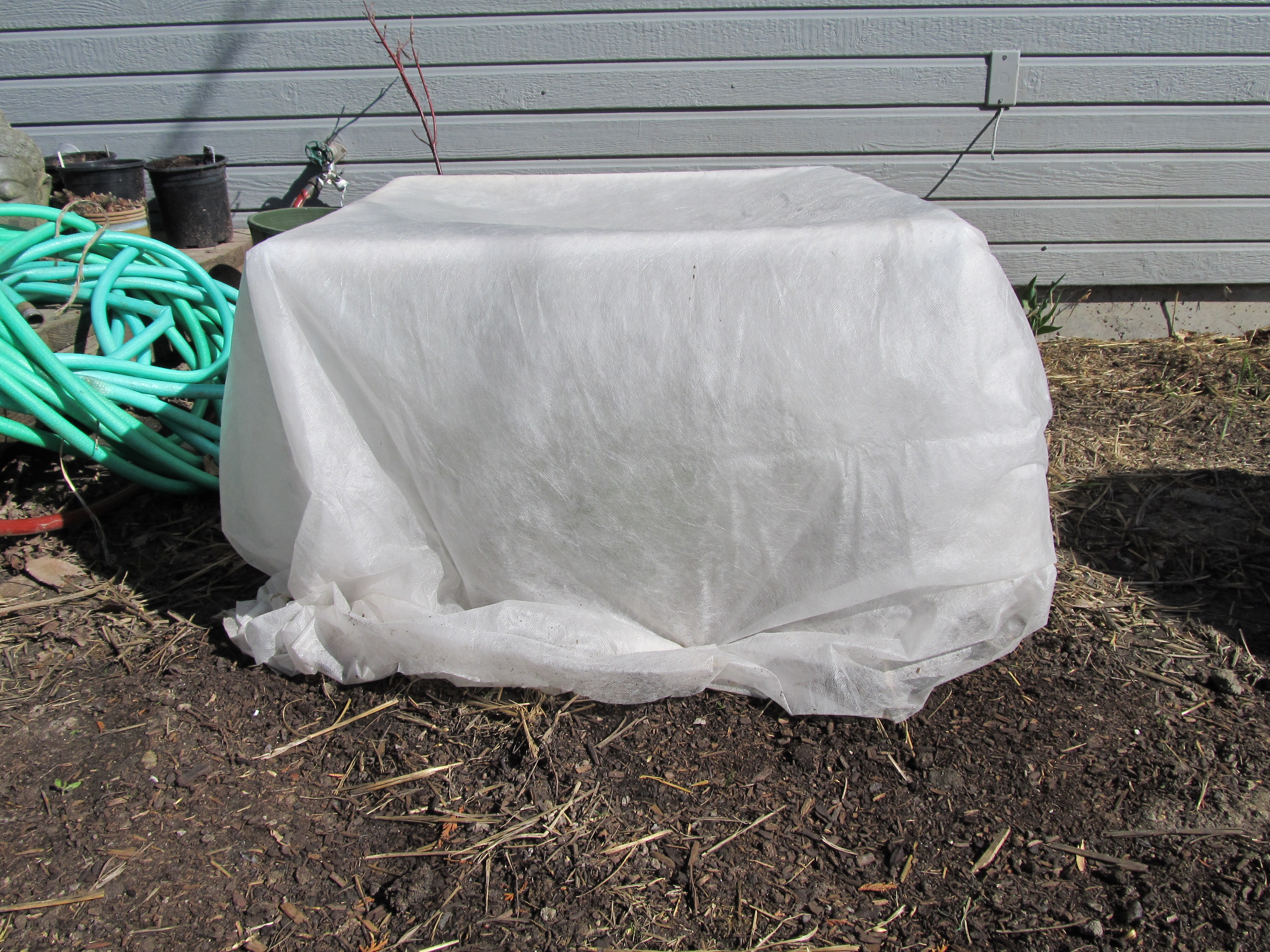
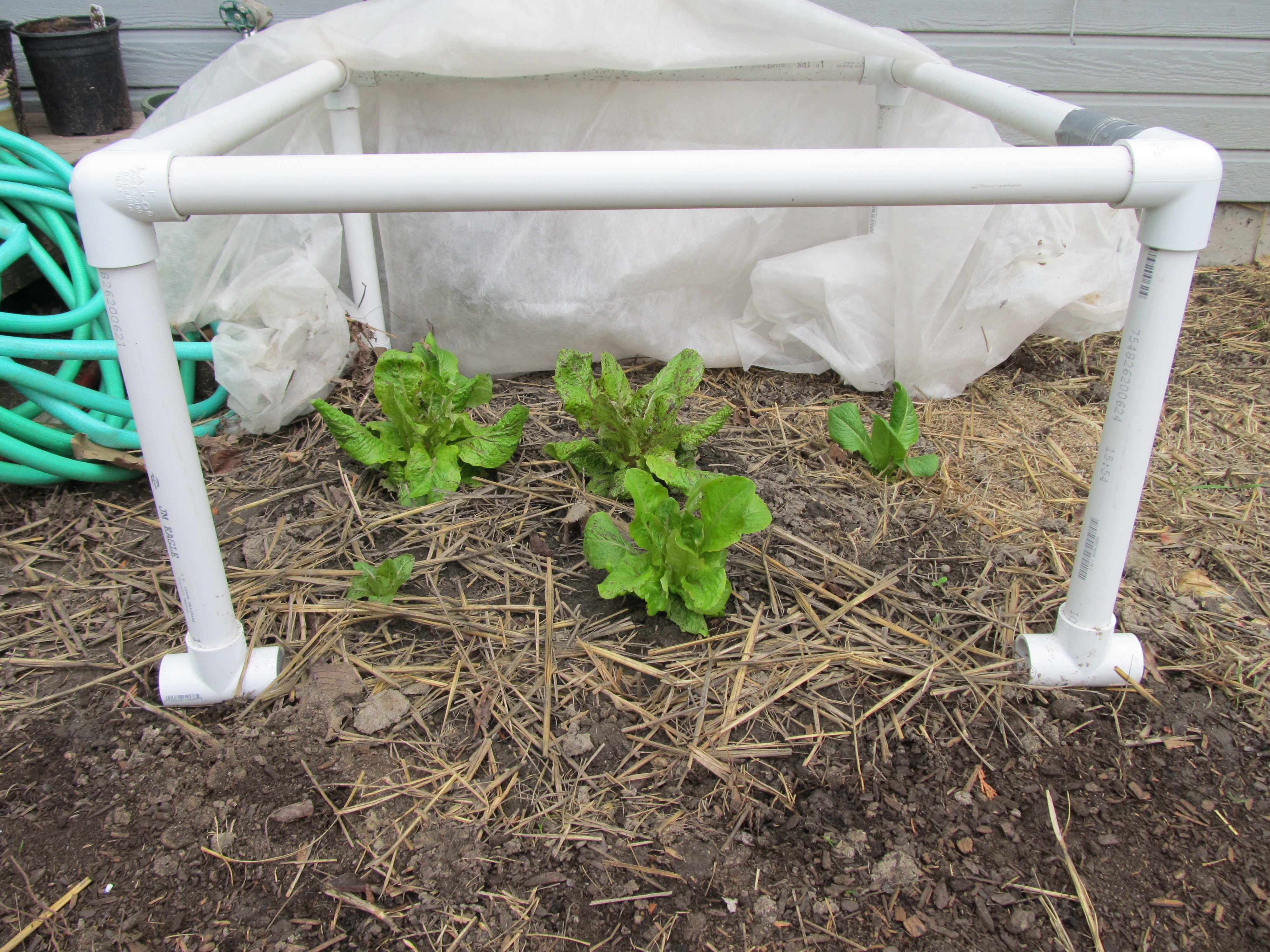
Last fall I had nine lettuce seedlings that I had started indoors. I transplanted them outside in either late October or early November (memory isn’t serving me right now). I placed some straw mulch around them, and then covered them with a makeshift cold frame made out of PVC pipe and floating row cover. There they remained all winter long.

IMG_0740

I live in Boise, Idaho. The winters here are relatively mild (compared to the rest of Idaho), but we still have plenty of days with below freezing temperatures. Our frost-free growing season is about 160 days long. The average low temperature from December through February is around 25° F. This past winter, our lowest temperature (according to Weather Underground) was -7° F, and we had at least 30 days in which the low temperature reached 20° F or lower. Needless to say, it was a chilly winter.

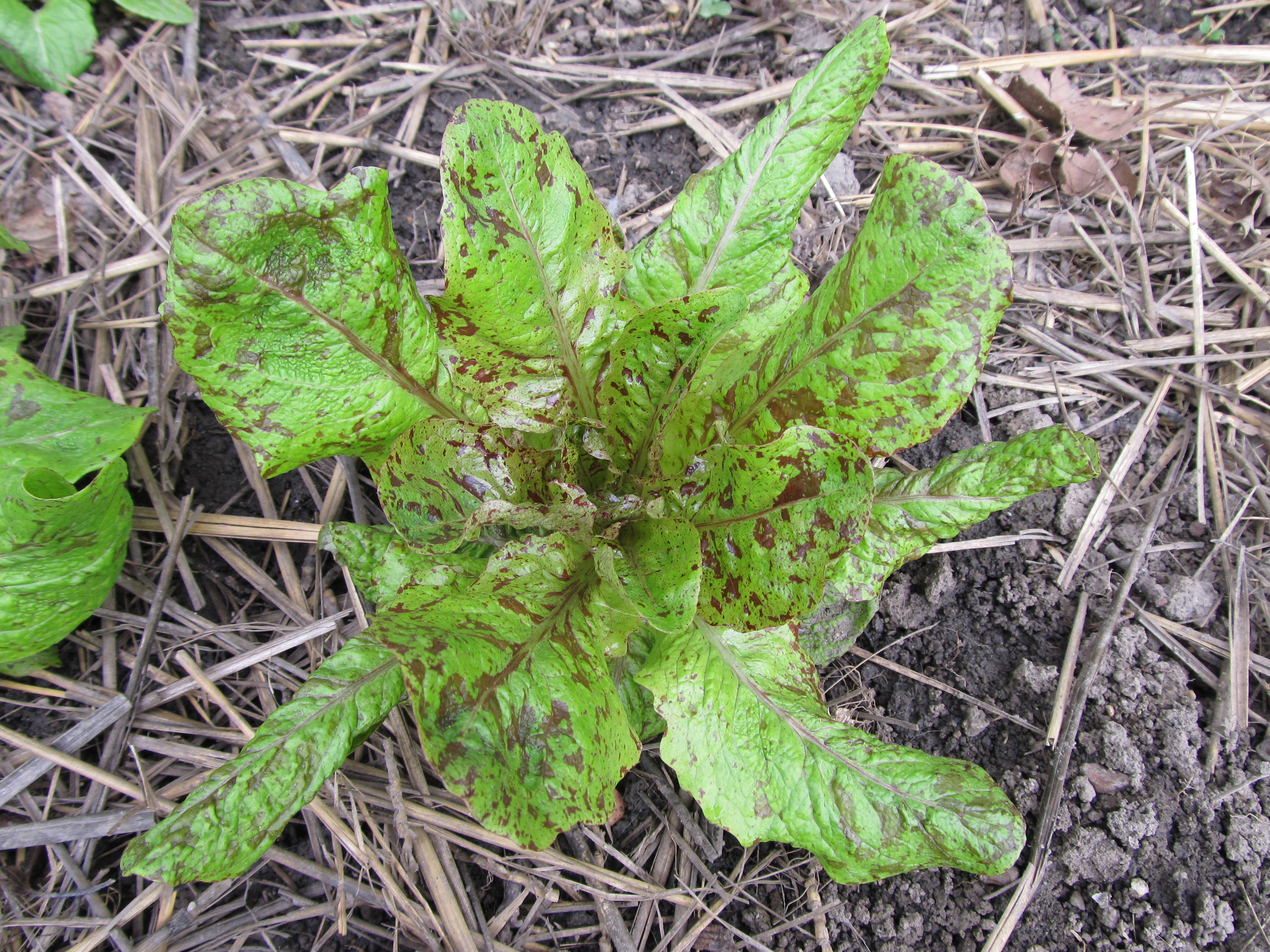
But my lettuces held on…at least most of them. When I uncovered my cold frame in early March, I found that six of my nine lettuce seedlings had survived. It didn’t surprise me that a few had perished – some of the seedlings that I had transplanted were quite small, and I had serious doubts that they would make it. I was satisfied to see that the majority of them were still alive. Two-thirds ain’t all that bad.

IMG_0743

The varieties that I planted were “Freckles” and “Winter Density.” I chose these because the descriptions I read gave me the impression that they were ideal for overwintering. But descriptions be damned. I suggest seeing for yourself. Take any variety of lettuce or other salad green and experiment in your own garden. See what you can get to overwinter with or without protection. Seeds are fairly inexpensive, and it is worth seeing what you can get to survive through the winter. Differing climates – both macro and micro – will produce varied results, and every year things will be a little different. This is one of the many joys of gardening. Weather and climate will always be factors, but they can also be markers to help us see what we can get away with. And if one of the things you get away with is getting lettuce to survive a harsh winter, it means you will be eating garden fresh lettuce long before your neighbor.

IMG_0745

Book Review: Seedswap

Seedswap: The Gardener’s Guide to Saving and Swapping Seeds by Josie Jeffery

Continuing debate and concern over genetically modified crops has resulted in increased interest in heirloom and open-pollinated seed varieties. The communities and groups that have emerged from this movement are both the impetus and the target for Josie Jeffrey’s recent book, Seedswap.

Seed swaps are nothing new, of course. Humans have likely gathered in some form or another to exchange seeds since the invention of agriculture, but recent interest in saving, sharing, and trading seeds parallels the GMO debate and the rise of urban agriculture. In that regard, Jeffrey’s book is a timely resource for anyone interested in joining the seed banking, seed swapping, and seed activism movements.

While much of this book is devoted to explaining the how-to’s of seed saving (including specific information on how to grow and save seed from 49 vegetable, herb, and flower varieties), the content that really sets it apart from other seed saving guides is, unsurprisingly, the focus on seed banking and seed swapping. Jeffrey provides a brief history of seed banks, the reasons behind them, descriptions of some of the more prominent ones, and some tips for starting a seed library. For seed swap novices, Jeffrey’s advice concerning where to find them and what to expect when attending them, as well as tips and etiquette to keep in mind are incredibly useful. After spending a few moments with Seedswap, every gardener should find themselves inspired and motivated to start saving and sharing seeds.

Jeffrey’s book is beautifully designed and well put together. Apart from the fact that it jumps around a bit and could stand to be better organized, it’s a nice little reference for anyone involved or looking to be involved in the world of seeds.

seed swap book

‘Tis the season for seed swaps. Find fellow gardeners to swap seeds with here.

Related Posts

Starting Seeds Indoors: The Planning Stage

Seed Swaps

Onion Seed Viability, etc.

Horticulture Students Wanted

“Horticulture is under siege.” At least that’s the claim made in a letter and action plan penned by the top administrators of six prominent horticulture institutions based in North America. In their letter addressed to “Colleague[s] in Horticulture,” they claim that among the general public there is a “lack of horticulture awareness and poor perception of horticulture careers”. This has lead to low enrollment in high school and college horticulture programs and a dearth of qualified, young horticulturists entering the work force. Because the youth of today “appear to have little or no awareness of the importance and value of horticulture,” they are not choosing to pursue “interesting, challenging, and impactful careers” in the field.

In order to address this issue, this team of horticulture professionals has developed a plan “to increase public awareness of the positive attributes of horticulture.” Plants are essential for life on earth; humans could not exist here without them. It is the field of horticulture that supplies humanity with much of the food that it consumes, including fruits, vegetables, nuts, and herbs. Horticulture also fills our landscapes with plants that provide the backdrop to our daily lives, transforming otherwise drab and harsh urban areas into lush green spaces. And speaking of “green,” horticulture is helping us save our planet. Through teaming up with engineers and other professionals, horticulturists are helping to develop solutions to issues like climate change, water quality, storm water runoff, energy production, and biodiversity loss. Innovative and emerging strategies such as green roofs, wildlife gardens, carbon sequestration, biofuels, and sustainable agriculture require horticulture expertise in order to succeed.

These are just some of the benefits of horticulture that the authors of this plan hope to share with the general public in an effort to change public perception and attract young recruits. If they don’t succeed, the consequences may be dire – or at least that’s how they make it sound. An article on philly.com regarding the recent letter put it this way: “if something isn’t done soon…horticulture could become a lost art and a forgotten science.”

Yeah, it’s a bit dramatic sounding. It’s hard for me to believe that the situation is really that desperate. However, what I will say is that a career in horticulture is not for everyone. It certainly isn’t for anyone who dreams of being rich and/or famous one day. That’s probably not going to happen. People who choose a career in this field do so because they have a passion for plants, a love of beautiful, inviting landscapes, and perhaps a proclivity for fresh, homegrown fruits and vegetables. A career in horticulture is not glamorous by any means, but it is highly rewarding – at least from my perspective. So sure, youngsters should consider it…but they should also consider themselves warned.

And now it’s time for show and tell. I graduated with a degree in horticulture at a four year university in the intermountain northwest. After that, I ventured off to the Midwest to pursue a graduate degree researching green roof technology. Perhaps the following pictorial of some of my adventures will inspire a few of you young folks to consider a similar path. Either that or there is always that liberal arts degree you’ve been dreaming of…

100_0410

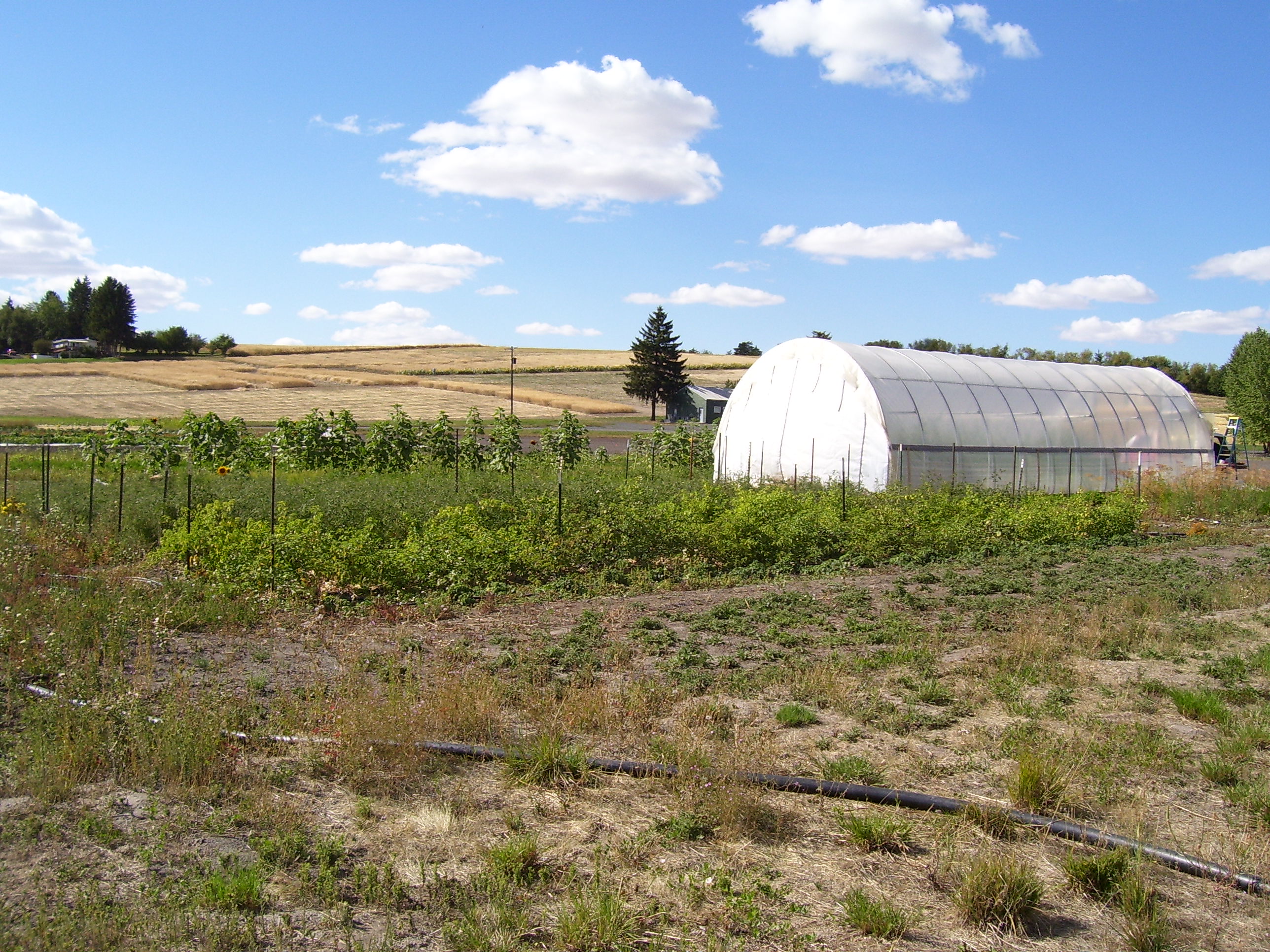
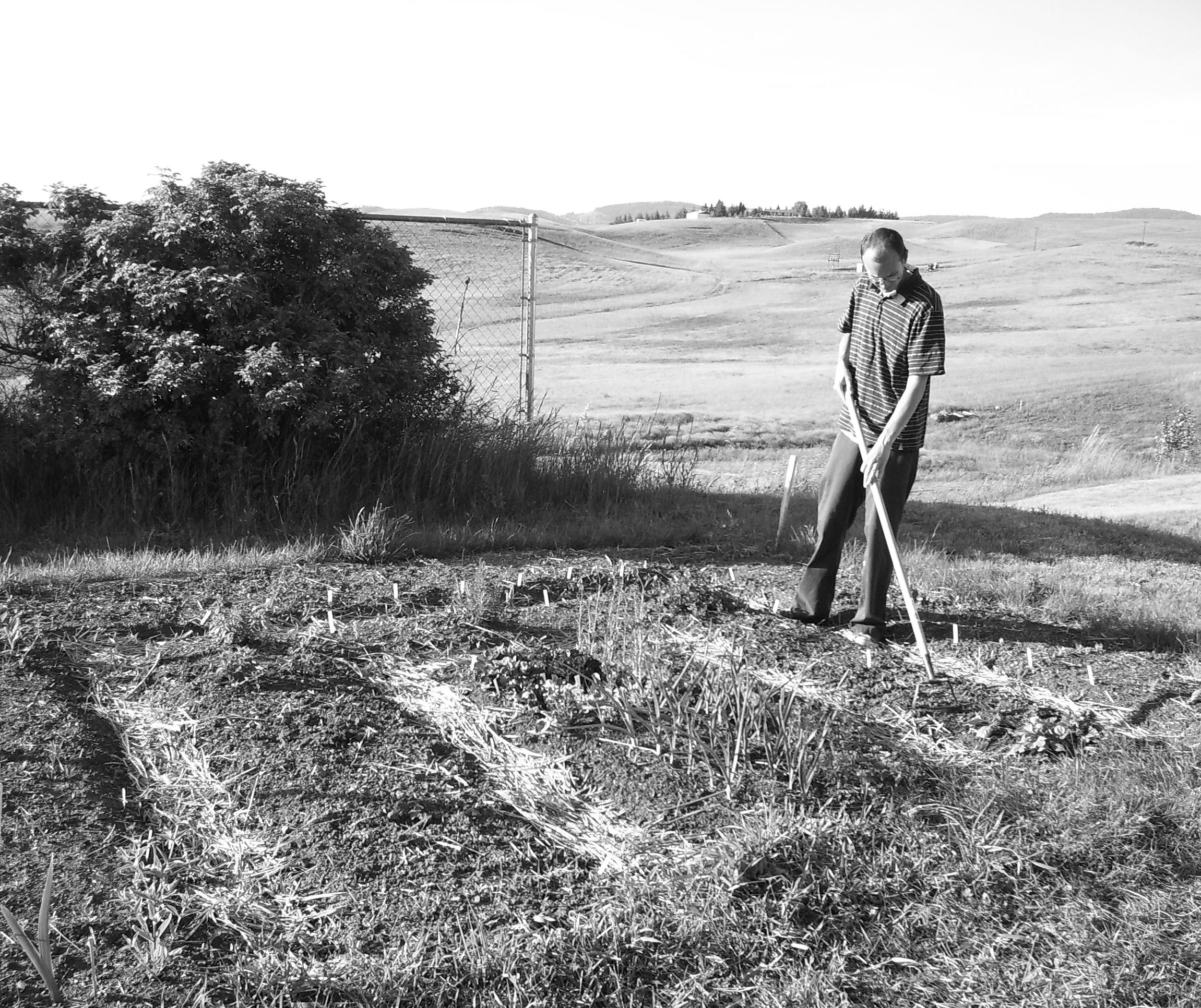
As an undergraduate, I helped manage a student-run organic farm

community garden plot

I had a community garden plot overlooking the rolling hills of the Palouse

100_0265

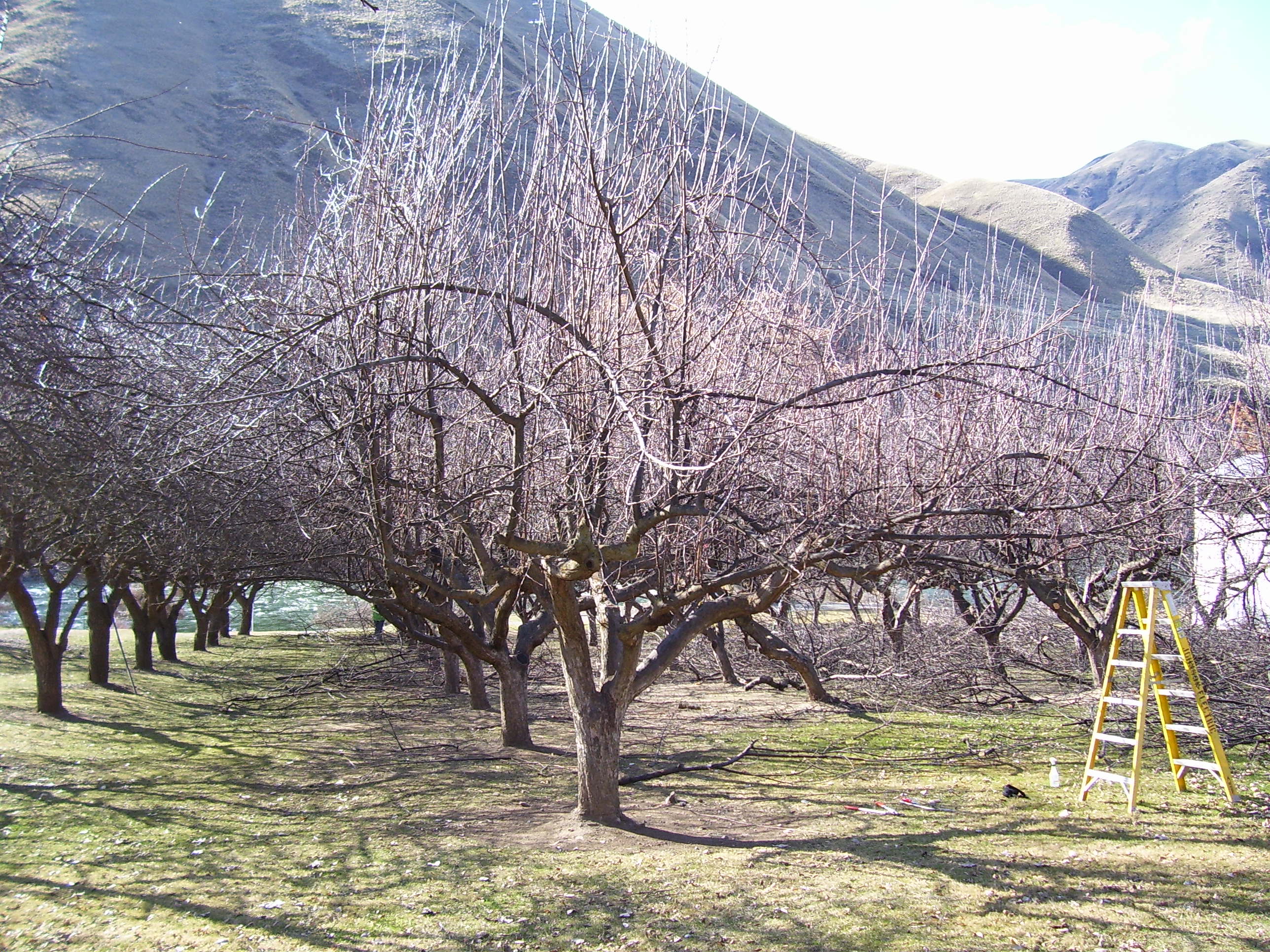
I took a jet boat trip up the Snake River to help prune an abandoned apple orchard

100_0650

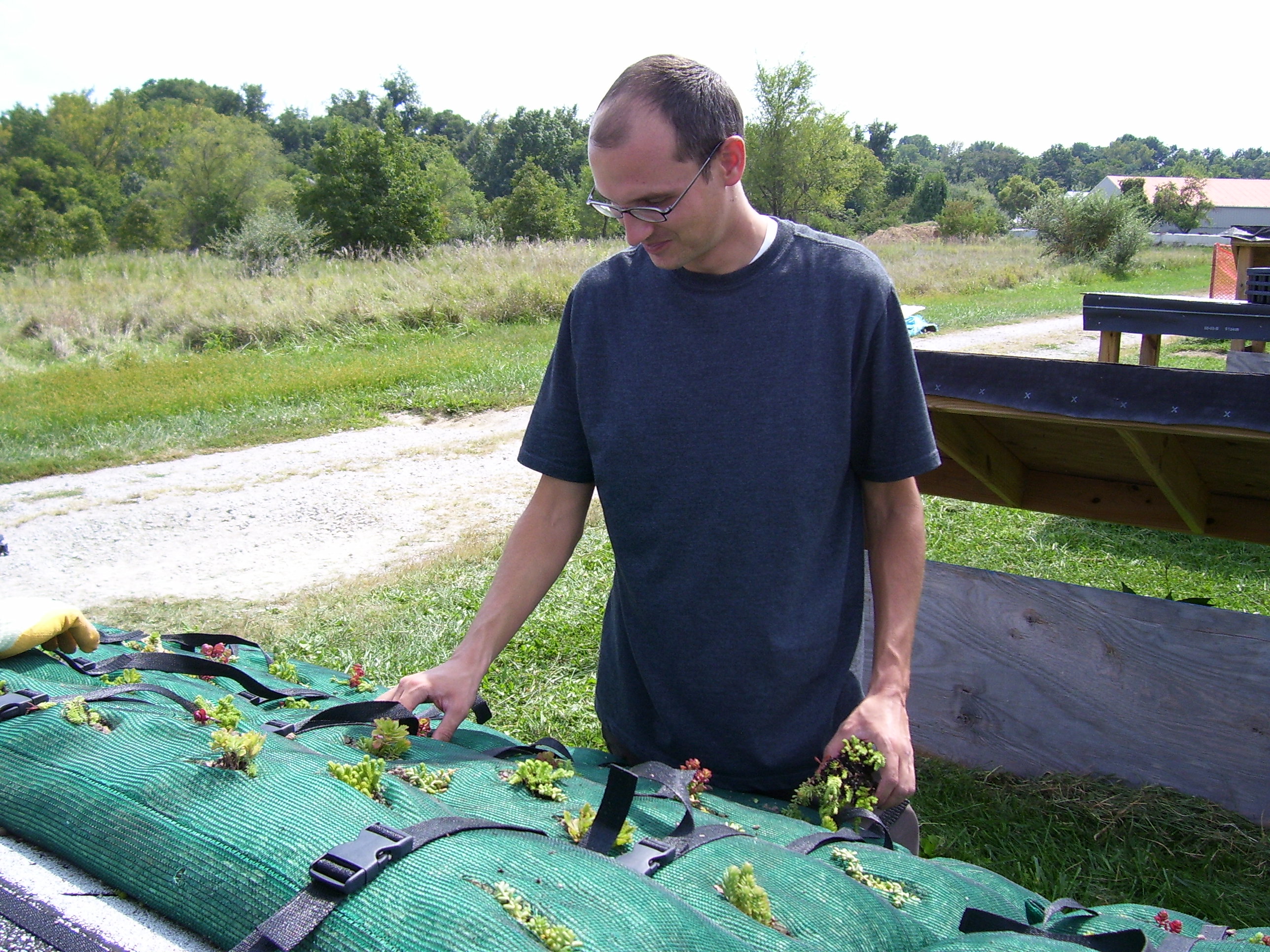
Then I went to Illinois to study green roof technology as a graduate student

???????????????????????????????

I presented my research findings at a big conference in Philadelphia

And so can you…or something like it. Comment below if you would like to put in your plug (or caveat) for pursuing a career in horticulture. The world needs you.

2013: Year in Review

The start of a new year is traditionally a time to be reflective and resolute. Awkward Botany is now a year old, so it is in the spirit of a new year that I look back at a year of blogging and look forward to the years to come. I did not initially set any concrete goals for this blog nor do I plan to. I am passionate about plants, and I enjoy writing – hence the blog. Any attention this blog receives is not only welcome, but celebrated. It is one of life’s great joys to be able to share your passions with others.

In 2013 – surprisingly enough – I managed to publish 42 posts. These posts covered a wide range of topics, including plant profiles (mountain kittentails, Lewis’ mock orange, sundews), wildflower walks (Spring, June, September), the latest in plant science research (cushion plants, northern pitcher plants, plant communities of the Catalinas), a book and movie review (What a Plant Knows & What Plants Talk About), gardening tips (starting seeds indoors, assessing your soil, pruning rosemary), and so much more. The years to come will bring more of the same, plus whatever else comes to mind or is requested (leave a comment below).  More importantly, my plan is for past and future posts to be organized into pages according to major categories – such as botany, horticulture, and ecology – which will make it easier to find posts on the topics you are most interested in. Also, a new year brings a new tagline – “for the phyto-curious” – because it is a deep, abiding curiosity about plant life that really drives this blog.

021

If you feel so inclined, please leave comments below and let me know what you like/dislike about the blog and/or tell me if you have any ideas for future posts. You can also leave comments and ask questions by visiting my Contact Page. Also, check out my twitter feed. Please be in touch, and let’s make 2014 our year!

For the plants, etc…

Rosemary Christmas Tree

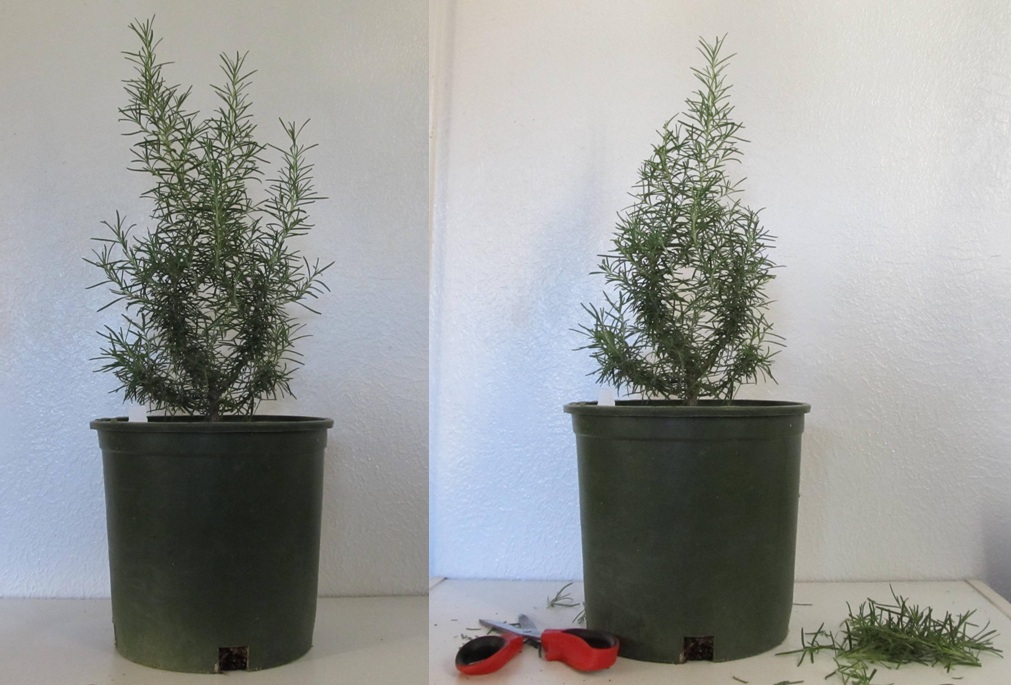
In the spirit of the holiday season, consider this fun alternative to a conventional Christmas tree. Rosemary (Rosmarinus officinalis) is an herbaceous, evergreen shrub or subshrub and is commonly found in herb gardens. Its leaves are valued for their myriad culinary and medicinal uses. Futhermore, this plant takes very kindly to pruning and shaping, which makes transforming it into a miniature Christmas tree a very simple task.

It may be too late to cultivate a “tree” for this year’s holiday season, but perhaps you’d like to try for next year. To do so, find a small rosemary plant at a local garden center or plant sale in the spring. Make a few initial pruning cuts to select a leader or leaders. After about a month or two, start giving it the shape of a Christmas tree. Floral scissors work great for making these cuts, and you don’t have to worry about where on the branches you are cutting – rosemary is very forgiving – just make sure your scissors are sharp. Wait a couple more months and then do more shaping with the pruning scissors. Do some final shaping a month or so later. At this point, you should be entering the holiday season and your rosemary Christmas tree will be ready to display. It’s that simple!

1

Initial pruning: selecting the leaders

2

Second pruning: giving it shape

3

Third pruning: keeping in shape

4

Final pruning: clean it up and present it  

One major downside to growing rosemary if you live in a cold climate is that it is only hardy to about USDA zone 7. However, if you select the right cultivar, place it in a protected location (near the south facing wall of a building perhaps), give it some mulch and maybe a blanket for the winter, you might be able to get it to survive in colder zones. Rosemary can also be difficult to overwinter indoors because the air in homes is typically dry and warm and there is little direct sunlight. If you are determined to keep one alive despite your odds, awaytogarden.com provides an excellent tutorial about overwintering rosemary both indoors and out.

Growing Plants on the Moon

You’ve heard about gardening by the moon – an ancient approach to gardening based in folklore and superstition in which planting times are scheduled according to moon phases and astrological signs. Now, how about gardening on the moon! No pseudoscience necessary here. NASA scientists are currently on a mission to determine what it will take to grow plants on the moon in anticipation of setting up a permanent lunar base. After all, if we plan on sending people to the moon to live for long periods of time, we will need to figure out how to grow some food for them up there, right?

The first phase of the study will examine seed germination in a lunar environment and will observe seedlings during the first week or so of their lives. The seeds of cress, basil, and turnip have been selected as the first to be grown on the moon. However, these seeds will experience an environment that seeds of their kind (or any other kind for that matter) have never experienced before, because, unlike the earth, the moon has no atmosphere. Gravity on the moon is one sixth of what it is on earth; solar radiation is intense and direct; and fluctuations in temperature are extreme to put it lightly (about 150°F during the day to -150°F during the night). Oh, and there is one other important limitation: moon soil is dead. To start with, it’s virtually moisture-free. It also has no organic matter content, and it is void of life (compared to a tablespoon of earth soil, which is said to harbor about 50 billion microbes, many of which help sustain plant life).

NASA scientists have considered these limitations. That is why the first seeds on the moon will be grown in a lunar plant growth chamber. This growth chamber is designed to regulate temperature and light and will contain a filter paper inoculated with plant nutrients. Water will be stored inside the growth chamber and released when the chamber reaches the moon. There will be just enough water to induce germination and allow the plants to grow for 5-10 days. Plant growth will be monitored with an onboard camera and then compared to plants grown in a similar growth chamber on earth. Scientists will be observing how well the seeds germinate and grow in a low gravity, high radiation environment.

The first lunar plant growth chamber is scheduled to head for the moon in late 2015. It will be hitching a ride with the winners of the Google Lunar X-prize competition. Based on the results of the first phase of the experiment, following phases will observe sexual reproduction in a lunar environment. If sexual reproduction occurs, what effect will high levels of radiation have on subsequent generations? Only time will tell, so this will be an exciting project to monitor for years to come.

moon

photo credit: wikimedia commons

Do you want to help design future lunar plant growth chambers? Go here.