Winter Trees and Shrubs: Box Elder

Box elder is a maple that doesn’t often get credit for being a maple. Moreso, it is a tree that is not thought highly of, and it may not even be welcome in certain discussions around maples. You could even say that box elder is a “rogue maple,” as Arthur Plotnick deems it in The Urban Tree Book. It should come as no surprise, but if people are going to talk about a plant this way, it’s only going to make me like it more.

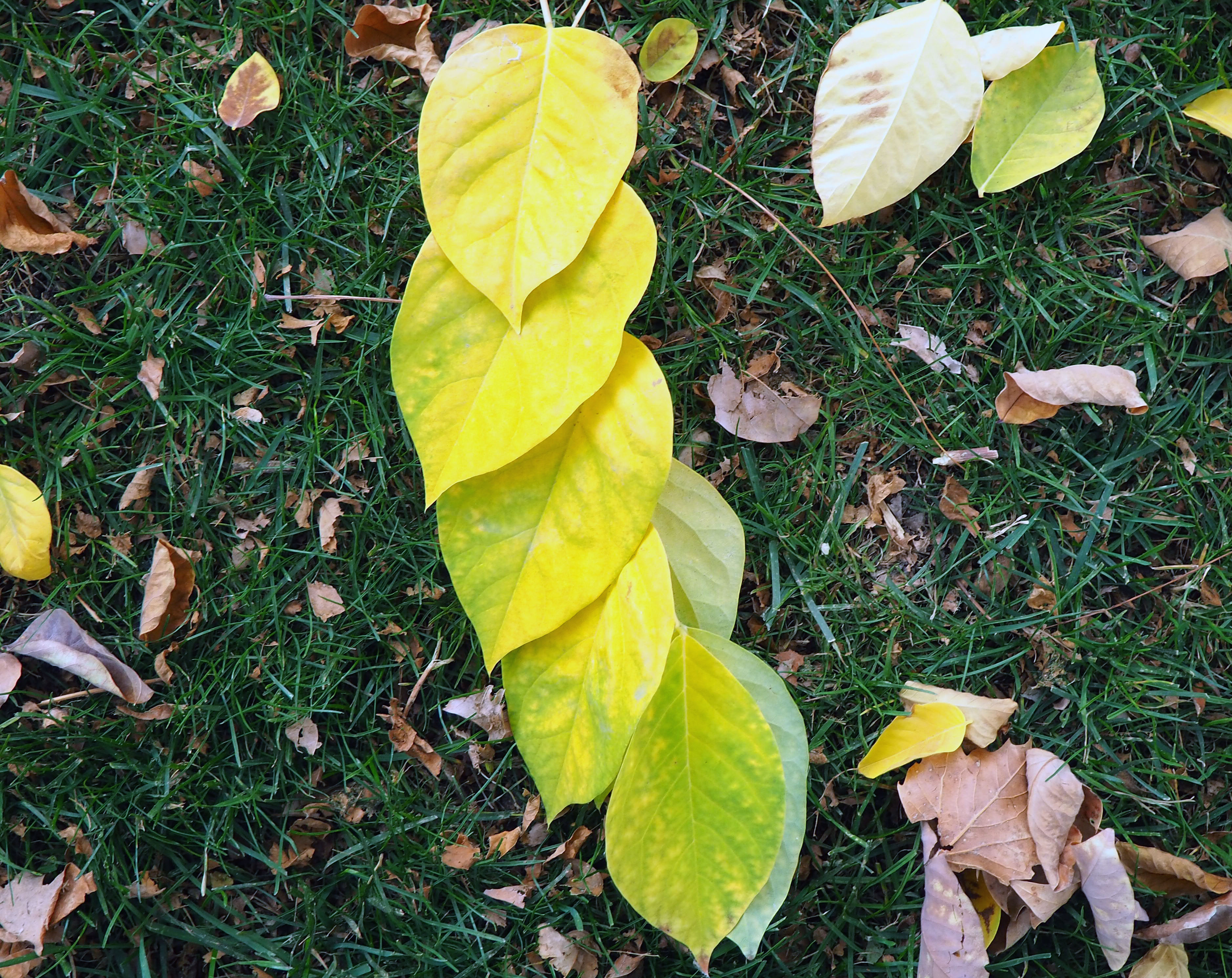
First off, the leaves of Acer negundo are palmately compound, compared to the simple, palmately lobed leaves of other maples. A box elder leaf is generally composed of three leaflets, sometimes five or seven. The center leaflet is on a longer stalk than the side leaflets, which are oppositely arranged. Sometimes the leaves are confused with ash tree leaves (Fraxinus spp.), which is the reason for another common name, ash-leaved maple. It’s also not uncommon for box elder leaves to be mistaken for poison ivy, which is maybe not a plant you’d want to be confused with. In the fall, unlike the beautiful reds, oranges, purples, and yellows of so many other maples, the leaves of box elder turn a drab yellow before dropping, a trait that Plotnick calls “an embarrassment.”

leaf of box elder (Acer negundo)

It’s not really its leaf, however, that bothers people. Box elder is a fast-growing and prolific tree. Basically, it’s weedy, and because it grows so quickly, its wood is generally weak and its structure unpredictable. It falls apart easily, and it doesn’t always grow in typical tree fashion. Sometimes its more of a shrub, and sometimes it leans so far over that it practically lies on the ground. It sprouts and suckers in abundance, and as John Eastman puts it in The Book of Forest and Thicket, it “generally ignore(s) human standards for an attractive tree.”

Maybe before people knew better, or during a time when people just needed a fast growing tree to plant in their developing cities, box elders were widely planted across North America and beyond. That and their ability to spread readily helps to obscure their native distribution. Box elder is naturalized across North America, but its original distribution (whatever that means) appears to be more midwestern and eastern. Box elder grows in a variety of conditions, and is actually quite drought tolerant, which has allowed it to feel right at home in the American west, whether it is truly native here or not.

Identifying box elder in the winter can be pretty easy, especially if you come across a seed-bearing individual. Box elders are dioecious, meaning male and female flowers occur on separate individuals (another thing that sets them apart from other maples). A samara-bearing tree is a female tree, and the samaras often hang from the branches in great numbers. Like other maples, the fruits are paired together, each seed with a prominent wing. The samaras of boxelder point downward and hang from long stalks, persisting on the tree throughout the winter.

persistent samaras of box elder

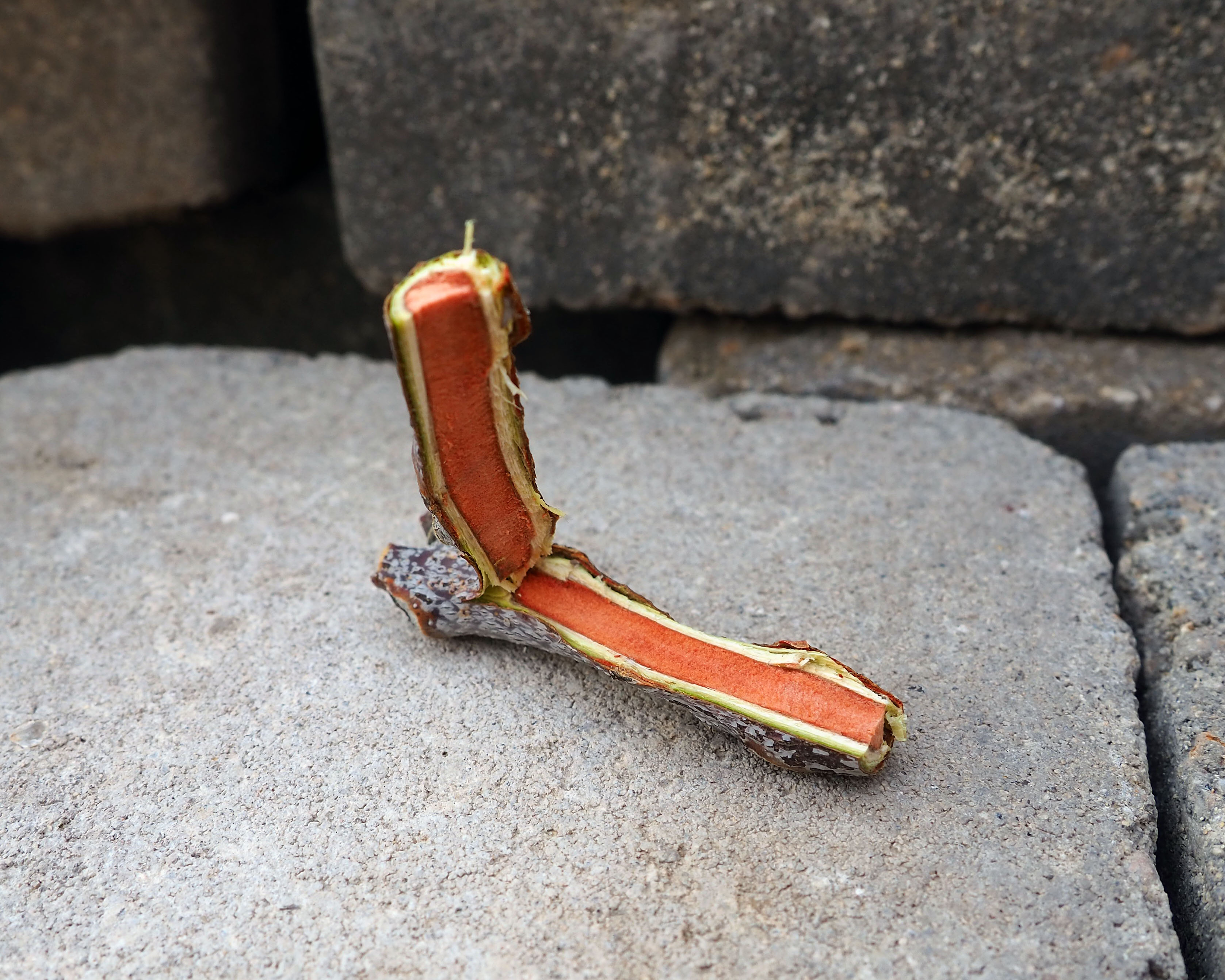
The twigs of box elder are glaucous (covered with a thin, powdery bloom) and can be either green, bluish-white, or reddish-purple. They have tiny, white lenticles, and their buds are oppositely arranged. Leaf scars are a broad U-shape, and scars opposite of each other meet at the tops of the U’s, coming to a raised point. At least three bundle traces (sometimes more) are visible in the scar. Leaf buds are protected by two scales that are covered in dense, white hairs. The scales are similar in color to the twigs, but appear more white due to the fuzz. Lateral buds are 1/8 inch long or longer. Slicing open the twigs lengthwise reveals solid, white pith in the center that blends in easily with the wood.

winter twigs of box elder
winter twigs of box elder, pith exposed

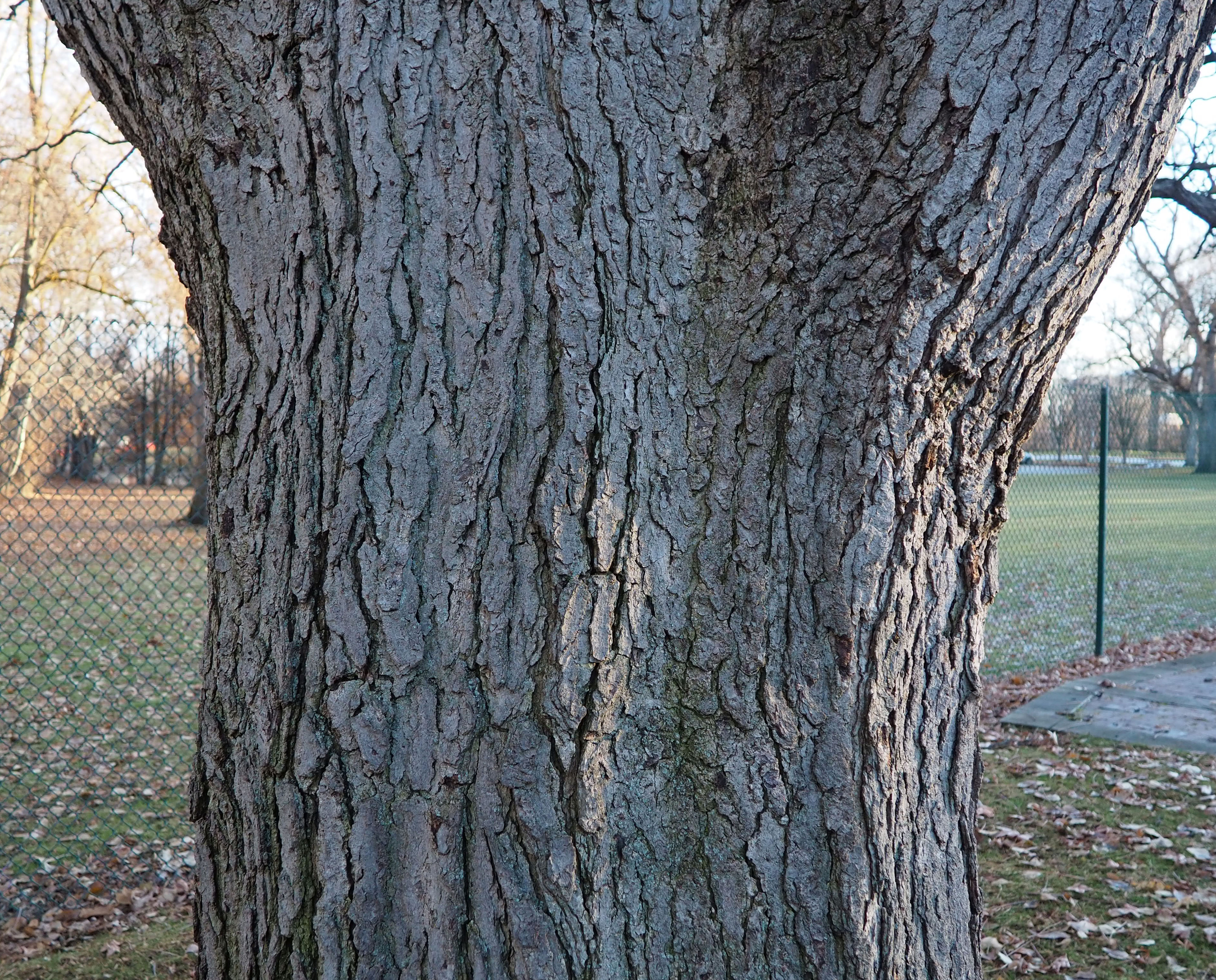
The bark of young box elders has slight vertical ridges and is light brown or grey-brown, with dull orange, raised, wart-like lenticels. It is finely scaly. The scales and ridges become more rough and blocky as the tree ages. Mature bark is light brown to grey and heavily furrowed, with blocky segments breaking apart horizontally.

maturing bark of box elder

A few years ago I was introduced to a massive box elder in Boise, Idaho. It quickly became my favorite tree in the area, and I visit it frequently. For all the hate that box elder can receive, seeing its potential to create an experience that few other trees in the area offer can send all of that negative talk out the window. Visit something like it yourself sometime, and see what it can do for you.

massive box elder

More Winter Trees and Shrubs:

Weeds of Boise: Neglected Parking Lot Islands at Post Office on 13th Street

Boise’s summers are decidedly hot and dry. Months can pass without any measurable precipitation, meanwhile temperatures regularly peak in the 90’s. In the heat of the summer, multiple days in a row above 100 degrees Fahrenheit is not unheard of. Under these conditions, irrigation is a must if you intend to keep plants alive, particularly plants not adapted to our climate. Skipping out on watering or having something go awry with the irrigation system quickly becomes noticeable as the soil goes bone dry and plants begin to wither away. If this goes on for too long, many plants will not recover, including established trees and shrubs. However, the toughest plants among us, particularly the weeds, will move in to take their place.

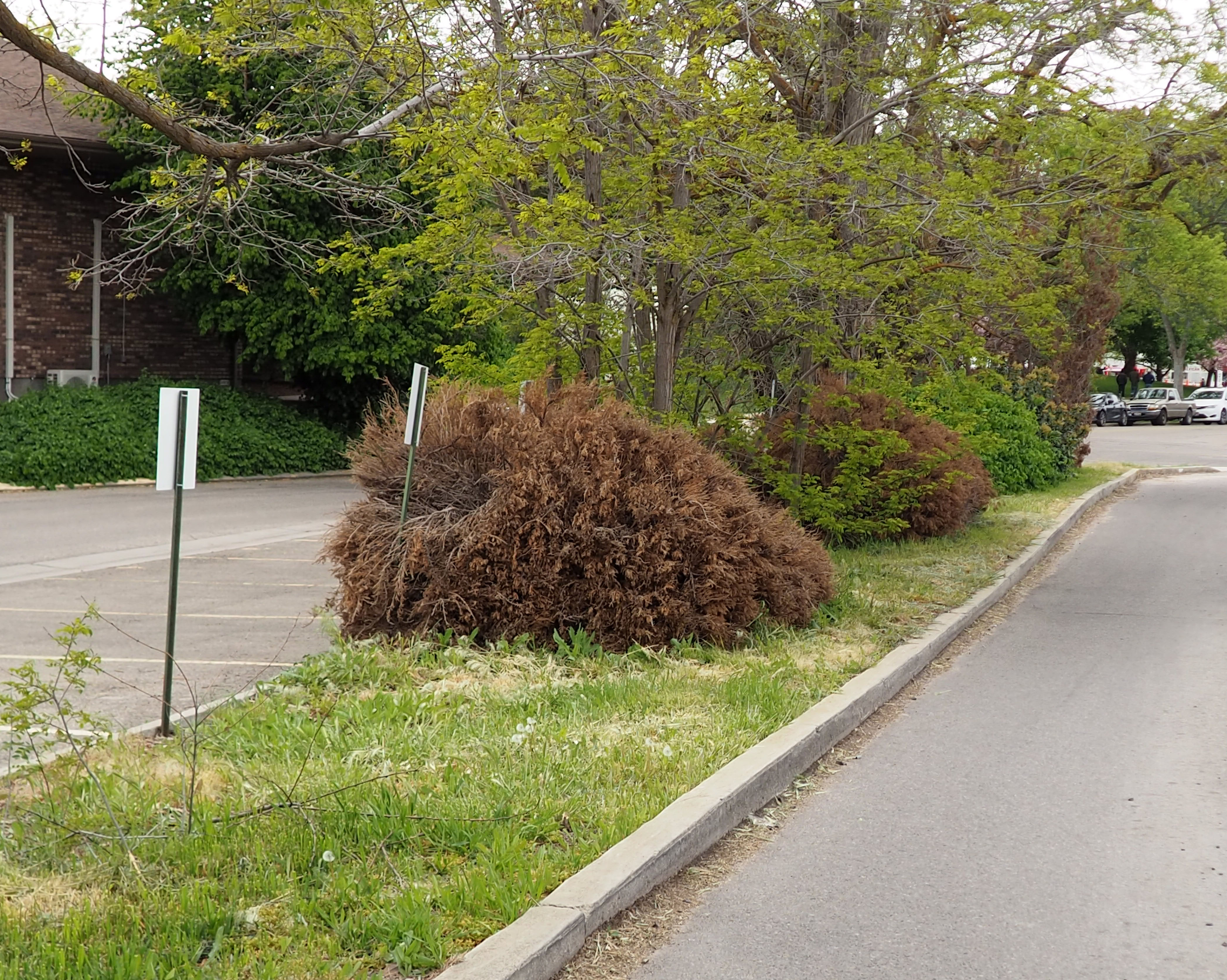
You can see an example of this at the United States Postal Service building at 13th Street and Shoreline Lane in Boise, Idaho. The islands in the parking lot are not being watered, which has clearly been the case for quite some time because even the trees and shrubs are dying off. Apart from occasional mowing, very little maintenance is occurring, and our wild urban flora is about all that remains.

parking lot island at the corner of 13 Street and Shoreline Lane

Parking lots are not ideal locations for growing plants. Asphalt and cement dominate – two major contributors to the urban heat island effect – and automobile pollution is concentrated on account of all the cars coming and going on a regular basis. Many parking lots include islands where plants (often poorly maintained), along with other features like signs and lights, are placed. In general, these islands are far too small for trees, but trees are planted nonetheless in a desperate attempt to shade these formidable environments. In locations where snow is common, the snow from parking lots is often piled up on these islands to clear room for cars, while road salts and other ice melts are heavily applied in order to keep people and cars from sliding around. Parking lot plants have to endure all this and more, so it’s no surprise that they usually look pretty rough.

The stresses of added heat, pollution, trampling, and poor care are enough for plants to put up with. Cut off their irrigation supply, and parking lot plants are sure to give up the ghost. A situation like this is an excellent place to familiarize yourself with your wild urban flora. Many weeds seemingly have no problem tolerating these conditions. To demonstrate this, I inventoried the weeds found in neglected parking lot islands at the post office on 13th Street and Shoreline Lane. What follows are a few photos and a list of the weeds I’ve identified so far. Like all posts in the Weeds of Boise series, this list may be updated as I continue to check back in on this location.

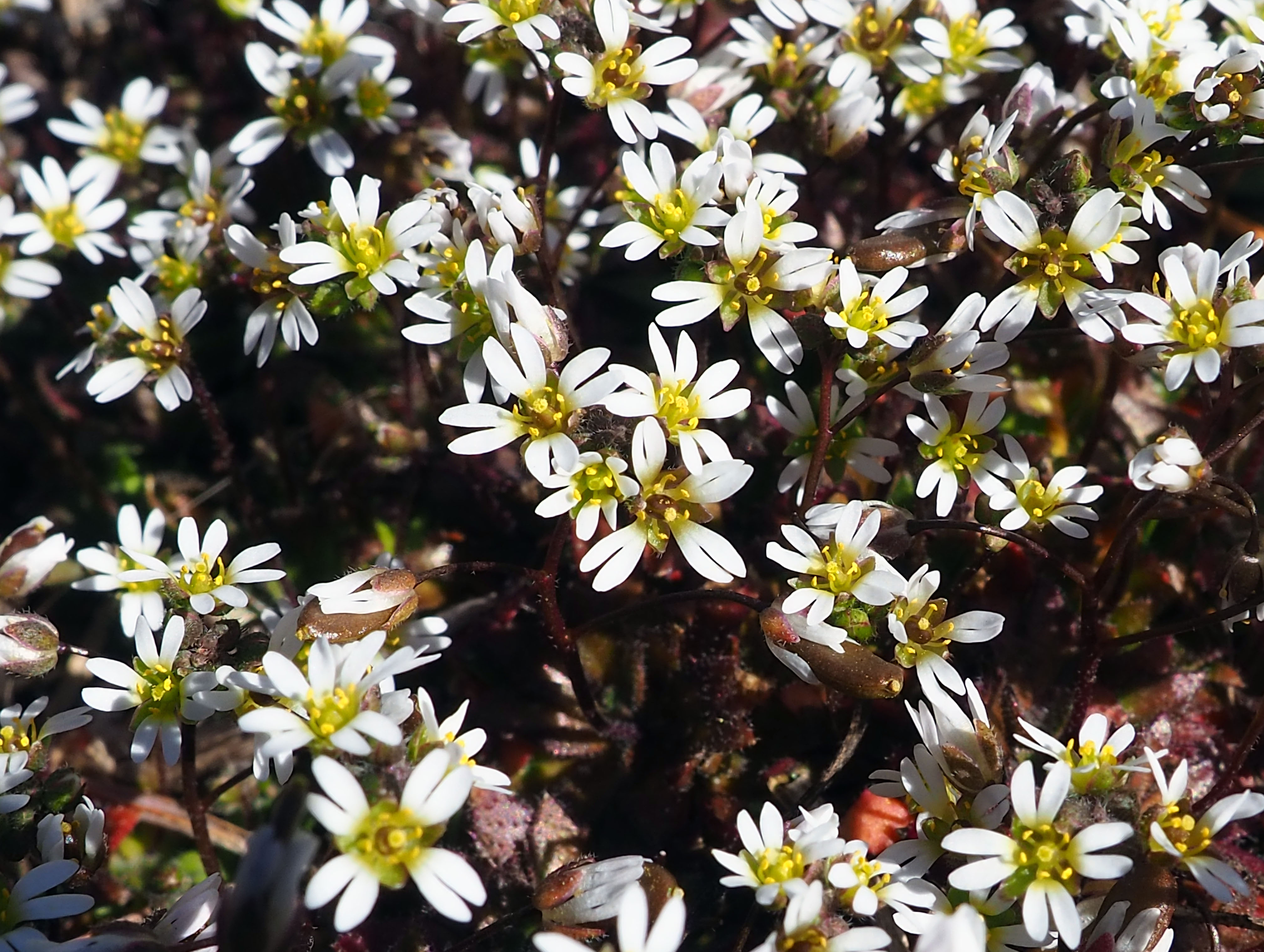
spring draba (Draba verna)
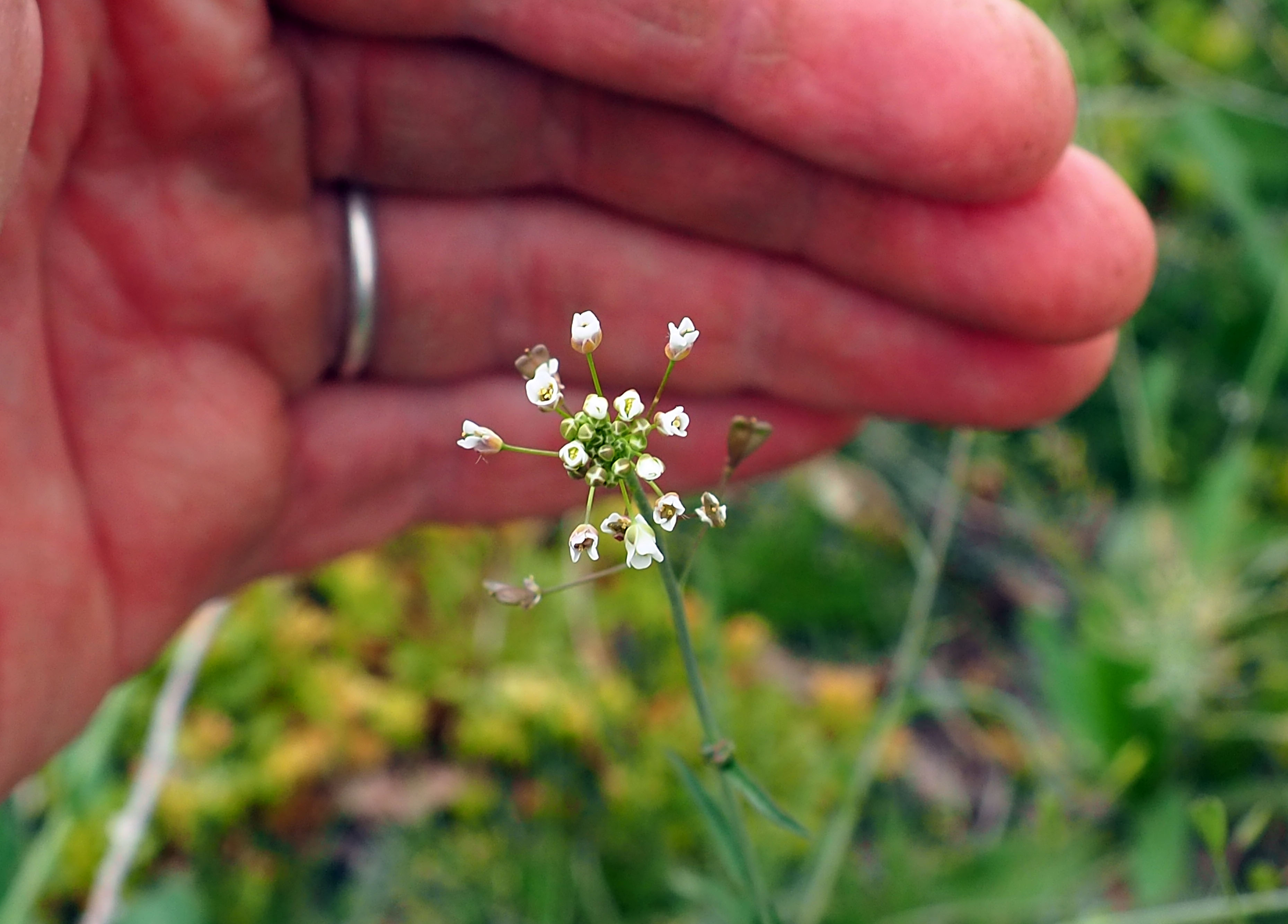
shepherd’s purse (Capsella bursa-pastoris)
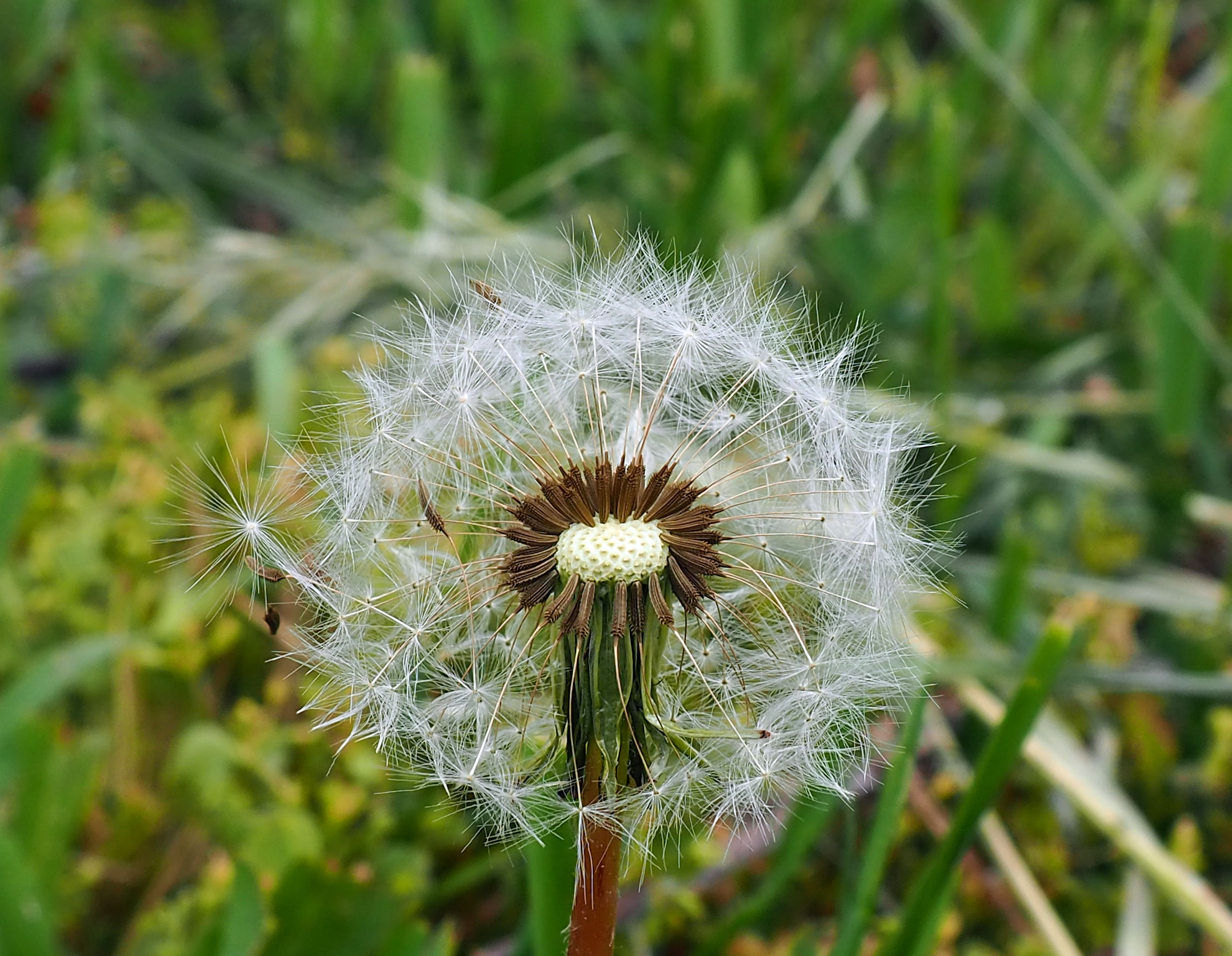
dandelion (Taraxacum officinale)
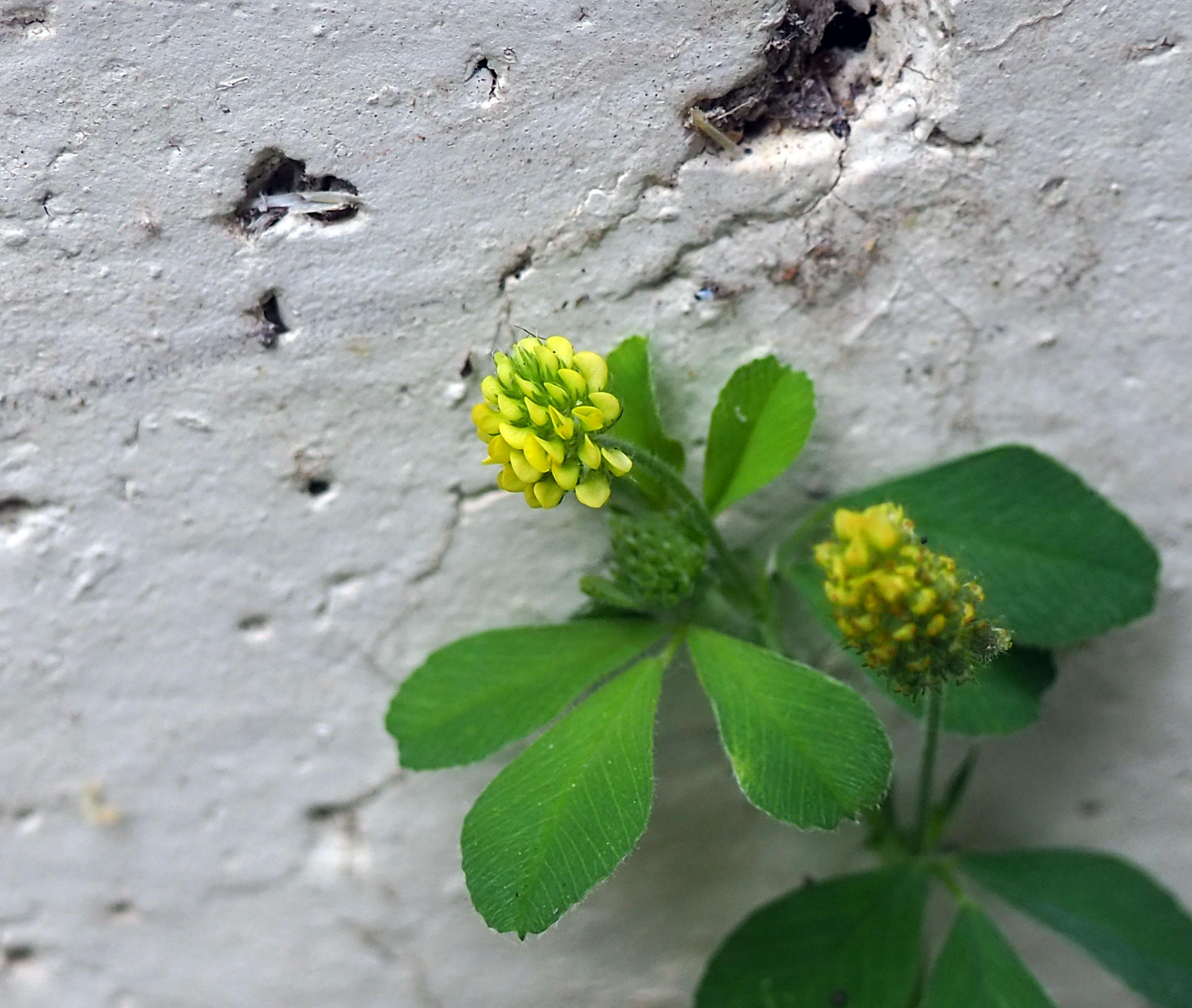
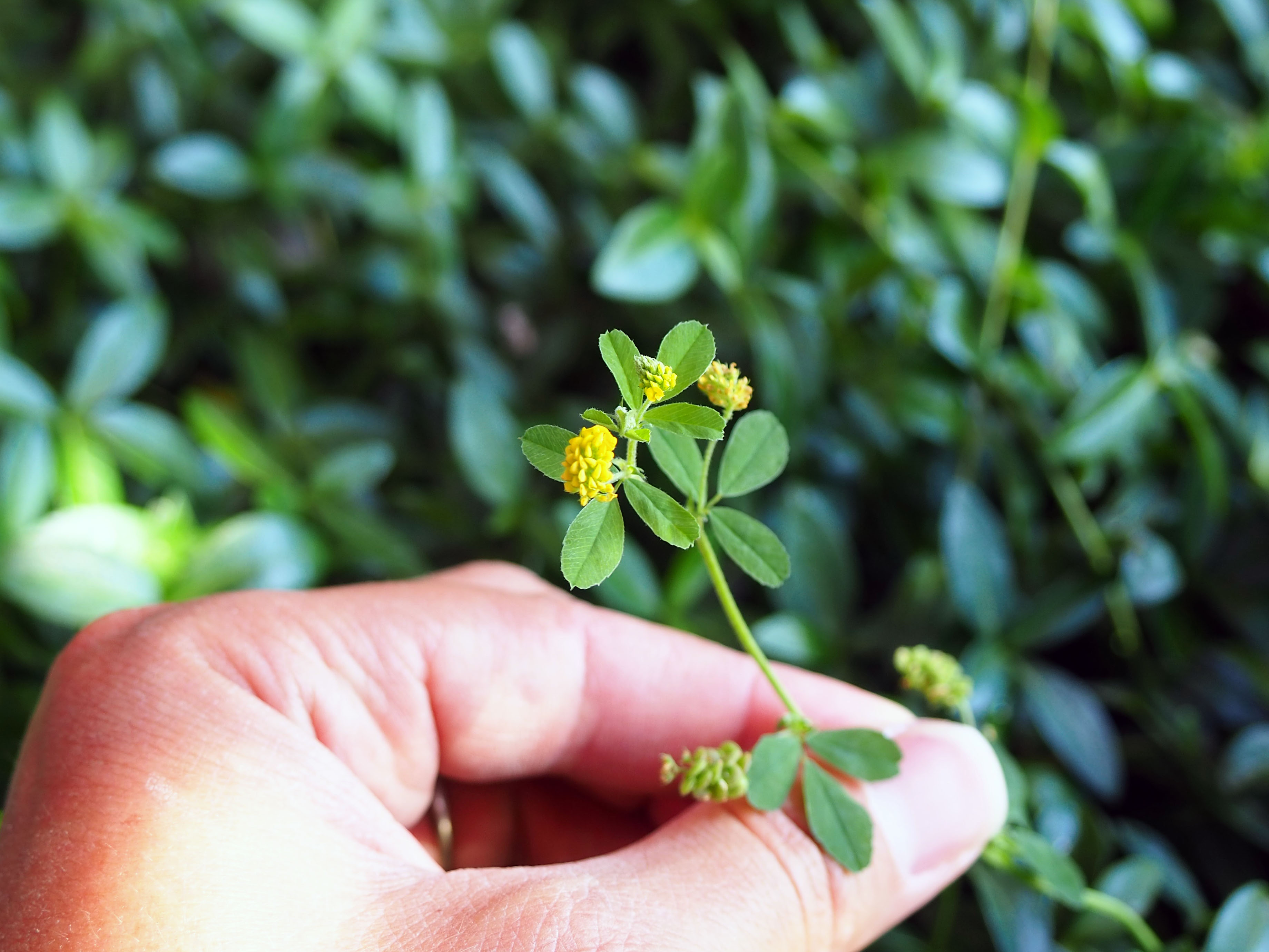
black medic (Medicago lupulina)
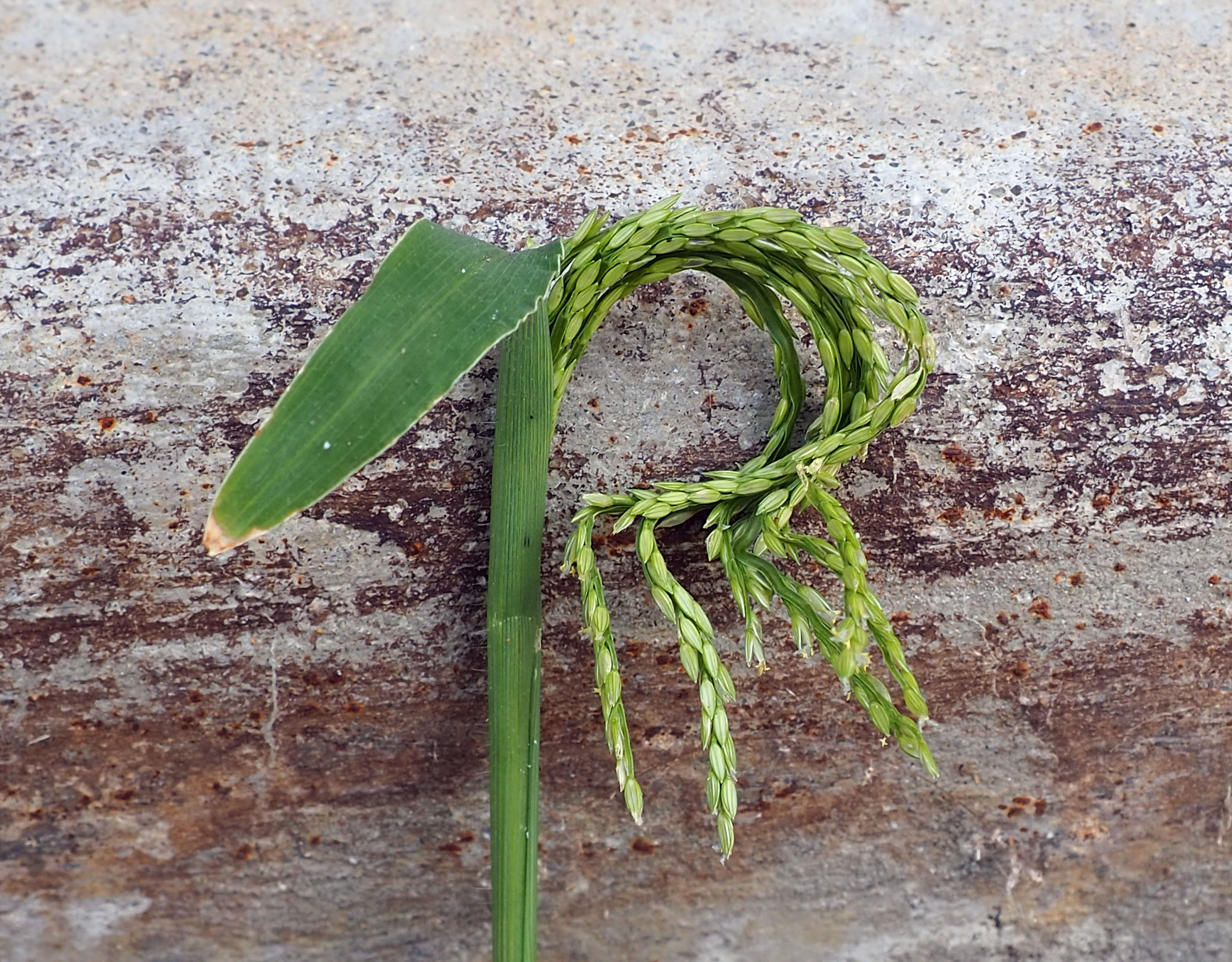
crabgrass (Digitaria sanguinalis)
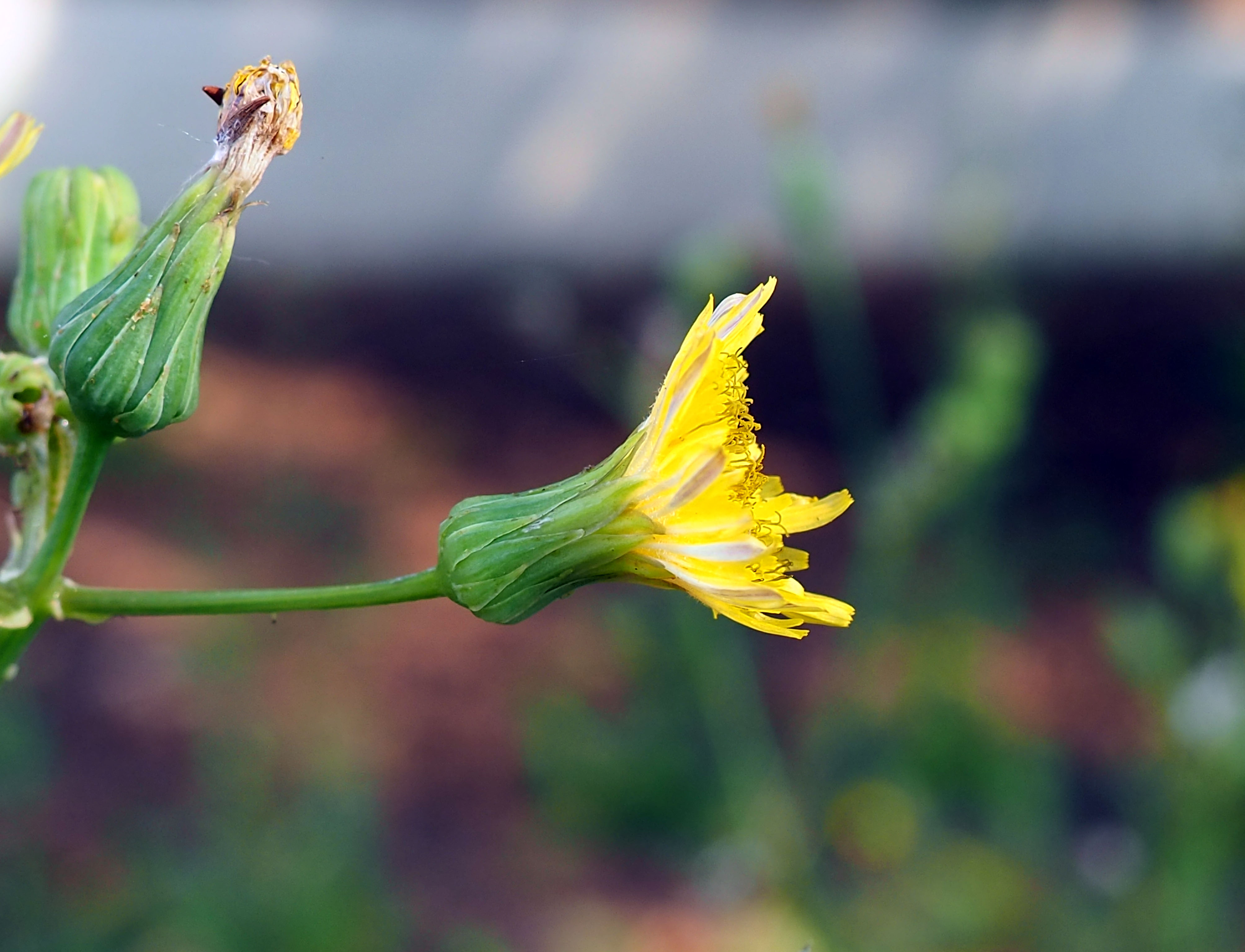
annual sow thistle (Sonchus oleraceus)
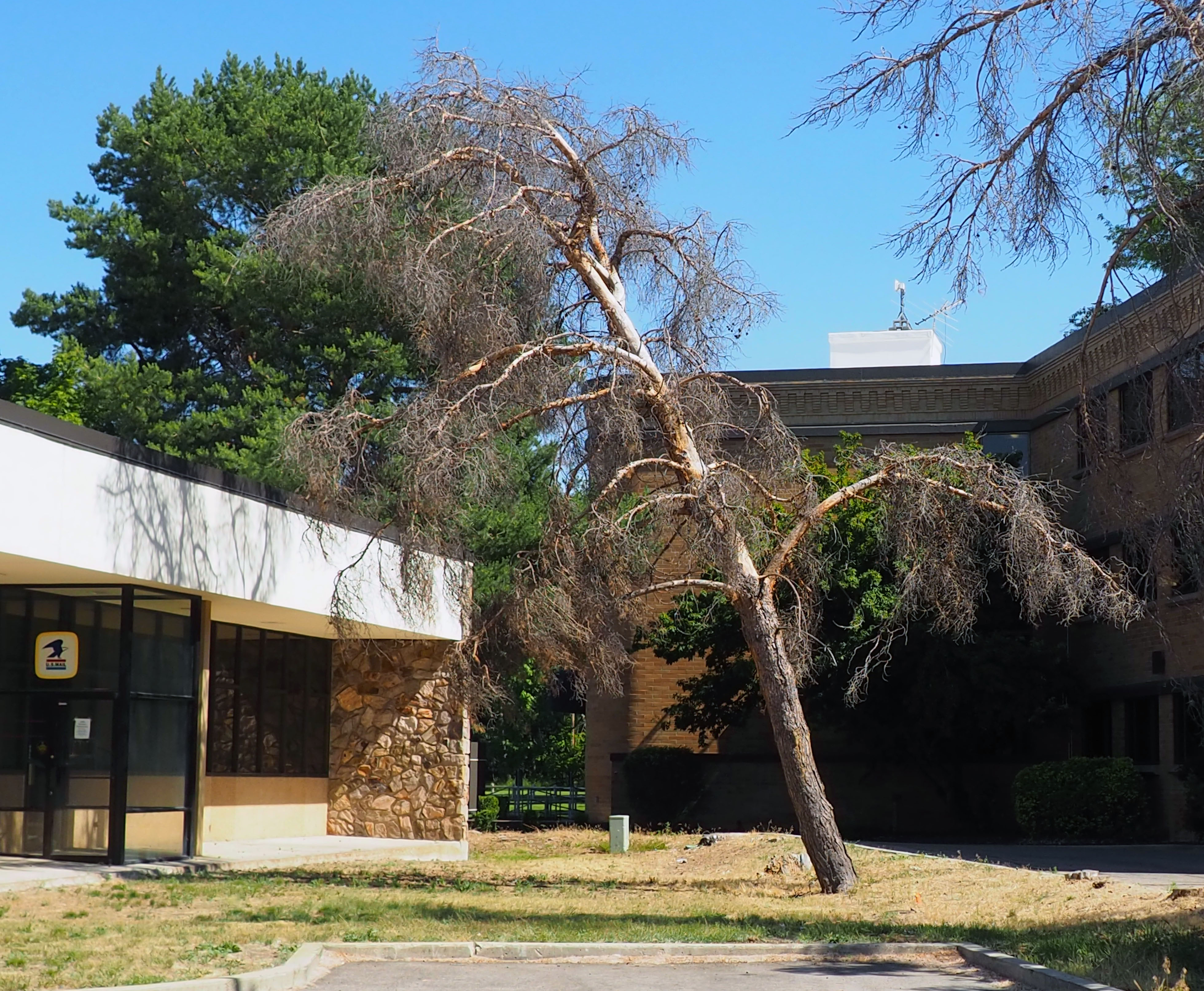
snag (aka standing dead tree) at post office on 13th Street
  • Anthriscus caucalis (bur chervil)
  • Bromus tectorum (cheatgrass)
  • Capsella bursa-pastoris (shepherd’s purse)
  • Ceratocephala testiculata (bur buttercup)
  • Chondrilla juncea (rush skeletonweed)
  • Claytonia perfoliata (miner’s lettuce)
  • Convolvulus arvensis (field bindweed)
  • Conyza canadensis (horseweed)
  • Digitaria sanguinalis (crabgrass)
  • Draba verna (spring draba)
  • Elymus repens (quackgrass)
  • Epilobium ciliatum (willowherb)
  • Erodium cicutarium (redstem filare)
  • Euphorbia maculata (spotted spurge)
  • Holosteum umbellatum (jagged chickweed)
  • Hordeum jubatum (foxtail barley)
  • Lactuca serriola (prickly lettuce)
  • Lamium amplexicaule (henbit)
  • Malva neglecta (common mallow)
  • Medicago lupulina (black medic)
  • Parthenocissus quinquefolia (Virginia creeper)
  • Poa annua (annual bluegrass)
  • Polygonum aviculare (prostrate knotweed)
  • Portulaca oleracea (purslane)
  • Senecio vulgaris (common groundsel)
  • Sonchus oleraceus (annual sow thistle)
  • Taraxacum officinale (dandelion)
  • Tragopogon dubius (salsify)
  • Tribulus terrestris (puncturevine)
  • Trifolium sp. (clover)

Where there are parking lot islands, there are bound to be weeds whether the islands are being maintained or not. What have you found growing in the parking lot islands in your city? Feel free to share in the comment section below.

Randomly Selected Botanical Terms: Phyllaries

Flowers in the aster family have one of the most recognizable shapes in botany – a circle with a series of petals surrounding it. If you were asked to draw a flower, there is a good chance your drawing would look something like a sunflower, a daisy, a cosmos, or an aster. It’s one of the most basic flower shapes, and yet it isn’t a single flower; it’s a pseudanthium – a false flower. This is because what might appear as a single flower is actually a collection of tens, hundreds, or even thousands of tiny flowers. This aggregation of flowers into a single compact unit is the reason the family was once given the name Compositae, and even now is often informally referred to as the composites.

Another reason why a flower in the aster family – or Asteraceae – might be the first thing you would draw is because it is the largest family of flowering plants, numbering up to 33,000 species worldwide. Chances are you’ve seen a few of them around. In the contiguous U.S. alone, there are more than 2400 species, and that doesn’t include the plethora of species brought in from regions across the world either intentionally (to be grown in our gardens) or unintentionally (as weeds). Of course, not all of the species in this family are going to have a typical sunflower-like flower head, but they do all have a specific type of inflorescence called a capitulum. Capitula are made up of densely packed, miniature flowers called florets, which are stalkless (or sessile) and arranged on a flattened central stem (or axis). There are at least four different types of florets in the aster family, but we’ll leave that discussion for another time.

In this post, we’re specifically interested in what is happening at the base or underside of the capitulum. All of the florets in a capitulum are held within a cup or bowl-shaped series of bracts called an involucre. Bracts are modified leaves, and this whorl of tightly held or loosely arranged bracts are initially found surrounding a developing flower bud. As the inflorescence opens, the involucre opens as well and its bracts persist at the base of the flower head. The bracts that make up the involucre are called phyllaries, and they vary in shape, number, and size depending on plant species. In fact, the features of phyllaries are so unique they are often relied on to help identify a plant in the aster family to genus, species, and infraspecies (variety, subspecies, etc.).

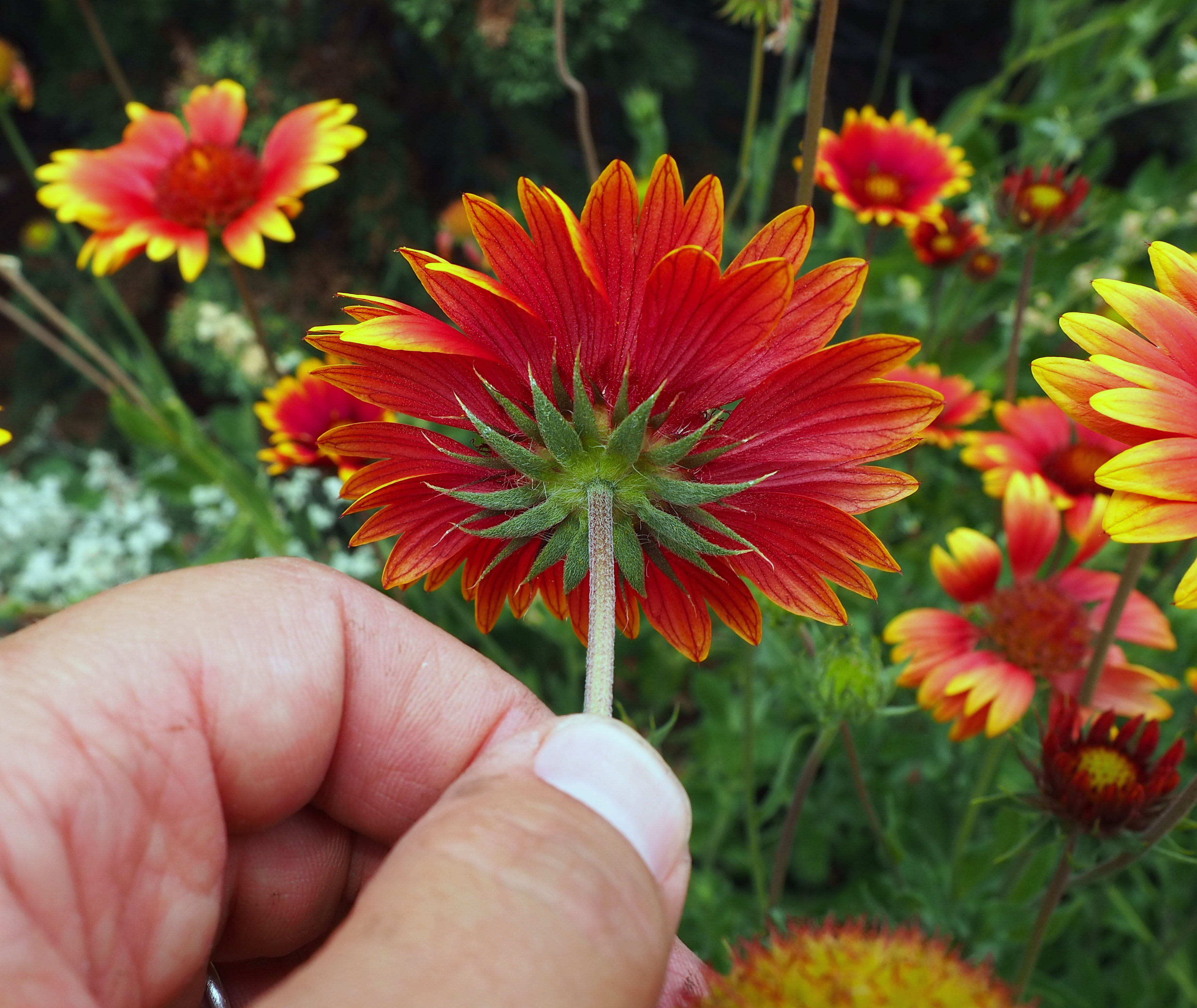
phyllaries of blanketflower (Gaillardia aristata)

When it comes to flowers in the aster family, there is more than meets the eye. After you take some time to appreciate the intricate beauty of its collection of florets, turn the flower head over and take in its phyllaries. They come in various colors, they can be hairy or smooth, their margins can be entire or adorned with hairs, teeth, etc., they can be flat and straight or they can curve outwards in interesting ways, their tips can be pointed, spine-tipped, rounded, or keel shaped. Phyllaries can be laid out very evenly, tightly overlapping each other like shingles on a roof (i.e. imbricate) or their arrangement can be slightly uneven and irregular (i.e. subimbricate). Use a hand lens to get a closer look at all of these features. As you get in the habit of observing the details of the involucre and its phyllaries, chances are each time you come across a flower in the aster family, you’ll find yourself flipping it over to get a look at its undercarriage. What will you find?

phyllaries of dandelion (Taraxacum officinale)
phyllaries of Mexican sunflower (Tithonia rotundifolia)
phyllaries of stemless four-nerve daisy (Tetraneuris acaulis)
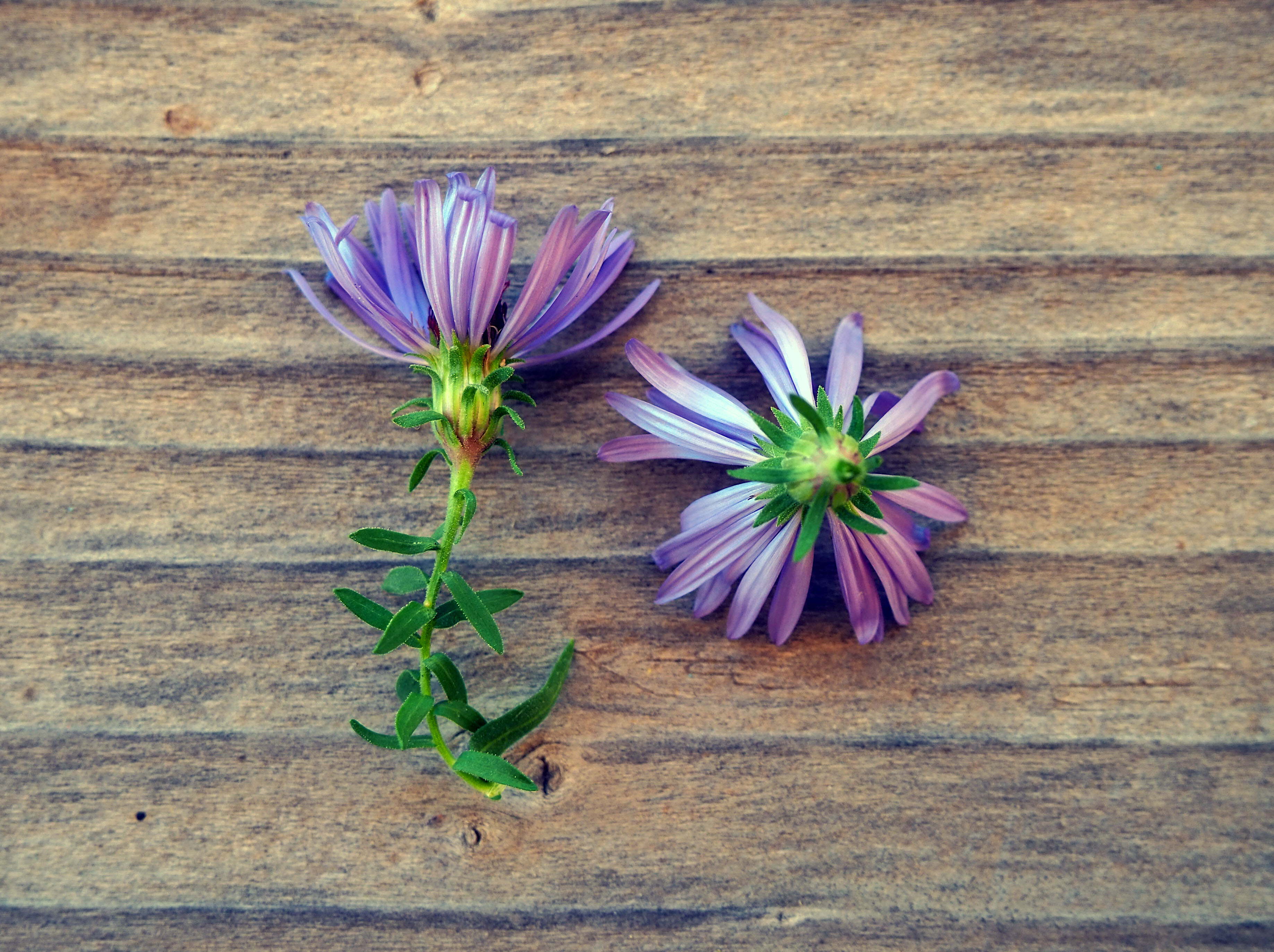
phyllaries of hoary tansyaster (Dieteria canescens)
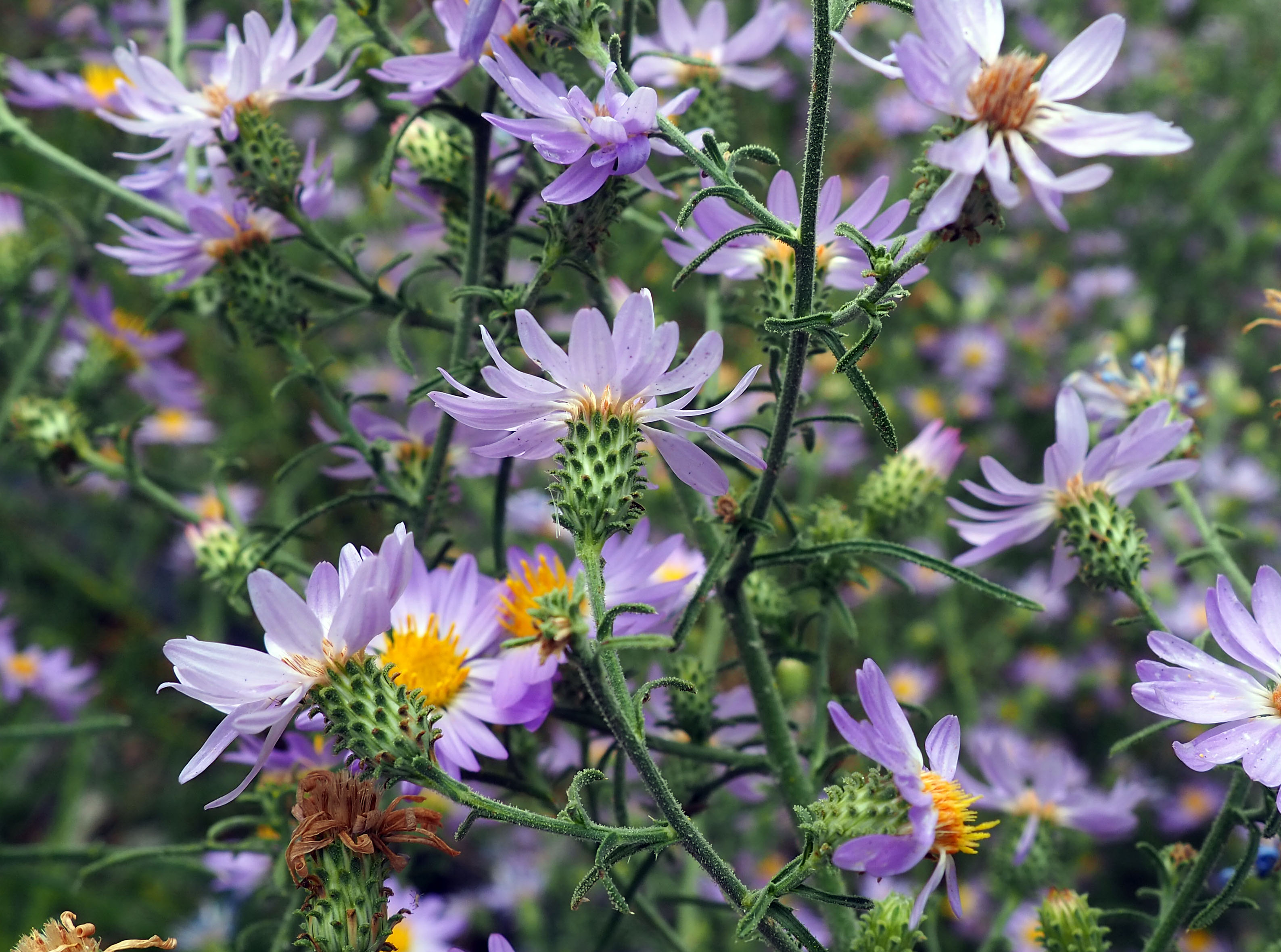
phyllaries of aromatic aster (Symphyotrichum oblongifolium ‘October Skies’)
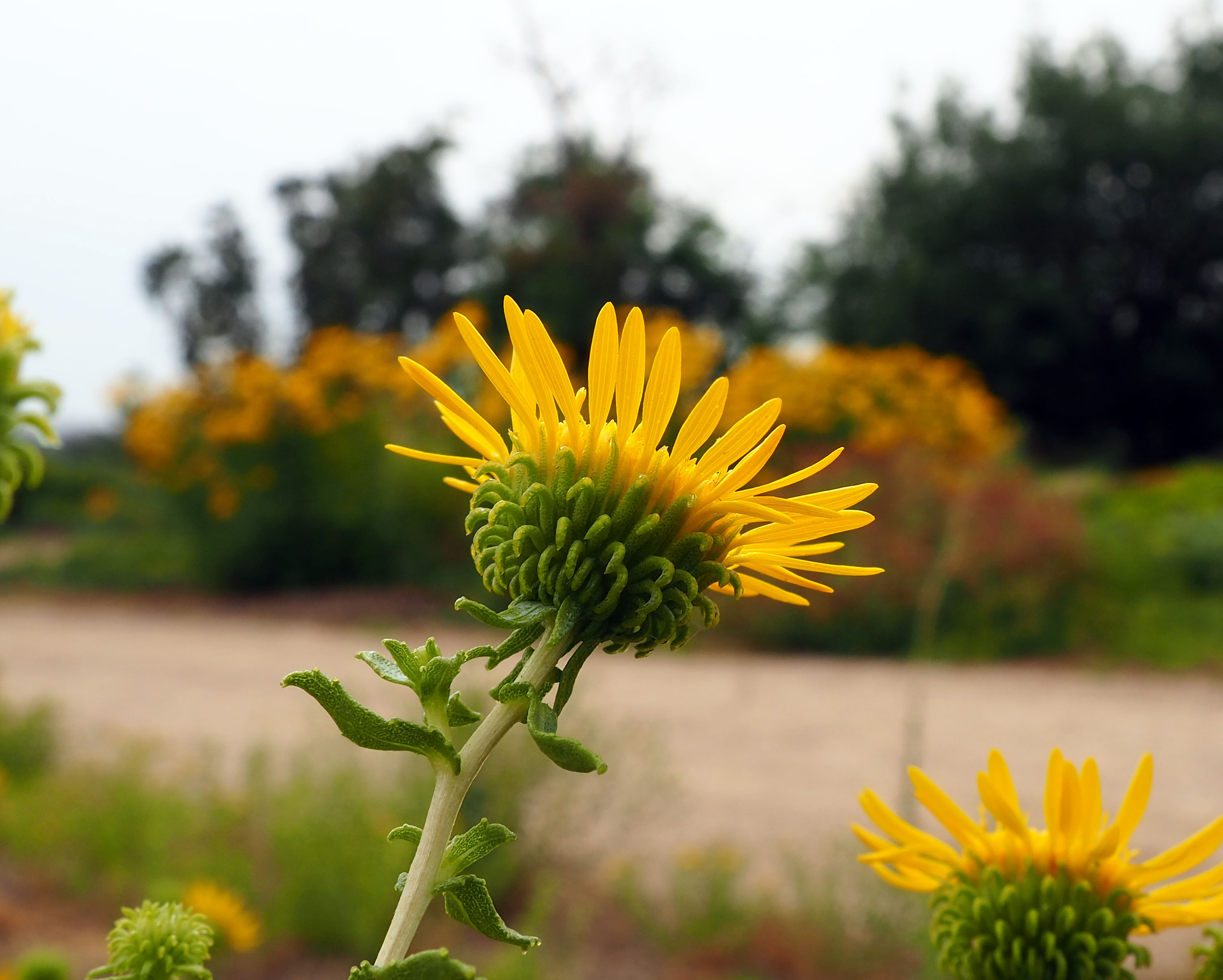
phyllaries of curlycup gumweed (Grindelia squarrosa)

If phyllaries have piqued your interest and you’d like to learn more about plants in the family Asteraceae, I highly recommend getting your hands on the book, The Sunflower Family by Richard Spellenberg and Naida Zucker. It has a North American focus, but it’s a great place to start learning more about this massive plant family.

More Randomly Selected Botanical Terms:

Another Year of Pollination: Pollenkitt

Pollination in flowering plants is the process of moving pollen grains, which carry sperm cells, from the anthers to the stigmas of either the same flower or a separate flower. If things go well from there, sperm cells will be transported via pollen tubes into the ovaries where fertilization with egg cells can take place and seeds can form. Pollen grain development occurs within the anthers, and by the time the anthers dehisce – or split open – they are ready for transport.

In order to protect the enclosed sperm cells and aid in their movement, pollen grains consist of a series of layers that, among other things, help ensure safe travel. Two major layers are an internal layer called intine, composed largely of cellulose, and an external layer called exine, composed mainly of sporopollenin (a highly durable and complex biopolymer). In many flowering plants, especially those that rely on animals to help carry their pollen, an additional outer layer called pollenkitt is added to the pollen grains before anthers dehisce.

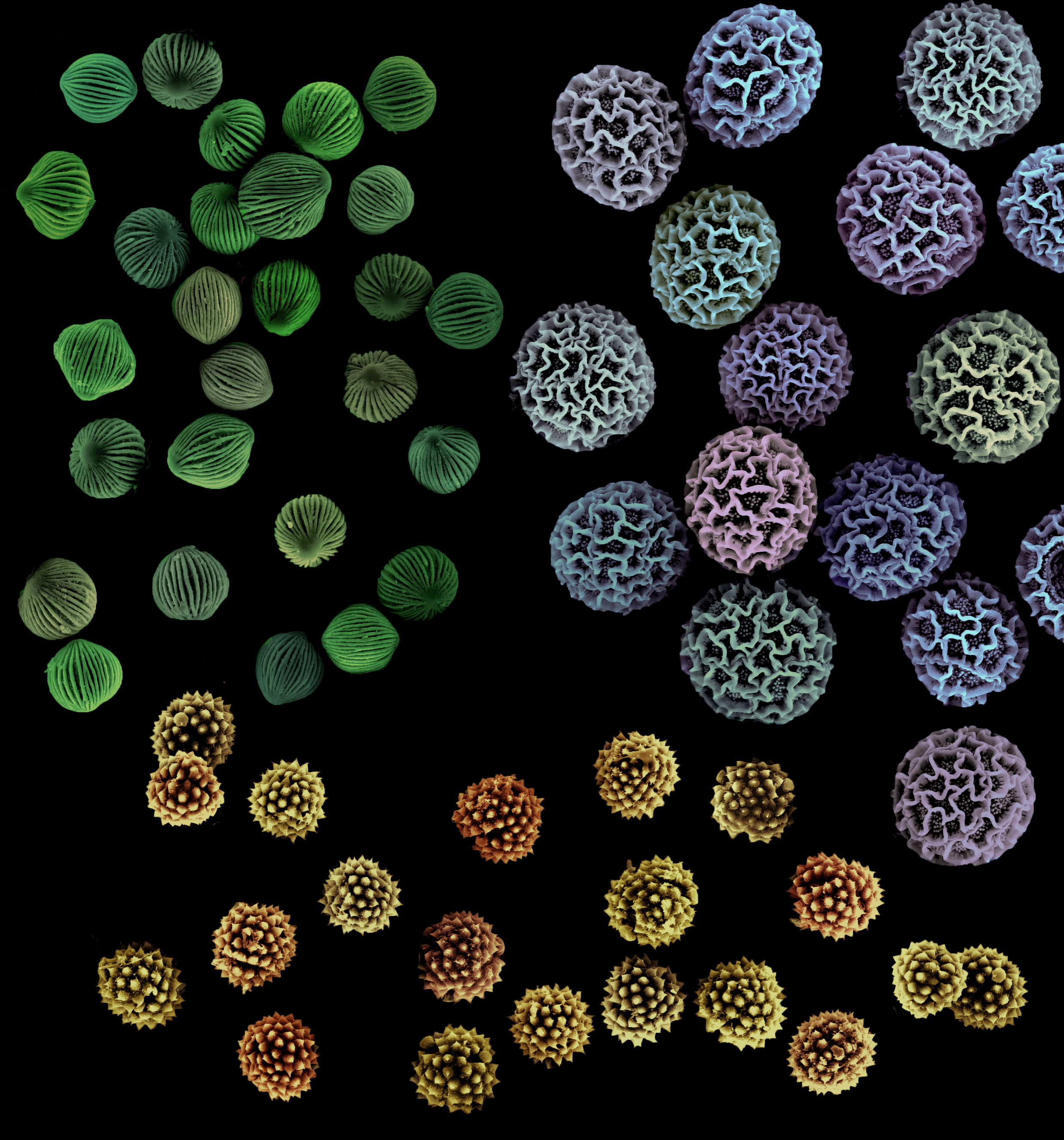
three different pollen grains (image credit: wikimedia commons/Asja Radja)

Pollenkitt is an oily, viscous, hydrophobic layer composed of lipids, carotenoids, flavonoids, proteins, and carbohydrates derived from the breakdown of an internal layer of the anther called the tapetum. Pollenkitt forms a sticky layer around the pollen grains and can add color to the pollen other than the typical yellow. The thickness of the pollenkitt and its composition is species specific. In fact, the look, size, and shape of pollen grains themselves are unique to each species and can even be used to help identify plants. Pollenkitt is found in almost all families of flowering plants and is particularly prevalent in species that are animal-pollinated. One exception is the mustard family (Brassicaceae), whose pollen grains are coated in a substance known as tryphine, which functions similar to pollenkitt but whose formation and composition differ enough to be considered separately.

dandelion pollen (image credit: wikimedia commons/Captainpixel)

The sticky nature of pollenkitt has numerous functions. For one, it helps pollen grains remain on anthers until an animal comes along to remove them. It also holds pollen grains together in clumps, helps pollen grains stick to insect (and other animal) pollinators during transport, and helps adhere them to stigmas when deposited. A paper published in Flora (2005) lists twenty possible functions for pollenkitt, many of which have been confirmed in certain species and some of which are hypothetical. In addition to functions having to do with pollen movement and placement, pollenkitt may also provide protection from water loss, UV radiation, and fungal and bacterial invasions. In species where pollen is offered as food to pollinating insects, pollenkitt is a more easily digestible food source than the pollen grain itself. Thanks to carotenoids, pollenkitt can make pollen more colorful, which may help attract pollinating insects, or, depending on the color, can also hide pollen from insect visitors.

Another important function of pollenkitt is to give pollen a scent. Odors can help encourage insect visitors or deter them, so depending on the situation, scented pollenkitt may be attracting pollinators or discouraging pollen consumers. In a study published in American Journal of Botany (1988), Heidi Dobson analyzed the chemical composition of 69 different species of flowering plants. She isolated numerous scent compounds in pollenkitt and suggested that “some of the chemicals in pollenkitt may … serve as identification cues to pollen-foraging bees.” Most of the species she analyzed were pollinated by bees (which consume pollen), but the few that were mainly pollinated by hummingbirds and butterflies tended to have fewer scent compounds. Since birds and butterflies are there for the nectar and not the pollen, it would make sense that the pollen of these plant species wouldn’t need to carry a scent.

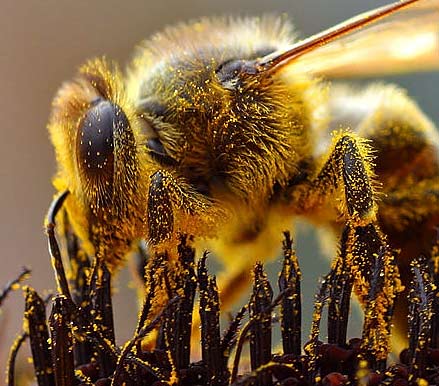
bee collecting pollen (image credit: wikimedia commons)

In flowers that are wind-pollinated, the pollenkitt layer is either very thin or absent altogether. In this case, pollen grains need to be easily released from the anther and are better off when they aren’t sticking to other pollen grains. That way, they are free to be carried off in the breeze to nearby flowers. Some plant species are amphiphilous, meaning they can be both animal-pollinated and wind-pollinated, and according to the authors of the paper published in Flora (2005), pollenkitt layers in these species exhibit intermediate characteristics of both types of pollen grains, generally with thinner, less-sticky pollenkitt and more pollenkitt found within the cavities of the exine.

It’s clear that this unique pollen-glueing substance plays a critical role in the pollination process for many plant species. Considering that each species of plant has its own story to tell, there is still more to learn about the forms and functions that pollenkitt takes.

———–

This is the first in a series of posts in 2024 in which, once again, I am exploring the world of pollinators and pollination. You can read more about this effort in last month’s Year in Review post.

2023: Year in Review

Things were pretty quiet on the blog in 2023, and I apologize for that. I have no excuses really. It’s just life. Fewer posts doesn’t mean I’m any less committed to writing and sharing about plants since the day I started this project, it’s more about quality over quantity. I would never want this to become a half-hearted affair, so even if months go by without hearing from me, just know that there are great things in the works, which I hope will be worth the wait.

Recently, while writing an article for Wildflower magazine, I came across this giant tome, Pollination and Floral Ecology by Pat Willmer. The previous year I had read Jeff Ollerton’s book, Pollinators and Pollination, and really got a lot out of it. These incredible resources on the science of pollination reminded me of a time early in Awkward Botany’s history in which I spent a year posting about pollination. I called it Year of Pollination, and by the time the year came to a close, I was struck by how much I still wanted to share about this topic. So now, armed with these new resources, I think it’s time for Another Year of Pollination.

In 2024, I plan on posting another series of pollinator and pollination themed posts. I may not be able to match what I accomplished in 2015, but I will aim for at least one a month. Just something to look forward to in the coming year.

If this entices you enough to continue to follow Awkward Botany (or to start), please do. Relevant links are here on my linktree. Awkward Botany can be found on a number of different social media platforms, but there are a few that I am more active on than others. With the fall of Twitter, I have moved on to other things. This is where you can find me most often at this point in time:

And now here are links to posts from 2023’s paltry selection that are part of ongoing series. Happy 2024! Fill it with plants!

Winter Trees and Shrubs

Tea Time

Weeds of Boise

Weeds of Boise: Boise State University Campus, part one

If you live in a major city (or even a minor one), there is a good chance it is home to a college or university (perhaps several). Universities tend to take up a lot of space, which means there is often a plethora of landscaping accompanying their buildings, hardscaping, and other impervious surfaces. Among all the turf, flower beds, tree wells, and other greenspaces, there is bound to be a fair share of weeds. In spite of how hard the groundskeepers may work, the campus is not likely to ever be completely weed-free. Lucky for us, this means that institutions of higher learning are excellent places to familiarize ourselves with many of the weed species that occur in our cities, particularly weeds that are common in garden beds and turfgrass.

Near downtown Boise, on the southside of the Boise River, you will find the ever-expanding campus of Boise State University, home of the Broncos and their famous blue turf. According to the internet’s favorite encyclopedia, the campus is 285 acres in size, plenty of space for weeds to grow and abudant opportunities to hunt them out. Tallying the number of weed species in a place like this takes time. The benefit of botanizing for weeds is that you can find them at just about any time of year. While some species only show up in certain seasons, others can be seen practically year-round.

In order to document the weeds of Boise State University, I’m spending the entire year walking the campus listing and photographing the weeds I find. What follows is the first half of what’s been documented so far. I’m including a photograph for each month of the year, as well as a list of what I’ve encountered. In part two, I’ll share a list of any additional weeds found throughout the remainder of the year. While you’re waiting for that, check out the other posts in the Weeds of Boise series.

common groundsel (Senecio vulgaris) at BSU in January 2023
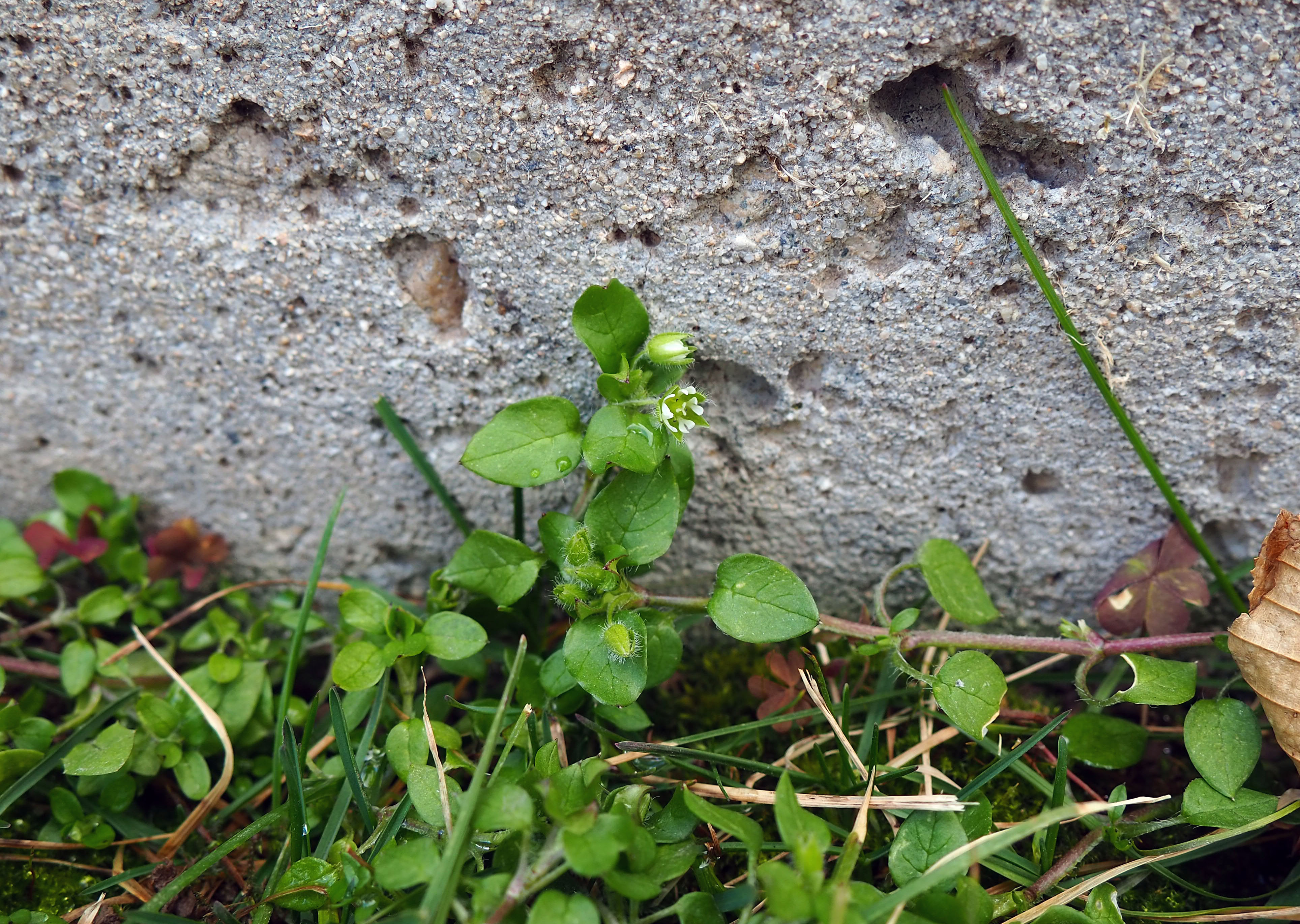
chickweed (Stellaria media) at BSU in February 2023
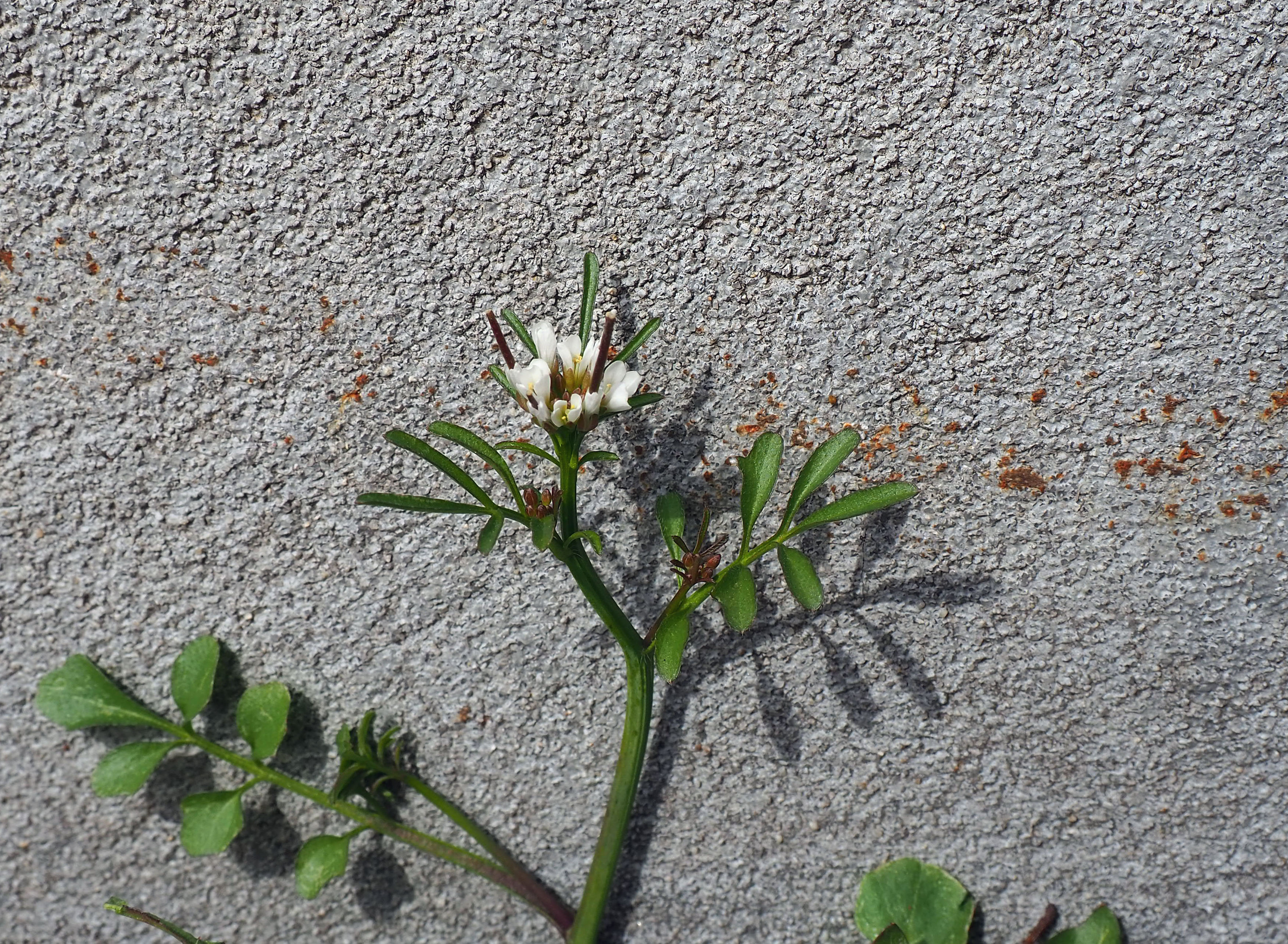
hairy bittercress (Cardamine hirsuta) at BSU in March 2023
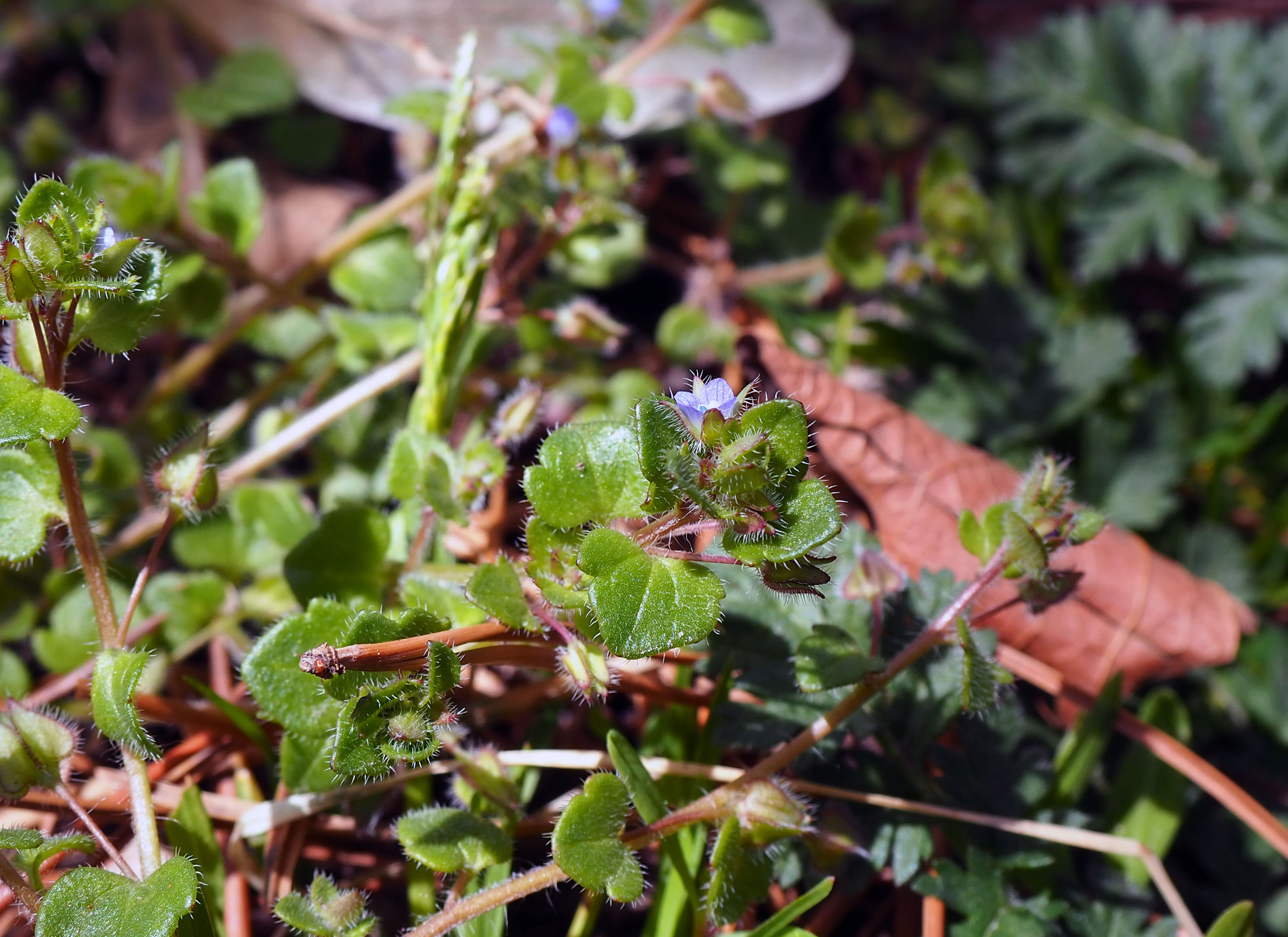
ivyleaf speedwell (Veronica hederifolia) at BSU in April 2023
black medic (Medicago lupulina) at BSU in May 2023
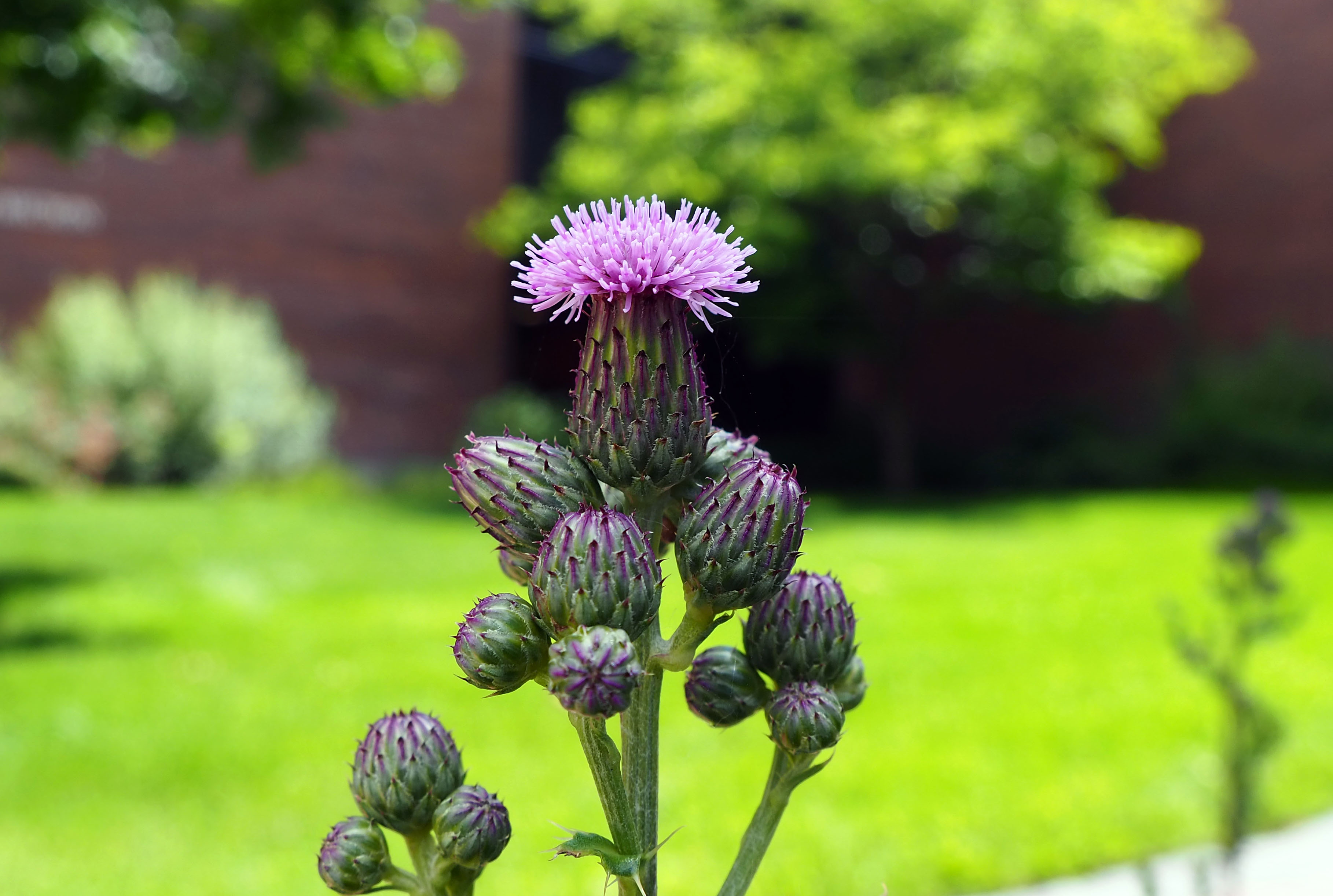
creeping thistle (Cirsium arvense) at BSU in June 2023

List of weeds found on the campus of Boise State University as of June 2023:

  • Ailanthus altissima (tree of heaven)
  • Anthriscus caucalis (bur chervil)
  • Amaranthus retroflexus (redroot pigweed)
  • Arctium minus (lesser burdock)
  • Bassia scoparia (kochia)
  • Bromus tectorum (cheatgrass)
  • Capsella bursa-pastoris (shepherd’s purse)
  • Cardamine hirsuta (hairy bittercress)
  • Ceratocephala testiculata (bur buttercup)
  • Chenopodium album (lamb’s quarters)
  • Chondrilla juncea (rush skeletonweed)
  • Cirsium arvense (creeping thistle)
  • Claytonia perfoliata (miner’s lettuce)
  • Convolvulus arvensis (field bindweed)
  • Conyza canadensis (horseweed)
  • Descurainia sophia (flixweed)
  • Digitaria sanguinalis (crabgrass)
  • Draba verna (spring draba)
  • Epilobium ciliatum (willowherb)
  • Erodium cicutarium (redstem filare)
  • Euphorbia maculata (spotted spurge)
  • Galium aparine (cleavers)
  • Geum urbanum (herb Bennet)
  • Holosteum umbellatum (jagged chickweed)
  • Hordeum jubatum (foxtail barley)
  • Lactuca serriola (prickly lettuce)
  • Lamium purpureum (purple deadnettle)
  • Lepidium sp. (whitetop)
  • Malva neglecta (common mallow)
  • Medicago lupulina (black medic)
  • Oxalis corniculata (creeping woodsorrel)
  • Parthenocissus quinquefolia (Virginia creeper)
  • Plantago lanceolata (narrowleaf plantain)
  • Plantago major (broadleaf plantain)
  • Poa annua (annua bluegrass)
  • Poa bulbosa (bulbous bluegrass)
  • Polygonum aviculare (prostrate knotweed)
  • Portulaca oleracea (purslane)
  • Prunella vulgaris (self-heal)
  • Ranunculus repens (creeping buttercup)
  • Senecio vulgaris (common groundsel)
  • Sonchus sp. (sow thistle)
  • Stellaria media (chickweed)
  • Taraxacum officinale (dandelion)
  • Tragopogon dubius (salsify)
  • Trifolium repens (white clover)
  • Ulmus pumila (Siberian elm)
  • Veronica hederifolia (ivyleaf speedwell)
  • Vulpia myuros (rat’s tail fescue)

Do you frequent the BSU campus? Have you seen anything not on my list? Comment below or send me a message and let me know what you’ve seen and where.

Tea Time: Kentucky Coffeetree

Learning to identify Kentucky coffeetree in the winter brings you one step closer to making a coffee-like (albeit caffeine-free) beverage from its seeds. Humans have a long history of occasionally using the “beans” of Gymnocladus dioicus to make this tisane, which explains common names like coffeetree, American coffee berry, and coffeenut. The process is a bit time consuming, and the end result is mixed, but foraging adventures like this are all about the experience. This drink is not likely to replace whatever you are currently drinking in the morning, but it does offer an interesting diversion.

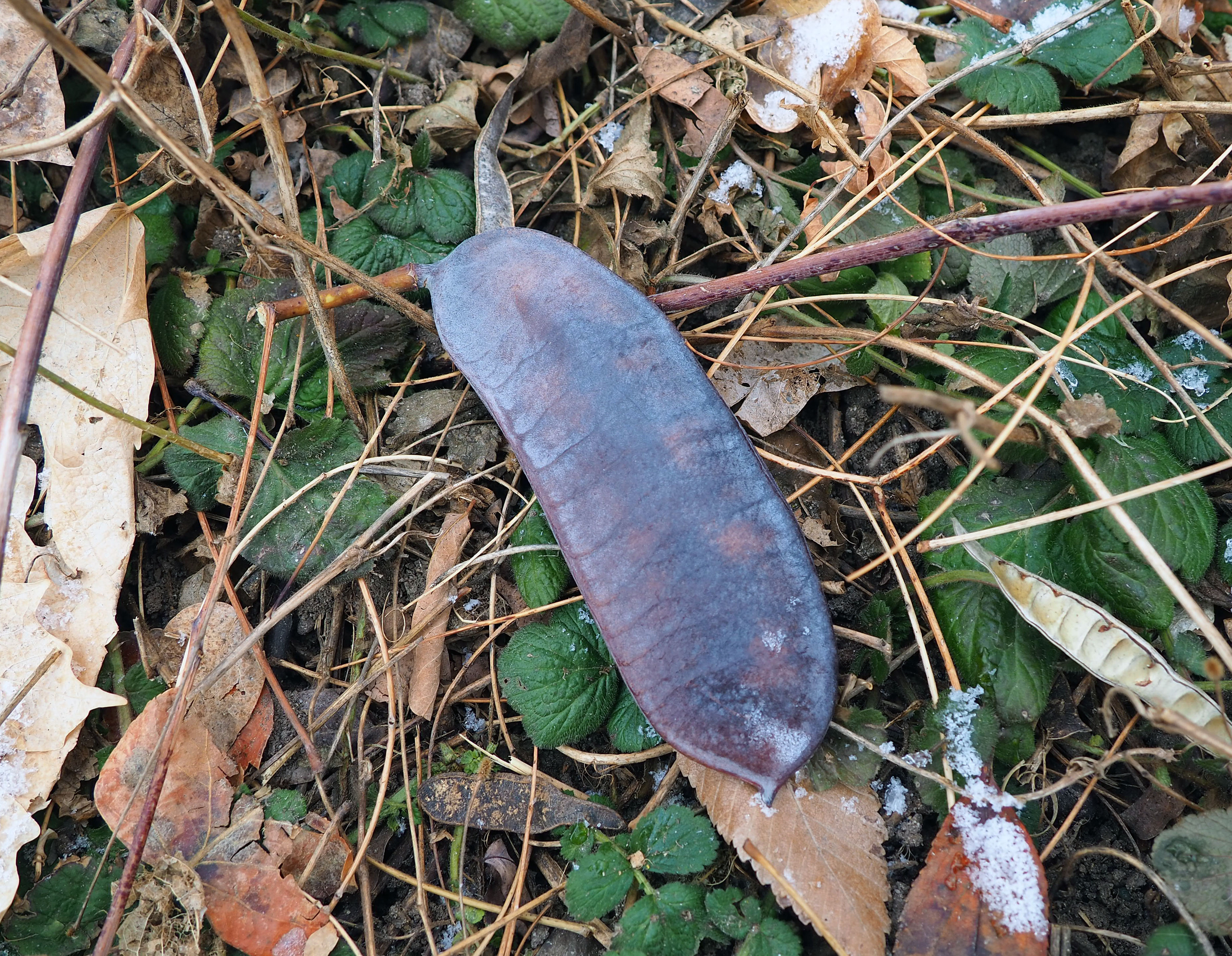
fruit of Kentucky coffeetree (Gymnocladus dioicus)

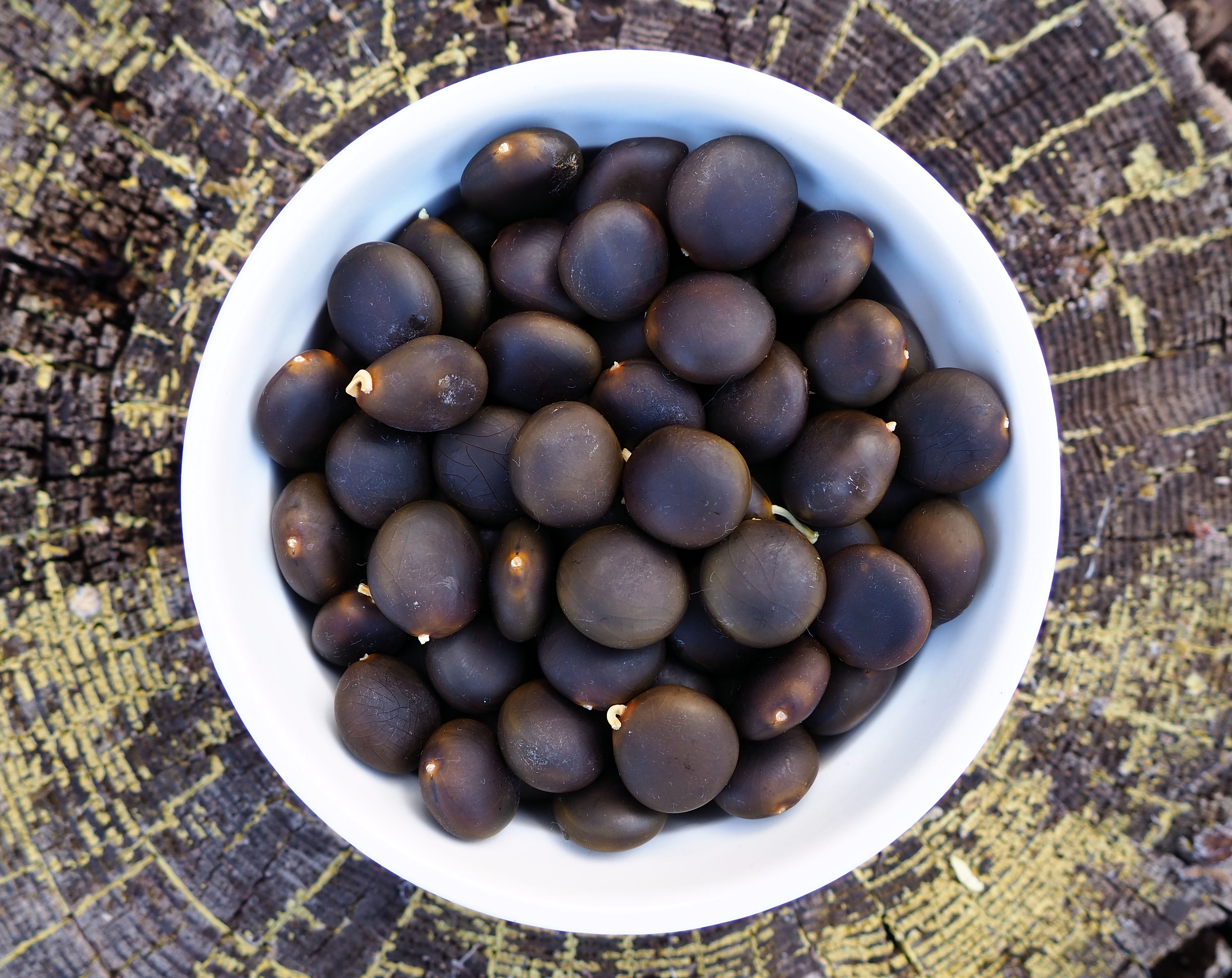
Winter is the best time to collect the pods, which are flat, leathery, brown to black in color, and about 2 inches wide and 6 inches long. The stocky fruits are often found hanging from the tips of the tree’s bare branches. Many also fall to the ground over the course of the season, making them easier to collect. If you split the pods open early in the season, you’ll find the seeds embedded in a sticky, neon green goo that will stick to your hands and clothes. As the year progresses, the glue-like substance dries out and is easier to deal with. The seeds are dark, extremely hard, rounded and flattened, and about the size of a penny or nickel. The funiculus, which is a short stalk that connects the ovule/seed to the ovary, tends to be fairly prominent and something you don’t often get to see on seeds.

inside the fruit of a Kentucky coffeetree

Once you’ve collected several pods and removed the seeds from the gooey innards, soak the seeds for an hour or two and then rinse them, making sure to remove dried up goo and any remaining funiculi. Pat the seeds dry and place them in a baking dish with a lid for roasting. The roasting process is said to eliminate the toxicity of the seeds. The lid is important because several of the seeds will pop open during roasting and will fly around in your oven if they aren’t contained.

The fruits of Kentucky coffeetree contain a toxic compound called cytisine, an alkaloid that is similar in action to nicotine. The Handbook of Poisonous and Injurious Plants by Nelson, et al. states that “the cytisine content of the seeds is quite low; and chewing one or two would not be expected to produce toxic effects.” Actually, the bigger risk of chewing one of these rock hard seeds is breaking your teeth. Cytisine poisoning includes typical symptoms like diarrhea and vomiting; in extreme cases it can lead to coma and death. If the seeds are properly roasted, you won’t have to worry about any of this, but as with anything you are trying for the first time, start with small amounts.

seeds of Kentucky coffeetree

Times and temperatures for roasting vary depending on who you’re getting your information from. I went with 300° F for 3 hours (which ended up being 3 and a half hours because I forgot to take them out in time). One source suggested roasting the seeds for only 2 hours for better flavor, but I decided to err on the side of caution and roast them for longer. Many of the seeds will have popped open during the roasting process. For those that haven’t you will need to use a nutcracker or some other comparable tool to crack the seed coat and remove the insides. Dispose of the seed coats and grind the remaining bits into a fine powder using either a coffee grinder or mortar and pestle. You’ll end up with a fine, chocolate-colored powder which you will use to make your “coffee.”

You can prepare this beverage in the same way you would typically choose to make coffee, but keep in mind that upon adding water, the fine grounds quickly turn to a mud-like substance and will block up the filter you are using. For this reason, I recommend small batches. I found Kentucky coffeetree “coffee” to be very earthy and rich and somewhat similar to strong black coffee. Sierra tried it and immediately exclaimed, “That’s nice!” and then proceeded to give it two thumbs up. Some people like black coffee. I added cream to it and found it much more pleasant to drink. Other people don’t think this beverage tastes like coffee at all and instead call it tea-like, chocolaty, fruity, or “akin to mud,” among other more negative reviews. I think it’s a drink that could grow on me, but considering the effort it takes to make one cup, I don’t see that happening any time soon.

Kentucky coffeetree “coffee grounds”

Have you tried making “coffee” from the seeds of Kentucky coffeetree? Let us know what you think about it in the comment section below.

More Tea Time Posts on Awkward Botany:

Winter Trees and Shrubs: Kentucky Coffeetree

A few years ago, I was on the hunt for a Kentucky coffeetree. I was aware that a few could be found in some of the parks around Boise, but not being familiar with them, I wasn’t sure where exactly to find one or what I was even looking for. One winter while riding my bike to work, I noticed a tree at the edge of a golf course. No doubt I had passed this tree hundreds (if not thousands) of times. What caught my eye were thick, bean-like pods hanging from the ends of branches. They were unlike any other tree fruits I was familiar with. I stopped and, with a little effort, knocked one of the pods free from the tree. When I split it open, I found three or four large, smooth, black seeds inside. Later, I confirmed that the tree was indeed Kentucky coffeetree. Passing by it during any other time of year, it may have never caught my eye – just another deciduous tree with green leaves that, from a distance at least, looks like so many other deciduous trees. But in winter, with several chunky pods hanging from the tips of its stout branches, it really stood out. This is the joy of looking at trees and shrubs in the winter, where features that may otherwise be obscured, become glaringly obvious against the plainness of a winter backdrop.

fruits of Kentucky coffeetree (Gymnocladus dioicus)

Kentucky coffeetree (Gymnocladus dioicus) is in the bean family (Fabaceae). It occurs in forests across the eastern and central United States and north into southern Ontario, Canada. It is also planted in urban areas both within and outside of its native range. It is a medium to large tree, averaging 60-70 feet (18-21 meters) high and 40-50 feet (12-15 meters) wide. It generally branches out at around 10-15 feet high and forms a narrow, rounded to pyramidal crown. It is a fairly sparsely branched tree compared to other trees its size, which is much easier to observe in the winter after all of its leaves have dropped.

winter twigs of Kentucky coffeetree

The winter twigs of Kentucky coffeetree are thick and stubby with few hairs and can be greenish, orange, brown, or deep wine-red in color. They have small, scattered lenticels that are either white, orange, or orange-brown. Their leaf scars are alternately arranged and are heart- or sheild-shaped and very large with 3 to 5 distinct bundle traces. It’s pretty obvious from the leaf scars that Kentucky coffeetree bears a sizeable leaf. These massive, bipinnately compound leaves are demonstrated in this Plant Sleuth YouTube video. Leaf buds are tiny and found directly above the leaf scar. There are usually two of them, one of which is sterile and can be difficult to see. They are round, hairy, olive-colored, and sunken like fuzzy, little craters, although you’ll need a hand lens to really see the hairs (which I highly recommend). The twigs lack a terminal leaf bud. Their pith is rounded, thick, and either orange, brown, or salmon colored. The young bark of Kentucky coffeetree is pale gray and fairly smooth. As the tree ages, it breaks into shallow ridges that run the length of the tree. At maturity, the bark is shades of grey and scaly with long, defined, narrow ridges.

pith of Kentucky coffeetree twigs

Kentucky coffeetree is dioecious, meaning that there are “male” trees and “female” trees. The tree that I found on the golf course was a “female” tree because it was bearing fruit, which the “males” and certain cultivars won’t have. If there are no seed pods present, you will have to rely on other features to identify the tree; however, when the pods are present, the tree is unmistakable. Its fruits are thick-walled, flat, oval-shaped, smooth, leathery, and orange-brown to black in color. They measure around 5 to 10 inches long and up to 4 inches wide. They are indehiscent and can persist on the tree for more than a year, and even those that fall to the ground can take months or years to break down enough to release the seeds, which have a hard, dark seed coat. Inside the pod, the seeds are embedded in a thick, gooey, yellow-green pulp, which some descriptions call sweet. However, it doesn’t look appetizing enough to try, and considering that the seeds are toxic, I’d be hesitant to consume any part of the fruit without first verifying its safety with a reputable source. That being said, the seeds can be roasted and used to make a coffee substitute and, as long as it’s done correctly, is safe to drink.

mature bark of Kentucky coffeetree

Kentucky coffeetree is one of the last trees to leaf out in the spring and one of the first to drop its leaves in the fall. Flowers appear in mid to late spring. The leaves have a pink to bronze color as they first emerge, and in the fall they turn bright yellow before they drop.

fall foliage of Kentucky coffeetree

More Winter Trees and Shrubs:

2022: Year in Review

It’s time to look back on 2022. But before we do that, I have to acknowledge that January 2023 marks Awkward Botany’s 10 year anniversary. This time ten years ago, I was drafting the introductory post to this blog. Obviously, a lot has happened since then, yet it still seems like yesterday somehow. And while I may not be posting with the frequency that I once was, I’m still at it, and I don’t plan on stopping any time soon. There is so much we have yet to cover. I feel like we’ve barely scratched the surface of what the world of plants has to offer. If you’d like to look back on what I’ve written about over the years, these Year in Review posts are a good place to start, which I’ve been posting each year since Awkward Botany turned one. Looking forward, expect more of the same, which if you’re into plants as much as me, should be enough to keep your attention. If you’re not into plants, I’m not sure why you’re here, but since you are, I hope that what I share might change your mind. Either way, here’s to another 10 years!

Awkward Botany Turns 10!

Perhaps the most eventful thing that happened in 2022, as far as the blog goes, was my appearance on Outdoor Idaho where I got to sing the praises of weeds and the role they play as members of our wild flora. You can expect the weeds talk to continue, especially since Western Society of Weed Science’s Annual Meeting is coming to Boise later this winter. Perhaps I’ll see you there! Oh, and speaking of annual meetings, Botany is coming to Boise this summer, so please feel free to say hello if you’re coming to town.

As per usual, I have a head full of ideas and plans for the upcoming year, and I am hopeful that it will be one of the best yet. But I will spare you from having to trudge through that whirlwind, and instead I’ll just say thank you for being here. Thanks for your comments, shares, follows, and the other ways you show your support. If you’d like to continue doing so, by all means, please do. If you’re new here and you’d like to start, all relevant links are in the link tree below. Happy 2023 everyone!

Awkward Botany Linktree

And now…

A Selection of Posts from 2022

Winter Trees and Shrubs

Book Reviews

Weeds of Boise

Eating Weeds

Randomly Selected Botanical Terms

Guest Posts

Randomly Selected Botanical Terms: Glochids

The spines of a cactus are an obvious threat. They are generally sharp, smooth, and stiff; as soon as you are stabbed by one, it is immediately clear that you’ve gotten too close. Sitting at the base of the spines – or in place of spines – on many species of cacti is a less obvious, but significantly more heinous threat. Unless you’re looking closely, this hazard is practically invisible, and the pain and irritation that can come as a result of close contact has the potential to last significantly longer than the sharp poke of a spine. This nefarious plant part is called a glochid, and if you’ve ever made contact with one (or more likely several dozen of them), it’s not something you will soon forget.

Opuntia polyacantha x utahensis

The spine of a cactus is actually a leaf. The area from which a spine emerges from the fleshy, photosynthetic stem of a cactus is called an areole, which is equivalent to a node or bud on a more typical stem or branch from which leaves emerge. In place of typical looking leaves, a cactus produces spines and glochids. Like spines, glochids are also modified leaves, although they appear more like soft, little tufts of hair. However, this unassuming little tuft is not to be trifled with.

Close inspection of a glochid (with the help of a microscope) reveals why you don’t want them anywhere near your skin. While the surface of a cactus spine is often smooth and free of barbs, glochids are covered in backwards-facing barbs. The miniscule size of glochids combined with their pliable nature and retrose barbs, make it easy for them to work their way into your skin and stay there. Unlike spines, glochids easily detach from a cactus stem. Barely brushing up against a glochid-bearing cactus can result in getting stuck with several of them.

Opuntia basilaris var. heilii

Because glochids can be so fine and difficult to see, you may not even be aware they are there. You probably won’t even feel them at first. Removing them is a challenge thanks to their barbs, and since you may not be able to remove them all, the glochids that remain in your skin can continue to cause irritation for days, weeks, or even months after contact. For this reason, cactuses are generally best seen and not touched, or at the very least, handled with extreme care.

Apart from being a good form of defense, the glochids of some cactus species can serve an additional function. Most cactus species occur in arid or semi-arid climates, where access to water can be quite limited. In order to increase their chances of getting the water they need, some desert plants are able to collect water from the air. A few species of cactus do this, and glochids are a critical component in making this happen.

Cylindropuntia whipplei

A study published in the Journal of King Saud University – Science (2020) examined the dew harvesting ability of Opuntia stricta, commonly known as erect prickly pear. As described above, the spines of O. stricta are smooth, while the glochids are covered in retrose barbs. Both structures are waterproof due to hardened cell walls and cuticles. However, due in part to the conical shapes of both the glochids and their barbs, water droplets from the air are able to collect on the tips of the glochids. From there, the researchers observed the droplets in their travel towards the base of the glochids. As they moved downward, small droplets combined to form larger droplets.

At the base of the glochids are a series of trichomes, which are small hair-like outgrowths of the epidermis. The trichomes do not repel water, but rather are able to absorb the droplets as they reach the base of the glochids. For a plant species that receives very little water from the soil, being able to harvest dew from the air is critical for its survival, and this is thanks in part to those otherwise obnoxious glochids.

See Also: Prickles