Getting to Know a Grass – Basic Anatomy and Identification

Have you ever tried to identify a grass? Most of us who like to look at plants and learn their names will probably admit that we often give up on grasses pretty quickly, or just ignore them entirely. They aren’t the easiest plants to identify to species, and there are so many of them. Without close inspection, they can all look pretty similar. Their flowers aren’t particularly showy, and their fruits are fairly forgettable. They are strands or clumps of green that create a backdrop for more intriguing forms of vegetation. Yet, they are among the most ecologically and economically important groups of plants on the planet. And actually, if you can ascend the hurdles that come with getting to know them, they are beautiful organisms and really quite amazing.

Kōura in the Grass

The grass family – Poaceae – consists of nearly 8oo genera and about 12,000 species. Grasses occur in a wide range of habitats across the globe. Wherever you are on land, a grass is likely nearby. Grasses play vital roles in their ecosystems and, from a human perspective, are critical to life as we know it. We grow them for food, use them for building materials and fuel, plant them as ornamentals, and rely on them for erosion control, storm water management, and other ecosystem services. We may not acknowledge their presence most of the time, but we very likely wouldn’t be here without them.

The sheer number of grass species is one thing that makes them so difficult to identify. Key identifying features of grasses and grass-like plants (also known as graminoids) tend to be very small and highly modified compared to similar features on other flowering plants. This requires using a hand lens and learning a whole new vocabulary in order to begin to understand a grass’s anatomy. It’s a time commitment that goes beyond a lot of other basic plant identification, and it’s a learning curve that few dare to follow. However, once you learn the basic features, it becomes clear that grasses are relatively simple organisms, and once you start identifying them, it can actually be an exciting and rewarding experience.

Quackgrass (Elymus repens) and Its Rhizome

Depending on the species, grasses can be annuals – completing their life cycle within a single year – or perennials – coming back year after year for two or more years. Most grasses have a fibrous root system; some are quite shallow and simple while others are extremely deep and extensive. Some species of perennial grasses spread by either rhizomes (underground stems), stolons (horizontal, above ground stems), or both. Some grasses also produce tillers, which are essentially daughter plants that form at the base of the plant. The area where roots, rhizomes, stolons, and tillers meet the shoots and leaves of a grass plant is called the crown. This is an important region of the plant, because it allows for regrowth even after the plant has been browsed by a grazing animal or mown down by a lawn mower.

The stem or shoot of a grass is called a culm. Leaves are formed along the lengths of culms, and culms terminate in inflorescences. Leaves originate at swollen sections of the culm called nodes. They start by wrapping around the culm and forming what is called a leaf sheath. Leaves of grasses are generally long and narrow with parallel venation – a trait typical of monocotyledons. The part of the leaf that extends away from the culm is called the leaf blade or lamina. Leaves are alternatively arranged along the length of the stem and are two-ranked, meaning they form two distinct rows opposite of each other along the stem.

The area where the leaf blade meets the leaf sheath on the culm is called the collar. This collar region is important for identifying grasses. With the help of a hand lens, a closer look reveals the way in which the leaf wraps around the culm (is it open or closed?), whether or not there are hairs present and what they are like, if there are auricles (small flaps of leaf tissue at the top of the collar), and what the ligule is like. The ligule is a thin membrane (sometimes a row of hairs) that forms around the culm where the leaf blade and leaf sheath intersect. The size of the ligule and what its margin is like can be very helpful in identifying grasses.

The last leaf on the culm before the inflorescence is called the flag leaf, and the section of the culm between the flag leaf and the inflorescence is called a peduncle. Like the collar, the flower head of a grass is where you’ll find some of the most important features for identification. Grass flowers are tiny and arranged in small groupings called spikelets. In general, several dozen or hundreds of spikelets make up an inflorescence. They can be non-branching and grouped tightly together at the top of the culm, an inflorescence referred to as a spike, or they can extend from the tip of the culm (or rachis) on small branches called pedicels, an inflorescence referred to as a raceme. They can also be multi-branched, which is the most common form of grass inflorescence and is called a panicle.

Either way, you will want to take an even closer look at the individual spikelets. Two small bracts, called glumes, form the base of the spikelet. Above the glumes are a series of florets, which are enclosed in even smaller bracts – the outer bract being the lemma and the inner bract being the palea. Certain features of the glumes, lemmas, and paleas are specific to a species of grass. This includes the way they are shaped, the presence of hairs, their venation, whether or not awns are present and what the awns are like, etc. If the grass species is cleistogamous – like cheatgrass – and the florets never open, you will not get a look at the grass’s sex parts. However, a close inspection of an open floret is always a delight. A group of stamens protrude from their surrounding bracts bearing pollen, while feathery stigmas reach out to collect the pollen that is carried on the wind. Depending on the species, an individual grass floret can have either only stamens, only pistils (the stigma bearing organs), or both. Fertilized florets form fruits. The fruit of a grass is called a caryopsis (with a few exceptions) and is indistinguishable from the seed. This is because the seed coat is fused to the wall of the ovary, unlike other fruit types in which the two are separate and distinct.

If all this doesn’t make you want to run outside and take a close look at some grasses, I don’t know what will. What grasses can you identify in your part of the world? Let me know in the comment section below or check out the linktree and get in touch by the means that suits you best.
Dispersal by Bulbils – A Bulbous Bluegrass Story

The main way that a plant gets from place to place is in the form of a seed. As seeds, plants have the ability to travel miles from home, especially with the assistance of outside forces like wind, water, and animals. They could also simply drop to the ground at the base of their parent plant and stay there. The possibilities are endless, really.

But what about plants that don’t even bother making seeds? How do they get around? In the case of bulbous bluegrass, miniature bulbs produced in place of flowers function exactly like seeds. They are formed in the same location as seeds, reach maturity and drop from the plant just like seed-bearing fruits, and are then dispersed in the same ways that seeds are. They even experience a period of dormancy similar to seeds, in that they lie in wait for months or years until the right environmental conditions “tell” them to sprout. And so, bulbils are basically seeds, but different.

bulbous bluegrass (Poa bulbosa)

Bulbous bluegrass (Poa bulbosa) is a Eurasian native but is widely distributed outside of its native range having been repeatedly spread around by humans both intentionally and accidentally. It’s a short-lived, perennial grass that can reach up to 2 feet tall but is often considerably shorter. Its leaves are similar to other bluegrasses – narrow, flat or slightly rolled, with boat-shaped tips and membranous ligules – yet the plants are easy to distinguish thanks to their bulbous bases and the bulbils that form in their flower heads. Their bulbous bases are actually true bulbs, and bulbous bluegrass is said to be the only grass species that has this trait. Just like other bulb-producing plants, the production of these basal bulbs is one way that bulbous bluegrass propagates itself.

basal bulbs of bulbous bluegrass

Bulbous bluegrass is also propagated by seeds and bulbils. Seeds form, like any other plant species, in the ovary of a pollinated flower. But sometimes bulbous bluegrass doesn’t make flowers, and instead modifies its flower parts to form bulbils in their place. Bulbils are essentially tiny, immature plants that, once separated from their parent plant, can form roots and grow into a full size plant. The drawback is that, unlike with most seeds, no sexual recombination has occurred, and so bulbils are essentially clones of a single parent.

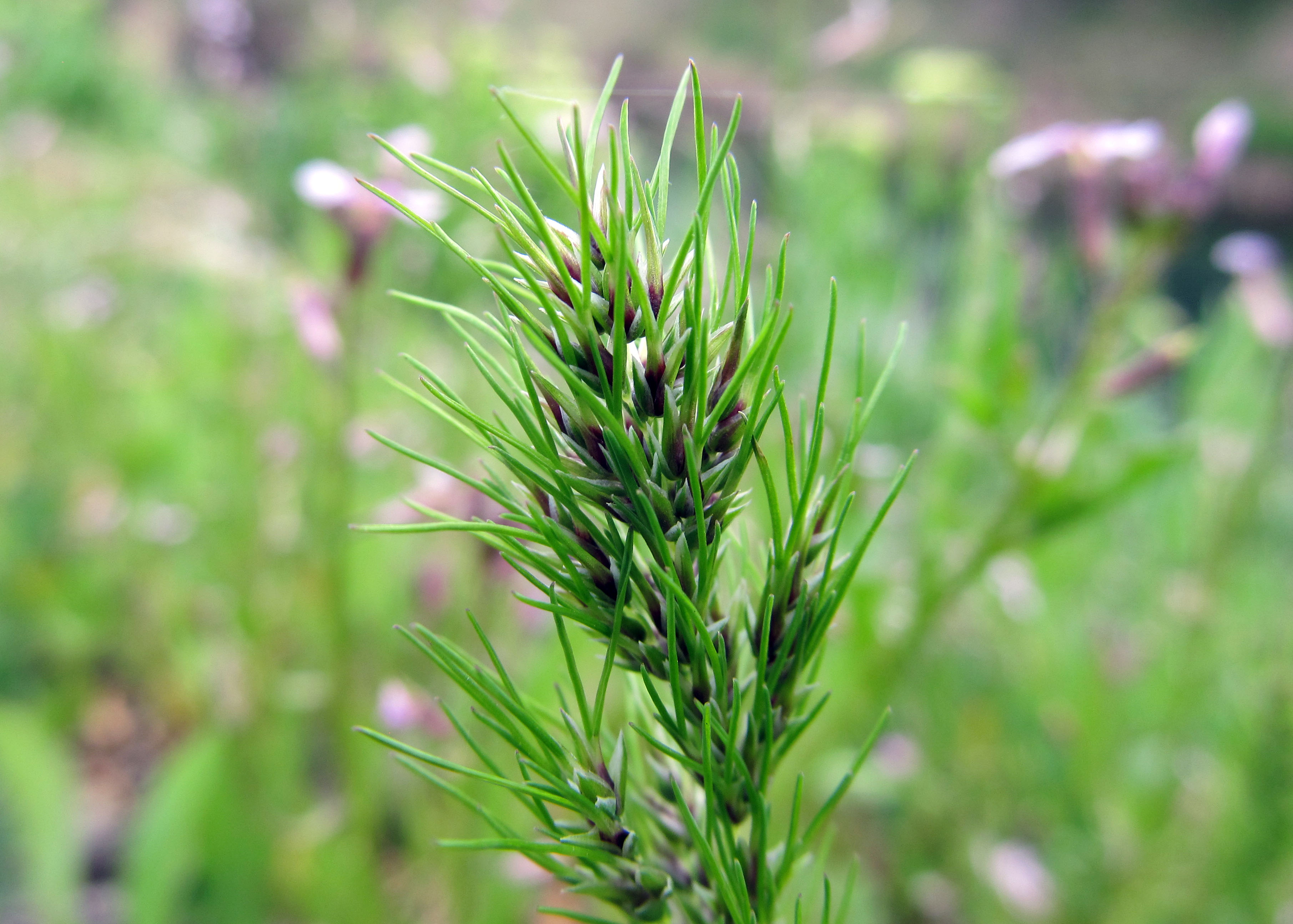
The bulbils of bulbous bluegrass sit atop the glumes (bracts) of a spikelet, which would otherwise consist of multiple florets. They have dark purple bases and long, slender, grass-like tips. Bulbils are a type of pseudovivipary, in that they are little plantlets attached to a parent plant. True vivipary occurs when a seed germinates inside of a fruit while still attached to its parent.

Like seeds, bulbils are small packets of starch and fat, and so they are sought ought by small mammals and birds as a source of food. Ants and small rodents are said to collect and cache the bulbils, which is one way they get dispersed. Otherwise, the bulbils rely mostly on wind to get around. They then lie dormant for as long as 2 or 3 years, awaiting the ideal time to take root.

bulbils of bulbous bluegrass

Bulbous bluegrass was accidentally brought to North America as a contaminant in alfalfa and clover seed. It was also intentionally planted as early as 1907 and has been evaluated repeatedly by the USDA and other organizations for use as a forage crop or turfgrass. It has been used in restoration to stabilize soils and reduce erosion. Despite numerous trials, it has consistently underperformed mainly due to its short growth cycle and long dormancy period. It is one of the first grasses to green up in the spring, but by the start of summer it has often gone completely dormant, limiting its value as forage and making for a pretty pathetic turfgrass. Otherwise, it’s pretty good at propagating itself and persisting in locations where it hasn’t been invited and is now mostly considered a weed – a noxious one at that according to some states. Due to its preference for dry climates, it is found most commonly in western North America.

In its native range, bulbous bluegrass frequently reproduces sexually. In North America, however, sexual reproduction is rare, and bulbils are the most common method of reproduction. Prolific asexual reproduction suggests that bulbous bluegress populations in North America should have low genetic diversity. Researchers set out to examine this by comparing populations found in Washington, Oregon, and Idaho. Their results, published in Northwest Science (1997), showed a surprising amount of genetic variation within and among populations. They concluded that multiple introductions, some sexual reproduction, and the autopolyploidy nature of the species help explain this high level of diversity.

———————

Interested in learning more about how plants get around? Check out the first issue of our new zine Dispersal Stories.

Summer of Weeds: Stinking Lovegrass

There are so many weedy grasses that we would be remiss if we let the Summer of Weeds go by without discussing at least one of them. As obnoxious and ecologically harmful as some of these grasses can be, they are easy to ignore, simply because they are not as showy and eye-catching as other weeds. They can also be difficult to identify, particularly when they are not flowering. To the untrained and unappreciative eye, all grasses appear alike and most are fairly uninteresting.

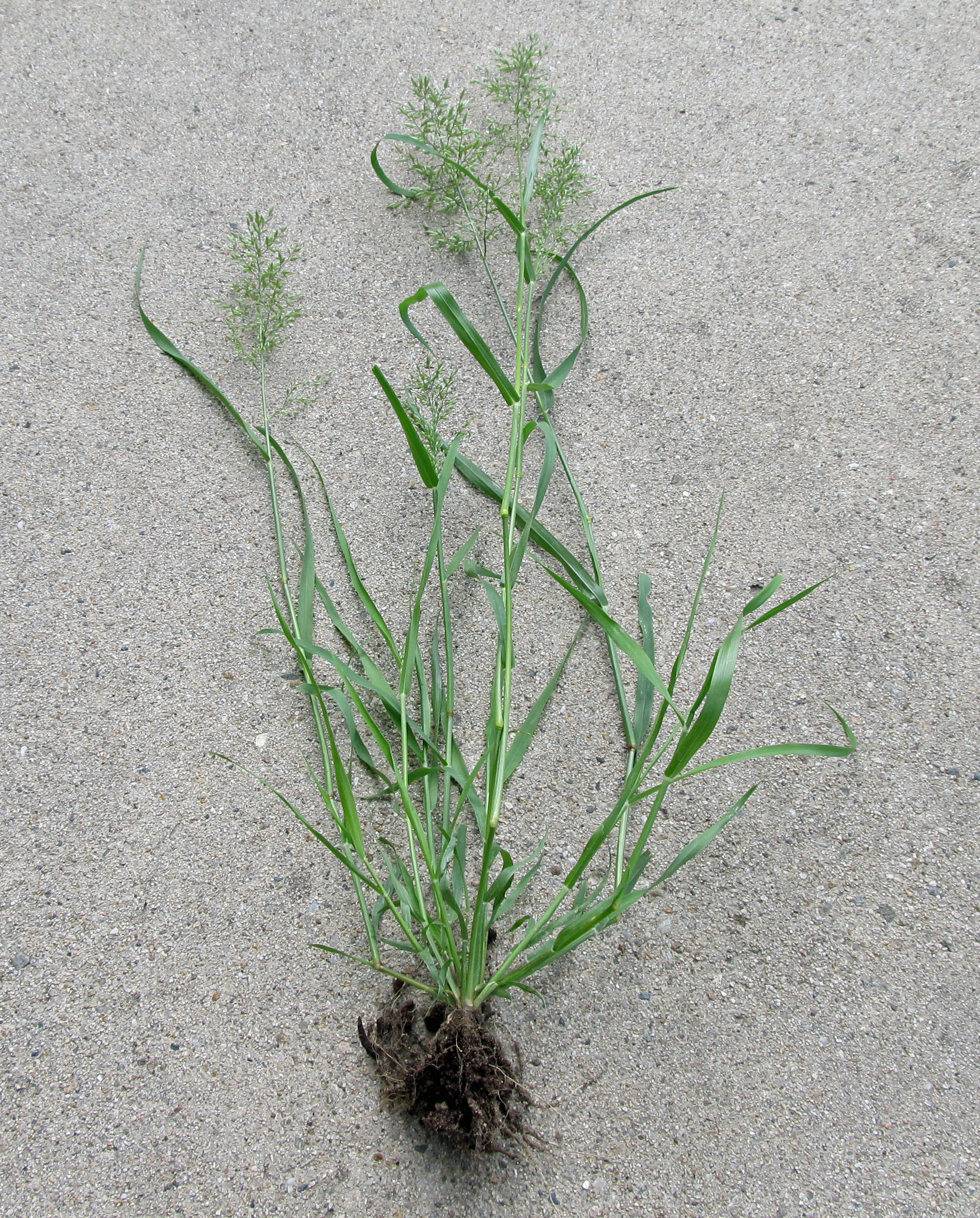
But some of them have great common names, like Eragrostis cilianensis, commonly known as stinking lovegrass, candygrass, or stinkgrass. This plant earns the name “stink” on account of the unpleasant odor that is released through tiny glands in its foilage and flower head. Probably due to my poor sense of smell, my nose doesn’t pick it up very well, but from what I can tell it has a funky or, as Sierra put it, “musky” smell. I imagine if you were to come across a large patch of stinking lovegrass blowing in the breeze, the smell would be detectable.

stinking lovegrass (Eragrostis cilianensis)

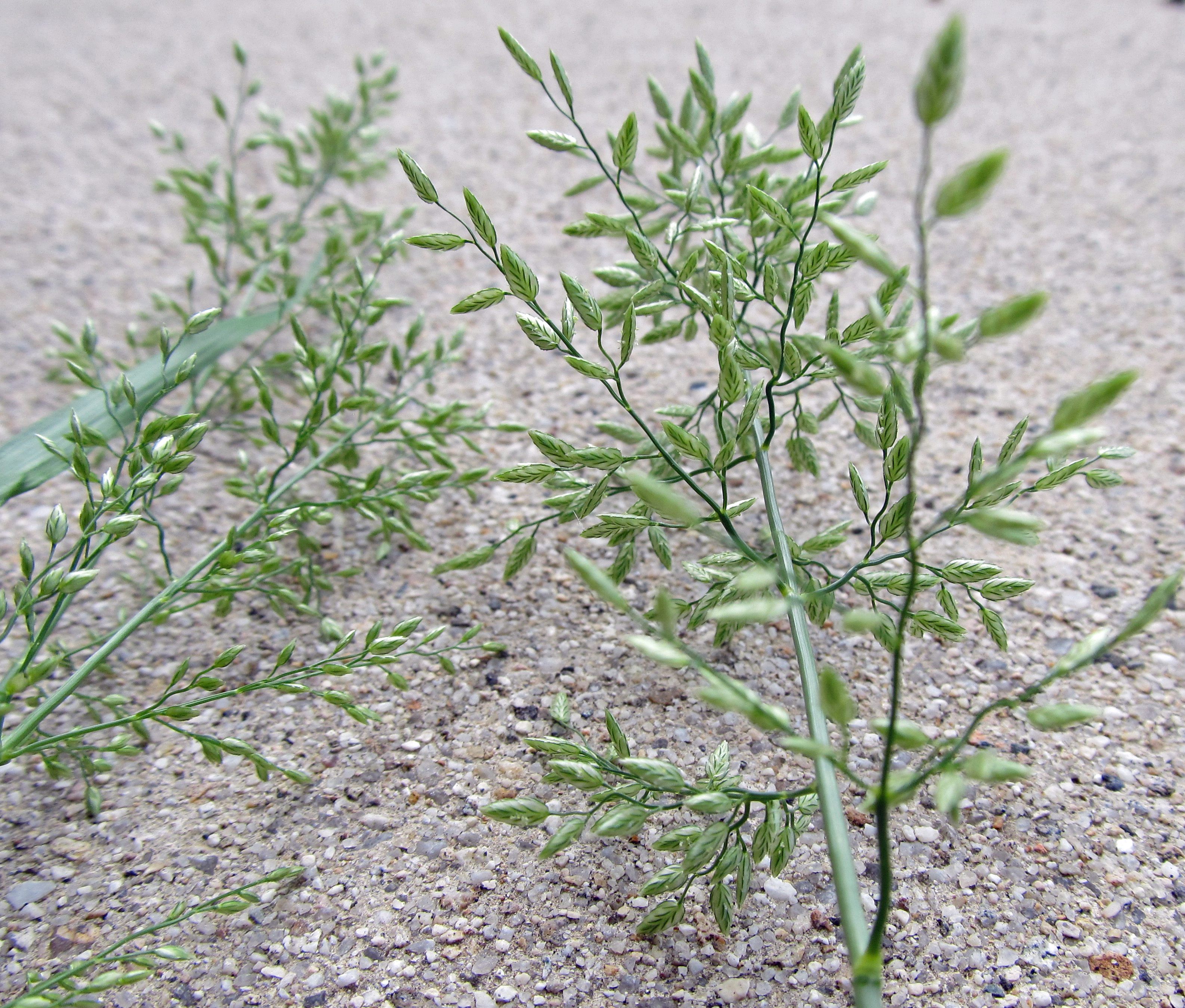
Eragrostis cilianensis is a short (up to two feet tall) annual grass from Eurasia and Africa. It is naturalized across much of North America. It has hollow and jointed stems with flat or folded leaves. Where the leaf blade wraps around the stem (an area called the ligule) there is a tuft of fine hairs. The inflorescence is highly branched, and the branches are lined with several compact, flat florets. The appearance of the flower head is highly variable, from tight and compact to spread out and open.

Inflorescences of stinking lovegrass (Eragrostis cilianensis)

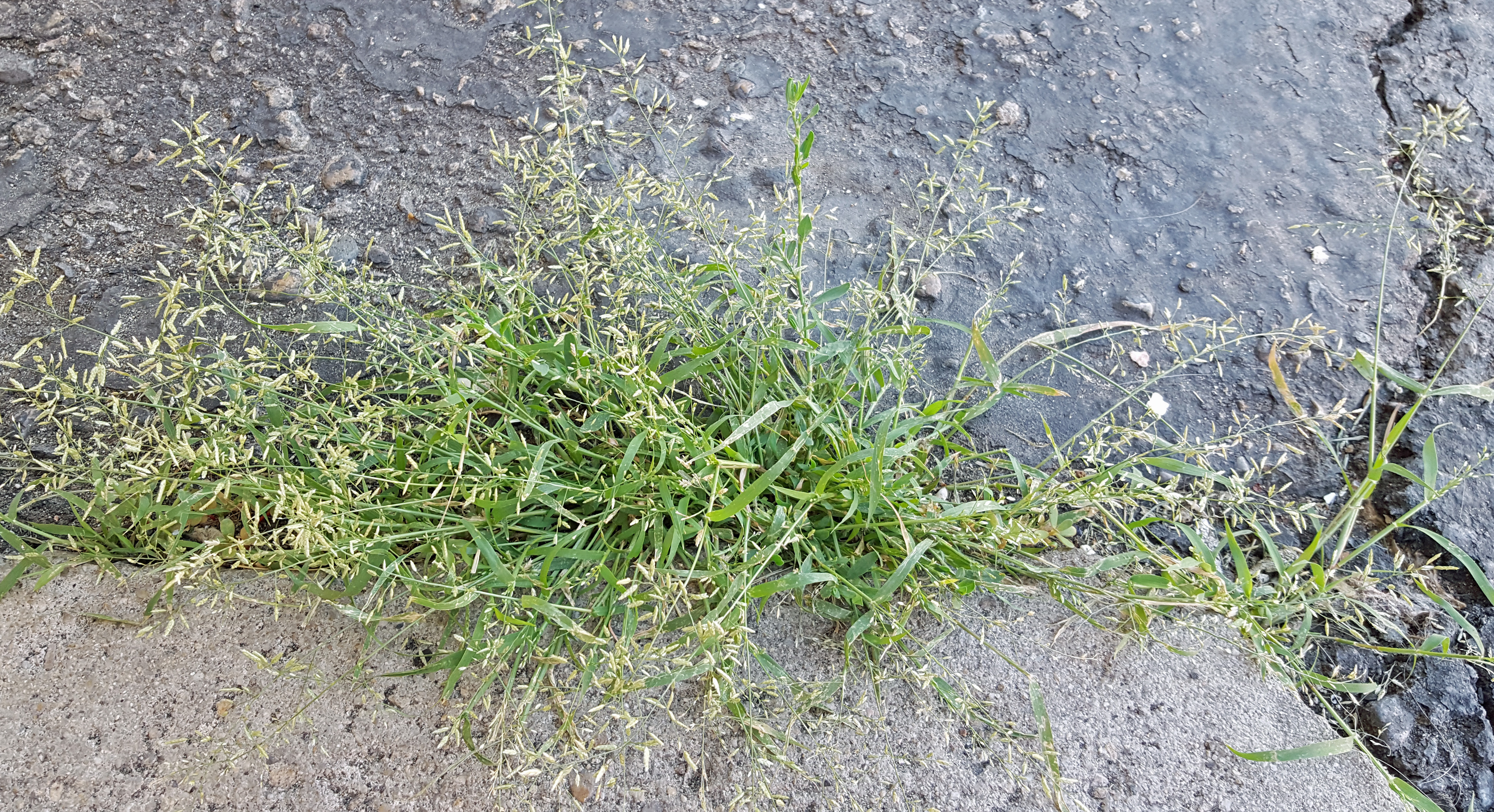
Stinking lovegrass likes sandy or gravelly, dry soils in open, regularly disturbed areas with full sun. It is very drought tolerant and thrives in hot temperatures, which is why it is unfazed growing in the cracks of sidewalks and pavement. It can grow in rich, fertile soil as well, and so it often makes an appearance in vegetable gardens, agricultural fields, and ornamental garden beds.

Stinking lovegrass growing in a crack between the pavement and the sidewalk

There are dozens of species in the genus Eragrostis, with representatives around the world. A few are native to North America, and a few others have been introduced. Provenance aside, all have the potential to be weedy. Eragrostis curvula, weeping lovegrass, is an aggresive invader in some regions. Eragrostis minor, lesser lovegrass, is similar to stinking lovegrass, not only in appearance but also in its provenance and status as a weed in North America. In Wild Urban Plants of the Northeast, Peter Del Tredici mentions two North American natives that can be weedy along roadsides and in vacant lots, sidewalk cracks, garden beds, and elsewhere: E. pectinacea (Carolina lovegrass) and E. spectabilis (purple lovegrass). Last but not least, Eragrostris tef (aslo known as teff) is a commonly cultivated cereal crop in Ethiopia and surrounding countries, the seeds of which are harvested to make injera.

Additional Resources:

Video of the Week:

The Idaho Weed Awareness Campaign has some fun educational materials, including a few puppets, to help teach children about noxious weeds. Mortie Milfoil is a puppet who helps spread the word about the aquatic invasive, Eurasian watermilfoil (Myriophyllum spicatum). Hannah teaches kids about poison hemlock (Conium maculatum). See Hannah’s video below:

Maize Anatomy and the Anatomy of a Maze

Commonly known as corn throughout much of North America, maize is a distinctive emblem of the harvest season. It is one of the most economically important crops in the world (the third most important cereal after rice and wheat) and has scads of uses from food to feed to fuel. The story of its domestication serves as a symbol of human ingenuity, and its plasticity in both form and utility is a remarkable example of why plants are so incredible.

The genus Zea is in the grass family (Poaceae) and consists of five species: Z. diploperennis, Z. perennis, Z. luxurians, Z. nicaraguensis, and Z. mays. Maize is the common name of Zea mays subsp. mays, which is one of four Z. mays subspecies and the only domesticated taxon in the genus. All other taxa are commonly and collectively referred to as teosintes.

The domestication of maize, apart from being an impressive feat, has long been a topic of research and a challenging story to tease apart. The current understanding is that maize was first domesticated around 9000 years ago in the Balsas River valley in southern Mexico, the main progenitor being Zea mays subsp. parviglumis. It is astonishing how drastically different in appearance teosintes are from modern day maize, but it also explains why determining the crop wild relative of maize was so difficult.

Teosinte, teosinte-maize hybrid, and maize - photo credit: wikimedia commons

Teosinte, teosinte-maize hybrid, and maize – photo credit: wikimedia commons

Teosintes and maize both have tall central stalks; however, teosintes generally have multiple lateral branches which give them a more shrubby appearance. In teosinte, each of the lateral branches and the central stalk terminate in a cluster of male flowers; female flowers are produced at the nodes along the lateral branches. In maize, male flowers are borne at the top of the central stalk, and lateral branches are replaced by short stems that terminate in female flowers. This is where the ears develop.

Ears – or clusters of fruits – are blatantly different between teosintes and maize. To start with, teosinte produces a mere 5 to 12 fruits along a short, narrow cob (flower stalk). The fruits are angular and surrounded in a hard casing. Maize cobs are considerably larger both in length and girth and are covered in as many as 500 or more fruits (or kernels), which are generally more rounded and have a softer casing. They also remain on the cob when they are ripe, compared to teosinte ears, which shatter.

Evolutionary biologist, Sean B. Carroll, writes in a New York Times article about the amazing task of “transform[ing] a grass with many inconvenient, unwanted features into a high-yielding, easily harvested food crop.” These “early cultivators had to notice among their stands of plants variants in which the nutritious kernels were at least partially exposed, or whose ears held together better, or that had more rows of kernels, and they had to selectively breed them.” Carroll explains that this “initial domestication process which produced the basic maize form” would have taken several hundred to a few thousand years. The maize that we know and love today is a much different plant than its ancestors, and it is still undergoing regular selection for traits that we find desirable.

Female inflorescence (or "ear") of Zea mays subsp. mays - photo credit: wikimedia commons

Female inflorescence (or “ear”) of Zea mays subsp. mays – photo credit: wikimedia commons

To better understand and appreciate this process, it helps to have a basic grasp of maize anatomy. Maize is an impressive grass in that it regularly reaches from 6 to 10 feet tall and sometimes much taller. It is shallow rooted, but is held up by prop or brace roots – adventitious roots that emerge near the base of the main stalk. The stalk is divided into sections called internodes, and at each node a leaf forms. Leaf sheaths wrap around the entirety of the stalk, and leaf blades are long, broad, and alternately arranged. Each leaf has a prominent midrib. The stalk terminates in a many-branched inflorescence called a tassel.

Maize Anatomy 101 - image credit: Canadian Goverment

Maize Anatomy 101 – image credit: Canadian Government

Maize is monoecious, which means that it has separate male and female flowers that occur on the same plant. The tassel is where the male flowers are located. A series of spikelets occur along both the central branch and the lateral branches of the tassel. A spikelet consists of a pair of bracts called glumes, upper and lower lemmas and paleas (which are also bracts), and two simple florets composed of prominent stamens. The tassel produces and sheds tens of thousands of pollen grains which are dispersed by wind and gravity to the female inflorescences below and to neighboring plants.

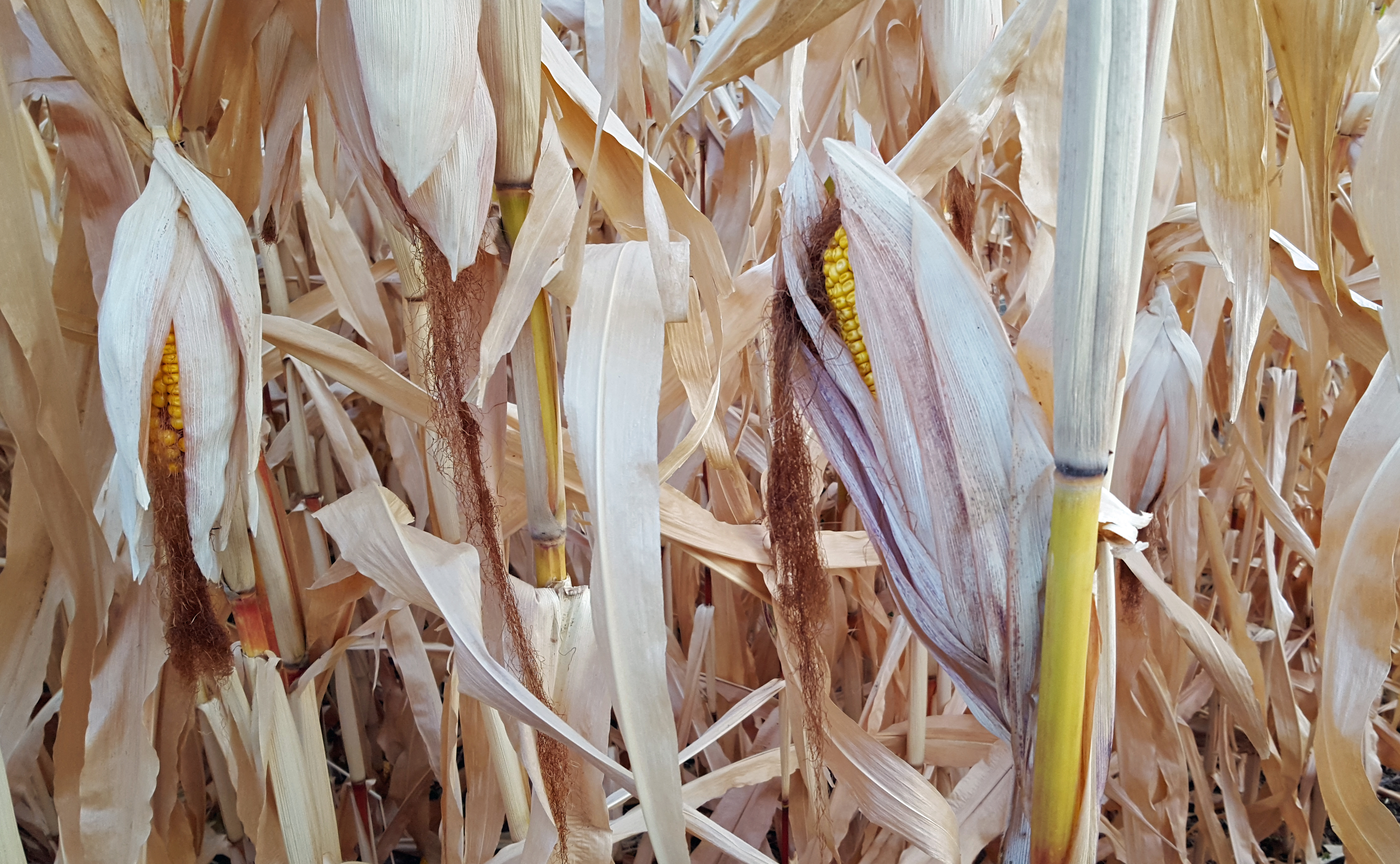
Female inflorescences (ears) occur at the top of short stems that originate from leaf axils in the midsection of the stalk. Leaves that develop along this reduced stem wrap around the ears forming the husk. Spikelets form in rows along the flower stalk (cob) within the husk. The florets of these spikelets produce long styles that extend beyond the top of the husk. This cluster of styles is known as the silk. When pollen grains land on silk stigmas, pollen tubes grow down the entire length of the silks to reach the embryo sac. Successful fertilization produces a kernel.

The kernel – or fruit – is known botanically as a caryopsis, which is the standard fruit type of the grass family. Because the fruit wall and seed are fused together so tightly, maize kernels are commonly referred to as seeds. The entire plant can be used to produce feed for animals, but it is the kernel that is generally consumed (in innumerable ways) by humans.

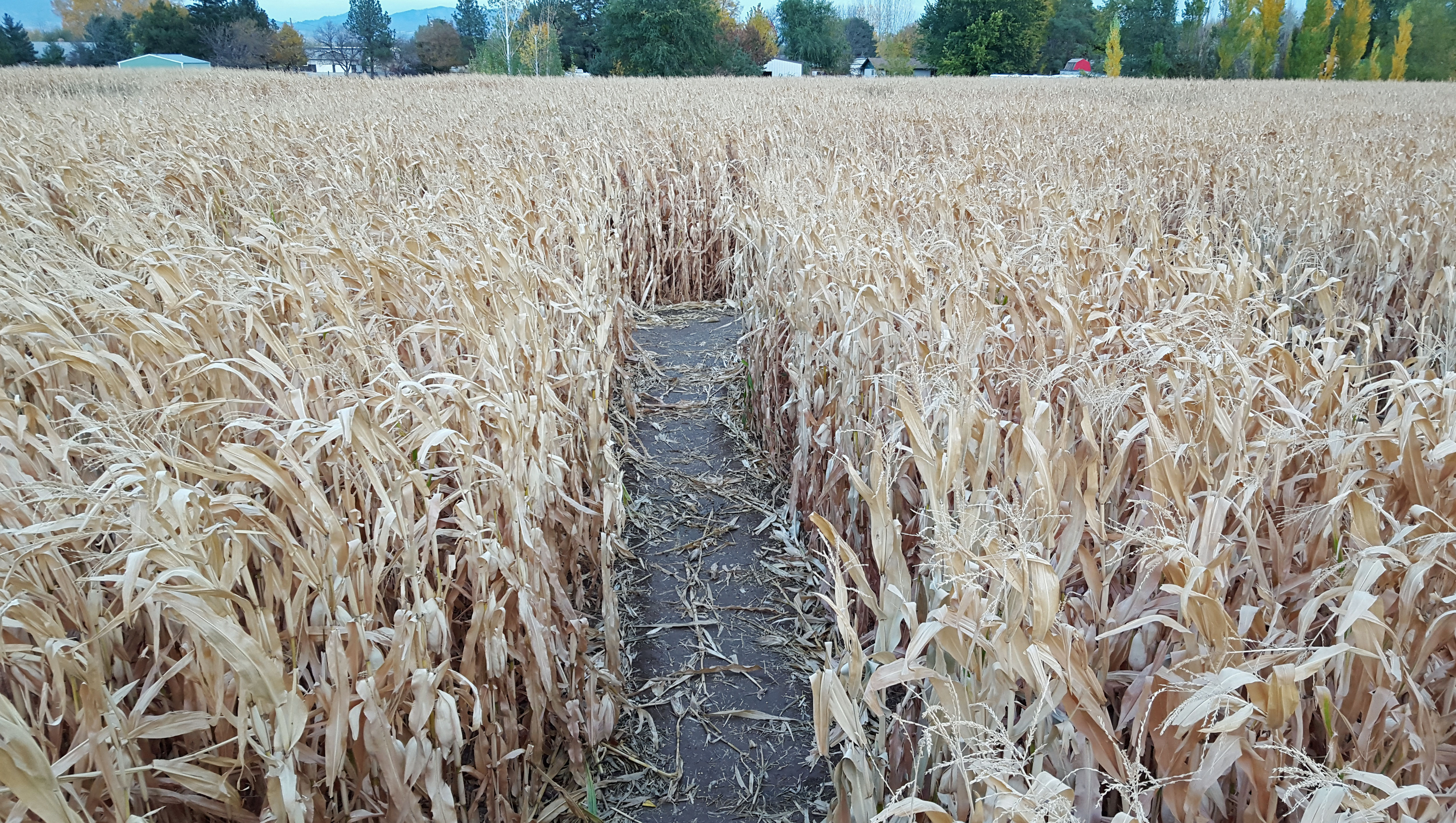
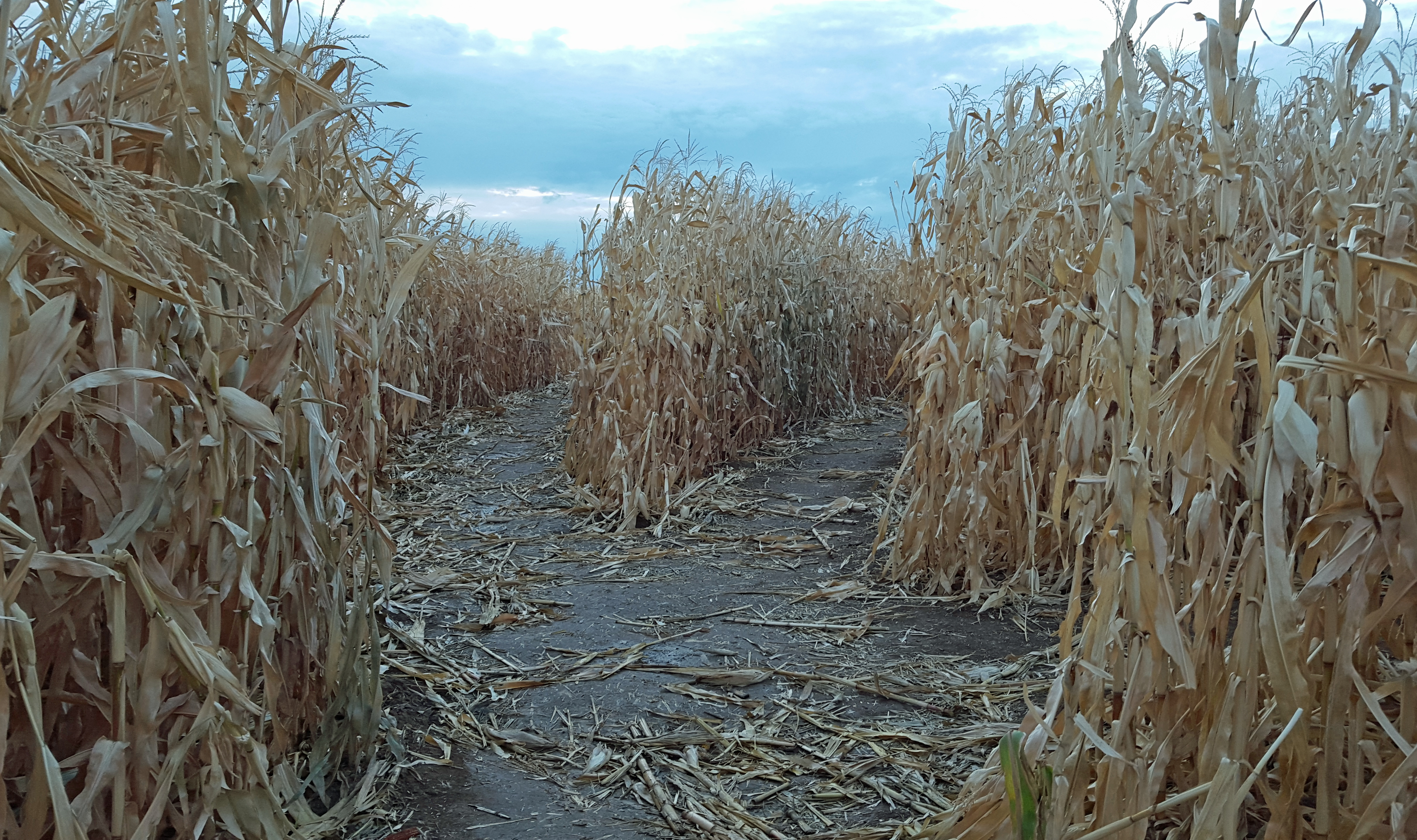
There is so much more to be said about maize. It’s a lot to take in. Rather than delve too much further at this point, let’s explore one of the other ways that maize is used by humans to create something that has become another feature of the fall season – the corn maze.

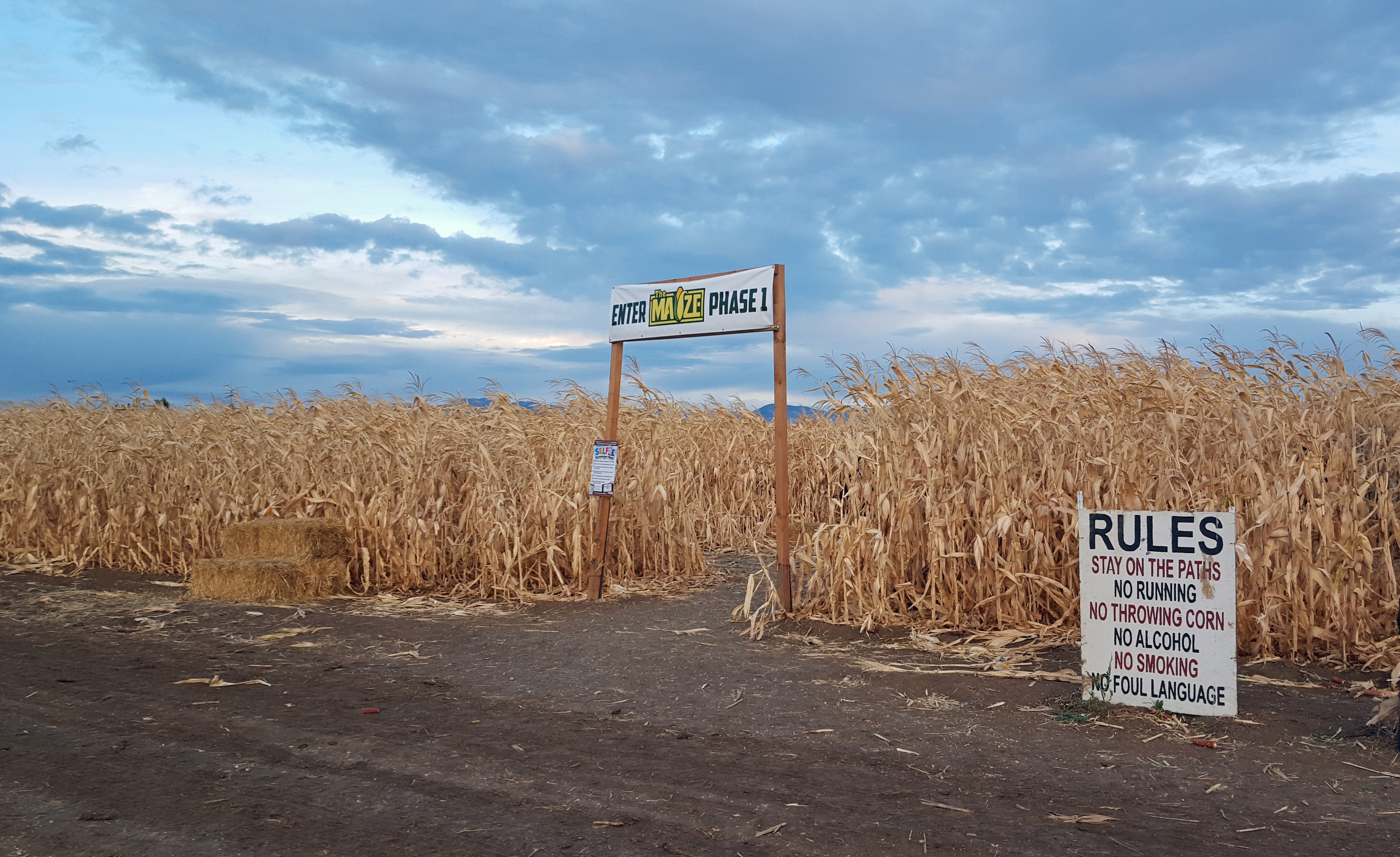
Entering the corn maze at The Farmstead in Meridian, Idaho

Exploring the corn maze at The Farmstead in Meridian, Idaho

corn-maze-2

corn-maze-3

corn-maze-4

corn-maze-5

Related Posts: