Confidential Carnivore

This is a guest post. Words and images by Jeremiah Sandler

———————

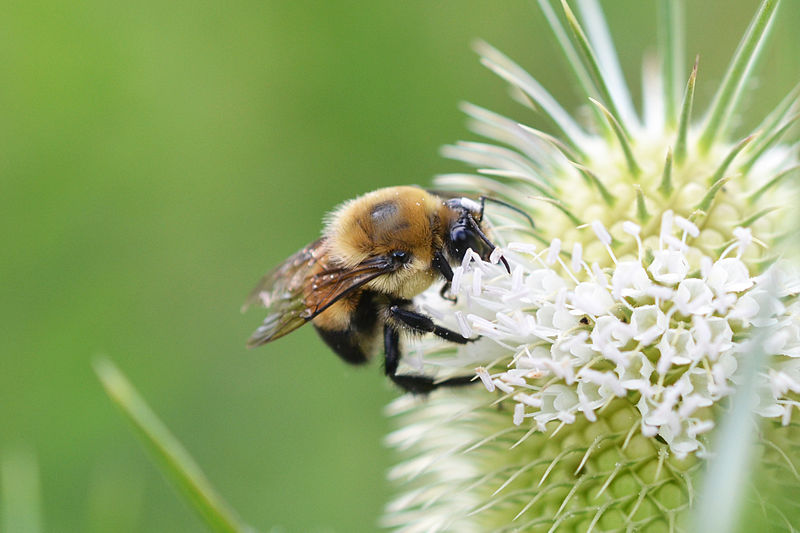
If you live in North America or Europe, chances are you have seen Dipsacus fullonum, commonly called teasel.  Its tall (up to 2 meters), spiky flower stalks with large purple flowers are easy to spot in low-lands, ditches, or along highways.  Since this prolific seeder’s introduction to North America from Europe, it has steadily increased its habitat to occupy nearly each region of the United States. Of course, like all plants, teasel has its preferences and is more frequent in some areas than in others.
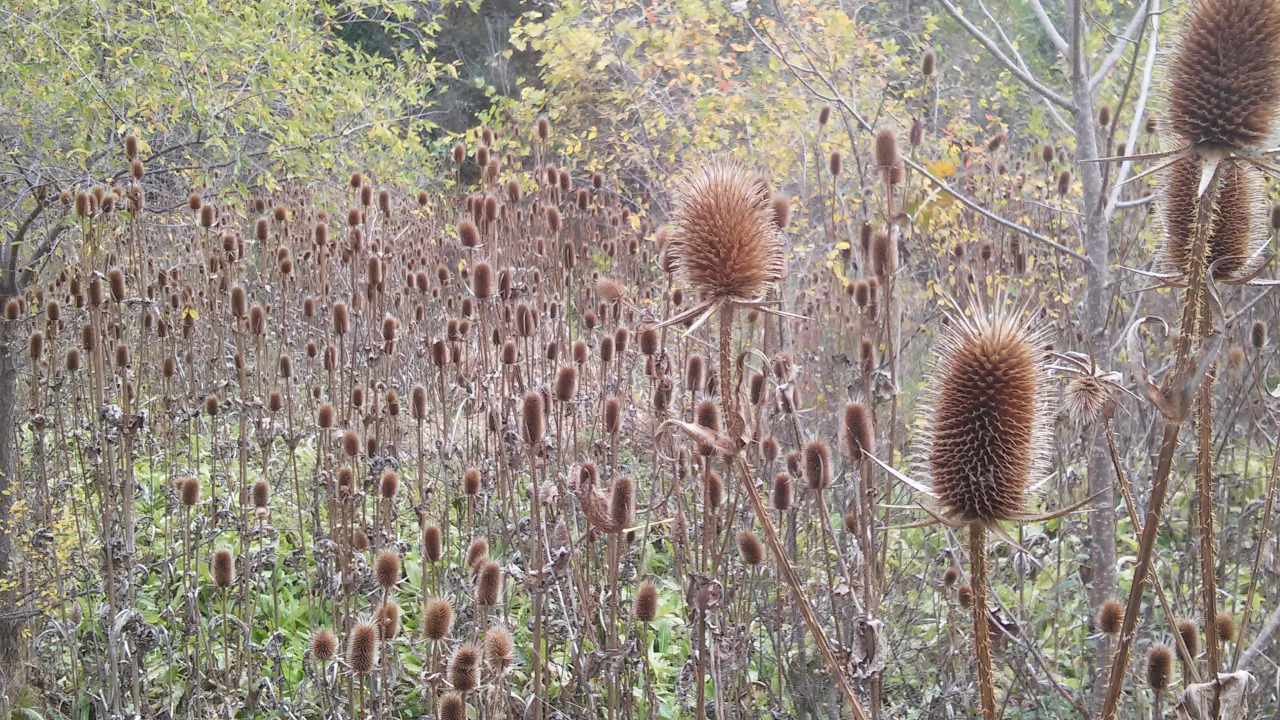
dipsacus fullonum_jeremiah sandler

Teasel is an unassuming, herbaceous biennial.  It takes two years to complete its life cycle: First-year growth is spent as a basal rosette, and second-year growth is devoted to flowering.  Standard biennial, right?  As of 2011, an experiment was conducted on this plant that changed the way we see teasel, and possibly all other similar plants.

“Here we report on evidence for reproductive benefits from carnivory in a plant showing none of the ecological or life history traits of standard carnivorous species.” -Excerpt from the report titled Carnivory in the Teasel Dipsacus fullonum — The Effect of Experimental Feeding on Growth and Seed Set by Peter J.A. Shaw and Kyle Shackleton.

We all have favorite carnivorous plants, Venus flytraps, pitcher plants, sundews, etc.. Their showy traps and various means of attracting insects are all marvels of evolution in the plant kingdom.  These insectivorous plants evolved these means of nutrient acquisition in an answer to the lack of nutrients in their environment’s soil.  In some of these plants, there is a direct relationship between number of insects consumed and the size of the entire plant. In others, there is no such relationship.

The unassuming, biennial teasel can now join the ranks of carnivore, or protocarnivore.  It didn’t evolve in bogs or swamps where soil nutrients are depleted.  It has no relationship to the standard carnivorous species. It doesn’t have any flashy traps. In fact, it has no obvious traits which suggest it can gain nutrients from insects. Teasel’s carnivorous habits can be likened somewhat to the carnivorous habits of bromeliads; water gathered in their leaves traps insects.

In Shaw and Shackleton’s experiment (done in two field populations), maggots were placed in water gathered in the center of some first-year rosettes of teasel.  Other rosettes in the same population were left alone as controls.  Not surprisingly, the teasels which were ‘fed’ larvae did not change in overall size.  The size of the overwintering rosette did not offer any predictability towards the size of flower shoots for the coming year. However, something strange did happen:

“…addition of dead dipteran larvae to leaf bases caused a 30% increase in seed set and the seed mass:biomass ratio.”…“These results provide the first empirical evidence for Dipsacus displaying one of the principal criteria for carnivory”

Teasel has some physiology to absorb nutrients from other macroorganisms despite teasel evolving in an entirely different setting than typical carnivorous plants.  Teasel’s already proficient reproductive capacity is enhanced by using insects as a form of nutrients in a controlled setting.  

Many exciting questions have been raised by this experiment. How has this absorption mechanism come about, without the obvious use of lures or other structures to attract insects? And how does teasel maximize upon its own morphology in the wild, if at all?  What would the results be if these experiments were recreated on other similar species?

There are studies being conducted all the time that further the boundaries of what we know about these stationary organisms. There are new discoveries waiting just around the corner. Carnivory in plants is amazing because it transcends common notions about plants; especially in the case of the unassuming teasel.

Selected Resources:

———————

Jeremiah Sandler lives in southeast Michigan where he works in the plant health care industry. He has a degree in horticultural sciences and is an ISA certified arborist. He is interested in all things plant related and plans to own a horticulture business where he can share his passion with others. Follow Jeremiah on Instagram: @j.deepsea

———————

Would you like to write a guest post? Or contribute to Awkward Botany in some other way? Find out how.

Year of Pollination: Botanical Terms for Pollination, part one

When I began this series of posts, I didn’t have a clear vision of what it would be. I had a budding interest in pollination biology and was anxious to learn all that I could. I figured that calling 2015 the “Year of Pollination” and writing a bunch of pollination-themed posts would help me do that. And it has. However, now that the year is coming to a close, I realize that I neglected to start at the beginning. Typical me.

What is pollination? Why does it matter? The answers to these questions seemed pretty obvious; so obvious, in fact, that I didn’t even think to ask them. That being said, for these last two “Year of Pollination” posts (and the final posts of the year), I am going back to the basics by defining pollination and exploring some of the terms associated with it. One thing is certain, there is still much to be discovered in the field of pollination biology. Making those discoveries starts with a solid understanding of the basics.

Pollination simply defined is the transfer of pollen from an anther to a stigma or – in gymnosperms – from a male cone to a female cone. Essentially, it is one aspect of plant sex, albeit a very important one. Sexual reproduction is one way that plants multiply. Many plants can also reproduce asexually. Asexual reproduction typically requires less energy and resources – no need for flowers, pollen, nectar, seeds, fruit, etc. – and can be accomplished by a single individual without any outside help; however, there is no gene mixing (asexually reproduced offspring are clones) and dispersal is limited (consider the “runners” on a strawberry plant producing plantlets adjacent to the mother plant).

To simplify things, we will consider only pollination that occurs among angiosperms (flowering plants); pollination/plant sex in gymnosperms will be discussed at another time. Despite angiosperms being the youngest group of plants evolutionarily speaking, it is the largest group and thus the type we encounter most.

A flower is a modified shoot and the reproductive structure of a flowering plant. Flowers are made up of a number of parts, the two most important being the reproductive organs. The androecium is a collective term for the stamens (what we consider the male sex organs). A stamen is composed of a filament (or stalk) topped with an anther – where pollen (plant sperm) is produced. The gynoecium is the collective term for the pistil (what we consider the female sex organ). This organ is also referred to as a carpel or carpels; this quick guide helps sort that out. A pistil consists of the ovary (which contains the ovules), and a style (or stalk) topped with a stigma – where pollen is deposited. In some cases, flowers have both male and female reproductive organs. In other cases, they have one or the other.

photo credit: wikimedia commons

photo credit: wikimedia commons

When pollen is moved from an anther of one plant to a stigma of another plant, cross-pollination has occurred. When pollen is moved from an anther of one plant to a stigma of the same plant, self-pollination has occurred. Cross-pollination allows for gene transfer, and thus novel genotypes. Self-pollination is akin to asexual production in that offspring are practically identical to the parent. However, where pollinators are limited or where plant populations are small and there is little chance for cross-pollination, self-pollination enables reproduction.

Many species of plants are unable to self-pollinate. In fact, plants have evolved strategies to ensure cross-pollination. In some cases, the stamens and pistils mature at different times so that when pollen is released the stigmas are not ready to receive it or, conversely, the stigmas are receptive before the pollen has been released. In other cases, stigmas are able to recognize their own pollen and will reject it or inhibit it from germinating. Other strategies include producing flowers with stamens and pistils that differ dramatically in size so as to discourage pollen transfer, producing separate male and female flowers on the same plant (monoecy), and producing separate male and female flowers on different plants (dioecy).

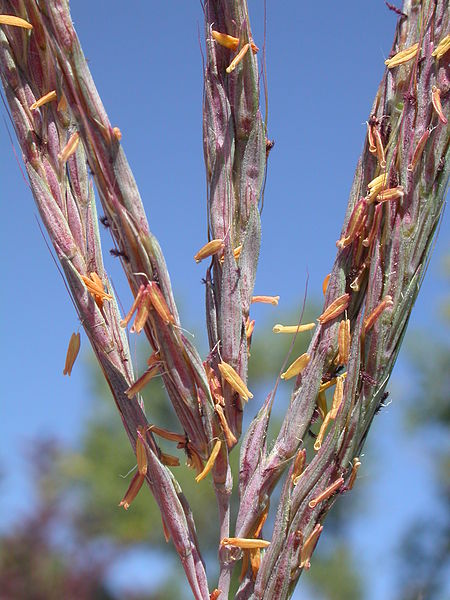
As stated earlier, the essence of pollination is getting the pollen from the anthers to the stigmas. Reproduction is an expensive process, so ensuring that this sex act takes place is vital. This is the reason why flowers are often showy, colorful, and fragrant. However, many plants rely on the wind to aid them in pollination (anemophily), and so their flowers are small, inconspicuous, and lack certain parts. They produce massive amounts of tiny, light-weight pollen grains, many of which never reach their intended destination. Grasses, rushes, sedges, and reeds are pollinated this way, as well as many trees (elms, oaks, birches, etc.) Some aquatic plants transport their pollen from anther to stigma via water (hydrophily), and their flowers are also simple, diminutive, and produce loads of pollen.

Inforescence of big bluestem (Andropogon gerardii), a wind pollinated plant - pohto credit: wikimedia commons

Inflorescence of big bluestem (Andropogon gerardii), a wind pollinated plant – photo credit: wikimedia commons

Plants that employ animals as pollinators tend to have flowers that we find the most attractive and interesting. They come in all shapes, sizes, and colors and are anywhere from odorless to highly fragrant. Odors vary from sweet to bitter to foul. Many flowers offer nectar as a reward for a pollinator’s service. The nectar is produced in special glands called nectaries deep within the flowers, inviting pollinators to enter the flower where they can be dusted with pollen. The reward is often advertised using nectar guides – patterns of darker colors inside the corolla that direct pollinators towards the nectar. Some of these nectar guides are composed of pigments that reflect the sun’s ultraviolet light – they are invisible to humans but are a sight to behold for many insects.

In part two, we will learn what happens once the pollen has reached the stigma – post-pollination, in other words. But first, a little more about pollen. The term pollen actually refers to a collection of pollen grains. Here is how Michael Allaby defines “pollen grain” in his book The Dictionary of Science for Gardeners: “In seed plants, a structure produced in a microsporangium that contains one tube nucleus and two sperm nuclei, all of them haploid, enclosed by an inner wall rich in cellulose and a very tough outer wall made mainly from sporopollenin. A pollen grain is a gametophyte.”

A pollen grain’s tough outer wall is called exine, and this is what Allaby has to say about that: “It resists decay, and the overall shape of the grain and its surface markings are characteristic for a plant family, sometimes for a genus or even a species. Study of pollen grains preserved in sedimentary deposits, called palynology or pollen analysis, makes it possible to reconstruct past plant communities and, therefore, environments.”

Scanning electron microscope image of pollen grains from narrowleaf evening primrose (Oenothera fruticosa) - photo credit: wikimedia commons

Scanning electron microscope image of pollen grains from narrowleaf evening primrose (Oenothera fruticosa) – photo credit: wikimedia commons

Harvester Ants – Seed Predators and Seed Dispersers

“The abundance of ants is legendary. A worker is less than one-millionth the size of a human being, yet ants taken collectively rival people as dominant organisms on the land. …  When combined, all ants in the world taken together weigh about as much as all human beings.” – Journey to the Ants by Bert Hölldobler and Edward O. Wilson

Considering how abundant and widely distributed ants are, it is easy to imagine the profound role they might play in the ecosystems of which they are a part. In fact, in the epilogue to Hölldobler and Wilson’s popular book about ants (quoted above), they conclude that in a world without ants, “species extinction would increase even more over the present rate, and the land ecosystems would shrivel more rapidly as the considerable services provided by these insects were pulled away.” It is no doubt then that ants, through their myriad interactions with their surroundings, are key players in terrestrial ecosystems.

photo credit: www.eol.org

photo credit: www.eol.org

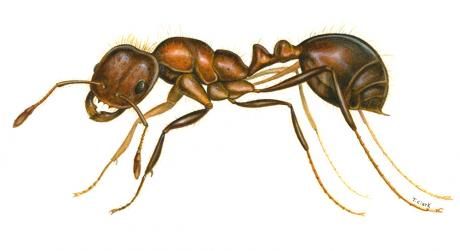
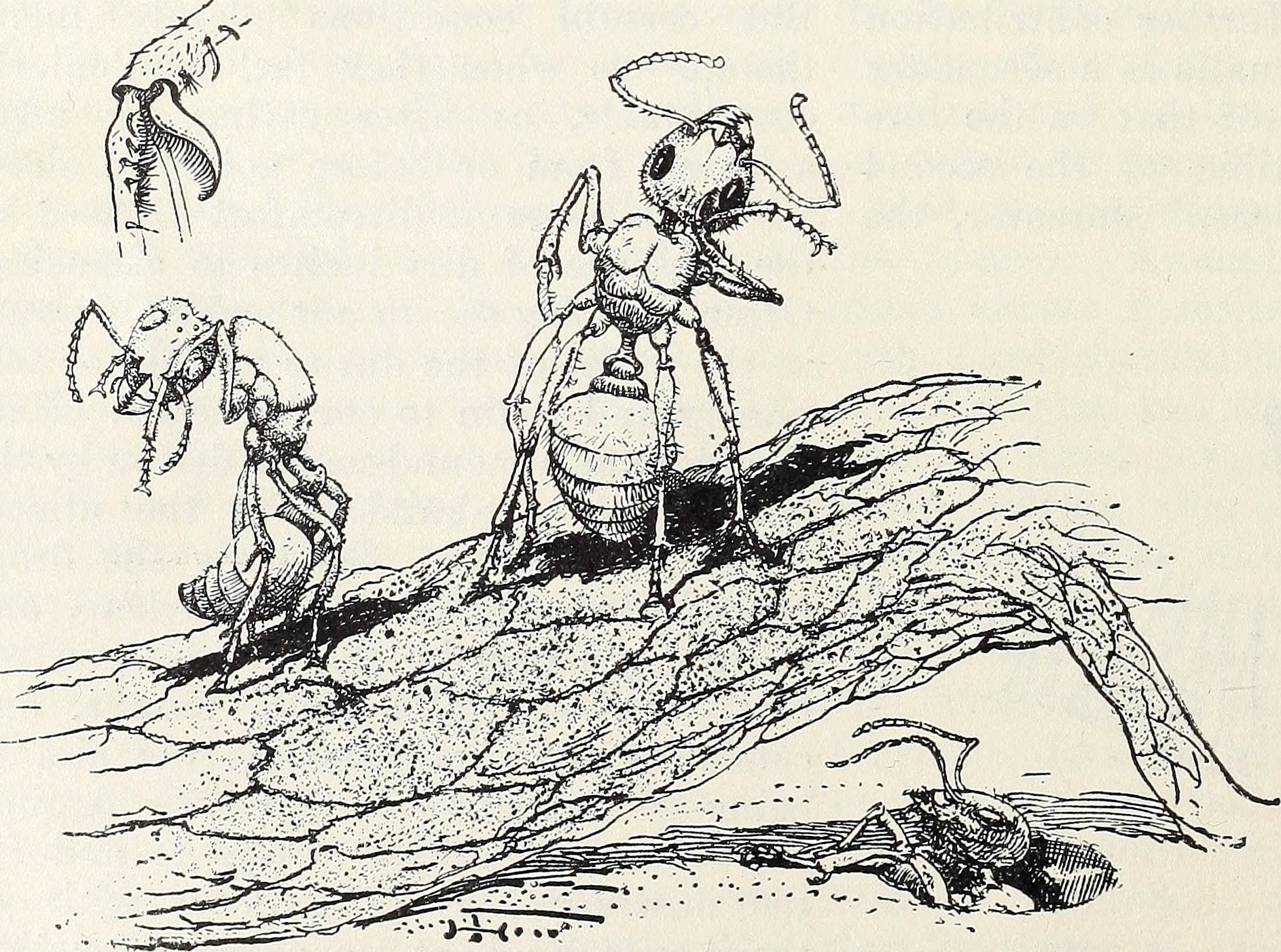
Harvester ants offer a prime example of the important roles that ants can play. In the process of collecting seeds for consumption, harvester ants can help shape the abundance and distribution of the plants in their immediate environment. They do this by selecting the types and amounts of seeds they collect, by abandoning seeds along their collection routes, and by leaving viable seeds to germinate in and around their nests. Hölldobler and Wilson have this to say about harvester ants:

[The] numerical success [of ants] has allowed them to alter not just their nest environments, but the entire habitats in which they live. Harvesting ants, species that regularly include seeds in their diet, have an especially high impact. They consume a large percentage of the seeds produced by plants of many kinds in nearly all terrestrial habitats, from dense tropical forests to deserts. Their influence is not wholly negative. The mistakes they make by losing seeds along the way also disperse plants and compensate at least in part for the damage caused by their predation.

There are more than 150 species of harvester ants, spanning at least 18 genera. They are found throughout the world (except extreme cold locales) and are particularly common in arid to semi-arid environments. Pogonomyrmex is one the largest genera of harvester ants with nearly 70 species occurring throughout North, Central, and South America. Messor is another large genus of harvester ant species that mainly occurs in Europe, Asia, and Africa. Both genera build large nests and move massive amounts of soil in the process.

Seed dispersal by harvester ants (also known as diszoochory) is a type of secondary (or Phase II) seed dispersal. It is a case of serendipity, as the dispersal occurs largely by accident. Some plants, on the other hand, have developed a mutualistic relationship with ants, enlisting them to disperse their seeds by way of an elaiosome – a fleshy, nutritious structure attached to seeds that attracts ants. Seeds with such structures are picked up by ants and brought to their nests where the elaiosome is consumed and the seed is left to germinate. This form of ant-mediated dispersal is called myrmecochory and is typically not carried out by harvester ants.

photo credit: wikimedia commons

photo credit: wikimedia commons

Harvester ant colonies have both direct and indirect influences on their surrounding environments; however, there is a dearth of research elucidating the exact details of such influences. A paper published in the Annual Review of Ecology and Systematics in 2000 by MacMahon et. al. reviewed available studies concerning harvester ants and explored our current understanding of the influences that harvester ants (particularly those in the genus Pogonomyrmex) can potentially have on community structure and ecosystem functions. Following are some of the direct influences the authors listed:

  • Removal and consumption of seeds and other materials – The relative abundance of plant species can be affected by the selective removal of seeds. Harvester ants also collect leaves, twigs, pollen, flowers, vertebrate feces, and arthropod body parts.
  • Storage and rejection of seeds – Collected seeds can be dropped during transport, rejected after arriving at the nest, or abandoned in nest granaries. All result in the transport of seeds away from the parent plant and dispersal beyond the plant’s primary dispersal mechanisms.
  • Construction and maintenance of nests – All vegetation and debris is removed from the area immediately surrounding the nest including mature and emerging plants. This area is kept clear for the duration of the life of the colony and, in some cases, can be quite extensive.

Harvester ants can also influence soil properties and soil food webs within and in the vicinity of their nests. They bring large amounts of organic matter down into the soil and redistribute vast amounts of soil particles. Their actions also influence the amount of moisture in the soil surrounding their nests.

This is a mere distillation of the influences that harvester ants might have; see the paper by MacMahon et al. to learn more.

In an effort to better understand how the seed predation and seed dispersal behaviors of harvester ants might influence plant population dynamics, a research team in Spain used data obtained from field research to build a computer model that would predict changes over time. The study site was described as “open and heterogeneous shrubland” and the vegetation was stated to be in “a very early stage in the secondary succession” after being subject to “recurring fires.” The harvester ant colonies involved in the study consisted of three species in the genus Messor. The plant species selected for the study were three native shrubs whose seeds were known to be collected by the harvester ants. Each plant species differed slightly in the amount and size of seeds it produced and in its primary seed dispersal mechanism, which is important because the researchers hypothesized that “the effect of seed predation and seed dispersal may depend on plant attributes.”

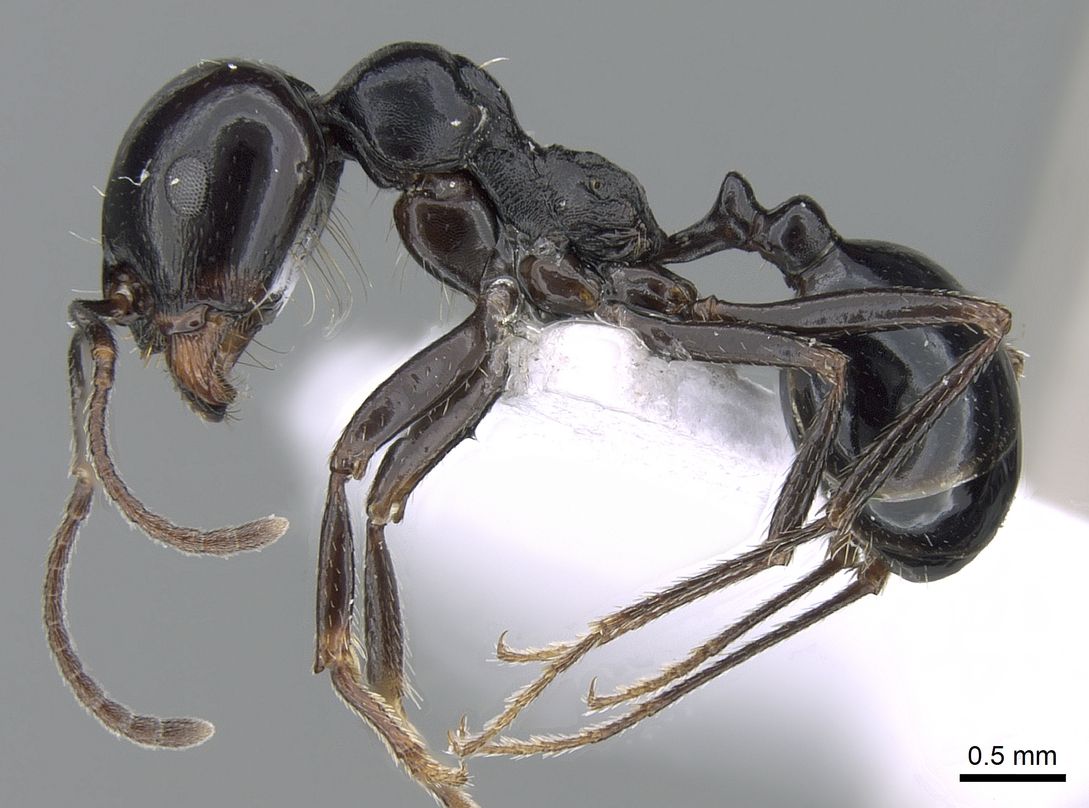
Messor bouvieri (photo credit: www.eol.org)

Messor bouvieri (photo credit: www.eol.org)

Data obtained from simulated scenarios and field observations appeared to support this hypothesis; each shrub species interacted differently with the harvester ants. Coronilla minima benefited from “accidental” seed dispersal. Comparatively, it produces a high amount of large seeds, which are primarily dispersed by gravity. Despite predation, ant-mediated dispersal was an advantage. Dorycnium pentaphyllum produced the highest amount of seeds among the three shrub species; however, seed predation was found to have negative effects on its population dynamics. Its primary seed dispersal mechanism involves ballistics (the mechanical ejection of its seeds), so ant-mediated dispersal may not offer an advantage. Finally, Fumana ericoides, despite its limited primary seed dispersal and its comparatively low production of seeds was not affected by the actions of the harvester ants. The authors concluded that “some unknown factor is driving the population dynamics of this species, more than the action of ants.”

Studies such as this, while leaving many unanswered questions, help us understand the important role that harvester ants play in our world. Harvester ants, and ants in general, are truly among Earth’s most enthralling and influential creatures. Learn more about their complex behaviors and countless interactions with flora and fauna by checking out these three documentaries recommended by ANTfinity.

Year of Pollination: Scarlet Gilia and Its Pollinators

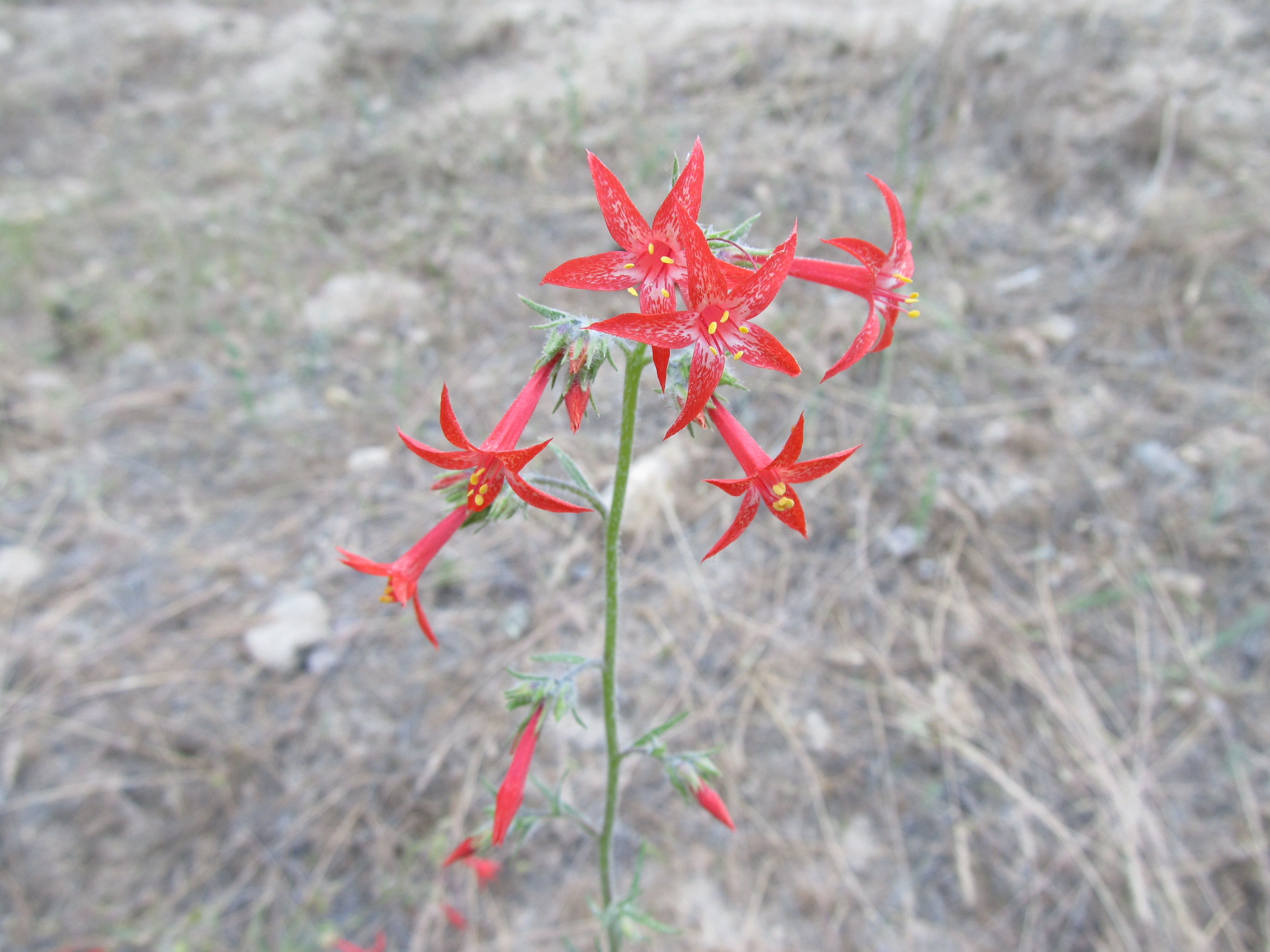
Flowers that are visited and/or pollinated by hummingbirds typically fit the following description: petals are brightly colored, often red; petals are fused to form a long, narrow tube; a “landing pad” is absent; abundant nectar is produced deep within the flower; and fragrance is weak or nonexistent. Scarlet gilia (Ipomopsis aggregata) is a typical example of such a flower, and hummingbirds are indeed among its most common visitors. But there is so much more to the story.

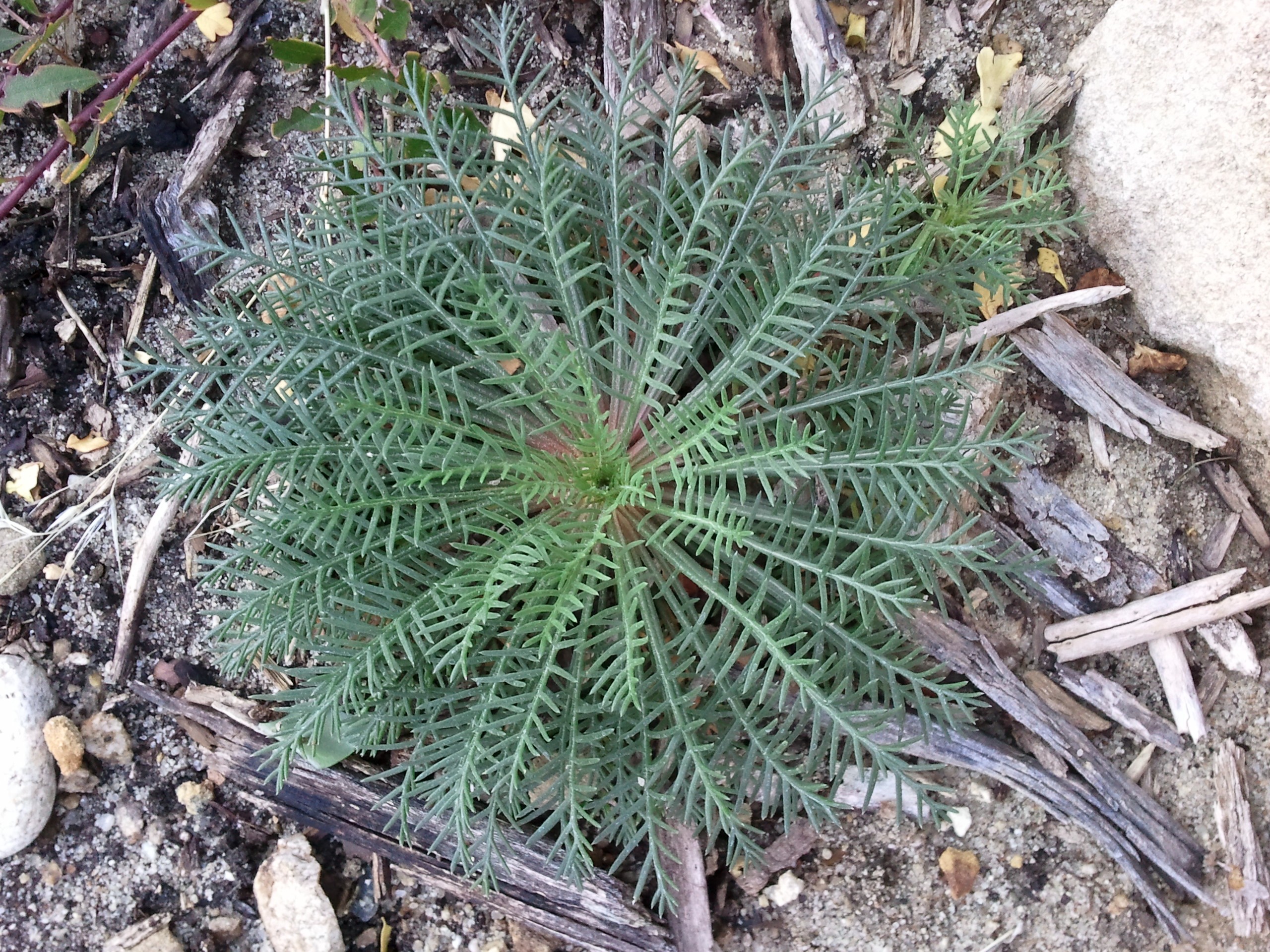
Scarlet gilia (also commonly known as skyrocket) is a wildflower in the phlox family (Polemoniaceae) that occurs in many parts of western North America. It is considered a biennial or short-lived perennial. It spends the first year or so of its life as a compact rosette of fern-like leaves. Later it sends up a branched, flowering stem that can reach 5 feet tall or more. The flowers are slender, trumpet-shaped, and composed of five fused petals that flare outward creating five prominent, pointed lobes. They are self-incompatible and require a pollinator in order to set seed. The stamens of an individual flower produce mature pollen before the stigma of that flower is ready to receive it – this is called protandry and is one mechanism of self-incompatibility.

The rosette of scarlet gilia (Ipomopsis aggregata)

The rosette of scarlet gilia (Ipomopsis aggregata)

The flowering period of scarlet gilia can last several months. Depending on the location, it can begin in mid-summer and continue through the fall. During this period, it produces dozens of flowers. It is also at this time that it runs the risk of being browsed by elk, mule deer, and other animals. This doesn’t necessarily set it back though, as it has the potential to respond by producing additional flowering stalks and more flowers. Its flowers are visited by a variety of pollinators including bumblebees, hawkmoths, butterflies, syrphid flies, solitary bees, and of course, hummingbirds. But hummingbirds, in many parts of scarlet gilia’s range are migratory, and that’s where things get interesting.

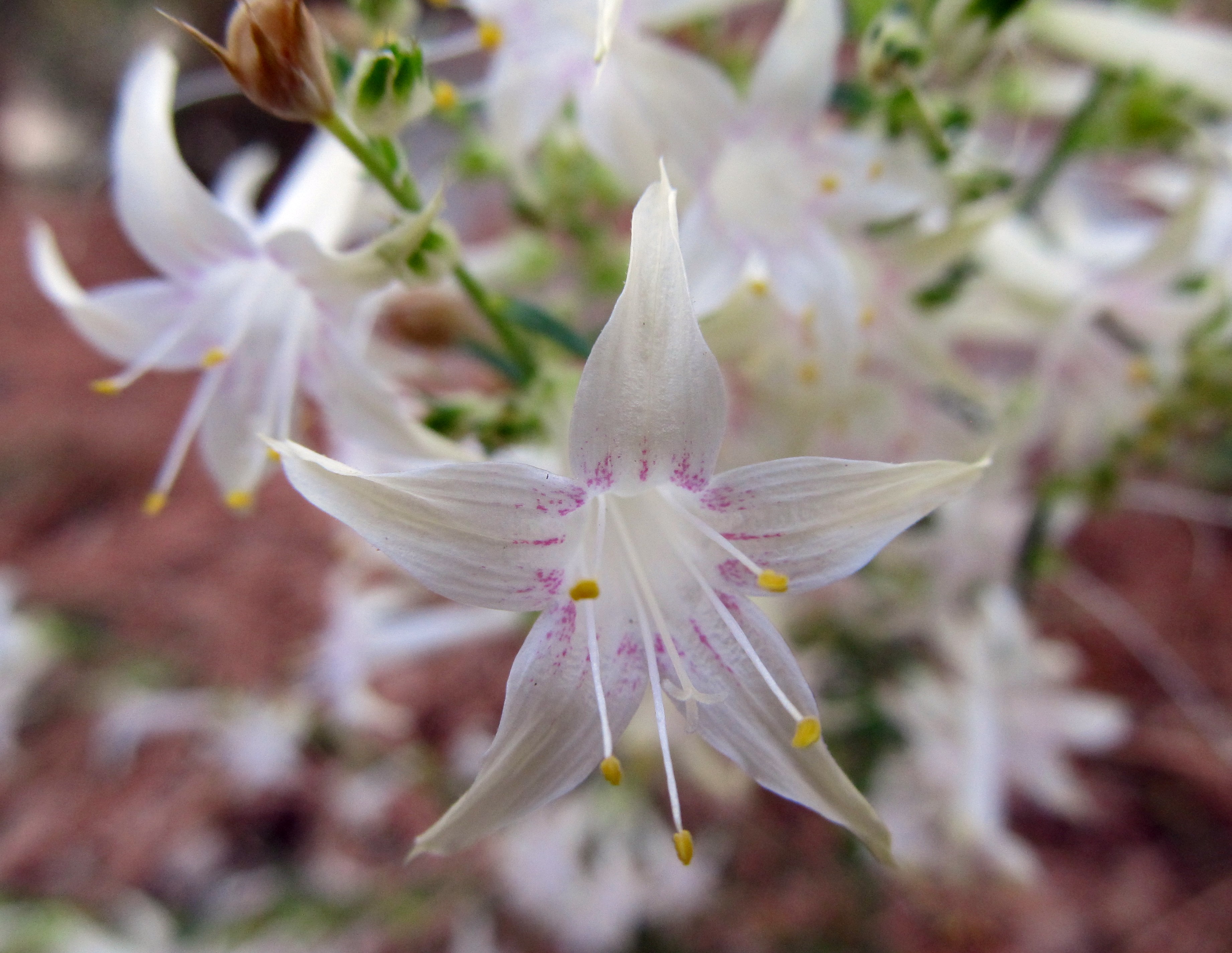
Early flowers of scarlet gilia are usually red. As the season progresses, flowers slowly shift from red to pink. In some cases, they lose all pigmentation and become white. In the early 1980’s, pollination biologists Ken Paige and Thomas Whitman set out to determine the reason for this shift in flower color. They spent three years observing a population of scarlet gilia on Fern Mountain near Flagstaff, Arizona. They noted that the change in flower color corresponded with the migration of hummingbirds and that the now lighter colored flowers continued to be pollinated by hawkmoths until the end of the flowering season.

ipomopsis aggregata

A series of experiments and observations led them to conclude that hummingbirds prefer darker colored flowers and hawkmoths prefer lighter colored flowers. By shifting to a lighter flower color, scarlet gilia appeared to be taking advantage of remaining pollinators after hummingbirds had migrated. They also concluded that the color change was not the cause of hummingbird migration since other flowers with nectar-rich, red, tubular flowers (specifically Penstemon barbatus) remained available in the area throughout their migration. It was also noted that the flowers of scarlet gilia shifted the timing of nectar production, presumably to better match the behavior of hawkmoths which are more active in the evenings.

No plants were observed shifting from light colored flowers to dark colored flowers, which further supported their conclusion. They also compared the population they studied to populations that do not lose their hummingbird pollinator and noted that when hummingbirds remain, the flowers of scarlet gilia don’t change color.

Scarlet gilia (Ipomopsis aggregata) with white flowers

Scarlet gilia (Ipomopsis aggregata) with white flowers

But just how effective are hummingbirds as pollinators of scarlet gilia? A seperate study carried out by a different group of researchers determined that, while hummingbirds were “the most common floral visitor,” long-tongued bumblebees were the more effective pollinator when it came to pollen deposition and seed set. The study involved observations of a scarlet gilia population in Colorado over a 5 year period. Considering how well the floral traits of scarlet gilia match up with the hummingbird pollination syndrome, it is surprising to learn that long-tongued bumblebees are comparatively more effective at pollinating them.

This study provides further evidence against strict adherence to pollination syndromes and the most effective pollinator principle, both of which imply specialized plant-pollinator interactions. (I wrote about these topics here, here, and here in earlier Year of Pollination posts.) In their discussion, the authors propose two possible explanations as to why scarlet gilia, despite its phenotypic floral traits, does not appear to be specialized. One explanation is that “natural selection favors a specialized [floral] morphology that excludes all but a single type of visitor, but there are constraints on achieving this outcome.” Perhaps the pollinators aren’t cooperating; their opportunism is leading them to “exploit flowers on which they can realize an energetic profit, even if they do not mechanically ‘fit’ very well.” The “sensory abilities” of the pollinators may be “broadly tuned,” making it difficult for plants to develop flowers with “private signals detectable only by specific types of pollinators.”

The second explanation proposed by the authors is that “selection favors some degree of floral generalization, but that flowers can retain features that adapt them to a particular type of pollinator in spite of generalization.” In the case of scarlet gilia, specialization could be detrimental because after they send up their flower stalks, they are doomed to die. This gives them only one season to set seed, and if hummingbirds are either not available that year or only available in limited numbers, a scarlet gilia population can lose the opportunity to reproduce. As the authors put it, “the fact that individual plants enjoy only a single season of reproduction, suggests the value of ‘backup’ pollinators.” This may also explain why flower color shifts in order to take full advantage of hawkmoth pollination after hummingbirds are gone.

Scarlet gilia is not only a beautiful and widespread wildflower, but also a plant with a very interesting story. Follow the links below to learn more about this fascinating plant:

Year of Pollination: Bumblebees and Climate Change

Bumblebees, generally speaking, are having a rough time. In a world increasingly dominated by humans, some bumblebee species continue to thrive while many others are seriously struggling. Several are nearing extinction. A recent study involving 67 species of European and North American bumblebees concluded that climate change is having a major impact. Bumblebees do not appear to be migrating north in response to warming climates – a hesitation that could spell disaster.

There are over 250 species of bumblebees worldwide (46 are found in North America north of Mexico). Unlike other bees, whose diversity is greatest in Mediterranean climates, bumblebee diversity is highest in cool, temperate climates and montane regions. The majority of bumblebee species are native to the Northern Hemisphere; a few species are native to South America, and a handful of species from Europe have been introduced to New Zealand and Tasmania. Some species of bumblebees, such as the polar bumble bee (Bombus polaris) and the forest bumble bee (Bombus sylvicola), can be found in extreme cold climates and are among a select group of pollinators found in such areas.

The field guide, Bumble Bees of North America, by Paul Williams, et al. provides this description:

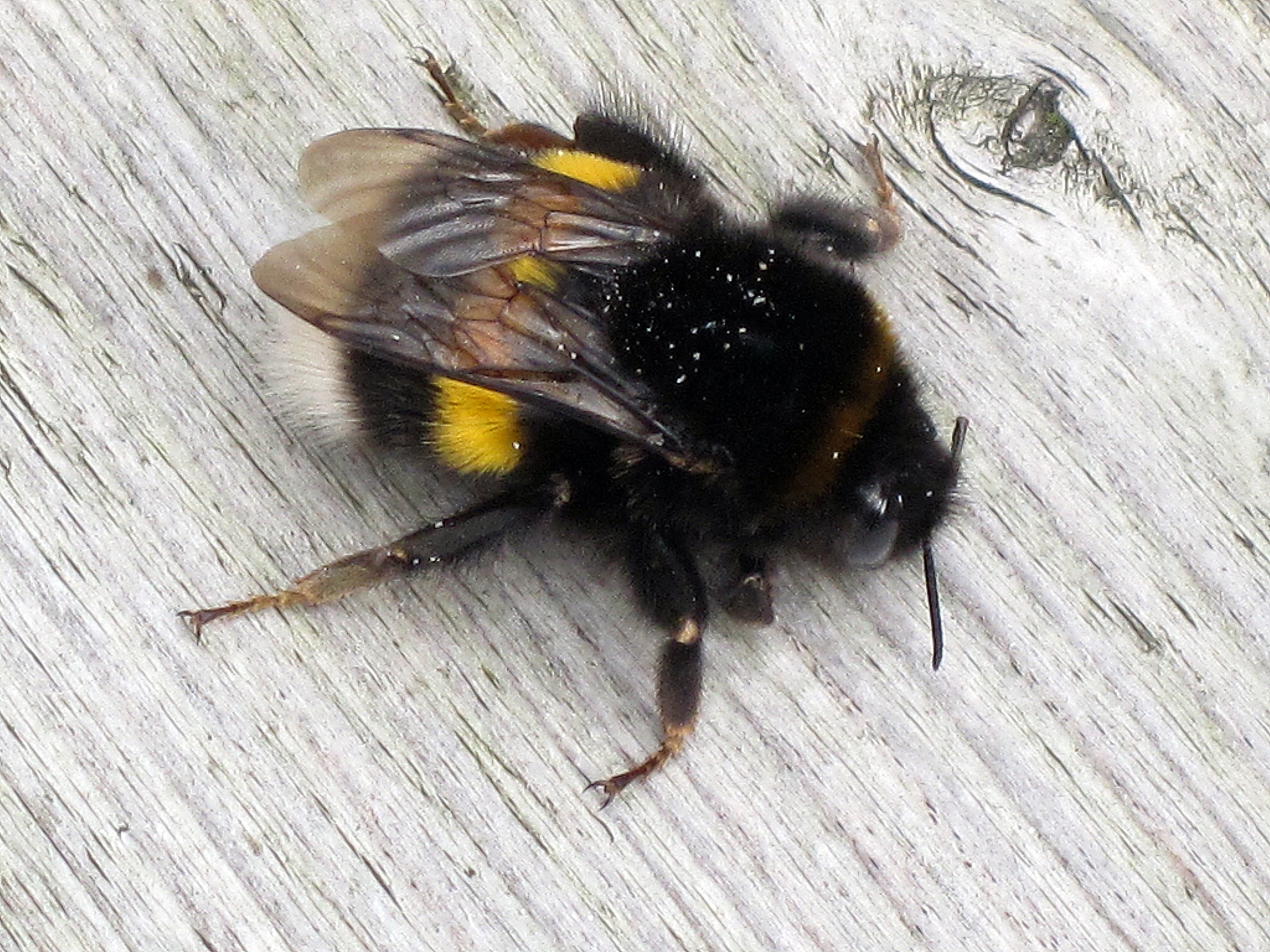
“Bumble bees are very hairy bees with combinations of contrasting bright colors, mostly black and yellow, sometimes with various combinations of red or white. They have two pairs of wings that are usually folded back over the abdomen while they are foraging on flowers, or hooked together as a single unit when in flight. Bumble bees also have slender elbowed antennae, and females of the pollen-collecting species have the hind tibia expanded, slightly concave, and fringed with long hairs to form a pollen basket or corbicula.”

Most bee species are solitary insects; bumblebees, like honeybees, are social insects. Unlike honeybees, bumblebee colonies begin with a new queen each year. New queens, after mating in late summer, overwinter in a protected area and emerge in the spring. They then search for food and a nesting site. Suitable nests include abandoned rodent dens,  the bases of bunchgrasses, hollow logs, and human-made structures. They build up a colony of workers which maintain the nest and forage for food and other resources. As the season comes to a close, the queen produces males and new queens. The new queens mate, go into hibernation, and the rest of the bumblebee colony dies off.

Brown-belted Bumblebee (Bombus griseocollis) - photo credit: wikimedia commons

Brown-belted Bumblebee (Bombus griseocollis) – photo credit: wikimedia commons

Bumblebees face numerous threats, both natural and human-caused. Despite their defensive sting, they are regularly eaten or attacked by various mammals, birds, and invertebrates. They are also host to a variety of pests, parasites, and pathogens, some of which have been introduced or exacerbated by human activities. The commercial bee industry is particularly at fault for the spread of certain maladies. Other major threats include loss of habitat and excessive and/or poorly timed use of insecticides. One looming threat that new research suggests is especially concerning is climate change.

A group of researchers from various institutions looked at the historical ranges of 67 species of bumblebees in Europe and North America over a 110 year period. They “measured differences in species’ northern and southern range limits, the warmest or coolest temperatures occupied, and their mean elevations in three periods relative to a baseline period.” They found that on both continents bumblebees are not tracking climate change by expanding their northern range limits and that their southern range limits are shrinking. They also observed that within the southern range limits, some bumblebee species have retreated to higher elevations. They investigated land use changes and pesticide applications (in the US only) to determine the effect they had on the results. While these things certainly affect populations on an individual level, climate change was determined to be the most important factor that lead to nearly universal range contractions of the bumblebees in this study.

The question then is why are they not tracking changing climates the same way that many other species of plants and animals have already been observed doing? Bumblebees evolved in cooler climates, so shrinking southern range limits is not as surprising as the bumblebees’ delay in moving north. Many factors may be contributing to this phenomenon including lack of specialized habitats beyond their historical ranges, daylength differences, and population dynamics. The researchers call for further investigation in order to better evaluate this observed “range compression.” They also suggest experimenting with assisted migration of certain bumblebee colonies, which in general is a controversial topic among conservation biologists. (Read more about this study here.)

Buff-tailed Bumblebee (Bombus terrestris) - photo credit: wikimedia commons

Buff-tailed Bumblebee (Bombus terrestris) – photo credit: wikimedia commons

The loss of bumblebees is concerning because they play a prominent role in the various ecosystems in which they live. They are prolific and highly effective pollinators of both agricultural crops and native plants, and they are also a major component in the food web. Some species of plants “prefer” the pollination services of bumblebees, such as those in the family Solanaceae. Many plants in this family benefit greatly from buzz pollination – a process in which a bumblebee (or occasionally bees of other species) grabs hold of the flower and vibrates its body, dislodging the pollen.

Participating in bumblebee conservation is simple. It’s similar to any other kind of pollinator conservation. Just learning about the pollinators in your region and being mindful of them can make a big difference. If you own or rent property and have space for a garden (even if its just a few containters on a patio), choose plants that provide food for bumblebees, including spring and summer bloomers. If you live in North America, this Xerces Society publication and the field guide mentioned above are great resources that can help you determine which plants are best for your region. Additionally, if you are working in your yard and happen upon a hibernating queen or a bumblebee nest, do your best not to disturb it. It may disrupt your gardening plans for a season, but the bumblebee sightings and the pollination service they provide will be worth it.

One family of plants in particular that you should consider representing in your yard is the legume family (Fabaceae). Bumblebees are commonly seen pollinating plants in this family, and because these plants have the ability to convert nitrogen in the air into fertilizer, their pollen is especially rich in protein. In his book, A Sting in the Tale, Dave Goulson describes the relationship between bumblebees and legumes:

“From a bumblebee’s perspective, legumes are among the most vital components of a wildflower meadow. Plants of this family include clovers, trefoils and vetches, as well as garden vegetables such as peas and beans, and they have an unusual trick that allows them to thrive in low-fertility soils. Their roots have nodules, small lumps inside which live Rhizobium, bacteria that can trap nitrogen from the air and turn it into a form usable by plants. … This relationship gave legumes a huge advantage in the days before artificial fertilizers were widely deployed. Ancient hay meadows are full of clovers, trefoils, vetches, meddicks and melilots, able to outcompete grasses because they alone have access to plentiful nutrients. Most of these plants are pollinated by bumblebees.”

More information about bumblebees and bumblebee conservation:

Bumblebee Conservation Trust

Bumble Bee Watch

BugGuide (Bombus)

The Xerces Society – Project Bumble Bee

In Defense of Plants – A Podcast Review

I’m an avid podcast listener; however, the majority of the podcasts I listen to, while satisfying many of my varied interests, don’t speak to my interests in plants and plant science. Recently, when I went searching for such a podcast, I happened upon In Defense of Plants. Alas, my podcast queue felt complete.

indefenseofplants

In Defense of Plants began as a blog authored by a guy named Matt. The podcast emerged about 3 years later, and in the first episode (which was posted in January 2015), Matt explains why he started the blog. While searching the internet in an effort to learn more about plants, he discovered that people weren’t writing the stories that he really wanted to read – stories that went beyond mainly talking about the anthropogenic uses of plants. Rather, Matt was interested in the stories of the plants themselves, their biological and evolutionary histories and how they fit in with the ecological world around them. Unable to find such a blog, he decided to start one himself.

His passion for plants for plant’s sake continues in his podcast. It’s evidenced both in the topics he covers as well as in the way he speaks enthusiastically and affectionately about the plants involved in the stories he tells and their habitats. He finds people to interview that are as excited about plants as he is – some are friends, some are research scientists, and some are people otherwise involved in botany or horticulture. All have interesting things to say about the world of plants and plant ecology.

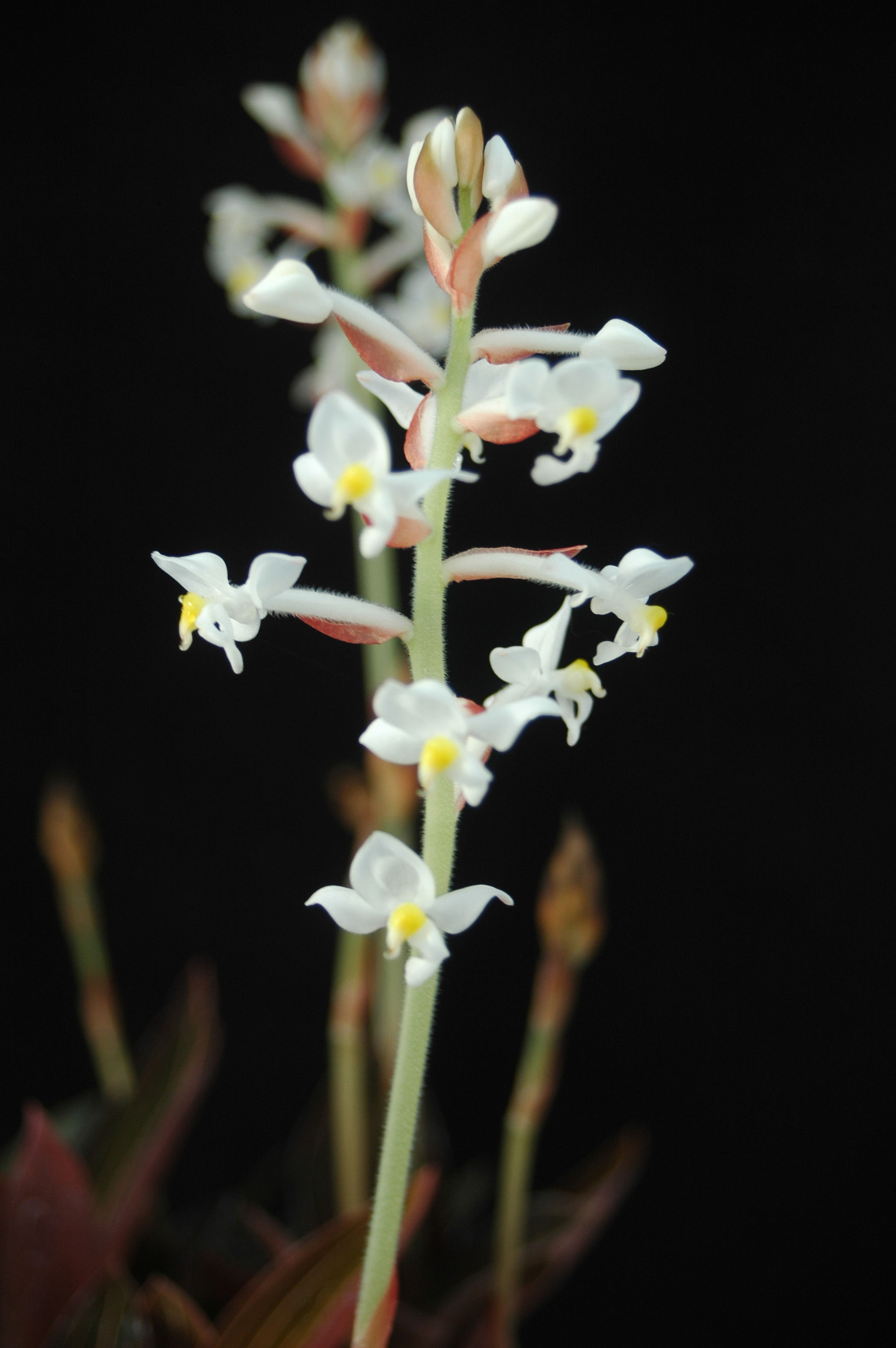
Ludisia discolor - the plant that inspired Matt to start the blog

Ludisia discolor – the plant that inspired Matt to start the blog (photo credit: www.eol.org)

Over the mere nine months that the podcast has been in existence, Matt has shared some of his personal botanical explorations. When he started the podcast he was living in Buffalo, NY. He completed a Master’s degree program there and has since moved to Illinois to pursue a PhD. His most recent episodes find him exploring the tallgrass prairie of the Midwest. He’s got my attention, since this is one of my favorite ecosystems in North America.

Standout episodes to me so far have been the two part episode with Russel Funderburk as they walk through the grounds of the Highlands Biological Station, the discussion with Dave Spiering about urban ecology, and the interview with Dr. Robert Warren about invasive species (“a refreshing take”). The episode about pack rat middens and the candid discussion with Matt’s friend Steve about why they botanize are also great. Matt and Steve also do an episode about plant poaching, a topic that deserves much more attention than it gets.

The love Matt has for plants is infectious, and it is hard not to feel his excitement as he helps tell their stories. So, if you find that your podcast queue is lacking something purely plant related, In Defense of Plants is a podcast you should definitely be following.

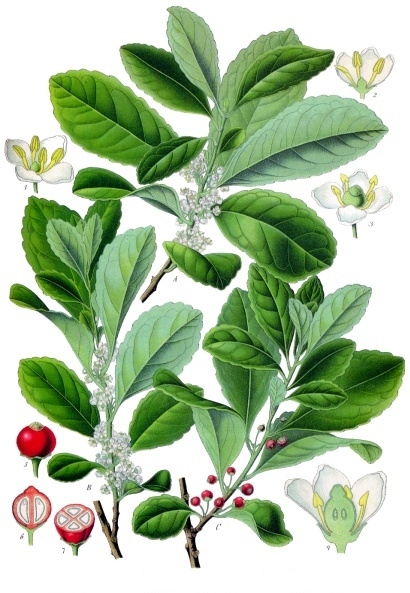
Yerba Mate (Ilex paraguariensis)

Yerba Mate (Ilex paraguariensis) is featured in two episodes of In Defense of Plants. Listen to part one and part two. (photo credit: wikimedia commons)


In Defense of Weeds – A Book Review

Weeds have been with us since the beginning of human civilization. We created them, really. We settled down, started growing food, urbanized, and in doing so we invited opportunistic plant species to join us – we created spaces for them to flourish and provided room for them to spread out and settle in. During our history together, our attitudes about weeds have swung dramatically from simply living with and accepting them, recognizing their usefulness, incorporating them into our religious myths and cultural traditions, to developing feelings of disgust and disdain and ultimately declaring outright war against them. In a sense, weeds are simultaneously as wild and as domestic as a thing can be. They remind us of ourselves perhaps, and so our feelings are mixed.

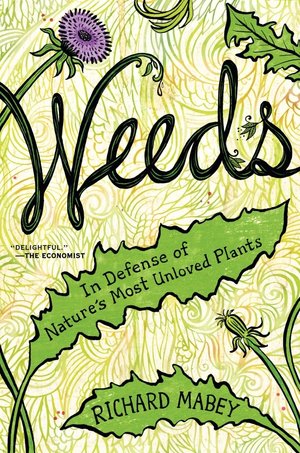
Considering our combined history and the fact that weeds have stuck with us all along, perhaps it’s time we give them a little respect. This seems to be the objective of Richard Mabey’s book, Weeds: In Defense of Nature’s Most Unloved Plants. In Mabey’s own words, “this book is a case for the defense, an argued suggestion that we look more dispassionately at these outlaw plants, at what they are, how they grow, and the reasons we regard them as trouble.” Additionally, we should recognize that we wrote the definition for weeds: “plants become weeds because people label them as such.” We introduce them, create conditions in which they can thrive, and then turn around and despise them for doing what they do best. “In a radical shift of perspective we now blame the weeds, rather than ourselves;” however, as Mabey ultimately concludes, “we get the weeds we deserve.”

weeds book

But before he arrives at that conclusion – and certainly Mabey has more to say than that pithy remark – Mabey takes readers on a remarkable journey. Starting with the origins of agriculture – and the origins of weeds – he recounts the story of how weeds followed civilization as it spread across the globe. He describes our diverse reactions to weeds, how we have dealt with them, and how they have infiltrated our myths, art, cultures, food, medicine, rituals, philosophies, and stories. Along the way, certain weeds are profiled using Mabey’s unique prose. Each weed has a story to tell – some more sordid than others.

Mabey is a British author, and so the book has a strong Anglocentric slant. But this seems fitting considering that the explorations and migrations of early Europeans are probably responsible for moving more plant species around than any other group in history – at least up until the modern era. Mabey describes the myriad ways these plants were introduced: “Some simply rode piggy-back on crop and garden plants…others were welcomed as food plants or glamorous ornaments, but escaped or were thrown out and became weeds as a consequence of unforeseen bad behavior.” The seeds of many species hitched rides with numerous agricultural and industrial products, while others attached themselves to clothing, shoes, and animal fur. Everywhere humans traveled, weeds followed.

Weeds are one of the great legacies Europeans brought with them as they settled the American continent. A veritable wave of new plant species entered the Americas as the Europeans trickled in, some were purposeful introductions and some accidental. Ever the opportunists, Europe’s weeds traversed across the continent as settlers tilled and altered the land. Mabey details the introduction of “invasive European weeds” to the western United States, claiming that “by the twentieth century two-thirds of the vegetation of the western grasslands was composed of introduced species, mostly European.

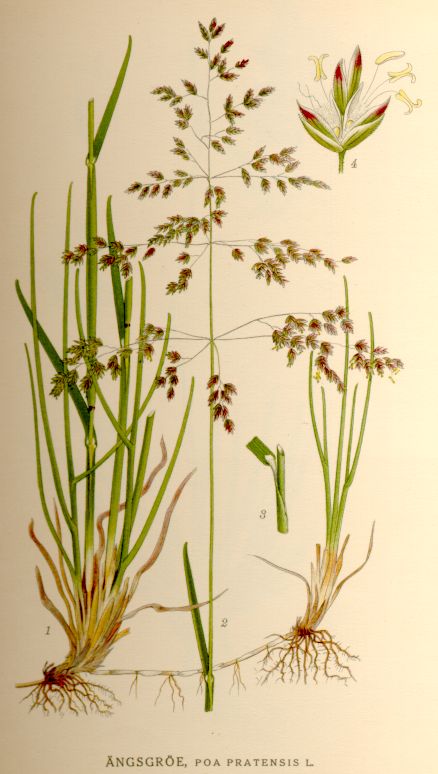
One of these European species in particular has been wholeheartedly embraced by American culture; it was even given an American name. Kentucky bluegrass, Poa pratensis, “is a common, widespread but unexceptional species of grassy places in Europe…but in uncontested new grazing lands of North America it could color whole sweeps of grassland.” It has since become a preferred turfgrass species, and it’s innate ability to thrive here makes it partly responsible for Americans’ obsession with the perfect lawn. Oddly, other European invaders infiltrating a pristine, green lawn are unwelcome and derided as “weeds.” In actuality, considering its relentless, expansive, and spreading nature and its reliance on humans to perpetuate its behavior, turfgrass is much more fit for the label “weed” than any other species that invades it. As Mabey asserts, “a lawn dictates its own standards…the demands made by its singular, unblemished identity, its mute insistence that if you do not help it to continue along the velvet path you have established for it, you are guilty of a kind of betrayal.”

Kentucky bluegrass (Poa pratensis) also known as smooth meadow-grass - photo credit: wikimedia commons

Kentucky bluegrass (Poa pratensis), also known as smooth meadow-grass – photo credit: wikimedia commons

Reading along it becomes clear that Mabey is infatuated with weeds. You can see it in sentences like, “the outlandish enterprise of weeds – such sharp and fast indices of change – can truly lift your heart.” This doesn’t mean that in his own garden he doesn’t “hoick them up when they get in [his] way.” It just means that his “capricious assault” is “tinged with respect and often deflected by a romantic mood.” Does Mabey wish his readers to swoon the way he does over these enterprising and opportunistic aliens? Perhaps. More than that he seems to want to instill an awe and admiration for what they can do. In many cases they serve important ecological functions, including being a sort of “first responder” after a disturbance due to their fast acting and ephemeral nature. In this way, weeds “give something back” by “holding the bruised parts of the planet from falling apart.” They also “insinuate the idea of wild nature into places otherwise quite shorn of it,” and so despite their dependence on human activities, they could be considered “the very essence of wildness.”

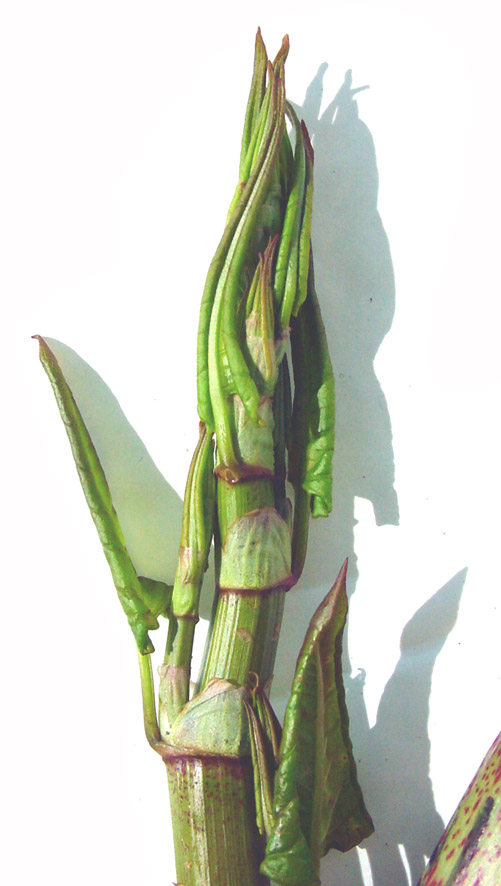
For all the love Mabey has for weeds, he remains convinced that some absolutely need to be kept in check. He calls out Japanese knotweed specifically – an “invader with which a truly serious reckoning has to be made.” In speaking of naturalized plant species – introduced species that propagate themselves and “spread without deliberate human assistance” – he makes the comparison to humans becoming naturalized citizens in countries where they were not born. In this sense he argues for more acceptance of such species, while simultaneously warning that “there are invasive species that ought never to get their naturalization papers.”

Japanese knotweed (Fallopia japonica) is listed as one the 100 Worst Invasive Species - photo credit: wikimedia commons

Japanese knotweed (Fallopia japonica) is listed as one the 100 Worst Invasive Species – photo credit: wikimedia commons

This is an engrossing read, and regardless of how you feel about weeds going in, Mabey will – if nothing else – instill in you a sort of reverence for them. You may still want to reach for the hoe or the herbicide at the sight of them – and you may be justified in doing that – but perhaps you’ll do so with a little more understanding. After all, humans and weeds are kindred species.

As a type they are mobile, prolific, genetically diverse. They are unfussy about where they live, adapt quickly to environmental stress, use multiple strategies for getting their own way. It’s curious that it took so long to realize that the species they most resemble is us.

Listen to Mabey talk about his book and his interest in weeds on these past episodes of Science Friday and All Things Considered.

Year of Pollination: Figs and Fig Wasps

This post originally appeared on Awkward Botany in November 2013. I’m reposting an updated version for the Year of Pollination series because it describes a very unique and incredibly interesting interaction between plant and pollinator. 

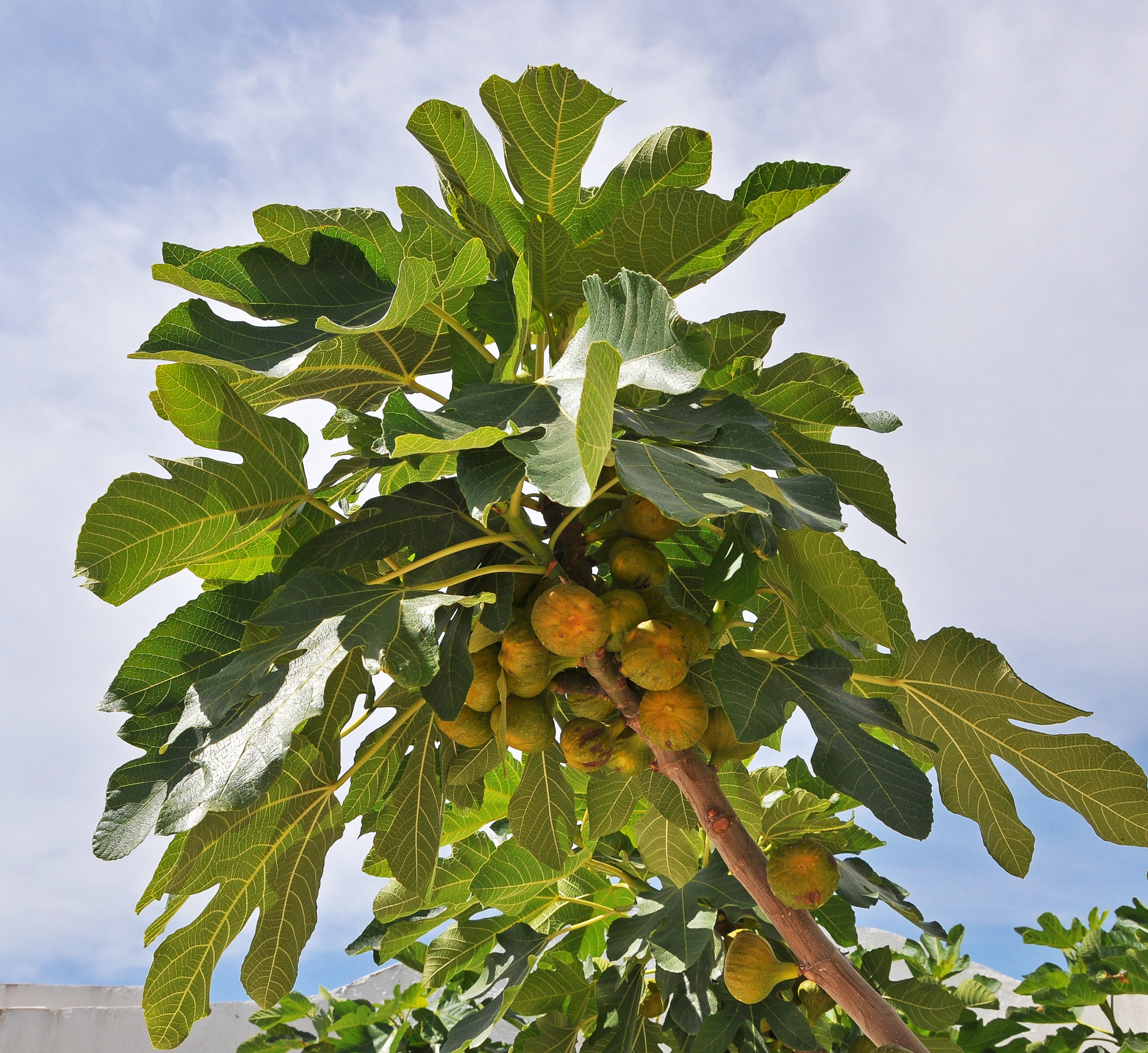
Ficus is a genus of plants in the family Moraceae that consists of trees, shrubs, and vines. Plants in this genus are commonly referred to as figs, and there are nearly 850 described species of them. The majority of fig species are found in tropical regions, however several occur in temperate regions as well. The domesticated fig (Ficus carica), also known as common fig, is widely cultivated throughout the world for its fruit.

common fig

Common Fig (Ficus carica) – photo credit: wikimedia commons

The fruit of figs, also called a fig, is considered a multiple fruit because it is formed from a cluster of flowers. A small fruit develops from each flower in the cluster, but they all grow together to form what appears to be a single fruit. The story becomes bizarre when you consider the location of the fig flowers. They are contained inside a structure called a syconium, which is essentially a modified fleshy stem. The syconium looks like an immature fig. Because they are completely enclosed inside syconia, the flowers are not visible from the outside, yet they must be pollinated in order to produce seeds and mature fruits.

This is where the fig wasps come in. “Fig wasp” is a term that refers to all species of chalcid wasps that breed exclusively inside of figs. Fig wasps are in the order Hymenoptera (superfamily Chalcidoidea) and represent at least five families of insects. Figs and fig wasps have coevolved over tens of millions of years, meaning that each species of fig could potentially have a specific species of fig wasp with which it has developed a mutualistic relationship. However, pollinator host sharing and host switching occurs frequently.

Fig wasps are tiny, mere millimeters in length, so they are not the same sort of wasps that you’ll find buzzing around you during your summer picnic. Fig wasps have to be small though, because in order to pollinate fig flowers they must find their way into a fig. Fortunately, there is a small opening at the base of the fig called an ostiole that has been adapted just for them.

What follows is a very basic description of the interaction between fig and fig wasp; due to the incredible diversity of figs and fig wasps, the specifics of the interactions are equally diverse.

First, a female wasp carrying the pollen of a fig from which she has recently emerged discovers a syconium that is ready to be pollinated. She finds the ostiole and begins to enter. She is tiny, but so is the opening, and so her wings, antennae, and/or legs can be ripped off in the process. No worries though, since she won’t be needing them anymore. Inside the syconium, she begins to lay her eggs inside the flowers. In doing so, the pollen she is carrying is rubbed off onto the stigmas of the flowers. After all her eggs are laid, the female wasp dies. The fig wasp larvae develop inside galls in the ovaries of the fig flowers, and they emerge from the galls once they have matured into adults. The adult males mate with the females and then begin the arduous task of chewing through the wall of the fig in order to let the females out. After completing this task, they die. The females then leave the figs, bringing pollen with them, and search for a fig of their own to enter and lay eggs. And the cycle continues.

But there is so much more to the story. For example, there are non-pollinating fig wasps that breed inside of figs but do not assist in pollination – freeloaders essentially. The story also differs if the species is monoecious (male and female flowers on the same plant) compared to dioecious (male and female flowers on different plants). It’s too much to cover here, but figweb.org is a great resource for fig and fig wasp information. Also check out the PBS documentary, The Queen of Trees.


Year of Pollination: Most Effective Pollinator Principle and Beyond, part two

“The most effective pollinator principle implies that floral characteristics often reflect adaptation to the pollinator that transfers the most pollen, through a combination of high rate of visitation to flowers and effective deposition of pollen during each visit.” – Mayfield, et al., Annals of Botany (2001) 88 (4): 591-596

In part one, I reviewed a chapter by Jose M. Gomez and Regino Zamora in the book Plant-Pollinator Interactions: From Specialization to Generalization that argues that the most effective pollinator principle (MEPP) “represents just one of multiple evolutionary solutions.” In part two, I summarize a chapter by Paul A. Aigner in the same book that further explains how floral characteristics can evolve without strictly adhering to the MEPP.

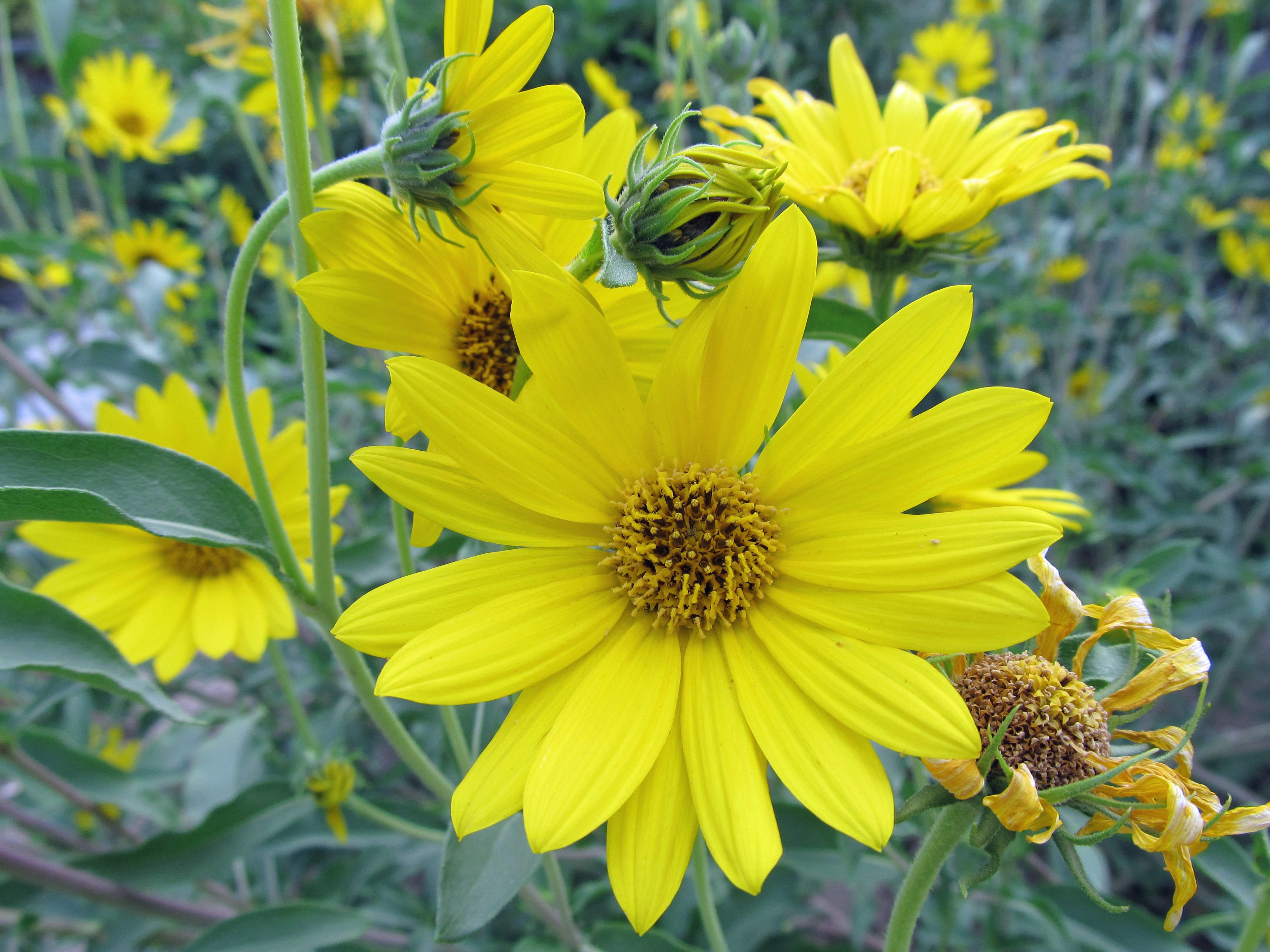
maximilian sunflower
Aigner is interested in how specialization develops in different environments and whether or not flowering plants, having adapted to interact with a limited number of pollinators, experience trade-offs. A trade-off occurs when a species or population adapts to a specific environmental state and, in the process, loses adaptation to another state. Or in other words, a beneficial change in one trait results in the deterioration of another. Trade-offs and specialization are often seen as going hand in hand, but Aigner argues that trade-offs are not always necessary for an organism to evolve towards specialization. Plant-pollinator interactions provide an excellent opportunity to test this.

“Flowers demand study of specialization and diversification,” Aigner writes, not only due to their ubiquity, “but because much of the remarkable diversity seen in these organisms is thought to have evolved in response to a single and conspicuous element of the environment – pollination by animals.” If pollinators have such a strong influence on shaping the appearance of flowers, pollination studies should be rife with evidence for trade-offs, but they are not. Apart from not being well-studied, Aigner has other ideas about why trade-offs are not often observed in this scenario.

Aigner is particularly interested in specialization occuring in fine-grained environments. A course-grained environment is “one in which an organism experiences a single environmental state for all of its life.” Specialization is well understood in this type of environment. A fine-grained environment is “one in which an organism experiences all environmental states within its lifetime,” such as “a flowering plant [being] visited by a succession of animal pollinators.” For specialization to develop in a fine-grained environment, a flowering plant must “evolve adaptations to a particular type of pollinator while other types of pollinators are also present.”

It’s important to note that the specialization that Aigner mainly refers to is phenotypic specialization. That is, a flower’s phenotype [observable features derived from genes + environment] appears to be adapted for pollination by a specific type of pollinator, but in fact may be pollinated by various types of pollinators. In other words, it is phenotypically specialized but ecologically generalized. Aigner uses a theoretical model to show that specialization can develop in a fine-grained environment with and without trade-offs. He also uses his model to demonstrates that a flower’s phenotype does not necessarily result from its most effective pollinator acting as the most important selection agent. Instead, specialization can evolve in response to a less-effective pollinator “when performance gains from adapting to the less-effective pollinator can be had with little loss in the performance contribution of the more effective pollinator.”

Essentially, Aigner’s argument is that the agents that are the most influential in shaping a particular organism are not necessarily the same agents that offer the greatest contribution to that organism’s overall fitness. This statement flies in the face of the MEPP, and Aigner backs up his argument with (among other examples) his studies involving the genus Dudleya.

Dudleya saxosa (panamint liveforever) - photo credit: wikimedia commons

Dudleya saxosa (panamint liveforever) – photo credit: wikimedia commons

Dudleya is ecologically generalized. Pollinators include hummingbirds, bumblebees, solitary bees, bee flies, hover flies, and butterflies. “Some Dudleya species and populations are visited by all of these taxa, whereas others seem to be visited by only a subset.” Aigner was curious to see if certain species or populations were experiencing trade-offs by adapting to a particular category of pollinators. Aigner found variations in flower characteristics among species and populations as well as differences in pollinator assemblages that visited the various groups of flowers over time but could not conclude that there were trade-offs “in pollination performance.”

In one study, he looked at pollination services provided by hummingbirds vs. bumblebees as corolla flare changed in size. In male flowers, bumblebees were efficient at removing pollen regardless of corolla flare size, while hummingbirds removed pollen more effectively as corolla flare decreased. Both groups deposited pollen more effectively as corolla flare decreased, but hummingbirds more strongly so. Ultimately, Aigner concluded that “the interactions did not take the form of trade-offs,” or, as stated in the abstract of the study, ” phenotypic specialization [for pollination by hummingbirds] might evolve without trading-off the effectiveness of bumblebees.”

Aigner goes on to explain why floral adaptations may occur without obvious trade-offs. One reason is that different groups of pollinators are acting as selective agents for different floral traits, “so that few functional trade-offs exist with respect to individual traits.” Pollinators have different reasons for visiting flowers and flowers use the pollination services of visitors differently. Another reason involves the “genetic architecture” of the traits being selected for. Results can differ depending on whether or not the genes being influenced are linked to other genes, and genetically based fitness trade-offs may not be observable phenotypically. Further studies involving the genetic architecure of specialized phenotypes are necessary.

And finally, as indicated in part one, pollinators are not the only floral visitors. In the words of Aigner, “if floral larcenists and herbivores select for floral traits in different directions than do pollinators, plants may face direct trade-offs in improving pollination service versus defending against enemies.” These “floral enemies” can have an effect on the visitation rates and per-visit effectiveness of pollinators, which can drastically alter their influence as selective agents.

Like pollination syndromes, the most effective pollinator principle seems to have encouraged and directed a huge amount of research in the field of pollination biology, despite not holding entirely true in the real world. As research continues, a more complete picture will develop. It doesn’t appear that it will conform to an easily digestible principle, but there is no question that, even in its complexity, it will be fascinating.

I will end as I began, with an excerpt from Thor Hanson’s book, The Triumph of Seeds: “The notion of coevolution implies that change in one organism can lead to change in another – if antelope run faster, then cheetahs must run faster still to catch them. Traditional definitions describe the process as a tango between familiar partners, where each step is met by an equal and elegant counter-step. In reality, the dance floor of evolution is usually a lot more crowded. Relationships like those between rodents and seeds [or pollinators and flowers] develop in the midst of something more like a square dance, with couples constantly switching partners in a whir of spins, promenades, and do-si-dos. The end result may appear like quid pro quo, but chances are a lot of other dancers influenced the outcome – leading, following, and stepping on toes along the way.”

Year of Pollination: Most Effective Pollinator Principle and Beyond, part one

Have you ever considered the diversity of flowers? Why do they come in so many different shapes, sizes, and colors? And why do they produce so many different odors – or none at all? Flowering plants evolved around 140 million years ago, a fairly recent emergence evolutionarily speaking. Along with them evolved numerous species of insects, birds, and mammals. In his book, The Triumph of Seeds, Thor Hanson describes the event this way: “In nature, the flowering plants put sex, seeds, and dispersal on full display, spurring not only their own evolution but also that of the animals and insects with which they became so entwined. In most cases, the diversity of dispersers, consumers, parasites – and, most especially, pollinators – rose right alongside that of the plants they depended upon.”

Speaking of dependence, most flowering plants depend upon pollinators for successful reproduction – it is, for the most part, a mutually beneficial relationship. Even the casual observer of flowers will note that a large portion of the creatures that visit them appear to be pollinators. Thus, it is no wonder that pollination biologists have given pollinators so much credit in shaping the flowers that we see today.

Consider G. Ledyard Stebbins and his Most Effective Pollinator Principle which he defined in a paper published in 1970: “the characteristics of the flower will be molded by those pollinators that visit it most frequently and effectively in the region where it is evolving.” He then goes on to reference pollination syndromes, a phenomenon that describes how the traits of flowers are best suited for their “predominant and most effective vector[s].” In my post about pollination syndromes a few months ago, I discussed how a strict adherence to this concept has waned. In the next two posts, I discuss how the Most Effective Pollinator Principle (MEPP) may not be the best way to explain why flowers look the way they do.


To make this argument I am drawing mainly from two chapters in the book Plant-Pollinator Interactions: From Specialization to Generalization. The first is “Ecological Factors That Promote the Evolution of Generalization in Pollination Systems” by Jose M. Gomez and Regino Zamora, and the second is “The Evolution of Specialized Floral Phenotypes in a Fine-grained Pollination Environment” by Paul A. Aigner.

According to Aigner the MEPP “states that a plant should evolve specializations to its most effective pollinators at the expense of less effective ones.” And according to Gomez and Zamora it “states that natural selection should modify plant phenotypes [observable characteristics derived from interactions between a plant’s genes and its surrounding environment] to increase the frequency of interaction [between] plants and the pollinators that confer the best services,” and so “we would expect the flowers of most plants to be visited predominantly by a reduced group of highly effective pollinators.” This is otherwise known as adaptive specialization.

Specialization is something that, in theory, plants are generally expected to evolve towards, particularly in regards to plant-pollinator relationships. Observations, on the other hand, demonstrate the opposite – that specialization is rare and most flowering plants are generalists. However, the authors of both chapters advise that specialization and generalization are extreme ends to a continuum, and that they are comparative terms. One species may be more specialized than another simply because it is visited by a smaller “assemblage” of pollinators. The diversity of pollinators in that assemblage and the pollinator availability in the environment should also be taken into consideration when deciding whether a relationship is specialized or generalized.

That pollinators can be agents in shaping floral forms and that flowering plant species can become specialized in their interactions with pollinators is not the question. There is evidence enough to say that it occurs. However, that the most abundant and/or effective pollinators are the main agents of selection and that specialization is a sort of climax state in the evolutionary process (as the MEPP seems to suggest) is up for debate. Generalization is more common than specialization, despite observations demonstrating that pollinators are drawn to certain floral phenotypes. So, could generalization be seen as an adaptive strategy?

In exploring this question, Gomez and Zamora first consider what it takes for pollinators to act as selective agents. They determine that “pollinators must first benefit plant fitness,” and that when calculating this benefit, the entire life cycle of the plant should be considered, including seed germination rate, seedling survival, fecundity, etc. The ability of a pollinator species to benefit plant fitness depends on its visitation rate and its per-visit effectiveness (how efficiently pollen is transferred) – put simply, a pollinator’s quantity and quality during pollination. There should also be “among-pollinator differences in the evolutionary effect on the plant,” meaning that one species or group of pollinators – through being more abundant, effective, or both – contributes more to plant fitness compared to others. “Natural selection will favor those plant traits that attract the most efficient or abundant pollinators and will also favor the evolution of the phenotypes that cause the most abundant pollinators to also be the most effective.” This process implies possible “trade-offs,” which will be discussed in part two.

When pollinators act as selective agents in this way, the MEPP is supported; however, Gomez and Zamora argue that this scenario “only takes place when some restrictive ecological conditions are met” and that while specialization can be seen as the “outcome of strong pollinator-mediated selection,” generalization can also be “mediated by selection exerted by pollinators…in some ecological scenarios.” This is termed adaptive generalization. In situations where ecological forces constrain the development of specialization and pollinators are not seen as active selection agents, nonadaptive generalization may be occurring.

Gomez and Zamora spend much of their chapter exploring “several causes that would fuel the evolution of generalization” both adaptive and nonadaptive, which are outlined briefly below.

  • Spatiotemporal Variability: Temporal variability describes differences in pollinator assemblages over time, both throughout a single year and over several years. Spatial variability describes differences in pollinator assemblages both among populations where gene flow occurs and within populations. Taken together, such variability can have a measurable effect on the ability of a particular pollinator or group of pollinators to act as a selective agent.
  • Similarity among Pollinators: Different pollinator species can have “equivalent abundance and above all comparable effectiveness” making them “functional equivalents from the plant perspective.” This may be the case with both closely and distantly related species. Additionally, a highly effective pollinator can select for floral traits that attract less effective pollinators.
  • The Real Effects on Plant Fitness: An abundant and efficient pollinator may select for one “fitness component” of a plant, but may “lead to a low overall effect on total fitness.” An example being that “a pollinator may benefit seed production by fertilizing many ovules but reduce seedling survival because it causes the ripening of many low-quality seeds.” This is why “as much of the life cycle as possible” should be considered “in assessing pollinator effectiveness.”
  • Other Flower Visitors: Pollinators are not the only visitors of flowers. Herbivores, nectar robbers, seed predators, etc. may be drawn in by the same floral traits as pollinators, and pollinators may be less attracted to flowers that have been visited by such creatures. “Several plant traits are currently thought to be the evolutionary result of conflicting selection exerted by these two kinds of organisms,” and “adaptations to avoid herbivory can constrain the evolution of plant-pollinator interactions.”

This, of course, only scratches the surface of the argument laid out by Gomez and Zamora. If this sort of thing interests you, I highly encourage you to read their chapter. Next week I will summarize Aigner’s chapter. If you have thoughts on this subject or arguments to make please don’t hesitate to comment or contact me directly. This is a dialogue, dudes.