Horticulture’s Weedy Introductions in a Changing Climate

In case I need a reminder that the horticulture industry has a history of introducing weedy plants to natural areas, I get one each time I bike to work. Riding along the Boise River Greenbelt, a trail that for much of its length is flanked by cultivated landscapes on one side and a highly modified but largely naturalized river bank on the other, I see a mixture of both native and introduced plants. Of the introduced plants, many are horticultural species that have escaped cultivation and established themselves on the bank of the river. There are catalpa and black locust trees brought in from the other side of the country, St. John’s wort and chicory from Eurasia, honeysuckles primarily from Asia, and a few different cherry species and hybrids with varied provenances. And this is just a small sample of what can be found along my three and a half mile bike ride.

St. John’s wort (Hypericum perforatum) on the banks of the Boise River

This is certainly not a new concern. We have been aware of the role that horticulture plays in introducing invasive species for quite some time now. Several years back, while doing a deep dive into the topic of invasive species, I wrote about this issue right here on this very blog. According to a study published in Frontiers in Ecology and the Environment (2021), out of 1285 plant species identified as invasive, 61% are currently sold in nurseries. If that’s not concern enough, an additional factor to consider is climate change. Plants that were less likely to escape cultivation and head for the wild, may take the opportunity to do so in a changing climate. Plus, horticultural plants that are already problems in certain areas could expand their range as climates become more favorable in new locations, especially if these plants continue to be sold in nearby nurseries.

These concerns and more are the topic of a paper published in BioScience (2023). Evelyn M. Beaury, et al. looked at nurseries across the United States and the plants they sell in order to determine where invasive plants are still being sold in regions where they are invasive. Additionally, they looked at plants known to be invasive but that are not currently invasive in the regions they are being sold. Using climate models, they predicted whether or not these plants could become invasive under changing climates.

Plants are being moved around with a lot more ease than they once were, and the sales of problematic plants are increasingly difficult to regulate. For one thing, plants prohibited for sale in one state can be purchased at nurseries in neighboring states and brought back to be planted in regions where those plants are invasive. And while mail order has existed for a long time, online ordering makes the process even simpler; and many online plant vendors are not liscensed nurseries, making them much more difficult to regulate. But even regulation is typically a response to something that has already become a problem, rather than a proactive measure to prevent plants from escaping into natural areas.

Beaury, et al. identified 672 nurseries across the United States, both online and traditional retailers. Each of these nurseries were selling one or more of the 89 plant species that became the focus of their research. These are plant species that are either on federal or state noxious weed lists or that have been identified as invasive by Invasive Plant Atlas. The reach of each nursery was determined by using customer reviews to compute distances that plants might travel after being purchased at nurseries or from online stores. Obviously, not every customer that purchases a plant leaves a review, but this is a good way to get a general idea how far away customers are from nurseries without having access to more detailed records. These geotagged reviews can also be cross-referenced with known distributions of invasive plants. Using climate models and environmental predictor variables, the researchers determined areas of current and potential invasion for each of the 89 plants.

tansy (Tanacetum vulgare) – one of the 89 plant species looked at in the study

The first question was about proximity to current records of plant invasions. Results showed that “49 of the 89 ornamental invasives were sold within 21 kilometers (13 miles) of an observed record of invasion.” When invasive plants are sold and planted near locations where they are already known to be invasive, it gives them the opportunity to add new plants to existing or developing invasions. In ecology, this is known as propagule pressure. When it comes to current and future climate, most species in the study are being sold by nurseries where the climate is either currently favorable for range expansion or may eventually become favorable. Specifically for future climate, 40 of the 89 plants are being sold in regions that are currently suitable for invasion and will continue to be suitable as the climate changes, and 25 of the 89 plants are being sold in regions where the climate is currently unsuitable but will become suitable as temperatures warm.

Particularly for plants being sold in areas that are not yet suitable for invasion, there is time to educate both the nursery industry and the general public and to look for alternatives to these plants. However, as the researchers point out, their analysis “only examined about 10% of the larger pool of U.S. ornamental plants known to be invasive,” and they “sampled only a subset of the nurseries that could be selling invasive species in the United States.” It is highly likely that the results of this study are an underestimation of the problem. Clearly the work of education and finding alternatives to problematic plants is monumental. The hope is that studies like this can help with education and can assist with working out ways to regulate sales of invasive plants.

coltsfoot (Tussilago farfara) – another one of the 89 plant species looked at in the study

Regulating the sale of plants is beyond most of our control, and how much regulation we should be enforcing on nurseries in the first place is a debate we should be having. Outside of those questions, there is a responsibility that we should take as gardeners and as residents of the planet. If we choose to grow plants, it is crucial that we get to know them. We should be taking the time to observe the degree to which they spread and how they are being dispersed. When they do move around our yards, where are they going, and are they able to grow outside of our care? Are they leaving our properties and coming up elsewhere? If we choose to plant non-native species, we should be mindful of how they might affect nearby, wild landscapes if they were to escape our yards and establish themselves in these locations. We should also be aware of where we live in the city. If our gardens are in the middle of a dense urban landscape, perhaps there is less concern that our plants will move beyond the borders of our gardens. But if we garden near natural areas, we should be significantly more selective about the things we plant, and we ought to be more observant as to what those plants are up to.

Nurseries generally sell the plants that gardeners want to buy, which means we can choose not to buy problematic plants and instead demand alternatives to these plants. Seeking out nurseries that sell the types of plants that are better suited for our regions and do not exhibit invasive behaviors can send a message to other growers that they should phase out certain plants and start growing the plants that gardeners are asking for. This may be a simplistic take, and as with most things, it’s complicated. While one of the goals of this research is to help influence regulators, another goal is simply to “[share] information about high-risk ornamental invaders across states and regions, and [work] with horticulture and community members to reduce the escape of ornamental species into natural areas.” This is precisely the area where gardeners can make a difference.

On that note, I will be starting a new series of posts to discuss some of the ornamental species that have gone weedy. By getting to know the plants that find themselves in this predicament, we can be better situated to make informed decisions about what to do about them.

Eating Weeds: Japanese Knotweed

When I first learned that Japanese knotweed was edible, I had my doubts. Sure, lots of plants may be edible, but are they really something you’d want to eat? I know Japanese knotweed as one of the most notorious weeds on the planet. Its destructive, relentless, and prolific nature has landed it on the world’s 100 worst invasive species list, right up there with black rats, Dutch elm disease, and killer algae. Having encountered a fair number of Japanese knotweed stands, the first thing to come to mind has never been, “that looks delicious.” Mature stalks stand as tall as 3 meters with broad, leathery leaves and hollow, bamboo-like stems. Their late summer flowers – a mess of tiny white florets on sprawling flower stalks – are a pollinator’s delight and favored by beekeepers for their abundant nectar. I don’t doubt that the honey produced from such an encounter is tasty, but the plant itself? I needed convincing.

Finally, I looked into it. I came across recipes of Japanese knotweed pickles and learned that it was the young, early emerging shoots that were sought after. That changed my perspective. Certainly you wouldn’t want to gnaw on a woody, 4 foot tall Japanese knotweed stalk, but the tender stems as they’re just beginning to re-emerge from the ground in the spring? Now those might be worth trying.

emerging stems of Japanese knotweed (Reynoutria japonica)

Japanese knotweed (Reynoutria japonica) was introduced to Europe from Japan in the 1800’s, arriving at Royal Botanic Gardens Kew by 1850. At that point, it was a prized ornamental. Its thick stems spotted with reds and purples, its broad, shiny leaves, and its showy flower heads all gave it garden appeal. It was also found to be useful for stabilizing hillsides and reducing erosion, honey production, and as a rhubarb substitute (it’s in the same plant family as rhubarb after all). Not long after that, it made its way to North America. Certainly people must have been aware of its propagative prowess as they moved the plant around. It readily roots from root and stem fragments, plus it produces extensive rhizomes, working their way as deep as 3 meters into the soil and as far as 7 meters away from the parent plant. Perhaps that should have been cause for alarm, but how could anyone have predicted just how aggressive and widespread it would soon become?

Thanks to the plant’s rhizomes, Japanese knotweed grows in thick, many-stemmed stands, pushing out, shading out, and leaving very little room for other plants. The rhizomes are also tough and can push up through gravel, cement, and asphalt. They are notorious for damaging foundations, pipes, and even pushing their way through floorboards. If that’s not enough, Japanese knotweed is pretty much impossible to kill. Herbicides may set it back, but they generally don’t take it out. Cutting it down repeatedly can slow it down, but it may also encourage it to grow more thickly and spread out more widely. Smothering it can work, but you have to be prepared to keep it smothered for quite a while. The deep rhizomes are slow to die, and they may eventually find their way outside of the smothered area, popping up to destroy your efforts to contain it. You can try to dig it out, but the amount of dirt you’d have to dig to get every last root and rhizome really isn’t feasible in most circumstances.

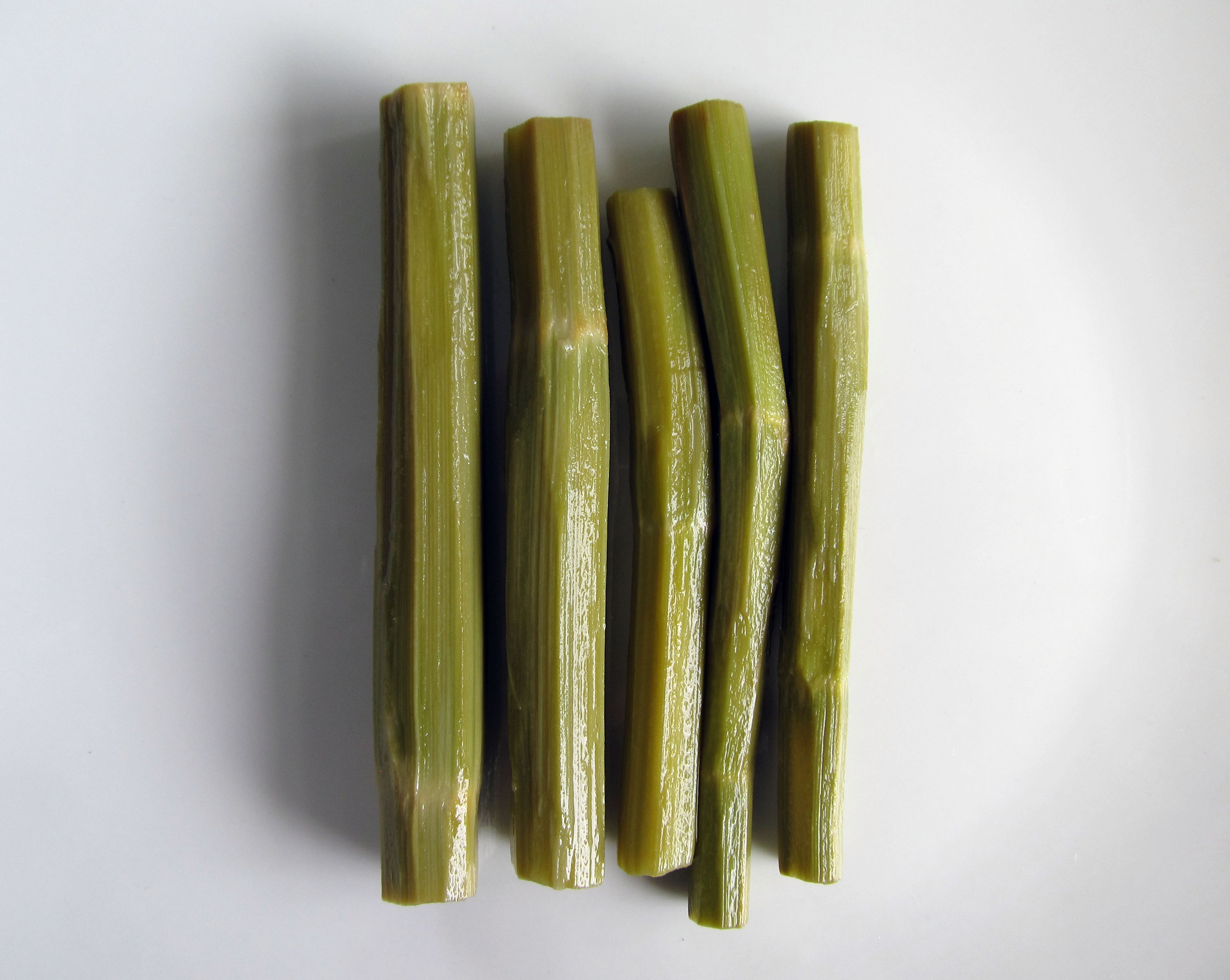
But hey, you can eat it, and perhaps you should. A quick internet search reveals a number of ways the plant can be consumed – purees, chutneys, compotes, sorbets. I chose to go with pickled Japanese knotweed. It seemed simple and approachable enough and a good way to determine if I was going to like it or not. Room temperature brine fermentation is pretty easy. You basically put whatever you’re wanting to pickle in a jar, add whatever spices and things you’d like, fill the jar with salty water, then seal it shut and let it sit there for a few days. Before you know it, you’ve got pickles.

There are several recipes for pickled Japanese knotweed to choose from. I went with this one. The seasonings I used were a bit different, and the stalks I had weren’t as “chubby” as recommended, but otherwise my approach was the same. After a few days, I gave them a try. I was pleasantly surprised. I thought they tasted a little like nopales. Sierra reluctantly tried them and was also surprised by how good they were. They reminded her of pickled asparagus. Other sources describe them as lemony, crunchy, tart and suggest serving them with fish, ramen, or even adding them to a cocktail made with purslane. Many of the weeds I’ve tried have been a fun experience, but not necessarily something I need to repeat. Japanese knotweed pickles, on the other hand, could become a spring tradition for me, and since we’re pretty much stuck with this plant, I’m sure to have a steady supply.

More Eating Weeds Posts on Awkward Botany:

Using Weeds: Soapwort

Over the past year or so I have written about several edible weeds in an effort to highlight useful weeds. However, weeds don’t have to be edible to be useful. In fact, many weeds are most certainly not edible, but that doesn’t mean they are of no use to humans. Soapwort, for example, is poisonous, and while it does have a history of being used internally as medicine, ingesting it is not advised and should only be done under the direction of a doctor. A much less risky activity would be to make soap out of it.

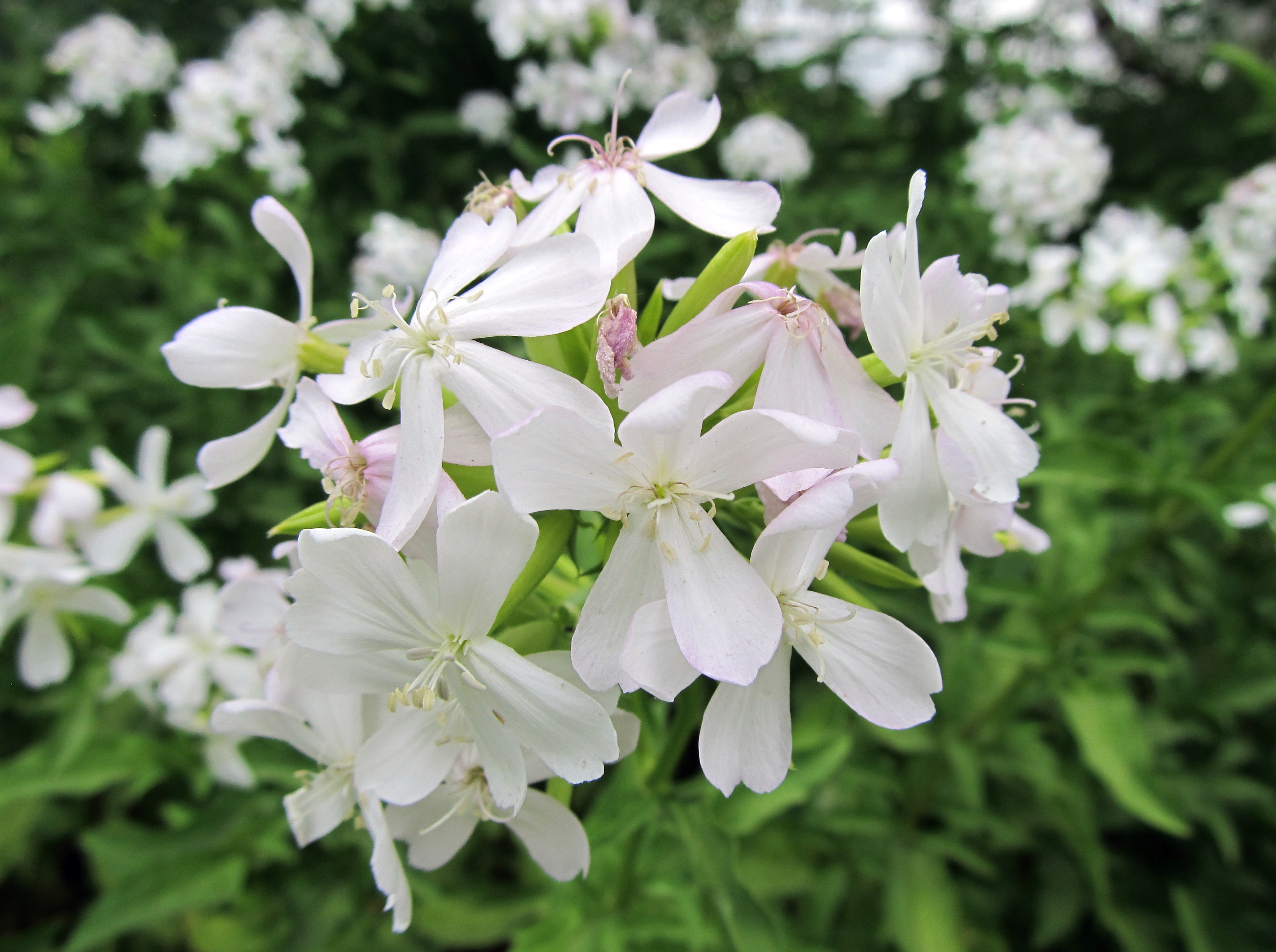
soapwort (Saponaria officinalis)

Saponaria officinalis, commonly known as bouncing bet, hedge pink, fuller’s herb, scourwort, and soapweed or soapwort, is an herbaceous perennial native to Europe. It has been planted widely in flower beds and herb gardens outside of its native range, desired both for its beauty and utility. Capitalizing on our appreciation for it, soapwort has expanded beyond our garden borders and into natural areas, as well as vacant lots, roadsides, and other neglected spaces. Even in a garden setting it can be a bit of a bully, especially if ignored for a season or two.

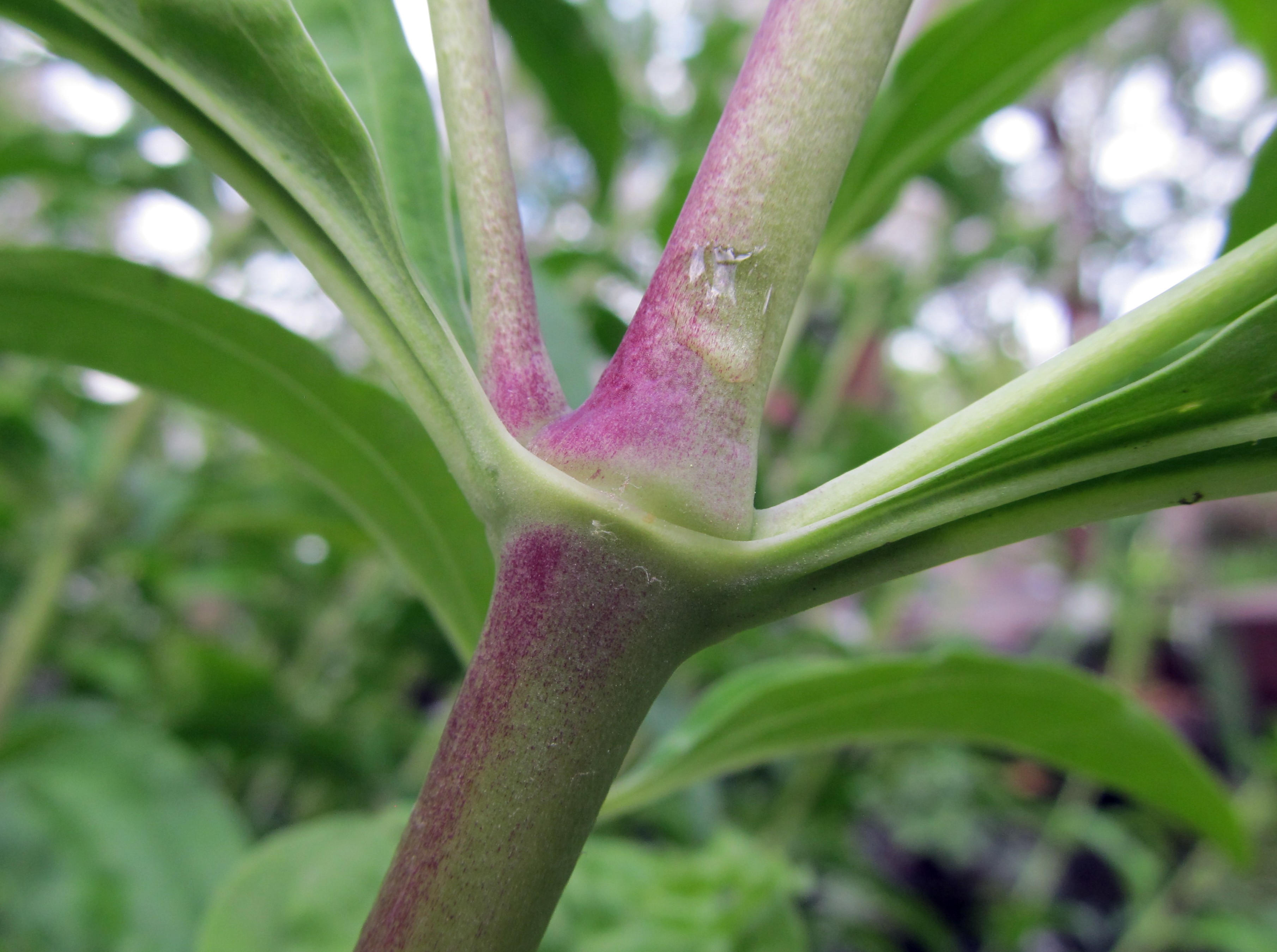
The stems of soapwort grow to about two feet tall, are unbranched, and sometimes tinged with pink, purple, or red. The leaves are oblong and oppositely-arranged, and their bases form prominent collars around the stems. Showy clusters of flowers are found atop the stems throughout the summer. Like other flowers in the pink family (Caryophyllaceae), they are cigar-shaped at the base and opened wide at the end, showing off 5 distinct petals with notches at their tips. The petals of soapwort flowers bend backwards, with their sex parts protruding outwards. In his description of the flowers, John Eastman remarks in The Book of Field and Roadside that “the reflexed petals surrounding the sexual organs give the impression of flagrant thrust; this is a gaudy, unshy flower.”

collared stem of soapwort (Saponaria officinalis)

The fragrant flowers are pink to white in color. They open in the evening and remain open for a few short days. In an individual flower, pollen matures and is mostly shed before the stigma is ready to accept it. This helps reduce the chance of self-pollination. Cross pollination occurs with the assistance of moths who visit the flowers at night, as well as bees and other flower-visiting insects that come along during the daytime. Soapwort fruits are oval capsules containing as many as 500 kidney-shaped seeds. Seeds aren’t essential to the plants spread though, as much of its colonization occurs via vigorous rhizomes.

In fact, vegetative reproduction is the means by which soapwort forms such expansive, thick patches. It also helps that it’s poisonous. The saponins – its soap making compounds – that it produces in its roots, shoots, and leaves deter most insects and other animals from eating it. It has a reputation for poisoning horses, cows, and other livestock, and so is unwelcome in pastures and rangelands. Saponins are also poisonous to fish, so growing soapwort near fish ponds is not advised.

soapwort (Saponaria officinalis)

Soapwort occurs in a variety of soils including sandy, dry, and rocky sites and is surprisingly drough-tolerant, fine qualities to have when colonizing neglected sites. While most other organisms ignore soapwort, it has a friend in humans. Eastman sums this up well: “Soapwort’s most important associate – as is true of most plants we label weeds – is undoubtedly humankind, without whose helpful interventions the plant would surely be much rarer than it is.”

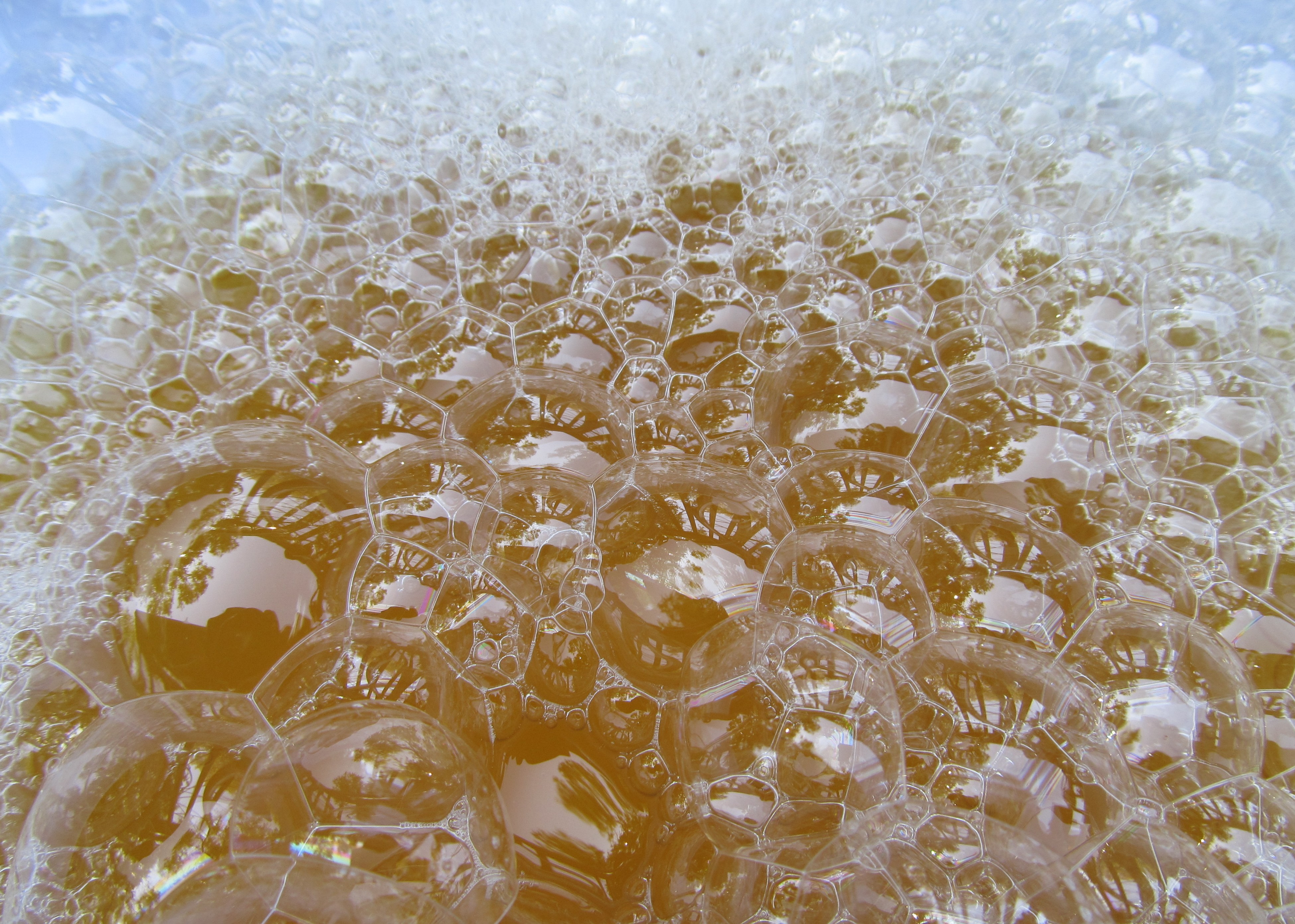
I made a soapy liquid out of soapwort by following a recipe that can be found on various blogs and websites by searching “saponaria soap recipe.” Basically it’s a cup of fresh leaves and stems along with a cup of dried leaves and stems added to a quart of distilled water brought to a boil. After simmering for 15 minutes and then allowing it to cool, strain the mixture through cheese cloth, and it’s ready to go.

This gentle but effective soap can be used for cleaning countertops and other surfaces, as well as dishes, fabrics, and skin. Several sources say it is particularly useful for cleaning delicate fabrics. Sierra and I both found it to have a cooked cabbage or spinach scent to it. This can be masked by adding a few drops of essential oil. Despite its odd aroma, both Sierra and I were impressed by its cleansing power and plan to use it more often.

dried leaves of soapwort

soapwort soap

Summer of Weeds: Flower of an Hour

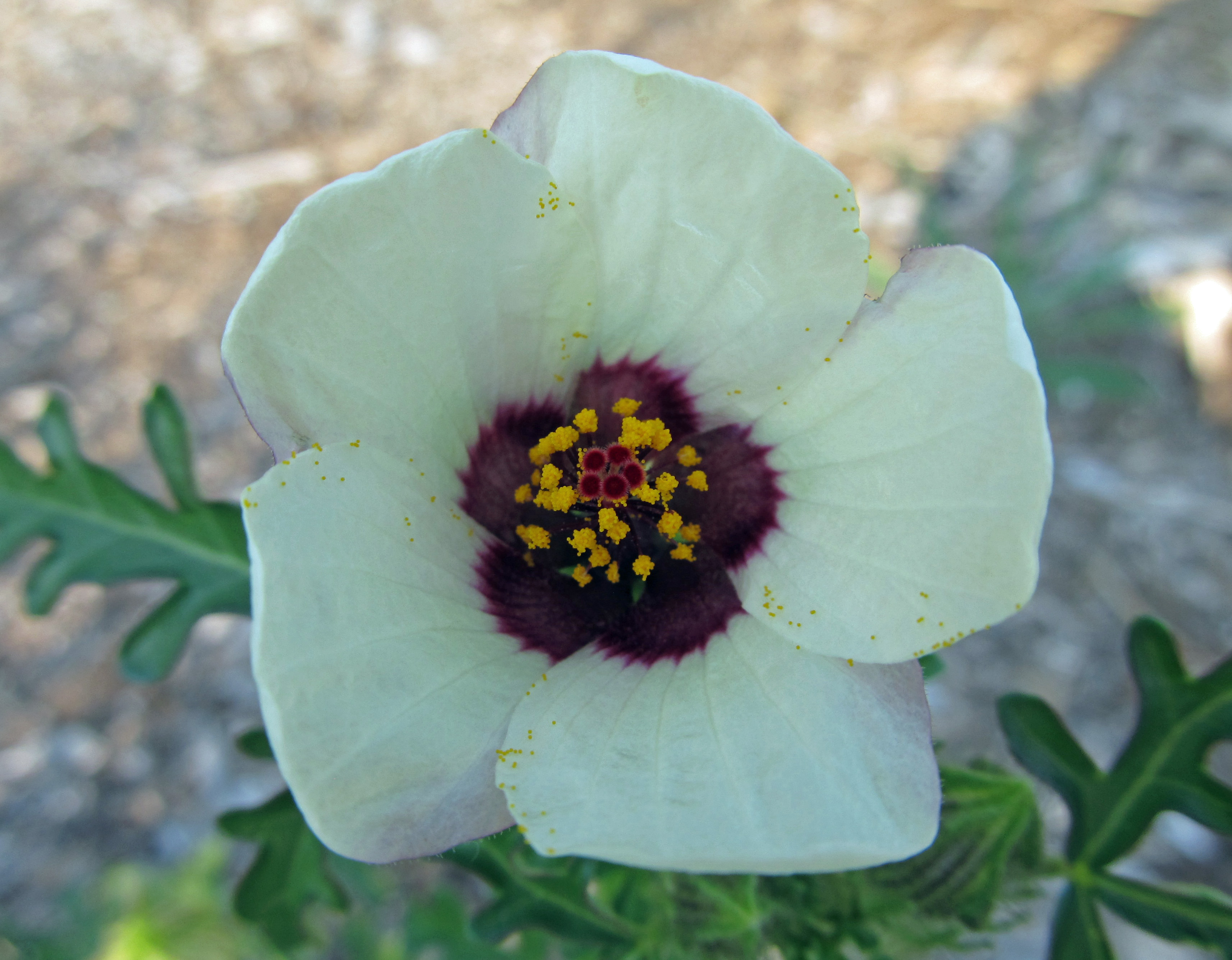
Hibiscus trionum is a great example of an ornamental plant becoming a widespread weed. Its common name, flower of an hour, refers to its short-lived blooms. Other common names include Venice mallow, bladder hibiscus, bladderweed, modesty, and shoofly. Native to southern Europe and tropical to subtropical parts of Asia and Africa, it was introduced to America as an attractive addition to annual flower beds. It is now naturalized in many states across the country.

Hibiscus is a huge genus in the family Malvaceae, consisting of species found throughout warmer parts of the world. H. trionum is a warm season annual that grows to around two feet tall and has the habit of a sprawling, decumbent vine; an upright, many-branched mound; or something in-between. Its leaves are alternately arranged and three-lobed with coarsely toothed margins. The flowers are solitary and borne in the axils of leaves. They are creamy white to pale yellow with a purple-brown center, and are both cross- and self-pollinated.

flower of an hour (Hibiscus trionum)

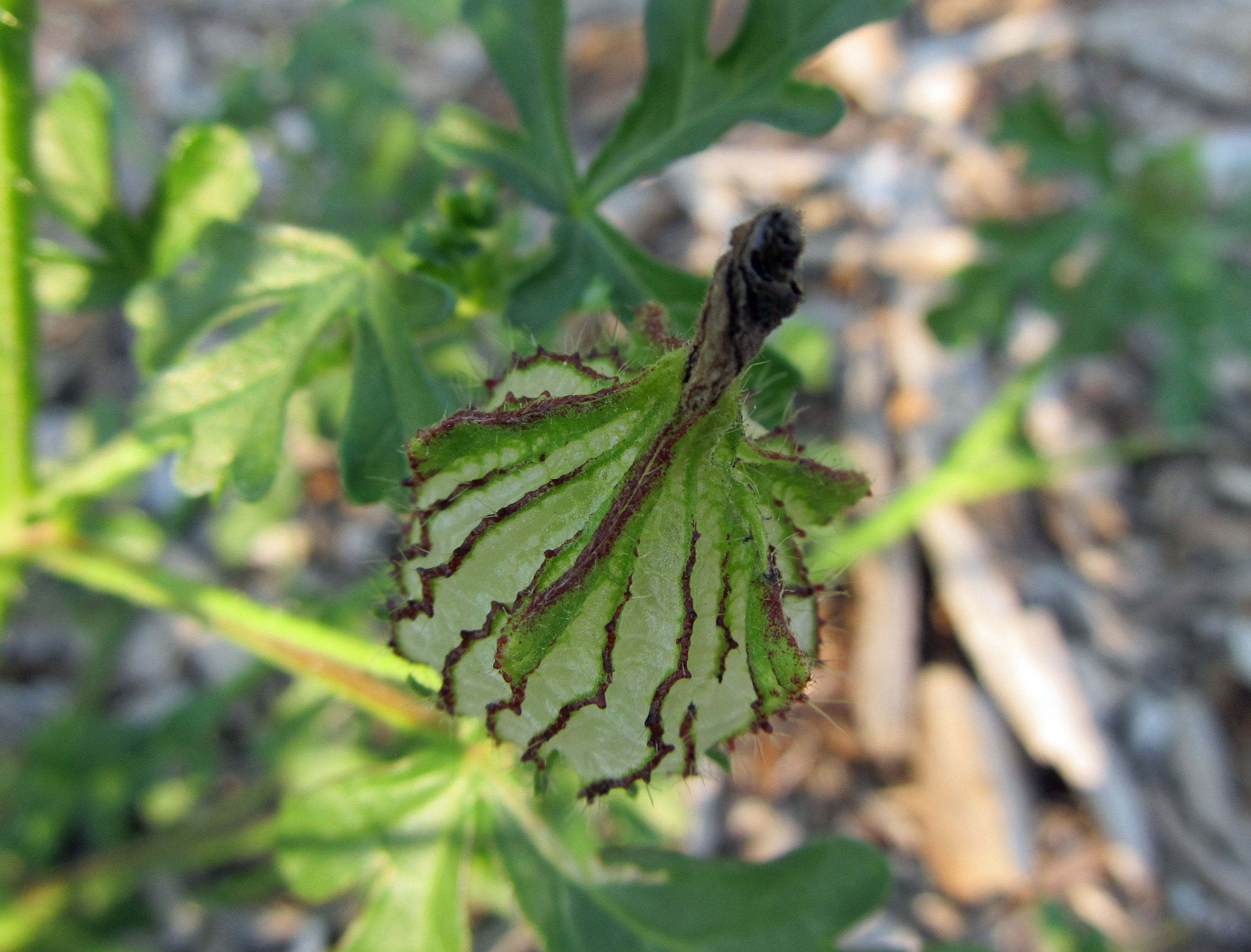
Flowering occurs on sunny days throughout the summer. The ephemeral flowers promptly produce a balloon-shaped seed capsule that is hairy and papery with prominent purple veins. Once mature, the capsules split open at the top to reveal five compartments lined with brown to black, kidney- or heart-shaped seeds. Every part of this plant is attractive and interesting to look at, which is why it is no surprise that it is welcome in many flower beds.

Seed capsule of flower of an hour (Hibiscus trionum)

Sites that are in full sun with fertile soil and regular moisture are sought after by flower of an hour. Less fertile soils are still prone to invasion. As with many weeds, disturbance is key, so it is often found in agricultural fields, rangelands, along roadsides, and in vacant lots and construction sites. Its presence in natural areas is a result of escaping from garden beds, agricultural fields, etc.

When we choose to grow plants that have a history of escaping into natural areas, we should be aware of both our proximity to natural areas and the dispersal mechanisms of the plants. Exotic plants that reproduce reliably and prolifically by seed, such as flower of an hour, should be considered unsuitable for gardens that are adjacent to natural areas.

This is because many popular ornamental plants have become invasive in the wild. Plants that are perfectly welcome in our gardens manage to find suitable habitat in natural areas, potentially threatening the livelihood of native plants and/or altering ecological processes such as fire regimes. An example of this where I live is bachelor’s buttons (Centaurea cyanus), which has escaped from gardens and invaded the Boise Foothills. While the impact of this invasion is not well-studied, the speed at which this plant has spread is disconcerting. Even more disconcerting is the fact that seeds of this and other European and Asian species are commonly found in “wildflower” seed mixes distributed throughout North America.

While I am sympathetic towards weeds, I also see them as one of the best reminders of the impacts that humans can have on the planet. They are clear indicators that every step we take has consequences. We should be mindful of this, and we should continue to have the tough conversations that issues like weeds and their impacts encourage us to have. There are no easy answers, but the dialogue must go on. Because all of us – gardeners and non-gardeners/ecologists and non-ecologists alike – generally have an opinion about weeds, they seem like a pretty good place to start.

Additional Resources:

Quote of the Week:

From the book Invasive Plant Medicine by Timothy Lee Scott

The nature of a weed is opportunistic, and we, as humans, have created enormous holes of opportunity for these plants to fill. They have adapted to be at our side, waiting for those favorable times to cover the exposed soils that we continually create. With ever-changing genetics of form, function, and transmutation, weeds have evolved to withstand the punishments that humans unleash upon them.