What Is a Plant, and Why Should I Care? part four

What Is a Plant?

Part one and two of this series have hopefully answered that.

Why should you care?

Part three offered a pretty convincing answer: “if it wasn’t for [plants], there wouldn’t be much life on this planet to speak of.”

Plants are at the bottom of the food chain and are a principle component of most habitats. They play major roles in nutrient cycling, soil formation, the water cycle, air and water quality, and climate and weather patterns. The examples used in part three of this series to explain the diverse ways that plants provide habitat and food for other organisms apply to humans as well. However, humans have found numerous other uses for plants that are mostly unique to our species – some of which will be discussed here.

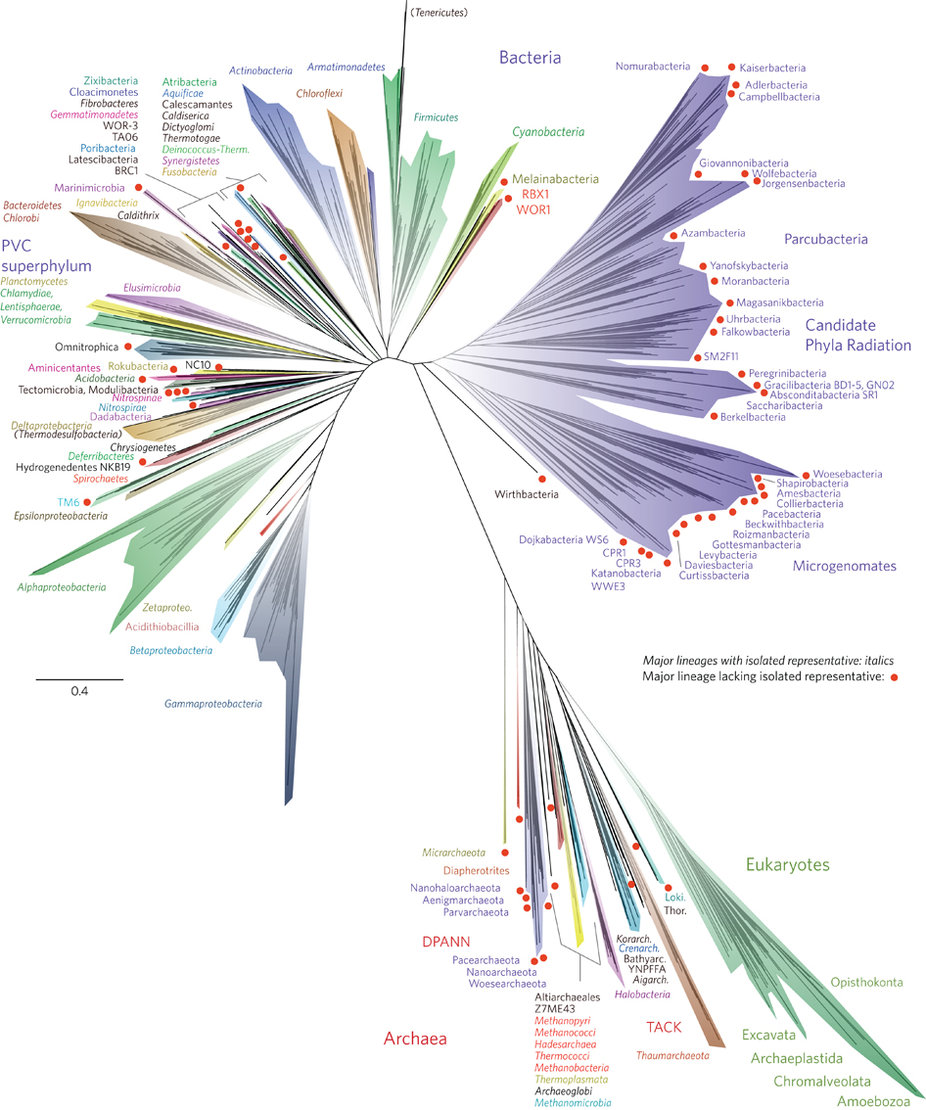
But first, some additional thoughts on photosynthesis. Plants photosynthesize thanks to the work accomplished by very early photoautotrophic bacteria that were confined to aquatic environments. These bacteria developed the metabolic processes and cellular components that were later co-opted (via symbiogensis) by early plants. Plants later colonized land, bringing with them the phenomena of photosynthesis and transforming life on earth as we know it. Single-celled organisms started this whole thing, and they continue to rule. That’s just something to keep in mind, since our focus tends to be on large, multi-cellular beings, overlooking all the tiny, less visible beings at work all around us making life possible.

Current representation of the tree of life. Microorganisms clearly dominate. (image credit: nature microbiology)

Current representation of the tree of life. Microorganisms clearly dominate. (image credit: nature microbiology)

Food is likely the first thing that comes to mind when considering what use plants are to humans. The domestication of plants and the development of agriculture are easily among the most important events in human history. Agricultural innovations continue today and are necessary in order to both feed a growing population and reduce our environmental impact. This is why efforts to discover and conserve crop wild relatives are so essential.

Plants don’t just feed us though. They house us, clothe us, medicate us, transport us, supply us, teach us, inspire us, and entertain us. Enumerating the untold ways that plants factor in to our daily lives is a monumental task. Rather than tackling that task here, I’ll suggest a few starting points: this Wikipedia page, this BGCI article, this Encylopedia of Life article, and this book by Anna Lewington. Learning about the countless uses humans have found for plants over millennia should inspire admiration for these green organisms. If that admiration leads to conservation, all the better. After all, if the plants go, so do we.

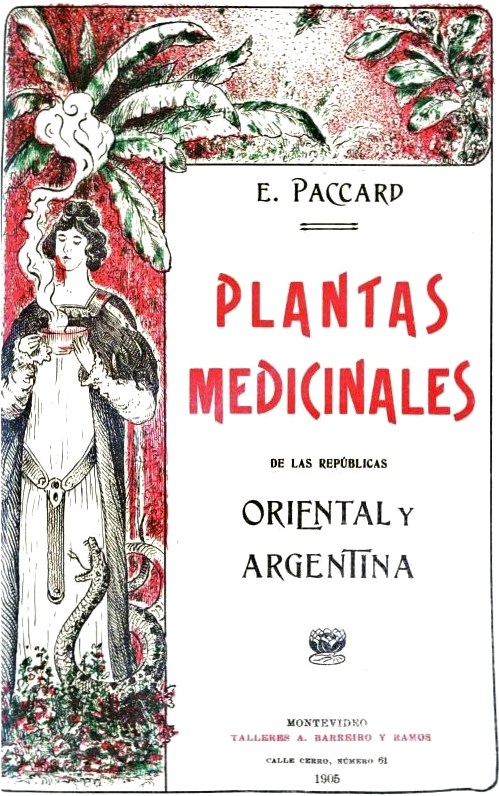
Humans have a long tradition of using plants as medicine. Despite all that we have discovered regarding the medicinal properties of plants, there remains much to be discovered. This one of the many reasons why plant conservation is so important. (photo credit: wikimedia commons)

Humans have a long tradition of using plants as medicine. Despite all that we have discovered regarding the medicinal properties of plants, there remains much to be discovered. This is one of the many reasons why plant conservation is imperative. (photo credit: wikimedia commons)

Gaining an appreciation for the things that plants do for us is increasingly important as our species becomes more urban. Our dense populations tend to push plants and other organisms out, yet we still rely on their “services” for survival. Many of the functions that plants serve out in the wild can be beneficial when incorporated into urban environments. Plants improve air quality, reduce noise pollution, mitigate urban heat islands, help manage storm water runoff, create habitat for urban wildlife, act as a windbreak, reduce soil erosion, and help save energy spent on cooling and heating. Taking advantage of these “ecosystem services” can help our cities become more liveable and sustainable. As the environmental, social, and economic benefits of “urban greening” are better understood, groups like San Francisco’s Friends of the Urban Forest are convening to help cities across the world go green.

The importance of plants as food, medicine, fuel, fiber, housing, habitat, and other resources is clear. Less obvious is the importance of plants in our psychological well being. Numerous studies have demonstrated that simply having plants nearby can offer benefits to one’s mental and physical health. Yet, urbanization and advancements in technology have resulted in humans spending more and more time indoors and living largely sedentary lives. Because of this shift, author Richard Louv and others warn about nature deficit disorder, a term not recognized as an actual condition by the medical community but meant to describe our disconnect with the natural world. A recent article in BBC News adds “nature knowledge deficit” to these warnings – collectively our knowledge about nature is slipping away because we don’t spend enough time in it.

The mounting evidence for the benefits of having nature nearby should be enough for us to want to protect it. However, recognizing that we are a part of that nature rather than apart from it should also be emphasized. The process that plants went through over hundreds of millions of years to move from water to land and then to become what they are today is parallel with the process that we went through. At no point in time did we become separate from this process. We are as natural as the plants. We may need them a bit more than they need us, but we are all part of a bigger picture. Perhaps coming to grips with this reality can help us develop greater compassion for ourselves as well as for the living world around us.

Urban Botanical Art

We live on a green planet, so it is no surprise that plants frequently find their way into our artwork. They make excellent subjects after all; and arguably, botanical art can be a close second (if not a tie) to seeing the real thing.

No place is plant-themed art needed more than in urban areas. Despite trying to cram plants in wherever we can find room, our cities remain dominated by concrete, asphalt, and steel. Plants help soften the hard edges we create, and they reintroduce nature to something that otherwise seems unnatural. But there isn’t always space for plants. Botanical art is the next best thing.

When I’m not looking out for plants, I’m looking out for plant art. What follows are a few of my discoveries this past year in my hometown of Boise, Idaho and beyond. In future travels, I hope to find more botanical art in other urban areas. Meanwhile, please feel free to share with me the botanical art in your neighborhood, either through twitter, tumblr, or some other means.

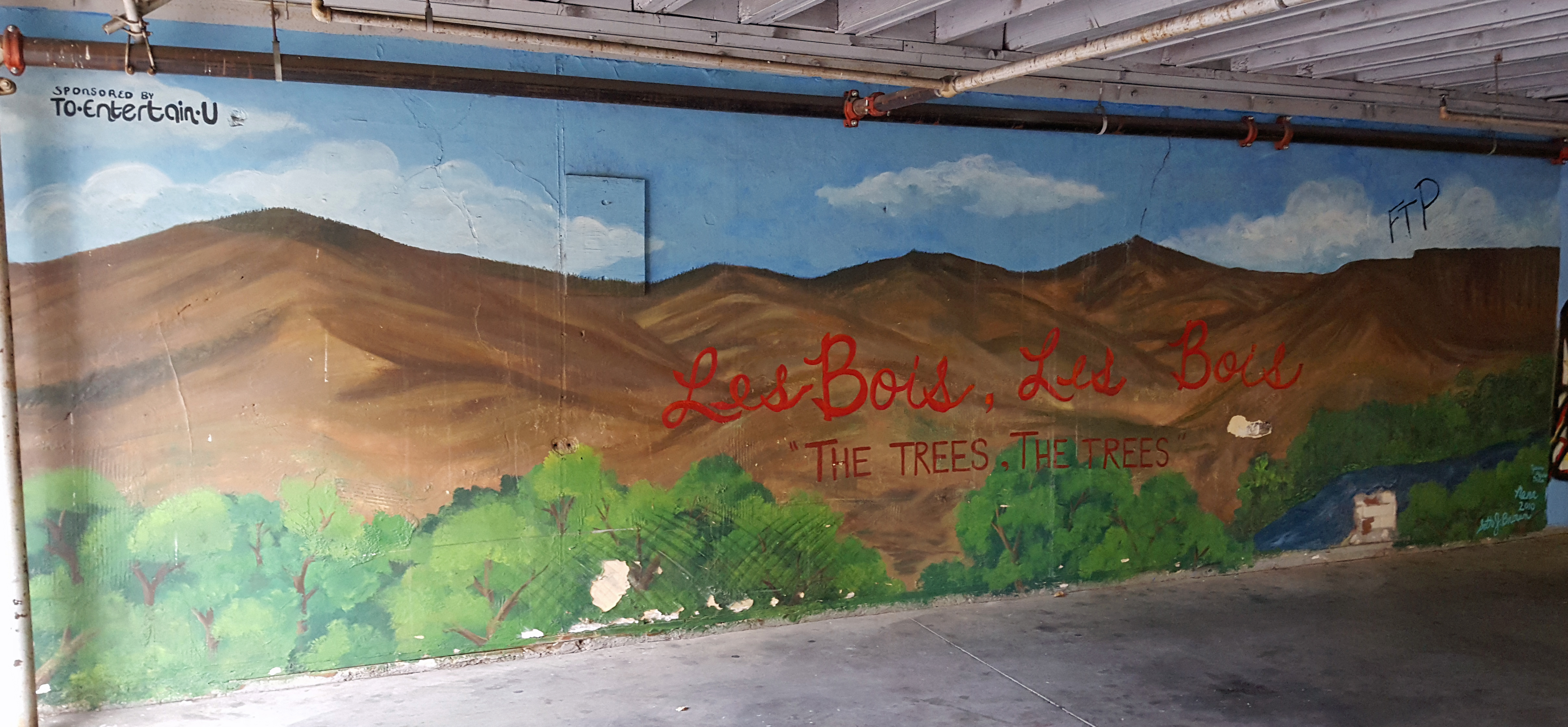
Parking garage in downtown Boise, Idaho

Parking garage in downtown Boise, Idaho

My dad's mural in downtown Mountain Home, Idaho

Mural by Stephen Murphy (my dad!) in downtown Mountain Home, Idaho

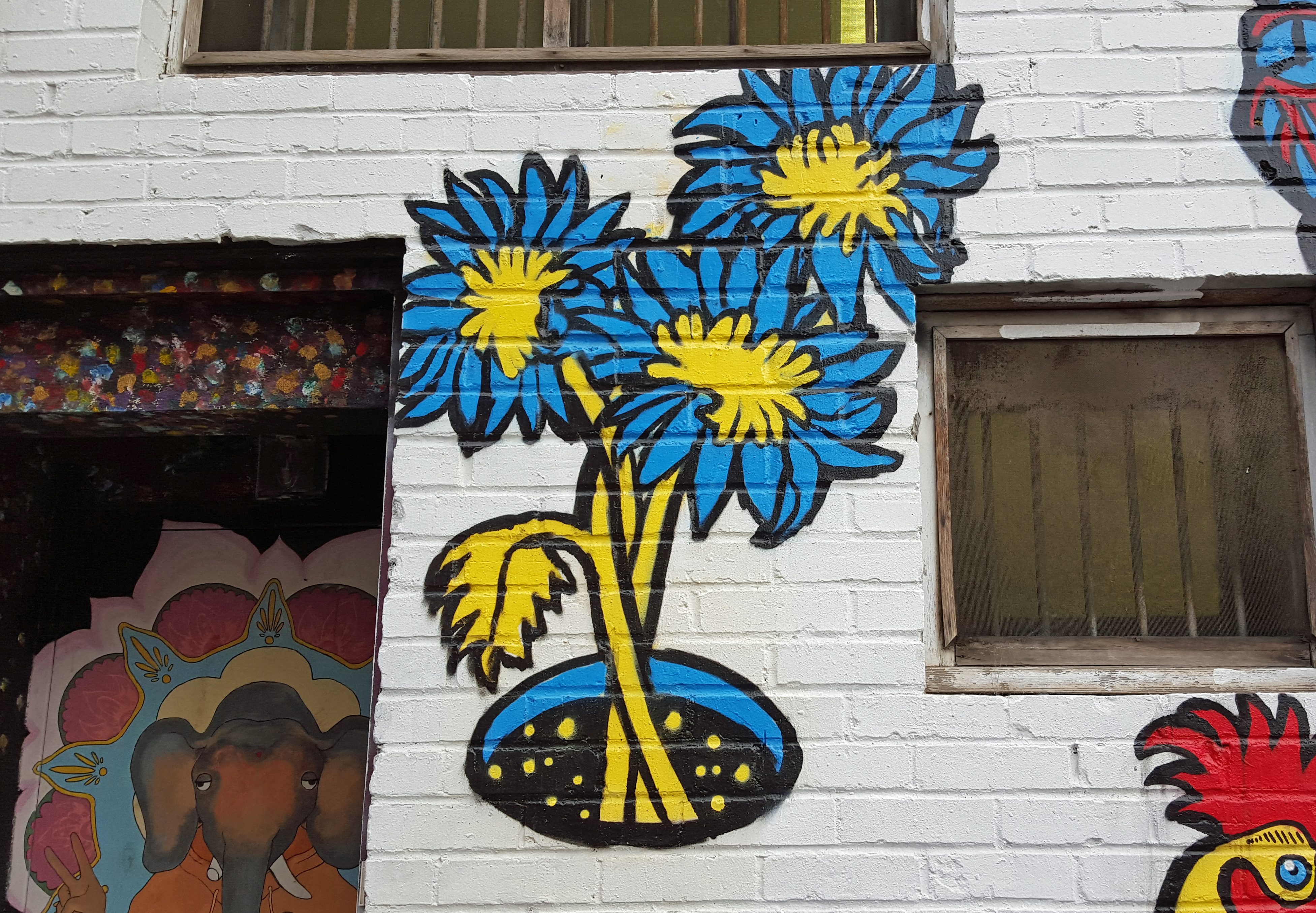
Mural in Freak Alley in downtown Boise, Idaho

Freak Alley Gallery in downtown Boise, Idaho

Mural in Freak Alley in downtown Boise, Idaho

Freak Alley Gallery in downtown Boise, Idaho

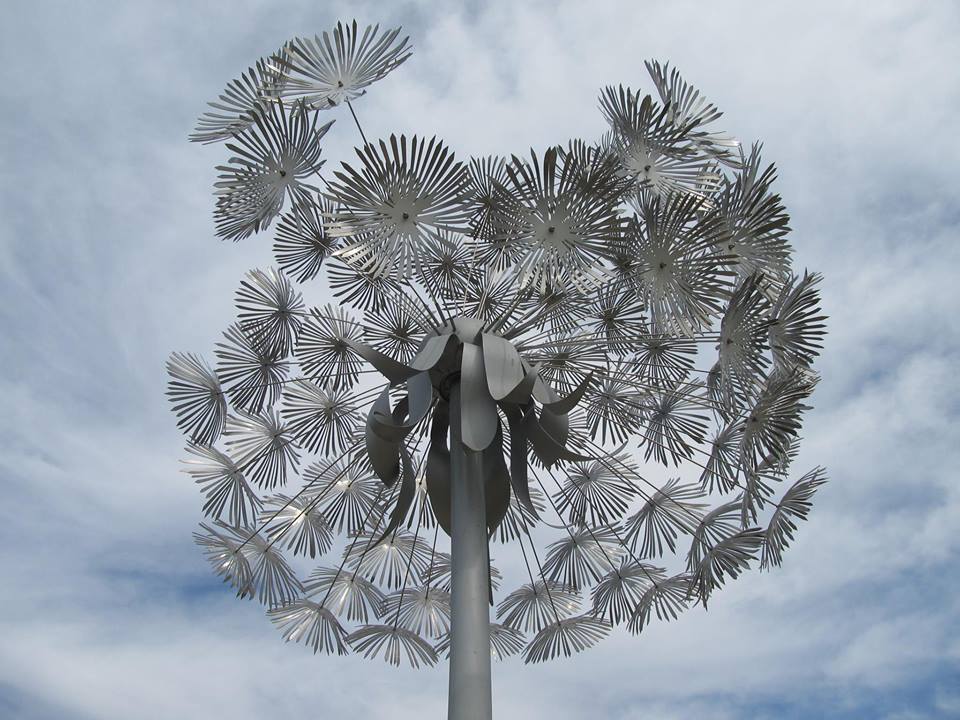
Agoseris sculpture at Foothills Learning Center in Boise, Idaho

Aero Agoseris sculpture (Agoseris glauca) at Foothills Learning Center in Boise, Idaho

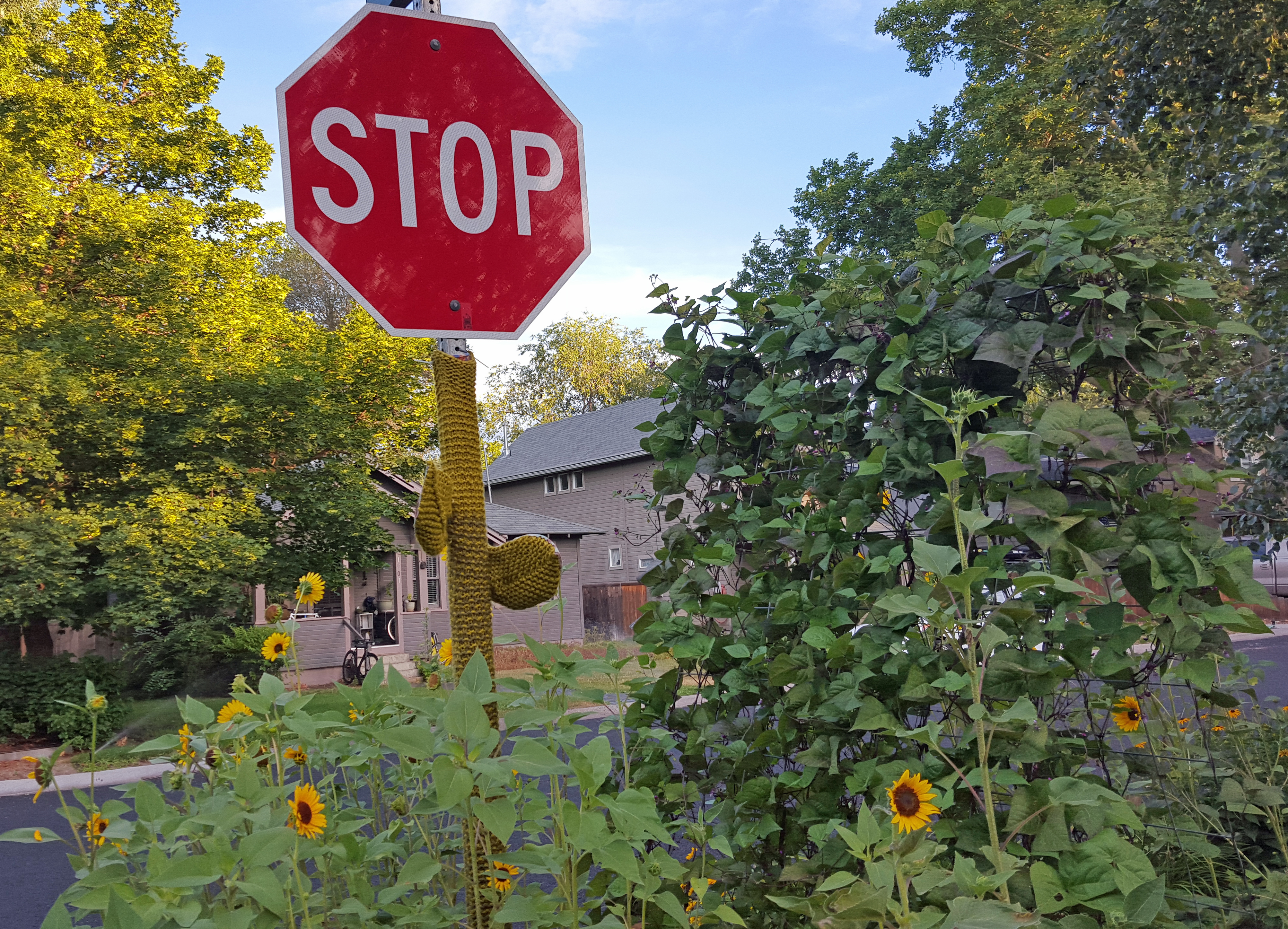
Stop sign in Sunset Neighborhood in Boise, Idaho

Stop sign in Boise’s Sunset Neighborhood

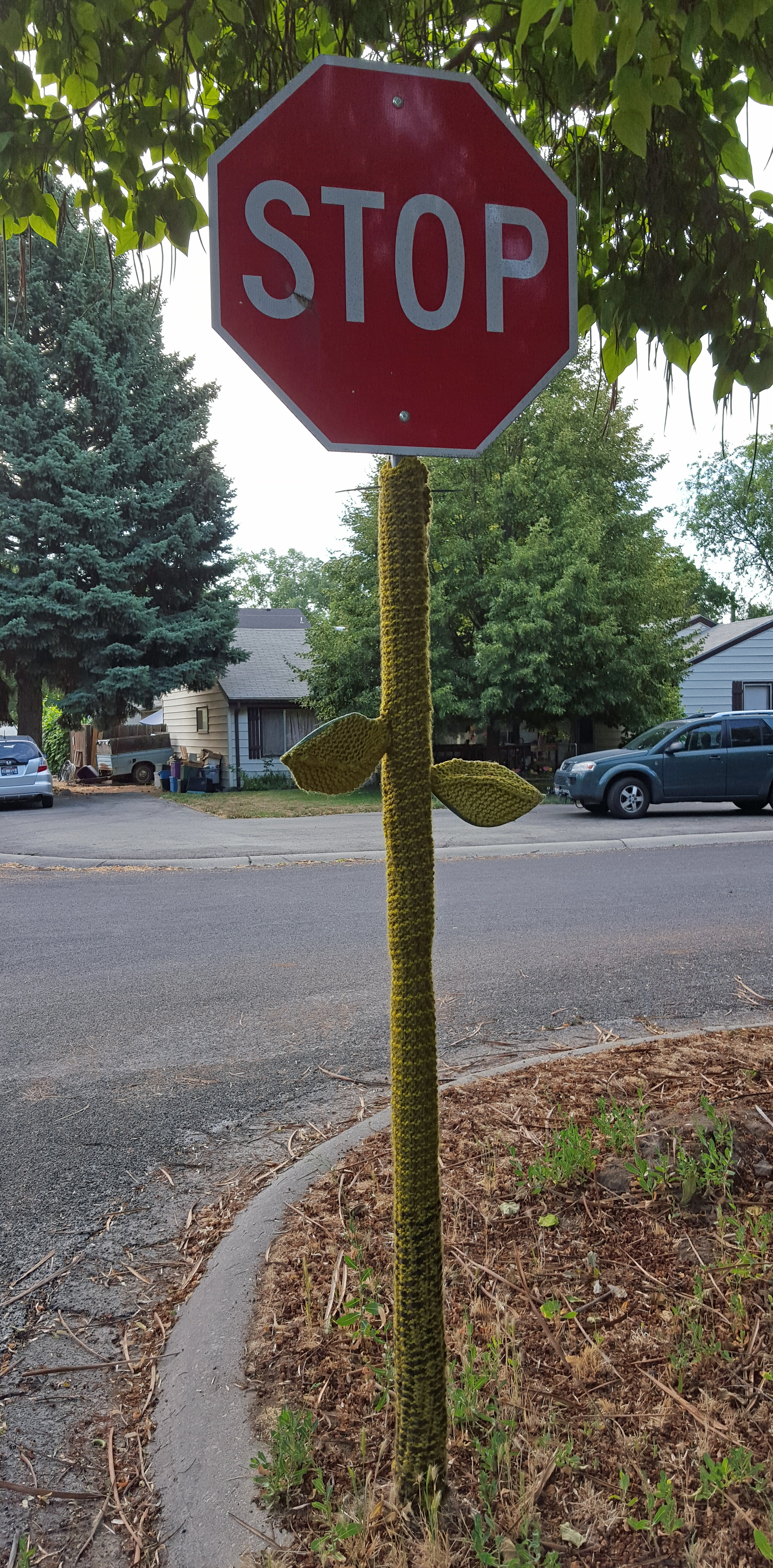
Stop sign in Sunset Neighborhood in Boise, Idaho

Stop sign in Boise’s Sunset Neighborhood

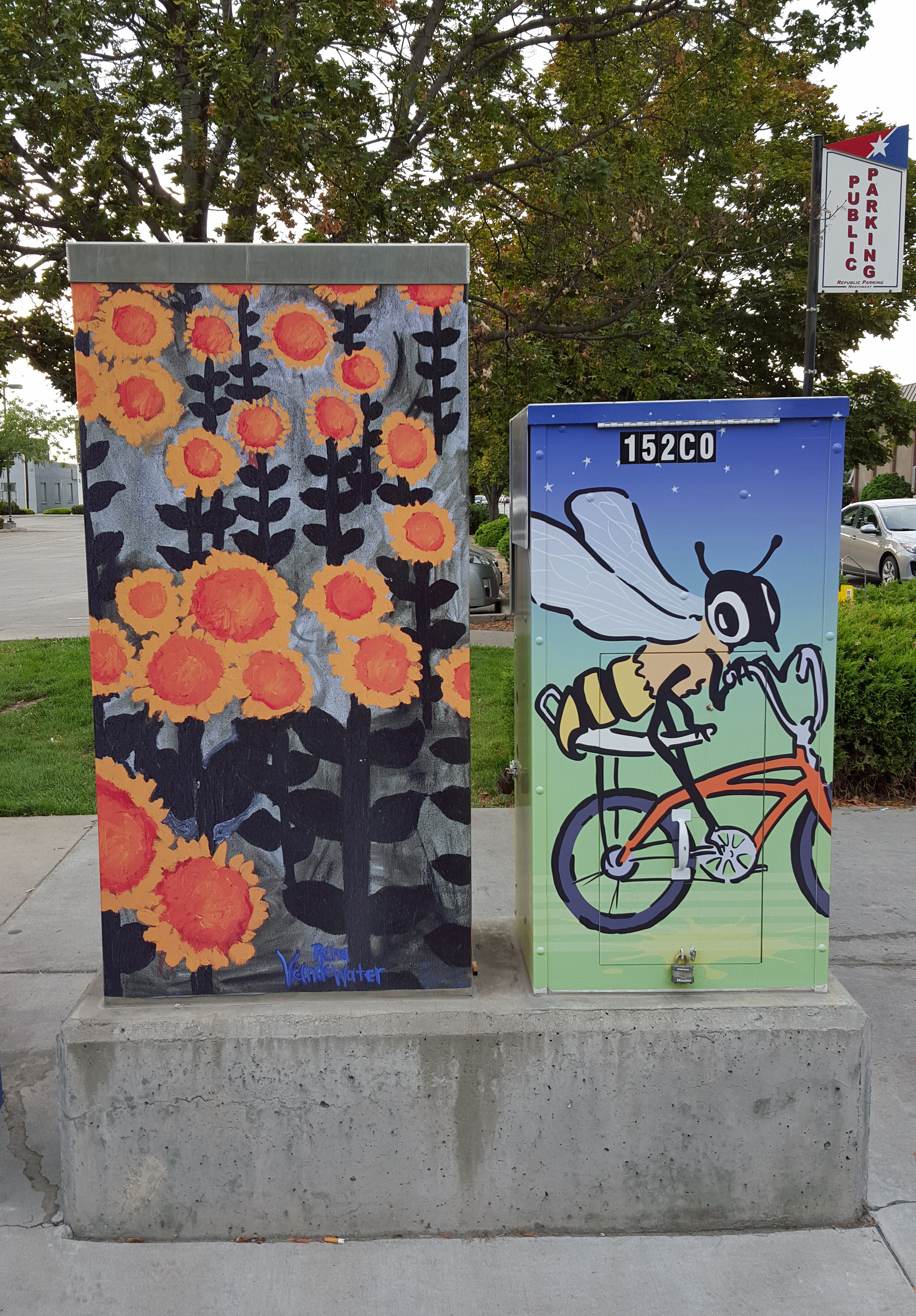
Utility boxes in downtown Boise, Idaho

Utility boxes in downtown Boise, Idaho

Utility box in Boise, Idaho

Utility box in downtown Boise, Idaho

Our Urban Planet

As the human population balloons and cities sprawl, ecological studies in urban areas are following suit. Nature has always been a component of cities – we can’t escape it after all, as hard as we may try – but urban nature (and the enhancement of it) has become increasingly important as the human species continues to urbanize. More and more we are seeing the importance of melding the built environment with the natural one. Our motivations are diverse – albeit largely anthropocentric. But that’s fine. As we make improvements to the live-ability of cities for human’s sake, other living beings benefit. We are finding ways to get along with our neighbors, and we are learning to appreciate and value them as well.

Since 2008, the world’s urban population has outnumbered its rural population, and it is predicted that by 2050, more than two-thirds of humans will be urbanites. Immense resources are required to support such large, concentrated populations, and most of these resources are produced outside of urban areas. This results in an ecological footprint that is significantly larger than the city itself. Additionally, waste and pollution produced within cities negatively effects surrounding areas and beyond in abundant ways.

st louis

In May of this year, Science put out a special issue entitled, “Urban Planet,” which features a series of articles that address some of the latest research in urban ecology and discuss current developments and future research needs – a sort of state of the union address for urban ecology in 2016. A series of 13 articles covered diverse topics including city-integrated renewable energy, innovative solutions to water challenges, transportation and air pollution, and food security in an urban world. Rodent-borne diseases in urban slums, creating sustainable cities in China, and Vancouver’s push to become the “greenest city” were also features of this special issue.

The issue serves to highlight the importance of this field of study and the urgency there is in finding solutions to major environmental challenges. But it also offers hope. Bright minds are working towards solutions to this century’s biggest problems as we look towards a more sustainable future. The introduction emphasizes that “the rise of cities is not…all doom and gloom.” Urbanization has upsides: “consolidating human populations helps shrink our individual environmental footprints, and cities are serving as living laboratories for further improvements.”

Urban ecology is a relatively recent subfield of ecology. In The Ecological Future of Cities, Mark McDonnell and Ian MacGregor-Fors describe how it “arose in the 1990’s out of a need to increase our…understanding of the ecological and human dimensions of urban ecosystems.” Initially the field was mainly concerned with biodiversity and the ecosystem processes and services found within cities. Findings from these studies are now influencing urban planning, design, and management. Such decisions are also informed by more recent studies in the field of urban ecology, which has grown to include “issues of sustainability, environmental quality, and human well-being in urban ecosystems.”

The authors note that our ecological understanding of cities was waylaid because “nature within cites was long considered unworthy of study, except when it involved solving environmental problems that threatened human well-being.” Cities were perceived as unnatural because humans had “disrupt[ed] the natural ecological conditions and processes that scientists [were] attempting to understand.” Today, ecologists recognize that studies in the field of urban ecology help us better understand basic ecological principles, while also providing “valuable information for creating liveable, healthy, and resilient urban environments.”

Studies in urban ecology have also increased our understanding of the mechanisms involved in evolution and adaptation. To illustrate this, the authors offer examples of birds that modified their songs “to communicate at noisy locations” and plants that shifted their seed dispersal strategies to survive in “highly fragmented urban habitats.” The authors also highlight the importance of maintaining or restoring natural vegetation in urban areas in order to help preserve struggling species of plants and animals, citing a study that found that “fewer local plant extinctions occurred in cities that maintained at least 30% native vegetation cover.” Additionally, the authors note that “the scope of urban ecology research extends well beyond city limits,” since urbanization is partly to blame for numerous environmental issues including habitat loss and fragmentation, biodiversity loss, climate change, and invasive species.

In Living in Cities, Naturally, Terry Hartig and Peter Kahn, Jr. address the topic of mental health and urban living. While there is still much to learn about the relationship between the two, it is generally believed that viewing or spending time in nature can help improve one’s mental well-being. As the authors put it, “parks and green spaces” can be viewed as “health resources for urban populations,” and including natural areas and natural processes in the design and creation of cities is necessary “for psychological as well as ecological purposes.”

Green roofs

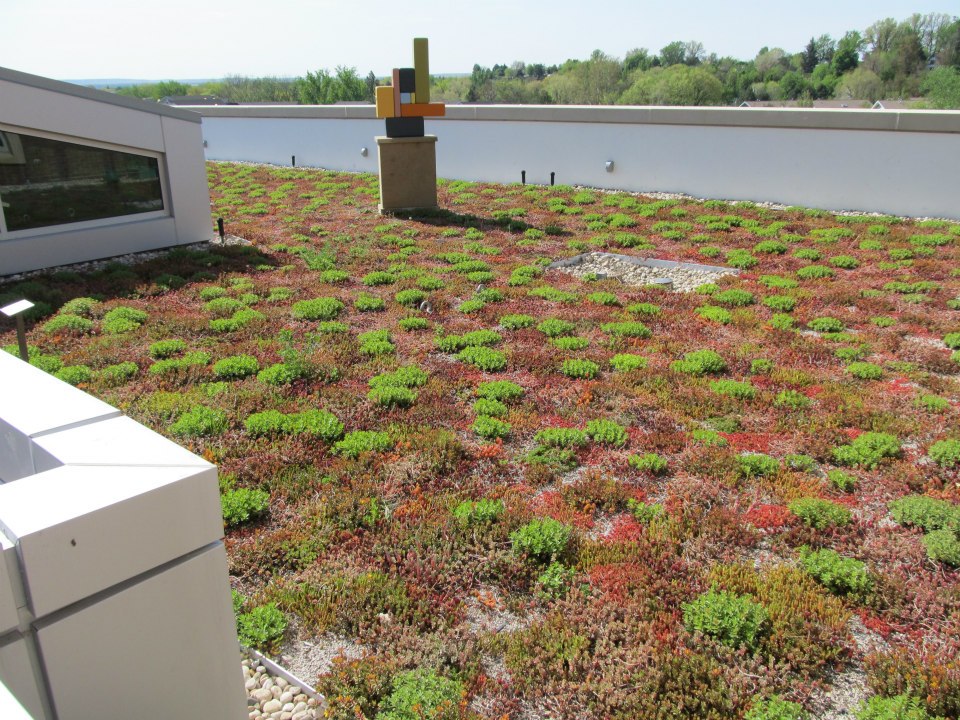
Green roofs are one way to add green space to urban areas. They help replace vegetation that was removed when buildings were constructed, and they offer numerous environmental benefits.

Interacting with nature in an urban setting can help people develop positive feelings about the natural world and may encourage support for environmental protection. The authors worry that if future generations grow up without an intimate connection to the natural world, elevated amounts of environmental degradation will be seen as normal and a feeling of urgency to protect the environment from continued degradation will fade. This is why including plentiful amounts of green space within cities is essential: “Providing opportunities for people to experience more robust, healthy, and even wilder forms of nature in cities offers an important solution to this collective loss of memory and can counter the shifting baseline.”

This special issue of Science highlights some of the current ecological and environmental research regarding urbanization. For a great introductory look at urban ecology and basic ecological principles, check out the book, Nature All Around Us. Also, expect to see many more urban ecology themed posts on Awkward Botany. Tell your friends.

What’s in a Packet of Wildflower Seeds? – An Introduction

Occasionally I receive packets of wildflower seeds from companies that are not in the business of growing plants. They are promotional items – encouraging people to plant flowers while simultaneously marketing their wares. Often the seed packet lacks a list of the seeds included in the mix, and so it remains unclear what “wildflowers” are actually in there. My guess is that most seed packets like this go unplanted, and those that do get planted, may go uncared for. After all, the company that supplied them isn’t all that concerned about what gets done with them anyway.

As it is, generic packets of wildflower seeds like this may not actually contain any wildflower seeds. The term wildflower generally refers to a flowering plant that grows in the wild and was not intentionally planted by humans. It is synonymous with native plant, but it can also refer to non-native plants that have become naturalized. By this definition, a packet of wildflower seeds should only include seeds of native or naturalized plants and should not include horticultural selections, hybrids, or cultivated varieties. Ideally, the seed mix would be specific to a particular region, as each region throughout the world has its own suite of native wildflowers.

With that in my mind, I was immediately curious about an unlabeled packet of wildflower seeds I recently received as a promotional item from a company that has nothing to do with plants. This is a company that ships items nationwide and around the world, which leads me to believe that hundreds of people received similar packets of seeds around the same time I did. The seed packet is not labeled for a particular region, so all of us likely received a similar mix of seeds. “Wildflowers” then, at least in this case, means a random assortment of flowering plants with questionable provenance and no sense of geographic location.

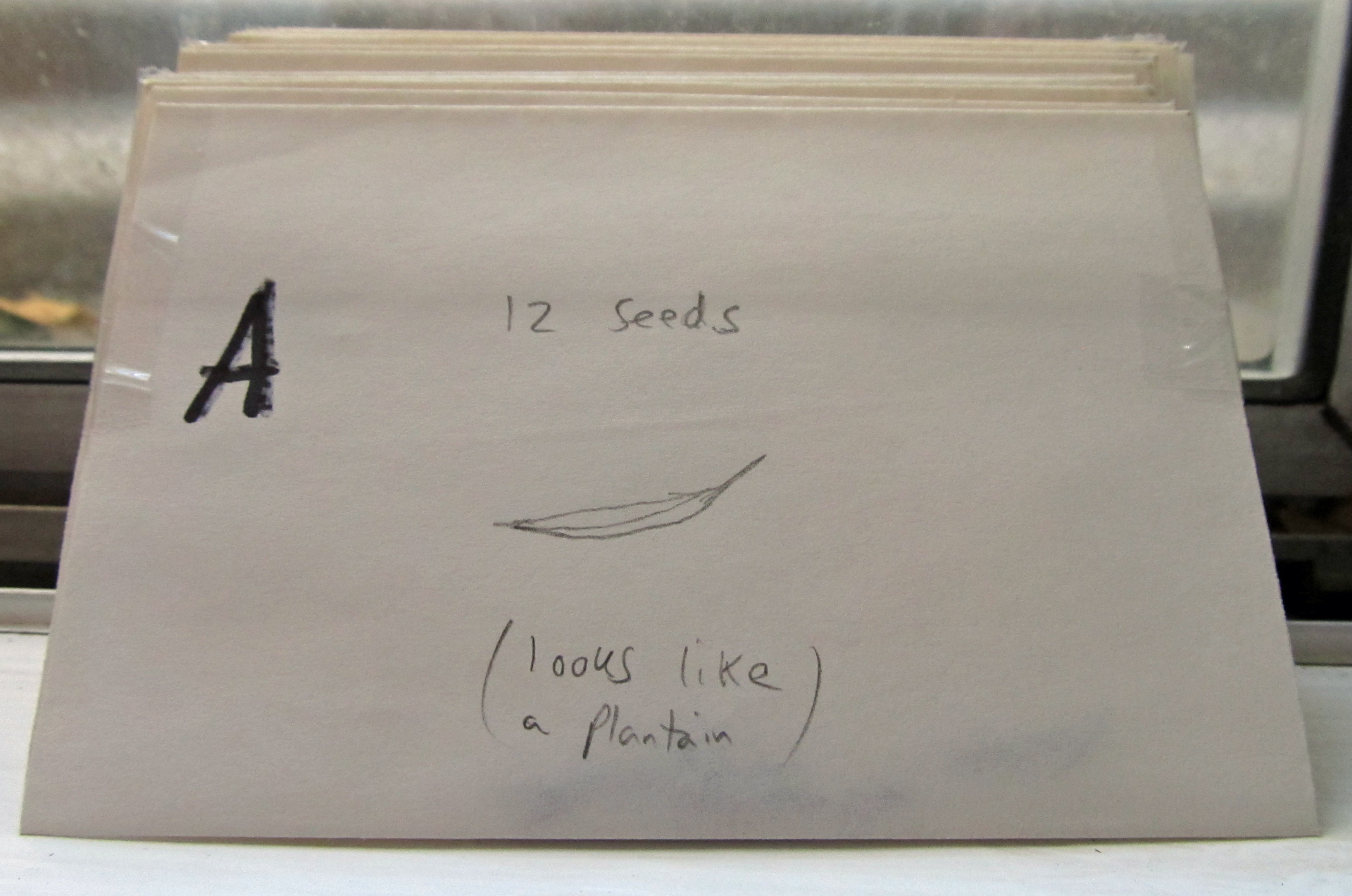
The seed packet in question.

The seed packet in question.

Curiousity is killing me; so I am determined to find out what is in this mysterious packet of seeds. Using a pair of magnifying glasses, I seperated the seeds into 26 groups. Each group, from as best as I can tell, should be a unique species (or at least from the same genus). The next step will be to grow the seeds out and see what they actually are. I have limited space and time, so this is going to take a while. Since “wildflower” is not an exact term, I have decided that in order to be considered a wildflower the plant will have to be native to North America. (I should probably say western North America or Intermountain West, since that is where I am located, but that’s pushing it.)

The amount of seeds that each of the 26 groups consists of varies greatly, from a single seed to 52 seeds. Some of the seeds may not be viable, and some of the seedlings are sure to perish along the way. Despite losses, it should be clear in the end what this packet of seeds mainly consists of and whether or not it is indeed a wildflower seed mix. If I were skilled at identifying species simply by observing their seeds, I might be able to avoid growing them out, but I am not confident enough to do that. However, one group of seeds is almost certainly calendula. Calendula is a genus native to parts of Asia, Europe, and North Africa that has been introduced to North America. So, we’re already off to a bad start.

seed packets_experiment

To be clear, I have no intention of disclosing or calling out the company that sent the seeds. This is all in good fun. No hard feelings. I’m satisfying my own curiosity, and perhaps yours, too. Until the next update (which could be a while), go run through a field of wildflowers. Enjoy yourself.

Drought Tolerant Plants: The Yarrows

Few plants are as ubiquitous and widespread as the common yarrow, Achillea millefolium. A suite of strategies have made this plant highly successful in a wide variety of habitats, and it is a paragon in terms of reproduction. Its unique look, simple beauty, and tolerance of tough spots have made it a staple in many gardens; however, its hardiness, profuseness, and bullish behavior have also earned it the title, “weed.” Excess water encourages this plant to spread, but in a dry garden it tends to stay put (or at least remain manageable), which is why it and several of its cousins are often included in or recommended for water efficient landscapes.

Achillea millefolium - common yarrow

Achillea millefolium – common yarrow

Common yarrow is in the aster family (Asteraceae) and is one of around 85 species in the genus Achillea. It is distributed throughout North America, Europe, and Asia. European plants have long been introduced to North America, and hybridization has occurred many times among the two genotypes.

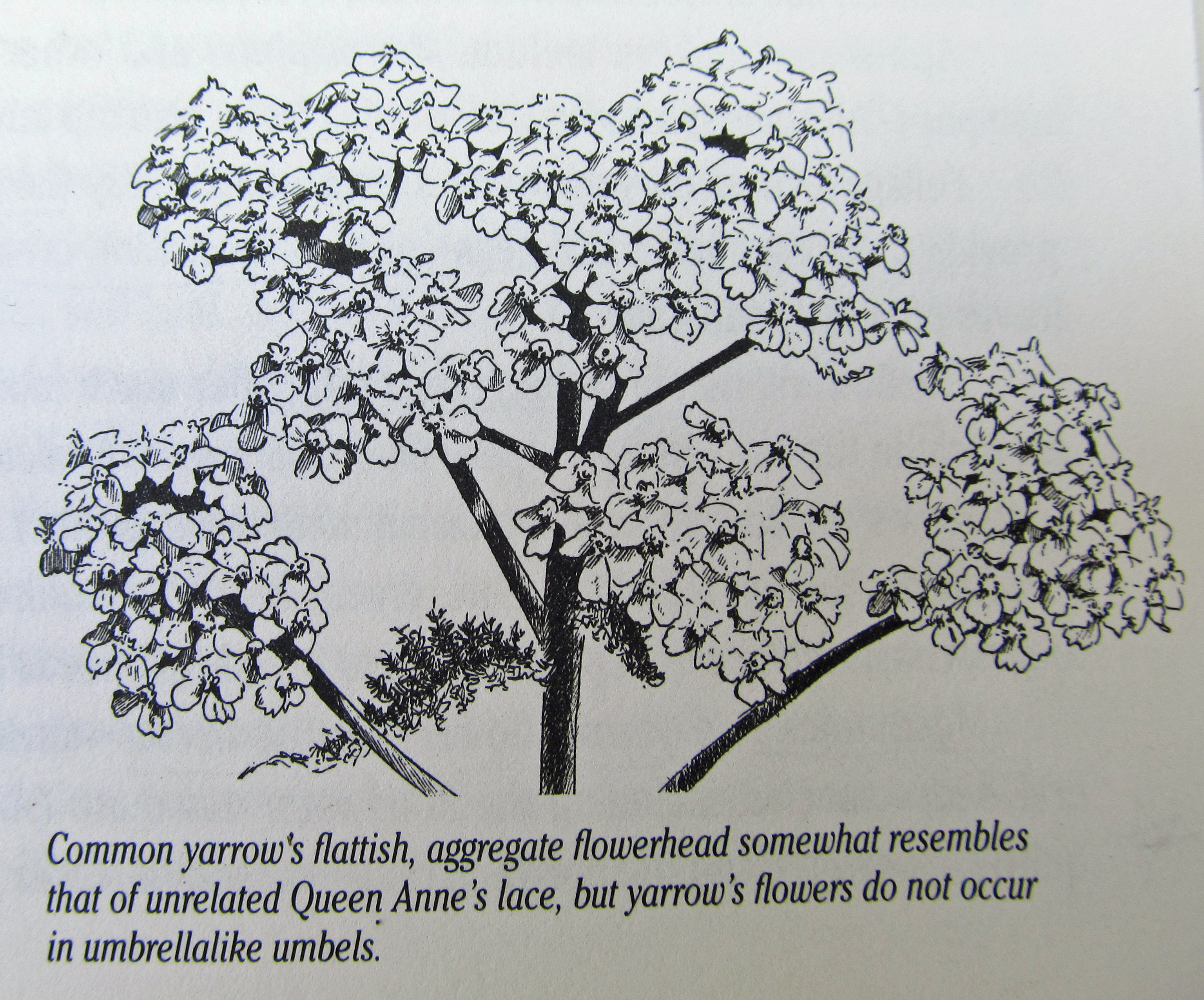
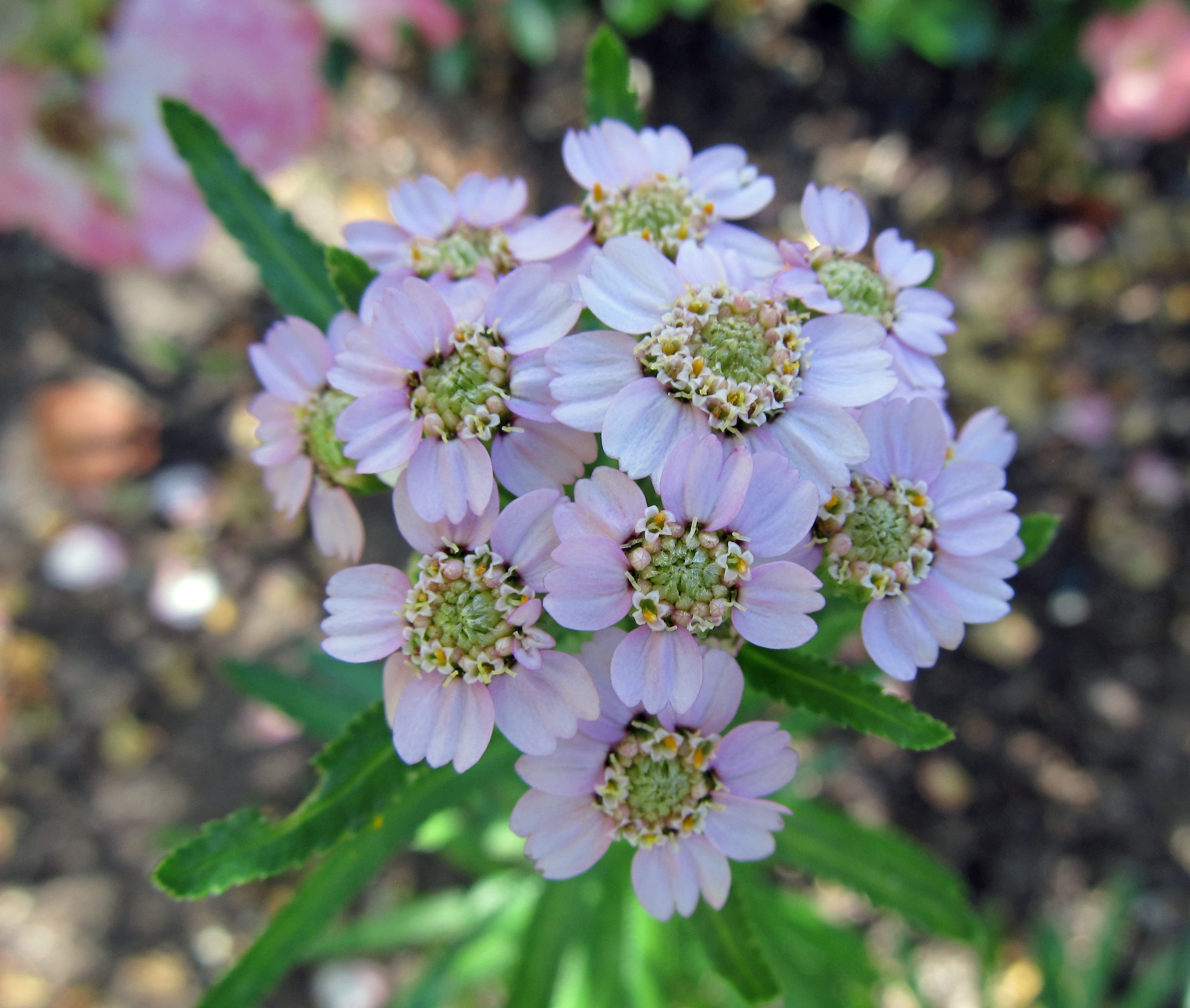
Yarrow begins as a small rosette of very finely dissected leaves that are feathery or fern-like in appearance. These characteristic leaves explain its specific epithet, millefolium, and common names like thousand-leaf. Slightly hairy stems with alternately arranged leaves arise from the rosettes and are capped with a wide, flat-topped cluster of tightly-packed flowers. The flower stalks can be less than one foot to more than three feet tall. The flowers are tiny, numerous, and consist of both ray and disc florets. Flowers are usually white but sometimes pink.

The plants produce several hundred to several thousand seeds each. The seeds are enclosed in tiny achene-like fruits which are spread by wind and gravity. Yarrow also spreads and reproduces rhizomatously. Its roots are shallow but fibrous and abundant, and they easily spread horizontally through the soil. If moisture, sun, and space are available, yarrow will quickly expand its territory. Its extensive root system and highly divided leaves, which help reduce transpiration rates, are partly what gives yarrow the ability to tolerate dry conditions.

john eastman

Illustration of Achillea millifolium by Amelia Hansen from The Book of Field and Roadside by John Eastman, which has an excellent entry about yarrow.

Common yarrow has significant wildlife value. While its pungent leaves are generally avoided by most herbivorous insects, its flowers are rich in nectar and attract bees, butterflies, beetles, flies, and even mosquitoes. Various insects feed on the flowers, and other insects visit yarrow to feed on the insects that are feeding on the plant. Despite its bitterness, the foliage is browsed by a variety of birds, small mammals, and deer. Some birds use the foliage in constructing their nests. Humans have also used yarrow as a medicinal herb for thousands of years to treat a seemingly endless list of ailments.

Yarrow’s popularity as an ornamental plant has resulted in the development of numerous cultivars that have a variety of flower colors including shades of pink, red, purple, yellow, and gold. While Achillea millefolium may be the most widely available species in its genus, there are several other drought-tolerant yarrows that are also commercially available and worth considering for a dry garden.

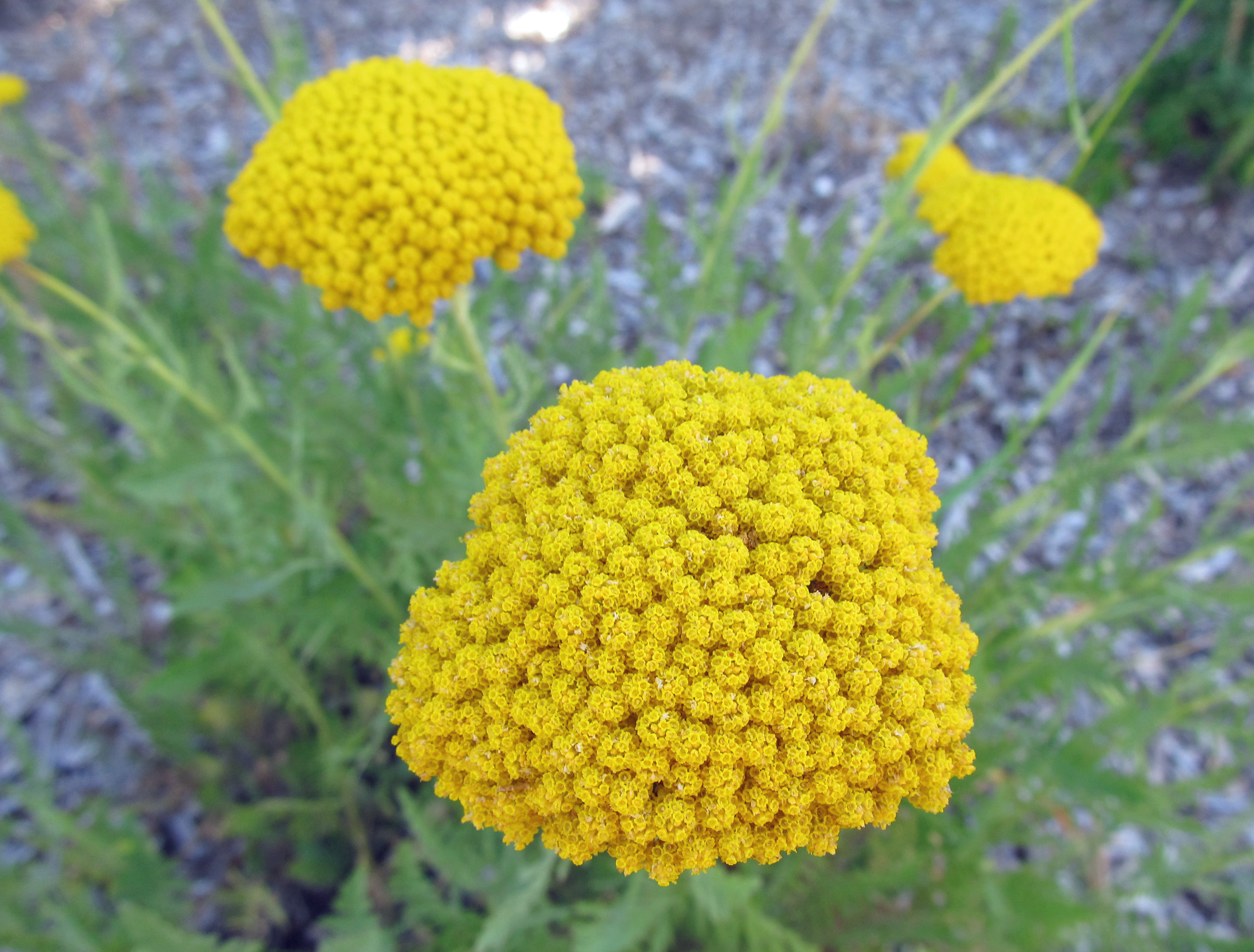
Achillea filipendulina, fern-leaf yarrow, is native to central and southwest Asia. It forms large, dense clusters of yellow-gold flowers on stalks that reach four feet high. Its leaves are similar in appearance to A. millefolium. Various cultivars are available, most of which have flowers that are varying shades of yellow or gold.

Achillea alpina, Siberian yarrow, only gets about half as tall as A. filipendulina. It occurs in Siberia, parts of Russia, China, Japan, and several other Asian countries. It also occurs in Canada. Unlike most other species in the genus, its leaves have a glossy appearance and are thick and somewhat leathery. Its flowers are white to pale violet. A. alpina is synonymous with A. sibirica, and ‘Love Parade’ is a popular cultivar derived from the subspecies camschatica.

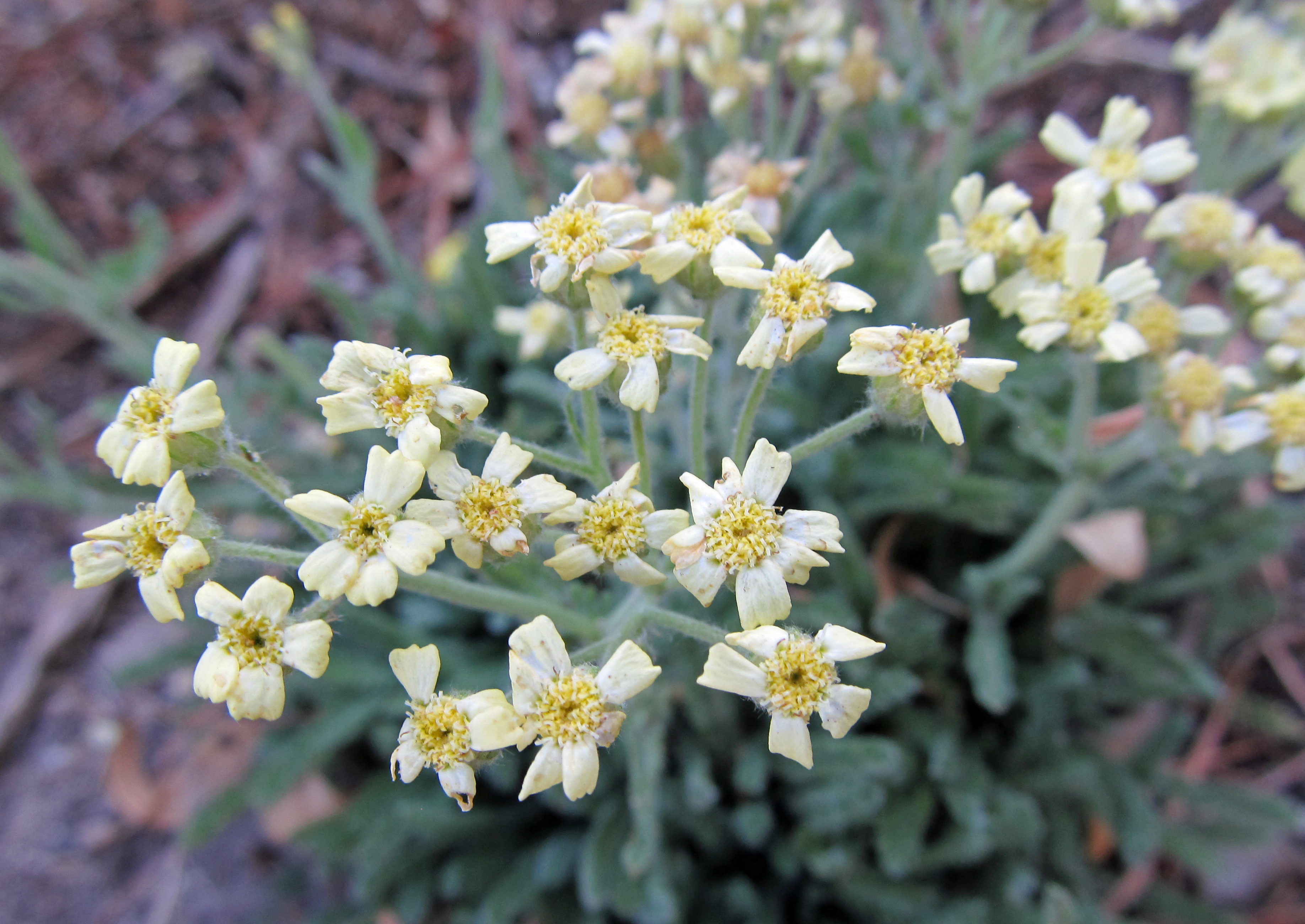
Achillea x lewisii ‘King Edward,’ a hybrid between A. tomentosa (woolly yarrow) and A. clavennae (silvery yarrow), stays below six inches tall and forms a dense mat of soft leaves that have a dull silver-gray-green appearance. Its compact clusters of flowers are pale yellow to cream colored. Cultivars of A. tomentosa are also available.

Achillea ptarmica, a European native with bright white flowers, and A. ageritafolia, a native of Greece and Bulgaria that is low growing with silvery foliage and abundant white flowers can also be found in the horticulture trade along with a handful of others. Whatever your preferences are, there is a yarrow out there for you. Invasiveness and potential for escape into natural areas should always be a concern when selecting plants for your garden, especially when considering a plant as robust and successful as yarrow. That in mind, yarrow should make a great addition to nearly any drought-tolerant, wildlife friendly garden.

More Drought Tolerant Plants Posts:

Rare and Endangered Plants: Texas Wild Rice

Some plants have native ranges that are so condensed that a single major disturbance has the potential to wipe them out of existence completely. They are significantly more vulnerable to change than neighboring plant species, and for this reason they often find themselves on endangered species lists. Zizania texana is one of those plants. Its range was never large to begin with, and due to increased human activity it now finds itself on the brink of extinction.

Zizania texana is one of three species of wild rice found in North America. The other two, Z. palustris and Z. aquatica, enjoy much broader ranges. Both of these species were once commonly harvested and eaten by humans. Today, Z. palustris is the most commercially available of the two. Commonly known as Texas wild rice, Z. texana, was not recognized as distinct from the other two Zizania species until 1932.

Herbarium voucher of Texas wild rice (Zizania texana) - photo credit: University of Texas Herbarium

Herbarium voucher of Texas wild rice (Zizania texana) – photo credit: University of Texas Herbarium

Texas wild rice is restricted to the headwaters of the San Marcos River in Central Texas. The river originates from a spring that rises from the Edwards Aquifer. It is a mere 75 miles long, but is home to copious amounts of wildlife, including several rare and endangered species. Before the 1960’s, Texas wild rice was an abundant species found along several miles of the San Marcos River. Its population and range has since been greatly reduced, and the native population is now limited to about 1200 square meters within the first two miles of the river.

Texas wild rice is an aquatic grass with long, broad leaves that remains submerged in the clear, flowing, spring-fed water of the river until it is ready to flower. Flower heads rise above the water, and each flower spike consists of either male or female flowers. The flowers are wind pollinated, but research has revealed that the pollen does not travel far and does not remain viable for very long. If a male flower is further than about 30 inches away from a female flower, the pollen generally fails to reach the stigma. The plants also reproduce asexually by tillering, but plants produced this way are genetically identical to the parent plant.

As people settled in the area around San Marcos Springs and began altering the river for their own use, Texas wild rice had to put up with a series of assaults and dramatic changes, including increased sediment and nutrient loads, variations in water depth and speed, trampling, and mechanical and chemical removal of the plant itself. Sexual reproduction became more difficult. In his book, Enduring Seeds, Gary Paul Nabhan describes one scenario: “streamflow had been increased to the extent that the seedheads, which were formerly raised a yard above the water, [were] now constantly being pummeled by the current so that they [remained] submerged, incapable of sexual reproduction.”

San Marcos, Texas – where the headwaters of the San Marcos River is located and where Texas wild rice has long called its home – is the location of Texas State University and is part of the Greater Austin metropolitan area. Thus, Zizania texana now finds itself confined to a highly urbanized location. The San Marcos Springs and River are regularly used for recreation, which leads to increased sediments, pollution, and trampling. Introduced plant species compete with Texas wild rice, and introduced waterfowl and aquatic rodents consume it. In this new reality, sexual reproduction will remain a major challenge, and a return to its original population size seems veritably impossible.

Texas wild rice (Zizania texana) and its urbanized habitat - photo credit: The Edwards Aquifer

Texas wild rice (Zizania texana) and its urbanized habitat – photo credit: The Edwards Aquifer

Attempts have and are being made to maintain the species in cultivation and to reintroduce it to its original locations, but its habitat has been so drastically altered that it will need constant management and attention for such efforts to be successful. As Nabham puts it, it is a species that has “little left of [its] former self in the wild – it is a surviving species in name more than in behavior…The wildness has been squeezed out of Texas rice.”

What if humans had stayed out of it? Would a plant with such a limited range and such difficulty reproducing sexually persist for any great length of time? It’s hard to say. If it disappears completely, what consequences will there be? It is known to provide habitat for the fountain darter, an endangered species of fish, as well as several other organisms; however, the full extent of its ecological role remains unclear. It will be nursed along by humans for the foreseeable future, but it may never regain its full glory. It is a species teetering on the edge of extinction, simultaneously threatened and cared for by humans – a story shared by so many other species around the world.

Additional Resources:

Podcast Review: Native Plant Podcast

Always on the lookout for more podcasts to listen to, I somehow stumbled upon Native Plant Podcast. I wish I could remember the rabbit hole I went down that brought me to this masterpiece, but I can’t. What I do remember is being hesitant at first. I am all for calling things what they are. A restaurant called “Restaurant?” Why not? A podcast about native plants called “Native Plant Podcast?” Sure. It’s not the most creative name, but it works. What I was worried about, though, was that a podcast calling itself after native plants was going to be preachy, pushy…or just dull.

Yet I work with native plants every day(!), and I love them – so my initial judgement must say more about myself than anything else. Despite my hesitation – and my inclination to judge a podcast by its cover – I gave it a shot. I’m so glad that I did, because what I found was a highly informative show that is simultaneously delightful, fun, goofy, and entertaining. It’s a podcast that doesn’t take itself too seriously. The hosts and their guests share an important message about the benefits of native plant gardening, and they do so with passion and a sense of urgency while remaining lighthearted and approachable.

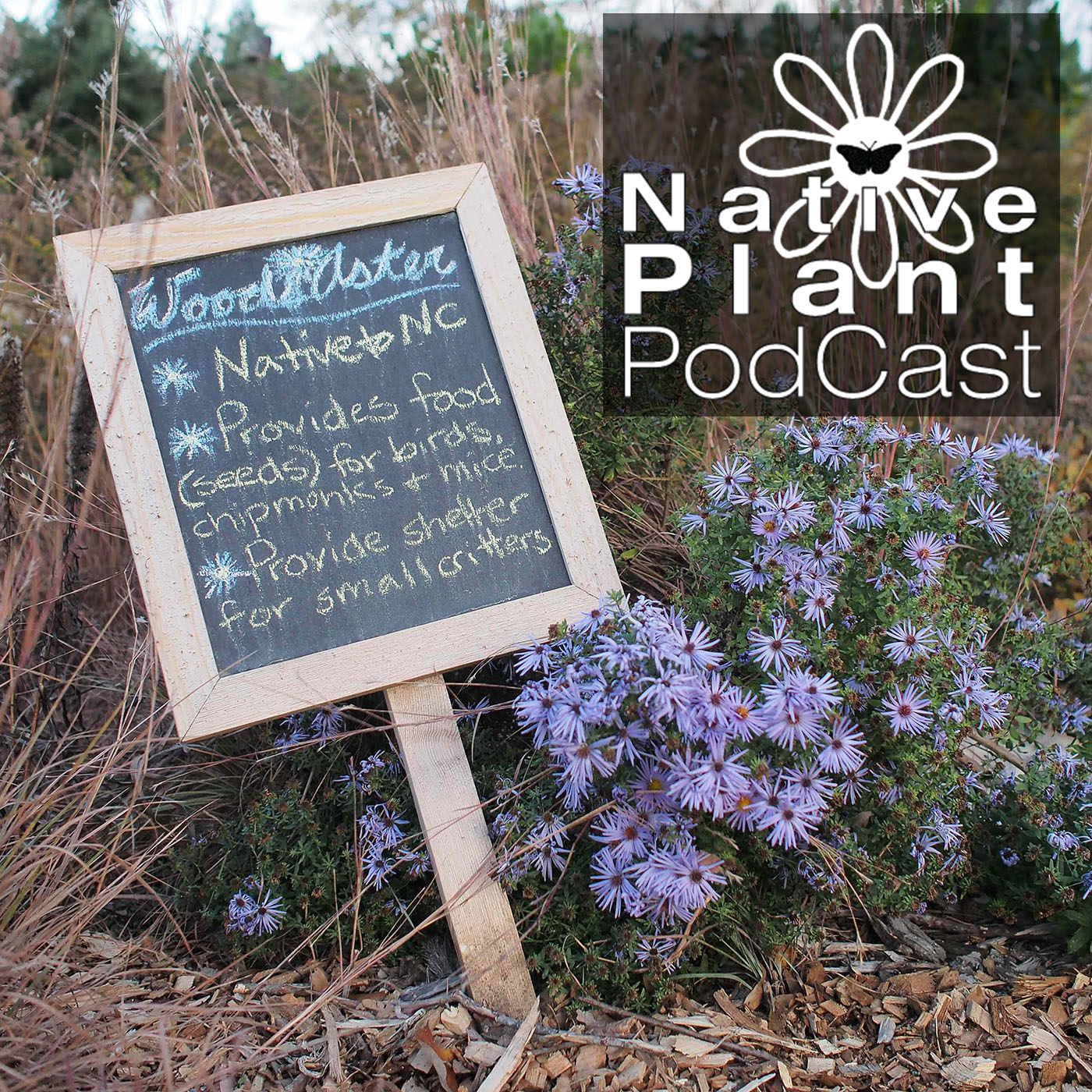
native plant podcast logo and sign

Native Plant Podcast is young. The first episode came out in January 2016. It is run by three individuals that met at the Cullowhee Native Plant Conference in North Carolina (a conference that is often mentioned on the podcast). Mike Berkeley and John Magee are the regular hosts; Jesse Turner mainly operates behind the scenes but makes appearances on a few episodes. They each have their own nursery and/or landscaping businesses that deal largely with native plants. Together they have decades of experience working with native plants. In an episode with Neil Diboll of Prairie Nursery, Mike makes the comment that they “were into native plants before it got cool.” Several of the guests that have been on the podcast so far can say the same thing.

One such guest is Miriam Goldberger, owner of Wildflower Farm and author of Taming Wildflowers, who appears on two episodes (part 1 and part 2). Other notable guests include Thomas Rainer, co-outhor of Planting in a Post-Wild World, and David Mizejewski, a naturalist for the National Wildlife Federation. So far all of the guests have been great, and since the the podcast has only been around for a few months, it is easy to catch up on past episodes.

As someone who enjoys sitting around talking about plants, this podcast is perfect since much of the “airtime” is taken up by such discussions. The episodes about winter interest and spring gardening are particularly great for this sort of thing. Two other standout episodes are the introductory episode, in which Mike and John discuss how they got started working with native plants, and the episode about defining native plants, in which Mike, John, and Jesse all take a crack at coming up with a definition. A topic that comes up often on the podcast is native plant cultivars (John understandably cringes each time he hears the portmanteau of “native” and “cultivar”), which seems to be a controversial topic in the native plant world.

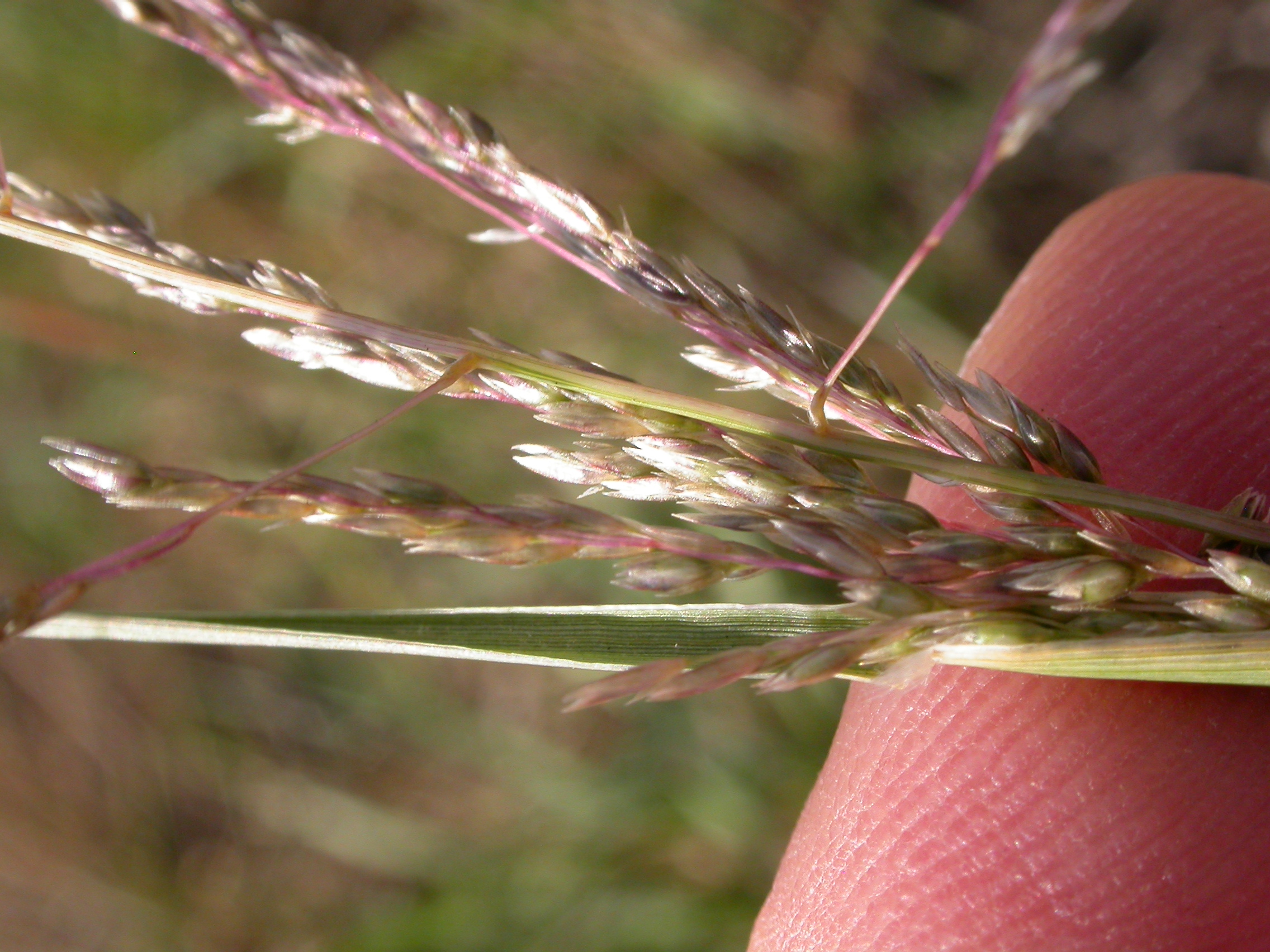
Prairie dropseed (Sporobolus cryptandrus) - one of Mike and John's favorite grasses and a plant that comes up frequently on the podcast. (photo credit: wikimedia commons)

Prairie dropseed (Sporobolus cryptandrus) – one of Mike and John’s favorite grasses and a plant that comes up frequently on the podcast. (photo credit: wikimedia commons)

In each episode of the podcast there is an interview/discussion followed by three short segments: listener questions, stories about dogs or other pets (the hosts really love their dogs), and a toast (in which the hosts pop open their beers in front of the microphone for all to hear). The twitter bio for the Native Plant Podcast sums it up well: “A podcast started by a group of goofballs to highlight the beauty and functionality of native plants in the landscape.” These goofballs really know their stuff, and I highly recommend listening to their show.

Bonus quote from the episode with Neil Diboll:

Everybody says they love Mother Nature, but if you look at people’s yards, very few people actually invite her over. Most people have lawns that are mown to within an inch or two of their lives, and the typical American garden is like a big pile of mulch with a few perennials stuck in it or maybe a few shrubs stuck in it. These are really non-functional gardens from a standpoint of an ecological approach, so bringing your landscaping to life is creating ecological gardens that are not just for the owner of the property, but for all life that you can attract to the land for which you are the steward.

Happy American Wetlands Month!

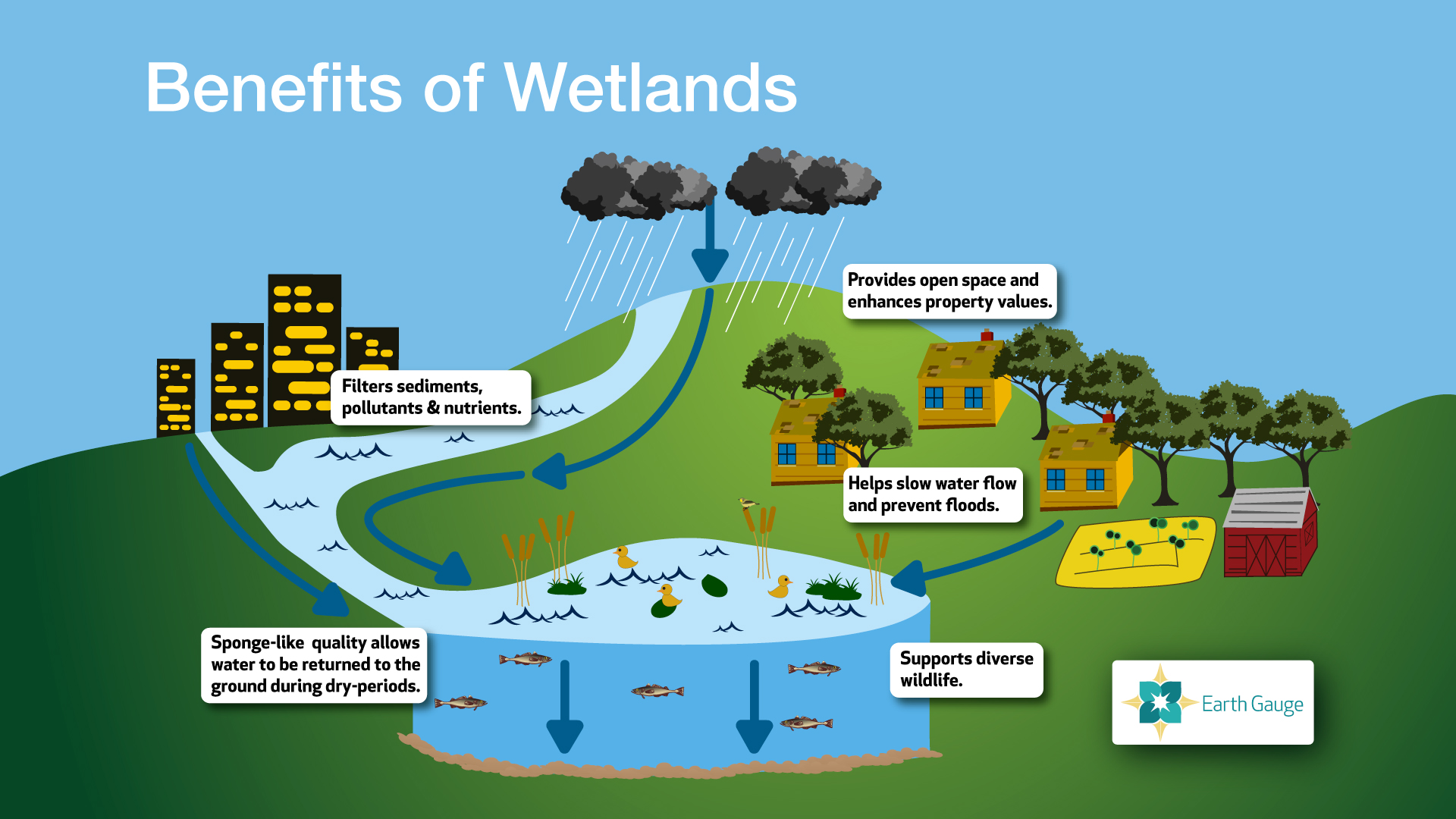
To kick off this year’s American Wetlands Month, I am reposting something I posted three years ago. I have updated the links and added a few more resources. In celebration, all Awkward Botany posts in May will have something to do with wetlands. An underlying goal of American Wetlands Month is to encourage people to get out and visit wetlands in their area and find out what they can do to help conserve them. Hopefully this series of posts helps to further that aim.

———————

“May is American Wetlands Month! No matter where you live, chances are there’s a wetland nearby that provides important environmental benefits to your community. Wetlands support diverse fish and wildlife species, filter pollutants from rain water runoff, help recharge groundwater supplies, prevent flooding and enhance property values.” – Earth Gauge (A program of the National Environmental Education Foundation)

Wetlands are ecosystems that are characterized by their vegetation (aquatic plants), their soils (formed during anaerobic conditions caused by being flooded or saturated with standing water), and, of course, their state of being largely saturated with water either seasonally or permanently. Examples of natural wetlands include bogs, fens, marshes, and swamps. Wetlands can also be constructed by humans for the purpose of collecting storm water runoff from urban areas in efforts to reduce the risk of flooding and avoid overwhelming municipal sewer systems during large rainstorms.

Wetlands are the most threatened type of ecosystem on earth, and we are losing them at a steady clip. Major threats to wetlands include land development, pollution (agricultural, commercial, residential, etc.), and the introduction of invasive species. Considering the benefits we receive from having wetlands around, it is imperative that we protect them. Earth Gauge offers some suggestions on how to do so.

wetland benefits

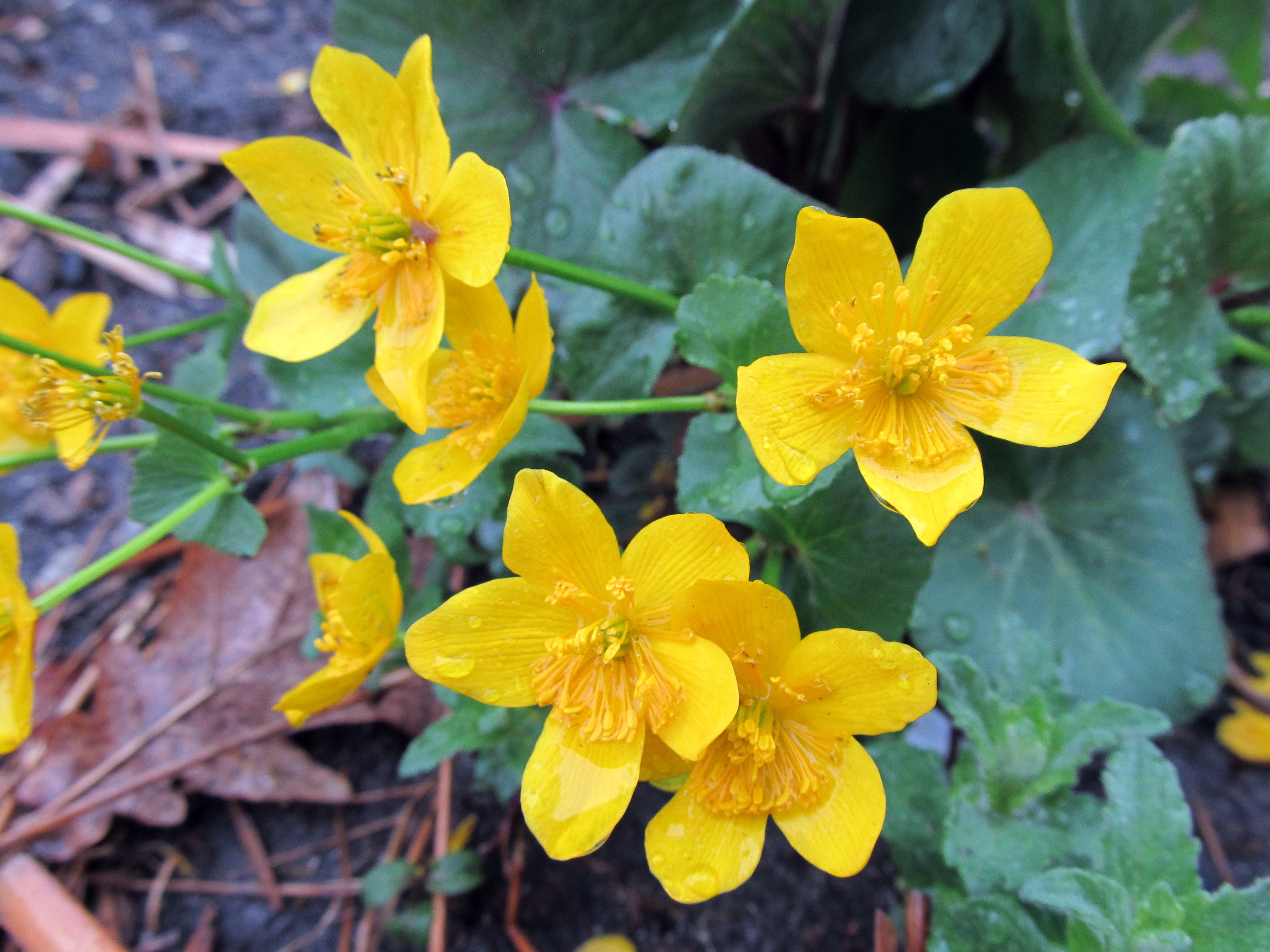
Speaking of wetlands, one of my favorite wetland plant species is marsh marigold (Caltha palustris). It is in the buttercup family (Ranunculaceae) and is common throughout the Northern Hemisphere. I became familiar with this plant when I was volunteering at a wetland in Edwardsville, IL. Perhaps you’ve seen it growing near you.

Marsh Marigold (Caltha palustris) - Photo taken at Idaho Botanical Garden.

Marsh Marigold (Caltha palustris) – Photo taken at Idaho Botanical Garden.

Additional Resources

The Making of a Kill Jar

I often hear stories from plant lovers about their initial nonchalance concerning plants. The common refrain seems to be that they were fascinated by wildlife and largely ignored plant life until they came to the realization that plants were integral in the lives of animals and play a major role in shaping the environments that support all life. Such an epiphany spawns an insatiable obsession with botany, at least for some people.

I seem to be on the opposite trajectory. It’s not like I have ever really been disinterested in animals; I’ve just been significantly more interested in plants and haven’t bothered to learn much about the animal kingdom (with the exception of entomology). My growing fascination with pollination biology (see last year’s Year of Pollination series) isn’t much of a stretch because insects have always appealed to me, and their intimate interactions with plants are hard to ignore. Ultimately, it is my interest in urban ecology and wildlife friendly gardening that is driving me to learn more about animals.

I started this year off by finally reading Doug Tallamy’s popular book, Bringing Nature Home. Tallamy wrote a lot about birds in his book, which got me thinking more about them. I then discovered Welcome to Subirdia, a book by John Marzluff that explores the diversity of birds that live among us in our urban environments. I then found myself paying more attention to birds. Many bird species rely on insects for food at some point in their lives. Plants regularly interact with insects both in defending themselves against herbivory and in attracting insects to assist in pollination. It’s all connected, and it seems I wouldn’t be much of a botanist then if I didn’t also learn about all of the players involved in these complex interactions.

So, now I’m a birdwatcher and an insect collector. Or at least I’m learning to be. Insects are hard to learn much about without capturing them. They often move quickly, making them hard to identify, or they go completely unnoticed because they are tiny and so well hidden or camouflaged. With the help of a net and a kill jar, you can get a closer look. This not only allows you to determine the species of insects that surround you, but it can also help give you an idea of their relative abundances, their life cycles, where they live and what they feed on, etc.

insect net 2_bw

As the name implies, if you’re using a kill jar, your actions will result in the death of insects. Some people will be more pleased about this than others. If killing insects bothers you, don’t worry, insect populations are typically abundant enough that a few individuals sacrificed for science will not hurt the population in a serious way.

Kill jars can be purchased or they can be made very simply with a few easy to find materials. Start with a glass jar with a metal lid. Mix up a small amount of plaster of paris. Pour the wet plaster in the jar, filling it to about one inch. Allow the plaster to dry completely. This process can be sped up by placing the jar in an oven set on warm. When the plaster is dry, “charge” the jar by soaking the plaster with either ethyl acetate, nail polish remover, or rubbing alcohol. I use nail polish remover because it is cheap and easily accessible. It doesn’t work as quickly as pure ethyl acetate, but it is less toxic. Place a paper towel or something soft and dry in the jar. This keeps the insects from getting beaten up too much as they thrash about. Once the insect is dead, it can be easily observed with a hand lens or a dissecting microscope. It can also be pinned, labeled, and added to a collection.

There are several resources online that describe the process of collecting and preserving insects, including instructions for making an inexpensive kill jar, which is why I am keeping this brief and will instead refer you to a couple of such sites. Like this one from Purdue University’s extension program. It’s directed toward youth, but it includes great information for beginners of any age. This post by Dragonfly Woman is a great tutorial for making a kill jar, and there are several other posts on her blog that are very informative for insect collectors of all experience levels.

I guess you could consider this part of my journey of becoming a naturalist. Perhaps you are on a similar journey. If so, share your thoughts and experiences in the comment section below.

Drought Tolerant Plants: Water Efficient Garden at Idaho State Capitol Building

water efficient garden sign

As drought and threats of drought continue in the western half of the United States, as well as in many other parts of the world, people are increasingly looking for ways to use less water in their landscapes. For many it is a change they are reluctant to make, worried that they will have to sacrifice lush and colorful yards and gardens for drab, dry, gray, and seemingly lifeless ones. Not so, though. The palette of plants that can survive in low water environments is actually quite diverse and contains numerous plants that are just as lush and colorful as some water hogging ones. If planned, planted, and maintained well, a water efficient garden can be incredibly attractive and can even consist of some plants that are comparatively more heavy water users. So, for those who are apprehensive about getting down with brown, don’t fret – there is a better way.

How does one go about creating such a garden? The answer to that is a book on its own – much too long for a single blog post. It also depends who is asking the question, or more specifically, where they are asking it from. Luckily, demonstrations of water-wise gardens are becoming more common. These gardens, planted with regionally appropriate plants and showcasing various water-saving techniques, are great places to start when looking for ideas and motivation. Such gardens can be found at public parks, city and state government buildings, botanical gardens, nurseries and nursery centers, and water company offices. If you are looking to transform your landscape into a more water efficient one, seek out a demonstration garden in your area. It’s a great place to start.

There are several such gardens where I live, one of which is the Water Efficient Garden at the Idaho State Capitol Building in Boise, Idaho. This garden began in 2010 as a partnership between United Water Idaho and the Idaho Capitol Commission. Its mission is to introduce visitors to “low-water native and adaptive plants that thrive in Idaho’s climate.” The plants that were selected for the garden are commonly found at local garden centers and nurseries – an important objective when introducing people to water-wise gardening. The ultimate goal of this garden is to “show homeowners that they can maintain attractive landscaping while conserving water.”

I have my criticisms of this garden regarding plant selection, design, etc., but I’ll spare you those details. I also don’t know the specifics about how this garden is maintained or how often it is watered. All that aside, I am just happy that it exists, and I encourage you to seek out similar gardens in your area. There are numerous approaches to designing and constructing water efficient gardens – again, a book on its own – but demonstration gardens like this are an excellent place to get ideas and learn what other people in your area are doing to conserve water and create landscapes that better reflect the ecology of your region.

United Water Idaho offers a brief introduction to low water gardening here, as well as a list of plants that are in the capitol building garden here.

Blanket Flower (Gaillardia x grandiflora 'Goblin') Plants in the garden are accompanied by a sign with a number on it. The sign corresponds to the plant list that is provided at the entrances to the garden.

Blanket flower (Gaillardia x grandiflora ‘Goblin’). Plants in the garden are accompanied by a sign with a number on it. The sign corresponds to a plant list that is provided at the entrances to the garden.

Dianthus sp.

Dianthus sp.

Coreopsis sp.

Coreopsis sp.

Geranium sp.

Geranium sp.

Liatris sp.

Liatris sp.

A drift of pearly everlasting (Anaphalis margaritacea)

A drift of pearly everlasting (Anaphalis margaritacea)

Purple coneflower (Echinacea purpurea)

Purple coneflower (Echinacea purpurea)

Yellow ice plant (Delosperma nubiginum)

Yellow ice plant (Delosperma nubiginum)

Other “Drought Tolerant Plants” Posts on Awkward Botany: