Famous Botanists in History: Zhan Wang

Researching last week’s post reminded me of a series of posts that I have been wanting to start for quite a while: Famous Botanists in History. With Metasequoia on my mind, who better to inaugurate this new series than Zhan Wang – the botanist who made the first scientific collection of the living fossil.

From what I can tell, most of what is known about Zhan Wang (at least outside of China) comes from his contribution to the discovery and description of Metasequoia glyptostroboides, and even that information seems to be available largely due to the efforts of some of his colleagues and former students who endeavored to see that Wang be acknowledged for his role in the event. After Wang’s death, a group of his former students wrote a short biography which appeared in the August 2000 issue of the journal Taxon. The biography is written from the perspective of a group of people who greatly admired and respected their teacher and mentor. Unable to find much else written about Wang and his life, the details in this post are mostly taken from that biography. If there are other resources, I would be grateful to have them brought to my attention.

Zhan Wang was born in a remote village in Liaotung Province (now Liaoning Province) in northeast China on May 4, 1911. His birth name was Yishi, but he changed it to Zhan (or Chan) after running away from home in 1932. He developed plant identification skills early in his youth and used those skills to learn about Chinese medicine. He studied forestry in high school. When he graduated in 1931, the Japanese army was in the process of invading northeast China, so he fled to Beijing. There he continued his forestry studies at Beijing University (known today as Peking University). He graduated in 1936, and around that time, Beijing University along with other educational institutions and government agencies in Beijing and Nanjing were evacuating to escape aerial attacks. As Kyna Rubin puts it in The Metasequoia Mystery, “much of Wang’s early career was spent dodging war.”

Zhan Wang went to middle school and high school in Dandong City, Liaoning Province (photo credit: wikimedia commons)

Zhan Wang went to middle school and high school in Dandong City, Liaoning Province, China (photo credit: wikimedia commons)

Zhan moved with Beijing University’s Agricultural College to the Shaanxi province where he took a position as professor of dendrology and forestry. Wang’s students say that he preferred to teach his classes outside where the students could have “hands-on experiences” directly observing the morphology and ecology of plants. He “told stories about the species,” encouraged “looking, touching, tasting, and chewing,” and found many other ways to integrate botany and ecology in his courses. One way he helped students understand plant ecology was by grouping plants into categories with clever nicknames such as “mountain climbers” (plants found in cool climates), “greedy boys” (plants with high nutrient demands), “thirsty guys” (plants with high water demands), and “desert fighters” (drought tolerant plants).

In 1943, Wang became a Forest Administrator for the Ministry of Agriculture and Forestry, a position which included doing forest surveys in remote areas. On an expedition to Shennongjia in the Hubei province, Wang was stricken with malaria and had to stop in Wanxian County. There he met an old classmate of his, Longxing Yang, who told him of an unusual tree, which was later described as Metasequoia glyptostroboides by Wanjun Zheng and Xiansu Hu thanks to the initial collections that Wang made in July 1943. Despite being left out of some of the accounts of the discovery, Wang’s students claim that he didn’t complain and was more concerned about the tree’s continued survival, believing that “discussing the past discovery of a new species is not as important as investigating how a living fossil species will survive in the future.” His students were admonished to “focus on the species’ protection and its habitat.”

Wang’s position as Forest Administrator was short-lived; however, over the next several decades he continued to teach dendrology and forestry at several Chinese universities. Much of his research efforts were focused on sorting out the taxonomy of the willow family (Salicaceae), a highly complex plant family. He collected willow species throughout China and, with the help of his colleagues, described more than 90 new species. He also became very concerned about deforestation and “focused his attention on devising scientifically sound harvesting methods and successful regeneration processes.” Despite his work being largely restricted to China and (as his students claim) “receiving little credit elsewhere,” similar approaches to the sustainable forestry methods that Wang preached are “widely recommended and accepted today in western forestry practices for ecosystem management.”
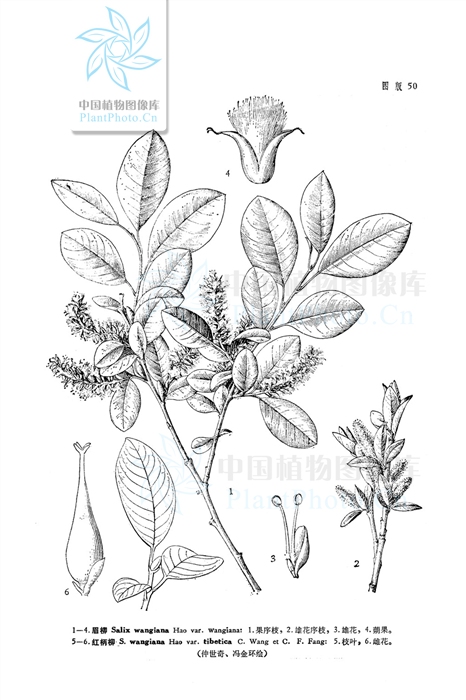
Zhan Wang described many new species of Salix. Salix wangiana var. tibetica is a species that was described by and also named after Wang (photo credit: Flora Republicae Popuaris Sinacea)

Zhan Wang helped describe dozens of species of Salix that were new to science. Salix wangiana var. tibetica is a species that was described by and also appears to be named after Wang (photo credit: Flora Republicae Popularis Sinacea)

In the 1950’s, Wang began carrying out research at Changbai Mountain Nature Reserve high on the Changbai Mountain located in northeastern China on the border with North Korea. His efforts were interupted by the Cultural Revolution, a period that lasted from 1966-1976. As soon as that had passed, Wang and colleagues began working to establish the Changbai Mountain Forest Ecosystem Research Station. Wang became the first director of the station when it was approved and funded in 1979. Wang and his research team worked to establish “baseline information on the area’s flora, fauna, vegetation, and soils,” and in three years time had amassed enough research to warrant over 100 published papers. Due to the efforts of Wang and his team, the Changbai Mountain Nature Reserve gained inclusion in UNESCO’s Man and the Biosphere Program.

Wang’s students write that Wang viewed “Changbai Mountain as his home” and “believed that his life belonged to this mountain region.” His wish was to one day have his ashes “spread throughout the wilderness” of this mountain. After his death on January 30, 2000, his wish was carried out. “He will forever be with his beloved plants and forests in this important site of plant diversity, and now, place of rest.” Wang was survived by his three daughters; his son committed suicide during the Cultural Revolution, and his wife died in 1992.

In the adoring words of his students, Wang had a “kind, gentle character and contagious enthusiasm for science and nature” and “his contribution to botany went far beyond what is available in print. His footprints from exploring plants in China can be found in almost every province.”
The Discovery of a Living Fossil

In the early 1940’s, the genus Metasequoia was only known scientifically in fossil form. It had, in its day, been a widespread genus, found commonly in many areas across the Northern Hemisphere. It thrived among the dinosaurs. However, sometime during the Pliocene, the genus was thought to have died out. Thousands of fossils were left behind, and that would have been the end of the story had a member of its genus not been discovered still alive in a Chinese province later that decade. Its discovery is easily one of the greatest botanical stories of the 20th century, fascinating in its own right. The circumstances surrounding its scientific description, as it turns out, are equally interesting.

In the January 2016 issue of Landscape Architecture Magazine, Kyna Rubin details the event in an article entitled The Metasequoia Mystery. It’s the type of story that you almost need a crazy wall to sort out. A broad cast of characters interacted at various levels in order to make this profound discovery during a tumultuous time when the world was at war and China was being invaded by Japan.

Speaking of Japan, let’s start there. In 1941, Japanese paleobotanist, Shigeru Miki, published research describing fossils that for decades were thought to be either Sequoia or Taxodium as a new genus, Metasequoia. As Rubin points out, due to the war, “not every Chinese botanist would have had access to recent international research, let alone articles by botanists of an enemy country.” This could explain why in 1943 when Zhan Wang – a professer of forestry at Beijing University and the forest administrator for the Ministry of Agriculture and Forestry – was introduced to a living Metasequoia by an old classmate and local villagers in the Hubei Province, he wasn’t sure what he was looking at.

The tree was obviously important to the local people. They called it shuisa (water fir) and had built a shrine around it. Wang collected several branches and some cones that had fallen on a rooftop. At the time he identified it as Glyptostrobus pensilis (water pine), a tree common to the area; but he may have wondered if this was correct.

Eventually Wang’s samples and the details of his collection were brought to the attention of Wanjun Zheng, a dendrologist at the National Central University. Intrigued, Zheng sent his graduate student, Jiru Xue, to collect more samples from the same tree that Wang had encountered. These samples were more complete, and when they were presented to Xiansu Hu – the director of Fan Memorial Institute of Biology in Beijing – the mystery was solved. Hu had access to Miki’s research and concluded that what they had was a living fossil.

In 1948, Hu and Zheng published a paper describing the species and giving it the official name, Metasequoia glyptostroboides. The discovery ignited the botanical community as well as the general public, and soon seeds of what became commonly known as dawn redwood were being disseminated across the globe. Unfortunately, Wang’s contribution was not mentioned in the original paper, and the exact account of the discovery became convoluted.

photo credit: wikimedia commons

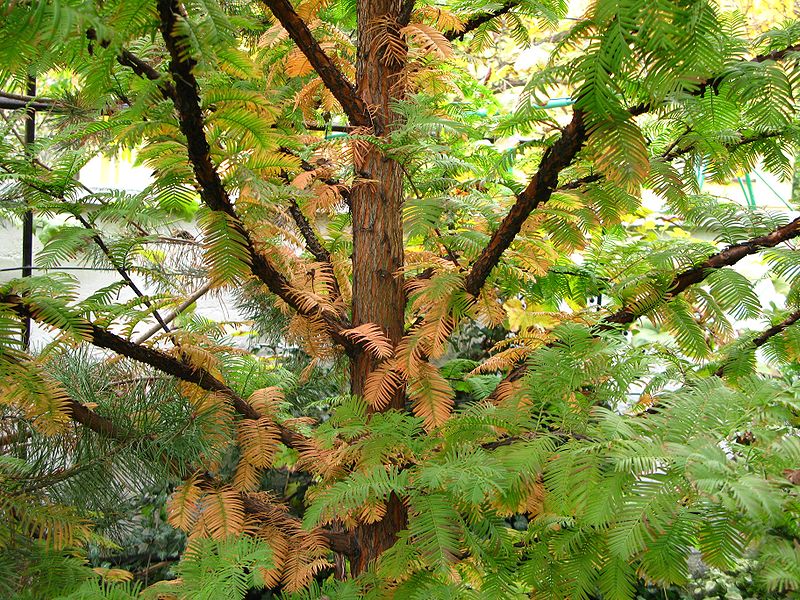
Dawn redwood (Metasequoia glytostroboides) is a deciduous, medium to large tree. Its cones are round and about 1 inch long. Its leaves are oppositely arranged and have a feather-like appearance. Its bark is fibrous, stringy, and red-brown to gray in color.  (photo credit: wikimedia commons)

At some point, a discussion between Zheng and a forester named Duo Gan (also known as Toh Kan) revealed that Gan had come across the tree in 1941, but he did not make any collections. Despite Zheng learning of Gan’s encounter after Zheng and Hu’s original paper had been published, Gan’s story became prominent, further obscuring the role that Wang played.

It’s important to note that none of Wang’s original collections were used as the type specimen – the particular specimen of an organism to which the scientific name is formally attached and is referred to in the scientific literature. The type specimen was collected by Xue. This is not uncommon, as initial collections may not always be in the best condition and may not include all the parts and pieces necessary to identify and describe a new species. But, as Rubin notes, “it was Wang’s specimens [that Zheng and others] had first examined and those specimens brought the tree to their attention to begin with.” So Wang’s contribution is an important part of the story.

Thanks to Wang’s former students, his role in the discovery has received greater exposure. Jinshuang Ma in particular has made it his mission to highlight the part that Wang played in the event. Apart from maintaining a website all about Metasequoia, Ma also spent several years searching for a lost herbarium specimen collected by Wang, which he found in an abandoned herbarium in Nanjing. You can read about his find in this article from the August 2003 issue of the journal Taxon. (Ma’s well researched summary of the events surrounding the Metasequoia discovery is also worth reading.)

Failure to acknowledge Wang’s contribution (at least initially) perhaps didn’t make waves outside of China, but in Rubin’s words, “the omission of Wang’s contribution sparked immediate hullabaloo inside China’s botanical circles in the late 1940’s.” Power and class differences likely played a big role. Hu and Zheng were established scholars that had received their educations in the United States and France respectively. Wang was young, from a remote village, and had not studied abroad. While Wang “went on to become one of China’s most distinguished forestry experts and botanists,” he was early in his career at the time of the Metasequoia discovery.

A deep respect for the elders in his field may be the reason that Wang’s students claim that he “never complained” about his treatment. His students go on to say that Wang “was not interested in personal gain,” and instead was simply satisfied to see that Metasequoia “was now growing successfully all over the world and was better protected.” It is listed as endangered on the IUCN Red List and would likely be extinct in its shrunken native range had awareness of its existence not come about when it did.

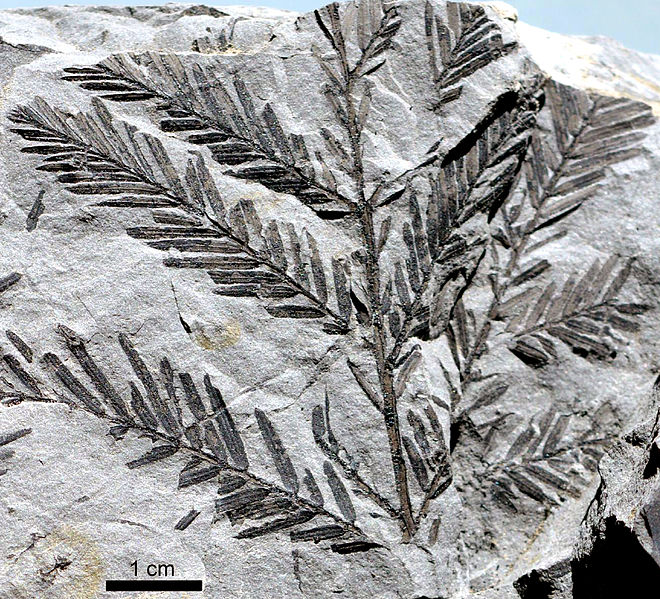
Fossil of Metasequoia occidentalis - photo credit: wikimedia commons

Fossil of Metasequoia occidentalis – photo credit: wikimedia commons

There are plenty of other interesting details to this story. Read the full article and check out the links on metasequoia.org to learn more. The account of Jiru Xue (also known as Hsueh Chi-Ju), the graduate student who collected the type specimens, is particularly interesting. Suprisingly, the tree Wang and Xue took their collections from is still alive today and is estimated to be over 400 years old.

Other longform article reviews on Awkward Botany:

Confidential Carnivore

This is a guest post. Words and images by Jeremiah Sandler

———————

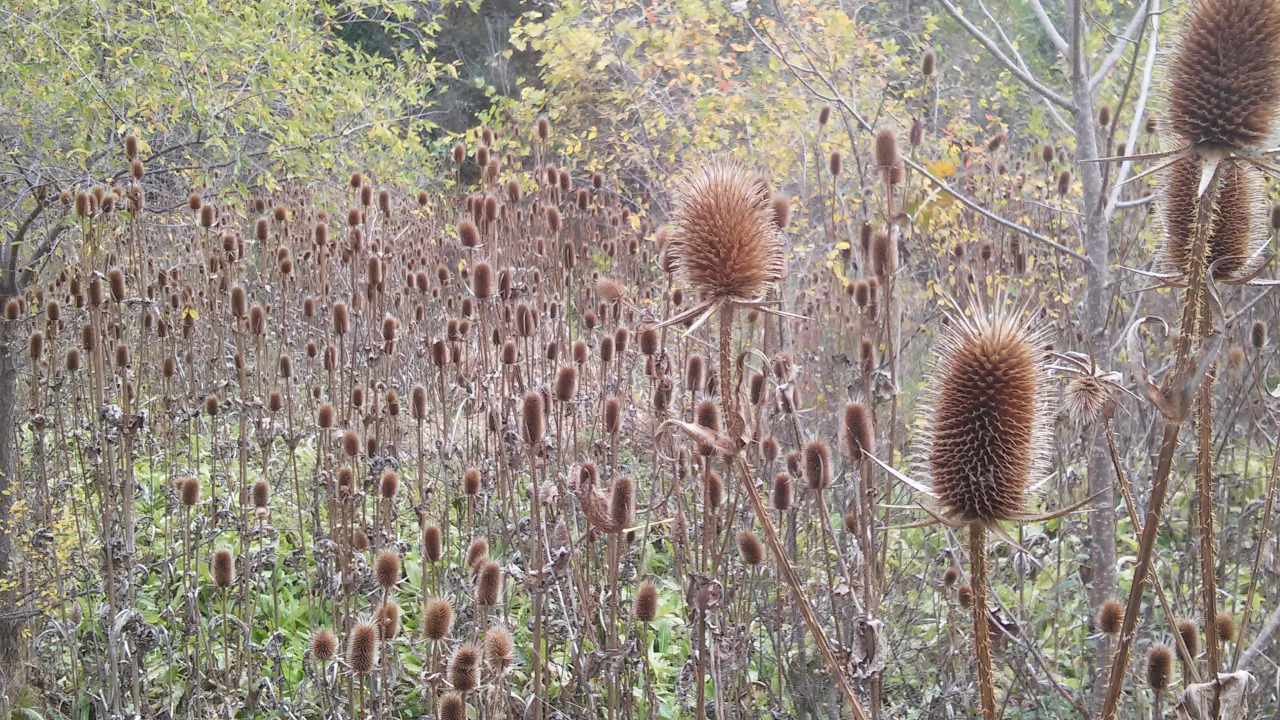
If you live in North America or Europe, chances are you have seen Dipsacus fullonum, commonly called teasel.  Its tall (up to 2 meters), spiky flower stalks with large purple flowers are easy to spot in low-lands, ditches, or along highways.  Since this prolific seeder’s introduction to North America from Europe, it has steadily increased its habitat to occupy nearly each region of the United States. Of course, like all plants, teasel has its preferences and is more frequent in some areas than in others.

dipsacus fullonum_jeremiah sandler

Teasel is an unassuming, herbaceous biennial.  It takes two years to complete its life cycle: First-year growth is spent as a basal rosette, and second-year growth is devoted to flowering.  Standard biennial, right?  As of 2011, an experiment was conducted on this plant that changed the way we see teasel, and possibly all other similar plants.

“Here we report on evidence for reproductive benefits from carnivory in a plant showing none of the ecological or life history traits of standard carnivorous species.” -Excerpt from the report titled Carnivory in the Teasel Dipsacus fullonum — The Effect of Experimental Feeding on Growth and Seed Set by Peter J.A. Shaw and Kyle Shackleton.

We all have favorite carnivorous plants, Venus flytraps, pitcher plants, sundews, etc.. Their showy traps and various means of attracting insects are all marvels of evolution in the plant kingdom.  These insectivorous plants evolved these means of nutrient acquisition in an answer to the lack of nutrients in their environment’s soil.  In some of these plants, there is a direct relationship between number of insects consumed and the size of the entire plant. In others, there is no such relationship.

The unassuming, biennial teasel can now join the ranks of carnivore, or protocarnivore.  It didn’t evolve in bogs or swamps where soil nutrients are depleted.  It has no relationship to the standard carnivorous species. It doesn’t have any flashy traps. In fact, it has no obvious traits which suggest it can gain nutrients from insects. Teasel’s carnivorous habits can be likened somewhat to the carnivorous habits of bromeliads; water gathered in their leaves traps insects.

In Shaw and Shackleton’s experiment (done in two field populations), maggots were placed in water gathered in the center of some first-year rosettes of teasel.  Other rosettes in the same population were left alone as controls.  Not surprisingly, the teasels which were ‘fed’ larvae did not change in overall size.  The size of the overwintering rosette did not offer any predictability towards the size of flower shoots for the coming year. However, something strange did happen:

“…addition of dead dipteran larvae to leaf bases caused a 30% increase in seed set and the seed mass:biomass ratio.”…“These results provide the first empirical evidence for Dipsacus displaying one of the principal criteria for carnivory”

Teasel has some physiology to absorb nutrients from other macroorganisms despite teasel evolving in an entirely different setting than typical carnivorous plants.  Teasel’s already proficient reproductive capacity is enhanced by using insects as a form of nutrients in a controlled setting.  

Many exciting questions have been raised by this experiment. How has this absorption mechanism come about, without the obvious use of lures or other structures to attract insects? And how does teasel maximize upon its own morphology in the wild, if at all?  What would the results be if these experiments were recreated on other similar species?

There are studies being conducted all the time that further the boundaries of what we know about these stationary organisms. There are new discoveries waiting just around the corner. Carnivory in plants is amazing because it transcends common notions about plants; especially in the case of the unassuming teasel.

Selected Resources:

———————

Jeremiah Sandler lives in southeast Michigan where he works in the plant health care industry. He has a degree in horticultural sciences and is an ISA certified arborist. He is interested in all things plant related and plans to own a horticulture business where he can share his passion with others. Follow Jeremiah on Instagram: @j.deepsea

———————

Would you like to write a guest post? Or contribute to Awkward Botany in some other way? Find out how.

Poisonous Plants: Lima Beans

I don’t recall being a picky eater as a child, but one food I could barely stomach was lima beans. The smell, the texture, the taste, even the look of them, really didn’t sit well with me. I know I’m not alone in this sentiment. Lima beans are a popular thing to hate, and I have avoided them ever since I was old enough to decide what was allowed on my plate. To be fair, the only lima beans I remember trying were the ones included in the familiar bag of frozen mixed vegetables, which might explain why I didn’t like them. But little did I know there is another reason to avoid them – lima beans are poisonous.

That’s a strong statement. In case you’ve eaten lima beans recently or are about to, I should ease your concerns by telling you that you have little to worry about. Commonly cultivated lima beans are perfectly safe to eat as long as they are cooked properly, and even if they are eaten raw in small doses, they are not likely to hurt you. But again, why are you eating lima beans? They’re gross.

lima beans in cans

Phaseolus lunatus – commonly known as lima bean as well as a number of other common names – is in the legume family (Fabaceae) and is native to tropical America. It is a perennial, twining vine that reaches up to 5 meters. It has trifoliate leaves that are alternately arranged, and its flowers are typically white, pink, or purple and similar in appearance to pea flowers and other flowers in the legume family. The fruits are hairy, flat, 5 – 10 cm long, and often in the shape of a half moon. The seeds are usually smooth and flat, but are highly variable in color, appearing in white, off-white, olive, brown, red, black, and mottled.

P. lunatus experienced at least two major domestication events – one in the Andes around 4ooo years ago and the other in Central America more than 1000 years ago. Studies have found that the first event yielded large seeded varieties, and the second event produced medium to small seeded varieties. Wild types of P. lunatus have been given the variety name sylvester, and cultivated types are known as variety lunatus; however, these don’t appear to be accepted names by plant taxonomists and perhaps are just a way of distinguishing cultivated plants from plants growing in the wild, especially in places where P. lunatus has become naturalized such as Madagascar.

Distinguishing wild types from cultivated types is important though, because wild types are potentially more poisonous. Lima bean, like several other plants we eat, contains compounds in its tissues that produce cyanide. These cyanide producing compounds are called cyanogenic glucosides and are present in many species of plants as a form of defense against herbivores. The predominant cyanogenic glucoside in lima beans is called linamarin, which is also present in cassava and flax.

Fruits of lima bean (Phaseolus lunatus) - photo credit: wikimedia commons

Fruits of lima bean (Phaseolus lunatus) – photo credit: wikimedia commons

In order for lima beans to poison you, they must be chewed. Chewing brings linamarin and the enzymes that react with it together. Both compounds are present in the cells of lima beans, but they reside in different areas. Once they are brought together, a reaction ensues and hydrogen cyanide is produced. Because cyanide isn’t produced until after the plant is consumed, the symptoms of cyanide poisoning can take a little while to occur – often several hours.

Cyanide poisoning is not a pretty thing. First comes sweating, abdominal pain, vomiting, and lethargy. If the poisoning is severe, coma, convulsions, and cardiovascular collapse can occur. There are treatments for cyanide poisoning, but if treatment comes too late or if the dose is large enough, death results.

Cassava (Manihot esculenta) is particularly well known for its history of cyanide poisonings. It is a staple crop of people living in tropical areas of Africa and South America. Humans can readily metabolize small amounts of cyanide, and processes like crushing and rinsing, cooking, boiling, blanching, and fermenting render cassava safe to eat. However, consuming cassava that isn’t prepared properly on a consistent basis can result in chronic illnesses, such as konzo, which is a major concern among cultures in which cassava is an important food source.

I guess I should reiterate at this point that most cultivated lima beans contain low (read “safe”) levels of cyanogenic glucosides and, particularly when cooked, are perfectly safe to eat. I’m still not totally convinced that I should eat them though. While researching this article I came across numerous sites claiming that lima beans are delicious while offering various recipes to prove it. I even came across this story in which a self-proclaimed “lima bean loather” was converted to the side of the lima bean lovers. I don’t fancy myself much of a cook, so I’m hesitant to attempt a lima bean laden recipe for fear that it will only make me hate them more. If anyone out there thinks they can convince me otherwise with their tasty creation, be my guest.

And now a haiku:

You are lima beans
I despised you as a child
Perhaps unfairly?

Follow these links to learn more about cyanide producing crops and lima beans:

2015: Year in Review

Raise your glass. 2015 has come to a close, and Awkward Botany is turning three. Two great reasons to celebrate.

I started the year with the goal of posting at least once per week. Consider that goal accomplished, with a couple of bonus posts thrown in for good measure. I had also deemed 2015 the “Year of Pollination.” The underlying purpose was to teach myself more about pollinators and pollination while also sharing my interest in pollination biology with the wider world. That endeavor yielded 17 posts. There is still so much to learn, but we are making some headway. I started two new series of posts (Poisonous Plants and Botany in Popular Culture) and I continued with two others (Ethnobotany and Drought Tolerant Plants). I also went on a couple of field trips and wrote a few book reviews. All of that is reflected below in “Table of Contents” fashion.

Year of Pollination:

Botany in Popular Culture

Poisonous Plants

Ethnobotany

Drought Tolerant Plants

Book Reviews

Field Trips

Three posts that perhaps didn’t get the attention they deserve:

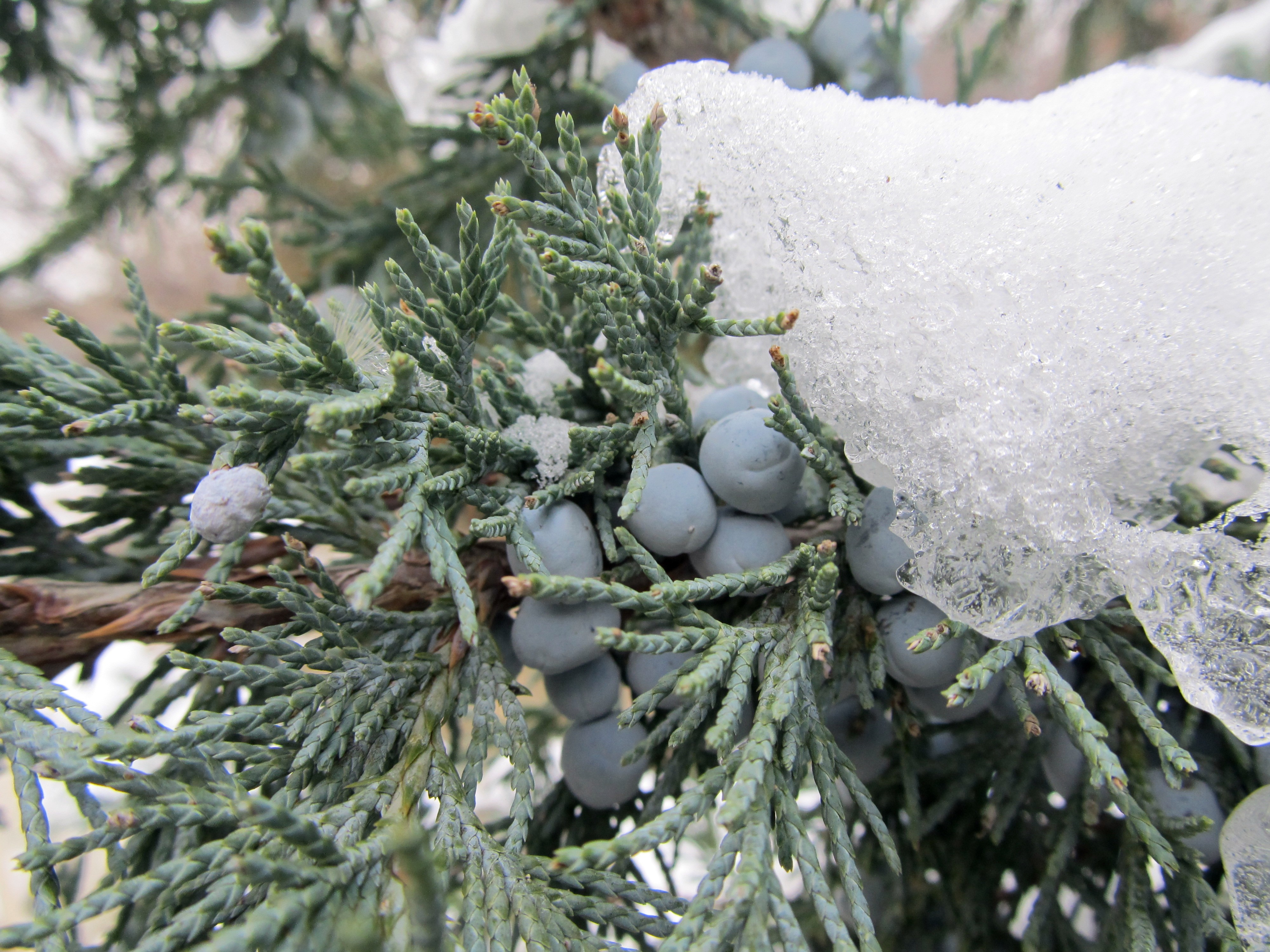
juniper in the snow

Going forward, I will continue to post regularly – as there is no shortage of plant-related things to write about – but I will likely take a week off here and there. I have other projects in mind – some related to Awkward Botany, some not – that will certainly demand much of my attention and time. I have some big ideas for Awkward Botany and beyond, and I will share those with the wide world in due time. For now, I would just like to say thanks all for reading, for commenting, and for sharing Awkward Botany with your friends. Overall, it has been a great year here at Awkward Botany headquarters, and I have you to thank for that. I feel privileged to be part of a community that is infatuated with plants and is fascinated by the natural world.

Good riddance to 2015. It was good, but it gets better. Now we look ahead to 2016. May it be filled with peace, love, and botany.

Year of Pollination: Botanical Terms for Pollination, part two

“The stage is set for reproduction when, by one means or another, compatible pollen comes to rest on a flower’s stigma. Of the two cells within a pollen grain, one is destined to grow into a long tube, a pollen tube, that penetrates the pistil’s tissues in search of a microscopic opening in one of the ovules, located in the ovary. … The second of a pollen grain’s cells divides to become two sperm that move through the pollen tube and enter the ovule.” – Brian Capon, Botany for Gardeners

“Once pollination occurs, the next step is fertilization. Pollen deposited on the sticky stigma generates a fine pollen tube that conveys the sperm through the style to the ovary, where the ovules, or eggs, have developed. After fertilization, the rest of the flower parts wither and are shed as the ovary swells with seed development.” – Rick Imes, The Practical Botanist

Pollination tells the story of a pollen grain leaving an anther by some means – be it wind, water, or animal – and finding itself deposited atop a stigma. As long as the pollen and stigma are compatible, the sex act proceeds. In other words, the pollen grain germinates. One of the pollen grain’s cells – the tube nucleus – grows down the length of the style, forming a tube through which two sperm nuclei can travel. The sperm nuclei enter the ovary and then, by way of a micropyle, enter an ovule. Inside the ovule is the female gametophyte (also referred to as the embryo sac). One sperm nucleus unites with the egg nucleus to form a zygote. The remaining sperm nucleus unites with two polar nuclei to form a triploid cell which becomes the endosperm. The sex act is complete.

The illustration on the left includes the cross-section of a pistil showing the inside the ovary where pollen tubes have made their way to the ovules. The illustration on the right shows pollen grains germinating on a stigma and their pollen tubes begining to work their way down the style. (photo credit: wikimedia commons)

The illustration on the left includes the cross section of a pistil showing the inside of the ovary where pollen tubes have made their way to the ovules. The illustration on the right shows pollen grains germinating on a stigma and pollen tubes as they work their way down the style. (image credit: wikimedia commons)

The zygote divides by mitosis to become an embryo. The endosperm nourishes the development of the embryo. The ovule matures into a seed, and the ovary develops into a fruit. During this process, the remaining parts of the flower wither and fall away. In some cases, certain flower parts remain attached to the fruit or become part of the fruit. The flesh of an apple, for example, is formed from the carpels and the receptacle (the thickened end of a flower stem – peduncle – to which the parts of a flower are attached).

As the seed matures, the endosperm is either used up or persists to help nourish the embryonic plant after germination. Mature seeds that are abundant in endosperm are called albuminous. Examples include wheat, corn, and other grasses and grains. Mature seeds with endosperm that is either highly reduced or absent are called exalbuminous – beans and peas, for example. Certain species – like orchids – do not produce endosperm at all.

The cross section of a corn kernel showing the endosperm and the embryo (image credit: Encyclopedia Britannica Kids)

The cross section of a corn kernel showing the endosperm and the embryo (image credit: Encyclopedia Britannica Kids)

It is fascinating to consider that virtually every seed we encounter is the result of a single pollen grain making its way from an anther to a stigma, growing a narrow tube down a style, and fertilizing a single ovule. [Of course there are always exceptions. Some plants can produce seeds asexually. See apomixis.] Think of this the next time you are eating corn on the cob or popcorn – each kernel is a single seed – or slicing open a pomegranate to reveal the hundreds of juicy seeds inside. Or better yet, when you are eating the flesh or drinking the milk of a coconut. You are enjoying the solid and liquid endosperm of one very large seed.

Much more can be said about pollination and the events surrounding it, but we’ll save that for future posts. The “Year of Pollination” may be coming to an end, but there remains much to discover and report concerning the subject. For now, here is a fun video to help us review what we’ve learned so far:


Also, take a look at this TED talk: The Hidden Beauty of Pollination by Louie Schwartzberg

And finally, just as the “Year of Pollination” was coming to an end I was introduced to a superb blog called The Amateur Anthecologist. Not only did it teach me that “anthecology” is a term synonymous with pollination biology, it has a great series of posts called “A Year of Pollinators” that showcases photographs and information that the author has collected for various groups of pollinators over the past year. The series includes posts about Bees, Wasps, Moths and Butterflies, Flies, and Beetles, Bugs, and Spiders.

Year of Pollination: Botanical Terms for Pollination, part one

When I began this series of posts, I didn’t have a clear vision of what it would be. I had a budding interest in pollination biology and was anxious to learn all that I could. I figured that calling 2015 the “Year of Pollination” and writing a bunch of pollination-themed posts would help me do that. And it has. However, now that the year is coming to a close, I realize that I neglected to start at the beginning. Typical me.

What is pollination? Why does it matter? The answers to these questions seemed pretty obvious; so obvious, in fact, that I didn’t even think to ask them. That being said, for these last two “Year of Pollination” posts (and the final posts of the year), I am going back to the basics by defining pollination and exploring some of the terms associated with it. One thing is certain, there is still much to be discovered in the field of pollination biology. Making those discoveries starts with a solid understanding of the basics.

Pollination simply defined is the transfer of pollen from an anther to a stigma or – in gymnosperms – from a male cone to a female cone. Essentially, it is one aspect of plant sex, albeit a very important one. Sexual reproduction is one way that plants multiply. Many plants can also reproduce asexually. Asexual reproduction typically requires less energy and resources – no need for flowers, pollen, nectar, seeds, fruit, etc. – and can be accomplished by a single individual without any outside help; however, there is no gene mixing (asexually reproduced offspring are clones) and dispersal is limited (consider the “runners” on a strawberry plant producing plantlets adjacent to the mother plant).

To simplify things, we will consider only pollination that occurs among angiosperms (flowering plants); pollination/plant sex in gymnosperms will be discussed at another time. Despite angiosperms being the youngest group of plants evolutionarily speaking, it is the largest group and thus the type we encounter most.

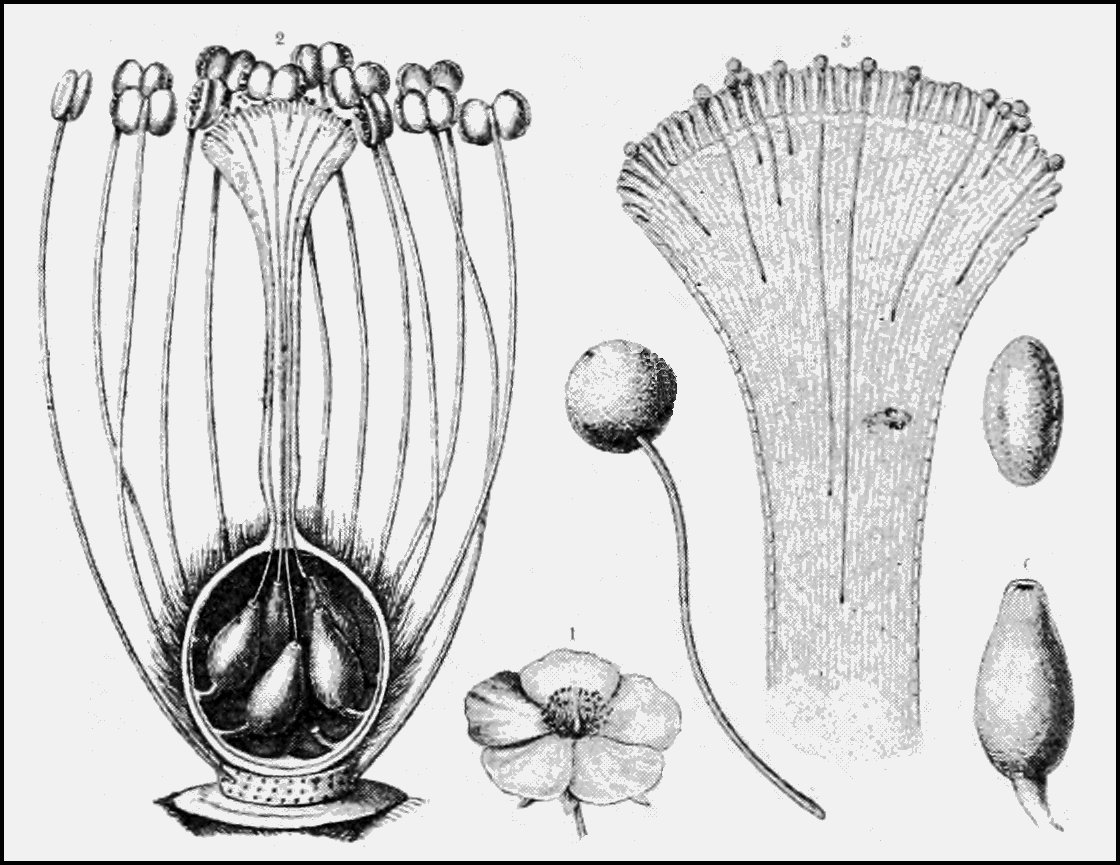
A flower is a modified shoot and the reproductive structure of a flowering plant. Flowers are made up of a number of parts, the two most important being the reproductive organs. The androecium is a collective term for the stamens (what we consider the male sex organs). A stamen is composed of a filament (or stalk) topped with an anther – where pollen (plant sperm) is produced. The gynoecium is the collective term for the pistil (what we consider the female sex organ). This organ is also referred to as a carpel or carpels; this quick guide helps sort that out. A pistil consists of the ovary (which contains the ovules), and a style (or stalk) topped with a stigma – where pollen is deposited. In some cases, flowers have both male and female reproductive organs. In other cases, they have one or the other.

photo credit: wikimedia commons

photo credit: wikimedia commons

When pollen is moved from an anther of one plant to a stigma of another plant, cross-pollination has occurred. When pollen is moved from an anther of one plant to a stigma of the same plant, self-pollination has occurred. Cross-pollination allows for gene transfer, and thus novel genotypes. Self-pollination is akin to asexual production in that offspring are practically identical to the parent. However, where pollinators are limited or where plant populations are small and there is little chance for cross-pollination, self-pollination enables reproduction.

Many species of plants are unable to self-pollinate. In fact, plants have evolved strategies to ensure cross-pollination. In some cases, the stamens and pistils mature at different times so that when pollen is released the stigmas are not ready to receive it or, conversely, the stigmas are receptive before the pollen has been released. In other cases, stigmas are able to recognize their own pollen and will reject it or inhibit it from germinating. Other strategies include producing flowers with stamens and pistils that differ dramatically in size so as to discourage pollen transfer, producing separate male and female flowers on the same plant (monoecy), and producing separate male and female flowers on different plants (dioecy).

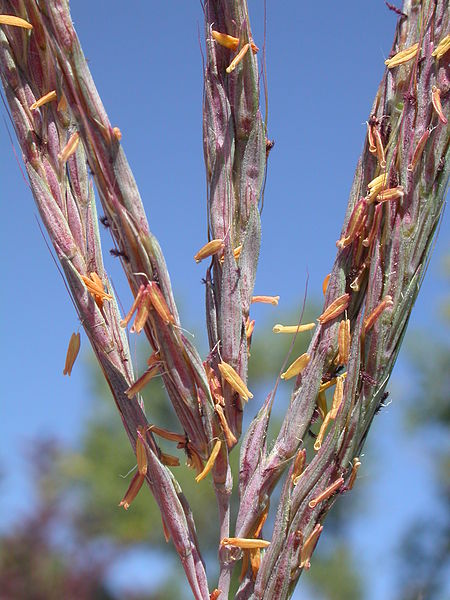
As stated earlier, the essence of pollination is getting the pollen from the anthers to the stigmas. Reproduction is an expensive process, so ensuring that this sex act takes place is vital. This is the reason why flowers are often showy, colorful, and fragrant. However, many plants rely on the wind to aid them in pollination (anemophily), and so their flowers are small, inconspicuous, and lack certain parts. They produce massive amounts of tiny, light-weight pollen grains, many of which never reach their intended destination. Grasses, rushes, sedges, and reeds are pollinated this way, as well as many trees (elms, oaks, birches, etc.) Some aquatic plants transport their pollen from anther to stigma via water (hydrophily), and their flowers are also simple, diminutive, and produce loads of pollen.

Inforescence of big bluestem (Andropogon gerardii), a wind pollinated plant - pohto credit: wikimedia commons

Inflorescence of big bluestem (Andropogon gerardii), a wind pollinated plant – photo credit: wikimedia commons

Plants that employ animals as pollinators tend to have flowers that we find the most attractive and interesting. They come in all shapes, sizes, and colors and are anywhere from odorless to highly fragrant. Odors vary from sweet to bitter to foul. Many flowers offer nectar as a reward for a pollinator’s service. The nectar is produced in special glands called nectaries deep within the flowers, inviting pollinators to enter the flower where they can be dusted with pollen. The reward is often advertised using nectar guides – patterns of darker colors inside the corolla that direct pollinators towards the nectar. Some of these nectar guides are composed of pigments that reflect the sun’s ultraviolet light – they are invisible to humans but are a sight to behold for many insects.

In part two, we will learn what happens once the pollen has reached the stigma – post-pollination, in other words. But first, a little more about pollen. The term pollen actually refers to a collection of pollen grains. Here is how Michael Allaby defines “pollen grain” in his book The Dictionary of Science for Gardeners: “In seed plants, a structure produced in a microsporangium that contains one tube nucleus and two sperm nuclei, all of them haploid, enclosed by an inner wall rich in cellulose and a very tough outer wall made mainly from sporopollenin. A pollen grain is a gametophyte.”

A pollen grain’s tough outer wall is called exine, and this is what Allaby has to say about that: “It resists decay, and the overall shape of the grain and its surface markings are characteristic for a plant family, sometimes for a genus or even a species. Study of pollen grains preserved in sedimentary deposits, called palynology or pollen analysis, makes it possible to reconstruct past plant communities and, therefore, environments.”

Scanning electron microscope image of pollen grains from narrowleaf evening primrose (Oenothera fruticosa) - photo credit: wikimedia commons

Scanning electron microscope image of pollen grains from narrowleaf evening primrose (Oenothera fruticosa) – photo credit: wikimedia commons

Harvester Ants – Seed Predators and Seed Dispersers

“The abundance of ants is legendary. A worker is less than one-millionth the size of a human being, yet ants taken collectively rival people as dominant organisms on the land. …  When combined, all ants in the world taken together weigh about as much as all human beings.” – Journey to the Ants by Bert Hölldobler and Edward O. Wilson

Considering how abundant and widely distributed ants are, it is easy to imagine the profound role they might play in the ecosystems of which they are a part. In fact, in the epilogue to Hölldobler and Wilson’s popular book about ants (quoted above), they conclude that in a world without ants, “species extinction would increase even more over the present rate, and the land ecosystems would shrivel more rapidly as the considerable services provided by these insects were pulled away.” It is no doubt then that ants, through their myriad interactions with their surroundings, are key players in terrestrial ecosystems.

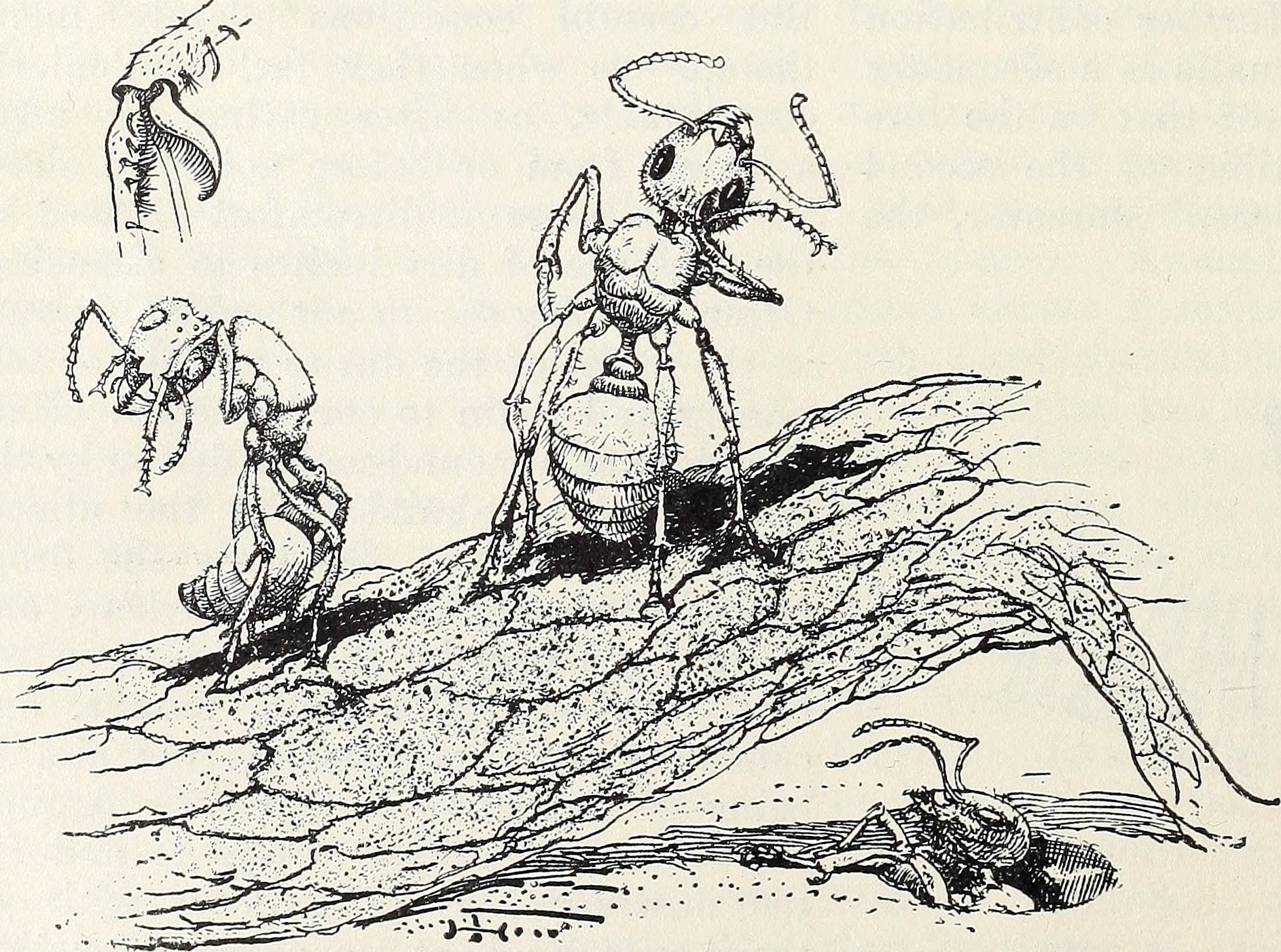
photo credit: www.eol.org

photo credit: www.eol.org

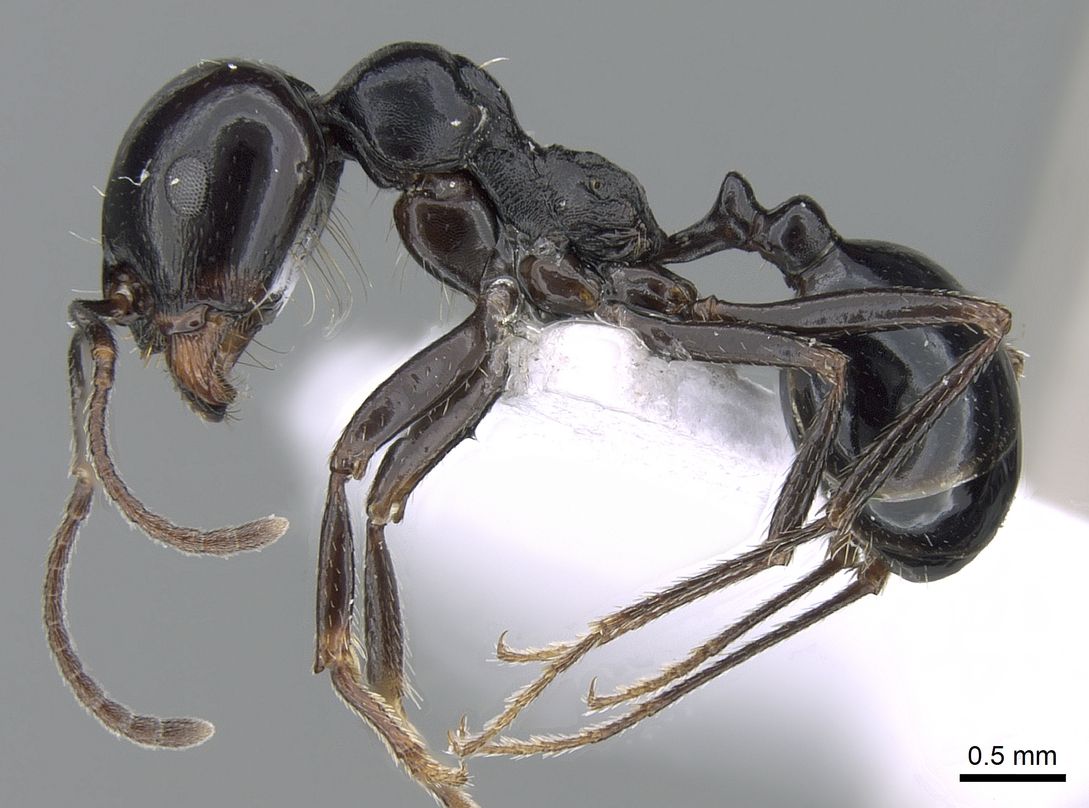
Harvester ants offer a prime example of the important roles that ants can play. In the process of collecting seeds for consumption, harvester ants can help shape the abundance and distribution of the plants in their immediate environment. They do this by selecting the types and amounts of seeds they collect, by abandoning seeds along their collection routes, and by leaving viable seeds to germinate in and around their nests. Hölldobler and Wilson have this to say about harvester ants:

[The] numerical success [of ants] has allowed them to alter not just their nest environments, but the entire habitats in which they live. Harvesting ants, species that regularly include seeds in their diet, have an especially high impact. They consume a large percentage of the seeds produced by plants of many kinds in nearly all terrestrial habitats, from dense tropical forests to deserts. Their influence is not wholly negative. The mistakes they make by losing seeds along the way also disperse plants and compensate at least in part for the damage caused by their predation.

There are more than 150 species of harvester ants, spanning at least 18 genera. They are found throughout the world (except extreme cold locales) and are particularly common in arid to semi-arid environments. Pogonomyrmex is one the largest genera of harvester ants with nearly 70 species occurring throughout North, Central, and South America. Messor is another large genus of harvester ant species that mainly occurs in Europe, Asia, and Africa. Both genera build large nests and move massive amounts of soil in the process.

Seed dispersal by harvester ants (also known as diszoochory) is a type of secondary (or Phase II) seed dispersal. It is a case of serendipity, as the dispersal occurs largely by accident. Some plants, on the other hand, have developed a mutualistic relationship with ants, enlisting them to disperse their seeds by way of an elaiosome – a fleshy, nutritious structure attached to seeds that attracts ants. Seeds with such structures are picked up by ants and brought to their nests where the elaiosome is consumed and the seed is left to germinate. This form of ant-mediated dispersal is called myrmecochory and is typically not carried out by harvester ants.

photo credit: wikimedia commons

photo credit: wikimedia commons

Harvester ant colonies have both direct and indirect influences on their surrounding environments; however, there is a dearth of research elucidating the exact details of such influences. A paper published in the Annual Review of Ecology and Systematics in 2000 by MacMahon et. al. reviewed available studies concerning harvester ants and explored our current understanding of the influences that harvester ants (particularly those in the genus Pogonomyrmex) can potentially have on community structure and ecosystem functions. Following are some of the direct influences the authors listed:

  • Removal and consumption of seeds and other materials – The relative abundance of plant species can be affected by the selective removal of seeds. Harvester ants also collect leaves, twigs, pollen, flowers, vertebrate feces, and arthropod body parts.
  • Storage and rejection of seeds – Collected seeds can be dropped during transport, rejected after arriving at the nest, or abandoned in nest granaries. All result in the transport of seeds away from the parent plant and dispersal beyond the plant’s primary dispersal mechanisms.
  • Construction and maintenance of nests – All vegetation and debris is removed from the area immediately surrounding the nest including mature and emerging plants. This area is kept clear for the duration of the life of the colony and, in some cases, can be quite extensive.

Harvester ants can also influence soil properties and soil food webs within and in the vicinity of their nests. They bring large amounts of organic matter down into the soil and redistribute vast amounts of soil particles. Their actions also influence the amount of moisture in the soil surrounding their nests.

This is a mere distillation of the influences that harvester ants might have; see the paper by MacMahon et al. to learn more.

In an effort to better understand how the seed predation and seed dispersal behaviors of harvester ants might influence plant population dynamics, a research team in Spain used data obtained from field research to build a computer model that would predict changes over time. The study site was described as “open and heterogeneous shrubland” and the vegetation was stated to be in “a very early stage in the secondary succession” after being subject to “recurring fires.” The harvester ant colonies involved in the study consisted of three species in the genus Messor. The plant species selected for the study were three native shrubs whose seeds were known to be collected by the harvester ants. Each plant species differed slightly in the amount and size of seeds it produced and in its primary seed dispersal mechanism, which is important because the researchers hypothesized that “the effect of seed predation and seed dispersal may depend on plant attributes.”

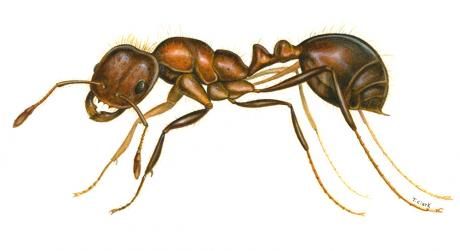
Messor bouvieri (photo credit: www.eol.org)

Messor bouvieri (photo credit: www.eol.org)

Data obtained from simulated scenarios and field observations appeared to support this hypothesis; each shrub species interacted differently with the harvester ants. Coronilla minima benefited from “accidental” seed dispersal. Comparatively, it produces a high amount of large seeds, which are primarily dispersed by gravity. Despite predation, ant-mediated dispersal was an advantage. Dorycnium pentaphyllum produced the highest amount of seeds among the three shrub species; however, seed predation was found to have negative effects on its population dynamics. Its primary seed dispersal mechanism involves ballistics (the mechanical ejection of its seeds), so ant-mediated dispersal may not offer an advantage. Finally, Fumana ericoides, despite its limited primary seed dispersal and its comparatively low production of seeds was not affected by the actions of the harvester ants. The authors concluded that “some unknown factor is driving the population dynamics of this species, more than the action of ants.”

Studies such as this, while leaving many unanswered questions, help us understand the important role that harvester ants play in our world. Harvester ants, and ants in general, are truly among Earth’s most enthralling and influential creatures. Learn more about their complex behaviors and countless interactions with flora and fauna by checking out these three documentaries recommended by ANTfinity.

Artificial Photosynthesis – A Case of Biomimicry

Humans have long sought solutions to their problems by observing nature and trying to mimic it. These endeavors have lead to improvements in the designs and production processes of countless things. In recent decades there has been a growing movement composed of scientists, engineers, and innovators of all types to expressly seek for answers to today’s most pressing problems by deeply observing and analyzing the natural world. These efforts are coupled with a desire to learn how to work with nature rather than against it in an attempt to secure a more sustainable future for life on Earth. This is the essence of biomimicry.

To this end, plants have much to teach us. Everything from their basic forms and functions to the way they fight off pests and diseases to the way they communicate with each other is worth exploring for biomimicry purposes. A plant-based phenomenon that has probably received the most attention – and for good reason – is photosynthesis, the process that enables plants to use the sun to make food.

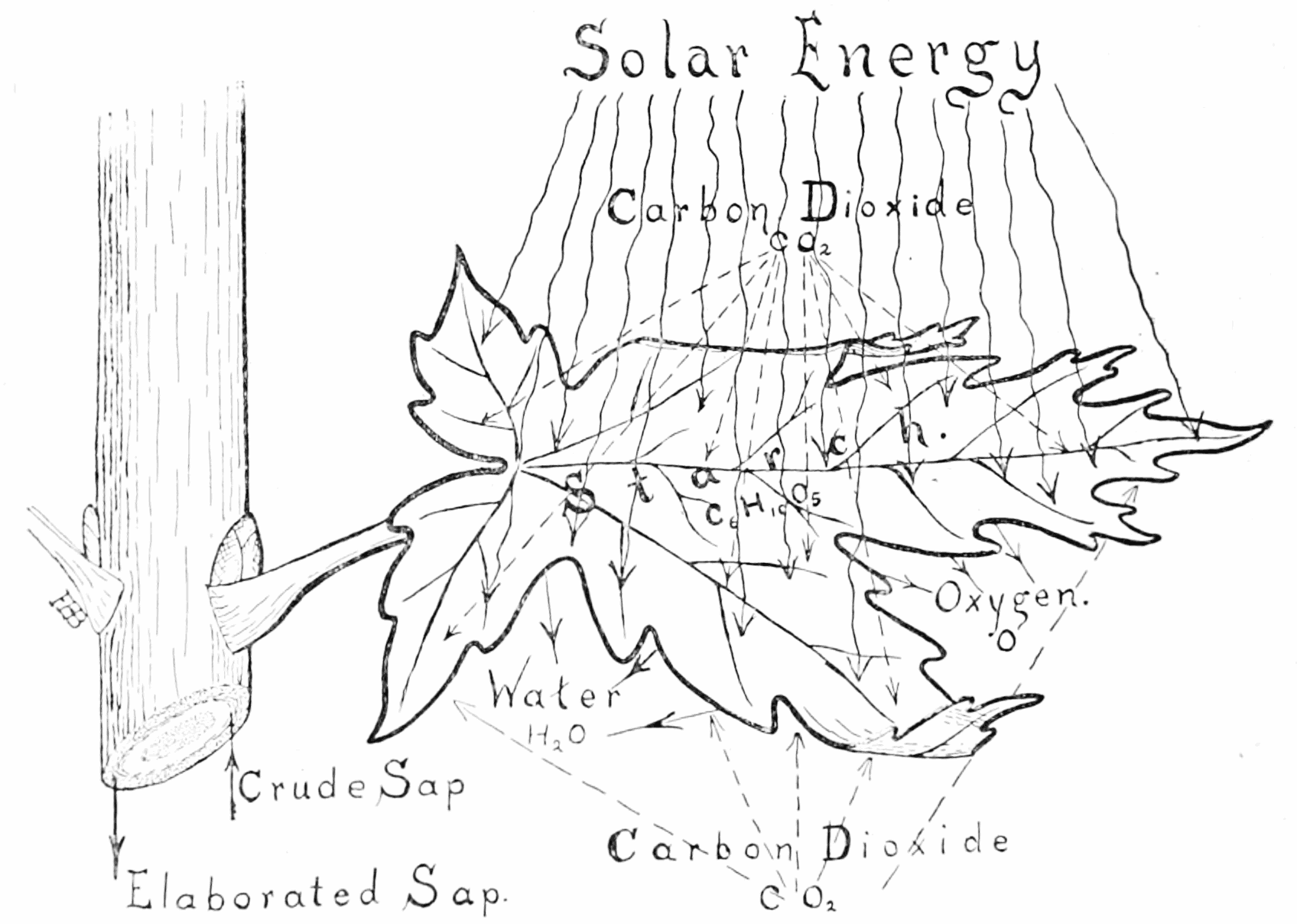
Put another way, photosynthesis is the process of converting light energy into chemical energy. Specialized proteins in plant cells absorb particles of light which initiates the passing of electrons across a series of molecules. Subsequently, water is split by a protein complex into oxygen and hydrogen protons. The oxygen is released from the plant, while the electrons and hydrogen protons go on to help generate two compounds – NADPH and ATP – which are later used to power the reaction that transforms atmospheric carbon dioxide into sugars. The concept of photosynthesis, while fairly simple to grasp from a high level (i.e. light + water + carbon dioxide = sugars + oxygen), is actually quite complex, and there is still much too discover concerning it.

photo credit: wikimedia commons

photo credit: wikimedia commons

One thing is certain, photosynthesis is ubiquitous. As long as the sun is overhead, most plants, algae, and cyanobacteria are photosynthesizing at a steady clip and are thereby helping to power just about every other living organism on the planet. Without plants, most of the rest of us could not survive. Janine M. Benyus offers this human-centric view in her book Biomimicry:

Consider that everything we consume, from a carrot stick to a peppercorn filet, is the product of plants turning sunlight into chemical energy. Our cars, our computers, our Christmas tree lights all feed on photosynthesis as well, because the fossil fuels they use are merely the compressed remains of 600 million years worth of plants and animals that grew their bodies with sunlight. All of our petroleum-born plastics, pharmaceuticals and chemicals also spring from the loins of ancient photosynthesis. … Plants gather our solar energy for us and store it as fuel. To release that energy, we burn the plants or plant products, either internally, inside our cells, or externally, with fire.

Since plants are so well-versed in using sunlight to create food and energy, it only makes sense that we would look to them to learn how we might improve and expand upon our quest for renewable energy production. We already use the sun to produce electricity by way of photovoltaic systems; however, these systems are limited in that they can only produce electricity when the sun is shining, and electricity is difficult to store. Artificial photosynthesis involves using that electricity to power catalysts that can split water into hydrogen and oxygen. The hydrogen can be used as a fuel or can be fed into reactions involving carbon dioxide, ultimately resulting in a carbon-based fuel source. Fuels produced this way – referred to as solar fuels – could be stored and used regardless of whether or not the sun is out.

Artificial photosynthesis has largely moved beyond the theoretical stage. Multiple efforts have demonstrated ways in which water can be split using the light of the sun and solar fuels can thereby be produced. Mass production is the next step, and that is where the real limitations lie. The production of solar fuels has to be done cheaply enough to compete with other available fuels, and the infrastructure to use such fuels has to be available. These hurdles may very well be overcome, but it will take time. Meanwhile, research continues, adding to the mountains of studies already published.

photo credit: wikimedia commons

photo credit: wikimedia commons

On such study published in 2011 describes an “artificial leaf” that was developed at the Massachusetts Institute of Technology by Daniel Nocera and a team of researchers. Listen to an interview with Nocera on Science Friday and watch this BBC Worldwide video to learn more about this discovery. This Nature article explains why the artificial leaf is not yet commercially available, and why we are not likely to see it any time soon.

Another development in artificial photosynthesis was published earlier this year in Nano Letters. It is the product of Peidong Yang and the Kavli Energy NanoSciences Institute. While Nocera and his team stopped at the production of hydrogen gas, Yang’s lab added bacteria to the mix and were able to use the sun’s energy to transform carbon dioxide into acetate. If passed along to another species of bacteria, the acetate could be used to produce various synthetic fuels. Learn more about this by reading this livescience article and watching this FW: Thinking video. As with other artificial photosynthesis developments, limitations abound, but the research is promising.

Artificial photosynthesis is a compelling subject and one worth keeping an eye on. Follow the links below to learn more:

Biomimicry is an equally compelling subject and one I hope to explore further in future Awkward Botany posts. Meanwhile, check out these links: