2013: Year in Review

The start of a new year is traditionally a time to be reflective and resolute. Awkward Botany is now a year old, so it is in the spirit of a new year that I look back at a year of blogging and look forward to the years to come. I did not initially set any concrete goals for this blog nor do I plan to. I am passionate about plants, and I enjoy writing – hence the blog. Any attention this blog receives is not only welcome, but celebrated. It is one of life’s great joys to be able to share your passions with others.

In 2013 – surprisingly enough – I managed to publish 42 posts. These posts covered a wide range of topics, including plant profiles (mountain kittentails, Lewis’ mock orange, sundews), wildflower walks (Spring, June, September), the latest in plant science research (cushion plants, northern pitcher plants, plant communities of the Catalinas), a book and movie review (What a Plant Knows & What Plants Talk About), gardening tips (starting seeds indoors, assessing your soil, pruning rosemary), and so much more. The years to come will bring more of the same, plus whatever else comes to mind or is requested (leave a comment below).  More importantly, my plan is for past and future posts to be organized into pages according to major categories – such as botany, horticulture, and ecology – which will make it easier to find posts on the topics you are most interested in. Also, a new year brings a new tagline – “for the phyto-curious” – because it is a deep, abiding curiosity about plant life that really drives this blog.

021

If you feel so inclined, please leave comments below and let me know what you like/dislike about the blog and/or tell me if you have any ideas for future posts. You can also leave comments and ask questions by visiting my Contact Page. Also, check out my twitter feed. Please be in touch, and let’s make 2014 our year!

For the plants, etc…

Winter Interest

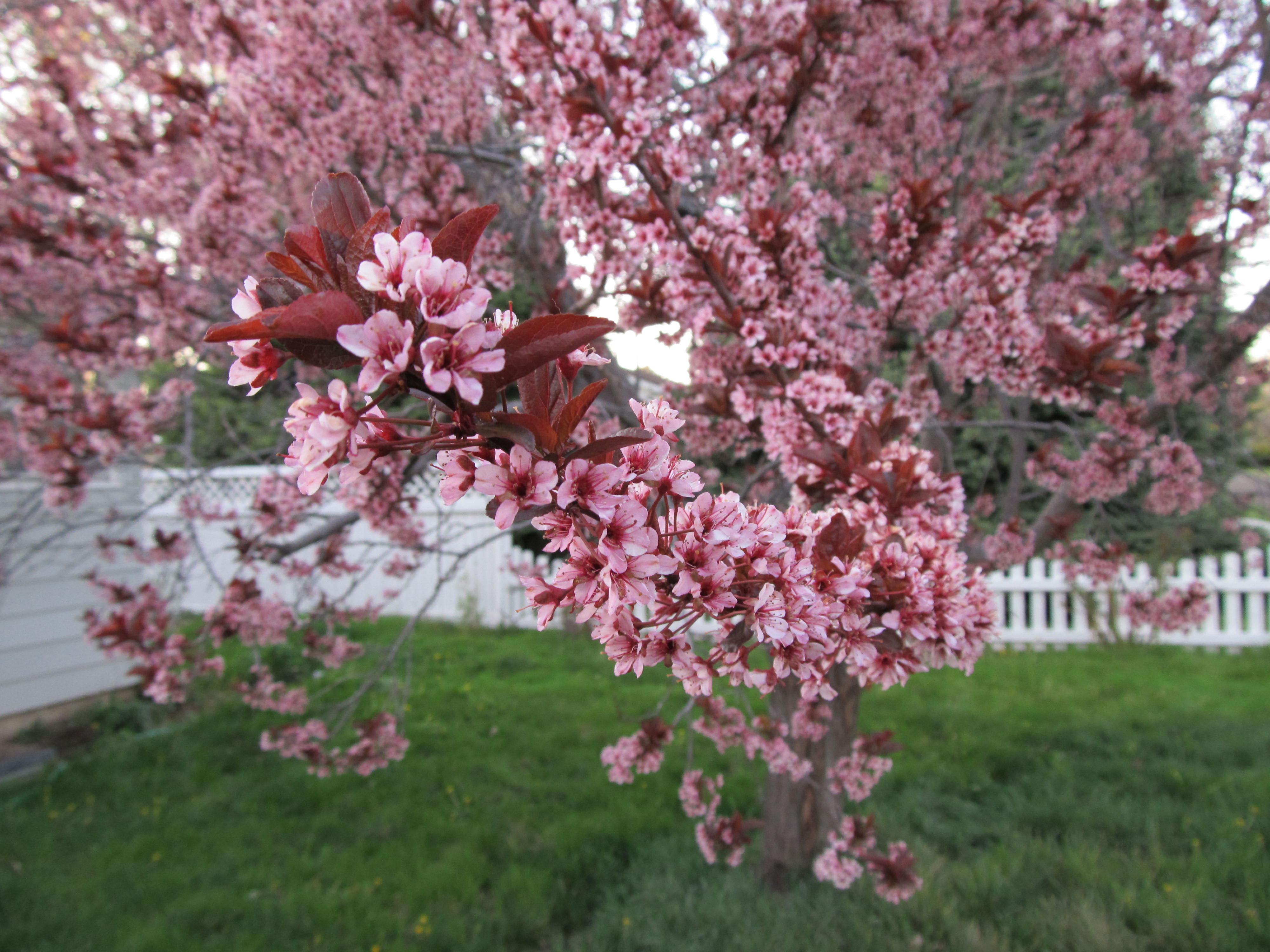
We are well into winter in the northern hemisphere, and the plants in our landscapes have been dormant for weeks now. Trees and shrubs have dropped their leaves, grasses have gone brown, and perennial forbs have died back – their roots harboring the food they will need to return to life in the spring. What little green that is left is provided mainly by evergreen trees and shrubs, but even they are resting – metabolizing slowly and putting off further growth until warmer temperatures return. The view outside may appear largely bleak and dreary, but there is still beauty in a frozen landscape, and much of that beauty is provided by the same things that brought color and interest during the warmer months.

Many plants, though appearing dead, remain attractive throughout the winter. From fruits and cones to seed heads and seed pods, there are various structures that remain on certain plants even after leaves fall that provide winter interest. Deciduous trees and shrubs show off their branches in the winter months, which when freed from the camouflage of leaves are like sculptures – art pieces in their own right. Perennial grasses can continue to provide structure to a garden bed when left in place and upright, and color is provided by evergreen foliage and colored bark, such as the red and yellow bark of some dogwoods (Cornus spp.).

Beauty surrounds us, even in unlikely places. Things are quiet and frozen now, and foggy, dismal days abound. But winter won’t last forever. Plants can remind us of that. In them we find remnants of brighter days and an assurance that there are more to come.

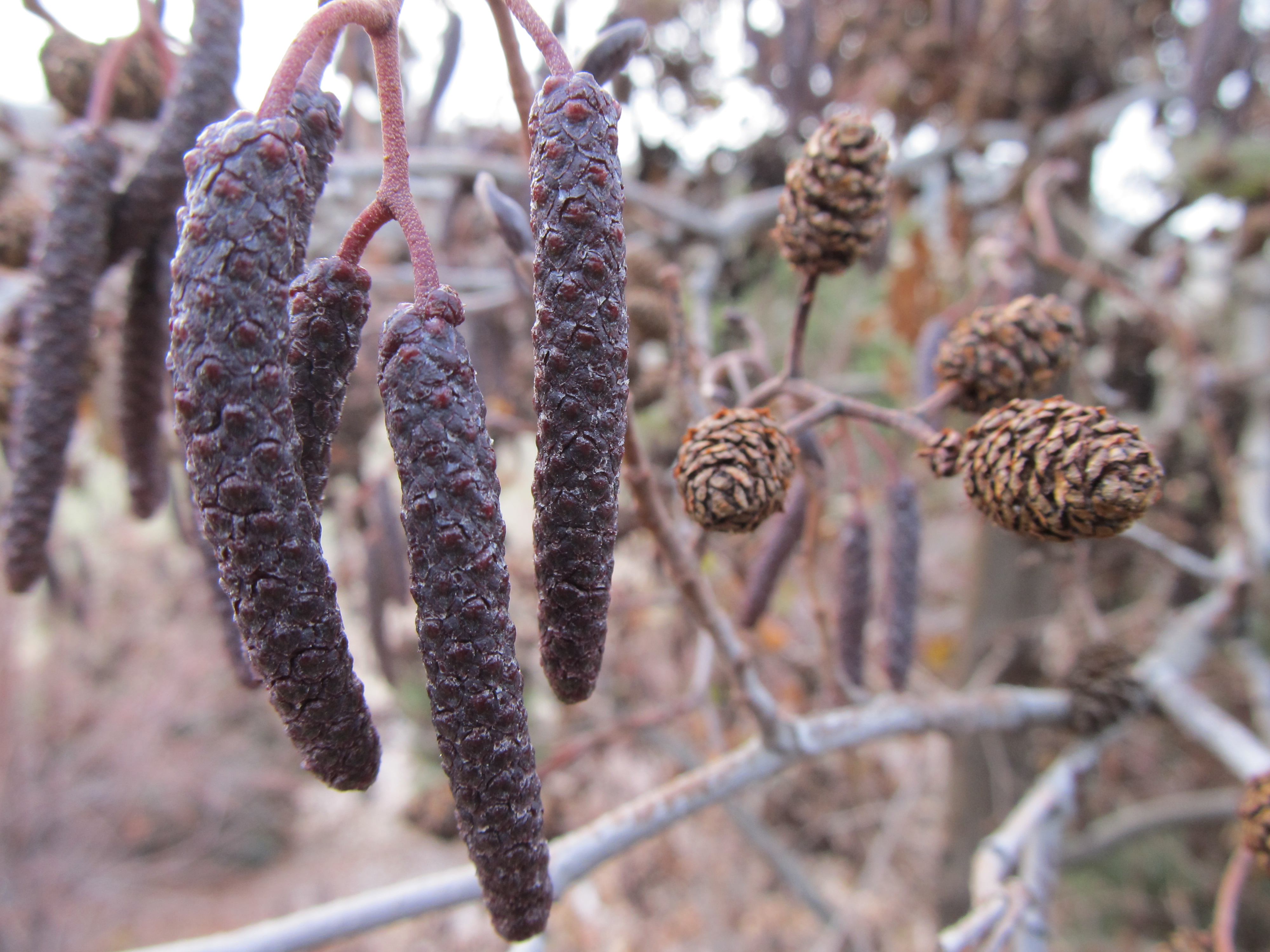
alnus viridis

Male and female cones on Sitka alder (Alnus viridis)

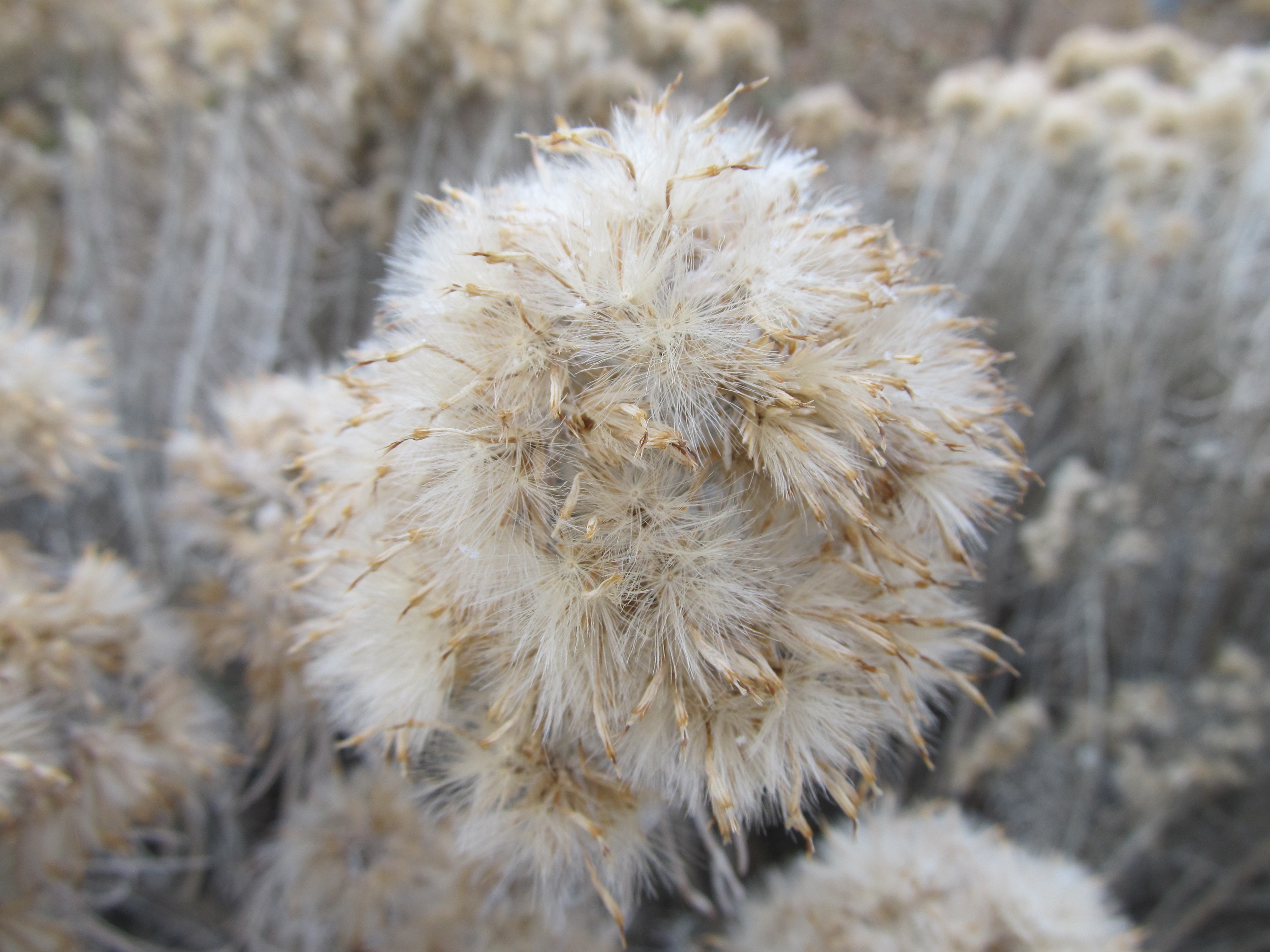
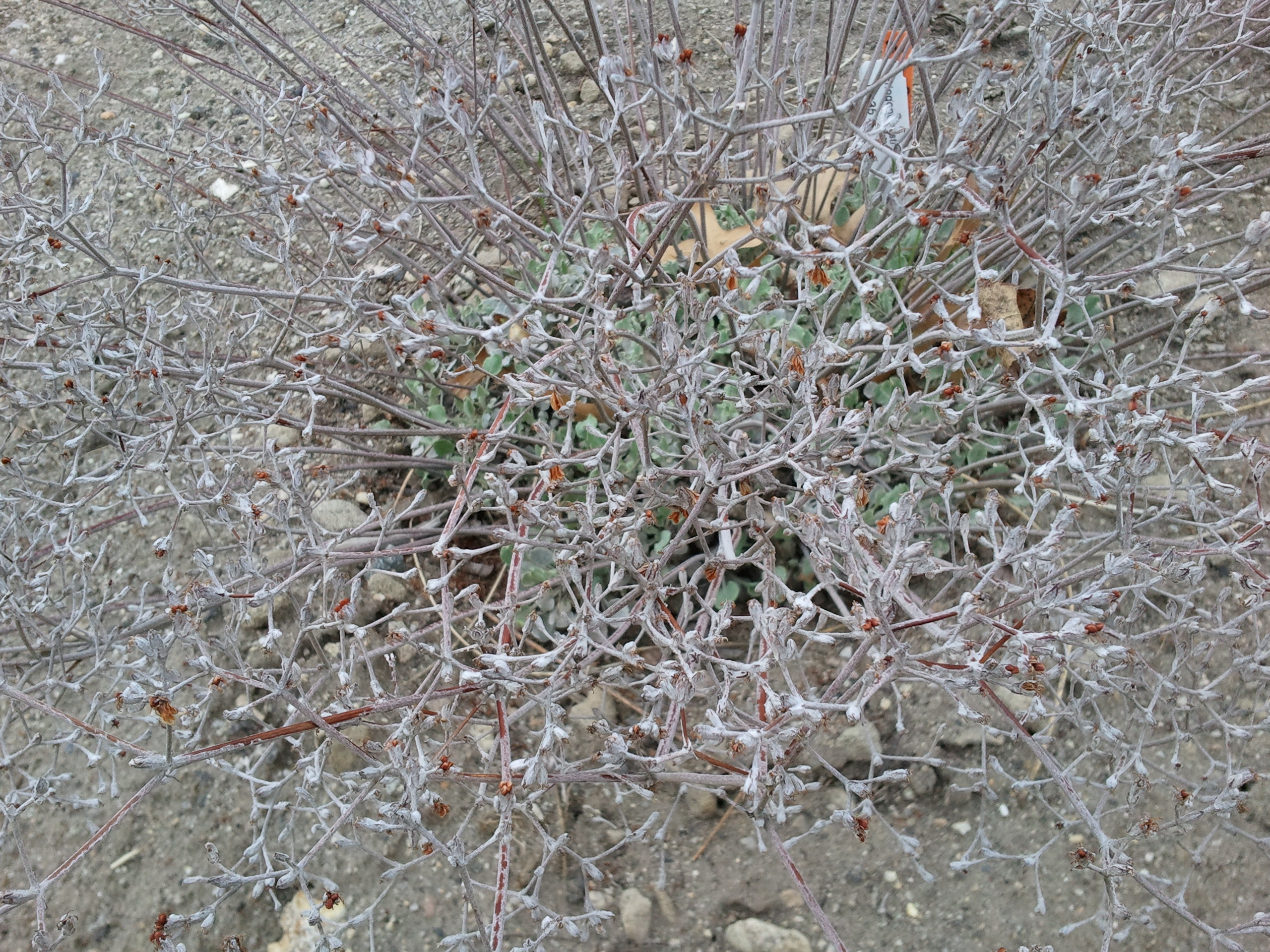
ericameria nauseosa

Seed head on rubber rabbitbrush (Ericameria nauseosa)

SAMSUNG

Flower stalks on strict buckwheat (Eriogonum strictum)

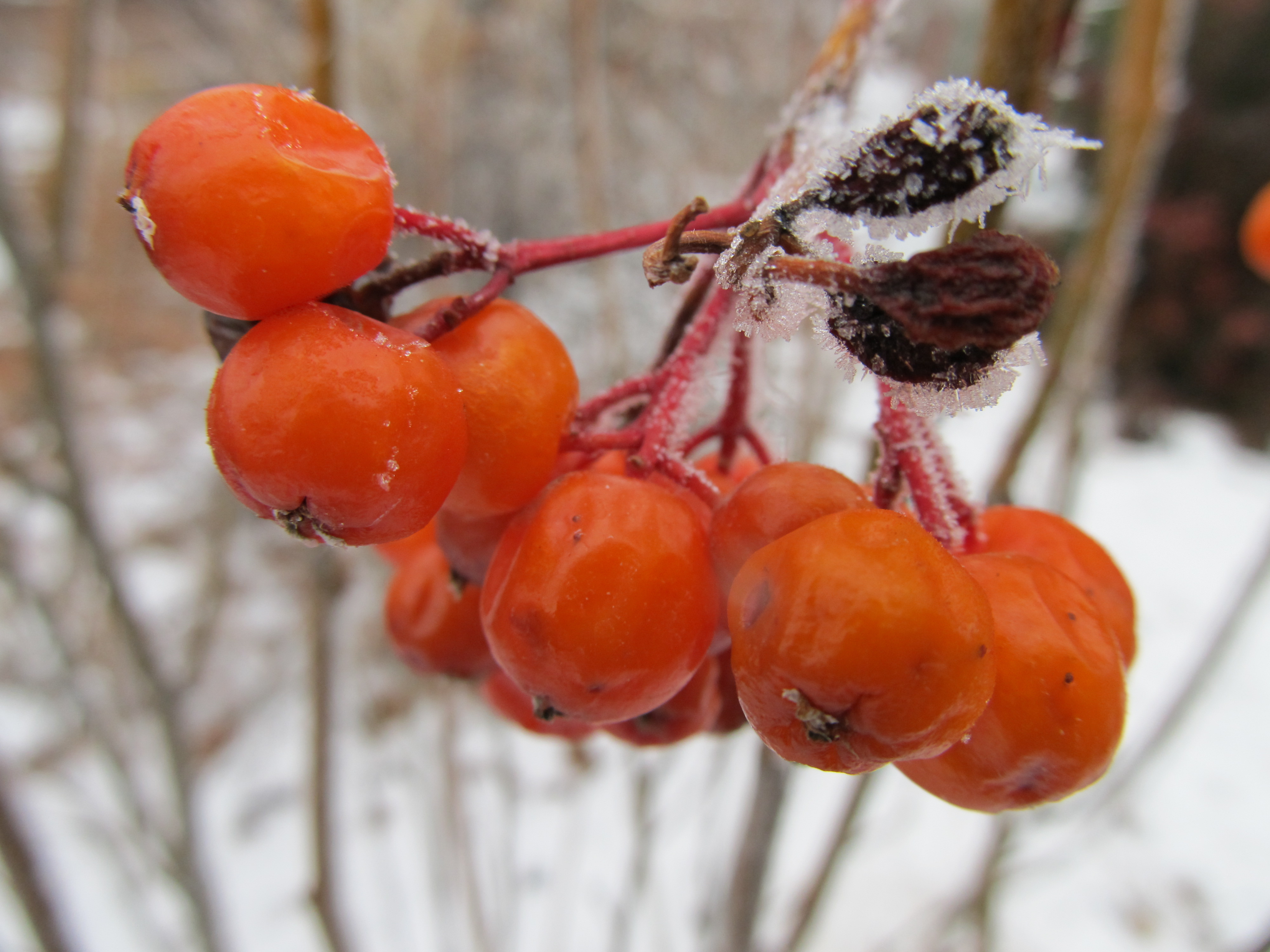
sorbus scopulina

Cluster of berries on Cascade mountain-ash (Sorbus scopulina)

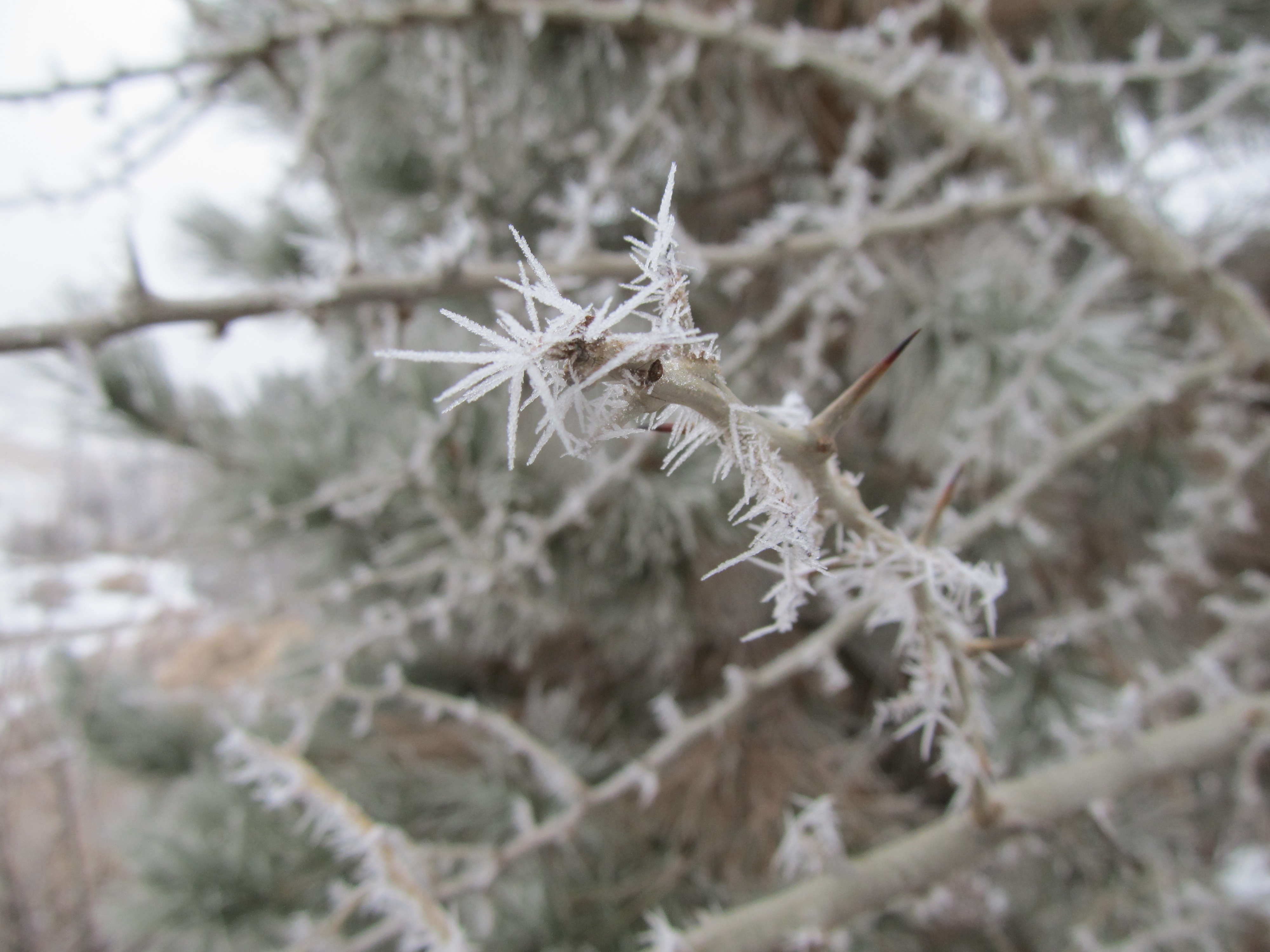
maclura pomifera

Ice crystals on the branches of young Osage-orange (Maclura pomifera)

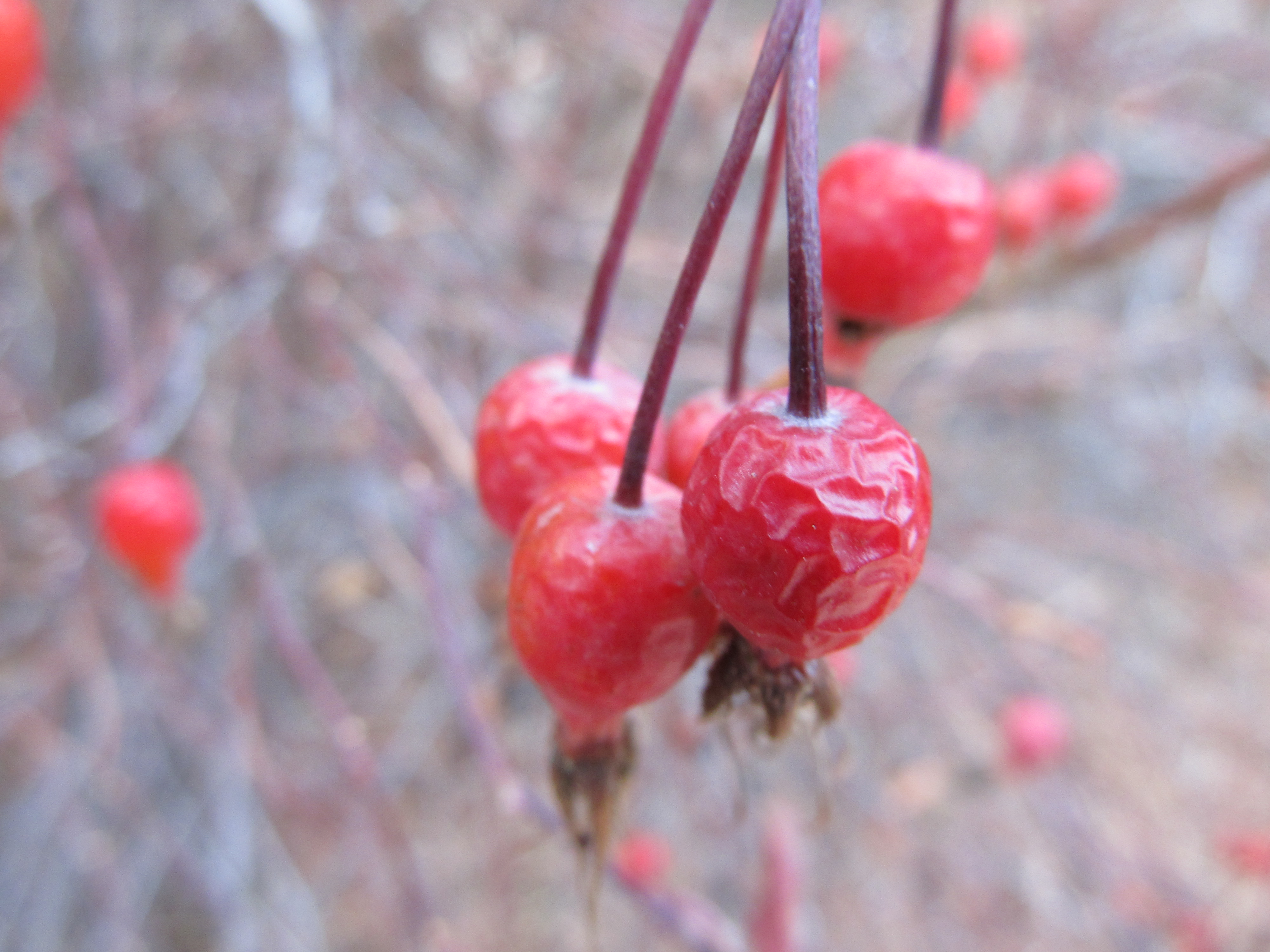
rosa pisocarpa

Rose hips on cluster rose (Rosa pisocarpa)

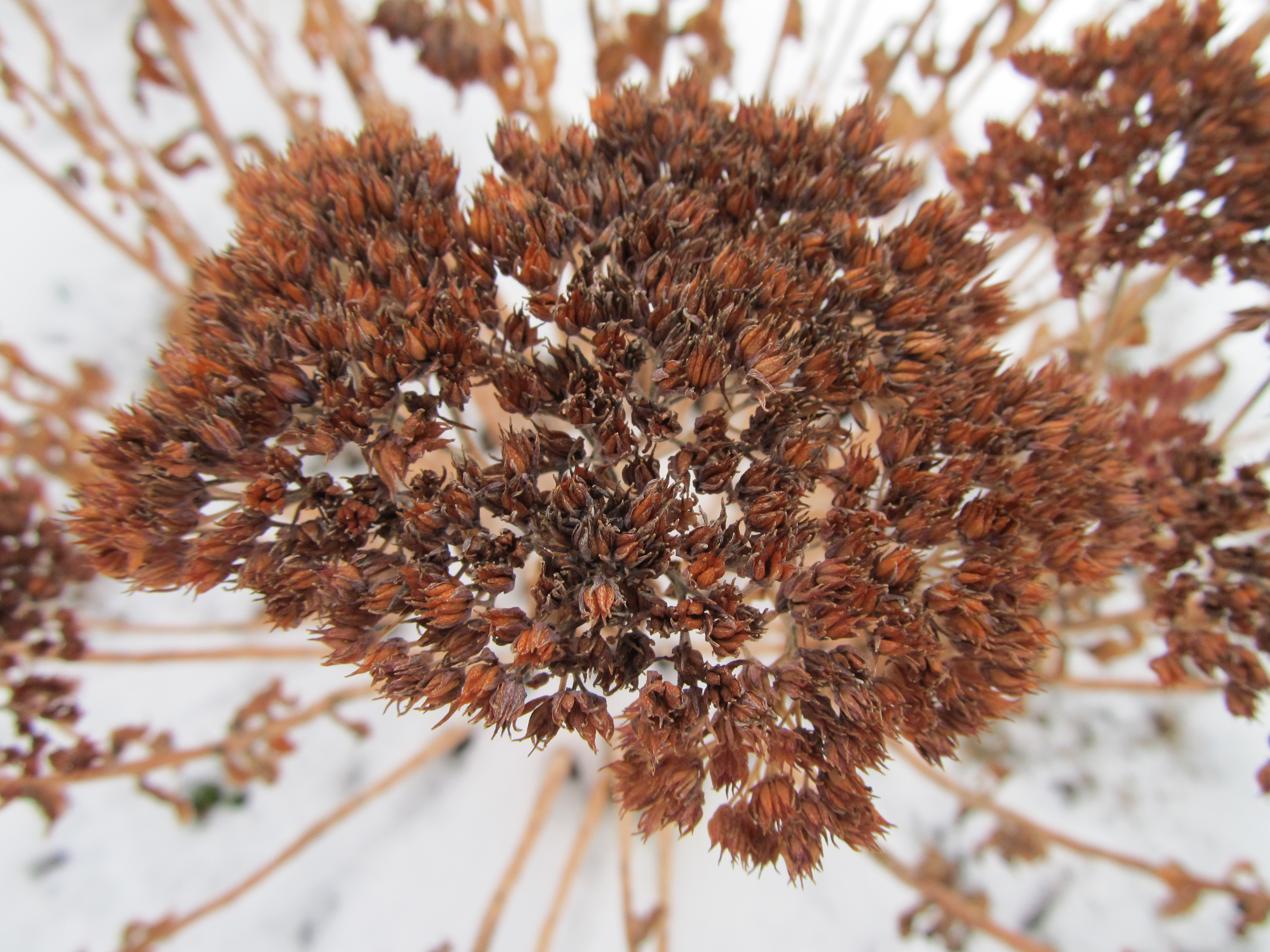
sedum sp. seed head

Seed head on showy stonecrop (Sedum telephium ‘Autumn Joy’)

All photos were taken at Idaho Botanical Garden in Boise, Idaho.

Rosemary Christmas Tree

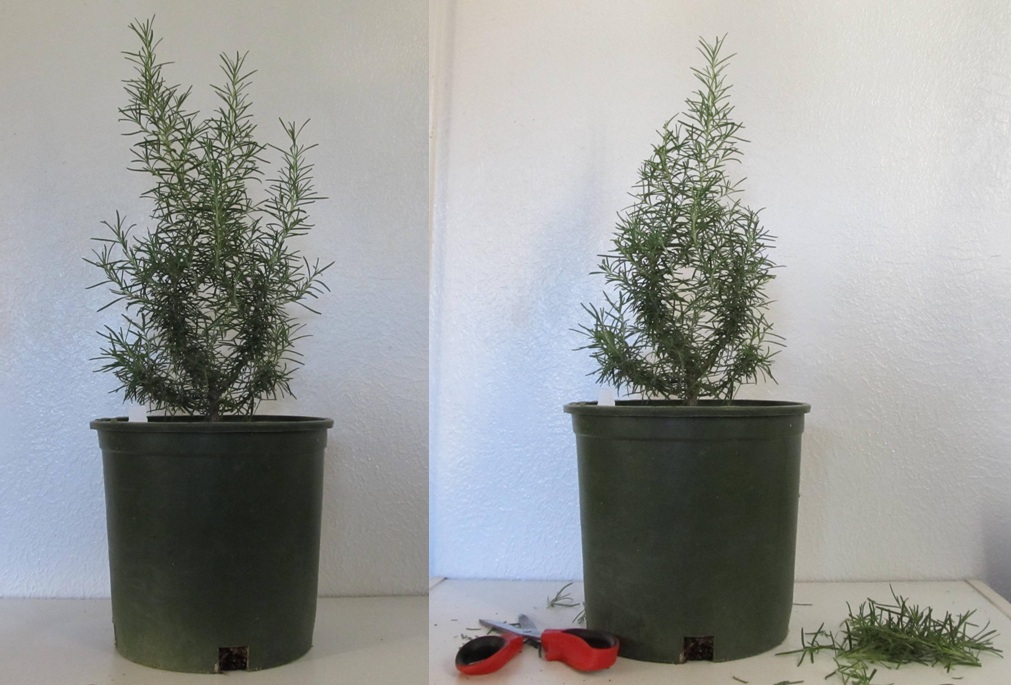
In the spirit of the holiday season, consider this fun alternative to a conventional Christmas tree. Rosemary (Rosmarinus officinalis) is an herbaceous, evergreen shrub or subshrub and is commonly found in herb gardens. Its leaves are valued for their myriad culinary and medicinal uses. Futhermore, this plant takes very kindly to pruning and shaping, which makes transforming it into a miniature Christmas tree a very simple task.

It may be too late to cultivate a “tree” for this year’s holiday season, but perhaps you’d like to try for next year. To do so, find a small rosemary plant at a local garden center or plant sale in the spring. Make a few initial pruning cuts to select a leader or leaders. After about a month or two, start giving it the shape of a Christmas tree. Floral scissors work great for making these cuts, and you don’t have to worry about where on the branches you are cutting – rosemary is very forgiving – just make sure your scissors are sharp. Wait a couple more months and then do more shaping with the pruning scissors. Do some final shaping a month or so later. At this point, you should be entering the holiday season and your rosemary Christmas tree will be ready to display. It’s that simple!

1

Initial pruning: selecting the leaders

2

Second pruning: giving it shape

3

Third pruning: keeping in shape

4

Final pruning: clean it up and present it  

One major downside to growing rosemary if you live in a cold climate is that it is only hardy to about USDA zone 7. However, if you select the right cultivar, place it in a protected location (near the south facing wall of a building perhaps), give it some mulch and maybe a blanket for the winter, you might be able to get it to survive in colder zones. Rosemary can also be difficult to overwinter indoors because the air in homes is typically dry and warm and there is little direct sunlight. If you are determined to keep one alive despite your odds, awaytogarden.com provides an excellent tutorial about overwintering rosemary both indoors and out.

Growing Plants on the Moon

You’ve heard about gardening by the moon – an ancient approach to gardening based in folklore and superstition in which planting times are scheduled according to moon phases and astrological signs. Now, how about gardening on the moon! No pseudoscience necessary here. NASA scientists are currently on a mission to determine what it will take to grow plants on the moon in anticipation of setting up a permanent lunar base. After all, if we plan on sending people to the moon to live for long periods of time, we will need to figure out how to grow some food for them up there, right?

The first phase of the study will examine seed germination in a lunar environment and will observe seedlings during the first week or so of their lives. The seeds of cress, basil, and turnip have been selected as the first to be grown on the moon. However, these seeds will experience an environment that seeds of their kind (or any other kind for that matter) have never experienced before, because, unlike the earth, the moon has no atmosphere. Gravity on the moon is one sixth of what it is on earth; solar radiation is intense and direct; and fluctuations in temperature are extreme to put it lightly (about 150°F during the day to -150°F during the night). Oh, and there is one other important limitation: moon soil is dead. To start with, it’s virtually moisture-free. It also has no organic matter content, and it is void of life (compared to a tablespoon of earth soil, which is said to harbor about 50 billion microbes, many of which help sustain plant life).

NASA scientists have considered these limitations. That is why the first seeds on the moon will be grown in a lunar plant growth chamber. This growth chamber is designed to regulate temperature and light and will contain a filter paper inoculated with plant nutrients. Water will be stored inside the growth chamber and released when the chamber reaches the moon. There will be just enough water to induce germination and allow the plants to grow for 5-10 days. Plant growth will be monitored with an onboard camera and then compared to plants grown in a similar growth chamber on earth. Scientists will be observing how well the seeds germinate and grow in a low gravity, high radiation environment.

The first lunar plant growth chamber is scheduled to head for the moon in late 2015. It will be hitching a ride with the winners of the Google Lunar X-prize competition. Based on the results of the first phase of the experiment, following phases will observe sexual reproduction in a lunar environment. If sexual reproduction occurs, what effect will high levels of radiation have on subsequent generations? Only time will tell, so this will be an exciting project to monitor for years to come.

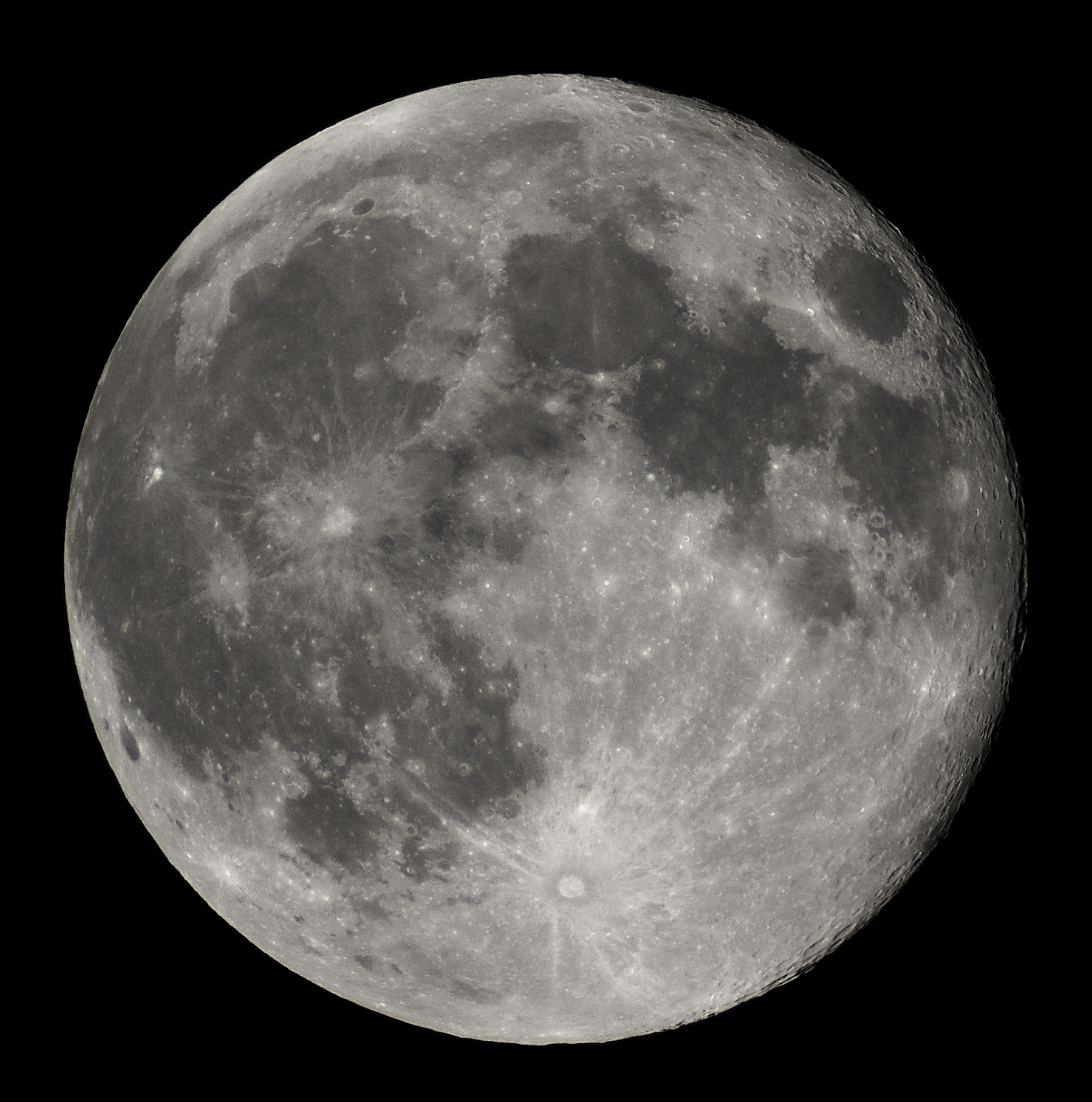
moon

photo credit: wikimedia commons

Do you want to help design future lunar plant growth chambers? Go here.

Overwintering Carnivorous Plants

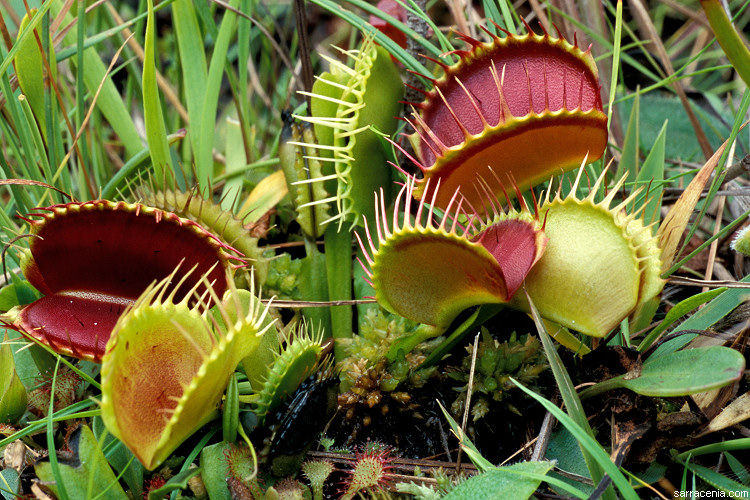
I once assumed that all carnivorous plants were tropical. I’m not sure exactly why. Perhaps it’s because they are so bizarre (both in their appearance and behavior), nothing like the plants that I was accustomed to seeing growing up in the Intermountain West. Or maybe it’s because the one carnivorous plant that I was most familiar with, the Venus flytrap, is commonly sold in the houseplant section of department stores. If it’s a houseplant, it must be tropical, right?

Eventually I learned the truth. Much to my surprise, there are numerous carnivorous plants that are native to temperate regions – in fact, carnivorous plants can be found on every continent except Antarctica. Even more surprising, Venus flytraps are temperate plants! It’s true. They are native to a small region in North Carolina, within about a 100-mile radius from Wilmington.

Plant species native to temperate regions require a dormant period. In the winter, the temperature drops, day length decreases, and, in some cases, drought ensues. During this time plants go dormant – they hibernate – and wait for the warmer, brighter days of spring to continue on with their metabolic and reproductive processes. It’s a period of rest.

Carnivorous plants native to temperate regions fall into this category – they require a period of dormancy in order to stay healthy and productive. In his book, The Savage Garden, Peter D’Amato asserts that, “Dormancy in carnivorous plants that require it must be respected and permitted to occur. Otherwise, the plant may die.” He goes on to say that a Venus flytrap grown year-round in a warm environment exposed to grow lights for the majority of the day “will eventually get sickly and die.” In short, these plants need a rest, and so it’s best to grow them outdoors where they will be exposed to the elements, thereby entering a period of dormancy as nature intended.

Venus flytraps (Dionaea spp.), North American pitcher plants (Sarracenia spp.), and serveral species of sundews (Drosera spp.) can all be grown outdoors year-round in temperate climates. In order to ensure their survival, it’s best to give them a little protection during the winter months – especially when temperatures are projected to reach below 20 degrees for several consecutive nights.

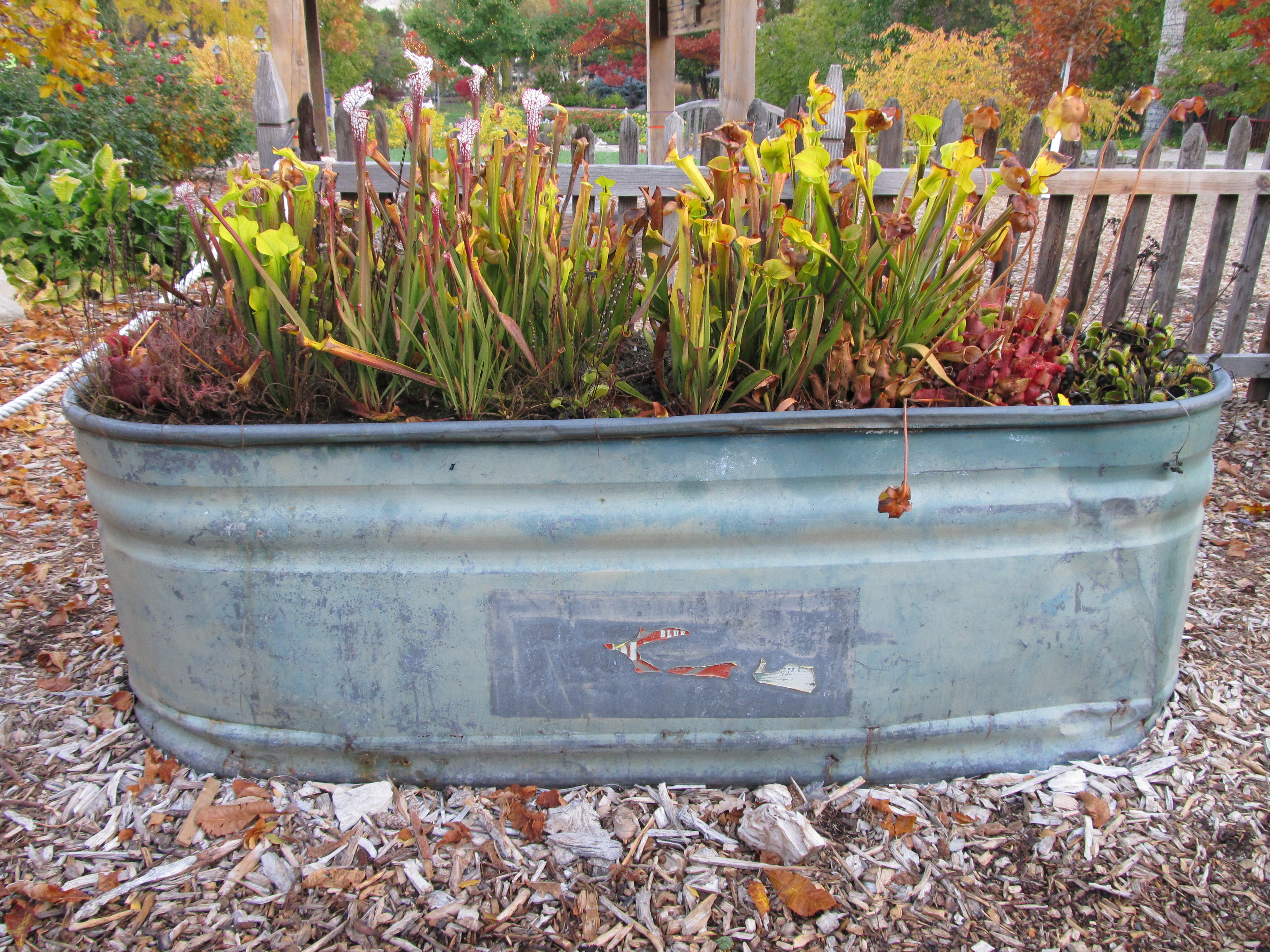
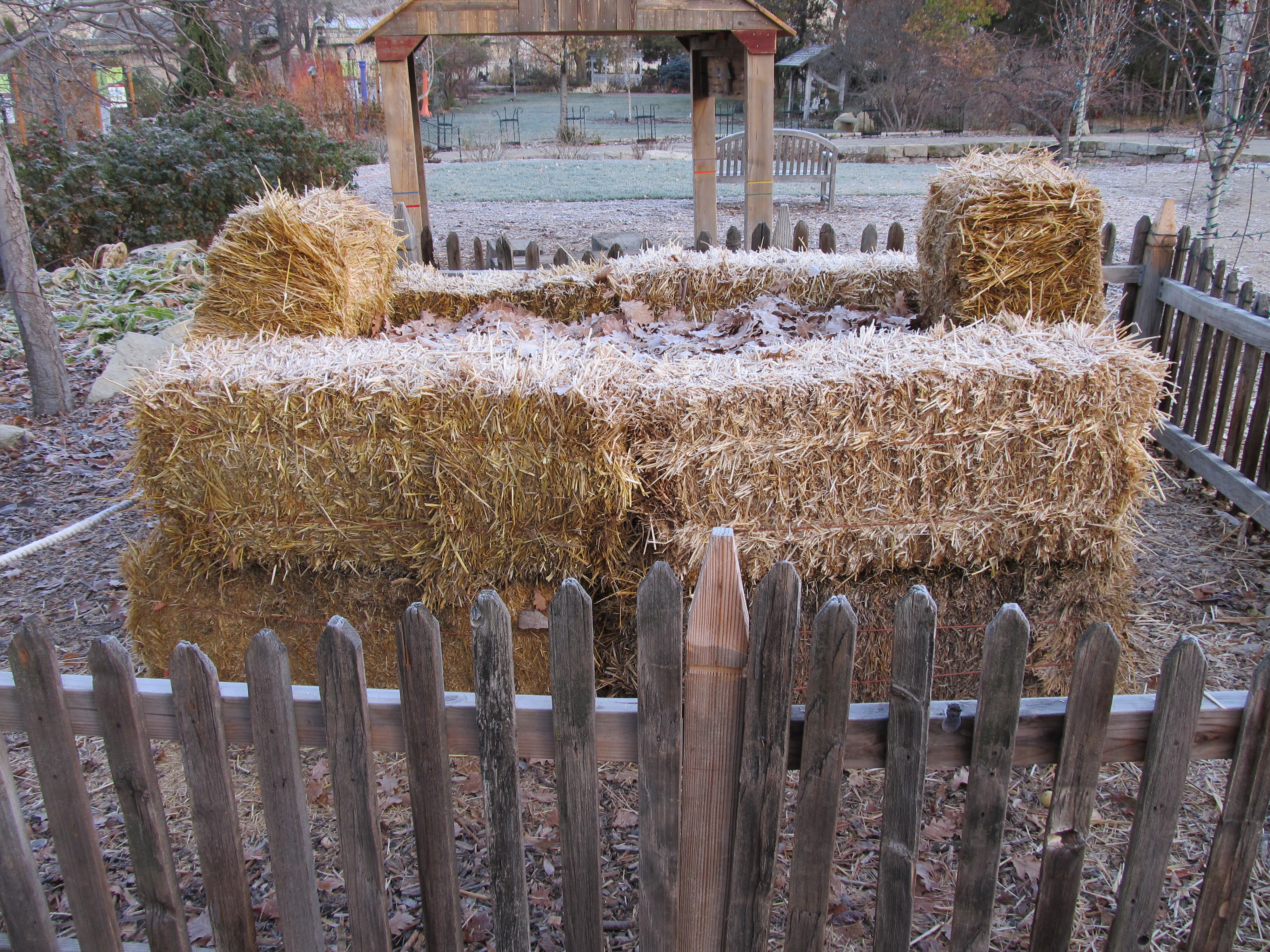
Recently, I helped put the carnivorous plant display at Idaho Botanical Garden to bed for the winter. The carnivorous plants are being grown in an old stock water trough. First we cut back the plants, reducing their size by at least a third and being especially careful to remove dead or rotting plant material. Next, we placed several straw bales around the sides of the trough. Then we covered the plants with three layers of material: black plastic, evergreen boughs, and dead leaves. Dave Nelson, of killergarden.com, suggests a similar winterizing treatment: “the plants can be placed on the ground, covered with a tarp, and then covered with six inches or so of dead leaves, pine needles, straw, or other mulch.”

After the threat of freezing temperatures has passed, the plants can be uncovered. As temperatures continue to warm, the plants will awake from their dormant state and prepare themselves for another spectacular season of devouring bugs and looking awesome.

IBG_carnivorous plants_fall

Carnivorous Plant Display at Idaho Botanical Garden

IBG_carnivorous plants_winter

Winterized Carnivorous Plant Display

A final word from Paul D’Amato: “You should never force a carnivorous plant into growth during a season when it should be resting.”

In the News: Declining Insect Populations

Last week the New York Times published an article about declining populations of insects in the United States, specifically monarch butterflies and wild bees. Monarch butterflies migrate south to Mexico each fall, typically arriving by the millions on the first of November. This year was tragically different, because the monarchs did not arrive on the first, and when they finally began trickling in a week late, there were significantly less of them. In his article, The Year the Monarch Didn’t Appear, Jim Robbins discusses why this and similar scenarios are becoming commonplace.

Increased pesticide use and global climate change are certainly contributing factors in the decline of insect populations; however, Robbins suggests that the loss of native habit is the major culprit. For example: monarch butterflies rely on milkweed (Asclepias spp.); in fact, their larvae feed exclusively on it. No milkweed = no new monarch butterflies. Urban sprawl, farmland expansion, Roundup Ready crops, and herbicide use along roadways all result in declining milkweed populations, as well as declines in the populations of other beneficial native plants.

And that’s not all. “Around the world people have replaced diverse natural habitat with the biological deserts that are roads, parking lots and bluegrass lawns, ” says Robbins, meanwhile landscape plants are selected for their ornamental appeal, “for their showy colors or shapes, not their ecological role.” In support of his argument, Robbins cites studies which found that native oak and willow species in the mid-Atlantic states are hosts to 537 and 456 species of caterpillars, respectively. On the other hand, non-native, ornamental ginkgoes host three.

Insects provide numerous ecosystem services. They help break down waste products, they are pollinators of countless species of plants (including many of our crops), and they are food sources for larger animals (including birds, reptiles, and amphibians)…and this is just the short list. As John Muir said, “When we try to pick out anything by itself, we find it hitched to everything else in the Universe.” Thus, the decline of native insect populations is a concern that should not be taken lightly.

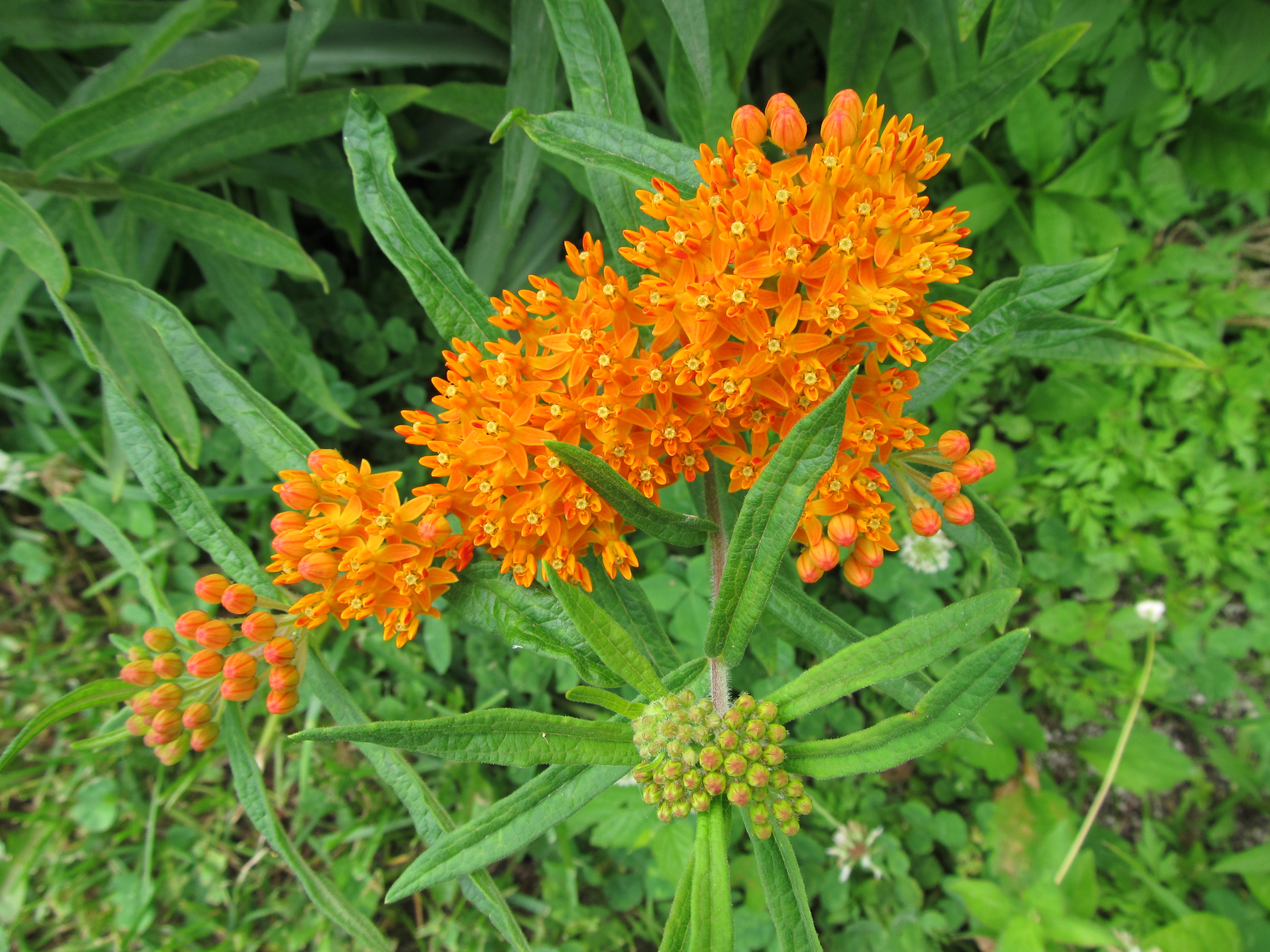
IMG_0021

Asclepias tuberosa – butterfly milkweed

If you haven’t already, please consider including some native plants in your yard. If you don’t have a yard, suggest the idea of landscaping with native plants to your friends. To learn more about monarch butterflies and their plight (including information on how to grow milkweed), visit www.monarchwatch.org.

Figs and Fig Wasps

Recently I was listening to a past episode of Caustic Soda Podcast in which the hosts briefly discussed fig wasps. I was intrigued by this discussion, having previously never heard of fig wasps, and so I did a little research. As it turns out, what I am about to share with you here is just the tip of the iceberg. The relationship between figs and fig wasps is a complex topic, to the extent where you could easily spend a lifetime studying this relationship and there would still be more to discover.

Ficus is a genus of plants in the  family Moraceae that consists of trees, shrubs, and vines. They are commonly referred to as figs, and there are between 755 and 850 described species of them (depending on the source). The majority of fig species are found in tropical regions, however many of them are found in temperate regions as well. The domesticated fig (Ficus carica), also known as common fig, is widely cultivated throughout the world for its fruit.

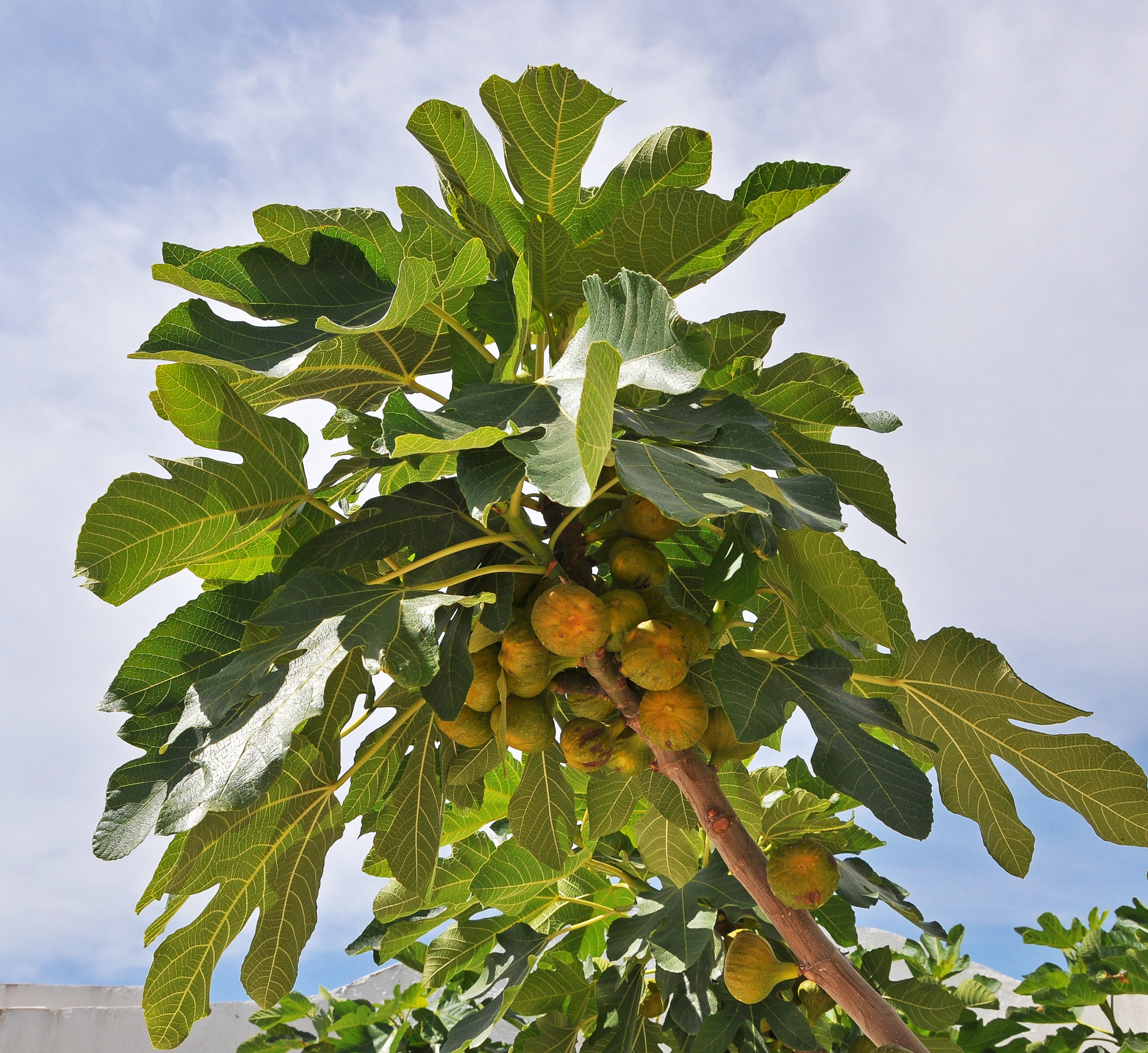
common fig

Ficus carica – common fig

photo credit: wikimedia commons

The fruit of figs, also called a fig, is a multiple fruit because it is formed from a cluster of flowers. A fruit is formed by each flower in the cluster, but they all grow together to form what appears to be a single fruit. Now here is where it starts to get bizarre. The flowers of figs are contained inside a structure called a syconium, which is essentially a modified fleshy stem. The syconium looks like an immature fig. Because they are contained inside syconia, the flowers are not visible from the outside, yet they must be pollinated in order to produce seeds and mature fruits.

This is where the fig wasps come in. “Fig wasp” is a term that refers to all species of chalcid wasps that breed exclusively inside of figs. Fig wasps are in the order Hymenoptera (superfamily Chalcidoidea) and represent at least five families of insects. Figs and fig wasps have coevolved over tens of millions of years, meaning that each species of fig could potentially have a specific species of fig wasp with which it has developed a mutualistic relationship. However, pollinator host sharing and host switching occurs frequently.

Fig wasps are tiny, mere millimeters in length, so they are not the same sort of wasps that you’ll find buzzing around you, disrupting your summer picnic. Fig wasps have to be small though, because in order to pollinate fig flowers they must find their way into a fig. Fortunately, there is a small opening at the base of the fig called an ostiole that has been adapted just for them. What follows is a very basic description of the interaction between fig and fig wasp – remember with the incredible diversity of figs and fig wasps, the specifics are sure to be equally diverse.

First a female wasp carrying the pollen of a fig from which she has recently emerged discovers a fig that is ready to be pollinated. She finds the ostiole and begins to enter the fig. She is tiny, but so is the opening, and so her wings and antennae are ripped off in the process. No worries though, she won’t be needing them anymore. Inside the fig there are two types of flowers – ones with long styles and others with short styles. The female wasp begins to lay her eggs inside the flowers, however she is not able to lay eggs inside the flowers with the long styles. Instead, these flowers get pollinated by the wasp. After all her eggs are laid, the female wasp dies. The fig wasp larvae develop inside galls in the ovaries of the fig flowers, and they emerge from the galls once they have matured into adults. The adult males mate with the females and then begin the arduous task of chewing through the wall of the fig in order to let the females out. After completing this task, they die. The females then leave the figs, bringing pollen with them, and search for a fig of their own to enter and lay eggs. And the cycle continues.

But there is so much more to the story. For example, there are non-pollinating fig wasps that breed inside of figs but do not assist in pollination – freeloaders essentially. And how is the cycle different if the species is monoecious (male and female flowers on the same plant) compared to dioecious (male and female flowers on different plants)? It’s too much to cover here, but visit figweb.org for more information. FigWeb is an excellent resource for learning all about the bizarre and fascinating world of the fig and fig wasp relationship. Also check out the PBS documentary, The Queen of Trees.

This is the first of hopefully many posts on plant and insect interactions. Leave a comment and let me know what plant and insect interactions interest you.

Invasivore: One Who Consumes Invasive Species

Invasive species are a major ecological concern, and so considerable effort is spent controlling them, with the ultimate goal (albeit a lofty one in most cases) of  eradicating them. The term “invasive species” describes plants, animals, and microorganisms that have been either intentionally or unintentionally introduced into an environment outside of their native range. They are “invasive” because they have established themselves and are causing adverse effects in their non-native habitats. Some introduced species cause no discernible adverse effects and so are not considered invasive. Species that are native to a specific habitat and exhibit adverse effects following a disturbance can also be considered invasive. (White-tailed deer are an example of this in areas where human activity and development have reduced or eliminated their natural predators resulting in considerably larger deer populations than would otherwise be expected.) Defining and describing invasive species is a challenging task, and so it will continue to be a topic of debate among ecologists and conservation biologists for the foreseeable future.

The adverse effects of invasive species are also not so straightforward. Typical examples include outcompeting native flora and fauna, disrupting nutrient cycles, shifting the functions of ecosystems, altering fire regimens, and causing genetic pollution. Countless hours of research and observation are required in order to determine the real effects of invaders. The cases are too numerous and the details are too extensive to explore in this post; however, I’m sure that I will cover more aspects of this topic in the future.

For now I would just like you to consider a novel approach to eradicating invasive species that has recently come to my attention. That is to simply eat them. Why not, right? The voracious appetite of humans has helped drive certain species to extinction in the past, so why can’t our stomachs assist in removing introduced species from their non-native habitats? The folks at Invasivore.org are suggesting just that, and by encouraging people to consume invasive species, they are also promoting awareness about invasive species, an awareness that they hope “will lead to decreasing the impacts of invasive species by preventing introductions, reducing spread, and encouraging informed management policies.”

“If you can’t beat ’em, eat ’em!” And so they provide recipes in order to encourage people to harvest, prepare, and consume the invasive species in their areas. Some of the invasive plant species they recommend people eat are Autumn Olive (Autumn Olive Jam), garlic mustard (Garlic Mustard Ice Cream), Japanese honeysuckle (Honeysuckly Simple Syrup), purslane (Purslane Relish), and Canada goldenrod (Strawberry-Goldenrod Pesto). And that’s just a sampling. One might ask if we are encouraged to eat invasive species and ultimately find them palatable, won’t our demand result in the increased production of these species? The Invasivores have considered this, and that is why their ultimate goal is raising awareness about the deleterious effects of invasive species. In the end, we should expect to see our native habitats restored. Our craving for Burdock Chips on the other hand will have to be satisfied by some other means.

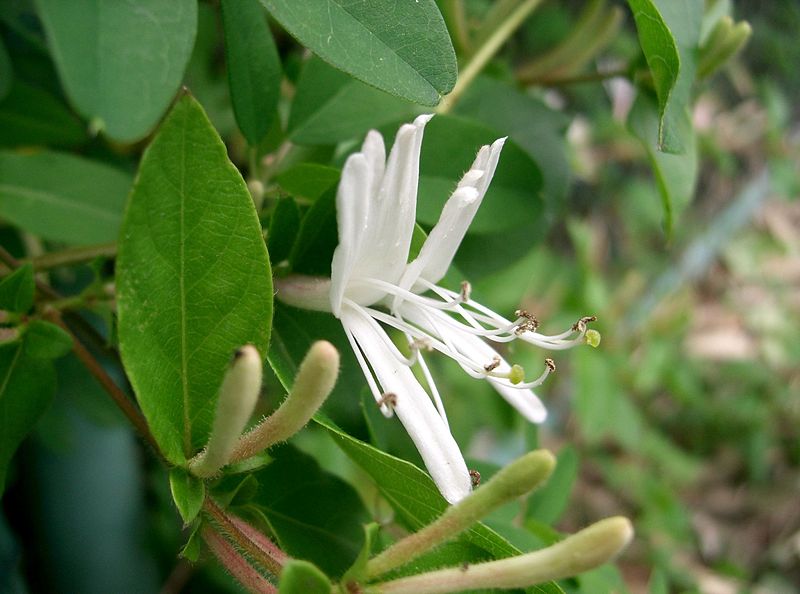
lonicera japonica

Japanese honeysuckle (Lonicera japonica)

photo credit: wikimedia commons

Other websites that encourage the consumption of invasive species:

www.eattheinvaders.org

www.eattheweeds.com

Baobab Trees Facing Extinction

Declining populations of baobab trees have been a concern for more than a decade now. That concern has been amplified with the release of a recent study that shows that two baobab tree species endemic to Madagascar risk losing the majority of their available habitat due to climate change and human development in the coming decades.

Baobab trees are spectacular sights. Unique in appearance, they can grow up to about 100 feet tall with trunk diameters as wide as 36 feet and can live for hundreds (possibly thousands) of years. As the trees age, they develop hollow trunks used for storing water (as much as 26,000 gallons!) to help them survive long periods of drought. The fruits of baobab trees are coconut-sized and edible and are said to taste like sherbet. The leaves of at least one species are eaten as a vegetable, and the seeds of some species are used to make vegetable oil. Various other products, including fibers, dyes, and fuel are also derived from baobab trees.

There are nine species of baobab trees (Adansonia spp.). Eight are native to Africa and one is native to Australia. Two of the African species are also found on the Arabian Peninsula, and six of the African species are found only on Madagascar. Three of the Madagascan species (A. grandidieri, A. perrieri, and A. suarezensis) are listed as endangered on the IUCN Red List. Currently, A. perrieri has the lowest population of the three species, with only 99 observed trees. It is estimated that by 2080, its range will be reduced to 30% of what it currently is, further threatening its survival. A. suarezensis has a considerably larger population (15,000 trees) but a much smaller distribution area (1,200 square kilometers). By 2050, this area is estimated to be reduced to only 17 square kilometers, practically guaranteeing its eventual extinction. On the bright side, A. grandidieri has a population of about one million trees and an extensive range that should remain largely undisturbed in the coming decades.

An interesting component to this story is how giant tortoises fit in. The fruits and seeds of baobab trees are relatively large, and so their dispersal is best carried out by animals. Seeds that fall too close to the parent trees have little chance of survival since they will be shaded out and will have to compete with large, adjacent trees. Animals that eat the fruits of the baobab trees help to disperse the seeds by defecating them in areas away from large trees where the seedlings will have a greater chance of survival. Two species of giant tortoises that were once native to Madagascar but have now been extinct for hundreds of years were likely primary dispersers of baobab tree seeds. A recent study used a species of giant tortoise not native to Madagascar (the Aldabra giant tortoise) to test this hypothesis. The tortoise readily consume the fruit of the baobab tree. The seeds remain in the tortoise’s digestive system for up to 23 days, giving the tortoise plenty of time to move to an area suitable for seed germination. Given these findings, biologists are currently working to introduce Aldabra giant tortoises to Madagascar to help save the baobab trees.

Climate change, loss of habitat due to human development, and loss of seed dispersers due to extinction threaten the survival of some baobab tree species, but by recognizing this threat, biologists can work towards preventing their eventual extinction. As we gain a better understanding and appreciation for the need for biodiversity on our planet, we will resolve to take greater steps to protect it.

To learn more about baobab trees facing extinction and giant tortoises as seed dispersers, visit the Scientific American blog, Extinction Countdown, here and here.

baobab tree

Adansonia grandidieri

photo credit: wikimedia commons

Documentary: What Plants Talk About

Earlier this summer I posted a review of a book called, What a Plant Knows, by Daniel Chamovitz. It’s a book that describes plant senses – senses that are similar to human senses (i.e. seeing, hearing, smelling, etc.). Plants are much more aware of their surroundings than we might initially think, and so I recommend this book to anyone interested in gaining a better understanding of plants and their “awareness”. However, I also understand that this can be an intimidating subject – especially for those who haven’t spent much time studying plants and their biology. Chamovitz wrote his book with the intention of making this subject accessible to everyone. Anyone with even a limited understanding of biology should be able to understand the basic concepts in Chamovitz’s book. However, the subject can still be challenging.

Luckily, a recent documentary by PBS explores similar concepts. It simplifies things even more – exploring the ways in which plants communicate with the world around them, even without having the organs we typically attribute to communication and awareness (i.e. brains, ears, eyes, etc.). The documentary is called What Plants Talk About. I watched it recently and was reminded of Chamovitz’s book. They fit together so well. If you have any interest in this subject at all, I recommend both. If all you are after is a simple introduction, watch the documentary. If the documentary intrigues you, read the book.

There is a lot more to learn about plants and their “awareness,” but these sources are a great start. Watch the documentary and/or read the book and then let me know what you think in the comments below. Meanwhile, we wait in anticipation of what science might discover next concerning this remarkable aspect of the plant kingdom.