Tea Time: Fireweed

lf you’ve seen one fireweed, you’ve probably seen several. As an early successional species, growing in large numbers across a vast amount of space is kind of its thing. Any disturbance that leaves bare ground in its wake, such as a wildfire or a windstorm, gives fireweed the opportunity to colonize. It grows quickly and spreads via rhizomes, producing thousands of airborne seeds in the process, sending them off to continue colonization or contribute to soil seed banks in preparation for future disturbances. The role of plants like fireweed is vital – promptly covering bare ground to stave off erosion and acting as a nurse plant to new saplings destined to become the future forest. In a garden setting or in locations where aggressively spreading plants are discouraged, fireweed and its weedy behavior may be unwelcome, but in other contexts, its services are essential.

fireweed (Chamerion angustifolium)

Fireweed (Chamerion angustifolium) is a species in Onagraceae, commonly known as the evening primrose family. It has an impressive distribution, widespread across much of North America and Eurasia. This is owed largely to its adaptability. Deep shade and overly dry soil are two conditions that it does not tolerate well, otherwise it seems to grow in a wide variety of soil types, moisture levels, and sun exposures, particularly in areas where there is regular disturbance. Swaths of towering plants topped with rose-pink flower spikes make fireweed impossible to ignore and a favorite of wildflower enthusiasts.

Fireweed stems reach from three to nine feet tall and are rarely branched. Long, narrow, lance-shaped leaves are arranged alternately along the lengths of stems and give the plant a willow-like appearance, which explains another common name, rosebay willowherb. The undersides of leaves have a distinct venation pattern, in which the veins don’t reach the leaf margins, a feature that can help with identification.
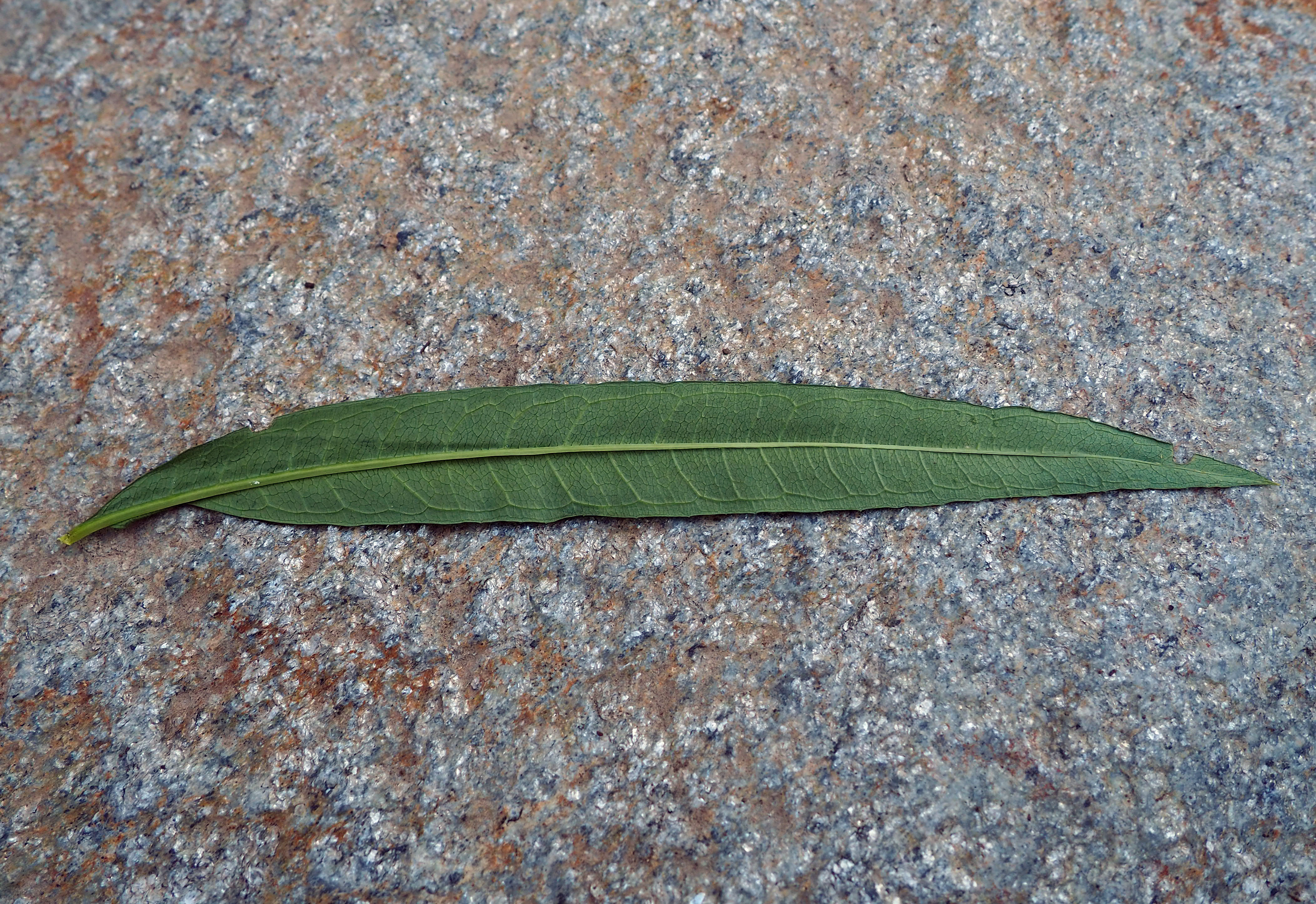
distinct leaf veins of fireweed (Chamerion angustifolium)

A series of rose-pink to purple flowers top the stems of fireweed. Each flower has four sepals and four petals with eight stamens and a four-lobed stigma extending prominently from the center. Its long, narrow ovary can be confused for a flower stalk. Rich with nectar, fireweed flowers are a favorite of honeybee keepers. They are also edible, like much of the rest of the plant. Narrow, four-chambered capsules form in place of fertilized flowers and later split open to release abundant, small seeds with a tuft of fluff attached to each one to aid in wind dispersal.

Fireweed has a long history of being used as food and medicine. Stem fibers are also useful for making cord, and seed fluff is useful for weaving and padding. Certainly, fireweed’s abundance and ubiquity contribute to its utility. Having never eaten fireweed before, I decided that a good way to introduce it to my diet would be to make a tea. Fireweed leaves are commonly collected for tea and are said to make an excellent non-caffeinated replacement for black tea.
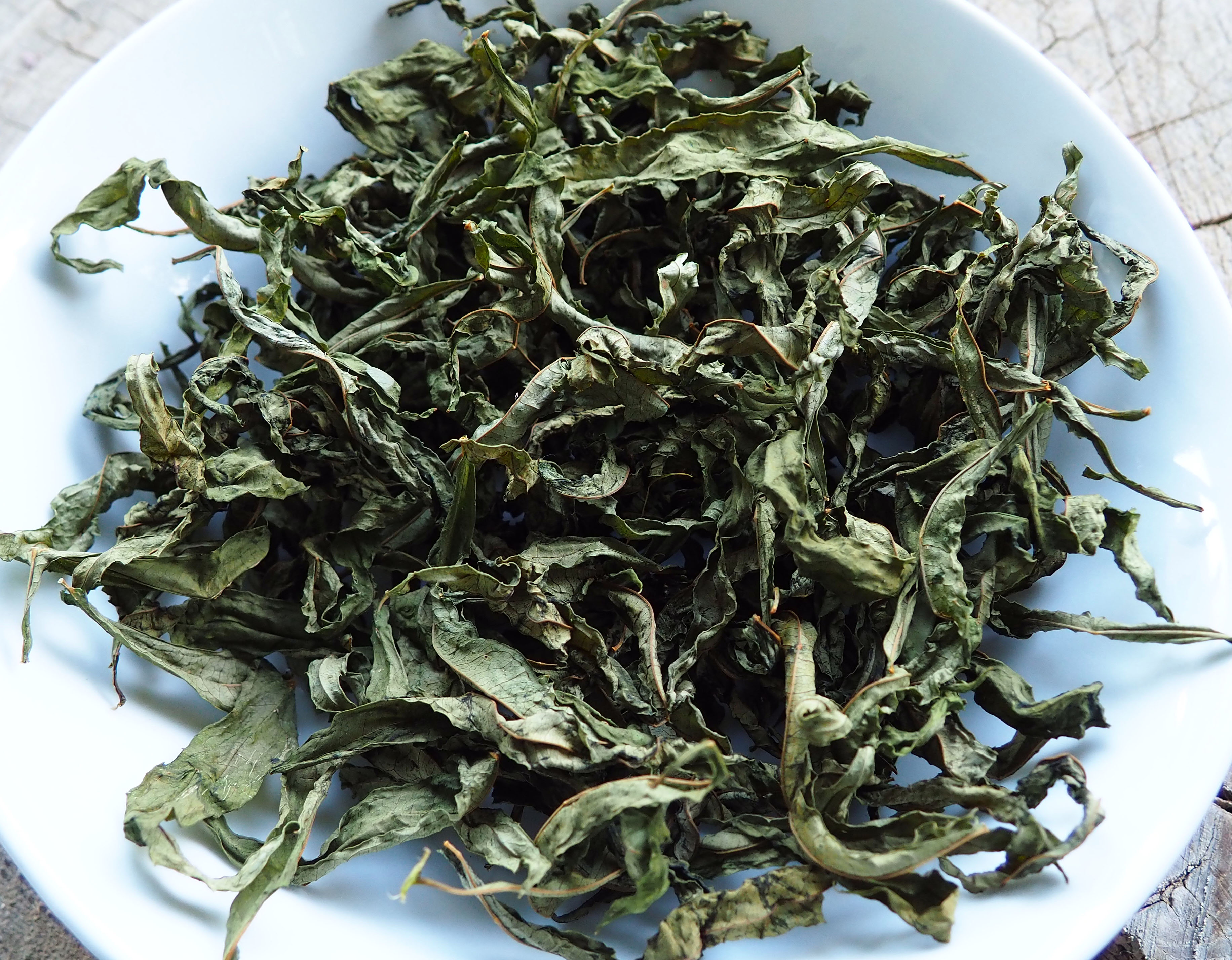
fireweed tea leaves

Making fireweed tea starts by stripping young leaves from fireweed stems. Recipes I encountered all called for fermenting the leaves before drying them. I did this by squeezing handfuls of leaves in my fists just enough to break and bruise them a bit and then packing them into a quart size Mason jar. I closed the lid tight and kept them in the jar for about five days, shaking it up a couple times a day supposedly to help prevent mold issues. After that, I dried the leaves on a baking sheet in the hot sun. From there, they are ready for making tea the same way you would make any other loose leaf tea, chopping the leaves up a bit before immersing them in hot water.

I found the taste of fireweed tea to be mild and pleasant. Despite several sources comparing it to black tea, I thought it was more similar to green tea. Sierra liked the smell more than the taste and wished it had honey in it. Compared to other teas I’ve tried in this short series of posts, this is definitely one of the better ones, and a tea I could see myself making again sometime.

More Tea Time Posts on Awkward Botany:

What Bugs Can Tell Us About the Value of Vacant Urban Land

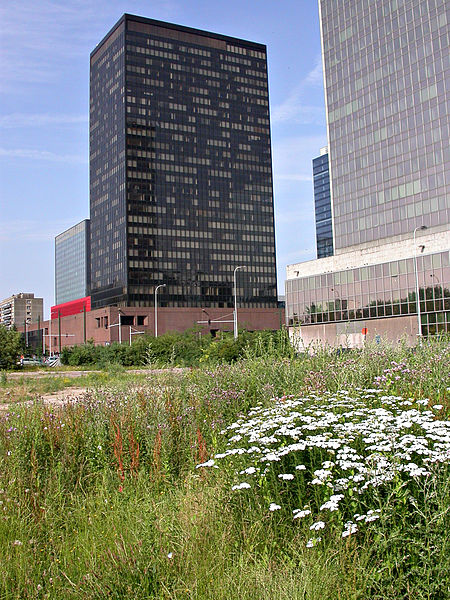
Back in October 2017, we discussed some potential benefits of spontaneous urban vegetation (commonly referred to as weeds) and the abandoned or undeveloped urban spaces they inhabit. There is much to learn about the role these plant communities play in the ecology of cities and their contribution to vital ecosystem services. In a review published in the December 2013 issue of Environmental Entomology, researchers from Ohio State University discuss how studying arthropod communities on vacant lands can help “advance our ecological understanding of the functional role” these habitats may have in our cities.

Arthropods were selected as the subject of study because their “populations respond quickly to changes in the urban environment, making them key indicators of how land use change influences biodiversity.” Urban-dwelling arthropods “are diverse and occupy multiple trophic levels” and are “easy to sample.” Additionally, many of the services that vacant, unmanaged land offers are “arthropod-mediated,” including “pollination, decomposition, nutrient cycling, and biological pest control.”

photo credit: wikimedia commons

Vacant land was selected as the study site because “understanding [its] ecological value is important to the advancement of urban ecology and ecosystem management,” and even though such areas are often overlooked in conservation planning, studies have shown that they “have the potential to be valuable reservoirs of biodiversity.” In order to determine just how valuable vacant land might be, more research is needed comparing these spaces to other parts of the city. In addition, vacant lots are generally ephemeral and in due time may be developed. Whether this means that a building or parking lot takes their place or that they are converted into a park, garden, or urban farm, it is important to understand what these land use changes mean for urban biodiversity and ecological functions.

Urbanization is often measured by comparing the amount of built area to the remaining green space. Where there is a high degree of urbanization, there is a low degree of green space comparatively. As urbanization increases, so does habitat fragmentation, pollution, and the urban heat island. In the meantime, biodiversity suffers. The authors cite a number of studies demonstrating that increased urbanization negatively impacted beneficial insect populations. For example, a study in the United Kingdom found that bumblebee diversity in gardens “decreased with increasing urbanization of the surrounding landscapes.” Similar results were found in a study we wrote about.

photo credit: wikimedia commons

Together with remnant natural areas, parks, private and public gardens, greenways, and commercial landscapes, vacant lots are part of a mosaic of urban green space. Each of these areas “experience different levels of disturbance and harbor varying plant species,” which, in turn, “influence arthropods and the services they can supply within and between patches.” Because vacant lots can remain undisturbed and virtually unmanaged for long periods of time, they help provide a contrast to the homogeneous, highly managed green spaces that are common in cities. By their very nature, they “have the potential to aid conservation and enhance green space quality and connectivity within city centers.”

It’s one thing to recognize the value of vacant lots; it’s another thing to change the negative perception of them. Aesthetics are important, and to many people vacant lots are an eyesore and a sign of neglect. Some management may be necessary in order to retain their important ecological value and assuage the feelings of the public. The authors present a number of ways that vacant lots can be and have been managed in order to achieve this goal. They also consider how certain management strategies (mowing, removing and/or introducing plant species) can impact arthropod populations for better or worse. Yet, where vacant lots are left alone and allowed to advance in the stages of ecological succession, changes in arthropod diversity and ecosystem function also occur. For this reason, “the regional species pool of a city requires a mosaic of all successional stages of vacant land patches.”

photo credit: wikimedia commons

Finally, the authors discuss the conversion of vacant land to urban agriculture. Even this land use change can have dramatic effects on the arthropod community. For example, undisturbed or unmanaged areas are a habitat requirement for cavity and soil nesting bees, and regular disturbance associated with farming may interfere with this. Also where pesticides are used or plant diversity is minimized, the arthropod community will be affected.

Thus, “the study of vacant land ecology necessitates a transdisciplinary approach” in order to determine how changes in vacant, urban land “will affect diverse ecosystem functions and services.” A variety of management strategies are required, and land managers must “determine the most appropriate strategies for improving the sustainability of cities from a connected landscape perspective.” It is clear that vacant lots have a role to play. The extent of their role and our approaches to managing them requires careful investigation.

One thing is certain – for biodiversity’s sake – don’t pave over vacant lots to put up parking lots.

Is There a Place for Weeds in Urban Ecosystems?

Highly urbanized areas have a long history of disturbance. They are a far cry from the natural areas they once displaced, bearing little resemblance to what was there before. In this sense, they are a brand new thing. During the urbanization process, virtually everything is altered – temperatures, soils, soil life, wind patterns, hydrology, carbon dioxide levels, humidity, light availability, nutrients. Add to that a changing climate and increased levels of a variety of  pollutants, and the hope of ever seeing such a site return to its original state – whatever that might mean – is crushed.

What then should we consider the natural flora of an ecosystem like this? Certainly it is not simply the native flora that once stood on the site before it was developed; virtually none of the conditions are the same anymore. If we define “natural” as existing with minimal human intervention, then the natural urban flora would be whatever grows wild outside of our manicured landscapes and managed, remnant natural areas. It would be a cosmopolitan mixture of plants that have joined us in our migrations with and without our permission, along with a collection of species that are either extant to the site or have been brought in by wildlife. In many ways it would mirror the human populations of our modern cities – an assortment of residents from around the globe with diverse backgrounds and cultural histories.

In Wild Urban Plants of the Northeast, Peter Del Tredici classifies urban land into three general categories based on their ecological functions: native, remnant landscapes; managed, constructed landscapes; and ruderal, adaptive landscapes. Native, remnant landscapes are generally small areas within city limits that have never been developed. They contain a portion of the native plants that once populated the area, and they require vigilant and regular maintenance to keep non-native plants from invading and to control those that already have. Managed, constructed landscapes include all of the parks and gardens that have been designed and intentionally planted. They require regular maintenance of varying intensity in order to keep them looking the way they are intended to look. Ruderal, adaptive landscapes are abandoned or neglected sites that are populated by plants that have arrived on their own and that maintain themselves with virtually no human intervention. This is where the true, wild urban flora resides.

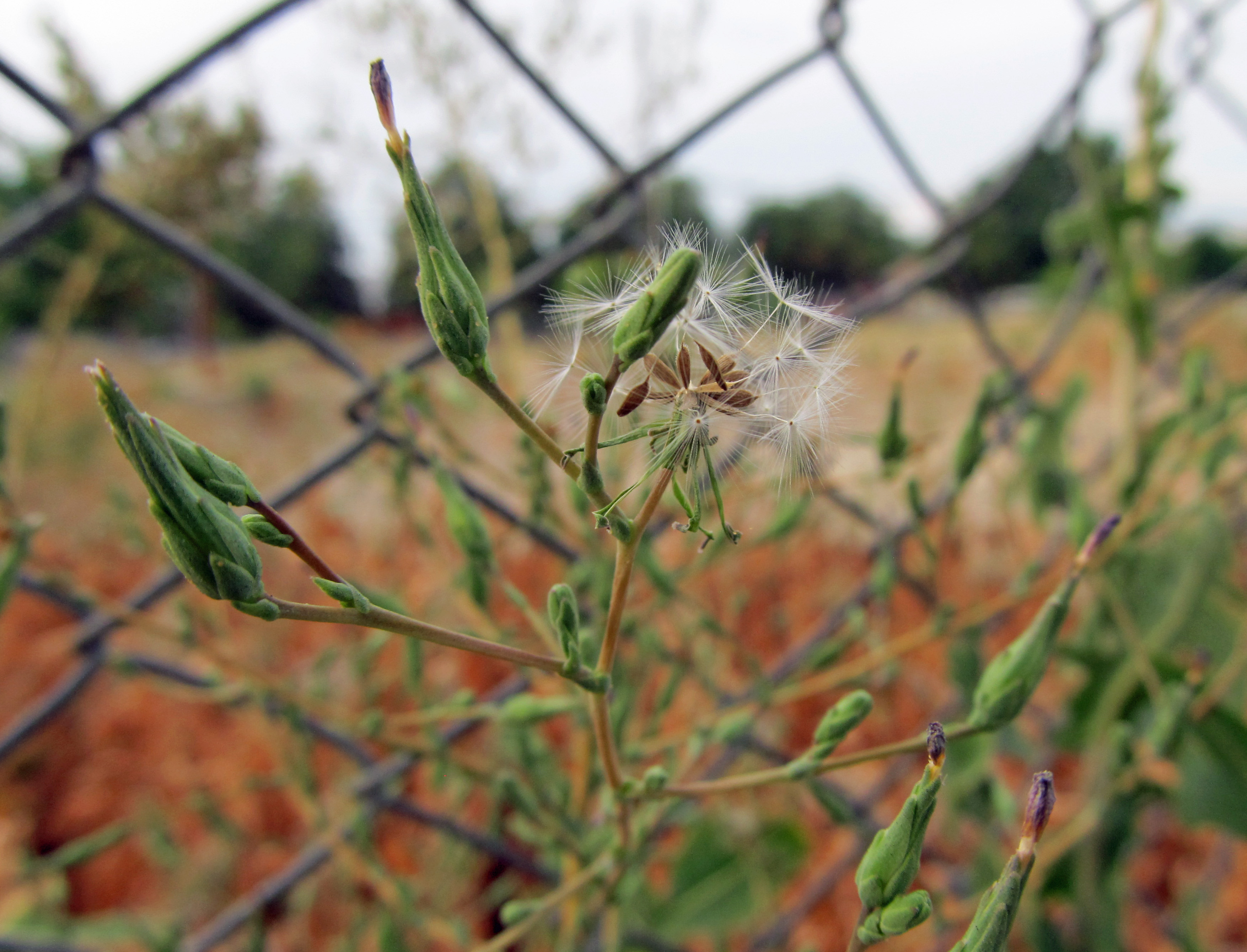
Prickly lettuce (Lactuca serriola) growing in an abandoned lot.

Many of the plants that make up our wild urban flora are what we commonly refer to as weeds. These weedy plants appear in landscapes throughout our cities, but efforts are generally made to remove or control them in all landscapes except the abandoned ones. It is in these neglected sites that weeds have the greatest potential to provide vital ecosystem services, performing ecological functions that are beneficial to urban life.

Not all plants are suited for this role. Spontaneous urban vegetation is particularly suited due to its ability to thrive in highly modified, urban environments without external management. Regardless of provenance, this suite of plants, as Del Tredici writes, seem to be “preadapted” to urban conditions and “are among the toughest on the planet.” A long list of traits has been identified for plants in this category, ranging from seed dispersal and viability to speed of growth and reproduction to tolerance of harsh conditions. In Del Tredici’s words, “a successful urban plant needs to be flexible in all aspects of its life history from seed germination through flowering and fruiting, opportunistic in its ability to take advantage of locally abundant resources that may be available for only a short time, and tolerant of the stressful growing conditions caused by an abundance of pavement and a paucity of soil.”

Abandoned lots flush with weeds, overgrown roadsides and railways, and neglected alleyways colonized by enterprising plants are generally seen as ugly, unsightly eyesores – products of neglect and decline. Some of the plants found in such locations are valued in a garden setting or prized as part of the native landscape in a natural area, but growing wildly among trash and decaying urban infrastructure they, too, are refuse. As Richard Mabey has written: “If plants sprout through garbage they become a kind of litter themselves. Vegetable trash.”

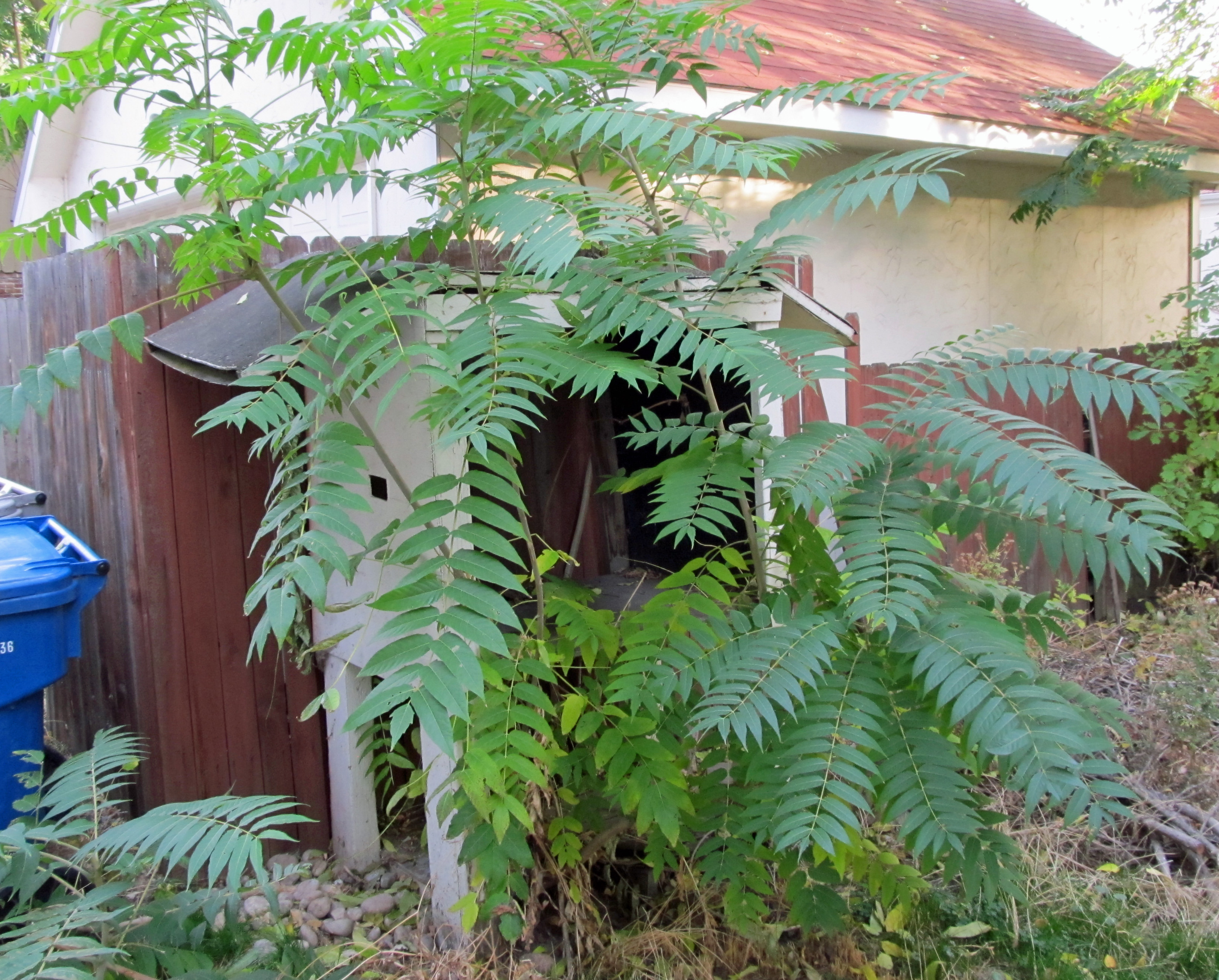
Abandoned chicken coop overtaken by tree of heaven saplings (Ailanthus altissima).

Despite how we feel about these plants or the aesthetics of the locations they find themselves in, they are performing valuable services. Along with increasing biodiversity, producing oxygen, and sequestering carbon – services that virtually all plants offer – they may be preventing soil erosion, stabilizing waterways, absorbing excess nutrients, reducing the urban heat island effect, mitigating pollution, building soil, and/or providing food and habitat for urban wildlife. While cultivated and managed landscapes can achieve similar things, these neglected sites are doing so without resource or labor inputs. They are sustainable in the sense that their ability to provide these services is ongoing without reliance on outside maintenance.

Sites like these should be further investigated to determine the full extent of the services that they may or may not be offering, and in the event that they are doing more good than harm, they should be conserved and encouraged. One service that is receiving more attention, as Del Tredici writes, is phytoremediation – “the ability of some plants to clean up contaminated sites by selectively absorbing and storing high concentrations of heavy metals such as cadmium, lead, copper, zinc, chromium, and nickel in their tissues.” Weed species with this ability include prickly lettuce (Lactuca serriola), lambsquarters (Chenopodium album), and mugwort (Artemisia vulgaris). In an article in Places Journal, Del Tredici gives the example of the often despised, introduced plant, common reed (Phragmites australis) cleaning up the New Jersey Meadowlands by “absorbing abundant excess nitrogen and phosphorous throughout this highly contaminated site.”

In the book, Weeds: In Defense of Nature’s Most Unloved Plants, Richard Mabey writes: “As we survey our long love-hate relationship with [weeds], it may be revealing to ponder where weeds belong in the ecological scheme of things. They seem, even from the most cursory of looks, to have evolved to grow in unsettled earth and damaged landscapes, and that may be a less malign role than we give them credit for.” Perhaps seeing them in this worthy role will temper our knee-jerk inclination to demonize them at every turn.

———————

See Also: Our Urban Planet and Wild Urban Plants of Boise.

What Is a Plant, and Why Should I Care? part four

What Is a Plant?

Part one and two of this series have hopefully answered that.

Why should you care?

Part three offered a pretty convincing answer: “if it wasn’t for [plants], there wouldn’t be much life on this planet to speak of.”

Plants are at the bottom of the food chain and are a principle component of most habitats. They play major roles in nutrient cycling, soil formation, the water cycle, air and water quality, and climate and weather patterns. The examples used in part three of this series to explain the diverse ways that plants provide habitat and food for other organisms apply to humans as well. However, humans have found numerous other uses for plants that are mostly unique to our species – some of which will be discussed here.

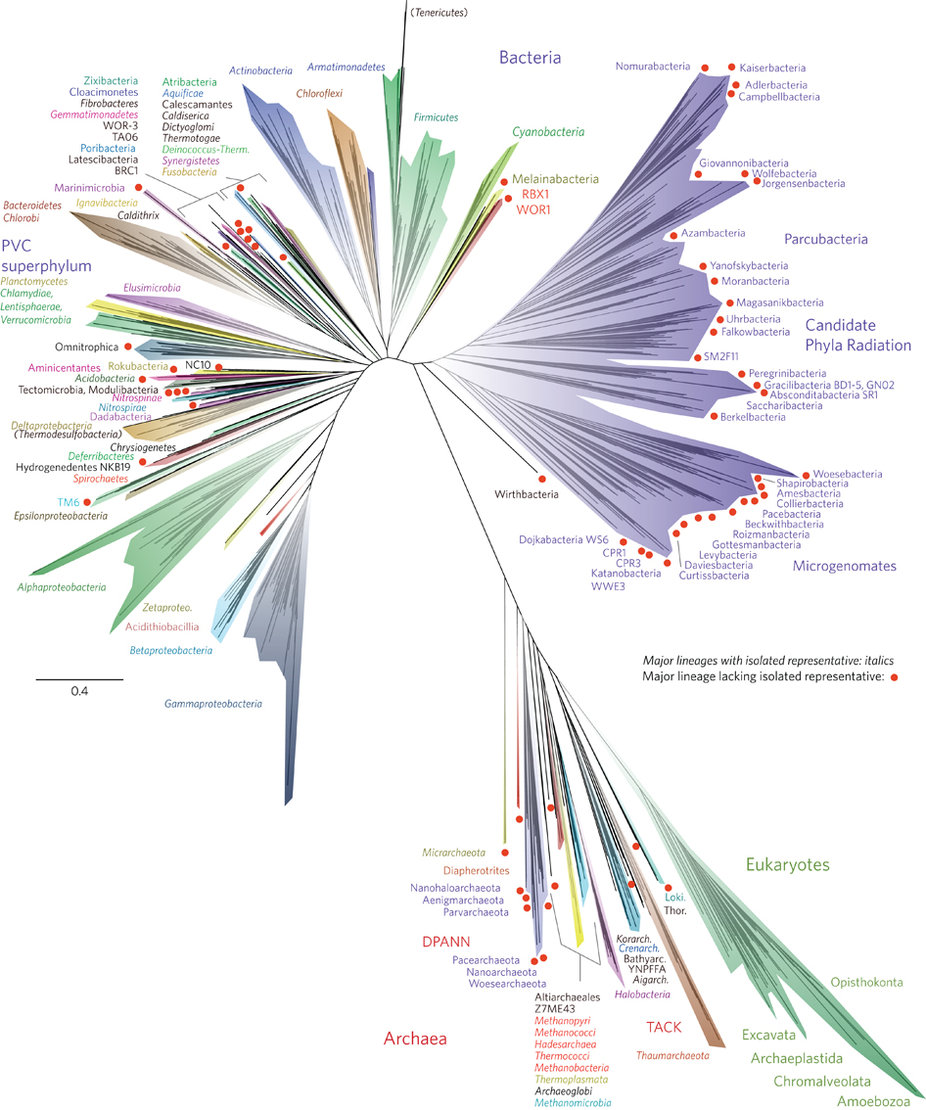
But first, some additional thoughts on photosynthesis. Plants photosynthesize thanks to the work accomplished by very early photoautotrophic bacteria that were confined to aquatic environments. These bacteria developed the metabolic processes and cellular components that were later co-opted (via symbiogensis) by early plants. Plants later colonized land, bringing with them the phenomena of photosynthesis and transforming life on earth as we know it. Single-celled organisms started this whole thing, and they continue to rule. That’s just something to keep in mind, since our focus tends to be on large, multi-cellular beings, overlooking all the tiny, less visible beings at work all around us making life possible.

Current representation of the tree of life. Microorganisms clearly dominate. (image credit: nature microbiology)

Current representation of the tree of life. Microorganisms clearly dominate. (image credit: nature microbiology)

Food is likely the first thing that comes to mind when considering what use plants are to humans. The domestication of plants and the development of agriculture are easily among the most important events in human history. Agricultural innovations continue today and are necessary in order to both feed a growing population and reduce our environmental impact. This is why efforts to discover and conserve crop wild relatives are so essential.

Plants don’t just feed us though. They house us, clothe us, medicate us, transport us, supply us, teach us, inspire us, and entertain us. Enumerating the untold ways that plants factor in to our daily lives is a monumental task. Rather than tackling that task here, I’ll suggest a few starting points: this Wikipedia page, this BGCI article, this Encylopedia of Life article, and this book by Anna Lewington. Learning about the countless uses humans have found for plants over millennia should inspire admiration for these green organisms. If that admiration leads to conservation, all the better. After all, if the plants go, so do we.

Humans have a long tradition of using plants as medicine. Despite all that we have discovered regarding the medicinal properties of plants, there remains much to be discovered. This one of the many reasons why plant conservation is so important. (photo credit: wikimedia commons)

Humans have a long tradition of using plants as medicine. Despite all that we have discovered regarding the medicinal properties of plants, there remains much to be discovered. This is one of the many reasons why plant conservation is imperative. (photo credit: wikimedia commons)

Gaining an appreciation for the things that plants do for us is increasingly important as our species becomes more urban. Our dense populations tend to push plants and other organisms out, yet we still rely on their “services” for survival. Many of the functions that plants serve out in the wild can be beneficial when incorporated into urban environments. Plants improve air quality, reduce noise pollution, mitigate urban heat islands, help manage storm water runoff, create habitat for urban wildlife, act as a windbreak, reduce soil erosion, and help save energy spent on cooling and heating. Taking advantage of these “ecosystem services” can help our cities become more liveable and sustainable. As the environmental, social, and economic benefits of “urban greening” are better understood, groups like San Francisco’s Friends of the Urban Forest are convening to help cities across the world go green.

The importance of plants as food, medicine, fuel, fiber, housing, habitat, and other resources is clear. Less obvious is the importance of plants in our psychological well being. Numerous studies have demonstrated that simply having plants nearby can offer benefits to one’s mental and physical health. Yet, urbanization and advancements in technology have resulted in humans spending more and more time indoors and living largely sedentary lives. Because of this shift, author Richard Louv and others warn about nature deficit disorder, a term not recognized as an actual condition by the medical community but meant to describe our disconnect with the natural world. A recent article in BBC News adds “nature knowledge deficit” to these warnings – collectively our knowledge about nature is slipping away because we don’t spend enough time in it.

The mounting evidence for the benefits of having nature nearby should be enough for us to want to protect it. However, recognizing that we are a part of that nature rather than apart from it should also be emphasized. The process that plants went through over hundreds of millions of years to move from water to land and then to become what they are today is parallel with the process that we went through. At no point in time did we become separate from this process. We are as natural as the plants. We may need them a bit more than they need us, but we are all part of a bigger picture. Perhaps coming to grips with this reality can help us develop greater compassion for ourselves as well as for the living world around us.