A Rare Hawaiian Plant – Newly Discovered and Critically Endangered

Hawaii is home to scores of plant species that are found nowhere else in the world. But how did those plants get there? In geological time, Hawaii is a relatively young cluster of islands. Formed by volcanic activity occurring deep within the ocean, they only just began to emerge above water around 10 million years ago. At that point the islands would have been nearly devoid of life, and considering that they had never been connected to any other body of land and are about 2,500 miles away from the nearest continent, becoming populated with flora and fauna took patience and luck.

As far as plant life is concerned, seeds and spores had to either be brought in by the wind, carried across the ocean by its currents, or flown in attached to the feathers of birds. When humans colonized the islands, they brought seeds with them too; however, its estimated that humans didn’t begin arriving on the islands until about 1,700 years ago. The islands they encountered were no longer barren landscapes, but instead were filled with a great diversity of plant and animal life. A chance seed arriving on the islands once in a blue moon does not fully explain such diversity.

This is where an evolutionary process called adaptive radiation comes in. A single species has the potential to diverge rapidly into many new species. This typically happens in new habitats where little or no competition exists and there are few environmental stresses. Over time, as genetic diversity builds up in the population, individuals begin to adapt to specific physical factors in the environment, such as soil type, soil moisture, sun exposure, and climate. As individuals separate out into these ecological niches, they can become reproductively isolated from other individuals in their species and eventually become entirely new species.

This is the primary process that led to the great floral diversity we now see on the Hawaiian Islands. Adaptive radiations resulted in more than 1000 plant species diverging from around 300 seed introductions. Before western colonization, there were more than 1,700 documented native plant species. Much of this diversity is explained by the rich diversity of habitats present on the volcanic islands, which lead to many species becoming adapted to very specific sites and having very limited distributions.

A small population size and a narrow endemic range is precisely the reason why Cyanea konahuanuiensis escaped detection until recently. In September 2012, researchers on the island Oahu arrived at a drainage below the summit of Konahua-nui (the tallest of the Ko’olau Mountains). They were surveying for Cyanea humboldtiana, a federally listed endangered species that is endemic to the Ko’olau Mountains. In the drainage they encountered several plants with traits that differed from C. humboldtiana, including hairy leaves, smooth stems, and long, hairy calyx lobes. They took pictures and collected a fallen leaf  for further investigation.
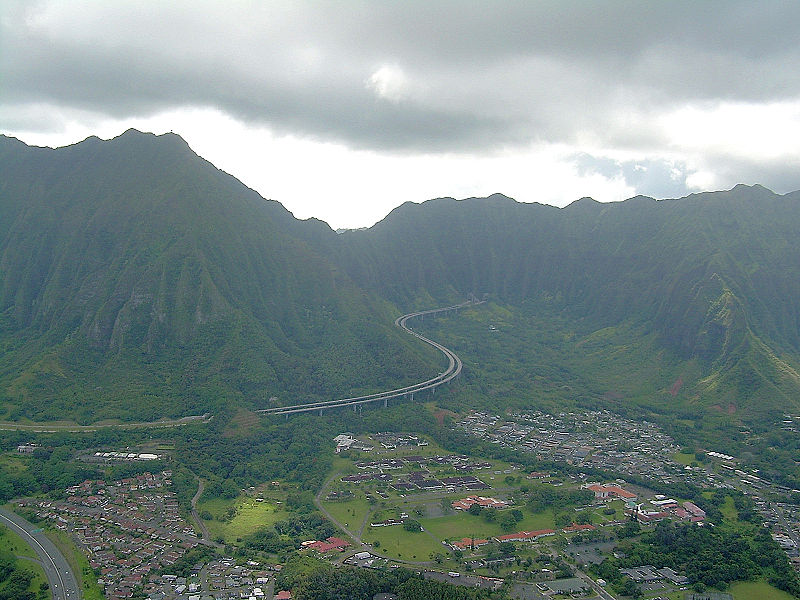
Ko'olau Mountains of O'ahu (photo credit: wikimedia commons)

Ko’olau Mountains of O’ahu (photo credit: wikimedia commons)

Initial research suggested that this was a species unknown to science. More information was required, so additional trips were made, a few more individuals were found, and in June 2013, a game camera was installed in the area. The camera sent back three photos a day via cellular phone service and allowed the team of researchers to plan their next trip when they were sure that the flowers would be fully mature. Collections were kept to a minimum due to the small population size; however, using the material they could collect, further analyses and comparisons with other species in the Cyanea genus and related genera demonstrated that it was in fact a unique species, and so they gave it the specific epithet konahuanuiensis after the mountain on which it was found. It was also given a common Hawaiian name, Haha mili’ohu, which means “the Cyanea that is caressed by the mist.”
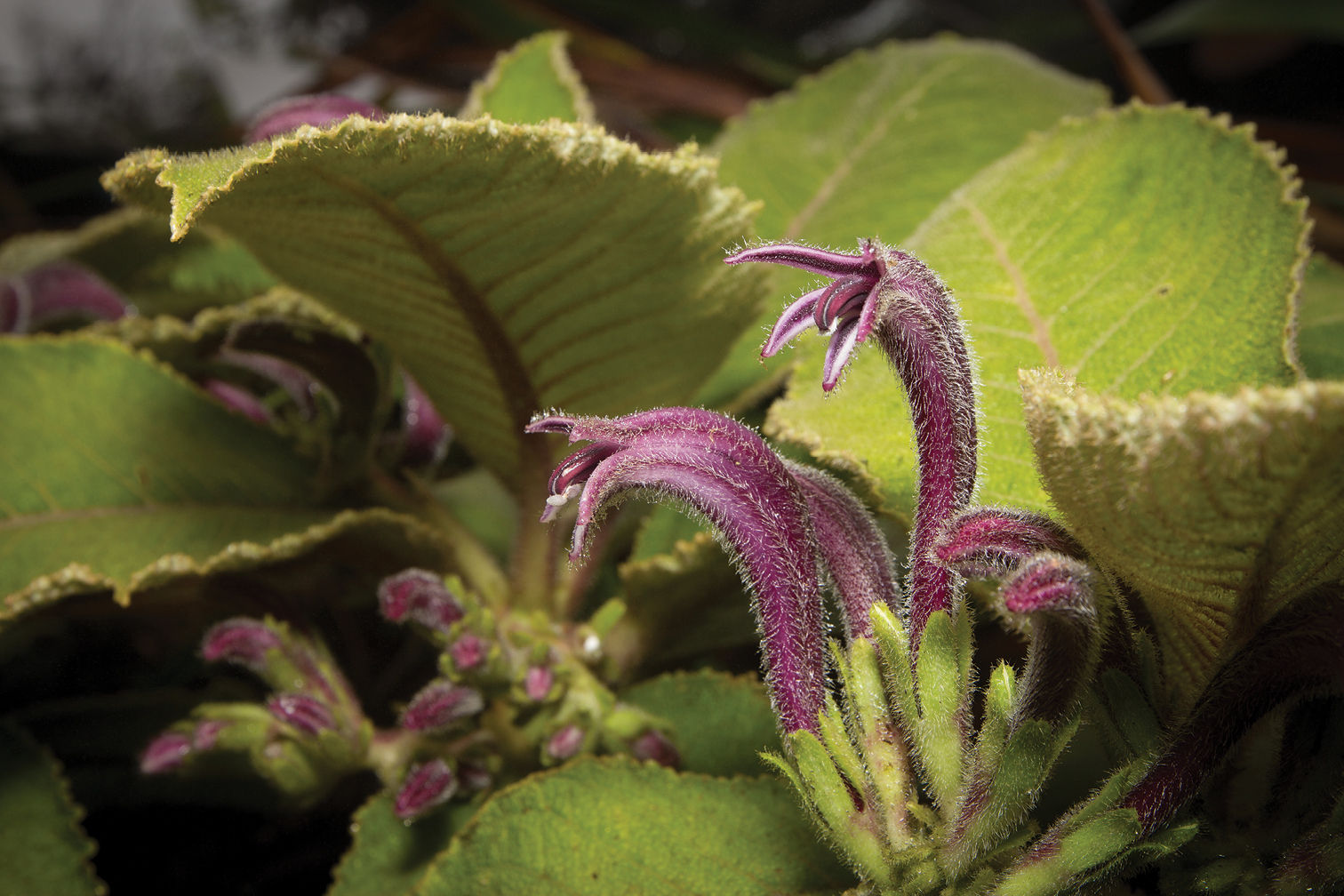
The hairy flowers and leaves of Cyanea konahuanuiensis. Purple flowers appear June-August. (photo credit: www.eol.org)

The hairy flowers and leaves of Cyanea konahuanuiensis. Purple flowers appear June-August. (photo credit: www.eol.org)

The total population of Cyanea konahuanuiensis consists of around 20 mature plants and a couple dozen younger plants. It is considered “critically imperiled” and must overcome some steep conservation challenges in order to persist. To start with, the native birds that pollinate its flowers and disperse its seeds may no longer be present. Also, it is likely being eaten by rats, slugs, and feral pigs. Add to that, several invasive plant species are found in the area and are becoming increasingly more common. While the researchers did find some seedlings in the area, all of the fruits that they observed aborted before they had reached maturity. Lastly, the population size is so small that the researchers say a landslide, hurricane, or flash flood “could obliterate the majority or all of the currently known plants with a single event.”

Seeds collected from immature fruits from two plants were sown on an agar medium at the University of Hawaii Harold L. Lyon Arboretum. The seeds germinated, and so the researchers plan to continue to collect seeds “in order to secure genetic representations from all reproductively mature individuals in ex situ collections.”

Single stem of Cyanea konahuanuiensis (photo credit: www.eol.org)

Single stem of Cyanea konahuanuiensis (photo credit: www.eol.org)

C. konahuanuiensis is not only part of the largest botanical radiation event in Hawaii, but also the largest on any group of islands. At some point in the distant past, a single plant species arrived on a Hawaiian island and has since diverged into at least 128 taxa represented in six genera, Brighamia, Clermontia, Cyanea, Delissea, Lobelia, and Trematolobelia, all of which are in the family Campanulaceae – the bellflower family. Collectively these plants are referred to as the Hawaiian Lobelioids. Cyanea is by far the most abundant genus in this group consisting of at least 79 species. Many of the lobelioids have narrow distributions and most are restricted to a single island.

Sources

Poisonous Plants: Baneberry

For all the benefits that plants offer humanity – the distillation being that Earth would be uninhabitable without them – there is still reason to be wary of them. In a world lousy with herbivores, plant species that are unpalatable have a greater chance of survival. Inflicting serious injury or death upon being ingested – or even by coming in contact with an unsuspecting visitor – offers even greater assurance that a plant will survive long enough to reproduce, passing along to its progeny any traits that led to its superior fitness. The traits in this case are chemical compounds that can be toxic when delivered at the right dose to the right organism. This is the nature of poisonous plants, and the reason why from a young age we were all likely warned not to eat every tasty looking berry we come across and not to go tromping carelessly through an area where certain plants might be present. Plants aren’t out to get us per se, but some do have the potential to cause us great harm. Informing ourselves and taking precautions is advised.

This is the first in a series of posts about poisonous plants. The list of poisonous plants is long, so it’s going to take a while to get through them all. There are some plants that are not generally considered poisonous but can cause illness or death to those who are allergic to them – like peanuts. I don’t plan to include such plants, but there may be some exceptions along the way. The popular author Amy Stewart wrote a book about poisonous and other nefarious plants entitled, Wicked Plants: The Weed that Killed Lincoln’s Mother and other Botanical Atrocities. Below is an excerpt from her introduction to that book that I thought would be worth including here:

Do not experiment with unfamiliar plants or take a plant’s power lightly. Wear gloves in the garden; think twice before swallowing a berry on the trail or throwing a root into a stew pot. If you have small children, teach them not to put plants in their mouths. If you have pets, remove the temptation of poisonous plants from their environment. The nursery industry is woefully lax about identifying poisonous plants; let your garden center know that you’d like to see sensible, accurate labeling of plants that could harm you. Use reliable sources to identify poisonous, medicinal, and edible plants. (A great deal of misinformation circulates on the Internet, with tragic consequences.)

Baneberry (Actaea spp.)

“Bane” is defined as deadly poison or a person or thing that causes death, destruction, misery, distress, or ruin. The word seems fitting as a common name to describe a plant with a berry that when ingested is said to have an almost immediate sedative effect on the heart and can ultimately lead to cardiac arrest. Baneberry is a name given to several plants in the genus Actaea, two of which are the main focus of this post – red baneberry (Actaea rubra) and white baneberry (Actaea pachypoda).

Actaea is in the family Ranunculaceae – the buttercup family – a family that consists of several common ornamental plants including those in the genera Ranunculus, Delphinium, and Clematis. A. rubra and A. pachypoda are commonly found in the understory of wooded areas in North America – A. rubra is the most widespread of the two species, occurring throughout North America except Mexico and the southeastern U.S. states; A. pachypoda occurs in eastern Canada and most eastern and Midwestern U.S. states.

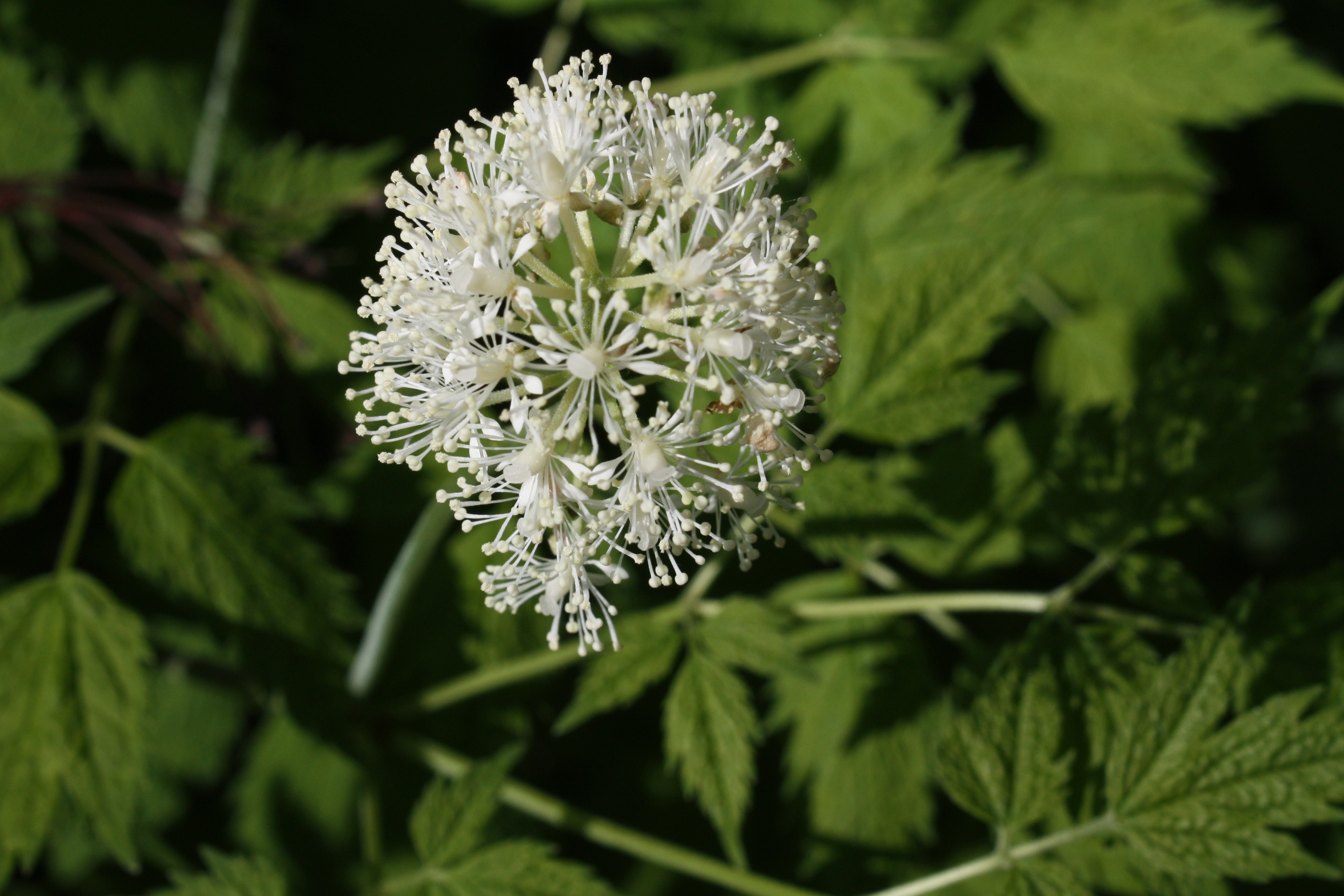
The flowers of red baneberry, Actaea rubra (photo credit: wikimedia commons)

The flowers of red baneberry, Actaea rubra (photo credit: wikimedia commons)

Red baneberry is an herbaceous perennial that emerges in the spring from a basal stem structure called a caudex or from a rhizome, dying back to the ground again in the fall. One or several branching stems reach from 1 to 3 feet high, each with compound leaves consisting of 2-3 leaflets. The leaflets are deeply lobed and coarsely toothed. Several small, white flowers appear in spring to early summer clustered together in an inflorescence called a raceme. The petals are inconspicuous, but the stamens are large and showy. The flowers are said to have a rose-like scent. A variety of insects pollinate the flowers, after which green berries form, turning red or occasionally white by mid to late summer.

The berries of red baneberry, Actaea rubra (photo credit: www.eol.org)

The berries of red baneberry, Actaea rubra (photo credit: www.eol.org)

Red baneberry occurs on diverse soil types and in diverse ecosystems across its expansive native range. It seems to prefer, moist, shady, nutrient rich, acidic sites, and is considered an indicator of such places. It can be found in deciduous, coniferous, and mixed forested areas. Its preference for moist sites means that it can also be found in swamps, along stream banks, and in other riparian areas.

White baneberry has a relatively smaller native range and is found in very similar environments. It also has many of the same features and habits as red baneberry, with the main distinction being its striking white berries formed on prominent, stout, bright red axes and peduncles (the “stems” and “branches” of the racemes). The stigmas are persistent on the berries, forming large black dots on each berry and giving it another common name, doll’s eyes. This is a feature of red baneberry as well, but is much more striking on the white berries.

Baneberry is occasionally browsed by livestock and wildlife including deer, elk, and small mammals. However, it has a low degree of palatability and isn’t very nutritious. Birds, unaffected by their poisonous qualities, eat the berries and are the main seed dispersers of baneberry.

The berries of white baneberry or doll's eyes Actaea pachypoda (photo credit: www.eol.org)

The berries of white baneberry or doll’s eyes, Actaea pachypoda (photo credit: www.eol.org)

The roots and berries are the most poisonous parts of baneberry, however all parts are toxic. The berries are quite bitter, so it is not likely that one would eat enough of them to receive a severe reaction. If ingested, symptoms include stomach cramps, dizziness, vomiting, diarrhea, delirium, and circulatory failure. Eating six or more berries can result in respiratory distress and cardiac arrest. The toxin in the plant has yet to be clearly identified. Protoanemonin is present, as it is in all plants in the buttercup family, but the real toxicity of the plant is probably due to an essential oil or a poisonous glycoside. There have been no reported deaths due to the consumption of red or white baneberry, but a European species of baneberry (A. spicata) has been linked to the death of several children.

Native Americans were aware of baneberry’s toxicity, so rather than use it as a food source, they used it medicinally. Among other things, the root was used as a treatment for menstrual cramps, postpartum pain, and issues related to menopause, and the berry was used to induce vomiting and diarrhea and as a treatment for snakebites. Leaves were chewed and applied to boils and wounds. Two websites I visited claimed that arrowheads were dipped in the juice of the berries to make poison arrows. Neither cited a reference, and in the section on arrow poisons in Wicked Plants, Stewart doesn’t mention baneberry. However, that doesn’t mean it didn’t happen.

What do you fear the most? Batman villian, Bane, or baneberry? (photo credit: Comic Vine)

What do you fear the most? Batman villian, Bane, or baneberry? (photo credit: Comic Vine)

References


Year of Pollination: Pollination Syndromes and Beyond

A discussion of pollination syndromes should begin with the caveat that they are a largely outdated way to categorize plant-pollinator interactions. Still, they are important to be aware of because they have informed so much of our understanding about pollination biology, and they continue to be an impetus for ongoing research. The concept of pollination syndromes exists in part because we are a pattern seeking species, endeavoring to place things in neat little boxes in order to make sense of them. This is relatively easy to do in a hypothetical or controlled environment where the parameters are selected and closely monitored and efforts are made to eliminate noise. However, the real world is considerably more dynamic than a controlled experiment and does not conform to black and white ways of thinking. Patterns are harder to unveil, and it takes great effort to ensure that observed patterns are genuine and not simply imposed by our pattern seeking brains.

That being said, what are pollination syndromes?  Pollination syndromes are sets of floral traits that are thought to attract specific types of pollinators. The floral traits are considered to have evolved in order to appeal to a particular group of pollinators – or in other words, selective pressures led to adaptations resulting in mutualistic relationships between plants and pollinators. Pollination syndromes are examples of convergent evolution because distantly related plant species have developed similar floral traits, presumably due to similar selection pressures. Pollination syndromes were first described by Italian botanist, Federico Delpino, in the last half of the 19th century. Over several decades his rudimentary ideas were fleshed out by other botanists, resulting in the method of categorization described (albeit briefly) below.

Honey bee on bee's friend (Phacelia tanacetifolia)

A honey bee getting friendly with bee’s friend (Phacelia tanacetifolia)

Pollination by bees (melittophily) – Flowers are blue, purple, yellow, or white and usually have nectar guides. Flowers are open and shallow with a landing platform. Some are non-symmetrical and tubular like pea flowers. Nectar is present, and flowers give off a mild (sometimes strong) sweet scent.

Pollination by butterflies (psychophily) – Flowers are pink, purple, red, blue, yellow, or white and often have nectar guides. They are typically large with a wide landing pad. Nectar is inside a long, narrow tube (or spur), and flowers have a sweet scent.

Pollination by hawkmoths and moths (sphingophily and phalaenophily) – Moth pollinated flowers open at night, have no nectar guides, and emit a strong, sweet scent. Flowers pollinated by hawkmoths are often white, cream, or dull violet and are large and tubular with lots of nectar. Those pollinated by other moths are smaller, not as nectar rich, and are white or pale shades of green, yellow, red, purple, or pink.

Pollination by flies (myophily or sapromyophily) – Flowers are shaped like a basin, saucer, or kettle and are brown, brown-red, purple, green, yellow, white, or blue.  Some have patterns of dots and stripes. If nectar is available, it is easily accessible. Their scent is usually putrid. A sapromyophile is an organism that is attracted to carcasses and dung. Flies that fall into this category visit flowers that are very foul smelling, offer no nectar reward, and essentially trick the fly into performing a pollination service.

Pollination by birds (ornithophily) –  Flowers are usually large, tubular, and red, orange, white, blue, or yellow. They are typically without nectar guides and are odorless since birds don’t respond to scent. Nectar is abundant and found at various depths within the flower.

Pollination by bats (chiropterophily) – Flowers are large, tubular or bell shaped, and white or cream colored with no nectar guides. They open at night, have abundant nectar and pollen, and have scents that vary from musty to fruity to foul.

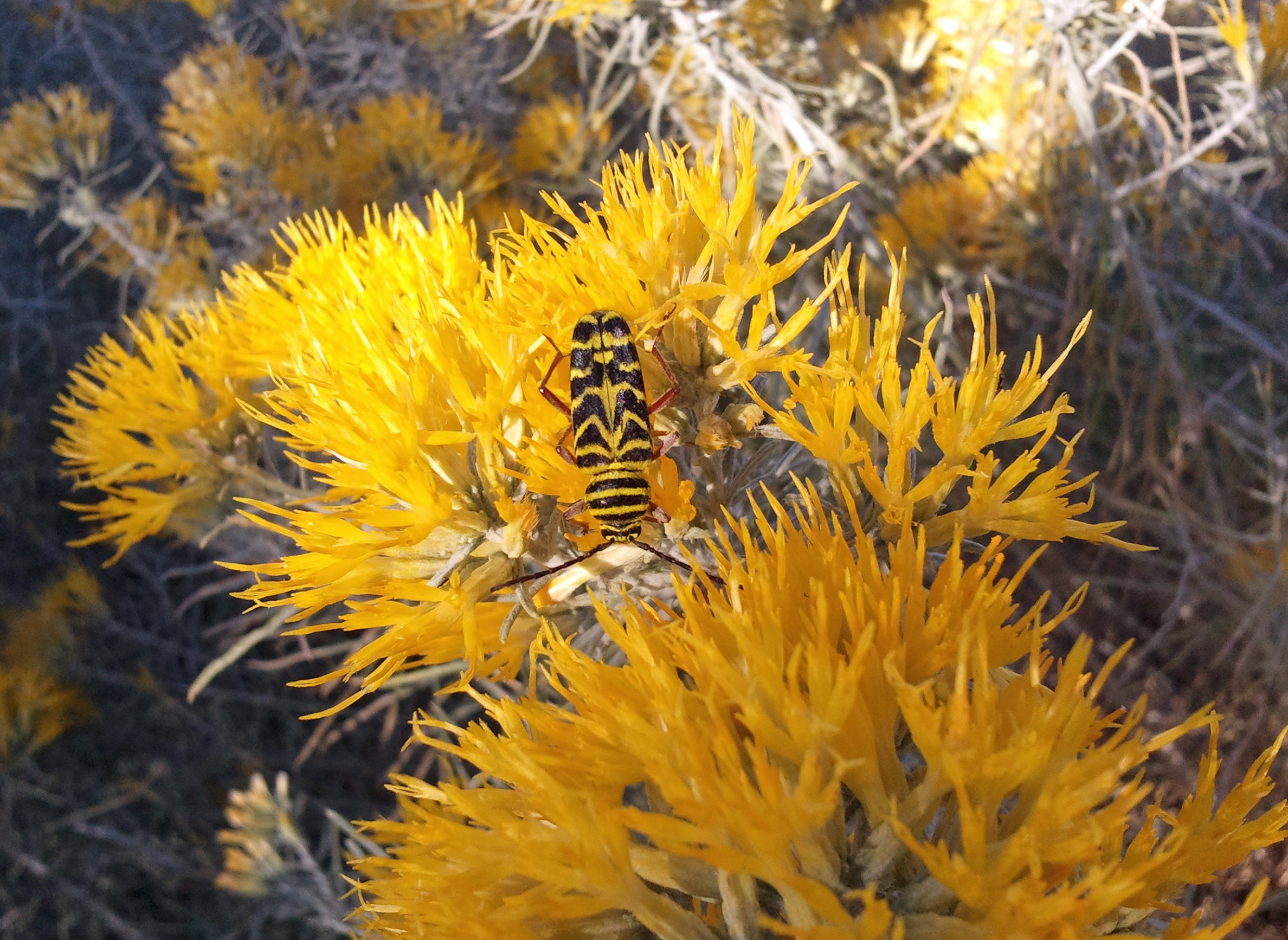
Pollination by beetles (cantharophily) – Flowers are large and bowl shaped and green or white. There are no nectar guides and usually no nectar. The scent is strong and can be fruity, spicy, or putrid. Like flies, some beetles are sapromyophiles.

Locust borer meets rubber rabbitbrush (Ericameria nauseosa)

A locust borer meets rubber rabbitbrush (Ericameria nauseosa)

In addition to biotic pollination syndromes, there are two abiotic pollination syndromes:

Pollination by wind (anemophily) – Flowers are miniscule and brown or green. They produce abundant pollen but no nectar or odor. The pollen grains are very small, and the stigmas protrude from the flower in order to capture the windborne pollen.

Pollination by water (hydrophily) –  Most aquatic plants are insect-pollinated, but some have tiny flowers that release their pollen into the water, which is picked up by the stigmas of flowers in a similar manner to plants with windborne pollen.

This is, of course, a quick look at the major pollination syndromes. More complete descriptions can be found elsewhere, and they will differ slightly depending on the source. It’s probably obvious just by reading a brief overview that there is some overlap in the floral traits and that, for example, a flower being visited by a bee could also be visited by a butterfly or a bird. Such an observation explains, in part, why this method of categorizing plant-pollinator interactions has fallen out of favor. Studies have been demonstrating that this is not a reliable method of predicting which species of pollinators will pollinate certain flowers. A close observation of floral visitors also reveals insects that visit flowers to obtain nectar, pollen, and other items, but do not assist in pollination. These are called robbers. On the other hand, a plant species may receive some floral visitors that are considerably more effective and reliable pollinators than others. What is a plant to do?

Pollination syndromes imply specialization, however field observations reveal that specialization is quite rare, and that most flowering plants are generalists, employing all available pollinators in assisting them in their reproduction efforts. This is smart, considering that populations of pollinators fluctuate from year to year, so if a plant species is relying on a particular pollinator (or taxonomic group of pollinators) to aid in its reproduction, it may find itself out of luck. Considering that a flower may receive many types of visitors on even a semi-regular basis suggests that the selective pressures on floral traits may not solely include the most efficient pollinators, but could also include all other pollinating visitors and, yes, even robbers. This is an area where much more research is needed, and questions like this are a reason why pollination biology is a vibrant and robust field of research.

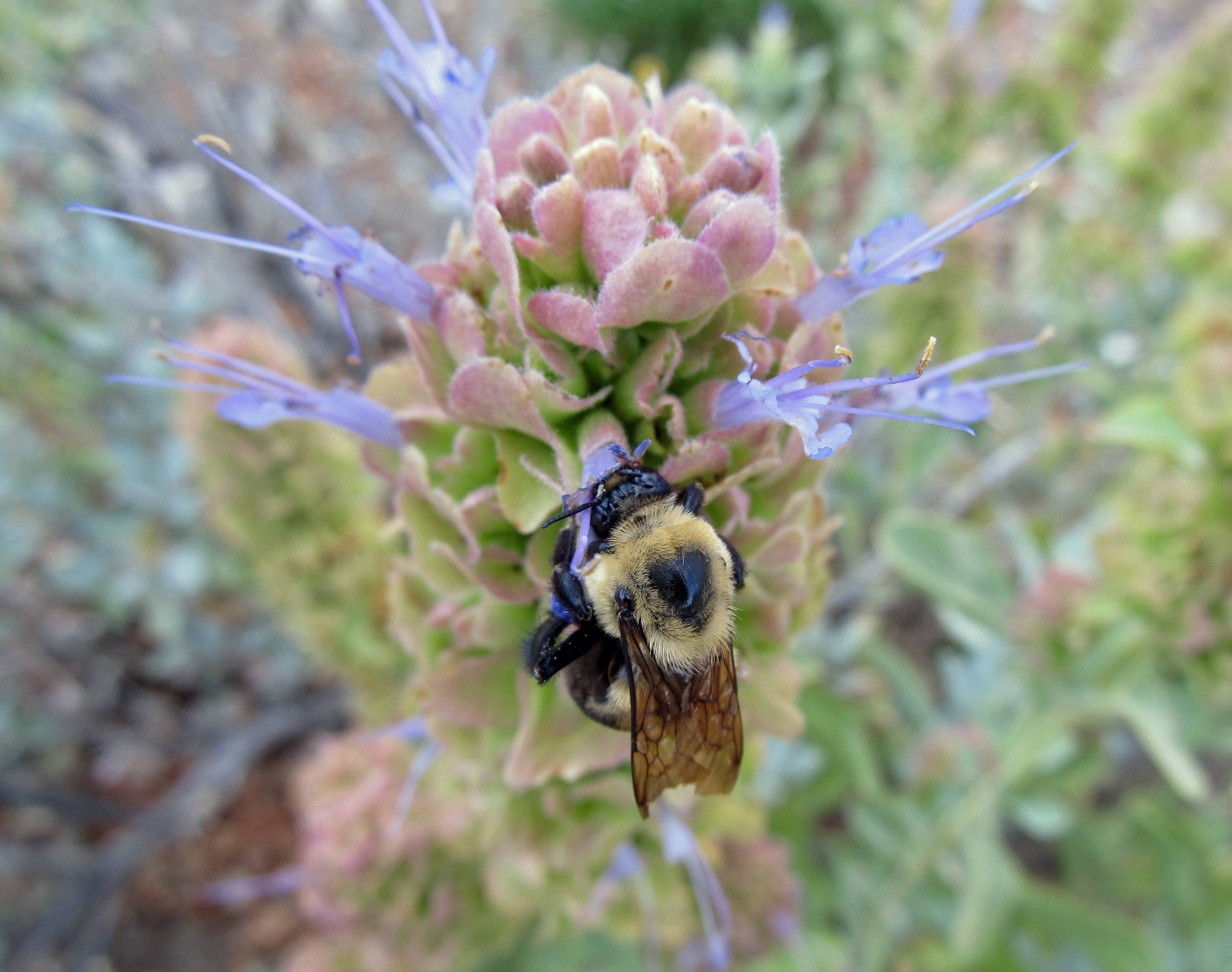
A bumble bee hugs Mojave sage (Salvia pachyphylla)

A bumble bee hugs the flower of a blue sage (Salvia pachyphylla)

Interactions between plants and pollinators is something that interests me greatly. Questions regarding specialization and generalization are an important part of these interactions. To help satiate my curiosity, I will be reading through a book put out a few years ago by the University of Chicago Press entitled, Plant-Pollinator Interactions: From Specialization to Generalization, edited by Nickolas M. Waser and Jeff Ollerton. You can expect future posts on this subject as I read through the book. To pique your interest, here is a short excerpt from Waser’s introductory chapter:

Much of pollination biology over the past few centuries logically focused on a single plant or pollinator species and its mutualistic partners, whereas a focus at the level of entire communities was uncommon. Recently we see a revival of community studies, encouraged largely by new tools borrowed from the theory of food webs that allow us to characterize and analyze the resulting patterns. For example, pollination networks show asymmetry – most specialist insects visit generalist plants, and most specialist plants are visited by generalist insects. This is a striking departure from the traditional implication of coevolved specialists!

References:

How Pitcher Plants Eat Bugs (Frog Optional)

SAMSUNG

A few months ago at work I captured this photo of a frog inside of a pitcher plant. Do you see it? It is pretty well camouflaged and poking its head out just enough to intercept curious insects lured in by the promise of nectar, eating them before they can make their way into the tube. Either way, approaching insects are about to meet their fate. Whether by plant or by frog, they are destined to be consumed lest they turn away in time.

This frog was hiding inside the modified leaf of a species of Sarracenia, a carnivorous plant commonly known as a North American pitcher plant. There are at least eight species of Sarracenia, all of which naturally occur in the southeastern region of the United States. One species, Sarracenia purpurea, also occurs in the northeast, the upper Midwest, and throughout much of Canada. Sarracenia is in the family Sarraceniaceae along with two other genera of pitcher plants, Darlingtonia (the cobra plant, native to northern California and southern Oregon) and Heliamphora (the sun pitchers, native to South America). Plants in this family are not to be confused with the distantly related tropical pitcher plants which are in the genus Nepenthes (family Nepentheaceae).

The natural habitats of Sarracenia are sunny, open areas that remain permanently wet, including meadows, savannahs, fens, and swamps. The soils are acidic, nutrient poor, and typically composed of sandy peat commonly derived from sphagnum moss. In the southeast, less than 5% of the original (pre-European settlement) Sarracenia habitat remains, threatening its survival in the wild. Sarracenia oreophila (green pitcher plant) is currently listed as critically endangered on the IUCN Red List.

Flowering occurs in the spring, usually before pitchers form. Individual flowers are formed on tall stalks that rise straight up and then bend at the very top, hanging the flower upside down. Early flowering and tall flower stalks help prevent pollinating insects from being consumed by the plant. In his book The Savage Garden, Peter D’Amato describes the flowers as “showy, brilliant, and very unusual – a wonderful bonus to an already handsome class of foliage plants.” The flowers are either yellow or a shade of red and last about two weeks, after which the petals drop and a seed pod forms. Seeds are released from the fruits in the fall.

Flower of Sarracenia rubra (sweet pitcherplant) - photo credit: www.eol.org

Flower of Sarracenia rubra (sweet pitcher plant) – photo credit: www.eol.org

D’Amato writes that Sarracenia are among the “most ravenous” plants, with each leaf having the potential of trapping “thousands of nasty insects.” In some cases pitchers even flop over, heavy with the weight of bugs inside them. The specifics of capturing and killing insects varies between species of Sarracenia, but in general prey is lured to the opening of the pitcher with a combination of nectar, scent, and color. Upon entering the tube, gravity, waxy surfaces, drugs, and hairs force the captives downward where they are eventually consumed by enzymes and microbes. Digested insects provide the plant with nutrients necessary for growth – nutrients that otherwise are taken up by the roots of plants that occur in more nutrient rich soils.

Sarracenia purpurea (purple pitcher plant) is unique in that its pitchers lack a “hood” or “lid” – a standard feature of other species of Sarracenia that helps keep rain from entering the pitchers. Instead, the pitchers fill with water and insects are killed by drowning. The most brutal killer is probably Sarracenia psittacina (parrot pitcher plant) which has an additional opening inside of its pitcher. The opening is small and difficult to find again once an insect is on the wrong side of it. The inside walls of the pitcher are covered in long, sharp, downward pointing hairs, and the struggling insect is pierced repeatedly by the hairs as it makes its way to the bottom of the tube to be digested.

Hoodless pitchers of Sarracenia purpurea (photo credit: www.eol.org)

Hoodless pitchers of Sarracenia purpurea (photo credit: www.eol.org)

Hooded pitchers of Sarracenia leucophylla (photo credit: www.eol.org)

Hooded pitchers of Sarracenia leucophylla (photo credit: www.eol.org)

According to D’Amato, “the Sarracenia are one of the simplest carnivorous plants to grow, and certainly among the most fun and rewarding.” Learn more about growing North American pitcher plants by consulting D’Amato’s book and/or by visiting the website of the International Carnivorous Plant Society.

Want to learn more about Sarracenia? The Plants are Cool, Too! web series has a great video about them:

Other carnivorous plant posts:

Year of Pollination: The Anatomy of a Bee

A greater appreciation for pollinators can be had by learning to identify them – being able to tell one from another and calling them by name. Anyone can tell a butterfly from a bee, but how about telling a sweat bee from a leafcutter bee? Or one species of sweat bee from another species of sweat bee? That takes more training. This is where knowing the parts of a bee becomes important.

I am new to learning the names of pollinators. I’ve been learning the names of plants for many years now (and I still have a long way to go), but my knowledge of insect identification is largely limited to one entomology course I took in college and the occasional reading about insects in books and magazines. So, this post is just as much for me as it is for anybody else. It also explains why it is brief and basic. It’s for beginners.

This first illustration is found in the book Pollinators of Native Plants by Heather Holm. The book starts with brief overviews of pollination, pollinators, and pollinator conservation, but then spends nearly 200 pages profiling specific plants and describing the particular species of pollinating insects that visit them. The photos of the insects are great and should be very useful in helping to identify pollinators.

bee anatomy_pollinators of native plants book

This next illustration is from the book California Bees and Blooms by Gordon W. Frankie, et al. The title is a bit deceptive because much of what is found in this book is just as applicable to people outside of California as it is to people within. There is some discussion about plants and pollinators specific to California and the western states, but there is also a lot of great information about bees, flowers, and pollination in general, including some great advice on learning to identify bees. The book includes this basic diagram, but it also provides several other more detailed illustrations that help further describe things like mouth parts, wings, and legs.

bee anatomy_california bees and blooms book

As part of their discussion on identifying bees, the authors of California Bees and Blooms offer these encouraging and helpful words to beginners like me: “Even trained taxonomists must examine most bees under a microscope to identify them to species level, but knowing the characteristics to look for can give you a pretty good idea of the major groups and families of bees that are visiting your garden. These include size, color, and features of the head, thorax, wings, and abdomen.”

If you would like to know more about the pollinators found in your region, including their names, life history, and the plants they visit, books like the aforementioned are a good start. Also, find yourself a copy of a field guide for the insects in your area and a good hand lens. Then spend some time outside closely and quietly observing the busy lives of the tiny things around you. I plan to do more of this sort of thing, and I am excited see what I might find. Let me know what you find.

Here are a few online resources for learning more about bee anatomy and bee identification:

Other “Year of Pollination” Posts:

Plants Use Mycorrhizal Fungi to Warn Each Other of Incoming Threats

The March 2015 issue of New Phytologist is a Special Issue focusing on the “ecology and evolution of mycorrhizas.” This is the second of two articles from that issue that I am reviewing. Read the first review here.

Interplant signalling through hyphal networks by David Johnson and Lucy Gilbert

When an individual plant is attacked by an insect or fungal pest, it can warn neighboring plants – prompting them to produce compounds that either repel the pests or attract beneficial organisms that can fight off the pests. There are two main pathways for a plant to send these communications: through the air by way of volatile organic compounds (VOC’s) or through the soil by way of a vast collection of fungal hyphae called mycelium. Plant communication by aerial release of VOC’s has been well documented; communication via mycelium, however, is a fairly recent discovery, and there is much left to learn.

“The length of hyphae in the soil and the ability of mycorrhizal fungi to form multiple points of entry into roots can lead to the formation of a common mycelial network (CMN) that interconnects two or more plants.” These CMN’s are known to play “key roles in facilitating nutrient transport and redistribution.” We now understand that they can also “facilitate defense against insect herbivores and foliar necrotophic fungi by acting as conduits for interplant signaling.” The purpose of this research is to explore the “mechanisms, evolutionary consequences, and circumstances” surrounding the evolution of this process and to “highlight key gaps in our understanding.”

interplant signaling

An illustration of plant communication (aka interplant signaling) by air and by soil form the article in New Phytologist.

If plants are communicating via CMN’s, how are they doing it? The authors propose three potential mechanisms. The first is by signal molecules being transported “in liquid films on the external surface of hyphae via capillary action or microbes.” They determine that this form of communication would be easily disrupted by soil particles and isn’t likely to occur over long distances. The second mechanism is by molecules being transported within hyphae, passing from cell to cell until they reach their destination. The third mechanism involves an electrical signal induced by wounding.

If signal molecules are involved in the process, what molecules are they? There are some molecules already known to be transported by fungal hyphae (lipids, phosphate transporters, and amino acids) and there are also compounds known to be involved in signaling between plants and mycorrhizal fungi. Exploring these further would be a good place to start. We also need to determine if specific insect and fungal pests or certain types of plant damage result in unique signaling compounds.

It has been established that electrical signals can be produced in response to plant damage. These signals are a result of a process known as membrane depolarization. “A key advantage of electrical-induced defense over mobile chemical is the speed of delivery.” Movement of a molecule through cells occurs significantly slower than an electrical charge, which is important if the distance to transport the message is relatively far and the plant needs to respond quickly to an invasion. Various aspects of fungal physiology and activity have been shown to be driven in part by membrane depolarization, so involving it in interplant signaling isn’t too far-fetched.

photo credit: wikimedia commons

photo credit: wikimedia commons

How and why does a system of interplant communication involving mycorrhizal fungi evolve? And what are the costs and benefits to the plants and fungi involved? Determining costs and benefits will depend largely on further establishing the signaling mechanisms. Exploring real world systems will also help us answer these questions. For example, in a stable environment such as a managed grassland where CMNs are well developed, a significant loss of plants to a pest or disease could be devastating for the mycorrhizal community, so “transferring warning signals” would be highly beneficial. Conversely, in an unstable environment where a CMN is less established, assisting in interplant signaling may be less of an imperative. Regarding questions concerning the degree of specialization involved in herbivore-plant-fungal interactions: if a “generic herbivore signal” is sent to a neighboring plant that is not typically affected by the attacking herbivore, the cost to the plant in putting up its defenses and to the fungus in transporting the message is high and unnecessary. So, in an environment where there are many different plant species, species-specific signals may be selected for over time; in areas where there are few plant species, a generic signal would suffice.

As research continues, the mysteries of “defense-related” interplant communication via CMN’s will be revealed. Field studies are particularly important because they can paint a more accurate picture compared to “highly simplified laboratory conditions.” One exciting thing about this type of communication is that it may mean that some plants are communicating with each other across great distances, since “some species of fungi can be vast.” CMNs can also target specific plants, and compared to communication via aerial VOC’s, the signal will not be diluted by the wind.

Since I am in the process of reading Robin Wall Kimmerer’s book, Braiding Sweetgrass, I have decided to include her description of a tree-mycorrhizal fungi relationship:

The trees in a forest are often interconnected by subterranean networks of mycorrhizae, fungal strands that inhabit tree roots. The mycorrhizal symbiosis enables the fungi to forage for mineral nutrients in the soil and deliver them to the tree in exchange for carbohydrates. The mycorrhizae may form fungal bridges between individual trees, so that all the trees in a forest are connected. These fungal networks appear to redistribute the wealth of carbohydrates from tree to tree. A kind of Robin Hood, they take from the rich and give to the poor so that all the trees arrive at the same carbon surplus at the same time. They weave a web of reciprocity, of giving and taking. In this way, the trees all act as one because the fungi have connected them. Through unity, survival. All flourishing is mutual.

Using Plant Root and Mycorrhizal Fungal Traits to Predict Soil Structure

The March 2015 issue of New Phytologist is a Special Issue exploring the “ecology and evolution of mycorrhizas.” A mycorrhiza is a symbiotic association between a fungus and the roots of a plant. The introductory editorial of this special issue asserts that “almost all land plant species form a symbiosis with mycorrhizal fungi.” Generally, the association benefits both plant and fungus. The plant gains greater access to water and mineral nutrients by the way of fungal hyphae, and the fungus recieves carbohydrates (glucose and sucrose) that have been synthesized in the leaves of the plant and transported down into its roots. We have been aware of this relationship since at least the middle of the 19th century, but recent advances in technology have given us new insight into just how extensive and important it is . “Plants cannot be considered as isolated individuals anymore, but as metaorganisms or holobionts encompassing an active microbial community re-programming host physiology.”

However, there are still “critical gaps” in our understanding of mycorrhizas, hence the special issue of New Phytologist. In this issue they endeavor to address the following questions: “How is the balance of mutualism maintained between plants and fungi? What is the role of mycorrhizal fungi in the soil ecosystem? What controls fungal community composition, and how is diversity maintained?” There is so much more to learn, but the research presented in this issue has us moving in the right direction. If you are interested in this sort of thing, I encourage you to check out the entire issue. I have picked out just 2 of the 32 articles to present here – one this week and the other next week.

photo credit: wikimedia commons

photo credit: wikimedia commons

Plant root and mycorrhizal fungal traits for understanding soil aggregation by Matthias C. Rillig, Carlos A. Aguilar-Trigueros, Joana Bergmann, Erik Verbruggen, Stavros D. Veresoglou, and Anika Lehmann

Soil structure is determined by the size, shape, and extent of soil aggregates and the resulting pore spaces found between them. The arrangement of soil aggregates and pore spaces helps determine the availability and movement of water and air and also has an influence on the growth and movement of micro- and macroorganisims, including fungi, plant roots, bacteria, and arthropods. The authors state that “soil aggregation is important for root growth and for a wide range of soil features and ecosystem process rates, such as carbon storage and resistance to erosion.”

Soil aggregates are composed mainly of clay particles, organic matter (including plant roots), organic compounds (produced by bacteria and fungi), and fungal hyphae. There has been plenty of research on soil aggregation, but much of it is focused on management practices and physical chemical factors. Less is known about the contribution of plant roots and mycorrhizal fungi to the formation and stabilization of soil aggregates. We know they play a role, but we lack understanding about the extent to which soil aggregation can be predicted not just by abiotic factors but also by the presence of plants and mycorrhizal fungi. The authors of this paper propose a widespread, trait-based approach to researching this topic, recognizing that “summarizing ecological characteristics of species by means of traits has become an essential tool in plant ecology.”

Possible traits to be considered were grouped into two categories: formation-related traits and stabilization-related traits. Formation refers to “the initial binding together of particles” to form an aggregate. Stabilization is a process in which aggregates are “increasingly resistant to the application of disintegrating forces, such as water penetrating into pores.” These two processes (along with disintegration) are occurring simultaneously in virtually all soils, but they “may be executed by different organisms expressing different traits.” Some of the formation traits include length, extension ability, and relative growth of roots and hyphae; root and hyphae exudate quality and quantity; and the “ability of roots or hyphae to bring soil particles together by moving them, leading to potential aggregation.” Stabilization traits include tensile strength, density, and “entangling ability” of roots and hyphae; water repellency of the aggregates and cementation capability of the exudates; and the life span, palatability, and repair capacity of roots and hyphae.

photo credit: wikimedia commons

photo credit: wikimedia commons

The amount of time and effort it will take to measure the traits of each and every plant and mycorrhizal fungi species and to determine the extent to which those traits contribute to soil aggregation will be considerable. The authors acknowledge that “some of these traits will be relatively easy to measure,” while “others will be quite challenging.” However, as technologies advance, the mysterious world under our feet should become easier to explore. As the traits of each species of plant and fungi are measured, a database can be constructed and eventually used to determine the plant/fungi combinations that are the best fits for restoring and conserving the soils of specific regions.

Ultimately, this research may help us answer various questions, including whether or not we can use a survey of plant and mycorrhizal fungi (along with soil type, climate, and management) to predict soil aggregation. Ecosytem restoration efforts may also benefit if we are able to produce “tailor-made mycorrhizal fungi inocula and seed mixes” in order to “enhance soil aggregation.” Better understanding of these traits could also be applied to sustainable agriculture in areas such as crop breeding and cover crop selection. This research is in the hypothesis phase right now, and “only controlled experiments employing a range of plant and fungal species” can reveal the role that certain plant root and mycorrhizal fungal traits play in soil aggregation as well as the full range of applications that this information might have.

Speaking of soil, did you know that the 68th United Nations General Assembly declared 2015 the International Year of Soils? The purpose of this declaration is to “increase awareness and understanding of the importance of soil for food security and essential ecosystem functions.” You can read a list of “specific objectives” on their About page.

Year of Pollination: Hellstrip Pollinator Garden

This month I have been reading and reviewing Evelyn Hadden’s book, Hellstrip Gardening, and I have arrived at the fourth and final section, “Curbside-Worthy Plants.” As the title suggests, this section is a list of plants that Hadden has deemed worthy of appearing in a curbside garden. It’s not exhaustive, of course, but with over 100 plants, it’s a great start. Photos and short descriptions accompany each plant name, and the plants are organized into four groups: showy flowers, showy foliage, culinary and medicinal use, and four-season structure.

This list is useful and fun to read through, but there isn’t much more to say about it beyond that. So I have decided to write this month’s Year of Pollination post about creating a hellstrip pollinator garden using some of the plants on Hadden’s list. Last year around this time I wrote about planting for pollinators where I listed some basic tips for creating a pollinator garden in your yard. It’s a fairly simple endeavor – choose a sunny location, plant a variety of flowering plants that bloom throughout the season, and provide nesting sites and a water source. If this sounds like something you would like to do with your hellstrip, consider planting some of the following plants.

Spring Flowers

Spring flowering plants are an important food source for pollinators as they emerge from hibernation and prepare to reproduce. There are several spring flowering trees and shrubs on Hadden’s list. Here are three of them:

  • Amelanchier laevis (Allegheny serviceberry) – A multi-trunked tree or large shrub that flowers early in the spring. Other small trees or shrubs in the genus Amelanchier may also be suitable.
  • Cercis canadensis (eastern redbud) – A small tree that is covered in tiny, vibrant, purple-pink flowers in early spring.
  • Ribes odoratum (clove currant) – A medium sized shrub that flowers in late spring. Try other species of Ribes as well, including one of my favorites, Ribes cereum (wax currant).

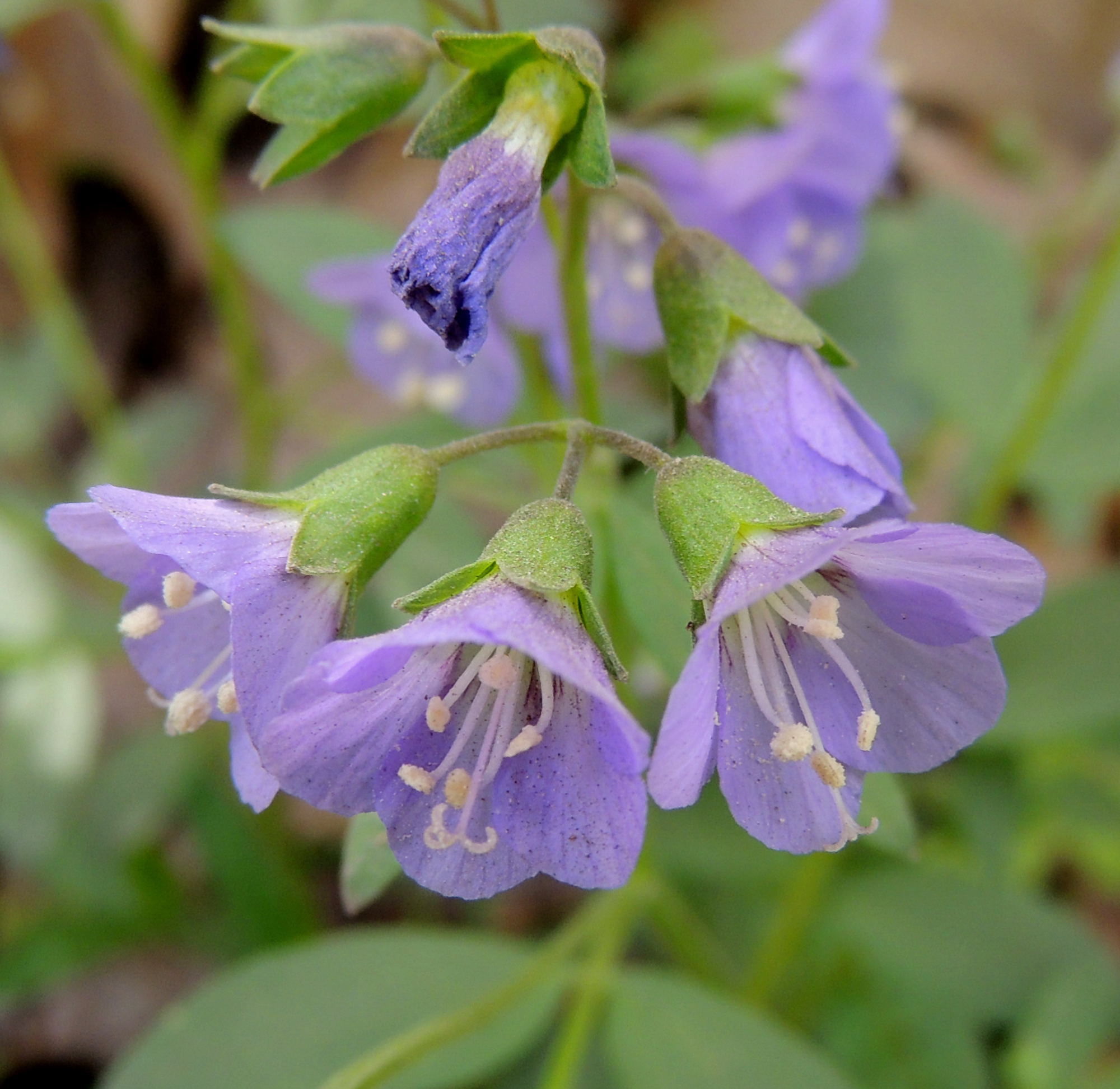
There aren’t many spring flowering herbaceous plants on Hadden’s list, but two that stood out to me are Amsonia hubrichtii (bluestar) and Polemonium reptans (creeping Jacob’s ladder).

Creeping Jacob's ladder (Polemonium reptens) is native to eastern North America and attracts native bees with its mid-spring flowers. (photo credit: www.eol.org)

Creeping Jacob’s ladder (Polemonium reptens) is native to eastern North America and attracts native bees with its mid-spring flowers. (photo credit: www.eol.org)

Summer Flowers

There is no shortage of summer flowering plants, and Hadden’s list reflects that. When planting a pollinator garden, be sure to include flowers of different shapes, sizes, and colors in order to attract the greatest diversity of pollinators. Here are a few of my favorite summer flowering plants from Hadden’s list:

  • Amorpha canescens (leadplant) – A “good bee plant” and also a nitrogen fixer.
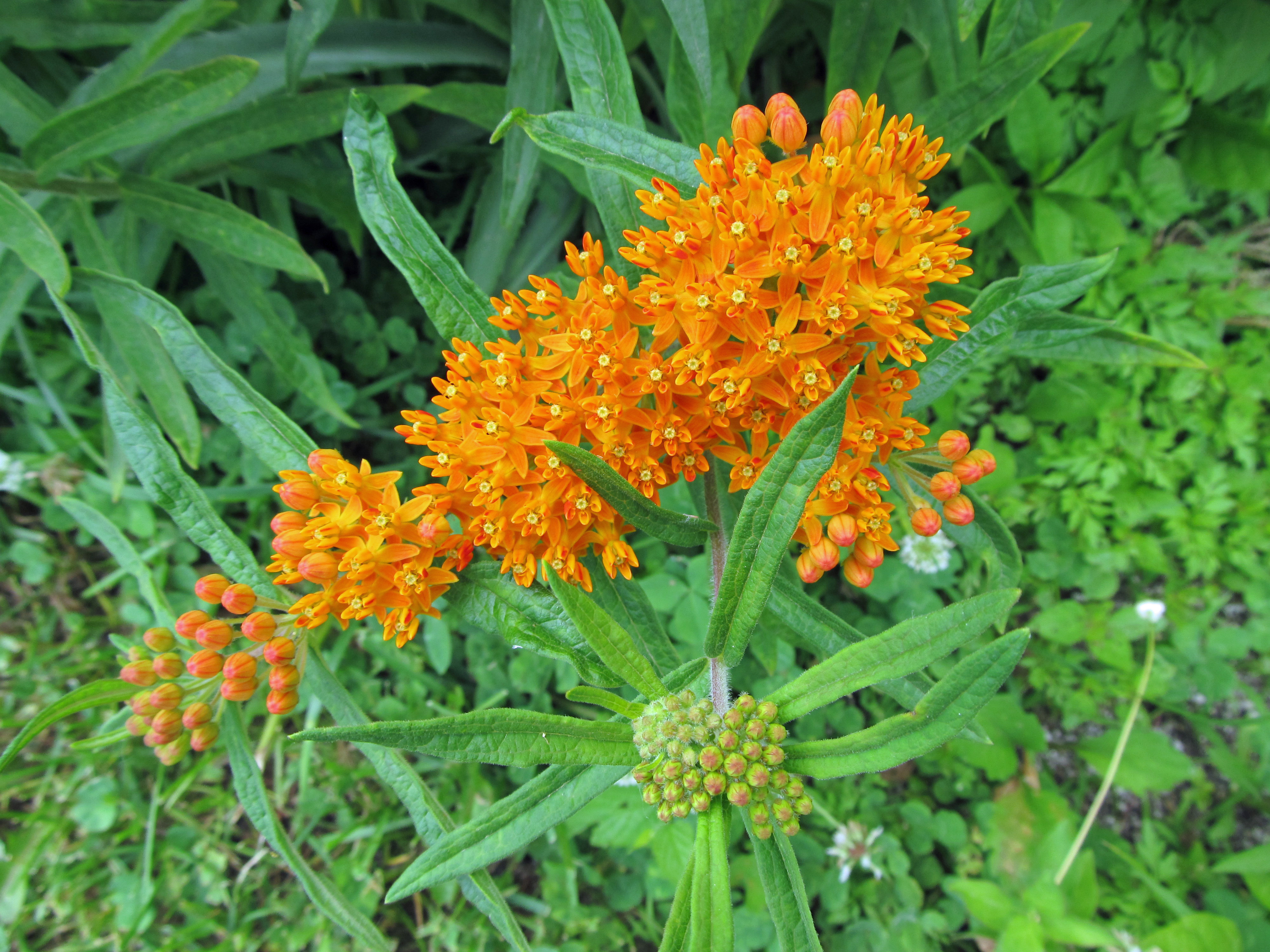
  • Asclepias tuberosa (butterfly weed) – “Valuable pollinator plant and larval host for monarch, gray hairstreak, and queen butterflies.” I love the tight clusters of deep orange flowers on this plant.
  • Coreopsis verticillata (threadleaf coreopsis) – I really like coreopsis (also known as tickseed). Try other species in the genus as well.
  • Penstemon pinifolius (pineleaf penstemon) – North America is bursting with penstemon species, especially the western states. All are great pollinator plants. Pineleaf penstemon is widely available and great for attracting hummingbirds.
  • Salvia pachyphylla (Mojave sage) – A very drought-tolerant plant with beautiful pink to purple to blue inflorescences. Salvia is another genus with lots of species to choose from.
  • Scutellaria suffratescens  (cherry skullcap) – A good ground cover plant with red-pink flowers that occur from late spring into the fall.
The flowers of butterfly weed (Asclepias tuberosa). Milkweed species (Asclepias spp.) are essential to monarch butterflies as they are the sole host plant of their larvae.

The flowers of butterfly weed (Asclepias tuberosa). Milkweed species (Asclepias spp.) are essential to the survival of monarch butterflies as they are the sole host plant of their larvae.

Fall Flowers

Fall flowering plants are essential to pollinators as they prepare to migrate and/or hibernate. Many of the plants on Hadden’s list start flowering in the summer and continue into the fall. A few are late summer/fall bloomers. Here are some of my favorites:

  • Epilobium canum (California fuchsia) – “Profuse orange-red tubular flowers late summer into fall furnish late-season nectar, fueling hummingbird migration.”
  • Liatris punctata (dotted blazing star) – Drought-tolerant plant with tall spikes of purple-pink flowers. “Nectar fuels migrating monarchs.”
  • Symphyotrichum oblongifolium (aromatic aster) – Loaded with lavender-blue flowers in the fall. It’s a spreading plant, so prune it back to keep it in check. Hadden recommends it for sloped beds.
  • Agastache rupestris (sunset hyssop) – Spikes of “small tubular flowers in sunset hues attract hummingbirds, butterflies, and bees midsummer to fall.” Try other species in the Agastache genus as well.
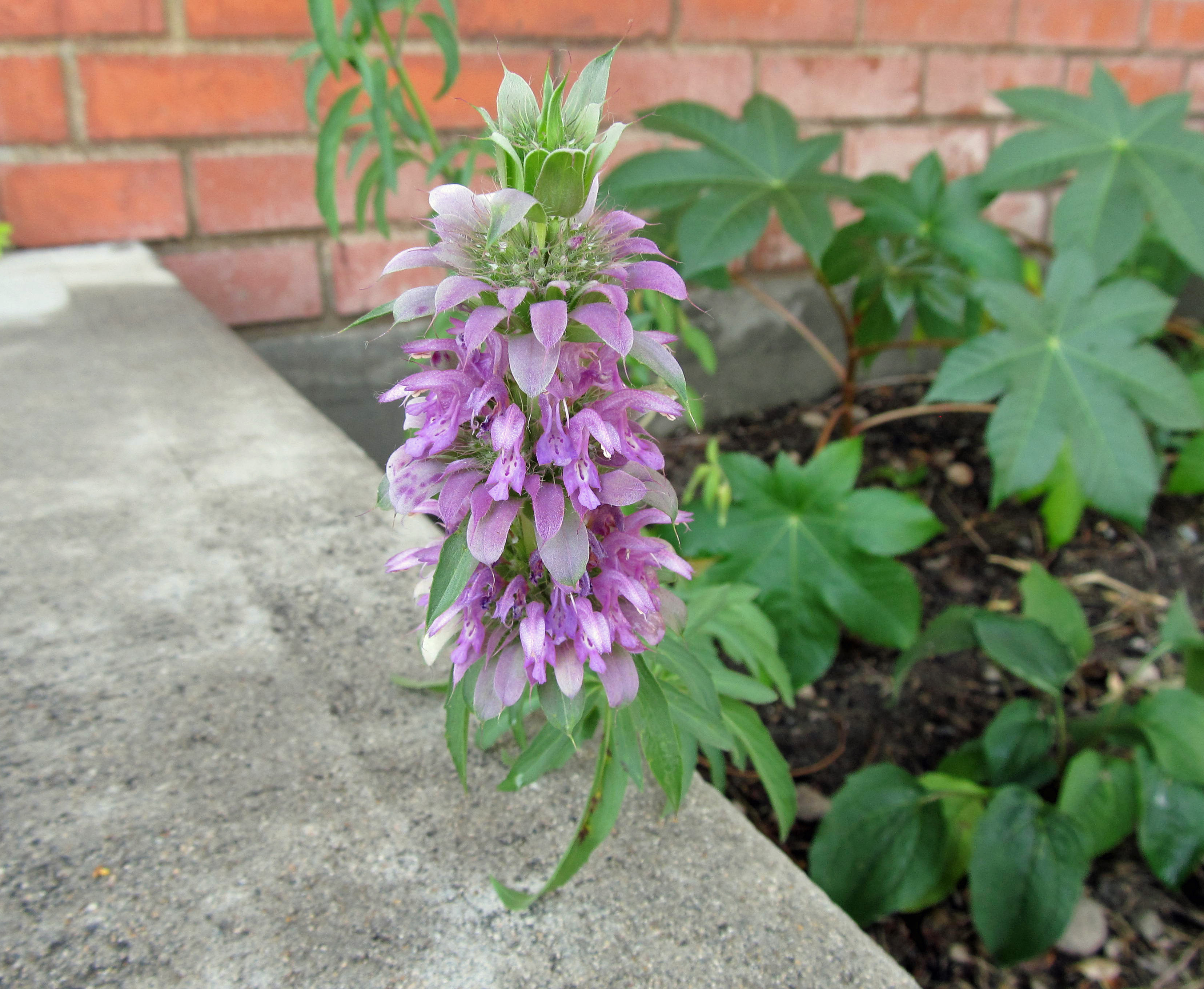
  • Monarda fistulosa (wild bergamot) – The unique flower heads are like magnets to a wide variety of pollinators. Also consider other Monarda species.
Lemon beebalm (Monarda citriodora), an annual plant that attracts an array of pollinators.

Lemon beebalm (Monarda citriodora), an annual plant that attracts an array of pollinators.

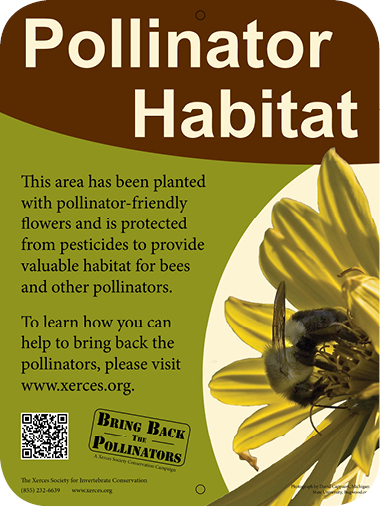
As with any other garden, your hardiness zone, soil conditions, water availability, and other environmental factors must be considered when selecting plants for your hellstrip pollinator garden. Groups like Pollinator Partnership and The Xerces Society have guides that will help you select pollinator friendly plants that are suitable for your region. Additionally, two plans for “boulevard pollinator gardens” complete with plant lists are included in the book Pollinators of Native Plants by Heather Holm – one plan is for sunny and dry spots and the other is for shady and wet spots (pgs. 268-269). Once your pollinator garden is complete, consider getting it certified as a pollinator friendly habitat. There are various organizations that do this, such as the Environmental Education Alliance of Georgia. If you are interested in such a thing, the public nature of your hellstrip garden makes it an ideal place to install a sign (like the one sold in The Xerces Society store) announcing your pollinator garden and educating passersby about the importance of pollinator conservation.

habsign

Other “Year of Pollination” Posts

Year of Pollination: Dung Moss

Last year I wrote about two groups of plants that emit foul odors when they bloom: corpse flowers and carrion flowers. Their scent is akin to the smell of rotting flesh, hence their common names. The purpose of this repugnant act is to attract a specific group of pollinators: flies, carrion beetles, and other insects that are attracted to gross things. Though this particular strategy is rare, these aren’t the only plants that have evolved to produce stinky smells in order to recruit such insects to aid in their reproductive processes. For one, there is a very unique group of mosses that do this, commonly known as dung mosses. Judging from the name, you can probably imagine what their smell must be like. However, their common name doesn’t just describe their scent, but also where they live.

At least three genera (SplachnumTetraplodon, and Tayloria) in the family Splachnaceae include species that go by the common name, dung moss. All Splachnum and Tetraplodon species and many species in the genus Tayloria are entomophilous. Entomophily is a “pollination syndrome”, a subject we will explore more thoroughly in future posts, in which pollen or spores are distributed by insects. Compare this to anemophily, or wind pollination, which is the more common way that moss spores are distributed. In fact, dung mosses are the only mosses known to exhibit entomophily.

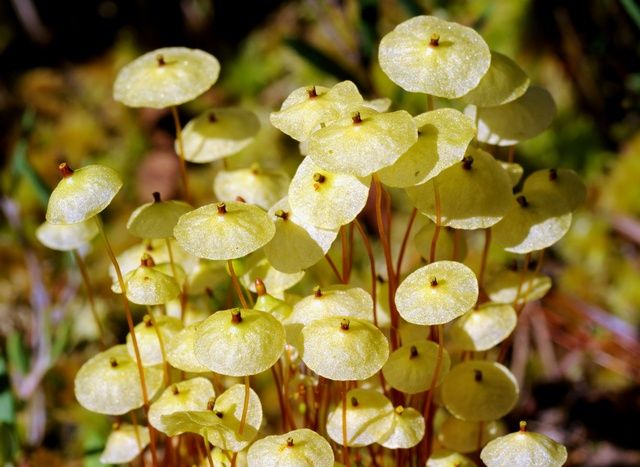
Dung Moss (photo credit: wikimedia commons)

Dung Moss (photo credit: wikimedia commons)

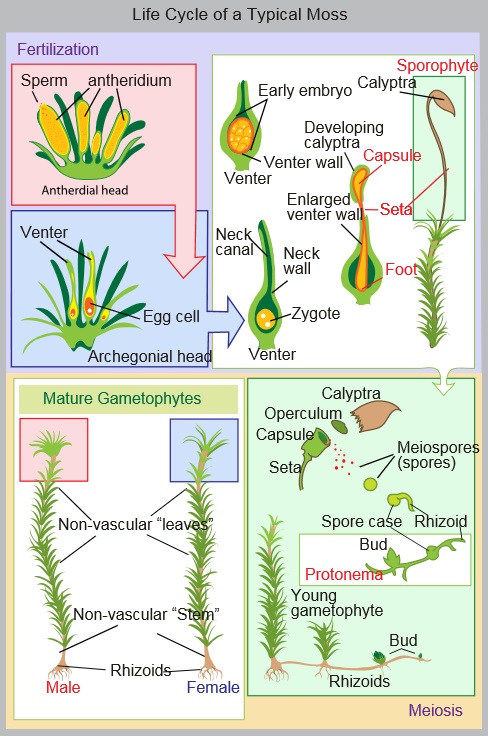
Before we go too much further, it’s probably important to have a basic understanding of how mosses differ from other plants. Mosses are in a group of non-vascular and non-flowering plants called bryophytes. Vascular tissues are the means by which water and nutrients are transported to and from different plant parts. Lacking vascular tissues, water and nutrients are simply absorbed by the leaves of bryophytes (although some species have structures akin to vascular tissue), which is why they typically grow low to the ground and in moist environments. Bryophytes also lack true roots and instead have rhizoids, threadlike structures that anchor the plants to the ground or to some other substrate (such as dung).

Another major distinction between bryophytes and other plants is that bryophytes spend most of their life cycle as a haploid gametophyte rather than a diploid sporophyte (haploid meaning that it only has one set of chromosomes; diploid meaning that there are two sets of chromosomes, one from the father and one from the mother). In most plants, the haploid gametophyte is a sperm (pollen) or an egg. In bryophytes, the familiar green, leafy structure is actually the gametophyte. The gametophyte houses sperm and egg cells, and when the egg is fertilized by sperm it forms a zygote that develops into the sporophyte structure which extends above the leafy gametophyte. A capsule at the top of the sporophyte contains spores which are eventually released and, upon finding themselves on a suitable substrate in a hospitable environment, germinate to produce new plants. The spore then is comparable to a seed in vascular, seed-bearing plants.

photo credit: wikimedia commons

photo credit: wikimedia commons

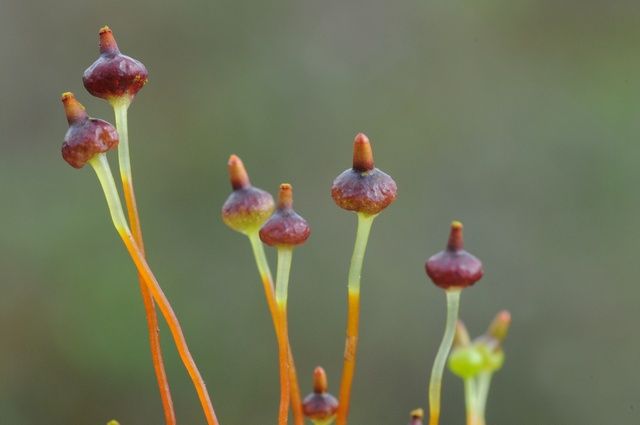
As stated earlier, the spores of most mosses are distributed by wind. Dung mosses, on the other hand, employ flies in the distribution of their spores. They attract the flies by emitting scents that only flies can love from an area on the capsule of the sporophyte called the apophysis. This area is often enlarged and brightly colored in yellow, magenta, or red, giving it a flower-like appearance which acts as a visual attractant. The smells emitted vary depending on the type of substrate a particular species of dung moss has become adapted to living on. Some dung mosses grow on the dung of herbivores and others on the dung of carnivores. Some even prefer the dung of a particular group of animals; for example, a population of Tetraplodon fuegiensis was found to be restricted to the feces and remains of foxes. However, dung is not the only material that dung mosses call home.  Certain species grow on carrion, skeletal remains, or antlers. The smells these species produce attract flies that prefer dead flesh and bone in various states of decay.

Yellow Moosedung Moss (Splachnum luteum) has one of the largest and showiest sporophytes. (photo credit: www.eol.org)

Yellow Moosedung Moss (Splachnum luteum) has one of the largest and showiest sporophytes. (photo credit: www.eol.org)

The spores of dung mosses are small and sticky. When a fly visits these plants, the spores adhere to its body in clumps. The fly then moves on to its substrate of choice to lay its eggs, and the spores are deposited where they will then germinate and grow into new moss plants. Flies that visit dung mosses receive nothing in return for doing so, but instead are simply “tricked” into disseminating the propagules. The story is similar with corpse flowers and carrion flowers; flies are drawn in by the smells and recruited to transmit pollen but receive no nectar reward for their work.

There are 73 species in the Splachnaceae family, and nearly half of these species are dung mosses. These mosses are mostly found in temperate habitats in both the northern and southern hemispheres, with a few species occurring in the mountains of subtropical regions. They can be found in both wet and relatively dry habitats. Dung mosses are generally fast growing but short lived, with some lasting only about 2 years. It isn’t entirely clear how and why mosses in this family evolved to become entomophilous, but one major benefit of being this way is that their spores are reliably deposited on suitable habitat. Because of this directed dispersal, they can produce fewer and smaller spores, which is an economical use of resources.

Sporophytes of Splachnum vasculosum (photo credit: www.eol.org)

Sporophytes of Splachnum vasculosum (photo credit: www.eol.org)

References

Koponen, A. 2009. Entomophily in the Splachnaceae. Botanical Journal of the Linnean Society 104: 115-127.

Marino, P., R. Raguso, and B. Goffinet. 2009. The ecology and evolution of fly dispersed dung mosses (Family Splachnaceae): Manipulating insect behavior through odour and visual cues. Symbiosis 47: 61-76.

Palm Oil Production and Its Threat to Biodiversity

Improvements in cultivated varieties of oil palms could have devastating ecological effects. This is according to an article published in a recent issue of Science. Doom doesn’t have to be the story though, if – as the authors suggest – governments and conservation organizations take proper action to safeguard vulnerable land.

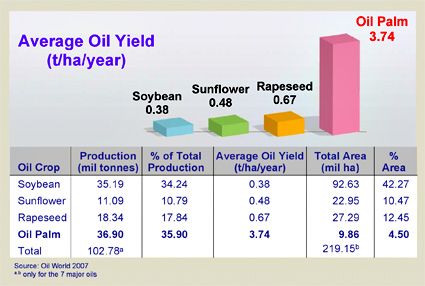
Palm oil is a versatile vegetable oil derived from the fruits of oil palms. It has myriad culinary uses and is also used in the manufacturing of cosmetics and the production of biofuel. Oil palms have high yields, easily outyielding other major oil crops like soybean, rapeseed, and sunflower. Oil palms are grown in the tropics in developing countries where land and labor are inexpensive. As human population grows, demand for palm oil increases. To meet the demand, tropical forests are converted into agricultural land. The majority of palm oil production occurs in Southeast Asian countries like Indonesia and Malaysia. However, palm oil production is expected to increase in African and Latin American countries as new varieties better suited for these particular environments become available.

oil world graph

Genome sequencing of oil palm may allow plant breeders to develop varieties that are disease resistant, drought tolerant, and able to grow in salinized soils. Already making its debut, though, is a new variety of oil palm that is boasting yields from 4 tons to as much as 10 tons per hectare. Higher yielding varieties could be the solution to preventing more tropical forests from being converted into oil palm plantations. Or could they lead to more growth? Intrigued by the development of improved varieties of oil palms and other tropical crops, the authors of this study developed computer models in order to determine what this might mean for the future.

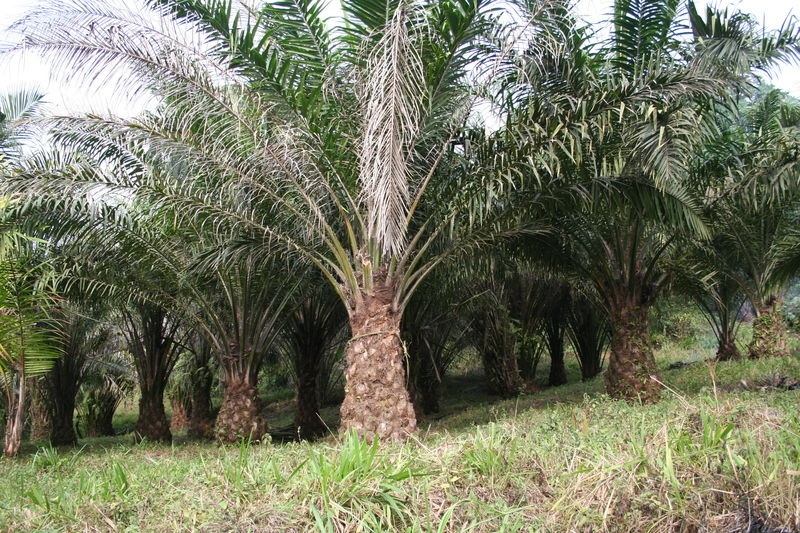
African Oil Palm (Elaeis guineensis) is the species of oil palm most commonly grown for palm oil production.

African Oil Palm (Elaeis guineensis) is the species of oil palm most commonly grown in palm oil production (photo credit: www.eol.org)

The results of simulations suggested two possible outcomes: one potentially positive and the other largely negative. On the positive side, “an assumed 56% increase in oil palm yield per tree in Malaysia and Indonesia” could result in ” around 400,000 hectares of agricultural land…taken out of production in Brazil, India, and Canada.” This is because less land will be needed to meet the demand, and the increased availability and resulting lower price of palm oil will outcompete other oil crops (like rapeseed, which is one of Canada’s main agricultural crops). However, the author’s seem to assume that agricultural land taken out of production will be restored back into natural lands. I find this argument hard to accept. Anecdotal evidence suggests that if farmers are no longer making a profit from a particular crop, they will choose to either grow something more profitable or sell their land to developers. A concerted effort would have to be made to capture this land and ensure that it remain uncultivated and undeveloped. Also, as the author’s point out, restoring land in Canada is very different from restoring or protecting tropical land. Loss of biodiversity is a much greater risk in areas where the level of biodiversity per hectare is high.

On the negative side, higher yields can encourage increased production. Tropical forest conversion may accelerate if farmers see an opportunity for growth. Additionally, improved varieties may increase palm oil production in African and Latin American countries, resulting again in more land conversion and deforestation. This effect may also become the story, not just for oil palms, but for cacao, eucalyptus, coffee, and other tropical crops as varietal improvements are achieved.

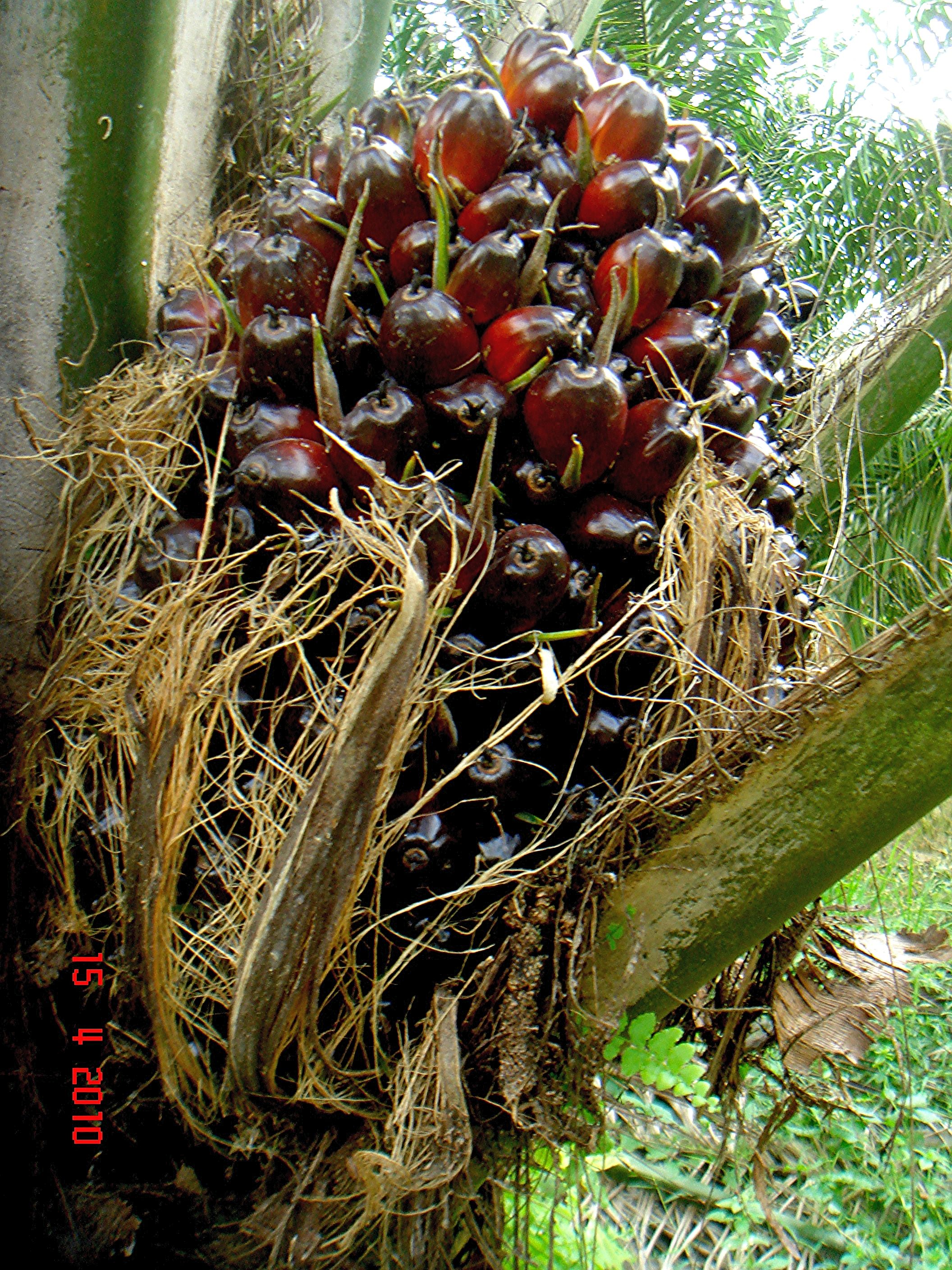
Oil Palm Friuits (photo credit: www.eol.org)

Oil Palm Friuits (photo credit: www.eol.org)

In light of this predicted consequence, the authors of this study recommend that governments, working together with conservation organizations and industry associations, regulate the conversion of agricultural lands and ensure that certain areas are specifically set aside for conservation. This means that “models of the drivers of environmental change” must be developed that “incorporate feedbacks at a range of scales” so that measures can be put into place to address “the unintended negative consequences of technical advances.”

More information on sustainable palm oil production can be found here.