What Is a Plant, and Why Should I Care? part two

“Organisms green with chlorophyll appeared pretty early in Earth history, diversified, and adapted to oceanic, coastal, and finally terrestrial environments. As this took place, the Earth turned green.” – Joseph E. Armstrong, How the Earth Turned Green
world turned green

The Earth not only turned green, but the composition of its atmosphere dramatically shifted. Thanks in part to photosynthesis, Earth’s atmosphere went from having virtually no free oxygen to being composed of about 21% oxygen. The increasing availability of oxygen helped facilitate the evolution of more and more diverse forms of life. Had photosynthesis (specifically oxygen-producing photosynthesis) never come about, the Earth would not be anything like it is today.

There are organisms in at least three taxonomic kingdoms that have the ability to photosynthesize: Bacteria, Protista, and Plantae. A book itself could be written about how photosynthesis developed and how it differs among organisms. The important thing to note in a discussion about plants is that the type of photosynthesis that occurs in cyanobacteria is the same type that occurs in the chloroplasts of plants and green algae. Additionally, pigments called chlorophyll are only found in cyanobacteria and the chloroplasts of plants and green algae. As Joseph Armstrong puts it in How the Earth Turned Green, “evidence strongly supports the hypothesis that chloroplasts were free-living photosynthetic bacteria that became cellular slaves within a host cell.”

In Part One, we established that green algae are closely related to plants, and that a subset of green algae colonized the land and evolved into modern day plants. Plants are green because of cyanobacteria via green algae; however, cyanobacteria are not plants, and green algae may or may not be plants depending on your preference. Classification is not nearly as important as determining evolutionary relationships.

So, again, what is a plant? K. J. Willis and J. C. McElwain offer this summary in their book, The Evolution of Plants: “Plants are relatively simple organisms with a common list of basic needs (water, carbon dioxide, nitrogen, magnesium, phosphorous, potassium, some trace elements, plus various biochemical pathways necessary for photosynthesis). This list has remained almost unchanged from the first land plants to the present.” In Part One, we also listed three major features that all plants have in common: multicellularity, cell walls that contain cellulose, and the ability to photosynthesize.

Photosynthesis is a big one, because it means that plants make their own food. They are autotrophs/self-feeders/ producers. This sets them apart from heterotrophs, organisms that consume other organisms in order to obtain energy and other essential nutrients. Plants are at the bottom of the food chain, providing energy and nutrients to all other organisms that either directly or indirectly consume them. In Armstrong’s words:

“Eating and being eaten is a fact of life, a process by which the light energy captured by green organisms is passed through a series of consumers, a food chain, before eventually being lost as heat, which dissipates. Everything else is recycled with the able assistance of decomposers, primarily fungi and microorganisms, heterotrophs who obtain their food from dead organisms or their metabolic wastes. A large part of ecology concerns such trophic or feeding interactions, the energy transfers that result, and the cycling of biogeochemicals, the elements of life.”

Their ability to photosynthesize, among other things, gives plants a prominent role in the world’s ecosystems. Much more will be said about that as we continue, but first there are a few other things about plants worth mentioning.

Plants exhibit modular growth. While animals generally produce all of their body parts early on in life and rarely reproduce new body parts in replacement of lost ones, plants can continue to reproduce and replace body parts. Even at maturity, plants maintain embryonic tissues, which allows them to regenerate body parts as needed. This is one reason why so many plants can be propagated asexually via stem, root, and/or leaf cuttings. Roots can be encouraged to grow from unlikely places, and a whole new plant can be produced as a result.

Plants are generally stationary. Rooted in place, they must obtain everything necessary for life, growth, and reproduction by accessing whatever resources are in their immediate vicinity. Roots search the soil for water and other nutrients, and leaves harvest sunlight and carbon dioxide to make sugars. Relationships are maintained with soil fungi to aid in the search for water and nutrients, but otherwise, plants are largely on their own. Since they cannot run or hide, they must stand and fend for themselves when insects and other herbivores come to devour them. They have adapted a variety of chemical and physical defenses to address this.

Despite being largely immobile during their juvenile and adult phases, plants can actually be incredibly mobile during their embryonic stage (or in other words, as seeds/spores/progules). Employing biotic and abiotic resources, seeds and spores can potentially move miles away from their parent plants, enjoying a freedom of movement they will never know again once they put their roots down.

It is estimated that the total number of plant species on the earth today is around 400,000. (For reference, see this BGCI page and this Kew Gardens page. See The Plant List for up to date plant species names.) The first land plants evolved around 450 million years ago. It wasn’t until around 160 million years ago that the first flowering plants appeared, yet about 90% of the plants in existence today fall within this group. How many tens of thousands of species of plants have existed on Earth throughout history? I don’t think we can say. So many have come and gone, while others have radiated into new species. Exploring life that currently exists on this planet is an enormous pursuit on its own; add to that the exploration of life that once existed, and your pursuits become endless.
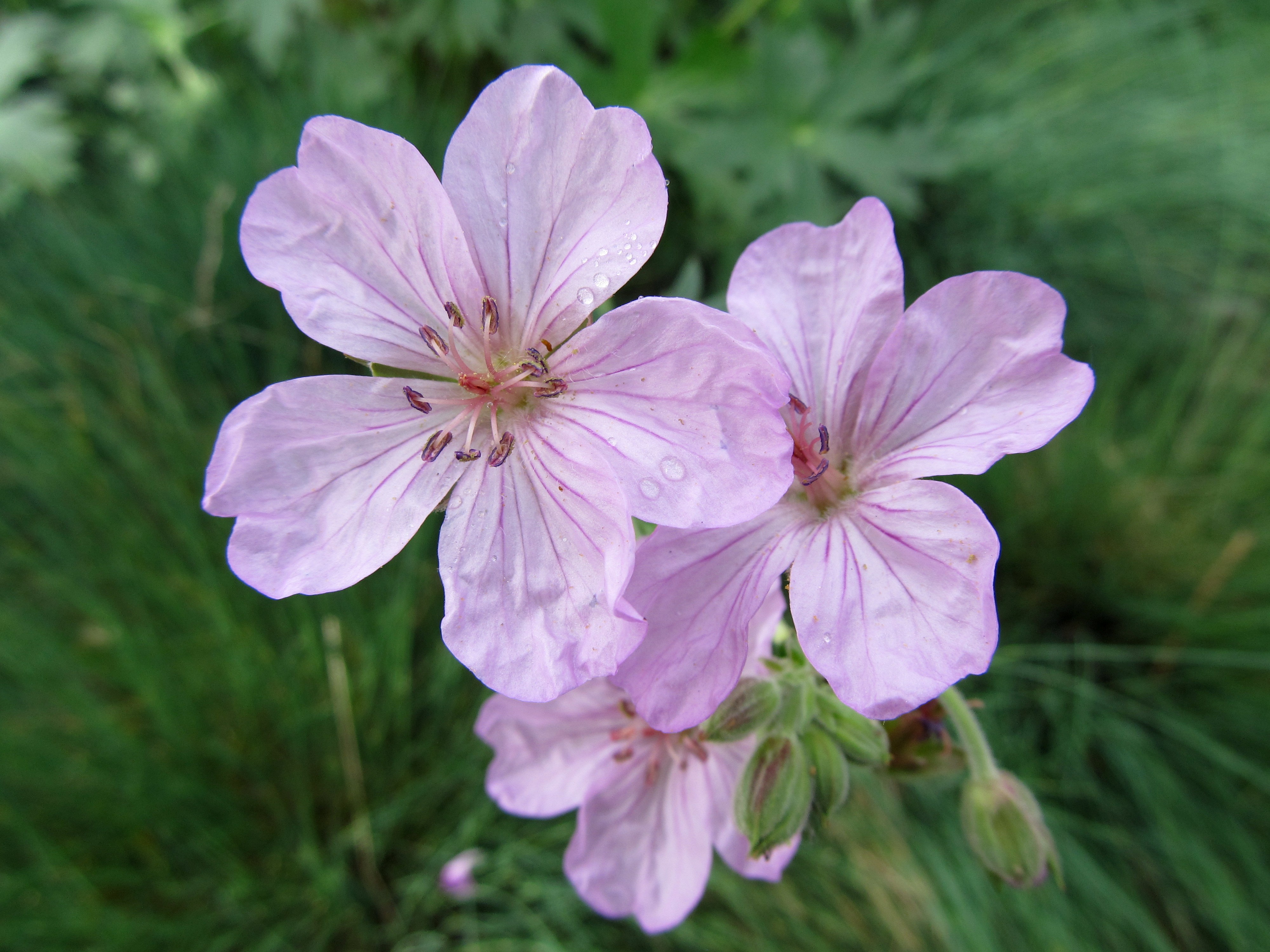
Sticky purple geranium (Geranium viscosissimum) one species of around species of extant flowering plants.

Sticky purple geranium (Geranium viscosissimum) is just one of more than 350,000 species of extant flowering plants.

At the close of the first chapter of his book, Armstrong highlights eight major historical events that have brought us plants as we know them today: “the origin of life itself, the development of chlorophyll and photosynthesis, the advent of the eukaryotic (nucleated) cell, the development of multicellular organisms, the invasion of land, the development of vascular tissues, the development of seeds, and the development of flowers.”  Consider that a brief synopsis of all we have to cover as we continue to tell the story of plants.

What Is a Plant, and Why Should I Care? part one

I want to tell the story of plants. In order to do that, I suppose I will need to research the 4 billion year history of life on earth. And so I am. Apart from satiating my own curiosity, studying and telling the story of plants advances me towards my goal of creating a series of botany lesson themed posts. Botany 101 and beyond, if you will. An ambitious project, perhaps, but what else am I going to do with my time?
So what is a plant anyway? We all know plants when we see them, but have you ever tried to define them? They are living beings, but they are not animals. They are stationary – rooted in the ground, usually. Most of them are green, but not all of them. They photosynthesize, which means they use water, carbon dioxide collected from the atmosphere, and energy harvested from the sun to make food for themselves. No animal can do that (okay…a few sort of can). They reproduce sexually, but many can also reproduce asexually. They are incredibly diverse. Some grow hundreds of feet into the air. Some barely reach more than a few centimeters off the ground at maturity. They have discernible parts and pieces, but they can also lose parts and pieces and then grow them back. There aren’t many animals that can do that. They have been on this planet for hundreds of millions of years, colonizing land millions of years before animals. Plants helped pave the way, and if it weren’t for plants, animals may not have stood a chance.

I don’t mean to pick on animals, it’s just that for a long time, humans grouped living things into just two kingdoms: Plantae and Animalia. Stationary things that appeared to be rooted to the ground or some other surface were classified as plants. Green things that lived in the water were also considered plants. Thus, lichens, fungi, algae, and everything we consider to be a plant today were placed in kingdom Plantae. Everything else was placed in kingdom Animalia. This, of course, was before much was known about microorganisms.

Dichotomous classification was reconsidered as we learned more about the diversity of organisms in each kingdom, particularly as the theory of evolution came into play and microscopes allowed us to observe single celled organisms and chromosomes. Eventually, fungi was awarded its own kingdom, which includes lichens – organisms composed of both fungi and photosynthetic species but classified according to their fungal components. Most of the algae was placed in a kingdom called Protista, a hodgepodge group of unicellular and unicellular-colonial organisms, some of which are animal-like and some of which are plant-like. Two kingdoms were also formed for prokaryotic organisms (organisms with cells that lack membrane bound organelles): Bacteria and Archaea.

Illustration of one current itteration of kingdom classification system (illustration credit: wikimedia commons)

Taxonomic kingdoms as we currently consider them (illustration credit: wikimedia commons)

In short, the answer to what is a plant seems to be whatever organisms humans decide to put in kingdom Plantae. One problem with this answer is that some chose to include certain species of algae and others don’t. But why is that? It has to do with how plants evolved and became photosynthetic in the first place.

Microorganisms developed the ability to photosynthesize around 3.5 billion years ago; however, the photosynthetic process that plants use today appeared much later – around 2.7 billion years ago. It evolved in an organism called cyanobacteria – a prokaryote. Eukaryotic organisms were formed when one single cell organism was taken inside another single cell organism, a process known as symbiogenesis. In this case, cyanobacteria was taken up and the eukaryotic organisms known today as algae were formed. The incorporated cyanobacteria became known as chloroplasts.

Not all algae species went on to evolve into plants. A group known as green algae appears to be the most closely related to plants, and a certain subset of green algae colonized the land and evolved into modern day plants (also known as land plants). That is why some taxonomists choose to include green algae in the plant kingdom, excluding all other types of algae.

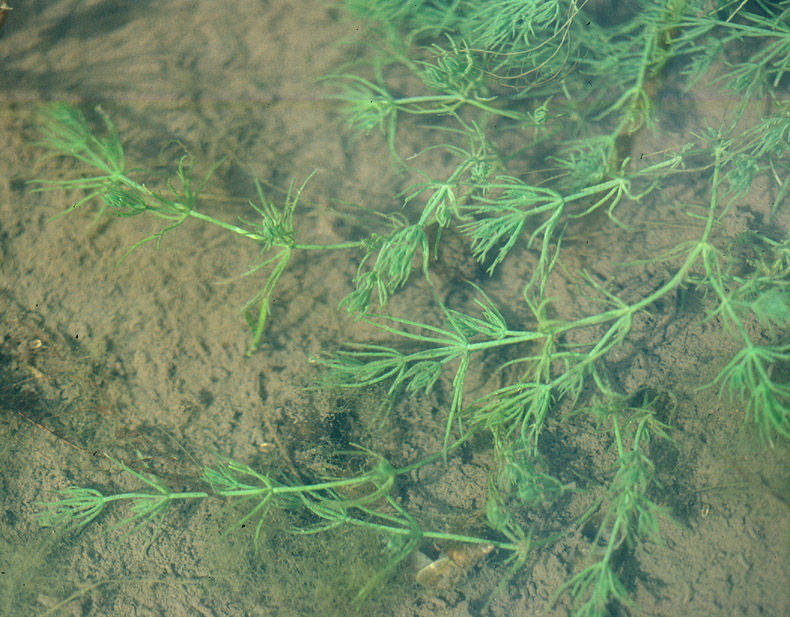
Common stonewort (Chara vulgaris, a species of green algae (photo credit: www.eol.org)

Common stonewort, Chara vulgaris, a species of green algae (photo credit: www.eol.org)

The term land plants refers to liverworts, hornworts, mosses, ferns, fern allies, gymnosperms, and flowering plants – or in other words, all vascular and non-vascular plants. Another all encompassing term for this large group of organisms is embryophytes (embryo-producing plants).

Still confused about what a plant is? Three main features can be attributed to all plants: 1. They are multicellular organisms. 2. Their cell structure includes a cell wall composed of cellulose 3. They are capable of photosynthesis. Many species of green algae are unicellular, which is an argument for leaving them out of kingdom Plantae. Certain parasitic plants like toothwort, dodder, and beech drops have lost all or most of their chlorophyll and no longer photosynthesize, but they are still plants.

Deciding what is and isn’t a plant ultimately comes down to evolutionary history and common ancestry. As Joseph Armstrong writes in his book, How the Earth Turned Green, “Our classifications of human artifacts are totally arbitrary, but to be useful scientifically our classification of life must accurately reflect groupings that resulted from real historical events, common ancestries.”

Obviously this is going to be a multi-part series, so I will have much more to tell you about plants in part two, etc. For now, this You Tube video offers a decent summary.

Growing Potatoes on Mars

“My best bet for making calories is potatoes. They grow prolifically and have a reasonable calorie count. … I can’t just live off the land forever. But I can extend my life. The potatoes will last me 76 days.” – The Martian by Andy Weir

The Atacama Desert is a strip of land in northern Chile that reaches into portions of Bolivia, Peru, and Argentina. Within it lies a region 10,000 feet in elevation that, thanks to a double rain shadow, is so intensely dry that nothing, not even microbial life, can survive. Rain falls in this region perhaps once every 10 years, and even then precipitation is paltry. This area is so desolate and devoid of life that NASA scientists consider it Mars-like and have used the area to test equipment that is bound for Mars. Studies have found that the soil in this region is similar to Martian soil – so similar, in fact, that it is now being used to test the feasibility of growing potatoes on Mars.

The study is being carried out by NASA in collaboration with Centro Internacional de la Papa (CIP), an agriculture research institution based in Lima, Peru. The efforts consist of an initial series of three experiments. Apart from investigating methods for growing potatoes in a Martian environment, researchers hope to develop ways to improve potato production on marginal land here on Earth in order to increase yields and provide a sustainable source of food in parts of the world that so desperately need it.

The wild crop relative of the cultivated potato (Solanum tuberosum) is native to the Andes. It was originally domesticated by the indigenous people of Peru at least 8,000 years ago. Spanish explorers brought potatoes back to Europe around 1570, and over the next several hundred years cultivation of potatoes spread throughout the world. It is now one of the world’s top 5 food crops and is a staple food source in many regions. So why not Mars?

potatoes-on-mars-nasa-and-cip

The first phase of experiments is currently under way. A selection of potato cultivars that have attributes such as quick maturity, virus resistance, tolerance to high temperatures, and resistance to drought are being grown in soil taken from the Mars-like region of the Atacama Desert. The second phase will consider the transportation of the potatoes from Earth to Mars, a nine month journey. The harvest from the first experiment will be frozen, thawed, and then planted to determine if the propagules remain viable after making the journey through space. The final phase of the experiments will entail growing the potatoes inside of CubeSat modules in which a Mars-like environment can be simulated. The specifics of these studies vary across multiple reports, so this may be a slight misrepresentation of the actual research program. As official reports emerge, the exact methods will be more clear.

According to this post on the CIP website, this collaboration is “a major step towards building a controlled dome on Mars capable of farming the invaluable crop in order to demonstrate that potatoes can be grown in the most inhospitable environments.” The post goes on to laud the nutrient benefits of the potato and its potential to address issues of food security, poverty, and malnutrition. As NASA seeks for ways to sustain an eventual human mission to Mars, CIP looks to address global hunger. Together they see potential in the potato.

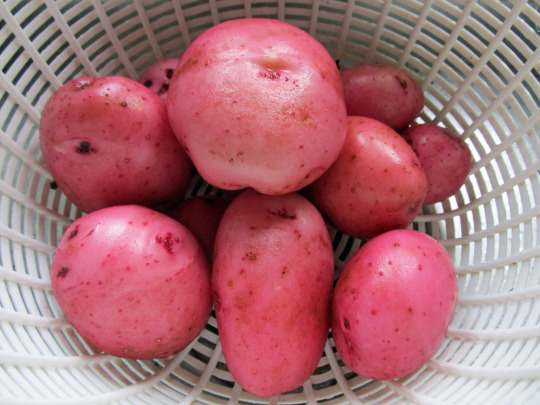
red potatoes

Space programs, even those that seem overly ambitious, offer benefits that can extend into all aspects of our lives. That is why I remain intrigued by experiments such as these that involve growing plants in space or on other planets. We may never find ourselves mass producing food for human populations outside of Earth (or maybe we will), but what we can learn in the process of simply seeing what is possible has great potential to increase our botanical knowledge and improve agricultural efforts here on our home planet.

Selected Resources:

———————

Thanks to Franz Anthony, Awkward Botany now has an official logo. Franz is a graphic designer, artist, and illustrator based in Sydney, Australia. Check out his website and his Tumblr, and follow him on Twitter and Instagram. Also, stay tuned for more of Franz’s graphic design and illustration work here on Awkward Botany. 

AB_Logo_Brown1

Drought Tolerant Plants: The Junipers

When I first developed a real interest in plants, I was in the heyday of my zine writing career. As my interest in gardening grew, writing a zine about it became inevitable. Initially I envisioned the zine as a journal of sorts – the journal of a budding horticulturist (pun intentional). Since I was new to gardening – and plants in general – the zine was meant to follow my journey as I explored this new world.

A zine needs a name though, so what would I call it? It didn’t take long for me to land on, The Juniper. I was familiar with a common disdain for the unsightly, overgrown, neglected, evergreen shrub full of spiders and cobwebs that for whatever reason was at one point planted right outside just about every house in America (a fire hazard, by the way). I was aware that many people were resorting to tearing them out, cursing as they battled the pokey, dirty, half dead things.

That was basically all I knew about junipers – they were common landscape plants that were just as commonly despised. My affection for freaks, geeks, outsiders, and rejects led me to name my zine after a shrub that everyone hated. I guess I just felt like we had something in common, and that despite being the bane of people’s existence, it deserved some recognition.

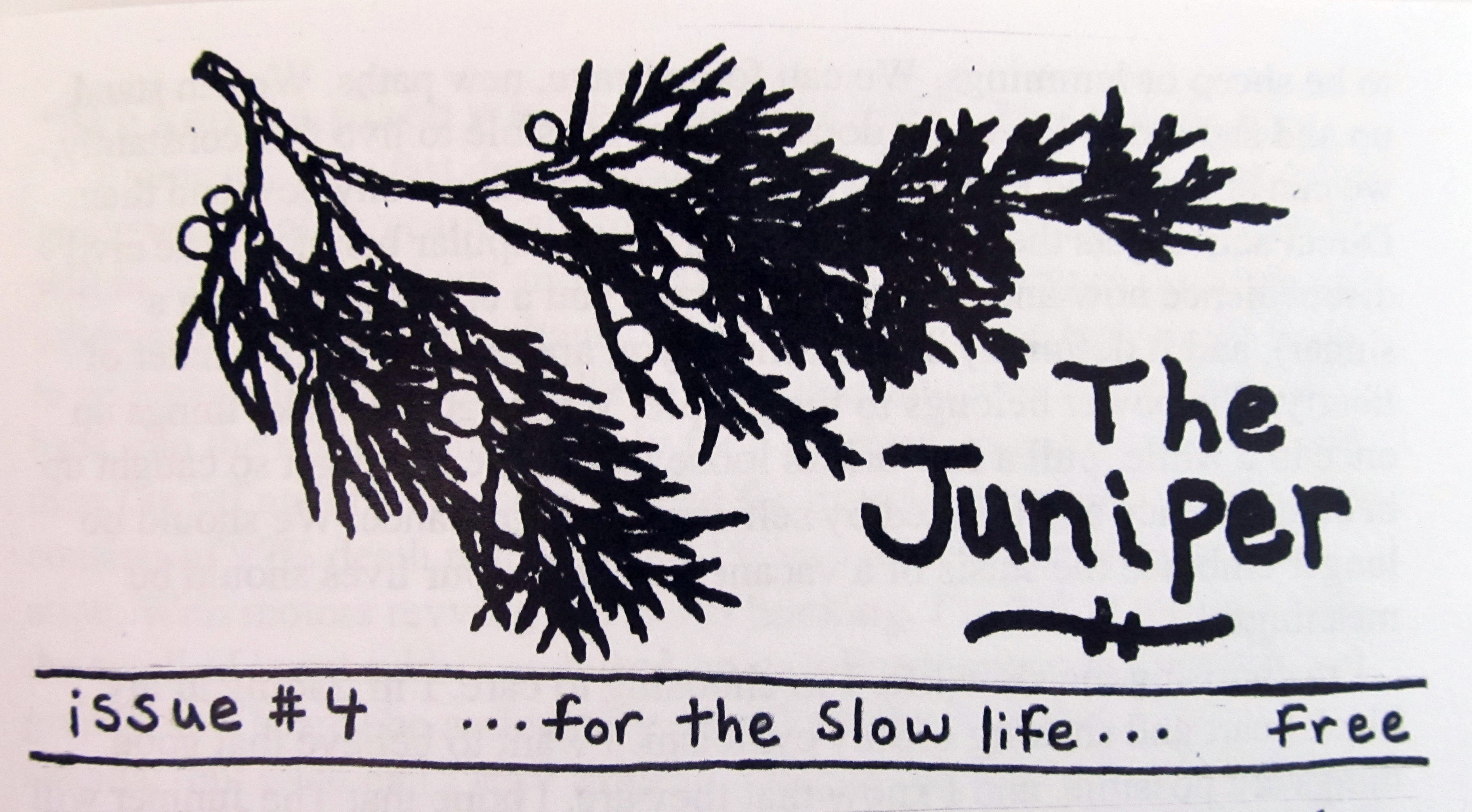
the juniper zine

And it does. Junipers are an important species in their natural habitats. In some areas they are dominant features to the point where entire plant communities are named after them. Consider the piñon-juniper woodlands of western North America – prominent steppe habitats that occur throughout high desert regions and support diverse forms of wildlife unique to this part of the world. Dan Johnson writes in the book, Steppes, “the piñon-juniper zone dominates huge expanses of the West in varying stages of  health, providing a wealth of habitats and resources to the wildlife and the people who call it home.”

Johnson goes on to describe some of these habitats:

In the Colorado Plateau this zone is dominated by Pinus edulis and Juniperus osteosperma, with J. scopulorum occupying drainages with more moisture. In the Great Basin, P. edulis is replaced by P. monophylla as the dominant piñon pine, still mixing with J. osteosperma, yet as one moves west, this juniper is increasingly replaced by J. occidentalis. Move farther north, and J. occidentalis dominates completely, with neither piñon pine making an appearance.

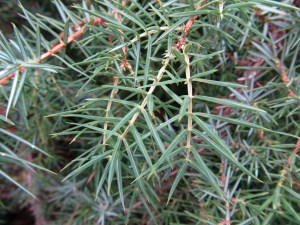
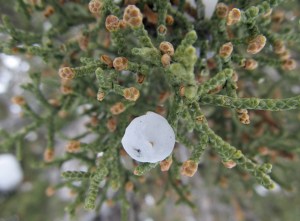
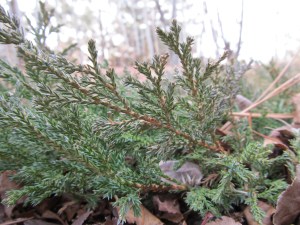
The genus Juniperus is in the cypress family (Cupressaceae) and includes up to 67 species, at least 13 of which are native to North America. They are long-lived plants that range from prostrate, sprawling groundcovers to expansive, bushy shrubs to tall, narrow trees. Their foliage is evergreen and can be either needle-like or scale-like. Most juniper species have needle-like foliage in their seedling and juvenile stages and then scale-like foliage at maturity. Some species, like J. communis, never develop scale-like foliage. Junipers are gymnosperms, so their reproductive structures are housed in cones. However, their cones are fleshy and so are commonly (and mistakenly) referred to as berries or fruits. Juniper cones are most often blue or gray-blue, but in some species they have a red, brown, or orange hue.

In general, junipers are quite drought tolerant, particularly those species that are adapted to hot, dry climates. Again referring to piñon-juniper steppes, Johnson writes, “in prolonged periods of drought, the piñon pines seem to suffer long before the junipers; whole hillsides of pine may go brown, leaving islands of olive-green juniper relatively unscathed.” In the book, Shrubs of the Great Basin, Hugh Mozingo attributes this drought toughness to the scale-like leaves: “Because they are smaller and so closely appressed to the twigs, these scale-like leaves are a superior adaptation to the frequently very dry conditions in piñon-juniper communities.” This herculean ability to survive on little water makes them a great addition to a dry garden.

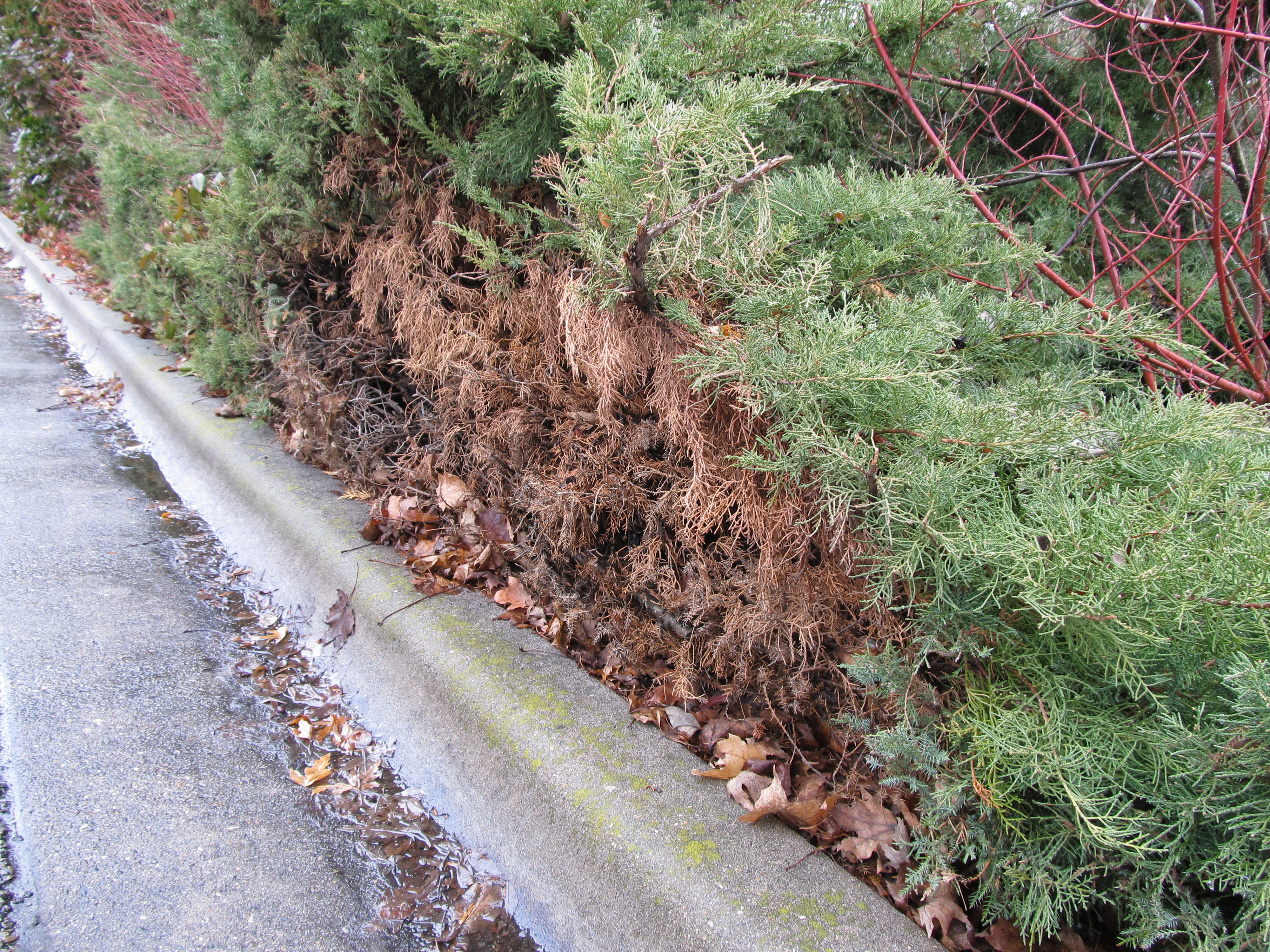
But we may first have to get over our disdain for them. As this post on Chicago Botanic Garden’s website puts it: “Junipers have suffered from overuse and underimagination.” (This article also examines our hatred of juniper bushes). Probably a bigger problem is that, like so many other plants used in a landscape, mature height and width often isn’t taken into consideration, and rather than removing a plant when it gets too big for the site, sheers or a hedge trimmer are regularly deployed. I’m not a huge fan of the sheered look. I much prefer a more natural form to the boxes and globes that are so common in commercial and residential plantings. I’m even less of a fan of the misguided inclination to force a plant to fit in a space that it isn’t meant to be (unless you’re a bonsai artist, I guess). This treatment is what leads to exposing the ugly, brown insides of a juniper shrub – an unsightly look that only makes people hate them more.

Brown insides of juniper shrub exposed after years of forcing the plant to fit in a site that is too small for its britches.

Brown insides of juniper shrub exposed after years of forcing the plant to fit in an improper site.

There are numerous commercially available cultivars of juniper species, offering a plethora of sizes, shapes, and forms as well as various colors of foliage. For small or narrow areas, select dwarf varieties or columnar forms that won’t need to be kept in check, and in all cases let the plant express its authentic self, controlling the urge to sheer and shape it against its will.

As if their natural beauty and low water requirement wasn’t enough, junipers are also great for supporting wildlife. Birds and other animals use them for cover and for nesting sites. The fleshy cones are edible, the shredding bark is used for nesting material, and the evergreen foliage provides much needed protection during winter months. Oh and, among many other benefits that junipers offer humans, their aromatic, fleshy cones have culinary value and are used to flavor gin.

I don’t want to leave the impression that I am opposed to pruning and shaping shrubs. For aesthetic reasons, I think it should be done. However, my opinion is that unnatural shapes should be avoided. Sure, boxed hedge rows have their place in certain types of gardens, but my preference is towards more natural shapes. The following video by University of Illinois Extension provides a brief tutorial on how to achieve that.   

Famous Botanists in History: Zhan Wang

Researching last week’s post reminded me of a series of posts that I have been wanting to start for quite a while: Famous Botanists in History. With Metasequoia on my mind, who better to inaugurate this new series than Zhan Wang – the botanist who made the first scientific collection of the living fossil.

From what I can tell, most of what is known about Zhan Wang (at least outside of China) comes from his contribution to the discovery and description of Metasequoia glyptostroboides, and even that information seems to be available largely due to the efforts of some of his colleagues and former students who endeavored to see that Wang be acknowledged for his role in the event. After Wang’s death, a group of his former students wrote a short biography which appeared in the August 2000 issue of the journal Taxon. The biography is written from the perspective of a group of people who greatly admired and respected their teacher and mentor. Unable to find much else written about Wang and his life, the details in this post are mostly taken from that biography. If there are other resources, I would be grateful to have them brought to my attention.

Zhan Wang was born in a remote village in Liaotung Province (now Liaoning Province) in northeast China on May 4, 1911. His birth name was Yishi, but he changed it to Zhan (or Chan) after running away from home in 1932. He developed plant identification skills early in his youth and used those skills to learn about Chinese medicine. He studied forestry in high school. When he graduated in 1931, the Japanese army was in the process of invading northeast China, so he fled to Beijing. There he continued his forestry studies at Beijing University (known today as Peking University). He graduated in 1936, and around that time, Beijing University along with other educational institutions and government agencies in Beijing and Nanjing were evacuating to escape aerial attacks. As Kyna Rubin puts it in The Metasequoia Mystery, “much of Wang’s early career was spent dodging war.”

Zhan Wang went to middle school and high school in Dandong City, Liaoning Province (photo credit: wikimedia commons)

Zhan Wang went to middle school and high school in Dandong City, Liaoning Province, China (photo credit: wikimedia commons)

Zhan moved with Beijing University’s Agricultural College to the Shaanxi province where he took a position as professor of dendrology and forestry. Wang’s students say that he preferred to teach his classes outside where the students could have “hands-on experiences” directly observing the morphology and ecology of plants. He “told stories about the species,” encouraged “looking, touching, tasting, and chewing,” and found many other ways to integrate botany and ecology in his courses. One way he helped students understand plant ecology was by grouping plants into categories with clever nicknames such as “mountain climbers” (plants found in cool climates), “greedy boys” (plants with high nutrient demands), “thirsty guys” (plants with high water demands), and “desert fighters” (drought tolerant plants).

In 1943, Wang became a Forest Administrator for the Ministry of Agriculture and Forestry, a position which included doing forest surveys in remote areas. On an expedition to Shennongjia in the Hubei province, Wang was stricken with malaria and had to stop in Wanxian County. There he met an old classmate of his, Longxing Yang, who told him of an unusual tree, which was later described as Metasequoia glyptostroboides by Wanjun Zheng and Xiansu Hu thanks to the initial collections that Wang made in July 1943. Despite being left out of some of the accounts of the discovery, Wang’s students claim that he didn’t complain and was more concerned about the tree’s continued survival, believing that “discussing the past discovery of a new species is not as important as investigating how a living fossil species will survive in the future.” His students were admonished to “focus on the species’ protection and its habitat.”

Wang’s position as Forest Administrator was short-lived; however, over the next several decades he continued to teach dendrology and forestry at several Chinese universities. Much of his research efforts were focused on sorting out the taxonomy of the willow family (Salicaceae), a highly complex plant family. He collected willow species throughout China and, with the help of his colleagues, described more than 90 new species. He also became very concerned about deforestation and “focused his attention on devising scientifically sound harvesting methods and successful regeneration processes.” Despite his work being largely restricted to China and (as his students claim) “receiving little credit elsewhere,” similar approaches to the sustainable forestry methods that Wang preached are “widely recommended and accepted today in western forestry practices for ecosystem management.”

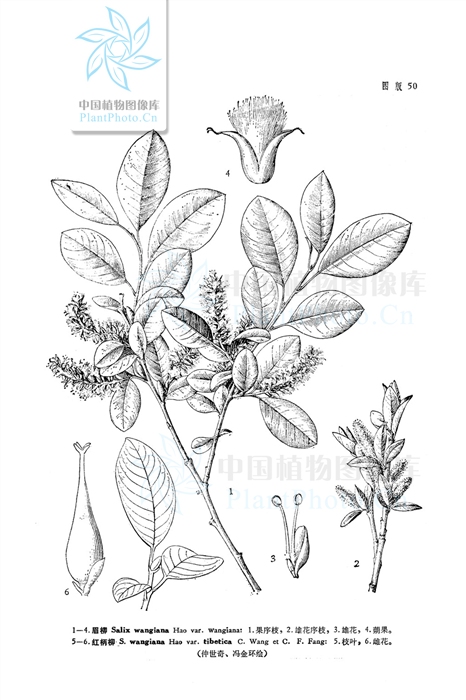
Zhan Wang described many new species of Salix. Salix wangiana var. tibetica is a species that was described by and also named after Wang (photo credit: Flora Republicae Popuaris Sinacea)

Zhan Wang helped describe dozens of species of Salix that were new to science. Salix wangiana var. tibetica is a species that was described by and also appears to be named after Wang (photo credit: Flora Republicae Popularis Sinacea)

In the 1950’s, Wang began carrying out research at Changbai Mountain Nature Reserve high on the Changbai Mountain located in northeastern China on the border with North Korea. His efforts were interupted by the Cultural Revolution, a period that lasted from 1966-1976. As soon as that had passed, Wang and colleagues began working to establish the Changbai Mountain Forest Ecosystem Research Station. Wang became the first director of the station when it was approved and funded in 1979. Wang and his research team worked to establish “baseline information on the area’s flora, fauna, vegetation, and soils,” and in three years time had amassed enough research to warrant over 100 published papers. Due to the efforts of Wang and his team, the Changbai Mountain Nature Reserve gained inclusion in UNESCO’s Man and the Biosphere Program.

Wang’s students write that Wang viewed “Changbai Mountain as his home” and “believed that his life belonged to this mountain region.” His wish was to one day have his ashes “spread throughout the wilderness” of this mountain. After his death on January 30, 2000, his wish was carried out. “He will forever be with his beloved plants and forests in this important site of plant diversity, and now, place of rest.” Wang was survived by his three daughters; his son committed suicide during the Cultural Revolution, and his wife died in 1992.

In the adoring words of his students, Wang had a “kind, gentle character and contagious enthusiasm for science and nature” and “his contribution to botany went far beyond what is available in print. His footprints from exploring plants in China can be found in almost every province.”

The Discovery of a Living Fossil

In the early 1940’s, the genus Metasequoia was only known scientifically in fossil form. It had, in its day, been a widespread genus, found commonly in many areas across the Northern Hemisphere. It thrived among the dinosaurs. However, sometime during the Pliocene, the genus was thought to have died out. Thousands of fossils were left behind, and that would have been the end of the story had a member of its genus not been discovered still alive in a Chinese province later that decade. Its discovery is easily one of the greatest botanical stories of the 20th century, fascinating in its own right. The circumstances surrounding its scientific description, as it turns out, are equally interesting.

In the January 2016 issue of Landscape Architecture Magazine, Kyna Rubin details the event in an article entitled The Metasequoia Mystery. It’s the type of story that you almost need a crazy wall to sort out. A broad cast of characters interacted at various levels in order to make this profound discovery during a tumultuous time when the world was at war and China was being invaded by Japan.

Speaking of Japan, let’s start there. In 1941, Japanese paleobotanist, Shigeru Miki, published research describing fossils that for decades were thought to be either Sequoia or Taxodium as a new genus, Metasequoia. As Rubin points out, due to the war, “not every Chinese botanist would have had access to recent international research, let alone articles by botanists of an enemy country.” This could explain why in 1943 when Zhan Wang – a professer of forestry at Beijing University and the forest administrator for the Ministry of Agriculture and Forestry – was introduced to a living Metasequoia by an old classmate and local villagers in the Hubei Province, he wasn’t sure what he was looking at.

The tree was obviously important to the local people. They called it shuisa (water fir) and had built a shrine around it. Wang collected several branches and some cones that had fallen on a rooftop. At the time he identified it as Glyptostrobus pensilis (water pine), a tree common to the area; but he may have wondered if this was correct.

Eventually Wang’s samples and the details of his collection were brought to the attention of Wanjun Zheng, a dendrologist at the National Central University. Intrigued, Zheng sent his graduate student, Jiru Xue, to collect more samples from the same tree that Wang had encountered. These samples were more complete, and when they were presented to Xiansu Hu – the director of Fan Memorial Institute of Biology in Beijing – the mystery was solved. Hu had access to Miki’s research and concluded that what they had was a living fossil.

In 1948, Hu and Zheng published a paper describing the species and giving it the official name, Metasequoia glyptostroboides. The discovery ignited the botanical community as well as the general public, and soon seeds of what became commonly known as dawn redwood were being disseminated across the globe. Unfortunately, Wang’s contribution was not mentioned in the original paper, and the exact account of the discovery became convoluted.

photo credit: wikimedia commons

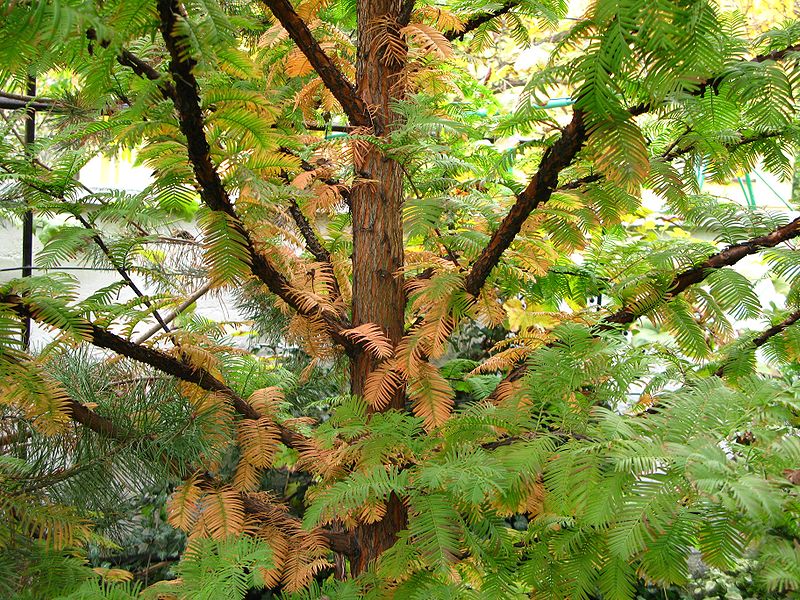
Dawn redwood (Metasequoia glytostroboides) is a deciduous, medium to large tree. Its cones are round and about 1 inch long. Its leaves are oppositely arranged and have a feather-like appearance. Its bark is fibrous, stringy, and red-brown to gray in color.  (photo credit: wikimedia commons)

At some point, a discussion between Zheng and a forester named Duo Gan (also known as Toh Kan) revealed that Gan had come across the tree in 1941, but he did not make any collections. Despite Zheng learning of Gan’s encounter after Zheng and Hu’s original paper had been published, Gan’s story became prominent, further obscuring the role that Wang played.

It’s important to note that none of Wang’s original collections were used as the type specimen – the particular specimen of an organism to which the scientific name is formally attached and is referred to in the scientific literature. The type specimen was collected by Xue. This is not uncommon, as initial collections may not always be in the best condition and may not include all the parts and pieces necessary to identify and describe a new species. But, as Rubin notes, “it was Wang’s specimens [that Zheng and others] had first examined and those specimens brought the tree to their attention to begin with.” So Wang’s contribution is an important part of the story.

Thanks to Wang’s former students, his role in the discovery has received greater exposure. Jinshuang Ma in particular has made it his mission to highlight the part that Wang played in the event. Apart from maintaining a website all about Metasequoia, Ma also spent several years searching for a lost herbarium specimen collected by Wang, which he found in an abandoned herbarium in Nanjing. You can read about his find in this article from the August 2003 issue of the journal Taxon. (Ma’s well researched summary of the events surrounding the Metasequoia discovery is also worth reading.)

Failure to acknowledge Wang’s contribution (at least initially) perhaps didn’t make waves outside of China, but in Rubin’s words, “the omission of Wang’s contribution sparked immediate hullabaloo inside China’s botanical circles in the late 1940’s.” Power and class differences likely played a big role. Hu and Zheng were established scholars that had received their educations in the United States and France respectively. Wang was young, from a remote village, and had not studied abroad. While Wang “went on to become one of China’s most distinguished forestry experts and botanists,” he was early in his career at the time of the Metasequoia discovery.

A deep respect for the elders in his field may be the reason that Wang’s students claim that he “never complained” about his treatment. His students go on to say that Wang “was not interested in personal gain,” and instead was simply satisfied to see that Metasequoia “was now growing successfully all over the world and was better protected.” It is listed as endangered on the IUCN Red List and would likely be extinct in its shrunken native range had awareness of its existence not come about when it did.

Fossil of Metasequoia occidentalis - photo credit: wikimedia commons

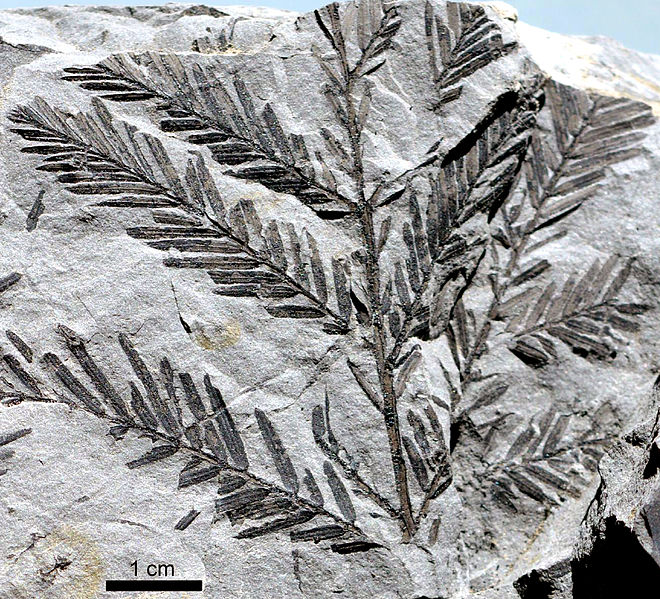
Fossil of Metasequoia occidentalis – photo credit: wikimedia commons

There are plenty of other interesting details to this story. Read the full article and check out the links on metasequoia.org to learn more. The account of Jiru Xue (also known as Hsueh Chi-Ju), the graduate student who collected the type specimens, is particularly interesting. Suprisingly, the tree Wang and Xue took their collections from is still alive today and is estimated to be over 400 years old.

Other longform article reviews on Awkward Botany:

Confidential Carnivore

This is a guest post. Words and images by Jeremiah Sandler

———————

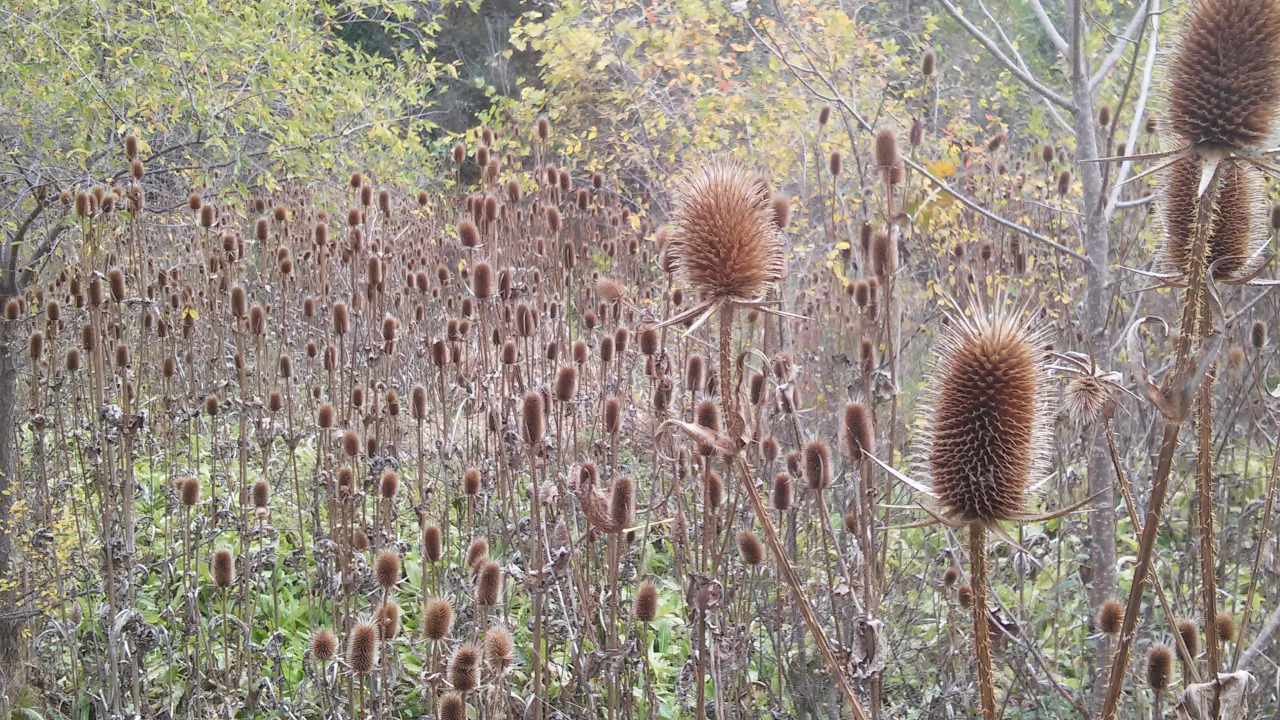
If you live in North America or Europe, chances are you have seen Dipsacus fullonum, commonly called teasel.  Its tall (up to 2 meters), spiky flower stalks with large purple flowers are easy to spot in low-lands, ditches, or along highways.  Since this prolific seeder’s introduction to North America from Europe, it has steadily increased its habitat to occupy nearly each region of the United States. Of course, like all plants, teasel has its preferences and is more frequent in some areas than in others.

dipsacus fullonum_jeremiah sandler

Teasel is an unassuming, herbaceous biennial.  It takes two years to complete its life cycle: First-year growth is spent as a basal rosette, and second-year growth is devoted to flowering.  Standard biennial, right?  As of 2011, an experiment was conducted on this plant that changed the way we see teasel, and possibly all other similar plants.

“Here we report on evidence for reproductive benefits from carnivory in a plant showing none of the ecological or life history traits of standard carnivorous species.” -Excerpt from the report titled Carnivory in the Teasel Dipsacus fullonum — The Effect of Experimental Feeding on Growth and Seed Set by Peter J.A. Shaw and Kyle Shackleton.

We all have favorite carnivorous plants, Venus flytraps, pitcher plants, sundews, etc.. Their showy traps and various means of attracting insects are all marvels of evolution in the plant kingdom.  These insectivorous plants evolved these means of nutrient acquisition in an answer to the lack of nutrients in their environment’s soil.  In some of these plants, there is a direct relationship between number of insects consumed and the size of the entire plant. In others, there is no such relationship.

The unassuming, biennial teasel can now join the ranks of carnivore, or protocarnivore.  It didn’t evolve in bogs or swamps where soil nutrients are depleted.  It has no relationship to the standard carnivorous species. It doesn’t have any flashy traps. In fact, it has no obvious traits which suggest it can gain nutrients from insects. Teasel’s carnivorous habits can be likened somewhat to the carnivorous habits of bromeliads; water gathered in their leaves traps insects.

In Shaw and Shackleton’s experiment (done in two field populations), maggots were placed in water gathered in the center of some first-year rosettes of teasel.  Other rosettes in the same population were left alone as controls.  Not surprisingly, the teasels which were ‘fed’ larvae did not change in overall size.  The size of the overwintering rosette did not offer any predictability towards the size of flower shoots for the coming year. However, something strange did happen:

“…addition of dead dipteran larvae to leaf bases caused a 30% increase in seed set and the seed mass:biomass ratio.”…“These results provide the first empirical evidence for Dipsacus displaying one of the principal criteria for carnivory”

Teasel has some physiology to absorb nutrients from other macroorganisms despite teasel evolving in an entirely different setting than typical carnivorous plants.  Teasel’s already proficient reproductive capacity is enhanced by using insects as a form of nutrients in a controlled setting.  

Many exciting questions have been raised by this experiment. How has this absorption mechanism come about, without the obvious use of lures or other structures to attract insects? And how does teasel maximize upon its own morphology in the wild, if at all?  What would the results be if these experiments were recreated on other similar species?

There are studies being conducted all the time that further the boundaries of what we know about these stationary organisms. There are new discoveries waiting just around the corner. Carnivory in plants is amazing because it transcends common notions about plants; especially in the case of the unassuming teasel.

Selected Resources:

———————

Jeremiah Sandler lives in southeast Michigan where he works in the plant health care industry. He has a degree in horticultural sciences and is an ISA certified arborist. He is interested in all things plant related and plans to own a horticulture business where he can share his passion with others. Follow Jeremiah on Instagram: @j.deepsea

———————

Would you like to write a guest post? Or contribute to Awkward Botany in some other way? Find out how.

Poisonous Plants: Lima Beans

I don’t recall being a picky eater as a child, but one food I could barely stomach was lima beans. The smell, the texture, the taste, even the look of them, really didn’t sit well with me. I know I’m not alone in this sentiment. Lima beans are a popular thing to hate, and I have avoided them ever since I was old enough to decide what was allowed on my plate. To be fair, the only lima beans I remember trying were the ones included in the familiar bag of frozen mixed vegetables, which might explain why I didn’t like them. But little did I know there is another reason to avoid them – lima beans are poisonous.

That’s a strong statement. In case you’ve eaten lima beans recently or are about to, I should ease your concerns by telling you that you have little to worry about. Commonly cultivated lima beans are perfectly safe to eat as long as they are cooked properly, and even if they are eaten raw in small doses, they are not likely to hurt you. But again, why are you eating lima beans? They’re gross.

lima beans in cans

Phaseolus lunatus – commonly known as lima bean as well as a number of other common names – is in the legume family (Fabaceae) and is native to tropical America. It is a perennial, twining vine that reaches up to 5 meters. It has trifoliate leaves that are alternately arranged, and its flowers are typically white, pink, or purple and similar in appearance to pea flowers and other flowers in the legume family. The fruits are hairy, flat, 5 – 10 cm long, and often in the shape of a half moon. The seeds are usually smooth and flat, but are highly variable in color, appearing in white, off-white, olive, brown, red, black, and mottled.

P. lunatus experienced at least two major domestication events – one in the Andes around 4ooo years ago and the other in Central America more than 1000 years ago. Studies have found that the first event yielded large seeded varieties, and the second event produced medium to small seeded varieties. Wild types of P. lunatus have been given the variety name sylvester, and cultivated types are known as variety lunatus; however, these don’t appear to be accepted names by plant taxonomists and perhaps are just a way of distinguishing cultivated plants from plants growing in the wild, especially in places where P. lunatus has become naturalized such as Madagascar.

Distinguishing wild types from cultivated types is important though, because wild types are potentially more poisonous. Lima bean, like several other plants we eat, contains compounds in its tissues that produce cyanide. These cyanide producing compounds are called cyanogenic glucosides and are present in many species of plants as a form of defense against herbivores. The predominant cyanogenic glucoside in lima beans is called linamarin, which is also present in cassava and flax.

Fruits of lima bean (Phaseolus lunatus) - photo credit: wikimedia commons

Fruits of lima bean (Phaseolus lunatus) – photo credit: wikimedia commons

In order for lima beans to poison you, they must be chewed. Chewing brings linamarin and the enzymes that react with it together. Both compounds are present in the cells of lima beans, but they reside in different areas. Once they are brought together, a reaction ensues and hydrogen cyanide is produced. Because cyanide isn’t produced until after the plant is consumed, the symptoms of cyanide poisoning can take a little while to occur – often several hours.

Cyanide poisoning is not a pretty thing. First comes sweating, abdominal pain, vomiting, and lethargy. If the poisoning is severe, coma, convulsions, and cardiovascular collapse can occur. There are treatments for cyanide poisoning, but if treatment comes too late or if the dose is large enough, death results.

Cassava (Manihot esculenta) is particularly well known for its history of cyanide poisonings. It is a staple crop of people living in tropical areas of Africa and South America. Humans can readily metabolize small amounts of cyanide, and processes like crushing and rinsing, cooking, boiling, blanching, and fermenting render cassava safe to eat. However, consuming cassava that isn’t prepared properly on a consistent basis can result in chronic illnesses, such as konzo, which is a major concern among cultures in which cassava is an important food source.

I guess I should reiterate at this point that most cultivated lima beans contain low (read “safe”) levels of cyanogenic glucosides and, particularly when cooked, are perfectly safe to eat. I’m still not totally convinced that I should eat them though. While researching this article I came across numerous sites claiming that lima beans are delicious while offering various recipes to prove it. I even came across this story in which a self-proclaimed “lima bean loather” was converted to the side of the lima bean lovers. I don’t fancy myself much of a cook, so I’m hesitant to attempt a lima bean laden recipe for fear that it will only make me hate them more. If anyone out there thinks they can convince me otherwise with their tasty creation, be my guest.

And now a haiku:

You are lima beans
I despised you as a child
Perhaps unfairly?

Follow these links to learn more about cyanide producing crops and lima beans:

2015: Year in Review

Raise your glass. 2015 has come to a close, and Awkward Botany is turning three. Two great reasons to celebrate.

I started the year with the goal of posting at least once per week. Consider that goal accomplished, with a couple of bonus posts thrown in for good measure. I had also deemed 2015 the “Year of Pollination.” The underlying purpose was to teach myself more about pollinators and pollination while also sharing my interest in pollination biology with the wider world. That endeavor yielded 17 posts. There is still so much to learn, but we are making some headway. I started two new series of posts (Poisonous Plants and Botany in Popular Culture) and I continued with two others (Ethnobotany and Drought Tolerant Plants). I also went on a couple of field trips and wrote a few book reviews. All of that is reflected below in “Table of Contents” fashion.

Year of Pollination:

Botany in Popular Culture

Poisonous Plants

Ethnobotany

Drought Tolerant Plants

Book Reviews

Field Trips

Three posts that perhaps didn’t get the attention they deserve:

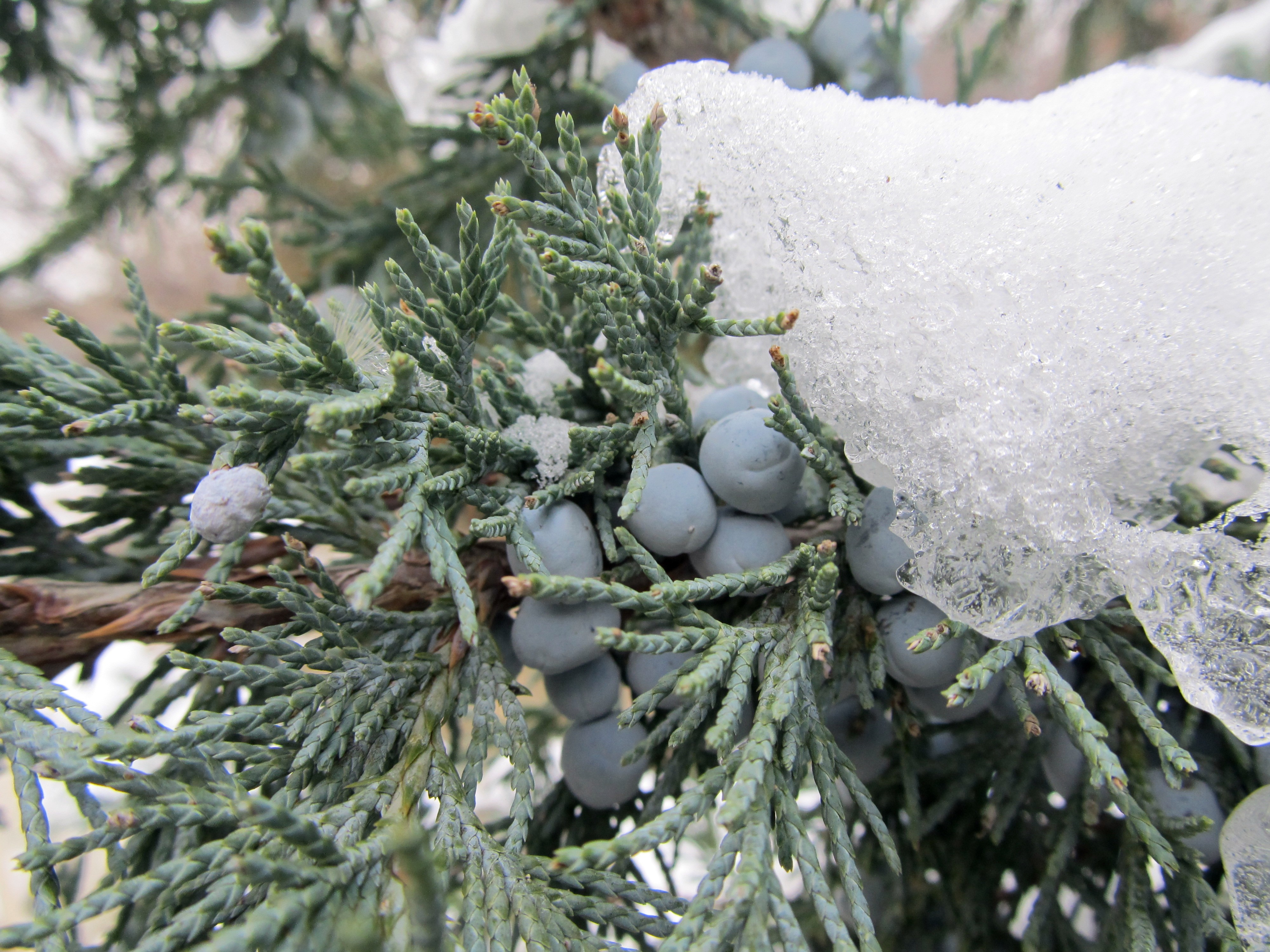
juniper in the snow

Going forward, I will continue to post regularly – as there is no shortage of plant-related things to write about – but I will likely take a week off here and there. I have other projects in mind – some related to Awkward Botany, some not – that will certainly demand much of my attention and time. I have some big ideas for Awkward Botany and beyond, and I will share those with the wide world in due time. For now, I would just like to say thanks all for reading, for commenting, and for sharing Awkward Botany with your friends. Overall, it has been a great year here at Awkward Botany headquarters, and I have you to thank for that. I feel privileged to be part of a community that is infatuated with plants and is fascinated by the natural world.

Good riddance to 2015. It was good, but it gets better. Now we look ahead to 2016. May it be filled with peace, love, and botany.