Year of Pollination: The Anatomy of a Bee

A greater appreciation for pollinators can be had by learning to identify them – being able to tell one from another and calling them by name. Anyone can tell a butterfly from a bee, but how about telling a sweat bee from a leafcutter bee? Or one species of sweat bee from another species of sweat bee? That takes more training. This is where knowing the parts of a bee becomes important.

I am new to learning the names of pollinators. I’ve been learning the names of plants for many years now (and I still have a long way to go), but my knowledge of insect identification is largely limited to one entomology course I took in college and the occasional reading about insects in books and magazines. So, this post is just as much for me as it is for anybody else. It also explains why it is brief and basic. It’s for beginners.

This first illustration is found in the book Pollinators of Native Plants by Heather Holm. The book starts with brief overviews of pollination, pollinators, and pollinator conservation, but then spends nearly 200 pages profiling specific plants and describing the particular species of pollinating insects that visit them. The photos of the insects are great and should be very useful in helping to identify pollinators.

bee anatomy_pollinators of native plants book

This next illustration is from the book California Bees and Blooms by Gordon W. Frankie, et al. The title is a bit deceptive because much of what is found in this book is just as applicable to people outside of California as it is to people within. There is some discussion about plants and pollinators specific to California and the western states, but there is also a lot of great information about bees, flowers, and pollination in general, including some great advice on learning to identify bees. The book includes this basic diagram, but it also provides several other more detailed illustrations that help further describe things like mouth parts, wings, and legs.

bee anatomy_california bees and blooms book

As part of their discussion on identifying bees, the authors of California Bees and Blooms offer these encouraging and helpful words to beginners like me: “Even trained taxonomists must examine most bees under a microscope to identify them to species level, but knowing the characteristics to look for can give you a pretty good idea of the major groups and families of bees that are visiting your garden. These include size, color, and features of the head, thorax, wings, and abdomen.”

If you would like to know more about the pollinators found in your region, including their names, life history, and the plants they visit, books like the aforementioned are a good start. Also, find yourself a copy of a field guide for the insects in your area and a good hand lens. Then spend some time outside closely and quietly observing the busy lives of the tiny things around you. I plan to do more of this sort of thing, and I am excited see what I might find. Let me know what you find.

Here are a few online resources for learning more about bee anatomy and bee identification:

Other “Year of Pollination” Posts:

Dethroning Industrial Argiculture: The Rise of Agroecology

This is the third in a series of posts reviewing the 17 articles found in the October 2014 Special Issue of American Journal of Botany, Speaking of Food: Connecting Basic and Applied Science.

Think Globally, Research Locally: Paradigms and Place in Agroecological Research by Heather L. Reynolds, Alex A. Smith, and James R. Farmer

Before I get into the review, I have to say that it is too bad this article was not selected as one of the open access articles. For me, it really sums up the reasons why this special issue exists at all, and it reads like a clarion call for more research, promotion, and implementation of science-based sustainable agriculture. If I could reprint the whole thing here I would, because my poor excuse for a review will not suffice. Unfortunately, in order to read this article (and most of the other articles I am reviewing here), you will have to pay, unless you otherwise have access through a personal or institutional subscription.  The open access debate is a can of worms that I won’t open here…just saying I wish more people could read this.

In their introduction, the authors discuss the “basic to applied science continuum.” Scientists who choose to do research that is more on the applied side of the spectrum may find it easier to secure funding (due to “convincing social benefits”), but will also find themselves directly confronted with social issues and values. There can be some discomfort involved in this, and so scientists must carefully determine their level of engagement. However, “neither social nor ecological systems can be understood in isolation,” and instead “must be studied as an integrated social ecological system.” Applied science must be carried out in order to address pressing socio-ecological issues, and so scientists interested in this type of research should know what they’re getting into and must “consider what societal values and paradigms they are supporting with their research.”

Applied science research involving agriculture finds itself intertwined with an economic paradigm that is focused on growth – “increased production and consumption of goods and services as indicated by increasing gross domestic product.” The authors argue that this is not sustainable and that agricultural research should be guided in directions that are more place-based and that keep the finite nature of the planet in mind.

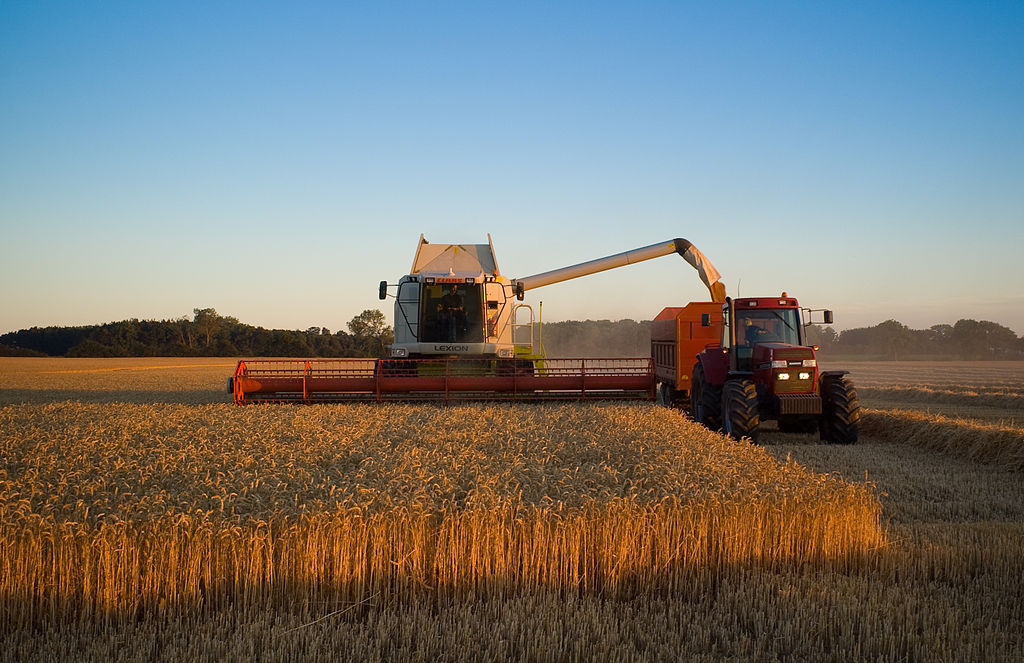
“Since the 1940’s, agriculture has evolved toward an increasingly industrial, corporate, and globalized model, involving large-scale, centralized monoculture production requiring inputs of highly concentrated (fossil) fuel, machinery, water, and synthetic pesticides and fertilizers.” The Green Revolution brought new crop varieties and inputs that helped increase yields significantly, but also had the result of increasing irrigated land by 97%, “the use of nitrogen by 638%, phosphorous fertilizer by 203%, and pesticides by 845% during the latter half of the 20th century.” Industrial agriculture, while highly productive, is a juggernaut that requires incredible amounts of energy, petrochemicals, and water, and despite it’s best efforts, still doesn’t feed the world. Social and political issues are to blame for the food distribution problem; however, in the meantime, industrial agriculture is having profound effects on the environment, “including soil erosion and degradation, biodiversity loss, and water and air pollution on local and global scales.” Coupled with all of the environmnental costs of industrial agriculture are the social costs: “local agroecological knowledge has…been displaced by the  knowledge embodied in industrial inputs and sophisticated farming equipment and techniques,” and widespread industrial agriculture has been linked to increases in cancer, obesity and other human health issues.

photo credit: wikimedia commons

photo credit: wikimedia commons

The expansion of industrial agriculture has largely been driven by the economic paradigm of the United States and other industrialized nations that is focused on growth above all else. This paradigm neglects to acknowledge the “biophysical limits” of planet Earth – “an inescapably finite place, with a constant rate of net solar income and zero inputs of matter beyond the occasional asteroid.” Growth has its limits, and unless those limits are respected, we will find ourselves in dire straits. A warming climate and an increasing level of extinctions are major signs that we have approached the limit. It is time to rethink things.

The question of how to address this dilemma is incredibly complex. The authors of this study offer two broad solutions: reform our economic system and rethink our scientific research efforts. First, the economic problem. A finite planet cannot abide a growth above all else economic approach. The authors propose evolving towards a steady-state economy, in which “the product of population and per capita consumption mildly fluctuates at a scale for which energy and material throughput at current technological capabilities does not strain or exceed the regenerative and assimilative capacity of Earth’s natural capital.” In this economic system, “overdeveloped” countries like the United States will need to find ways to “strategically degrow.”

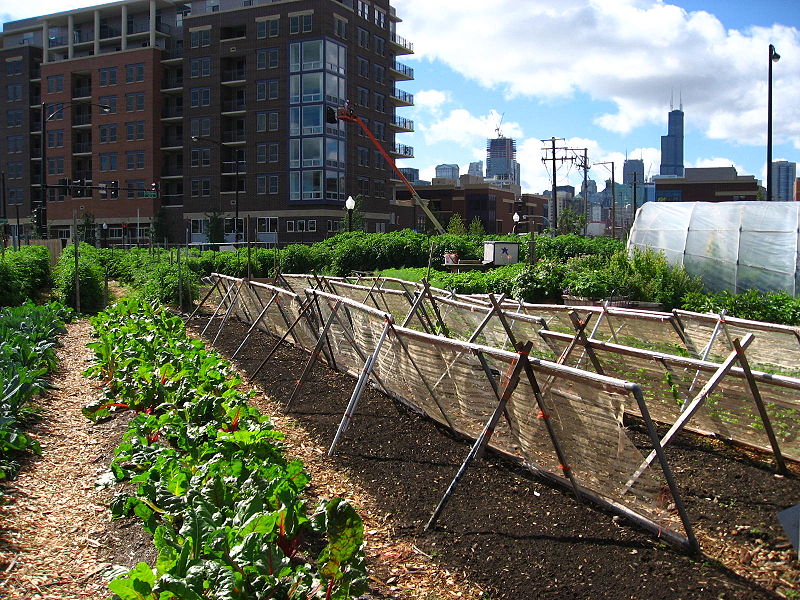
Strategic degrowth will require dismantling the behemoth that is industrial agriculture. Rethinking applied scientific research will assist in this. Rather than a “one-size-fits-all” approach (an approach that has fueled industrial agriculture for decades), research must evolve towards a “custom-fit” approach in order to address the environmental and social conditions of each individual area. Scientists will have to “go local,” collaborating with farmers, land-owners, and other local experts in order to do “place-based” research that will result in “location-specific expertise.”

Urban Farm in Chicago, Illinois (photo credit: wikimedia commons)

 An urban farm in Chicago, Illinois (photo credit: wikimedia commons)

The authors argue for “community-based participatory research,” which relies on scientists and other professionals collaborating to develop research projects, collect data, and arrive at solutions that will address problems particular to local areas. They offer an example of working with farmers in Indiana to research the use of wild bees for agricultural pollination. The data they collected, while helpful for farmers in other areas, was specific to their area of study and “lent credibility to [their] conclusions” when presented to local audiences.

This is a short but dense article that should be read in its entirety if you have access to it. I will end by offering the authors’ description of sustainable agriculture: “the application of ecological and cultural knowledge to local, decentralized, biodiversity-promoting, closed loop food production for a steady-state economy…the farm system is viewed as an agroecological system….wherein traditional and scientific knowledge of ecological interactions are employed to build system fertility, productivity, and resilience from within, thus promoting food sovereignty and autonomy.”

Corpse Flower Blooms Again

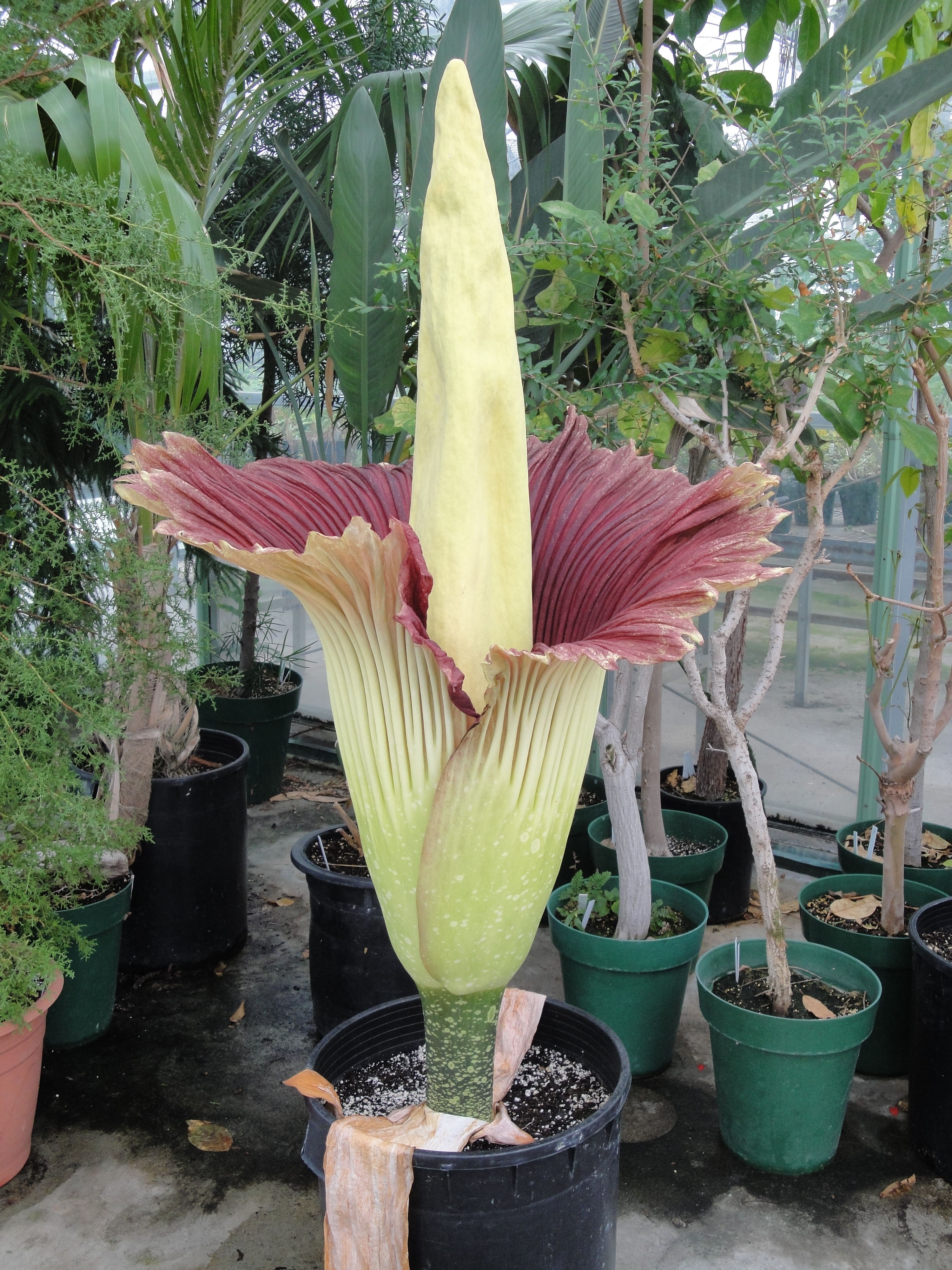
It is not often that a plant in bloom makes headlines, but that is precisely what happened last week when another corpse flower bloomed at Missouri Botanical Garden. Amorphophallus titanum, commonly known as titan arum or corpse flower, is a rare species, both in cultivation and in the wild. It also rarely flowers, and when it does, the bloom only lasts for a few short days. It has the largest known unbranched inflorescence, and its flowers give off the scent of rotting flesh. For all these reasons, it is understandable why a blooming corpse flower might make the news.

Titan arums naturally occur in the western portion of an Indonesian island called Sumatra. Their future is threatened because they occur in rainforests that are currently being deforested for timber and palm oil production. Deforestation is also threatening the survival of the rhinoceros hornbill, a bird that is an important seed distributor of titan arums. Today there are a few hundred titan arums in cultivation in botanical gardens throughout the world. They are a difficult species to cultivate, but their presence in botanical gardens is important in order to learn more about them and to help educate the public about conservation efforts.

Amorphophaulls titanium, titan arum (photo credit: eol.org)

(photo credit: eol.org)

Titan arums are in the arum family (Araceae), a family that consists of around 107 genera including Caladium (elephant ears), Arisaema (jack-in-the-pulpits), and Wolffia (duckweeds), a genus that wins the records for smallest flowering plant and smallest fruit. Titan arums are famous for their giant inflorescence, which can reach more than 10 feet tall. The flowering stalk is known botanically as a spadix, a fleshy stem in the shape of a spike that is covered with small flowers. The spadix of titan arums are wrapped with a leaf-like sheath called a spathe. Upon blooming, the temperature inside the spathe rises and the flowers begin to release a very foul odor, similar to the smell of rotting flesh. This attracts pollinating insects such as carrion beetles, sweat bees, and flesh flies, which get trapped inside the sheath and covered with pollen. After a few hours the top of the spadix begins to wither, allowing the insects to escape, off to pollinate a neighboring corpse flower [the spadix includes male and female flowers, which mature at different times in order to prevent self-pollination]. Once pollinated, the flowers begin to form small red fruits which are eaten by birds. The seeds are then dispersed in their droppings.

The large, stinky inflorescence is not the only structure that gives titan arums their fame. They are also known for their massive single leaf, which can reach up to 20 feet tall and 15 feet wide, the size of a large shrub or small tree. All of this growth is produced from an enormous underground storage organ called a corm. The corms of mature titan arums typically weigh more than 100 pounds, with some known to weigh more than 200 pounds. Titan arums bloom only after the corms have reached a mature size, which takes from seven to ten years. After that they bloom about once a year or once every other year, depending on when the corm has accumulated enough nutrients to support the giant flowering structure.

Below are two time lapse videos of titan arums in bloom. The first is from Missouri Botanical Garden, and the second is from United States Botanic Garden.


Do you like what you see here? If so, please share Awkward Botany with your friends. Use any form of social media you favor. Or just tell someone in person…the old fashioned way. However you do it, please help me spread the word. Awkward Botany: for the phyto-curiosity in all of us.