Tea Time: Self-heal

Prunella vulgaris can be found all over the place. It has also been used to treat just about everything. What else would you expect from a plant known commonly as self-heal, heal-all, all-heal, and woundwort? The medicinal value of this plant has been appreciated for centuries across its expansive range, and studies evaluating its medicinal use continue today. Being such a ubiquitous species – both as a garden plant and a native plant (and also a common weed) – and because it has so much clout in the world of herbal medicine, it’s an obvious candidate for Tea Time.

Self-heal is a member of the mint family (Lamiaceae), easily distinguished by its square stems, opposite leaves, and bilabiate and bilaterally symmetrical (or zygomorphic) flowers. One surprise is that, unlike the many aromatic members of this family, the foliage of self-heal lacks a strong scent. P. vulgaris occurs naturally across Asia, throughout Europe, and in parts of northern Africa. It is also widely distributed across North America. Apart from that, it has been introduced to many regions in the southern hemisphere and has also been frequently moved around throughout its native range. Eurasian varieties now intermingle with North American varieties, which can make it difficult to determine a native individual from an introduced one.

self-heal (Prunella vulgaris)

Self-heal is an adaptable plant that tends to prefer shady, moist locations, but can also be found in open, dry, sunny sites. Find it along forest edges, roadsides, ditches, and trails, as well as on the banks of streams, lakes, and reservoirs. It occurs in gardens, both intentionally planted and as a weed, and can escape into lawns, vacant lots, and open fields, as well as into nearby natural areas.

P. vulgaris is an evergreen that grows both prostrate and upright, sometimes reaching 1 foot tall or more (but is often much shorter). It has shallow, fibrous roots, and its stems root adventitiously as they sprawl across the ground, frequently forming an extensive mat or groundcover. Its leaves are oval to lance-shaped and measure about one inch long. Lower leaves have petioles, while upper leaves may become stalkless. Leaf margins are entire or can be slightly toothed. As plants age, they can develop a coppery or purple-bronze color.

the leaves of self-heal

The flowers of self-heal are generally a shade of purple, but can also be white, pink, or blue. They bloom irregularly in a spike measuring up to two inches long. Flower spikes are thick, dense, cylindrical, and made up of whorls of sharp-pointed bracts. Flowers bloom irregularly along the spike and occur from late spring/early summer into the fall. Each flower produces four nutlets, which sit within a cup-shaped, purple calyx.

As a medicinal herb, self-heal has been used both internally and externally to treat a long list of ailments. These include sore throats, diarrhea, fevers, intestinal infections, liver problems, migraines, heart issues, dermatitis, goiter, and thyroid disfunction, just to name a few. It has been used topically to treat skin irritations, bites, stings, and minor cuts and scrapes. This is thanks to its antimicrobial properties and its ability to stop bleeding. A report in the journal Pharmaceuticals (2023) calls P. vulgaris an “important medicinal plant” due to its “rich chemical composition” and its “pharmacological action.” Chemical analyses find the plant to be a valuable source of phenolic compounds, flavonoids, rosmarinic acid, and ursolic acid, among numerous other compounds. If you are curious to learn more detailed information regarding this plant’s medicinal value, you can refer to the above report, as well as one found in Frontiers in Pharmacology (2022).

self-heal tea

P. vulgaris is an edible plant, and its young leaves can be eaten raw or cooked. The leaves together with the flowers can also be dried and used to make a tea. This is how I had it. I used about two teaspoons of dried leaves to one cup of water. Feel free to use more if you would like. I thought the tea was pretty mild. It had a slight sweetness to it and a hint of mint flavor. It has been described as bitter, but I didn’t find it to be overly so (although I may have a higher tolerance for bitterness). Sierra tried it and said that it tasted like “water left over from something else.” That might be because it was more diluted than she would have preferred. Overall, I thought it was a pleasant experience and would be happy to drink it again.

More Tea Time Posts on Awkward Botany:

Tea Time: Linden Flower Tea

Lindens make great trees for urban areas. A few species and hybrids in particular are commonly planted in parks, yards, and along the streets of cities across the northern hemisphere and have been for decades – centuries even. They cast dense shade, are tolerant of a variety of climates and soil conditions, and are generally easy to maintain. For much of the year as you move throughout the city you live in, you likely pass by dozens of lindens without thinking twice about them. They are ubiquitous, conventional, ordinary, common. Unless they’re in bloom. For a few weeks in early to mid-summer, flowering lindens produce an impossibly sweet fragrance that can’t be ignored. Along with the scent comes the sound of hundreds of buzzing bees collecting pollen and nectar from the pendulous blooms.

Lindens are trees and shrubs in the family Malvaceae and genus Tilia. Around 30 or so species are found in temperate regions across the northern hemisphere, mostly in Europe and Asia. Depending on who you ask, there are between one and three species native to North America. Tilia caroliniana and Tilia heterophylla are considered by some to be varieties of Tilia americana, or American basswood, which is distributed across central and eastern United States and north into parts of Canada. Another common name for linden is lime because words used to refer to the tree in older languages were similar to the word lime. The name basswood comes from the tree’s fibrous inner bark, known as bast.

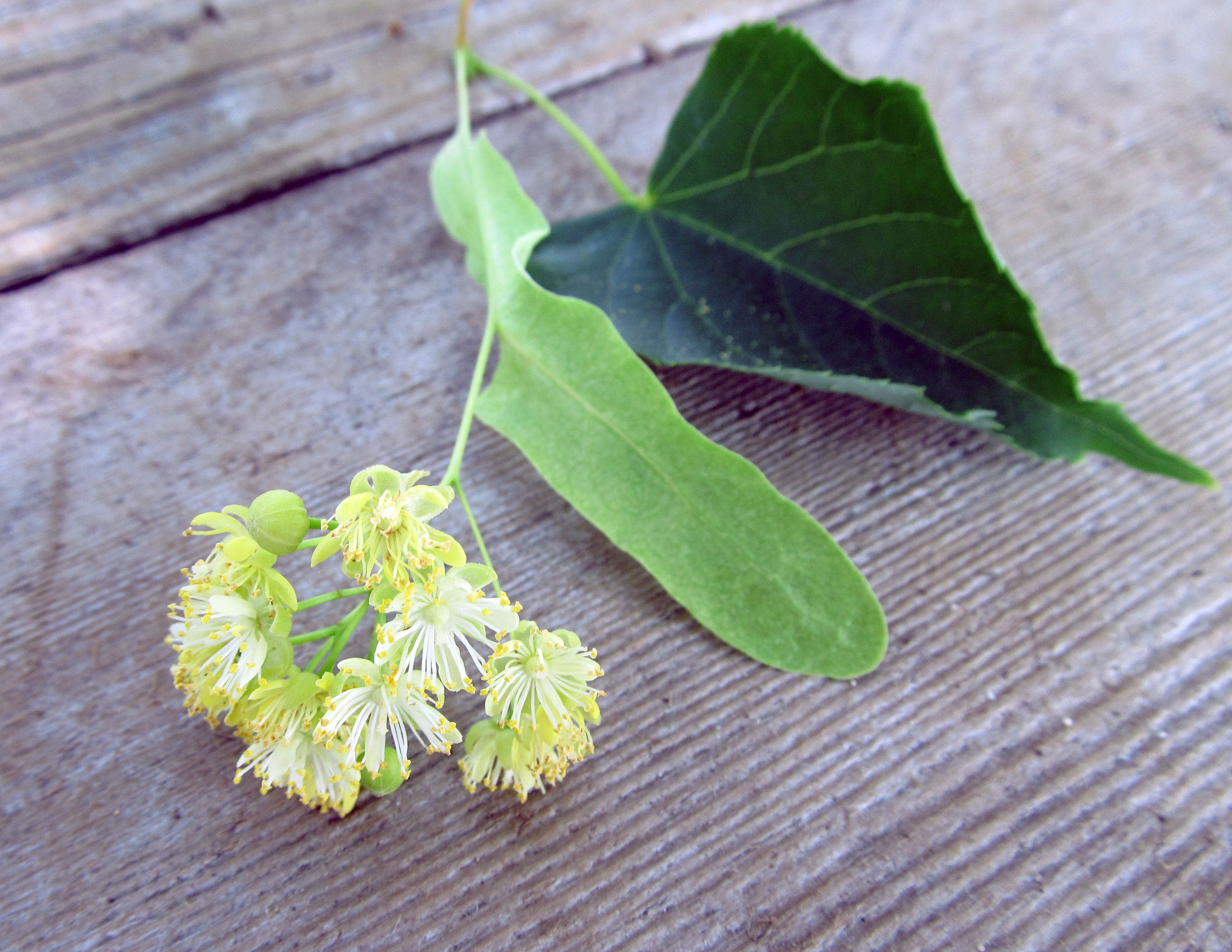
Linden leaves are generally heart-shaped and asymmetrical with serrate margins. Small clusters of little yellow to white flowers form at the end of a slender stem attached to a narrow, ribbon-like, yellow-green bract. The bract aids in seed dispersal by helping the fruits float on the wind away from the parent tree in a manner similar to the samaras of maple trees. The fruits are small, round, hardened drupes that resemble little peas. The fragrant, nectar-rich flowers are not only favored by beekeepers for honey production, but also have a long history of being harvested for making tea (i.e. tisane). Linden flower tea is said to have a number of medicinal uses and health benefits, all of which I take with a grain of salt. This series of posts isn’t meant to be an investigation into the health claims of plants, but instead an opportunity for me – out of sheer curiosity – to try making tea out of a variety of different plants . If medicinal uses interest you, I encourage you to seek out credible, peer-reviewed sources.

I made linden flower tea from flowers I collected from Tilia cordata, commonly known as littleleaf linden. It was an easy one to find due to its popularity as an urban tree. The natural distribution of littleleaf linden extends from Britain across Europe and into western Asia. Its triangular-ovate shaped leaves are 4-10 centimeters long, glossy green on top, and pale green on the bottom with tufts of orange hairs along the leaf veins, concentrated at the base of the leaf where the leaf blade meets the petiole. The tree can reach up to 21 meters tall and has an oval or rounded-pyramidal shape, though many trees in urban areas are cultivars and can be smaller and more compact.

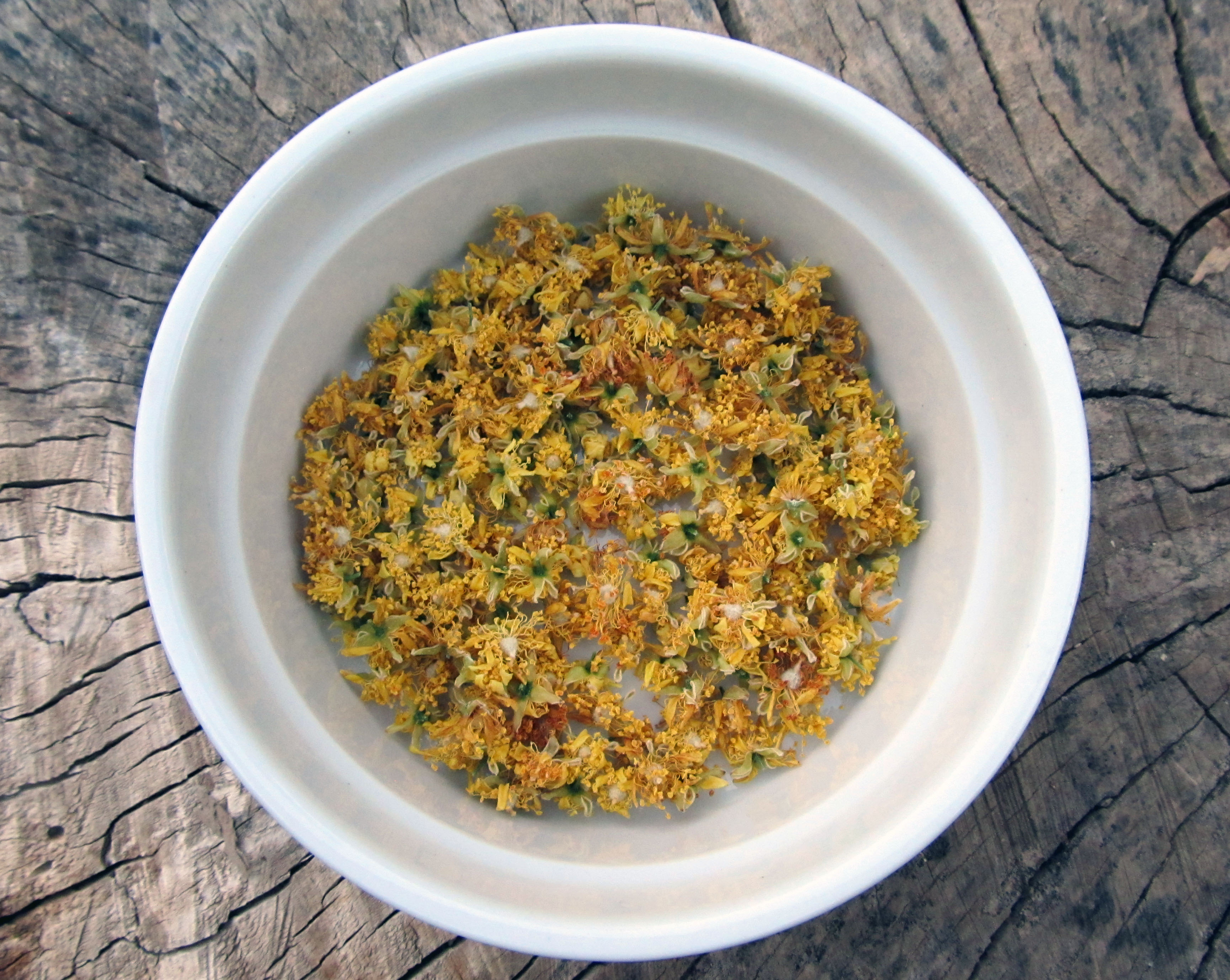
I harvested the flowers – bracts and all – in late June. It’s advised that they not be harvested directly after a rain (or after being hit by sprinklers), and that they are harvested when the flowers are newly opened. I presume this is because the flowers are at their freshest at this point and will be the best for making tea. I layed the flowers out to dry on a clean kitchen towel on top of a metal cake rack. It only takes 2 or 3 days for them to dry. After drying I removed and saved all the flowers and threw out the bracts and stems, but apparently you can use the entire inflorescence if you’d like.

There are several linden flower tea recipes online. I went with 3 cups of boiling water poured over 1 tablespoon dried linden flowers, covered and steeped for 15 minutes. The resulting tea was an appealing pastel yellow color. I tried it plain as well as sweetened with a little bit of honey. I preferred it sweetened, but unsweetened wasn’t too bad, just a little bitter. It has a floral taste and pleasant smell. Sierra said it tasted earthy, like something she wasn’t supposed to be drinking. Despite that odd review, she said she liked it. Since several sources discussed the calming, sleep-inducing effects of the tea, I made sure to drink it in the evening when it would be normal for me to be feeling sleepy. I suggest you do the same.

More Tea Time Posts on Awkward Botany

Tea Time: Lemon Balm Tea

Cooler weather has me thinking about hot tea again. This time around I decided to go with something I’ve already tried and know that I like. Despite the fact that lemon balm can be quite abundant and readily available, I don’t really drink it that often. Yet, considering claims made regarding its calming nature, this is definitely the year to have it.

lemon balm (Melissa officinalis)

Melissa officinalis is an herbaceous perennial native to the Mediterranean Basin and beyond. It has been widely planted outside of its native range and has become naturalized – some might say weedy – in many parts of the world. It self-sows easily and also spreads readily via stolons and/or rhizomes. It isn’t picky about soil type and grows well in both sun and part shade. Lemon balm is in the mint family and acts in a similarly aggresive way to some of its relatives, but luckily isn’t nearly as tenacious as mint in its tendency to dominate a garden bed.

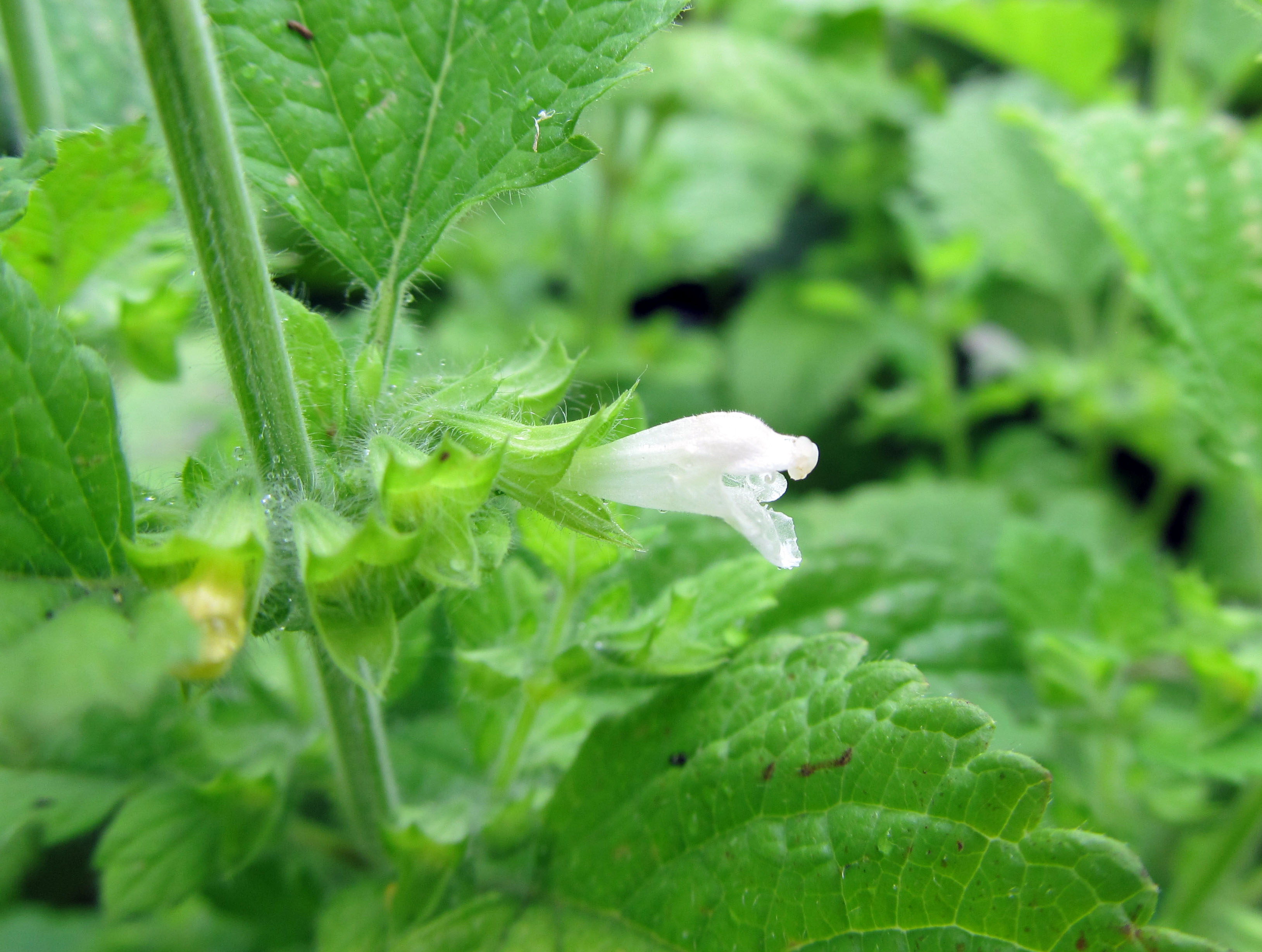
The leaves of lemon balm have a wrinkled appearance, are triangular or wedge-shaped with toothed margins, and are arranged oppositely on square stems up to three feet tall. Small, white or pale yellow (sometimes pale pink) flowers are inconspicuous and produced in the axils of leaves. They are often sparse enough to be hardly noticeable. This plant’s aesthetic appeal is all about its pleasant and prolific green foliage. Yet, despite the simplicity of its flowers, lemon balm is known for being attractive to bees and is often propagated specifically to feed honeybees. In fact, the genus name Melissa apparently means honeybee in Ancient Greek.

lemon balm flower

The leaves of lemon balm can be consumed fresh or dried and have a number of other uses besides tea. They have a sweet, lemon-like scent and, like so many other herbs with a long history of human use, have a wide array of medicinal claims associated with them. Many sources agree on lemon balm’s ability to calm the nerves, reduce stress and anxiety, and fight off insomnia. According to The Herb Society of America’s Essential Guide to Growing and Cooking with Herbs, lemon balm “has been used as a relaxing agent and as an aid to restful, nightmare-free sleep.” Sounds like I could use more lemon balm in my life.

dried lemon balm leaves

Lemon balm tea can be made with either fresh or dried leaves, but fresh leaves seem to make a more flavorful tea. I had only tried tea made from dried leaves until recently and have decided that I prefer fresh leaves. Simply harvest a few leaves, cut or tear them apart to release the lemony flavor, place them in a cup, and cover them in hot water. Some recipes (like this one) suggest adding honey, while others mix lemon balm with additional herbs known for their lemon-like flavor or relaxing nature (lemon thyme and lemon verbena, for example). Sierra was immediately taken by lemon balm tea when she tried it – in contrast to her experience with violet leaf tea – and even said it was right up there with her preferred black teas. I’m not surprised, as it is one of my favorite teas as well.

lemon balm tea made with freshly harvested leaves

More Tea Time Posts on Awkward Botany: