How Pitcher Plants Eat Bugs (Frog Optional)

SAMSUNG

A few months ago at work I captured this photo of a frog inside of a pitcher plant. Do you see it? It is pretty well camouflaged and poking its head out just enough to intercept curious insects lured in by the promise of nectar, eating them before they can make their way into the tube. Either way, approaching insects are about to meet their fate. Whether by plant or by frog, they are destined to be consumed lest they turn away in time.

This frog was hiding inside the modified leaf of a species of Sarracenia, a carnivorous plant commonly known as a North American pitcher plant. There are at least eight species of Sarracenia, all of which naturally occur in the southeastern region of the United States. One species, Sarracenia purpurea, also occurs in the northeast, the upper Midwest, and throughout much of Canada. Sarracenia is in the family Sarraceniaceae along with two other genera of pitcher plants, Darlingtonia (the cobra plant, native to northern California and southern Oregon) and Heliamphora (the sun pitchers, native to South America). Plants in this family are not to be confused with the distantly related tropical pitcher plants which are in the genus Nepenthes (family Nepentheaceae).

The natural habitats of Sarracenia are sunny, open areas that remain permanently wet, including meadows, savannahs, fens, and swamps. The soils are acidic, nutrient poor, and typically composed of sandy peat commonly derived from sphagnum moss. In the southeast, less than 5% of the original (pre-European settlement) Sarracenia habitat remains, threatening its survival in the wild. Sarracenia oreophila (green pitcher plant) is currently listed as critically endangered on the IUCN Red List.

Flowering occurs in the spring, usually before pitchers form. Individual flowers are formed on tall stalks that rise straight up and then bend at the very top, hanging the flower upside down. Early flowering and tall flower stalks help prevent pollinating insects from being consumed by the plant. In his book The Savage Garden, Peter D’Amato describes the flowers as “showy, brilliant, and very unusual – a wonderful bonus to an already handsome class of foliage plants.” The flowers are either yellow or a shade of red and last about two weeks, after which the petals drop and a seed pod forms. Seeds are released from the fruits in the fall.

Flower of Sarracenia rubra (sweet pitcherplant) - photo credit: www.eol.org

Flower of Sarracenia rubra (sweet pitcher plant) – photo credit: www.eol.org

D’Amato writes that Sarracenia are among the “most ravenous” plants, with each leaf having the potential of trapping “thousands of nasty insects.” In some cases pitchers even flop over, heavy with the weight of bugs inside them. The specifics of capturing and killing insects varies between species of Sarracenia, but in general prey is lured to the opening of the pitcher with a combination of nectar, scent, and color. Upon entering the tube, gravity, waxy surfaces, drugs, and hairs force the captives downward where they are eventually consumed by enzymes and microbes. Digested insects provide the plant with nutrients necessary for growth – nutrients that otherwise are taken up by the roots of plants that occur in more nutrient rich soils.

Sarracenia purpurea (purple pitcher plant) is unique in that its pitchers lack a “hood” or “lid” – a standard feature of other species of Sarracenia that helps keep rain from entering the pitchers. Instead, the pitchers fill with water and insects are killed by drowning. The most brutal killer is probably Sarracenia psittacina (parrot pitcher plant) which has an additional opening inside of its pitcher. The opening is small and difficult to find again once an insect is on the wrong side of it. The inside walls of the pitcher are covered in long, sharp, downward pointing hairs, and the struggling insect is pierced repeatedly by the hairs as it makes its way to the bottom of the tube to be digested.

Hoodless pitchers of Sarracenia purpurea (photo credit: www.eol.org)

Hoodless pitchers of Sarracenia purpurea (photo credit: www.eol.org)

Hooded pitchers of Sarracenia leucophylla (photo credit: www.eol.org)

Hooded pitchers of Sarracenia leucophylla (photo credit: www.eol.org)

According to D’Amato, “the Sarracenia are one of the simplest carnivorous plants to grow, and certainly among the most fun and rewarding.” Learn more about growing North American pitcher plants by consulting D’Amato’s book and/or by visiting the website of the International Carnivorous Plant Society.

Want to learn more about Sarracenia? The Plants are Cool, Too! web series has a great video about them:

Other carnivorous plant posts:

Plants Use Mycorrhizal Fungi to Warn Each Other of Incoming Threats

The March 2015 issue of New Phytologist is a Special Issue focusing on the “ecology and evolution of mycorrhizas.” This is the second of two articles from that issue that I am reviewing. Read the first review here.

Interplant signalling through hyphal networks by David Johnson and Lucy Gilbert

When an individual plant is attacked by an insect or fungal pest, it can warn neighboring plants – prompting them to produce compounds that either repel the pests or attract beneficial organisms that can fight off the pests. There are two main pathways for a plant to send these communications: through the air by way of volatile organic compounds (VOC’s) or through the soil by way of a vast collection of fungal hyphae called mycelium. Plant communication by aerial release of VOC’s has been well documented; communication via mycelium, however, is a fairly recent discovery, and there is much left to learn.

“The length of hyphae in the soil and the ability of mycorrhizal fungi to form multiple points of entry into roots can lead to the formation of a common mycelial network (CMN) that interconnects two or more plants.” These CMN’s are known to play “key roles in facilitating nutrient transport and redistribution.” We now understand that they can also “facilitate defense against insect herbivores and foliar necrotophic fungi by acting as conduits for interplant signaling.” The purpose of this research is to explore the “mechanisms, evolutionary consequences, and circumstances” surrounding the evolution of this process and to “highlight key gaps in our understanding.”

interplant signaling

An illustration of plant communication (aka interplant signaling) by air and by soil form the article in New Phytologist.

If plants are communicating via CMN’s, how are they doing it? The authors propose three potential mechanisms. The first is by signal molecules being transported “in liquid films on the external surface of hyphae via capillary action or microbes.” They determine that this form of communication would be easily disrupted by soil particles and isn’t likely to occur over long distances. The second mechanism is by molecules being transported within hyphae, passing from cell to cell until they reach their destination. The third mechanism involves an electrical signal induced by wounding.

If signal molecules are involved in the process, what molecules are they? There are some molecules already known to be transported by fungal hyphae (lipids, phosphate transporters, and amino acids) and there are also compounds known to be involved in signaling between plants and mycorrhizal fungi. Exploring these further would be a good place to start. We also need to determine if specific insect and fungal pests or certain types of plant damage result in unique signaling compounds.

It has been established that electrical signals can be produced in response to plant damage. These signals are a result of a process known as membrane depolarization. “A key advantage of electrical-induced defense over mobile chemical is the speed of delivery.” Movement of a molecule through cells occurs significantly slower than an electrical charge, which is important if the distance to transport the message is relatively far and the plant needs to respond quickly to an invasion. Various aspects of fungal physiology and activity have been shown to be driven in part by membrane depolarization, so involving it in interplant signaling isn’t too far-fetched.

photo credit: wikimedia commons

photo credit: wikimedia commons

How and why does a system of interplant communication involving mycorrhizal fungi evolve? And what are the costs and benefits to the plants and fungi involved? Determining costs and benefits will depend largely on further establishing the signaling mechanisms. Exploring real world systems will also help us answer these questions. For example, in a stable environment such as a managed grassland where CMNs are well developed, a significant loss of plants to a pest or disease could be devastating for the mycorrhizal community, so “transferring warning signals” would be highly beneficial. Conversely, in an unstable environment where a CMN is less established, assisting in interplant signaling may be less of an imperative. Regarding questions concerning the degree of specialization involved in herbivore-plant-fungal interactions: if a “generic herbivore signal” is sent to a neighboring plant that is not typically affected by the attacking herbivore, the cost to the plant in putting up its defenses and to the fungus in transporting the message is high and unnecessary. So, in an environment where there are many different plant species, species-specific signals may be selected for over time; in areas where there are few plant species, a generic signal would suffice.

As research continues, the mysteries of “defense-related” interplant communication via CMN’s will be revealed. Field studies are particularly important because they can paint a more accurate picture compared to “highly simplified laboratory conditions.” One exciting thing about this type of communication is that it may mean that some plants are communicating with each other across great distances, since “some species of fungi can be vast.” CMNs can also target specific plants, and compared to communication via aerial VOC’s, the signal will not be diluted by the wind.

Since I am in the process of reading Robin Wall Kimmerer’s book, Braiding Sweetgrass, I have decided to include her description of a tree-mycorrhizal fungi relationship:

The trees in a forest are often interconnected by subterranean networks of mycorrhizae, fungal strands that inhabit tree roots. The mycorrhizal symbiosis enables the fungi to forage for mineral nutrients in the soil and deliver them to the tree in exchange for carbohydrates. The mycorrhizae may form fungal bridges between individual trees, so that all the trees in a forest are connected. These fungal networks appear to redistribute the wealth of carbohydrates from tree to tree. A kind of Robin Hood, they take from the rich and give to the poor so that all the trees arrive at the same carbon surplus at the same time. They weave a web of reciprocity, of giving and taking. In this way, the trees all act as one because the fungi have connected them. Through unity, survival. All flourishing is mutual.

Year of Pollination: Hellstrip Pollinator Garden

This month I have been reading and reviewing Evelyn Hadden’s book, Hellstrip Gardening, and I have arrived at the fourth and final section, “Curbside-Worthy Plants.” As the title suggests, this section is a list of plants that Hadden has deemed worthy of appearing in a curbside garden. It’s not exhaustive, of course, but with over 100 plants, it’s a great start. Photos and short descriptions accompany each plant name, and the plants are organized into four groups: showy flowers, showy foliage, culinary and medicinal use, and four-season structure.

This list is useful and fun to read through, but there isn’t much more to say about it beyond that. So I have decided to write this month’s Year of Pollination post about creating a hellstrip pollinator garden using some of the plants on Hadden’s list. Last year around this time I wrote about planting for pollinators where I listed some basic tips for creating a pollinator garden in your yard. It’s a fairly simple endeavor – choose a sunny location, plant a variety of flowering plants that bloom throughout the season, and provide nesting sites and a water source. If this sounds like something you would like to do with your hellstrip, consider planting some of the following plants.

Spring Flowers

Spring flowering plants are an important food source for pollinators as they emerge from hibernation and prepare to reproduce. There are several spring flowering trees and shrubs on Hadden’s list. Here are three of them:

  • Amelanchier laevis (Allegheny serviceberry) – A multi-trunked tree or large shrub that flowers early in the spring. Other small trees or shrubs in the genus Amelanchier may also be suitable.
  • Cercis canadensis (eastern redbud) – A small tree that is covered in tiny, vibrant, purple-pink flowers in early spring.
  • Ribes odoratum (clove currant) – A medium sized shrub that flowers in late spring. Try other species of Ribes as well, including one of my favorites, Ribes cereum (wax currant).

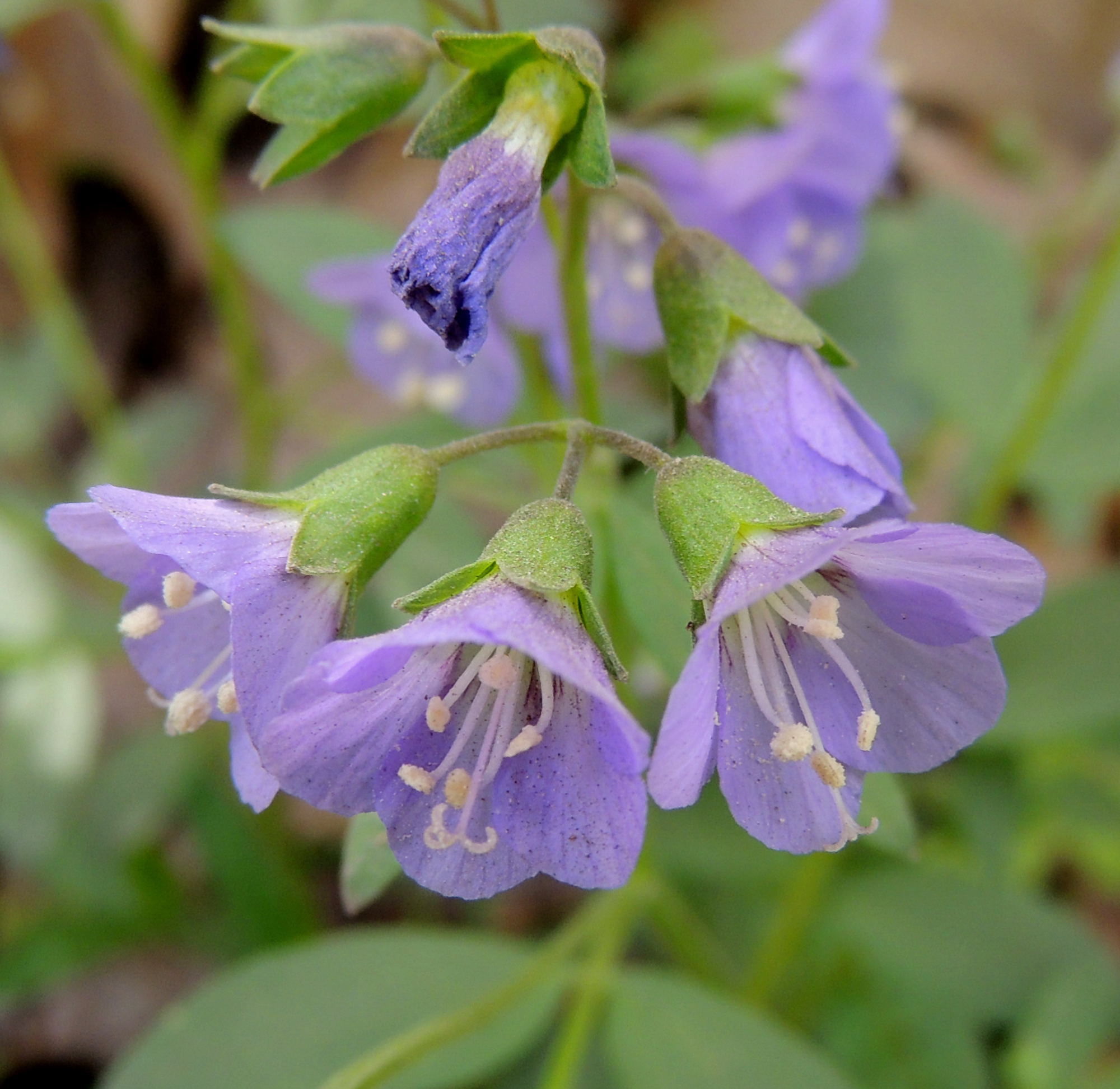
There aren’t many spring flowering herbaceous plants on Hadden’s list, but two that stood out to me are Amsonia hubrichtii (bluestar) and Polemonium reptans (creeping Jacob’s ladder).

Creeping Jacob's ladder (Polemonium reptens) is native to eastern North America and attracts native bees with its mid-spring flowers. (photo credit: www.eol.org)

Creeping Jacob’s ladder (Polemonium reptens) is native to eastern North America and attracts native bees with its mid-spring flowers. (photo credit: www.eol.org)

Summer Flowers

There is no shortage of summer flowering plants, and Hadden’s list reflects that. When planting a pollinator garden, be sure to include flowers of different shapes, sizes, and colors in order to attract the greatest diversity of pollinators. Here are a few of my favorite summer flowering plants from Hadden’s list:

  • Amorpha canescens (leadplant) – A “good bee plant” and also a nitrogen fixer.
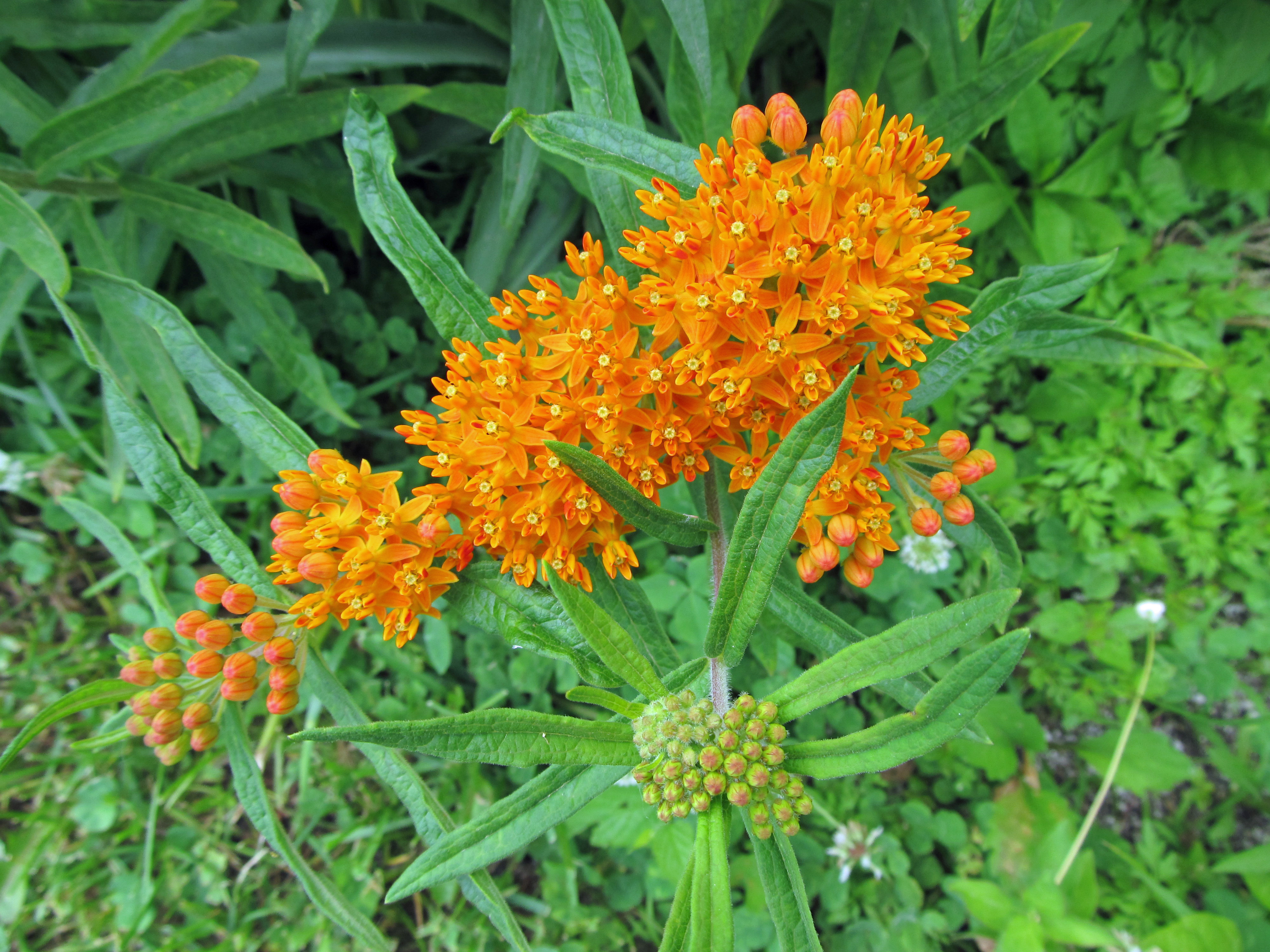
  • Asclepias tuberosa (butterfly weed) – “Valuable pollinator plant and larval host for monarch, gray hairstreak, and queen butterflies.” I love the tight clusters of deep orange flowers on this plant.
  • Coreopsis verticillata (threadleaf coreopsis) – I really like coreopsis (also known as tickseed). Try other species in the genus as well.
  • Penstemon pinifolius (pineleaf penstemon) – North America is bursting with penstemon species, especially the western states. All are great pollinator plants. Pineleaf penstemon is widely available and great for attracting hummingbirds.
  • Salvia pachyphylla (Mojave sage) – A very drought-tolerant plant with beautiful pink to purple to blue inflorescences. Salvia is another genus with lots of species to choose from.
  • Scutellaria suffratescens  (cherry skullcap) – A good ground cover plant with red-pink flowers that occur from late spring into the fall.
The flowers of butterfly weed (Asclepias tuberosa). Milkweed species (Asclepias spp.) are essential to monarch butterflies as they are the sole host plant of their larvae.

The flowers of butterfly weed (Asclepias tuberosa). Milkweed species (Asclepias spp.) are essential to the survival of monarch butterflies as they are the sole host plant of their larvae.

Fall Flowers

Fall flowering plants are essential to pollinators as they prepare to migrate and/or hibernate. Many of the plants on Hadden’s list start flowering in the summer and continue into the fall. A few are late summer/fall bloomers. Here are some of my favorites:

  • Epilobium canum (California fuchsia) – “Profuse orange-red tubular flowers late summer into fall furnish late-season nectar, fueling hummingbird migration.”
  • Liatris punctata (dotted blazing star) – Drought-tolerant plant with tall spikes of purple-pink flowers. “Nectar fuels migrating monarchs.”
  • Symphyotrichum oblongifolium (aromatic aster) – Loaded with lavender-blue flowers in the fall. It’s a spreading plant, so prune it back to keep it in check. Hadden recommends it for sloped beds.
  • Agastache rupestris (sunset hyssop) – Spikes of “small tubular flowers in sunset hues attract hummingbirds, butterflies, and bees midsummer to fall.” Try other species in the Agastache genus as well.
  • Monarda fistulosa (wild bergamot) – The unique flower heads are like magnets to a wide variety of pollinators. Also consider other Monarda species.
Lemon beebalm (Monarda citriodora), an annual plant that attracts an array of pollinators.

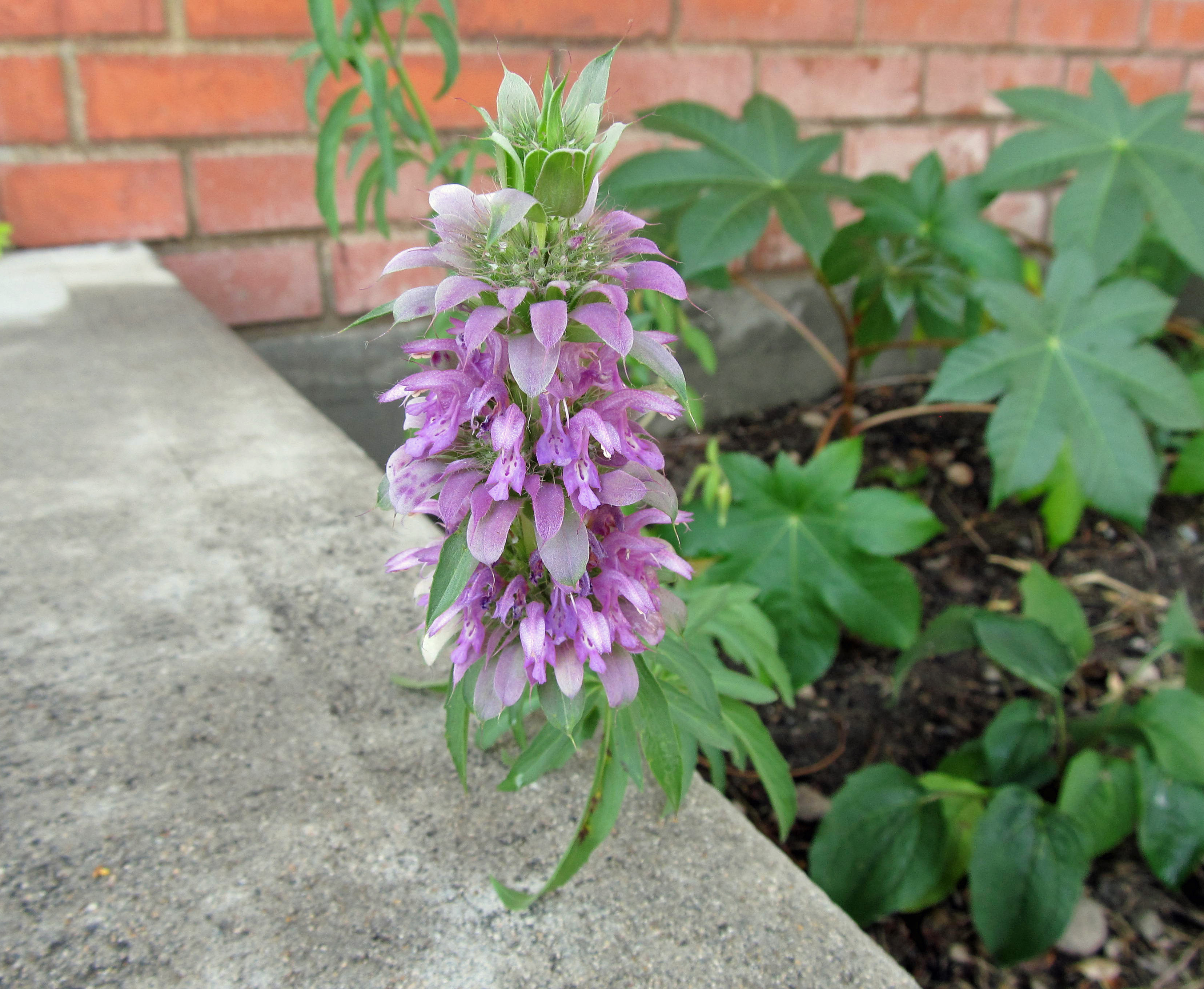
Lemon beebalm (Monarda citriodora), an annual plant that attracts an array of pollinators.

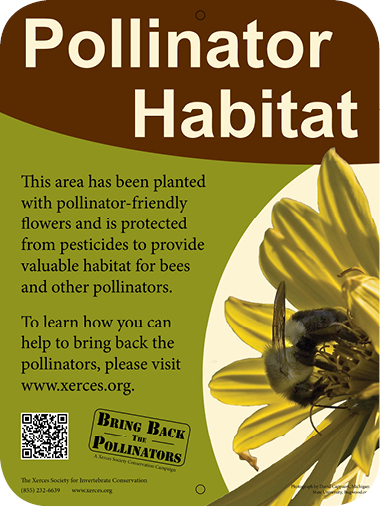
As with any other garden, your hardiness zone, soil conditions, water availability, and other environmental factors must be considered when selecting plants for your hellstrip pollinator garden. Groups like Pollinator Partnership and The Xerces Society have guides that will help you select pollinator friendly plants that are suitable for your region. Additionally, two plans for “boulevard pollinator gardens” complete with plant lists are included in the book Pollinators of Native Plants by Heather Holm – one plan is for sunny and dry spots and the other is for shady and wet spots (pgs. 268-269). Once your pollinator garden is complete, consider getting it certified as a pollinator friendly habitat. There are various organizations that do this, such as the Environmental Education Alliance of Georgia. If you are interested in such a thing, the public nature of your hellstrip garden makes it an ideal place to install a sign (like the one sold in The Xerces Society store) announcing your pollinator garden and educating passersby about the importance of pollinator conservation.

habsign

Other “Year of Pollination” Posts

Botany in Popular Culture: Black Orchid

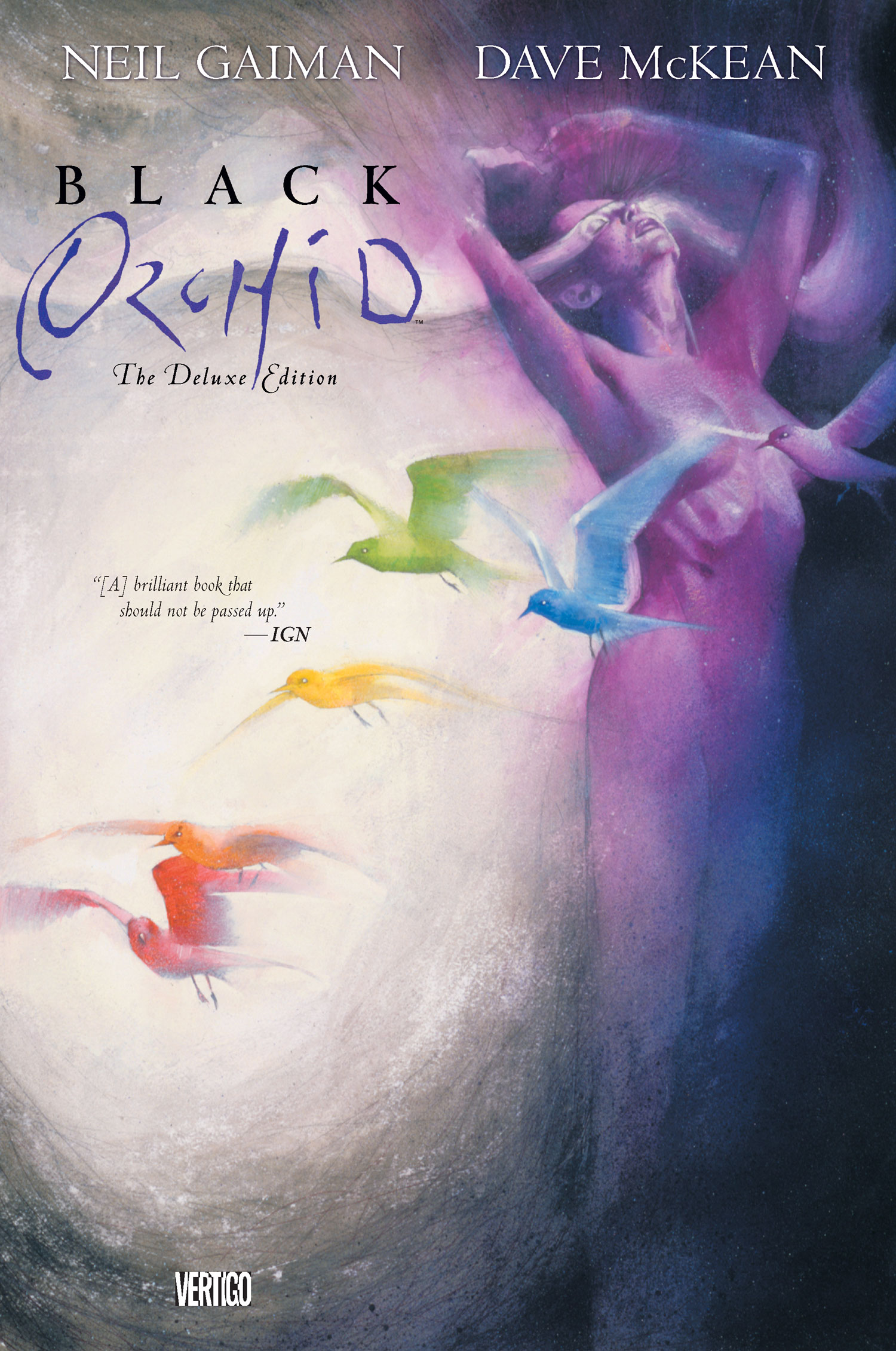
Black Orchid coverBlack Orchid is a minor character in the DC Comics universe. She is a superhero with a troubled past, and although she first began appearing in comic books in 1973, her origin was a mystery until 1988 when Neil Gaiman wrote his 3 part mini-series entitled, Black Orchid, revealing that she was a plant-human hybrid created by Dr. Philip Sylvain after combining the DNA of Susan Linden-Thorne with the DNA of an epiphytic orchid.

Curiously, in order to reveal Black Orchid’s origins, Gaiman has the namesake of his series killed off within the first few pages. A master of disguise, Black Orchid is following her standard modus operandi of impersonating someone in order to infiltrate enemy headquarters. In this case she is pretending to be a secretary in Lex Luthor’s employ. While sitting in on a board meeting in which the activities of Luthor’s crime ring are being discussed, her secret identity is revealed, which leads to her being tied to a chair and shot through the head. The bullet doesn’t kill her though since invulnerability to bullets is one of her superpowers (along with flight, super strength, shape shifting, and others). However, the building is also set on fire, and ultimately all that is left of Black Orchid at the end of the night are some charred plant remains.

The story can’t end there though, so as Black Orchid goes up in flames, two of her clones emerge from flower buds in Dr. Sylvain’s greenhouse. They aren’t sure what they are at first. They have some of Susan’s memories but don’t know what to make of them. One of them is a child called Suzy, and the other is an adult who eventually gets the name Flora Black. They find their way to Dr. Sylvain who tells them the story of how they and the original Black Orchid came to be.

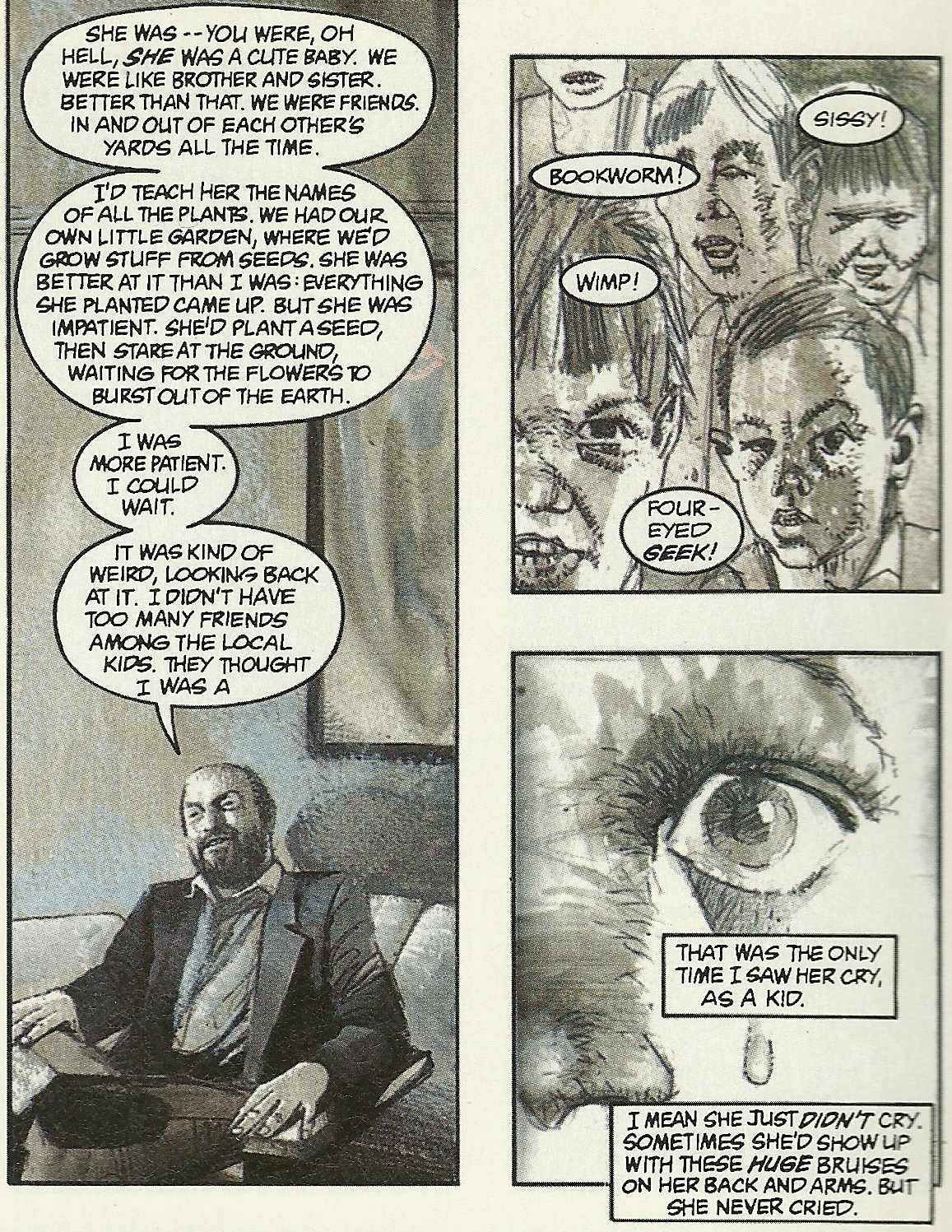
Dr. Philip Sylvain tells the Black Orchid clones about how he

Dr. Philip Sylvain tells the Black Orchid clones about his childhood with Susan Linden.

Susan was Dr. Sylvain’s childhood friend. They spent lots of time in the garden together learning about plants and growing things. But Susan was abused regularly by her father and eventually ran away as a teenager. Dr. Sylvain didn’t see her for many years, and in the meantime grew up and became a botanist. At university, Dr. Sylvain studied with Jason Woodrue, Pamela Isley, and Alex Holland, each of whom went on to become plant-human hybrids of some sort (Floronic Man, Poison Ivy, and Swamp Thing respectively). Dr. Sylvain had ambitions of making “people of plants” as part of a plan to save a dying earth. His ambitions remained a dream until Susan returned.

Dr. Sylvain's friends from university who later became plant-hybrid heroes and villians.

Dr. Sylvain’s friends from university who later became notorious plant-human hybrids.

Susan was running away again – this time from her abusive husband, Carl Thorne, who worked for Lex Luthor as an arms dealer. Thorne was in trouble with the law and was ultimately put on trial for his crimes. Susan came to Dr. Sylvain seeking refuge. She was set to testify against her husband, but before she could do that, Thorne killed her. Dr. Sylvain then used Susan’s DNA to create the crime fighting, superhero, Black Orchid.

Coincidentally, as the original Black Orchid is being killed and the two new Black Orchids are emerging, Thorne is finishing his prison sentence and being released. He first goes to Luthor to try and get his job back, but is turned away. Next he goes to Dr. Sylvain’s house where he discovers the newly emerged Black Orchids. He alerts Luthor, who sends a team to hunt down the “super-purple-flower women” and bring them back to the lab for “examination and dissection.” The rest of the series details the Black Orchids’ mission to make sense of who they are and what their purpose in life is while simultaneously contending with Luthor’s men (and Thorne) who are out to get them. Flora Black meets with Batman, Poison Ivy, and Swamp Thing along the way, filling in her origin story and gaining instruction and insight about her future as a superhero.

Gaiman is a popular, prolific, and well-respected author; however, this is the first of his books that I have read. I was impressed by his storytelling and appreciated the departure from the typical superhero vs. villain narrative. Dave McKean did the artwork for this series, which was an excellent decision as his work is also quite atypical for the genre. His illustrations gave the book a mystical feel as the panels altered from standard storytelling sequences to abstract, fantasy pieces.

This Black Orchid storyline continued for several issues after Gaiman’s three part mini-series without Gaiman as the author. Flora Black was eventually killed off. A new version of the Black Orchid character currently appears in the ongoing Justice League Dark series.

Alba Garcia (aka Black Orchid), a member of Justice League Dark

Alba Garcia (aka Black Orchid), a member of Justice League Dark

You can read more about Black Orchid on her Wikipedia and Comic Vine pages.

Botany and Everyday Chemistry

What’s not to love about plants? They provide us with oxygen, food, medicine, fuel, fibers, and countless other things. They help filter groundwater and sequester carbon. They beautify our landscapes and communities. They provide habitat for wildlife and help reduce soil erosion. And the list goes on.

But there is more to plants than meets the eye. There is something deeper within – at their cellular and molecular levels – that is just as worthy of our fascination and appreciation as the blooms that beautify our yards and the fruits that fill our tables, and that is the abundant and diverse world of chemical compounds present in the botanical kingdom.

But how does one gain an understanding and appreciation for such a subject. Luckily, there is a blog for that. It’s called Compound Interest. Authored by UK chemistry teacher, Andy Brunning, Compound Interest explores the “chemistry and chemical reactions we come across on a day-to-day basis.” Much of what Andy writes about doesn’t have anything to do with plants – fireworks, bacon, gunpowder, snowflakes, etc. – but a sizeable portion of his posts do (evidenced particularly by the Food Chemistry category). For example: Did you know nutmeg is hallucinogenic? Have you ever wondered why avocados turn brown so quickly? Why is it that some people have such a strong aversion to cilantro (aka coriander)? What makes coffee bitter, chili peppers spicy, and catnip so attractive to cats?

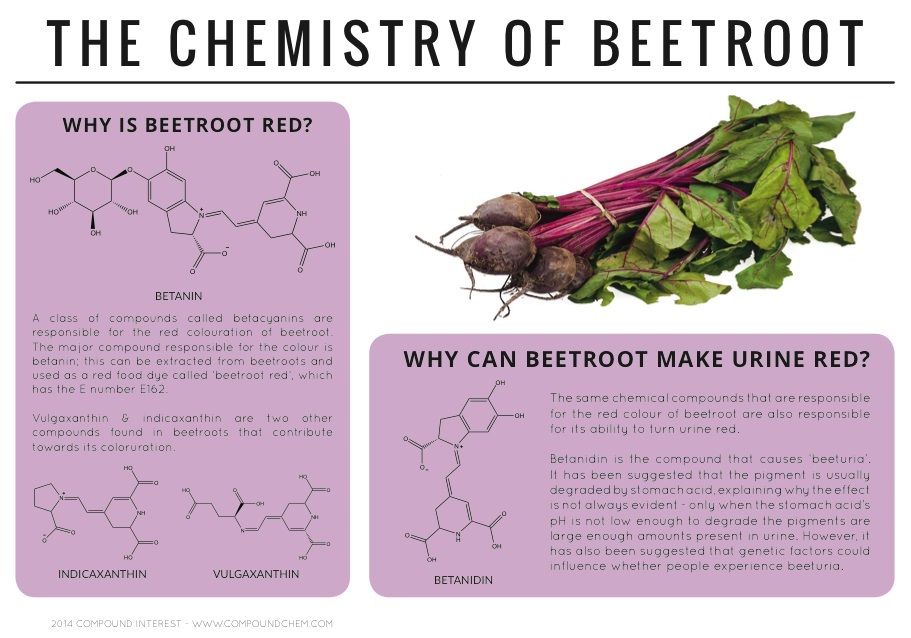
These and so many other questions are answered by Andy in a fun and approachable way. One thing that makes Compound Interest so approachable is the use of infographics to tell the stories and explain the science. Each post is accompanied by an infographic featuring photos of the subject, structural formulas of the chemicals, and short descriptions.  For example, this infographic explains why beets are red and why our urine turns red after eating them:

Chemistry-of-Beetroot

The infographics can also be downloaded as pdf files, like this one that explains the chemistry behind the smell of fresh-cut grass.

In this manner, the images and files can be easily shared with others. In fact, Andy encourages this practice, provided that the originals are not altered and that Compound Interest is given proper credit. He is particularly interested in seeing his infographics used in a classroom setting. Read more about the content usage guidelines here. Produced by someone who is obviously passionate about chemistry, these posts and graphics are meant to educate and excite people about everyday chemistry both in the botanical world and beyond.

Year of Pollination: Dung Moss

Last year I wrote about two groups of plants that emit foul odors when they bloom: corpse flowers and carrion flowers. Their scent is akin to the smell of rotting flesh, hence their common names. The purpose of this repugnant act is to attract a specific group of pollinators: flies, carrion beetles, and other insects that are attracted to gross things. Though this particular strategy is rare, these aren’t the only plants that have evolved to produce stinky smells in order to recruit such insects to aid in their reproductive processes. For one, there is a very unique group of mosses that do this, commonly known as dung mosses. Judging from the name, you can probably imagine what their smell must be like. However, their common name doesn’t just describe their scent, but also where they live.

At least three genera (SplachnumTetraplodon, and Tayloria) in the family Splachnaceae include species that go by the common name, dung moss. All Splachnum and Tetraplodon species and many species in the genus Tayloria are entomophilous. Entomophily is a “pollination syndrome”, a subject we will explore more thoroughly in future posts, in which pollen or spores are distributed by insects. Compare this to anemophily, or wind pollination, which is the more common way that moss spores are distributed. In fact, dung mosses are the only mosses known to exhibit entomophily.

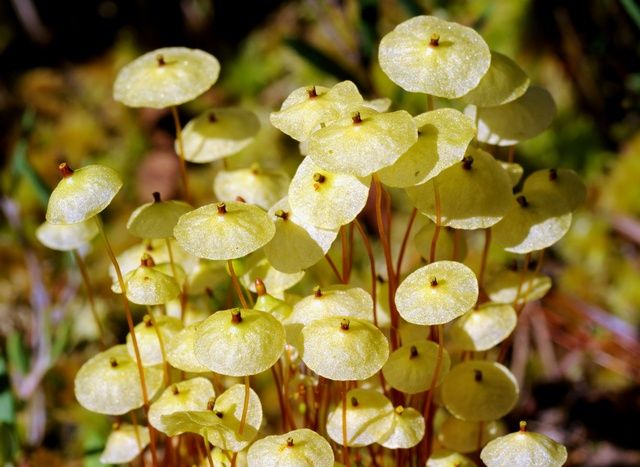
Dung Moss (photo credit: wikimedia commons)

Dung Moss (photo credit: wikimedia commons)

Before we go too much further, it’s probably important to have a basic understanding of how mosses differ from other plants. Mosses are in a group of non-vascular and non-flowering plants called bryophytes. Vascular tissues are the means by which water and nutrients are transported to and from different plant parts. Lacking vascular tissues, water and nutrients are simply absorbed by the leaves of bryophytes (although some species have structures akin to vascular tissue), which is why they typically grow low to the ground and in moist environments. Bryophytes also lack true roots and instead have rhizoids, threadlike structures that anchor the plants to the ground or to some other substrate (such as dung).

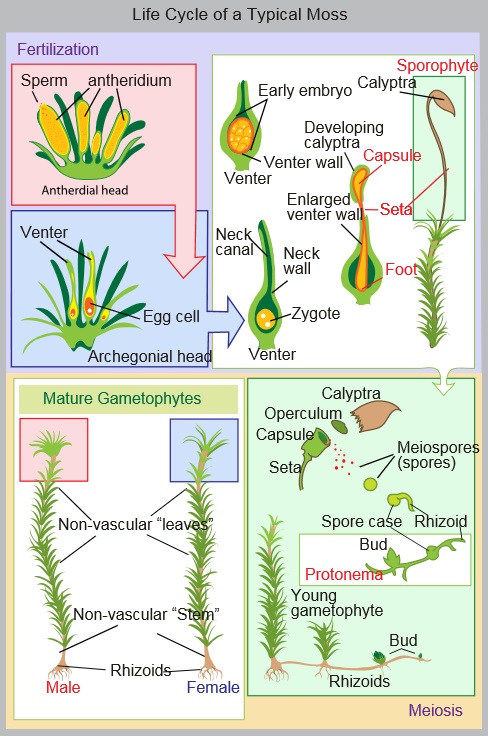
Another major distinction between bryophytes and other plants is that bryophytes spend most of their life cycle as a haploid gametophyte rather than a diploid sporophyte (haploid meaning that it only has one set of chromosomes; diploid meaning that there are two sets of chromosomes, one from the father and one from the mother). In most plants, the haploid gametophyte is a sperm (pollen) or an egg. In bryophytes, the familiar green, leafy structure is actually the gametophyte. The gametophyte houses sperm and egg cells, and when the egg is fertilized by sperm it forms a zygote that develops into the sporophyte structure which extends above the leafy gametophyte. A capsule at the top of the sporophyte contains spores which are eventually released and, upon finding themselves on a suitable substrate in a hospitable environment, germinate to produce new plants. The spore then is comparable to a seed in vascular, seed-bearing plants.

photo credit: wikimedia commons

photo credit: wikimedia commons

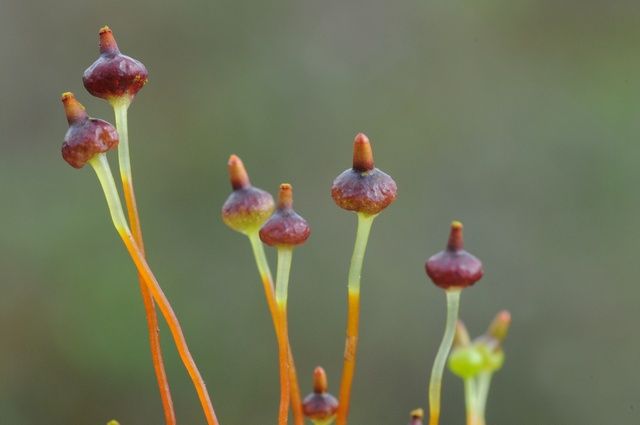
As stated earlier, the spores of most mosses are distributed by wind. Dung mosses, on the other hand, employ flies in the distribution of their spores. They attract the flies by emitting scents that only flies can love from an area on the capsule of the sporophyte called the apophysis. This area is often enlarged and brightly colored in yellow, magenta, or red, giving it a flower-like appearance which acts as a visual attractant. The smells emitted vary depending on the type of substrate a particular species of dung moss has become adapted to living on. Some dung mosses grow on the dung of herbivores and others on the dung of carnivores. Some even prefer the dung of a particular group of animals; for example, a population of Tetraplodon fuegiensis was found to be restricted to the feces and remains of foxes. However, dung is not the only material that dung mosses call home.  Certain species grow on carrion, skeletal remains, or antlers. The smells these species produce attract flies that prefer dead flesh and bone in various states of decay.

Yellow Moosedung Moss (Splachnum luteum) has one of the largest and showiest sporophytes. (photo credit: www.eol.org)

Yellow Moosedung Moss (Splachnum luteum) has one of the largest and showiest sporophytes. (photo credit: www.eol.org)

The spores of dung mosses are small and sticky. When a fly visits these plants, the spores adhere to its body in clumps. The fly then moves on to its substrate of choice to lay its eggs, and the spores are deposited where they will then germinate and grow into new moss plants. Flies that visit dung mosses receive nothing in return for doing so, but instead are simply “tricked” into disseminating the propagules. The story is similar with corpse flowers and carrion flowers; flies are drawn in by the smells and recruited to transmit pollen but receive no nectar reward for their work.

There are 73 species in the Splachnaceae family, and nearly half of these species are dung mosses. These mosses are mostly found in temperate habitats in both the northern and southern hemispheres, with a few species occurring in the mountains of subtropical regions. They can be found in both wet and relatively dry habitats. Dung mosses are generally fast growing but short lived, with some lasting only about 2 years. It isn’t entirely clear how and why mosses in this family evolved to become entomophilous, but one major benefit of being this way is that their spores are reliably deposited on suitable habitat. Because of this directed dispersal, they can produce fewer and smaller spores, which is an economical use of resources.

Sporophytes of Splachnum vasculosum (photo credit: www.eol.org)

Sporophytes of Splachnum vasculosum (photo credit: www.eol.org)

References

Koponen, A. 2009. Entomophily in the Splachnaceae. Botanical Journal of the Linnean Society 104: 115-127.

Marino, P., R. Raguso, and B. Goffinet. 2009. The ecology and evolution of fly dispersed dung mosses (Family Splachnaceae): Manipulating insect behavior through odour and visual cues. Symbiosis 47: 61-76.

Why Awkward? Why Botany? Why Now?

Have you ever wondered why this blog is called Awkward Botany? I have. Naming things can be difficult, and there are days that I question whether Awkward Botany was the right choice and if instead another name would have been more appropriate. Most days I am happy with the name, but I also perceive that there might be questions about where it came from and what it means. Or maybe no one cares? Either way, I figured I would start the year off by putting this out there. It may or may not be of interest to anyone, but so be it. Rest assured that regular programming will resume shortly.

Why Awkward?

Awkward is a word that best describes my general state of being. I am uncomfortable in virtually all social situations. The degree to which discomfort manifests itself varies depending on the circumstances, but it is always there. Anxious is another fitting word to describe me. On the surface I may appear calm and collected, but my mind is constantly racing. It’s hard to relax.

I am a high level introvert, and there was a time when this really bothered me. I didn’t like feeling so shy, nervous, and bumbling. I didn’t like that my voice got shaky every time I talked in front of a group of two or more people (no matter how well I knew them). I wanted to be able to make a phone call or start up a conversation without first having to rehearse what I was going to say a dozen times in my head. I envied people who could socialize so freely and who could dance like no one was watching even when plenty of people were. I saw my shell as a curse and thought I was defective because of it.

These feelings haven’t gone away, but they have waned. In my adult years I have grown to accept, even embrace, my awkwardness and introversion. I’m not particularly thrilled about being this way, but I find ways to celebrate it. Claiming the awkward title is one way that I do that. It is nothing to be ashamed of, despite at times feeling shamed for it. Just acknowledging that fact makes tiptoeing out of my comfort zone that much easier.

Awkward can also mean amateurish or inexpert. I am a degree holding and professional horticulturist and I have taken a number of graduate level plant science courses, but I certainly don’t claim to be an expert botanist. I am passionate about botany, and I love to study and explore it, but I am not on the same level as professional botanists. I could be someday, but that isn’t really the point. I would rather illuminate the amateur aspect, the part an enthusiast can play, the role of the citizen scientist…or citizen botanist in this case. The point being that anyone can join in the conversation regardless of their credentials; all that is required is passion, enthusiasm, and a willingness to learn (and to admit when you’re wrong). That is why I have settled on the tagline, “citizen botany for the phytocurious.” Perhaps this approach will inspire other awkward entities to emerge, like awkward history, awkward herpetology, awkward astronomy, awkward linguistics… Just a thought.

Why Botany?

I am unapologetically obsessed with plants. It is not something I fully realized about myself until I was in my twenties; still it feels like it must be in my DNA. I spend significant portions of each day thinking about plants, reading about plants, writing about plants, and working with plants. And I wouldn’t have it any other way. If I am this taken by plants, then why not botany?

But why should people care about plants? Those who already find themselves fascinated by them don’t really need an answer to this question, and the space it would take to enumerate the myriad reasons why plants matter is more than I want to take up in a single post. Suffice it to say that if plants were not around, we would not be around. And if the vital functions of plants don’t convince you to care, just imagine a world without green things and ask yourself if that’s a world you’d want to live in. Dr. Chris Martine, a professor of botany at Bucknell University, defends botany famously in an article he wrote for the Huffington Post last summer.

Why Now?

This is a nebulous question, and I could take it in several directions. To simplify things I will address this line of inquiry: why am I blogging now, rather than expressing myself using some other medium (or none at all)?

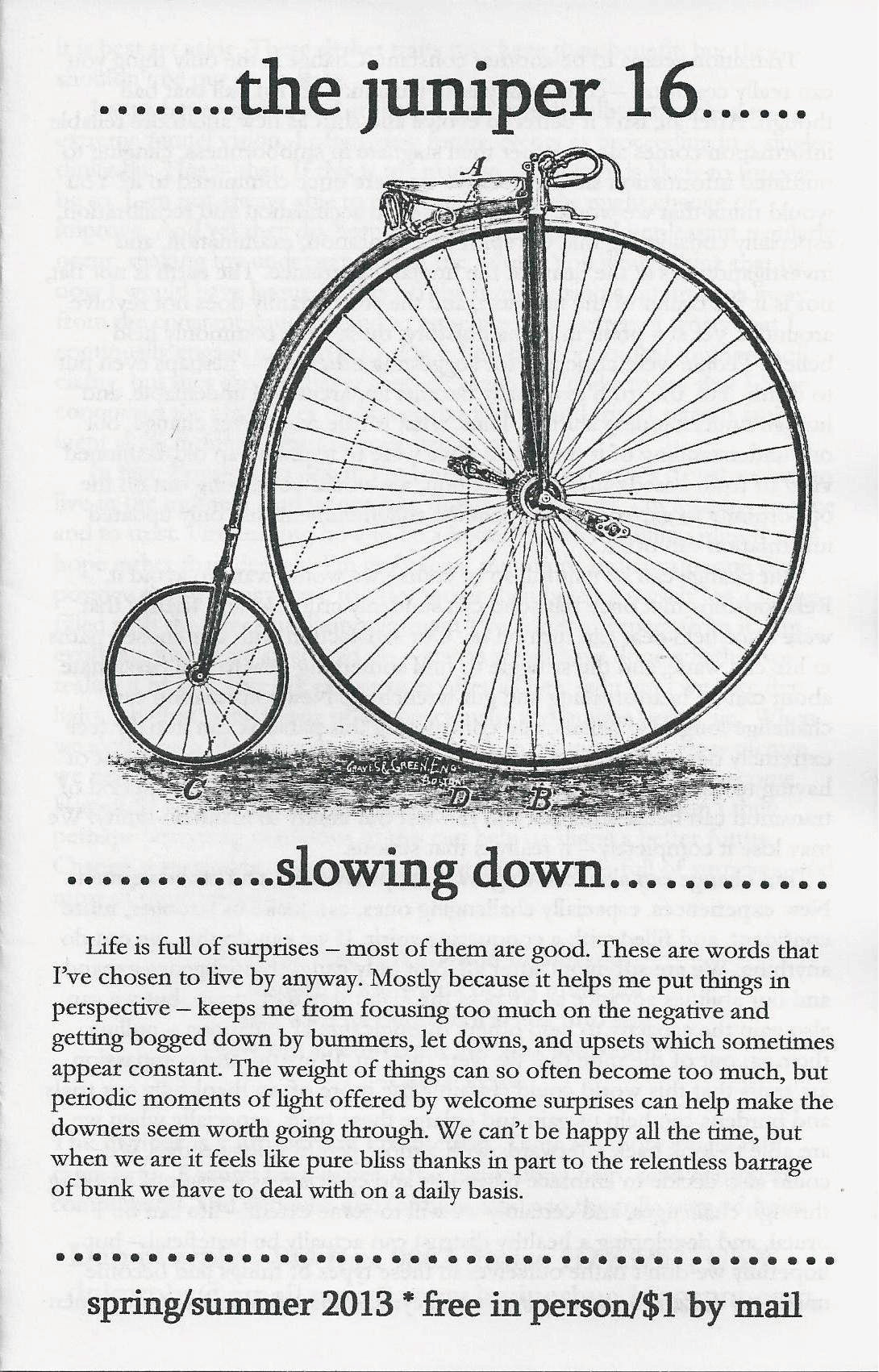
When I was in the 7th grade, I discovered that I like to write. It feels wired into my DNA the same way my interest in plants does. I have been writing regularly ever since. At first it was just poetry, short stories, and song lyrics. Then when I was in my teenage years, I discovered punk rock and along with that fanzines, or zines for short. I had been envisioning something similar to zines before I knew about them, so once I came across them, I knew that I had to make one. Over the course of about 17 years, I produced at least 66 zines under 9 different titles. My two main titles were Elephant Mess and The Juniper. While I haven’t completely given up on zine writing, I have been on hiatus for about two years now.
juniper 16_edit 2

My hiatus is largely due to the expense of doing zines (photocopies, postage, office supplies, etc.) and the markedly reduced interest in them (a PO Box full of mail used to be a fairly common sight for me; now it never happens). So I blog instead. I hesitate to compare blogs to zines, though. For a seasoned zinester like me, that feels blasphemous. But there are clearly some similarities, and now that the internet has become nearly ubiquitous, for someone who likes to write and publish content regularly, blogs seem like the way to go.

But I don’t see this blog as the end goal either. I love to write, and I have long wanted to be a writer. Maintaining a blog doesn’t necessarily mean I’m on the road to a successful writing career, but it certainly doesn’t hurt. For now, Awkward Botany is where I hang my hat, and I am more than happy to call it home.

Growing Plants in Outer Space

Last December I wrote about a mission to the moon that will involve growing plants to determine how they will perform in a lunar environment. That mission is still at least a year away. In the meantime, research involving plant growth in space continues onboard the International Space Station (ISS). Numerous experiments have been carried out so far with the general aim of observing the effects of microgravity and other extraterrestrial environmental factors on plant growth. The larger aim, of course, is to develop methods for growing food in space in order to feed future space travelers as they colonize other celestial bodies, such as the Moon and Mars. Providing oxygen and contributing to psychological well-being are additional benefits of growing plants in space.

International Space Station (photo credit: wikimedia commons)

International Space Station (photo credit: wikimedia commons)

Several weeks ago a spacecraft returned to Earth from ISS carrying samples and data from a variety of studies, including a plant study being carried out by the University of Wisconsin-Madison’s Department of Botany. The study consisted of three groups of Arabidopsis thaliana – a wild type group, a group with a gene involved in gravity sensing always turned on, and a group with that same gene always turned off. The plants were grown from seed on petri dishes, and the seedlings (totaling 1000 plants) were returned to Earth after a few weeks of growth. The petri dishes were placed in deep freeze upon returning to Madison. Eventually, RNA will be extracted from each of the plants and analyzed.

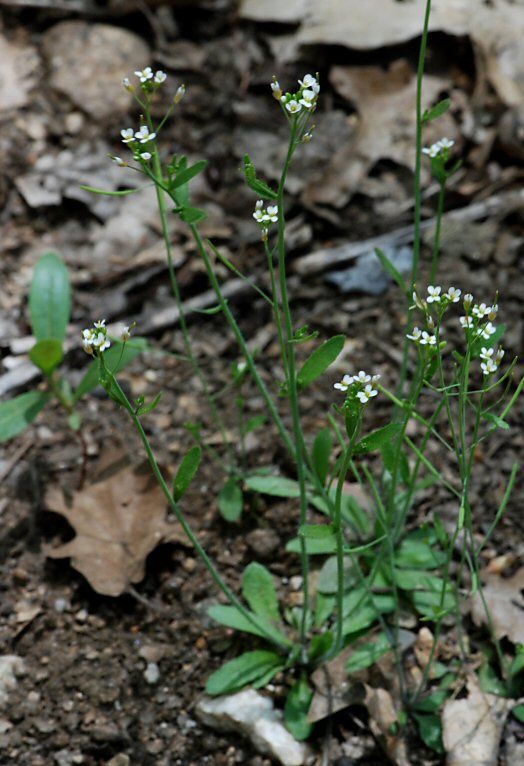
Arabidopsis thaliana is a plant in the mustard family (Brassicaceae) that is commonly used in biological studies because it is fast growing with a short life cycle – it germinates, flowers, and produces seed in about 6 weeks  – and it has a relatively small genome that has been completely mapped. This makes it ideal for studies like this one that aim to observe genes involved in responding to particular environmental factors – in this case microgravity.

Arabidopsis thaliana (photo credit: www.eol.org)

Arabidopsis thaliana (photo credit: www.eol.org)

Plants grown in the weightlessness of space get long, spindly, and weak. Plants grown on Earth in a protected environment without mechanical stresses like wind or rain are more susceptible to pests and diseases compared to those that are subject to such disturbances. It turns out that there is a gene that codes for a protein that senses gravity, and this same protein senses other mechanical stresses as well. This means that studies that help advance the science of growing plants in space could also help improve crop plants here on Earth.

The RNA extracted from the Arabidobsis plants recently returned from space will not only aid in the research being done at UW-Madison, but will also become part of a much larger body of research through NASA’s GeneLab. Access to space is limited, so GeneLab makes available the data recovered from studies like this one to anyone interested in doing studies of their own. The GeneLab will also make it possible to compare the Arabidopsis groups in this study to several other Arabidopsis ecotypes, which will aid in determining plants best suited for microgravity environments.

Read more about this study at NASA, Science Daily, and Plants in Microgravity (a blog produced by Simon Gilroy’s Lab, Department of Botany, UW-Madison). Also, “plants in space” has a Wikipedia page

Speaking of Food: A Recap

The theme for the past 15 posts has been the October 2014 Special Issue of American Journal of Botany, Speaking of Food: Connecting Basic and Applied Plant Science. After a brief introduction to the issue, I spent the next 14 posts (spanning a period of 5 weeks) reading and writing summaries of each of the 17 articles. If you actually read every post, you are a champion in my eyes, and I probably owe you a prize of some sort. And even if you just read one or two, thank you, and I hope you found value in what you read.

I have to admit that it was kind of a grueling process. Many of the articles, along with being lengthy, included high level discussions that were beyond my current understanding, especially concerning topics like genetics, genomics, and phylogenetics. I learned a lot while reading them, but I am still far from truly grasping many of the concepts. For that reason, I did not feel completely comfortable writing summaries of some of these discussions. I made an effort not to misrepresent or oversimplify the research, but I can’t say for sure that my attempts were always successful. I welcome any criticisms, corrections, complaints, or comments in this regard, and I am open to making edits or updates to any of the posts as necessary. I consider this blog my learning platform, as well as a place to share my phyto-curiosity. Perhaps you find it a place for learning, too?

The main purpose of this post is to provide a Table of Contents for the last 14 posts, something that will make it easier to navigate through this series without having to scroll through each post. If you are interested in reading the entire series (again, you’re a champion), you can access them all in order here by clicking on the titles. Otherwise, you can pick and choose whatever topics interest you the most.

  • On the Origins of Agriculture – A deep dive into plant domestication and the beginnings of agriculture, including the revision of theoretical approaches to thinking about the history of plant domestication and a discussion of emerging methods and tools for exploring early domestication and emerging agriculture.
  • The Legacy of a Leaky Dioecy – Does pre-Colombian management of North American persimmon trees explain why non-dioecious individuals are found in an otherwise dioecious species?
  • Dethroning Industrial Agriculture: The Rise of Agroecology – The environmentally devastating effects of industrial agriculture can and must be replaced by a more sustainable, ecologically-focused from of agriculture. This will require reforming our economic system and rethinking our “one size fits all” approach to scientific research.
  • An Underutilized Crop and the Cousins of a Popular One – Safflower, an underutilized oilseed crop, could be improved by introducing genes from wild relatives. Soybean, a very popular and valuable crop, could also be improved by introducing genes from its perennial cousins.
  • Carrots and Strawberries, Genetics and Phylogenetics – An exploration of the genetics and phylogenetics of carrots and strawberries. Better understanding of their genetics will aid in crop improvements; better understanding of their phylogenetics gives us further insight into the evolution of plants.
  • Exploring Pollination Biology in Southwestern China – A fascinating look at the pollination biology of edible and medicinal plants in southwestern China, revealing significant gaps in scientific understanding and the need for conservation and continued research.
  • Your Food Is a Polyploid – Polyploidy is more prevalent in plants than we once thought. This article examines the role of polyploidy in crop domestication and future crop improvements.
  • Tales of Weedy Waterhemp and Weedy Rice – How agriculture influenced the transition to invasiveness in two important weed species.
  • Cultivated Sunflowers and Their Wild Relatives – An investigation into the flowering times of wild sunflowers reveals potential for improvements in cultivated sunflowers.
  • The Nonshattering Trait in Cereal Crops – Is there a common genetic pathway that controls the shattering/nonshattering trait in cereal crops?
  • Apples and Genetic Bottlenecks – Domestication generally leads to a loss of genetic variation compared to wild relatives, but apples have experienced only a mild loss. That loss may increase as commercial apple production relies on fewer and fewer cultivars.
  • Improving Perennial Crops with Genomics – The nature of perennial crops can be an impediment to breeding efforts, which makes the introduction of new perennial crop varieties both time consuming and costly. Advances in genomics may help change that.
  • Using Wild Relatives to Improve Crop Plants – Crop plants can be improved through the introduction of genes from wild relatives. They could potentially experience even greater improvement through systematic hybridization with wild relatives.
  • Developing Perennial Grain Crops from the Ground Up – Some of the environmental issues resulting from agriculture could be addressed by switching from annual to perennial grain crops, but first they must be developed from wild species.
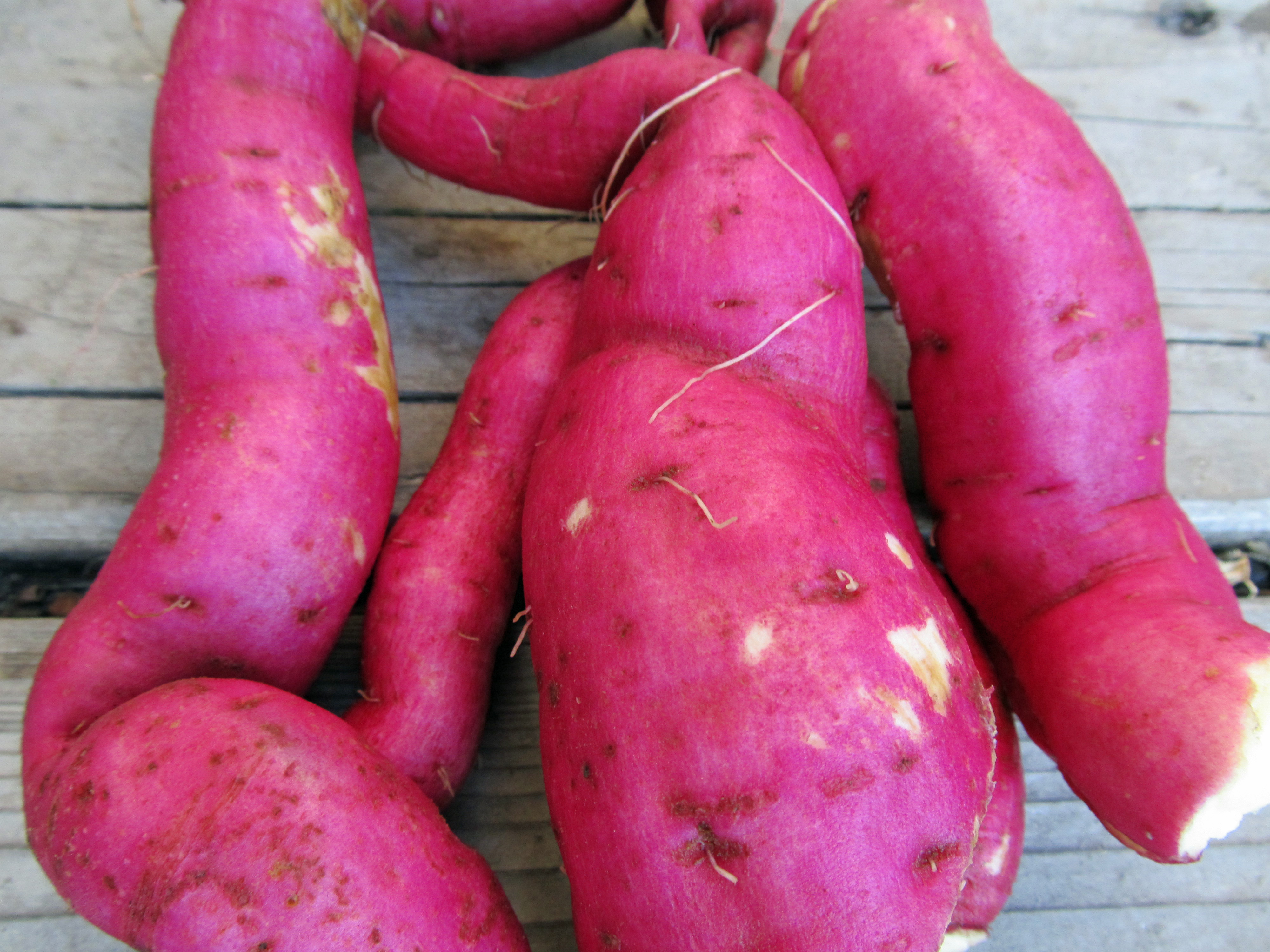
A small harvest of sweet potatoes (Ipomoea batatas ' Hong Hong') from this year's backyard mini-farm. Ipomoea batatas ' Hong Hong.'

A small harvest of sweet potatoes (Ipomoea batatas ‘ Hong Hong’) from this year’s backyard mini-farm.

If I had to pick a favorite article in this issue it would be Think Globally, Research Locally: Paradigms and Place in Agroecological Research (Reynolds et al.). I know I said it in the post, but this article really sums up the reasons why this special issue of AJB is so important. Humans are incredibly resourceful, creative, and resilient, and as we have spread ourselves across the globe and grown our population into the billions, we have found ways to produce enormous amounts of food relatively cheaply. Frankly, the fact that anyone is going hungry or dying of starvation is shameful and appalling as there is plenty of food to go around…for now. But we are doing a lot of things wrong, and the earth is suffering because of it. If the biosphere is in trouble, we are all in trouble. Thus, we are overdue for some major shifts in the way we do things, particularly agriculture as that’s what this series of posts is all about. I advocate for science-based sustainable agriculture, and I am hopeful, thanks to this issue of AJB and other signs I’ve seen recently, that we are moving more in that direction. I’ll step off my soapbox now and leave you with an excerpt from the article by Reynolds, et al.

“There is increasing recognition that the current industrial model of agricultural intensification is unsustainable on numerous grounds. Powered by finite and nonrenewable stores of fossil fuels over the last 200 years, humans have come to see themselves, their technology, and their built environments as controllers of nature rather than interdependent with it, even as our activities threaten to exceed planetary boundaries of resilience in multiple environmental dimensions, such as climate, biodiversity, ozone, and chemical pollution. … In the ‘full world’ we now live in, continuing to use high input, highly polluting methods of food production to support continued economic growth is counterproductive to achieving food security. Continued growth of population and per capita consumption on a finite planet fails to meet the basic requirement of sustainability, that of meeting needs within the regenerative and assimilative capacity of the biosphere. And prolonging the shift to a sustainable economic paradigm risks a harder landing.”

Developing Perennial Grain Crops from the Ground Up

This is the fourteenth in a series of posts reviewing the 17 articles found in the October 2014 Special Issue of American Journal of Botany, Speaking of Food: Connecting Basic and Applied Science.

Useful Insights from Evolutionary Biology for Developing Perennial Grain Crops by Lee R. DeHaan and David L. Van Tassel

The environmental impacts of modern agriculture are diverse and extensive. Our growing population needs to be fed; however, practices that have long-term negative effects on soil, water, and air quality are unsustainable. It is imperative that we find better alternatives. Developing perennial grain crops is one way that plant breeders are working to address this issue.

Moving from annual to perennial grain crops could potentially “increase water quality, reduce soil erosion, increase soil carbon, and improve habitat for wildlife.” It may also help “address the looming challenges of land degradation, food security, energy supply, and climate change.” Sounds like a major win if we can do it, right? And maybe we will, but first we must domesticate perennial grain varieties that perform on a similar level with annual ones. Most plant breeding today involves “improvement of previously domesticated species;” however, new perennial grain crops must be developed “de novo” (i.e. from wild species) in a matter of “decades rather than centuries to millennia.”

The roots of perennial grasses are considerably more extensive than annual grasses. (photo taken from an article about perennial grain crops at nationalgeographic.com)

The roots of perennial grasses are considerably more extensive than annual grasses, which helps reduce erosion and limits the need for fertilizer applications. (photo taken from an article about perennial grain crops at nationalgeographic.com)

Little has been published concerning “strategies for the wholesale remodeling of plants,” and so the authors reviewed findings in other fields, such as evolutionary biology and population genetics, in order to devise strategies for developing perennial grain crops. In this article, the authors summarize the published research they reviewed and describe how it relates to breeding perennial grains. It is a dense and lengthy article, so rather than offering a thorough review, I will briefly describe some of the main areas explored by the authors and then summarize their conclusions.

  • Trade-offs – This occurs when “resources allocated to one trait are unavailable for other traits.” Can perennial grain crops achieve yields comparable to annual varieties when faced with “trade-offs between seed and perennial organs?” Are such yields only attainable by “sacrificing longevity?” Strategies must be devised to “create herbaceous perennial crops with abundant seed production.”
  • Genetic Loads – This is simply defined as “the presence of deleterious alleles in a population.” In perennials, compared to annuals, “highly recessive deleterious alleles can arise at a rate faster than they can be efficiently eliminated.” Low seed set, among other things, may be a result of genetic load, so breeders of perennial grains must “account for and actively reduce genetic load.”
  • Bottlenecks – This refers to the loss of genetic diversity that occurs when population size is reduced. During a bottleneck, “previously rare deleterious recessive genes” can accumulate; however, some models indicate that “inbreeding and the associated bottlenecks may be useful in accelerating domestication.” If the population is isolated and introduced to a new environment simultaneously, “the newly exposed variation could now be adaptive.” Also, “if additional genetic diversity is required,” crosses can be made with wild populations.
  • Pleiotropy – This means that “a single gene [is] affecting multiple traits.” When domesticating wild species, “it would be useful to predict the prevalence of pleiotropy and whether to expect positive or negative pleiotropy to dominate.”
  • Epistatsis – This occurs when the effect of one gene is dependent on the presence of another gene or genes. This is particularly important if “large-effect genes” (pleiotropy) are dependent on a “particular genetic background to function optimally,” because “removing one critical element will severely impact the whole structure.” Perennial grain crops will have to undergo “many generations of plant breeding” in order to ensure that desired genes are found “within a genetic background where their benefits can be used without negative side effects.”
  • Cryptic Variation – Genetic variation is cryptic when “the inheritance of a particular mutated allele has no effect on phenotype and thus is hidden from natural and artificial selection.” New environments or mutations can release cryptic variation. “Ranking candidate species for their likely domesticability” may be an effective approach to cryptic variation. “The best candidates for domestication” originate from areas where conditions are highly favorable for growth and reproduction as opposed to areas that are “resource-limited,” because they have experienced periods of “selective enrichment” that make them suitable for agriculture settings.
  • Past Domestication – Domestication involves a series of “evolutionary changes that may decrease the fitness of a species in the wild but increase it under human management.” Historically this was “likely driven by unconscious selection pressures,” but currently it is “driven by conscious selection.” Studies of past domestication events reveal “somewhat predictable stages” in the process. Even though “current domestication efforts might not follow historical precedent,…the order in which traits are subjected to strong selection may be important.” Investigation into domestication also suggests that “dramatic changes” in plant morphology can be accomplished by selection for a “small number of major-effect genes,” so breeding programs are advised to “first search for useful major genes and evaluate their effects before moving on to strategies designed to accumulate genes of small effect.”
  • Selection – The authors describe “four major limits to selection.” 1.) Desired traits “may only exist in our imagination.” 2.) “The necessary genetic variation may not exist in the population,” and so waiting for or inducing mutations may be required. 3.) There may be “negative genetic correlations between characters being selected,” which will slow response to selection. This can be addressed by subdividing the population, evaluating the population in a new environment, or crossing with other populations. 4.) Conversely, “insufficient genetic correlation between traits may reduce the response to selection.” This makes “finding superior genotypes challenging,” so the authors suggest breeding plants in a “uniform environment,” and then later the plants can “accumulate genes for tolerance to specific stresses in separate populations.”
Intermediate wheatgrass (Thinopyrum intermedium) "produces much larger seeds in the greenhouse during the winter than ever seen in the field during the summer," an example of phenotypic plasticity. (photo credit: www.eol.org)

Intermediate wheatgrass (Thinopyrum intermedium) “produces much larger seeds in the greenhouse during the winter than ever seen in the field during the summer,” an example of phenotypic plasticity. (photo credit: www.eol.org)

The authors determined that the best candidates for perennial grain breeding programs are plant populations that have high diversity between and within individual plants, plastic phenotypes (i.e. adaptable to changes in the environment), and “an evolutionary history that includes adaptation to high resource environments.” They also suggest that breeders “focus more on the required functions [like nonshattering fruits] than on morphological traits” because it will increase the feasibility of evaluating “very large experimental populations.” The ideal experimental set-up would consist of very large populations of widely spaced plants that are subdivided in order to perform evaluations from various angles. Lastly, the authors encourage breeders to embrace new plant forms and breeding strategies and be open to the possibility that perennial grain crops may not “look like modern annual grains.”