Drought Tolerant Plants: Prickly Pears

In the introduction to this series about drought tolerant plants, I defended water efficient gardens by claiming they don’t have to be the “cacti-centric” gardens that many visualize upon hearing terms like “xeriscape,” “water-wise,” and “drought tolerant.” And this is absolutely true. However, that won’t stop me from suggesting that such landscapes include a cactus or two. Despite their menacing and potentially dangerous spines, they are actually quite beautiful, and a cactus in bloom is really a sight to behold. Together with a variety of grasses, herbaceous flowering plants, and shrubs, cactus can add unique forms, textures, and focal points that will enhance the look and function of a water-wise garden. This is why I recommend considering cactus, particularly (as far as this post is concerned) one of the many varieties of prickly pears.

The cactus family (Cactaceae) has a native range that is limited to the Americas. Within that range it is expansive, and cactus species can be found in diverse regions from Canada down to Patagonia. The genus Opuntia (the prickly pears) is the most widespread of any genus in the cactus family consisting of at least 300 species found throughout the Americas. Even a brief investigation into Opuntia will reveal that there is considerable controversy as to how many species there actually are and what to call them. This is partly due to the large ranges that species in this genus can have and the diverse habitats they can be found in within those ranges, resulting in a single species having many forms, varieties, and/or subspecies. Hybridization is also common in this genus where ranges overlap, augmenting the challenge of identification.

Generally, prickly pears have flattened stems with spines and glochids emerging from small bumps called areoles. Their flowers are large, showy and a shade of either yellow, orange, or pink and sometimes white. They form fruits that are either fleshy and juicy with a red or purple hue or hard, dry and a shade of brown or tan. The flattened stems are called pads or cladodes and can be quite large in some species, while diminutive and sometimes rounded in others. Some species are without spines, but all have glochids – tiny, barbed, hair-like structures found in clusters on the stems and fruits. While the spines can be painful when they penetrate skin, the glochids are far more irritating as they easily detach themselves from the plant and work their way into the skin of their victims. The fleshy fruits, called tunas, can be eaten after first taking care to remove the glochid-infested outer layer. The young stems of many species can also be eaten – they are referred to as nopales and are common in Mexican cuisine.

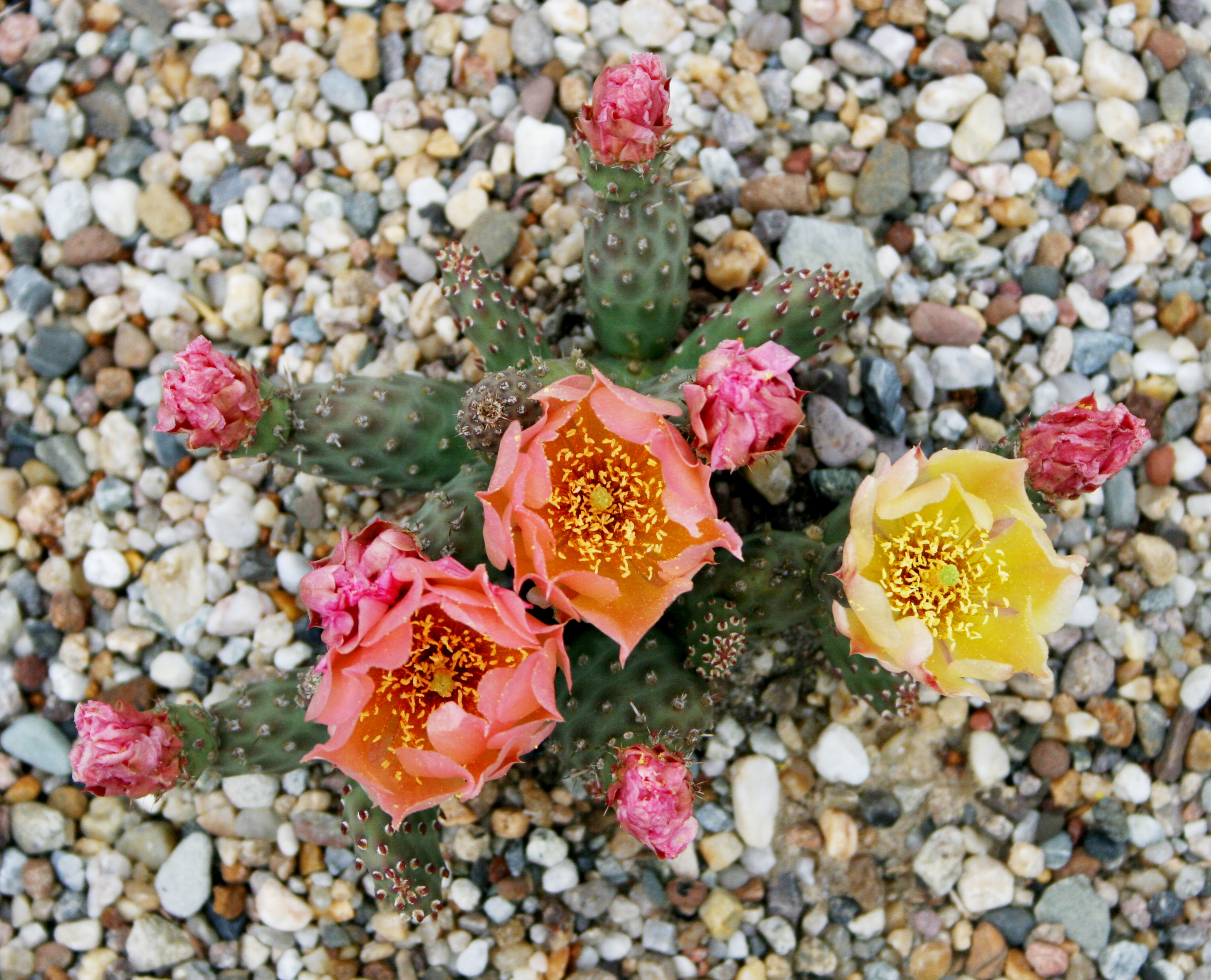
Flowers of Opuntia sp. with bee inside flower on the left

Flowers of Opuntia sp. with bee inside flower on the left

Again speaking generally, prickly pears are very easy to propagate and cultivate. Their two main preferences are full sun and well-drained soil. If you are worried that the soil you are planting them in is going to stay too wet for too long, amend it with some gravel. This is especially important if you live in a climate that receives lots of precipitation or that has cold, wet winters. Once established, prickly pears will move around the garden. If that becomes a problem, expanding plants are easily pruned and traveling plants are easily removed.

I live in a climate that requires the selection of cold hardy prickly pears, so I am taking my specific recommendations from two books: Cacti and Succulents for Cold Climates by Leo J. Chance and Hardy Succulents by Gwen Moore Kelaidis. If you live in a warmer climate, your options will be greater. Still, the options for cold regions are pretty numerous, so for the sake of space I am narrowing my list down to a handful that stand out to me at this particular moment.

Three eastern United States species of prickly pears (O. compressa, O. macrorhiza, and O. humifusa) are, according to Chance, “more capable of dealing with wet and cold conditions than almost any other members of the cactus family.” They still require well-drained soil though. An appealing trait is their large, juicy, red fruits that can add garden interest in late summer and fall. Opuntia engelmannii is another species with the potential to tolerate cold, wet conditions. Its size is appealing to me, with pads that reach a foot wide and plants that grow several feet tall. Chance advises finding “a clone that is known to be cold tolerant” and making some space for it, “as it becomes huge in time.” The most cold tolerant prickly pear may be Opuntia fragilis. It is a diminutive plant with a large native range and a variety of forms, some with rounded pads “shaped like marbles.”

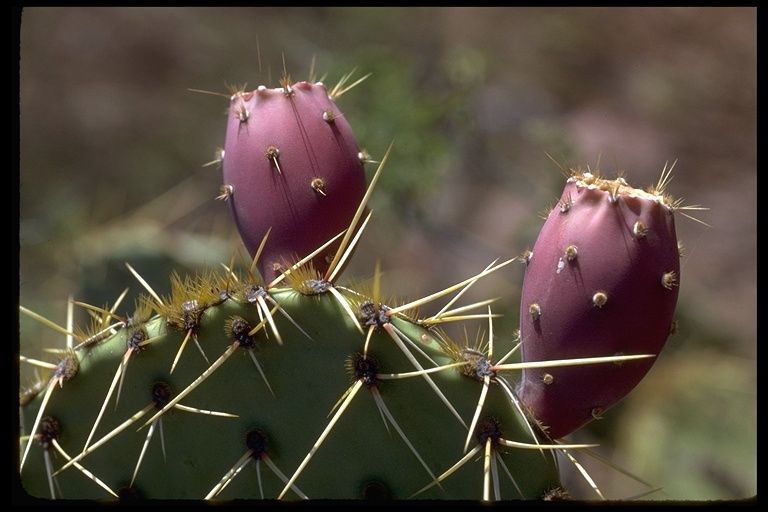
Fruits ("tunas") of Opuntia engelmannii - photo credit: www.eol.org

Fruits (“tunas”) of Opuntia engelmannii – photo credit: www.eol.org

Opuntia fragilis 'Frankfurt' - photo credit: wikimedia commons

Opuntia fragilis ‘Frankfurt’ – photo credit: wikimedia commons

Opuntia polyacantha is a prickly pear native to my home state, Idaho. It is found at high elevations throughout the Intermountain West and is also found on the Great Plains. It has many forms and varieties, and its flowers are various shades of pink or yellow. It is a fast growing species and spreads around easily. Other cold hardy species include Opuntia macrocentra (which has a very attractive yellow flower with a red-orange center), Opuntia erinacea (commonly known as hedgehog prickly pear for its abundant, long spines that can obscure the pads), and Opuntia microdisca (a tiny Argentinian prickly pear with pads that barely reach an inch across but, as Chance says, “works very well in a dry rock garden with other miniatures”).

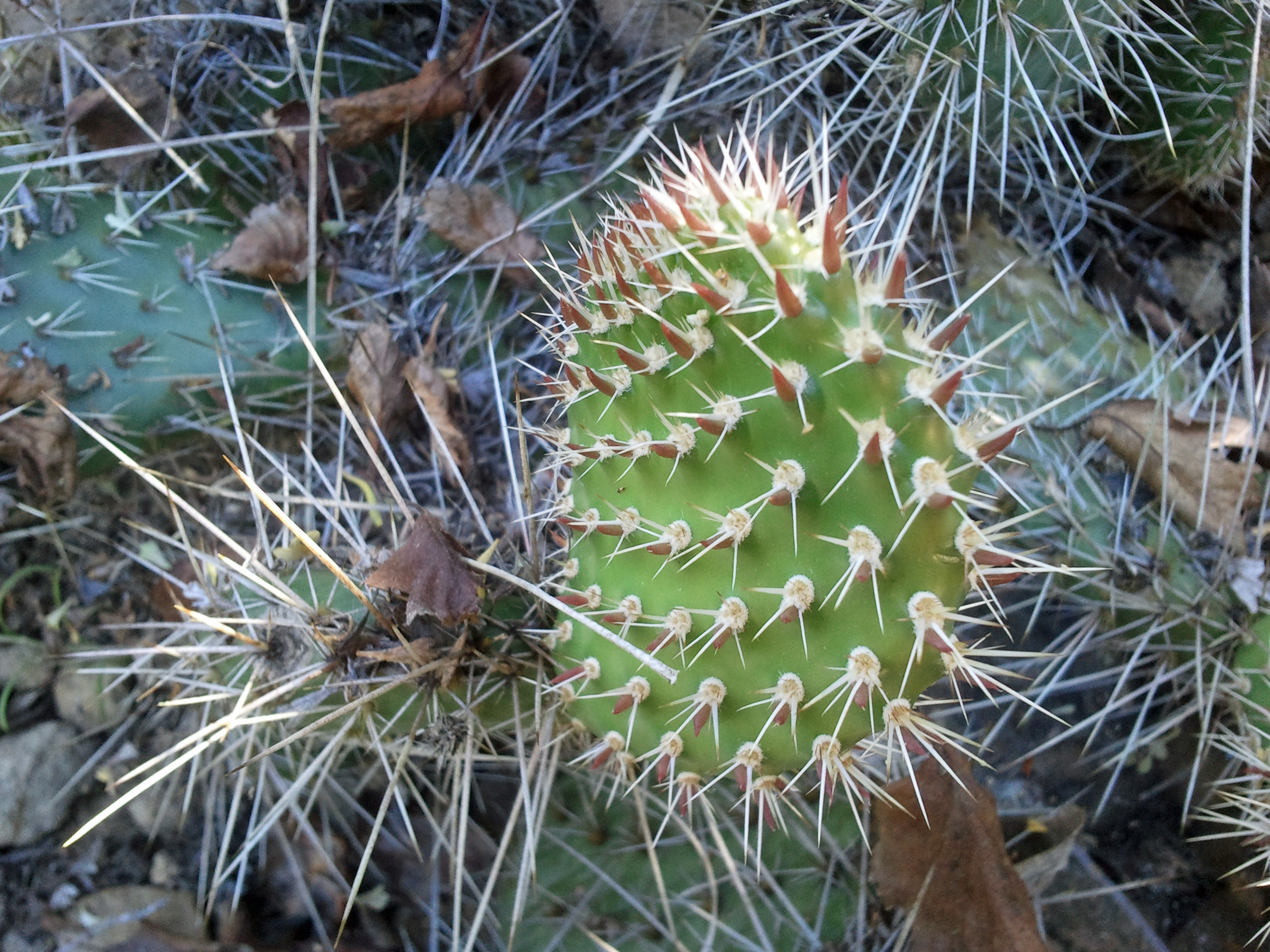
Pads of Opuntia polyacantha

Pads and spines of Opuntia polyacantha

A post about Opuntia could go on indefinitely due to the sheer number of species and their diverse forms and attributes. This is meant merely to pique your interest. The flowers, if nothing else, should certainly interest you. In her book, Kelaidis calls them “improbably beautiful,” and goes on to say that they are “often papery, always glistening and showy.” Chance likens them to “any fancy rose” because they are “extraordinarily large, brightly colored, [and] eye catching.” Next week, as part of Awkward Botany’s Year of Pollination, I will present another reason to be fascinated with the flowers of Opuntia. For now, I will leave you to ponder this word, “thigmonasty.”

Want to learn more about prickly pears? Check out Opuntia Web.

Year of Pollination: More than Honey, etc.

When I decided to spend a year writing about pollinators and pollination, I specifically wanted to focus on pollinators besides the honey bee. Honey bees already get lots of attention, and there are loads of other pollinating organisms that are equally fascinating. But that’s just the thing, honey bees are incredibly fascinating. They have a strict and complex social structure, and they make honey – two things that have led humans to develop a strong relationship with them. We have been managing honey bees and exploiting their services for thousands of years, and we have spread them across the planet, bringing them with us wherever we go. In North America, honey bees are used to pollinate a significant portion of our pollinator-dependent crops, despite the fact that they are not native to this continent. In that sense, they are just another domesticated animal, artificially selected for our benefit.

It’s common knowledge that honey bees (and pollinators in general) have been having a rough time lately. Loss of habitat, urbanization, industrial farming practices, abundant pesticide use, and a variety of pests and diseases have been making life difficult for pollinators. Generally, when the plight of pollinators comes up in the news, reference is made to honey bees (or another charismatic pollinator, the monarch butterfly). News like this encourages people to take action. On the positive side, efforts made to protect honey bees can have the side benefit of protecting native pollinators since many of their needs are the same. On the negative side, evidence suggests that honey bees can compete with native pollinators for limited resources and can pass along pests and diseases. Swords are often double-edged, and there is no silver bullet.

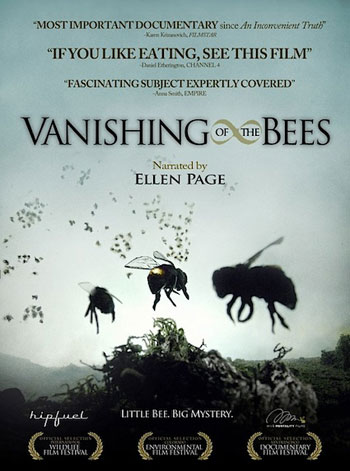
In a recent conversation with a budding beekeeper, I was recommended the documentary, More than Honey. I decided to watch it, write a post about it, and call that the honey bee portion of the Year of Pollination. Part way through the movie, another documentary, Vanishing of the Bees, was recommended to me, and so I decided to watch both. Below are some thoughts about each film.

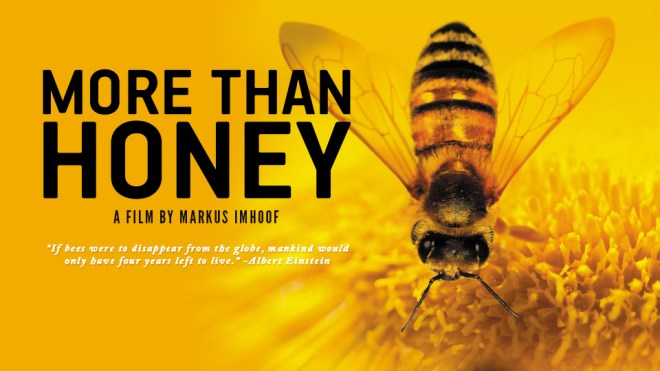
more than honey movie

More than Honey

Written and directed by Swiss documentary filmmaker, Markus Imhoof, this beautifully shot, excellently narrated, meandering documentary thrusts viewers into incredibly intimate encounters with honey bees. Cameras follow bees on their flights and into their hives and get up close and personal footage of their daily lives, including mating flights, waggle dances, pupating larvae, flower pollination, and emerging queens. In some scenes, the high definition shots make already disturbing events even more disturbing, like bees dying after being exposed to chemicals and tiny varroa mites crawling around on the bodies of bees infecting them with diseases – wings wither away and bees become too weak to walk. This movie is worth watching for the impressive cinematography alone.

But bees aren’t the only actors. The human characters are almost as fun to watch. A Swiss beekeeper looks out over stunning views of the Alps where he keeps his bees. He follows a long tradition of beekeeping in his family and is very particular about maintaining a pure breed in his hives, going so far as flicking away the “wrong” bees from flowers on his property and crushing the head off of an unfaithful queen. A commercial beekeeper in the United States trucks thousands of beehives around the country, providing pollination services to a diverse group of farms – one of them being a massive almond grove in California. He has been witness to the loss of  hundreds of honey bee colonies and has had to become “comfortable with death on an epic scale” – the grueling corporate world grinds along, and there is no time for mourning losses.

Further into the documentary, a woman in Austria demonstrates how she manipulates a colony into raising not just one queen, but dozens. She has spent years breeding bees, and her queens are prized throughout the world. A man in Arizona captures and raises killer bees – hybrid bees resulting from crosses between African and European honey bees (also known as Africanized honey bees). Despite their highly aggressive nature, he prefers them because they are prolific honey producers and they remain healthy without the use of synthetic pesticides.

Probably the darkest moment in the film is watching workers in China hand pollinate trees in an orchard. Excessive pesticide use has decimated pollinator populations in some regions, leaving humans to do the pollinating and prompting the narrator to reflect on the question, “Who’s better at pollinating, man or bees? Science answers with a definite, ‘not man.'”

Also included in the film is an intriguing discussion about bees as a super-organism with a German neuroscientist who is studying bee brains. The narrator sums it up like this: “Without its colony the individual bee cannot survive. It must subordinate its personal freedom for the good of the colony… Could it be that individual bees are like the organs or cells of a body? Is the super-organism as a whole the actual animal?”

Vanishing-of-the-bees

Vanishing of the Bees

Colony collapse disorder is a sometimes veiled yet important theme throughout More than Honey, and it was certainly something that drove the creation of the film. In the case of Vanishing of the Bees, colony collapse disorder is the reason for its existence. Narrated by actor, Ellen Page, and produced in part by a film production company called Hive Mentality Films, this movie came out on the heels of the news that bee colonies were disappearing in record numbers throughout the world. It tells the story of colony collapse disorder from the time that it first appeared in the news – one of the film’s main characters is the beekeeper that purportedly first brought attention to the phenomenon – and into the years that followed as scientists began exploring potential causes.

This film contains lots of important information and much of it seems credible, but it is also the type of documentary that in general makes me wary of documentaries. Its purpose goes beyond just trying to inform and entertain; it’s also trying to get you on board with its cause. I may agree with much of what is being said, but I don’t particularly like having my emotions targeted in an effort to manipulate me to believe a certain way. It’s a good idea not to let documentaries or any other type of media form your opinions for you. Consider the claims, do some of your own research and investigation, and then come to your own conclusion. That’s my advice anyway…even though you didn’t ask for it.

That being said, colony collapse disorder is a serious concern, and so I’ll end by going back to More than Honey and leave you with this quote by its narrator:

The massive death of honey bees is no mystery. What’s killing them is not pesticides, mites, antibiotics, incest, or stress, but a combination of all these factors. They are dying as a result of our civilization’s success, as a result of man, who has turned feral bees into docile, domestic animals – wolves into delicate poodles.

Field Trip: Lady Bird Johnson Wildflower Center, part two

This is the second in a series of two posts about my recent trip to Lady Bird Johnson Wildflower Center in Austin, Texas. You can read the first post here. Both posts are comprised of mostly pictures, as they tell a much better story about the place then my words can. However, even pictures don’t do the place justice; it’s definitely a site that you are going to have to see for yourself. I highly recommend it.

One name that kept coming up during the native plant conference was Doug Tallamy – and for good reason. Tallamy has long promoted and encouraged the use of native plants in landscapes, largely for the creation of wildlife habitat in urban and suburban areas. In 2007 he put out a book entitled, Bringing Nature Home: How You Can Sustain Wildlife with Native Plants, in which he made a strong argument for native plant gardens. His book and lectures have inspired many to seek out native plants to include in their yards. What was lacking in his book, however, was detailed information on the horticulture and design aspects of using native plants. So in 2014, together with Rick Darke, Tallamy put out The Living Landscape, an impressive tome outlining how to create beautiful and functional gardens using native plants. Both books are well worth your time.

The plant name following each photo or series of photos links to a corresponding entry in the Native Plant Database which is managed by the Wildflower Center’s Native Plant Information Network. The quotes that accompany the plant names are taken from the Native Plant Database entries.

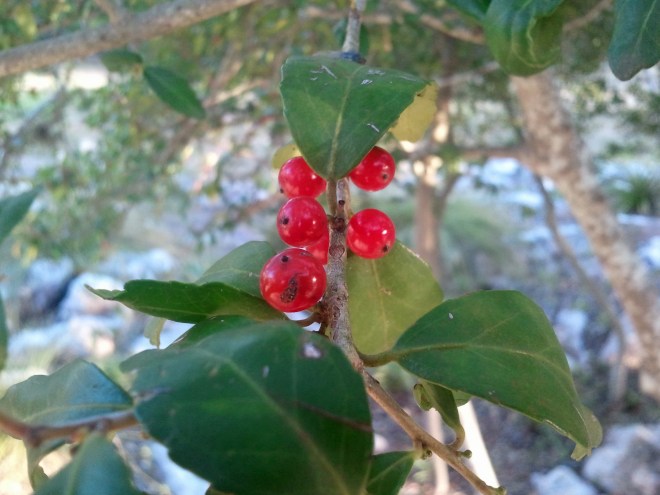
Ilex vomitoria (yaupon). “The leaves and twigs contain caffeine, and American Indians used them to prepare a tea which they drank in large quantities ceremonially and then vomited back up, lending the plant its species name, vomitoria. The vomiting was self-induced or because of other ingredients added; it doesn’t actually cause vomiting.”

aesculus pava var pava 3

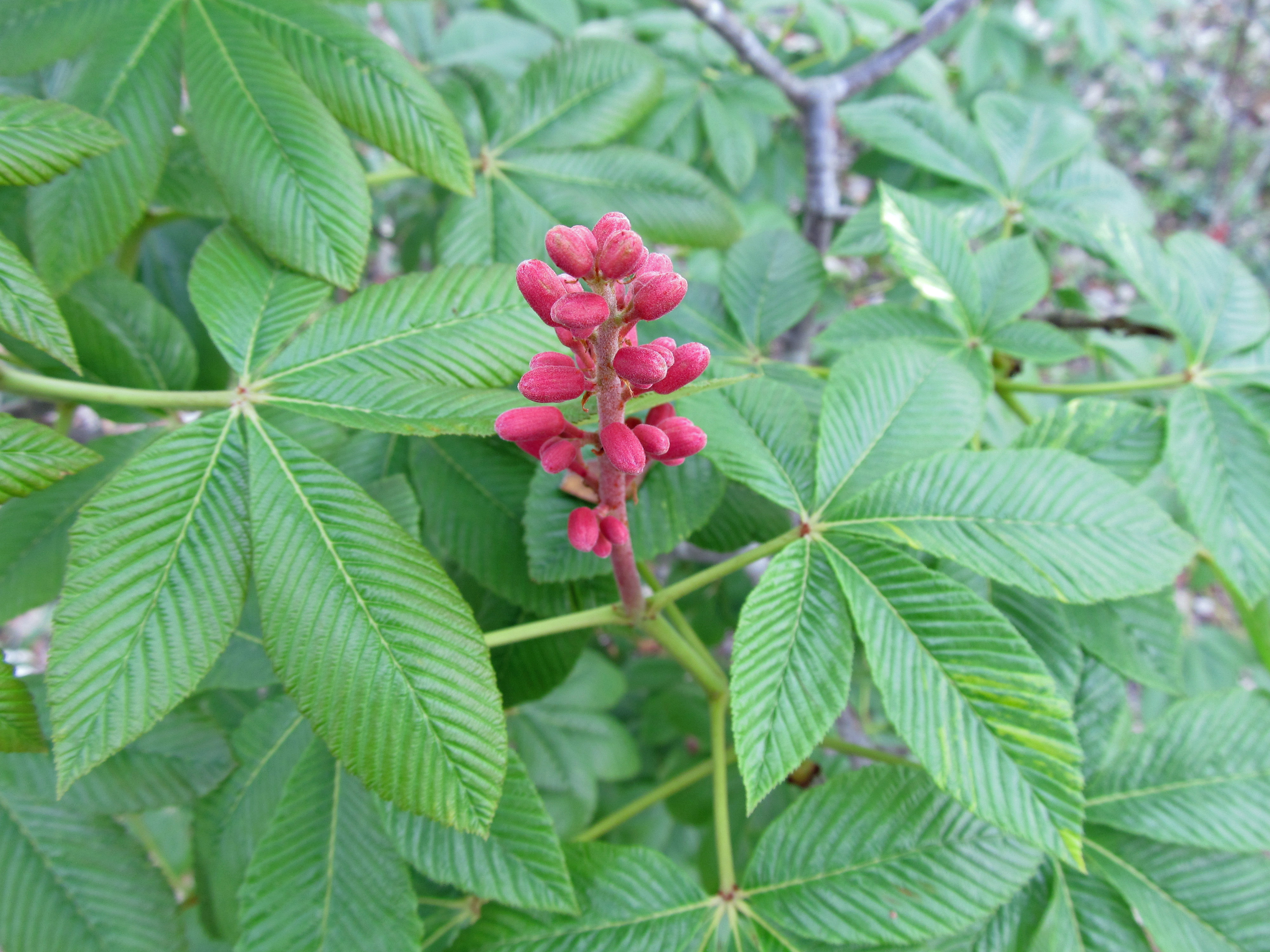
Aesculus pavia var. pavia (red buckeye). “Long popular for its brilliant, hummingbird-attracting spring flowers and rich green foliage, it is found in nature most often as a plant of woodland edges, where it can get morning sun and afternoon shade.”

tillandsia recurvata 5

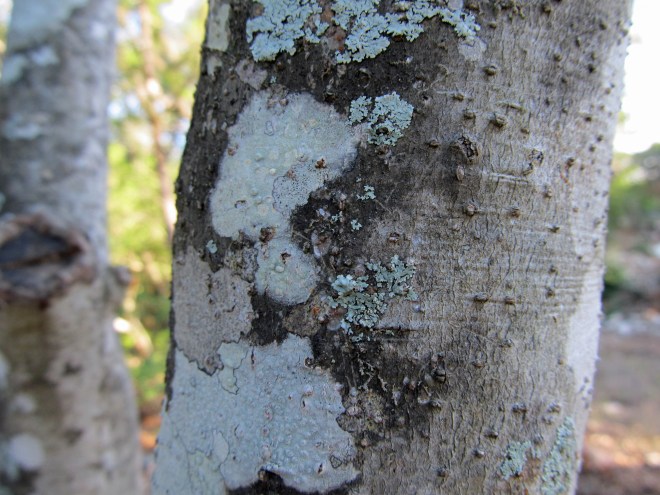
Tillandsia recurvata (ball moss). An epiphyte commonly found on trees within its range, including Quercus fusiformis (escarpment live oak) a dominant tree at the Wildflower Center. “Some have been introduced into other warm regions and cultivated for use as ornamentals or for their edible fruit.”

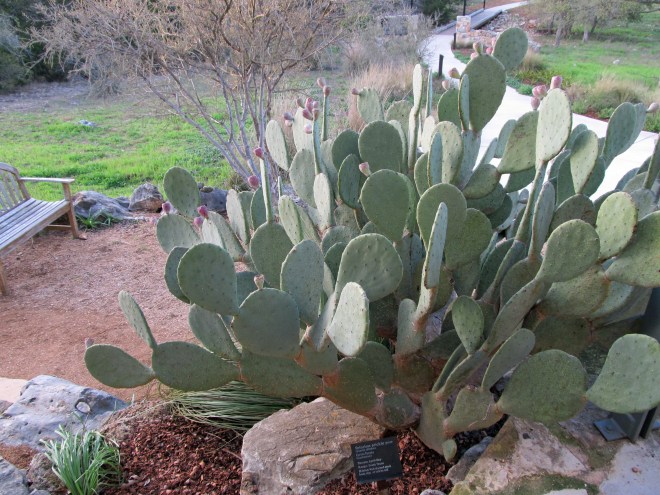
Opuntia ellisiana (spineless prickly pear). A spineless form of Opuntia cacanapa derived from cultivation. “The spineless prickly pear is a great addition to the landscape for those seeking a cactus form, showy blooms, and bright red cactus fruits (tunas). Beware, although it doesn’t have long sharp spines, the tiny glochids (slivers) are very irritating to the skin if the plant is not handled correctly.”

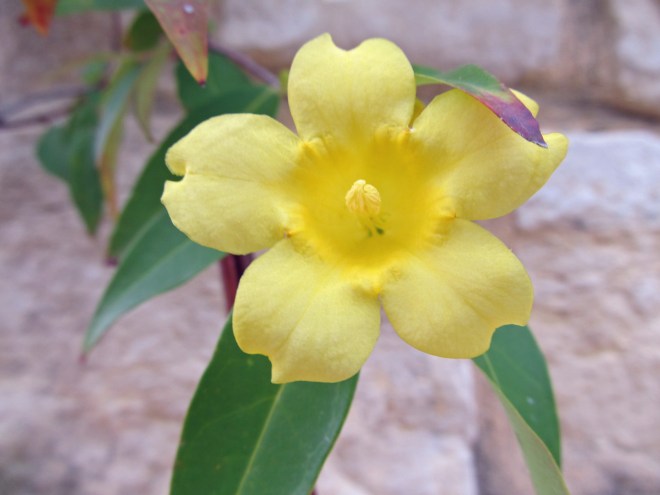
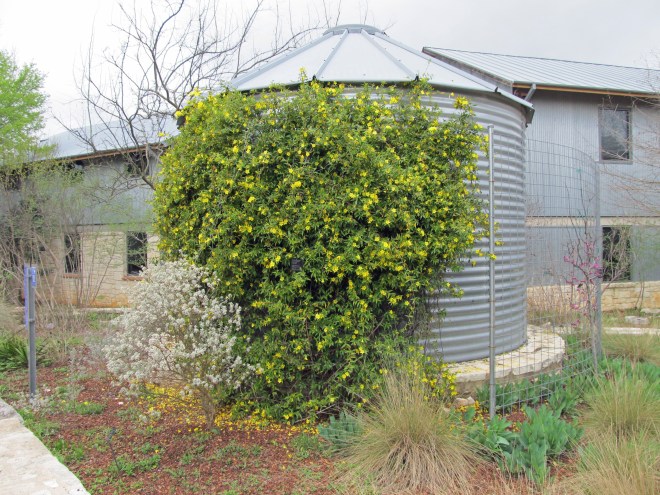
Gelsemium sempervirens (Carolina jessamine). “The flowers, leaves, and roots are poisonous and may be lethal to humans and livestock. The species nectar may also be toxic to honeybees if too much is consumed, and honey made from Carolina jessamine nectar may be toxic to humans.”

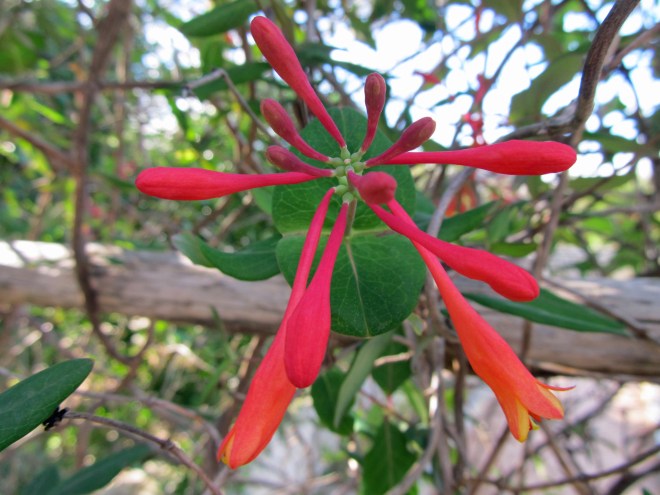
Lonicera sempervirens (coral honeysuckle). “Flowers attract hummingbirds, bees, and butterflies. Fruits attract quail, purple finch, goldfinch, hermit thrush, and American robin.”
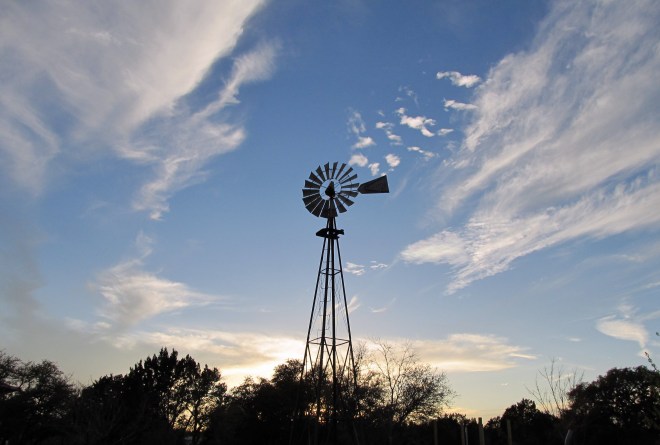
windmill

Field Trip: Lady Bird Johnson Wildflower Center, part one

Last week my place of employment sent me to Austin, Texas to spend some time at the Lady Bird Johnson Wildflower Center. I was there for a native plant conference put on by the American Public Garden Association. I had been wanting to visit the Wildflower Center for a long time, so it was great to finally get the chance. Their gardens are truly amazing. I spent three days there, but could have easily stayed much longer. The native plant conference was great, too. I learned a lot about native plant horticulture, and I left feeling inspired to put those things into practice. If you are wondering “why native plants?,” the Wildflower Center has a good answer to that on their website.

While I was there I took dozens of photos, so I am sharing some of those with you in a two part post. The plant name following each photo or series of photos links to a corresponding entry in the Native Plant Database which is managed by the Wildflower Center’s Native Plant Information Network. The quotes that accompany the plant names are taken from the Native Plant Database entries.
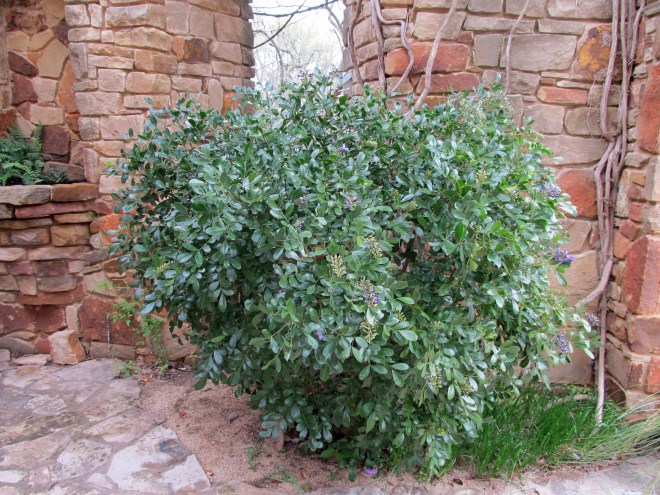
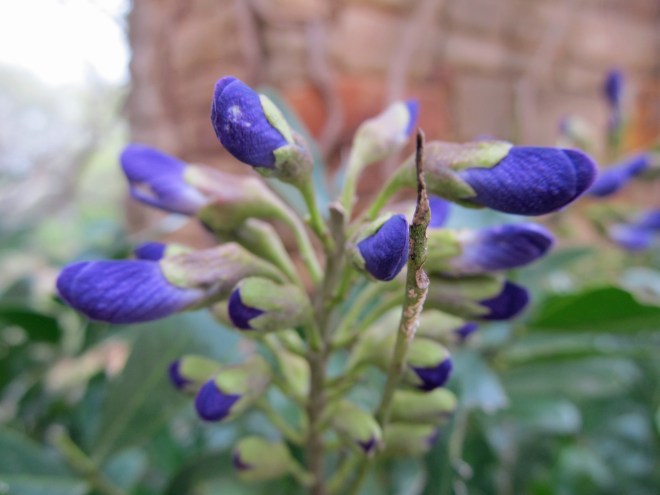
Sophora secundiflora (Texas mountain laurel). “The fragrance of Texas mountain laurel flowers is reminiscent of artificial grape products.”

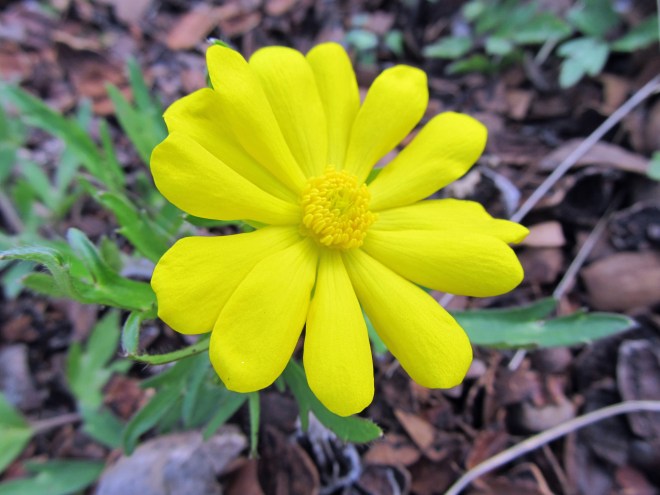
Ranunculus macranthus (large buttercup). “This is one of the largest flowered native buttercups. The large butter-yellow flowers and attractive foliage of this plant immediately attract the eye.”

echinocereus reichenbachii 3

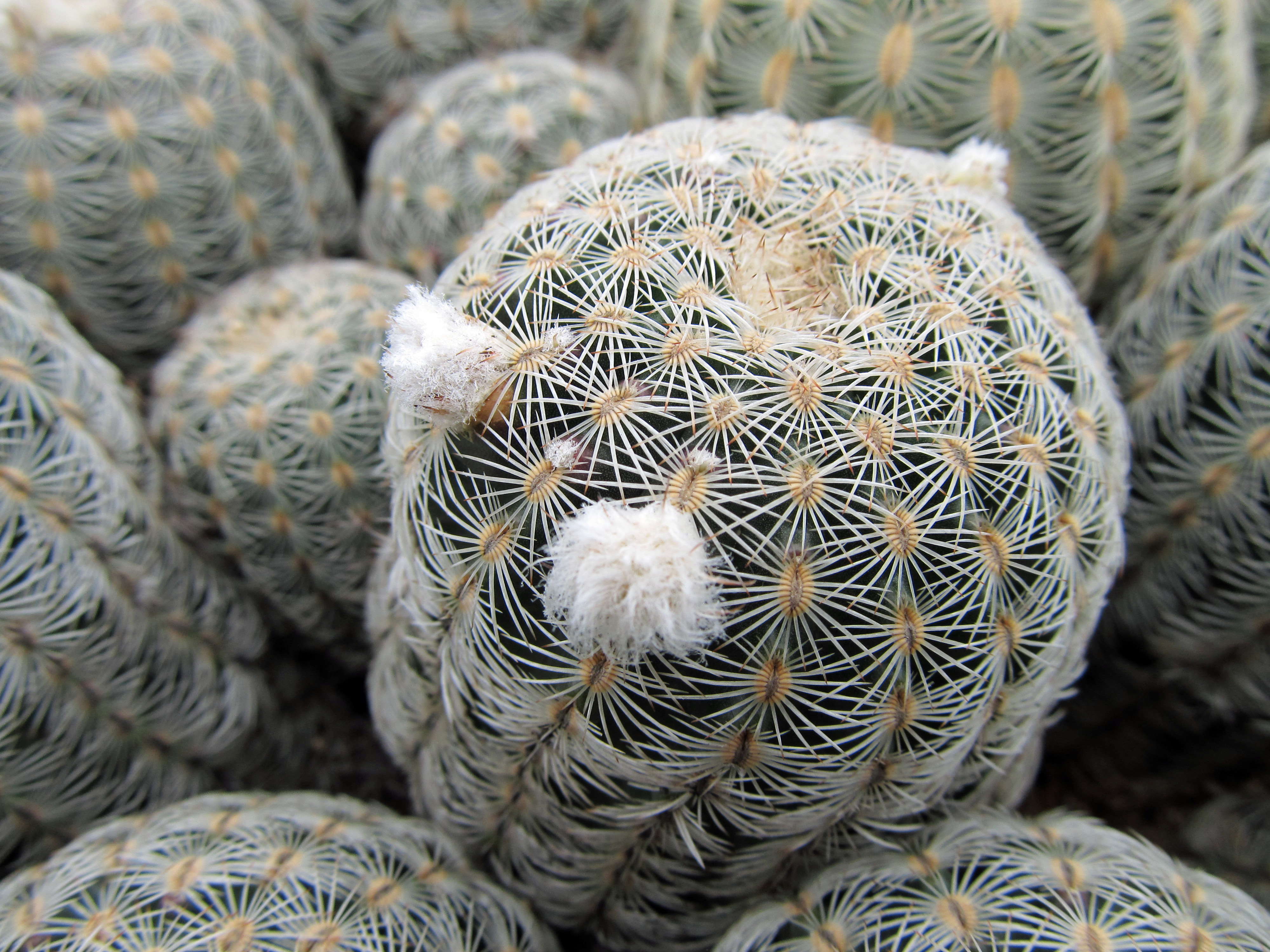
Echinocereus reichenbachii (lace cactus). “Lace cactus is unpredictable in its development, one plant forming a single stem, while its neighbor may branch out and form a dozen or more.”

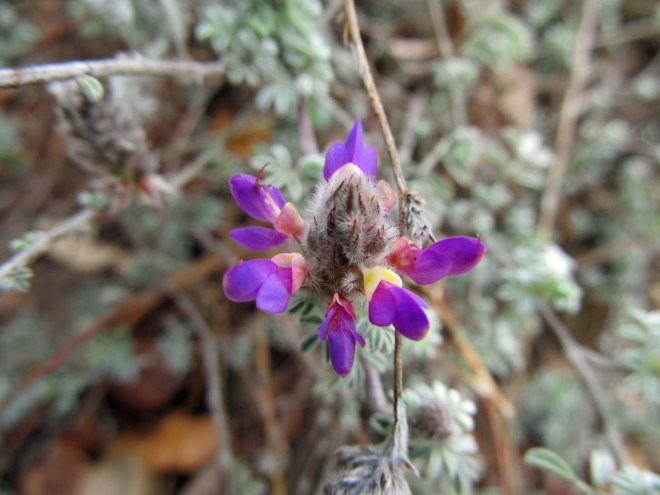
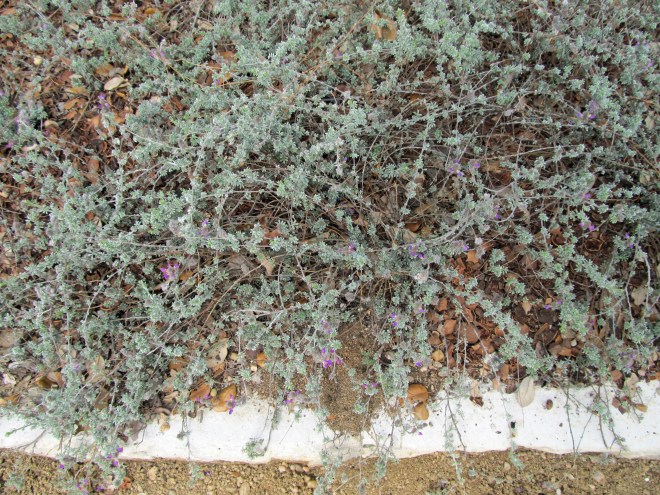
Dalea greggii (Gregg’s prairie clover). “Grown mostly for its silvery, blue-green, delicately compound leaves, the shrub is awash with clusters of tiny, pea-shaped, purple flowers in spring and early summer.” 

viburnum rufidulum 5

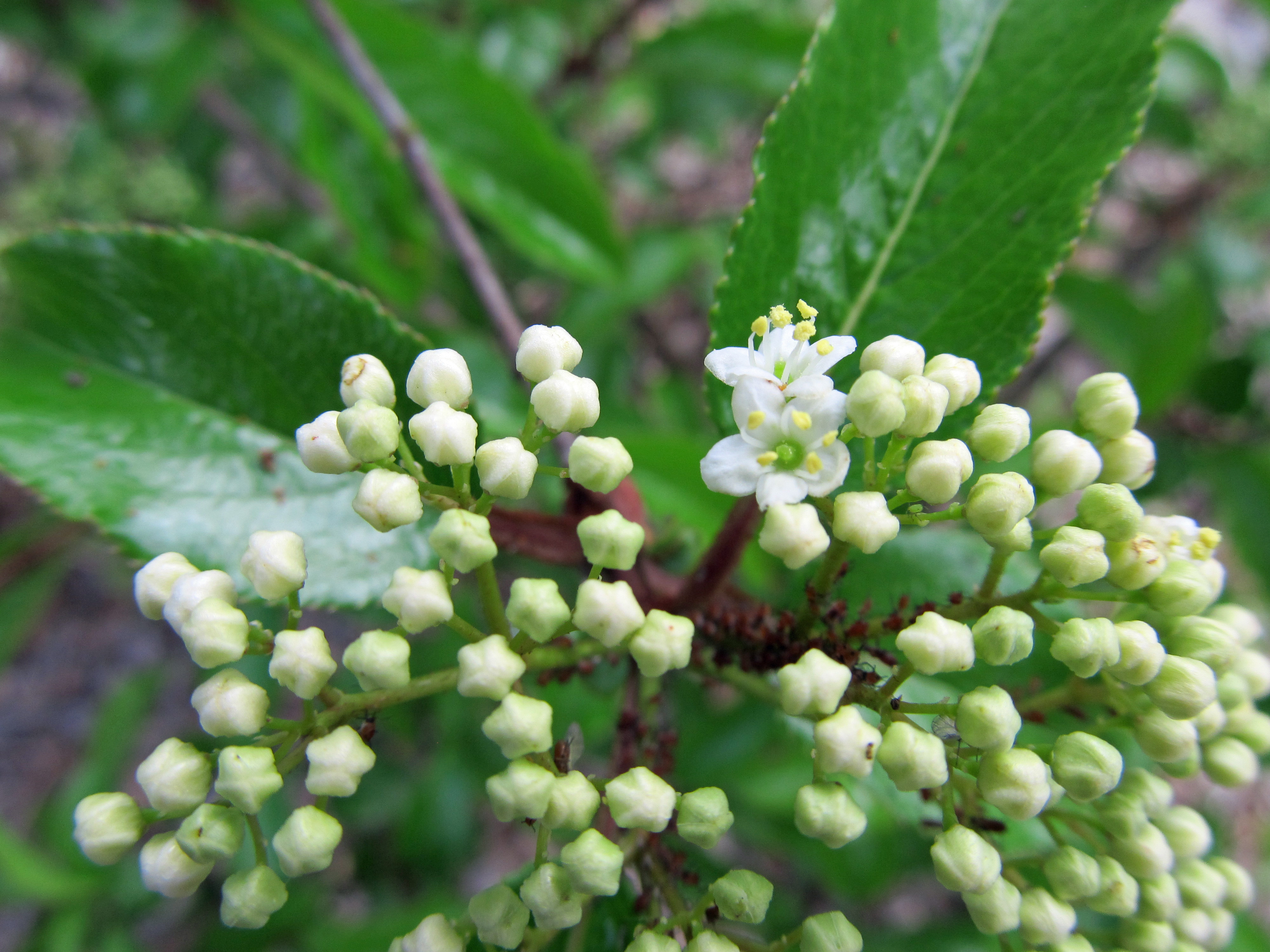
Viburnum rufidulum (southern blackhaw). “In Manual of the Vascular Plants of Texas, Correll and Johnston noted that the fruit tastes similar to raisins.”

mahonia trifoliata 5

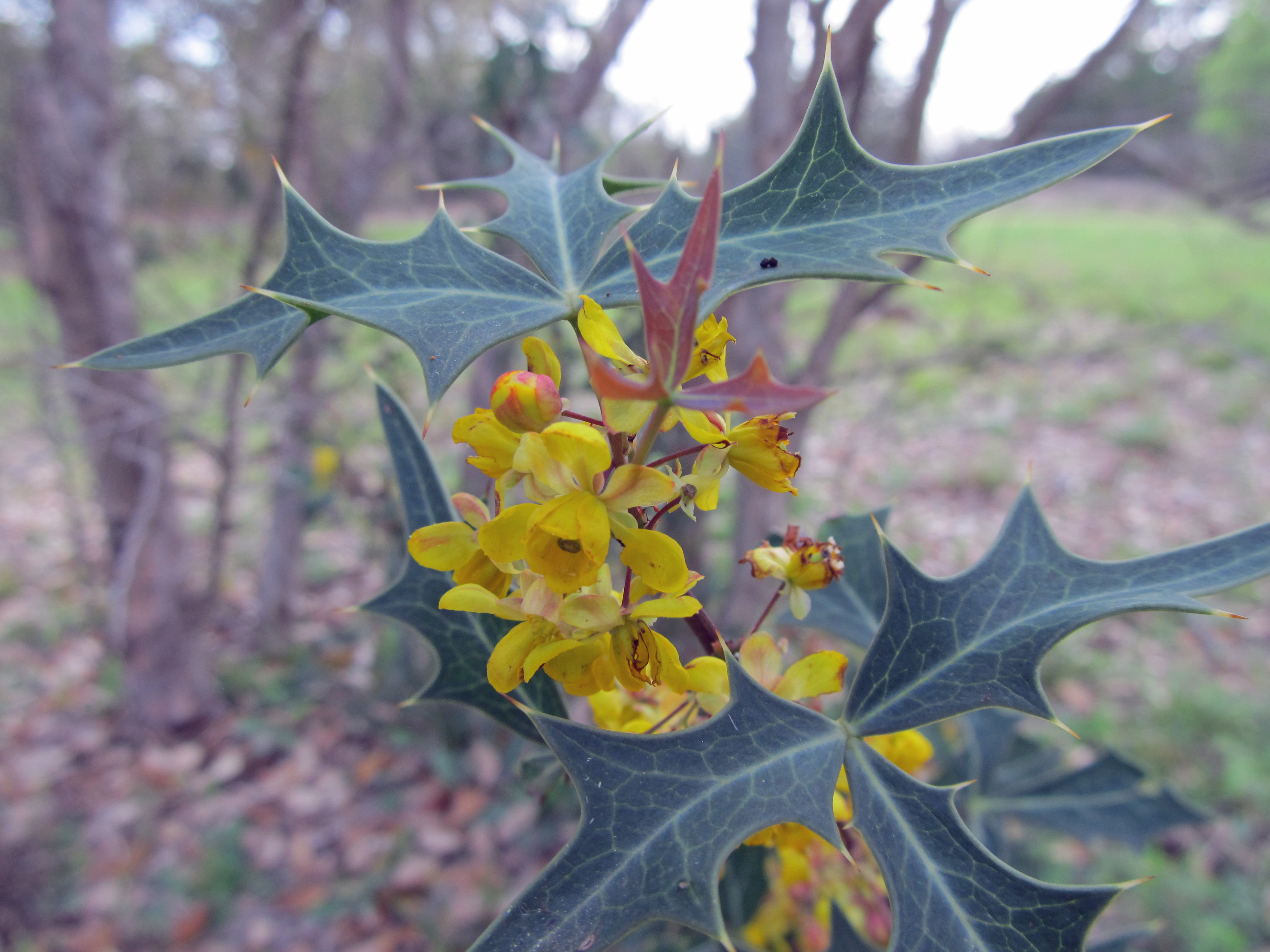
Mahonia trifoliolata (agarita). “Songbirds eat the fruits, and quail and small mammals use the plant for cover. It is considered a good honey source.”

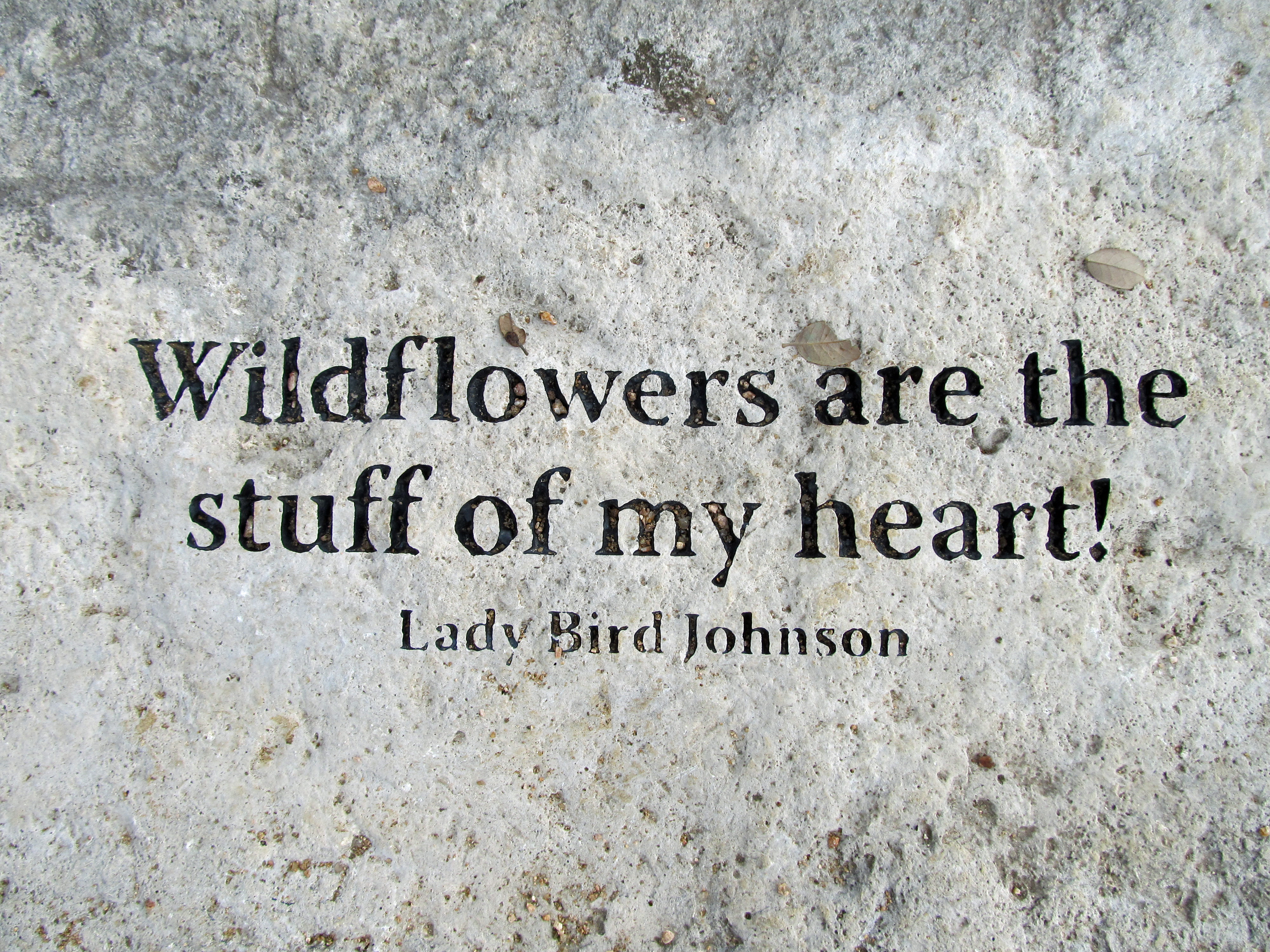
lady bird johnson quote

Year of Pollination: Hellstrip Pollinator Garden

This month I have been reading and reviewing Evelyn Hadden’s book, Hellstrip Gardening, and I have arrived at the fourth and final section, “Curbside-Worthy Plants.” As the title suggests, this section is a list of plants that Hadden has deemed worthy of appearing in a curbside garden. It’s not exhaustive, of course, but with over 100 plants, it’s a great start. Photos and short descriptions accompany each plant name, and the plants are organized into four groups: showy flowers, showy foliage, culinary and medicinal use, and four-season structure.

This list is useful and fun to read through, but there isn’t much more to say about it beyond that. So I have decided to write this month’s Year of Pollination post about creating a hellstrip pollinator garden using some of the plants on Hadden’s list. Last year around this time I wrote about planting for pollinators where I listed some basic tips for creating a pollinator garden in your yard. It’s a fairly simple endeavor – choose a sunny location, plant a variety of flowering plants that bloom throughout the season, and provide nesting sites and a water source. If this sounds like something you would like to do with your hellstrip, consider planting some of the following plants.

Spring Flowers

Spring flowering plants are an important food source for pollinators as they emerge from hibernation and prepare to reproduce. There are several spring flowering trees and shrubs on Hadden’s list. Here are three of them:

  • Amelanchier laevis (Allegheny serviceberry) – A multi-trunked tree or large shrub that flowers early in the spring. Other small trees or shrubs in the genus Amelanchier may also be suitable.
  • Cercis canadensis (eastern redbud) – A small tree that is covered in tiny, vibrant, purple-pink flowers in early spring.
  • Ribes odoratum (clove currant) – A medium sized shrub that flowers in late spring. Try other species of Ribes as well, including one of my favorites, Ribes cereum (wax currant).

There aren’t many spring flowering herbaceous plants on Hadden’s list, but two that stood out to me are Amsonia hubrichtii (bluestar) and Polemonium reptans (creeping Jacob’s ladder).

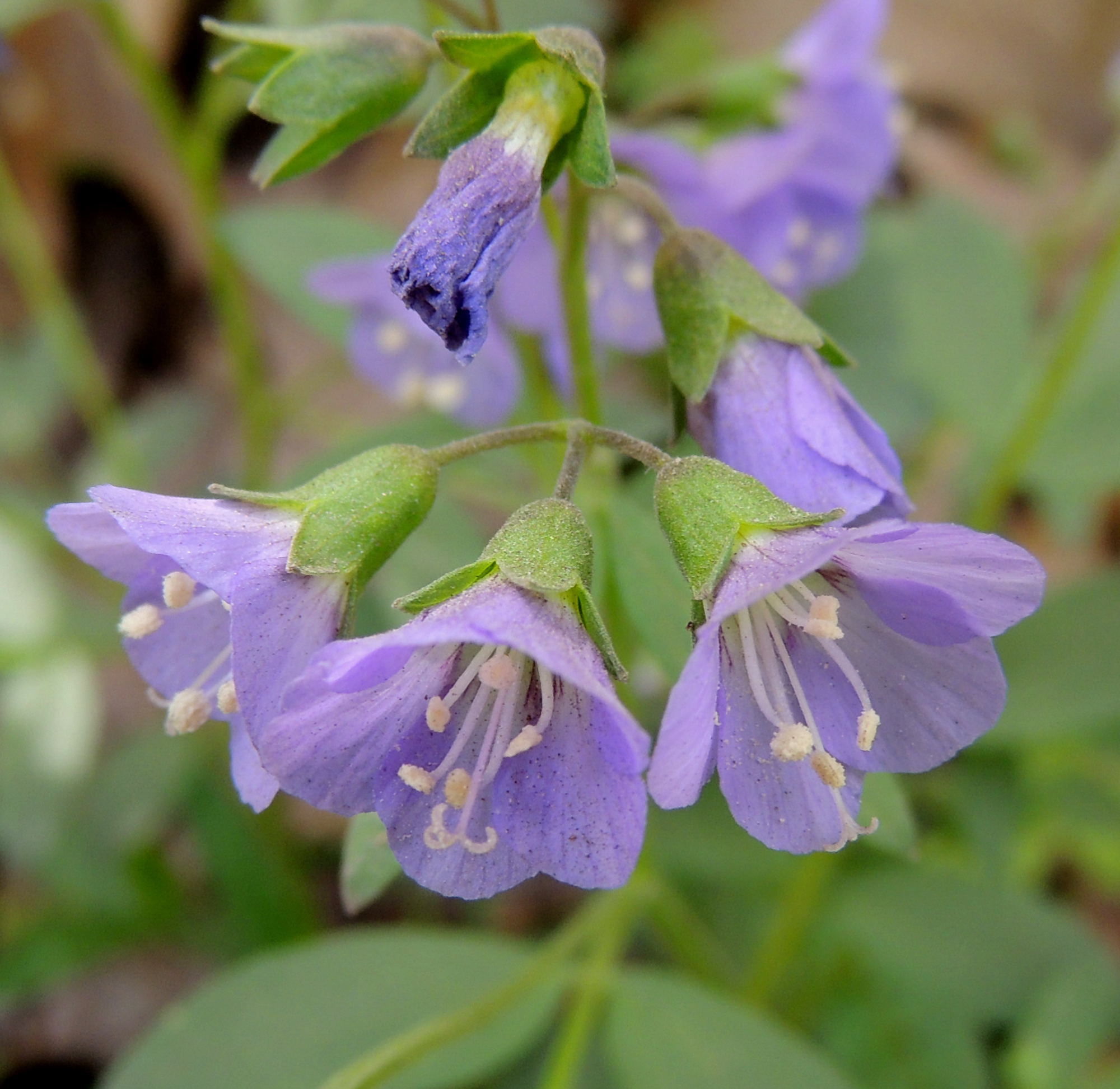
Creeping Jacob's ladder (Polemonium reptens) is native to eastern North America and attracts native bees with its mid-spring flowers. (photo credit: www.eol.org)

Creeping Jacob’s ladder (Polemonium reptens) is native to eastern North America and attracts native bees with its mid-spring flowers. (photo credit: www.eol.org)

Summer Flowers

There is no shortage of summer flowering plants, and Hadden’s list reflects that. When planting a pollinator garden, be sure to include flowers of different shapes, sizes, and colors in order to attract the greatest diversity of pollinators. Here are a few of my favorite summer flowering plants from Hadden’s list:

  • Amorpha canescens (leadplant) – A “good bee plant” and also a nitrogen fixer.
  • Asclepias tuberosa (butterfly weed) – “Valuable pollinator plant and larval host for monarch, gray hairstreak, and queen butterflies.” I love the tight clusters of deep orange flowers on this plant.
  • Coreopsis verticillata (threadleaf coreopsis) – I really like coreopsis (also known as tickseed). Try other species in the genus as well.
  • Penstemon pinifolius (pineleaf penstemon) – North America is bursting with penstemon species, especially the western states. All are great pollinator plants. Pineleaf penstemon is widely available and great for attracting hummingbirds.
  • Salvia pachyphylla (Mojave sage) – A very drought-tolerant plant with beautiful pink to purple to blue inflorescences. Salvia is another genus with lots of species to choose from.
  • Scutellaria suffratescens  (cherry skullcap) – A good ground cover plant with red-pink flowers that occur from late spring into the fall.
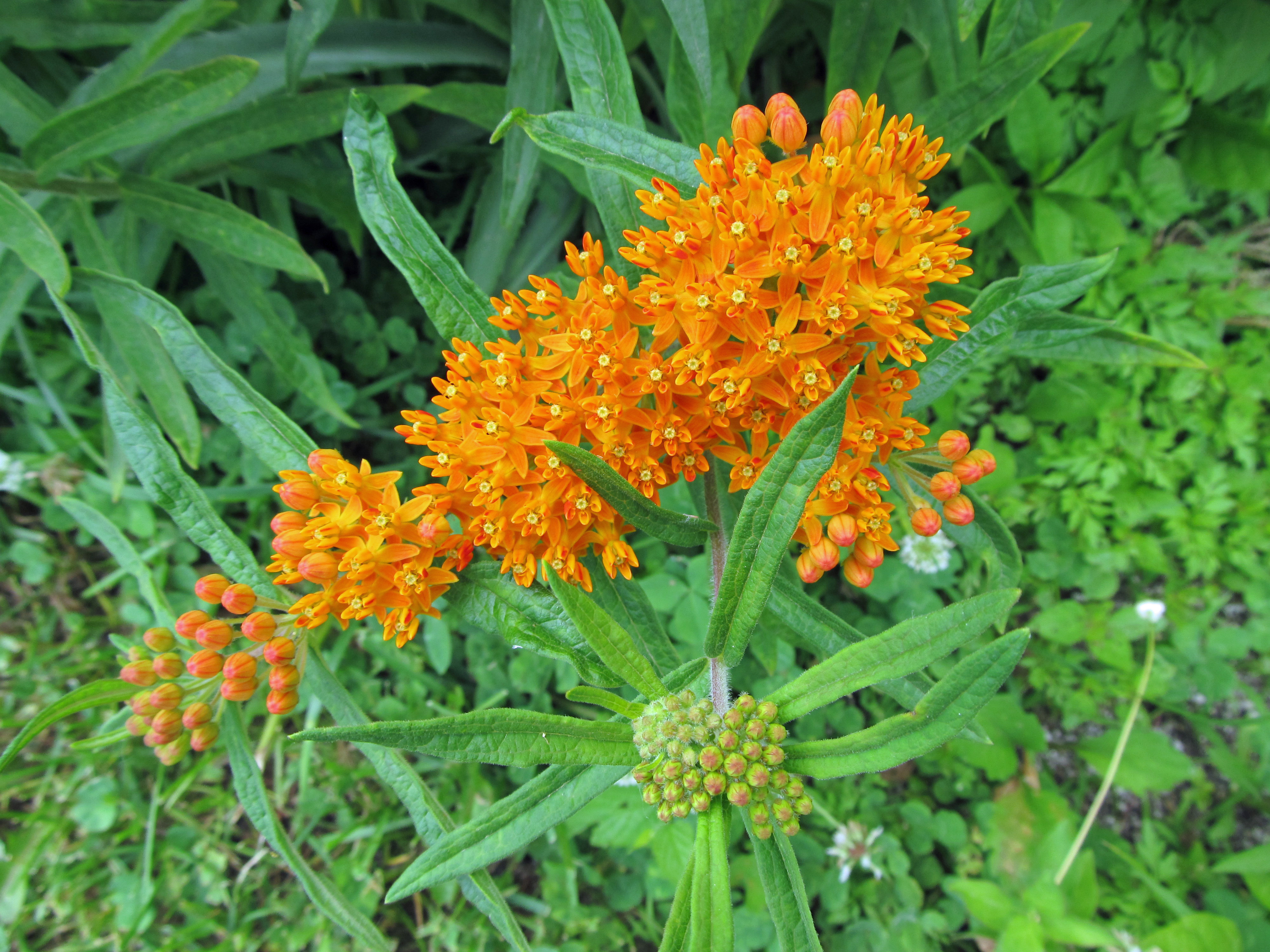
The flowers of butterfly weed (Asclepias tuberosa). Milkweed species (Asclepias spp.) are essential to monarch butterflies as they are the sole host plant of their larvae.

The flowers of butterfly weed (Asclepias tuberosa). Milkweed species (Asclepias spp.) are essential to the survival of monarch butterflies as they are the sole host plant of their larvae.

Fall Flowers

Fall flowering plants are essential to pollinators as they prepare to migrate and/or hibernate. Many of the plants on Hadden’s list start flowering in the summer and continue into the fall. A few are late summer/fall bloomers. Here are some of my favorites:

  • Epilobium canum (California fuchsia) – “Profuse orange-red tubular flowers late summer into fall furnish late-season nectar, fueling hummingbird migration.”
  • Liatris punctata (dotted blazing star) – Drought-tolerant plant with tall spikes of purple-pink flowers. “Nectar fuels migrating monarchs.”
  • Symphyotrichum oblongifolium (aromatic aster) – Loaded with lavender-blue flowers in the fall. It’s a spreading plant, so prune it back to keep it in check. Hadden recommends it for sloped beds.
  • Agastache rupestris (sunset hyssop) – Spikes of “small tubular flowers in sunset hues attract hummingbirds, butterflies, and bees midsummer to fall.” Try other species in the Agastache genus as well.
  • Monarda fistulosa (wild bergamot) – The unique flower heads are like magnets to a wide variety of pollinators. Also consider other Monarda species.
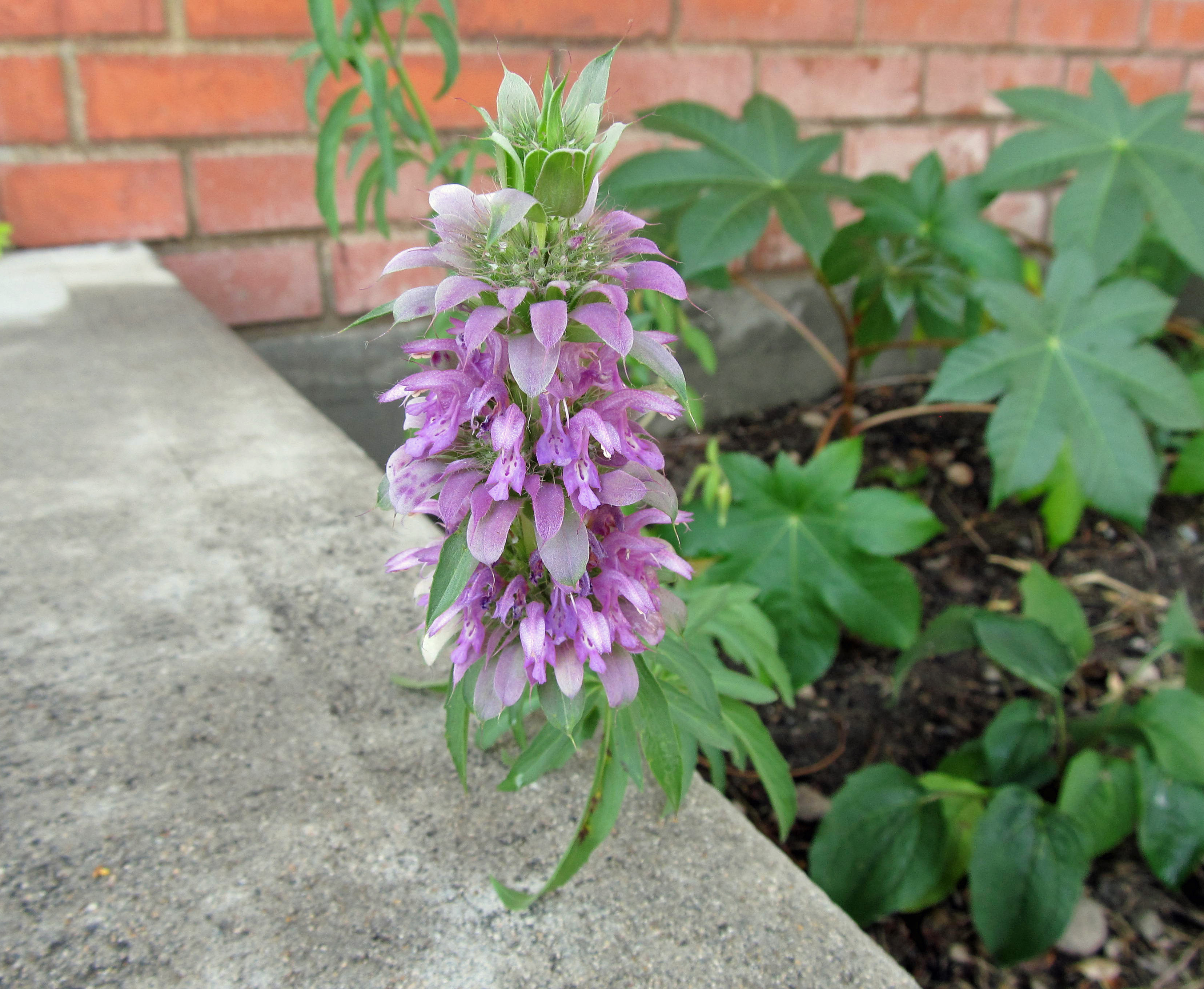
Lemon beebalm (Monarda citriodora), an annual plant that attracts an array of pollinators.

Lemon beebalm (Monarda citriodora), an annual plant that attracts an array of pollinators.

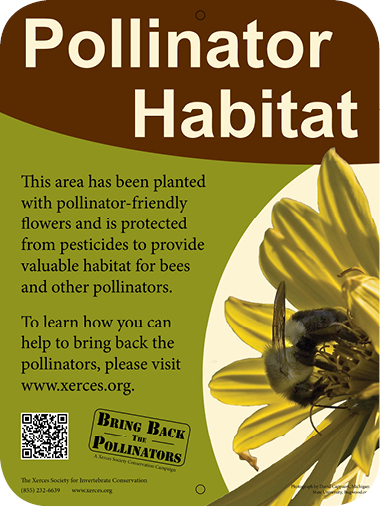
As with any other garden, your hardiness zone, soil conditions, water availability, and other environmental factors must be considered when selecting plants for your hellstrip pollinator garden. Groups like Pollinator Partnership and The Xerces Society have guides that will help you select pollinator friendly plants that are suitable for your region. Additionally, two plans for “boulevard pollinator gardens” complete with plant lists are included in the book Pollinators of Native Plants by Heather Holm – one plan is for sunny and dry spots and the other is for shady and wet spots (pgs. 268-269). Once your pollinator garden is complete, consider getting it certified as a pollinator friendly habitat. There are various organizations that do this, such as the Environmental Education Alliance of Georgia. If you are interested in such a thing, the public nature of your hellstrip garden makes it an ideal place to install a sign (like the one sold in The Xerces Society store) announcing your pollinator garden and educating passersby about the importance of pollinator conservation.

habsign

Other “Year of Pollination” Posts

Book Review: Hellstrip Gardening, part three

The second section of Evelyn J. Hadden’s book, Hellstrip Gardening, is all about the unique challenges and obstacles one faces when gardening in that stretch of land between the sidewalk and the road. I highlighted some of those challenges last week. This week we are into the third section of Hadden’s book, the part that is all about designing, building, and managing a curbside garden. As I have read through this book, I have begun to look at hellstrips in a much different light. They are no longer boring sections of yard with little potential, but instead are full of possibility and have unique characteristics involving publicity and functionality that are absent from most of the rest of the urban landscape. Now that we are in the creation phase of the book, this fact becomes abundantly clear.

Choosing a Style

When deciding how to design and plant your curbside bed, it is important to consider – along with aesthetics – the functions you wish to achieve (storm water runoff collection, food production, wildlife habitat, etc.) as well as how you are going to maintain it. You may decide to embrace minimal maintenance with a mass planting of a single species or mass plantings of a handful of species in sections called drifts. This can be very attractively done, but it also has the risk of a disease or pest wiping out a section of plants. A mass planting of ground covers acts as a living mulch and will eliminate the need to replenish non-living mulch. Hadden provides descriptions of a few styles of garden design, such as formal, naturalistic, cottage garden, and stroll garden, each with their virtues and limitations. Growing food is also an option in a hellstrip. If this is the option you choose, keep the bed looking full by intermixing flowers and crop plants, growing perennial crops, and staggering planting times. Ultimately the style of the garden is the preference of the gardener; however, the environmental conditions of the hellstrip must also be a consideration.

Choosing Plants

Because hellstrips are by nature public gardens, they are the ideal place for plants that appeal to the human senses – plants that invite interaction. Hadden calls these plants “friendly plants.” They are plants that are aromatic, have interesting textures and bold colors, “feel great underfoot,” have “aesthetically pleasing symmetry,” and have unusual flowers or unique foliage. Hadden asserts that, “plants that invite touching engender good will,” so consider the ways that your hellstrip might make you a better neighbor.

Their public nature also means that hellstrip gardens are not the place for rare and valuable plants, and instead are ideal for easily replaceable and self-repairing plants. This includes perennials that are easily divided, shrubs that reproduce by layering, creeping plants that send out runners, and plants with seeds that are easily collected and can be sown in bare spots. One option is to plant only annuals. This eliminates the loss of plants during the winter when snow, sand, and/or salt are deposited in the beds by road clearing equipment. Just be sure to protect the soil with mulch or a cover crop during the cold months of the year.

A hellstrip is also an ideal location for an alternative lawn. Traditional lawns require loads of water and fertilizer and regular mowing in order to stay looking good. There are lots of other grasses and ground covers available now that are drought tolerant, require little or no fertilizer, don’t need to be mowed often or at all, and are still very attractive. Hadden has a website all about lawn alternatives called Less Lawn.

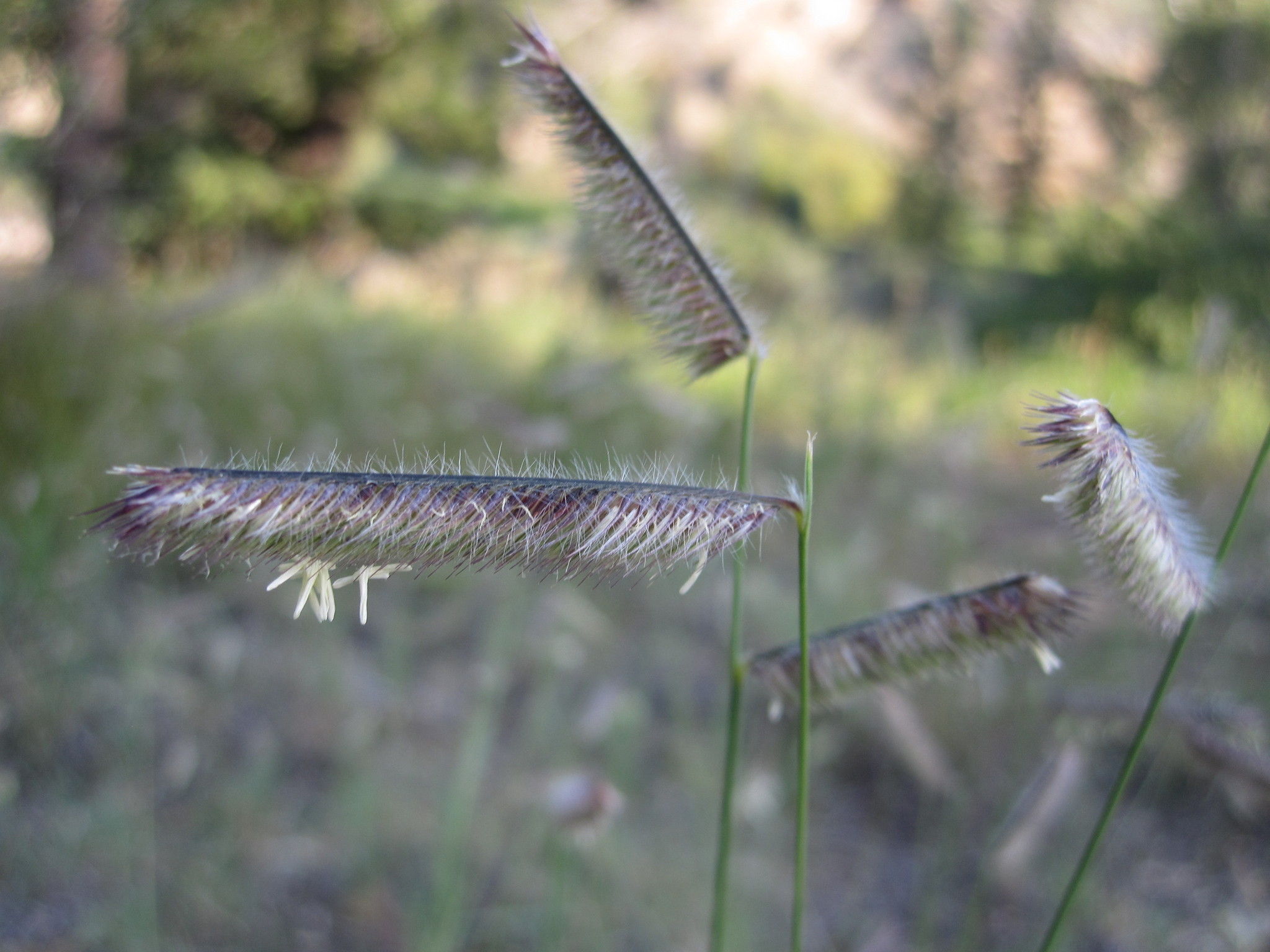
The seed heads of blue grama (Bouteloua gracilis), one of many attractive alternatives to traditional turfgrass. (photo credit: www.eol.org)

The seed heads of blue grama grass (Bouteloua gracilis), one of many attractive alternatives to traditional turfgrass. (photo credit: www.eol.org)

When selecting plants for your hellstrip garden, consider the conditions it will have to endure. Unless you want to make serious amendments in order to accommodate certain plants, it is probably best to choose plants that are already adapted to your site. One way to determine this is to observe sites similar to yours and see what is thriving there; particularly make note of plants that look like they have been there for a while. Also, feel free to ask local experts at garden centers and public gardens what they might recommend for your site.

Earthshaping

“Diverse topography makes a more visually interesting garden, and it adds microclimates, letting you grow more diverse plants.” Shaping a curbside bed can also serve other functions such as softening traffic noise, defining pathways, collecting runoff, and providing wildlife habitat. When building a large berm, first create a rocky base and then fill in the spaces between the rocks with sand and small gravel. After that, add topsoil and firmly pack it down with machinery or a rolling drum. Small berms can be formed by simply piling up excess soil or turning over sections of sod and piling them up. Maintain good plant coverage on berms in order to reduce erosion, and consider planting shrubs with extensive root systems like sumac (Rhus sp.) and snowberry (Symphoricarpos sp.).

Hellstrips are ideal locations for rain gardens and bioswales since they are typically surrounded by impervious surfaces. Storm water can be directed from these surfaces into your rain garden, thereby reducing the amount of storm water runoff that must be handled elsewhere. Hadden provides a brief overview on how to construct a rain garden; the process is too detailed to go into here. If you are serious about building one, it is important to do your research beforehand to be sure that it is built properly. There are several great resources available; one that I would recommend is Washington State University Extension.

Partnering with Nature

Time spent managing and maintaining your hellstrip garden can be greatly reduced when it is well planned out, contains plants that are suited to the site, and has good soil health. Helping you achieve these things is essentially what Hadden’s book is all about. Watering properly and wisely is key to the success of your hellstrip garden. Hadden suggests organizing plants into “irrigation zones,” separating those that need little or no water from those that need frequent or regular watering. When you do water, water “thoroughly and infrequently to maximize deep root growth and drought resistance.” Consider installing a drip irrigation system, particularly one that will direct the water to the roots of the plants and deliver it slowly. Avoid watering areas where there are no plants, as this encourages weed growth.

Mostly likely you will be doing some amount of trimming and pruning in your hellstrip. Consider how you will handle this plant material. You may choose to cut it up into fine pieces and leave it as mulch; or maybe you have a compost pile to add to. Large woody materials can be placed in a section of your property set aside for wildlife habitat. Choosing plants that will not outgrow the space will reduce the amount of pruning you will need to do.

As much as Hadden is an advocate for alternatives to conventional lawns, she is also an advocate for reducing the use of gas-powered leaf blowers. Nobody enjoys hearing the clamor of a smelly, polluting leaf blower echoing through the neighborhood, so be a good neighbor and use a broom or rake instead. You will probably enjoy the task more as you listen to nature, get some exercise, and revel in your garden.

Continued focus on building healthy soil is paramount to the ongoing success of your curbside garden. Continue to add organic matter by letting some of the plant litter lie and decompose. Plant nitrogen fixing species like lupines (Lupinus sp.) and false indigos (Baptisia sp.). As much as possible avoid compacting the soil, especially when it is wet, and keep tilling and digging to a minimum once the garden is planted.

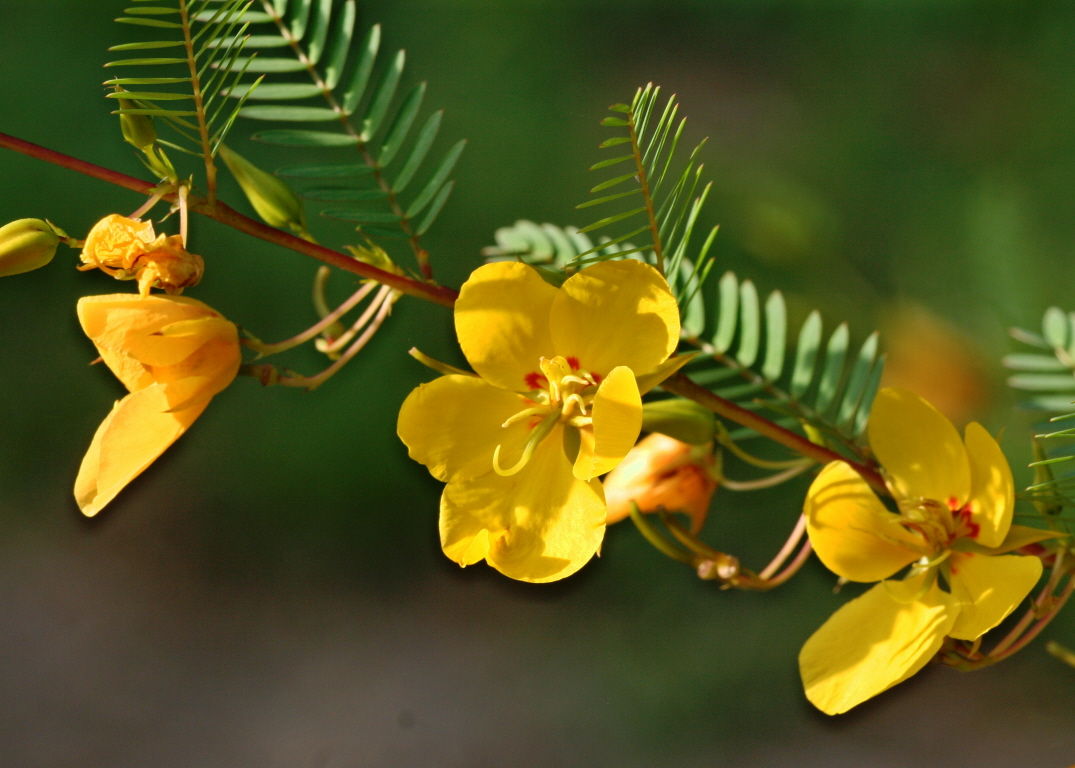
Partidge pea (Chamaecrista fasciculate), an annual plant in the pea family (Fabaceae). One of many nitrogen fixing plants that can help improve soil health. (photo credit: www.eol.org)

Partridge pea (Chamaecrista fasciculata), an annual plant in the pea family (Fabaceae). One of many nitrogen fixing plants that can help improve soil fertility. (photo credit: www.eol.org)

Again, this is only a fraction of what Hadden discusses in this section of her book. Consult the book for more of her wisdom. The final section of Hellstrip Gardening is a long list of plants that are “curbside-worthy” complete with photos and descriptions. Next week’s post will be all about a particular type of hellstrip garden that employs a subsection of those plants.

Book Review: Hellstrip Gardening, part two

Hellstrip Gardening by Evelyn J. Hadden is a book intended to help transform roadside beds (or any neglected or hard to garden spot) into a verdant and productive green space. A “paradise,” if you will. Last week, I introduced the concept of hellstrips and briefly discussed the first section of Hadden’s book. This week we are looking at the second section, which is all about the unique challenges and obstacles that hellstrip gardening entails. Hadden has divided this section into 8 main areas of focus. She provides a ton of great information that is sure to be incredibly useful for anyone seriously engaged in improving a hellstrip. If you are one of those people, I highly recommend referring to the book. For simplicity’s sake, this post will include a quick overview of each of the main themes, detailing a few of the things that stood out to me.

Working with Trees

Trees offer many benefits to urban and suburban areas; however, it is not uncommon to see hellstrips with trees that are much too large for the space. Hellstrips are often surrounded by paved surfaces and are heavily trafficked. This leads to soil compaction which results in roots being starved of oxygen and water. Where there are power lines overhead, oversized trees must be heavily pruned to make room for them. Consider planting small or medium sized trees in these spaces. Make sure the soil is well aerated and that there is enough space for the roots to expand out beyond the canopy. Hadden advises avoiding growing turfgrass below trees because it is shallow rooted and uses up much of the available water and oxygen; instead plant deep rooted perennials that naturally grow in wooded environments.

Working with Water

Depending on where you are located, your hellstrip is either going to be water limited or water abundant. Water availability also varies depending on the time of year. If you are mostly water limited, include plants that can tolerate drought conditions. Avoid planting them too close to each other so that they aren’t competing for water. Increase your soil’s water holding capacity by adding organic matter and mulching bare ground. Strategically placed boulders can create cool, moist microclimates where plants can endure hot, dry stretches. If you are dealing with too much water, you can “increase the absorption power” of your property by ensuring that your soil is well aerated and high in organic matter. Plant high water use perennials, grasses, shrubs, and trees with extensive root systems. Replace impermeable surfaces with ground covers and permeable pathways to reduce runoff, and reshape beds so that they collect, hold, and absorb excess runoff.

Working with Poor Soil

Curbside beds in urban areas are notorious for having soil that is compacted, contaminated, and depleted of nutrients. This issue can be addressed by removing and replacing the soil altogether or by heavily amending it. Another solution is to only include plants that can tolerate these harsh conditions. Most likely you will do something in between these two extremes. Adding organic matter seems like the best way to improve soil structure and fertility. Because contaminants from paved surfaces are regularly introduced to curbside gardens, there is a good chance that the soil may contain high levels of lead and other heavy metals. It is a good idea to test the soil before planting edibles. Contaminated soils can be remediated by growing certain plants like annual sunflowers, which take up heavy metals into their tissues. These plants must then be disposed of as hazardous waste.

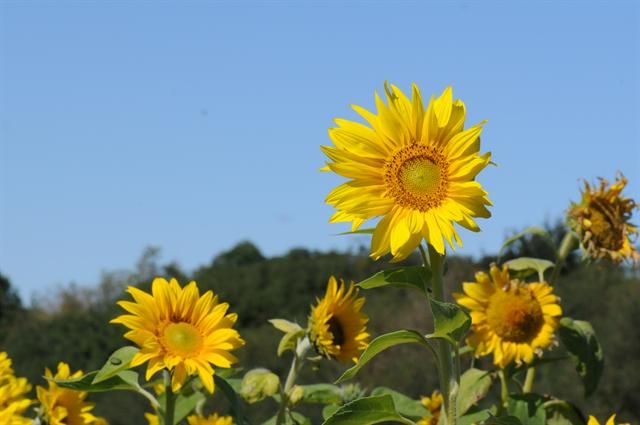
Common sunflower (Helianthus annuus) is one of several plants that can be used to remediate polluted soils. (photo credit: www.eol.org)

Common sunflower (Helianthus annuus) is one of several plants that can be used to remediate polluted soil (photo credit: www.eol.org)

Working with Laws and Covenants

Regulations and restrictions may prohibit you from creating the hellstrip garden you dream of having. Start by informing yourself of your areas laws and covenants. Some restrictions may be based on public safety (such as restrictions on street trees) while others may be based on outdated ways of thinking. Hadden advises not to assume that a regulation can’t be reversed; however, first you must prepare a well reasoned argument based on facts and evidence. Will your landscape design conserve resources, provide ecological services, improve property values, enhance the neighborhood in some way? Perhaps “your property can model a new landscaping strategy.” Prepare to state your case respectfully, intelligently, and convincingly, and you might just find yourself at the forefront of a new movement.

Living with Vehicles

A garden growing along a roadway is sure to be confronted by vehicles. Hadden suggests using “easily replaceable plants for vulnerable areas.” You can also protect your garden by installing a low fence or wall or by planting sturdy shrubs, prickly plants, or plants that are tall and/or brightly colored. If parking is a regular occurrence, leave room for people to exit their vehicles without trampling the garden. A garden surrounded by paved surfaces will be hotter than other areas on your property, so plant heat tolerant plants or shade the garden with trees and shrubs. A hedge, trellis, fence, or berm can act as a wind and dust break and can help reduce noise. Aromatic plants can help combat undesirable urban smells, and noise can be further masked by water features and plantings that attract songbirds.

Living with Wildlife

Wildlife can either be encouraged or discouraged depending on your preferences. Discouraging certain wildlife can be as simple as “learn[ing] what they need in terms of food and shelter, and then eliminat[ing] it.” A garden full of diverse plant life can help limit damage caused by leaf-eating insects. Encouraging birds and bats can also help control insects. Herbivory by mammals can be reduced by growing a wide array of plants and not over fertilizing or overwatering them. Conversely, encouraging wildlife entails discovering what they like and providing it. For example, to encourage large populations of pollinators, plant a diversity of plants that flower throughout the year and provide nesting sites such as patches of bare ground for ground nesting bees. Keep in mind that your property can be part of a wildlife corridor – a haven for migrating wildlife in an otherwise sea of uninhabitable urban space.

Living with Road Maintenance and Utilities

Curbsides gardens are unique in that they are directly affected by road maintenance and they often must accommodate public utility features like electrical boxes, fire hydrants, street signs, and telephone poles. In areas where salts are applied to roads to reduce ice, hellstrips can be planted with salt tolerant plants and can be deeply watered in order to flush salts down into the soil profile. In areas that receive heavy snowfall, avoid piling snow directly on top of plants. Always call utility companies before doing any major digging to find out where underground pipes and electrical cables are located. Utility features can be masked using shrubs, trellises, and vining plants (especially annual vines that are easily removed and replaced); just be sure to maintain access to them. If your hellstrip consists of “unsightly objects,” Hadden recommends “composing a riveting garden scene to divert attention from an uninspiring view.”

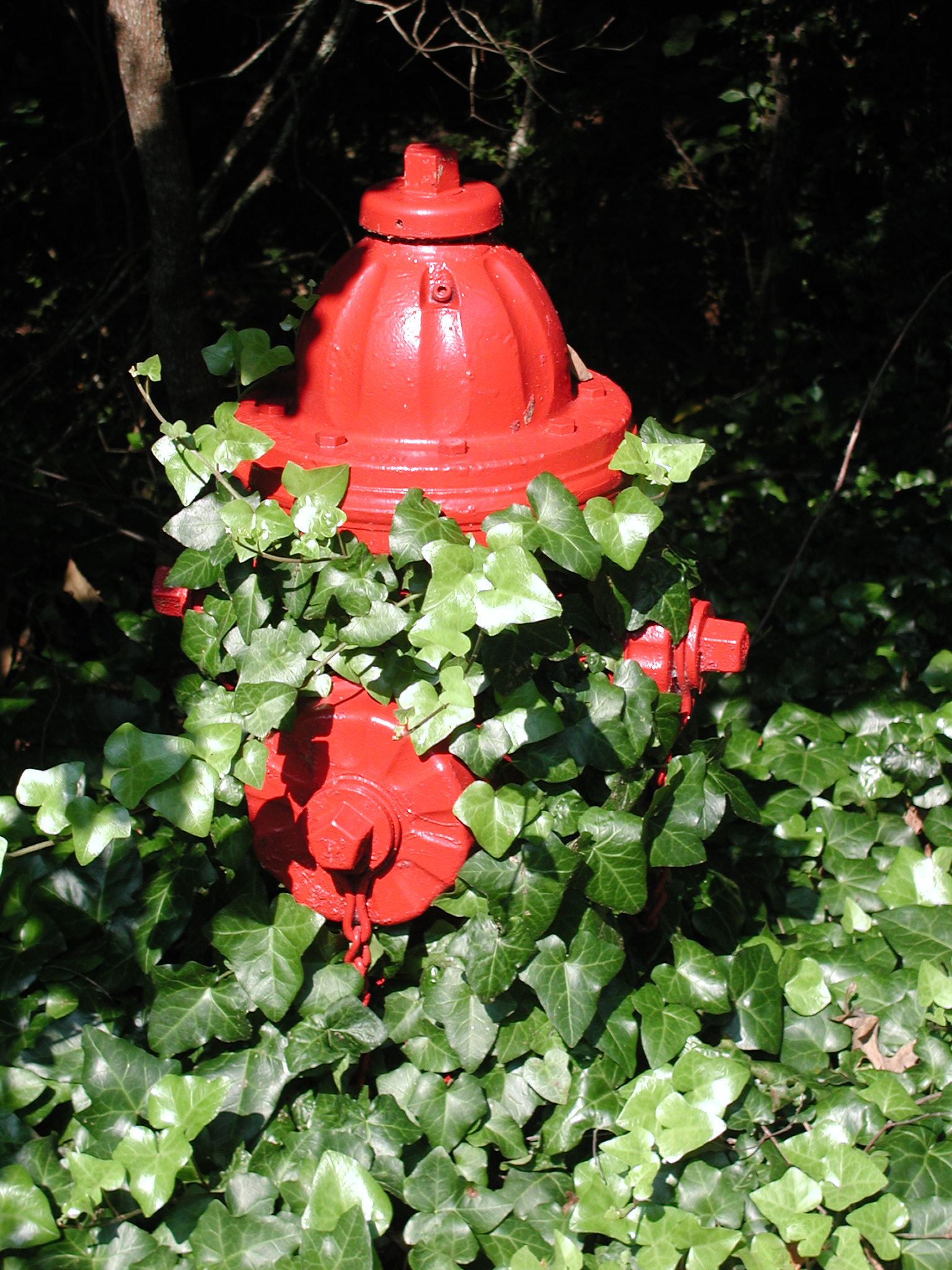
Fire hydrant decorated with ivy (photo credit: wikimedia commons)

Fire hydrant decorated with ivy (photo credit: wikimedia commons)

Living with the Public

Your hellstrip is the most public part of your yard, so you are going to have to learn to share. In order to keep trampling to a minimum and contained to certain areas, make it obvious where pathways are and use berms to raise up the beds. Keep the paths clear of debris and avoid messy fruit and nut trees that can make pathways unfriendly to walk on. Avoid planting rare and valuable plants in your curbside garden. Remember that your hellstrip is typically the first part of your property that people see, so make a good first impression. Also, consider the potential that your public hellstrip garden has for building community and inspiring others.

There is so much more in this section; it is impossible to discuss it all here. Again, if you are serious about improving a hellstrip, get your hands on this book. All hellstrips are different and will have unique challenges. Hadden does a great job of touching on nearly any issue that may arise. Now that we’ve covered challenges and obstacles, next week we will look at designing, building, and managing hellstrip gardens.

Book Review: Hellstrip Gardening, part one

Keeping a garden alive and thriving is replete with its inherent challenges. Plants have needs, and those needs vary by plant. Lots of sun might be great for one plant but harmful to another. Some plants are very drought tolerant and don’t require much water beyond what falls naturally from the sky, while others insist on regular supplemental irrigation. Plants also have preferred soil types, and that soil must provide a proper balance of nutrients. Then there is the litany of potential pests, diseases, and predators that can present themselves at any given moment. Frankly, it’s surprising that any garden stays alive, all things considered.

Some gardens have added challenges. They may be regularly visited (and trampled) by the public, who may or may not have pets in tow. They may be surrounded by paved surfaces which increase ambient air temperatures significantly and can introduce contaminants to the garden in the form of road salts, petrochemicals, fertilizers, sediments, and animal waste. They may encompass utility boxes, water meters, and road signs that require regular visits and occasional maintenance. All of these things describe the plight of a curbside garden, also known as a hellstrip – that section of green space between the road and the sidewalk. Comparatively, backyard gardens are veritable havens for plants.

Hellstrips have been on my mind for several years now. It all started back in graduate school while studying green roof technology. One of the macro benefits of green roofs is storm water mitigation. During a storm event, green roofs capture a greater proportion of precipitation compared to conventional roofs and slowly release it back into the environment. Storm water is a major issue in urban areas where the percentage of impervious surfaces is high. These surfaces prohibit precipitation from infiltrating the soil and recharging groundwater and nearby waterways. Instead, this water is rushed away and directed into either waste water treatment facilities or local waterways, carrying with it the contaminants that have collected on paved surfaces and rooftops. Gardens along roadways can be engineered to manage storm water in a similar way that green roofs do – capturing it, filtering it, and releasing it back into the environment at a slow pace – thereby minimizing the negative effects of storm water runoff.

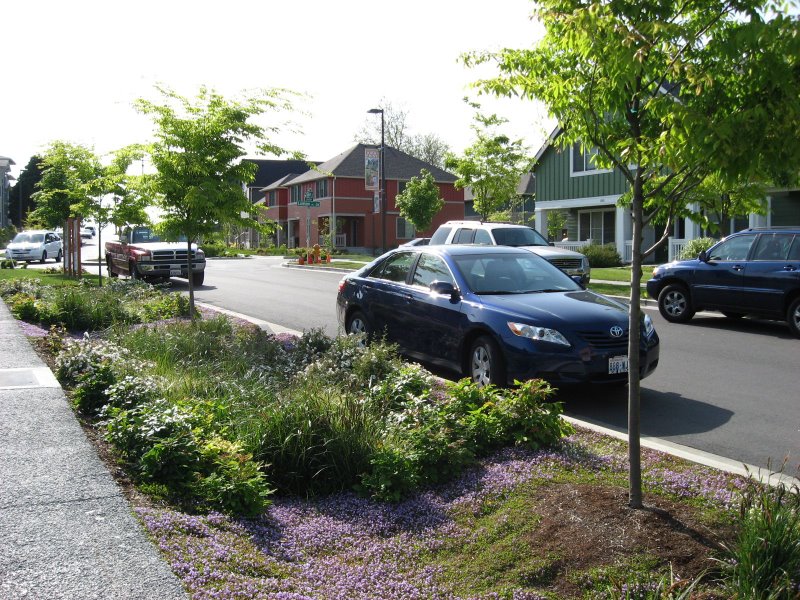
A rain garden or bioswale planted in a hellstrip to help mitigate storm water runoff. (photo credit: epa.gov)

A rain garden or bioswale planted in a hellstrip to help mitigate storm water runoff (photo credit: epa.gov)

The hellstrip in front of my parent’s house has been the source of many headaches. It is another reason why hellstrips have been on my mind. It is a weed patch, but not intentionally so. I remember many years ago when my mom told me she was going to replace the weed patch with buffalograss. She was elated by the idea – little or no mowing, very little supplemental water, a cool alternative to conventional lawn. Now, years later after planting dozens of buffalograss plugs and making a concentrated effort to keep them alive and prospering, the hellstrip remains a weed patch. But my mom hasn’t given up hope. The hellstrip will be conquered in due time.

Riding my bike to work last summer, I regularly rode past a house that proudly displayed the potential that curbside gardens could reach. The house sits on the corner lot of an intersection that, due to the angle of the connecting roads, gives the lot a long triangular shape. This makes the hellstrip longer than most of the others in this neighborhood. On this lengthy strip, the owners have planted an expansive and diverse vegetable garden. While once upon a time vegetable gardens were largely confined to backyards, they have lately been making more regular appearances in front yards. Few, however, are as bold and as public as this one – a true hellstrip success.

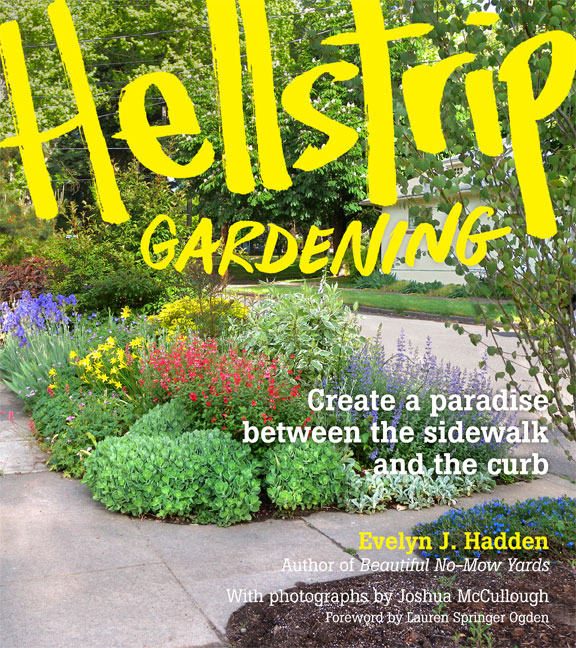
Last year, garden writer and lawn alternative enthusiast, Evelyn Hadden, put out a book called, Hellstrip Gardening. When I discovered this, I was intrigued, especially considering all of the mulling over hellstrips I had been doing for so long. I was curious to learn what she had to say. It has taken me until now to read it, but it seems like an opportune time to do so. After all, we are in pre-spring, a time when garden planning is being done in earnest. Perhaps this book will give me some ideas and encouragement to tackle some hard to garden spots this year. And maybe this review (and Hadden’s book) will inspire you to do the same. After all, this approach (as Hadden suggests) doesn’t have to be limited to curbside garden beds and can, in fact, be applied to any garden with challenges beyond the norm (like gardens along driveways and in alleyways, for example). The ultimate goal, for me at least, will be to pass along whatever knowledge I gain from this to my parents so that we can address their hellstrip issues once and for all.

hellstrip gardening book

Hellstrip Gardening is organized into four sections: Inspirations, Situations, Creation, and Curbside-Worthy Plants. This review will also have multiple parts that will be posted as I read through the book. The first section of the book is intended to inspire and encourage – to show through words and pictures what others have done and to give you that “if they can do it, so can I” sort of feeling. It also introduces some of the challenges of gardening in hellstrips as Hadden visits 12 gardens across the United States and talks with the people who designed, installed, and maintain them. She tells the story of how the gardens came to be and showcases some of the plants and plant combinations that were used in each situation. The challenges will be fleshed out in the following section; these narratives are meant more to demonstrate what can be done. There are dozens of great photos throughout, and the short plant lists at the end of each profile are sure to be useful.

Now that we’re inspired, next week’s post will take a look at what Hadden has to say about addressing challenges and overcoming obstacles that are unique to hellstrip gardens.

Growing Plants in Outer Space

Last December I wrote about a mission to the moon that will involve growing plants to determine how they will perform in a lunar environment. That mission is still at least a year away. In the meantime, research involving plant growth in space continues onboard the International Space Station (ISS). Numerous experiments have been carried out so far with the general aim of observing the effects of microgravity and other extraterrestrial environmental factors on plant growth. The larger aim, of course, is to develop methods for growing food in space in order to feed future space travelers as they colonize other celestial bodies, such as the Moon and Mars. Providing oxygen and contributing to psychological well-being are additional benefits of growing plants in space.

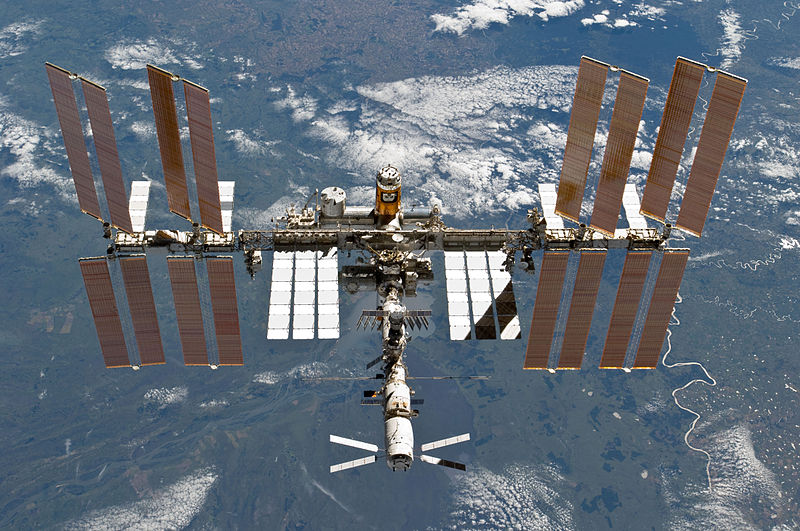
International Space Station (photo credit: wikimedia commons)

International Space Station (photo credit: wikimedia commons)

Several weeks ago a spacecraft returned to Earth from ISS carrying samples and data from a variety of studies, including a plant study being carried out by the University of Wisconsin-Madison’s Department of Botany. The study consisted of three groups of Arabidopsis thaliana – a wild type group, a group with a gene involved in gravity sensing always turned on, and a group with that same gene always turned off. The plants were grown from seed on petri dishes, and the seedlings (totaling 1000 plants) were returned to Earth after a few weeks of growth. The petri dishes were placed in deep freeze upon returning to Madison. Eventually, RNA will be extracted from each of the plants and analyzed.

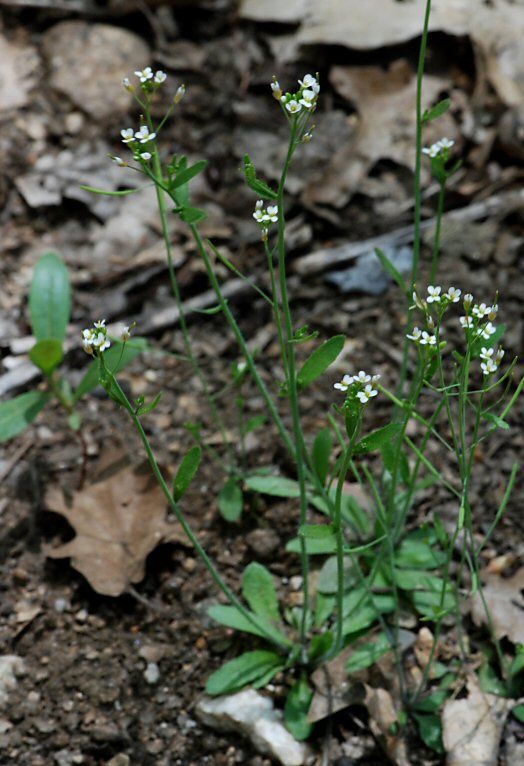
Arabidopsis thaliana is a plant in the mustard family (Brassicaceae) that is commonly used in biological studies because it is fast growing with a short life cycle – it germinates, flowers, and produces seed in about 6 weeks  – and it has a relatively small genome that has been completely mapped. This makes it ideal for studies like this one that aim to observe genes involved in responding to particular environmental factors – in this case microgravity.

Arabidopsis thaliana (photo credit: www.eol.org)

Arabidopsis thaliana (photo credit: www.eol.org)

Plants grown in the weightlessness of space get long, spindly, and weak. Plants grown on Earth in a protected environment without mechanical stresses like wind or rain are more susceptible to pests and diseases compared to those that are subject to such disturbances. It turns out that there is a gene that codes for a protein that senses gravity, and this same protein senses other mechanical stresses as well. This means that studies that help advance the science of growing plants in space could also help improve crop plants here on Earth.

The RNA extracted from the Arabidobsis plants recently returned from space will not only aid in the research being done at UW-Madison, but will also become part of a much larger body of research through NASA’s GeneLab. Access to space is limited, so GeneLab makes available the data recovered from studies like this one to anyone interested in doing studies of their own. The GeneLab will also make it possible to compare the Arabidopsis groups in this study to several other Arabidopsis ecotypes, which will aid in determining plants best suited for microgravity environments.

Read more about this study at NASA, Science Daily, and Plants in Microgravity (a blog produced by Simon Gilroy’s Lab, Department of Botany, UW-Madison). Also, “plants in space” has a Wikipedia page

Speaking of Food: A Recap

The theme for the past 15 posts has been the October 2014 Special Issue of American Journal of Botany, Speaking of Food: Connecting Basic and Applied Plant Science. After a brief introduction to the issue, I spent the next 14 posts (spanning a period of 5 weeks) reading and writing summaries of each of the 17 articles. If you actually read every post, you are a champion in my eyes, and I probably owe you a prize of some sort. And even if you just read one or two, thank you, and I hope you found value in what you read.

I have to admit that it was kind of a grueling process. Many of the articles, along with being lengthy, included high level discussions that were beyond my current understanding, especially concerning topics like genetics, genomics, and phylogenetics. I learned a lot while reading them, but I am still far from truly grasping many of the concepts. For that reason, I did not feel completely comfortable writing summaries of some of these discussions. I made an effort not to misrepresent or oversimplify the research, but I can’t say for sure that my attempts were always successful. I welcome any criticisms, corrections, complaints, or comments in this regard, and I am open to making edits or updates to any of the posts as necessary. I consider this blog my learning platform, as well as a place to share my phyto-curiosity. Perhaps you find it a place for learning, too?

The main purpose of this post is to provide a Table of Contents for the last 14 posts, something that will make it easier to navigate through this series without having to scroll through each post. If you are interested in reading the entire series (again, you’re a champion), you can access them all in order here by clicking on the titles. Otherwise, you can pick and choose whatever topics interest you the most.

  • On the Origins of Agriculture – A deep dive into plant domestication and the beginnings of agriculture, including the revision of theoretical approaches to thinking about the history of plant domestication and a discussion of emerging methods and tools for exploring early domestication and emerging agriculture.
  • The Legacy of a Leaky Dioecy – Does pre-Colombian management of North American persimmon trees explain why non-dioecious individuals are found in an otherwise dioecious species?
  • Dethroning Industrial Agriculture: The Rise of Agroecology – The environmentally devastating effects of industrial agriculture can and must be replaced by a more sustainable, ecologically-focused from of agriculture. This will require reforming our economic system and rethinking our “one size fits all” approach to scientific research.
  • An Underutilized Crop and the Cousins of a Popular One – Safflower, an underutilized oilseed crop, could be improved by introducing genes from wild relatives. Soybean, a very popular and valuable crop, could also be improved by introducing genes from its perennial cousins.
  • Carrots and Strawberries, Genetics and Phylogenetics – An exploration of the genetics and phylogenetics of carrots and strawberries. Better understanding of their genetics will aid in crop improvements; better understanding of their phylogenetics gives us further insight into the evolution of plants.
  • Exploring Pollination Biology in Southwestern China – A fascinating look at the pollination biology of edible and medicinal plants in southwestern China, revealing significant gaps in scientific understanding and the need for conservation and continued research.
  • Your Food Is a Polyploid – Polyploidy is more prevalent in plants than we once thought. This article examines the role of polyploidy in crop domestication and future crop improvements.
  • Tales of Weedy Waterhemp and Weedy Rice – How agriculture influenced the transition to invasiveness in two important weed species.
  • Cultivated Sunflowers and Their Wild Relatives – An investigation into the flowering times of wild sunflowers reveals potential for improvements in cultivated sunflowers.
  • The Nonshattering Trait in Cereal Crops – Is there a common genetic pathway that controls the shattering/nonshattering trait in cereal crops?
  • Apples and Genetic Bottlenecks – Domestication generally leads to a loss of genetic variation compared to wild relatives, but apples have experienced only a mild loss. That loss may increase as commercial apple production relies on fewer and fewer cultivars.
  • Improving Perennial Crops with Genomics – The nature of perennial crops can be an impediment to breeding efforts, which makes the introduction of new perennial crop varieties both time consuming and costly. Advances in genomics may help change that.
  • Using Wild Relatives to Improve Crop Plants – Crop plants can be improved through the introduction of genes from wild relatives. They could potentially experience even greater improvement through systematic hybridization with wild relatives.
  • Developing Perennial Grain Crops from the Ground Up – Some of the environmental issues resulting from agriculture could be addressed by switching from annual to perennial grain crops, but first they must be developed from wild species.
A small harvest of sweet potatoes (Ipomoea batatas ' Hong Hong') from this year's backyard mini-farm. Ipomoea batatas ' Hong Hong.'

A small harvest of sweet potatoes (Ipomoea batatas ‘ Hong Hong’) from this year’s backyard mini-farm.

If I had to pick a favorite article in this issue it would be Think Globally, Research Locally: Paradigms and Place in Agroecological Research (Reynolds et al.). I know I said it in the post, but this article really sums up the reasons why this special issue of AJB is so important. Humans are incredibly resourceful, creative, and resilient, and as we have spread ourselves across the globe and grown our population into the billions, we have found ways to produce enormous amounts of food relatively cheaply. Frankly, the fact that anyone is going hungry or dying of starvation is shameful and appalling as there is plenty of food to go around…for now. But we are doing a lot of things wrong, and the earth is suffering because of it. If the biosphere is in trouble, we are all in trouble. Thus, we are overdue for some major shifts in the way we do things, particularly agriculture as that’s what this series of posts is all about. I advocate for science-based sustainable agriculture, and I am hopeful, thanks to this issue of AJB and other signs I’ve seen recently, that we are moving more in that direction. I’ll step off my soapbox now and leave you with an excerpt from the article by Reynolds, et al.

“There is increasing recognition that the current industrial model of agricultural intensification is unsustainable on numerous grounds. Powered by finite and nonrenewable stores of fossil fuels over the last 200 years, humans have come to see themselves, their technology, and their built environments as controllers of nature rather than interdependent with it, even as our activities threaten to exceed planetary boundaries of resilience in multiple environmental dimensions, such as climate, biodiversity, ozone, and chemical pollution. … In the ‘full world’ we now live in, continuing to use high input, highly polluting methods of food production to support continued economic growth is counterproductive to achieving food security. Continued growth of population and per capita consumption on a finite planet fails to meet the basic requirement of sustainability, that of meeting needs within the regenerative and assimilative capacity of the biosphere. And prolonging the shift to a sustainable economic paradigm risks a harder landing.”