Book Review: Wild Wasatch Front

If it isn’t clear by now from my Weeds of Boise series and countless other posts, I happen to be interested in the flora and fauna of urban areas. Urban ecology is a fascinating field of study, and I’m not sure that it gets the attention it deserves. Nature is not some far away place, and you shouldn’t have to leave city limits to go in search of it. Remarkably, nature exists right outside your front door, even if you live in the middle of a massive city. It may be a different sort of nature than the one you might find in a national forest or a state park, and it may be composed of species introduced from all corners of the world, but it is still a collection of living organisms interacting with each other and the surrounding environment in unique and important ways. The question is, can you grow to appreciate nearby nature and recognize that the ecological interactions that exist within the context of a city are just as valid as those you’ll find outside of our built environments?

Luckily, there are resources that can help you with that, including a recent book compiled by Lisa Thompson and others at the Natural History Museum of Utah (NHMU). It’s called Wild Wasatch Front, and it’s of particular interest to me because it covers a region that’s relatively close by, and our two locations share a number of similarities. Plus, I played a small role in reviewing some of the plants (specifically the weeds) that ended up in the book (Sierra would insist that I mention this, so there you go). Similar books exist for other regions across North America and elsewhere, so I encourage you to seek out a book that applies to your hometown.
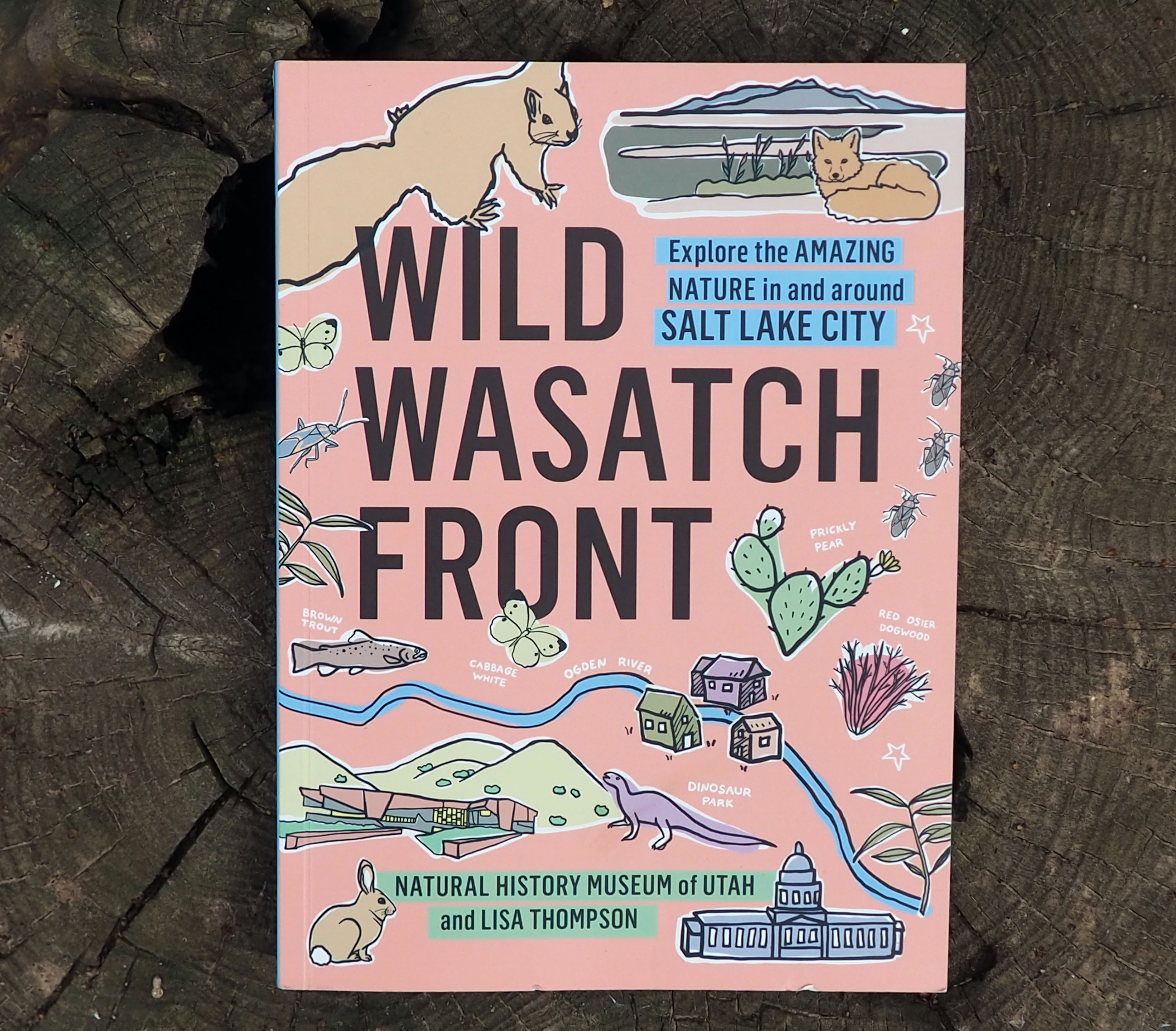
The Wasatch Front is a metropolitan region in north-central Utah that spans the western side of the Wasatch Mountains and includes a long string of cities and towns extending for many miles in all directions. Included in that list of cities is Salt Lake City, the state’s capitol and largest city in the state. The idea for a book about urban nature in the Wasatch Front was inspired by an exhibit at NHMU called “Nature All Around Us.” The exhibit and resulting book offer a new perspective for those insisting that “nature and cities cannot coexist” or that the nature found in cities is influenced by humans and therefore shouldn’t be considered “real.” Hundreds of organisms making a life for themselves within the boundaries of our cities might argue otherwise.

Wild Wasatch Front is divided into three main sections, with each section being worth the price of the book on its own. First there are a series of essays about urban nature and ecology. Names you might recognize, including Emma Marris and Riley Black, contributed to the book, as well as several other people that live and work in the western U.S. and have an interest in nature and environmental issues, especially as they relate to cities. Novel ecosystems is a reoccurring theme, not just in the essays but throughout the book. In her essay, Sarah Jack Hinners writes, “urban nature is a mixture of the intentional and the unintentional,” adding that “for every tree or rosebush or lawn that we plant and carefully nurture, there are multitudes of other plants and animals that grow and thrive uninvited and unnurtured by us.”

The largest section in the book is a field guide, profiling 127 plus species that call the Wasatch Front home, some native and some transplants. This section is divided into subsections that include birds, invertebrates, fungi and lichen, mammals, reptiles and amphibians, street trees, and wild plants. The entry for each species includes a brief description, a few interesting facts, and details on how and where to find them, accompanied by images. With the variety of creatures covered, you are sure to find something that interests you and a reason to go out looking for your favorites. You may even learn something new about a species you’ve been seeing for years, such as house finches. It turns out that the colorful patches on a male house finch are the result of the plants they eat. These patches can be red, orange, or yellow. The redder the better though, because female house finches seek out mates with this coloration.

Naturally, my focus was mainly aimed at the plants covered in this section. I appreciated the mixture of native and introduced plants, even the inclusion of plants considered to be invasive. Instead of vilifying these species, there is an attempt to understand them and find value in them, even in spite of the concerns and negative opinions held about them. Box elder (Acer negundo) is an example of a plant that has both native and introduced populations. Once widely planted in yards and on farms, this tree has “fallen out of favor.” Its weak wood (a result of growing so quickly), can result in a messy, unattractive tree, making it a poor choice for a street tree. However, it propagates itself readily and shows up in vacant lots and other urban locations that receive minimal management and human attention. In the Wasatch Front, you can find box elders that are native, naturalized, and cultivated, an unlikely scenario unique to urban areas.
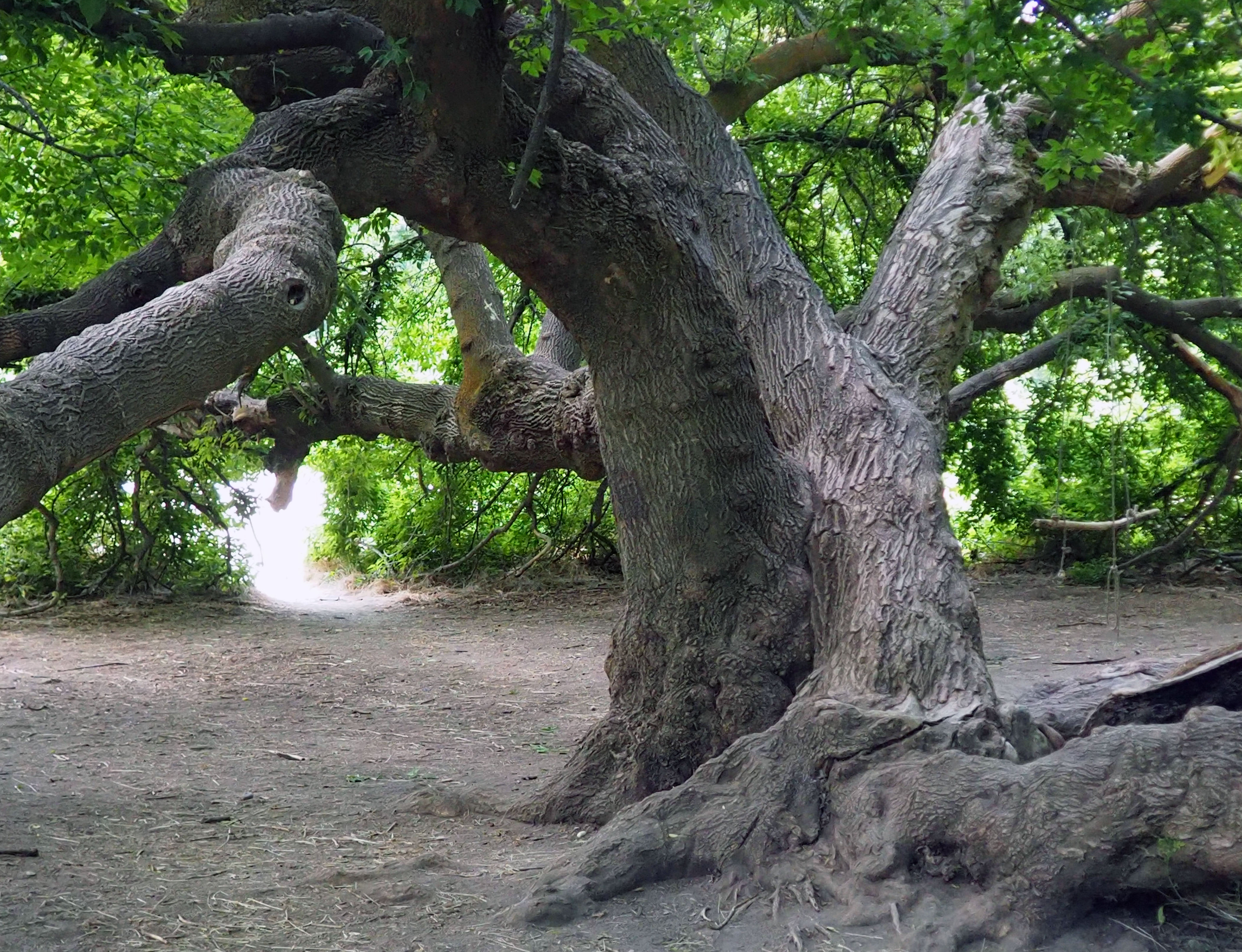
massive box elder (Acer negundo) in Boise, Idaho

The third and final section of the book is a guide to 21 different hikes and field trips in and around the Wasatch Front. Each field trip features a hand-drawn map and some basic notes about the hike. Details about what can be seen along the way are included in the descriptions, which are sure to entice you into visiting. Whether or not you think you’ll ever make it out to any of these spots, this section is still worth reading if only for the ongoing discussions about urban ecology. For example, in the entry for Gib’s Loop, abrupt changes in land ownership and land use (a common experience when hiking in urban areas) is addressed: “Human impacts in the foothills…don’t end at backyard fences, and many animals use resources in both habitats. It’s more interesting to think of cities and the surrounding foothills as part of an interconnected system rather than separate and distinct.”

The field trip section is also used as a teaching opportunity to describe more of the species you’ll find in the Wasatch Front. In the entry for Creekside Park, learn how to identify creeping mahonia (Berberis repens), with its low growing habit and matte leaves, and compare it to Oregon grape (B. aquifolium), with its more upright habit and shinier leaves.
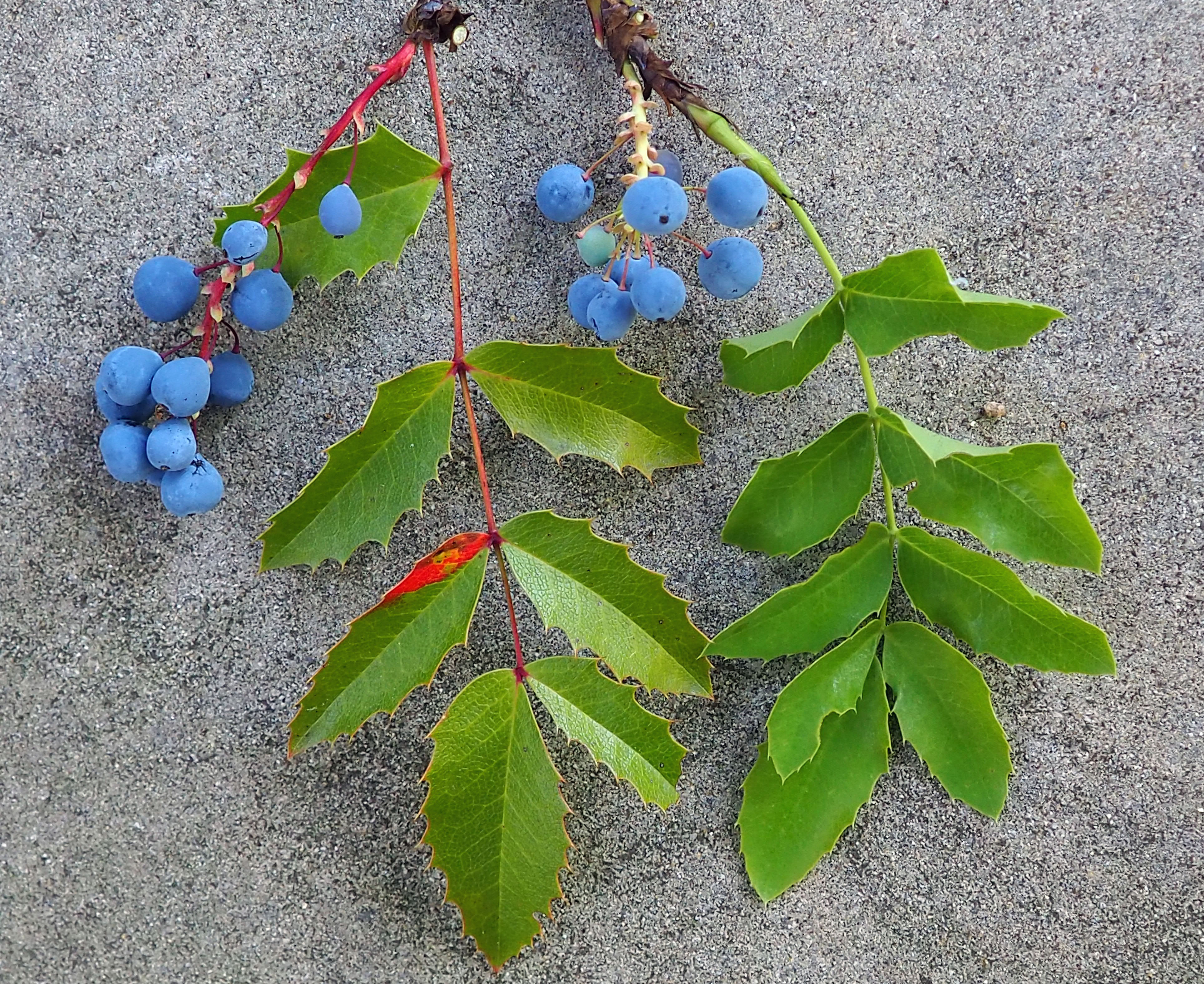
Berberis aquifolium (on the left) compared to Berberis repens (on the right)

Last year, in anticipation of Wild Wasatch Front, I came across another book with a similar focus. This book was put out by a group called The Urban Field Naturalist Project, headquartered in Australia. Their book, A Guide to the Creatures in Your Neighbourhood, encourages its readers to become urban naturalists and offers resources to help them get started. Just like Wild Wasatch Front, the bulk of the book is a field guide to species found in and around urban areas (in Australia, of course). In place of a guide to hikes and field trips, there are instructions on how to start nature journaling, which is a key component of becoming an urban field naturalist. Getting outside and learning to recognize nearby nature is step one, documenting what you see and sharing those observations with others is step two. Taken together, these two books will help you gain a better appreciation for urban nature and will hopefully inspire you to work to conserve what is there and make room for more.

More Book Reviews:

Introducing the Summer of Weeds

I spent the first five months of this year posting almost exclusively about invasive species. There is still plenty more to say on the topic, and I’m sure I will get back to that. However, it is time now to dive into the topic that I really want to explore. Weeds.

There is definitely crossover between the two topics – many weeds are invasive species – but there are clear distinctions, too. Oftentimes, weeds as a category of plants are unfairly and unjustly lumped under the title “invasive,” but any plant can be a weed at any moment in time if a human says so. That’s the difference. A plant does not have to prove that it is causing any sort of ecological or economic damage to be called a “weed;” it just has to be growing where a human doesn’t want it to. Yet, too quickly a plant “out of place” is cursed at using words like “invasive” or “noxious” regardless of its origin or behavior. I know I’m being overly semantic about this, but it seems unfair (and incorrect) to lump any and all plants that are bothering us for whatever reason into categories that have legal definitions.

If you can’t already tell, I am obsessed with weeds. It’s a topic I have been thinking about fairly consistently for much of my adult life. For one thing, as part of my career I spend a huge portion of my time killing and controlling weeds. I comprehend fully the visceral reaction of seeing a garden overcome by weeds – the vile thoughts one can have towards a group of plants that are soiling what could otherwise be a beautiful landscape – and I know very well the backbreaking work and countless hours that go into removing uninvited plants (cursing the intruders along the way). I get why weeds are a problem, and I understand why they are a subject of so much vitriol. Yet, over the years I have developed a respect – even a love – for weeds (despite the fact that I still must remove them and that removing them continues to be an overwhelming task).

Unwanted plants have been following us around and getting in our way for millenia. Essentially, we are partners in crime. We intentionally and unintentionally bring plants from various parts of the world on our travels, and through disturbance we create conditions where introduced plants can settle in and thrive. Over time, some once beloved plants grow out of favor and transition from desirable to weedy. As our cycles of disturbance continue, we give early successional, opportunistic plant species a chance to perpetuate themselves, guaranteeing that we will keep such “weeds” with us forever. We reap what we sow; even though we generally don’t plant weeds on purpose, other actions ensure that they will be our constant companions.

The importance of weed control goes beyond the aesthetic. In horticulture and agriculture, weeds compete with crops for light, space, water, and nutrients. They also harbor pests and diseases, and their seeds can contaminate crops. In pastures and rangelands, some weeds poison livestock. Certain weeds are harmful to people, too. Other weeds are simply disruptive – getting tangled up in machinery, damaging infrastructure, blocking our vision along roadways, and even giving cyclists flat tires. Apart from all that, even if all weeds did was make our gardens look unsightly, I imagine we would still be pretty angry with them.

I am interested in weeds wherever they are, but the weeds that fascinate me the most are those that thrive in urban environments. Not necessarily the weeds in our yards, but the weeds that have escaped our fences and property lines; the ones in the margins. We see them in abandoned lots, along roadways, near irrigation channels, and in other neglected spaces. They pop up in the cracks of sidewalks, on rooftops, in the middle of decaying buildings, and anywhere else that people haven’t paid attention to in a while. Urban areas have, for the most part, been scraped of their native flora. Introduced species move in to fill that void. As Richard Mabey writes in his book about weeds, these plants “insinuate the idea of wild nature into places otherwise quite shorn of it;” they are “the very essence of wildness.” Novel ecosystems, like those created by urbanization and human development, are with us whether we like it or not. There is a “wildness” to them that is unlike other cultivated and manicured areas maintained by humans. These urban wild places are worth a closer look.

So, what is the Summer of Weeds?

Put simply, it’s an exploration of weeds. Throughout the summer I will be profiling some of the weeds I come across in my daily life. I will include photos, a brief description, and some interesting facts about each species. I will also include quotes about weeds from various sources, as well as videos, links, resources, and whatever else I come across that seems worth sharing. I hope you enjoy it. If you have anything to add along the way – specifically any personal thoughts or stories to share about weeds – please do. You can contact me via the usual ways: in the comment section below, through the Contact page, or on Twitter, Tumblr, Facebook, or Instagram. Happy Summer!

Book Review: The New Wild

What if we were to look at invasive species with fresh eyes? Traditionally we have viewed them as interlopers hellbent on environmental destruction, but have we considered the good they can do? Should our efforts to eradicate them be tempered – eliminating them when it seems absolutely necessary, but accepting them when they are doing some good; welcoming them when they have something to offer. What does their presence mean anyway? What does it say about the ecosystems they inhabit and about us? Invasive species are convenient scapegoats, taking the blame for much of the ecological devastation that we started in the first place. Is that justified?

This is, essentially, the theme of The New Wild, a book by Fred Pearce that urges us to reconsider the ways we think, talk, and act towards invasive species. More than that, it is about dumping the idea that pristine nature (a mythological concept anyway, and one that is not all that useful) is the only true wild, and that nature invaded by alien species is a lesser thing that needs to be fixed. The truth is, nature is and always has been in a constant state of flux, and it is unconcerned about the provenance of the species that compose it. As Pearce puts it, if it’s doing “a useful job,” “it matters not a jot where a species comes from.”

6174zgpakrl-_sx326_bo1204203200_

Invasion biology is a relatively new field of study, stemming from the publishing of Charles Elton’s book, The Ecology of Invasions by Animals and Plants, in 1958. For thousands of years, humans have had a hand in moving species of all kinds around the planet, but it was in the latter half of the 20th century that our awareness of the ecological damage that some of these species can do really developed. Since then we have made great efforts to remove such species and put things back the way we found them. The zeal with which we have done so hasn’t always been justified or effective, and throughout what at times has felt like an all out war against foreigners, a profound sense of animosity and suspicion towards anything non-native has taken root in our psyche.

Pearce hopes to mitigate these feelings and get us to reconsider some of our actions. To start with, he calls into question the distinction between aliens and natives: “A broad time horizon shows there is no such thing as a native species. All lodgings are temporary and all ecosystems in a constant flux, the victims of circumstance and geological accident.” Also, “many aliens are so well integrated that they are assumed to be native,” and “species come and go so much, as a result of both human and natural forces, that conventional hard distinctions about what belongs where have long been all but meaningless.”

Instead of judging a species by its provenance, “we should treat species on their merits and learn a little tolerance and respect for foreigners.” While “being alien can sometimes be problematic,” it can equally result in the renewal of “flagging ecosystems, creating new space for natives and providing ecosystem services.” Seeing that those services are in place is what should really matter, and “[ecological services] are best done by the species on hand that do it best.” After all, nature is not a system of “preordained perfection,” but instead “a workable mishmash of species, constantly reorganized by the throw of the dice.”

In his criticisms of the field of invasion biology, Pearce investigates some of the “constantly recycled ‘facts’ about alien species.” He finds many of the claims to be unfounded and oft-repeated statistics to be blatant misrepresentations of the original studies. He concludes that “some of the most widely used statistics in the canon of invasion biology do not stand up.” To support his point, he offers several examples of how alien species have added to the biodiversity in certain ecosystems and he shares stories that “show how we instinctively blame aliens for ecological problems that may have a lot more to do with our own treatment of nature.”

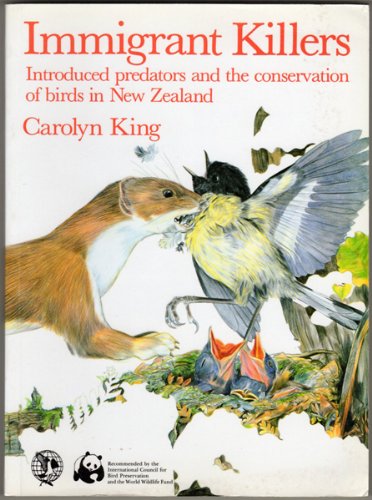
Immigrant Killers by Carolyn King, one of many books making a case for the war on alien species.

Immigrant Killers by Carolyn King, one of many books published in the past few decades that makes the case for waging war on alien species.

In so many words, Pearce’s stance is that the classic “aliens are bad, and natives are good” approach is outdated – “nature doesn’t care about conservationists’ artificial divide between urban and rural or between native and alien species,” which means that our perception of aliens should shift from being “part of the problem to part of the solution.” Abandoned farmlands, secondary forests, recolonized waste places, urban sprawl, and other novel ecosystems across the globe offer explicit examples of species from all backgrounds coming together to create functional habitats. This is the new wild.

Pearce is not advocating that we throw in the towel and let invasive species run rampant: “It would be foolish to claim that alien species never do any harm or that efforts to uproot them are always doomed to fail.” His support for the new wild is “not a call to let it rip.” Instead, “conservation in the twenty-first century requires an open-minded assessment of what might work – not a sullen retreat into blinkered orthodoxy.” So, rather than try to stop the flux of nature (an act that is decidedly “anti-nature”), let’s see where it goes, alien species and all; and when we do decide to beat back invasives and intervene “to preserve what we like,” we should be mindful that nature may be “traveling in a different direction.” As Pearce writes, “the new wild is flourishing, and it will do better if we allow it to have its head.”

———————

Obviously this is a controversial topic, but the ideas in this book are worth exploring further. Pearce’s notes are extensive, and I intend to read through many of his resources. Stay tuned for more posts. Meanwhile, you can listen to an interview with Pearce on this episode of Talking Plants. For a more critical veiw of Pearce’s book, check out these reviews by Los Angeles Review of Books and The EEB & Flow.