Tea Time: Fireweed

lf you’ve seen one fireweed, you’ve probably seen several. As an early successional species, growing in large numbers across a vast amount of space is kind of its thing. Any disturbance that leaves bare ground in its wake, such as a wildfire or a windstorm, gives fireweed the opportunity to colonize. It grows quickly and spreads via rhizomes, producing thousands of airborne seeds in the process, sending them off to continue colonization or contribute to soil seed banks in preparation for future disturbances. The role of plants like fireweed is vital – promptly covering bare ground to stave off erosion and acting as a nurse plant to new saplings destined to become the future forest. In a garden setting or in locations where aggressively spreading plants are discouraged, fireweed and its weedy behavior may be unwelcome, but in other contexts, its services are essential.

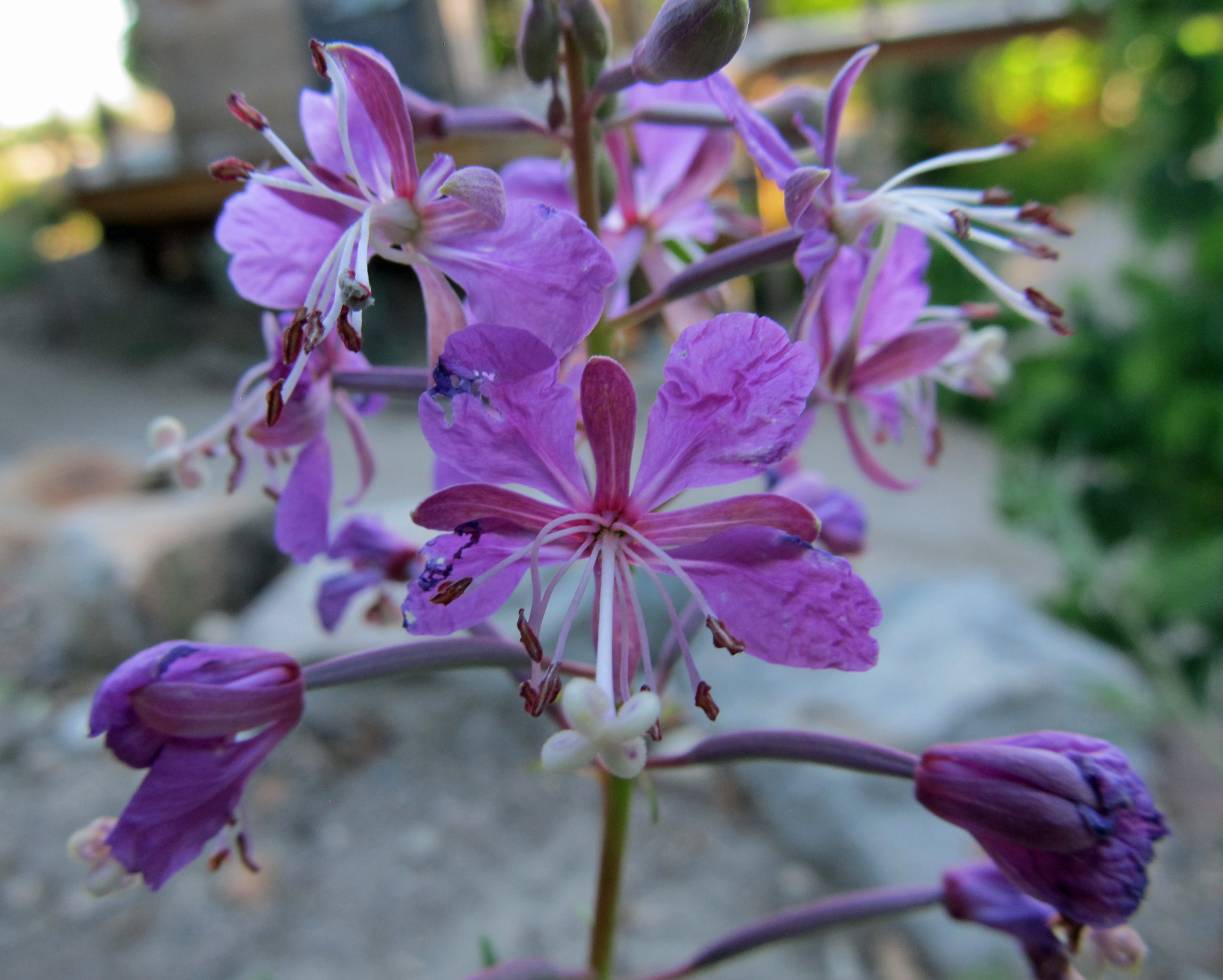
fireweed (Chamerion angustifolium)

Fireweed (Chamerion angustifolium) is a species in Onagraceae, commonly known as the evening primrose family. It has an impressive distribution, widespread across much of North America and Eurasia. This is owed largely to its adaptability. Deep shade and overly dry soil are two conditions that it does not tolerate well, otherwise it seems to grow in a wide variety of soil types, moisture levels, and sun exposures, particularly in areas where there is regular disturbance. Swaths of towering plants topped with rose-pink flower spikes make fireweed impossible to ignore and a favorite of wildflower enthusiasts.

Fireweed stems reach from three to nine feet tall and are rarely branched. Long, narrow, lance-shaped leaves are arranged alternately along the lengths of stems and give the plant a willow-like appearance, which explains another common name, rosebay willowherb. The undersides of leaves have a distinct venation pattern, in which the veins don’t reach the leaf margins, a feature that can help with identification.
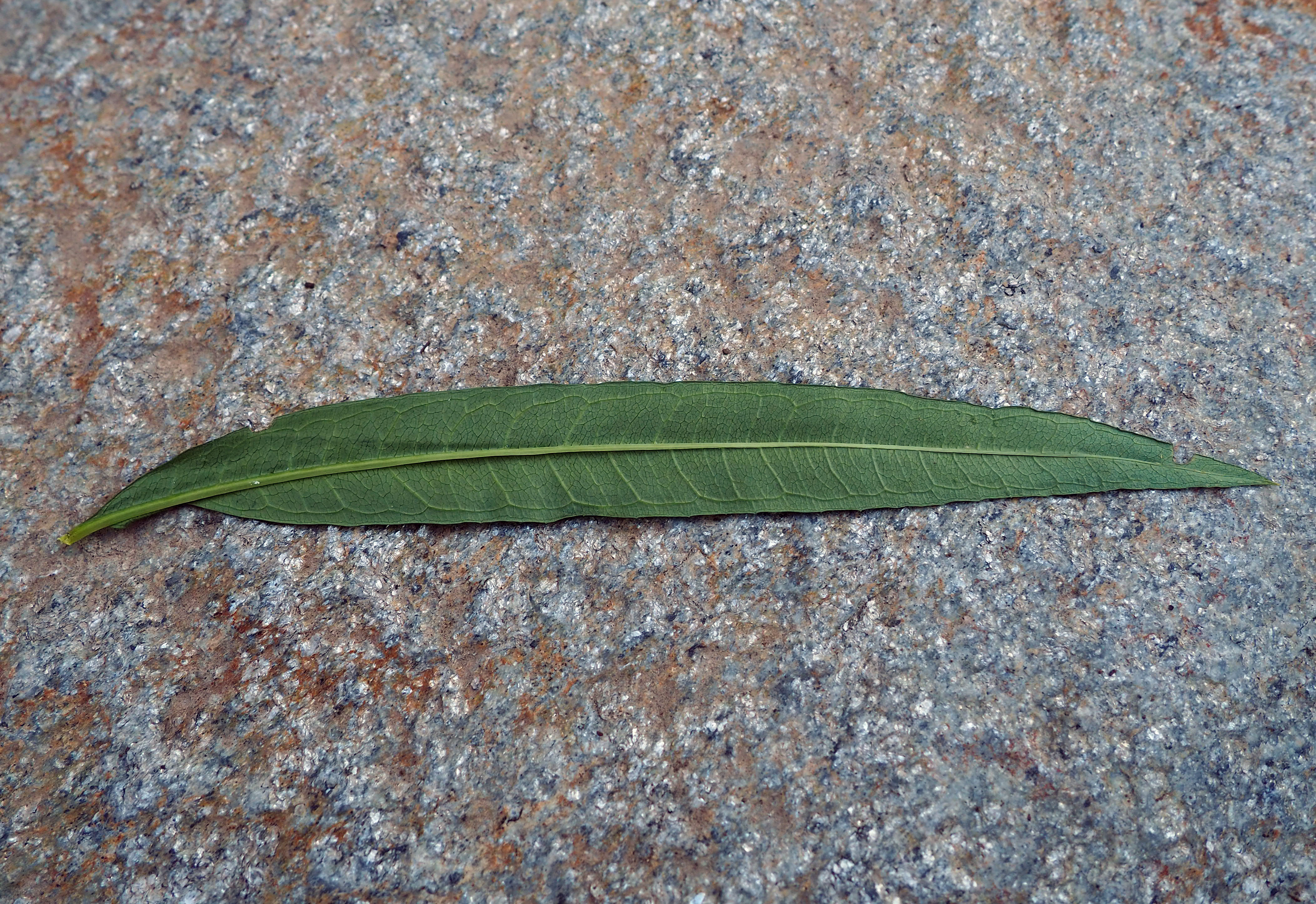
distinct leaf veins of fireweed (Chamerion angustifolium)

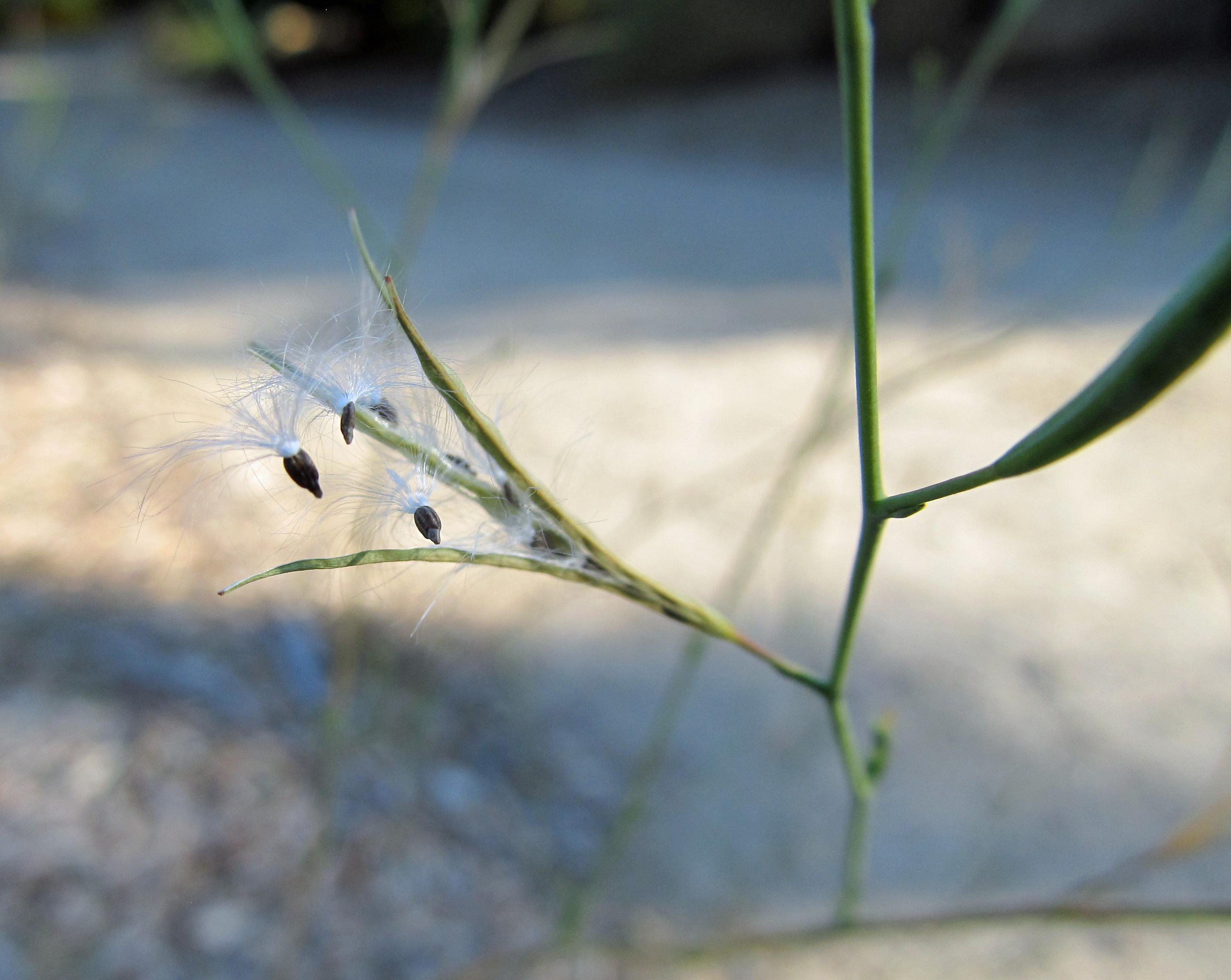
A series of rose-pink to purple flowers top the stems of fireweed. Each flower has four sepals and four petals with eight stamens and a four-lobed stigma extending prominently from the center. Its long, narrow ovary can be confused for a flower stalk. Rich with nectar, fireweed flowers are a favorite of honeybee keepers. They are also edible, like much of the rest of the plant. Narrow, four-chambered capsules form in place of fertilized flowers and later split open to release abundant, small seeds with a tuft of fluff attached to each one to aid in wind dispersal.

Fireweed has a long history of being used as food and medicine. Stem fibers are also useful for making cord, and seed fluff is useful for weaving and padding. Certainly, fireweed’s abundance and ubiquity contribute to its utility. Having never eaten fireweed before, I decided that a good way to introduce it to my diet would be to make a tea. Fireweed leaves are commonly collected for tea and are said to make an excellent non-caffeinated replacement for black tea.
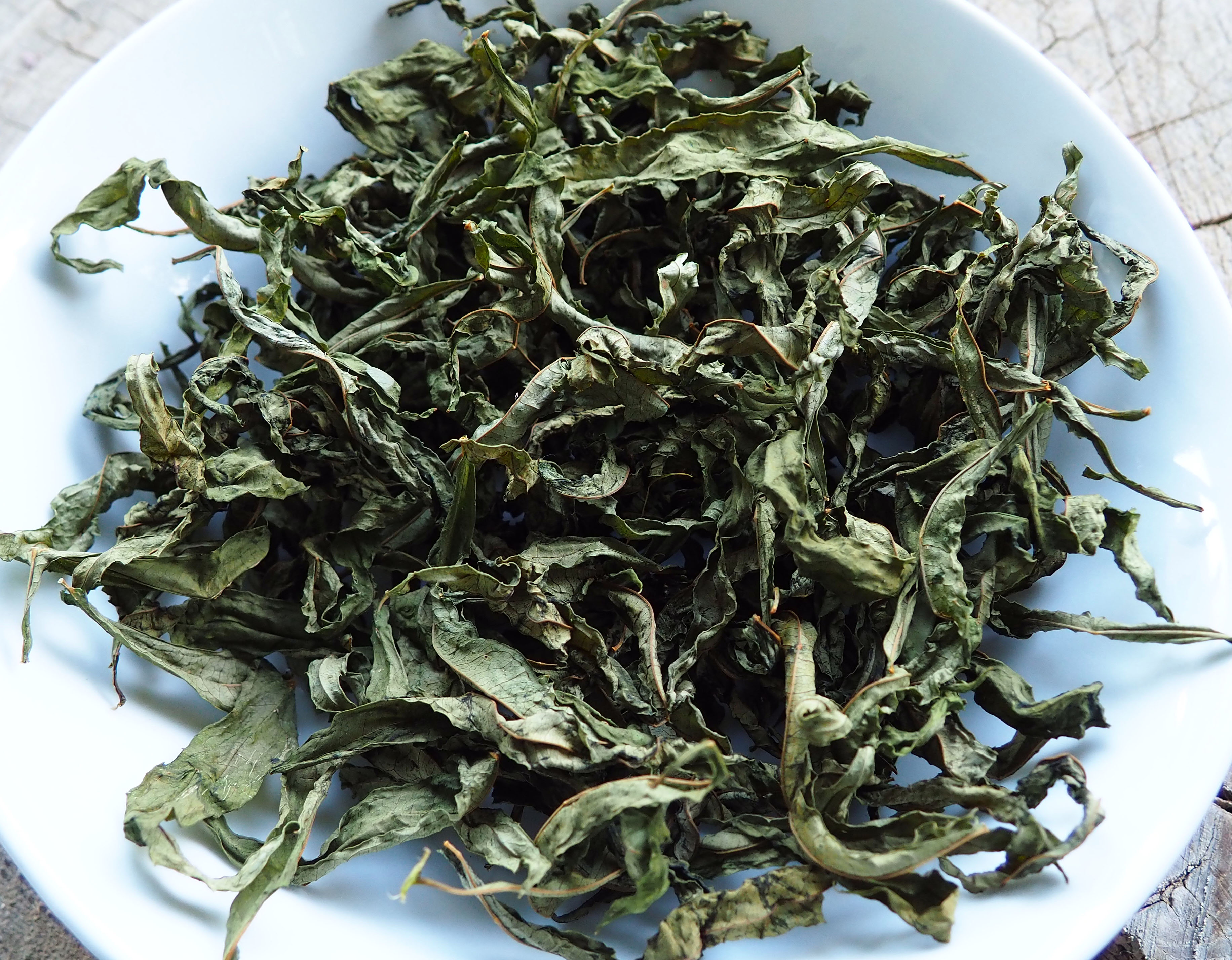
fireweed tea leaves

Making fireweed tea starts by stripping young leaves from fireweed stems. Recipes I encountered all called for fermenting the leaves before drying them. I did this by squeezing handfuls of leaves in my fists just enough to break and bruise them a bit and then packing them into a quart size Mason jar. I closed the lid tight and kept them in the jar for about five days, shaking it up a couple times a day supposedly to help prevent mold issues. After that, I dried the leaves on a baking sheet in the hot sun. From there, they are ready for making tea the same way you would make any other loose leaf tea, chopping the leaves up a bit before immersing them in hot water.

I found the taste of fireweed tea to be mild and pleasant. Despite several sources comparing it to black tea, I thought it was more similar to green tea. Sierra liked the smell more than the taste and wished it had honey in it. Compared to other teas I’ve tried in this short series of posts, this is definitely one of the better ones, and a tea I could see myself making again sometime.
More Tea Time Posts on Awkward Botany:

Summer of Weeds: Willowherbs and Fireweed

Last week we discussed a plant that was introduced as an ornamental and has become a widespread weed. This week we discuss some native plants that have become weedy in places dominated by humans. Similar to pineapple weed, species in the genus Epilobium have moved from natural areas into agricultural fields, garden beds, and other sites that experience regular human disturbance. Some species in this genus have been deliberately introduced for their ornamental value, but others have come in on their own. In all cases the story is similar, humans make room and opportunistic plants take advantage of the space.

Epilobium species number in the dozens and are distributed across the globe. North America is rich with them. They are commonly known as willowherbs and are members of the evening primrose family (Onagraceae). They are herbaceous flowering plants with either annual or perennial life cycles and are commonly found in recently disturbed sites, making them early successional or pioneer species. Many are adapted to wet soils and are common in wetlands and along streambanks; others are adapted to dry, open sites. Hybridization occurs frequently among species in the Epilobium genus, and individual species can be highly variable, which may make identifying them difficult.

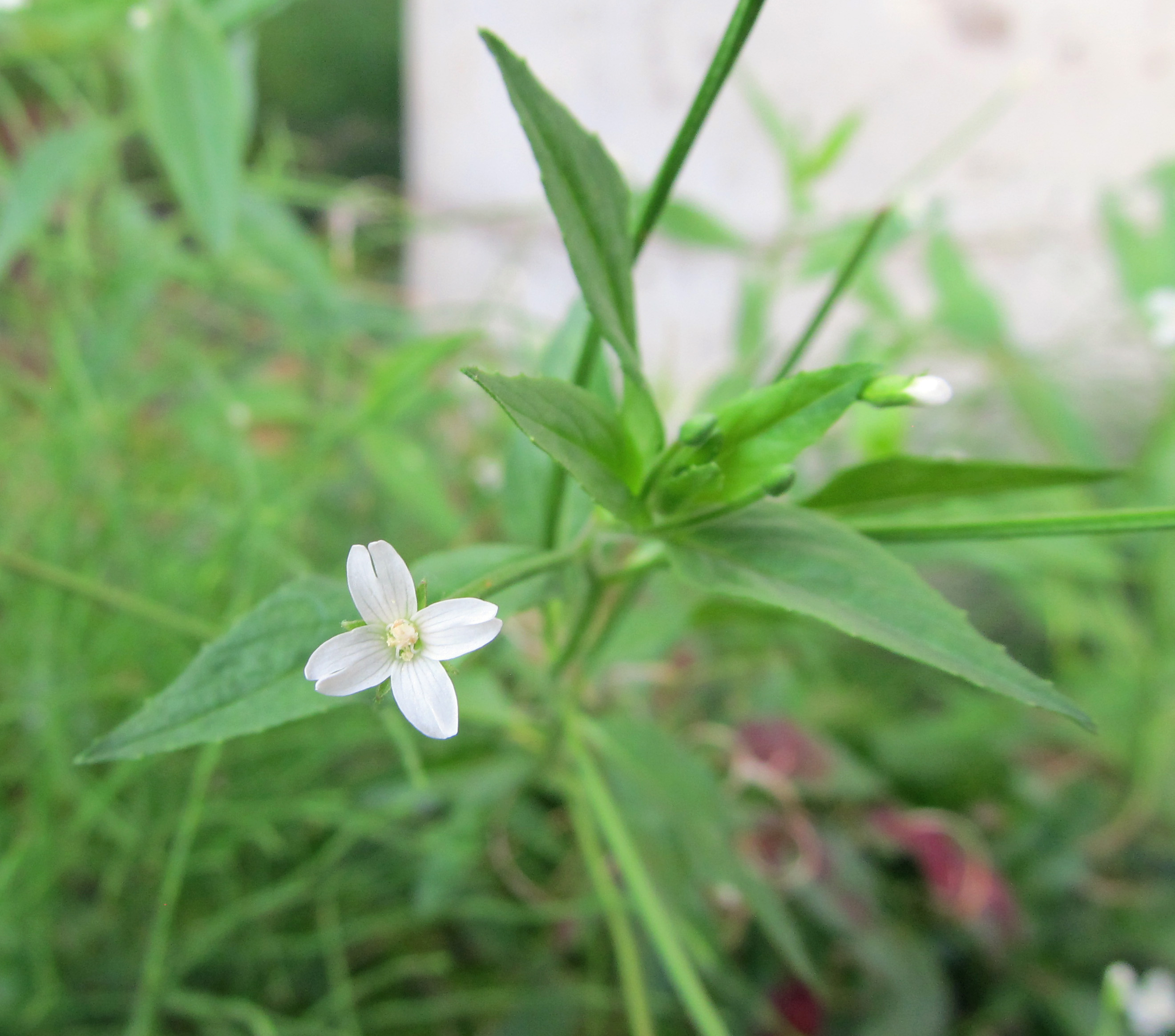
northern willowherb (Epilobium ciliatum)

At least two North American species are commonly weedy: E. ciliatum (northern willowherb) and E. brachycarpum (panicled willowherb). Regarding these two species, the IPM website of University of California states: “Willowherbs are native broadleaf plants but usually require a disturbance to establish. Although considered desirable members of natural habitats, they can be weedy in managed urban and agricultural sites.” The field guide, Weeds of the West, refers to E. brachycarpum as a “highly variable species found mostly on non-cultivated sites, and especially on dry soils and open areas.” E. ciliatum is notorious for being a troublesome weed in greenhouses and nurseries, as discussed on this Oregon State University page.

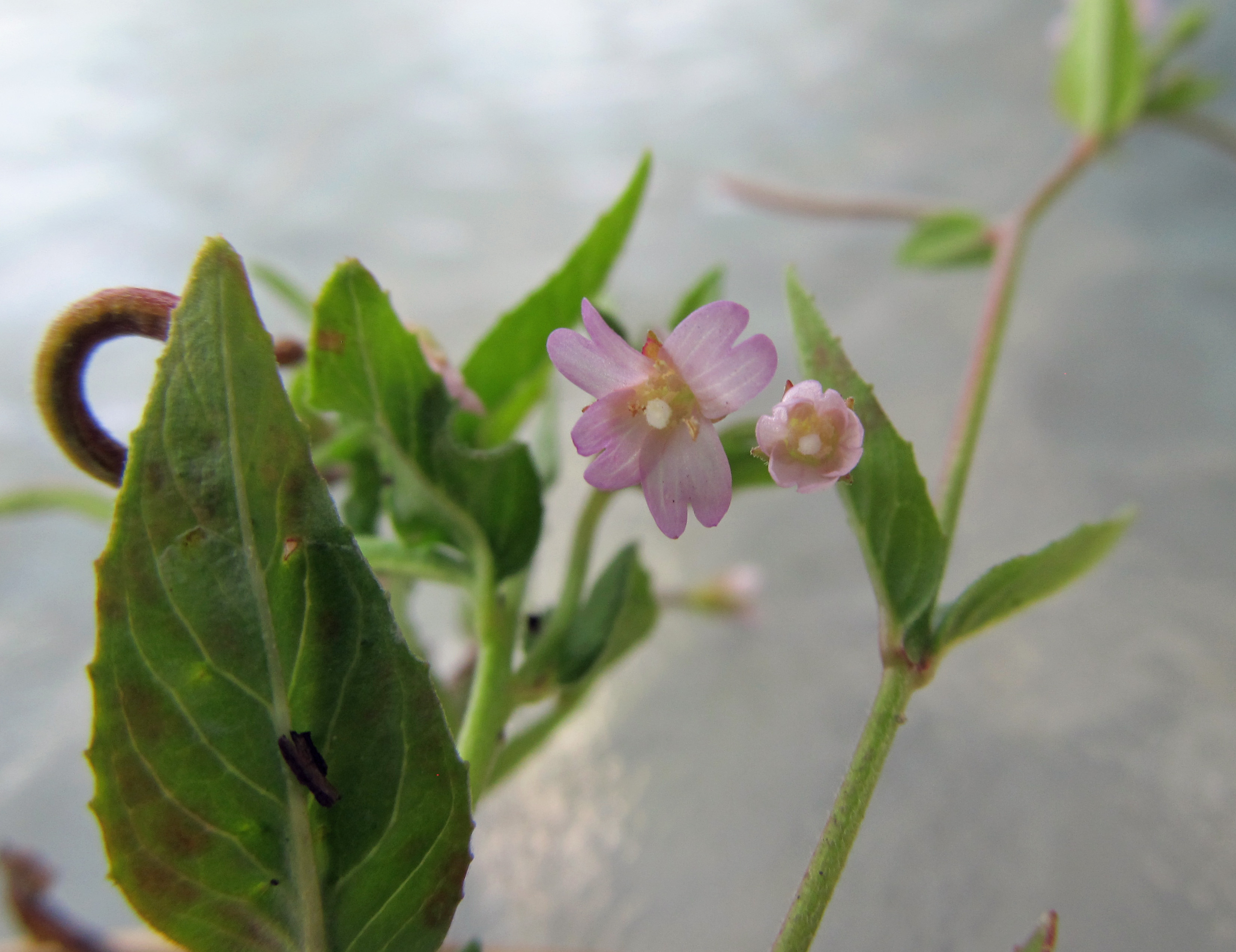
E. ciliatum is a perennial that reproduces via both rhizomes and seeds. It reaches up to five feet tall and has oppositely arranged, lance-shaped leaves with toothed margins that are often directly attached to the stems. Its flowers are tiny – around a quarter of an inch wide – and white, pink, or purple with four petals that are notched at the tip. They sit atop a skinny stalk that is a few centimeters long, which later becomes the fruit. When dry, the fruit (or capsule) splits open at the top to reveal several tiny seeds with tufts of fine hairs.

northern willowherb (Epilobium ciliatum)

E. brachycarpum is an annual that reaches up to three feet tall and is highly branched. Its leaves are short and narrow and mostly alternately arranged. Its flowers and seed pods are similar to E. ciliatum. At first glance it can appear as one of many weeds in the mustard family; however, the tuft of hairs on its seeds distinguishes it as a willowherb.

Seeds and seed pods of panicled willowherb (Epilobium brachycarpum)

Weeds of North America by Richard Dickinson and France Royer describes one weedy species of willowherb that was introduced to North America from Europe – E. hirsutum. It is commonly referred to as great hairy willowherb, but some of its colloquial names are worth mentioning: fiddle grass, codlins and cream, apple-pie, cherry-pie, blood vine, and purple rocket. Introduced as an ornamental in the mid 1800’s, it is a semiaquatic perennial that can reach as tall as eight feet. It has small, rose-purple flowers and is frequently found growing in wetlands along with purple loosestrife (Lythrum salicaria).

Chamerion angustifolium – which is synonymously known as Epilobium angustifolium and commonly called fireweed – is distributed throughout temperate regions of the Northern Hemisphere. It is a rhizomatously spreading perennial that grows to nine feet tall; has lance-shaped, stalkless leaves; and spikes of eye-catching, rose to purple flowers. It is a true pioneer species, found in disturbed sites like clear-cuts, abandoned agricultural fields, avalanche scars, and along roadsides. It gets its common name for its reputation of being one of the first plants to appear after a fire, as John Eastman describes in The Book of Field and Roadside: “A spring fire may result in a profusion of growth as soon as 3 months afterward, testifying to fireweed’s ample seed bank in many wilderness areas.” Eastman goes on to write, “fireweed’s flush of abundance following fire may rapidly diminish after only a year or two of postburn plant growth.” This “flush of abundance” is what gives it its weedy reputation in gardens. With that in mind, it is otherwise a welcome guest thanks to its beauty and its benefit to pollinators.

fireweed (Chamerion angustifolium)

Additional Resources:

Quote of the Week:

From the book Food Not Lawns by H.C Flores

Sometimes [weeding] feels like playing God – deciding who lives and who dies is no small matter – and sometimes it feels like war. … Take a moment to ponder the relationship of these plants to other living things around, now and in the future. Your weeds provide forage and habitat for insects, birds, and animals, as well as shelter for the seedlings of other plants. They cover the bare soil and bring moisture and soil life closer to the surface, where they can do their good work. Weeds should be respected for their tenacity, persistence, and versatility and looked upon more as volunteers than as invaders.