Winter Trees and Shrubs: Sweetgum

Sweetgum is a distinctive tree at any time of year. It stands out among most other deciduous trees with its excurrent growth habit, which gives it a narrowly conical or pyramidal shape. Only in its advanced age does it begin to develop a more rounded and irregular form. Its leaves are star-shaped with either five or seven lobes and span between four and seven inches. Their glossy green color gives way to a wide range of colors in the fall, including yellow, orange, red, and maroon, remaining on the tree for several weeks depending on weather conditions. The fruits are particularly distinct, especially in the winter after the leaves have dropped. Woody balls made up of a series of capsules with pointed beaks hang from long stalks throughout the winter, windborne seeds having been released from small openings in the fall. Without even bothering to look at the twigs, seeing these durable, spiky balls hanging from branches (or feeling them under your feet) is a quick indication that you are looking at a sweetgum.

one of many fall colors found on sweetgum (Liquidambar styraciflua)

Liquidamabar styraciflua (one of the funnest botanical names to say) was previously placed in the family Hamamelidaceae but is now one of the few members of Altingiaceae. Its natural distribution is broad, covering a large portion of the eastern United States and west into Missouri then down into Texas, Mexico, and much of Central America. Outside of its natural range it has been widely planted as an ornamental, and there are several popular sweetgum cultivars currently in cultivation. Both the common and botanical names for this tree refer to the resin found in its bark, which historically has had many uses.

The winter twigs of sweetgum are stout, round, smooth, and yellow-brown to green or olive-green to brown-purple in color. They can also be glossy and feature a few scattered lenticels. Older twigs (or branchlets) are brown at first and then light grey with dark grey lenticels. They are occasionally adorned with corky wings similar to those of bur oak. Because the wings aren’t always present, it can be a fun thing to encounter when you are out looking at twigs.

corky wings on the branchlets of sweetgum

The winter buds of sweetgum twigs are egg-shaped and made up of bud scales with acute tips and ciliate margins. They are green to orange-brown or reddish in color and occasionally sticky. Lateral buds are alternately arranged, are much smaller than terminal buds, and are stalkless and flattened against the twig. They sit above a slightly raised leaf scar that is half-elliptical to triangular in shape and has three distinct vascular bundle traces. The pith of sweetgum twigs is solid, continuous, brownish, and irregularly shaped.

winter twig of sweetgum tree

Sweetgum bark is light to dark grey and is made up of a series of rough, vertically arranged, scaly ridges that become deeply furrowed with age. The mace-like fruits of sweetgum are about one inch wide and, at a glance, are similar in appearance to the seed balls of sycamore trees; however, sycamore seed balls easily break apart when compressed, while the pointed, woody capsules that make up a sweetgum ball are held firmly together and can hold their shape for long periods of time. When these “gumballs” collect on the ground below, they can become a hazard, especially where there is lots of foot traffic. Speaking from experience, they are also obnoxious when operating a mower. This polarizing feature has resulted in bad opinions of the sweetgum tree. Luckily, some people are out there defending it.
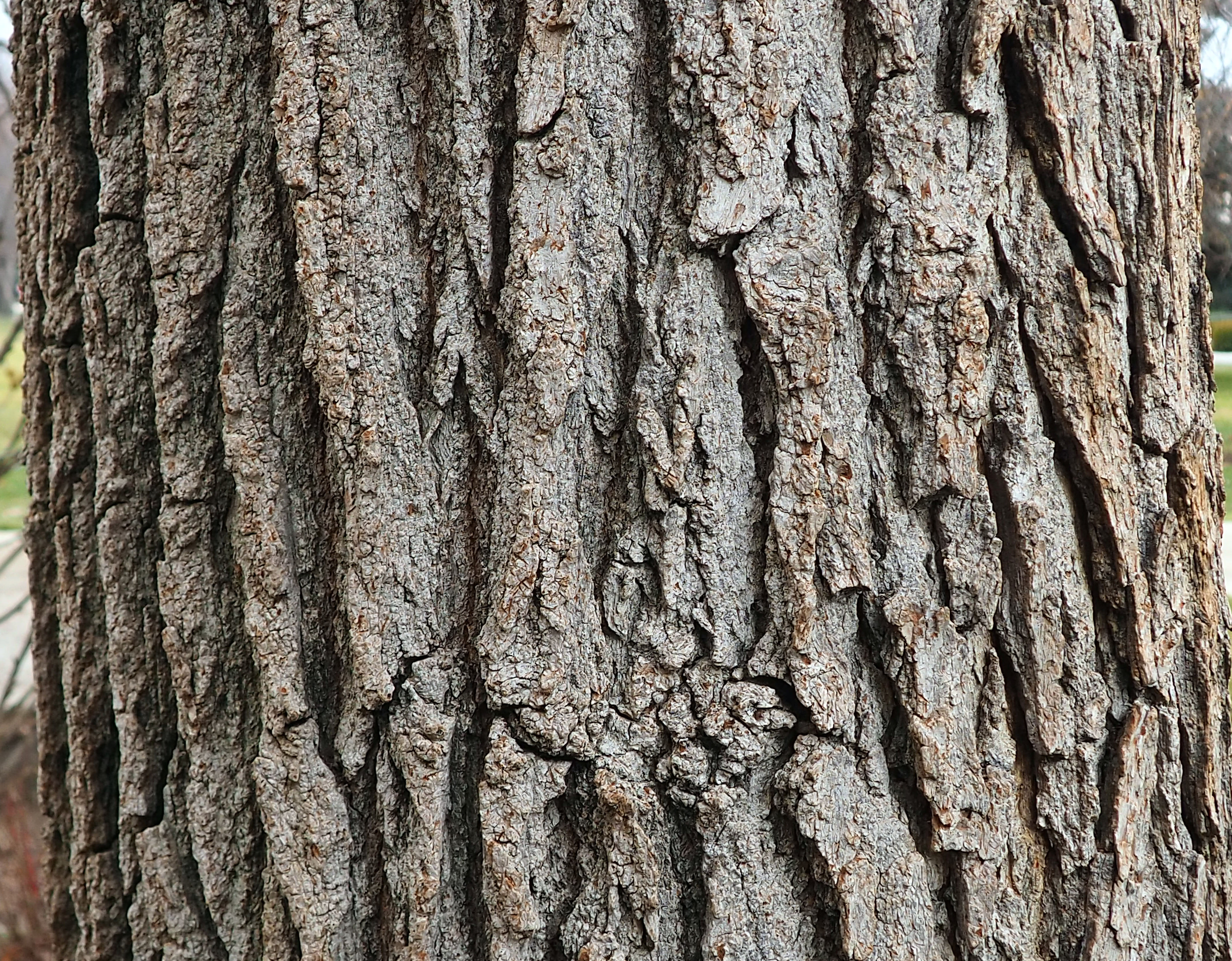
sweetgum bark
the persistent fruits of sweetgum

More Winter Trees and Shrubs:

Winter Trees and Shrubs: Kentucky Coffeetree

A few years ago, I was on the hunt for a Kentucky coffeetree. I was aware that a few could be found in some of the parks around Boise, but not being familiar with them, I wasn’t sure where exactly to find one or what I was even looking for. One winter while riding my bike to work, I noticed a tree at the edge of a golf course. No doubt I had passed this tree hundreds (if not thousands) of times. What caught my eye were thick, bean-like pods hanging from the ends of branches. They were unlike any other tree fruits I was familiar with. I stopped and, with a little effort, knocked one of the pods free from the tree. When I split it open, I found three or four large, smooth, black seeds inside. Later, I confirmed that the tree was indeed Kentucky coffeetree. Passing by it during any other time of year, it may have never caught my eye – just another deciduous tree with green leaves that, from a distance at least, looks like so many other deciduous trees. But in winter, with several chunky pods hanging from the tips of its stout branches, it really stood out. This is the joy of looking at trees and shrubs in the winter, where features that may otherwise be obscured, become glaringly obvious against the plainness of a winter backdrop.

fruits of Kentucky coffeetree (Gymnocladus dioicus)

Kentucky coffeetree (Gymnocladus dioicus) is in the bean family (Fabaceae). It occurs in forests across the eastern and central United States and north into southern Ontario, Canada. It is also planted in urban areas both within and outside of its native range. It is a medium to large tree, averaging 60-70 feet (18-21 meters) high and 40-50 feet (12-15 meters) wide. It generally branches out at around 10-15 feet high and forms a narrow, rounded to pyramidal crown. It is a fairly sparsely branched tree compared to other trees its size, which is much easier to observe in the winter after all of its leaves have dropped.

winter twigs of Kentucky coffeetree

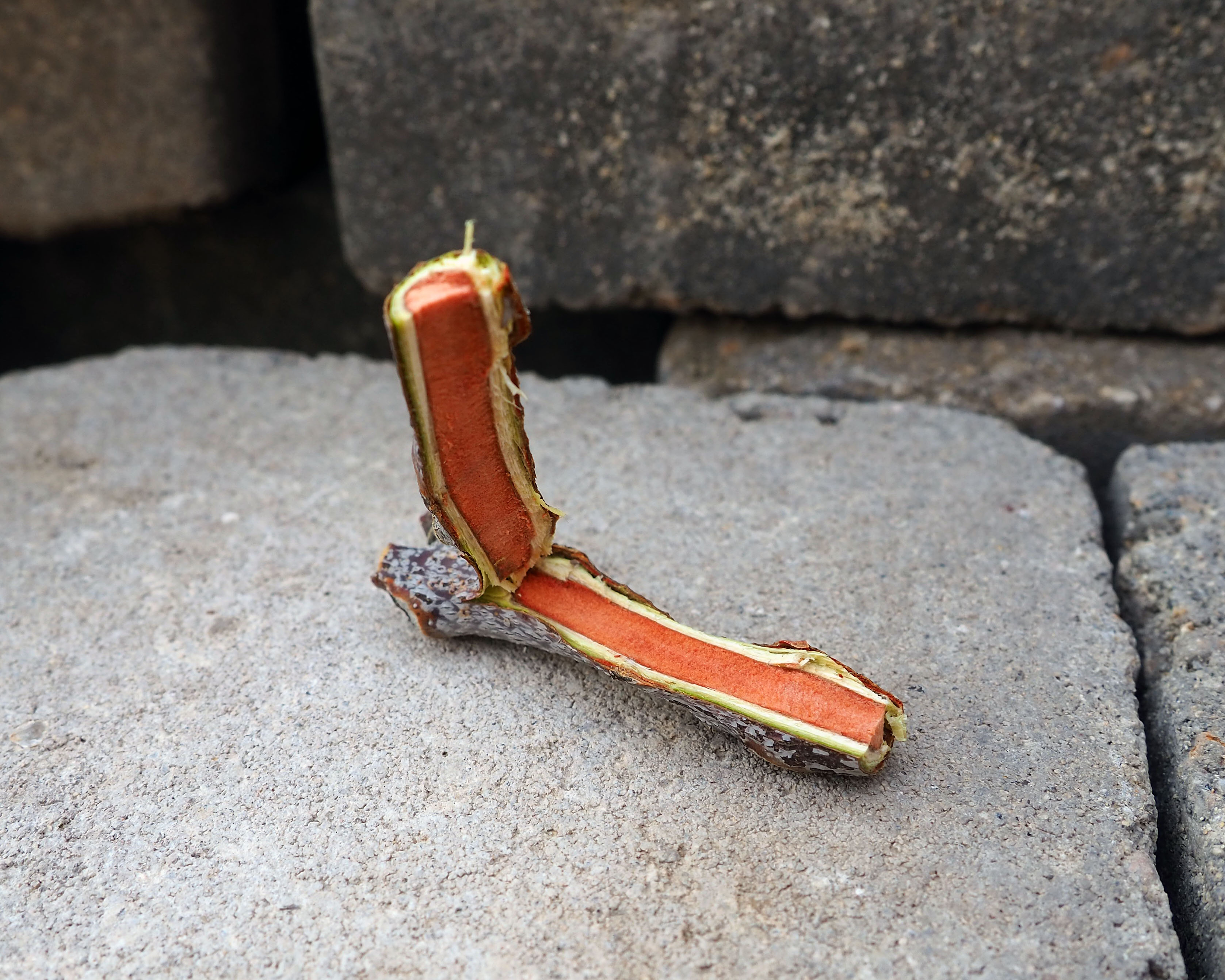
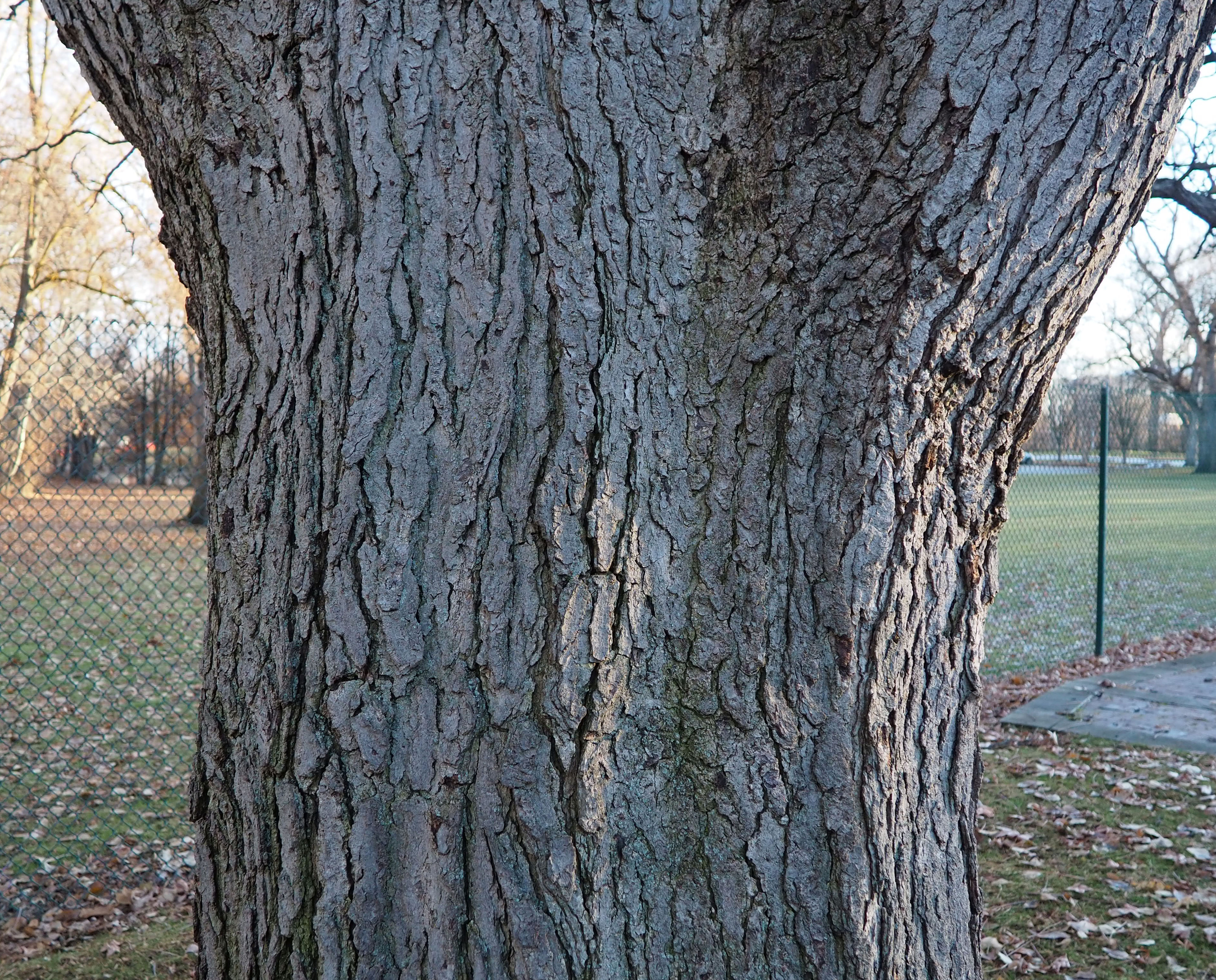
The winter twigs of Kentucky coffeetree are thick and stubby with few hairs and can be greenish, orange, brown, or deep wine-red in color. They have small, scattered lenticels that are either white, orange, or orange-brown. Their leaf scars are alternately arranged and are heart- or sheild-shaped and very large with 3 to 5 distinct bundle traces. It’s pretty obvious from the leaf scars that Kentucky coffeetree bears a sizeable leaf. These massive, bipinnately compound leaves are demonstrated in this Plant Sleuth YouTube video. Leaf buds are tiny and found directly above the leaf scar. There are usually two of them, one of which is sterile and can be difficult to see. They are round, hairy, olive-colored, and sunken like fuzzy, little craters, although you’ll need a hand lens to really see the hairs (which I highly recommend). The twigs lack a terminal leaf bud. Their pith is rounded, thick, and either orange, brown, or salmon colored. The young bark of Kentucky coffeetree is pale gray and fairly smooth. As the tree ages, it breaks into shallow ridges that run the length of the tree. At maturity, the bark is shades of grey and scaly with long, defined, narrow ridges.

pith of Kentucky coffeetree twigs

Kentucky coffeetree is dioecious, meaning that there are “male” trees and “female” trees. The tree that I found on the golf course was a “female” tree because it was bearing fruit, which the “males” and certain cultivars won’t have. If there are no seed pods present, you will have to rely on other features to identify the tree; however, when the pods are present, the tree is unmistakable. Its fruits are thick-walled, flat, oval-shaped, smooth, leathery, and orange-brown to black in color. They measure around 5 to 10 inches long and up to 4 inches wide. They are indehiscent and can persist on the tree for more than a year, and even those that fall to the ground can take months or years to break down enough to release the seeds, which have a hard, dark seed coat. Inside the pod, the seeds are embedded in a thick, gooey, yellow-green pulp, which some descriptions call sweet. However, it doesn’t look appetizing enough to try, and considering that the seeds are toxic, I’d be hesitant to consume any part of the fruit without first verifying its safety with a reputable source. That being said, the seeds can be roasted and used to make a coffee substitute and, as long as it’s done correctly, is safe to drink.

mature bark of Kentucky coffeetree

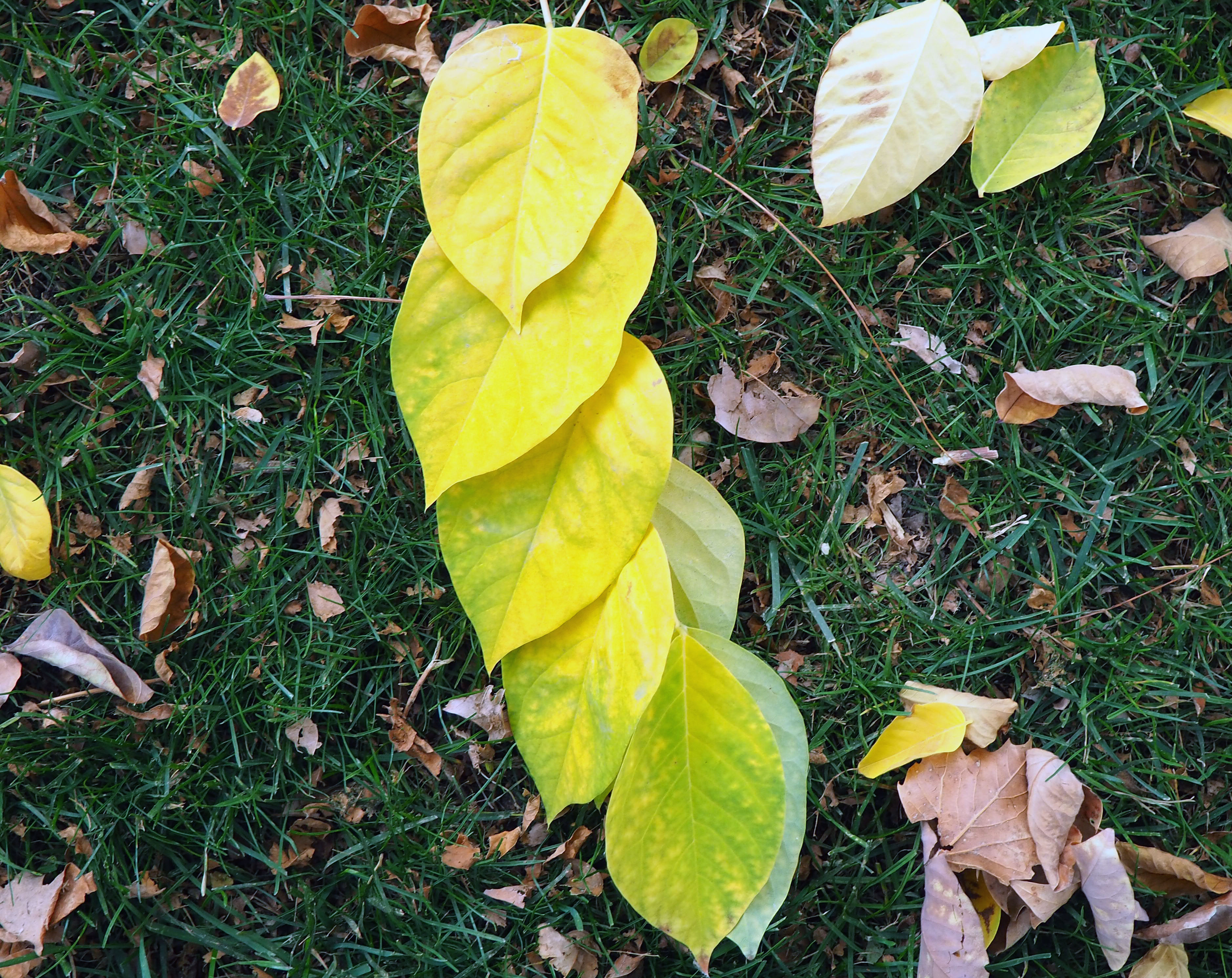
Kentucky coffeetree is one of the last trees to leaf out in the spring and one of the first to drop its leaves in the fall. Flowers appear in mid to late spring. The leaves have a pink to bronze color as they first emerge, and in the fall they turn bright yellow before they drop.

fall foliage of Kentucky coffeetree

More Winter Trees and Shrubs: