Speaking of Food: A Special Issue of American Journal of Botany

“At the center of discussions about agriculture and the future of food in a changing climate are the plants that we grow for food, fiber, and fuels and the science that is required to understand, improve, and conserve them.”

That is a line from the opening paragraph of the introduction to the October 2014 issue of American Journal of Botany, Speaking of Food: Connecting Basic and Applied Plant Science. In this Special Issue, the American Journal of Botany – inspired by Elizabeth Kellogg’s 2012 presidential address to the Botanical Society of America – endeavors to demonstrate ways in which basic plant biology research can benefit the applied science of agriculture, and how this “use-inspired” research can help address the challenges of feeding a growing population in a changing climate.
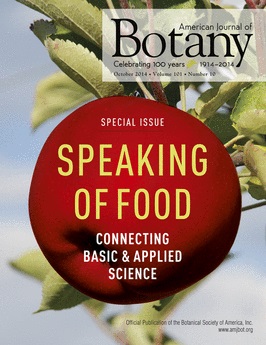
speaking of food_ajb

In its 100 year history, the American Journal of Botany, has published hundreds of papers that serve to advance agricultural and horticultural sciences. However, this connection has not always been made explicit. With this special issue, they are hoping to change that by “illustrat[ing] that ‘basic’ and ‘applied’ are not two discrete categories, nor are they even extremes of a linear continuum.” “Basic” research can be used to answer questions and solve “human-centered problems,” and “applied” research can “illuminate general biological principles.” When both approaches to scientific inquiry come together, everyone benefits.

I originally chose to study horticulture because I was interested in growing food in a sustainable and responsible manner. During my studies, I gained a greater interest in the broader field of horticulture as well as an interest in botany. After receiving a degree in horticultural and crop sciences, I decided to pursue a Master’s Degree. I wanted to study green roof technology, an applied science that incorporated my interests in both horticulture and sustainability. The school that I ended up going to did not have a horticulture program, so I enrolled in a biological sciences program. It was there, while doing applied science research on green roofs and taking mostly botany related science courses, that I deepened my love for science and began to see how basic science had applications, not just in horticulture and agriculture, but in all aspects of life.

That explains my great interest in this recent issue of American Journal of Botany, and why I was so excited when I heard about it. Using science to understand and address the challenges that we face today (challenges that, many of which, are a result of human activity) is intriguing to me. Based on my interest in horticulture, food production, and sustainability, establishing and advancing science-based sustainable agriculture is incredibly important to me. And so I have decided that, over the next several posts, I will provide reviews of each of the 17 articles in AJB’s Special Issue. Each post will offer a brief overview of one or more articles, outlining the basic premises and findings of each study. If your interest is peaked, and I hope it will be, you can go on to read more about each of the studies. The Introduction to this issue gives an excellent overview of the articles, so I won’t include that here. I’ll just dive right in. If you feel inclined, read ahead, otherwise stay tuned and I will preview you it all for you over the next several weeks.
Palm Oil Production and Its Threat to Biodiversity

Improvements in cultivated varieties of oil palms could have devastating ecological effects. This is according to an article published in a recent issue of Science. Doom doesn’t have to be the story though, if – as the authors suggest – governments and conservation organizations take proper action to safeguard vulnerable land.

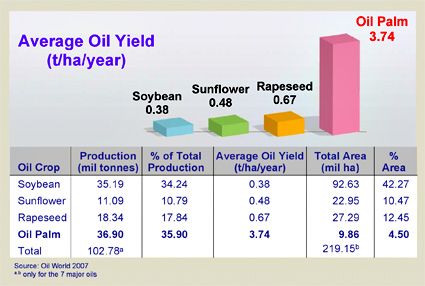
Palm oil is a versatile vegetable oil derived from the fruits of oil palms. It has myriad culinary uses and is also used in the manufacturing of cosmetics and the production of biofuel. Oil palms have high yields, easily outyielding other major oil crops like soybean, rapeseed, and sunflower. Oil palms are grown in the tropics in developing countries where land and labor are inexpensive. As human population grows, demand for palm oil increases. To meet the demand, tropical forests are converted into agricultural land. The majority of palm oil production occurs in Southeast Asian countries like Indonesia and Malaysia. However, palm oil production is expected to increase in African and Latin American countries as new varieties better suited for these particular environments become available.

oil world graph

Genome sequencing of oil palm may allow plant breeders to develop varieties that are disease resistant, drought tolerant, and able to grow in salinized soils. Already making its debut, though, is a new variety of oil palm that is boasting yields from 4 tons to as much as 10 tons per hectare. Higher yielding varieties could be the solution to preventing more tropical forests from being converted into oil palm plantations. Or could they lead to more growth? Intrigued by the development of improved varieties of oil palms and other tropical crops, the authors of this study developed computer models in order to determine what this might mean for the future.

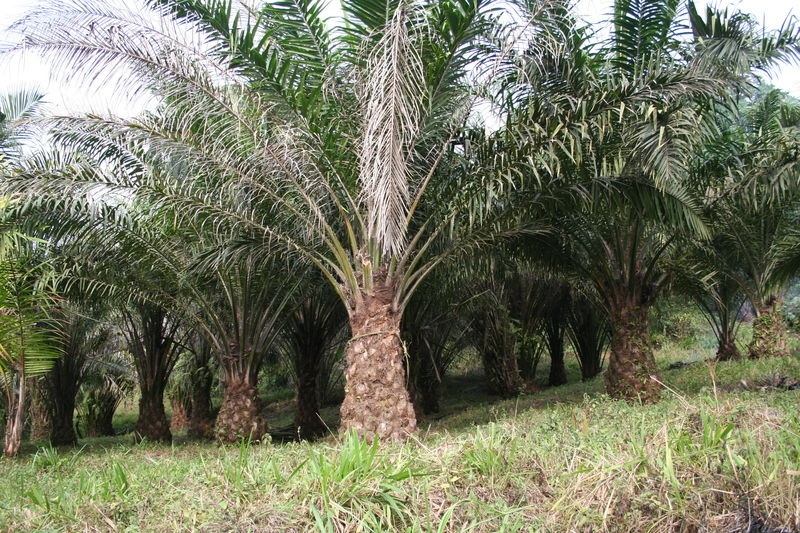
African Oil Palm (Elaeis guineensis) is the species of oil palm most commonly grown for palm oil production.

African Oil Palm (Elaeis guineensis) is the species of oil palm most commonly grown in palm oil production (photo credit: www.eol.org)

The results of simulations suggested two possible outcomes: one potentially positive and the other largely negative. On the positive side, “an assumed 56% increase in oil palm yield per tree in Malaysia and Indonesia” could result in ” around 400,000 hectares of agricultural land…taken out of production in Brazil, India, and Canada.” This is because less land will be needed to meet the demand, and the increased availability and resulting lower price of palm oil will outcompete other oil crops (like rapeseed, which is one of Canada’s main agricultural crops). However, the author’s seem to assume that agricultural land taken out of production will be restored back into natural lands. I find this argument hard to accept. Anecdotal evidence suggests that if farmers are no longer making a profit from a particular crop, they will choose to either grow something more profitable or sell their land to developers. A concerted effort would have to be made to capture this land and ensure that it remain uncultivated and undeveloped. Also, as the author’s point out, restoring land in Canada is very different from restoring or protecting tropical land. Loss of biodiversity is a much greater risk in areas where the level of biodiversity per hectare is high.

On the negative side, higher yields can encourage increased production. Tropical forest conversion may accelerate if farmers see an opportunity for growth. Additionally, improved varieties may increase palm oil production in African and Latin American countries, resulting again in more land conversion and deforestation. This effect may also become the story, not just for oil palms, but for cacao, eucalyptus, coffee, and other tropical crops as varietal improvements are achieved.

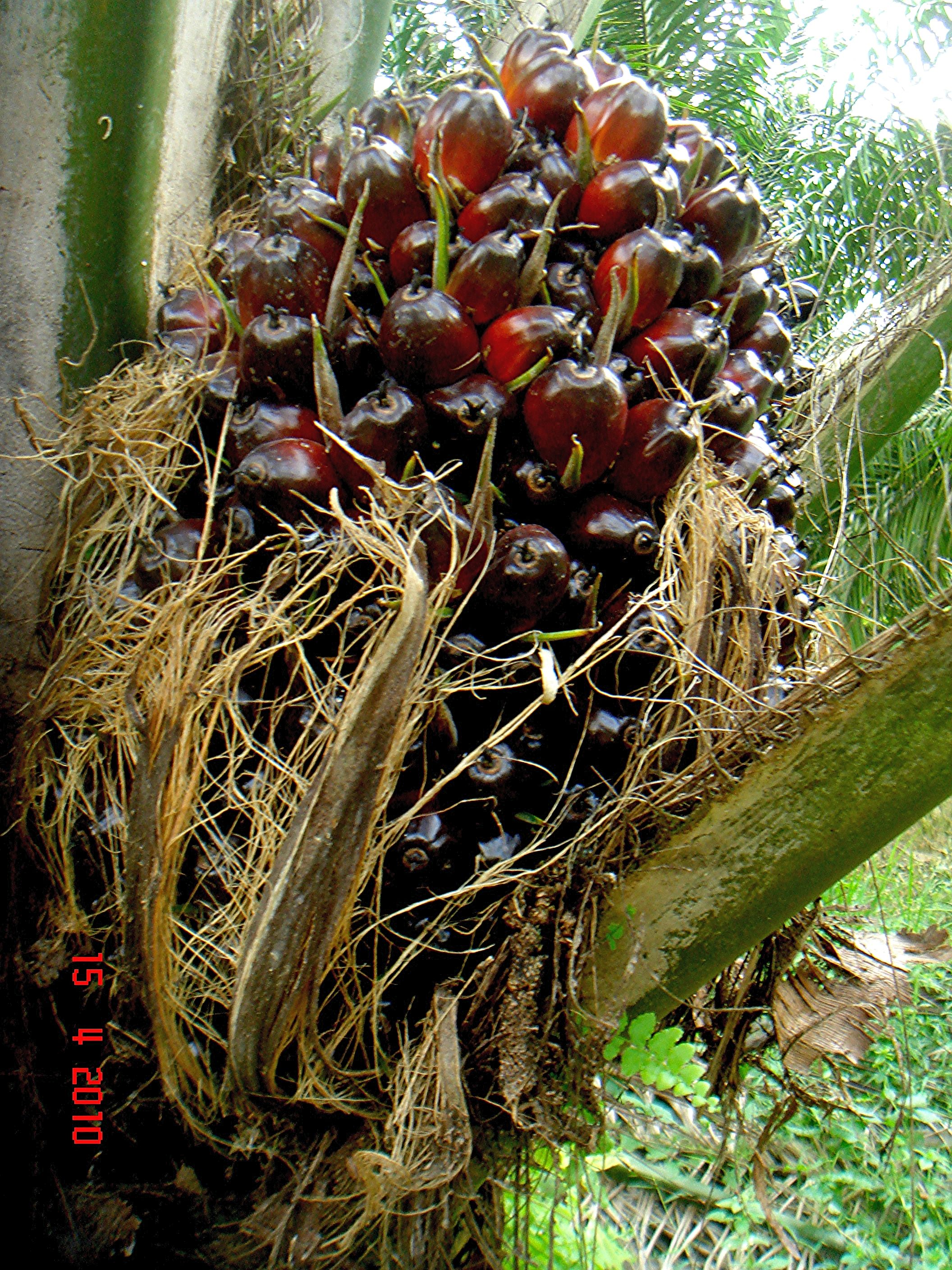
Oil Palm Friuits (photo credit: www.eol.org)

Oil Palm Friuits (photo credit: www.eol.org)

In light of this predicted consequence, the authors of this study recommend that governments, working together with conservation organizations and industry associations, regulate the conversion of agricultural lands and ensure that certain areas are specifically set aside for conservation. This means that “models of the drivers of environmental change” must be developed that “incorporate feedbacks at a range of scales” so that measures can be put into place to address “the unintended negative consequences of technical advances.”

More information on sustainable palm oil production can be found here.

Feeding the World with Microbes

Back in the mid 1900’s, after the tragic days of the Dust Bowl in North America, new agricultural techniques and technologies were developed and distributed in the name of food security. These developments included higher yielding plant varieties, synthetic fertilizers and pesticides, and advancements in irrigation and other management practices. This period in time was termed the Green Revolution, and it truly was a remarkable time. Agricultural advancements that came out of this period have helped us feed the world and stave of starvation for millions of people. Today, issues of hunger and starvation are political problems, not necessarily agricultural ones. However, the human population continues to grow, and today’s 7 billion people is projected to reach up to 10 billion (or more) in the coming decades. The world’s best farmland is either already in use, degraded, or being used for other things. This means that we must find a way to feed a growing population with the diminishing farmland that is available. We may be producing enough food now (despite the distribution problem), but will we be able to produce enough in the future? The hunt for the Green Revolution 2.0 is on.

“According to the [UN’s Food and Agriculture Organization], most of the growth in production…has to come from increasing yields from crops. Selective breeding doesn’t seem to be offering the types of dramatic yield increases seen in the past. Meanwhile, genetic engineering has yet to lead to any significant increase in yields. Now, many scientists are saying that we’ve been looking at the wrong set of genes.”

These are the words of Cynthia Graber, author of an article that appeared last month on PBS Online’s NOVANext entitled, “The Next Green Revolution May Rely on Microbes.” In it she explores the argument that increasing future yields will depend on better understanding the soil’s microbial community and its complex interaction with the plant community. The big question: if microbes can be artificially bred – the same way virtually all agricultural plants have been – might they help us increase food production?

Microbial life in the soil is incredibly diverse. In one teaspoon of soil, there can be millions of individual microbes including bacteria, fungi, protozoa, algae, and nematodes. Our current understanding of soil life is extremely limited, akin to our understanding of outer space and the depths of the oceans. That is because, as stated in Graber’s article, “perhaps 1% of all soil microbes can be grown in a petri dish, the conventional model for such research.” This limits our ability to study soil microbes and their interactions with other living things. We do, however, acknowledge that the interactions between the roots of plants and soil microbes is incredibly important.

Fruiting Body of an Ectomycorrhizal Fungus (photo credit: eol.org)

Fruiting Body of an Ectomycorrhizal Fungus (photo credit: eol.org)

One major player in these interactions is a group of fungi called mycorrhizae. “Mycorrhizal fungi cannot survive without plants, and most plants cannot thrive without mycorrhizal fungi.” It is a symbiotic relationship, in which the fungi offer plants greater access to water and nutrients, and plants feed sugars derived from photosynthesis to fungi. Recent advancements in genetics have allowed researchers to better analyze the genes in microbes like mychorrizal fungi and determine the functions of them. Through selective breeding, microbes can be produced that will offer even greater benefits to plants, thereby increasing yields. For example, some microbes help plants tolerate heat and drought. Isolating the genes that give microbes these abilities, and then breeding these genes into other microbes might allow for a wider palette of plants to receive this kind of assistance.

In researching this article, Graber followed a Swiss researcher to Colombia where he was testing lines of mychorrhizal fungi on cassava. The fungi were specifically selected to increase a plant’s access to phosphorous. This is one of many experiments that are now under way or in the works looking at specially bred microbes in agricultural production. It’s an exciting new movement, and rather than spoil too much more of Graber’s article, I implore you to read it for yourself. Share any comments you may have in the comment section below, and expect more posts about plant and microbe interactions in the future.

Cynthia Graber appeared at the beginning of a recent episode of Inquiring Minds podcast to talk about her article. I recommend listening to that as well.